



Haircuts for very fine hair over 50 need a lighter hand than people think. Fine strands go flat fast, and a cut that looks airy in the salon can turn wispy by lunchtime if the shape is wrong. Gray hair can make the problem easier to see because it reflects light and shows every sparse spot around the part and crown.
The fix is not more layers everywhere. It is a better shape.
A clean perimeter, a little lift in the right place, and a length that does not drag the ends down will usually do more than a drawer full of styling products. One blunt line can make hair look thicker than three clever layers ever will. That is the part people miss.
Heavy texturizing is usually the mistake.
A good cut reads the hair before the scissors touch it. It takes into account the neckline, the cowlicks, the way the crown falls, and whether the hair wants to bend under or flip out. That is why the best options below are not all short, and they are not all blunt either; they are just the ones that give fine hair a shape it can hold.
1. The Blunt Chin-Length Bob for Very Fine Hair Over 50

If I had to pick one haircut that flatters very fine hair without asking for much daily styling, this is the one. A chin-length bob gives the ends enough weight to sit together, which is exactly what thin strands need. The line feels crisp, and crisp beats fluffy every time.
Ask for the cut to land at the bottom of the jaw or a touch below it, with as little internal layering as possible. The whole point is to keep the outline solid. On gray hair, that clean edge can look almost architectural, and I mean that in the best way. The eye reads a dense shape, even when the strands themselves are fine.
Do not let anyone razor-thin the bottom. That one move can make the ends look see-through in a week.
A small round brush, a quick bend under, and a light root spray are usually enough. If your face is square, let the length sit just below the jaw so it does not box in the chin. If your face is longer, keep it right at chin level to widen the silhouette a little.
2. The Bixie Cut

Why does the bixie work so well? Because it steals the lift of a pixie and the softness of a bob, then stops before the hair gets heavy. That matters on fine hair. You get movement around the ears and nape, plus enough length on top to make the crown look awake.
The trick is restraint. Too much layering and the cut starts to fray; too little and it turns into a short bob with no edge. A good bixie keeps the sides close enough to the head to avoid puffiness, while the top stays long enough to sweep forward or off to one side.
How to ask for it
- Keep the nape neat and tapered, not bulky.
- Leave about 2 to 3 inches on top so the crown can lift.
- Ask for soft, point-cut ends rather than shredded layers.
- Leave the fringe long enough to tuck behind the ear when you want it out of the way.
Styling is quick. A small amount of mousse through damp hair, then a rough blow-dry with fingers, usually does the job. The finished texture should feel bendy, not crunchy. If your hair has a stubborn cowlick at the front, the bixie handles that better than a longer cut because the shorter length gives the swirl less room to fight you.
3. The Softly Stacked Bob

If the back of your hair collapses the second it dries, a softly stacked bob gives you shape where you need it most. The lift happens in the nape, so the head looks fuller from behind without the cut turning into a helmet. That balance is the whole point.
A lot of stacked bobs go too far. They get round, bulky, and oddly formal. That is not what fine hair needs. The better version keeps the graduation subtle, with the back a little shorter than the front and the top layers left long enough to blend into the sides. You want a curve, not a shelf.
What to ask for
- Mild graduation at the nape, not a sharp wedge.
- A front that falls just past the jaw.
- Soft blending through the sides so the shape does not puff out.
- Minimal thinning near the ends.
This is a strong choice if your hair dries flat at the crown but has a decent amount of natural body through the mid-lengths. Blow-dry the nape first and direct the airflow backward, then finish the top with a round brush. The cut will hold its line better if you avoid heavy cream near the roots. A little volume spray there goes further.
4. The Collarbone Lob for Very Fine Hair Over 50

Not everyone wants short hair, and honestly, they do not have to. A collarbone lob keeps enough length to feel familiar, but it stops before the hair gets dragged into limpness. That little change matters. Fine strands look fuller when they are not hanging too far below the shoulders.
The best version of this cut is clean at the bottom with hidden layers tucked low, near the last two inches. You get movement without giving up the body at the perimeter. If the layers start too high, the ends can separate and the whole shape turns stringy. That is the line I would not cross.
Gray hair often looks especially good here because the longer line gives the silver more surface to catch the light. Keep the part a touch off-center if the crown is sparse. A middle part can work too, but only if the hair is dense enough through the front to hold it.
I like this cut for people who still want to clip their hair back or twist it into a low knot on busy days. It behaves. That may sound boring, but boring haircuts are sometimes the ones that age best.
5. The Long Pixie with Side-Swept Fringe

A long pixie is not a nervous haircut. When it is cut well, it gives the face lift and keeps enough length on top to create shape with almost no effort. For very fine hair, that matters more than chasing a lot of bulk. The fringe does the visual work.
Why the fringe matters
A side-swept fringe softens the hairline, which is useful if the front has thinned a little or if the temples have gone softer over time. It also keeps the top from lying flat in one straight sheet. You want some direction, not a tiny cap of hair sitting on the scalp.
How to style it
- Blow-dry the fringe in the opposite direction first, then sweep it over.
- Keep the top about 3 to 4 inches long so it can bend.
- Ask for close sides and a clean nape to stop puffiness.
- Use a pea-size wax only on the very ends.
Skip heavy pomades. They crush fine hair fast and make the crown look greasy by noon.
This cut works especially well if you wear glasses, because the fringe and frames can talk to each other instead of competing. It is also one of the easiest cuts to grow out if you decide you want more length later, which is nice. Hair should move, not sit there.
6. The French Bob
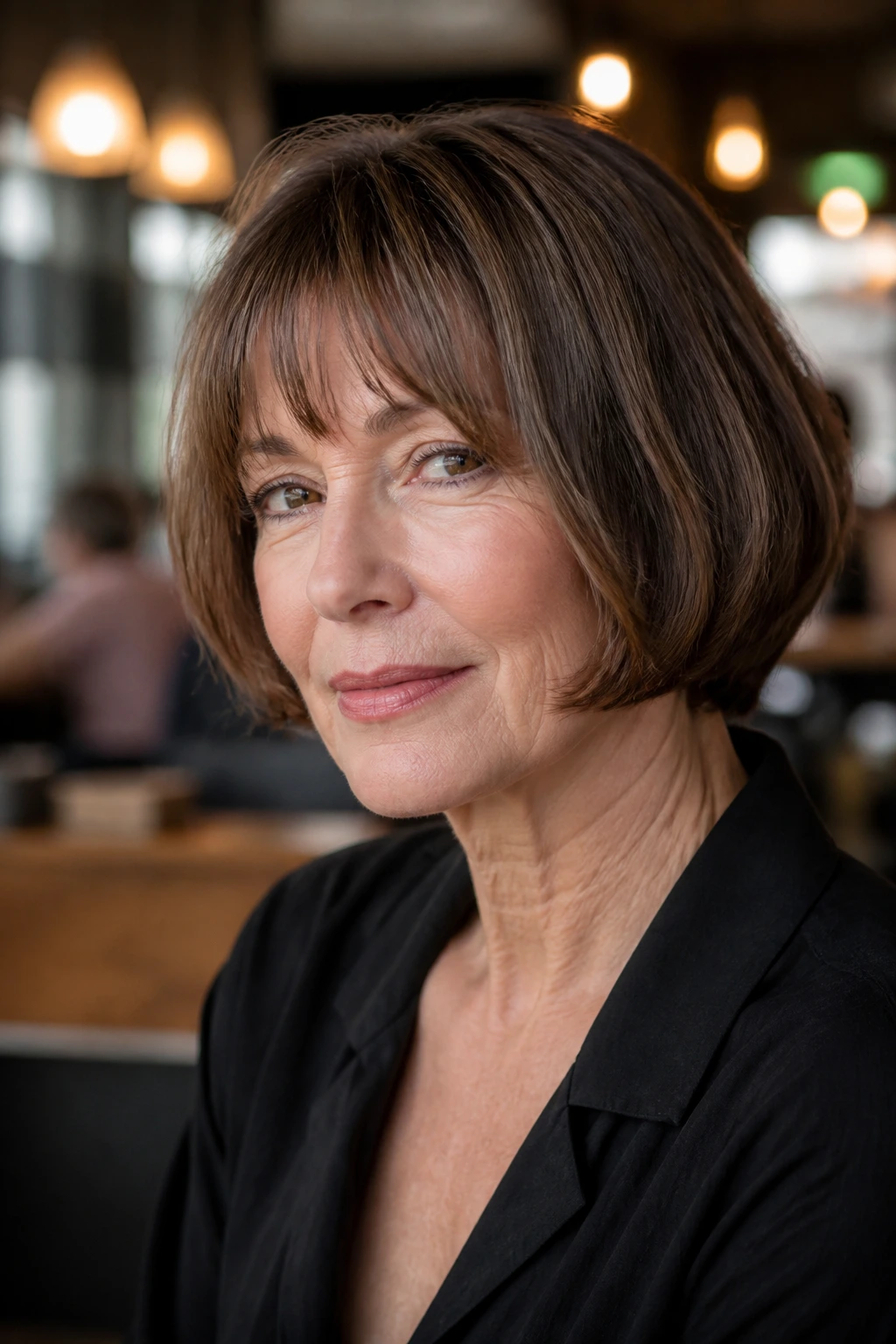
Unlike a longer bob, the French bob sits higher and depends on shape more than length. That is why it can be so flattering on fine hair. It creates the feeling of density without needing a lot of actual volume. The line is the point.
The sweet spot is usually between the lip and the chin, with a soft bend at the ends rather than a hard flip. A tiny bit of texture through the surface is fine, but keep the perimeter strong. If the cut gets too choppy, it starts to fray at the edges and loses the neatness that makes it work.
Best for straight to softly wavy hair. Best for people who do not want to spend twenty minutes rounding a brush through every section. And best for anyone whose hair looks better with some cheekbone exposure. It has a little attitude, but not the try-hard kind.
I would ask for this one with a soft fringe or a side sweep if your forehead feels too open without it. If not, leave the front clean and let the shape speak. That is usually enough.
7. The Inverted Bob
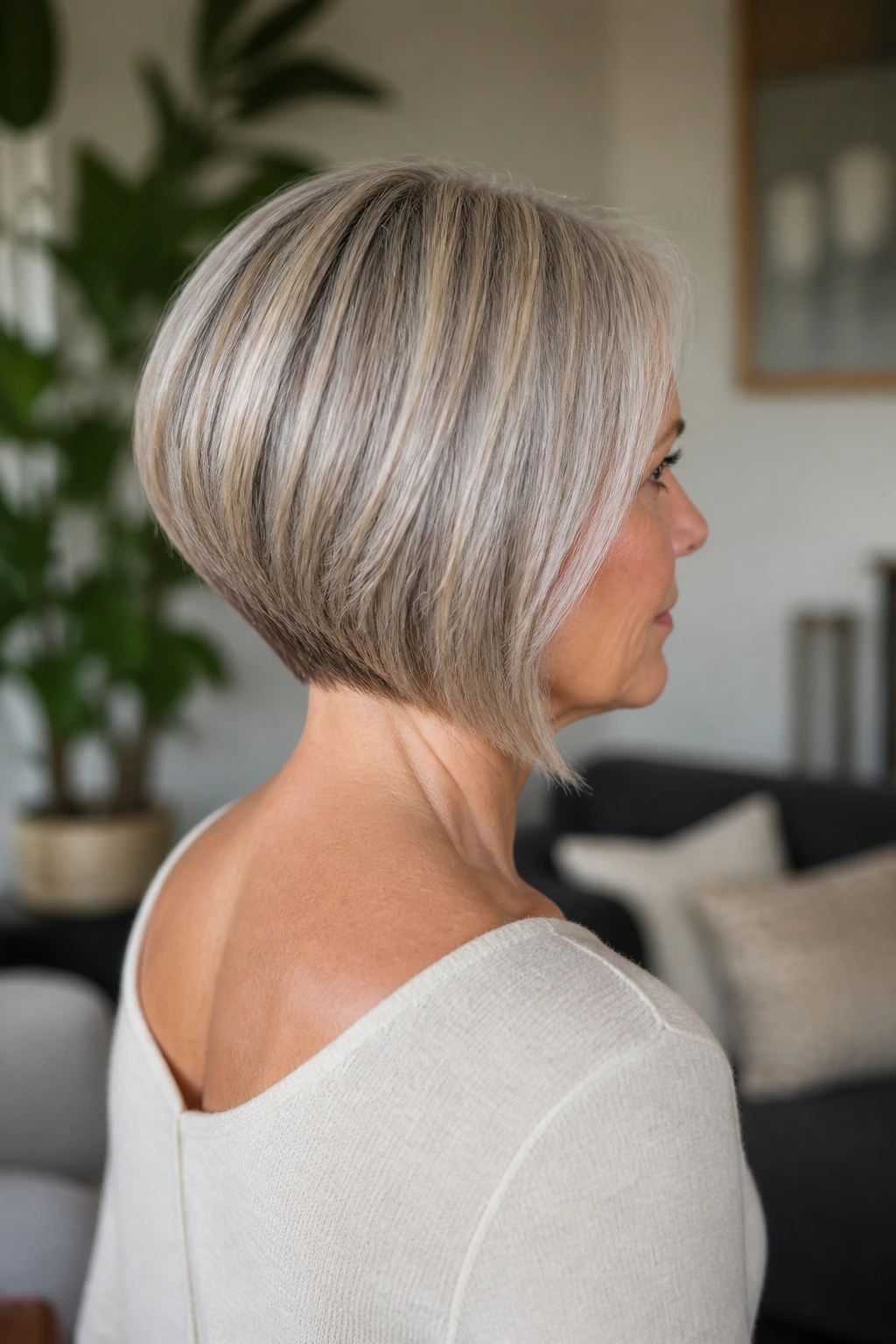
An inverted bob gives fine hair a sharper silhouette than almost any cut on this list. The back is shorter, the front is longer, and that diagonal line creates the illusion of fullness because your eye keeps moving. Flat hair hates stillness. This cut gives it motion.
The back should be graduated enough to lift the nape, but not so stacked that it turns bulky. That balance is the whole game. The front pieces can skim the jaw or fall a little lower, depending on how much face-framing you want. I tend to like this cut when someone’s hair looks limp at the back but still has decent body around the front.
The back does the work.
Use a round brush under the nape and a paddle brush through the front. That usually keeps the line smooth without too much fuss. If your hair is fragile or very soft, keep the graduation gentle. A severe angle can expose the fact that the ends are thin, and that is the opposite of what you want.
8. The Soft Shag with a Full Perimeter
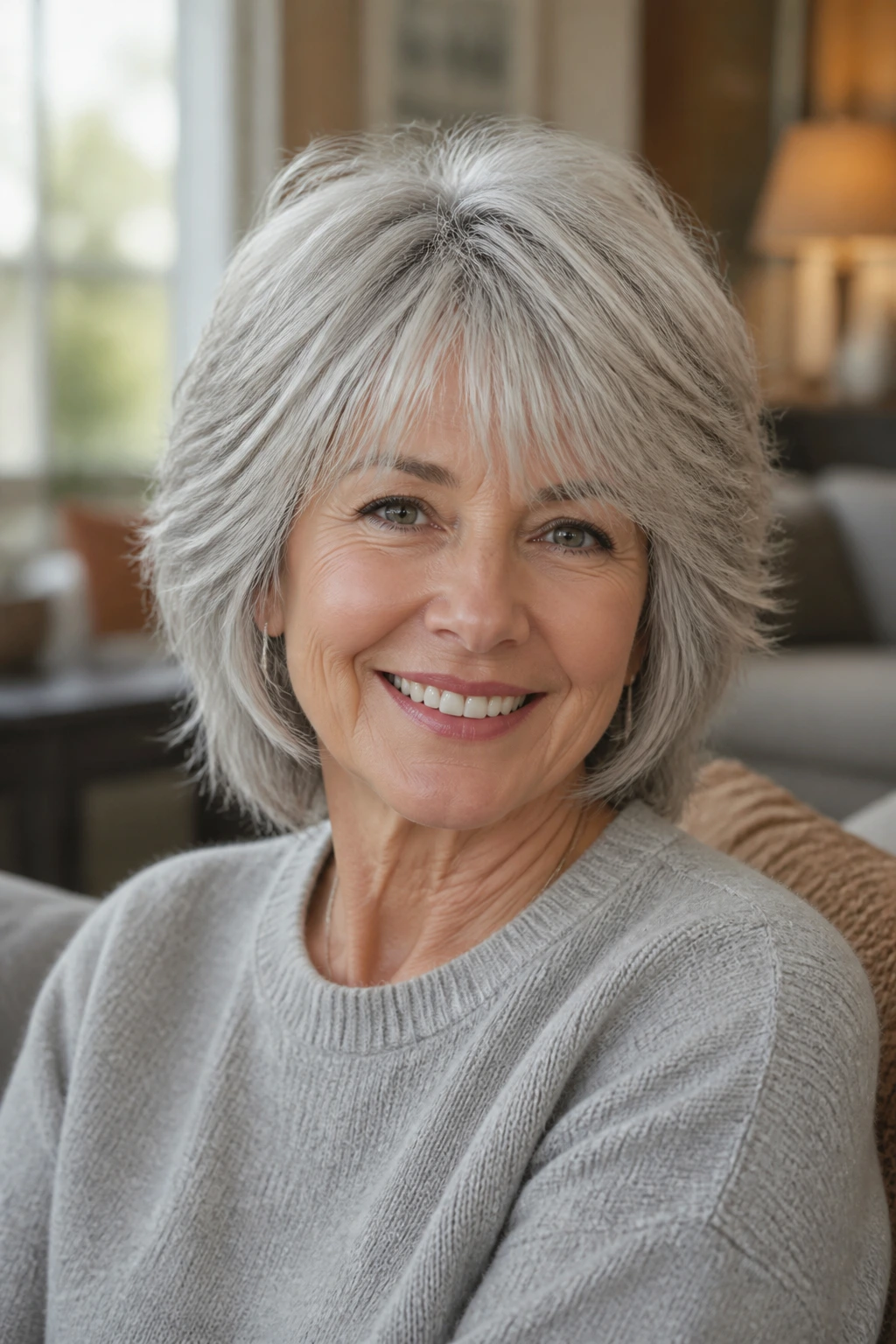
Can a shag work on fine hair? Yes — if the layers stay high and the edge stays full. That detail matters more than the label. A shag that starts too low can strip away the weight that fine hair needs to look dense. A smarter version keeps the volume at the crown and cheek area, then leaves the bottom line intact.
How to ask for it
- Keep the layers from the crown to about cheekbone level.
- Leave the perimeter at chin or collarbone length.
- Avoid razor cuts through the ends.
- Ask for soft movement, not choppy thinning.
The reason this cut works is simple: the hair gets lift where the eye looks first, while the bottom still looks solid. That is useful if your hair has a little wave and tends to fall flat at the scalp but puff out only on the surface. The ends should not feel shredded when you run your fingers through them.
I would choose this over a classic heavy shag for someone who wants movement without losing the sense of a shape. A bit of mousse at the roots and a quick air-dry can be enough. If you blow-dry, use a diffuser on low heat so the crown lifts without getting frizzy.
9. The Jaw-Length Crop with a Deep Side Part
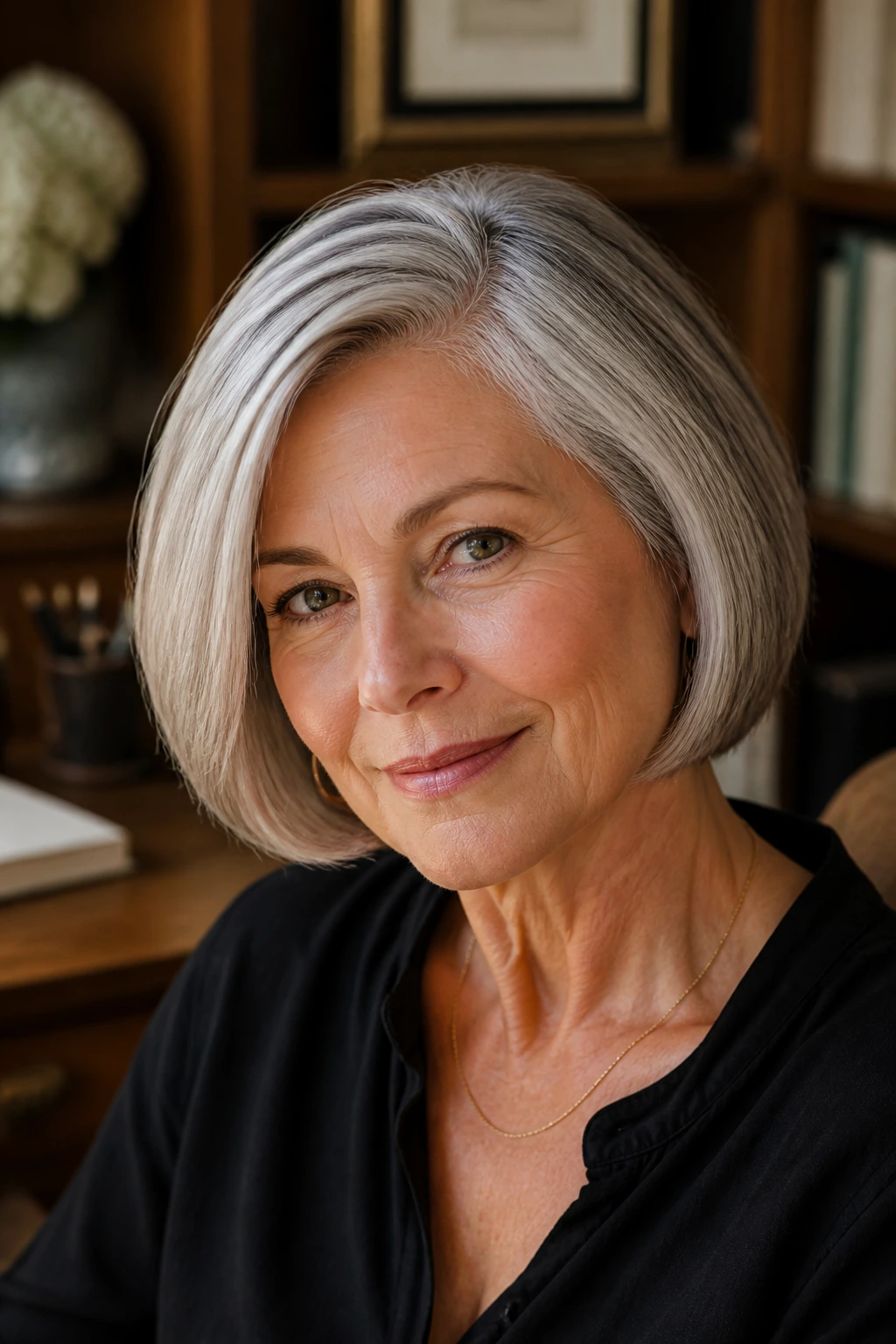
If one side of your part has been glued down since forever, a deep side part can change the whole haircut. It lifts the root instantly and gives fine hair a little drama without asking for more length. The cut itself does not have to be fussy. The direction does most of the work.
A jaw-length crop sits right where the face can hold volume best. Too long, and the ends start to droop. Too short, and some people lose the softness they want. At the jaw, the line feels clear and the hair has room to move.
Key details to request
- A part that starts near the arch of the brow.
- Length that brushes the jaw, not the chin.
- Soft beveling at the ends so the crop curves inward.
- A little extra room on the fuller side for balance.
This is a nice fix if your hair splits in the middle and makes the scalp more obvious than you’d like. It also works well with gray hair because the part line becomes part of the style instead of just a place where the hair falls apart. That sounds like a small thing. It is not.
10. The Shoulder-Grazing One-Length Cut for Very Fine Hair Over 50
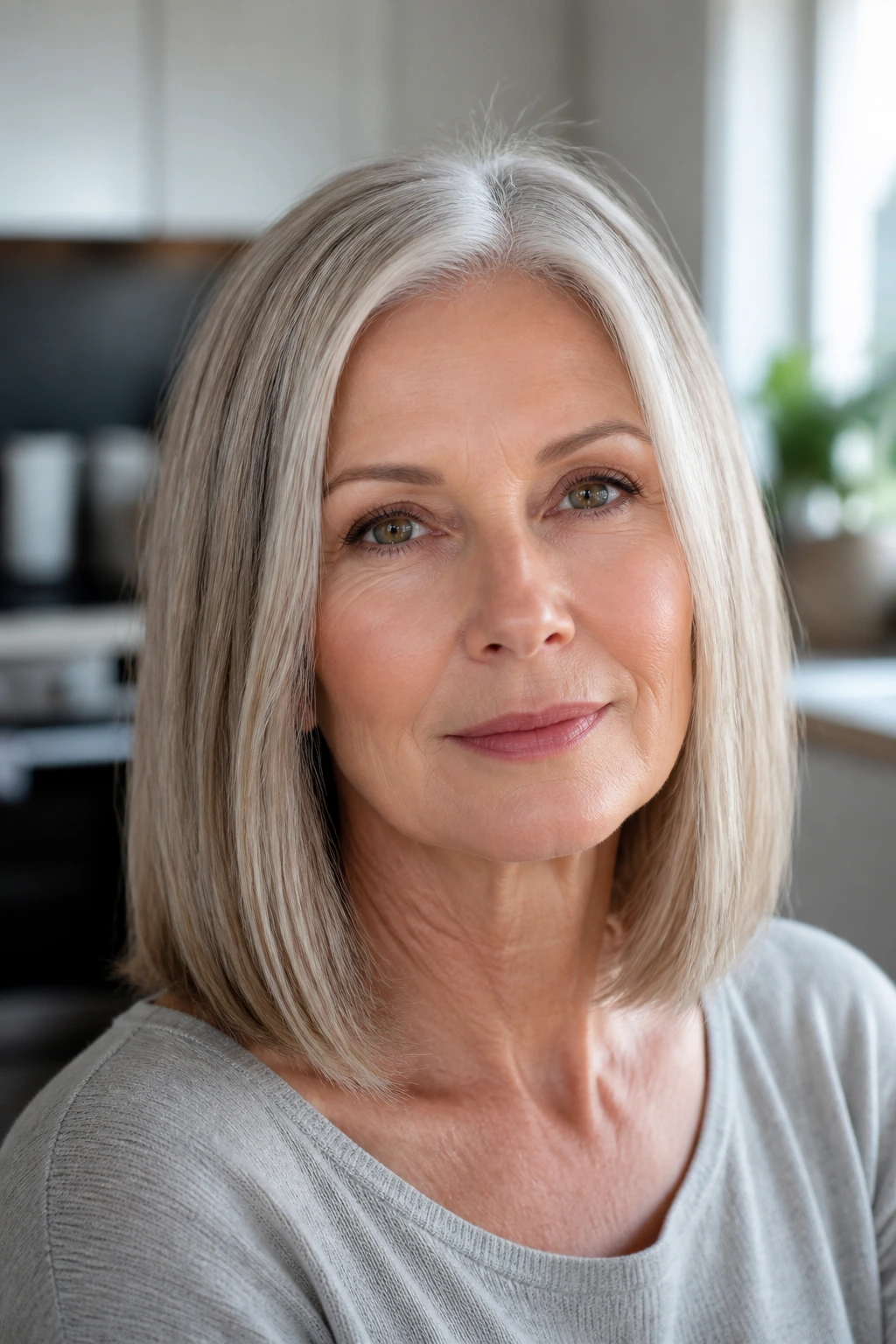
A shoulder-grazing one-length cut is for the woman who wants to keep some length but refuses to let it drag. Fine hair can go limp when it gets too long, especially if the ends have been colored or heat-styled for years. This cut stops that slide before it starts.
The magic is in the bottom line. A clean, even edge gives the impression of thickness, and the shoulder keeps the hair from growing heavy on the body. You can still tuck it behind the ears, pin it back, or wear it in a loose clip, which matters more than most people admit. Hair that only looks good one way is annoying.
The best version has almost no layers through the top. Maybe a whisper of face framing at the collarbone, but not more than that. If your hair is fine and straight, keep the end blunt and let the movement come from the brush or the natural bend. If it has a slight wave, even better. The cut will sit with less effort.
I like this one when someone says, “I want to keep my hair, but I’m tired of it looking tired.” That is a fair request. This cut answers it cleanly.
11. The Rounded Bob

A rounded bob is a smart choice when the face needs a little width through the middle and the hair needs a little help pretending it has more of it. The shape curves inward under the cheek line instead of hanging straight down, so the silhouette feels fuller. On fine hair, that inward curve does a lot.
The danger is over-rounding it. Then you get a helmet effect, and nobody wants that. The better version keeps the curve soft, almost invisible until the hair moves. The nape stays neat, the sides hold shape, and the top gets just enough lift to stop the cut from collapsing.
Where the roundness sits
- Keep the fullest point near the cheekbone.
- Let the front angle in gently, not sharply.
- Blow-dry with a small round brush, rolling under at the ends.
- Leave the crown smooth so the top does not puff.
This cut is especially nice if your face is long or narrow. The rounded line brings the eye outward. If your hair flips at the ends, a little smoothing cream on damp hair helps, but keep it light. Too much product will flatten the whole thing, and then the shape disappears.
12. The Wedge Cut
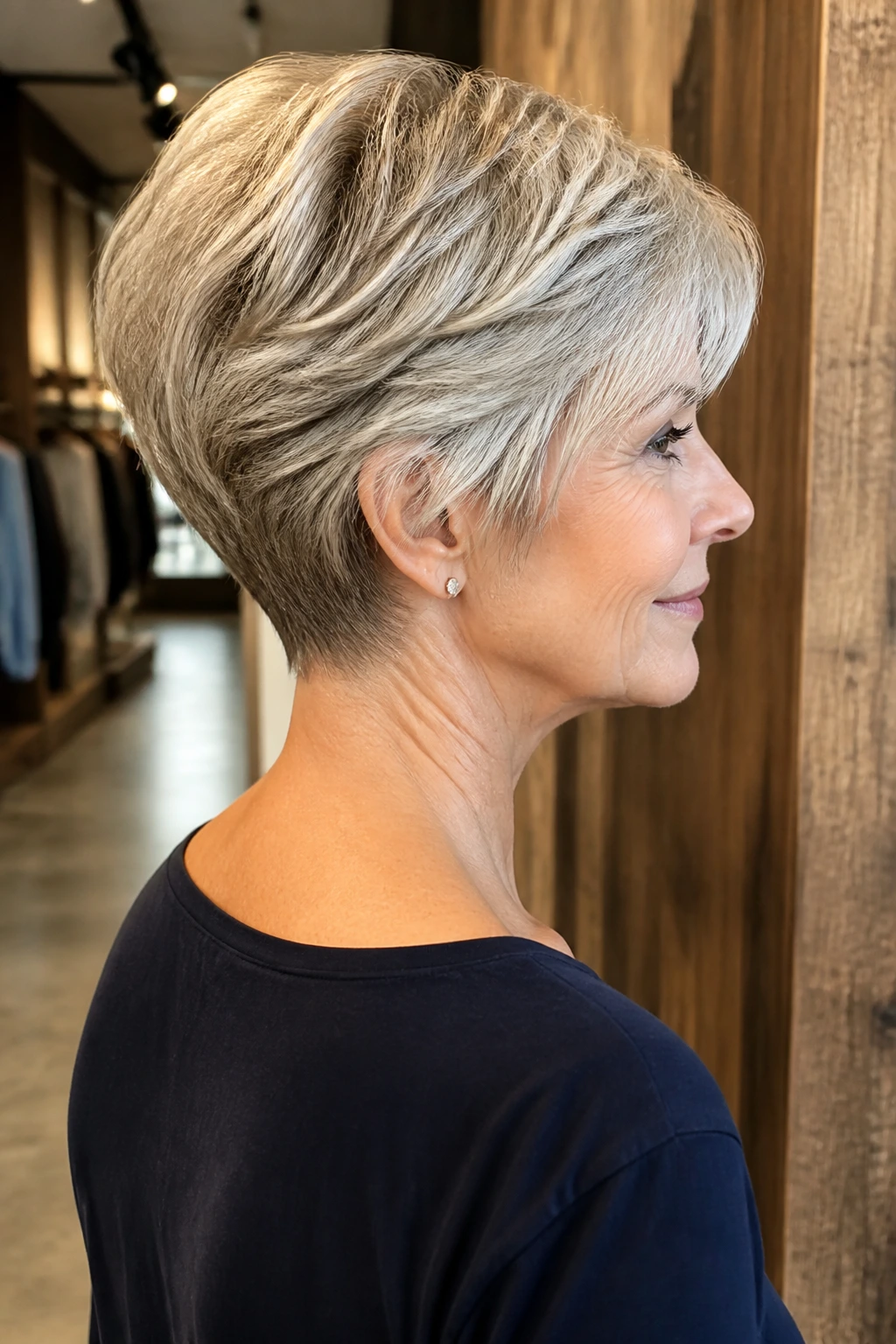
Unlike a stacked bob, the wedge cut opens the neck more sharply and changes the silhouette faster. That makes it a strong option for very fine hair that needs structure, not softness. The back sits higher, the sides taper cleaner, and the result is a cut with clear lines. Clear lines help thin hair more than people expect.
The wedge does best on straight or slightly wavy hair. If your hair is very curly, the shape can blur unless you like a lot of daily smoothing. And if you want a cut that feels loose and beachy, this is probably too disciplined for you. It has a point of view.
Ask for a softened wedge rather than the severe version from old haircut books. That means the angle should be visible but not harsh, and the transition from back to front should feel gradual. A little volume spray at the roots and a quick pass with a medium brush is usually enough to keep the outline clean.
I reach for this cut when someone wants the hair off the neck, wants the back to look tidy, and wants the head shape to read more deliberate. It does that job well.
13. The Feathered Crop with Crown Lift
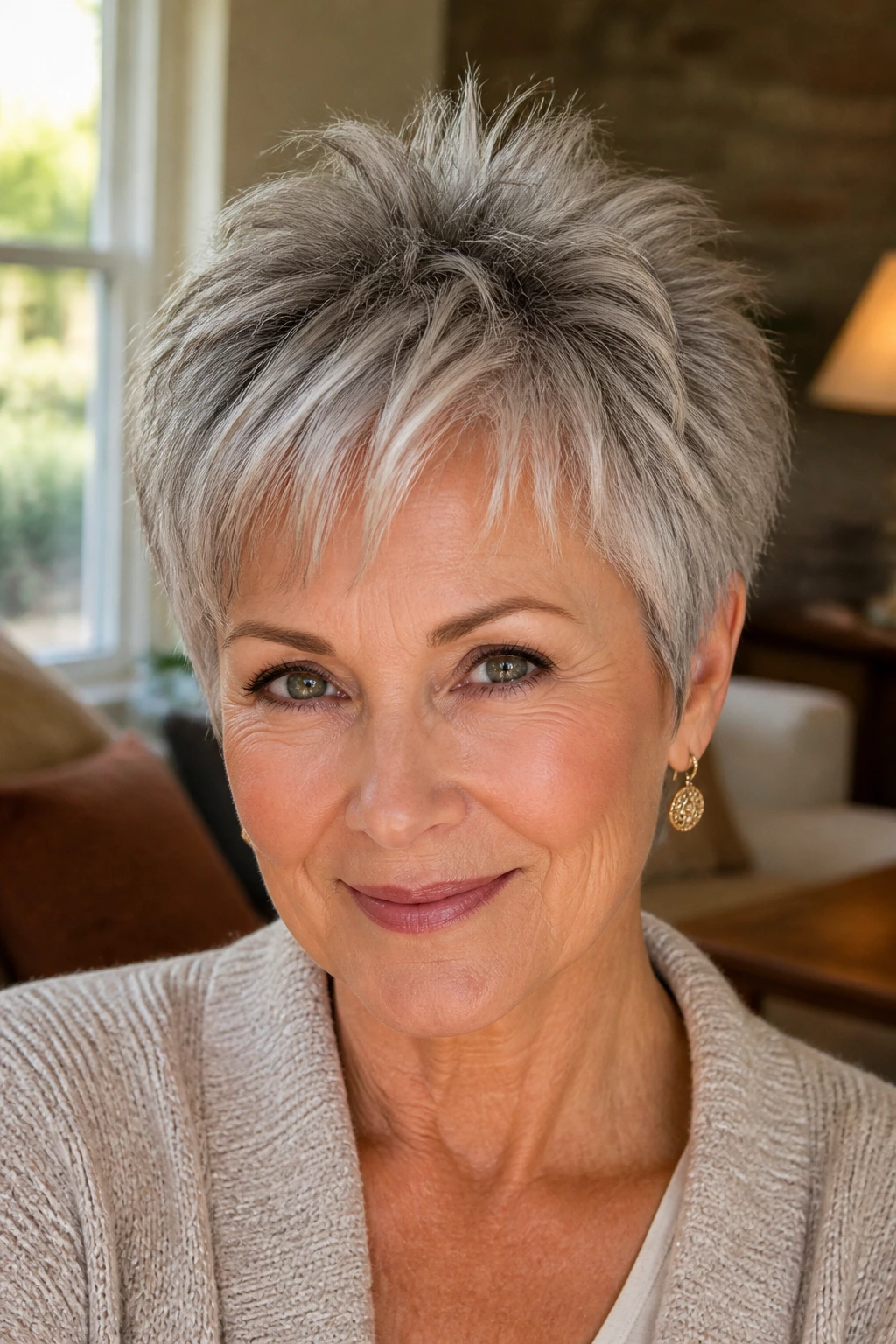
A feathered crop can be a gift for flat hair, but only if the feathering stays near the top. If the ends get feathered too, the hair starts to vanish. That is the line between lift and fray. Fine hair needs the crown to wake up and the perimeter to stay honest.
This cut is short enough to keep weight off the scalp, yet long enough on top to create a little height. The sides can stay close, which is useful if your hair poofs at the temples or the nape. The top layers should be soft, not shredded. Think movement, not wisps.
A root-lifting mousse or spray on damp hair helps here, and you can finger-dry most of it. If you use a brush, use it only to direct the front. The rest can stay a little undone. That tiny bit of mess gives the cut life. Too much smoothing kills it.
If your hair lies flat under a hat, this is one to try. It comes back to shape faster than longer cuts because the length is short enough to bounce.
14. The Lob with Curtain Bangs

Why do curtain bangs help fine hair? Because they create a face frame without stealing fullness from the sides. That sounds small, but it changes the whole balance. The bangs pull the eye upward, while the lob keeps enough length for the ends to look substantial.
The cut works best when the lob lands around the collarbone and the bangs start near the cheekbone rather than the crown. That way, the front pieces open away from the face instead of dropping into the eyes. It also softens a high forehead or a hairline that feels a little lighter than it used to.
How to wear the fringe
- Blow-dry the bangs forward first, then sweep them apart with a brush.
- Keep the center a bit shorter so the shape opens naturally.
- Avoid heavy oil on the fringe; it will separate fast.
- Trim the bangs often enough that they do not swallow the eyes.
This is a good cut if you want some softness around the face but do not want a full fringe. The difference is practical. Curtain bangs grow out more easily, and they do not demand as much commitment when your hair is behaving badly on a windy day.
15. The Asymmetrical Bob
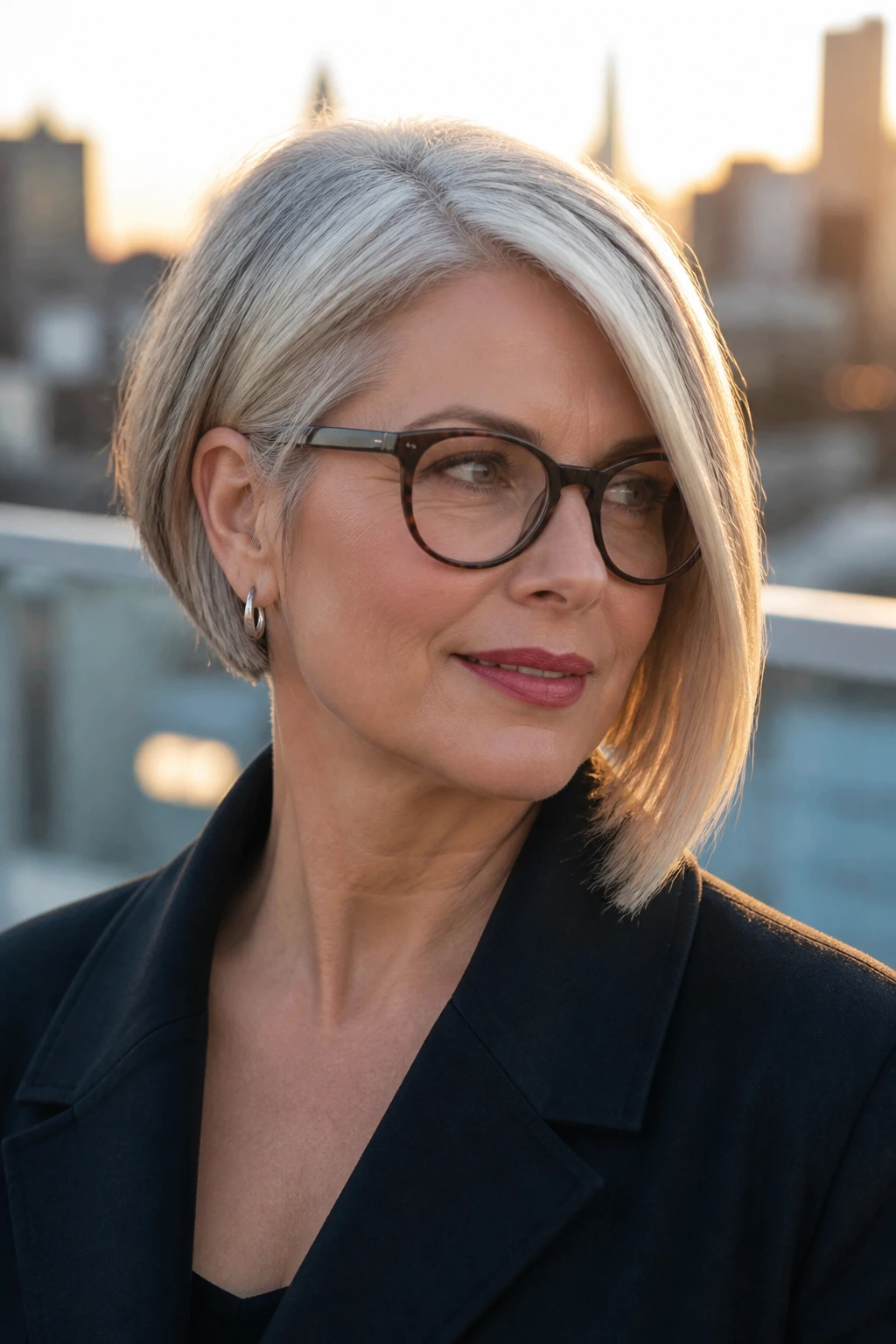
A half-inch of difference can change how fine hair reads from across the room. That is the quiet power of the asymmetrical bob. One side is a touch longer, the line moves diagonally, and the eye keeps traveling instead of landing on flatness. Hair that looks thin in a straight line often looks fuller when the shape has a little direction.
The key is keeping the difference modest. You do not need a dramatic one-sided angle unless you want a sharper look. A small asymmetry — maybe half an inch to an inch — is enough to make the cut feel intentional. The longer side can also balance glasses, a deeper part, or one side of the face that carries more weight.
This cut is one of my favorites for women who want something modern but not fussy. It has enough edge to feel fresh, yet it still behaves like a bob. Ask for a blunt perimeter with just enough diagonal movement to avoid a boxy finish. If your hair is especially fine, keep the layers minimal and let the line do the talking.
If you want one cut that still looks deliberate on a sleepy morning, this is the one I’d point you toward.
