



Hair gets more honest after 40. Some strands go gray, some get a little finer, some decide to bend in the wrong direction for no obvious reason, and some just stop cooperating with the brush you swore by for years.
The best hairstyles for women over 40 do not try to fight all of that at once. They work with the hair you actually have: the texture, the density, the cowlicks, the silver streaks, the face shape, the glasses, the morning schedule. That is the difference between a haircut that looks nice in the chair and one that keeps earning its place after a wash, a rough dry, and a busy day.
I’ve always liked styles that give shape without looking stiff. A blunt cut can be gorgeous. So can a soft layer cut, a bob with a little bend, or a pixie that leaves the front long enough to move. Gray hair has its own personality, too. It often reads brighter and a touch coarser than dyed hair, which means the right shape can make silver look crisp and deliberate instead of fuzzy or flat.
That is really the whole trick: choose a cut that gives your hair a cleaner outline, a better lift, and a little less drama. The first one on the list is a classic for a reason.
1. Chin-Length French Bob for Women Over 40
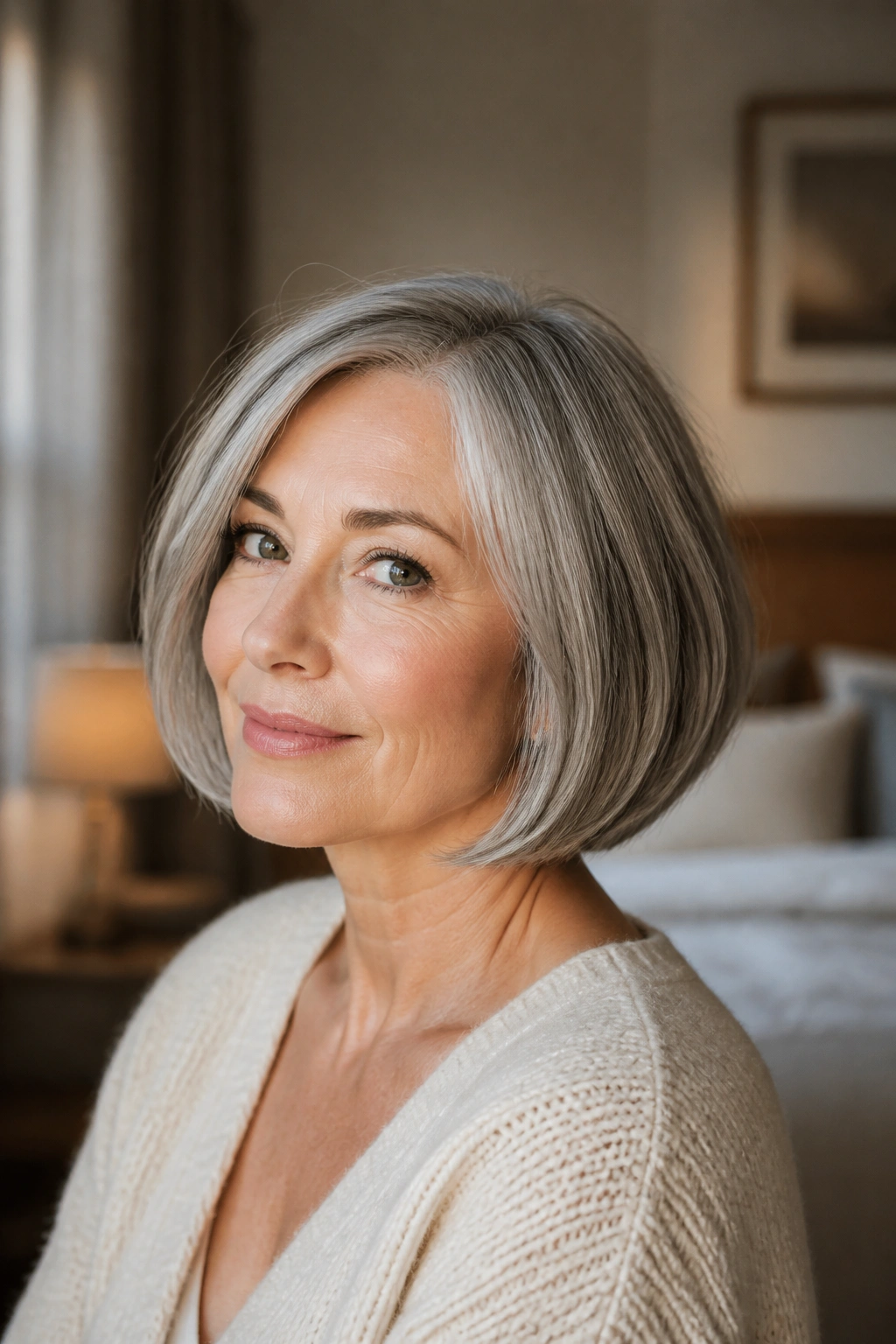
A chin-length French bob does a lot with very little. It lands right at the jaw, which means it gives the face structure without burying it under extra length, and that clean edge is especially flattering when hair has started to thin at the temples or lose some bounce at the ends.
Why It Works
The magic is in the placement. When the line sits just below the chin, the eye goes there first, and the whole face looks a bit more lifted. It’s also one of the easiest ways to make gray hair look polished, because silver strands love a neat outline.
A good French bob should feel light at the ends, not chopped up. Ask for soft internal texture if your hair is thick, or a blunt perimeter with just a touch of point-cutting if your hair is fine.
- Best for straight to slightly wavy hair
- Easy to air-dry with a small round brush at the front
- Works well with glasses and strong brows
- Needs a trim about every 6 to 8 weeks if you want the line to stay sharp
My favorite detail: keep the front slightly longer than the back if your jaw is soft and you want a little extra length near the face.
2. Soft Layered Lob

Why does the lob keep showing up everywhere? Because it sits in the sweet spot between structure and ease. A soft layered lob gives you enough length to tuck behind the ear or pull into a clip, but it still feels fresh when it hits the collarbone and moves a little when you walk.
This cut is especially kind to women who want a change without making a hard break from longer hair. The layers should be gentle, not choppy. Think of them as shape, not decoration.
How to Wear It
A quick bend through the ends is often enough. A one-inch curling iron, used only from mid-length to the bottom inch, gives the hair a relaxed swing that does not look overdone. If your hair is naturally wavy, a light mousse at the roots and a diffuser can do half the work for you.
- Collarbone length keeps it versatile
- Soft layers help thicker hair lie better
- A side part adds lift if the crown falls flat
- Great choice if you are growing out a shorter cut
If you want one haircut that feels safe but not boring, this is it.
3. Side-Swept Pixie

Not all short hair reads severe. A side-swept pixie can be soft, feminine, and a little cheeky in the best way, especially when the front is left long enough to sweep across the forehead.
The side-swept fringe matters more than people think. It breaks up the shape, softens the brow line, and keeps the cut from feeling too helmet-like. If you wear glasses, this is one of the best short cuts going. It leaves room around the eyes and keeps the frame of the glasses from fighting the haircut.
A pixie also lets fine hair look fuller, because short hair loses less body to weight. That is the whole game with fine strands. Less length often means more lift. Just do not let the nape get too puffy. A neat taper keeps the back clean and stops the shape from turning mushroom-shaped.
4. Collarbone Cut with Invisible Layers

Picture hair that used to feel heavy halfway down the back, then started dragging at the shoulders and flipping in odd directions. A collarbone cut fixes that problem fast, especially when the layers are so light you can barely see them.
Those are the layers I like best for women over 40. Not the obvious kind. Not the kind that stair-steps all the way around the head. Invisible layers remove bulk from the inside, which keeps the outer line looking full and smooth.
Ask for This at the Salon
- Length that brushes the collarbone or sits just above it
- Soft weight removal through the interior, not at the ends
- Face-framing pieces that start around the cheekbone
- Ends that stay blunt enough to hold shape
The cut works on straight hair, wavy hair, and even hair that has started to feel a little coarse. It gives movement without the brittle, thinned-out look some layered cuts create when they’re taken too high. And yes, it grows out well, which is half the reason people keep coming back to it.
5. Modern Shag with Soft Ends

The modern shag is not the shag of old family photos with the aggressive crown volume and the feathered chaos. A good one today is softer, smarter, and much easier to live with. It has layers, sure, but the layers are there to make hair move, not to make it look busy.
I like this cut for women whose hair has a natural bend or a little wave that refuses to be ignored. It gives that bend somewhere to go. Gray strands often look especially good in a shag because the movement shows off all the different tones in the hair—white, silver, steel, even the darker pieces underneath.
One thing people get wrong: they ask for too many short layers around the face. That can make the hair puff up at the wrong spots. Better to keep the ends soft, the crown controlled, and the face-framing pieces long enough to brush the cheekbones. The result is a cut that feels cool without trying too hard. Which, frankly, is the whole point.
6. Blunt Bob with Deep Side Part

A blunt bob is a strong haircut. A deep side part gives it a little drama. Put them together and you get a shape that looks polished, holds its line, and makes hair appear denser than it really is.
Unlike a feathered bob, this one is about structure. The edges are clean, the perimeter is solid, and the part shift creates lift at the front without needing a lot of product. That makes it a smart pick for straight hair or thick hair that loses shape when too many layers get involved.
The deep side part also helps if one side of your face feels softer than the other. Most faces have a side that looks slightly stronger under a part, and this cut lets you use that. It’s not fussy. It just behaves well.
If you want a little movement, ask for the very ends to be beveled inward with a flat iron or round brush. Nothing severe. Just enough bend to keep the line from looking boxy.
7. Shoulder-Length Blowout Cut for Women Over 40
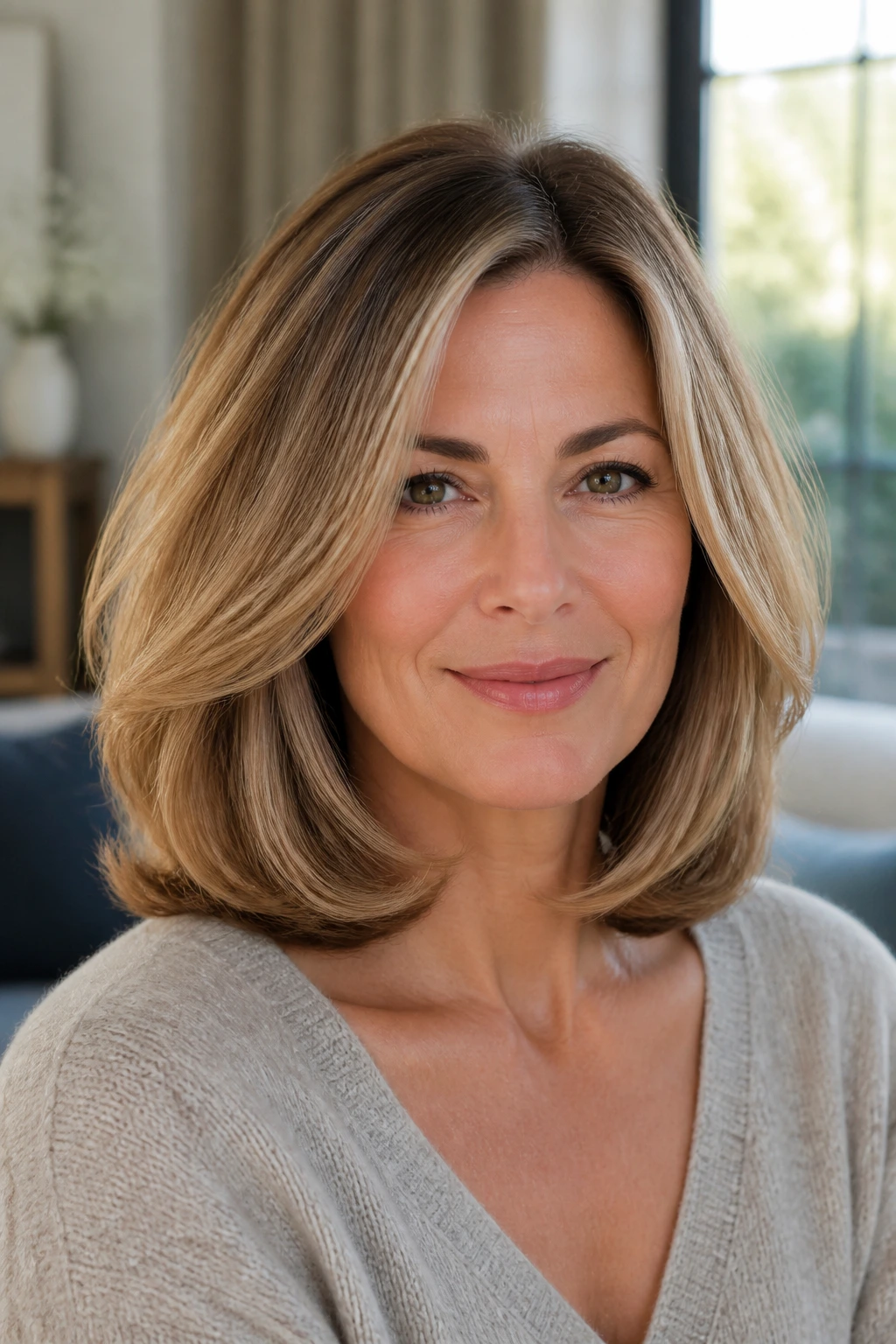
If you like hair with body, this is a hard cut to beat. The shoulder-length blowout cut is built to look good with a round brush, a dryer, and about ten minutes of patience, which is a fair trade for the amount of lift you get back.
Why It Flatters
The length hits a spot that gives the hair swing, but not so much weight that it drags the face down. That matters more after 40, when hair can start to lie flatter at the crown and pull more tightly at the sides.
The shape should have long layers through the mid-lengths, not short choppy ones. Those longer layers let the hair curve under at the ends and lift at the root. If your hair is fine, use a root-lifting mousse before drying. If it’s thick, use a smoothing cream and a bigger brush.
How to Style It
- Blow-dry the roots first for lift
- Turn the ends under with a 2-inch round brush
- Flip the front sections away from the face
- Finish with a light mist of flexible hairspray
The whole cut is about softness and movement. Nothing crunchy. Nothing stiff. It should look like hair that has been brushed, not sculpted.
8. Curly Crop with Rounded Shape

Curly hair after 40 often changes its behavior in ways that catch people off guard. It may get drier, it may shrink more, and it may suddenly need a different outline to stop looking like a triangle. A rounded curly crop solves that neatly.
The key is balance. Shorter sides keep the shape tidy, while enough length on top lets the curls stack in a pleasing curve instead of ballooning outward. Dry cutting helps here, because curls rarely sit the same way wet and dry. If a stylist cuts curly hair straight across while it’s drenched, the final result can be shorter and wider than expected.
A rounded crop also shows off gray curls beautifully. Silver coils catch the light in a way that flat hair never can. They look almost metallic when they’re healthy. That alone is worth the trim schedule.
Skip heavy creams that turn curls limp. A light gel or curl milk is usually enough. The haircut should do the bulk of the work.
9. Textured Pixie-Bob
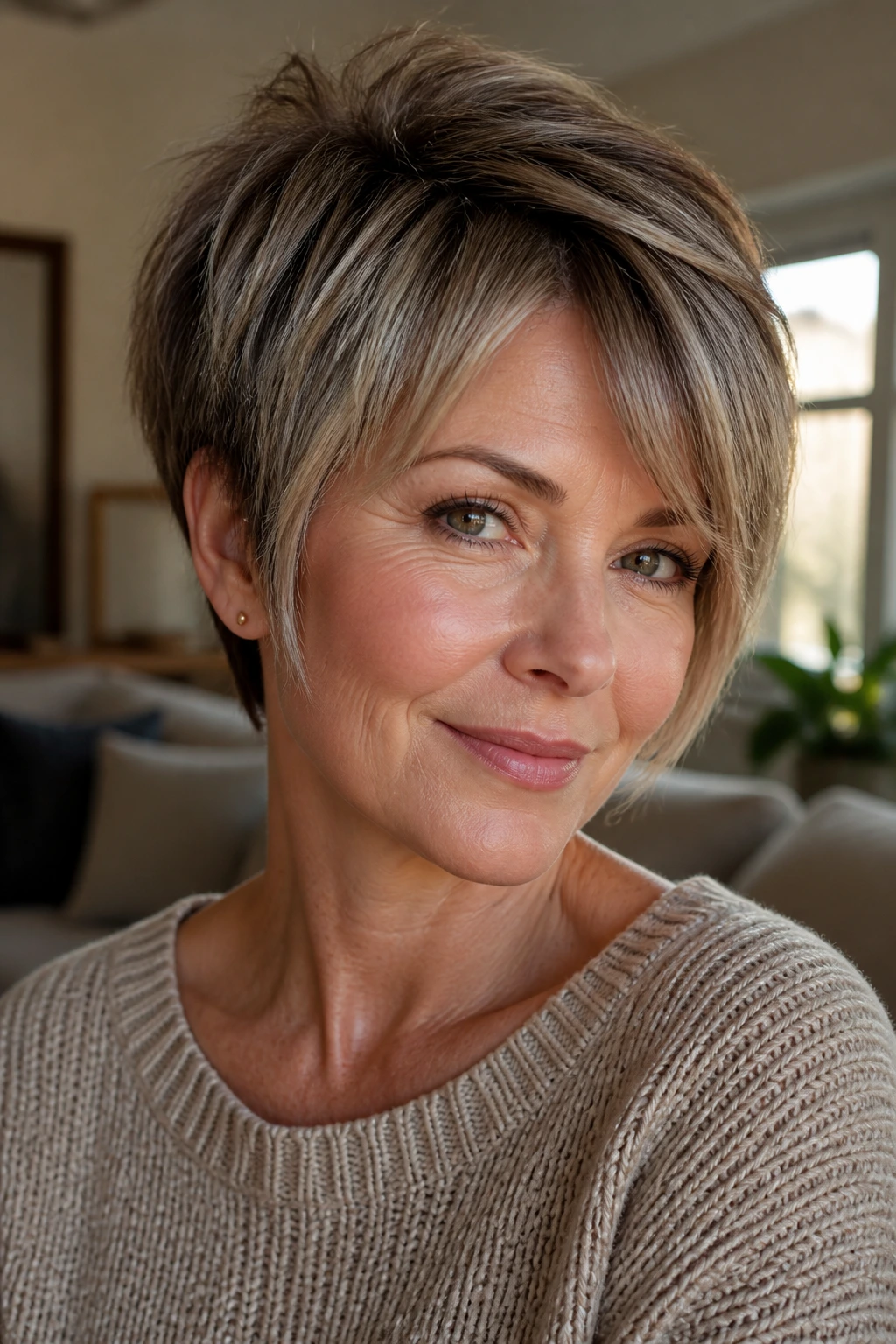
Is it a pixie? Is it a bob? That’s exactly why people like it. The pixie-bob sits between the two, with enough length to soften the head shape and enough shortness to keep morning styling under control.
The front is usually a little longer, the nape a little tighter, and the crown textured just enough to keep the cut from lying flat. It’s a smart choice if you’re growing out a pixie but not ready to jump into shoulder-length hair. It also works well when hair starts to thin at the ends, because the shorter shape makes the density look fuller.
How to Get the Most From It
- Keep the crown piecey, not fluffy
- Leave one or two longer front pieces around the cheekbone
- Ask for a neat nape so the back doesn’t bulk up
- Use a pea-sized amount of styling cream, not a palmful
The cut has a little edge, but it’s not sharp. That is why it lands so well on women who want short hair with some movement.
10. Sleek Mid-Length Cut with Tucked Ends

A sleek mid-length cut is for the woman who wants polish more than volume. It usually falls somewhere between the shoulders and collarbone, with ends that lie smoothly and tuck behind the ear without fighting back.
Unlike a more layered shape, this cut leans on cleanliness. The line should be clear. The weight should stay mostly at the bottom. That gives the hair a calm, neat look that plays well with straight textures and medium density. If your hair is naturally wavy, you can still wear it, but you’ll want to smooth only the top layer so the movement stays controlled.
I like this cut with a side tuck and a little shine spray through the ends. It’s one of those styles that can look plain in a salon mirror and expensive in daylight. The difference is the finish. A well-kept mid-length cut looks like you meant every inch of it.
11. Wavy Lob for Women Over 40 with a Center Part

If your hair has any bend at all, the wavy lob is one of the easiest cuts to live with. It lands just past the shoulders, which gives the waves room to move, and the center part keeps the shape balanced and modern.
The nice thing about this cut is that it doesn’t ask for perfect curls. Loose S-waves, a bit of natural frizz, or a soft bend from sleeping in a braid can all work. The style looks best when it has some air in it, not when every wave is pressed flat.
A center part can be useful if your face is even on both sides, but it can also sharpen a rounder face by adding vertical line. If your part tends to collapse, train it while the hair is damp and clip it in place for ten minutes. That small habit makes a big difference.
A touch of mousse, a diffuser, and a good scrunching motion usually do the trick. Heavy creams can weigh the whole thing down. Too much oil can flatten the top. Keep it light. Let the shape breathe.
12. Feathered Cut with Soft Fringe

Feathered hair has a bad reputation because people remember the overworked versions. The modern version is much better. The layers are softer, the movement is lighter, and the fringe sits more like a curtain than a helmet.
That soft fringe is useful because it breaks up the forehead area without looking severe. If you like your hair off your face but still want some softness around the eyes, it gives you that middle ground. It also works beautifully with gray hair, where a blunt heavy fringe can sometimes feel too hard against the texture.
The feathering should start low. Around the cheekbones is often enough. Too much short layering at the top can create a puff you will spend your life fighting. I prefer the version that moves when you turn your head and settles back down without a fuss.
This is a good cut for women who want hair with motion, not chaos. There’s a difference. A good stylist knows it.
13. Tapered Crop for Natural Gray Hair
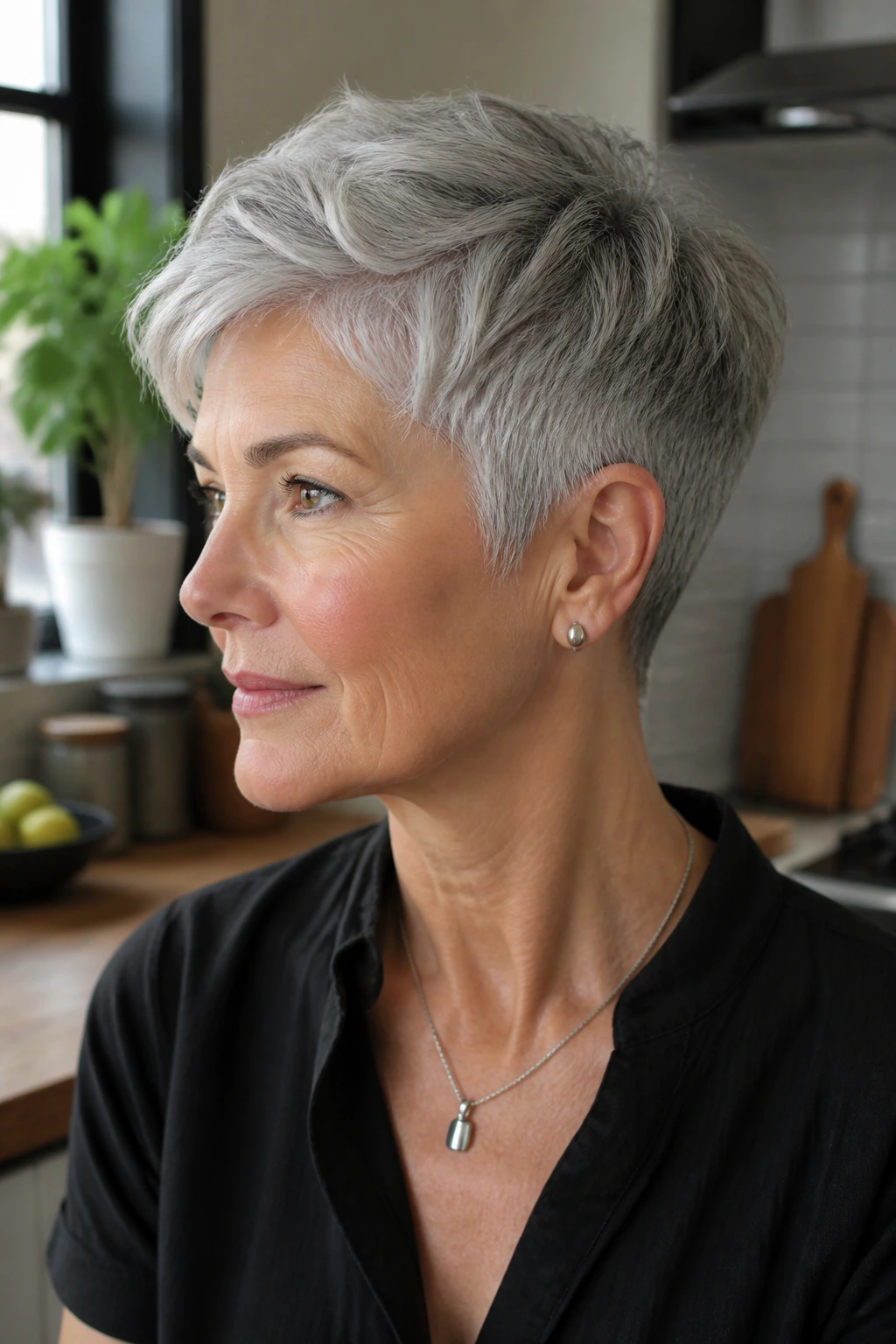
A tapered crop can make natural gray hair look crisp and intentional in a way longer shapes sometimes miss. The nape is cut shorter and closer, the sides stay neat, and the top holds a little more length so the silver has room to show off.
Best Face Shapes
- Oval faces can wear nearly any taper level
- Square faces do well with a softer top and rounded edges
- Heart-shaped faces often like a little more width near the jaw
- Round faces usually benefit from height at the crown
The charm of this cut is in the neckline. Gray hair at the nape can look beautiful when it’s trimmed cleanly, because the contrast between the skin and the silver feels deliberate. It also grows out in a tidy way, which matters if you do not want to be back in the chair every few weeks.
I especially like this shape with a bit of texture cream worked through the top. Not too much. Just enough to separate the pieces and keep the crop from looking helmet-smooth.
14. Asymmetrical Bob

An asymmetrical bob is a quiet little confidence move. One side sits a touch longer than the other, and that small difference changes the whole mood of the haircut. It adds angle, breaks up symmetry, and gives straight or slightly wavy hair something interesting to do.
This cut works well if you want structure but dislike anything too severe. The longer side can skim the jaw or collarbone, while the shorter side opens the neck and keeps the shape light. It’s a nice choice for square faces, since the diagonal line softens the jaw without hiding it.
A clean asymmetrical bob also pairs well with one-ear-tucked styling. That single tucked side gives the cut a finished look fast. No elaborate styling required. Just a flat iron pass if needed, a little shine cream, and you’re done.
If you have very curly hair, this cut can be harder to maintain because the asymmetry gets lost in the texture. On straight hair, though, it looks sharp in the best sense.
15. Long Bob with Curtain Bangs

The long bob with curtain bangs is the haircut people ask for when they want change but do not want to lose length. That’s fair. The shoulder-grazing length still feels familiar, and the bangs soften the face in a way that can be especially flattering if your forehead feels more prominent than it used to.
Curtain bangs are different from a straight fringe. They split in the middle, open outward, and grow out more gracefully. That matters if you’re not committed to a heavy bang maintenance routine. They also sit nicely with gray streaks, because the lighter strands around the face can blend into the fringe instead of fighting it.
What to Ask Your Stylist
- Keep the lob grazing the collarbone
- Start the bangs at cheekbone level or just above
- Blend the bangs into the front layers
- Leave enough length in the fringe to tuck or sweep
I like this cut for wavy hair, but it works on straight hair too. It just needs the front pieces to be dried with direction so they don’t split in odd places.
16. Shoulder-Grazing Cut with Ends That Flip Out

There’s something cheerful about ends that flip out a little. Not the hard, overstyled flip from old salon photos. A gentler version. One that catches the air and moves away from the neck.
A shoulder-grazing cut with that small outward bend is especially good if your hair tends to turn inward and cling to the jaw. The flip creates space. It also works well for women who wear scarves, turtlenecks, or jackets with a collar, because the ends do not disappear into the fabric.
A medium round brush can do the work, though a flat iron bend on the last two inches works too. The haircut itself should help. If the ends are too thin, the flip looks wispy. If they’re too heavy, they turn under by accident. The right balance is somewhere in the middle—enough weight to keep the shape, enough lightness to let it move.
This is one of those styles that looks nice from the side. A lot of people forget that detail.
17. Short Crop with Piecey Crown Volume

A short crop with piecey crown volume is a smart answer for fine hair that has started lying flat at the top. The crown gets just enough length to lift, while the sides stay neat so the shape doesn’t balloon out.
The trick is piecey volume, not fluffy volume. You want separated strands, a little texture, and lift at the roots. A root spray or light mousse helps. So does drying the hair in the opposite direction of your part for the first few minutes. Small thing. Big payoff.
This cut works best when the stylist leaves the top long enough to move around in the fingers. If it’s cut too short, you lose the whole point. If it’s cut too long, the crown collapses. That balance is where the style lives.
- Great for fine or medium-fine hair
- Best when the neckline is tapered
- Needs a small amount of styling paste
- Easy to refresh on day two with dry shampoo
It’s a tidy haircut, but not a dull one.
18. Layered Cut for Thick Hair

Thick hair is not the problem. Bulk is. That’s the distinction that matters, and a good layered cut for thick hair is built around it.
You want layers that remove weight from the inside while keeping the outside line full. If the layers are too short, the hair can puff outward and feel wider than you wanted. If there are no layers at all, thick hair often hangs like a curtain and loses shape at the ends. The middle ground is where the haircut starts making sense.
What to Keep, What to Remove
Keep enough perimeter to hold the shape. Remove weight under the top layer so the hair stops pushing out at the sides. Leave the front long enough to frame the cheekbones or jaw. And if the hair is wavy, keep the layers longer so the wave pattern does not break apart.
This cut is usually better with a good blow-dry or a smooth air-dry cream than with heavy oils. Thick hair can eat product and still feel dry, which is annoying but true. A cream that softens the shaft without flattening the root is usually the safer bet.
19. Low-Maintenance Air-Dry Cut for Women Over 40
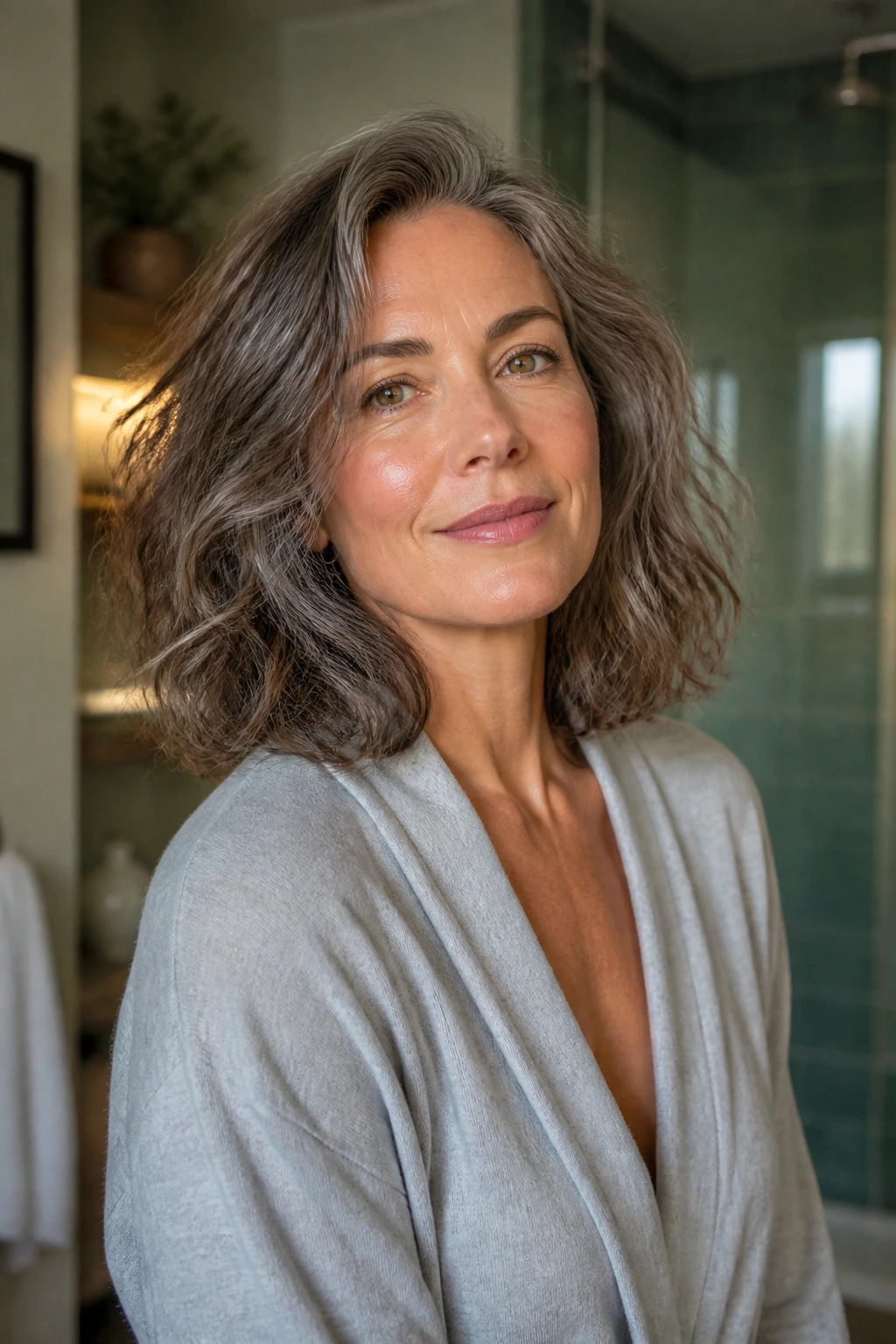
The best cut is sometimes the one that behaves after you wash it and forget about it. That sounds unglamorous, but it matters. A low-maintenance air-dry cut is built around your natural texture, which means less wrestling with tools and fewer mornings spent trying to force the hair into a shape it does not want.
This works especially well for wavy hair and relaxed curls. The stylist should look at how your hair bends when it’s damp and where it dries a little unevenly. That gives clues about where to remove weight and where to leave it alone. If the cut is done with that in mind, the hair falls into place with far less effort.
I like cuts like this because they age well. Not in the sentimental sense. In the practical one. As hair texture shifts, a shape that relies on natural movement tends to stay useful longer than a cut that demands heat every morning.
A little curl cream, a microfiber towel, and air dry time can be enough. Sometimes less really is more, even if that phrase has been worn to death.
20. Elegant Low Chignon with Loose Face Pieces

Some days call for a style that feels finished in ten minutes and doesn’t pull at the temples. A low chignon with loose face pieces does exactly that. It sits at the nape, keeps the neck open, and leaves a few soft strands around the face so the whole look feels gentler than a tight bun.
This is a strong choice for dinners, weddings, or any day you want your hair up without looking severe. It also plays nicely with gray hair, because the contrast between a smooth bun and bright silver pieces near the face can look elegant without trying to look young.
The trick is to keep tension low. If you pull the hair too tight, the style can drag the eyes back and emphasize the jaw in a way that feels harsh. A bit of looseness around the ears and cheekbones fixes that fast.
A chignon like this does not need to be perfect. A few pins, a light mist of hairspray, and a little finger shaping are enough.
21. Polished Silver Waves
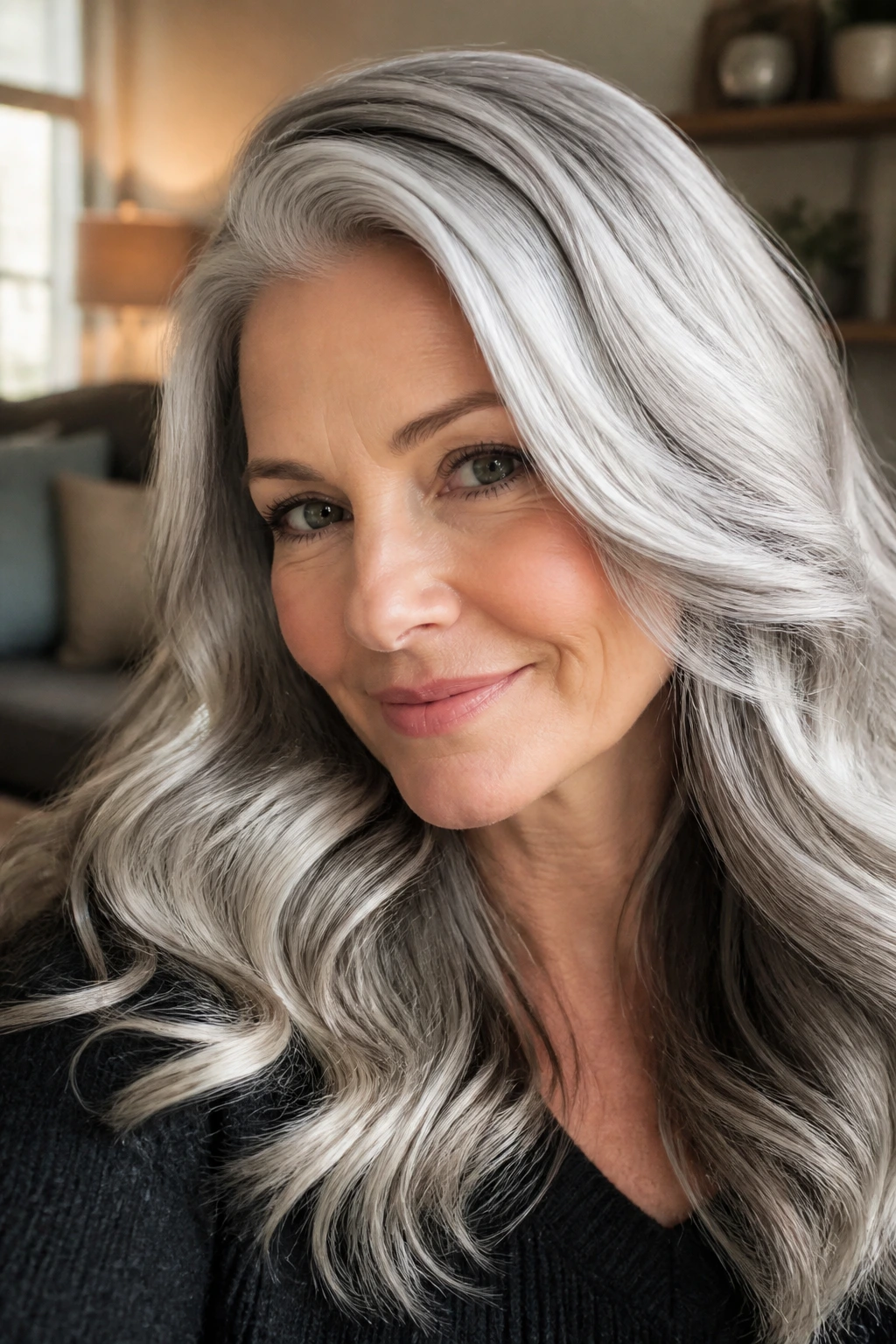
Polished silver waves are one of my favorite looks for gray hair because they let the color do the talking. The waves add softness, the shine gives the silver dimension, and the whole style looks deliberate in a way that flat straight hair sometimes does not.
The part matters here. A side part tends to feel a little more sculpted, while a center part gives a cleaner, straighter read. Either can work. What matters more is keeping the wave pattern smooth and controlled, not frizzy. A curling wand wrapped in larger sections—about one and a half inches each—gives a looser wave that feels modern rather than stiff.
Gray hair often benefits from a glossing treatment or a lightweight shine serum because silver can look dry even when it isn’t damaged. That dryness is partly optical. Smooth light reflection makes the color read richer. A small amount goes a long way.
This is not the cut for someone who wants zero upkeep. It does ask for a little styling. But the payoff is a clean, bright shape that flatters almost everyone.
22. Soft Shoulder-Length Flip
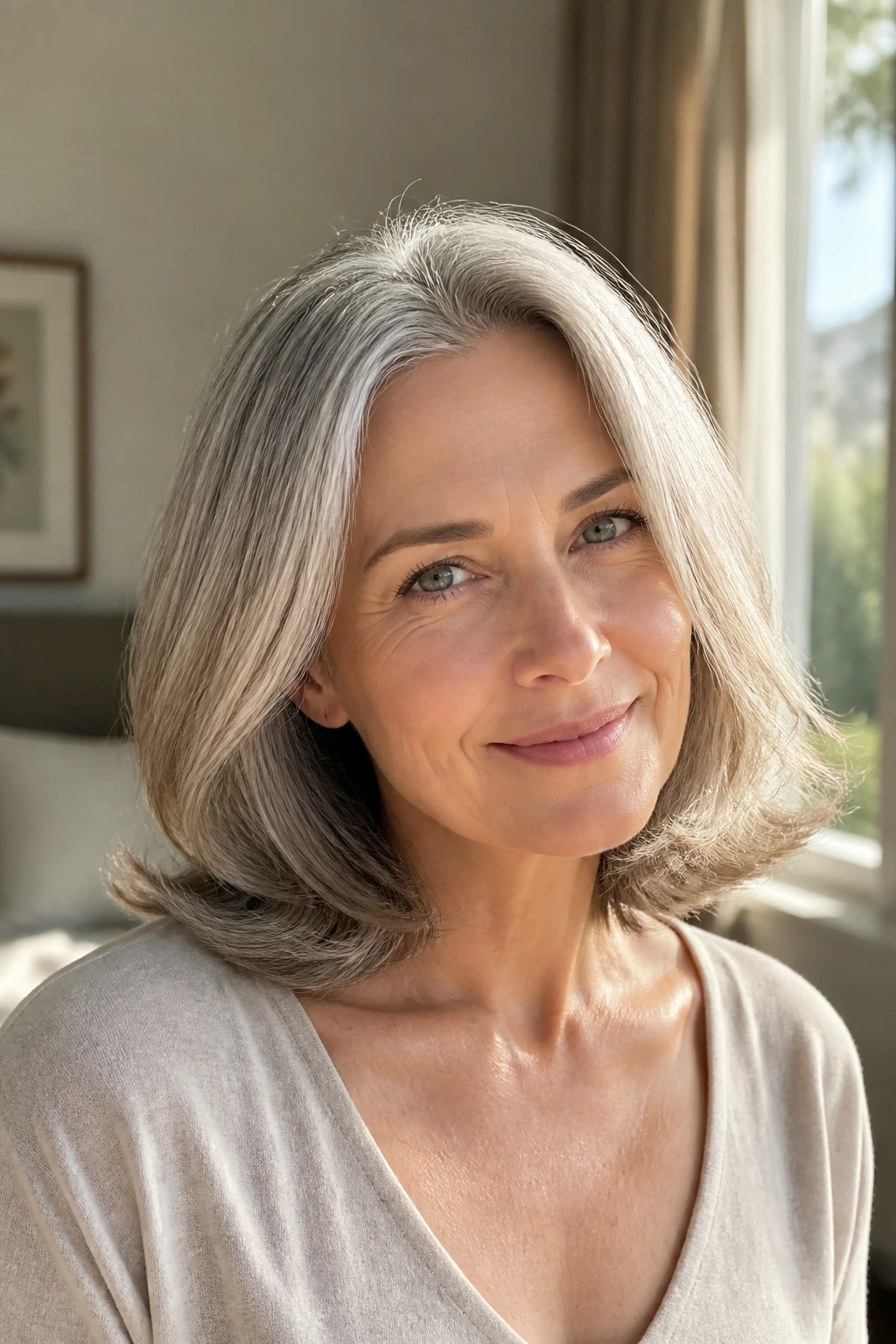
If I had to pick one shape that plays nicely with changing texture, gray strands, glasses, and busy mornings, the soft shoulder-length flip would be near the top of the pile. It gives the face some lift, keeps enough length for clips and ponytails, and ends with just enough outward movement to stop the hair from sitting heavy.
The flip should look casual, not staged. Think of the ends brushing away from the neck by an inch or two, not a dramatic curl. That little turn opens the whole silhouette and keeps shoulder-length hair from feeling boxy. It’s also one of the easiest cuts to refresh on day two with a quick round-brush pass or even a large Velcro roller at the ends.
I like it most on women whose hair has started to lose a bit of bounce at the bottom. The shape gives that bounce back visually, which is often enough. Hair does not have to be wild to feel alive.
If you want one cut that stays polite in the office, works with a sweater collar, and still has enough movement to feel like a choice, this is the one I would hand you first.
