



The fastest hairstyles that make women look younger after 50 usually do three simple things: they lift the face, they show movement, and they stop the hair from hanging heavy around the jaw. That sounds almost too plain to matter, but plain is exactly where the magic lives.
A cut that sits a little higher, bends a little softer, or parts a little farther over can change the whole mood of your face. Gray hair especially benefits from that kind of restraint. When the shape is right, silver looks bright and chic; when the shape is wrong, it can look flat and tired in a hurry.
I see the same mistake over and over: women keep the length because they think longer hair is more flattering, then wonder why their features seem blurred. Sometimes the fix is not more hair. It is better hair placement.
The styles below work because they respect the face you have now — not the one from a decade ago, not the one on a salon poster, and not the one people keep pretending you can fake with bangs alone. Shape matters. So does height at the crown. So does where the ends land.
1. The Collarbone Lob With Soft Ends
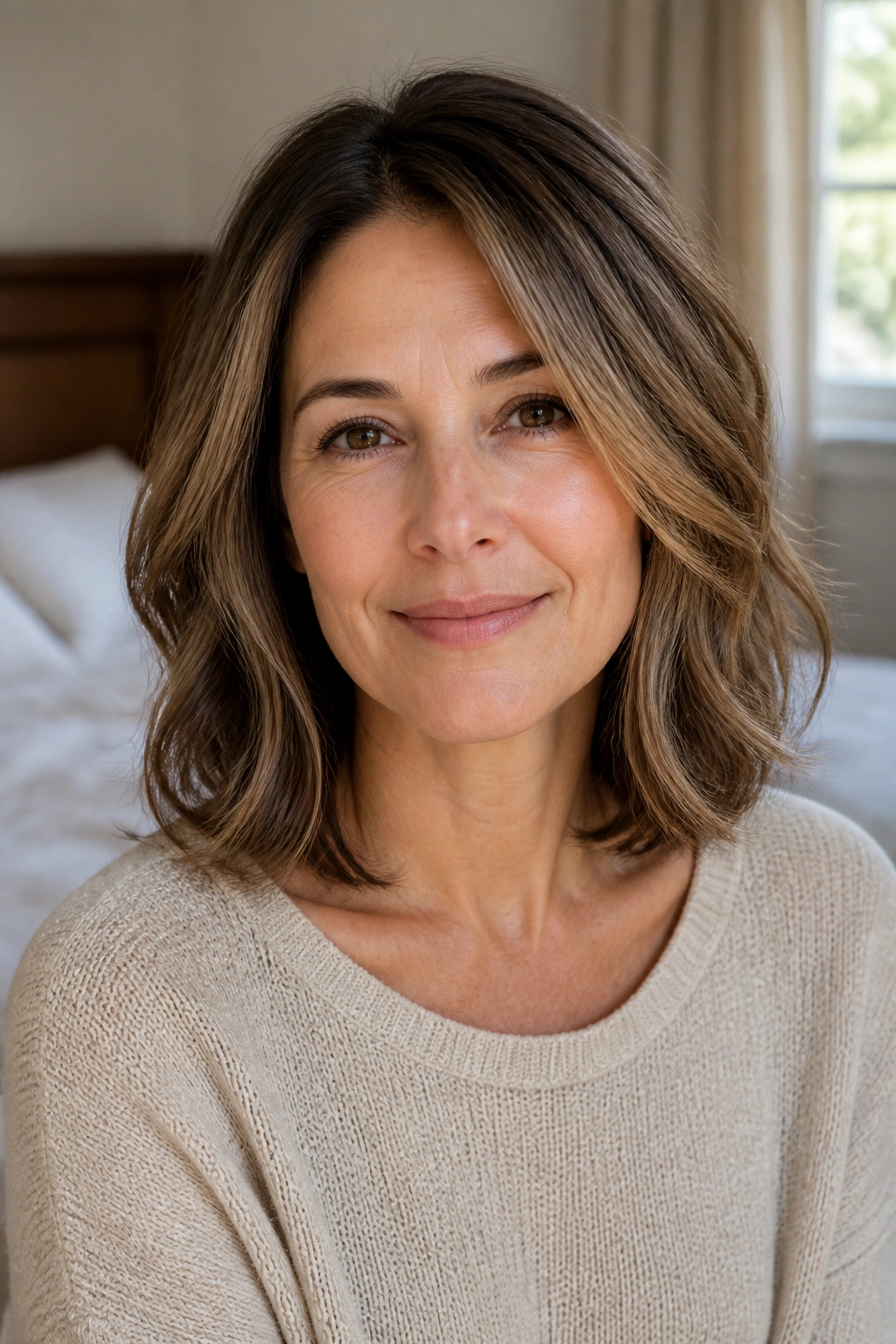
The collarbone lob is one of the easiest hairstyles that make women look younger after 50 because it lands in that sweet spot between polished and relaxed. It gives you enough length to pull back, but not so much that the hair starts dragging the face downward.
Why It Works
A cut that hits at or just below the collarbone keeps the neck visible and gives the face a cleaner frame. That little bit of openness matters more than people think. The eye sees lift when the hair no longer ends at the widest part of the jaw or chest.
Soft ends make the whole thing feel lighter. Ask for blunt density at the perimeter, then a little internal texture so the lob moves instead of sitting there like a shelf. On gray hair, that movement keeps the color from looking heavy.
What to Ask For
- Length that grazes the collarbone, not the upper chest
- Ends that are softened with point-cutting, not shredded thin
- A center part if your face is longer, or a slight off-center part if you want extra lift
- A blow-dry with a round brush that bends the ends under by about half an inch
Best for: fine hair, straight hair, and wavy hair that needs shape without too much fuss.
A lob like this does not need fancy styling. A little mousse at the roots, a quick bend with a brush, and you’re done. That’s the kind of haircut that earns its keep on busy mornings.
2. Long Layers That Start at the Cheekbones
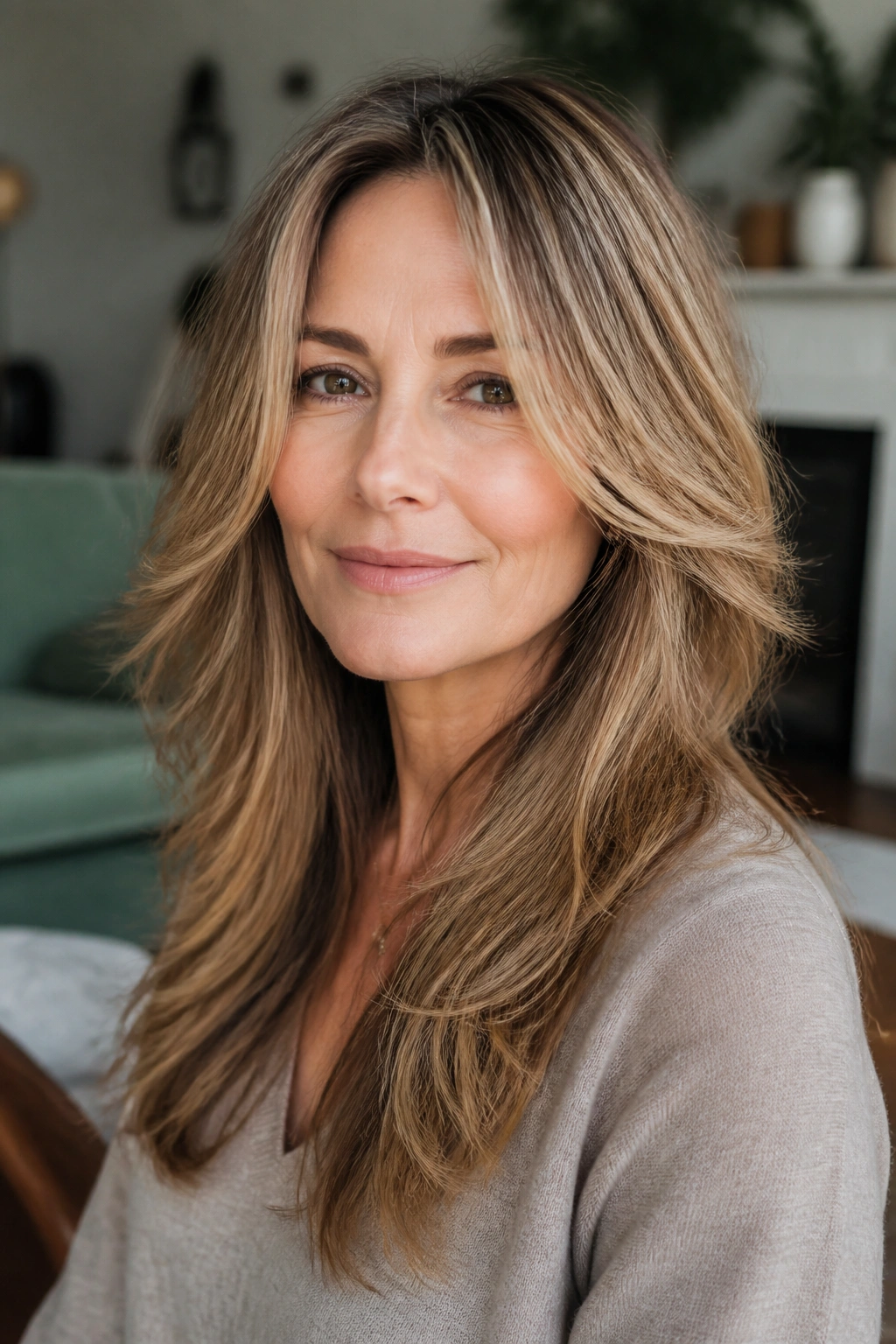
Why do some long cuts look fresh while others feel weighed down? Placement. That’s the whole thing.
Long hair can be gorgeous after 50, but only when the layers start high enough to lift the face. If the shortest layer begins below the shoulders, the weight tends to settle at the bottom, which makes the hair read as heavy and the features look softer in a less flattering way.
The Sweet Spot for Layering
Cheekbone-level layers are the sweet spot for most women. They create a little movement right where the face needs it most, and they let the rest of the length stay intact. I like this better than those old, choppy layers that start too low and leave the ends looking wispy.
There’s also a nice side effect: the hair behaves better around glasses and earrings. The layers break up the curtain effect, so you can actually see your face. Small thing. Big difference.
Ask Your Stylist For
- The shortest face-framing layer to begin around the cheekbone or just below
- Longer layers through the back so the ends do not thin out too much
- Soft blending, not a dramatic staircase effect
- A little lift around the crown if your hair tends to lie flat
This style is especially good if you want to keep length but still look awake. It’s a smart middle ground, and honestly, that’s often the right answer.
3. Side-Swept Bangs on a Shoulder-Length Cut
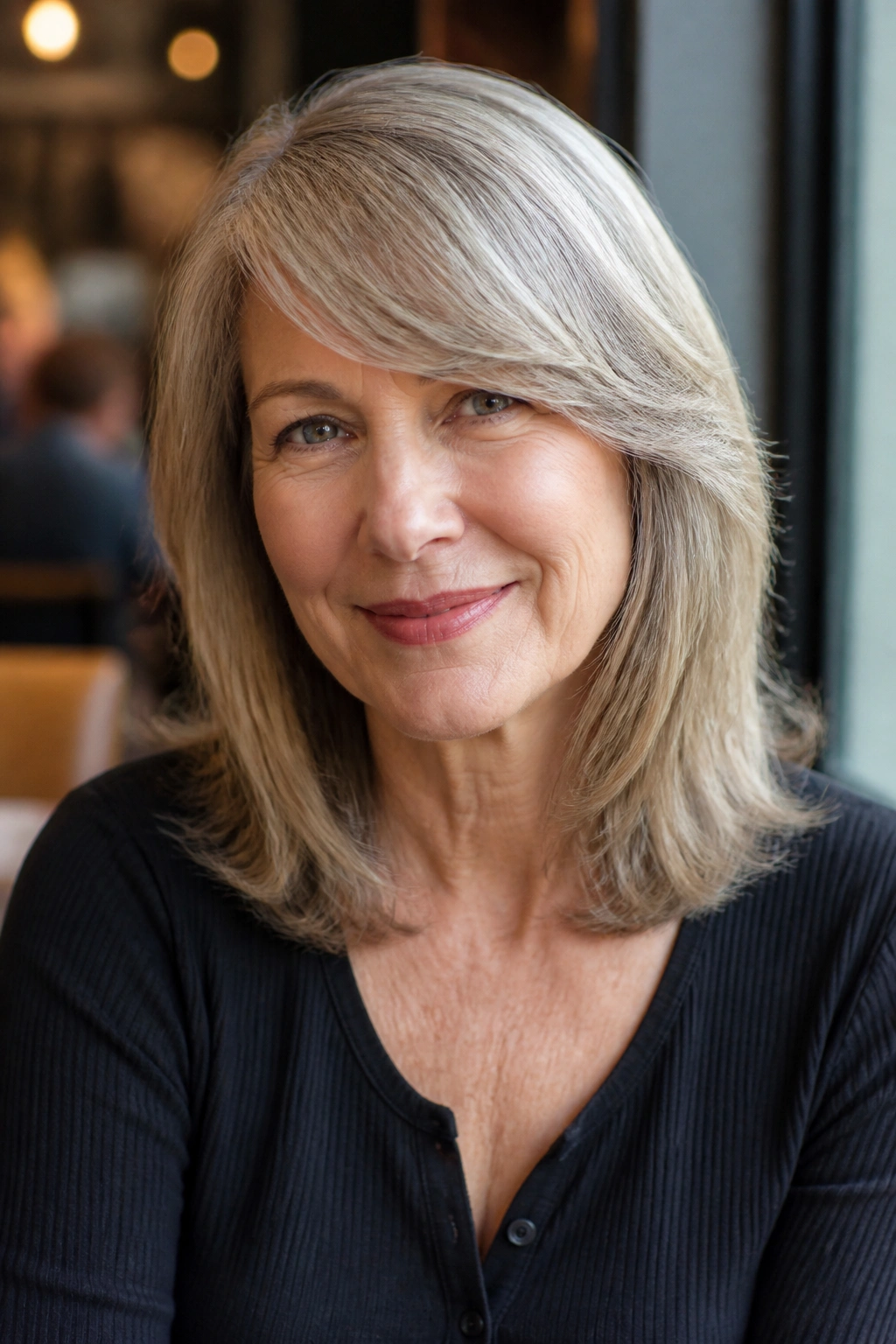
If your forehead seems a little more lined than it used to, side-swept bangs can do a lot of quiet work. They soften the upper half of the face without hiding everything, which is exactly why they age so well.
A heavy, straight-across fringe can be tricky after 50. It can look blunt, shrink the face, or fight with cowlicks. Side-swept bangs are easier to live with, and they blend into shoulder-length hair in a way that feels natural instead of forced.
The Shape That Flatters Most
The best version is not one giant swoop. It is a soft, movable fringe that starts deeper in the part and lands around the eyebrow or cheekbone. That gives you shadow and softness near the eyes without swallowing the face.
Shoulder-length hair helps because it gives the bangs somewhere to disappear into. The result feels balanced. Not fussy. Not teeny-bopper. Just clean.
What Makes This Version Work Day to Day
- Blow-dry the bangs from side to side at first, then direct them where you want them to fall
- Keep the ends light so they do not cling to the forehead
- Trim them every 3 to 5 weeks if you want the shape to stay open
- Pair them with a shoulder-grazing cut, not very long hair that pulls the whole look down
One good thing about this style: it plays well with hair that is getting a little finer at the front. The bangs give you coverage where you want it and lift where you need it.
4. The Textured Pixie With Height at the Crown
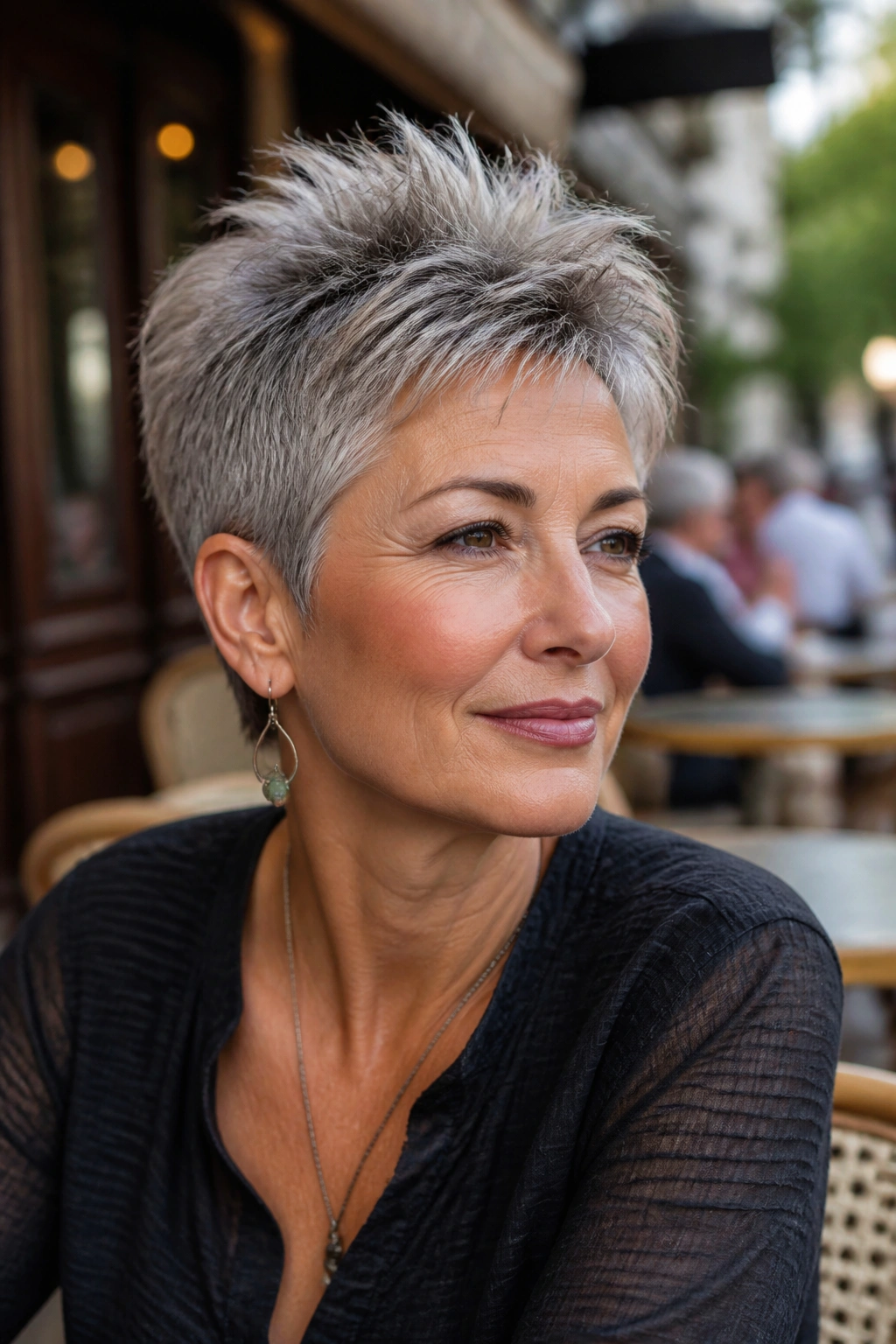
A pixie does not have to look severe. It only looks severe when the top is too flat and the sides are too tight.
The softer version — the one that tends to make women look younger after 50 — keeps a little length on top and uses texture instead of shellacked smoothness. That little bit of height at the crown changes the whole face. It pulls the eye upward, which is a simple trick, but a useful one.
Keep the Top Piecey
The top should move. That’s the point. If it’s cut into little choppy bits, you can push it forward, sweep it back, or angle it to one side depending on the day. The sides and nape should stay neat, but not so close that the cut feels severe.
A textured pixie is especially kind to fine hair because it gives the illusion of density. The head shape looks cleaner too. And if you wear glasses, the shorter sides keep the frames from fighting with the hair around your temples.
Best Details for This Cut
- Longer top layers for styling flexibility
- Tapered sides that hug the head without going ultra-short
- A soft fringe if your forehead feels broad
- A dab of matte paste or light wax, not stiff gel
This cut is bold without being loud. That’s the sweet spot. You still look like yourself, only sharper.
5. The Chin-Length Bob With Bouncy Movement
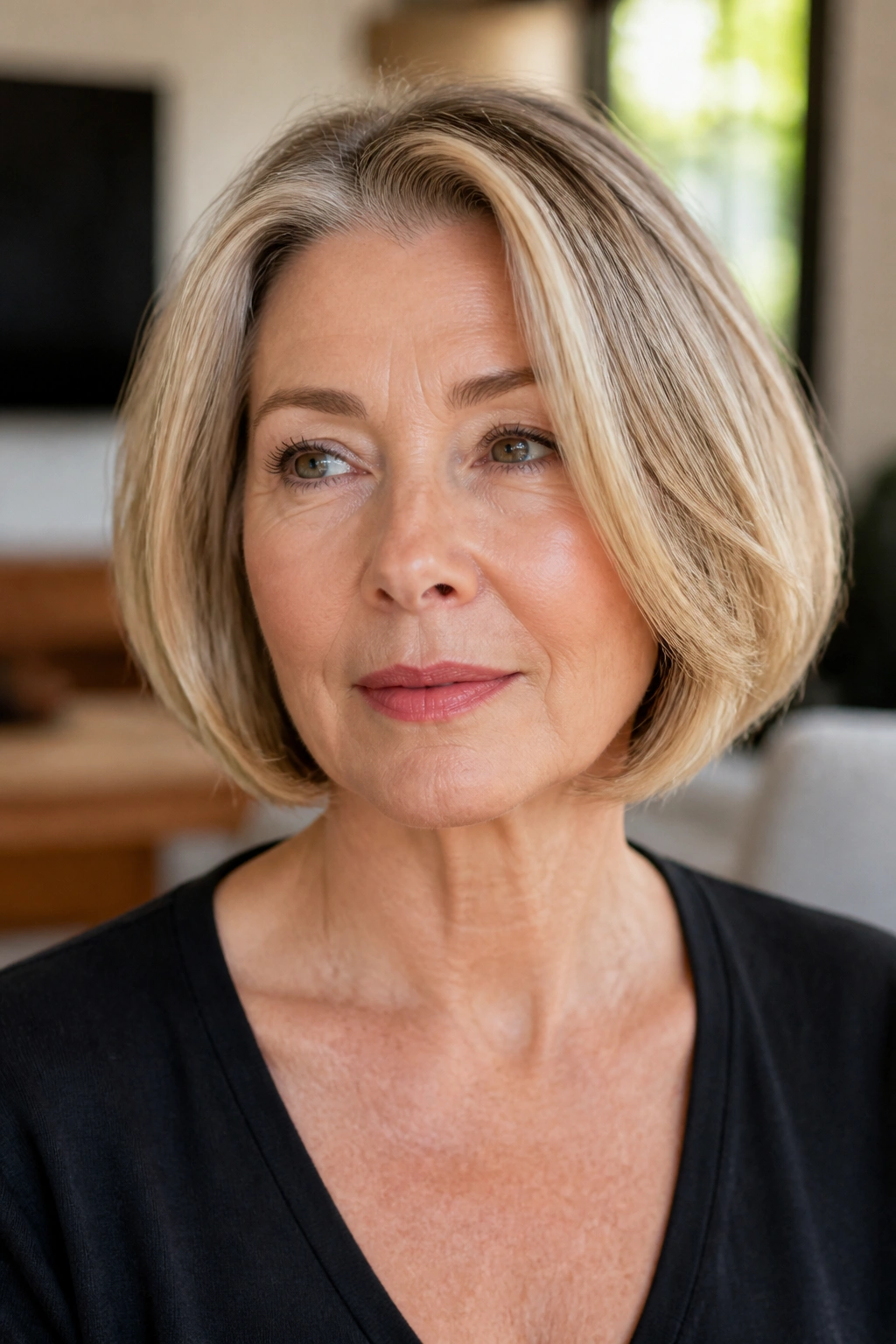
A chin-length bob feels crisp at the neck and light around the jaw. That little lift is one reason it keeps showing up on lists of flattering hairstyles for older women.
The chin is one of those landmarks that either helps a haircut or exposes a bad one. When the bob lands right there, it frames the face instead of smothering it. When the ends bounce a little instead of hanging straight, the whole look gets more energy.
That matters.
The Shape That Saves It
The best chin-length bob is never stiff. It should skim the jaw, not clamp onto it. A tiny inward bend at the ends makes the line feel softer, and a touch of layering under the top section keeps it from turning into a block.
This style works well on straight hair, but it also behaves nicely on wavy hair if you let the texture live a little. Tuck one side behind the ear and leave the other loose, and the cut gets an easy, modern feel without much effort.
If your hair is very thick, ask for the underneath weight to be removed carefully so the bob doesn’t puff out. If your hair is fine, keep the perimeter clean and avoid over-thinning the ends. The wrong kind of texture can make it look sparse fast.
One sentence, really: shape beats length here.
6. A Modern Shag With Wispy Fringe
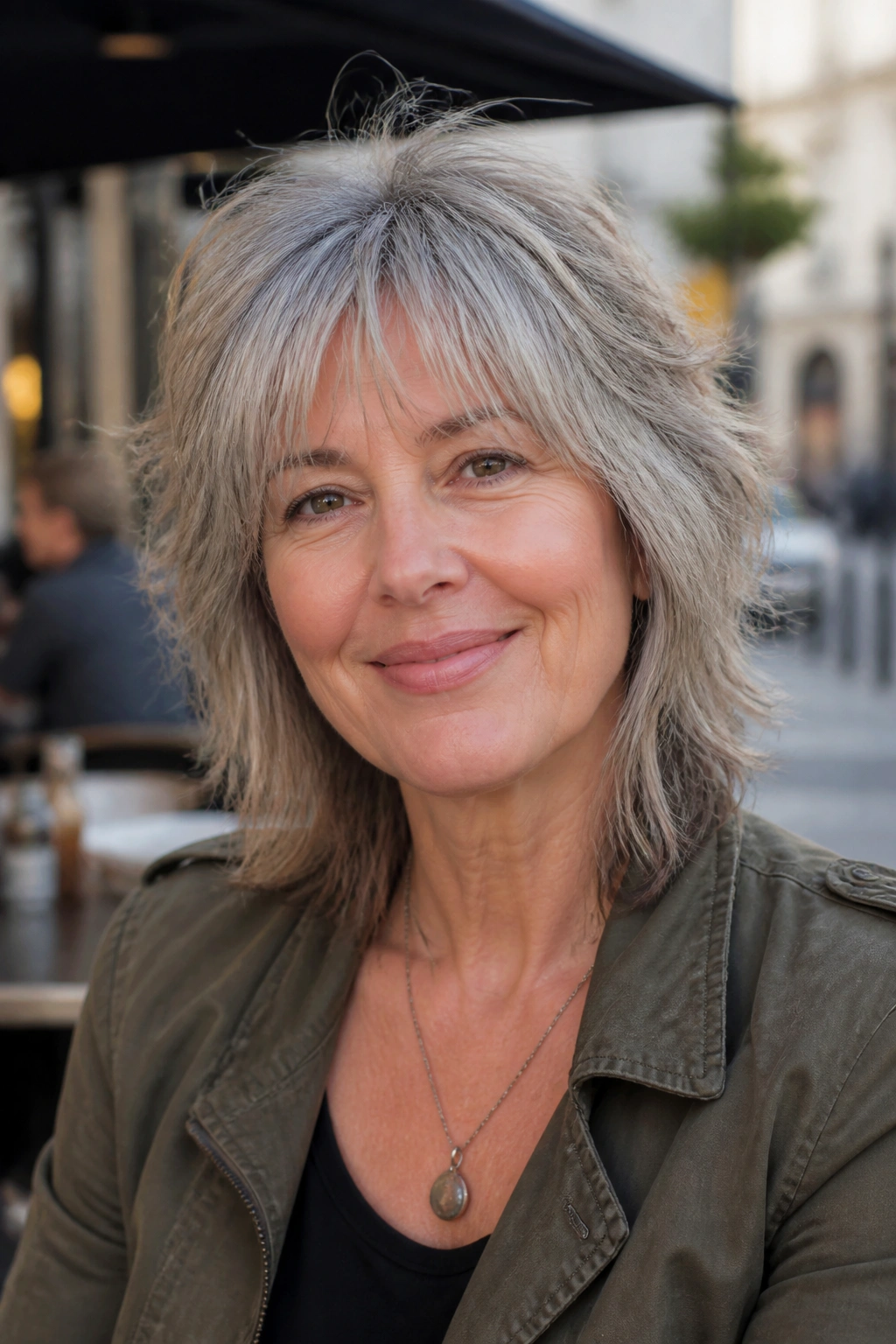
Unlike the shag cuts that can turn fuzzy, a modern shag uses soft layers and a light fringe to create movement without chaos. That is the difference between “cool” and “why does my hair look like it lost a fight with humidity?”
The modern version stays controlled. The layers are still there, but they’re spaced more thoughtfully, and the fringe is wispy instead of heavy. That makes it friendlier for women over 50, especially if the hair has a natural wave or a little bend at the ends.
What Makes It Different
A good shag should make the face look open, not buried. The shortest layers usually sit around the eyes or cheekbones, while the longer ones fall through the sides and back. That gives the cut its movement without turning the crown into a helmet or the ends into fluff.
I like this cut most on hair that has some texture already. Straight hair can wear it, too, but it often needs a quick blow-dry or a large curling iron to wake the layers up. The result should feel airy, not messy.
Good Reasons to Try It
- It gives shape to medium-length hair that has gone flat
- It helps gray hair look lighter and more lifted
- It works with natural wave, which saves styling time
- It can soften a strong jawline or a broad forehead
The fringe is the part that scares people, but it should stay soft enough to move. If you can see skin through it, that’s usually a good sign.
7. The Blunt Bob That Still Feels Soft
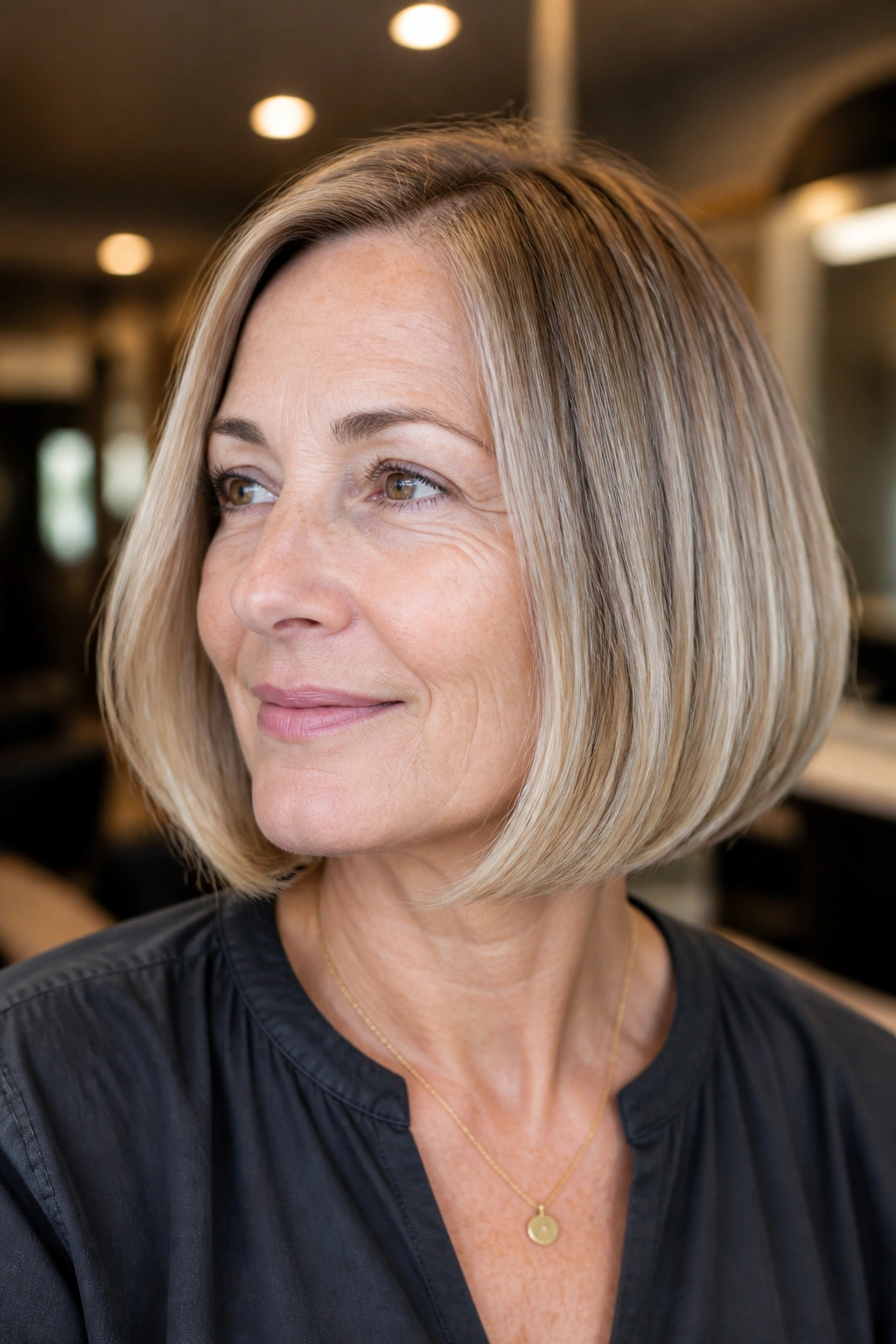
A blunt bob can look younger when the ends are soft enough to move. People hear “blunt” and picture something severe, but that is not the goal here.
The point of a blunt bob is fullness. Clean ends make hair look thicker, and thicker-looking hair tends to read as healthier. Healthier hair usually reads as fresher. That’s the chain of logic, and it holds up in real life.
Why It’s Better Than It Sounds
If your hair has gotten finer, a blunt line at the bottom can be a gift. It stops the ends from looking see-through, especially when gray strands are mixed in. The trick is to keep the shape strong while styling it softly.
A slight bend at the ends, a side part, or a little root lift keeps the bob from feeling boxy. Straightened flat to the head, it can look a bit hard. That’s where people go wrong. They hear “sharp bob” and forget the “soft” part.
Best Styling Notes
- Use a round brush or a large hot brush to curve the ends under
- Keep the line around the chin or just below it
- Ask for subtle internal texturing if the hair is thick
- Avoid razor-heavy ends that make the perimeter fray
This cut is especially good for women who want a tidy look without giving up personality. It’s neat, but not stiff. That matters more than the trend-chasing stuff people get distracted by.
8. Feathered Layers Around the Face
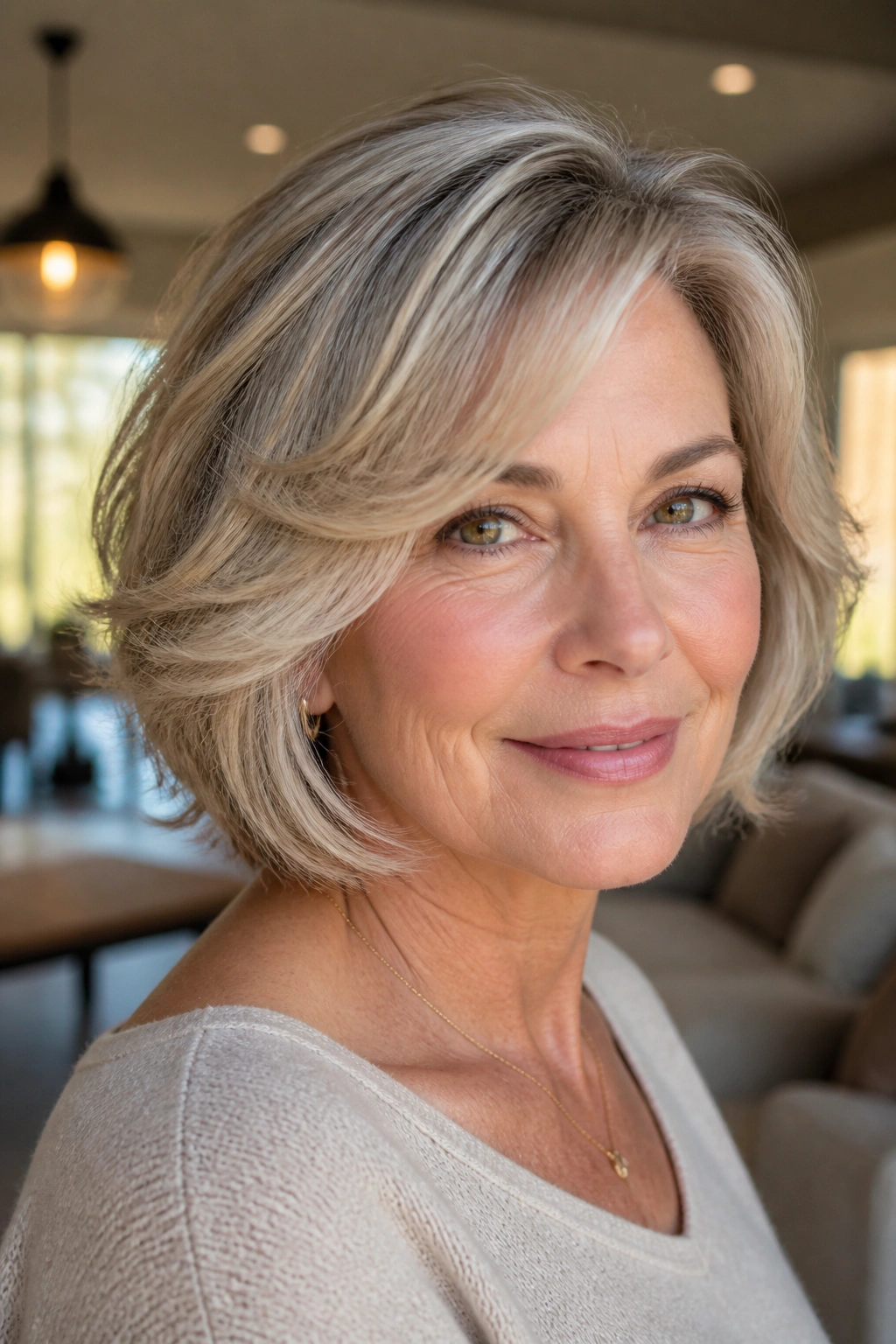
I keep coming back to feathered layers because they do a sneaky kind of face-lifting. They do not scream for attention, but they change the outline of the face in a way that feels softer and more open.
Feathering works best when the layers around the temples and cheekbones are light enough to move. If the whole cut is heavily layered, it can start to fray. If the layers are too long, nothing happens. The sweet spot sits between those two mistakes.
What Feathering Fixes
Heavy hair around the sides can make the face look boxed in. Feathered pieces break that block up. They also help if your hair is coarse or naturally full, because the cut removes some of the visual weight without making the ends look thin.
This style is one of the nicer choices for gray hair that has a little puff or bend to it. Instead of fighting that texture, feathering works with it. The hair lands in soft shapes, and the face gets more air around it.
Best Features of a Feathered Cut
- Layers that begin near the cheekbone and taper toward the jaw
- A light blowout or rollers to keep the feathering visible
- Enough length to tuck behind the ear
- A perimeter that stays full, not shredded
One thing I’d avoid: too many short layers on the crown. That can make the top too fluffy and throw off the balance. Keep the softness near the face, not everywhere at once.
9. Loose Waves on Medium-Length Hair
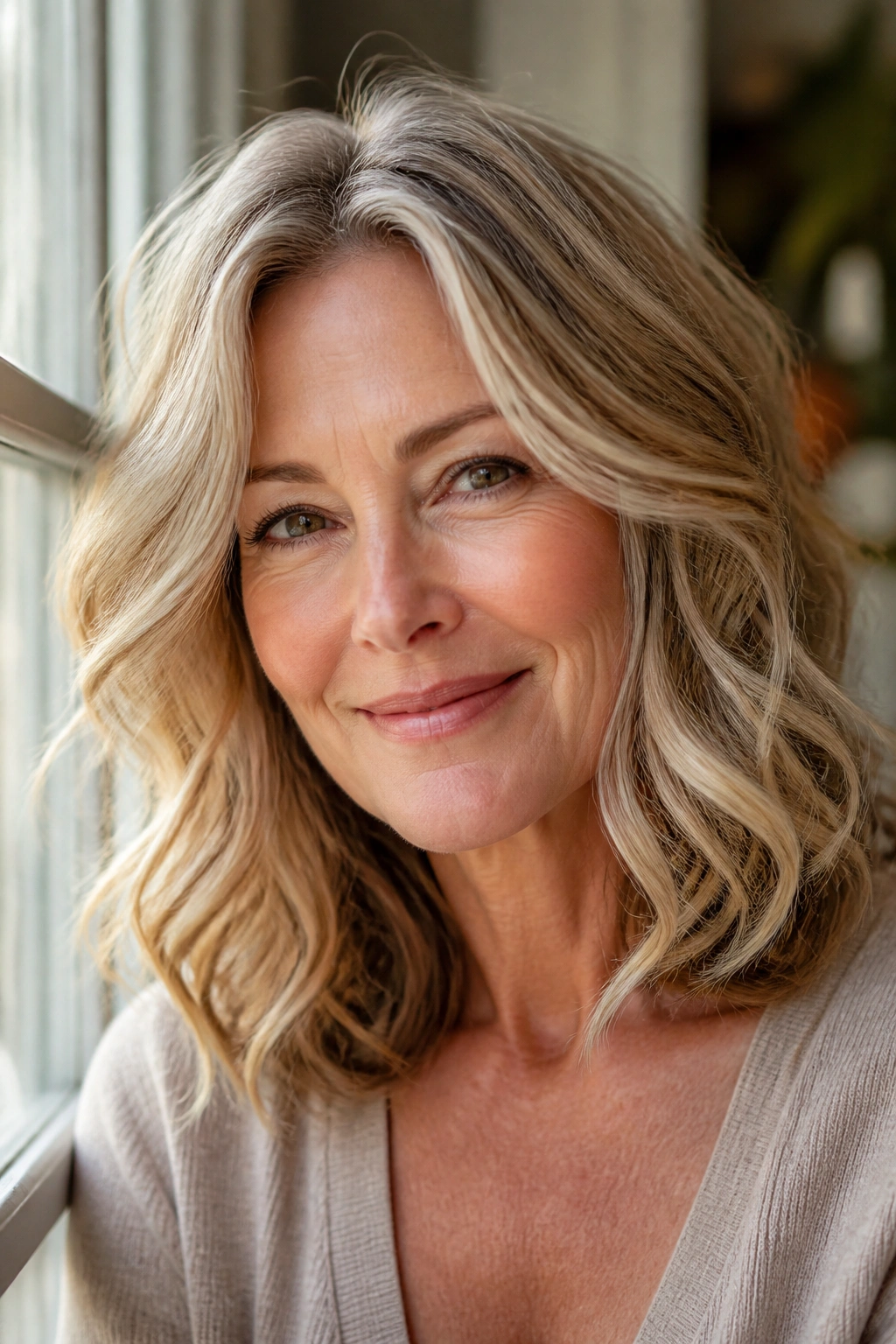
Can loose waves really make a difference? Absolutely. But they need to look intentional, not like you slept on a damp braid and called it a style.
The sweet version of this look uses a medium-length cut, usually around the shoulders, with waves that start low enough to frame the face without crowding it. If the wave begins too high, it can puff the sides out. If it begins too low, the hair loses shape.
The Wave Pattern That Works
The best waves after 50 are soft bends, not tight spirals. Think of an S-shape that bends away from the face. That line opens the cheek area and keeps the style from feeling dated. A 1-inch curling iron or a large wand gives you enough bend without making ringlets.
How to Keep It Fresh
- Curl sections away from the face, then shake them out with your fingers
- Leave the ends slightly straighter for a modern finish
- Use a lightweight spray, not sticky hairspray
- Refresh the front pieces more often than the back
This style is forgiving on gray hair because the wave catches the light and gives the color dimension. It also works well if your hair has gotten drier, since you do not need a lot of heat or polish to make it look polished. Funny how that works.
10. Rounded Cuts for Natural Curls

Curly hair gets younger-looking when the shape stays rounded instead of wide. That’s the part many people miss.
When curls are cut too straight across, they can fan outward at the sides and make the face look bottom-heavy. A rounded shape keeps the curl pattern stacked in a way that feels lively and intentional. It also lets the curls sit closer to the head where they can frame the face instead of overwhelming it.
What Curly Hair Needs
Dry cutting often works well because curls shrink, and shrinkage can change the whole shape. The stylist should see where the curl wants to fall before taking off too much. That part matters more than people realize, because curly hair behaves like it has its own opinion.
A soft shoulder-length cut or a curly bob can be a very good choice here. The face stays open, the neck shows a little, and the curls get enough space to bounce without exploding outward.
Ask For These Details
- Rounded shape through the sides, not a pyramid
- Internal layers that support curl spring
- Enough length to avoid frizz at the ends
- Face-framing pieces that land near the cheekbones
If your curls are fine, go easier on the layers. If they’re dense, you may need more shaping through the bulk. Either way, the goal is the same: keep the silhouette controlled and lively at the same time.
11. The Deep Side Part That Lifts the Face

A deep side part is the cheapest lift you can get. That sounds blunt, but it’s true.
Moving the part even two inches can change how the brow, cheek, and crown read together. The hair gets a little lift at the roots, the face looks less symmetrical in a way that feels softer, and the whole style suddenly has some shape. No scissors needed.
Why It Works So Fast
Hair that sits straight down the middle can sometimes flatten the features, especially if the cut is long or very smooth. A side part breaks that vertical line and gives the top of the head more height. That small shift matters most on fine hair, where every bit of volume counts.
It also helps if one side of your face is a little fuller than the other. Most faces are, by the way. A side part can balance that out without making it obvious you were trying.
Where It Fits Best
- Short pixies
- Chin-length bobs
- Shoulder-length blowouts
- Loose waves and soft curls
If your hair thins at the temples, do not drag the part too far over. That can expose scalp in a way that feels too severe. Keep enough fullness near the front so the lift looks natural, not forced.
Simple change. Big payoff.
12. A Tapered Crop That Works With Glasses
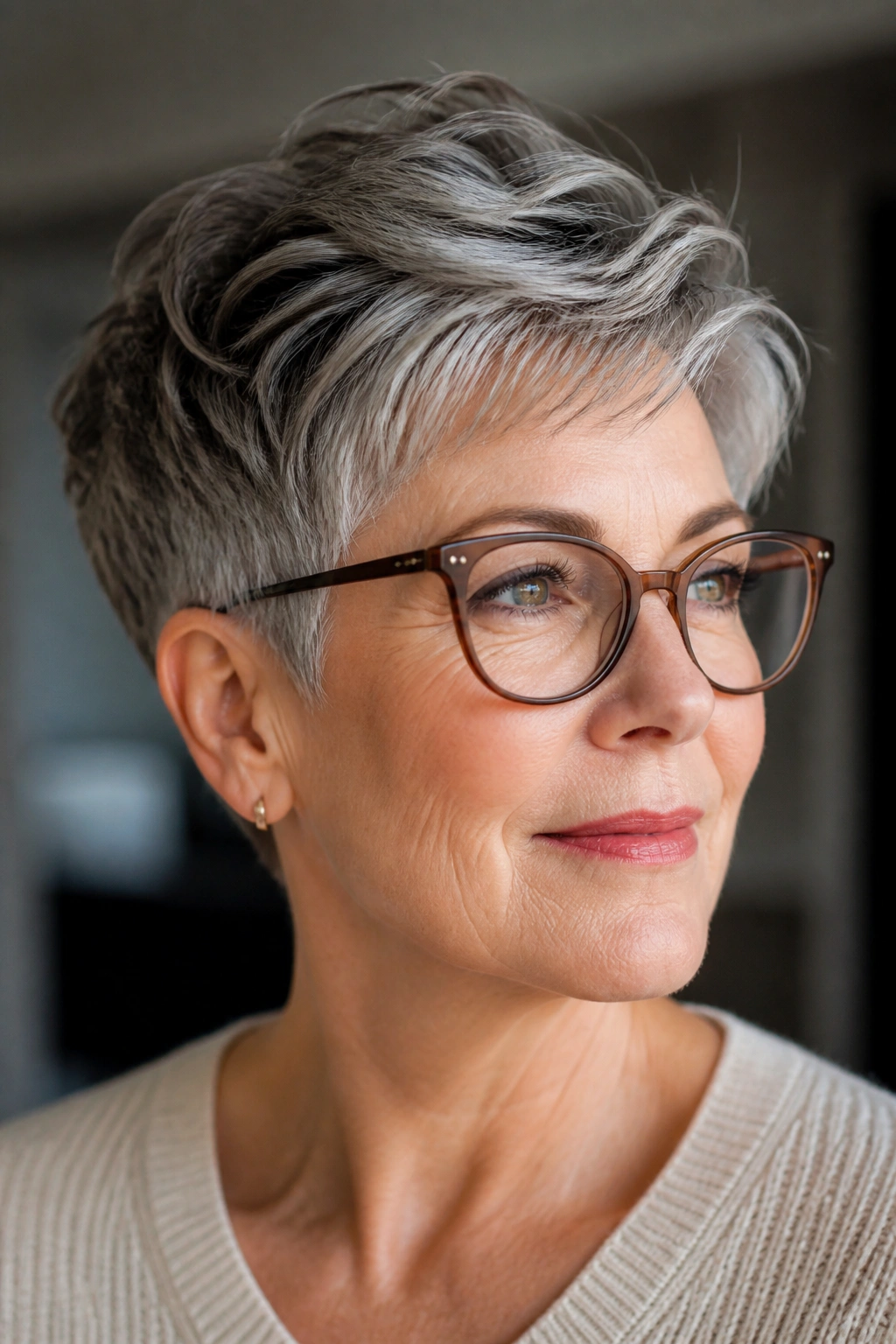
When you wear glasses, the haircut around your temples matters more than people think. Hair that hangs too wide can tangle with frames. Hair that’s cropped too tight can make the glasses dominate the face. The tapered crop sits in the middle and usually gets it right.
This cut keeps the sides neat, softens the temple area, and leaves just enough length on top for movement. It is especially good for women with petite features or strong cheekbones, because it opens the face instead of hiding it.
What Makes It Friendly
The nape should stay tidy. The top should stay touchable. Around the ears and temples, the hair needs to taper in smoothly so the frames have room to sit without competing with the cut. That’s what gives the whole style its clean look.
A tapered crop also works well if your hair has gone more silver or white. The shorter shape makes the color look deliberate. No fuss. No extra bulk. Just a neat line and a little lift.
The Salon Ask
- Short, tapered sides
- More length at the crown for styling
- Soft edges around the ears
- A fringe only if it can move away from the glasses
This is one of those cuts that looks easy when it’s done well and awkward when it isn’t. If the balance is right, though, it has a crisp, lively feel that’s hard to beat.
13. Curtain Bangs on Shoulder-Grazing Length
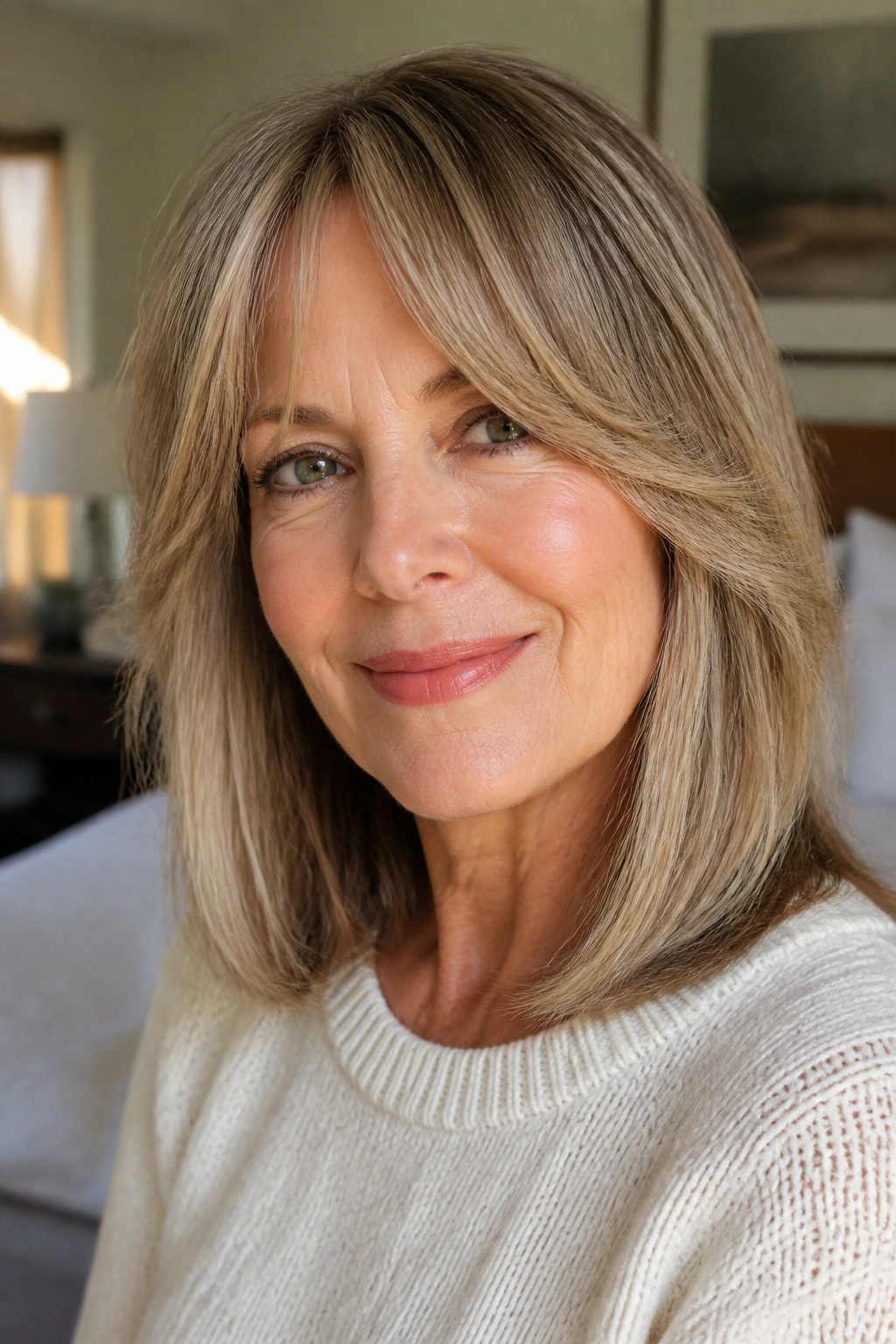
Why do curtain bangs keep showing up in flattering cuts for women over 50? Because they do a lot of face-softening without locking you into a severe fringe.
The best curtain bangs split away from the center and blend into the rest of the hair. That creates a frame around the face that can make the cheeks look a little higher and the forehead a little softer. They also work especially well on shoulder-grazing cuts, where the length below keeps the style grounded.
The Right Length Matters
Do not cut curtain bangs too short. That’s where the trouble starts. The shortest point should usually hit somewhere between the brow and cheekbone, with the longer pieces sliding into the layers near the jaw or lip. That gives the hair a real shape instead of a chopped-up front section.
They’re also useful because they’re flexible. Wear them blown out, tucked back, or swept to the side. If you want a style that changes with your mood, this one has that kind of range without asking for a lot of drama.
Good Matches for Curtain Bangs
- Straight or wavy hair
- Shoulder-length cuts and lobs
- Foreheads you want to soften
- Face shapes that need a little extra width near the eyes
They’re not magic. Nothing is. But they do make a haircut look more considered, and that often reads as fresher.
14. Silver Hair Styled Into a Glossy Lob
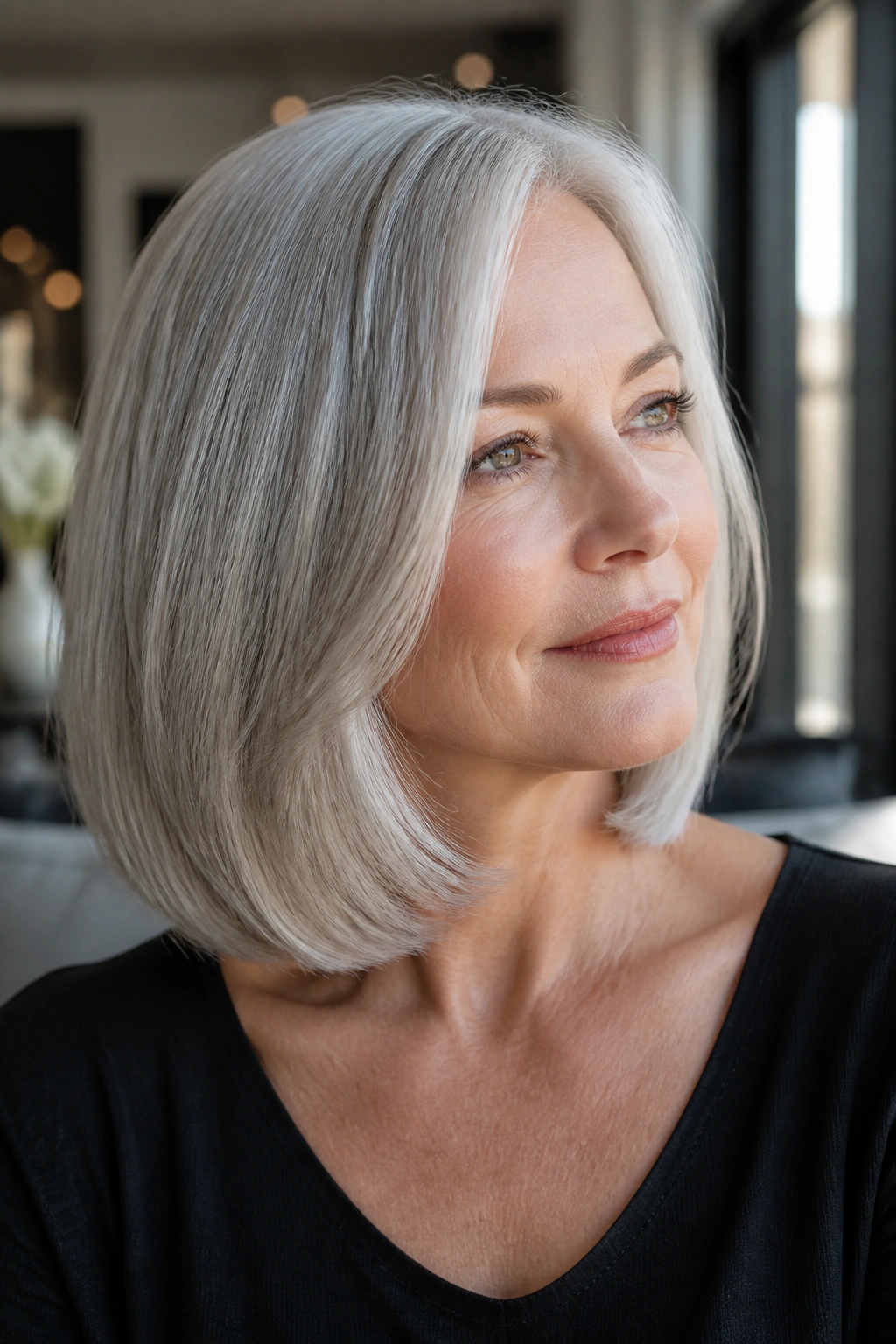
Gray hair looks different when it moves and reflects light. That’s why a glossy lob can look so sharp on women over 50.
A lot of silver hair gets worn too long, too flat, or too matte. Then people wonder why it seems older than it should. A clean lob changes that immediately. It gives the silver a shape to live in, and it makes the color look intentional instead of neglected.
Why the Shape Matters More With Gray Hair
Gray strands can be coarse, wiry, or oddly soft depending on the person. That texture changes the way the cut falls. A one-length or slightly layered lob keeps the silhouette tidy, which helps the color stand out. When the line is clean, the silver reads bright.
A little shine goes a long way here. Not greasy shine — just enough polish that the hair doesn’t look dull under indoor light. If the lob has a side part and ends that bend under gently, the whole effect feels modern without trying too hard.
Small Details That Help
- Keep the length around the collarbone or just above it
- Add internal layers if the hair feels bulky
- Use a glossing finish or light smoothing cream
- Avoid over-thinning gray hair, which can make it frizzy at the ends
This is one of my favorite looks because it treats gray hair as a feature, not a problem. That shift alone changes the mood.
15. A Sleek Blowout With Bent Ends
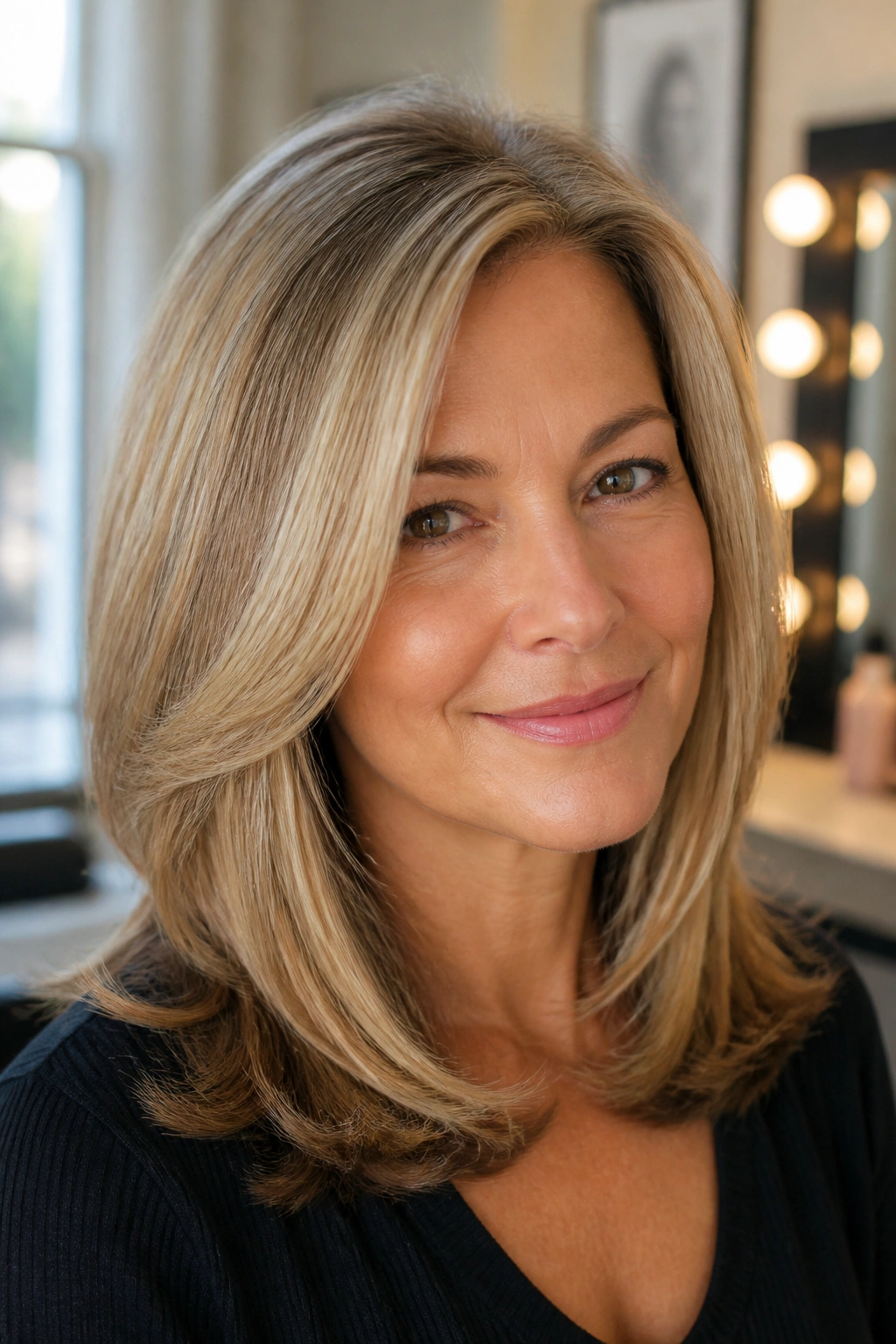
A sleek blowout is not the same thing as pin-straight hair. That difference matters.
Flat-ironed hair can sometimes look sharp in a way that shows every line in the face. A blowout with a round brush keeps the roots lifted and the ends softly curved, which is much kinder after 50. The style still looks neat, but it has movement and a bit of warmth.
What Gives It That Youthful Feel
The hair should have shine, yes, but also a little bounce. The roots need lift so the style does not collapse around the crown, and the ends should bend under just enough to avoid looking stiff. A tiny turn at the bottom changes the whole mood of the cut.
This works beautifully on lobs, shoulder-length hair, and longer layers. It also suits gray hair that has been smoothed with a gloss or serum, because the light reflection makes the style look intentional. If you only straighten the hair and walk away, it can feel harsher than you wanted.
Tools That Help
- A round brush with a 1.5- to 2-inch barrel
- A blow-dryer with a nozzle attachment
- Heat protectant before styling
- A cool shot at the end to set the bend
I like this style for events, but it’s also practical enough for work or dinner. It’s polished without turning rigid. That’s the sweet spot again.
16. The Half-Up Style With Crown Lift
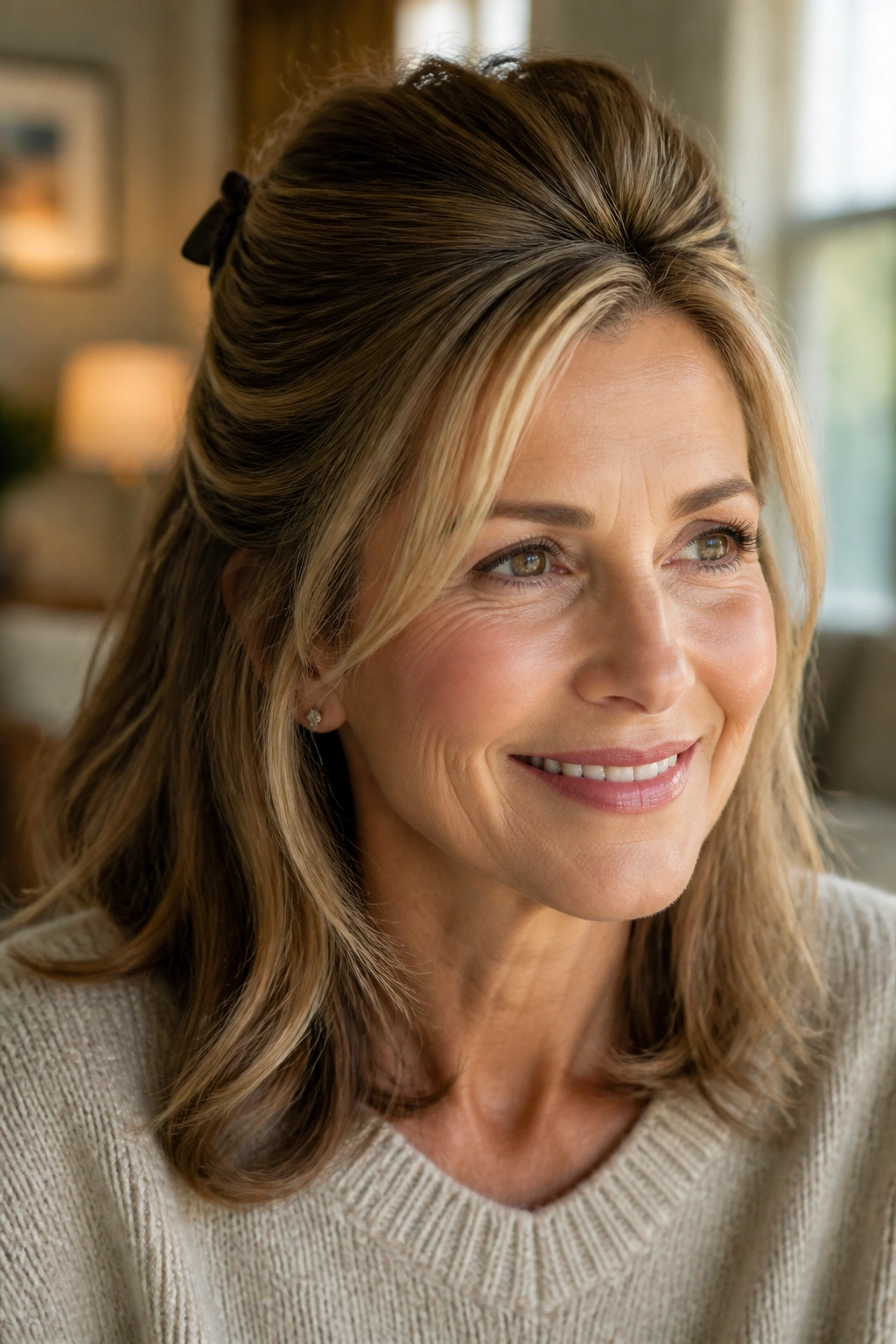
On rushed mornings, the half-up style is the one that saves the day. It pulls the face up, hides flat roots, and still lets the hair move.
The trick is not to make it too tight. A half-up style that’s slicked back can look severe fast. The version that flatters women over 50 leaves a little softness around the temples and enough fullness at the crown to create lift. That’s what makes it feel fresh.
How to Keep It Soft
Start by teasing or lifting the top section gently at the crown, then secure only the top half of the hair. Leave a few slim pieces near the front if you want to soften the hairline. A small claw clip, barrette, or covered elastic can all work, depending on how polished you want it.
This style is particularly useful if your hair is in that awkward zone between short and long. It gives shape without requiring a full updo. It also works well with gray or silver strands, because the lift breaks up the solid color and keeps it from reading flat.
Easy Variations
- Half-up with a twisted top section
- Half-up with a small clip instead of a tight elastic
- Half-up with loose waves underneath
- Half-up on second-day hair when the roots need help
The nicest thing about this style is that it does not pretend to be more complicated than it is. It just does the job.
17. The Soft Low Bun With Loose Face-Framing Pieces
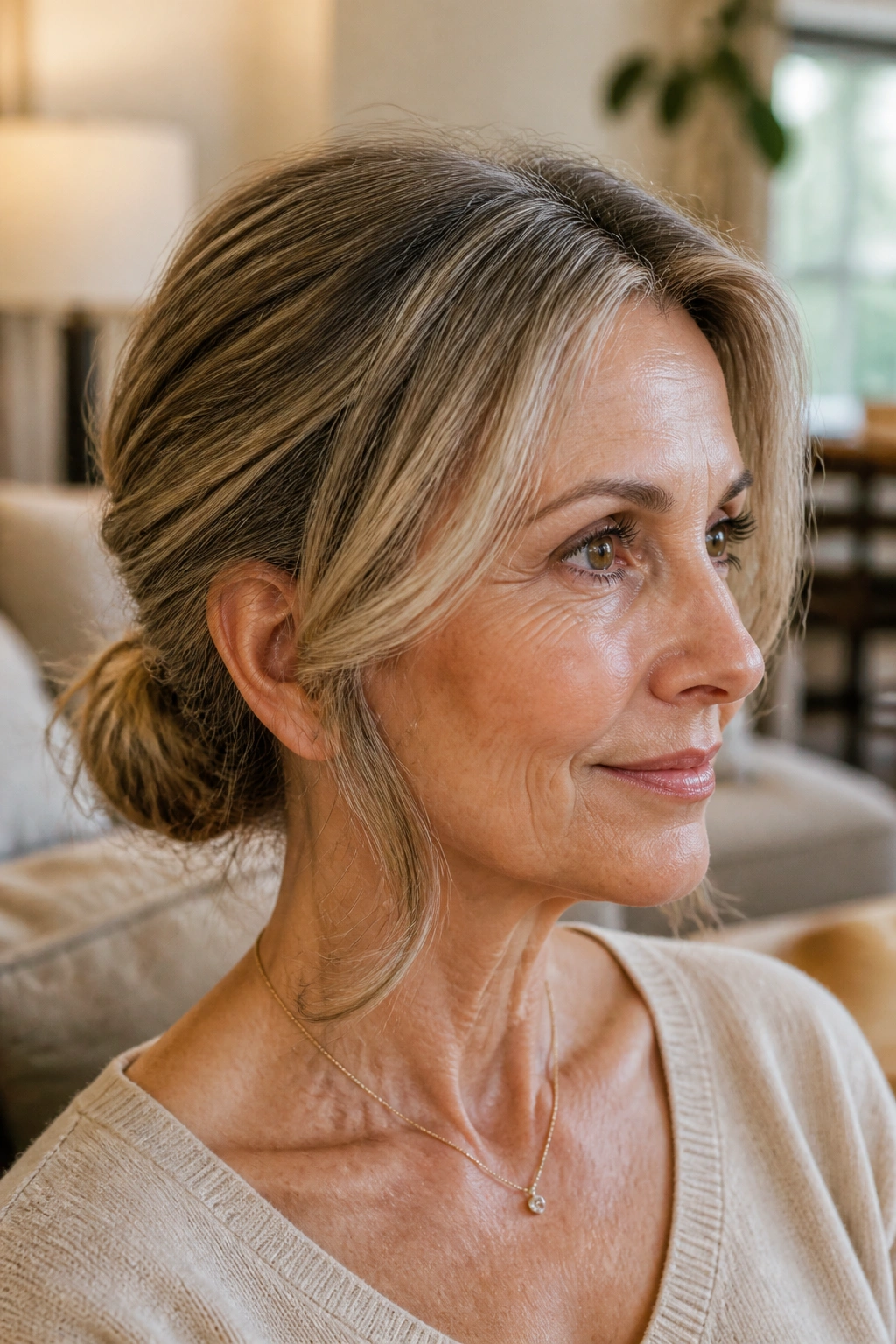
A low bun can look youthful when it stays loose at the hairline and lifted at the crown. That’s the whole difference between elegant and severe.
If the bun is pulled tight and slick, it tends to pull the face down with it. If it’s soft, slightly full, and left with a few face-framing pieces, the whole look feels easier. That softness matters even more for women over 50, because harsh lines around the hairline can make the face look harder than it really is.
What To Keep Loose
The crown should not sit flat against the head. A little lift there keeps the profile from collapsing. The bun itself can stay low and neat, but the front and temple area should have some air. Not a mess. Air.
This works for special events, of course, but it’s also good for everyday wear if your hair is past shoulder length and you want it off your neck. Gray hair in a soft bun can look especially clean when the bun has shape and the face-framing pieces are lightly waved. The contrast is what keeps it from looking too severe.
Best Details to Remember
- Keep the bun at the nape, not the middle of the head
- Leave two small front pieces out, or one on each side
- Lift the crown with your fingers before pinning
- Use pins that match your hair color so the bun looks tidy
If you only remember one thing from all seventeen styles, make it this: shape matters more than age. Hair that opens the face, shows a little lift, and moves instead of sitting heavy will almost always look fresher than hair that is simply long for the sake of being long.
