



Long hair does not have to behave itself.
When women ask for edgy haircut ideas for long hair, what they usually want is not a dramatic chop. They want shape, movement, and a little bit of attitude without losing the swing, the braid length, or the option to throw it into a knot on a bad morning. The best cuts do that by changing the outline, shaving off dead weight in the right places, or adding a fringe that makes the whole style feel sharper.
And long hair is honest. It shows a bad cut fast. Too much thinning at the ends turns it wispy and tired. Too many short layers near the crown can make it puff out in all the wrong ways. The cuts that work best are the ones that look deliberate from the front, the side, and the back.
That is where the fun starts. Some long styles get their edge from texture, some from asymmetry, and some from a blunt line that feels almost defiant. The trick is picking the one that fits your hair density, your styling patience, and the kind of “edgy” you actually mean.
1. The Long Wolf Cut With Wispy Ends
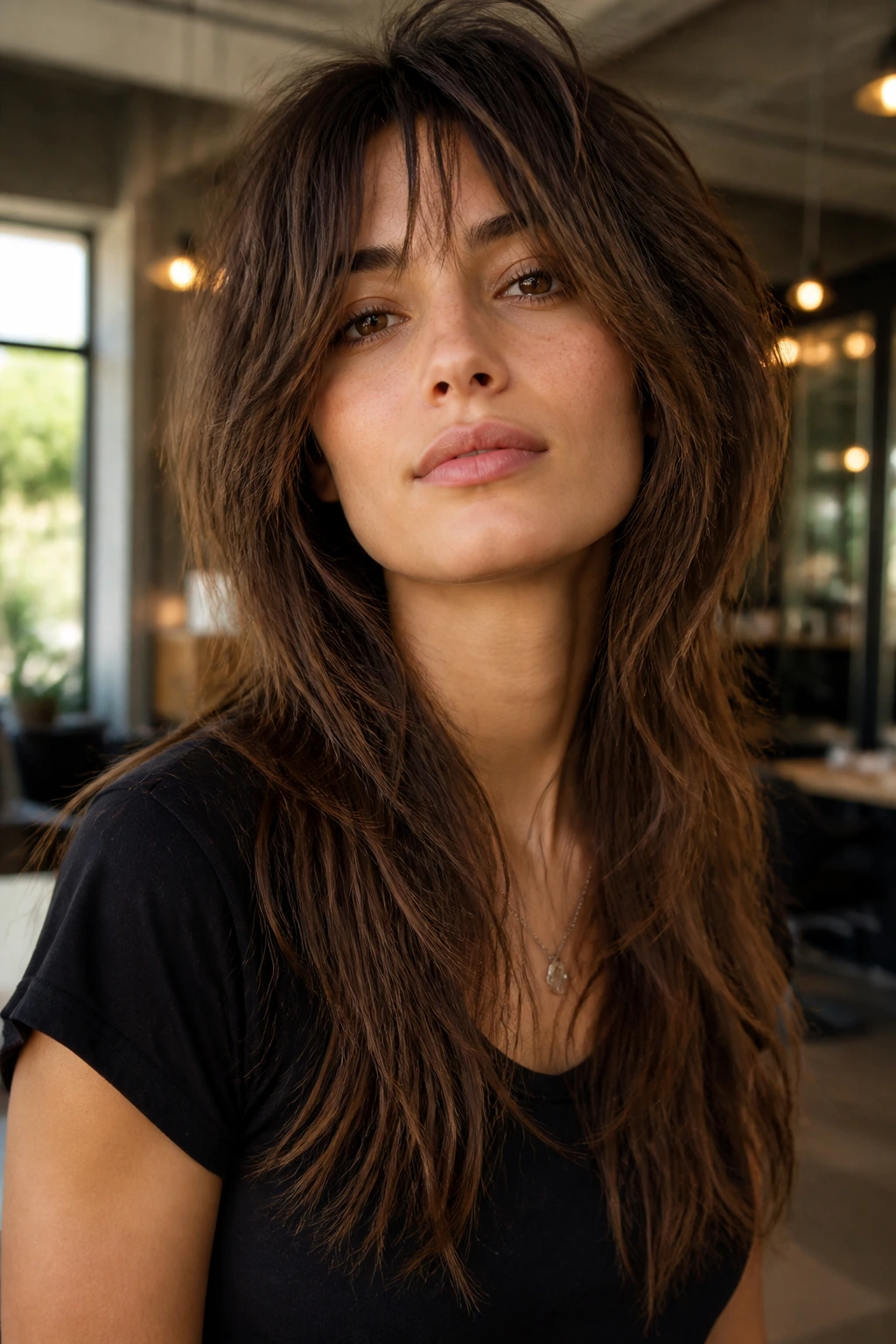
The long wolf cut is the easiest way to make long hair look a little dangerous without turning it into a full haircut reinvention. It keeps the length, but it breaks up the shape with choppy layers through the crown and around the face, then lets the ends fall softer and lighter. The result is messy in a controlled way. Good messy.
What makes it work is contrast. The top has lift, the mids have movement, and the bottom does not sit there like a heavy curtain. On thick hair, that matters a lot. On wavy hair, it can look almost effortless after a quick scrunch with mousse and a rough dry.
A wolf cut works best when the layers are not all the same length. You want shorter pieces around the crown and cheekbones, then longer pieces that still keep the hair looking like long hair. If the layers are too even, the shape loses its edge and starts looking like a standard shag.
Best for: thick hair, natural waves, and anyone who wants texture without a polished finish.
Skip or soften it if: your hair is very fine and already flat at the ends.
Styling note: a 1-inch curling iron or a diffuser gives the layers more bite than a straight blow-dry.
2. Invisible Layers That Break Up Heavy Length
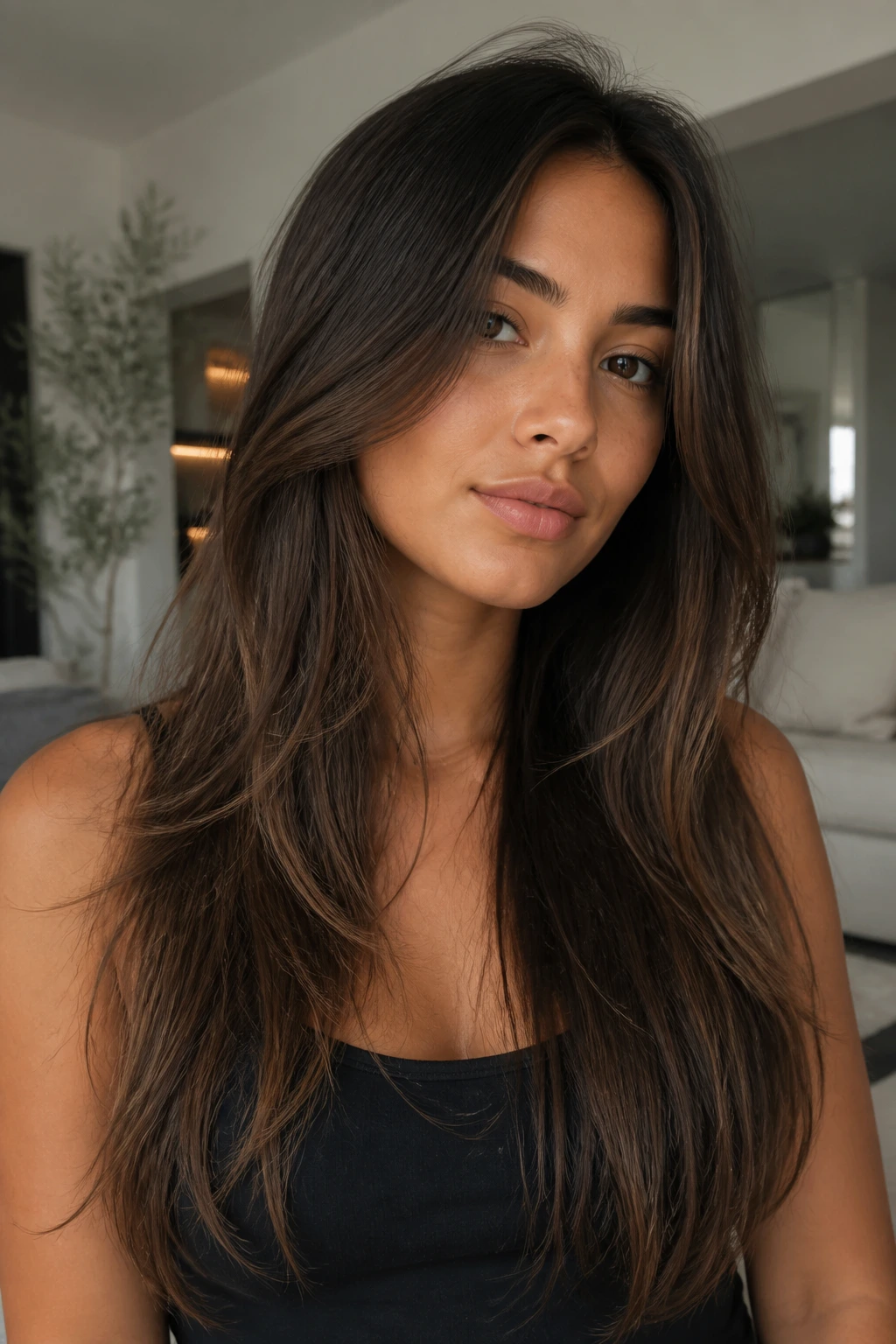
Why do invisible layers matter so much? Because they change the way the hair falls without announcing themselves from across the room.
That is the whole appeal. You keep the outer line long and clean, but the inside of the haircut loses some bulk. The hair moves better when you walk, the ends stop hanging like one solid sheet, and you still get to wear it down in a sleek way. It is edgy in a quieter, smarter sense.
Why It Works
Invisible layers are a strong choice if you like the idea of shape but hate seeing obvious stair-step layers in the mirror. They are cut into the interior of the hair, so the outside perimeter still looks full. This matters most on straight or slightly wavy hair, where blunt heaviness can make long lengths feel flat and stubborn.
How to Style It
- Blow-dry with a medium round brush if you want subtle bend.
- Use a lightweight texture spray at the mids, not the roots.
- Add loose bends with a 1.25-inch iron and leave the ends slightly straight for contrast.
- Ask for more removal through the mids if your hair feels heavy in a ponytail.
The nice part is that this cut grows out politely. No harsh line. No awkward shelf. Just less bulk, which is sometimes all long hair needs.
3. Curtain Bangs With Long, Tapered Sides
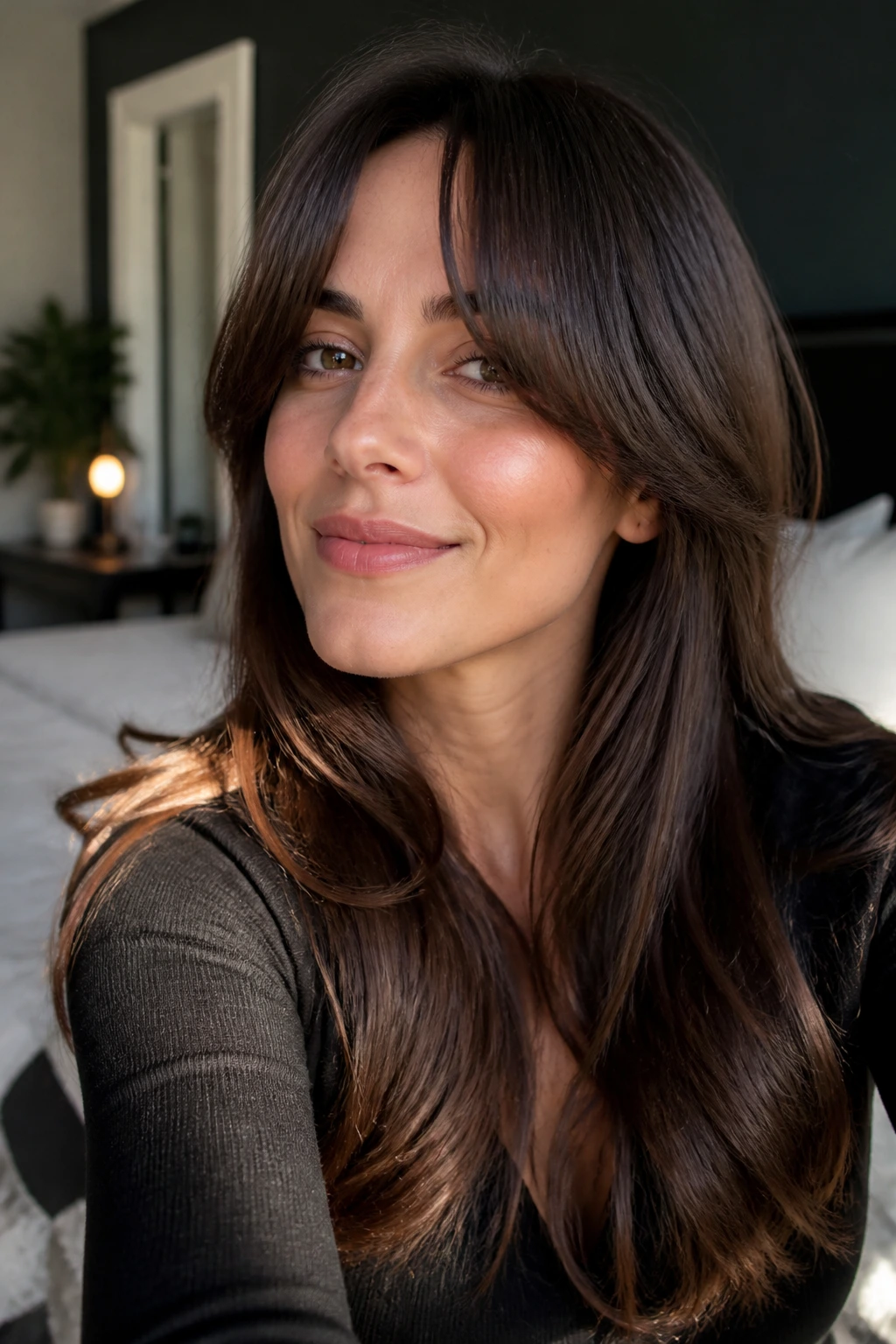
There is a reason curtain bangs keep hanging around in long-hair conversations: they change your face shape fast. One snip down the center, a little taper at the cheekbones, and suddenly the whole haircut feels less sweet and more deliberate.
On long hair, curtain bangs work especially well because they do not fight the length. They sit in front like a frame, then disappear back into the rest of the cut. When they are done well, they move when you turn your head. That little swing is what keeps them from looking flat or dated.
The trick is not cutting them too short at the center unless you actually want a strong bang moment. Most women are happier with a longer middle piece that lands around the bridge of the nose or just below it, then tapers into longer sides that hit the cheekbones or jaw.
Styling matters here. Blow-dry them away from the face with a round brush or a hot brush, then let them cool in the direction you want. If you let curtain bangs dry in a bend you did not plan, they will keep that bend all day. Annoying. Very normal.
4. Face-Framing Pieces That Start at the Cheekbones
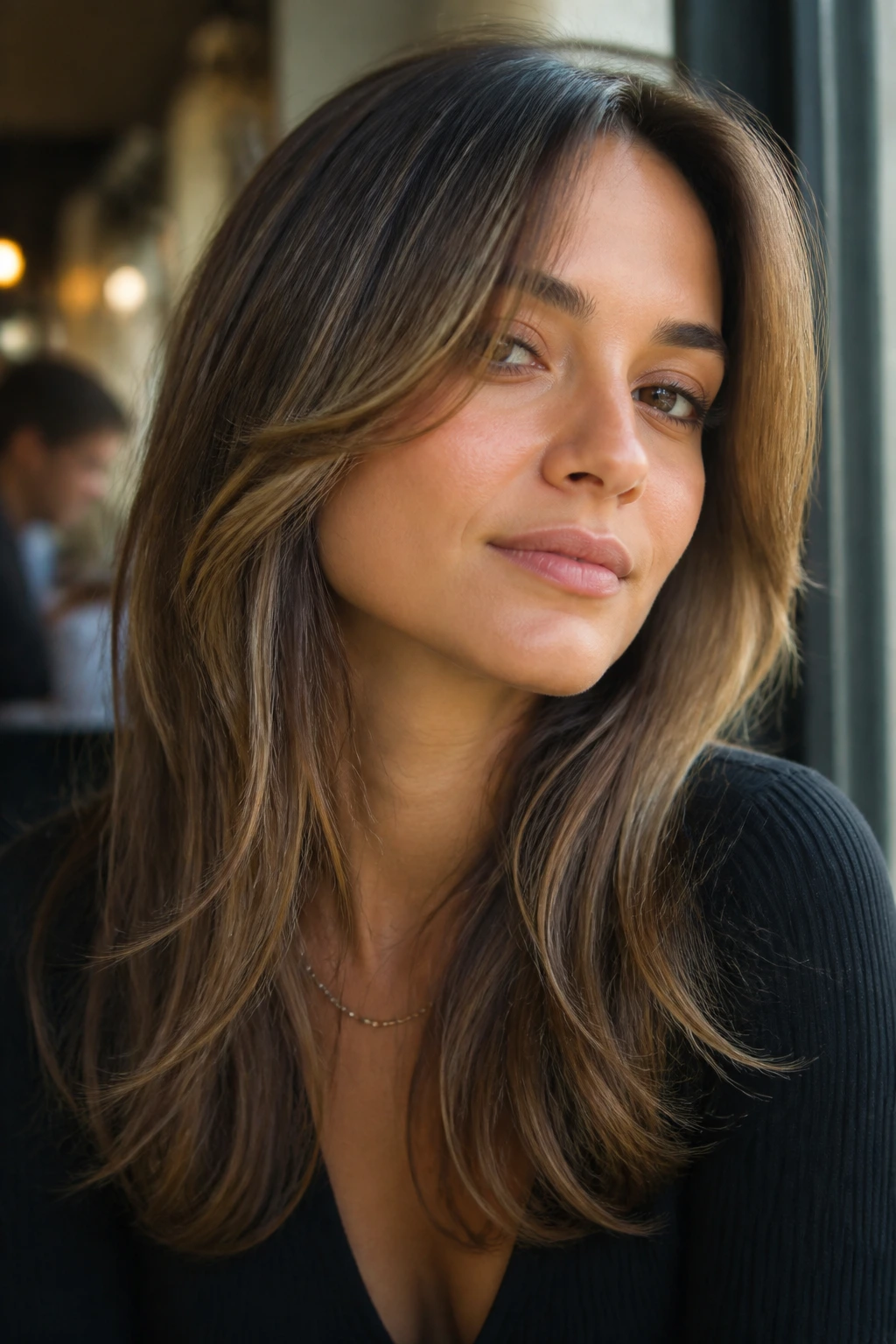
This is the smallest haircut change on the list, and it can still shift the whole mood of long hair.
Strong face-framing pieces are edgy because they create movement right where people look first. When the shortest pieces start at the cheekbones, the cut gets a little sharper immediately. It can make the jawline feel more defined, soften a square face, or pull attention upward in a way that long hair alone usually does not.
The main mistake is starting the front layers too low. If the shortest piece begins near the chin on already long hair, the frame can look lazy instead of intentional. The better version starts higher and blends out through the collarbone or chest. That keeps the cut alive around the face without chewing up the length.
If you wear glasses, this cut is worth a closer look. The face-framing can land just above or just below the frame line, which keeps the whole look tidy instead of cluttered. It also works well with a center part or a soft off-center part. Both. Different mood.
5. The Soft Mullet For Long Hair
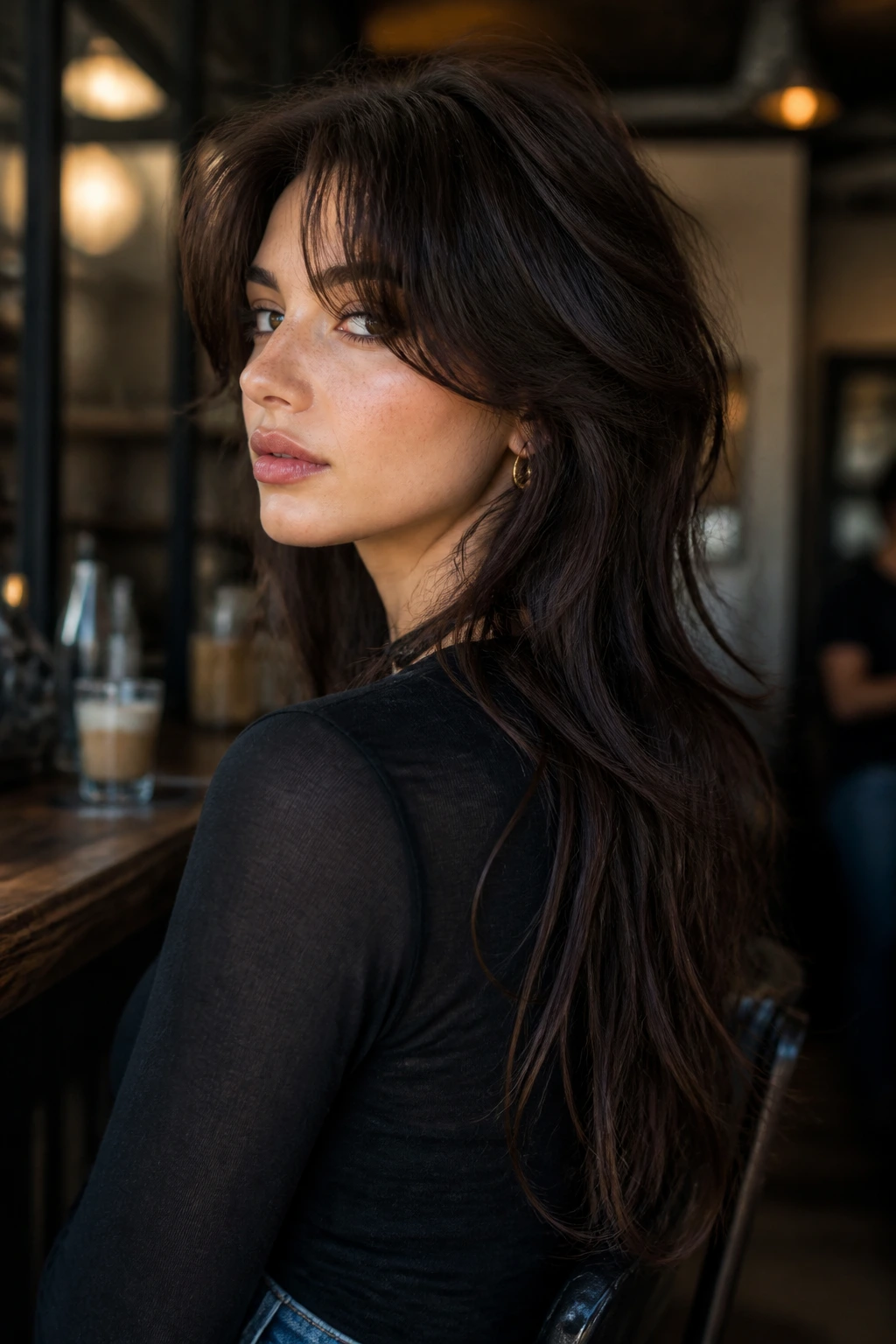
Unlike a full shag, a soft mullet keeps the back long and the top lighter without going into costume territory.
That balance is why it works. The shape has attitude at the crown and around the sides, but the length stays dramatic. You get some lift, some edge, and enough softness that it still reads as wearable on a normal weekday. That is a better deal than most people expect from a mullet-inspired cut.
What Makes It Different
The modern version is not about a hard disconnect. It is about a gentle one. The layers around the crown are shorter, the sides skim the cheek and jaw, and the back stays long enough to tuck, braid, or let hang straight. It looks sharp when the texture is a little broken up, not overstyled.
Who It Suits Best
- Thick hair that needs weight removed in the upper half.
- Wavy hair that already has some bend.
- Women who like texture but do not want a fully short fringe.
- Anyone who is bored by one-length long hair.
If you want it to feel less rebellious and more polished, keep the ends blunt and the top layers soft. That version holds together better in a ponytail, which matters more than people admit.
6. Butterfly Layers That Give the Crown More Lift
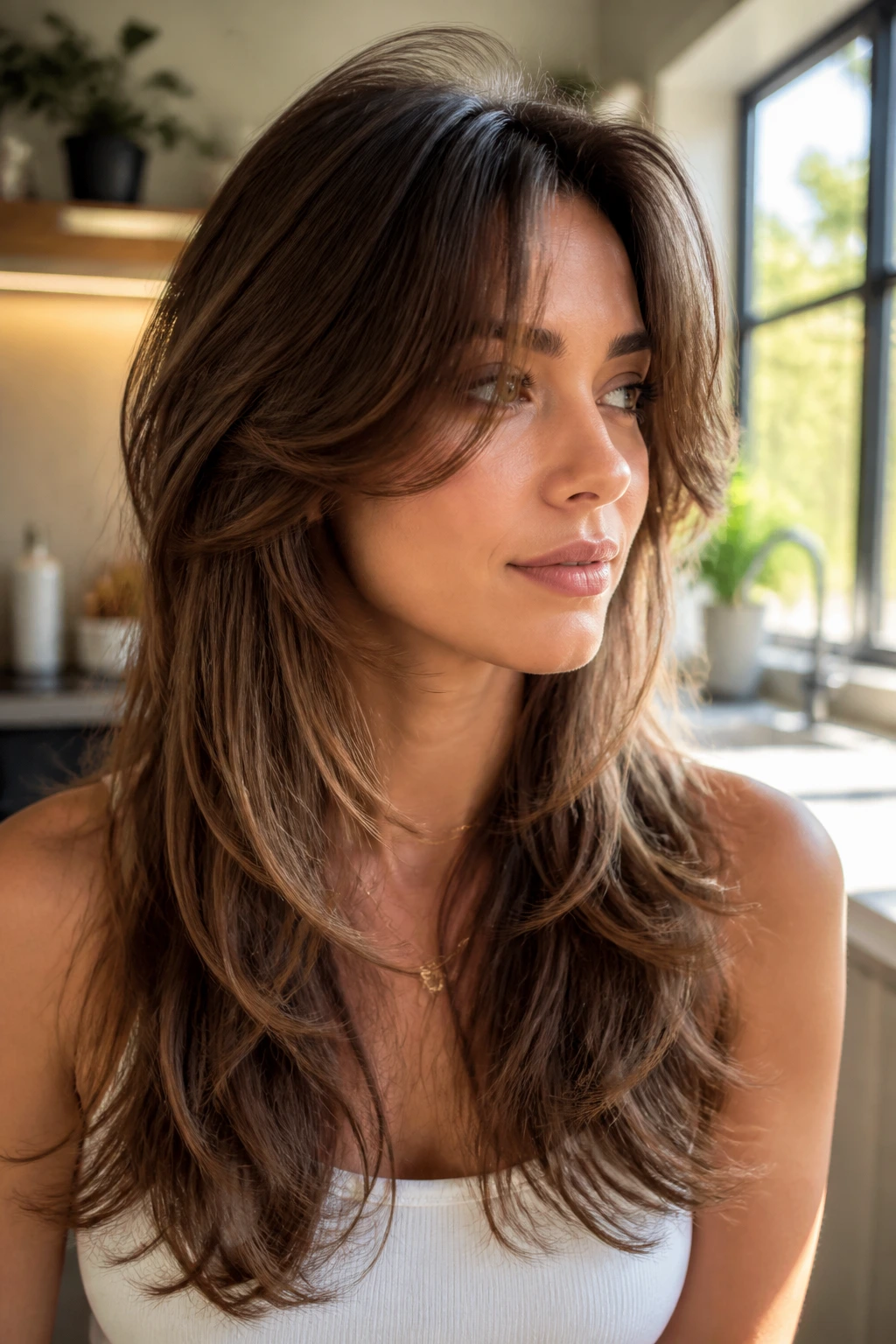
Butterfly layers are a clever trick on long hair because they make the top section feel shorter and airier while the lengths stay long and dramatic. When the cut is done right, the hair falls in two visual zones: lifted around the crown and face, heavy and sweeping through the bottom.
That shape is flattering on thick hair that tends to collapse under its own weight. It gives the whole head more movement, especially when you tuck the front pieces behind your ears and let the longer layers swing forward again. That little flip is a big part of the effect.
The cut can look soft, but it is still edgy when the layers are sharp enough to create contrast. If the blending is too cautious, it starts to look like a standard long-layer haircut. Nobody wants that. Ask for shorter face-framing pieces that can be blown out away from the face, then longer internal layers that keep the bottom from feeling bulky.
A round brush helps. So does a quick pass with a large barrel iron. The point is not perfect curls. The point is lift at the top and motion at the bottom.
7. A Blunt Perimeter With Shattered Interior Layers
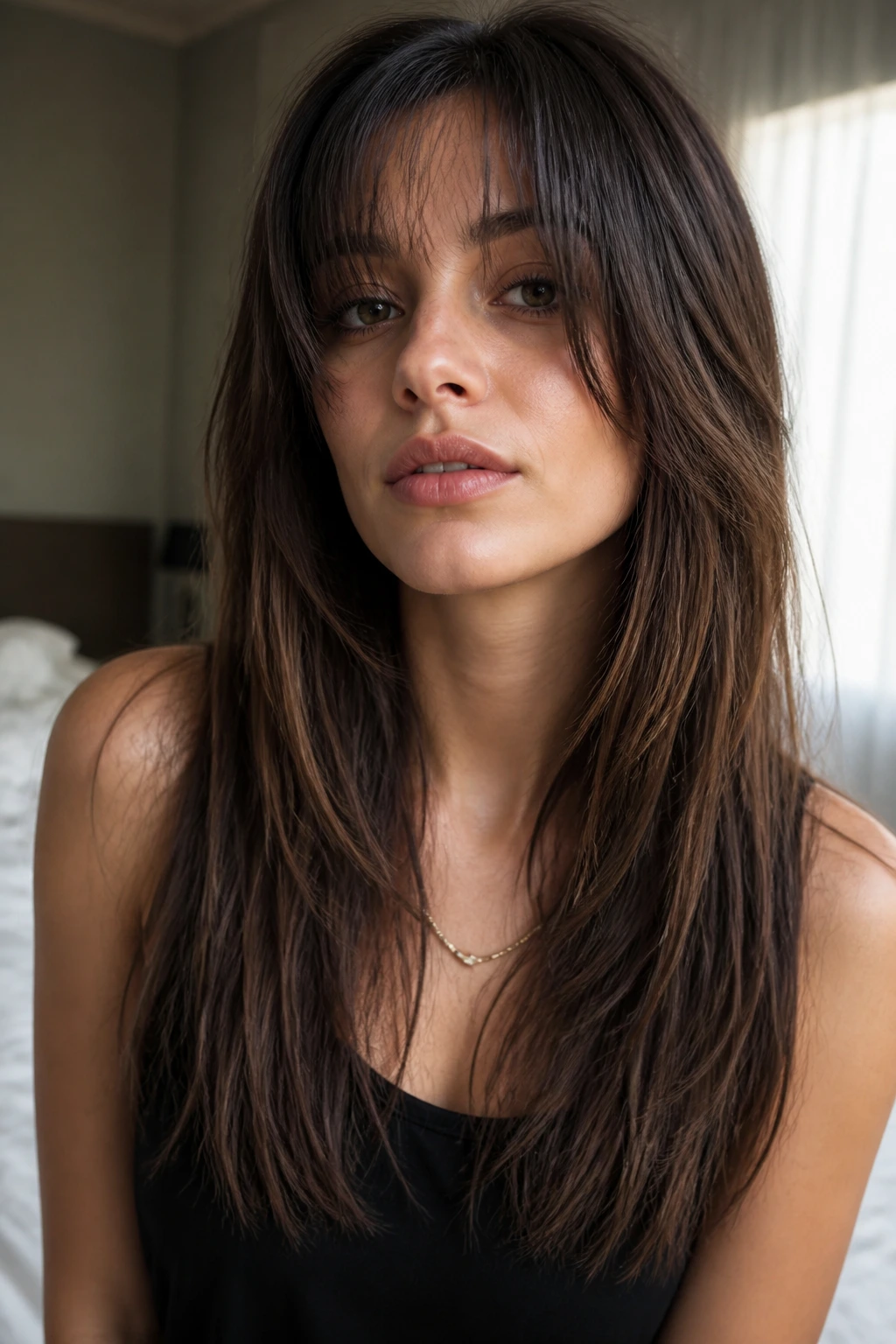
Can blunt and edgy live in the same cut? Absolutely.
A blunt perimeter gives long hair a strong outer line, which makes the whole style feel more serious right away. Then the inside gets roughened up with shattered layers so the length does not sit like one heavy block. That contrast is the whole point. Clean on the outside, broken up underneath. Good tension.
What to Ask For at the Salon
- Keep the outer line strong and even.
- Remove weight inside the mids instead of slicing into the ends.
- Leave enough fullness at the bottom so the cut does not look see-through.
- Add subtle face framing if you want movement near the front.
This cut is especially good on straight or slightly wavy hair. It looks expensive when it is smooth, but it does not need to be perfectly styled to work. A little bend is enough. If your hair is very fine, though, go easier on the internal removal. Too much and the ends start looking thin in daylight, which is not the vibe.
8. Deep Side Part With Razor-Cut Lengths
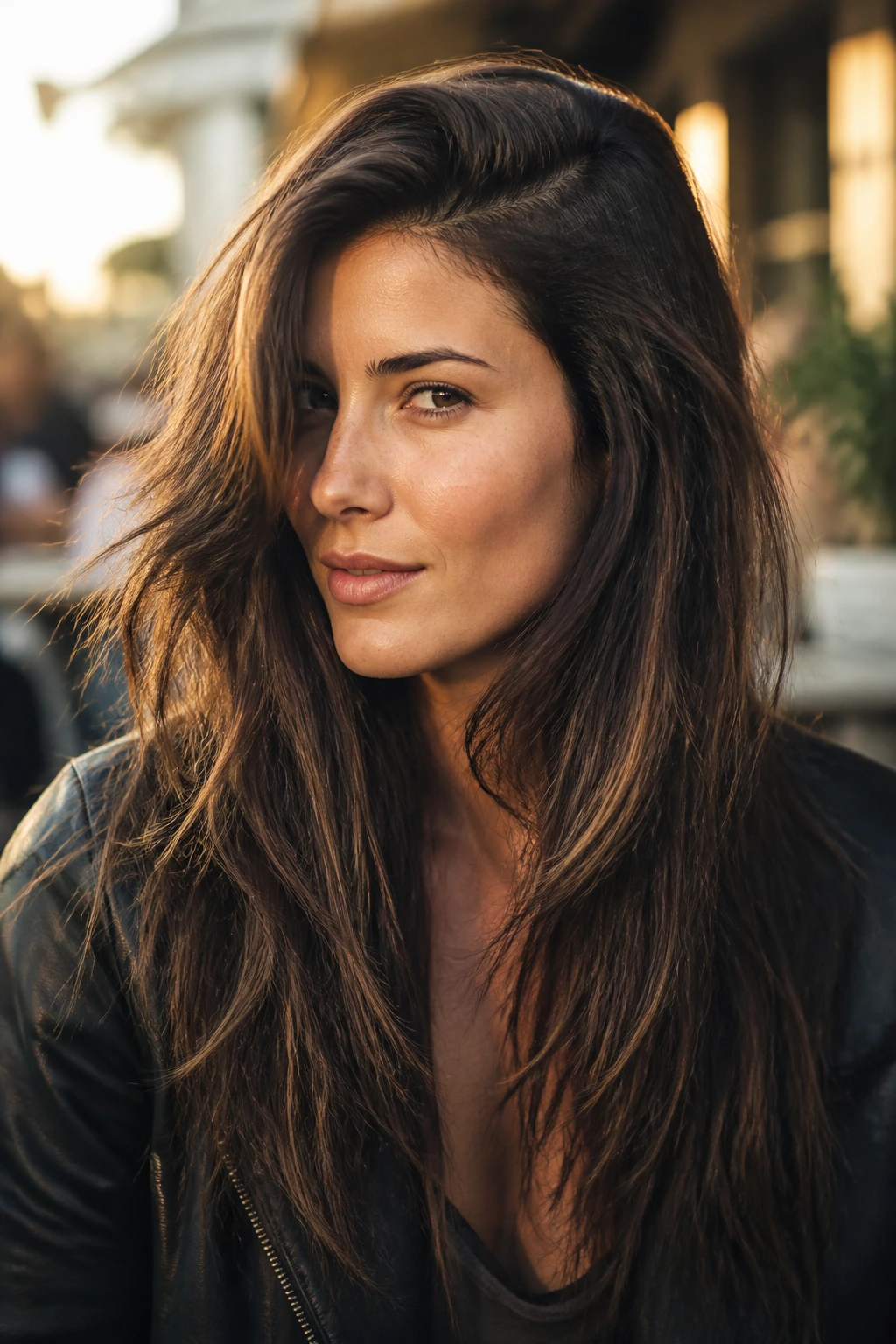
A deep side part can change a haircut more than people expect. Shift the part over by two or three inches, and long hair suddenly feels less safe.
That effect gets stronger when the ends are razor-cut. Razor cutting leaves the hair with a softer, more broken edge, so the movement reads as airy rather than neat. On long layers, it creates a sort of wind-tossed texture that looks best when the hair is brushed one way and then left alone. No overthinking. The cut does enough on its own.
This style suits women who want a little asymmetry without committing to a full asymmetrical haircut. The side part gives one side more volume, the razor ends keep the shape from looking too polished, and the overall result has a lived-in edge that flatters a lot of face shapes.
A side part can also save long hair that has gone too flat at the roots. Flip it over, warm the roots with a blow-dryer for 20 seconds, then let it cool in place. That small trick changes the whole silhouette.
9. Long Shag With A Feathery Fringe
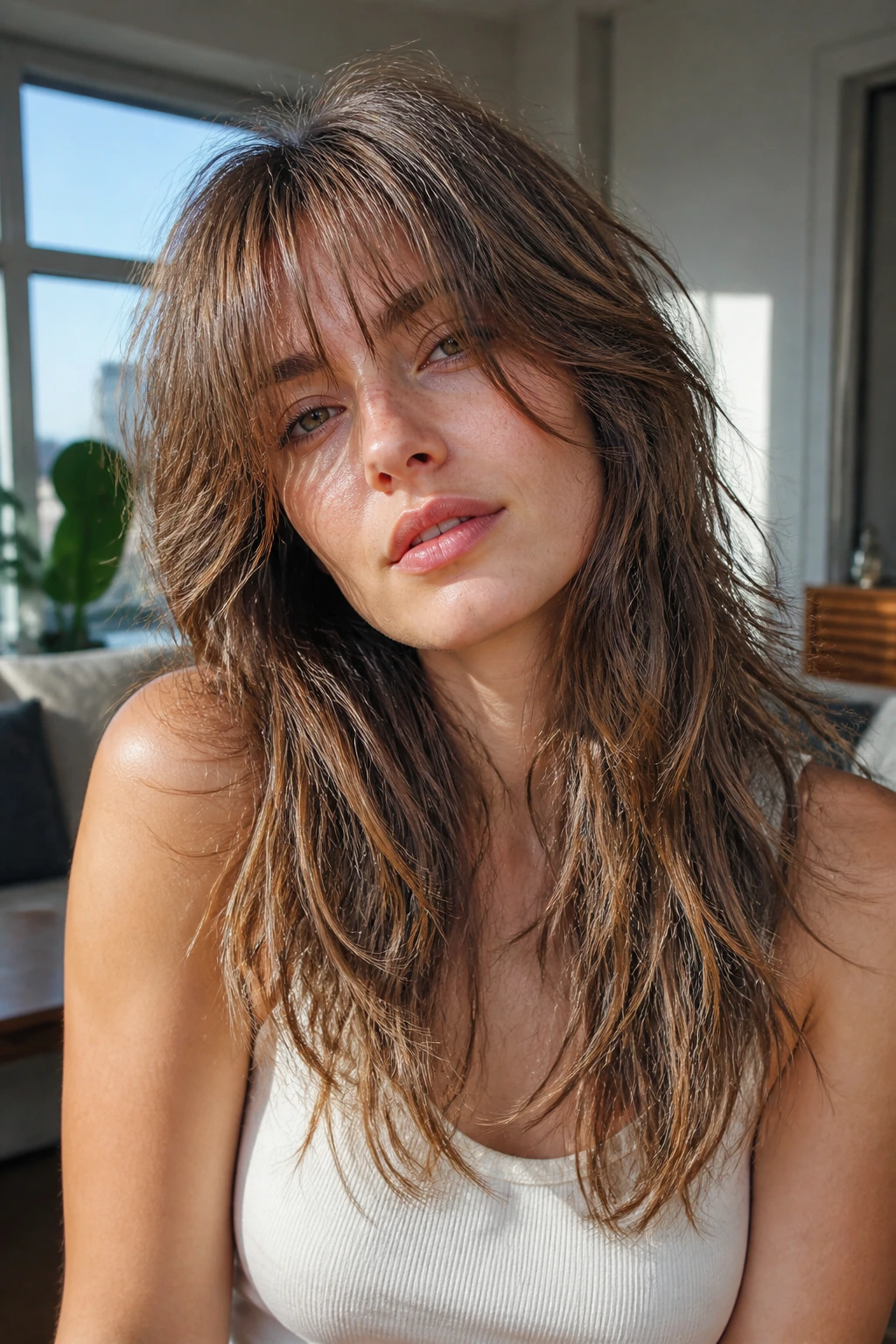
The long shag is one of those cuts that looks easy only after someone has thought hard about it.
Its charm comes from unevenness. The fringe is soft and feathery, the layers around the face are loose, and the ends are broken up enough that the hair never looks too perfect. On wavy hair, this is a very good thing. The cut works with movement instead of fighting it.
What separates a shag from a wolf cut is the mood. A shag usually feels a little softer, a little less aggressive at the top, and more focused on all-over texture. The fringe matters here. It can be full and wispy, parted in the middle, or cut slightly off-center if you want a stranger, cooler shape.
How It Usually Looks Best
- Air-dried with mousse for loose separation.
- Diffused until the roots lift and the ends stay bendy.
- Scrunched with a cream that does not weigh the hair down.
- Left a little imperfect. That is part of the appeal.
This is the kind of haircut that gets better when you stop trying to make every strand behave. Honest. Let the texture do the work.
10. The V-Cut That Makes The Ends Look Sharper
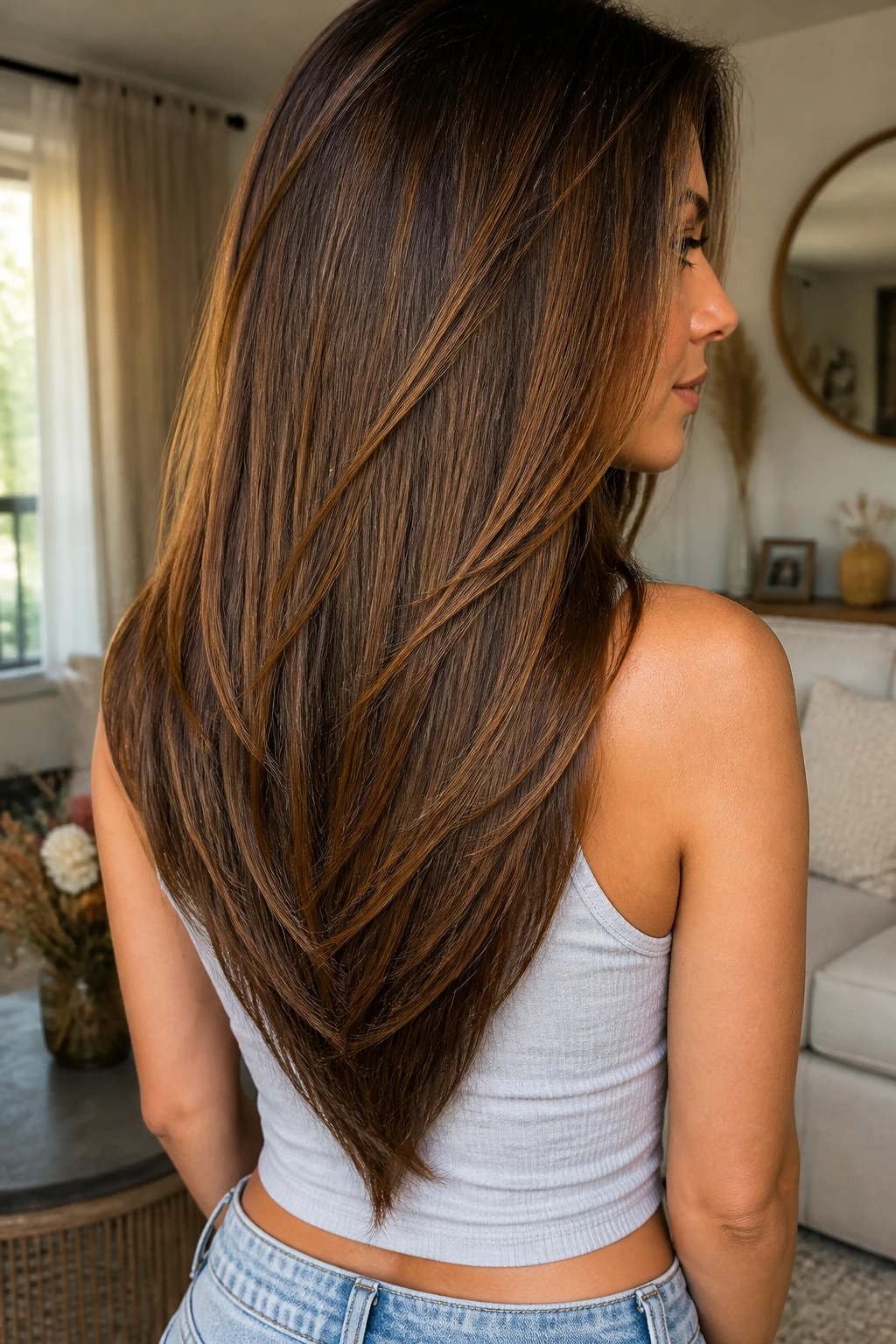
Compared with a U-shape, a V-cut gives the back of long hair a more pointed, dramatic finish.
That one detail changes the whole feel. The longer center section makes the hair look leaner, while the side pieces sweep down and create a sharper outline. On thick hair, it can stop the ends from feeling like one giant curtain. On straight hair, it gives a visual punch that shows up even when the rest of the style is simple.
This cut is best when the length is healthy. Split, see-through ends and a V-shape do not get along well. The point of the cut is to look crisp, not stringy. If your hair is dense or coarse, this shape can help a lot because it removes bulk without sacrificing the dramatic length women actually came for.
I like this option for people who wear their hair down often. In a braid or ponytail, the V-shape still shows a little. That is a small thing, but it matters when you want your haircut to keep some personality even when it is tied back.
11. A U-Shape Cut With Piecey Front Layers
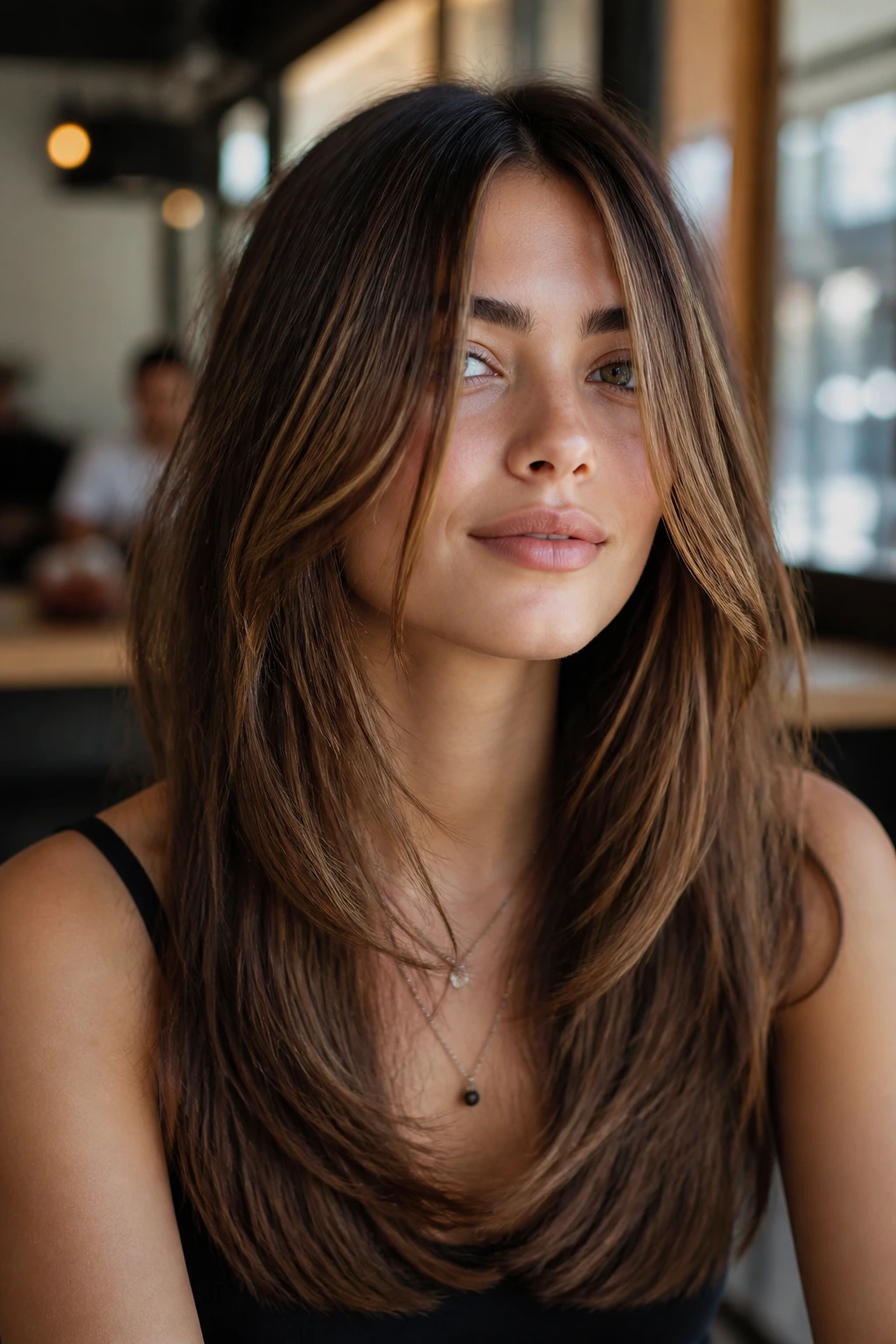
A U-shape is underrated because it looks calm until you add the right front layers.
The outer line curves softly instead of dropping straight across the back, which keeps the haircut from feeling severe. Then the piecey front layers bring the edge. They break up the sweetness of the shape and make it feel a little less predictable. That is the whole trick here: soft silhouette, sharper details.
Why It Doesn’t Look Boring
The U-shape keeps the length full at the bottom, which many women prefer because it makes ponytails and half-up styles look thicker. The piecey front layers stop the style from becoming too safe. They also work well with a middle part, since the curved outline gives the hair a gentle frame without screaming for attention.
This is a strong option if you want edge but still need a cut that behaves at work, at dinner, and on days when you barely blow-dry. The style is easy to wear straight, and it still has enough movement to look good with loose waves. A lot of haircuts try too hard. This one does not.
12. Micro Bangs With Waist-Length Hair
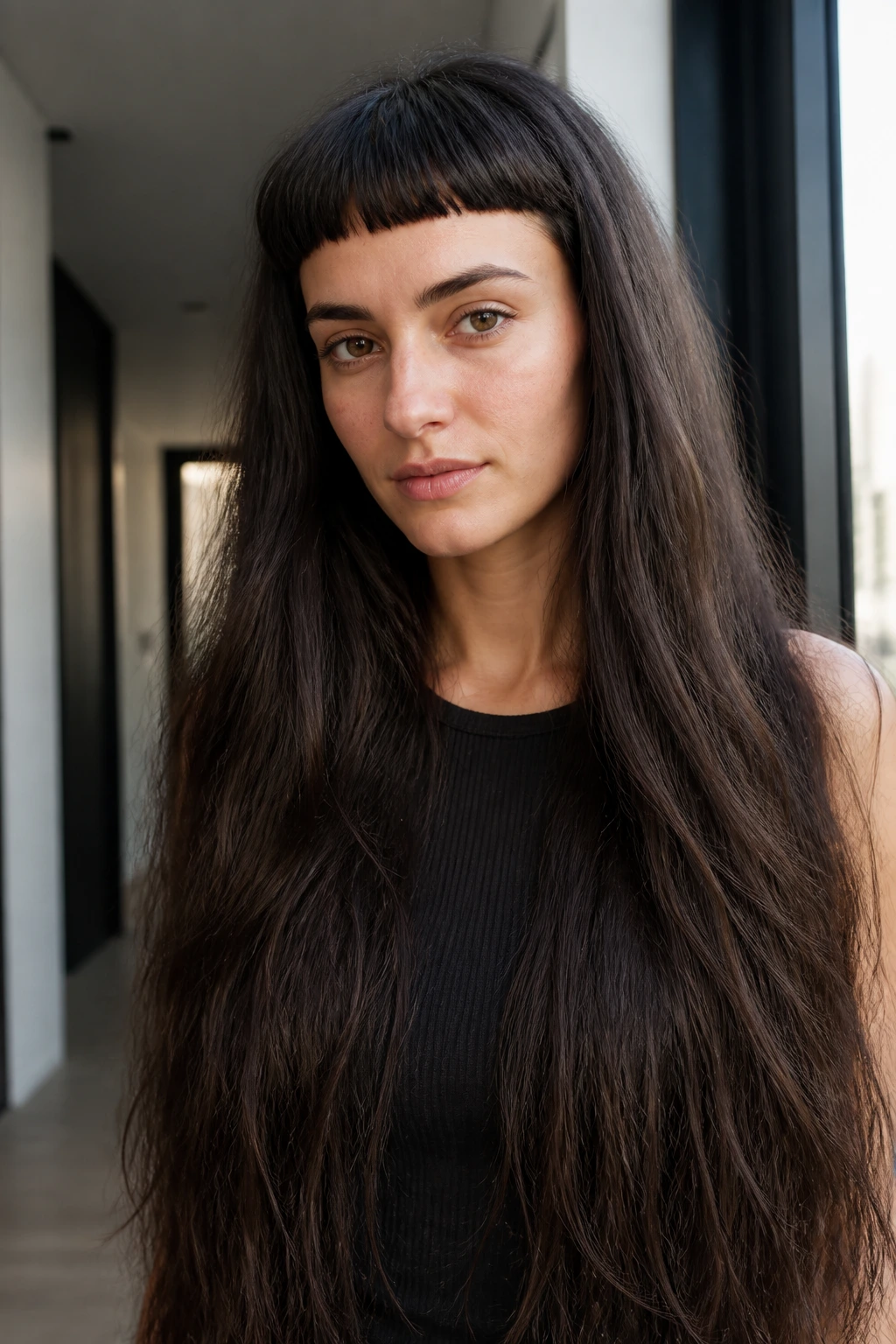
Micro bangs are not subtle, and that is exactly why they look so sharp on very long hair.
The contrast is the whole story. Tiny fringe, huge length. The eye jumps between the brows and the waist-length fall, and the haircut ends up feeling fashion-forward even if the rest of the hair is left simple. If you want edge without touching the body of the length too much, this is one of the boldest moves you can make.
Who Can Pull It Off
- Women with straight or slightly wavy hair.
- People who like a strong brow line.
- Anyone willing to trim bangs often, because micro bangs grow fast.
- Those who want a haircut that looks deliberate even with minimal styling.
The maintenance is real. Micro bangs need shaping every couple of weeks if you want them to stay above the brows. They also show cowlicks fast, so a quick blow-dry with a flat brush matters. Keep the rest of the hair sleek or softly waved, and the contrast gets even stronger.
A tiny fringe does not mean tiny personality. Quite the opposite.
13. Hidden Undercut For Women Who Want Drama Without Losing Length
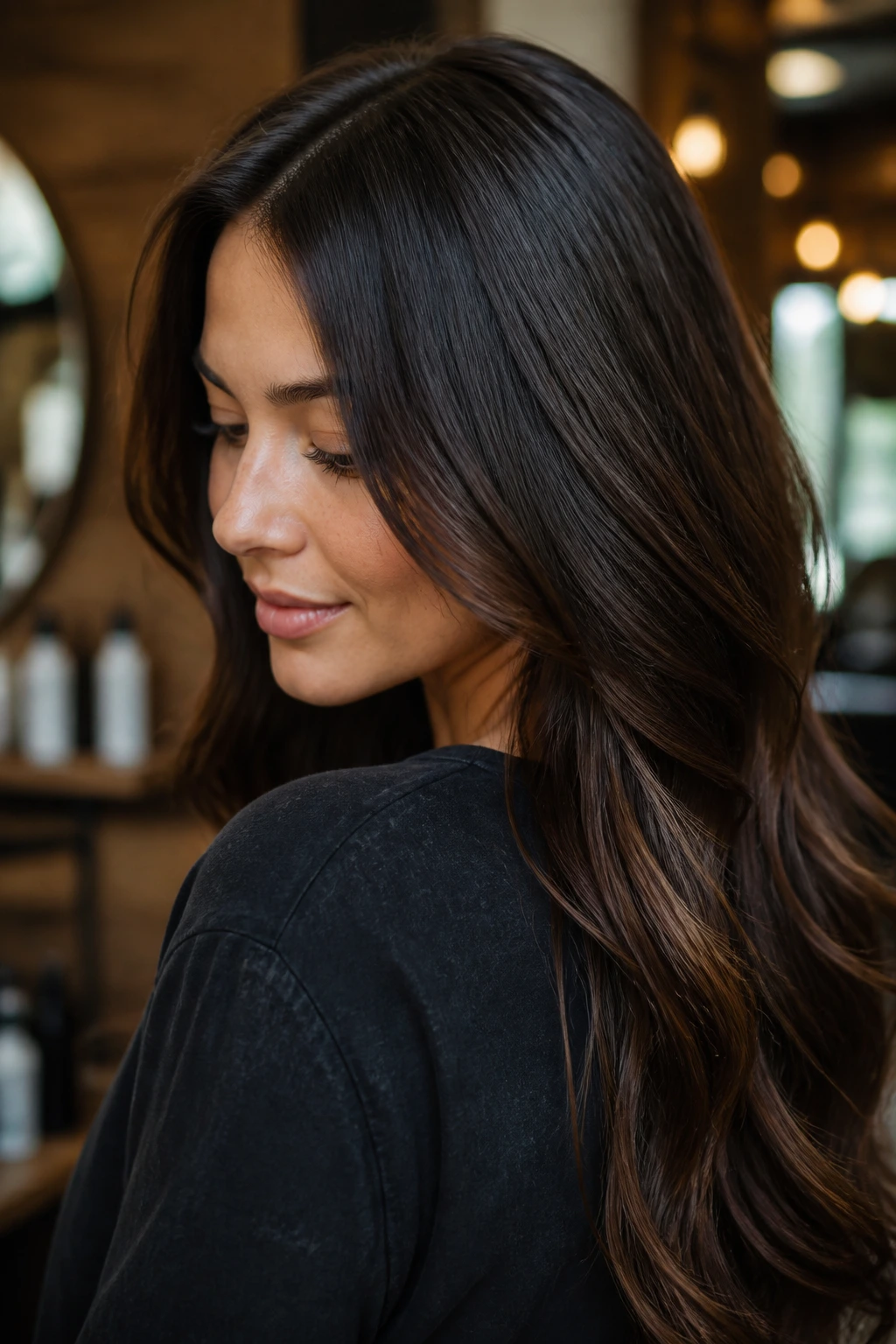
Sometimes the edgiest haircut is the one nobody sees right away.
A hidden undercut takes weight out from underneath the top layer, usually near the nape or behind one ear, while leaving the visible length intact. It is a smart move for women with very thick hair, especially if the bottom half takes forever to dry or feels hot and heavy against the neck. The front still reads as long hair. The secret is underneath.
The appeal is not only visual. It is practical. Less bulk means faster drying, easier buns, and a little extra air around the neck when the hair is worn down. If you like long hair but hate how much of your morning disappears into it, this cut can be a relief.
The catch is grow-out. Once you shave or clip away that hidden section, you have to maintain it or let it grow in awkwardly. That is fine if you know what you signed up for. Not so fine if you change your mind every six weeks.
14. Razor Layers That Move Like They Were Cut On Air
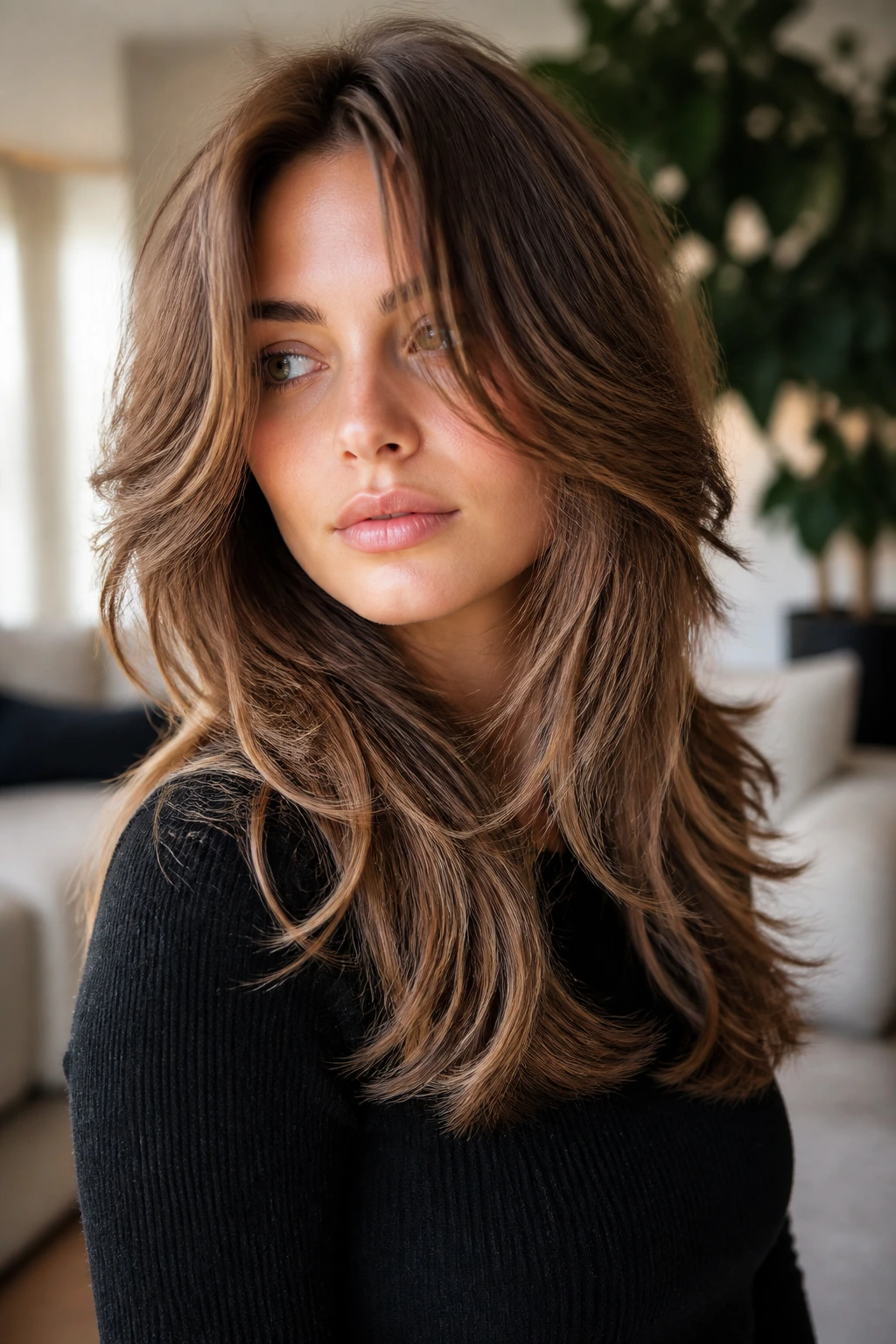
Razor layers are one of those things that sound small and end up changing everything.
On long hair, the razor removes weight in a way scissors often do not. The ends come out softer, the layers sit with more bend, and the whole cut has a looser edge. It can look almost feathered when the hair swings. That is why this works so well for women who want a less stiff long haircut.
What to Watch For
- Best on thick, wavy, or naturally textured hair.
- Less friendly to hair that is fragile, bleached, or already split.
- Needs a stylist who actually knows how to use a razor well.
- Can look stringy if too much is removed from the very ends.
The cut shines when you style it with a little roughness. Think a touch of mousse, a quick twist with fingers, and maybe a few bends around the face. If you try to press it into perfect smoothness every day, you lose the effect. That is the downside and the charm at the same time.
15. Crown Layers That Keep The Length Heavy At The Bottom
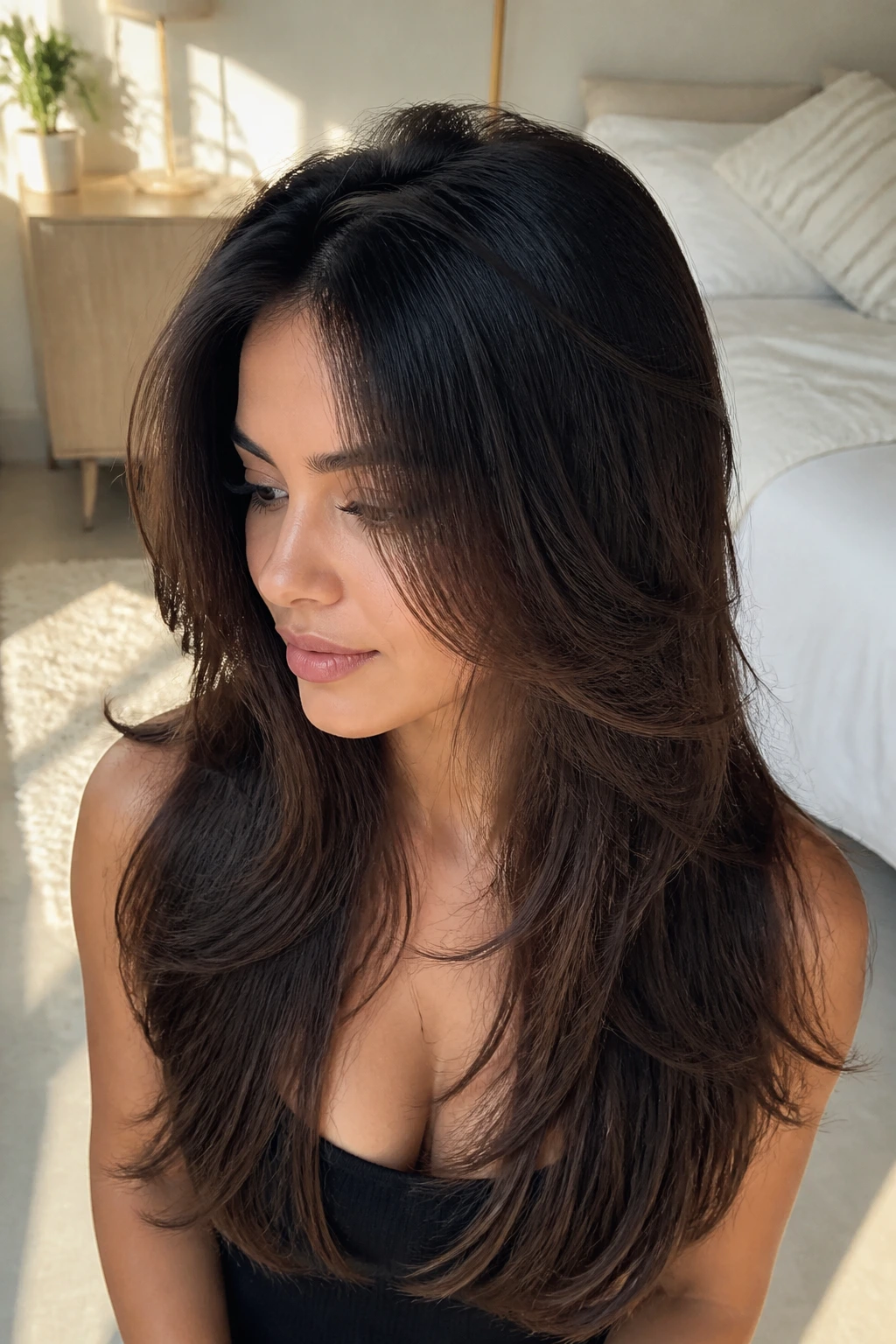
Want height without giving up the heavy tail? Crown layers do that better than most people expect.
The idea is simple. Shorter pieces sit near the crown and upper mids, which gives the roots some lift, while the bottom stays long and full. That contrast makes the hair feel lighter at the top and more dramatic at the ends. It also keeps long hair from dragging the face down, which happens more often than people admit.
Ask For These Details
- Keep the longest length below the shoulder blades if you want visible weight.
- Remove enough around the crown to stop flatness, but not so much that the top looks choppy.
- Blend the front into the rest of the haircut so the layers do not stop abruptly.
- Use a root-lift spray at the scalp if your hair tends to collapse by lunch.
This is a strong choice for coarse hair, dense hair, and anyone who wants a little lift without a shaggy finish. It is a quietly edgy cut. Not loud. Just shaped with intent.
16. The Tapered Modern Mullet With Polished Ends
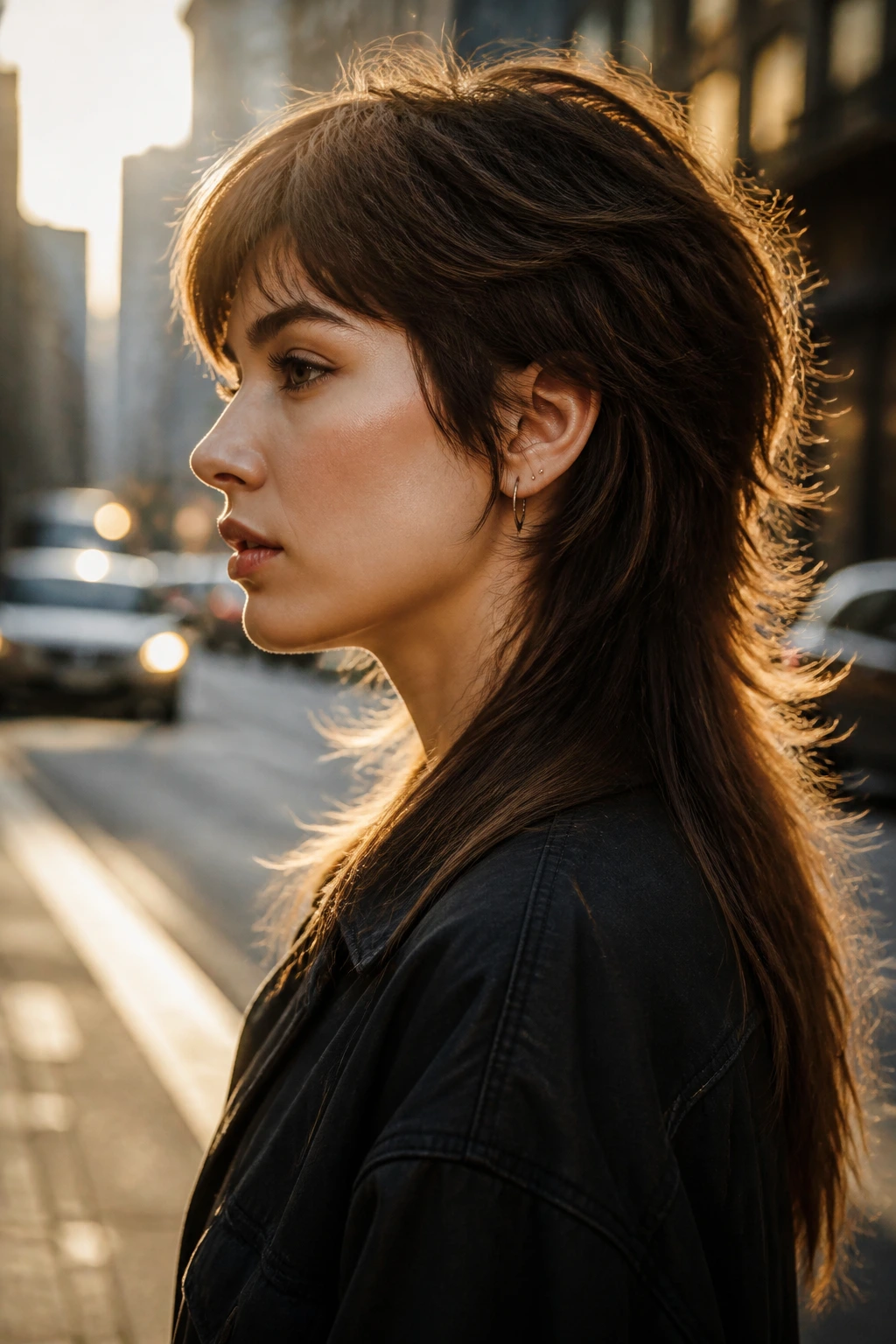
This is the one for women who want something sharp but not theatrical.
A tapered modern mullet keeps the front and sides shorter, lets the crown move, and preserves length in the back. What makes it wearable is the polish. The edges are cleaner than a vintage mullet, and the ends are often left sleek rather than overly choppy. That keeps the whole thing from tipping into costume.
The cut has a nice built-in tension. The front can skim the cheekbones, the crown gets some height, and the back still gives you the swing of long hair. When the balance is right, it looks intentionally cool rather than trendy in the disposable sense.
I would call this a strong pick for someone who already wears black eyeliner, leather jackets, or oversized shirts and wants the haircut to match the wardrobe a little. But it does not need that vibe to work. It can look clean with a white tee and straight-leg jeans too. Haircuts do not need props, but sometimes they like them.
17. Asymmetrical Long Hair With One-Sided Face Framing
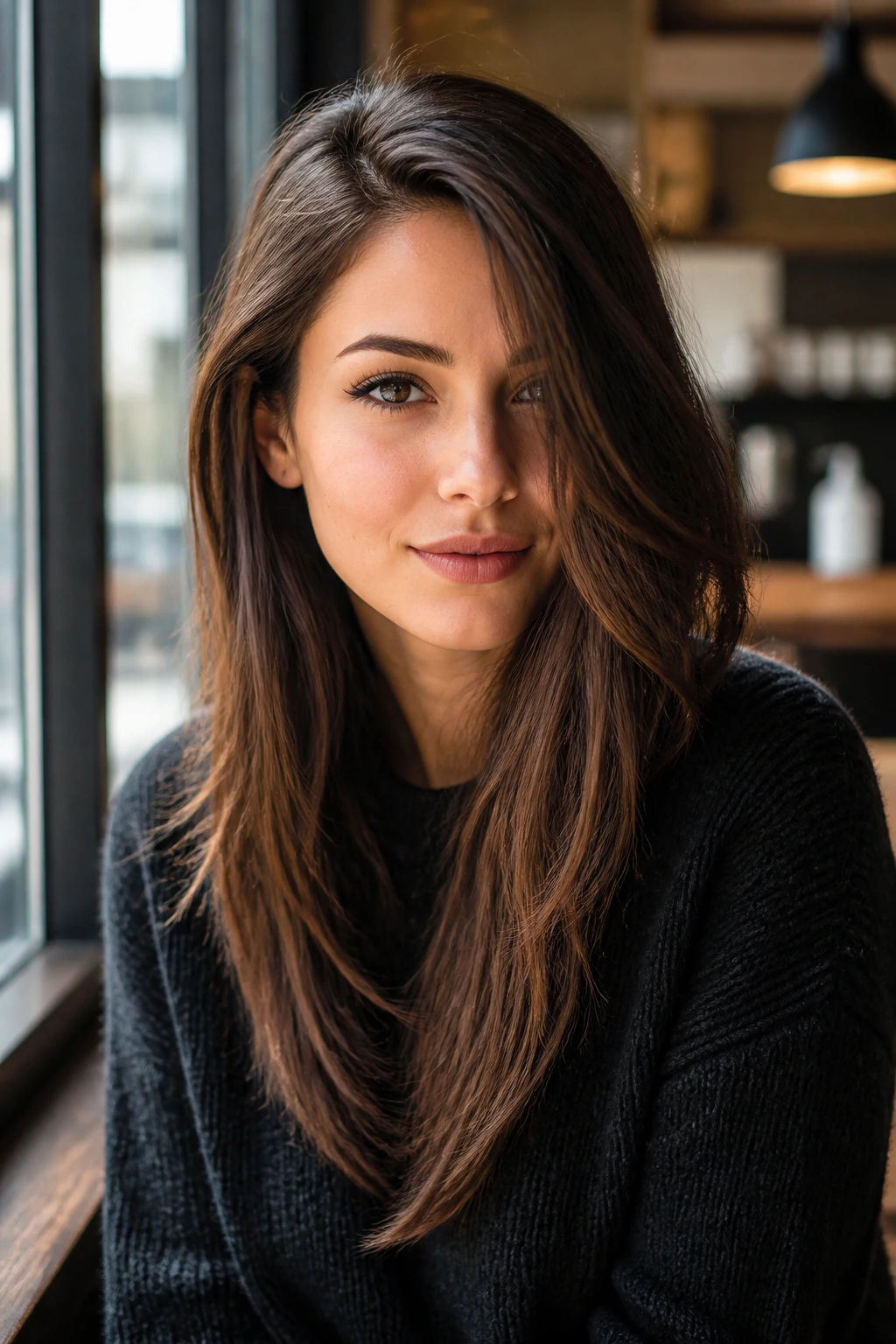
Unlike even layers, asymmetry makes your eye pause.
That pause is what gives the haircut its edge. One side can be slightly longer, or the face-framing pieces can be heavier on one side than the other. The difference does not need to be dramatic to matter. Even a subtle imbalance changes the silhouette enough that the style feels more current and less safe.
This cut works well if you wear a side part or tuck one side behind the ear a lot. The asymmetry shows up in motion, which is where it looks best anyway. It also flatters people who want their hair to feel a little mysterious from one angle and a little polished from another.
Best Ways to Wear It
- With a deep side part for stronger contrast.
- Straight and smooth if you want the line to show.
- Loose waves if you want the asymmetry to feel softer.
- Behind one ear to make the longer side stand out.
Keep the maintenance in mind. A shape like this needs regular trims to stay intentional. If you let it grow too long, the difference can look accidental.
18. The Sharp Blunt Cut With A Detached Fringe
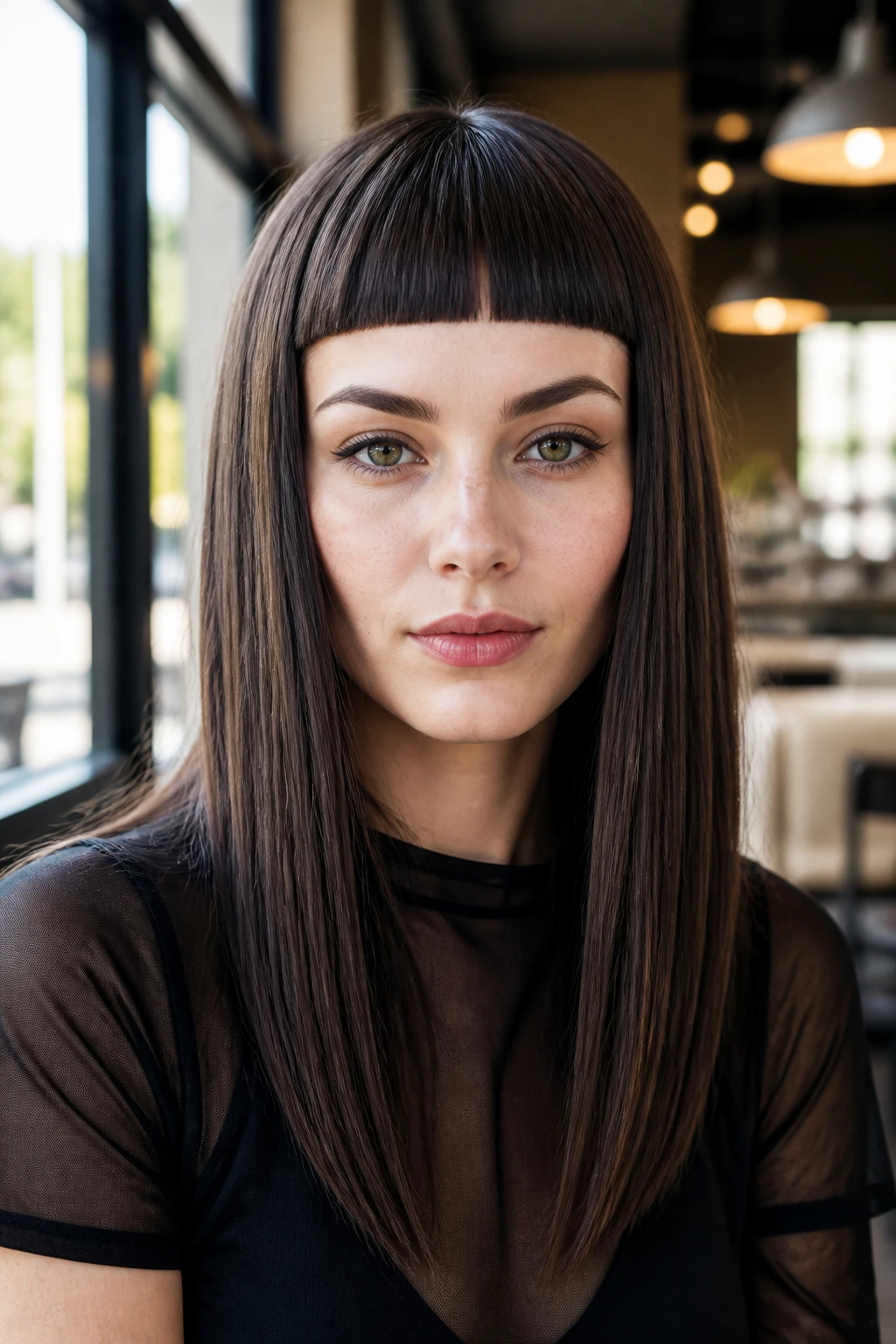
A sharp blunt cut with a detached fringe is about clean lines and a little tension.
The bottom stays straight and heavy, which gives long hair a strong, almost graphic finish. Then the fringe sits apart from the rest of the cut, rather than blending softly into the sides. That separation is what makes it feel edgy. It looks intentional, a little editorial, and not at all shy.
The detached fringe is especially good if you want your haircut to stand out even when the rest of your styling is simple. Straight hair makes the line crisp. A slight bend through the mids softens it. Either way, the fringe gives the haircut a second focal point, which keeps long lengths from feeling too plain.
This is not the easiest cut in the group if you like to air-dry and forget about everything. It wants a flat iron or at least a careful blow-dry, and the fringe needs routine attention. Still, when it works, it works hard. The outline stays strong, the bang line feels separate on purpose, and the whole style reads as decisive without needing extra fluff.
Long hair can be rebellious without being messy, and that is the part people often miss. The smartest edgy cuts do not shout from every angle. They use one strong line, one rough texture, or one break in the shape, then let the length do its own thing. That is where the style has staying power.
If you want the most wearable route, start with a cut that changes the silhouette rather than the length. If you want the biggest shift, bring in bangs, asymmetry, or an undercut. And if you are still undecided, pay attention to your hair’s natural weight. It usually tells the truth before the mirror does.
