



A good haircut after 50 should save time, not steal it. The best easy care hairstyles for women over 50 do that job without making hair look stiff, dated, or overworked.
Hair changes in ways people rarely talk about honestly. Some strands get finer at the crown. Some get coarser and springier around the temples. Gray hair can come in soft and silky, or wiry enough to stand up on its own if the cut is too blunt in the wrong spot. That is why shape matters more than ever.
The right style works with your texture instead of arguing with it. It should air-dry decently, hold its outline between trims, and still look intentional on the mornings when you do almost nothing to it. That last part is the real test.
A cut that behaves well on a tired Tuesday is worth ten salon photos. The first one below is a quiet favorite for exactly that reason.
1. Chin-Length Bob with a Side Part

A chin-length bob with a side part is one of those cuts that makes hair look put together fast. It sits close enough to the face to give shape, but not so short that it starts feeling fussy.
The side part does a lot of quiet work here. It adds lift at the front, softens the forehead area, and keeps the bob from looking too boxy. On gray hair, that slight angle can make the color variation look richer instead of flat.
This cut is especially kind to women who want a polished look without daily styling drama. A quick blow-dry with a paddle brush or a round brush at the ends is usually enough. If you like a small bend under the jaw, wrap the last inch of the hair around a one-inch brush for a few seconds and let it cool before you move on.
Why it stays easy
- Best for: straight to softly wavy hair, especially fine or medium strands.
- Styling time: about 5 to 8 minutes if the cut is shaped well.
- Ask for: a clean line at the bottom with a little movement near the face, not heavy layers everywhere.
- Watch for: a jawline that flips out. A tiny bit of point-cutting at the ends usually solves it.
My honest take: if you want one style that reads neat even when you barely touch it, this is hard to beat.
2. Soft Pixie with Side-Swept Fringe

Why do so many women keep coming back to a pixie? Because a good one trims the morning routine down to almost nothing.
A soft pixie with a side-swept fringe gives you that short-hair freedom without the severe, helmet-like look people worry about. The fringe keeps the cut gentle around the eyes, and the texture on top lets you finger-style it in under a minute.
Gray hair often looks especially good in this shape. The short length shows off the tone changes, and the side-swept front keeps the whole cut from feeling too sharp. Use a pea-sized amount of lightweight paste or styling cream, warm it between your palms, and push the top into place with your fingers. Done.
Why it works
The fringe matters more than people think. A blunt front can make the face feel closed in, while a side-swept piece opens things up and blends into the rest of the cut.
This style is a smart pick if your hair at the temples is thinner than it used to be. The side fringe gives the illusion of density without asking for much product. And if you like wearing glasses, this cut usually plays well with frames.
3. Shoulder-Length Lob with Light Layers
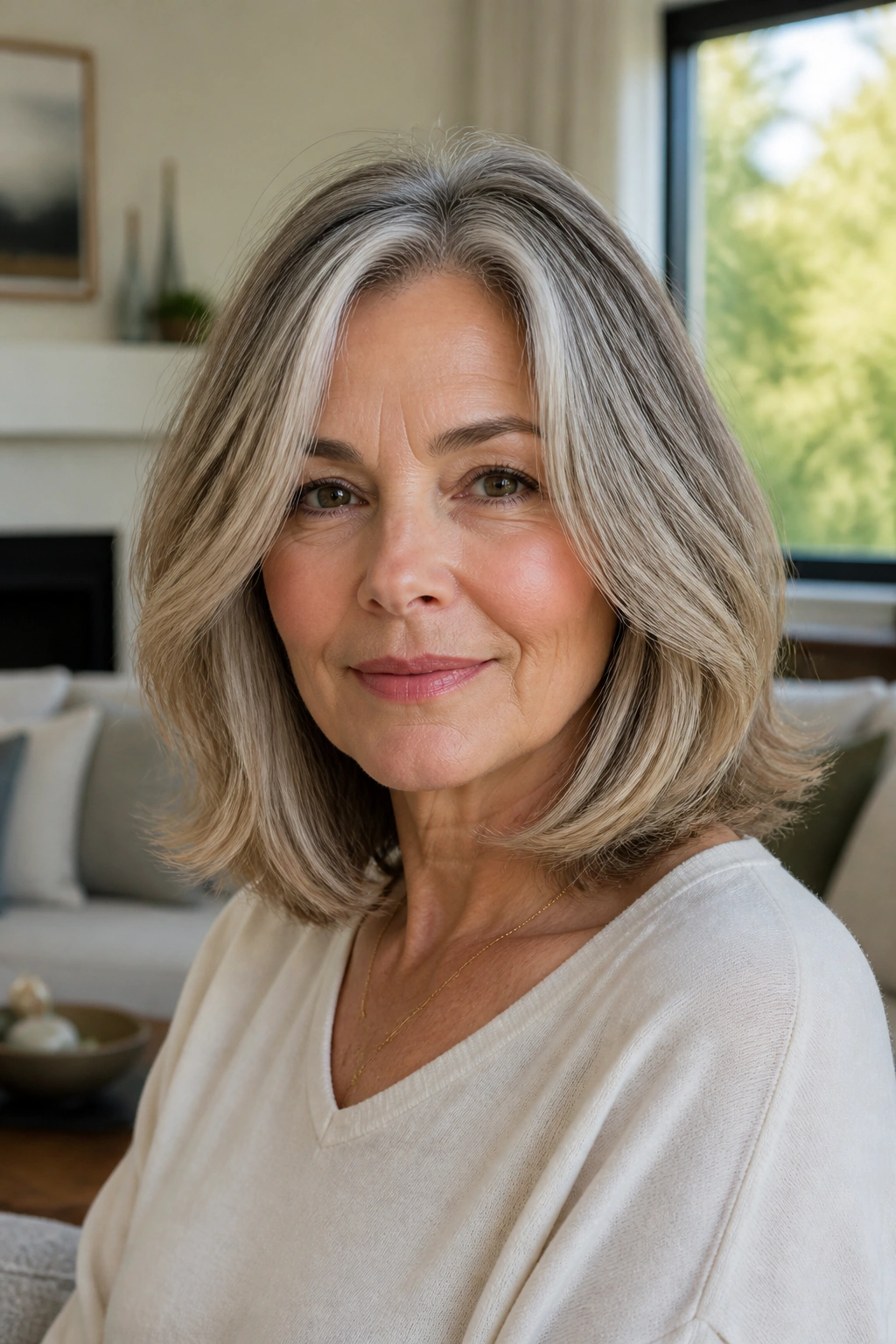
A shoulder-length lob is the haircut equivalent of a reliable black sweater. It goes with almost everything, and it never looks like you tried too hard.
Light layers keep the ends from feeling heavy, but the cut still has enough length to tuck behind the ears, clip back, or let swing loose. That flexibility matters on busy mornings. You can air-dry it, rough-dry it, or smooth just the top half and walk out the door.
For women over 50, this length is often the sweet spot between short and long. It gives you movement without losing the option to tie it back. It also grows out gracefully, which saves you from needing a trim every few weeks. If your hair has a bit of wave, let it dry with a dab of leave-in cream and a quick scrunch. If it’s straighter, a soft bend at the ends is enough.
Gray hair loves this length when the layers are kept light. Too many chopped-up pieces can make silver strands frizzier than they need to be. Keep the shape clean and let the texture do the rest.
4. French Bob with a Gentle Bend

A French bob is not for someone who wants to hide her hair under endless styling. It’s for someone who wants a clear shape and is fine with a little attitude.
This cut usually sits around the cheekbone or just below the jaw, with a soft bend instead of a hard, blunt wall. That bend gives the bob life. Without it, the style can feel a touch severe, which is not the point here.
The best version for easy care is a slightly undone French bob on hair that is naturally straight or only mildly wavy. A quick pass with a round brush, or even a flat iron turned slightly inward at the ends, is enough. If your hair is fine, this shape can make it look fuller because the perimeter stays strong.
- Best for: fine to medium hair that likes a neat outline.
- Salon ask: keep the bottom line crisp, but leave the interior soft.
- Daily styling: one quick bend under the ends, nothing fussy.
- Skip it if: you want a cut that can be ignored for months; this one likes a clean trim.
It’s a tidy cut, but not boring. That’s the appeal.
5. Textured Crop for Fine Hair

There’s a point where fine hair stops looking flat and starts looking fragile, and a textured crop can pull it back from that edge.
The trick is restraint. Too many layers make fine hair look thinner, not fuller. A good textured crop keeps weight where it’s needed and uses soft, piecey movement on top to create lift. The result is airy, not wispy in a bad way.
I like this cut for women who are done wrestling with round brushes every day. A little mousse at the roots, a rough-dry with your fingers, and a touch of styling cream on the ends can be enough. If the hair is gray, the texture often catches the light in a nice way because the layers are short and deliberate.
The styling move that matters
Blow-dry the front section in the direction you want it to sit, not straight up and not flat against the scalp. That tiny angle keeps the crop from collapsing by lunchtime.
This one also grows out fairly well if the perimeter is kept tidy. You do not need a dramatic salon visit to keep it looking right.
6. Blunt Bob That Makes Gray Hair Pop
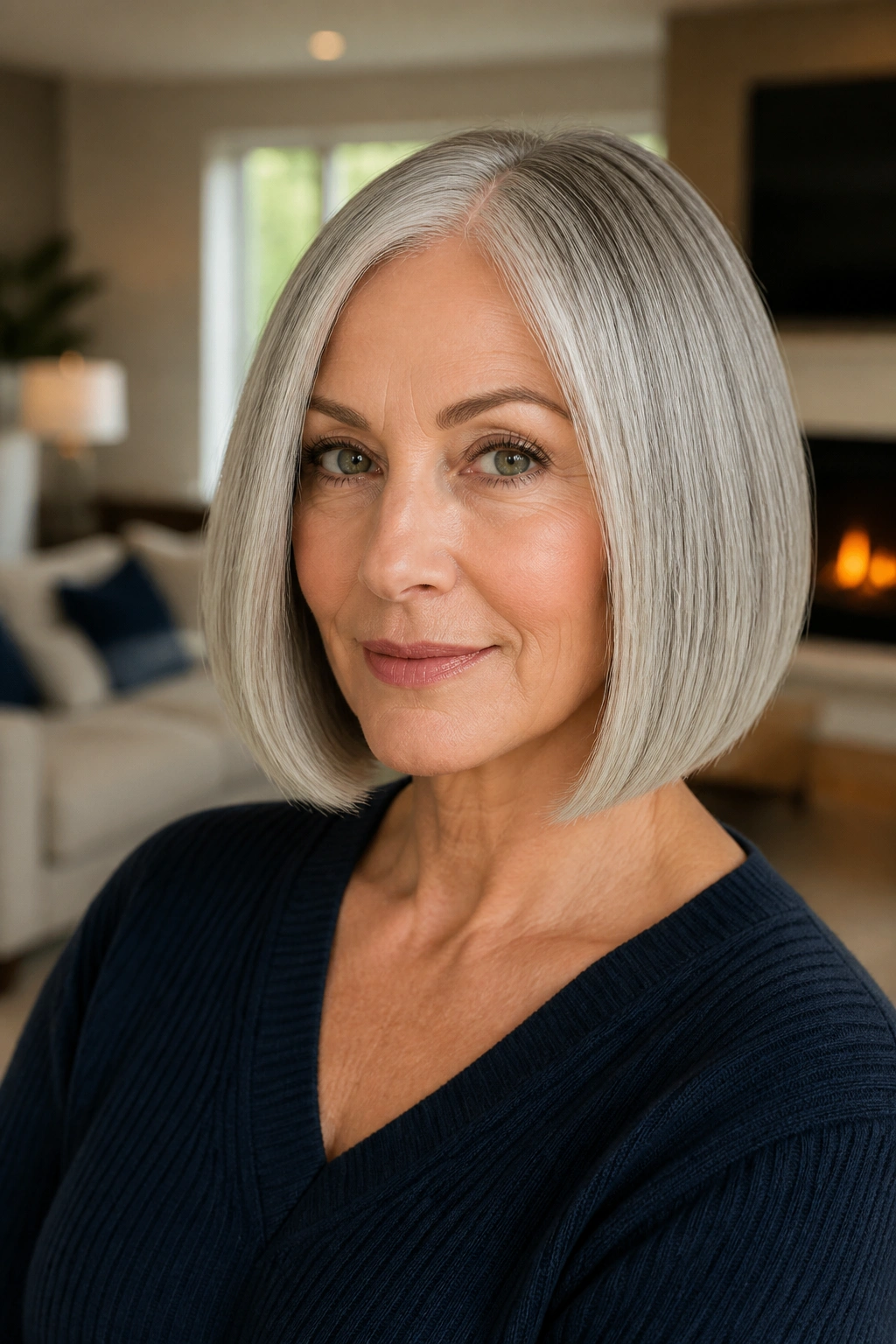
A blunt bob can be a little blunt, in every sense of the word. That is also why it works.
Gray and silver hair often looks sharper in a clean line. A blunt cut gives the color a frame, almost like a matte silver border around the face. On women with medium to thick hair, it can look especially crisp. On finer hair, the same shape can create the appearance of more density, as long as the ends are not thinned out too much.
The maintenance is straightforward. Dry it smooth, tuck it behind one ear, or give the ends a slight underturn with a flat iron. That is usually enough. The drama here comes from the line itself, not from layers, not from curls, and not from a lot of product.
What I like about this cut: it makes gray hair look intentional. Not hidden. Not apologetic. Intentional.
If your hair tends to puff at the sides, ask for a little internal reduction near the bottom edge, not heavy thinning. The wrong kind of texturizing can make the bob look frayed. Clean ends are the whole point.
7. Collarbone Shag with Soft Movement

A collarbone shag is the haircut for women who want motion without chaos. There’s a difference.
The length hits right around the collarbone, which means it still feels feminine and flexible, but the layers stop it from hanging like a sheet. That soft movement is what keeps the style from looking heavy, especially if your hair has a bit of wave or thickness.
This is one of the easier cuts to live with because it does not demand perfection. Air-dry it with a light cream, twist a few sections while it’s damp, and let the layers do the work. If you want a little more polish, wrap only the face-framing pieces around a medium brush. The rest can stay relaxed.
The shag is also forgiving during grow-out. That matters more than people admit. A haircut that still looks decent six weeks later saves time, money, and a lot of irritation.
If you wear glasses, this shape can be a winner because the layers keep the hair from pressing too hard around the frames. It has movement, but it doesn’t get in your way.
8. Curly Wash-and-Go Cut

A curly cut that actually works should make you feel relieved, not instructed.
The best wash-and-go shape is built around your curl pattern, not around the idea of perfect symmetry. That usually means shaping the curls when they’re dry or damp enough to show their real bounce, then cutting so the silhouette falls where it should on its own. If a stylist cuts curly hair straight and hopes for the best, the final result usually grows into a triangle. Nobody needs that.
Keep the product side light. A curl cream or gel, scrunched in while the hair is wet, is usually enough. Then diffuse on low or let it air-dry without touching it too much. The cut should do most of the work.
How to keep it from getting bulky
Ask for layers that follow the curl pattern rather than slicing through it at random. The goal is shape, not chop.
A good curly cut can look fresh for days because it doesn’t rely on heat styling. That alone makes it one of the most practical choices in this whole list.
9. Feathered Cut That Lifts the Crown
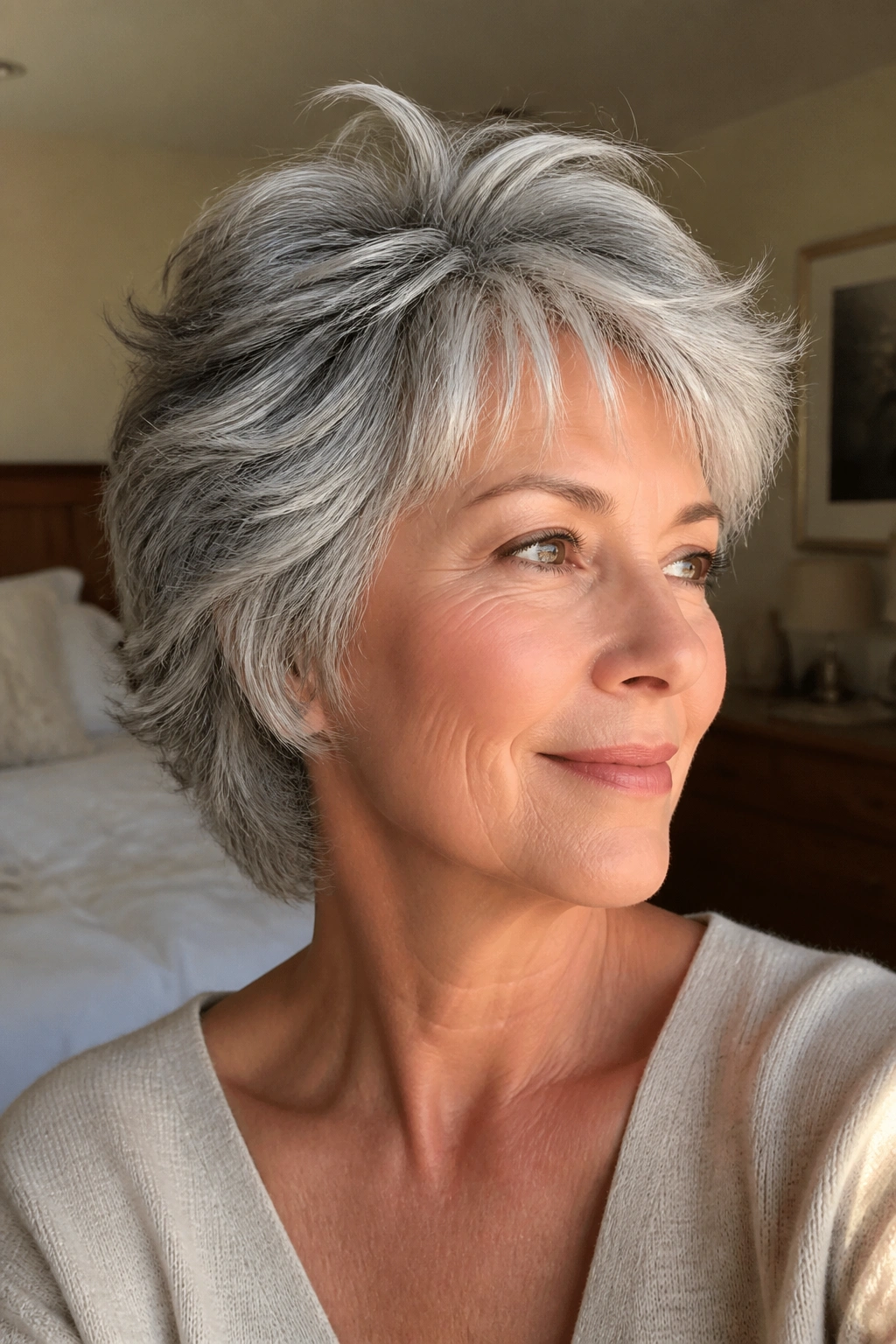
Can a haircut make the top of the head look fuller? Yes, and feathering is one of the better ways to do it.
The crown is where many women notice thinning first, especially if the hair has become finer over time. Feathered layers around the top and upper sides create a softer lift without screaming for attention. The cut looks light, but it still has structure.
This style is useful if your hair falls flat within an hour of styling. A quick round brush blow-dry at the roots can help, but the cut should already be helping before you touch a tool. That is the point. A feathered shape gives movement around the face and a little air through the top, which makes the whole style feel less heavy.
- Best for: straight or softly wavy hair with a flat crown.
- Styling trick: lift the roots with the brush and let them cool before moving on.
- Good product: a light volumizing mousse, not a sticky spray.
- Ask for: softness at the top, not a blunt top layer.
This is one of those cuts that looks modest in the chair and quietly better once you live with it.
10. Bixie That Sits Between Bob and Pixie

A bixie is a good answer when you want short hair, but not that short.
It sits in the space between a bob and a pixie, which gives you the easy care of a cropped cut with a little more softness around the face. There’s enough length on top to move it around, and enough taper at the back to keep the neck area neat. That balance is the reason people keep asking for it.
The bixie works well if your hair has changed texture and become a little more stubborn. You can rough it up with a bit of mousse, tuck one side behind the ear, or smooth the top with a flat brush. It does not ask for a complicated routine.
I also like it for women who are easing into shorter hair but do not want to feel suddenly exposed. The extra length around the ears and fringe softens the transition. It’s short, yes. But it still feels like hair you can play with.
A bixie usually needs trim-ups to keep the nape tidy, though. That is the tradeoff. If you want a shape that always looks clean, this one earns its keep.
11. Long Layers That Keep the Length
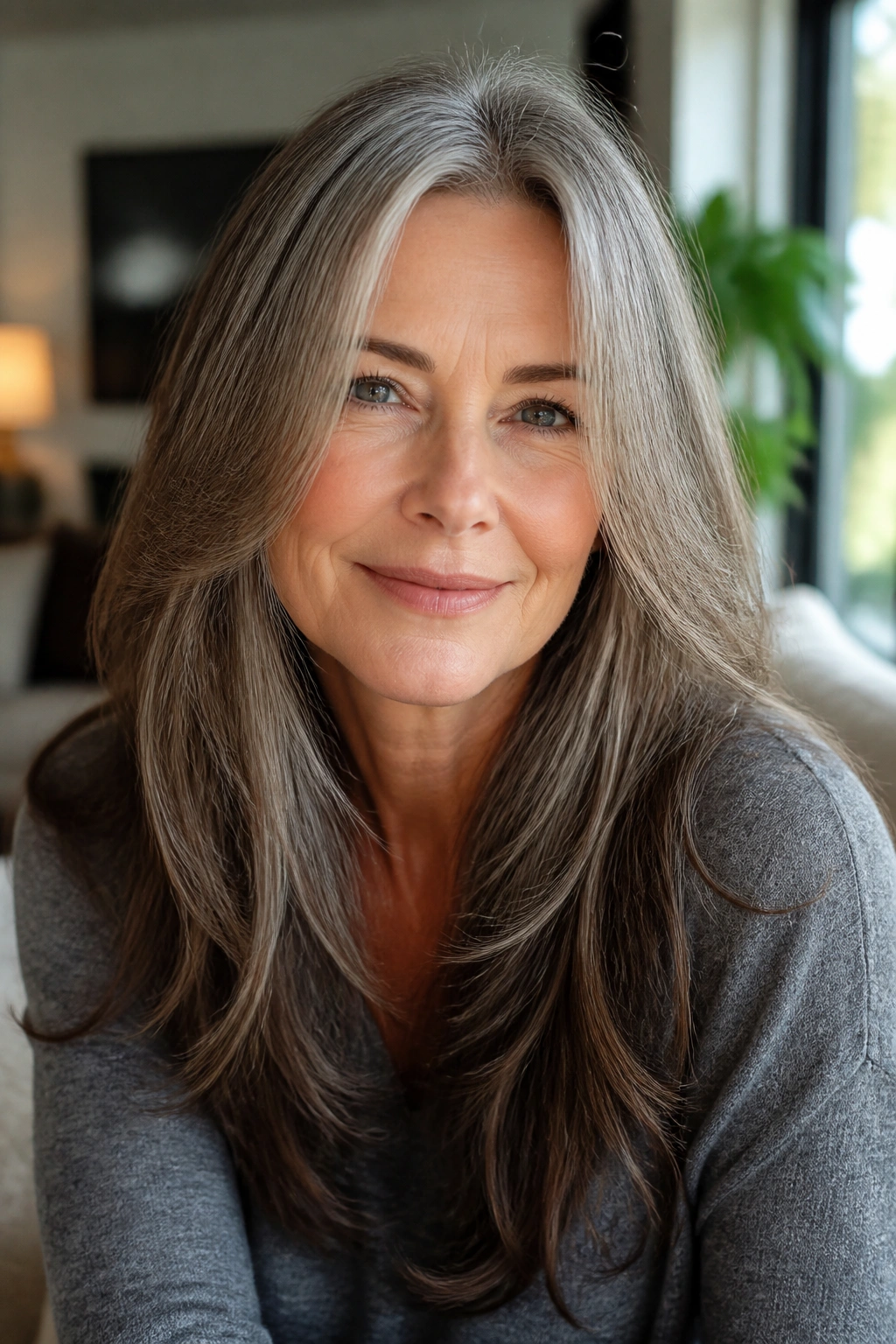
Not everyone wants shorter hair after 50. Good. You do not have to.
Long layers are a smart way to keep length while removing the drag that makes hair look tired. The ends stay lighter, the face gets a little movement, and the whole cut becomes easier to air-dry without turning into a heavy curtain. This is a good answer for women who still like a ponytail, a braid, or a quick twist at the back.
The key is not to over-layer. Long hair with too many short pieces can look thin and stringy, especially when gray hair is mixed through it. Keep the layers subtle and place them where the hair needs movement most: around the face, through the lower half, and maybe a little around the collarbone.
Unlike a bob, this cut gives you more styling options. Unlike a heavily layered shag, it stays calmer on low-effort days. That’s why it works so well for people who are attached to their length but want less daily hassle.
A light smoothing cream and a wide-tooth comb are often enough. Let the hair dry with some natural bend, and stop there.
12. Tapered Cut for Natural Texture
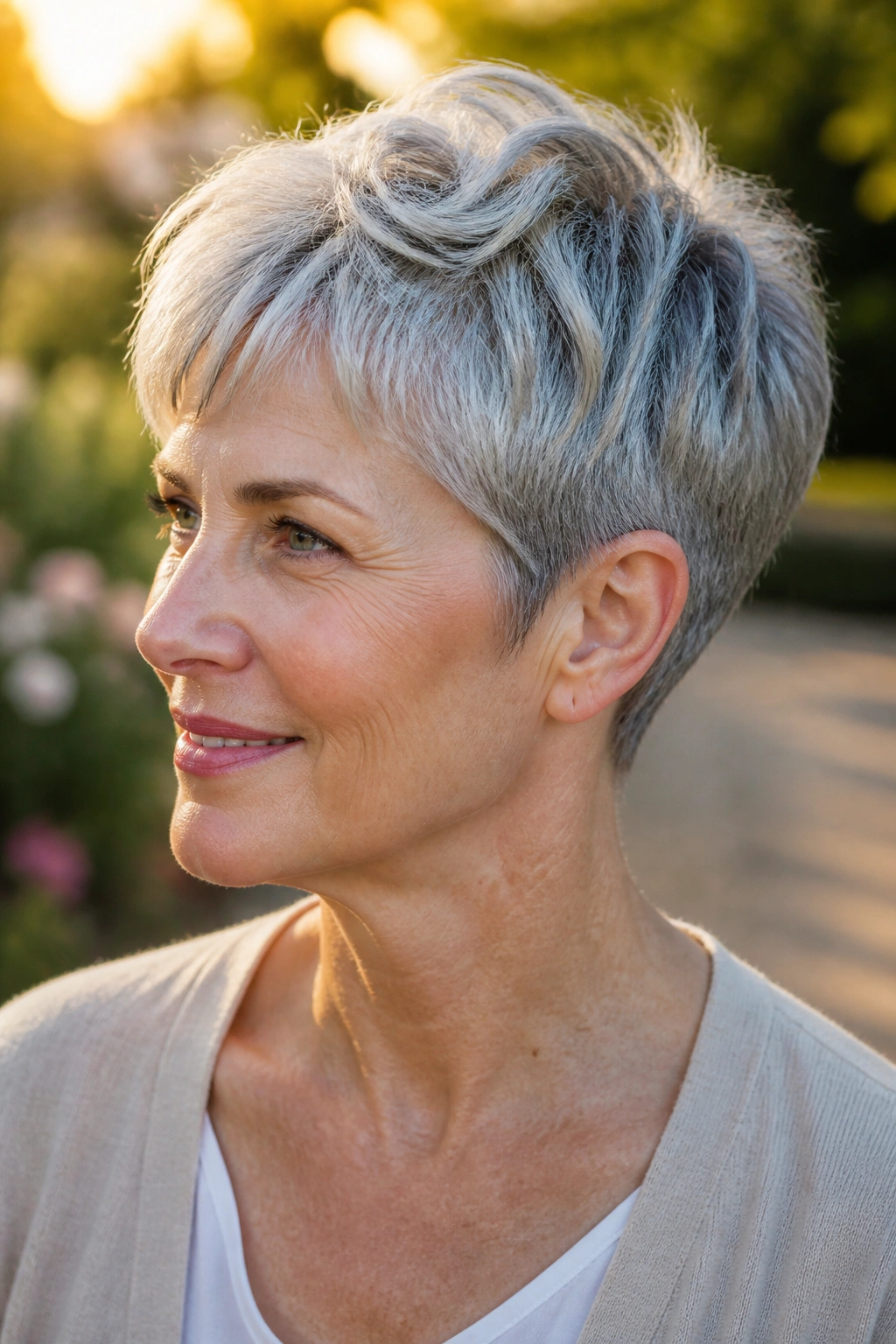
A tapered cut is one of the best things you can do for natural curls, coils, or dense waves that need shape without a lot of hands-on styling.
The idea is simple: keep the edges closer and let the top carry the form. That taper around the nape and sides removes bulk where hair often gets bulky, while the upper sections keep enough length to show off texture. The result looks tidy even on a day when you have barely done anything.
This is the haircut that respects texture instead of forcing it into a fake shape. If your hair springs out at the sides or feels too wide at the bottom, tapering can bring the silhouette back in. A little leave-in conditioner, a curl cream, and finger-coiling a few front pieces is often enough.
Where the shape lives
The best tapered cuts have their strength at the outline. If the outer shape is right, the hair looks finished even when the curl pattern is loose or uneven.
I like this cut for active women who want hair that can be washed, dried, and left alone. It does not need a round brush. It needs a good shape.
13. Side-Parted Crop That Hides Cowlicks

A stubborn cowlick can turn a bad morning into a battle. A side-parted crop takes away most of that fight.
I’ve seen plenty of people blame their hair when the real issue was the part. If your crown grows in one strong direction, forcing it straight down usually makes the front stand up or split. A side part works with the swirl instead of against it, and the haircut settles down fast.
Keep the crop short enough to stay neat, but leave a little length on top so you can direct the hair where it wants to go. Finger-drying with a dab of styling cream often works better than trying to iron every piece flat. If one side wants to lift, let it. That’s the charm.
- Best for: crowns with a strong natural swirl.
- Helpful cut note: keep the top a touch longer than the sides.
- Styling note: blow-dry in the direction of the part, then stop fussing.
- What not to do: don’t fight the cowlick with too much gel. It usually gets worse.
This is a small haircut with a big payoff. Less drama. Less reset time in the mirror.
14. Modern Pageboy with a Soft Under Curve
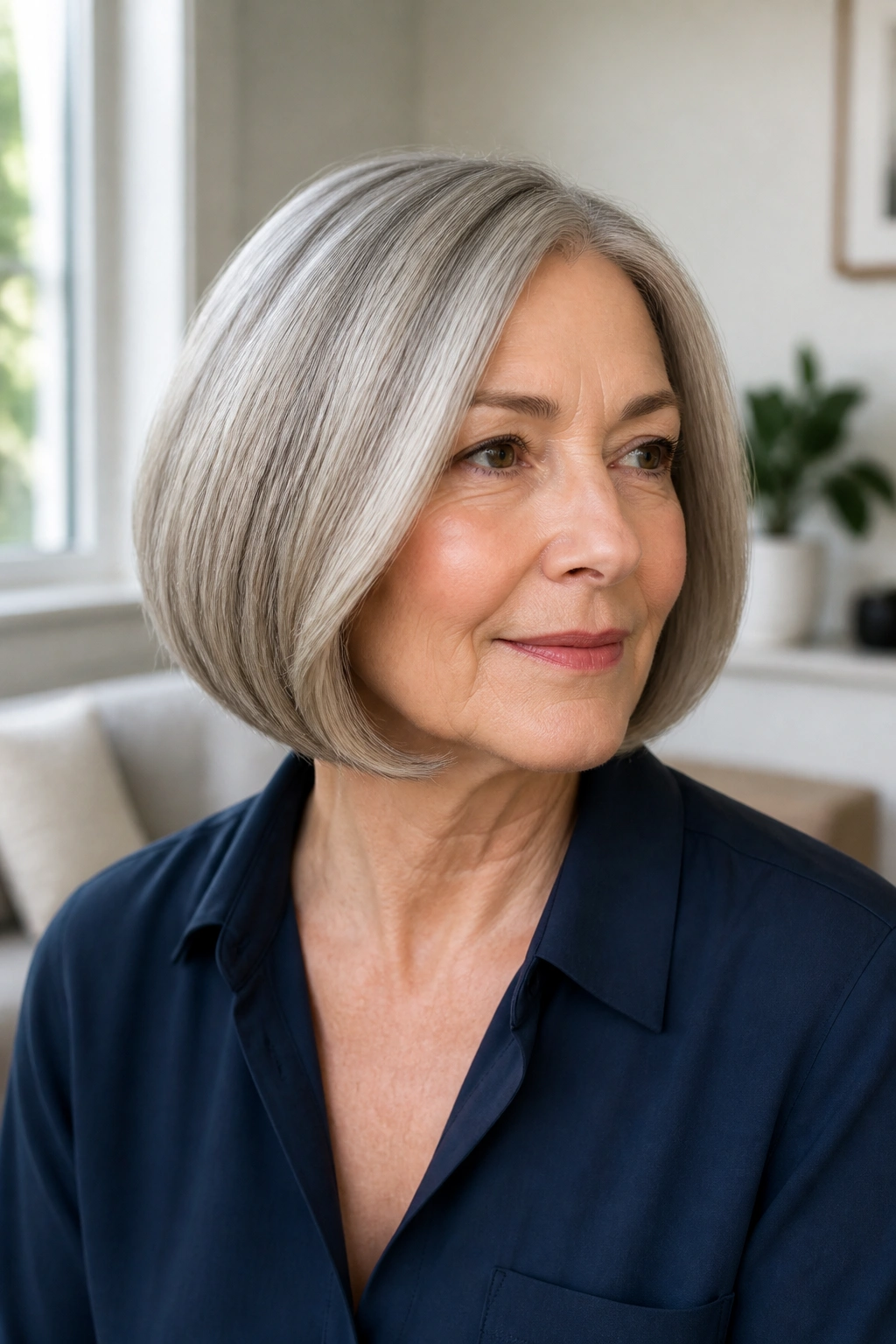
The pageboy used to have a reputation for being stiff. The modern version is better.
The soft under curve gives the ends a gentle bend instead of a hard shelf, so the haircut sits around the face in a calmer, more flattering way. It’s neat, but not severe. Structured, but not bossy. That matters if you like a clean style and don’t want layers flying everywhere.
This cut shines on straight or straight-ish hair that likes to hold shape. A quick blow-dry with a round brush, just enough to turn the ends inward, keeps it looking smooth. If you have gray hair, the curve can make the color look glossy and cared for, especially around the jawline.
Some people skip this shape because they think it feels too retro. I think that is the wrong read. The updated pageboy is less about nostalgia and more about control. It keeps the hair close, tidy, and easy to manage. That is not boring. That’s useful.
If your ends tend to split, this is also a nice shape because the lower edge stays protected instead of being chopped into a hundred tiny pieces.
15. Low-Maintenance Midlength Cut for Busy Mornings

Shoulder-to-collarbone length is a sweet spot for women who want flexibility and not much else.
A good midlength cut can be tied back, clipped half up, worn loose, or air-dried into something respectable with almost no effort. That is its real value. If your days are busy and your hair has to cooperate fast, this length keeps you from needing a total styling routine every single morning.
Why the length matters
Hair that sits right around the shoulders has enough weight to behave, but not so much that it drags flat. That makes it easier to smooth, easier to tuck away, and easier to grow out than a precise bob.
A soft curtain fringe can work here if you want something around the face, but it isn’t required. I’d keep the layers minimal and let the length do most of the talking. If the hair is wavy, a little leave-in and air-drying can give you a loose shape. If it’s straight, a quick bend at the ends can keep it from looking limp.
This is the haircut for women who want low maintenance without going short. Not flashy. Just useful.
16. Soft Wolf Cut Without the Drama

A wolf cut gets a bad reputation when it’s too choppy. The softer version is much easier to live with.
Think of it as a shag with a little more attitude and a lot less chaos. The layers are still there, but they’re blended enough to keep the cut from looking jagged. That makes it good for hair with a wave or bend that needs motion without looking styled to death.
It’s also a nice shape for women whose hair has become fuller in some places and flatter in others. The layered top keeps the crown light, while the longer pieces around the face prevent the cut from feeling too shaggy. A salt spray can help, but use it lightly. Too much and the hair starts looking dry in a hurry.
What to ask for
- Soft layering through the top and crown.
- Longer face-framing pieces.
- Enough length at the bottom to keep the shape gentle.
- No razor-heavy ends unless your hair can take it.
This cut is for someone who likes movement and does not mind a little edge. The trick is keeping the edges soft enough to age well.
17. Sleek Shoulder Cut With Face-Framing Pieces

There’s a big difference between sleek and flat. The good shoulder cut knows that.
This style keeps the overall line smooth and polished, then adds a few face-framing pieces so the hair does not sit like a single block. Those front pieces matter most when you wear glasses, want to soften the cheeks, or just prefer a more finished look. They keep the style from feeling severe.
Compared with a shag or wolf cut, this one is calmer and easier to dress up. Compared with a blunt bob, it gives you more length to play with. That middle ground is useful. You can smooth it with a brush, tuck the sides behind the ears, or wear it with a soft bend at the ends and be done.
The key is not to overload it with layers. Too many pieces in the front can turn sleek into thin. Keep the framing controlled, and let the shoulder length carry the style.
A flat iron pass through the ends, or even a blow-dry with a paddle brush, is enough for most days. Clean lines. Low fuss. That’s the draw.
18. Rounded Silver Bob With Soft Graduation

If your gray hair has a little shine and a little body, a rounded bob can make both look better.
The soft graduation in the back gives the style a gentle lift, while the rounded outline keeps the shape from going boxy. That means the haircut sits close to the head without looking severe. It also helps the silver tones read as deliberate, not accidental. I like that a lot.
This is a smart choice for women who are growing out color and want the transition to look polished. The rounded shape gives the eye a clear line to follow, so regrowth looks less messy. It also grows out more gracefully than a high-maintenance precision cut, which matters if you do not want to live in the salon.
A light smoothing cream, a round brush, and a few minutes are usually enough to keep it in shape. If your hair is thick, ask for internal reduction so the back does not puff. If it’s finer, keep the graduation subtle so the bob does not collapse.
Good silver hair deserves a cut that knows what to do with it. This one does.
Final Thoughts
The best easy care hairstyle is the one that fits how you actually live. Not how you imagine you’ll style your hair on a perfect morning. Real life has rain, scarves, glasses, gym bags, and days when dry shampoo is the whole plan.
A smart cut should give you options. Short enough to be manageable, long enough to feel like yours, and shaped well enough that it still behaves when you do less than ideal things to it. That is the whole trick.
Pick the cut that works with your texture, then ask for a version that grows out cleanly. That one detail saves more frustration than any trendy photo ever will.
