



Heart-shaped faces are easy to flatter once you stop fighting the forehead and start balancing the lower half. The best hairstyles for heart face shapes over 40 do exactly that: they soften width at the top, add a little weight near the jaw, and keep the whole cut looking lived-in rather than stiff.
That matters more than people think. Hair changes with age. It can get finer at the temples, drier at the ends, and a bit less predictable in texture, especially if silver strands are starting to show through. A cut that looked neat on paper can turn fussy fast if it depends on too much volume at the crown or too much length hanging straight past the chin.
I also think heart-shaped faces get sold a bad haircut idea way too often. People are told to “hide the forehead,” which usually leads to heavy bangs or too much puff around the temples. Bad move. The smarter play is shape, not cover-up — and when you get that right, your features look calmer, cleaner, and more intentional without looking overworked.
1. Chin-Length French Bob with a Side Part
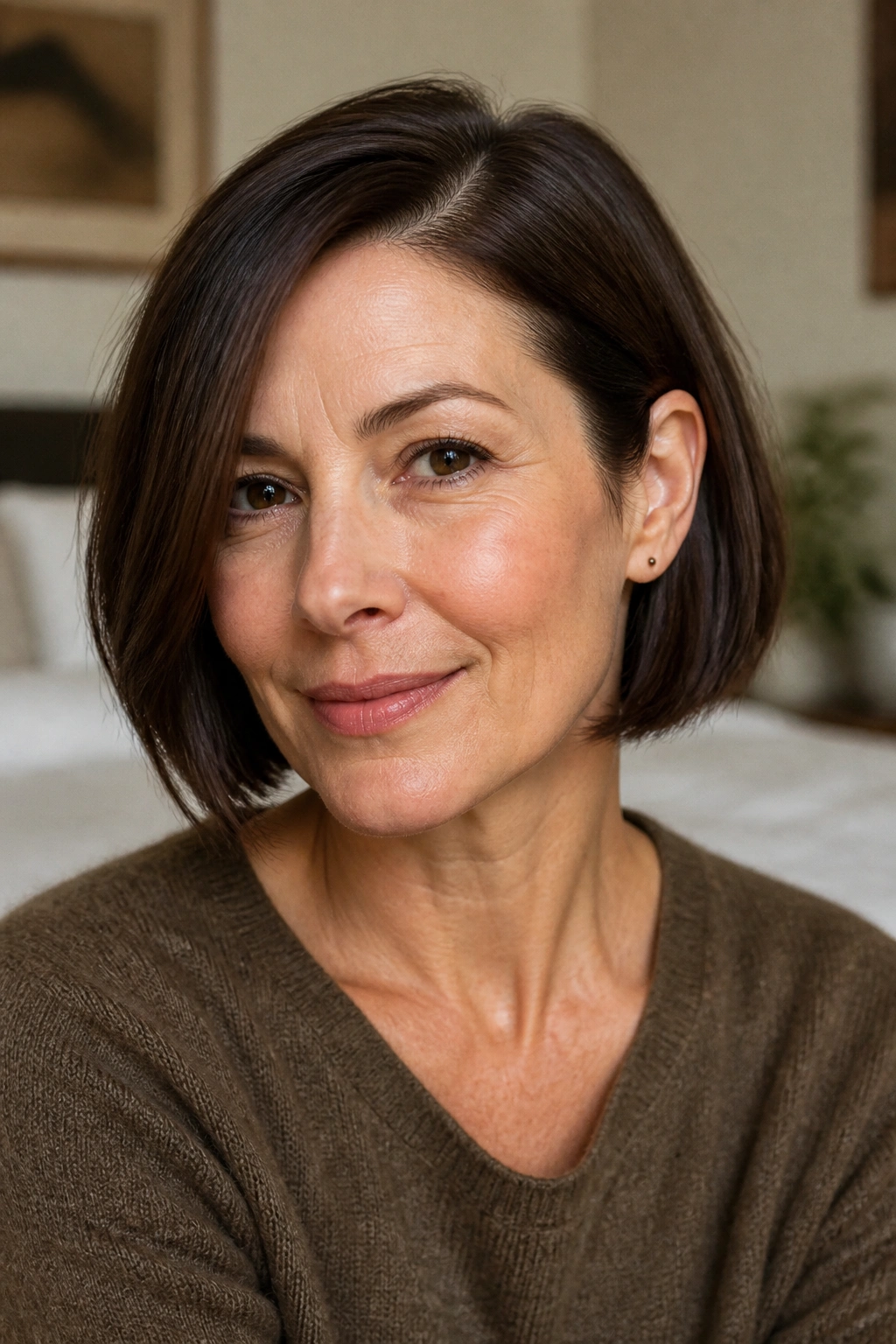
A chin-length French bob is one of those cuts that looks simple until you see how much it fixes. The length lands right where a heart-shaped face needs help: near the jawline, where a little fullness brings the whole face into better proportion. Add a side part, and the forehead stops feeling like the only thing people notice.
Why It Works
The blunt edge gives the lower face some presence. That matters a lot on heart shapes, where the chin can feel narrow or pointy if the cut is too long and wispy.
A side part keeps the top from looking wide. It also gives silver or salt-and-pepper hair a sharp outline, which is handy when the hair itself has less density than it used to.
- Ask for the length to hit right at the chin, not below it.
- Keep the ends mostly blunt, with only a tiny bit of soft texture.
- Style with a 1-inch round brush or a flat iron bend at the ends.
- Use a light cream, not a heavy oil, so the shape stays crisp.
Best tip: tuck one side behind the ear and let the other side fall forward. It makes the cut feel less severe and gives the jawline a little breathing room.
2. Side-Swept Lob

A side-swept lob is the cut I’d point to first if you want one style that can carry you through a messy hair day and still look polished. It sits between the collarbone and the upper chest, which gives the face length without making the chin look sharper.
The side sweep is the real trick. A center part can make a heart face feel top-heavy if the hair is fine or flat. A deep side part breaks that shape up and shifts some attention away from the forehead, while the longer front pieces skim the cheekbones instead of clinging to them.
This cut is also forgiving if your hair has changed texture. You do not need pin-straight strands for it to work. A soft bend with a big curling iron — think 1.25 inches — is enough to keep the shape moving.
Use it when you want length, but not too much. And if your hair has some gray coming through, this cut is kind to that too. A clean lob line makes mixed tones look deliberate instead of patchy.
3. Collarbone Cut with Soft Internal Layers
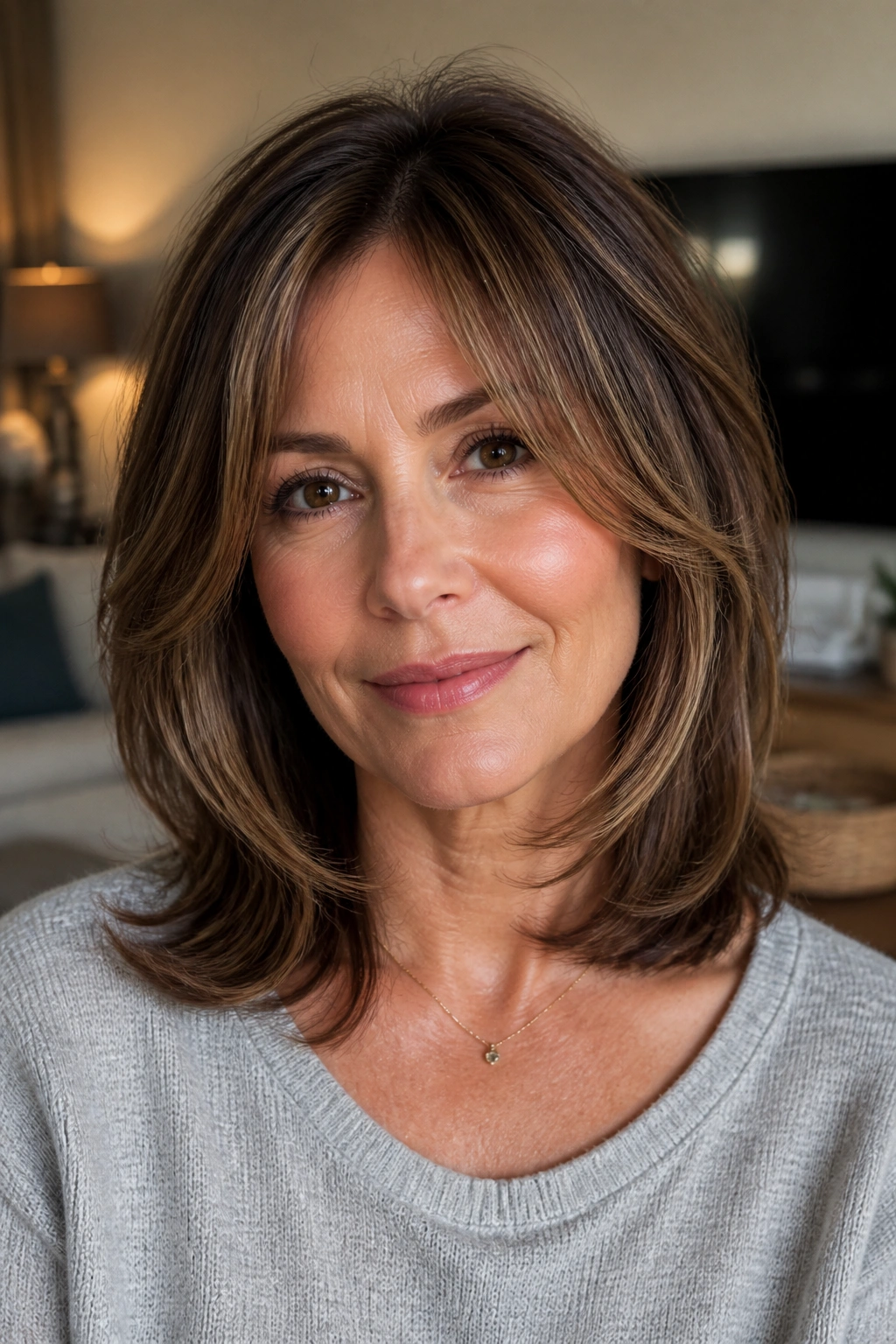
Why does a collarbone cut look so good on a heart-shaped face? Because it lands in the narrow strip of space where the face starts to open up again. It gives the eye a place to rest below the cheeks, which helps balance a wider forehead and a slimmer chin.
Soft internal layers keep the cut from looking heavy. That matters if your hair is dense, coarse, or a little frizzy at the ends. You want movement inside the shape, not a bunch of short outer layers that puff out around the temples.
How to Wear It
Blow-dry the top smooth, then bend the bottom half with a medium round brush. You’re aiming for a shape that curves inward slightly at the collarbone and then brushes away from the neck.
A good salon request sounds like this: “Keep the perimeter at the collarbone, add soft interior layers, and leave the front longer than the back by a small amount.” That small difference is what keeps the cut from feeling boxy.
If you wear glasses, this cut gets even better. The collarbone length keeps the frames from fighting the hairstyle, and the soft layers stop the whole look from feeling too square.
4. Long Pixie with Sweeping Fringe
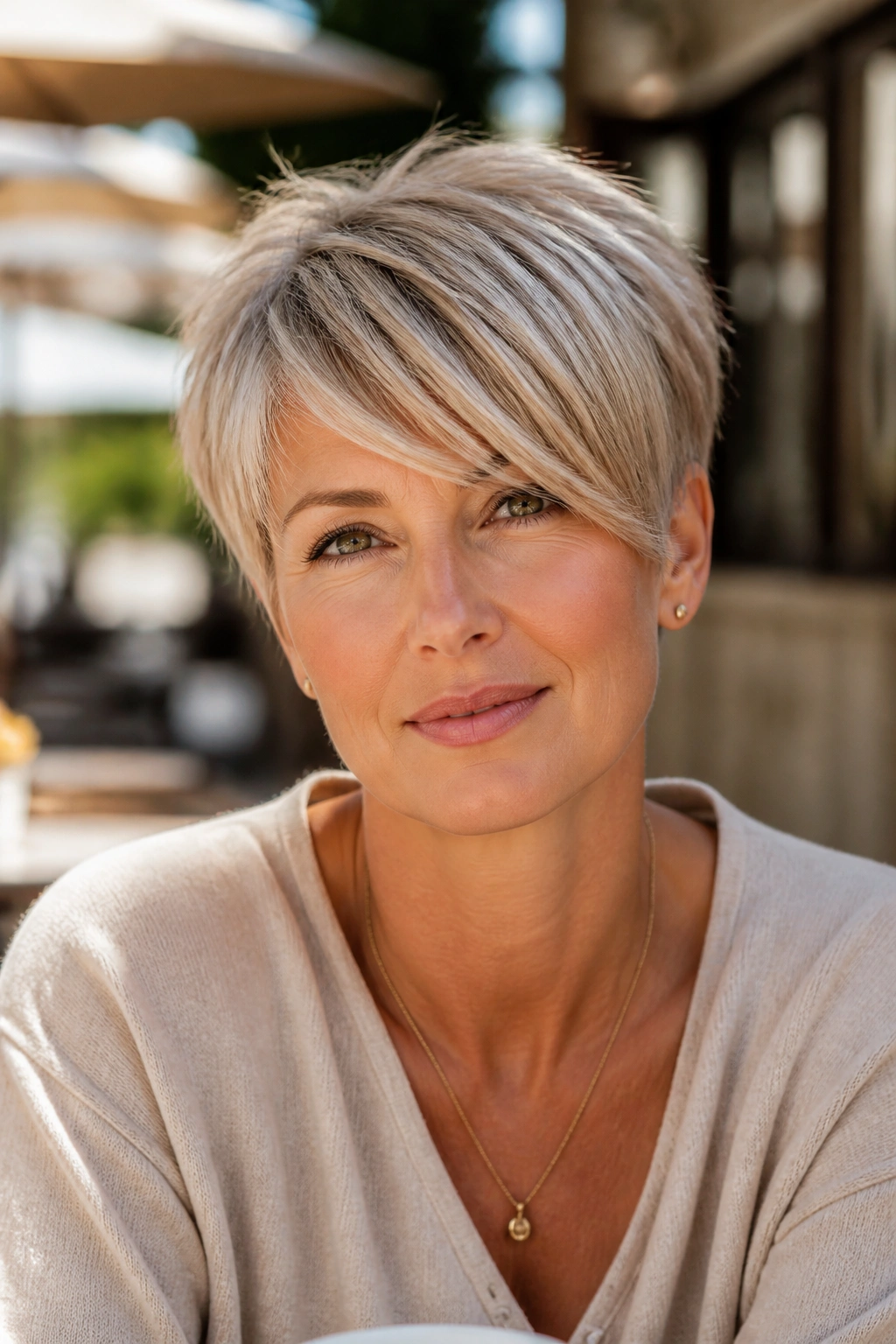
If your hair feels limp by noon and you are tired of pretending you like long, fussy styling, this is the cut worth paying attention to. A long pixie with a sweeping fringe gives you movement around the forehead without making the top look wider than the jaw.
The fringe matters more than the length here. Keep it long enough to sweep across the forehead and blend into the side, rather than sitting as a tiny short bang. That soft diagonal line is flattering on a heart face because it breaks up the widest part without boxing it in.
What to Ask For
- A tapered nape so the back hugs the head.
- Longer pieces at the front, especially around the temples.
- Fringe that can be brushed to the side in under a minute.
- Texture through the crown, but not so much that it sticks up.
This cut shines on finer hair because it gives shape without asking for a lot of styling time. It also works on gray hair that has a wiry bend to it; the texture adds lift in a good way, not a wild one.
Do not overthin the sides. That is the mistake that turns a chic pixie into a shapeless one.
5. Curtain Bang Bob

Curtain bangs can be a gift on a heart-shaped face, but only when they’re cut with enough softness to move. A bob with curtain bangs gives the forehead a gentler frame and keeps the rest of the cut tidy around the jaw.
The reason this works is simple: the bangs open in the middle and fall away from the cheeks, so the top of the face feels less dominant. At the same time, the bob keeps enough shape around the lower face to stop the chin from looking too narrow.
I like this look best when the bob ends somewhere between the jaw and the top of the neck. Too short, and the bangs take over. Too long, and the whole style loses its point.
The styling part is easy, which is half the appeal. Dry the bangs with a small round brush, directing them out and away from the center, then give the ends a loose curve. If you’ve got silver strands, this cut makes them look clean and expensive-looking without trying too hard. That clean line at the front can do a lot.
6. Shoulder-Length Shag
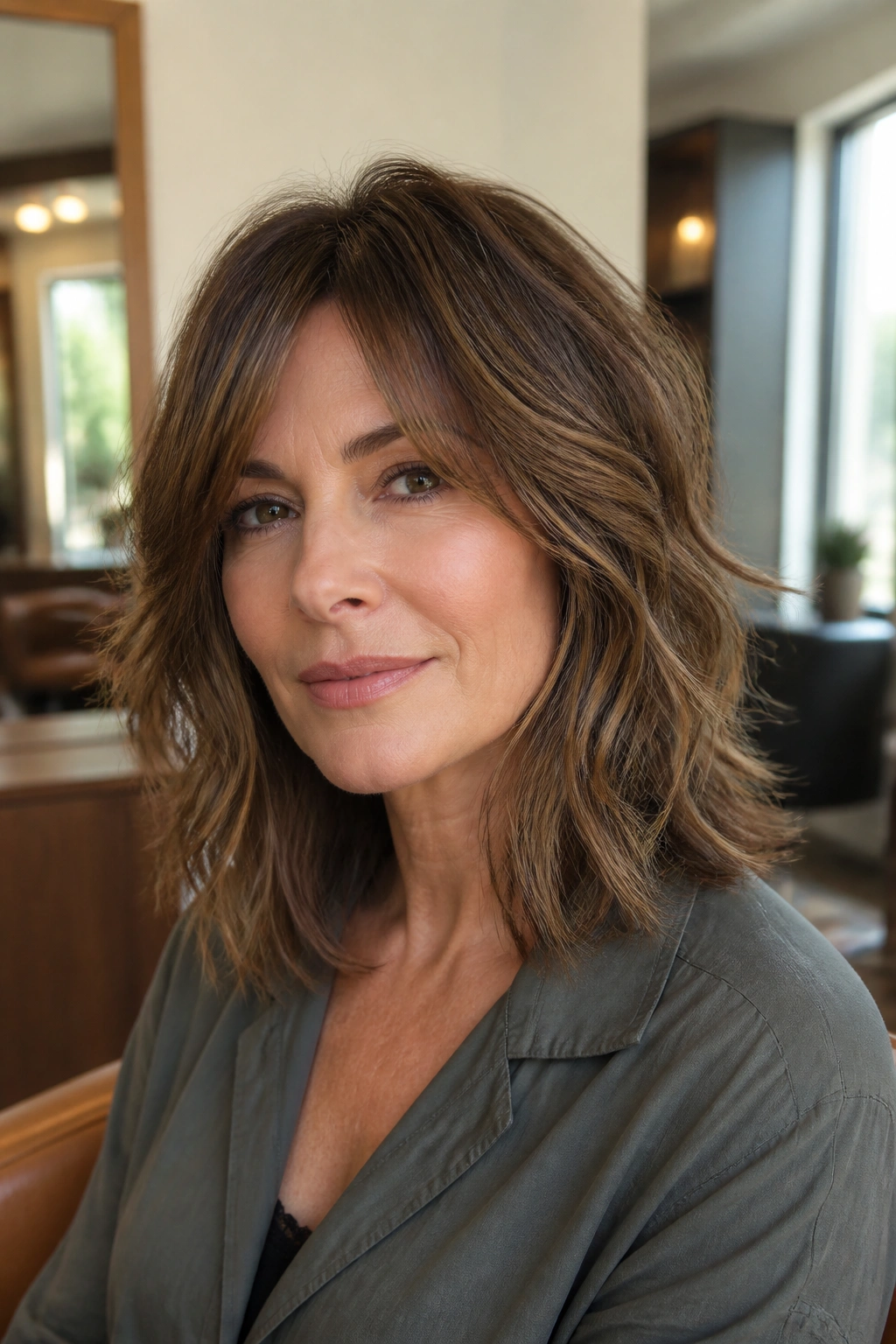
A shoulder-length shag is not the same thing as a messy haircut. The difference is intention. A good shag keeps movement where the hair needs it and weight where the face needs it, which is why it suits heart shapes so well.
Unlike a smoother lob, this cut builds texture through the mid-lengths and ends. That keeps the eye moving down the face instead of getting stuck on a wide forehead or a high crown. It also works well if your hair has some natural wave, because you are not fighting the pattern.
If you want this to flatter a heart face, ask for the shortest layers to start around the cheekbone, not above it. That keeps the sides from puffing out too high. A few soft face-framing pieces can land near the jaw, but they should not be sharp or choppy.
This is a good match for women who like a little edge without going full punk. It has enough softness for work, enough texture for weekends, and enough structure to hold up when your hair is a bit dry. That combination is not easy to find.
7. Soft Wavy Midlength Cut
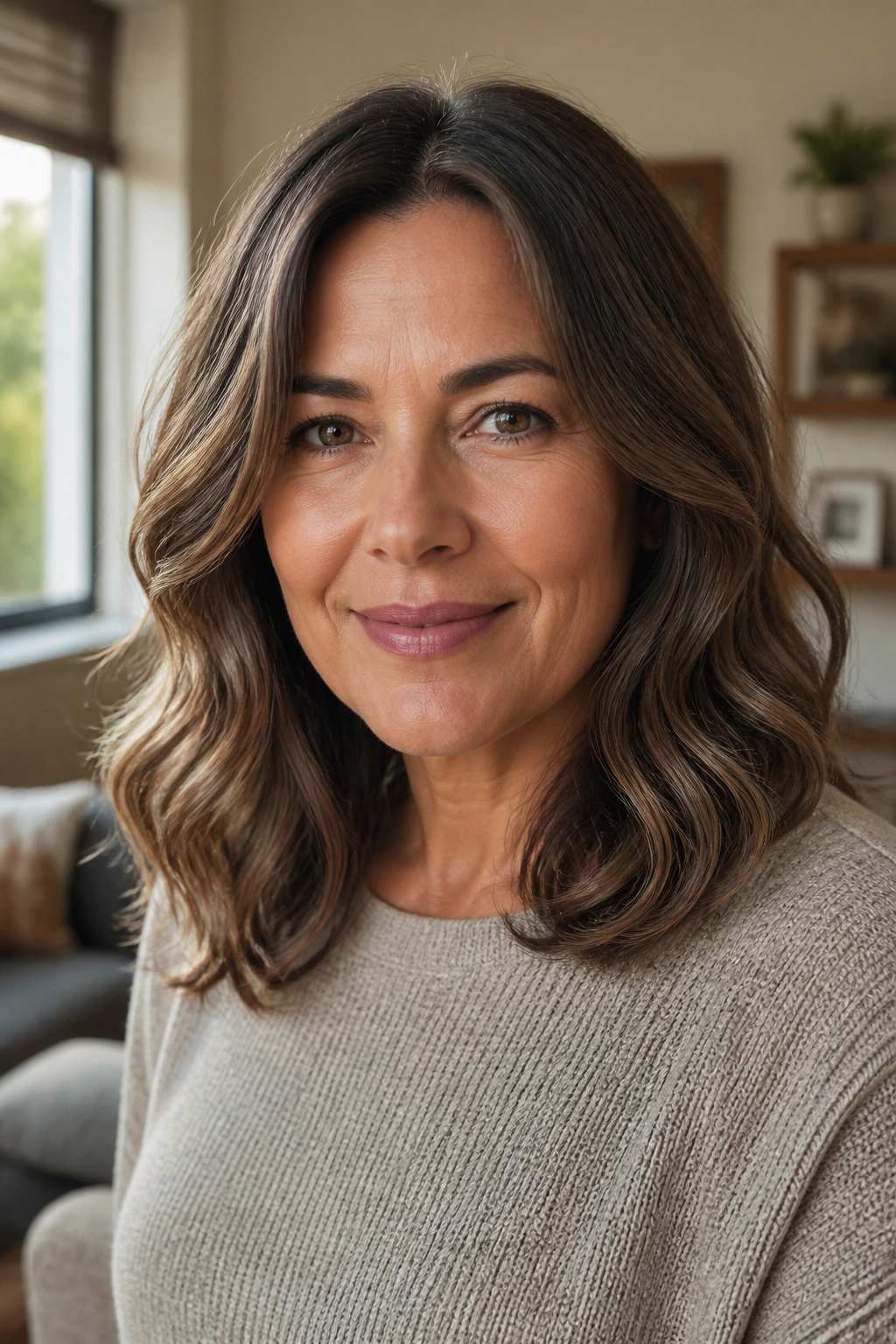
A soft wavy midlength cut has one job: make the face feel balanced without drawing a hard line anywhere. It is especially useful if your hair is naturally wavy or if you prefer to air-dry and go.
Why It Works
The length usually sits from just below the collarbone to the upper chest. That range is long enough to narrow the look of a wider forehead, but not so long that the jaw disappears into the rest of the hair.
Waves add a little width lower down, which is exactly where a heart face can use it. You do not need big curls. A loose wave, a bend from a large iron, or even a careful braid-out can do the job.
Quick Details
- Best with soft, not crunchy, layering.
- Works nicely on hair with a bit of silver, because the texture shows up well.
- Needs a light mousse or wave cream, not a heavy serum.
- Looks best when the ends have some movement instead of hanging flat.
One small warning: if the layers start too high, the cut can widen the upper face instead of balancing it. Keep the shortest pieces around the cheekbones or lower.
8. Sleek Blunt Bob with a Deep Side Part
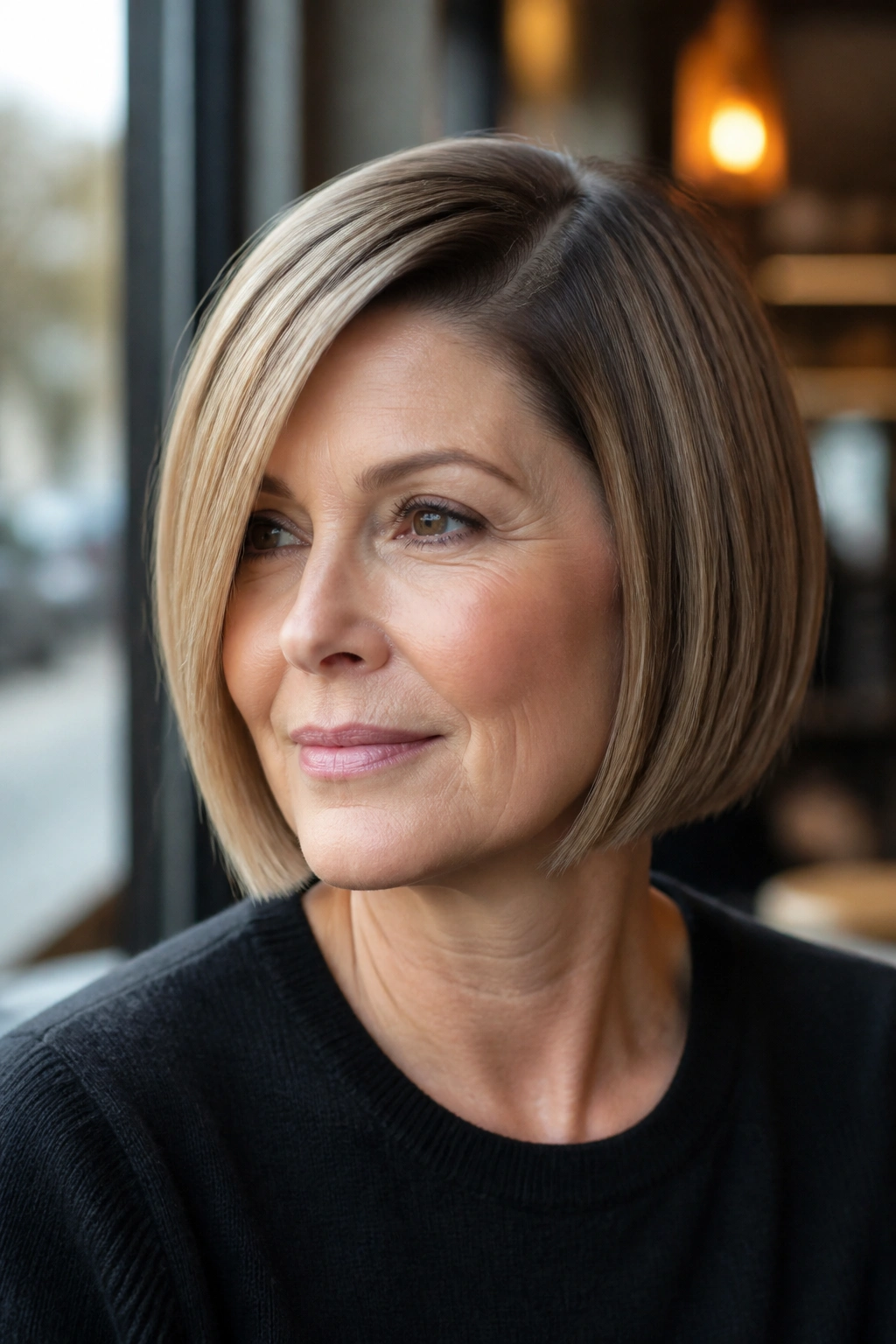
A blunt bob can flatter a heart face if you stop thinking of blunt as severe. The right blunt bob looks clean, not hard. Put it with a deep side part, and the shape becomes surprisingly soft at the front.
The deep side part does most of the balancing. It creates a diagonal line across the forehead, which keeps the upper face from reading too broad. The blunt edge then gives the jaw some visual weight, which is useful when the chin is narrow or pointed.
This cut works best when it lands at the jaw or a hair below it. Too short and the forehead dominates. Too long and the bluntness gets lost.
I like this style on straighter hair because it shows the line well, but it also works if your hair has a slight bend. If you’re growing out layers or tired of chasing volume, this bob is refreshingly low-drama. Flat iron the ends once, tuck one side behind the ear, and you’re done.
9. Feathered Shoulder Cut

Why do feathered layers keep showing up on flattering haircut lists? Because they move the eye downward without piling bulk in the wrong place. On a heart-shaped face, that matters.
A feathered shoulder cut gives softness around the jaw and neck while keeping the top controlled. You want the top to lie closer to the head, then let the mid-lengths open up a bit. That keeps the forehead from looking extra wide and stops the cut from turning into a triangle.
How to Ask for It
Say you want light feathering through the ends, not choppy layers all over. The shortest pieces should sit around the cheekbone or a touch below.
The best styling tool here is a medium round brush. Pull the ends away from the face slightly, then let them settle. That small bend keeps the cut from looking dated.
- Good for hair that feels thick at the ends.
- Helpful if you wear side parts often.
- Works with soft highlights or natural gray because the layers catch the light cleanly.
- Needs only a little finishing cream on the ends.
This is one of those cuts that looks better when it moves. If it gets too polished, it loses the whole point.
10. Rounded Curls with a Side Part
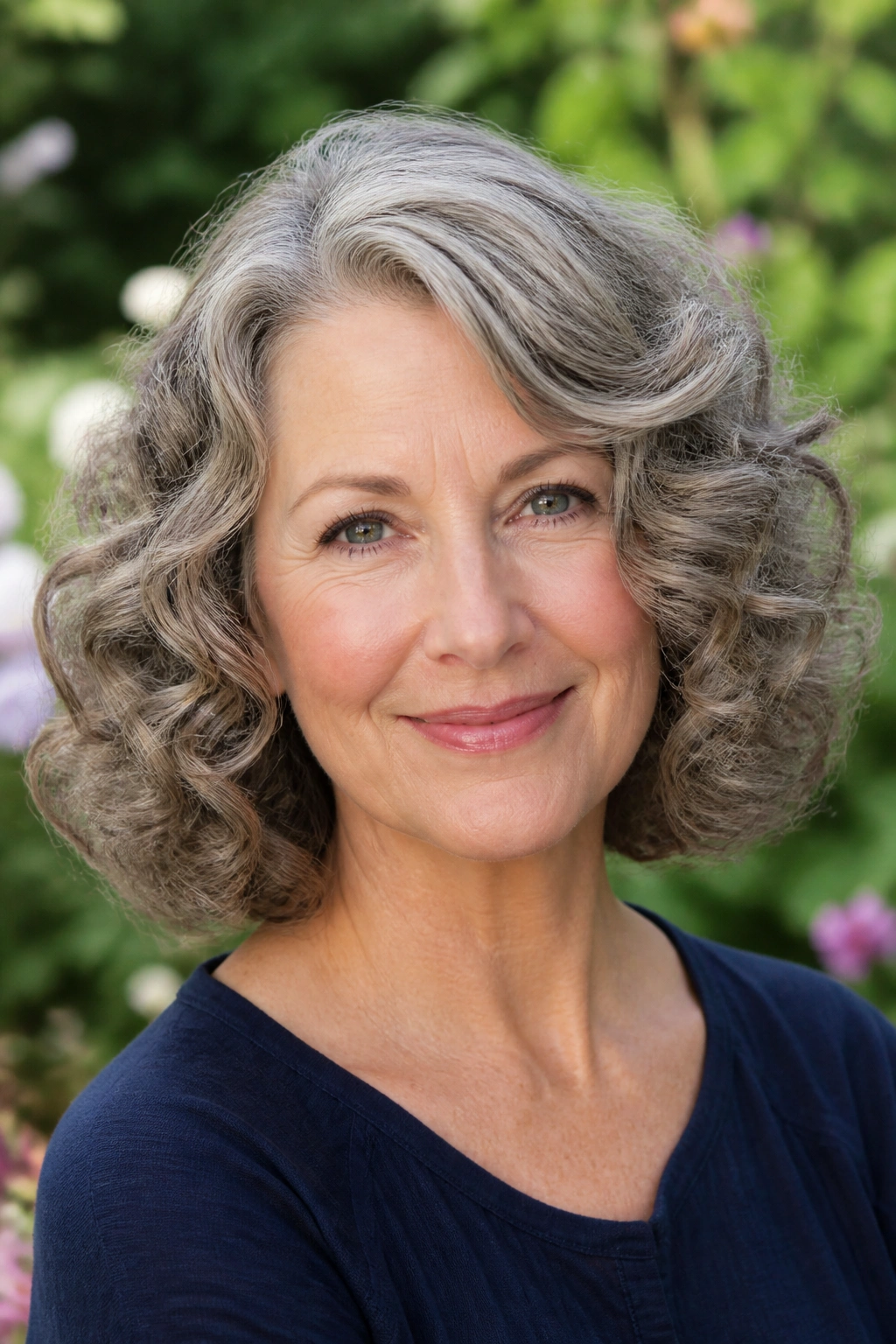
Picture curls that sit in a soft oval shape instead of ballooning outward. That is the difference between a curly cut that flatters and one that fights your face.
A heart-shaped face can handle curl volume, but not all curl volume in the top half. A side part shifts the balance, and a rounded silhouette around the cheeks and jaw keeps the shape grounded. If the curls are too tall at the crown, the forehead takes over. If they are too narrow at the bottom, the chin looks sharp. This style avoids both.
Key Details
- Keep the top layers a little longer so the curl pattern does not spring upward too much.
- Ask for shape around the chin and jaw, not just around the crown.
- Use a diffuser on low heat until the curls are about 80% dry.
- Scrunch in a light gel, then break the cast once the hair is fully dry.
The best part is how forgiving this cut is on gray curls, which can get wiry or frizz-prone. Rounded shape helps the curl read as intentional instead of wild.
And yes, this can look polished. You do not need stiff ringlets. Soft, touchable curls are enough.
11. Layered Crop with a Tapered Nape
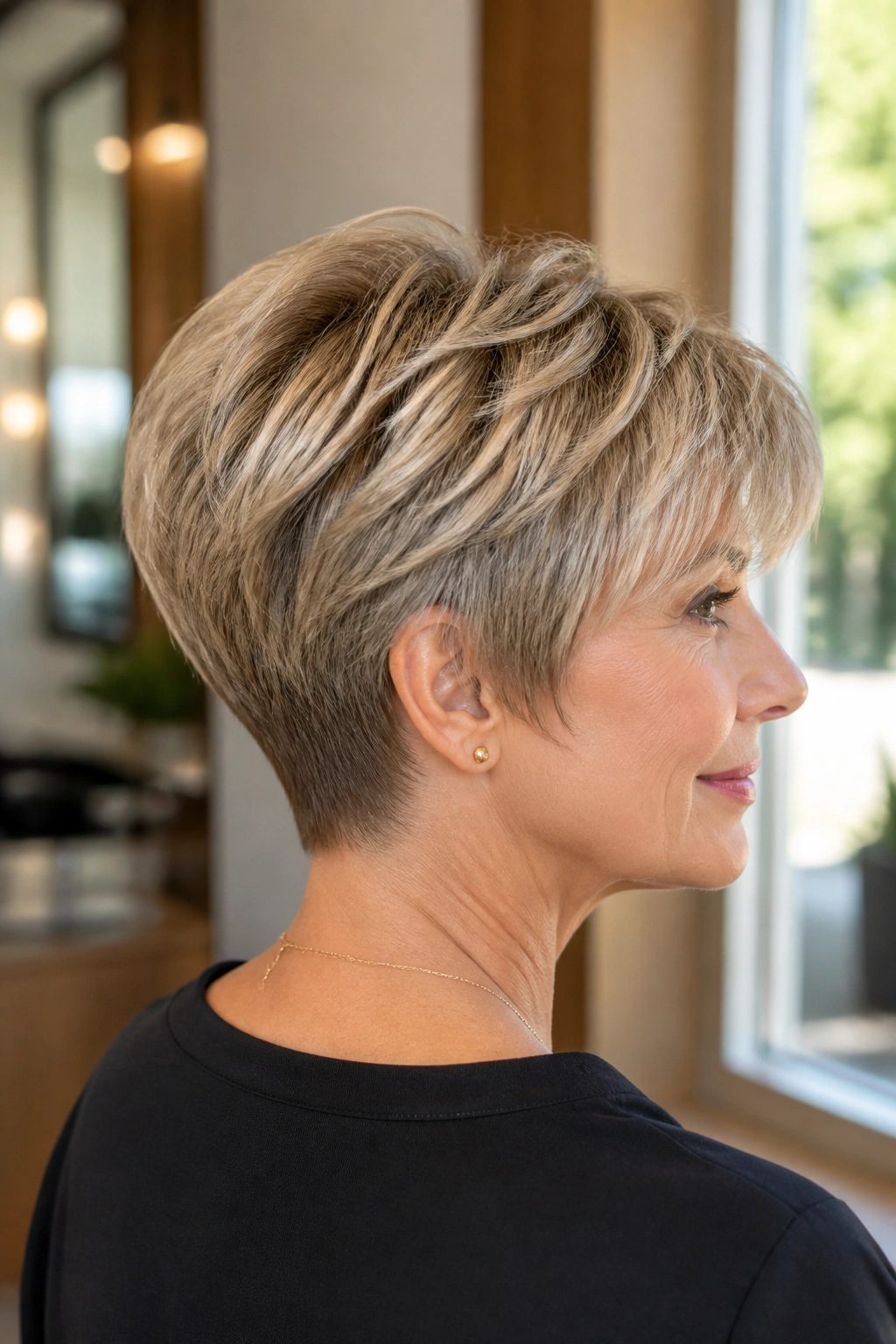
The layered crop gets underestimated because people hear “short” and imagine something harsh. A good layered crop is not harsh. It is neat, light at the nape, and controlled at the crown, which makes it a smart pick for heart faces with changing hair texture.
The tapered nape is the quiet hero. It keeps the back close to the head, so the silhouette doesn’t get bulky. Then the top gets just enough layer to create movement without lifting the face into a tall shape. That is useful if your forehead is broad or your hair wants to stand up in the wrong places.
This style suits someone who wants a real haircut, not a compromise. It looks deliberate with straight hair and even better with silver strands, because the clean shape shows off shine. If your hair is coarse, ask the stylist to leave a little weight on the top so it does not puff out.
You do need a trim schedule with this one. Short cuts lose their shape faster than longer ones. Still, when they are fresh, they look sharp in a way that takes years off the effort rather than the face.
12. Asymmetrical Bob

A straight-on bob can sometimes feel too even for a heart-shaped face. An asymmetrical bob changes that by putting a little more length on one side, which makes the face feel less top-heavy.
Unlike a symmetric bob, this cut gives the eye a path to follow. That diagonal line is flattering because it breaks up the forehead width and lets the chin feel less pointed. It also gives a modern edge without needing a lot of styling fuss.
This is a strong choice if your hair is straight or only slightly wavy. The line reads best when it is clean. If your hair is very curly, you can still wear the idea, but the asymmetry should be softer so the shape doesn’t disappear.
The length can vary a little, but I like it best when the shorter side brushes the jaw and the longer side lands near the collarbone. That range keeps the cut interesting without turning it into a haircut stunt. A small side part and a smooth blow-dry are usually enough.
13. Long Layers with Face-Framing Angles

Long hair can work on a heart face. It just needs shape. Long layers with face-framing angles keep the length you love while stopping the hair from hanging in one flat curtain.
Why It Works
The angled pieces should start around the cheekbone and drift down toward the jaw. That slope helps narrow the look of a wider forehead and gives the lower face more support. Without that movement, long hair can make a heart face feel top-heavy and a little severe.
The layers themselves should be soft, not sliced into too many pieces. Too much layering at the top creates width where you do not want it.
How to Style It
- Blow-dry with a large brush and bend the front pieces away from the face.
- Add a few loose waves from mid-length down.
- Keep the crown smooth and a little flatter than the ends.
- Use a light finishing spray, not a sticky one.
This cut is useful if you like pulling your hair back often. The front pieces still do the flattering work even when the rest is in a low ponytail or clip. And on gray or silver hair, the longer layers make the color shifts look soft rather than stark.
14. Textured Bixie

A bixie sits between a bob and a pixie, which sounds vague until you see one that is cut well. For heart-shaped faces, that in-between length is the magic. It keeps some softness around the jaw while staying light enough near the forehead.
The textured bixie works especially well when you want short hair without the full exposure of a classic pixie. The top has enough length to sweep forward or sideways, and the sides can be kept close enough to avoid adding width. That gives the face a clean frame instead of a puffed-up halo.
I like this on fine hair that needs the illusion of thickness. Shorter layers create lift, and the textured ends keep the cut from looking helmet-like. If your hair is gray or white, this shape can look sharp with very little styling. A dab of styling paste, finger-combed through the top, is often enough.
It is also a good fix if your hairline has changed a bit over the years. The right fringe or front sweep can soften that area without hiding it. Small cut, big payoff.
15. Deep Side-Part Blowout Layers
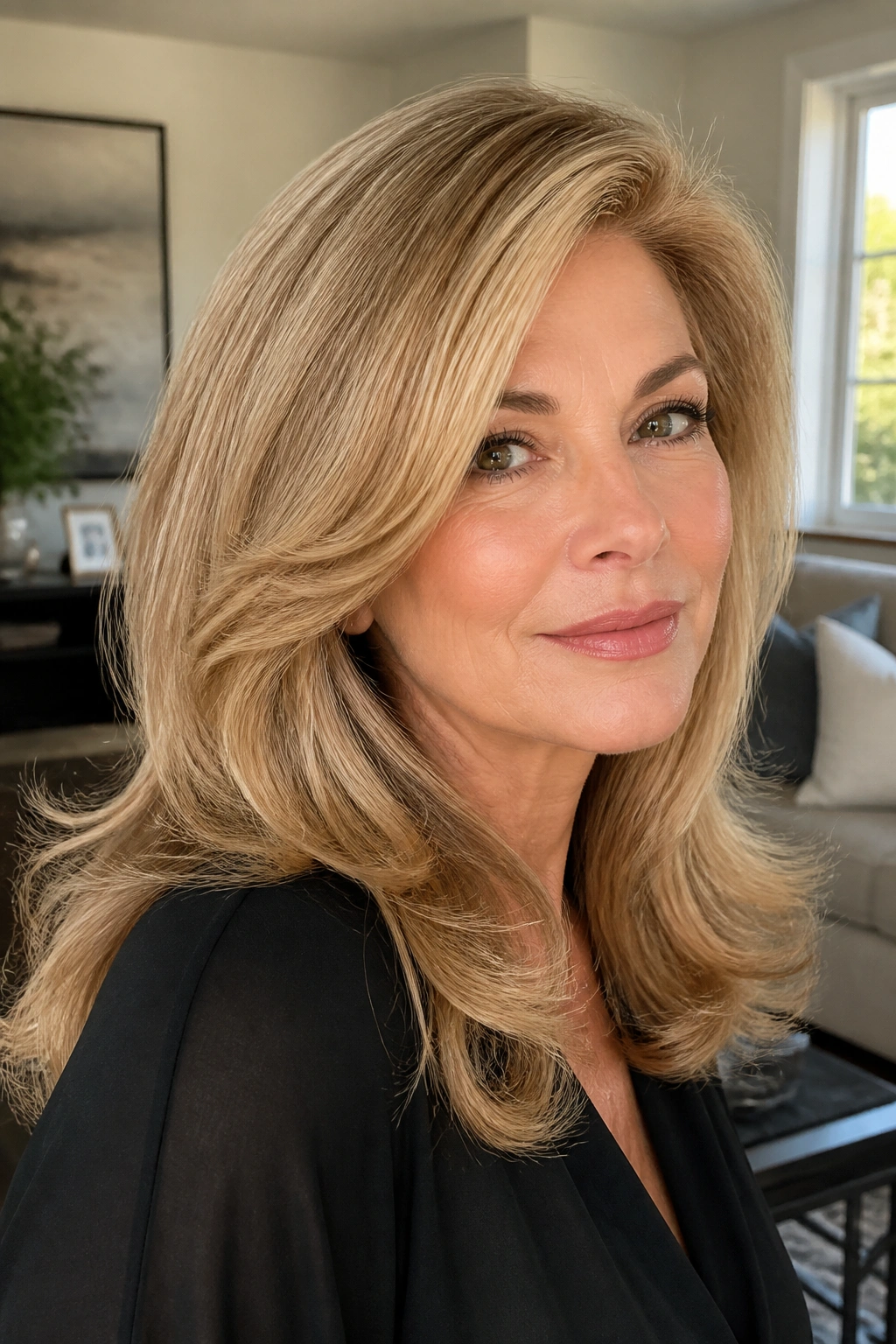
Why does a blowout keep coming back? Because it flatters without looking hard. On a heart face, a deep side-part blowout layers volume in the right place and keeps the forehead from feeling like the main event.
The side part sends the eye across the face instead of straight down the center. Then the blowout creates lift through the mid-lengths and ends, not just at the roots. That difference matters. Too much crown volume can exaggerate the forehead. Volume lower down evens things out.
How to Style It
Use a round brush that matches your hair length — about 2 inches for shoulder length, smaller if your hair is shorter. Dry the roots first, then bend the front section away from the face. Finish by curling the ends under just a touch.
If your hair is thinner than it used to be, this style can look fuller without needing teasing. If it is thicker, the smooth root-to-midlength line keeps it from getting puffy.
A good blowout still looks good on day two if you brush it gently and refresh the front pieces. That is part of the appeal. A little effort, then a lot of mileage.
16. Wispy Bangs and Midlength Layers

Heavy bangs can be a trap on a heart-shaped face. They sometimes make the forehead look smaller in a way that feels blunt, not soft. Wispy bangs are the better answer if you want something lighter.
The wispy fringe should sit in small, airy pieces that brush the brow and break apart a little as they dry. That leaves space around the forehead and keeps the face open. Pair it with midlength layers, and the whole cut feels lighter through the sides and more grounded at the ends.
What to Watch For
- The bangs should not be cut too thick at the center.
- Ask for length that can be swept aside on a busy day.
- Keep the longest layers around the collarbone.
- Use a tiny bit of styling cream on the bangs only.
This is a good choice if you are nervous about committing to a full fringe. Wispy bangs grow out better, and they are easier to pin back if needed. They also look good with silver hair because the see-through texture keeps the brow area from feeling boxed in.
There is a fine line here, though. Too thin, and they disappear. Too heavy, and they stop being wispy. The sweet spot is somewhere in the middle.
17. Collarbone Lob with Flipped Ends
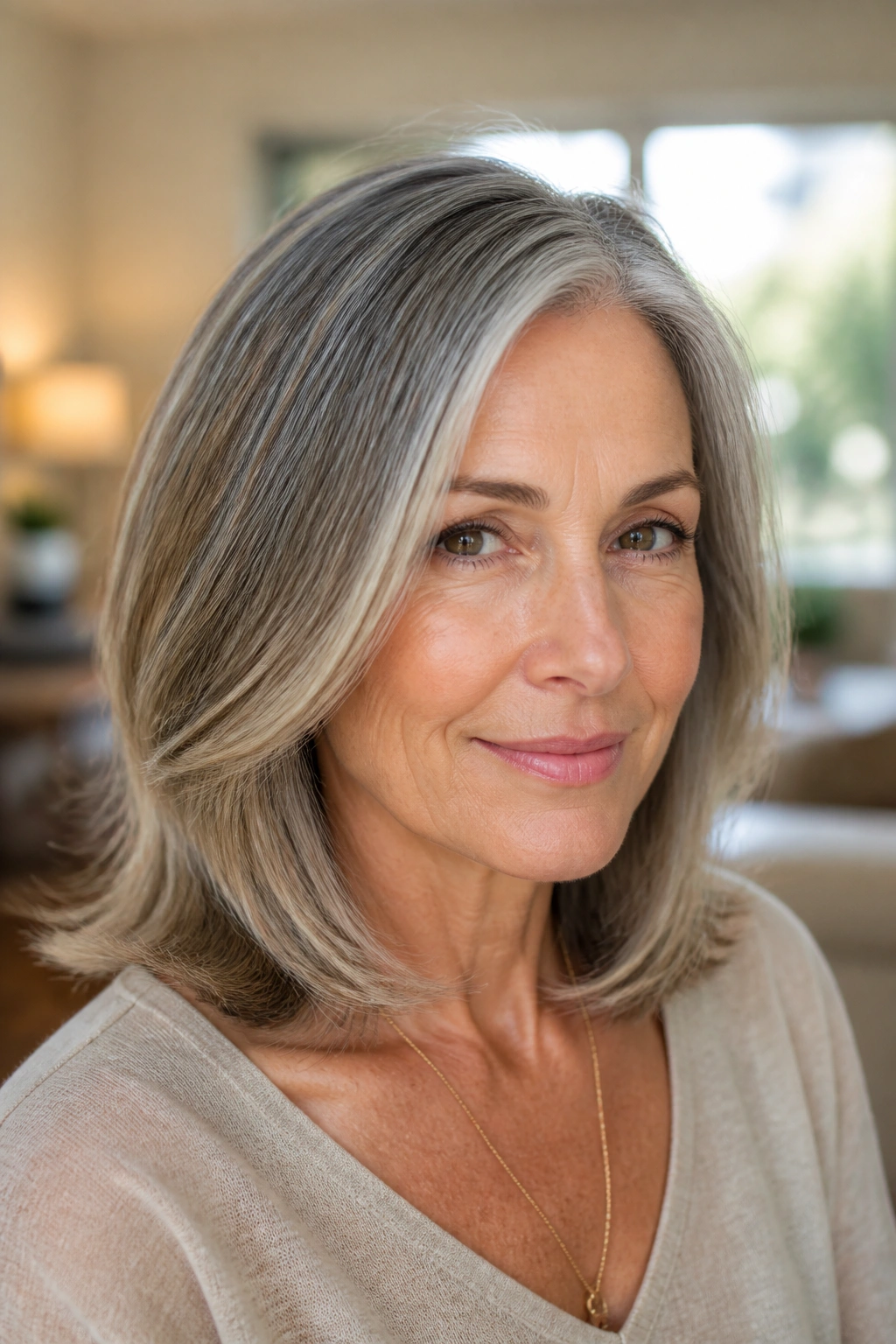
A collarbone lob with flipped ends feels polished in a way that does not scream “done.” The length is generous enough to soften a wider forehead, and the flipped ends keep the silhouette from hanging straight and flat.
I like this cut because it works with both straight and slightly wavy textures. The ends can flip inward or outward depending on your mood. Either way, the movement near the collarbone helps the lower face feel fuller, which is the whole point for heart shapes.
The trick is to keep the body of the hair smooth and let the ends do the talking. A big brush or a flat iron bend is enough. You do not want the flip to look like a prom hairstyle from the back row. Subtle is better here.
It also grows out nicely, which matters if you do not want salon visits to feel like a chore. The line stays readable for a long time, and the slight flip keeps it from losing shape too fast. On gray hair, that collarbone edge makes the color look deliberate and clean.
18. Chin-Grazing Curly Bob
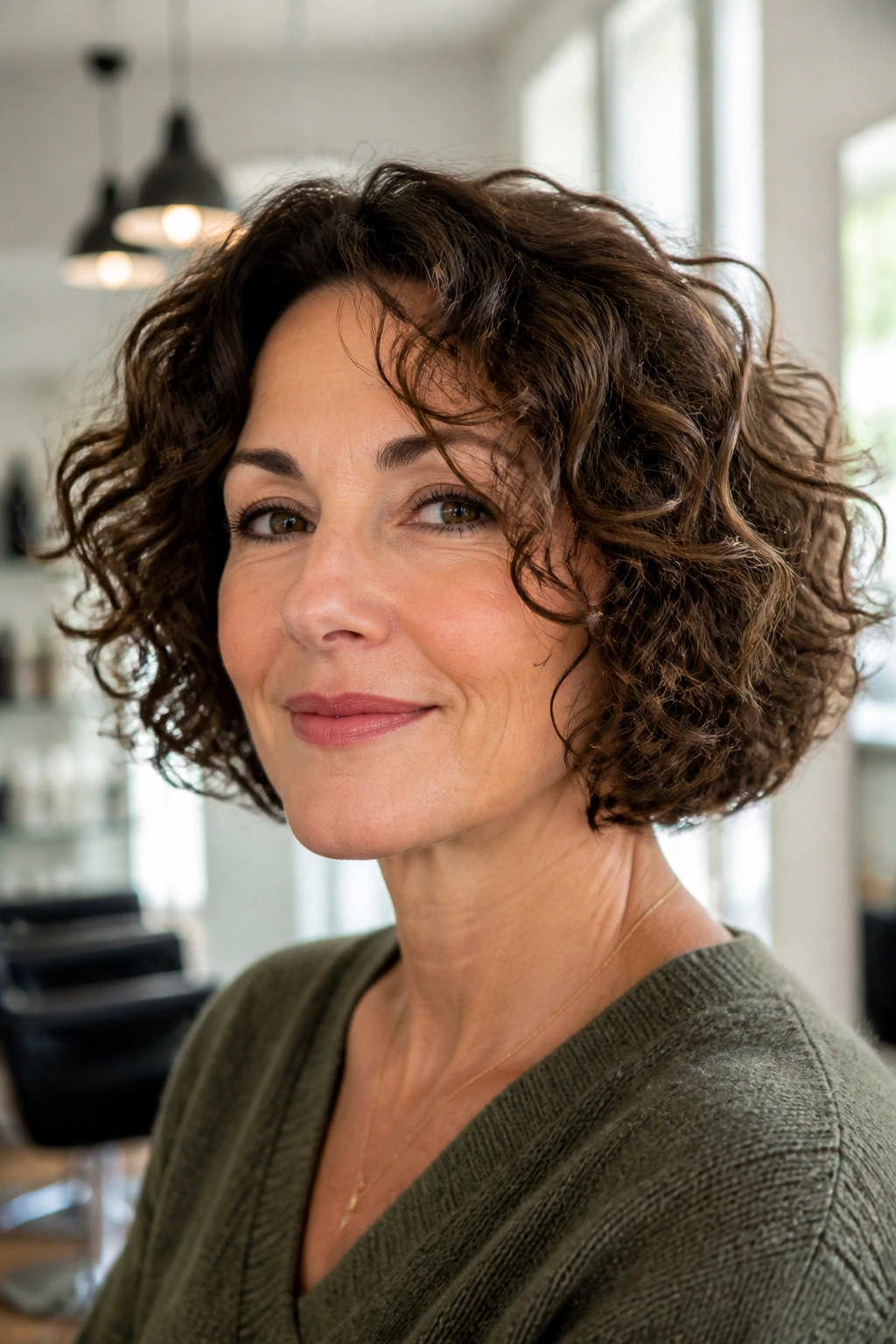
A curly bob that lands at the chin can look fantastic on a heart face if the shape is controlled. The point is not to shrink the face. It is to give the chin some company.
Unlike a longer curly cut, a chin-grazing bob creates a defined lower edge right where heart shapes often need it. The curls can still have movement, but they should be encouraged to sit in a rounded frame rather than springing up into a triangle.
This cut works best when the stylist cuts it dry or nearly dry, so the curl pattern is respected. That helps avoid the common problem where the bob turns out shorter than expected and too wide at the cheeks.
Best for:
- Natural curls that spring up a full inch or two when dry.
- Hair that benefits from a clear outline.
- Women who want shape without shoulder-length bulk.
- Gray curls that need a cleaner frame to look polished.
If you live in a humid place, this cut can still hold up, but it needs a good gel and a diffuser. If the curls are left too fluffy at the sides, the forehead and chin lose the nice balance this cut is supposed to create.
19. Shaggy Midi with Bottleneck Bangs
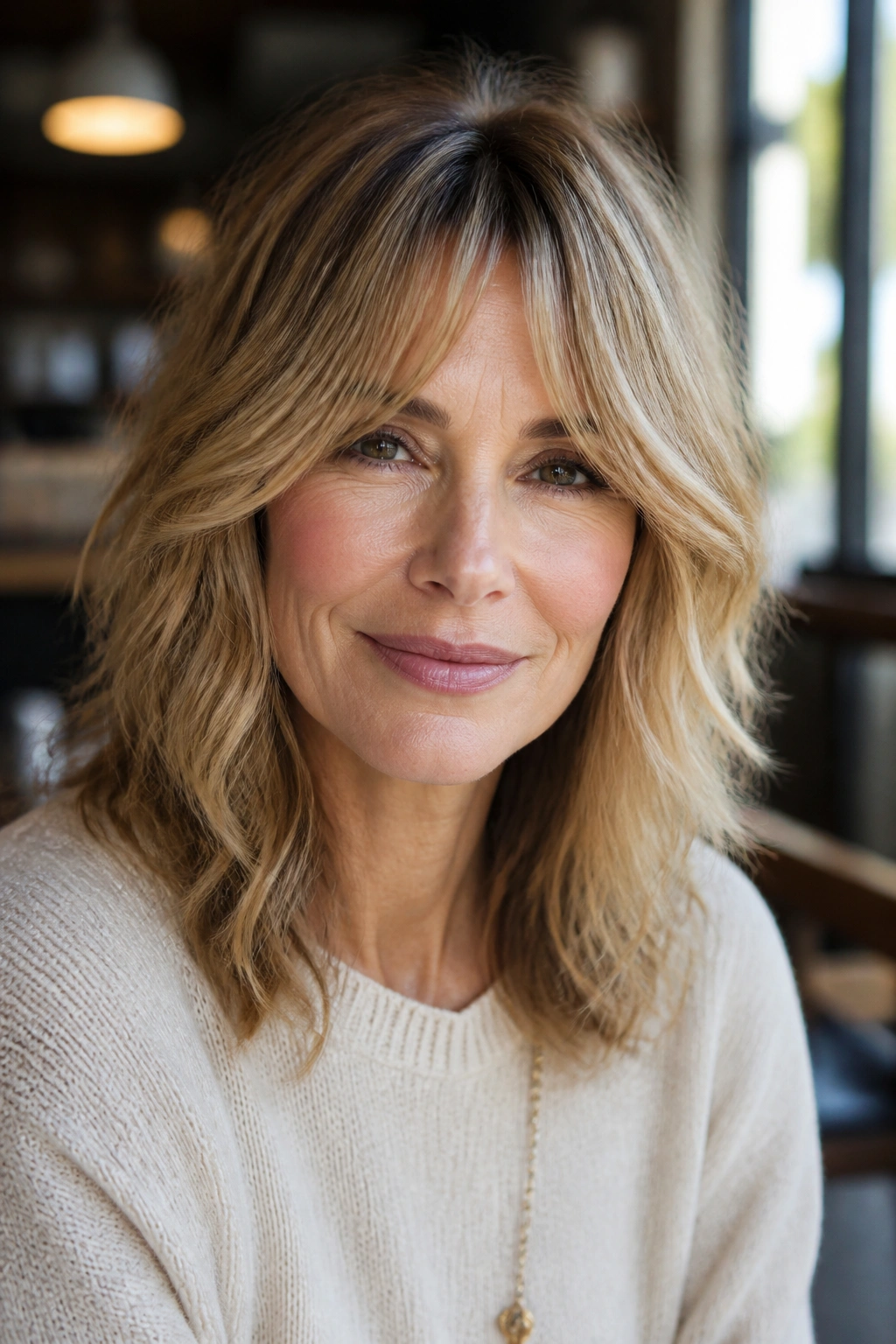
The shaggy midi is a good answer for anyone who wants movement, fringe, and a little edge without going short. Bottleneck bangs make it even better for heart-shaped faces because they start narrow at the forehead and open out near the cheekbones.
That shape matters. The narrow top of the bang keeps the forehead from feeling crowded, while the wider lower curve helps the eyes and cheekbones get some softness. Pair that with a shaggy midi length, and the face feels more even from top to bottom.
Why It Works
The layers should be broken up enough to move, but not so chopped that the ends look frayed. You want a lived-in shape, not a messy one.
This cut suits wavy and textured hair especially well. It also plays nicely with silver strands, because the separation between layers shows off the color change in a calm, natural way.
- Keep the bang length around the brow to cheekbone range.
- Ask for soft layers through the mid-lengths.
- Style with a sea-salt spray only if your hair is naturally flat.
- Finish with a light bend at the ends, not a tight curl.
My favorite part: it looks better on imperfect days than on perfect ones. That is rare.
20. Soft Pageboy with Tucked Ends

A soft pageboy is underrated, and I wish more women over 40 would try it on a heart-shaped face. The reason it works is the curve. A pageboy that is softened through the edges gives the jaw some shape without looking stiff or severe.
The tucked ends are the key detail. They bring the outline inward just enough to keep the hair from splaying wide near the cheeks. That inward bend also keeps the lower face from looking too narrow, which can happen with very straight, very long layers.
This style works best when the front is slightly longer than the back and the part is either side-swept or softly off-center. A center part can make it feel a little flat unless the hair has a lot of natural body. If your hair is gray, white, or salt-and-pepper, the pageboy shape gives the color a neat frame, almost like a line drawing. I like that. It feels clean without being severe.
It is also one of the easiest styles to live with if you want a cut that does not need constant rescue. A quick blow-dry with a paddle brush, a small bend at the ends, and you are done. No drama. No extra tricks. And when a haircut can do that while still flattering a heart face, that’s the sort of haircut that earns its place.
Final Thoughts
The best haircut for a heart-shaped face is rarely the one with the most volume or the most trend noise. It is the one that brings the forehead, cheeks, and jaw into a steadier line.
Length matters, but shape matters more. A chin-grazing bob, a soft lob, a shag with restraint, or a pixie with a smart fringe can all work if the cut gives the lower half of the face enough presence.
If you are sitting in a salon chair with silver strands, finer temples, or hair that has changed texture, ask for balance before anything else. That one shift in thinking tends to lead to better hair.
