



The best haircuts for thinning hair over 50 do not try to fake thickness with a pile of layers and a prayer. They give the eye a strong shape to follow. That matters when the crown has gone a little flat, the part has widened, or the ends have started to look see-through in daylight.
Gray hair changes the game, too. It often feels drier, a touch coarser, and less forgiving than it used to be, which is why some cuts that looked airy at 40 can turn fuzzy or limp later on. A blunt edge, a clean taper, or a well-placed fringe can do more than all the teasing in the world.
I’m a big fan of cuts that make the hair work with its natural texture instead of fighting it. Fine hair needs a different plan than dense hair. Straight hair needs a different plan than wavy hair. And if your hair is thinning at the temples, the crown, or all over, the right cut should answer that problem instead of pretending it isn’t there.
1. Chin-Length Blunt Bob
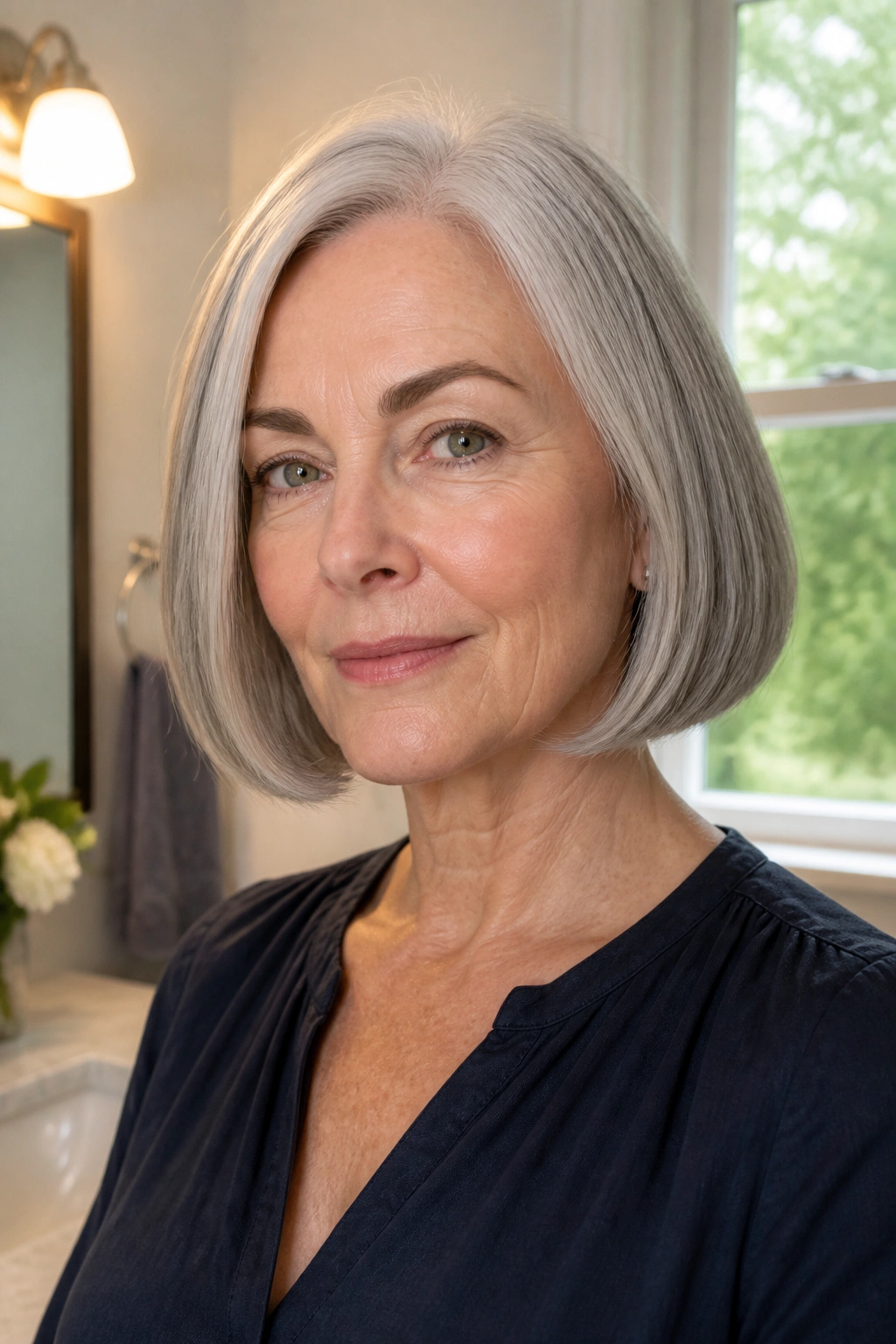
This is the fastest way to make fine hair look fuller without piling on tricks. A chin-length blunt bob gives you a clean edge, and that edge reads as density even when the actual strands are fine. It’s one of those cuts that looks calm, neat, and expensive without needing much styling.
The magic is in the perimeter. Ask your stylist to keep the bottom line solid and to avoid over-thinning the ends. A slight bevel under the chin is enough. Too much slicing turns the ends wispy, and wispy ends are exactly what you do not want.
For styling, a round brush and a little root lift spray are usually enough.
What to Ask For
- Length that lands right at the chin
- A blunt, even perimeter
- Minimal layering through the ends
- Soft side parting if your hairline is uneven
Best for: straight or slightly wavy hair that has lost density at the ends.
2. Soft Layered Lob
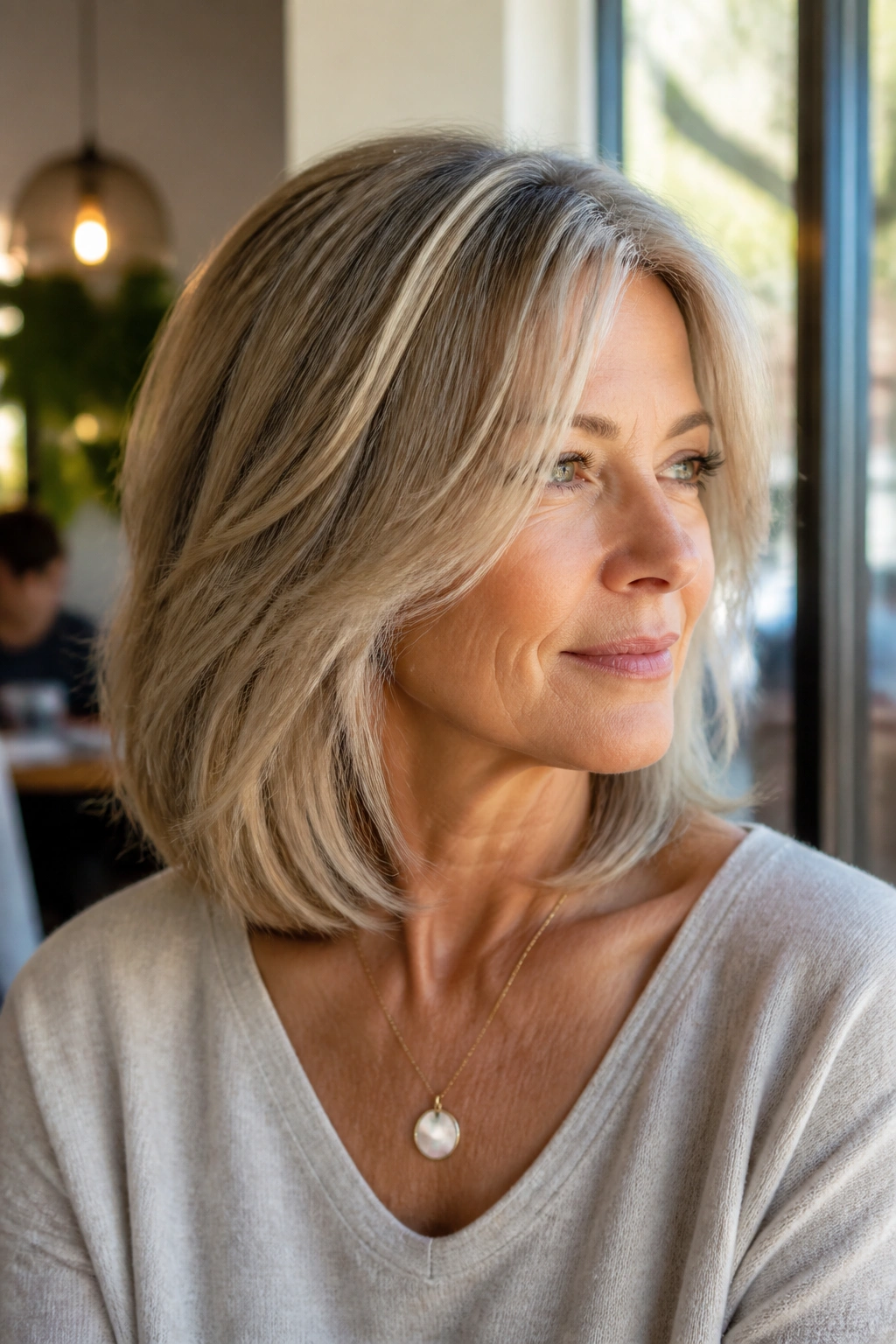
Why does a lob keep showing up in these conversations? Because it sits in that sweet spot where the hair still has weight, but it does not drag the face down. A soft layered lob, usually around the collarbone, gives movement without breaking up the shape too much.
The trick is restraint. You want long layers that start low, not a choppy cut that removes half the bulk. Ask for movement around the mid-lengths and very little texturizing at the bottom. That keeps the outline thick enough to matter.
A little bend goes a long way here. A 1-inch curling iron or even a quick blow-dry with a large round brush can give the cut life without making it look styled within an inch of its life.
3. Pixie With Side-Swept Fringe
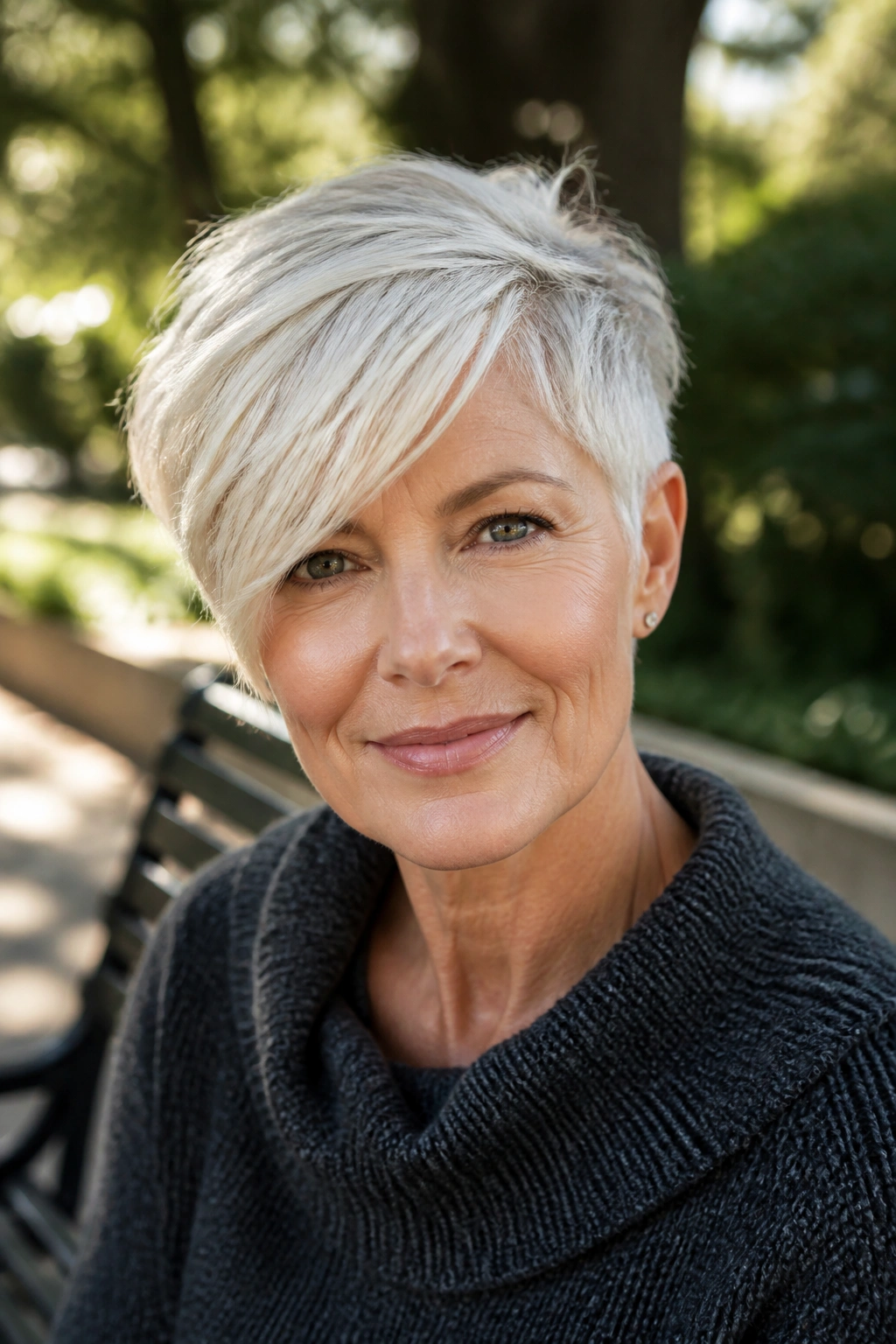
What makes this cut so good is simple: it puts the visual weight where thinning hair usually still has a little strength. The side-swept fringe draws the eye forward, softens the forehead, and gives the whole cut a sense of lift.
A pixie with a side sweep works especially well if your hair is fine but not pin-straight. You can keep the top a little longer, trim the sides close enough to show shape, and leave the fringe long enough to tuck or sweep. That balance matters.
How to Wear It
- Blow-dry the fringe in the opposite direction first, then sweep it over
- Use a pea-size amount of lightweight pomade or styling cream
- Keep the nape neat so the top does not look heavy
I like this cut for women who want polish without spending twenty minutes in the bathroom.
4. Tapered Crop
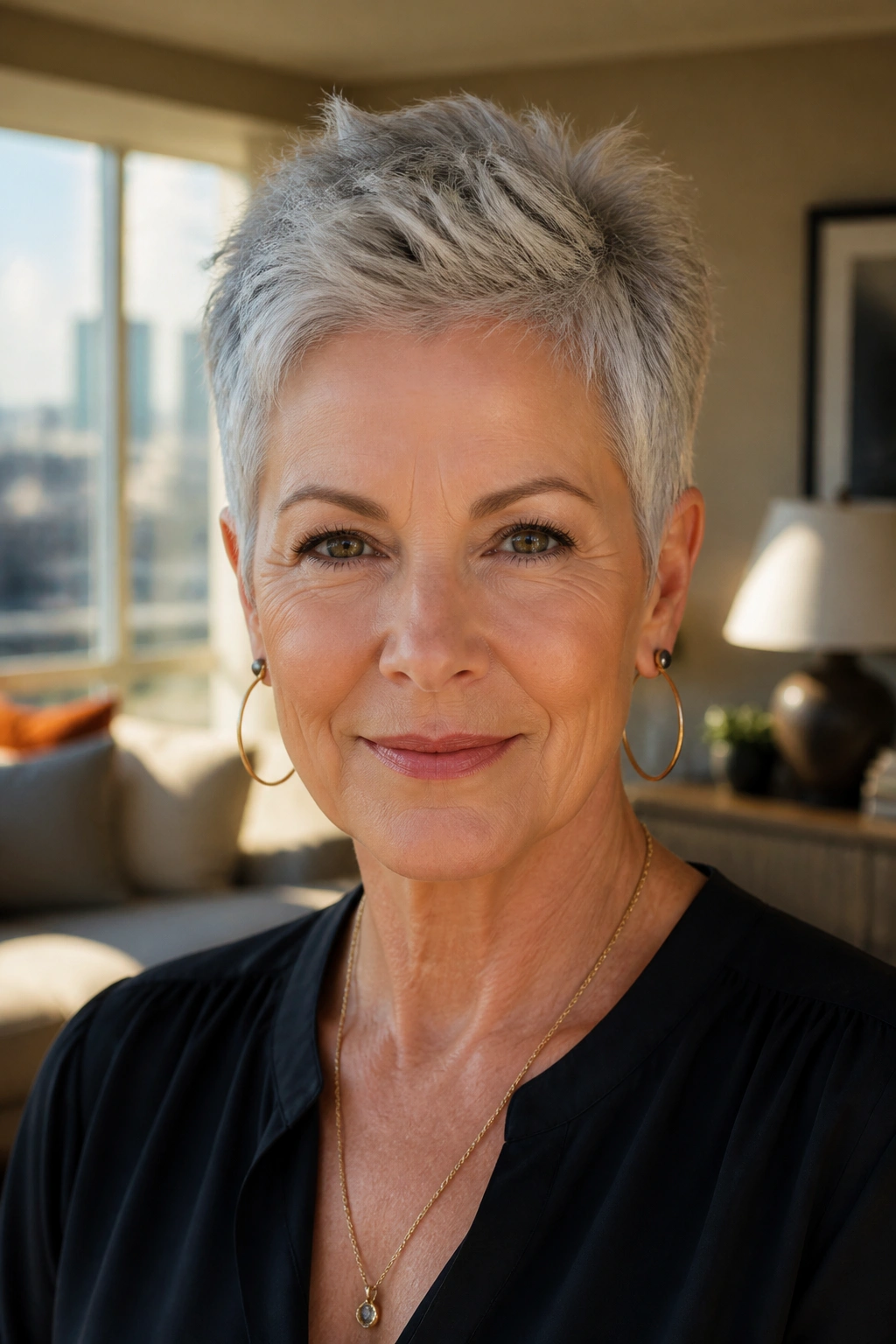
A tapered crop is sharp in the best way. Shorter sides and a softly tapered nape keep the head shape clean, while the top can stay a little longer for height. If thinning hair has started to sit flat at the back, this cut gives the profile some life again.
It also behaves well with silver hair, which can sometimes stand up a bit and look airy in a good way. The taper helps control that. Too much length on top, though, can tip it into helmet territory, so keep the top textured, not poofy.
Ask your stylist for scissor work instead of aggressive thinning shears. That difference matters. It keeps the cut neat without shredding the ends.
5. French Bob With Texture
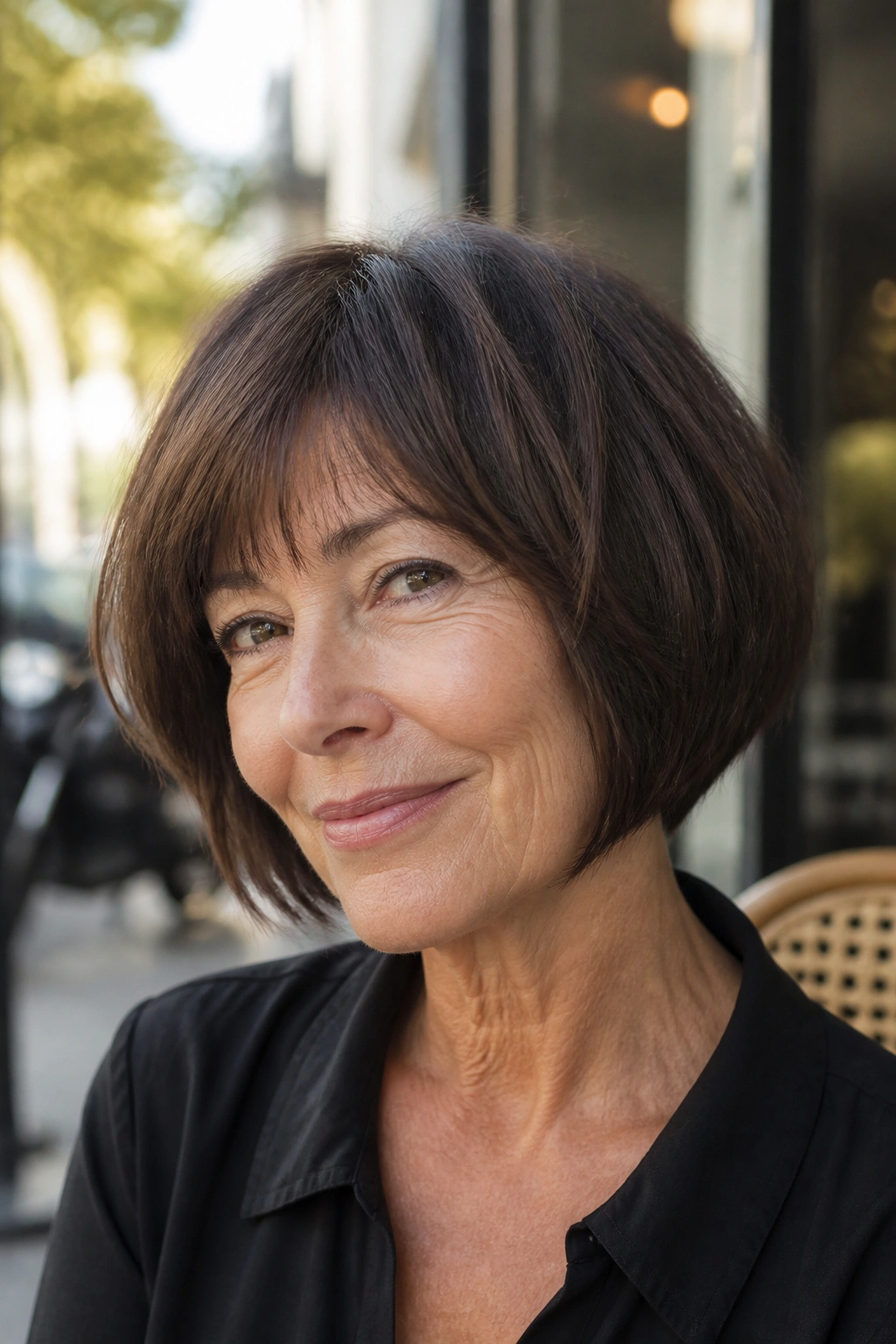
A French bob has attitude, but it doesn’t need to shout. Sitting near the jawline with soft texture, it makes thinner hair look fuller because the shape is compact and intentional. On gray or white hair, it can look especially crisp.
The version I like best for over 50 is not overly blunt and not too choppy either. A little movement around the cheekbones gives the cut lift, while the jaw-length frame keeps the ends looking dense. If your hair naturally bends, you’re halfway there already.
Why It Works
- Short enough to keep the ends thick-looking
- Long enough to tuck behind one ear
- Easy to pair with a short fringe or no fringe at all
A tiny bit of texture cream rubbed through dry ends is usually enough. No need for a lot.
6. Collarbone Cut With Invisible Layers

Invisible layers are one of the smartest tools for thinning hair. They remove bulk inside the shape instead of hacking away at the outline, so the hair moves better without looking sparse at the tips. That makes this collarbone cut a strong choice if you want length but not heaviness.
The hair should still look like one piece when it hangs down. That’s the point. The layers live inside the haircut, not on the surface, and they should be subtle enough that you notice movement before you notice the layering itself.
This cut is good for people who don’t want to commit to short hair yet. It gives you a little swing, a little softness, and a better chance of keeping your ends from looking thin and tired.
7. Feathered Mid-Length Cut
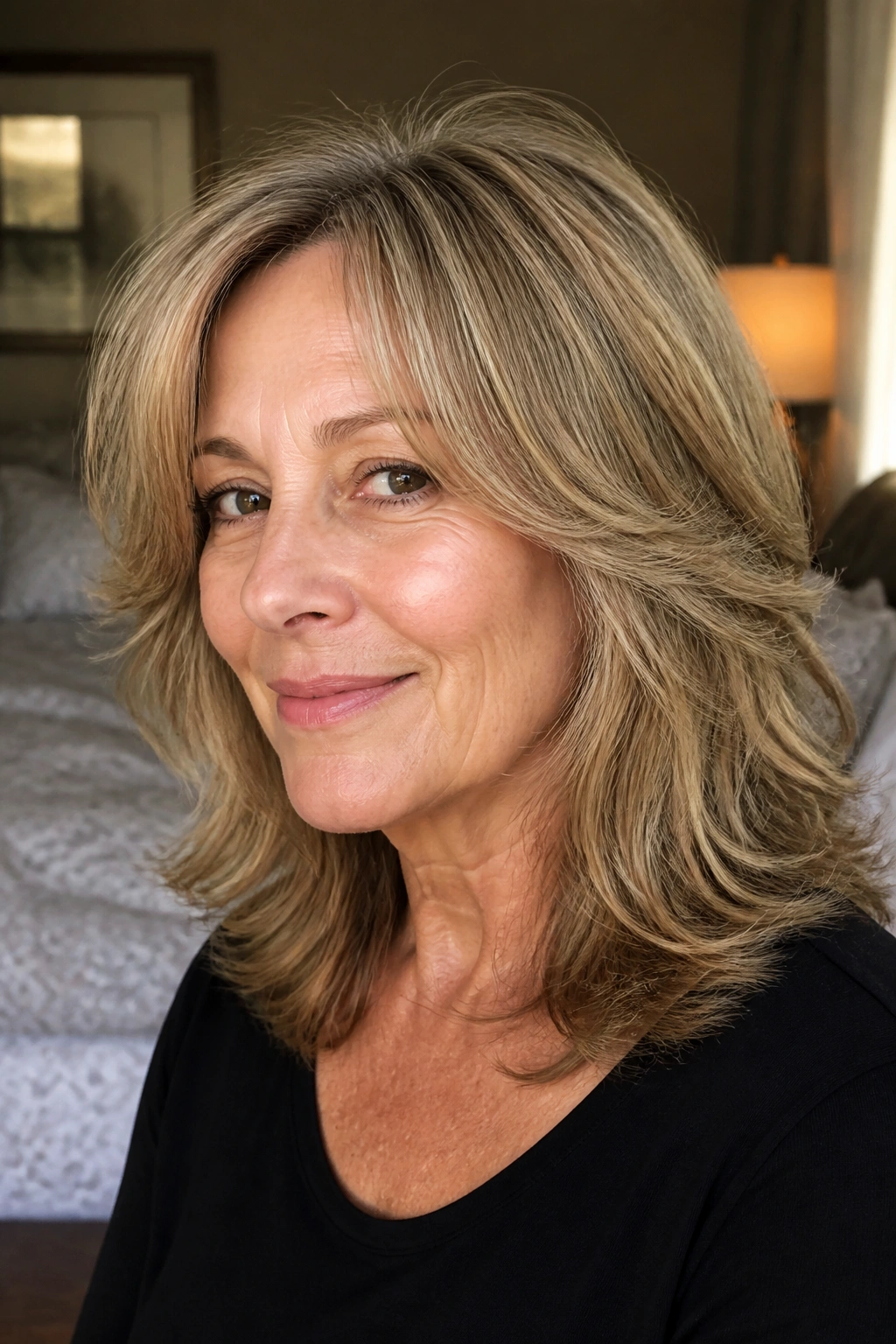
Feathering gets a bad reputation when it’s done too hard. Done well, though, it can make medium-length hair feel lighter around the face while leaving the ends thick enough to matter. The trick is gentle feathering, not the kind that turns everything into a halo of frizz.
This cut works best when the feathering starts around the cheekbone or chin, then melts into the rest of the hair. You want the shape to open up your face without stripping the body from the sides. That’s the line between flattering and flimsy.
A round brush helps, but so does simple air-drying with a little mousse. If your hair is fine and a touch wavy, this is a friendly cut. It does not demand perfect styling, which is half the battle.
8. Stacked Bob
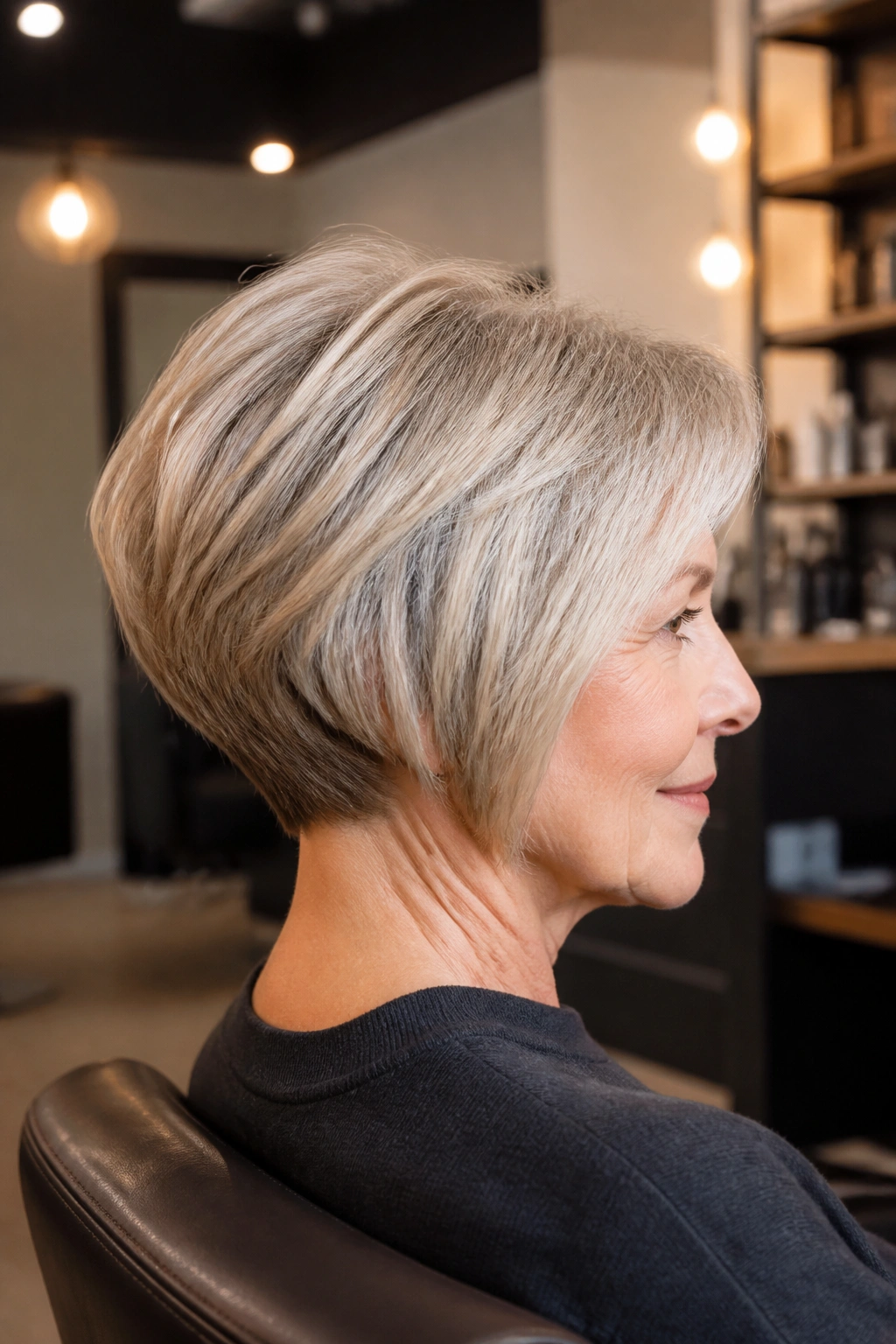
A stacked bob creates lift where thinning hair often loses it first: the back of the crown. The graduation in the back gives the haircut a built-in rise, so the head shape looks fuller from the side and rear. That’s a big deal.
This cut can be too sharp if your hair is very fine and fragile, so the stacking should be soft, not exaggerated. Think of a gentle slope from the nape up to the crown, not a dramatic wedge. You want support, not a skyline.
Ask for a short nape and a rounded back profile. That wording helps. A little volume at the crown can change the whole read of the haircut, especially if you wear glasses or prefer a side part.
9. Asymmetrical Bob
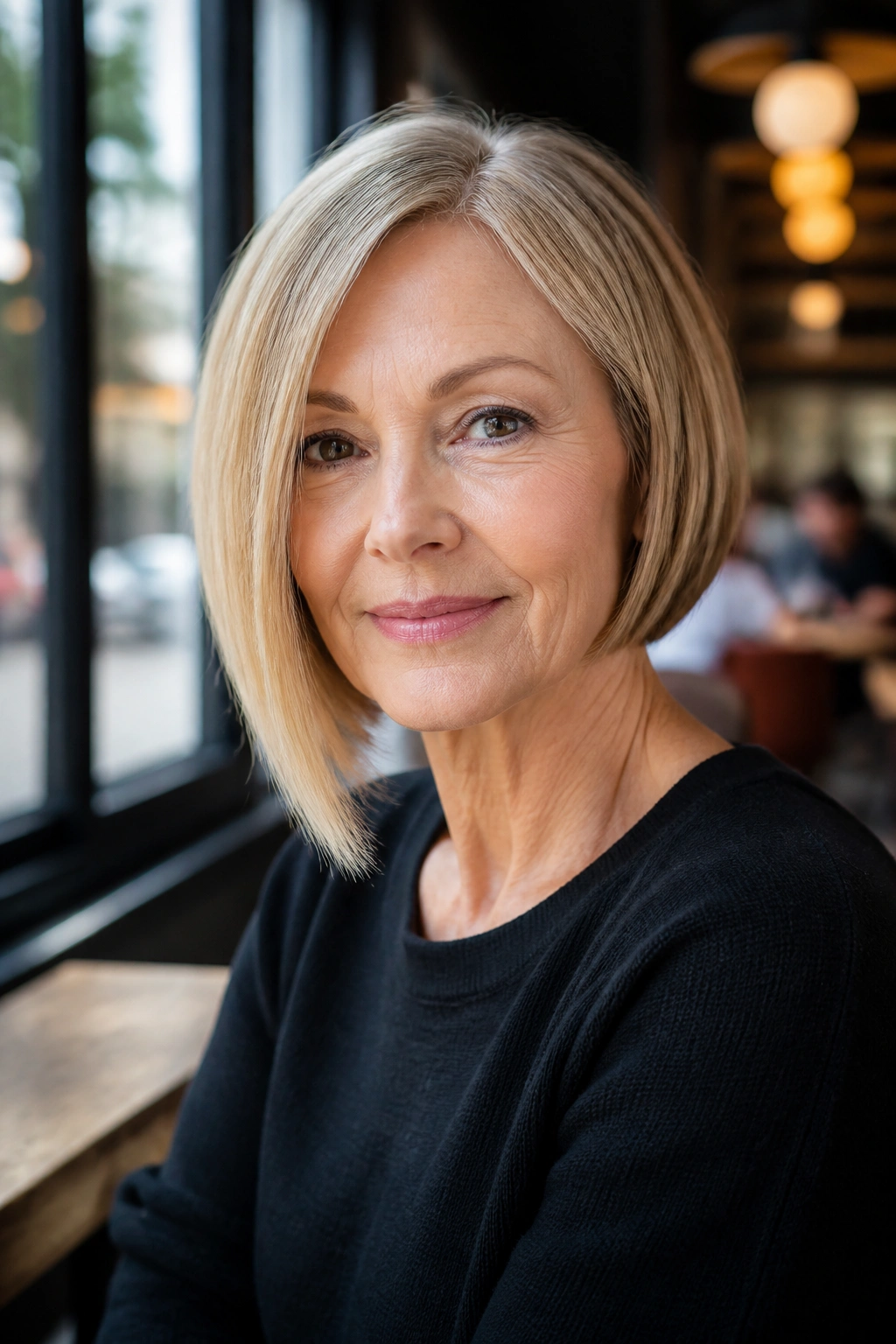
A slight asymmetry can do real work for thinning hair. One side longer than the other creates a diagonal line, and diagonal lines give the eye movement. That movement makes hair look less flat and helps distract from a sparse area at the part or temple.
I’m not talking about a dramatic, editorial angle that needs daily heat styling. A small difference — maybe half an inch to an inch — is enough. The goal is shape, not drama.
This cut suits women who want something a little more modern without going short-short. It can be especially helpful if one side of your hair grows flatter than the other. Hair does that. Annoying, but true.
10. Shaggy Lob
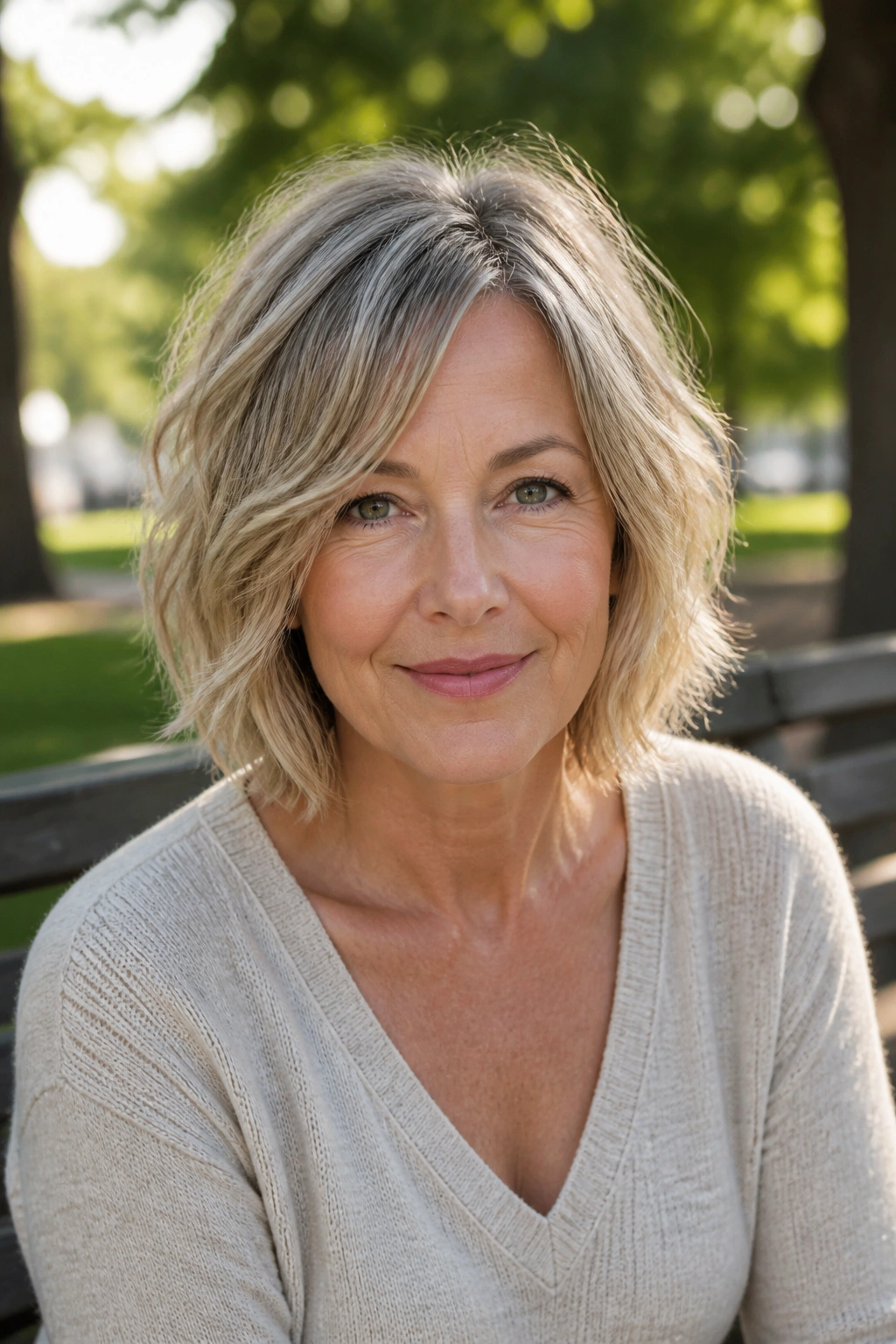
A shaggy lob is not for everyone, and I say that with love. If your hair is already very thin and brittle, too much shag can leave it looking scraggly. But on fine-to-medium hair with a little wave, it can bring back movement fast.
The layers should be broken up, but not shredded. The best shaggy lob has texture around the crown and face, with enough length left at the bottom to keep the outline intact. That keeps the cut from collapsing.
Use a light mousse and scrunch-dry if you have wave. If you prefer straight styles, a quick bend with a flat iron at the mid-lengths is enough. The haircut should feel easy, not needy.
11. Curly Bob With Rounded Shape

Curly hair gets weird advice all the time. The truth is simpler: if curls are thinning, they usually need shape more than they need length. A rounded bob gives the curls a place to live, so the haircut looks full instead of spread out.
Keep the layers tailored to the curl pattern. Too many short layers can make curls spring up unevenly, and that makes the whole style look patchy. A rounded shape keeps the top from puffing out while letting the sides hold their body.
For gray curls, this is especially good. Silver curls can look beautiful when the silhouette is clean. A curl cream, a diffuser, and a trim every six to eight weeks usually keep it in line.
12. Long Pixie
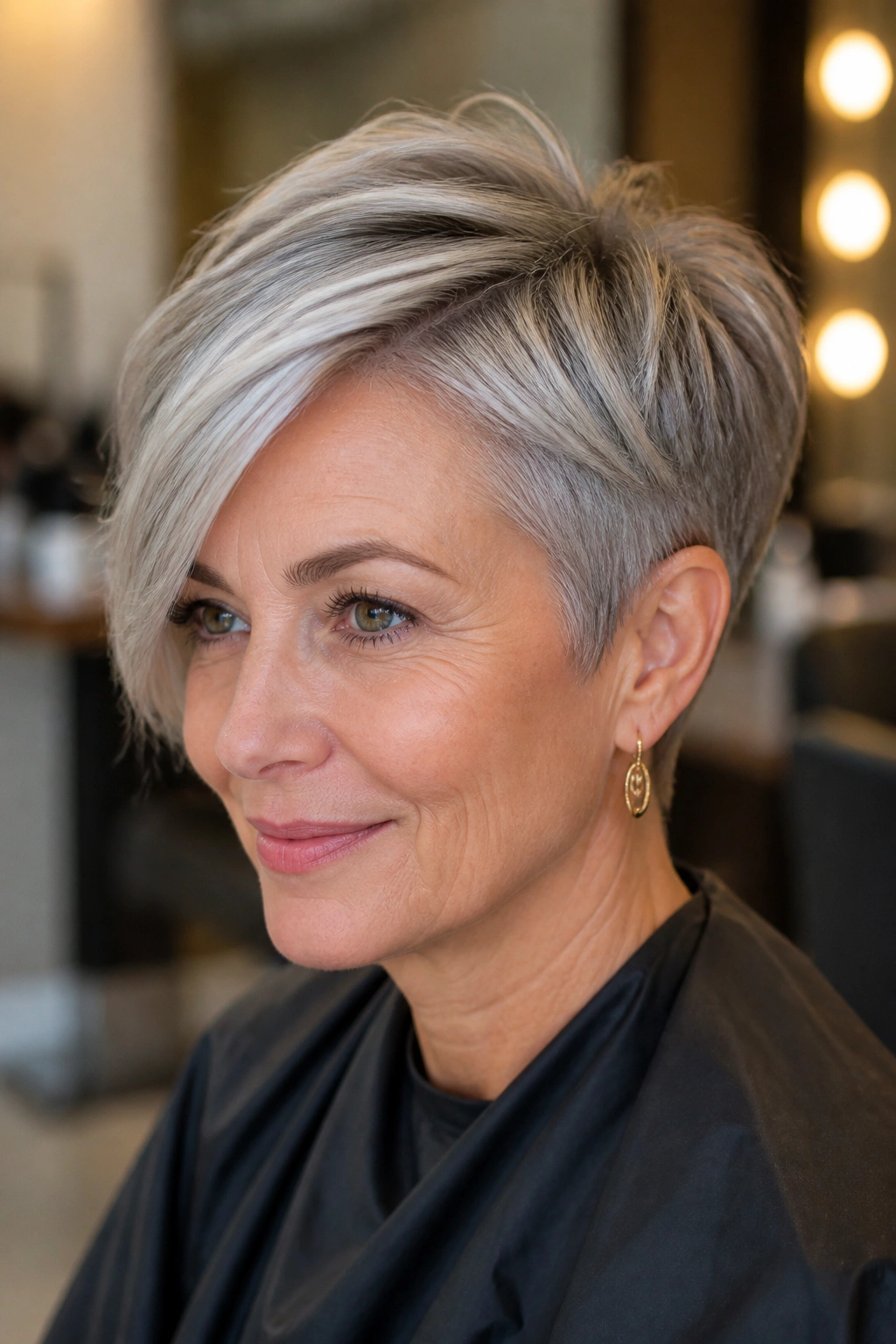
A long pixie is one of the easiest ways to keep softness around the face while taking weight off the sides and back. It gives you a little room to play, which matters if you’re not ready for a very short crop.
The top should stay long enough to sweep, tousle, or tuck. The sides and nape can be tighter, but not harsh. That contrast creates structure. Without structure, fine hair just collapses and looks tired by noon.
This cut works especially well if your hairline has receded a bit at the temples. A longer top draws attention upward. That’s the whole trick, and it’s a good one.
13. Soft Wedge Cut
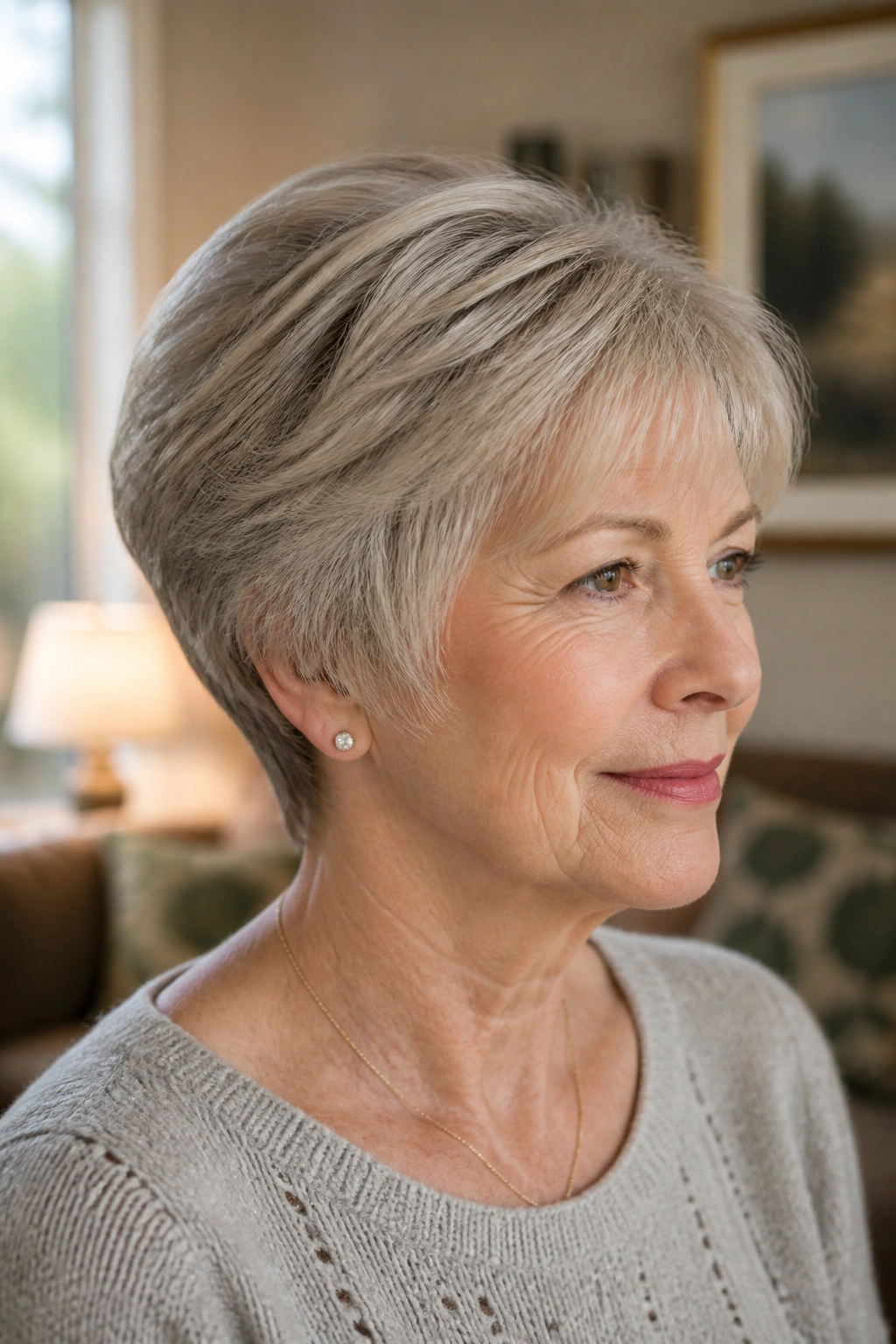
The wedge cut is back in a softer form, and honestly, that makes sense. The original shape gave lift through the back and sides, which is exactly what thinning hair often needs. The modern version is less severe and more wearable.
Keep the wedge rounded, not stacked too sharply. You want a clean line that hugs the neck and lifts at the crown. That shape makes the hair look denser from every angle, especially if your hair is straight and needs a little internal support.
Good to Know
- Best with straight or lightly wavy hair
- Needs regular trims to keep the shape tidy
- Works well with gray or salt-and-pepper hair because the line reads clearly
A little root foam and a quick blow-dry are usually enough. Easy is good here.
14. Rounded Crop With Tapered Nape
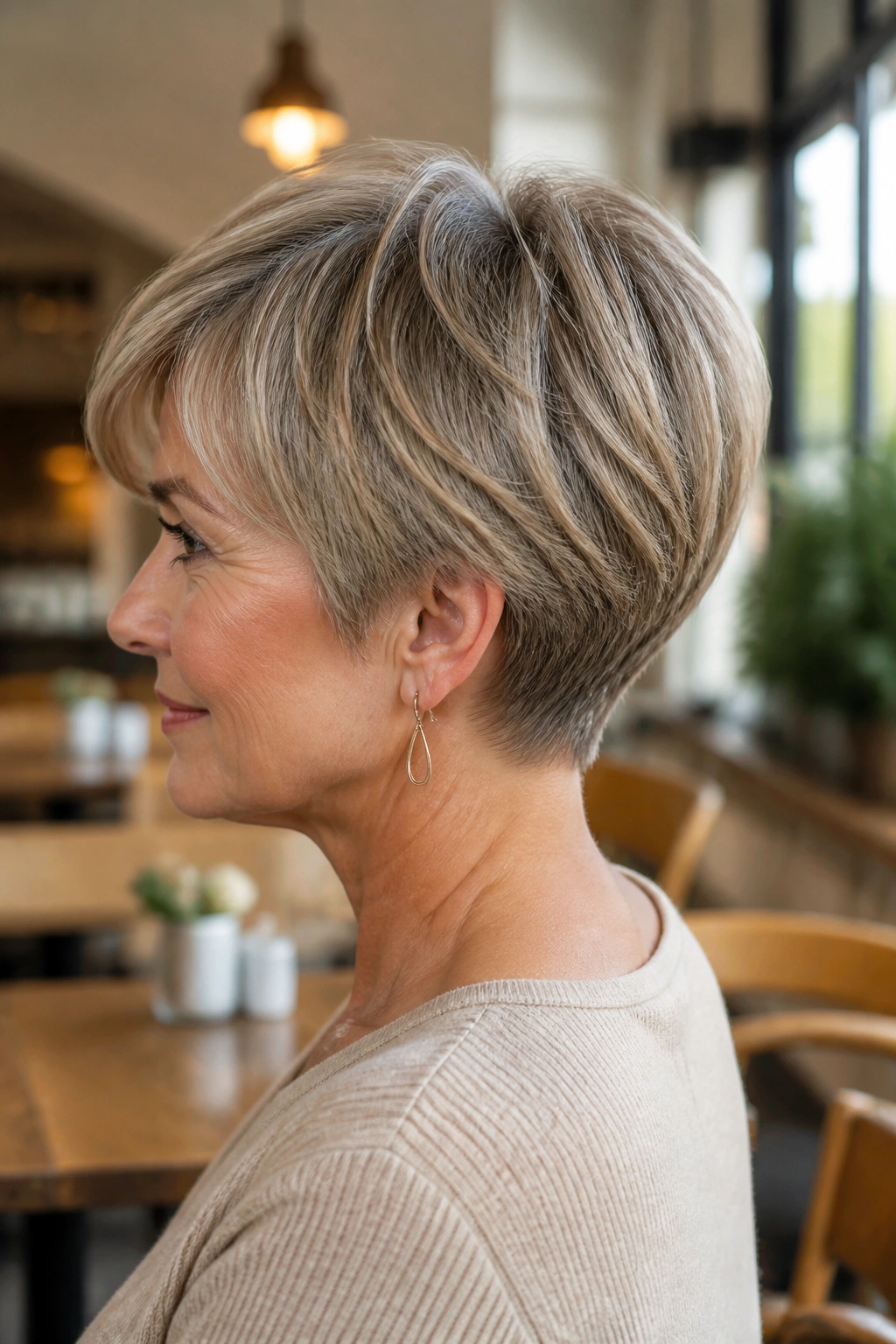
A rounded crop is one of those cuts that quietly solves a lot of problems. It gives softness around the head without letting the style go flat, and the tapered nape keeps the back neat instead of fuzzy.
The roundness matters because it adds the look of fullness, especially on fine hair that tends to lie close to the head. If your hair is thinning all over, not just at the part, this shape can be a relief. It makes the hair look intentional.
Pair it with glasses and a little brow-length fringe if you like that look. It has a neat, tailored feel without being severe. That’s a rare balance.
15. Jaw-Length Bob With Deep Side Part
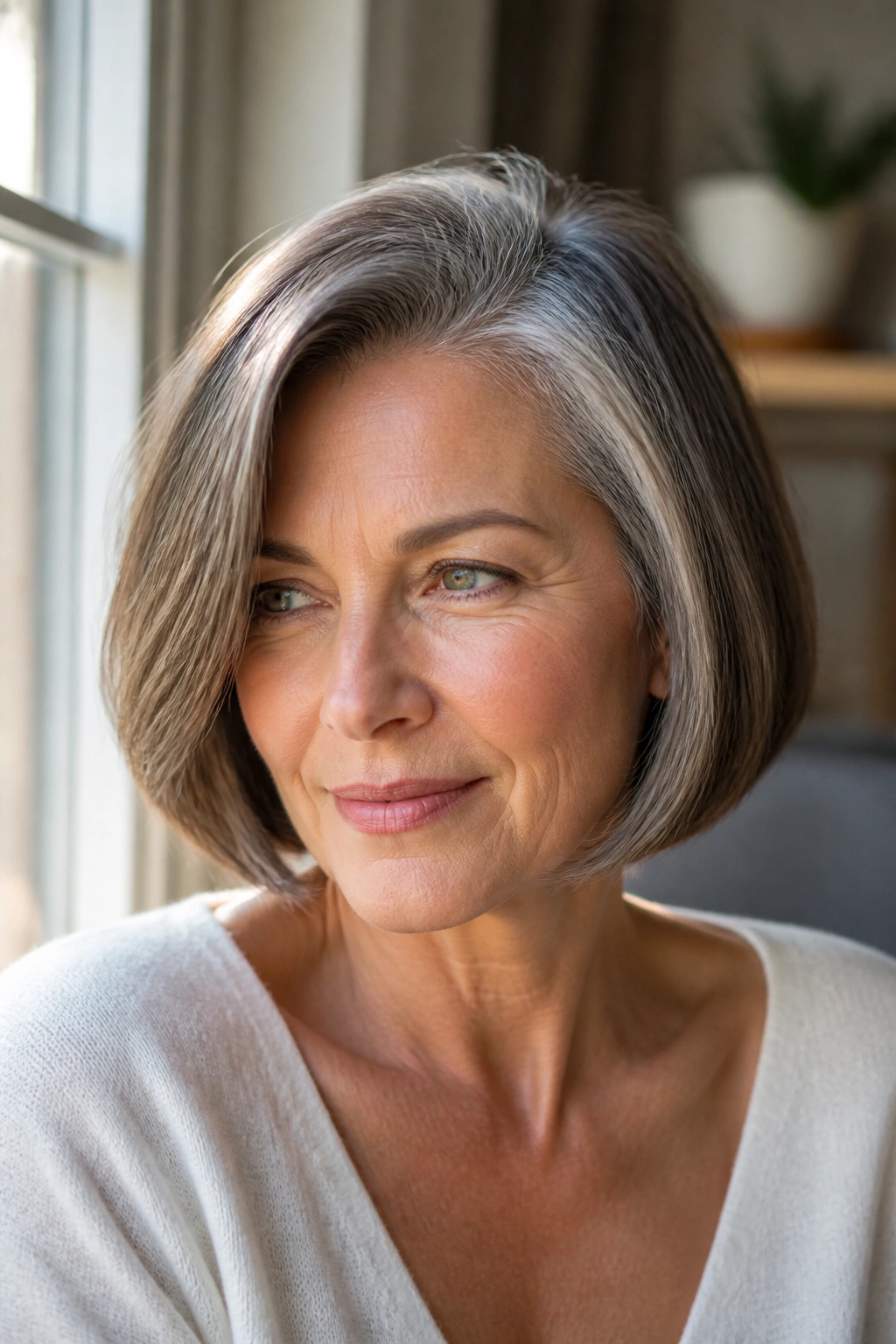
Need more lift at the root? Start with the part. A deep side part gives immediate volume at the crown and helps cover a wider part line, which can make thinning hair look fuller before you even pick up a brush.
The jaw-length bob adds density at the perimeter, while the deep part creates height on top. Those two things together do a lot of heavy lifting. The cut does not need much else.
If your face is narrow, this shape can add width in a flattering way. If your face is round, keep the bob a touch longer and the part slightly off-center. Small tweaks matter. They always do.
16. Face-Framing Lob
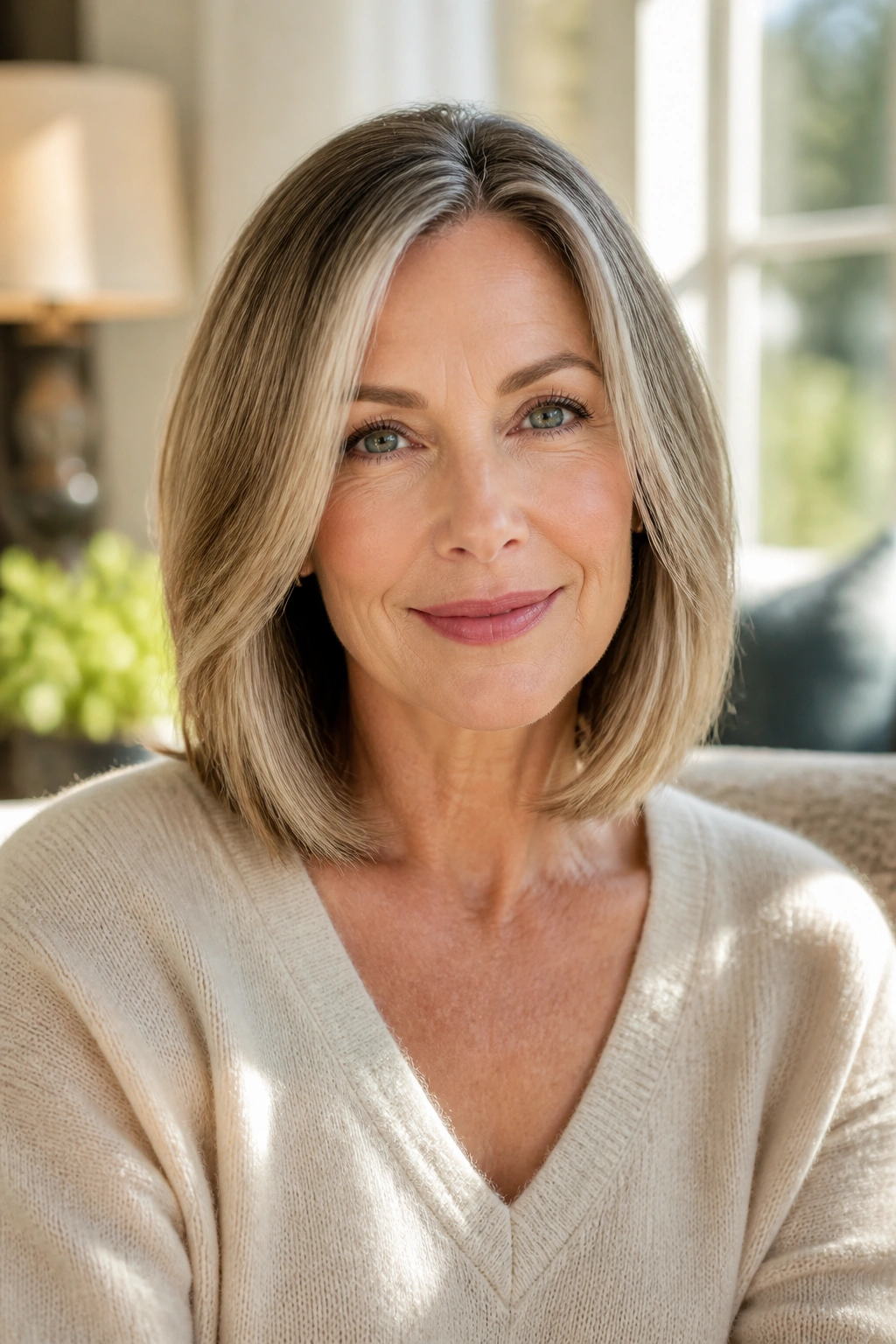
A face-framing lob is one of the least fussy cuts on this list, and that’s part of its appeal. The length stays around the collarbone or just below, while the front pieces are shaped to soften the cheekbones and jaw.
This works especially well when thinning hair is most obvious around the front hairline. Instead of trying to bulk up the whole head, the cut puts the attention where the hair still has life. Smart move.
How to Get the Most From It
- Ask for face-framing pieces that start around the chin or cheekbone
- Keep the back fuller than the front, but not stacked
- Use a round brush only at the front if you’re short on time
It’s a good cut for women who want flexibility. You can wear it sleek, wavy, or tucked.
17. Choppy Pixie-Bob
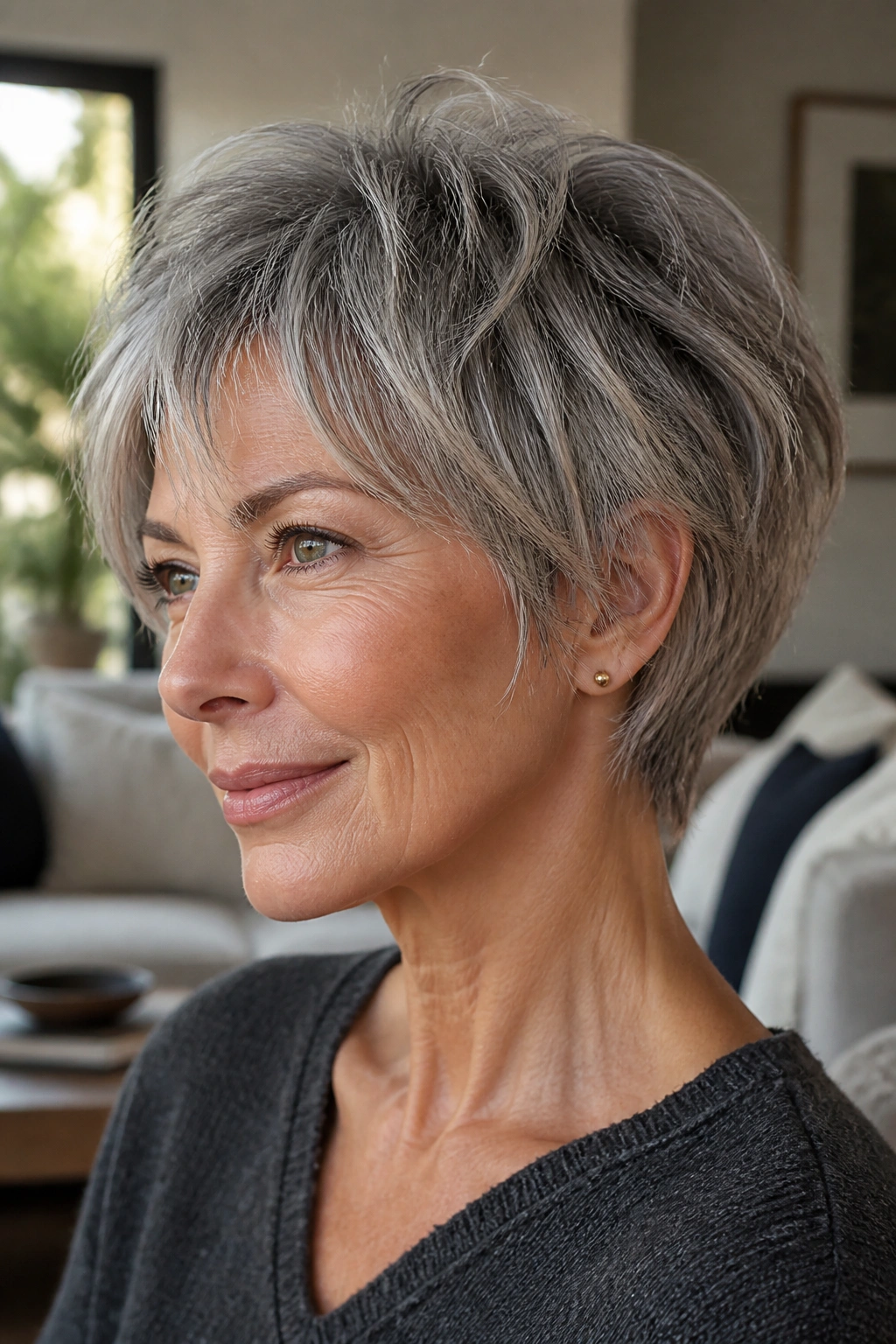
A pixie-bob gives you the shape of a bob with the lightness of a pixie. Choppy ends add movement, but the cut still has enough structure to keep fine hair from floating away. That’s the sweet spot.
I like this cut for women who want a little edge without going all the way short. The top can stay piecey, the sides can stay close, and the front can be swept or broken up. It looks especially good on gray hair with a bit of texture, because the layers catch the light in a natural way.
Don’t let anyone over-texturize it. A choppy cut is not a shredded cut. There’s a difference, and your hair will show it.
18. Shoulder-Length Cut With Curtain Bangs
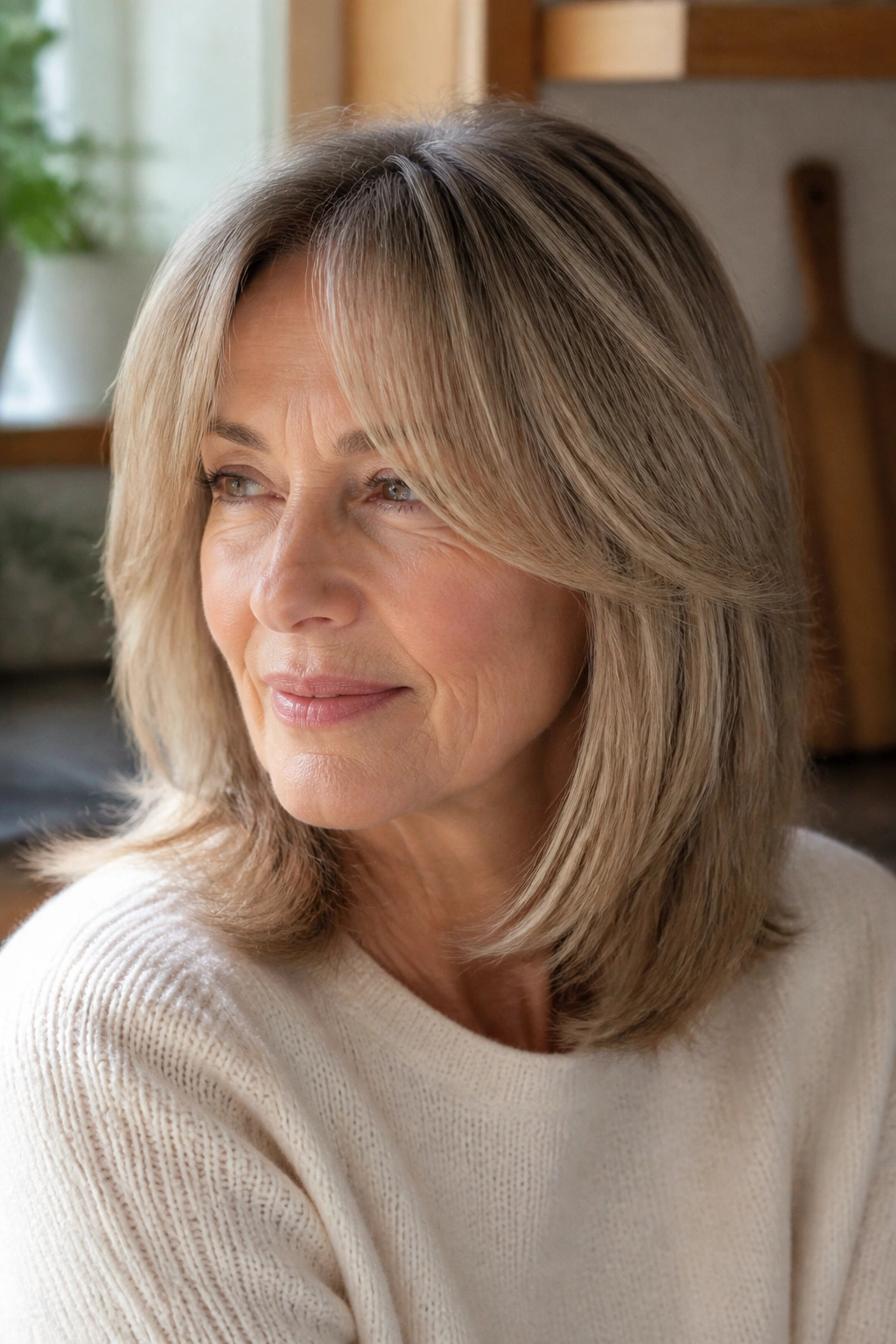
Shoulder-length hair can work on thinning hair, but it needs help. Curtain bangs are that help. They build movement around the face and hide a wider forehead or thinner temples without forcing a blunt fringe.
The shoulder-length shape keeps enough weight in the rest of the hair, which stops the style from feeling flimsy. Curtain bangs break up the front in a soft way and can make the whole cut look fuller at the top.
If your hair is wavy, this cut gets easier. If it’s straight, a quick bend in the bangs and a little root lift at the crown usually do the job. Keep the bangs long enough to split. Short curtain bangs are a mess on most people.
19. Short Shag
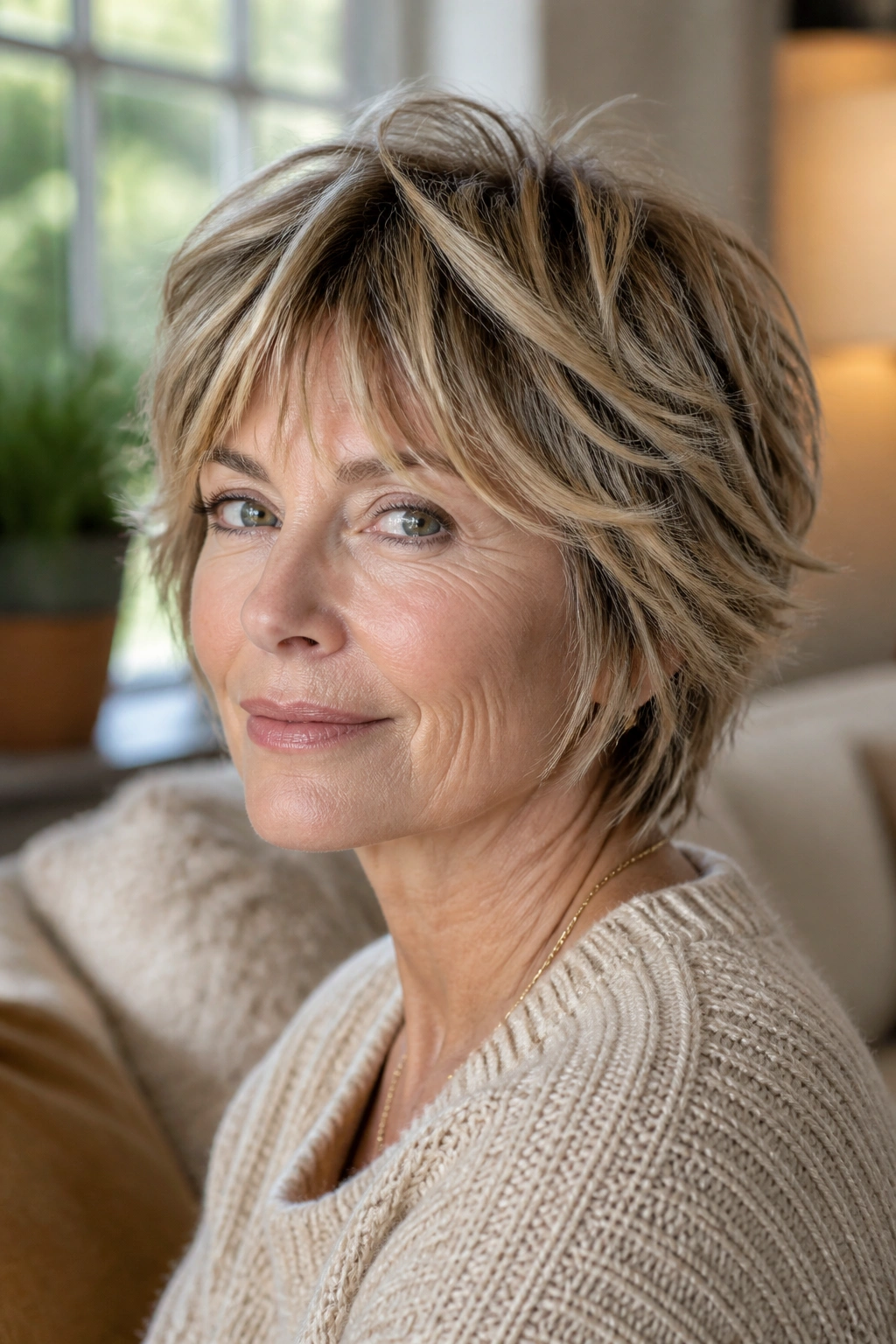
A short shag has personality, but it also has a job to do. The job is movement. Thin hair can fall dead flat when it’s all one length, and the short shag keeps the layers active around the crown, sides, and face.
The best version has soft, uneven layers that still leave some weight in the shape. If it’s cut too aggressively, the ends can look frayed. So yes, it needs texture. No, it does not need to look torn up.
This is a good pick if your hair has a natural wave or if you like a dry, piecey finish with a little grit. A salt spray can help, but a dab of styling cream may be enough if your hair is already dry.
20. Blunt Lob With Internal Texture
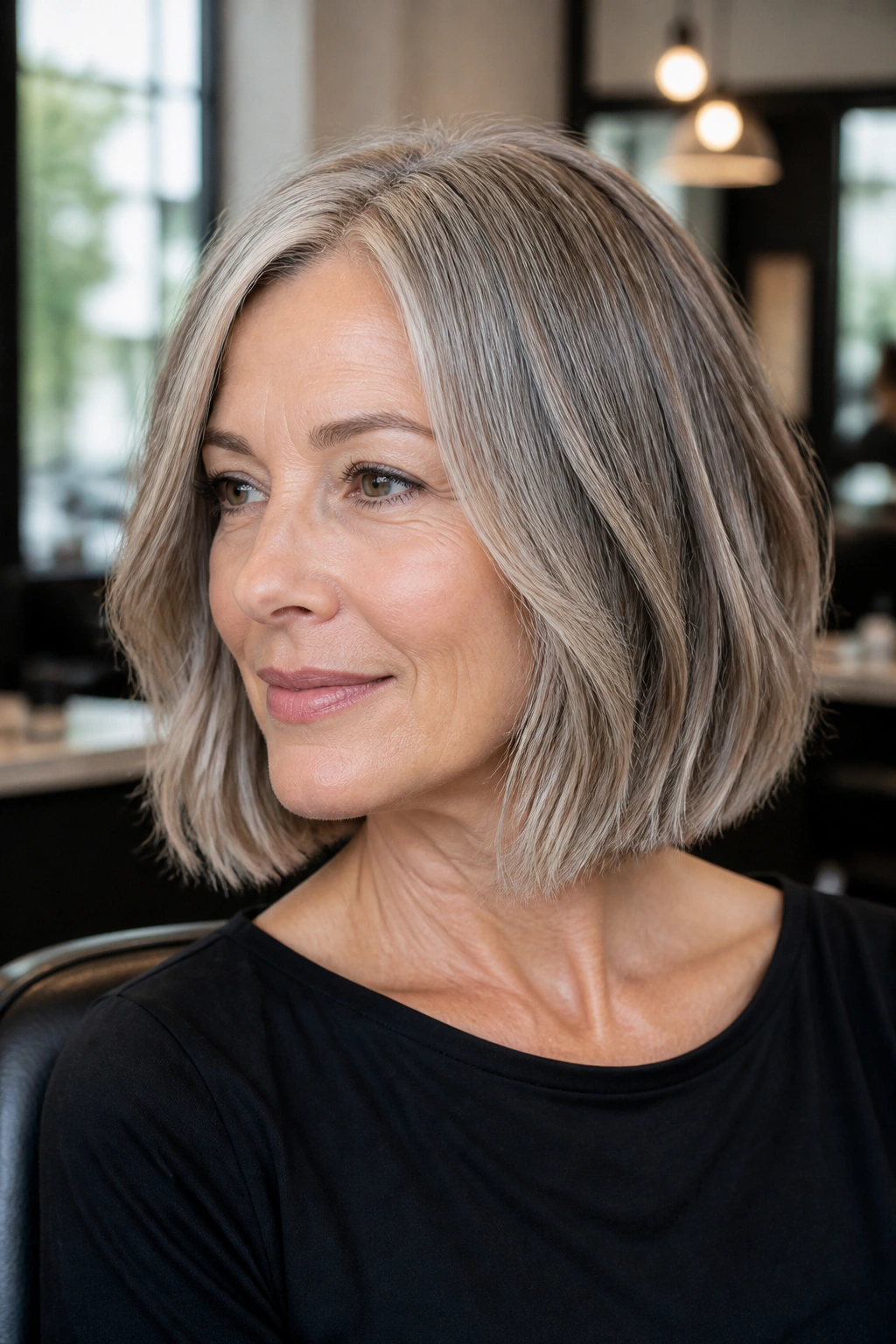
A blunt lob is one of my favorite cuts for gray hair that’s getting thinner at the ends. The blunt edge gives the hair a thicker-looking finish, while internal texture keeps it from feeling like a block.
That combination matters. Pure bluntness can look heavy on some faces, and pure layering can look stringy on fine hair. This cut splits the difference. The outside stays strong. The inside moves.
What Makes It Different
- The outline stays solid
- The inside is lightly shaped for movement
- It works well with straight, gray, or fine hair that needs a clean finish
If you love sleek hair, this is a strong choice. It looks polished with very little effort.
21. Layered Crop for Natural Waves
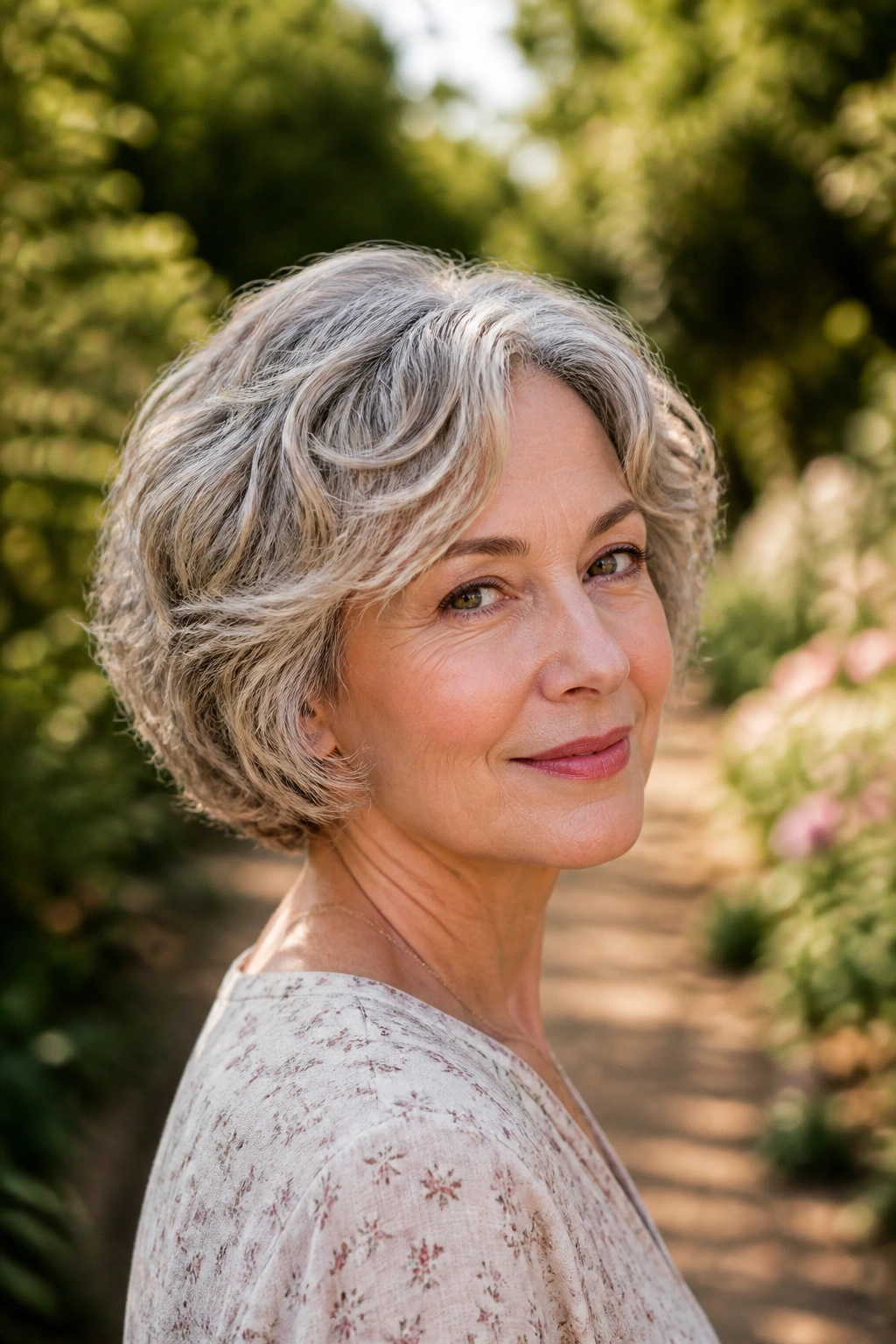
Why fight a wave pattern that already wants to give you volume? A layered crop for natural waves works with the bend in the hair instead of flattening it under a heavy shape. That makes it a smart pick for thinning hair that still has some body left.
The crop should stay compact, with layers placed where the wave naturally kicks in. If the layers are cut too high, the hair can puff. If they’re too low, the waves get buried. That’s why a good cut here is about reading the pattern, not following a template.
A little leave-in conditioner and a soft diffuser can make this cut sing. Or let it air-dry and use your fingers. Messy is fine. Flat is not.
22. Graduated Bob With Lift at the Crown
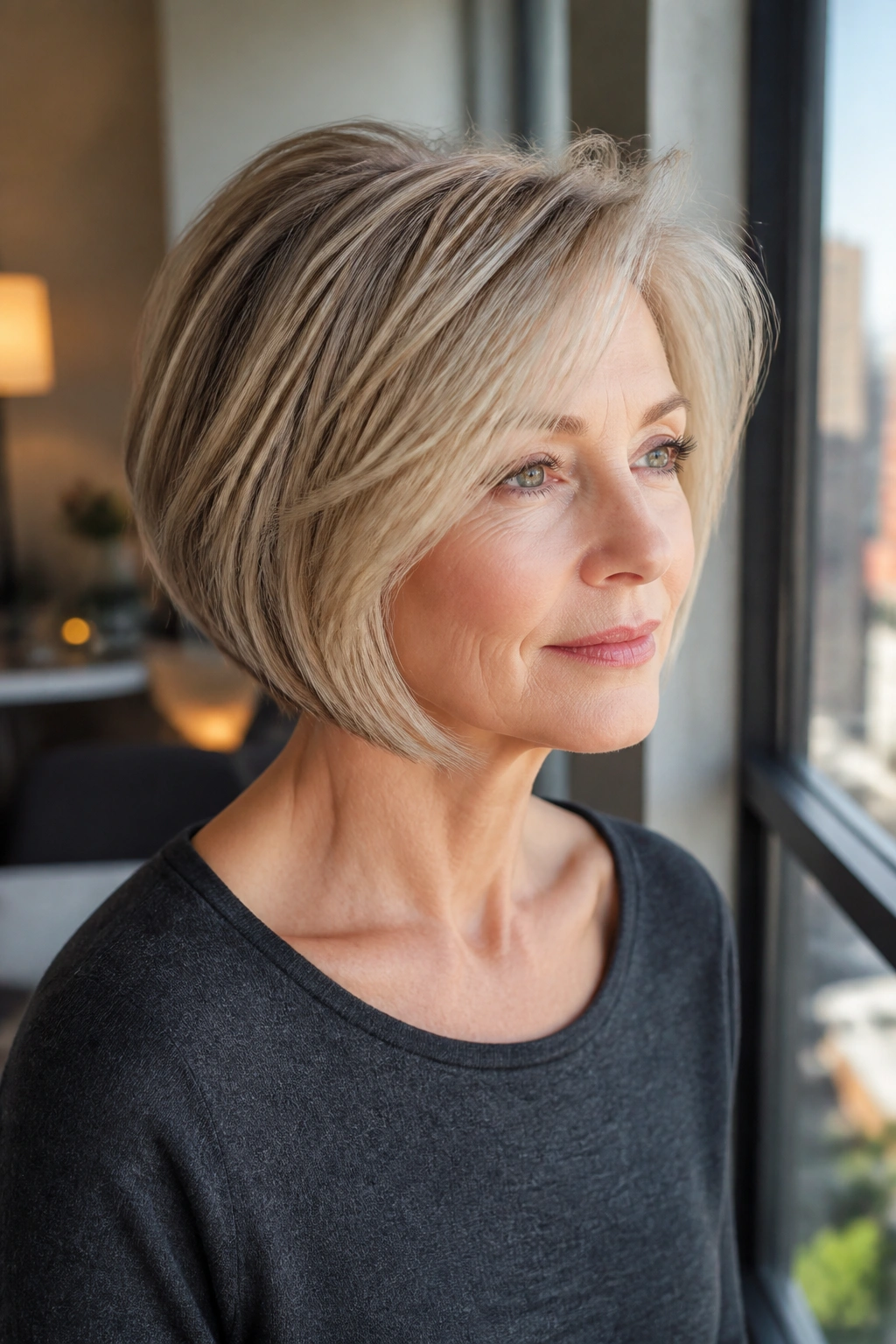
A graduated bob is all about angle. Shorter in the back, gradually longer toward the front, it creates a built-in sense of lift at the crown and shape through the jaw. For thinning hair, that can be gold.
The graduation should be controlled. You want the back to rise enough to support the crown, but not so much that it looks stacked or stiff. The front can stay a little longer to keep the face open and soften the profile.
This cut tends to behave well on straight hair and on hair that sits close to the scalp. It gives you a shape that keeps its lines even when the hair is not freshly styled. That’s useful. Maybe more useful than glamorous, but I’ll take useful.
23. Swept-Back Crop
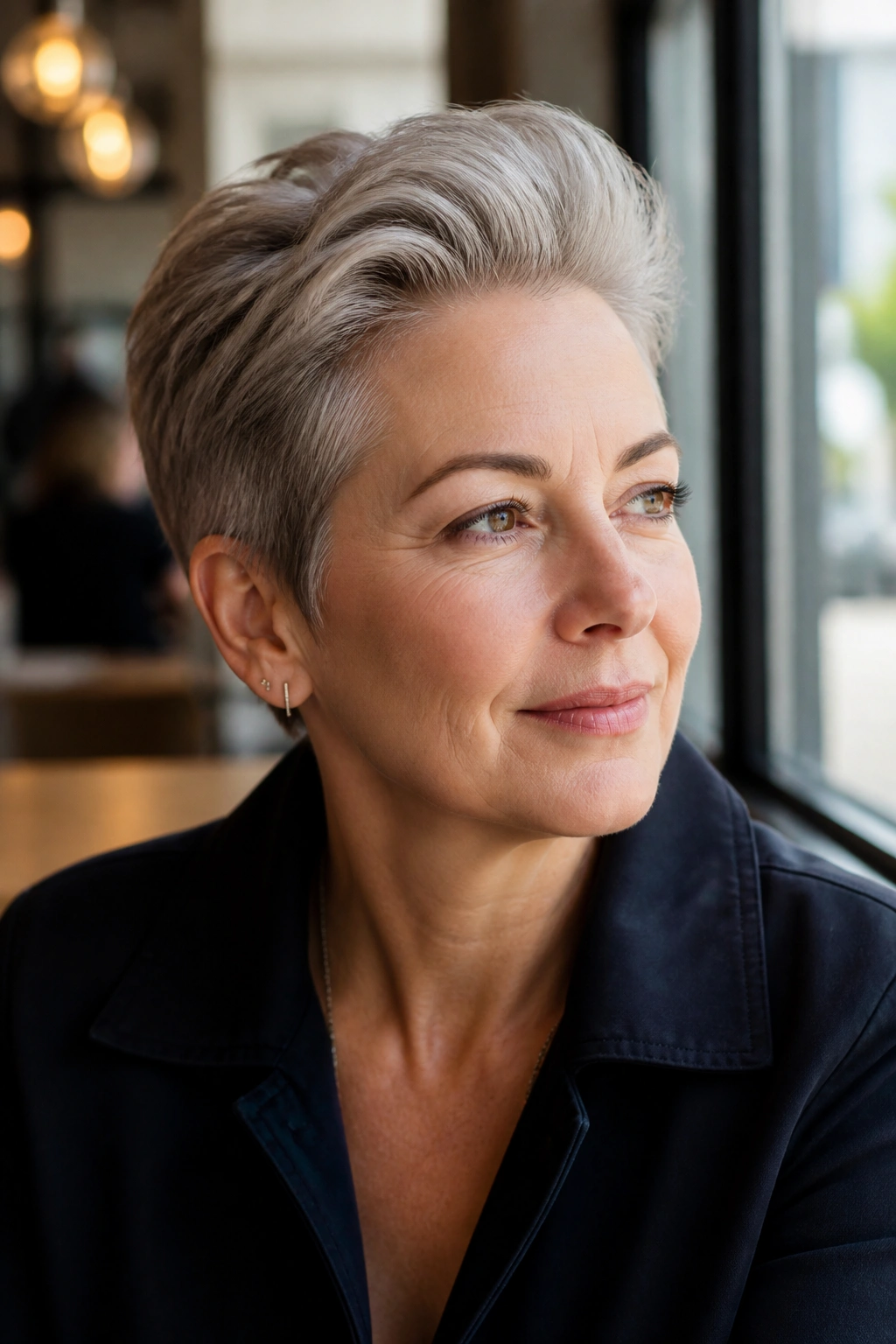
A swept-back crop is one of the cleanest ways to get height without teasing. The front and top are cut long enough to be directed back or up, while the sides stay neat. That sweep builds lift through the front, where thinning often shows first.
The style works because it exposes the face and gives the hair a little air. If your hair is fine, the open shape can make it look denser simply because it has room to move. If your hair is gray or white, the clean lines make the texture look modern instead of soft around the edges.
A light mousse and a blow-dryer are usually enough. No helmet hair, please.
24. Modern Pageboy
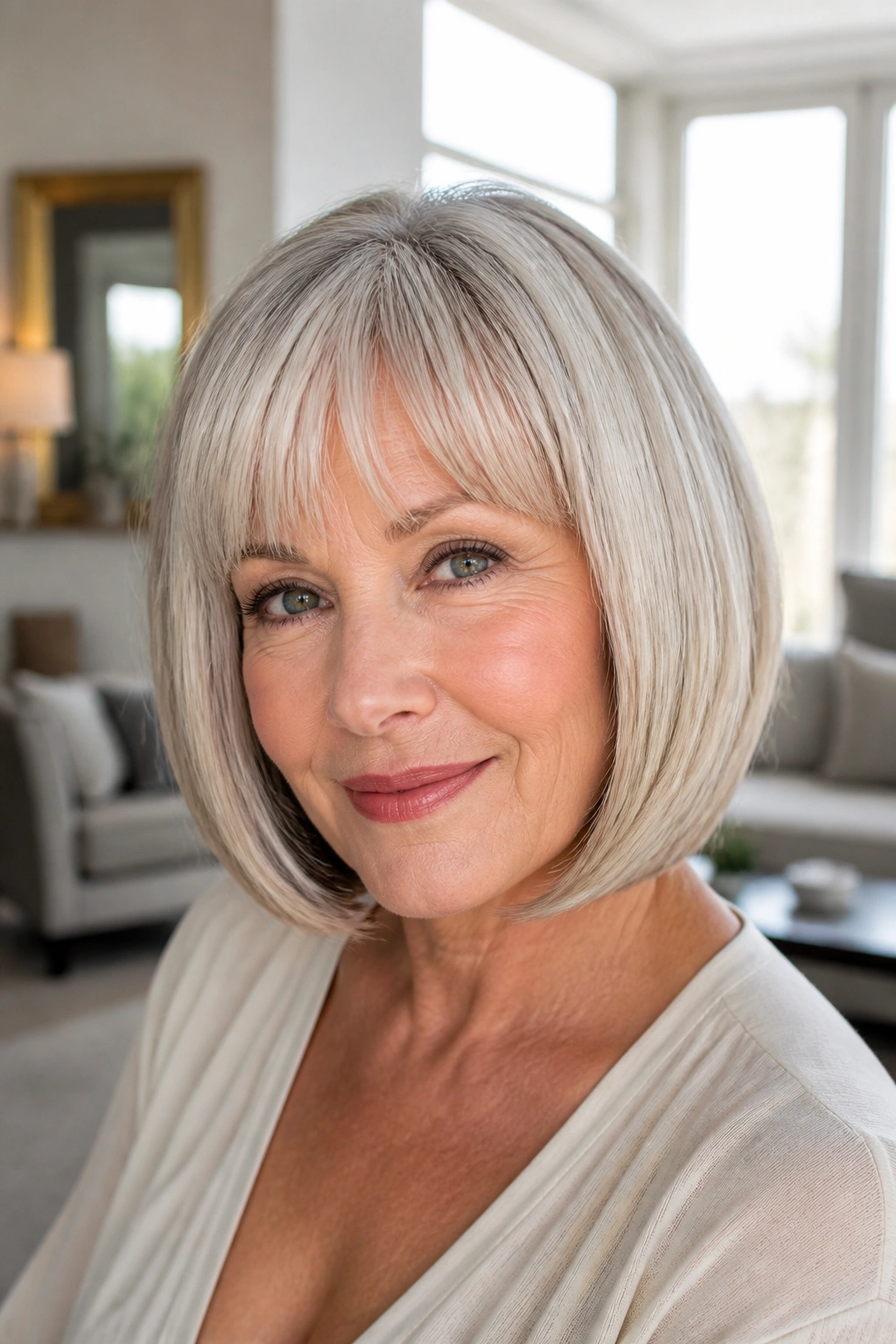
The pageboy used to be a very specific cut, and let’s be honest, the old version could feel stiff. The modern version is softer, curved under at the ends, and much friendlier on thinning hair. That curve gives the hair shape and makes the perimeter look fuller.
This is a strong option if you like a tidy silhouette with a little polish. It works especially well when the ends are the weakest part of the hair, because the curved line helps disguise that sparseness. The style also plays nicely with silver hair, which tends to show shape beautifully when the cut is clean.
Best Styling Note
- Blow-dry the ends under with a round brush
- Keep the fringe soft, not blunt and heavy
- Use a light serum only on the tips
It’s a classic for a reason. The shape does the work.
25. Bixie With Piecey Crown
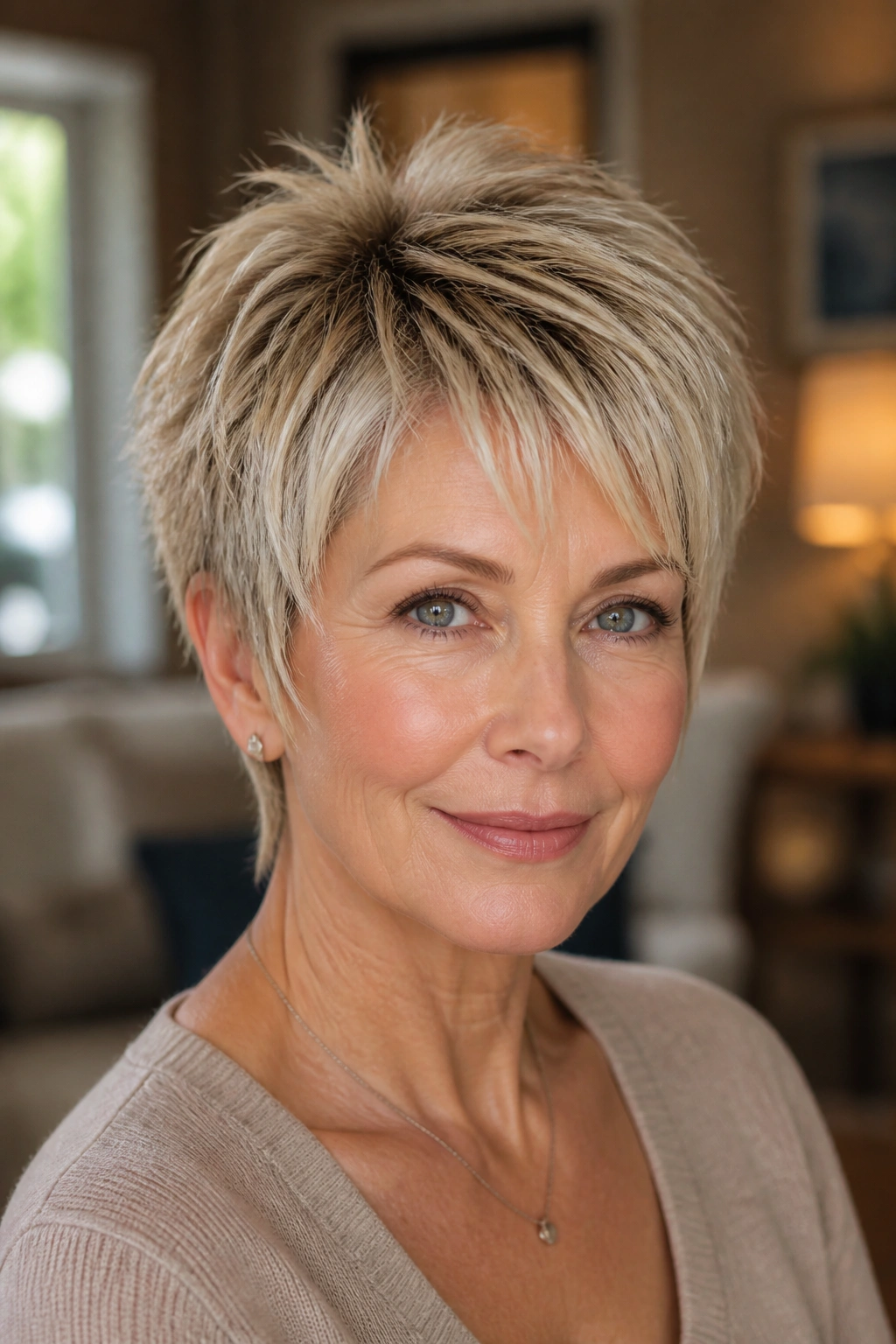
A bixie sits between a bob and a pixie, and that in-between space is useful. You get short hair that still has enough length around the top and front to feel feminine, soft, and easy to style. For thinning hair, that’s a nice mix.
The piecey crown helps add lift without making the haircut look puffy. The sides can stay close enough to keep the shape neat, while the top gets a little separation for movement. It’s especially good if your hair thins at the back of the crown but still has decent density at the front.
I like this cut for women who want something current without looking fussy. It grows out well, which matters more than people admit. A haircut that still looks decent at week six is worth its weight in gold.
Final Thoughts
The cuts that work best for thinning hair over 50 usually share the same trait: they protect the outline. A solid perimeter, a smart taper, or a carefully placed fringe can make hair look fuller faster than aggressive layering ever will.
If your hair is fine, focus on shape first and texture second. If it’s gray, think about how the cut shows off that color and whether the ends still look dense in natural light. Those two details matter more than chasing a trendy name at the salon.
Bring photos, yes. But bring a clear idea of the problem you want solved. That’s the part stylists can actually use.
