



Bleached blonde looks for long hair can be gorgeous, but they are not forgiving. Long lengths show everything: the lift at the roots, the tone through the mids, the way the ends catch light after a blunt cut or fall flat if they were pushed too hard.
That’s why the strongest blondes on long hair usually have some kind of plan behind them. A root shadow. A money piece. A beige toner instead of a screaming white one. Even a tiny shift in placement changes how the whole length reads. On hair that reaches the shoulders, the chest, or lower, those details matter more than people think.
And yes, bleach changes the mood of a haircut too. A soft wave looks beachy. A sleek finish looks expensive in the blunt, no-nonsense sense of the word. Braids show off the tone split by split. Ponytails expose the root work. Long blonde hair gives you more room to play, but it also leaves nowhere to hide.
1. Rooty Platinum Waves

A little depth at the root keeps platinum from looking harsh on long hair. That soft shadow near the scalp gives the lighter lengths somewhere to start, and it stops the color from turning into one solid pale sheet.
Why It Works
The best version of this look keeps the roots around one-half to one inch deeper than the mids, then shifts into a cool platinum through the body of the hair. That tiny difference makes the wave pattern show up more clearly, which is the whole point on long lengths. The hair moves. The color moves with it.
- Ask for a soft root melt, not a hard stripe.
- Keep the ends bright, but not chalky.
- Loose waves show the blend better than tight curls.
- A violet toner can help, but too much toner makes the blonde look flat.
Best move: keep the root area soft and the blonde through the lengths bright enough that the hair still looks airy from the back.
2. Ice-Blonde Glass-Length Blowout
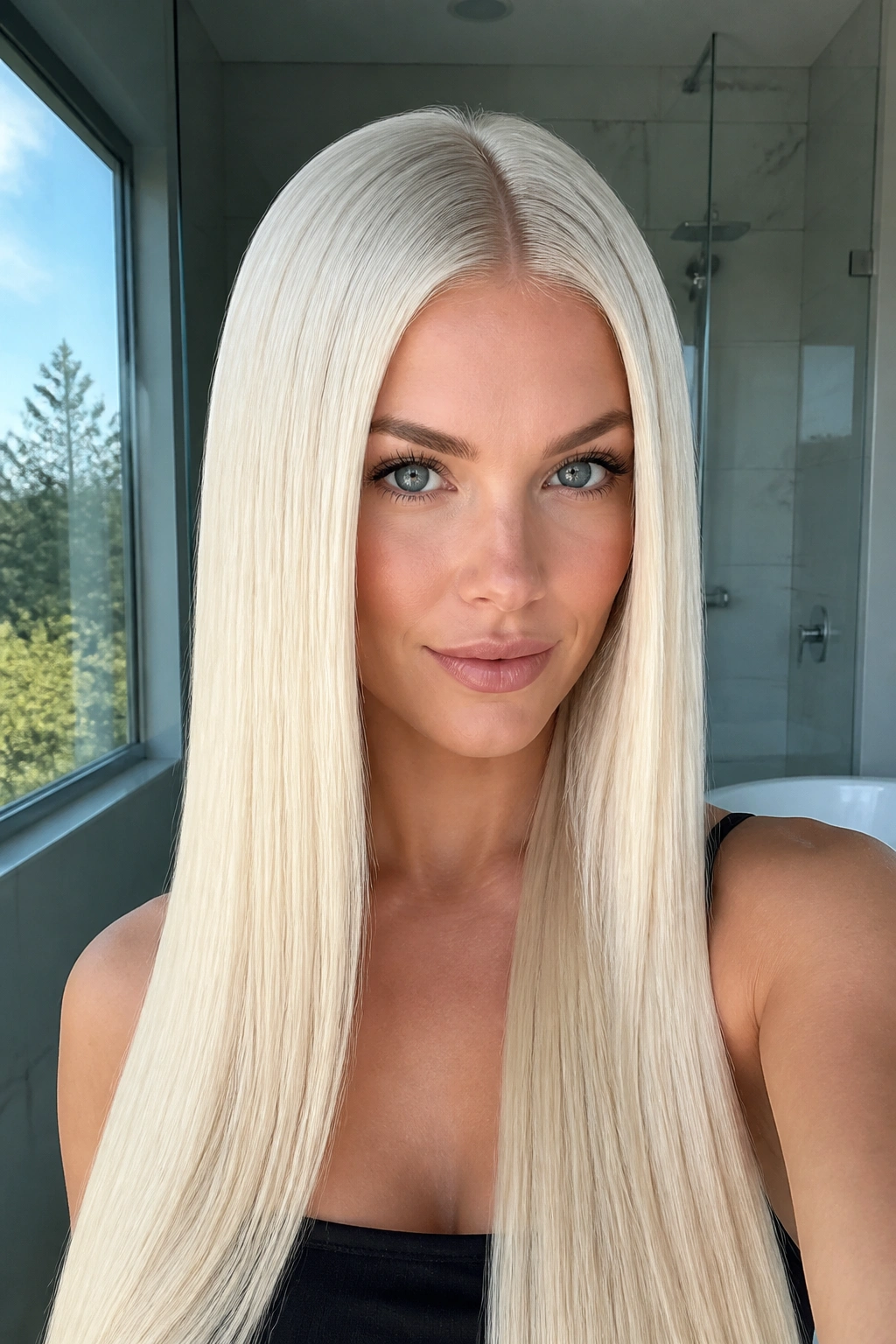
Sleek, reflective blonde on long hair has a very different attitude. It looks cleaner, sharper, and a little more expensive-looking because every strand lies in the same direction and the color has nowhere to hide.
This is the look for someone who likes a mirror-smooth finish and doesn’t mind showing every split end that slips through. The cut matters here. Long layers can work, but they need to be subtle; too much layering makes the blowout lose that heavy, polished line through the bottom. A center part helps, and so does a round-brush blow-dry with a heat protectant that leaves no sticky residue behind.
I like this blonde on dense hair that can hold shape. Fine hair can wear it, too, but the result is more delicate and less dramatic. If your ends are rough, trim first. No toner can fix fried ends. None.
3. Shadow-Root Money Piece

Why does a brighter front panel make the rest of the blonde feel richer? Because the eye goes straight to the face, then follows the lighter ribbons down the lengths. On long hair, that contrast makes the whole style read brighter than a full-head bleach job, even when the overall lift is softer.
How to Ask for It
Ask for a shadow root with two bright face-framing pieces that start around the temples and open toward the collarbone. Those front pieces should be the lightest part of the style, with the rest of the hair staying a shade or two deeper. That keeps the look fresh between appointments, since the grow-out doesn’t have to be perfect to still look intentional.
It’s a smart choice if you wear your hair up a lot. The front pieces still show in a ponytail or clip, which means the color keeps doing something even on lazy days.
4. Creamy Beige Layers
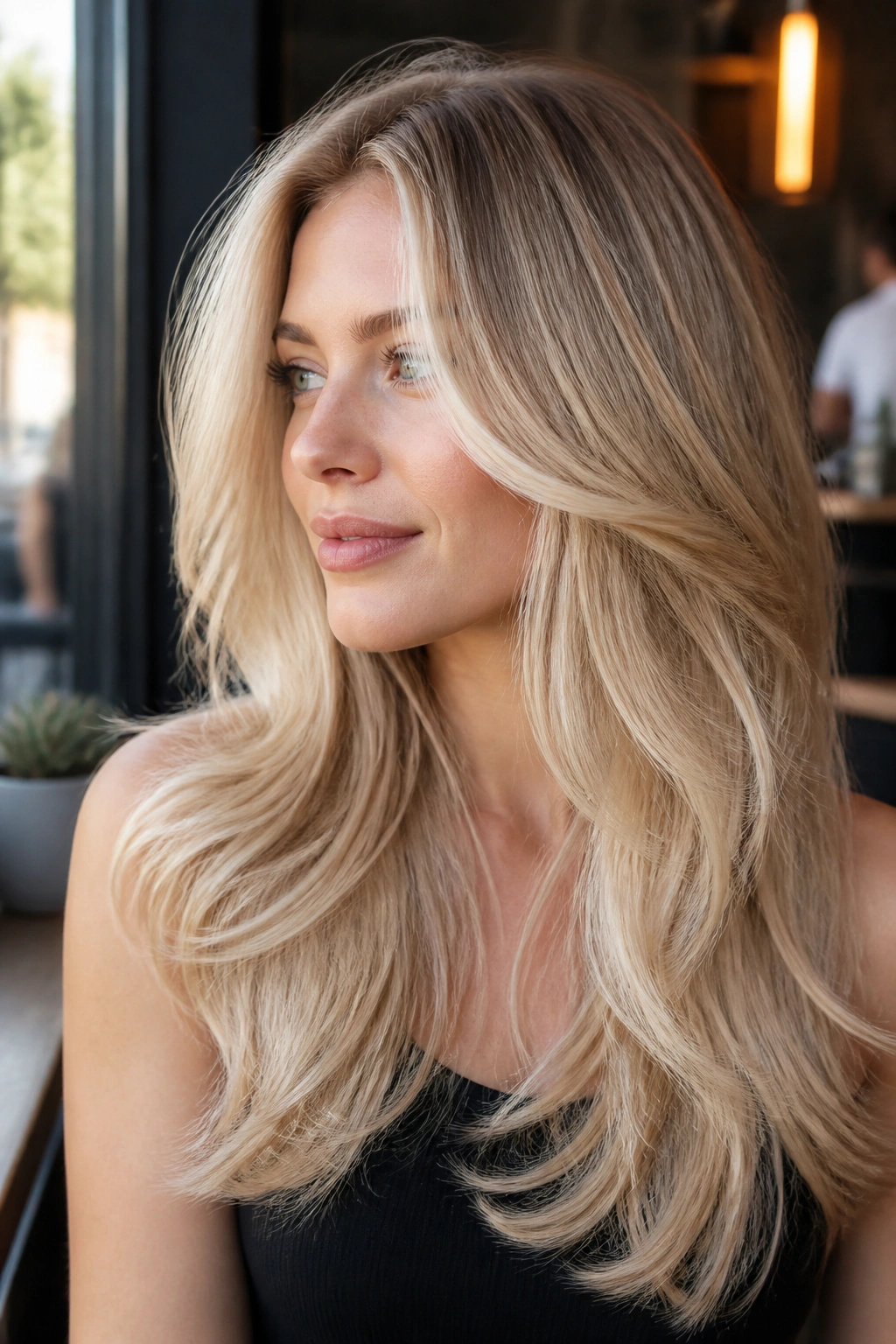
Creamy beige blonde is one of those shades that quietly looks expensive on long hair. Not loud. Not icy. Just soft, balanced, and polished in a way that makes layered lengths feel thicker.
The trick is keeping the blonde in that middle space between warm and cool. Too golden, and it turns brassy fast. Too ash, and the hair can lose the softness that makes beige blonde so pretty in the first place. On long layers, beige tone lets the cut breathe; the movement through the ends is visible, and the whole shape feels lighter than a single flat color.
I’d ask for soft layering around the collarbone and below, plus a beige gloss that can be refreshed when the tone drifts. That matters more than people admit. Long blonde hair picks up mineral deposits, sun, styling heat, and product residue. Beige keeps the color from screaming for attention when what you really want is a smooth, expensive finish.
5. Buttery Face-Framing Highlights
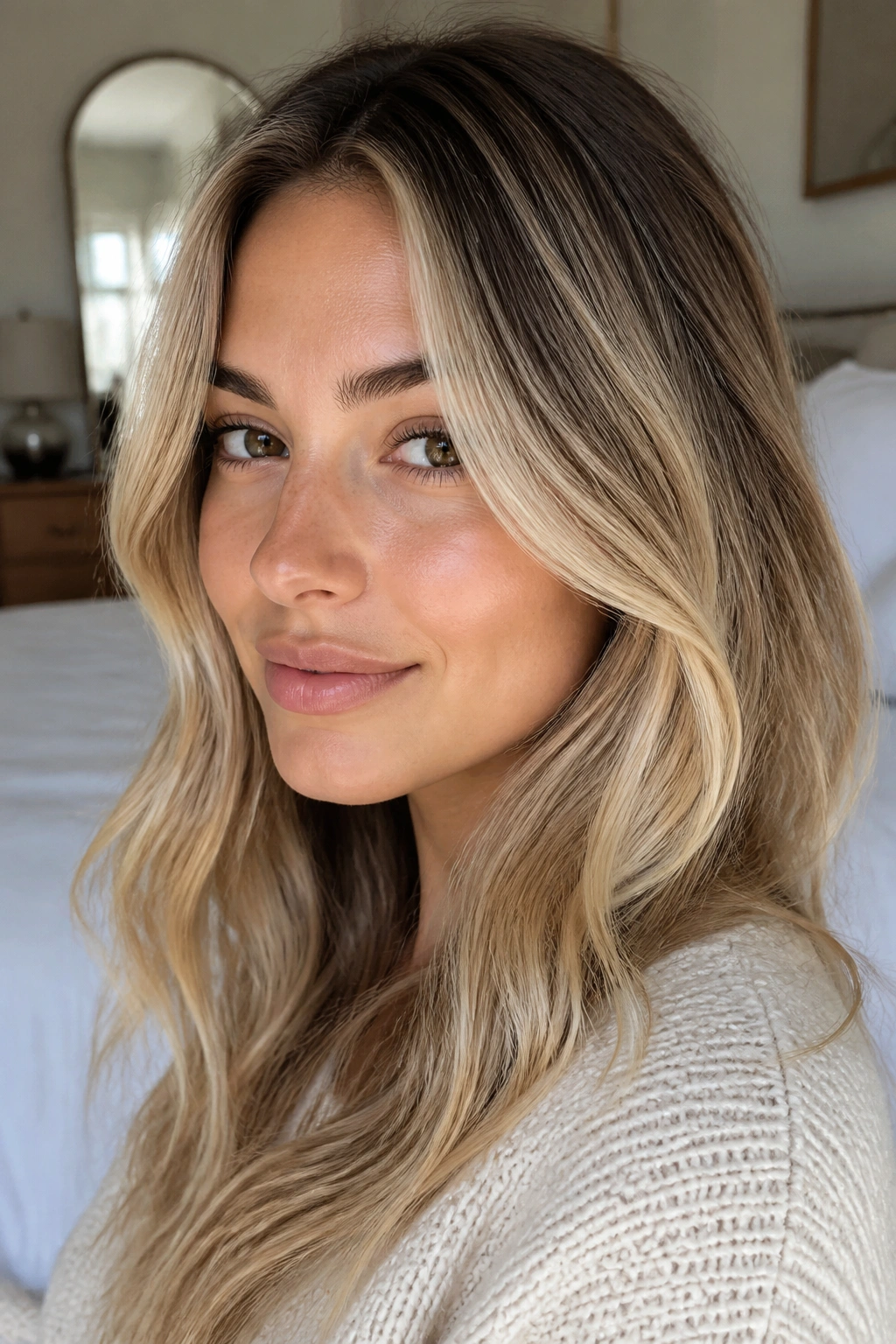
Buttery blonde is the warmer cousin in the bleach family, and long hair gives it room to spread out. The color sits in that sweet spot where it feels sunlit rather than yellow, especially when the highlights are tucked around the face and softened through the rest of the length.
This is one of my favorite choices for hair with a little natural wave. The bends catch the lighter pieces and make them look thicker than they are. On straight hair, it can still work, but you need a clean blow-dry so the warmth doesn’t disappear into the background. A few thicker ribbons around the cheekbones help the style feel deliberate instead of accidental.
A lot of people go too thin with warm blonde and end up with a nice color that reads from far away but disappears in photos. Don’t do that. Keep the front pieces visible, and let the ends stay slightly creamier than the rest. That contrast is what gives the look its depth.
6. Ultra-Pale Blunt Cut

A blunt cut changes everything. When the ends are all one length, the bleach looks sharper, cleaner, and a bit more graphic — which is exactly why this style works so well on long hair that has enough density to support it.
The blunt line gives the pale blonde a frame. Without that frame, a very light blonde can start to look wispy, especially if the hair is fine. With it, the color feels intentional. You see the edge first, then the brightness. The whole look reads stronger because the haircut is doing part of the work.
This is not the style for someone who wants to skip trims. Every 8 to 10 weeks is a more realistic rhythm if you want the ends to stay crisp. A neutral-cool toner keeps the length from going yellow, and a little oil on the last inch of hair helps the cut look finished instead of dry. It’s a plain look. That’s the point.
7. Surfer-Chic Lived-In Blonde

Salt-air blonde has a different energy from polished platinum. It looks a little looser, a little more relaxed, and far less precious — which, on long hair, can be a relief. Not every blonde needs to feel formal.
This version works by mixing lighter ends with a softer root area and a few understated ribbons through the mid-lengths. The result is dimension that grows out in a forgiving way. Hair that air-dries with a bend or a wave tends to wear this especially well, because the color doesn’t fight the texture. It follows it.
What to Ask For
- A balayage placement that starts below the crown.
- Blonde pieces that get brighter toward the ends.
- A soft root area that doesn’t look painted on.
- A cut with movement, not a heavy curtain at the bottom.
The styling part is easy, which is part of the appeal. A leave-in cream, a touch of salt spray, and a rough dry are usually enough. If the hair is too neat, the whole look loses its charm.
8. Champagne Blonde Curls

Got natural bend in the hair? Champagne blonde loves it. The tone sits between beige and gold, so every curl catches a slightly different note as it moves, and long lengths give those shifts room to stack up.
This is one of those shades that can look soft in daylight and richer indoors, which is why it flatters curled styles so well. The curl pattern does half the work. You do not need perfect ringlets, either. Big curls, brushed-out waves, even an old-school hot-roller set can show off champagne tones if the toner is clean and the finish is smooth.
How to Style It
Use a 1¼-inch curling iron or a large wand, wrap the hair away from the face, and leave the last inch out for a softer end. Let the curls cool fully before brushing them out. If you rush that part, the blonde can separate in an awkward way and the shine drops fast.
Champagne blonde is cheerful without leaning yellow. That’s the whole appeal.
9. Pearl Blonde Braids

A braid changes the story. Put pearl blonde into a braid, and suddenly every subtle shift in tone becomes visible — the cooler ribbons, the softer beige pieces, the brighter sections near the surface.
That’s why this look is so good on long hair. The length gives the braid enough material to show off the color pattern, and pearl tones keep the finish from looking flat or overly icy. I like this best on braids that reveal shape: a loose fishtail, a Dutch braid down the back, or two long braids with a few face-framing pieces left out. Tiny, tight braids can make even beautiful blonde look busy. Bigger braid structure lets the color breathe.
- Pearl blonde works best when the toner stays soft, not gray.
- Long braids show breakage, so the ends need to be smooth.
- A shine spray on the mid-lengths helps the braid look finished.
- Leave a few wisps near the hairline if you want the style to feel less severe.
The braid is the detail. The color is the backdrop.
10. Silvered Platinum Ponytail
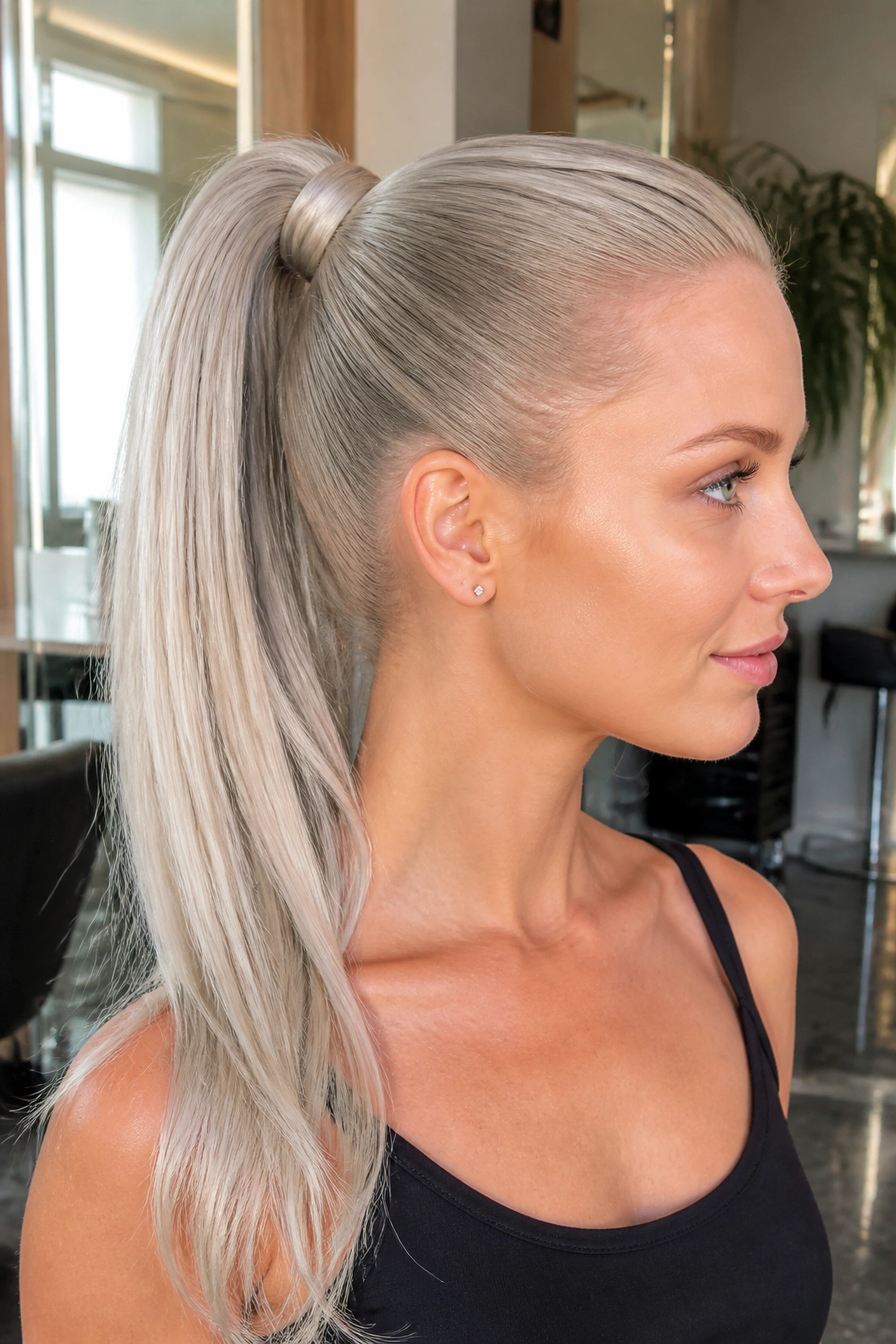
This is the cleanest way to wear platinum on long hair. A high ponytail pulls everything upward, so the lightest blonde sits where people actually notice it — at the crown, around the face, and along the swing of the tail.
The trick is keeping the base smooth and the ponytail itself glossy. Silvered platinum needs polish because the color is already cool and bright; if the finish is frizzy, the whole thing turns messy fast. I’d use a light smoothing cream on the crown, then a few drops of serum on the tail once it’s secured. The hair tie should be hidden with a wrapped strand if the length allows it. That little move matters more than people think.
This look is sharp. It suits long hair that has enough density to look full when lifted, and it can be brutal on dry ends. If the last two inches are rough, trim them first. A ponytail does not forgive split ends.
11. Chunky Highlight Revival

Chunky blonde ribbons are back in the conversation because they do something fine highlights cannot: they create visible contrast. On long hair, that contrast can be gorgeous, especially when the base is left a little deeper and the bright pieces are placed with intention.
The new version is cleaner than the old one. You want thickness, yes, but not the striped, blocky look that used to show up in bad salon photos. A better approach uses wider pieces under the top layer, then a few lighter sections around the face and ends. That way the color moves when the hair moves. It does not sit there looking pasted on.
This style is a smart pick if your hair is thick and long, or if you want the blonde to show up clearly in loose waves. It is less subtle than a balayage, and that’s the whole point. If you’ve been bored by soft, whisper-thin highlights, this gives the color some edge again.
12. Piecey Platinum Shag
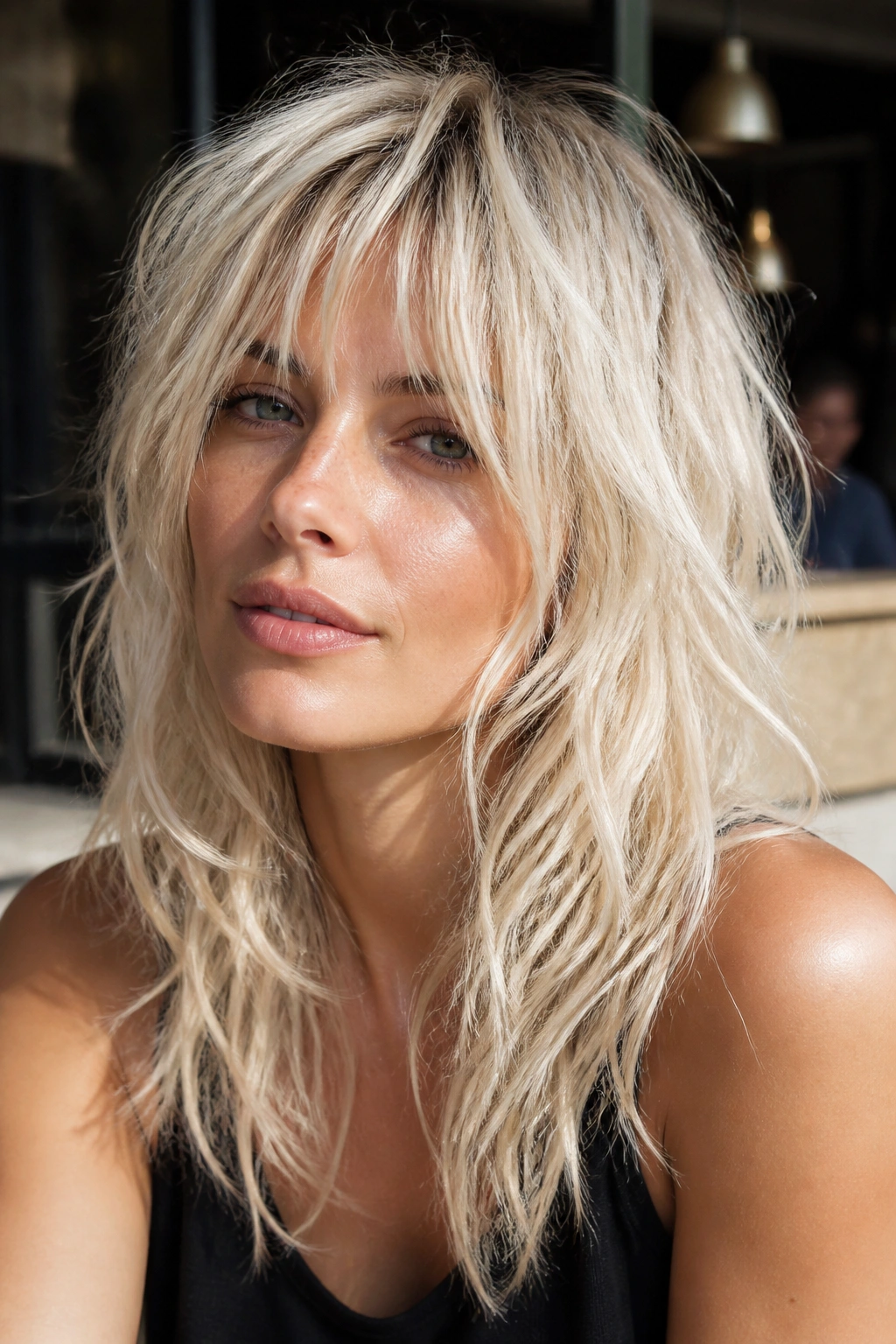
A shag cut and bleach blonde make a good pair when the hair needs movement. Long lengths can get heavy fast, and a piecey shag breaks that weight up so the pale color doesn’t sink into the sides of the head.
What I like here is the looseness. The layers are not precious. They fall a little unevenly on purpose, which gives platinum a more lived-in feel. That matters because bleach can sometimes look severe on very straight, very tidy hair. A shag softens the mood. A bit.
The cut does need a careful hand. Over-thinned ends on bleached hair can look airy at first and tired a few weeks later. Ask for soft internal texture, not shredded lengths. Then style with a light mousse at the roots and a touch of cream through the ends. Rough dry, flip the part, and let it settle. The shape should look slightly messy. If it looks perfect, it may be too dressed up for the cut.
13. Honey-Glow Long Layers
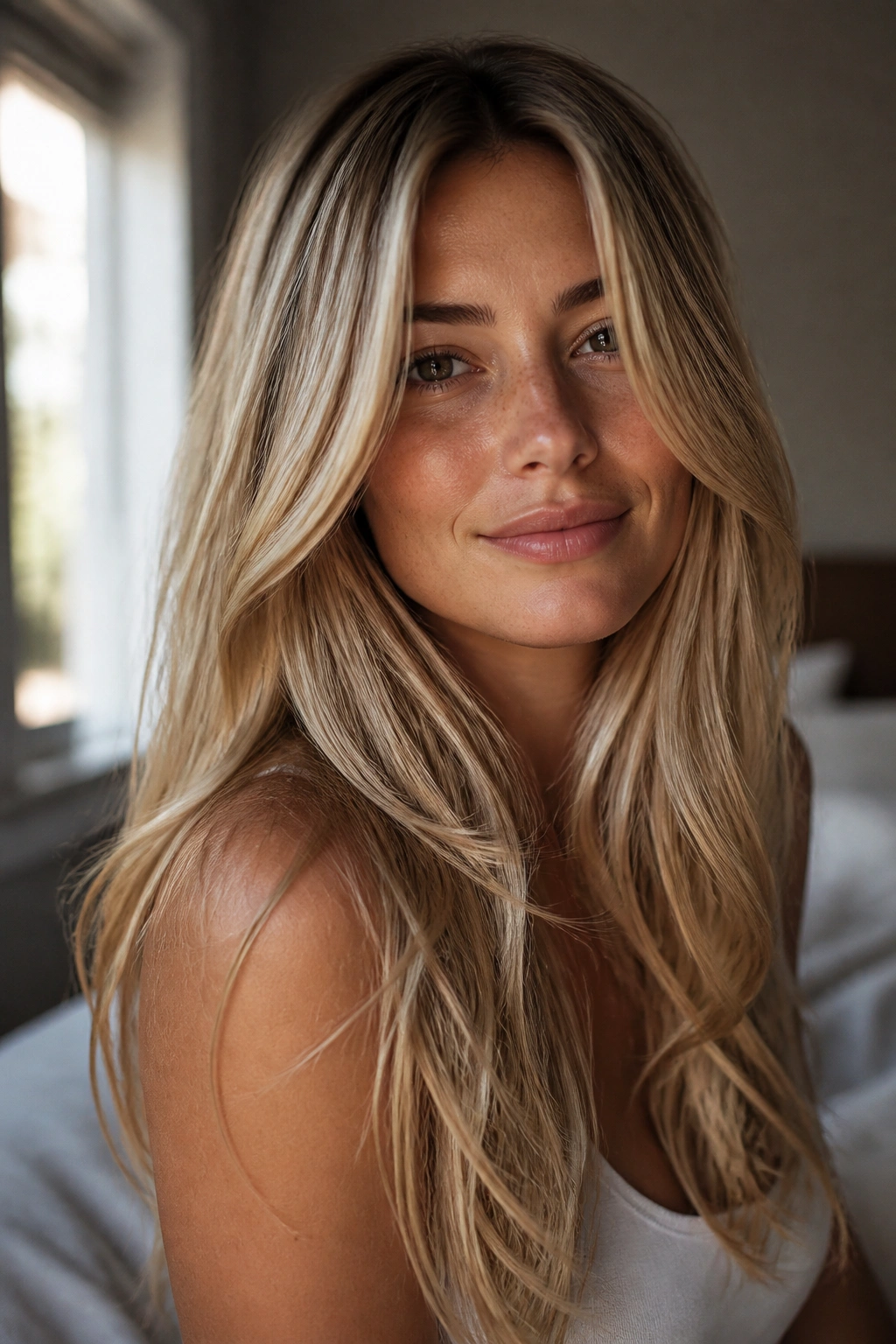
Who said blonde has to lean cool? Honey-glow lengths bring warmth back into the picture, and on long hair that warmth makes every layer feel fuller. The tone sits in that rich space between golden and beige, so it feels softer than copper and less flat than plain gold.
This shade works especially well when the layers are long and fluid. The color can move from brighter face-framing pieces to deeper honey through the mids and ends, which gives the hair a healthy, reflective finish. It is a good answer for anyone whose skin looks washed out by icy blonde. The warmth wakes the face up. Fast.
How to Keep It From Turning Muddy
Ask for a gold-beige gloss, not a heavy orange tone. Keep the ends bright enough that the color still reads blonde, and avoid piling too many dark lowlights underneath. That can flatten the length. Honey blonde wants light to pass through it. If the hair starts to look dull, a clear gloss can bring the shine back without changing the tone too much.
14. Vanilla Blonde Curtain Bangs
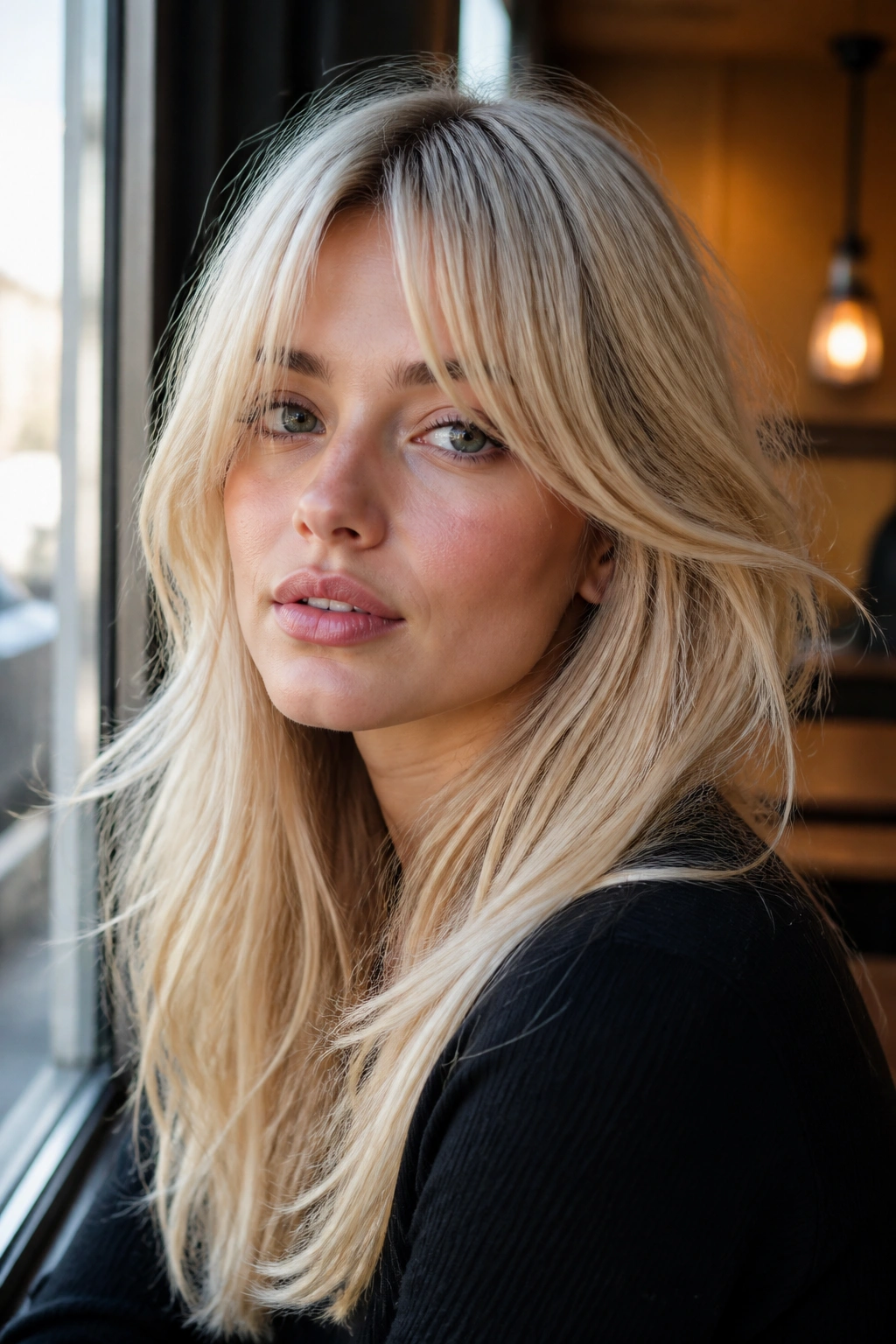
A soft fringe can change the whole feel of long blonde hair. Curtain bangs frame the face, vanilla blonde keeps them gentle, and together they make the length feel styled even when the rest of the hair is loose and simple.
Vanilla blonde sits just a touch warmer than ice platinum, which helps the bang area stay soft instead of stark. That matters because bangs sit close to the eyes and skin. If the tone is too harsh there, it can feel disconnected from the rest of the hair. With a vanilla shade, the fringe melts into the lengths more naturally.
This look is good for long hair that needs a little structure near the face. It does ask for trim appointments on the fringe, because bangs grow out fast and start falling weirdly across the cheekbones. Blow-dry them with a medium round brush, directing the center pieces down and the sides away from the face. That tiny step keeps the whole style from collapsing into one flat curtain.
15. Smoked-Root Ash Blonde

If brass makes you crazy, smoked-root ash blonde is the safer choice. It keeps the root area dark enough to give the blonde a base, then carries a cool ash tone through the lengths so the whole look stays calm instead of yellow.
The reason this works on long hair is simple: the length gives the ash enough room to read as deliberate. On shorter hair, very cool blonde can feel severe. On long hair, it looks sleek and controlled. The root shadow also makes the grow-out easier to live with, which matters if you don’t enjoy constant touch-ups.
There is one catch. Ash can flatten out if the toner goes too heavy. Then the hair starts to look matte instead of luminous. The fix is to keep a little brightness in the mids and ends, so the blonde still has life. I’d rather see a cool blonde with a hint of warmth than one that looks like it was dipped in gray paint.
16. High-Contrast Bleach and Lowlights

All-over blonde is not the only way to go light. Sometimes the strongest long-hair blonde is the one with some darkness left in it. High-contrast lowlights make the pale pieces look even brighter, and they stop thick hair from turning into one giant yellow sheet.
This approach works because the eye reads contrast faster than uniform color. A few deeper ribbons underneath the top layer give the blonde something to bounce off of. On long curls and waves, the effect is especially good because the darker strands peek through when the hair shifts. That motion keeps the style from feeling static.
- Best on thick, dense, or curly hair.
- Ask for lowlights placed through the interior and nape.
- Keep the brightest bleach around the surface and face.
- Refresh the gloss on the blonde rather than repainting everything.
It’s a smarter use of bleach than people give it credit for. Less all-over lifting. More shape.
17. Soft-Focus Balayage Waterfall

A waterfall blonde is what happens when the lightest pieces seem to spill down the hair instead of sitting in obvious stripes. On long lengths, that hand-painted placement can be gorgeous because the color follows the way the hair actually falls.
This style usually starts with a softer root area, then gradually brightens through the face frame, the mid-lengths, and the ends. The result feels fluid, almost like the blonde is moving even when the hair is still. It is one of the easiest ways to keep long bleached hair from looking overworked, because the color isn’t forced to be bright everywhere.
What to Ask For
- Face-framing brightness that starts around the cheekbones.
- Painted pieces through the lower half of the hair.
- A softer transition near the roots.
- Ends that stay light enough to show movement, not just length.
This look is strong because it grows out well, but it still needs toning. Long hair can hold onto warmth in odd places, and a gloss keeps the waterfall effect soft instead of patchy.
18. Editorial Sleek Length

This is the bluntest, sharpest blonde on the list. Long, sleek, fully committed bleach blonde hair has a kind of discipline to it — every line shows, every split end shows, and every tone shift shows too.
That sounds unforgiving, and it is. But if the color is clean and the cut is maintained, the result is striking in a way that softer blondes can’t quite match. A center part, a smooth blow-dry, and ends that sit in one neat line turn long hair into a statement. No wave pattern to hide behind. No heavy texture to blur the finish. Just light, length, and shape.
The upkeep is real. Trims matter. Bond care matters. So does knowing when to stop lifting and start glossing. The point is not to chase the palest possible blonde at any cost. The point is to keep the hair looking strong while it stays light. That balance is what makes this look hold up. And when it does, it has a very clean kind of force to it.
