



Coral hair color has a way of waking up a haircut fast. It sits between pink and orange, so it feels bright without tipping into full neon unless you want it to. On light blonde hair, it looks like a fresh gloss; on darker bases, it turns into a louder statement once the hair is lifted enough. The shade has range, and that is why it keeps showing up in salons whenever people want something cheerful without going all the way to fire-engine red.
Spring light is flattering to coral in a way harsher light never quite is. The color reads clean in daylight, soft in shade, and it can lean peach, apricot, rose, or tangerine depending on the mix. That flexibility matters. A tone that looks sugary on a level 9 blonde can become a deep sunset stripe on a brunette, which is why a good coral formula starts with the base you already have.
The tricky part is that coral is not one look. A blunt bob, a layered shag, waist-length waves, and a pixie all want different placement. A money piece near the face can make the whole head feel brighter. A shadow root can keep the grow-out calm. And a few thin coral ribbons through the lengths can be enough if you like color that moves instead of shouting.
These coral hair color ideas keep things practical and wearable, not costume-y. Some are soft enough for a first dip into color; others are loud on purpose. Either way, the best version is the one that works with your haircut, your maintenance tolerance, and the amount of sunlight you want bouncing around when you step outside.
1. Apricot Coral Melt
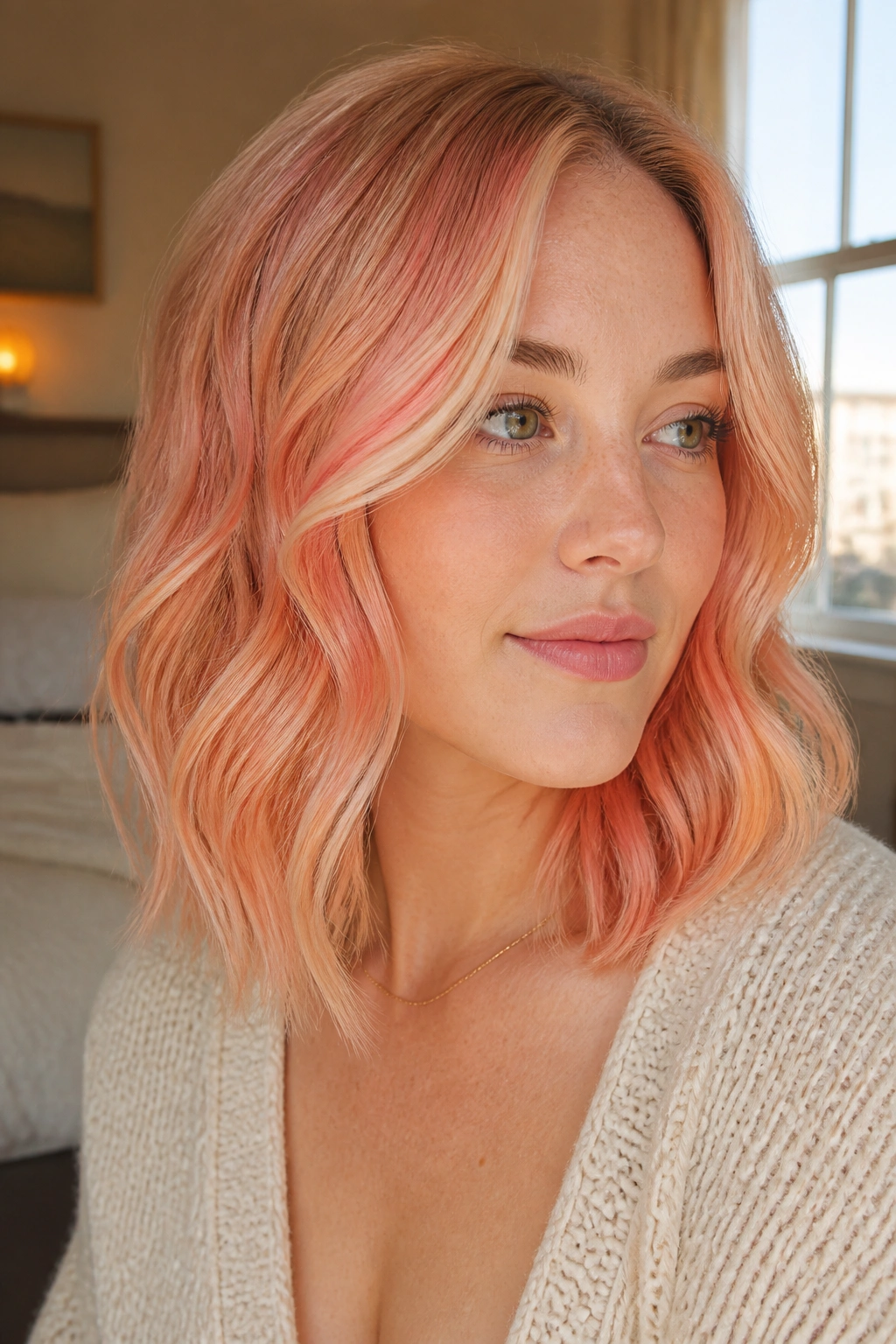
Apricot coral is the easiest place to start if you want warmth without a fight. It leans a little peachier than classic coral, which makes it feel softer on the eyes and easier to wear with everyday makeup.
Why It Works
The shade looks especially good on level 9 to level 10 blonde hair, where the apricot notes stay clean instead of muddy. If your hair is already pale, a demi-permanent gloss or a direct dye overlay can give you that juicy finish without a hard line of demarcation.
Quick notes:
- Works well on shoulder-length cuts and long layers.
- Fades into peach before it goes dull.
- Plays nicely with airy waves and blunt ends.
Pro tip: ask for slightly deeper coral at the mids and a softer apricot at the ends. That tiny shift keeps the color from looking flat under daylight.
2. Peach Sorbet Coral Waves
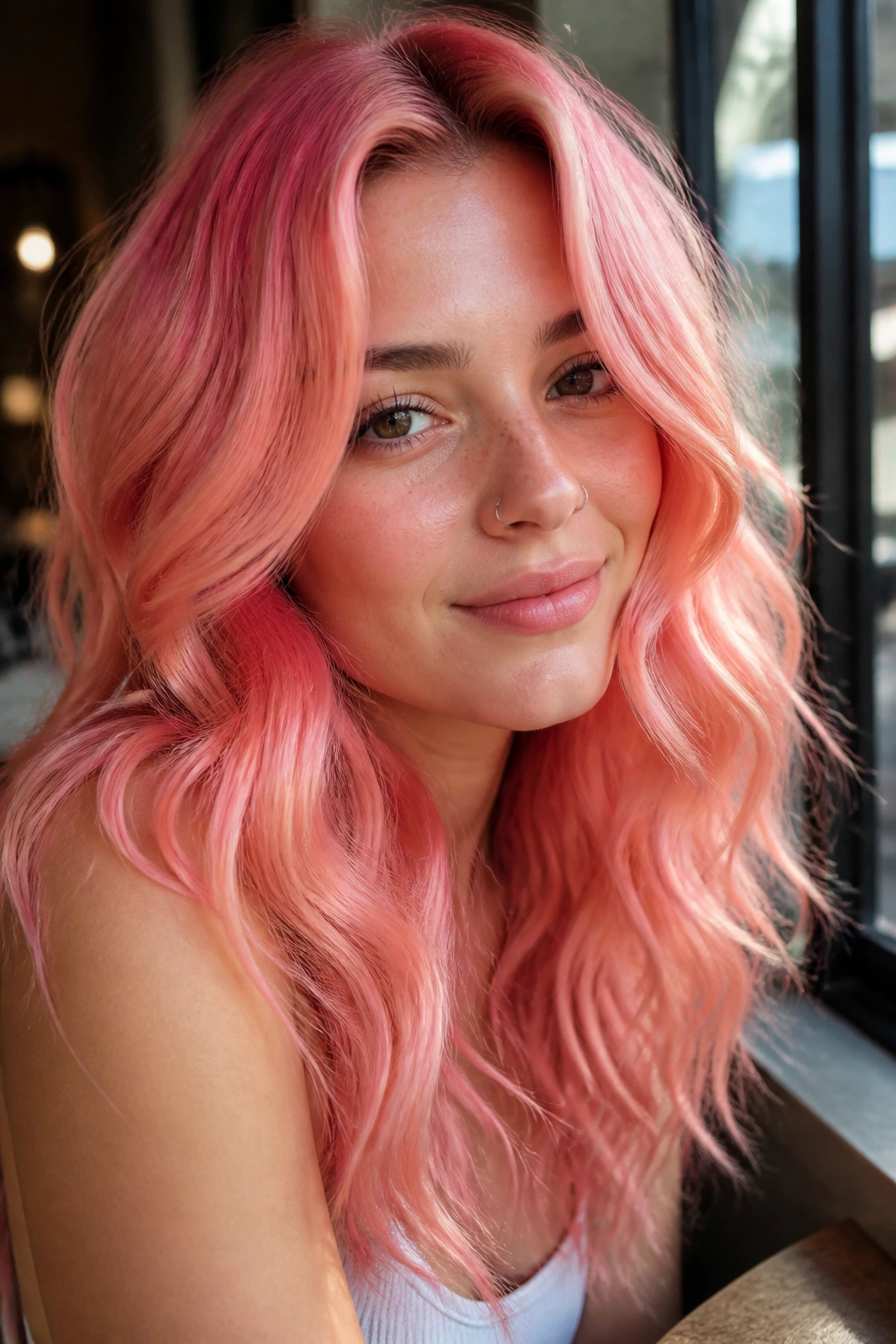
Want coral hair color that looks soft instead of loud? Peach sorbet is the version I’d point you toward first. It has more pink than orange, which gives it a sweeter finish and keeps it from veering into tangerine territory.
A loose wave pattern helps here because the color can break up across the bends of the hair. On straight hair, peach coral reads a little more uniform. On a soft bend, it looks like the shade is changing every few inches, which is the good part.
If your blonde base is a touch yellow, ask for a neutral beige pre-tone before the coral goes on. That step matters more than people think. Yellow underneath can push the peach into brass, and brass is not the same thing.
3. Brunette Coral Balayage
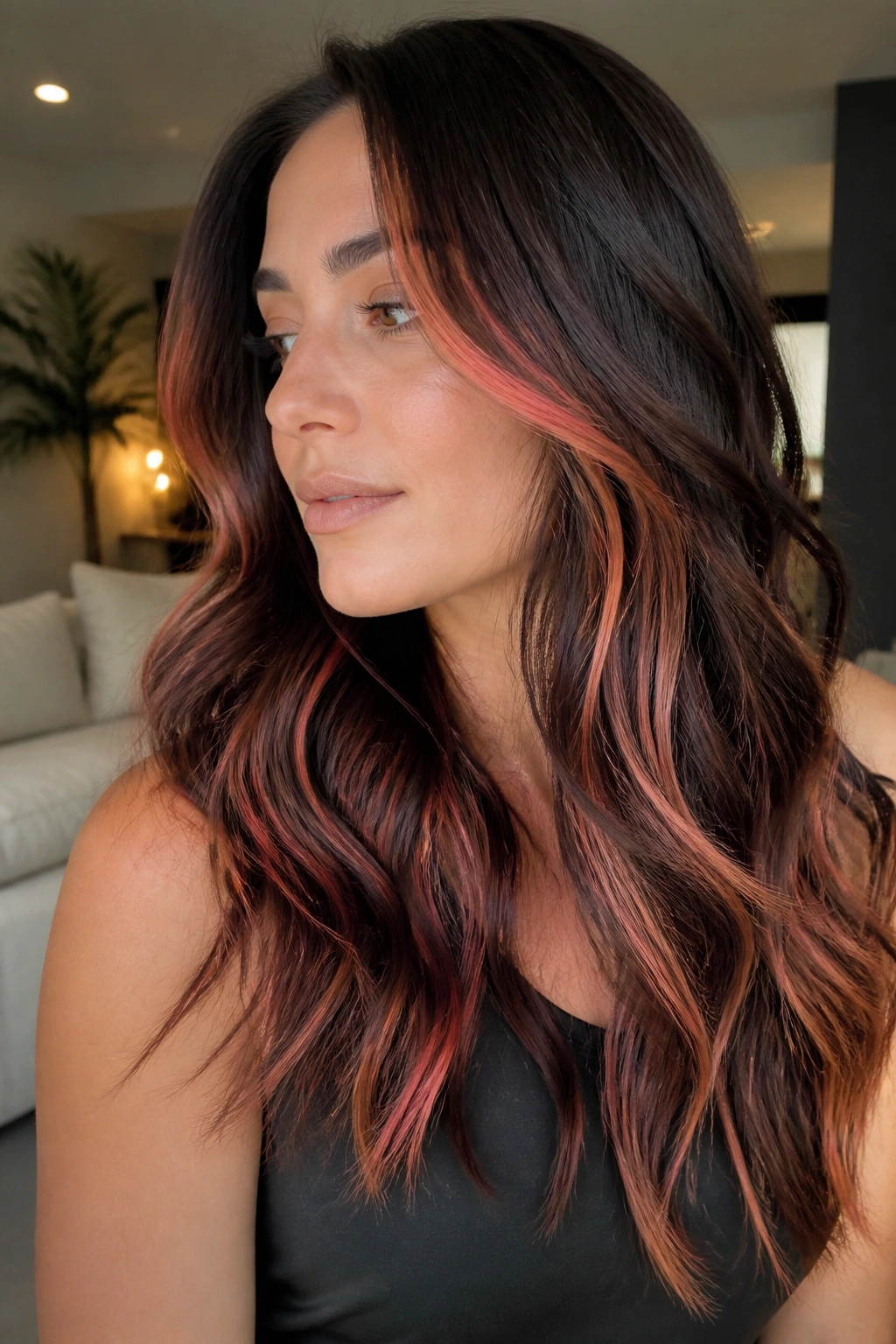
Dark hair doesn’t need a full bleach-out to pull off coral. A brunette coral balayage uses painted ribbons instead of an all-over color, and that keeps the look grounded while still giving you those bright flashes.
What to Ask For
Tell your colorist you want coral-painted pieces lifted to about level 7 or 8 rather than a full blonde canvas. That leaves the base rich and helps the coral sit against the darker shade instead of floating on top of it.
- Thin to medium hand-painted ribbons around the crown.
- Softer placement through the back so it grows out well.
- A coral gloss over the lightened pieces, not the whole head.
This look works best when the hair has movement. Curls, bends, even a rough blow-dry. Dark roots plus coral ribbons can look expensive in the plainest way, which is rare and useful.
4. Blush Coral Money Piece
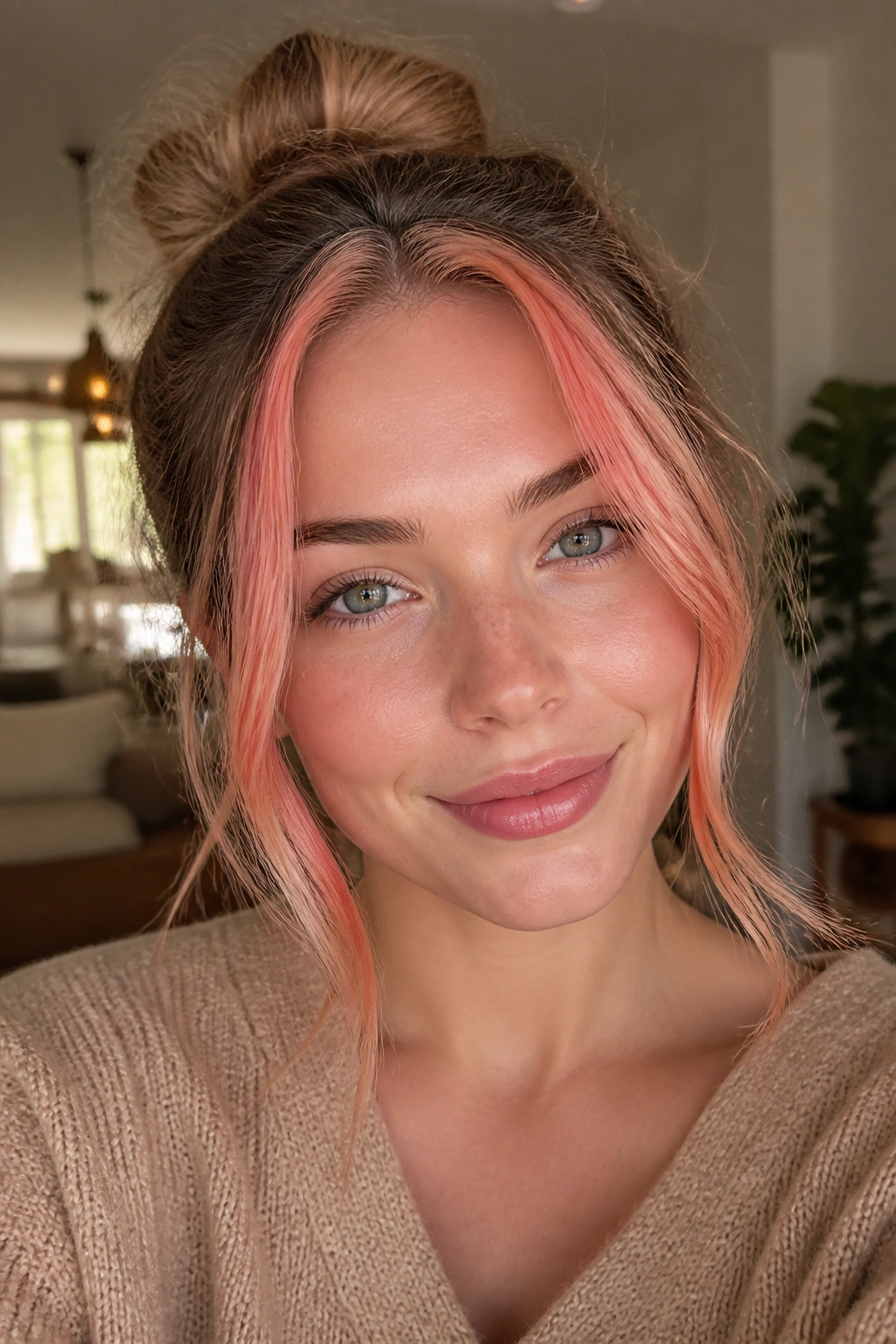
A coral money piece is a small move that changes the whole face. Two bright strips near the hairline can make a haircut feel fresher than a full-head color, and they’re easier to live with when you do not want constant salon time.
Picture a messy bun with two blush-coral pieces falling forward. That’s the whole point. The color gives you a hit of brightness where people notice first, then the rest of the hair can stay softer and calmer.
This one works especially well if you wear your hair up a lot. It also behaves nicely with curtain bangs, since the coral blends into the fringe instead of sitting in one hard stripe. Keep the pieces about 1 inch wide if you want them visible, or slightly narrower if you want a whisper of color.
5. Sunset Coral Ombre
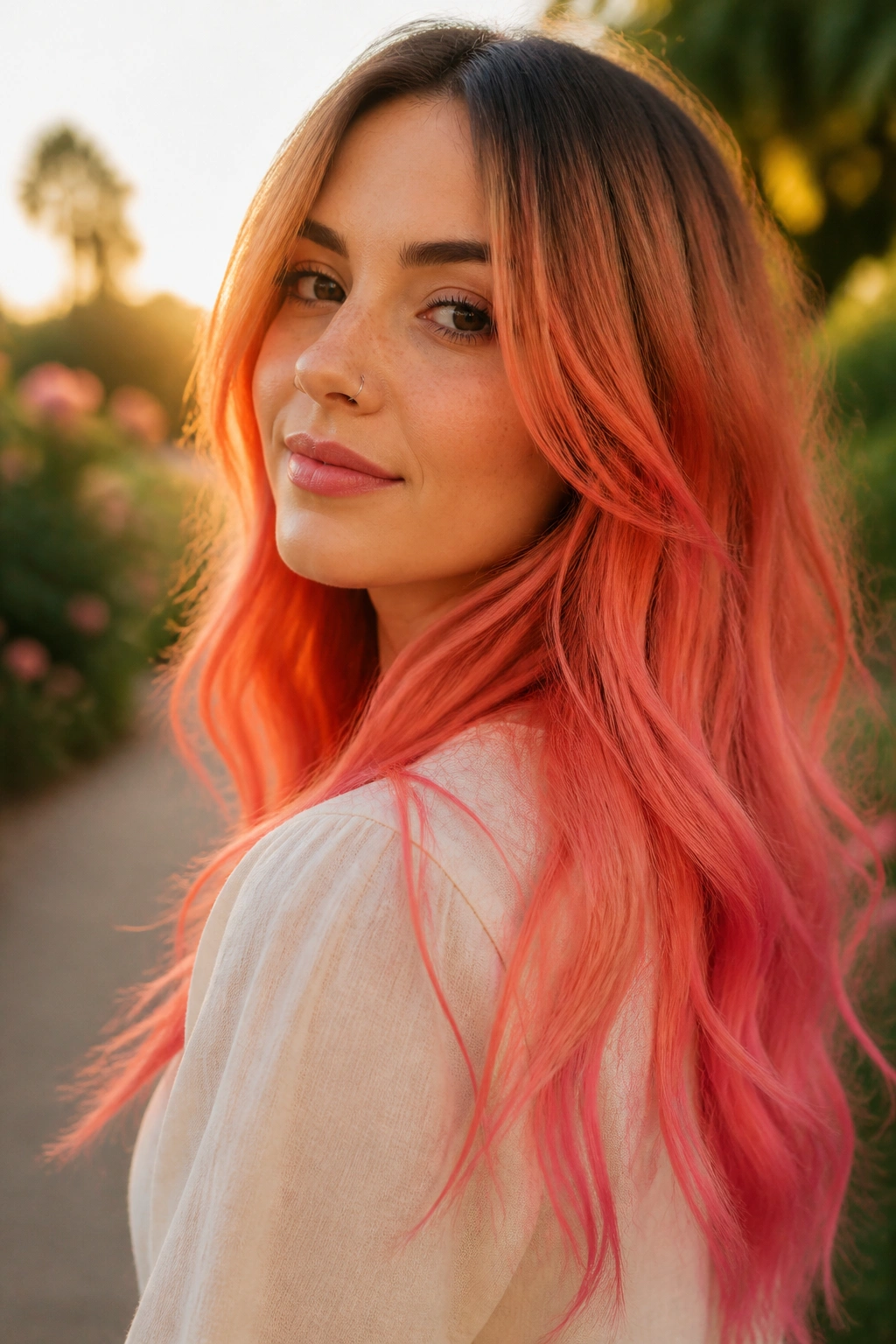
Not every coral shade has to start at the roots. A sunset coral ombre begins deeper and warmer near the mid-lengths, then drifts into pinker coral ends, which gives the whole head a long, fading glow.
The nicest part is the grow-out. Roots can stay natural, a little shadowy even, and the coral sits lower where the hair tends to be lighter and drier anyway. That makes the color look intentional instead of overworked.
This is the look I’d choose for longer hair that you wear in waves or loose braids. The color has room to spread. On a blunt cut, ombre can look choppy if the transition is too sudden, so ask for a soft hand-blended fade rather than a sharp line.
6. Rose Coral Gloss
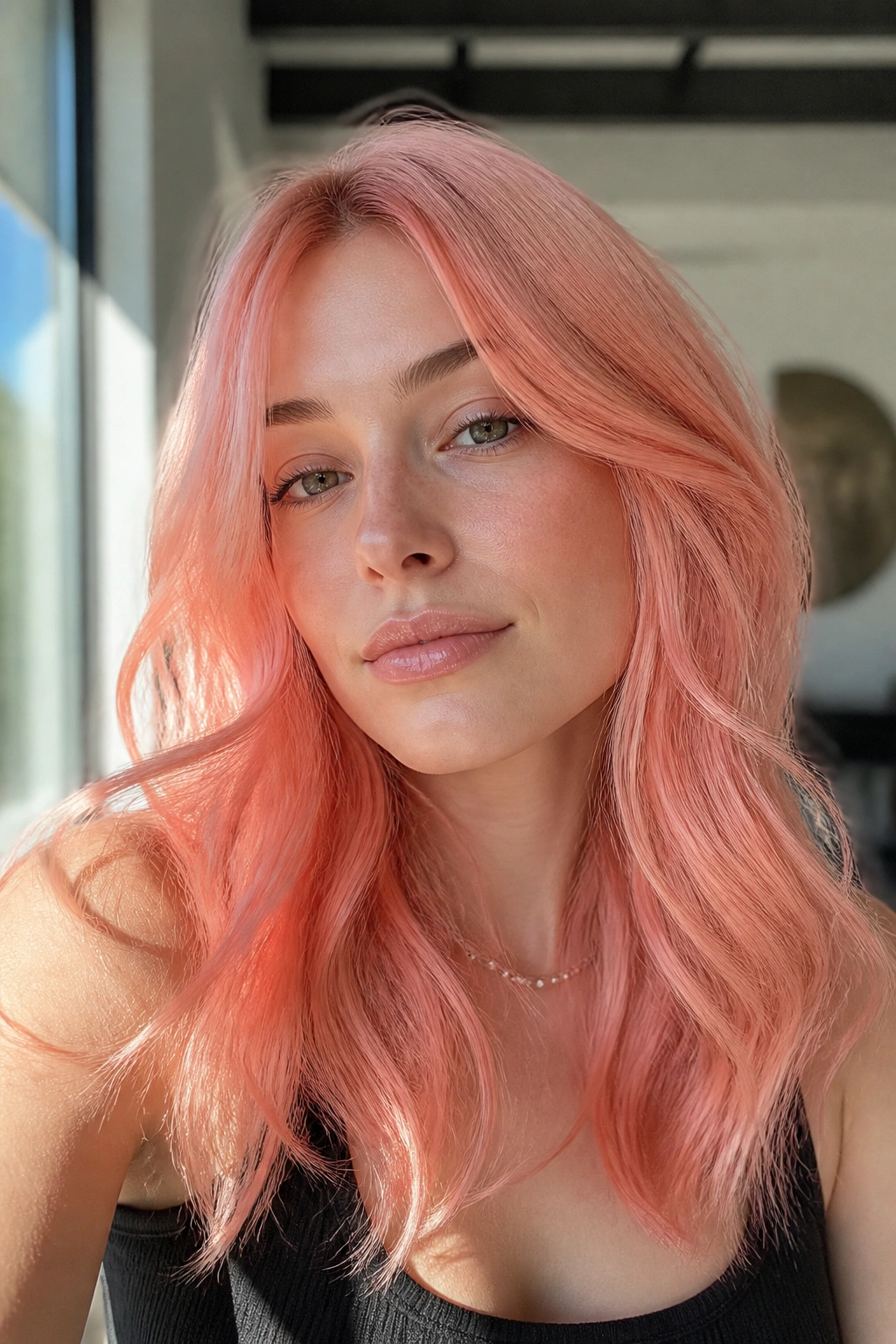
Rose coral is the prettier, quieter cousin of vivid coral. It has enough warmth to feel alive, but the rose note softens it and keeps the finish from looking too orange.
Indoors vs Outside
Inside, the shade often reads like a tinted blush. Outside, especially in bright daylight, the coral edge shows up more and the pink turns brighter. That shift is part of the appeal. You get a color that changes a little as you move through the day.
A rose coral gloss is a smart choice if your hair is already pre-lightened and you want to keep it shiny. A gloss adds a veil of tone without the heavy feel of a permanent color. It also makes the cuticle lie flatter, so the hair looks smoother.
This is one of those shades that looks especially good on soft layers. Not because it needs volume, but because the tone does nicer things when it moves.
7. Electric Coral Ends
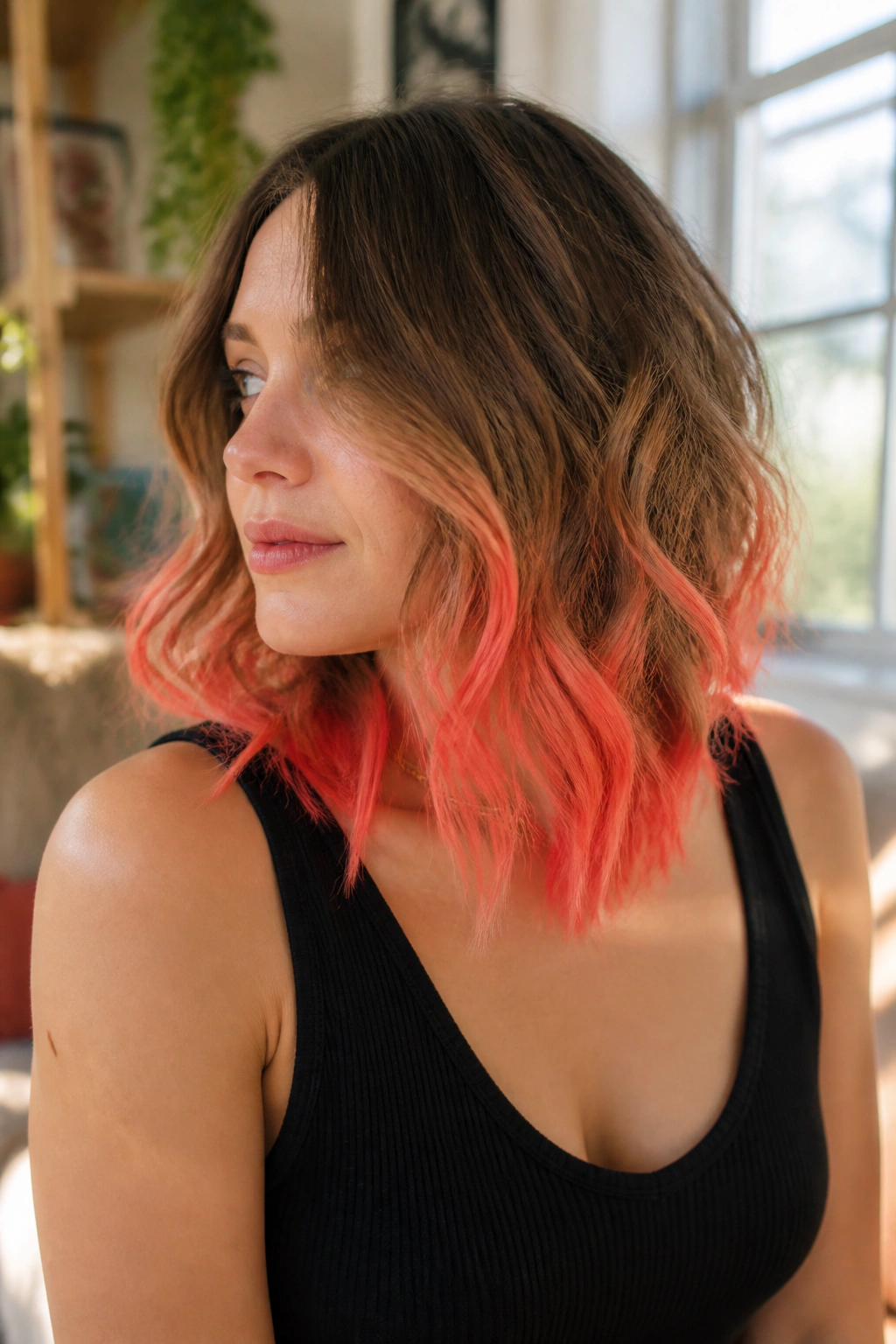
If you’re keeping the roots natural, put the color at the ends. Electric coral ends are bold, fast, and refreshingly uncomplicated.
The cut matters here. Layered hair will show the ends in motion; one-length hair will show them in a cleaner block. If you like ponytails, braids, or top knots, the coral still peeks through. That makes the look feel active rather than hidden away.
- Best on hair that reaches past the shoulders.
- Easier to trim off later if you tire of it.
- Works with direct dye or vivid color conditioner.
- Looks sharp against black, brown, or platinum bases.
I like this placement for people who want a bright color but do not want to babysit roots. The ends can be refreshed without redoing the whole head.
8. Copper Coral Ribbons
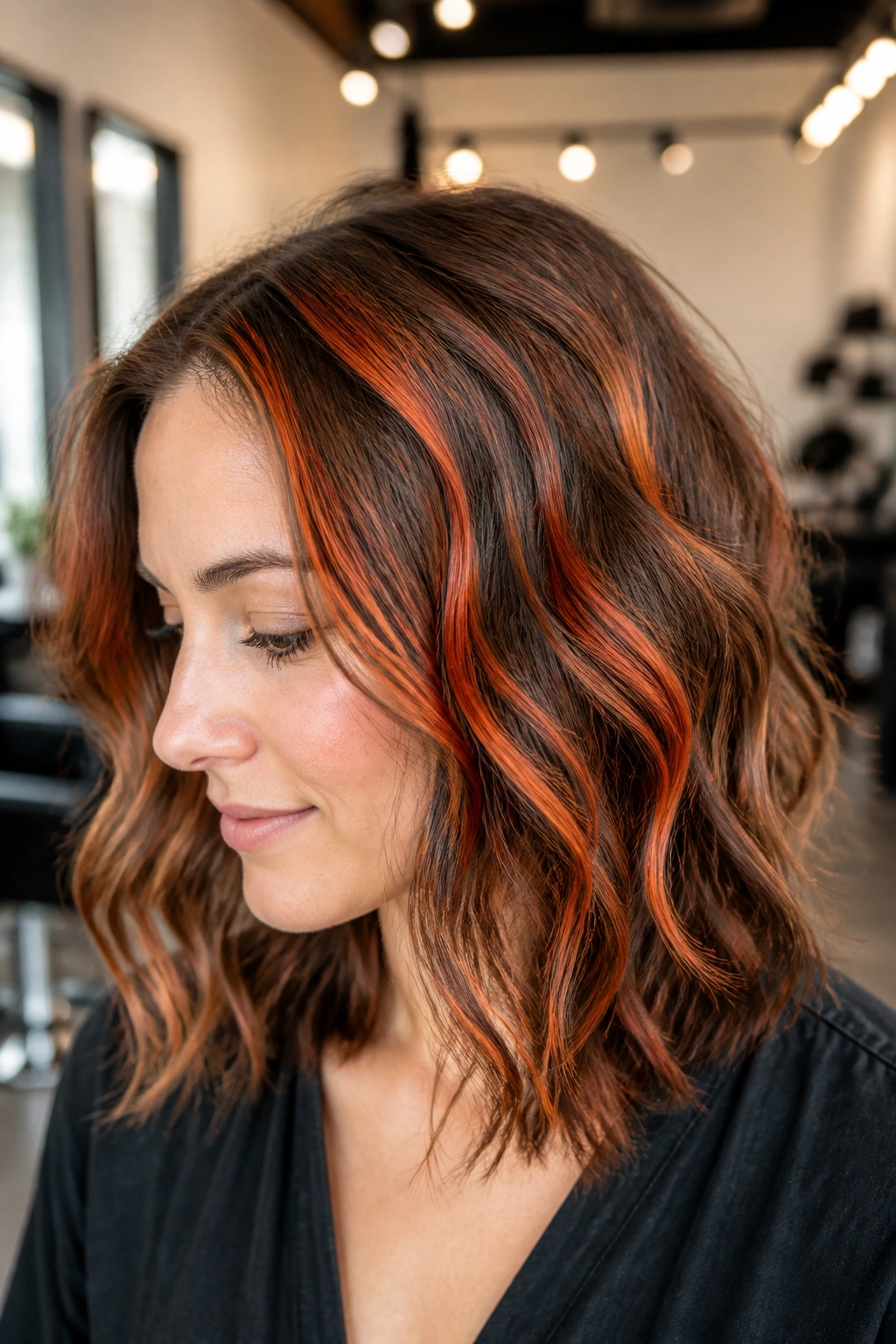
Unlike flat copper, copper coral has more pink in the mix, and that small change makes the color feel less earthy and more spring-friendly. It still has warmth, but it doesn’t look like a straight orange copper penny.
Ribbons are the right way to wear it. Thin coral-copper streaks through waves or curls break up the color and keep the hair from reading as one solid shade. On a straight blowout, the ribbons show more like clean streaks; on textured hair, they blur together into a warmer wash.
This one suits people who like red tones but want something lighter and a little sweeter. It’s also a good move if you already have copper in your hair and want to nudge it brighter without jumping into full coral.
9. Strawberry Coral Blonde
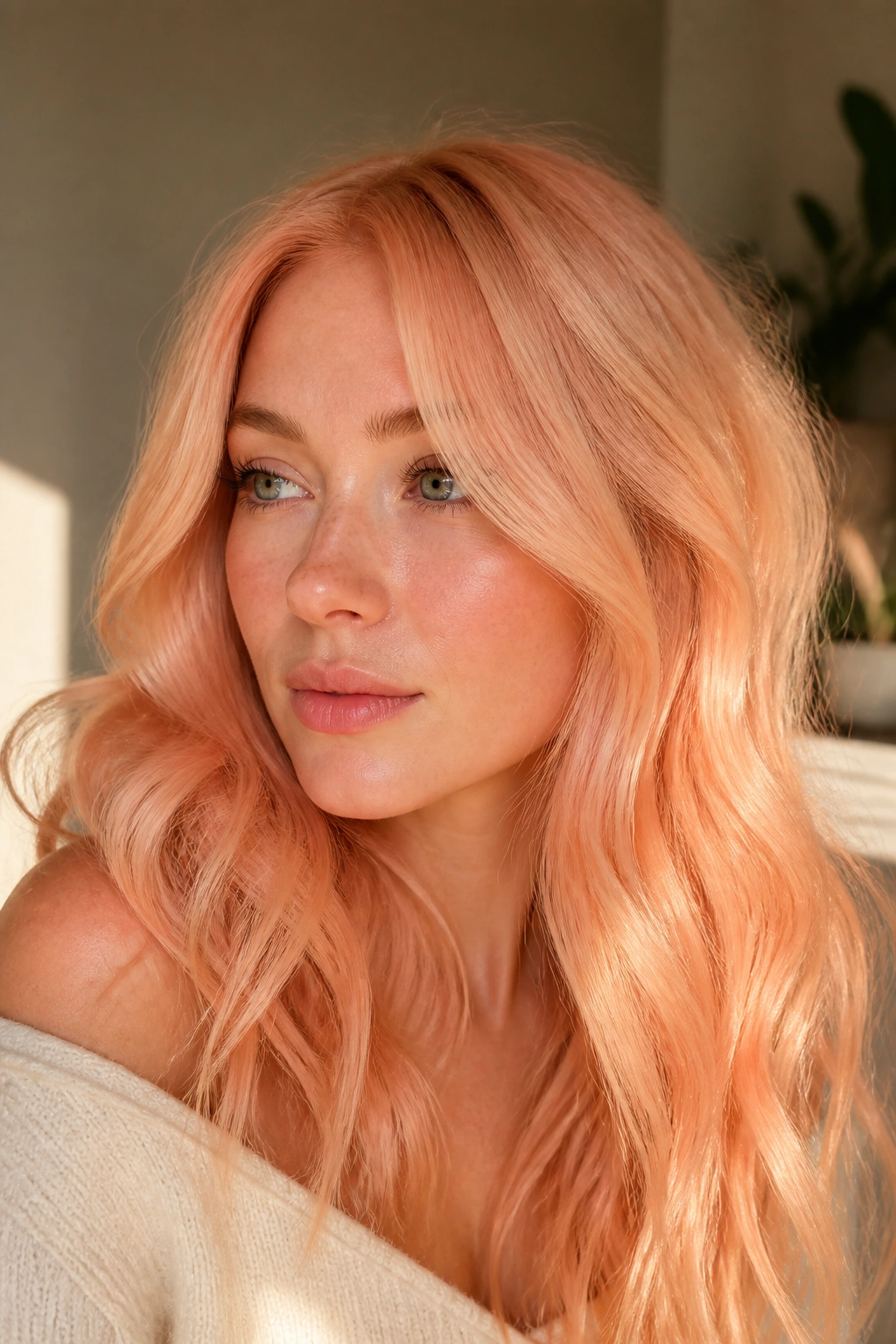
Can coral hair stay soft enough for people who live in blonde? Absolutely. Strawberry coral blonde sits in that sweet zone where the blonde is still readable, but the warmth has been pushed up enough to feel cheerful.
Who It Flatters
This shade tends to look especially nice on pale blonde hair that can carry a peach base without going muddy. If your natural hair lifts evenly, the color can stay airy. If your hair is porous, it may grab the coral faster, so the first round should be watched carefully.
A strawberry coral blonde also works well if you already like strawberry blonde but want a little more orange in the mix. It’s a small shift on paper. On your head, it reads fresher and less beige.
Skip heavy purple shampoo here. It can dull the peach and leave the blonde looking flatter than it should.
10. Dusty Coral Glaze
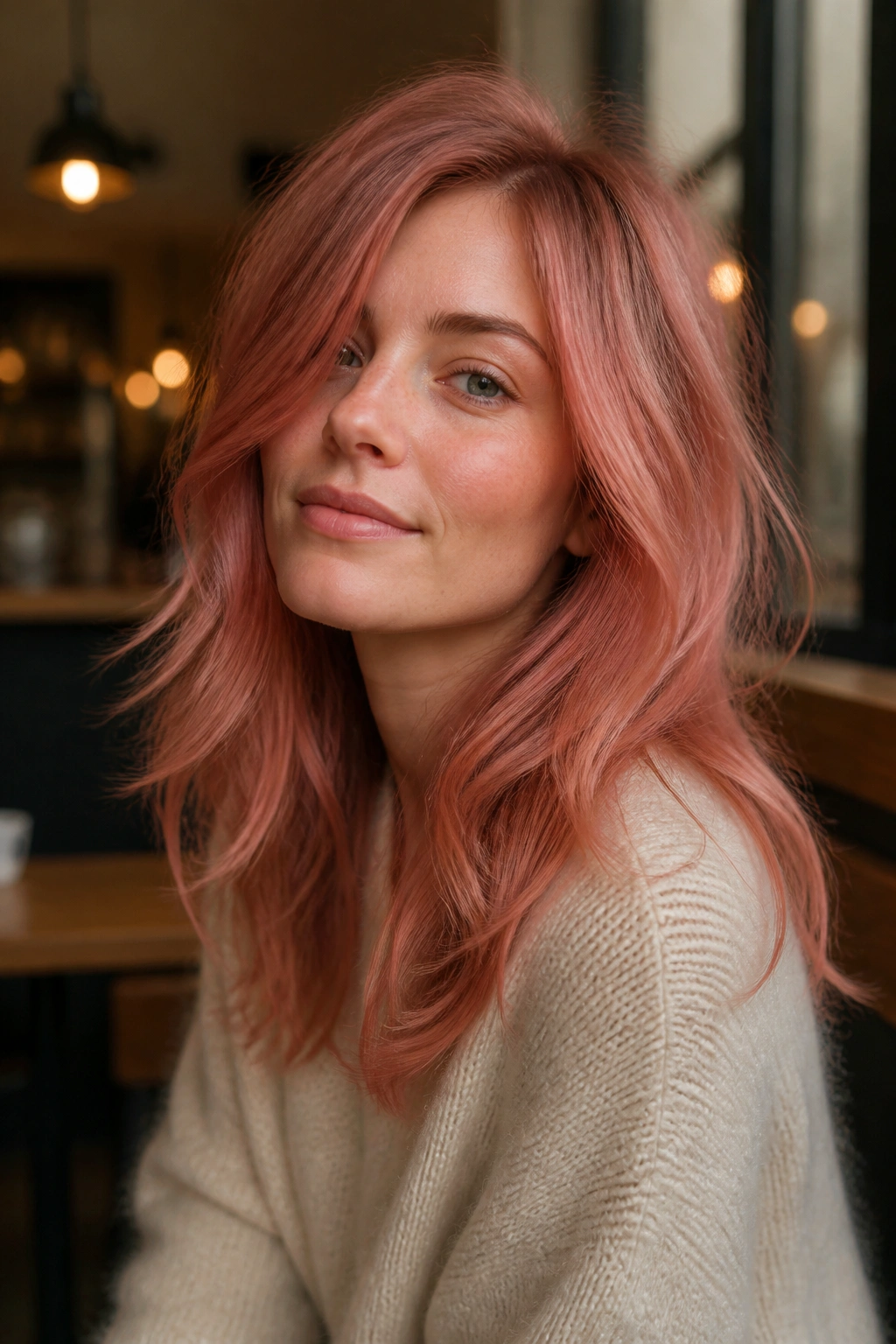
Dusty coral is the shade for people who hate loud hair. It keeps the coral family, but mutes the brightness with beige, rose, or a soft smoky peach tone.
That makes it easier to wear with simple clothes and minimal makeup. It also suits layered cuts because the color doesn’t scream for attention; it settles into the hair and lets the shape do some of the talking.
The salon ask matters. Say you want coral with a muted finish, not a bright direct dye. That wording pushes the result toward a glossed, understated shade instead of a high-saturation punch. If your hair is very light, even a small amount of warmth can be enough to create the effect.
Dusty coral is the kind of color that gets better after a few washes. A tiny bit of fade makes it prettier.
11. Coral Peekaboo Layers
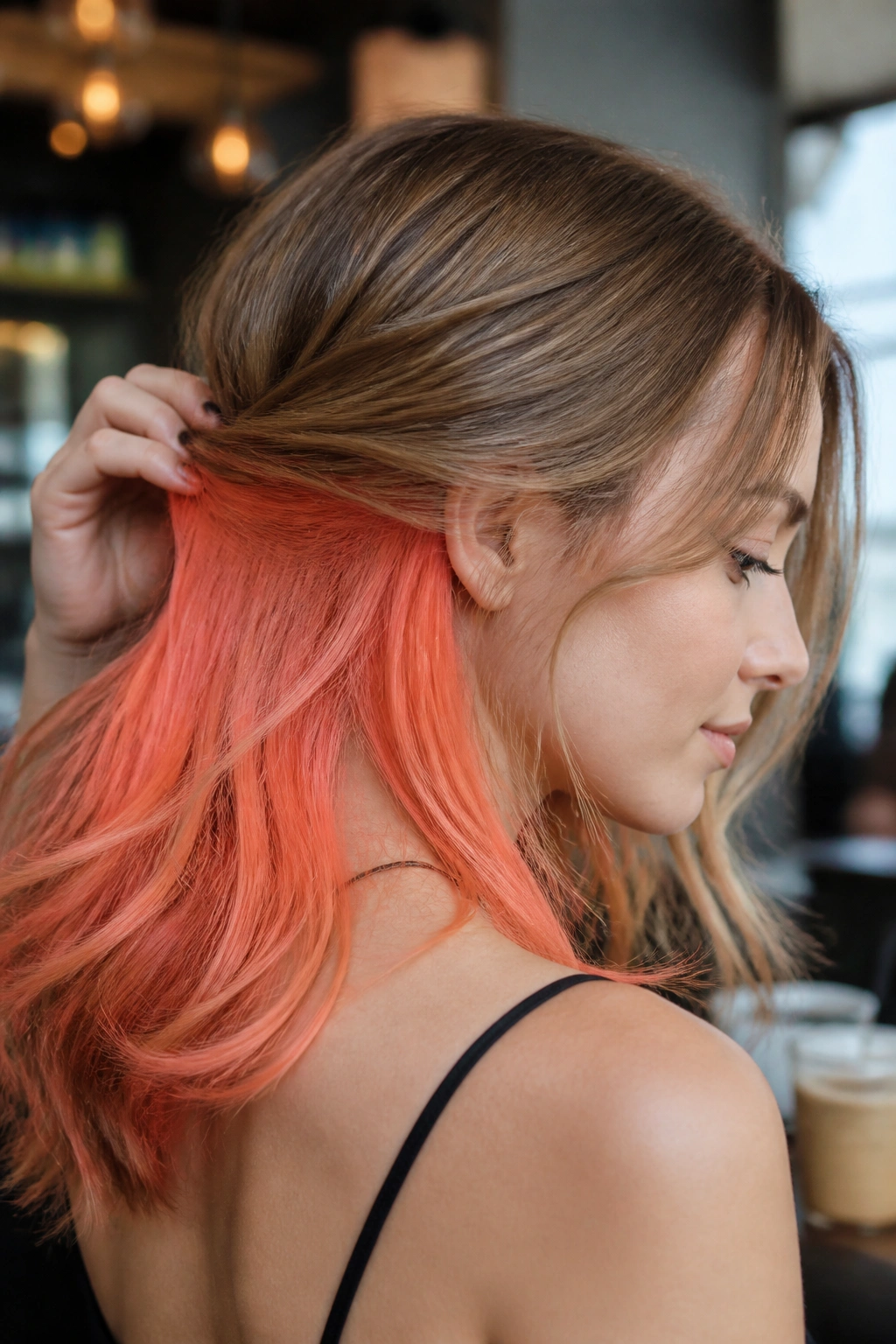
Peekaboo coral is for the person who wants color with a little mischief. The top layer stays natural or softly toned, while the coral hides underneath and flashes out when the hair moves.
Placement Matters
The sweetest spots are under the crown, around the nape, and inside face-framing layers. That way the coral shows when you tuck your hair behind an ear or wear it in a half-up style. It is sneaky in the best way.
- Keep the hidden section lighter than the top layer.
- Use brighter coral on the underlayer if the top is dark.
- Ask for thin panels, not chunky blocks.
- Great for work settings where you want color, not full commitment.
This look gives you two moods in one haircut. Calm on top. Bright underneath. That contrast is half the fun.
12. Rose Gold Coral Blend
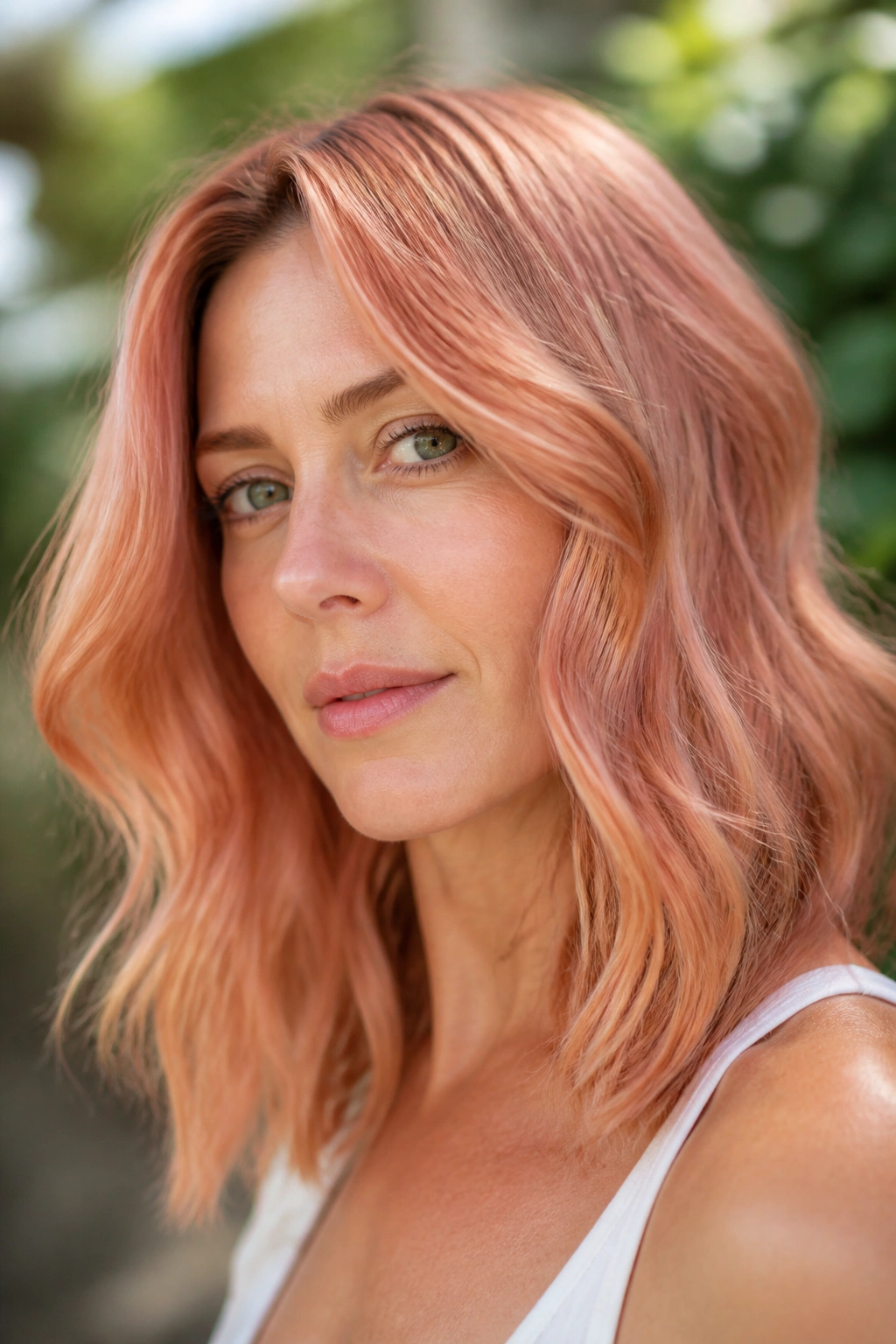
If rose gold feels too metallic, coral warms it up. If coral feels too punchy, rose gold softens it. The blend sits in the middle and tends to flatter people who want a polished finish without too much edge.
This is a good choice for medium blondes and light brunettes who have already been lifted. The color does not need to be hyper-saturated to work. A little shimmer, a little warmth, and the shade is there.
It also pairs well with wavy lobs and long bobs because the tone reads clearly on curved surfaces. Straight hair can look a touch flatter, so a soft bend or loose wave helps the blend show off. I’d pick this one for anyone who wants coral but still reaches for rose gold jewelry first.
13. Face-Framing Coral Highlights
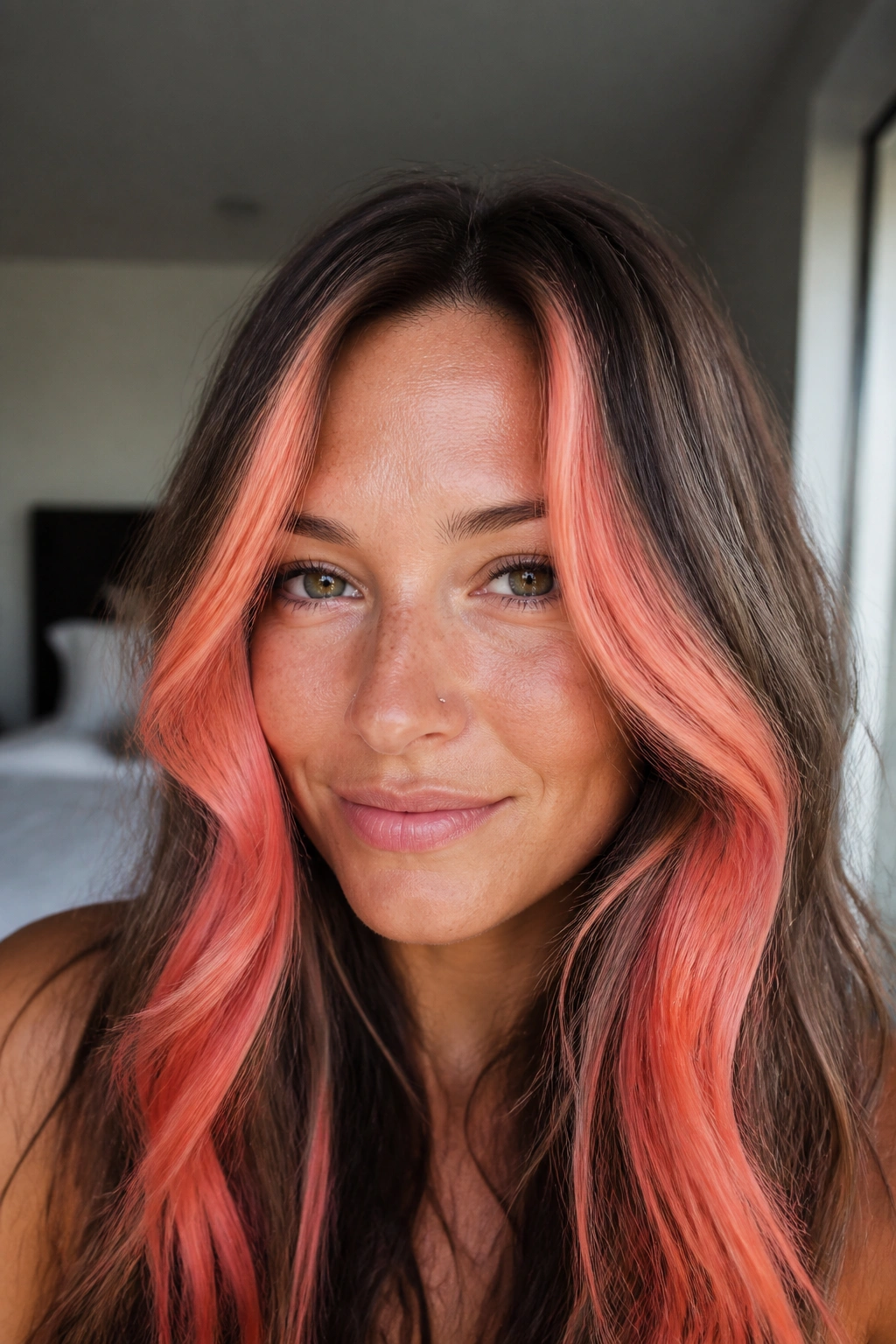
Sometimes the smallest coral placement gives the biggest payoff. Face-framing highlights can brighten the whole hairline without taking over the rest of the head.
Ask for These Dimensions
Tell your colorist you want pieces that are about ½ inch to 1 inch wide, starting around the cheekbone and feathering into the front layers. That keeps the color visible without turning it into a stripy frame.
A few things make this look better:
- Keep the highlights a touch brighter near the ends.
- Let the top inch stay softer so the grow-out looks neat.
- Add texture around the face so the color has movement.
- Choose a coral tone that matches your base warmth.
This is one of the easiest coral hair color ideas to maintain, which is part of why I like it so much. Small placement, big effect. No drama.
14. Burnt Coral Brunette
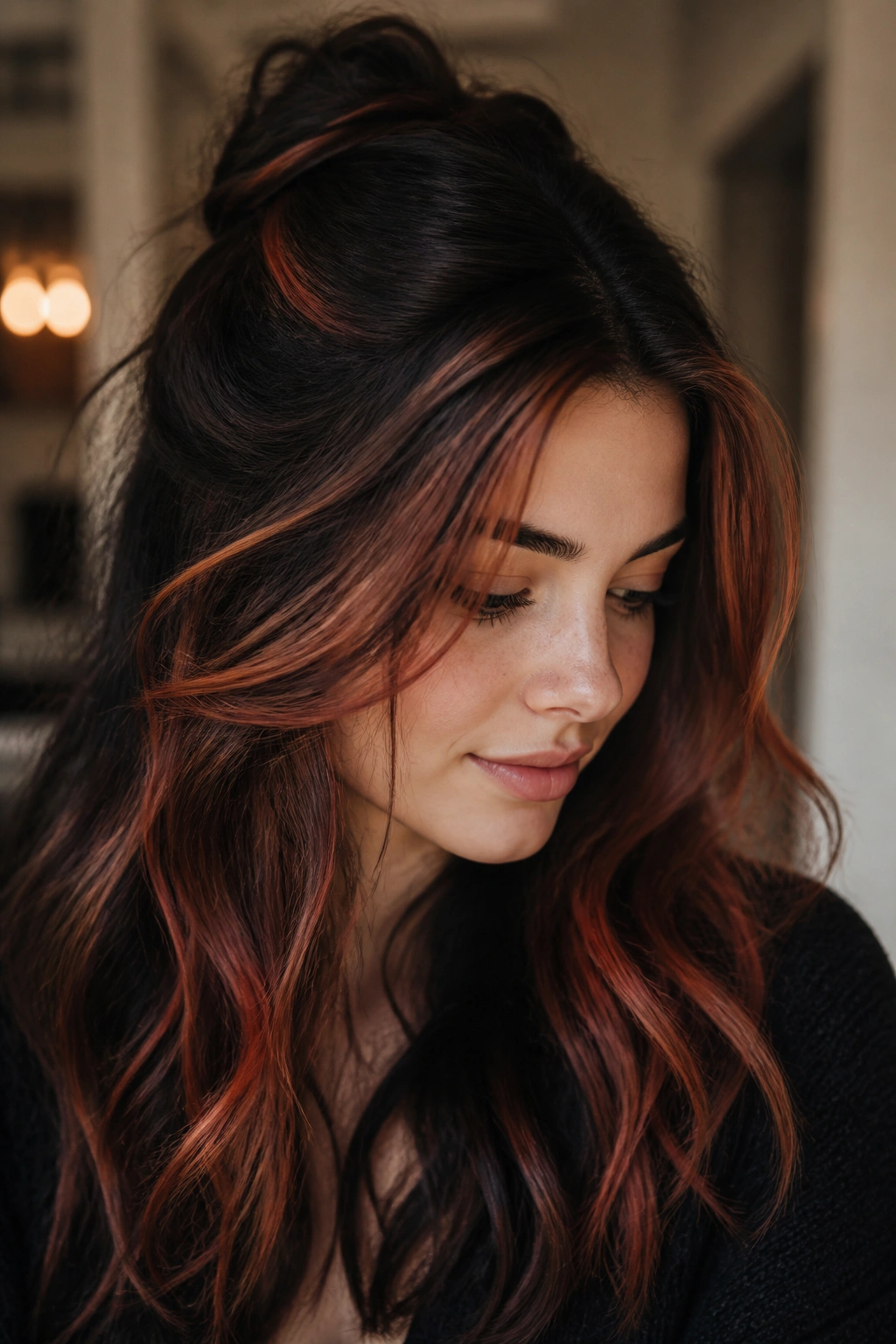
Burnt coral is the one that works on deeper brunettes. It has more red and copper in it, so it can sit against espresso or mahogany hair without looking like it is trying to be pastel.
The look is strongest when the color is concentrated through lifted pieces rather than the whole head. A lighter coral on a dark base can look patchy. Burnt coral avoids that problem by staying rich and warm. It feels closer to sunset embers than bubblegum.
This is not a one-step color for most dark hair. You often need a lightening service first, then the burnt coral shade layered over it. That extra step is worth it if you want the color to hold its shape in daylight instead of disappearing into the base.
It looks especially good on hair worn half-up. The contrast shows, and the color gets to do its job.
15. Pastel Coral Pixie
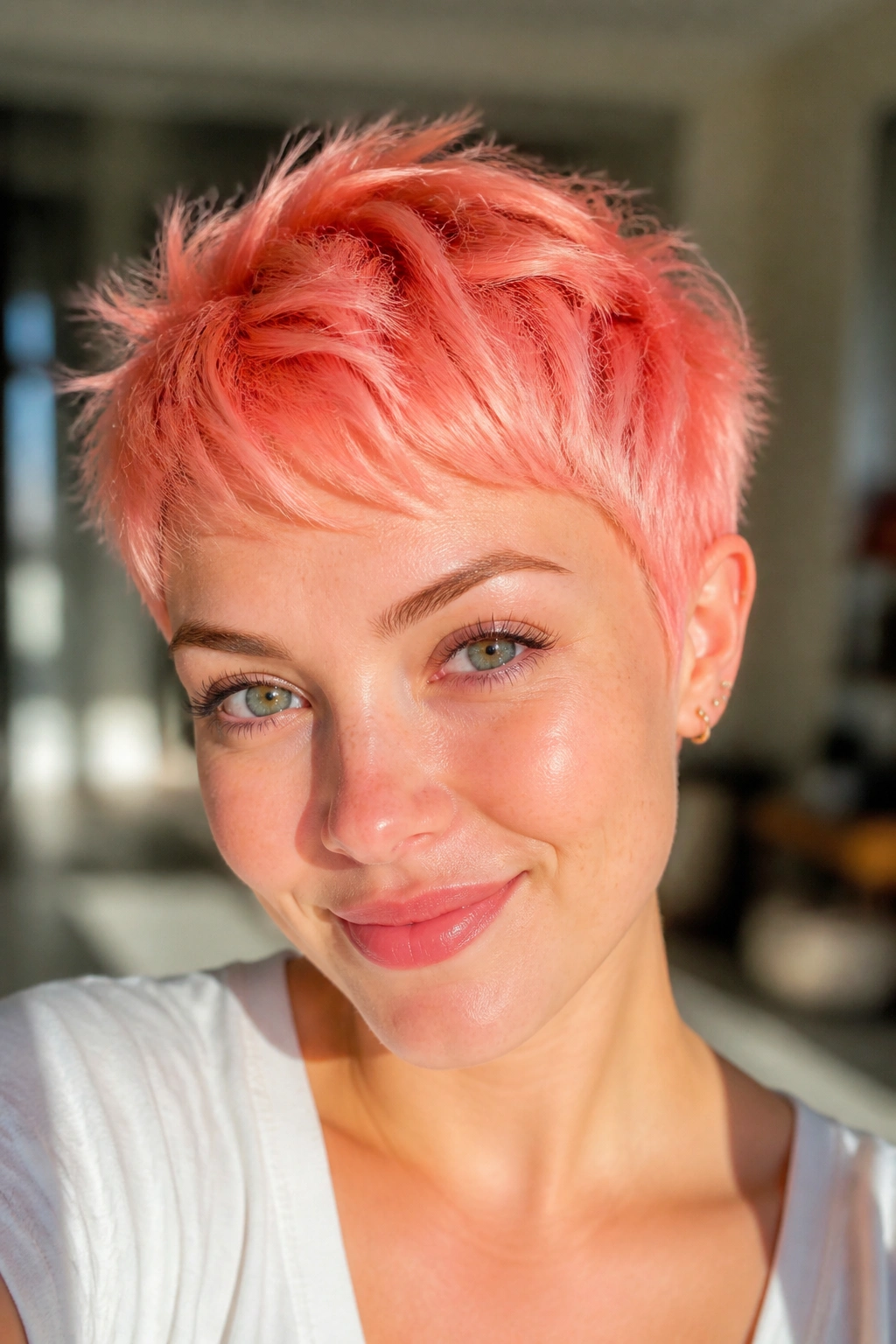
Short cuts can wear coral better than long hair. A pastel coral pixie keeps all the attention near the face and makes the haircut feel sharp, airy, and a little playful.
Maintenance Reality
A pixie shows fade faster than longer cuts because there is less hair to carry the color through the grow-out. That means the tone can shift faster too. If you like the first-day brightness, plan on refreshing it often with a tint shampoo or a quick salon gloss.
- Best on very light blonde or pre-lightened hair.
- Looks strongest with textured styling paste.
- Works well when the color is a touch softer at the roots.
- Needs regular trims to keep the shape crisp.
This is a good shade for people who want a small canvas with a lot of personality. It’s neat, but not boring.
16. Coral Underlights
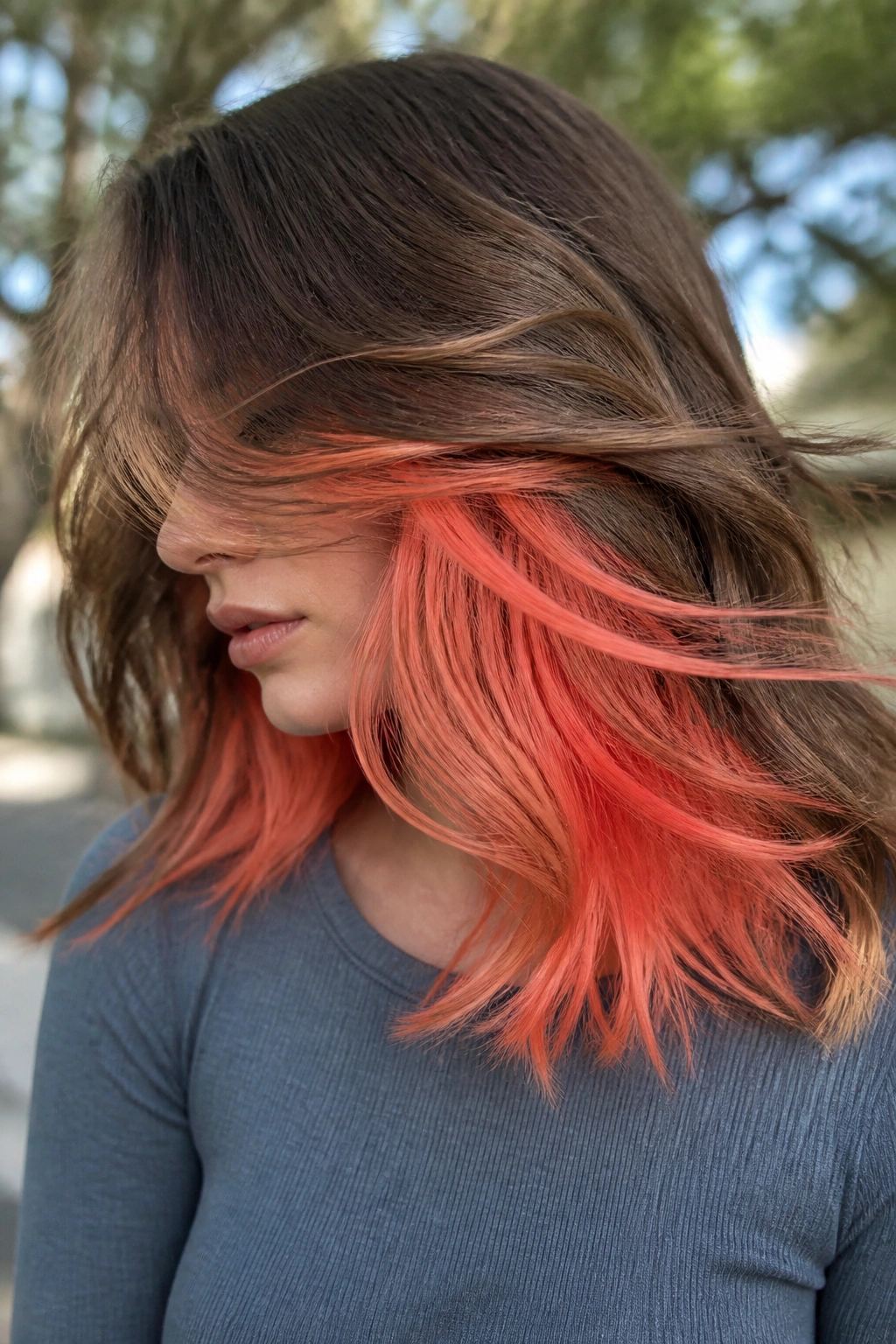
Coral underlights are what happens when you hide the fun part under the surface. The top section stays natural or neutral, while the coral lives beneath and flashes whenever the hair shifts.
I like this look on shoulder-length cuts and long layers, especially if the hair has some movement. A blunt, heavy shape can hide too much of the color unless the panels are thick enough. Underlights feel best when the wind can get in there a little. Not a hurricane. Just enough motion to show the contrast.
This color choice also gives you freedom. You can wear it down and keep the coral mostly tucked away, then flip the whole thing into a braid or bun and let it peek through. It’s a two-in-one idea without needing two separate colors.
17. Mango Coral Waves
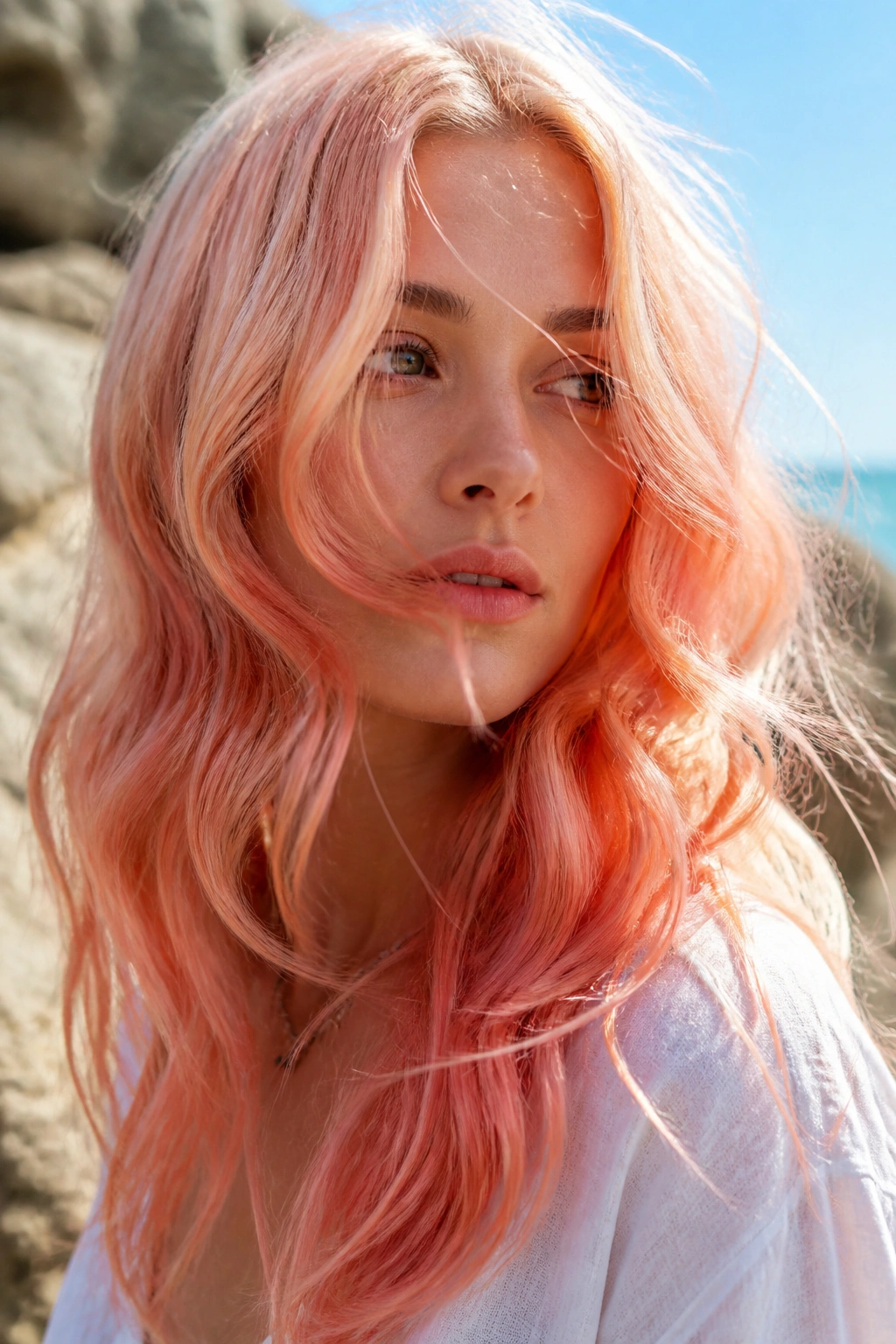
Do you want coral that leans warmer? Mango coral brings more orange to the party, and that makes it pop against golden skin, bronzed makeup, and sun-kissed blondes.
The shade works best when the base is already lifted to a pale blonde. If the hair is too yellow, the orange can tilt brassy. If it is too white, the mango note can go a little flat. So the sweet spot matters. A clean pale base plus a warm coral gloss is usually enough.
Loose waves help the color move from bright to slightly deeper in different spots, which keeps it from looking like one block of orange. I’d pick this shade for anyone who wants coral but secretly loves tangerine too.
18. Pink-Tipped Coral Bob
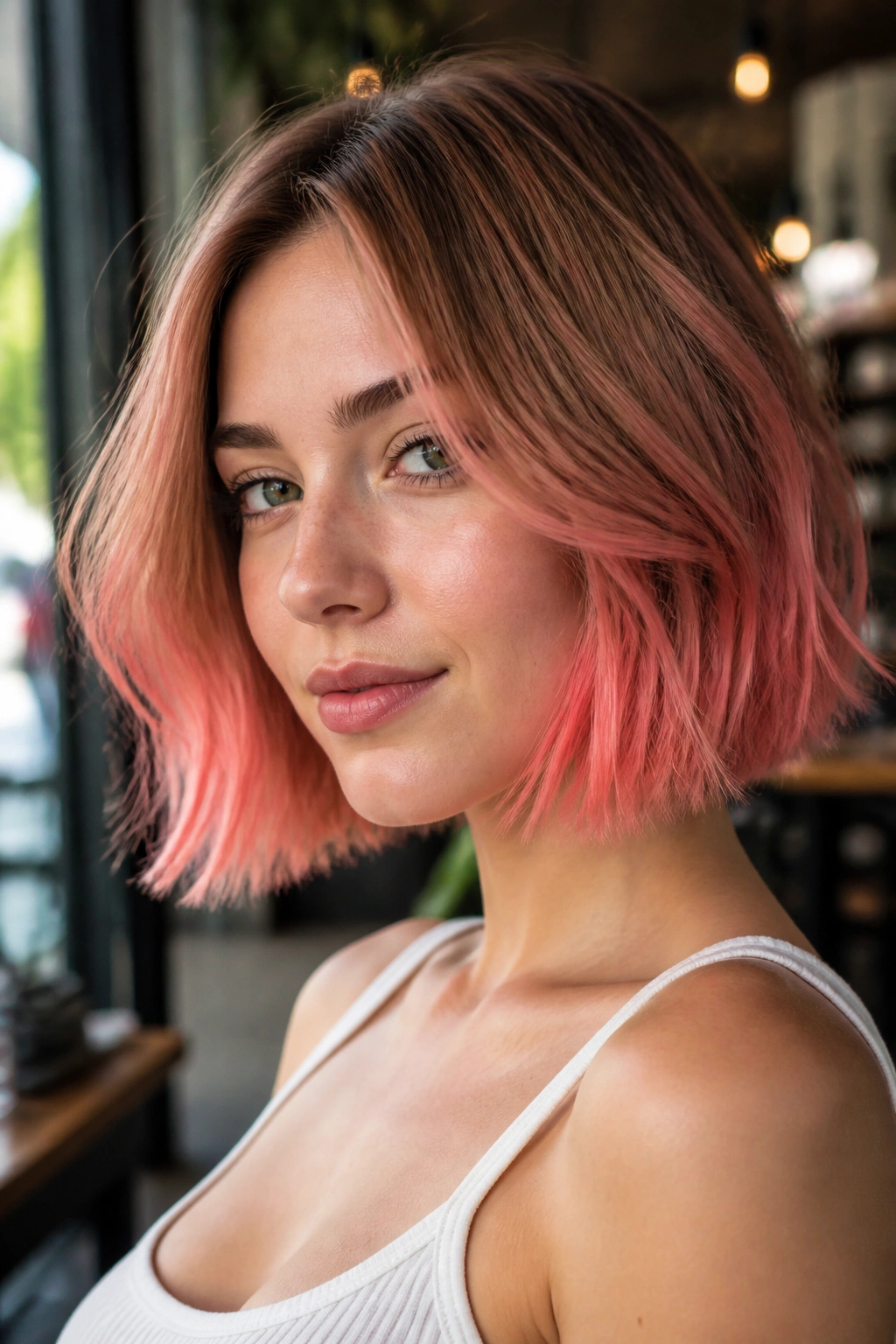
A bob and coral ends are a good pair. The cut is clean, the color is playful, and the whole look feels intentional without needing much styling.
Why the Bob Shape Matters
A blunt bob gives the coral tips a neat line, while a layered bob lets the ends scatter a little more. Either way, the shorter shape keeps the bright color close to the face and shoulders, where it is easy to see.
A pink-tipped coral bob can sit somewhere between soft and punchy. The roots stay calm, the mids do the heavy lifting, and the tips get the brightest color. That setup makes the grow-out easy to live with because the strongest tone is at the end of the haircut, not at the scalp.
This is a good choice if you like clean lines but don’t want a flat, one-tone bob. Color gives the cut some attitude.
19. Tangerine Coral Shine
Tangerine coral is not shy. It pushes farther into orange than most coral shades, and the shine matters because the gloss keeps it from looking dry or chalky.
Best Styling Products
A color like this benefits from a heat protectant, a light shine serum, and a smoothing cream if your hair frizzes easily. You do not need all three at once every day. You need the right one for the finish you want.
- Use a pea-sized amount of serum on mid-lengths and ends.
- Blow-dry with a round brush if you want extra reflection.
- Keep the roots light so the orange stays clean.
- Skip heavy waxes that can dull the brightness.
This is the shade for people who like their color warm and obvious. It looks especially good with layered cuts that move.
20. Champagne Coral Blonde
Champagne coral blonde is the pale, creamy side of the family. It has a soft peach cast, but the blonde still leads, so the color never gets too heavy.
The effect is subtle in the best sense. From across a room, it can look like a warm blonde. Up close, you catch the coral tint and realize there is more happening underneath. That makes it a nice choice for someone who wants a shift without announcing it at full volume.
This shade tends to look strongest on hair that has been lifted evenly from root to end. Patchy lightening can make the coral sit unevenly, and then the champagne part gets lost. A clean blonde canvas is what gives this look its smooth, creamy feel.
21. Coral Split Panels
Coral does not have to be a highlight. Split panels put the color in distinct sections, often underneath a natural top layer or on one side of the head for a stronger graphic look.
How to Wear It
The cleanest versions use sharp separation. One side coral, one side softer. Or a coral panel hidden behind the ear, or a bright block under the back layers. The trick is keeping the placement deliberate so it looks designed, not accidental.
- Best on blunt cuts and geometric shapes.
- Works well when the coral panel is at least 2 inches wide.
- Can be paired with a natural shadow root.
- Needs a stylist who likes clean sectioning.
This is one of the bolder coral hair color ideas on the list. It feels modern without needing trendy language to explain itself. If you like contrast, this one gives it to you.
22. Root-Smudged Coral Melt
A root-smudged coral melt is the low-maintenance version of a bright color service. The root stays deeper, a little softer and shadowed, then the coral blooms through the mids and ends.
That root blur makes a huge difference when the color grows out. Instead of seeing a hard line, you get a gentle change that looks planned. It also buys you more time between appointments, which is worth a lot if you do not want to live in the salon.
This works especially well for people with naturally medium or dark roots who still want coral brightness. The deeper base gives the color somewhere to land. On lighter natural hair, the same idea can still work, but it reads softer and less dramatic.
It’s practical. Not boring. There’s a difference.
23. Cherry Coral Mix
Do you want coral with more bite? Cherry coral adds a redder edge, and that makes the shade feel richer and a little deeper than peach-led coral.
When to Choose It
Pick this version if your wardrobe leans black, cream, denim, or deep brown. The red note can hold its own against stronger colors and does not wash out as easily as a paler coral. It also suits hair with more natural depth because the shade has enough density to show.
A cherry coral mix looks especially good when the hair is curled away from the face. The red-coral balance can shift from sweet to sharp depending on the styling. Flat-ironed hair makes it look sleek and intense; messy waves make it feel softer.
It’s a good bridge shade for anyone who likes red but wants something brighter and less classic.
24. Coral Copper Lob
A lob gives coral room to breathe. The length sits in that handy middle zone where the color can be seen from all angles, but the cut is still easy to wear and style.
This version leans coppery, so it works especially well if you already have warm undertones in your skin or if your natural hair pulls golden when lightened. The coral keeps the copper from feeling too autumn-heavy. That tiny tweak is what makes it feel lighter and more spring-ready.
- Best with soft bends or big brushed-out waves.
- Looks polished even when air-dried.
- Gives enough length for a low bun or clip twist.
- Easier to maintain than waist-length coral hair.
A coral copper lob is one of those shades that looks expensive without trying to be fancy. It just holds together well.
25. Creamy Coral Beige
Creamy coral beige is the office-friendly version of coral, and I mean that in the nicest way. It keeps the warmth, but the beige base tones down the brightness enough that it feels polished.
This works best when the coral is mixed into a beige-blonde or creamy light brown base rather than dropped on top of pure platinum. The result is softer, less pop-art, and easier to pair with natural makeup. If you like a clean wardrobe and low-key styling, this shade fits right in.
The color can also be stretched through balayage or soft ribbons, which makes the whole look easier to maintain. You get coral movement without having to commit to a block of vivid color. For a lot of people, that is the sweet spot.
26. Curtain Bang Coral
Can coral hair color work around bangs without looking choppy? It can, and curtain bangs are probably the easiest place to try it.
How to Cut Around Bangs
The color should be placed so it frames the split in the fringe rather than fighting it. Ask for the coral to live mostly on the side pieces and the longer bang edges, with the center kept a little softer. That helps the bangs stay soft instead of striped.
Curtain bangs love coral because the movement is already built in. When the fringe parts, the color shows. When it falls back into place, it blends. That rhythm makes the whole cut feel more alive.
If the bangs are short and blunt, keep the coral a bit muted. Too much brightness right across the forehead can look heavy. Soft coral. Soft fringe. Easier on the eyes.
27. Icy Coral Pastel
Yes, coral can lean cool. Icy coral pastel keeps the coral family but gives it a frosted edge, usually by mixing in a pale pink base or a pearl-toned gloss.
That cooler finish works best on level 10 blonde hair, where the color can stay clear. On warmer blondes, the icy note may get lost unless the canvas is lightened well. If you like sleek cuts, sharp bobs, or straight styling, the pastel contrast can look clean and almost glassy.
- Use a very pale base before toning.
- Keep the orange note small so the shade stays soft.
- Works well with silver jewelry and cool makeup.
- Needs gentle cleansing so the pastel does not wash out fast.
This is the shade for people who like coral but do not want it to feel sugary.
28. Glossed Coral Finish
A glossed coral finish is the easiest way to keep coral hair from looking tired. The color stays vivid, but the gloss adds a smooth sheen that makes the tone feel richer and fresher.
This is the version I would choose if you already have coral and want to keep it looking clean between bigger color appointments. A clear or lightly tinted gloss can revive peach, apricot, or rose-coral shades without changing the whole color story. It also helps the surface look smoother, which matters a lot when the hair is wavy or slightly dry.
The best coral is usually the one that still looks good after real life happens. After a few washes. After a brush-through. After a windy walk and a bad coffee run. If the shade still has warmth, shine, and a little movement, it is doing its job.
