



Balayage hair ideas for curly hair work best when the color follows the curl, not when it sits on top of it like a sticker. A painted ribbon that looks perfect on a stretched strand can vanish once the coil springs back, and that shrinkage is the whole game.
That is why curly balayage usually looks better with fewer, smarter highlights. The strongest placement sits around the face, the top layer, and the outer curve of each curl clump; the back and underlayers stay deeper so the shape does not go flat.
I like balayage on curls when it gives you motion first and brightness second. Soft caramel, honey, copper, ash, berry, beige, even silver — they all behave differently once a curl catches the light, and the right choice depends on how much contrast you want, how much upkeep you can live with, and how much of your natural base you want to keep.
The trick is not chasing the brightest photo. It is choosing color that still looks good when your curls shrink, frizz a little, and pile up on day three. That’s where the good stuff lives.
1. Caramel Ribbons on Dark Chocolate Curls
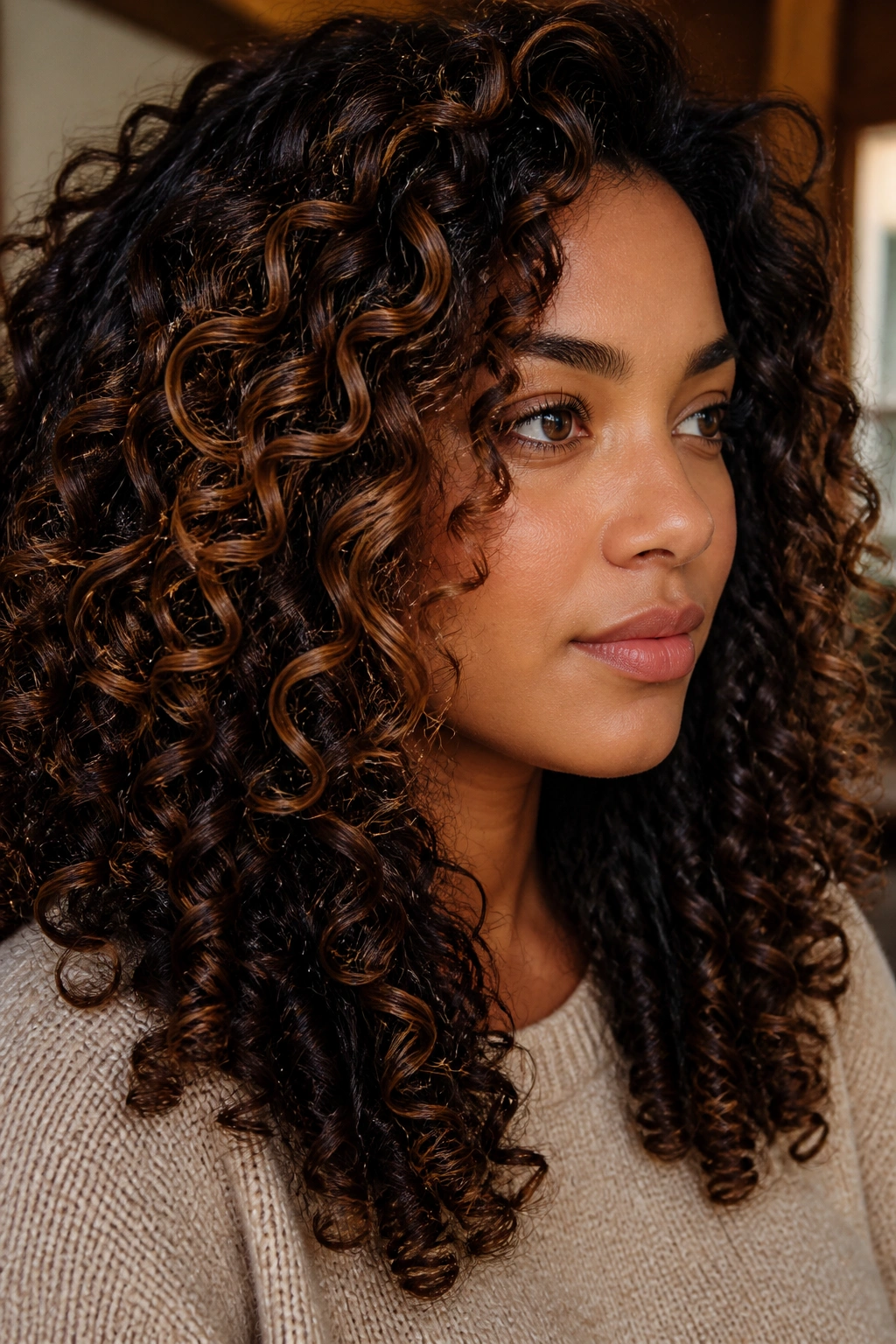
Caramel is the curly-haired person’s reliable first move. It gives you visible dimension on a deep brunette base without turning the whole head into one bright block, which is exactly what curls do not need.
The best version keeps the lightest caramel on the outer layers and around the face, then leaves the underside richer and darker. That creates movement when the curls separate, and it keeps the color from looking thin or stripey. Ask for soft ribbons, not chunky streaks.
If your hair is level 3 or 4, this look usually grows out gracefully because the contrast stays moderate. I also like it for people who wear their curls in a half-up style; the lighter top pieces show immediately, even on low-effort days.
Best with: dark brown or espresso curls
Tone: warm beige-caramel
Maintenance: gloss every 6 to 8 weeks if the warmth starts to fade
2. Honey Balayage for Chestnut Spirals
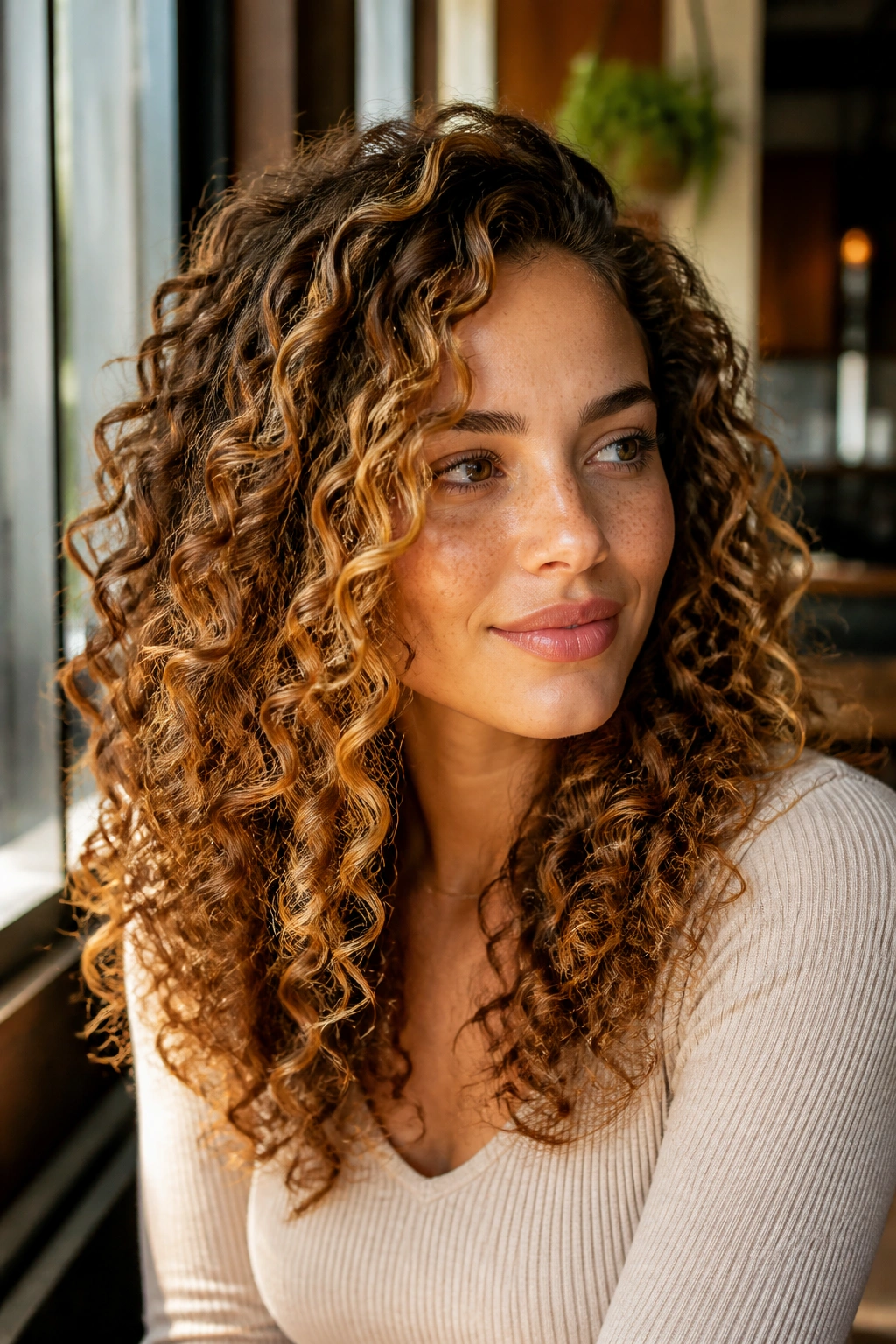
What if you want brightness, but not that “freshly lifted” blond strip that shouts before you do? Honey balayage is the answer I keep coming back to.
On chestnut curls, honey gives a soft golden glow that reads sunny without turning brassy too fast. The color works especially well when the painted pieces are a little thicker near the front and finer through the back. That way the face gets lift, but the whole head still feels balanced.
Where to Paint It
A good colorist will usually keep the honey tone one or two shades lighter than the base, then soften the transition with a root shadow or glaze. That matters on curls because each ringlet bends the color at a different angle, and harsh contrast can turn messy fast.
- Brighten the curls that fall closest to your cheekbones.
- Leave the nape deeper for dimension.
- Keep the ends soft so the curl pattern still looks full.
- Use a light gloss if the honey starts leaning orange.
The payoff: curls that look lit from inside, not bleached from above.
3. Cinnamon Swirl Balayage on Espresso Coils
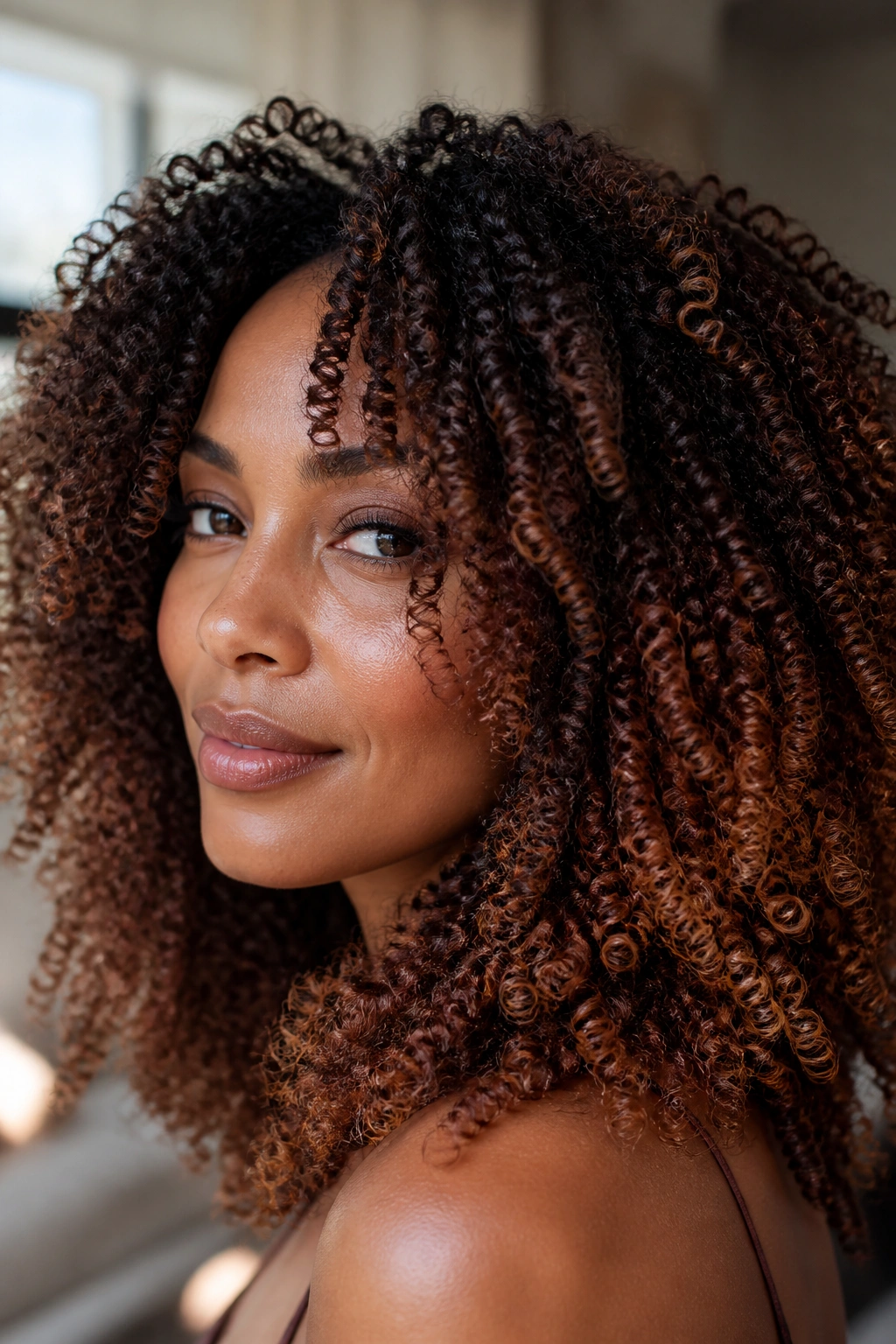
Picture a dark coil that looks almost black indoors, then flashes cinnamon when it turns toward a window. That is the mood here.
Cinnamon balayage is one of my favorite low-drama options because it adds warmth without forcing a big jump in level. On tightly packed curls, that extra red-brown tone breaks up the mass and gives the pattern more definition. It is subtle, but not shy.
The best version usually uses hand-painted pieces through the mid-lengths and ends, with a little more saturation around the top layer. That keeps the hair looking dense. If the highlights are too thin, the color can disappear once the curls dry and shrink.
If you like richer colors and hate obvious grow-out lines, this one earns its keep. It also works well on hair that has gone through a few rounds of color and needs a shade that does not fight the natural depth.
4. Face-Framing Blonde Money Pieces on Curly Hair
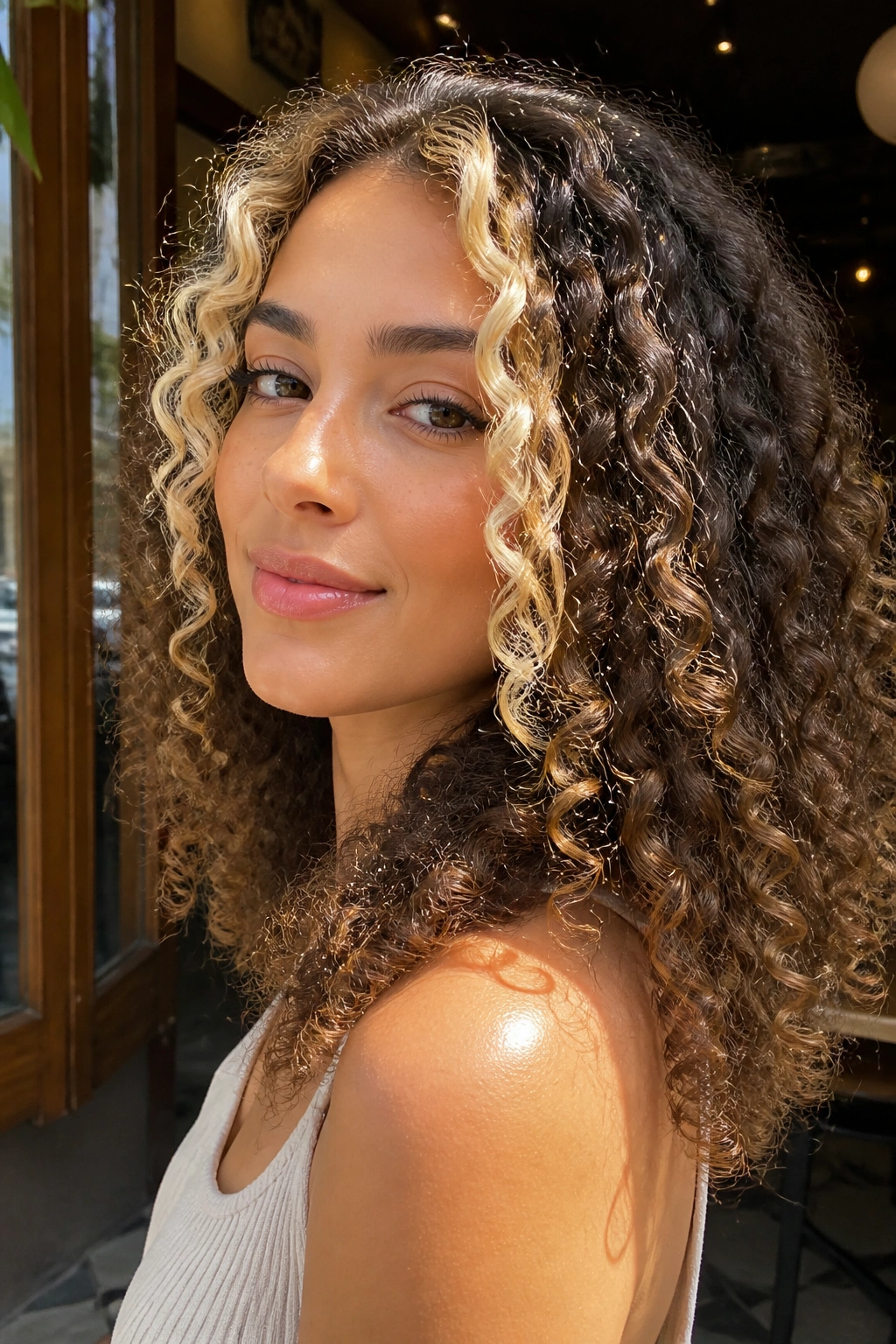
You do not need an all-over blonde transformation to make curls stand out. Sometimes the smartest move is two bright money pieces right where the curls frame your face.
This look works because the curl pattern itself does the styling. A blonde piece drops over the cheek, bends at the jaw, and suddenly the whole shape looks sharper. Keep the back darker and the crown a shade deeper, and the contrast stays clean instead of fuzzy.
The face frame can go beige blonde, creamy blonde, or soft gold depending on your skin tone and the shade of your base. I prefer beige on most curly textures because it looks expensive without drifting yellow. Platinum is fine too, but it asks for more toner and more patience.
If you want a high-impact change without coloring the whole head, this is the one I’d hand you first. Simple. Effective. No wasted color.
5. Copper Balayage for Springy Ringlets
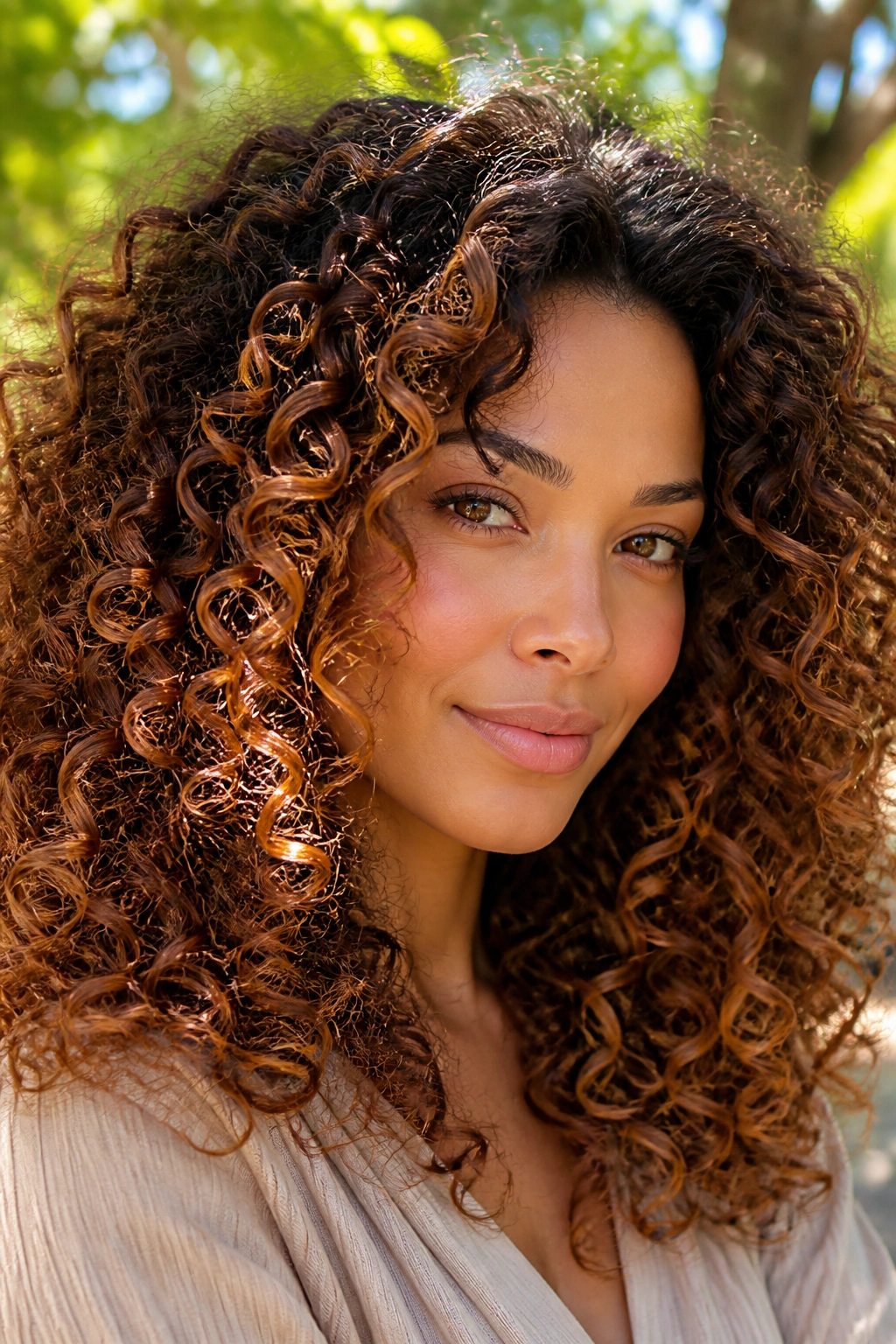
Copper on curls is a little addictive. Once the ringlets start moving, the color looks alive in a way ash tones never quite manage.
The key is choosing a copper that leans soft and wearable, not traffic-cone bright. On medium brown or dark blonde curls, copper balayage can sit through the outer layer and ends, with a few brighter strokes near the face for lift. That gives you warmth from every angle, but it still feels like hair color, not costume dye.
Copper loves texture. The bends in springy ringlets break up the pigment and give you that flicker of gold-orange-red every time the curls move. If the hair is porous, though, copper can fade faster than people expect. A color-safe shampoo and a gentle gloss help keep the tone from turning flat.
This one is for the person who wants personality in the color itself. Not just dimension. Actual presence.
6. Auburn and Wine Balayage on Black Curls
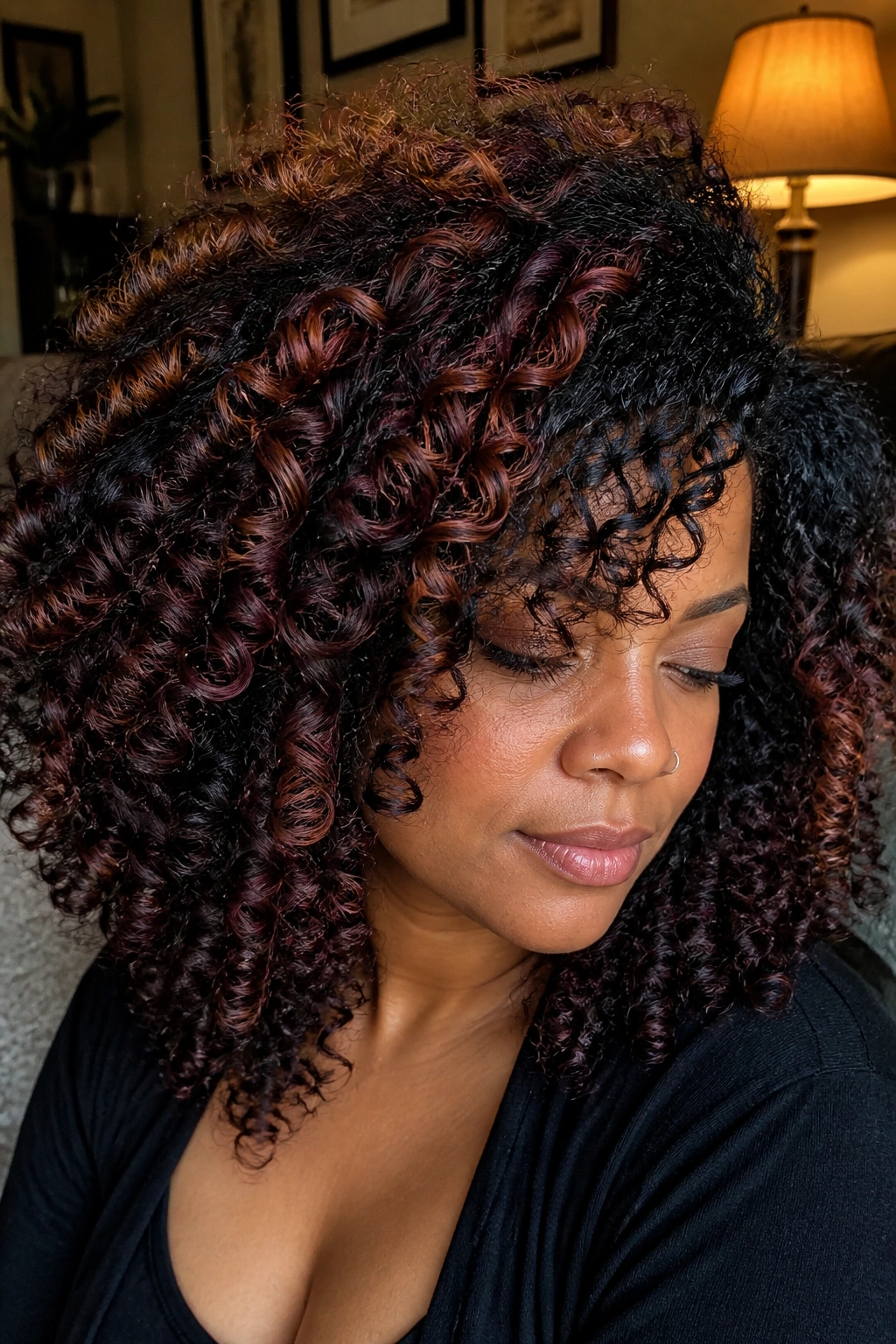
Can very dark curls take balayage without losing their richness? Absolutely, if the highlights stay in the auburn-to-wine family instead of jumping straight to blonde.
This look is gorgeous on dense black or near-black curls because the red-violet tones show up as depth first and color second. Indoors, it can look almost like shadow. In daylight, the auburn wakes up and the wine tones come forward. That shift is the whole point.
What Makes It Different
Instead of painting wide blonde pieces, the colorist should work with finer sections and a softer lift. That keeps the hair looking full. It also protects the curl pattern, which can look patchy if too much lightener is packed into one area.
- Keep most of the lightest pieces around the top and front.
- Leave the underlayer richer so the curls look thick.
- Ask for a gloss in auburn or plum-brown tones.
- Skip overly orange reds; they fight the depth of dark curls.
This is not a shy color. It is a polished one.
7. Golden Beige Ribbons on Loose Curls
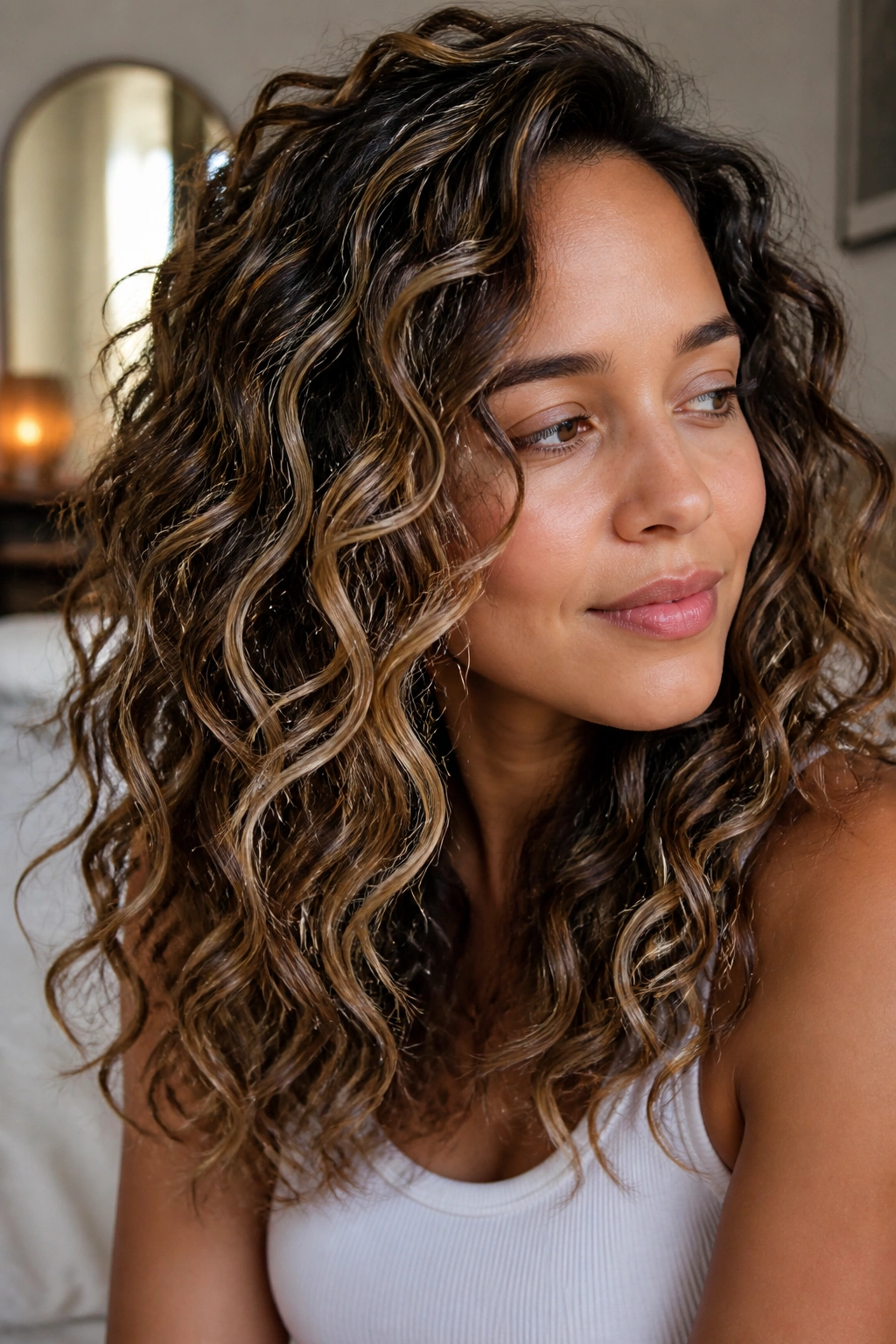
Loose curls are where golden beige really shines, because the shape leaves room for soft contrast without looking busy. The color sits like a highlight line that follows the bend, then disappears into the next curl.
I like this look on medium brunettes who want that beach-light feeling without going full blonde. The beige tone keeps the gold from getting too yellow, and the ribbon placement stops the hair from looking flat at the crown. You can wear it air-dried, diffused, or stretched with a few clips, and it still reads as intentional.
A good colorist will usually concentrate the brightest beige around the outer layers and the front pieces, then taper off toward the back. That keeps the shape airy. It also means the grow-out stays soft, which matters if you do not want to babysit toner every three weeks.
Best for: relaxed curls, soft spirals, shoulder-length shapes
Watch for: too much gold, which can turn brassy on some bases
8. Bronde Melt for Medium Curls
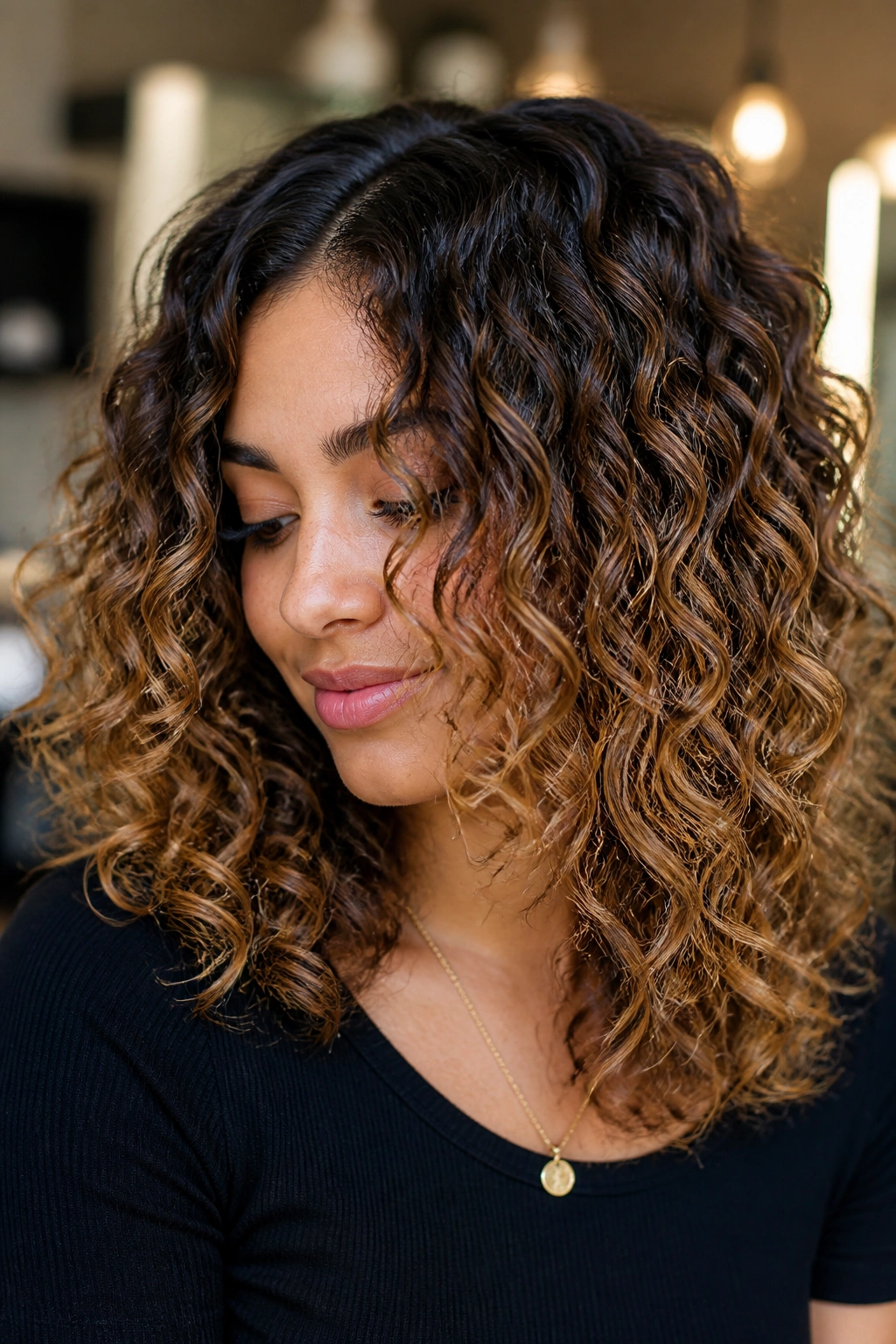
Bronde is one of those colors that sounds plain until you see it in curls. Then it makes sense immediately.
It sits between brown and blonde, but the magic is in the melt. The roots stay deeper, the mid-lengths warm up a little, and the ends pick up a soft beige or caramel-blonde note. On medium curls, that gradient gives the eye something to follow, which makes the whole head look fuller.
Why It Works on Curls
Curls already create natural shadow and light. Bronde just exaggerates that in a way that feels easy to wear.
- The darker root keeps the scalp area from looking patchy.
- The middle shades stop the color from looking like one blunt bleach job.
- The lighter ends catch movement on every curl bounce.
- A gloss can nudge the finish warmer or cooler without redoing the whole head.
If you want low-key brightness that still shows up in photos, bronde is hard to beat. It is also a nice option when you are not ready to choose between brunette and blonde. Why should you?
9. Ash Brown Balayage for Cool-Toned Curls
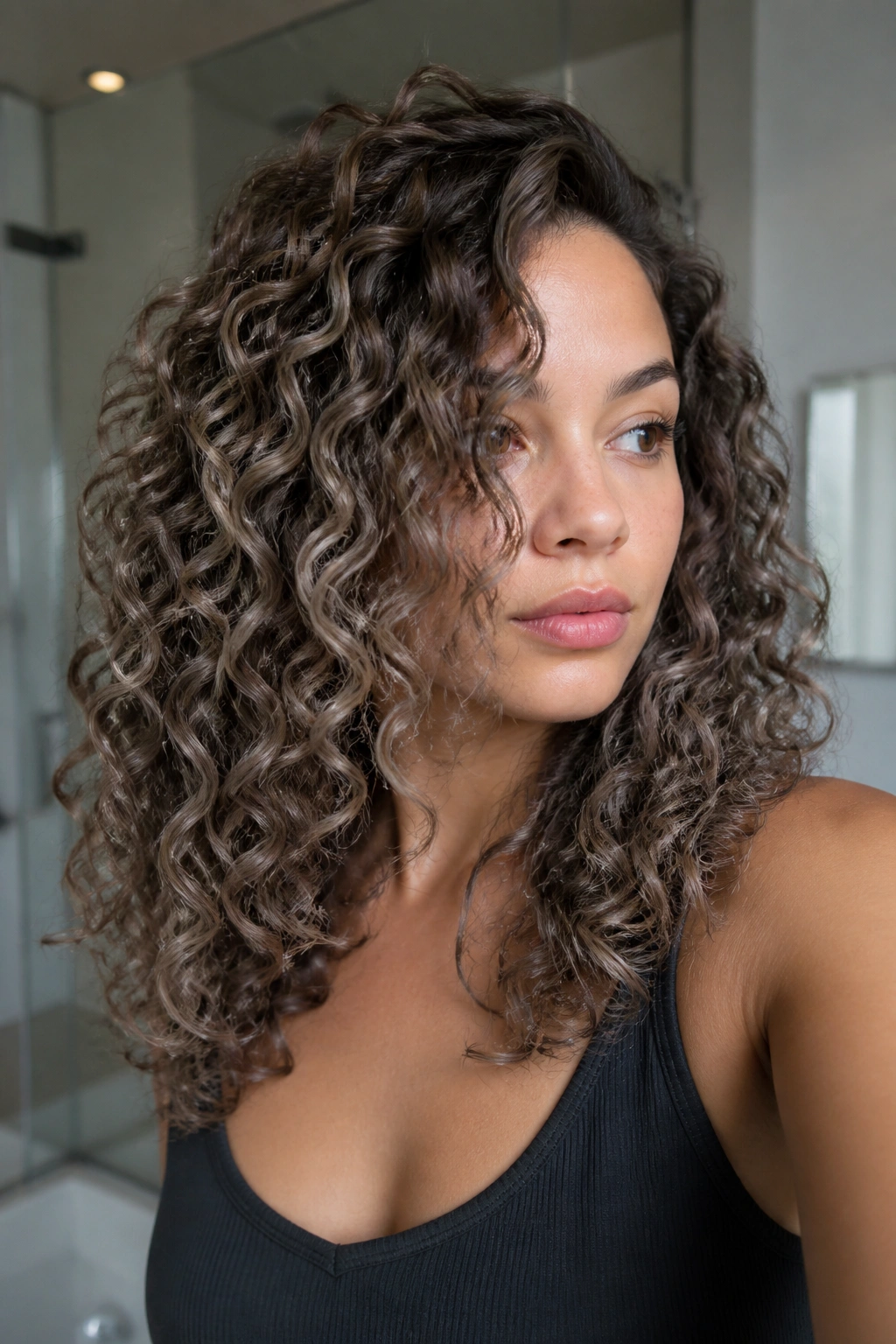
Warmth is not for everyone. Some curls look sharper, cleaner, and more polished with cooler ash-brown highlights.
This works best when the base already carries a little cool depth — think mocha, deep taupe, or natural brown without much red in it. The balayage pieces should stay soft and smoky, not icy gray. On curls, that subtle ash tone adds contrast without screaming for attention.
The only catch is maintenance. Cool tones tend to fade faster into warmth, especially if the hair is porous or exposed to hard water. A blue shampoo can help, but I would use it sparingly. Once a week is often enough. Too much and the curls can start looking dull instead of cool.
If your wardrobe leans black, denim, cream, and silver jewelry, this color tends to fit right in. It has a crispness that warm caramel does not.
10. Toffee Balayage on Layered Lobs
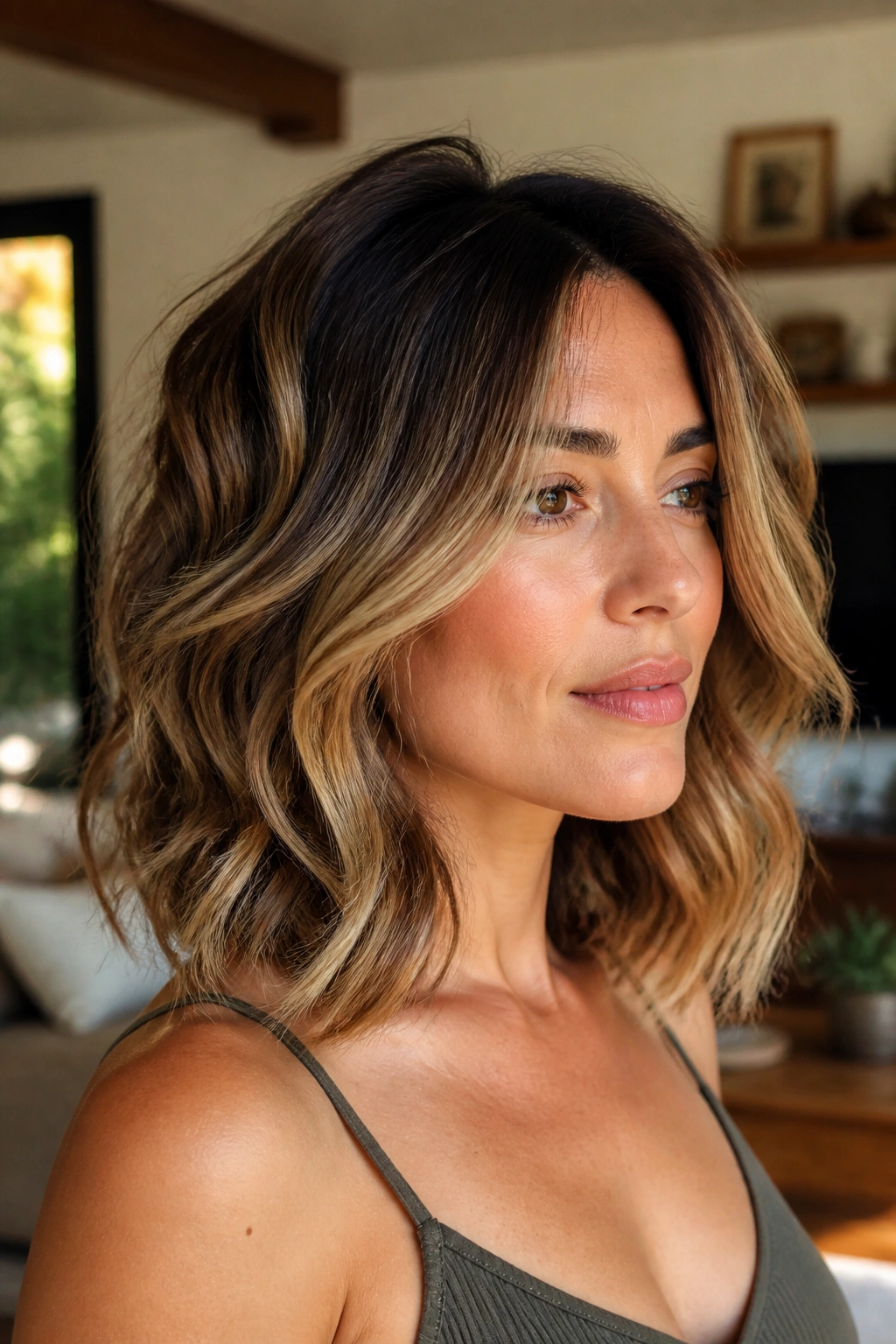
A layered lob and toffee balayage are a very good pair. The cut gives you movement, and the color makes every bend look deliberate.
Toffee sits between caramel and light brown, so it gives dimension without pushing the hair into obvious blonde territory. On curly lobs, I like the lighter pieces slightly below the cheekbone and again near the ends, where the layers separate. That placement keeps the top from looking too pale.
The beauty of toffee is that it flatters a wide range of undertones. It is warm, but not orange. Sweet, but not sticky. And no, those are not the same thing.
If you wear your lob curly most of the time, ask for a few brighter pieces around the front and softer ones through the back. That keeps the cut moving. It also makes the hair look thicker when it puffs up a little on humid days, which is the whole point of a good curly lob.
11. Mushroom Brown Balayage for Dense Curls
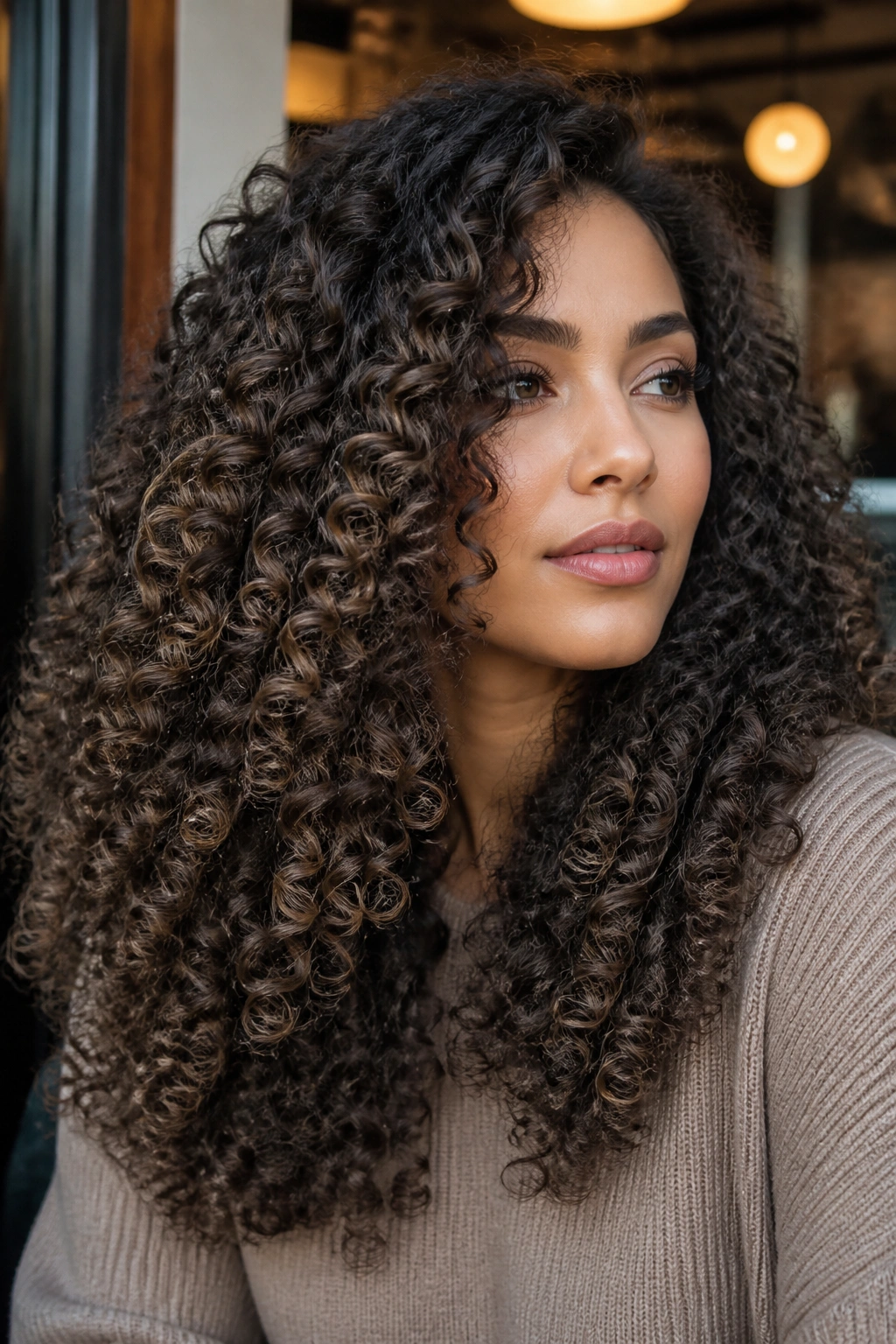
Mushroom brown is for people who want dimension without warmth taking over the whole head. It leans cool, earthy, and slightly beige, which makes dense curls look expensive in a quiet way.
Because the tone is muted, the placement matters a lot. I like this look on thick hair with long layers or a curly shag, where the surface has enough movement to show off the different browns. If the hair is all one length, mushroom brown can disappear a bit. On layered curls, though, it looks dimensional fast.
How to Ask for It
Tell your colorist you want a cool brown balayage with soft beige accents and no orange lift. That phrase does more work than “mousy brown,” which sounds worse than the color usually is.
- Keep the roots close to the natural base.
- Lighten only the mid-lengths and outer surface.
- Use a beige-brown toner, not a gold one.
- Add a clear gloss if the finish looks too flat.
It is one of the best choices for people who want a modern brown without harsh contrast.
12. Platinum Tips on Dark Curly Hair
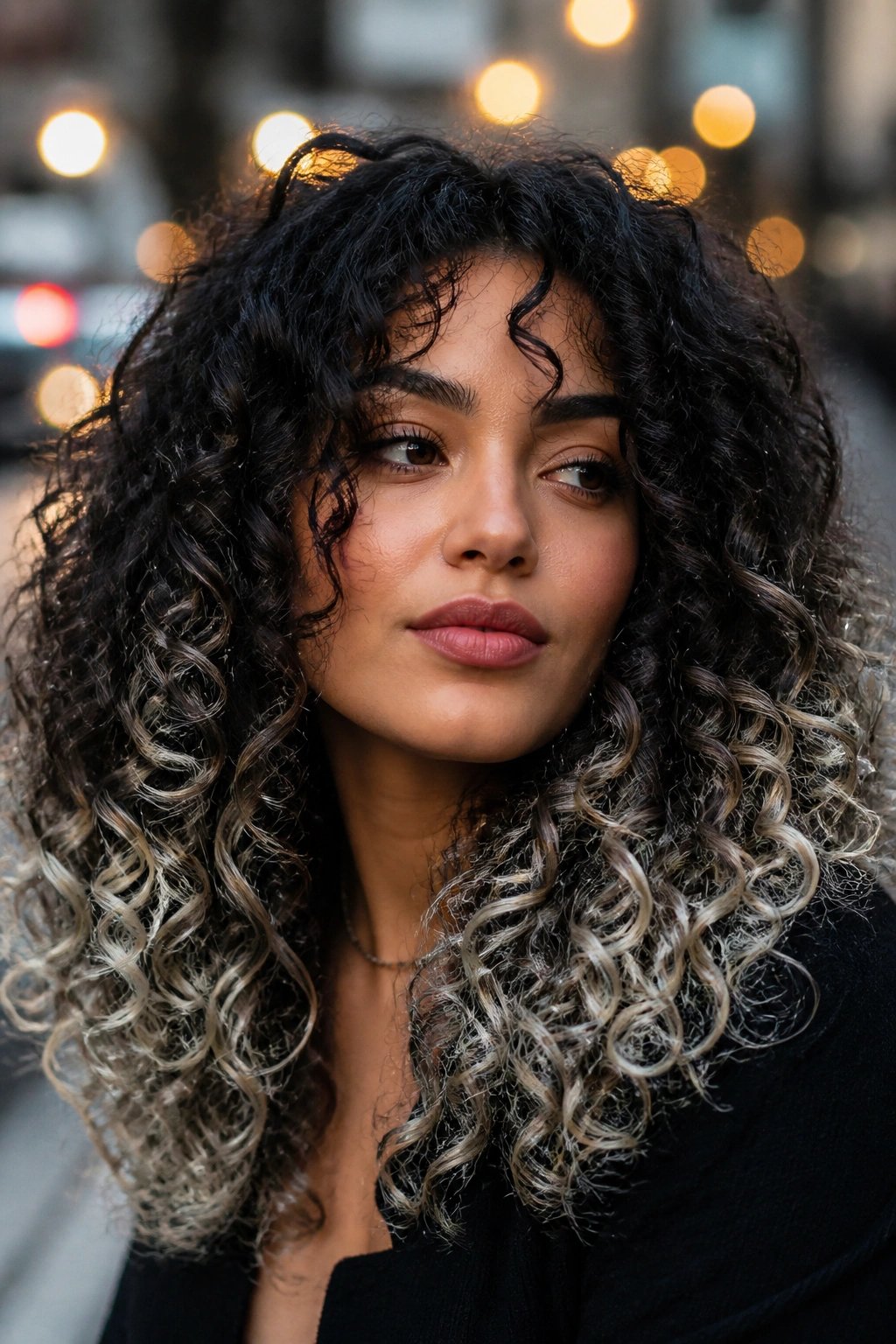
Platinum tips on dark curls are not subtle. They are not supposed to be.
The contrast can look stunning because curly hair already has natural volume and shape. When only the ends are lightened, the curl pattern shows off the color with almost no effort. The dark roots anchor everything, and the platinum tips create a sharp finish that feels bold rather than messy.
But here is the honest part: this is a maintenance-heavy choice. Platinum on curly hair usually needs careful pre-lightening, toning, and trims to keep the ends from feeling rough. If the hair is dry or fragile, I would not rush into this. Healthy ends matter more here than wishful thinking.
If you want a dramatic look that still keeps the root area easy to grow out, platinum tips deliver. They work especially well on long curls where the length gives the contrast room to breathe.
13. Rose Gold Balayage on Shoulder-Length Curls
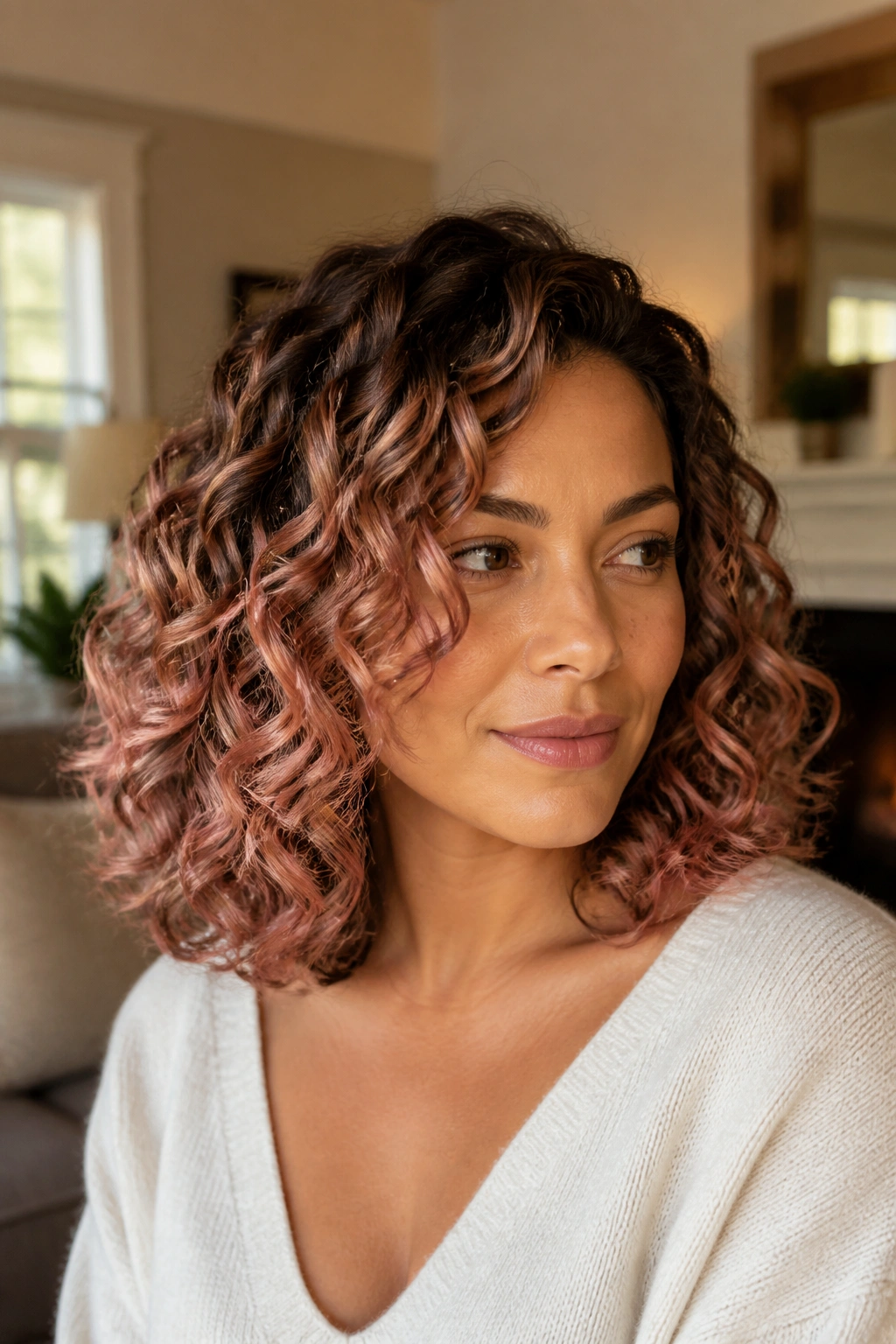
Rose gold has a soft, playful feel that works better on curls than people expect. The pink-gold mix catches the light in a way that looks rich rather than sugary when it is done with restraint.
Shoulder-length curls are a sweet spot for this color because there is enough length for the tonal shift to show, but not so much hair that the pink starts looking busy. The best rose gold balayage usually sits on pre-lightened pieces first, then gets glazed with blush, peach, and pale gold tones. That keeps the finish soft.
A little warmth in the base helps. So does a cut with movement. Flat, heavy curls can swallow this shade. Layers let it breathe.
If you want a color that feels a touch creative without turning into a full fantasy shade, rose gold is a smart middle ground. It is more interesting than beige blonde and easier to wear than a neon pink that fades fast.
14. Chestnut Balayage on Long Corkscrews
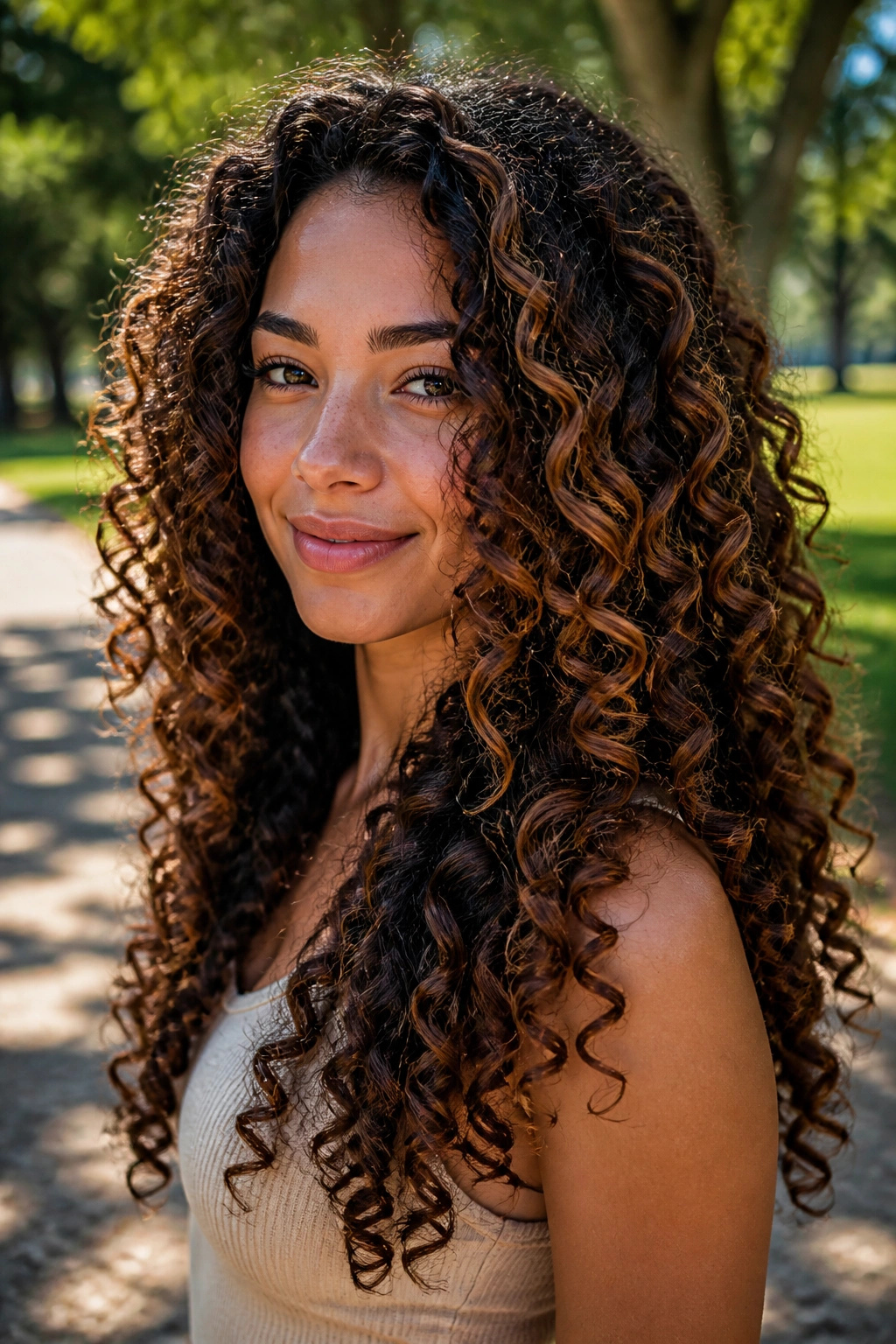
Chestnut balayage is one of the most underrated curly looks because it does not try to dominate the curl pattern. It supports it.
On long corkscrew curls, the shade adds a warm brown glow that deepens the natural shape instead of stealing focus from it. I like chestnut when the hair is already dark brown and you want movement with minimal contrast. The color sits in the hair like a second layer of shine.
Does it sound too subtle? Maybe. That is the appeal. Long curls already bring drama through length and texture, so the color only needs to add depth around the bends and edges. A few brighter ribbons near the front are enough to change the whole mood.
This is a very good option if you want to keep your color believable. Not boring. Just believable.
15. Sandy Blonde Balayage on Beachy Curls
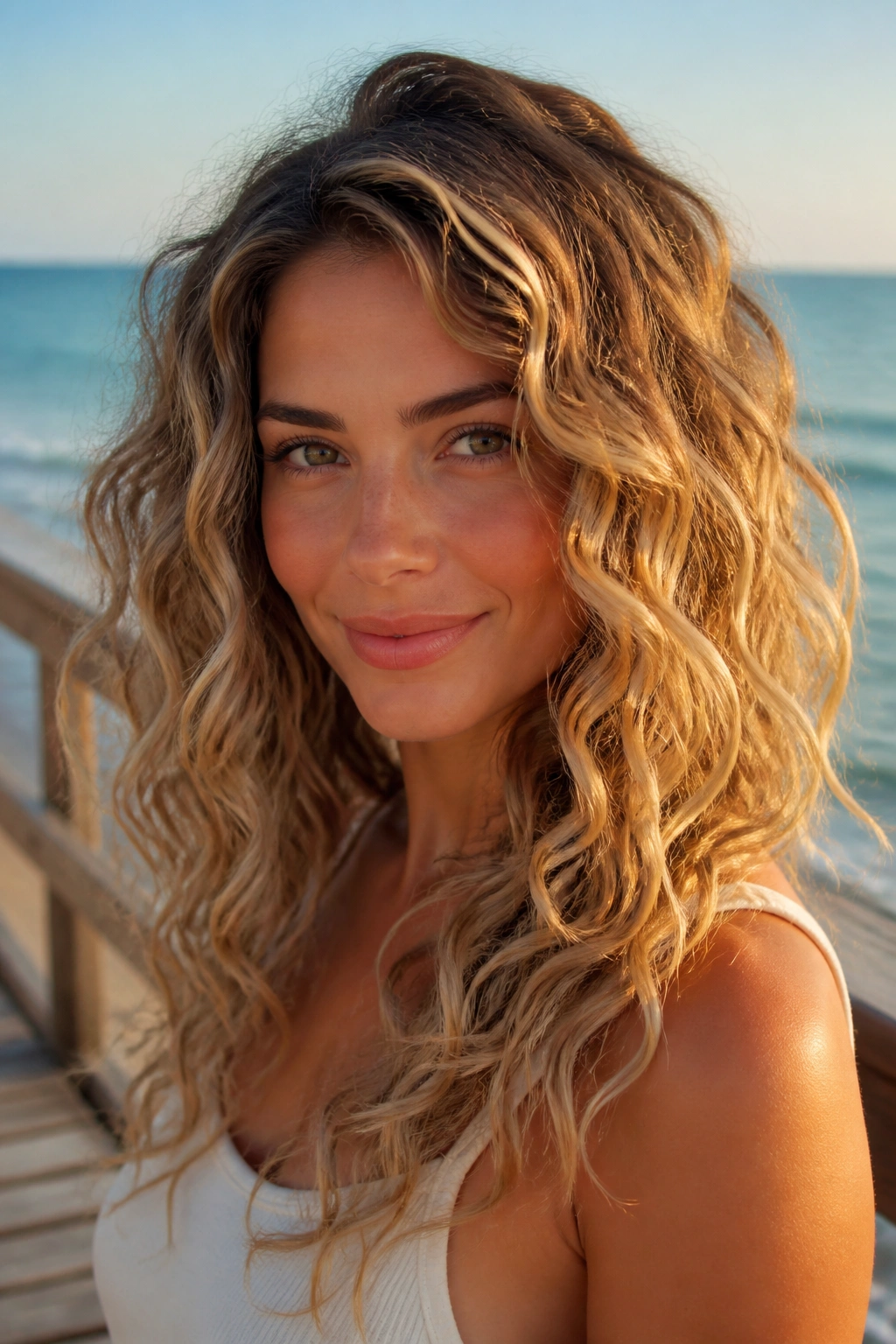
Sandy blonde is softer and dustier than gold blonde, and that makes it easier to wear on textured hair. It gives beachy curls a sun-washed feel without pushing them into bright yellow territory.
The best sandy blonde balayage usually stays close to beige, oat, and pale sand tones. A colorist can paint it onto the outer layer and face frame, then keep the deepest underlayer just a shade darker. That stops the style from looking one-note. It also helps the curls keep their thickness visually.
This shade works particularly well if your natural base is medium brown or dark blonde. On very dark hair, the lift required can get heavy fast, and the maintenance goes up with it. If that sounds like too much, a warm beige version is easier to live with.
You want the hair to look kissed by light, not bleached by it.
16. Bronze Balayage on Deep Brunette Curls
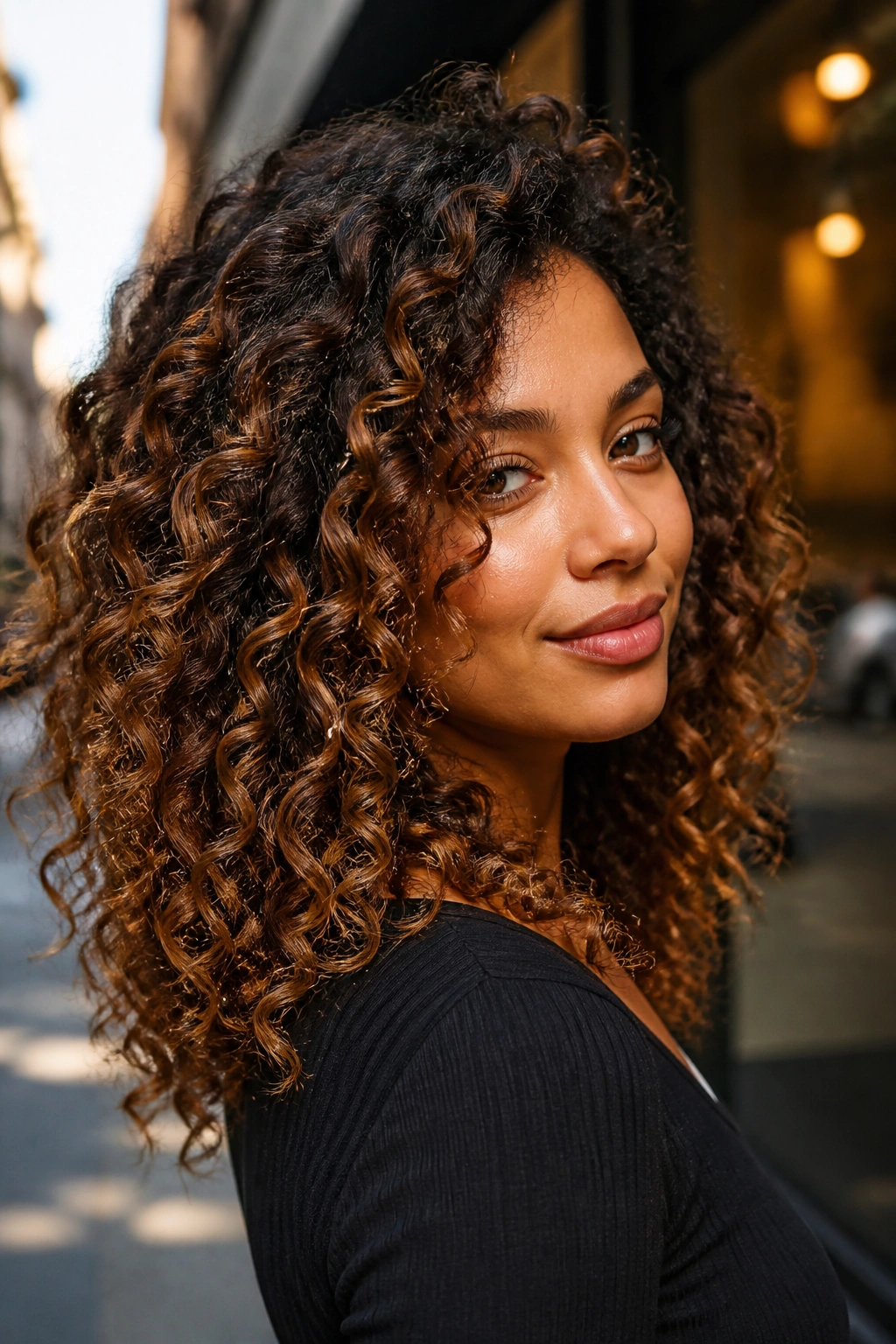
Bronze on curls has a richness that plain brown cannot match. It is warm, metallic, and still grounded enough to look natural in day-to-day life.
The reason it works so well is simple: bronze has depth. It reflects light, but it does not collapse into yellow the way some gold tones do. On deep brunettes, bronze balayage gives the surface a polished sheen, especially when it is painted through the mid-lengths and ends.
What Makes It Different from Caramel
Caramel usually leans softer and sweeter. Bronze is a little more grown-up and a little less obvious.
- Bronze can carry both gold and brown at once.
- It looks strong in sunlight and softer indoors.
- It suits dense curls that need richness, not just brightness.
- A warm gloss keeps the tone from turning dull.
If you want something warm but not too sugary, bronze is a cleaner choice than honey. It has more bite.
17. Burgundy Balayage on Curly Bobs
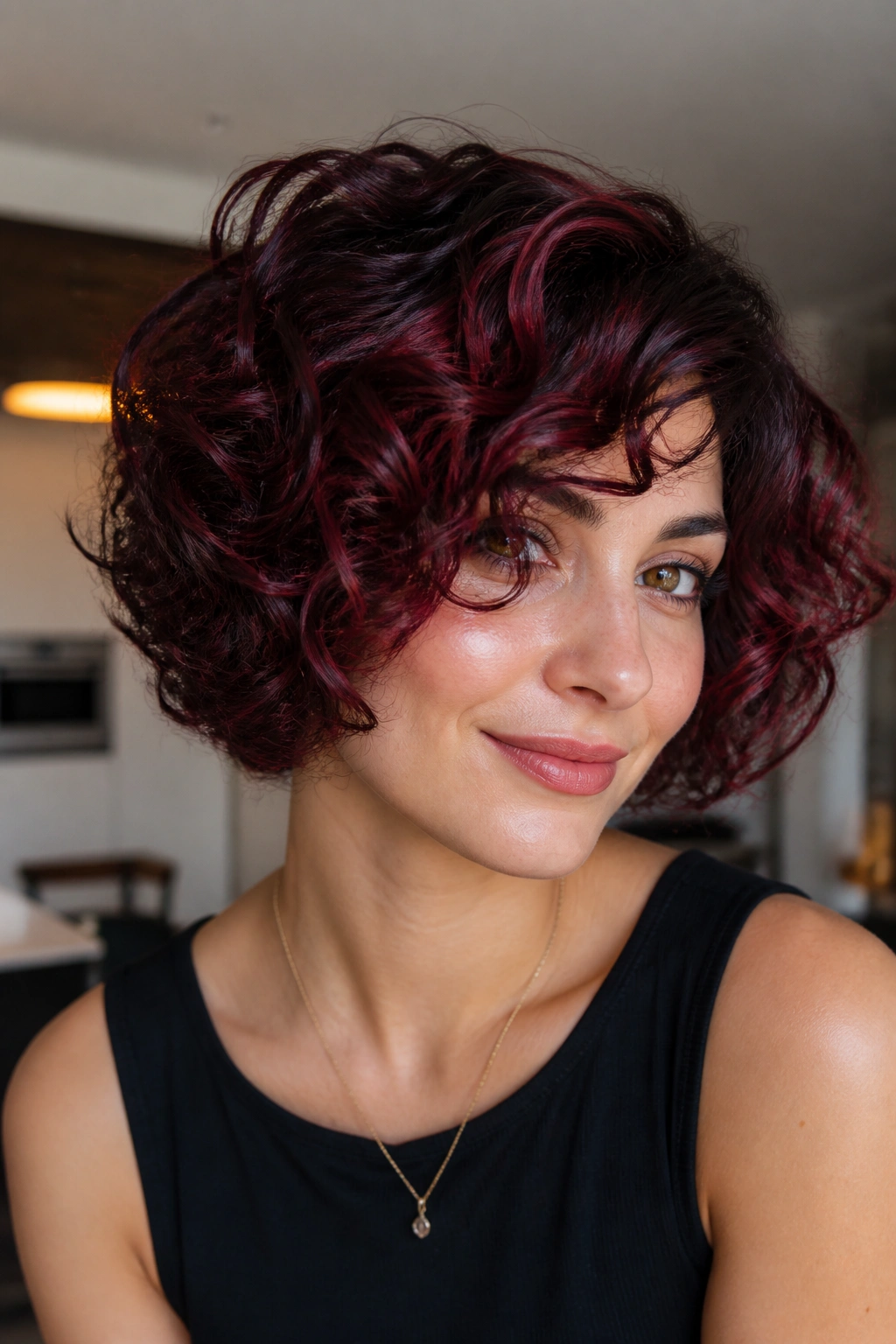
A curly bob can take a lot of color, and burgundy is one of the best ways to make the cut feel intentional instead of merely short. The shade sits somewhere between red and wine, which gives the curls a plush, velvety look.
I like burgundy best when it is placed in slices through the interior of the bob, then brightened a little around the front. That way the shape still looks full from every angle. If all the color sits only on the top layer, the bob can look thinner than it really is.
The tone is especially flattering on darker hair because you do not need a huge amount of lift for the color to show. That means less strain on the curl pattern. It also makes grow-out easier, which matters on a haircut that already needs shape every so often.
If you have been tempted by red but do not want bright cherry or copper, burgundy is the more elegant lane.
18. Vanilla Cream Balayage on Dark Coils
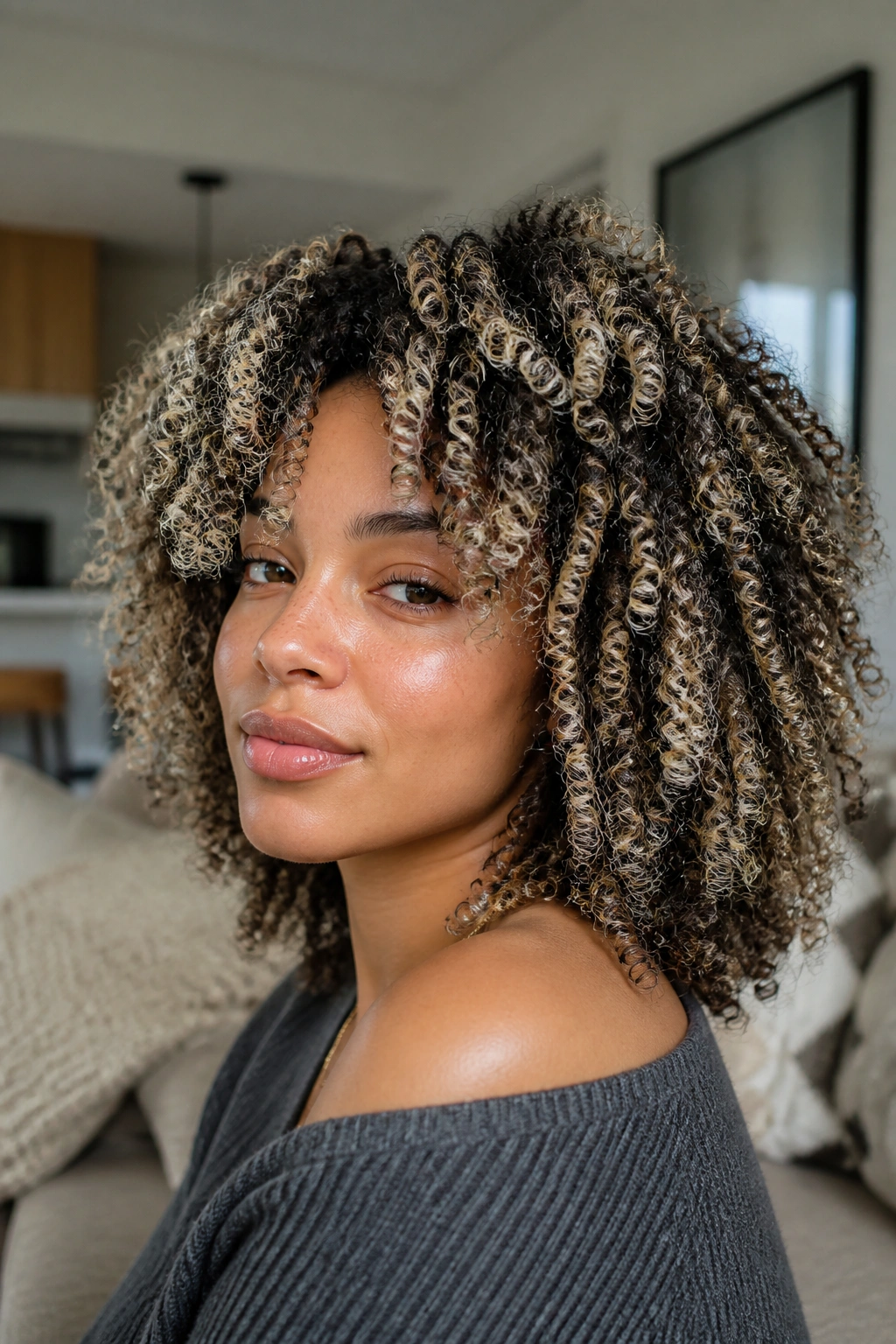
Vanilla cream is a soft, pale shade that can look stunning on dark coils when it is placed with restraint. The contrast is the point, but the placement has to respect the curl pattern.
On coily hair, I prefer halo-style lightening around the top and front, then a few lighter coils scattered through the upper layer. That gives you brightness without carving out a stripe. The shape should still read as dense. That part matters a lot more than people think.
A creamy blonde tone can look harsh if it goes too yellow or too white, so toning is part of the deal. You want vanilla, not chalk. The difference is obvious once the hair dries and the curls stack together.
This look suits someone who likes contrast and does not mind a more involved color routine. It is polished, but it is not lazy. A real commitment, honestly.
19. Maple Balayage for Warm Undertones
Maple is warm, brown, and lightly golden in a way that flatters skin with golden or olive undertones without stealing the show. It sits between caramel and amber, which gives curly hair a soft richness that feels very wearable.
What makes maple work is the depth of the tone. It is not trying to go light for the sake of lightness. It is trying to look glossy. On curls, that means the highlights can stay a little wider and still look blended, because the tone itself is calm.
If you want your hair to feel autumnal without becoming copper, maple lands in a nice middle space. The grow-out is also forgiving because the shade stays close to brunette territory. That means fewer ugly lines and fewer emergency appointments.
I like this color on medium-brown curls that need a refresh more than a reinvention. It is a color facelift, not a personality transplant.
20. Peekaboo Cinnamon at the Nape
Why color the whole head when the nape can do something interesting on its own? Peekaboo cinnamon balayage is for people who want a hidden accent that shows up when the curls move or get pinned up.
The charm here is restraint. The top layer stays close to the natural base, while the lower section gets cinnamon ribbons that flash only when the hair shifts. It is a good choice for work settings, low-maintenance routines, or anyone who likes a little surprise in their color.
How to Wear It
This placement looks especially good on curly updos, ponytails, and half-up twists because the hidden color becomes part of the style instead of competing with it.
- Keep the top panel darker for contrast.
- Paint the lower curls in slim ribbons.
- Choose cinnamon, auburn, or chestnut tones.
- Refresh with a gloss when the warmth fades.
It is playful without being loud. I have a soft spot for that.
21. Curly Fringe with a Bright Money Piece
Curly bangs can make color look harder to place, but they also give you a chance to frame the face in a way straight hair never quite matches. A bright money piece with a curly fringe does exactly that.
The trick is keeping the brightness concentrated at the front and slightly above the cheekbone, where the fringe bends and opens up the face. Too much light all the way into the crown can make the curls look disconnected. A few slim highlights around the fringe, though, can sharpen the whole cut.
This is especially good if your bangs tend to separate in dry weather. The color gives the fringe a visual anchor, so even when the curl pattern loosens a little, the shape still reads clearly.
If you wear glasses, this one is worth a serious look. The bright pieces can soften the frame line and keep the bangs from disappearing into the lenses.
22. Soft Lilac Balayage on Dark Curls
Soft lilac works on dark curls when you treat it like a whisper, not a candy store. The best versions are muted, dusty, and almost smoky, which keeps them from looking juvenile.
This look usually starts with pre-lightened pieces, but the final tone should land in a pale lavender-gray family rather than a loud violet. On curls, that softer color reads beautifully because the texture does half the work. Every bend picks up a slightly different tone, and the result looks more layered than flat.
What to Watch For
Fantasy shades fade fast if the base is too porous or the hair is washed too often. Lilac is no exception. A sulfate-free shampoo and cooler water help, but the real secret is not washing the color to death in the first week.
- Keep the lilac on the outer curls, not the whole head.
- Use a tinted conditioner if the tone starts to wash out.
- Avoid bright purple if you want a softer finish.
- Pair it with dark roots for contrast.
It is a little unexpected, and that is why it works.
23. Smoky Silver Balayage on Salt-and-Pepper Curls
Some of the best balayage ideas for curly hair do not chase young or bright at all. Smoky silver is for curls that already carry gray or salt-and-pepper tones and want to lean into the blend instead of hiding it.
The beauty of smoky silver is that it smooths the transition between natural gray and darker strands. You can have silver on the top layer, charcoal lowlights underneath, and still keep the curl pattern looking rich. That balance matters. Silver by itself can look thin. Mixed with depth, it looks deliberate.
If you are growing out gray, this is one of the cleaner ways to manage the awkward middle. The silver pieces echo what is already happening in the hair, so the grow-out feels like a design choice rather than a correction.
No, it is not boring. It is sharp. There is a difference.
24. Peach Balayage on Loose Spirals
Peach is one of those shades that sounds delicate and ends up looking surprisingly fresh on curls. On loose spirals, it gives the hair a soft warm glow that feels modern without being harsh.
The key is keeping the peach muted. Think blush-apricot rather than neon coral. The tone works best over a lightened base that still has some warmth underneath, because cool blondes can make peach look weak. When the color is placed through the outer layers, it catches on the movement of each spiral instead of sitting as a solid block.
Why It Stands Out
Peach is not a shade people expect in everyday hair color, which is part of the fun. It reads creative, but it still feels wearable if the saturation stays soft.
- Best on light brown or pre-lightened curls.
- Looks strongest near the face and top layer.
- Fades into a pale blush that still looks nice.
- Needs gentle shampoo and low heat styling.
If you want something a little playful without getting stuck with a loud pastel, this is a sweet spot.
25. Chocolate Cherry Balayage on Thick Curls
Chocolate cherry is rich enough to hold up in dense hair, which is why I keep recommending it to people with thick curls who want color depth more than brightness.
The brown base keeps the look grounded, while the cherry tone adds a dark red edge that becomes visible when the curls move. On thick textures, that matters a lot. Dense hair can swallow pale highlights, but a deep red-brown usually stays visible through the whole shape. It gives the hair a fuller, more luxurious finish.
This color is also friendlier than bright red for grow-out. The root line stays less obvious, and the overall look remains polished even if you go a little longer between appointments. If you want a red family shade that still feels wearable on a Tuesday morning, this is one of the better choices.
Not too sweet. Not too loud. Just enough bite.
26. Honeyed Auburn on Tapered Cuts
A tapered curly cut can look angular in the best way when the color follows the shape. Honeyed auburn does that nicely because it brightens the top and sides without flattening the fade underneath.
The lighter auburn pieces should sit where the eye naturally lands: around the crown, the front curl line, and the upper edges of the shape. That keeps the cut visible. A solid block of color would hide the taper and make the haircut lose its structure. Curly cuts need color that respects the line work.
What to Ask Your Colorist
Ask for warm auburn ribbons glazed with honey, not bright copper. The difference is subtle on paper and obvious in the mirror.
- Keep the fade area deeper.
- Brighten the longer curls on top.
- Use a soft glaze to keep the tone smooth.
- Avoid heavy foil lines near the temples.
If your haircut already has a strong shape, this color supports it without stealing the show. That is the whole point.
27. Beige Blonde Halo Balayage on Afro Curls
Halo placement is one of the smartest choices for tighter curl patterns because it lets you add brightness where people actually see it first. Around the crown, front, and upper perimeter, beige blonde can make afro curls glow without draining the full head.
The halo effect keeps the interior dense and protects the overall shape. That matters. Too much all-over lightening can make tighter curls look soft in a bad way, like they have lost their edge. A halo keeps the structure intact while still giving you noticeable color.
I like beige blonde here more than icy blonde because beige sits more naturally against a wide range of skin tones and does not fight the coil pattern. It looks finished, not forced. If you want more contrast later, a few brighter face-framing pieces can be added without redoing everything.
This is one of those looks that gets better when the curls are picked out, diffused, or fluffed. The shape does some of the work for you.
28. Espresso Roots with Golden Ends
Why keep the roots dark and the ends bright? Because on curly hair, that contrast creates a clean, easy grow-out and gives the length a little drama without a full-lightening commitment.
This is a classic shadow-root idea, but curls make it look more organic than straight hair does. The darker top section grounds the style, while the golden ends bounce light every time the curls separate. If the ends are too pale, the look can turn streaky. Golden is safer and richer.
How to Make It Work
The transition should be gradual, with the lightest pieces concentrated on the lower half of the curl pattern. The middle section needs soft blending so the eye moves down the strand instead of stopping at a hard line.
- Keep the root area close to your natural base.
- Use golden tones rather than white blonde.
- Ask for a soft melt through the mid-lengths.
- Trim regularly so the lighter ends stay neat.
This is a practical color choice. It also happens to look good.
29. Three-Tone Latte Balayage
Three-tone latte balayage is for people who want depth, not just color. Think espresso, caramel, and cream working together instead of one flat highlight shade.
On curls, this layered approach looks especially good because each section of hair catches the tones a little differently. The darker base gives structure, the caramel adds warmth, and the cream pieces create lift where the curls need it most. The result feels dimensional even when the hair is pulled back.
This is the kind of color that rewards a skilled hand. The tones need to be spaced carefully so they do not blur into one muddy shade. If done well, though, it looks expensive in the best possible sense: balanced, glossy, and hard to flatten with styling.
It is a smart option for long curly hair that needs visual movement. Shorter curls can wear it too, but the length gives the tonal shift more room to show off.
30. Soft Black Curls with a Bronze Sheen
Not every balayage idea needs to shout. Some of the prettiest curly color is almost invisible until the light hits it.
Soft black curls with a bronze sheen are perfect if you want to keep the depth of your natural color but add a little warmth around the edges. The bronze is placed so lightly that it reads like shine first and color second. That makes the curls look healthy, full, and expensive without a dramatic contrast line.
This look works especially well when the bronze sits on the outer layer and a few face-framing curls, leaving most of the head close to black. It gives the eye something to catch without changing the whole mood of the hair. If you are nervous about balayage, this is a calm place to land.
It is proof that subtle does not mean boring. Sometimes the smartest move is barely changing the base at all.
Final Thoughts
The best balayage for curly hair usually respects the shape before it chases the shade. That means softer transitions, smarter placement, and a color story that still makes sense once the curls shrink, fluff, or take on their own life.
If you want the easiest starting point, caramel, honey, toffee, and bronze are the least fussy. If you want contrast, money pieces, platinum tips, and beige-blonde halo placement can look sharp, but they ask for more upkeep and a little more honesty about your hair’s condition.
A gloss is cheaper than a color correction. That is the boring truth, and it matters more than most people want to admit.
