



Old money haircuts for women work because they don’t try too hard. They look expensive the way a well-cut coat looks expensive: clean line, good shape, no fuss, no begging for attention. That is the whole trick, and it’s why these cuts keep showing up on women who want their hair to look polished without looking overly styled.
The label gets thrown around a lot, and half the time people use it to describe shine spray or a middle part. That misses the point. The cut matters more than the finish. A blunt bob that sits exactly at the jaw, a collarbone lob with weight left in the ends, or long layers that fall in one smooth sheet will do more for the look than a shelf full of styling products ever will.
What I like about this aesthetic is how forgiving it can be when the shape is right. Good old money hair should hold up after a normal day, not only after a salon blowout and a heroic amount of round-brush work. If the perimeter is clean, the layers are controlled, and the length makes sense for your face and hair texture, the haircut starts doing the heavy lifting.
Some of these cuts lean classic and conservative. Others borrow from old Hollywood, French-girl bluntness, or preppy East Coast ease. All of them share the same quiet discipline, and the difference between “simple” and “flat” is a matter of a few careful inches.
1. The Old Money French Bob With a Soft Bend
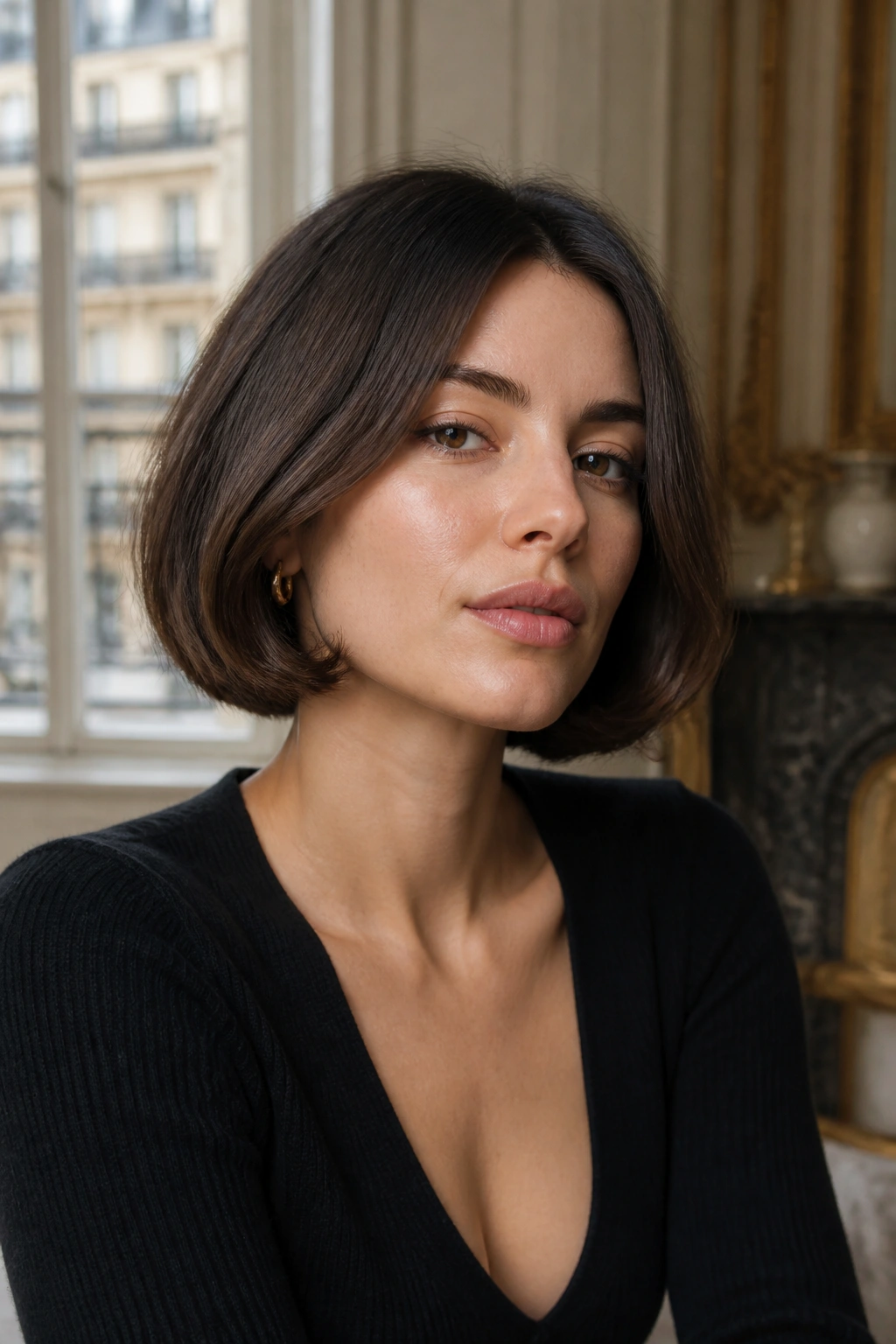
A French bob sits around the jawline or just above it, and that placement does a lot of work. It keeps the face open, shows off the neck, and gives the hair a deliberate shape instead of a floppy one. I like this cut most when the ends are blunt but not harsh, with a slight bend under the jaw rather than a sharp corner.
Why It Works
The best version feels tailored, not cute. That’s the difference.
- Length: Ask for the bob to hit right at the jaw or ½ inch below it.
- Texture: Keep the inside layers light so the outline stays strong.
- Parting: A center part gives it a cleaner mood; a soft off-center part feels a little more relaxed.
- Styling: Use a 1-inch round brush or a flat brush and turn the ends under just enough to kiss the neck.
A French bob like this works well if you want structure without the weight of longer hair. It also plays nicely with red lips, gold hoops, and simple knitwear — the haircut does not need help, which is half its charm.
2. Glossy Italian Bob
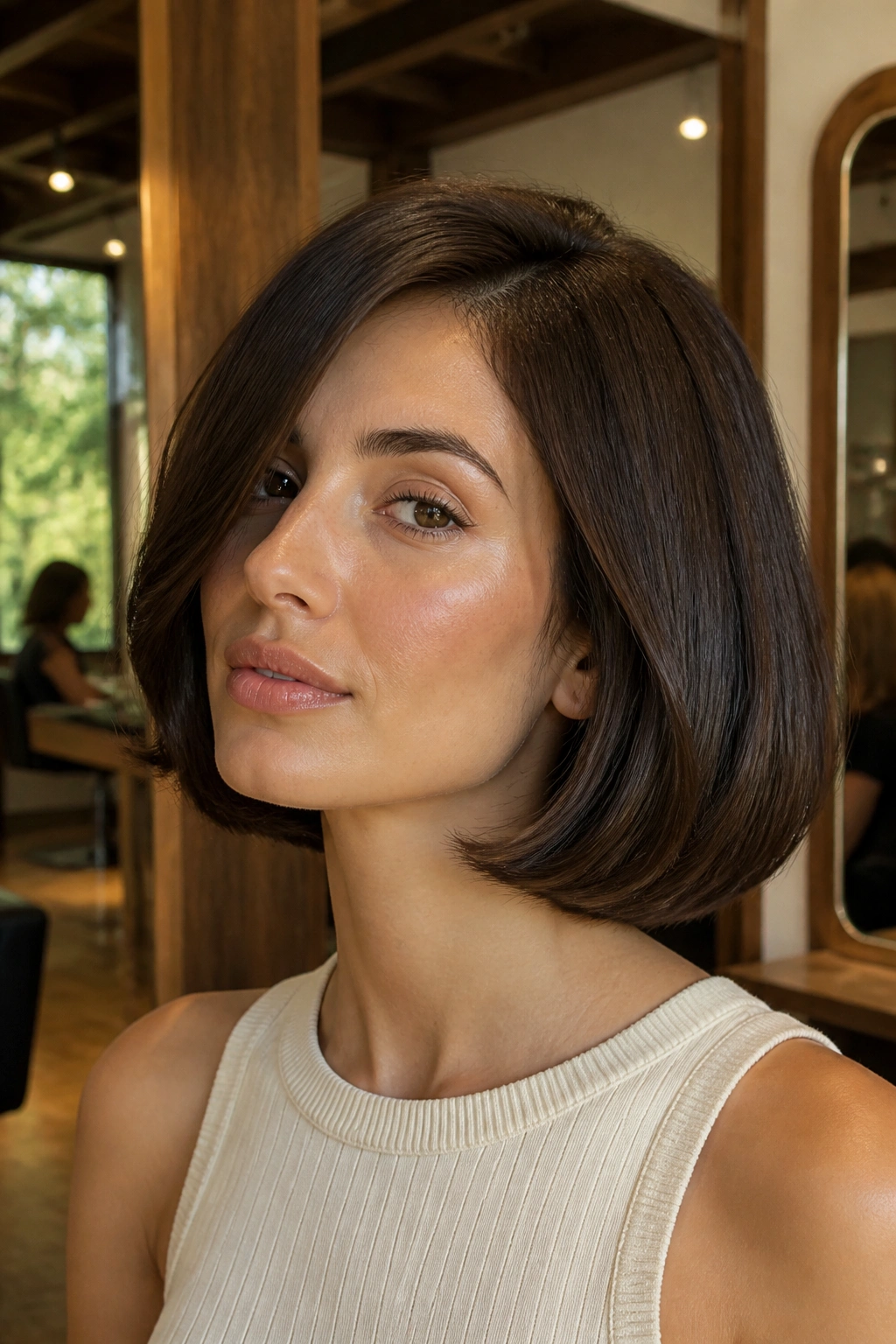
Why does the Italian bob look richer than a choppy bob? Because it keeps the line full and the movement controlled. This cut usually lands between the jaw and the top of the shoulders, with enough heft at the bottom to feel plush instead of wispy.
The secret is restraint. You do not want the ends shredded into pieces. You want a solid shape that swings when you turn your head, almost like the hair is carrying its own weight on purpose. It looks especially good when the hair is blown smooth with a slight curve at the ends and a side part that isn’t too deep.
If you have medium to thick hair, this is one of those cuts that feels expensive even when it’s barely styled. Fine hair can wear it too, but the perimeter needs to stay full. A light mist of shine spray on the mid-lengths and ends is enough. Anything heavier makes the shape collapse, and then the whole point disappears.
3. Jaw-Length Pageboy Bob
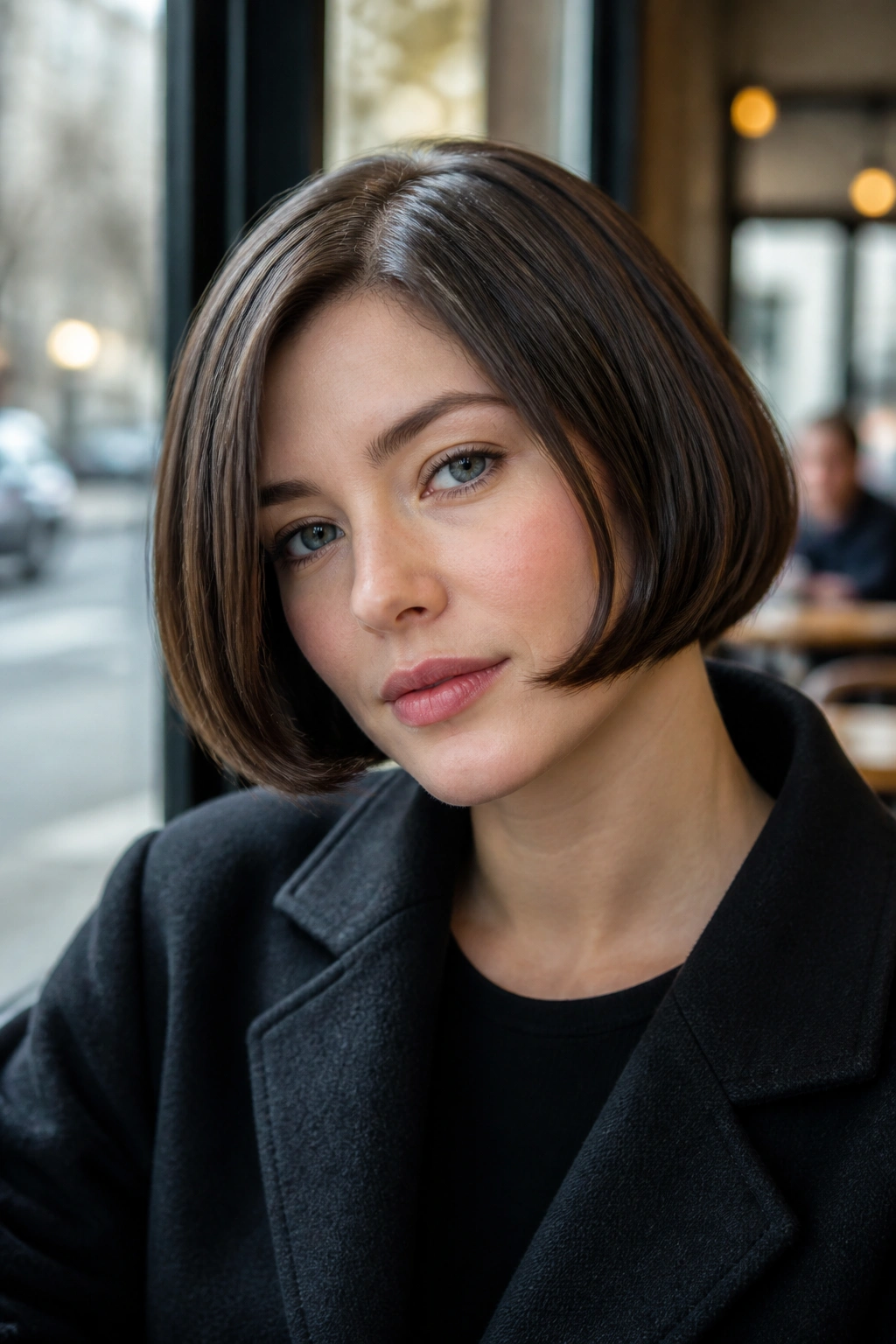
The pageboy has a little retro nerve to it, which I love. It’s that sleek, rounded bob with the ends tucked under and the length hovering right around the jaw. On the wrong hair, it can look stiff. On the right hair, it looks sharp in the best way.
What Makes It Different
It is not trying to look undone. It is trying to look precise.
A pageboy bob suits women who like a bit of structure around the face. The curve inward at the ends softens the jawline, and the nape tends to sit neat and close to the neck. That clean shape gives it a very old-money feel, especially with a deep side part or a narrow barrette tucked behind one ear.
Ask for the ends to be rounded under with a round brush finish, not razored into texture. If your hair is thick, let the stylist remove bulk from the inside only. If your hair is fine, keep the perimeter blunt so the shape does not go limp by noon.
4. Clean Blunt Bob at the Jaw
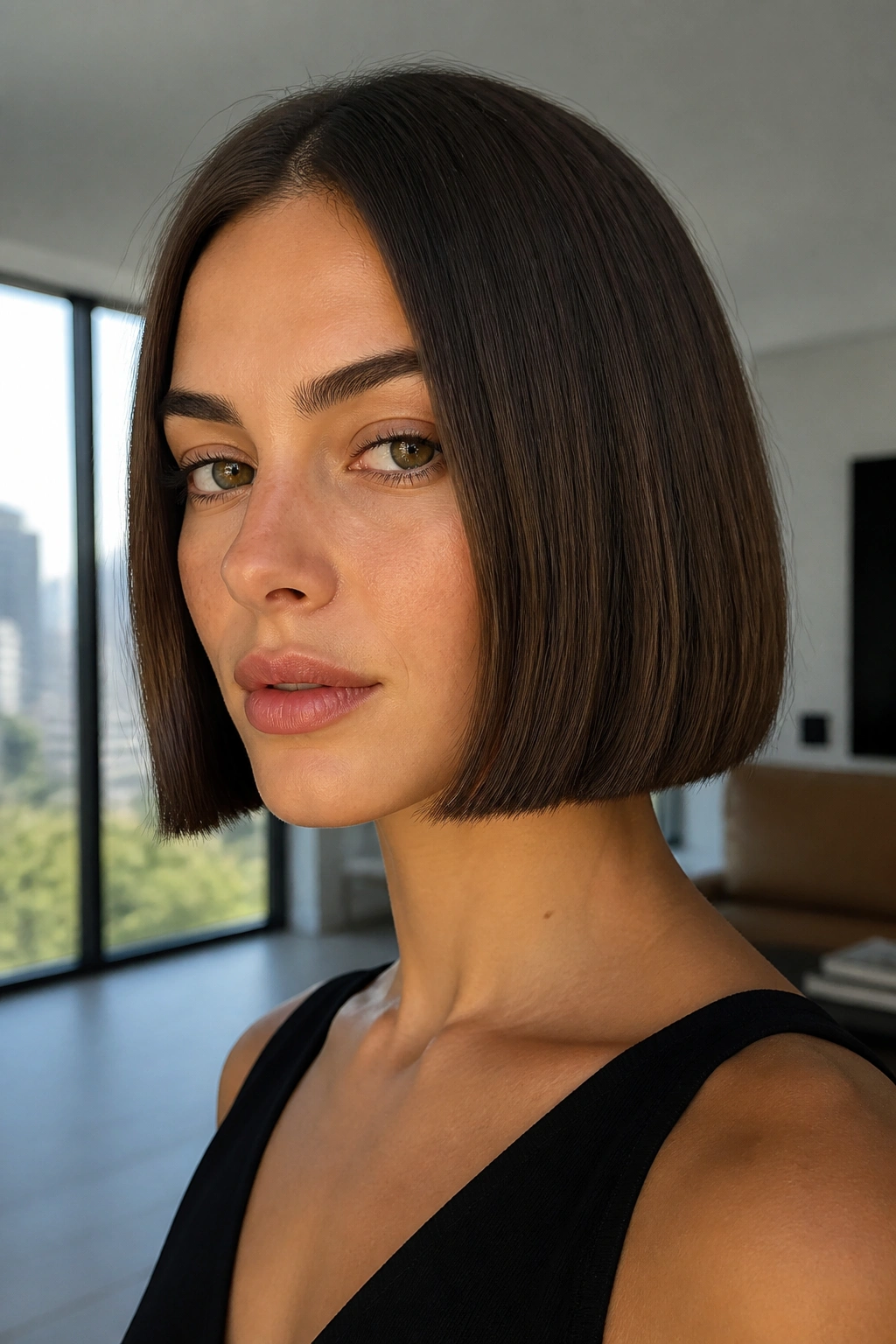
A blunt bob can look severe in a good way. It has the kind of confidence that does not need soft layers to feel feminine, and that’s why it fits this category so well. When it ends at the jaw, the haircut frames the face with a clean line that reads polished, not trendy.
This is one of my favorite options for women who wear simple clothes and want the hair to carry the polish. Think crisp shirts, knit tanks, tailored jackets, and low-key earrings. The cut itself does the talking. You don’t have to fight with it, either — a quick blow-dry and a slight bevel at the ends are enough.
The main rule is this: the edge has to stay even. No choppy bits. No over-texturing. No “piecey” nonsense that makes the bob look tired after a week. A blunt jaw-length bob is at its best when it looks freshly cut, even if the styling is minimal.
5. Collarbone Lob With a Center Part
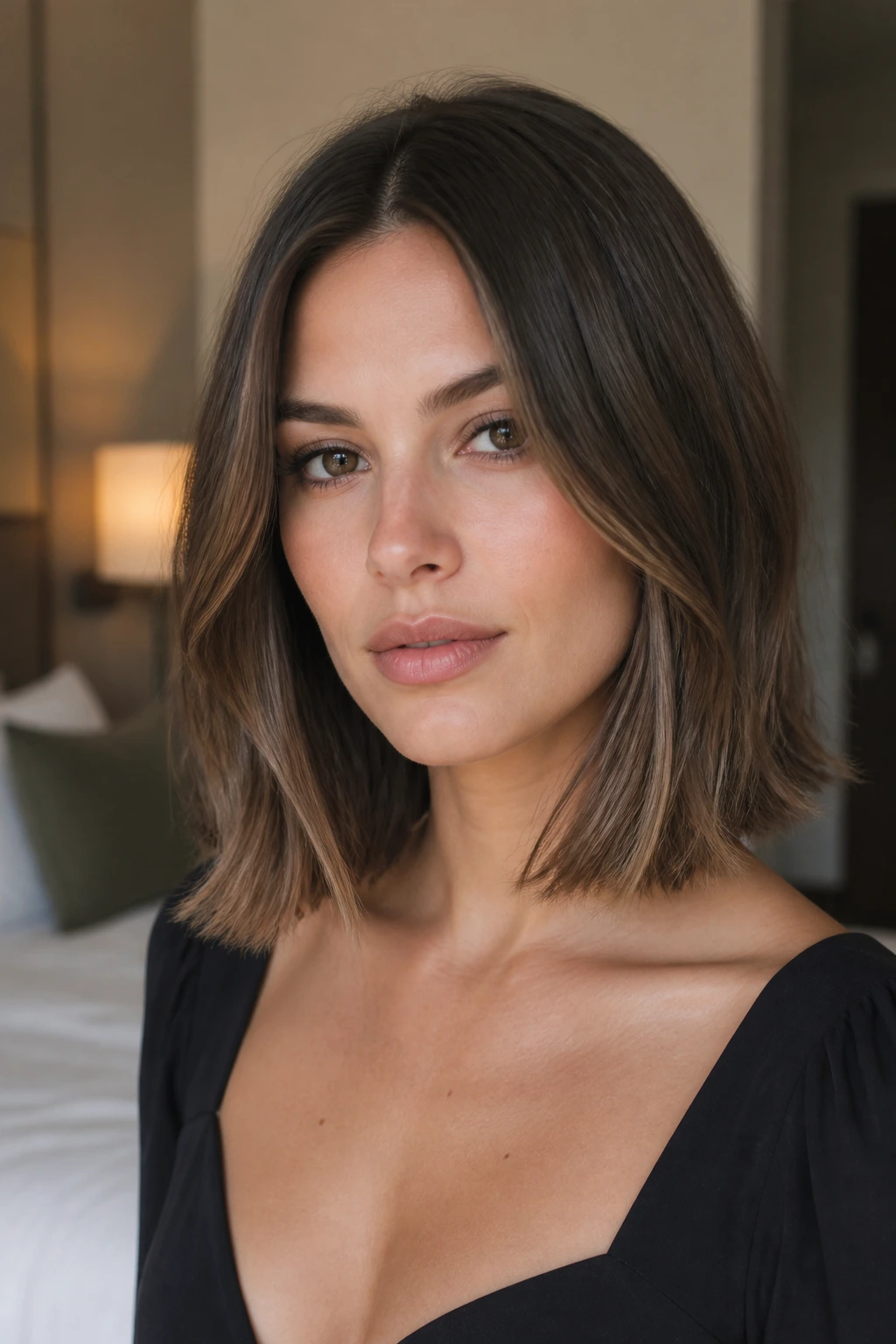
The collarbone lob is one of those cuts that manages to be simple and elegant at the same time. It usually hits right where the collarbone starts to move, so the hair gets a little bounce whenever you turn your head. That placement makes it easy to wear straight, waved, or tucked behind the ears without losing the shape.
Unlike a shorter bob, the collarbone lob gives you breathing room. It’s a good choice if you want a refined look but are not ready to commit to chin length. The center part keeps it modern in a quiet way, and the length is long enough to feel soft around the face without turning into generic long hair.
If your hair is naturally straight, ask for barely-there internal layers so the ends don’t look blocky. If your hair is wavy, keep the base blunt and let the texture do the movement. The style works best when it looks lived-in but still cared for.
6. Shoulder-Length Cut With Curtain Bangs
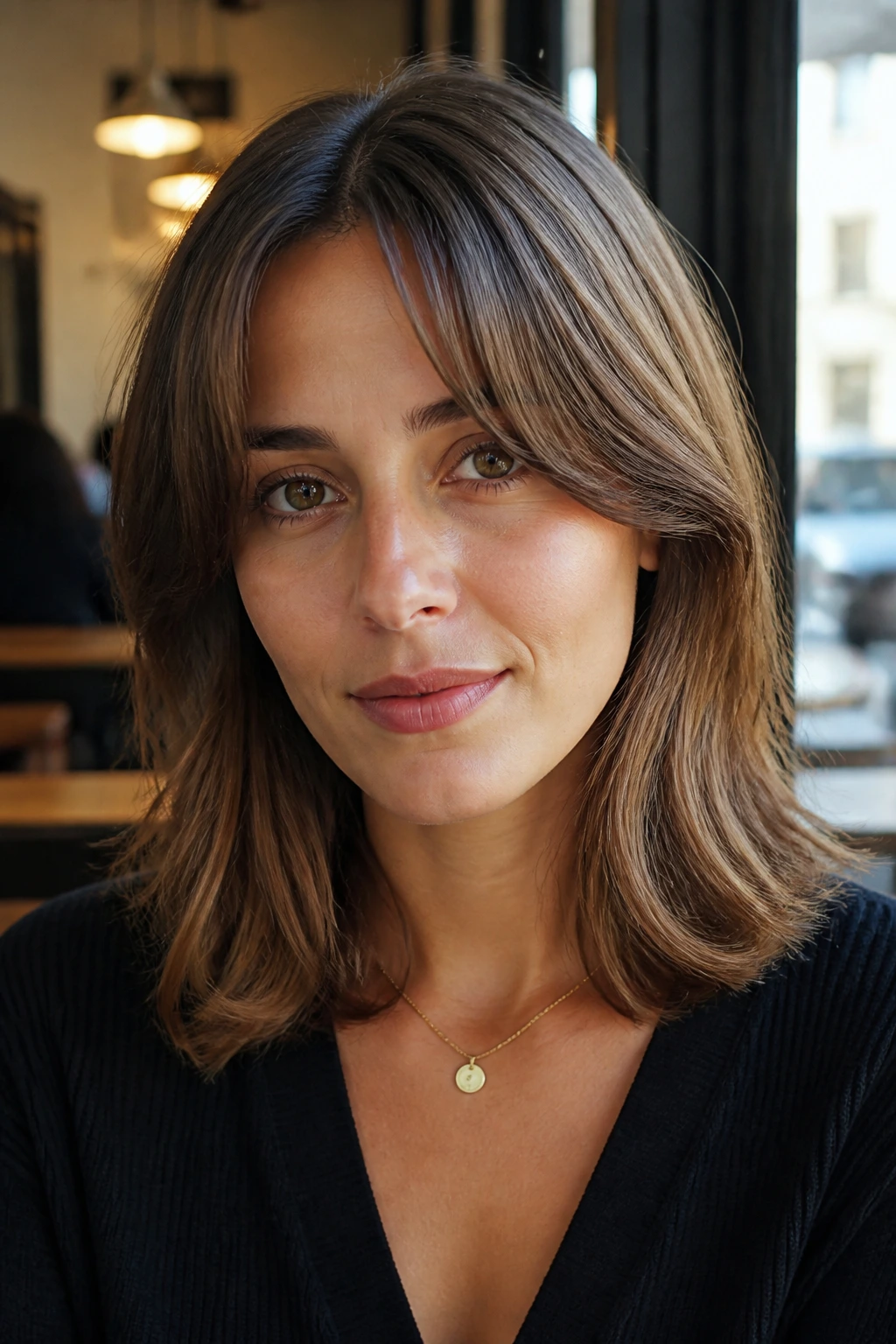
Curtain bangs can get messy fast, so the cut around them has to be calm. That’s why a shoulder-length shape works so well here. It gives the bangs a polished frame and keeps the rest of the hair from looking too busy.
This cut sits neatly on the shoulders or just above them, with the fringe opening away from the face in two soft panels. It has that faintly aristocratic feel when the bangs are blended enough to move, but not so layered that they disappear. The effect is flattering around the cheekbones and easy to grow out if you change your mind.
Styling Notes
- Blow the bangs back and away from the face with a medium round brush.
- Keep the ends of the length slightly rounded, not flipped into a salon curl.
- Use a light mousse at the roots if your hair falls flat by lunchtime.
- Trim the fringe every 4 to 6 weeks so it does not crowd the eyes.
The key is polish. If the bangs look overdone, the whole haircut loses the charm.
7. Long One-Length Cut With a Soft Curve
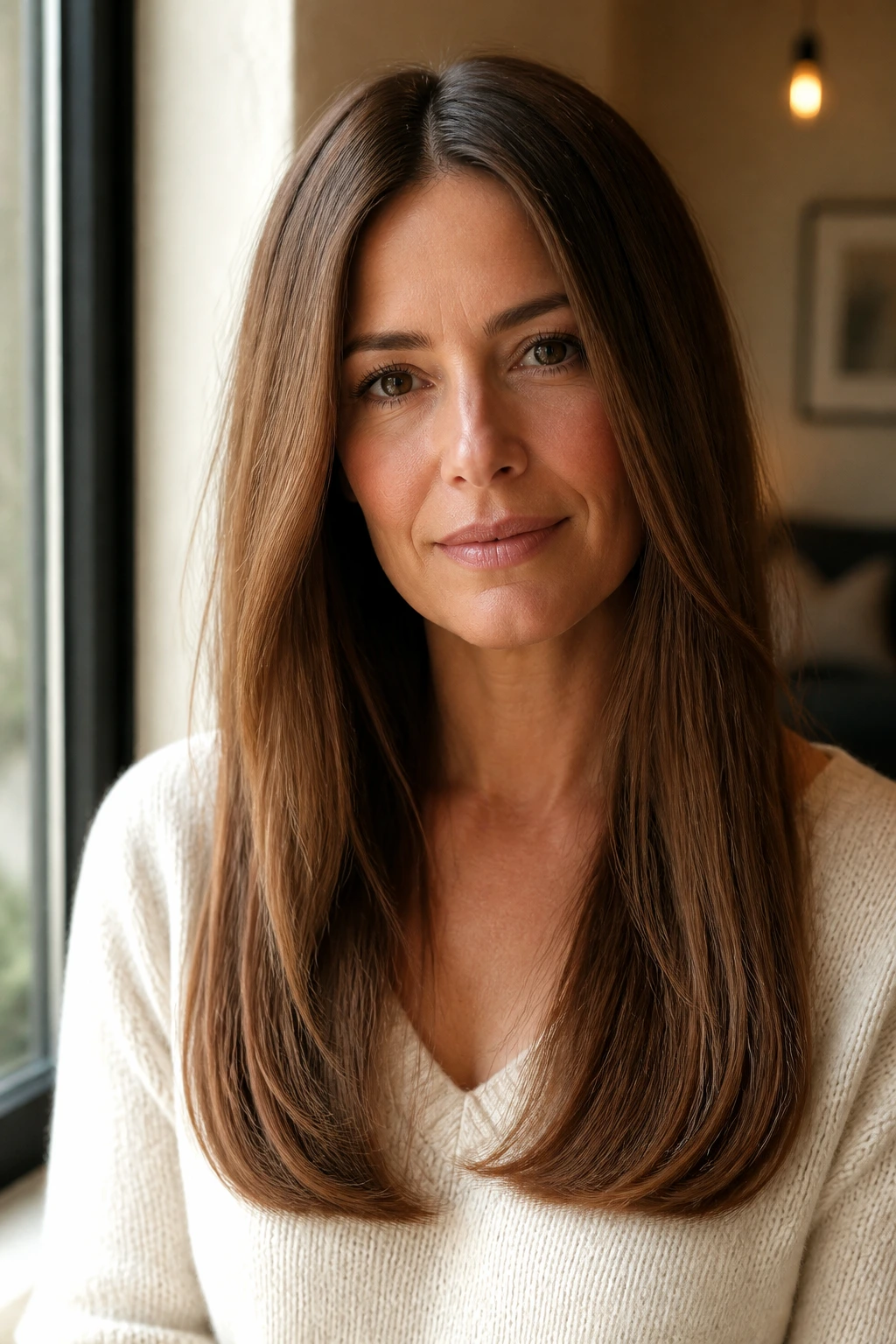
What makes a long one-length cut feel expensive is the lack of drama. It looks clean because the hair has one clear outline, usually falling below the shoulders or midway down the back. A slight curve in the ends keeps it from looking harsh.
This cut is a strong choice if you love long hair but hate the layers that kick around and frizz out. It’s also easier to keep looking neat in wind, humidity, and ordinary daily life. That matters more than people admit. Hair that only looks good in still air is not doing enough.
How to Wear It
A middle part gives it a classic, almost glossy mood. A low side part softens it and works well if your face needs a bit of diagonal movement. Either way, the haircut depends on healthy ends, so trims every 8 to 10 weeks are non-negotiable if you want that smooth sheet-like effect.
8. Feathered Collarbone Cut for Fine Hair
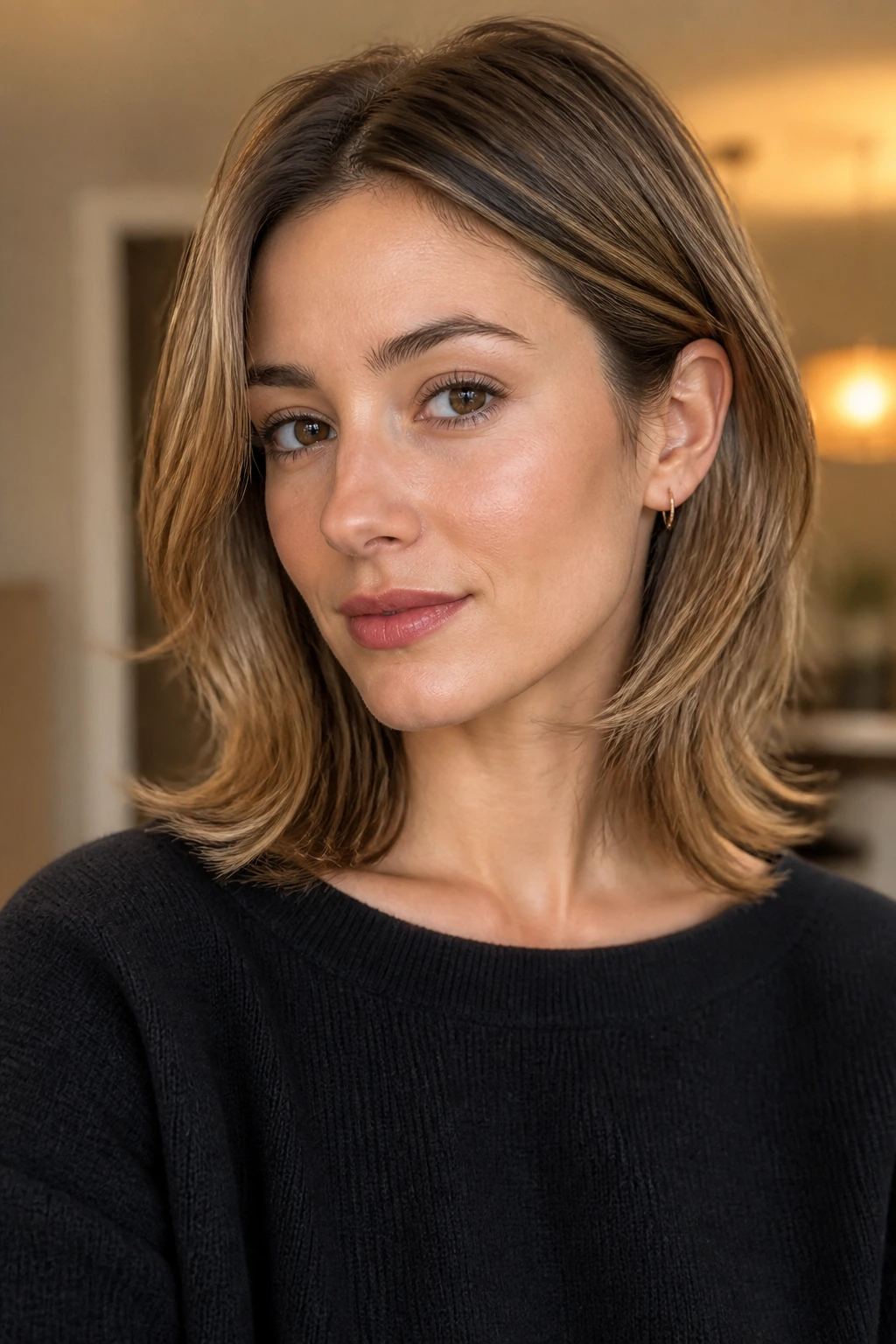
Fine hair needs help, but not the wrong kind of help. Too many short layers make it collapse. A feathered collarbone cut gives it lift without turning the ends into a frayed mess, and that is why it earns a place here.
The shape usually sits at the collarbone with soft feathering starting low around the shoulders. You get movement near the face and a little air through the mid-lengths, but the perimeter still feels intentional. It’s the sort of cut that looks even better when the hair is tucked behind one ear or clipped back in a simple barrette.
The trick is keeping the layers long enough to move but not so short that they float away from the rest of the hair. If your strands are fine, ask for a dry cut or a very careful wet cut so the stylist can see how much the hair actually bends. Fine hair lies to people. It looks fuller when wet than it really is.
9. Old Hollywood Layers Past the Shoulders
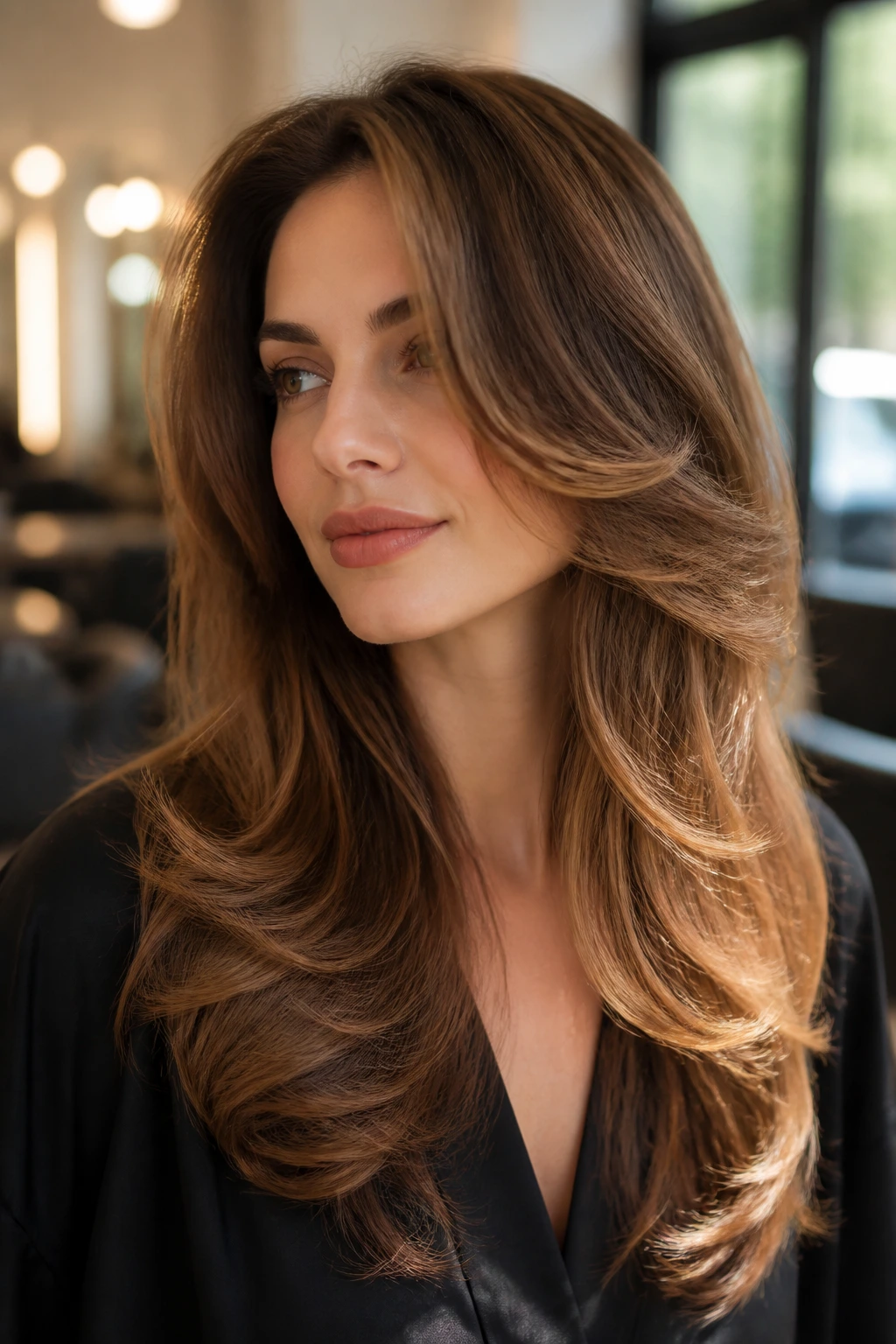
Old Hollywood layers are not about shaggy volume. They are about shape, shine, and that soft sweep you get when the hair is curled under in large sections and brushed into one smooth wave. The length usually sits past the shoulders, and the layers are placed low enough to keep the ends full.
I have a soft spot for this cut because it gives long hair a sense of ceremony without looking costume-y. The movement starts near the cheekbones and flows down in a polished way, which is exactly what makes it feel so elegant. It’s especially strong on thick hair that can hold a rounded blowout.
Ask for long, blended layers that start below the chin or even lower, depending on density. Short layers will break the line and make the shape feel too casual. The whole point is to keep the silhouette luxurious and heavy in the right places.
10. Invisible Face-Framing Layers
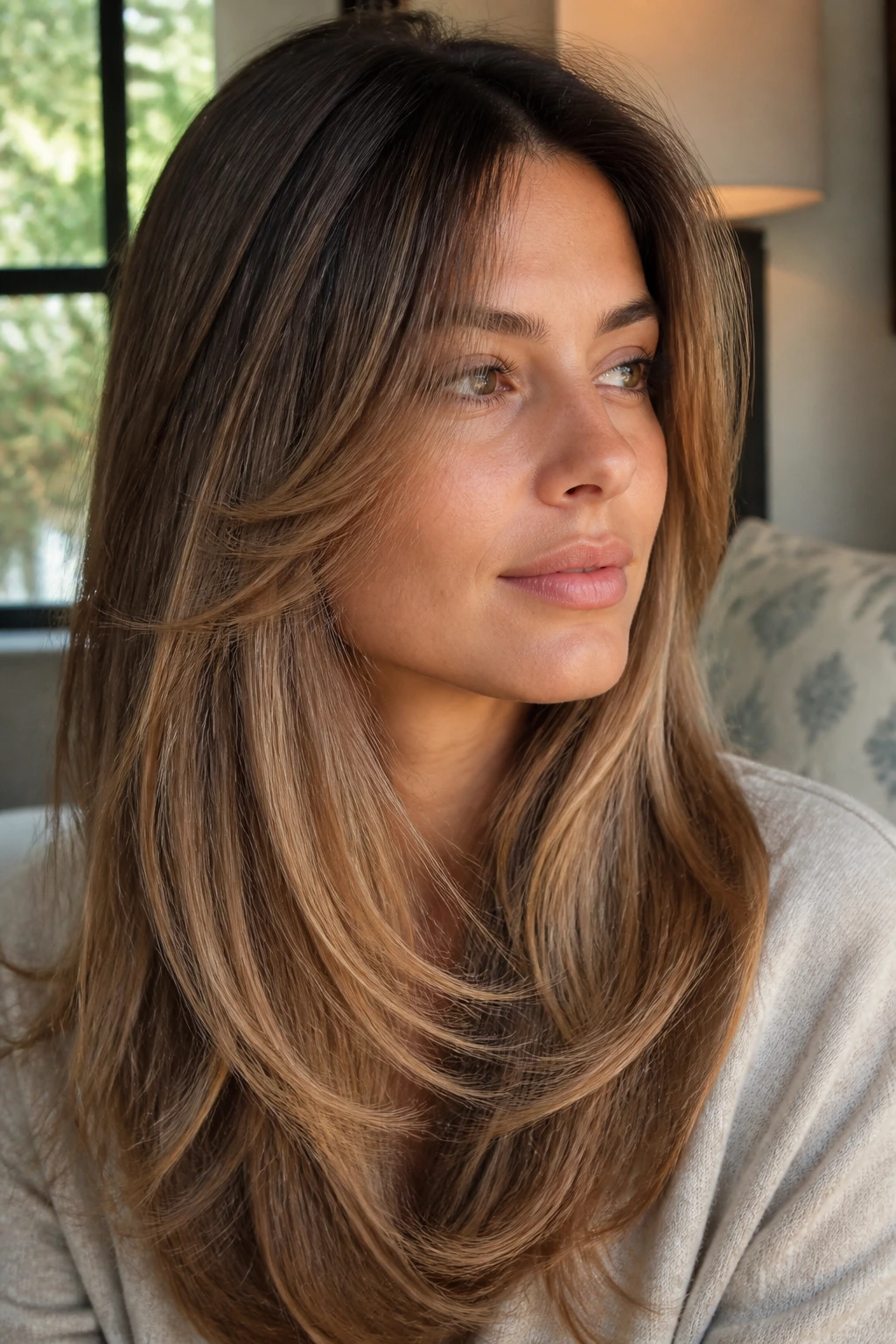
Invisible face-framing layers are the kind that people notice without being able to point at them. The haircut still looks like one continuous shape, but the front pieces open the face just enough to keep the hair from feeling flat around the cheeks.
This is a smart choice if you want old money haircuts for women that do not scream “layered.” The best version starts with the shortest piece around the chin or collarbone, then melts into the rest of the cut so there’s no obvious break. That softness matters. It keeps the look elegant rather than salon-y.
I prefer this on longer hair or a heavy lob. It gives straight hair a little movement and helps wavy hair fall more gracefully. If you wear your hair half up a lot, these layers are a gift. They leave enough front softness to keep the style from looking severe.
11. Rounded Swing Bob
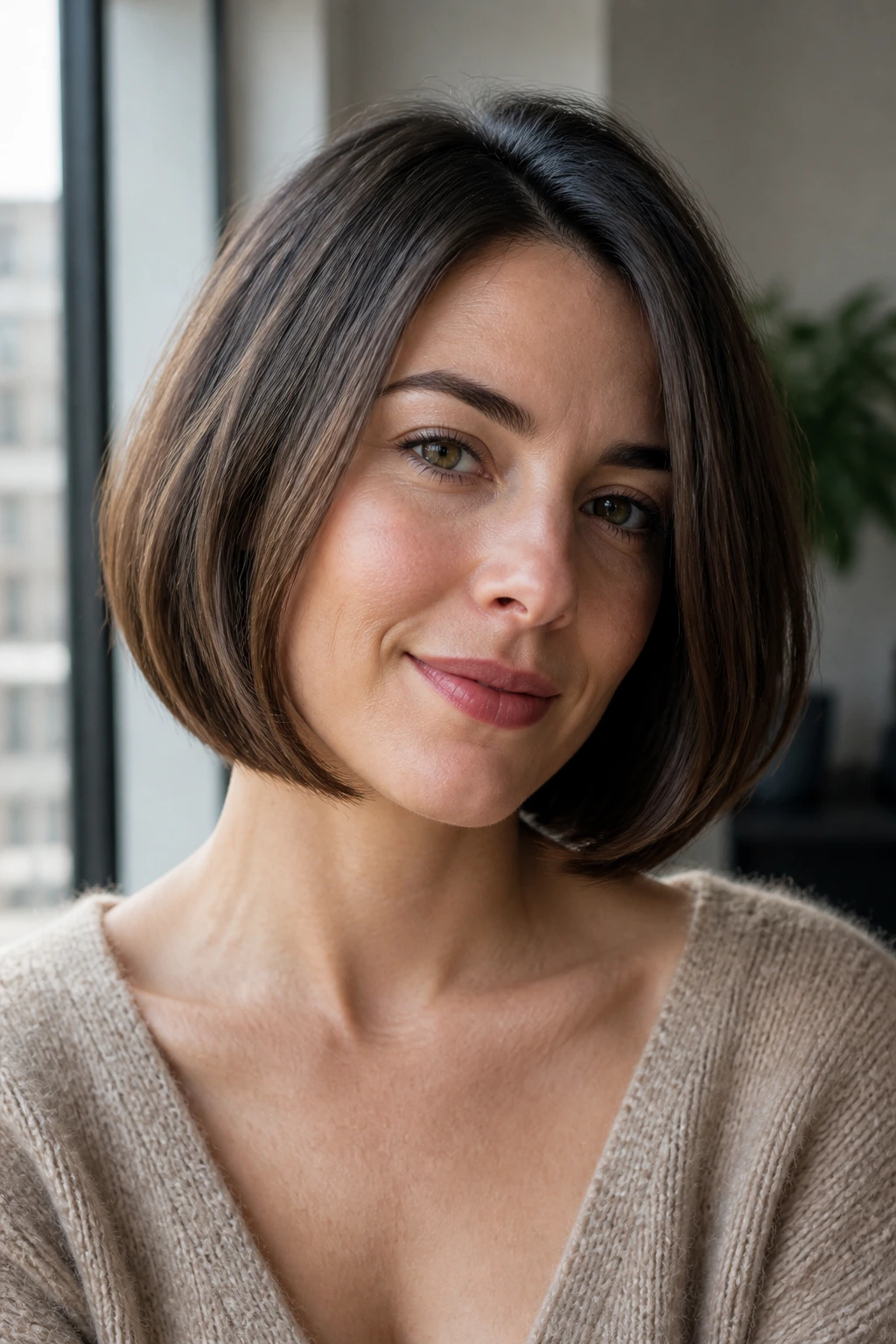
A rounded swing bob has a little more body than a straight bob, but it still keeps the shape clean. The length usually sits between the jaw and collarbone, and the ends curve inward just enough to create that swing when the head moves.
This cut works because it feels alive without looking undone. There’s no choppiness, no airy mess, no texture overload. Just a rounder silhouette that gives the hair a polished bounce. I think it looks especially good on women with dense hair, because the shape holds itself instead of sinking into the neck.
What to Ask For
- Keep the perimeter blunt.
- Leave enough length at the front to skim the jawline.
- Softly bevel the ends under, not outward.
- Avoid aggressive thinning near the bottom.
The result is a bob that feels tailored and slightly old-school, which is exactly the mood this aesthetic likes.
12. A-Line Bob With a Tucked Nape
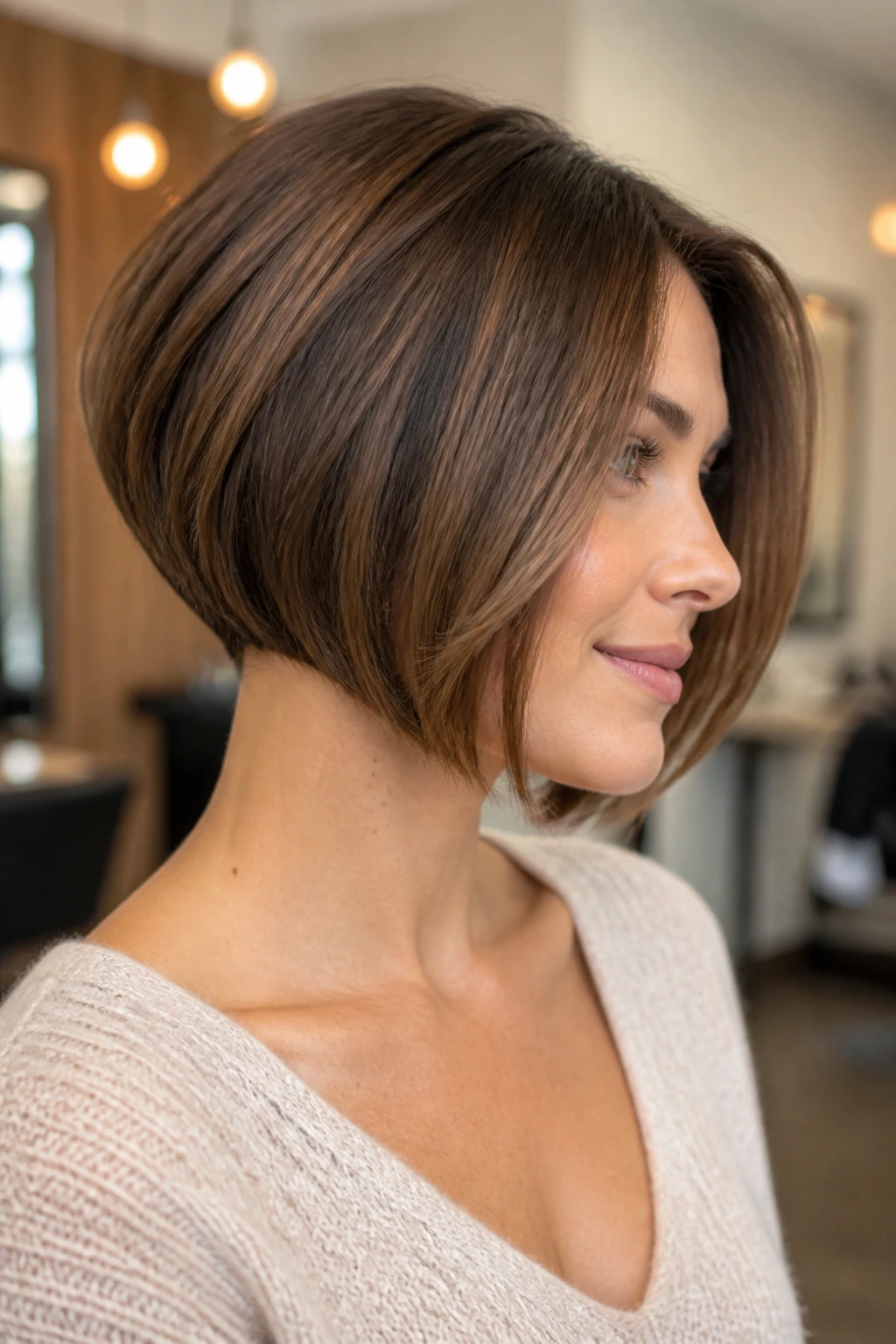
Why does an A-line bob feel so clean? Because it keeps the front a little longer than the back, which gives the face a longer line without needing extra layers. The nape stays close to the neck, so the shape looks neat even when the front has a bit of swing.
This is a good pick if you want a bob that feels structured but not severe. The slight angle is subtle enough to stay classic, especially when the ends are smoothed down instead of curled out. It also grows out more gracefully than a straight, blunt bob, which is useful if you do not want a hard salon line every six weeks.
The best versions have a tucked nape and front pieces that stop around the chin or just below it. That tiny bit of difference between front and back gives the haircut movement. Not drama. Movement. Big difference.
13. Thick-Hair U-Cut
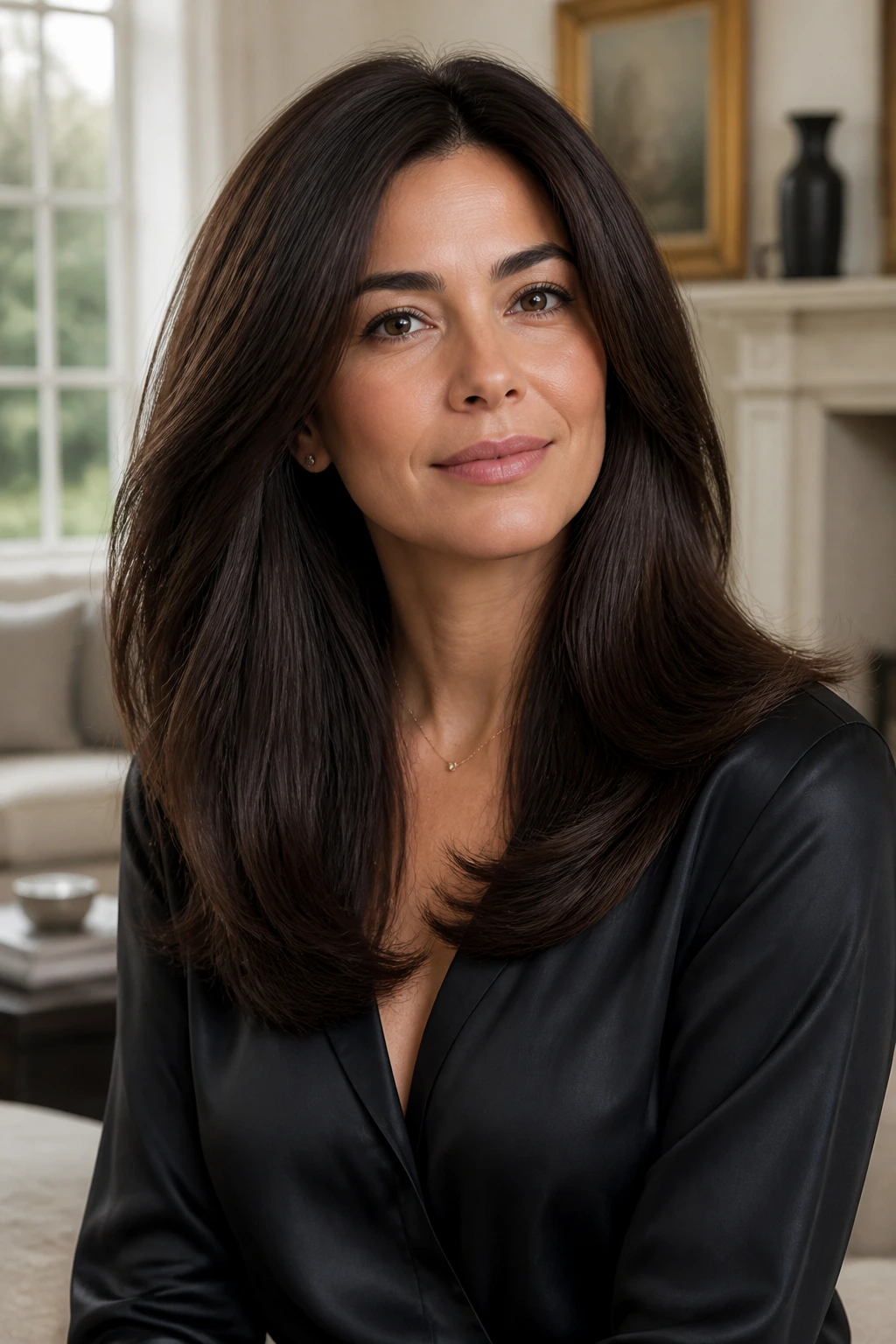
Thick hair loves a U-cut when the shape is done with care. The silhouette curves gently at the back instead of falling in a flat line, and that curve stops the whole head of hair from feeling boxy. For women who wear their hair long, it can make the difference between elegant and bulky.
The U-shape keeps the center slightly longer and lets the side pieces taper toward the front. That lets the hair sit against the shoulders in a smoother way. If the cut is too blunt, thick hair can balloon out at the ends. If the layers are too short, it can spread wide and lose the refined feel. The U-cut solves both problems without trying to be flashy.
Ask for long internal layers only if the hair is dense. Otherwise, leave the edges fuller. Thick hair often needs weight left in the perimeter so the style hangs down instead of puffing up.
14. The Old Money Butterfly Cut Kept Long
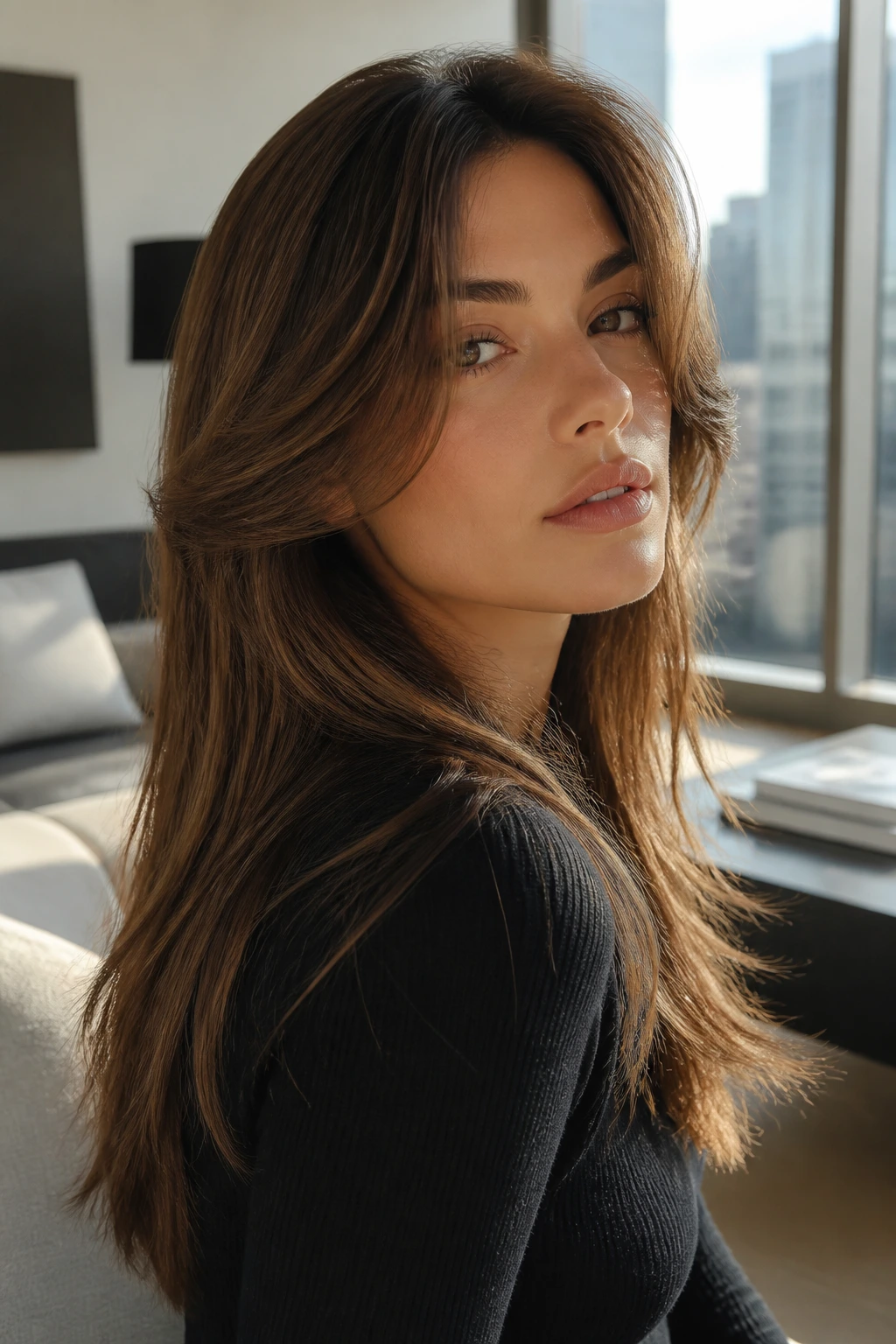
The butterfly cut can turn messy fast, but kept long and soft, it has real old-money appeal. The shorter front pieces create lift near the face, while the longer length carries the rest of the shape. When it’s done well, the layers feel like a grown-up blowout rather than a trendy haircut.
I like this cut best on women who want movement without giving up length. The key is keeping the shortest layers long enough to sit below the cheekbones, not right at them. That gives the hair a lifted frame without that over-layered feather duster effect some butterfly cuts get.
It’s also a good style if you wear your hair in waves a lot. The layers give the curls a place to fall, and the long back keeps the finish looking rich instead of busy. If you have a round face, ask the stylist to keep the front pieces below the chin. That single detail changes the whole mood.
15. Deep Side-Part Bob
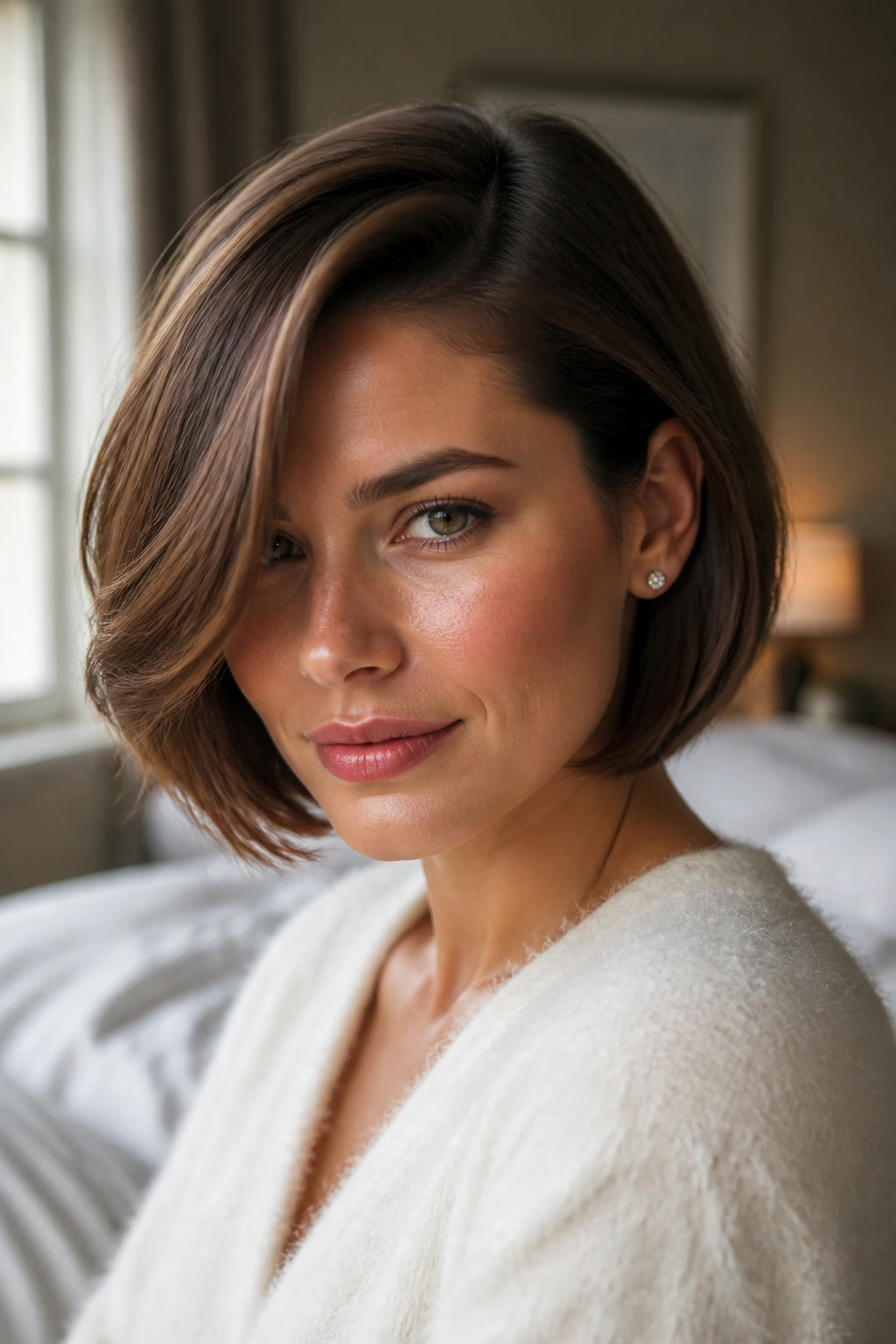
A deep side part can change a haircut more than people expect. On a bob, it brings back a bit of old-school glamour and gives the face asymmetry in a flattering way. The length can be jaw-grazing, chin-length, or a touch longer, but the part is what makes it read polished.
This cut feels especially good when the hair is sleek and the front falls across the forehead in a soft sweep. It can soften a strong jaw, add shape to a narrow face, and make simple earrings look more deliberate. That’s a lot of payoff from one small shift.
I like this on women who find center parts too severe. A deep side part gives a little drama without making the haircut loud. Keep the ends blunt or just barely beveled, and the whole thing stays elegant instead of overly styled.
16. Tapered Pixie With a Longer Top
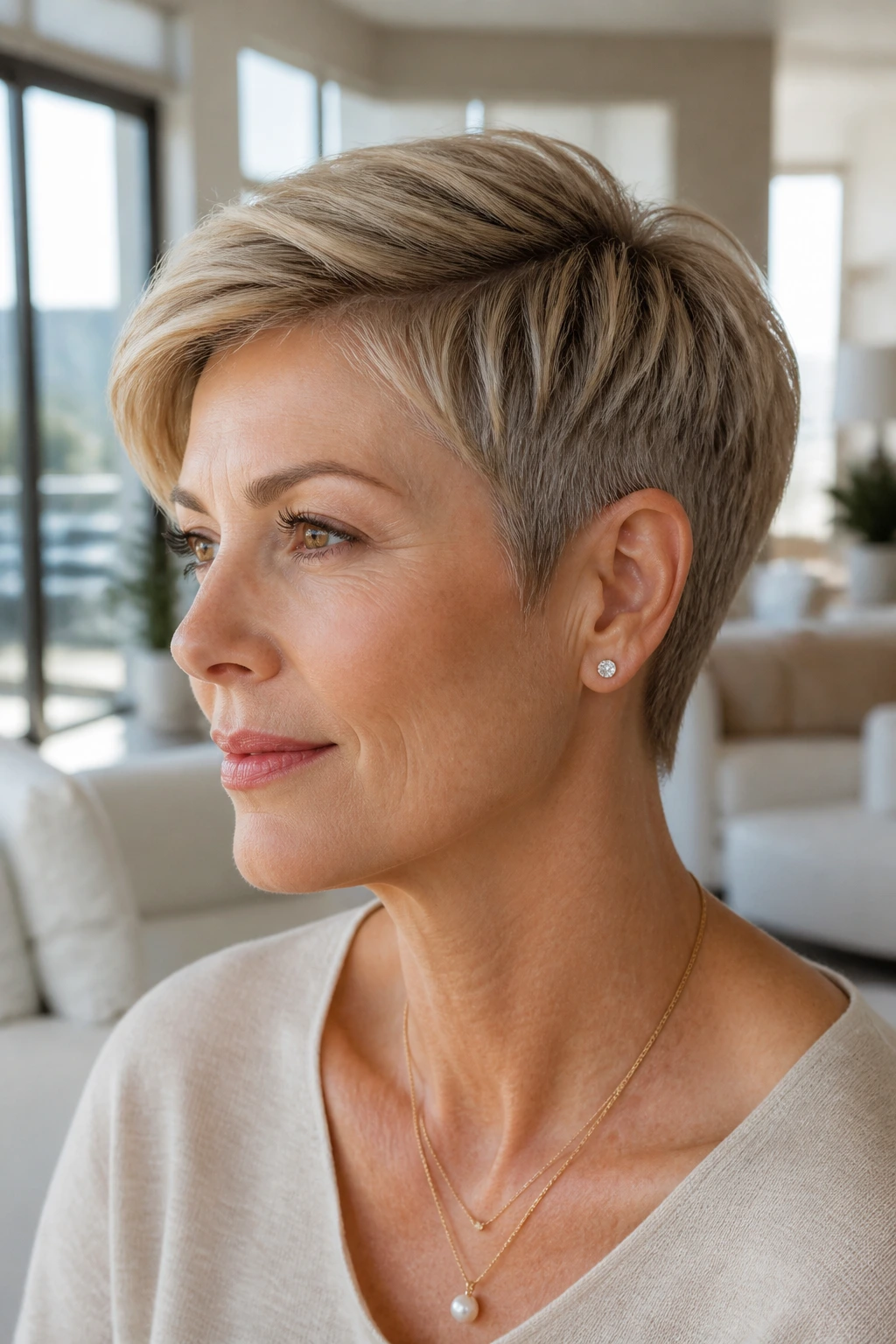
Yes, a pixie can fit this aesthetic. It just has to be tidy. A tapered pixie with a longer top and neat sides looks clean, expensive, and unexpectedly feminine when the shape is precise.
The sides and nape should stay close to the head, while the top has enough length to sweep over with a little bend. That contrast gives the cut movement without making it fuzzy. If the top is left too choppy, the style loses its polished edge fast. If it’s too short everywhere, it can feel severe. The sweet spot is a soft top that can be brushed back or to the side.
This cut suits women who want low maintenance in the morning and do not mind trims every 4 to 6 weeks. It also makes earrings, collars, and cheekbones do more work, which is one reason it looks so clean with simple clothes.
17. Straight-Across Lob With No Layering

Why does a straight-across lob look so refined? Because it tells the eye exactly where to go. The line is simple, the length is useful, and the haircut doesn’t ask for a lot of styling tricks. It usually falls between the chin and collarbone, with no obvious layers breaking the shape.
This is one of the best options for women who want their hair to look calm. Not trendy. Calm. The effect is strongest when the ends are blunt and healthy, and when the hair is worn smooth with a center or shallow side part. A flat iron can help, but a good blow-dry with tension on the brush often does enough.
The cut also makes color look richer, because the eye gets a long, clean surface instead of a broken one. If you wear highlights, keep them soft and blended. Hard ribbons can fight the neatness of the shape.
18. Swoop-Bang Shoulder Cut

A shoulder-length cut with a swoop bang has a little 1960s polish to it, and I mean that in the best way. The fringe moves diagonally across the forehead, which softens the face while the rest of the hair stays smooth and orderly at the shoulders.
How It Reads in Real Life
It looks expensive because nothing is fighting for attention.
This cut works best when the bangs are long enough to tuck behind the ear or blend into the side layers. Short bangs make the style feel playful; long swoops keep it composed. The shoulder length matters too, because it gives the bangs a grounded base. If the rest of the hair is too short, the fringe can take over.
Ask for the bang to start near the eyebrow arch and angle down toward the cheekbone. That creates a soft sweep rather than a hard curtain. I’d keep this style on the smoother side rather than pushing it into big volume. A little bend is enough.
19. Wavy Lob With Barely-There Layers
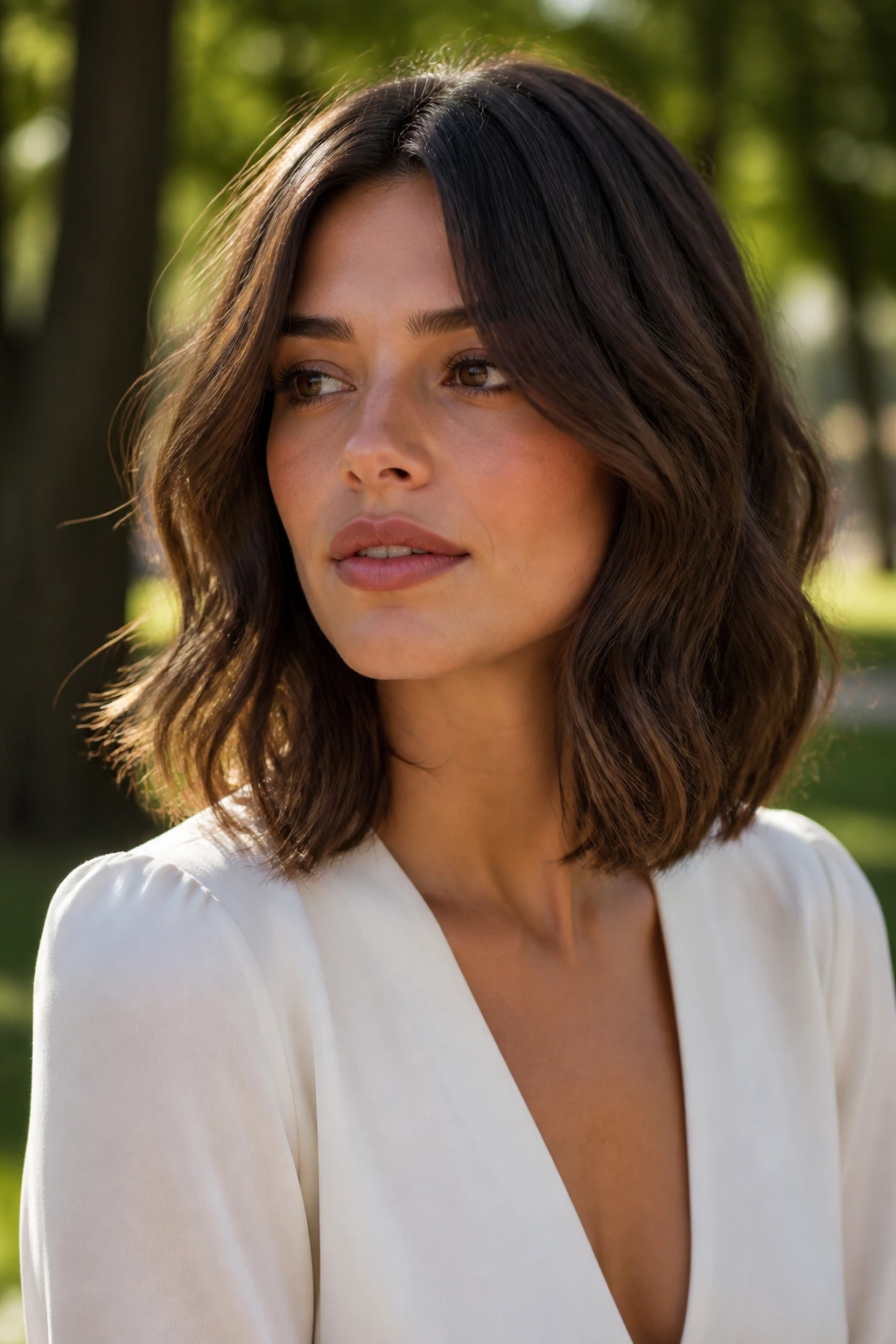
A wavy lob can look expensive or messy, and the difference comes down to the layers. Keep them almost invisible, and the hair gets enough movement to follow its natural bend without turning into a triangle. That is why this cut is such a strong match for the old money look.
The length usually falls around the collarbone, which is long enough to feel feminine but short enough to keep the waves from dragging down. If your hair naturally makes a loose S-shape, this is one of the easiest cuts to live with. The hair air-dries into something that looks intentional, especially if the ends are blunt enough to hold the shape.
A small amount of cream or mousse goes a long way here. The cut should not depend on product to behave. If it does, the layers are probably too heavy or too short. Keep them soft, and the style does the quiet work for you.
20. C-Cut for Long Hair
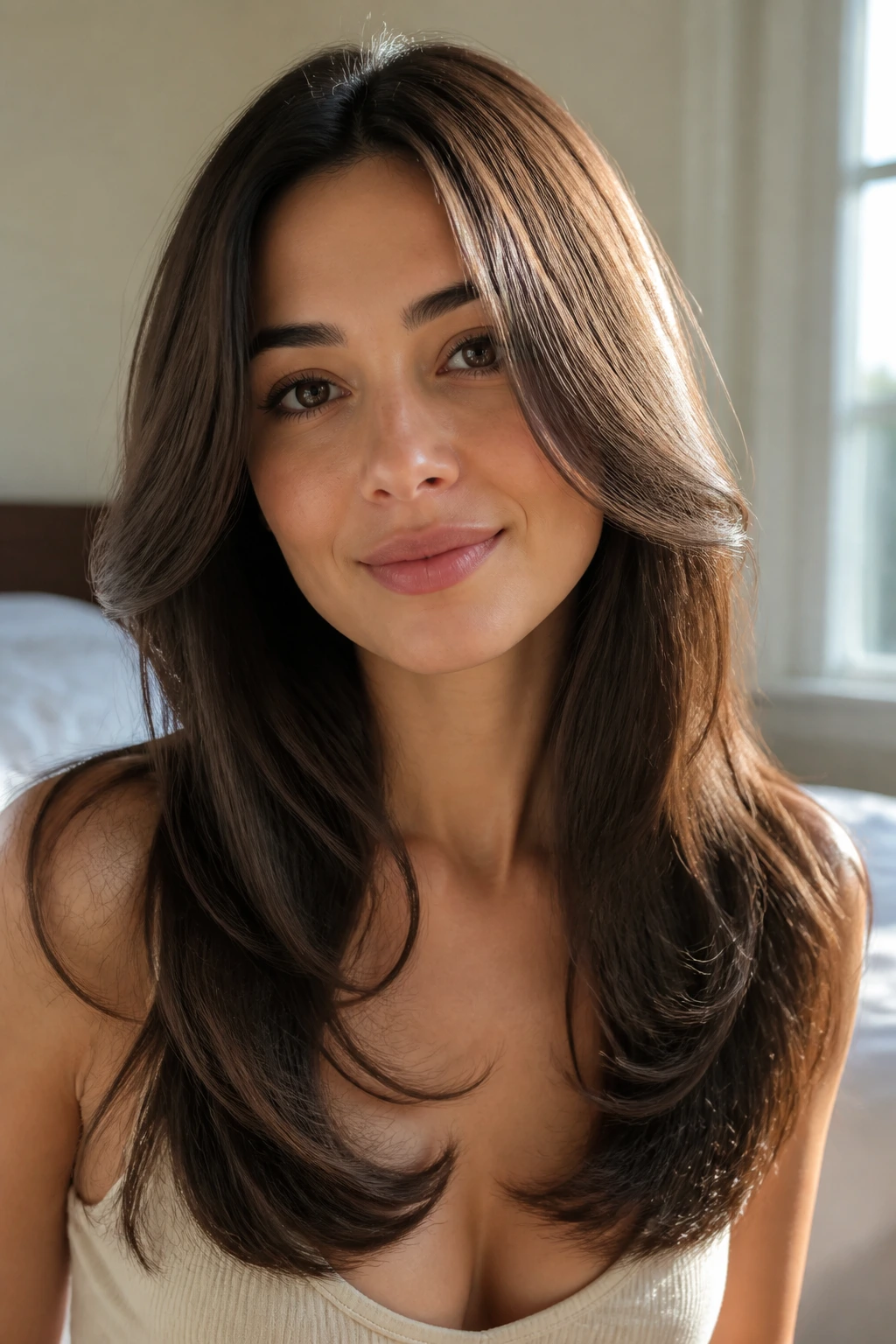
A C-cut shapes the hair into a soft curve that hugs the face and then melts into longer lengths. It is subtler than a butterfly cut and softer than a blunt one-length cut, which makes it a nice middle ground for women who want long hair with a visible shape.
The curve usually starts around the cheekbones and rounds down toward the shoulders. That shape flatters long hair because it stops the front from hanging lifelessly while keeping the back full. It’s especially good on straight or slightly wavy hair, where the line can really show.
Unlike heavy layers, the C-cut doesn’t break the hair into pieces. It keeps the overall look smooth, which is exactly why it feels so tidy. If you like your hair tucked behind one ear, clipped back, or brushed into a low ponytail, this cut gives you enough softness near the face without losing polish.
21. Sculpted Curly Bob
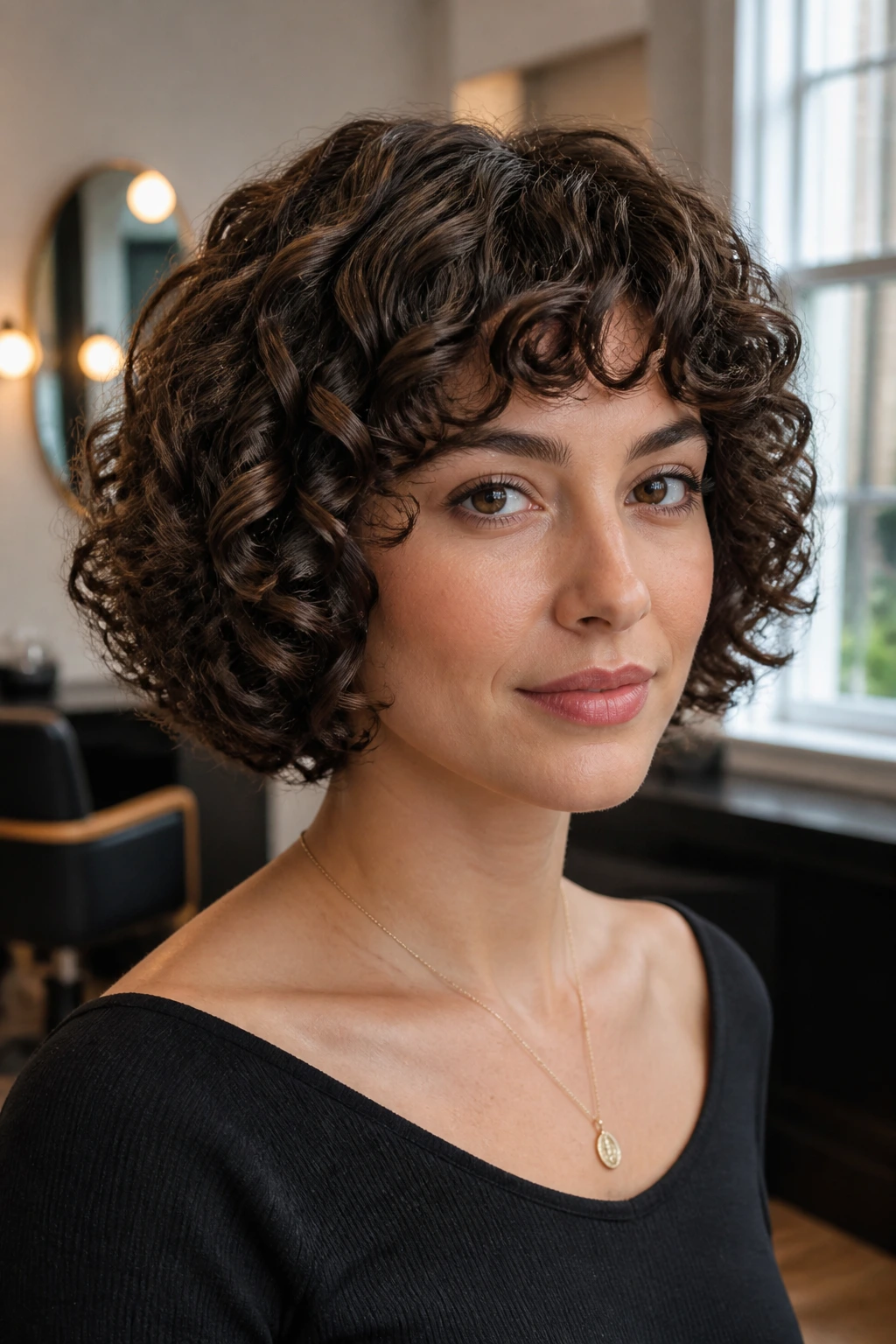
Curly hair can do old money beautifully when the shape is disciplined. A sculpted curly bob usually sits around the chin or just above the shoulders, with curls cut to keep the outline round and controlled instead of wide and unpredictable.
The key is balance. Short enough to show the face, long enough to let the curls form properly. If the cut is too short, curly hair can spring up and lose its elegant line. If it’s too long without shape, it can drag and look heavy. A good sculpted bob sits in the middle and keeps the curls grouped in a way that looks intentional.
I’d ask for dry cutting if the stylist is comfortable with it, because curls lie about their length when wet. A shape that looks neat on the floor can behave like a different haircut once it dries. That part matters. A lot.
22. Midi Cut With Flipped-In Ends
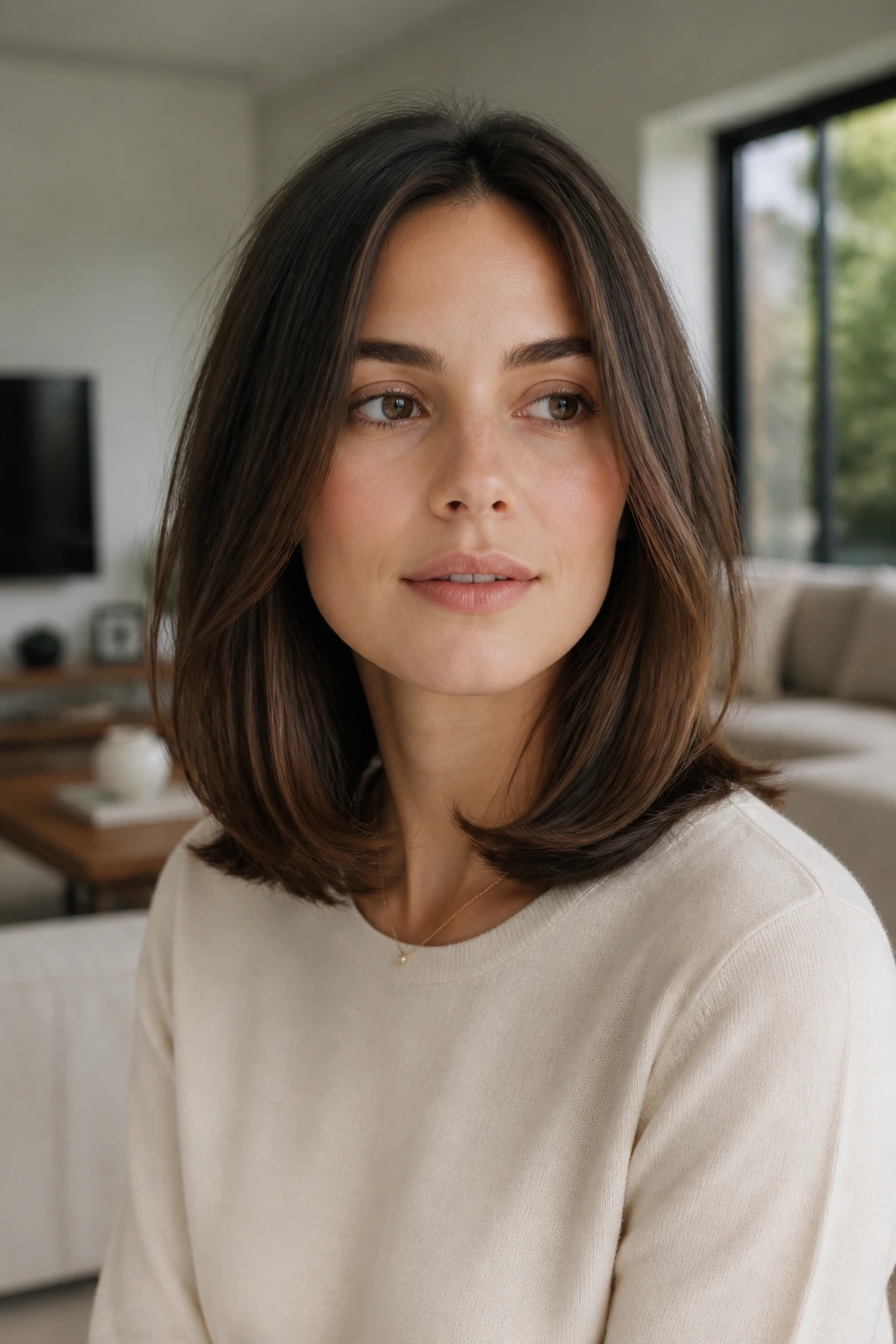
A midi cut falls between the shoulders and the upper chest, and the flipped-in ends give it a softer finish than a straight hang. It has a little 1990s polish to it, but the effect stays classic when the flip is subtle rather than bouncy and dramatic.
This cut is a good choice if you want hair that looks arranged without looking stiff. The ends curve inward, which keeps the outline tidy, and the overall length gives you room for clips, low knots, and half-up styles. It’s practical in a way that still feels refined.
The biggest mistake is over-flipping the ends until the haircut starts to look dated or too styled. Keep the bend modest. The goal is a gentle inward turn, almost as if the hair naturally wants to sit that way. When it does, the shape looks expensive without trying to be.
23. Soft Mid-Back Cut for Straight Hair
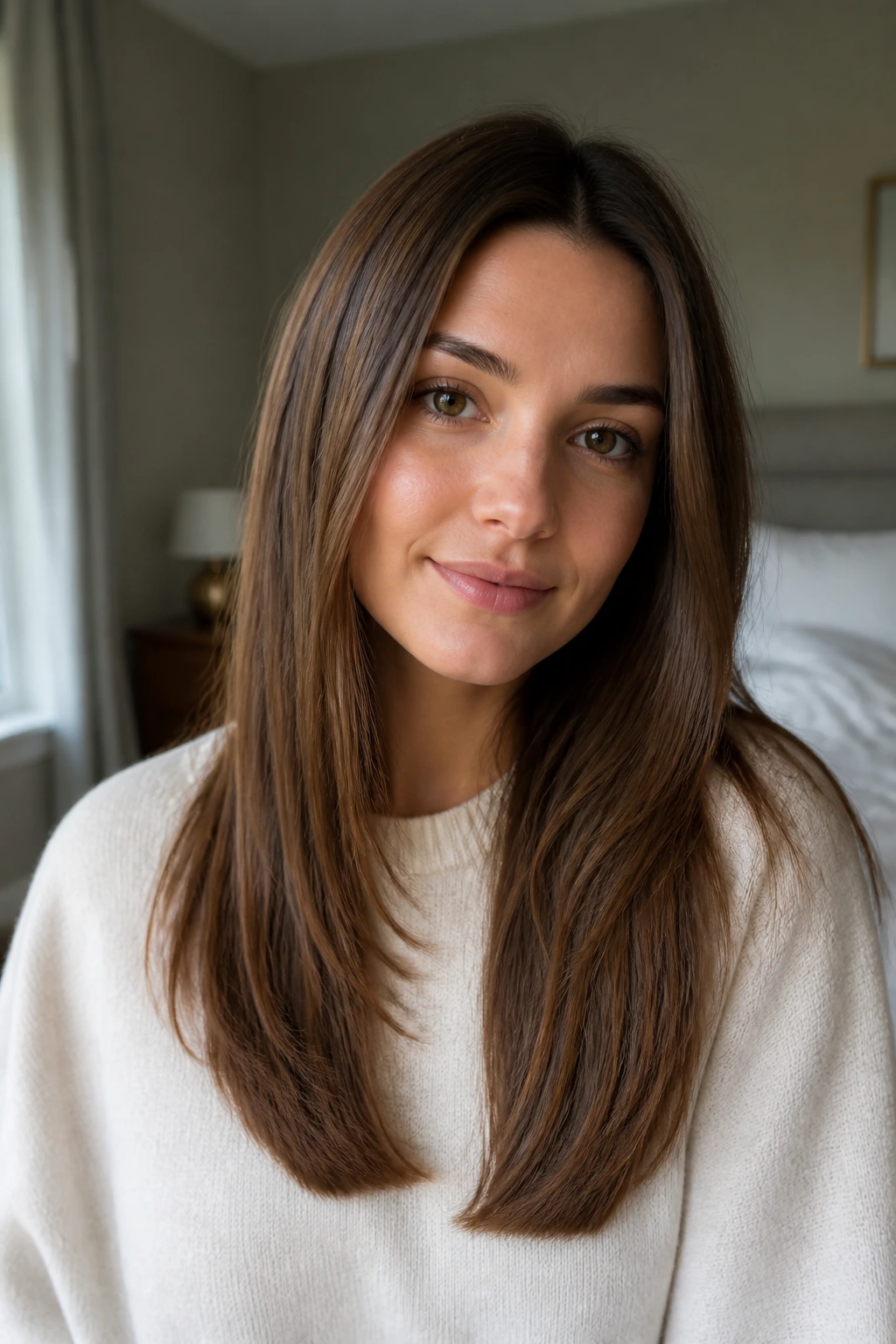
Straight hair can go flat fast, so the cut has to do some of the work. A soft mid-back cut keeps the length elegant but adds just enough internal shape to prevent the whole thing from hanging like a curtain. I like this style when the ends are healthy and the body of the hair stays smooth.
The length usually lands somewhere between the shoulder blades and the middle of the back. That gives the hair presence without making it heavy around the face. A tiny bit of layering near the front can help, but not much. Straight hair often looks best when the perimeter stays strong.
This is the kind of haircut that looks calm with a silk blouse, a knit tank, or a crisp white shirt. Nothing about it is loud, and that’s exactly the point. It relies on the quality of the cut and the condition of the ends, not on some dramatic shape change.
24. Polished Princess Cut
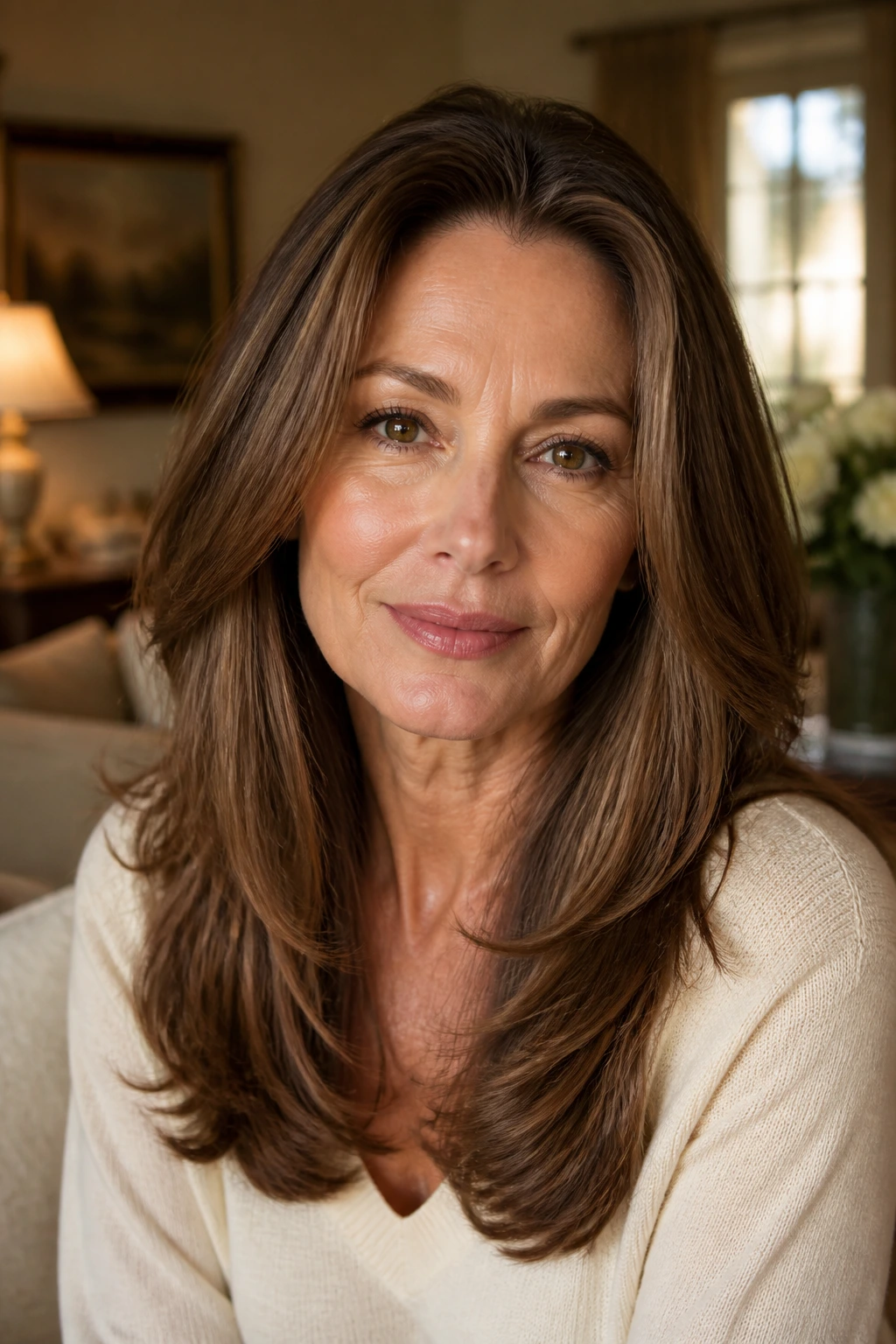
The princess cut is long, rounded, and full at the ends, with soft layers that support the shape instead of scattering it. It feels romantic without becoming fussy, which is why it fits so neatly into this list. The silhouette tends to be smoother than a shag and fuller than a one-length cut.
What to Ask the Stylist
- Keep the longest length below the shoulders or midway down the back.
- Start the shortest layers low, around the chin or below.
- Round the shape rather than sharpening it.
- Leave enough weight in the bottom so the ends sit neatly.
The princess cut works best when it has body through the mid-lengths and a clean edge. I think of it as a haircut that likes a good brush-out. It does not need curls. It does need structure. If your hair is naturally thick, the cut can feel luxurious. If your hair is fine, the layers must stay controlled or the shape gets sparse.
25. The Old Money Long Layers With a Blowout Finish
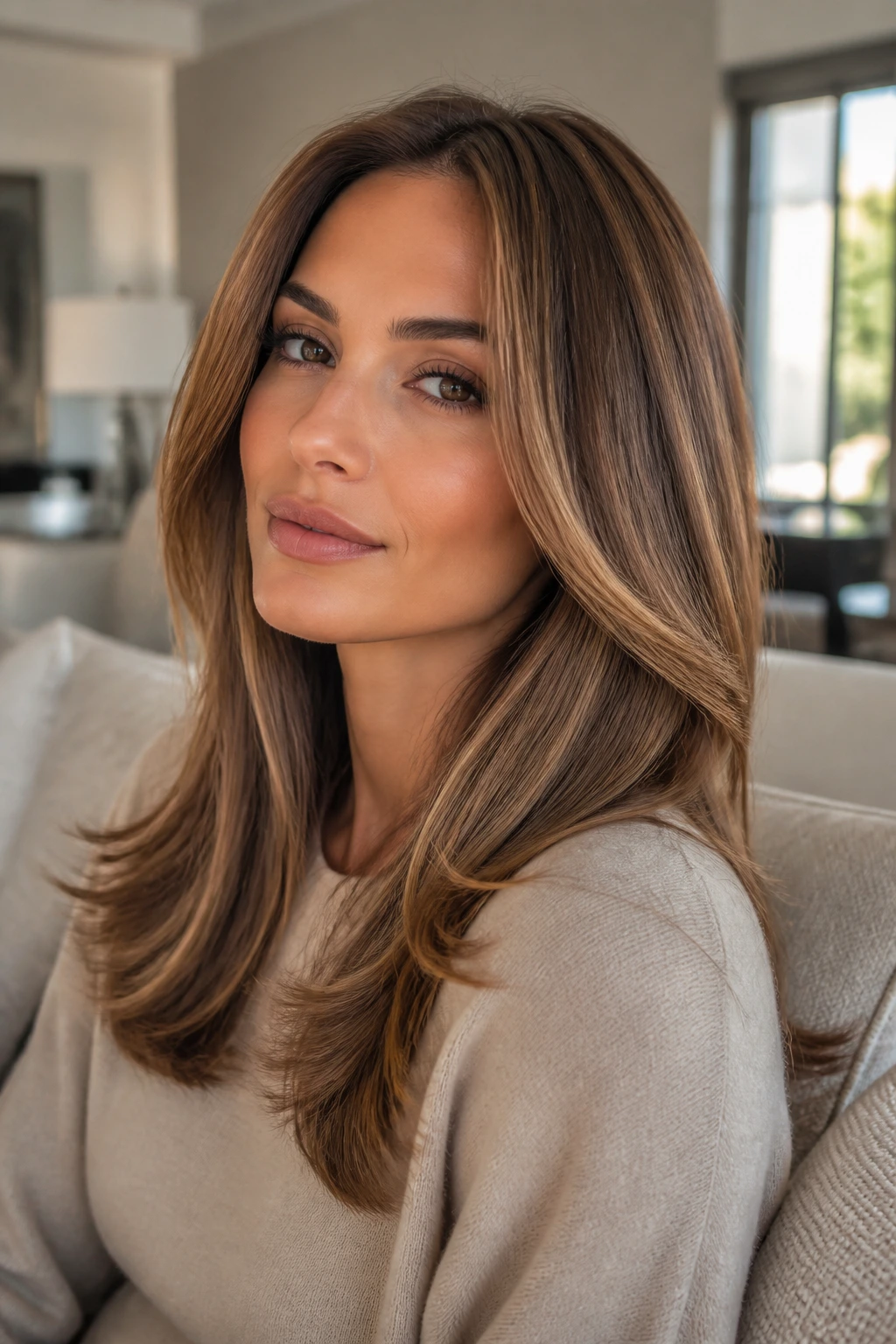
Long layers can look messy in a hurry, but when they’re kept long and blown out with care, they become one of the strongest old money haircuts for women. The layers should start low, usually below the chin, so the length stays full and the movement stays graceful. That’s the part people miss when they ask for “layers” and end up with pieces flying everywhere.
This cut is best for women who want long hair that still feels shaped. It gives the ends a little spring, helps the hair move off the shoulders, and works especially well with a round-brush blowout. If you like a polished wave, large Velcro rollers or a 1.5-inch curling iron can reinforce the shape without making it look overdone.
I also think this is one of the easiest cuts to wear with old money styling cues: a center part, simple earrings, a cashmere sweater, a low bun on day two. The haircut does not fight any of it. It just sits there looking expensive, which is honestly the whole appeal.
