



French bobs with fringe have a way of making a face look awake in about ten seconds. No contour kit. No heavy styling. Just a clean line at the jaw, a little movement around the eyes, and that slightly undone finish that makes the cut feel expensive even when you air-dry it.
That is the whole trick.
A French bob is not the same thing as a standard bob with bangs. The edge usually sits shorter, the shape keeps more weight at the perimeter, and the fringe has some air in it — not a stiff sheet sitting across the forehead. The result is sharper than long layers and softer than a blunt chop that has no bend or softness around the face.
The good versions do something specific. They sharpen cheekbones. They shorten a long forehead. They soften a square jaw. They make fine hair look fuller and thick hair look lighter without turning it into a shag that needs constant hand-fluffing. Short hair, yes. Boring hair, no.
Some of these cuts need regular trims every 4 to 6 weeks. Others grow out with grace and start looking even better once the fringe settles into the brow and the ends get a little piecey. That’s why the shape matters so much. A French bob with fringe is never just “bob plus bangs.” The exact line, the weight, and the way the fringe falls around the eyes change everything.
1. Chin-Length French Bob With Curtain Fringe
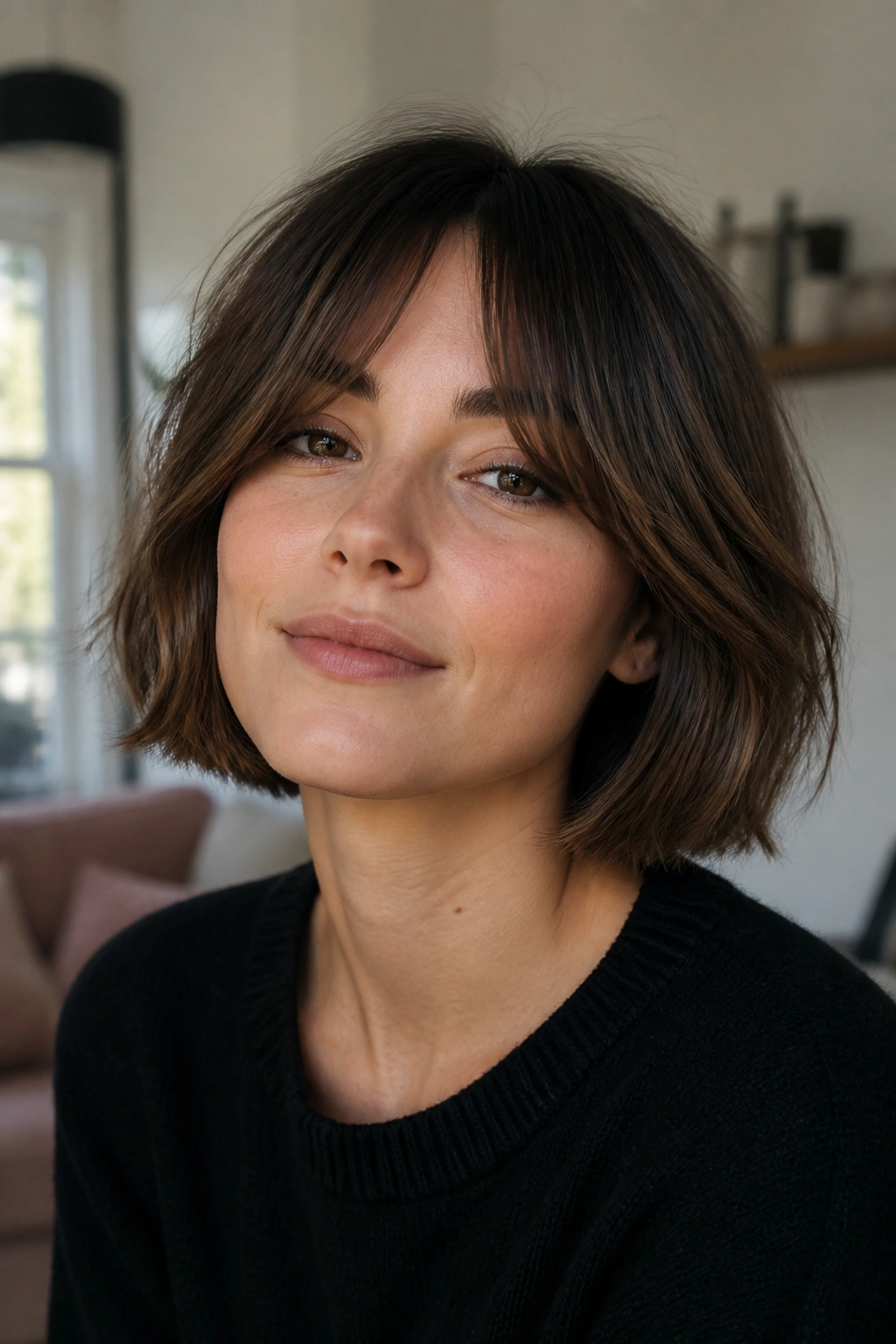
A chin-length French bob with curtain fringe is the version most people mean when they say they want something flattering but not fussy. The bob lands right at the chin or a whisper below it, and the fringe splits softly in the middle so the cheekbones stay open.
Why It Flatters So Easily
The center part in the fringe pulls the eye down the middle, then the longer pieces sweep out toward the temples. That creates a clean frame without hiding the face. It’s especially good if you want the haircut to feel light around the forehead but still have enough bang to count.
I like this shape for someone who wants movement without drama. It behaves well when tucked behind one ear. It behaves well when it’s a little messy. And it behaves even better after the first day, when the fringe stops trying so hard.
Ask Your Stylist For
- Length at the chin, with the front pieces kept a touch longer if you want a softer outline.
- A curtain fringe that starts around the brow and opens toward the cheekbones.
- A small bevel at the ends, not a curled-under helmet shape.
- Light point cutting in the fringe so it falls in pieces rather than one thick block.
Pro tip: blow-dry the fringe away from the face first, then let it fall where it wants. That tiny reset keeps the part from looking flat.
2. Blunt French Bob With Straight Fringe

This is the sharpest version on the list, and that is exactly why it works. The blunt French bob with straight fringe gives the face a strong outline, which is useful when your hair is fine, your features are soft, or you want the eyes to do the talking.
The magic is in the contrast. The bob itself is firm and dense at the bottom, while the fringe sits straight across the forehead with just enough softness at the edges so it does not feel severe. Done well, it looks polished without looking precious. Done badly, it turns into a mushroom. There’s a difference.
I’d reach for this if you like clean clothes, straight collars, and hair that looks like it knows where it’s going. It suits oval faces, heart-shaped faces, and anyone with a good brow line who does not mind a little upkeep. The fringe needs trims more often than the bob, because straight bangs grow into your eyelashes faster than people expect.
The best version is not razor-sharp all the way through. Ask for a firm line with the tiniest bit of texture at the ends of the fringe. That keeps the cut from looking like a helmet in bright light. A flat iron pass at the root, then a quick bend under the ends, is usually enough.
3. Wavy French Bob With Bottleneck Fringe

Why does a bottleneck fringe keep looking good even when the rest of the hair is a little messy? Because it does two jobs at once. The center stays shorter and draws attention to the eyes, while the outer pieces stretch longer and land near the cheekbones, which makes the whole haircut feel softer than a blunt bang.
That shape is a nice fix if a full fringe feels too heavy on your forehead. It gives you the front coverage you want without boxing in the face. On wavy hair, the fringe has a natural bend that makes the cut feel lived-in rather than overworked.
How to Wear It
- Let the fringe dry in separate sections so the center does not collapse into one strip.
- Use a light mousse or cream from mid-length to ends, not at the roots.
- Scrunch the bob with your hands, then leave the front pieces loose so they frame the face.
- If the fringe splits weirdly, mist it with water and re-shape it with your fingers instead of fighting it with a brush.
What I like here is the balance. The bob can be a little tousled. The fringe can be a little imperfect. The shape still reads clearly, and that is a rare thing in short hair.
4. Jaw-Length French Bob With Piecey Fringe
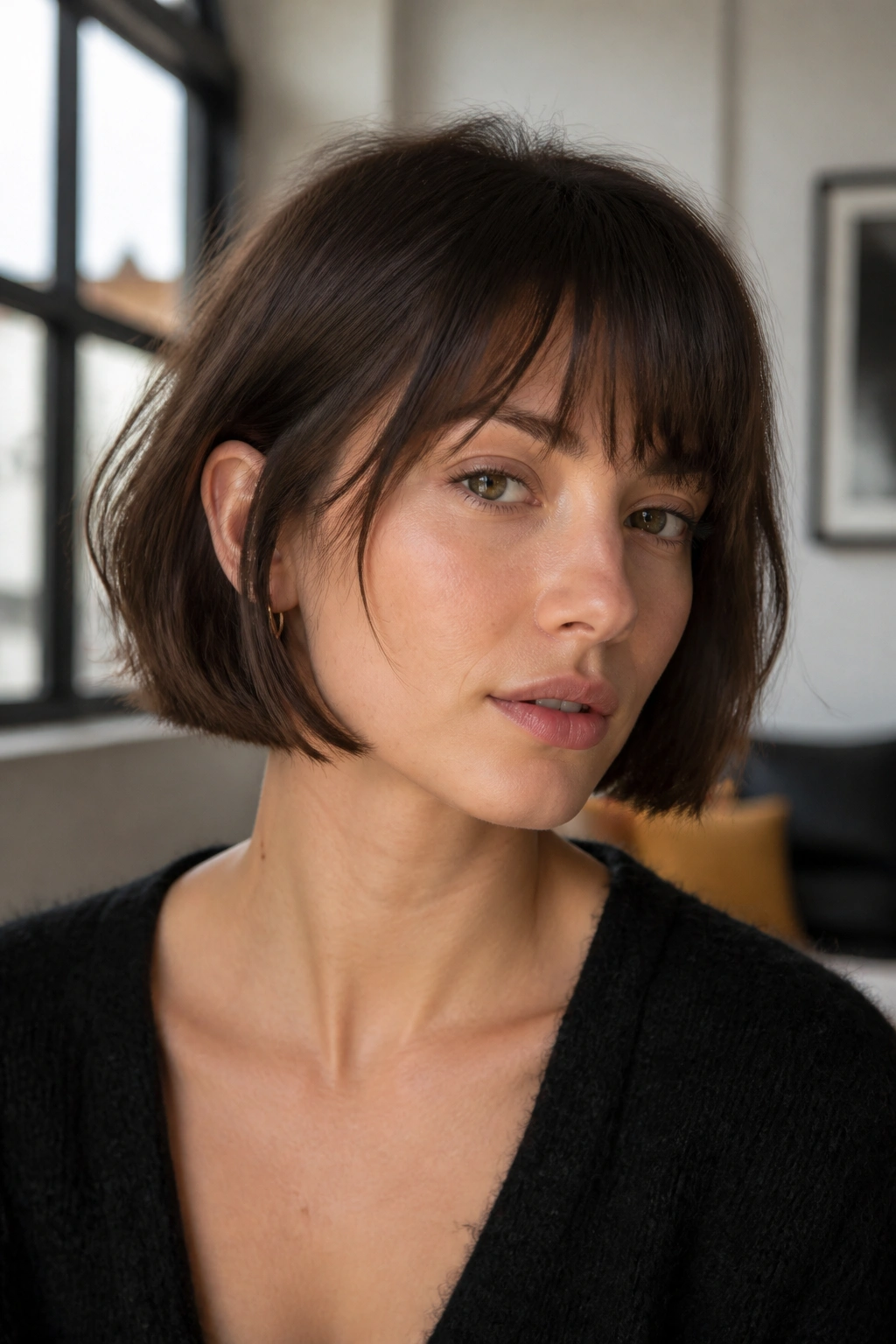
Picture this: you tuck one side behind your ear, the fringe falls in soft little strands, and the haircut still looks finished. That is the appeal of a jaw-length French bob with piecey fringe.
The cut sits just at the jaw, which makes the face look crisp and the neck look longer. The fringe is broken up enough to show skin between the strands, so it frames the face without swallowing the forehead. This is a very good cut if you hate heavy bangs but still want something in front.
The piecey texture matters. Ask your stylist to keep the fringe light and separated, not thick and blunt. A little texturizing at the ends goes a long way here, especially if your hair is straight and tends to hang in one sheet. A small amount of styling cream through the front pieces is usually enough. Too much product and you lose the whole point.
This version works especially well with sharp brows and simple makeup. It gives shape fast. It also grows out in a useful way, which is more than I can say for some fringe cuts that look great for two weeks and awkward for the next two months.
5. Layered French Bob With Shaggy Fringe
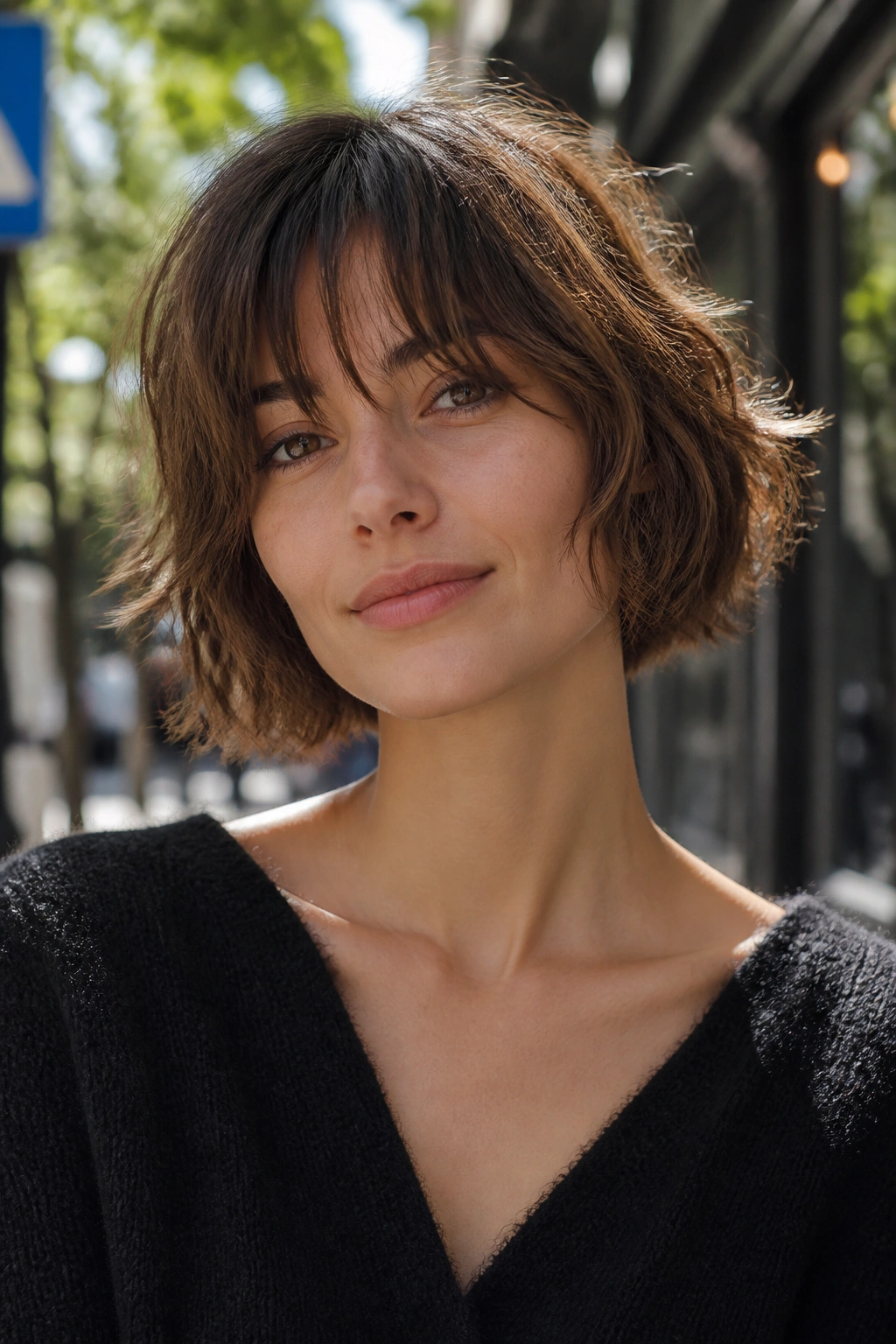
A layered French bob with shaggy fringe is the cut you choose when you want movement first and neatness second. The perimeter still sits in bob territory, but the inside has enough soft layering to keep thick hair from puffing out at the sides.
The fringe is where the attitude lives. It should look a little broken up, a little airy, and never too precise. That’s what keeps the haircut from sliding into full shag territory. Too many layers and you lose the bob. Too little and the hair starts to feel boxy. The sweet spot sits right in between.
I’m fond of this on hair that bends, puffs, or flips on its own. The layers help the hair fall around the face instead of away from it, which means the fringe can do its job without competing with a giant triangle shape at the bottom. A dry finish works well here. So does a diffuser if your wave pattern is more pronounced.
The one thing I would not do is over-texturize the fringe. Shaggy does not mean thinned to the point of see-through. You want movement, not gaps.
6. Side-Part French Bob With Side-Swept Fringe

Unlike a straight-across fringe, a side-swept fringe opens one side of the face and softens the other. That little angle changes the whole mood of the haircut. It reads less severe, a bit more relaxed, and it can save you if a center part has never felt right on you.
This is one of my favorite French bob variations for people who like to tuck hair behind the ear or wear one side slightly fuller than the other. The fringe should start near the brow bone on the short side and drift longer as it crosses the forehead. You want a real sweep, not a floppy side bang that keeps falling into your eye.
It also works well if your forehead is on the shorter side and you want the cut to breathe. Side-swept fringe gives you face framing without building too much weight in one place. That’s useful for rounder faces, stronger jawlines, or anyone who wants the haircut to feel softer around the temples.
Ask for a side part that looks natural when the hair dries, not forced into one exact position. A round brush helps, but you do not need a perfect blowout. A little lift at the root and a smooth bend through the fringe is enough.
7. Curly French Bob With Rounded Fringe
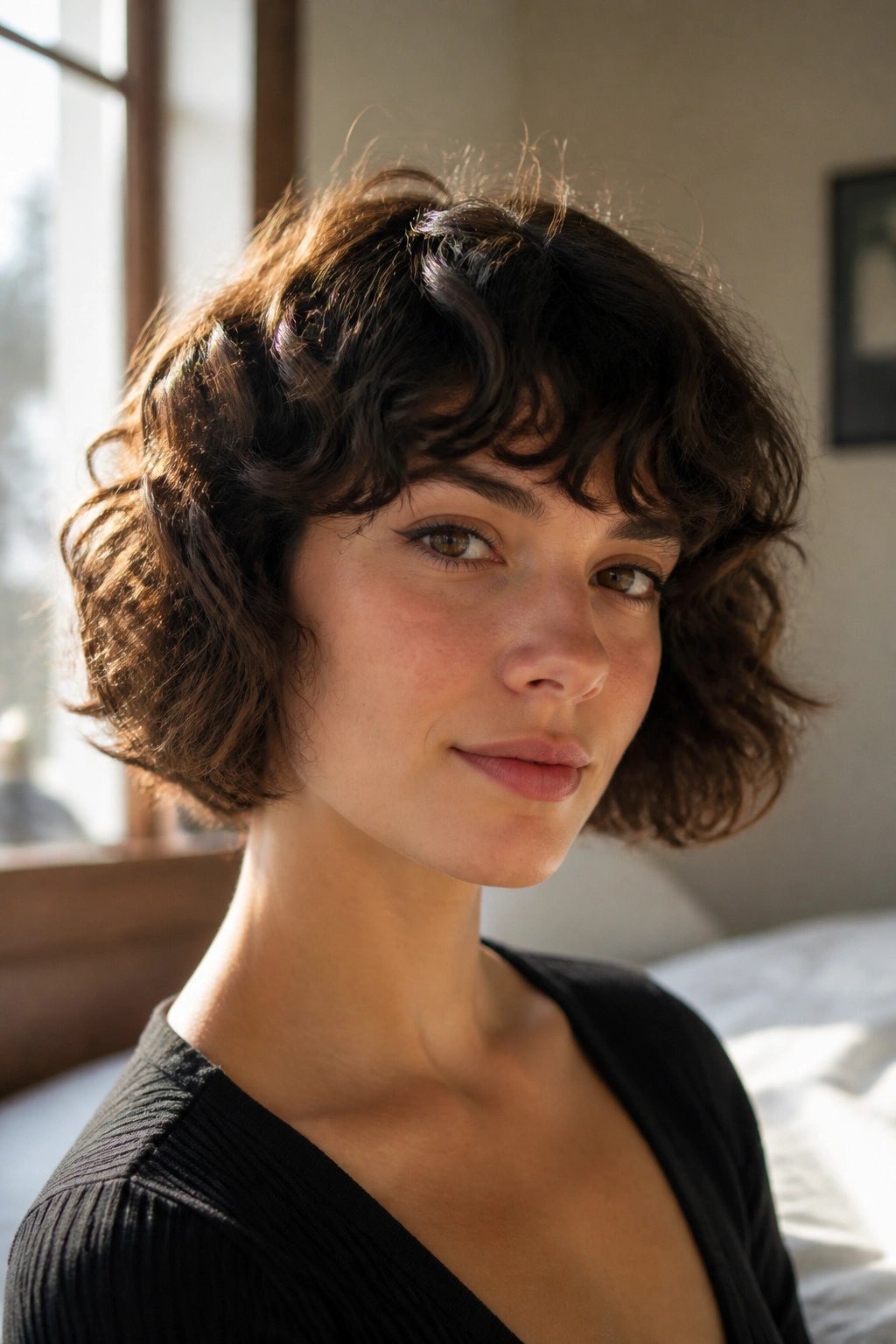
Can curly hair wear a fringe without turning into a fight? Absolutely. The key is shape. A curly French bob with rounded fringe follows the curl pattern instead of trying to flatten it into submission, and that makes the whole cut feel much more believable.
The fringe should curve with the forehead and sit a little longer than you think it should. Shrinkage is real. If the curls spring up a lot, what looks cheekbone-grazing when wet may end up sitting two inches higher once dry. That is not a mistake; it is curl behavior.
How to Ask for It
- Ask for the bob to be cut with your natural curl pattern in mind, ideally when the hair is dry or nearly dry.
- Keep the fringe rounded, not blunt.
- Leave enough length in the front so the curls can spring without jumping too short.
- Shape the ends so they follow the curve of the face instead of flaring outward.
A diffuser helps, but the bigger issue is restraint. Do not overbrush the fringe once it dries. Let the curls keep their little separations. That is where the face-framing effect comes from.
8. Micro-Fringe French Bob With Cropped Ends
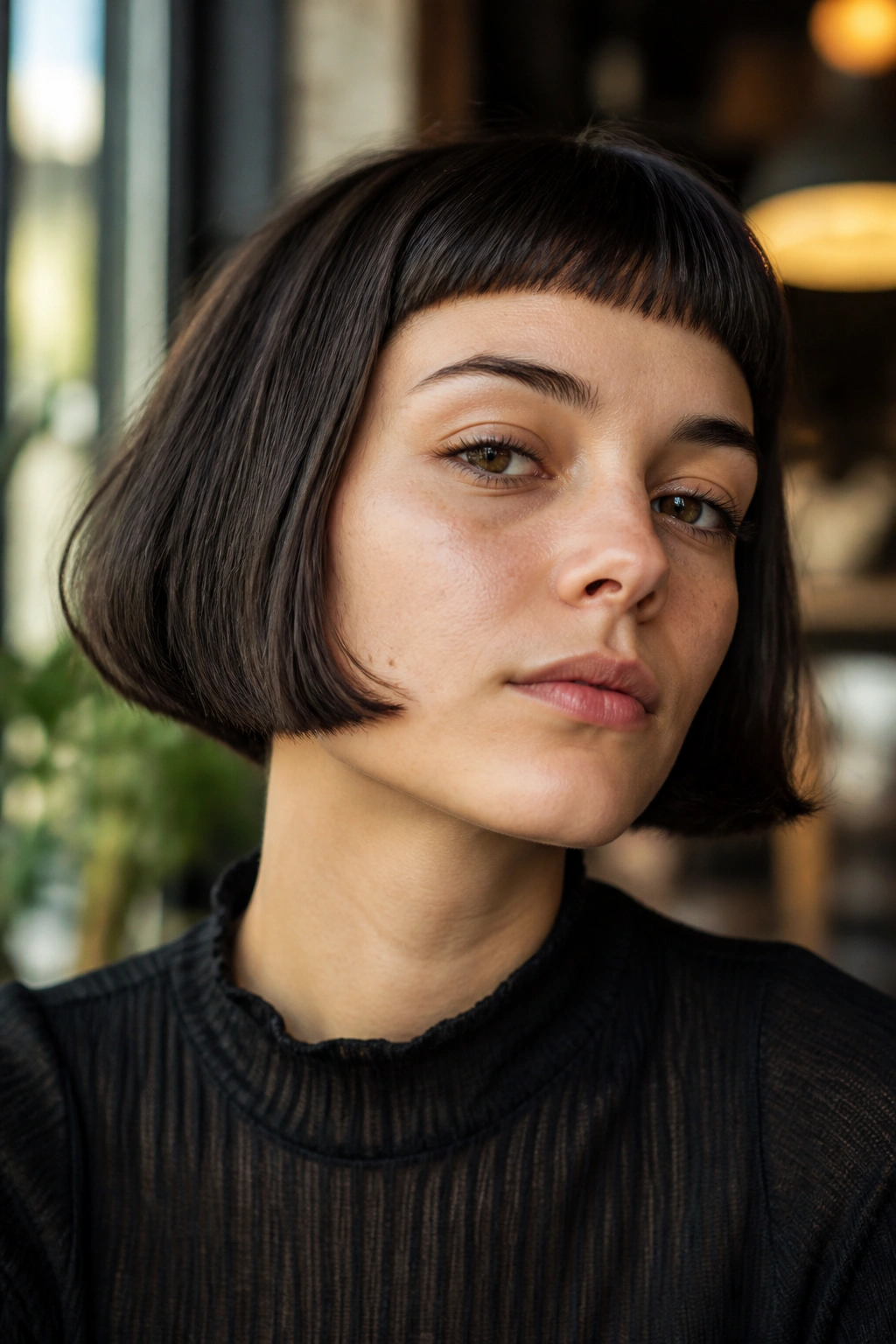
The micro-fringe French bob is not subtle. That is the point. A tiny fringe sitting well above the brows turns the eyes into the center of the haircut, and when you pair that with a crisp bob, the whole look feels deliberate in a way that a softer fringe never will.
I like this best on people who already wear strong brows, bold glasses, or a lot of black clothing. It has a graphic edge. It also asks for confidence, because there is no hiding behind it. If the line is off by a quarter inch, you see it. If the bob is too fluffy, you see that too.
Keep the rest of the cut clean. Really clean. A micro fringe already does plenty, so you do not need choppy layers, heavy texturing, and dramatic flips at the ends. A firm bob line, maybe with a slight inward bend, gives the fringe something solid to sit against.
My honest take: this is gorgeous when it suits your face and a little unforgiving when it doesn’t. If you like your hair to feel a bit editorial, it has real charm. If you prefer soft and easy, skip it.
9. Asymmetrical French Bob With Angled Fringe

A haircut with one side longer than the other can feel fussy on paper and easy in real life. The asymmetrical French bob with angled fringe is a good example. It looks more interesting than a standard bob, but it still frames the face in a clean, useful way.
The diagonal fringe helps pull attention toward the eyes and cheekbones, especially if the longer side lands just past the jaw. That little angle gives the cut motion before you even style it. It’s especially handy if your face is round or if your chin feels a bit softer and you want a sharper line without going severe.
What Makes It Different
- One side of the bob sits slightly shorter, which creates a natural swing.
- The fringe is cut on an angle, so it blends into the longer side.
- The shape looks good when one ear is tucked and the other side stays loose.
- It grows out in a way that still feels intentional for a while.
If you want a haircut that feels a little less expected, this is a smart lane. It has personality without needing extra styling tricks. A touch of smoothing cream and a quick pass with a blow dryer usually tells the whole story.
10. Air-Dried French Bob With Wispy Fringe
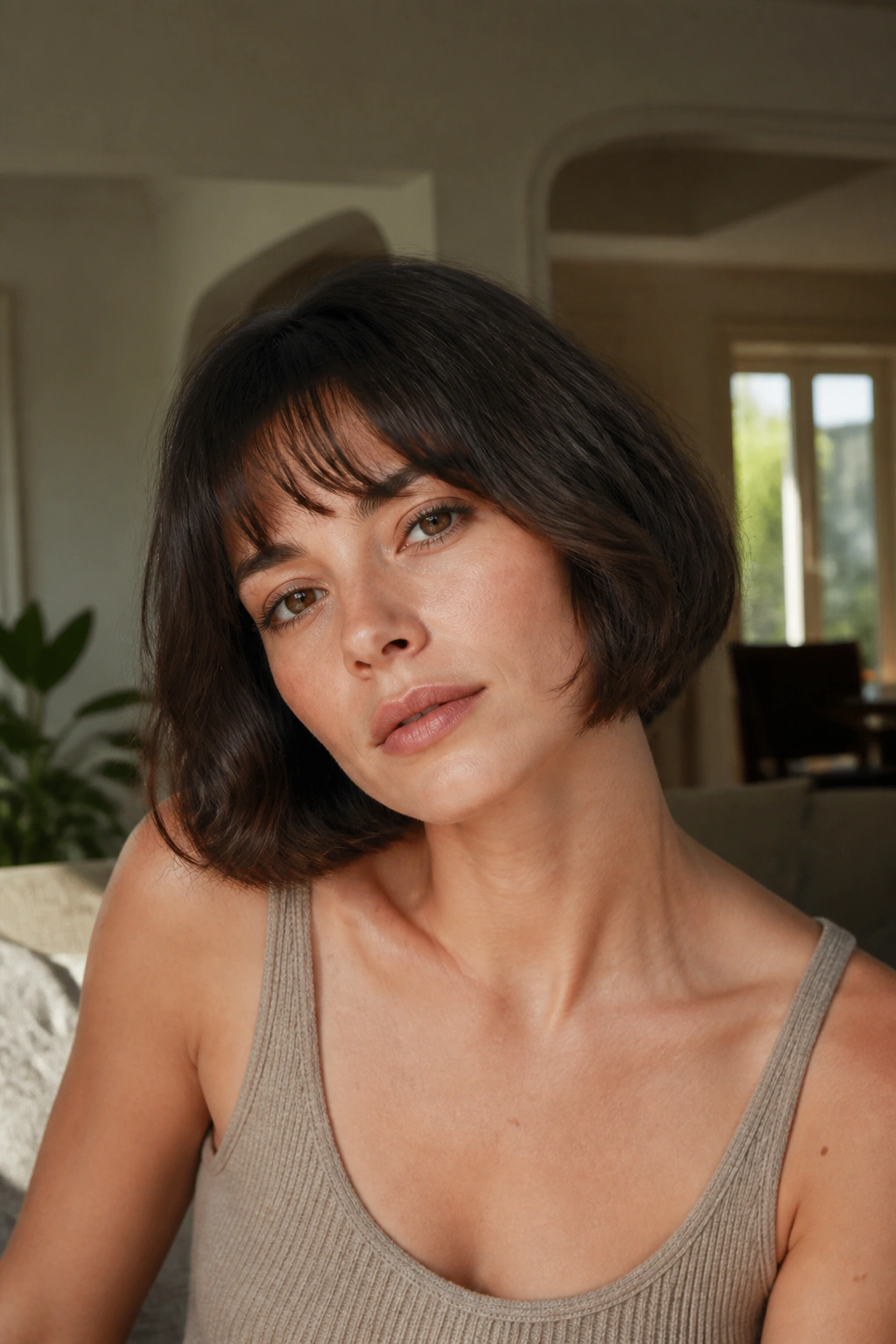
If you hate round brushes, this is the one that earns its keep. An air-dried French bob with wispy fringe is built for hair that already has a little bend, because the cut keeps enough softness in the fringe and enough shape in the ends that it looks finished without a perfect blowout.
The wispy fringe should feel light across the forehead, almost like broken pieces rather than one solid curtain. That softness helps the haircut frame the face without closing it in. The bob itself can sit at the chin or slightly below, but the key is to keep the edges gentle so they dry with movement.
I’d use a light leave-in and a small amount of mousse here. Not a palmful. A small amount. Too much product and the fringe gets sticky, then the whole thing dries in strings. You want separation, not crunch.
A towel scrunch and a little finger twisting at the front can be enough. If your hair is very straight, this version may need a quick bend from a flat iron on just the front pieces. The rest can stay relaxed.
11. Rounded French Bob With Full Fringe

A rounded French bob with full fringe has a softer, more polished feel than the blunter versions, and that roundness makes it a nice choice when you want the haircut to hug the face instead of sit as a hard line around it.
The perimeter curves slightly under the chin, which keeps the shape from feeling boxy. The fringe is fuller across the forehead, but the edges should still be softened so it does not look like a thick sheet. That little bit of curve around the eyes and cheeks is what keeps the cut flattering rather than strict.
This is a good option for thicker hair that needs shape but not a lot of layers. The round line gives the ends direction, and the full fringe brings the focus upward. If your jaw is stronger or your face is more square, the rounded outline can soften the edges without losing structure.
I’d ask for the fringe to be cut with a light curve instead of a blunt wall. That tiny detail matters more than most people think. A bob can be full and still feel airy if the ends are beveled and the fringe has room to move.
12. Choppy French Bob With Grown-Out Fringe

Why does a fringe often look better after it has grown a little? Because the hair starts to separate in a more natural way. A choppy French bob with grown-out fringe leans into that softness, and the result is easy on the eyes in a way that freshly cut bangs sometimes are not.
The fringe should skim the brows or sit just below them, then break into small pieces around the temples. That framing effect is flattering because it leaves some skin visible while still softening the forehead. The bob itself can be blunt or slightly textured, but the front pieces need enough movement to keep the cut from looking heavy.
What to Ask For
- Fringe that lands near the brows, not way above them.
- Soft point cutting through the front, not heavy thinning.
- A bob perimeter that stays clean even if the fringe is a little ragged.
- Minimal layering at the crown so the shape stays compact.
What I like here is how forgiving it is. You do not have to rush to the salon the minute the fringe grows half an inch. It looks lived-in fast, which is exactly why so many people keep coming back to this shape.
13. Collarbone French Bob With Long Fringe

This is the bridge haircut for anyone nervous about going short. A collarbone French bob with long fringe keeps the feel of a bob, but the extra length at the bottom gives you more movement room if you are not ready for chin length.
The fringe is the thing that keeps it French. Long, cheekbone-grazing front pieces make the cut feel intentional instead of like an in-between grow-out stage. Without that face framing, a collarbone bob can read plain. With it, the haircut gets shape and personality fast.
It’s a smart pick for thicker hair, coarse hair, or anyone who wants to tuck the ends into a coat collar without the style disappearing. The length also gives you room to test bangs before committing to a shorter cut. That alone makes it worth a look.
I’d keep the ends blunt or only lightly beveled. Too many layers on a longer bob can make it fall flat, and then you lose the crisp French feel. A soft blow-dry bend at the front is usually enough to show the shape.
14. Tucked French Bob With Side Fringe

You know that haircut that looks even better after one side gets shoved behind the ear? This is it. A tucked French bob with side fringe is built for movement, and the face-framing part does half the work for you.
The side fringe sweeps toward the cheek, which means the cut can handle asymmetry without looking messy. One side can stay fuller, the other can be tucked, and the fringe still gives the face a little softness at the front. That makes it practical for work, dinners, and any day when you want hair off your face but still want a shape.
How to Style the Tuck
- Blow-dry the front with a small round brush or a flat brush, lifting the roots a bit.
- Tuck one side behind the ear while the hair is still warm so it keeps the bend.
- Use a touch of pomade or cream only on the ends if they need separation.
- Leave the fringe loose enough that it falls across the cheek, not flat against the forehead.
The nice part is that it never feels overdone. A tuck, a sweep, a little bend. That’s enough.
15. Tousled French Bob With Curtain Fringe

A tousled French bob with curtain fringe is the version I’d hand to someone who wants the easiest hair to live with. It keeps the bob shape, keeps the face open, and builds in enough softness that second-day hair can look better than day one.
The ends should move. The fringe should split and fall in a loose way that skims the brow line and drifts toward the temples. Nothing should look too perfect here. If the blow-dry is too polished, the haircut loses some of its charm. If it’s too rough, though, it can slide into random. There’s a middle ground, and it’s a good one.
A little texture spray at the mid-lengths can help, especially if your hair is straight and tends to fall limp by lunchtime. If your wave is stronger, a tiny bit of leave-in cream and a quick scrunch is often enough. The face-framing fringe does the important work; the rest is there to support it.
This is the cut I’d point to if you want softness, movement, and a shape that does not ask for much. It feels casual, but not lazy. And that’s the sweet spot.
If you are choosing between two French bobs with fringe, start with the version that matches how you already wear your hair. Straight hair usually looks best in a blunt or softly curved line. Wavy and curly hair tend to shine when the fringe is broken up a little. The right cut should help your face show up first, not the hairdo.
