



A good softball braid has one job: stay put when the inning gets messy. It should survive a batting helmet, a sprint to first, a sweaty forehead, and that awkward moment when you peel your cap off and everything underneath wants to rebel. Pretty is nice. Staying in place is better.
The styles that work best on game day usually do three things at once. They keep hair off the neck, sit flat enough to play nicely with a helmet, and don’t take half the morning to build. If your hair is fine and slippery, the braid needs more grip. If it’s thick or curly, the braid needs structure without turning into a headache by the second inning. That balance matters more than a fancy finish.
I’ve always liked braids for softball because they feel honest. If they’re done well, you can forget about them. That’s the point. A style that makes you touch your hair every five minutes is a bad sports hairstyle, no matter how cute it looks in the mirror.
So here’s the good stuff: 15 braid styles that actually make sense for game days, warm-ups, team photos, and the long haul between first pitch and the last out. Start with the one that fits your hair and your level of patience, then keep a couple more in rotation.
1. Softball-Ready Dutch Braid Ponytail
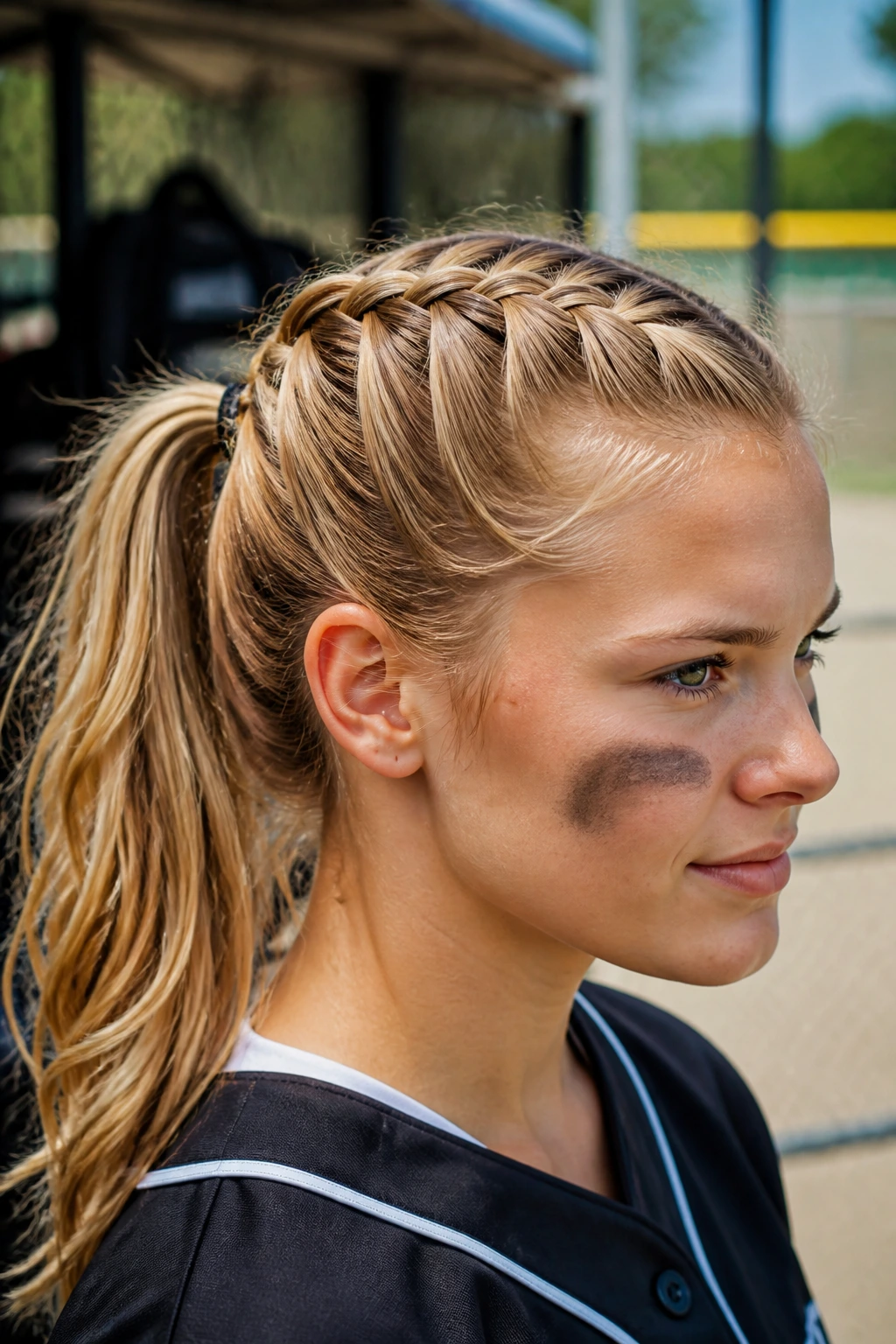
This is the braid I’d hand to almost anyone first. A Dutch braid sits on top of the hair instead of sinking into it, so the braid has a stronger shape and doesn’t vanish once a cap or helmet presses down on it. That raised look isn’t just pretty. It gives the braid a little more body, which helps on slick hair that loves to slide apart.
Why It Holds Under a Helmet
The first few crosses are the whole game here. Keep the braid snug at the crown, then ease up slightly once you pass the ears. Too tight at the hairline means a headache by the third inning. Too loose at the top means the braid starts slipping before warm-ups are over.
If your hair is layered, start with a quick mist of texturizing spray or dry shampoo at the roots. That tiny bit of grit makes a huge difference. I also like finishing the tail low, right at the nape, because a low ponytail moves less and feels cleaner against the neck.
- Best for medium to long hair
- Needs 1 snag-free elastic at the base and 1 at the end
- Works with straight, wavy, or thick hair
- Sits flat enough for a batting helmet
- Looks sharp even after a few innings
Pro tip: braid the first 3 inches tighter than the rest. That gives the style an anchor without making the whole thing feel stiff.
2. Softball-Ready Double French Braids
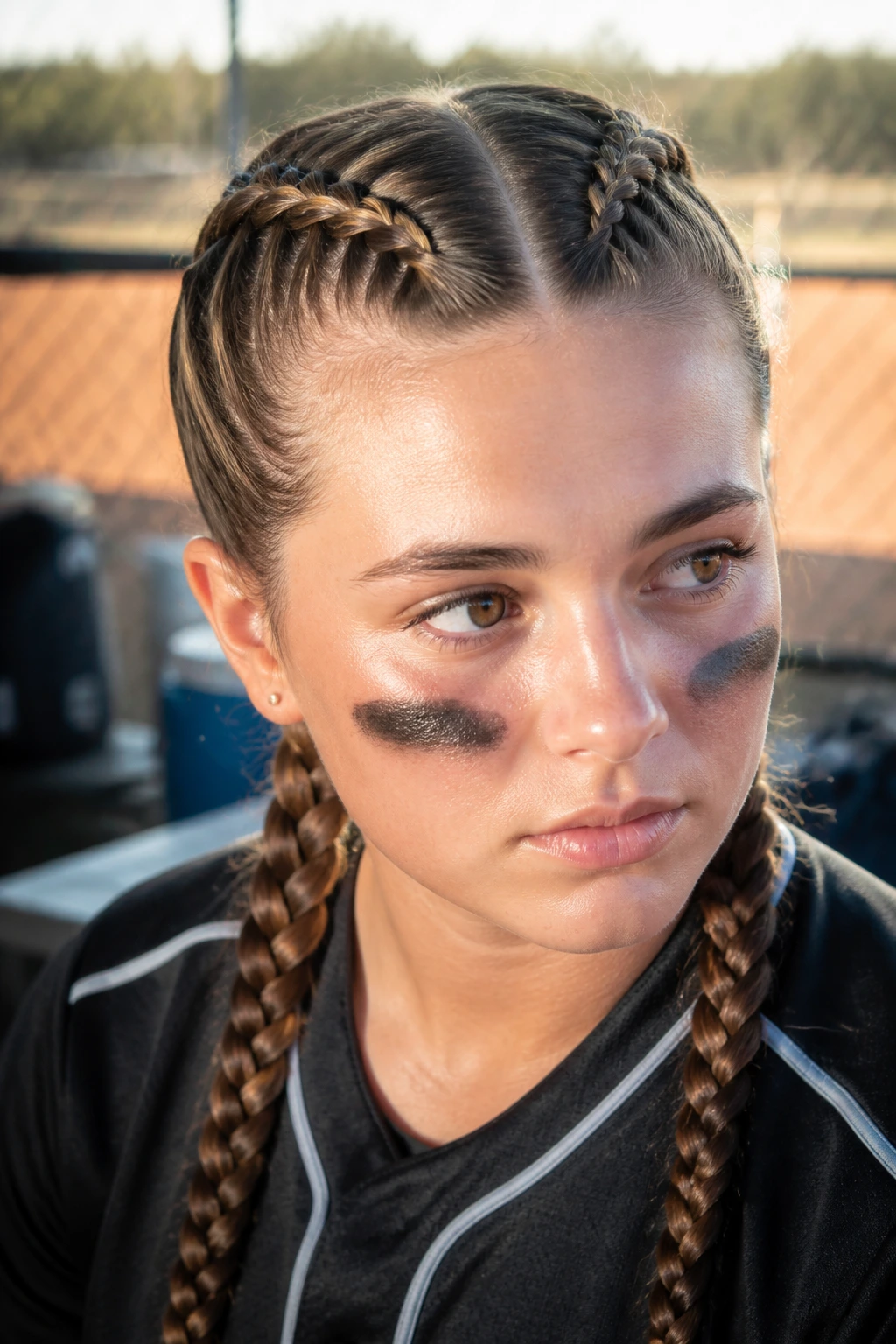
Two braids beat one when hair is thick, heavy, or just plain stubborn. A middle part and two French braids split the weight evenly, which means less pulling at the scalp and less puffing at the sides. It’s a classic for a reason. It stays neat, and it doesn’t care much what the weather is doing.
The best part is how flat this style sits. Each braid hugs the head, so a cap goes on more smoothly and doesn’t create that bulky bump you get from a single high braid. If your hair is fine, keep the sections small and tidy. If it’s thick, take the part cleanly and braid with steady tension so the braids match each other instead of one looking lazy and the other looking like it’s in a hurry.
I like this style for players who want zero face-framing drama. There’s no loose side piece to tuck back, no swinging ponytail whipping your shoulder, and no tail getting caught under a jersey collar. It is plain in the best way.
And that’s the charm. Sometimes the smartest game-day choice is the one that asks for the least attention once it’s done.
3. Fishtail Side Braid
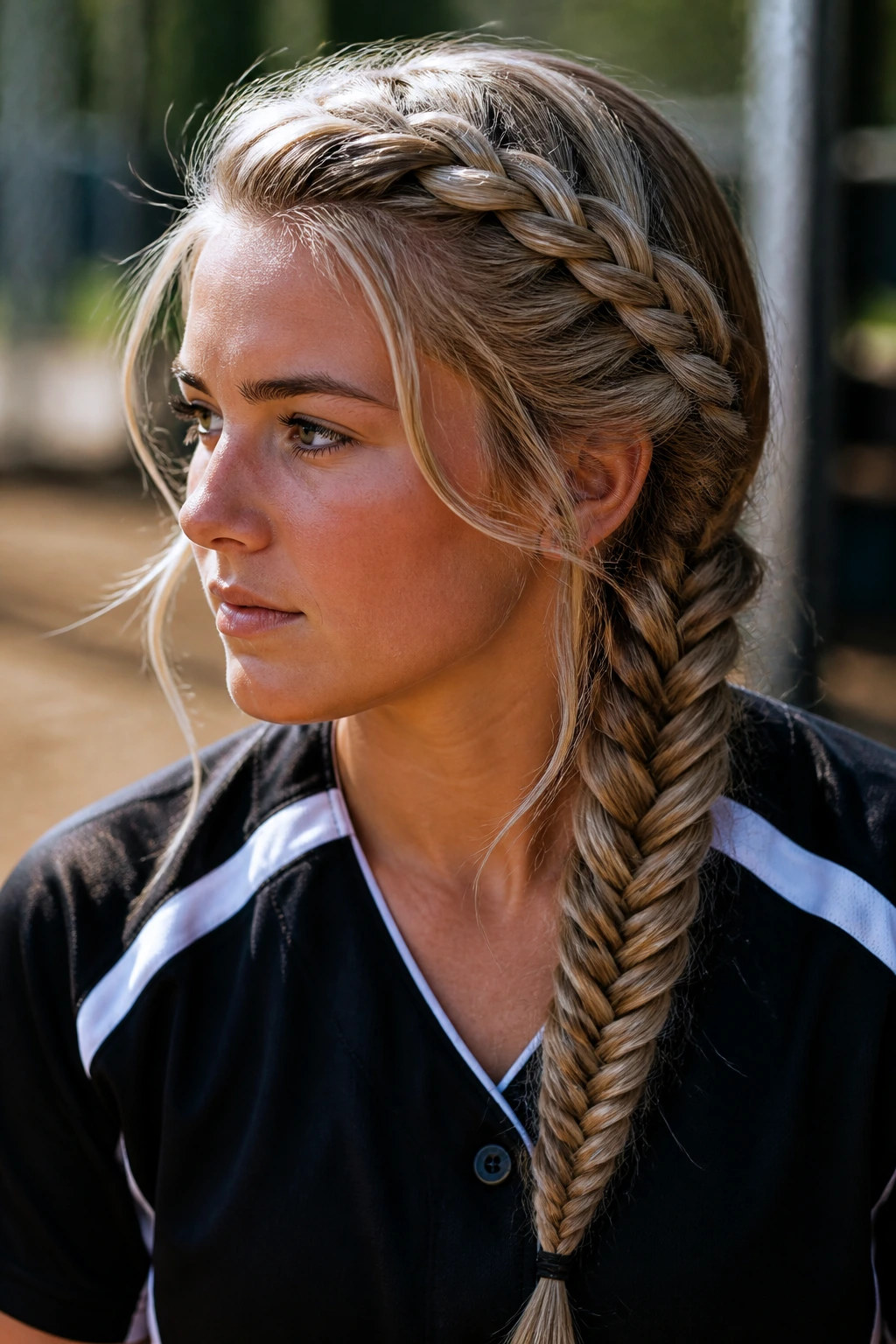
Why does a fishtail braid still look polished after a long day of running drills? Because the pattern is built from tiny sections, and that gives it a tight weave that doesn’t unravel as fast as people expect. It also has more texture than a standard three-strand braid, which helps if your hair is smooth and likes to slide apart.
A side fishtail works well when you want hair off one shoulder but don’t want a high, bouncy braid hitting your back. Keep it low, near the collarbone, and secure the end with a small elastic that matches your hair. If your hair is very layered, a little smoothing cream through the lengths before you start can help the shorter pieces stay inside the braid instead of poking out.
How to Wear It on Game Day
This one shines when you want a style that looks neat from the dugout and still behaves during warm-ups. It is a little more delicate than a Dutch braid, though, so I would not save it for a day when you’re rushing and half-distracted.
If you want the braid to look fuller, tug the outer edges gently after you tie it off. Not a hard pull. Just enough to soften the shape. That small move makes the braid look thicker without turning it into a mess.
4. Boxer Braids Into a Low Bun
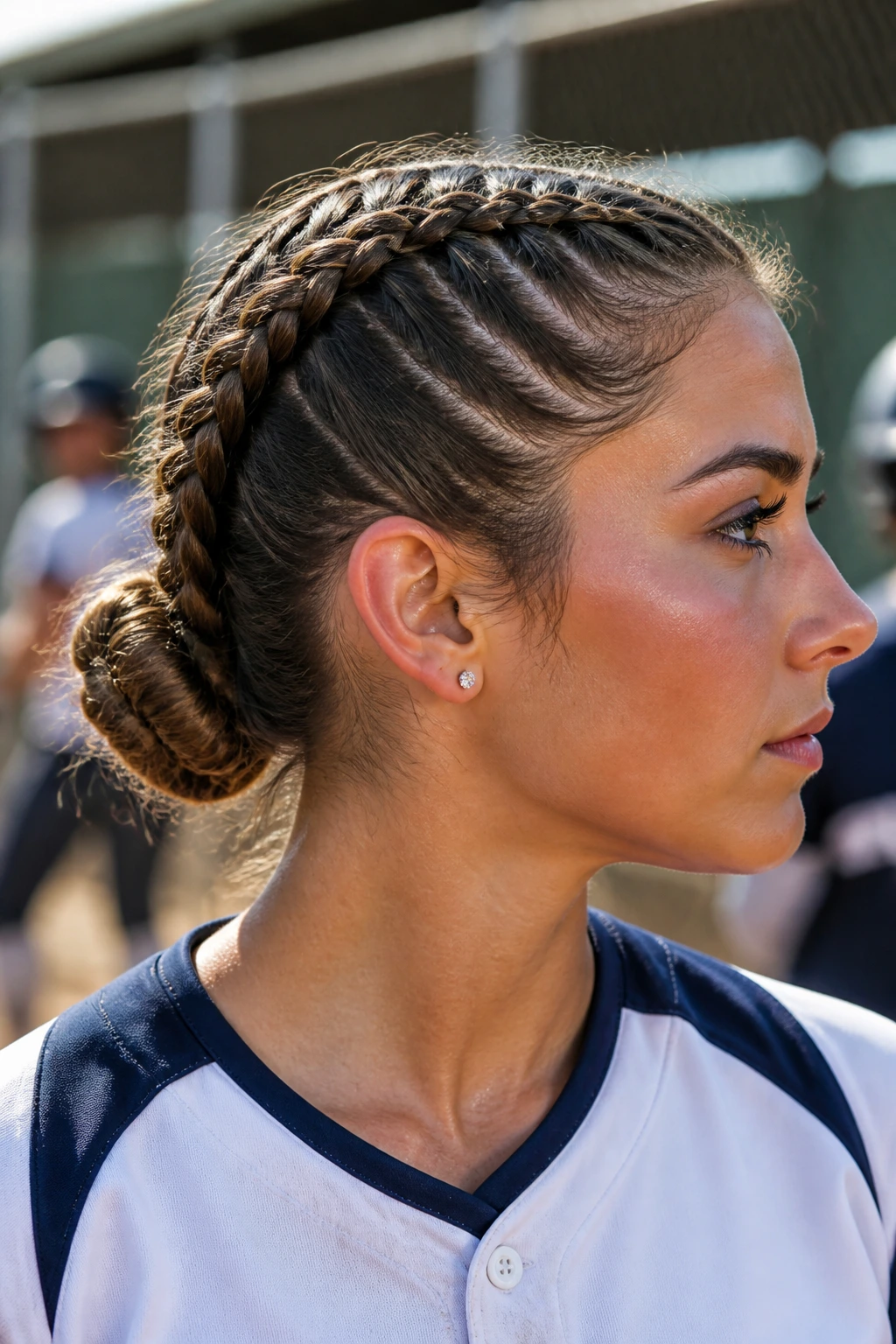
When the schedule is ugly and the wind is pushing hair everywhere, this is the style that behaves. Two boxer braids—basically tight Dutch braids—move straight back along the scalp, then gather into a low bun at the nape. The bun keeps the ends from flopping, while the braids keep the top half locked down.
I like this for thick hair because it spreads the pressure out. One ponytail can feel heavy. Two braids into one bun feel steadier. It also keeps the shape compact, which matters if you’re pulling on and off a cap all day. The bun should sit low enough that it doesn’t press against the helmet, and flat enough that it doesn’t turn into a hard lump.
- Use 2 small elastics for the braids and 1 stronger elastic for the bun
- Pin the bun with 2 to 4 bobby pins crossed over each other
- Keep the braid lines close to the scalp
- Works well for long, thick, or curly hair
- Best when you want the neck completely clear
The one catch is time. This takes a little longer than a plain braid, but not by much once you’ve done it a few times. The tradeoff is worth it.
5. Crown Braid With Hidden Pins
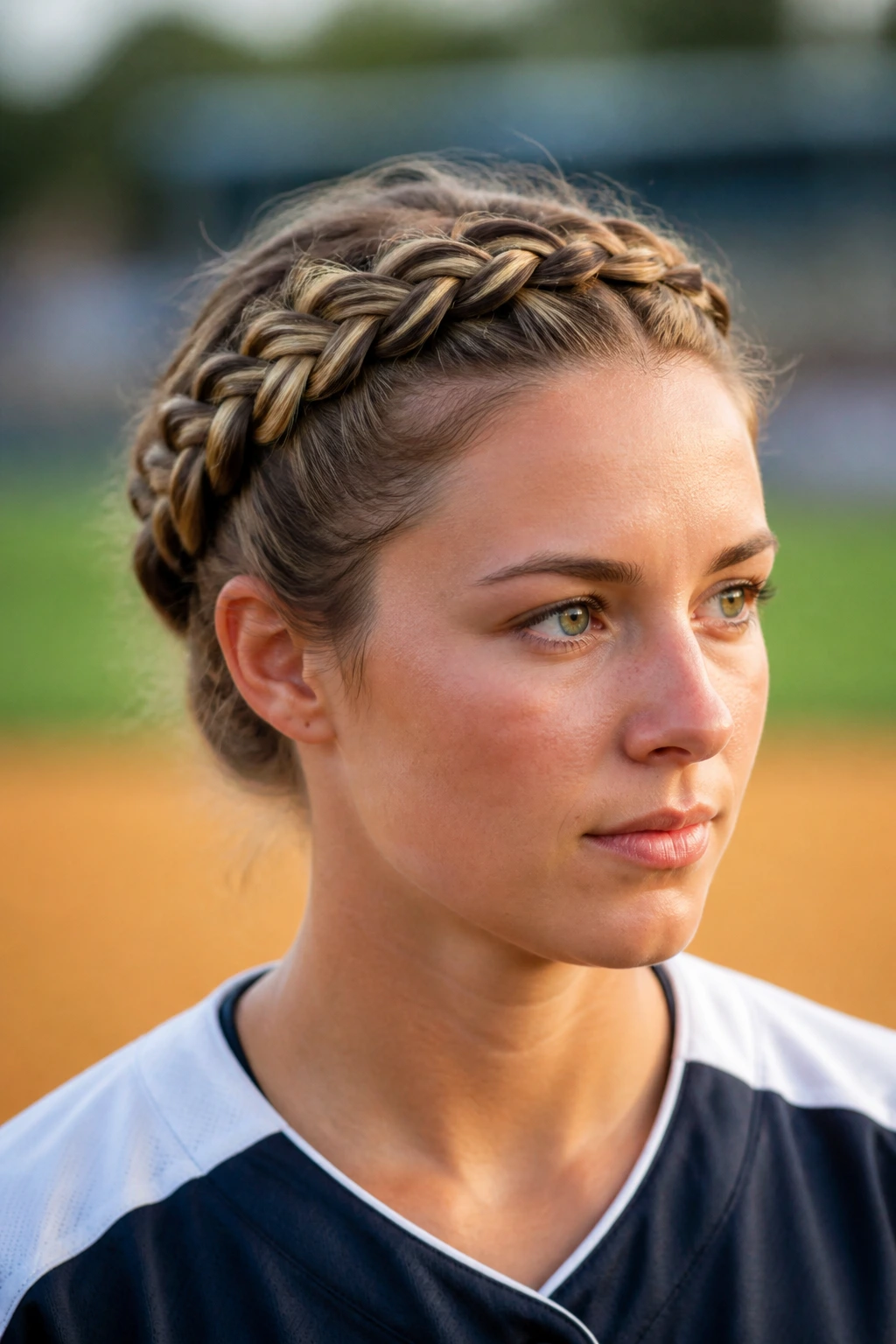
A crown braid feels cooler on the neck the second you finish it. Hair is wrapped around the head, not left hanging where sweat and jersey collars can catch it, and that alone makes the style worth knowing. It also keeps flyaways tucked in close, which is helpful if your hair has a habit of puffing up the minute you step outside.
The trick is to keep the braid close to the hairline instead of building it too high and fancy. A high crown looks beautiful in photos, but a lower, flatter version is easier to wear through a full game. Once the braid wraps around, tuck the ends underneath and hide them with pins that match your hair color. Blonde pins in dark hair, dark pins in light hair. That small detail matters more than people think.
I like this style for players who hate hair touching the back of the neck. It also works well if you’re moving from field to a team dinner and want one style that can do both jobs.
It is not the fastest braid on this list. Still, when done cleanly, it has a calm, finished look that lasts.
6. Rope Twist Pigtails
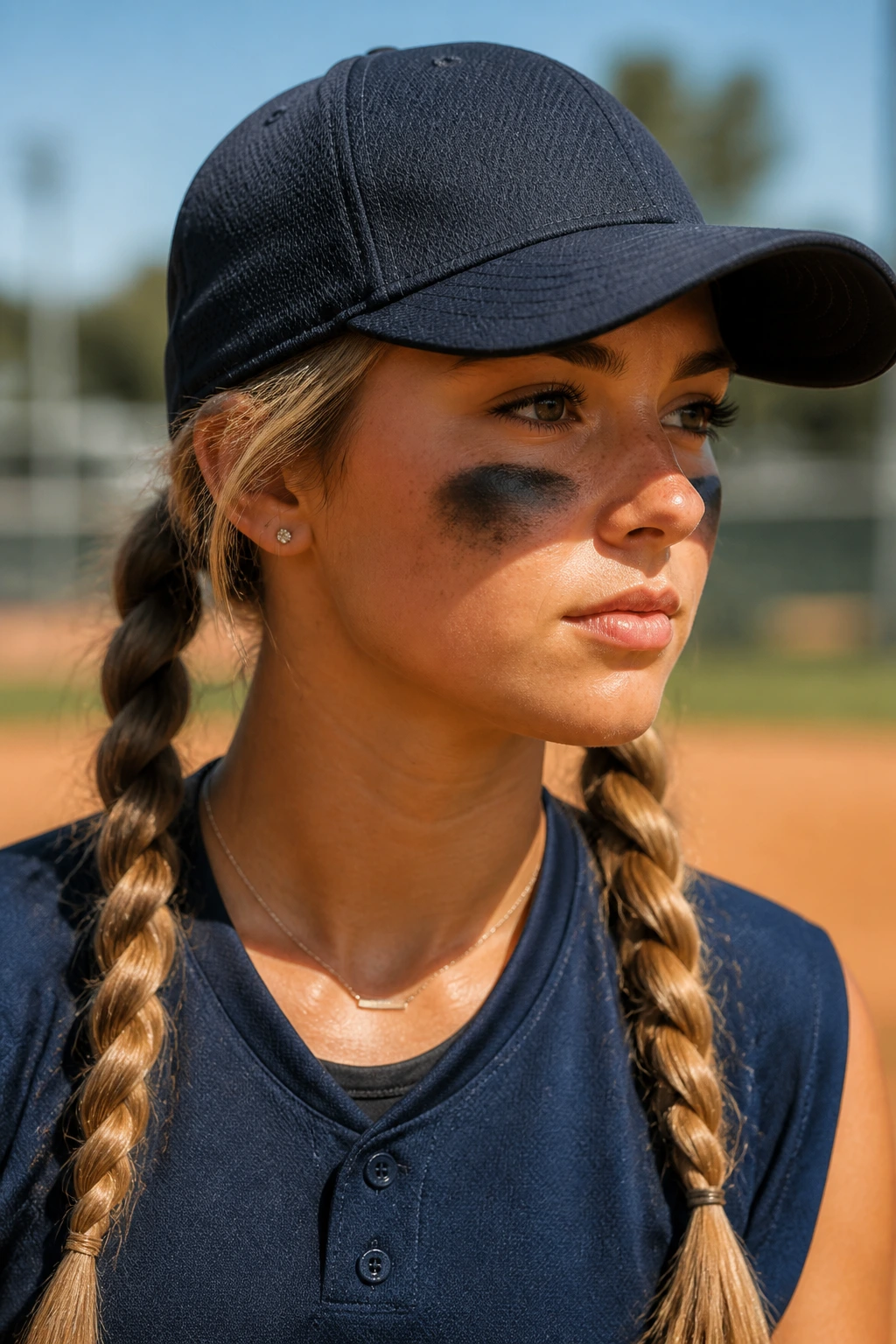
People dismiss rope twists as the “easy” braid, and that’s usually the wrong way to think about them. They’re fast, yes, but they’re also smart for game days because they use two sections instead of three. Less hand gymnastics. Less chance of dropping a strand while you’re trying to get out the door.
A rope twist works especially well on hair that’s freshly washed or lightly smoothed with leave-in conditioner. Split each side into two pieces, twist each section in the same direction, then wrap them around each other in the opposite direction. That opposite motion is what keeps the twist tight. If you reverse that step, the whole thing loosens quickly.
I prefer low pigtails for softball because they sit under caps more cleanly than high ones. They also make the style look more grown-up and less like a school picture. If you want a softer finish, let the ends brush your shoulders. If you want a tighter, neater result, tuck the ends into small knots at the nape and pin them flat.
This is one of those styles that looks simple but works harder than people expect. No fuss. No drama.
7. Braided Low Ponytail
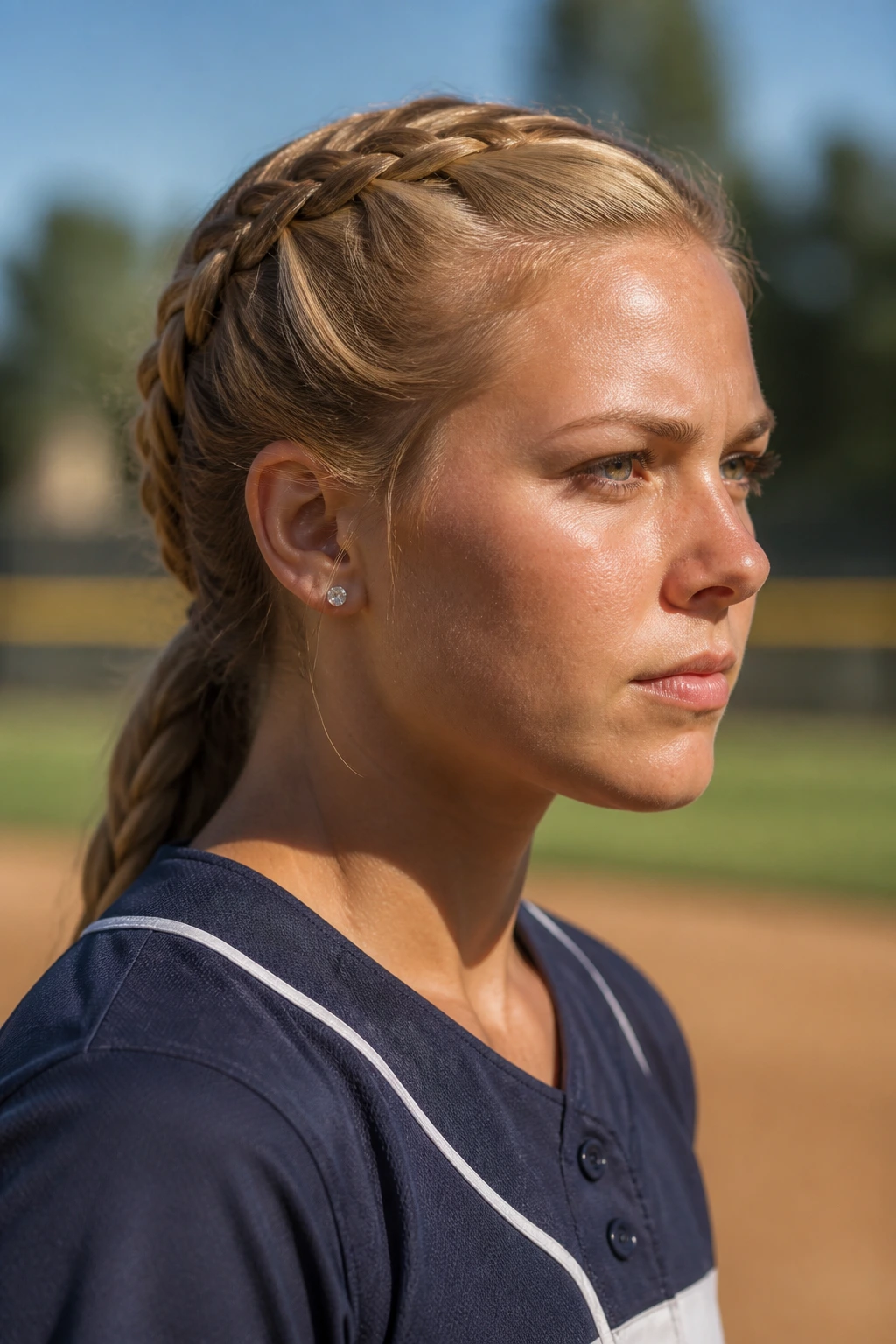
If you already live in a ponytail, this is the easiest upgrade. Start with a low ponytail at the nape, then braid the tail all the way down. That extra braid keeps the hair from swinging around and gives the whole style more hold, which matters when you’re bending, running, and ducking under a helmet all day.
The Part That Makes It Hold
The base matters more than the braid itself. Tie the ponytail first with a snag-free elastic, then braid the tail snugly from top to bottom. If your hair is slippery, rub a pea-size amount of styling cream between your palms and smooth it over the lengths before you braid. You do not need much.
A low braided pony is also good if your hair has layers that refuse to stay in one place. The tail keeps them corralled. If the ends are extra short, use a second tiny elastic a couple of inches above the ends so the braid does not unravel.
This is the kind of style that disappears into the game, which is exactly what you want. It won’t steal attention. It will just sit there and behave.
8. Waterfall Braid Half-Up
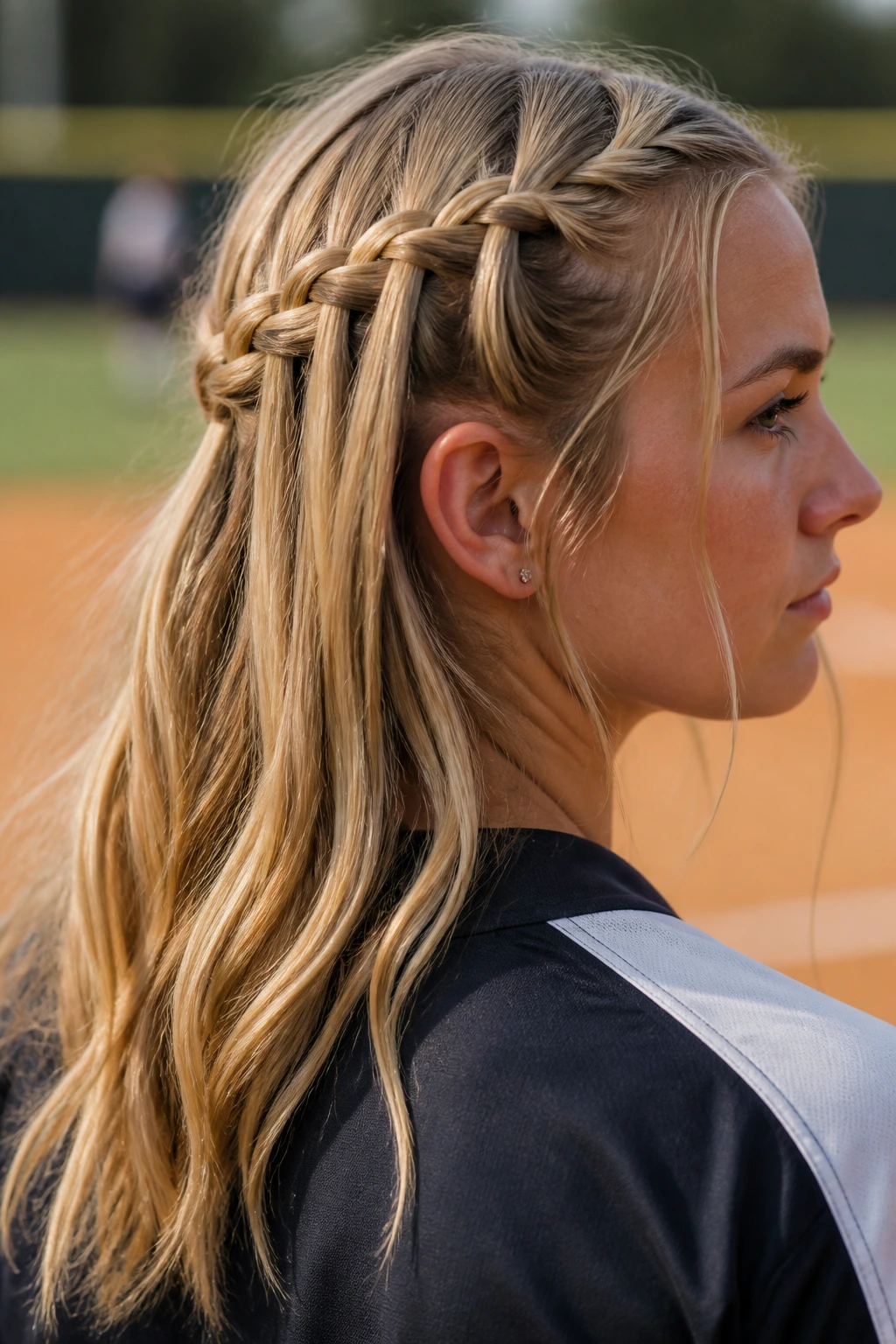
Want something softer without giving up control around your face? A waterfall braid is the sweet spot. It keeps the top section neat while letting some length fall through the braid in loose pieces, which gives the style a lighter look than a full braid. On hair that has a little wave, it looks especially nice.
This is the one I’d reach for if you want your hair to look finished before warm-ups and still feel a little relaxed. It is not the hard-core hold-it-everywhere braid. Loose pieces are part of the style, and that means it’s better for team photos, travel days, or positions where your hair does not have to stay under a helmet for hours.
If you hate hair touching your neck, skip this one. Seriously. The waterfall shape works because it leaves some length down, and that is both the charm and the limitation. A little light texturizing spray helps the loose pieces keep their shape, and a few hidden pins under the braid can stop the front from slipping out.
Soft and practical can live together. This style proves it.
9. Pull-Through Braid Ponytail
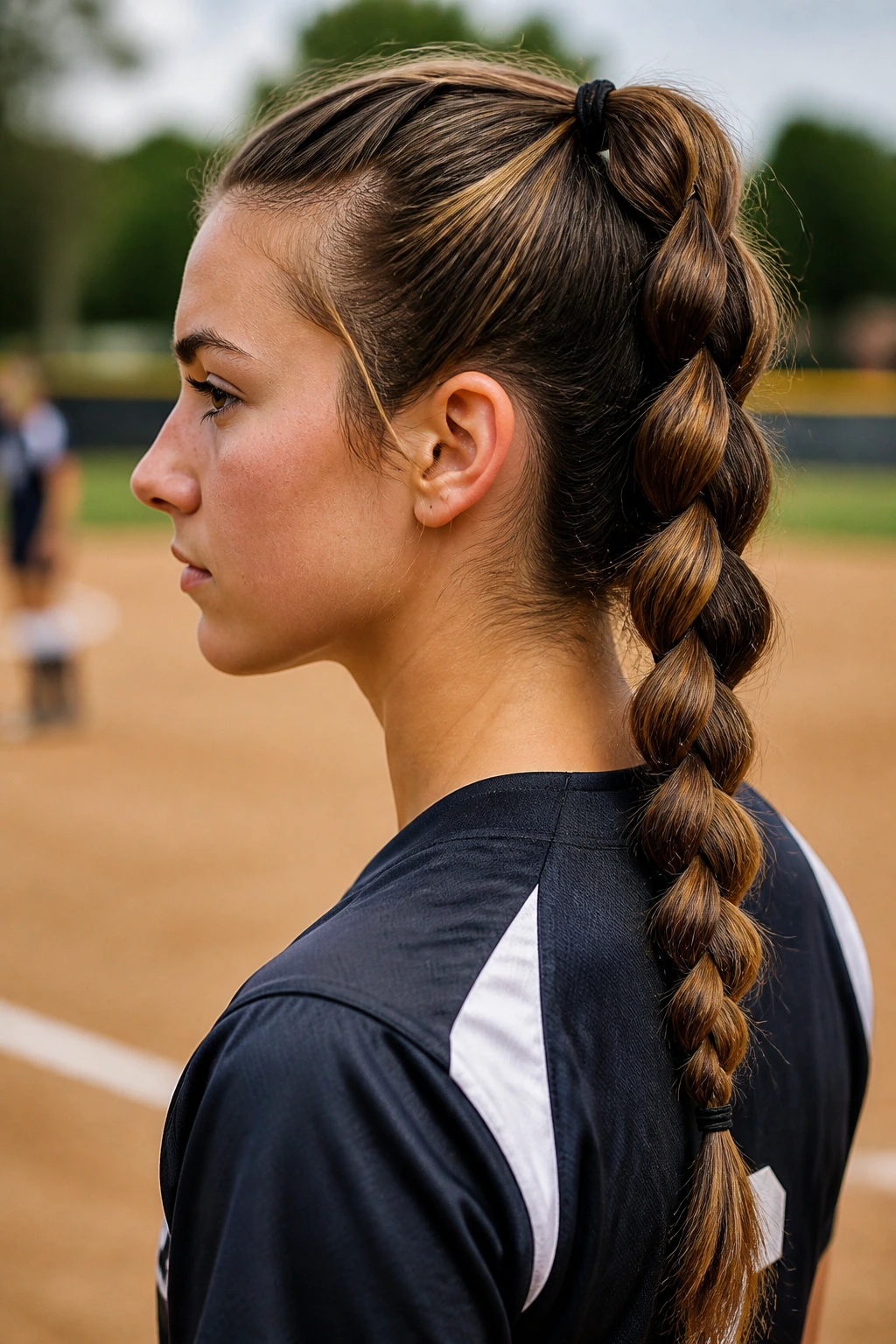
If you can tie a series of ponytails, you can fake a braid that looks much more complicated than it is. That is the whole appeal of a pull-through braid. You make a line of small ponytails, split and loop them over one another, and the shape ends up looking full and woven without the finger strain of a traditional braid.
What You Need
- 6 to 10 small clear elastics
- A brush or comb for clean sections
- A little smoothing cream or spray for frizz
- A tail comb if you want sharper part lines
Keep each section about 2 to 3 inches apart. If you make them too far apart, the braid gets floppy. Too close together, and it starts to look stiff. The sweet spot is somewhere in the middle, and once you find it, the style holds well on thick hair.
I like this braid low or mid-back for softball. High pull-through styles can feel bulky under a cap. Low ones sit closer to the head and move less. The braid also photographs well, which is a nice side effect if your team does pregame pictures.
It is a little elastic-heavy, yes. Still worth it.
10. Side Cornrow Accent Into Ponytail
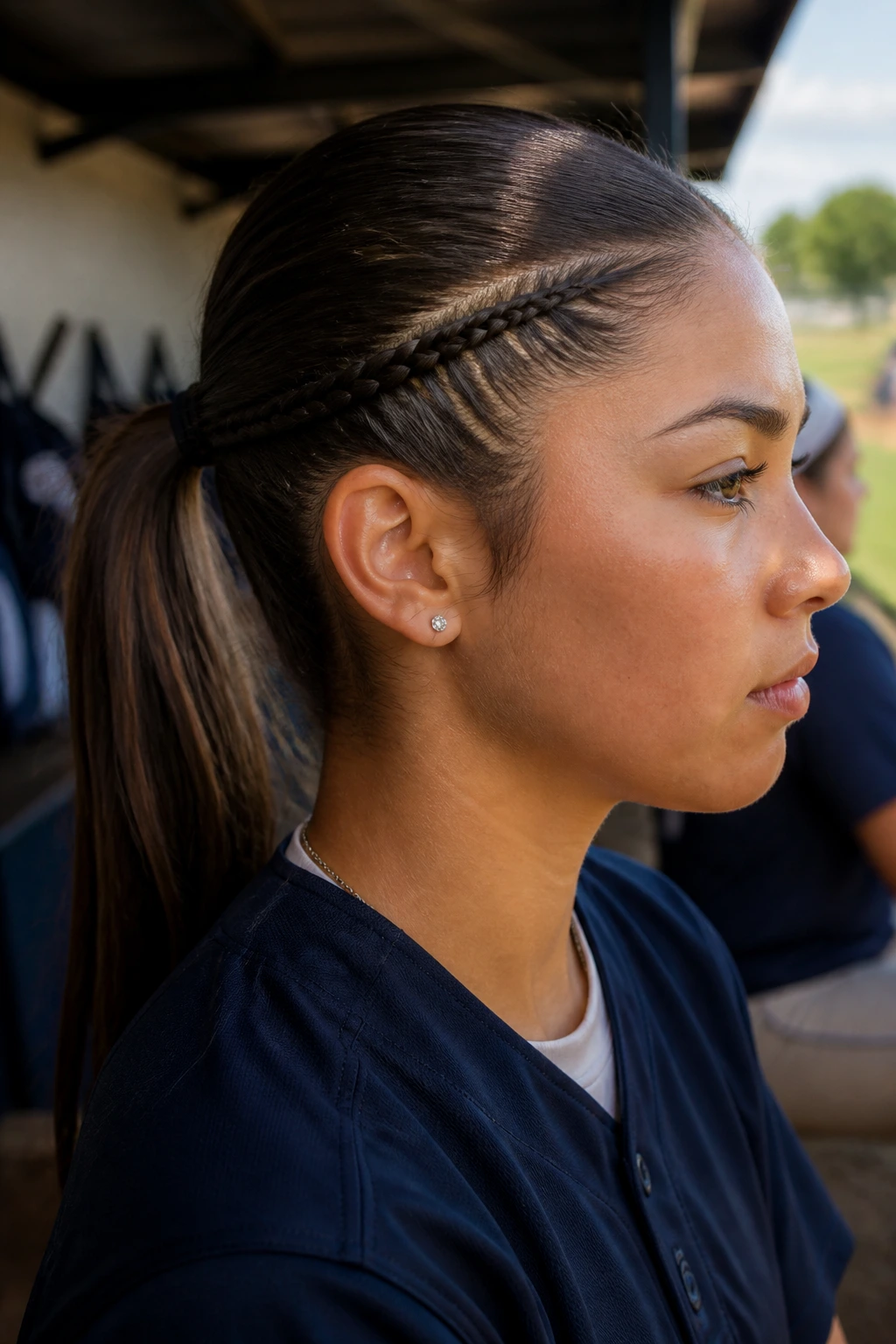
If your hairline turns fuzzy the second humidity shows up, a side cornrow accent can save the whole style. One or two narrow rows along the temple keep the front neat and feed the hair back into a ponytail, which gives you control without needing to braid the entire head. For curly and coily hair, this is a strong, reliable move.
Best For
- Curly and coily hair that needs edge control
- Players who want one side slicked back and one side soft
- Ponytails that need a cleaner front line
- Shorter game-day routines that still need structure
The key is tension. Tight enough that the braid stays in place, not so tight that your scalp feels sore before the first pitch. If your edges hurt, loosen it and start again. Hair should feel secure, not angry.
For straighter hair, you can fake the same look with a small lace braid instead of a cornrow. The shape is a little softer, but the idea is the same: keep the front pieces under control and feed them into the rest of the style. I like finishing the ponytail low so the accent braid looks intentional instead of tacked on.
This is a useful style, not a cute-only style. Big difference.
11. Four-Strand Side Sweep
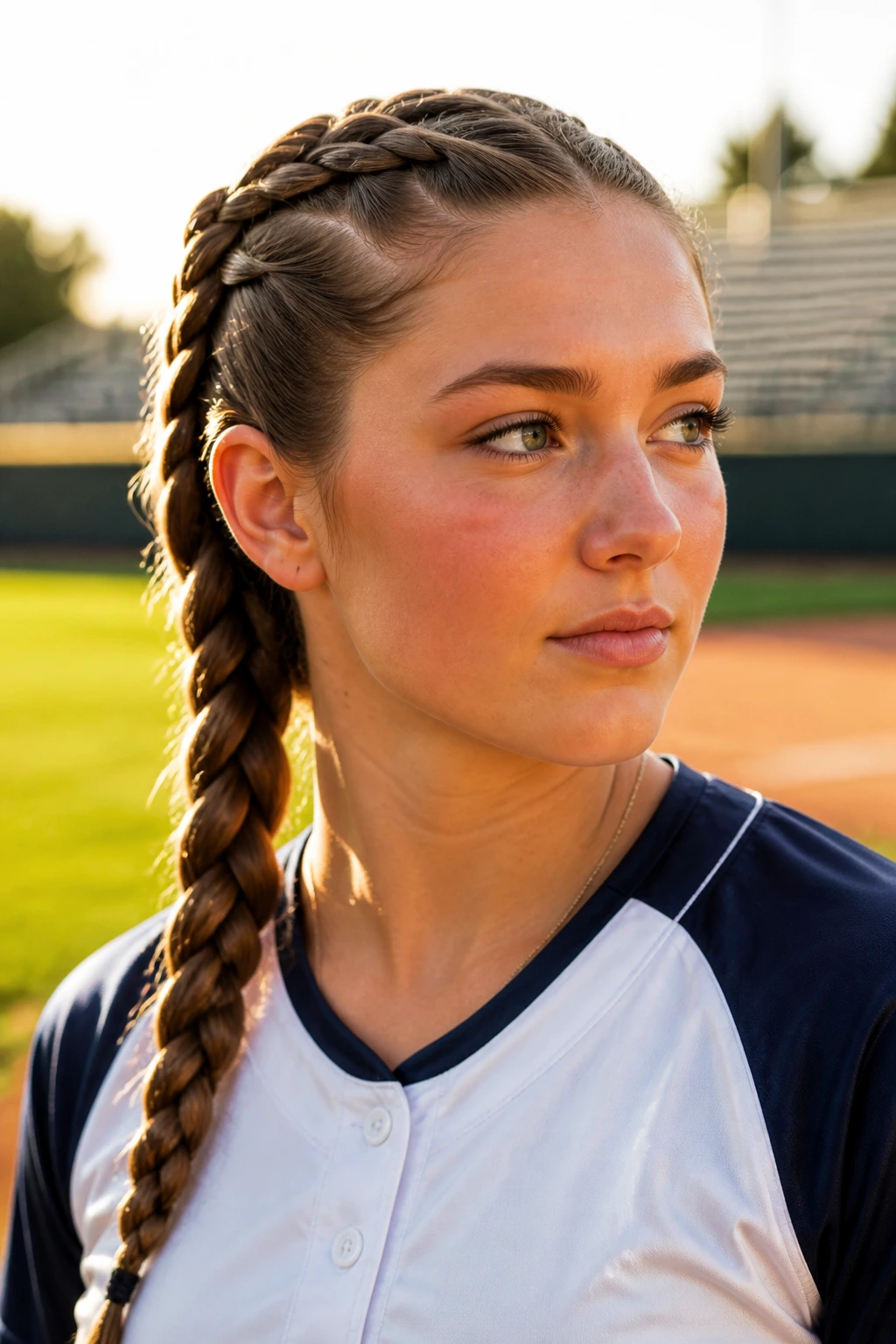
A four-strand braid has a woven, ribbon-like look that a plain three-strand braid never quite matches. It looks a little more detailed, a little more finished, and not nearly as hard once your hands learn the pattern. On game day, I like it swept over one shoulder so the braid stays out of the way and still shows off the shape.
The braid sits flatter than a chunky ponytail, which is a win if you hate bulk at the back of the head. It also tends to hold up well on medium to long hair because the extra strand adds more interlock. That does not make it invincible. It just means it has a bit more grip than people expect.
The learning curve is the only real downside. You will probably mess it up the first time. Fine. Practice it on a non-game night when you are not already late and irritated. Once the pattern clicks, it becomes one of those braids that feels oddly satisfying to do.
If you want a style that looks a little more interesting without needing ten pins, this is a strong pick.
12. Halo Braid With Loose Ends Tucked
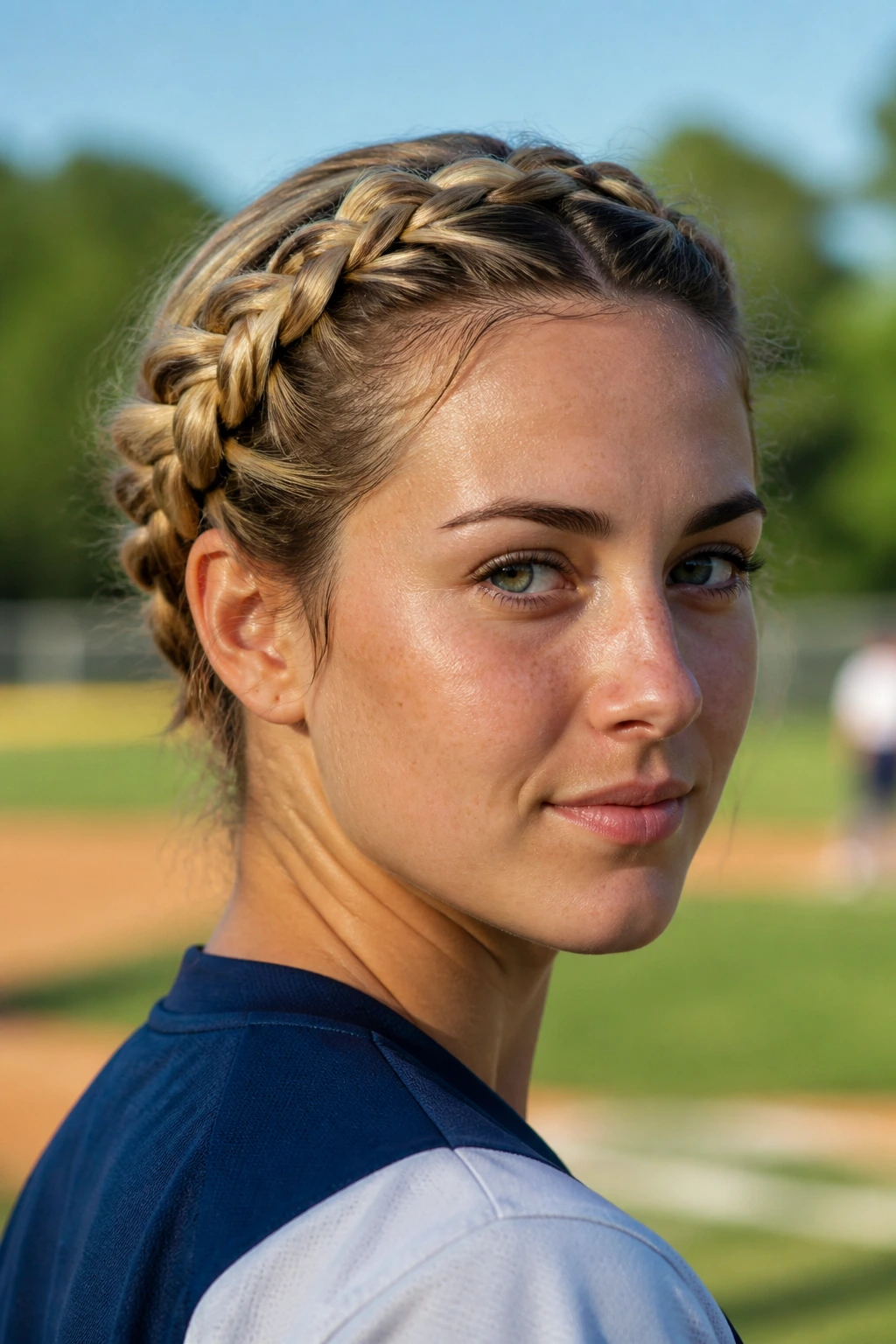
Halo braids get called fancy far too often, and that makes people skip them. The tucked version is not fussy at all. It wraps the braid around the perimeter of the head, keeps the hairline calm, and hides the ends underneath so nothing scrapes the neck.
That hidden-end detail is what makes this braid useful on game day. Loose ends are usually where styles start falling apart. Tucking them under the braid and pinning them flat gives the whole shape a cleaner finish, and it helps the style stay neat even after you pull a cap on and off a few times.
I like halo braids for players who want their ends protected. That matters for dry, fragile hair and for anyone who spends long hours outdoors. It also helps if your curls frizz easily and you want a style that keeps the bulk controlled. Keep the braid close to the head, though. A halo that sits too high can feel awkward under tight headgear.
It is a calmer style than a high bun, and a more complete style than a loose braid. That middle ground is what makes it useful.
13. Bubble Braid With Braided Front Pieces
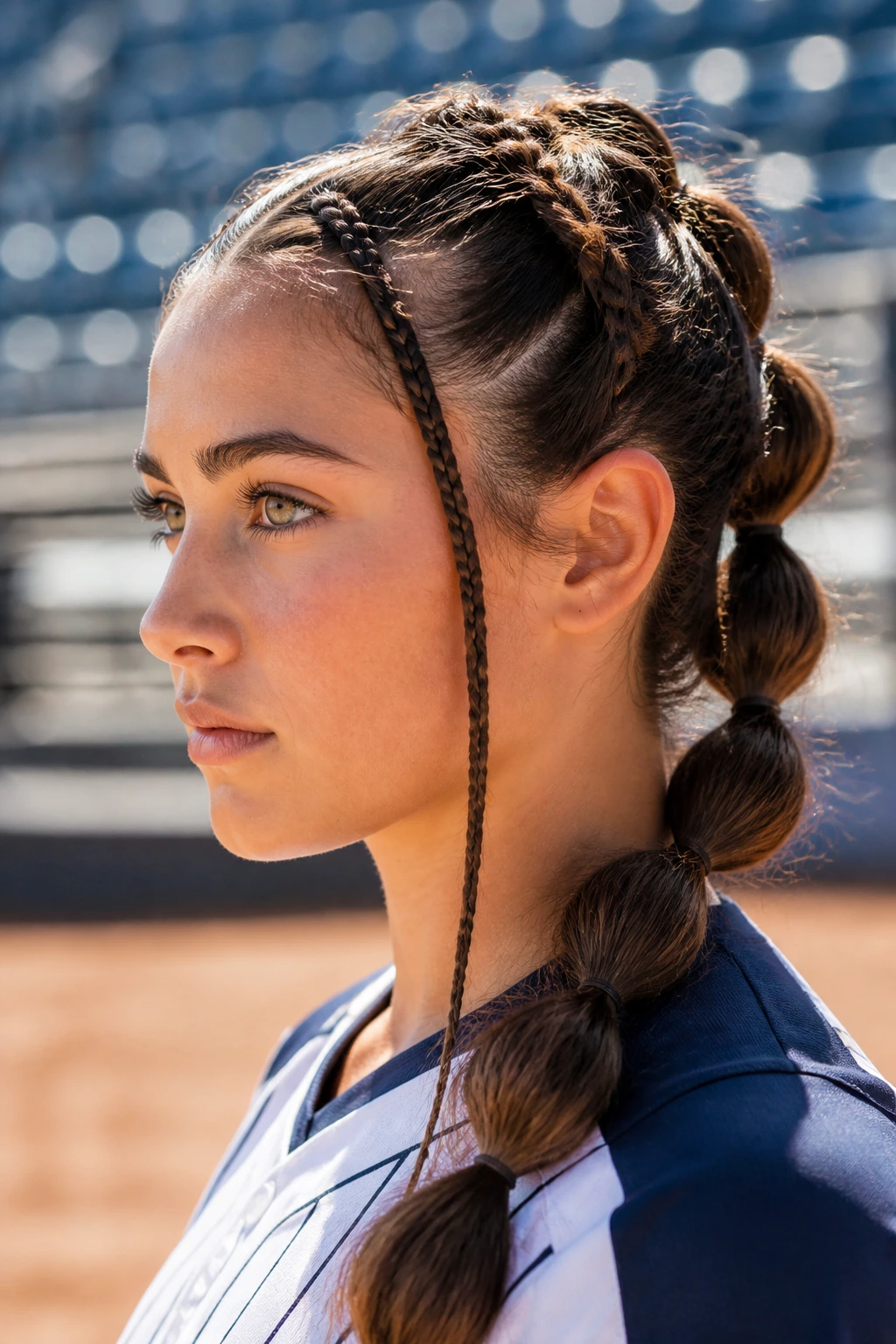
When a helmet flattens the top of your hair, bubble braids still keep their shape after the gear comes off. That’s why I like them for game days. The style starts with a ponytail, then you add small elastics every 2 to 3 inches down the length and gently pull each section outward so it rounds into a bubble. It looks playful, but it holds up better than people expect.
The front pieces make the difference. A tiny braid on each temple, or even just one side braid, keeps the front from looking too loose. That way the ponytail can be fun without the hairline turning fuzzy.
How to Size the Bubbles
- Use elastics that match your hair color if you want a quieter look
- Keep each bubble about the width of your palm
- Tug the sides evenly so one section does not puff bigger than the next
- Stop pulling once the bubble feels full, not stretched thin
- Use a light spray at the crown if your hair slips easily
I like this style for long hair because it is forgiving. If one bubble gets dented, you can fix just that section. No need to start over. That is a very good quality on a game day.
14. Braided Top Knot
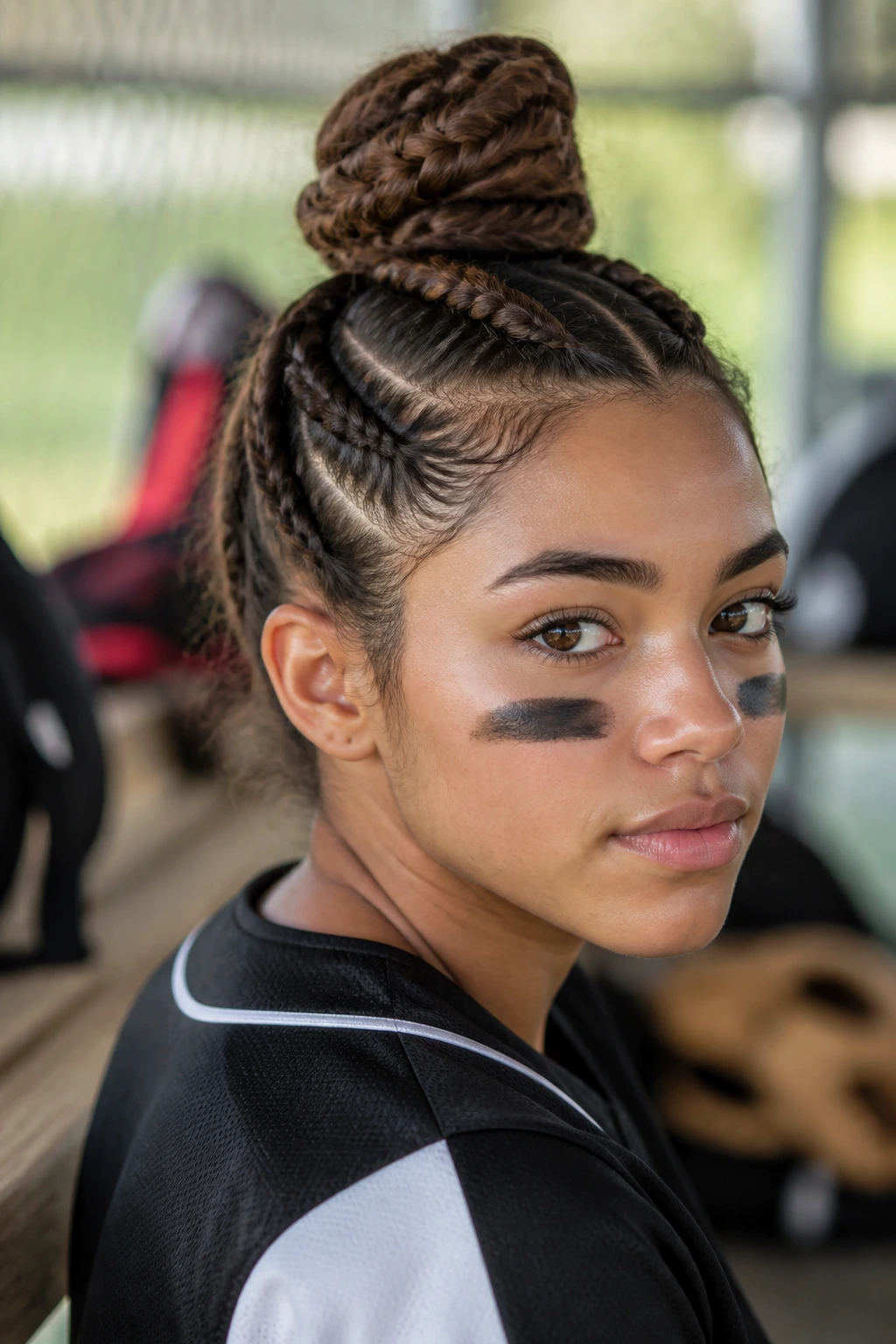
This is the style for players who want every strand off the neck and out of the way. A braided top knot starts with braid work at the front or crown, then gathers the hair into a bun that sits high enough to stay tidy but low enough to avoid becoming a hard lump under a helmet. Done right, it feels secure from first warm-up to last handshake.
The braid acts like an anchor. That is the part people miss. A plain bun can slide or loosen if the hair is silky or the base is soft. A braided base gives the knot something to hold onto, which makes the whole style feel steadier. Use 4 to 6 bobby pins in a crossed pattern, and press them in toward the center of the bun so the ends disappear.
It works best on thick hair, curly hair, and hair that likes volume. Fine hair can do it too, but you may need a little texture spray first so the bun has something to grip. If you wear a batting helmet, keep the knot slightly lower and compact. A giant bun and a helmet are not friends.
It is blunt, athletic, and useful. I like that.
15. Softball-Ready Lace Braid Ponytail
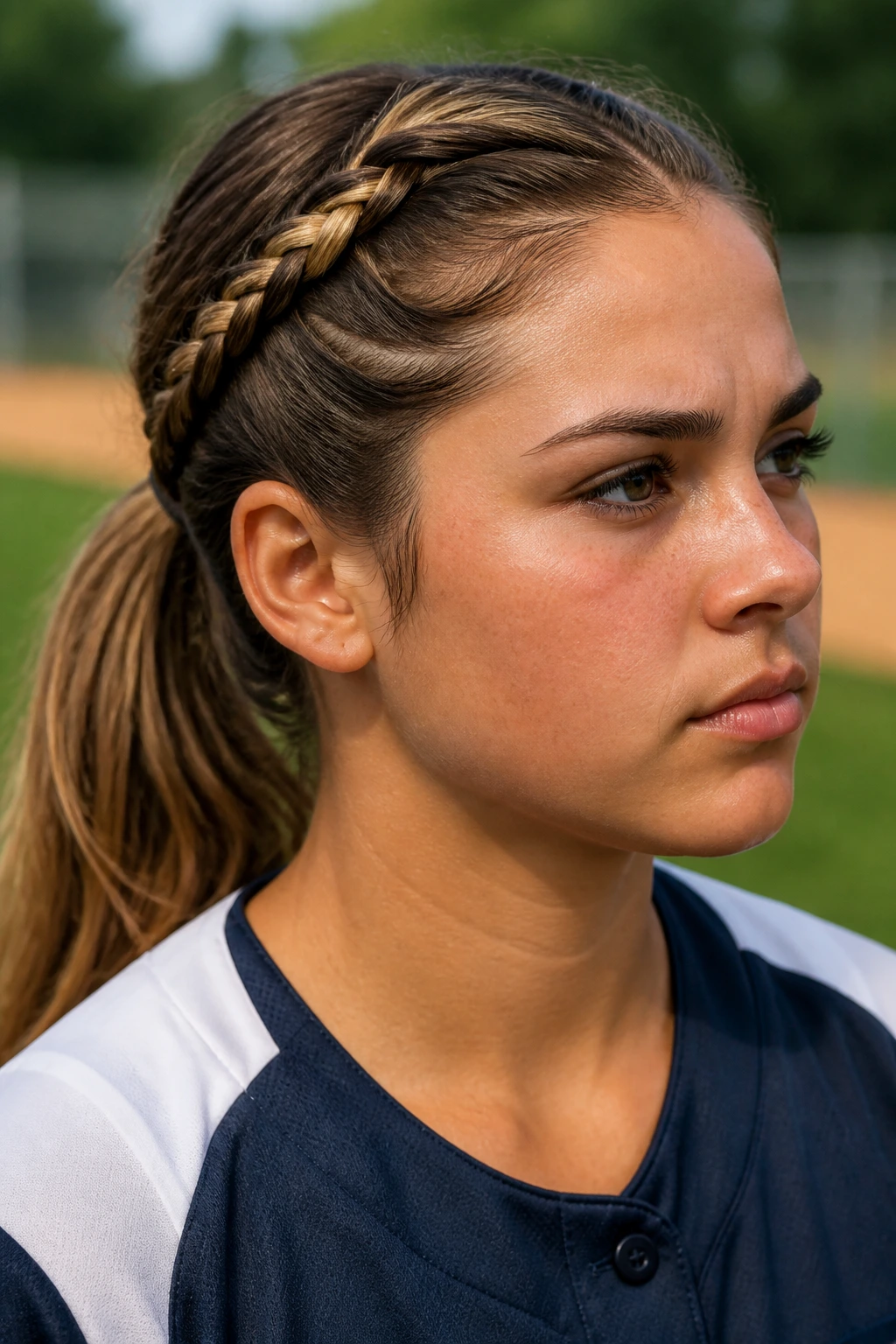
Need a style that looks polished without swallowing your morning? A lace braid into a ponytail is one of the easiest answers. You braid along one side of the head, but instead of adding hair on both sides like a French braid, you only feed in hair from the top. That keeps the braid clean and lets the rest of the hair fall into a ponytail at the back.
It is a very good choice for layered cuts. The lace braid controls the front pieces that normally slip out first, and the ponytail keeps the rest simple. If your hair is short to medium length, this style gives you more hold than a loose side braid without demanding a full-head braid session.
I also like it because it feels forgiving. If one section is a little uneven, the ponytail hides the mistake. If the braid gets a touch soft by the end of the day, it still looks intentional. That matters more than perfect symmetry, which nobody notices once the game starts anyway.
If I had to pick one braid for a player who wants low drama, this would be near the top. It is neat, quick, and easy to wear under pressure. And on game day, that is enough.
