



There is a specific kind of frustration that comes with hair that hits right around the shoulders or collarbone. It is long enough to pull back, which is great, but short enough to flip out in awkward directions whenever it brushes against your jacket or neckline. Many people get stuck in this styling purgatory, believing they have to either chop it all off into a bob or wait for it to grow out into something else.
The soft shag is the answer to this limbo. It is not the severe, aggressive, hair-band-inspired shag of the nineteen-eighties with its harsh, jagged layers. Today’s version is about movement, texture, and—most importantly—ease. It is a cut designed to look better the messier it gets, which makes it the ultimate low-maintenance style for anyone who prefers a few extra minutes of sleep over an elaborate morning styling routine.
When you ask for a soft shag, you are asking for weight removal. You are asking for a silhouette that sits comfortably against the head while still having enough volume to feel intentional. It works because it embraces the natural wave or texture of your hair rather than fighting it into submission. If your hair is poker-straight, the layers add grit and separation. If your hair has a mind of its own, the layers give those coils a place to live.
Let’s look at how to make this length work for you, moving away from generic styles and toward cuts that actually shape the face and bring out your best features.
1. The Classic Layered Lob Shag
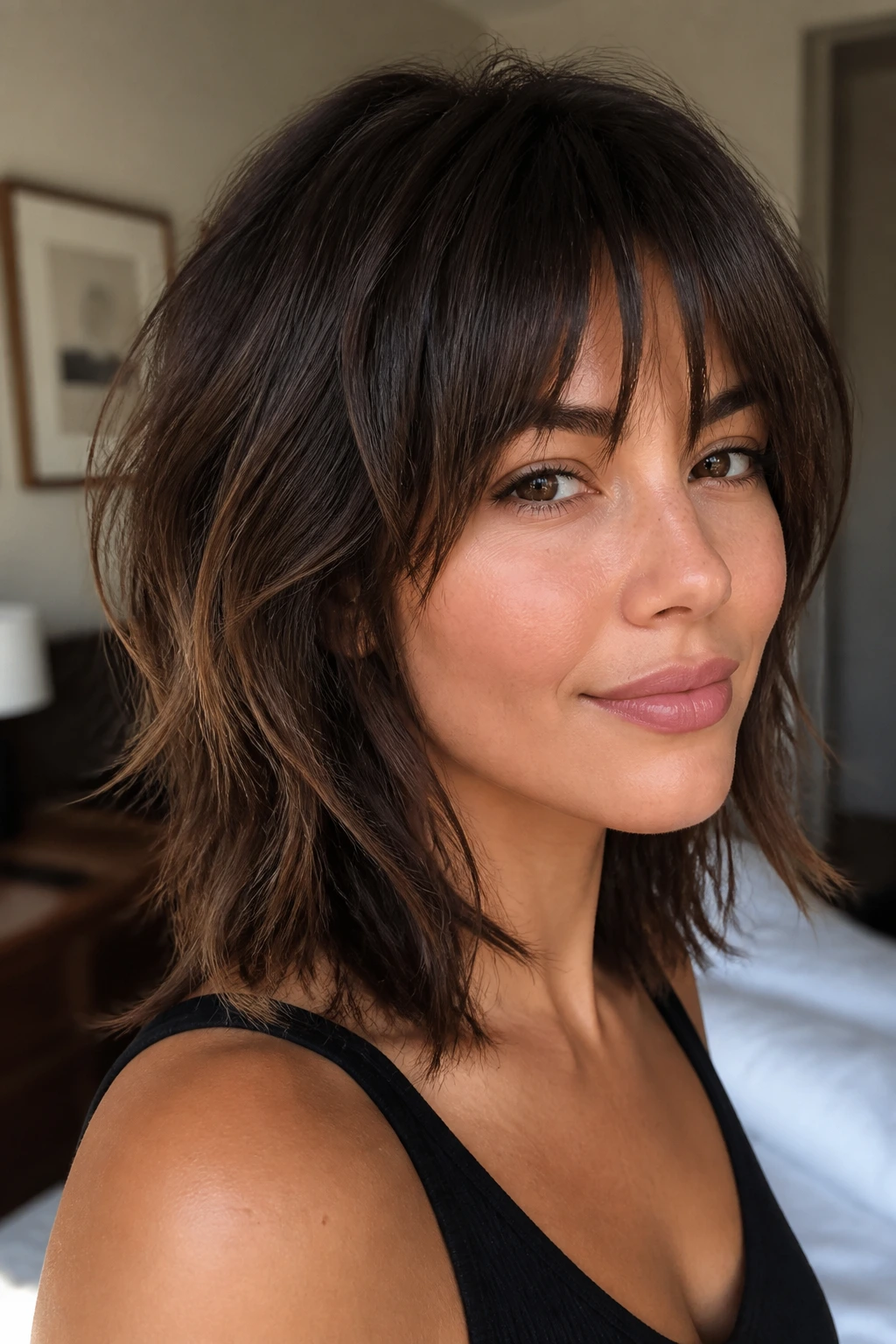
The lob—or long bob—is arguably the most popular haircut of the last decade, and for good reason. It hits a safe, flattering spot on almost everyone. But a standard, blunt-cut lob can sometimes feel a bit heavy or too “done.” The layered lob shag keeps that familiar length but introduces weightlessness through strategic internal layering.
Why This Style Succeeds
This cut focuses on removing bulk from the interior of the hair. Your stylist should use a razor or point-cutting shears to create “shattered” ends. The result is a piecey, lived-in texture that doesn’t require a round brush or a flat iron to look presentable. It essentially gives you that “I just woke up like this” vibe without the actual bedhead chaos.
Best Hair Types for the Lob Shag
- Fine hair that lacks volume: The layers build up height.
- Medium-density hair: It creates a nice, airy feel.
- Straight to slightly wavy hair: You get the best movement without too much frizz.
Styling tip: Work a small amount of sea salt spray into damp hair, scrunch it with your hands, and let it air dry. If you have any stubborn cowlicks at the crown, a quick blast with a hair dryer while lifting the roots will settle them into place.
2. Curtain Bangs with Face-Framing Shag
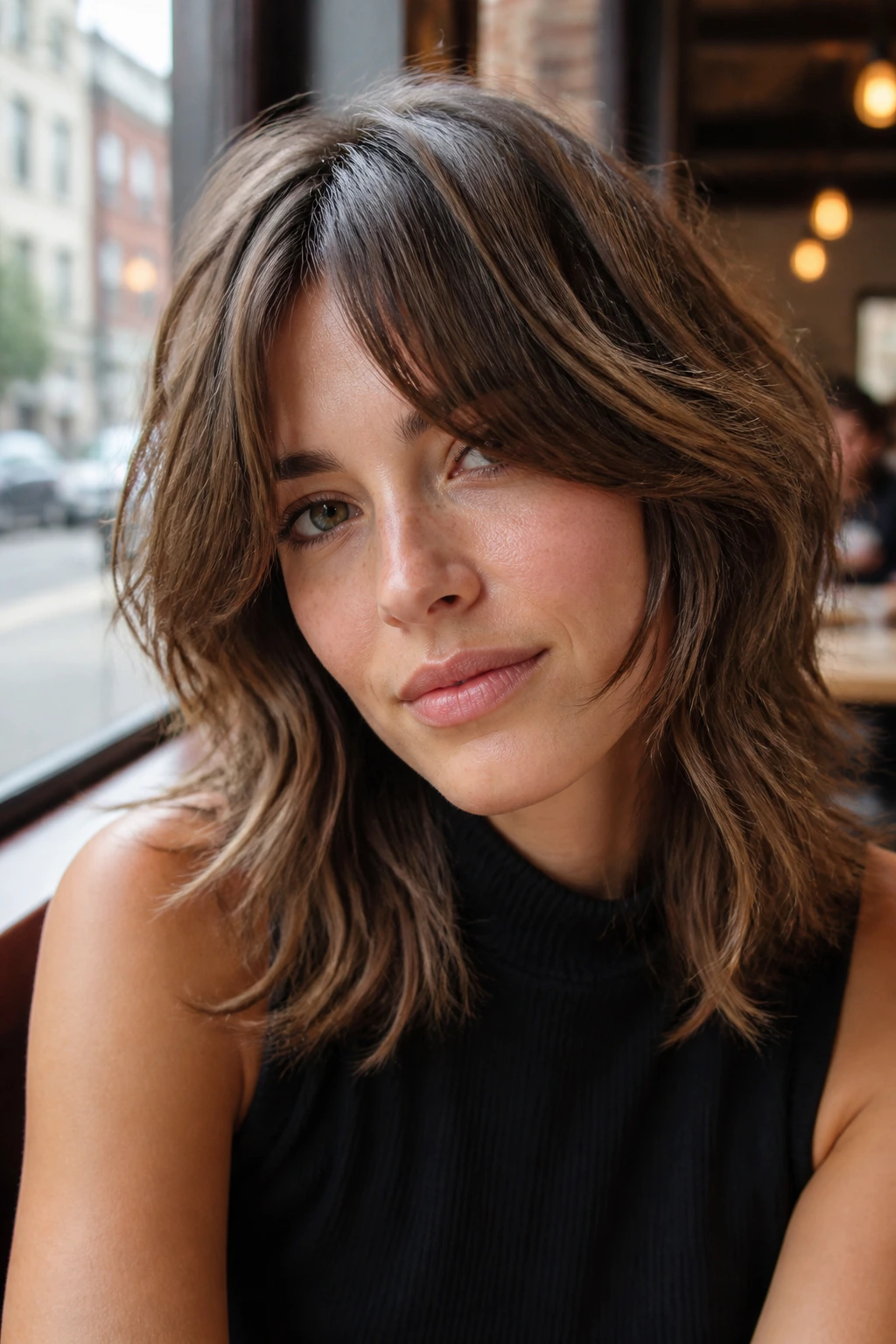
If you want to try the shag aesthetic but are nervous about going too short on the layers, start with the face frame. Curtain bangs are the perfect gateway drug to the shag world. They provide a soft, retro-inspired swoop that draws attention to the eyes and cheekbones, while the rest of the hair maintains a more standard, manageable length.
The genius of this look is in the transition. The bangs shouldn’t just be cut straight across; they need to feather out, blending seamlessly into the side layers. This creates a cohesive “curtain” that opens up the face. When you pull your hair back into a ponytail, you still have those soft, romantic tendrils framing your jawline, which makes any updo look immediately more polished.
Maintenance Considerations
Because the bangs are the star here, they will need the most frequent attention. Expect to trim them every four to six weeks to keep them from poking you in the eyes. The rest of the shag, however, can go much longer between cuts because the goal is a grown-out, effortless appearance.
3. Wispy Ends and Textured Mid-Lengths
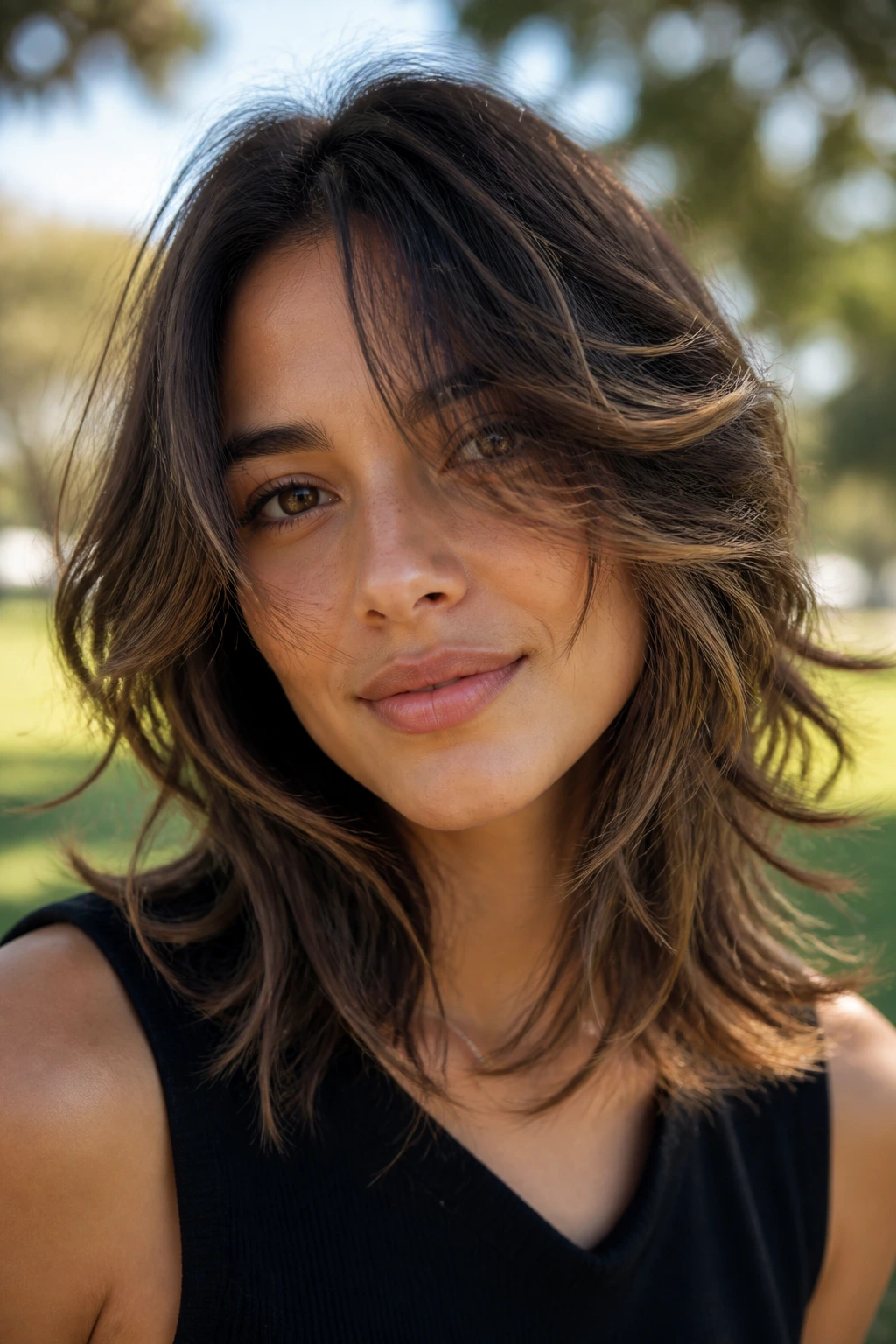
There is something inherently chic about hair that looks like it has been lightened by the sun and styled by the ocean breeze. This version of the shag is all about the finish. While the base of the hair remains at a medium, collarbone-skimming length, the stylist thins out the bottom third significantly.
Achieving the “Wispy” Look
The technique here is crucial. You want to avoid blunt shears at all costs at the bottom. Your stylist should be using thinning shears or a razor to “carve” into the hair. This ensures the ends are soft and pliable, rather than hard and sharp.
How to Style for Maximum Movement
- Start with a texturizing mousse on damp hair.
- Rough dry the hair using only your fingers, moving the hair in different directions to encourage volume.
- Once dry, take a tiny amount of pomade or styling wax and twist individual sections of hair around your fingers.
- Focus on the mid-lengths and ends to define the “wispy” pieces.
Pro tip: This cut looks particularly great with subtle, balayage-style highlights, as the varying shades emphasize the texture of those wispy ends.
4. The Bottleneck Shag
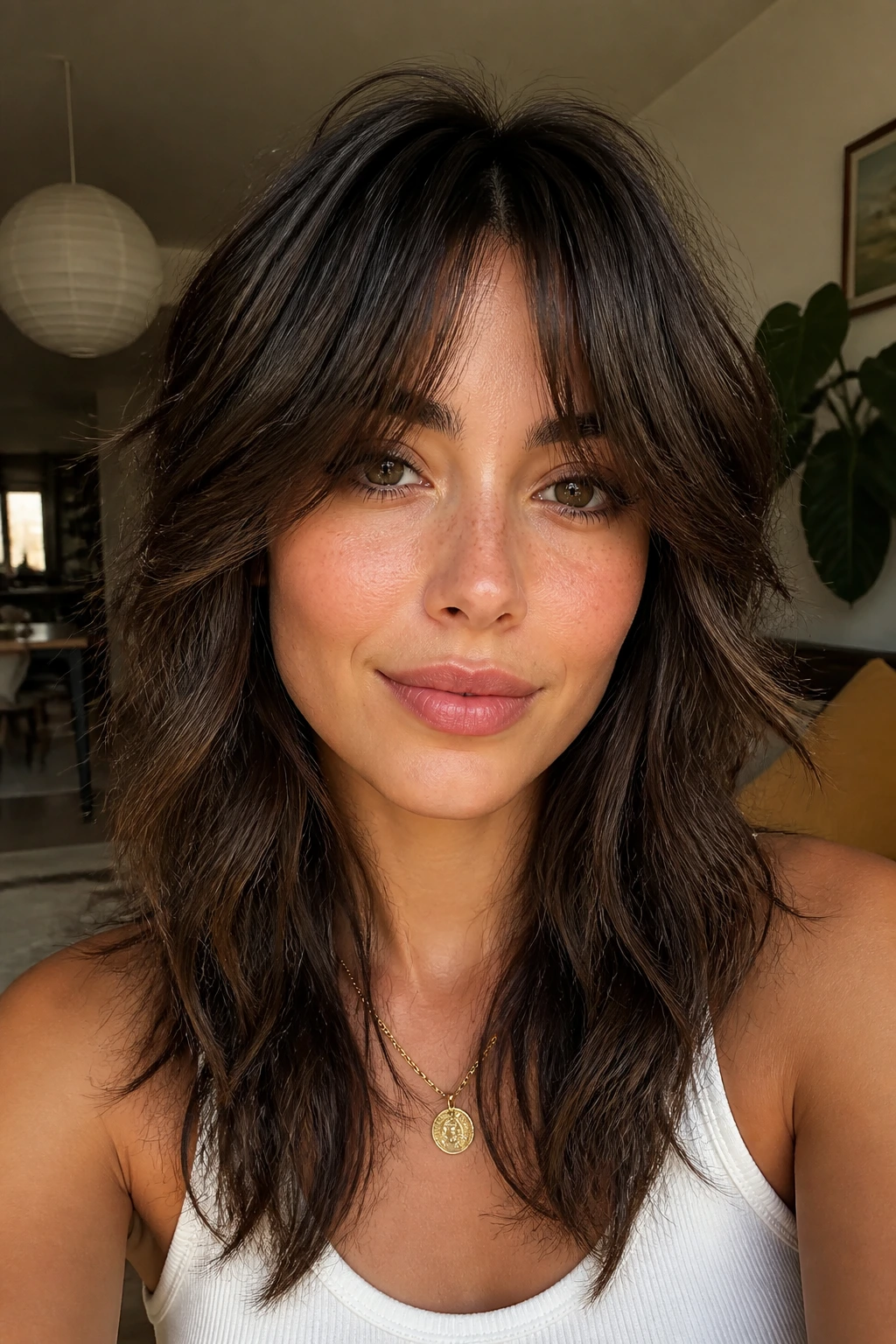
The “bottleneck” fringe has gained popularity for a reason: it is incredibly flattering. It sits somewhere between a full bang and curtain bangs, with the center being the shortest and the sides tapering off to follow the cheekbone. When you pair this specific bang style with a medium-length shag, you get a balanced look that is both edgy and soft.
The “bottleneck” name comes from the shape of the bangs—they start narrow at the top and widen out. It works for almost every face shape because you can adjust the length of the shortest part. If you have a longer forehead, keep the center slightly longer. If you have a smaller forehead, bring the center piece up a bit. The shag layers in the back should mirror the softness of the bangs, keeping everything cohesive.
5. Choppy Layers with Blunt Perimeter

This might sound like a contradiction—how can you have choppy layers and a blunt perimeter? The answer lies in the contrast. This cut features heavy, choppy, texturized layers throughout the top and sides, but the very bottom edge of the hair is left blunt and straight.
It creates a visual separation. The top looks like a wild, shaggy, rock-and-roll haircut, while the bottom looks sharp and intentional. This is a fantastic option for people with thicker hair who want to get rid of bulk but don’t want to lose the feeling of “having hair” at the bottom. The blunt perimeter gives you a sense of structure that prevents the shag from looking completely unkempt.
Who Should Avoid This Look?
If you have very fine, thin hair, a blunt perimeter can sometimes weigh the hair down and make it look straggly. You are better off with a softer, tapered edge. This specific cut really shines on medium-to-thick hair types that can handle the contrast between the choppy top and the dense bottom.
6. Soft Wave Shag
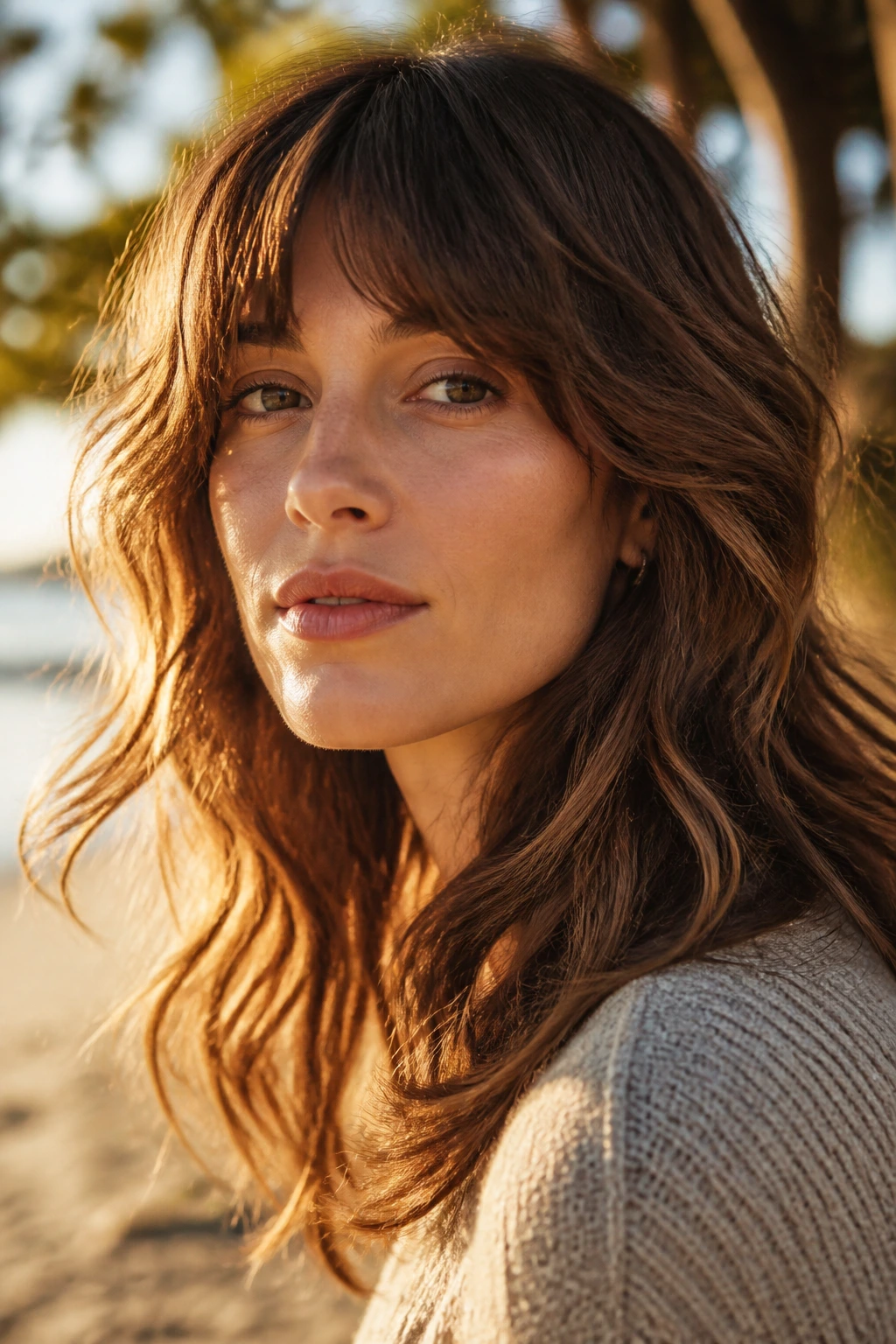
If you have a natural, loose wave in your hair, you are the ideal candidate for a shag. A soft wave shag is designed to lean into your natural texture. Instead of trying to smooth your hair out, this cut encourages your waves to cluster together, creating that sought-after “lived-in” aesthetic.
The secret to this cut is avoiding too many short, choppy layers on top, which can lead to a “poofy” look if the hair is wavy. Instead, opt for long, internal layers that give the hair room to bend. When you look at the hair, it should feel like one continuous, fluid shape rather than a tiered cake.
Why It Works for Low-Effort Styling
You do not need heat tools for this. Ever. Wash your hair, apply a hydrating cream, and let it dry. The layers will allow your natural wave pattern to assert itself, and the shorter pieces around the face will naturally curl inward, framing your features without you having to lift a finger.
7. The Modern Shaggy Mullet
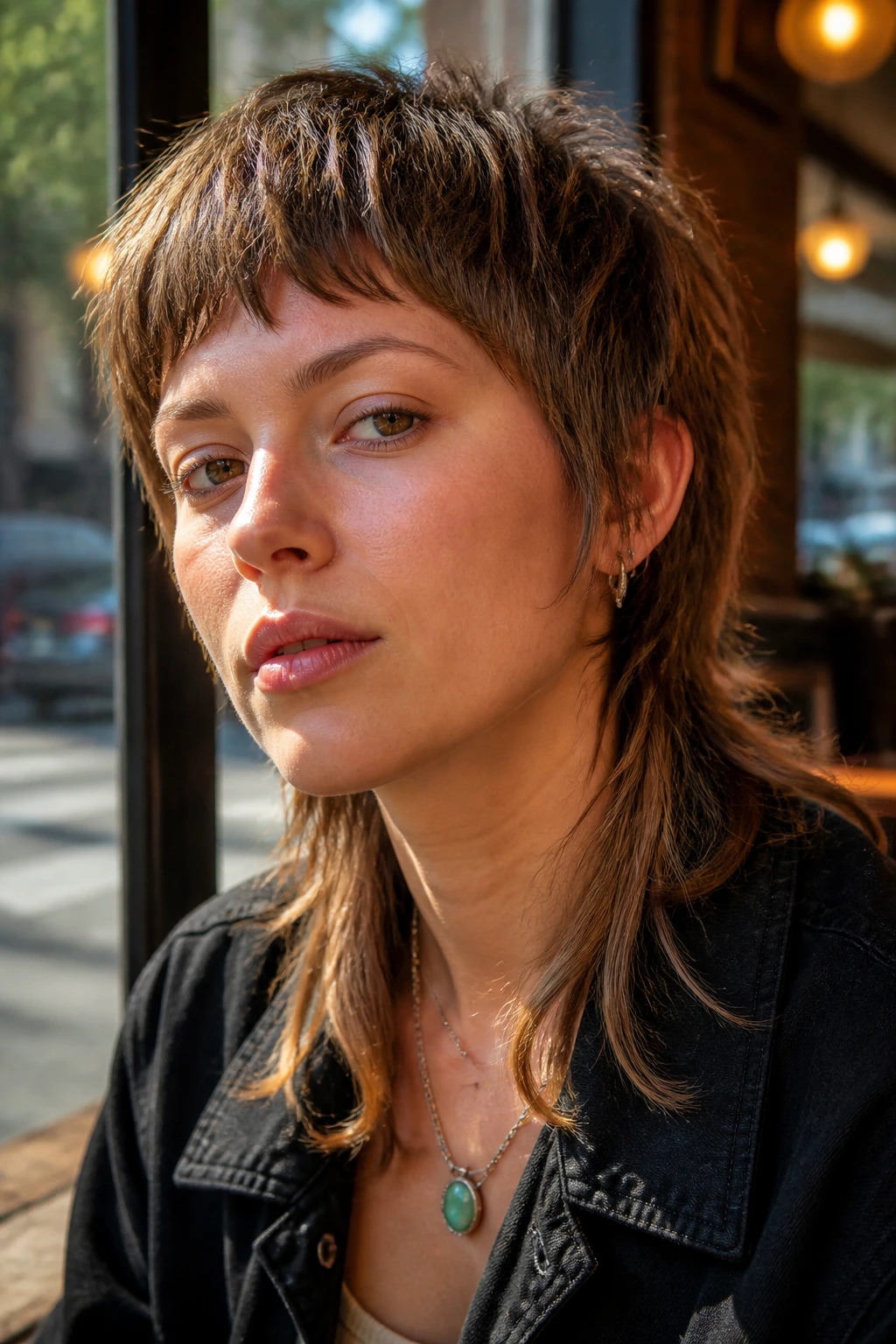
Hear me out: the mullet has been reimagined, and it is far more wearable than the version your uncle sported in the eighties. The modern shaggy mullet is all about a distinct, shorter layer at the top and sides, transitioning into a longer, piecey length at the back. It is cool, it is bold, and it is surprisingly flattering.
The key to keeping this “soft” rather than “intense” is the layering technique. The transition between the short front/top and the longer back must be blended. You don’t want a harsh shelf of hair. You want a gradient. This style frames the face beautifully because of the shorter layers around the temples, while still giving you that satisfying length in the back.
Who wears this best? Anyone with a bit of a rebellious spirit. It is a look that requires confidence. If you like the idea of a shag but want something with a bit more structural interest, this is the one to ask for.
8. Curly Shag with Minimal Weight
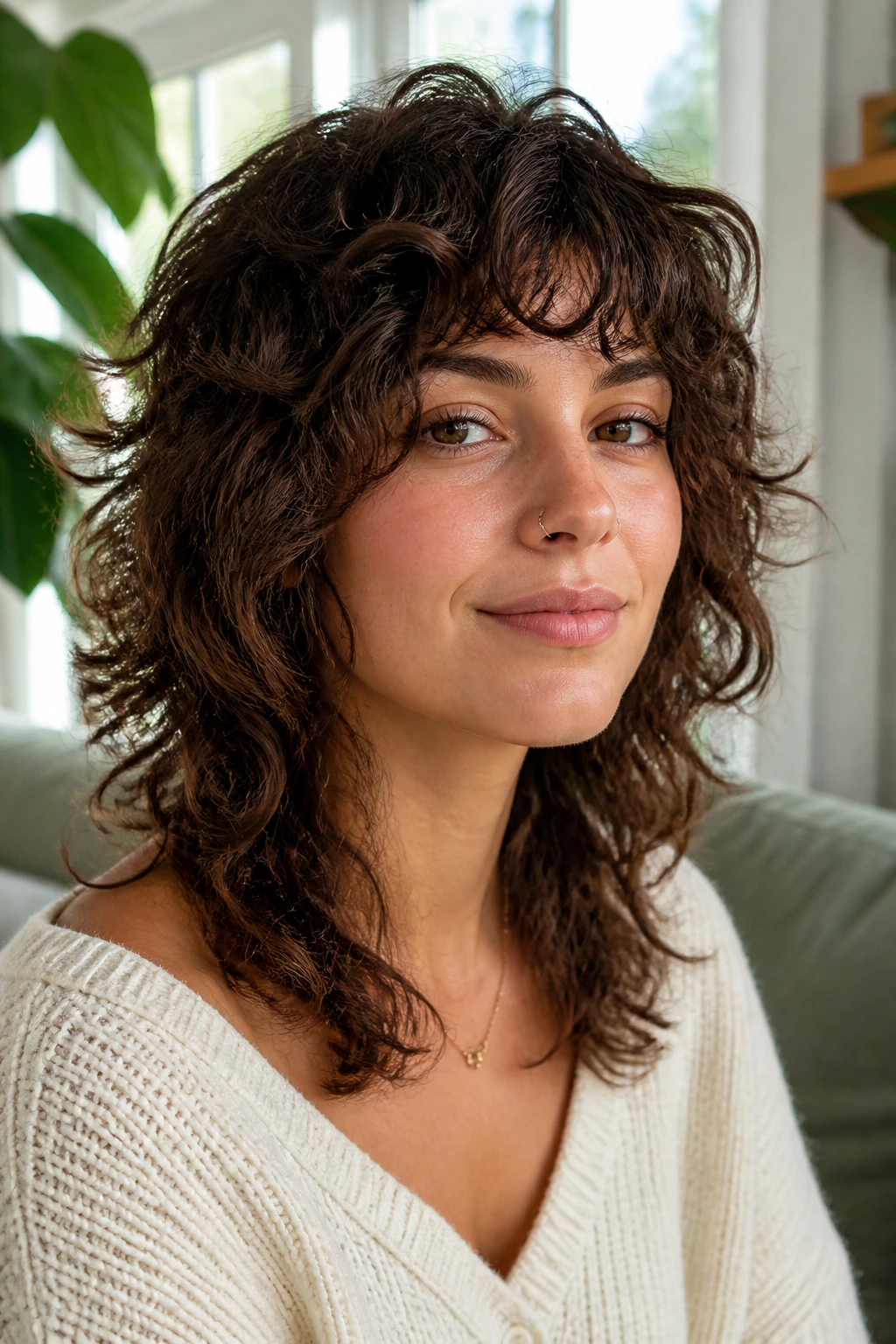
For those with tight curls or coils, a shag is often the most practical haircut you can get. Curls have a tendency to grow “out” rather than “down,” creating a triangular shape if the cut is not right. A shag fixes this by removing weight throughout the crown, which allows the curls to stack vertically rather than fanning out horizontally.
Critical Techniques for Curls
- Dry Cutting: Never get a shag for curly hair from a stylist who insists on soaking it wet before cutting. Curls change shape entirely when dry. You want your stylist to see where the curl lives and how it springs back.
- Internal Layering: You do not need blunt, visible layers. You need “invisible” layers inside the hair to create room for the curls to move.
- Bang Selection: Curly bangs are transformative. They prevent the hair from looking like a curtain of weight and add a fun, playful element to the shag.
9. Bardot-Inspired Soft Shag
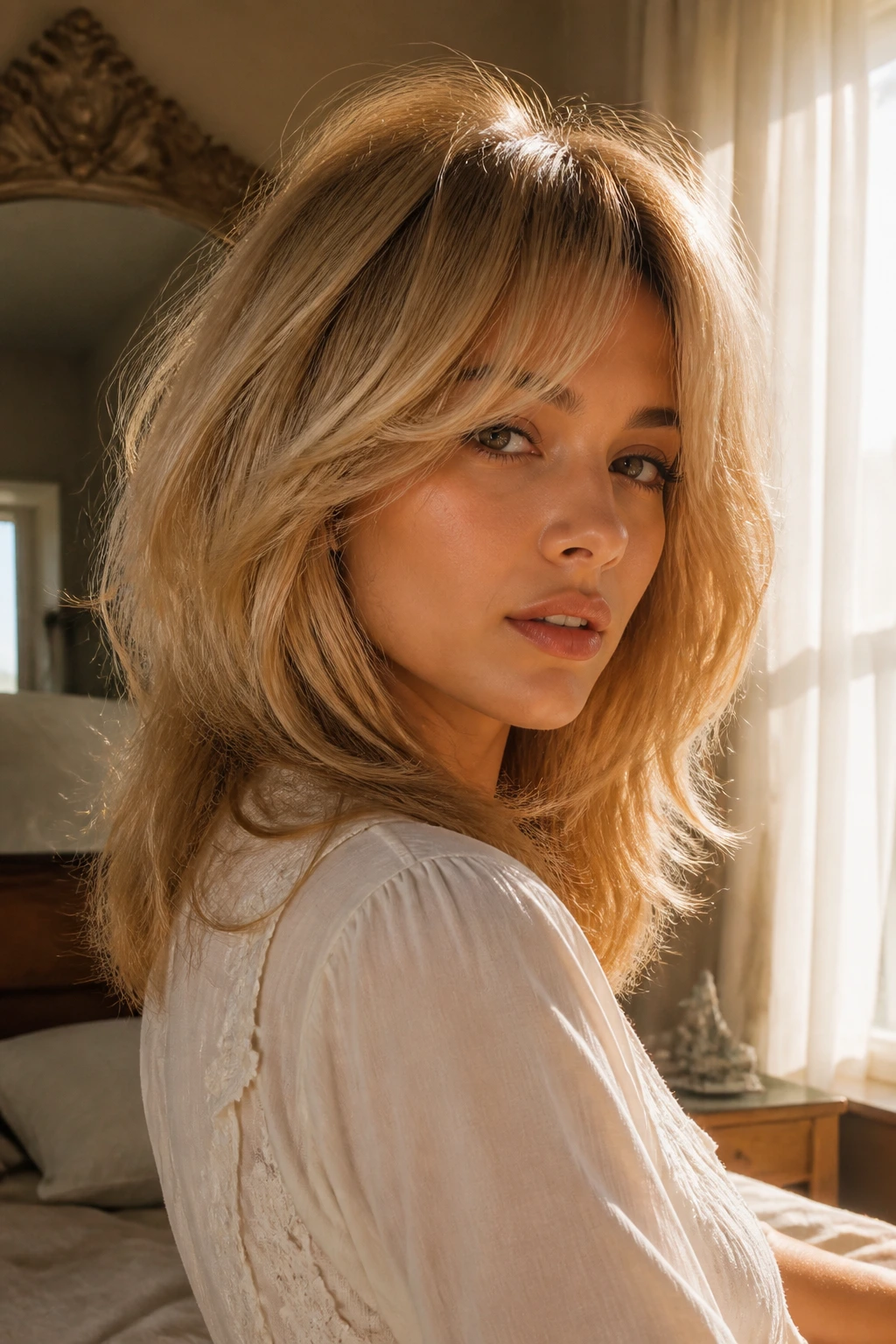
Brigitte Bardot is the patron saint of the messy, voluminous, soft-shag-adjacent look. This style is all about maximum volume at the crown and long, sweeping bangs. It is romantic, a bit retro, and incredibly feminine.
To achieve the Bardot look, the layers are longer and more blended than in a standard shag. You aren’t looking for “jagged,” you are looking for “soft.” Think of a curtain of hair that has been teased just a little bit at the roots. It works best on medium-length hair that has a bit of natural body. If your hair is stick-straight, you might need to use a large-barrel curling iron to get that signature bend, but the effect is worth the five minutes of effort.
10. Feathered Layers with Soft Texture
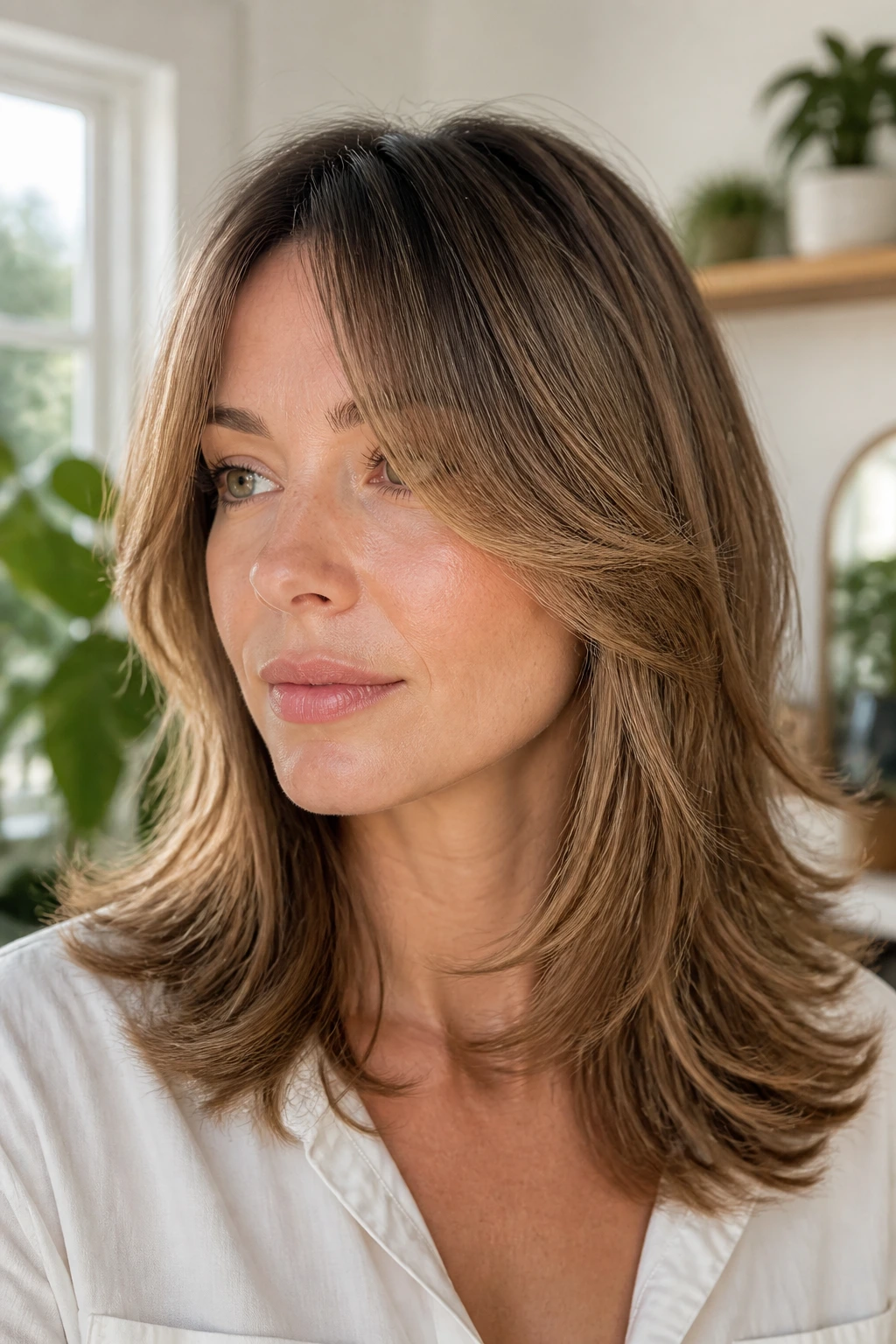
Feathering is a classic technique that has fallen out of favor, but it is making a comeback in the world of soft shags. Feathering involves using the razor or shears to create fine, tapered ends that flow away from the face. It gives the hair a light, airy quality that makes it feel much younger and fresher.
How to Style Feathered Layers
- Start with a light volumizing spray.
- Use a round brush while blow-drying, pulling the hair away from your face.
- This encourages the layers to “flick” outward, which softens the jawline and opens up your face.
This is a great look if you feel like your hair is constantly dragging your features down. The upward motion of the feathered layers lifts the entire silhouette.
11. Shag with Blunt Bangs
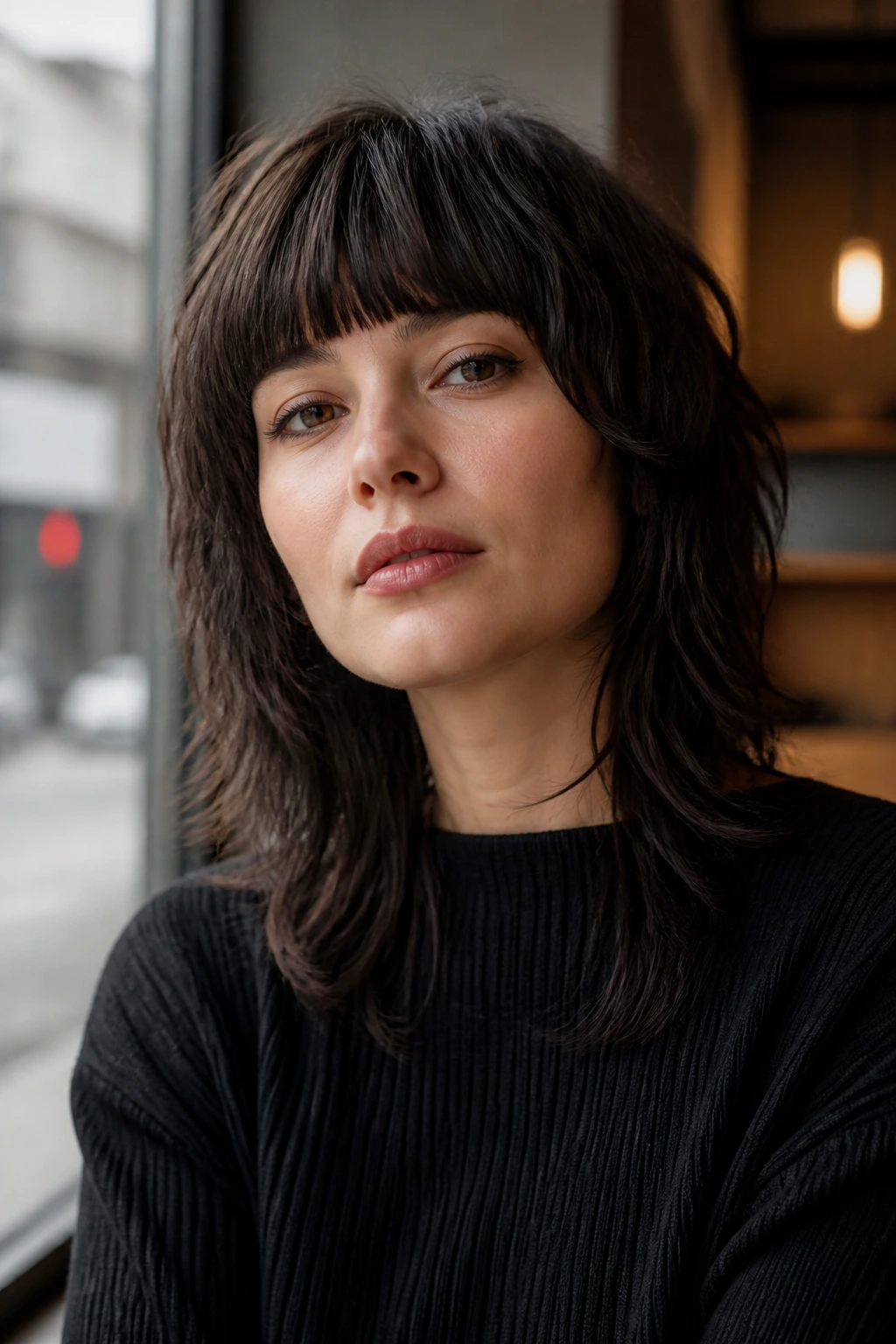
This is a high-contrast style that is undeniably striking. Taking a shaggy, textured, medium-length cut and pairing it with a thick, blunt, straight-across bang creates a balance of “wild” and “controlled.” The blunt bangs make the style feel intentional and editorial, while the shag keeps it from feeling too rigid or boring.
The Maintenance Factor
Be aware that blunt bangs require a specific level of commitment. They need to be trimmed often, and you will likely need to use a flat iron or a round brush every morning to keep them sitting perfectly flat against your forehead. If you have a cowlick at your hairline, this can be a difficult style to master, so check with your stylist during your consultation.
12. The Beachy Messy Shag
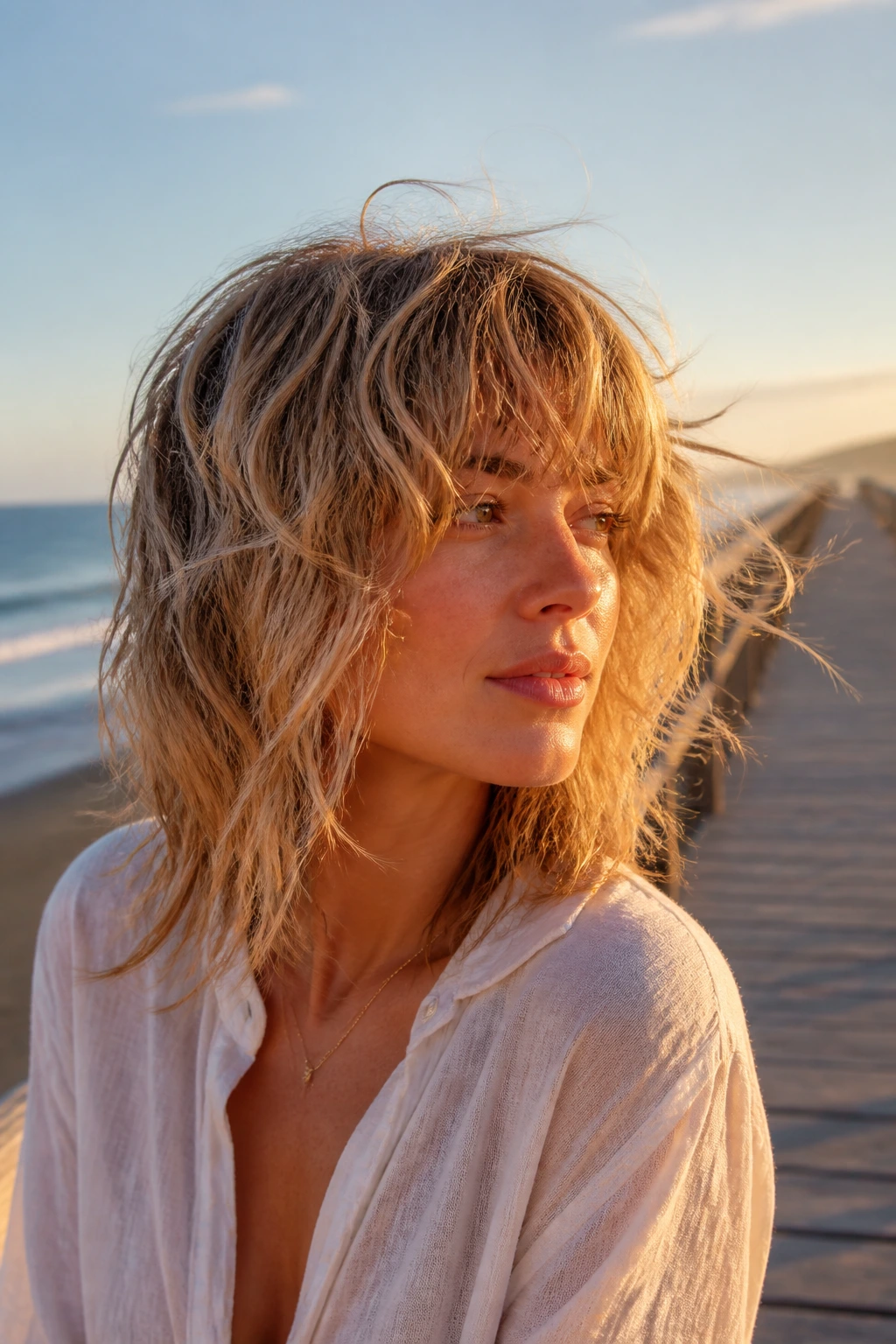
This is the quintessential “vacation hair” cut. It is messy, it is undone, and it is supposed to look like you have been living in a swimsuit for a week. The layers here are somewhat irregular—they shouldn’t look perfectly symmetrical. One side might be a little shorter, one layer a little longer. It’s that imperfection that makes it work.
Ingredients for the Beachy Look
- A good sea salt spray or texturizing salt paste.
- The patience to let it air dry.
- A “don’t care” attitude toward frizz.
This cut embraces the frizz. When the hair is a bit wild and fluffy, it looks healthy and thick. If you constantly fight your hair to keep it smooth, you are missing the point of this cut. Let it be what it wants to be.
13. Hidden Undercut Shag (Subtle)
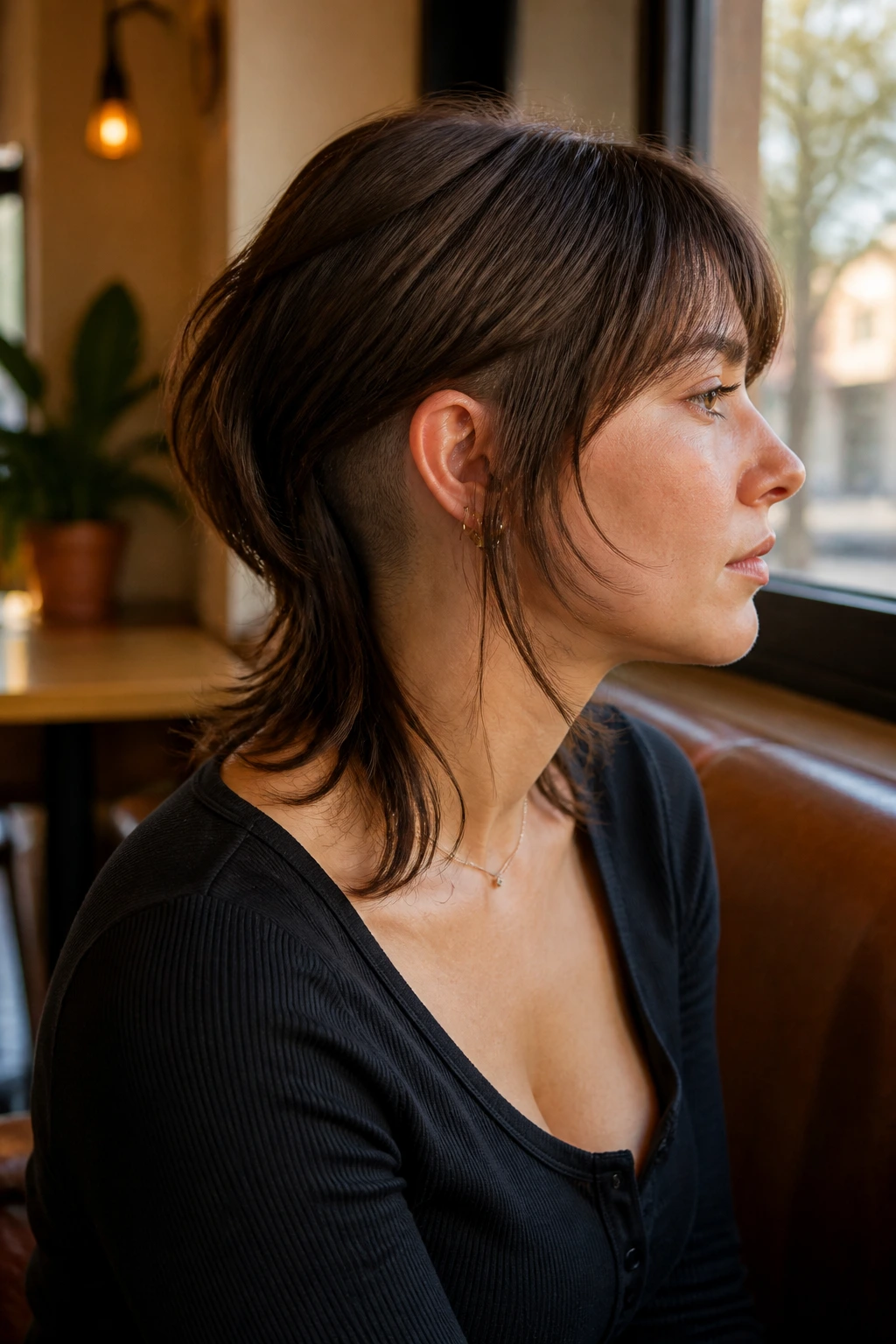
If you have extremely thick hair and feel like you are drowning in it, a hidden undercut is a lifesaver. You can incorporate this into a soft shag by having your stylist shave or deeply undercut the hair at the very nape of the neck.
Why This Works
When you wear your hair down, the top layers cover the undercut, so it looks like a perfectly normal, soft shag. But when you pull your hair up into a messy bun or ponytail, you reveal a sleek, cool undercut. It removes a massive amount of weight from the bottom of the hair, making the rest of the shag feel much lighter and easier to style. It is the best of both worlds: a professional, soft look for the office, and an edgy surprise for the weekend.
14. Shag with Face-Framing Highlights
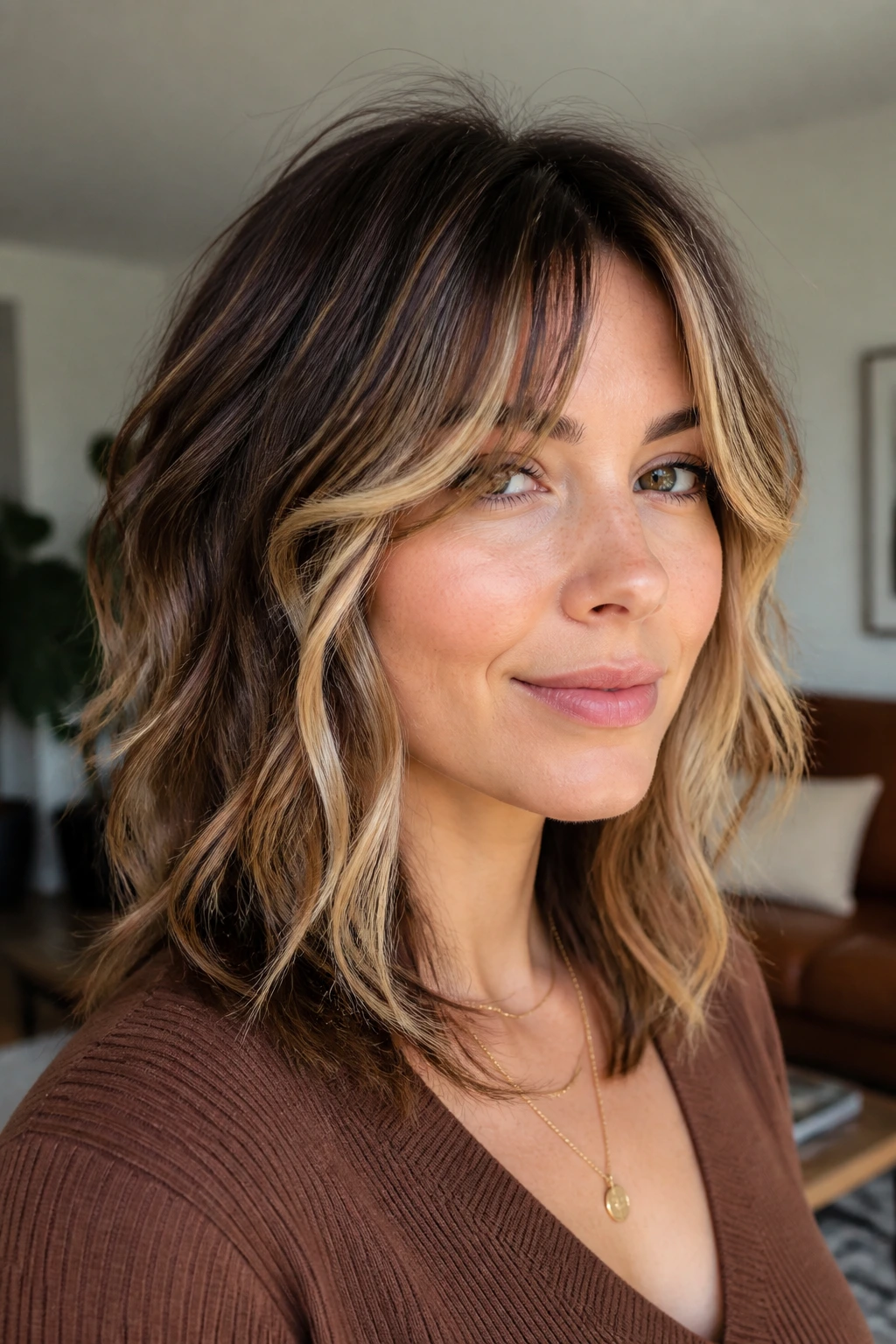
Sometimes the cut itself is only half the battle. If you want to accentuate the layers of your shag, color is your best friend. Face-framing highlights—often called “money pieces”—draw attention to the shorter layers around your face. When these are lighter than the rest of your hair, they make the layers pop and give you an instant glow.
Choosing the Right Placement
Don’t just bleach the front. Ask for a “ribbon” of highlights that follows the line of your bangs and the shorter layers around your jaw. This creates a frame that lights up your face and makes the haircut look more expensive and well-designed than a single-process color would.
15. The Grown-Out Pixie Shag
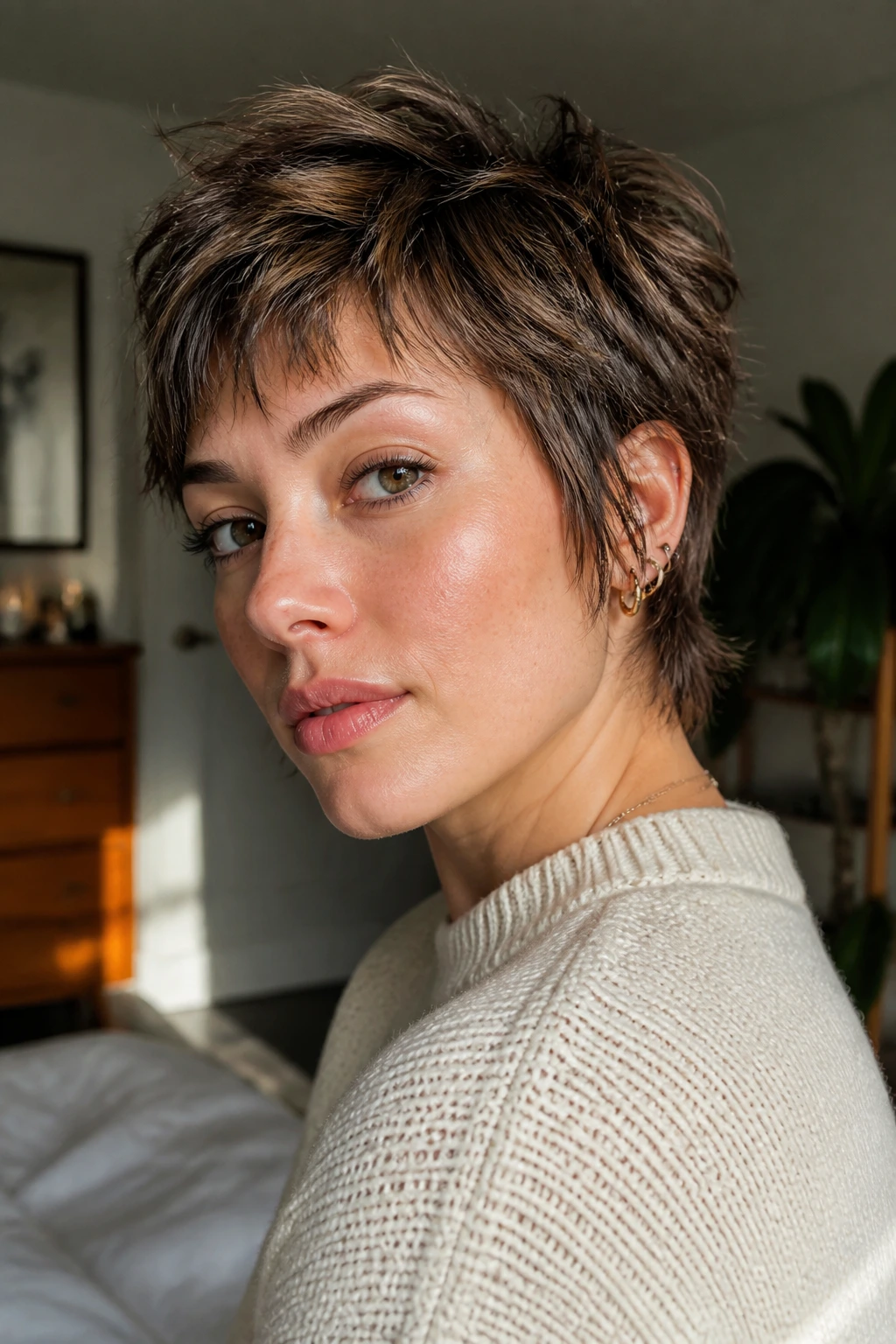
Did you cut your hair short and now you are regretting it? Or perhaps you are in that agonizing phase of growing out a bob? The grown-out pixie shag is your best friend. It utilizes the varying lengths you already have and turns them into a purposeful, shaggy style.
It is less about “getting a cut” and more about “shaping the growth.” Your stylist will trim the back (the mullet-y part that always grows out first) and texturize the sides to help them blend into the top. It is the most forgiving cut on this list because it doesn’t try to force your hair into a specific mold—it just makes the awkward phase look like a deliberate style choice.
Final Thoughts
At the end of the day, a haircut is only as good as the styling routine you are willing to commit to—or, in the case of the soft shag, the routine you are willing to abandon. These cuts are meant to be lived in, played with, and embraced for their imperfections.
If you decide to go for it, bring photos. But remember, a photo is just a reference point. Your hair texture, your growth patterns, and your face shape are unique variables that a skilled stylist will need to account for. Do not be afraid to tell them, “I want the vibe of this photo, but I need it to work for my specific hair type.”
The beauty of a soft shag is that it grows out gracefully. You won’t have to deal with a harsh line of demarcation or a weird, unflattering shape three weeks after your appointment. It evolves. And really, isn’t that what we all want from a haircut—something that stays looking good long after we’ve left the salon chair? Be brave with your scissors, embrace the layers, and enjoy the extra time you’ll have in the mornings.
