



A short cut in fall has a different job than a summer haircut. It has to sit neatly under scarves, survive hat hair, and still look like you meant to do something with it, even when the wind has been rude all day.
That’s why short hairstyles for fall tend to look better when they have shape, not just length. A blunt line can feel sharp and clean. A textured crop can make fine hair look thicker. A chin-length bob can soften a coat collar that keeps flattening everything in sight.
And yes, the details matter. A few extra millimeters at the nape, a side part that shifts the weight, a fringe that lands above the lashes instead of in them — those small choices are what separate a cut that looks nice in the salon mirror from one that keeps behaving after three wears and a wash.
Some of the styles below are polished. Some are messy in a good way. A few are especially kind to natural texture, and a couple are the sort of cuts that make thin hair look less apologetic. That’s the real point, anyway.
1. Chin-Length French Bob
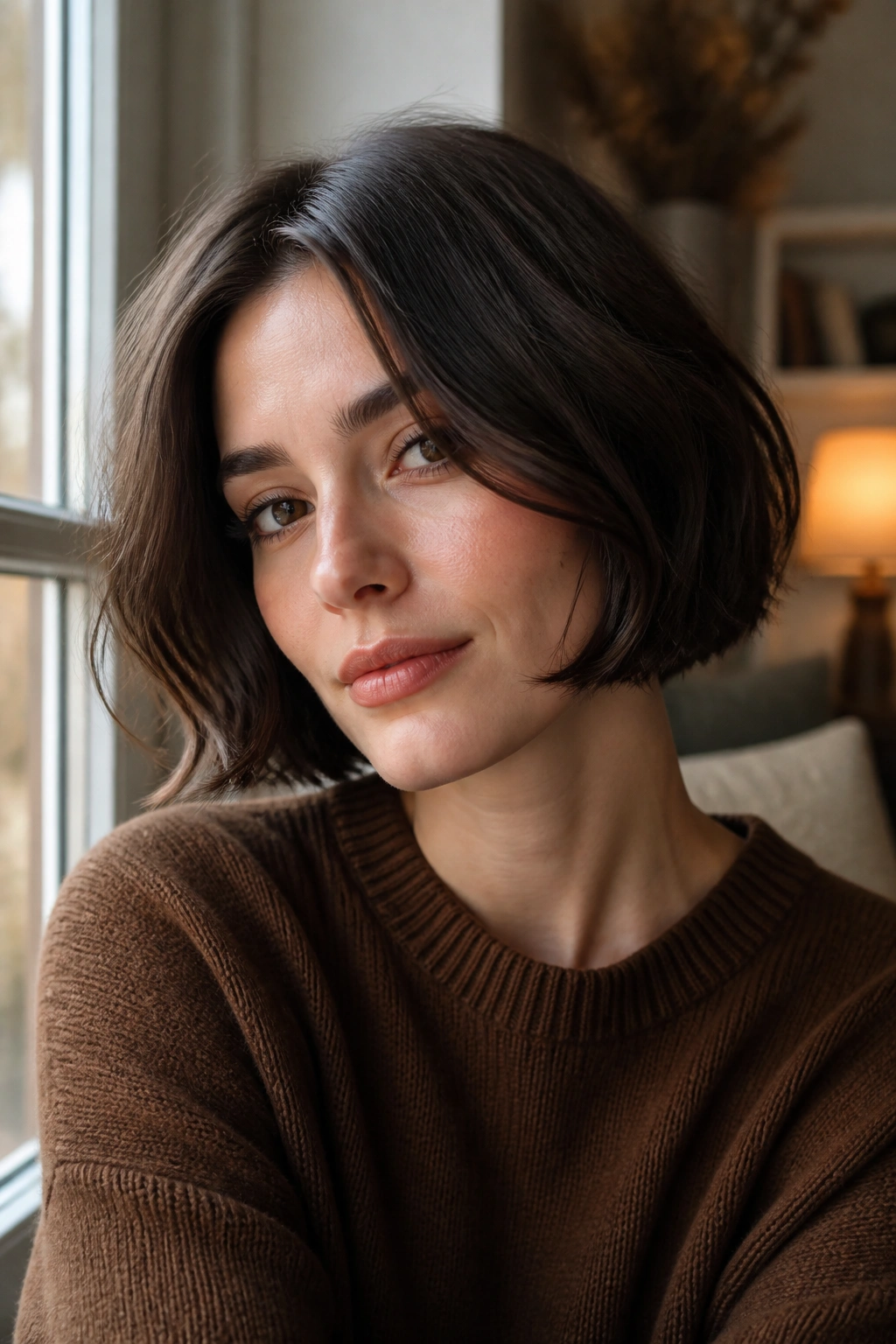
The chin-length French bob has that sharp, edited look that makes a plain sweater suddenly feel intentional. It sits close to the jaw, usually with a soft bend or a slight curve under the ends, and it gives the face a clean frame without looking severe.
Why It Works So Well in Cooler Weather
A bob at the chin stays out of your scarf, which sounds minor until you’ve spent half a day pulling fibers out of a rounded brush. It also keeps enough weight at the bottom to look smooth, but not so much that it collapses by lunch.
The best version has a tiny bit of movement through the mids. Not curls. Not beachy waves. Just enough bend to keep the line from looking stiff.
Ask for a slightly shorter front and a soft, blunt perimeter if you want it to open up the face. If your hair is fine, a lightweight blow-dry cream and a 1-inch round brush will do more for this cut than any heavy serum ever will.
- Works well for straight to softly wavy hair
- Looks especially good with a middle part or a deep side part
- Needs a trim every 6 to 8 weeks to keep the line tidy
- Pairs well with a coat collar that sits high at the neck
Best tip: blow-dry the ends under just a little, not curled into a helmet shape.
2. Textured Pixie Cut

What happens when you want short hair that still has attitude? You ask for a textured pixie cut instead of a flat, tidy crop. The difference is in the top layer. A textured pixie has piecey movement, uneven lift, and enough softness around the edges to keep it from feeling too rigid.
The cut is especially good for people who don’t want to spend ten minutes wrestling a round brush every morning. A pea-sized amount of paste or matte cream worked through dry hair is usually enough. Too much product kills the lift fast.
How to Style It
Use your fingertips, not a comb. That sounds fussy, but it matters. A comb drags the pieces together; fingers leave separation, which is the whole point.
If you like a little polish, smooth the sides with a dab of styling cream and let the top stay airy. If you like a rougher finish, scrunch the crown with a pinch of texturizing paste and stop there.
The cut works beautifully with glasses, strong brows, and bold earrings. It also grows out with less drama than people expect, which is a bonus when you are not in the mood for a salon appointment every four weeks. Short, choppy hair can get expensive fast. This one buys you a little breathing room.
3. Blunt Micro Bob
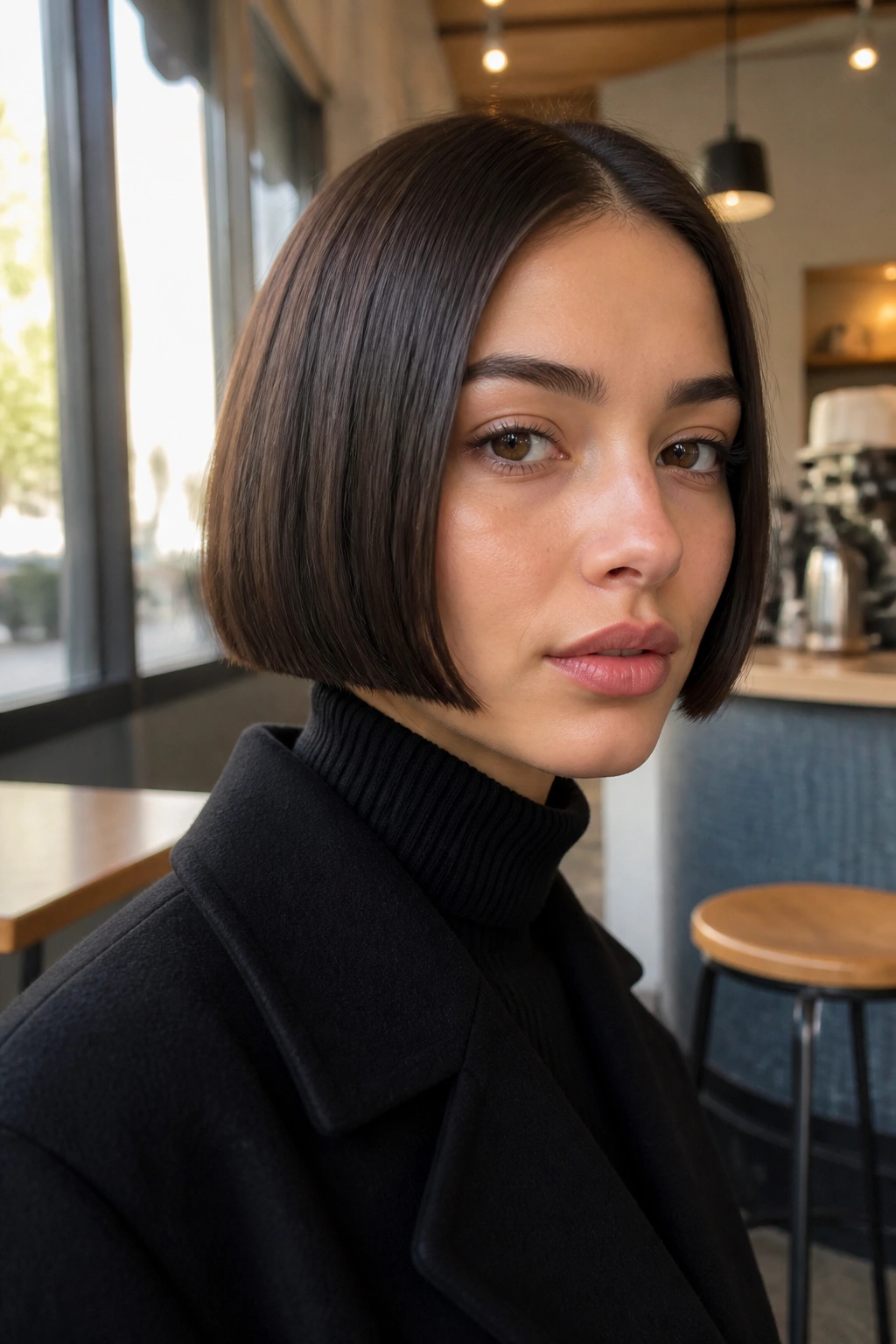
A blunt micro bob is for the person who wants their hair to look deliberate, not casual. It usually ends somewhere between the cheekbone and just below the ear, and the blunt edge gives it a crisp, graphic line that feels clean against chunky knits and heavier fabrics.
You can wear it with a middle part for a modern shape or tuck one side behind the ear for something softer. Either way, the cut has to be precise. If the ends are thinned out too much, the whole thing loses that neat, compact feel.
This one is especially good if your hair tends to puff at the ends or flip out in odd directions. A blunt edge keeps it together. A smoothing blow-dry cream, a flat brush, and a quick pass with a 1-inch straightener on the outer layer are usually enough to make it sit properly.
- Best for straight hair or hair that can be smoothed easily
- Gives fine hair a thicker-looking edge
- Looks sharp with lip color or statement earrings
- Needs regular trims to keep the line from turning fuzzy
No fluff. That’s the appeal.
4. Soft Layered Lob

The soft layered lob sits in that useful place between short and medium, which is why so many people keep coming back to it. It’s long enough to tuck behind the ears, short enough to feel fresh, and layered enough to move instead of sitting like a block.
Unlike a blunt bob, this cut forgives a bad blow-dry. That matters more than people admit. A few face-framing pieces around the front can make the whole haircut feel lighter, and a little internal layering keeps thick hair from ballooning at the ends.
How to Ask for It at the Salon
Ask for long layers that start below the cheekbone, not choppy layers all over. That gives you movement without removing too much weight.
If your hair is wavy, this cut can air-dry with a soft bend and look finished with nothing more than a leave-in conditioner. If your hair is straight, a loose bend from a flat iron — just one pass, not a whole curling routine — gives it shape without turning it into a formal style.
The lob is one of those cuts that gets better with clothes that have texture: denim jackets, brushed wool, ribbed sweaters. It sits well beside them. That’s a small thing, but it makes the haircut feel part of the outfit instead of floating above it.
5. Curly Crop With a Rounded Shape

Curly hair can look amazing short when the shape is right. A curly crop with a rounded shape keeps the curls full around the head instead of letting them flare out at the sides, which is usually what people are trying to avoid.
The trick is balance. Too much layering and the crown gets frizzy. Too little and the curls stack in a hard little triangle. A good rounded crop gives room at the top and taper at the sides, so the curl pattern can do its thing without looking bulky.
What to Request
- Dry-cut shaping if your curls shrink a lot
- Soft layers placed to support curl clumps
- A length that stays just above the neck or skims it
- Enough weight at the perimeter to keep the silhouette round
Use a curl cream on wet hair, then scrunch in a mousse if your curls need more hold. A microfiber towel helps, but don’t rub. That’s how frizz creeps in fast.
This is one of the best short fall haircuts if you want movement with less daily work. The curls already bring the texture. The cut only has to respect it.
6. Asymmetrical Bob
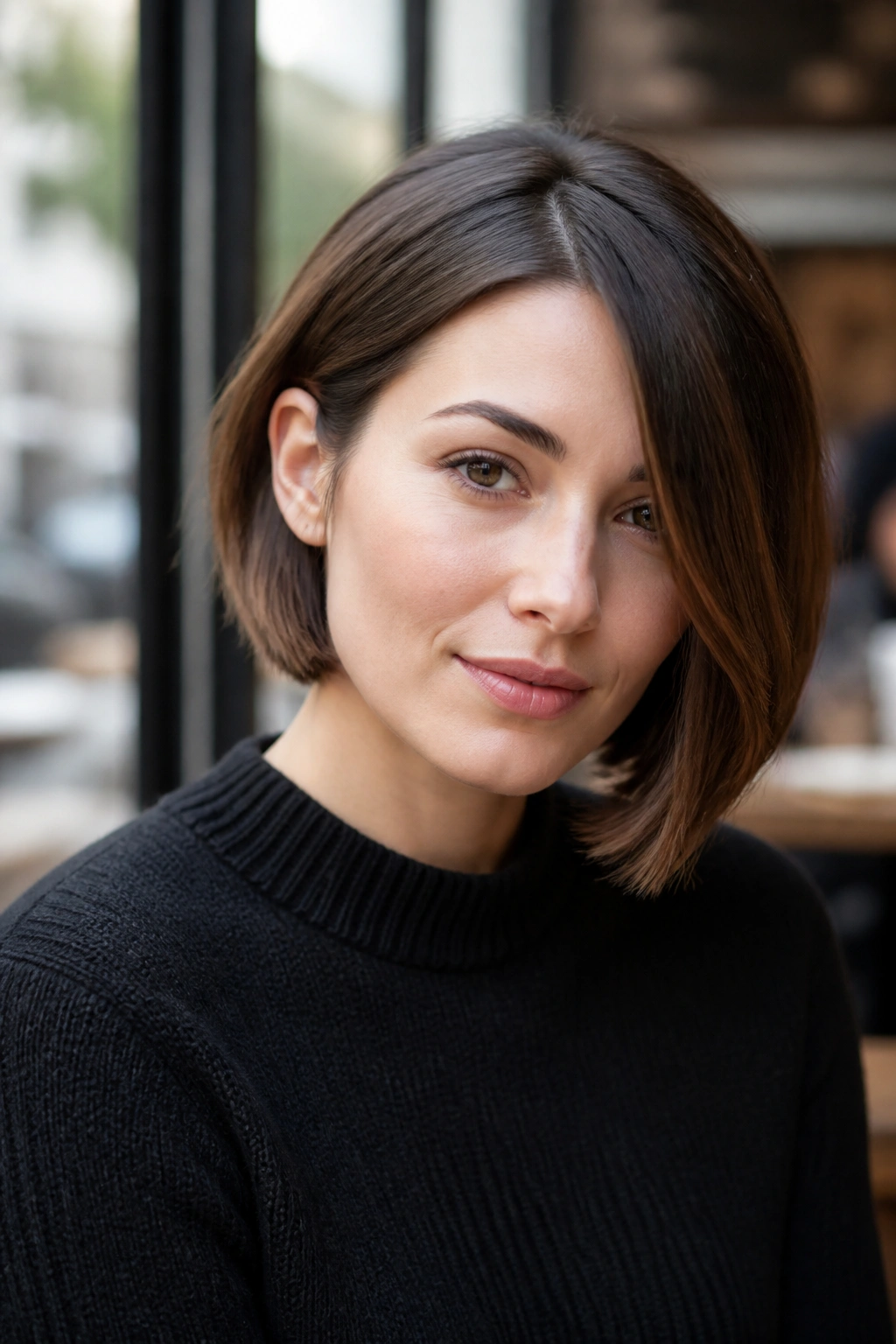
An asymmetrical bob gives you shape without looking fussy. One side is a little longer than the other — sometimes only by half an inch, sometimes more dramatic — and that small shift creates a line that feels modern without needing a lot of styling.
The cut works because the eye follows the diagonal. Simple as that. It pulls attention to the jaw and neck, which is useful if you like that clean, elongated look under open collars or fitted sweaters.
You don’t need a dramatic difference to make it work. In fact, the subtle versions are often the strongest. A deep side part can add to the angle, and a smooth finish keeps the whole thing from turning into a lopsided experiment.
This is a solid choice if your hair naturally falls flat and you want a haircut that creates interest on its own. A light blowout at the roots, plus a pass of smoothing cream through the lengths, usually does the job. If you like to wear one hoop earring and let the other side swing free, even better.
7. Shaggy Short Wolf Cut
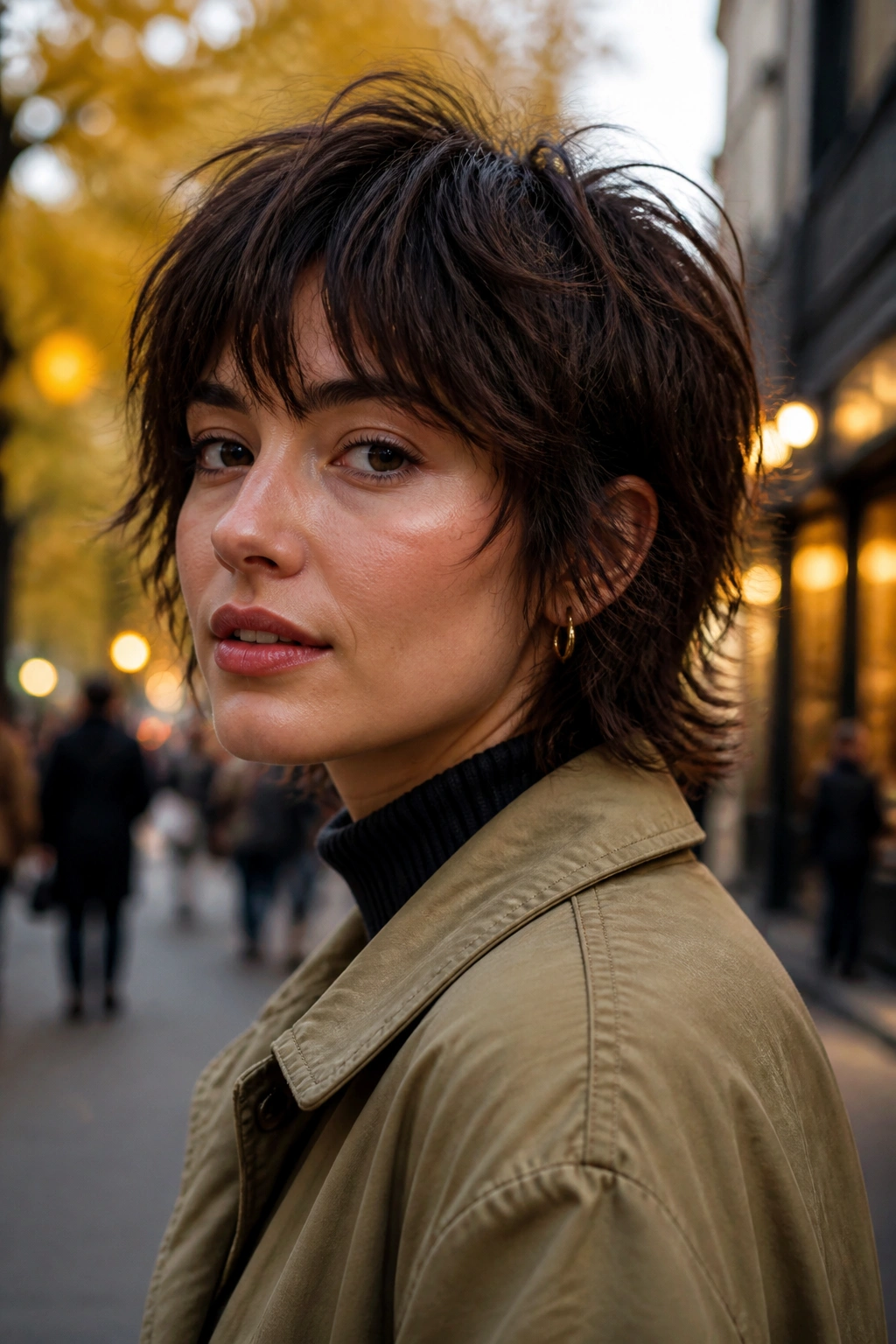
The shaggy short wolf cut is for people who want texture that looks a little wild on purpose. It’s a short, layered cut with volume at the crown, choppy movement through the sides, and a softer, piecey finish around the ends.
This cut can go wrong if it gets over-layered. Then it just looks thin. The good version keeps enough weight to feel full while still giving that broken-up shape people like. It’s a fine line, and a blunt pair of scissors is not the enemy here. Careless thinning is.
Styling Rules That Actually Help
- Use a light mousse on damp hair, about a golf-ball amount
- Scrunch, then diffuse on low heat if you want lift
- Finish with a dry texturizing spray at the crown, not all over
- Skip heavy oils near the roots unless your hair is very dry
The wolf cut sits nicely with a casual fall wardrobe because it doesn’t fight texture. Sweaters, leather jackets, denim, and chunky scarves all work with it. The haircut has enough personality to hold its own, which is half the appeal.
If you like hair that looks undone without falling apart, this is the one to look at.
8. Side-Swept Pixie With Long Bangs
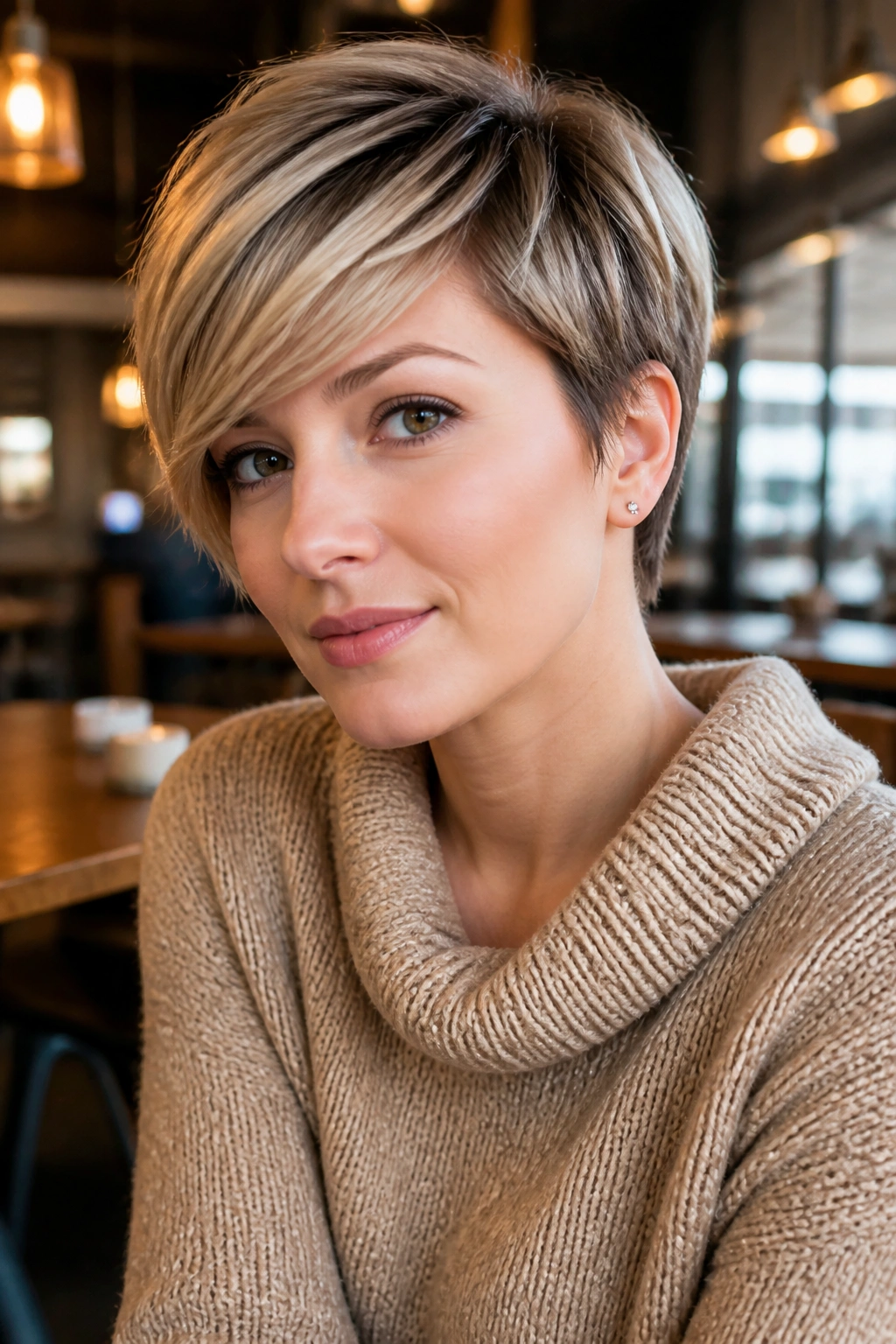
A side-swept pixie with long bangs softens short hair in a way that feels useful, not girly for the sake of it. The bangs sweep across the forehead, which can make the style easier to wear if you’re nervous about going too short all at once.
This cut also gives you flexibility. You can push the fringe flat and smooth for a cleaner look, or lift the roots and let the bangs fall with a little bend for more softness. That kind of range matters when the weather starts making hair behave unpredictably.
How to Wear It
A round brush at the bangs only. That’s often enough.
Dry the fringe first, directing it across the forehead with a nozzle attachment if you have one. Keep the sides close and neat, then leave a little texture on top. The contrast is what makes it interesting. If everything is polished, the style can look too formal. If everything is messy, it loses shape.
This is a smart cut for straight hair, but it can work on slightly wavy textures too, especially if you like a fast routine. You’ll spend less time styling the back of your head, which is always where reality starts cutting into hair ambitions.
9. Ear-Length Box Bob
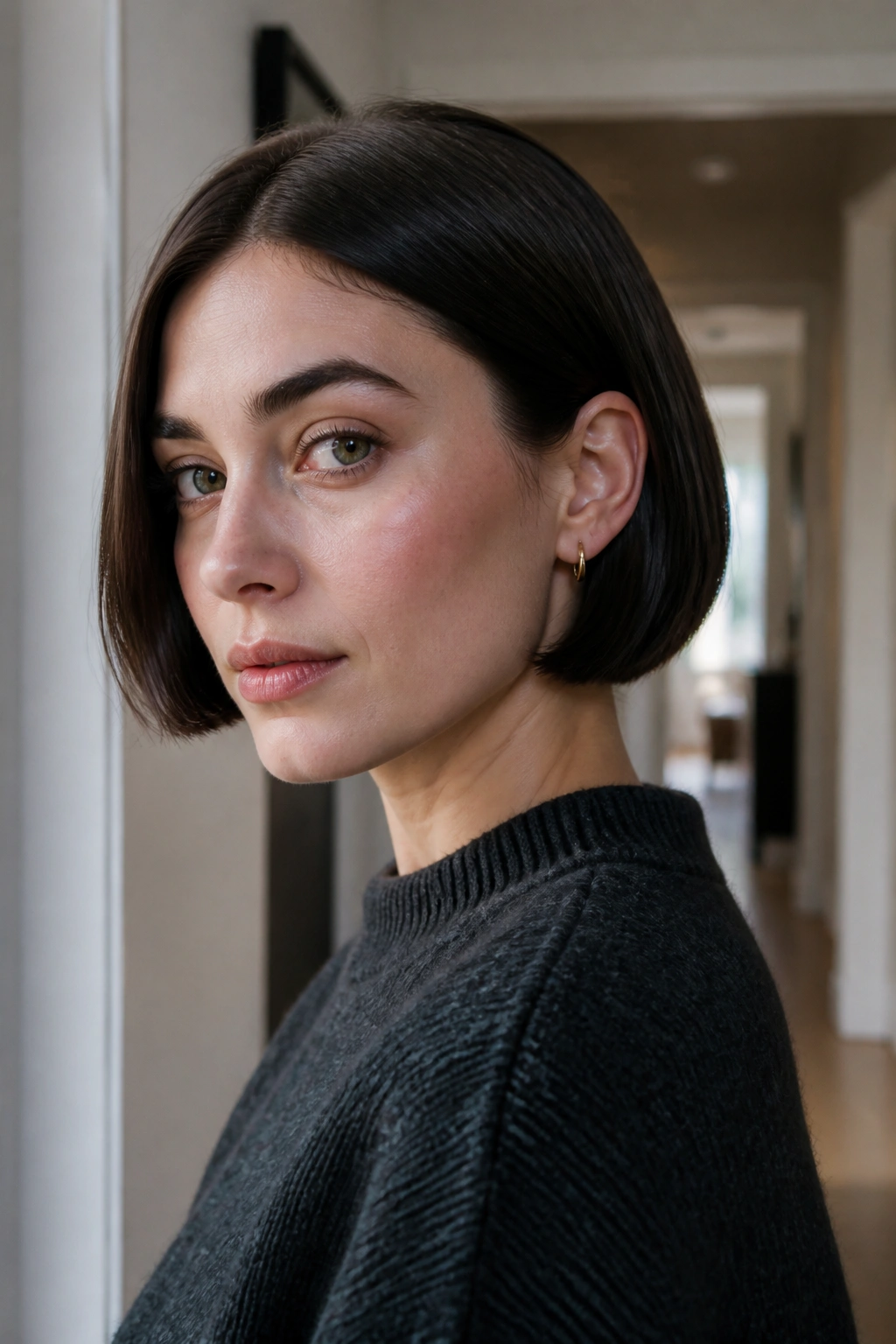
The ear-length box bob is sharp in a way that feels almost architectural. The shape is square, the ends are clean, and the length usually hits around the ears or just below the jaw, creating a blocky outline that sits beautifully on straighter hair.
People either love that geometry or they don’t. I do. It looks controlled, and under a tailored coat it has real presence. It’s also a fine choice if you want a haircut that photographs with strong lines rather than soft movement.
This style is not the one to choose if you want lots of lift and bounce. It wants smoothness. A paddle brush, a smoothing balm, and a flat iron used only on the outer layer will keep the edge neat. If your hair is thick, ask your stylist to remove bulk from the inside, not the perimeter, or the shape can puff in the wrong places.
The best thing about a box bob is how little it asks of you once the cut is right. It either sits correctly or it doesn’t, which sounds unforgiving, but also means there’s less guesswork every morning.
10. Tapered Natural-Hair Cut

A tapered natural-hair cut gives curls and coils room on top while keeping the sides and nape clean and controlled. The effect is polished, but not stiff. More important, it lets the texture stay visible instead of fighting for shape under too much bulk.
This cut is especially useful if you wear your hair in twist-outs, defined curls, or wash-and-go styles. The taper keeps the silhouette neat around the neckline, which helps when you’re layering scarves or high-neck tops. It also reduces the “puffy triangle” problem that shows up when natural hair is cut without a shape plan.
What to Tell Your Stylist
- Keep the top longer so the shape has height
- Taper the sides and nape gradually
- Leave enough length to allow twist-outs or finger coils
- Shape the cut while the hair is in its natural state, if possible
Moisture matters here. A leave-in conditioner, then a cream or gel that suits your curl pattern, usually gives better results than heavy oils. Heavy oils can sit on the surface and make the style limp.
This is a cut that looks especially good with earrings, lipstick, or even a plain turtleneck. The hair already does the work. Everything else can stay simple.
11. Slicked-Back Short Bob

Not every short haircut needs softness. A slicked-back short bob is proof of that.
This is the style for days when you want your hair off your face, your neckline clean, and your whole look to feel sharper than usual. It works best on a bob that sits around the jaw or a touch shorter, because the shorter length keeps the wet-look finish from dragging everything down.
Start with damp hair and work in a strong-hold gel from roots to mid-lengths. A wide-tooth comb gives a smoother finish than fingers, though fingers are fine if you want less shine and more separation. Then either tuck the sides behind the ears or pin them flat for a more sculpted shape.
The cut itself matters because a bob with a clean perimeter looks better slicked back than one with ragged ends. If the line is messy, the whole style reads as rushed. If the line is neat, the slick finish looks deliberate and strong. That’s a big difference.
12. Jaw-Length Curtain Bang Bob

A jaw-length bob with curtain bangs is one of those cuts that flatters a lot of faces without screaming for attention. The bob gives the ends structure; the bangs soften the front and open up the face without hiding it.
Curtain bangs work best when they’re cut to part naturally and fall a little longer at the sides. You don’t want them chopped too short unless you enjoy constant trimming. A length that brushes the cheekbones or skims the jaw is usually easier to live with.
Best Way to Style It
Blow-dry the bangs first, using a small round brush to guide them away from the center. Then smooth the bob with a medium brush and keep the ends just slightly curved under. That small curve is what keeps the haircut from looking boxy.
This style is a good middle ground if you want short hair but do not want to give up face-framing softness. It also plays nicely with glasses, which matters more than people like to admit. Some bangs sit badly with frames. These usually do not.
If your hair is dense, ask for light internal layering so the bob doesn’t feel heavy at the jaw. If your hair is fine, keep the perimeter blunt and let the bangs do the softening.
13. Choppy Crop With Piecey Ends

A choppy crop with piecey ends is the haircut that saves fine hair from looking flat and sleepy. The ends are cut into small, uneven sections so the style has separation instead of one smooth sheet of hair.
That separation matters. It creates the illusion of thickness without forcing the cut into something bulky or overstyled. A little dry texture spray at the roots, then a touch of styling cream worked only through the ends, can make the pieces stand apart in a way that feels lived-in, not crunchy.
This cut is a smart choice if you hate heavy hair around your face. It opens things up. It also grows out decently, which is useful because choppy cuts can sometimes look bad only when they’re halfway through the awkward phase. This one tends to keep some shape.
One warning: don’t drown it in product. The whole point is light separation. Too much cream, and the piecey effect clumps together and disappears.
14. Wavy Bixie Cut

The wavy bixie cut sits between a bob and a pixie, which sounds like a compromise until you see how useful it is. It’s short enough to feel fresh, but not so short that you lose the movement of waves around the temples and crown.
If your hair bends naturally, this cut can be a gift. The top stays long enough to show texture, while the back and sides stay tight enough to avoid bulk. That gives the whole style a little lift without requiring a perfect blow-dry.
Why It Flatters Waves
Waves need a bit of room. Too much weight and they collapse. Too many layers and they frizz. The bixie lands between those extremes and lets the natural pattern show.
A little mousse on damp hair goes a long way. Diffuse for 5 to 8 minutes, then stop before the hair gets completely dry if you want softer movement. If you keep going until every strand is rigid, the style loses its easy shape.
- Good for loose waves and soft bends
- Easier to style than a full pixie for many people
- Keeps volume near the crown
- Looks especially good with side-swept fringe
The bixie has a slightly playful feel, which makes it a nice match for fall layers and textured fabrics. It doesn’t need much more than that.
15. Classic Pageboy Bob
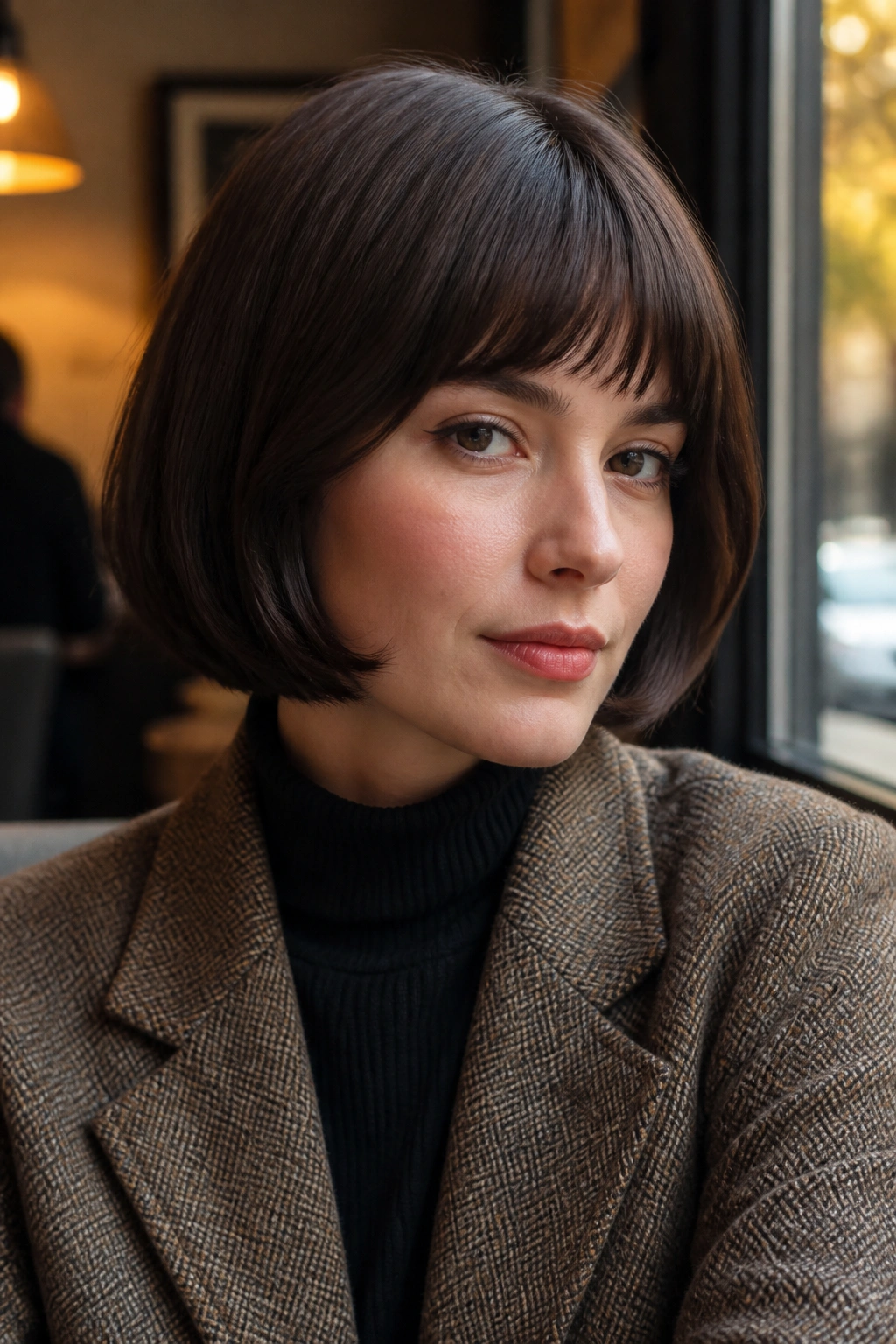
The classic pageboy bob has a retro edge that still looks clean. The ends usually curve under, the silhouette stays smooth, and the shape sits close to the head in a way that can make a simple haircut look surprisingly finished.
This one is especially good if you like order. Not fuss. Order. The line is neat, the shape is controlled, and the cut behaves best when it’s kept in good condition with regular trims and a little smoothing cream.
A pageboy bob can be worn with a fringe or without one. With bangs, it feels more polished. Without them, it looks a touch longer and softer around the face. Either way, the underside curve is the part that makes it read as a pageboy rather than just another bob.
If you want a short haircut that works with structured coats, boots, and a straight shoulder line, this is a strong choice. It’s not loud. It doesn’t need to be. The shape does the talking, and that is often enough.
A final note, since this is where most people get tripped up: short hair in fall looks best when the cut is doing some of the work for you. If the shape is clean, you can get away with a five-minute style. If the shape is weak, no amount of spray will save it. That’s the part worth paying attention to.
