



Medium long hair can be a sweet spot for Asian men. It’s long enough to move, part, tuck behind the ears, or tie back in a pinch, but it still has enough shape to look intentional when the cut is done well.
The catch is that this length also shows everything. Thick straight hair can puff out at the sides, fine hair can collapse at the crown, and heavy growth around the temples can turn a good haircut into a boxy one fast. A lot of the best Asian hairstyles for men with medium long hair solve the same basic problem in different ways: they give the hair direction, not just length.
That’s why the most useful cuts here are the ones that work with your texture instead of fighting it. Some lean soft and face-framing. Some use tapering to keep the edges clean. A few rely on layers, because layers are usually the difference between “I grew my hair out” and “I actually have a style.”
1. Korean Curtain Hair With Soft Middle Part
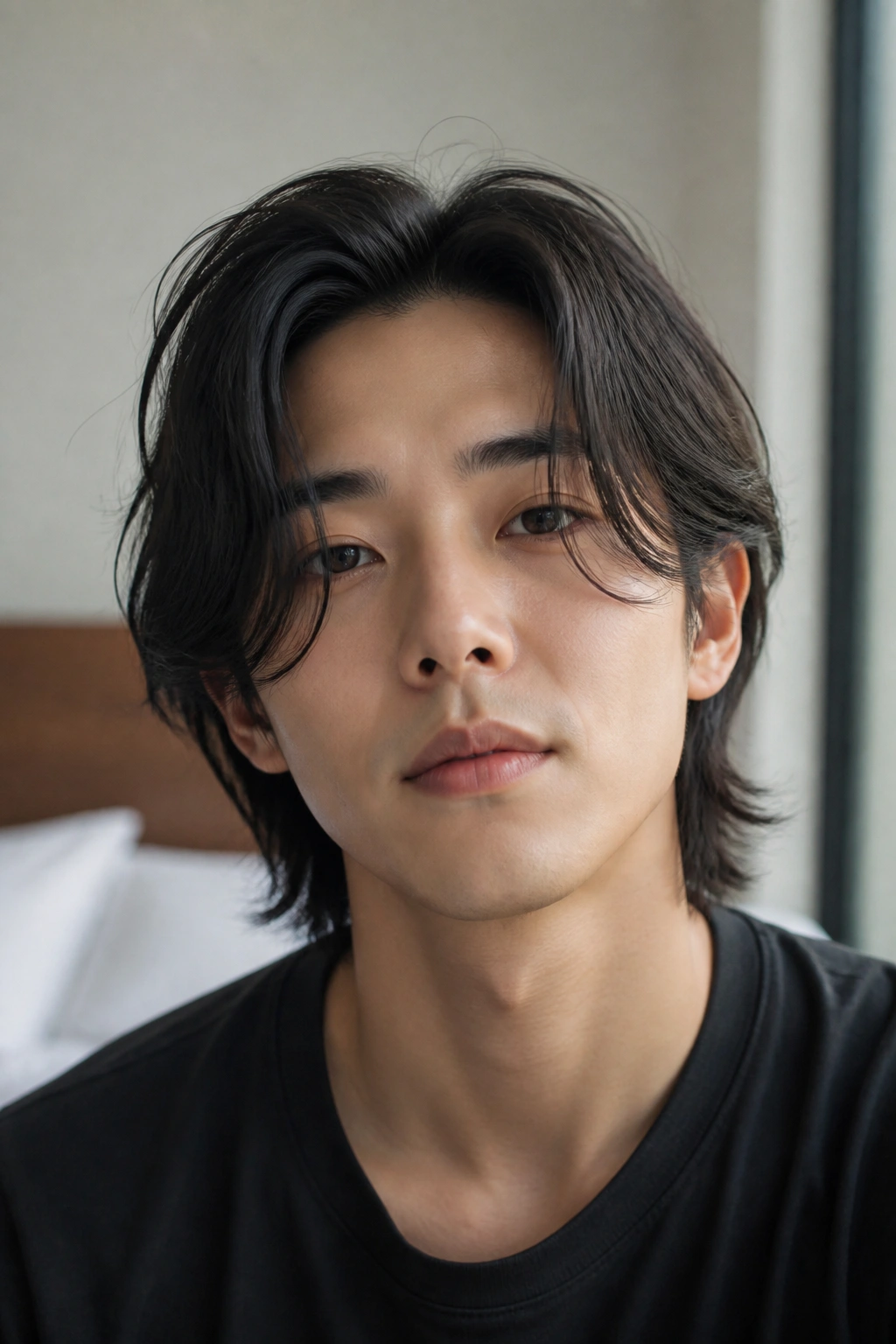
This is the cleanest place to start because it works with the kind of hair many Asian men already have: straight, thick, and a little stubborn around the front. A soft middle part lets the hair fall in two loose panels instead of sitting flat against the head, which keeps the look easy and polished without feeling stiff.
Why it sits so well on medium-long hair
The trick is in the weight. If the front is cut too blunt, the curtains hang like a sheet. If the ends are lightly feathered, the hair bends around the cheekbones and moves when you turn your head. That small change makes the whole cut feel lighter.
Ask for longer layers through the front and crown, then keep the sides tidy but not shaved down. A low taper around the ears helps the shape stay neat while the top does the visual work. It’s a simple setup, and that’s why it keeps showing up.
- Keep the front around 6 to 8 inches.
- Ask the barber to soften the ends with point cutting.
- Blow-dry the part from damp hair using your fingers, not a hard comb line.
- Finish with a pea-sized amount of light cream if your hair tends to puff.
Best tip: don’t force the part to sit dead center every day. Let it drift a little. That tiny bit of looseness is what keeps curtain hair from looking like a school photo.
2. The Two-Block Grow-Out
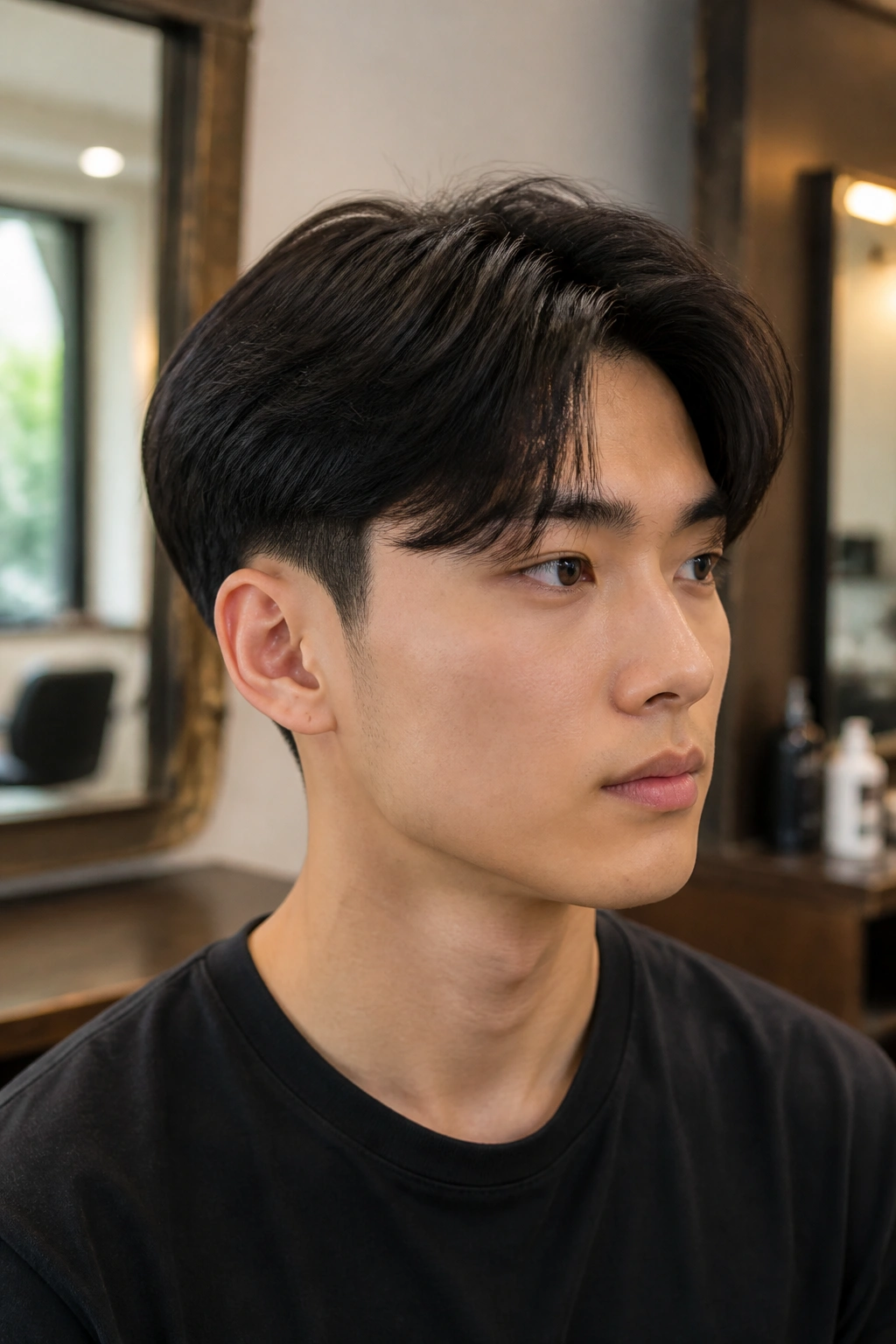
If your hair gets bulky fast, the two-block cut is one of the smartest ways to keep the top long while the sides stay clean. It’s a favorite for a reason. The top has room to fall, but the lower sides and back are kept shorter, so the outline stays sharp even when the hair is growing out.
What makes it useful for medium long hair is the contrast. A lot of guys want length, then hate the triangle shape that shows up around the ears and jaw. Two-block styling fixes that by taking weight out of the lower half while leaving enough hair on top to sweep, part, or push back.
It also grows out well. That matters more than people think. A cut that looks good only on day one is annoying. A two-block cut still has a shape six weeks later, which saves you from the awkward “helmet” stage.
If you want to wear it outside the K-style world, keep the top a little less disconnected and ask for a soft taper instead of a hard undercut. That version feels more natural on straight or slightly wavy hair, and it works with hoodies, suits, and everything in between.
3. Textured Middle Part With Loose Volume
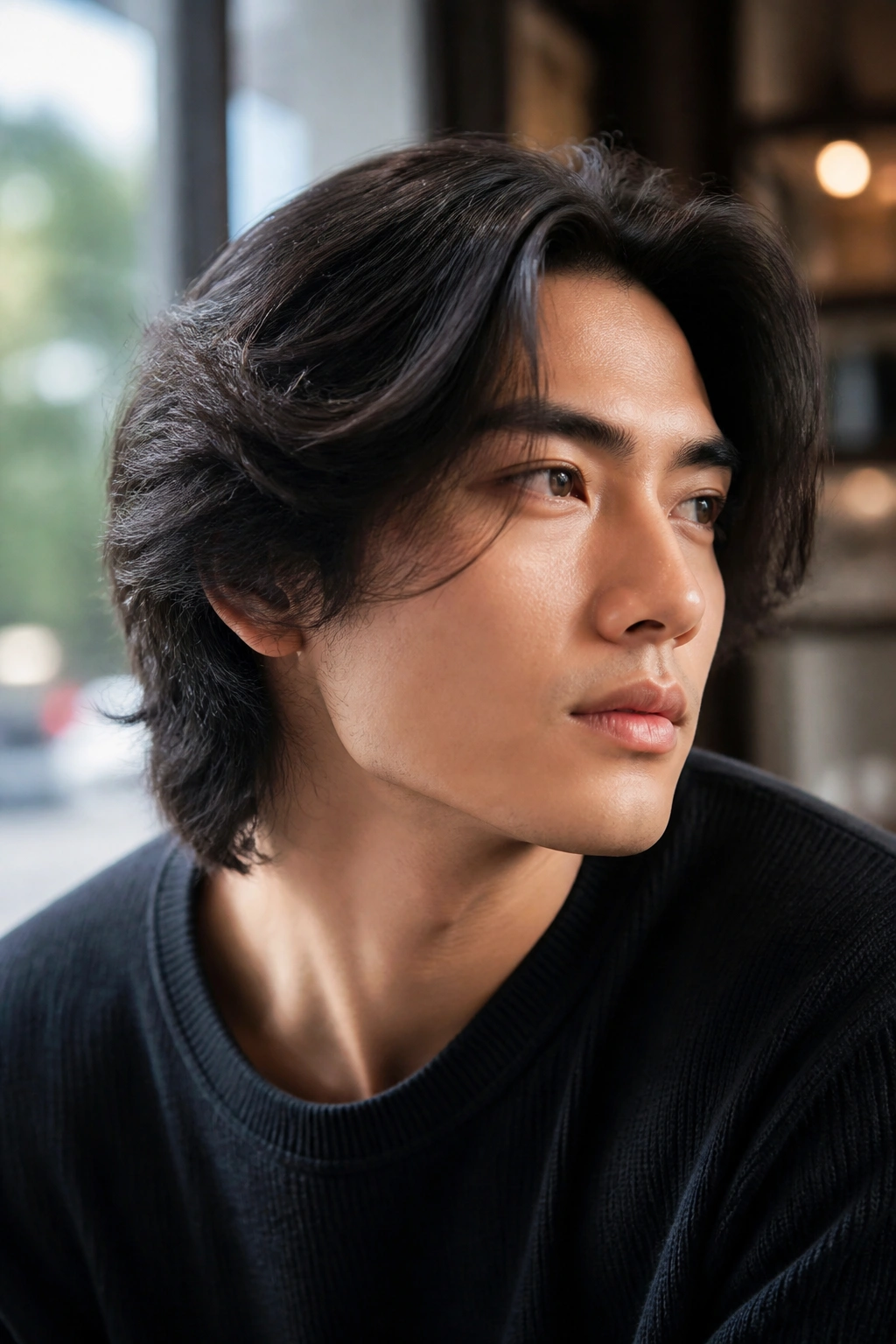
Why does this version work when a plain middle part falls flat? Because the texture gives the hair somewhere to go. Instead of splitting the hair into two exact halves, you keep the part soft and build a little lift at the roots so the style opens up around the face.
How to get the bend
Start with damp hair and a light mist of sea salt spray or volumizing spray. Then blow-dry the roots upward for a few seconds before you push the hair back into place with your fingers. That bit of lift is the difference between “center parted” and “center parted but tired.”
A round brush can help if your hair is very straight, but don’t overwork it. You want a soft bend, not a curled-out pageant shape. And no, you do not need a heavy wax here. That usually weighs the hair down and kills the movement you were trying to get in the first place.
The best version of this style has a little imperfection in it. One side may sit slightly fuller than the other. Fine. That asymmetry keeps it human.
4. The Layered Wolf Cut

Walk into a room with dense, straight Asian hair and one-length edges, and the shape can turn boxy in a hurry. The layered wolf cut fixes that by breaking the bulk into choppy sections, usually with a fuller crown, a softer fringe, and a bit of tailing through the back.
It sounds edgy because it is. A good wolf cut has energy. It does not sit politely in place, and that is exactly the point. The movement comes from the uneven layers, which let the top collapse and lift in different spots instead of forming a heavy slab.
What to tell your barber
- Keep the top long enough to push forward or split open.
- Ask for internal layers, not just surface trimming.
- Leave some softness around the fringe.
- Keep the neck area tapered so the back does not look shaggy in a bad way.
The best wolf cuts on medium long hair usually have a little mess built in. If you like hair that looks better after a hand rake than after a perfect comb-through, this is your lane. If you want neat and buttoned-up, skip it.
One warning: this style can go puffy if the layers are cut too high. A heavy-handed razor job can make thick hair stick out at the sides. A scissor cut with careful removal of weight is usually safer.
5. The Bro Flow

The bro flow is one of those cuts that looks easy only after the barber has done the hard part. It works because the hair is long enough to sweep back naturally, but not so long that it starts hanging in the eyes or catching under the collar.
The real skill here is balance. The ends should move, not fray. The sides should tuck cleanly around the ears, not flare. And the top should have enough weight to fall with a bit of curve instead of standing up like a brushed-back helmet. A good bro flow makes straight hair look relaxed in a way that feels expensive without trying to look expensive. That sounds vague, but you know it when you see it.
A lot of men mess this up by growing the hair out with no cleanup. That gives you length, sure, but not shape. The bro flow needs regular trims at the neckline and around the sideburns so the front can stay soft while the outline stays sharp.
It also works best when the hair is allowed to dry with some direction. Comb it back from damp hair, then use your hands to break the shape a little. If the ends feel too neat, run a tiny amount of matte cream through them and stop there.
6. Slicked-Back Medium Length
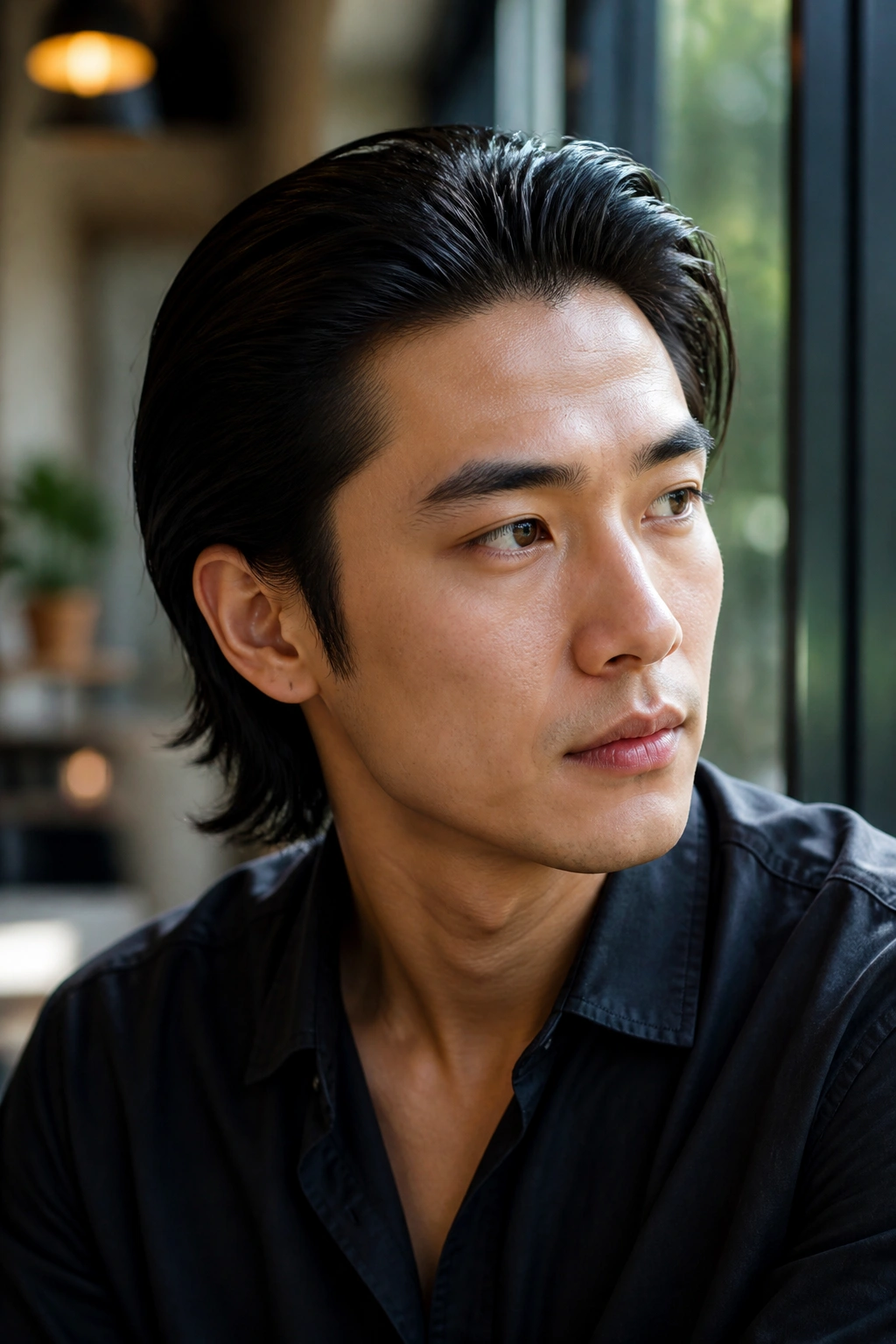
A brushed-back style with medium long hair feels cleaner than a full wet-look slick back, and that small difference matters. The wet version can turn severe fast. This one keeps a little softness at the front and sides, which makes it easier to wear day to day.
What separates a good slick-back from a bad one is the side control. If the temples are too wide, the whole thing starts looking old-fashioned. If the sides are tapered and the top has enough length to bend back without forcing it, the style stays sharp and modern. It’s also a strong option for men with dense hair, because the length gives you enough weight to hold the shape.
I’d reach for this if you want something that can move from casual to dressy without changing the cut. The hair is long enough to brush back with a little cream for daytime, then you can add a stronger pomade for evenings when you want it to stay in place.
Not everyone will love this. If your hair is very fine, the back can collapse. If it is very thick, too much product makes it greasy fast. That’s why the best version uses a light hand. Clean. Controlled. Not crunchy.
7. Korean Comma Hair for Medium Long Strands

Comma hair works because the front does one small, clean curve instead of trying to do too much. That little bend at the fringe changes the whole face shape. It softens the forehead, opens the cheeks, and gives straight hair a bit of personality without asking for much maintenance.
The front bend that matters
You want the front section long enough to curve inward, usually around the eyebrow to cheekbone zone, depending on your forehead and face shape. The rest of the hair can stay medium long and lightly layered so it falls naturally around the sides. The signature move is that inward bend at the front — not a hard swoop, just a clean comma shape.
A light wax or cream works better than anything heavy here. Too much product turns the bend into a sticky curl, which ruins the relaxed feel. Dry the front with a round brush or your fingers, then pinch the end of the fringe inward for a few seconds while it cools.
- Best on straight to slightly wavy hair.
- Keep the fringe long enough to curve, but not cover both eyes.
- Ask for soft layering around the temples.
- Use a low-heat blow-dryer so the front doesn’t frizz out.
If you want a style that looks styled without screaming for attention, this is one of the most useful cuts on the list.
8. Side Part With a Low Taper

Why does the side part still look sharp on medium-long hair? Because structure never really goes out of style. What changes is the shape around it. A low taper keeps the haircut light at the edges, so the side part feels fresh instead of stiff.
The danger here is making the part too exact. If the line is carved in like a ruler mark and the top is flattened down, you get a dated finish. A better version lets the top keep a little height and movement, then slides it over with a comb or fingers. That gives the cut a little swing when you walk.
This is one of my favorite options for men who need a haircut that can behave in formal settings. It works with a blazer. It works with a T-shirt. It does not demand a lot of product, just enough to keep the front from falling into your eyes.
Keep the taper low around the ears and neckline. A high fade can feel too aggressive when the top is medium long. The lower taper creates cleaner edges without stealing the softness that makes the style worth wearing.
9. Messy Fringe That Skims the Brows

You know that cut where the fringe barely brushes the eyebrows and the rest of the hair sits loose around the sides? That’s the one. It looks casual, but there’s a lot of control built into it.
The key is the fringe itself. It should be cut with texture so it can separate a little, not sit in one heavy curtain. If the front is too blunt, it gets clunky fast, especially on thick Asian hair. A light point cut or razor-softened edge helps the fringe fall in pieces rather than as one block.
What to ask for
- A fringe that lands at or just below the eyebrows.
- Texture through the front so it separates naturally.
- Shorter sides with a soft taper, not a hard fade.
- Enough length at the crown to keep the top from collapsing.
This style is useful when you want the face-framing effect of longer hair without the upkeep of true long hair. It also hides a bad hairline better than most cuts, which is not a glamorous selling point, but it is a real one.
A tiny amount of dry texture spray or matte paste is enough. Push the fringe with your fingers, not a comb. If it starts looking too perfect, stop. That’s the whole game.
10. Soft Permed Waves
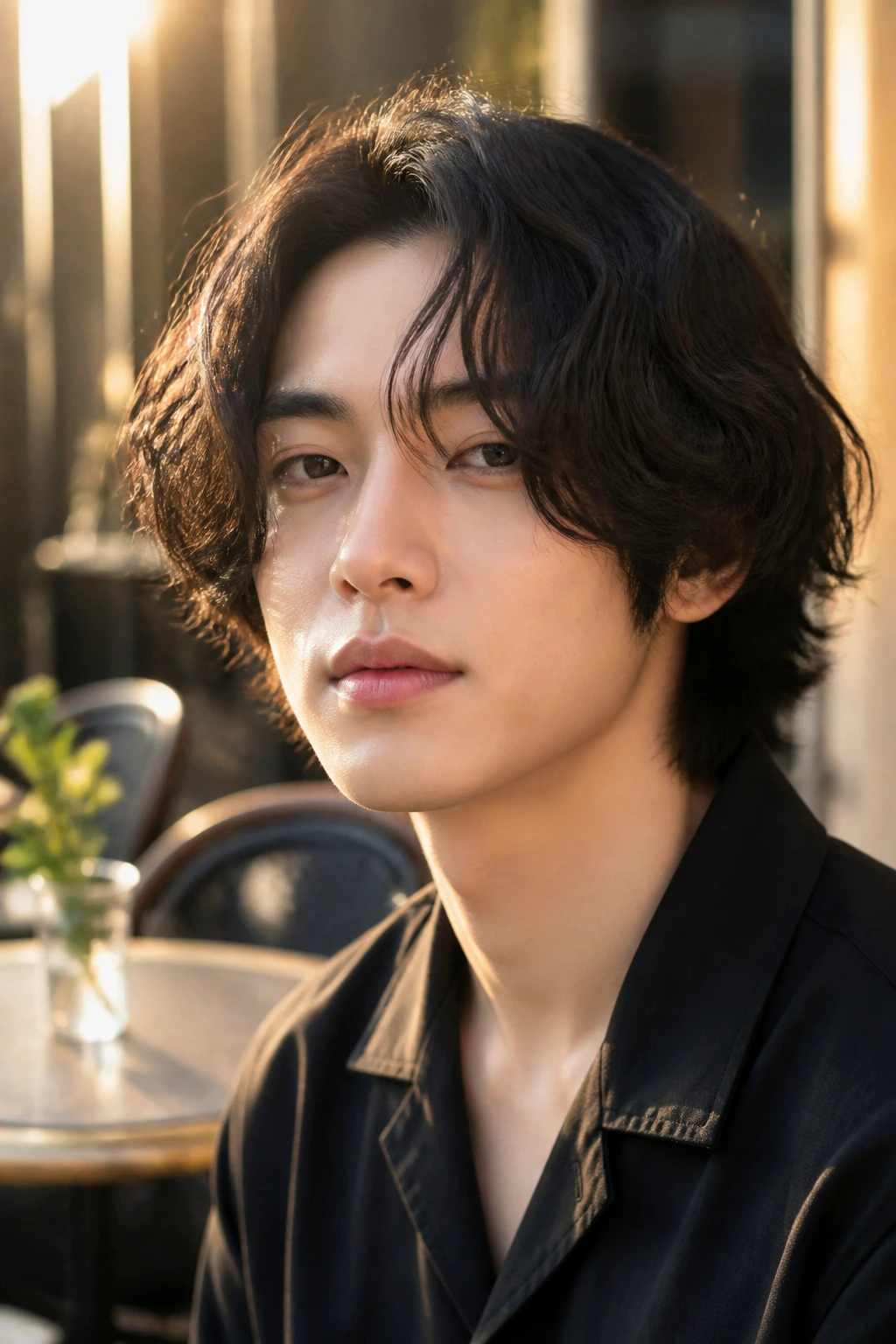
If your hair lies flat no matter what you do, a loose perm can change the game without forcing you into tight curls. The version that works best with medium long Asian hair is soft and bendy, not spiral-tight. You want movement, not curls that bounce like springs.
A lot of men hear “perm” and picture a loud, old-school result. That’s not the move here. A modern loose perm is more about body at the mid-lengths and a little shape at the ends. It helps straight hair hold a sweep, a curtain part, or a brushed-back style without falling limp by lunchtime.
What to ask for at the chair
- A loose body wave or soft perm, not a tight curl pattern.
- Longer ends so the shape still reads as medium long.
- A cut that includes layers after the perm, so the curls do not pile up.
- A stylist who understands how your hair behaves when dry, because wet and dry hair can look very different here.
This is a strong choice if your hair is thick, heavy, and resistant to styling. It is less ideal if you want a totally clean, minimalist look. Permed waves come with personality. That’s the point.
11. Half-Up Top Knot

The half-up top knot is the fastest way to get hair off your face without giving up the length you’ve worked for. It’s practical, but it can also look sharp when the rest of the hair is layered well and the knot sits at the right spot on the crown.
What makes it work is tension control. If you pull the top section too tight, the style looks like a gym workaround. If you leave a little looseness and let some strands fall near the temples, it looks deliberate. The lower half should keep moving, which keeps the whole style from turning rigid.
A few things matter here more than people admit. Use a soft elastic, not a tight rubber band. Keep the knot small. And if your hair is thick, don’t drag every last strand up into the tie — leave a little softness around the sides and back.
- Best when the top is long enough to twist once or twice.
- Works well for training days, travel, and hot weather.
- Avoid if your hairline is very high and you hate exposing it.
- Looks better when the ends are slightly textured, not razor straight.
It’s not the most formal style on the list. Fine. It doesn’t need to be.
12. Shoulder-Grazing Layers
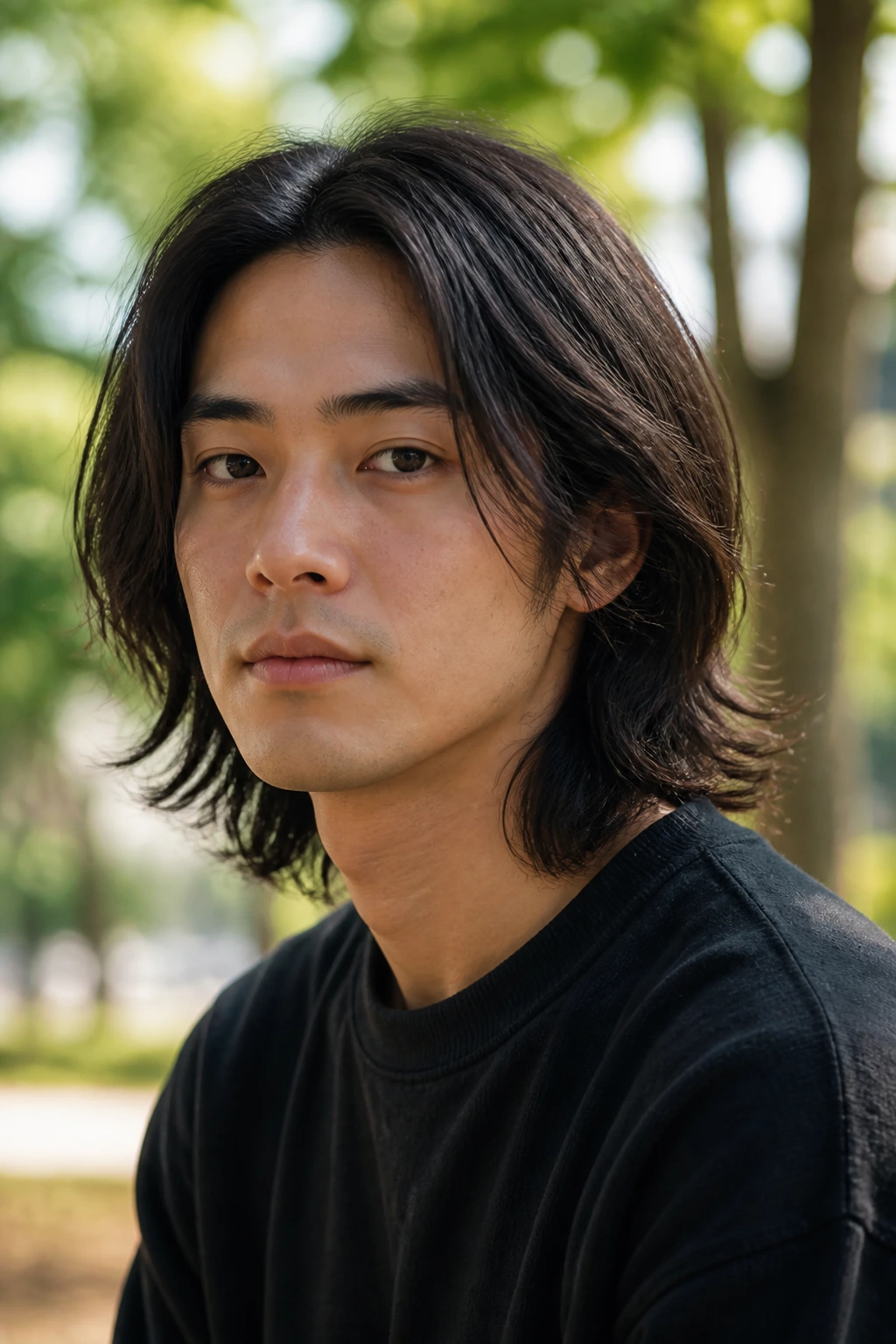
Length needs shape. That’s the whole story here.
Shoulder-grazing layers are the grown-out version of a medium-long style that has stopped pretending it’s short. The best cuts in this range let the hair touch the collarbone or sit just above it, then use internal layering to keep the shape from turning into a curtain of weight. On straight Asian hair, that softness around the face matters a lot. Without it, the style can look square and heavy.
What I like about this length is how forgiving it is. A bad hair day still reads as style. You can tuck it back, leave it loose, or push it behind one ear and let the rest fall naturally. It has range. That said, range only shows up if the ends are healthy and the outline gets trimmed before the hair starts to split and puff.
A center or slight off-center part tends to work best. A hard side part can fight the length and make the cut feel too formal. Keep the layers subtle around the jawline so the front frames the face instead of swallowing it.
One small thing. Do not let the neckline go fuzzy for too long. The back may be long, but the shape still needs edges.
13. Tapered Brush Back With Volume
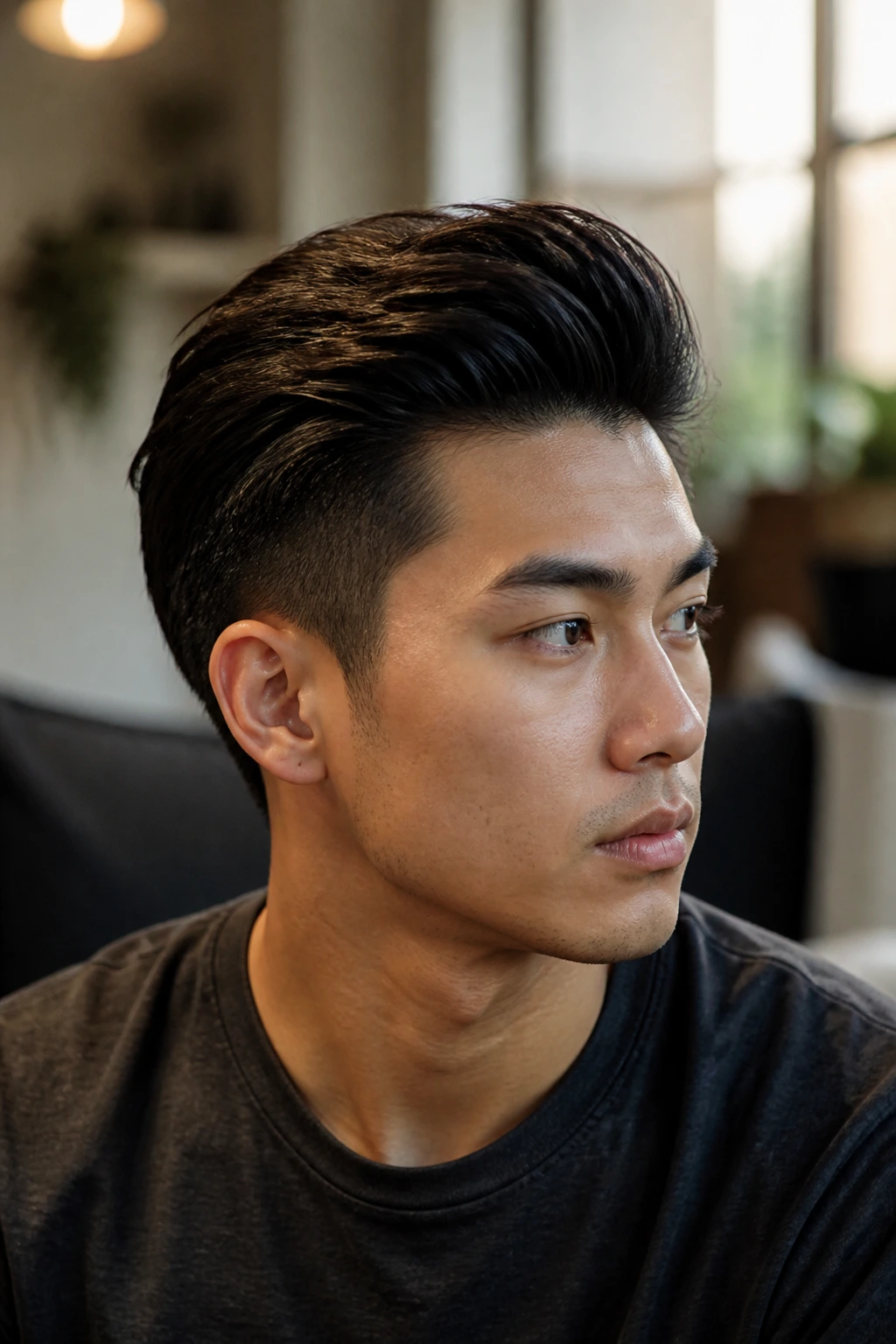
Why does a brush-back look better with a taper? Because the taper keeps the sides from swelling out, and medium-long hair needs that restraint. Without it, the brushed-back shape turns wide and a little clumsy.
How to get the lift
Start with damp hair and a heat protectant. Then blow-dry the front and crown upward with a brush, pushing the hair back only after the roots have some lift. The goal is volume at the base and direction through the length. Not a slick wall. Not a pompadour. Something in between.
This cut works especially well if your hair is thick and straight, since those strands hold a back-swept shape with very little product. Use a matte cream or a light pomade, then rake it through with your fingers. A comb can make it too polished unless that’s the point.
The brushed-back style has a useful side effect: it opens the face. If you want your features to show more and your forehead to stop feeling hidden, this is an easy way to get there without shaving the sides down.
- Best with low to mid tapers.
- Works on oval, square, and longer face shapes.
- Needs a quick blow-dry to stay lifted.
- Looks best when the top has at least 5 to 7 inches of length.
14. Curtain Mullet / Modern Mullet

A modern mullet sounds like a joke until you see it on the right hair texture. On medium long hair, it can be one of the sharpest options because it lets the front frame the face while the back keeps length and movement.
The difference between a good version and a bad one is subtle but huge. The good one keeps the top and sides blended enough to feel current, with the back only slightly longer and softer. The bad one leaves the sides too heavy or the back too stringy. That’s when the cut starts looking accidental.
What keeps it from going too far
- Keep the crown layered, not chopped.
- Let the back grow a little longer than the front, but not wildly longer.
- Ask for a soft taper around the ears.
- Style the front with a loose middle or off-center part.
This works best if your hair already has some natural movement. Straight hair can wear it too, but it usually needs a bit of texture spray or a loose wave from a blow-dryer to stop the back from hanging dead. If you like hair with edge and you do not mind a little attention, this cut has plenty of attitude.
15. Soft Broccoli Cut for Asian Hair Types
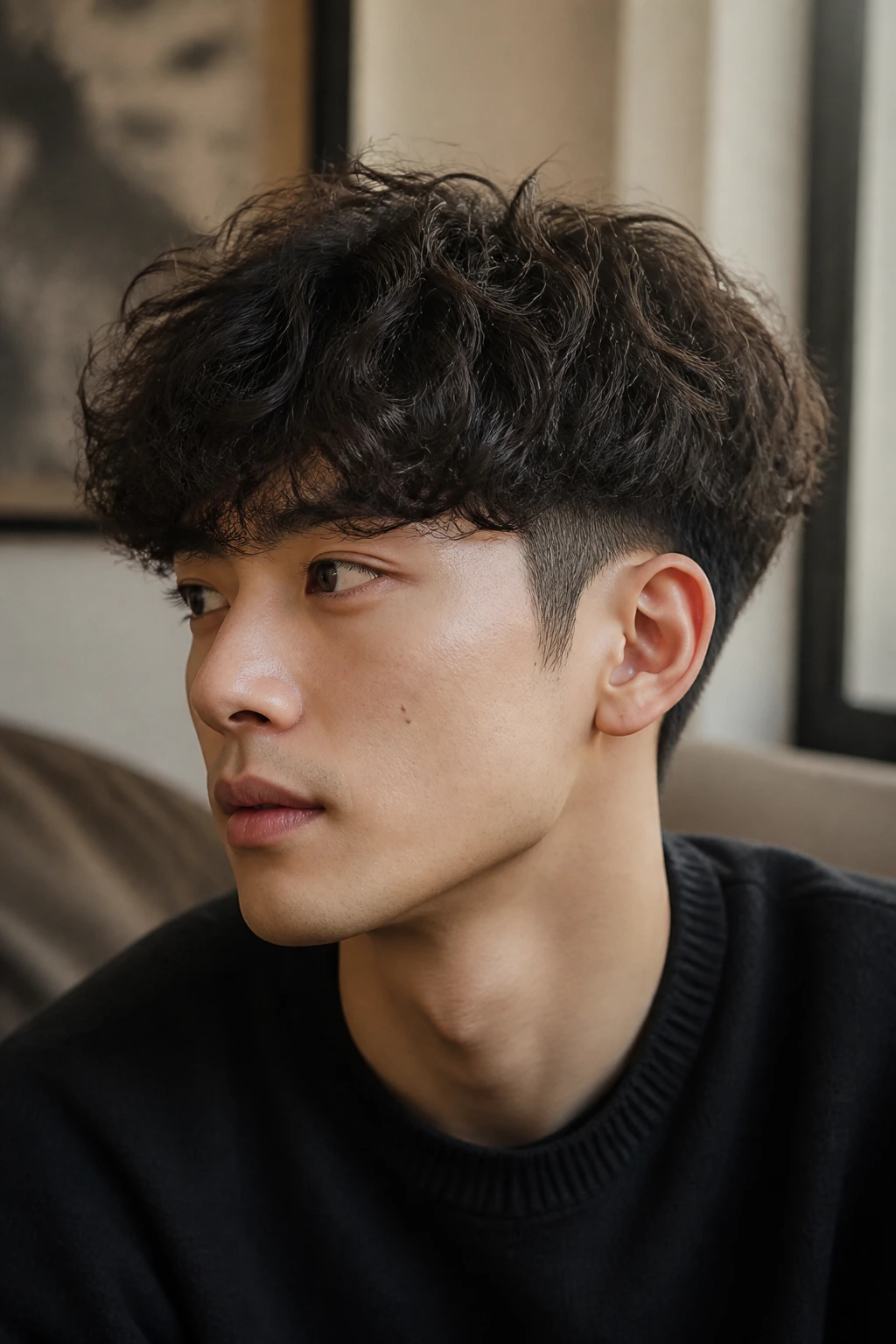
The broccoli cut gets dismissed a lot, mostly because people picture a bulky, over-curled top with sides that disappear too fast. That’s the lazy version. A softer take on it can look fantastic on medium long Asian hair, especially if your strands are thick and naturally hold shape well.
What changes the whole feel is the top. Instead of a tight, rounded cloud, you want loose curl, bend, or perm-created texture that sits above the head without stacking too high. The sides should still have a taper so the silhouette stays clean. When that balance is right, the style feels playful but not cartoonish.
This is a strong option if your hair is too straight for messy volume and too heavy for a flat curtain style. The soft curl gives the hair some spring, which makes daily styling easier. You can let it fall forward, sweep it back, or shake it out and leave it alone. That kind of flexibility is why people keep coming back to it.
If you go this route, keep the back from getting too bulky. The whole shape depends on a clean outline. A narrow neck, soft temple taper, and controlled top length make a huge difference.
16. Center-Parted Shag With Face-Framing Pieces
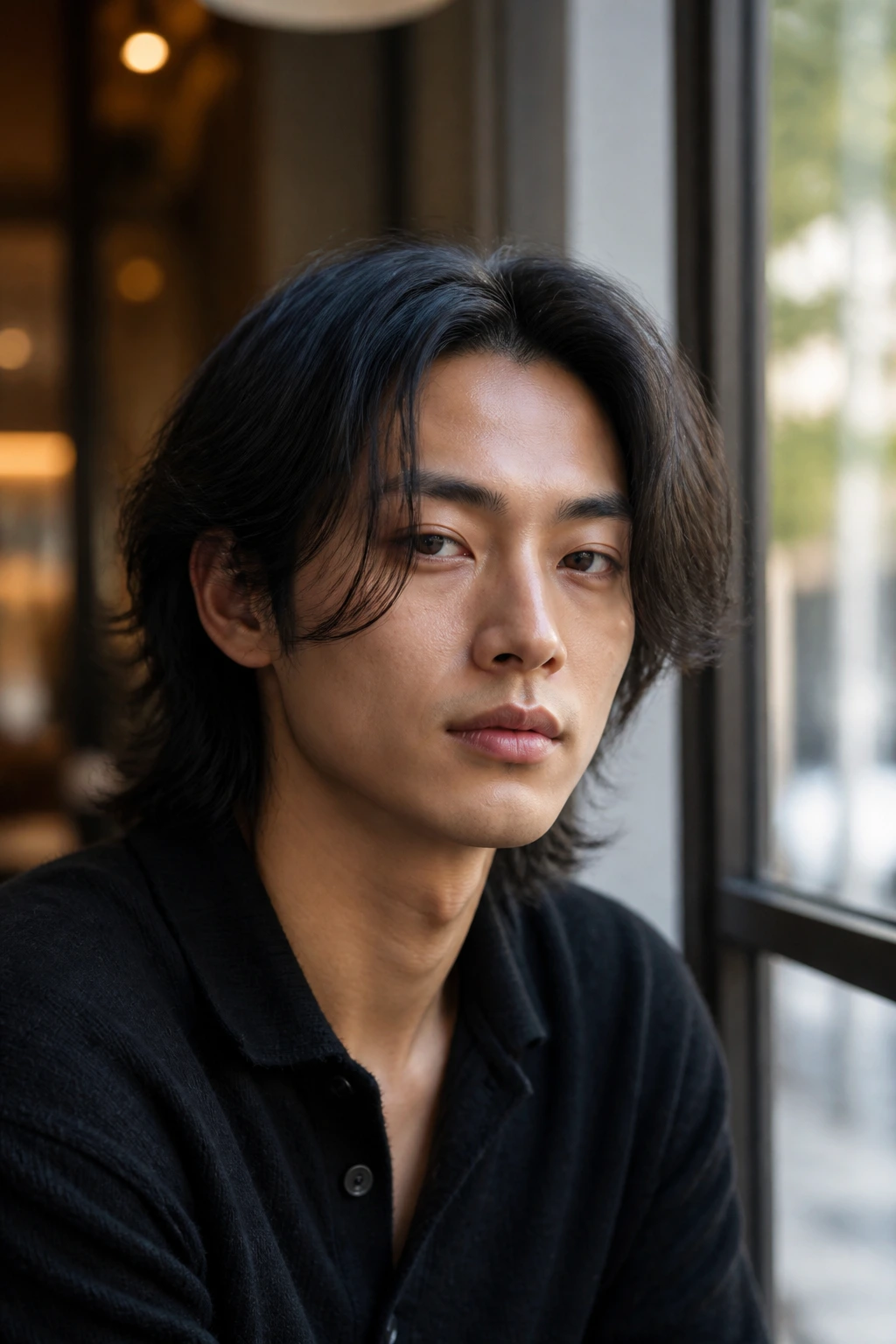
This cut sits between curtain hair and a wolf cut, which is exactly why it works so well. The center part gives it structure, while the shag layers keep it from feeling heavy or over-groomed. On medium long hair, that mix is useful because it lets the style move without losing shape.
What to watch for
The face-framing pieces need to hit somewhere around the cheekbones or jawline, depending on your face shape. Too short, and the cut puffs out. Too long, and the front loses its job. The best version looks like it was cut to fall into place, not like it was all chopped to the same length and hoped for.
A few quick details help:
- Ask for soft internal layers through the crown.
- Keep the part slightly loose instead of razor exact.
- Add light texture around the ends.
- Use a small amount of cream or mousse, not a heavy paste.
This style is especially good if you want a little edge without committing to a full shag or mullet. It feels relaxed, and it frames the face in a way that makes the eyes and cheekbones stand out more. That small face-shape shift is the whole reason people like it.
17. The Clean Neck-Length Sweep
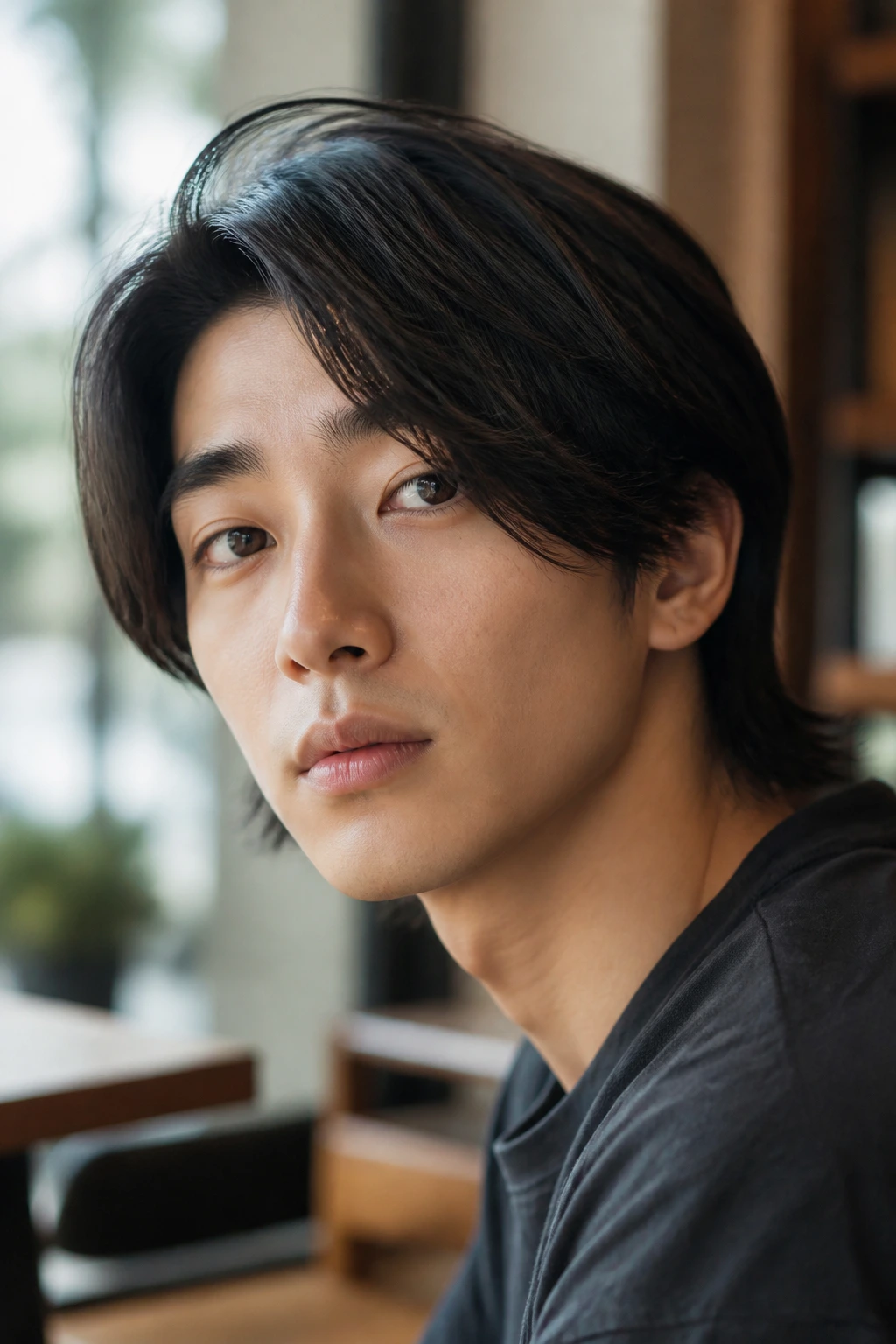
Hair that falls to the neck can look elegant or sloppy depending on the outline. There is not much middle ground. The clean neck-length sweep keeps the length, but it trims the sides and neckline enough that the hair still has a deliberate shape.
This is a nice choice if you want a longer style that does not need constant styling. The hair can be tucked behind the ears, swept back loosely, or left to fall naturally over a tee collar. It has a calm, low-pressure look that suits guys who do not want their hair to shout first thing in the morning.
Do not let the back get fuzzy. That is the fastest way for this style to lose its edge. A tidy neckline and a few soft interior layers make all the difference. I also like this cut on men who wear glasses, because the side hair can frame the frame, if that makes sense — and if it doesn’t, the mirror will explain it fast enough.
The best version feels clean even when it’s slightly undone. That is harder to get than it sounds.
18. Low Man Bun With Loose Tendrils

Need hair off your face, but not all the way gone? The low man bun solves that without asking you to sacrifice length. It works especially well once medium-long hair has enough weight to gather at the nape without fighting every move you make.
The trick is to keep it relaxed. A bun pulled too high can look strained, and a bun tied too tight can make the sides pull back in an ugly way. Keep it low, around the crown-to-nape line, and leave a couple of loose pieces near the temples or ears. Those little tendrils soften the style and keep it from looking severe.
This one is practical, but it also buys time. If you’re growing your hair out and the ends are in that awkward stage, the low bun lets you keep moving through the process without looking like you gave up halfway. That alone makes it worth knowing.
Use a soft elastic and twist only once or twice if your hair allows it. If you have thick Asian hair, you may need to wrap it a third time, but don’t crank it tight. Scalp tension is the enemy here. The style should feel secure, not like it’s locking your head in place.
For the best finish, keep the bun slightly imperfect and let the rest of the hair do some of the work. A little looseness goes a long way.
Final Thoughts
The strongest medium-long hairstyles for Asian men all do the same basic job: they keep the hair from expanding where it should stay compact, and they let the length show up where it actually helps the face. That balance is what separates a grown-out cut from a real style.
If your hair is thick and straight, favor layers, tapers, and soft movement. If it has a little wave or curl, lean into shape and let the texture do part of the job for you. Either way, the haircut should look good at rest, not only after twenty minutes of fussing in the bathroom mirror.
