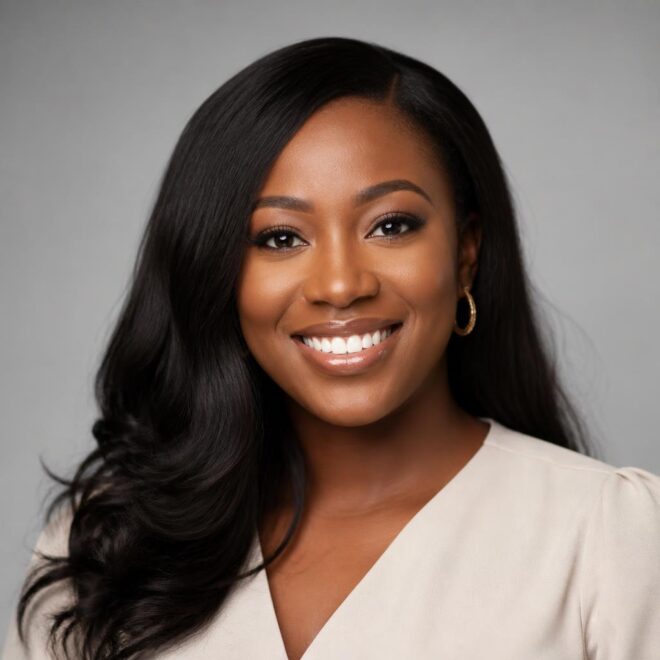


Long hair after 40 does not need apology. It needs shape.
Heavy ends, weak corners, and a blunt line in the wrong place can make even healthy hair look tired. Add gray strands—which often feel a little coarser, a little drier, and a lot more honest—and the wrong cut shows its flaws fast. The right cut does the opposite. It gives the hair lift, movement, and a shape that still looks good when you haven’t had time to fuss with it.
That is the sweet spot for the best long haircut styles for women over 40. Not “young” hair. Not “trying too hard” hair. Just hair that sits well, grows out cleanly, and works with the texture you actually have. Some of these cuts are soft and polished. Some have edge. Some are better for fine hair, some for thick hair, and some make silver or salt-and-pepper hair look deliberate instead of accidental.
A good long haircut also knows when to stop. Too many short layers can make the ends look see-through. Too much thinning can leave gray hair frizzy. Too much fringe can become a daily job you never wanted in the first place. So the best styles here are the ones that earn their keep: they move, frame, lift, or soften without turning your morning into a styling project.
1. Soft Long Layers for Women Over 40
Soft long layers are the cut I reach for when someone wants movement but refuses to look chopped up. The layers stay long enough to keep the overall shape elegant, but they remove that blunt, heavy feeling that can make midlength-to-long hair drag the face down a bit.
Why This Works So Well
The trick is restraint. Ask for the first layer to start low—usually below the shoulders—so the ends still feel full. That keeps the haircut from getting stringy, which matters a lot once the hair starts to lose a little density.
- Best for medium to thick hair
- Easy to air-dry with a wave cream
- Looks good with a center part or a side part
- Helps gray strands move instead of sitting in a flat sheet
Pro tip: ask for point-cutting on the ends instead of a hard, straight chop. It softens the line without making the cut look thin.
2. Curtain Bangs With Chest-Length Layers
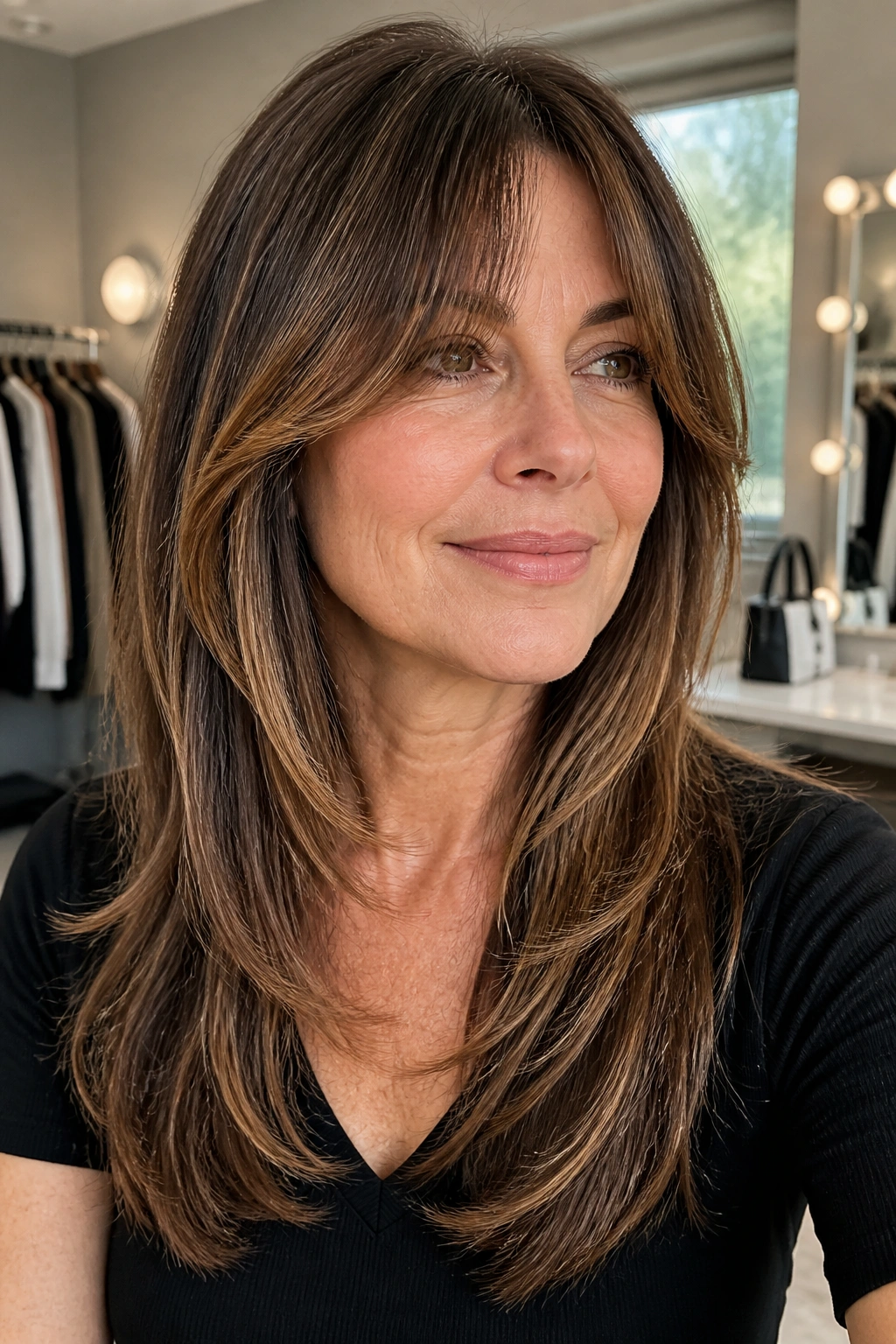
Curtain bangs can do a lot of heavy lifting. They open the face, soften the forehead, and make long hair feel fresh without forcing you into a short cut you didn’t ask for. On women over 40, they also bring attention back to the eyes and cheekbones, which is a nice little trick when the rest of the hair is kept long.
The best version is not too short in the middle. You want the shortest piece to skim around the bridge of the nose or upper cheek, then fall into longer side pieces. That shape grows out better than blunt bangs and doesn’t demand constant trimming every few weeks.
If your hair has some wave, curtain bangs usually fall into place with a quick round-brush bend. Straight hair can wear them clean and center-parted. Either way, they make long hair look intentional in about ten seconds.
3. The Butterfly Cut With Lift Around the Crown

Why does the butterfly cut keep showing up in salon chairs? Because it gives you the feeling of shorter hair around the face while leaving the length intact in back. That matters when you want movement but do not want to lose the ponytail, the braid, or the option to throw everything over one shoulder.
The shortest layers sit high enough to create lift around the crown and cheekbones. Then the rest of the hair falls long underneath, which is where the “butterfly” name comes from—the shorter pieces sort of flutter around the longer shape.
How to Wear It
This cut likes a blowout, but it does not need a perfect one. A 1.5- or 2-inch round brush, a little root lift spray, and a dry finish at the ends are enough. It works especially well on medium-density hair that tends to collapse at the top and puff out near the bottom.
4. A Long Shag With Piecey Ends
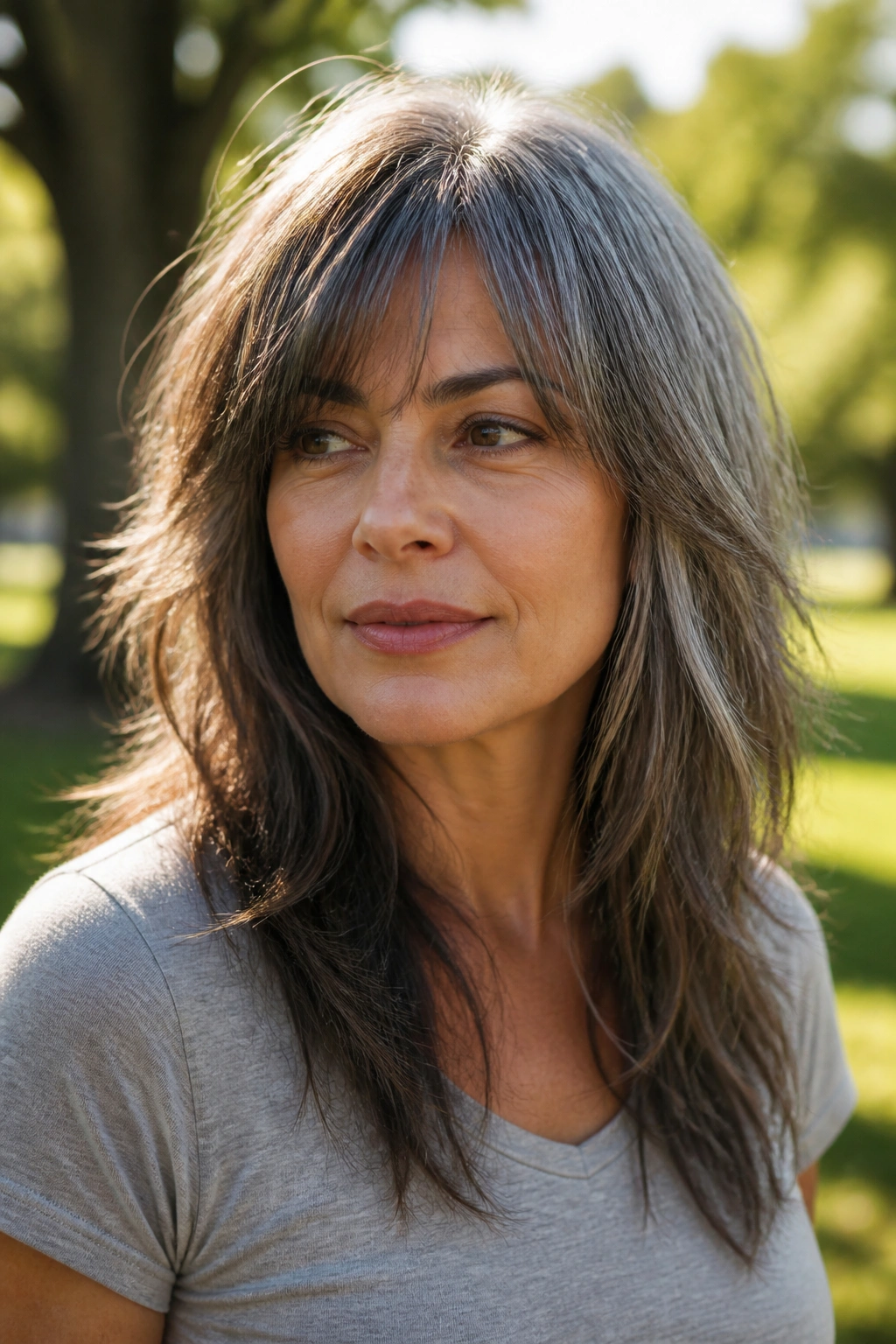
If your hair tends to go limp at the crown and bulky at the bottom, a long shag can fix the balance fast. It is not the wild, heavily chopped shag from old photos. The modern version is softer, longer, and much easier to live with.
Gray hair often looks good in a shag because the lighter strands catch the uneven texture and make the layers visible. The haircut gives the hair some attitude without forcing you to curl every piece into submission. That is the whole point. A little texture. A little air.
You can wear it with a fringe, a side part, or no bangs at all if your face already has enough shape. A dab of mousse at the roots and a scrunch through the ends is often enough. Skip heavy creams here. They flatten the lift you paid for.
5. The U-Shaped Cut That Keeps Length but Softens the Ends
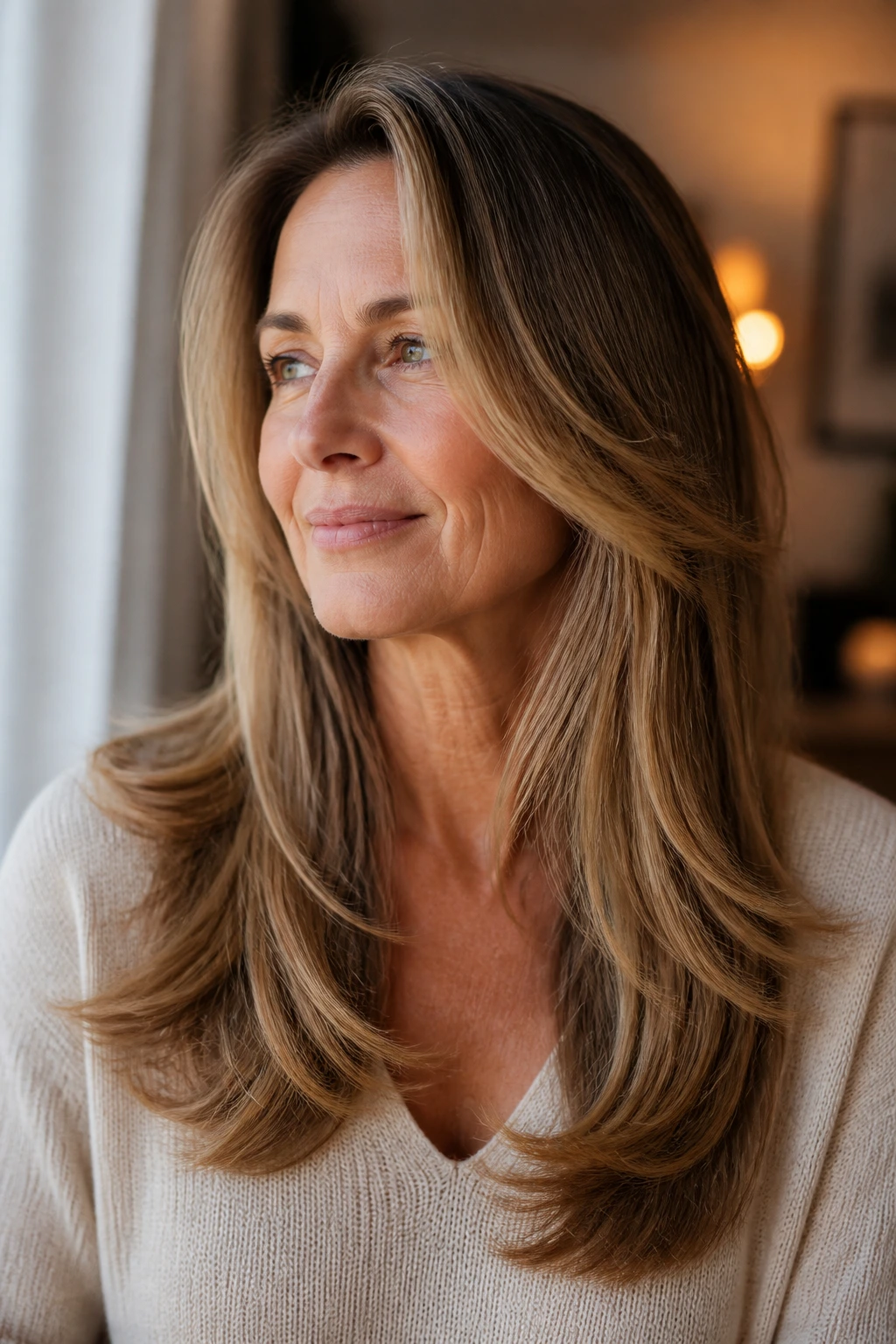
A U-shape is one of the most flattering long haircut styles for women over 40 if you want fullness through the bottom. The perimeter curves gently upward at the sides, then drops a little lower in the back. It’s subtle. That’s the charm.
Compared with a blunt line, the U-shape looks softer around the shoulders and neck. Compared with a V-cut, it feels less dramatic and a little easier to style every day. It’s a good middle ground if you want movement without obvious layers everywhere.
For thick hair, this shape can remove bulk while keeping the ends looking rich. For wavy hair, it helps the hair fall in a nicer line instead of sticking out in a boxy shape. Ask your stylist to keep the curve shallow if you want a refined look. Deep U-shapes can look dated fast.
6. The V-Cut for Very Long Hair

A V-cut is the long-hair cut with the most attitude. The back tapers to a point, and the sides angle down toward it, which gives very long hair a stronger shape than a simple straight line ever will. It’s especially useful if your hair is dense and you want the length to feel lighter.
This cut works beautifully on hair that can hold curl or wave, because the point at the back gives those bends a place to fall. Straight hair can wear it too, but it needs a little more styling or the shape can disappear into the length.
If you like wearing your hair braided, curled, or half-up, the V shape makes the back look less heavy. If you hate frequent trims, it’s also forgiving as it grows. Just keep the point clean. A ragged V starts to look accidental, and nobody wants that.
7. Face-Framing Layers That Start at the Chin

Face-framing layers are a small change with a big payoff. Starting them at the chin, not the cheekbones, gives the face a little vertical line that can soften a strong jaw or keep the hair from sitting too flat against the sides.
What to Ask Your Stylist
Ask for the shortest piece to land at the chin or just under it, then blend it down into the rest of the length. That one detail changes the whole mood of the cut. Too short, and the layers can flip out. Too long, and you lose the frame entirely.
- Great for straight, wavy, and loose-curly textures
- Helps long hair feel less heavy around the face
- Easy to tuck behind the ears when you want a cleaner look
- Works well with gray streaks because the movement shows off the color variation
Best use: if you want a softer face without committing to bangs, this is the move.
8. Feathered Layers With a Blowout Finish

Feathered layers are for women who love hair that moves when they walk. The ends are softened and flicked away from the face, which gives the whole cut a lighter, airier feel. It’s a little retro in the best way, but it still reads polished when done right.
This style is especially good for fine to medium hair that needs body. The feathering creates the illusion of more fullness, not by adding bulk, but by letting the strands separate in a nice, loose way. Gray hair can look especially pretty in this shape because the silver strands catch the bends and show each layer.
You do need some styling here. A round brush, a dryer with a concentrator nozzle, and a soft finishing spray are enough. If you hate heat tools, skip this one. It really wants a blowout.
9. The Blunt Long Cut With Hidden Internal Texture for Women Over 40
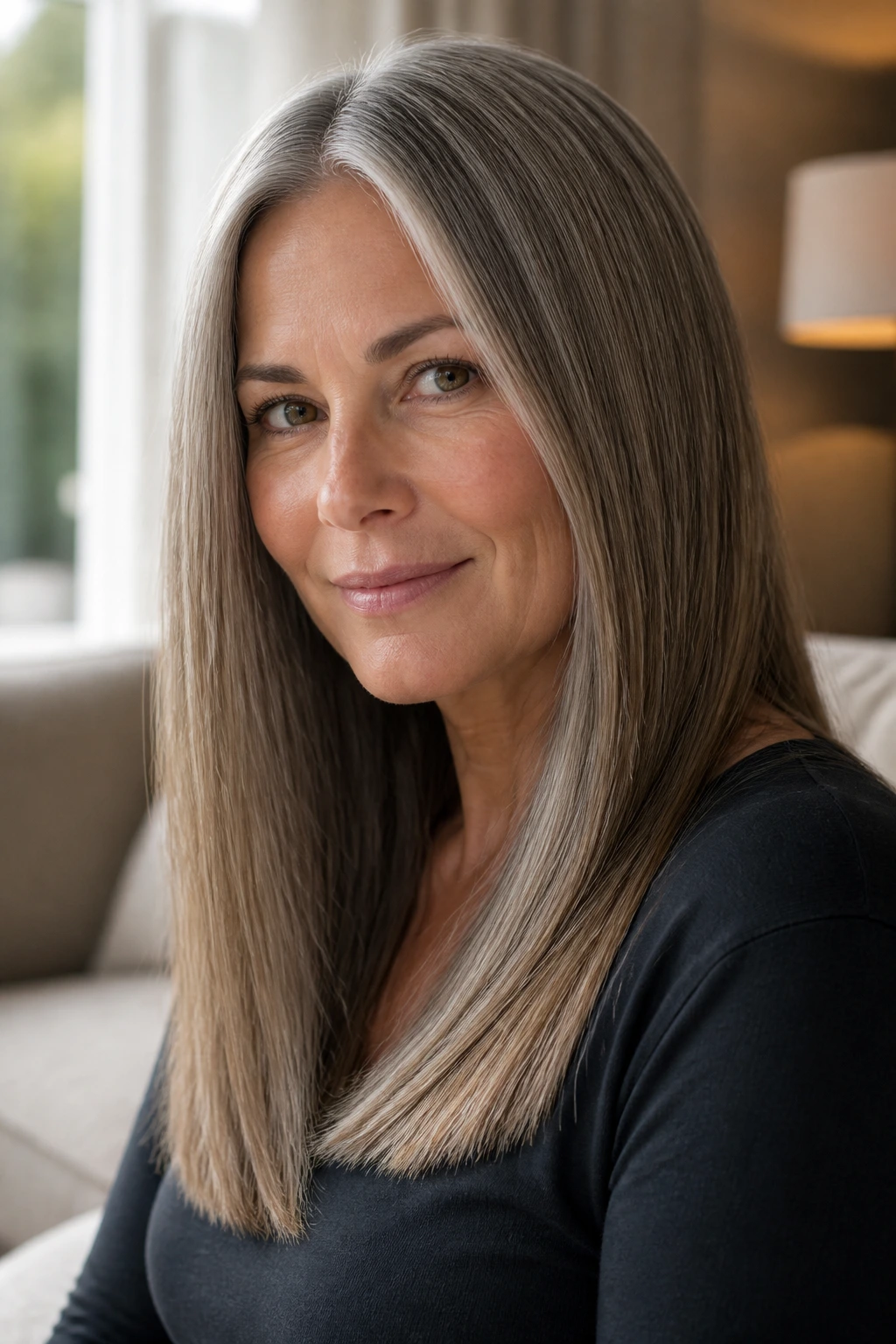
A blunt long cut can be a lifesaver for fine hair. The solid perimeter makes the ends look thicker, which is the opposite of what happens when you stack on too many short layers and the hemline starts to disappear. But the trick is to keep some movement inside the shape so it doesn’t turn into a heavy curtain.
That’s where hidden internal texture comes in. Your stylist can remove a little weight from the inside without chopping up the outline. The result feels cleaner and fuller at the same time. It’s a smart choice if your hair is straight or only slightly wavy.
What to Watch For
Do not let the interior get over-thinned. Fine hair with too much texture can look wispy fast.
- Best for fine or medium hair
- Needs regular trims to keep the line sharp
- Looks especially good with gray or silver hair
- Often easiest to style with a smoothing cream and a flat brush
10. The Modern Rachel Cut With Long Layers

The Rachel cut has been around long enough to earn its own place in hair history, but the modern version is softer and longer. You still get that face-framing bounce and the layered movement, only the shape stretches past the shoulders instead of stopping short.
It works because it gives you shape without making the hair feel thin at the ends. That matters on long hair, where too many layers can make the bottom look like it gave up. The front pieces are the real workhorses here. They swoop, bend, and keep the haircut from feeling flat.
This cut likes medium-density hair and a bit of styling help. A large round brush or hot rollers can make it feel full fast. If you wear glasses, the front layers can be trimmed so they don’t fight with your frames. That detail matters more than people think.
11. The Soft Wolf Cut for Women Who Want Edge Without Chaos

A wolf cut can go too far if it’s done aggressively. The soft version is much better for long hair after 40 because it keeps the edge but leaves room for polish. You get shaggy texture through the top and crown, then longer lengths through the bottom.
This is the cut for someone who wants hair that looks better when it is slightly undone. It is not a stiff, perfect style. It’s a “run your fingers through it and go” cut. Wavy and curly hair tend to love it because the natural bend helps the layers separate in a flattering way.
It does ask for some personality. If you want sleek and exact, skip it. If you like texture and a little mess, it feels fresh without trying too hard. A salt spray or curl cream is usually enough.
12. Side-Swept Fringe With Cascading Length

A side-swept fringe is the quieter cousin of curtain bangs. It gives softness across the forehead, but it does it with a smoother sweep instead of a parted opening. That makes it a good pick if you want less maintenance or if your hair naturally falls to one side anyway.
Compared with blunt bangs, the side sweep is easier to grow out and easier to pin back on tired days. It also pairs well with long layers that fall past the shoulders, because the front pieces can blend into the rest of the haircut without looking disconnected.
This is a nice choice if you want a face-softening cut but do not want to commit to a full fringe. It works on straight hair, but it shines on hair with a little bend, since that natural movement helps the side sweep settle into place.
13. Invisible Layers for Fine Hair
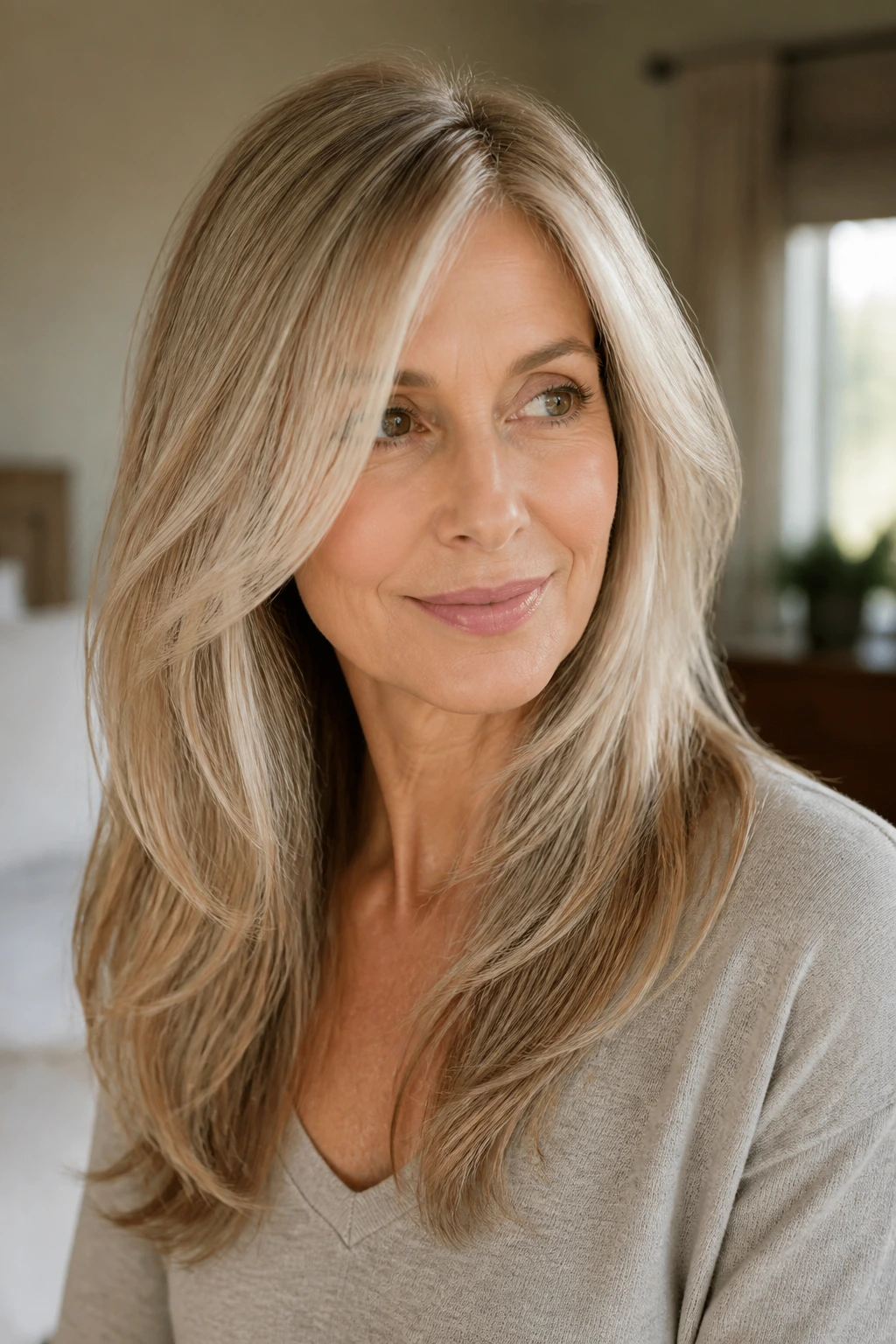
Invisible layers are one of the best-kept tricks for long hair that needs volume without looking layered. The cut keeps the outer shape clean, then sneaks in short internal pieces that lift the hair from underneath. You don’t see the layers right away, but you see the effect every time the hair moves.
Why They Help Gray Hair
Gray hair often gets a little more glassy or wiry, and invisible layers can keep that from turning into a flat sheet. The movement breaks up the surface in a nice way.
- Great if you want fullness without obvious choppiness
- Helps fine hair stay long without looking stringy
- Works with straight or softly wavy textures
- Needs only light styling, not a complicated routine
Ask for this by name. Stylists know it, but they may call it internal layering, hidden layering, or soft debulking.
14. Razor-Cut Ends for Thick, Coarse Hair

A razor cut can be brilliant on thick hair—if the stylist knows how to use it. That’s the part people forget. Done well, a razor softens the perimeter and keeps heavy hair from looking like a helmet. Done badly, it can frizz the ends and make the whole shape explode.
The style works best when the hair has enough density to support the texture. Thick gray hair is a good candidate because it often wants movement but not too much layering. The razor creates lightness around the edges, which helps the hair swing instead of dragging.
This is not the cut for someone who wants hard lines. It’s for someone who wants the ends to feel softer and more touchable. Pair it with a smoothing cream or a light oil on damp hair, then dry with tension. The finish should look controlled, not fuzzy.
15. Rounded Layers for Curls and Waves
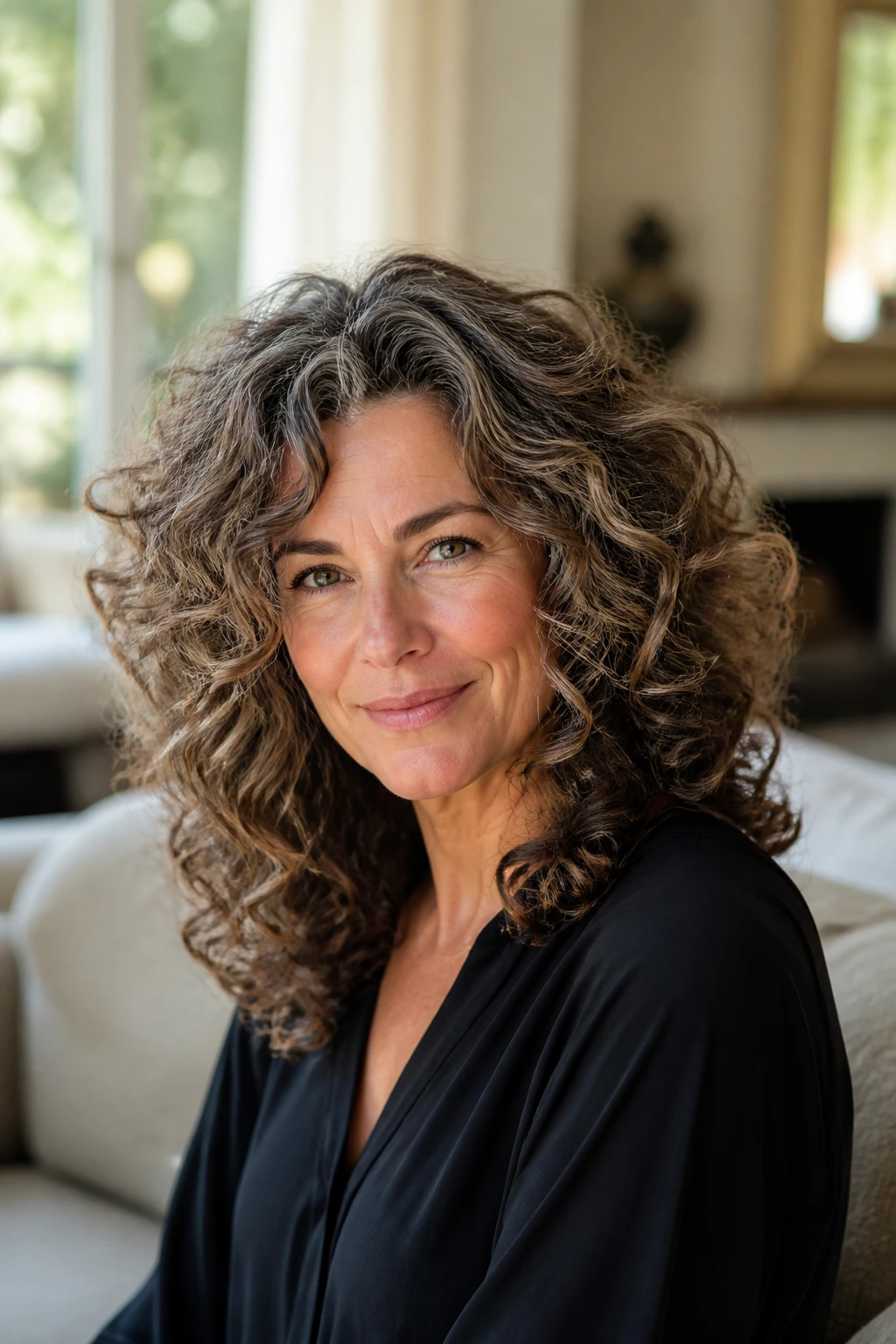
Can long curly hair be flattering after 40? Absolutely. The mistake is usually shape, not length. Rounded layers follow the natural curve of curls so the hair doesn’t balloon out at the sides or pile up at the bottom like a triangle.
The best rounded cut keeps the silhouette soft and balanced. Shorter layers at the crown add lift, while longer layers near the bottom keep the length intact. That balance helps curls spring instead of stretching downward. Wavy hair gets a similar benefit because the ends stop looking heavy.
How to Wear It
Use curl cream on soaking-wet hair, then scrunch with a microfiber towel or T-shirt. Diffuse on low heat if you want more volume at the crown. If you let curly hair air-dry completely without touching it, the shape will usually look better than if you keep fussing with it.
16. Bottleneck Bangs With Long Movement

Bottleneck bangs are one of those small details that make a haircut feel current without looking trendy for the sake of it. The center sits a little shorter, then the sides open out and blend into the rest of the length. It gives softness around the eyes and cheekbones without the commitment of a full fringe.
This style suits women who want a little face framing but do not want bangs that sit like a wall across the forehead. It’s flattering on long hair because it directs attention inward, then lets the length carry the rest of the shape.
- Good for medium-density hair
- Easy to pair with loose waves or a smooth blowout
- Grows out with less drama than straight bangs
- Works especially well if your forehead feels a bit long or your brows are a feature you like showing off
One warning: if your hairline is very cowlick-prone, ask for a longer bottleneck shape. Short bangs fight back.
17. Deep Side-Part Layers for Extra Lift

A deep side part can change the whole feel of long hair. It creates lift at the crown, softens one side of the face, and gives the length a little swing that a center part doesn’t always manage. It’s simple, which is exactly why it works.
This cut is a good fit for women who want some visual lift near the top without adding a lot of short layers. The part does most of the work. Long layers around the face and through the ends help the hair fall in a cleaner line, so the side sweep feels deliberate instead of random.
It’s especially handy if one side of your hair lies flatter than the other. A deep part can also make gray streaks look more dimensional because the light hits the hair at a different angle. Small change. Big payoff.
18. Beveled Long Ends for a Polished Finish
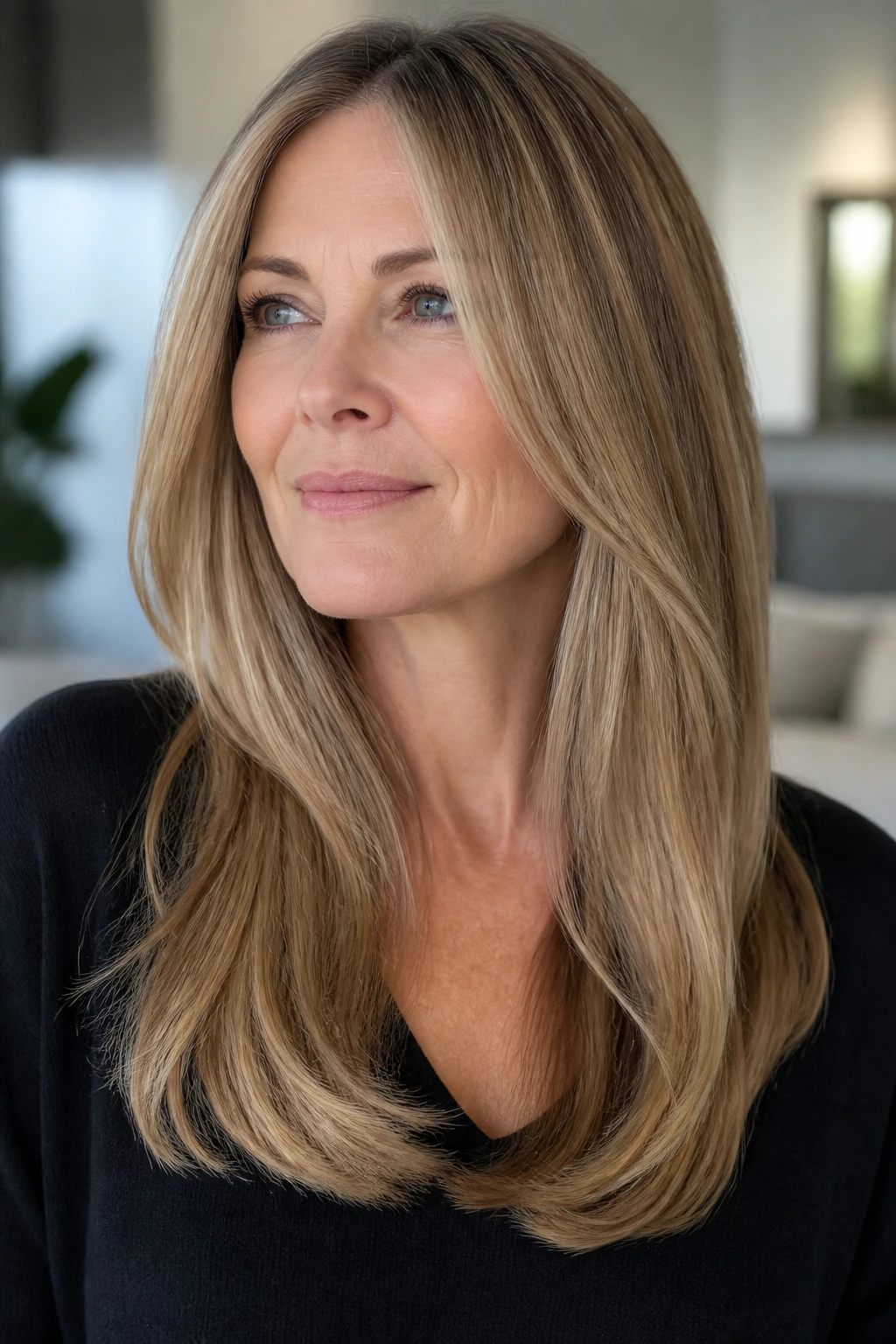
Beveled ends are the opposite of blunt and boxy. The hair is cut so the edges curve inward a little, which gives long hair a smoother finish around the shoulders and chest. It’s clean, neat, and surprisingly flattering on long shapes that need refinement.
Unlike a heavy layered cut, beveled ends do not break the silhouette apart. Unlike a straight blunt cut, they keep the hair from feeling harsh. That makes this style a strong pick for women who like their hair sleek but not severe.
It works best when you actually wear your hair smooth. A paddle brush, a dryer, and a finishing serum are enough. If you want a cut that looks good tucked behind one ear, flipped over a shoulder, or worn with a blazer, this is a very solid choice. It has no drama. That’s the appeal.
19. A Silver-Friendly Cut for Women Over 40
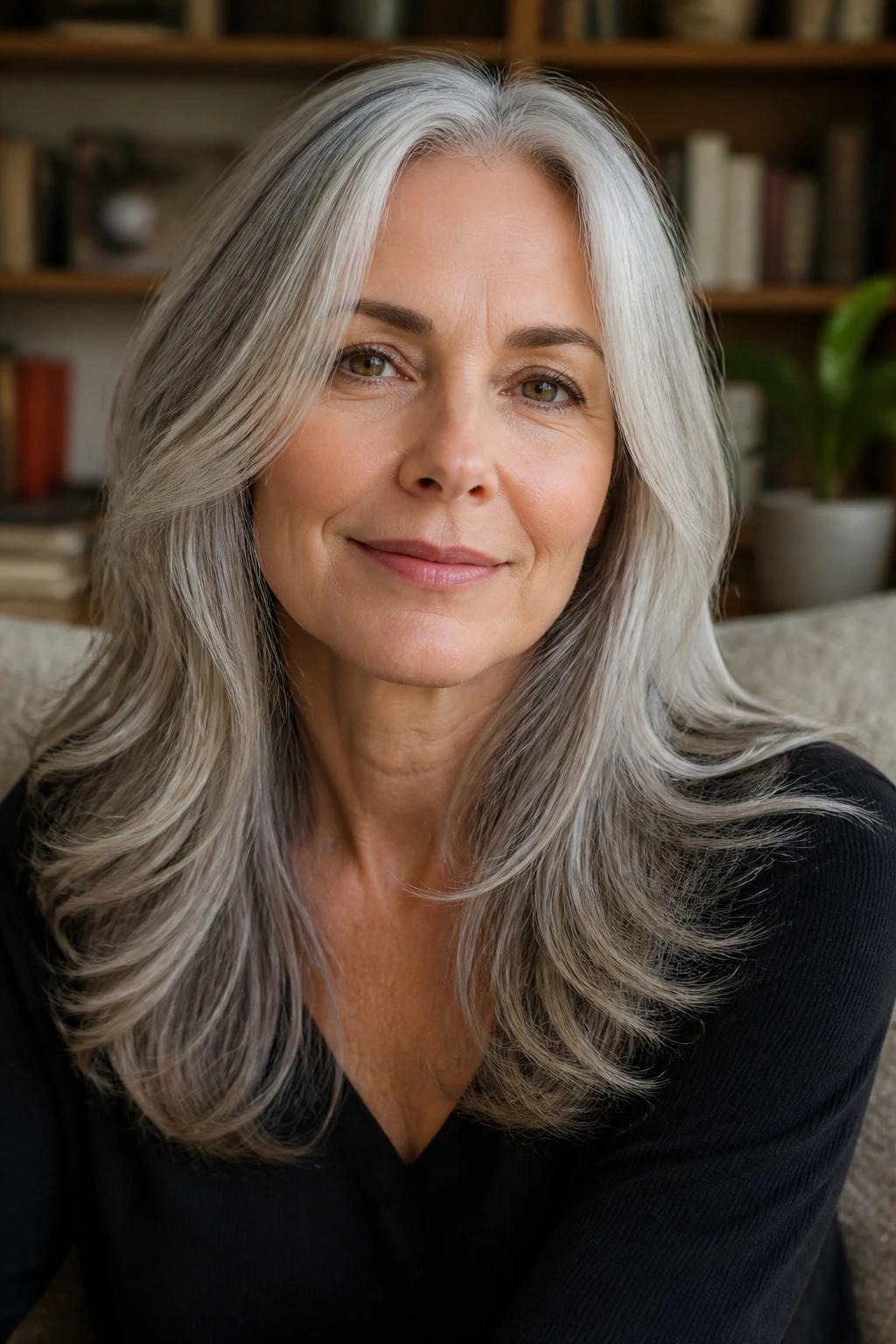
Gray hair looks best when the cut respects its texture. That’s the part a lot of people miss. Silver strands can be striking, but if the shape is too heavy or too shredded, the color reads as random instead of intentional. A cleaner cut with soft movement makes the silver look designed.
What Makes It Work
The best version keeps a clear perimeter and adds just enough layering to stop the hair from hanging flat. That gives the silver ribbons room to show up. If your gray hair feels coarse, avoid aggressive thinning. It can make the surface puff out and lose shine.
- Great for salt-and-pepper, silver, or white hair
- Needs moisture and a good leave-in conditioner
- Looks especially sharp with a polished side part
- Benefits from a dusting trim rather than a major reshape every time
My opinion: gray hair usually looks best when the cut is cleaner than the color is loud.
20. The Long Perimeter Cut With Interior Movement

This one sounds simple because it is. The outer line stays long and strong, but the stylist takes a little weight out from the inside so the hair doesn’t just hang there. That makes it one of the most forgiving long haircuts for women over 40, especially if you want length that still feels lively.
It’s a smart choice for medium to thick hair that gets bulky near the ends. The perimeter keeps the haircut looking full, while the hidden movement gives you bend and a bit of swing. You can air-dry it, blow it out, or wear it loosely waved and it still holds together.
The cut also grows out well. That matters more than people admit. If you don’t want to live at the salon, a strong outer line with interior movement buys you time between trims.
21. The Soft Hemline Cut With No Bangs
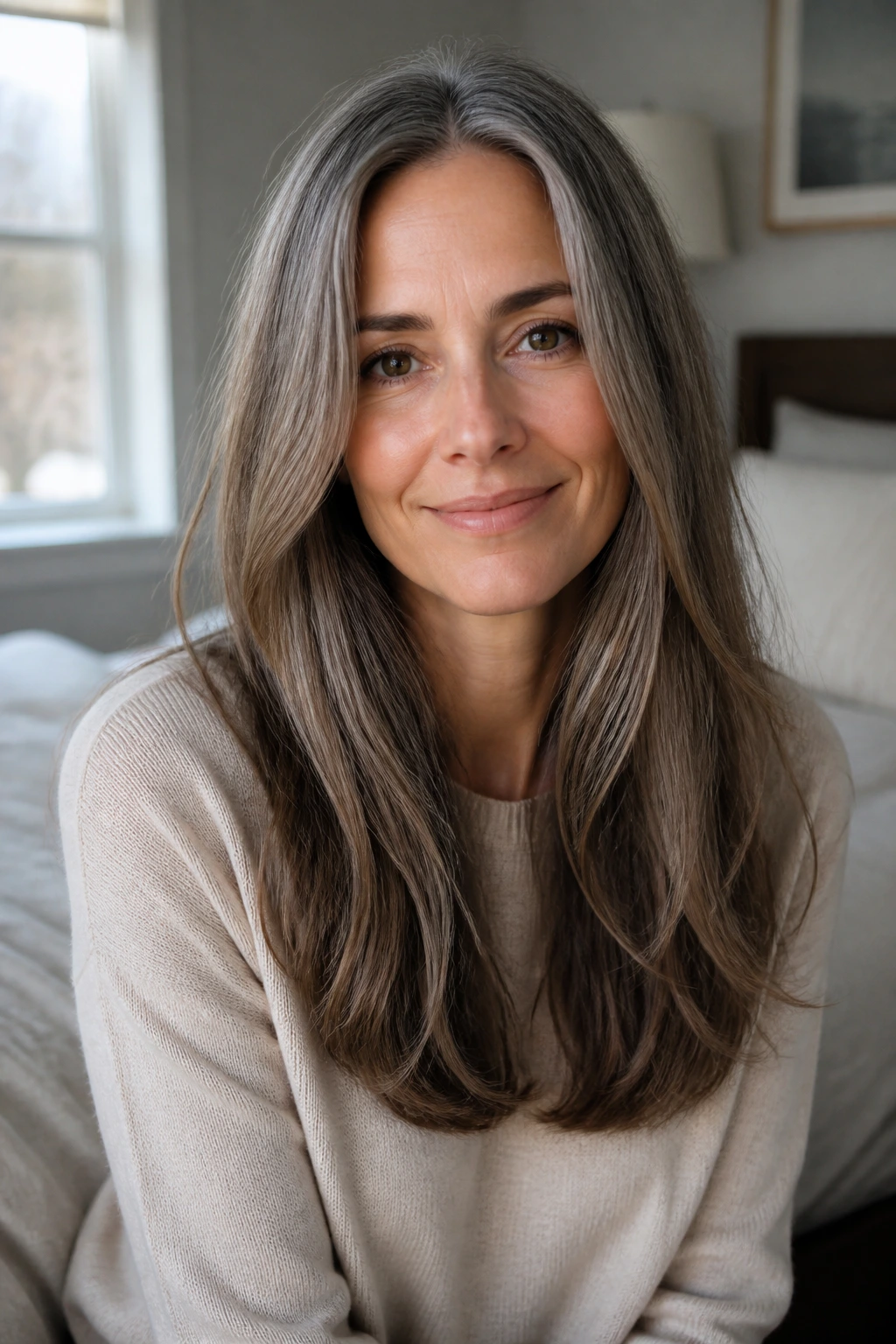
Not everyone wants bangs. Some faces look better with more open space around the forehead, and some women simply don’t want to deal with fringe maintenance. A soft hemline cut keeps the long shape clean, then rounds the ends just enough so the hair doesn’t look severe.
This style is especially good if your features are already strong. A smooth center part and a soft edge can be enough. It also works for women who wear glasses, because there’s no extra fringe fighting the frames every morning.
The key is making the line look intentional, not plain. Ask for subtle rounding through the ends and a little movement around the front, even if you keep the rest of the hair mostly one length. A haircut does not need bangs to have shape. That’s one of those hair myths I wish would die already.
22. Collarbone-to-Chest Cascade Layers
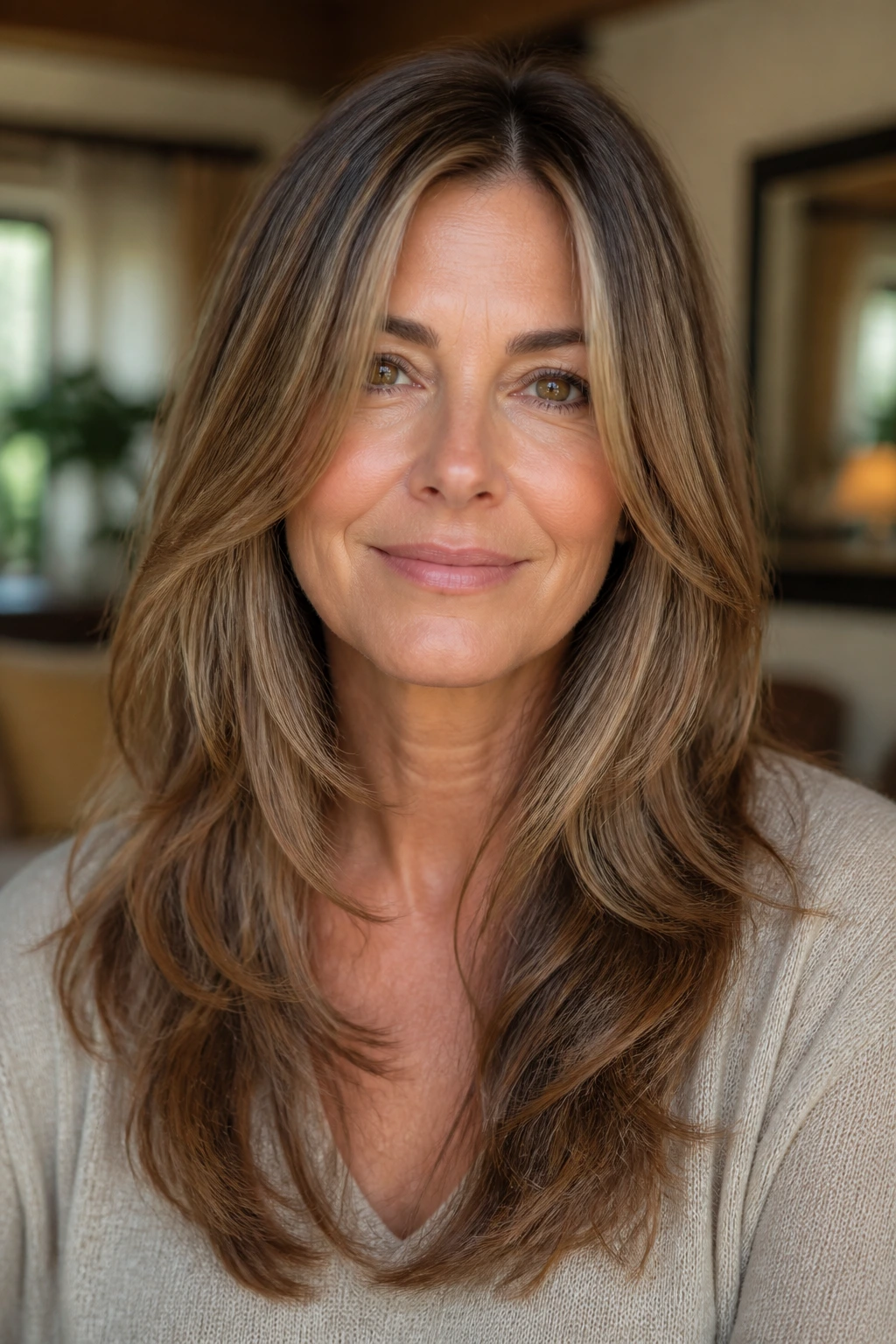
A collarbone-to-chest cascade is a lovely option if you want long hair that still feels light. The shortest face-framing pieces land around the collarbone, then the rest falls longer toward the chest. That creates a soft slope that flatters most necklines and makes the hair move in a nicer way.
It’s one of those cuts that looks expensive without being fussy. You can wear it smooth, curled, or loosely waved, and the layers still keep the shape from going flat. It’s also a smart grow-out cut if you’re moving past a shorter style and want the transition to look clean.
The Best Part
You get shape where people see it first—around the face and shoulders—without sacrificing the length you want to keep.
- Works well on medium hair with a bit of natural bend
- Easy to pin back for work or exercise
- Looks especially good with soft highlights or silver streaks
- Can be styled with a 1.25-inch curling iron for loose bends
23. The Airy Long Cut for Straight Hair That Falls Flat
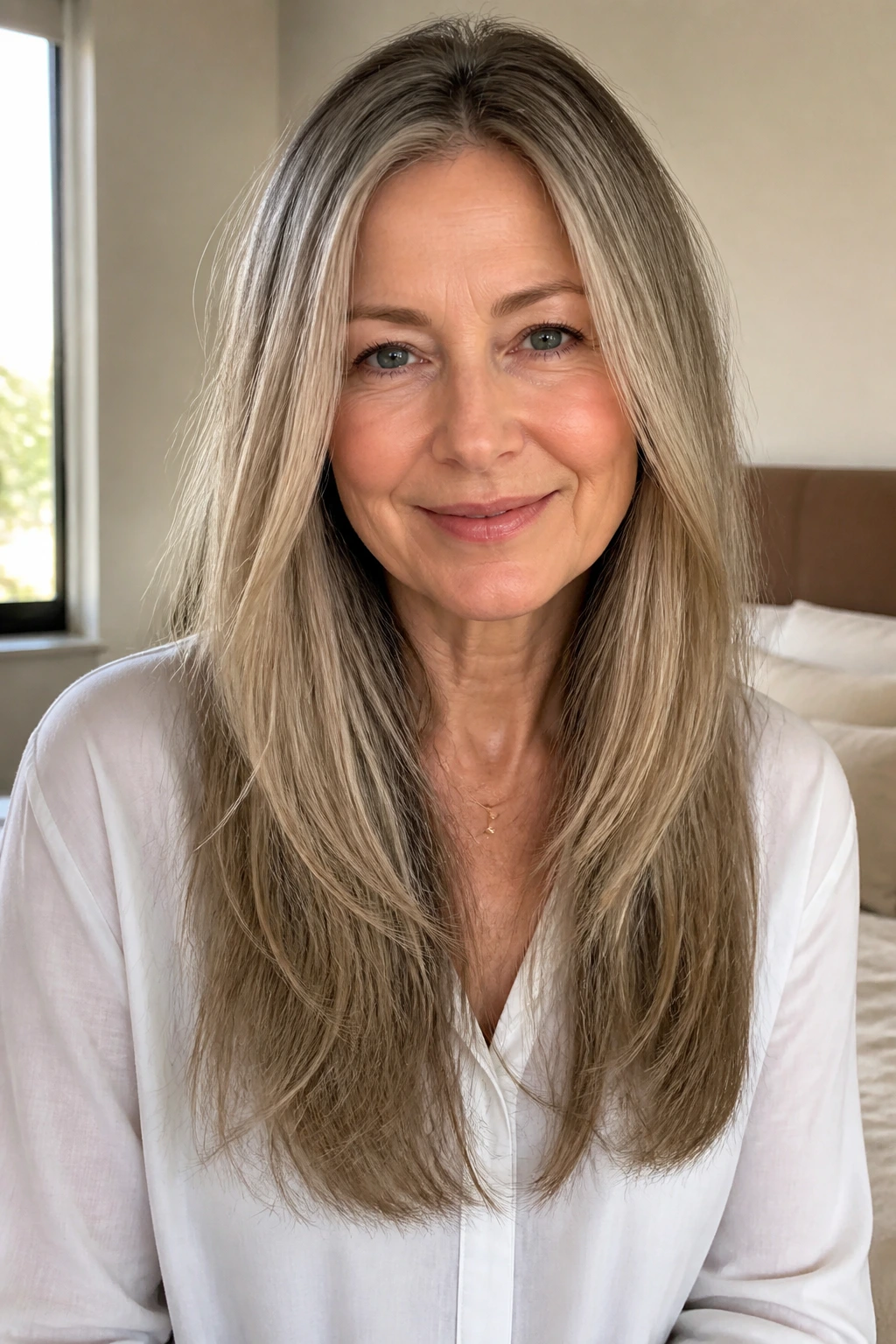
Straight hair can be sneaky. It looks healthy, then by noon it’s lying against the head with no lift at all. An airy long cut helps by building subtle movement into the midlengths and ends without turning the whole thing into layers that disappear.
This is not a shag. It’s not a heavy face frame either. It’s a quieter cut with a little internal movement and a slightly lighter perimeter so the hair doesn’t act like a sheet. If your hair is fine, this can be a lifesaver. If it is thick, it keeps the length from feeling stiff.
A root spray at the crown and a quick round-brush bend through the front usually wake it up. Don’t overdo the products. Straight hair shows every extra drop of serum, and then the airy part goes away.
24. Heavy Fringe With Long Layers
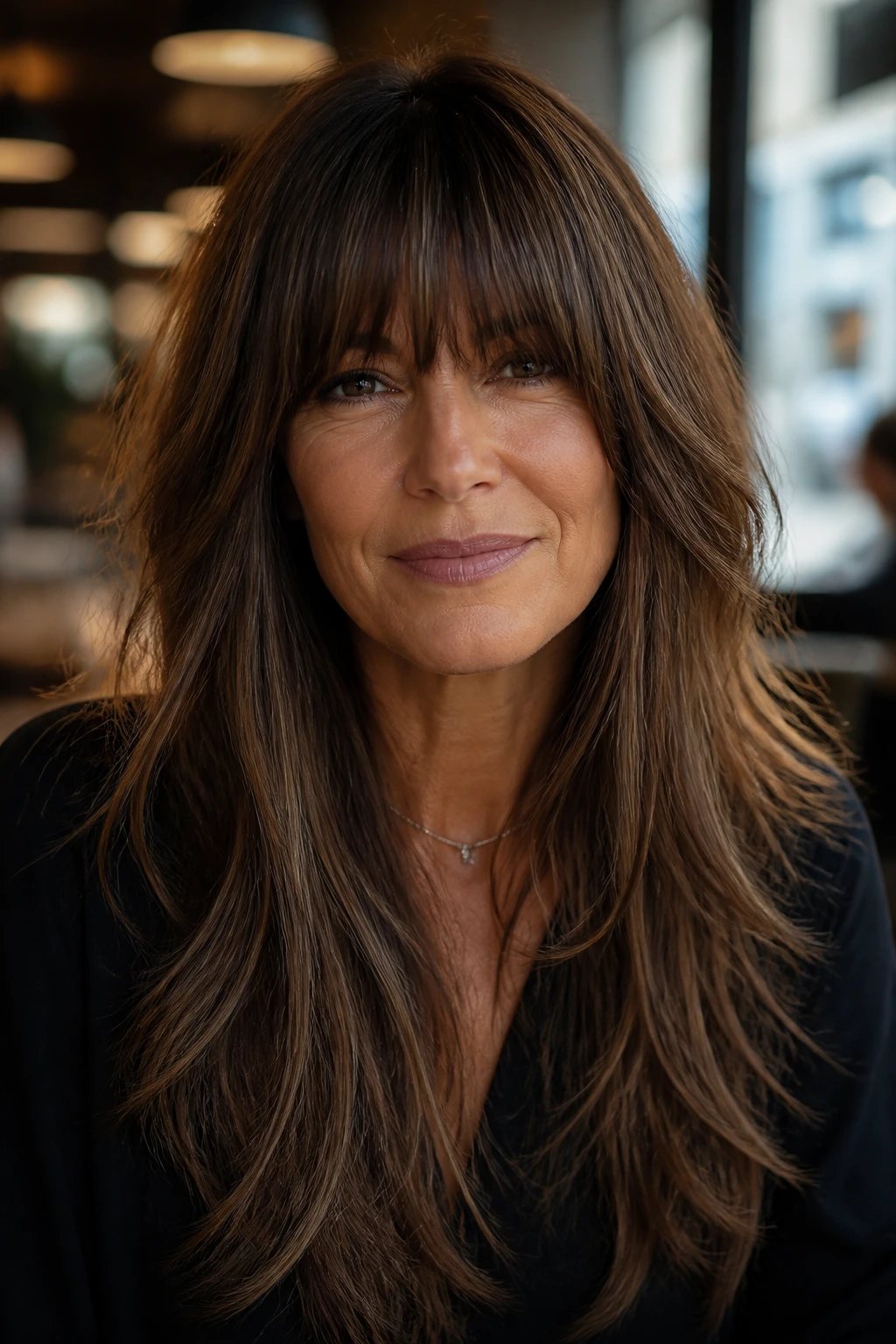
A heavier fringe gives a different kind of softness than curtain bangs. It covers more forehead, lands with more presence, and can make a long haircut feel bolder without cutting the rest of the length. For women who want coverage and structure, it’s a strong choice.
This style works best when the fringe is thick enough to look intentional. Too wispy, and it starts to feel accidental. Paired with long layers, it keeps the overall haircut from looking too plain. The fringe gives the front a point of view, while the length stays graceful.
It’s especially useful if you like stronger lines in your clothing or makeup. The hair can hold its own. Just be honest about upkeep. Heavy fringe needs more trimming than side-swept pieces, and that is not negotiable.
25. The Low-Maintenance Grow-Out Cut for Women Over 40
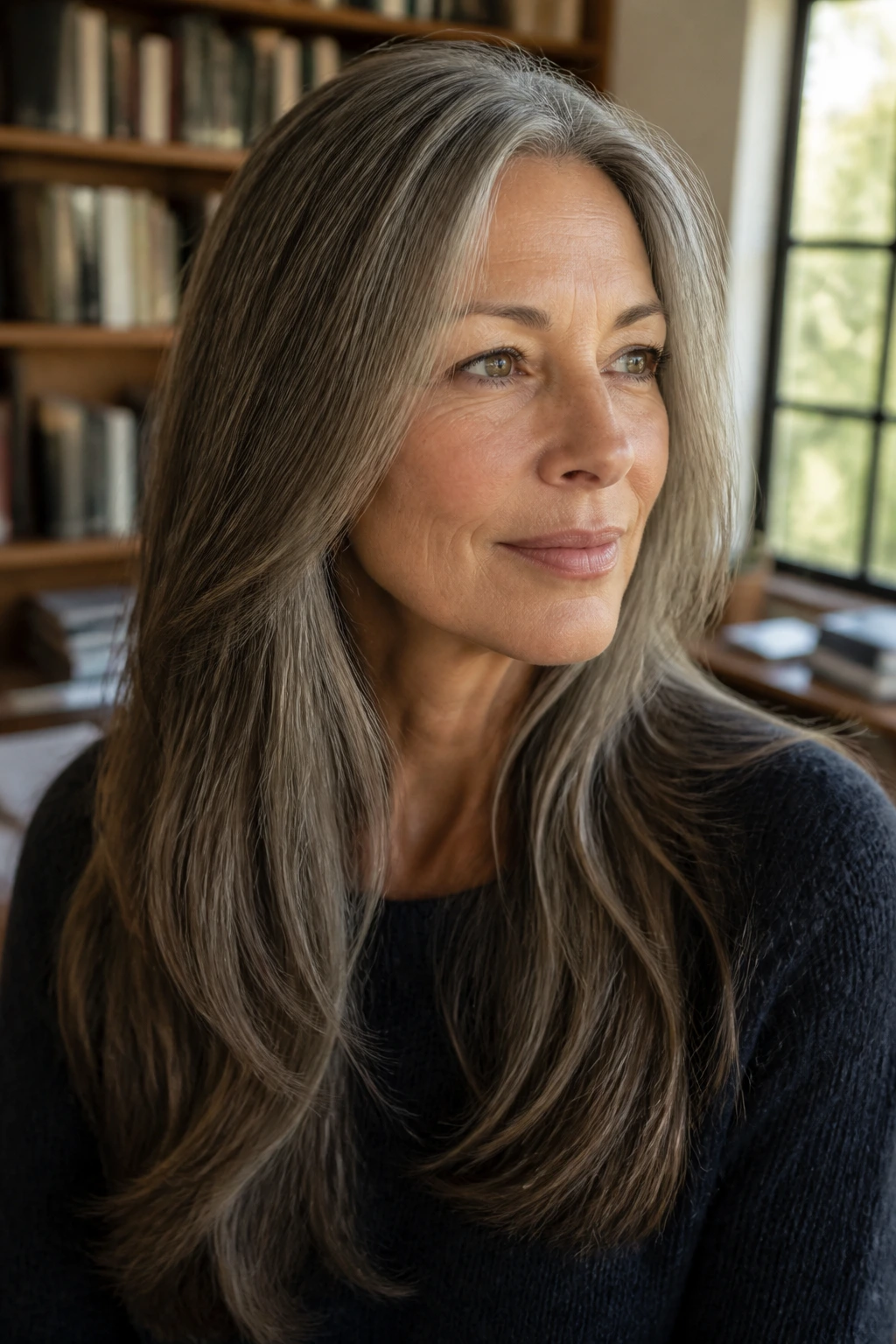
This is the cut for people who want to look put together without seeing a stylist every three weeks. The shape stays long, the front pieces soften the face, and the layers are kept long enough that the grow-out still looks planned instead of shaggy.
The Key Is the Perimeter
If the longest line stays solid, the haircut keeps its shape longer. That means fewer awkward weeks and fewer emergency trims.
- Great for busy schedules and less frequent salon visits
- Works on straight, wavy, and lightly curly hair
- Helps gray roots blend better because the shape stays clean
- Best when the layers start low and stay soft
What to ask for: a long shape with face-framing pieces, minimal short layers, and ends that are dusted rather than heavily thinned. That one request saves you a lot of trouble later.
The Bottom Line

Long hair after 40 works best when it has shape you can see and movement you can feel. The strongest cuts here do not fight age, texture, or gray hair. They work with all three and make the hair look more alive because of it.
If your hair feels heavy, choose layers or a softer perimeter. If it feels flat, look at internal movement or a crown lift. If your gray strands have turned a little coarse, keep the cut cleaner and avoid over-thinning. That’s the part people miss.
The best cut is the one you can wear without negotiating with your hair every morning. Pick the shape that matches your texture, and the rest gets much easier.