



Half-up updo styles for short hair work best when they stop pretending the hair is long. That sounds blunt, but it saves a lot of frustration. A chin-length bob, a layered lob, even a grown-out pixie can hold shape if you choose the right twist, braid, clip, or pin pattern.
The mistake most people make is trying to force a short cut into a full, heavy upstyle. That usually leads to loose ends sticking out, bobby pins sliding, and a style that feels overworked before you even leave the mirror. Short hair needs smaller sections, tighter anchoring, and a little texture at the root. Tiny differences. Big payoff.
What makes this category fun is that short hair can look sharper than long hair when it’s styled well. The shape shows. The line of a twist shows. The placement of a clip matters more. And because you’re working with less length, one smart move — a slight crown lift, a hidden elastic, a crisscrossed pin — can change the whole look.
1. Half-Up Crown Twists That Add Height to Short Hair
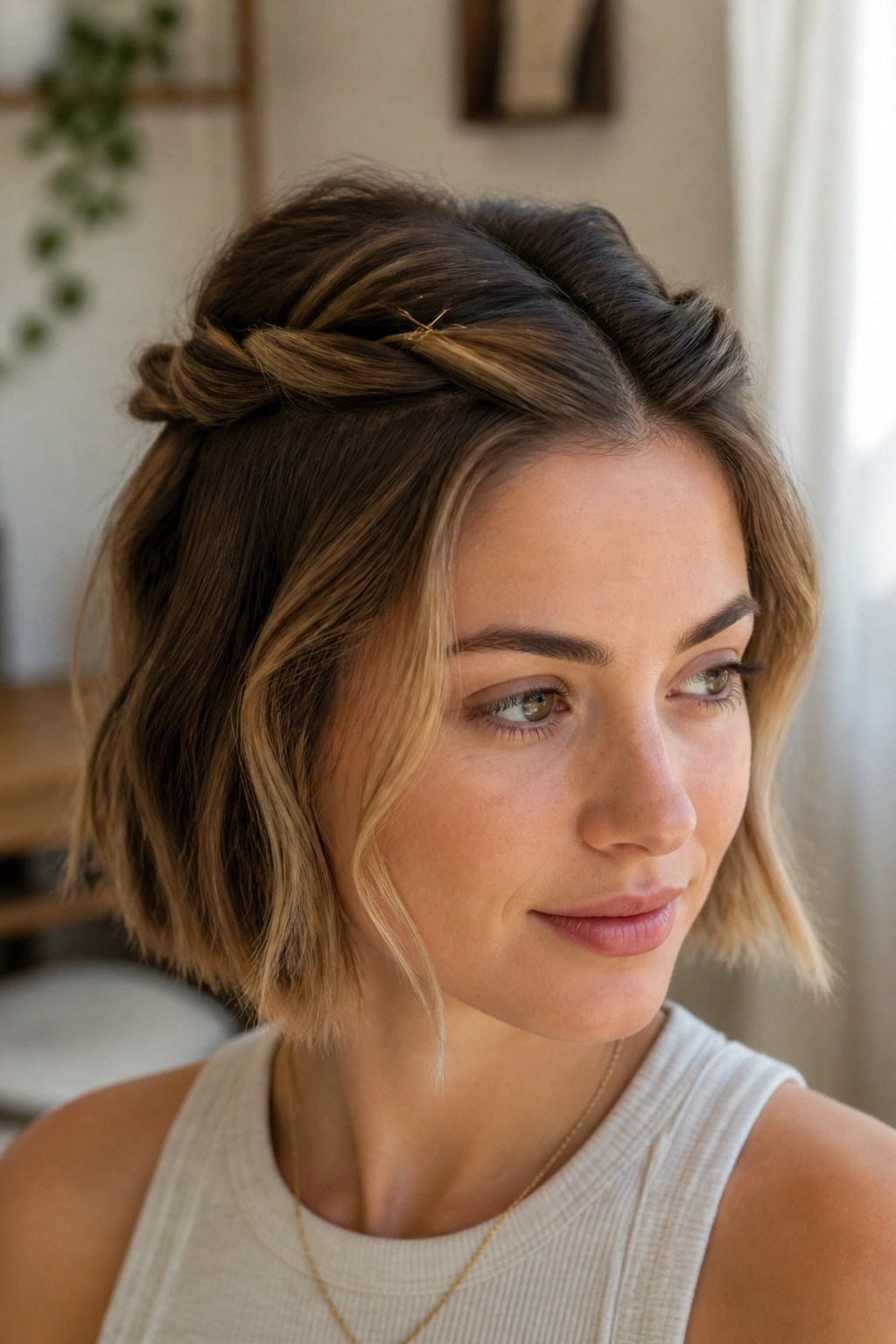
A simple crown twist is one of those styles that looks more complicated than it is. The hair is pulled back from both temples, twisted toward the center, and pinned so the front keeps some softness while the back stays off the face. On short hair, that shape reads clean and deliberate instead of fussy.
The trick is to work with small sections, about 1 to 1.5 inches wide. If you grab too much hair, the twist gets bulky and starts to collapse. If you grab too little, it falls apart before the second pin goes in. Two bobby pins per side is usually enough, and I like to cross them in an X so they grip the twist instead of just sitting under it.
Best lengths for this style
- Chin-length bobs with a little bend
- Layered lobs
- Hair that reaches just past the cheekbone
- Pieces with some grit from dry shampoo or second-day texture
A crown twist gives you height without trying to turn the whole head into an updo. That matters. Short hair looks better when the top is lifted and the ends are still visible, not tucked into submission. A quick mist of texturizing spray at the roots makes the twist feel fuller, and a light hairspray at the end keeps the front from slipping forward.
One pin placed well beats four pins placed badly.
2. A Mini French Braid That Keeps Short Layers in Place
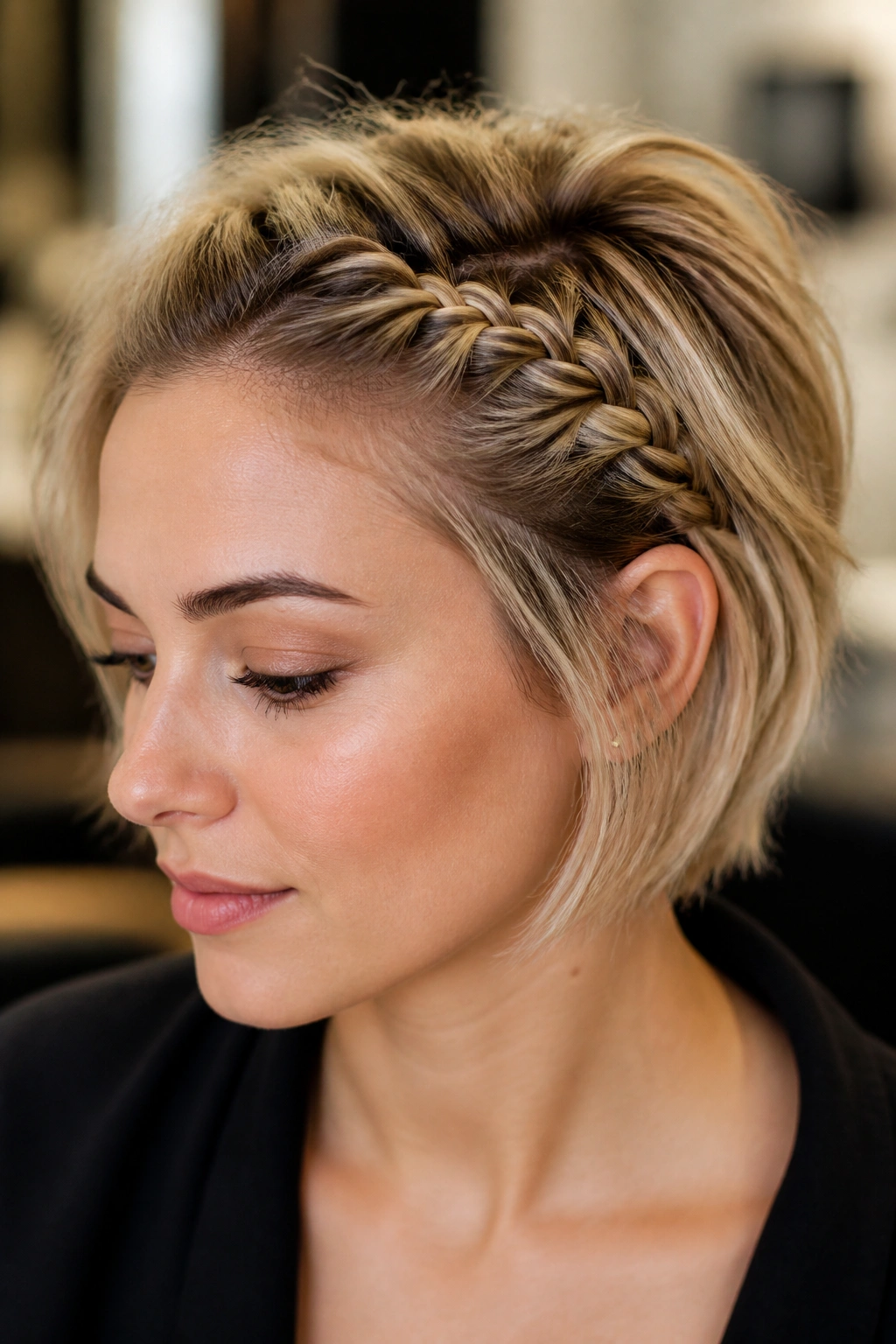
Why does a tiny French braid work so well on short hair? Because it gives the front sections something to grip against. Loose twists can slip when layers are slippery, but a braid locks the hair into a pattern as it moves back toward the crown. That makes it one of the most dependable half-up updo styles for short hair, especially if your cut has face-framing pieces that never seem to behave.
Start the braid near the temple and only add hair from the top half of the head. Keep it narrow. A braid that’s too wide on short hair starts to pull the whole style down and exposes the ends in awkward places. Once you reach the back of the head, secure it with a tiny clear elastic or a pin tucked under the braid.
How to keep the braid from slipping
- Prep with dry shampoo or a matte texturizing spray
- Braid on hair that isn’t freshly washed
- Keep the tension firm, not painful
- Secure the tail under another strand instead of leaving it exposed
The nice thing about this style is that it works with movement. If a few little pieces escape near the ear, it still looks intentional. In fact, a tiny bit of looseness keeps it from looking stiff. For formal wear, you can tuck the braid ends under with a U-pin. For everyday wear, leaving the last inch soft looks better than over-securing it.
3. The Tiny Top Knot That Works on a Bob
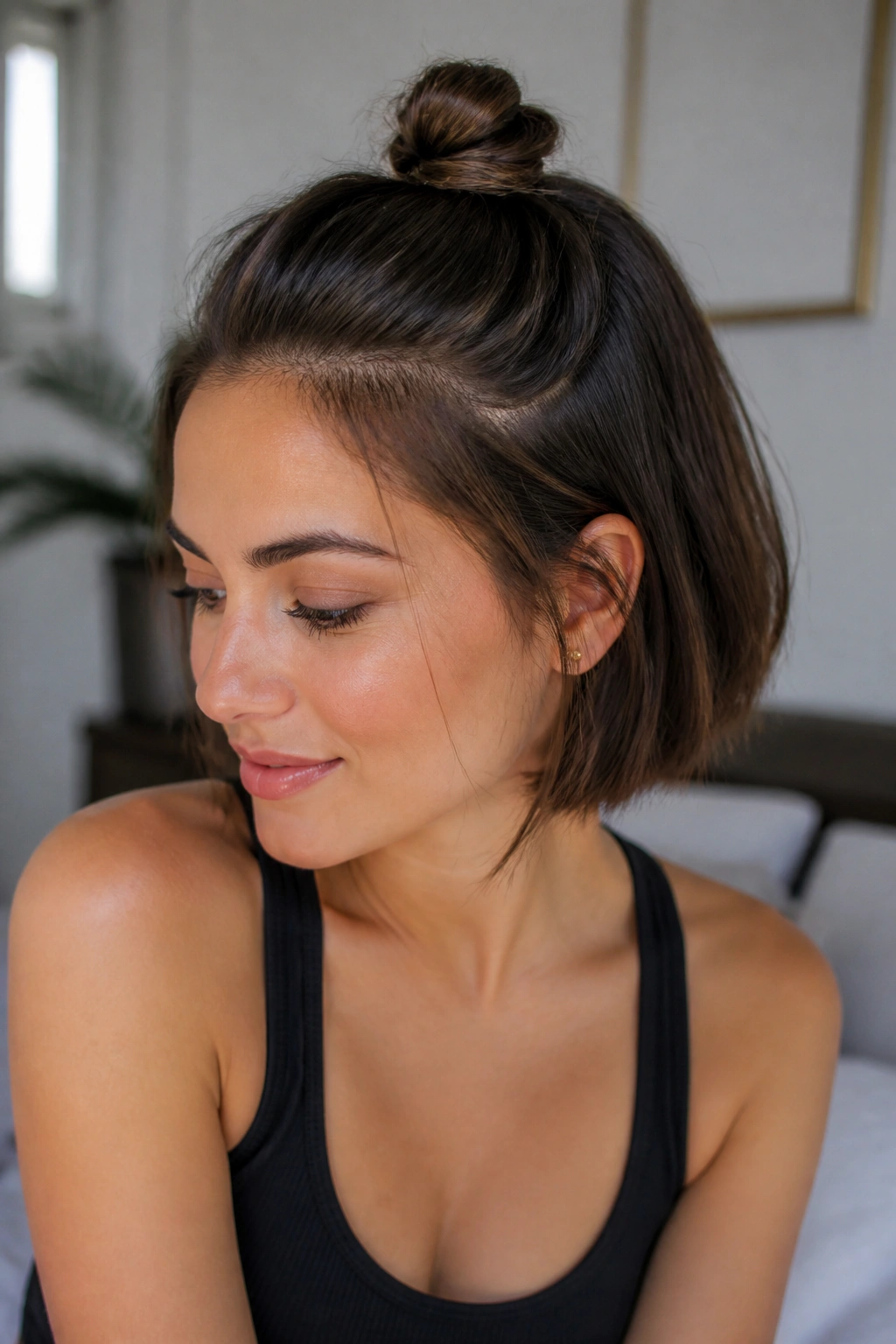
A top knot on short hair should not be a big, floppy bun pretending to be something else. It should be small, compact, and perched just high enough to show the shape of the cut underneath. That’s the whole charm. You get lift at the crown, but the bottom half of the hair still stays visible and sleek.
The easiest version starts with a half ponytail at the crown. Twist that section once or twice, then wrap it into a little bun and pin the ends underneath. If your hair is layered, the shorter bits may poke out. Fine. Pin them flat or let a few wisps stay loose. Trying to trap every strand usually makes the bun look harder and smaller than it needs to.
This style looks best when the bun sits slightly forward of the crown, not all the way at the back of the head. Too low and it loses the point. Too high and it can look a little costume-y on short hair. The sweet spot is easy to find in a mirror: when you tilt your head, the bun should feel balanced above the top line of the ears.
A tiny top knot is one of those styles that can go polished or messy. Sleek with a middle part. Loose with a side part. Either way, it gives short hair a quick lift without pretending you’ve got extra inches hiding somewhere.
4. A Clipped-Back Twist for Sleek Short Hair
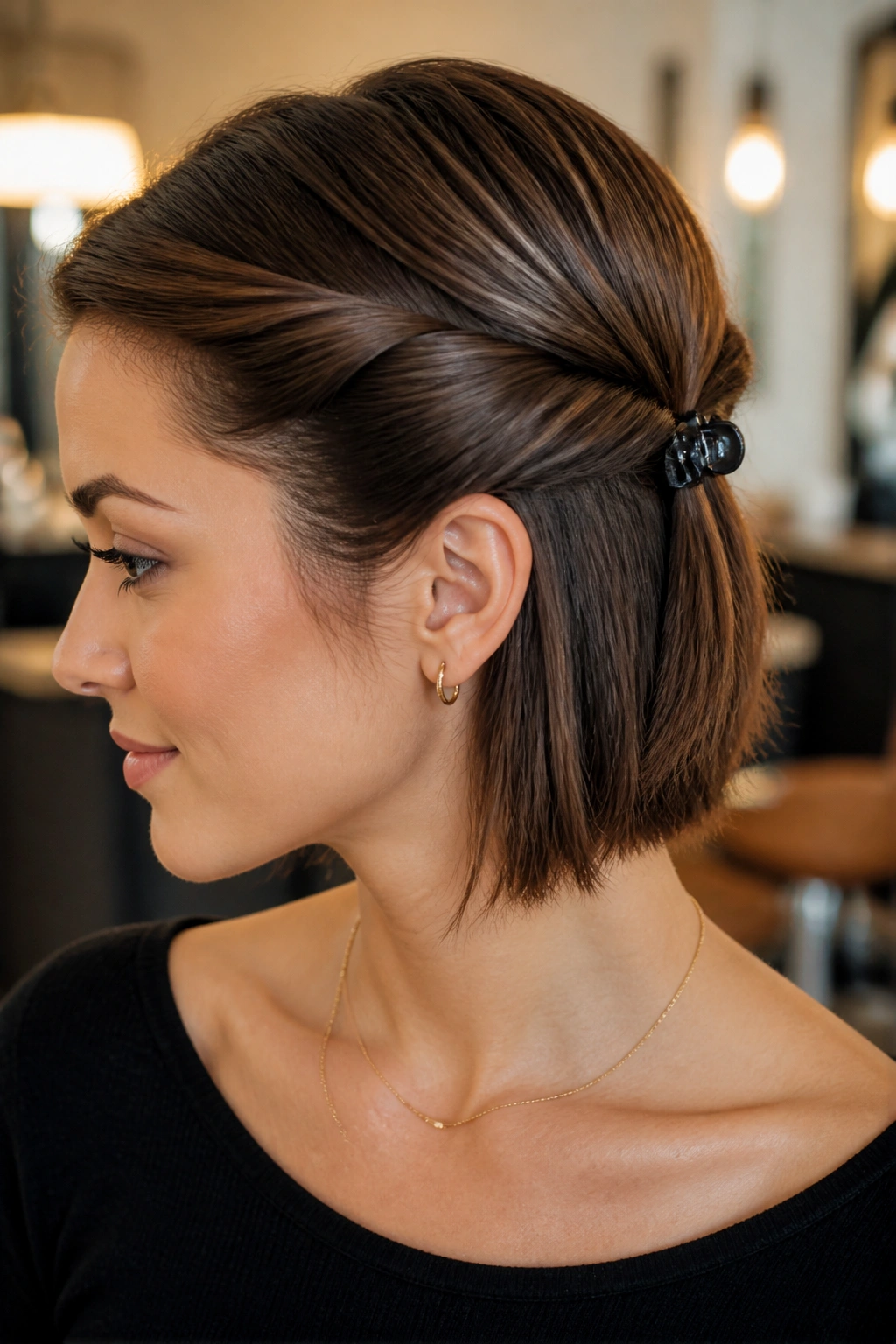
A sleek clipped-back twist is the style I reach for when I want short hair to look neat without looking overdone. It’s a clean half-up shape with a little attitude, and the clip does most of the work. The key is to smooth the front sections first, then twist them back so the clip has something to hold onto.
This style is better than a full pull-back for short cuts because the lower hair still moves. That movement matters. It keeps the whole thing from feeling too severe, especially on a blunt bob. Use a light smoothing cream or a drop of serum on the outer layer, then part the hair however you like and twist each side toward the center. A small barrette, alligator clip, or even a narrow claw clip can anchor the twist.
A couple of details make it better:
- Put the clip where the twists overlap, not above them
- Keep the twist flat against the head
- Hide the ends under the clip instead of letting them stick out
The style works especially well for straight hair or hair with a soft blowout. If the texture is too slippery, a tiny bit of hairspray on the twist before clipping helps. And if you have layers that pop loose at the nape, that’s fine. Leave them. Clean doesn’t have to mean perfect.
5. A Bubble Half Pony That Makes Fine Hair Look Fuller
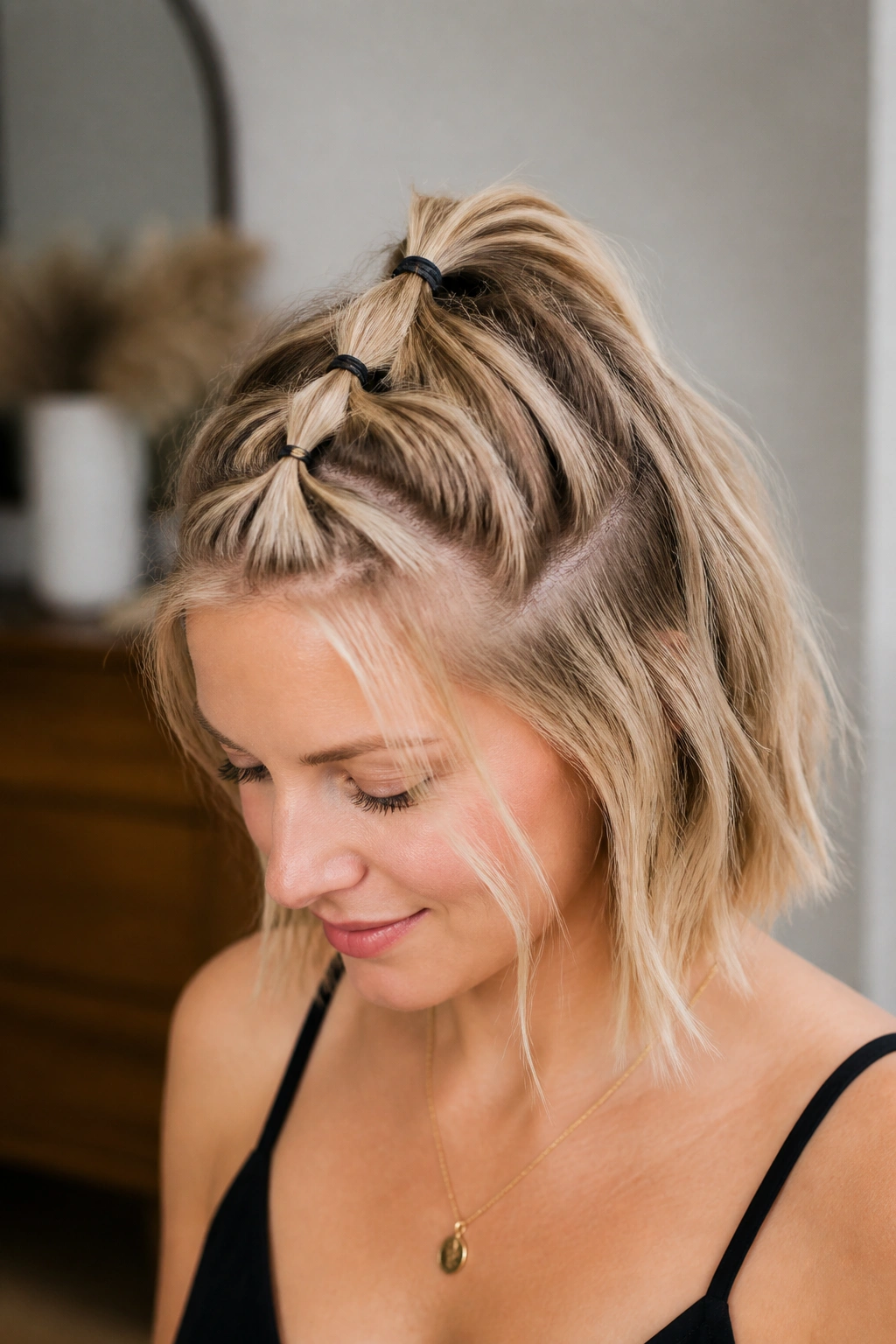
Bubble styles can look gimmicky on long hair. On short hair, they make more sense. The shorter length gives each section a stronger shape, so the “bubbles” read as intentional little puffs instead of sagging intervals. It’s a smart choice when your hair feels flat and you want the top half to look fuller fast.
Start with a half ponytail and secure it with a small elastic. Add another elastic about 1 to 1.5 inches below the first one if your hair length allows it. Then gently pull each section outward with your fingertips until it looks rounded. Don’t yank. You want puff, not chaos. If the hair is too short for multiple bubbles, one rounded section with a wrapped elastic still gives the same visual idea.
Where the bubbles should sit
- Right at the crown for a liftier shape
- Mid-back of the head for a softer look
- Slightly off-center if you want it to feel less formal
This style is especially kind to fine hair because the spaced-out elastics create the illusion of density. A little teasing at the roots helps, but only a little. Too much backcombing and the bubbles collapse into tangles. A mist of flexible hold spray is enough to keep the shape without turning the hair crunchy.
6. The Soft Knot Half-Up for Wavy Short Hair
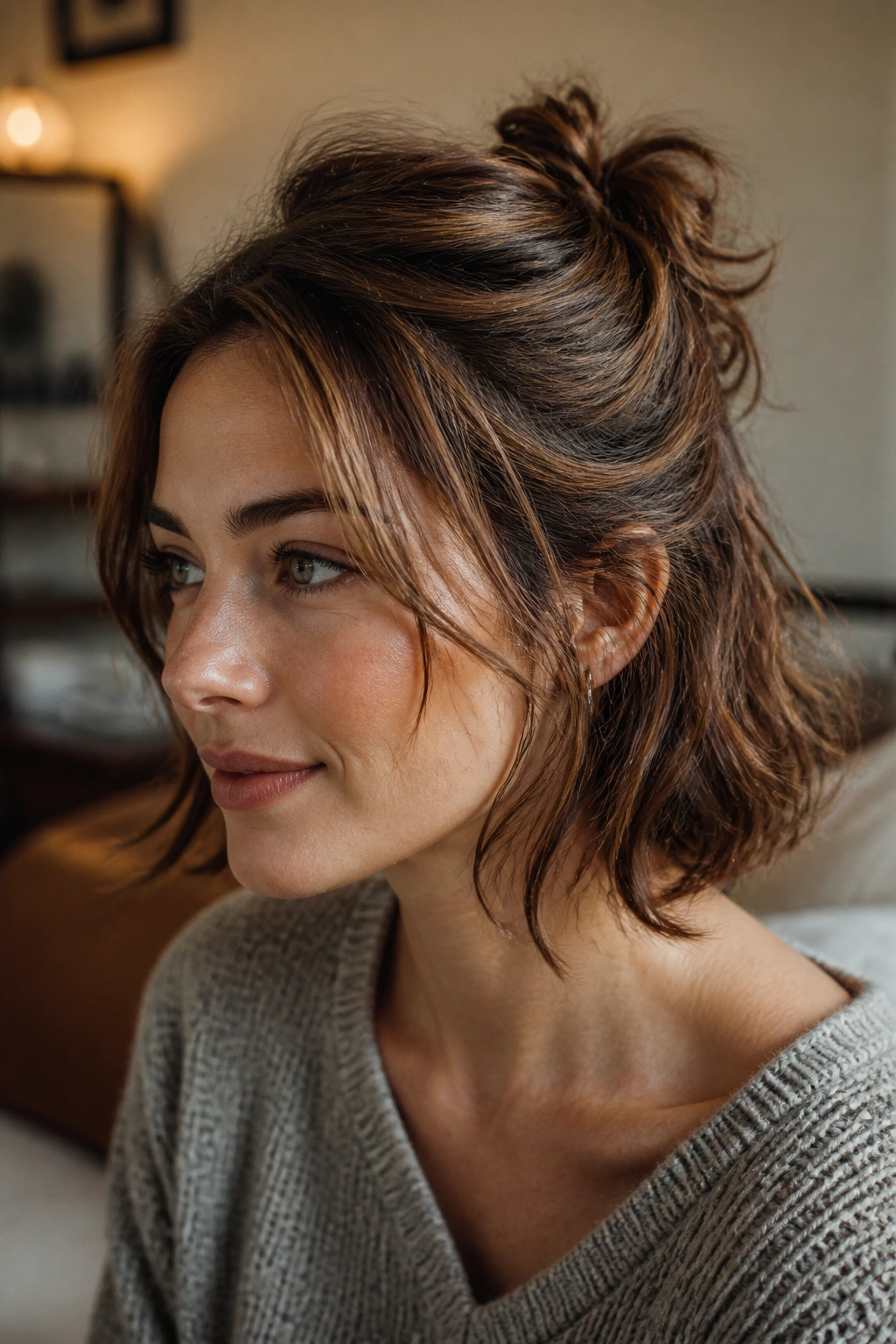
Wavy short hair loves a knot. It has enough texture to hold the shape, and the looseness of the waves keeps the result from looking too structured. You pull the top half back, tie it into a soft knot, and pin the ends underneath. That’s it. No drama. No overthinking.
This style works best when the knot sits low enough to feel relaxed. If you place it too high on a short cut, the hair beneath can look disconnected, almost like two separate styles happened at once. Keep the knot centered just above the occipital bone — the rounded part of the back of the head — and let a few face-framing pieces fall free. Those loose pieces do a lot of work. They soften the line and make the knot feel wearable rather than staged.
Second-day waves are ideal here. Freshly washed hair can be too slippery, especially if your layers are blunt. A little dry shampoo at the roots and a pinch of texture spray through the lengths gives the knot grip. If one side looks fuller than the other, don’t chase symmetry too hard. That slight unevenness is usually what makes the style look natural.
The best part? It comes apart fast. If you need to switch from casual to polished, a couple of pins and a quick smoothing of the top layer can change the whole mood in under five minutes.
7. A Crown Braid Accent for Growing-Out Bangs
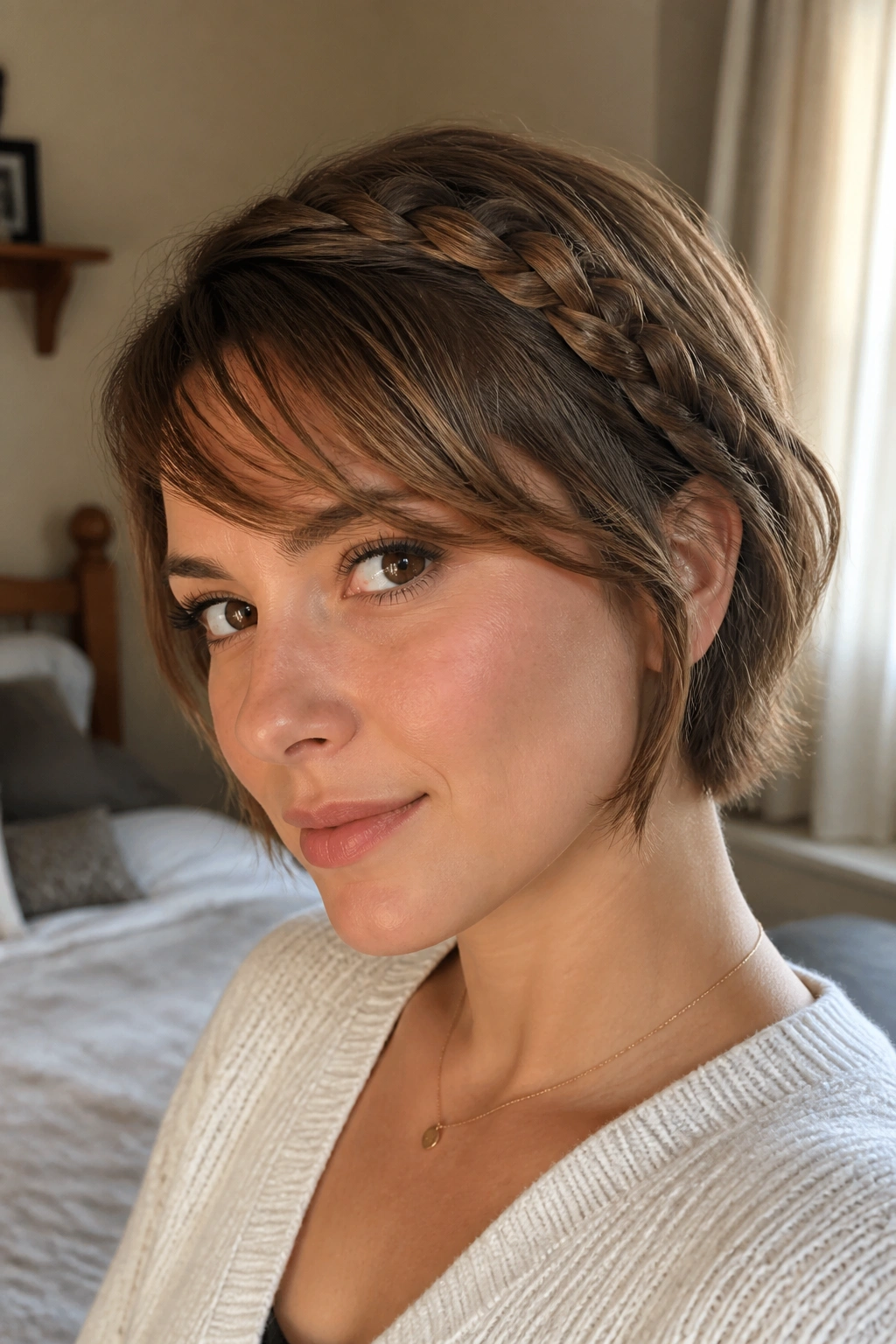
Growing-out bangs can be a pain. They fall into your eyes, split weirdly, and refuse to stay swept aside unless you force them. A narrow crown braid solves that without hiding the cut. It pulls just enough of the front section back to keep things tidy, while the rest of the hair still looks loose and short.
The braid does not need to run across the whole head. In fact, on short hair, a half-length braid often looks better. Braid from one temple toward the center, then stop and pin. Or braid both sides and let them meet in the back. Either way, the point is to build a decorative line that controls the front without making the style heavy.
What to do with the bangs
- Braid the shortest fringe pieces into the top section
- Use a tiny clear elastic if the ends are too short to tuck
- Slide a pin under the braid to hide the tail
- Mist the hairline with light hairspray before braiding
This style sits somewhere between practical and pretty. It’s good for days when you want your hair out of your face but do not want a hard, slick look. On very short bangs, you may only be able to braid the longer top pieces. That’s fine. A partial braid still gives enough visual interest, and it stops the front from doing its own thing all day.
8. Rope Twists That Hold Better Than Loose Braids
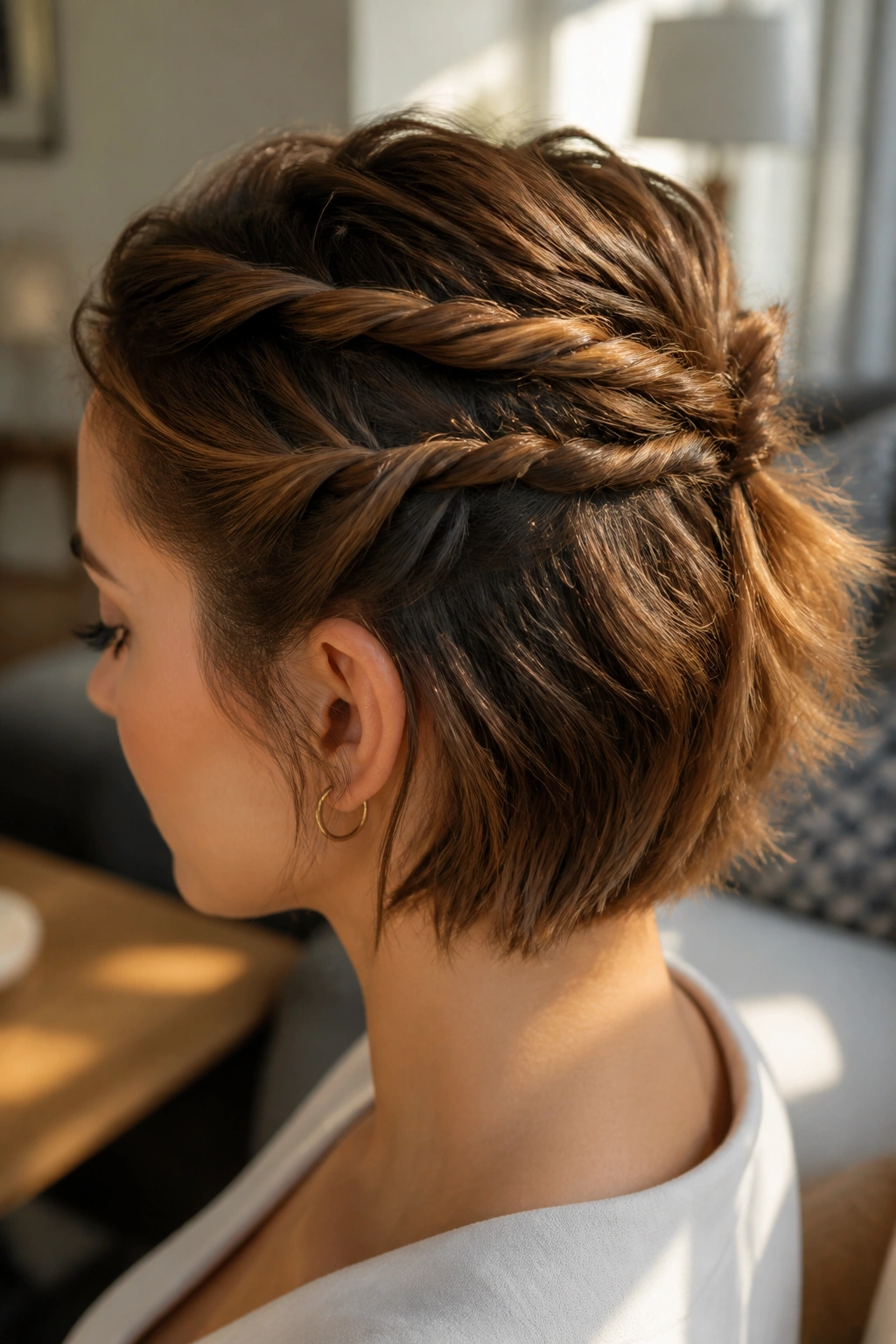
Rope twists are underrated. On short hair, they can be easier than braids because you only need two sections, not three, and the twist pattern grabs uneven layers more easily. That makes them especially useful if your hair is choppy or if your ends are different lengths.
Divide the top half into two sections on one side, twist each section clockwise, then wrap them around each other counterclockwise. That opposite-direction motion helps the twist hold. Pin or clip the ends at the center back, and repeat on the other side if you want a mirrored look. If you prefer a softer finish, only do one side and leave the other loose. It still counts. It still works.
This style shines when the texture has some body. It can feel a little flat on freshly conditioned hair, so a dusting of volumizing powder at the roots helps. For straight hair, the rope twist adds visible pattern without needing much length. For wavy hair, it gives a neat outline that still lets the wave pattern show through.
It’s also one of the better choices if you want something that won’t unravel by lunchtime. A rope twist is stubborn in the good way. Once it’s pinned properly, it tends to stay put.
9. Double Mini Buns for a Playful Short-Hair Half-Up
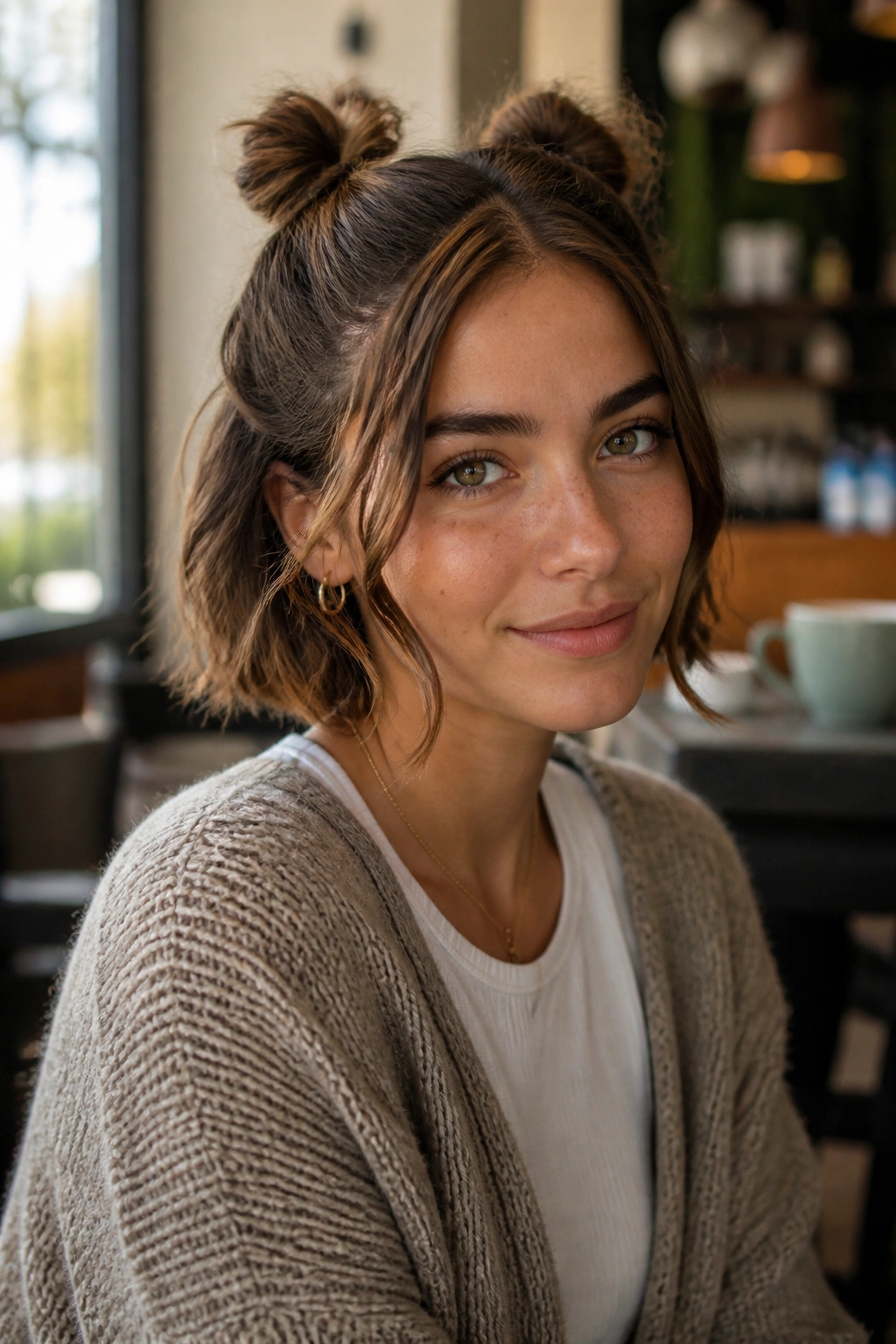
Double mini buns can look adorable on short hair when they’re kept small and close together. The style lives on the top half of the head, so the bottom layers stay loose and the buns add just enough structure to feel styled. Think cute, not cartoonish. That distinction matters.
You can create them by dividing the top section into two small ponytails, then twisting each one into a bun and pinning it flat. If your hair is very short, don’t force the bun into a perfect circle. A looped knot or a twisted nub looks better than a strained, overstuffed coil. The point is shape, not volume for its own sake.
The face framing matters here. Leave the front pieces a little softer so the style doesn’t feel too juvenile. And if the buns sit slightly higher on one side than the other, that’s usually fine. A tiny mismatch can make the whole thing feel less rigid.
I like this style for casual days, concerts, and any moment when the hair should look deliberate without being serious. It is not the one I’d pick for a formal dinner, but that’s part of its charm. Some styles want a little play in them. This is one of them.
10. Barrettes Stacked Across the Back for a Polished Finish
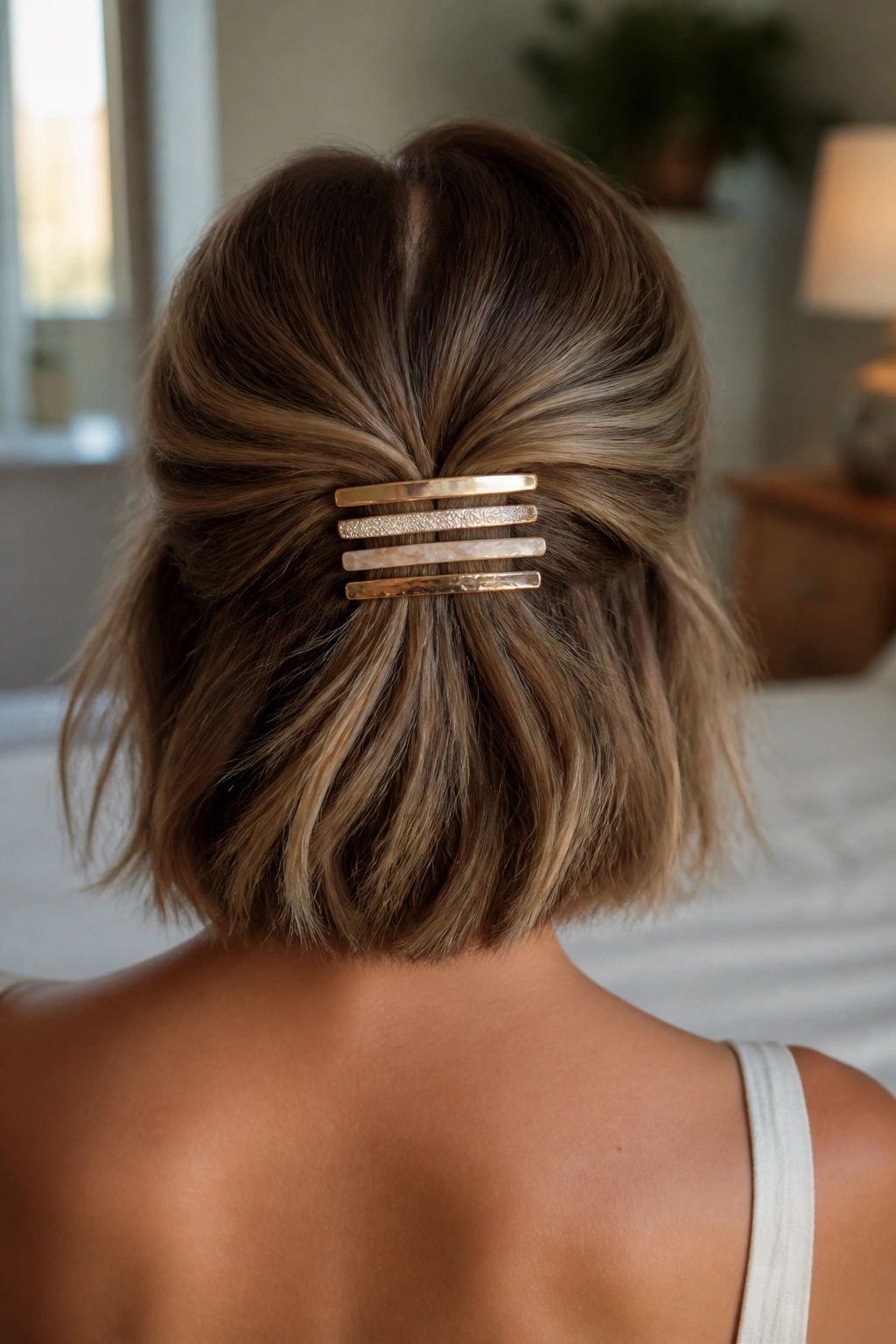
A row of barrettes can do more for short hair than a dozen pins. Stacking them across the back creates a clean half-up line and gives you control over shorter layers that don’t want to stay tucked. The look can be sleek, shiny, or slightly retro depending on the clips you choose.
Start by gathering the top half of the hair into a small section, then pin or clip it flat across the back of the head. Add a second barrette just below the first if you need more grip. Three small barrettes arranged in a staggered line often hold better than one large clip, especially on short layers that slip out at the edges.
This style works well when the hair has been smoothed first. A middle part makes it look sharper, while a soft side part gives it a bit more movement. If you want the clips to stand out, keep the hair glossy and the accessories simple. If you want them to blend in, choose clips in a tone close to your hair color.
The real strength of this style is its honesty. It does not try to hide the fact that short hair is being pinned back. It shows it off. And when the clips are aligned well, that line becomes the whole look.
11. A Waterfall Braid Accent That Still Makes Sense on Short Hair
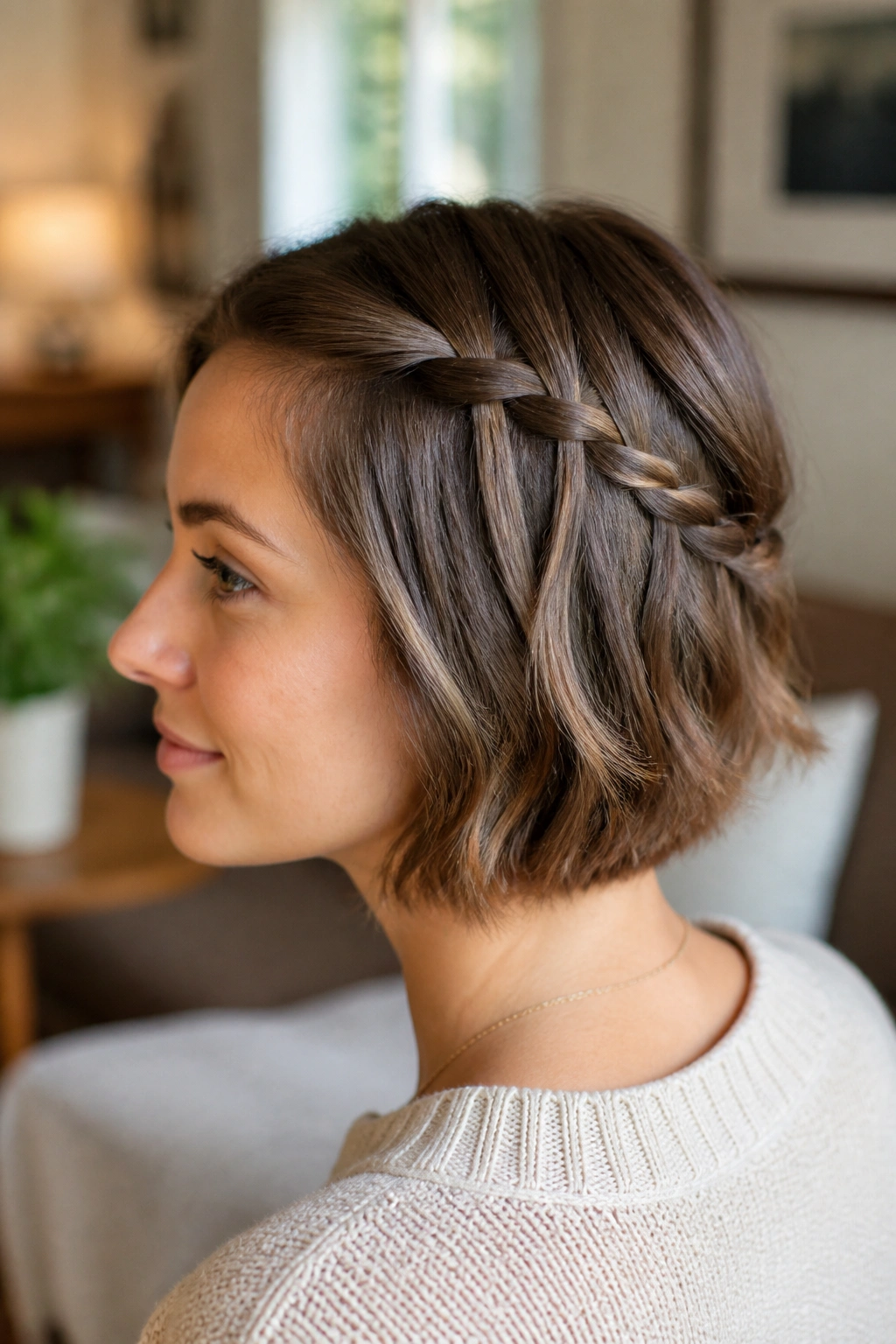
Waterfall braids get skipped a lot on short cuts because people assume the hair is too short to bother. That’s only partly true. A full waterfall braid can be too much on a bob, but a short accent version works beautifully when you keep the braid close to the crown and let only a few strands drop through.
The braid should stay narrow and travel along one side or across the top third of the head. Once you’ve created one or two “drops,” stop. Pin the braid in place and leave the rest of the hair loose. That lighter version is much easier on short hair because it avoids the bulky tail problem. You still get the woven effect without needing five extra inches.
When to stop the braid
- Stop before the braid reaches the back of the ear if your hair is very short
- Stop after two or three drops if the layers are choppy
- Stop earlier on fine hair so the braid stays visible
This style works best on hair that has a little bend or wave. Straight, slippery hair can make the dropped pieces slide out, and that gets annoying fast. A touch of texturizer before braiding helps. So does braiding a little tighter than you think you need to. Not painfully tight. Just firm enough that the pattern stays crisp.
12. The Easiest Half-Up Ponytail for Short Hair
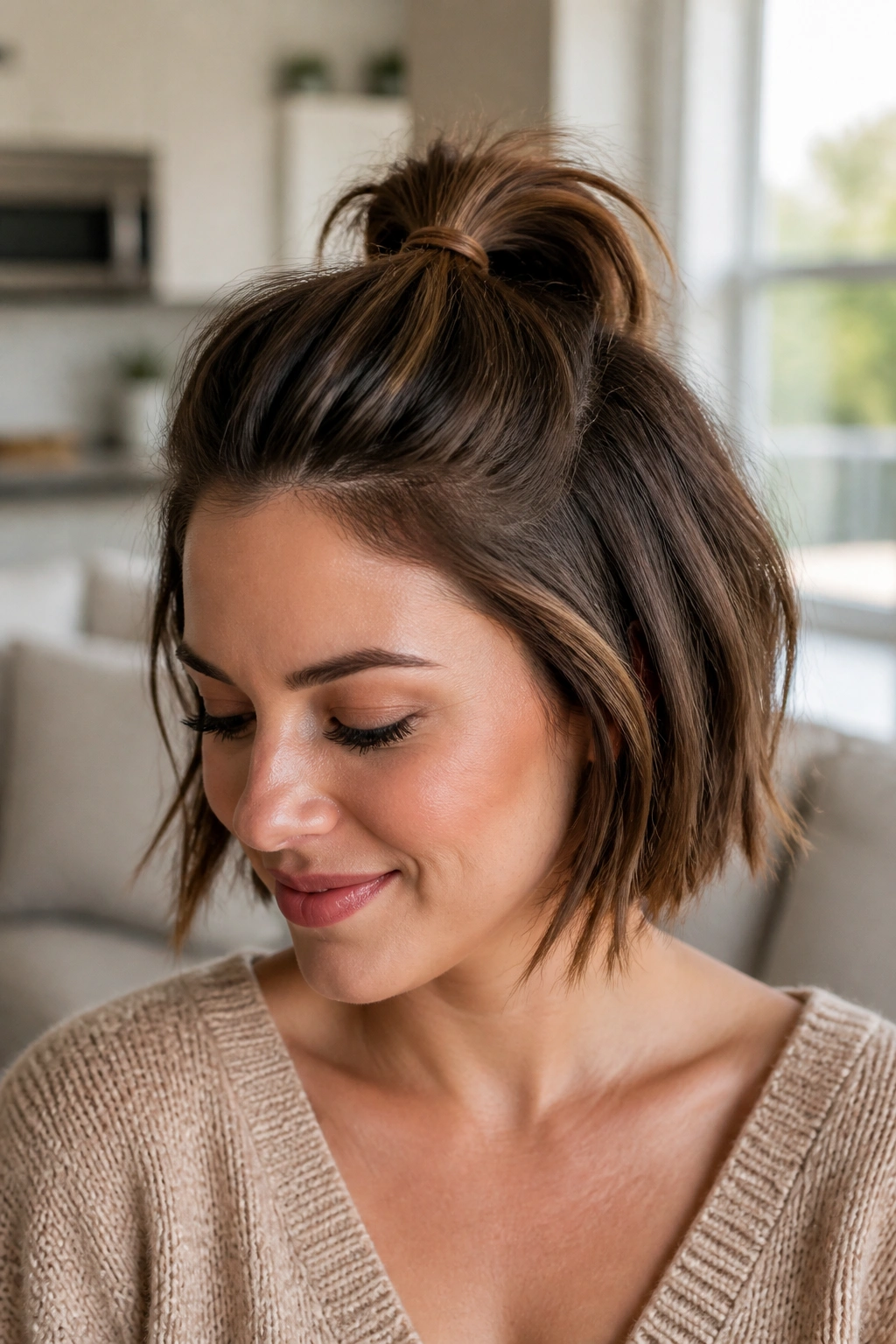
A half-up ponytail sounds plain, but on short hair it can be the cleanest option in the room. The reason is simple: it takes the top section off the face without fighting the cut. If your hair is shoulder-grazing, chin-length, or layered, this style gives you shape fast and does not demand perfect technique.
Pull the top half back and secure it with a small elastic at the crown or slightly below it. Then wrap a narrow strand around the elastic to hide it. That tiny move makes the style look finished instead of rushed. If you want a little lift, tease the root area at the crown with a tail comb before gathering the pony.
The pony does not need to be dead straight. In fact, a slight bend in the ends looks better on short hair because it keeps the shape soft. If the sides puff out too much, smooth them with a little cream or wet your fingertips and press them back lightly before clipping or tying.
This is the half-up style I’d hand to anyone who wants something reliable. It goes with a blazer. It goes with a sweater. It works on hair that’s too short for a full ponytail and too long to leave completely loose. Not glamorous. Useful. There’s a difference.
13. A Face-Framing Twist With a Low Half Bun
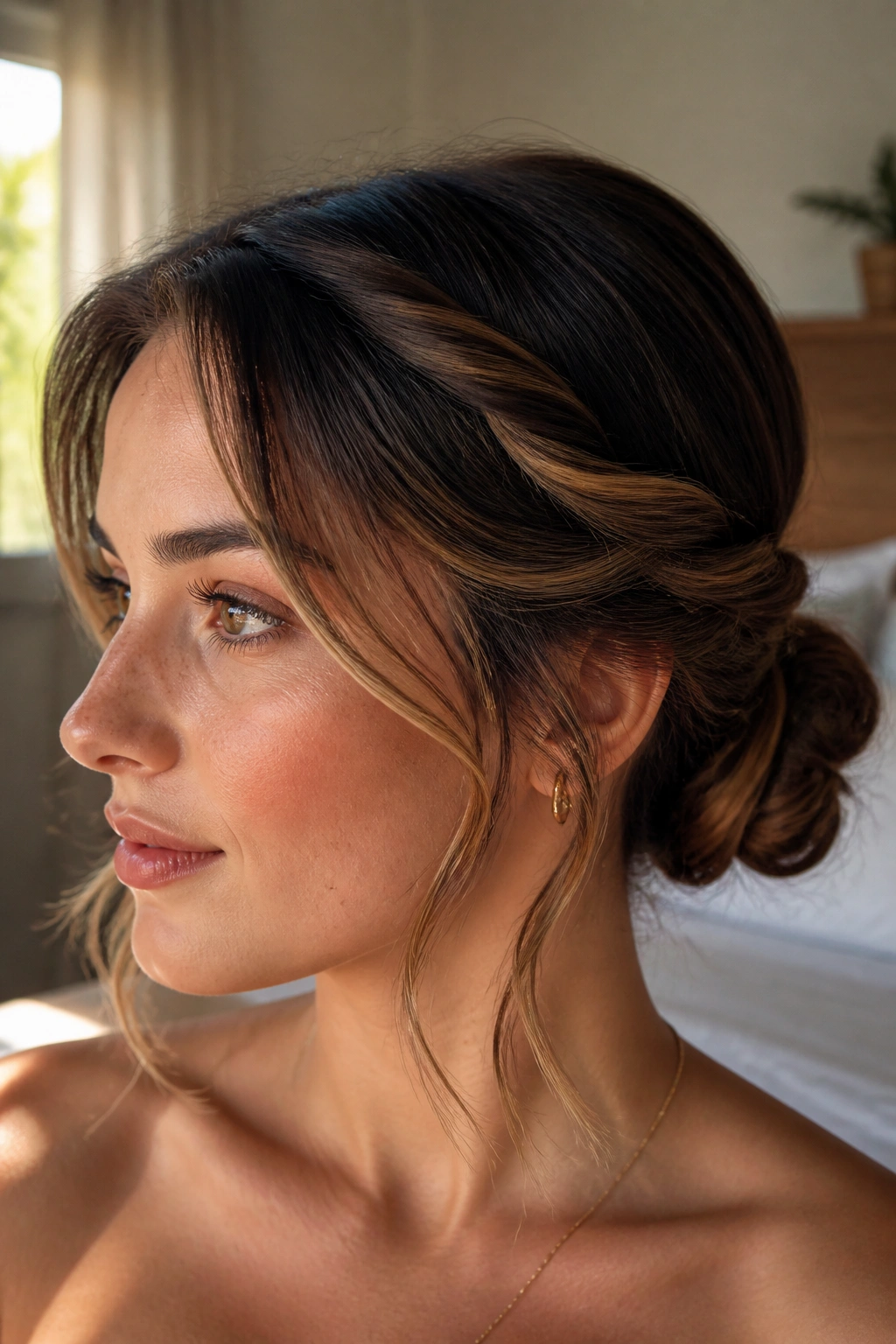
A face-framing twist with a low half bun has a gentle, almost tucked-in feel that suits short hair better than a lot of fussier styles. The front pieces stay soft around the face, while the back half gets gathered low and turned into a small bun or knot. It gives structure without making the crown feel crowded.
This works especially well if your hair has thickness through the ends. A low bun can hold enough weight to balance the loose front sections, and the whole style feels grounded. If your cut has layers around the cheekbones, leave them out on purpose. That separation makes the style look lighter and keeps it from turning into one block of hair.
What makes this one easy to wear
- The bun sits low enough to stay stable
- The face-framing pieces soften the outline
- The top stays controlled, not slicked flat
- It can be dressed up with one pin or a small comb
You can wear this on straight hair, wavy hair, or lightly curled hair. Straight hair gives it a cleaner line. Wavy hair gives it a more relaxed edge. If you want the style to hold through the day, use two pins through the bun instead of one. Short hair often needs that extra anchor because the ends are brief and the tension is different from long hair.
14. The Messy Half-Up Style That Hides Day-Two Hair
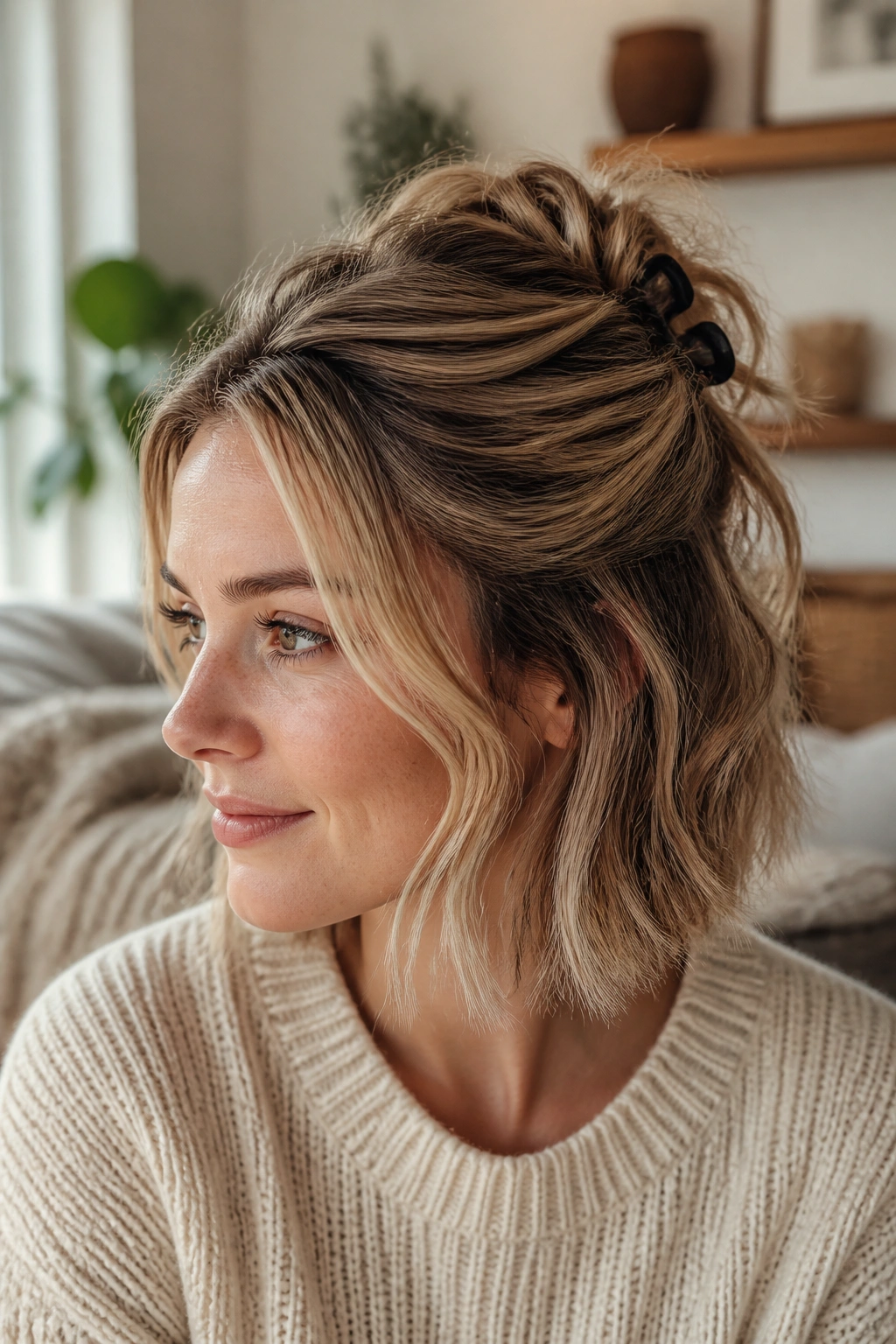
Some styles look better when the hair is not fresh. This is one of them. A messy half-up on short hair turns second-day texture, uneven bends, and slightly flat roots into part of the design. The result feels lived in rather than careless, which is a useful distinction when your cut is short and every section is on display.
Start by lifting the crown a little with your fingers, not a brush. Gather the top half loosely, twist or knot it once, and pin it in place with matte bobby pins. Then tug a few pieces free around the ears and temples. Not a lot. Just enough to break the outline. Short hair gets messy fast, so you do not need to overdo it.
This style is good when your ends are a little dry or when the root area has lost shape. A dry shampoo mist at the crown gives the hair some bite, and a quick scrunch through the lengths can bring back movement. If a strand sticks out on one side, leave it unless it’s fighting the whole shape. A little imperfection helps. Too much, and the style tips into sloppy.
I like this one because it doesn’t demand a clean start. That makes it more usable than people expect.
15. The Soft Roll-Back Half-Up I’d Reach For Again
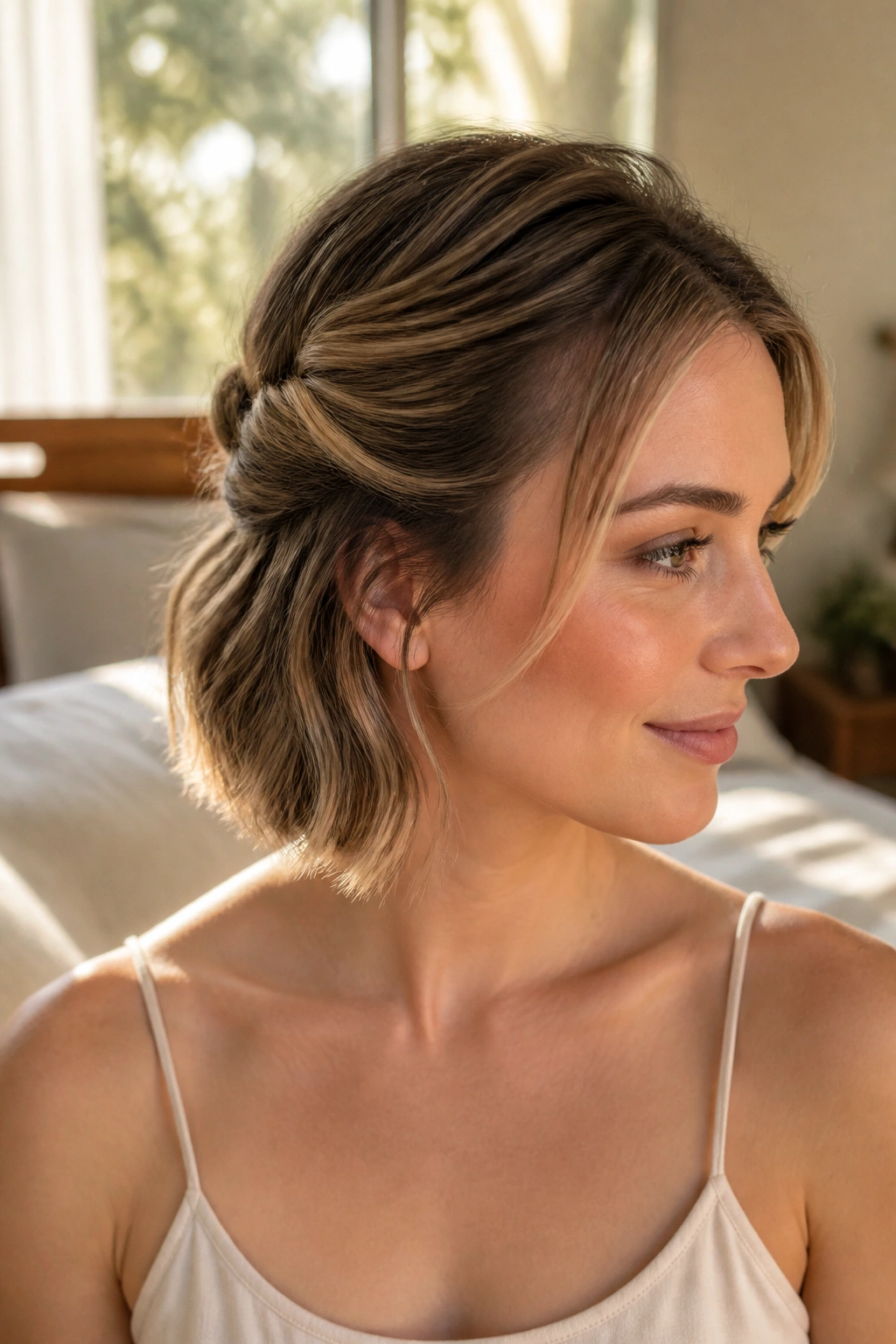
A soft roll-back half-up is the style I keep coming back to when short hair needs to look finished without looking stiff. It sits somewhere between a twist and a tucked roll, and that in-between quality is what makes it good. The hair is rolled back from the temples or the top sides, pinned discreetly, and left loose below so the cut still shows.
This style is especially kind to layered bobs and shorter lobs. The roll gives you shape near the crown, while the loose lengths keep the look light. If you want a little more polish, smooth the top with a pea-sized amount of cream. If you want it softer, keep the texture visible and pin the roll a touch lower so it feels less formal.
The practical part is worth saying out loud: short hair looks best when the half-up section is smaller than you think. That’s the rule people ignore, and it’s why styles slip or feel crowded. Keep the roll narrow. Use enough pins to anchor it. Let the rest of the hair do its own thing.
That’s the sweet spot. Not too tight. Not too precious. Just a short-hair half-up style that holds, flatters the cut, and doesn’t make you fight your own hair to get there.
