



The easiest haircut to live with is the one that works with your hair instead of arguing with it every morning. That matters even more when you’re sorting through hairstyles for middle aged women, because hair texture, density, and face shape all start playing a bigger role than they did a decade ago.
A cut that looked fine in a salon chair can feel wrong the second you wash it at home. Too much layering makes thin hair look wispy. Too little shape makes thick hair sit like a block. And if you’ve got gray or silver strands mixed in, the right shape can make them look crisp and intentional instead of patchy or flat.
I keep coming back to the same idea: the best hairstyles give you movement, softness, and a little lift where you need it. Not drama. Not fussy styling. Just a shape that sits well when you air-dry it, blow it out, tuck it behind one ear, or throw it up for dinner without feeling like you’ve given up.
These 20 looks cover short, medium, long, curly, straight, and gray-friendly options, and each one has a slightly different job to do. Some add volume. Some soften the jaw. Some make silver hair look sharp. Some are just plain easy, which is its own kind of luxury.
1. Collarbone Lob for Middle Aged Women
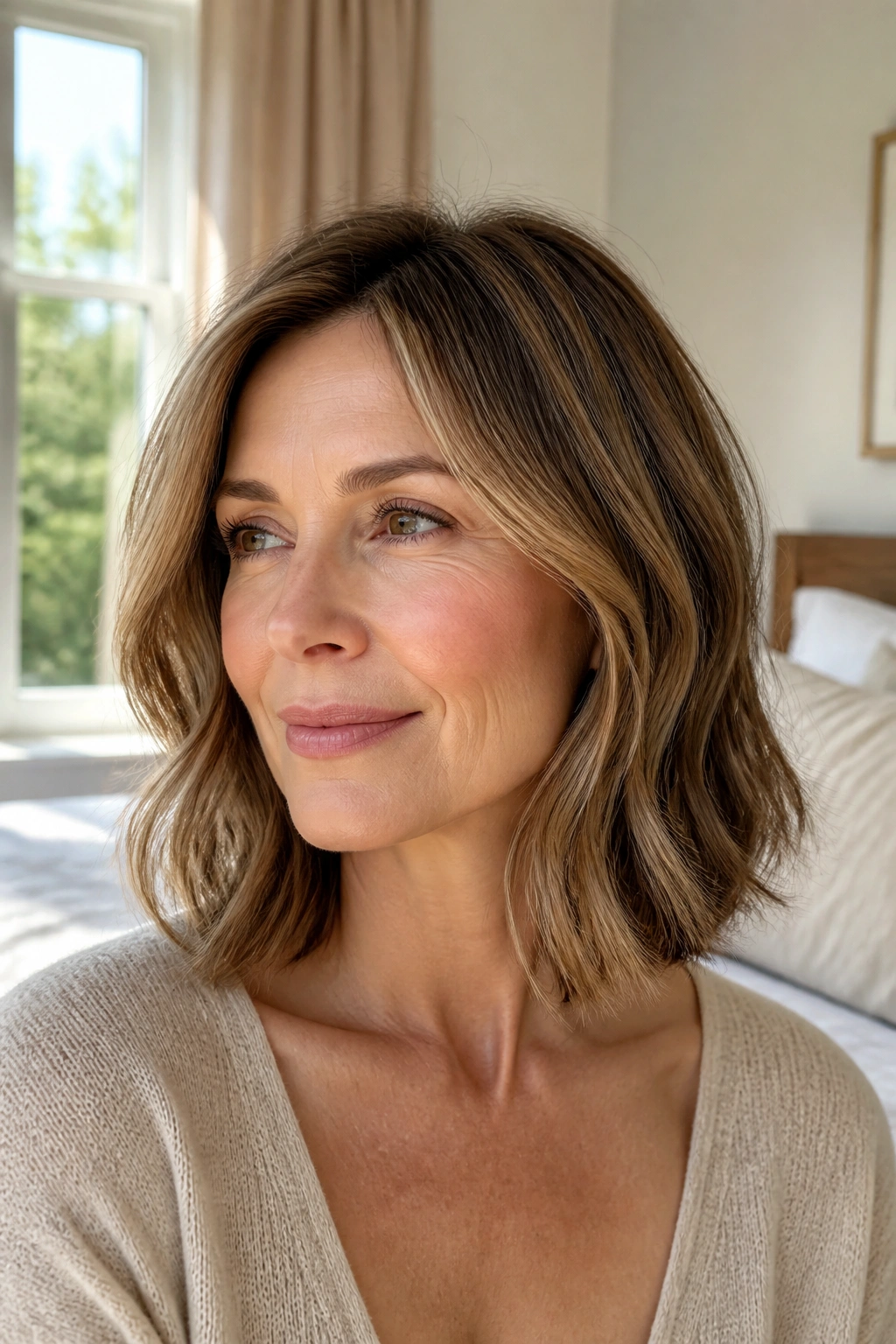
The collarbone lob is the haircut I recommend most often when someone wants shape without drama. It lands right at the collarbone, which gives movement but keeps enough weight to sit neatly on fine or thinning hair.
Why It Flatters So Many Face Shapes
Round faces get a longer line. Square jaws get a little softness. Longer faces do not get stretched out any further, which is where a lot of overly long cuts go wrong. The ends skim the shoulders, so the cut still looks full when you tuck one side behind the ear.
- Ask for a blunt perimeter if your hair is fine and you want it to look denser.
- Add long internal layers if your hair is thick and tends to puff out at the sides.
- Keep the front pieces only slightly shorter than the back for a soft bend, not a sharp angle.
- A light wave from a 1.25-inch iron makes the shape look relaxed instead of stiff.
Best tip: keep the ends clean. Too much razor texturizing can make this cut fray fast.
2. Soft Side-Part Bob for Middle Aged Women
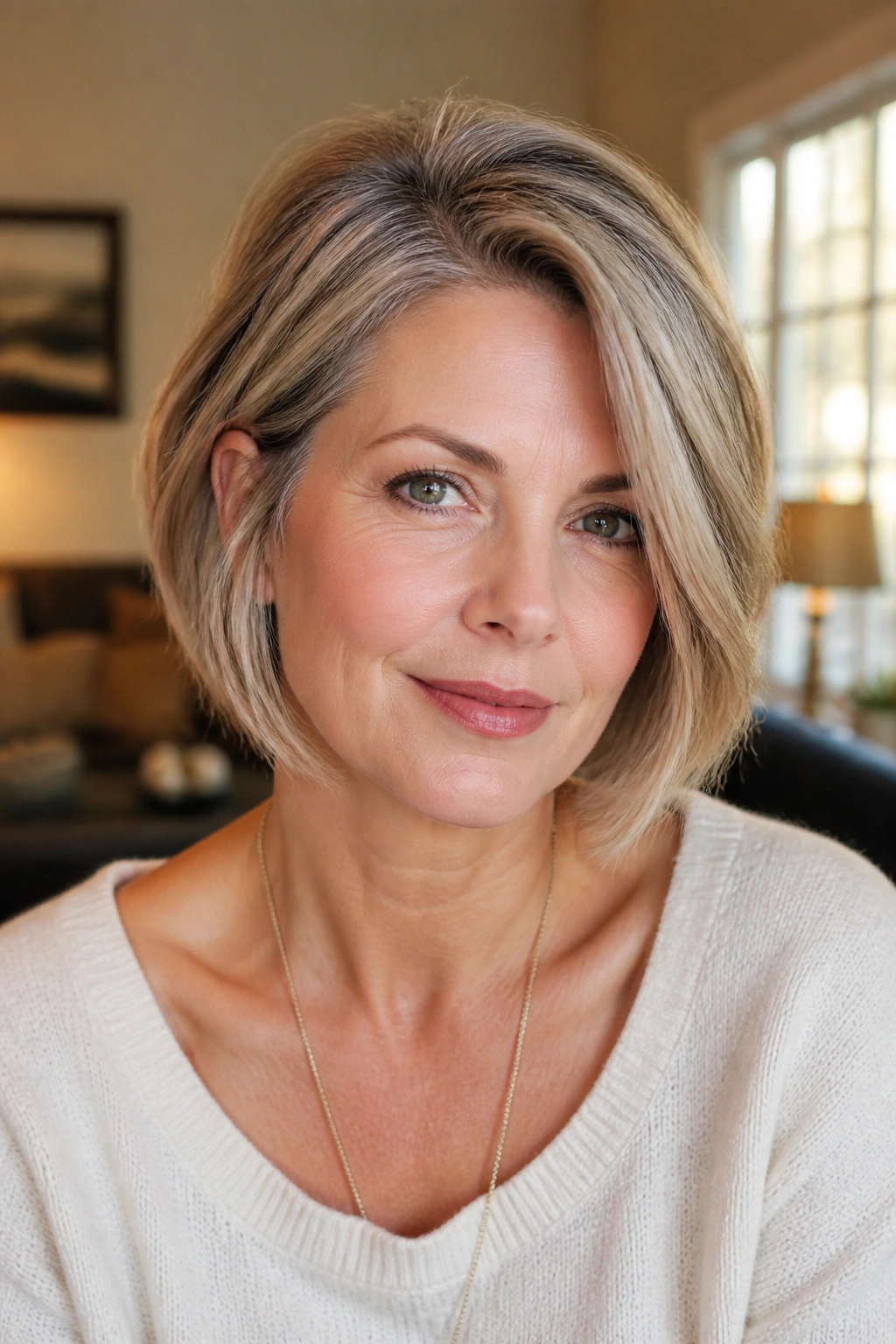
Why does a side part change a bob so much? Because it lifts the roots on one side and gives the face a diagonal line, which usually reads softer than a center part on mature features.
A soft side-part bob is one of those cuts that quietly does a lot of work. It makes gray regrowth less obvious, gives glasses room to sit comfortably, and keeps the style from feeling too severe. If your hair has started to flatten at the crown, this cut can help without asking for much product.
How to Style It
A small amount of mousse at the roots is enough. Blow-dry the top section first, lifting it away from the scalp with a round brush, then tuck one side behind the ear to open up the face. That tiny move changes the whole shape.
A bob like this is best when the part isn’t ruler-straight. A slightly off-center part feels more natural and keeps the style from looking overworked.
3. Long Layers for Middle Aged Women Who Want Movement
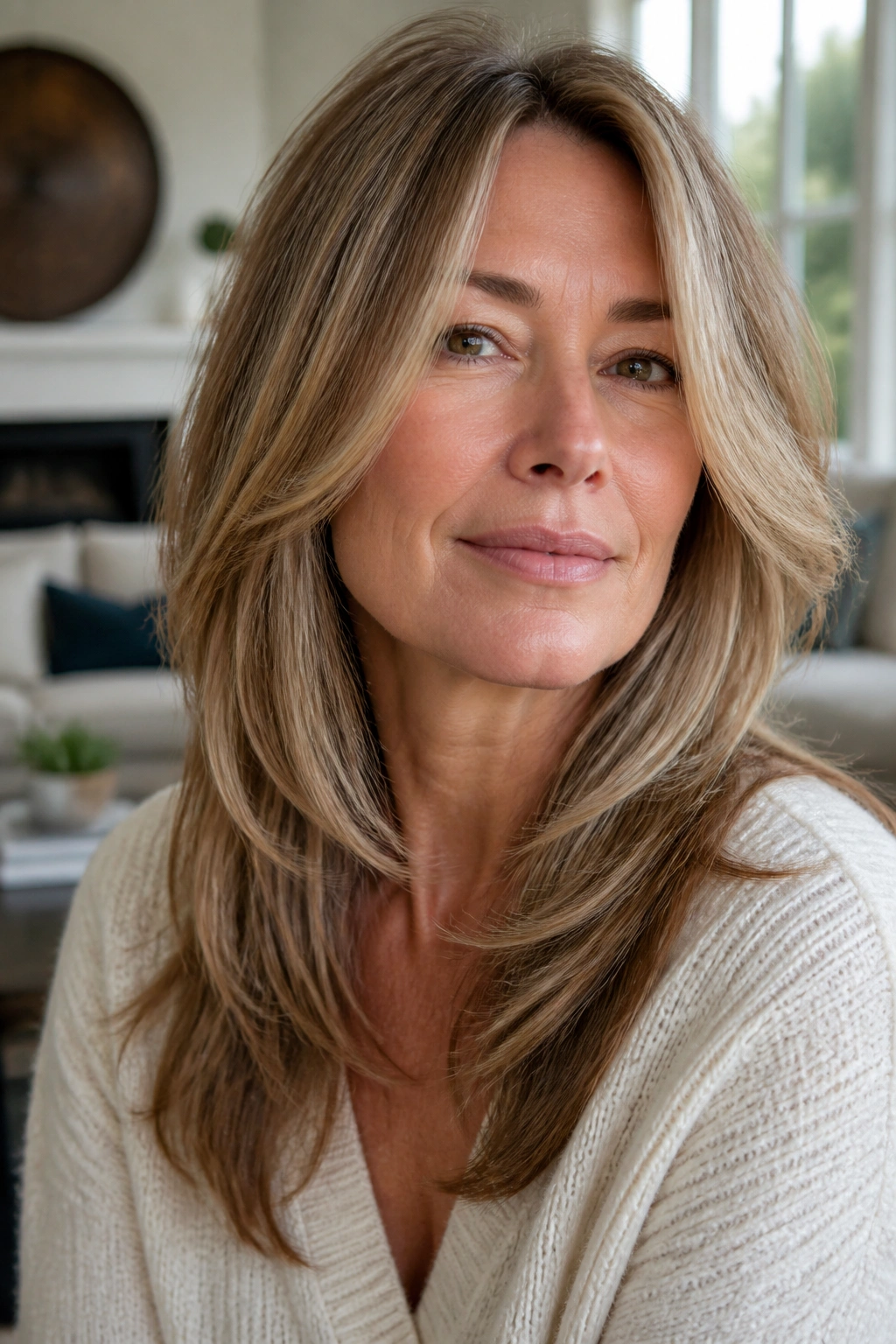
If you still like wearing your hair long, long layers are the difference between “soft and flowing” and “heavy curtain that hangs there.” That’s the blunt truth.
The trick is keeping the shortest layers below the chin or around the collarbone, not chopped up near the cheeks. That way the hair keeps its weight, but the ends don’t drag the whole face downward. Long layers are especially useful if your hair has gone a little flatter over time and needs a touch of lift without losing length.
One thing people get wrong is adding too many short layers to fine hair. It sounds like a good idea. It usually isn’t. The hair ends up feeling wispy and hard to control.
For the best version, ask for face-framing pieces that start near the cheekbone and keep the back long enough to still pull into a low ponytail. That gives you options, and options matter more than a haircut that only works on good-hair days.
4. The Feathered Pixie
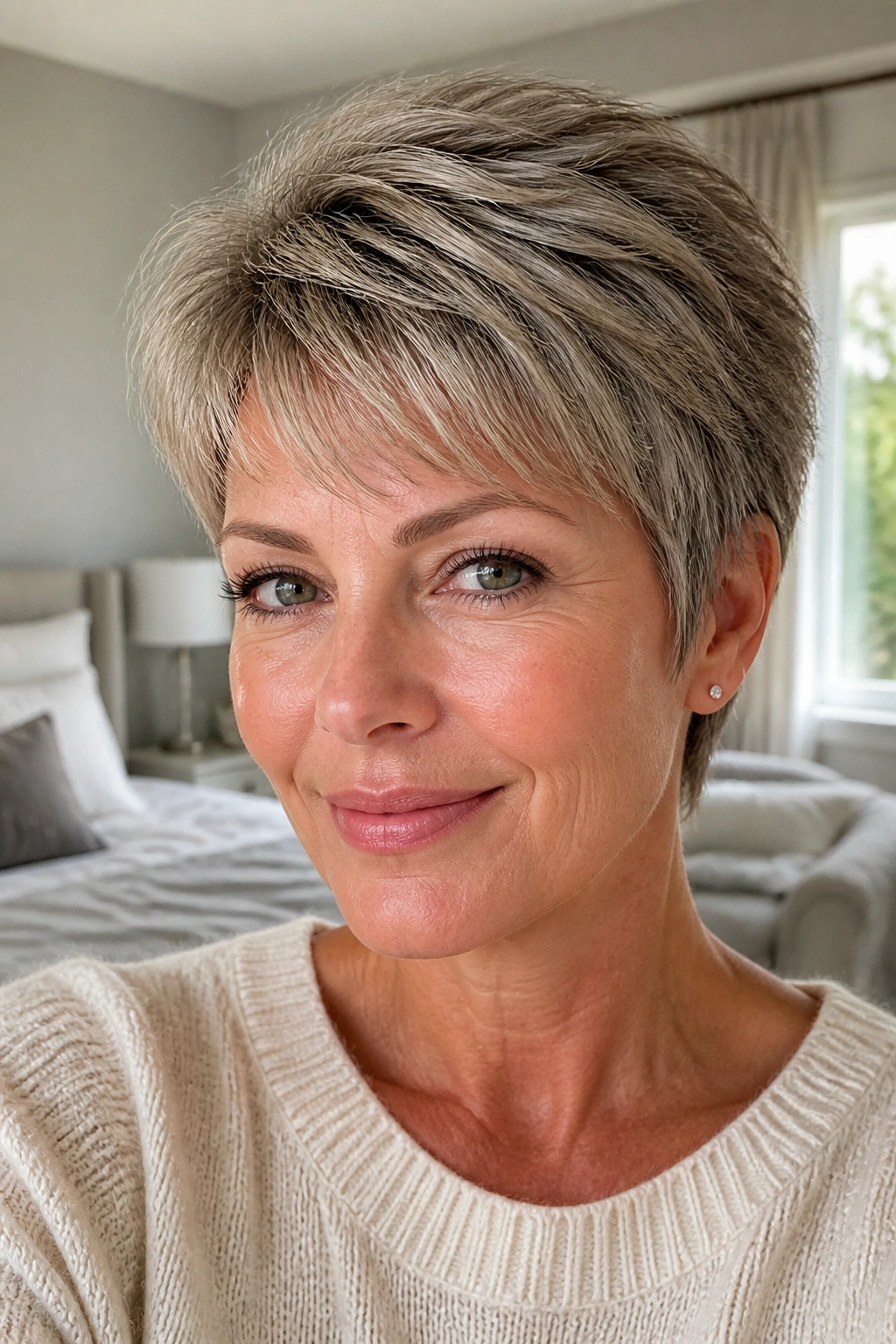
A feathered pixie is one of the fastest ways to get lift without spending twenty minutes wrestling with a brush. It’s short around the ears and nape, with a little more length on top so the hair can move instead of sitting flat.
This cut shines on gray hair because the feathered texture shows off the different tones in silver, white, and salt-and-pepper strands. It also works well if your hair is fine and you want the crown to look fuller. A tiny bit of root lift goes a long way here.
Not every pixie should be choppy. In fact, choppy can look harsh fast. A better version keeps the top soft, with the stylist point-cutting the ends so they feather instead of sticking out.
If you wear earrings, this cut gives them room to show. That sounds small, but it changes the mood of the whole look.
5. Curtain Bangs on Shoulder-Length Hair

Can bangs work after forty without becoming high-maintenance? Yes, if they’re curtain bangs that blend into the rest of the cut instead of sitting like a hard shelf across the forehead.
Curtain bangs are easiest to live with when they hit around eyebrow to cheekbone level and get a soft bend away from the face. They make forehead lines less obvious, open up the eyes, and take a little weight out of the front of thicker hair. On shoulder-length cuts, they create that easy, lived-in shape that never feels too done.
What to Ask For
- Bangs that are long enough to sweep aside when you don’t want to style them.
- Soft blending into the side layers.
- No heavy, blunt edge unless your hair is very straight.
- A dry cut if your hair shrinks a lot when it dries.
Curtain bangs look best when they’re not forced into place with too much round-brush drama. A quick bend and a bit of root lift are enough.
6. The French Bob With Airy Texture
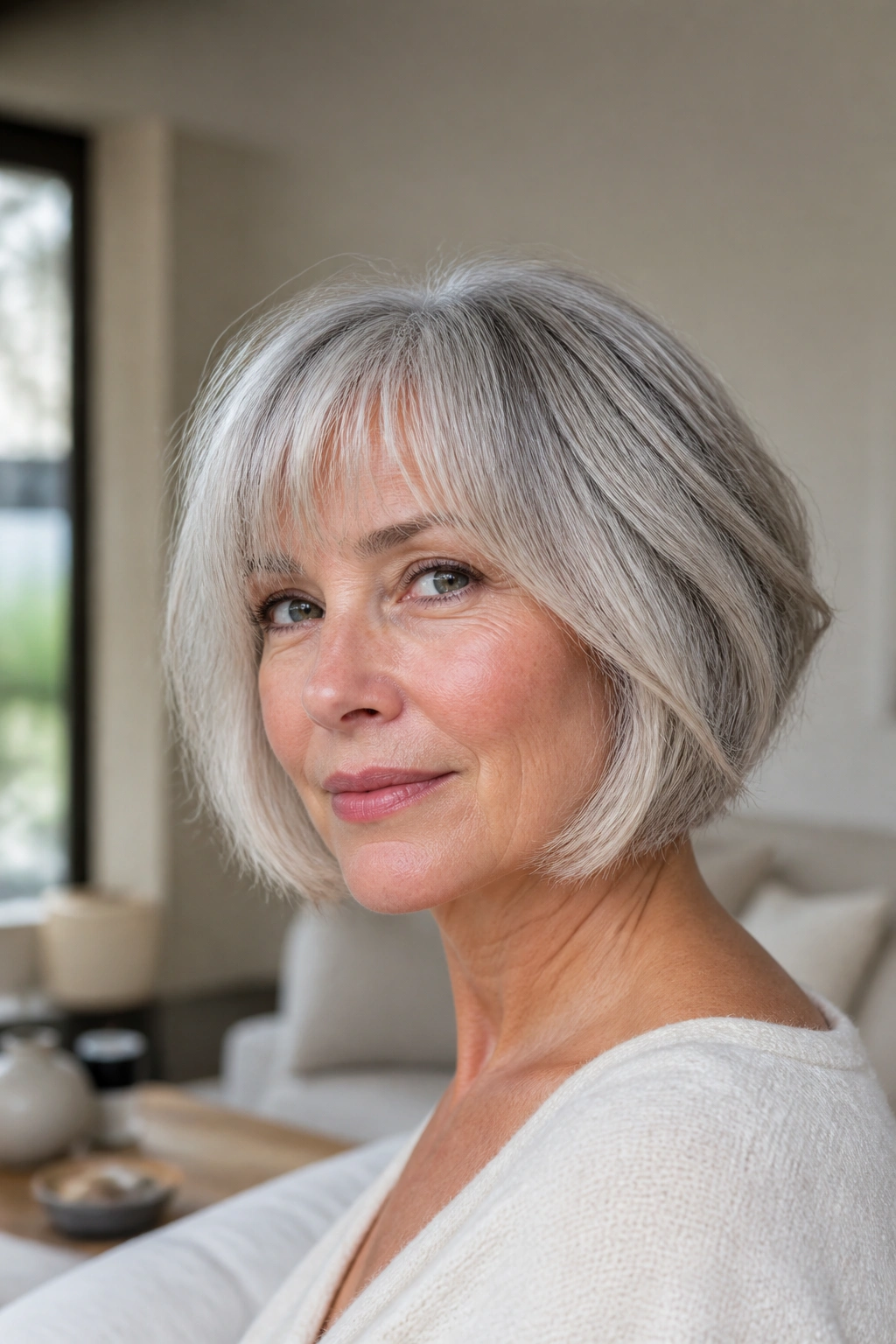
The first time a French bob works, people usually think the cut is shorter than it is. That’s because the shape sits at the chin, with ends that turn in or curve softly rather than flipping out.
This is a good choice if you like neat hair but don’t want a helmet effect. The French bob keeps the neck visible, which can feel fresh, and the airy texture keeps it from looking too rigid. It also looks especially nice with silver hair because the clean line shows off the shine.
A little fringe helps, but it doesn’t have to be full. Even a short, wispy fringe or a side-swept front piece gives the cut some personality.
I like this one with red lipstick, a square neckline, or a simple sweater. It has presence without shouting.
7. A Shag With Soft Ends

This is not the wild, crunchy shag from old rock posters. That version can stay retired.
A soft shag has layers around the crown, cheekbones, and jaw, but the ends are diffused so the cut moves instead of frizzing out. It works especially well on wavy hair that wants volume but not a lot of heat styling. The shape can make fine hair look fuller and thick hair look lighter, which is why stylists keep coming back to it.
The key is balance. Too many short layers and the haircut starts to feel messy. Too few and it loses the shag shape entirely. The sweet spot is enough layering to create lift at the top, with length left through the sides so the haircut still feels grown-up.
A dab of mousse and a quick scrunch is often enough. You do not need to chase perfect waves here. The whole point is to let the cut do some of the work.
8. Loose Waves With a Deep Side Part
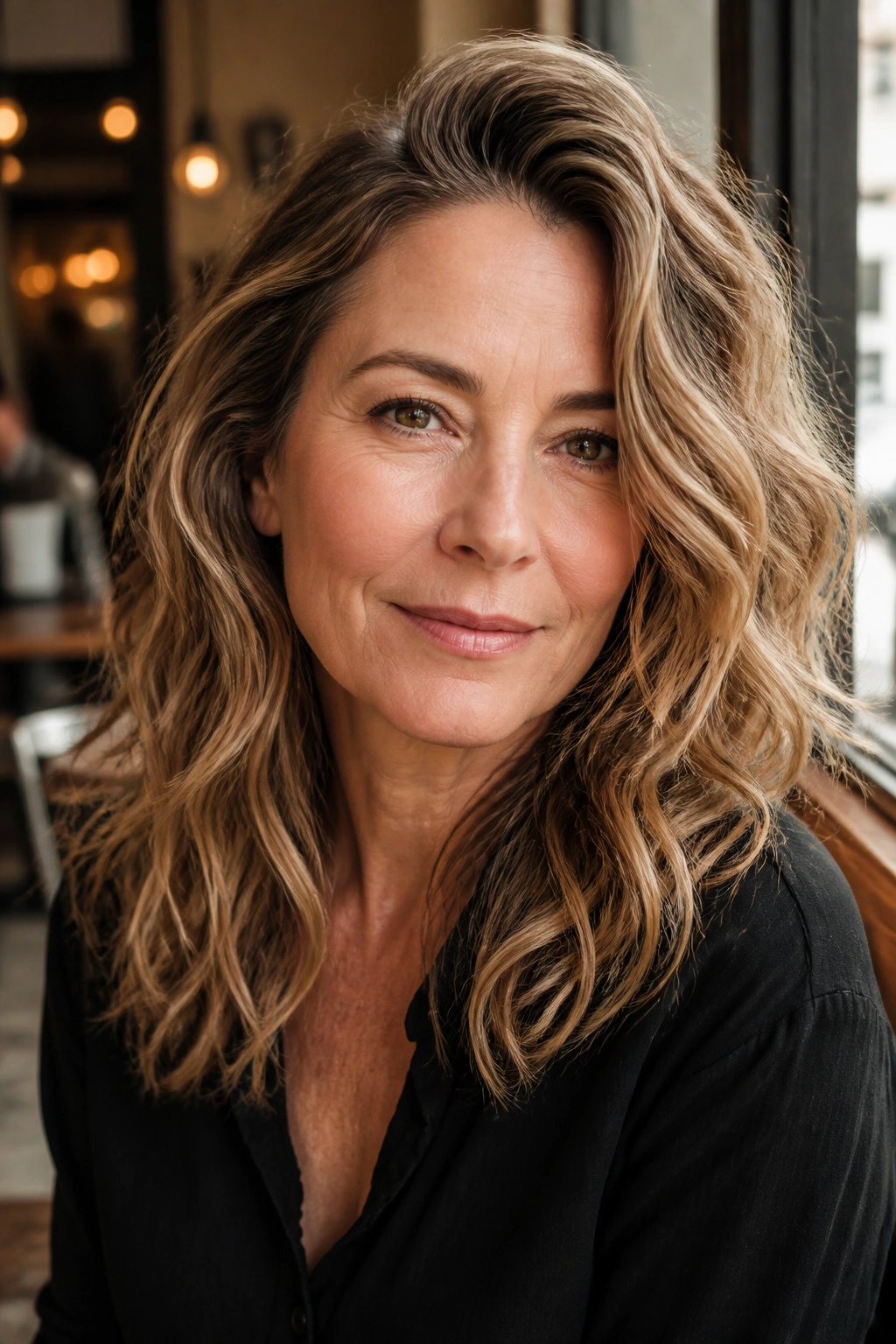
A deep side part changes the whole mood of loose waves. It creates instant lift on one side and gives the face a little asymmetry, which is often more flattering than dead-center symmetry.
This style works because the waves do not need to be perfect. In fact, they look better when they aren’t. Use a 1.25-inch curling iron or wand, wrap medium sections for about 8 to 10 seconds, and leave the last inch or so out for a softer finish. Then brush the curls out once they cool. That gives you movement instead of ringlets.
- Part the hair deeply on the side with the flatter root.
- Alternate curl directions for a more natural bend.
- Keep the ends loose.
- Finish with a light spray, not a crunchy one.
This is a good choice for dinners, events, and any day when you want hair that looks a little more dressed up without feeling stiff.
9. The Angled Bob
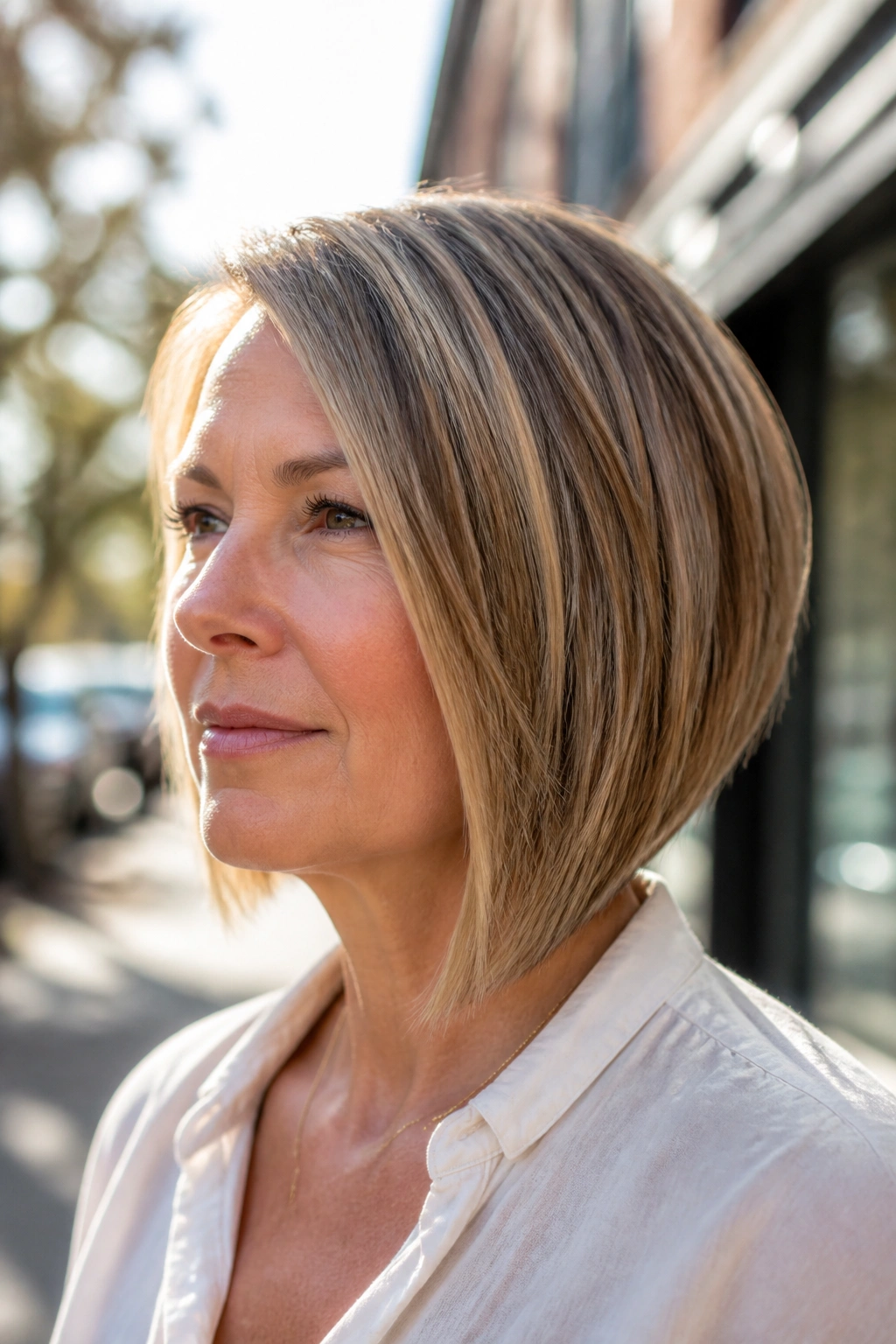
Unlike a classic bob that sits in one straight line, an angled bob is shorter in the back and longer toward the front. That slight slant draws the eye downward and can make the neck look longer.
The angle does not need to be dramatic. In fact, a gentle angle usually works better for middle-aged women because it keeps the cut soft enough for everyday life. A steep, sharp angle can feel too fashion-y, and that style is harder to grow out gracefully.
This cut is especially good if your hair is straight or only slightly wavy. It gives shape without piling on layers. If your hair is very thick, though, the back can get bulky fast, so the stylist needs to remove some internal weight.
A nice angled bob should feel clean at the ends and easy to tuck behind one ear. That small detail is half the charm.
10. Sleek Low Bun With Face-Framing Pieces

Some days your hair wins the argument. A sleek low bun is what you do when you want to look finished anyway.
The bun sits at the nape, not up high, which keeps it grounded and elegant without feeling severe. The face-framing pieces matter more than people think. Leave out a few thin sections near the temples or jaw, smooth them lightly, and you get a softer result than a tight, slicked-back knot ever gives you.
This style works for work, dinner, and formal events, but it also saves you on second-day hair. If the ends are dry or the roots are oily, that is often enough reason to pull the hair back and move on.
A little shine cream at the crown helps. Too much, and it goes flat fast. That’s the main thing to watch.
11. The Shoulder-Grazing Cut With Invisible Layers
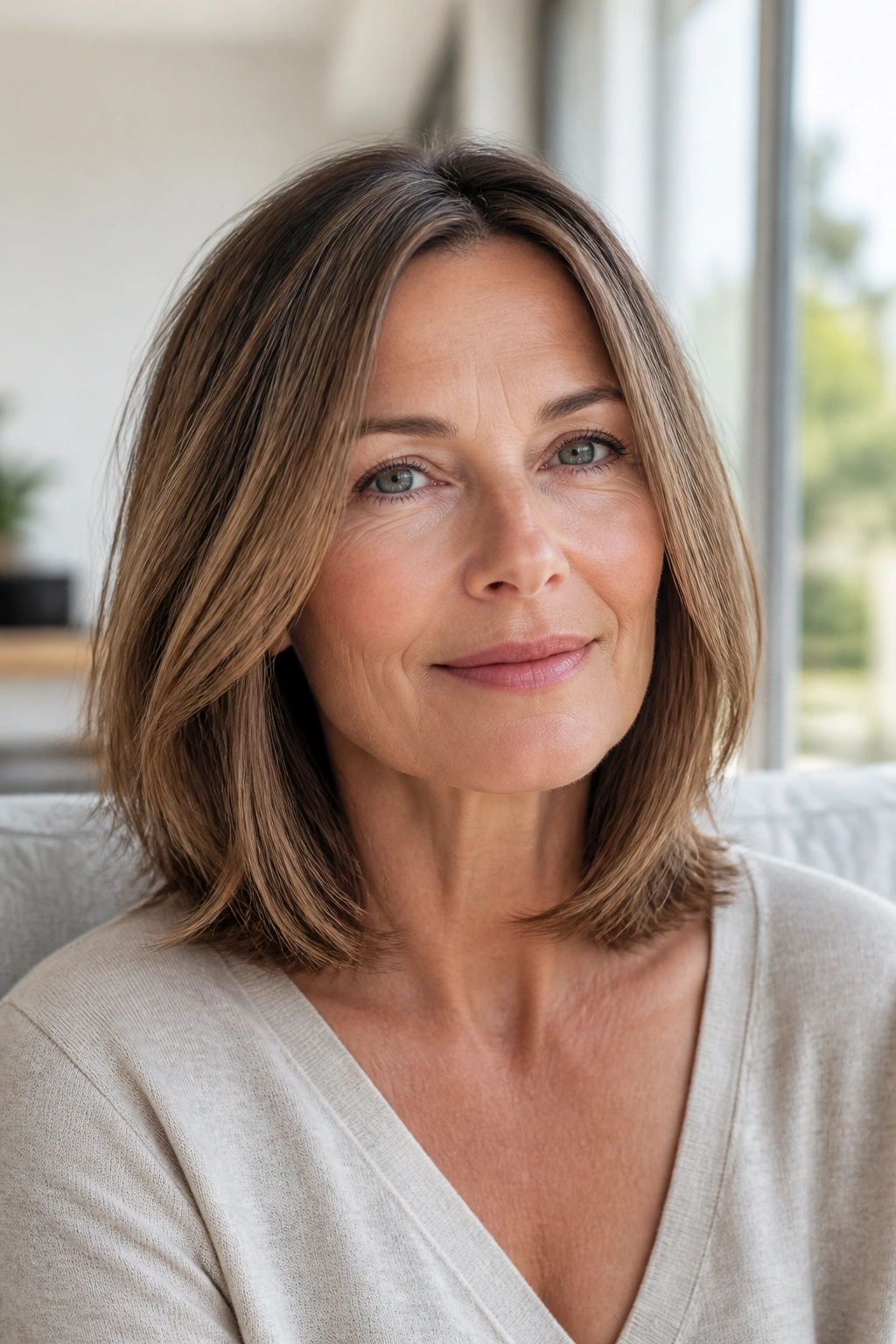
A shoulder-grazing cut with invisible layers is for the woman who wants movement but hates obvious layers. You see the shape, not the mechanics behind it.
That’s what makes it so useful. The perimeter stays clean, usually brushing the shoulders or landing just above them, while the layers live inside the haircut where they soften bulk and give the hair some swing. On thick hair, this keeps the ends from feeling heavy. On fine hair, it stops the cut from looking sliced up.
What Makes It Work
The best versions are cut with a light hand. The stylist may point-cut the ends or remove weight only from the inside, so the surface stays smooth. That’s the difference between a shape that falls well and one that looks choppy after three shampoos.
This style likes a round brush, but it does not demand one. Air-dried hair can still look polished if the ends are clean and the layers are subtle.
12. A Cropped Cut With Volume at the Crown
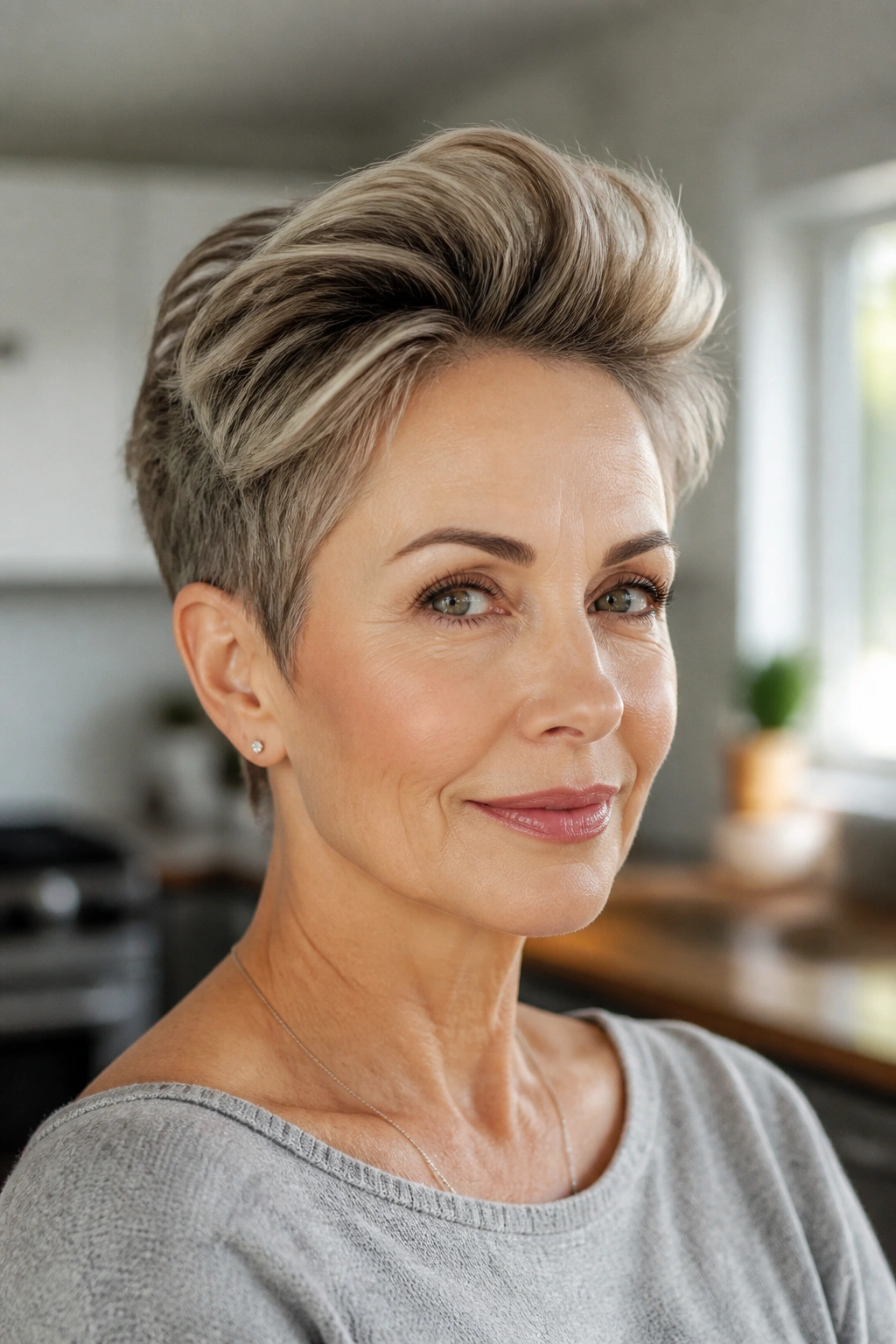
Short hair does not have to sit flat. In fact, a cropped cut with volume at the crown can look fuller than a longer style when the layers are placed well.
The shape is shorter at the sides and back, with enough length on top to create lift. That lift is the whole point. It keeps the cut from looking too boyish and gives the face a bit of height, which is useful if your hair has thinned at the temples or crown. This style also plays nicely with glasses because it doesn’t crowd the frame.
- Ask for soft tapering at the nape so the back hugs the head.
- Keep the top long enough to sweep to one side.
- Use a pea-sized amount of matte paste or cream.
- Blow-dry the top section first for extra lift.
A cropped cut works best when the texture is deliberate, not spiky. Think clean and airy, not frozen in place.
13. Chin-Length Cut With Tucked Ends
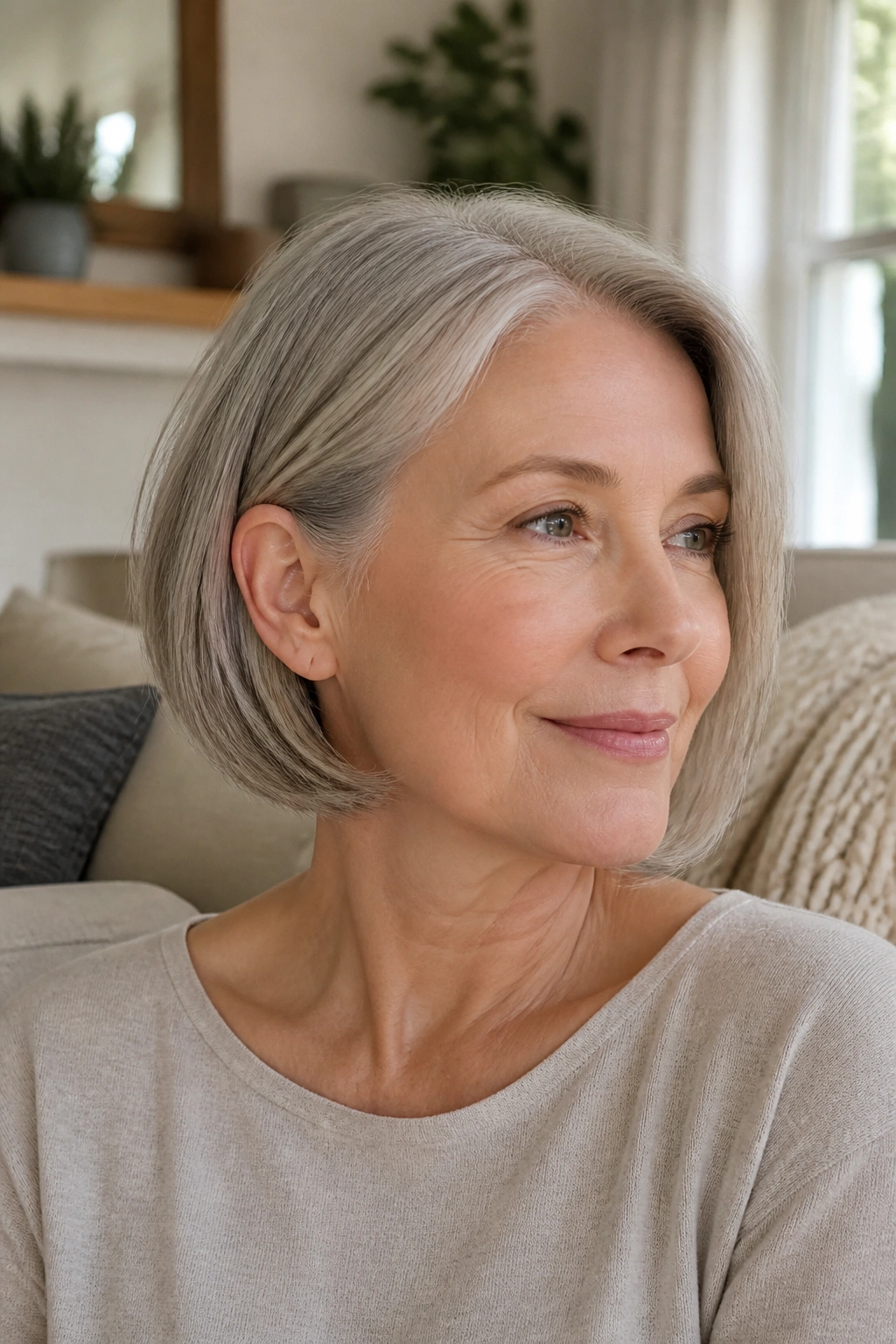
Why do chin-length cuts often look fresher than styles that land at the neck? Because they open the face and show the jawline without dragging the hair past it.
This cut looks especially good when the ends are lightly beveled so they curve under instead of poking outward. That tiny curve keeps the style soft. It also makes the cut easy to tuck behind the ears, which is useful if you wear earrings or want a quick change in shape during the day.
A chin-length cut can be a smart move for gray hair. The clean line makes the color look intentional, and the shorter length often feels lighter and shinier because there’s less old, dry length hanging on. If your hair tends to puff at the ends, this shape can tame that without making you go too short.
If you want a little more softness, ask for a side part and a barely-there fringe. That keeps the cut from feeling severe.
14. The Modern Pageboy
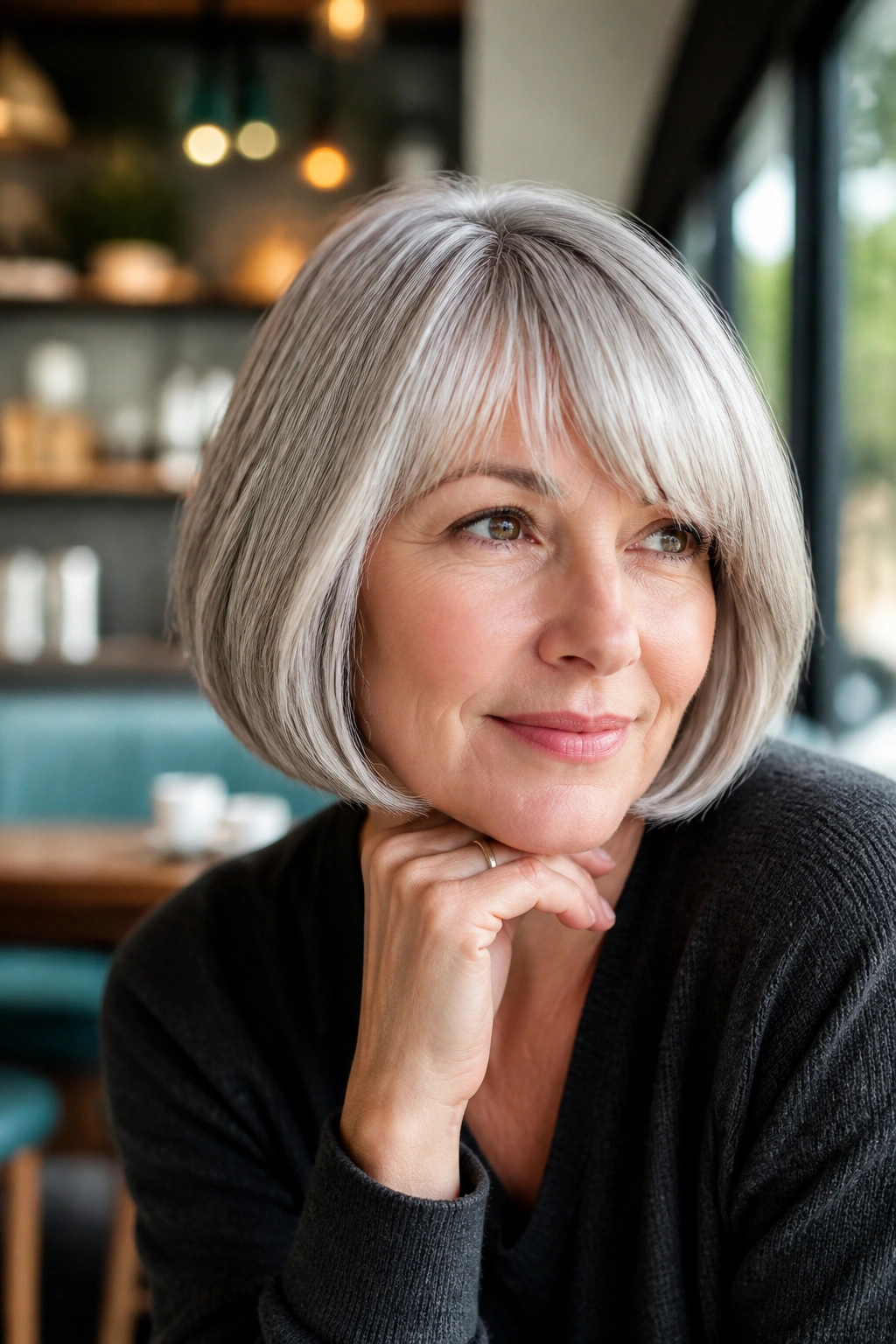
The old pageboy had one big problem: it could look too perfect, almost helmet-like. The modern version keeps the curve but loses the stiffness.
This cut sits around the jaw or a touch below it, with a rounded line that turns gently inward. The back can be slightly shorter, but not so much that the shape starts stacking up. A soft fringe or a side-swept front makes the whole thing feel less vintage costume and more clean, modern hair.
It’s a strong option if your hair is straight and you like polished styles that don’t need a lot of daily fuss. It also works well with silver hair because the curve shows the shine at the surface.
The pageboy is a good reminder that a haircut can be structured without being harsh. That matters more than people think.
15. Curly Shoulder-Length Shape
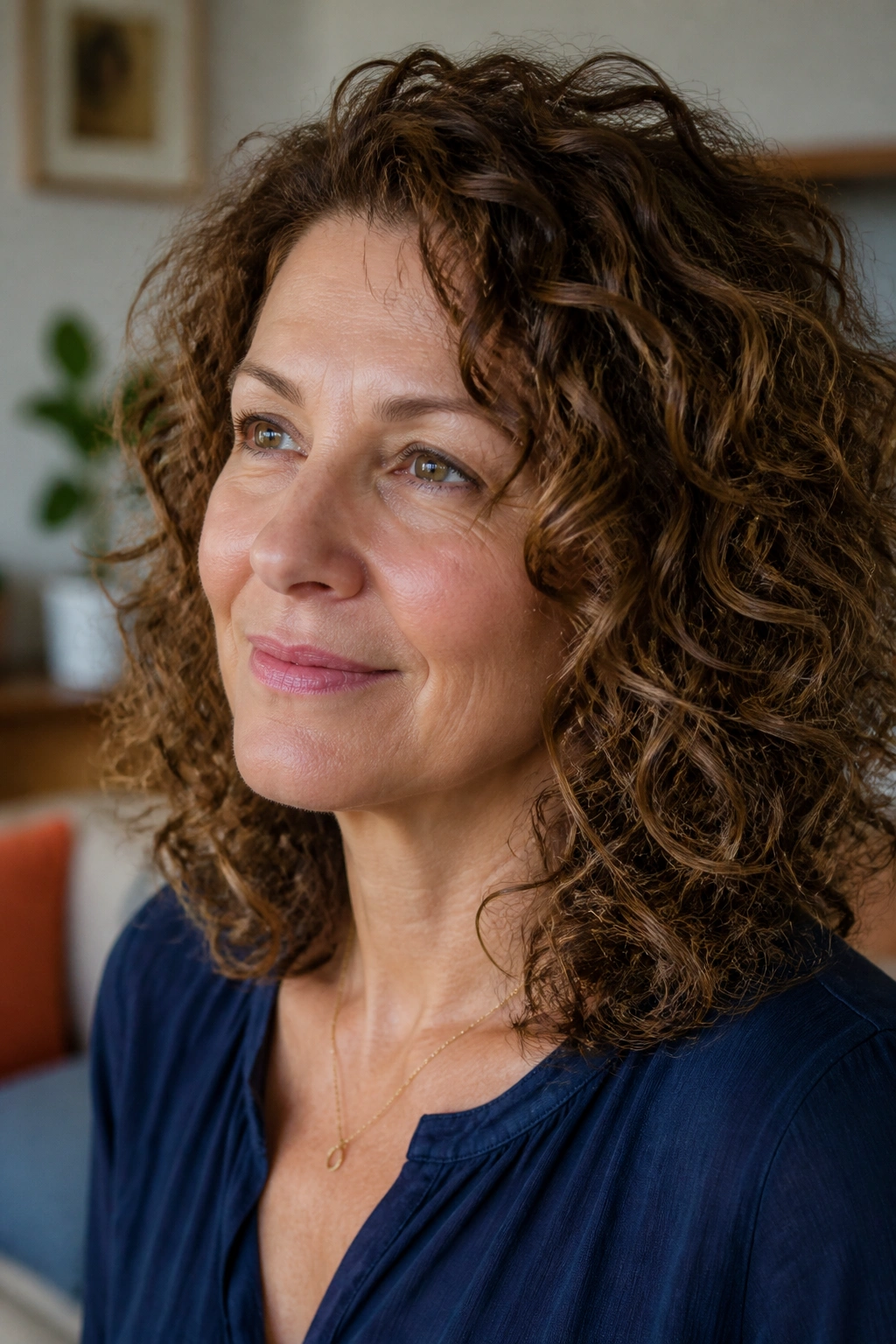
Curly hair at shoulder length needs a shape, not a guess. If it’s cut too short, it can bloom outward. If it’s left too long, the curls can hang and look tired.
A shoulder-length curly cut works best when the layers follow the curl pattern instead of fighting it. That usually means the stylist looks at how your curls spring when dry, then places the shortest layers where the curls need room to move. The goal is to avoid the triangle shape that so many curly cuts fall into.
A dry cut is often the smartest choice if your curl pattern changes from one section to the next. And once the shape is right, styling gets simpler. Leave-in conditioner, curl cream, and a diffuser on low heat are usually enough. No need to pile on product until the hair feels sticky.
This length is especially kind to women who want volume around the face but still want hair that can be pinned back or tied up when needed.
16. Half-Up Twist for Medium Hair

Day-two hair has a use. A half-up twist is one of the easiest ways to make medium-length hair look deliberate when the roots are a little flat and the ends are behaving themselves.
It works because it lifts the front and crown without hiding the length. You pull back the top section, twist or fold it gently, then secure it with a small clip, pin, or barrette. The lower half stays loose, which keeps the style from looking too severe or too formal.
Why It’s So Handy
- It hides a bit of frizz at the crown.
- It shows off earrings and the neckline.
- It takes about two minutes.
- It works on straight, wavy, and lightly curly hair.
A half-up twist is also one of those styles that looks better with a little texture. Freshly washed hair can be too slippery, which is why this one often shines on second-day hair.
17. Blunt Bob With Soft Texture

A blunt bob is the easiest way to fake thicker hair without adding obvious layers. The straight edge gives the ends density, which makes the whole haircut look fuller.
The trick is keeping the perimeter blunt while softening only the very ends or the interior just enough to stop the shape from feeling heavy. Too much texture ruins the point. Too little and it can look boxy. The best version lands somewhere between precise and relaxed.
This cut is especially good for fine or thinning hair, and it can be a nice match for gray hair that looks strongest when the line is clean. A centered or slightly off-center part works well here, though a side part can soften the look if you want less symmetry.
A round brush or flat brush can smooth the finish, but the cut should still look good even when you let it air-dry. If it does not, the shape needs work.
18. Wavy Lob With Natural Bend
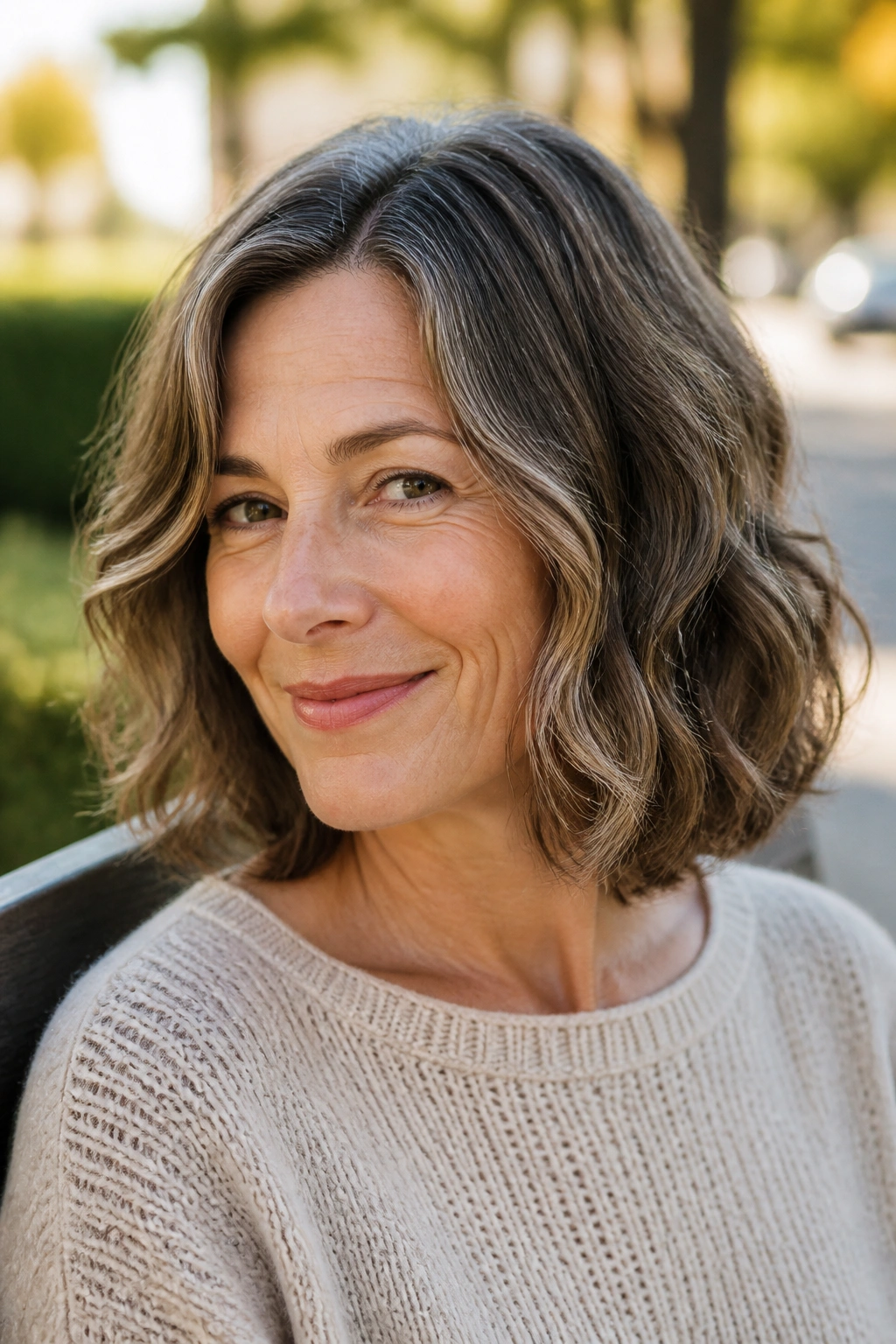
What if your hair already has a little wave and you stop arguing with it? That is the sweet spot for a wavy lob.
This cut usually lands between the chin and shoulders, which gives the wave room to move without turning into a puffball. The ends are long enough to feel grown-up, but the length is still short enough to keep the wave from dragging itself flat. A tiny bit of leave-in conditioner and a light gel or cream can be enough to define the bend without making the hair crunchy.
The best part is how low-maintenance it can be. You can scrunch it, air-dry it, or give it a quick pass with a diffuser. If the waves are uneven, that usually looks better than trying to make every piece identical.
A wavy lob is for women who want ease more than polish. That’s not a compromise. It’s a decision.
19. The Soft Crop for Gray Hair
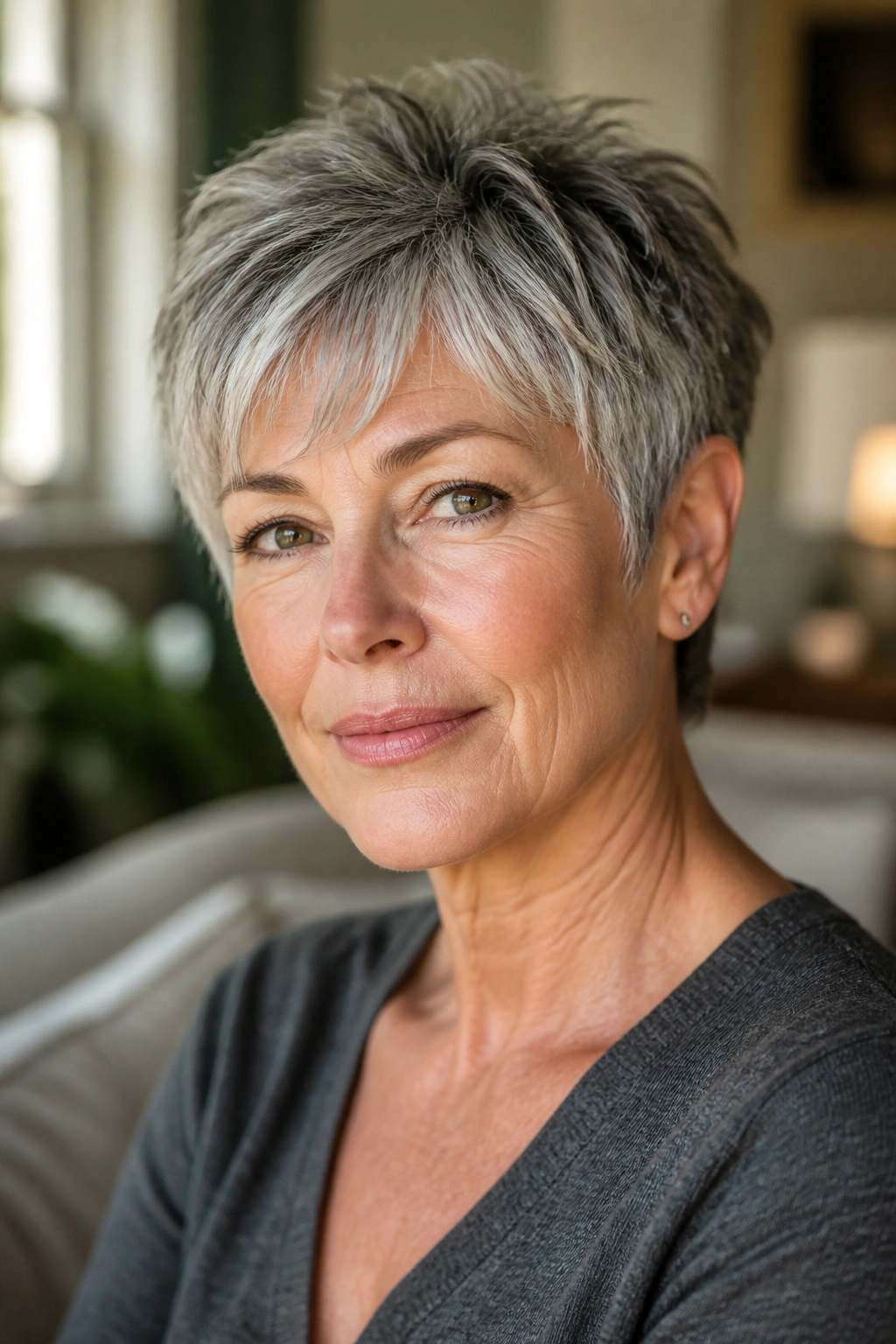
Gray hair can look sharper in a cropped shape than in a longer one, especially if the hair has lost some density and shine at the ends. A soft crop trims away the dead weight and puts the attention where the hair looks best: around the face and crown.
This is not the kind of crop that feels severe. The top stays long enough to lift, the sides stay soft, and the fringe can be wispy or side-swept instead of blunt. That makes the cut easier to wear if you want a little softness around the forehead or temples.
- Keep the top about 2 to 3 inches long if you want styling room.
- Ask for tapered sides so the shape hugs the head.
- Leave the fringe soft, not chopped.
- Use a light cream or paste, not a heavy wax.
Gray strands often show texture beautifully in this cut. Not in a flashy way. In a clean, honest way.
20. Long Silver Layers With a Side Sweep
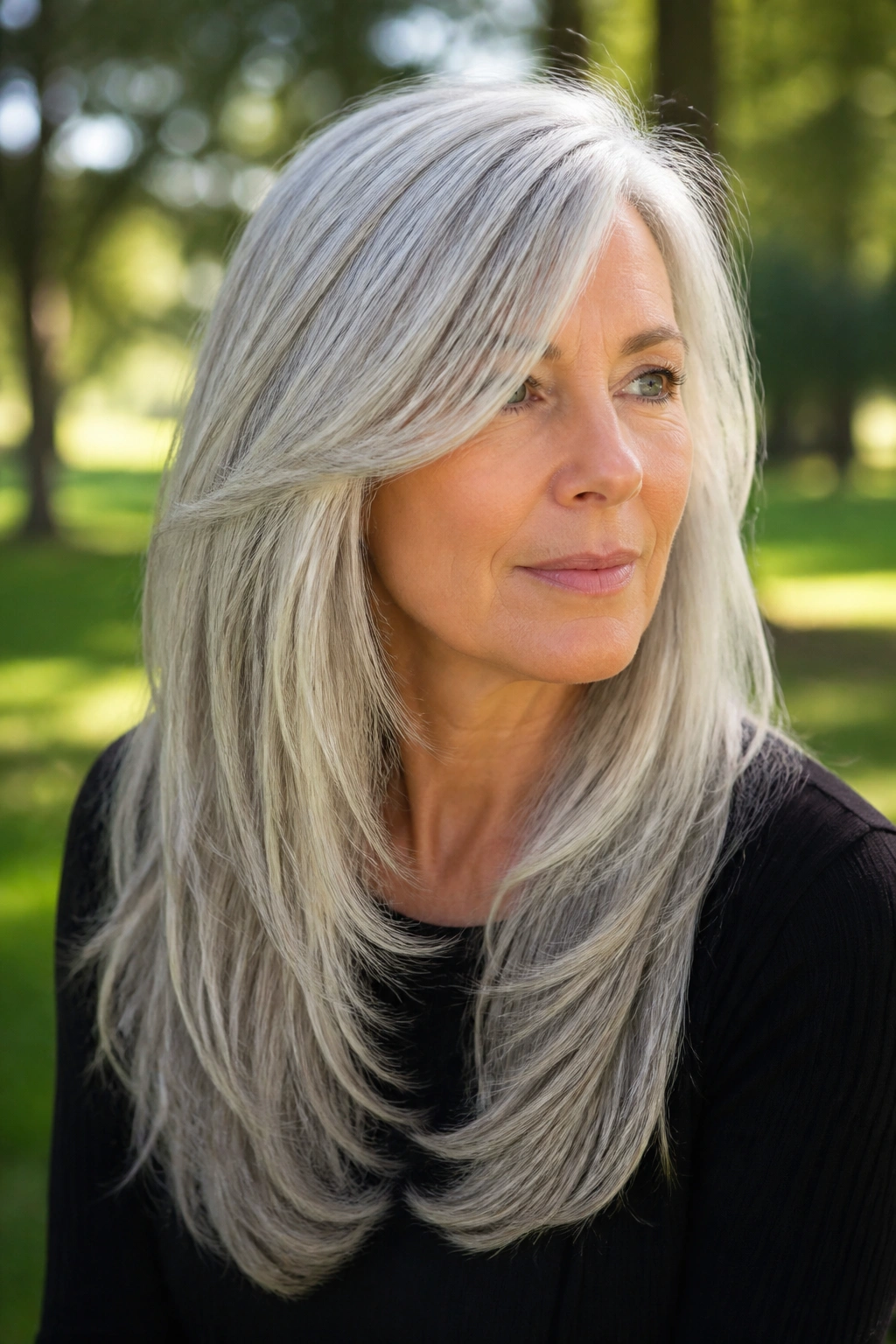
A long silver cut only works if the shape is clean. Otherwise it can look limp, especially when the ends get dry and the color becomes the main event instead of the haircut.
Long layers with a side sweep solve that problem by giving the hair movement around the face and a little lift through the front. The layers should be long enough to keep the length intact, but not so invisible that the style just hangs there. A side sweep softens the forehead and gives the silver a place to show off its shine without looking flat.
This is a smart choice if you’re growing out dye and want the transition to look deliberate. The shape gives the gray room to read as a style choice, not a compromise. I like this cut with a slight bend through the ends and enough weight left below the shoulders to keep it from frizzing out.
A good haircut makes the silver look like the point. That is the whole game.
