



A single hair cuff can rescue a braid style that feels a little flat. Slide it onto a box braid, a feed-in braid, or a twist, and the whole look changes in about ten seconds. Not because the metal is flashy. Because it gives the braid a finish point.
That tiny detail matters more than people think. Hair cuff accessories for braid styles sit right at the intersection of decoration and structure, so the wrong one slips, scratches, or gets lost in the hair; the right one looks calm, stays put, and works with the braid instead of fighting it. Braid thickness, metal weight, and finish do more work than the color does.
I have a soft spot for the plain tube cuff. Boring? Maybe. Useful? Completely. Once you know what the plain version does well, the fancier ones make more sense—and you stop buying accessories that look good in a photo and feel annoying after an hour.
If your braids are thin, a cuff with a small opening and smooth edges is usually the safer bet. If the braid is chunky, you can get away with heavier pieces and bolder shapes. Small hardware. Big difference.
1. Classic Gold Tube Cuffs
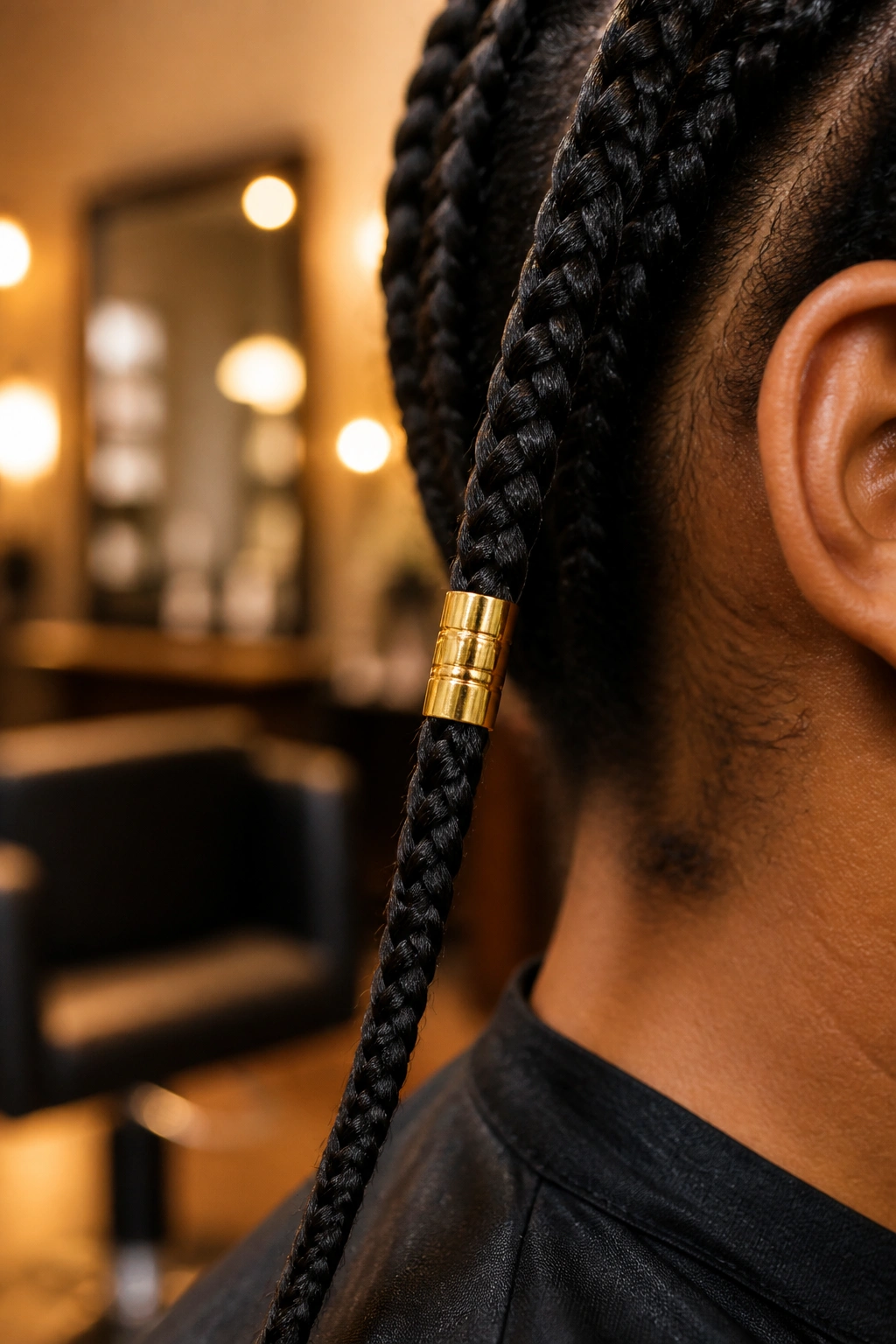
Classic gold tube cuffs are the plain white T-shirt of braid jewelry. They don’t ask for attention, and that is exactly why they work so well on box braids, knotless braids, cornrows, and feed-ins. A warm gold finish reads clean against dark hair and still looks deliberate on brown, burgundy, or honey-blond braids.
Why it keeps showing up
The shape is simple: a short metal cylinder with a slit or a small opening that slides over the braid. That simplicity matters. A tube cuff sits close to the braid, so it doesn’t swing around, snag on clothing, or tip sideways the way heavier designs sometimes do.
The sweet spot is an inner opening around 6 to 8 mm for slim braids and a little wider for medium braids. Too small and you fight it. Too loose and it slides. Nobody wants a cuff that spends the whole day migrating down the strand.
- Best on medium box braids, knotless braids, and side cornrows
- Use 2 to 4 cuffs per side if you want a clean, even rhythm
- Place them 2 to 4 inches from the ends for a tidy finish
- Choose brass, aluminum, or nickel-free plated metal if your scalp gets irritated easily
Tip: If you only buy one style first, make it this one. It covers the most ground without looking fussy.
2. Silver Open Ring Cuffs
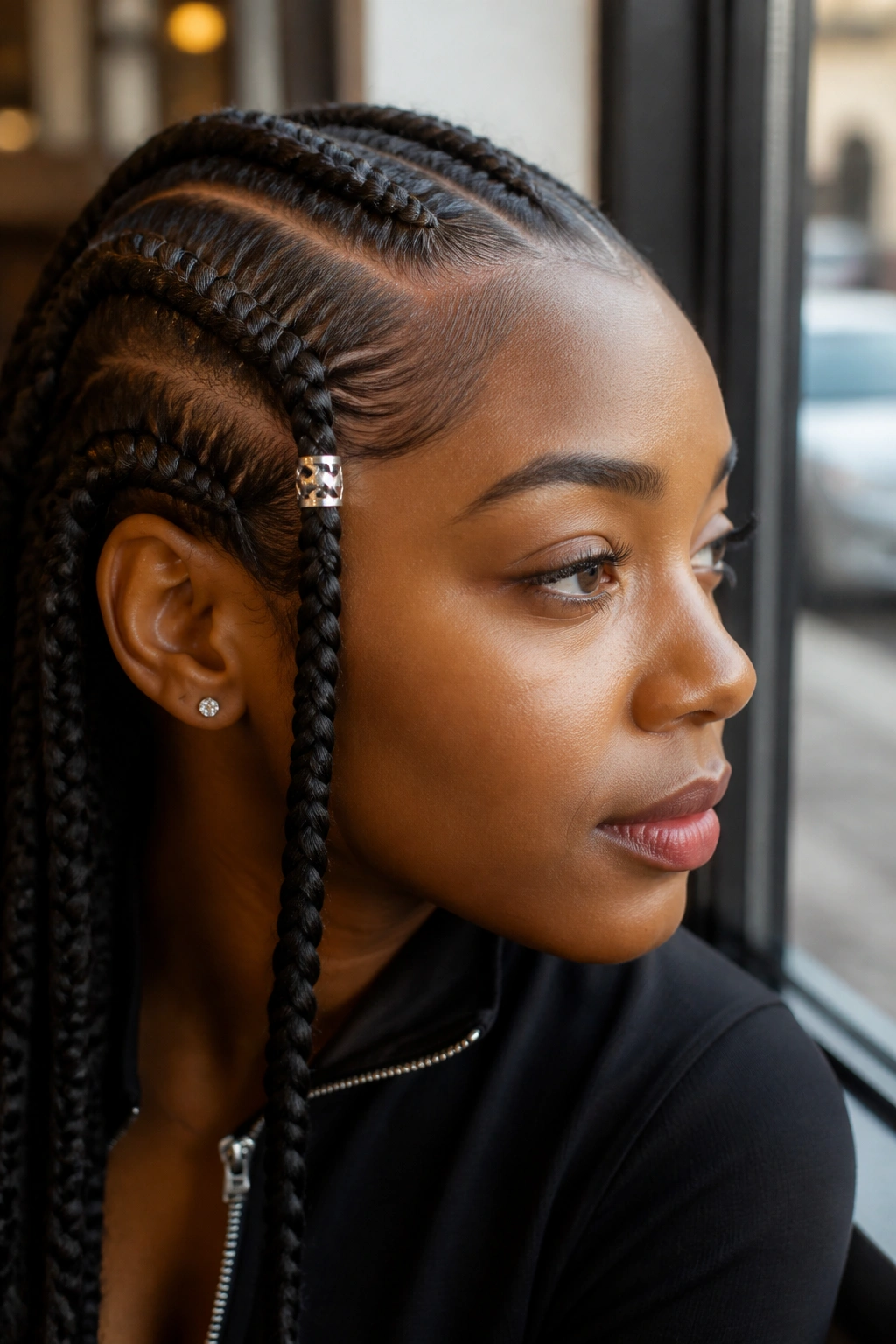
Silver open ring cuffs do one thing better than gold: they cool the whole look down fast. That makes them a sharp choice when your jewelry already leans silver or when the braid color has cool undertones, like blue-black, ash blond, or silver-toned synthetic hair.
The open-ring shape feels lighter than a closed tube, and that’s part of the appeal. It lets the braid move a little more freely, which keeps the style from looking stiff. On side braids and face-framing plaits, that small bit of movement matters more than people expect.
I like silver cuffs most on braid styles that already have clean parting. The metal picks up the straight lines and keeps the style looking crisp. If you stack too many, though, the effect turns busy fast. One or two near the front usually does the job.
Put one at the end of a braid that falls near the cheekbone, then leave the rest of the style plain. That contrast is what makes the cuff stand out. Not volume. Placement.
3. Matte Black Cuffs
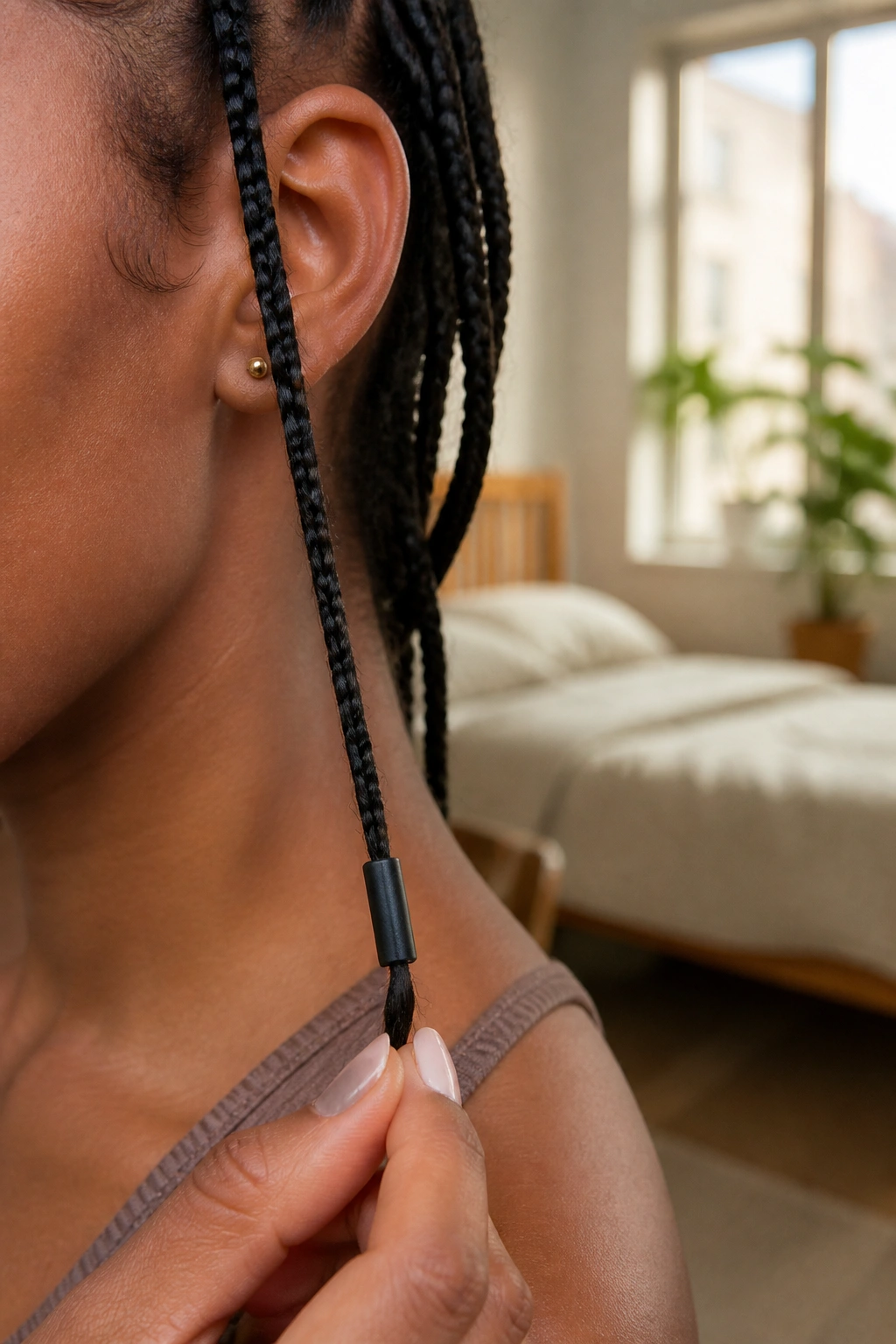
Want the cuff effect without much shine? Matte black is the answer. It looks quiet at a glance, then turns graphic once you notice it, which is a nice trick on braids that already have texture, length, or a lot of movement.
How to use it on dark braid colors
On 1B or deep brown braids, black cuffs can almost disappear until the light hits them. That sounds subtle, and it is. But subtle can be the whole point when you want the braid style to stay the focus and the accessory to act like a frame.
On blonde or copper braids, matte black reads sharper. The contrast is cleaner than gold and less formal than silver. A narrow cuff near the end of a skinny braid can look almost like a tiny punctuation mark.
If you wear protective styles for weeks at a time, this finish is useful because it doesn’t show wear as fast as polished metal. Scratches still happen. They just don’t shout at you.
A matte black cuff is the one I’d reach for on a workday, then again on a night out if I wanted the look to stay understated. It does not beg for attention. Good. That’s the point.
4. Chunky Statement Cuffs
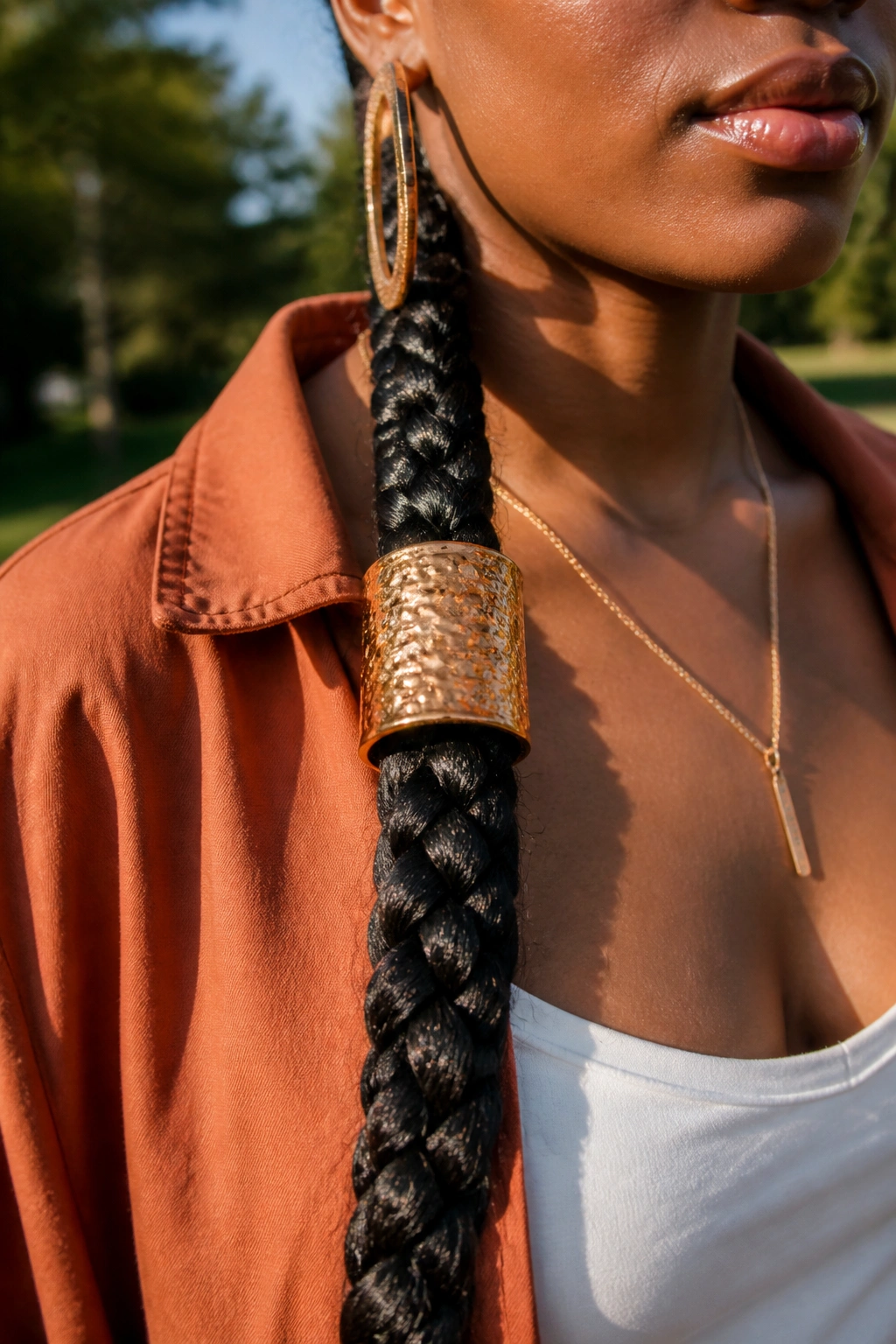
Chunky statement cuffs are not for shy braids. They’re for jumbo box braids, thick goddess braids, or one strong plait that already has enough braid width to carry some weight. Put them on tiny braids and the accessory can swallow the style whole.
I think of these as the cuff version of a bold ring. One piece does more than five small ones ever will.
Where they work best
- On braids at least pinky-thick
- Near the mid-length or lower third of the braid
- On styles with clean parts and not much extra jewelry
- As a single focal point rather than all over the head
The size is the whole story here. A chunky cuff needs enough braid underneath it to look grounded. If the braid is too thin, the cuff feels like it’s sliding around on a wire. If the braid is thick, the cuff looks intentional and strong.
Keep the rest of the style simple. A big cuff already brings weight and shine, so you do not need ten more decorations fighting for space. One braid with a statement cuff can carry an entire look.
5. Hinged Snap-On Cuffs

A snap-on cuff earns its keep when you want the accessory to stay where you put it. The little hinge or clasp makes it easier to lock onto a braid without squeezing too hard, and that matters if your hair has product on it or if the braid surface is a little slick.
I trust these more than the cheap slide-on versions that loosen up after a few hours. You know the type. They look fine in the mirror, then start slipping the moment you move around.
Snap-on cuffs are especially good for protective styles that stay in for a while, because you can place them once and leave them alone. They also work well on braids that are medium to thick, where a standard cuff might open too far and drift.
There is one small caution. Close them gently. If you force the clasp, you can pinch the braid or dent the metal. A firm press is enough; no need to bully it into place. The best ones click shut with almost no effort and sit flat against the hair. Clean, easy, done.
6. Shell-Accent Cuffs
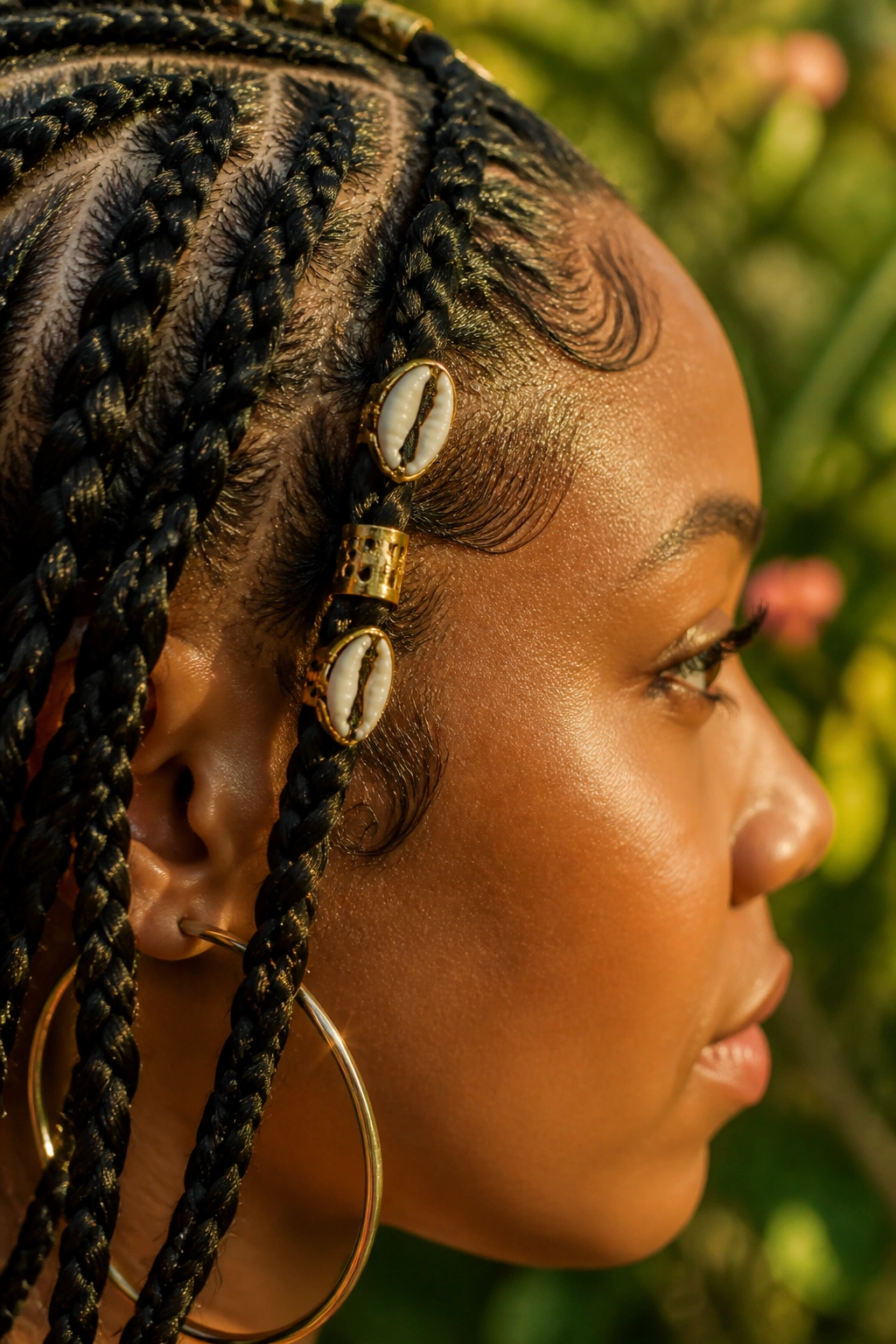
Shell-accent cuffs do not try to behave like metal, and that is exactly why they have a different feel. They bring a softer texture to braid styles, especially Fulani braids, boho braids, and twist styles that already have some movement in them.
The shell detail gives you a little shine, but not the cold, polished kind. It feels warmer. More casual. A strand of shells near the temple can change the mood of the whole style without making it look dressed up in a stiff way.
I like these most when the braid pattern itself is doing something interesting. A straight row of cornrows with shells near the front can look very clean. A side braid with shells mixed in feels looser and more relaxed. Same accessory, different energy.
Use them sparingly. A few small shell cuffs go a long way, and too many start to look crowded. Three near the front hairline is usually enough. If the shells are large or irregular, even fewer can be better. Let the braid breathe.
7. Beaded Cuffs

Beaded cuffs give you a little more texture than plain metal, which is useful when you want the braid style to feel layered instead of flat. The bead acts like a stop point, while the cuff gives the metal finish. That combination works especially well on medium braids and twist styles.
Where the weight sits matters
A bead can be light wood, clear plastic, frosted glass, or painted metal. The wrong shape can pull on the braid faster than you’d think, so smooth holes and rounded edges matter. If you feel a sharp rim with your finger, skip it. That’s the kind of thing that catches hair and annoys you by day two.
- Best on medium braids and twist styles
- Keep the bead count to one cluster per braid
- Place heavier beads lower on the strand
- Choose smooth, rounded holes to cut down on snagging
The nice thing about beaded cuffs is that they bring color without needing a whole pile of accessories. A deep red bead on black braids feels rich. Clear beads make the cuff look lighter. Wooden beads push the style toward earthy and relaxed.
One bead cluster is enough. More than that can turn into noise.
8. Spiral Wrap Cuffs
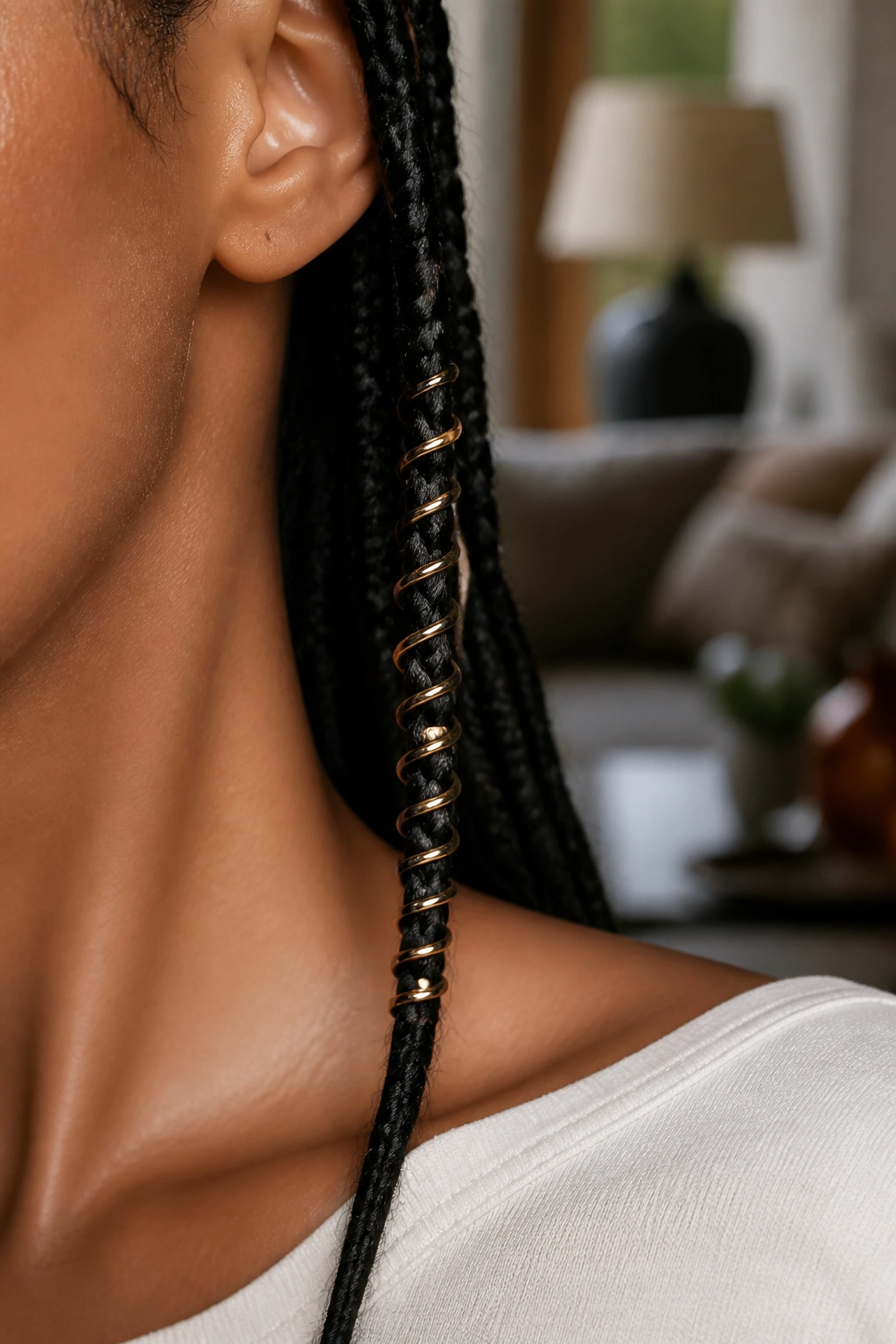
Spiral cuffs are the quiet fix for thin braids. Instead of sliding on like a tube, they wrap around the braid in a small coil, which gives them more grip and makes them a smart choice for micro braids, fine twists, and slimmer individual plaits.
That coil shape does two things at once. It keeps the accessory from slipping as fast, and it creates a little visual texture even when the metal itself is plain. A skinny braid can look bare with a chunky tube cuff. A spiral cuff feels more balanced.
I reach for these when I want the braid to keep its own shape. You can add a spiral cuff halfway down the strand or near the end, then stop. No need to stack five of them unless you want the braid to read more decorated than practical.
The main thing is not to overtwist. If you force the coil too tightly, the braid starts to look squeezed instead of finished. The braid should still move. If it feels stiff in your hands, loosen it back up and try again.
9. Rhinestone Cuffs

Need a braid style that reads dressed up from across the room? Rhinestone cuffs do that in one step. A little sparkle near the face can change the tone of the entire style, especially on neat parting, smooth braids, or a fresh set of knotless braids.
How much shine is enough?
Less than people think. Seriously.
Rhinestone cuffs work best when they’re treated like accents, not a full surface treatment. One or two near the front hairline can frame the face. A few more on one side can make the style feel intentional. Put them everywhere and the hair starts to compete with itself.
Clear stones are the safest choice if you want a clean finish. Black crystals look moodier and sharper. Colored stones can be fun, but they need a reason to be there—matching an outfit, a lip color, or a bead detail. Otherwise they just add clutter.
I’d save these for events where you want the braid to read as part of the outfit, not just the hairstyle. A wedding guest look, a dinner, a photo shoot, a night out. They look best when the rest of the braid is smooth and the cuffs have room to shine a little.
10. Engraved Brass Cuffs
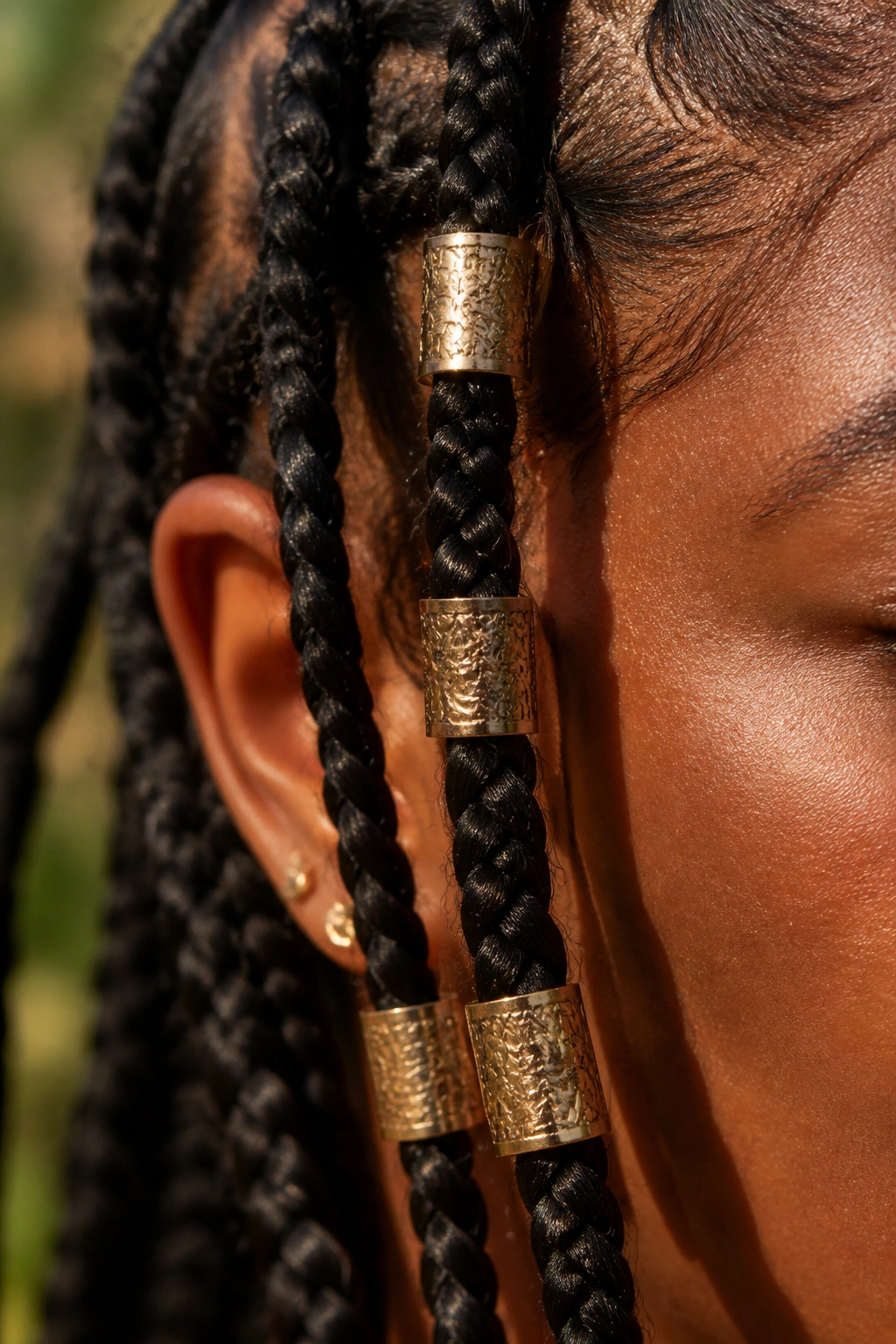
Engraved cuffs bring texture without leaning on sparkle, and that makes them one of the more grown-up options in the whole pile. The pattern might be a tiny line work, a geometric mark, or a carved edge that you can actually feel with your fingertip.
I like these because they look good from close up and still hold their own from a few feet away. They do not need rhinestones or oversized shapes to earn attention. The detail does the work.
What to look for
- Deep engraving instead of surface printing
- Smooth inner edges so the braid doesn’t catch
- Brass or copper-toned metal if you want warmth
- Small patterns rather than crowded ones, which can blur once they’re in the hair
These cuffs work especially well on braids that are already neat and evenly sized. The pattern looks better when it has a clean braid under it. If the braid is fuzzy or the parts are crooked, the engraving gets lost.
I’m fond of engraved cuffs on styles that sit somewhere between casual and polished. They feel less loud than rhinestones and more interesting than a plain tube. That middle ground is useful.
11. Mixed-Metal Sets
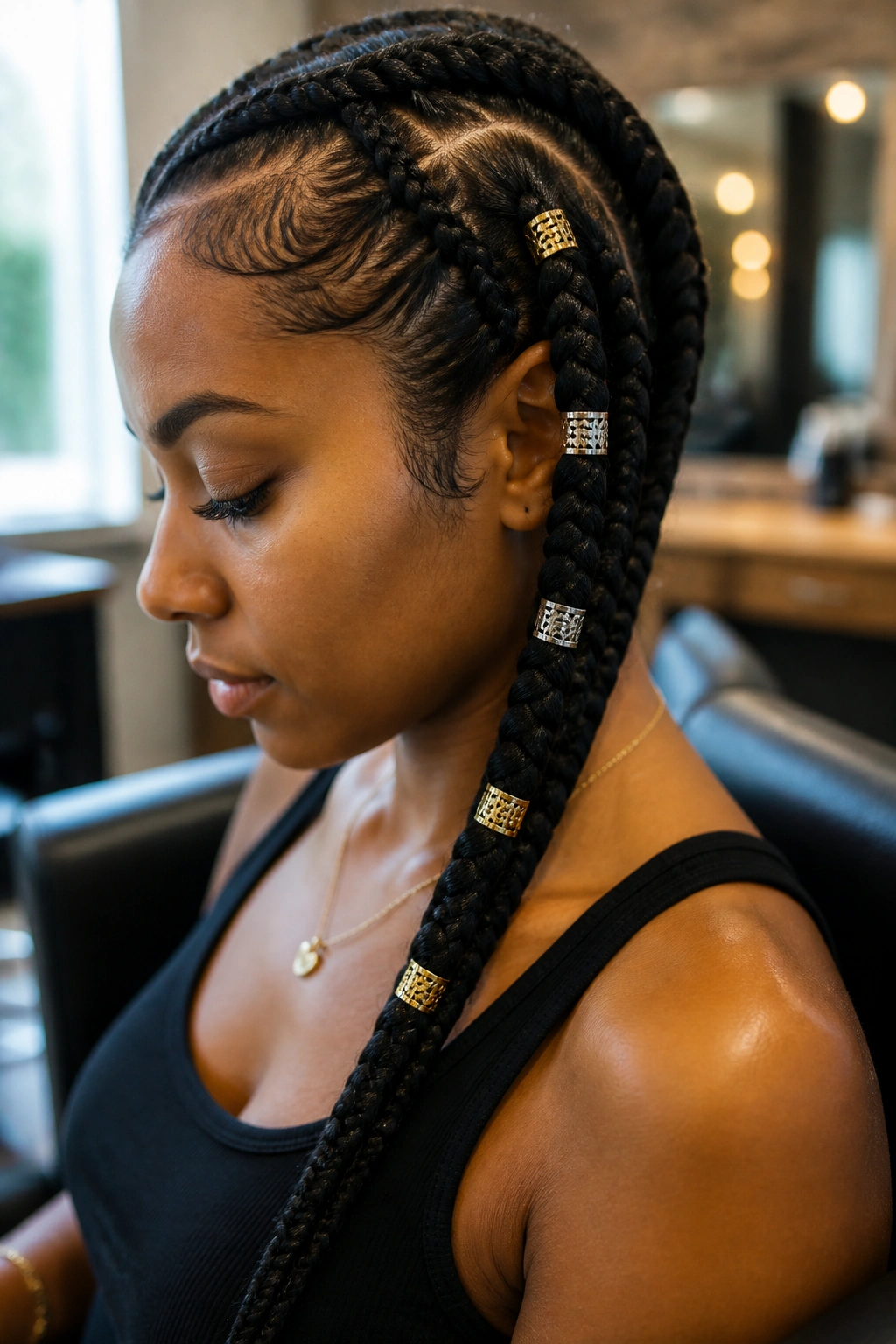
Gold and silver on the same head can look careless or smart. The difference is spacing.
Mixed-metal sets are perfect when you wear both gold and silver jewelry, or when you do not want to choose a single finish and then have the cuff fight your earrings, rings, or necklace. A braid style with mixed metals feels a little more relaxed, a little less matched-to-death.
The trick is to let one metal lead. If every cuff is a different finish, the eye starts hopping around without rest. If gold is the main color and silver is the accent, the whole thing reads cleaner. Two gold cuffs and one silver cuff on a side braid is usually enough. You do not need a full rainbow of metal just because the drawer has options.
I also like mixed-metal sets on styles that already have texture from beads, wraps, or thread. They keep the braid from feeling too uniform. On very sleek braids, though, mixed metals can look messy if the placement is random. Repeat the pattern on both sides, or keep all the mixed pieces clustered in one area.
That small bit of discipline makes the difference. Otherwise the style starts to look like leftovers.
12. Adjustable Cuffs for Thick Braids

Unlike standard cuffs, adjustable versions open wider and bend into place more easily, which makes them a better fit for faux locs, jumbo twists, goddess braids, and thick feed-in styles. If a braid is too broad for a regular cuff, an adjustable one saves you from forcing the metal and risking a bend that never looks right again.
A good adjustable cuff should have a rounded edge and enough give to slide over a braid that’s closer to 10 to 12 mm thick. That rough size range covers a lot of chunky protective styles. Too narrow, and you’re back in struggle mode. Too loose, and the cuff starts drifting.
The reason these matter is simple: thick braids need room. A narrow cuff on a thick braid can pinch the surface, leave a crease, or sit crooked after a short while. Adjustable cuffs spread that pressure out a little more evenly.
I’d choose these whenever the braid itself is the statement. Jumbo braids already have presence. The cuff should support that, not squeeze it. If you want one accessory that can move between locs, twists, and thick braids, this is the most flexible option in the bunch.
13. Charm-Dangle Cuffs
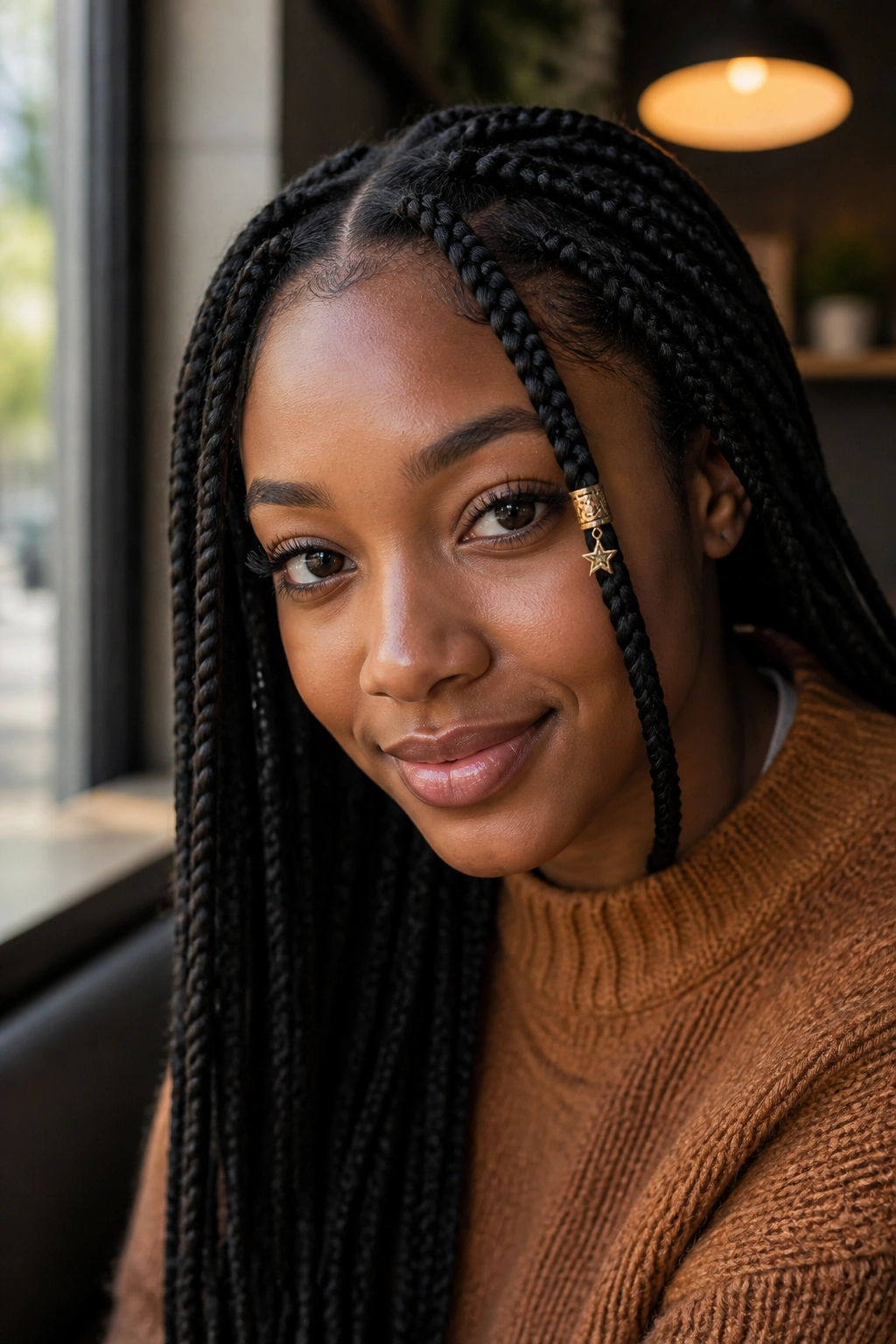
A tiny charm hanging from a braid cuff changes the whole mood of the style. The movement is the point. A plain cuff says, “finished.” A charm-dangle cuff says, “there’s a little personality here.”
Keep the charm short
That part matters. A charm that hangs too low can catch on collars, scarves, hoodie strings, and anything else that brushes the neck. Keep the drop short—under 1 inch is the safest range if you want everyday wear.
- Best on face-framing braids or one accent braid
- Use lightweight chain or wire for the charm
- Keep the charm away from the nape of the neck if you wear high collars
- Stick to one charm per focal braid unless you want a festival look
These cuffs are a nice choice when you want the braid to feel personal without turning the whole style into a jewelry display. A tiny star, moon, heart, or geometric charm can make one braid feel different from the rest.
I would not scatter them everywhere. One charm near the front is enough to give the style movement and a little personality. Two, maybe. Three starts to feel busy unless the rest of the braids are bare.
14. Antique Brass Cuffs
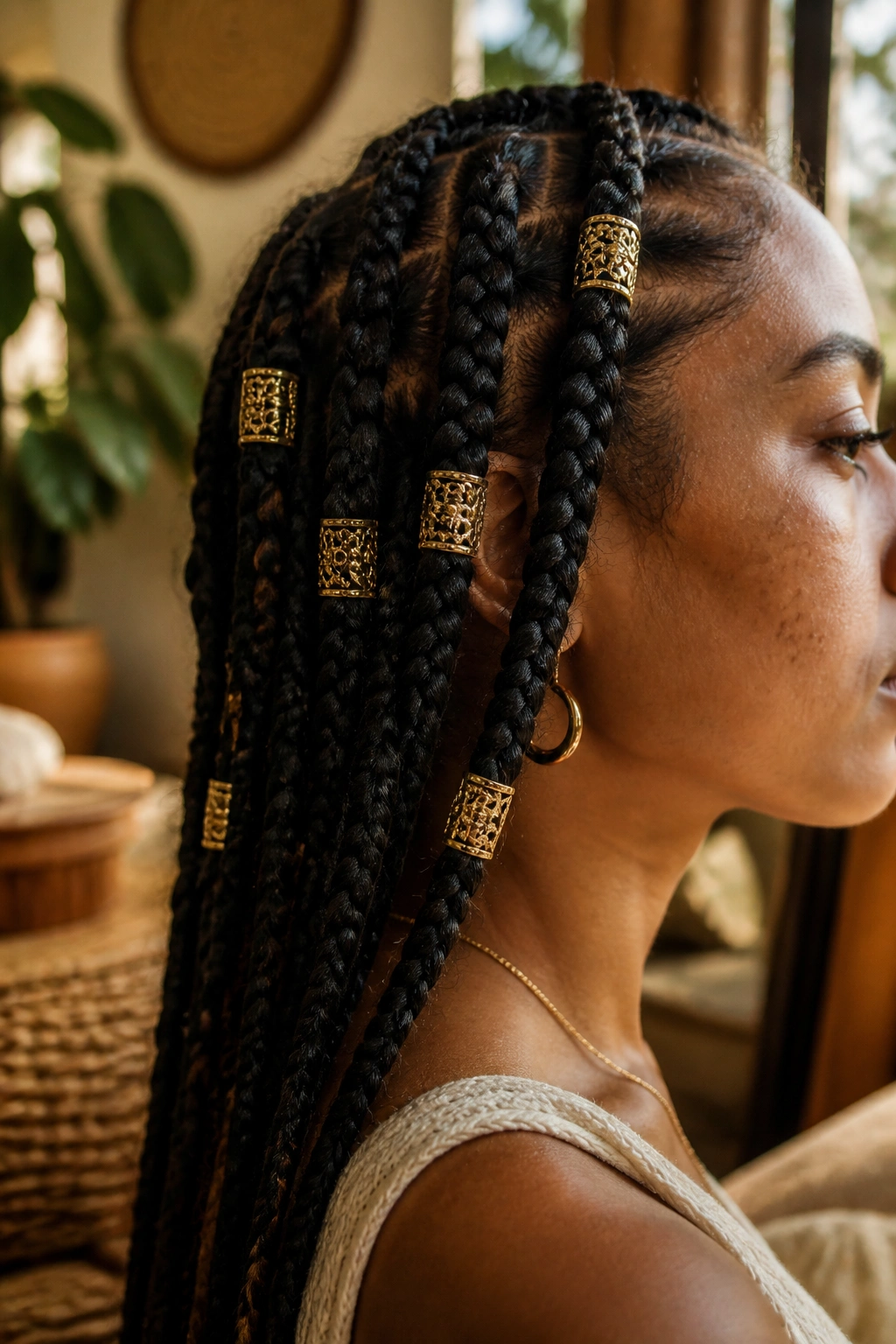
Antique brass cuffs soften the whole style in a way bright gold never does. The finish has a warm, slightly aged look, so it feels less shiny and more grounded. On black braids, that warmth shows up as depth. On blond or auburn braids, it reads even richer.
That aged surface is useful if you want the hair accessories to feel like part of the braid rather than a separate decoration sitting on top of it. Brass tends to do that better than polished metal because it blends into the hair a little more.
The downside is the finish can darken with wear if you leave product, sweat, or moisture sitting on it. Wipe the cuffs dry after use. A soft cloth is enough. Nothing fancy.
I especially like antique brass on styles with a little texture already in them—boho braids, faux locs, loose twists, and Fulani braids. The finish echoes the texture instead of trying to outshine it. If your wardrobe leans earthy, warm, or vintage-leaning, this is an easy win. It looks like it belongs there.
15. Personalized Initial Cuffs
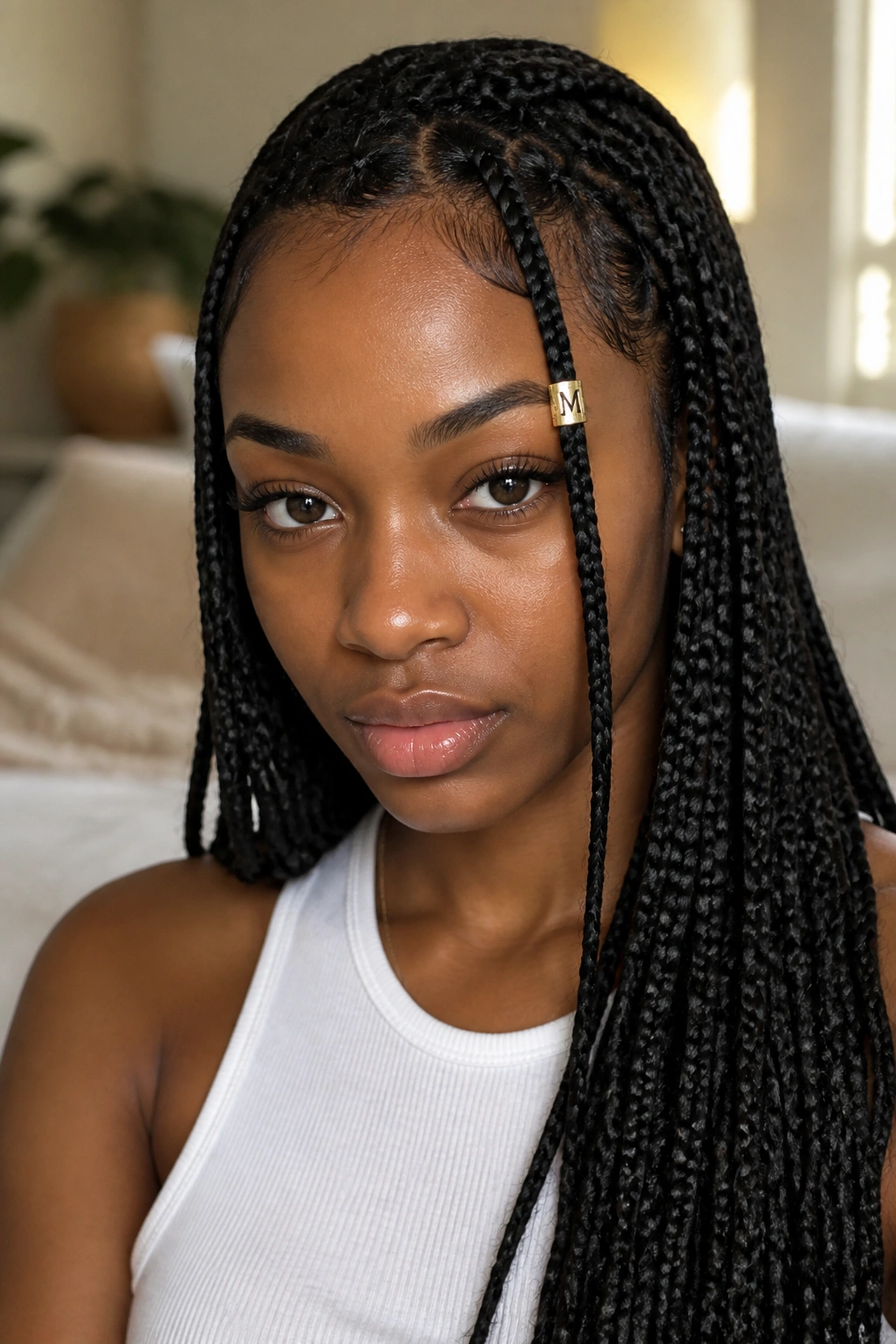
What makes a braid style feel like yours? A personalized cuff goes straight at that question. An initial, a symbol, a tiny star, a crescent, or a single letter gives the style a signature without needing a full custom look.
I like these best on one or two braids near the face. That keeps the personal detail readable. Put a letter on every braid and it stops feeling personal pretty fast. Put it where the eye naturally lands, and the whole style feels considered.
How to keep custom cuffs from looking busy
Choose one symbol family and stay there. If you pick initials, keep the rest of the braid jewelry plain. If you pick moons or stars, let that motif repeat once or twice, then stop. The braid needs some empty space around the cuff or the custom detail gets swallowed.
Personalized cuffs also make sense if you wear protective styles often. They give you a repeatable accent that works with different braid sizes, different parting patterns, and different hair colors. That’s useful. You can change the hairstyle and keep the same visual language.
A custom cuff does not need to be loud to feel special. Usually the opposite is true.
Final Thoughts
The best hair cuff accessories for braid styles are the ones that respect the braid first. Size, weight, and finish matter more than the flashiest design in the tray. If a cuff slides, pinches, or looks too heavy for the braid under it, it’s the wrong piece.
Start with one plain style, one textured style, and one dressier option. That small trio covers most braid looks without turning your head into a hardware store. Clean parting helps. So does restraint.
If I were buying a starter set, I’d choose plain gold tubes, one textured brass option, and one small statement piece for special days. That gives you range without overloading the style, and it works whether you’re wearing box braids, cornrows, knotless braids, or twists.
