



Shiny black hair is a funny canvas. It can make a tiny shift in tone look expensive, or make the wrong shade look muddy in one wash.
That is why the best hair color looks for shiny black hair are rarely loud all over. They work with the depth already there—blue-black gleams like polished glass, cherry cola reads like dark wine, and a thin caramel money piece can change your whole face without stealing the base color’s drama.
Black hair also changes how color behaves. In daylight you may see a flash of red or violet; indoors the same shade can collapse into near-black. That shift is the whole point, but only if the formula, placement, and undertone are doing their jobs.
Some shades need pre-lightening. Others don’t. That’s the difference between rich dimension and a flat, bruised-looking mess.
1. Blue-Black Shine for Shiny Black Hair
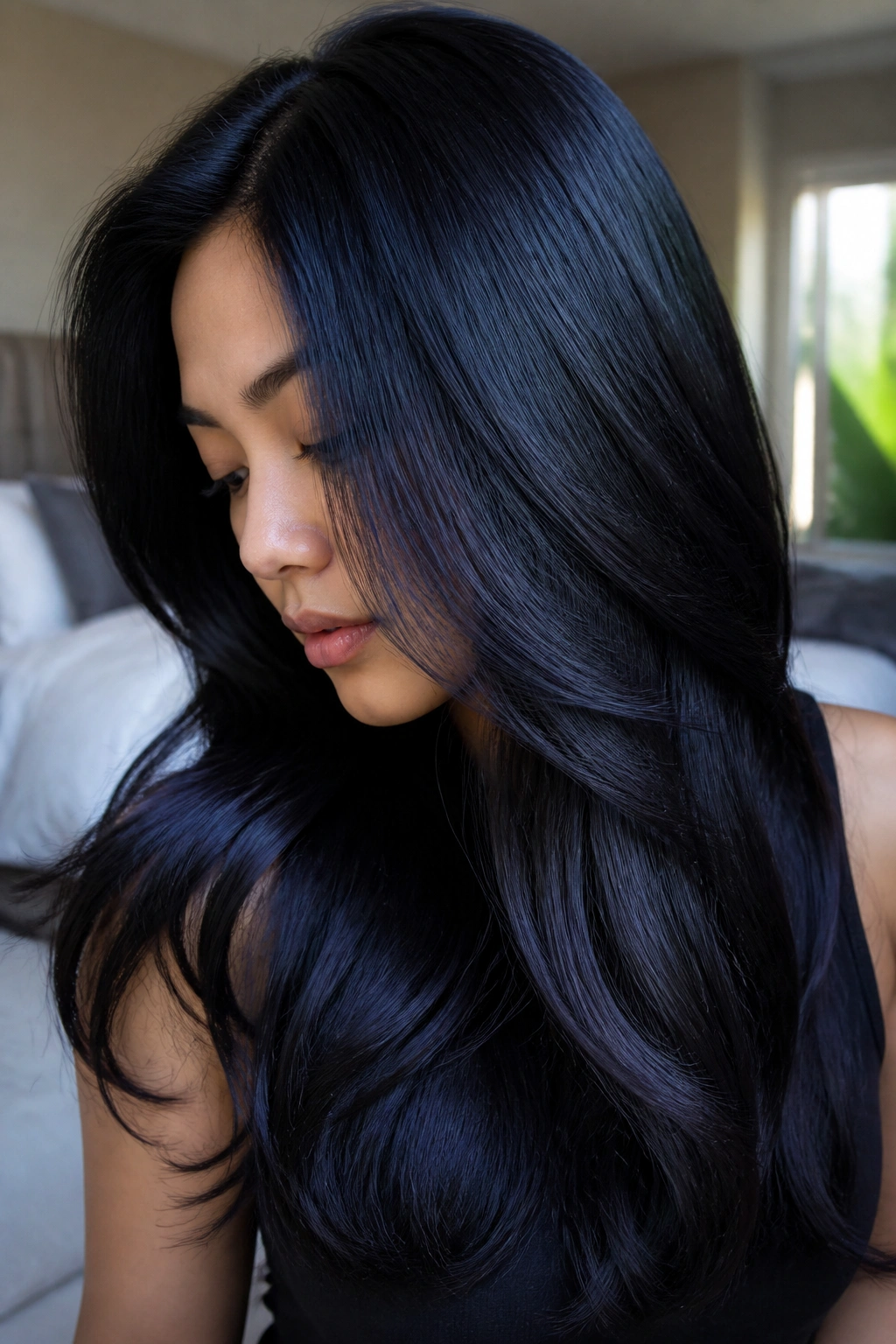
Blue-black is the first shade I think of for shiny black hair, and that’s not because it plays safe. It gives the base more depth without making it look painted on, which is harder to do than people expect.
On a level 1 to 3 base, blue-black looks almost like liquid ink. Then the light moves, and the blue undertone wakes up. That flash is subtle, but it keeps the color from disappearing into a plain black helmet effect.
Why It Looks So Clean
The reason blue-black works so well is simple: it respects the darkness already in your hair. You are not fighting the base; you are refining it.
Ask for blue-violet reflect if you want the color to read rich instead of harsh. Too much blue can look flat under indoor bulbs, while a hint of violet keeps the finish softer and more reflective.
- Best on hair that is already dark brown, black, or color-treated black.
- Looks sharp on straight styles, but also holds up in loose waves.
- Needs a gloss refresh every 4 to 6 weeks if you want the blue sheen to stay visible.
- Works especially well when the ends are trimmed clean; split ends make dark color look dull fast.
Pro tip: If you wear your hair in a center part, ask for the color to be a touch more saturated around the crown. That gives the whole head a cleaner shine line.
2. Cherry Cola Depth
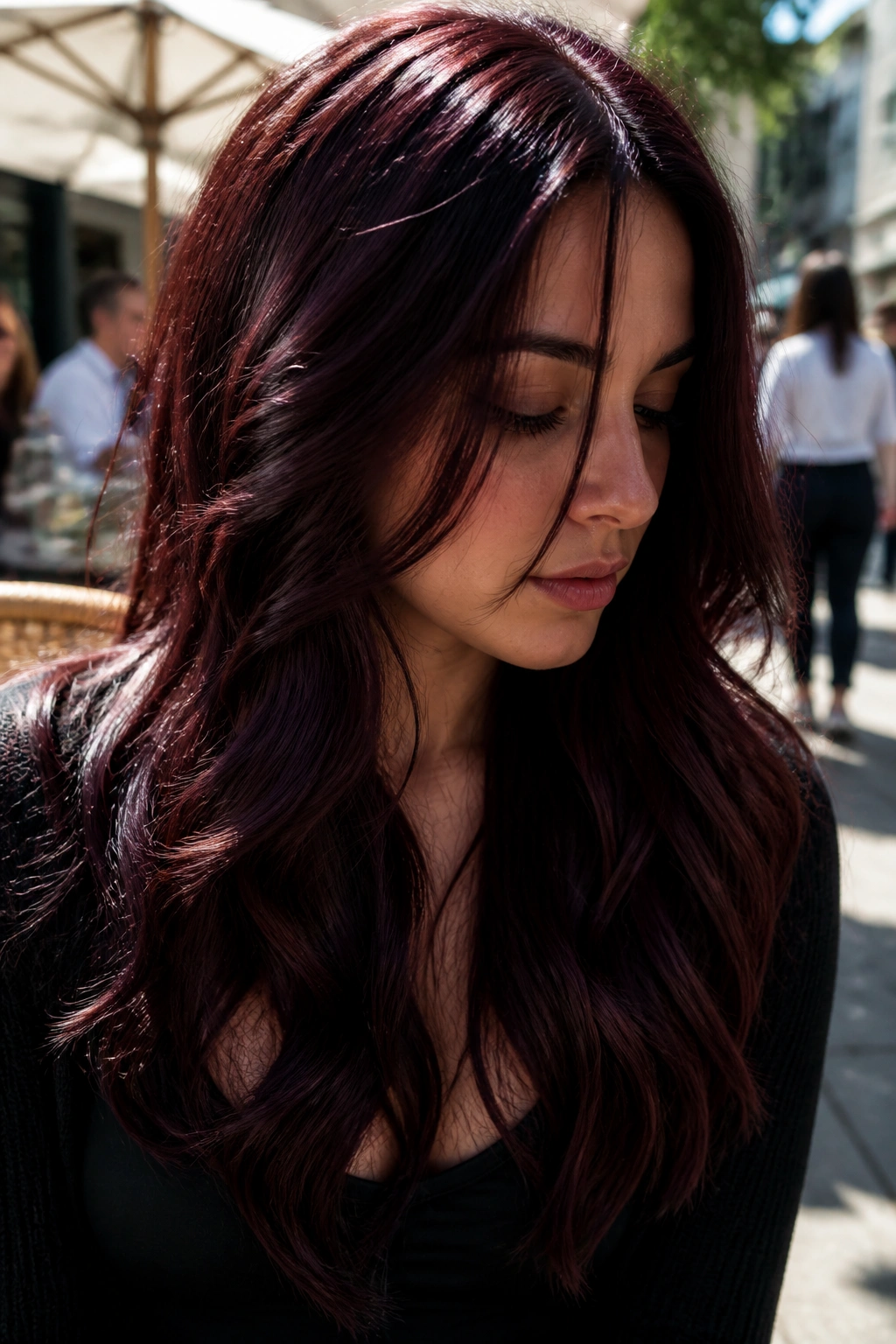
Why does cherry cola work so well on black hair? Because it behaves like a dark red wine stain, not a bright red dye job.
That matters. A red that is too loud can look disconnected from a black base, but cherry cola stays close enough to the darkness that it feels rich instead of pasted on. Under sunlight, you get berry and burgundy. Under softer light, it leans almost black.
What Makes It Work on a Black Base
The sweet spot here is a red-violet undertone. It gives the color that tart, dark fruit look without drifting into orange, which is where a lot of black-hair reds go wrong.
I like cherry cola as a demi-permanent gloss or a sheer all-over color on dark hair. If you want it to last longer, ask for a formula that sits in the level 3 to 4 range with enough pigment to tint, not just stain. That keeps the color visible between washes without turning candy-bright.
How to Ask for It
- Say “deep burgundy with red-violet reflect” if you want depth first.
- Say “cherry cola gloss” if you want something softer and shinier.
- Keep the roots slightly deeper than the mid-lengths for a natural fade.
- Pair it with warm makeup tones if you want the color to pop even more.
It’s a good shade for people who want red, but not the kind that shouts from across the room.
3. Espresso Balayage
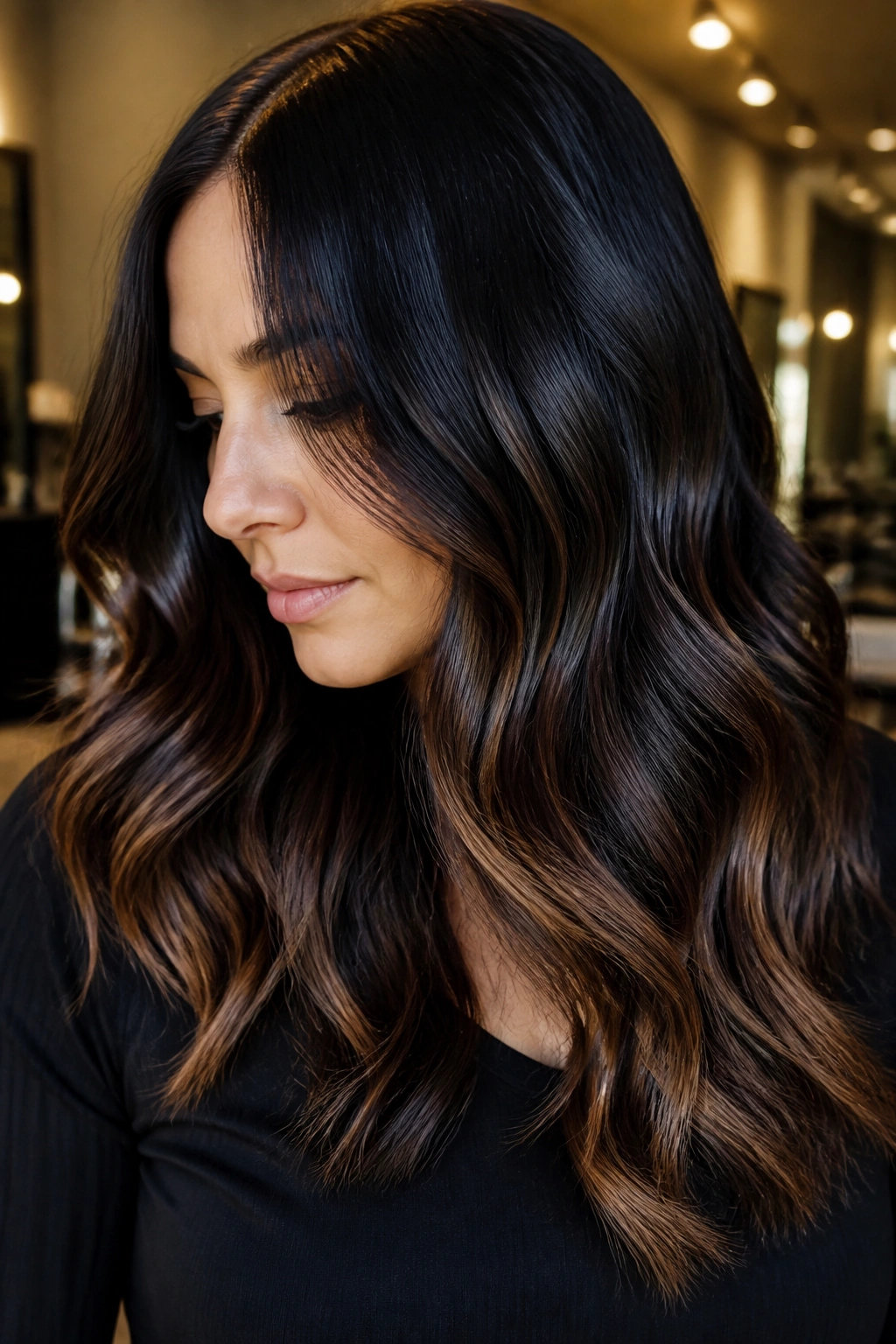
If you want someone to notice your color only after you turn your head, espresso balayage is the move.
This is the sort of look that can fool people for a second. The base stays black, or close to it, and then mocha-brown ribbons slide through the mid-lengths and ends. It feels expensive because it does not give away all its tricks at once.
Where the Dimension Should Sit
The best espresso balayage does not start at the root line. It lives mostly from the cheekbone down, with the lightest pieces showing at the ends where the hair moves the most.
A good colorist will usually paint the ribbons in half-inch to one-inch slices, leaving darker hair in between. That spacing matters. If the brown is packed too tightly, it stops looking like balayage and starts looking like a single flat brown layer.
- Works best on waves, bends, and textured blowouts.
- Keeps the black base visible, which makes grow-out easier.
- A cool mocha tone looks more polished than a warm chestnut on very dark hair.
- Ideal if you want contrast without the upkeep of full highlights.
I reach for this look when the client wants the kind of change people can’t quite name, but definitely notice.
4. Cinnamon Ribbons
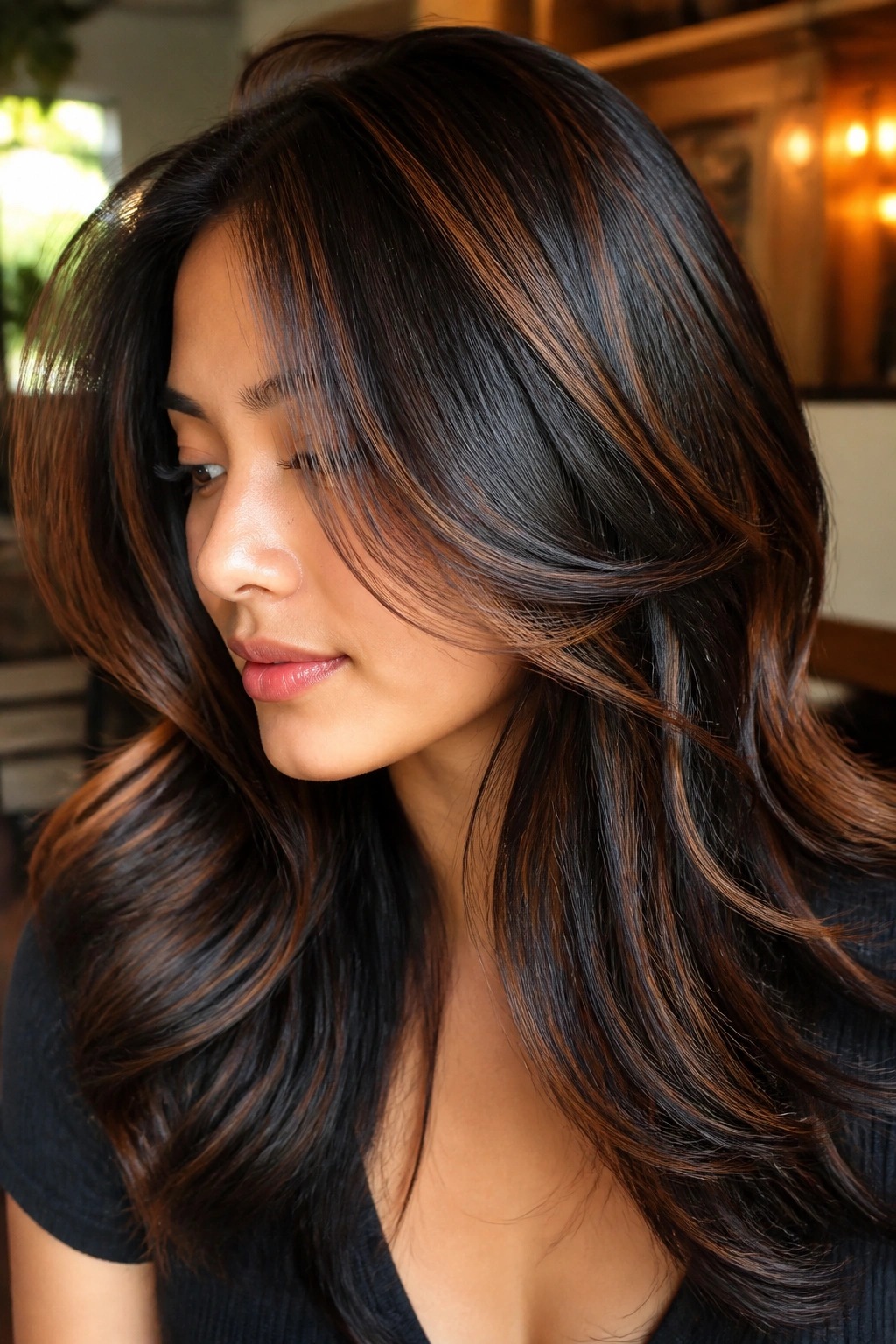
Warmth does not have to mean red, and cinnamon ribbons prove it.
On shiny black hair, cinnamon reads like toasted spice rather than orange. That makes it easier to wear than copper for a lot of people. You get the warmth, but it stays wrapped in brown, which keeps the whole look grounded.
Where to Place the Warmth
Cinnamon needs movement. That’s the honest truth. On pin-straight, one-length hair, it can disappear in patches. On layered cuts, curls, or soft bends, it wakes up immediately.
A thin ribbon around the face can be enough if you want a gentle change. For more depth, weave the cinnamon into the mid-lengths and leave the bottom few inches a little richer and darker. That creates a soft fade instead of a hard color stop.
The sweet spot is a burnt-brown tone, not a bright copper. If the formula is too orange, it stops looking like spice and starts looking like a mistake in a box dye aisle.
This is a good choice for people who like warm colors but still want their black hair to look dark, glossy, and controlled.
5. Deep Plum Veil
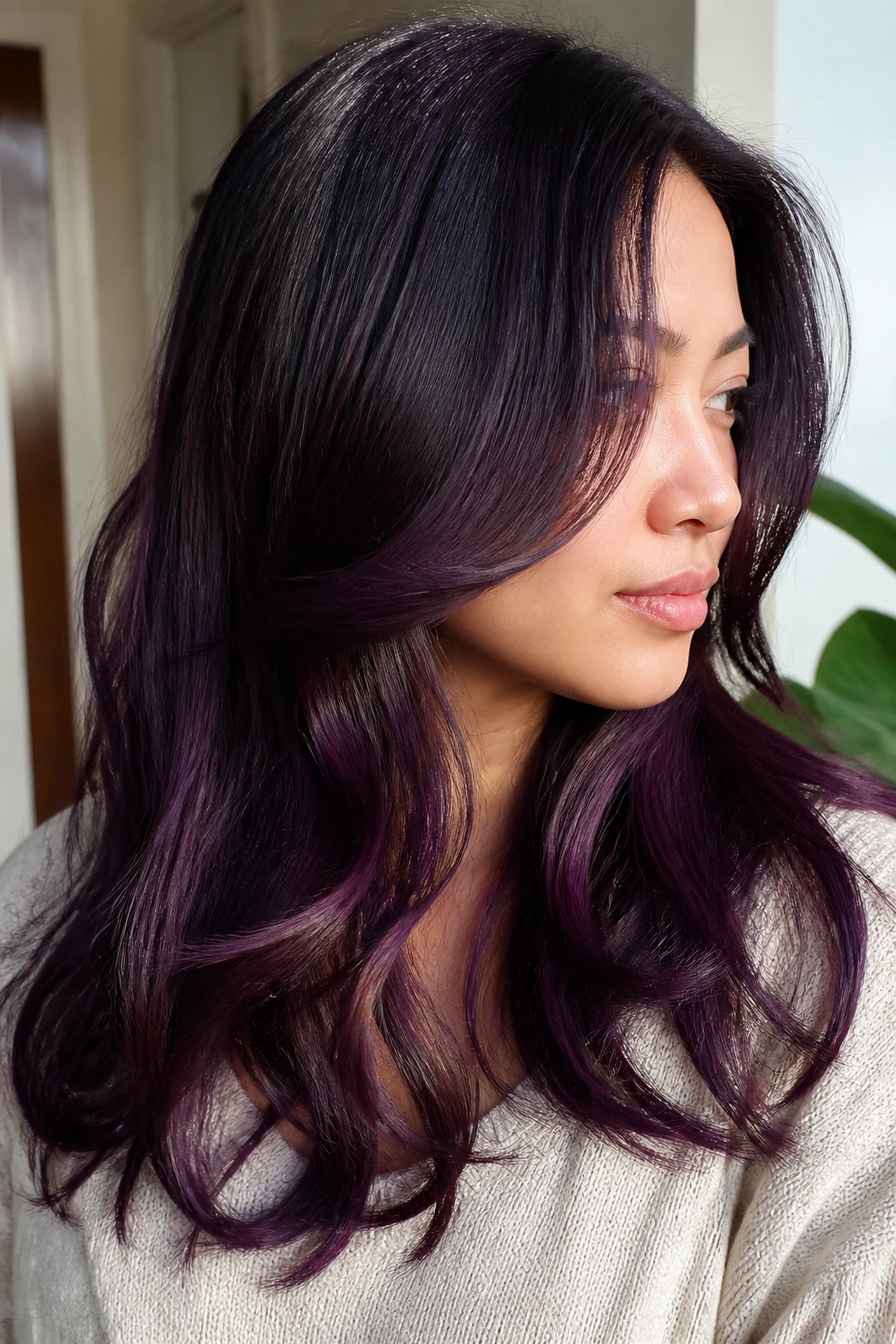
Can purple work on black hair without looking loud? Yes, if you keep it deep.
Deep plum is one of those shades that looks almost invisible indoors and surprisingly lush in daylight. It sits right between black and violet, which means it can give shiny black hair a cool edge without flattening the base.
The trick is to avoid a neon or grape tone. That’s where the whole thing falls apart. You want a shade that feels like crushed berries mixed with ink, not a bright fantasy color unless that is the goal.
Why It’s So Good on Dark Hair
Plum works because the undertone is doing the heavy lifting. Black hair already has depth, so plum only has to add a hint of color movement. That makes it a smart pick if you want something moody and polished rather than playful.
It also plays well with smooth styles. A straight blowout shows the violet shift at the ends. Big waves make it look softer, almost like the hair is catching a shadow with color inside it.
If you ask for this at the salon, say deep plum gloss or violet-brown overlay. Those words steer the result toward richness, which is where this look shines.
6. Copper Peekaboo Panels
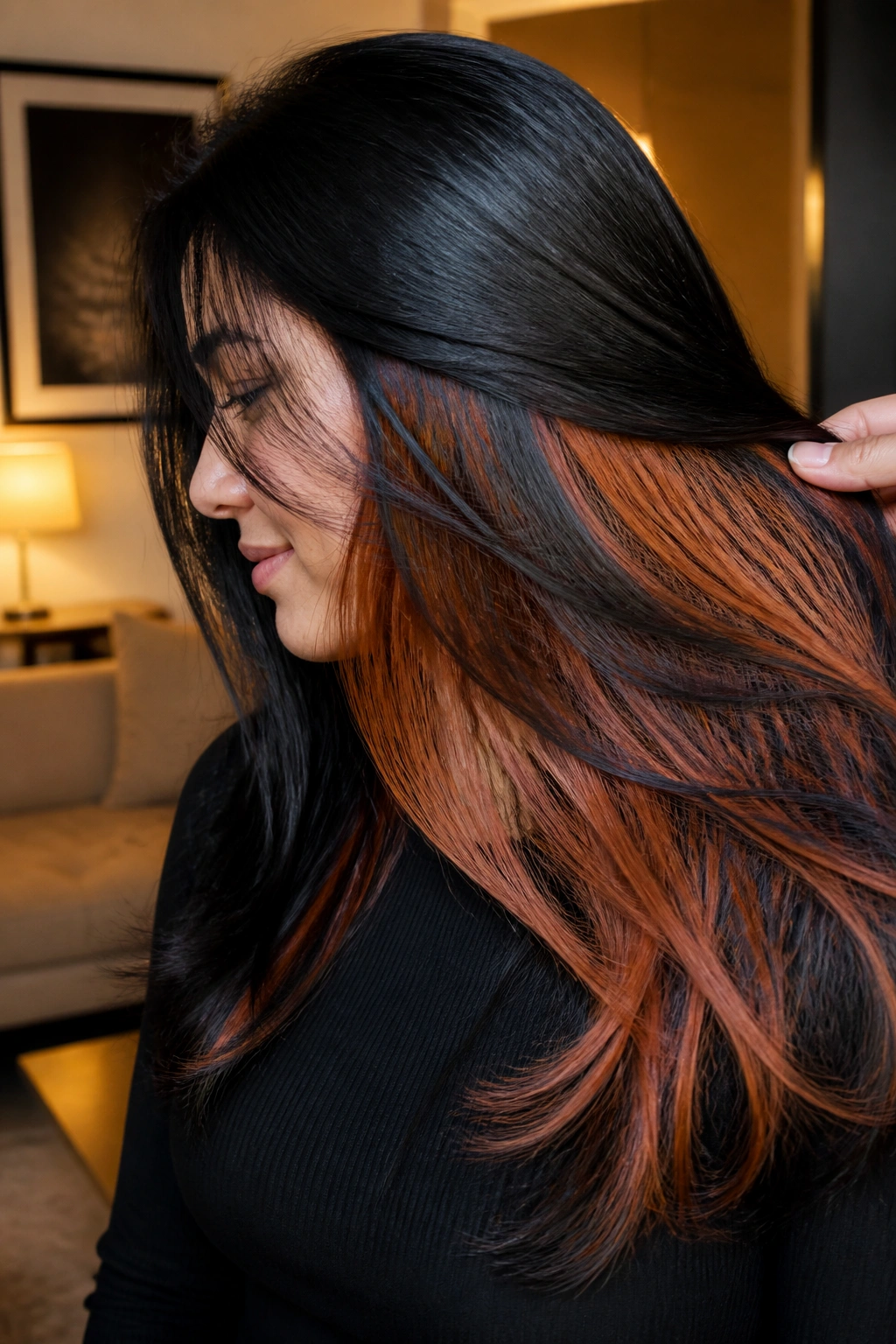
You pull your hair into a clip, and there it is. Copper.
That little surprise is the whole reason peekaboo panels have staying power. On black hair, hidden copper sections give you a flash of warmth without turning the entire head into copper. It is a smart way to wear color if you like contrast but do not want it in your face every second.
What Makes the Placement Work
Peekaboo panels sit under the top layer, usually around the nape, behind the ears, or beneath the outer crown. That means you get the color only when the hair moves, falls forward, or gets tucked behind one ear.
- Ask for fine panels, not thick blocks, if you want a softer reveal.
- Copper usually needs lifting to about a level 6 or 7 to show properly against black hair.
- This looks good on bobs, lobs, layered cuts, and curly hair.
- Grow-out is less stressful because the hidden placement makes roots easier to live with.
This is not the choice for someone who wants subtle and invisible. It is for someone who wants a little private drama.
7. Mahogany Melt
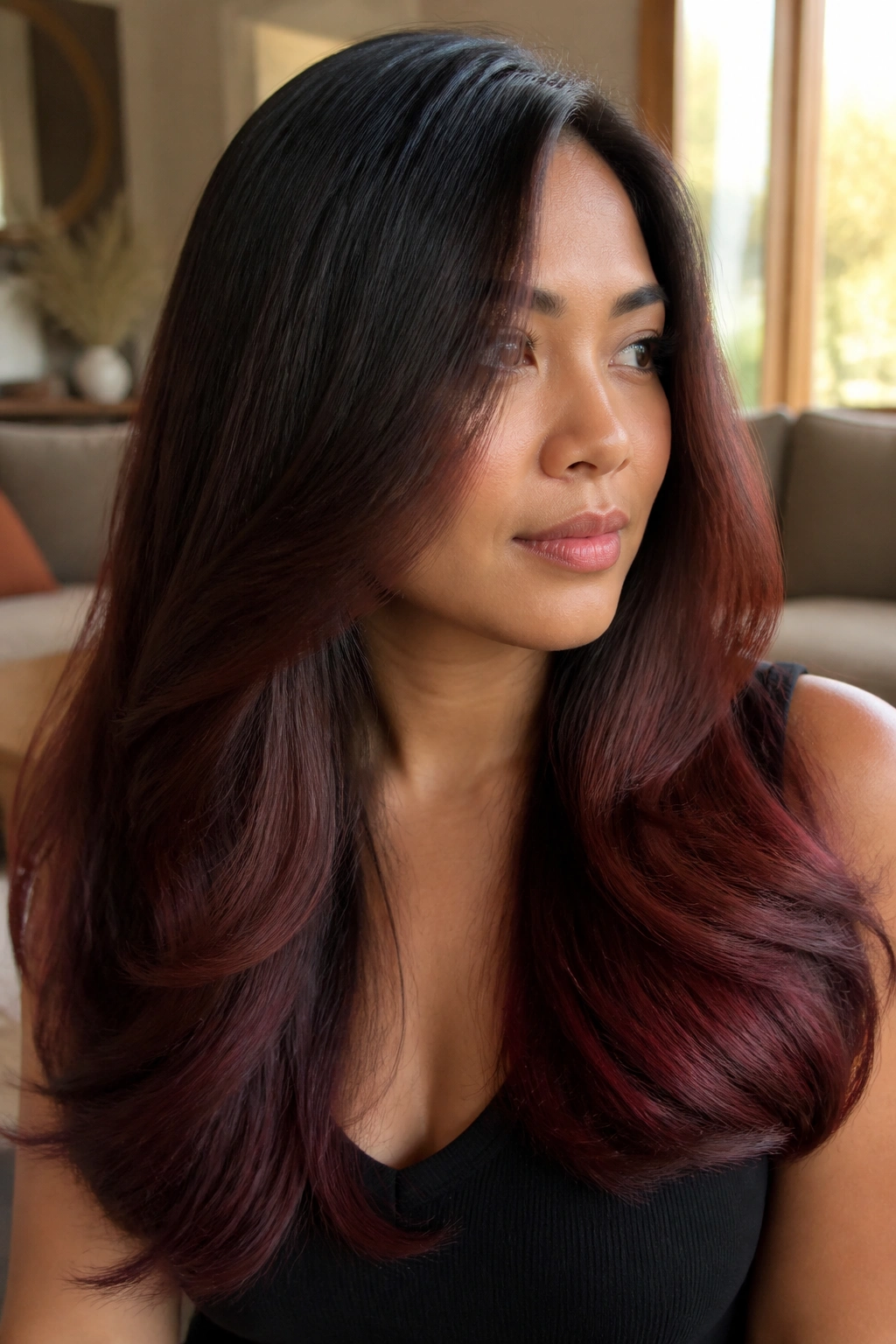
Mahogany is the color for people who like red but do not want to look red. That sounds picky, but it is a real difference.
On shiny black hair, a mahogany melt reads like polished wood. The red stays low and deep, and the brown keeps the whole thing calm. It is much easier to wear than a bright auburn because the color sits in the dark range instead of pulling away from it.
Why This Tone Feels Rich
A good mahogany melt usually starts with a deeper root shadow and eases into chestnut-red through the mid-lengths. That soft transition is the point. There should be no hard line, no stripe, no sudden jump from black to red.
This look is especially good if you wear your hair smooth. It catches light on the bend of a blowout in a way that makes the color feel alive without needing visible highlights. On curly hair, the different tones show up in the coil pattern, which is where mahogany gets interesting.
If you want this shade, ask for red-brown with a violet base. That keeps the warmth rich instead of coppery.
8. Burgundy Face Frame
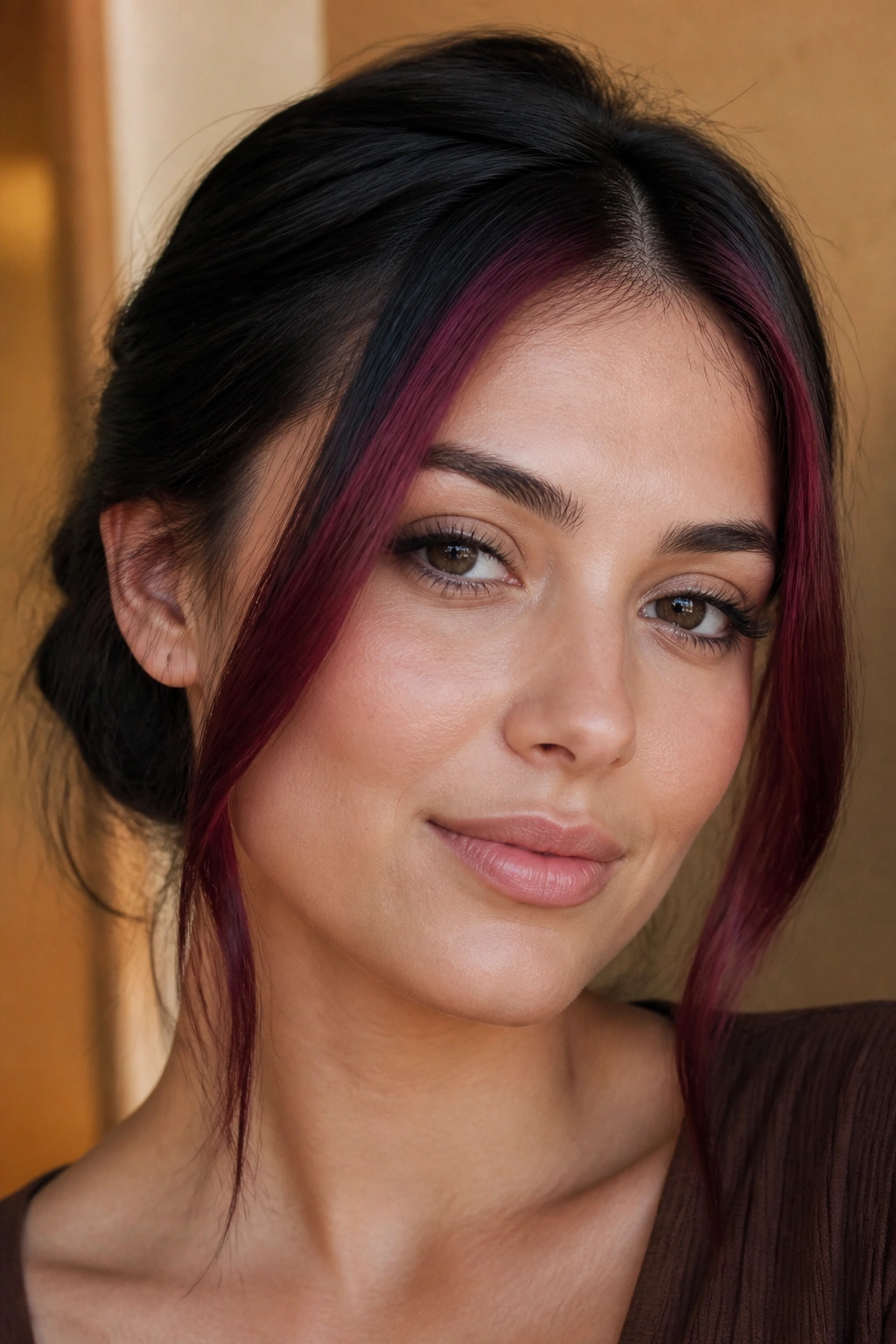
A burgundy face frame does a lot of work with very little color.
That is the part I like most. You do not need a full head of burgundy to get a change. Two pieces around the face can soften a black base, bring light toward the cheeks, and make the whole cut feel more deliberate.
The Right Width and Placement
The front pieces should be about 1/2 inch to 1 inch wide, depending on how bold you want the result. Thinner pieces look elegant and easy to wear. Thicker ones read more like a statement stripe, which can be fun, but it changes the feel fast.
Burgundy works best when the color starts a little below the root and lands around the cheekbone or collarbone. That keeps the face frame from looking like a helmet line. If you have longer hair, let the burgundy trail into the first few layers so it blends when the hair moves.
- Best for round or oval faces that benefit from a little vertical line.
- Looks sharp with middle parts and curtain bangs.
- Needs a toner refresh if the red starts leaning brown.
- Can be done with only two front foils if you want a low-commitment version.
It is one of those looks that changes the whole mood of the cut without asking for a full-color overhaul.
9. Caramel Money Piece on Shiny Black Hair
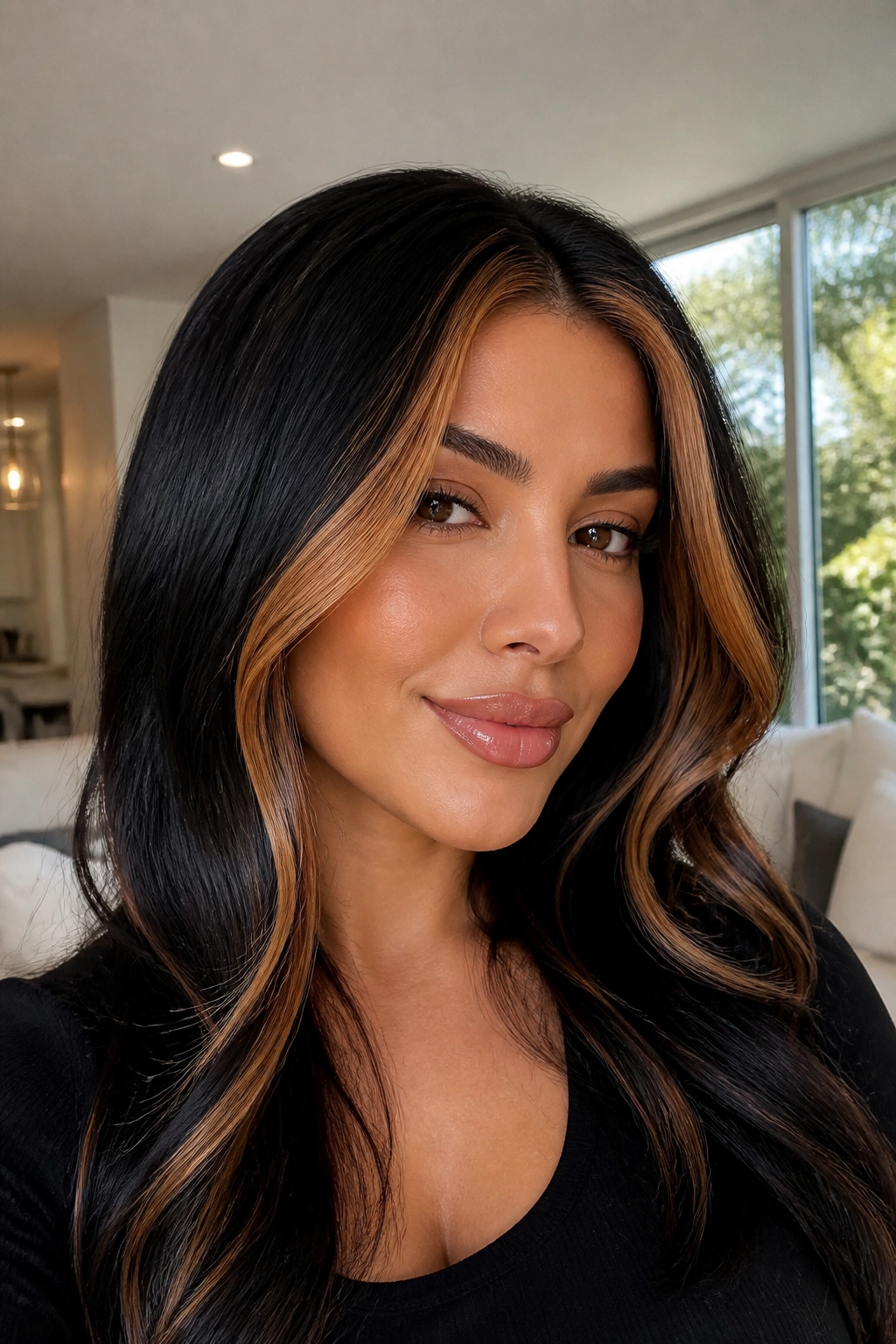
This is the fastest way to make black hair look brighter without changing the whole head.
A caramel money piece sits right where the eye lands first. That means even a small slice of warm brown can change the shape of the face and make the dark base feel lighter by contrast. On shiny black hair, the difference is dramatic in the best way.
Why It Pops on Shiny Black Hair
The trick is contrast. If the caramel is too close to the base, it disappears. If it gets too light, it can look disconnected. A warm level 7 or 8 caramel, kept soft and golden rather than yellow, usually lands in the sweet spot.
It also helps to keep the piece slightly thicker at the root and softer through the ends. That gives it a natural feel when the hair is pulled back or tucked behind the ears. Two thin money pieces can work too, especially on a center part, but they need to be placed with care or they start looking fussy.
If you want the look to feel modern, keep the caramel warm but muted. Bright beige on black hair can be a little harsh unless the rest of the color is also light.
10. Midnight Teal
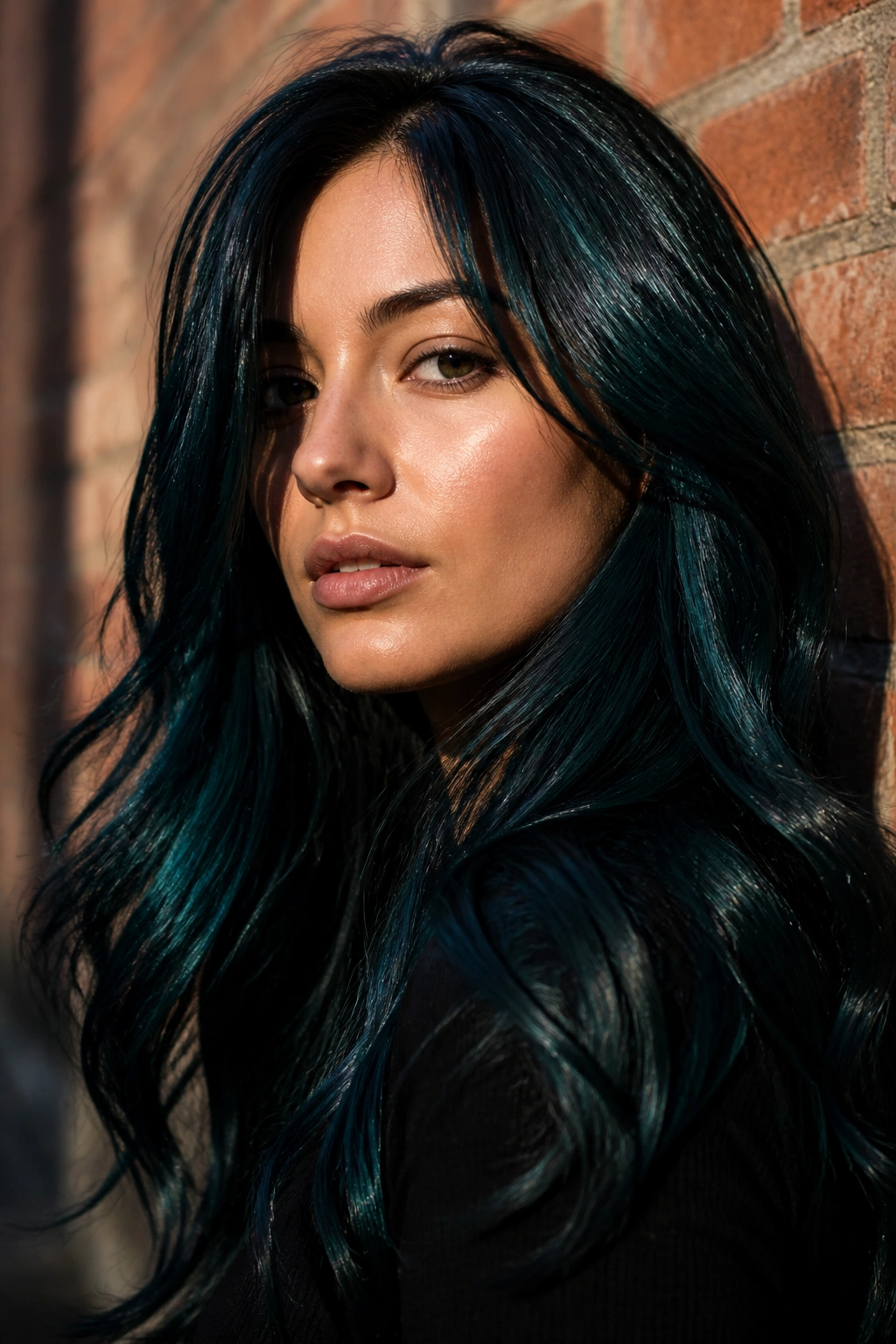
Midnight teal is not shy. It does, however, know how to behave.
On black hair, teal can read almost invisible in low light, then flash green-blue the second you step into daylight. That is what makes it interesting. It has the moodiness of dark hair and the surprise of a fashion tone, all in one move.
The smartest version of this look keeps the teal deep. Think peacock feather, wet stone, sea glass in shadow. Not neon. Not pool water. Those brighter versions can look fun on paper and a bit chaotic in real life, especially if the hair is very dark to start with.
If you want the color to show clearly, you will need lightened panels or ends. A full teal on black hair can still work, but it often reads as a dark sheen unless the base has been lifted first. That is fine if you like subtlety. It is not fine if you expect a bold turquoise finish.
I like this color on longer cuts, where the movement has room to show the shift in tone. On a blunt bob, it feels graphic. On waves, it feels richer. And yes, the fade matters here; teal can drift into smoky green if the hair is porous, so a color-safe mask and cool water rinse help keep it from going swampy.
11. Mushroom Brown Gloss
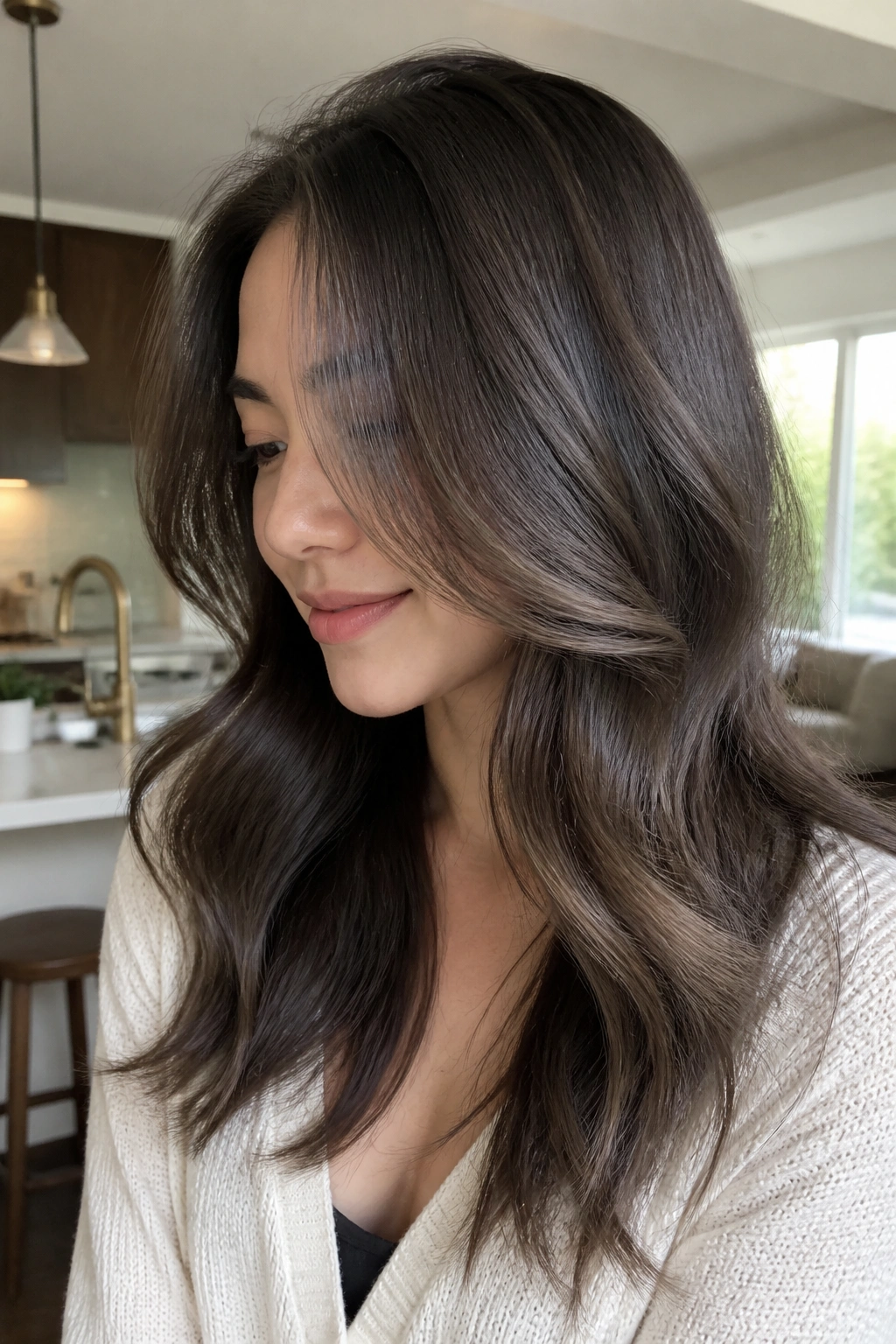
Mushroom brown is what happens when you want dimension and do not want warmth.
That sounds simple, but it solves a real problem. A lot of dark-hair color ideas lean red or copper because those tones show easily. Mushroom brown takes the opposite route. It stays cool, taupe, and slightly smoky, which gives shiny black hair a soft brown shift without making it look warm.
The Tone Range to Ask For
If you are sitting in a salon chair, the words that matter are ash beige, taupe brown, and smoky brunette. Those are the tones that keep the color from turning orange or muddy against black hair.
This look is often done best as a gloss over pre-lightened pieces or as very soft lowlights through the mid-lengths. You do not want a heavy, blocky result. Mushroom brown should look like shadow with a hint of beige, not a second color fighting the base.
- Good for straight cuts, blunt bobs, and sleek ponytails.
- Best if you like cool makeup and silver jewelry.
- Needs regular toner refreshes because ash tones fade fast.
- Looks especially clean on hair with a glossy finish, not fluffy texture.
It is a quiet shade, but not a boring one. There is a difference.
12. Dusty Rose Brown
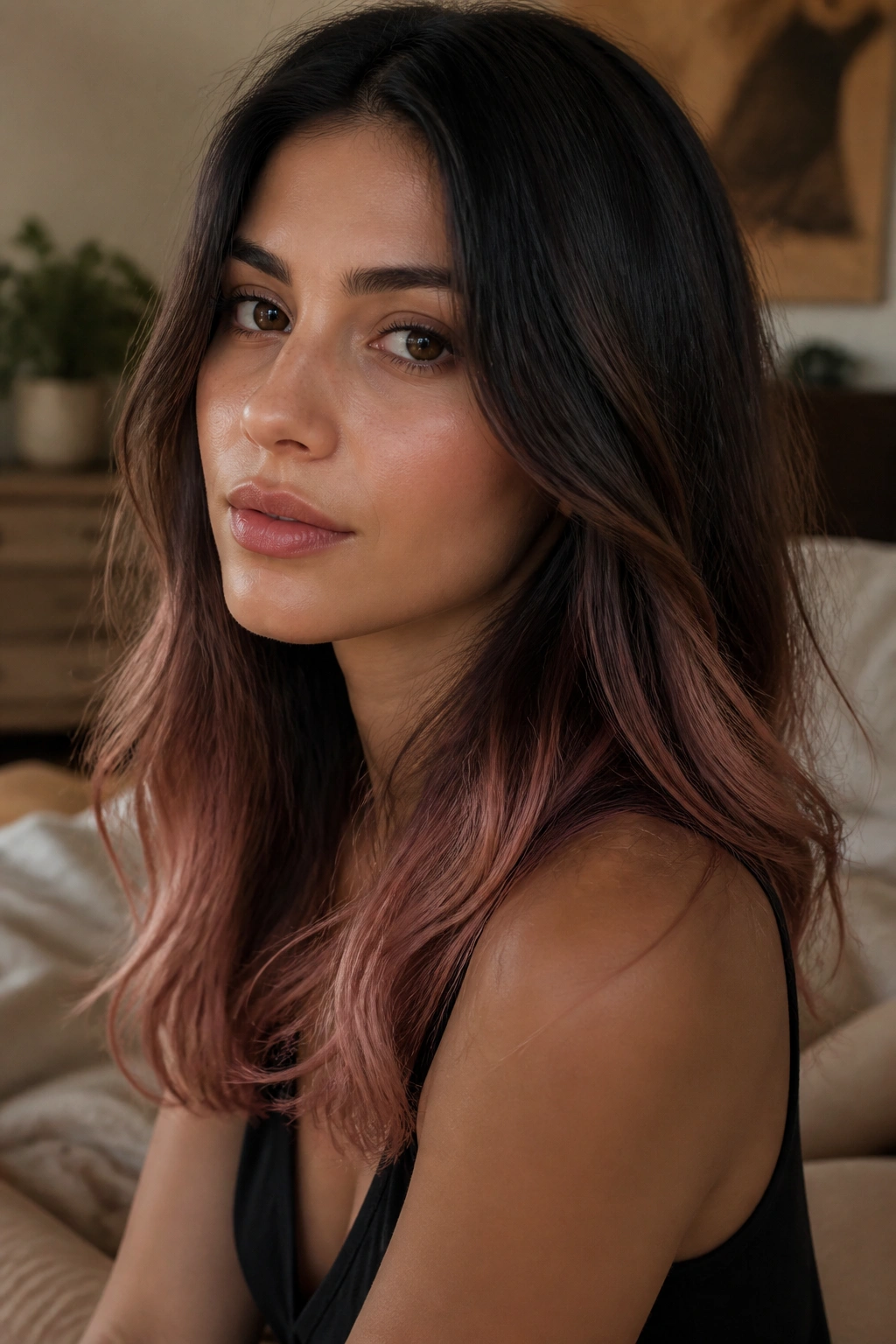
Can pink work on black hair without looking sugary? Yes, if you keep it muted and brown-backed.
Dusty rose brown is one of the prettiest ways to soften black hair without losing depth. The rose sits under the brown, so the color reads more like blush over cocoa than anything cartoonish. That is the whole appeal. It feels a little unexpected, but still wearable.
Best Placement
The safest placement is on the mid-lengths and ends, especially if you are nervous about committing to a vivid fashion shade. A rose-brown gloss over pre-lightened pieces can be enough. If you want more impact, ask for face-framing sections or a soft melt from dark roots into rosy ends.
This shade likes movement. Curls and loose bends make the rose visible in flashes, while straight hair gives it a smoother, more muted finish. It also pairs well with longer layered cuts because the color can break up naturally.
If you are choosing between dusty rose and plum, go rose if you want soft and airy, plum if you want moody and deep. Different mood. Same dark base, very different effect.
13. Silver Smoke Ends
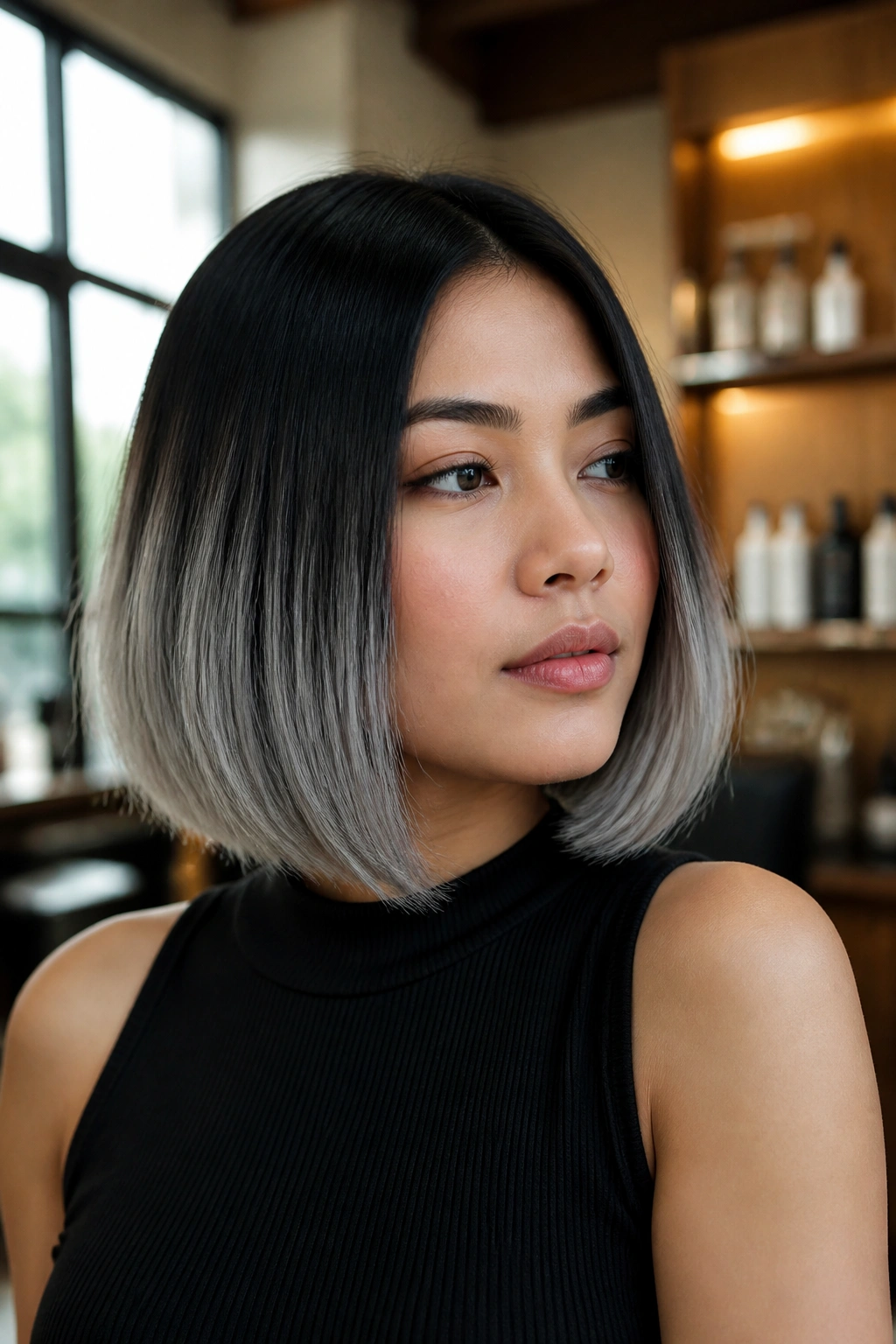
The blunt bob with silver smoke ends is a mood.
So is the long layered cut with a smoky fade. Either way, the idea is the same: keep the roots black and let the ends drift into silver, charcoal, or pewter. It is sharp, and it does not pretend to be subtle.
What You Need for the Gradient
This look usually needs serious lightening on the ends, because silver has almost no mercy for dark pigment. If the lift stops too early, the result can turn brown-gray instead of true silver. That is why strand tests matter here. The hair has to be able to handle the lift before the toner ever touches it.
- Works best on hair that can be lifted safely to a pale yellow.
- A toner with violet-blue undertones keeps the silver from going brassy.
- Blunt cuts make the contrast look graphic.
- Long hair gives the fade more room, which makes the transition feel softer.
Silver smoke is high maintenance, no question. But if you like dark roots and a cold metallic finish, it can be worth the upkeep.
14. Honey Babylights for Shiny Black Hair
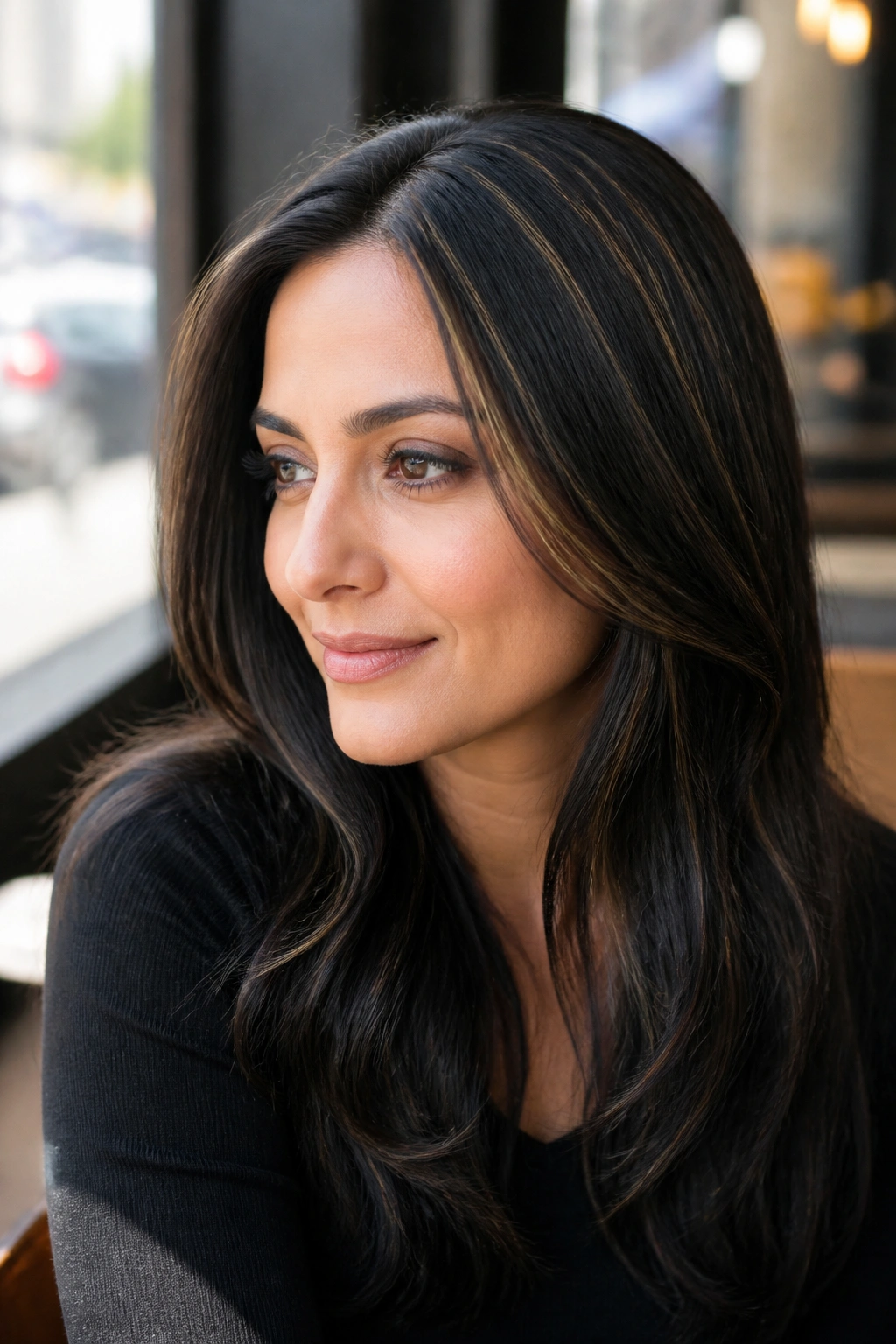
Tiny highlights beat chunky ones every time on black hair if you want softness.
Babylights are so fine that they look more like sunlight than dye. That is the charm. On shiny black hair, honey-toned babylights give a warm shimmer around the crown, temples, and top layers without changing the whole identity of the hair.
Why Fine Highlighting Wins
A few delicate foils placed close together can create a soft glow that chunky stripes never manage. You are not looking for a dramatic blonde moment here. You are looking for the feeling that the sun found your hair and left a trace.
Honey works because it is warm, but not too yellow. A level 8 honey-beige usually sits nicely against black hair if the lift is clean and the tone is controlled. Keep the brightest pieces near the hairline and part line so the effect shows where people actually look.
This is the look for someone who wants light around the face without losing the black base. It is flattering, easy to wear, and less severe than a full highlight map.
15. Warm Bronze Glaze
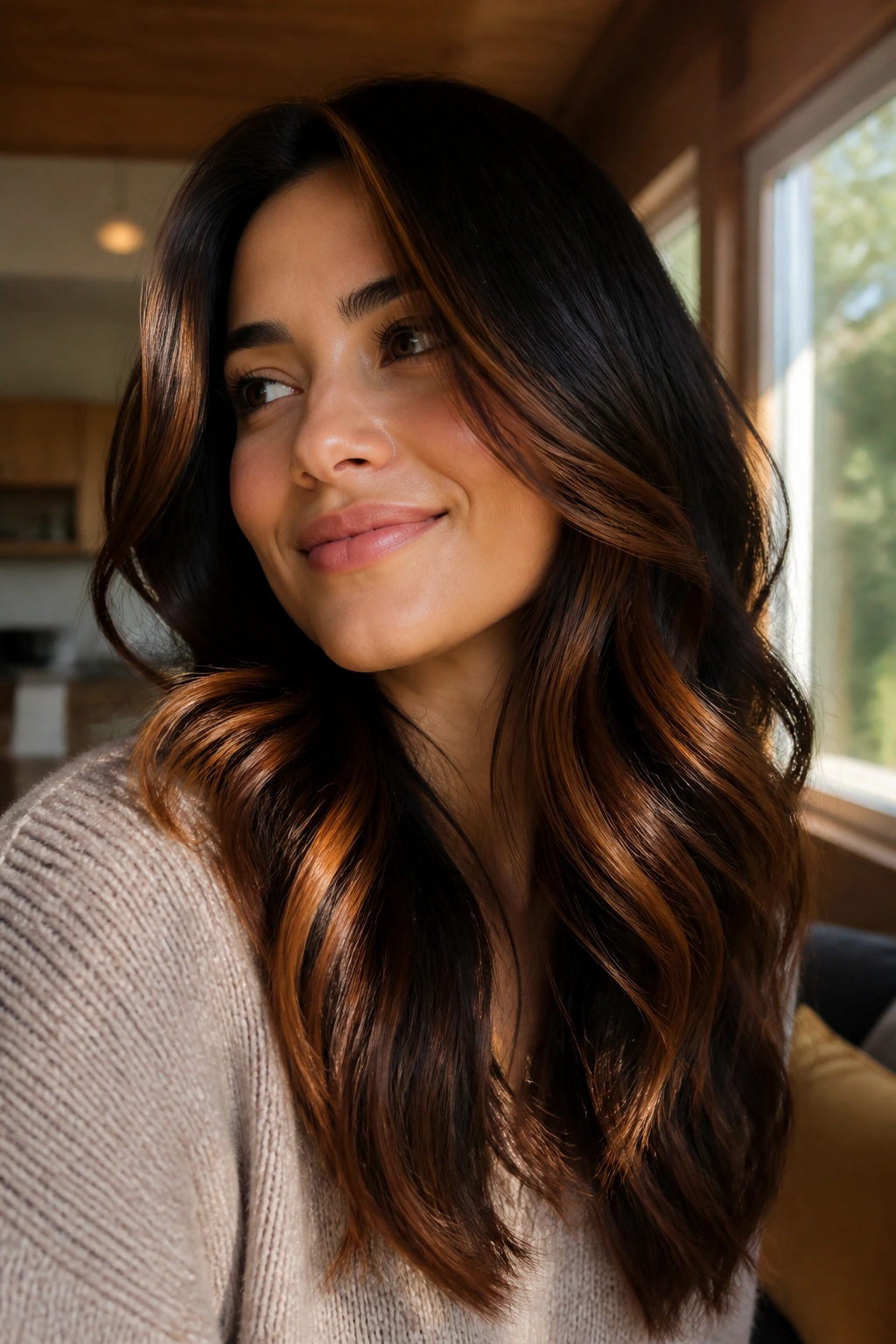
Not every good color look has to shout.
Warm bronze is proof. On shiny black hair, a bronze glaze can make the whole head look richer, smoother, and more reflective without adding obvious streaks. The shade sits between brown, gold, and soft copper, which gives you warmth without the heavy red pull that some darker hair colors get.
This is the look I keep coming back to for people who want to stay dark but not flat. A bronze gloss over black hair can catch light on the ends, along layers, or just around the face, and it feels polished in a way that chunky color sometimes misses. If the hair is already healthy and glossy, bronze makes that shine easier to see. If the hair is dry or over-processed, though, it can expose the roughness, so a strand test and a good conditioner matter more than most people want to hear.
For the cleanest result, ask for gold-copper reflect with a brown base and keep the roots deeper than the mid-lengths. That gives the color a smooth fade and keeps the black from disappearing. If you want one look that feels wearable in almost any setting, this is the one I would point to first.
A final practical note: check the color in daylight and under indoor bulbs before you leave the salon chair. Black hair changes a lot with light, and the shade that looks calm in one room can look louder five steps away. That is not a flaw. It is the whole point.
