



Tan skin can make blonde look richer than the swatch ever did on paper. The trick is choosing a shade that works with your undertone instead of fighting it, because the wrong blonde can flatten warm skin fast — too icy, and your face can go a little gray; too orange, and the whole thing turns brassy in a hurry.
That’s why blonde hair color ideas for tan skin are never one-note. Golden tan skin often loves honey, caramel, and butter tones. Neutral or olive tan skin can pull off beige, champagne, and even some cooler blondes if the toner is soft enough. And if your tan runs deep, bright platinum can look sharp and expensive, but only when the root and gloss are handled with care.
The shades that work best usually have one thing in common: they don’t sit too far from the skin’s natural warmth or depth. Dimension matters more than flatness. A blonde with ribbons, shadow roots, or a soft melt tends to look better on tan skin than a one-size-fits-all pale blonde, because the contrast feels deliberate instead of harsh.
The easiest way to think about it is this: do you want your blonde to glow, to soften, or to make a statement? The answer changes the tone, the placement, and even how often you’ll be sitting in a salon chair.
1. Honey Blonde Balayage for Tan Skin
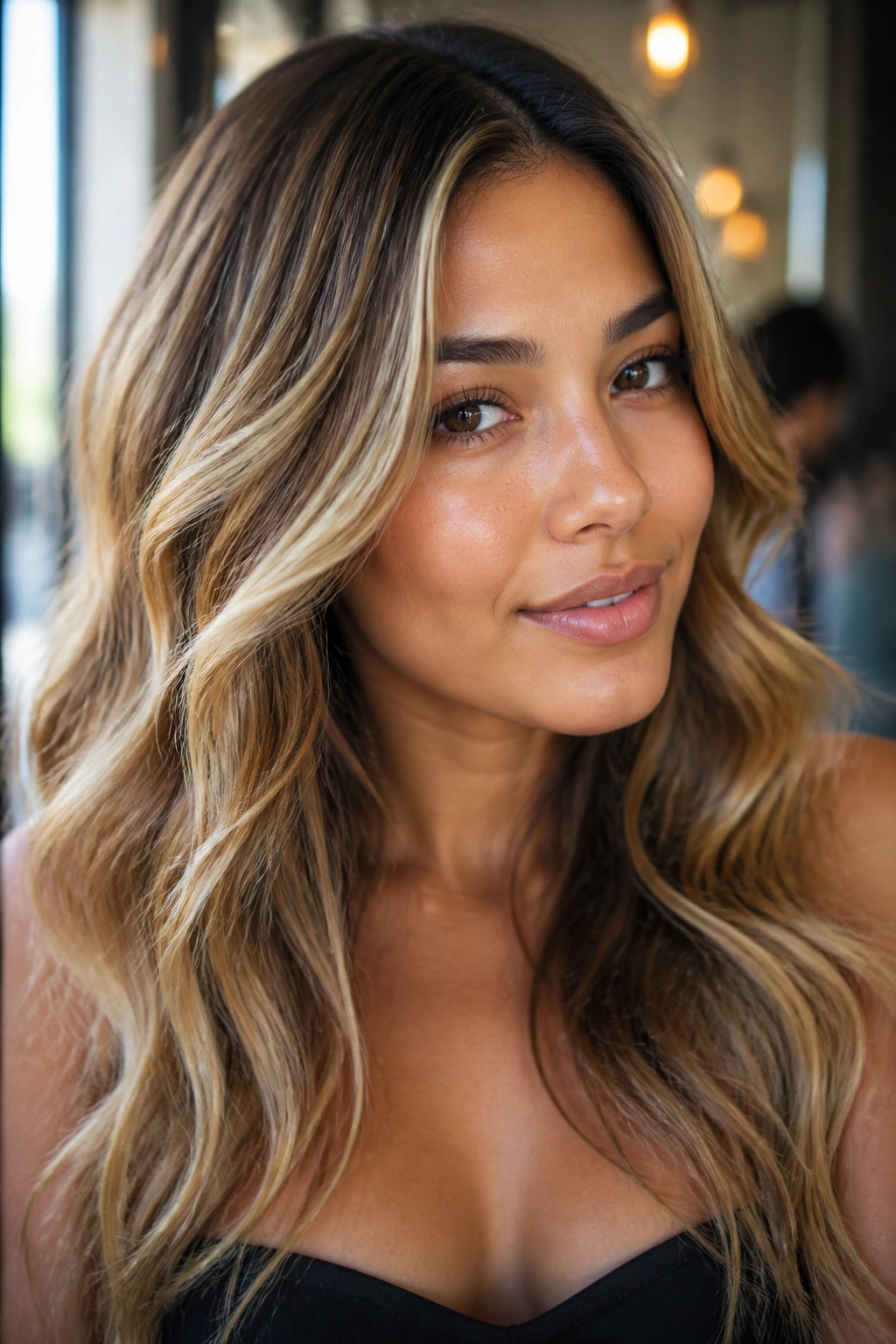
Honey blonde is the safe bet that doesn’t look safe at all. On tan skin, it brings out warmth in the cheeks and forehead in a way flat ash blondes usually don’t. The painted ribbons catch light around the face, through the ends, and across the top layer, which keeps the color from looking heavy.
Why It Flatters So Easily
Honey sits right in that sweet spot between gold and beige, so it rarely clashes with warm or golden tan undertones. It also grows out softly, which matters more than people admit. A balayage that starts a little lower on the head can give you six to ten weeks of easy wear before it starts looking obvious.
The look works best on level 6 to 8 brunettes who want brightness without a harsh line. Ask for soft, hand-painted ribbons and a gloss that leans golden rather than orange. Too much copper and it can go brassy. Too little warmth and the whole point gets lost.
- Best on warm or neutral tan skin
- Needs a gloss refresh every 6 to 8 weeks
- Looks especially good on waves and soft curls
- Works with low-contrast makeup, bronzer, and peach blush
Pro tip: keep the root a shade deeper than the mids. That tiny drop in depth makes the honey color look richer.
2. Champagne Blonde for Tan Skin
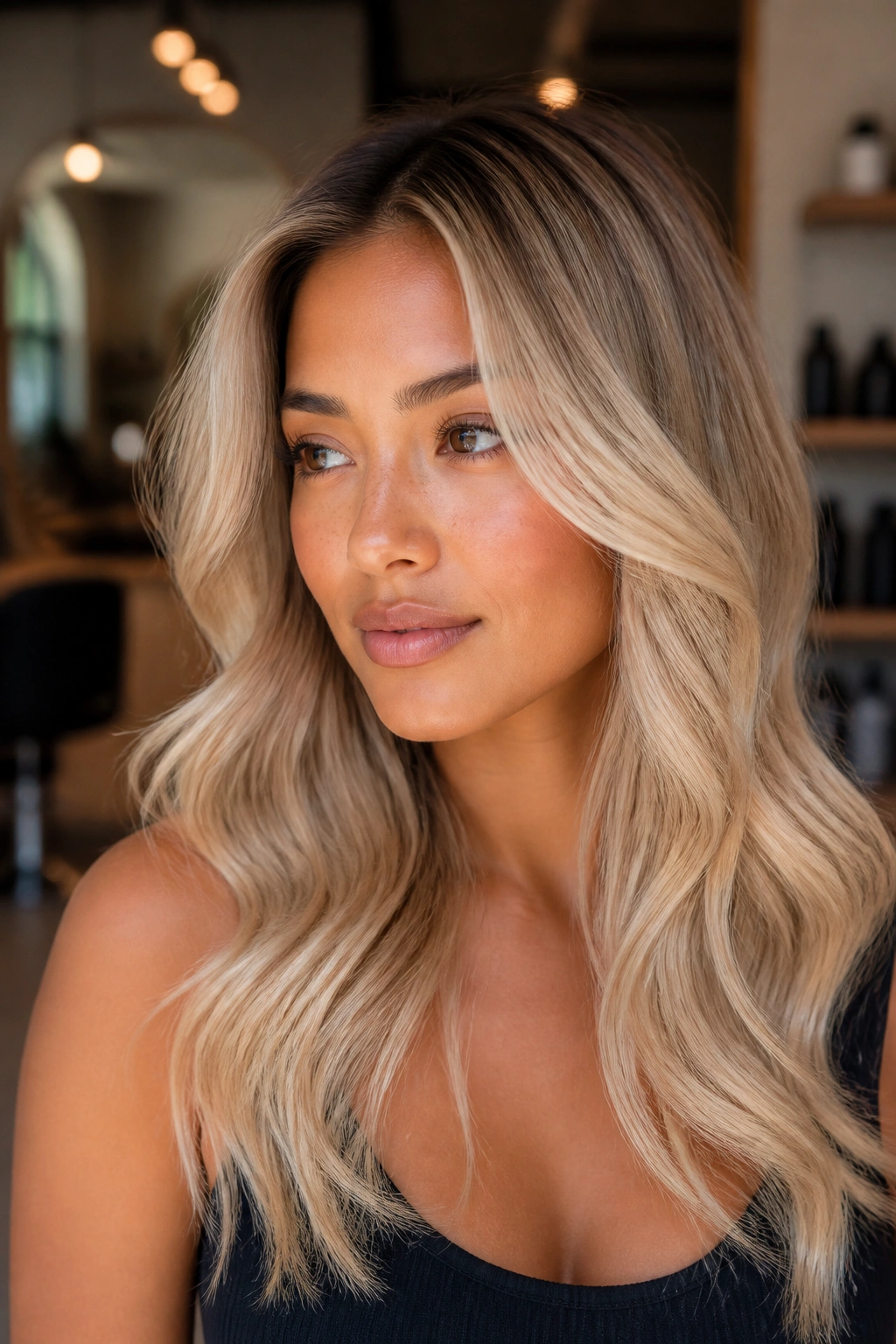
Champagne blonde has a little sparkle to it, but not the loud, overblown kind. It’s a pale beige blonde with a soft sheen, and on tan skin it can look chic instead of washed out. The key is keeping the tone creamy, not chalky.
A lot of people assume champagne blonde is only for fair skin. Not true. Tan skin with neutral undertones can wear it beautifully, especially if the roots are melted in with a beige shadow root. That gives the face enough definition so the blonde doesn’t sit like a helmet.
This shade likes a polished finish. Blow it smooth, add loose bends, and the color starts behaving like silk. It also pairs well with a glossing service, because champagne can lose its soft shine if it’s over-processed.
What to ask for
- Level 8 to 10 lightening
- Beige-violet toner, not a harsh silver one
- A soft root melt of 1/2 inch to 1 inch
- Face-framing brightness around the cheekbones
It’s elegant. Not fussy. That’s the draw.
3. Beige Blonde with Shadow Root
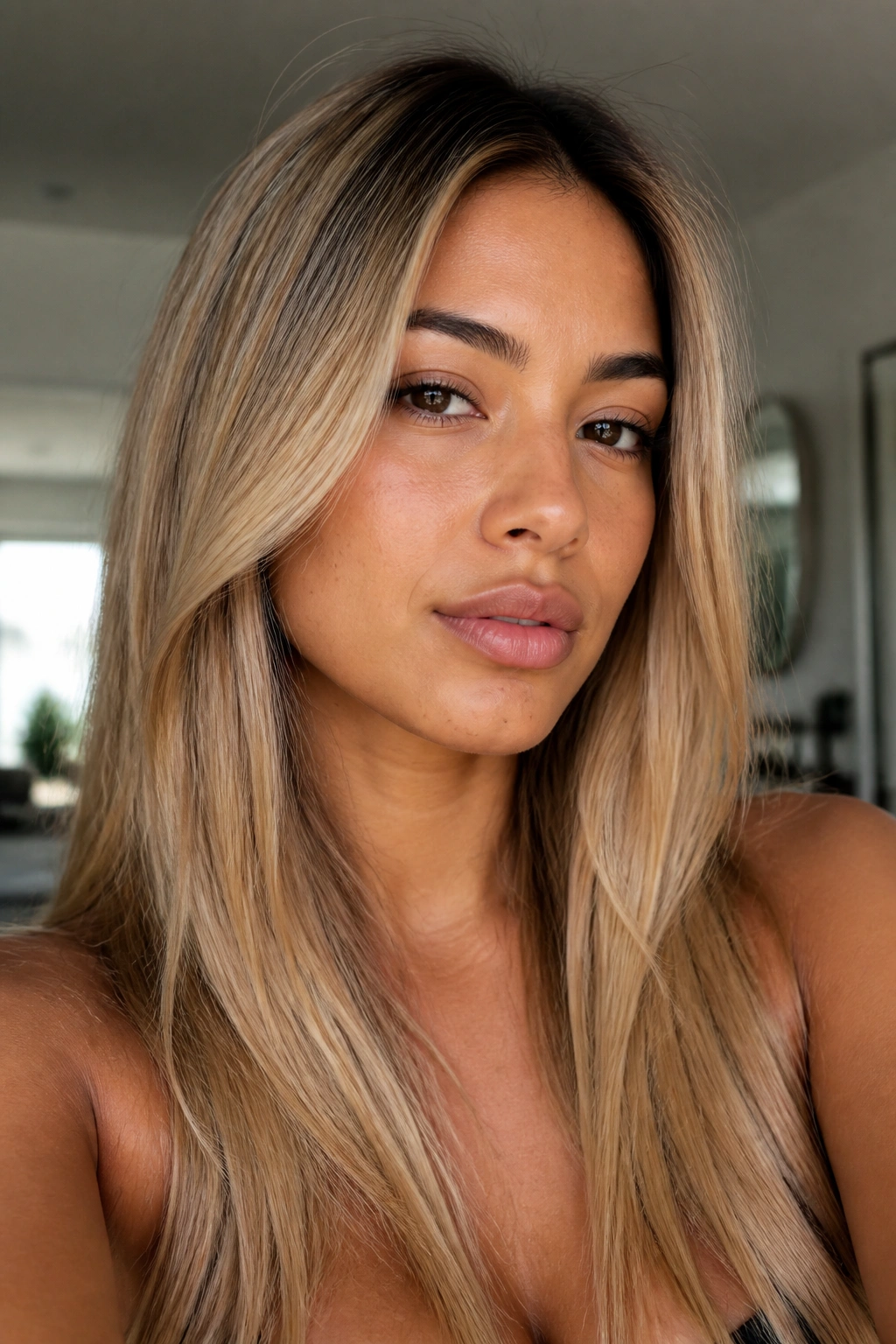
Beige blonde with a shadow root is the one I’d point to first for olive-tan skin. The beige keeps things soft, and the shadow root keeps the hair from looking stripy as it grows. It’s the blonde version of a good foundation — blended, not blank.
The root shadow does a lot of quiet work here. It gives your hair depth at the scalp, so the lighter pieces don’t make your complexion look too flat. Tan skin usually needs that contrast, even when the color is light overall.
Why the Root Matters
Without a soft root, beige blonde can tip into “too done” territory. With one, it looks lived-in in the best way. If your natural base is dark blond to medium brown, this shade can save you a lot of salon maintenance too.
- Best for low-maintenance wear
- Looks clean on straight hair and tousled bobs
- Helps hide regrowth for 8 to 12 weeks
- Works well with beige, taupe, or mushroom toners
Use this if: you want blonde that reads expensive without screaming for attention.
4. Butter Blonde Money Piece
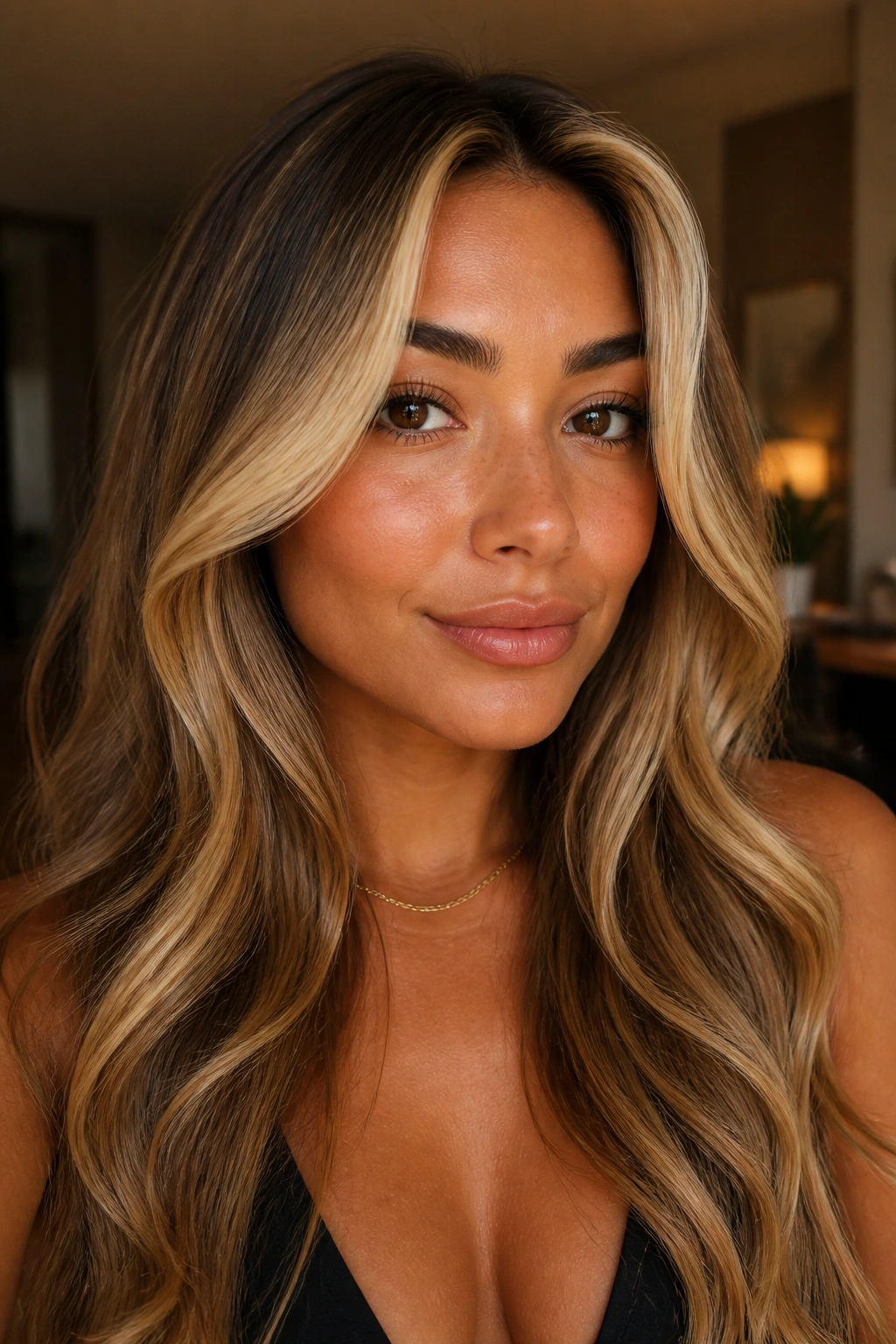
A butter blonde money piece is a strong move when you want brightness near the face and less work everywhere else. The front sections get lifted lighter than the rest, usually around the cheekbone and jawline, and that little hit of color can wake up tan skin fast.
I like this look on layered cuts because the bright front strands move. They don’t sit there looking like paint. They bend, they frame, they soften. When the blonde is creamy and buttery instead of yellow, the effect feels sunlit, not stripy.
You can keep the body of the hair more grounded — think honey beige, light brown, or soft bronde — and still get the payoff of blonde around the face. That’s useful if you’re nervous about going full blonde or if your hair gets dry easily.
Best styling partners
- Blowouts with rounded ends
- Beachy waves
- Curtain bangs
- Lob cuts and long layers
If you only want one visible blonde change, this is one of the smartest places to spend it.
5. Caramel Blonde Ribbons
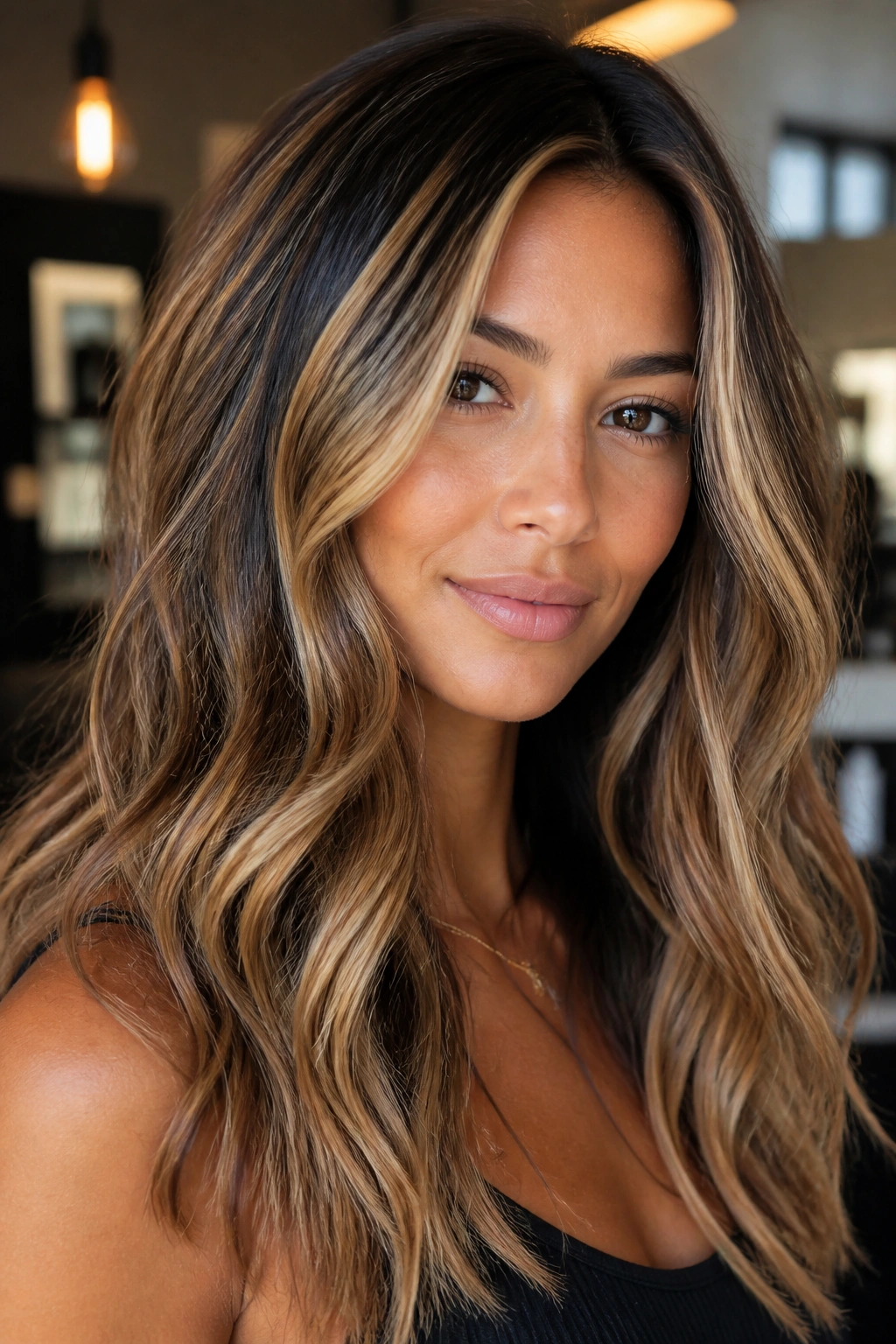
Caramel blonde ribbons are for the person who wants dimension, not drama. The blonde strands weave through a darker base and create a warm, glossy contrast that tan skin wears easily. Nothing looks too severe here, and that’s exactly why it works.
The color reads almost like sunlight caught in a brunette base. You see warmth first, then brightness. That makes the skin look smoother and a little more rested, which is honestly half the battle with hair color.
This look can be built with foils, balayage, or a mix of both. I prefer a mix when the hair has a lot of layers, because the ribbons look more natural as they move. Keep the toner warm-beige, not orange. There’s a thin line between caramel and brass, and you do not want to cross it.
A good caramel blonde also plays well with tan skin because it doesn’t fight the complexion’s natural depth. It supports it.
6. Sandy Blonde Lob
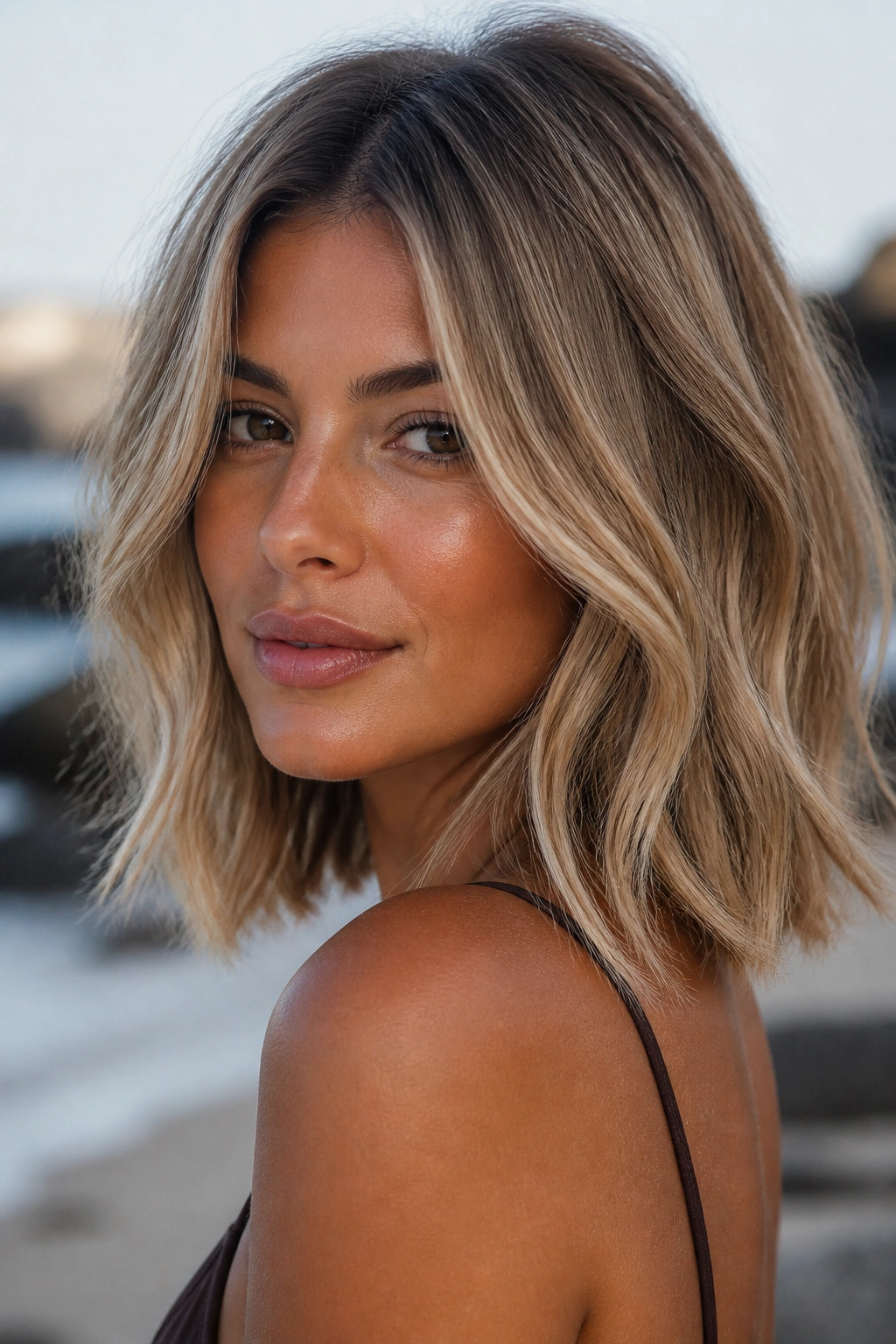
Sandy blonde feels cooler and drier than honey blonde, but in a good way. It has that beach-rinsed look people keep chasing, only it stays soft enough for tan skin when the tone leans beige instead of gray.
A lob makes the color look modern. The straight lines of the cut keep the shade from turning messy, and the length gives the blonde room to show off at the ends. On tan skin, that balance matters. If the cut is too long and too layered, sandy blonde can disappear into the hair. If it’s too blunt, it can feel stiff.
Where It Works Best
A sandy blonde lob is strongest on neutral tan skin and on skin with olive undertones. Pair it with a deeper root, a soft bend through the mid-lengths, and just enough shine spray to stop it from looking dusty.
- Length: chin to collarbone
- Tone: beige, sandy, or soft wheat
- Finish: matte-ish waves or polished straight styling
- Best for: people who want blonde without obvious warmth
It’s restrained in the right way. No fluff.
7. Creamy Vanilla Blonde
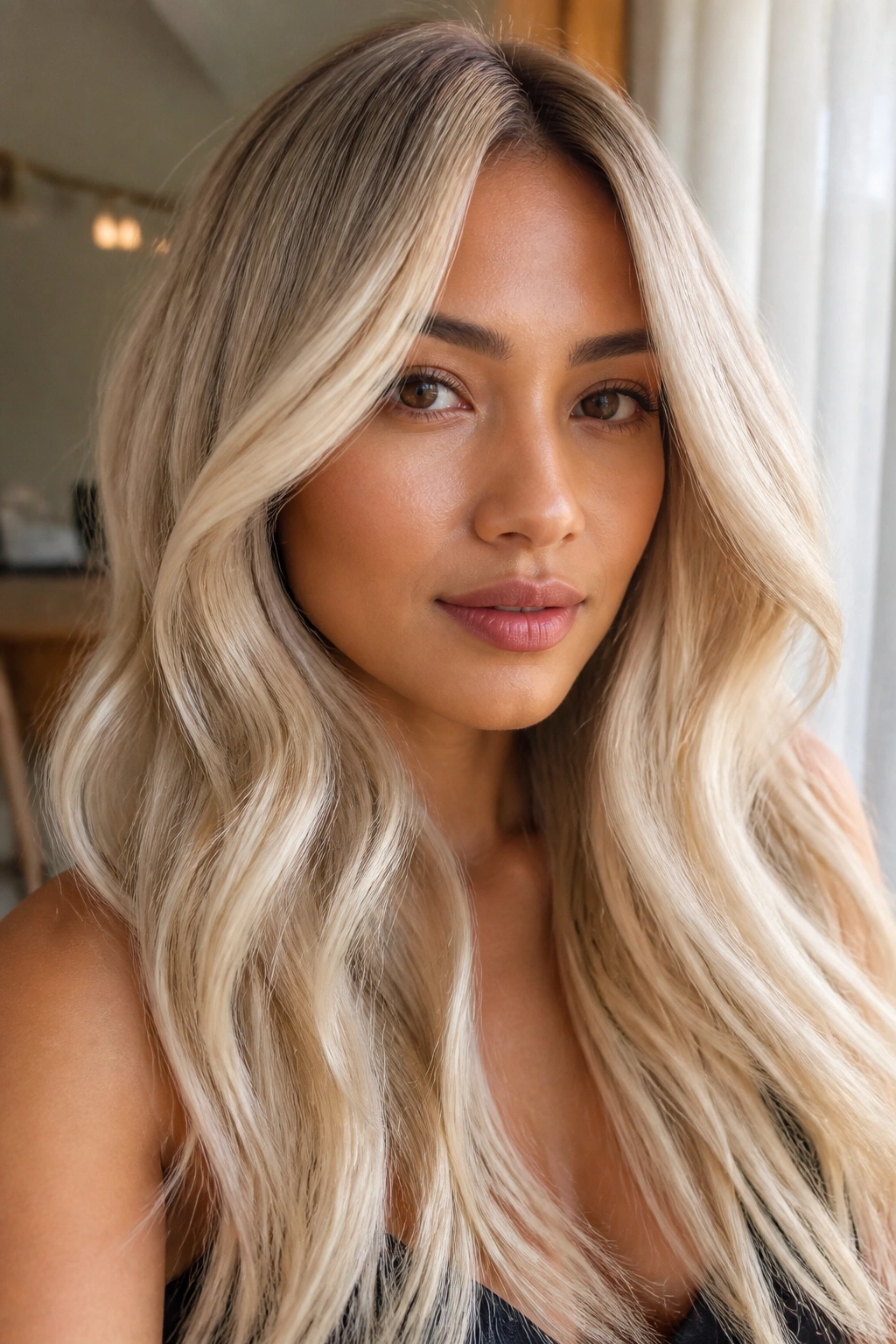
Creamy vanilla blonde is brighter than beige and softer than platinum, which is why it can look so good on tan skin when the undertone is right. The name sounds sweet, and the color usually is — pale, smooth, and light without being icy.
What Makes It Different
This shade lives or dies by tone. If the blonde goes too white, tan skin can start looking muddy. If it leans too yellow, the whole style loses its fresh feel. The sweet spot is a smooth vanilla gloss with a little pearl mixed in, so the result feels creamy instead of harsh.
I like this color on hair that can hold shine. Fine hair can look almost glassy with vanilla blonde, while thicker hair needs careful layering so the color doesn’t sit in one solid block. A root shadow helps too, even if it’s tiny.
Creamy vanilla blonde is one of those shades that looks more expensive when the haircut is clean. Soft layers, curtain fringe, or a sleek bob all help. Messy ends can make it look accidental.
8. Toffee Blonde Melt
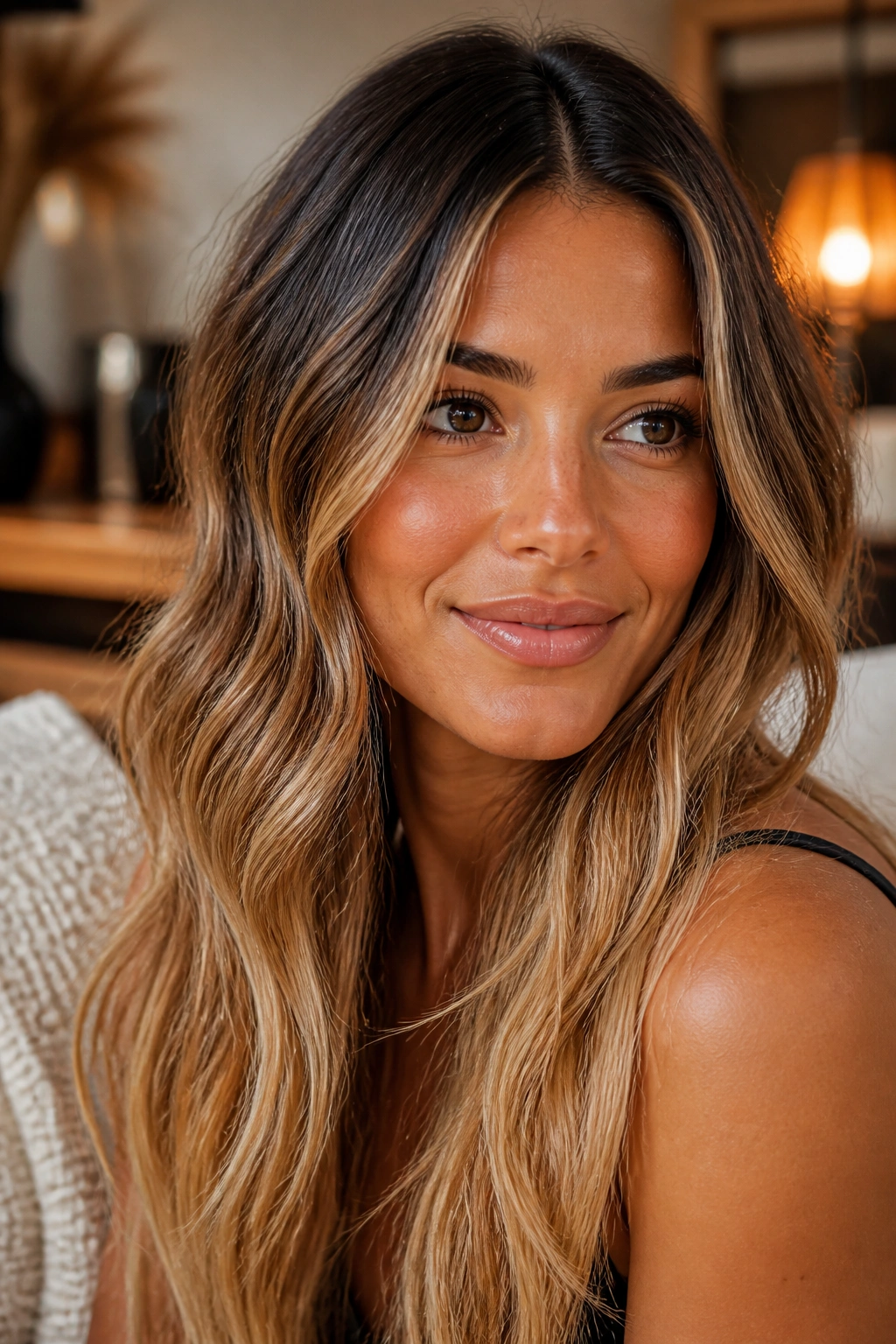
Toffee blonde melt is one of the easiest blondes to wear if you’re nervous about maintenance. It starts deeper at the root, drifts through warm toffee in the mid-lengths, and lightens toward the ends. On tan skin, that gradual shift keeps the face looking warm and defined.
Think of it like hair color that was burned in by late afternoon light. Not streaky. Not flat. The melt gives your skin room to breathe because the contrast is spread across the hair instead of sitting in one harsh band.
Quick Details to Ask For
- Root: level 5 to 6 depth
- Mid-lengths: toffee, caramel, or warm beige
- Ends: honey blonde or light gold
- Finish: glossy, not matte
It’s a strong option for long layers, especially if your natural color is brown and you don’t want to chase regrowth every few weeks. The darker root buys you time, and the blonde ends still give you that bright payoff. Simple idea. Good result.
9. Pearl Blonde for Tan Skin
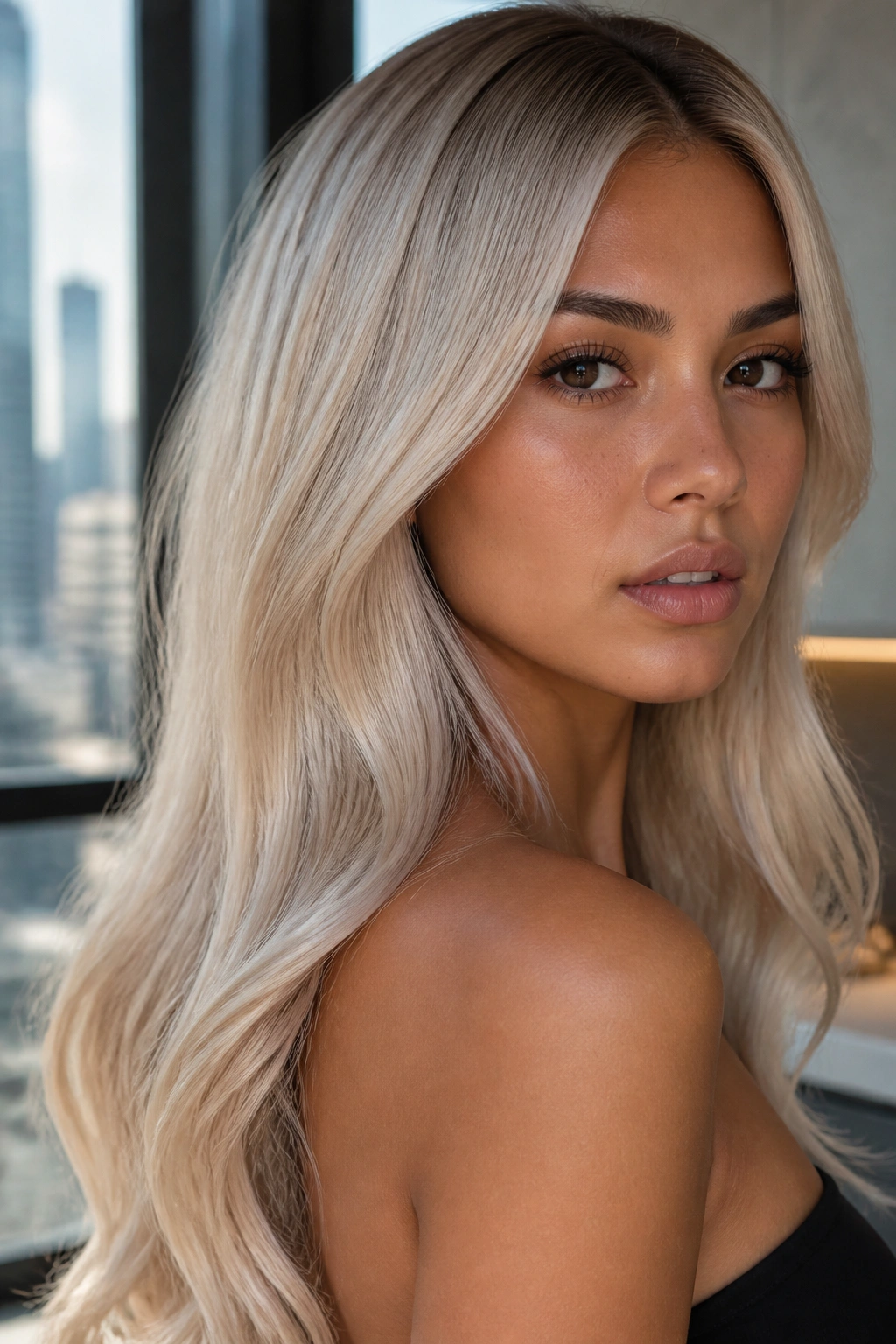
Pearl blonde has a cool, luminous cast that can be stunning on tan skin with neutral undertones. It’s not the same thing as harsh silver blonde. Pearl is softer, almost like a pale shell with a gentle sheen, and that softness is what keeps it from looking flat.
If your skin has a golden base, pearl blonde needs balance. A soft root, a peachy blush, or a warm brow can keep the face from going washed out. On neutral tan skin, though, this shade can look clean and polished in a way warmer blondes sometimes don’t.
Why It Works When It Works
The sheen matters more than the depth. Pearl blonde reflects light in a narrow, smooth way, so it gives the hair a silky look that pairs well with straight styles, sleek ponytails, and tucked-behind-the-ear cuts.
- Best for neutral tan undertones
- Needs violet shampoo sparingly, not every wash
- Looks sharp with gloss finishes
- Works well on bobs and long, glassy layers
A cool blonde can be tricky on tan skin. Pearl gets around that by staying soft.
10. Sun-Kissed Golden Blonde
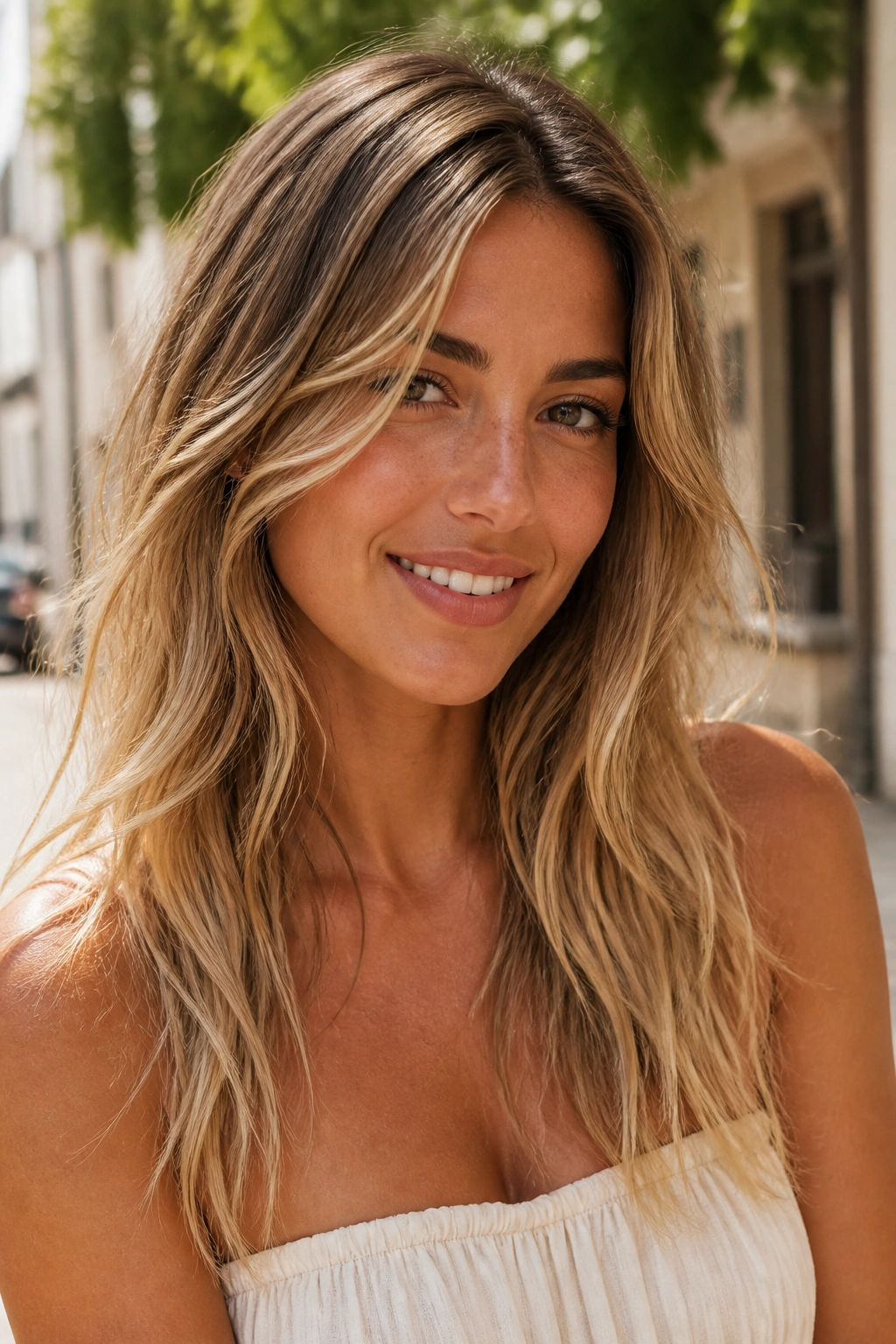
Sun-kissed golden blonde is the color most people imagine when they say they want to look like they’ve been outside all week, even if they absolutely have not. The difference is placement. The lightest pieces sit where the sun would naturally hit — crown, face frame, ends.
That matters on tan skin because the warmth feels believable. You are not fighting your complexion; you’re echoing it. A golden blonde with a soft highlight pattern can make warm skin look brighter and more even, especially around the temples and cheekbones.
The trick is to avoid one-note gold. You want variation: some darker gold, some honey, a few brighter pieces. If everything is the same tone, the hair can look yellow. If there’s dimension, it looks expensive and easy.
This one loves waves, salt spray, and lived-in texture. Very little effort. A lot of payoff.
11. Mushroom Blonde
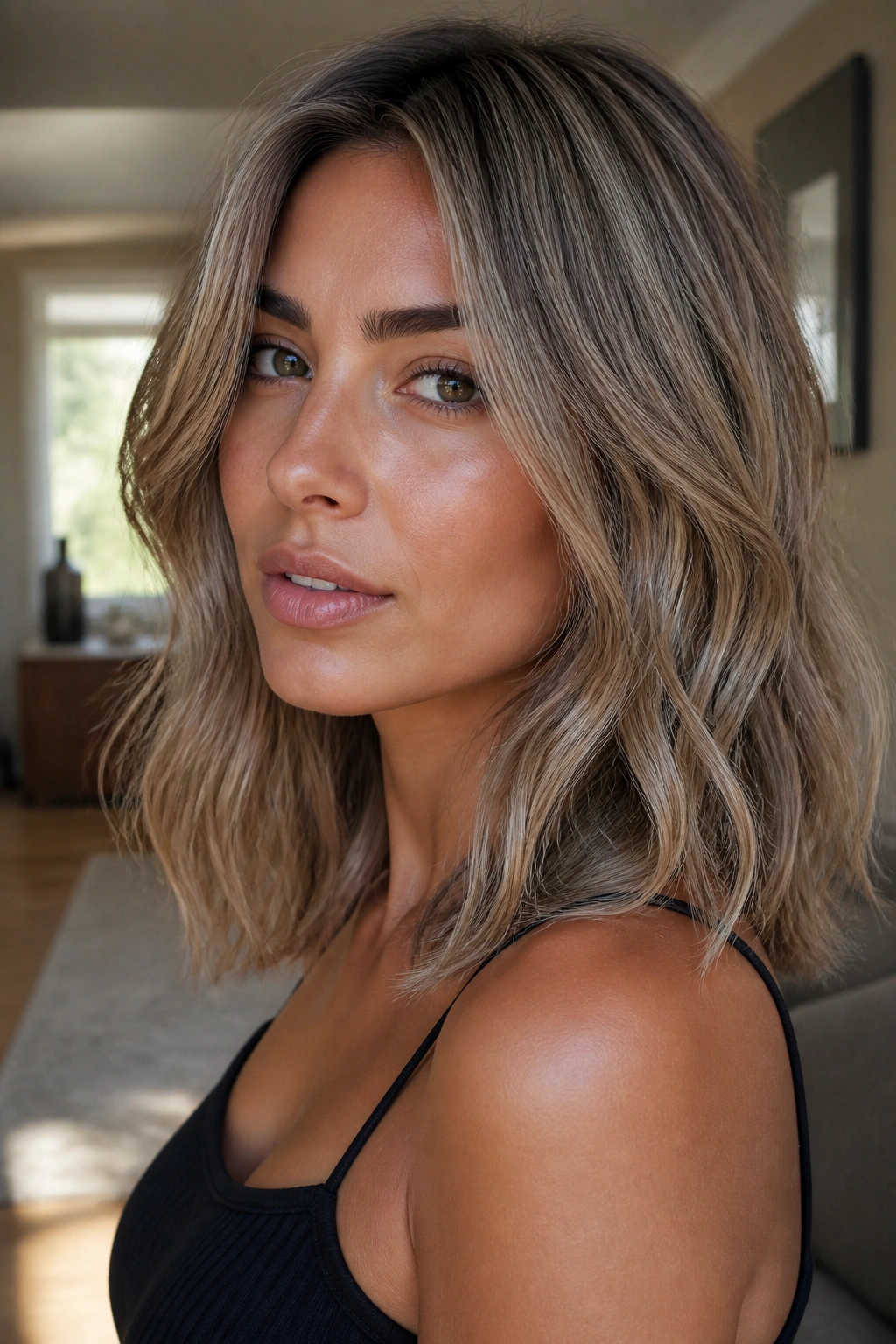
Mushroom blonde is cooler, earthier, and a little underrated. It has that smoky beige-brown quality that can work beautifully on olive-tan skin, because it doesn’t push the complexion into more warmth than it already has.
Why It’s Not Boring
People hear “mushroom” and think dull. That’s the wrong read. Good mushroom blonde has depth at the root, beige through the mids, and a muted ash finish that still keeps some softness. It’s the kind of blonde that looks smart rather than flashy.
If your tan skin tends to get a little yellow with golden blondes, this is a very smart pivot. The cooler tone can balance redness, shine, and heavy warmth in the skin. It also looks especially good with darker brows. The contrast is clean.
A shoulder-length cut usually shows this color best. Too much length, and the muted tone can vanish. Too little texture, and it can feel flat. Give it a bend or a wave, and the shade wakes up.
12. Strawberry Blonde
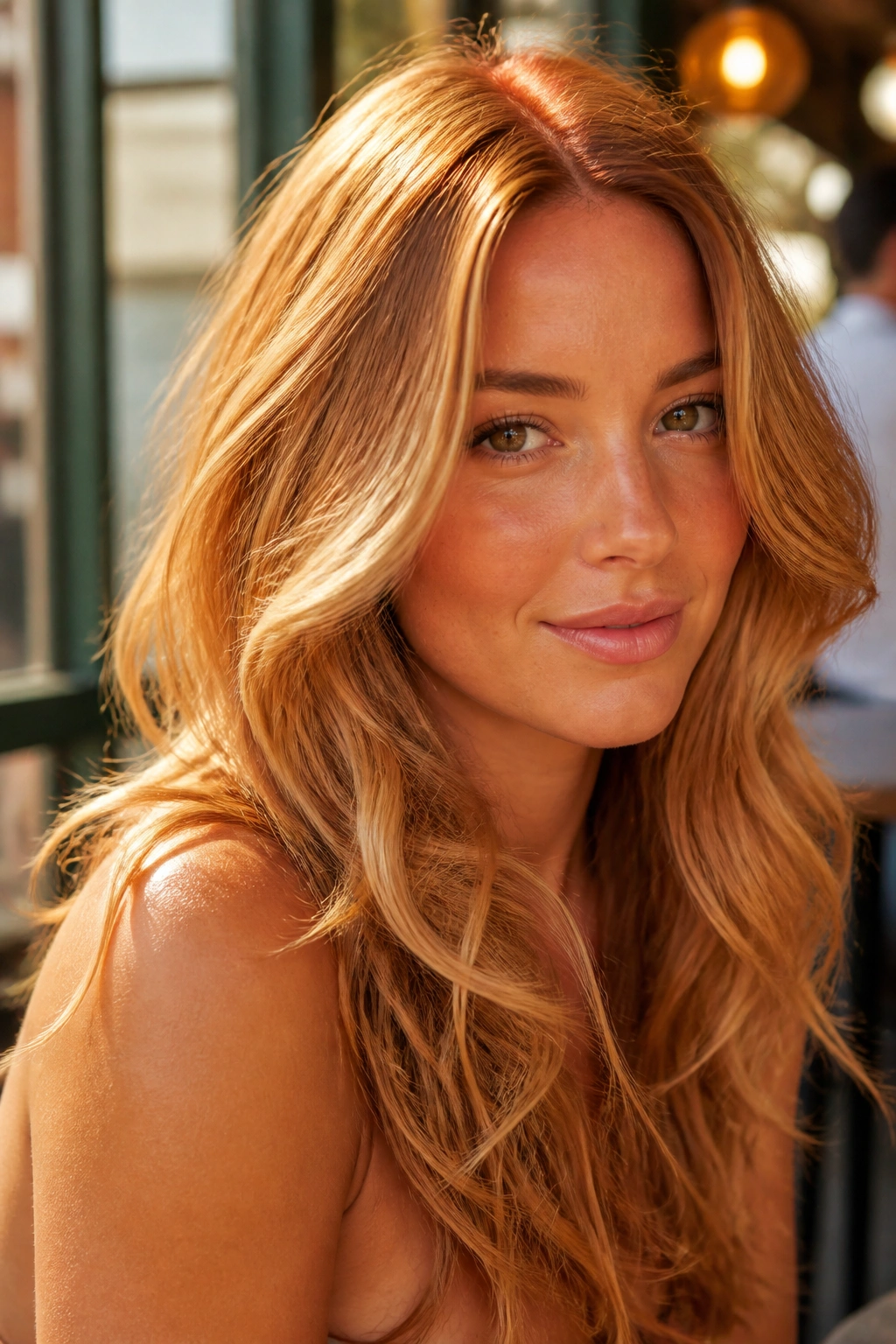
Strawberry blonde sits between blonde and copper, and tan skin can handle that warmth better than many people expect. In fact, golden tan skin often looks richer with strawberry tones than with very pale blonde, because the reddish-gold mix gives the face a glow instead of a pale wash.
This is a color with personality. It’s not subtle, and that’s part of the appeal. The hair reads warm first, blonde second, which means the skin gets framed by color instead of competing with it. A soft strawberry blonde can look delicate on light tan skin and more vivid on deeper tan skin.
The best versions keep the copper in check. Too much orange and it tips into brassy territory. Too little and it becomes a regular golden blonde with a fancy name. Ask for a blush-gold tone, not a red one.
I especially like this on layered cuts and soft curls. The movement keeps it from looking costume-y.
13. Ash Beige Blonde
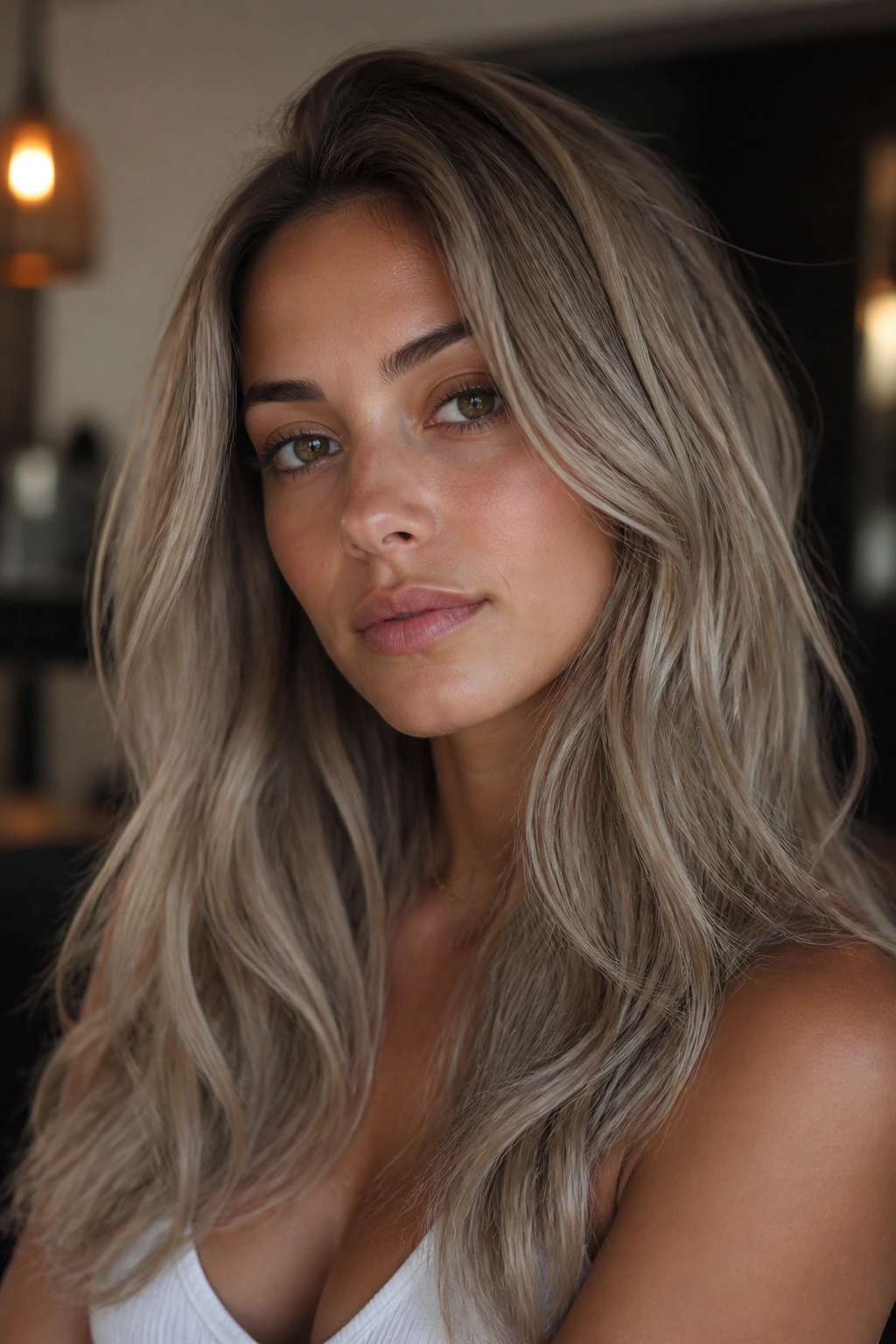
Ash beige blonde is the answer when you want cooler blonde but don’t want the hair to look flat or gray. It’s softer than full ash, with enough beige in the mix to stay wearable on tan skin.
This shade plays well with olive undertones. That’s the part people miss. Olive-tan skin often looks muddy next to strong yellow blondes, but ash beige can pull the whole face into balance. The result is modern, calm, and a little bit moody in the nicest way.
Compared with Platinum
Platinum is loud. Ash beige is quieter. Platinum grabs the eye first; ash beige lets the skin and features stay in charge. If you like dark brows, bronzy makeup, and neutral clothing, this shade fits easily into the rest of your look.
It does need toner maintenance. Cool shades fade fast, and once ash blonde goes brassy, it starts losing the clean finish that makes it work. A purple shampoo once a week is enough for most people. More than that, and the hair can start looking dull.
14. Coconut Cream Blonde
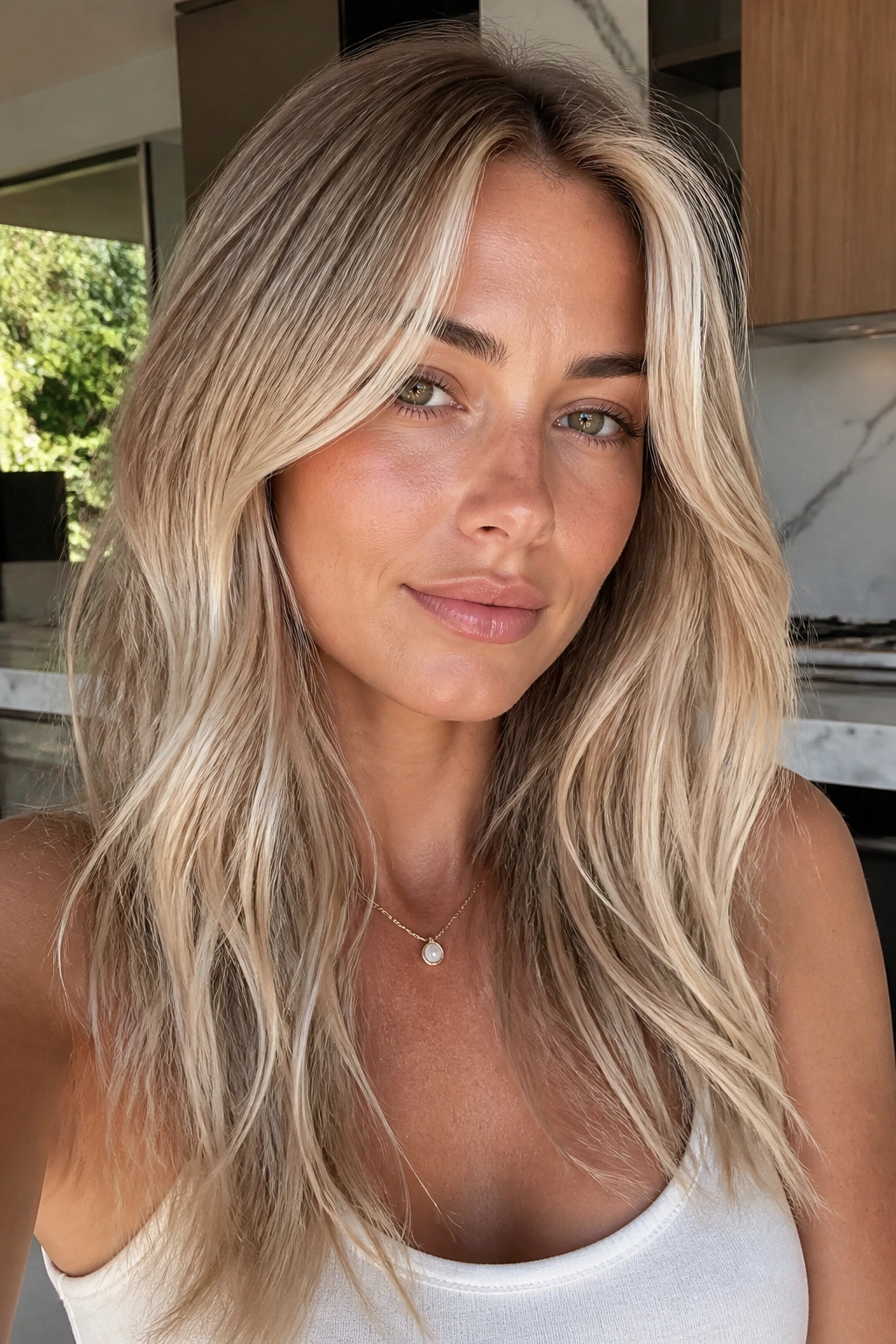
Coconut cream blonde has the soft white-beige feel of, well, the inside of a coconut — pale, smooth, and a little warm around the edges. It can be gorgeous on tan skin when the base isn’t pushed too cold.
What to Ask Your Colorist For
The difference between coconut cream and harsh pale blonde is subtle but real. Coconut cream keeps a creamy base tone, while the face frame and top layers can sit a shade or two brighter. That prevents the skin from going flat.
- Creamy blonde base, not icy white
- Slightly deeper root for contrast
- Brightness focused near the face and ends
- A gloss that reads beige, not silver
This shade shines on sleek blowouts and blunt cuts. It can also make curls look plush and expensive, because the light pieces sit against the darker lowlights like ribbons. If you want a blonde that feels polished but not severe, this is a strong pick.
15. Honey Bronde
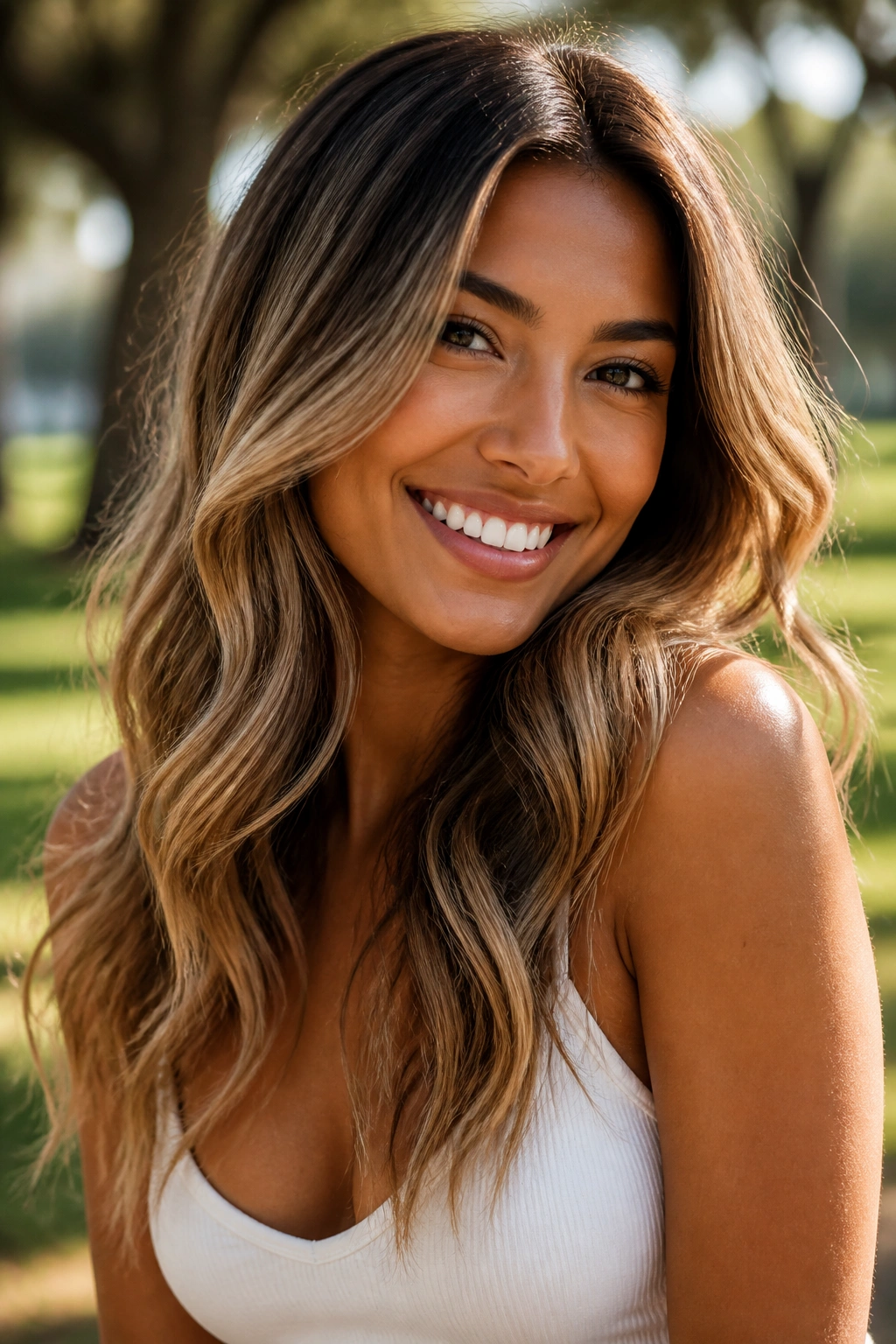
Honey bronde is the bridge between brunette and blonde, and that bridge can be very flattering on tan skin. It keeps enough depth to support the complexion while still giving you visible lightness through the mids and ends.
I like bronde when someone wants a blonde look but hates the upkeep. That’s the honest answer. The color doesn’t ask you to be perfect with root touch-ups, and it looks good even when the grow-out starts to show. The honey tone keeps it warm, so tan skin doesn’t get lost behind it.
This is also a good shade if your hair is naturally dark and resistant. You can lighten it gradually without chasing an all-over pale blonde. The result is usually more dimensional and, frankly, more flattering than a full bleach-out.
A loose wave or a big round-brush blowout brings out the color shifts best. Straight hair can still wear it, but the movement is where the magic lives.
16. Champagne Money Piece
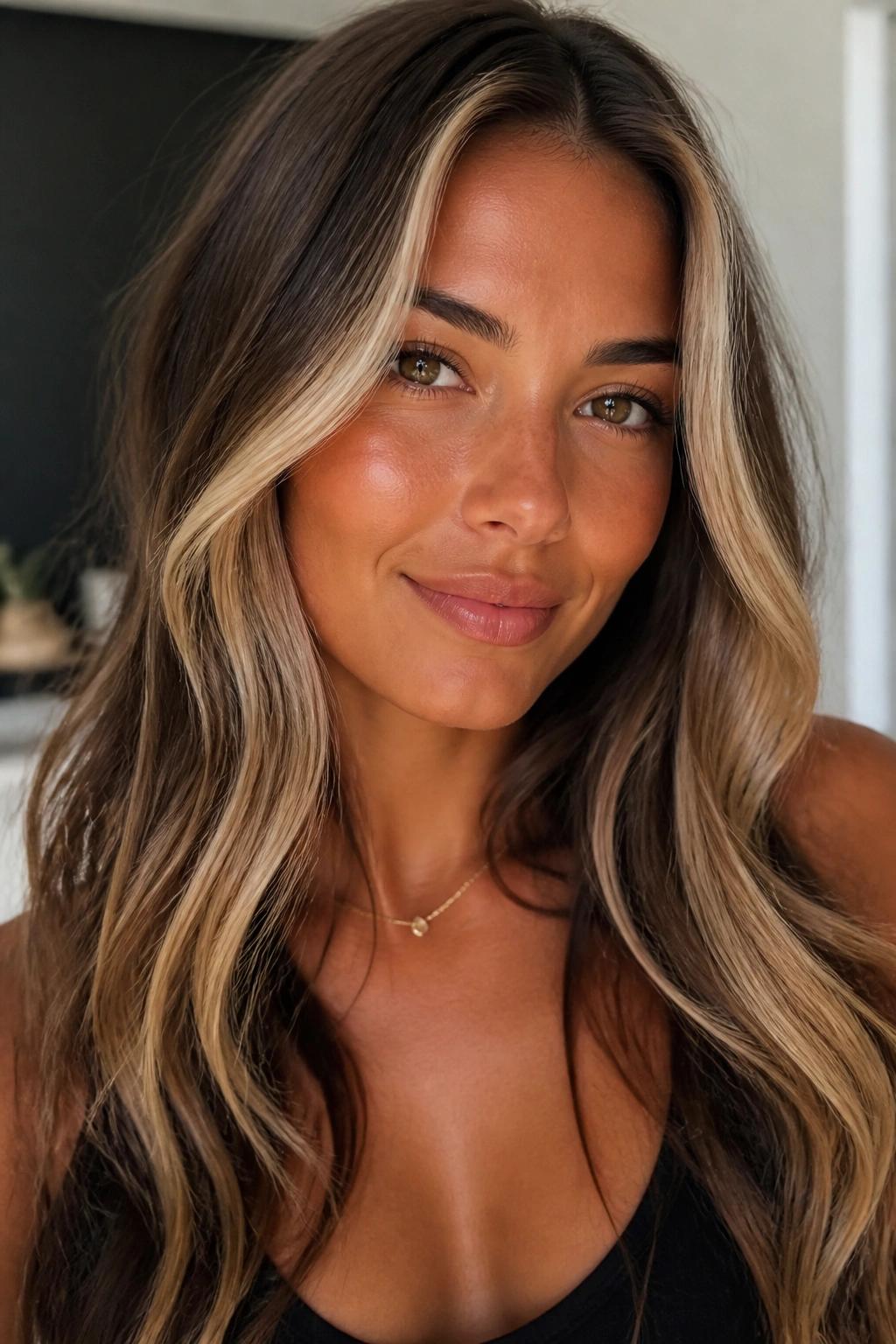
A champagne money piece is the color equivalent of opening the curtains. Two bright front sections, done in a soft champagne tone, can change the whole mood of a tan face without forcing you into full blonde territory.
Why This Placement Works
The face frame is where people notice contrast first. Put a clean, light blonde there, and tan skin suddenly looks more luminous. The rest of the hair can stay deeper, which keeps the look grounded and much easier to grow out.
If your hair is curly or wavy, keep the money piece slightly thicker so it doesn’t vanish into the pattern. On straight hair, a narrower placement looks sleek and sharp. Either way, the toner should stay creamy. A cool champagne reads polished; a yellow one reads brassy.
- Best for first-time blondes
- Easy to combine with balayage or a rooted color melt
- Looks strong with center parts and curtain bangs
- Requires less upkeep than full blonde
It’s a small change with a loud effect. Good trade.
17. Golden Beige Lob
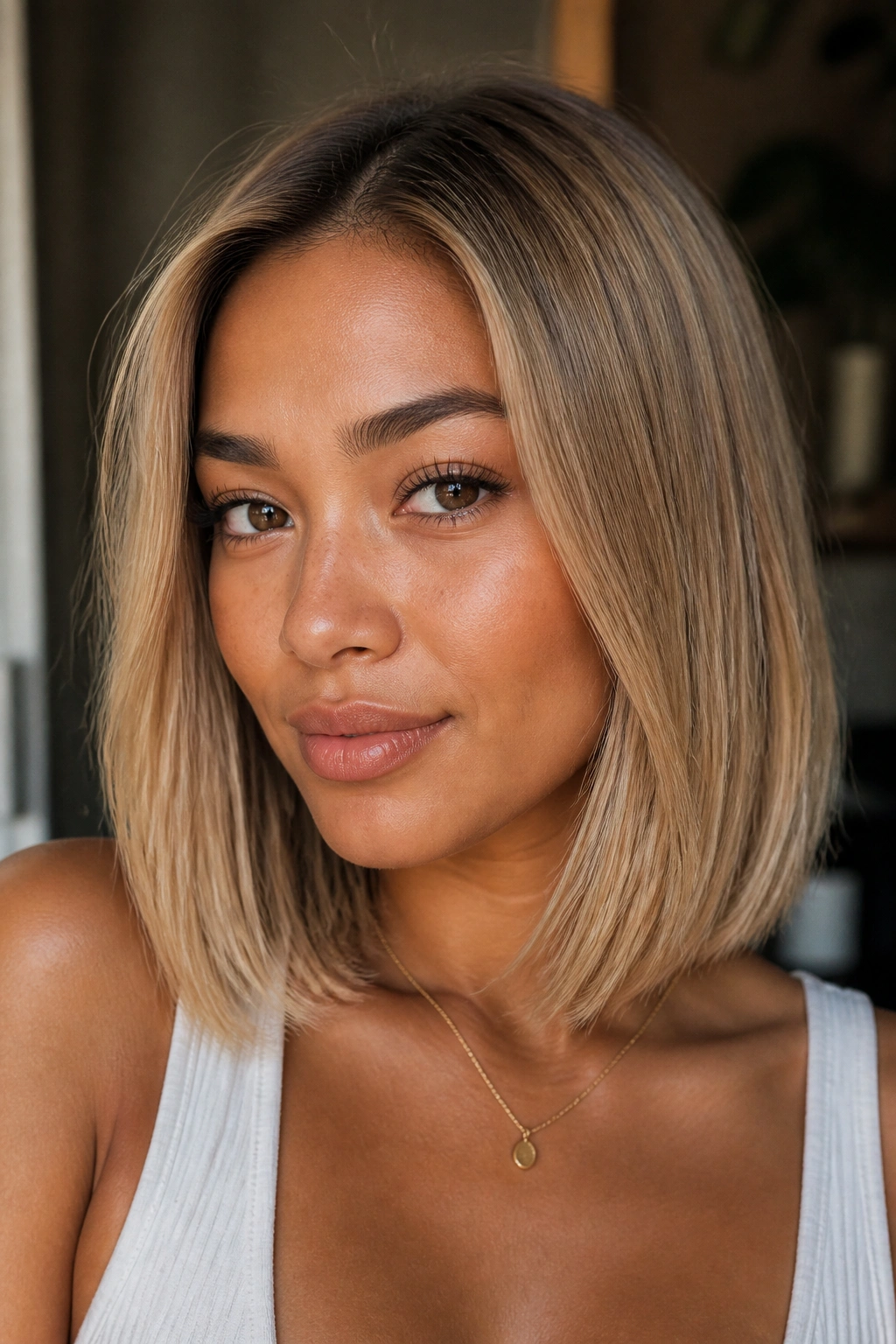
Golden beige blonde is the kind of shade that looks calm in a good way. It’s not icy, not orange, not too deep. On tan skin, that restraint is often what makes it work. The color supports the complexion instead of stealing from it.
A lob keeps the whole look clean and current without needing a trendy haircut to carry it. The blunt edge gives the lighter shade a place to land, and the golden beige tone adds warmth that reads polished in daylight. If you like low-friction styling, this is a smart pick.
What Makes It Wearable
Golden beige is one of those tones that works with both warm makeup and neutral makeup. That sounds small, but it matters. You can wear peach blush one day and brown-nude lips the next without the hair fighting either choice.
It’s also forgiving if your base is between light brown and dark blonde. You don’t need a full lift to make the shade believable. The color can sit in that softly bright zone and still look intentional.
18. Vanilla Latte Blonde
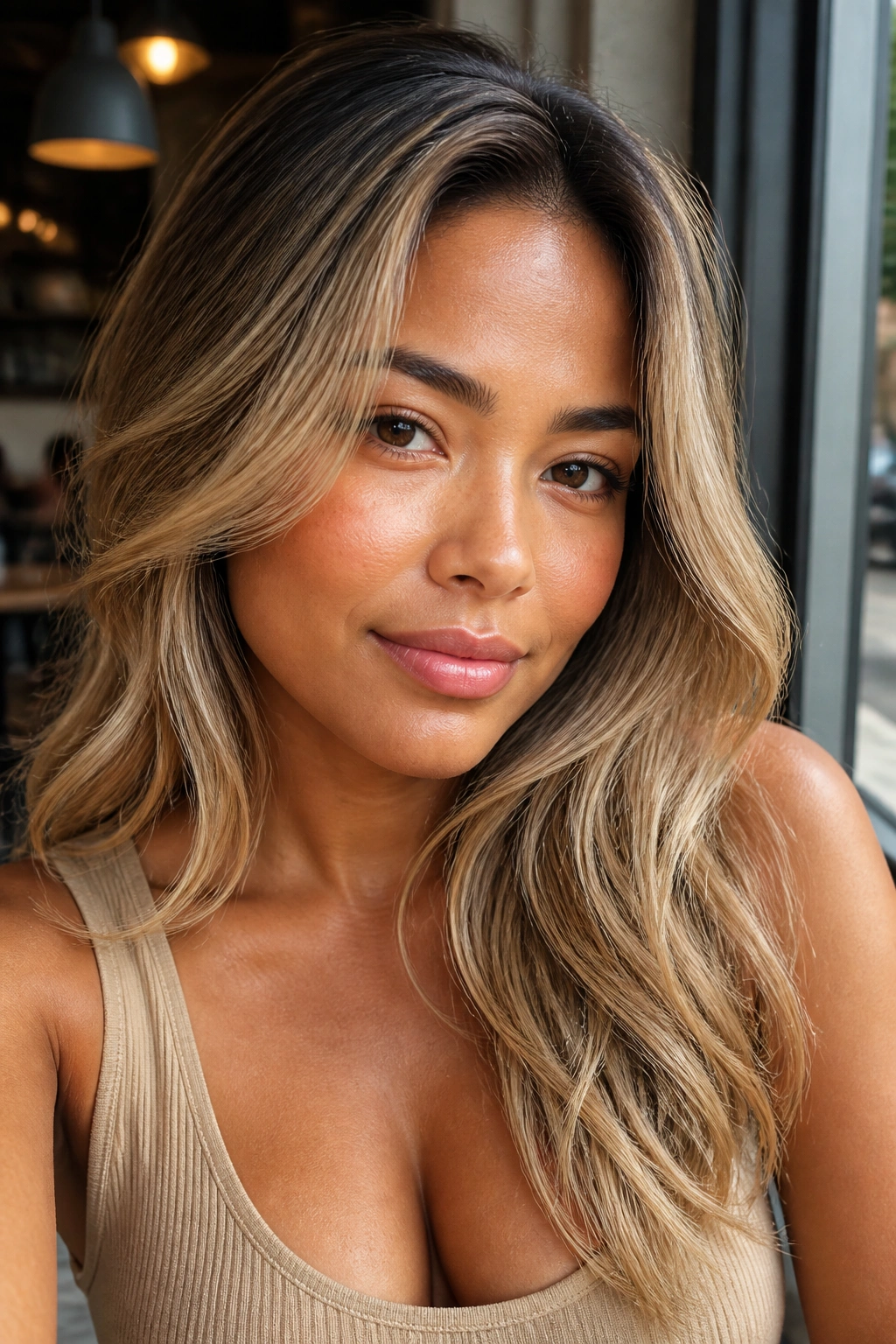
Vanilla latte blonde is creamy at the ends, deeper at the root, and softly blended through the middle — like coffee with too much milk, in the best possible sense. On tan skin, that cream-to-beige shift keeps the face warm while still giving you noticeable brightness.
This shade is especially nice if you like your blonde to feel relaxed. Not beachy. Not icy. Relaxed. It has a muted brightness that makes it easy to wear every day, and it doesn’t demand a hyper-glossy style to look finished.
How It Differs from Champagne
Champagne leans a little more luminous and pale. Vanilla latte stays warmer and rounder. That makes it easier for golden tan skin, especially if your undertones already lean yellow or olive.
A curled blowout or soft layers help the gradient show. On very straight hair, the color can look flatter than it really is. If you want movement, build it into the cut. The blonde will thank you.
19. Bronze-Blonde Ribbons
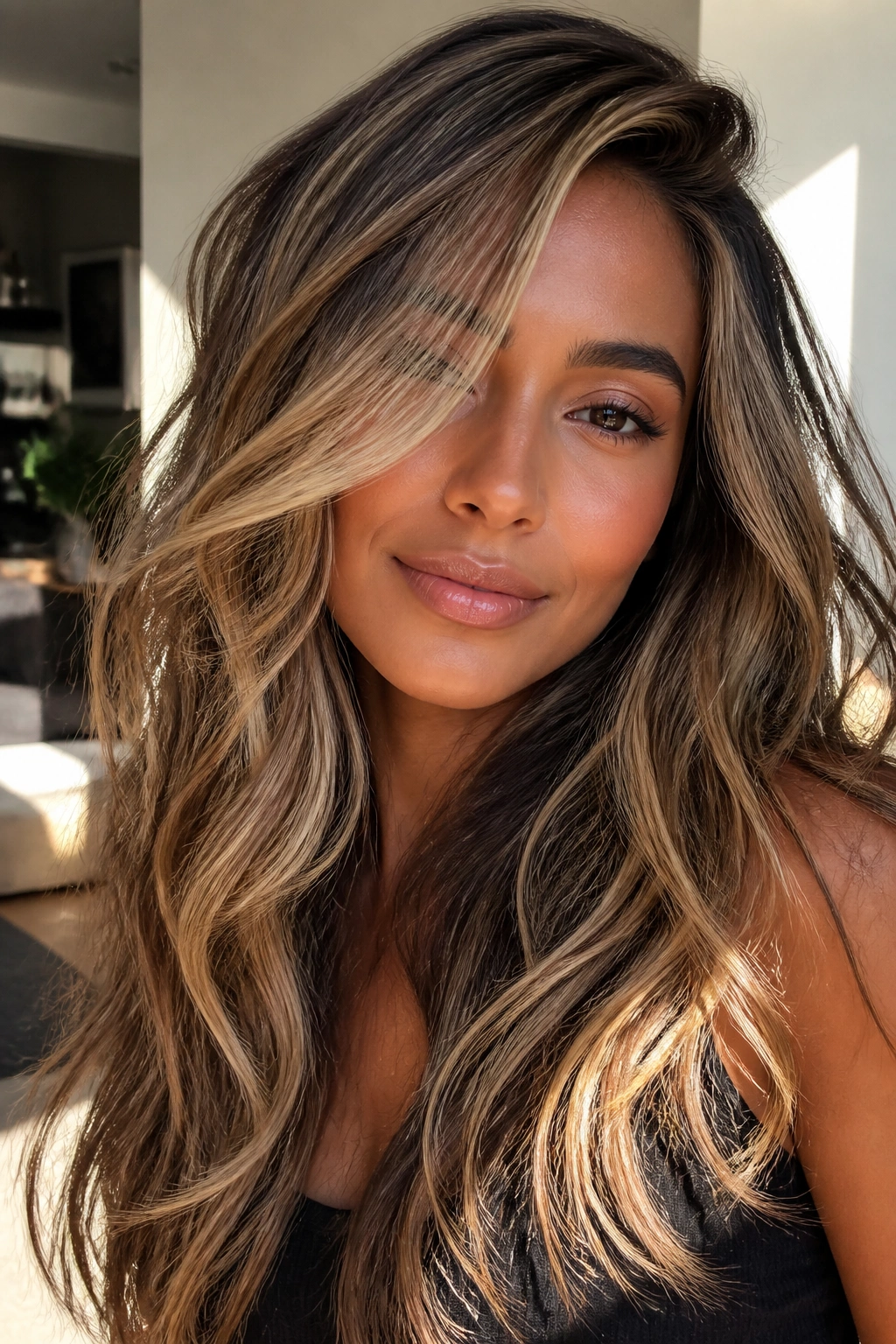
Bronze-blonde ribbons are a little deeper and moodier than classic honey highlights, and that depth is exactly why they work on tan skin. They bring in a metallic warmth that feels rich instead of sugary.
This is a good choice if you want blonde contrast but don’t want your hair to go too light. The ribbons can sit against a medium brown or dark blonde base and still read clearly. That keeps the overall effect dimensional and expensive-looking without leaning into high maintenance.
I also like bronze-blonde on thick hair. The contrast between the darker base and the warm lighter strands keeps big hair from looking like one heavy block. You get movement from the color itself, not only from the cut.
A gloss in the bronze family helps a lot here. The shade can fade dull if it’s left untreated, and dull is the enemy of this look. You want shimmer, not dust.
20. Sandy Mushroom Balayage
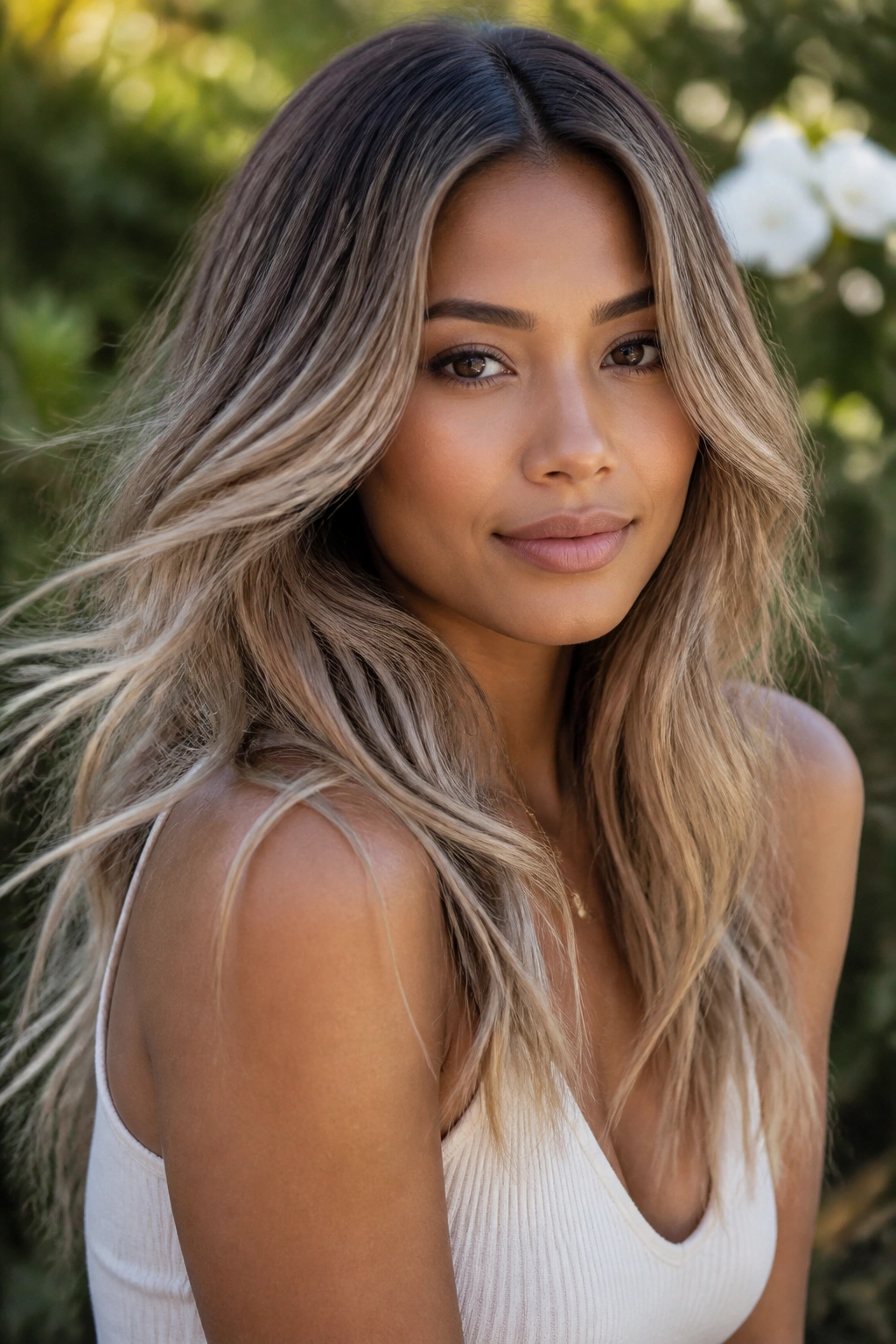
Sandy mushroom balayage is a mouthful, yes, but the color idea is simple enough: cool beige, a little ash, a little brown, and soft sandy pieces painted through the lengths. It’s one of the most useful blonde hair color ideas for tan skin if you want balance rather than brightness.
Why the Mix Helps
Tan skin often handles mixed tones better than a single solid blonde. The warm pieces keep the face alive; the cooler mushroom notes stop everything from turning orange. That push-pull creates a more natural finish.
- Root: medium brown or dark blonde
- Mid-lengths: sandy beige
- Ends: soft mushroom blonde
- Styling: wave or bend to show the tonal change
This color is especially good for people who wear minimal makeup or earthy clothing. It has an understated feel without disappearing. I’d pick it for someone who wants people to notice the hair, not the dye job.
21. Platinum Blonde for Tan Skin
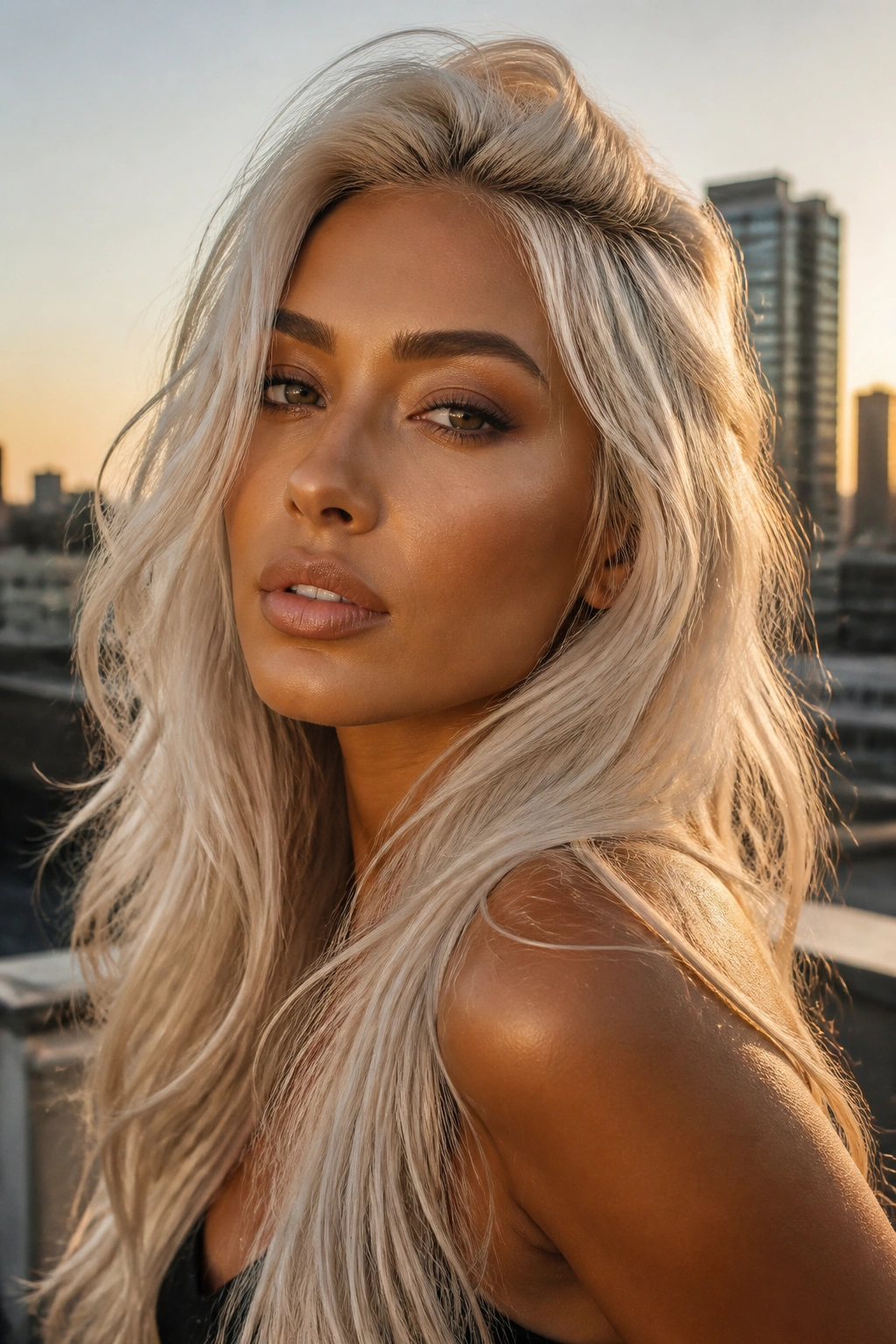
Platinum blonde can look incredible on tan skin when the contrast is handled with some discipline. High contrast is the whole point here. A tan complexion against a bright platinum length can look striking, clean, and modern — but only if the root, brows, and makeup all stay in conversation with each other.
What to Watch For
The biggest mistake is going too yellow in the lift or too white in the toner. Either one makes the skin look uneven. A true platinum finish needs even lightening first, then a toner that keeps the blonde crisp without stripping it into chalk.
- Best on hair that lifts well
- Needs frequent toning and bond care
- Works best with darker brows or defined makeup
- Looks sharp on short cuts, blunt lobs, and sleek layers
I’m not going to pretend this is low effort. It isn’t. It takes patience, money, and restraint with heat styling. Still, if you want blonde that really pops on tan skin, platinum can do it better than almost anything else.
22. Peach Blonde
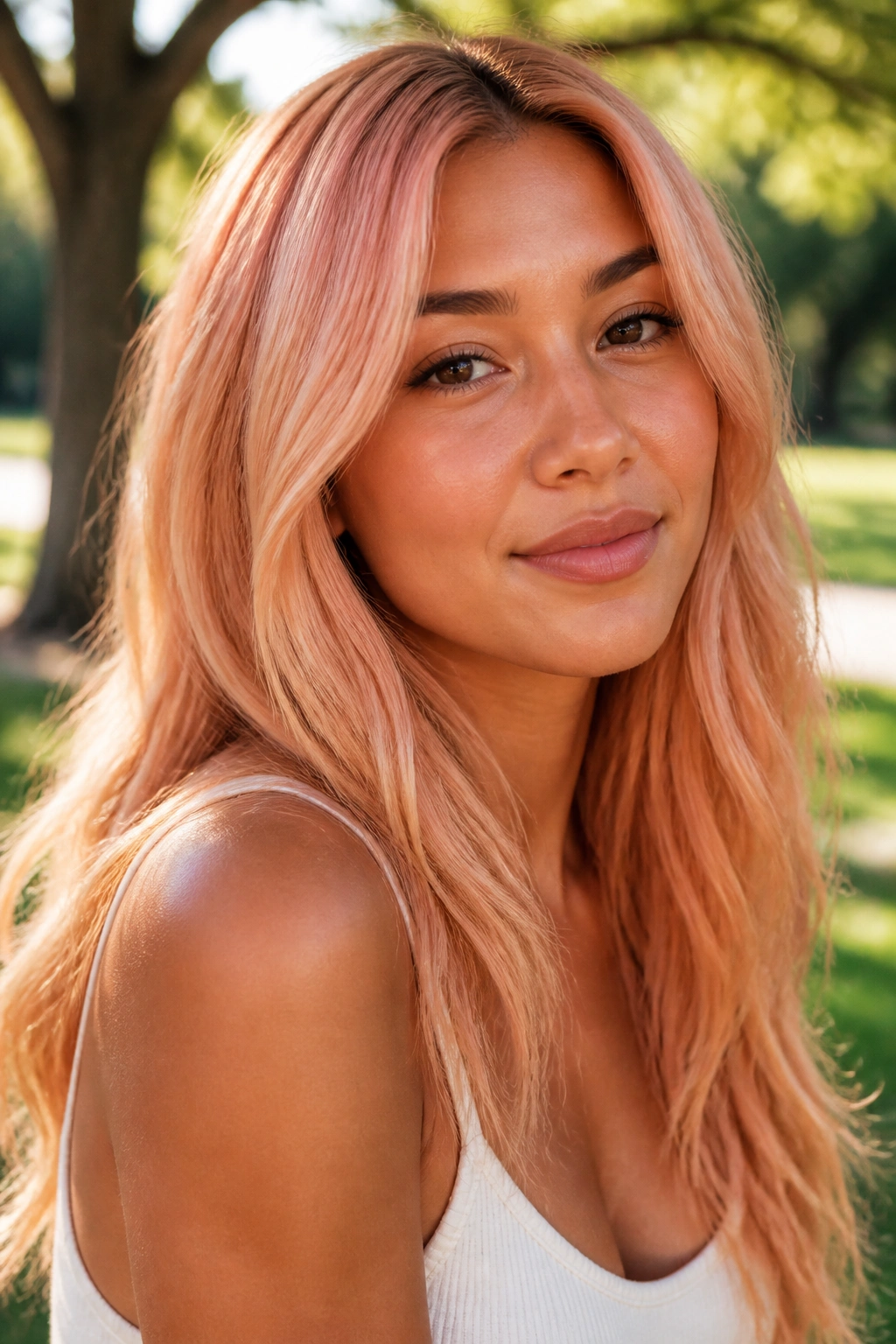
Peach blonde has a soft blush tone that sits between blonde and pastel. On tan skin, especially golden tan skin, it can look fresh instead of sugary. The hint of pink warms the face in a way that feels playful but still wearable.
This shade works best when the peach is subtle. You do not want neon pink, and you do not want the blonde to vanish under too much color. A peach glaze over pale gold or beige blonde usually gives the nicest result. It’s one of those looks that can feel delicate in daylight and richer indoors.
I like peach blonde on people who already wear warm makeup. Peach blush, coral lip color, soft bronzer — the hair and face start speaking the same language. That makes the whole look easy to wear, even when the color itself is a little unusual.
It also fades softly, which helps. A pastel blonde that fades badly can get weird fast. Peach usually leaves behind a warm beige tone that still looks fine.
23. Biscuit Blonde
Biscuit blonde is a quiet, soft beige-blonde that feels more earthy than shiny. It’s the sort of color that looks good on tan skin because it doesn’t push the complexion too far in either direction.
Unlike champagne or platinum, biscuit blonde stays grounded. It has enough warmth to flatter golden skin and enough beige to keep olive skin from turning sallow. That middle zone is where a lot of the best blonde hair color ideas live, honestly. Flashy gets the attention. Biscuits get worn again and again.
This shade is especially nice on layered mid-length cuts. The lighter pieces peek through instead of taking over. If you like neutral sweaters, gold hoops, and soft brown liner, biscuit blonde belongs in your wheelhouse.
A ton of shine is not required here. A satin finish is better. Too much gloss can make the shade look slippery; a little texture gives it character.
24. Wheat Blonde
Wheat blonde is lighter than dirty blonde but softer than a bright gold. Think sun-dried grain, not yellow paint. On tan skin, that muted warmth keeps the complexion looking even and alive.
This color is a good fit if you want something natural-looking and easy to live with. It doesn’t announce itself from across the room, which is exactly why it tends to age well on the head. The grow-out blends nicely, and the tone is forgiving if you miss a toner appointment.
How It Shows Up in Real Life
Wheat blonde can look different depending on the light. In bright sun, it leans golden and airy. Indoors, it settles into a beige-beaten look that’s soft and clean. That flexibility is useful if you move between warm light and cooler office lighting all day.
A face frame with a touch more brightness can help if the overall shade feels too quiet. A few lighter pieces around the crown can do the same thing. No need to overdo it. Wheat blonde works because it whispers.
25. Buttercream Blonde Curls
Buttercream blonde and curls are a very good match. The creamy tone reflects off the bends in the hair and creates depth without needing a heavy highlight pattern. On tan skin, the warmth reads as soft and healthy rather than loud.
This color is especially flattering on textured hair because curls naturally break up the light. A solid blonde can look harsh on curls if it’s too pale or too cool. Buttercream stays cushioned. It gives the curl pattern room to breathe.
Why Texture Changes the Result
Curly hair changes the way blonde is seen. Each curl catches light a little differently, so the shade ends up looking more dimensional than it would on straight hair. That means you can usually go a touch lighter without the color feeling flat.
- Best toner family: warm beige or creamy gold
- Works on loose curls and tight coils
- Needs good moisture care to keep the blonde from looking dry
- Looks best with shape, not triangle volume
If you have curls and tan skin, this is one of the easiest blonde directions to trust.
26. Icy Beige Blonde
Icy beige blonde is a cooler look with enough softness to stay wearable. It has the crispness of icy tones, but the beige keeps it from looking like a silver wig on warm skin — and that’s the whole reason it can work on tan undertones.
The secret is restraint. If the blonde goes too white, the skin can look more yellow by comparison. If it stays a shade creamier, the face keeps its color and the hair still reads cool. That’s a narrow line, but a good colorist can walk it.
I’d recommend this shade if your wardrobe runs toward black, charcoal, denim, and clean neutrals. The hair becomes part of the outfit. It also looks strong with a sharp bob or a blunt cut, where the cool tone can feel intentional instead of icy for its own sake.
Purple shampoo helps, though not too much. Overuse can mute the beige part, and then the color loses the thing that makes it wearable.
27. Dimensional Foilyage Blonde
Foilyage is not a shade so much as a way of building one, and that’s what makes it so useful. On tan skin, dimensional foilyage gives you bright blonde pieces where you need them, plus softer in-between tones that stop the hair from looking over-processed.
What You Get from the Placement
The brighter sections are usually lifted with foil for more power, while the hand-painted parts keep the color blended and soft. That mix creates a blonde that has depth at the roots, brightness through the mids, and movement through the ends.
- Best for medium to long hair
- Gives more lift than balayage alone
- Helps avoid a flat, all-over blonde result
- Works with honey, beige, champagne, or golden toner families
I like foilyage for tan skin because it gives the face contrast without locking you into one tone. A few brighter pieces near the front can make the skin glow, while the softer lower sections keep the whole thing believable. It’s one of the more flexible blonde approaches on this list.
28. Rooted Champagne Bob
A rooted champagne bob is polished, compact, and hard to mess up. The darker root keeps the blonde grounded, the champagne mid-tones keep it light, and the bob cut makes the whole thing feel deliberate instead of fussy.
This is a great option if you want blonde that looks neat around the face. Tan skin benefits from that tidy contrast, especially when the hair is cut blunt or slightly beveled at the ends. The shape makes the color look more expensive. The color makes the shape look sharper. Good pairing.
A bob also helps champagne blonde stay believable. On very long hair, pale tones can sometimes look thin at the ends. On a shorter cut, the same tone reads fuller and denser.
Sleek styling brings out the shine. A tucked-behind-the-ear finish with a sharp part can make this look feel clean without trying too hard. It’s one of the more adult blondes here, and I mean that in the nicest way.
29. Honey-Gold Face Framing Layers
Face-framing layers with honey-gold blonde are one of the easiest ways to brighten tan skin without changing the entire head. The lighter pieces sit where the face needs light most — around the cheeks, temples, and jaw — and the rest of the hair can stay a little deeper.
Why does this work so well? Because the eye goes straight to the front pieces first. If those strands are honey-gold and a shade or two lighter than the rest, tan skin looks sunlit even when the base stays brunette. It’s a small move with a big visual return.
How to Use It
Ask for the brightest pieces to start just below the root, not all the way at the scalp. That keeps grow-out soft and keeps the color from looking stripey. A few longer layers around the collarbone help the blonde move instead of sitting flat.
This style suits people who want blonde to frame the face, not dominate it. It’s flattering, low-pressure, and easy to live with. That combination is hard to beat.
30. Soft Sun-Dipped Blonde Layers
Soft sun-dipped blonde layers are the kind of look that never seems to go out of place. The color starts deeper near the roots, gets brighter through the mids, and fades into a light, sun-dipped finish at the ends. On tan skin, that gradual shift feels natural and clean.
I’d call this the most forgiving blonde on the list. It gives you brightness without demanding perfection, and it works on straight hair, waves, and curls. The layered cut does a lot of the visual work here, because it keeps the blonde from hanging in one solid sheet.
If you want a blonde that grows out gracefully, this is hard to beat. It suits warm tan skin, neutral tan skin, and even deeper complexions when the contrast is built with care. The color can be subtle or bold depending on how much lift you ask for, which makes it easy to personalize without losing the soft, sunlit feel.
And that’s the real appeal of blonde on tan skin when it’s done well — it doesn’t have to look icy, loud, or precious to be beautiful.
