



A black-tie invitation changes the whole hair decision. A loose ponytail that feels fine for dinner can look underdressed under satin, silk, and all the polished detail that comes with formal wear.
The best elegant updo styles for black tie events do three things at once: they open the neckline, hold through hours of conversation and dancing, and keep the hair from competing with the dress. That sounds obvious until you try a style that collapses by dessert. Then it feels expensive in the worst way.
What matters most is shape. A bun can be soft or severe, a twist can read polished or dated, and a braid can look refined or overworked depending on where it sits and how tightly it’s finished. Hair accessories matter too, but only after the silhouette is right.
A good formal updo should look finished from the front and the back. That is the part people miss. The mirror view can be fine while the rear view looks unfinished, and black tie is not the place for that kind of surprise.
1. The Low Chignon

A low chignon is the safest bet for a reason. It sits close to the nape, which keeps the look graceful instead of stiff, and it gives the dress room to breathe. That matters when you’re wearing a gown with a dramatic neckline or a back you actually want people to notice.
Why It Works
The chignon behaves like a calm anchor. Hair pinned low stays put better than hair stacked high, and the shape feels formal without trying too hard. I like it on hair that has been smoothed first, because a little bend in the ends keeps the bun from looking like a hard little knot.
- Best with: strapless, off-the-shoulder, bateau, and square necklines
- Best hair texture: straight, wavy, relaxed, blown-out natural textures
- Support: 6 to 10 bobby pins, plus 1 to 2 larger pins if the hair is thick
- Accessory match: pearl pins, a small comb, or no accessory at all
Tip: Pin from more than one direction. A chignon held only from the top can slip after an hour.
If your hair is silky, add a light texturizing mist before you twist it back. Too much product is a mistake. Too little grip is worse.
2. The French Twist
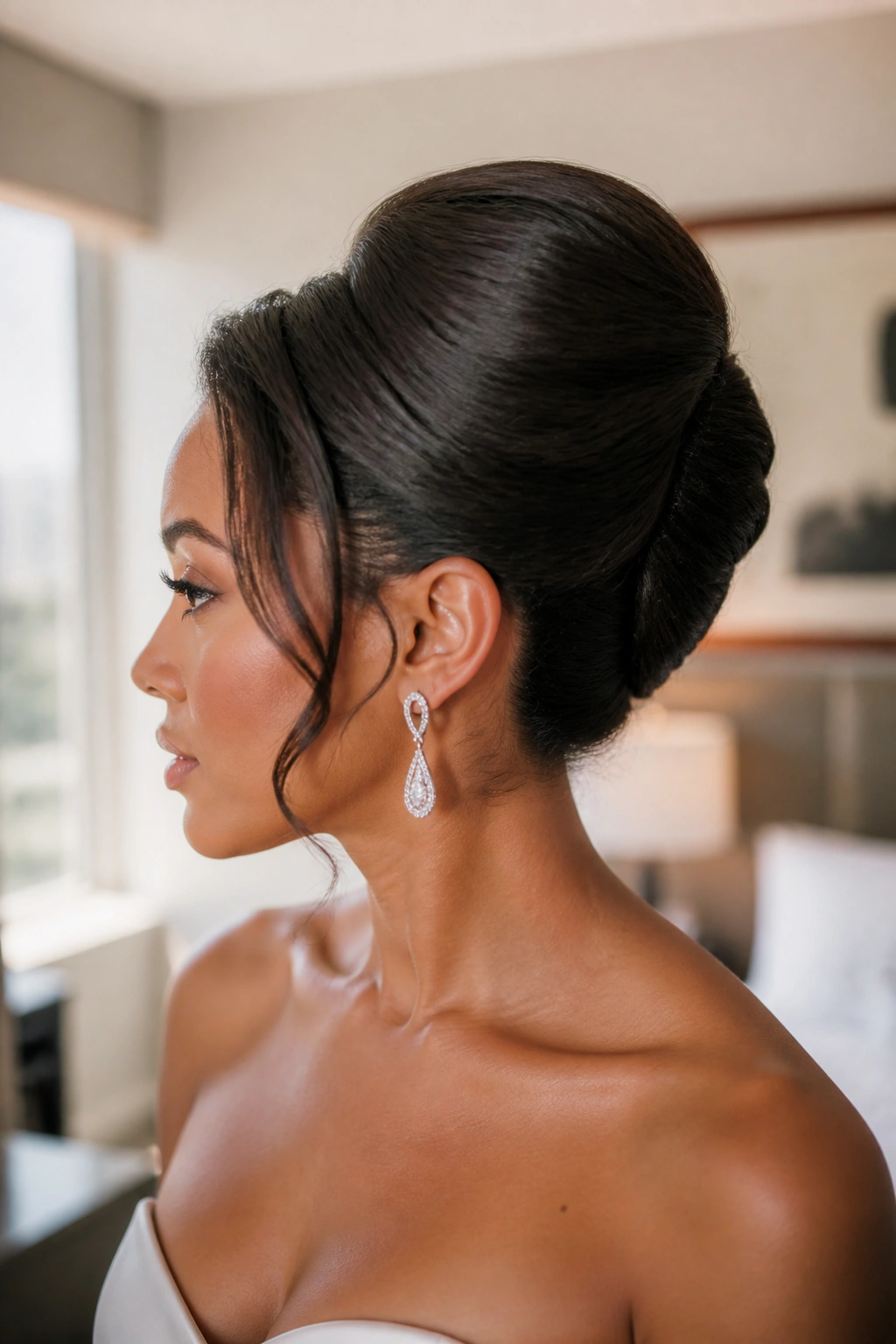
Want something that feels formal without looking frozen? A French twist does that better than most styles in the room. It has a built-in sense of structure, which is exactly why it works with tailored dresses, satin suits, and gowns that already have a lot going on.
A good twist is all about tension. Not tight enough and it puffs out at the seam; too tight and it can pull at the scalp in a way that looks uncomfortable before the night even starts. The best versions are smooth on the surface, then slightly tucked and rolled so the back has depth instead of a flat wall of hair.
I especially like it for events where you know you’ll be standing, greeting people, and turning your head a lot. It keeps the profile sharp. A strong side part can soften the look a little, while a center part makes it feel more severe and editorial.
If you have shorter layers, this is one of the styles that rewards a good stylist. The pins can be hidden into the roll, and the result looks deliberate instead of patched together. It’s an old style, yes. That’s part of the charm.
3. The Braided Crown Updo
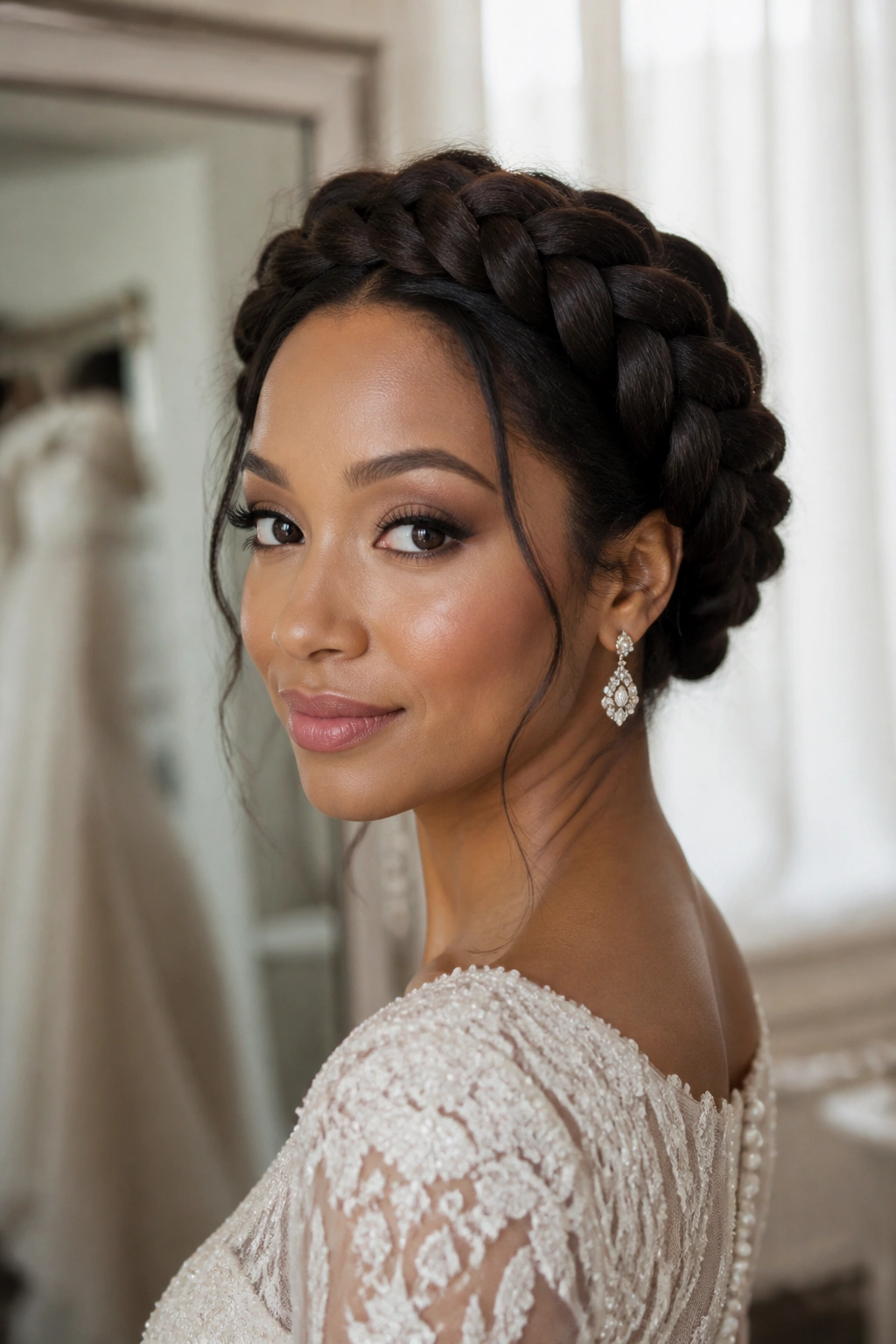
When a gown already has lace, beadwork, or a high neckline, a braided crown keeps the hair interesting without turning the whole outfit into a competition. It wraps the head in a way that feels romantic, but it still has enough structure for a formal room. That balance is the whole point.
Where It Shines
The braid gives you control over flyaways and layers. It also creates a natural frame around the face, which helps if you want softness near the temples but a cleaner finish at the nape. Keep the braid wide rather than skinny. A thin braid can look busy; a wider one reads richer and more intentional.
- Best for: weddings, charity dinners, opera nights, and formal garden settings
- Works well with: medium to long hair, especially hair with some natural bend
- Nice touch: pearl pins tucked into the braid, not scattered everywhere
- Watch for: braids pulled too tight at the crown, which can make the style look severe
My rule: if the braid is the main feature, skip heavy earrings. Let one detail do the talking.
The nicest versions keep the braid visible from the front but not so dominant that it takes over the face. That’s the sweet spot. People notice the detail without staring at it.
4. The Sleek Ballet Bun
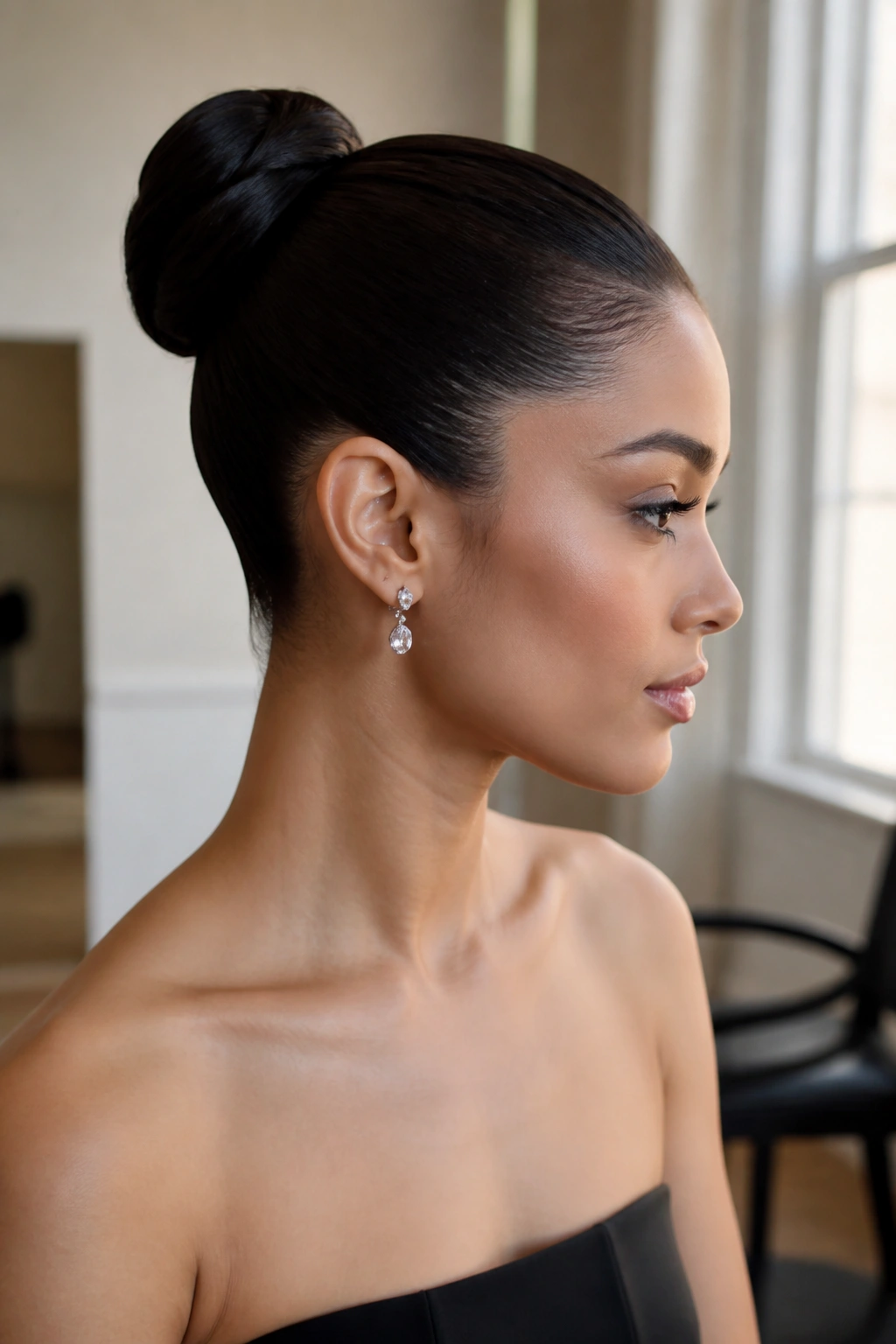
Not every black-tie look needs softness. Sometimes the sharpest answer is the cleanest one, and a sleek ballet bun proves it. It gives a gown room to stand out, keeps the neckline open, and brings a little discipline to the whole look.
A center part and a smooth crown make this style feel crisp fast. That is why it works so well with minimalist jewelry, sculpted dresses, and makeup that already has strong lines. The bun itself can sit low or a touch higher, but the surface needs to stay smooth. No fuzzy halo. No loose patch near the temples. That neatness is the point.
This is also one of the easiest formal updos to read from across a room. You don’t need volume everywhere. You need one clean shape. If your hair is fine, a padding donut helps. If your hair is thick, flatten the base first so the bun doesn’t become a bulky lump.
A ballet bun can feel severe if the dress is soft and floaty. That’s not a flaw. It just means the hairstyle wants the right outfit. Pair it with strong shoulders, a sleek sheath, or a gown with one striking detail, and it makes sense instantly.
5. The Textured Knot at the Nape

A textured knot feels touched by hand, not packed into place. That’s why it works so well for formal nights that call for ease more than ceremony. It still looks dressed up, but it doesn’t have the hard shell feeling that some slick buns can have.
The texture matters most in the mid-lengths. A little bend in the hair gives the knot shape and keeps it from looking flat against the head. I like this one when the dress has a deep back or a narrow neckline, because the knot stays low and lets the fabric stay in charge. It also looks good with earrings that move.
This style has a slightly softer profile than a chignon, but it isn’t messy. There’s a difference. The ends should be tucked cleanly, and the outside shape should feel rounded rather than loose. If the crown is too puffy, the knot starts to look accidental. If it is too tight, you lose the charm.
A quick pass with a curling wand before pinning can help, especially if the hair is straight and slippery. You do not need full curls. Just enough bend to stop the knot from collapsing into a flat twist. A mist of flexible spray at the end is usually enough.
6. The Side-Swept Rolled Updo
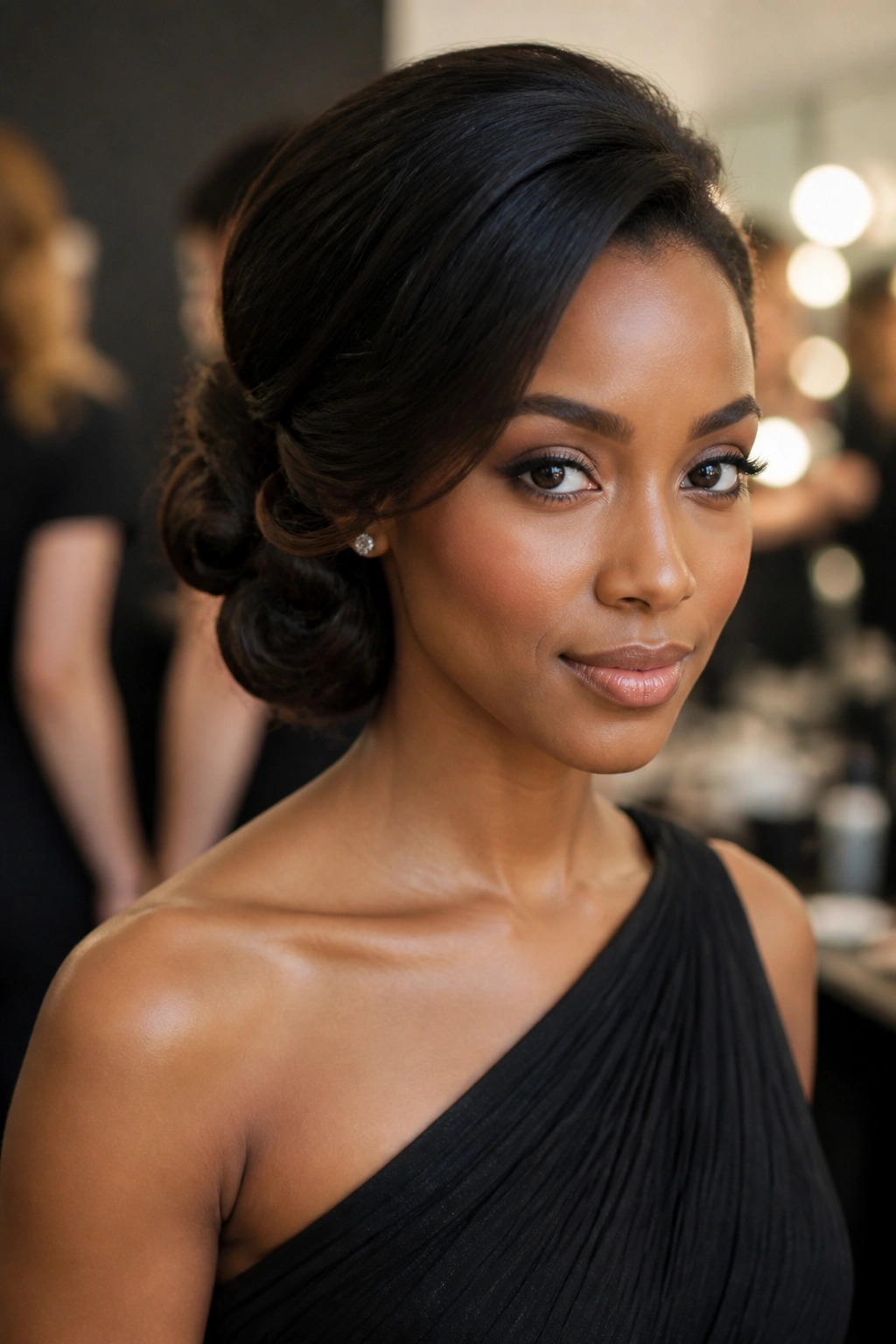
Unlike a centered bun, a side-swept roll gives the face a little motion. That makes it a strong choice for one-shoulder gowns, asymmetric necklines, or dresses with detail concentrated on one side. The eye follows the line of the hair, then lands on the dress. Nice and clean.
There’s a quiet drama here. The roll can sit low at the nape and sweep toward one shoulder, or it can tuck toward the opposite side and create a soft curve across the back. Either way, the shape feels dressed for the room. It also helps if you don’t want your hair standing in strict symmetry while the dress already has a strong shape.
This style is one of my favorites for people who hate the feeling of hair all the way off the face but still need something formal. You get a little softness near the cheek, a little control at the back, and no heavy bulk sitting dead center. That makes the whole thing feel less rigid.
If you’re wearing statement earrings, keep the sweep lower and cleaner. If the jewelry is subtle, let the roll have a bit more volume. The point is not to make the style loud. The point is to let the silhouette echo the clothes.
7. The Twisted Bun with Face-Framing Pieces

This is the style that saves people who want polished hair but do not want a hard, pulled-back look. The twists keep it elegant, while the face-framing pieces soften the front just enough to keep the whole thing from feeling severe.
How to Keep the Front Pieces Civilized
The pieces near the face need a plan. A stray curl here and there is fine; three competing tendrils are not. I like to leave just enough hair to skim the cheekbone or jaw, then bend it once with a medium iron so the piece falls with intention.
- Best length: shoulder length and longer
- Best finish: soft, curved pieces rather than tight ringlets
- Best for: bridal guests, formal dinners, and events where the dress is fitted
- Useful tool: a tail comb for clean parting before twisting
Tip: Keep the front pieces shorter than you think. Once they loosen a little over the evening, they’ll land in a nicer place.
The bun itself can be low or mid-height, but the twists should be visible enough to give the style texture. If the back is too smooth and the front pieces are too soft, the whole thing loses shape. Get one side of the look to carry the structure.
8. The Gibson Tuck

Why does the Gibson tuck keep showing up at formal weddings and gallery parties? Because it has polish, history, and a shape that stays lovely without needing a lot of hardware. It looks like effort without looking forced, and that is a hard balance to fake.
The tuck rolls the hair inward and upward at the nape, which creates a soft fold rather than a hard knot. That makes it a strong choice for medium-length hair, especially if you want something different from the usual bun. It also works well with ribbons, combs, or a single jeweled pin tucked just off center.
How to Wear It Without Making It Costume-y
Keep the roll slightly relaxed. If it’s packed too tightly, it can start to feel like a period piece in the wrong way. A little softness at the edges keeps it modern. A clean center or side part both work, though I prefer a side part if the dress has a lot of symmetry already.
This is one of those styles that makes the back of the head interesting. That matters more than people think. You’ll spend a lot of the evening in profile or turned away from the camera, and the Gibson tuck gives you something graceful to show from that angle.
9. The High Wrapped Bun
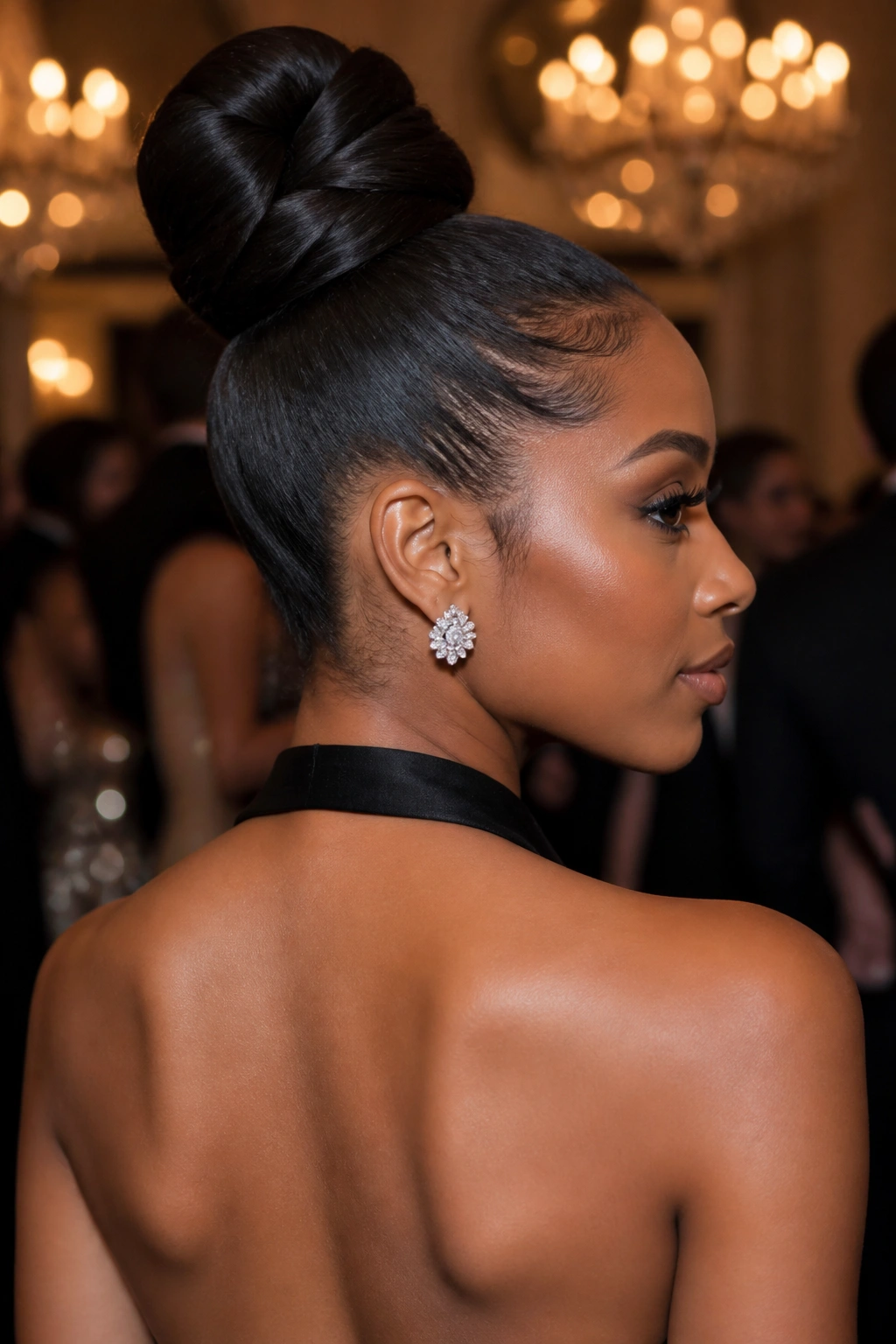
Three inches higher and the entire silhouette changes. A high wrapped bun lengthens the neck, opens the shoulders, and gives a gown a sharper outline. It’s a bold choice, but not a loud one when it’s done well.
The trick is balance. The bun should feel polished at the edges and secure at the base, not like a stack of hair waiting to wobble loose. If your hair is thick, smooth the crown first so the bun doesn’t sit too far out from the head. If your hair is fine, a bun pad or a small cushion underneath can give it the lift it needs without making it look thin.
This style is especially useful when the dress has a strong neckline, a bare shoulder line, or dramatic earrings. It clears the frame around the face and gives the styling room to breathe. It also holds up well at events where people are standing in groups and turning to talk a lot, because the shape is compact.
- Best with: strapless, halter, and high-drama evening gowns
- Needs: strong pinning at the base and around the wrapped section
- Works best on: hair with a little grip, not freshly slipped-out silky hair
- Accessory note: one crystal pin is enough; more can crowd it
The finished look should feel lifted, not top-heavy.
10. The Braided Bun Hybrid
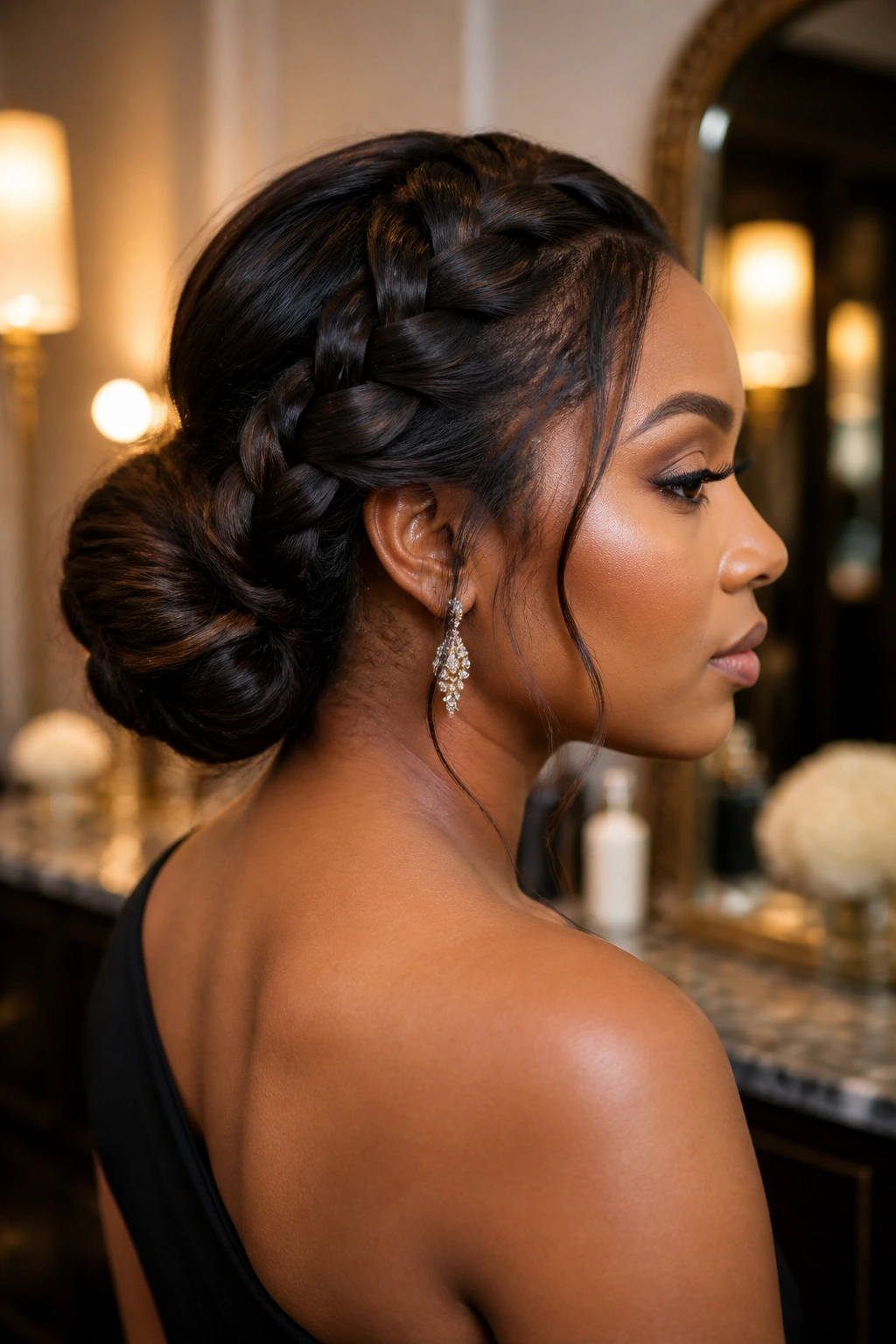
A braided bun hybrid gives you two textures in one shape, which is why it feels richer than a plain bun. The braid adds line and detail, and the bun keeps the whole look contained. That mix is useful when the dress is simple and the hair needs to carry a little more visual weight.
I like this style on thick hair because the braid helps control bulk before it gets wrapped into the bun. On finer hair, the braid creates the illusion of more substance, especially if you pancake it gently once it’s in place. Not all the way. Just enough to widen it. Too much tugging and the braid starts to look stretched thin.
This style also handles accessories well. A side comb, a pair of pearl pins, or a single barrette can sit near the braid without fighting it. That is a nice change from styles that already have too much happening and need no help from jewelry.
The hybrid approach feels elegant because it looks built, not pasted together. Every piece has a job. The braid gives direction, the bun gives weight, and the finished shape looks like it belongs at the event instead of merely surviving it.
11. The Sculpted Pin Curl Updo
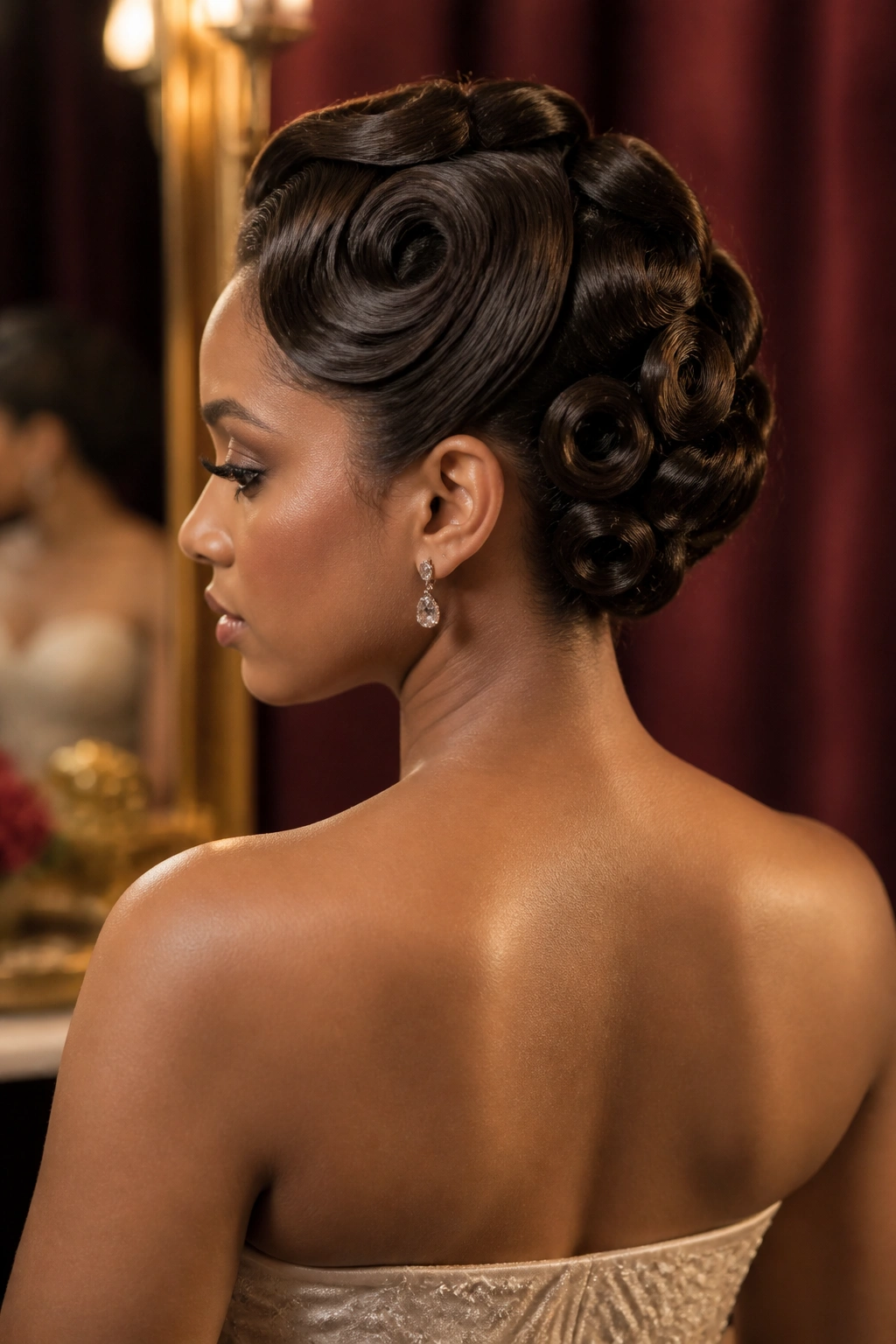
If a soft bun feels sleepy, pin curls wake it up. This style has more attitude than a standard formal updo, and that’s exactly why it can look so good with simple dresses, satin gloves, or a gown that needs one strong hair statement.
Pin curls work by creating small, controlled loops that are shaped and tucked close to the head. The result feels refined in a vintage way, but not costume-like when the curls are placed with care. I like it for short-to-medium lengths, or for longer hair that has been rolled into clean sections before pinning. It is not the fastest option in the room.
A side part can make the silhouette feel softer. A center part sharpens it. Either way, the look depends on a clean set and careful pinning. Loose ends break the illusion fast, so the finish has to be deliberate. This is one of those styles where the back matters almost as much as the front, because the curls form a pattern rather than a blob.
It suits dresses with simple necklines and good fabric more than dresses already loaded with detail. Too much decoration in both places can start to feel crowded. Let the curls be the thing.
12. The Center-Part Bun

A middle part can do more for a formal look than jewelry sometimes can. It gives the face a straight frame, makes the whole style feel cleaner, and works especially well with gowns that have a symmetrical neckline or a sharp shoulder line.
The bun itself can be low, tucked, or slightly lifted, but the part has to be crisp. Wobbling part lines make the whole thing look casual in a hurry. A tail comb helps here, and a little smoothing product at the roots keeps the part from fuzzing out by the time you’ve left the house. If your hairline is not perfectly even, don’t panic. A center part does not need to be mathematically perfect to look good. It just needs to be intentional.
This style has a neat little trick: it makes jewelry look better because the face is open. Long earrings get more space. Necklaces, if you wear one, sit without competing. The whole outfit feels edited.
It can be severe on some people, which is why I like it with soft makeup, a little shine at the crown, or a bun that has a tiny bit of rounded shape rather than a hard ball. Clean, not cold.
13. The Knotted Halo Updo
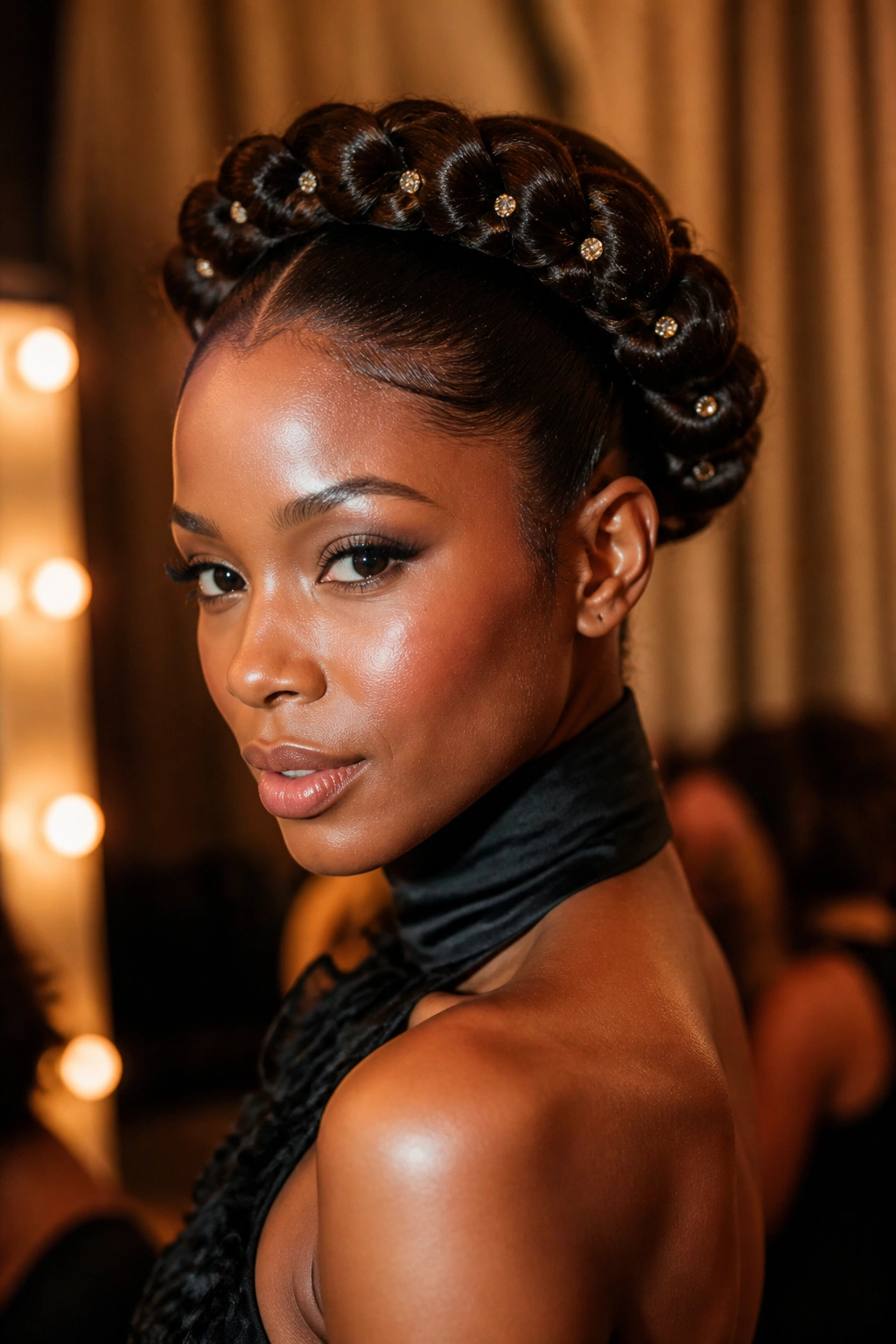
When the dress already has drama at the hem, a knotted halo keeps the hair interesting without crowding the neckline. It circles the crown in a way that feels formal, but the knots themselves give the style enough texture to stay alive. It’s elegant with a bit of edge.
Best Places to Use It
This one works especially well with higher necklines, high collars, and dresses with strong shoulder detail. The halo shape draws the eye upward, which can balance a gown that is heavier on the body. It also suits thick or medium-thick hair because the knots need enough material to feel full.
- Best for: formal weddings, gala dinners, art openings, and evening receptions
- Great with: subtle pins, tiny crystals, or nothing at all
- Hair prep: smooth the roots first, then add bend through the lengths
- Avoid: too many loose pieces, which can turn the halo messy fast
The halo can be soft and rounded, or more sculpted if the event calls for sharper styling. Either way, keep the pattern readable. If nobody can tell where the knots are, the whole point gets lost.
14. The Asymmetric Volume Updo

A side-heavy updo is for someone who wants formal hair with a little more fashion sense than tradition. The volume sits off to one side, or lifts higher on one panel of the head, which gives the entire look motion. It feels modern without chasing trends.
I like this style when the dress has an off-center detail, a diagonal neckline, or a strong shoulder. The asymmetry in the hair can echo the clothes and make the outfit feel considered from head to toe. It also gives a nice lift around the cheekbones without needing a giant topknot or a lot of sprayed-out height.
The key is control. Asymmetric volume is not the same as random fluff. One side should be visibly fuller, but the outline still needs to be polished. That means smooth roots, careful pinning, and a clear shape at the back. If the volume spreads everywhere, the style loses its edge.
This is one of the better options when you want to look styled, not sweet. It has confidence. It also gives the back of the head something to do, which is more useful than people admit when there are cameras, greetings, and long table conversations involved.
15. The Minimalist Tucked Bun
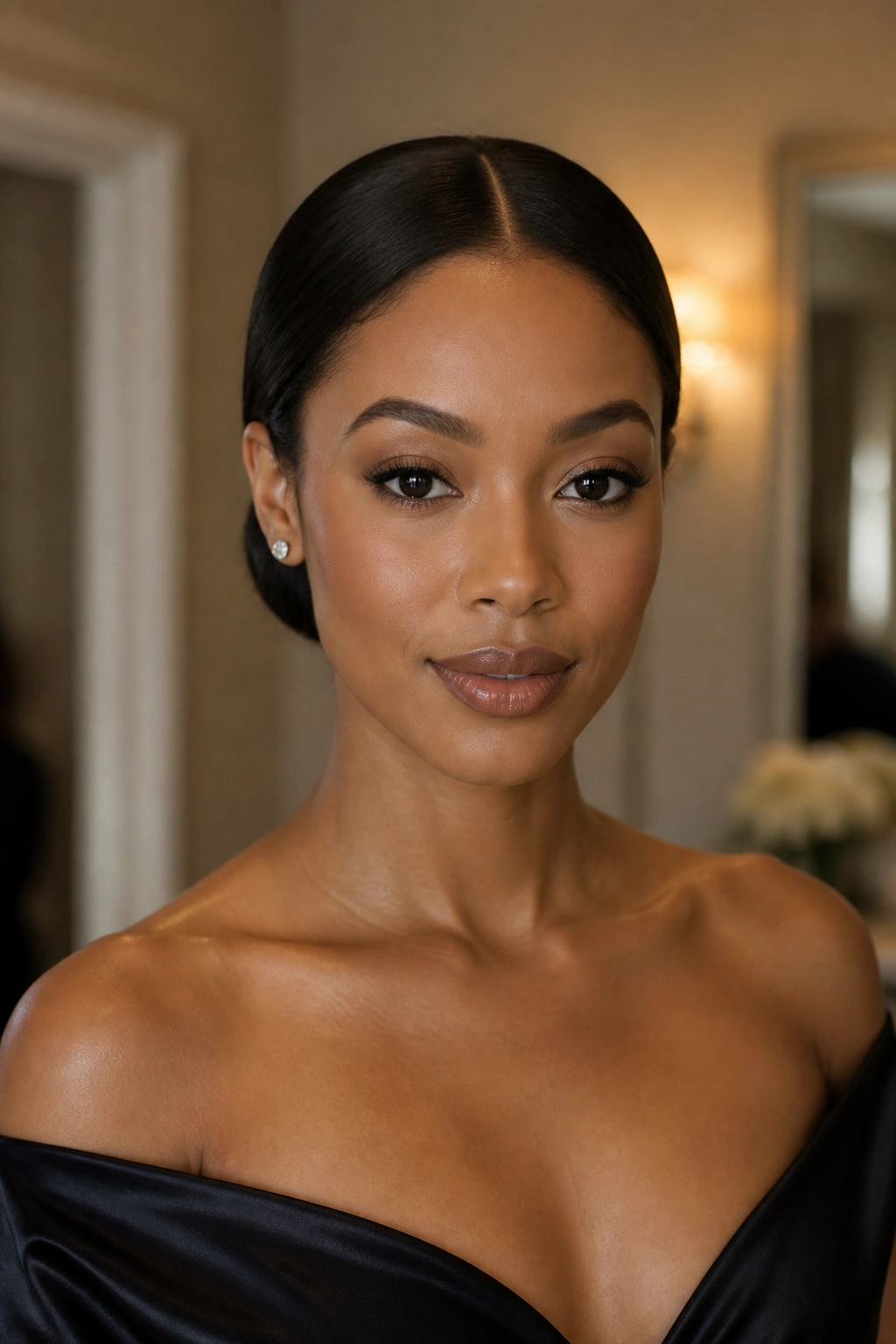
What if you want the quietest option in the room? A minimalist tucked bun answers that cleanly. No stray drama, no overly glossy shell, no extra folds trying to prove a point. Just a neat, low shape that lets the dress and makeup carry the mood.
The appeal is in the restraint. This style works when the fabric is rich, the jewelry is strong, or the neckline already has enough personality on its own. A tucked bun keeps the hair out of the way while still looking finished from every angle. It is also one of the easier formal styles to refresh if you need to slip into a coat, sit through dinner, and then go back out into the night without rebuilding the whole thing.
A center part makes it sharper. A soft side part makes it gentler. Either way, the bun should disappear into the overall outfit rather than shouting for attention. That can be a relief, honestly. Not every special-occasion look needs a headline.
If you’re torn between a few options, choose the style that keeps your face open and your shoulders relaxed. That usually tells you which one fits the evening. And if the back view is clean, the whole thing tends to follow.
