



A strapless dress changes the whole conversation. With the shoulders, collarbones, and upper chest fully open, hair stops being an afterthought and starts doing real work. The best hairstyles for strapless formal dresses don’t just look nice from the back of a room; they shape the neckline, frame the face, and decide whether the dress feels polished, romantic, modern, or a little too bare.
The trick is balance. A dress with a clean satin bodice usually wants a cleaner hairstyle. A gown with beading, lace, or a lot of texture can handle a softer finish. Heavy earrings, a dramatic necklace, or a bare neck all pull the eye in different directions, so the hair has to cooperate instead of competing. That is where a lot of people go wrong. They choose the prettiest style in the mirror, not the one that actually fits the dress.
Texture matters, too. Fine hair behaves differently from thick hair. Straight hair sits differently than brushed-out curls. A style that looks effortless in photos may fall apart after one hour of dancing, while a sturdier updo can survive heat, humidity, and a long reception without turning into a frizzy knot.
The good news: once you understand the shape of the neckline, the rest gets easier. Start with the style that matches the dress, then adjust for your hair length, face shape, and how much movement you want. A few of these are safe and classic. A few are more fashion-forward. All of them can work with strapless formal dresses when they’re done with intention.
1. Sleek Low Bun for Strapless Formal Dresses

This is the one I reach for when the dress already has enough drama. A sleek low bun sits at the nape of the neck, keeps the shoulders clean, and lets the gown do the talking. It works especially well with satin, crepe, and heavily beaded bodices, because the hair doesn’t add another layer of noise.
Why It Works
The low bun creates a long, elegant line from the top of the head down to the neckline. That shape is hard to beat with a strapless dress. It also makes room for statement earrings, which is a nice trade when the neckline is already open.
If your dress has a sharp straight neckline, this style makes the whole look feel deliberate. If the dress is softer and more romantic, the bun keeps it from drifting into “too sweet” territory. Clean is the point here. Not stiff. Just controlled.
How to Wear It Well
- Keep the bun low and compact, not floating in the middle of the back of the head.
- Use a center part if you want a modern feel, or a deep side part for something a little more old-school.
- Leave the finish smooth at the crown so the neckline stays crisp.
- A few hidden pins and a light mist of flexible hairspray are usually enough.
Best for: satin gowns, column dresses, statement earrings, and anyone who wants a sharp profile from the side.
One warning. If the bun is too tight, it can make the face look harsher than the dress deserves. Leave a little softness around the hairline.
2. Old Hollywood Waves for a Strapless Gown
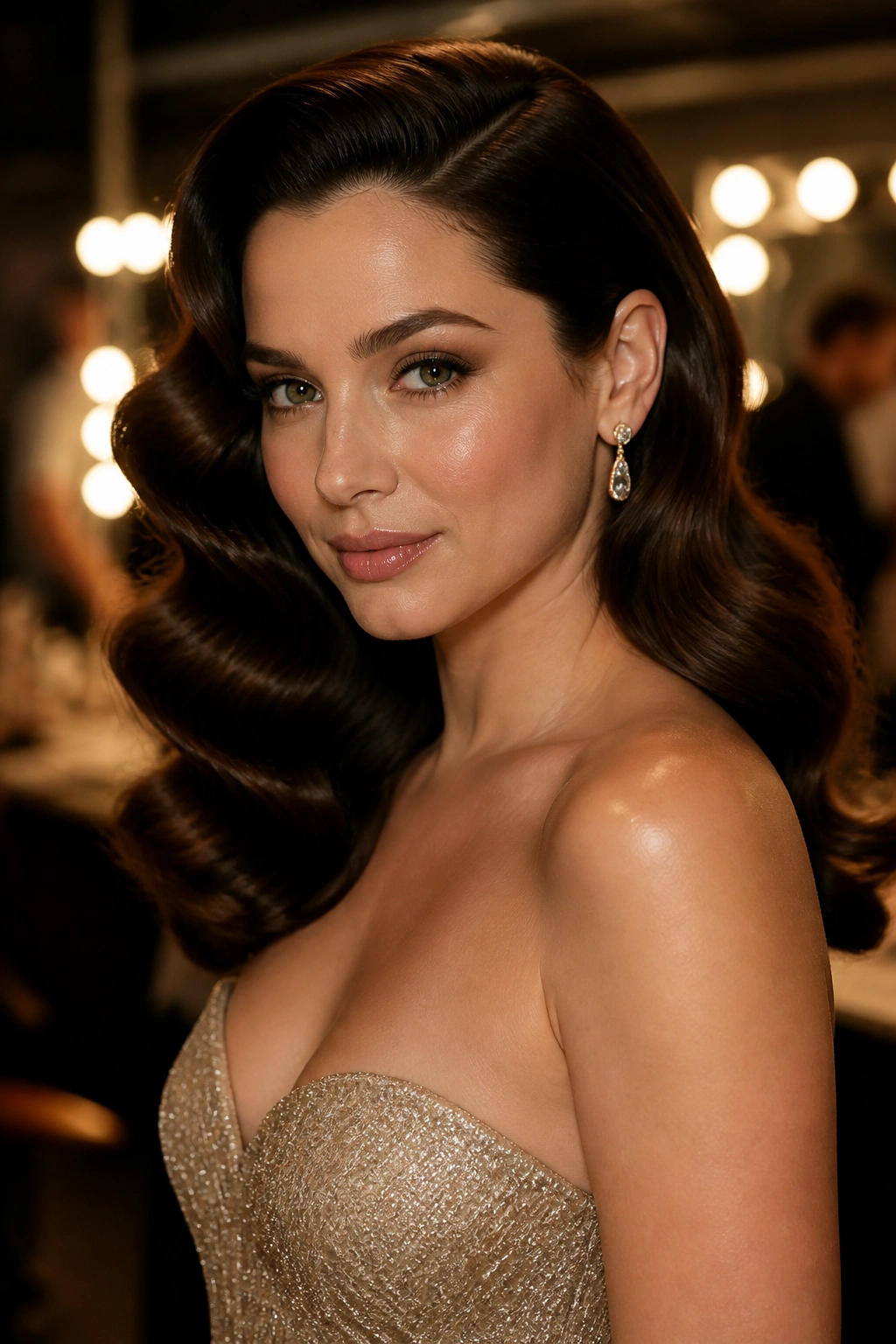
Why do these waves keep showing up with strapless evening dresses? Because they know exactly how to make bare shoulders look expensive. Old Hollywood waves bring structure without looking severe, and that glossy S-shape plays nicely with gowns that are sleek, fitted, or slightly dramatic.
The style works best when the wave pattern is clean and the ends are polished. A 1.25-inch curling iron or wand usually gives the right size curl, then the curls are brushed out once they’ve cooled. That brushing step matters more than people think. It softens the ringlets into that smooth, screen-star finish instead of leaving you with party curls that look half-done.
What Makes It Different
This is not beach hair. The wave should fall in one direction with a clear side part, and the shape should feel intentional from the front and the back. The style reads formal because the movement is controlled.
It’s especially good with gowns that have a plain bodice or a clean corset top. The hair brings the glamour. The dress doesn’t need to fight for attention.
How to Keep It From Collapsing
- Prep with a heat protectant and a light mousse at the roots.
- Set each curl in place until it cools.
- Brush with a soft boar bristle brush, not a wide comb.
- Pin one side back if you want your earrings to show.
A deep side part helps a lot. So does a shine spray, used lightly. Too much and the hair starts to look greasy instead of glossy.
3. High Polished Ponytail

A ponytail sounds casual until you make it sleek enough for a formal dress. Then it turns into a statement. A high polished ponytail lifts the face, opens the neckline, and gives a strapless gown a clean, confident edge.
The placement matters. Too low and it can feel like gym hair dressed up. Too high and it starts to look playful instead of formal. The sweet spot is usually a few inches above the crown, where the base gets lift but still feels elegant. Wrapping a small section of hair around the elastic makes the whole thing look more finished in two seconds flat.
This style is especially good if your dress has a fitted bodice, a long skirt, or a more modern shape. It creates movement in the hair without hiding the neckline. And if your earrings are bold, this is a smart choice. You get the shine up top and room around the jaw.
A few details matter here:
- Smooth the crown with a fine-tooth comb and a little styling cream.
- Curl the tail softly if you want more volume.
- Keep the ponytail sleek at the base, not puffy.
- Use strong pins if your hair is heavy or layered.
The one downside? If your dress already has a lot going on at the shoulders, a high ponytail can push the look into busy territory. In that case, pull the ponytail lower or soften it with a little bend through the ends.
4. Soft Chignon with Loose Texture

A soft chignon is the hairstyle equivalent of a well-tailored jacket that doesn’t try too hard. It sits low, feels graceful, and gives strapless formal dresses a little breathing room around the collarbone and shoulders. The texture keeps it from looking too severe.
What It Looks Like
Think low twist, pinned into a rounded knot, with a few soft edges and maybe one or two face-framing pieces if the dress can handle them. The chignon should look gathered, not stuffed. There is a big difference.
This style shines with dresses that have lace, draping, or movement in the skirt. A strict hairstyle can feel too rigid next to a gown that already has softness. The chignon keeps things balanced.
What to Ask Your Stylist For
- A low placement at the nape or just above it.
- Loose shaping through the crown for a gentle lift.
- Hidden pins so the knot looks smooth from the side.
- Soft ends tucked inside instead of sticking out.
The best version of this style still has a little life in it. Not messy. Not unfinished. Just relaxed enough to keep the neckline from feeling boxed in.
If you want a veil, comb, or a jeweled pin, this is one of the easiest styles to work with. It holds accessories well without stealing the show.
5. Side-Swept Curls

Side-swept curls are the answer when you want hair down but still want the dress to stay visible. Side-swept curls move everything to one side, which gives the neckline a clear opening and adds a little asymmetry. That asymmetry can be a gift with a strapless dress.
A one-shoulder feeling, even when the dress itself is strapless, makes the look more dynamic. The side part creates lift, and the curls bring softness near the face. This is a smart choice for dresses with embellishment on one side, or for anyone wearing one statement earring instead of a matching pair.
The style works best when the curls are brushed just enough to feel smooth but not so much that they go flat. You want movement, not helmet hair. A flexible hold spray helps keep the shape without locking the hair into place.
Best When You Want
- Hair that still moves when you walk.
- A romantic look without a full updo.
- A way to show one earring or shoulder detail.
- Softer lines around the face.
It’s less ideal if your dress has a lot of detail across the neckline already. Then the hair can start to crowd the top of the gown. Still, for many strapless formal dresses, this is one of the most flattering and easy-to-like options on the list.
6. Half-Up Twist
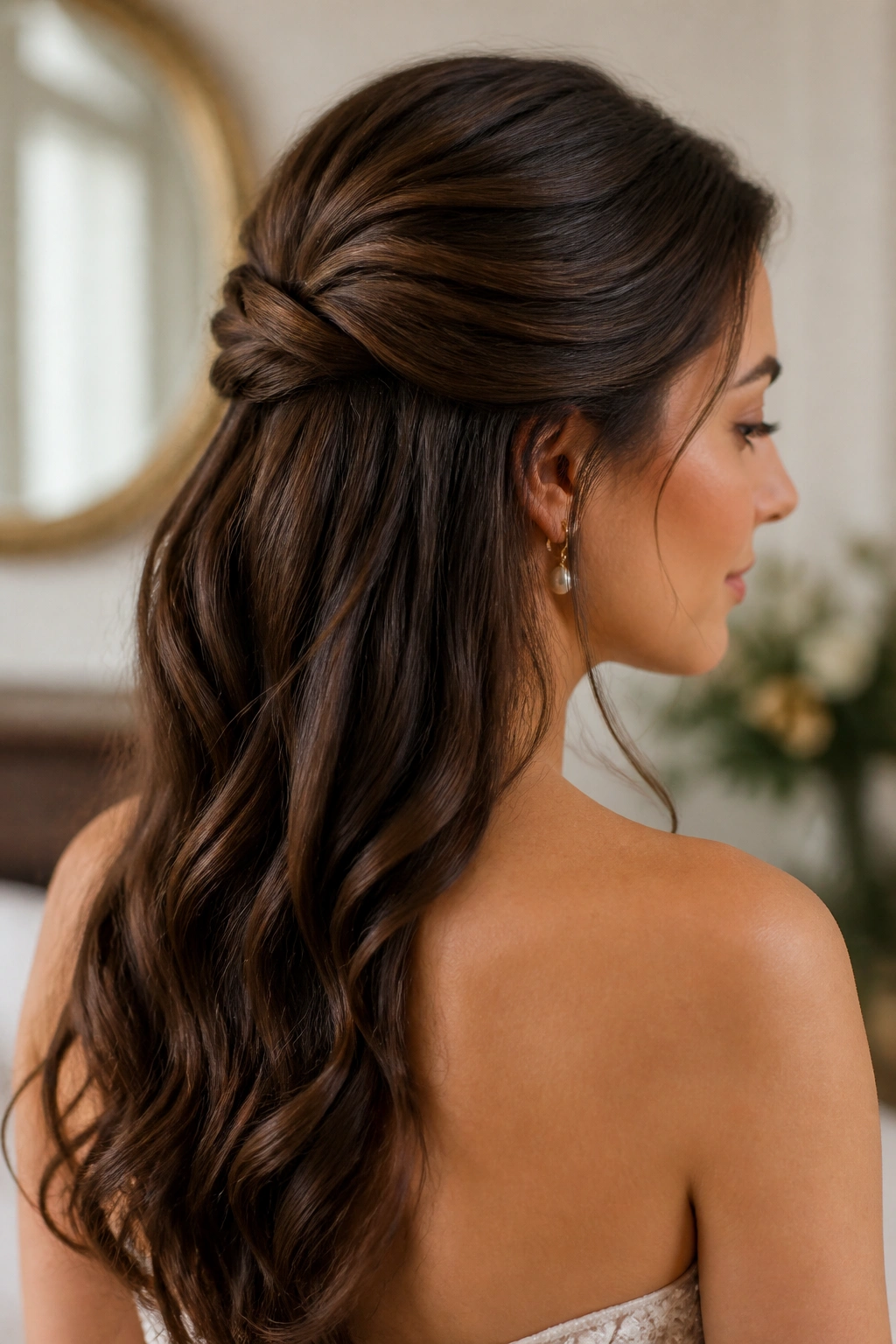
The half-up twist sits in a nice middle ground. It keeps some hair off the shoulders, which helps a strapless dress breathe, but it still leaves length down the back for softness. That balance is exactly why so many brides and formal-event guests end up choosing it.
The twist itself can be as simple as two small sections pulled back and pinned, or as polished as a tucked roll with hidden bobby pins. Either way, the shape should stay neat at the crown and soft through the ends. If the top half feels too flat, the whole thing loses its point.
This style is especially good if you have medium-length hair and don’t want a full updo. It also works for layered cuts, which can sometimes fall apart in all-down styles. Pulling part of the hair back gives the shorter layers a job to do instead of letting them frizz around the face.
A few nice details help:
- Curl the lower section in loose bends, not tight spirals.
- Add a tiny bit of height at the crown.
- Keep the twist centered or slightly off to one side.
- Use pins that match your hair color so they disappear.
The look feels formal without being severe. That makes it useful for weddings, galas, and any event where you want the dress to stand out without looking overworked.
7. Braided Crown

What if the dress leans romantic instead of sleek? A braided crown is a strong answer. It frames the face, clears the shoulders, and adds texture right where a strapless neckline benefits from it most.
Why It Works
The braid creates a built-in border around the head, which gives the outfit shape. That shape matters with strapless dresses, because the eye needs a place to land above the bodice. A braid does that without needing a necklace or a heavy accessory.
This style looks especially good with chiffon, tulle, floral embroidery, and gowns that already have a soft, floating feel. It can also tame thicker hair in a way that still feels elegant. The braid holds the shape together instead of letting the hair spread everywhere.
How to Use It
- Keep the braid close to the head for a cleaner finish.
- Loosen the plaits slightly after braiding so it doesn’t feel stiff.
- Tuck the ends discreetly at the back or under the crown.
- Leave a few soft pieces near the temples if the style starts to feel too strict.
Braided crowns can go a little fairy-tale if you’re not careful. That is fine if the dress has that mood. If the gown is more modern, keep the braid tighter and cleaner so it reads polished rather than whimsical.
8. Voluminous Blowout for Strapless Formal Dresses
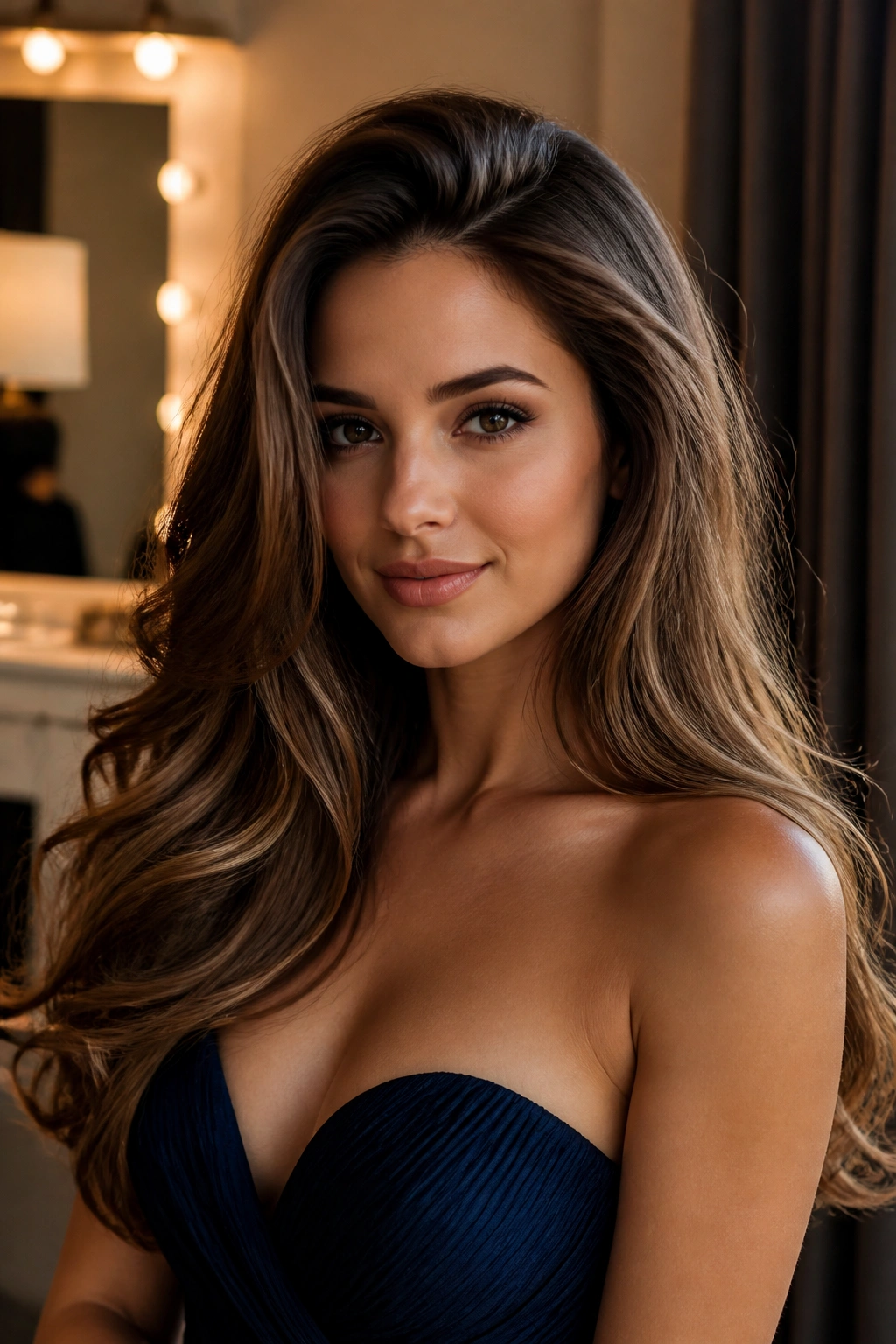
Some strapless dresses need hair that stays down. A voluminous blowout for strapless formal dresses does exactly that, and it’s a lot more elegant than people give it credit for. The body in the hair keeps the look full, balanced, and a little glamorous without forcing it into an updo.
This works best when the roots have lift and the ends curve softly under or away from the face. The whole point is movement. A round brush, a blow-dryer with a concentrator nozzle, and a few Velcro rollers at the crown can change the shape fast. If the roots are flat, the hairstyle loses its lift and starts to look like ordinary straight hair.
Quick Checks Before You Commit
- The crown should have height, not puff.
- The ends should look smooth, not blown out in every direction.
- A middle part gives a cleaner line; a side part adds old-school glamour.
- Shine matters here. Dry ends look rough next to a formal dress.
This style is especially good with strapless dresses that have architectural bodices, because the hair adds softness. It also suits people who hate having their hair pinned up. Fair enough. Not everyone wants a bun for an evening that may last six hours.
If your hair is very fine, you may need a root spray or a few hidden clips for support. Otherwise, the style can fall halfway through the night and start looking tired by dessert.
9. Textured Low Knot

A textured low knot is what you choose when the dress already has texture in the fabric or detail in the bodice. It keeps the upper body neat but leaves enough looseness to feel modern. This is not the same as a sleek bun. It has more give, more shape, and more air around it.
Imagine a knot built from softly pinned sections instead of one smooth twist. That’s the feel. The texture should be visible, but not messy. I know people like to call everything “undone,” but an actually good low knot still has structure. You should be able to see where the hair starts and ends.
What Makes It Strong
- It works well with matte fabrics like crepe or silk with a soft finish.
- It can handle a gown with a detailed back, since it stays low and tidy.
- It leaves room for earrings without making the face look crowded.
- It usually survives a long event better than looser styles.
A few face-framing strands can soften the look, but keep them intentional. Random pieces falling out tend to look lazy rather than romantic. If the dress is detailed enough, the knot can stay cleaner and the overall look will feel more expensive.
This style is one of my favorites for people who want something elegant without going full red-carpet. It does the job quietly, which is often exactly what a strapless gown needs.
10. French Twist

The French twist has a sharper, more tailored feel than a soft bun, and that’s why it works so well with certain strapless dresses. It pulls the eye upward, lengthens the neck, and gives the whole outfit a refined edge that reads formal immediately.
Unlike a low knot, the French twist has a vertical line. That line matters. It gives shape to the back and side views, which can be useful if your gown is simple in the front but dramatic in the cut or fabric. It also looks especially good with a clean side part and strong earrings.
This style has a reputation for being stiff, and it can be if it’s done badly. The best version feels smooth at the surface but not frozen. A little softness near the temples keeps it from looking dated. Too much spray, and the style starts to feel like it belongs to a school portrait from another century.
Use it when:
- The dress is minimal and needs a strong hairstyle.
- You want a formal look that stays off the shoulders.
- The event calls for polish more than softness.
- You prefer a hairstyle that won’t collapse halfway through dinner.
A French twist is not the most forgiving style to DIY, and that’s worth saying plainly. If your hair is very layered or slippery, you may need a few more pins than expected.
11. Sleek Straight Center Part

Straight hair can be the most striking option of all when it’s done with care. Sleek straight center-part hair gives strapless formal dresses a clean, modern line that feels calm and deliberate. It looks simple, but simple is not the same as easy.
The part has to be sharp. The finish has to be smooth. And the hair has to look healthy from root to end, because every frayed tip will show against an open neckline. A flat iron with narrow plates helps create a smoother bend, especially if the hair has a natural wave or puff at the ends.
The Real Work Is in the Finish
A little shine serum goes a long way. Too much turns the style greasy. The goal is a reflective surface, not an oily one. If your dress is beaded or heavily textured, sleek hair gives the eye a quiet place to rest.
This style is strongest when the gown has strong lines too — a corset top, a fitted satin bodice, or a dress with a very defined waist. It can also look excellent with bold earrings because nothing is fighting for space near the face.
One caution: if your hair is frizzy and the weather is damp, this style asks for maintenance. It can still work, but you need good prep and a backup plan. A polished straight look in humidity takes more effort than people admit.
12. Half-Up Bouffant

A half-up bouffant can sound a little much if you picture the wrong version. The good one is lifted at the crown, pinned softly at the back, and balanced by loose hair below. It gives a strapless dress some height without taking the whole hairstyle off the shoulders.
How Much Height Is Enough
A small bit of crown lift goes a long way. You do not need a giant bump. About an inch or two of gentle volume is usually enough to give the profile shape without making the style feel costume-y. The top should rise, then smooth back into the pinned section.
What It Pairs Well With
- Vintage-inspired gowns.
- Dresses with sweetheart necklines.
- Statement necklaces, if they sit low enough.
- Hair with some natural wave or body.
The half-up bouffant works because it creates contrast. The top is controlled, the bottom stays soft, and the strapless neckline gets framed instead of exposed in a flat, empty way. That makes it especially good for people who want romance but still like a little structure.
If you have very fine hair, a teasing comb and some invisible padding can help. If your hair is thick, keep the height modest so it does not throw off the balance of the dress. The best version looks intentional from every angle, not just from the mirror.
13. Fishtail Braid Over One Shoulder
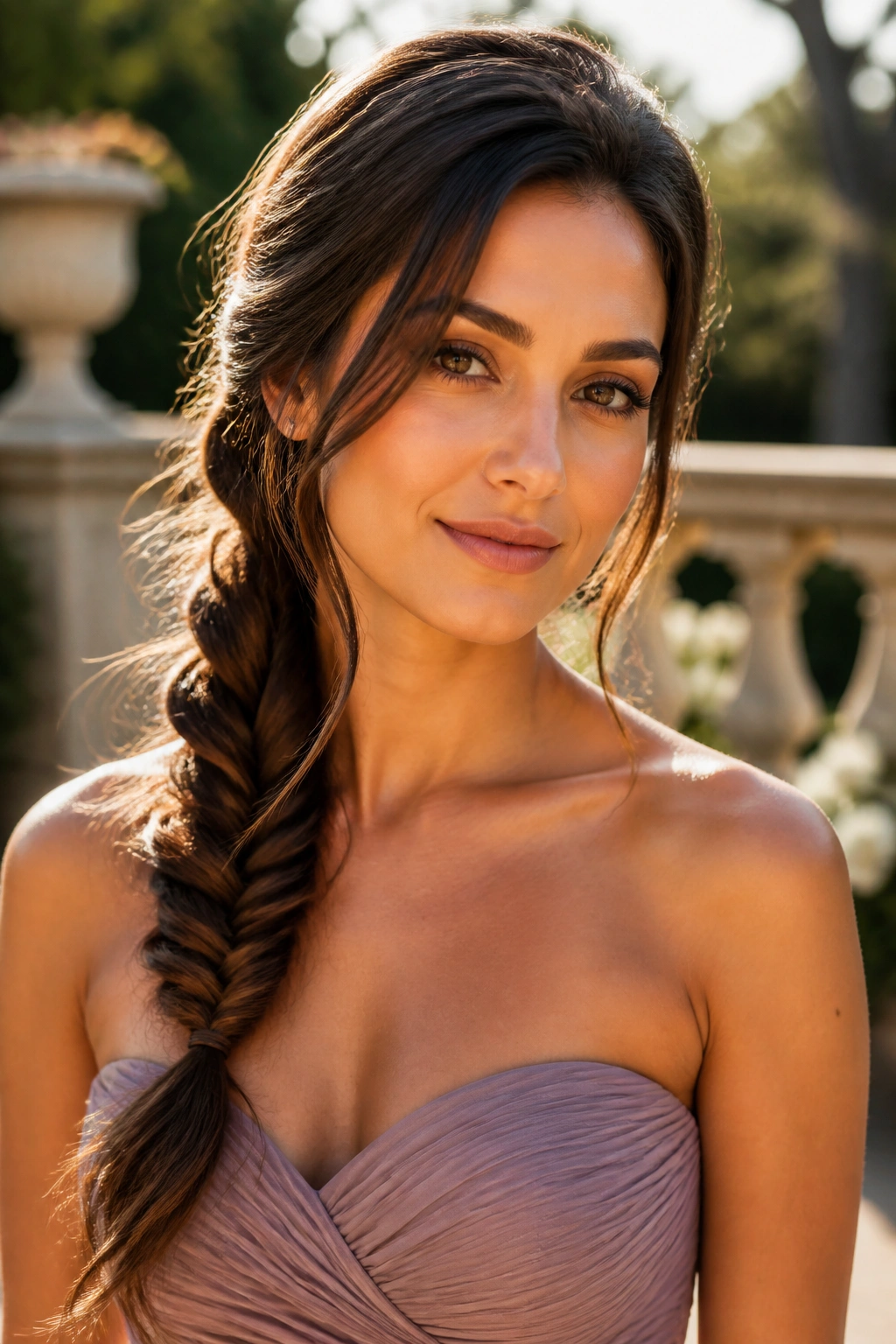
A braid can be formal. A fishtail braid over one shoulder proves it. The tighter pattern and the way it drapes across the chest make it feel more deliberate than a basic three-strand braid, which is why it works so well with strapless dresses that need a softer counterpoint.
This is a smart choice if the gown has lace, chiffon, or a slightly bohemian feel. The braid adds texture without hiding the neckline, and it keeps the hair visible from the front in a way many updos don’t. That matters if you’ve spent time on the front of the dress and want the hairstyle to support it.
A fishtail braid looks best when it’s not pulled too tight. Loosen each side a little after braiding so the weave gets that wider, fuller shape. Start the braid low, let it rest over one shoulder, and secure it with a clear elastic or a tiny wrapped piece of hair.
It’s also practical. Once it’s set, it tends to hold well through a long event. That is a rare thing and worth appreciating. If you want something romantic that won’t fall apart halfway through dancing, this is one of the more reliable options on the list.
14. Top Knot with Face-Framing Tendrils

A top knot with face-framing tendrils is for someone who wants a little edge with the glamour. It lifts the hair away from the neckline, but the loose front pieces stop the style from feeling severe. With a strapless dress, that contrast can be sharp in a good way.
The knot itself should sit high enough to open the shoulders and lengthen the neck. If it’s too low, it starts to look like a casual bun pulled upward at the last second. The front pieces matter just as much. They should be soft, slightly curved, and intentional in length — usually somewhere around the cheekbone or jaw, depending on your face shape.
- Keep the knot smooth at the base.
- Leave the tendrils polished, not stringy.
- Use pins or a hair donut if your hair needs support.
- Pair it with strong earrings if the dress is plain.
This style works especially well with open backs, modern gowns, and dresses that have a little bit of attitude. It also helps if you want your face to stay the focus. The exposed shoulders and lifted bun create a clean frame, while the tendrils keep the whole thing from feeling too hard.
If your dress is delicate and airy, the style may feel too sharp. But with the right gown, it looks fresh and confident.
15. Loose Glam Waves for Strapless Formal Dresses
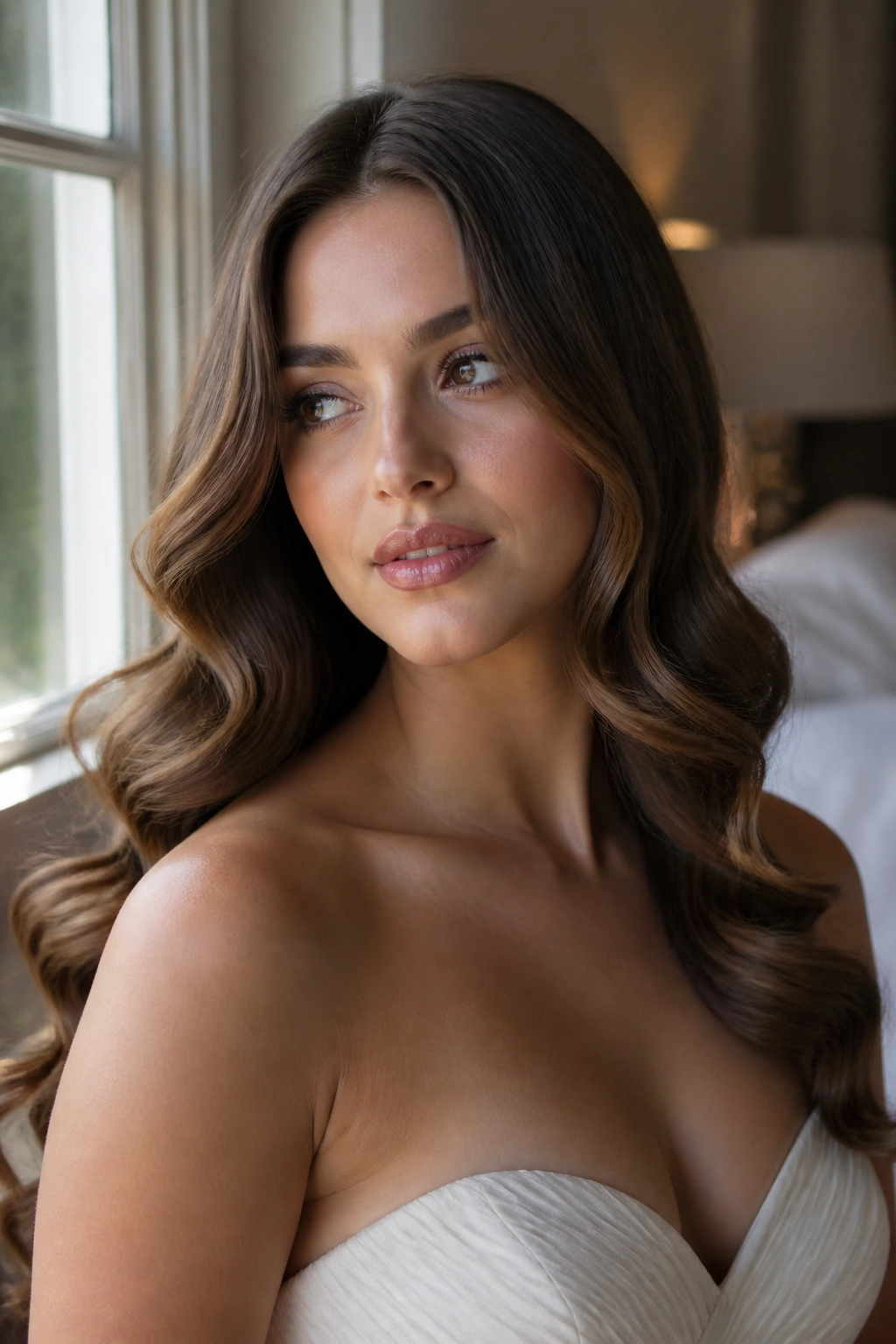
Loose glam waves are the relaxed cousin of Old Hollywood hair. They keep the movement and shine, but they feel softer, less sculpted, and a little easier to wear for long hours. For a strapless dress, that softness can be the whole point. The neckline stays open, and the hair falls around the face without swallowing the shoulders.
The style is at its best when the waves start around mid-length and bend in broad curves instead of tight spirals. A center part gives it a cleaner, modern look. A side part pushes it toward romance. Either way, the waves should stay smooth at the top and loose through the ends so the result feels airy instead of stiff.
This is a strong option if you dislike updos but still want something more formal than plain blow-dried hair. It also works when the dress is heavily structured, because the softness of the waves balances the shape of the bodice. That contrast is useful. A very rigid gown and very rigid hair can feel a little cold together.
The best version has movement when you turn your head. That tiny shift is what makes the style feel alive. If the hair sticks in one shape like a set helmet, brush it out a bit more and let the waves relax. And if you are choosing between a necklace and a striking pair of earrings, go easy on the necklace here. The neckline has enough to say on its own.
