



A bridal updo can save a whole wedding look. Or ruin it.
That sounds dramatic, but anyone who has watched a bride tug at slipping pins before the first dance knows it’s true. Romantic updo hairstyles for brides have to do three jobs at once: flatter the face, hold through hours of movement, and still look soft enough for close-up photos. That’s a hard balance. Too stiff, and the hair looks formal in the wrong way. Too loose, and it starts falling apart by cocktail hour.
The styles that work best usually do one thing very well: they anchor the hair at the nape, crown, or temple, then let the rest stay a little undone. A few escaped tendrils are fine. In fact, they often help. What does not help is overloading the style with spray before the pins are set. That’s how you get crunchy ends and a helmet shape. No one wants that.
So the smartest bridal updos are the ones that feel controlled without looking overworked. Some are soft and low. Some borrow from braids or vintage rolls. Some suit curly hair, some love a veil, and some look better when the dress has a bare shoulder or a deep back. The right one depends on how much movement you want, how much hair you have to work with, and whether your ceremony is indoors, outdoors, or somewhere windy enough to make every pin earn its keep.
1. Soft Low Chignon With Face-Framing Pieces

This is the bridal updo I recommend first. It works because it never fights the face. The bun sits low, usually right above the nape, and the loose pieces at the front keep the whole thing from feeling too formal. If you want a style that looks calm in person and still reads well in photos, this one is a safe bet.
Why It Feels Romantic
The softness comes from contrast. The back is neatly tucked, but the front stays airy, with a few pieces curled away from the cheekbones. That little bit of movement matters more than people think.
A low chignon also plays nicely with veils, pearl pins, and almost any neckline. Strapless? Fine. Boat neck? Still fine. I like it especially for brides who want the dress to stay the main event.
- Use a 1-inch curling iron on the front pieces for a bend, not a ringlet.
- Pin the bun at the nape with 6 to 10 bobby pins crossed in opposite directions.
- Leave the part clean if you want a more refined look, or blur it a little if you want softness.
- A light mist of flexible hairspray is enough; heavy spray makes the face-framing strands stiff.
Best for: classic gowns, cathedral veils, and brides who want the hair to stay elegant without looking severe.
2. Braided Crown Bun

Why does the braid matter so much? Because it gives the whole style a built-in shape. A braided crown bun starts with a braid on one side or both sides of the head, then wraps that braid into a low or mid bun. The result feels a little storybook, but not childish.
This style works well when you want texture near the hairline and a smooth finish at the back. It’s also a smart choice for hair that doesn’t want to stay in a plain bun. The braid gives the stylist more grip, which helps if your hair is very silky.
How to Keep the Braid From Eating the Bun
Keep the braid firm at the start and a touch looser near the temple. That gives you structure without making the top look tight. If the braid is pulled too hard, the whole style can start to look stiff around the forehead.
A few tiny pins tucked under the braid line keep it from lifting during the day. If you’re adding flowers, place them where the braid meets the bun, not all the way across the crown. That keeps the shape readable.
3. Twisted Low Bun With a Center Part
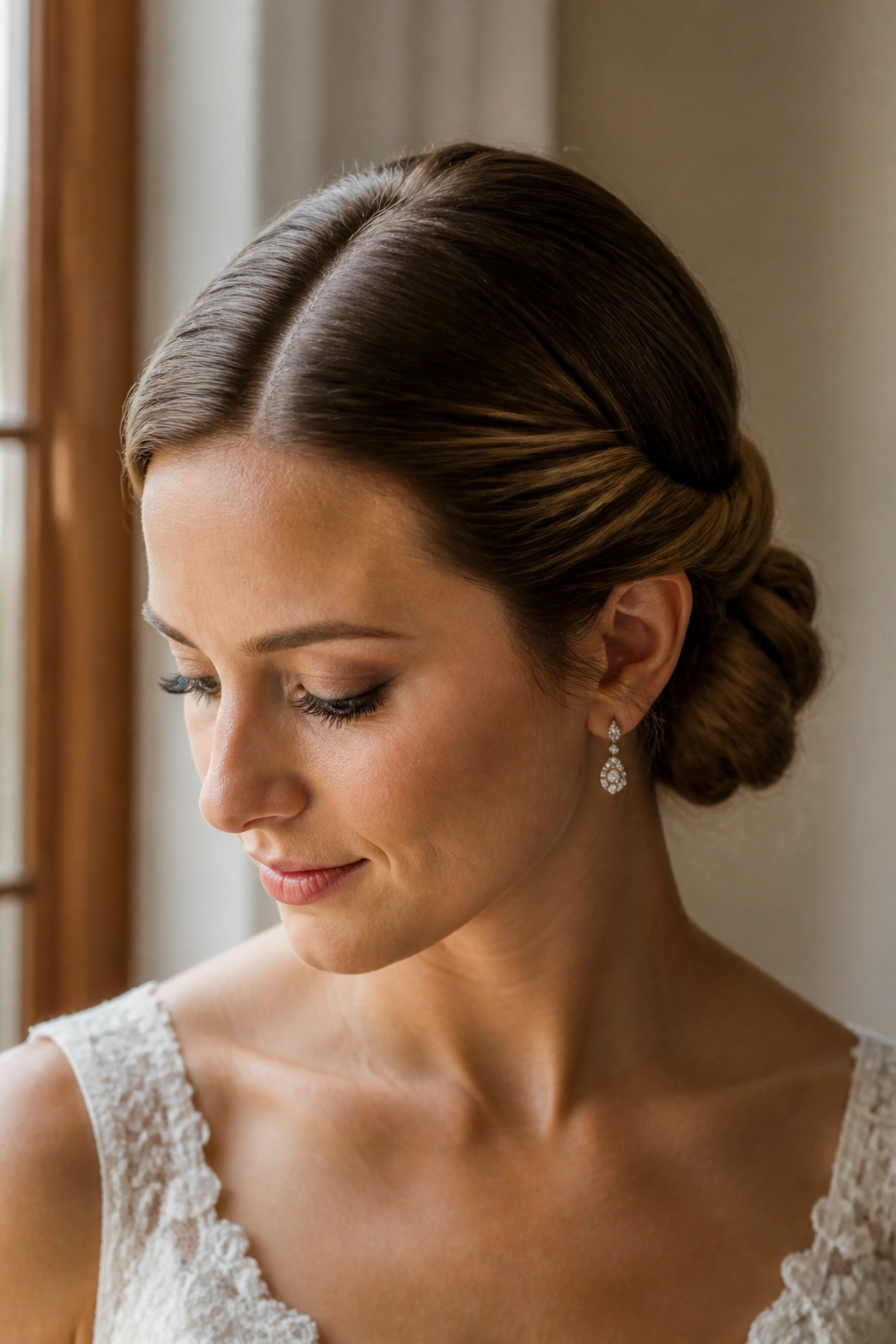
A center part can look severe on the wrong day. Here, though, it brings clean symmetry that works beautifully with a twisted low bun. The hair is parted straight down the middle, then each side is twisted back and tucked into a compact knot at the nape.
The style has a neat, modern feel, but the twist keeps it from looking flat. That makes it useful for brides who like structure and still want a little softness around the edges. It also works especially well with satin dresses and square necklines, where a messy style can feel too casual.
Best for a Center-Part Bride
This one suits straight or slightly wavy hair best, since the twists stay smoother. If your hair is layered, ask for the shortest face pieces to be curled under rather than left out. Otherwise they can flip in awkward directions by the end of the night.
The good thing about this style is its restraint. It does not need much decoration. A slim comb, a single pearl pin, or a veil comb tucked low is enough.
4. Messy Romantic Bun With Loose Tendrils

Messy does not mean sloppy. That’s the distinction that matters here. A romantic messy bun should still have a clear shape: usually a rounded base, a few larger loops, and soft tendrils left around the ears and jaw.
This is the style for brides who want movement in the hair and do not want every strand smoothed into place. It’s especially flattering if your dress has lace, a low back, or a soft sleeve. The looseness echoes those details instead of competing with them.
A good messy bun has one trick. The texture starts before pinning, not after. If the hair is too clean and slippery, the bun will collapse. A little mousse at the roots and a dry texture spray through the lengths makes the pins hold better. That part matters more than the teasing, honestly.
5. French Twist With Soft Volume
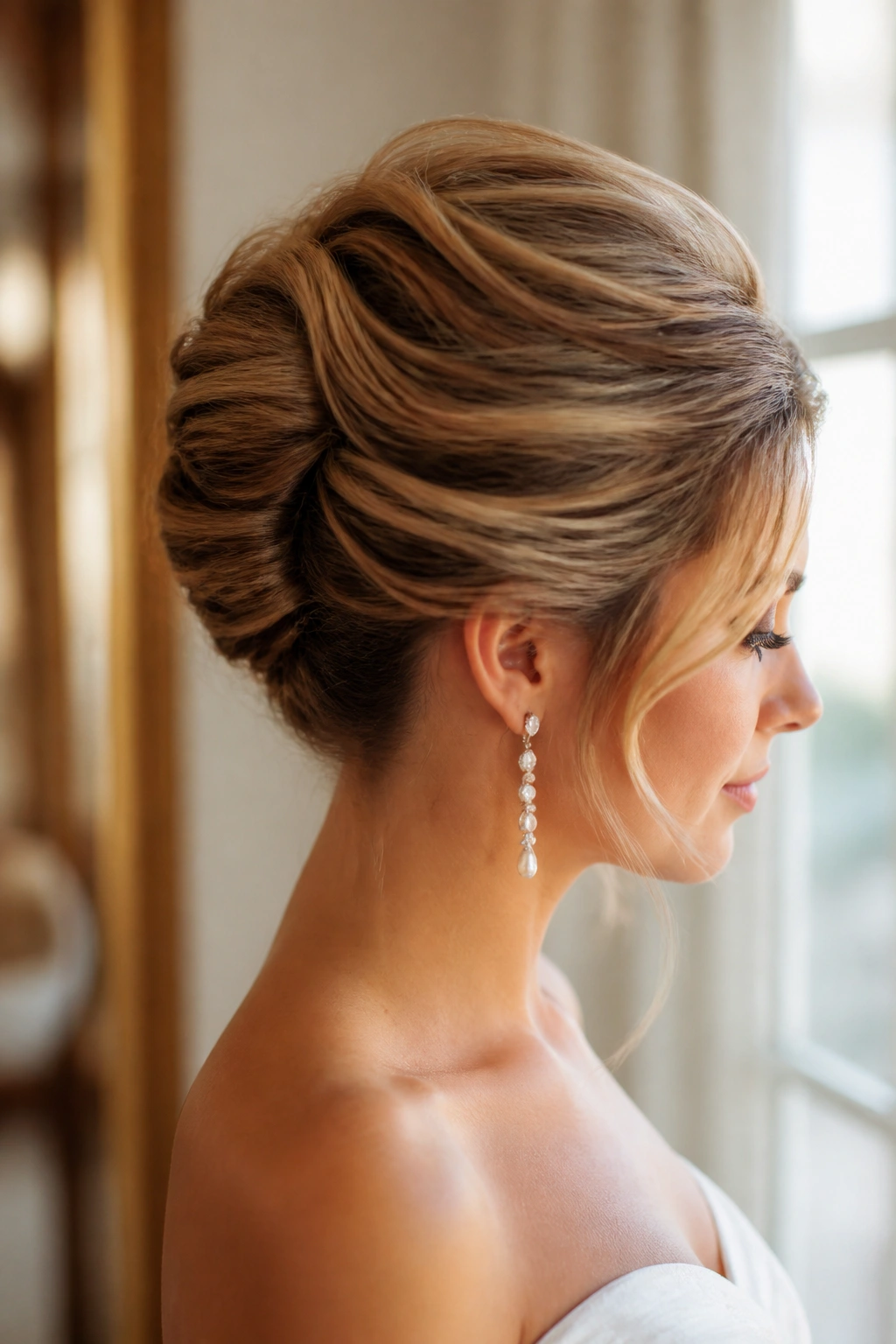
The French twist is old, but not tired. When it’s done with a little lift at the crown and a softer edge at the sides, it feels polished in a very bridal way. The shell-like shape draws the eye upward, which is handy if you want the neck to look long and the profile to feel clean.
Unlike a bun, the French twist keeps most of the bulk vertical. That makes it a strong match for brides who hate wide hair shapes at the back of the head. It also works well with long earrings, because the sides stay neat and open.
What Makes the Volume Work
The best French twists are built in sections. Hair is smoothed back in layers, pinned as it goes, and then tucked into the twist shell at the end. That gives the style enough grip to survive hugs, movement, and a lot of turning for photos.
If you want a softer finish, pull out only the thinnest strands at the temples. Not chunky ones. Thick pieces can make the style lose its line fast.
6. Halo Braid Updo
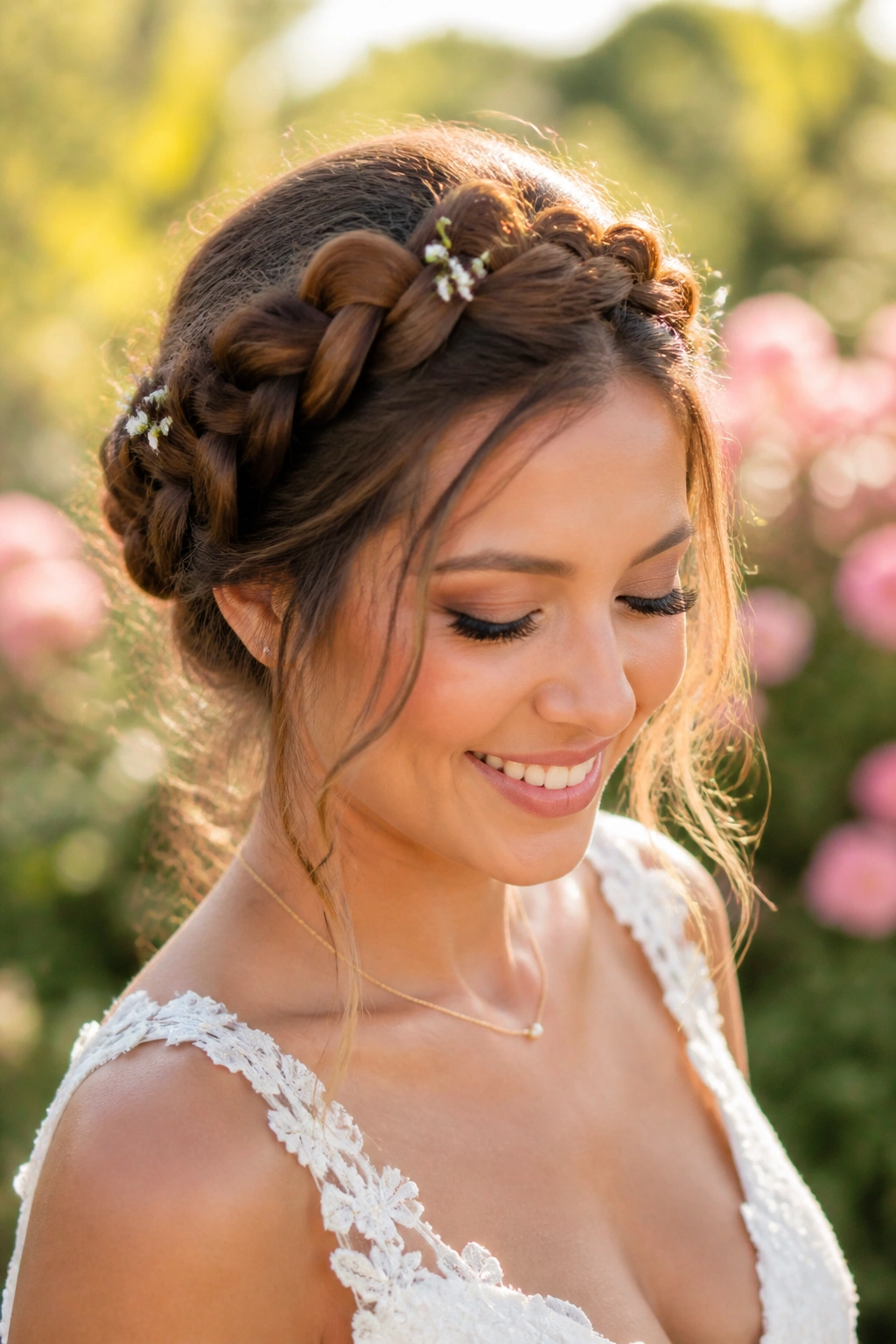
A halo braid wraps around the head like a soft crown, then disappears into a tucked bun or coil at the back. It has a gentle, almost pastoral feel that brides keep coming back to. There’s a reason. It frames the face without needing much else.
This is one of the easiest styles to pair with flowers. Tiny blooms tucked into the braid can look lovely, but only if they’re spaced out. Crowding the braid with too many accents makes the whole thing look busy.
How to Anchor the Halo
Start the braid on the heavier side of the head if one side tends to slip. That gives you better balance. If your hair is fine, backcomb a small section near the crown before braiding so the braid has more body and does not sit flat against the scalp.
A halo braid also gives a bride a nice option for a veil. The veil comb can sit just below the braid line, and the braid itself keeps the comb from showing too much. Clean. Easy. No fuss.
7. Curly Pinned-Up Bun
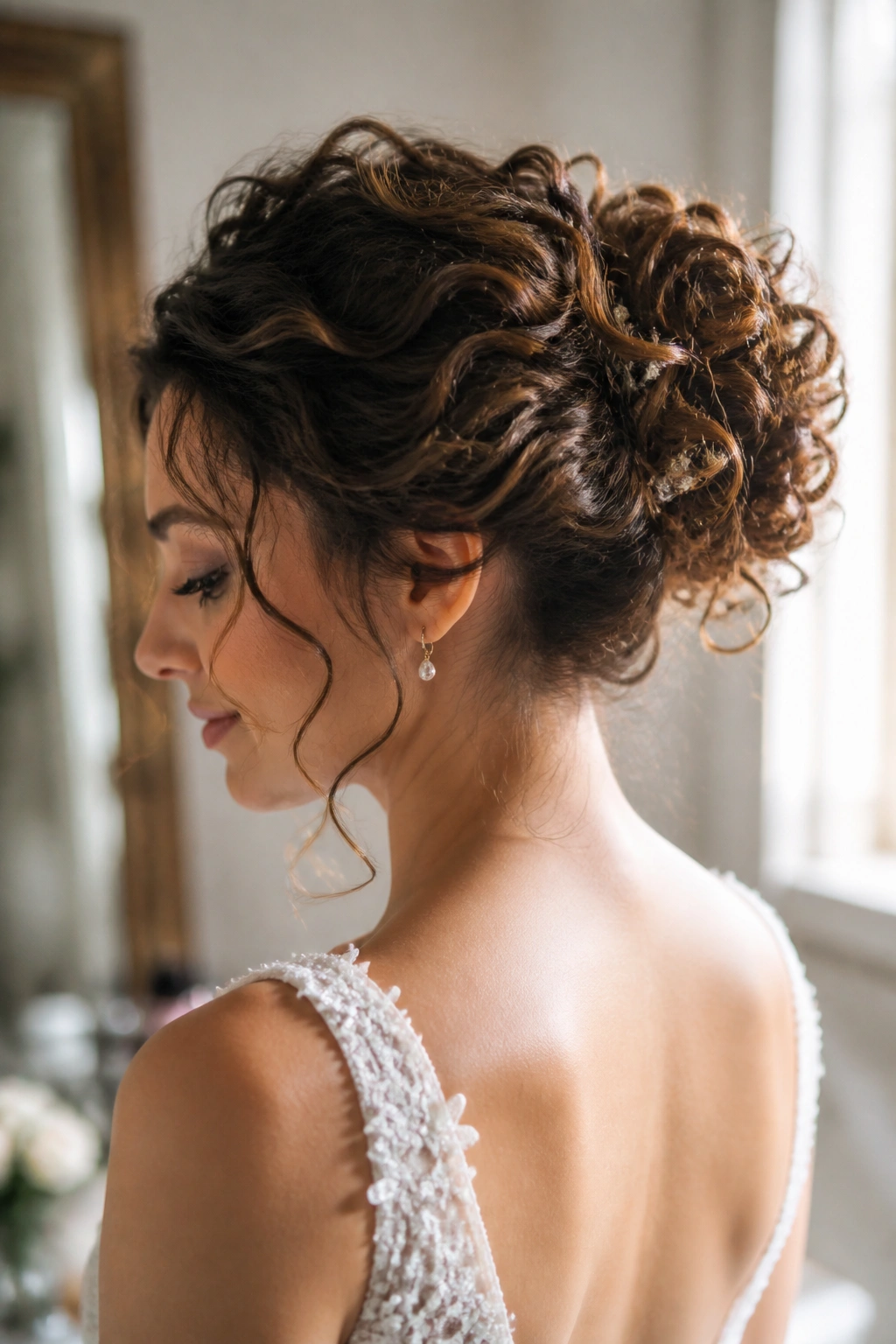
Curly hair has its own logic, and it should not be bullied into pretending otherwise. A curly pinned-up bun keeps the natural bend visible while still lifting the hair off the neck. That makes it one of the prettiest bridal styles for textured or naturally curly hair.
The shape usually looks richer than a smooth bun because the curls create built-in volume. The trick is not to overdo the pinning. If every curl gets pressed flat, the whole point is gone. Leave some coil and texture visible around the bun and the crown.
Humidity can be annoying here, I know. But it’s also where this style shines, because curls already have movement. Use a curl cream or gel before drying, then set the shape with pins after the hair has cooled. That helps the bun stay soft instead of puffing out later.
8. Side-Swept Low Knot
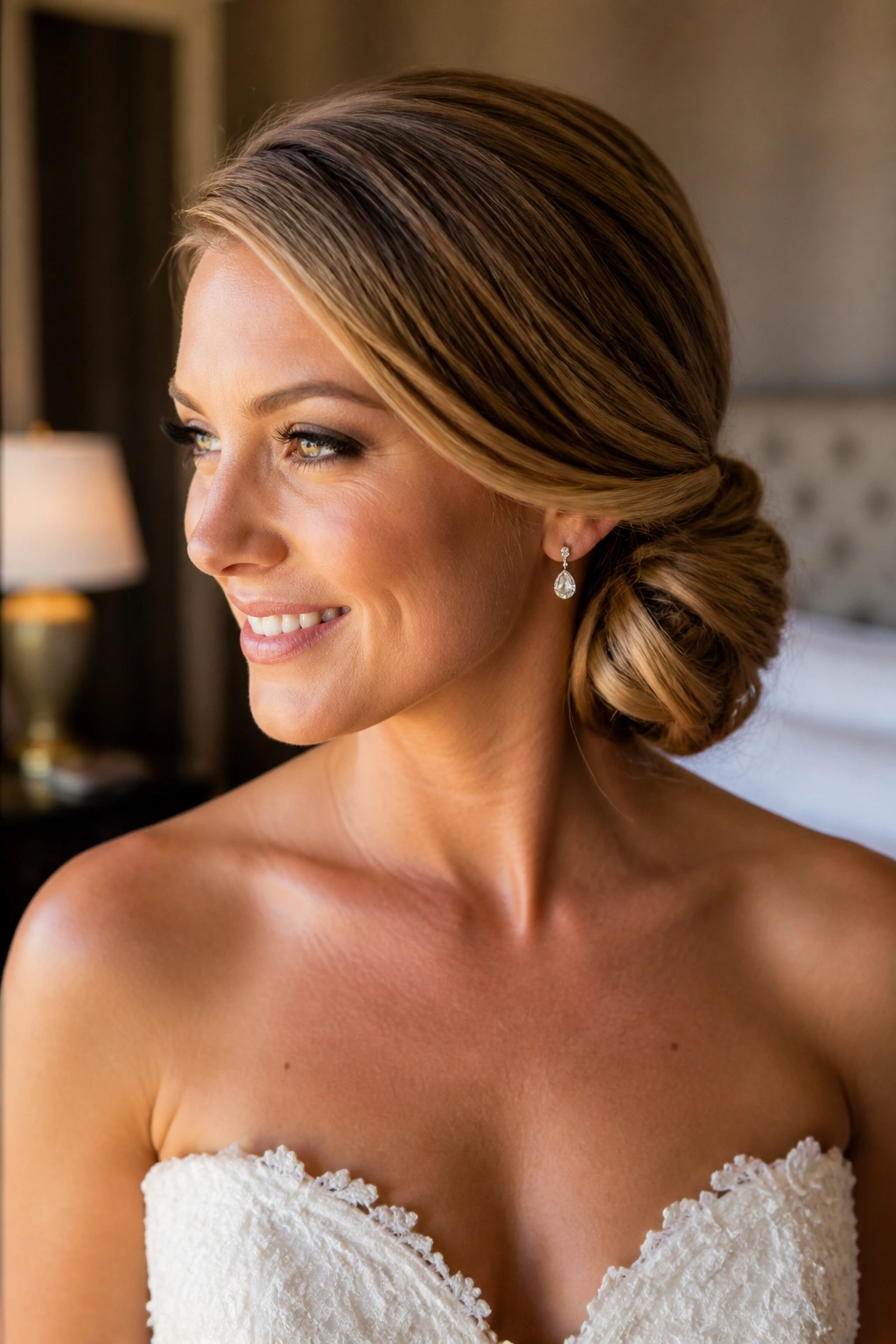
This one is for brides who like asymmetry. A side-swept low knot sits off-center, usually just behind one ear or low at the base of the neck, with the rest of the hair swept across the head in a smooth line.
It feels a little more relaxed than a centered bun, and that matters when the dress has one shoulder, draping, or an angled neckline. The side placement gives the style movement before a single curl is even added.
A side knot also lets jewelry do more work. If you’re wearing one statement earring, this style leaves room for it. If you’re wearing a veil, place the comb on the heavier side so the knot’s shape still shows. I like this look best when the front is tucked behind one ear and the opposite side stays a touch softer.
9. Gibson Tuck With Texture
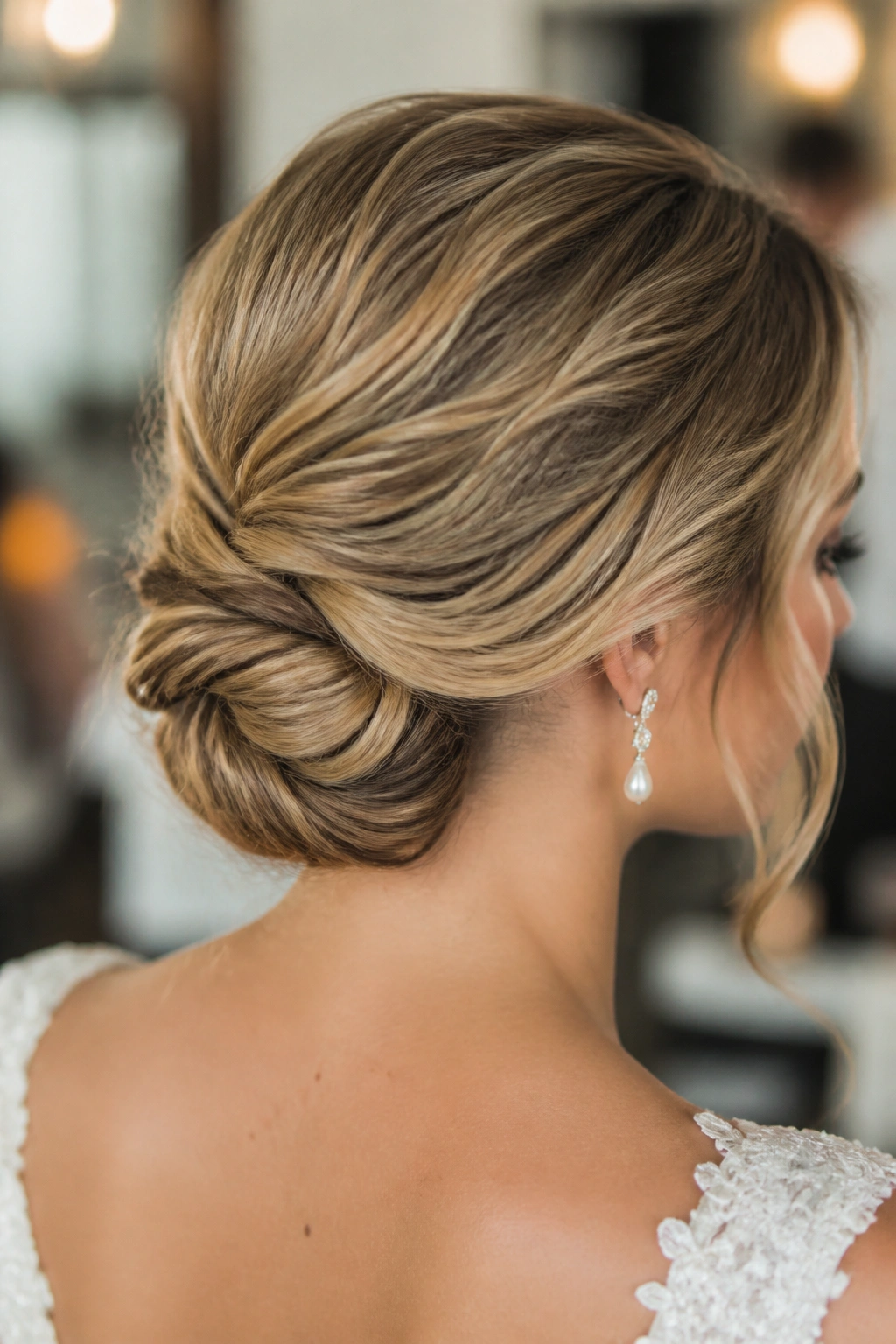
The Gibson tuck has a vintage backbone, but with the right texture it stops feeling old-fashioned and starts looking romantic. Hair is rolled under itself at the nape, creating a soft tucked tube that can be smooth or slightly loosened for volume.
What makes this style worth considering is the shape. It keeps the hair secure without building a big bun at the back, so the finish stays compact. If your dress has a high back, this can be a very smart choice.
The Tucked Fold
The best Gibson tucks use a little wave through the lengths first. Straight hair can work, but it tends to slide unless there’s texture in it. A few hidden pins inside the roll keep the fold closed.
This is also a useful style for brides who want the hair to stay away from the shoulders but don’t want a style that feels severe. It lands in that middle space. Quiet, but not plain.
10. Boho Braided Updo With Flowers

A boho braided updo can lean too far into festival territory if it isn’t handled carefully. The bridal version needs cleaner lines, a stable base, and flowers placed with a light hand. Done right, it feels airy rather than messy.
The braid can run along the crown, wrap around the back, or feed into a low knot. What matters is that the texture stays visible. Brides with long hair usually get the best result, because there’s enough length to create loops without making the style bulky.
- Small blooms work better than large ones.
- Place flowers where the braid changes direction.
- Use floral wire or tiny discreet pins so the blooms don’t droop.
- Silk flowers can be a smart backup if fresh stems are delicate.
This style suits garden ceremonies, but it can also work indoors if the dress is soft and the accessories stay understated.
11. Sleek Chignon With a Veil-Friendly Base

A veil needs somewhere solid to live. That’s where the sleek chignon earns its place. The hair is smoothed into a low, tight base, usually at the nape, so the comb can sit cleanly without wobbling or slipping.
This style is all about control. Not stiffness—control. A smooth chignon gives the veil a clean anchor point and leaves the rest of the silhouette neat. It’s one of the best choices for brides who want the dress and veil to do the talking.
Veil Placement Matters
If the veil is long or heavy, the comb should sit just above the bun, not inside the thickest part of it. That gives the comb something to grip. For lighter veils, a lower placement works fine and can make removal easier later.
I’d keep the hairline soft only at the edges. A little bend around the ears can stop the style from feeling too severe, but too many loose pieces can fight the sleek shape. This one is better when it’s disciplined.
12. Double-Twist Bun

A double-twist bun uses two rope-like twists that wrap around each other before being pinned into a low knot. It sounds simple, and it is, but the visual result has more depth than a plain bun. That depth is what makes it interesting from the back.
The twists give the style a gentle spiral pattern, which works well with satin dresses, simple lace, or anything with a clean neckline. It’s also a good option for medium to thick hair, since the twists need enough density to hold their shape.
A nice thing about this style is how forgiving it is. If one side wants to sit higher, the other twist balances it out. If the bun needs a little lift, the twist structure gives it. That kind of built-in balance is useful on a wedding day when nobody wants to keep fussing with the back of the head.
13. Pinned Curl Updo for Long Hair
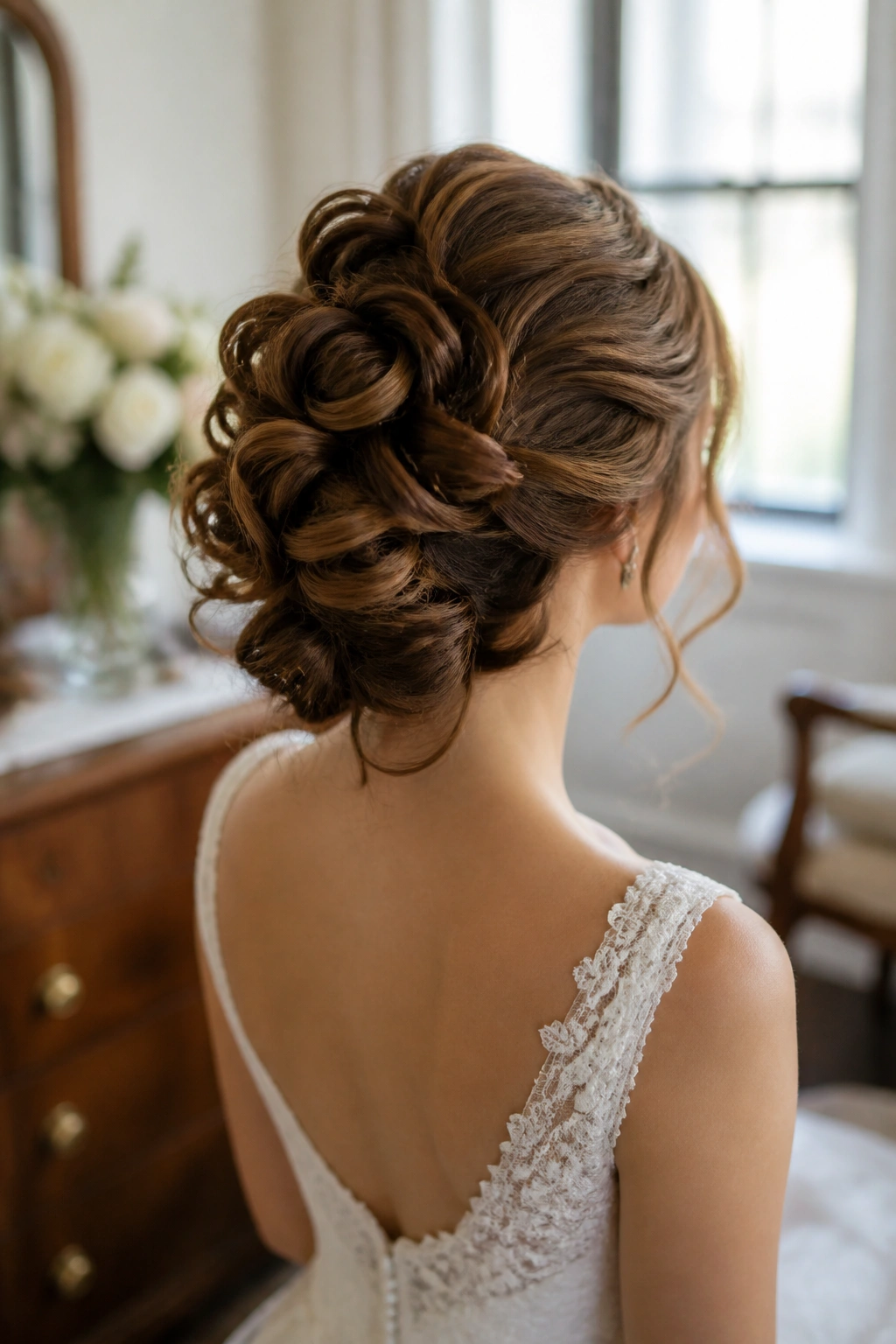
Long hair gives you a chance to make the back of the head look plush rather than flat. A pinned curl updo uses separate curls that are pinned one by one, which creates a soft, layered shape instead of a single compact knot.
This style can look almost cloud-like from behind. The curls overlap, but they do not crush each other. That spacing is what lets the style keep height. Brides with thick hair often love this because it uses the natural weight of the hair without forcing it into one tight shape.
Keeping the Curls From Flattening
Set the curls first and let them cool completely before pinning. If they are warm, they will lose shape faster. That sounds small, but it makes a difference.
Also, do not overload the ends with serum. A tiny bit is enough. Too much product turns the curl ends stringy, and then the style loses the soft finish that makes it pretty in the first place.
14. Rosette Bun
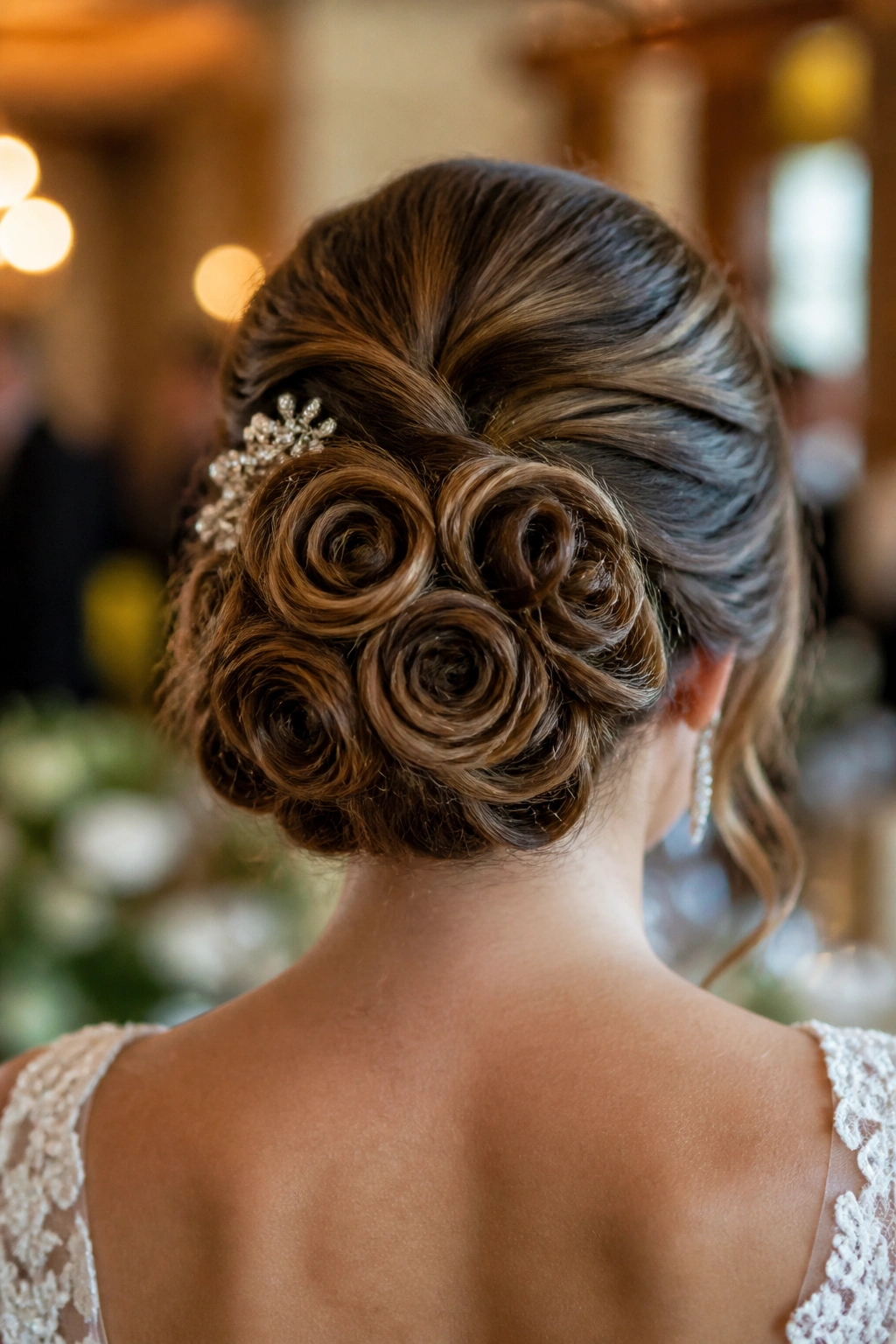
A rosette bun looks like a cluster of rolled petals at the back of the head. It sounds fussy. It isn’t, if the rolls stay small and well spaced. The style has a romantic feel because the loops read almost like flowers without needing actual flowers stuck all over it.
This is a lovely choice for brides who want detail in the updo itself rather than in the accessories. It looks especially nice with minimalist dresses, where the hair can carry a little more visual interest.
The best rosette buns usually use multiple small sections, each rolled inward and pinned to one another. That gives the shape its layered look. If the rolls are too large, the style starts to feel heavy. Keep them small, keep them tidy, and let the silhouette do the work.
15. Knotted Updo With Soft Lift

A knotted updo sounds rigid, but it can actually be one of the softest-looking bridal styles. The hair is divided into sections, tied or twisted into loose knots, and then pinned in a staggered line. That gives the back a plush, woven look.
Compared with a braid-based style, a knotted updo feels less patterned. It’s a little more relaxed. That makes it useful for brides who want texture but do not want the braid to dominate the whole head.
Who Should Choose It
This style suits medium to long hair best. If the hair is extremely layered, the knots can fray at the edges, so you’ll want extra pins tucked under those shorter pieces.
It’s also a good match for dresses with texture—lace, embroidery, gathered fabric. The hair and the dress can both have detail without colliding. That’s a rare sweet spot.
16. Braided Low Bun With a Center Braid

A center braid changes everything. It gives the style a straight line that pulls the eye through the crown and into the bun. Without it, the style can look soft but slightly undefined. With it, the whole shape feels more deliberate.
This is one of the better options for brides who want a classic finish with one interesting feature. The braid can start right at the hairline and continue to the bun, or it can begin mid-crown if you want a more relaxed front. Either way, the braid gives the updo a spine.
The low bun should stay compact, almost tucked under the braid. If it spreads too wide, the braid loses its role. Keep the bun centered and the braid neat, and the result feels balanced without looking stiff.
17. Shell Bun With Soft Edges

A shell bun has a curved, almost curved-shell shape at the back of the head. It sounds formal because it is formal, but the soft-edged version works beautifully for brides who want structure without a sharp finish. The hair is smoothed and folded into a rounded wave, then pinned close to the nape.
This style is a nice fit for satin, crepe, or dresses with a clean drape. It gives the hair a sculpted line that doesn’t fight the fabric. The shape also opens the face nicely, which is useful if the makeup is a little stronger and you want the hair to stay in the background.
A shell bun does not need much decoration. If anything, one comb or a few pins along the curve is enough. Too many adornments can hide the line that makes the style work.
18. Tucked Roll Updo With Pearl Pins

A tucked roll updo looks a bit vintage, but the pearl pins make it feel bridal right away. Hair is rolled inward along the back of the head and secured so the ends disappear inside the shape. The finish is smooth, gentle, and neat.
Pearl pins are especially useful here because they sit along the curve instead of sitting on top like a random add-on. That keeps the accessory part of the structure. I like that. A lot.
A Small Detail That Matters
Use the pins where the hair bends, not where it’s flat. That gives them more grip and makes the pearls look intentional. If you place them too high, they can feel scattered.
This style works well for brides who want a refined back view without a large bun. It’s also one of the better choices for a gown with a strong front detail, since the hair won’t compete with it.
19. Loose Fishtail Crown Bun
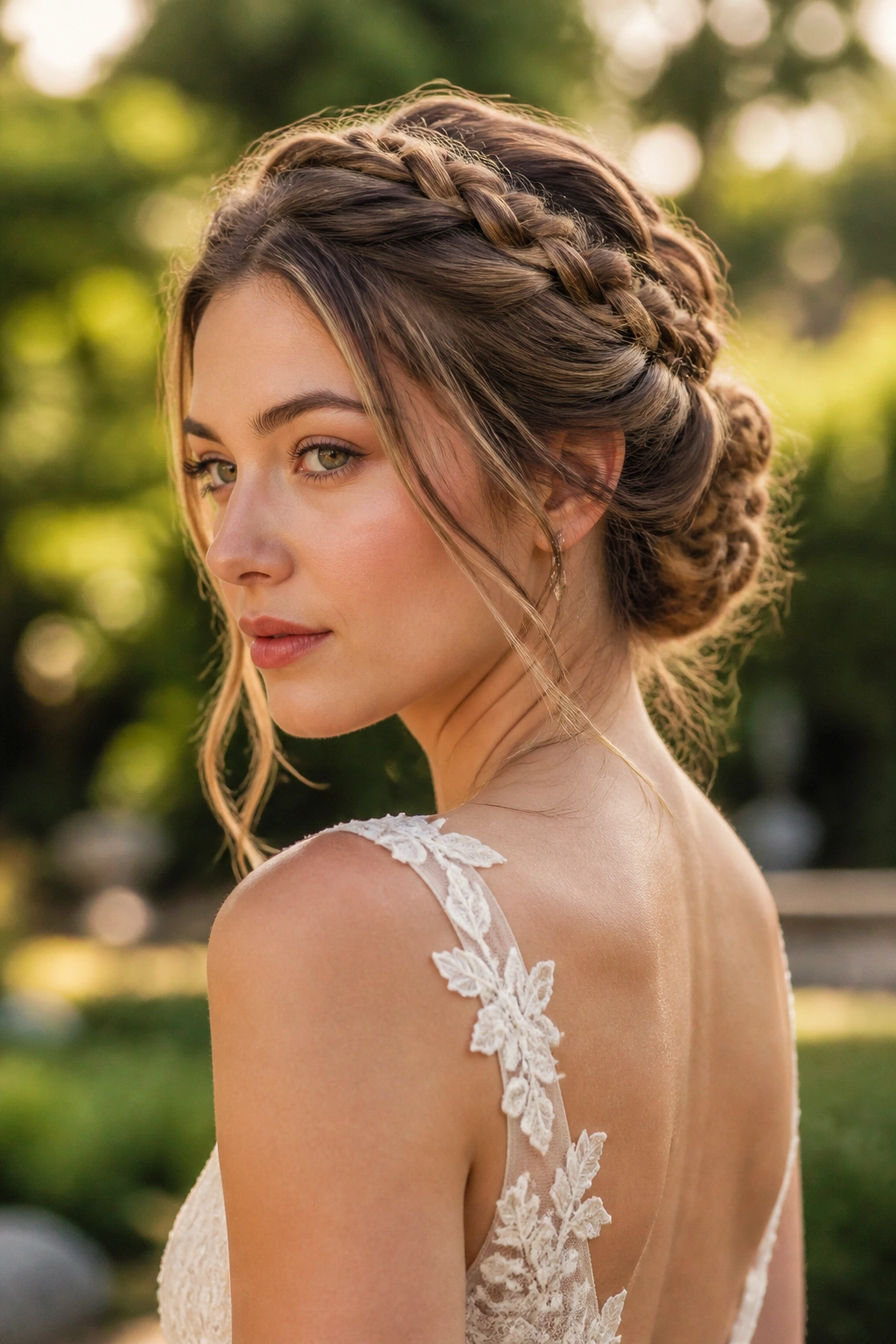
A fishtail braid has a finer, more woven look than a standard three-strand braid, and that detail makes a difference in bridal hair. When it’s wrapped into a crown and then tucked into a bun, the result feels intricate without being heavy.
This style needs a little patience. Fishtails take time, especially if the hair is thick. But the texture is worth it because the braid creates a delicate pattern all the way around the head. That makes the style feel more dimensional than a simple crown braid.
If you want to keep it from looking too casual, smooth the crown first and loosen the fishtail only after it is secured. That keeps the front tidy while the braid itself stays soft. It’s a good compromise, and honestly, bridal hair is full of those.
20. Textured Bun With Wispy Fringe

The textured bun with wispy fringe is for brides who want the face to stay framed in a softer, less formal way. The bun itself is loose and full of movement, while the fringe—whether curtain-like or just a few separated pieces—keeps the front from feeling too bare.
Compared with a slick chignon, this style has more life in it. That can be a blessing if the dress is simple or if the makeup leans romantic and glowing rather than sharp. It also works well for brides who do not like the feeling of every strand being pinned back.
A good version of this style has one rule: the fringe should look like it belongs there. Keep the pieces light and slightly curved, not chunky and over-separated. Otherwise the front starts to look like an afterthought.
21. High Soft Bun With Dropped Curls
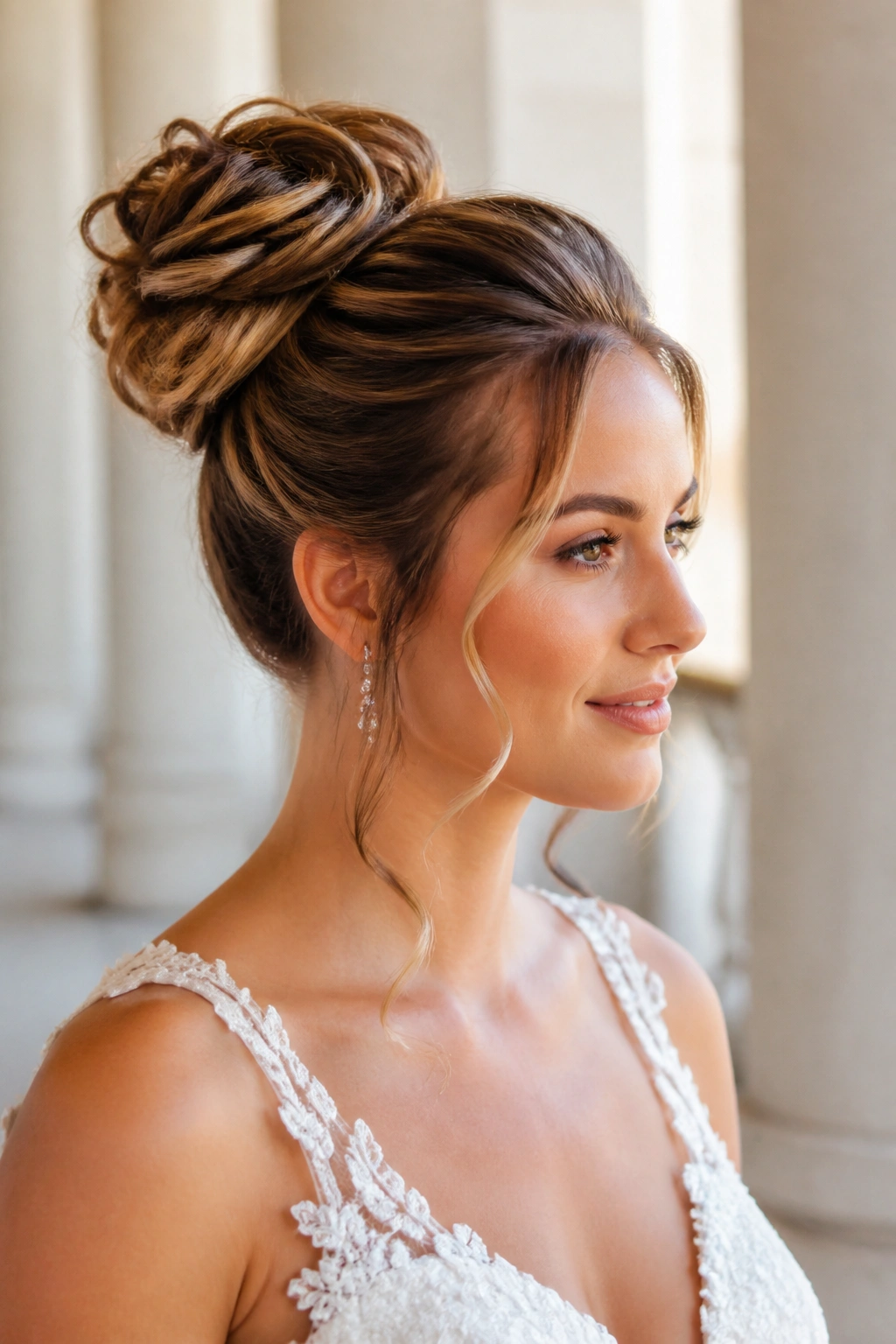
A high bun changes the whole mood. It opens the shoulders, lifts the face, and gives the profile a little more energy. The soft version keeps the bun loose instead of rigid, with a few curled pieces dropped around the ears or temple.
This style is a strong choice for brides who want their neckline, earrings, or back detail to stay visible. It also works well when the ceremony look needs to feel a little more lifted than a low updo. That said, it does need good pinning. Higher buns have more gravity to fight.
How to Wear It Without Losing the Romance
Let the bun stay soft at the edges, and use the dropped curls as the bridge between the hair and the face. If they’re too long, they pull the eye down. If they’re too short, they look accidental. Somewhere around cheekbone to jawline usually lands well.
I’d keep this one off the list if the bride hates feeling her hair move. But if she likes a bit of lift and shape, it photographs with a nice clean line from every angle.
22. Old-Hollywood Side Chignon
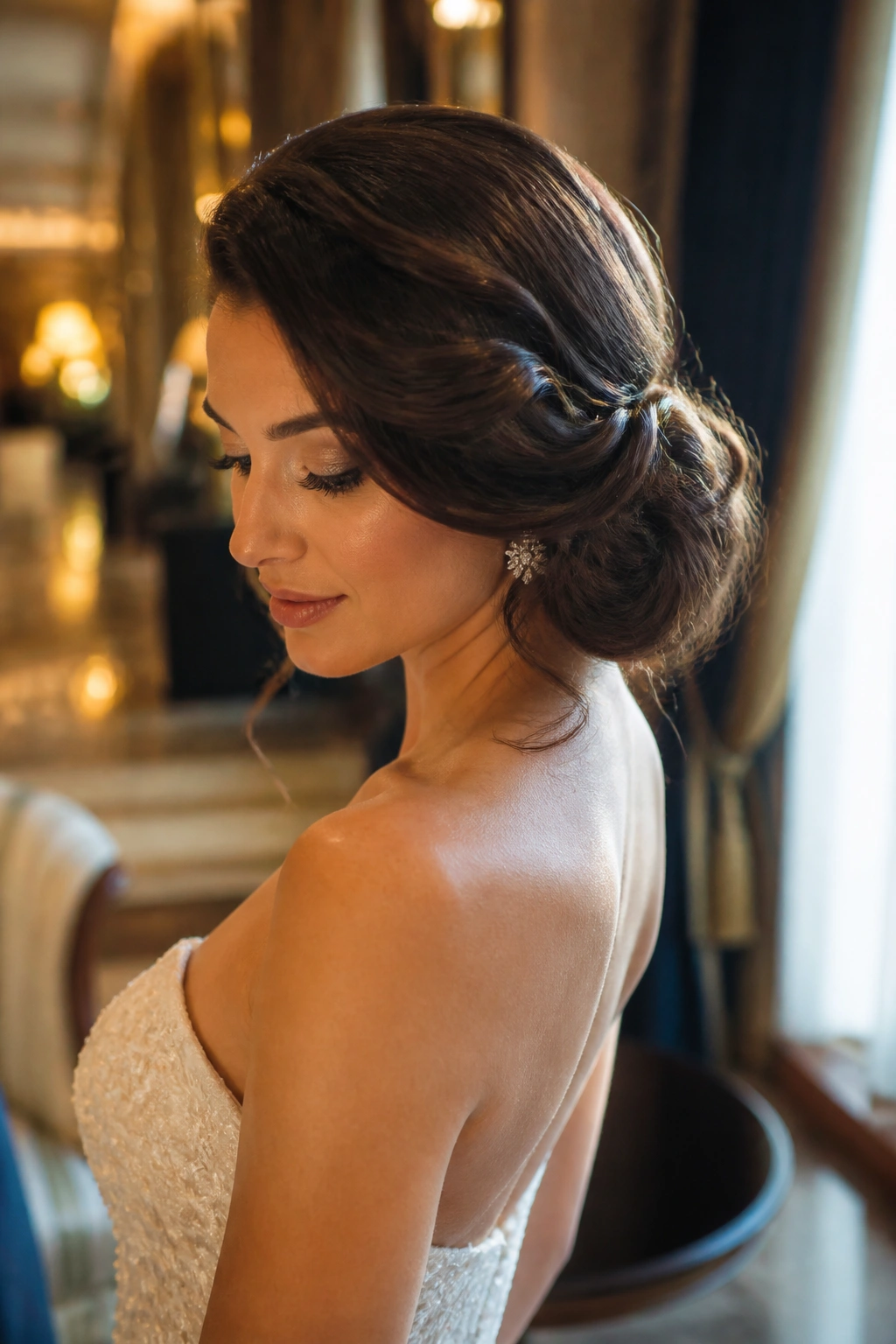
This is the updo for a bride who wants grace without fuss. The side chignon sits low and slightly off-center, with smooth volume at the front and a curved sweep toward one side. It has that old film-star feel, but it still works in a very modern wedding.
What makes it last is the shape. The side sweep gives the eye a path to follow, and the chignon itself stays compact enough to hold through a long day. It’s a smart choice if the gown has one shoulder, a dramatic earring, or a neckline that needs room to breathe. A veil can sit just above the base, or the style can stand alone if the dress already carries enough detail.
If I had to narrow the whole list to one final thought, it would be this: pick the updo that survives real life, not just the mirror. The best bridal hair stays comfortable during the ceremony, looks tidy after hugs, and still has a little softness left when the lights go down. That is the test. Everything else is decoration.
