



A formal hairstyle can change the whole mood of an outfit in under ten minutes. The same dress reads polished, sharp, or fussy depending on whether the hair is pinned low, swept high, or left in glossy waves.
That matters at weddings, black-tie dinners, award nights, and any event where the camera seems to appear everywhere at once. A good style has to do more than look nice in a mirror. It needs to survive hugs, dancing, humidity, and that awkward moment when you push hair behind one ear and hope it still looks intentional.
I keep coming back to styles that look calm from every angle. Nothing sprayed into helmet shape. Nothing so loose that it falls apart before dessert. The sweet spot is structure with movement — enough polish to feel dressed up, enough softness to still feel like you.
Hair length helps, but it does not control the whole story. Fine hair can look full with the right prep, thick hair can sit neatly once it’s divided into sections, and short hair can look every bit as formal when the line is clean. These 15 formal hairstyles for women cover all of that, from sculpted buns to glossy waves and a few options people overlook far too often.
1. Sleek Low Chignon
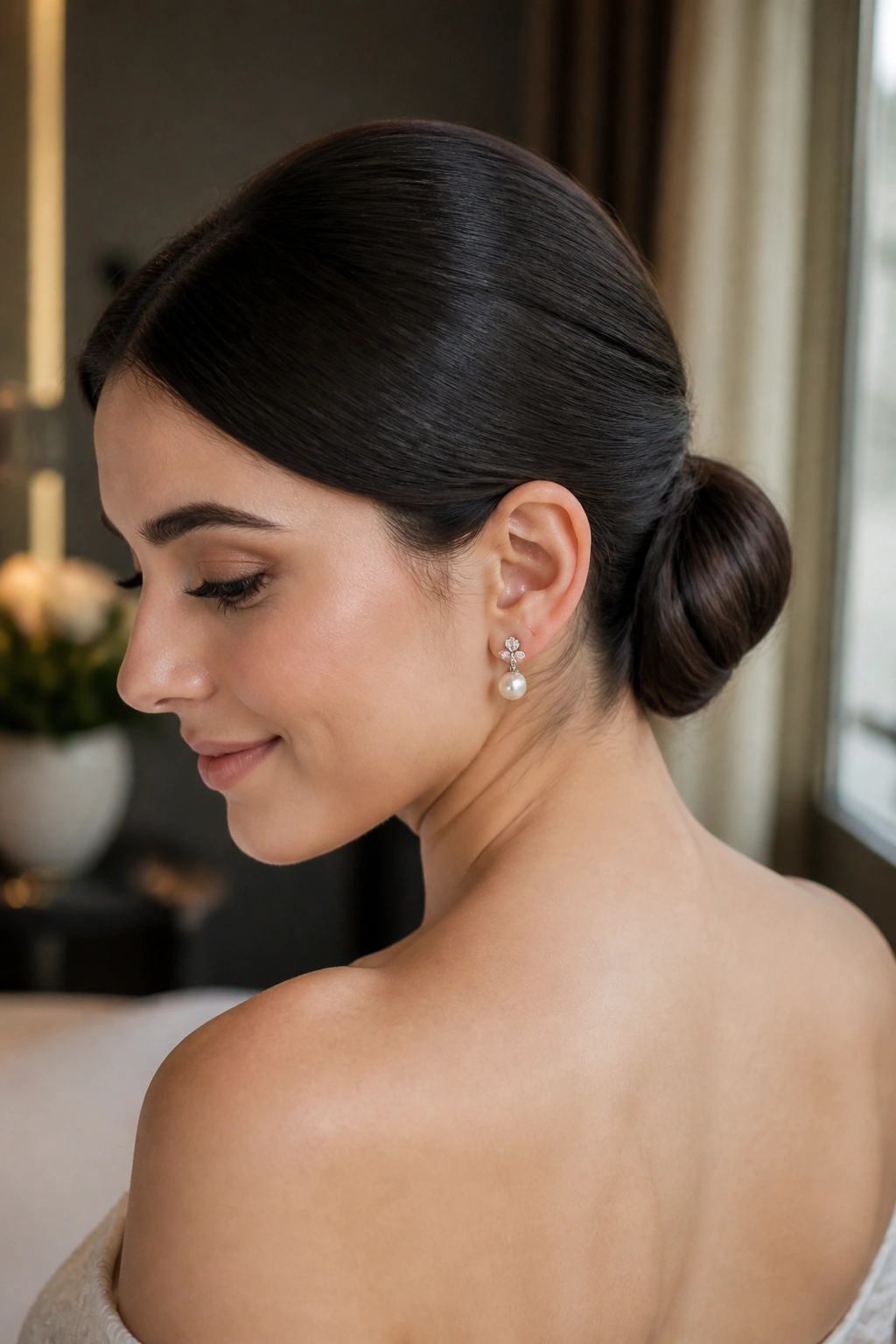
A low chignon is the hairstyle equivalent of a tailored jacket. It sits close to the nape, keeps the neck open, and makes almost any neckline look more deliberate.
What I like about it is the restraint. A chignon does not need extra decoration to feel dressed up, which is part of why it works so well for weddings and formal evenings. If your dress already has lace, beading, or a dramatic back, this is the kind of style that supports the look instead of competing with it.
Why it looks so clean
- Best with strapless, square, bateau, and high-neck dresses.
- Hair length: medium to long hair gives the easiest wrap.
- Finish: smooth the top with a light cream or pomade, then pin the knot low and tight.
- Hold tip: a few crossed bobby pins under the bun matter more than a mountain of hairspray.
A chignon looks best when the crown is flat but not stiff. Tiny flyaways around the hairline can be tamed, though I would not erase every soft edge; the style can start to look severe if you do. A little softness at the temples keeps it elegant instead of overly formal.
If your hair slips a lot, prep with second-day hair or a dry texture spray. Clean, silky hair is lovely, but it can slide out of the pins faster than people expect.
2. French Twist
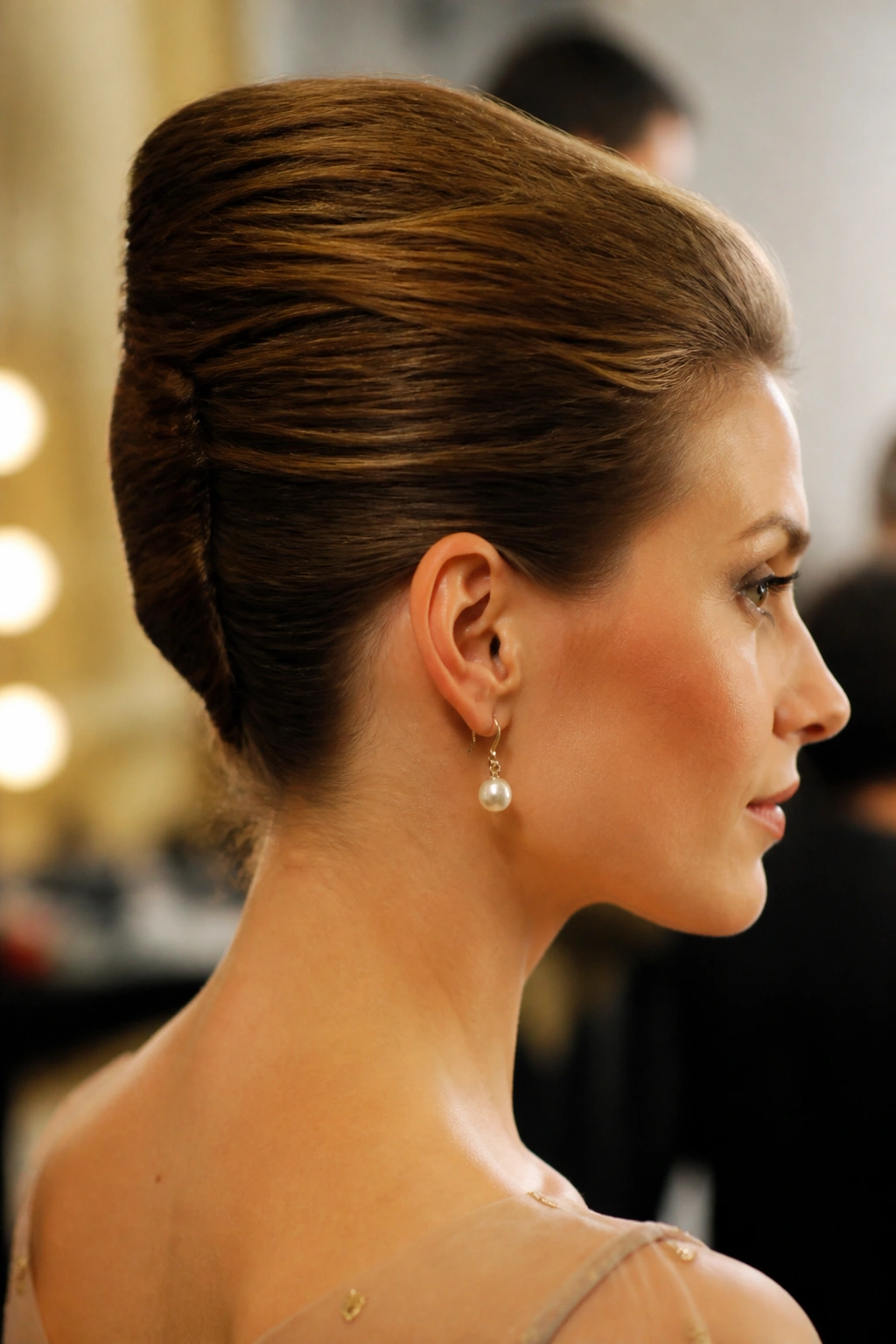
Why does the French twist keep showing up at formal events? Because it has height, shape, and that slightly dramatic line that makes a room notice the back of your head when you turn.
It is one of those styles that looks more difficult than it is, which I enjoy. The trick is not to make it bulky. A good French twist hugs the head, rises in a neat vertical roll, and feels secure without looking jammed together. It is especially strong with satin dresses, pearls, and jewelry that deserves room to breathe.
The style also does something useful for the face. It lifts the eye upward, lengthens the neck, and keeps the neckline open. If you have a long earring or a dress with a straight collar, the French twist gives the whole outfit a clean spine.
How to keep it from going flat
Use slightly dirty hair or add texture first. Freshly washed hair can be slippery, and a twist that slides around halfway through the night is no one’s idea of fun. A bit of grip makes all the difference.
A salon version usually looks better than a rushed DIY job because the pins can hide inside the roll. But if you are doing it yourself, keep the twist narrow, pin as you go, and stop tugging once the shape is set. Chasing perfection tends to make the top puff out in odd places.
3. Soft Hollywood Waves
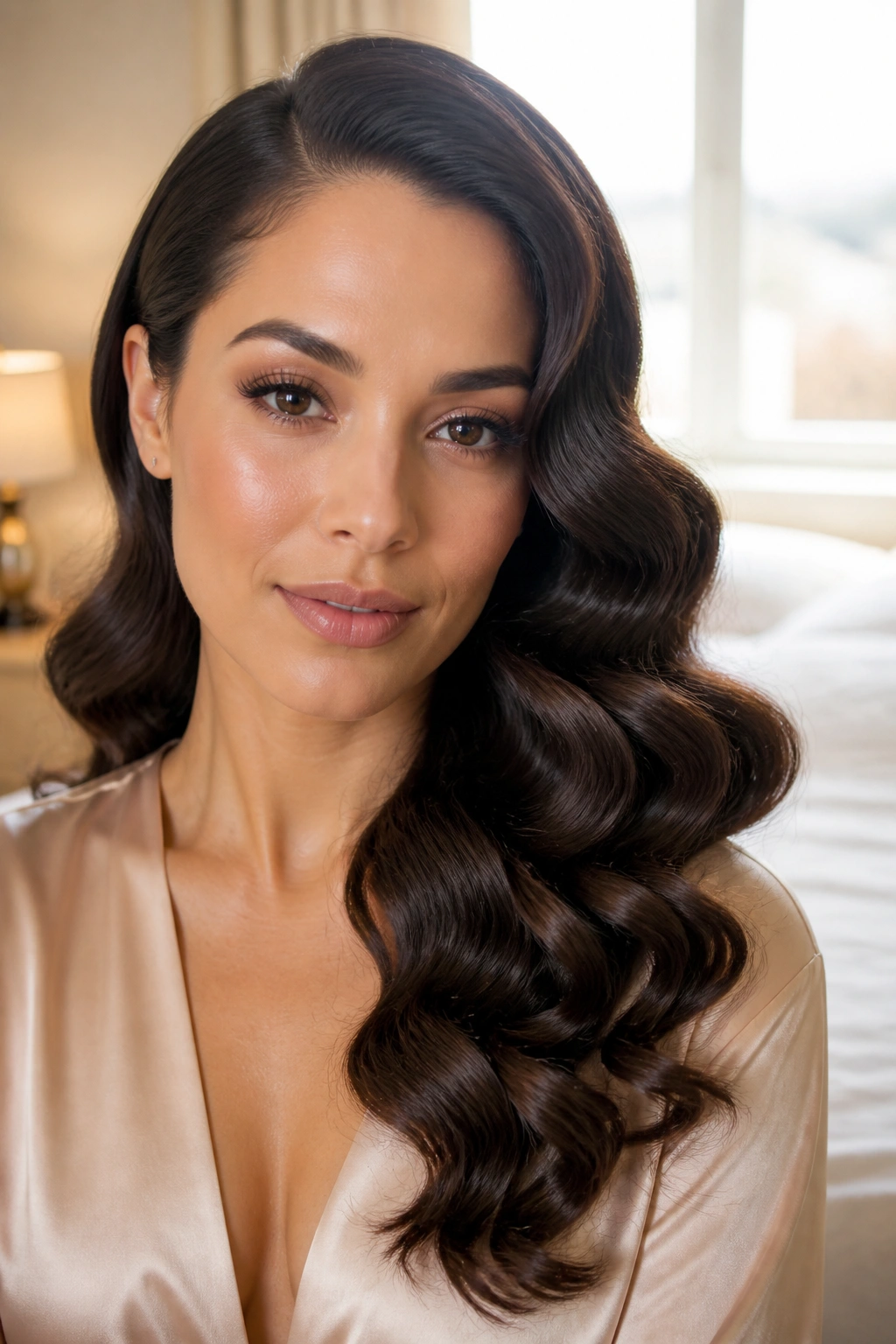
Soft Hollywood waves are what I reach for when a dress is simple and the hair needs to carry some of the glamour. They work because the movement is controlled, not random.
This style is all about the pattern: a side part, smooth roots, and large S-shaped waves that sit together instead of frizzing apart. A 1¼-inch curling iron usually gives the right bend for shoulder-length and longer hair, though a 1-inch barrel can make the wave a little tighter if your hair is very fine.
How to get the shape right
- Curl every section in the same direction, then let each piece cool completely.
- Brush the curls out with a soft brush or wide-tooth comb.
- Pin the front side back for five to ten minutes if you want extra structure.
- Finish with a shine spray, not a heavy mist of hairspray that turns the hair dull.
The danger with Hollywood waves is not the curl itself. It is overworking the brush. Brush too hard and you lose the wave pattern; brush too little and the style stays stiff and ringleted. The sweet spot is somewhere in the middle, where the hair moves as one smooth sheet.
This is a strong choice for one-shoulder gowns, off-the-shoulder dresses, and any look that needs softness around the face. If you want romance without the looseness of a full updo, this is a very safe bet.
4. Deep Side-Part Old Hollywood Sweep
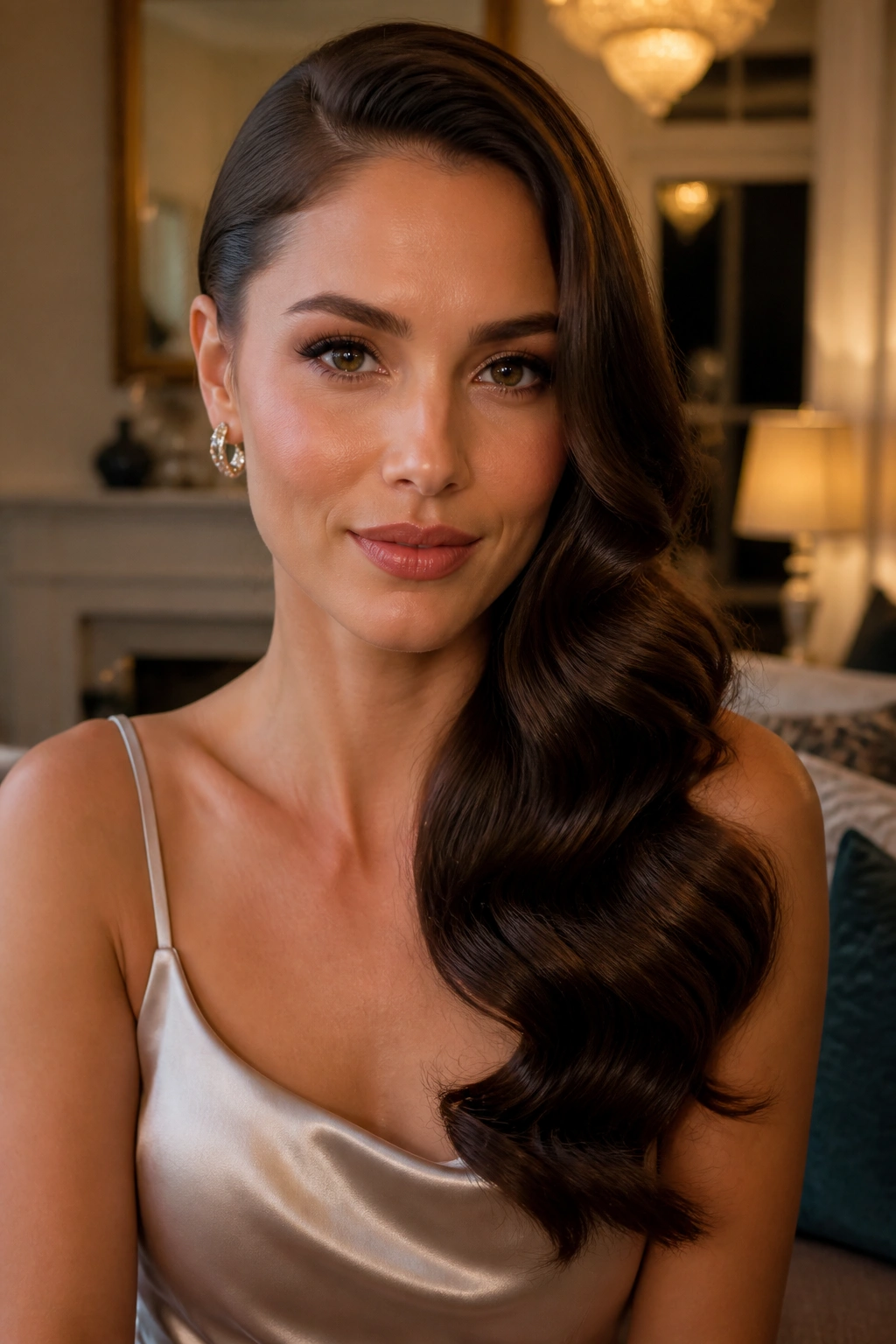
A deep side part changes everything. The hair suddenly feels more dramatic, more polished, and a little more expensive-looking, even when the styling itself is simple.
This version of Old Hollywood hair is less about all-over wave and more about direction. One side is tucked close, the other falls in a controlled sweep across the shoulder or behind the back. The line of the part matters a lot here, so use the tail of a comb and make it intentional rather than casual. That one move changes the whole expression of the face.
It pairs beautifully with one-shoulder dresses, asymmetrical necklines, and earrings that need a bit of space. If you have a strong jawline or want to soften a sharper dress shape, the side sweep does that without trying too hard. It also photographs well because the shape is obvious from the front.
A word of caution: this style can look flat at the roots if you do not lift the hair a little at the crown. A small amount of root spray or a light tease under the part gives the wave somewhere to start. Not much. Enough to keep it from lying like paper.
And yes, this is the style that makes people think you spent longer on your hair than you did.
5. Half-Up Twist with Crown Volume
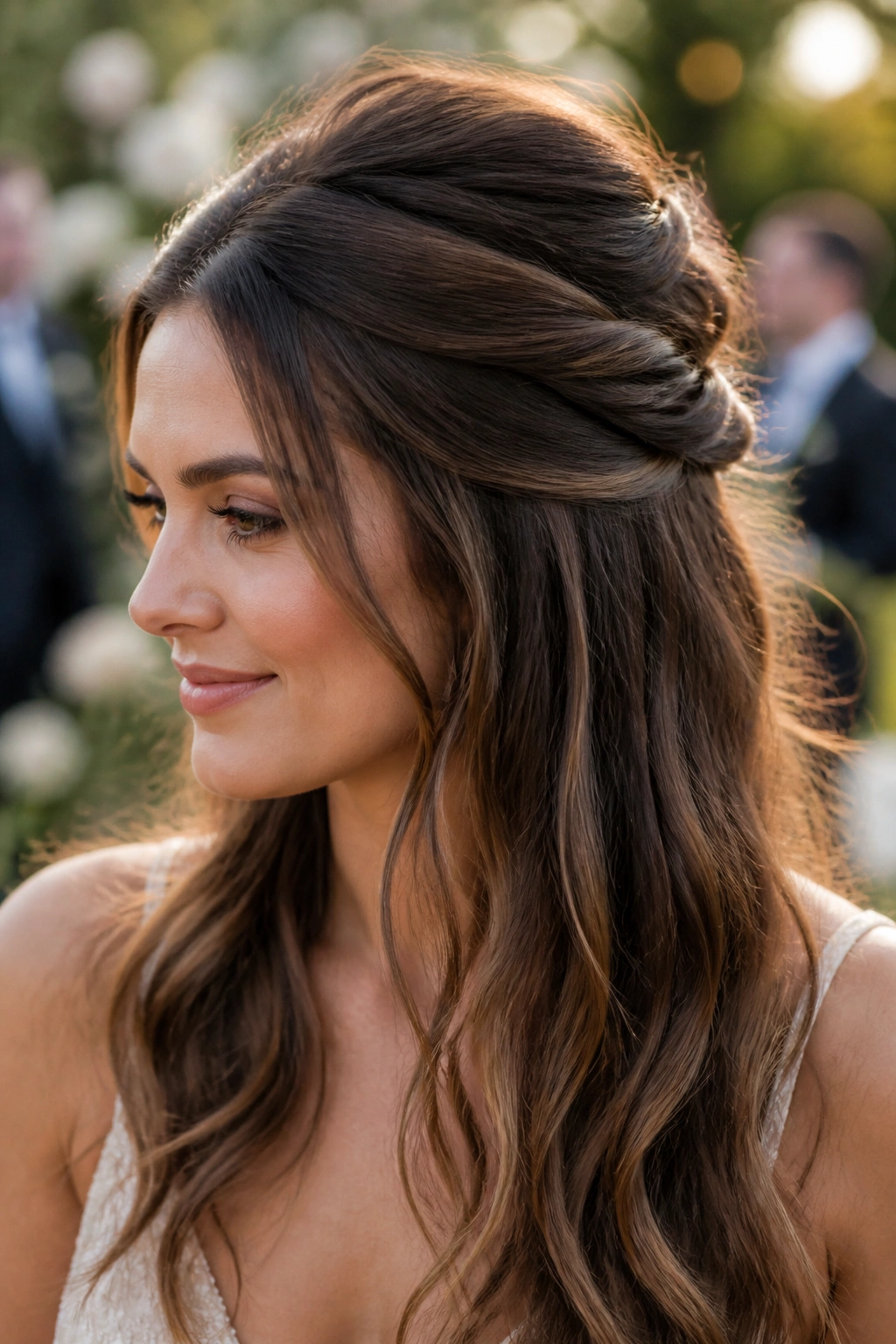
Half-up hair can look too young if it is done carelessly. With the right shape, though, it becomes one of the prettiest formal hairstyles for women because it keeps the face open while leaving enough length down to feel soft.
The detail that matters most is the crown. A little volume there stops the style from looking flat and helps balance the lower half of the hair. I like a gentle lift, not a giant bump. Pull the top section back loosely, twist each side toward the center, then pin them where they meet so the sides stay smooth.
What makes it work in formal settings
- Best for: medium to long hair that still has movement.
- Strongest feature: it keeps curls, waves, or straight lengths visible.
- Nice add-on: a jeweled pin, pearl clip, or narrow barrette can finish it.
- Caution: do not pull the front pieces too tight, or the style starts to feel severe.
This one is especially useful if you want your shoulders and neckline to stay visible but do not want a full updo. It also suits hair that is in that awkward middle zone — long enough to wear down, but heavy enough to get in the way. The half-up twist solves that without making the hair feel hidden.
6. Braided Crown Updo
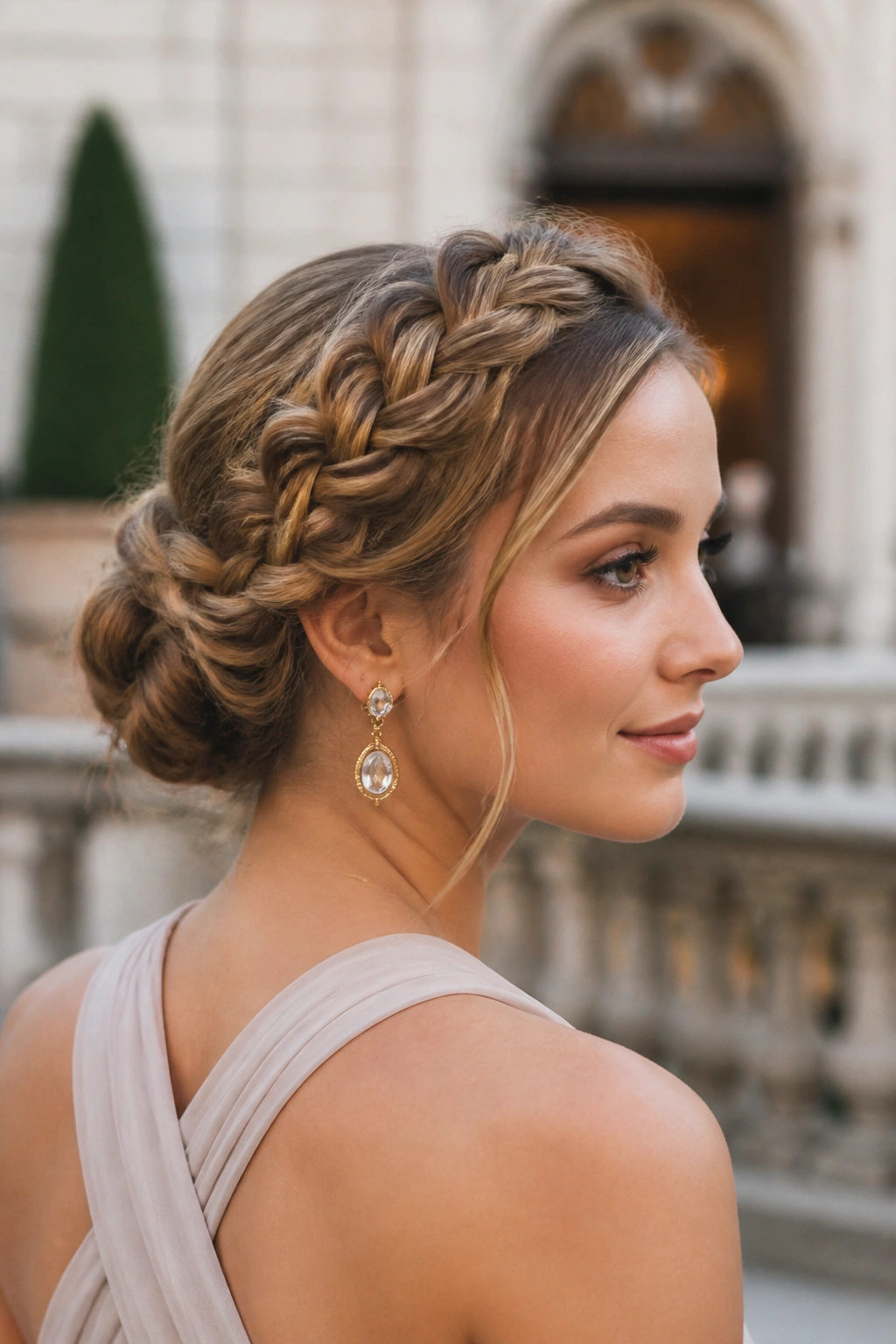
Braids are not casual when they are clean, narrow, and wrapped with purpose. A braided crown updo can look as formal as any bun, and sometimes more interesting, because the texture does some of the visual work for you.
The style starts with a braid along one side or both sides of the head, then the braid gets tucked into a low bun, twist, or pinned roll. What you get is a halo effect without the sugary sweetness that some braided styles can drift into. Done right, it feels elegant and a little sculptural.
This is one of the best options for long hair that needs structure. Thick hair gives you a fuller braid, but finer hair can still do it if you braid close to the scalp and keep the sections even. A little mousse before braiding helps the strands stay put.
What to watch for
- Pull the braid edges gently, not aggressively, or the style starts to fray.
- Hide the elastic with a wrapped strand or a small pin.
- Keep the crown smooth so the braid stays the star.
- Use matte pins if your hair is very dark; shiny pins can show.
It works beautifully for garden weddings, evening events, and dressy looks with a romantic edge. If you want formal hair that still feels soft when viewed up close, this is a strong pick.
7. Polished Center-Part Low Bun
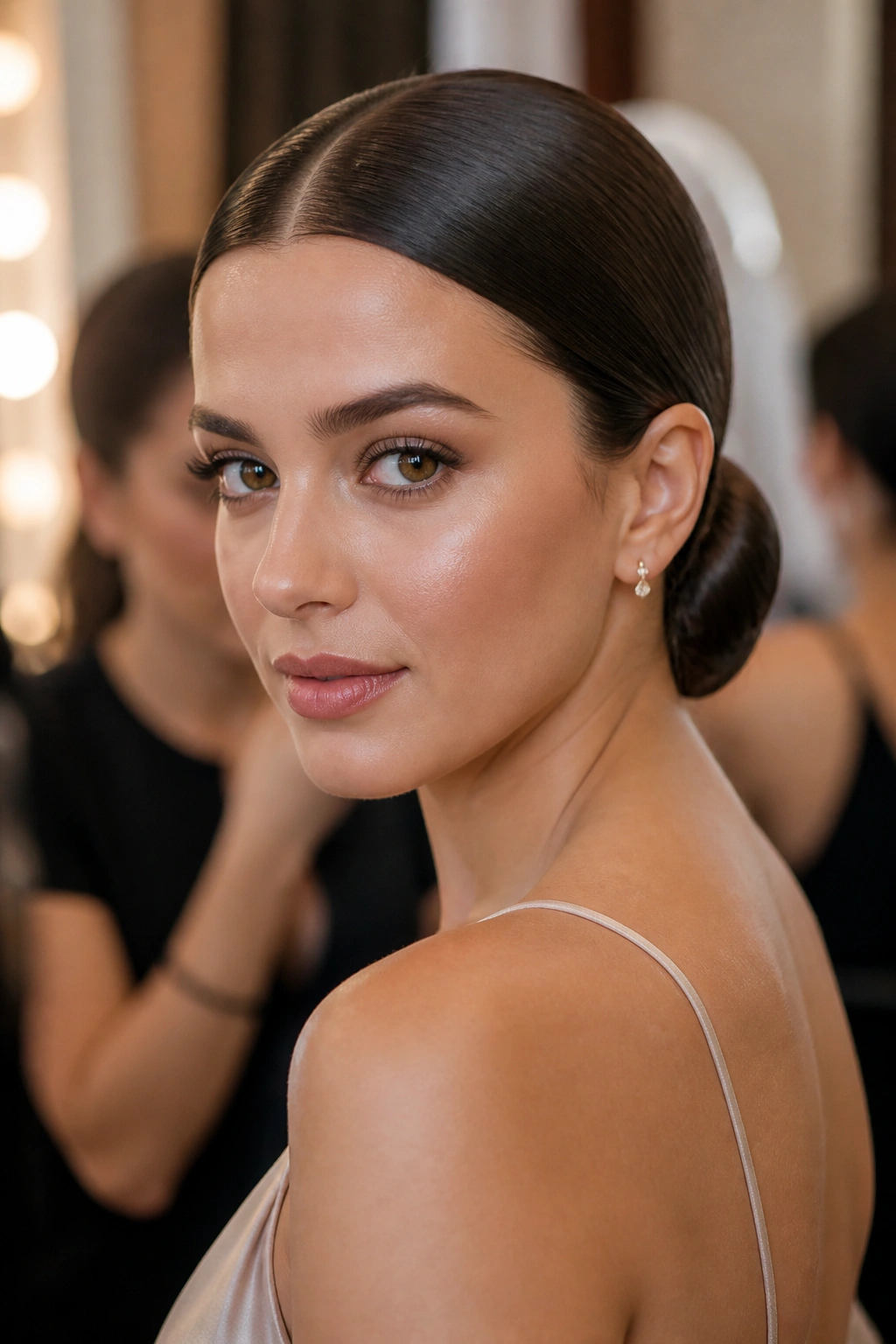
Some styles get dismissed because they look too simple on paper. A center-part low bun is one of them, and that is a shame, because a crisp part and a neat knot can look sharper than a more complicated style.
The symmetry is the point. The middle part gives the face structure, and the bun keeps the silhouette compact. This style suits minimalist dresses, clean necklines, and outfits that already have one statement element — maybe earrings, maybe a dramatic fabric, maybe the cut of the dress itself. The hair does not have to shout when the rest of the look is already doing enough.
I prefer this bun when the hair at the front is smooth and tucked back in a straight line. A soft oil or glossing cream helps, but do not overload it or the roots will separate in odd places. The bun itself can be rolled, twisted, or folded; the important thing is that it sits low and reads as deliberate from the front.
Chignon vs. low bun
A chignon often looks slightly softer and more tucked. A center-part low bun feels a touch more graphic. If you like a cleaner, more modern finish, this is the one to choose.
8. Wrapped Low Ponytail
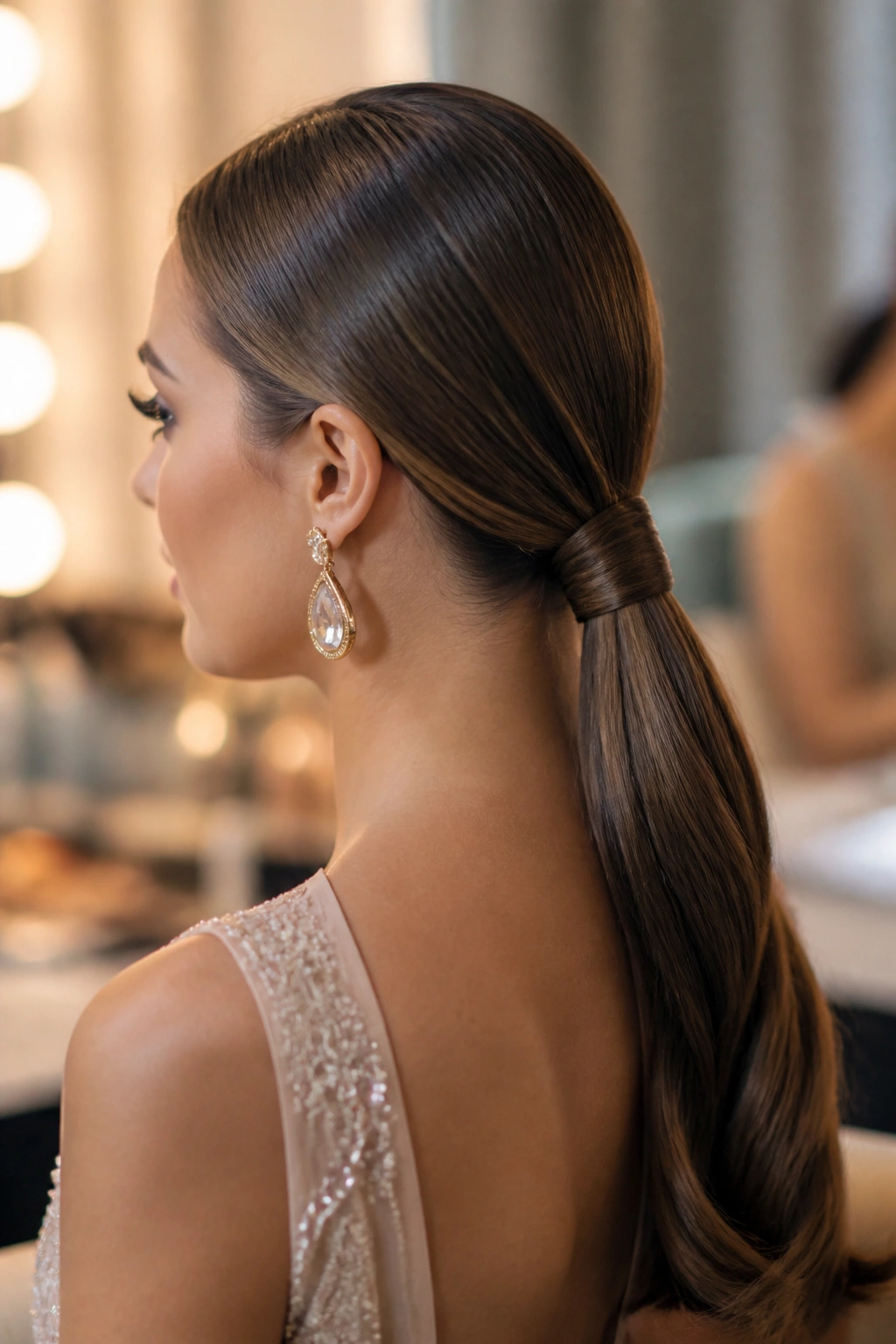
A ponytail can be formal. Not the gym version. The dressed-up version, where the crown is sleek, the base is wrapped, and the tail falls with purpose.
This style works because it keeps the neck open while still letting the hair move. That movement matters. A too-tight ponytail can feel flat and slightly harsh, while a formal wrapped ponytail has shape from the crown to the ends. If your dress has an open back or a strong shoulder line, the ponytail shows it off instead of covering it.
A thin strand wrapped around the elastic is non-negotiable if you want the style to read as polished. That tiny detail makes the whole thing look finished. I also like curling just the last few inches of the tail or flattening it with a straightener for a glassy, controlled look. Both work. What matters is consistency from top to bottom.
If your hair is very fine, tease the crown lightly before gathering it. If it is thick, smooth the sides with a brush and a little styling cream before the elastic goes in. And if the ponytail sits too low, it can read casual fast, so keep it at the nape, not halfway down the neck.
9. Sleek High Bun
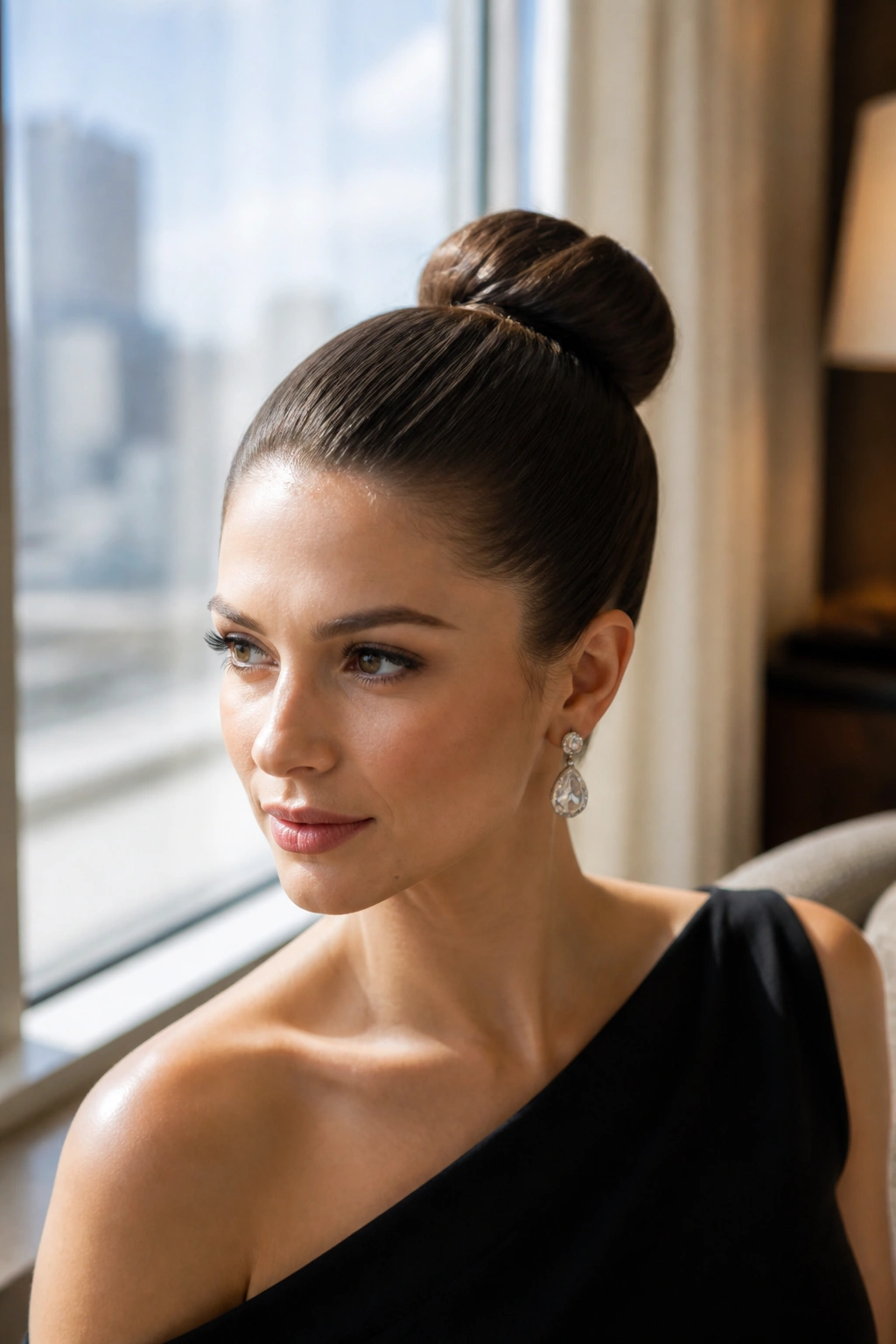
High buns can look severe. They do not have to.
The difference is in the shape around the face and the amount of tension at the crown. A sleek high bun with a bit of lift at the top feels elegant and fresh, while a scraped-back bun can look harsh unless the rest of the outfit is very dramatic. This style is strong with high necklines, statement earrings, and dresses that need a clean frame around the shoulders.
Why it earns a spot in formal hair
- It opens the face and keeps the neckline clear.
- It works well in heat or humidity because the hair is fully controlled.
- It suits straight, wavy, and curly hair once the base is smoothed.
- It can look modern or classic depending on whether the bun is tight or softly folded.
A donut is optional. I often think it is unnecessary unless the hair is thin and needs help building volume. If you use one, keep the bun neat and avoid that round, obvious cushion shape that can look dated. A tucked knot with a few hidden pins often feels more refined.
One detail people miss: the bun should be balanced from every angle. If it leans forward, the style loses the neat vertical line that makes it flattering.
10. Loose Romantic Updo
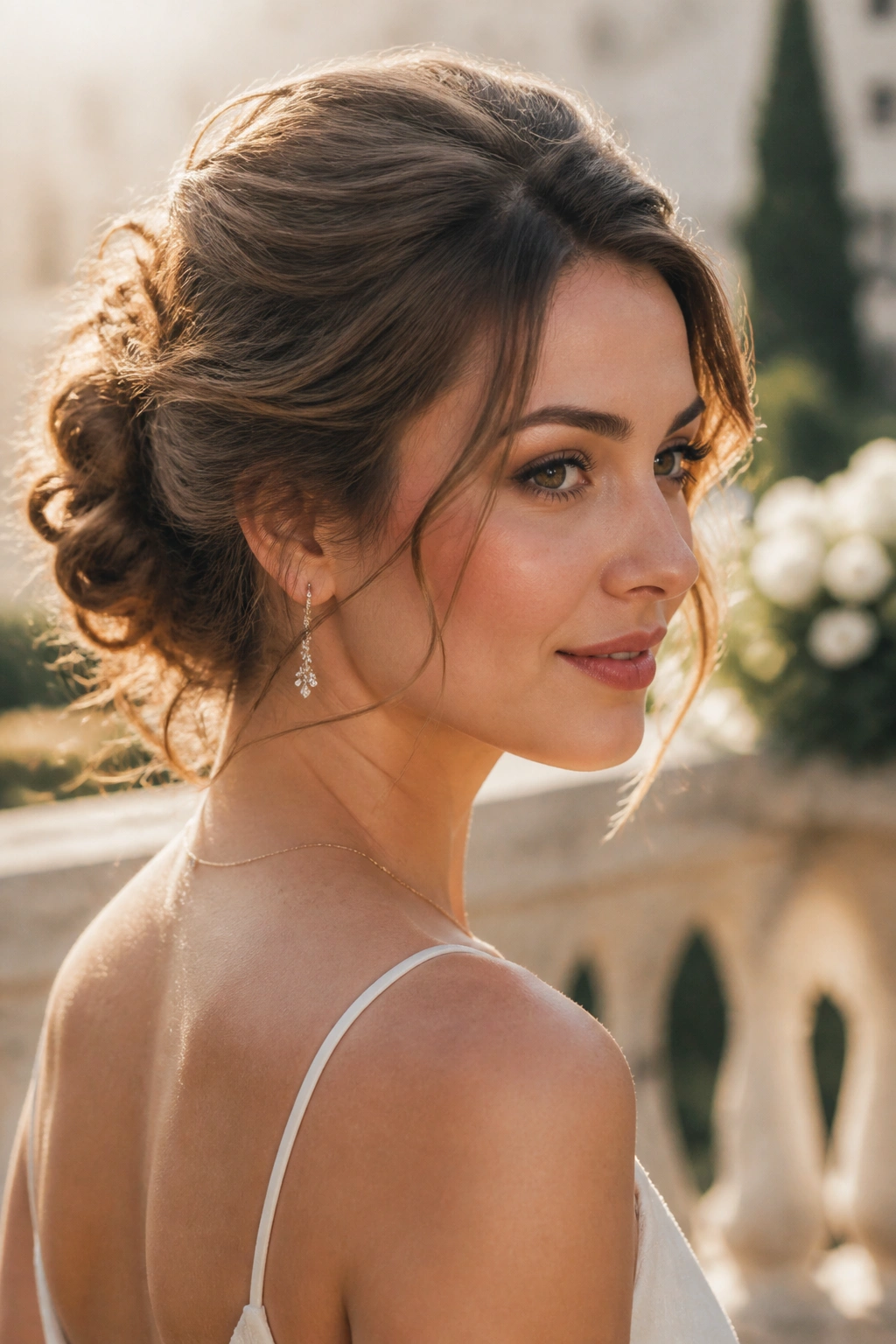
A loose updo should feel pinned, not stuffed. That is the whole point.
This style takes the softness of a down style and lifts it into a shape that can survive a long event. Pieces are curled first, then pinned at the back in overlapping sections so the finished look feels airy but secure. The front usually keeps a few face-framing strands, though I would keep them controlled rather than wispy. Too many loose pieces make the style look unfinished.
It is one of the most forgiving formal looks for women with medium-to-long hair because it does not demand perfect uniformity. Slightly different curl patterns can actually help here. The movement hides the seams where the pins meet. That makes it a smart option if your hair is layered or if the ends are not all the same length.
I like it most when the texture is soft and touchable, not crunchy. Use a flexible hold spray before pinning, then a little more after the shape is set. If the crown feels too flat, lift a section at the top with your fingers and pin underneath for height. That is a tiny change, but it gives the whole style more presence.
This is the style I’d choose for a dress with delicate straps, since it leaves the shoulders open while still feeling romantic.
11. Gibson Roll
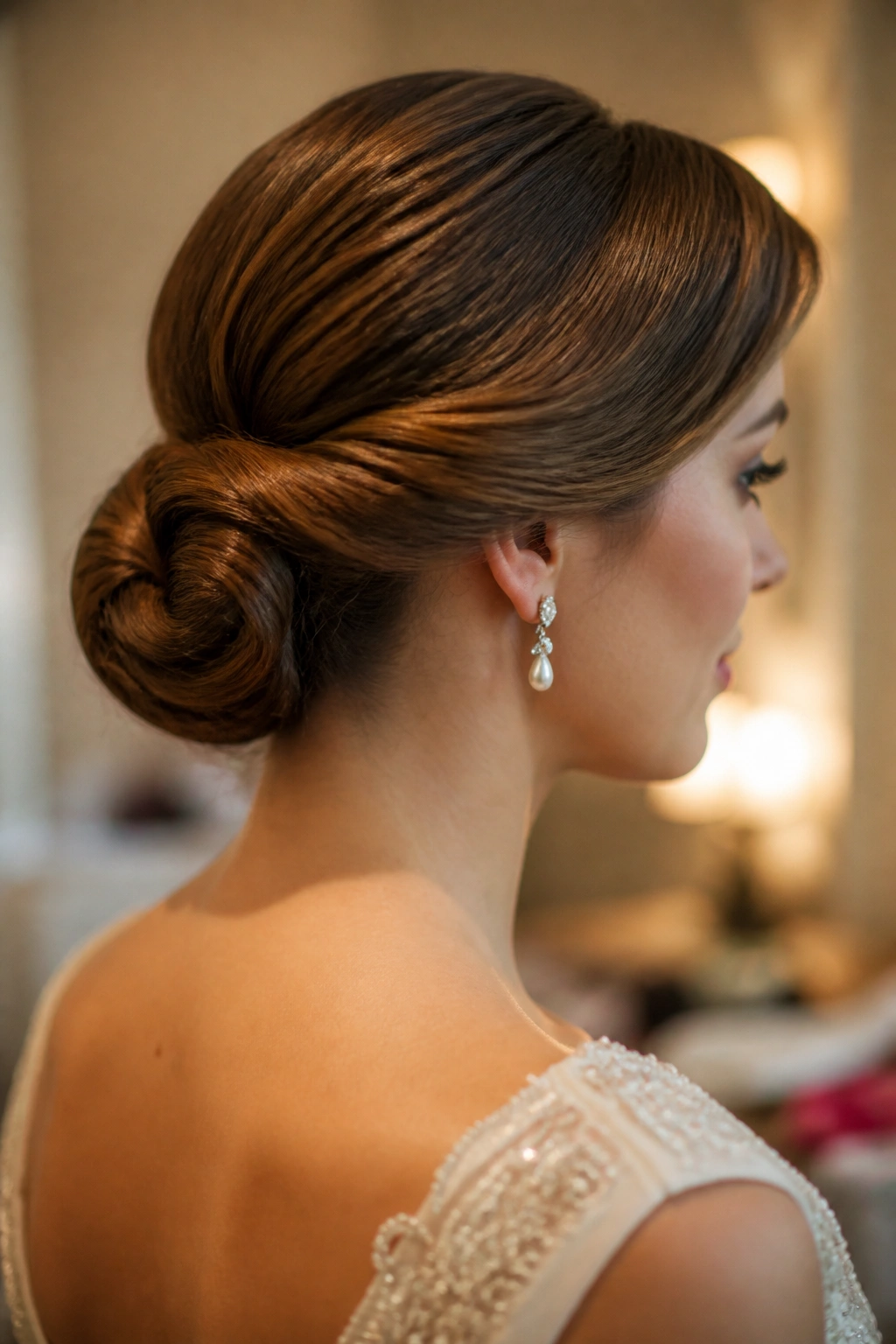
The Gibson roll has an old-fashioned name and a quietly lovely shape. It is one of those styles that never seems to disappear because it looks put together without looking stiff.
At its core, the Gibson roll is a tucked roll of hair along the back of the head, usually pinned low and smooth. The shape feels vintage, but not costume-y if the finish is clean. I especially like it for tea-length dresses, silk gowns, and formal events where a little retro touch feels right.
How it differs from a French twist
A French twist rises vertically and has a sharper line. A Gibson roll tends to stay lower and rounder, with a softer tuck at the back. If the French twist feels too severe for your dress, this is the gentler cousin.
It works best on medium to long hair, though shoulder-length hair can do it if the layers are not too short. A touch of setting spray before rolling helps the style hold, and a row of hidden pins along the underside keeps the roll from sagging. If you want to dress it up, a comb or a pair of pearl pins near one side is enough. Anything more can start to crowd the shape.
The Gibson roll also flatters the back of the neck in a way that feels polished rather than flashy. That may sound minor. It is not.
12. Bubble Ponytail
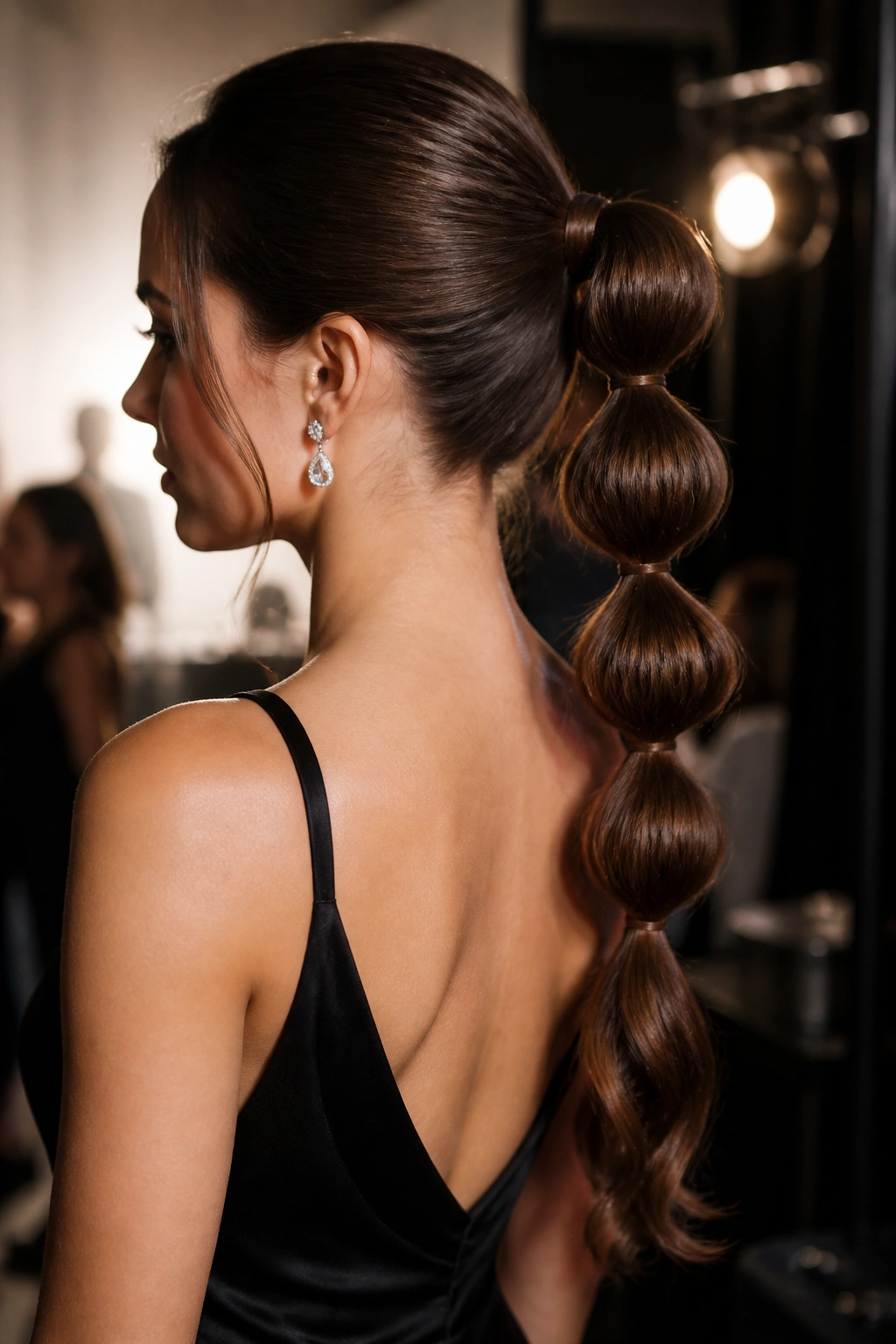
A bubble ponytail can absolutely look formal if the sections are neat and the spacing is even. If the bubbles are sloppy, it reads playful. If they are controlled, it reads stylish and deliberate.
The basic idea is simple: create a ponytail, add small elastics every 2 to 3 inches down the length, then gently pull each section outward to form rounded bubbles. The trick is to keep the top smooth and the bubbles uniform. That balance is what makes it dressy rather than casual.
This style is especially useful for long hair, because the length becomes part of the design. I also like it when the ends are curled under or polished straight. Both work. The main thing is to avoid a messy finish at the tail, because the bubble shape will not save it.
Quick details that matter
- Use clear elastics or ones that match your hair color.
- Wrap a thin strand around the base for a cleaner finish.
- Keep the bubbles about the same size.
- Add a little shine spray to the top only, not the full tail.
Bubble ponytails pair well with structured dresses, modern silhouettes, and anything where you want the hair to feel fashion-forward without becoming fussy. They are not subtle. That is the point.
13. Waterfall Braid Half-Up
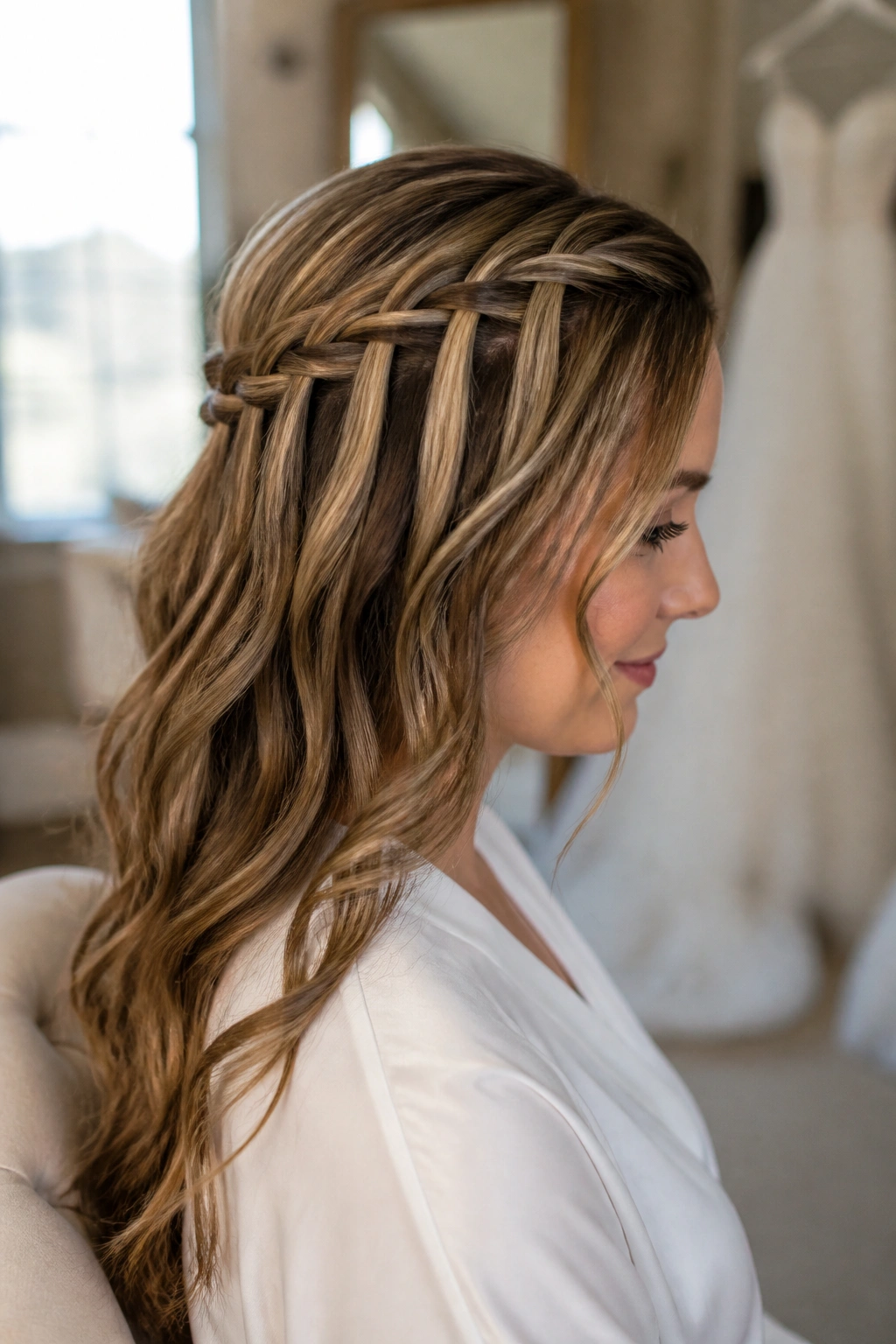
If you like wearing your hair down but still want something special, the waterfall braid is one of the prettiest answers. It keeps the front controlled while letting the length spill through the braid in soft sections.
The pattern matters here. Each dropped strand creates that open, woven look, which is why the braid needs to be neat rather than loose and messy. A waterfall braid works best on hair with some length, because the effect depends on the fall of the loose pieces. On shorter hair, the pattern can disappear before it has a chance to look graceful.
I think this style shines most with soft curls or loose waves underneath. Straight hair can wear it, but the braid reads more clearly when there is some bend to the lengths. The top section can be pinned back on one side or both, depending on how much of the face you want open.
If you are doing it for a wedding, keep the braid close to the head and the edges tidy. Too much pulling at the braid gives it a wide, stretched look that feels more casual than formal. A narrow braid holds its shape better in photos and does not compete with earrings or a detailed dress.
14. Sculpted Short Hair with Finger Waves
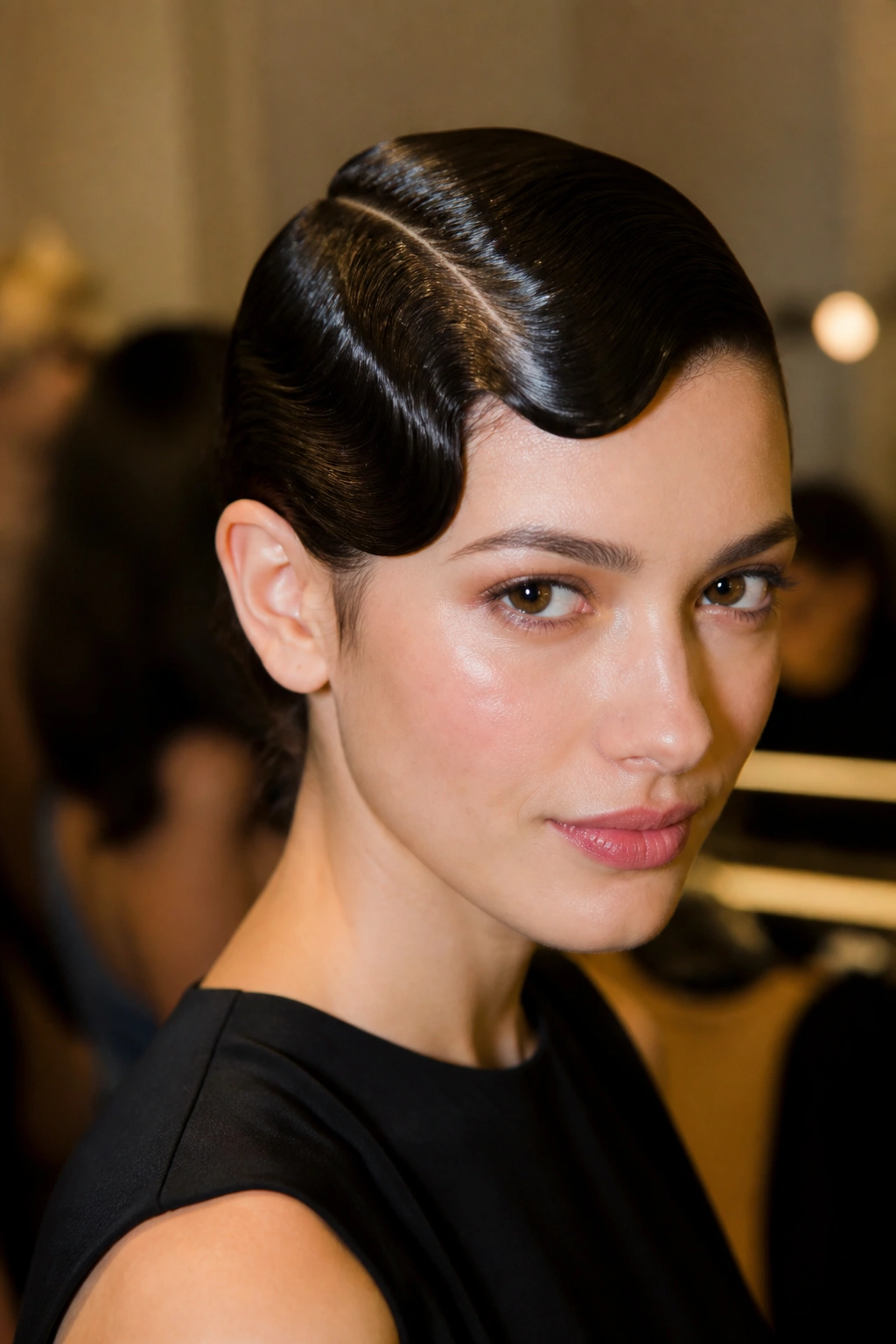
Short hair can look more formal than long hair when the shape is sharp. A deep side part, a polished wave, and a little shine can turn a bob or pixie into a proper evening style.
Finger waves are the obvious vintage choice, and they still work because the pattern is clean and architectural. Even a simpler version — a side sweep with one sculpted wave at the front — can feel dressy if the hair is smooth at the roots and tucked neatly behind the ear on one side. The point is to create a deliberate line, not to fight the haircut you already have.
This style is especially good when you want earrings, a collar, or makeup to stand out. Short hair leaves a lot of room around the face, so every detail counts. A small amount of gel or strong styling cream gives the waves their shape, and a shine spray at the end keeps the finish from looking dry.
What to ask your stylist
- A deep side part with a polished front wave.
- Tucked sides that stay close to the head.
- A finish that holds for several hours without crunching.
- If the cut is very short, a small amount of molding paste at the crown.
Short hair does not need length to look formal. It needs line, control, and a little confidence.
15. Defined Curly Updo with Tendrils
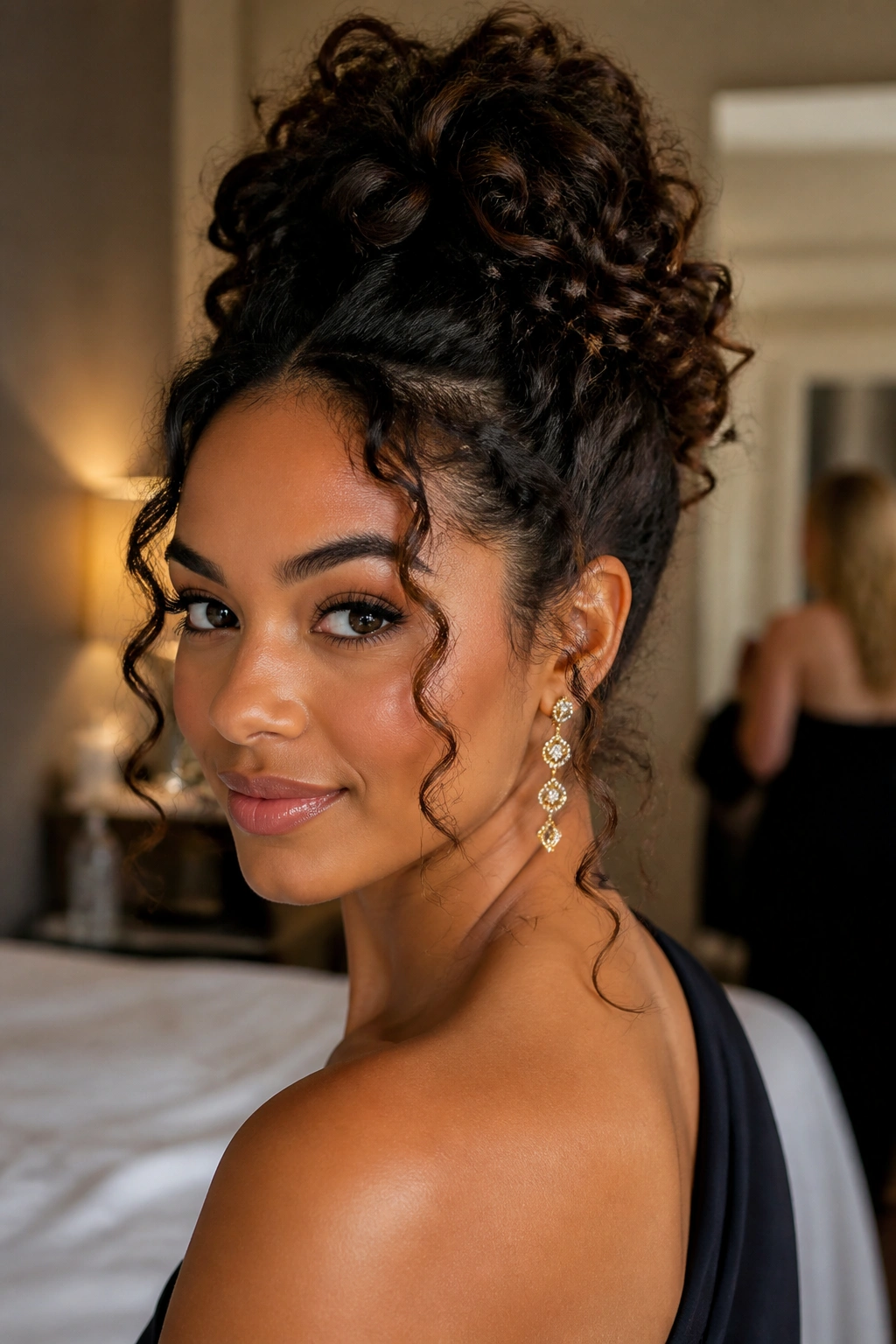
Natural curls do not have to be pressed flat to look elegant. In fact, when curls are shaped well, they bring more life to a formal look than a straightened style sometimes can.
A defined curly updo usually keeps the curls visible at the crown, sides, or back while gathering enough hair to clear the face and neckline. The key is definition. You want the curls to look hydrated and separated, not brushed into a puff of frizz. Leave a few tendrils around the face if you like softness, but keep them intentional so they frame rather than fall apart.
This style loves moisture. A leave-in conditioner, curl cream, and a light gel can build the kind of hold that survives a long event without turning the hair stiff. Diffuse the hair first if you have time, then pin it after the curl pattern is set. If you pin too early, the shape can collapse into a damp knot, and that is hard to rescue.
A curly updo is one of my favorite formal hairstyles for women because it works with the hair instead of asking it to become something else. That usually reads better on the night, and it certainly feels better on your head.
Final Thoughts
The formal style that looks “best” is usually the one that matches the dress line, the hair texture, and the amount of effort you want to spend before the event starts. A sleek bun can save the day when the neckline is busy. Soft waves make simple dresses feel finished. Braids, twists, and polished ponytails fall somewhere in between.
If you are choosing between two options, look at the back of the outfit first. That detail gets ignored all the time, and it should not. Open backs, high collars, and heavy embellishment all change what the hair needs to do.
One last practical move: wear the style around the house for 20 minutes before the real event, then pin it tighter where it slips and soften it where it feels too severe. Hair always tells you something after it settles. The trick is listening before the photographs start.
