



Wedding hair has a hard job. It has to survive hugs, wind, a long day, a long night, and a camera that never seems to stop coming out of bags.
That is why sleek updo styles keep showing up at weddings. They look controlled without feeling stiff, and they hold their shape when softer styles start frizzing at the edges. A clean bun, twist, or tucked roll can make a veil sit better, frame earrings more neatly, and keep the neckline of a dress doing its own work instead of fighting with the hair.
The part most people miss is this: “sleek” does not mean flat, shellacked, or severe. It means the hair is smooth where it needs to be smooth, pinned where it needs to be pinned, and finished with enough shine to look deliberate. A good bridal updo also respects the dress. A high collar wants a different shape than a strapless satin gown, and a dramatic pair of earrings changes the whole balance.
Small details matter here. A center part, a deep side part, or a veil comb placed half an inch too high can change the entire read of the style. That is where the good looks come from. Not from piling on more pins. From choosing the right shape.
1. Classic Low Chignon

A classic low chignon is the style people call “safe” when they mean smart. It sits close to the nape, keeps the neckline open, and gives you that calm, finished look that never fights with a gown.
Why It Keeps Working
The low chignon is one of those styles that looks right from every angle. The front stays clean, the back looks neat, and the shape does not steal attention from lace, beading, or a veil. If your dress already has a lot going on, this is a relief.
It also behaves well on a long wedding day. The bun sits low enough that it does not pull at the scalp, and it can be padded a little if you want a fuller shape without making it bulky. The trick is keeping the ends tucked in a way that still looks soft, not like a tiny donut sitting on the head.
- Works especially well with off-the-shoulder, bateau, and backless gowns.
- Gives room for drop earrings, hair combs, or a cathedral veil.
- Looks best when the bun sits at or just below the occipital bone, not halfway up the head.
Pro tip: ask for the bun to be pinned with a mix of U-pins and bobby pins so it stays firm without looking overpacked.
2. Center-Part Low Bun
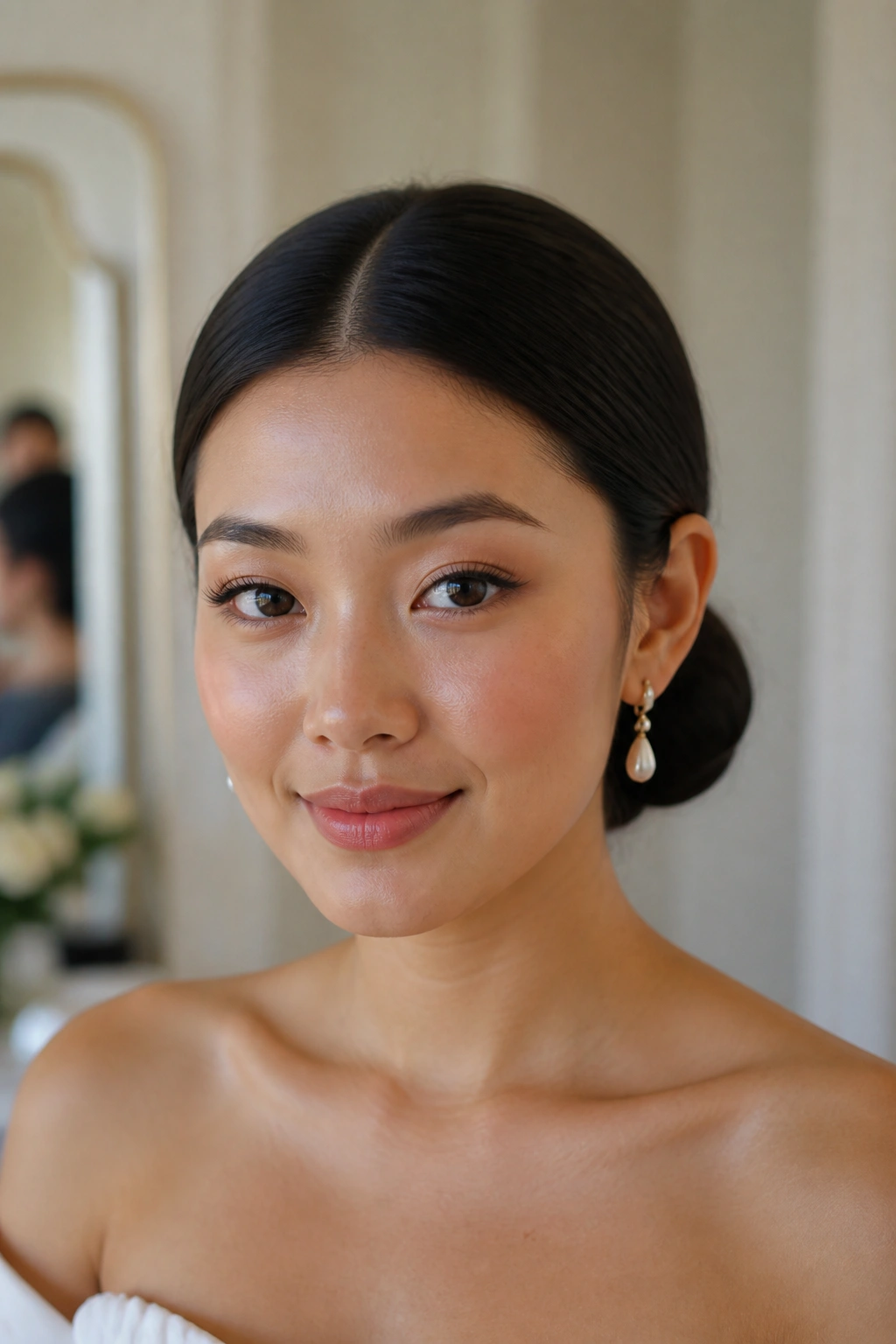
A center part can make a bridal bun look more expensive than extra volume ever could. It creates a straight, calm line that feels modern and a little architectural, which is a nice break from all the usual “soft and romantic” advice.
The reason it works is simple: symmetry reads as polished. A middle part frames the face evenly, pulls the eye straight down to the dress, and makes a low bun feel intentional rather than improvised. If your gown has a square neckline, a straight bodice, or clean tailoring, this shape makes sense immediately.
The part needs to be sharp. Not harsh. Use a tail comb to draw the line, then press it lightly with a touch of smoothing cream or a light gel before the blow-dry. If you wait until the hair is already pinned, you are late.
A center-part low bun is also one of the easier shapes to keep neat during photos because there is no wandering fringe to manage. That said, it is unforgiving if the crown is puffy or the part zigzags. You want the top smooth enough that the bun feels like the natural end of the line.
3. Deep Side-Part Bun

Why does a deep side part soften a sleek bun so fast? Because it changes the whole mood of the face without making the hair less polished.
A side part is especially kind to angular features, sharp cheekbones, and dresses that have one sleeve or a lot of asymmetry built into them. The bun can stay low and neat, but the part shifts the attention a few inches to one side, which keeps the style from feeling too rigid. It also gives a nice place for a comb, a pearl pin, or a small cluster of crystals without overcrowding the center.
How to Wear It
Keep the heavier side of the part smooth and close to the head. The bun should still sit at the nape, but a little off-center usually looks better than forcing the whole style into the middle. If you want a veil, place the comb slightly above the bun so the side part does not get hidden under the tulle.
A deep side-part bun works best when the front is brushed clean and the part line is crisp enough to show in photos. A soft, blurry part usually ends up looking accidental. This one should feel chosen.
4. French Twist
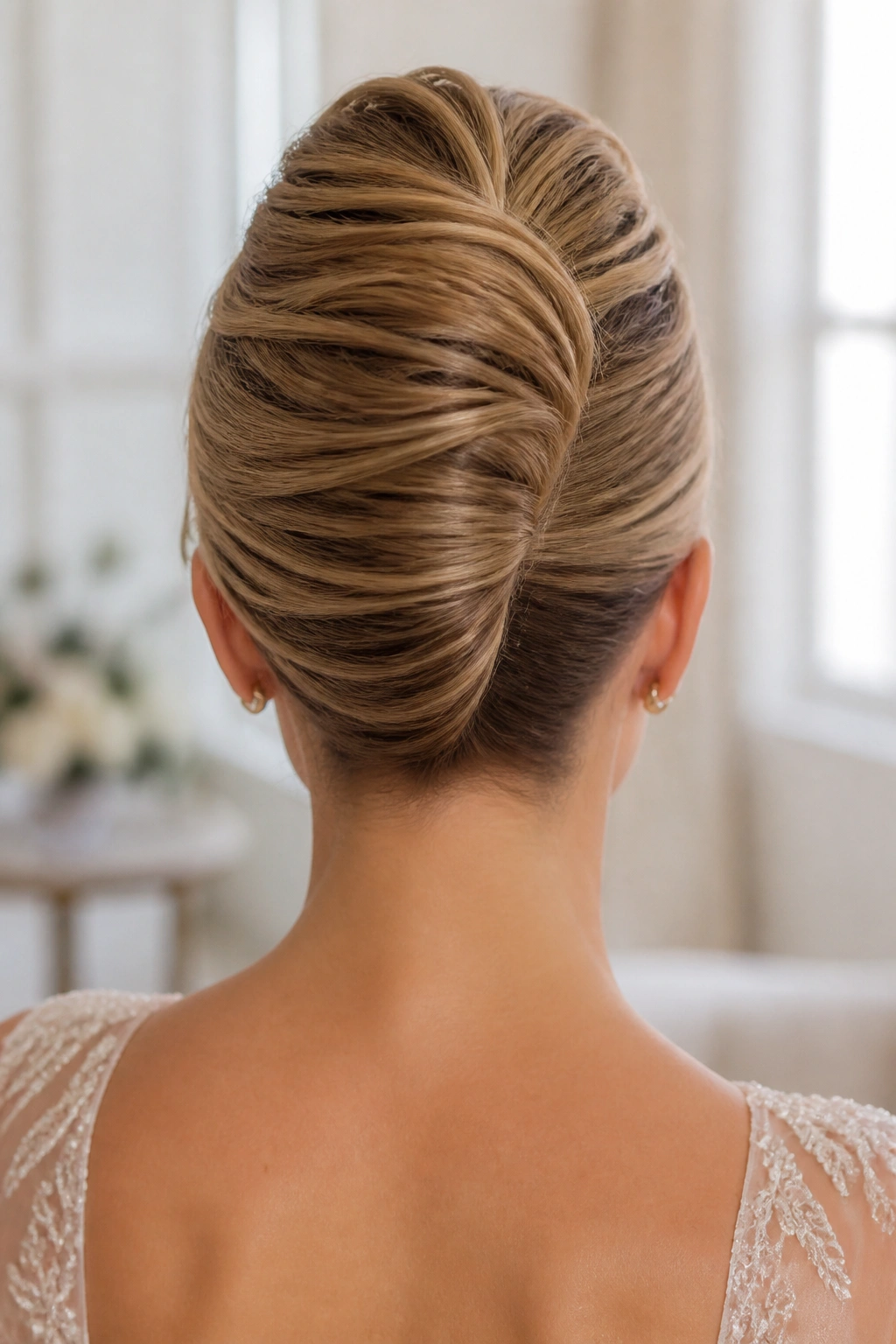
Picture a satin sheath dress, a clean back, and a French twist climbing up the nape like a folded ribbon. That is the mood here. Nothing fussy. No stray pieces pretending to be carefree.
The French twist has a built-in elegance because of the vertical shape. It lengthens the neck, keeps the back clean, and gives the hair a strong outline that holds its own against structured fabric. It is also one of the easiest formal styles to make feel grown-up without making it heavy.
- Best for medium to long hair with enough length to tuck and roll.
- Works well with long earrings and open backs.
- Needs a very smooth crown, or the twist loses its crisp line.
A stylist can soften the finish a little by leaving the roll notched rather than tight, but the outline should stay clean. The whole point is that folded shape at the back. If it starts to sag or puff out, the style loses its bite.
5. Braided Low Bun

A braided low bun looks more complicated than it is. The braid does half the work, because it gives the stylist a path to follow and gives the bun a little texture without turning it messy.
Fine hair benefits a lot from this shape. A braid adds grip, which means the pins have something to hold onto, and the finished bun gets a bit of visual depth even if the hair itself is thin. On thick hair, the braid helps reduce bulk so the bun does not look like a heavy knot sitting on the neck.
The part I like most is how it behaves with textured fabrics. A lace gown, a dress with embroidery, or even a matte crepe skirt can hold its own next to the braid without the hair disappearing. You get pattern, but not chaos.
If you want this style to stay sleek, keep the braid tight at the start and the bun compact at the end. A loose, pancaked braid can look pretty, but it leans more boho than polished. For a wedding day, I would keep it neat and let the detail come from the braid itself.
6. Rope-Twist Knot
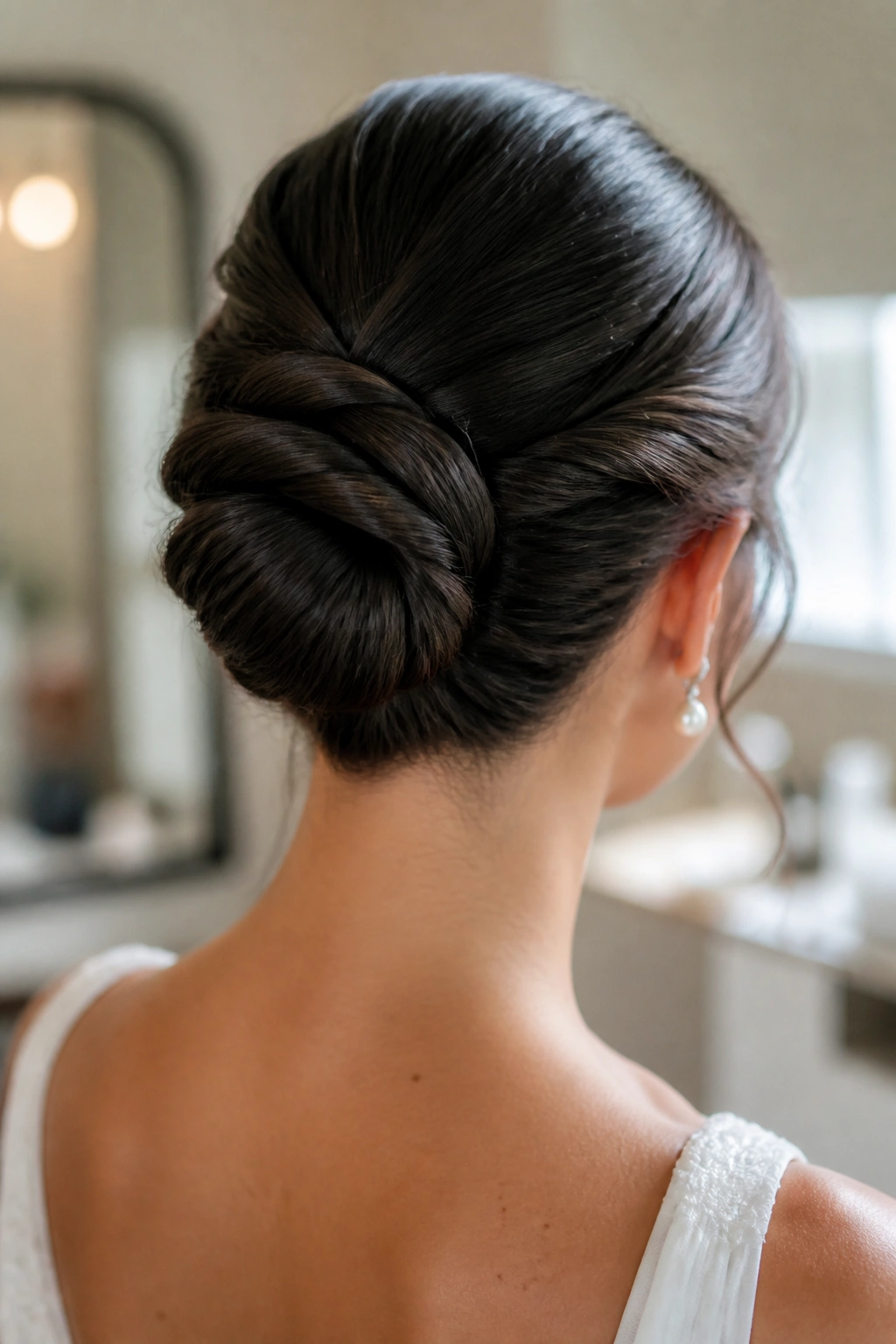
Unlike a braided bun, a rope-twist knot stays smoother and a little quieter. Two sections are twisted around each other, which gives the back of the head a clean, spiraled look instead of visible plaits.
That makes it a strong choice for minimal dresses and shiny fabrics. Satin, mikado, and silk all sit nicely beside the rope texture because the hair looks deliberate without becoming busy. If you like a sleek finish but want more movement than a plain bun gives you, this is a good middle ground.
It also suits hair that has a natural wave, because the twists help the hair settle without needing a lot of heat styling. The sections should be twisted tightly enough to hold their shape, but not so tight that the surface starts to buckle. That little balance is the whole game.
For brides who do not want anything too classic, the rope-twist knot has a nice modern edge. It looks tidy from afar and more interesting up close, which is exactly where wedding hair should live.
7. Sleek Ballet Bun
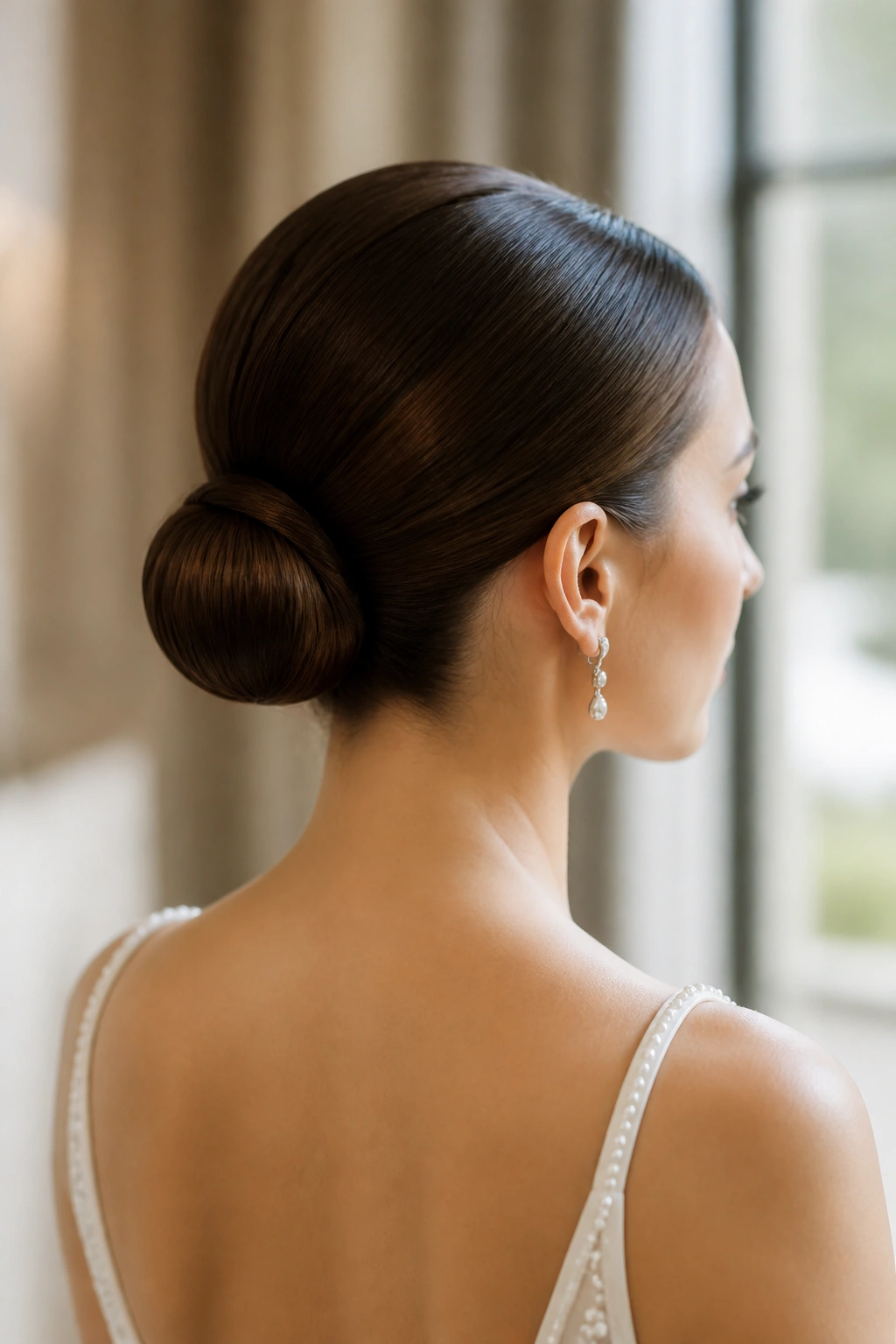
A sleek ballet bun can look surprisingly grown-up when it sits just above the nape instead of dead center on the crown. Too high, and it leans into dancer territory. A little lower, and it becomes polished, formal, and sharp.
Where the Placement Changes Everything
The shape should be round and compact, with the hair brushed back tightly enough that the bun feels like a finished object. That does not mean crunchy. It means controlled. You want the surface smooth and the outline clear, especially if your dress has an open back or a neckline that calls for a clean frame.
This style is at its best with statement earrings. Big hoops, drops, or even a single sculptural ear cuff can live comfortably next to it because the hair is doing its job without crowding the face. If you wear a veil, a ballet bun can anchor it well, but the placement needs to be tested before the day itself.
A ballet bun is not the most forgiving style if your crown tends to puff up. It needs brushing, pinning, and probably a little more hold than you think. Worth it. The payoff is that neat little circle at the back that looks tidy from ceremony to last dance.
8. Wrapped Ponytail Coil

A low ponytail becomes bridal the second the base disappears. That is the whole trick here. Once the elastic is hidden and the length is coiled into a smooth wrap, the style stops reading as casual and starts reading as very intentional.
This works especially well for brides who like modern clothes lines. A column dress, a clean square neckline, or a minimal slip-style gown all make room for this shape. The ponytail coil keeps the neck open, but it feels a little less formal than a full chignon, which is useful if you want polish without stiffness.
Use a narrow elastic and wrap a thin section of hair around it before pinning. Then coil the remaining length flat against the head, not puffed out from it. If the hair is too layered to hold a clean wrap, a small amount of padding underneath can help the coil look fuller without turning bulky.
The nice thing about this style is that it moves well. It does not freeze the head in place. It still has some swing, which is lovely when a bride wants clean lines but not a helmet.
9. Gibson Tuck
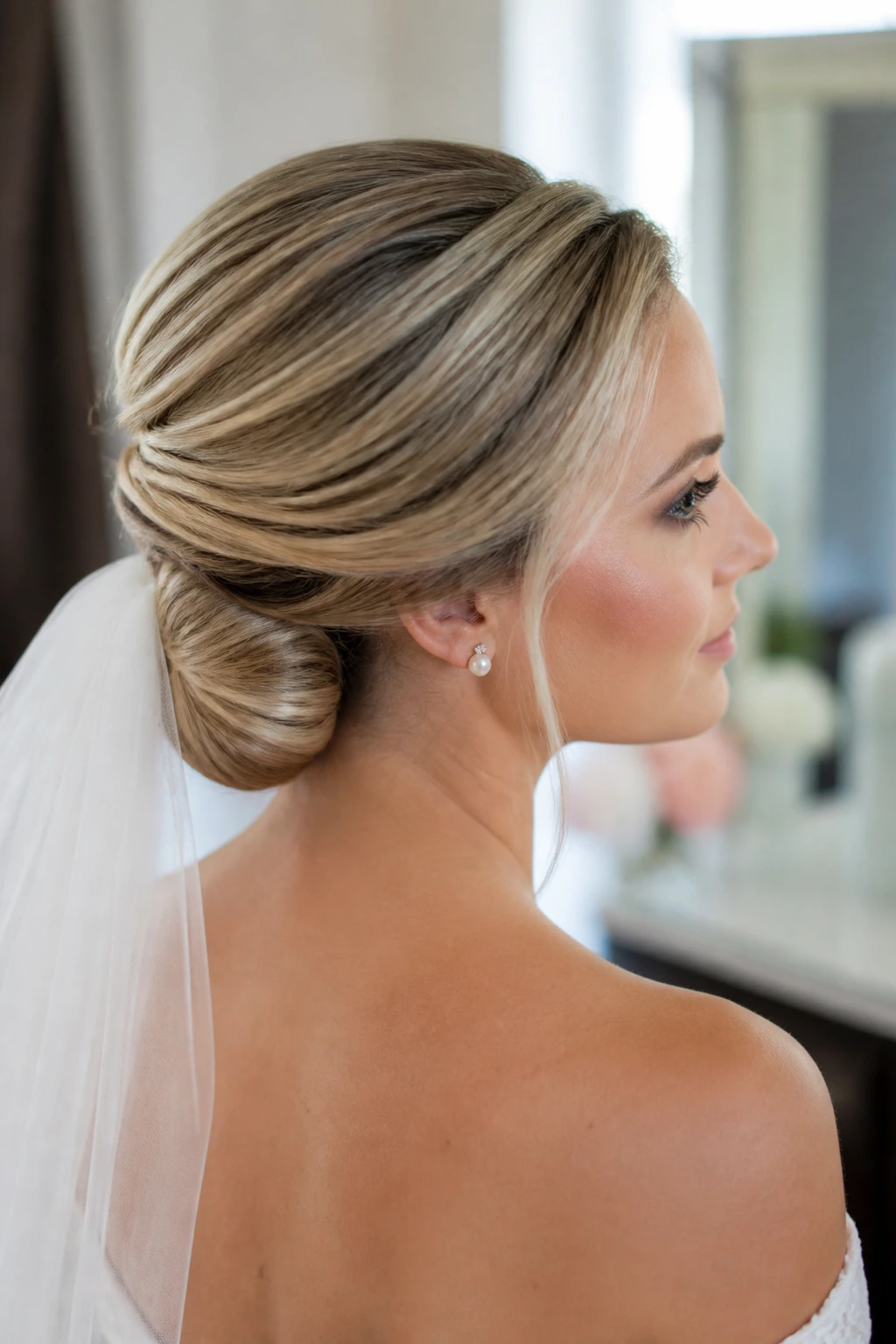
Why does the Gibson tuck keep coming back? Because it gives you a smooth crown and a soft roll at the nape without asking for a lot of visual drama.
That balance is useful on a wedding day. The top stays flat, which helps with veils and headpieces, and the tucked section creates a gentle curve that feels more relaxed than a strict bun. It has a little old-world charm, but not in a costume-y way if the finish is neat.
How to Make It Stay
Start by brushing the hair back firmly and creating a shallow pocket above the nape. Then tuck the length upward into that pocket and secure it with pins that follow the curve of the roll. If the hair is long, you may need to fold it once before tucking. If it is medium length, the tuck can be more compact.
A Gibson tuck works best when the crown is sleek but not over-gelled. You want control, not shine for the sake of shine. A satin dress or a simple long-sleeved gown makes a nice companion for it, because the style already carries a quiet vintage note.
10. Halo Twist Bun

If the dress has a high neck or full sleeves, a halo twist keeps the line clean without making the whole look feel bare. The twists trace the hairline, then feed into a low bun, which gives the style shape before it even reaches the nape.
What I like about this one is how it handles growing-out layers. The front pieces are not forced to behave like they are all the same length, because the twists can gather and hide the awkward bits along the temples. That makes the style forgiving without looking sloppy.
- Works well for medium and long hair with some layering.
- Good choice when you want detail around the crown but a clean back.
- Holds a hair vine or small floral pin nicely along the twist line.
The halo twist should stay snug. If the twist loosens too much, it starts to look more casual than bridal. Keep the surface tidy and the bun compact, and the style will do its job.
11. Asymmetric Side Bun
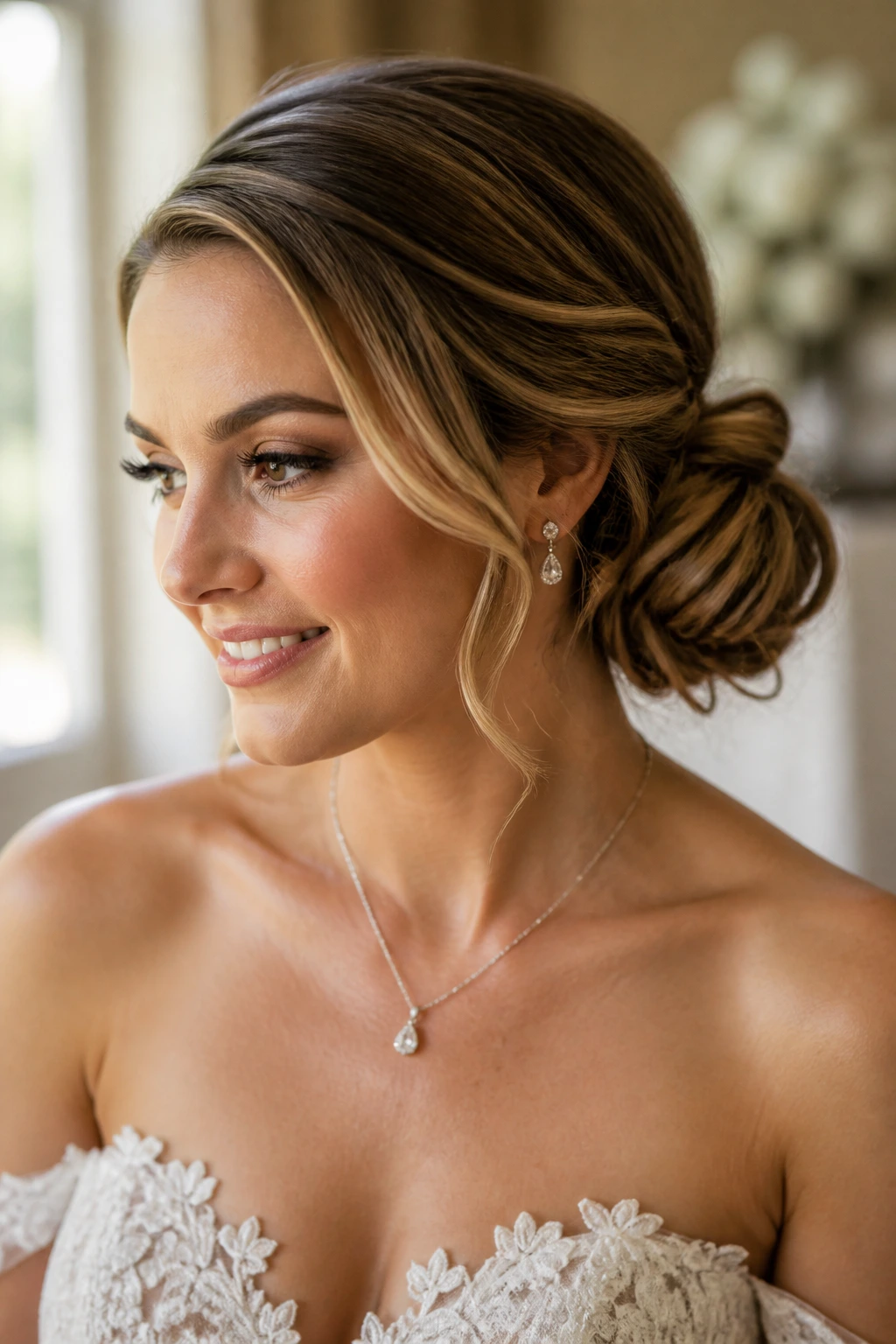
An asymmetric side bun changes the whole mood of a wedding look because it refuses to sit politely in the center. It shifts a little to one side, which gives the face room and makes a dress with one shoulder or a strong neckline feel even more deliberate.
This style is especially nice when you want a little drama without height. The bun can sit behind one ear or just below it, leaving the opposite side smoother and more open. That imbalance is the point. It creates a line the eye follows, which makes the whole look feel sculpted.
You do need to be careful with placement. Too low, and it can look accidental. Too far back, and the side effect disappears. The bun should feel anchored by the shape of the head, not stuck onto it at the last minute.
A side bun also gives you a clean place to show off an earring on the open side. If you want to wear a bold piece of jewelry, this style makes room for it without asking the dress to do less.
12. High Top Knot
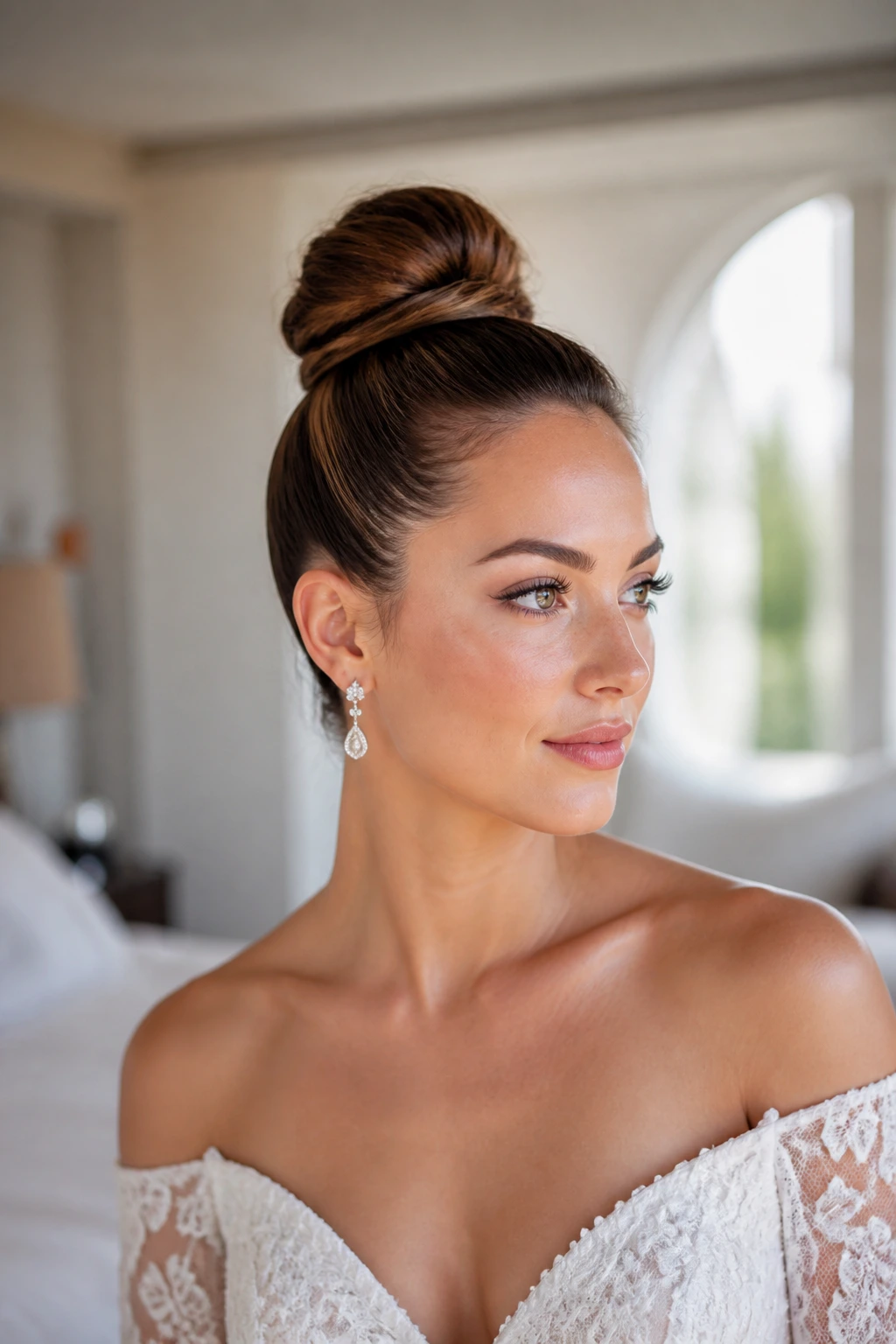
A high top knot opens the face in a way low buns simply do not. It lifts the eye line, exposes the neck, and gives the whole bridal look a sharper, more modern edge.
Unlike a soft bun at the nape, a top knot can make a minimalist gown feel intentional all by itself. It also works beautifully with strong makeup or a bold lip because the hair is pulled up and away from everything. The key is placement. Put it too far back and it can look like a gym knot. Put it slightly forward of the crown, and the shape becomes much cleaner.
If your hair is thick, the knot should be tightened in stages so the base does not swell. If your hair is fine, a small pad or a wrapped ponytail base can help the knot look fuller. Either way, the finish should be sleek around the hairline.
A top knot is not the best match for every veil, especially if you want a comb placed low on the head. It does shine with shorter veils, modern bows, or no veil at all. Clean. Direct. Confident.
13. Wet-Look Sculpted Bun
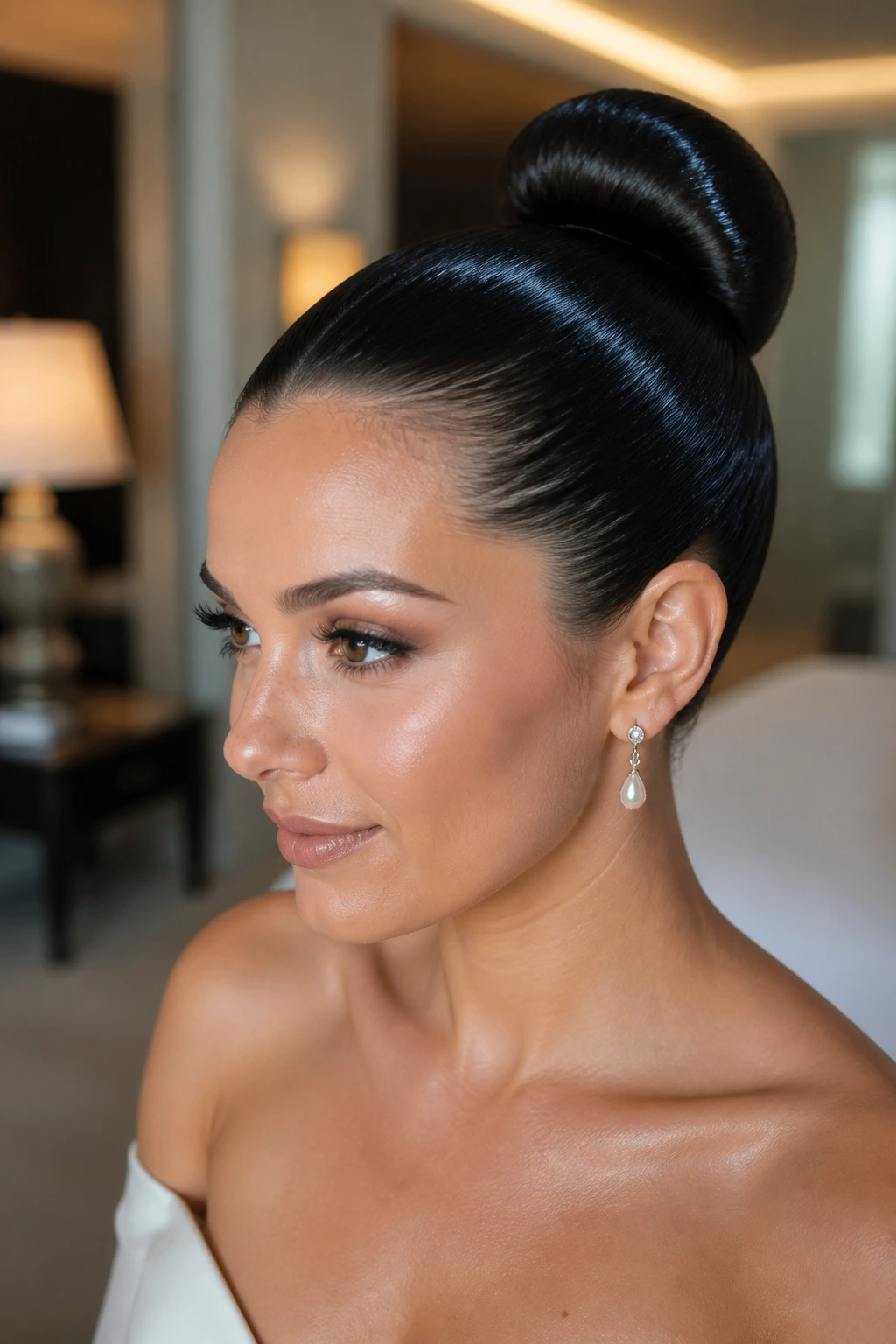
A wet-look sculpted bun is for the bride who wants the finish to feel crisp under direct flash and calm from a distance. It is not soft-focus hair. It is controlled, slick, and a little editorial.
The Shine Factor
The shine comes from product discipline, not from drowning the hair. Use a water-based gel or a strong smoothing cream at the roots, then brush the hair back with a dense bristle brush until the surface lies flat. After that, shape the bun quickly so the product does not start to separate and flake.
This look can be gorgeous with a square neckline, a modern gown, or a dress with minimal embellishment. It does not need extras. The bun itself is the statement. Pearl pins can work, but only if they are sparse and placed with intention. Too many, and the whole thing loses its edge.
- Use gel or cream at the hairline, not heavy wax through the whole head.
- Finish with a firm-hold spray that dries clean.
- Avoid brushing the style too much after it is set; that is when frizz and flakes show up.
The wet look is bold. Not everyone wants that. But if you do, it can feel sharper than a classic bun and cleaner than a textured one.
14. Pearl-Pinned Coil
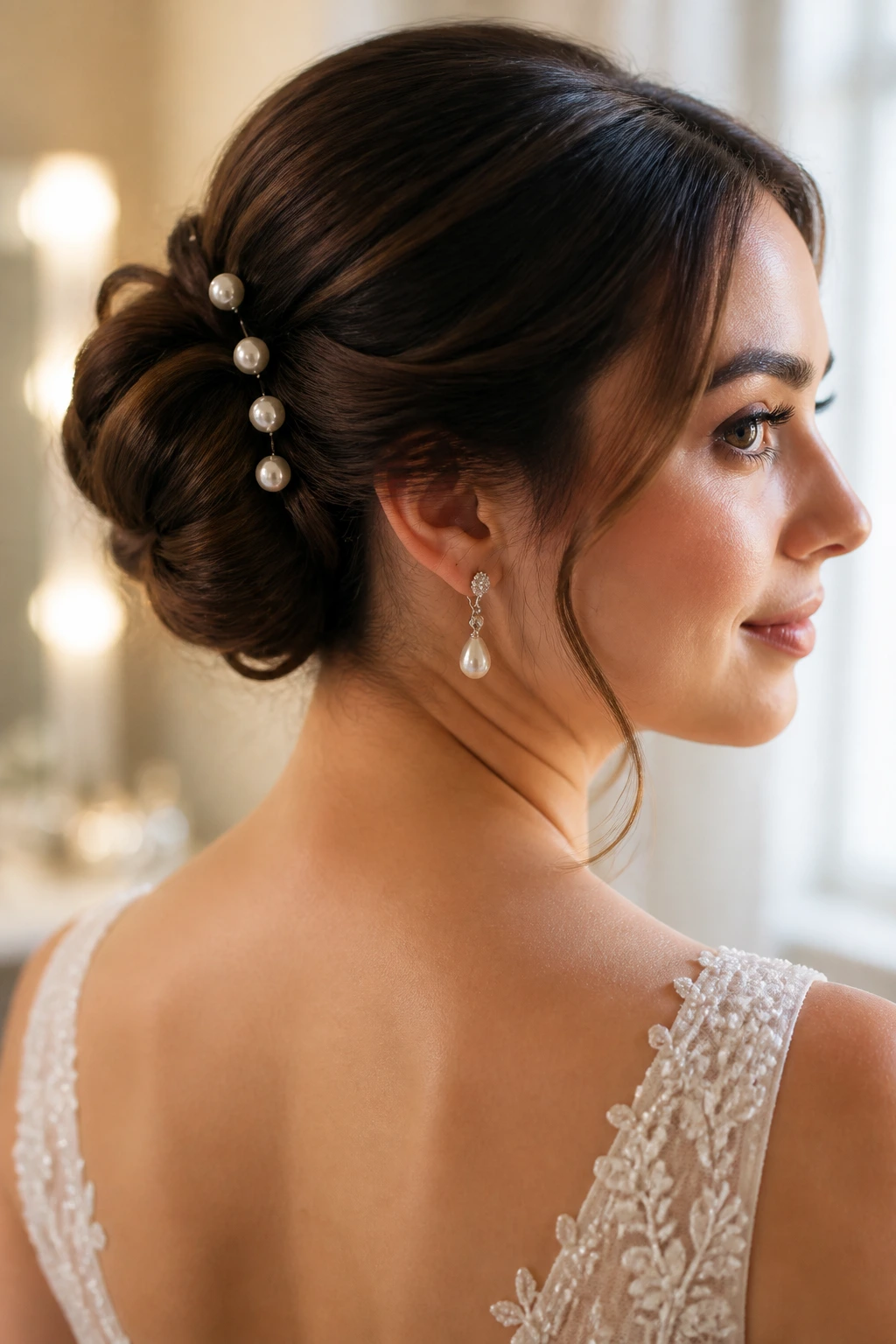
A plain coil can turn bridal fast when the pins are chosen well. Four or five pearl pins, placed at the curve of the bun rather than scattered everywhere, can make the whole shape feel finished without adding bulk.
The trick is restraint. One larger pin near the center of the curve, then a smaller pair to echo it, usually looks better than a dozen tiny dots. You want the pearls to guide the eye around the bun, not sprinkle glitter across the back of the head like confetti.
This style works with a lot of dresses because the coil itself stays simple. The pearl pins are the decoration, not the shape. That means the gown can still carry beading, embroidery, or satin sheen without the hair competing. If your jewelry is silver or cool-toned, use pearl accents with a cooler metal base so the whole thing feels cohesive.
I like this one for brides who want something classic but not plain. The bun does the structure. The pearls do the personality.
15. Veil-Friendly Nape Bun

What if the veil matters more than the bun? Then build the hair around the veil instead of treating the veil like an afterthought. A low nape bun is usually the answer because it gives the comb a stable place to sit and keeps the top clean.
This shape is flatter than a lot of other buns, which helps the veil lie close to the head. That matters if the veil is long, heavy, or layered. You want the comb anchored into a firm base, not perched on a soft cushion of hair that shifts when you turn your head.
How to Place the Comb
The comb should sit just above the bun or tucked into the top edge of it, depending on the veil weight. A taller bun can push the veil out too far. A flatter bun keeps the line tidy and lets the tulle fall naturally. If the veil is long, ask for a few extra hidden pins around the comb so the weight does not tug the style downward.
This is one of the most practical sleek updo styles for wedding day wear because it solves a real problem. The hair stays neat, and the veil stays where it should. No drama. No slipping.
16. Double-Twist Low Bun
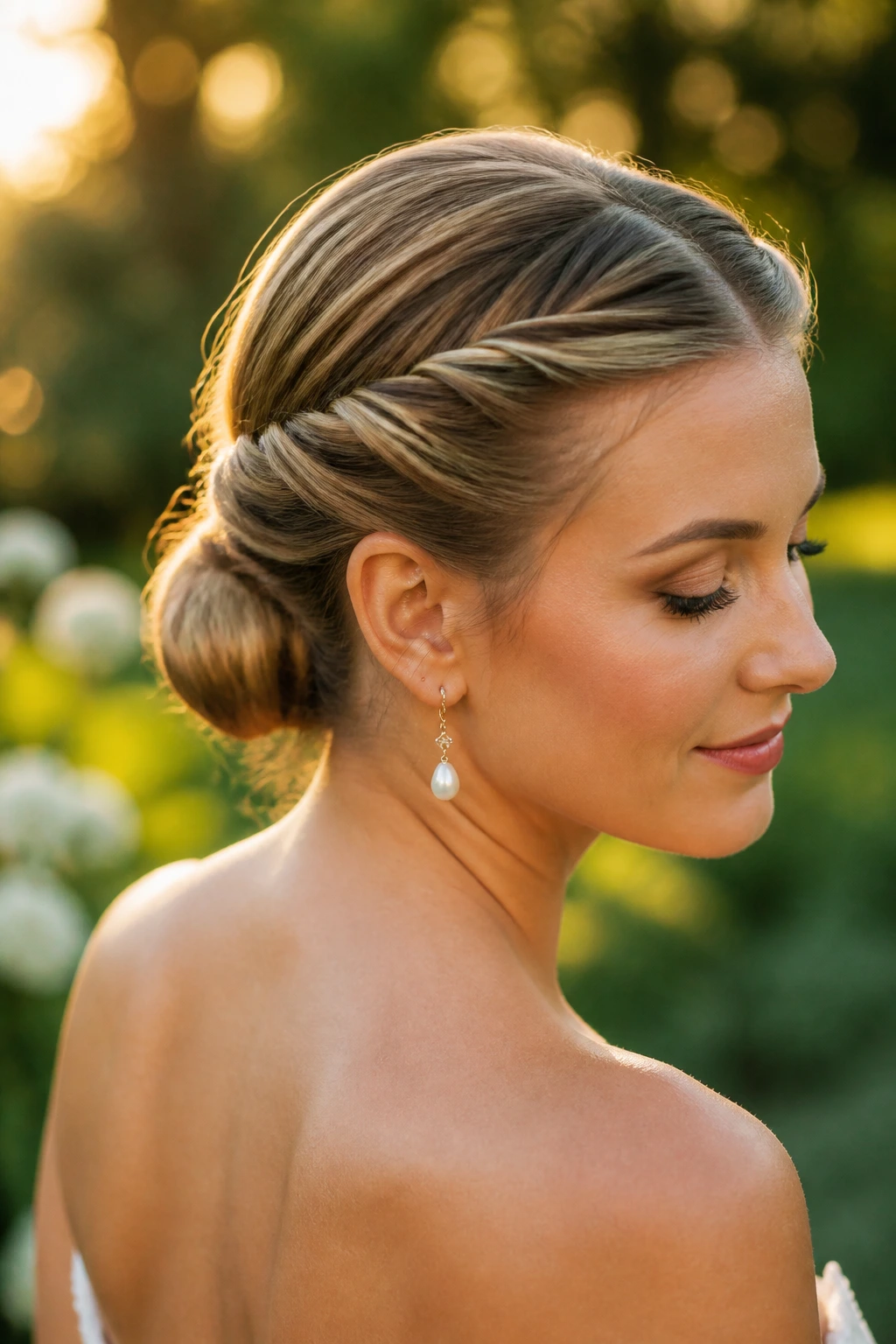
Double twists are a gift for thick hair. Two sections are swept back from the front or temple area, twisted separately, and then crossed into a low bun at the nape. The result looks structured, but it spreads the hair out in a way that keeps the shape from getting too heavy.
The visual line is nice too. Instead of one blocky mass at the back, you get two paths leading into the bun, which creates a little movement without losing the sleek finish. That matters if your dress is simple and you want the hair to carry more of the detail.
- Good for dense hair that tends to balloon in a single bun.
- Helps hide layers that are too short to form a clean wrap.
- Works well with middle or side parts, depending on the dress neckline.
The important thing is tension. The twists should be snug enough to hold, but not so tight that they start lifting at the crown. If one side is looser than the other, the whole style can feel lopsided in a bad way. Even tension, clean pins, done.
17. Knot-and-Tuck Updo
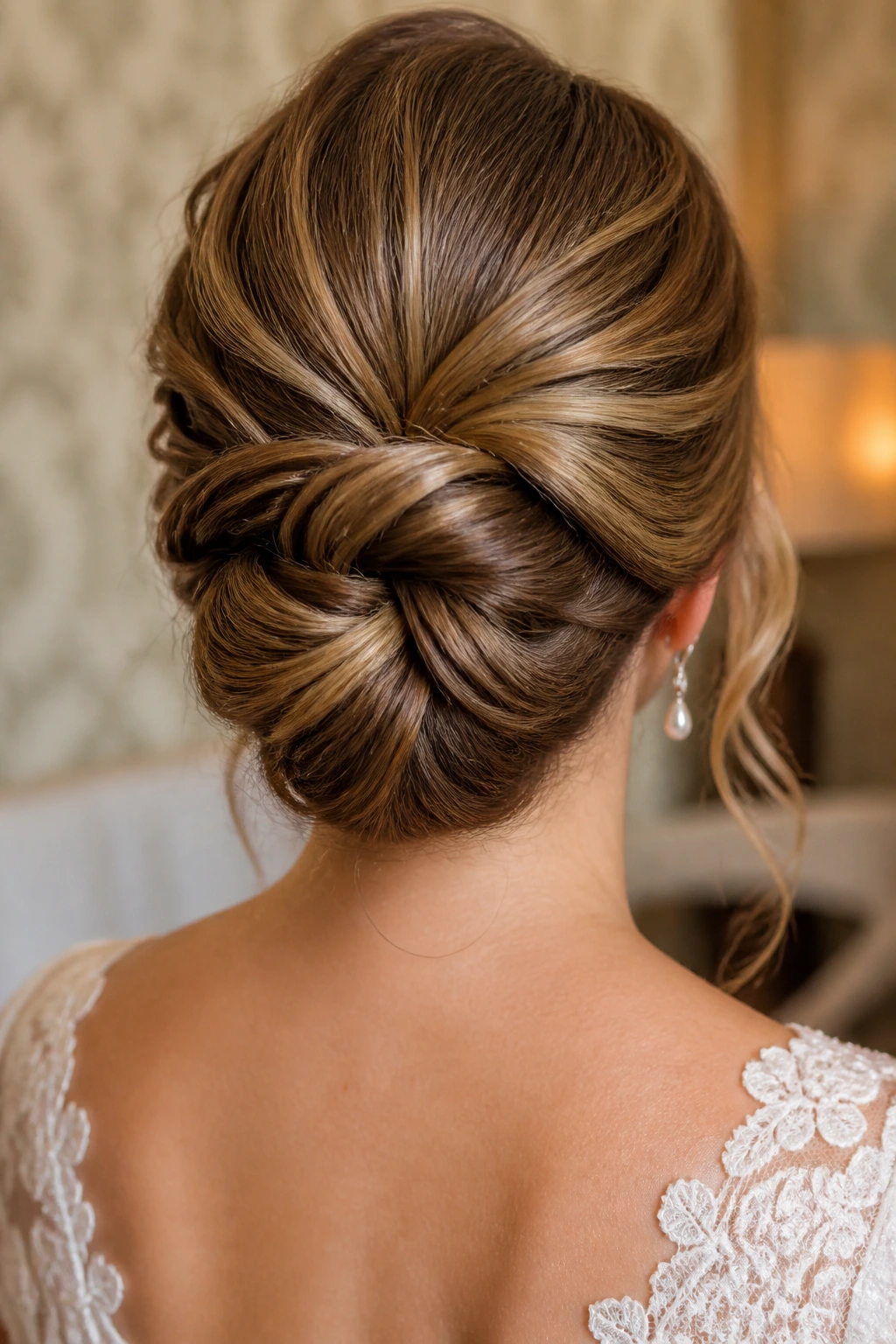
A knot-and-tuck updo feels less formal than a chignon and more polished than a casual twist. That is the appeal. The hair is divided into sections, tied or looped into a knot, then tucked back into itself so the finish has movement instead of one solid shape.
This style is especially kind to layered hair. Shorter pieces can be folded inward, hidden under a tuck, and pinned without needing to pretend they are longer than they are. That makes the style more forgiving than some sleek buns, which can expose every uneven layer if the hair is cut a little bluntly.
The pinning matters more than people think. Pins should go in along the base of each tuck, then back into the head, so they lock. If they are placed only across the surface, the knot can loosen as soon as the bride starts moving. Not a fun surprise.
I like this option for dresses that already have strong lines and do not need a very formal hair shape. It reads modern, but not cold.
18. Braided Crown Chignon

Unlike a full crown braid, this version keeps the braid narrow and controlled so the crown stays sleek. The braid travels along the top or side of the head, then stops short and feeds into a chignon at the back.
That makes the style useful when you want texture in the front but still want the back to look clean. It is a good bridge between romantic and structured. The braid gives the eyes something to follow, and the chignon keeps the overall shape grounded.
This is also a nice choice for outdoor ceremonies, where hair can need a little more hold around the hairline. The braid helps trap the front sections so they do not start wandering in the wind. Still, the braid should stay tight enough that the shape is visible. If it gets too loose, the crown loses its line and starts to lean casual.
If your dress has an open back, this style gives you detail from the front and a tidy finish from behind. That is a useful combination.
19. Minimalist Roll

A minimalist roll is one of the cleanest shapes you can put on a wedding head. The hair is brushed smooth and rolled into a narrow vertical fold at the back, which creates a long line and a very neat profile.
When to Choose It
This style is especially good if the dress is sharp. Think square necklines, tailored fabrics, or anything with a strong architectural feel. The roll does not fight the clothing. It supports it.
It also works when you want a hairstyle that stays close to the head. There is no wide bun shape to balance, no soft loops to manage. Just a precise, tidy roll that keeps the back of the head clean. If you plan to wear a dramatic veil, the roll can sit underneath it without adding a lot of bulk.
- Best for medium-to-long hair with enough length to fold neatly.
- Pairs well with graphic earrings or a bold lip.
- Needs a smooth crown and hidden pins to avoid bumps.
The minimalist roll is not the most playful choice, and that is fine. It has a strong line and a quiet confidence that suits a lot of wedding looks.
20. Soft Face-Framing Chignon

A sleek updo does not have to mean every hair is pinned back. A soft face-framing chignon keeps the bun clean, then releases a couple of thin pieces near the temples or jawline so the face has a little movement.
The key is control. These pieces should be slim, smooth, and placed with purpose. If they are too thick, they start to look like a half-down style that changed its mind. If they are too curly, they can look disconnected from the rest of the sleek finish. Keep them refined and tidy.
This style helps a lot if you want softness in photos without losing the clean line of the bun. It also flatters dresses with high necklines because the front pieces make the face feel less boxed in. A small bend at the ends, created with a 3/4-inch iron or a round brush, usually looks better than a loose wave.
Use this one when you want the structure of a polished bun and just a little movement around the face. Just a little. That is the part people often overdo.
21. Figure-Eight Bun
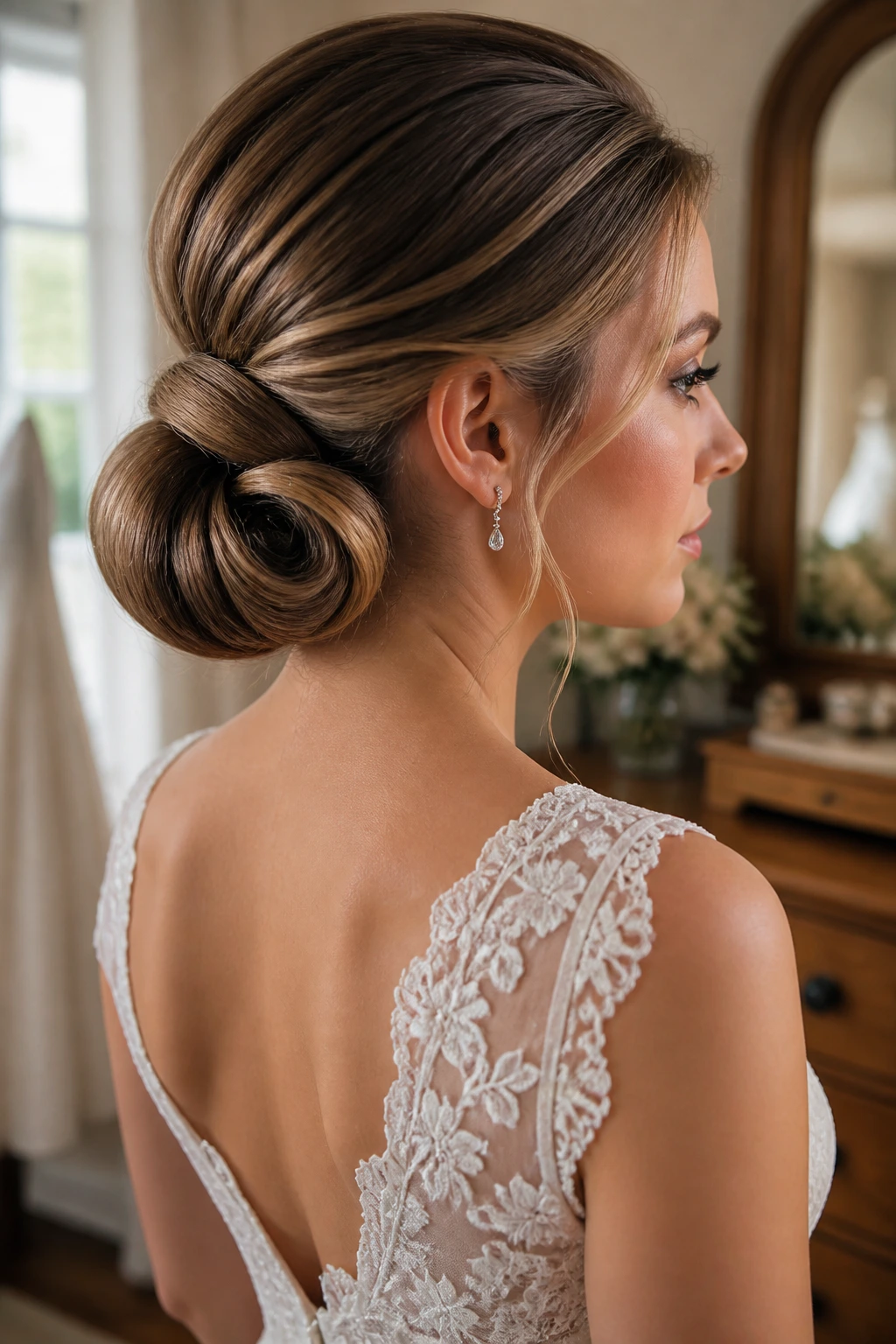
Why does a figure-eight bun look more polished than a standard low bun? Because the loops cross over each other in a way that gives the back of the head a built-in pattern. It feels designed, not improvised.
This style works best on medium-to-long hair, especially if the hair is smooth enough to tuck cleanly. Two loops are created at the nape, one slightly above the other, then pinned so they form that layered eight-shape. The result is elegant, but not fussy. It has structure you can actually see.
How to Ask for It
Tell the stylist you want two overlapping loops at the nape with the ends hidden inside the center fold. That matters. If you only say “low bun,” you may end up with something plain when you were hoping for shape. A figure-eight needs intention.
It is a strong match for simple dresses and modern veils, especially when you want the hair to have its own visual interest without adding accessories. The bun itself carries the detail.
22. Editorial Slick Knot
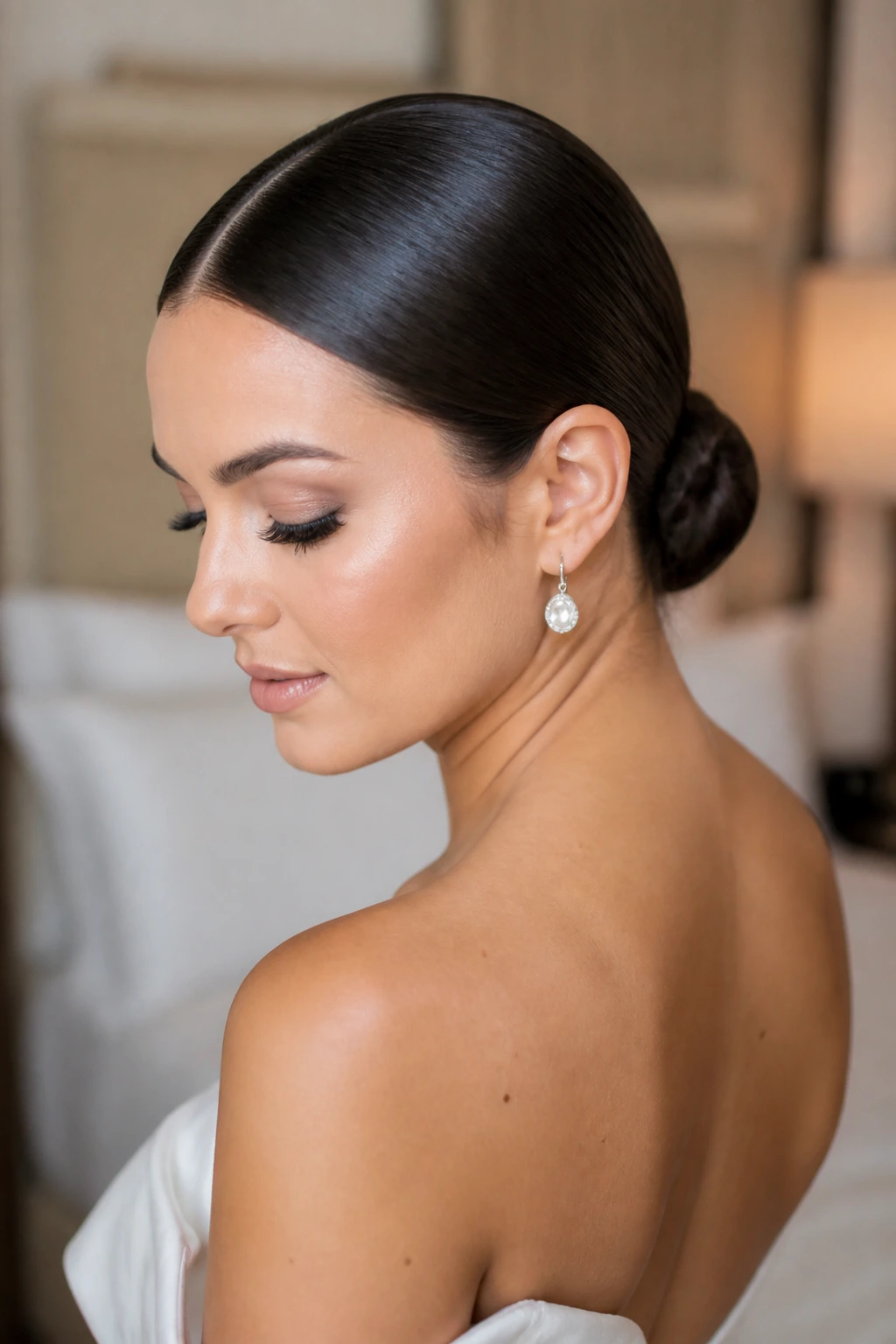
This is the one for brides who like clean lines and hate fluff. An editorial slick knot sits low or mid-low, with the surface brushed smooth and the knot shaped so tightly it almost looks molded.
The appeal is in the restraint. Every part is intentional: the part, the crown, the tuck, the shine. If the dress is dramatic, the knot can stay quiet. If the dress is simple, the knot can do the heavy lifting. Either way, the hair has to be immaculate, because there is nowhere for it to hide.
It is not forgiving. That is the honest version. Flyaways show faster here, and uneven pinning shows faster too. But when it is done well, the result is hard to beat: crisp, modern, and clean from the front, side, and back. The whole look feels finished before the veil or earrings even come into play.
For a wedding day, that kind of certainty is useful. The style does not compete. It sets the tone and then gets out of the way.
