



Formal hairstyles for long hair can be deceptive. A style that looks soft in the mirror can collapse once the curls cool, the veil goes on, and someone hugs you three times before the ceremony even starts.
That is the annoying part of long hair. It gives you heft, shine, and enough length to build real shape, but it also pulls down pins, droops curls, and makes sloppy styling look even sloppier. The upside is that when long hair is handled well, the result has depth that shorter hair sometimes can’t fake. There’s more material to work with, more movement, and more room for detail.
One thing I’ve learned from years of watching formal hair fall apart at the wrong moment: freshly washed hair is not always your friend. A little grit from the day before gives pins something to grip. So does a proper blow-dry, a cool curl set, and a light hand with shine spray. Heavy products can make the whole thing slide. Light products can make it feel finished.
The strongest looks are the ones that match the dress, the neckline, and the amount of fuss you actually want to deal with. Some styles should show off earrings. Some should keep the neck clean. Some need to survive dancing. Start with the shape that suits the event, and the rest gets a lot easier.
1. Sleek Low Chignon
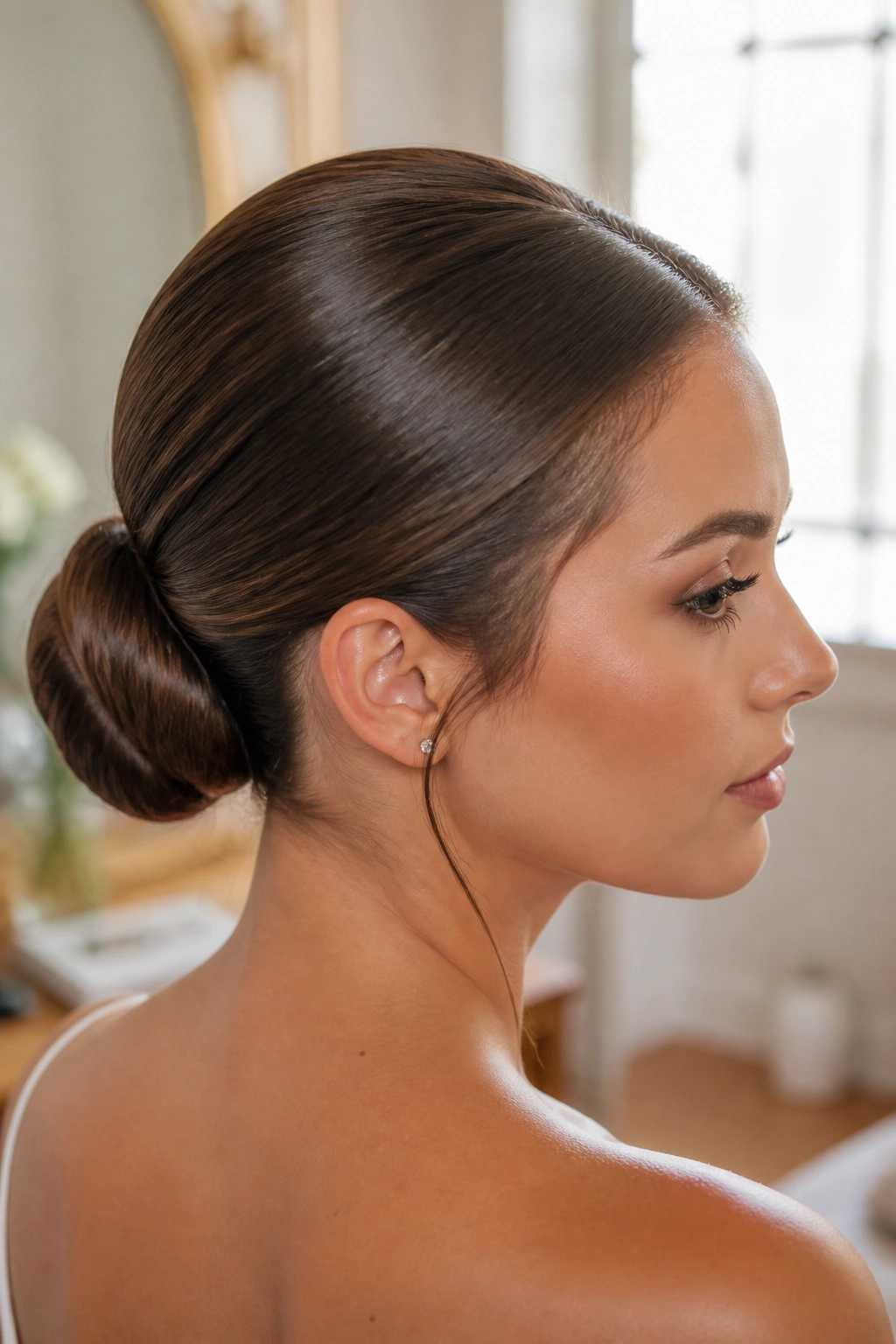
A sleek low chignon is the style I trust when the dress has a dramatic neckline or the earrings are doing most of the talking. It sits low at the nape, keeps the profile clean, and gives long hair a polished shape instead of a bulky one.
The trick is to smooth the crown first, then gather the hair low and twist it into a tight coil before pinning. U-pins and crisscrossed bobby pins hold better here than one giant elastic, which tends to dig in and leave a lump. A pea-sized amount of smoothing cream around the hairline helps, but stop there. Too much and the whole thing looks greasy.
If your hair is thick, split the tail into two sections and coil each one around the base. That keeps the bun flatter and easier to anchor. If your hair is fine, mist the root area with light texturizing spray first so the style does not slide by dinner.
2. Old Hollywood Side-Swept Waves
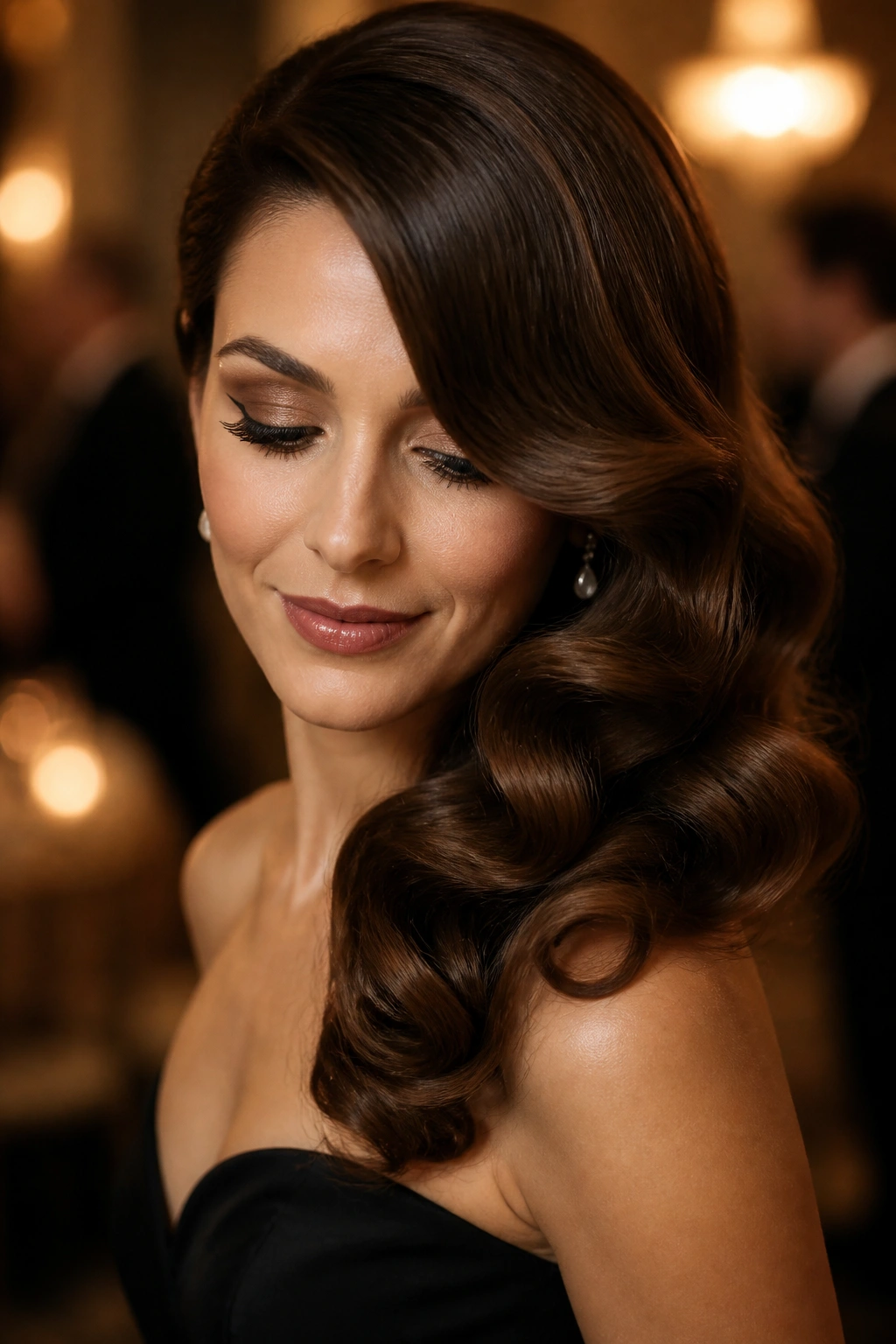
Side-swept waves bring a little drama without feeling fussy. They work because the hair looks controlled from the front and lush from the side, which is exactly why this shape keeps showing up at formal events.
A deep side part sets the tone. Then the lengths get wrapped around a 1.25-inch curling iron, pinned flat while they cool, and brushed out with a soft boar-bristle brush until the wave lines melt into each other. The front section should skim one cheekbone, not hang in your eyes. That small detail makes the whole style feel deliberate.
Why It Works So Well
The side sweep creates space for statement earrings and gives the dress neckline room to breathe. It is also one of the few down styles that still looks dressed up after a few hours, because the wave pattern stays visible even as the hair relaxes.
A few quick points:
- Set the curls in the direction they will fall, not away from it.
- Pin each curl flat until it cools all the way through.
- Finish with a flexible spray, not a stiff helmet-like spray.
- Brush only after the curls are fully cool.
A one-sided wave has more personality than a centered cascade. I like that.
3. Braided Crown Updo
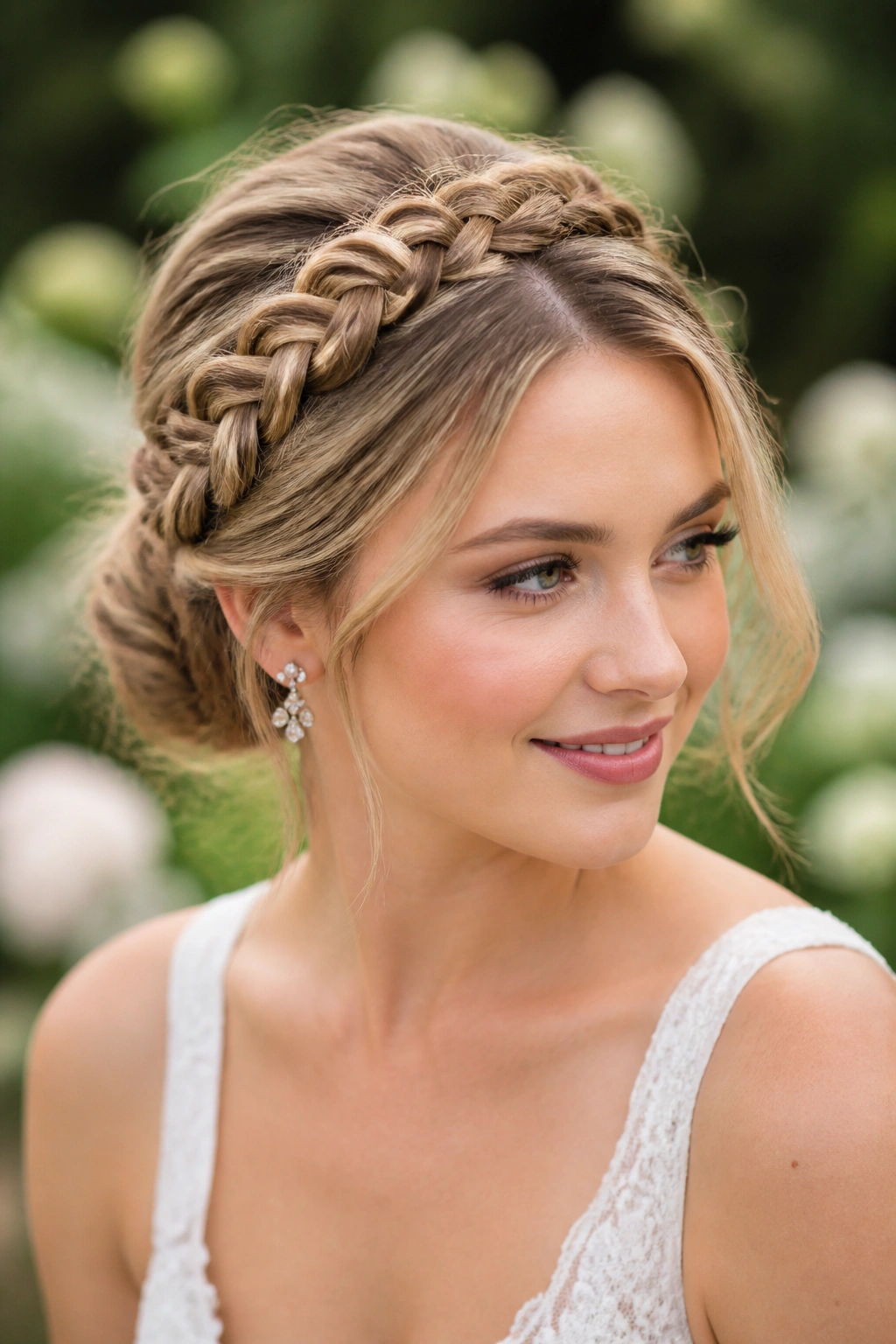
A braided crown updo gives you romance and staying power in the same style, which is not something every formal look can claim. It wraps the braid around the head like a built-in headband, then tucks the remaining length into a bun or knot at the back.
What Makes It Hold
The braid itself is the anchor. Start with a Dutch or French braid along the hairline, keep it close enough to the scalp that it does not puff out, then secure the ends into the back section with a few hidden pins. Texture spray at the roots helps a lot here, especially if your hair is silky and slippery.
This style is good when you want the face open and the front polished, but you still want some softness around the head. It also handles outdoor weddings well because the braid keeps shape even when the air gets damp. If your hair is very long, braid only the top half and let the extra length fold into the bun. That keeps the crown from getting too heavy.
A little looseness around the braid edges looks nicer than a tight, severe line. Not messy. Just softer.
4. Twisted French Roll
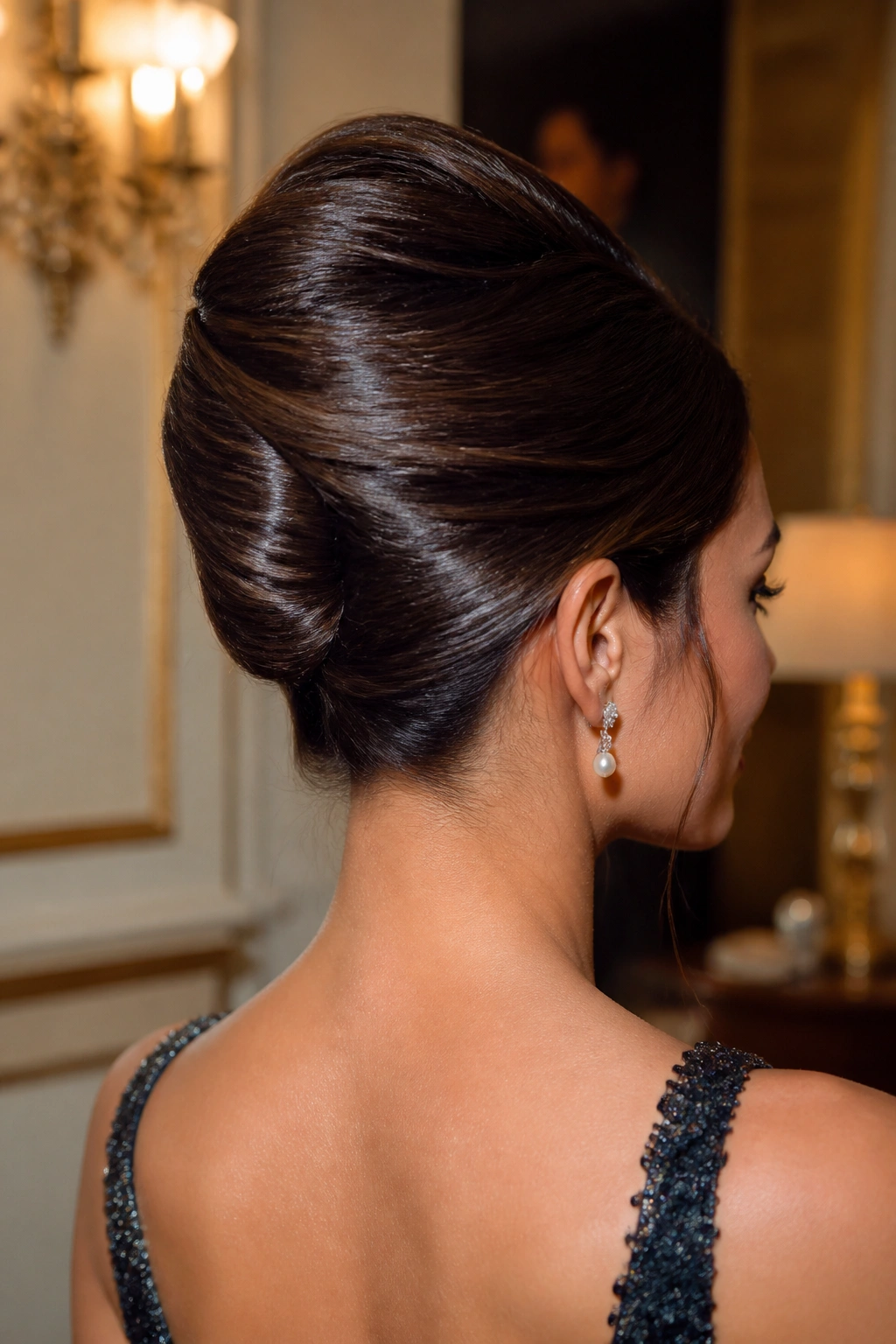
A French roll looks as if it took forever, and that is half the appeal. It is clean, tall enough to feel special, and narrow enough to work with a high neck or a back detail that deserves attention.
The style starts by smoothing the hair back and gathering it slightly off-center at the back of the head. Then the length is twisted upward and tucked into itself, building that classic vertical fold. The shape should feel secure but not crunchy. If the roll is too tight, it starts to look old-fashioned in the wrong way.
I like this one for black-tie rooms because it has structure without shouting. It also works well when you want to show the earrings and keep the neckline bare. A shine serum on the ends, then a light mist over the surface, is enough. The surface should look controlled, not lacquered.
If the hair is layered, tuck the shorter pieces in first. That gives the roll a cleaner edge and keeps little ends from slipping out halfway through the night.
5. Half-Up Knot with Loose Curls
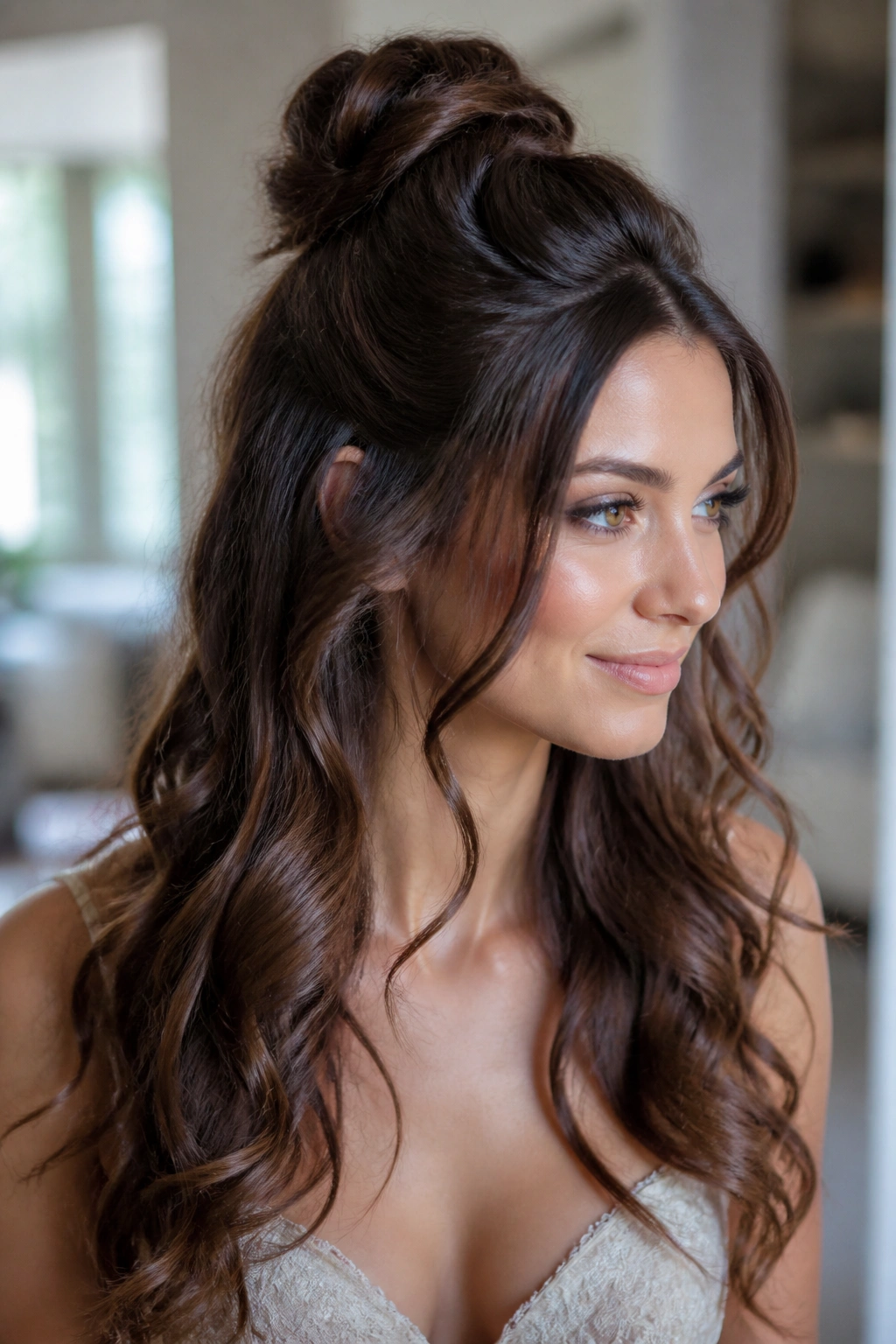
Need hair off your face but do not want a full updo? A half-up knot is the answer, and long hair makes it look richer than it does on shorter lengths. The top section is pulled back into a neat knot or mini bun, while the rest stays curled and loose.
How to Keep It Clean
The top section should be small enough that the knot sits close to the crown, not so large that it drags down the back of the head. Curl the lower lengths first with a 1-inch wand, let them cool, then rake them apart with fingers rather than a brush. That keeps the waves soft and formal instead of fluffy.
- Gather the top section from temple to temple.
- Secure the knot with two or three pins crossed in an X.
- Leave the front pieces slightly curved away from the face.
- Smooth the crown with a tiny bit of cream before pinning.
This is one of those looks that handles jewelry well. A short necklace, bold drop earrings, or a detailed neckline all make sense with it. The hair does not fight the outfit. It just frames it.
6. Bubble Ponytail with a Satin Wrap
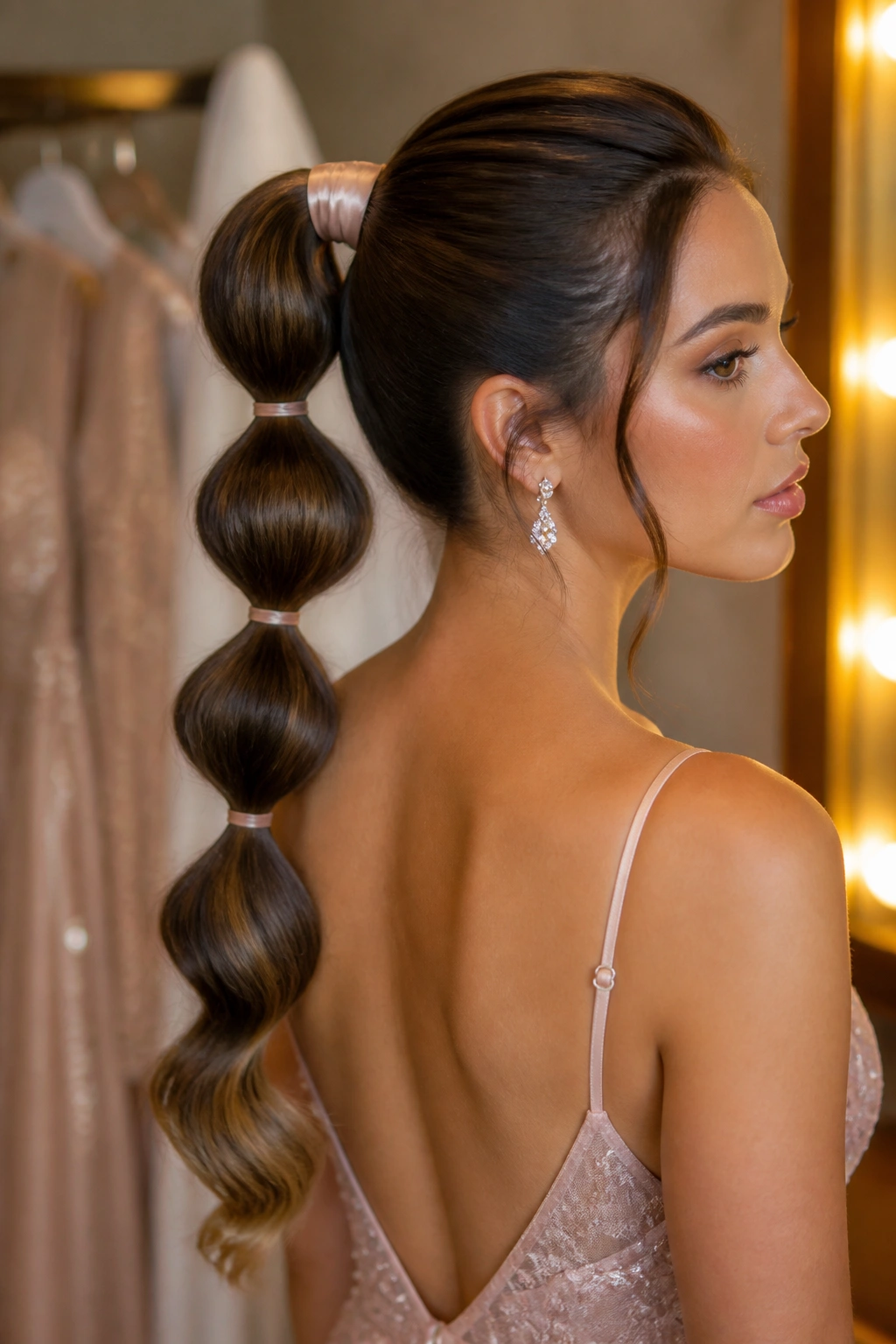
A bubble ponytail looks modern the second you see it, but the real trick is making the bubbles even. On long hair, that shape has room to show off, which is why it works so well for formal occasions when a standard ponytail would feel too plain.
Start with a smooth base at the crown or low at the nape, then add small clear elastics every 2 to 3 inches down the length. Gently pull each section outward until it rounds into a bubble, then smooth the surface with your palms. A strip of satin or a strand of wrapped hair around the base keeps the finish looking intentional.
This style is strongest on thick hair because the bubbles look full without much help. Fine hair can still wear it, but a few hidden padding pieces or a ponytail insert make the shape easier to see. Keep the ends straight or softly waved; curled ends can get too busy.
It’s a sharp choice for modern dresses, especially when the back of the gown has interesting lines. The ponytail shows them off.
7. Low Ponytail with Face-Framing Waves
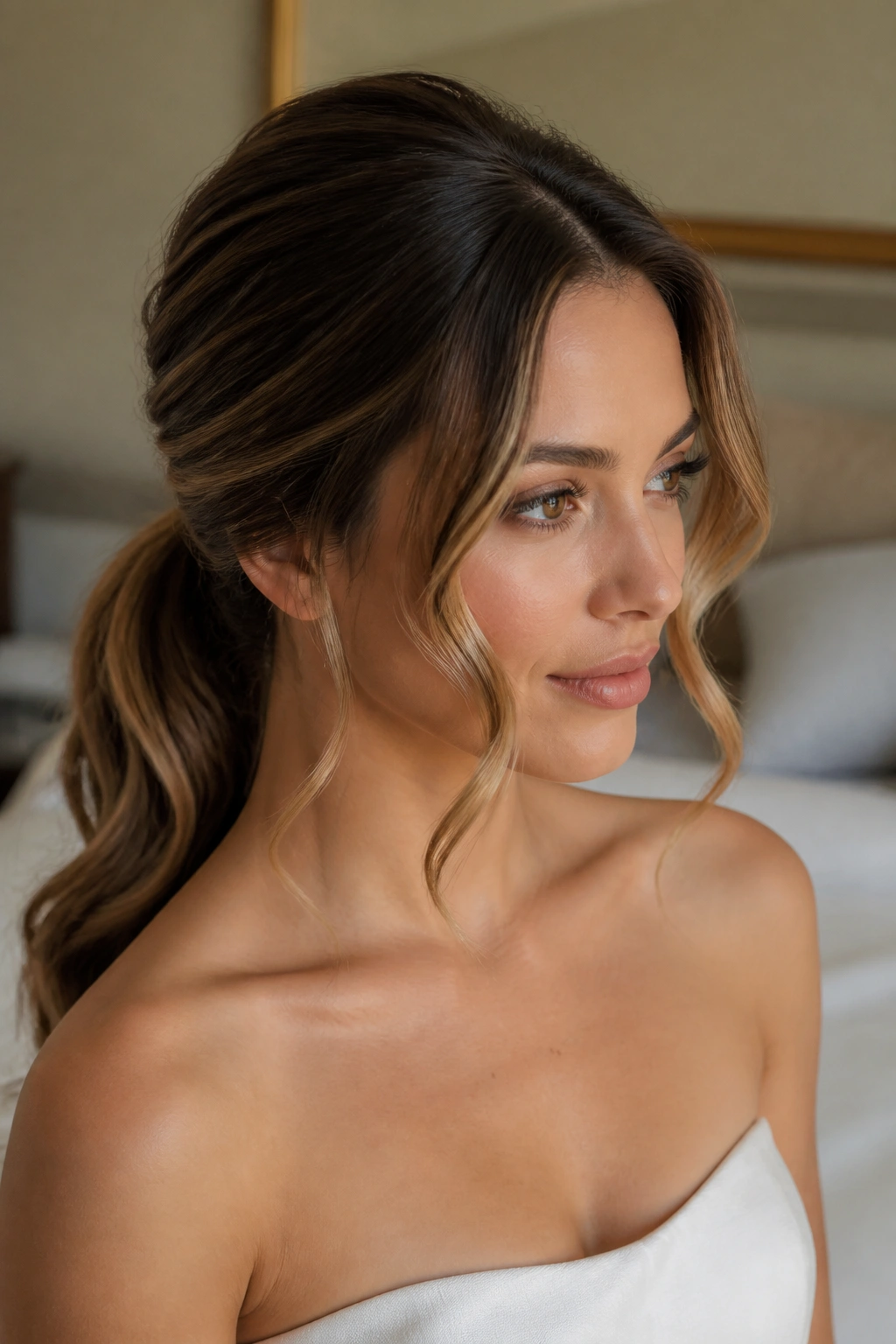
Unlike a gym ponytail, this one lives on gloss and shape. The hair is smooth at the crown, gathered low and secure, then softened with loose waves at the front so it never feels harsh.
The face-framing pieces matter more than people think. Curl them away from the face with a 1-inch iron, then let the waves fall naturally rather than pinning them into place. That gives the front a gentle bend that plays well with a low ponytail behind it. Wrap a small section of hair around the elastic to hide it, and pin the tail underneath.
This style is especially good when you want movement. The ponytail swings, but the front stays put. It also works with almost any neckline, which is one reason stylists keep returning to it for formal long hair. Add a little root lift at the crown if the profile feels too flat.
If the hair is very straight, mist the lower lengths with a bit of texture spray before curling. The waves hold better, and the ponytail looks fuller from the back.
8. Classic Center-Part Bun
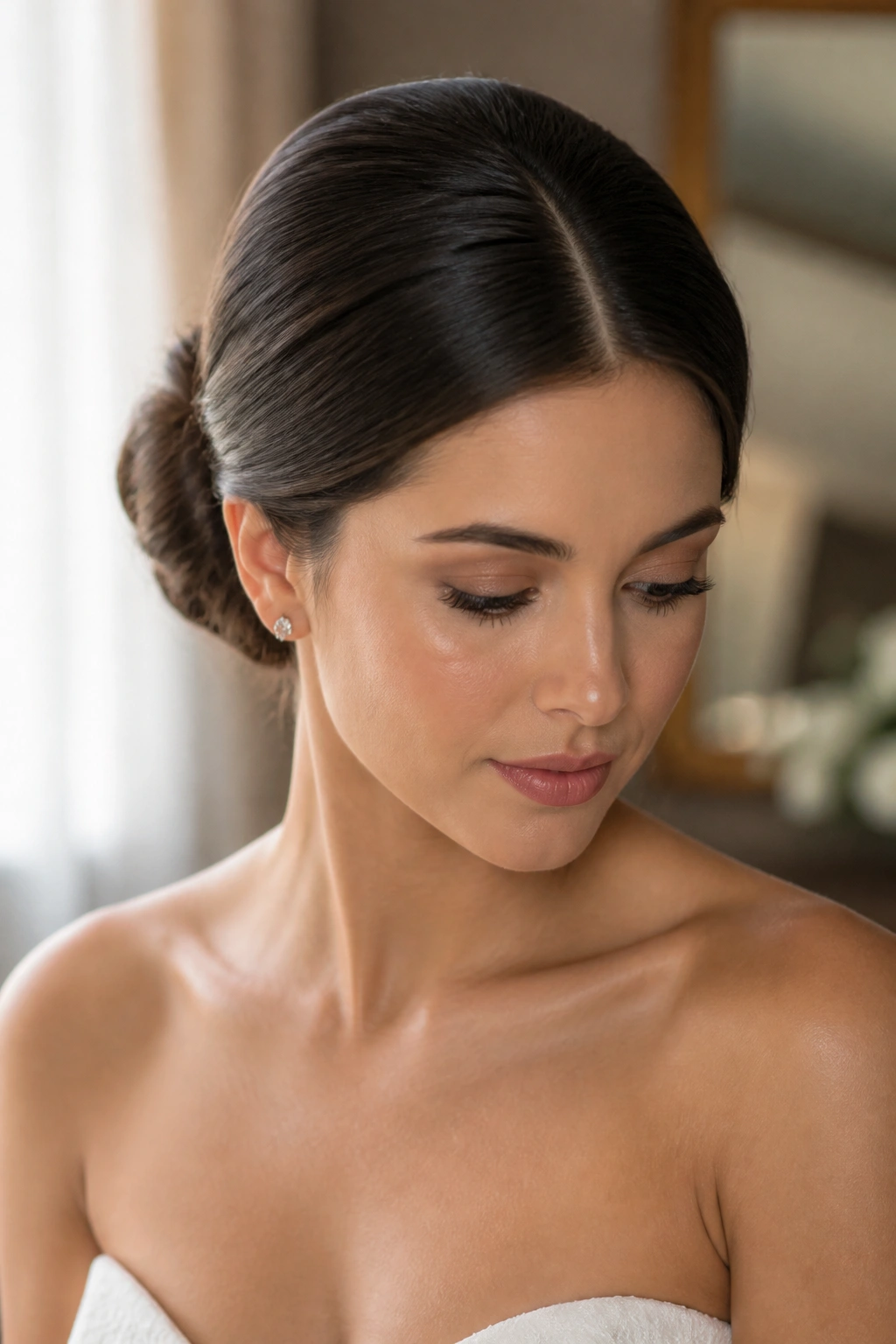
A center-part bun is strict in the best way. It creates symmetry, keeps the face open, and gives long hair a calm, controlled shape that suits a structured dress.
The line down the middle should be clean enough to read from a few feet away. After that, smooth the sides back with a lightweight cream, gather the hair low or mid-height, and wrap it into a round bun with a soft edge. A too-perfect bun can look severe, so leave just enough texture in the body of the hair to keep it human.
What Keeps It from Looking Severe
A little lift at the crown changes everything. So does a bun that is slightly wider than it is tall. That shape feels modern and keeps the style from turning stiff.
A few useful details:
- Use a fine-tooth comb for the part.
- Secure the base with an elastic before pinning.
- Cross pins through the bun, not just around it.
- Keep the hairline smooth, but not shellacked.
This is one of my favorite styles for gowns with strong shoulders or a very clean bodice. It gives the clothes a place to land.
9. Fishtail Braid Over One Shoulder
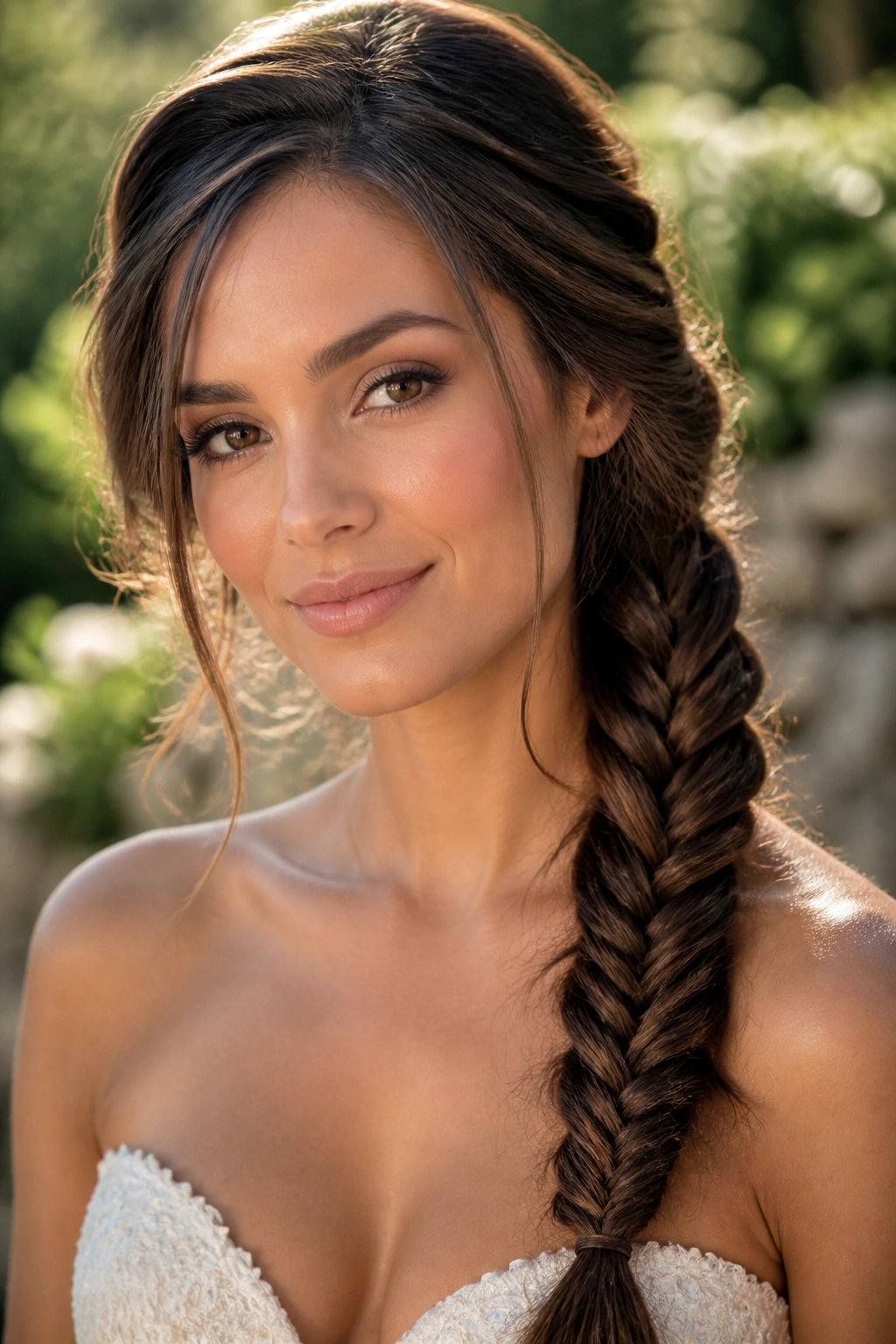
A fishtail braid has that woven, almost scale-like texture that reads as formal even when the rest of the styling is relaxed. Pulled over one shoulder, it feels a little romantic and a little old-world, which is a nice mix for long hair.
The braid works because it has detail. You split the hair into two sections, take small pieces from the outside of each side, and cross them over. Slow takes better than fast here. Once the braid is finished, gently tug the outer edges so it looks fuller, then secure the end with a clear elastic or a small ribbon.
This style is a natural fit for one-shoulder dresses and open backs. It also behaves well in windy spaces because the braid keeps the length controlled without hiding it. If your hair is layered, prep the ends with a touch of smoothing balm before braiding so the little short pieces do not escape everywhere.
A tight fishtail feels crisp. A softened fishtail feels softer and more formal in a quiet way. Pick one and commit.
10. Voluminous Blowout with a Deep Side Part
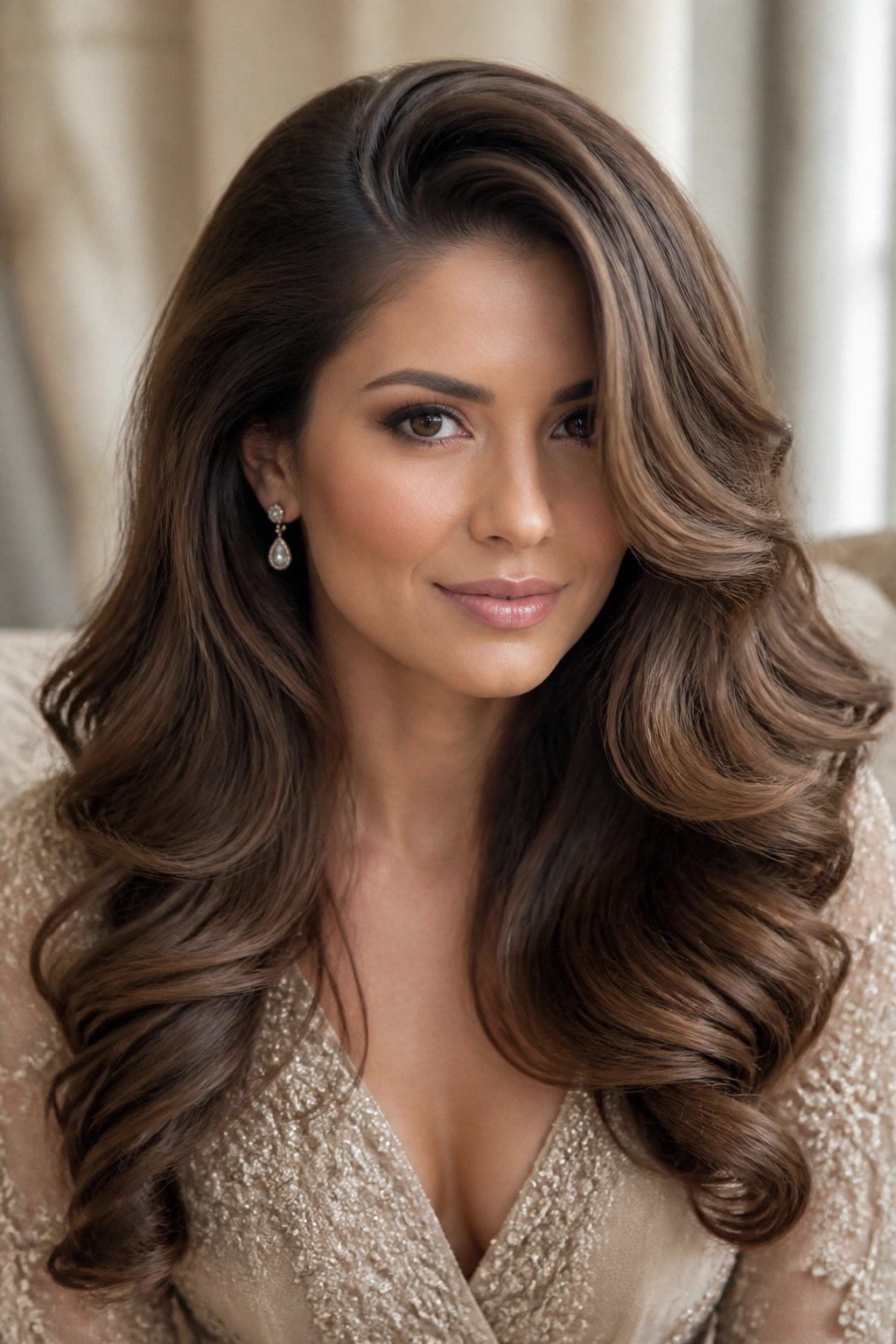
Long hair does not have to go up to look dressed up. A full blowout with a deep side part can be one of the strongest formal looks in the room, especially when the dress already has enough shape and you want the hair to move.
How to Keep It from Falling Flat
Start with root lift while drying. A round brush, a blow-dryer nozzle, and a large roller or clip at the crown can make the top section hold better. Work the ends around a 2-inch brush or a large-barrel iron if you want a softer curve. Let the hair cool before you touch it. That part matters.
The side part should be dramatic enough to create a sweeping front, but not so deep that the style loses balance. Tuck one side behind the ear and let the other side fall forward a little. It gives the whole look a polished, expensive-feeling outline without making it stiff.
I like this when the outfit is already doing a lot. Sequins, satin, beads, high shine — a calm blowout lets the clothes speak.
11. Rope-Braided Bun
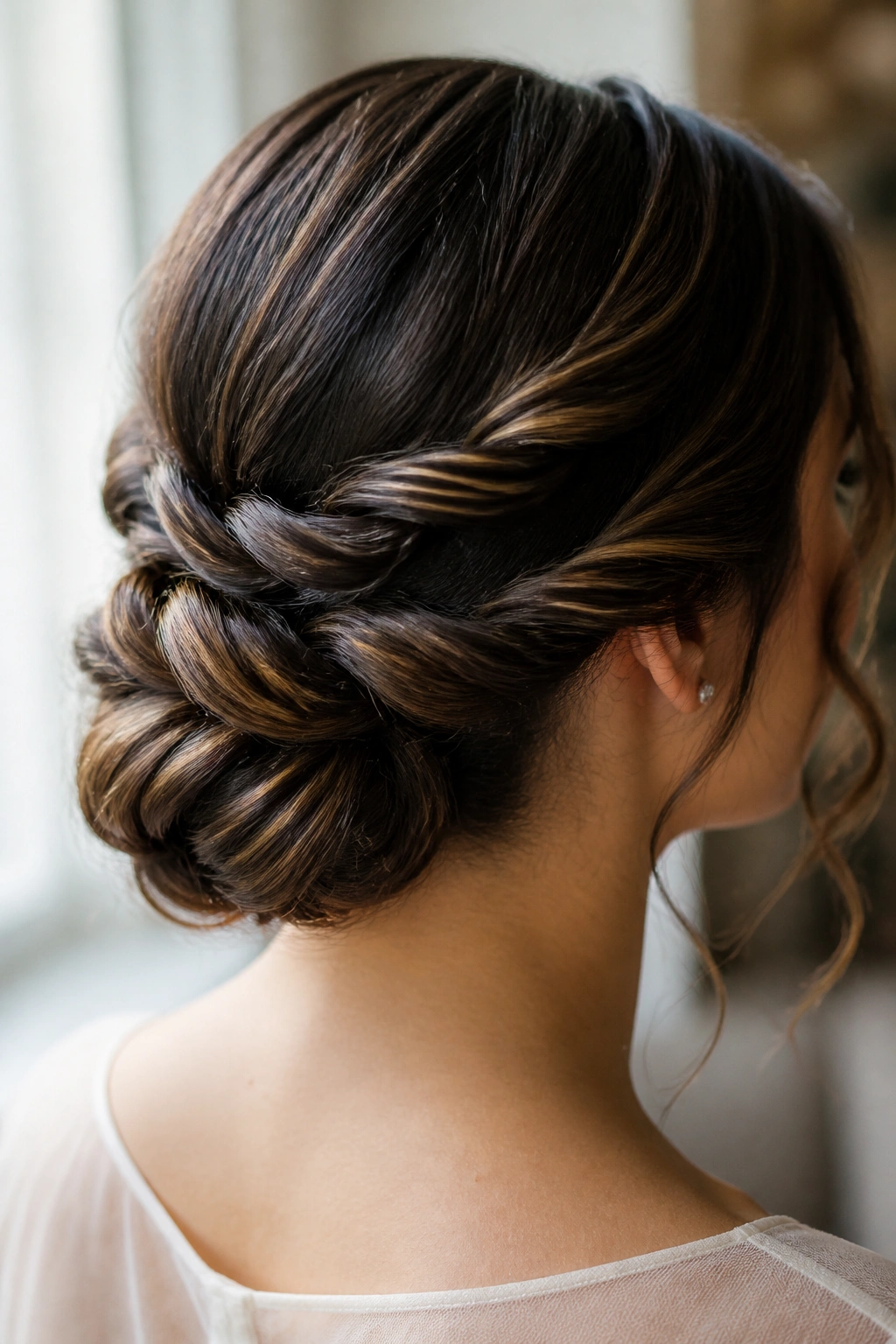
Rope braids are underrated. They take less time than a full braid, but they still give the hair that intricate twist people associate with formal styling.
The process is simple enough: split the tail into two sections, twist each one in the same direction, then wrap them around each other in the opposite direction. That opposing motion keeps the rope braid from unraveling. Once you have the braid, coil it into a bun and secure it with pins at the base and through the center.
This works especially well with thick long hair because the rope has enough body to look intentional. If the hair is fine, a little backcombing at the crown gives the style better grip. The bun can sit low and neat, or slightly off-center for a softer feel.
A rope-braided bun is a good choice when you want texture without a lot of visual clutter. It looks intricate from a distance and even better up close.
12. Waterfall Braid Half-Up
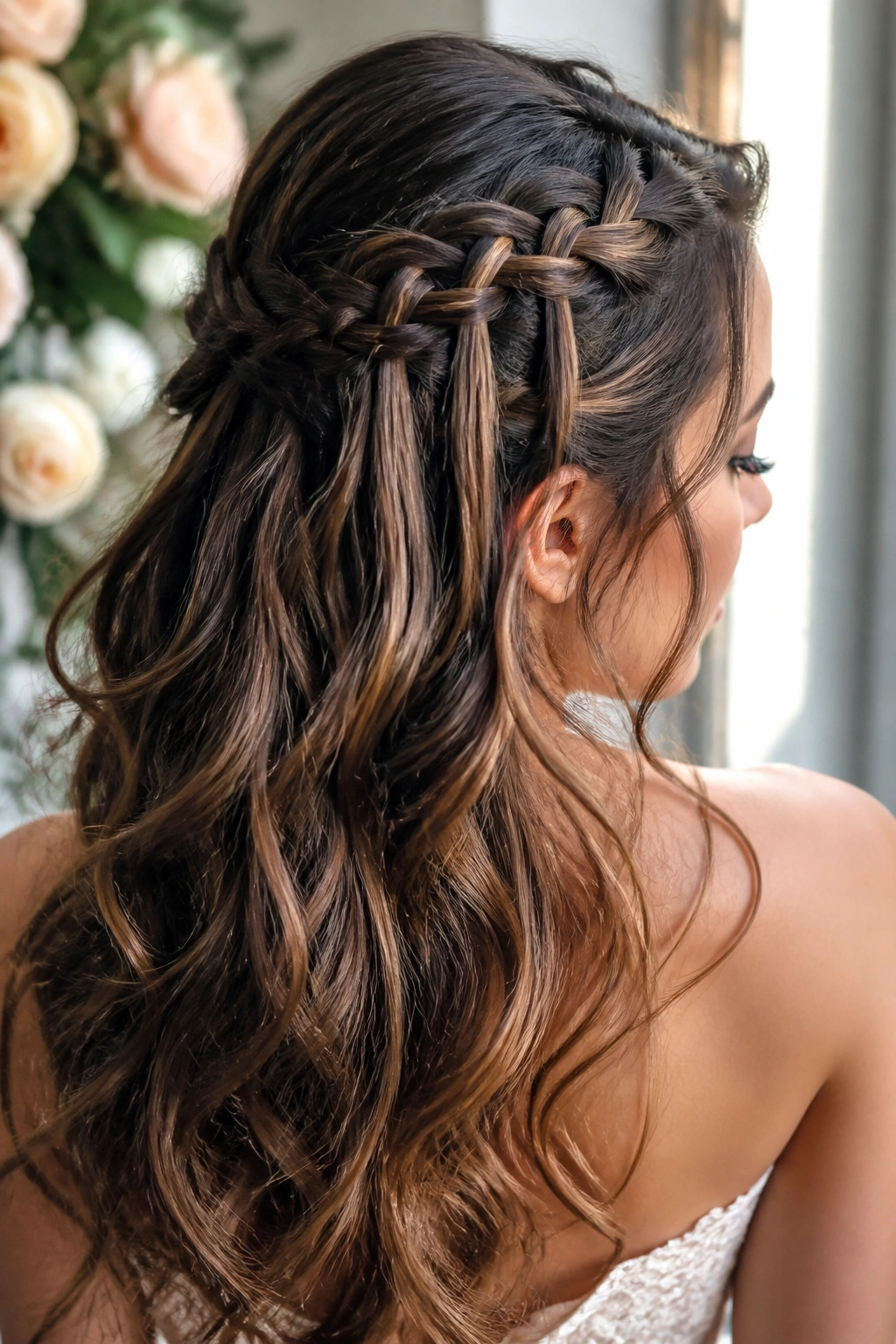
Waterfall braids are the kind of detail people notice from the side and then ask about later. The braid drops sections through its pattern, which creates that flowing effect while leaving most of the length loose.
Placement Matters
Start the braid just above the temple or slightly behind it, then keep it close to the hairline so the design stays visible. The loose lengths below should be curled or waved so the braid has something soft to sit on. If the hair is very slippery, a bit of dry texture spray at the roots helps the braid hold its place.
- Keep the braid shallow, not bulky.
- Use small sections for a cleaner pattern.
- Pin the braid end under the top layer so it disappears.
- Curl the lower hair away from the face for balance.
This style is lovely with lace, floral details, or anything that leans romantic without turning sugary. It also flatters layered hair, which can make a waterfall braid look even more fluid.
I prefer it when the hair is long enough to show the drop in the braid. Shorter lengths can feel cramped. Long hair lets it breathe.
13. Pearl-Pinned Low Knot
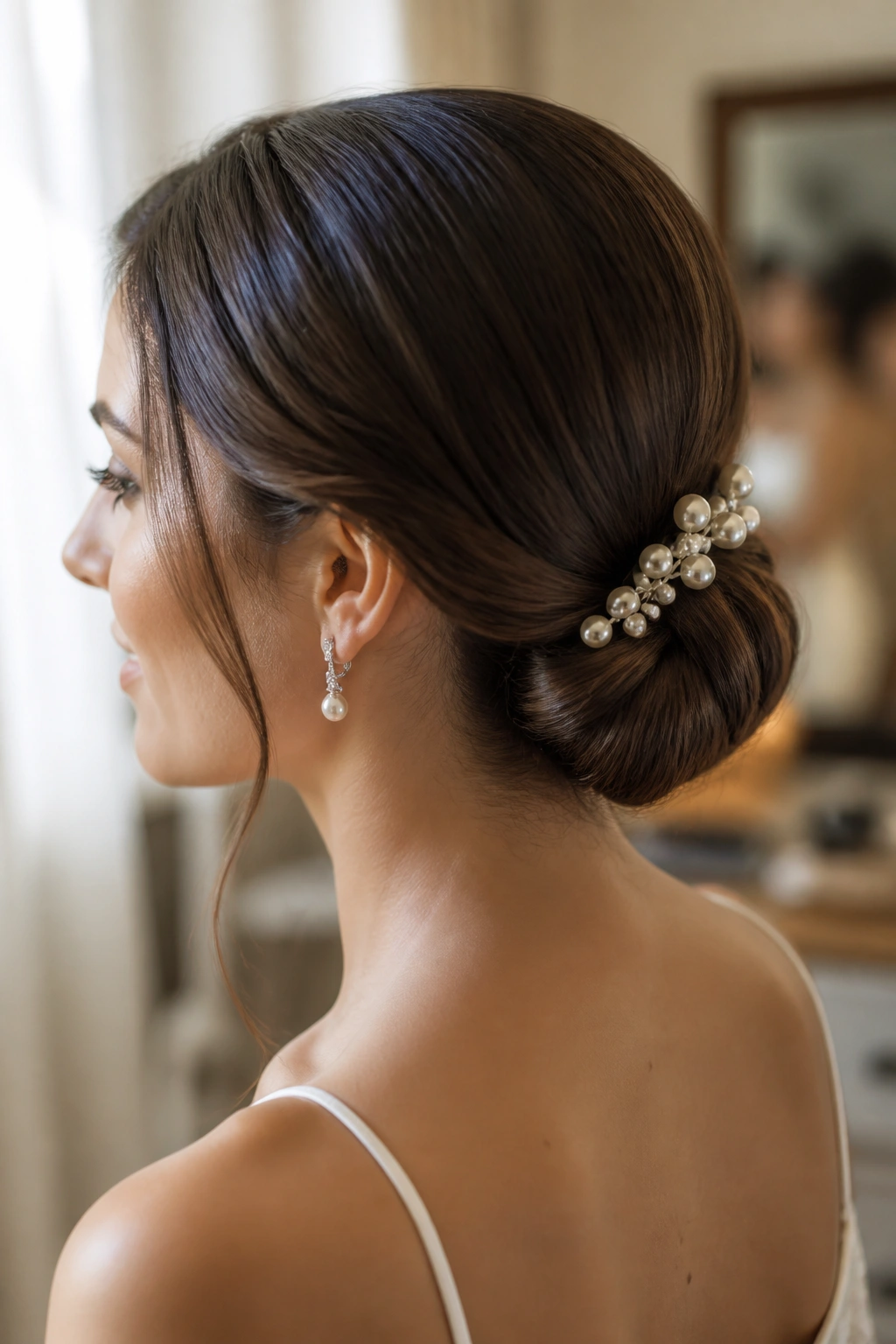
Pearl pins can do a lot of heavy lifting when the base style is simple. A low knot gives you the quiet structure, and the pearls add the formal note without turning the hair into a display case.
Keep the knot smooth and compact at the nape, then place the pins off-center or in a small cluster on one side. Three to five pins is usually enough. More than that can start to look crowded, especially if the dress already has beadwork. The best version of this style feels edited.
The shape itself is easy to wear. It sits low, stays close to the head, and keeps the neckline clean. Because the decoration does the work, the knot does not need to be huge. In fact, a smaller knot often looks better because the pins can stand out.
This is one of the cleanest ways to wear long hair for formal events if you want ornament without fuss. Pearls, mother-of-pearl combs, or tiny crystal pins all do the same job. Pick one and stop there.
14. Sculpted Gibson Tuck
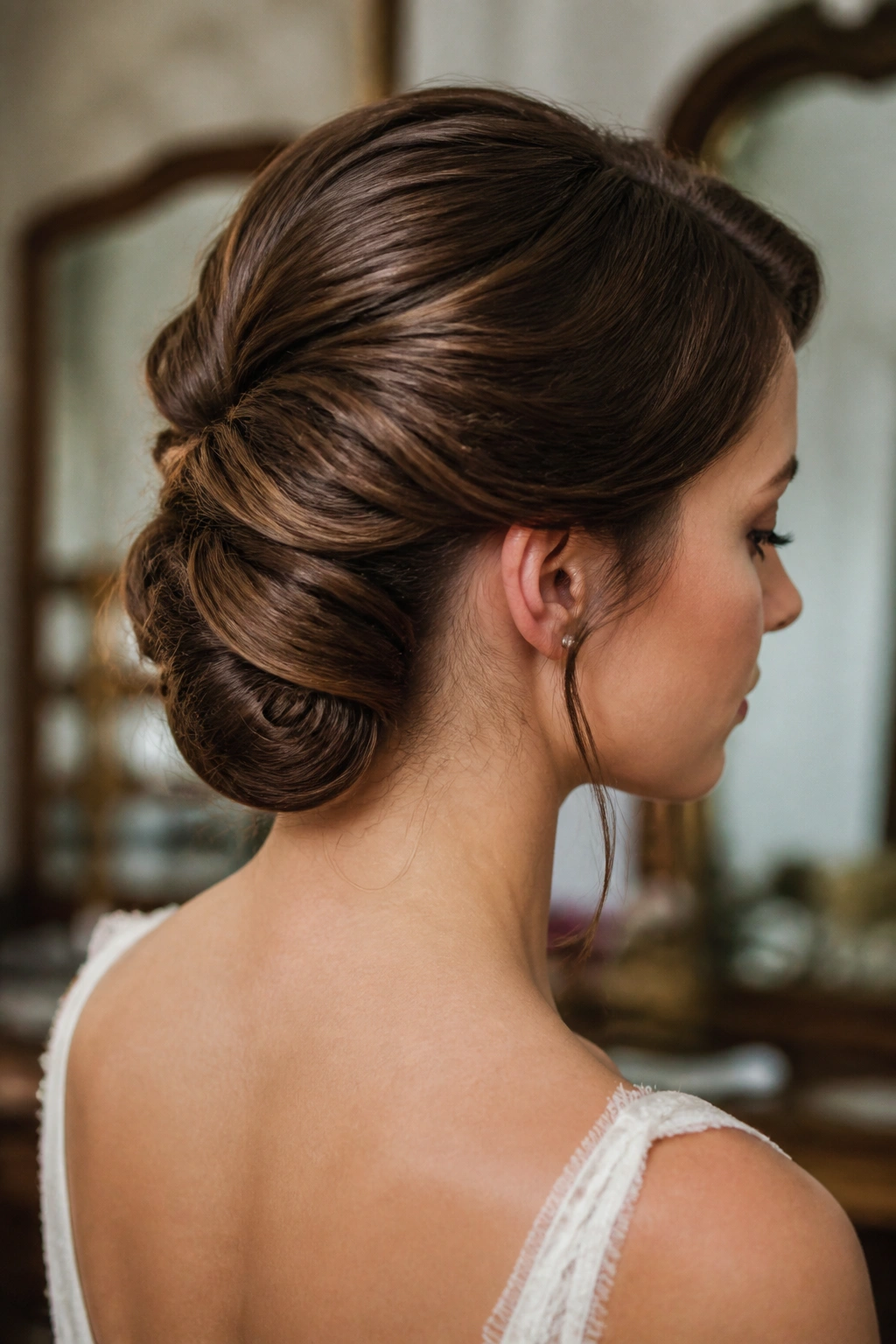
Want something vintage-looking without rolling all your hair into a strict shell? A Gibson tuck gives you that old-school shape with a softer edge. It rolls the length upward and inward at the nape, creating a tucked pocket that feels tidy and elegant.
The Trick
The style works best when the hair has a little bend already. Soft waves help the tuck hold its shape, while pin-straight hair can slip if it is too smooth. Gather the hair low, fold the length upward, and pin the rolled section underneath until the top lies flat and smooth.
The finish should look sculpted, not stuffed. That is the whole difference between a nice tuck and one that feels too rigid. I like this for tea-length dresses, classic silhouettes, and events that lean more refined than flashy. It has a quiet sort of confidence.
A few wispy pieces around the ears can soften the line if your face is very angular. Keep them controlled. You want gentle, not undone.
15. Soft Barrel Curls with Hidden Pinback
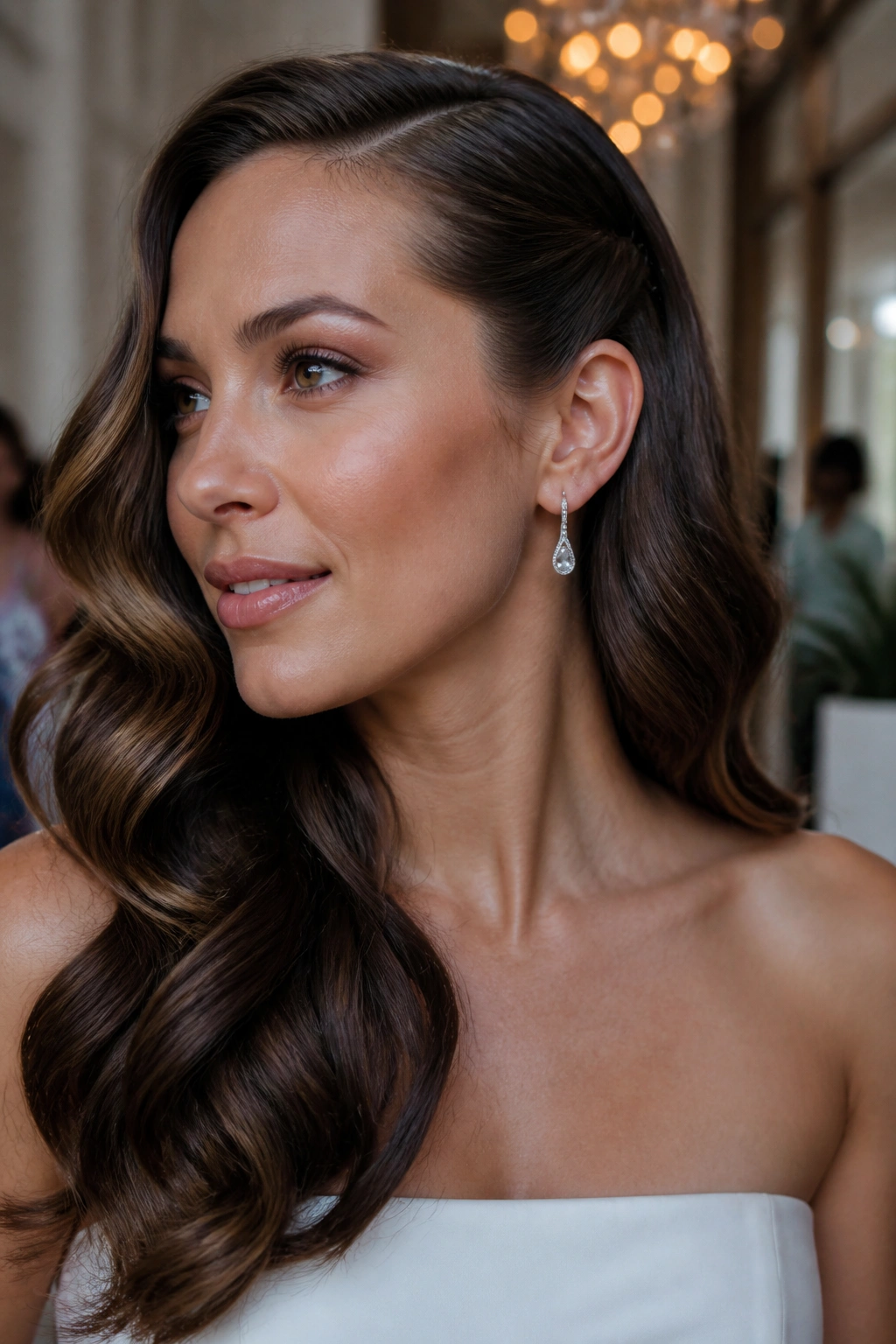
Barrel curls give you that glossy, structured wave that still moves when you turn your head. On long hair, they look especially rich because the curl pattern has room to stretch down the length instead of bunching up near the face.
Set the curls with a 1.5-inch iron or hot rollers, let them cool completely, and then brush just enough to loosen the spiral into a smooth curve. One side can be tucked back with hidden pins behind the ear, which opens the face and shows off earrings without committing to a full updo.
This style works well with one-shoulder gowns, strapless dresses, or anything that needs the hair to feel glamorous but not locked down. The hidden pinback keeps the lines clean. The rest of the hair stays loose and glossy, which is a nice balance when you want movement.
I prefer this over beach waves for formal dressing. Beach waves can look casual fast. Barrel curls keep their shape.
16. Braided Low Bun
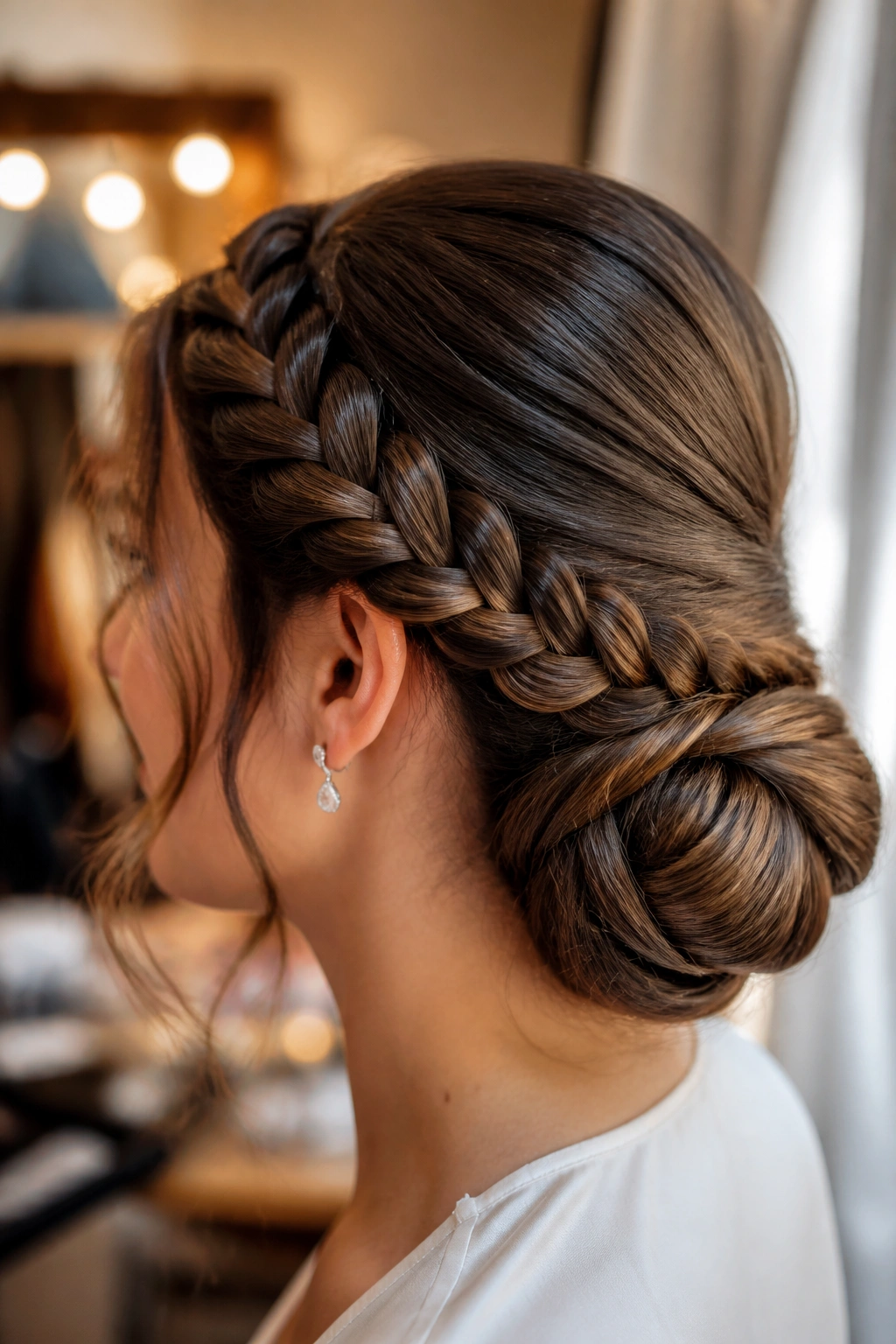
A braided low bun is my answer when plain buns feel too plain. The braid adds texture at the base, and the bun keeps the whole shape neat enough for formal settings.
Start with either one braid down the back or two smaller braids joined into a bun. Wrap the braid into a coil at the nape and pin through the thickest points, not just the outer loops. That extra anchoring point matters if the hair is long and heavy, because the bun can sag if it is only pinned at the edge.
This style is especially good for long events. It stays put, hides shorter layers well, and works with veils or decorative combs. You can wear it tight for a crisp finish or loosen a few pieces around the bun for a softer look.
- Good with thick hair
- Fine for humid settings
- Helpful when you need a veil base
- Easy to decorate with pins or a comb
It is one of those styles that does not try too hard, which is exactly why it works.
17. Sleek High Top Knot
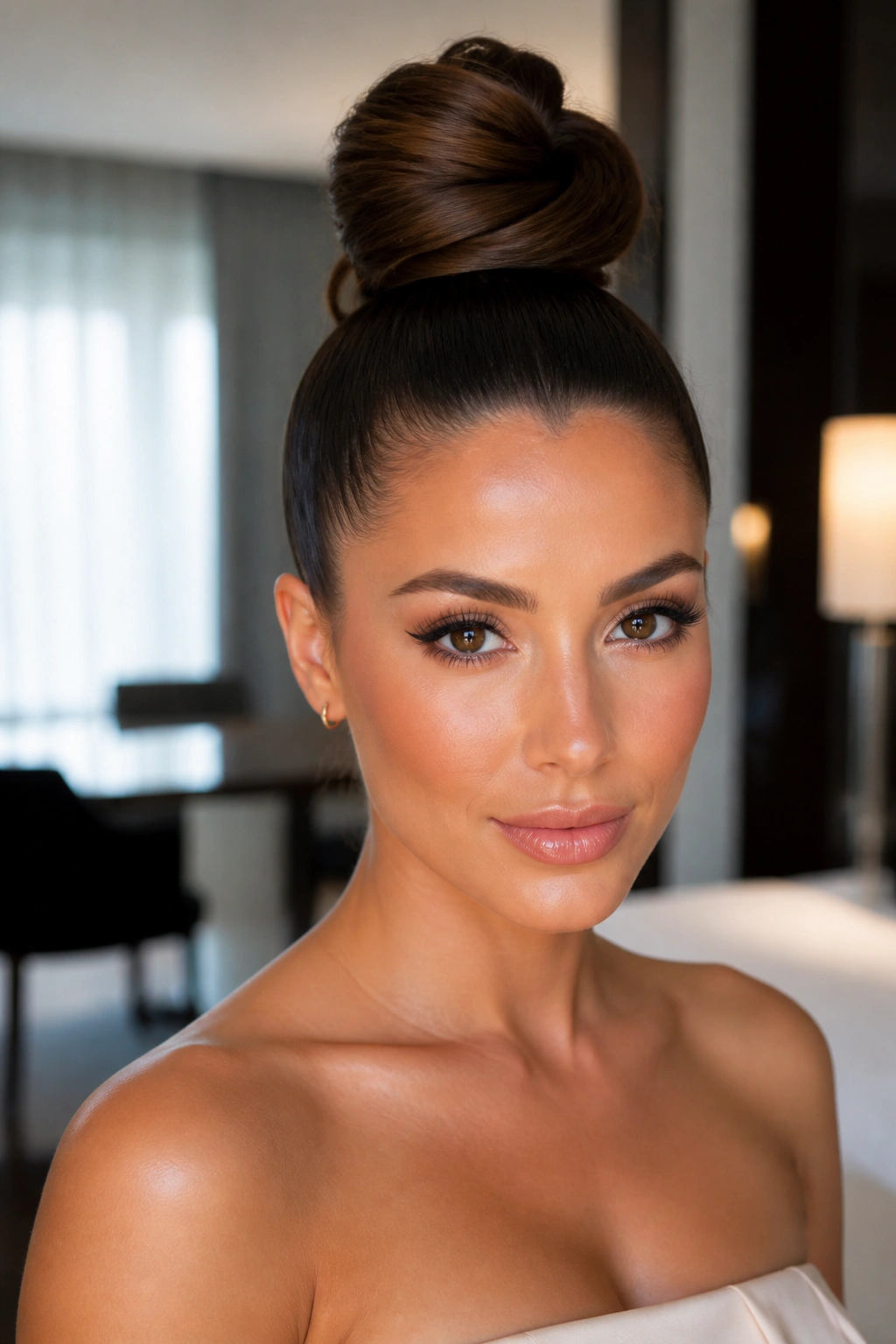
A high top knot changes the whole line of your outfit. It lifts the eye, shows the shoulders, and gives long hair a sharp, clean shape that feels especially good with halter necks or dramatic earrings.
The hair should be brushed up tightly and secured at the crown with a strong elastic or bun shaper. If the hair is very long, wrap it around the base in sections so the bun does not turn into a lumpy ball. The surface needs to stay smooth, but the bun itself can have a little rounded fullness.
This is not the softest formal style, and that is part of the appeal. It looks intentional. It keeps the face clear for makeup and accessories, and it photographs well from almost every angle because the shape is simple and strong.
If you want a softer version, leave one thin strand at the hairline or soften the front with a bit of lift. If you want the sharper version, polish the sides back until they look nearly glassy.
18. Side Chignon with Soft Tendrils
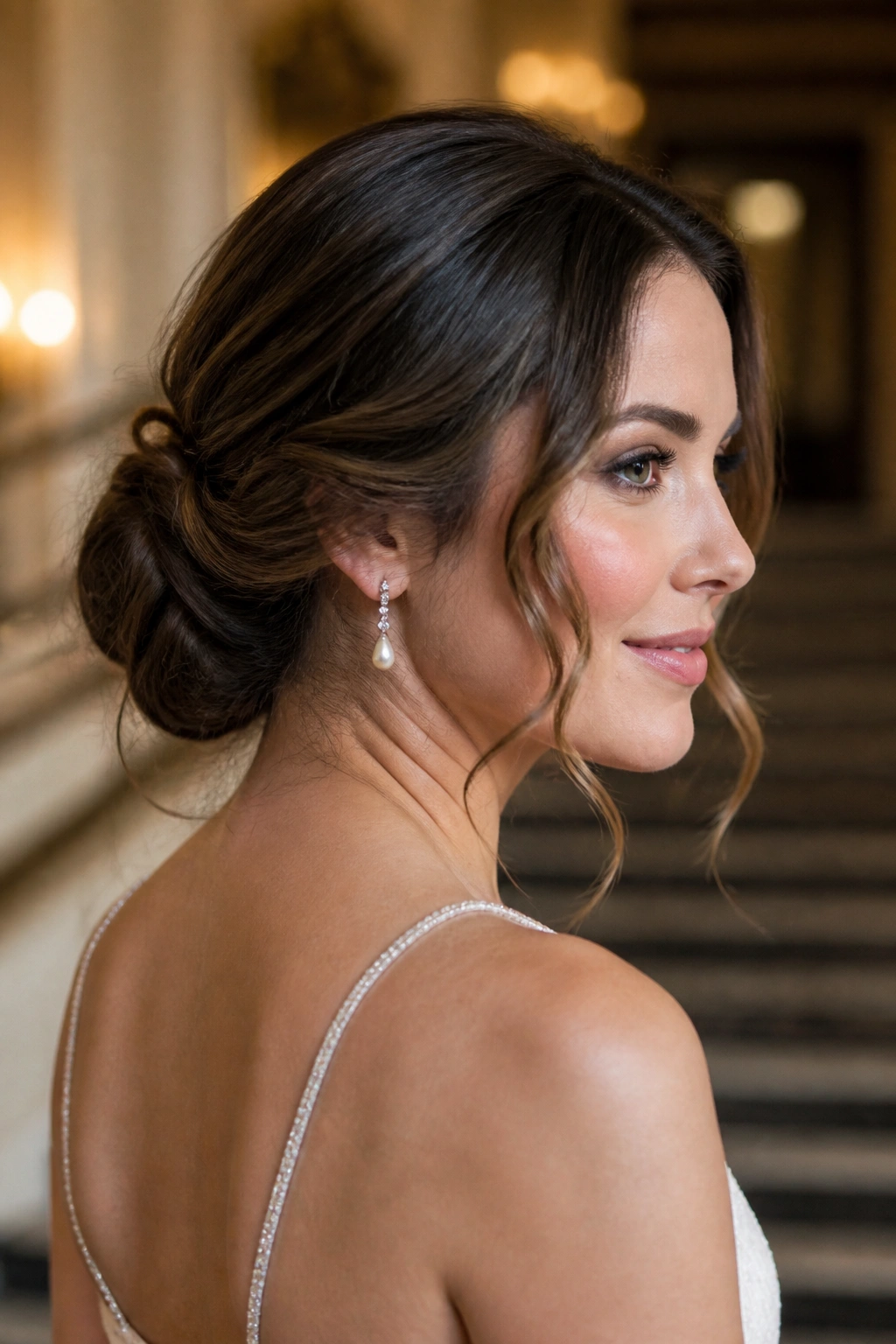
A side chignon loosens the mood without falling apart. By shifting the bun or knot slightly off-center, the style feels less severe than a straight-back version and a little more flattering for dresses with movement or drape.
The tendrils make the difference. A few slender pieces at the temples or along the cheekbones bring softness to the face, but they should still be shaped with a curling iron so they do not look accidental. The chignon itself can sit just below one ear or at the base of the skull on one side, depending on the dress.
This is a nice match for asymmetrical necklines and gowns with one strong shoulder detail. The side placement lets the outfit keep its own shape. The hair does not compete.
A small detail I like: keep the bun smooth, then let only the loose pieces carry movement. That contrast gives the style a cleaner line and keeps it from turning messy too soon.
19. Teased Crown Half-Up Twist
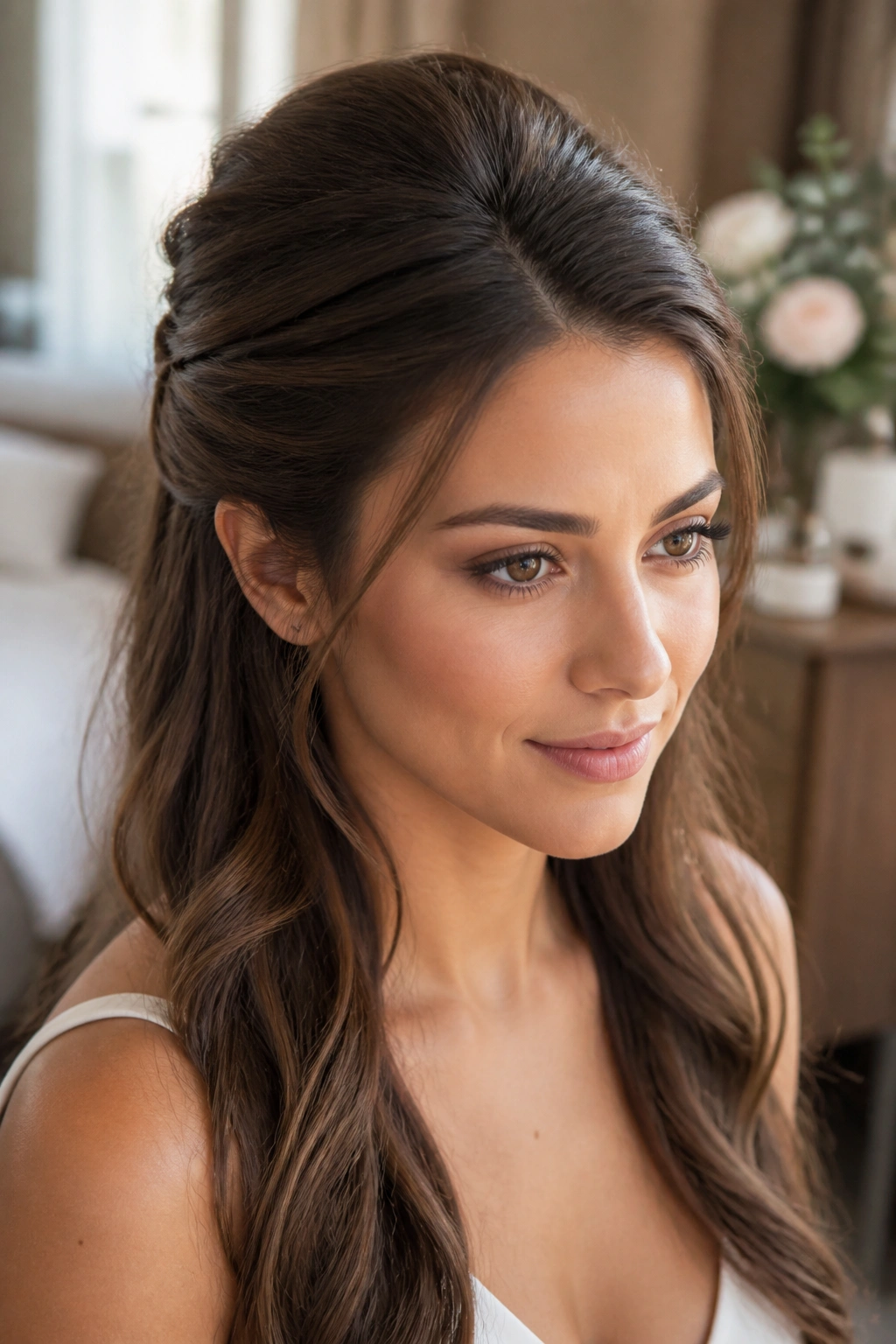
If your hair goes flat at the crown, a little teasing solves half the problem. A teased crown half-up twist gives height where you want it and leaves the length down for softness.
Keep the Teasing Tidy
Backcomb only the inner layer at the crown, then smooth the top layer over it so the lift does not show through. Twist the top sections back and secure them with pins hidden under the twist. The goal is height, not a helmet.
- Use a fine comb on the inner crown only.
- Smooth the surface with the flat of your hand.
- Pin the twist slightly higher than the ears.
- Set the lifted area with spray from underneath.
This style is a smart choice for fine hair because the crown needs help reading well in photos. It also works when you want the ends down but the top section to feel dressed up. A little volume at the front can change the whole face shape.
It is one of those looks that looks easy when it is done well. It is not always easy to build. The result is worth the minute or two of extra work.
20. Glossy Wrapped Low Ponytail
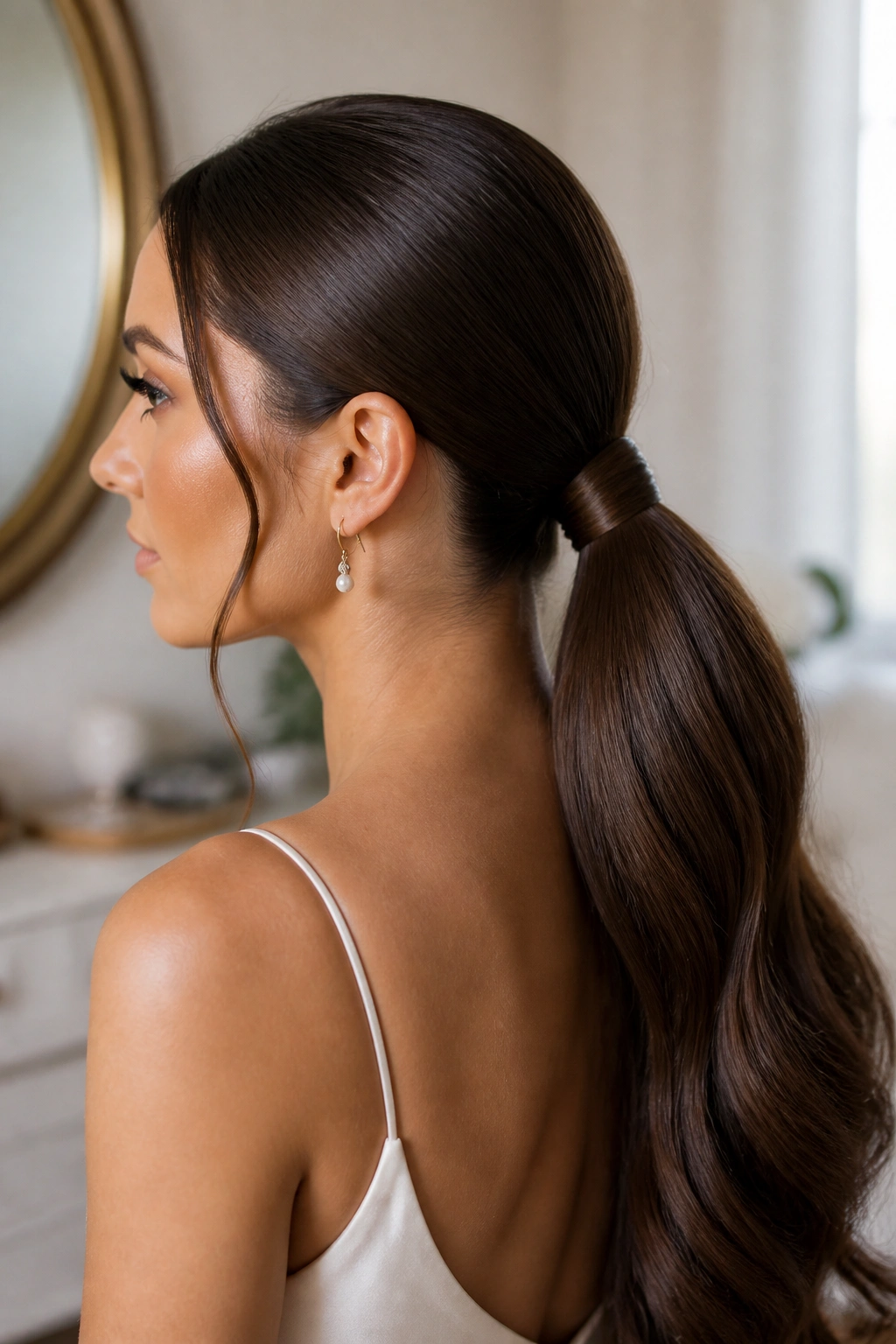
A wrapped low ponytail is the cleanest way to make long hair look finished without making it fussy. The crown stays smooth, the base is hidden with a wrap of hair, and the tail hangs in a controlled line that can be straight, waved, or softly curled at the ends.
This style is the one I reach for when the dress is doing a lot of work and the hair should stay quiet. It suits modern gowns, tailored suits, and clean satin fabrics especially well. A center part makes it feel sharper. A slight off-center part softens it. Either way, the wrapped base keeps the look from drifting into ordinary ponytail territory.
A few things make it land: the elastic should sit low and snug, the wrapped piece should be pinned underneath the ponytail rather than just tucked, and the tail itself should have some shine. A light mist of gloss spray on the lengths is enough. Too much product turns the whole thing heavy.
If you want one formal hairstyle that can move from ceremony to dinner to dancing without falling apart, this is an easy pick. It is neat, practical, and still has enough shape to feel special.
