



Warm blonde can fight cool skin fast. When the base turns too yellow, pink undertones on the face can look sharper, and the whole color can start to feel off in a way you can’t quite name at first. The blondes that flatter cool skin usually sit on the ash, pearl, silver, or soft beige side of the wheel, which means they read clean instead of brassy.
When I think about blonde hair color ideas for cool skin tones, I’m not thinking about one shade that magically works for everyone. Cool skin can be porcelain, rosy, fair with blue undertones, or deeper skin with a cool cast. The trick is matching the blonde to the amount of contrast you want, because a shaved platinum pixie and a soft beige lob do not do the same job.
Maintenance matters, too. Full platinum is a different animal from a rooted balayage, and a glossy pearl blonde behaves differently from a smoky mushroom shade. Some shades need toner every few weeks; others can grow out for months without looking sloppy.
The shades below lean into the ones I trust on cool complexions: icy, clean, soft, and a little moody where needed. Some are loud. Some are barely there. That mix is the whole point.
1. Icy Platinum Blonde
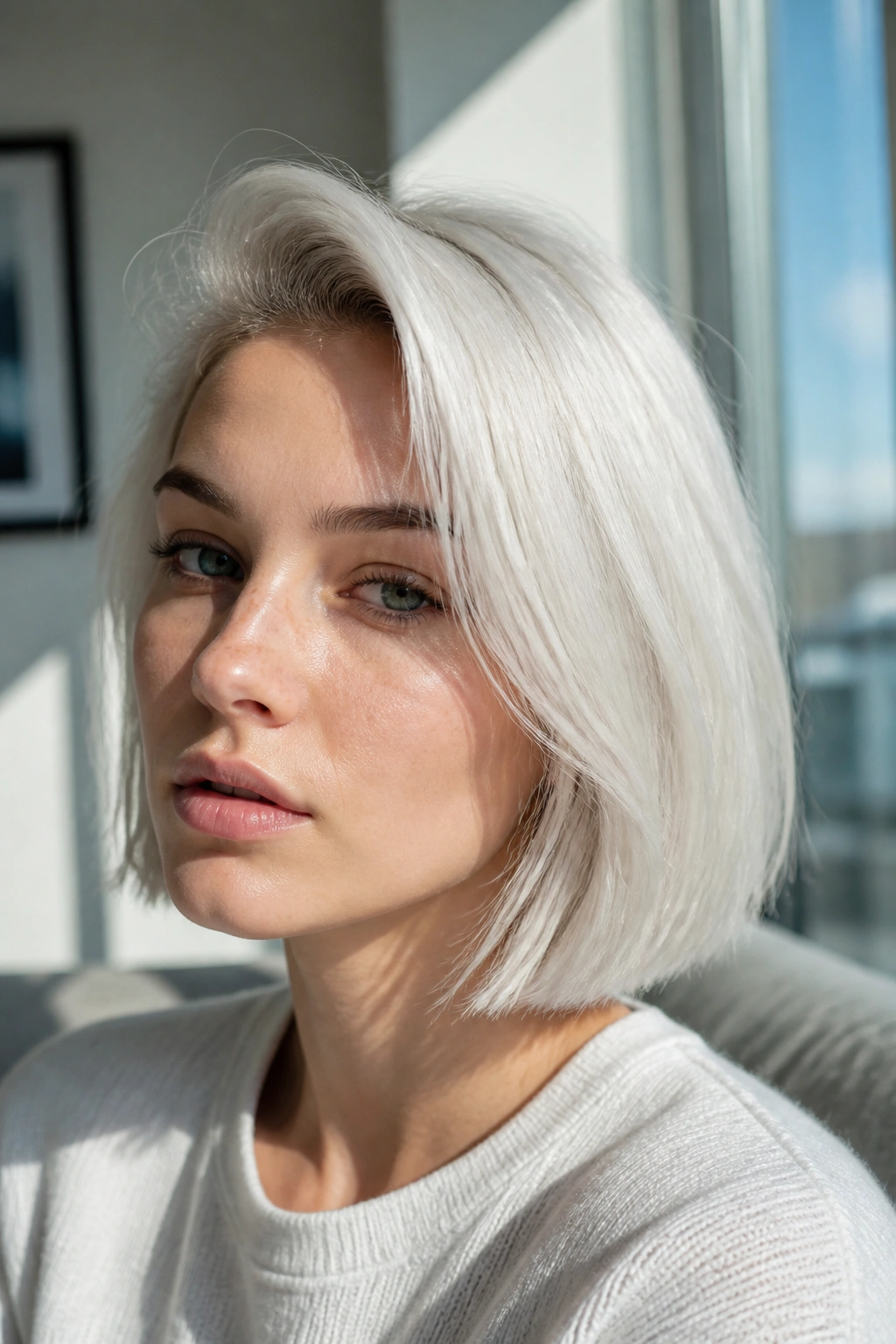
Icy platinum is the shade people picture when they want blonde to look crisp, not sunny. On cool skin, that white-blonde finish can make the complexion look clearer and more alive, especially if your natural coloring has blue or pink undertones.
Why It Flatters Cool Skin
The trick is the lack of gold. A true icy platinum sits at level 10 with a violet or blue-based toner, so the hair doesn’t throw warmth back at the face. That gives your skin room to look fresh instead of flushed.
- Best on hair that can handle a full lightening session.
- Looks sharp with blunt bobs, pixies, and shoulder-length cuts.
- Usually needs toner refreshes every 4 to 6 weeks.
- A tiny shadow root can soften regrowth without muddying the shade.
Ask for a clean, cool finish rather than a “beachy” blonde. Beachy usually means warm, and warm is the wrong lane here.
2. Pearl Blonde
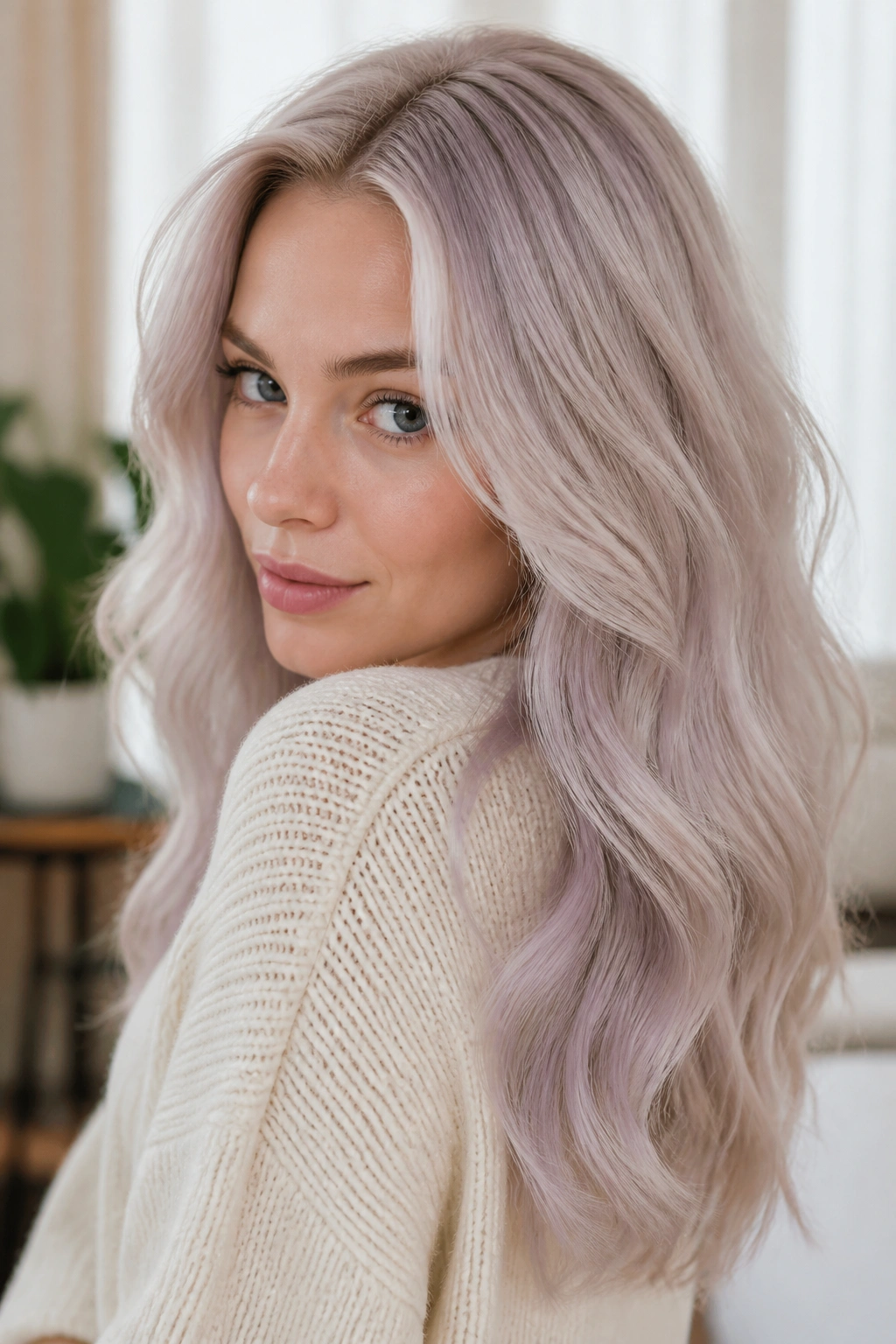
Pearl blonde is what I suggest when platinum feels too severe but golden blonde feels wrong. It has that soft, opalescent look—cool, pale, and a little luminous without shouting for attention.
Why does it work so well? Pearl tones bounce between silver, violet, and beige, which keeps the color from looking flat under indoor light. On cool skin, that softness is a gift. The face stays the focus, not the hair.
Use it on fine hair if you want brightness without a hard line. A translucent gloss over very light blonde gives pearl its milky finish, and it looks especially nice around the face and on layered ends.
3. Ash Beige Blonde
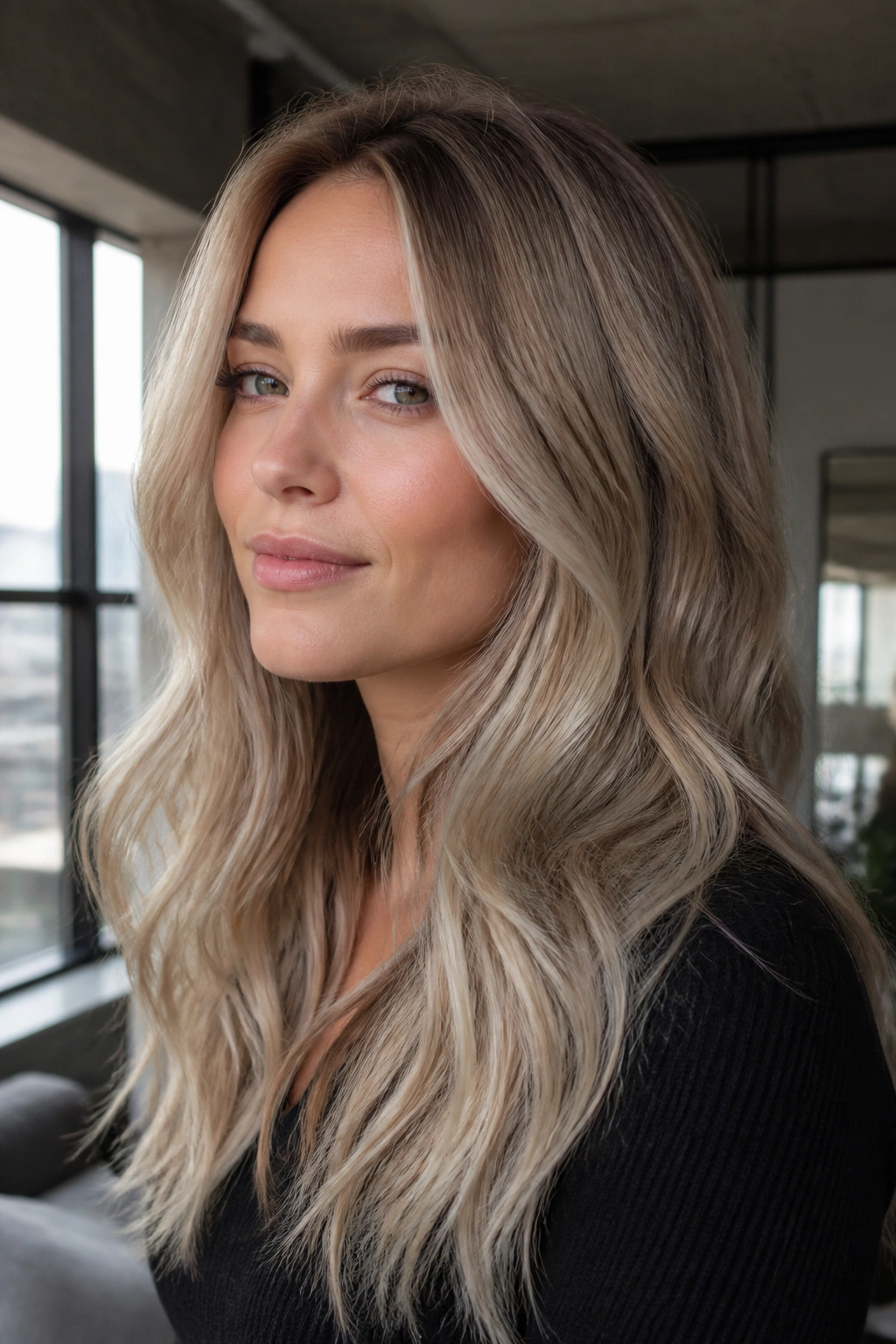
Can beige be cool? Yes, if it leans smoky instead of sandy. Ash beige blonde keeps the softness of beige but trims away the yellow, which is why it lands so well on cool undertones.
How to Wear It
Ask for a level 8 or 9 blonde with a cool beige toner, not a honey glaze. That small wording change matters more than people think. If your colorist lifts too warm and tries to fix it with a dark gloss, you end up with a flat, dull result instead of a polished one.
Ash beige works beautifully on long layers, soft waves, and hair that needs dimension. It’s one of those shades that looks expensive without looking fussy.
4. Silver Champagne Blonde
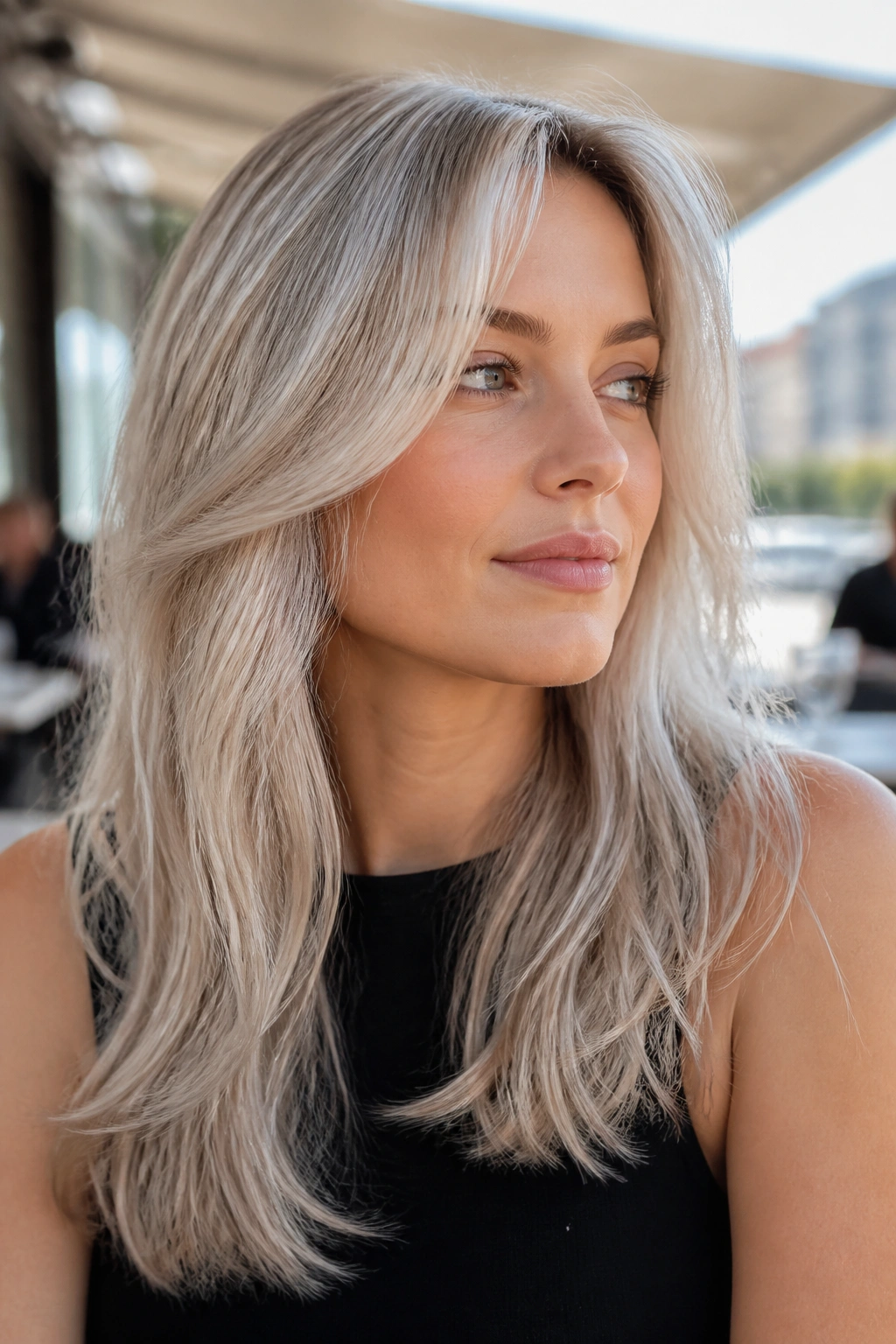
Picture champagne with the warmth removed and a silver sheen poured over the top. That’s silver champagne blonde, and it’s a nicer option than plain platinum if you want movement and shine without a hard white block of color.
On cool skin, the silver keeps things clean while the tiny bit of beige stops the shade from turning icy in a harsh way. It’s a good match for layered cuts because the different tones catch light at different spots, especially around the crown and ends.
- Works well on medium-light cool skin.
- Looks good with soft curls or blowouts.
- Needs glossing more than aggressive toning.
- Gives more dimension than solid platinum.
A lot of people ask for champagne and accidentally get warmth. Don’t let that happen here.
5. Scandinavian White Blonde
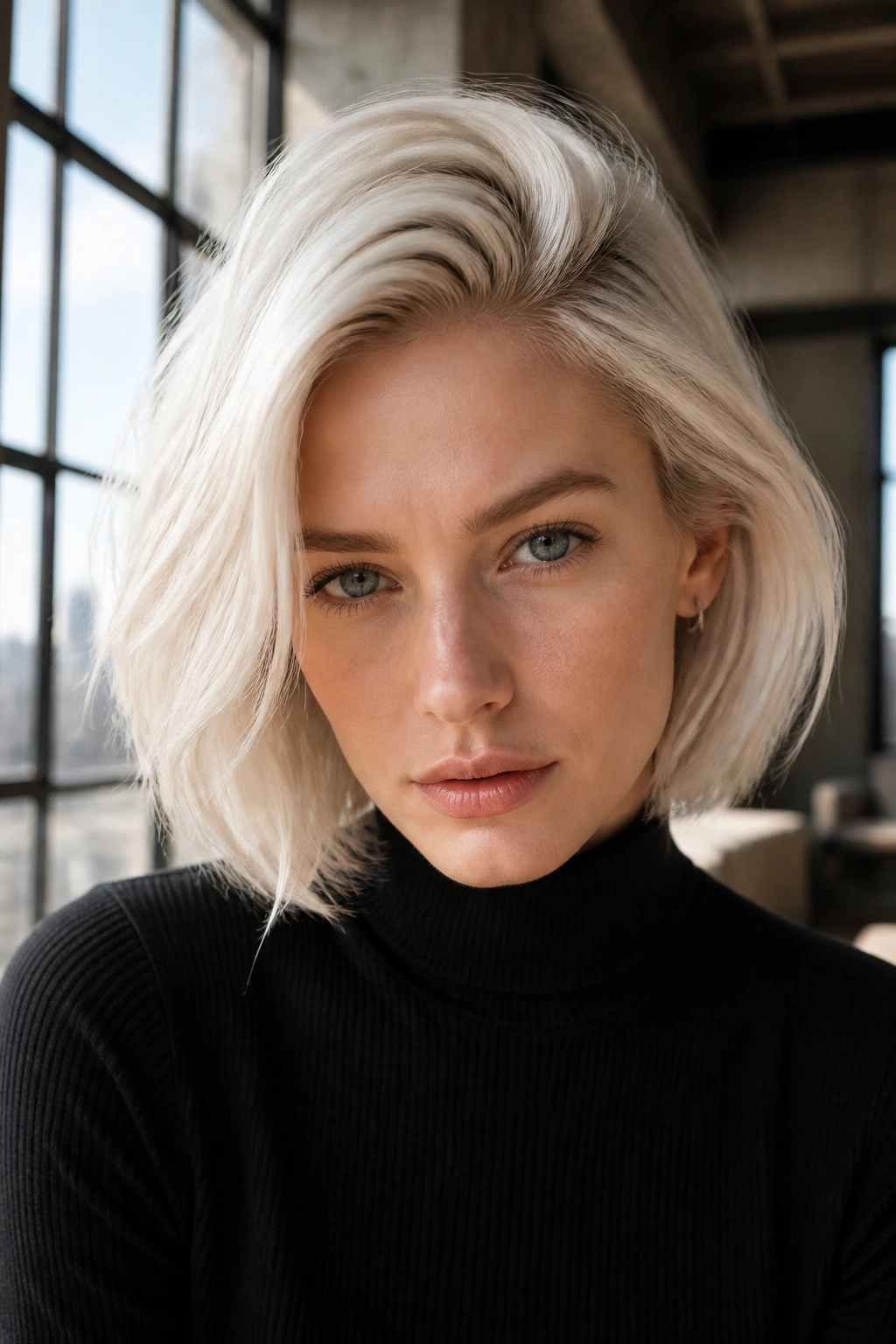
Scandinavian white blonde is almost stark in the best possible way. It is bright, pale, and stripped of most warmth, which makes it gorgeous on cool skin that can handle high contrast.
It does ask more from the hair. You need healthy ends, careful lifting, and patience with toner because every tiny bit of yellow shows up fast. That’s the tradeoff. But when it’s done well, the result looks clean, graphic, and a little editorial.
The cut matters here. Shorter shapes, strong lines, and neat layers keep the color from swallowing the face. On very long hair, it can read colder than you meant unless the styling has some softness.
6. Mushroom Blonde
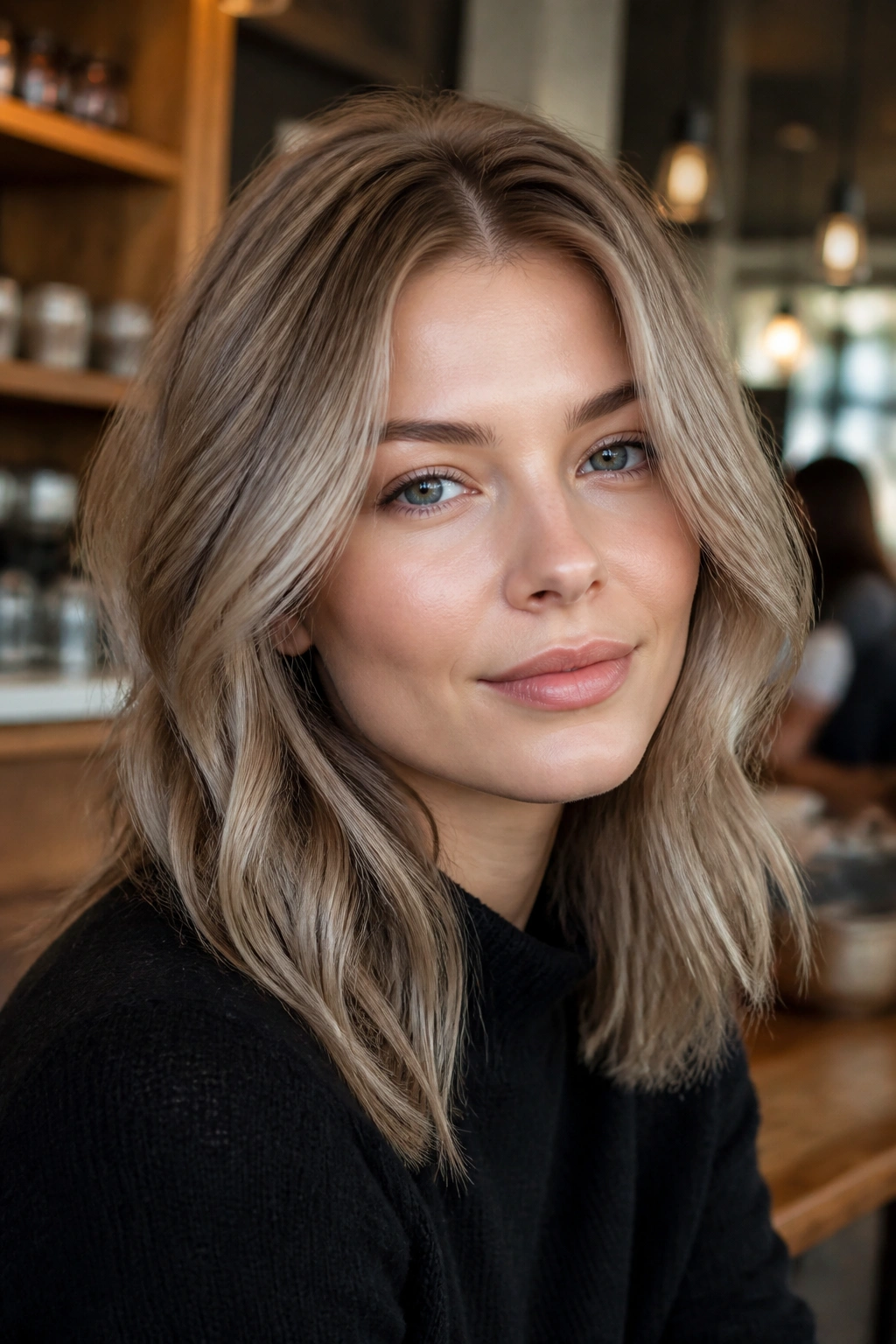
If ash brown and blonde had a smart, understated cousin, it would be mushroom blonde. It sits in that cool taupe zone where the color feels grounded instead of bright, and that makes it a nice choice for cool skin that doesn’t want full-on platinum.
The best part is the grow-out. Mushroom blonde usually starts with a deeper root and lighter smoky ribbons through the mid-lengths and ends, so the whole thing ages quietly. You’re not fighting a harsh line every few weeks.
This shade works especially well on collarbone cuts and loose waves. It gives you lightness without the same upkeep as a pale blonde, and that alone makes it worth a look.
7. Cool Vanilla Blonde
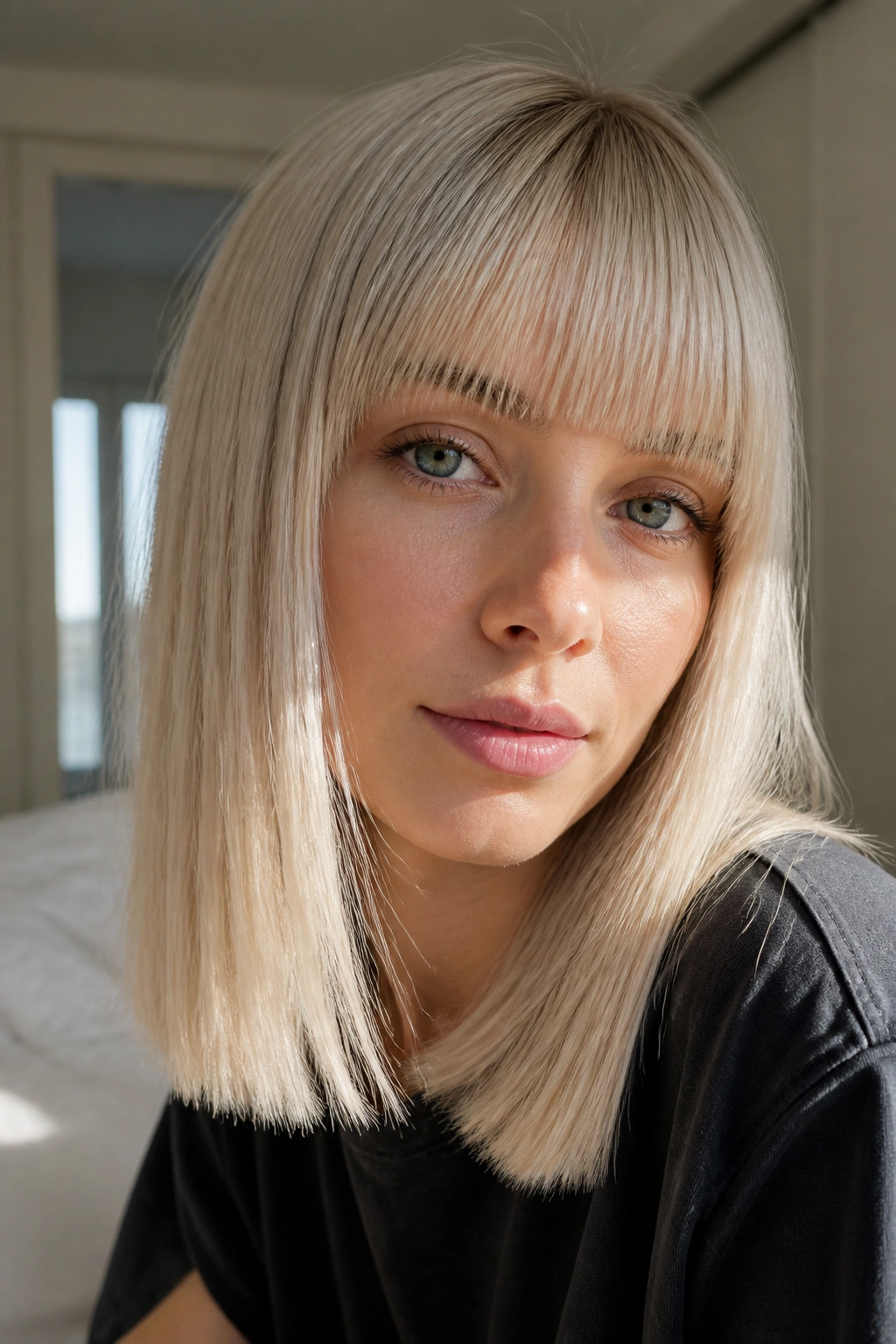
Cool vanilla blonde sounds soft, and that’s exactly the point. It has the creamy feel of vanilla without the yellow note that pushes many blondes warm.
Why It Works on Cool Skin
The shade sits nicely between pearl and beige. It brightens the face, but not in a sharp, icy way, which is why I like it on people whose cool skin still wants a little softness. A blunt fringe or curtain bangs can help the color frame the face instead of floating around it.
- Best when the base is lifted to a pale level first.
- Looks smoother on straight or lightly waved hair.
- Pairs well with a clear gloss after toning.
- Needs careful shampoo choices so the tone stays clean.
Skip heavy purple shampoo every wash. It can turn the hair dull fast.
8. Frosted Beige Balayage
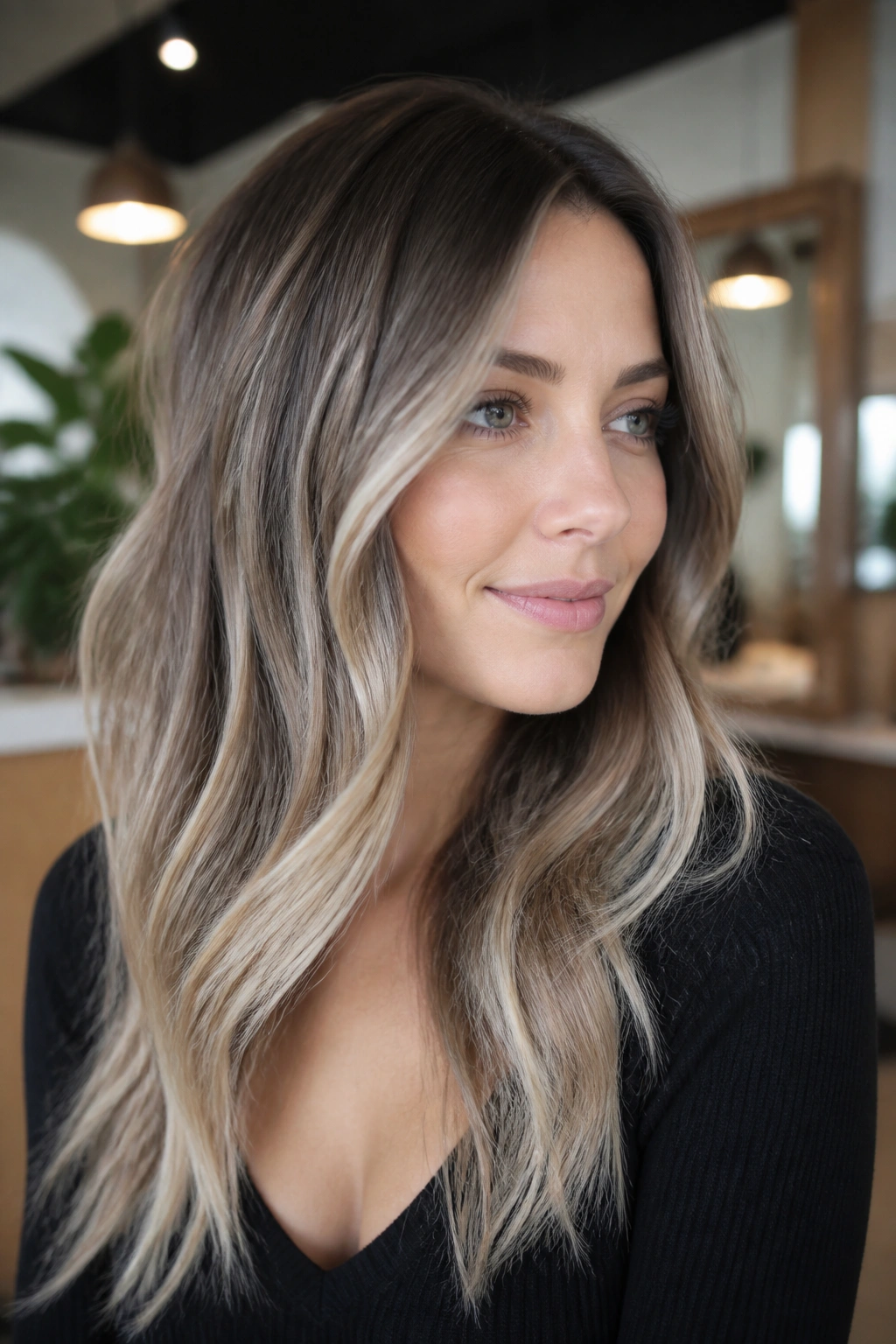
A cool balayage should never look striped. Frosted beige balayage keeps the hand-painted softness of balayage but swaps warm gold for a colder beige that sits better on pink or blue-toned skin.
The reason this shade works is placement. The lighter pieces usually start a little below the root, then get denser around the face and on the top layer. That gives movement without looking like somebody dragged a highlight cap through your hair in a hurry.
Use it if you want brightness with a softer grow-out. It’s especially good on brunettes who want to go lighter without losing the dimension that makes hair look full.
9. Smoky Sandy Blonde
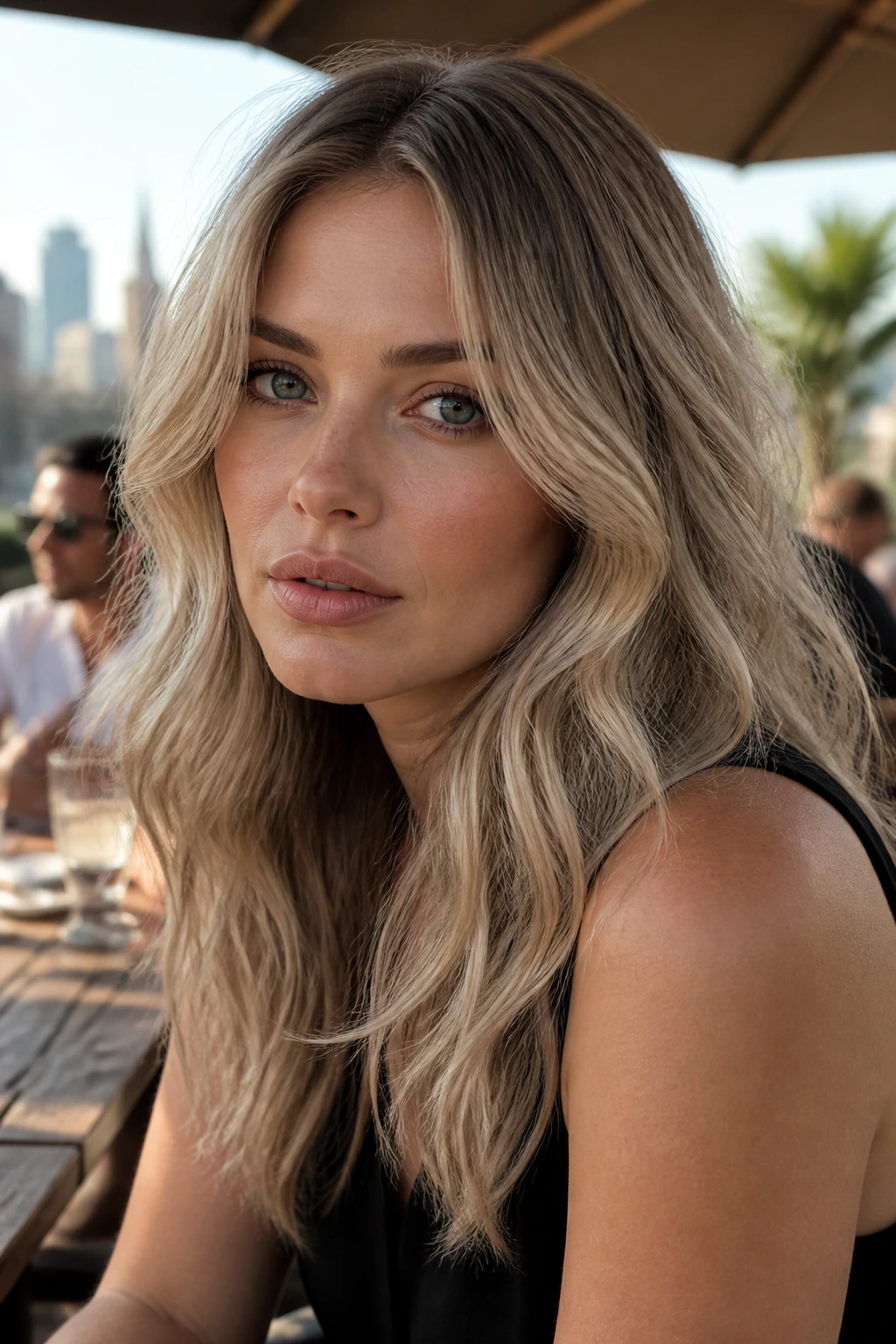
Can sandy blonde work on cool skin? Absolutely—if the sand looks dusty, not sunbaked. Smoky sandy blonde uses a muted, gray-leaning base so the shade feels quiet instead of warm and beachy.
That muted finish is useful on wavy hair, where every bend picks up a little different tone. You get movement, but not brass. And that matters more than people think, because a blonde that reads warm in the salon can look even warmer once the hair dries.
How to Wear It
Ask for a cool gloss after the highlights are in place. Then keep the root area a shade deeper so the ends don’t look washed out.
A touch of face-framing brightness helps, too. Not too much. Just enough.
10. Baby Blonde Highlights
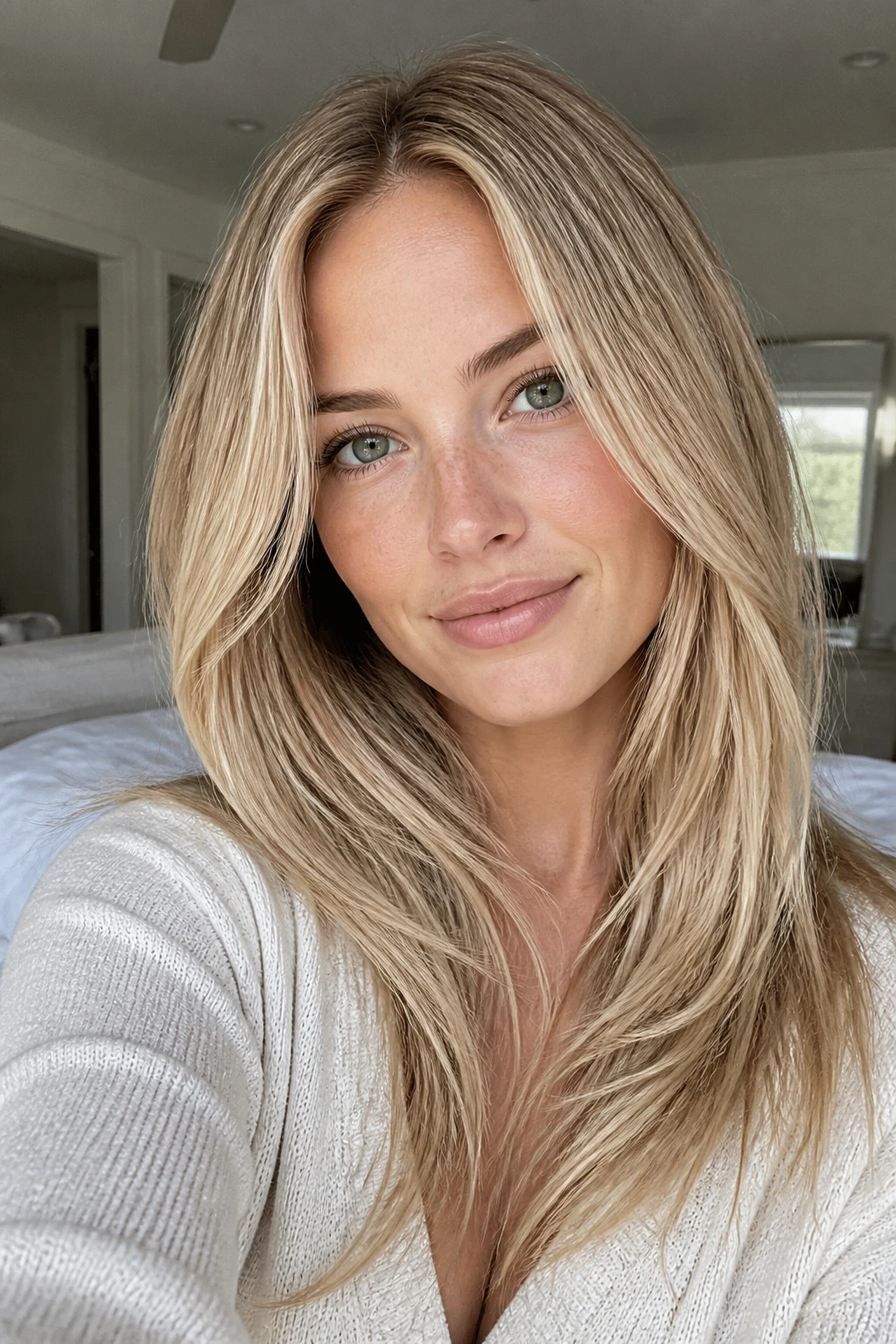
Baby blonde highlights are tiny, fine highlights that sit close together and lift the whole head without obvious streaks. On cool skin, they create a soft halo effect that feels lighter than a full-color change.
I like this option for people who want to stay close to their natural base but still want that pale, airy finish around the face. Think of it as summer brightness made cleaner. The trick is the size of the weave—very thin sections, usually around 1/16 to 1/8 inch, so the light pieces blend instead of shouting.
- Great for natural blondes and light brunettes.
- Looks softer than chunky foil highlights.
- Grows out more quietly than solid blonde.
- Keeps the hair looking full, not over-processed.
Small highlights. Big difference.
11. Platinum Money Piece
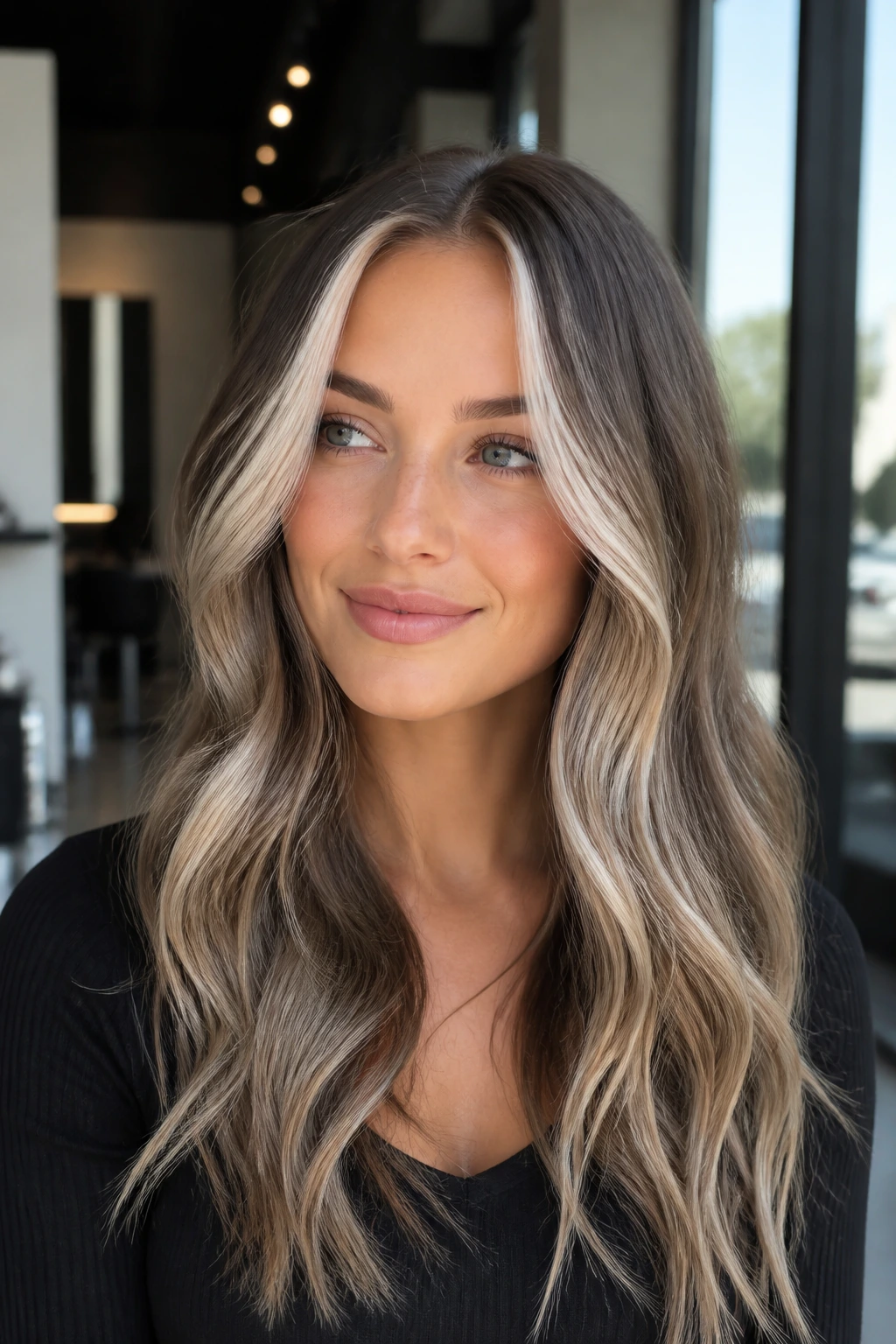
A platinum money piece is for the person who wants impact without bleaching every strand. The front sections are taken pale and cool, while the rest of the hair stays darker or more dimensional, which gives cool skin a bright frame right where it matters.
The effect can be sharp in a good way. Around the face, that level of brightness pulls attention to the eyes and cheekbones. On long hair, it keeps the color from feeling heavy from root to tip.
I’d pair it with soft waves or a sleek blowout. Both work. The one thing I would not do is pile on too many warm lowlights, because the front pieces need a clean contrast to stay convincing.
12. Cool Cream Soda Blonde
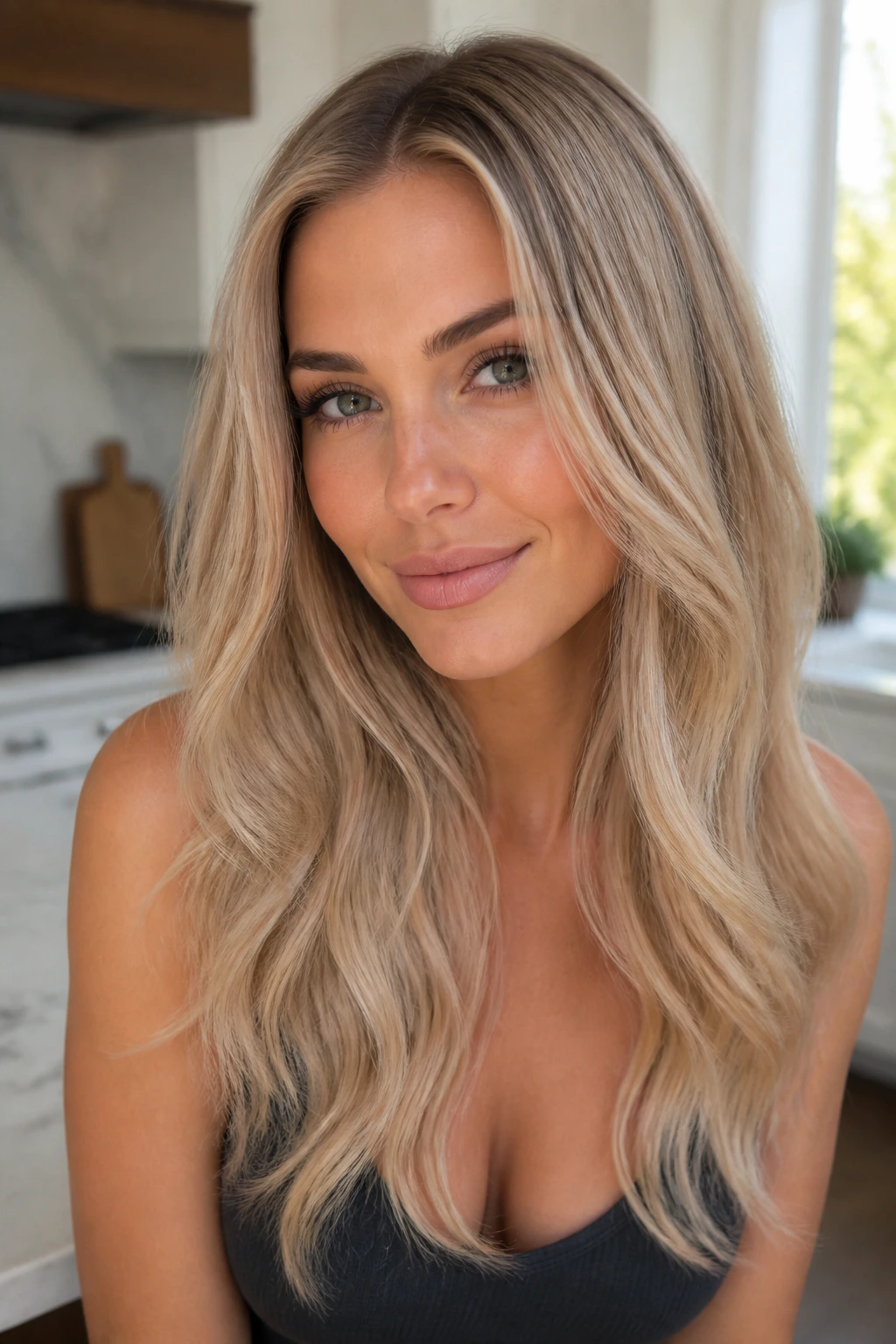
Cool cream soda blonde is the better version of cream soda for cool undertones. It keeps the pale beige softness people like, but strips out the caramel pull that can make the face look pinker than you want.
Compared with a warm cream soda shade, this one feels quieter and cleaner. It’s a smart move if your skin is cool but not ultra-fair, because it gives you some depth without sliding into bronze. The color works well on mid-length cuts and long layers where the dimension has room to show.
If you want a simple salon ask, say you want a beige blonde with ash control and a soft root melt. That usually gets you closer than the trendy name on its own.
13. Ashy Bronde
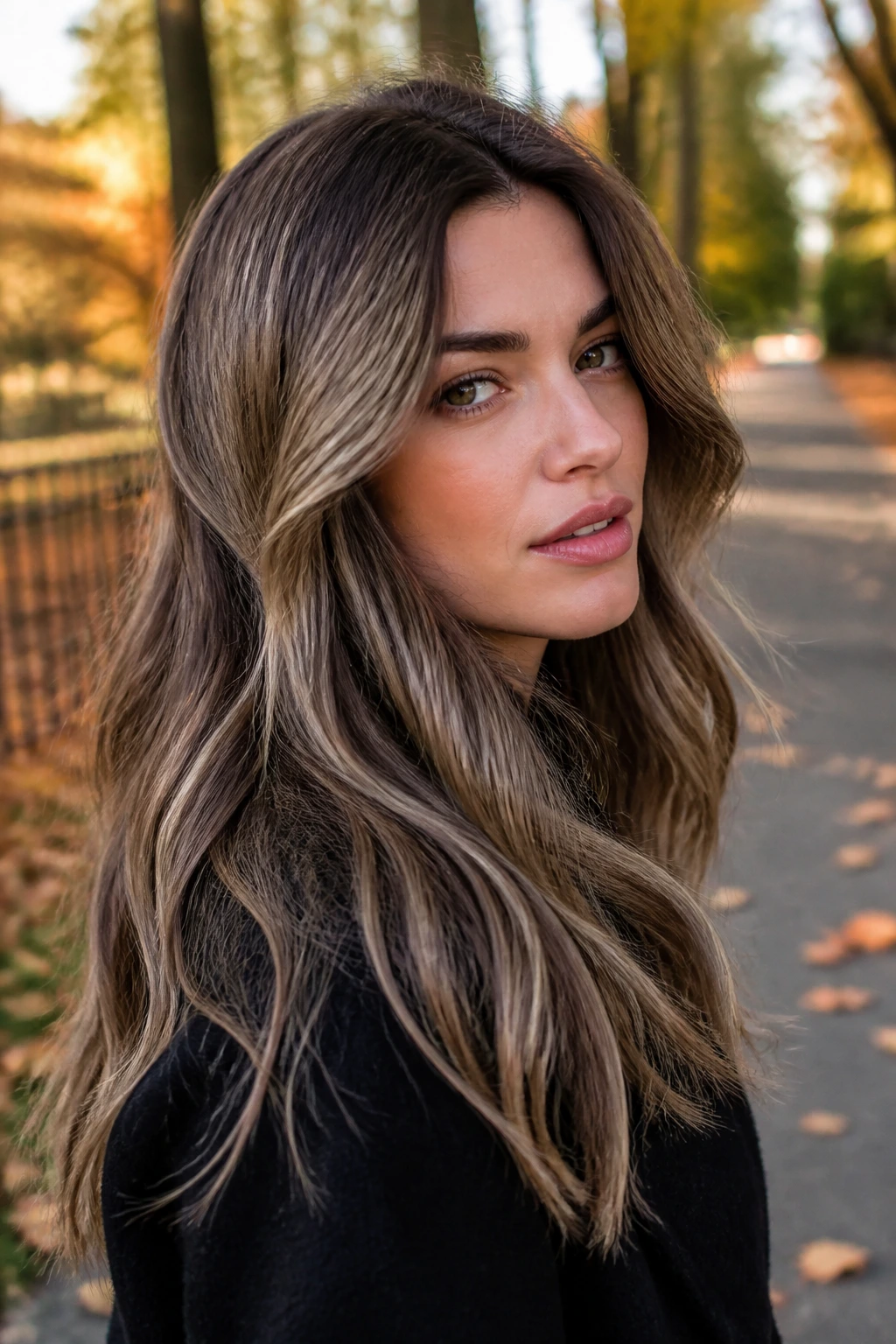
Ashy bronde is the safety net of cool blonde color. It sits between brunette and blonde, but the blonde pieces stay smoky enough to flatter cool skin instead of fighting it.
What Makes It Different
The base stays deeper, often with a neutral brown root, and the lighter ribbons are kept cool and soft. That means less maintenance and less shock if you’re nervous about going blonde all at once. It also gives the hair a fuller look, which helps if your strands are fine or a little sparse at the ends.
How to Ask for It
- Request cool beige or ash ribbons.
- Keep the lift concentrated around the face and top layers.
- Leave enough depth underneath so the color doesn’t go flat.
- Refresh with a gloss every 6 to 8 weeks.
This is a smart first blonde. Not boring. Smart.
14. Pearlized Root Melt
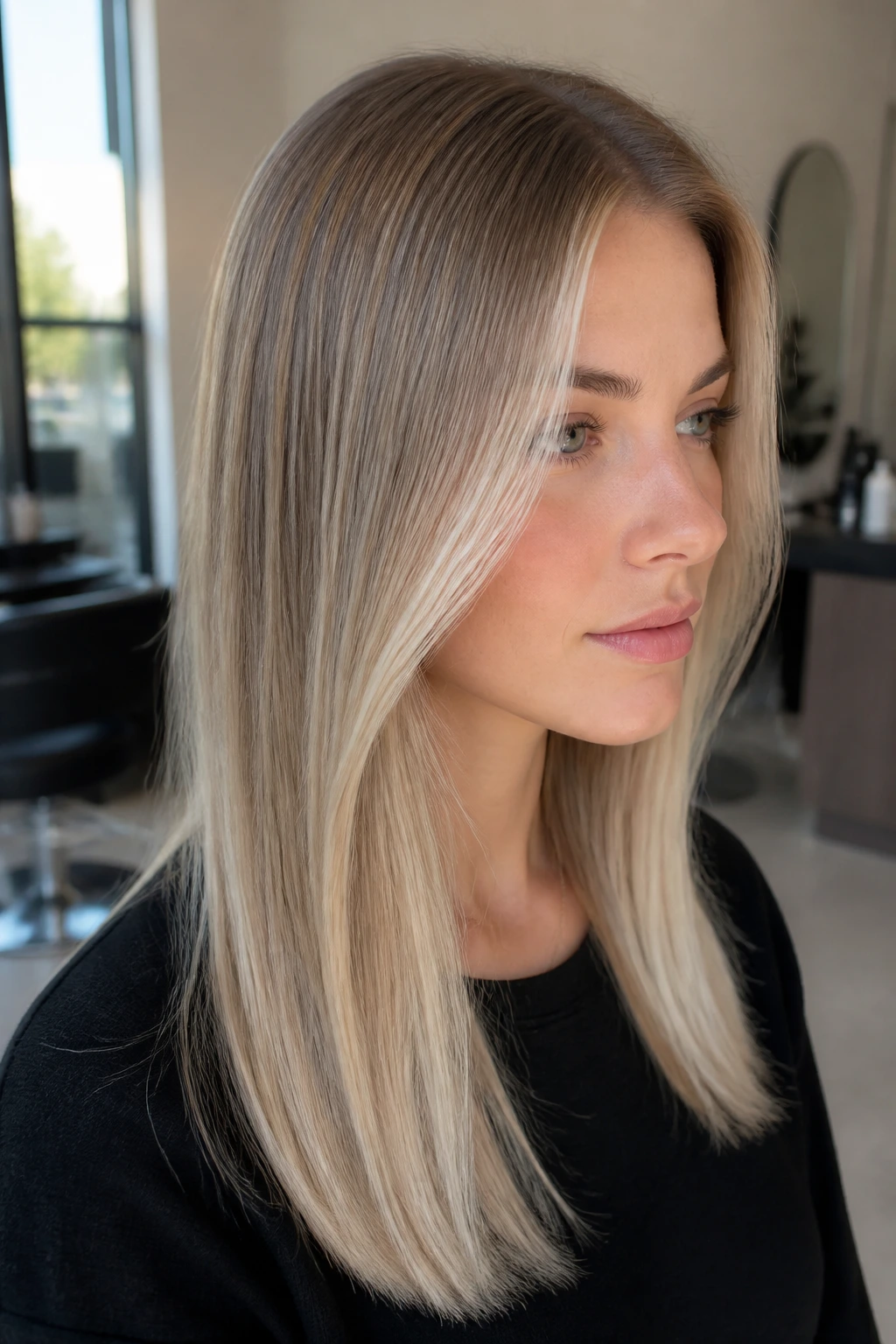
Pearlized root melt solves one of the biggest blonde problems: harsh regrowth. By keeping the root slightly deeper and melting it into pale pearl ends, the color looks softer from week one through week eight.
That deeper root is not a flaw. It’s the whole point. On cool skin, a root melt stops the light ends from making the face look stark, and it gives the blonde some shape. Without it, pale hair can sometimes float too much and lose definition.
I like this on straight hair, where the transition line can be very obvious if it’s done badly. Ask for a gradual fade of maybe one to two levels between root and ends. That keeps the result believable.
15. Soft Silver Blonde
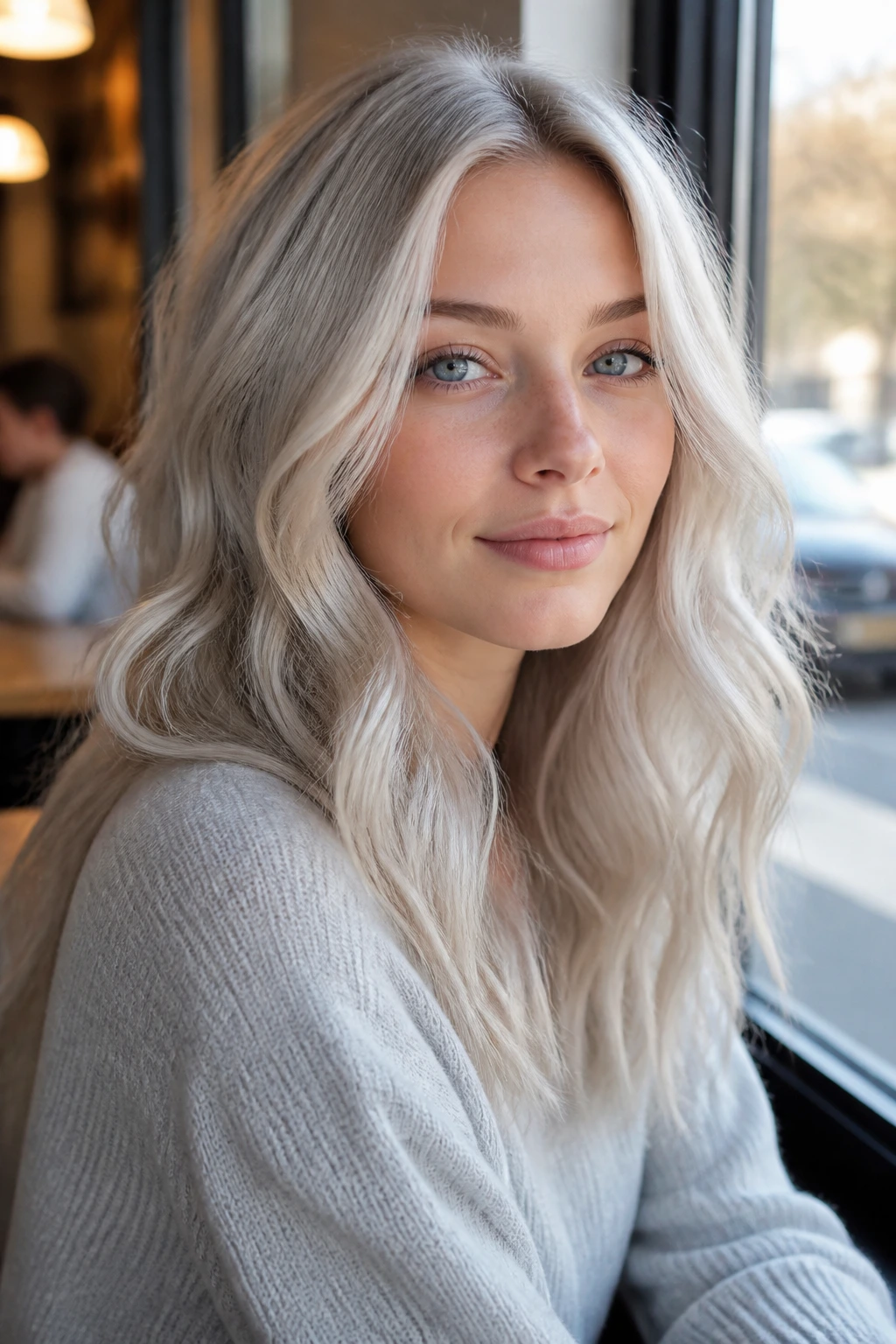
Why does silver sometimes look softer than platinum? Because the gray-blue cast diffuses the brightness a little, and that can be kinder to cool skin than a pure white blonde.
Soft silver blonde gives you that frosted feel without the sharpness of a hard platinum finish. It’s a nice fit for hair that moves, because loose waves and bends catch the silver tone in a way that looks dimensional instead of flat.
How to Use It
This shade shines on shorter cuts, shoulder-length layers, and anything with some texture. It can feel a bit severe on ultra-long, pin-straight hair unless the styling has body.
If you like clean makeup, cool jewelry, and crisp clothing colors, this one slots right in.
16. Frosted Face-Framing Blonde
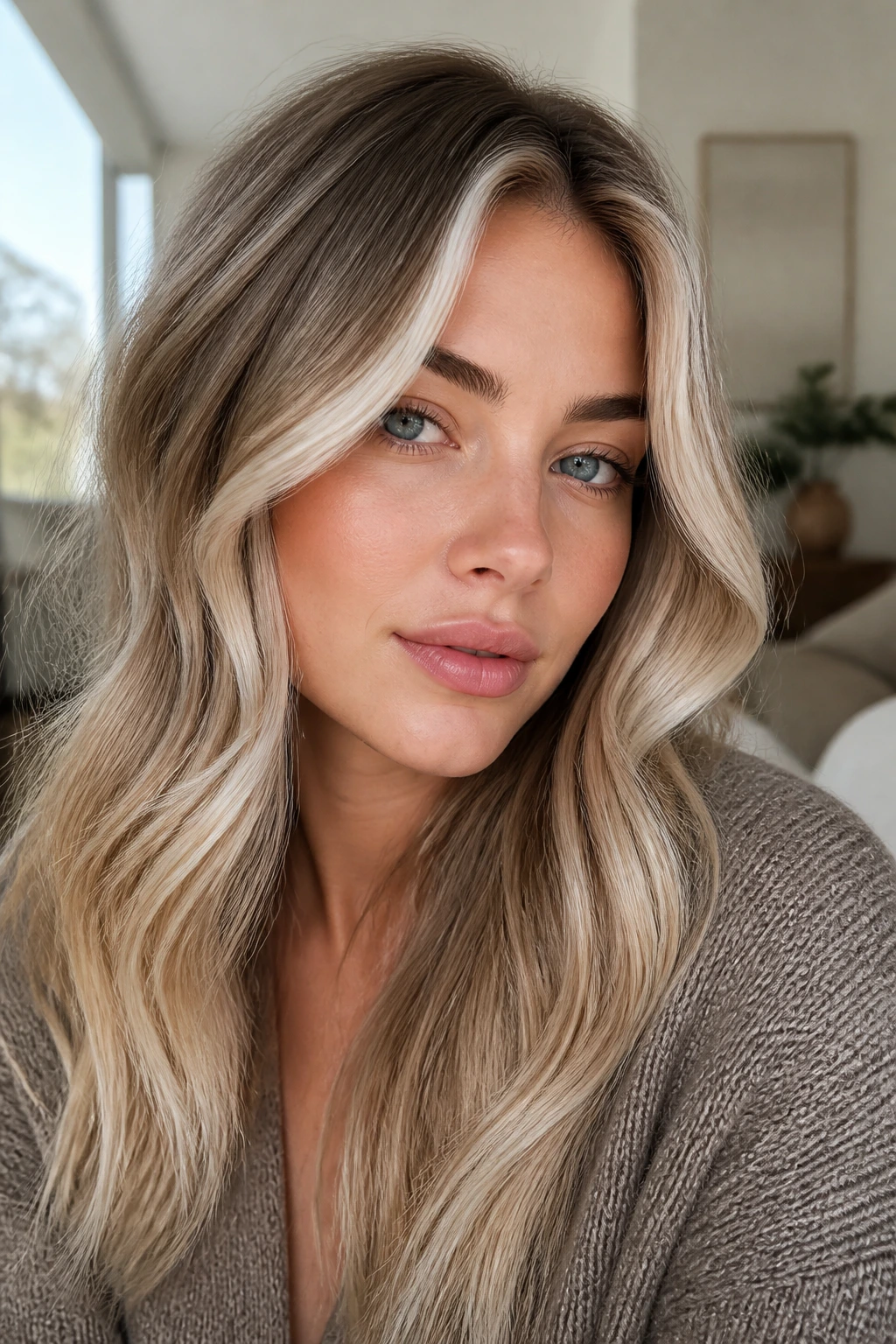
A frosted face-framing blonde is the easiest way to go lighter without committing to a full-head change. The front pieces are lifted the brightest, usually from the temple down through the cheekbone area, and the rest of the hair stays softer and deeper.
It’s a good move for cool skin because the brightness lands where you want it most, right around the face. You get contrast, but not overload. And if your base is dark blonde, light brown, or medium brown, the effect can be surprisingly flattering.
- Nice for ponytails and clipped-back styles.
- Easier to maintain than a full blonde.
- Good if you want a “freshened” look.
- Works best when the front pieces are toned cool, not gold.
A small change. A noticeable one.
17. Nordic Beige Blonde
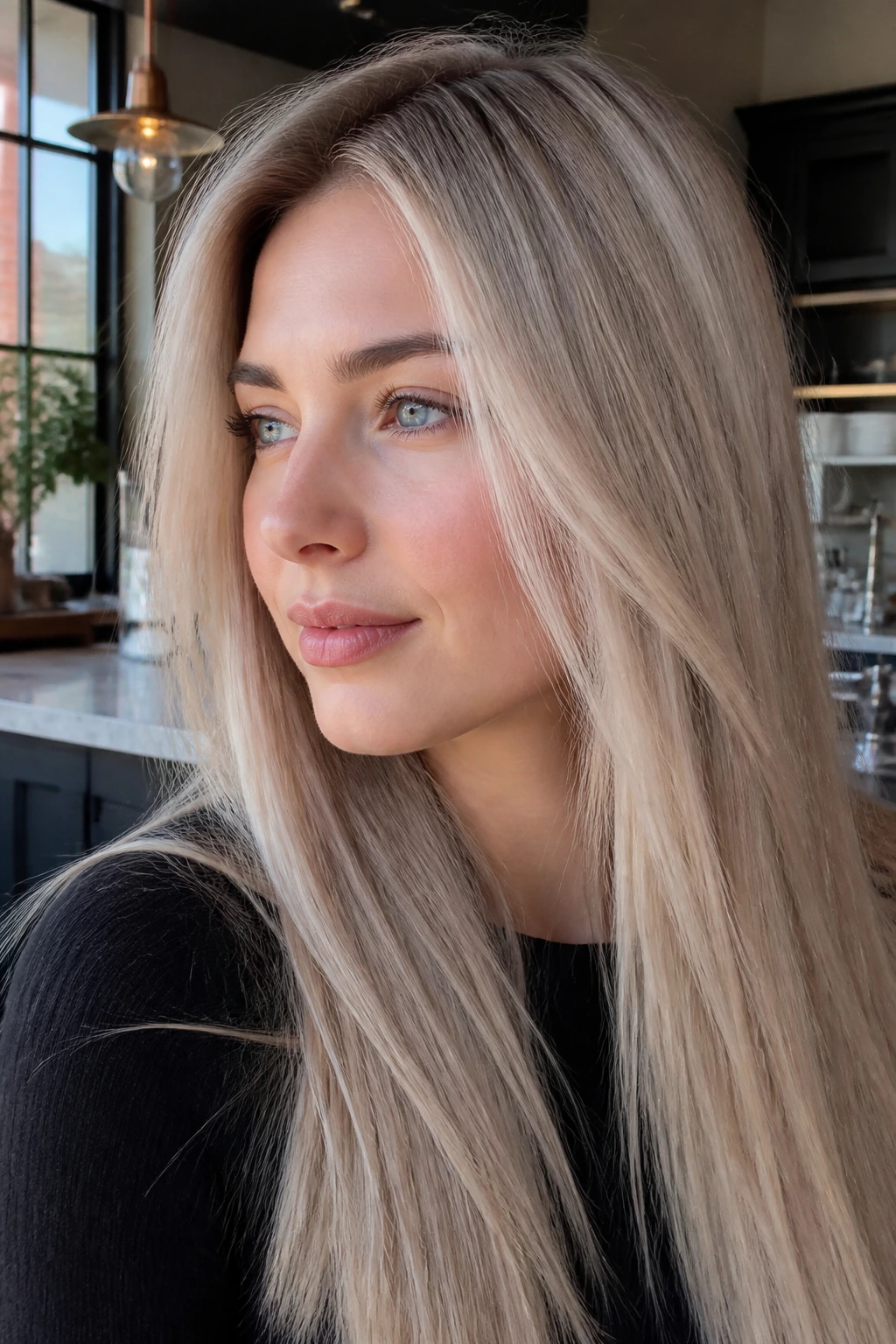
Nordic beige blonde is clean, pale, and restrained. It has enough beige to keep it wearable, but the tone stays cool enough that it doesn’t drift into yellow or honey territory.
I like this shade on straight or lightly waved hair because the smooth surface shows off the color best. It’s the kind of blonde that looks expensive without trying too hard, which sounds cheesy until you see it next to a warm blonde that starts to look orange under indoor lights.
It also behaves well on cool skin with a bit of softness in the cheeks. The beige gives the face a little cushion. The cool part keeps everything honest.
18. Silver Lilac Blonde
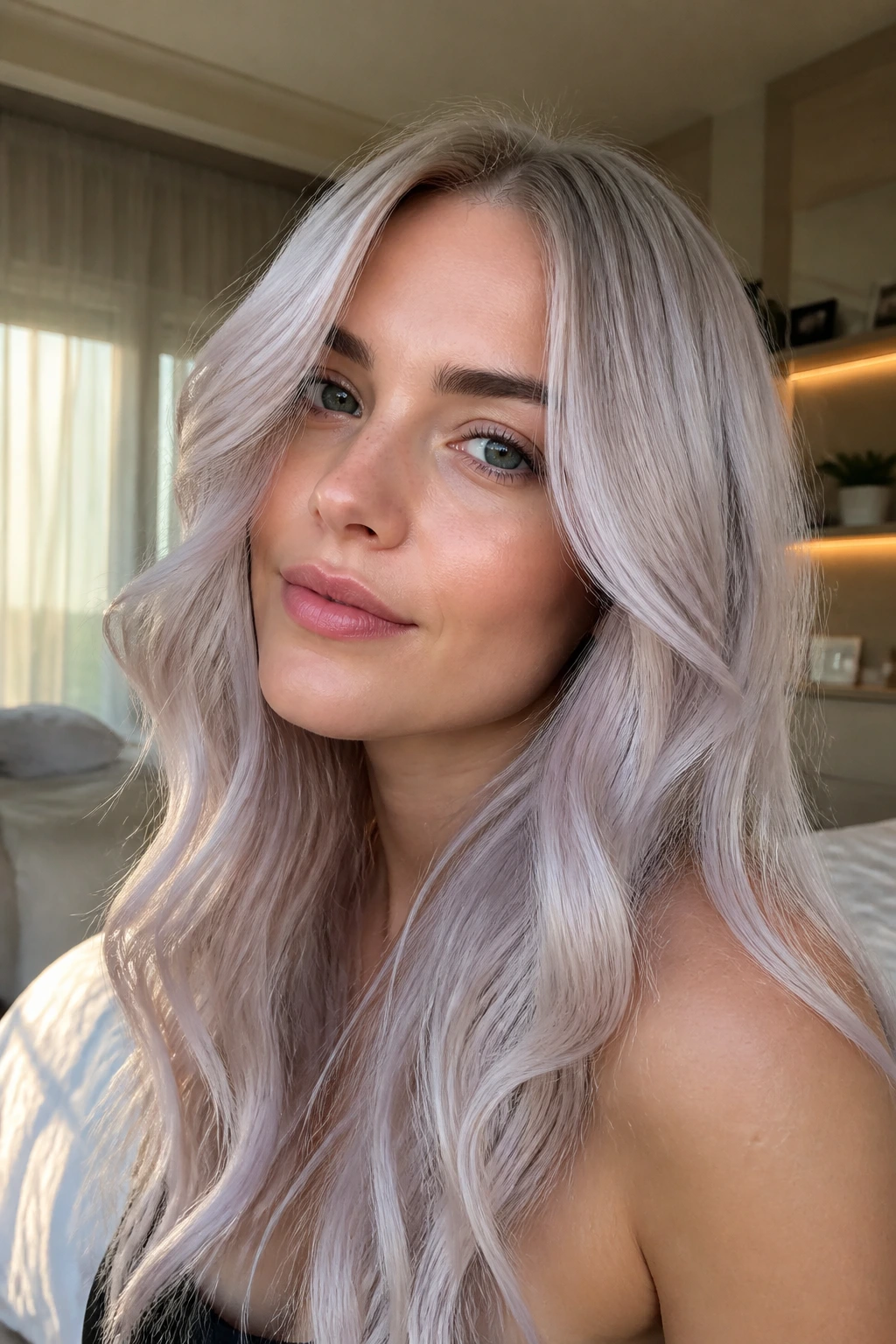
Silver lilac blonde is for someone who wants a cool blonde with a tiny edge. The lilac is barely there—more of a wash than a loud pastel—but it changes the whole mood of the color.
Compared with plain silver, this version feels a little softer and a little more creative. It’s still cool enough for pink or blue undertones, but it has enough personality to stand apart from standard icy blonde. If you’ve ever liked fashion colors but didn’t want your whole head to scream for attention, this is the middle path.
Best ask: a pale blonde base with a violet-lilac gloss. Keep the pastel subtle so it fades gracefully.
19. White Sand Blonde
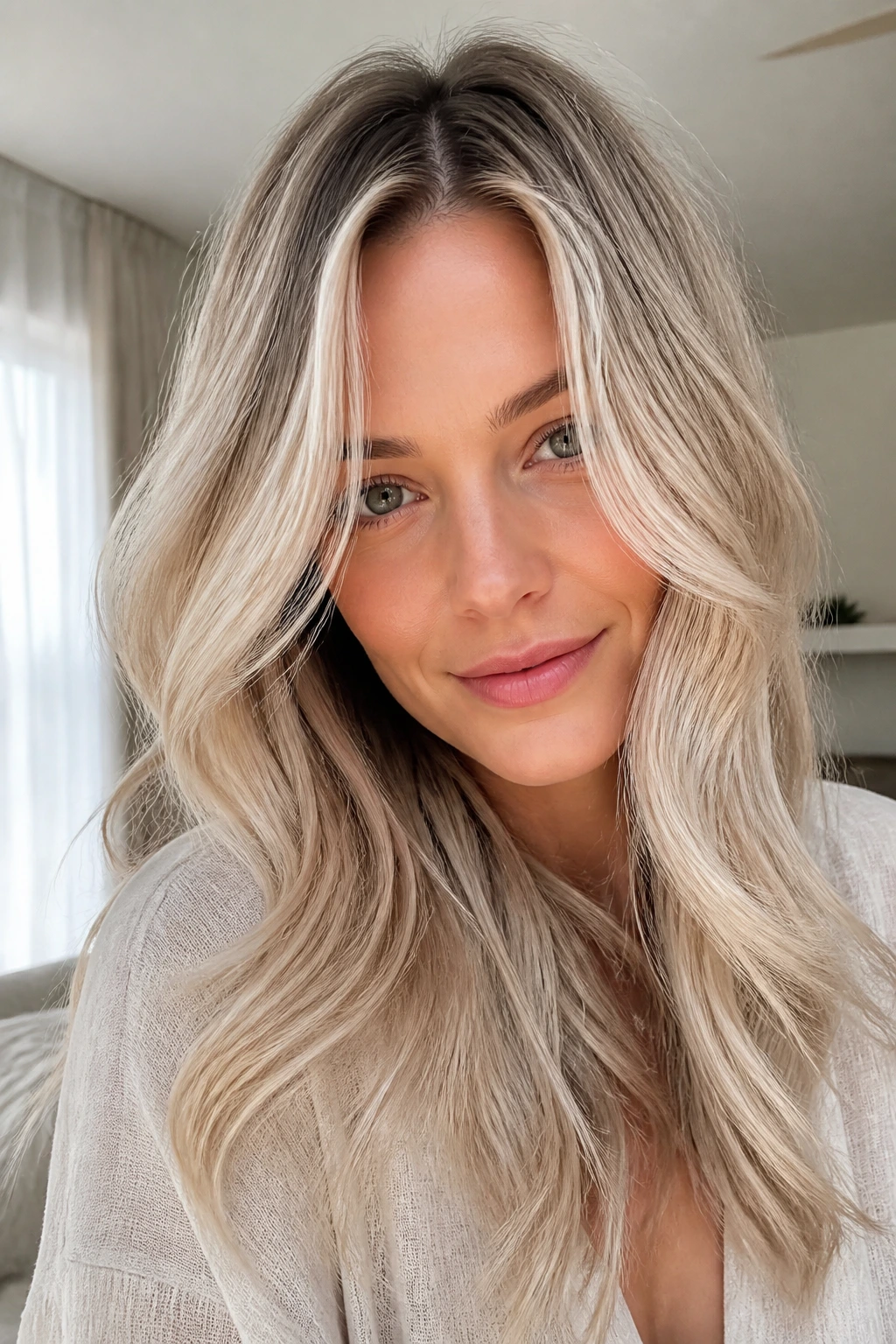
White sand blonde lives between ash and pearl. It’s pale, neutral, and airy, but it doesn’t veer into the sharpness of pure white or the warmth of beach sand.
Why It’s So Wearable
The color has just enough depth to look soft in daylight and clean indoors. On cool skin, that balance matters. Too much white can flatten features. Too much gold can pull the whole look off course. White sand sits in the middle and stays polite.
- Good for medium-to-light cool skin.
- Works on layered cuts and long bobs.
- Keeps a softer grow-out than platinum.
- Looks best with a cool gloss finish.
If you want bright but not severe, start here.
20. Cool Mushroom Melt
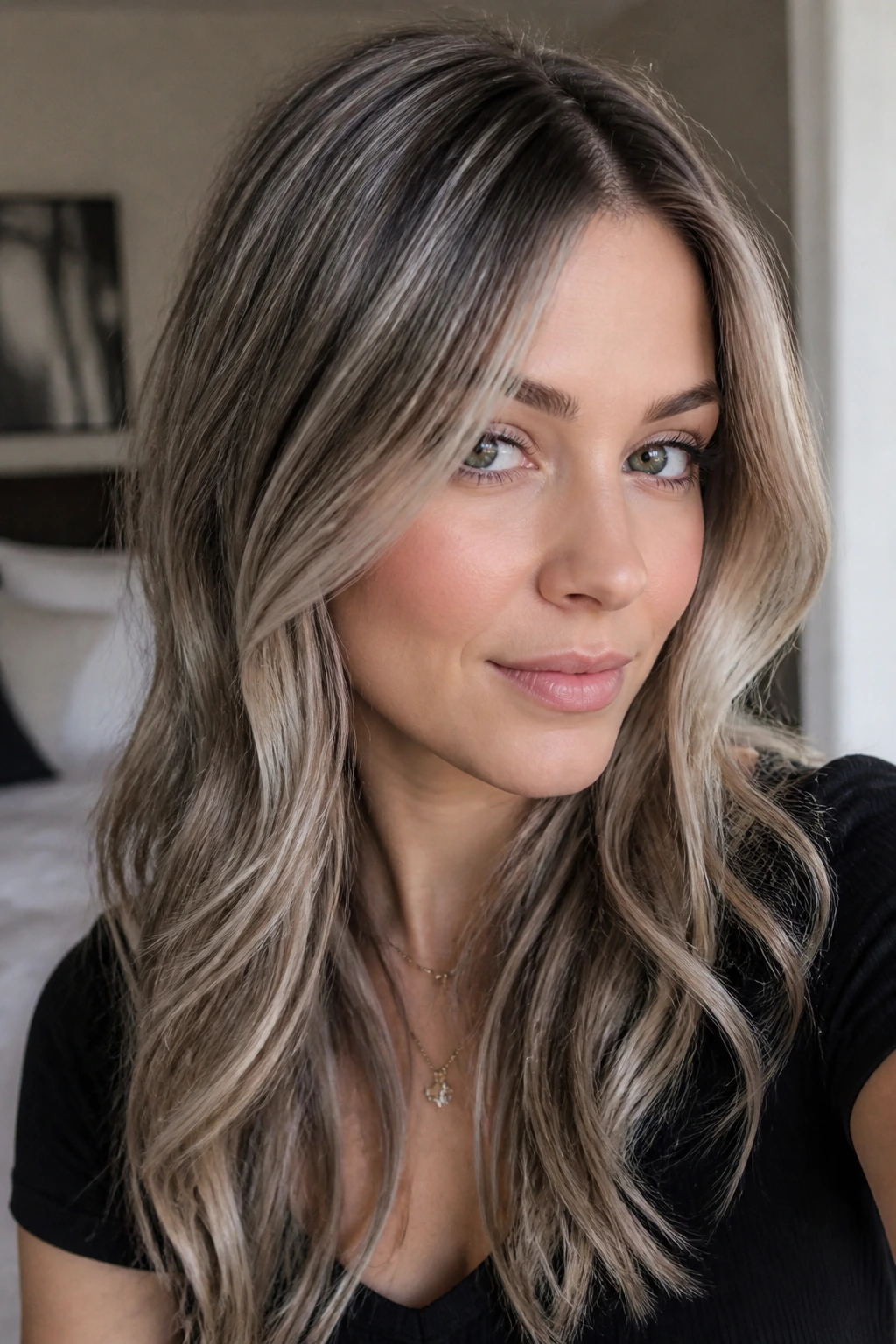
Cool mushroom melt is one of my favorite low-drama blondes for cool skin. The root stays deeper and smoky, then the color melts into lighter beige ends that still have enough ash to keep them grounded.
That melt is useful because it gives the eye something to read. There’s depth at the root, movement through the middle, and a pale finish at the ends. Without that structure, a cool blonde can sometimes look like one flat block of color.
This shade is particularly good if you wear your hair in loose bends or undone waves. The pieces shift as you move, which keeps the blonde from looking heavy.
21. Ash Pearl Ribbon Highlights
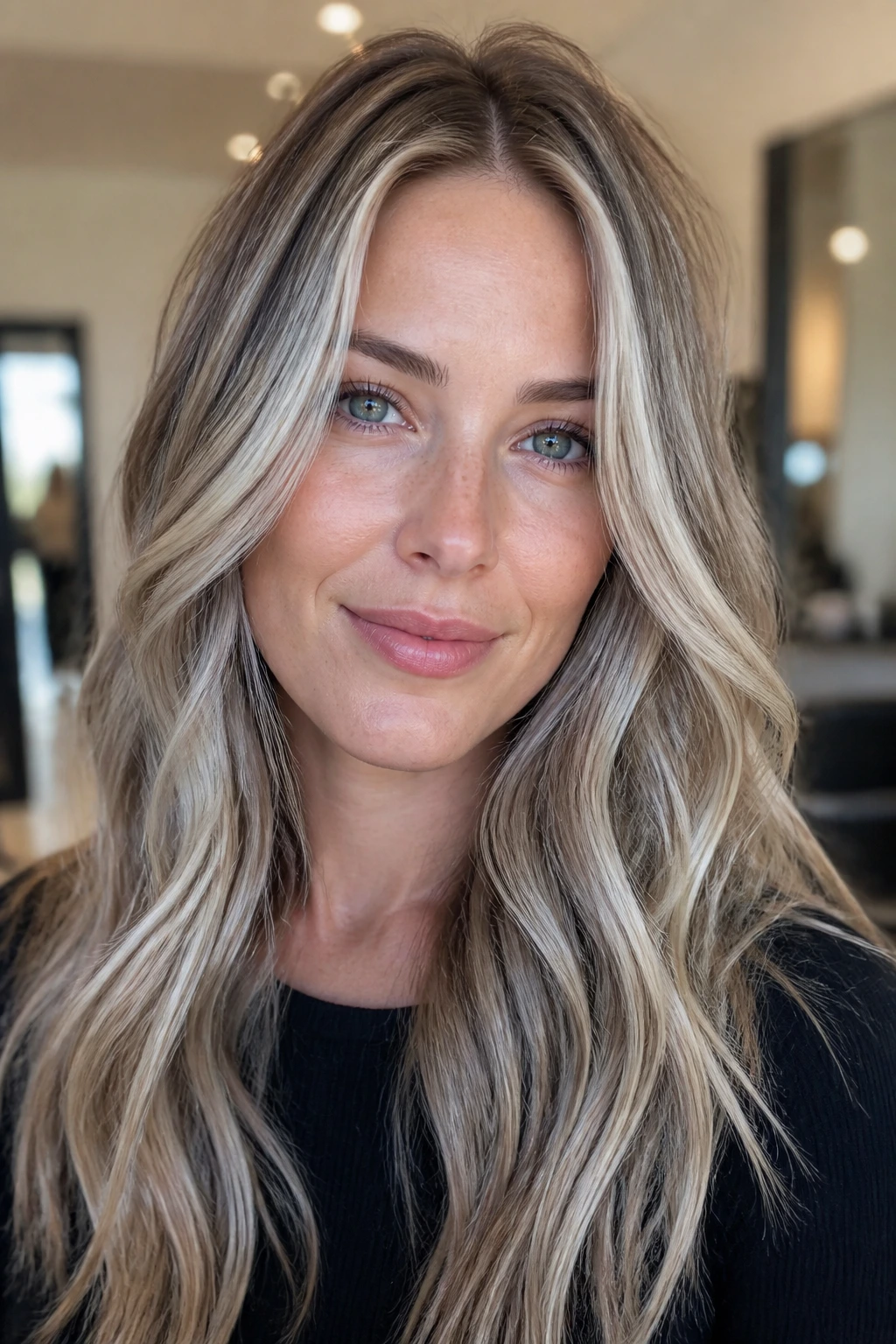
Why do ribbon highlights look richer than standard streaks? Because the color sits in broader, softer sections, which makes the contrast look intentional instead of busy. Ash pearl ribbon highlights use that idea with a cool-toned finish that loves cool skin.
How to Get the Most From It
Ask for ribbon-like sections about 1/4 inch wide, painted or foiled through the top layers and around the face. The ash keeps the blonde clean, while the pearl adds a little shine so the color doesn’t feel dusty.
This works well on medium-density hair. Too many ribbons, and you lose the softness. Too few, and you miss the point.
22. Vanilla Ice Blonde
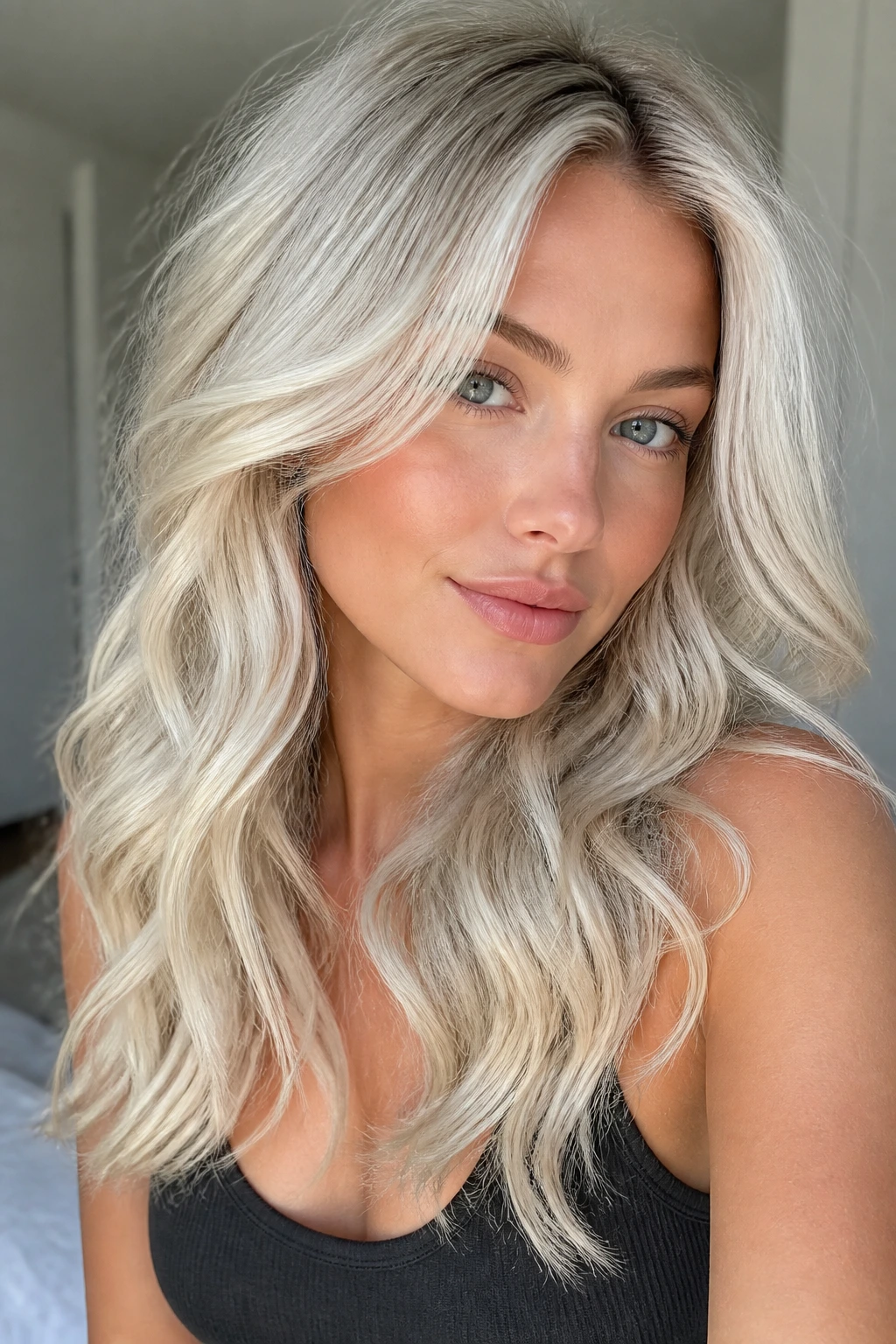
Vanilla ice blonde sounds playful, but the result is sharp and clean. It’s brighter than cool vanilla and softer than platinum, which makes it a nice middle ground for cool skin that wants lightness without a stark finish.
A color like this can make fine hair look fuller because the pale tone reflects light so easily. It also works well around the face if your skin needs a little lift. The best versions keep the root slightly deeper, so the color doesn’t look like a wig.
- Good for blunt cuts and loose waves.
- Needs regular glossing to stay fresh.
- Best when the tone leans violet, not gold.
- Can feel too bright if the cut is very soft and feathered.
That’s the catch. The haircut matters here.
23. Cool Cream Balayage
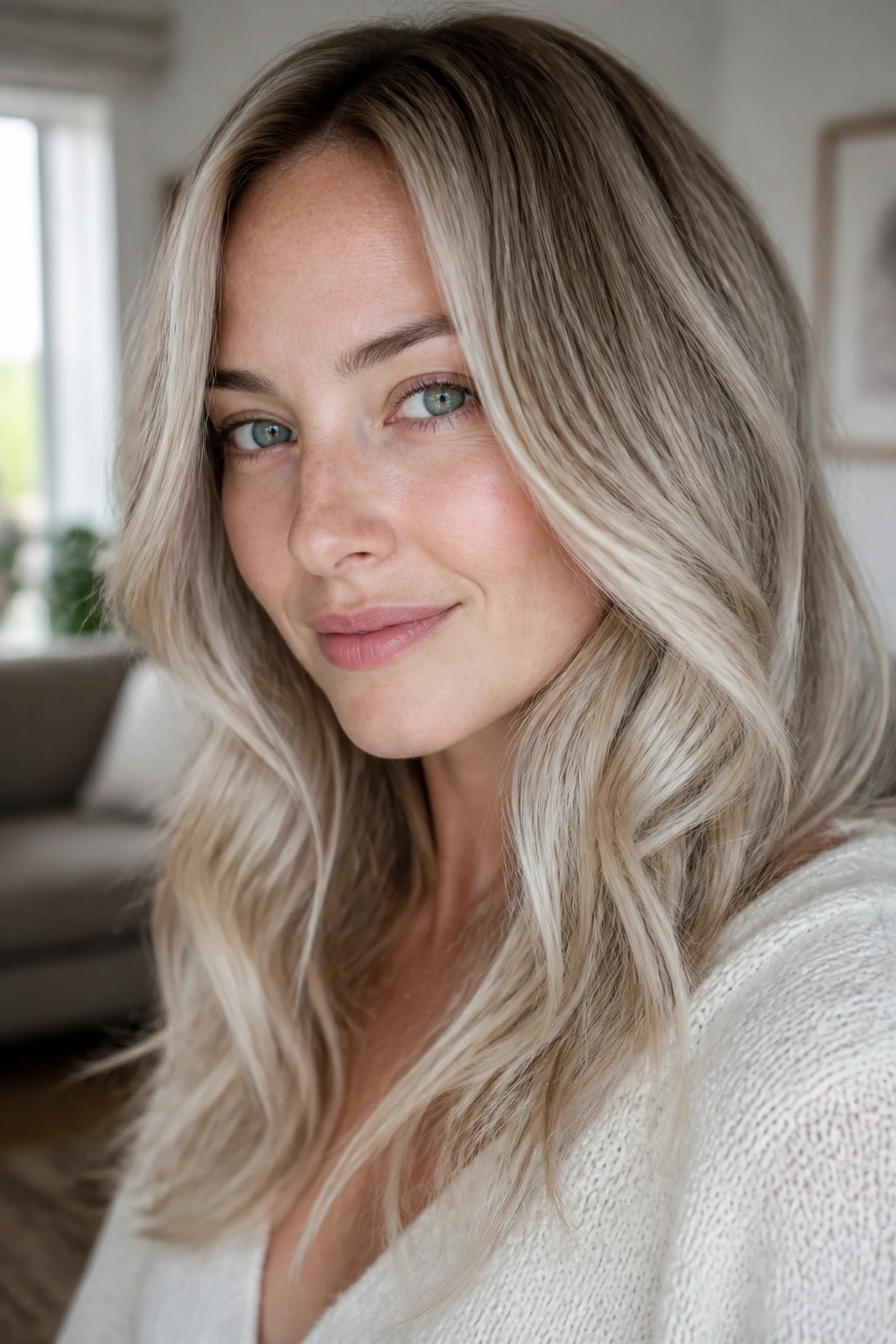
Cool cream balayage is the quieter cousin of brighter blonde balayage. The hand-painted pieces are creamy, pale, and cool enough to flatter skin with pink or blue undertones, but the whole effect stays soft and low-effort-looking.
What I like most is the grow-out. Because the color is painted with a little space from the root, you don’t get that blunt highlight line every few weeks. The result feels lived-in without turning warm, which is where a lot of blondes go wrong.
This is a good pick if you want movement and shine more than drama. A soft blowout or a loose bend through the ends will show it off best.
24. Mirror-Shine Blonde
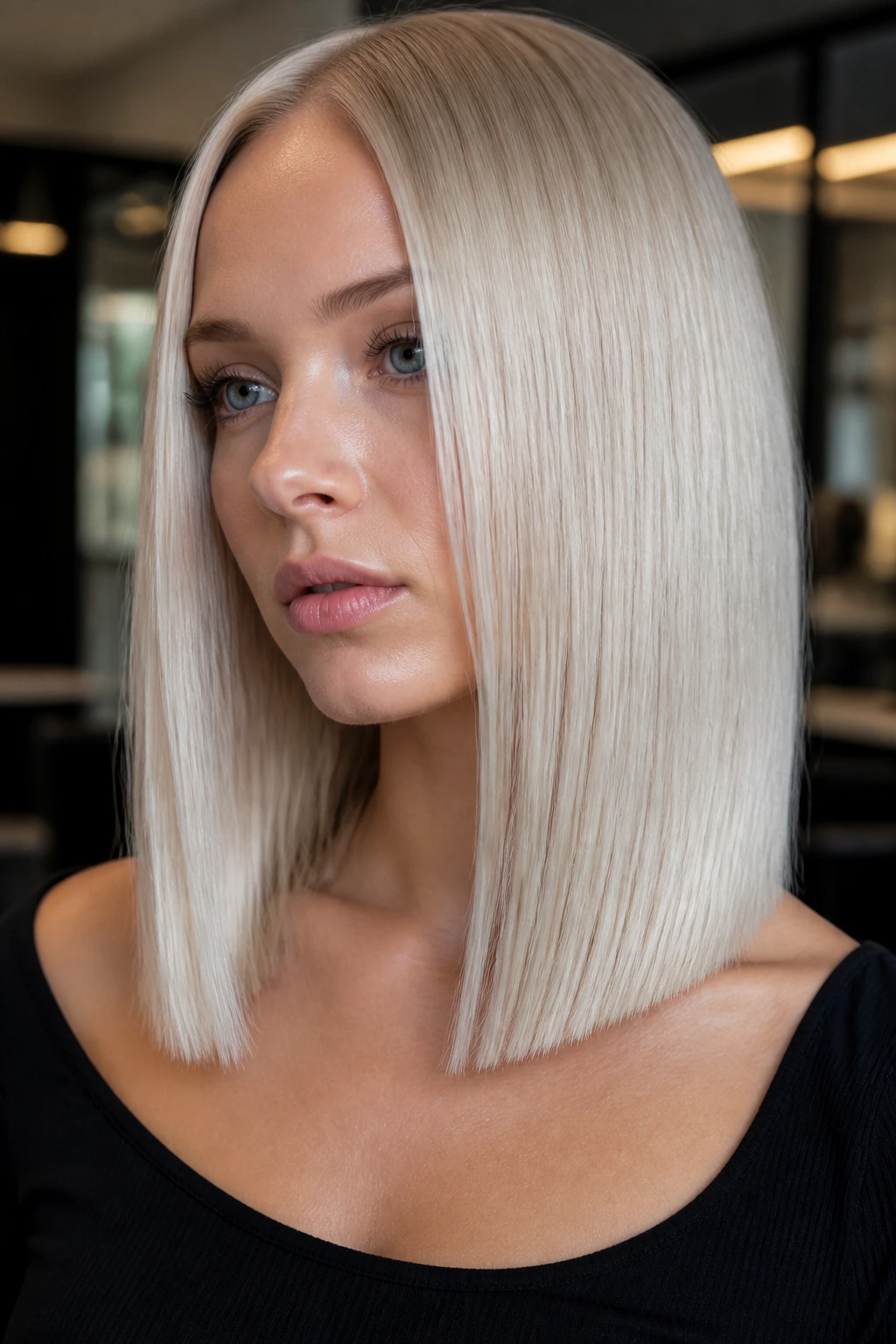
Mirror-shine blonde is less about one specific tone and more about the finish. The blonde is kept cool and clean, then polished until it reflects light in a smooth, glassy way.
Compared with matte ash blondes, this version looks sleeker and more expensive because the surface reflects light instead of swallowing it. That makes it a strong choice for healthy hair, blunt cuts, and anyone who likes a sharp, neat look. If the ends are rough, though, the shine disappears fast. There’s no hiding split ends in this shade.
A clear gloss after toning is the secret here. Not magic. Just shine.
25. Beige-Gray Blonde
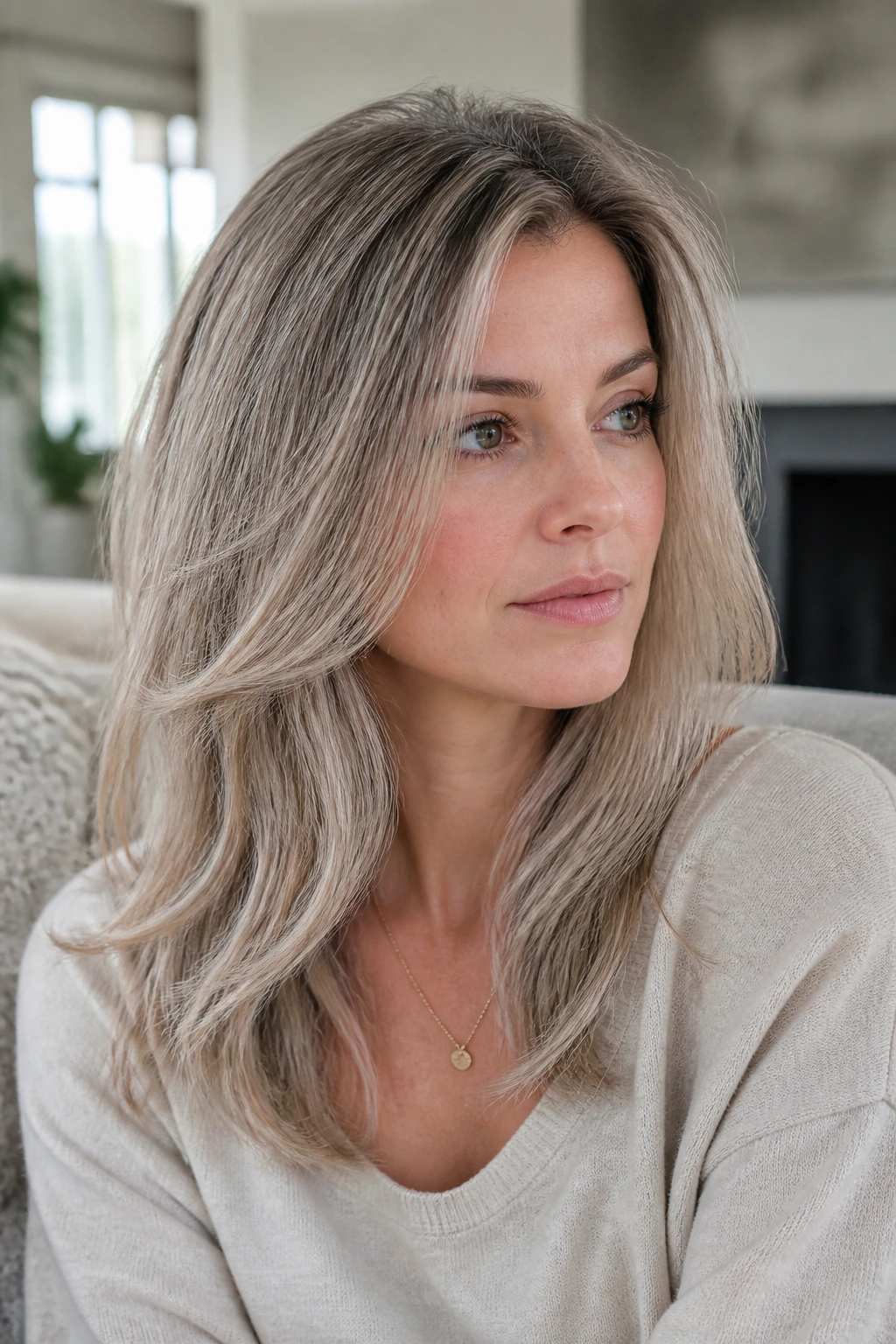
Beige-gray blonde is what happens when you want the softness of beige and the restraint of gray at the same time. It’s cooler than standard beige blonde, but not as icy as silver.
Why It’s Worth Trying
The shade gives cool skin a calm backdrop. That matters more than people admit. Some blondes are so bright they pull all the attention upward; beige-gray keeps the hair in balance with the face instead of stealing the scene.
- Best for medium-length cuts with some movement.
- Looks smoother than highly contrasted highlights.
- Can be built from a dark blonde base.
- Needs a cool toner, not a warm beige glaze.
It’s a quiet blonde, and that’s why it works.
26. Icy Babylight Blonde
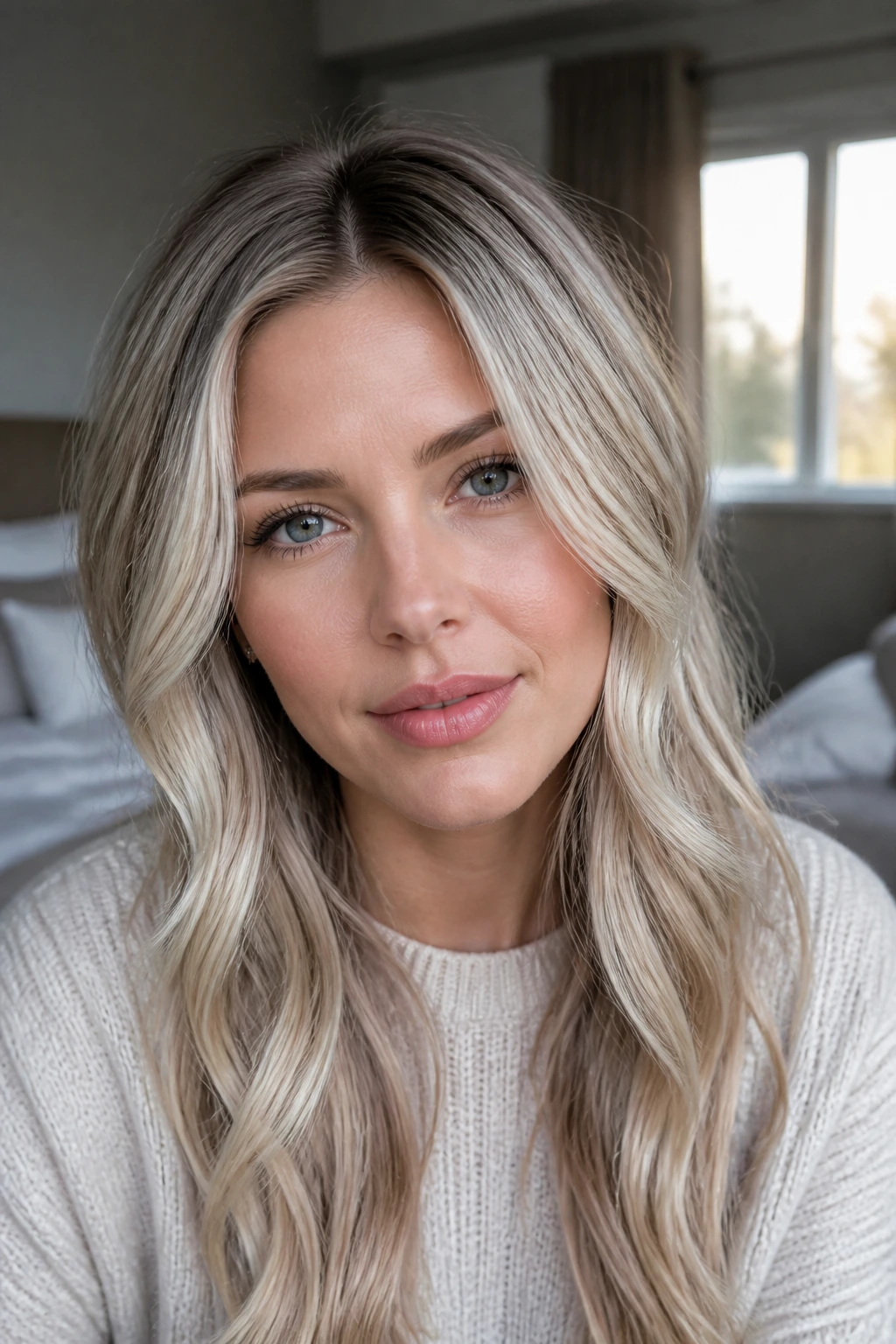
Babylights are the quiet version of highlights, and icy babylight blonde is the cleanest version of that idea. The strands are tiny, so the color reads as a soft lift instead of visible streaks.
That’s why it looks so good on cool skin. You get brightness near the face and around the top layers, but the overall effect stays delicate. It works especially well if you already have light brown or dark blonde hair and want to go paler without a hard change.
The real trick is density. Too many babylights, and the hair starts to look striped. Too few, and the lift disappears. Somewhere in the middle is the sweet spot.
27. Smoke Beige Blonde
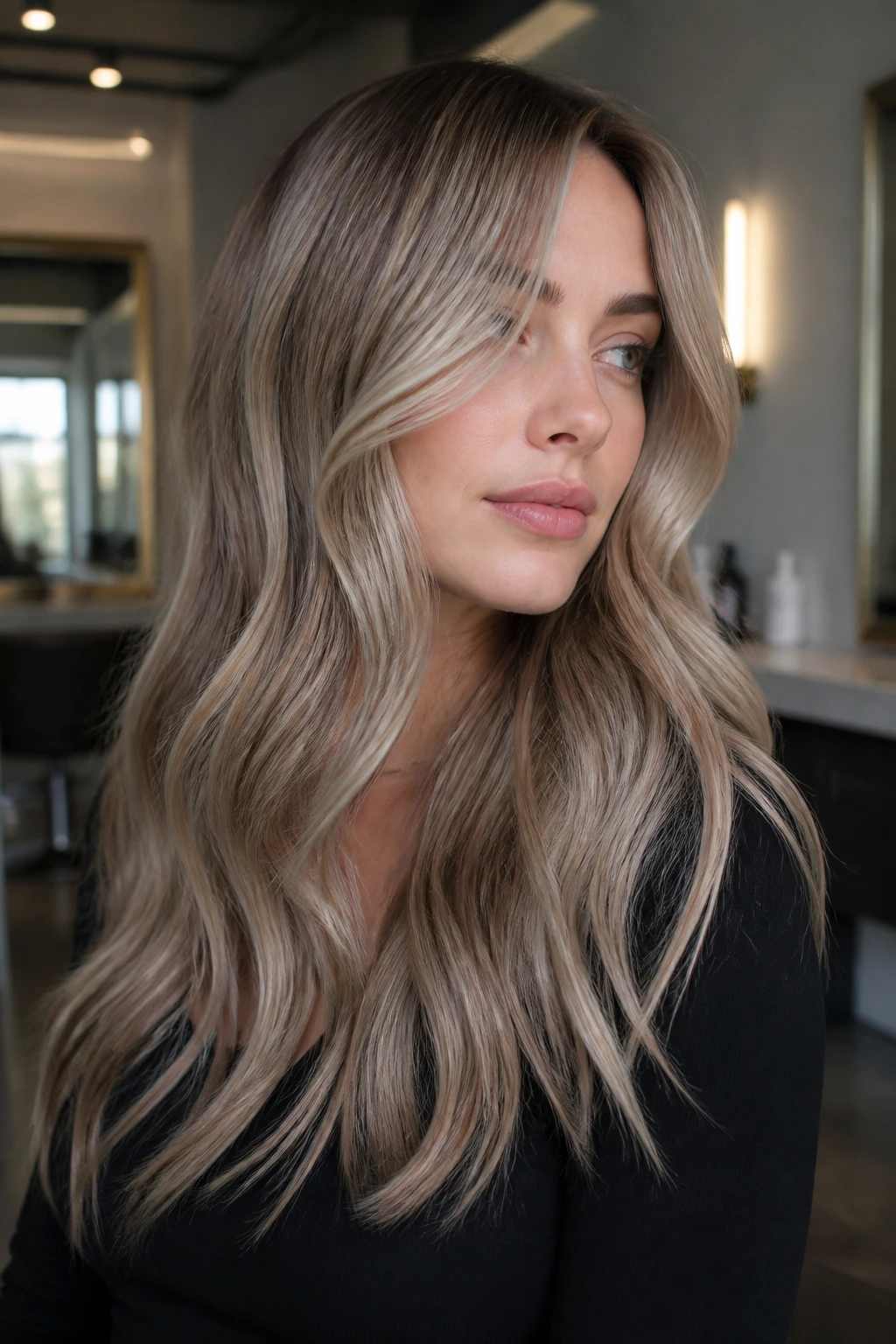
What happens when ash gets too dark? You get smoke beige blonde—a smoky, muted blonde that leans neutral and stays cool enough for skin with blue or pink undertones.
How to Wear It
This color is best when the base has some depth left in it. Think a cool dark blonde foundation with lighter beige pieces threaded through the top and ends. That keeps the result from looking flat or chalky.
It suits medium-length layers especially well because the movement shows off the change in tone. If the hair is one-length and very straight, ask for extra face-framing pieces so the color has something to do.
A little smoke goes a long way.
28. Frosted Platinum Layers
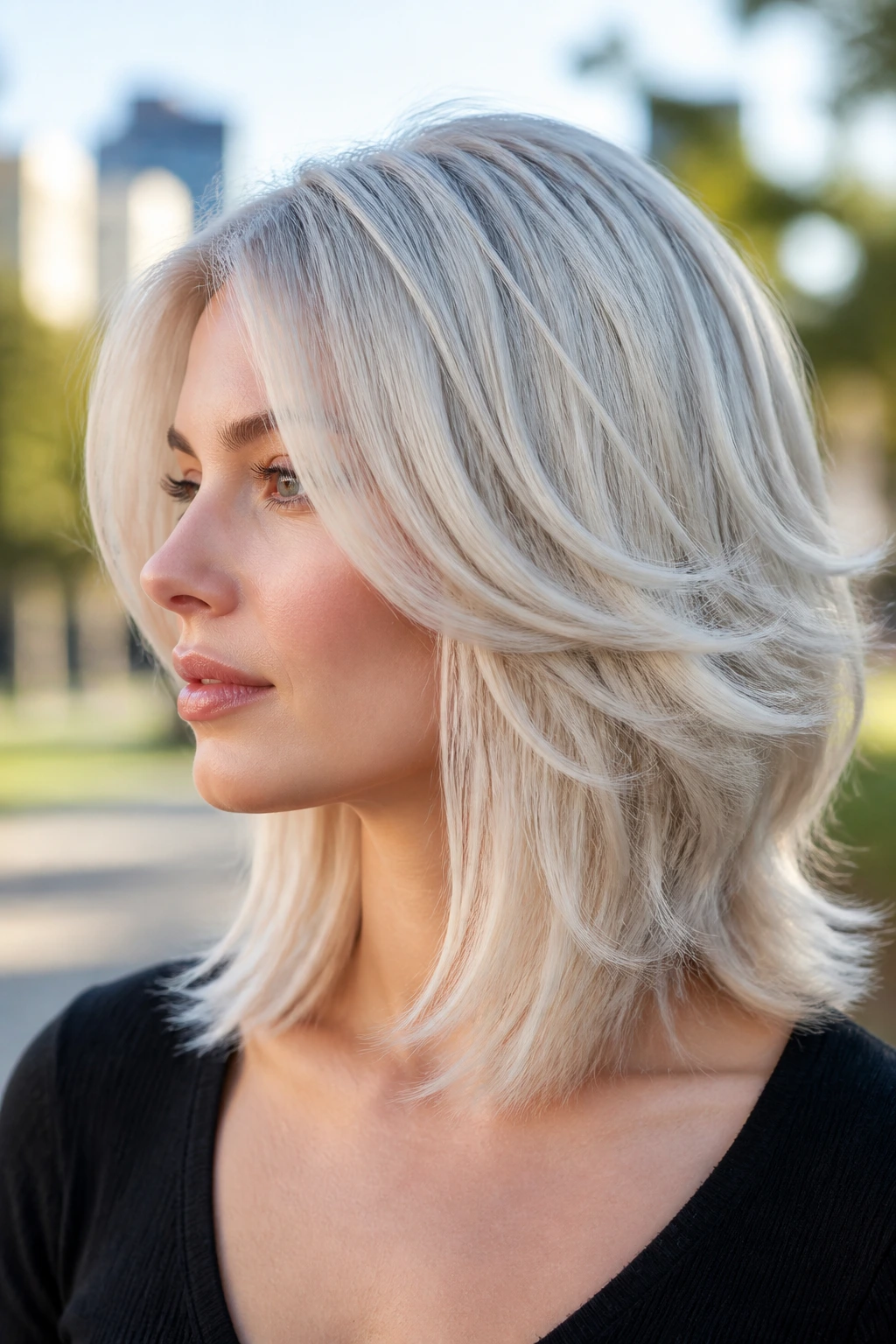
Frosted platinum layers are for haircuts with movement. The layers keep the brightness from feeling like one solid sheet, and the frosted tone gives cool skin that crisp, clean lift people are usually chasing when they go blonde.
The color works because the cut and tone are helping each other. A blunt cut can make platinum feel severe. Layers break that up and let the hair catch light in pieces, which is kinder to the face and a little easier on the eye.
- Best for medium to thick hair.
- Looks strong on shoulder-length cuts.
- Needs regular shaping so the ends stay neat.
- Works well with a slightly shadowed root.
The cut matters more than people expect.
29. Cool Almond Blonde
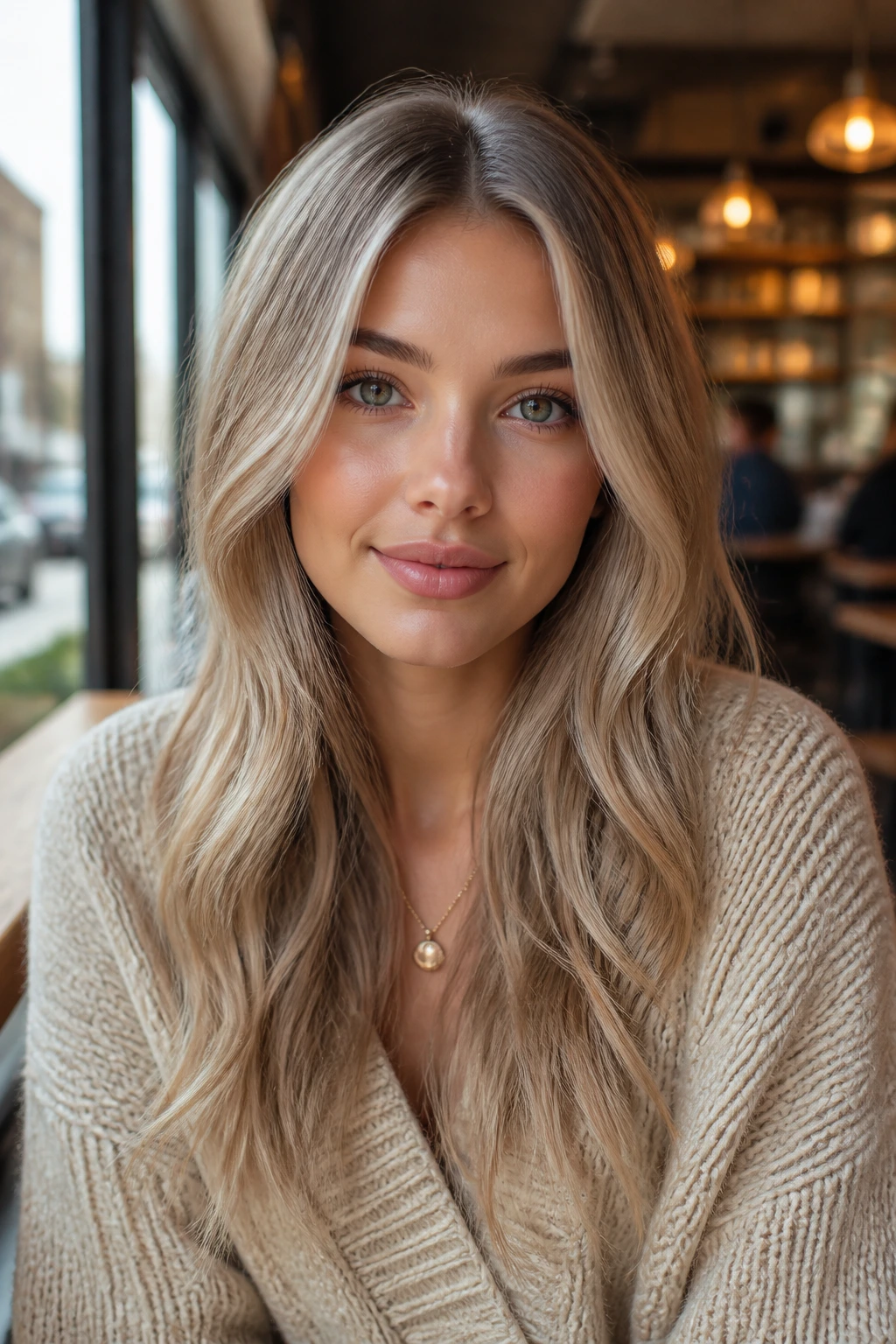
Cool almond blonde is a softer, more neutral take on blonde. It has a pale beige depth that keeps the color from going icy, but the cool cast stops it from turning golden.
That middle-ground quality makes it useful for cool skin that can handle a touch of warmth as long as it isn’t yellow. The result feels natural rather than theatrical, which is nice if you want something you can live with every day. It’s also a good choice for people moving out of darker blonde or light brown shades.
I like it on layered cuts and soft waves. The movement helps the almond tones show up without looking flat.
30. Arctic Blonde Blend
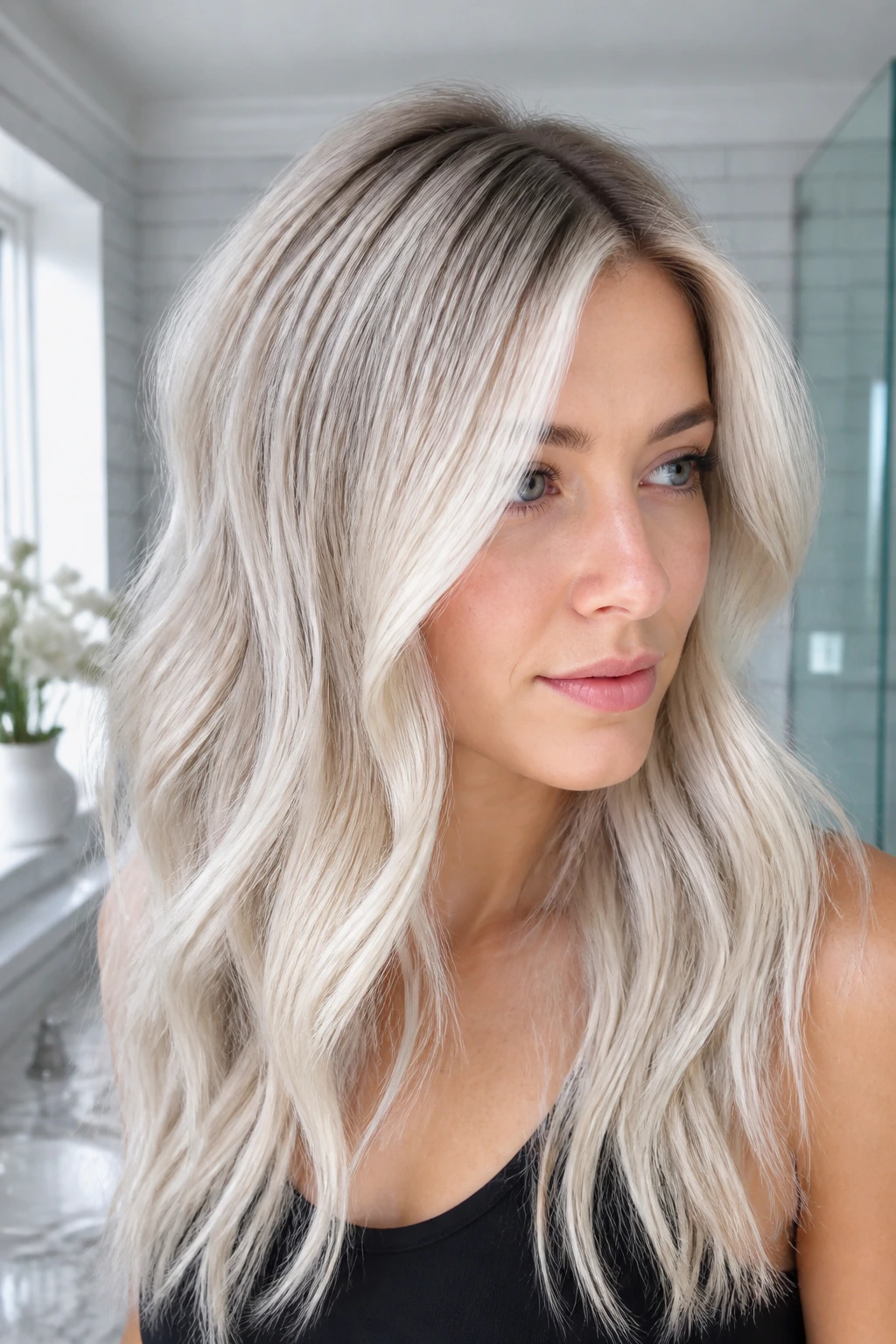
Arctic blonde blend is the shade I’d hand to someone who wants maximum brightness but not the brittle, over-processed feel that can come with a harsh platinum job. It mixes pale icy blonde with a slightly deeper cool root, so the result looks light, but not blank.
That root detail matters. It gives the color shape, helps the grow-out look easier, and keeps cool skin from getting washed out. If you want the hair to look clean for longer, this is one of the most practical pale blondes in the bunch.
Ask for a pale, cool lift with a soft root blur and a glossy toner finish. That keeps the blonde bright, steady, and easier to wear than a flat white blonde.
