



Dark brown hair has a funny habit of looking either rich or flat, and winter makes that split even sharper. Gray skies, indoor lighting, wool coats, and dry air can all drain the life out of a brunette shade that looked perfect in warmer months.
That’s why the best dark brown hair color ideas for winter are rarely about going darker for the sake of it. They’re about dimension, sheen, and a little bit of smart contrast. A deep brunette can look glossy and expensive when the tone is right; the same level can look muddy when the tone is wrong. Tiny differences matter here.
What works on dark brown hair in cold weather is usually one of three things: a clean gloss, a soft ribbon of light, or a subtle tone shift that changes how the color reads in dim light. A good colorist can make those changes with demi-permanent color, babylights, balayage, or a simple glaze that lasts long enough to feel worth the appointment.
Some of these shades are quiet. Some are moody. A few are a little more daring. All 17 are chosen because they do something useful on dark brunette hair, not because they sound nice on paper.
1. Espresso Gloss on Dark Brown Hair
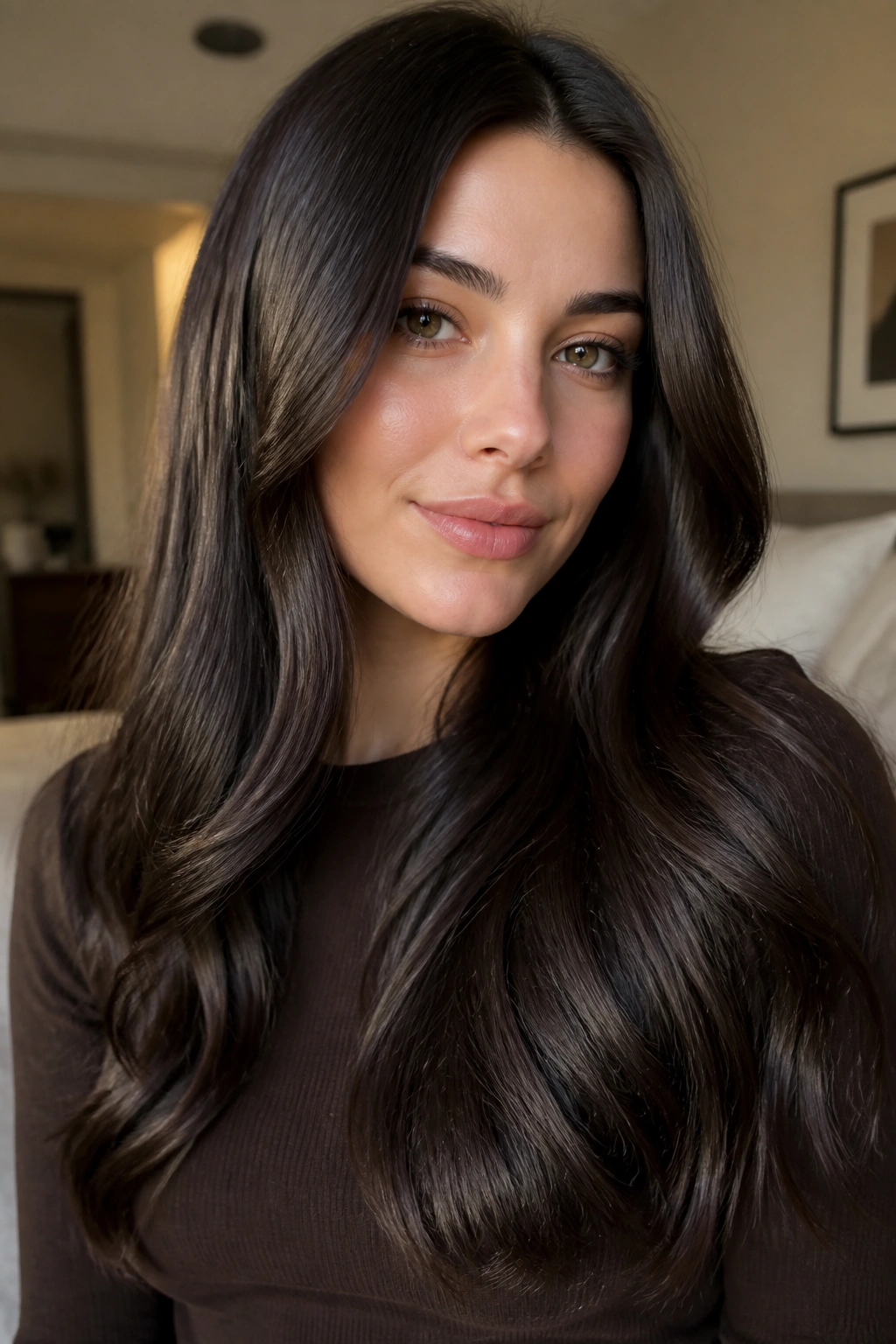
Espresso gloss is the one I reach for when someone wants their hair to look rich, polished, and expensive without looking colored from across the room. It works because it deepens the base to a level 3 or 4 brown, then adds a reflective topcoat that makes the whole shade read smoother.
The trick is shine, not darkness. A clear or neutral brunette gloss can make dark brown hair look cleaner and denser, especially if the lengths have faded a little at the ends. If your current color already leans neutral, ask for an espresso glaze rather than a heavy permanent dye.
This shade works best on straight and softly wavy hair because the smooth surface shows off the gloss. Curly hair can wear it well too, but the finish should lean soft and hydrated, not stiff or inky. I like this look on anyone who wants a low-drama winter brunette that still feels deliberate.
Keep the maintenance simple: a color-safe shampoo, a weekly mask, and a refresh gloss every 6 to 8 weeks. If your ends look thirsty, the color will too.
2. Dark Chocolate Balayage
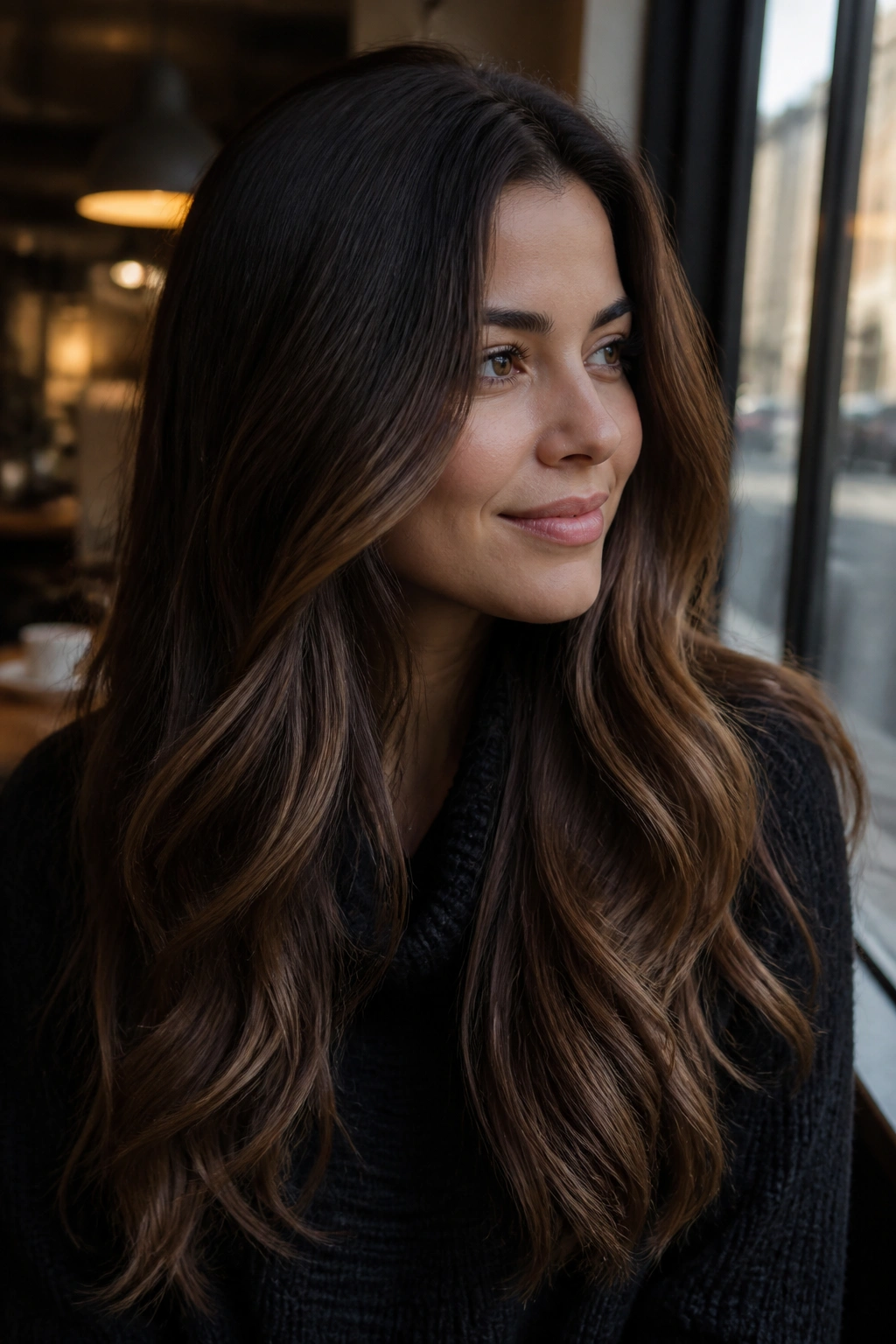
Dark chocolate balayage is one of those shades that looks subtle in a mirror and better in motion. A hand-painted brunette like this keeps the base deep, then shifts a shade or two lighter through the mid-lengths and ends, so the hair moves instead of sitting there like one flat block.
Why It Works in Cold Light
Winter light can make a single-process brunette look heavy. Chocolate ribbons break that up without turning the hair blond or high-contrast. The result feels soft, and that softness matters when you’re wearing dark sweaters, scarves, and coats that already add visual weight.
A good colorist will keep the light pieces broad enough to notice but soft enough to blend. Think ribbons, not stripes. The front pieces can sit a little lighter than the back, which helps the face look more awake on gray mornings.
- Ask for balayage pieces about 1 to 2 levels lighter than your base.
- Keep the brightest pieces near the cheekbone and collarbone zones.
- Use a blue-toned brunette shampoo once every week or two if the ends pull orange.
- Plan on a 12-week refresh if your hair grows fast.
Best for: medium to thick hair, layered cuts, and anyone who wants movement without a loud color shift.
3. Mocha Mushroom Brown
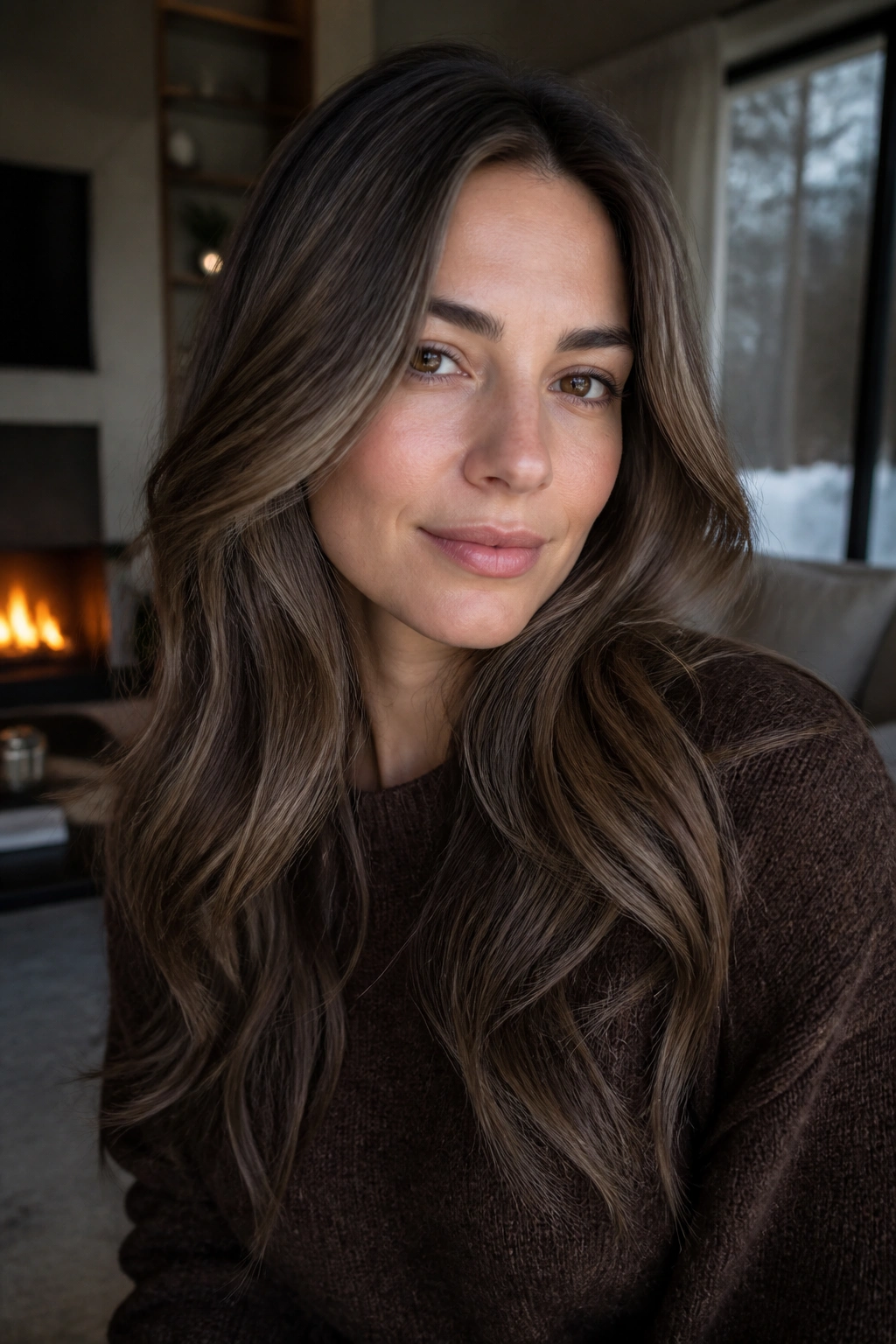
Want something cooler than chestnut but softer than ash brown? Mocha mushroom brown sits in that middle lane, and that’s exactly why it looks so good in winter. It keeps the dark brunette base, then cools it down with beige and taupe tones that read expensive under indoor light.
How to Ask for It
Say you want a neutral-cool level 4 or 5 brunette with no copper and no red. That little detail matters more than people think. If the color leans too warm, the whole thing stops looking mushroom and starts looking mocha in the café sense, which is a different mood.
This shade is especially kind to cool or olive skin. It also hides a fair amount of grow-out because the root and the color live in the same family. If your hair tends to hold onto warmth, your colorist may need to tone twice or use a cooler demi-permanent formula.
Dry hair can make mushroom tones look dusty. A light leave-in cream on damp hair helps more than people expect, and so does avoiding rough towel drying.
4. Chestnut Ribbon Lights
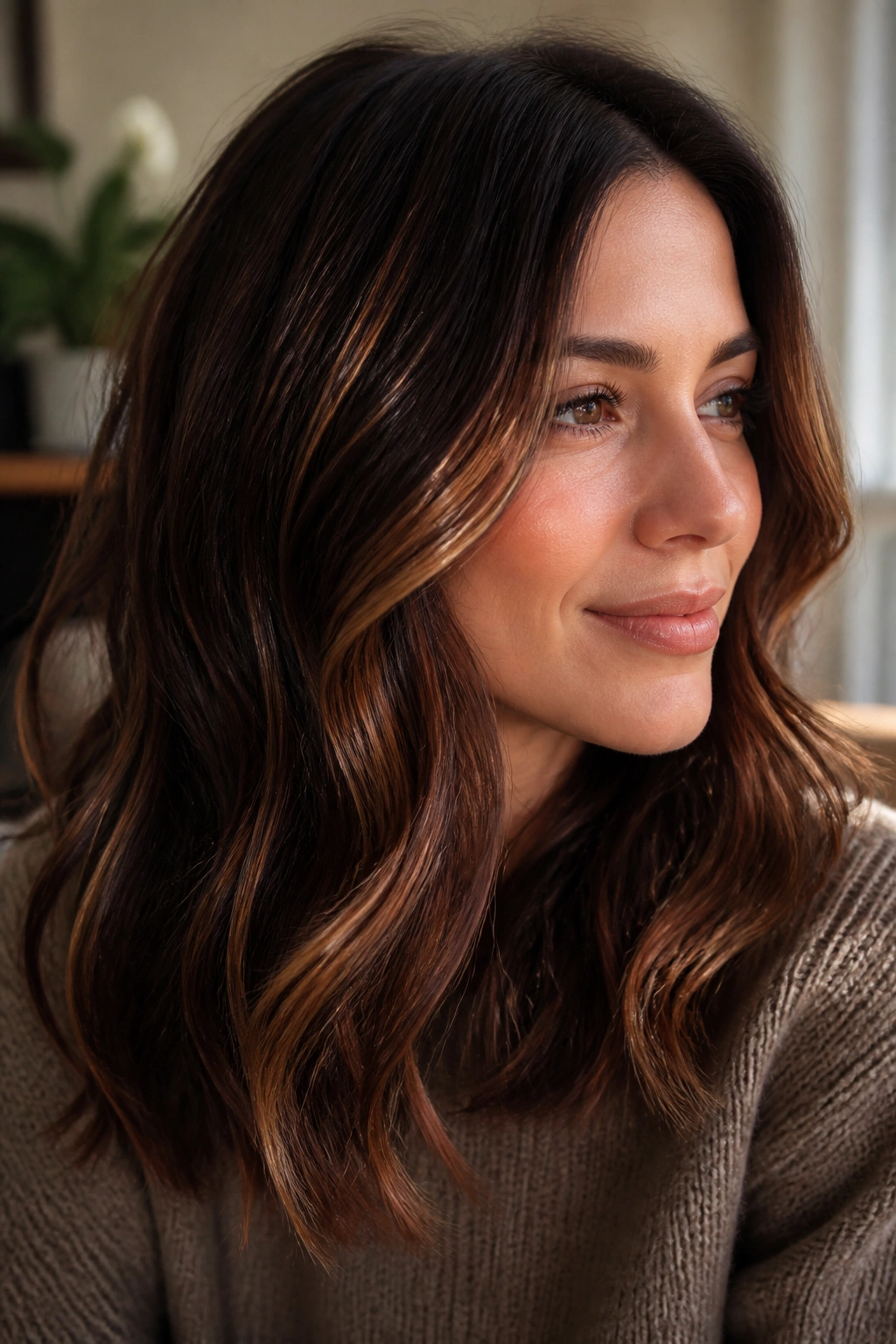
A client with dark brown hair and a closet full of black turtlenecks once told me she wanted her hair to look warmer without shouting for attention. Chestnut ribbon lights solved that problem in one appointment.
The shade works by threading warm chestnut pieces through a dark base, usually around the face and through the mid-lengths. Those ribbons are warmer than chocolate but not as coppery as cinnamon, so the hair keeps a brunette feel while picking up a soft auburn glow in the right light.
What Makes It Different
Chestnut is the shade that keeps dark brown hair from looking swallowed by winter clothes. It brings enough warmth to soften the face, but not so much warmth that the color starts competing with your skin tone. On curls, the dimension shows quickly. On straight hair, it looks cleaner and a little sleeker.
- Best on level 4 to 5 brunettes
- Looks strongest around layered cuts
- Grows out with less drama than full highlights
- Benefits from a warm gloss every 4 to 6 weeks
My advice: keep the ribbons sparse if you wear a lot of patterned clothing. Too much warmth can get noisy fast.
5. Cinnamon Brunette
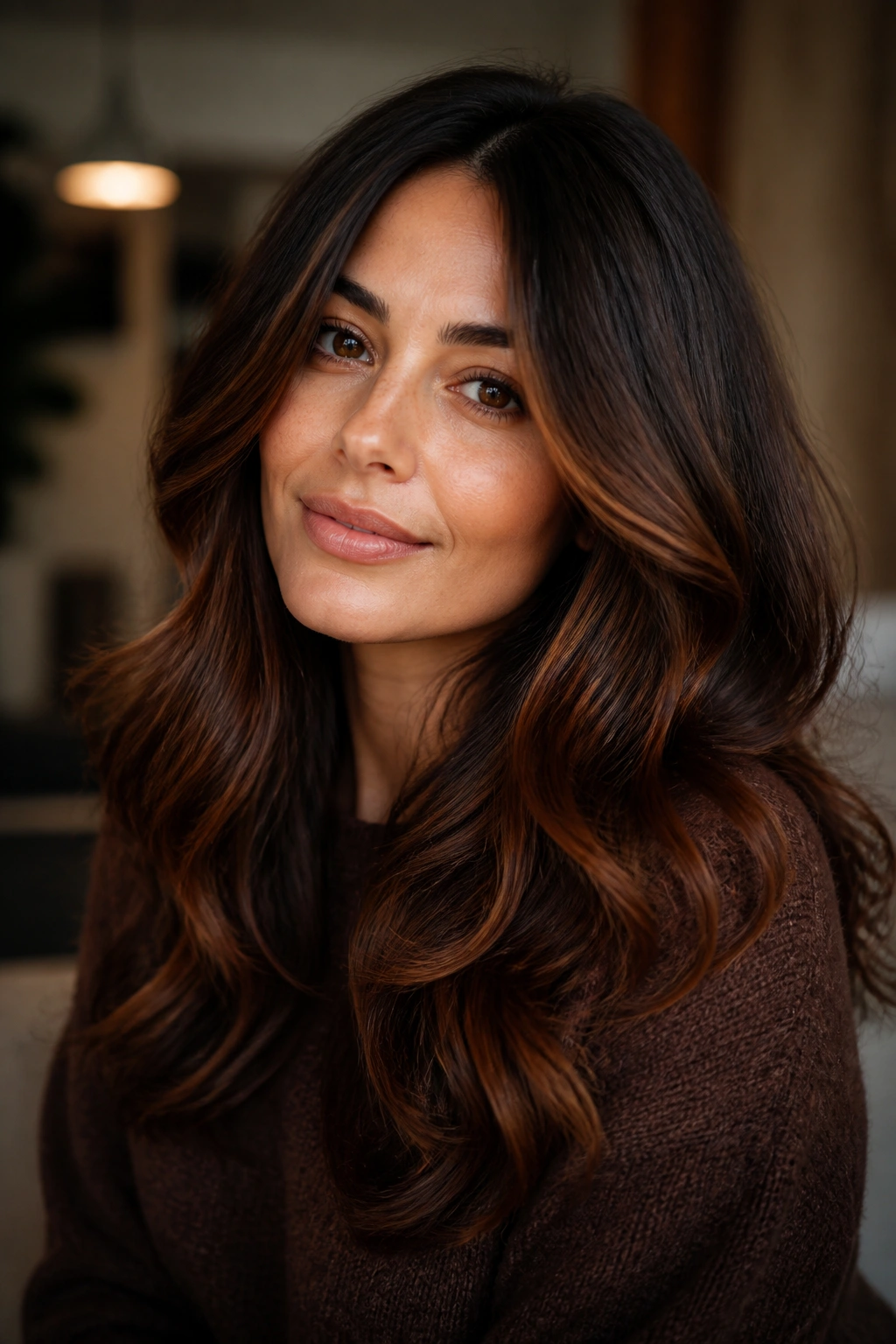
Cinnamon brunette is for the person who wants to feel a little brighter in winter without crossing into obvious red. The shade lives in that sweet spot where brown hair picks up a copper kiss, especially in sunlight, candlelight, or any harsh indoor light that would otherwise flatten the color.
The best version starts with a dark brown base and adds a translucent cinnamon glaze, not a heavy red dye. That matters. Heavy red can go loud fast, and then the color starts fighting every scarf and lipstick you own. A sheer glaze keeps the movement soft and believable.
I like this shade on warm undertones, peachy skin, and anyone whose natural hair already has a hint of gold. It can work on cooler skin too, but the red needs to stay muted. Ask for a brunette with copper-red reflect, not an auburn remake.
Red fades faster than brown, and that’s the price you pay for the warmth. Wash less often, use cooler water, and keep a color-depositing mask on hand if you want the cinnamon note to stay visible between salon visits.
6. Caramel Micro-Highlights
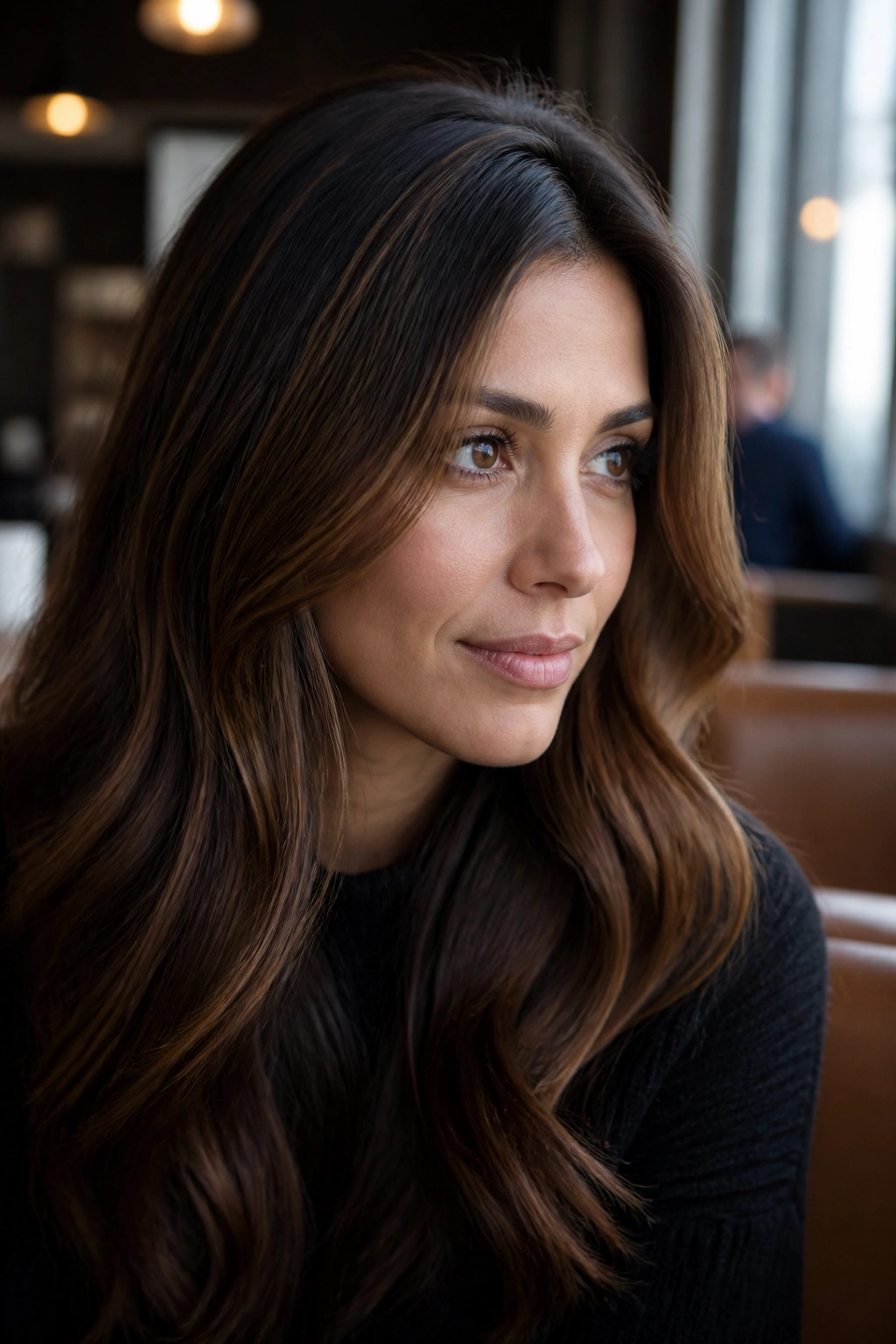
Caramel micro-highlights are the brunette version of good tailoring. They are small, precise, and easy to miss if you’re not looking closely, which is exactly why they work so well on dark brown hair in winter. A few fine caramel strands can lift the face without making the hair look streaky.
Unlike Chunky Highlights, These Stay Soft
The difference is in the weave. Micro-highlights use tiny sections, often around 1/16 to 1/8 inch wide, so the lightness disperses through the hair instead of sitting on top of it. That gives dark brown hair a soft glow around the hairline, part line, and crown.
They are especially good if your hair is fine or you hate strong contrast. Chunky highlights can split the hair into obvious bands. Micro-highlights blur into the base and make the brunette look fuller. That’s the part people notice, even if they can’t name it.
If you ask for this look, mention that you want caramel warmth rather than blond brightness. That tiny distinction saves you from landing in the wrong chair. A good colorist will place the lighter pieces where your hair naturally catches light and leave the underlayers deeper.
7. Smoky Ash Brown
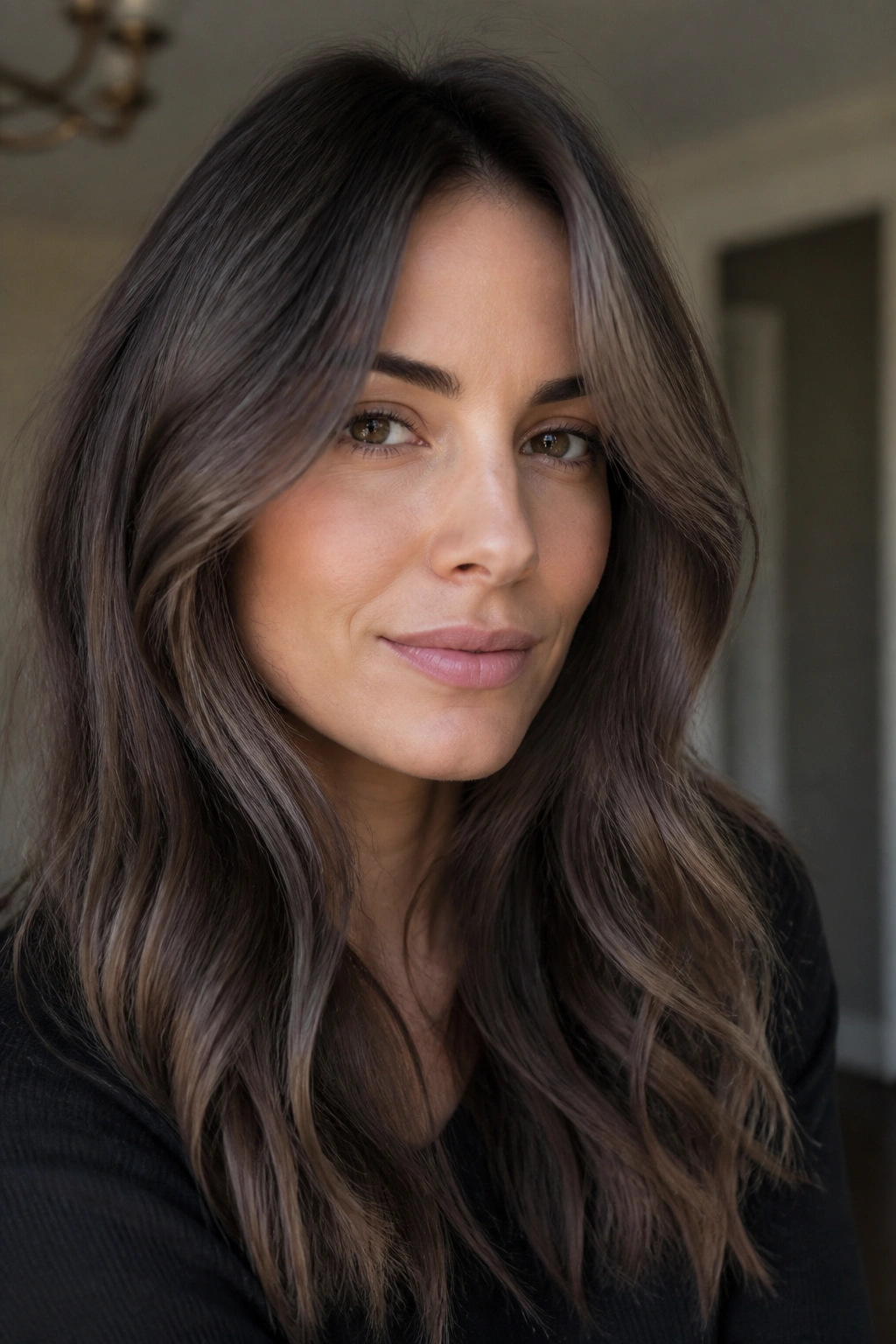
Smoky ash brown can look incredible on dark brunette hair, but it needs discipline. Too much ash and you get a drained, flat color. The right amount, though, gives the hair a cool, smoky edge that looks sharp against winter clothes and bare skin.
What to Watch For
Ash tones are unforgiving on porous hair. If your lengths have been lightened before, they can soak up cool pigment fast and turn slightly greenish or khaki if the formula is pushed too far. That’s why this shade is best handled with a careful demi-permanent glaze or a toner layered over a deep brown base.
A clean ash brunette often works best on neutral or cool skin tones. It can also make green or hazel eyes pop in a way warmer browns don’t. The look is less cozy and more polished. Not icy. Just cooler.
Good ask for the salon: a dark brown base with soft ash toning, plus one lowlight shade to keep depth at the root. That lowlight keeps the color from going chalky under indoor lighting.
Use this shade if you like a cooler, more editorial brunette. Skip it if your hair already looks dull when it’s dry.
8. Cherry Cola Brown
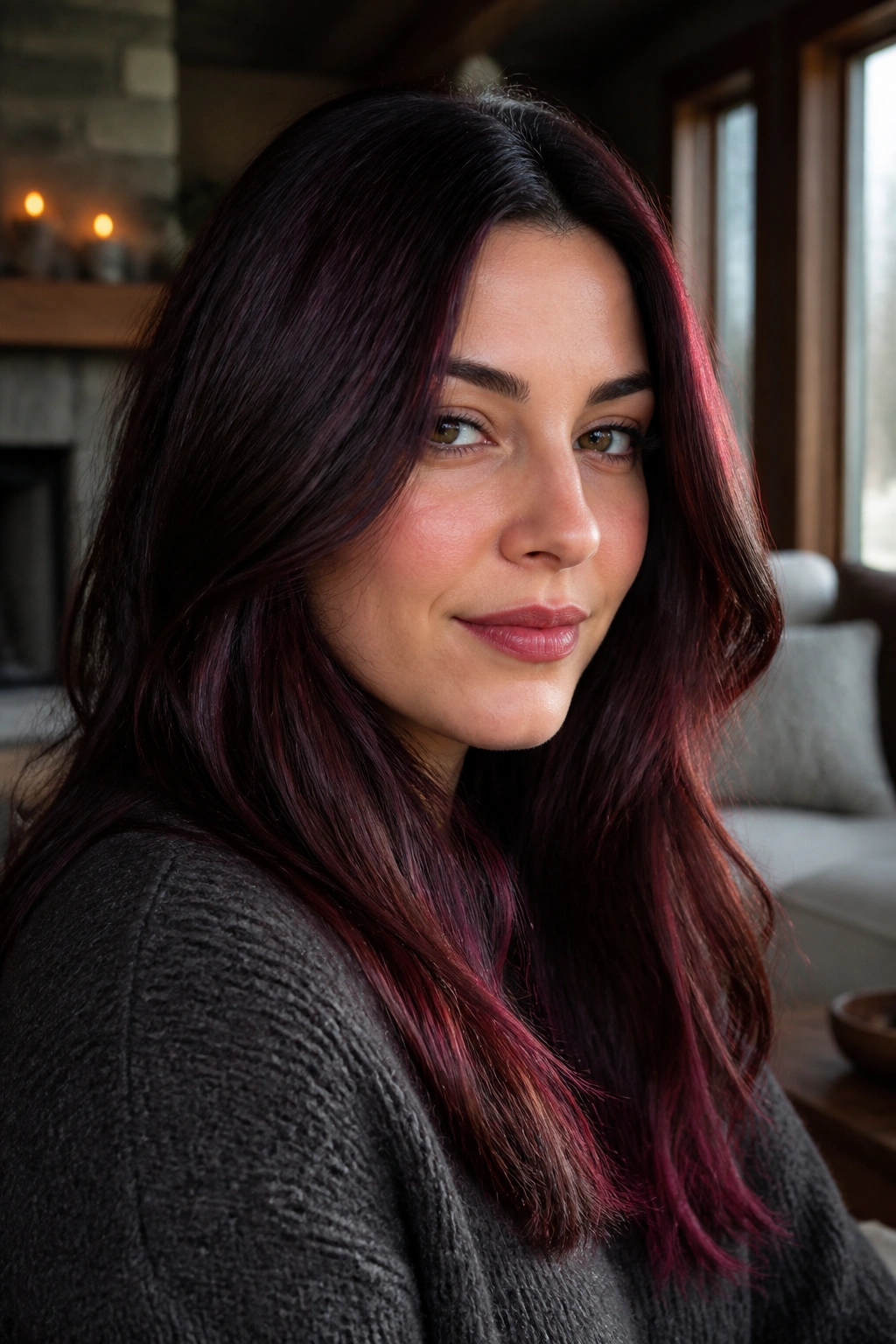
Cherry cola brown has one of the best payoffs of any winter brunette shade because it changes with the light. Under dim lighting it reads like deep brown. Outside, or near a bright window, a berry-red sheen starts showing through, and the whole color comes alive.
The Sensory Part Matters Here
It looks dark and smooth at first glance. Then you move, and the red-violet reflect shows up in the mid-lengths. That shift is why the shade feels richer than plain burgundy. The base stays brunette. The cherry note adds depth instead of shouting.
This color suits people who like darker makeup, glossy lips, or a wardrobe full of black, plum, and charcoal. It also flatters curls and waves more than pin-straight hair because the bends in the hair catch the red reflect in different places.
If you want to keep the tone true, ask for a deep brunette with a red-violet glaze, not a bright red overlay. A gloss every 4 to 6 weeks keeps the cherry note alive. If you wait too long, the red fades and the shade turns back into ordinary dark brown.
A small warning: hard water can dull this look fast, so a chelating shampoo every few weeks helps more than fancy styling products.
9. Hazelnut Money Piece
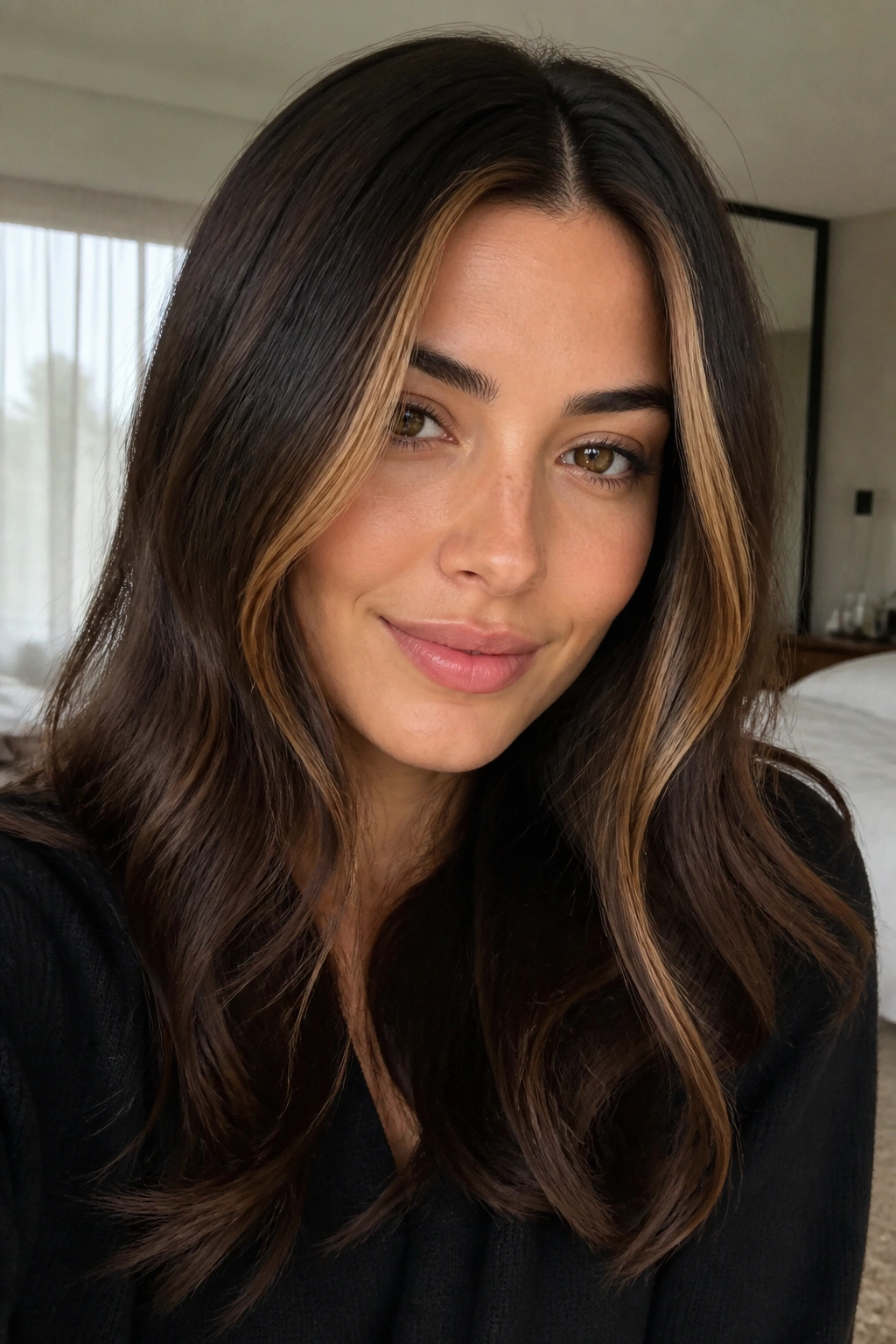
If you want a color change without committing to a full head of highlights, the hazelnut money piece is the cleanest way in. It’s a face-framing placement, usually two slim sections in front, that brightens the features without changing the rest of the dark brown base.
Why does this work so well? Because the eye goes straight to the face. A lighter strand at the cheekbone level can make a brunette look fresher in a second, and you don’t need a lot of lightness to get there. Hazelnut is a good choice because it’s warm, soft, and close enough to brown that it blends nicely.
How to Use It
- Keep the piece 1 to 2 shades lighter than the base.
- Ask for the lightest parts to sit near the front hairline and maybe the first curl or wave.
- Pair it with a center part if you want a clean, modern feel.
- Pair it with curtain bangs if you want the brightness spread out.
This is a strong pick for people who want something noticeable but not high maintenance. The grow-out is easier than full highlights, and a single ribbon of money-piece color can carry a whole look through winter.
10. Toffee Balayage
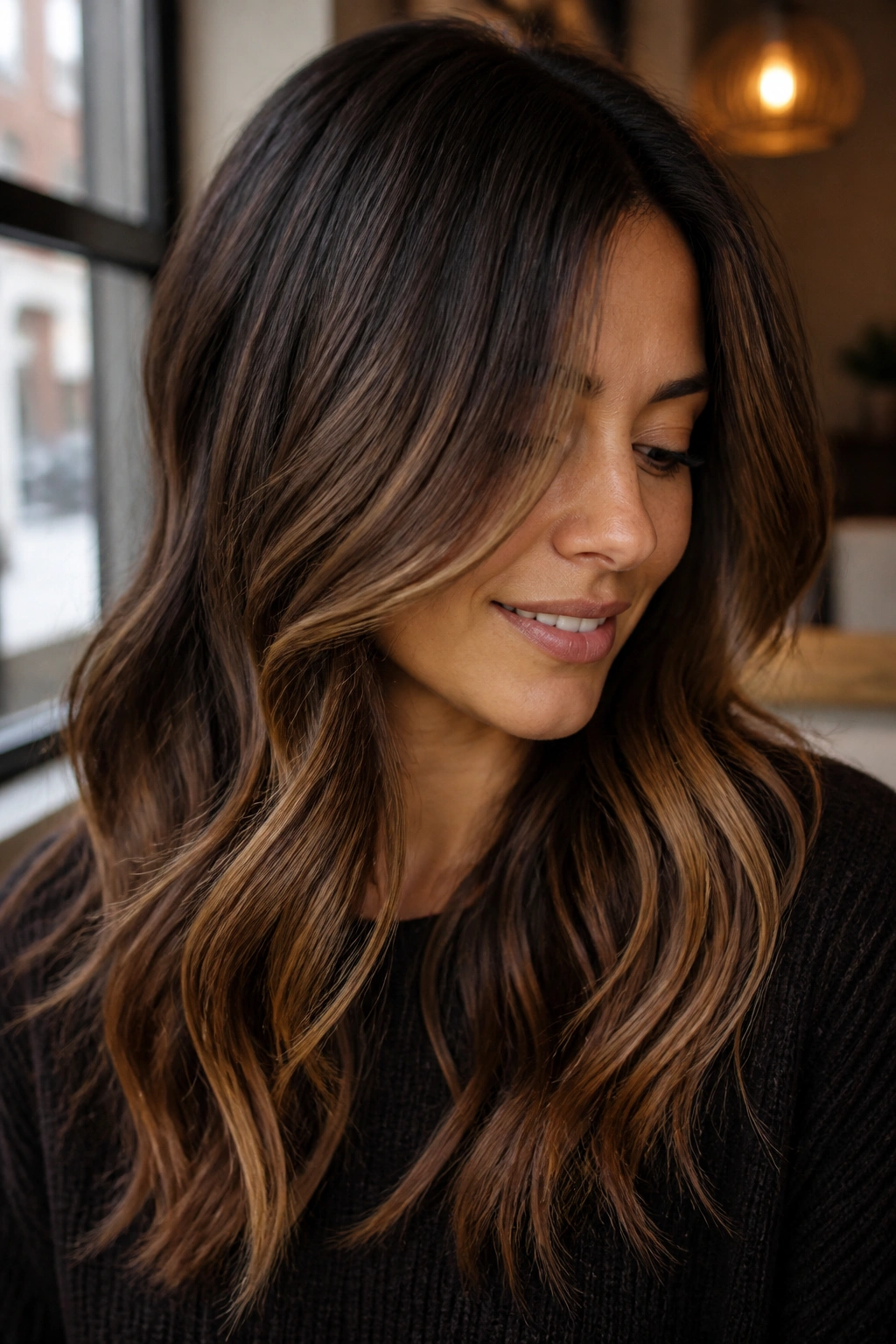
Toffee balayage reads softer than caramel and sweeter than honey, which is why it looks so good on layered dark brown hair. The warmth sits a little deeper, so the contrast feels cozy instead of sharp. That matters when the rest of your wardrobe is already leaning heavy and textured.
I’ve always liked toffee on hair with movement. Long layers, loose waves, shoulder-length cuts — all of those shapes let the lighter pieces bend around the face and ends instead of disappearing into the base. On very straight hair, the effect can look more restrained, which is not a bad thing. It just changes the mood.
How to Keep It from Turning Orange
Toffee can drift warm fast if your hair pulls brass. A blue-based brunette shampoo once a week helps keep the tone closer to caramel-beige and less like copper. That matters most on hair that lifts quickly or on ends that have seen a few color appointments already.
A good colorist will leave the root area deeper and paint the light pieces through the middle and lower sections. That keeps the shade grounded. If the brightness starts too high at the root, the whole thing can look early-summer instead of winter.
This is a strong option if you want dimension but still want the hair to look like brown hair first.
11. Walnut Brown Lowlights
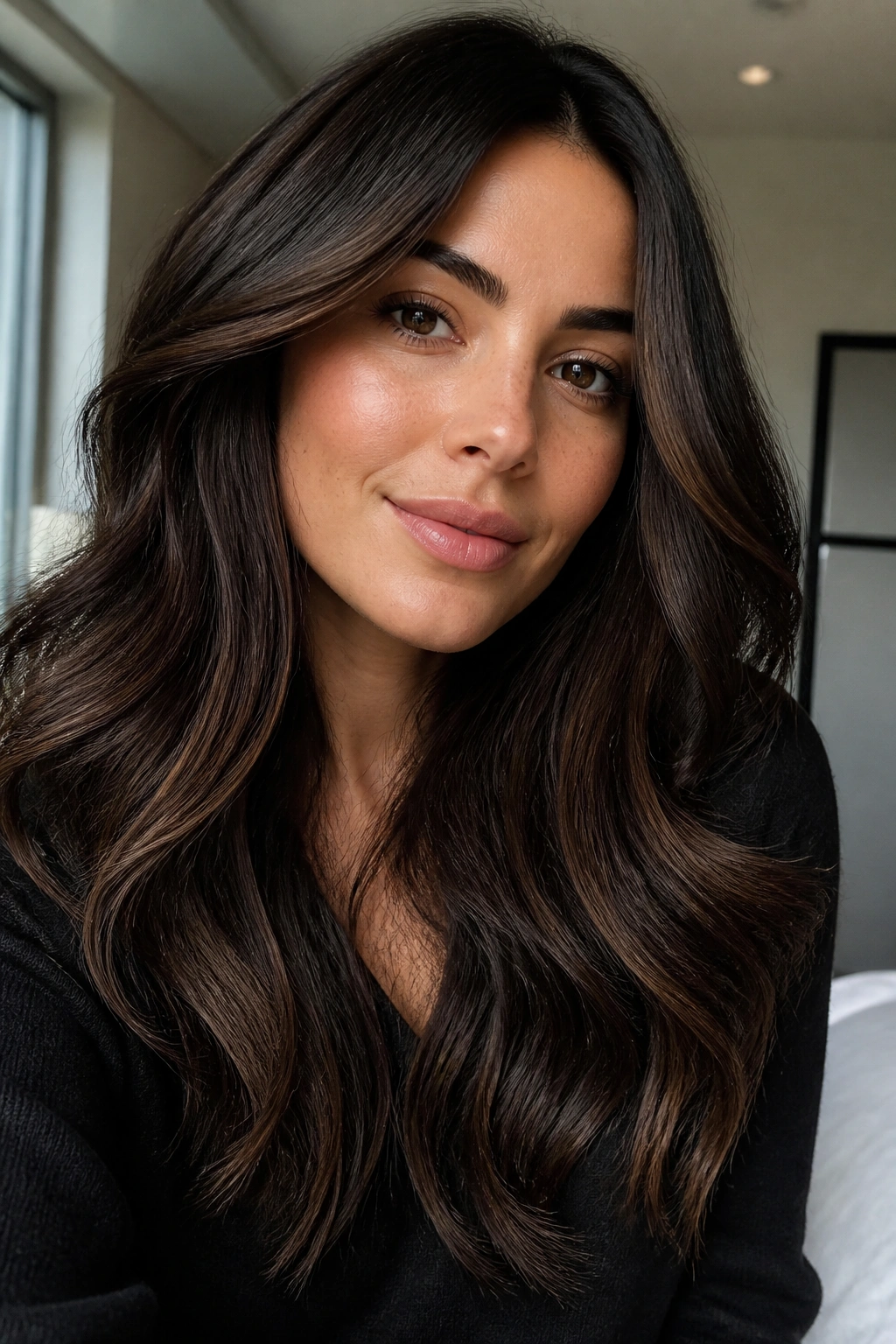
Walnut lowlights are the brunette trick most people overlook. Everyone talks about highlights, but darker strands can do just as much work, sometimes more. On dark brown hair that has gone a little washed out or too uniform, walnut lowlights put shadow back where it belongs.
Unlike highlights, lowlights make the hair look denser. They create pockets of depth between the lighter pieces, which is a nice fix for fine hair or long hair that has lost some fullness at the ends. The result feels plush instead of streaky.
A colorist will usually add these deeper pieces underneath the top layer and through the mid-shaft, often in panels about 1/2 inch wide or smaller. That keeps the top looking dimensional without turning the whole head dark. If your hair is already very deep brown, walnut lowlights can still work by adding cool richness rather than obvious contrast.
This shade is for people who want brunette hair to look thicker and more expensive, not louder. It’s also one of the easiest ways to rescue a color that has gone a bit too light or too faded.
12. Burgundy Brown Melt
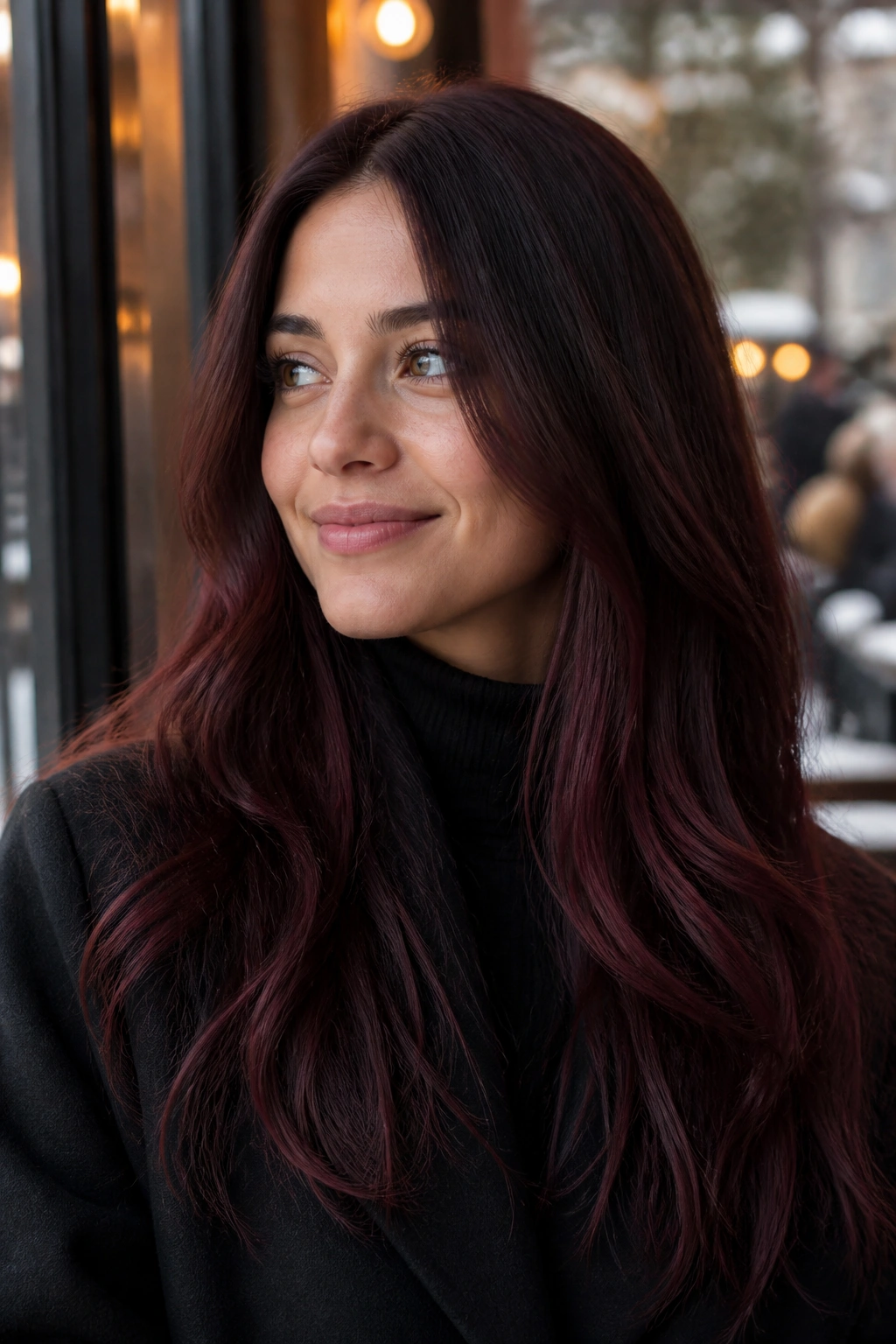
Burgundy brown melt is what happens when dark brown hair decides it wants a little attitude. The shade starts with a brunette base, then melts into burgundy and merlot tones through the mids and ends. It’s rich, a little moody, and far easier to wear than a full-on red.
The color looks especially good on wavy hair because every bend in the hair catches a different part of the red-brown reflect. Straight hair wears it too, but the effect is more subtle and glossy. Either way, the shade has that winter-appropriate depth that works well with black coats, silver jewelry, and darker makeup.
One thing to know: red-violet tones fade faster than neutral brown. If you choose burgundy brown, expect to refresh the gloss more often than you would with espresso or walnut. That’s not a flaw. It’s part of the trade.
A pre-color fill can help if your hair is very dark and resistant, since burgundy sits better when the base has enough warmth to hold the tone. If that sounds fussy, it is a little fussy. Still worth it if you love the color.
13. Bronze Glaze
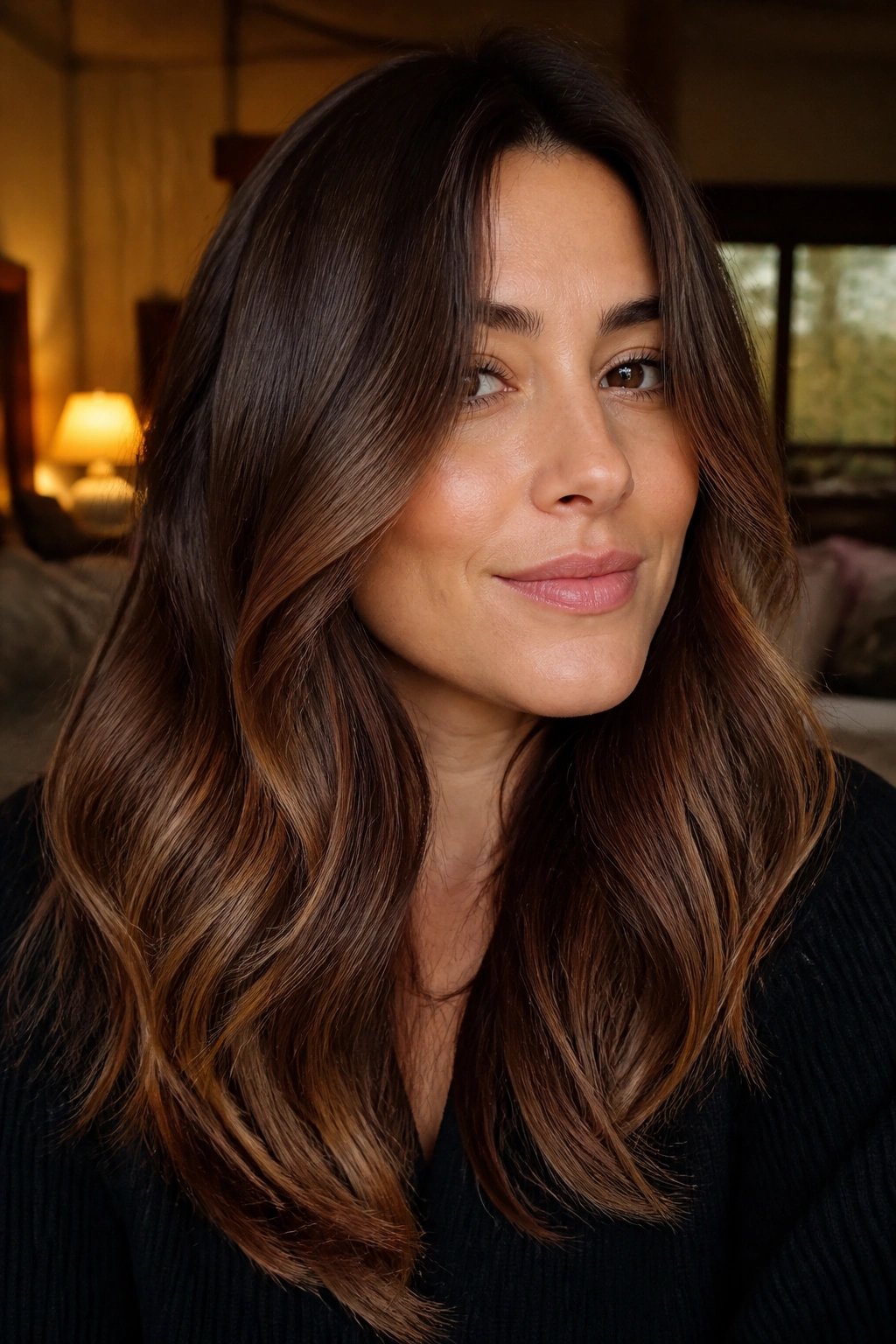
Bronze glaze is underrated on dark brown hair because it adds warmth without making the hair look golden or orange. The best version feels metallic in a soft way, not in a costume way. Under lamps or window light, the brown shifts into a bronzy sheen that warms up the whole face.
Best Placement
I like bronze on the mid-lengths and ends, especially on hair with layers. That’s where the movement lives, and that’s where the glaze shows the most. Keep the root darker so the color still reads brunette first. If the bronze starts at the scalp, the effect can feel too open and lose that winter depth.
Warm and neutral skin tones tend to wear bronze easily, but cooler skin can handle it too if the bronze stays muted. The mistake is choosing a gold tone that’s too bright. A soft bronze is richer. A bright gold can look brassy fast.
A demi-permanent glaze every 4 to 6 weeks keeps the shine in place without a big commitment. This is a smart pick if you want your dark brown hair to look healthier and warmer in low light. It’s the kind of color that quietly does its job.
14. Iced Cocoa Brown
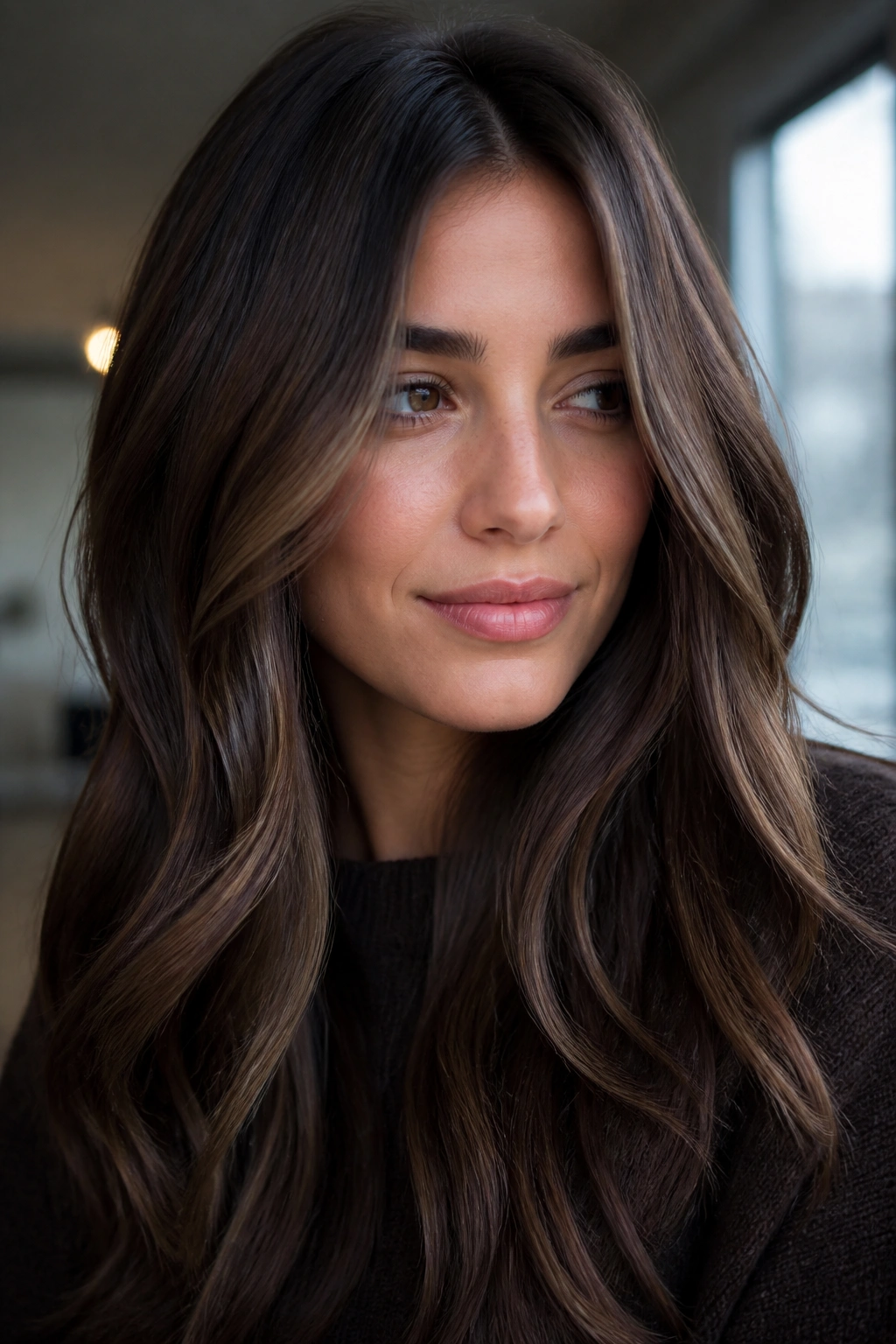
Why do some cool brunettes look muddy instead of sleek? Usually because the tone is too flat or the contrast is too soft. Iced cocoa brown avoids that problem by keeping a deep cocoa base and layering in cool beige reflection that still has life.
This is not ash brown. It is softer than that. Nor is it a warm mocha shade. The coolness is there, but it feels polished rather than gray. That balance makes it a good fit for people who want a dark brown winter color without any red showing through.
I like this shade on medium skin, cool skin, and anyone who wears a lot of black, navy, or crisp white. It has a clean look that pairs well with simple clothes. On curly hair, the color can look even richer because the bends keep the cool and warm sections from blending too much.
Ask for: a cocoa brunette base with muted beige toning and subtle lowlights around the crown. If the hair has strong orange undertones, your colorist may need to neutralize first before applying the final glaze.
The maintenance is moderate. Not hard. Just enough to keep the tone from drifting warm.
15. Plum-Tinted Brunette
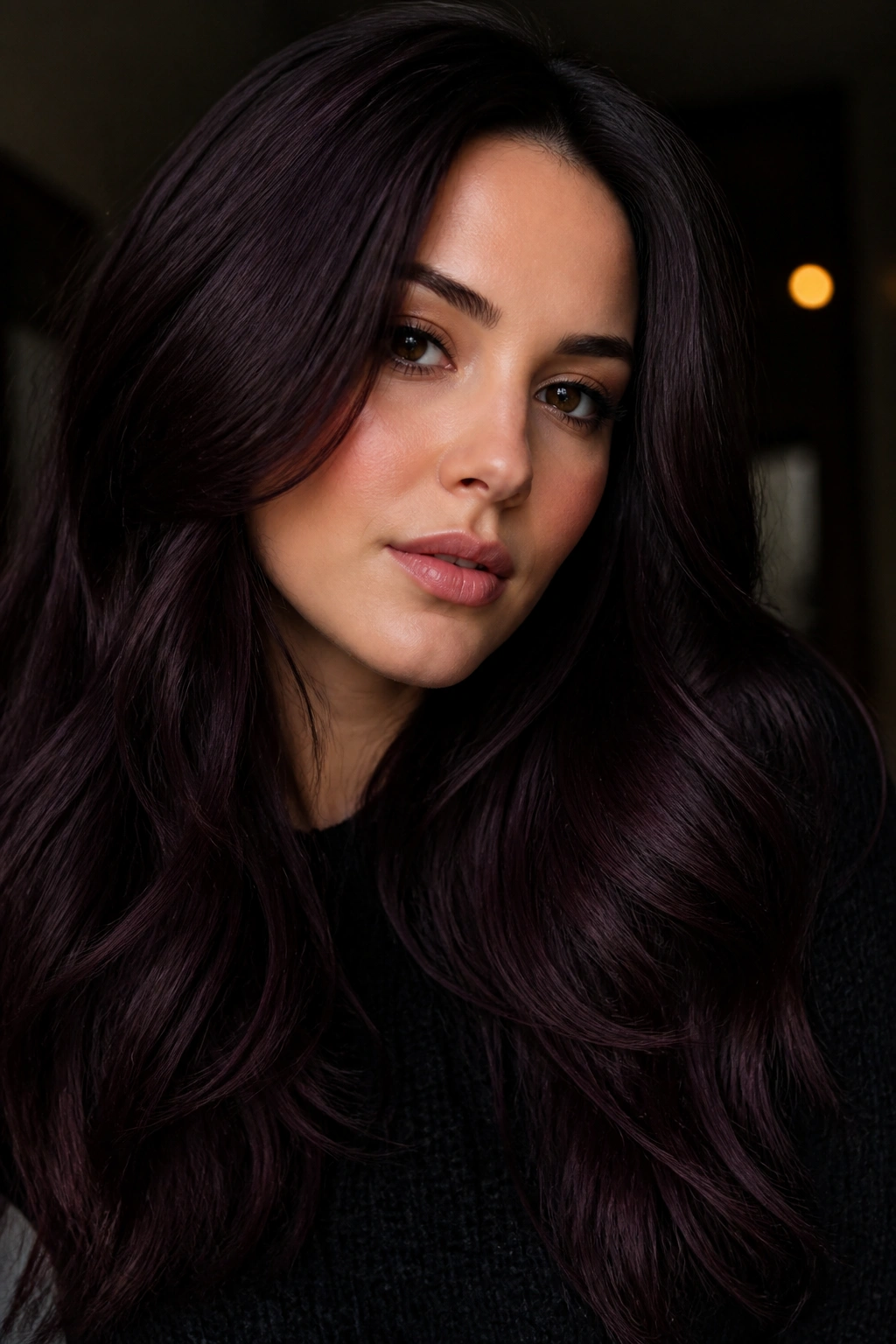
A plum-tinted brunette is one of those colors that people notice without always knowing why. The base stays dark brown, but the undertone shifts toward plum or violet in a very muted way. The result is dark, moody, and a little unusual in the best sense.
A Small Story, Then the Point
I’ve seen this shade work especially well on people who are bored with plain brunette but do not want red hair. It has that quiet surprise factor. In indoor light it looks like a very good brown. In darker spaces, the plum note comes forward and gives the color a softer, cooler edge.
- Best on naturally dark or medium-dark brunettes
- Easy to blend into a single-process base
- Works well with straight hair and loose curls
- Needs a violet-rich gloss to stay true
The key is restraint. Too much violet and the color starts to read purple. Too little and you lose the effect entirely. A colorist who understands muted fashion tones will usually get this right on the first try.
If you’re wearing berry lipstick, silver hoops, and dark knit layers, this shade makes a lot of sense. It’s one of the most interesting dark brown hair color ideas for winter because it feels seasonal without turning theatrical.
16. Soft Mushroom Brunette with Babylights
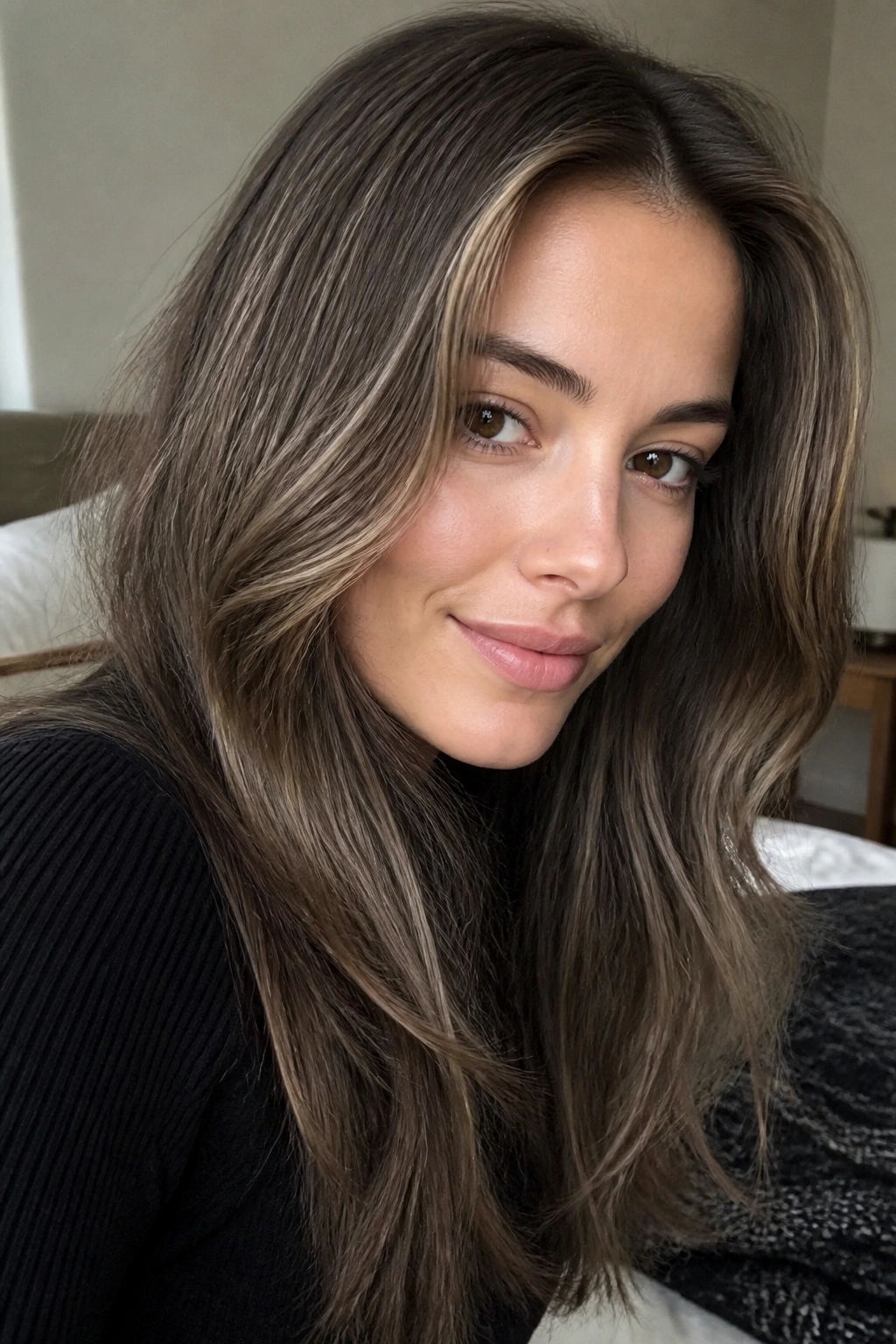
Soft mushroom brunette with babylights is the kind of color that looks easy but takes real precision. The base stays cool and earthy, while the babylights — ultra-fine, delicate light pieces — keep the hair from reading as one solid block. That contrast is tiny, and that’s exactly the point.
What Makes It Different
Babylights are thinner than standard highlights, usually woven in fine sections around the hairline, part, and top layer. On dark brown hair, they create a faint shimmer rather than a big color shift. The mushroom tone underneath keeps the whole look grounded and modern.
This is a good answer for someone who likes understated color but still wants movement around the face. It works especially well if you wear your hair down a lot. Scarf season, high necklines, and dark coats can all make brunette hair disappear; these small lighter pieces pull it back into view.
A mushroom brunette can go flat if the toner is too cool and the base is too dull, so the best version keeps a little beige in the mix. Not much. Just enough to avoid a dusty finish.
If you want a color that grows out cleanly and still looks thoughtful, this is one of the easiest bets.
17. Black Cherry Espresso
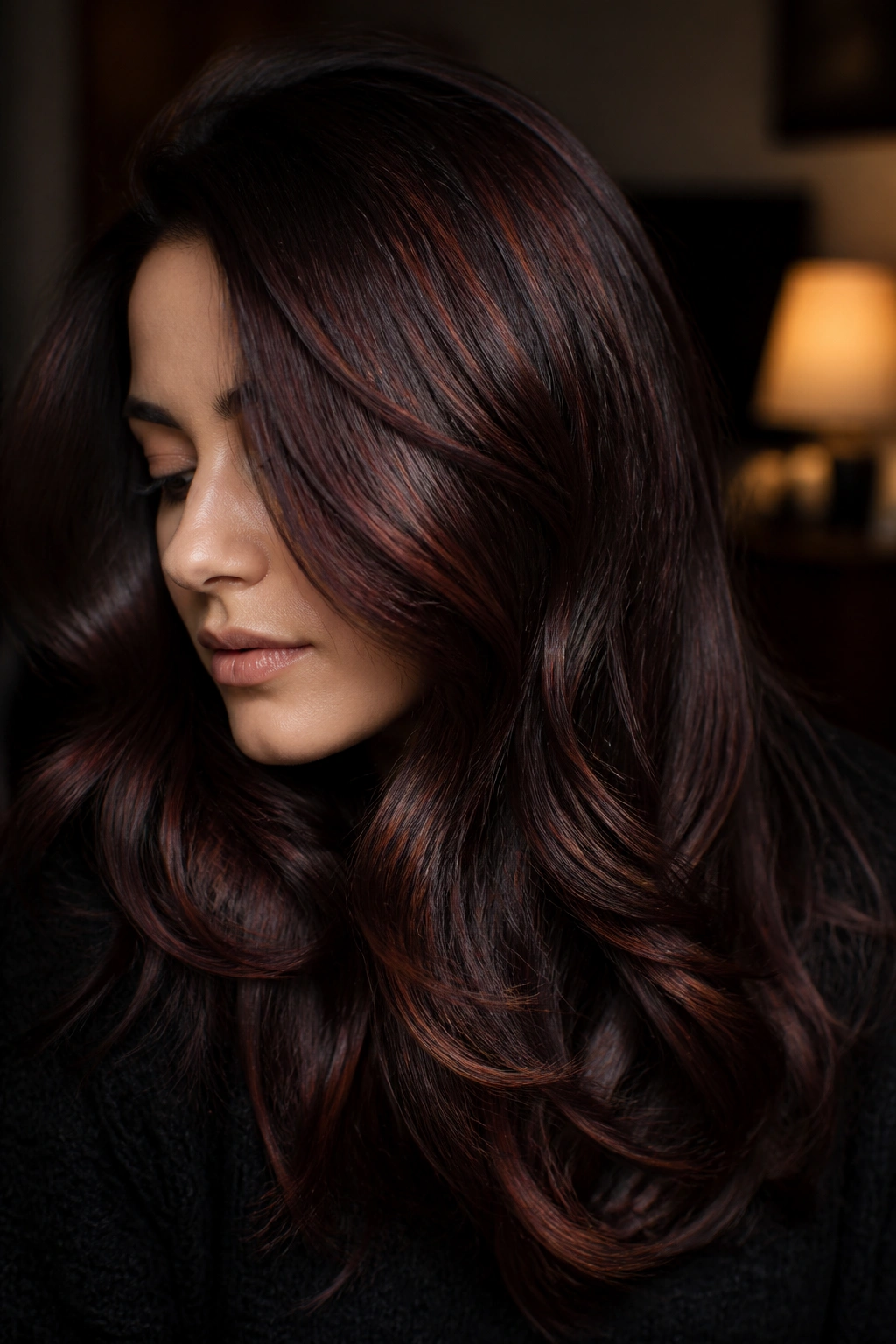
Black cherry espresso is for the person who wants dark brown hair that feels almost black, but with a hidden red reflect that shows up only when the light hits right. It’s deep, dramatic, and surprisingly wearable because the cherry note stays tucked inside the darkness.
The shade works especially well in winter because it loves low light. In a dim room it looks sleek and intense. In brighter light, the red-brown tone slips out just enough to keep the color from looking flat. That little shift is doing a lot of work here.
I’d choose this for someone who likes a strong brunette and wants a touch of drama without committing to a full red. It flatters glossy blowouts, soft curls, and blunt cuts in different ways, though I think it looks especially good on hair with some shape at the ends.
A dark cherry glaze over espresso brown gives the best balance. If your hair is naturally porous, ask for a strand test first; red reflects can go stronger on damaged lengths than you expect. That’s the part most people miss.
If you want one shade that feels richest at the end of winter, this is the one I’d put near the top of the stack.
