



Brown hair can go wrong in two familiar ways: it turns flat, or it turns muddy. The sweet spot sits in between, where the color looks deep at the roots, warm through the mids, and glossy enough that it still has life when the light changes.
That’s why the most flattering brown shades usually have a second note in them. A little caramel. A trace of copper. A gold-beige gloss. Something has to break up the block of brown, even if the change is so subtle that nobody can name it right away. That quiet movement is what makes the color feel rich instead of heavy.
And warmth does a lot of work here. It softens the face, makes the hair look shinier, and keeps brunette shades from reading harsh under indoor light. The trick is choosing the right kind of warmth for your base, your haircut, and how much upkeep you actually want to deal with.
1. Chestnut Brown Hair Color Ideas With Caramel Ribbons
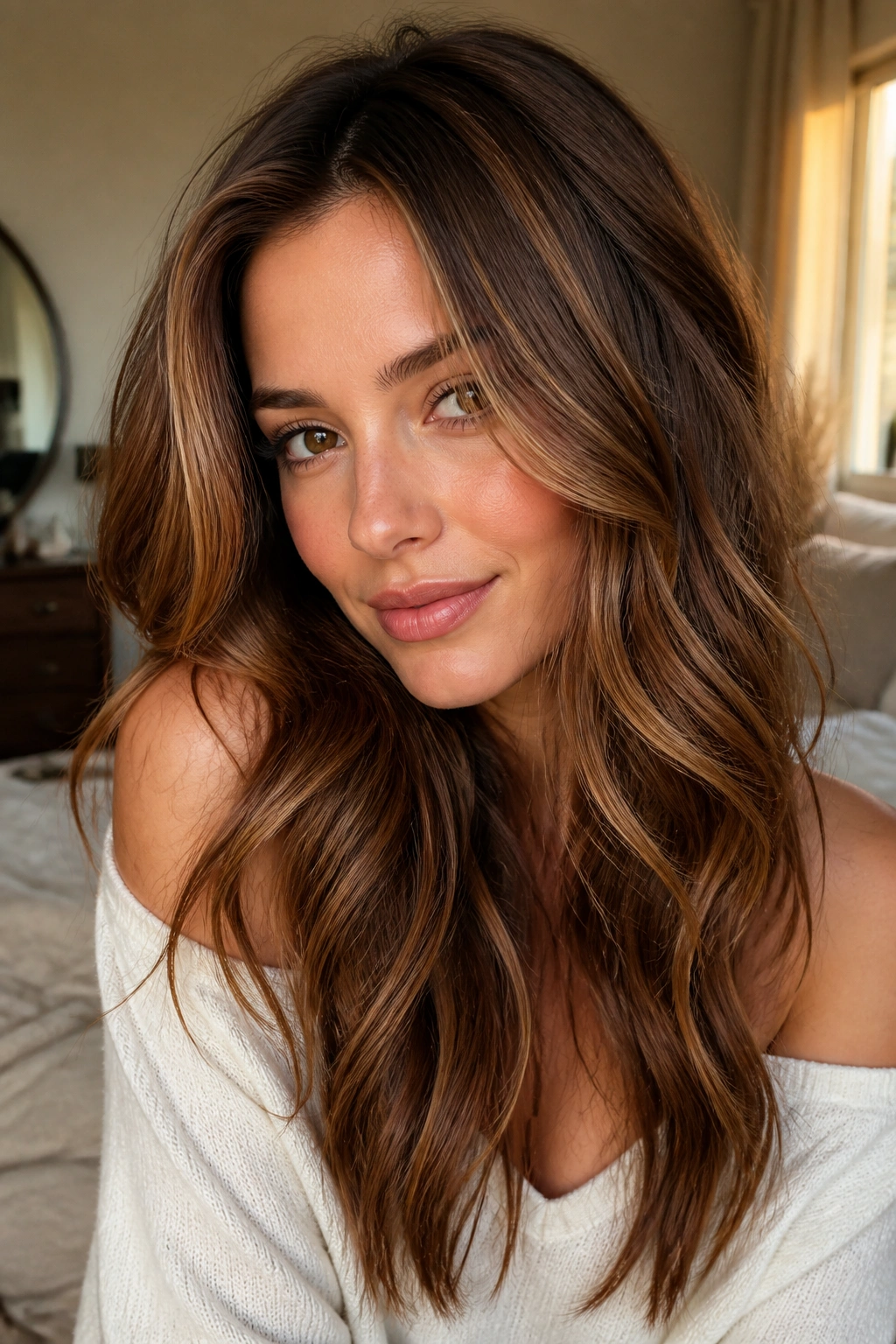
Chestnut brown is the shade I reach for when someone wants warmth without sliding into copper territory. The base has that roasted, earthy brown look, and the caramel ribbons keep it from going dull.
Why It Feels So Polished
The key is contrast that stays inside the warm family. Ask for level 4 or 5 chestnut brown with caramel ribbons about 1/4 inch wide, placed mostly around the face, crown, and top layer. That gives you movement without turning the whole head streaky.
- Best on medium to thick hair
- Works well on layered cuts and long bobs
- Looks strongest in waves or a loose blowout
- Needs a gloss every 6 to 8 weeks to stay shiny
If your hair is fine, keep the ribbons fewer and slightly wider. Too many tiny highlights can make chestnut brown look busy.
2. Espresso Brown Hair Color Ideas With Honey Ends
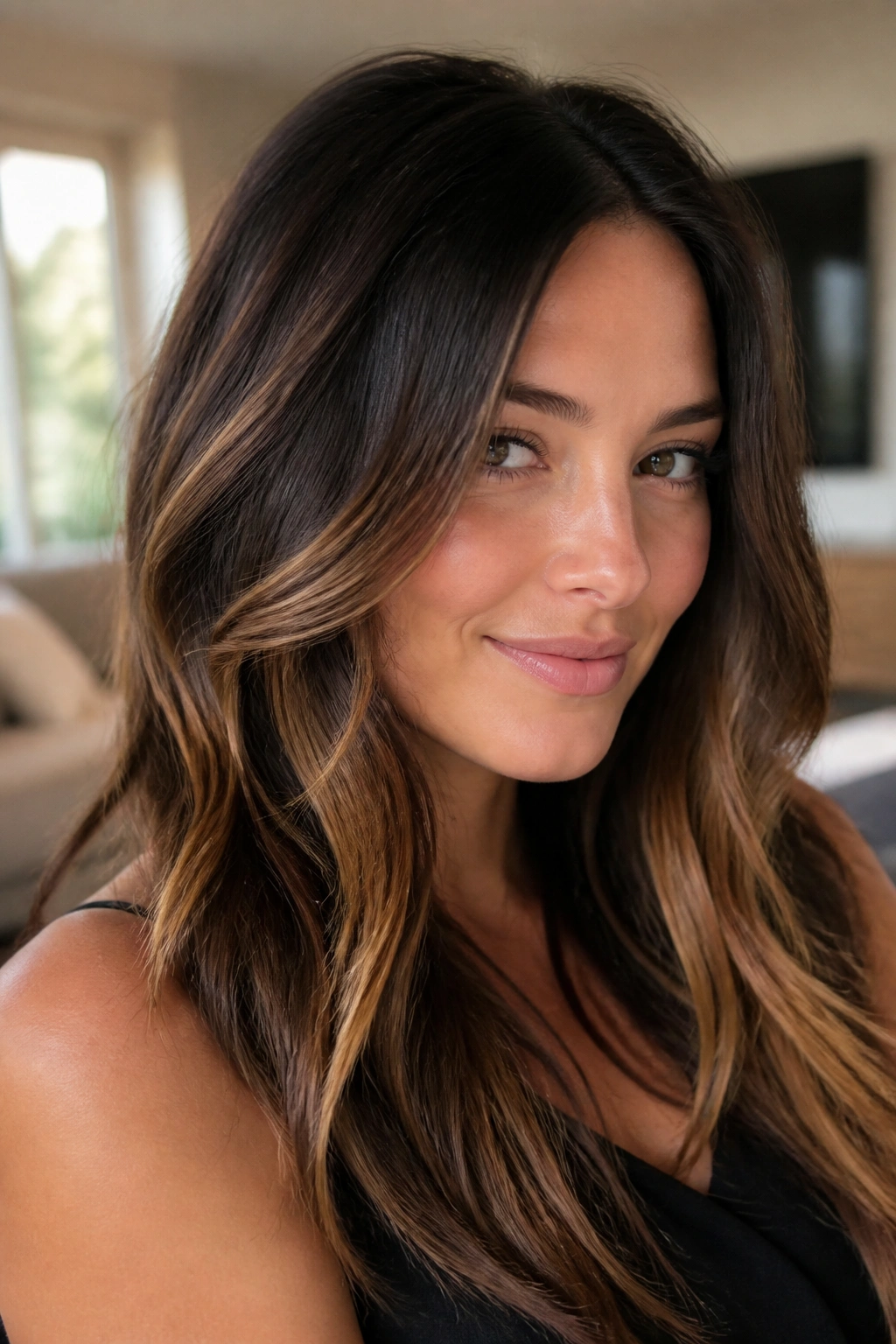
Deep brown does not have to feel heavy. Espresso brown with honey ends keeps the root area dark and grounded, then lets the lighter warmth build only where the hair moves.
The trick is balance. Too much honey near the scalp can look stripy; too little at the ends and you miss the point. I like this on longer hair, especially if the cut has soft layers or a rounded edge. The darker top half gives you density, and the honey through the last few inches catches light in a way that feels lived-in, not loud.
Ask for a deep espresso base at the root and mids, then a soft honey melt from ear level down. A root shadow helps the color grow out cleanly. This is one of those shades that looks expensive without trying hard.
3. Chocolate Cherry Brown Hair Color Ideas
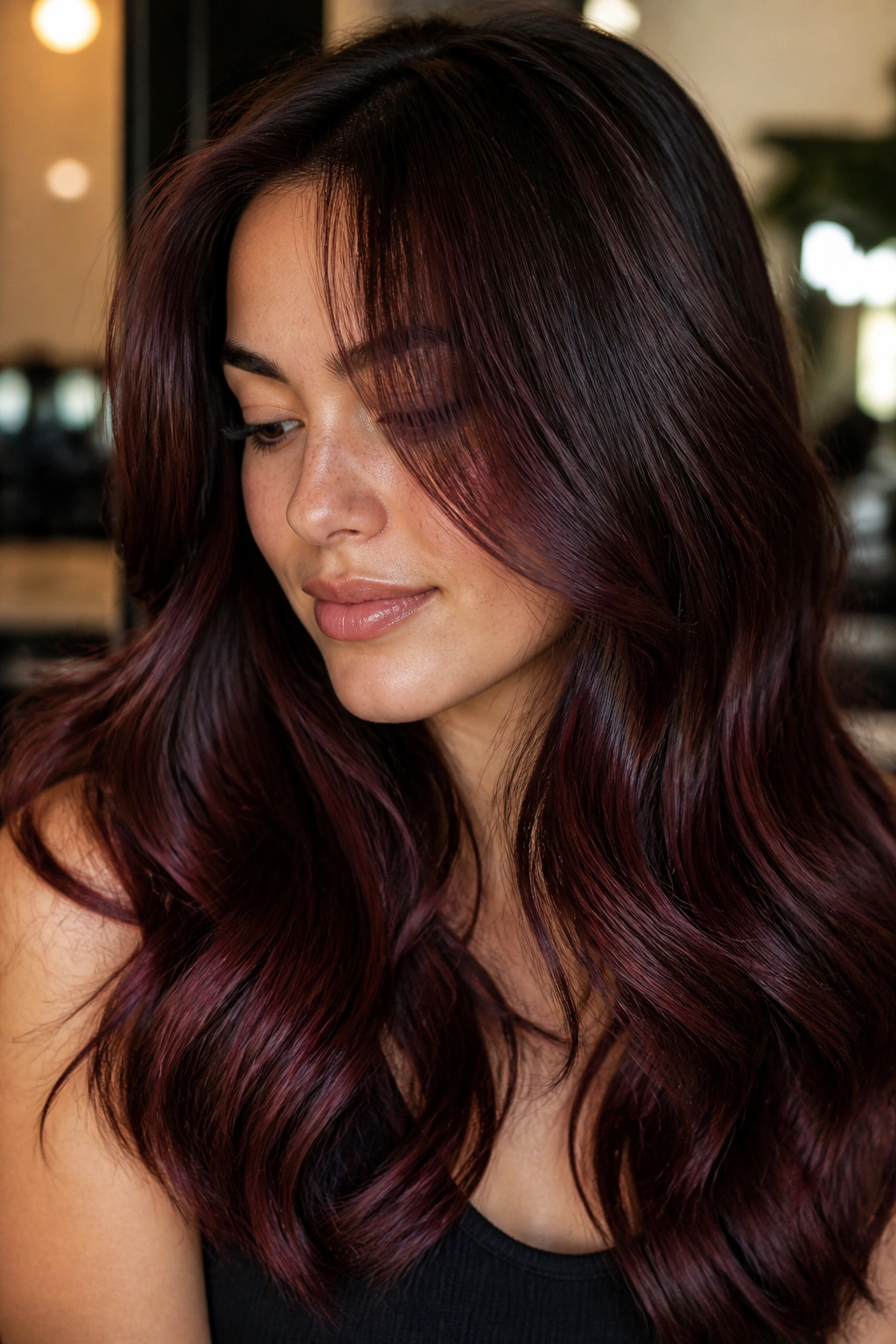
Why does chocolate cherry brown look so rich? Because it sits right at the edge of brunette and red, which gives the hair a plush, almost velvet quality. It is brown first, red second, and that order matters.
The color works because the cherry note is tucked under the brown instead of sitting on top of it. Indoors, it reads like a deep brunette. Outside, you catch that wine-red reflection when the hair moves. That shift is the whole point.
How to Wear It
If you want it soft, ask for a level 4 chocolate base with a red-violet gloss rather than full permanent red. On curly or wavy hair, the reflection shows up in the bends. On straight hair, it looks smoother and darker.
This shade is a smart pick for anyone who wants warmth but does not want obvious copper. It has more depth than auburn and less brightness than cinnamon.
4. Golden Walnut Brown
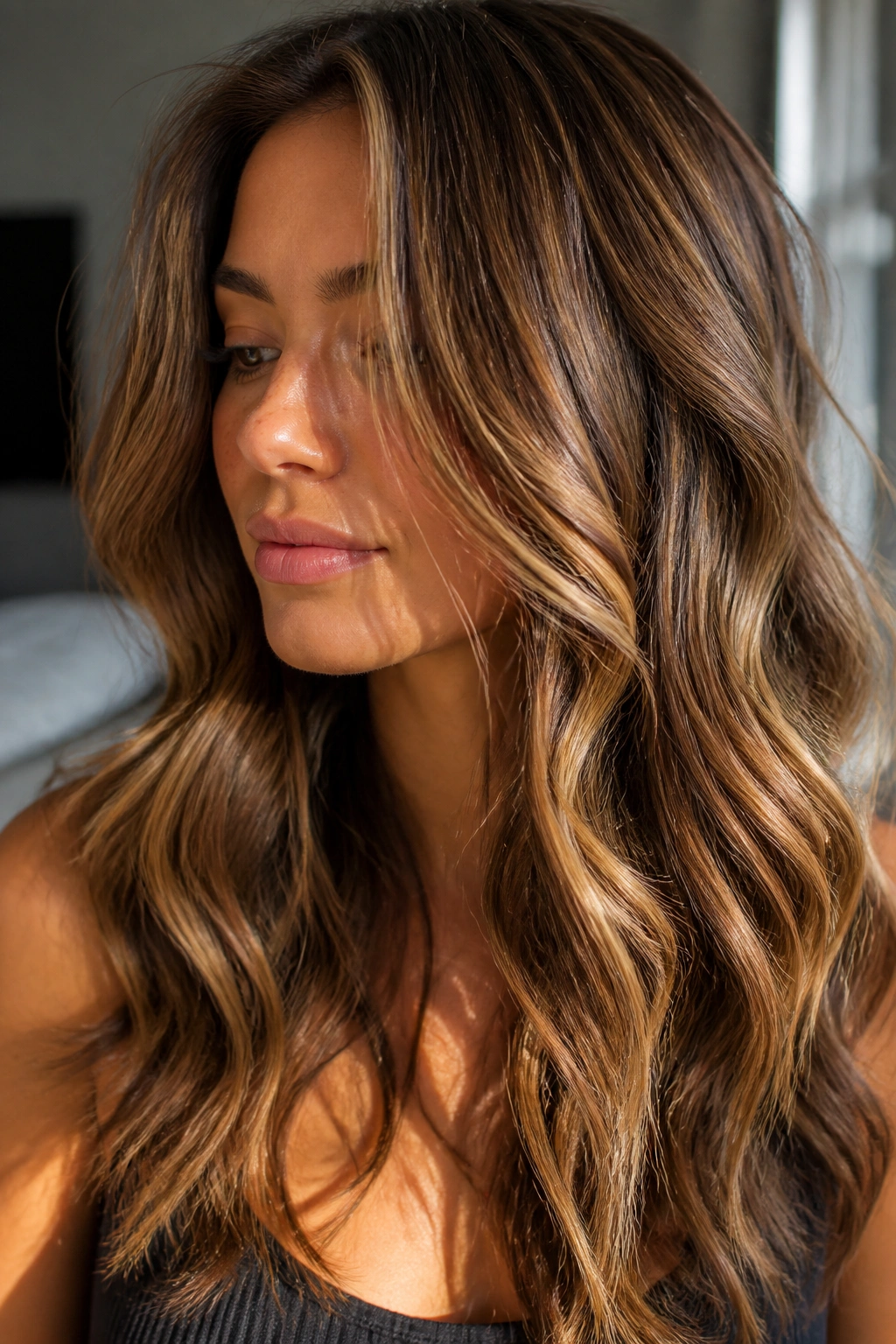
Picture a brown that looks like toasted nuts and warm wood. That is golden walnut brown, and it has a way of making even simple haircuts look finished.
The color lives in the middle range, which is part of the appeal. It is not so dark that it swallows detail, and not so light that it turns golden blonde by accident. The warmth sits in the reflect, not in chunky pieces.
What Makes It Different
- Ask for a level 5 walnut base
- Add gold-beige hand-painted pieces through the top layers
- Keep the lightest strands around the face and collarbone
- Pair it with soft curls or a blowout for the strongest effect
A small gloss treatment goes a long way here. Golden walnut brown can lose its shine fast if the hair is porous. A neutral-beige glaze keeps it looking smooth instead of brassy.
5. Cinnamon Mocha Balayage
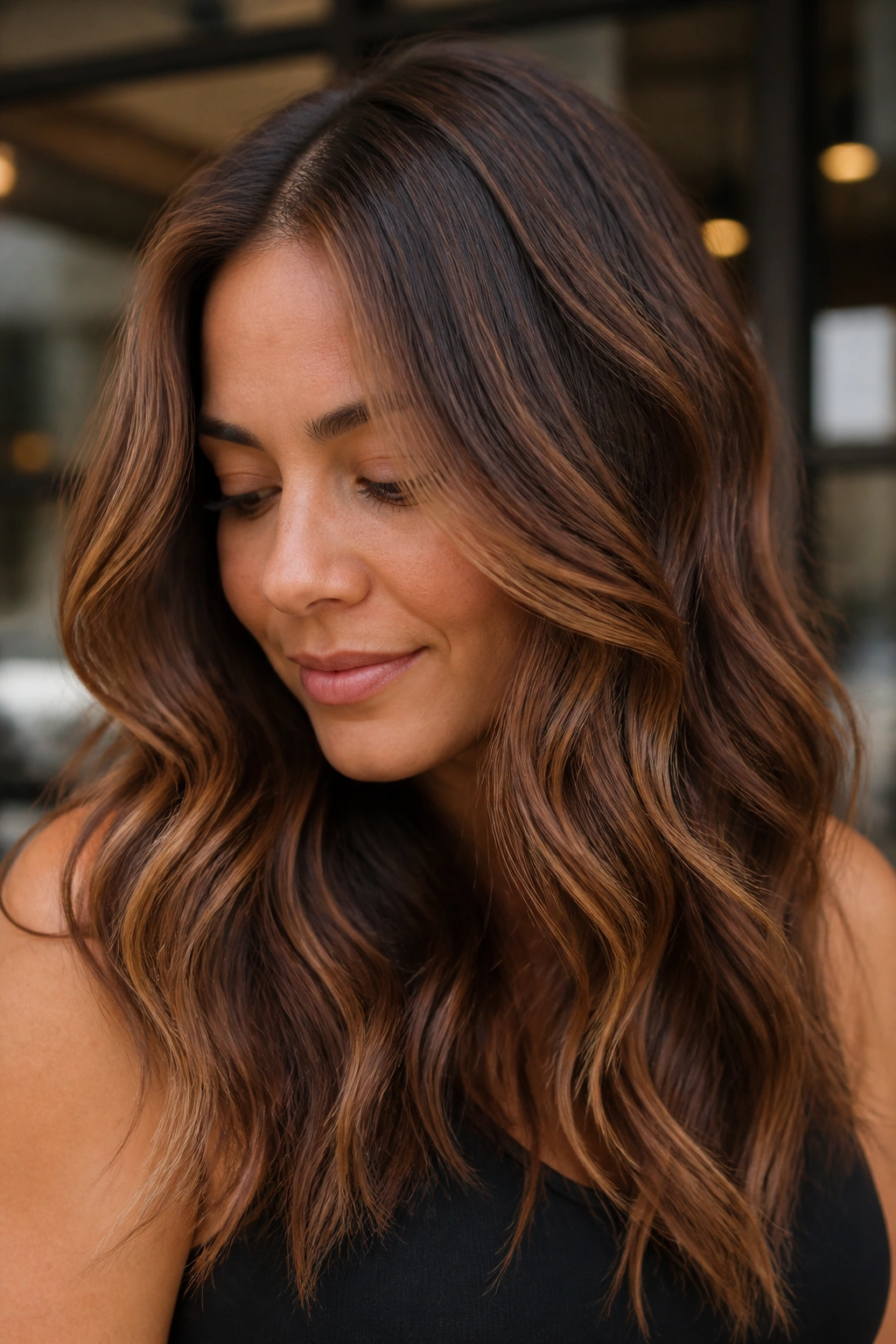
Cinnamon mocha balayage is one of those shades that looks styled even on messy hair days. The mocha base keeps things grounded, and the cinnamon ribbons bring that warm, spiced note that stops the brown from looking sleepy.
What I like most is the range. The pieces can be fine and blended or a little chunkier if the haircut is dense and the client wants more visibility. Balayage gives you control over where the warmth sits, which is why it works on straight hair, waves, and curls without feeling forced.
Use two to three shades within the same warm family so the color moves, not stripes. If the cinnamon is too bright, it will read red. If it is too muted, the balayage disappears. This shade lands best when the warm pieces are thin around the part and slightly thicker toward the ends.
6. Brunette Bronde With Face-Framing Pieces
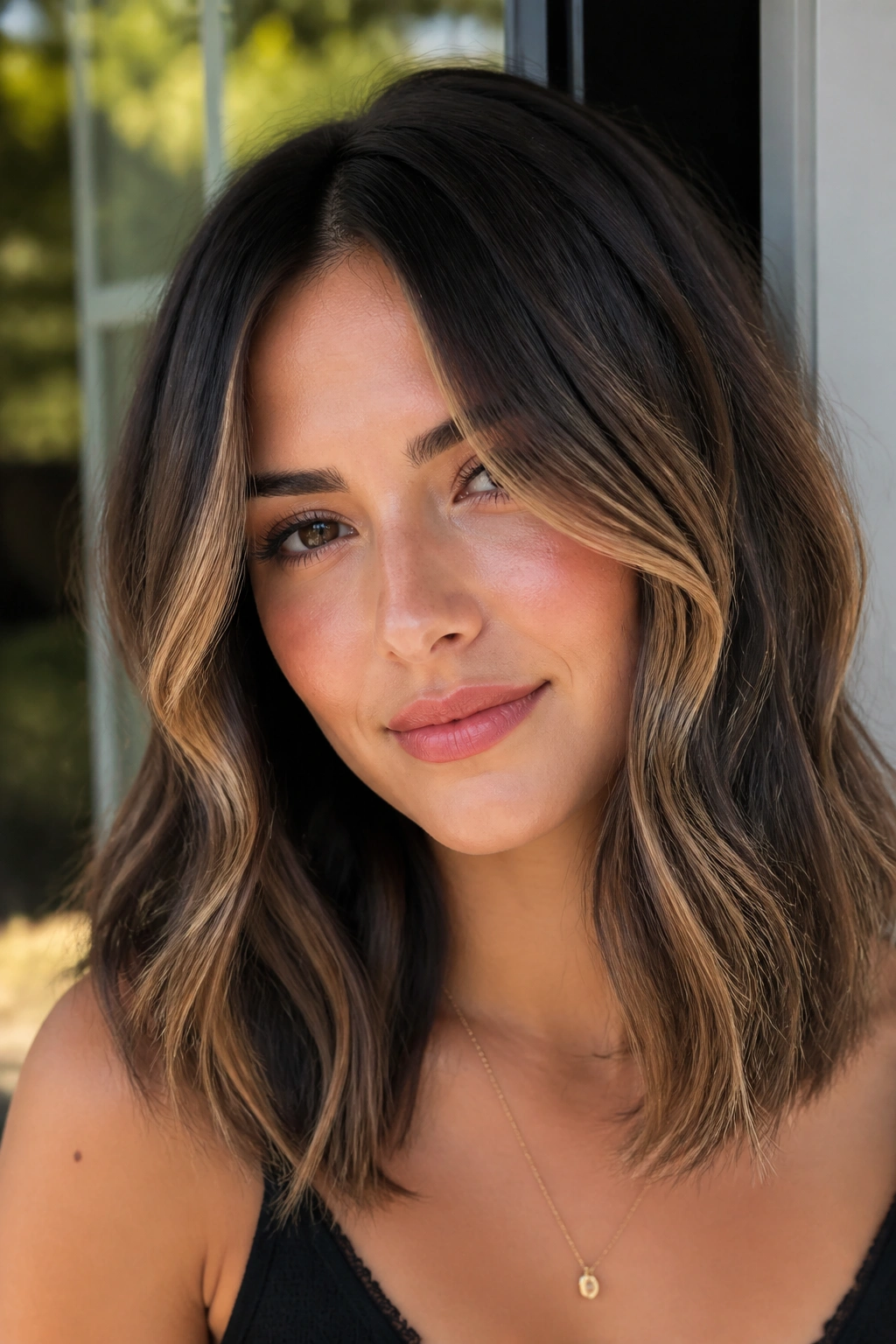
Unlike blonde-heavy bronde, this version keeps the brown in charge. That matters. The whole point is to brighten the face without losing the depth that makes brunette hair look lush.
The face-framing pieces should be warm, not icy. Think one to two levels lighter than the base, placed from the cheekbone down to the collarbone. The rest of the hair stays closer to a medium brown so the contrast feels intentional instead of accidental.
This is a good option if you want a change that shows up in photos but still grows out in a calm way. It also works well on shoulder-length cuts, where the front pieces can move against the face and catch the light. On very long hair, the effect is softer and more drawn out.
7. Toffee Brown With a Shadow Root
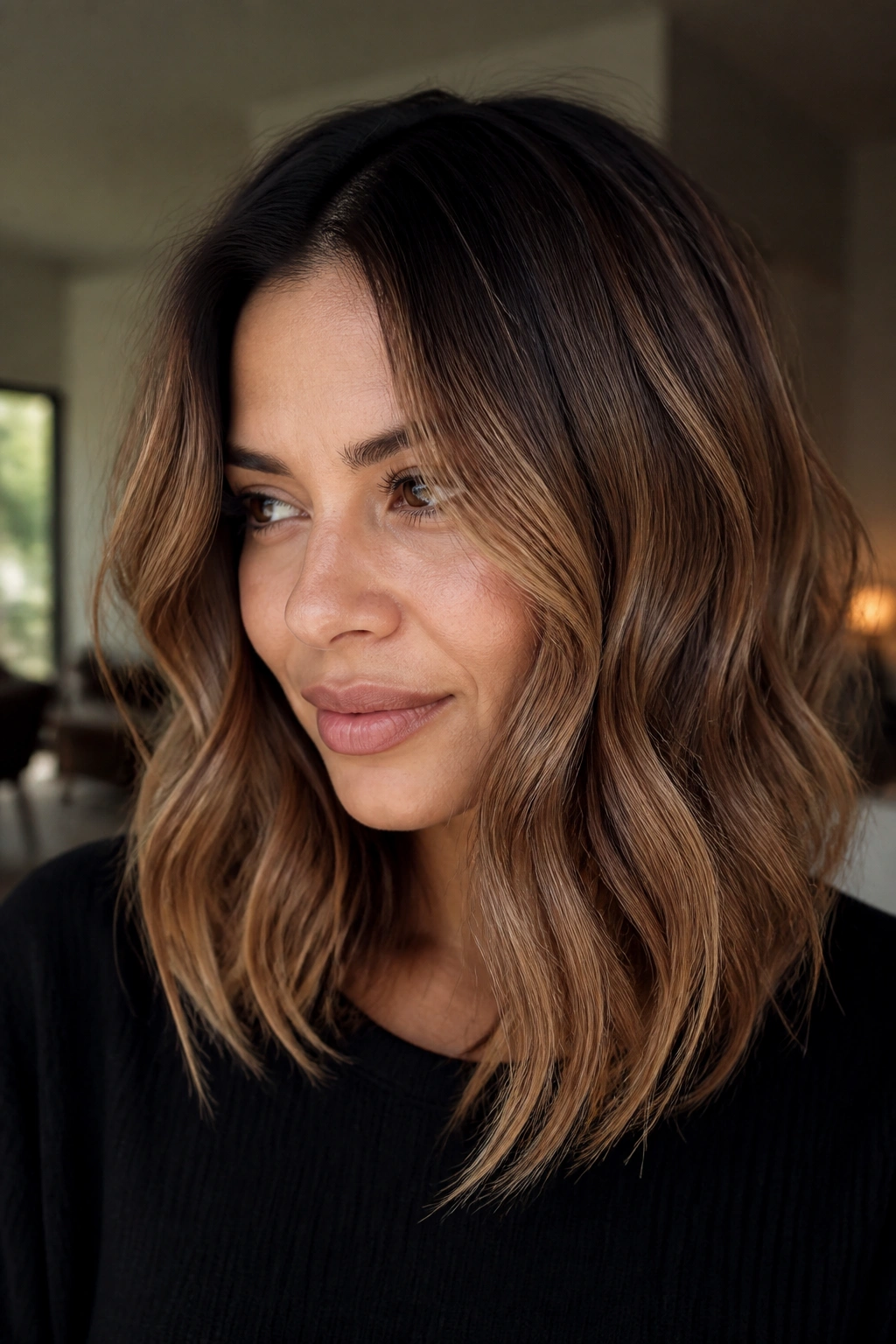
Toffee brown has a creamy warmth that can go too light if nobody keeps an eye on the root. A shadow root solves that problem. It gives the color a darker anchor, which makes the lighter mids and ends look richer.
Ask for a root blur that extends about 2 inches, then melt into a toffee brown mid-length and ends area. The transition should look soft, not painted on. If you can spot the line from across the room, it is too sharp.
Good Things About This Shade
- Easier grow-out than all-over highlights
- Nice on straight, blunt cuts because the root keeps shape
- A good fit for darker natural brunettes who want warmth without a full lift
- Looks especially smooth with a gloss finish
If your base is naturally very dark, keep the toffee slightly beige. Too much gold can turn pumpkin-y fast.
8. Auburn Brown Melt
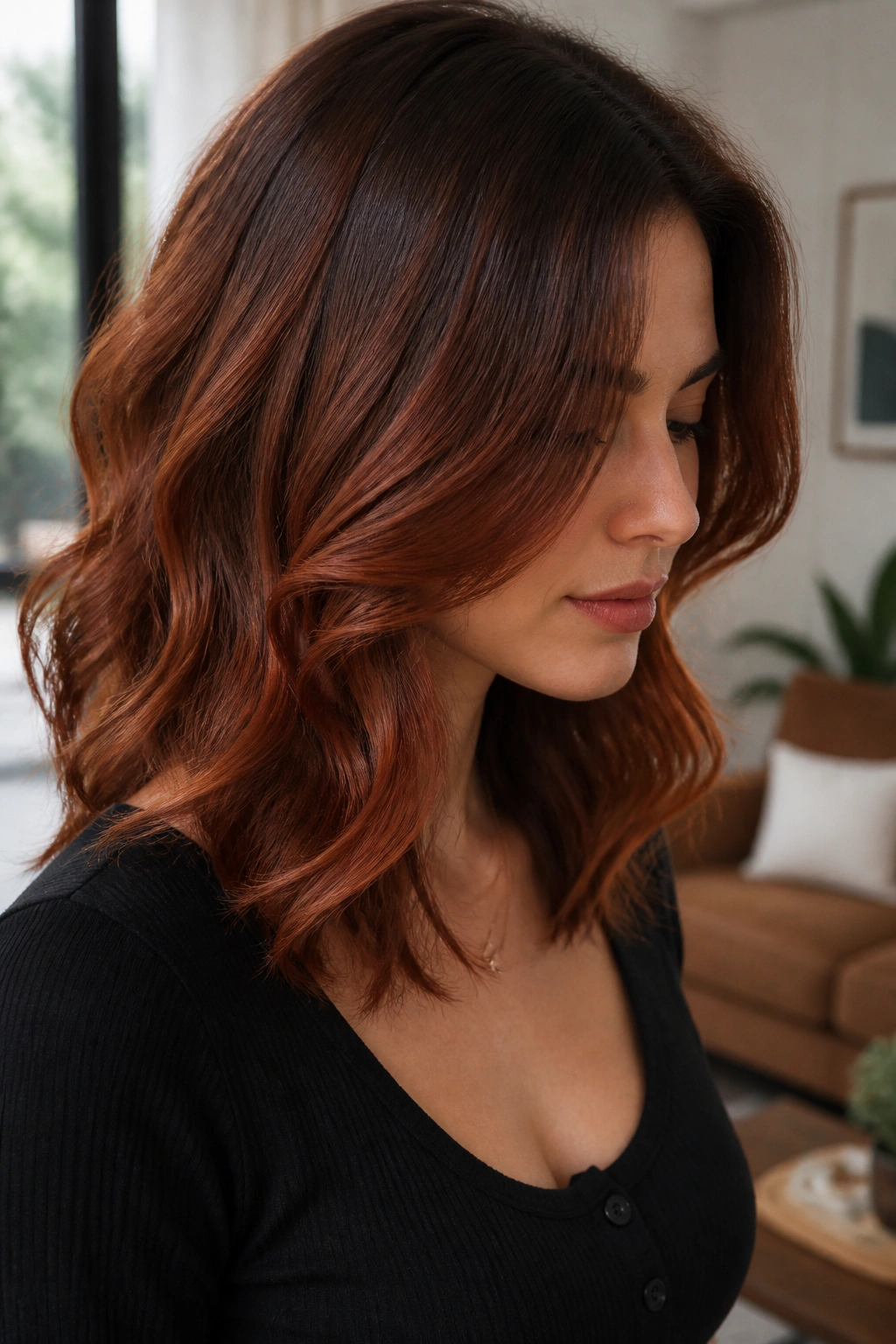
Auburn brown is what happens when brunette hair decides to lean warm in a more obvious way. It has red in it, but not the bright, copper-penny kind. The result feels deeper and softer, almost like brick dust under a brown glaze.
A melt works best when the root stays a little darker and the warmth builds through the mids and ends. That keeps the color from looking solid or flat. It also gives the hair a more expensive finish, if you want to call it that.
The shade is especially nice on layered cuts and medium-length hair because the color change moves as the hair swings. You do not need a full red makeover to get the effect. A brown base with an auburn glaze can be enough.
9. Coffee Bean Brown With Invisible Highlights
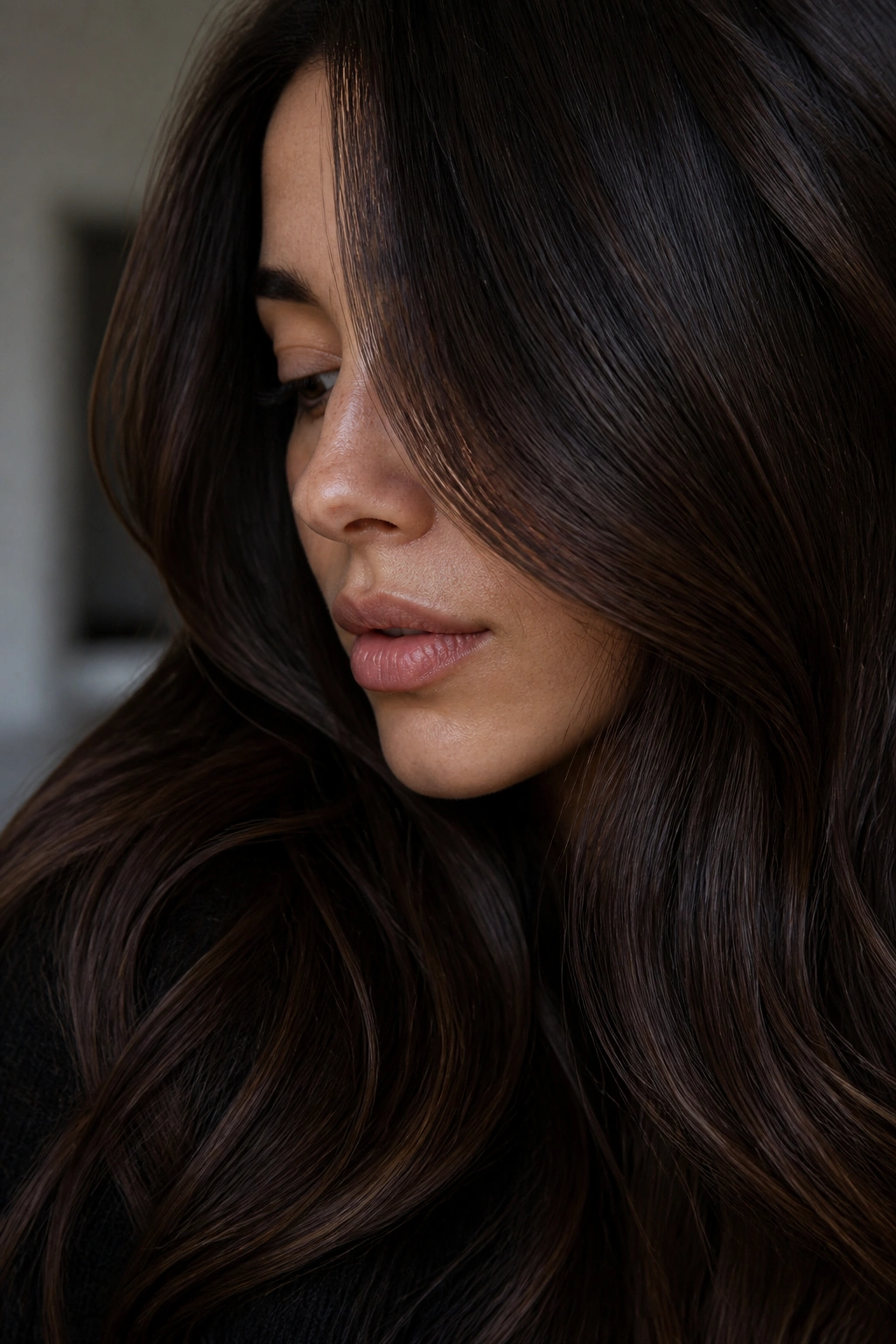
What if you want dimension nobody can spot at first glance? Coffee bean brown is the answer. It reads as one deep brunette shade at a distance, then breaks open with tiny shifts in tone when the light hits it.
The highlights are the quiet part. They sit just a shade or two lighter than the base, often in thin slices underneath the top layer. That means the color stays sleek, not busy. It is a smart choice for people who want movement without obvious streaks.
Why It Works
The contrast is small, but the effect is real. Hair can look heavier when every strand is the same depth. A few hidden ribbons prevent that, especially on thick hair or one-length cuts.
Ask for micro-lights or very fine hand-painted pieces in a warm mocha or cocoa tone. If you like your brunette hair to feel polished and low-key, this one is hard to beat.
10. Maple Brown
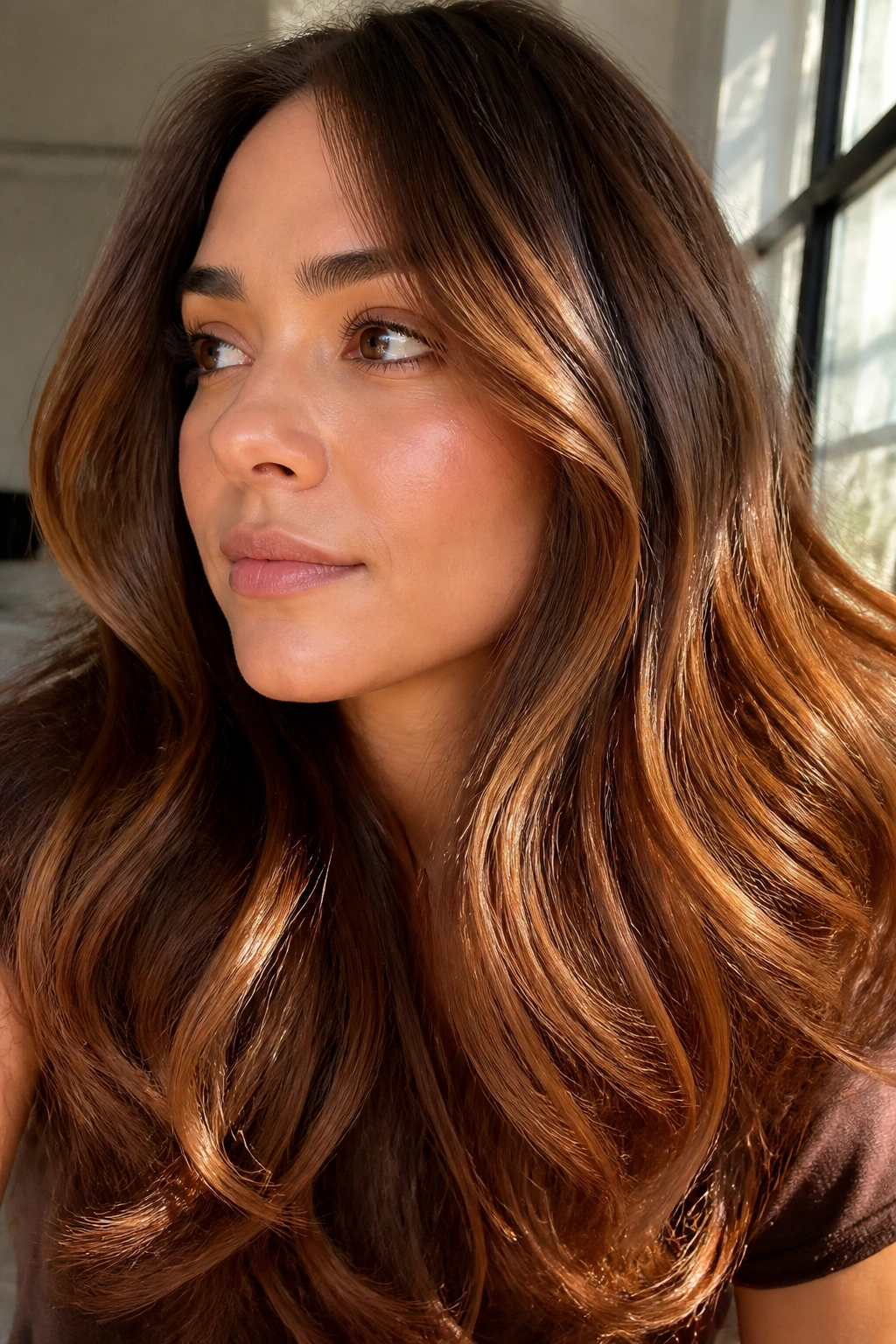
Maple brown has that warm, syrupy look that makes straight hair look finished with almost no effort. The color sits in a medium-dark zone, but the gold-red reflect keeps it from falling into plain brown.
I like it on people who want warmth that shows up in natural light without turning into copper. It has more glow than chocolate, less red than auburn, and a little more movement than a single-process brown.
Quick Details
- Ask for a level 5 or 6 maple glaze
- Keep the tones in the gold-brown family, not orange
- Best on medium skin tones and freckles, though it can work elsewhere
- Blows out beautifully with a round brush and a soft bend at the ends
A maple gloss fades in a graceful way, which is a relief. Some warm shades lose their shape after a few washes. This one usually softens instead of collapsing.
11. Warm Mushroom Brown
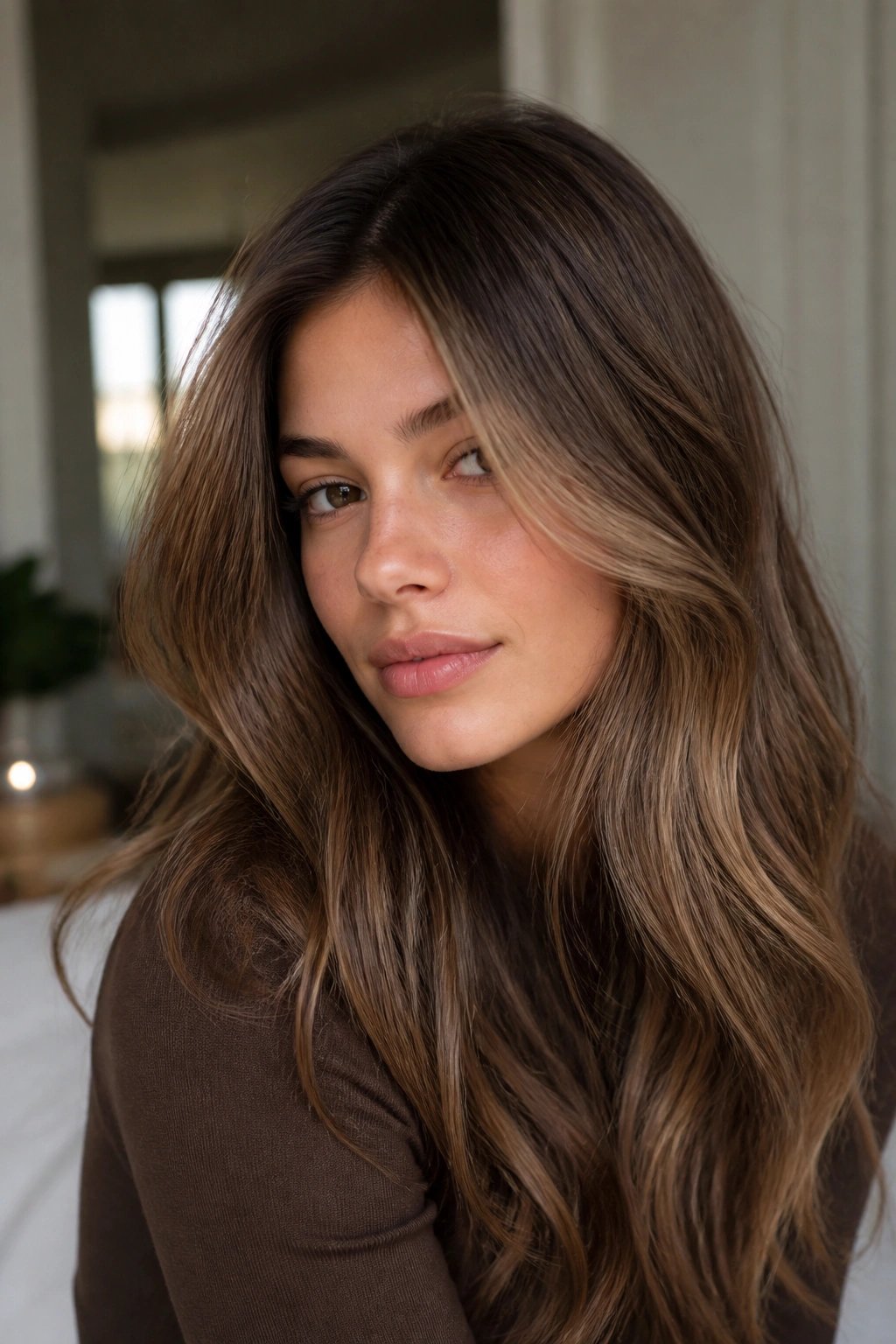
Warm mushroom brown gets misunderstood all the time. People hear “mushroom” and assume it means cool, gray, and flat. Not here. The warm version keeps the taupe-brown base, then adds beige or soft gold warmth so the hair still feels alive.
That balance is the whole appeal. It works especially well if you want something muted, modern, and not too red. On thick hair, a few warm lowlights prevent the color from looking dusty. On finer hair, the warmth keeps it from going dull under indoor lighting.
This shade looks best when the contrast stays quiet. A beige-brown gloss, some soft root shadow, and maybe a few caramel strands around the front are enough. It is not a loud color. It does not need to be.
12. Hazelnut Brown
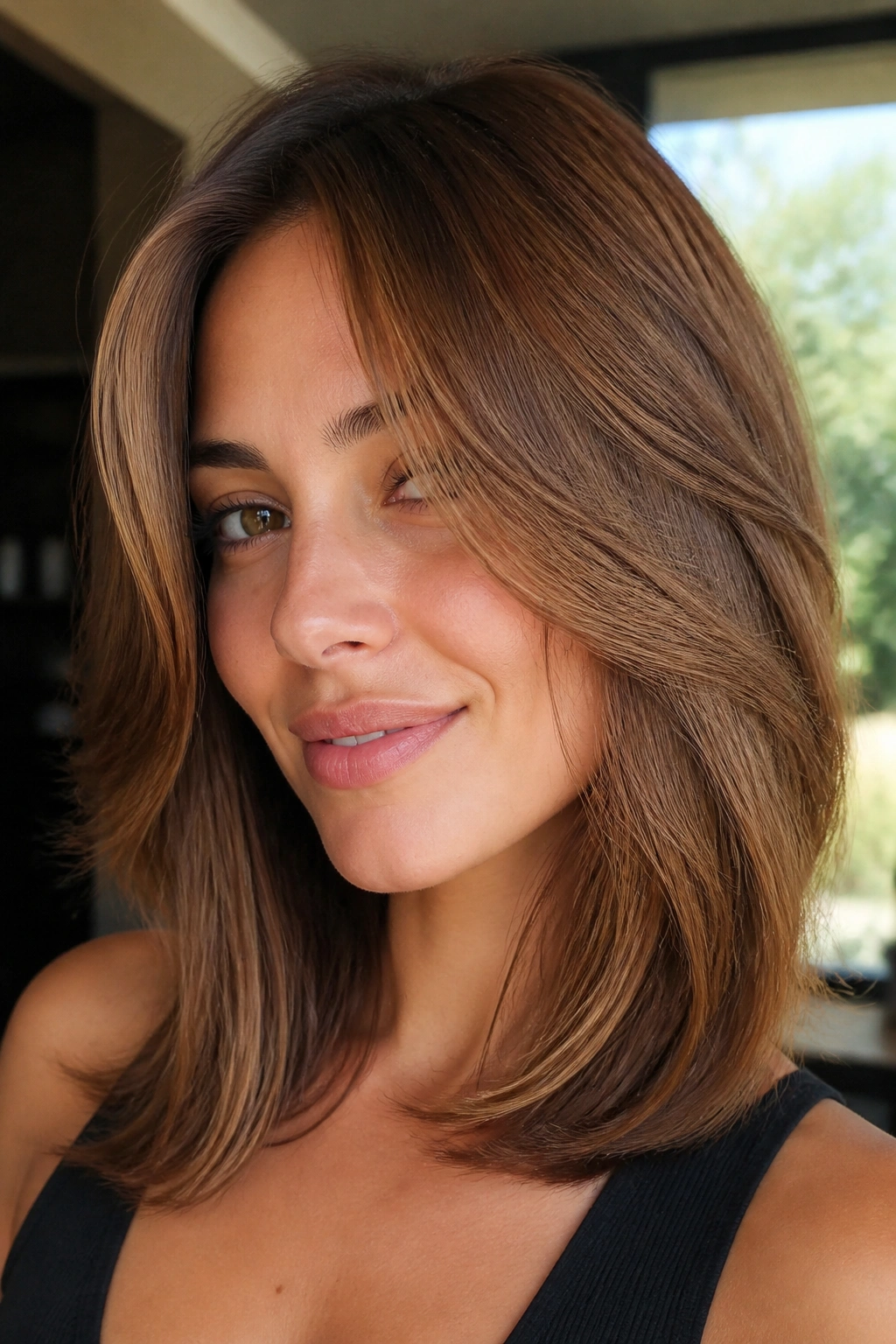
Hazelnut brown sits between warm beige and soft chestnut, which makes it one of the easiest brown shades to wear. It has enough light in it to brighten the face, but the overall effect still feels grounded.
Unlike darker chocolate browns, hazelnut shows detail in shorter cuts and curls. The ringlets or bends catch the lighter brown reflect, so the hair looks fuller. That is one reason it works so well on shoulder-length layers and collarbone bobs.
How to Ask for It
Request a level 6 hazelnut glaze with soft golden-brown reflections. If your natural base is dark, the colorist may need to lift it slightly first. If your base is already medium brown, a gloss may be enough.
This is the brunette shade I recommend when someone wants warmth but gets nervous about going too far. It feels safe, but not boring. That is harder to pull off than people think.
13. Dark Cocoa With Cinnamon Lowlights
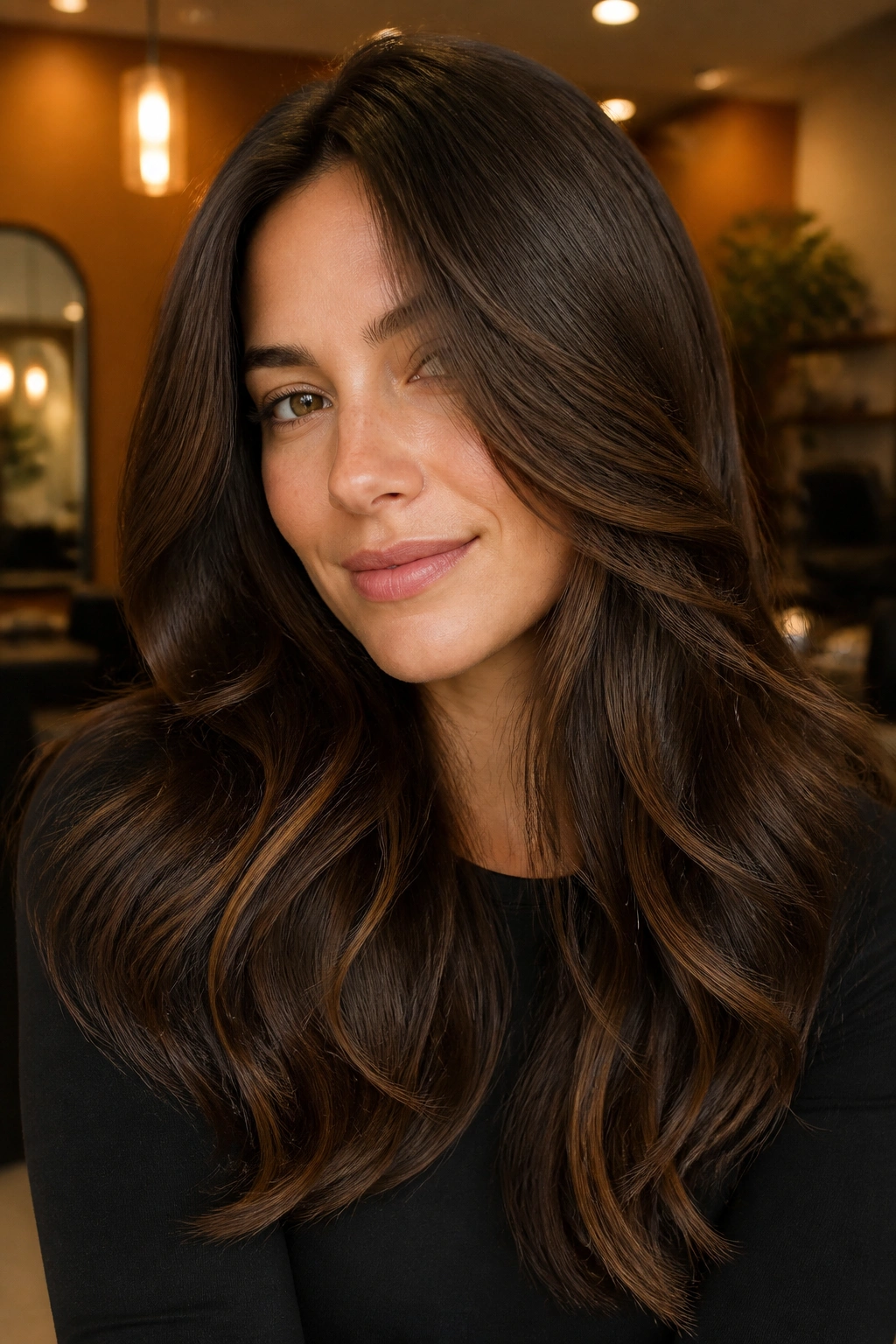
Dark cocoa by itself can lean flat if the hair has no movement. Cinnamon lowlights fix that by dropping warm strands into the deeper brunette base, which gives the whole color a softer, thicker look.
The lowlights should be placed beneath the top layer and around the mid-lengths, not scattered evenly everywhere. That way the warmth appears when the hair shifts, which is what makes the color feel natural. Think of it as depth first, highlight second.
- Good for thick hair that needs shape
- Works well on long layers and blunt lobs
- Use 1/4-inch to 1/2-inch panels for the lowlights
- Ask for cinnamon that stays brown-red, not bright copper
This is not the shade for someone who wants a high-contrast look. It is for the person who wants richness from the inside out.
14. Milk Chocolate Balayage
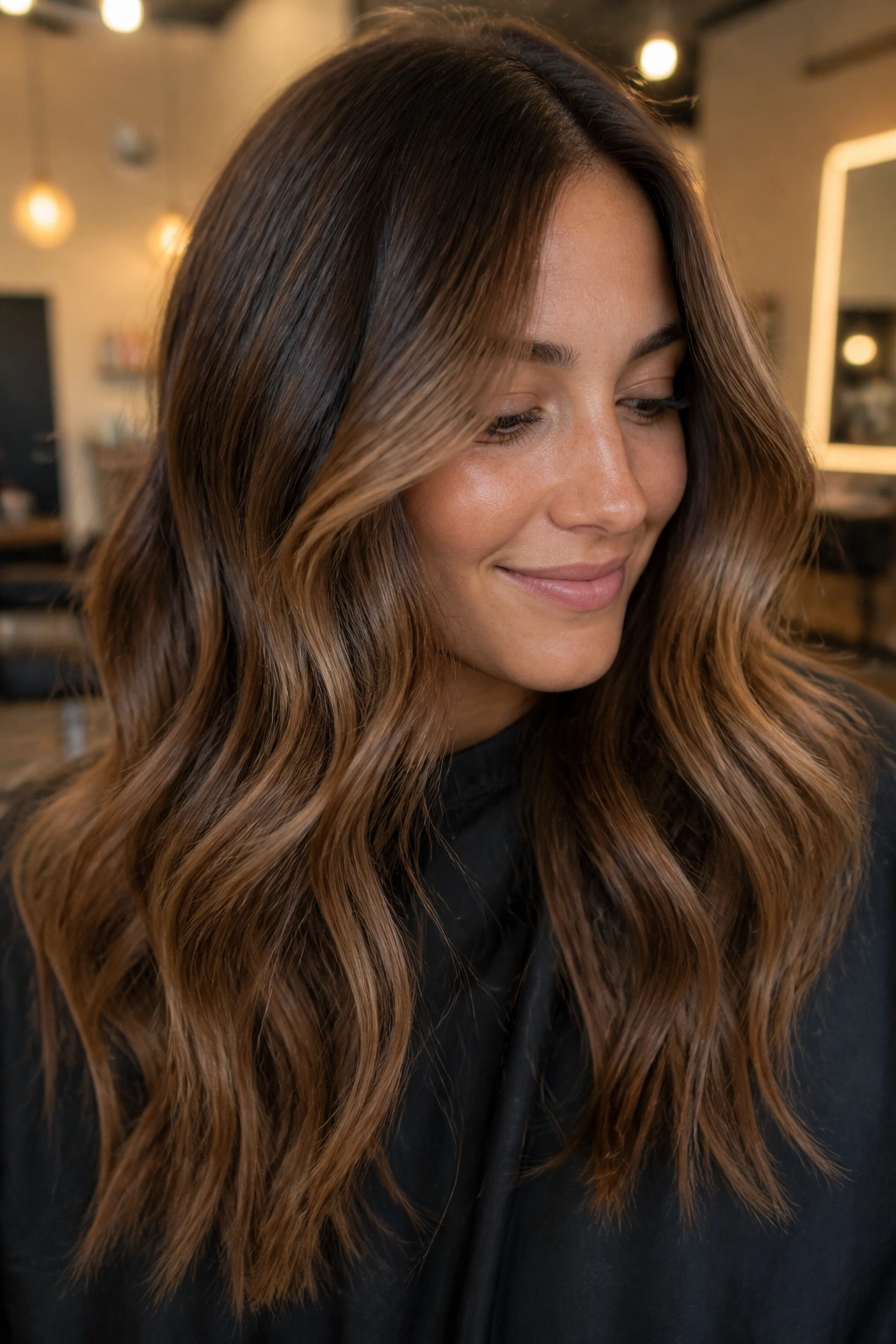
Milk chocolate balayage has a softer, creamier feel than darker brunette looks. The base stays medium brown, and the balayage pieces are painted in a way that keeps the ends airy and warm.
The shade is flattering because it does not fight the haircut. Layers, waves, and loose curls all pick up the lighter pieces, but the overall color stays believable. You get movement without that overprocessed stripe effect that can happen with heavier highlights.
Ask for fine to medium hand-painted pieces, spaced more closely around the face and top layer, then more softly through the back. If the colorist puts too many light pieces only on the top, the hair can look patchy from the side. Spread matters.
It is a good everyday brunette. No drama. Just warmth and shine.
15. Amber Brown
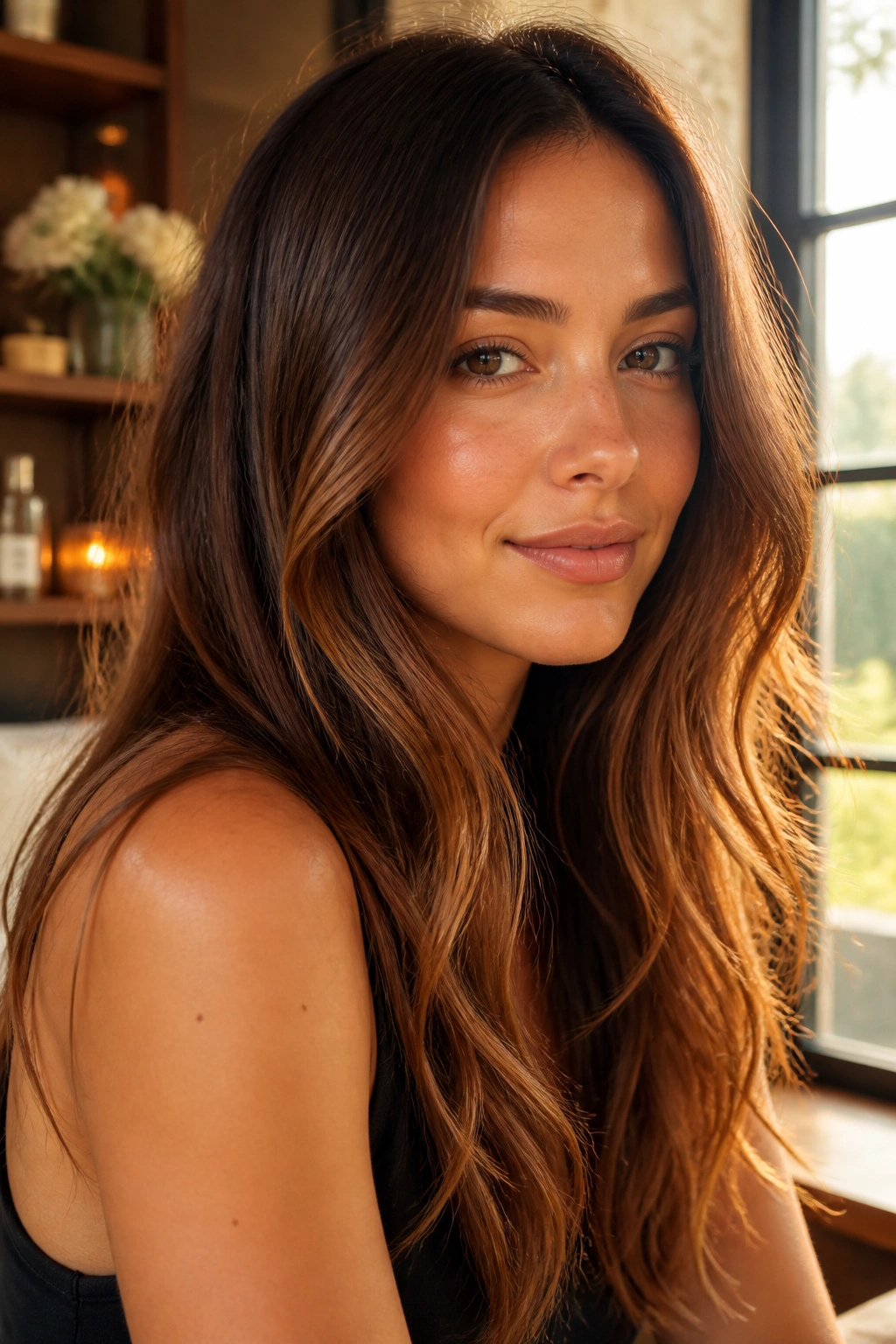
Can brown hair glow without moving into blonde? Amber brown says yes. The trick is the gold-orange reflect, which gives the hair a warm spark without bleaching away the brunette base.
This shade can be stunning on hair that already has a bit of natural warmth. It also flatters olive and golden undertones because the amber note picks up the skin instead of sitting apart from it. On cooler skin, it can still work, but the amber should be tempered with more brown than gold.
How to Wear It
A brown base with an amber glaze on the mids and ends is usually enough. If you go too bright near the roots, the shade can start looking copper instead of amber. That shift happens faster than people expect.
Use a shine serum sparingly. Amber brown looks best when the surface is smooth and reflective, not oily.
16. Suede Brown With a Soft Beige Money Piece
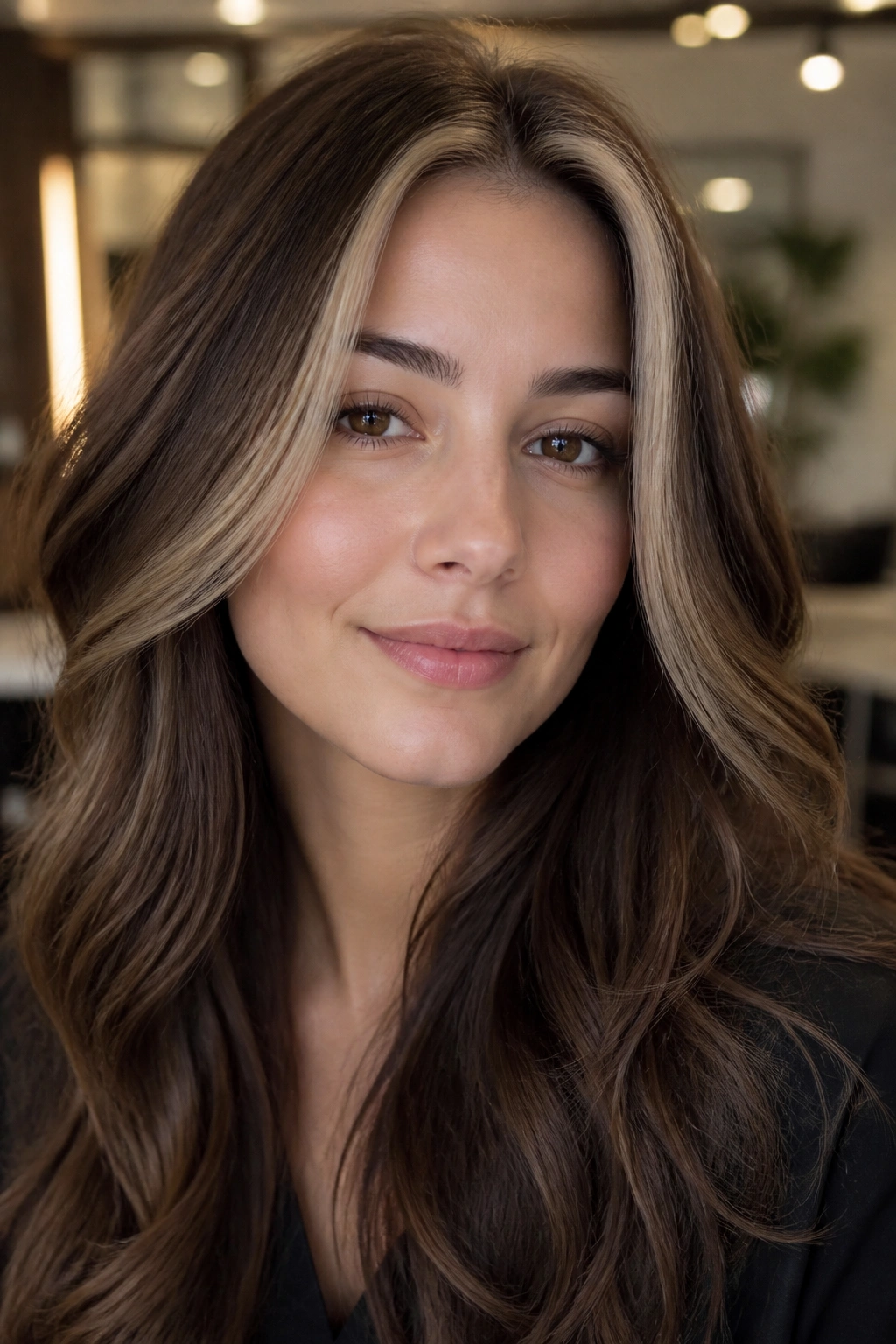
Suede brown is muted in the nicest way. It has a matte, soft-focus feel, almost like a favorite jacket that has been worn in over time. The beige money piece in front keeps it from disappearing.
The contrast should stay gentle. You want the front section a touch lighter and creamier, not bright blonde. That single move frames the face and keeps the rest of the brunette base calm and grounded.
- Ask for a 1-inch money piece at the hairline
- Keep the base in a soft medium brown or taupe-brown
- Choose a beige or beige-gold tone for the front
- Best on minimal makeup days and clean, simple haircuts
This one is sneaky good on straight hair. The front piece gives just enough brightness to stop the style from feeling plain.
17. Burnt Sugar Brown
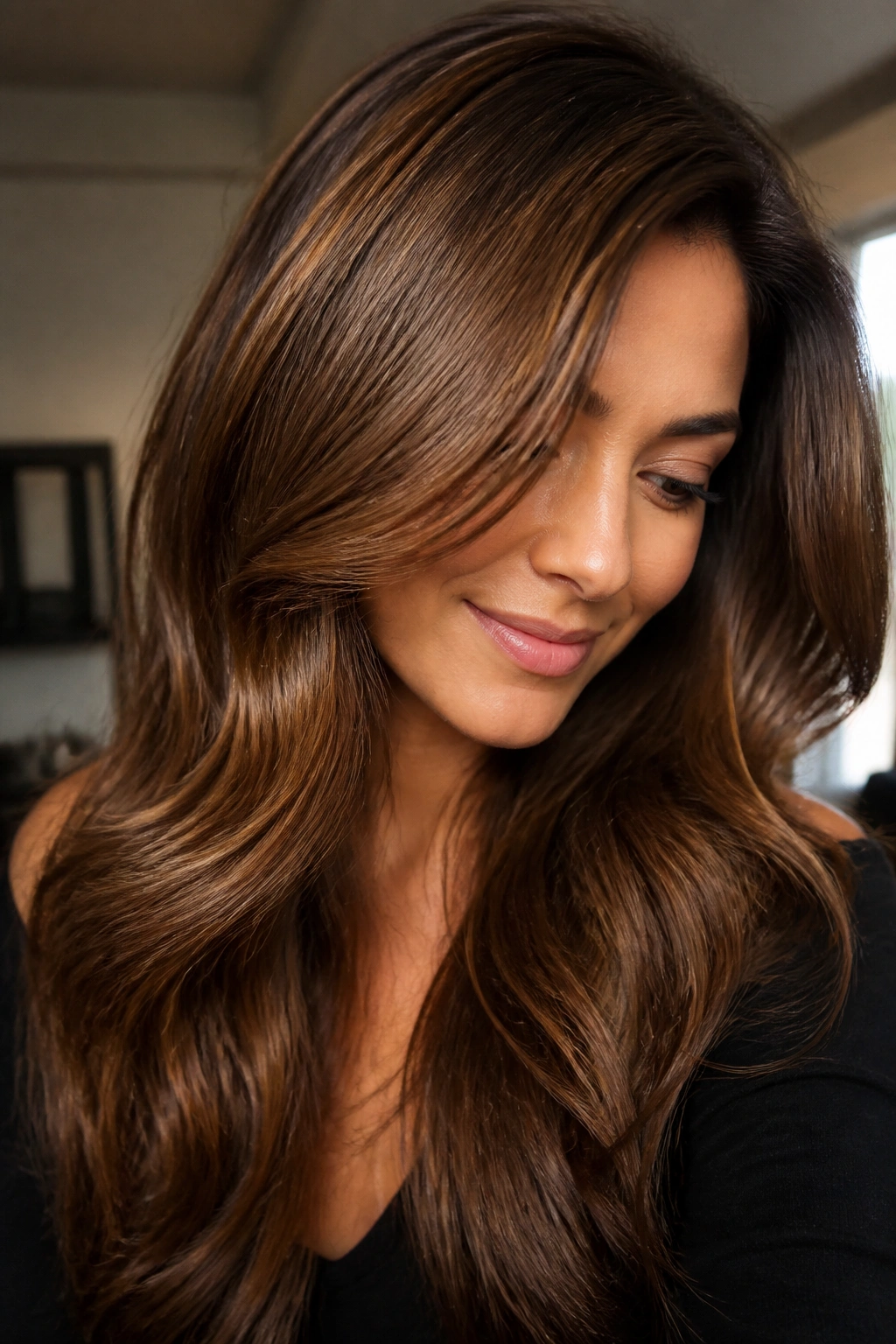
Burnt sugar brown has a toasted edge that makes the color feel dense and glossy at the same time. It is darker than caramel, warmer than espresso, and a little more dramatic than plain chocolate.
What makes it work is the way the warmth sits on top of the depth. The hair looks rich indoors, then picks up a soft glow when light slides across it. Thick hair loves this color because the depth keeps the cut from looking fuzzy.
I prefer this shade with a glossy finish rather than obvious highlights. A glaze can give you the warm, sugar-cooked look without breaking the base apart. If you are after a brunette that feels sultry without going red, this is a strong pick.
18. Rich Mocha With a Copper Glaze
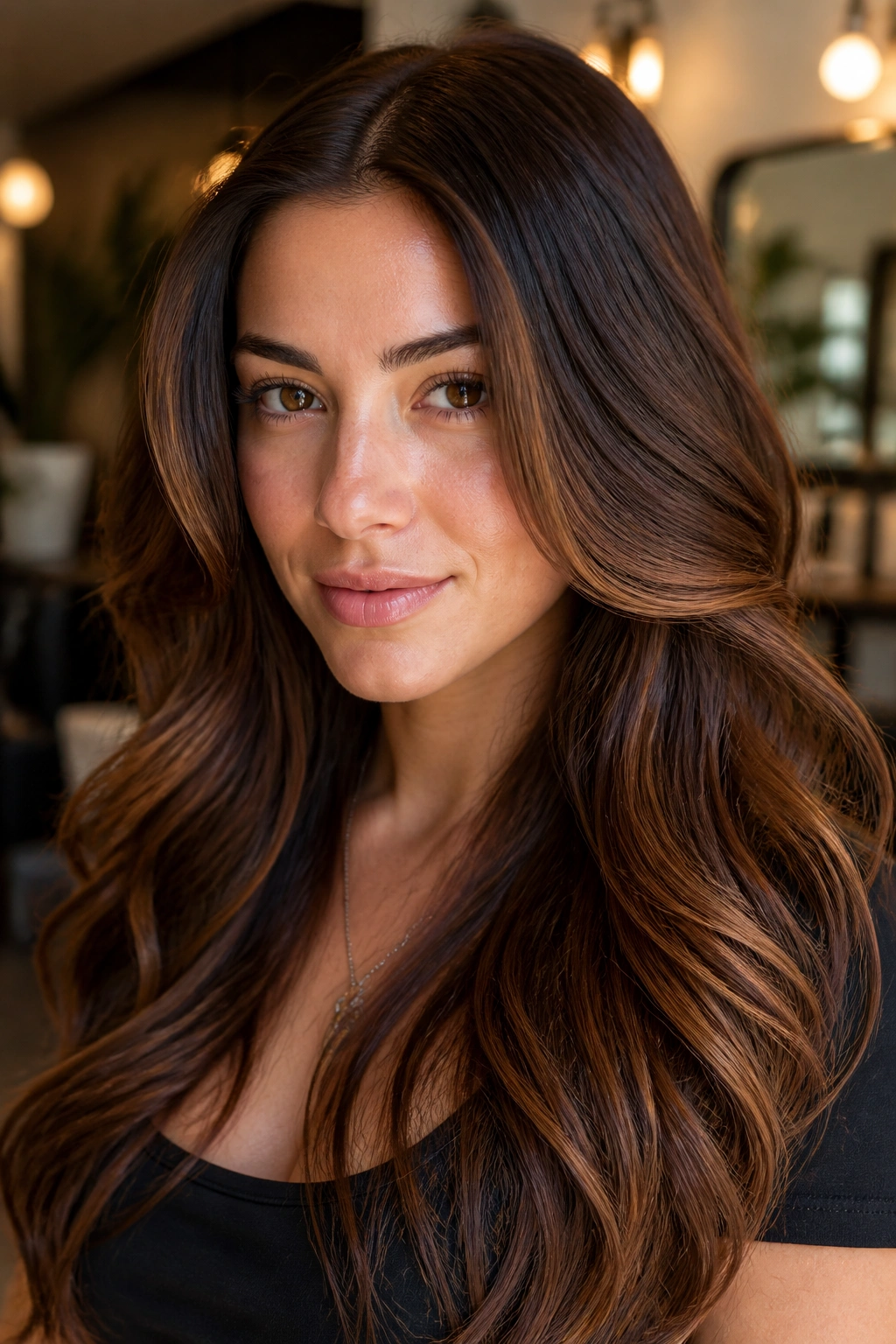
Unlike pure copper, this version keeps the brunette base intact. That is the reason it works so well. The copper glaze adds warmth and shine, but the mocha underneath holds the color down so it does not run too bright.
This is a smart choice if you want a change that shows depth first and red second. On layered cuts, the glaze creates movement around the ends. On longer hair, it gives the whole shape a warmer edge without needing heavy highlights.
What to Ask For
Request a mocha brown base with a copper-toned gloss on the mids and ends. If you want it softer, ask for copper-brown rather than true copper. That small shift keeps the color in brunette territory.
This shade does need maintenance. Copper tones fade faster than neutral browns. Still, the payoff is worth it if you love warmth with a little more personality.
19. Tawny Brown
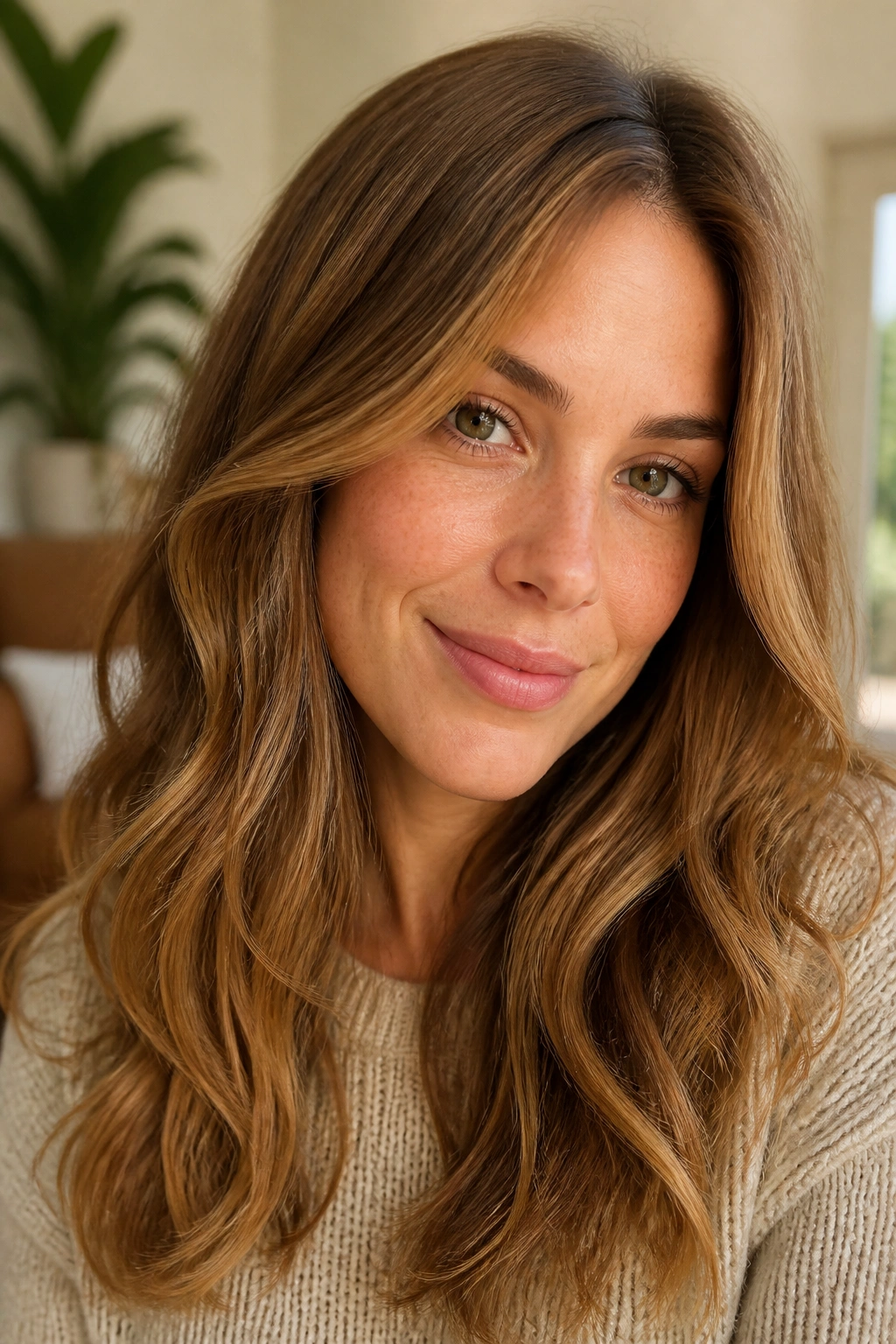
Tawny brown sits in a soft zone between beige-brown and golden chestnut. It has enough warmth to look rich, but not so much that it starts shouting from across the room.
This is the sort of color that flatters movement more than structure. On long layers, the warm tones flicker through the ends. On curls, the reflect can look almost sandy in the best way. It is lighter than dark cocoa and less gold than honey brown.
Key Details
- Best around level 5 to 6
- Works well on hair that gets dull easily
- Ask for warm beige-brown lowlights if the hair needs depth
- A round-brush blowout makes the shade look fuller
Tawny brown is one of those colors that feels easy to live with. It does not fight your natural undertone. It just makes the whole head look softer.
20. Toasted Almond Brown
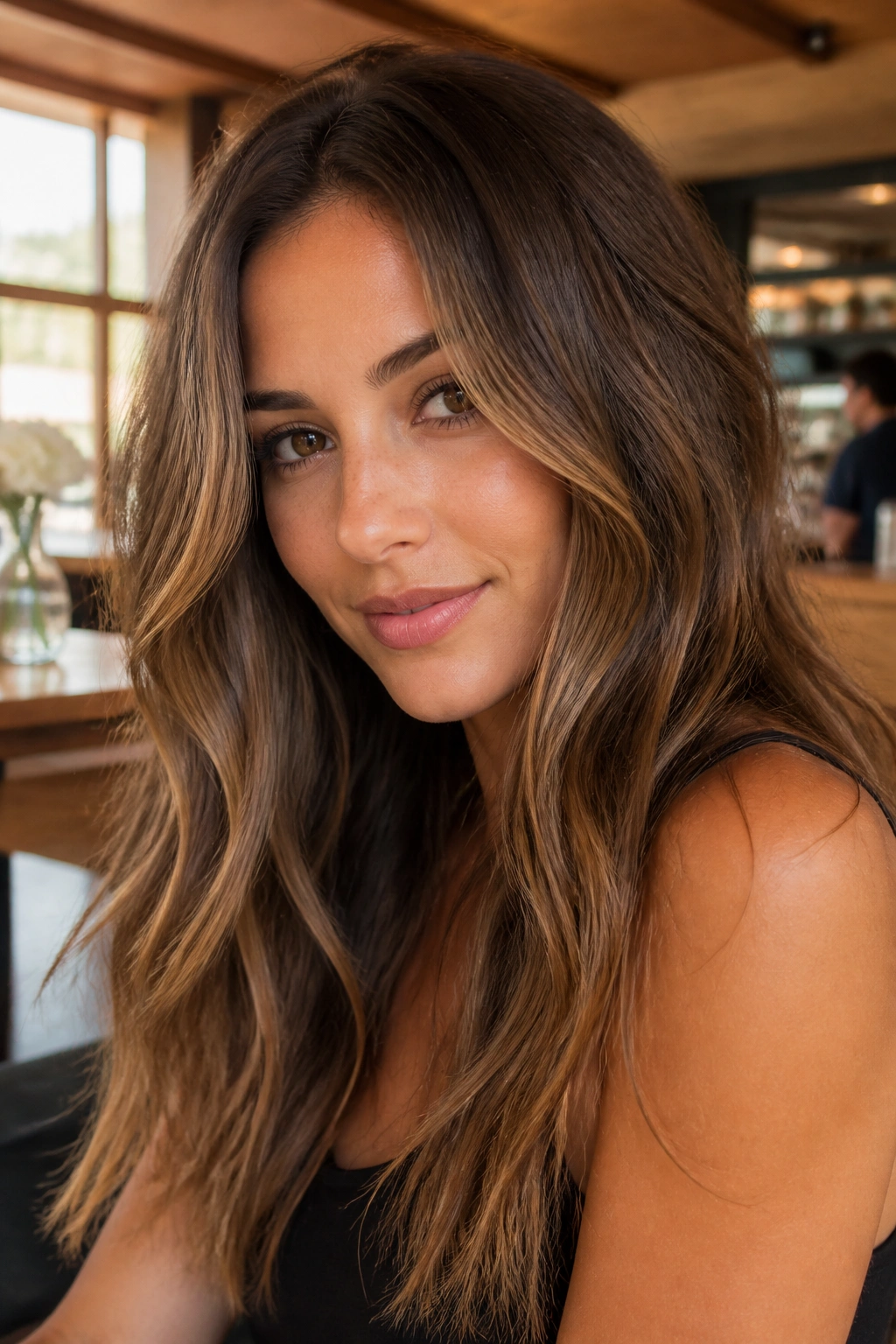
Toasted almond brown is a smart brunette shade because it brightens the hair without pushing it into blonde. The almond note keeps it creamy, while the toasted part gives it enough warmth to look substantial.
I like this shade on people who want something soft and flattering with a clean finish. The highlights, if you add them, should be fine and close together, not chunky. That keeps the color elegant and prevents it from looking stripey.
How It Differs
Compared with caramel brown, toasted almond is less sugary and more subdued. Compared with hazelnut, it is lighter and airier. That makes it a nice middle ground if you are unsure where to land.
Ask for a warm beige-brown base with subtle almond ribbons through the top layers. It is an easy shade to wear, and it grows out quietly. That matters more than people admit.
21. Gingered Brunette
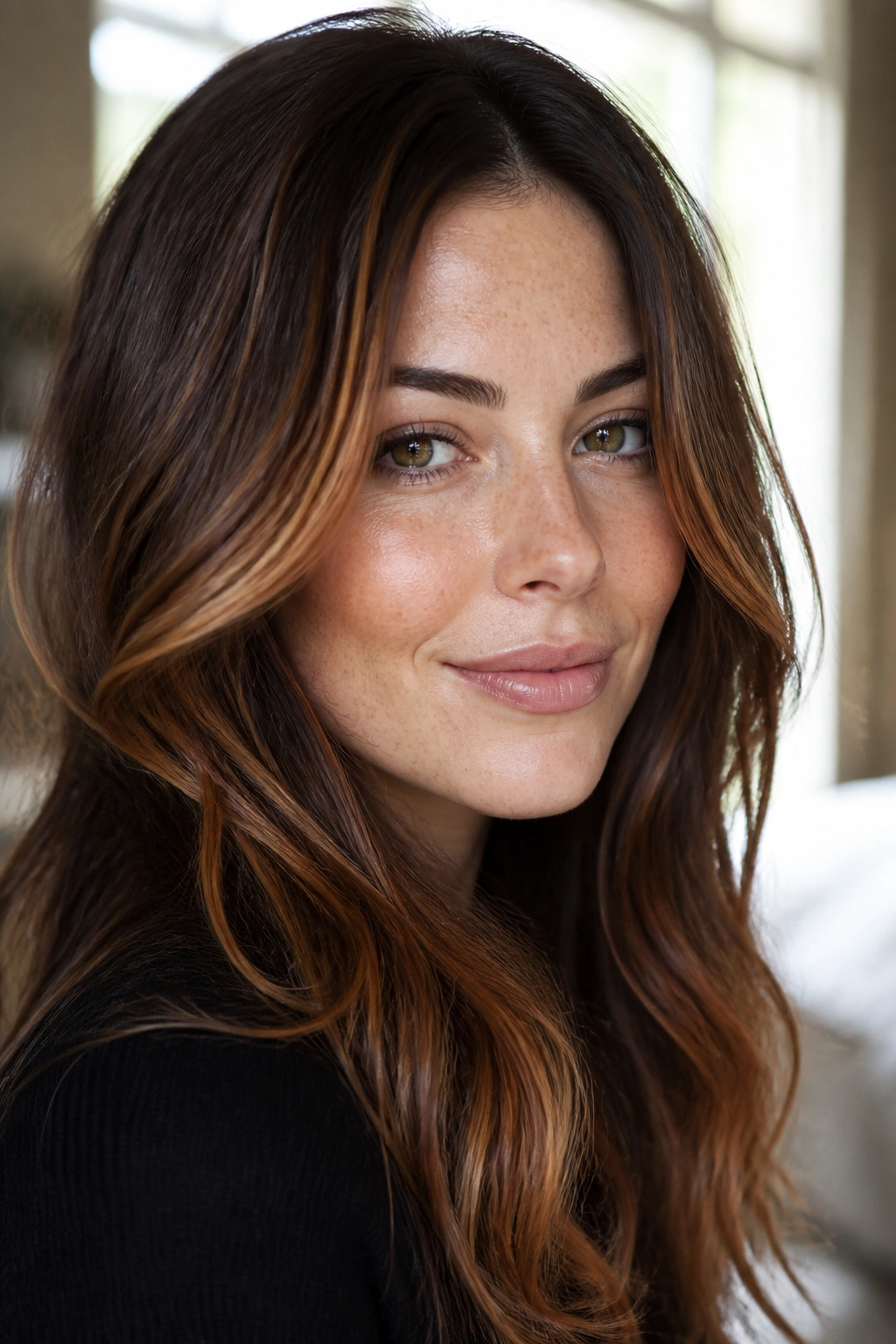
Why do some brunettes look warmer without looking red? Gingered brunette is the answer. It uses a brown base with a ginger-cinnamon glaze, so the warmth shows up as spice rather than full copper.
The best version is restrained. You want the ginger note to live in the reflect, not dominate the whole head. On darker brunettes, a few warm pieces around the face can be enough. On medium brunettes, a glaze across the mids and ends can do the job.
How to Ask for It
Tell the colorist you want a brown base with ginger warmth, not a full auburn shift. That wording matters. “Ginger” can mean different things in different chairs, and you do not want the result to skew orange.
This is a good pick if you like warmth but still want your hair to look like brunette hair. It has a little spark. Not too much.
22. Caramel Swirl Brown
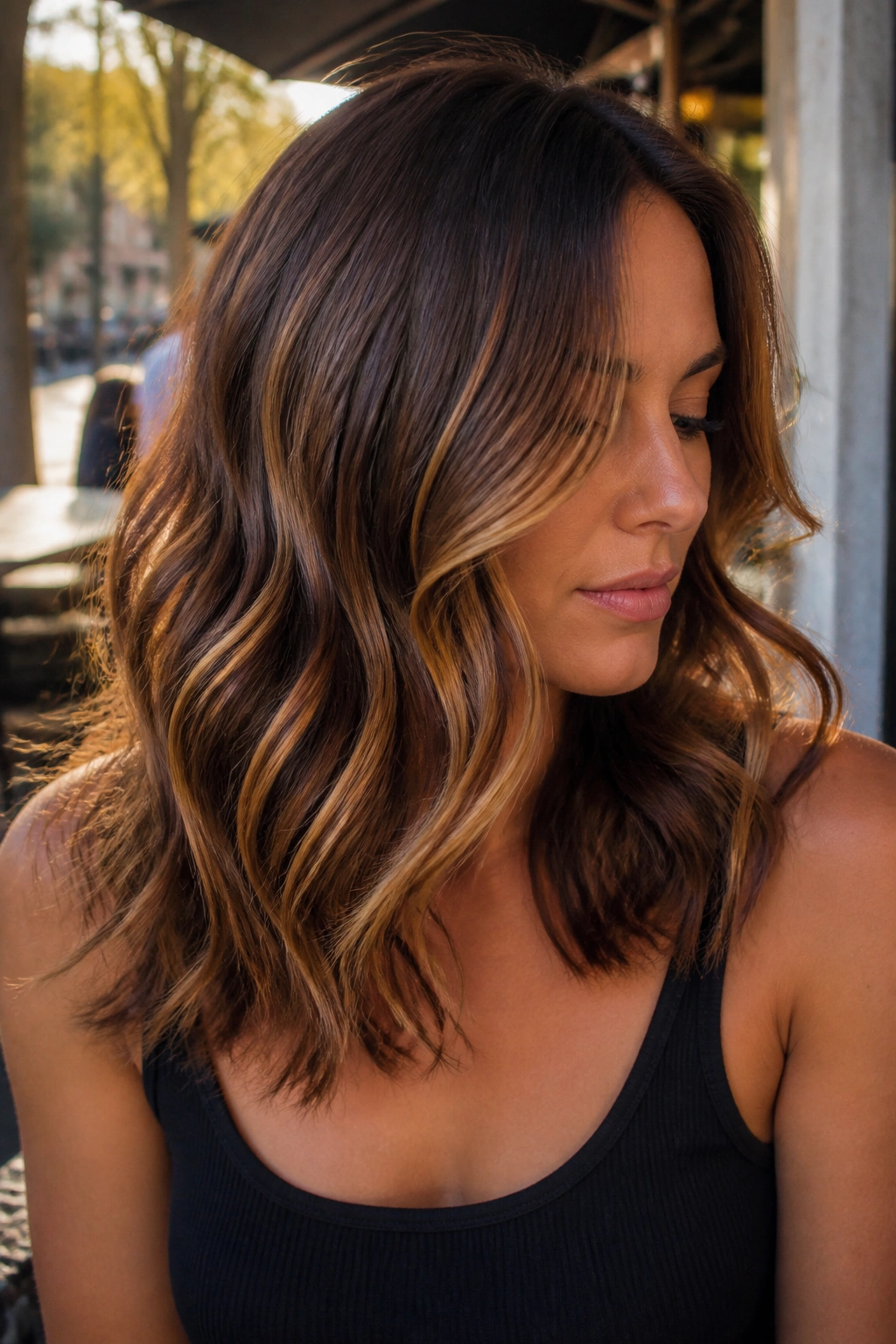
Caramel swirl brown is the more visible cousin of chestnut ribbons. The swirls are broader, more obvious, and meant to read from a little farther away. On thick hair, that extra visibility can be gorgeous.
The color works because the caramel sits in loose, curved sections instead of tiny streaks. That shape matters on wavy and curly hair, where the lighter pieces wrap around the bend and keep the style from feeling heavy. On straight hair, the swirls create length and movement.
- Use wider painted sections through the mid-lengths
- Keep the lightest caramel away from the very root
- Best on layered cuts or dense hair
- A soft curl pattern shows the dimension best
If your hair is already fine, go lighter with the swirl size. Too much contrast on a delicate texture can make the color wear you instead of helping you.
23. Fawn Brown
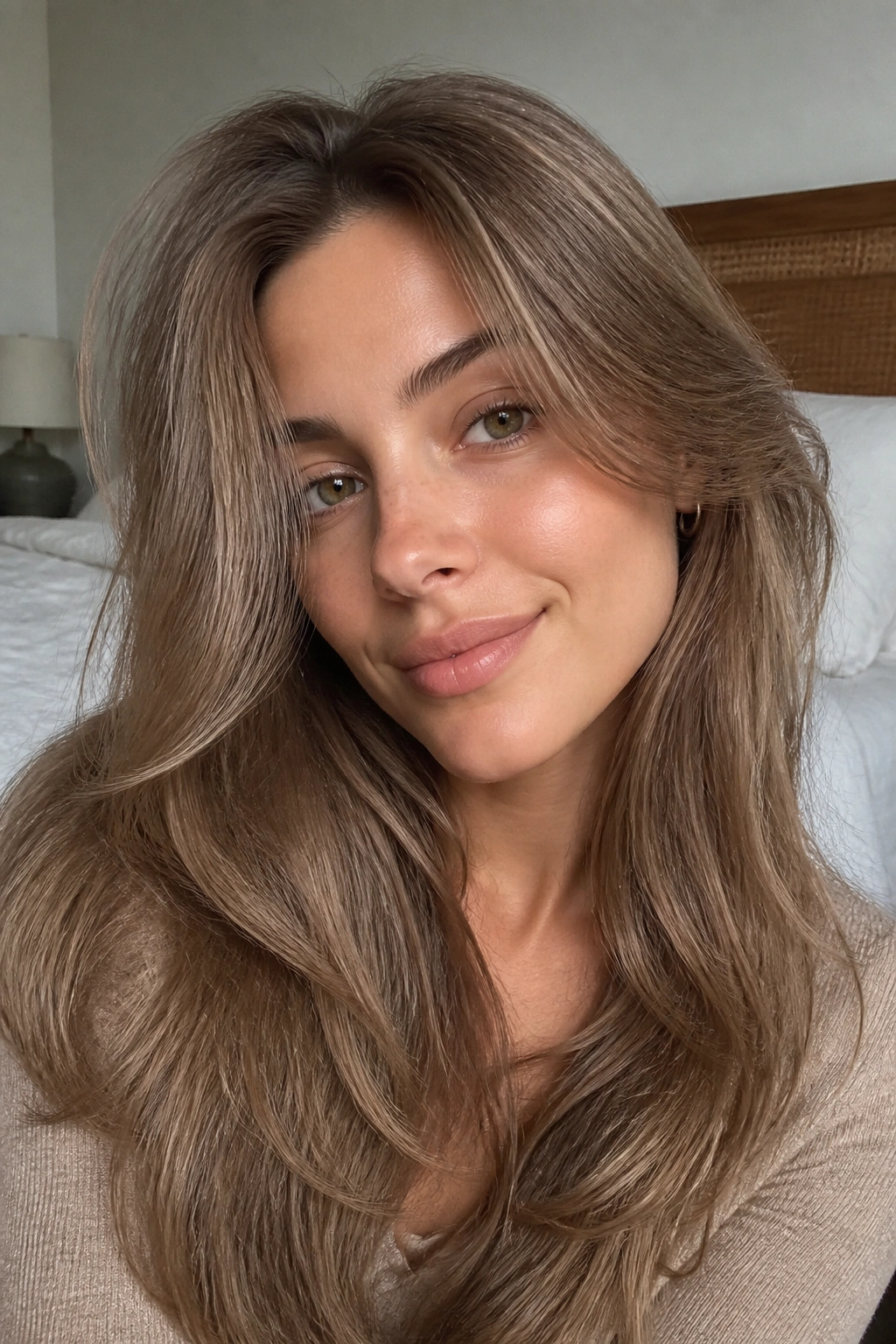
Fawn brown is quiet in a way that feels expensive to the eye, even though the color itself is soft and understated. It blends sandy warmth with a muted brown base, so the result reads airy rather than dark.
I like this shade when someone wants a natural-looking brunette that still has some movement. It is less defined than caramel brown and less golden than honey brown. That middle ground makes it easy on the eyes and easy on the hair.
The best version uses a beige-brown gloss with minimal contrast. If the pieces are too light, it loses the fawn effect and turns into a regular highlighted brunette. The charm is in the softness. That is the whole thing.
24. Brown Sugar With Rose-Gold Warmth
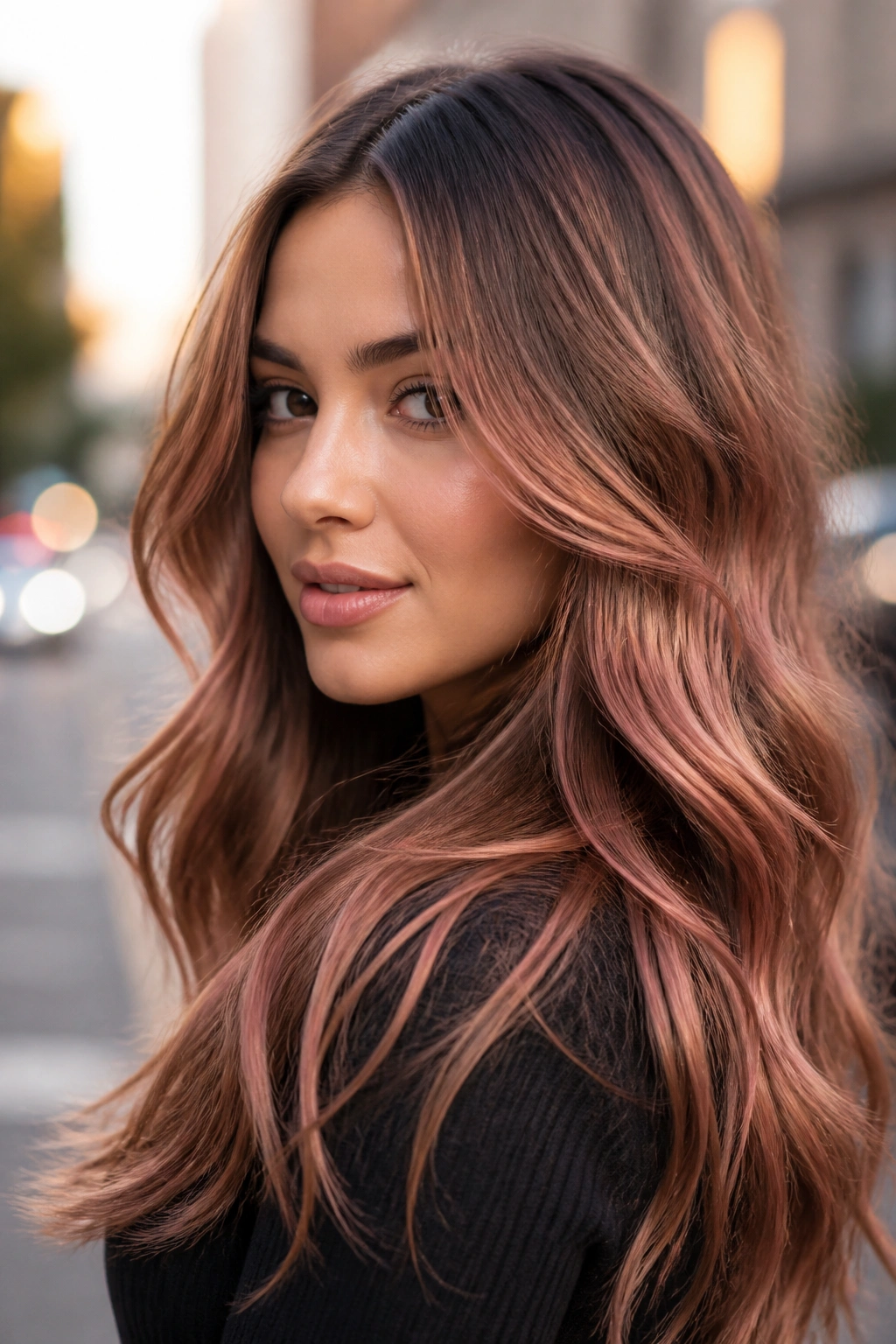
Brown sugar with rose-gold warmth softens the usual brunette story. Instead of copper or gold, the warmth leans pink-gold, which gives the hair a gentle glow and a little unexpected sweetness.
The effect is subtle enough to stay wearable, but it still changes the mood of the color. Rose-gold warmth works especially well on medium brown bases because the pink note can sit on top of the brown without fighting it. On darker hair, it needs more lift to show up.
What Makes It Different
Unlike copper, rose-gold does not push hard into red. Unlike gold, it feels softer and a little more modern. That makes it a good option if you want warmth that is flattering but not loud.
Ask for a brown sugar base with a rose-gold glaze on the surface layers. If you like softness, this is a charming choice. If you hate obvious color shifts, skip it.
25. Mahogany Brown With Golden Reflection
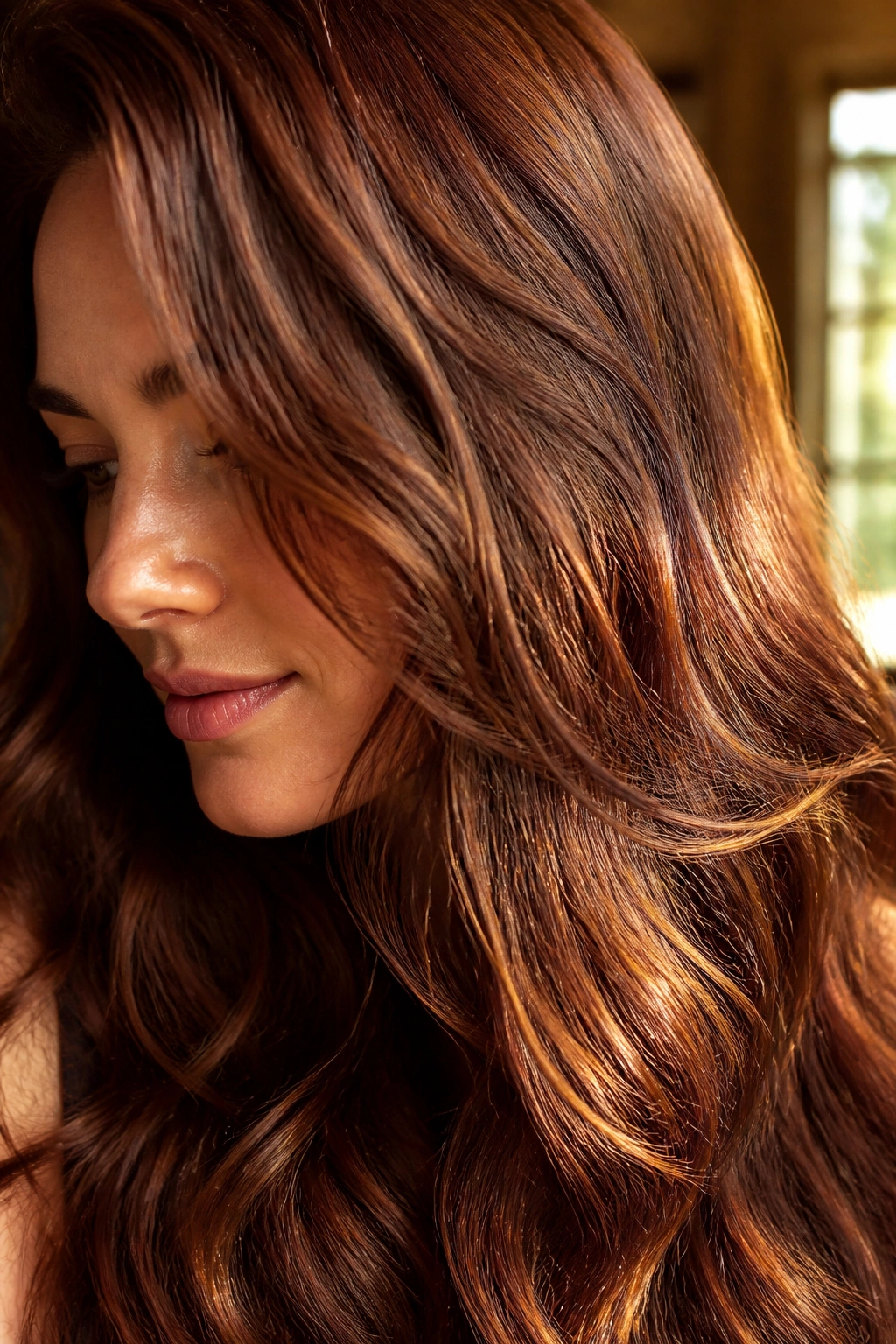
Mahogany brown is the last shade on this list for a reason: it holds up. The color has depth, warmth, and enough glow to keep it from looking flat, which is the whole game with rich brunette shades.
The golden reflection is what saves it from feeling too red or too dark. Indoors, it reads as a deep, polished brown with a little wine in it. In daylight, the gold comes through and softens the whole look. That shift makes the color feel dimensional even when the hair is styled simply.
If you want one brunette shade that can lean elegant, warm, and substantial all at once, this is the one I would point to. It suits layered cuts, long hair, curls, and sleek blowouts without needing a lot of help from the styling chair.
It also has a nice habit of looking better after it settles for a day or two. The shine comes forward, the warmth softens, and the whole thing feels more balanced. That is a pleasant way to end the brunette story.
