



Cute short hairstyles for thick hair work best when the cut does two jobs at once: it takes out bulk and keeps a real shape. If it only removes length, thick hair can puff at the sides, kick out at the nape, or turn into that triangular triangle-with-a-better-attitude situation nobody asked for.
The sweet spot is a cut that respects the density. That usually means a blunt edge, selective internal layering, or a soft taper where the hair needs to lie flatter. Thick hair is a blessing here, honestly. It has enough weight to hold a line, enough body to make a short cut look full, and enough texture to keep a bob or pixie from going limp by lunchtime.
The trick is choosing a shape that works with the hair instead of fighting it. A good short cut on thick hair should move when you want it to, sit still when you need it to, and not demand a full styling session every morning. Some styles lean polished. Others feel playful and messy in a good way. A few are a little sharper. All of them can work if the cut is clean and the weight is handled with some care.
1. Blunt Chin-Length Bob
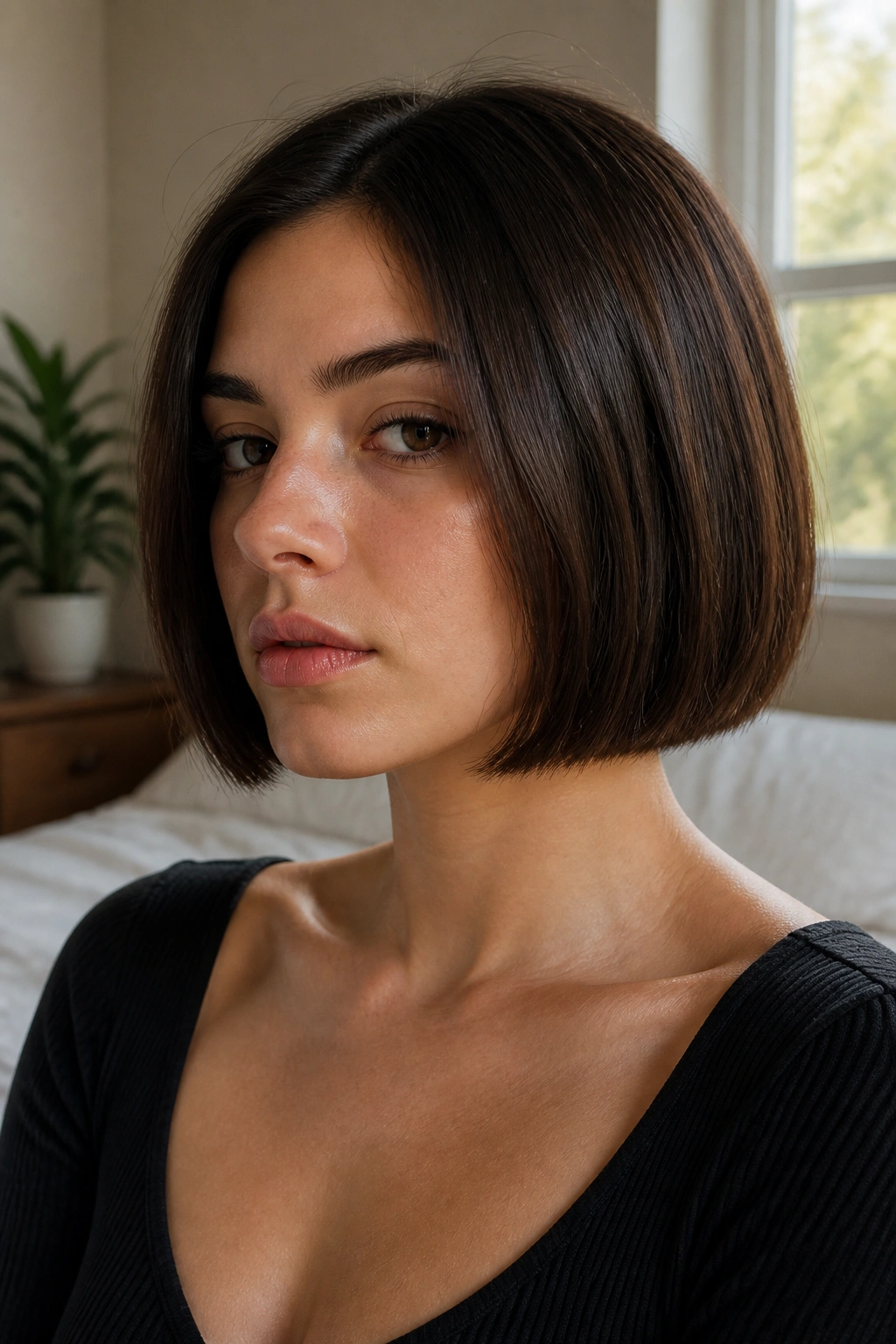
A blunt chin-length bob is the safest bet when thick hair needs structure. The perimeter stays solid, so the cut looks full instead of fuzzy, and the weight sits right where it should. That blunt line is doing a lot of work.
What makes this bob so good is the balance. You get enough length to tuck behind the ears, but not so much that the ends start feeling heavy and boxy. Thick hair loves that kind of confidence. It holds the line.
Why It Works on Thick Hair
A blunt edge keeps the shape crisp. If the ends are too layered, thick hair can spread outward and lose that clean bob look.
Ask for light internal shaping, not aggressive thinning. You want the bulk reduced from inside the cut, while the outside line stays solid and clear.
- Best for straight, wavy, or lightly bent textures
- Easy to smooth with a paddle brush and blow-dryer
- Looks polished with a middle part or a soft off-center part
- Grows out neatly, which is a nice bonus
One quick tip: keep the ends full. That’s the whole point. Too much point-cutting can make a thick bob look scraggly instead of expensive.
2. French Bob with Soft Fringe

Can thick hair wear a French bob without turning into a mushroom? Yes, if the fringe and the ends are handled with restraint. The cut usually lands around the cheekbones or jaw, with a little movement through the front and a soft bang that doesn’t sit like a wall.
This is the kind of bob that looks casual even when it’s carefully cut. The hair feels airy around the face, but the body of the cut still has enough density to look rich and full. That matters a lot with thick hair, because super-light bangs can disappear into the rest of the style if they’re not cut with enough thought.
The fringe should skim the brows or sit a touch above them, never fully jammed across the forehead. The sides can stay slightly longer so the cut doesn’t feel too square.
A little mess is part of the charm. Don’t over-perfect it.
3. Pixie Bob with Piecey Ends
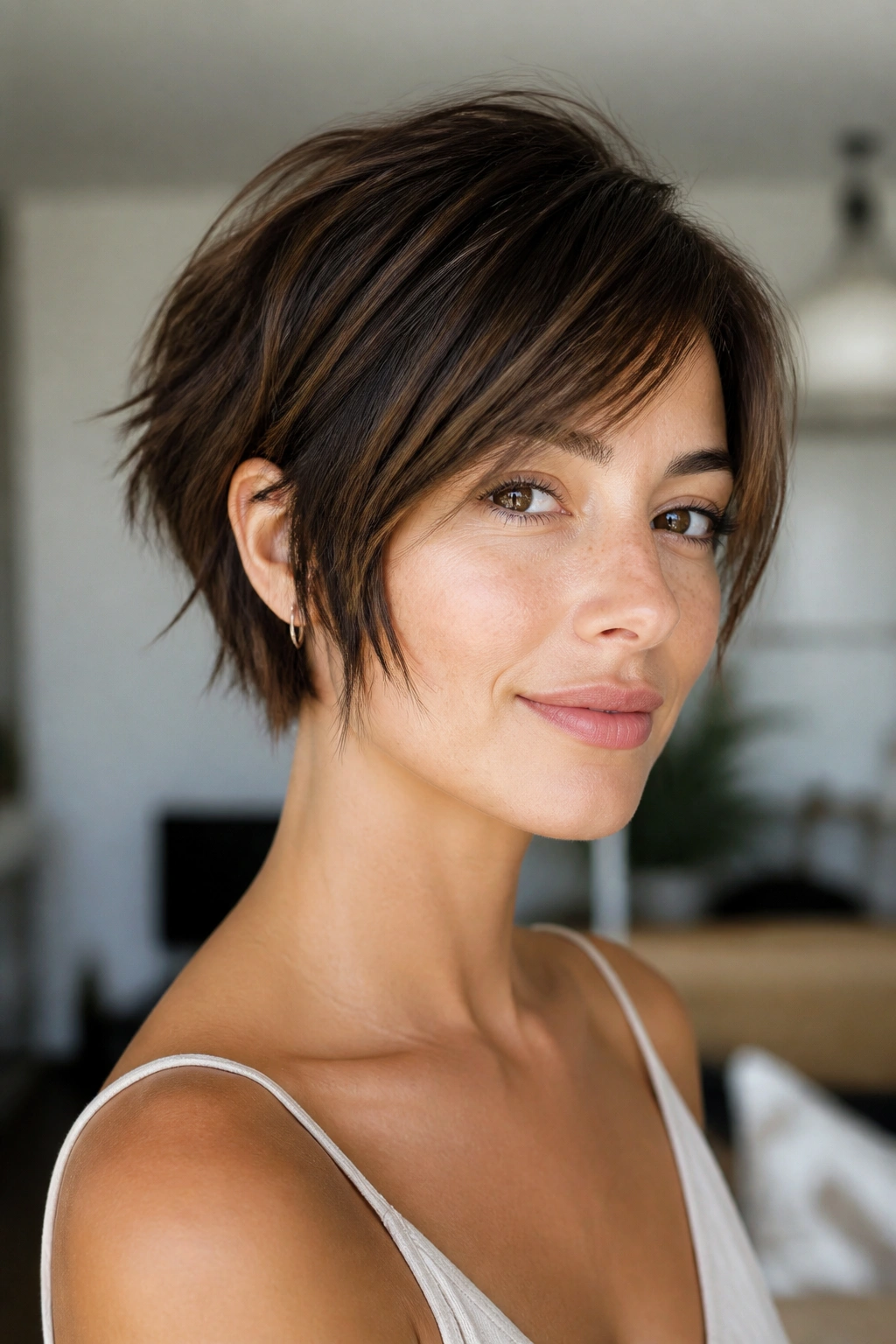
A pixie bob is one of the best “I want short hair, but not too short” cuts for thick hair. It sits between a classic bob and a pixie, which means you keep some length on top and around the face while trimming away the heavy bulk at the back and sides.
The reason it works so well is simple: thick hair gives the style body. You do not need to fake volume here. You already have it. The job is shaping it so the cut looks intentional instead of puffy.
What to Ask For
- 3 to 4 inches on top for styling room
- A tapered nape that hugs the neck
- Piecey ends around the ears and cheekbones
- Soft internal layers, not feathered mush
Use a tiny dab of matte paste on dry hair, then twist a few sections between your fingers. That piecey texture keeps the cut from feeling helmet-like. It also lets the face show through a little, which is what makes this style cute instead of severe.
4. Soft Undercut Pixie
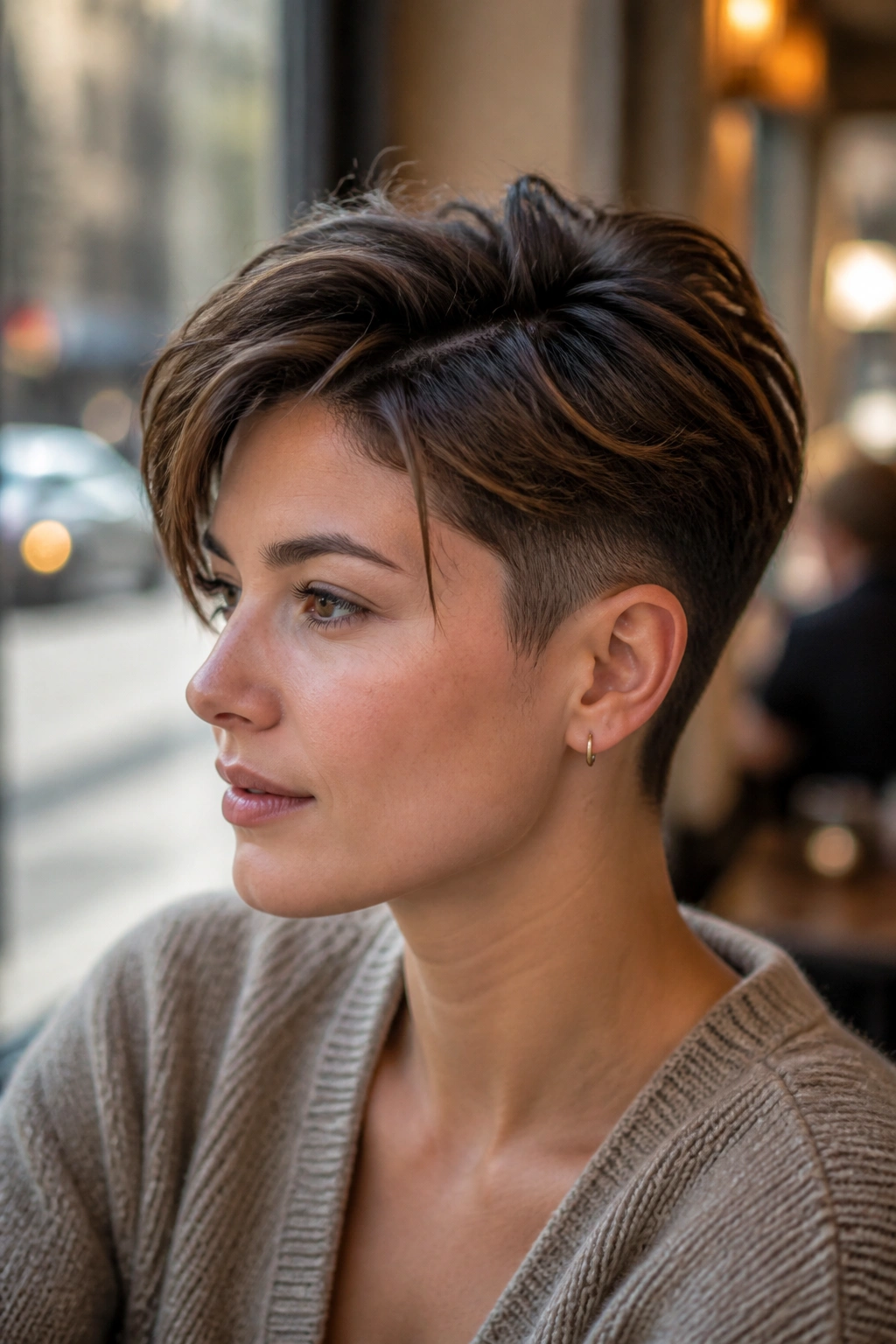
If your thick hair builds up at the nape and behind the ears, a soft undercut pixie can feel like a breath of fresh air. Not a dramatic shave. Just enough reduction underneath to stop the bottom layer from pushing the whole style outward.
That’s the detail people miss. You don’t need to remove a giant chunk of hair to get relief. A tidy undercut, hidden low at the back, can make the whole cut sit flatter and dry faster too.
The top stays longer, usually 2 to 4 inches, so you still get movement and styling options. You can sweep it back, bend it to one side, or scrunch it with cream for a little lift. The point is freedom, not stiffness.
Be careful with the undercut height. Too high, and the grow-out gets awkward fast. Keep it low and soft unless you want the haircut to shout.
5. Curly Crop with a Tapered Nape
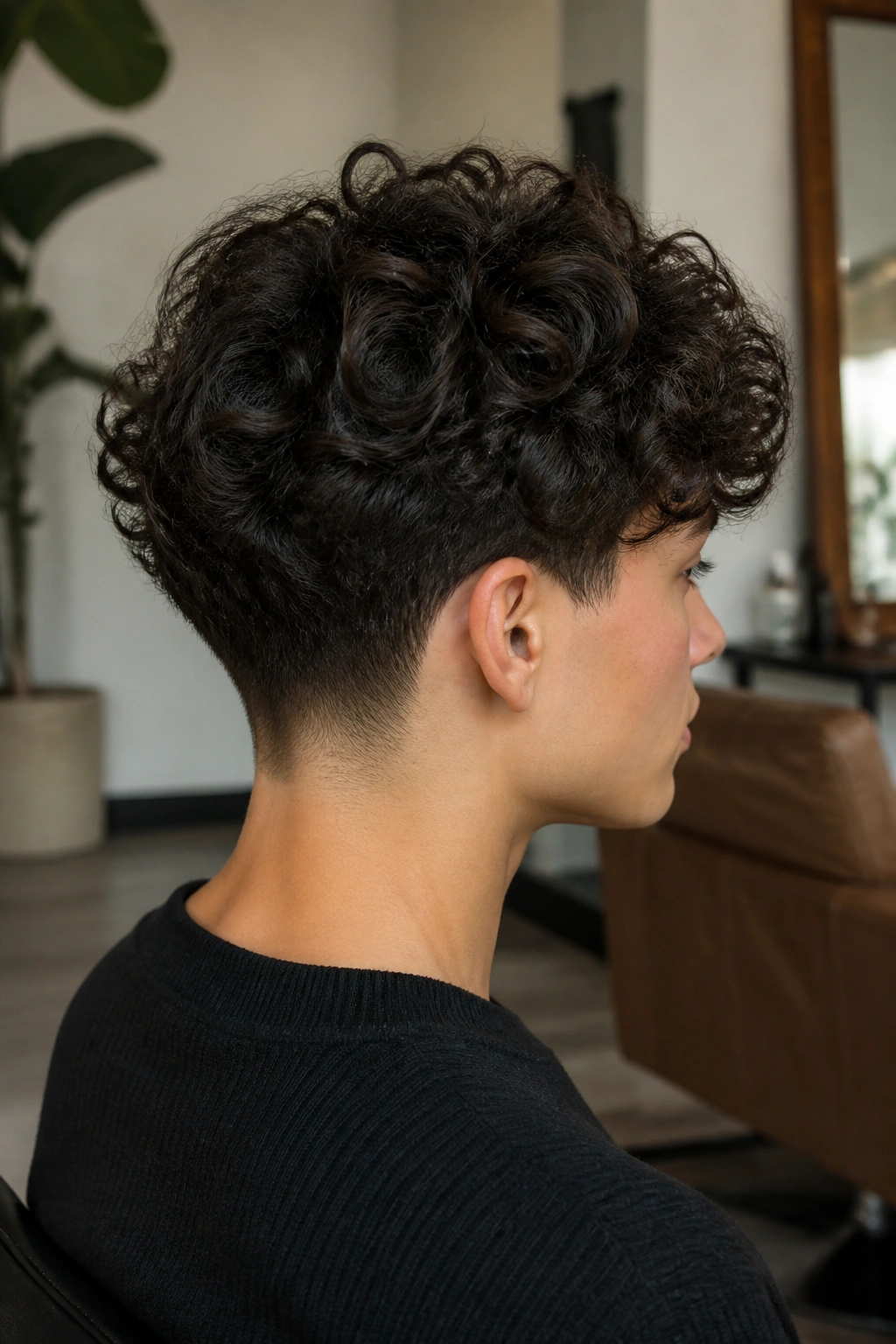
Curly thick hair can look stunning short when the shape follows the curl pattern instead of chopping across it. A tapered nape helps the back lie closer to the head, while the top and sides keep enough room for the curls to spring up without turning into a cube.
Dry cutting helps here. Wet curls lie. They behave differently once they’re fully dry, and thick curly hair can shrink much more than people expect. A stylist who cuts curl by curl, or at least checks the shape dry at the end, usually gets a cleaner result.
How to Keep the Shape from Ballooning
The key is length control at the corners. If the sides are left too short while the top stays dense, the cut can widen faster than you want.
- Keep the crown slightly longer than the sides
- Ask for shape around the temples, not a blunt shelf
- Use a curl cream with enough slip to separate the ringlets
- Diffuse on low heat so the curls don’t frizz out
This is a very good cut if you like your hair to look alive. Not overstyled. Alive.
6. Shaggy Bixie
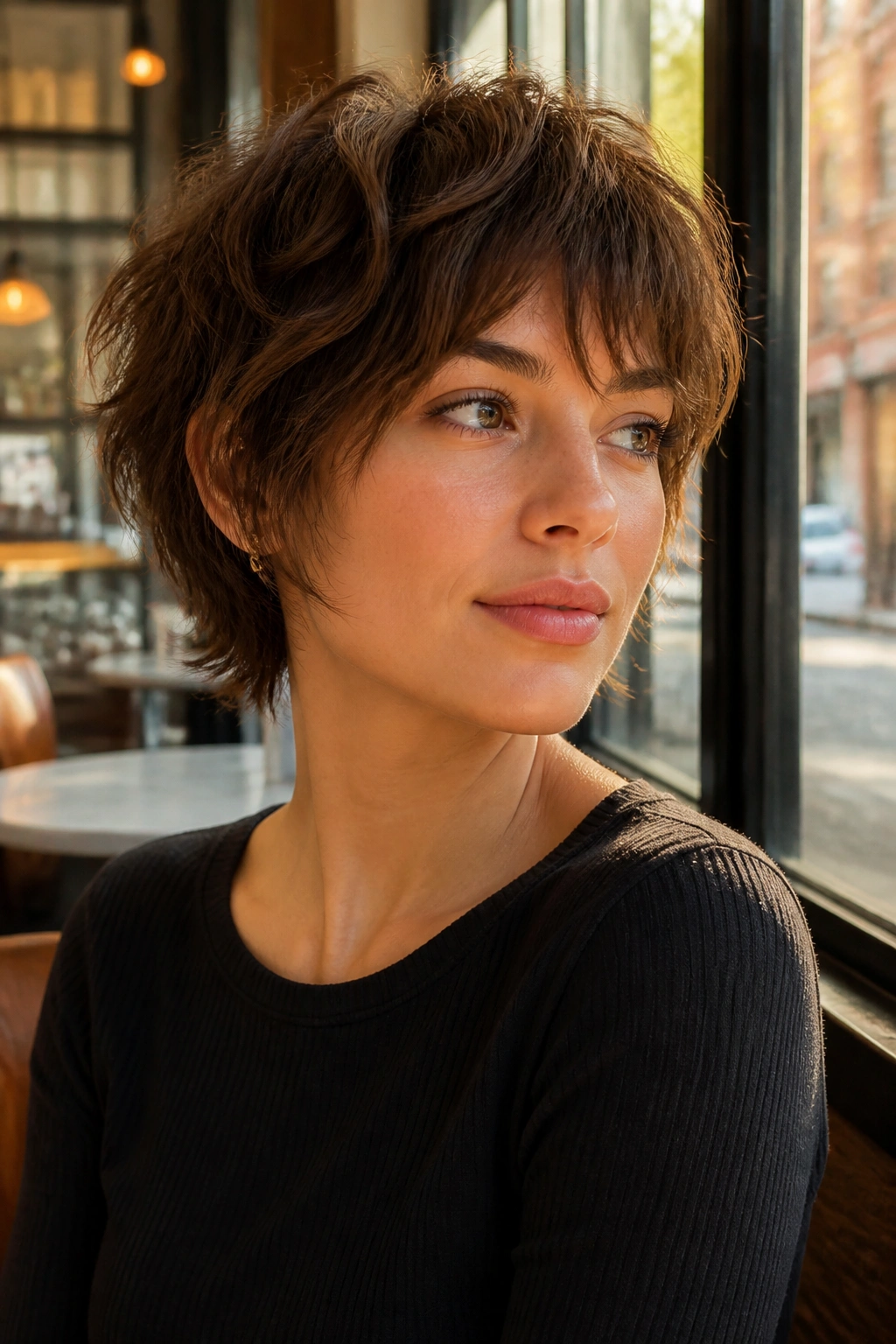
The bixie is what happens when a bob and a pixie meet in the middle and decide not to argue. On thick hair, that compromise can be golden, because you get the neatness of short hair with enough layered movement to keep the style from feeling heavy.
The shaggy version is the one I’d choose if you like a little grit in your haircut. It’s softer than a classic pixie, less formal than a straight bob, and flattering on hair that naturally wants to hold volume. The layers should live mostly around the crown and cheekbones so the shape lifts rather than flares.
A quick styling routine helps a lot. Work in a pea-sized amount of cream on damp hair, rough-dry it, then add a touch of texture spray once it’s dry. Done. No need to fuss with every strand.
This cut is especially nice if you like to tuck one side behind the ear and leave the other a bit fuller. That asymmetry keeps the whole thing from looking too neat.
7. Rounded Bob with a Deep Side Part
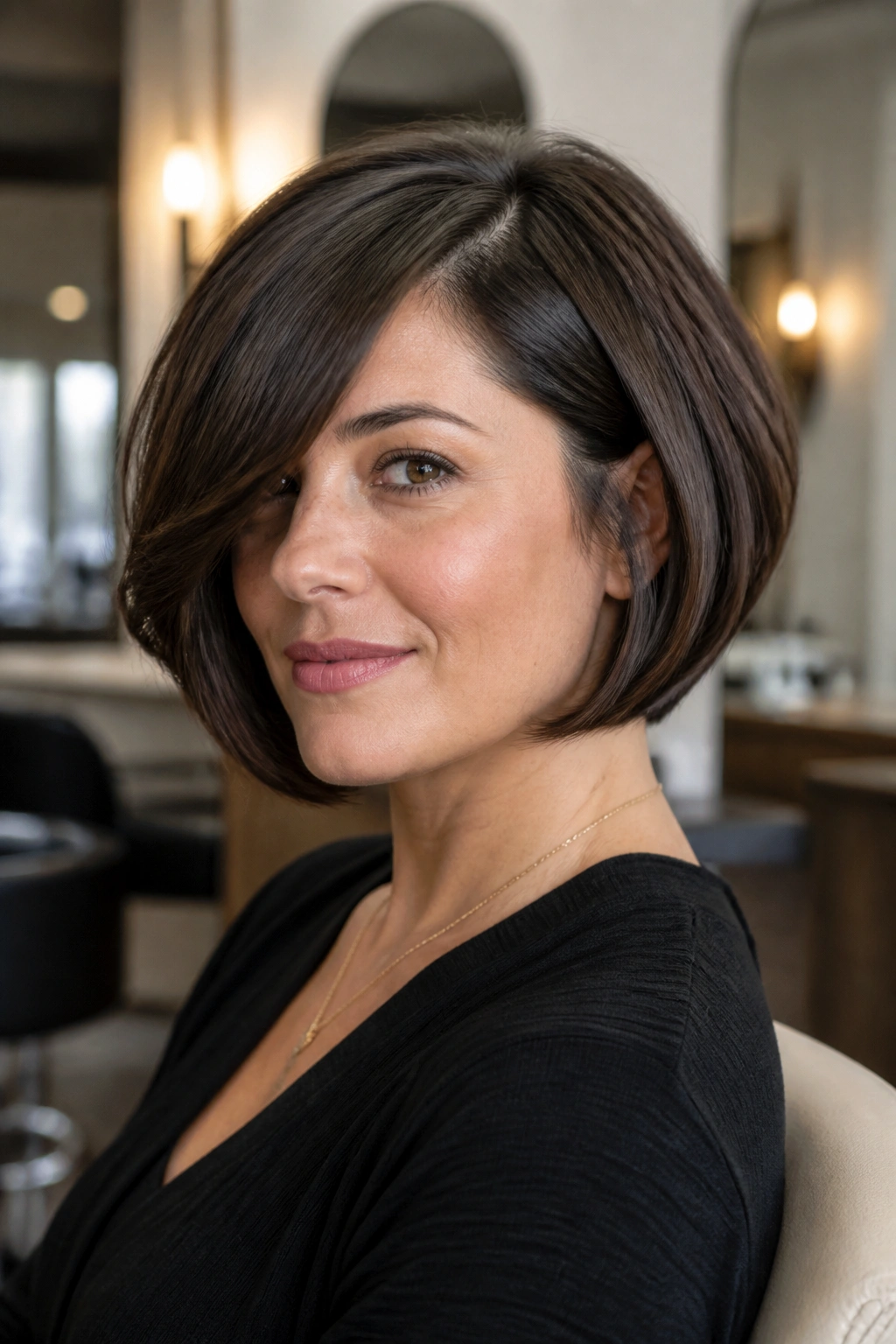
Not every thick-haired bob needs choppy ends. A rounded bob can be a smarter choice when you want the hair to curve inward and sit close to the head instead of pushing outward at the sides.
The deep side part does a lot here. It breaks up the density at the front, gives the top more lift, and makes the haircut feel softer without taking away the fullness. That’s the sweet part. You still get the body thick hair is known for, but the shape feels controlled.
A rounded bob is especially nice if your jawline is sharp or your face is narrow. The curve adds softness near the cheeks. Keep the back slightly shorter than the front, but not so much that it starts looking like a wedge.
One sentence about this cut: it behaves better than it looks on paper. Thick hair gives it enough weight to sit beautifully.
8. Stacked Inverted Bob
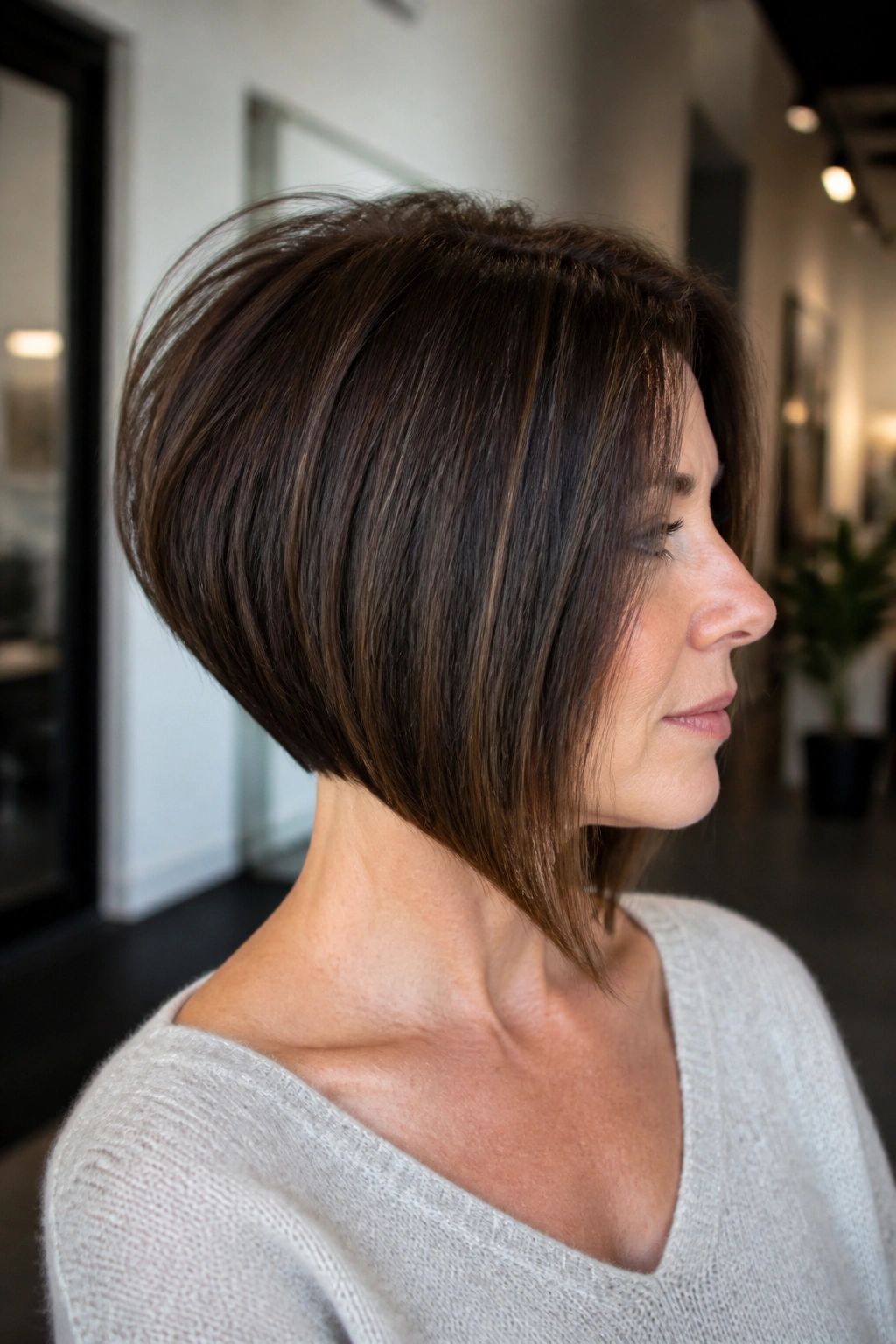
If the back of your hair sticks out no matter what you do, a stacked inverted bob can fix that fast. The shorter back builds lift through layering, while the longer front pieces create a clean angle that narrows the face a little.
The success of this cut depends on restraint. A tiny stack at the nape looks modern and neat. A steep one can slide into that stiff, over-architected shape that feels dated and a little bossy. You want movement, not a helmet with ambition.
Thick hair is ideal for this because the density supports the stacked layers. Fine hair can lose the shape too quickly. Thick hair holds the curve and keeps the profile strong.
If you style it with a round brush, aim the back under and let the front fall straight or slightly bent. The contrast between the two is what gives the haircut its edge.
9. Bob with Curtain Bangs
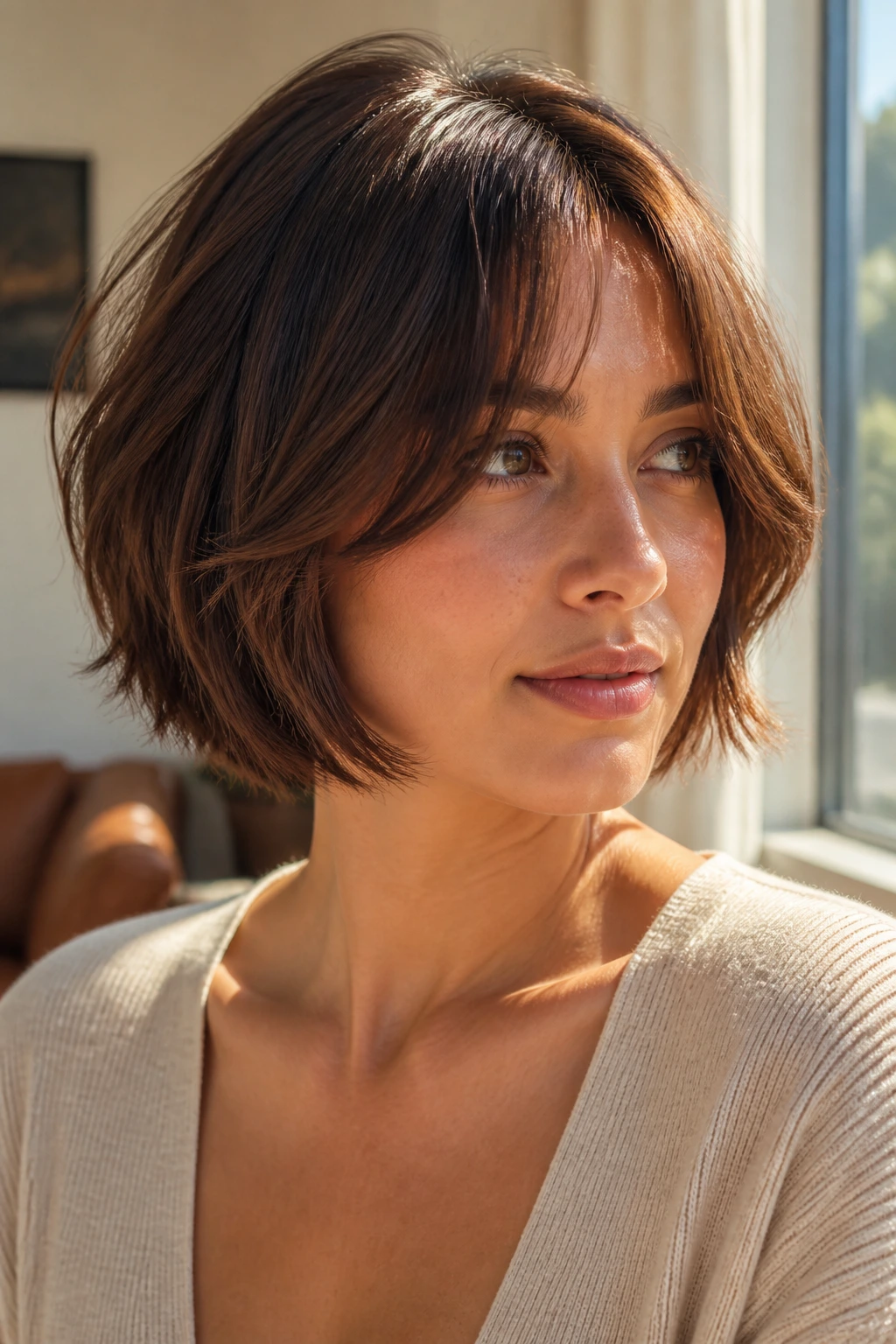
Curtain bangs are the easiest way to soften a short thick haircut without sacrificing much length. They split at the center, frame the face, and break up the heaviness that thick hair can create around the forehead.
The bang length matters more than people think. If they’re cut too short, they can spring up and feel awkward. If they’re too long, they disappear into the rest of the cut. The most flattering range usually hits somewhere between the brow and cheekbone, depending on your face shape and how much wave your hair has.
Why It Flatters Thick Hair
Curtain bangs give thick hair a built-in shape at the front. That keeps the cut from looking one-note.
They also make the style easier to grow out, which is a practical win. You can pin them back, part them wider, or let them blend into face-framing layers.
Use a round brush or a large Velcro roller to set them away from the face. A little lift at the root keeps the fringe from collapsing into the eyes.
10. Angled A-Line Bob
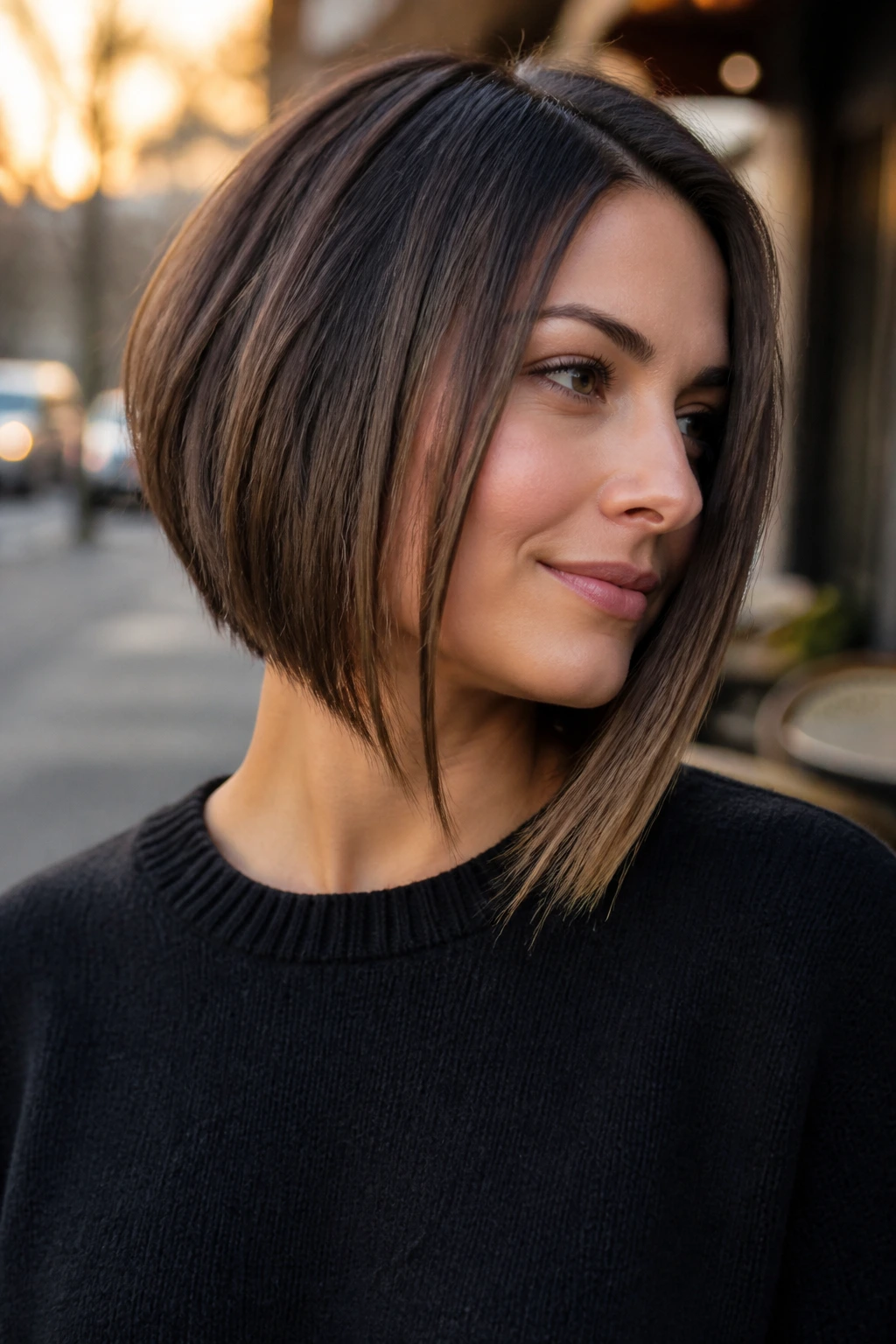
An angled A-line bob is a clean choice when you want short hair with a bit of edge. The back stays shorter, the front stays longer, and the whole cut slopes forward in a way that flatters thick hair by controlling where the volume sits.
What I like about this shape is that it creates direction. Thick hair can feel broad when it’s all one length, but an angle changes the eye line. Suddenly the fullness feels intentional, not bulky.
It’s also a useful cut if you like to wear your hair tucked on one side. The longer front pieces can skim the collarbone or jaw, while the back keeps the neck open and light.
Ask for a subtle angle if you want something easy to live with. A sharper drop looks more fashion-forward, but it also shows regrowth faster and can need more styling to stay crisp.
11. Choppy Micro Bob

A micro bob sounds severe until you see it on thick hair. Then it suddenly makes sense. The density gives the cut enough weight to look plush instead of wispy, and the chin-grazing length keeps the outline cute and compact.
The choppy part is what gives it personality. Instead of a perfect blunt edge, the ends are slightly broken up so the bob moves when you turn your head. That tiny bit of texture matters a lot. It keeps the style from reading too formal.
This cut works especially well if your hair tends to widen at the sides. A micro bob keeps the shape close to the head. It can also make earrings and necklines stand out, which sounds small until you try it.
One blunt note: don’t over-texturize the ends. Thick hair already has enough body. You want movement, not gaps.
12. Side-Swept Pixie
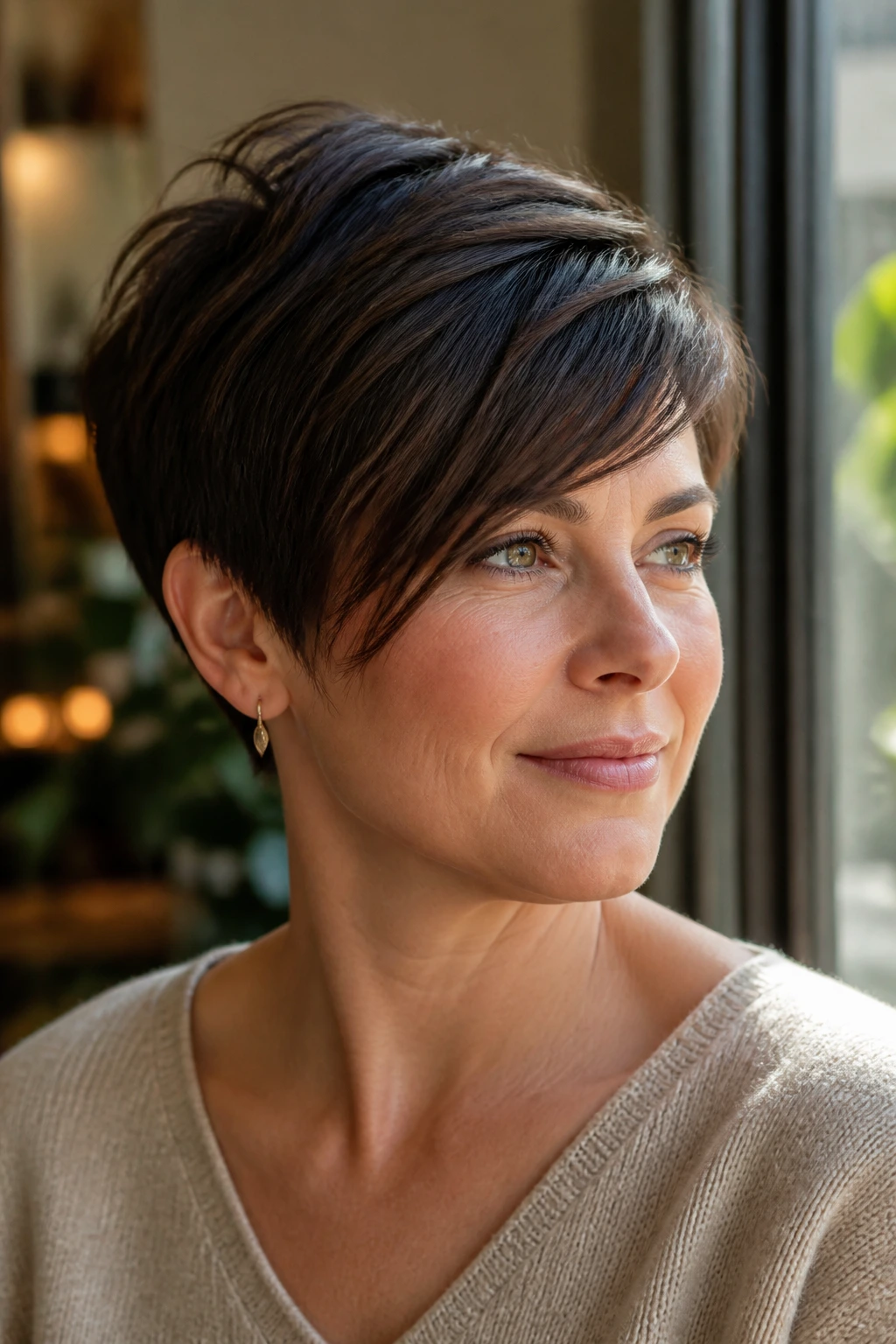
The minute a pixie gets a side-swept fringe, it stops feeling severe. That’s why this cut works so well for thick hair. The fringe softens the forehead, the sides stay neat, and the top still has enough length to move.
A side-swept pixie is also forgiving when your hair has a strong natural growth pattern. Cowlicks near the front can be annoying, but if the fringe is long enough, you can guide it instead of fighting it. Thick hair helps there. It has the muscle to stay put once you’ve shaped it.
This cut looks best when the top is a little longer than the sides, usually around 4 to 5 inches. That gives you room to sweep it across the brow without exposing too much scalp. Keep the fringe light and piecey, not heavy and blocky.
If you want a cut that feels feminine without being fussy, this is a strong one. It does not ask for much.
13. Wavy Tousled Bob
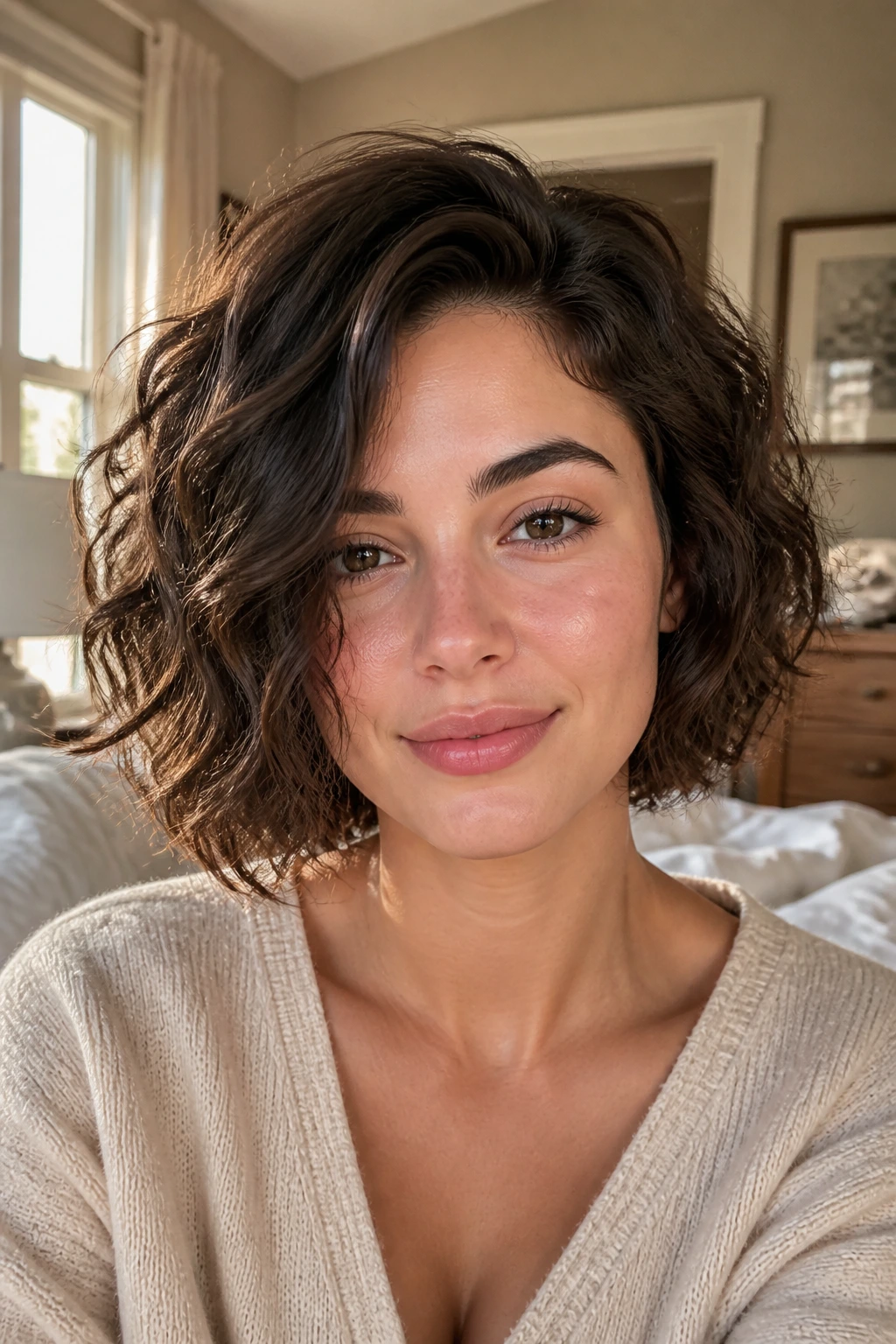
Thick hair with a natural wave can look especially good in a tousled bob because the cut doesn’t have to fake texture. The hair already has it. The job is to shape the wave so it falls in loose bends instead of spreading outward.
A wavy bob needs a little bit of air. If the layers are too short, the wave can puff up and lose definition. If they’re too long, the cut can go flat. The balance usually lands around the jaw to chin, with soft shaping through the interior.
Use mousse on damp hair, not a heavy cream that weighs everything down. Scrunch the hair upward with your hands, then diffuse on low heat or let it dry partly on its own before finishing. Once it’s dry, break up any crunchy bits with a drop of serum.
The finished look should feel undone in the best way. Not messy. Not overblown. Just easy.
14. Modern Bowl Cut
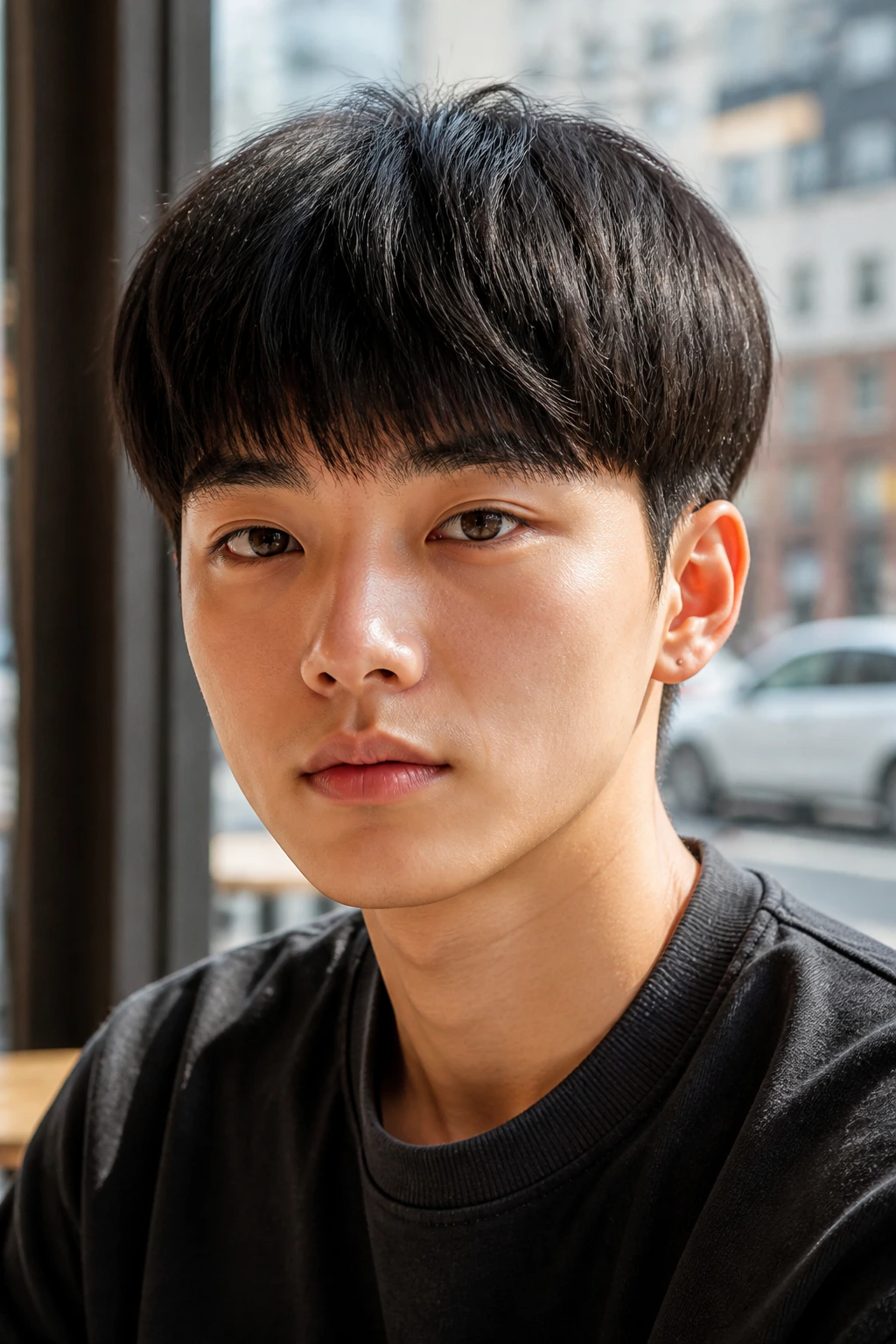
A bowl cut on thick hair sounds risky until you see the modern version. The key is softness. You keep the rounded shape, but the line is broken up with light texture so it doesn’t sit like a helmet.
Thick hair is one of the few textures that can support this cut without losing the silhouette. The density keeps the shape full, while the softer interior keeps it from looking blunt in the wrong way. It’s graphic, but not harsh.
The best versions open a little around the cheekbones and leave the nape tidy. Some stylists add tiny internal layers near the crown so the top doesn’t puff. That keeps the profile neat and stops the hair from ballooning outward.
Geometry matters.
If you want something a little bold but still cute, this is a fun choice. It works best when the finish stays soft, not over-smoothed.
15. Layered Ear-Length Curly Bob

A curly bob at ear length can be adorable on thick hair, especially when the curl pattern is treated as part of the shape. The cut should sit close enough to the head to feel light, but not so tight that the curls lose spring.
Dry cutting helps a lot with this shape because curls shrink unevenly. A good cut often leaves the crown a touch longer and softens the sides around the ears so the hair doesn’t flare out in a boxy shape. That matters more with thick curls, which can expand in every direction if they’re all the same length.
What to Ask Your Stylist
- Cut the curls in their natural state when possible
- Keep the perimeter soft, not blunt and heavy
- Leave a little extra length around the temples
- Shape the back so it doesn’t stack too high
This is one of those cuts that feels cheerful without being precious. It bounces. It moves. It looks especially good with a simple clip or tucked side.
16. Asymmetrical Bob
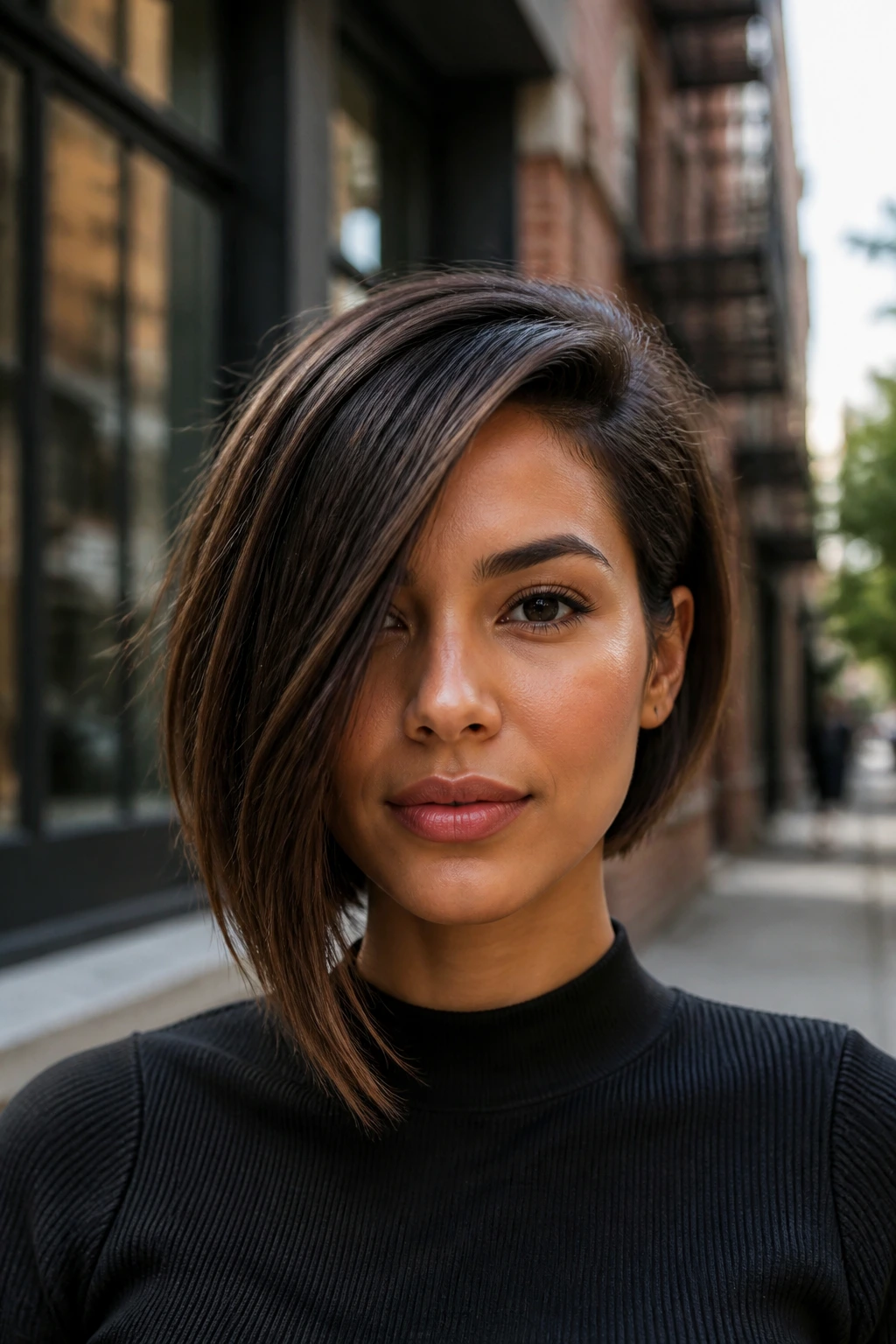
An asymmetrical bob is for the person who wants something a little off-center and knows it. One side is longer than the other, usually by an inch or so, and that difference gives thick hair a sleek, deliberate shape.
Because thick hair has weight, the asymmetry actually shows. On finer hair, the difference can disappear. Here, it reads clearly, especially if the longer side skims the jaw while the shorter side keeps the neckline open.
This cut can be styled straight for a sharper feel or wavy for something softer. Either way, it has a built-in point of interest, which means you don’t need much else going on. A side part makes the angle even more obvious.
If you like haircuts that look styled even when they’re not, this is one to keep on the list. It has attitude without trying too hard.
17. Tousled Crop with Baby Bangs
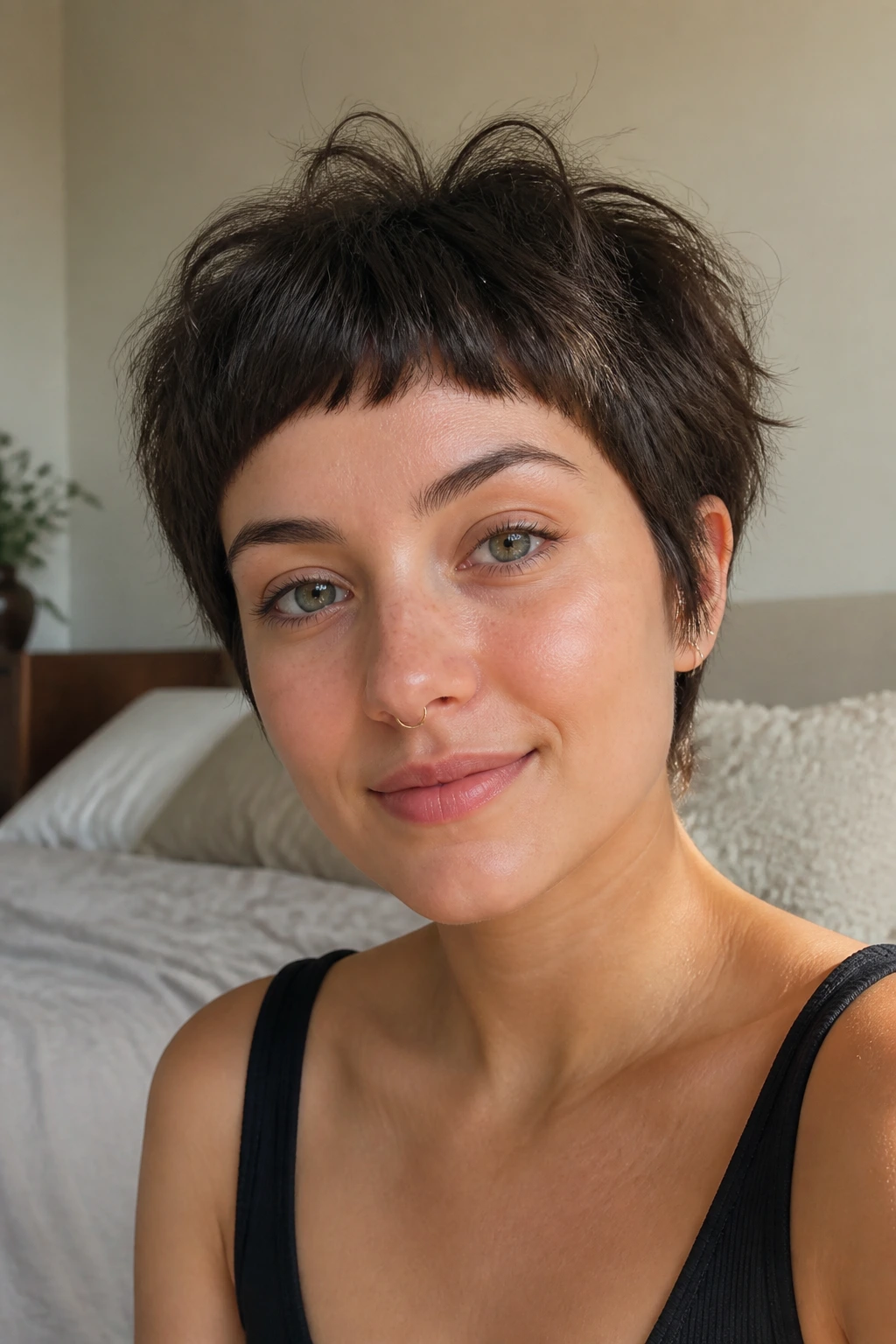
Baby bangs are a commitment, so I’m not going to pretend otherwise. They can be charming on thick hair, though, because the fringe has enough density to look clean instead of wispy, and the rest of the crop keeps the overall shape playful.
The trick is to keep the crop soft and a little tousled. If the sides are too crisp, the short fringe can feel severe. If the top is textured and a bit messy, the whole thing reads more cute than strict. That’s the difference.
This cut works best when you’re comfortable showing your forehead and okay with a style that asks for regular bang trims. It also helps if your cowlicks behave. If they don’t, the fringe can kick up in odd ways.
A texturizing spray or a touch of dry paste keeps the crop from falling flat. Small amounts. Seriously. Too much product turns a neat little cut into sticky hair sculpture, and that is not the goal.
18. Tapered Pixie with Long Top
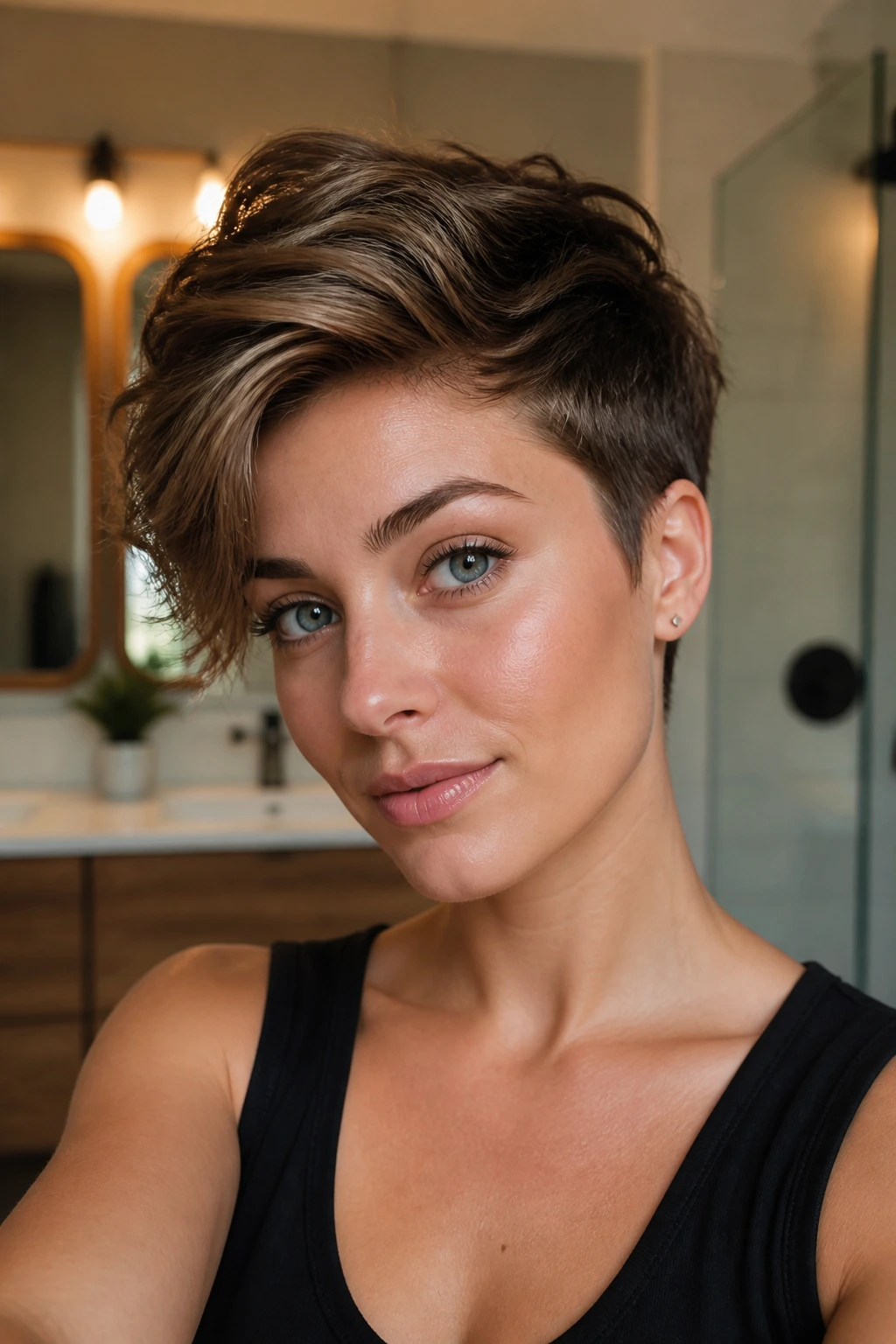
A tapered pixie with a long top is one of the smartest ways to wear thick hair short. The sides and nape are cropped close enough to remove bulk, while the top stays long enough to bend, sweep, or spike a little depending on your mood.
The taper makes the haircut feel clean from every angle. That matters when thick hair tends to swell at the ears or around the back of the neck. Shorter sides help the shape sit close, and the longer top keeps it from feeling too bare.
Styling Notes
- Keep the top around 5 to 7 inches if you want real versatility
- Use a light cream for softness or a matte paste for grip
- Blow-dry the top forward, back, or diagonally depending on the part
- Ask for the nape to be tapered gradually so it grows out less awkwardly
This is a strong cut if you want options. Slick it back one day. Push it to the side the next. Let it dry with a natural bend if you’re in a hurry.
19. Sleek Glass Bob
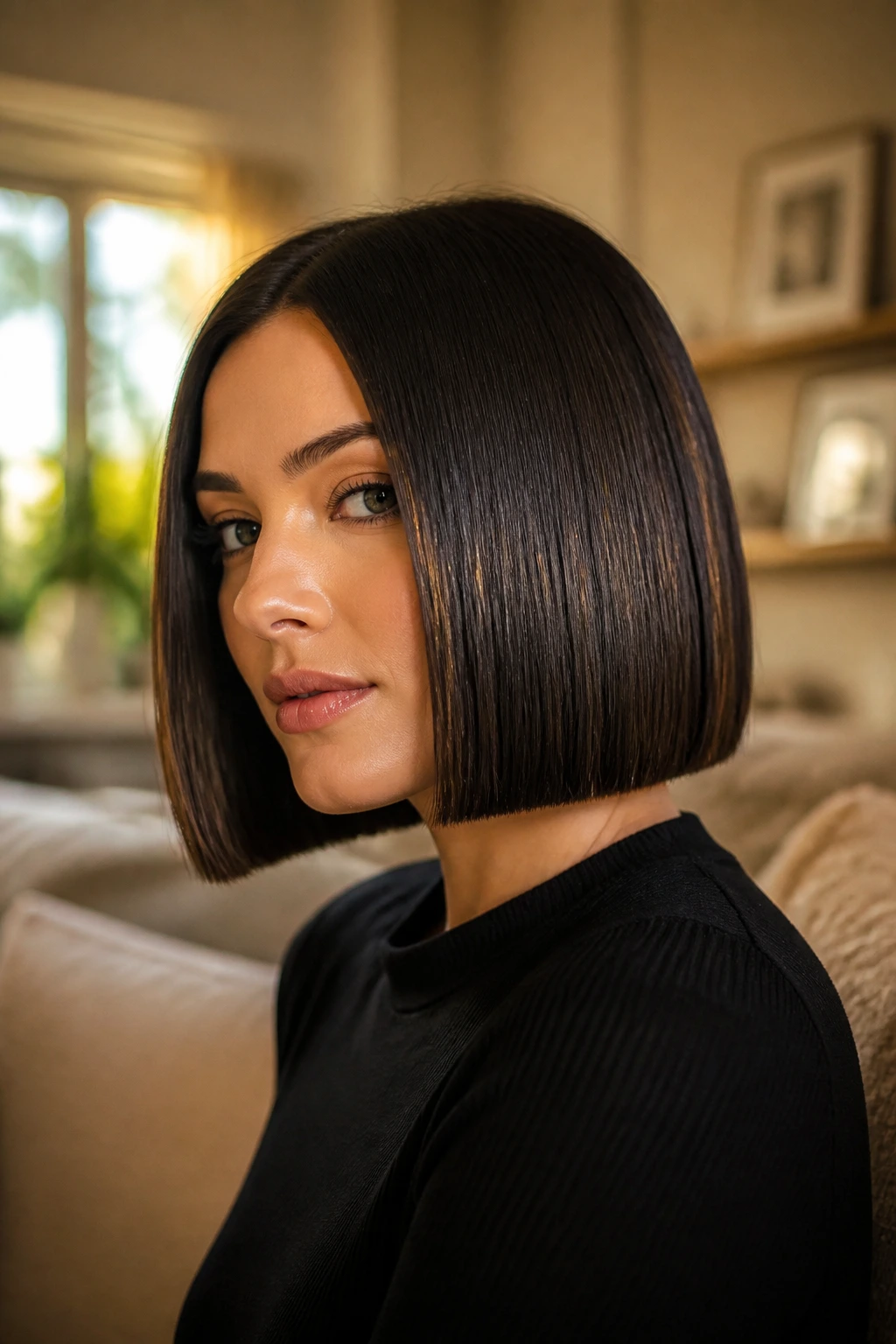
Thick hair can make a glass bob look expensive in a way thinner hair sometimes can’t. The density helps the cut sit like one smooth sheet, which is exactly what gives this style its shine and polish.
A glass bob works best when the line is sharp and the ends are kept blunt. Too much layering breaks the surface and steals that reflective finish. If your hair is straight or easily smoothed, this cut can look almost lacquered when styled well.
The styling part is straightforward, but it does ask for care. Use a heat protectant, blow-dry in sections with a nozzle attachment, then run a flat iron through 1-inch pieces if needed. Keep the iron around the low-to-medium range; 300 to 350°F is usually enough for thick hair without hammering it flat.
A drop of serum on the ends finishes the look. Not the roots. The ends.
This is the cut for days when you want your hair to look sharp without extra decoration.
20. Chin-Length Bob with Hidden Layers

If you want movement without losing the blunt look, hidden layers are the quiet fix. They sit inside the haircut, so the outer line still looks full, but the weight underneath is trimmed enough to stop the hair from ballooning.
This is one of the best choices for thick hair that gets triangular when it grows out. The ends stay solid, but the interior no longer pushes the bob outward. That means the style can swing a little, tuck behind the ears, and still keep its shape at the jaw.
Ask your stylist for internal point-cut layering rather than obvious feathering. The difference matters. Point-cut layers remove weight in a softer way, while harsh thinning can make thick hair frizzy and uneven.
It’s a smart cut for people who want low drama. The haircut looks simple. The engineering underneath is not simple at all.
21. Flipped-Out Bob
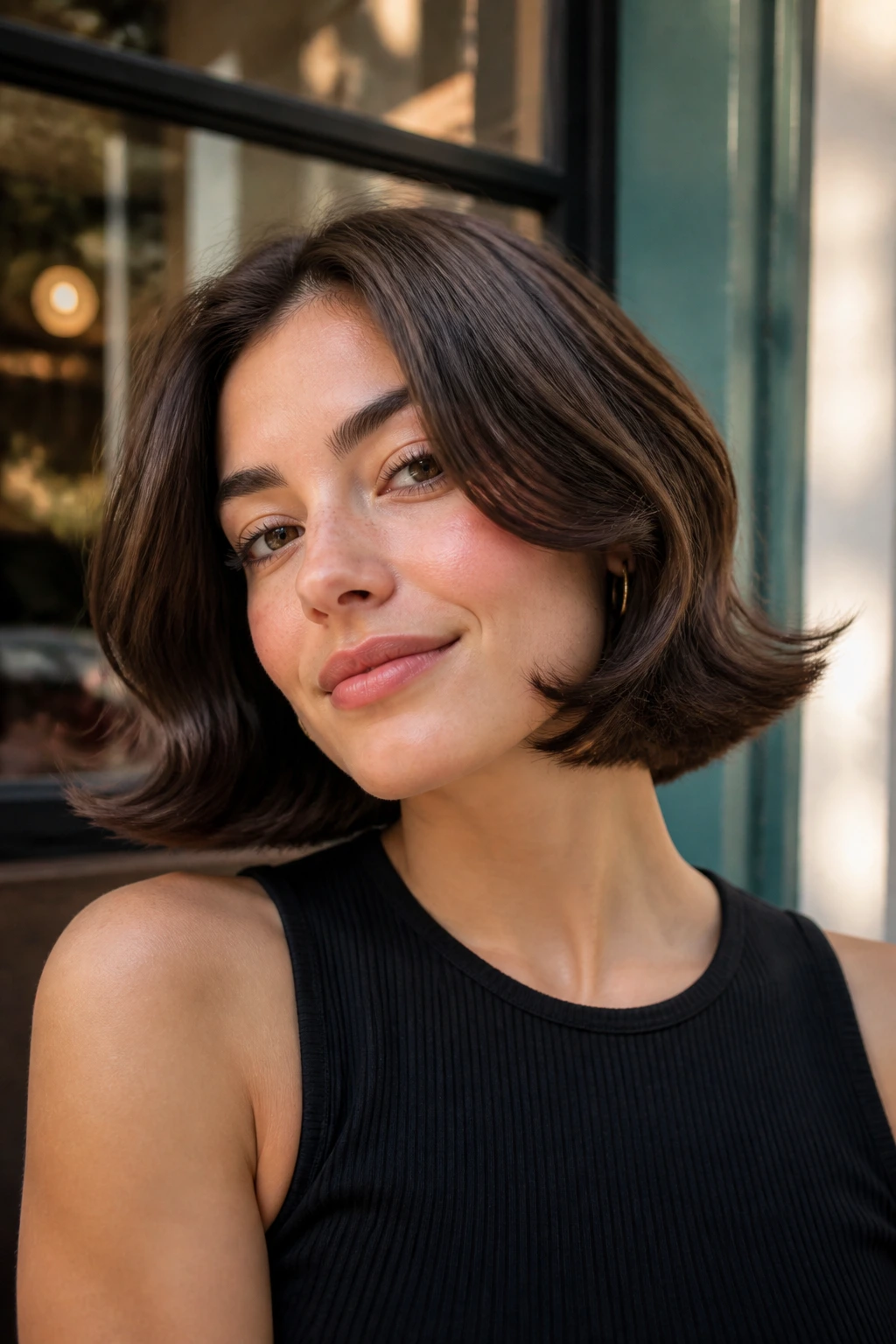
A flipped-out bob has a cheerful, energetic feel that thick hair handles well. The ends keep their shape, so a small outward bend reads clean instead of accidental. That’s the real advantage of density here.
The style works especially well at chin length or just below it, where the flip can show without turning the silhouette too wide. A round brush or a 1-inch curling iron can create that outward kick at the last inch or so of the hair. Keep the bend soft. You want a swing, not a curl.
This cut also likes a side part or a slightly off-center part because the unevenness makes the flip feel less rigid. A tuck behind one ear finishes the look fast.
One thing I’d avoid: flipping every end in exactly the same direction. A little variation keeps it from looking stiff. Thick hair has enough personality already. Let it keep some.
22. Deep Side-Part Bob with Tuckable Ends
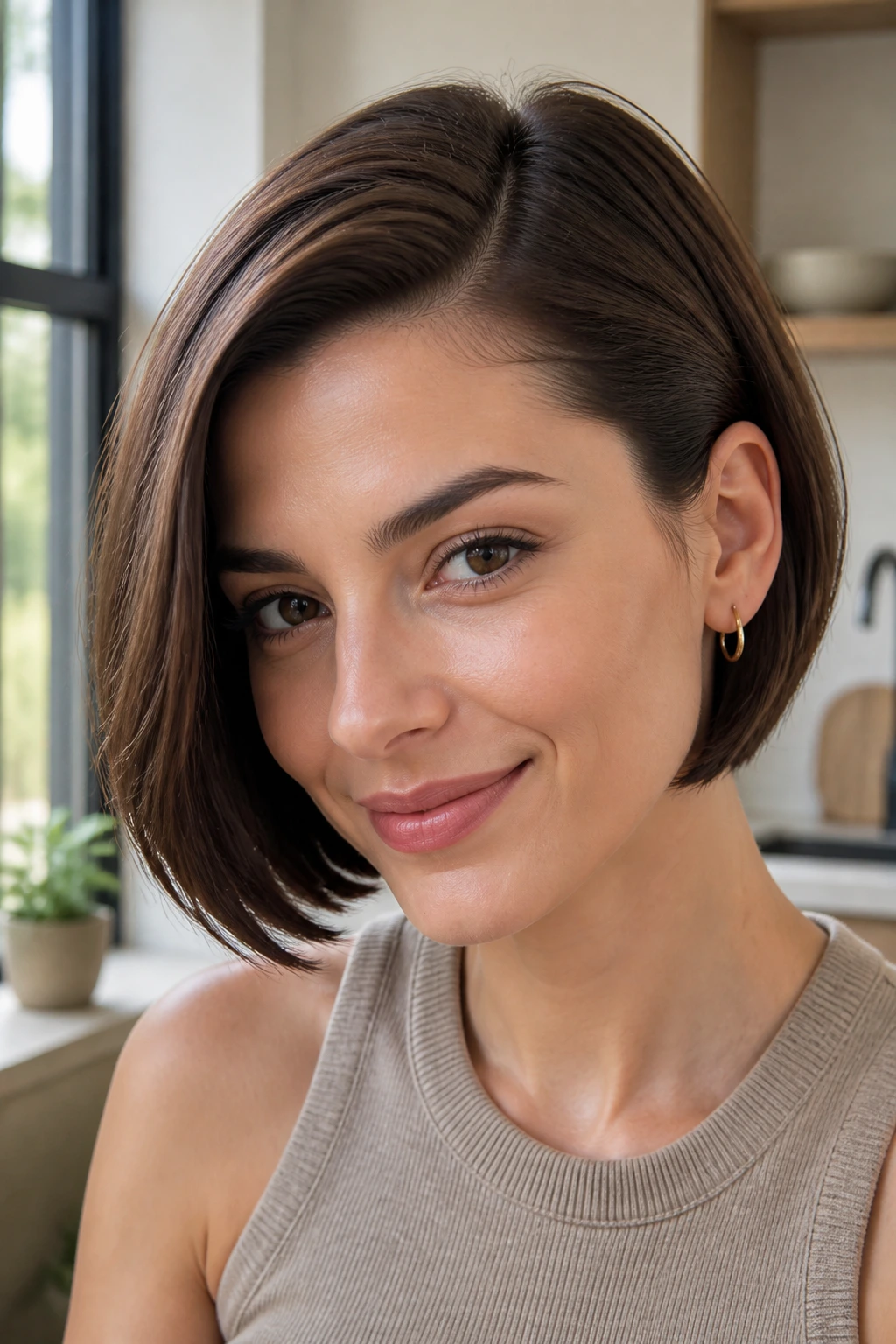
A deep side-part bob is the kind of cut that quietly does everything right. It gives thick hair a sleek front, a little lift at the crown, and enough length around the jaw to tuck one side behind the ear when you want that easy, lived-in look.
The part is doing more than you think. It breaks up density, creates a natural sweep across the forehead, and stops the haircut from feeling symmetrical in a boring way. On thick hair, that asymmetry can make the whole style feel lighter without sacrificing fullness.
Keep the ends just long enough to skim the jaw or graze the neck. If they’re too short, the tuck looks forced. If they’re too long, you lose the short-hair energy that makes this cut so useful.
This is the one I’d recommend when you want a short style that behaves on a rushed morning and still looks neat by dinner. No drama. Good shape. Easy to live with.
