



Wavy hair and blonde color flatter each other in a way straight hair often has to work harder for. Every bend in the hair throws light a little differently, so even a quiet tone can read richer, softer, or brighter depending on where it lands.
That is why the best blonde hair color ideas for wavy hair are not the ones that scream for attention. They’re the ones that move with the texture. A shade can look too flat on a blunt, straight style and suddenly come alive once the hair has a bend through the mids and ends.
Placement matters more than most people think. The same blonde can look stripy, muddy, icy, or expensive depending on whether it sits at the root, lives in ribbons through the mid-lengths, or fades softly into the ends. Waves make those shifts more obvious, which is exactly why they’re such a good match for blondes.
So the real trick is choosing a tone that fits your wave pattern, your cut, and your upkeep tolerance. Start with the first shade that feels close to your taste and keep an eye on where the brightness sits — that is usually the part that makes the whole look work.
1. Honey Blonde Balayage for Wavy Hair
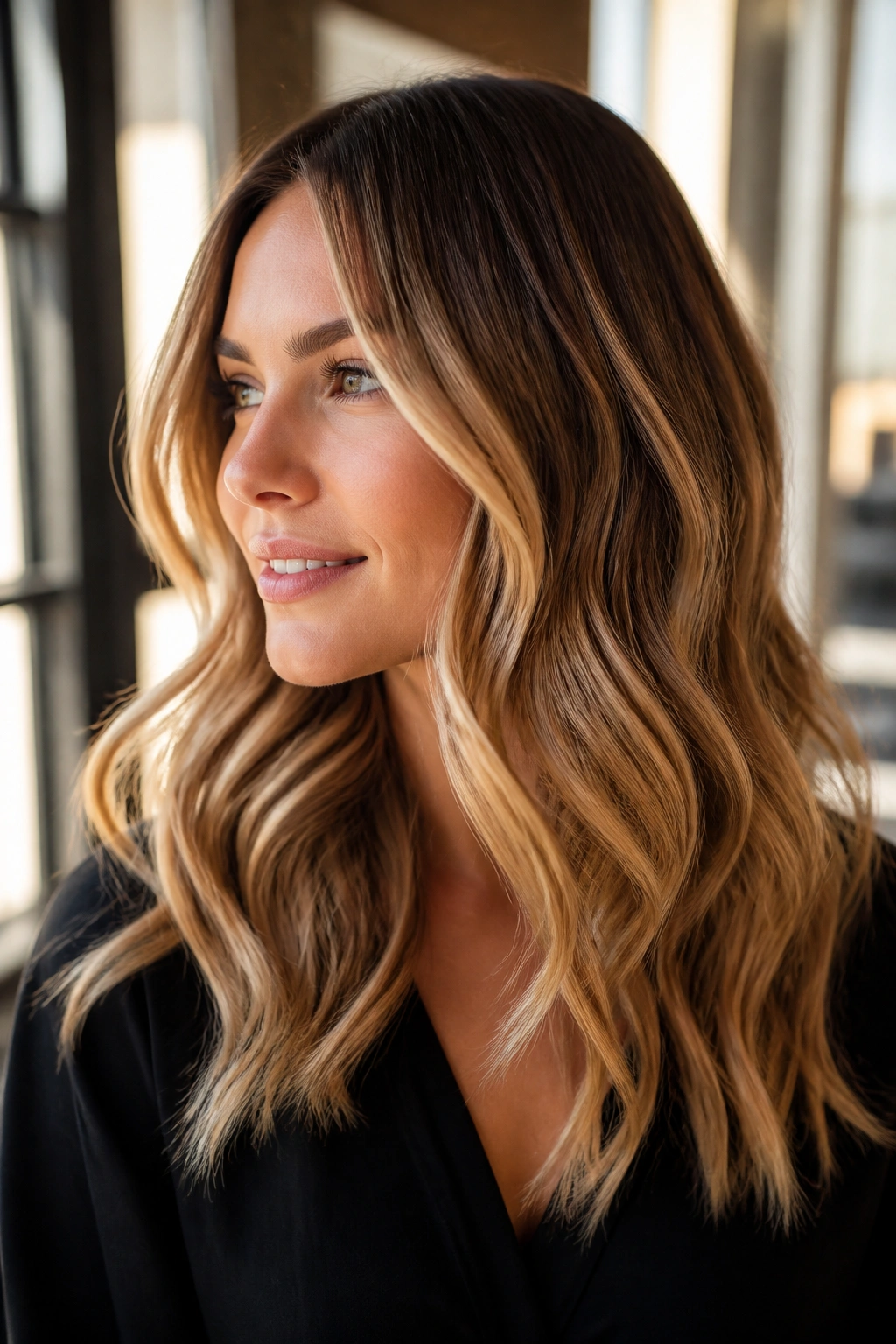
Honey blonde is a safe bet for waves because it warms up the movement instead of flattening it. Hand-painted balayage pieces, especially when they start a couple of inches below the root, keep the finish soft and grown-in rather than streaky.
Why It Works on Waves
The golden tone catches on every curve, so the hair reads fuller without looking heavy. If your natural base is medium blonde or light brown, ask for level 8 to 9 honey pieces with a softer face frame and slightly deeper root melt.
A little warmth goes a long way here. Too much, and it turns brassy fast. Too little, and the color loses the cozy, sunlit feel that makes honey blonde such a good fit for loose waves.
2. Buttercream Blonde for Soft, Loose Waves
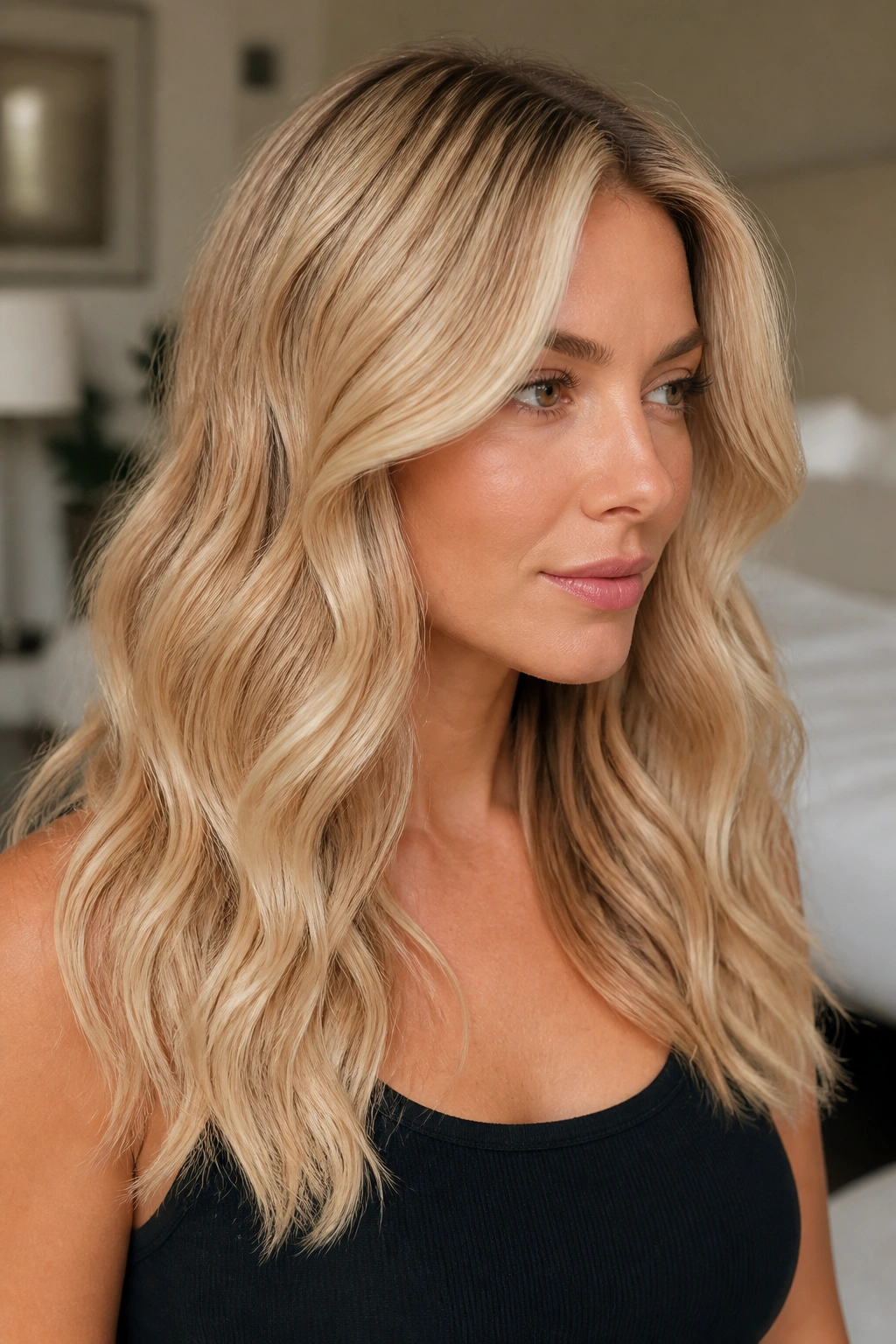
Want a blonde that feels creamy instead of sharp? Buttercream blonde sits in that sweet spot. It has warmth, but not the orange cast that can make wavy hair look dusty at the ends.
This shade works especially well on hair that bends in big, loose S-waves. The color feels plush on the mid-lengths and stays gentle near the face, which keeps the whole look easy to wear. Ask for a pale beige-gold gloss over a level 9 base. Clean. Soft. No hard edges.
3. Beige Blonde with a Soft Root Shadow
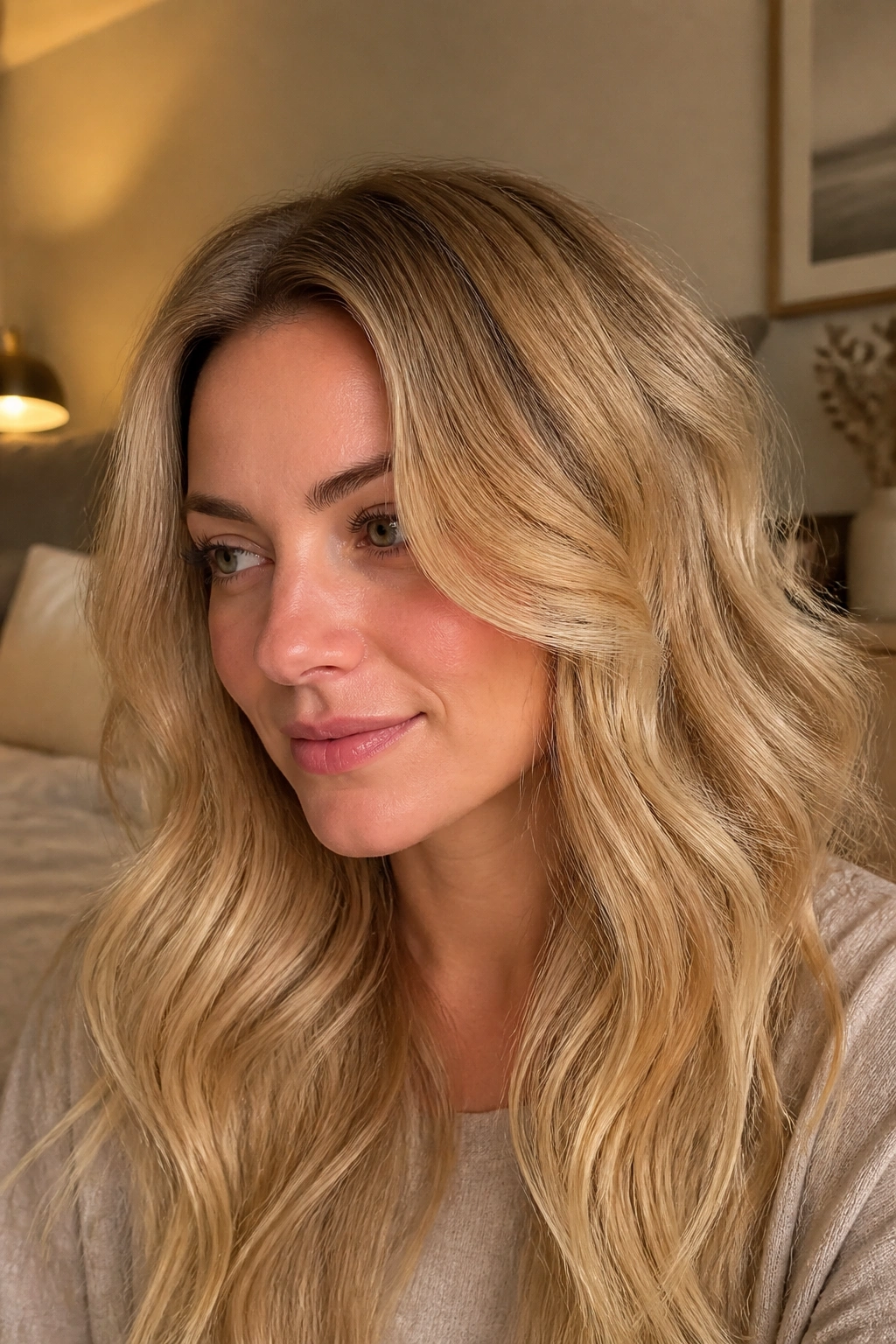
Beige blonde is the shade I reach for when someone wants blonde, but not loud. It has that muted, sandy finish that makes waves look lived-in instead of freshly processed.
The root shadow matters here. Leave the base one to two levels deeper than the mids, and the color gets depth without looking dark. That little bit of shadow also buys you time between salon visits, which is handy if you do not want to babysit your tone every few weeks.
4. Ash Blonde Ribbon Highlights
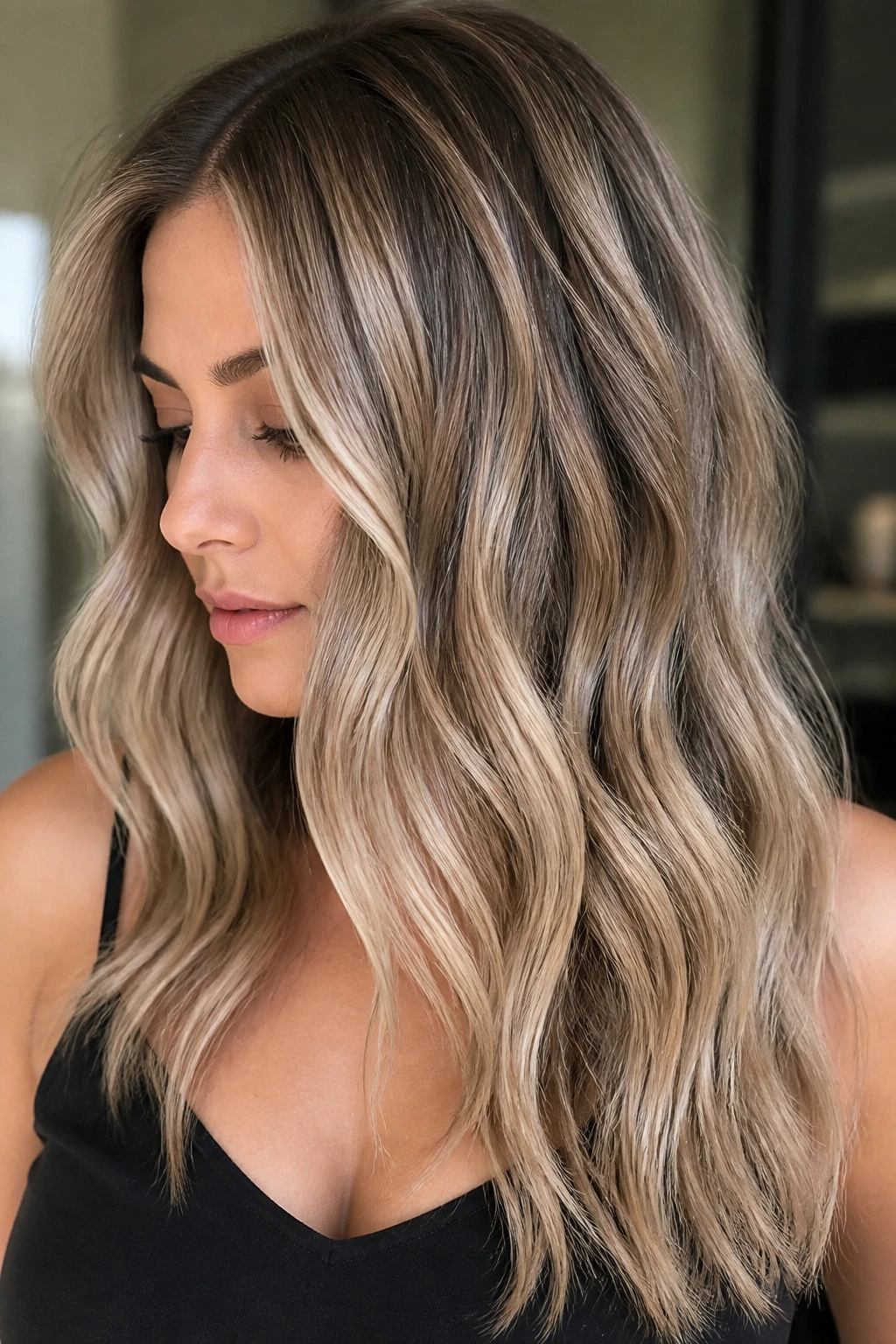
Ash blonde ribbon highlights can look almost smoky in the best way. On wavy hair, the cool pieces bend through the shape like thin strips of light, and the whole head gets a sharper, cleaner feel.
What to Ask For
- Fine to medium ribbons, not chunky panels
- A neutral or cool toner on the lighter strands
- Brighter pieces around the top layer, not just the front
These highlights are a good choice if your hair pulls orange or gold too fast. They do need maintenance. Cool tones fade quickly, and wavy hair shows that shift faster than straight hair does.
5. Champagne Blonde for a Collarbone Lob
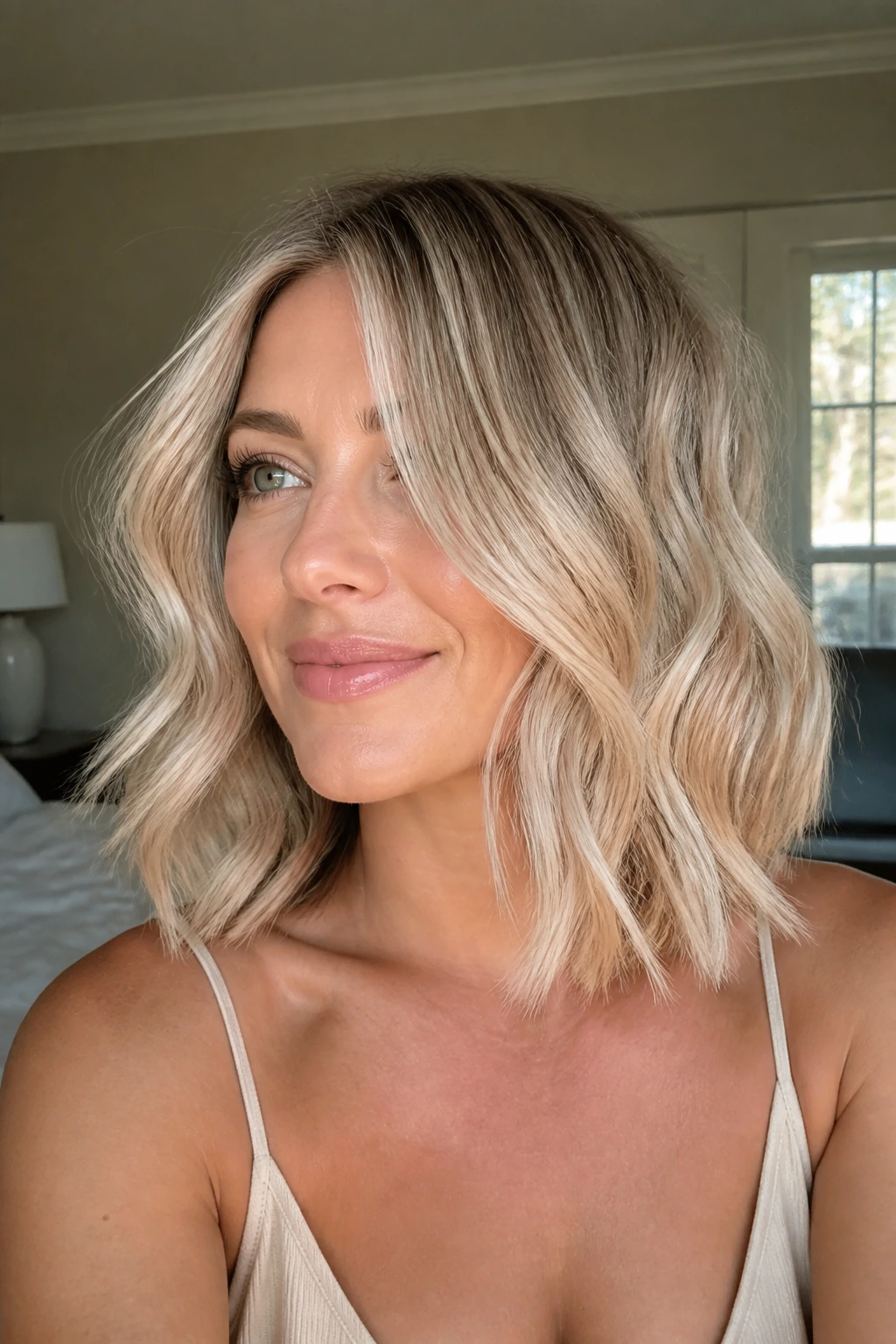
Champagne blonde has a pale sparkle to it that looks especially good on a collarbone-length cut. The tone sits between warm and cool, so the hair reads bright without drifting into yellow.
On waves, a lob keeps the color from feeling too airy or too severe. The bend in the hair softens the shine, which is exactly what keeps champagne blonde wearable. I like it with a soft root melt and a gloss refresh every 6 to 8 weeks. Anything more aggressive can make it look flat.
6. Golden Blonde Face Framing
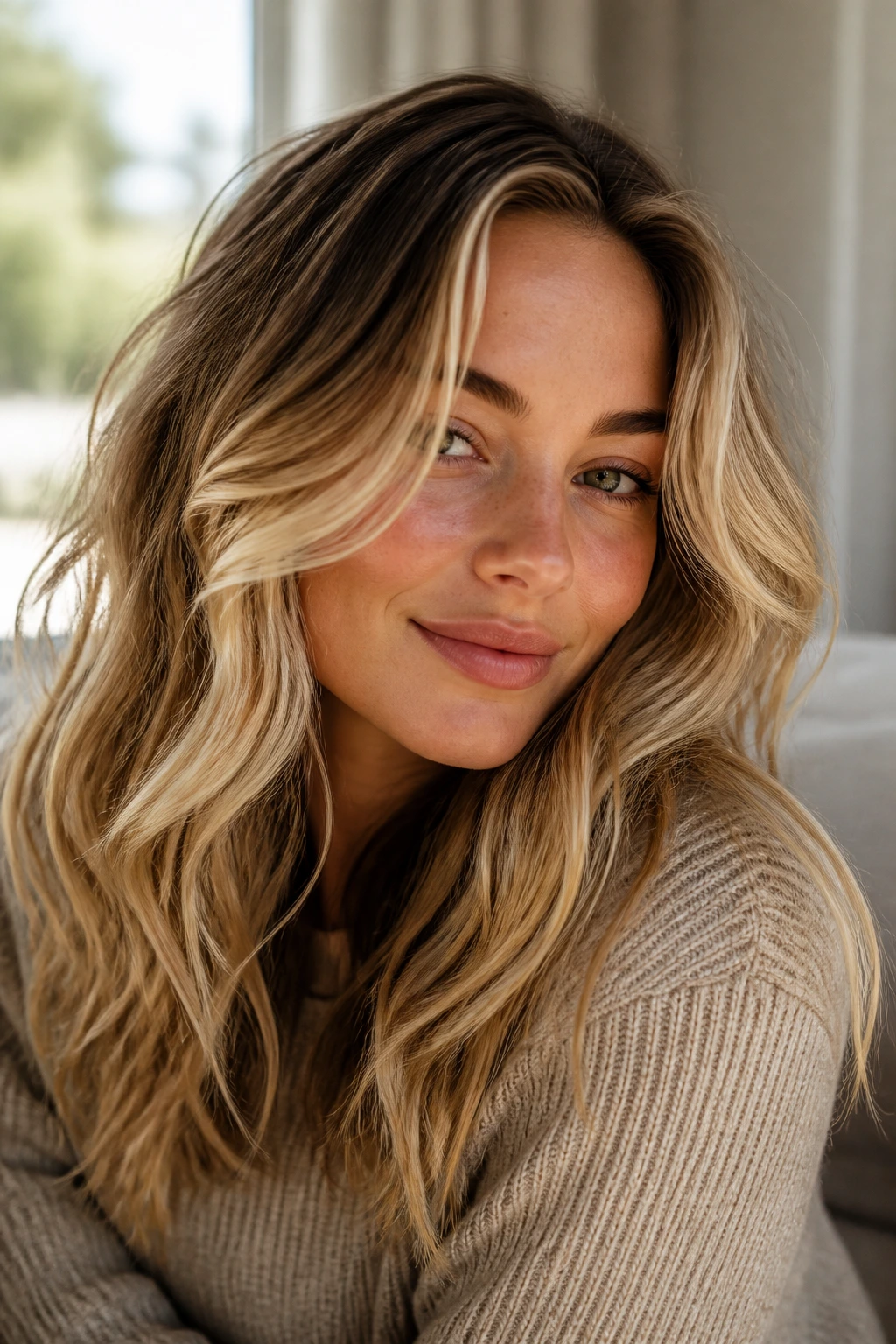
Golden blonde face framing has a habit of waking up a tired haircut. Just a few brighter pieces around the cheekbones and jaw can change the whole mood of wavy hair.
This is a smart choice if you want brightness without committing to full-head lightening. The contrast should feel intentional, not stripey. Keep the front pieces a little wider than baby lights, and let the rest of the color stay calmer. The result is quick to style and easy to live with.
7. Platinum Blonde Ends
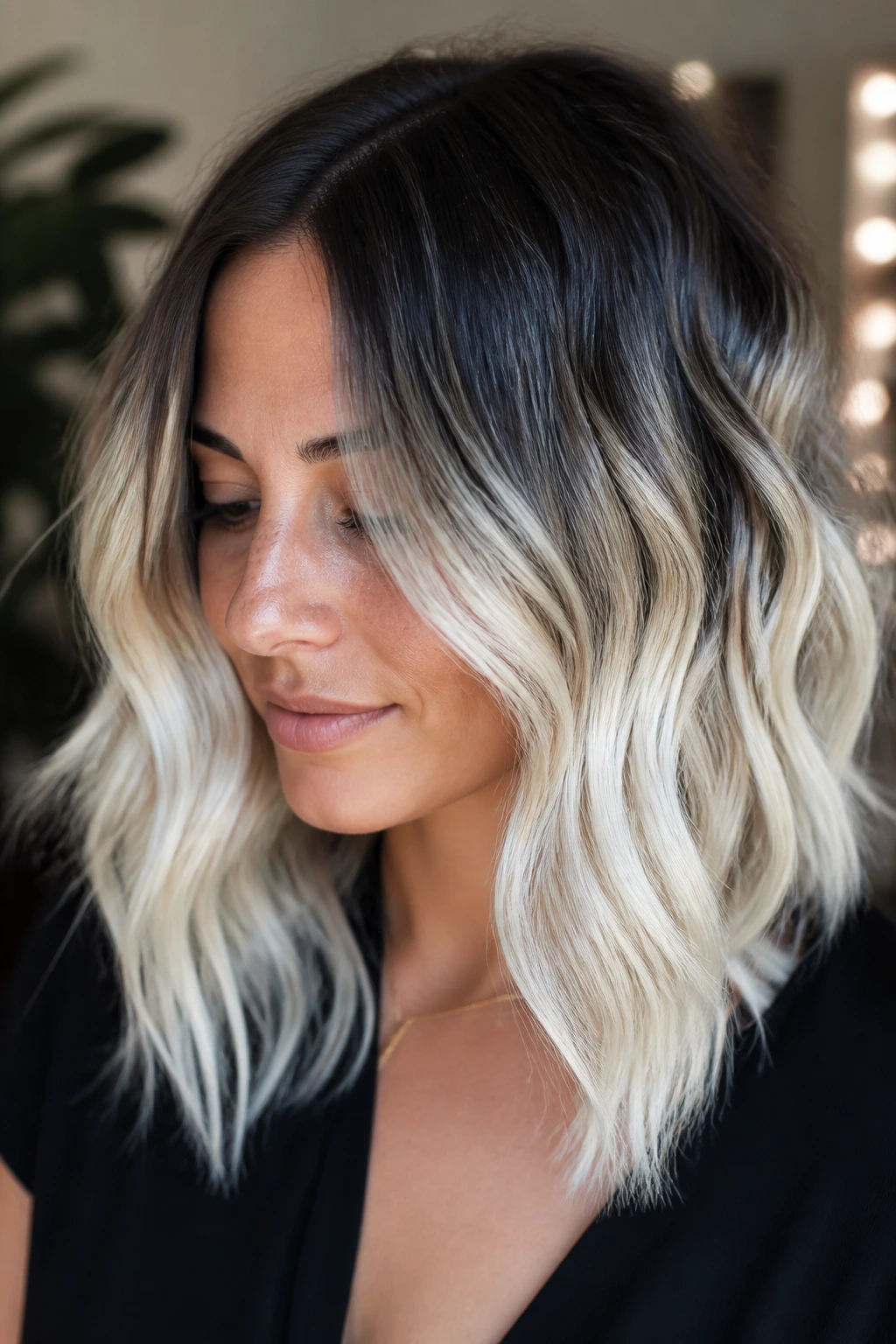
Platinum ends are not subtle. They make a wavy cut look sharp, high-contrast, and a little bit dramatic in the best possible way. The darker root gives your waves something to lift against, which helps the lighter ends pop.
Why It Stays Interesting
Platinum can fall flat when it sits all over the hair. On waves, though, the movement breaks up the brightness and keeps it from reading like a helmet. That said, the hair needs to be in good shape. Bleached ends need regular trim-ups, hydrating masks, and a toner that keeps the shade from drifting yellow.
8. Sandy Blonde Money Pieces
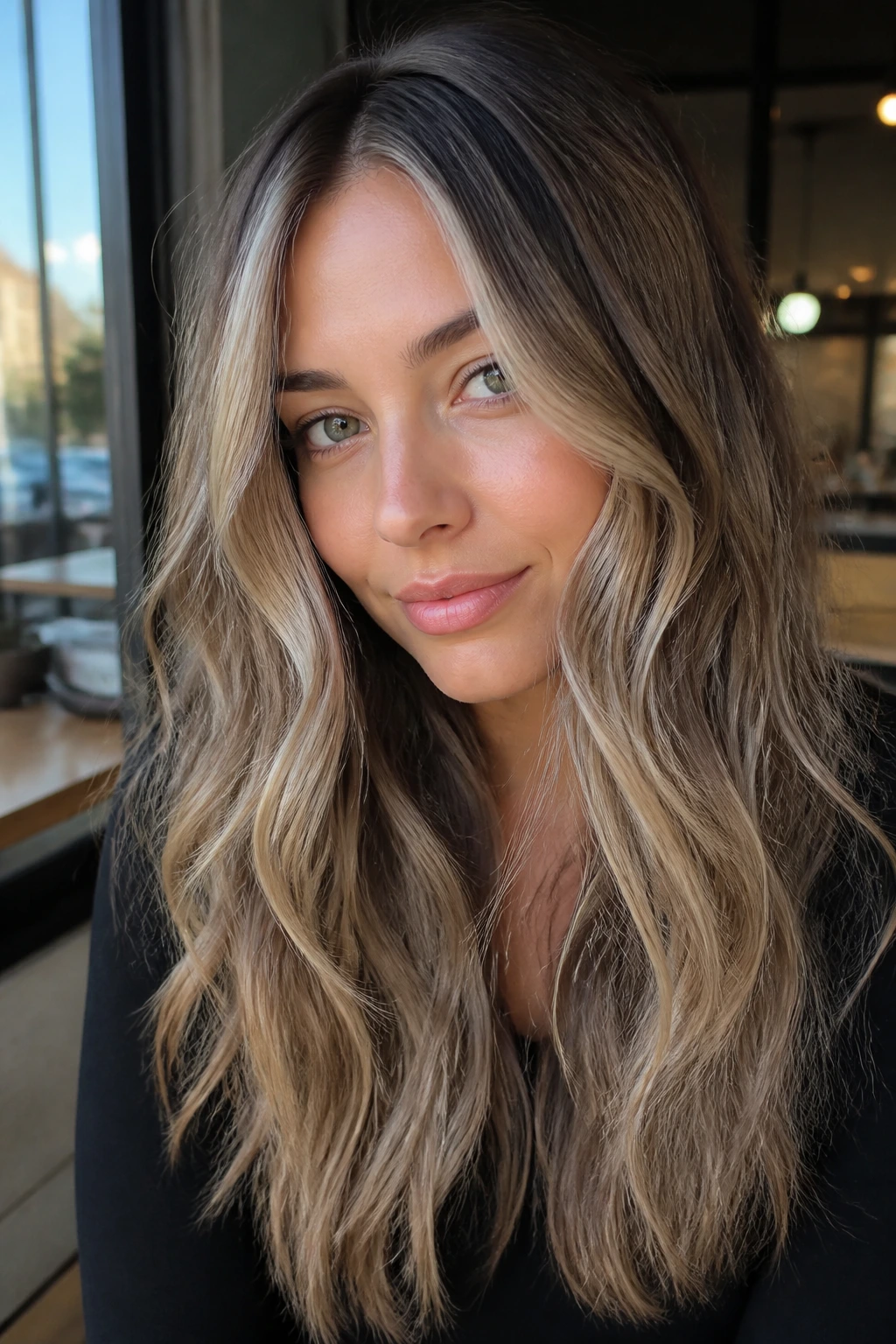
Sandy blonde money pieces do one job and do it fast. They brighten the face without forcing the rest of the hair into a full lightening process, which is why they work so well on busy people with wavy hair.
A quick note: the money piece should be a shade or two lighter than the rest, not ten shades lighter. That contrast is enough. If you go too pale, the front can look disconnected from the wave pattern behind it.
Best for:
- Medium to deep wave patterns
- Hair that air-dries with natural texture
- People who want brightness in the front only
9. Cream Soda Blonde
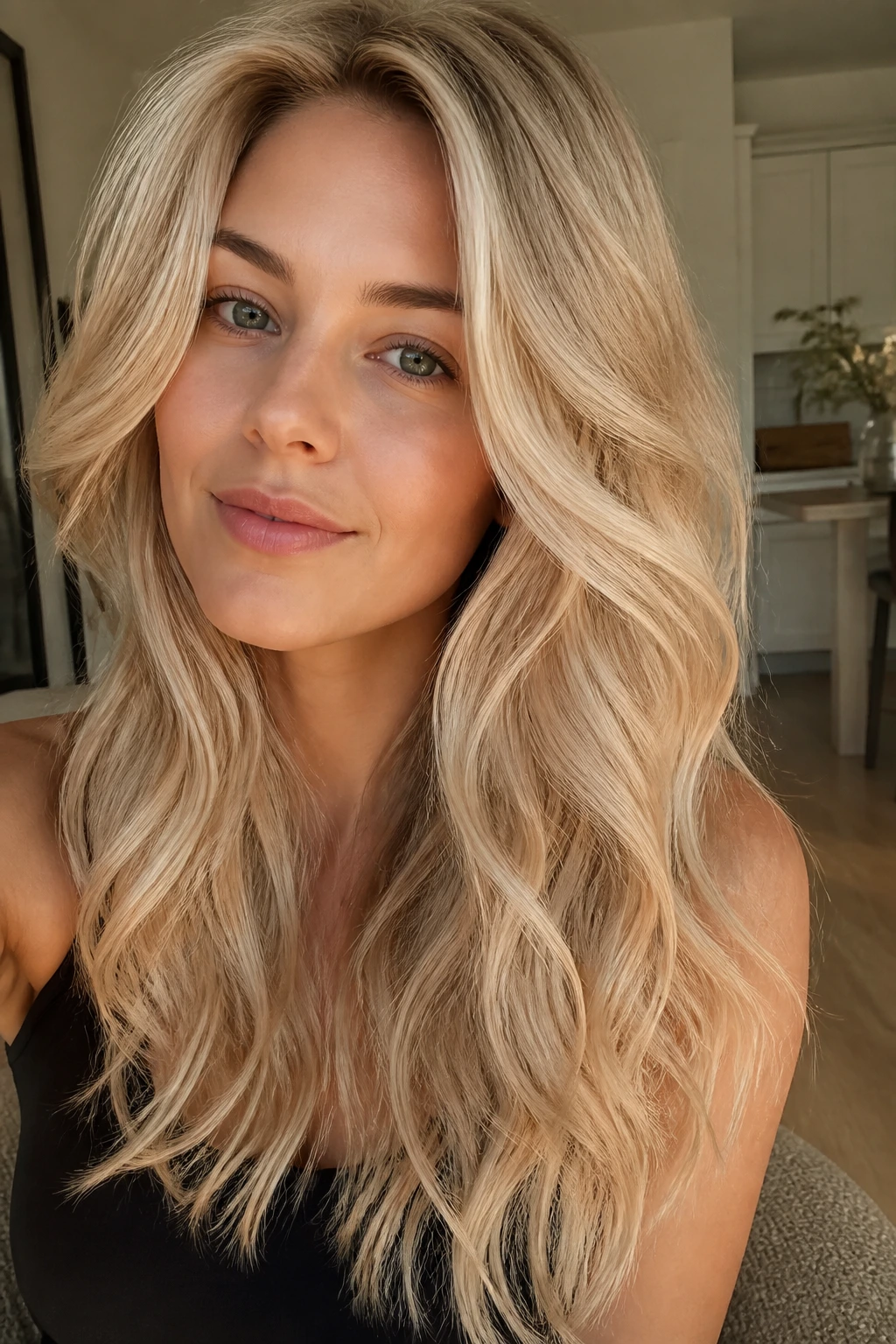
Cream soda blonde sounds playful because it is. The tone blends beige, vanilla, and a little warmth, so the color feels soft and smooth instead of chalky or brass-heavy.
It works especially well on relaxed waves with a bit of bounce through the ends. The shade adds glow to the mids and keeps the lighter sections from looking thin. Ask for a creamy gloss over highlights that are painted with plenty of space between them. That space is what keeps the color airy.
10. Mushroom Blonde for Low-Key Texture
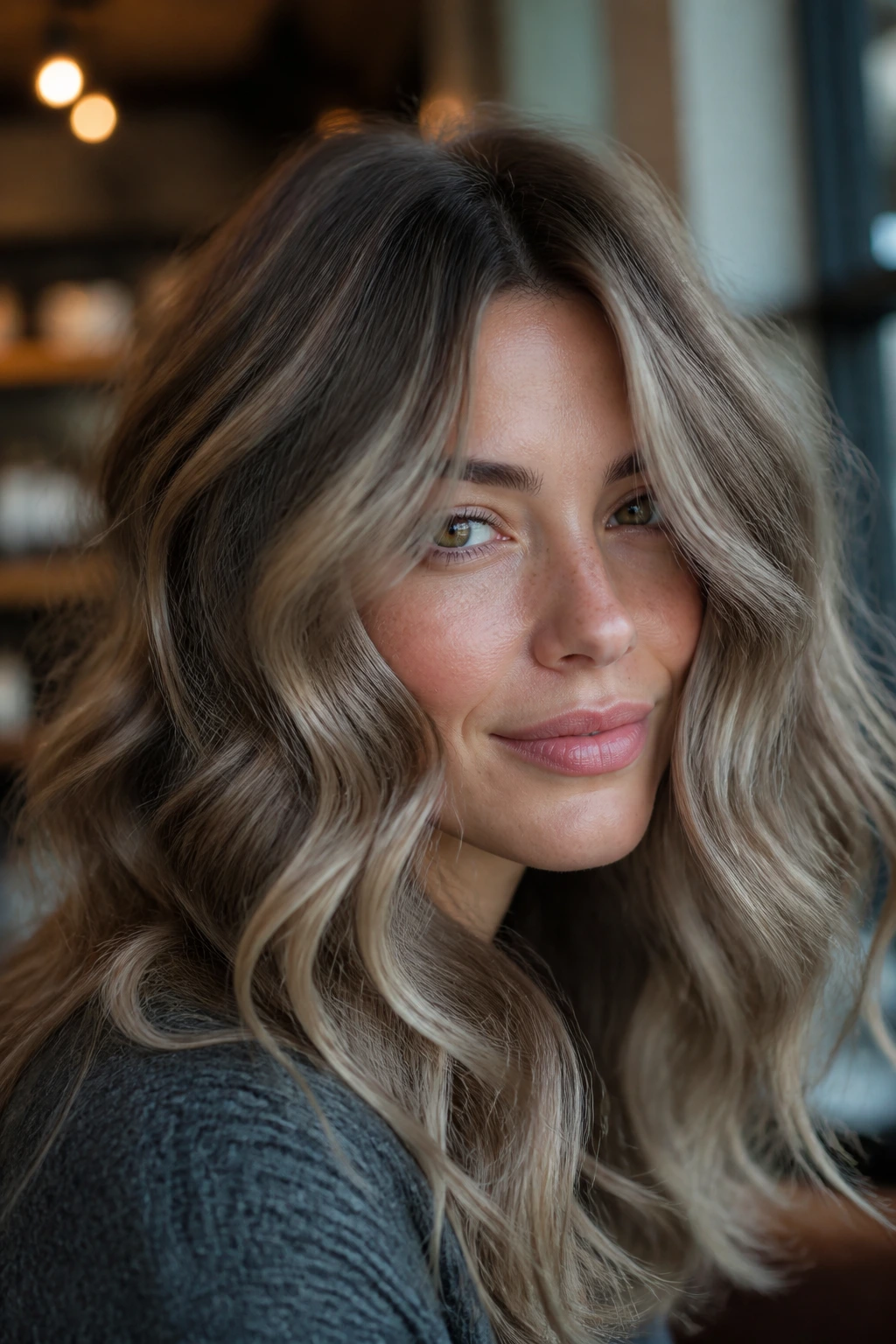
Mushroom blonde is the smartest cool-toned blonde for people who hate obvious upkeep. It sits in the taupe-beige family, which means it looks calm on darker roots and very flattering on wavy hair with a little depth.
The finish is more earthy than icy. That matters. Waves can make high-cool blondes look harsher than expected, but mushroom blonde keeps things soft. It’s especially good if you air-dry a lot and do not want your color shouting for attention every time the light hits it.
11. Icy Beige Blonde
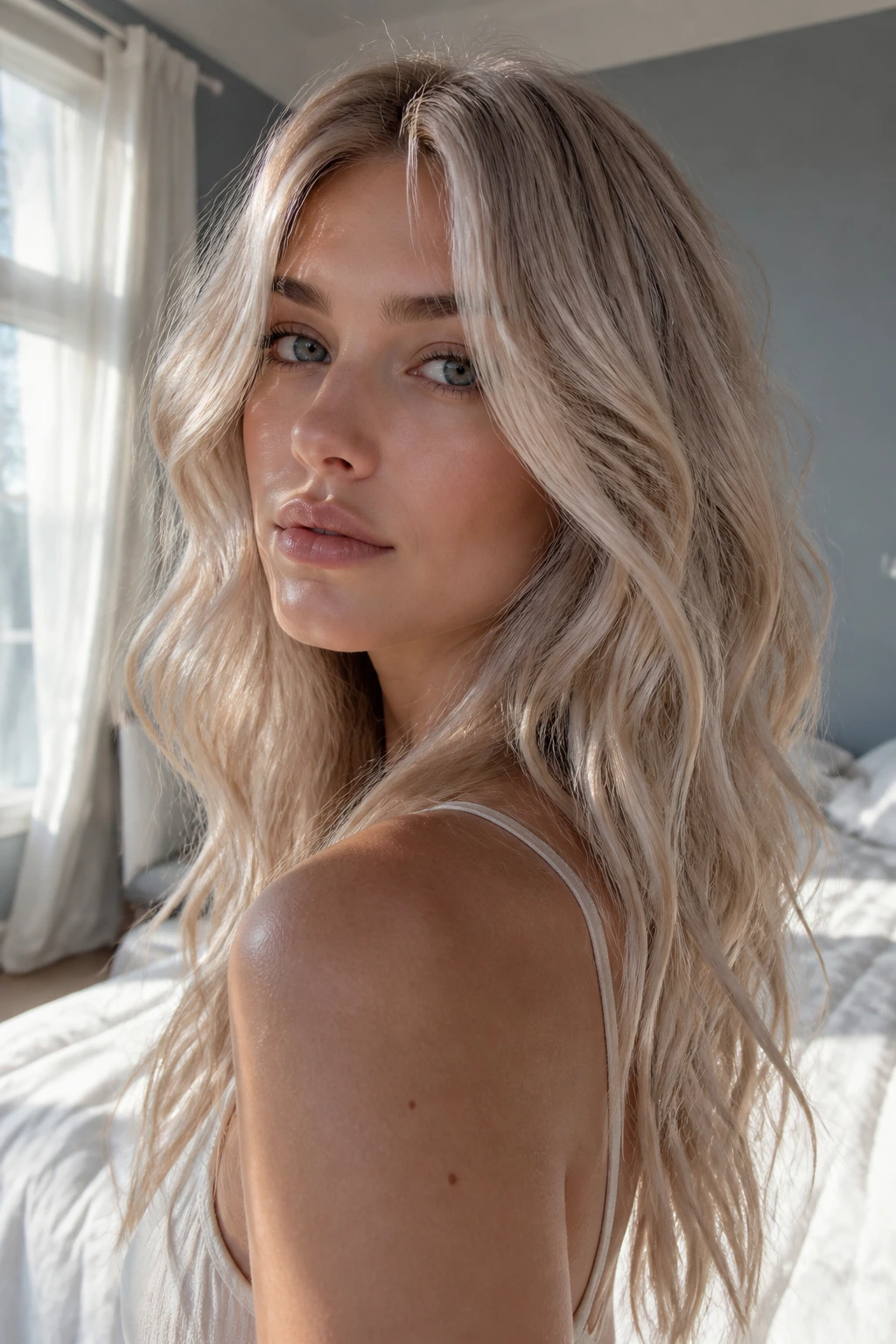
Icy beige blonde has a colder edge than champagne, but it is not flat. The trick is to keep the base neutral and let the lighter pieces stay pale without tipping into silver.
This is a strong pick for defined waves because the texture breaks up the cool tone and keeps it from feeling stiff. A blue-violet toner can help keep yellow out of the picture. Use it carefully, though. Too much toning and the hair starts looking dull instead of crisp.
12. Caramel Blonde Balayage
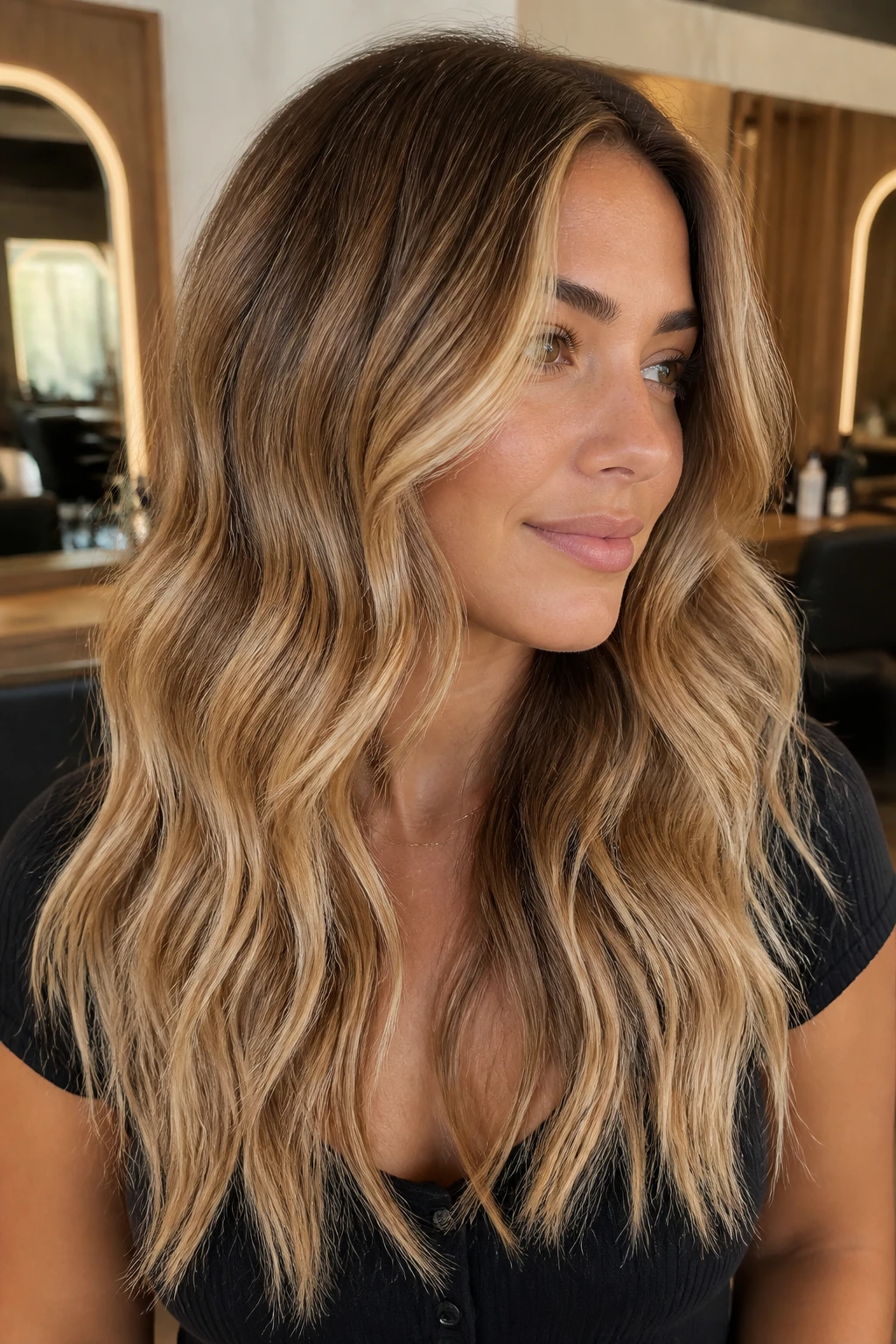
Caramel blonde balayage gives waves a richer middle ground. It is warmer than beige, deeper than honey, and easier to wear than a full light blonde if your natural color is medium brown.
What Makes It Different
- The warmth sits in the mids, not just the ends
- The lighter pieces blend into the base instead of sitting on top of it
- The grow-out is softer because the contrast is smaller
This one is good when you want dimension more than brightness. It makes the wave pattern look thicker, which is a nice bonus if your hair is fine or tends to frizz.
13. Vanilla Blonde with a Clean Finish
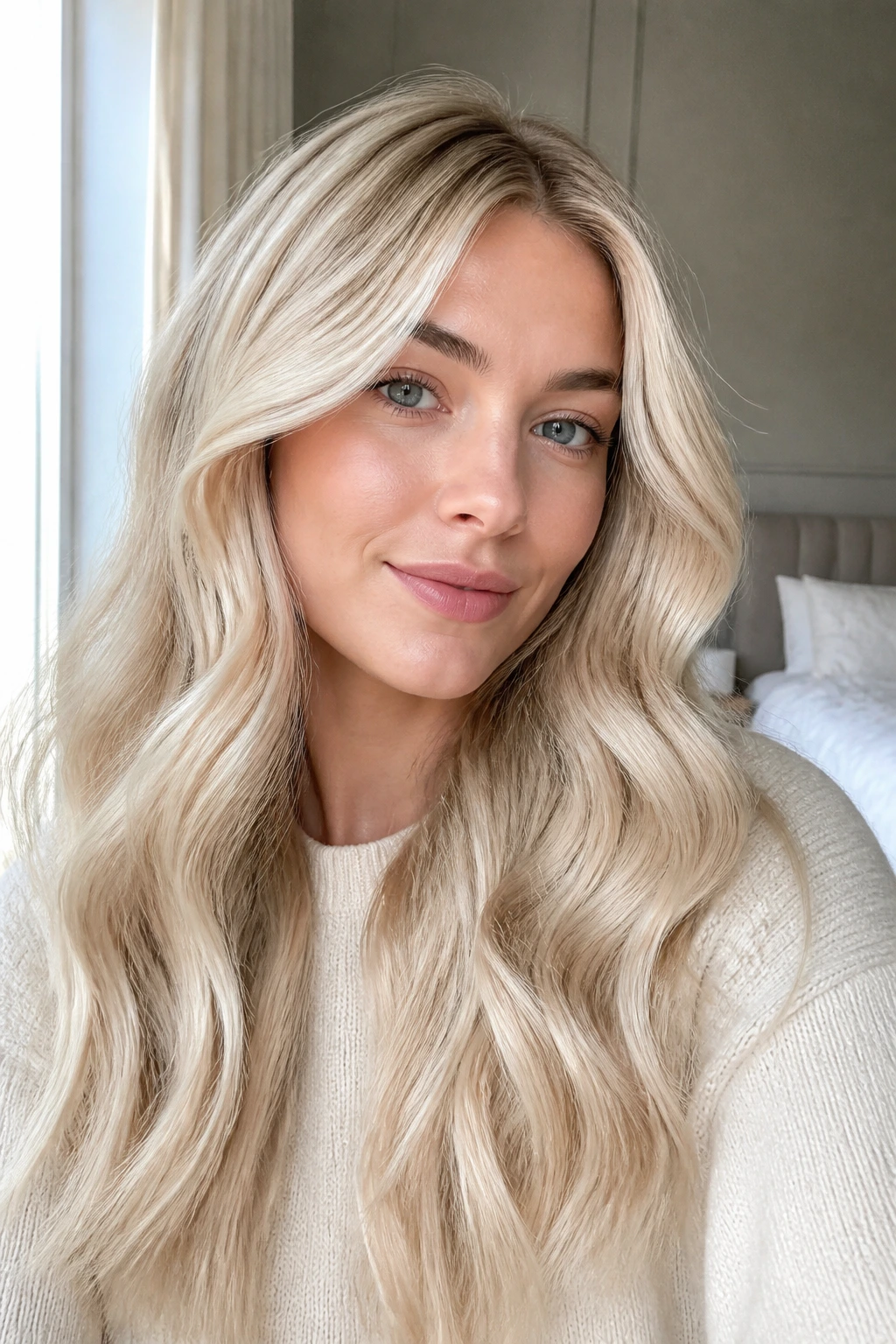
Vanilla blonde reads cleaner than honey and softer than platinum. It has a pale, creamy quality that gives wavy hair a polished look without looking frozen.
How to Wear It Well
Ask for a pale neutral blonde with a subtle beige toner. Not ash. Not gold. Somewhere in the middle. The shape of the waves matters here because vanilla blonde can look a little too plain on flat hair. Once the hair bends, though, the tone picks up enough movement to stay interesting.
14. Toasted Coconut Blonde
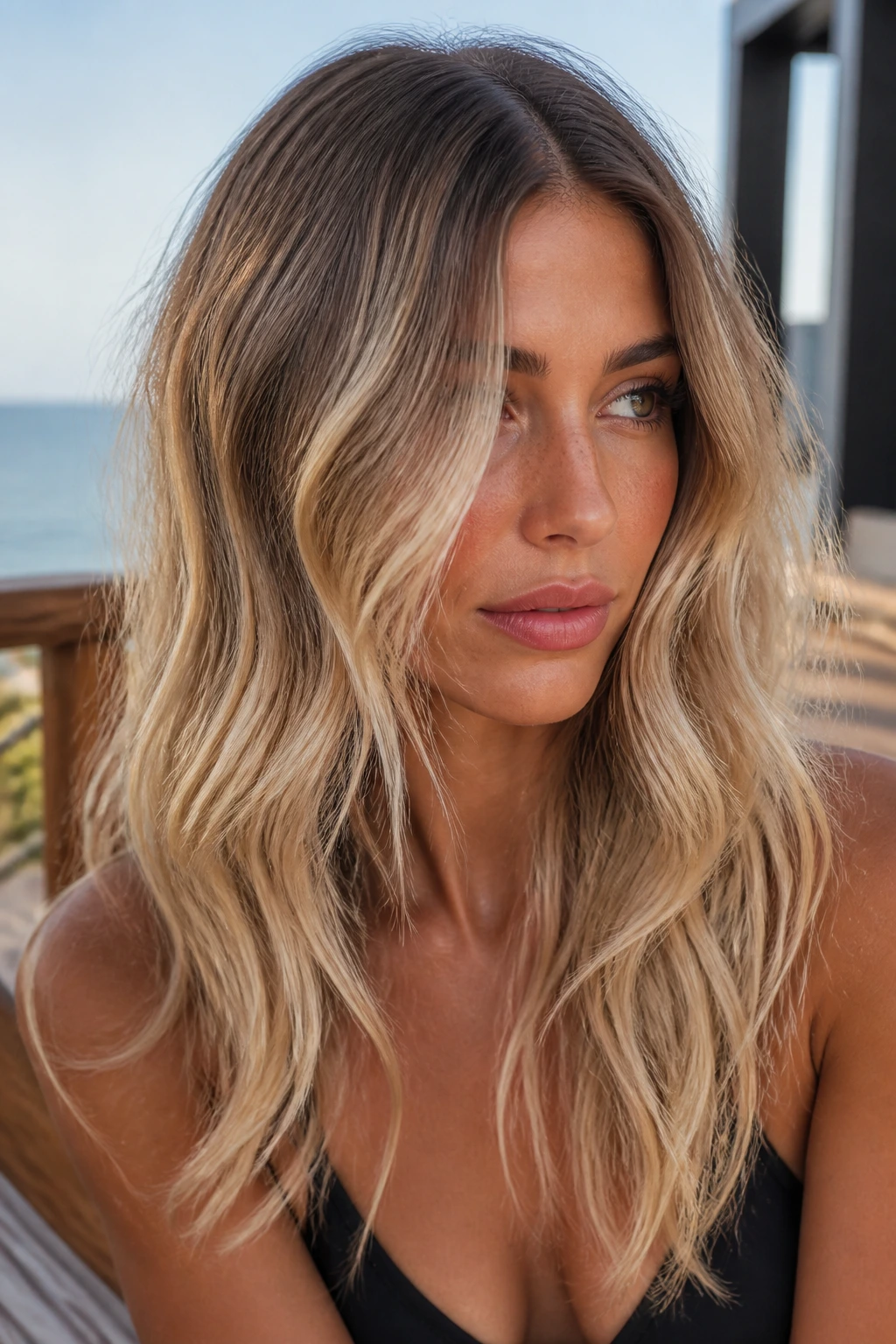
Toasted coconut blonde is for people who want contrast without a hard line. The root stays deeper, the mids turn creamy, and the ends land in a softer blonde that feels sun-worn.
That dark-to-light shift suits wave patterns that are loose and a little irregular. The bends keep the transition from looking painted on. If you like hair that grows out without drama, this shade is a strong one to keep in mind.
15. Pearl Blonde for Fine Waves
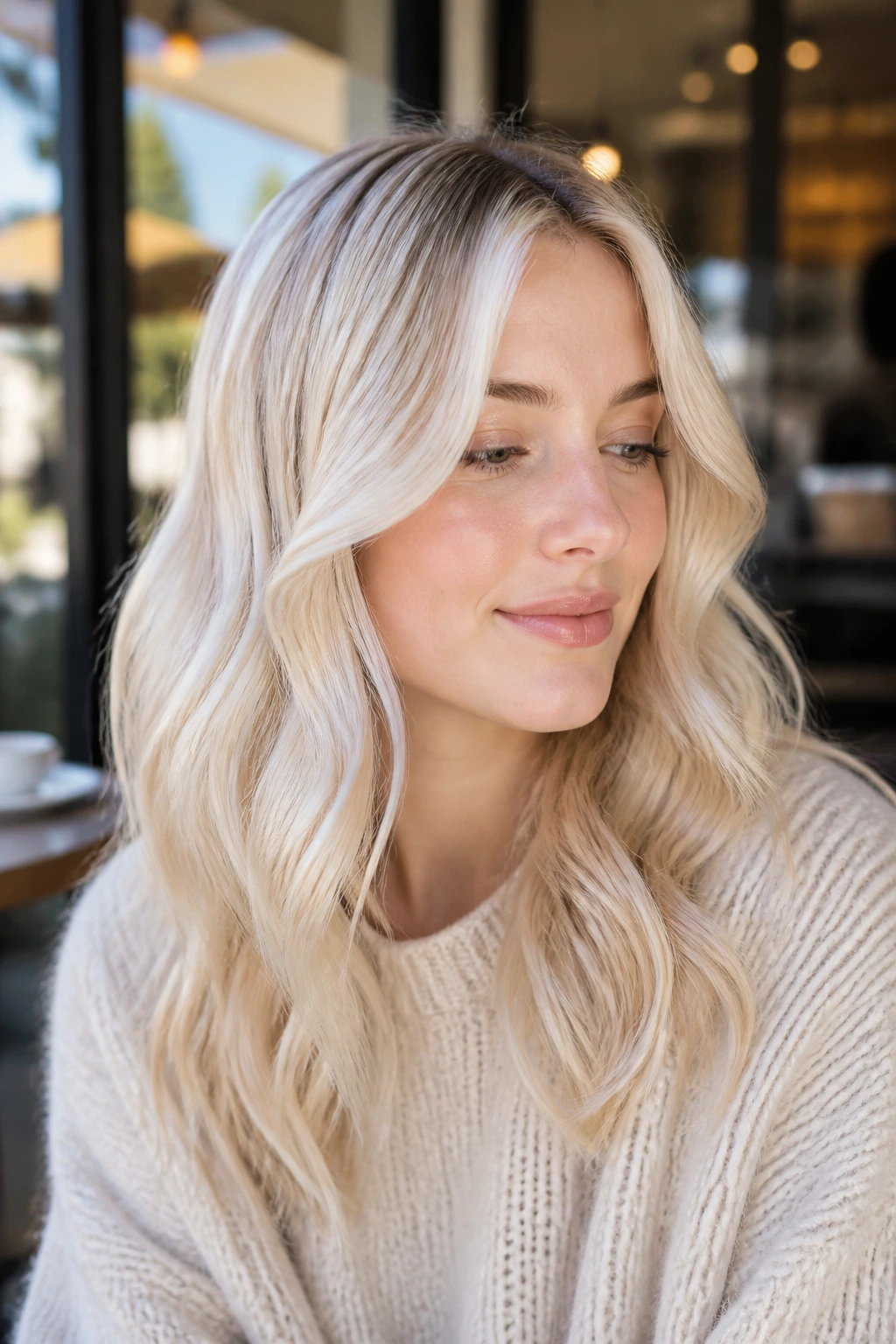
Pearl blonde has a pale, reflective finish that suits fine waves especially well. The color is light, but it does not need to be flat or icy to work. A soft pearl tone gives the hair a clean sheen that looks delicate rather than harsh.
Fine waves can disappear if the blonde is too washed out. Pearl blonde avoids that by keeping just enough depth in the gloss. It looks good with a slightly darker root and lighter mids, which gives the hair a bit more shape when it moves.
16. Bronde with Blonde Contour Highlights
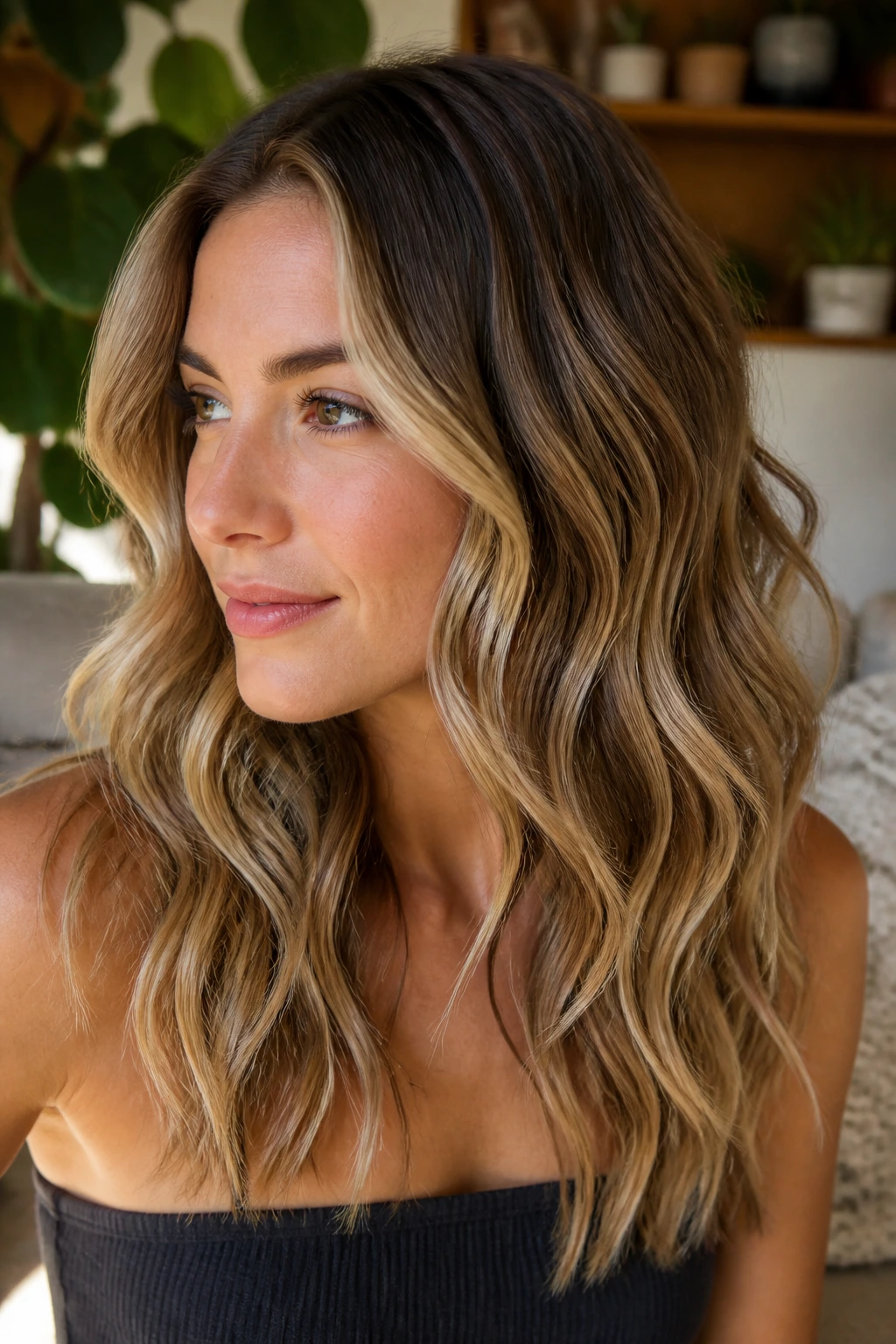
Bronde with blonde contour highlights is the answer when you do not want to commit to full blonde. The base stays brunette or dark blonde, and the lighter pieces trace the face, top layer, and outer wave pattern.
Why It’s Easy to Wear
- Less lift at the root
- More contrast where the eye lands first
- Easier grow-out than all-over blonde
This is one of my favorite ideas for people who love texture but hate maintenance. The waves do the work. The blonde just points the light in the right places.
17. Baby Blonde Highlights
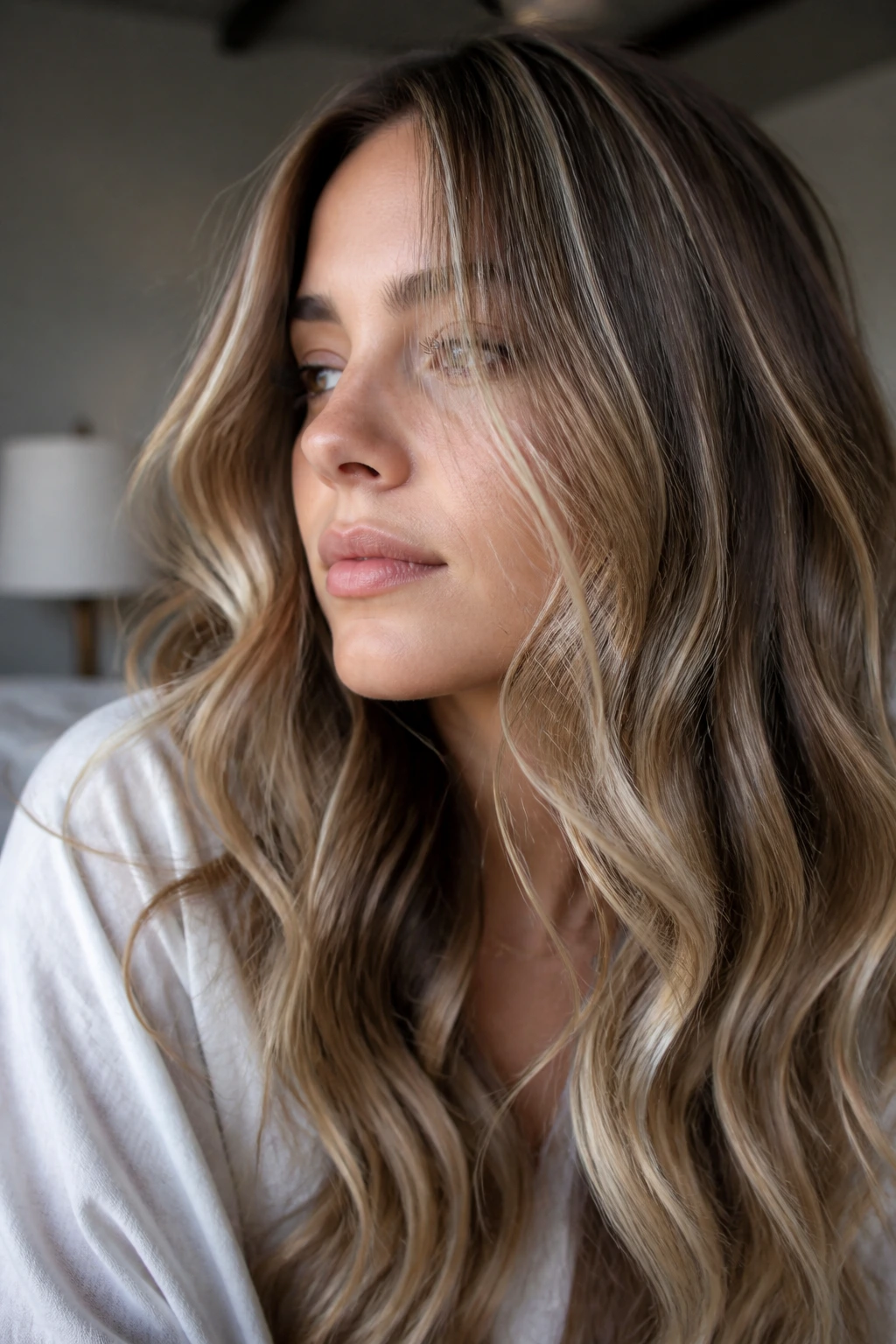
Baby blonde highlights look almost accidental, which is the whole point. They are tiny, fine, and scattered in a way that makes the hair feel naturally bright rather than obviously highlighted.
Wavy hair is a good match because the small pieces move in and out of view as the hair bends. That stops the color from looking too uniform. If you want a subtle blonde that still changes the mood of your hair, this is a smart place to start.
18. Ribbon Highlights for Deep Waves
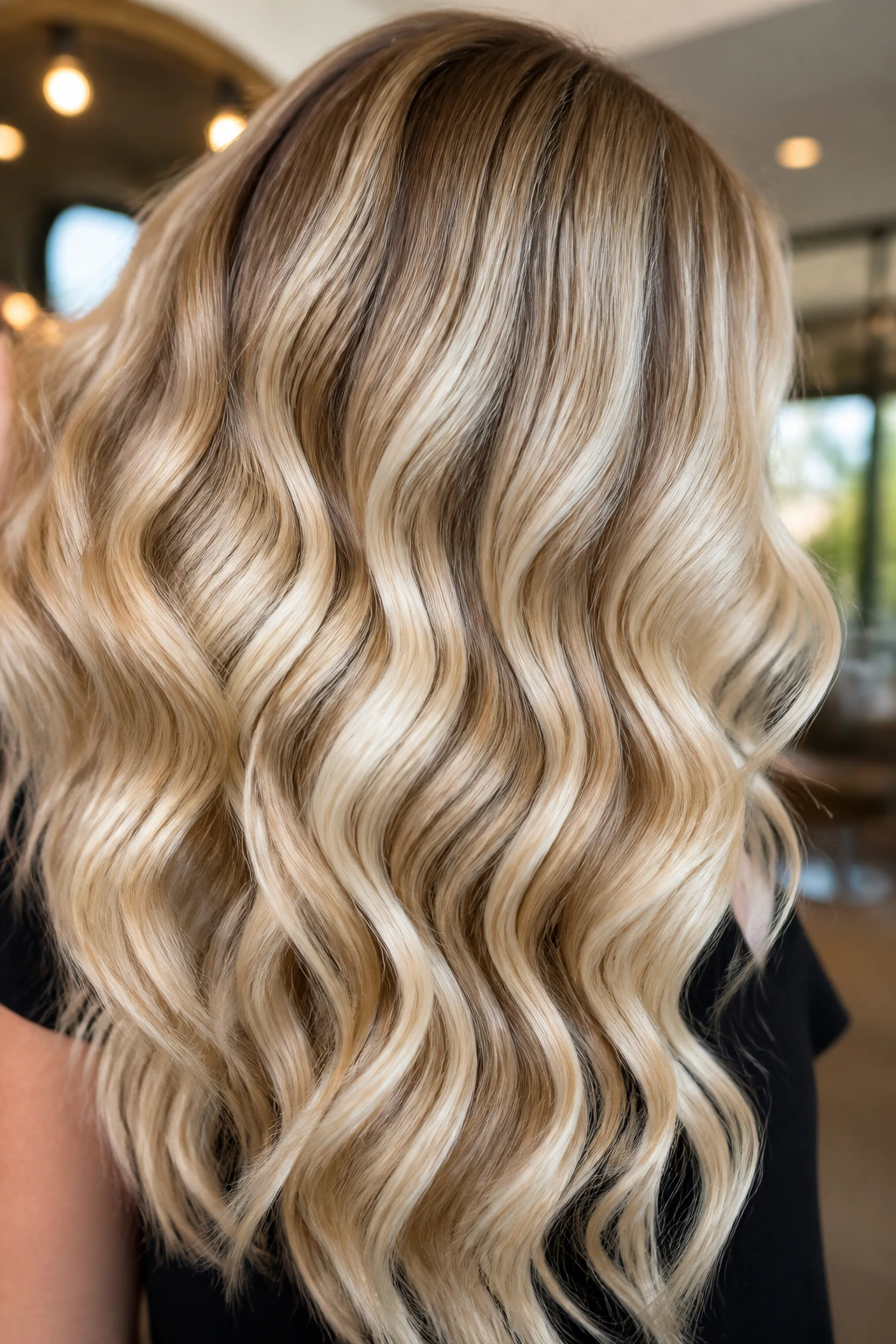
Ribbon highlights are the loudest thing this list can do without looking stripey. They are wider than babylights and painted to follow the wave pattern, so the brightness appears in visible curves instead of thin lines.
The Science Behind It
Deep waves need pieces that can hold their own. Thin highlights can disappear into the texture, but ribbons sit on top of the movement and keep the blonde readable. If your hair is long and thick, this technique gives the color more presence. It also looks good when tucked behind one ear, which is a small thing but matters.
19. Rooted Wheat Blonde Bob
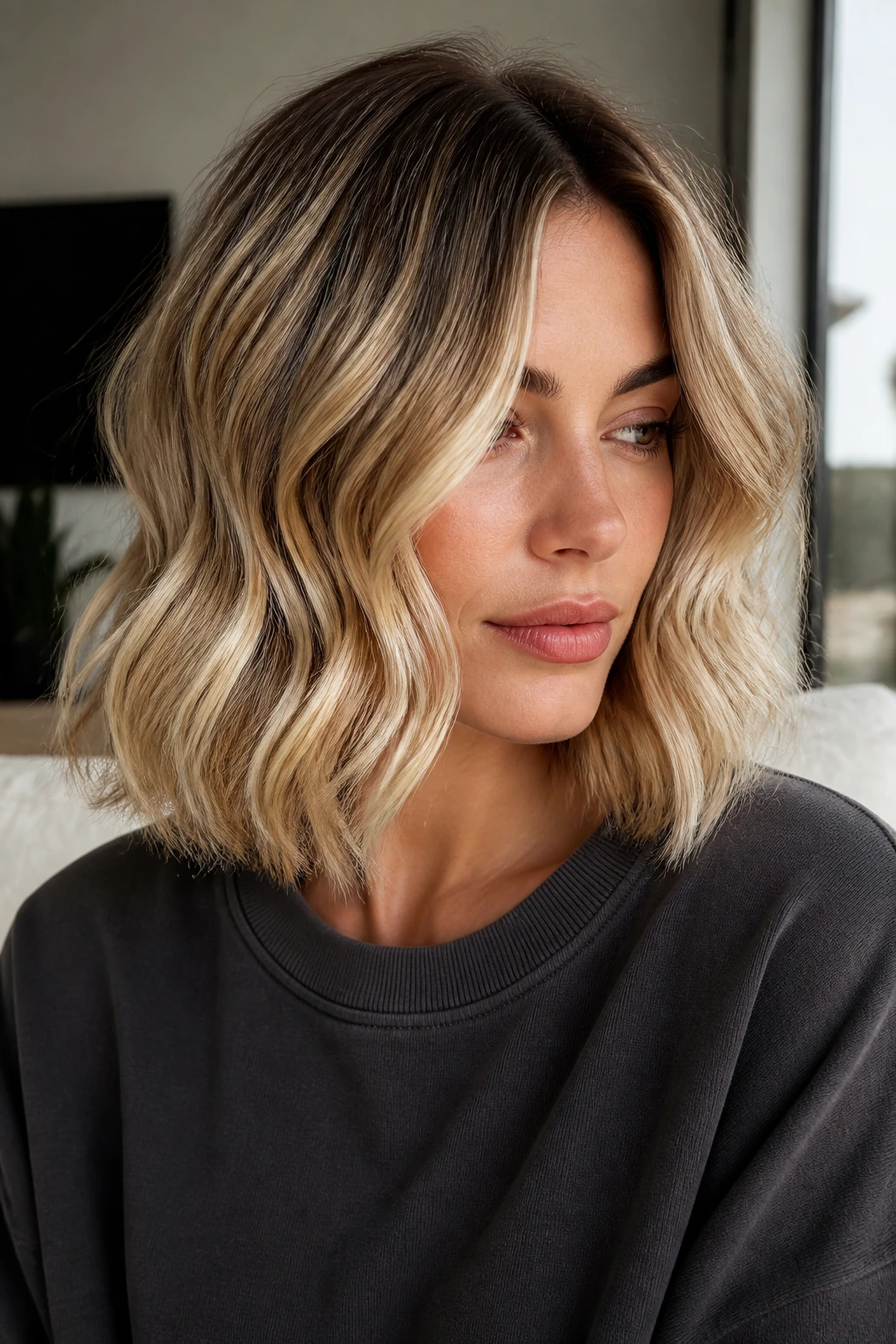
A rooted wheat blonde bob has a little hometown charm to it. The color is warm, grainy, and soft, and the root shadow keeps the cut from looking too severe.
Why Bobs Like It
Waves on a bob can puff out if the color is too light from root to tip. A rooted wheat blonde avoids that problem. Ask for a deeper base at the scalp and wheat-toned blonde through the mids and ends. The shape stays neat, the texture stays visible, and the whole style feels grounded.
20. Strawberry Blonde with Blonde Bend
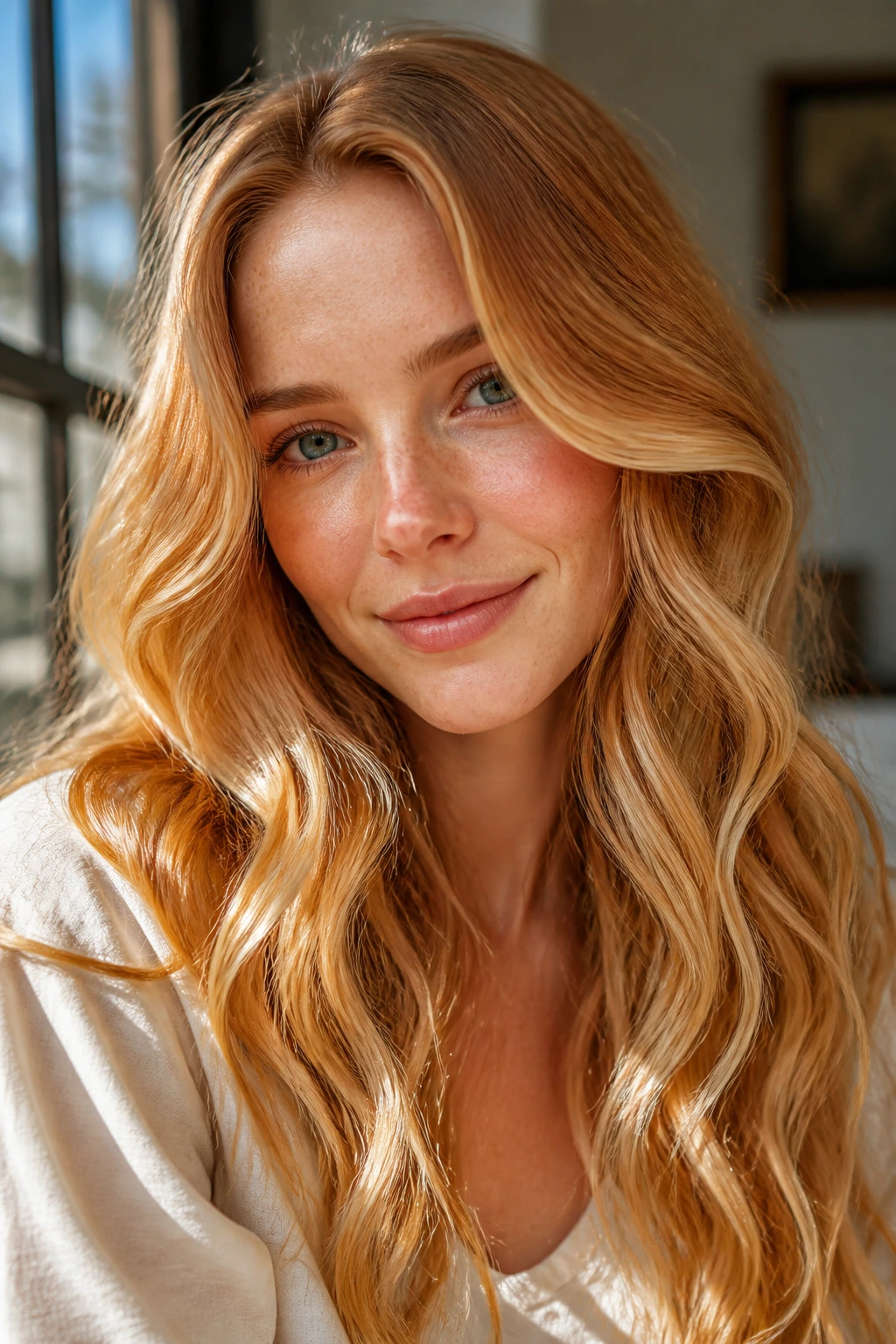
Strawberry blonde can count as a blonde hair color when the gold runs warm enough and the red stays soft. On waves, the rosy notes add warmth that looks lovely in natural light.
Best when you want warmth without yellow. It’s especially good on skin tones that get washed out by ash or beige blondes. Keep the red subtle, though. If it gets too coppery, the style stops reading as blonde and starts leaning into strawberry brunette territory.
- Soft rose-gold glaze
- Loose, sunlit waves
- Medium-maintenance grow-out
21. High-Contrast Blonde Ends
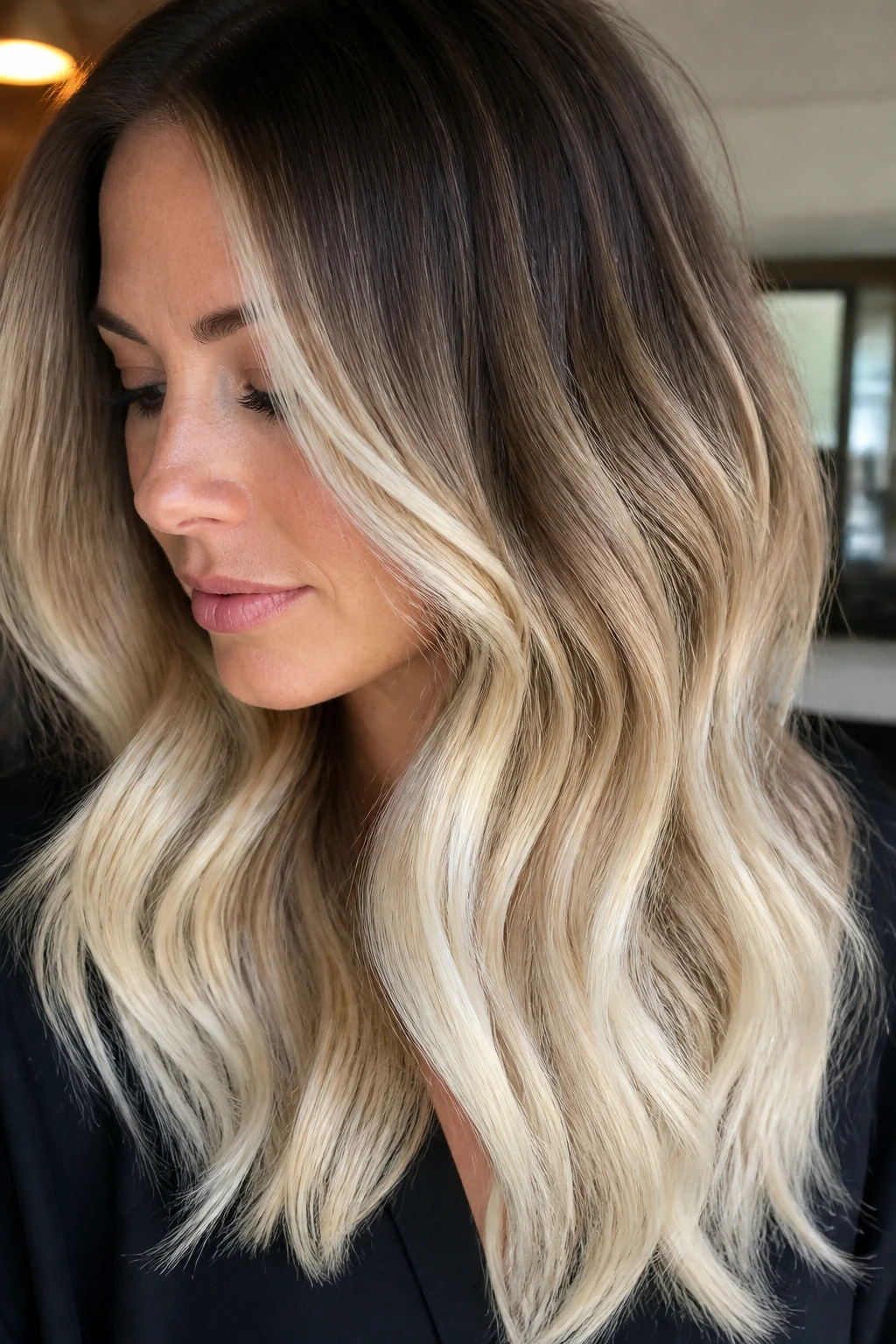
High-contrast blonde ends make the wave pattern the star. Darker roots, bright mids, and pale ends create a clear shift that works well on loose, flowing waves.
The important part is keeping the transition smooth. If the line from dark to light is too abrupt, the hair can look chopped. When it is blended well, the ends almost flicker as you move. That motion is the whole appeal here.
22. Soft Ombre Blonde
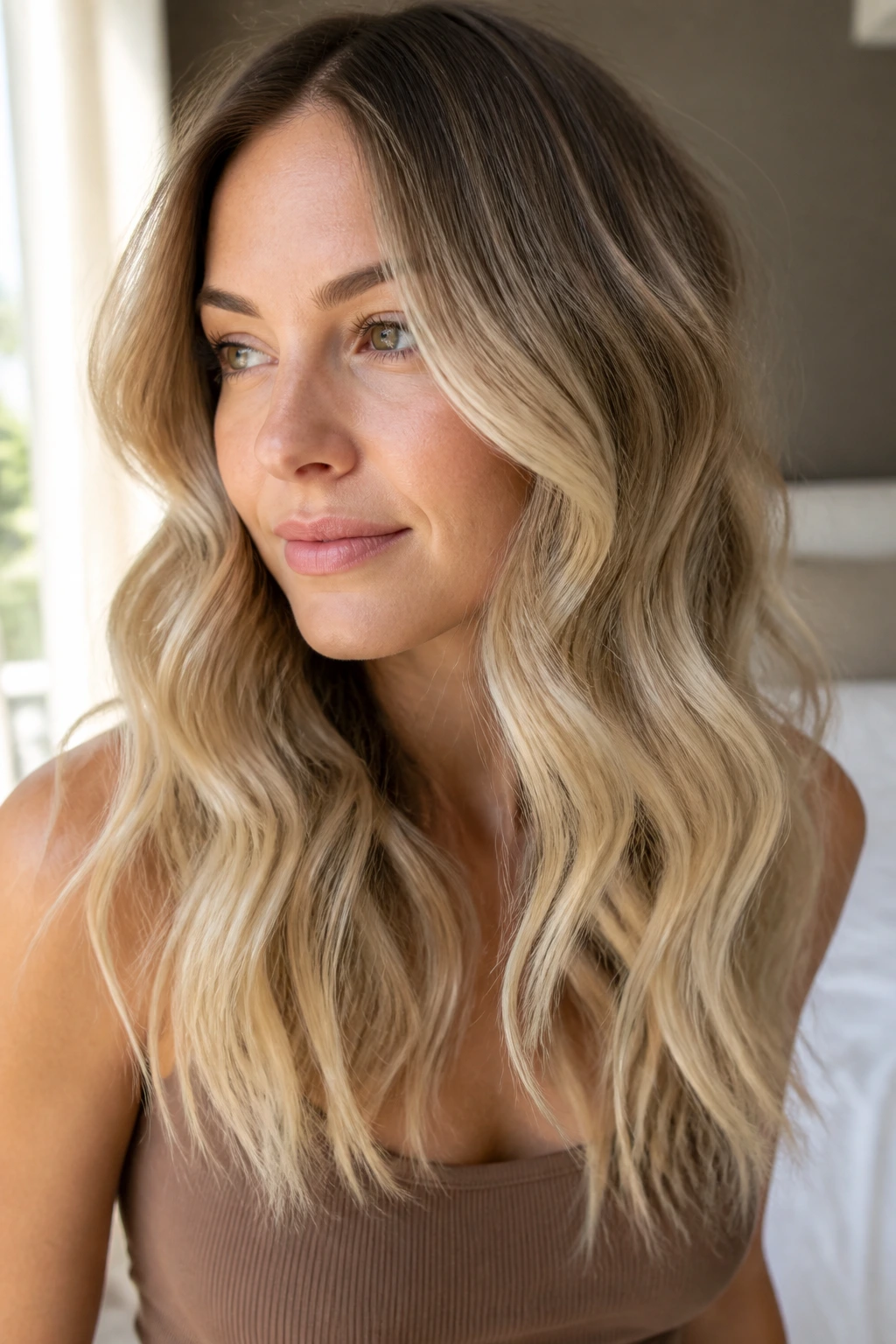
Soft ombre blonde is the friendliest blonde on the list. The color melts from a deeper root into lighter ends without a harsh line, which makes it easy to wear on hair that is naturally wavy.
It is also a good choice if you like the look of blonde but not the upkeep that comes with bright root growth. The ombre keeps the root area calm, while the ends carry the brightness. That balance works well on shoulder-length cuts and longer layers.
23. Beige Blonde Bob with Dark Roots
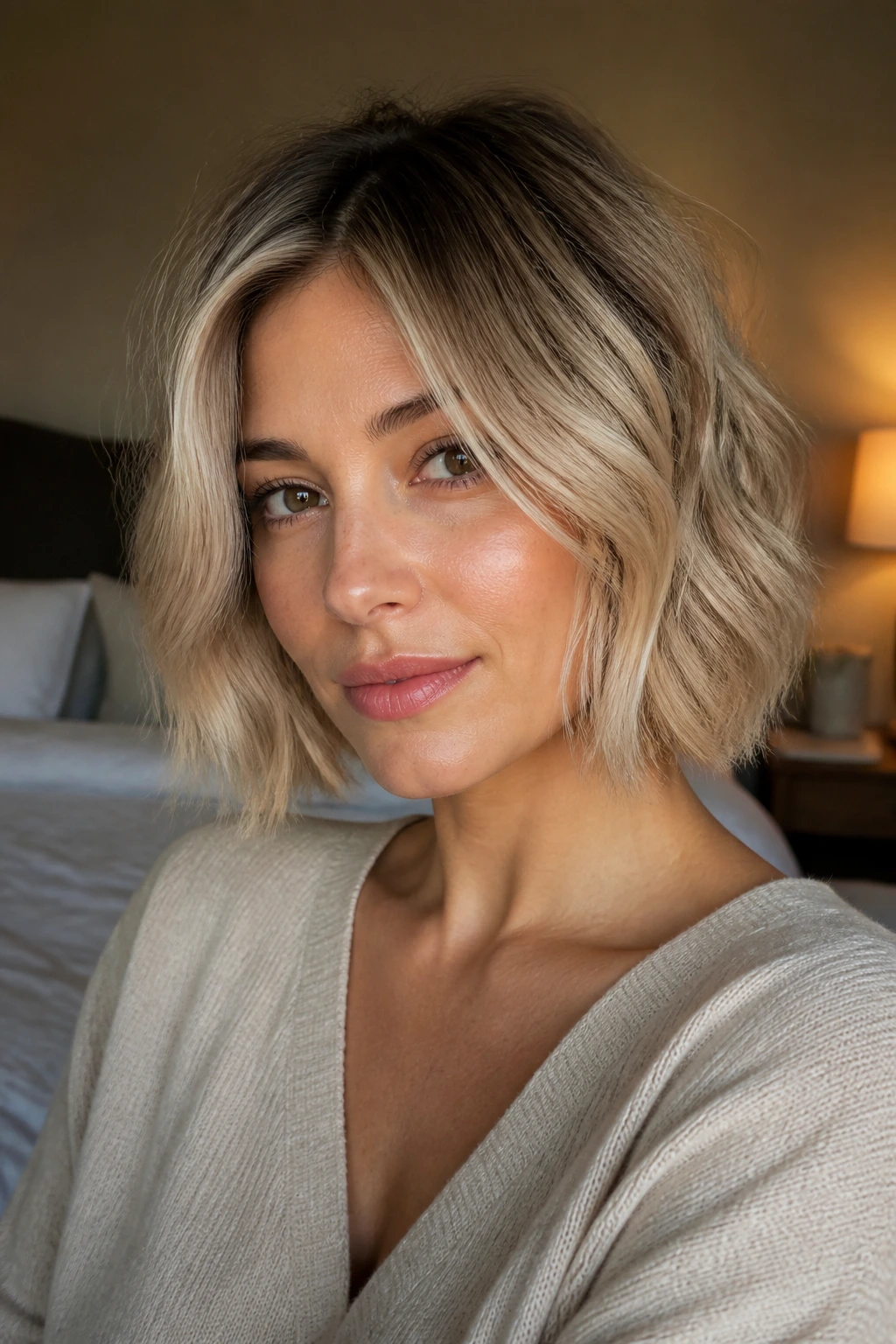
A beige blonde bob with dark roots is a quiet, useful haircut-color combo. The beige keeps the blonde soft, and the darker root adds enough contrast to make the waves stand out.
The bob length matters because it keeps the color from spreading too far and losing shape. On a longer cut, beige can drift flat. On a bob, it feels tidy and fresh. The darker root also helps the grow-out stay neat, which is a gift if you do not love salon maintenance.
24. Sunlit Surf Blonde
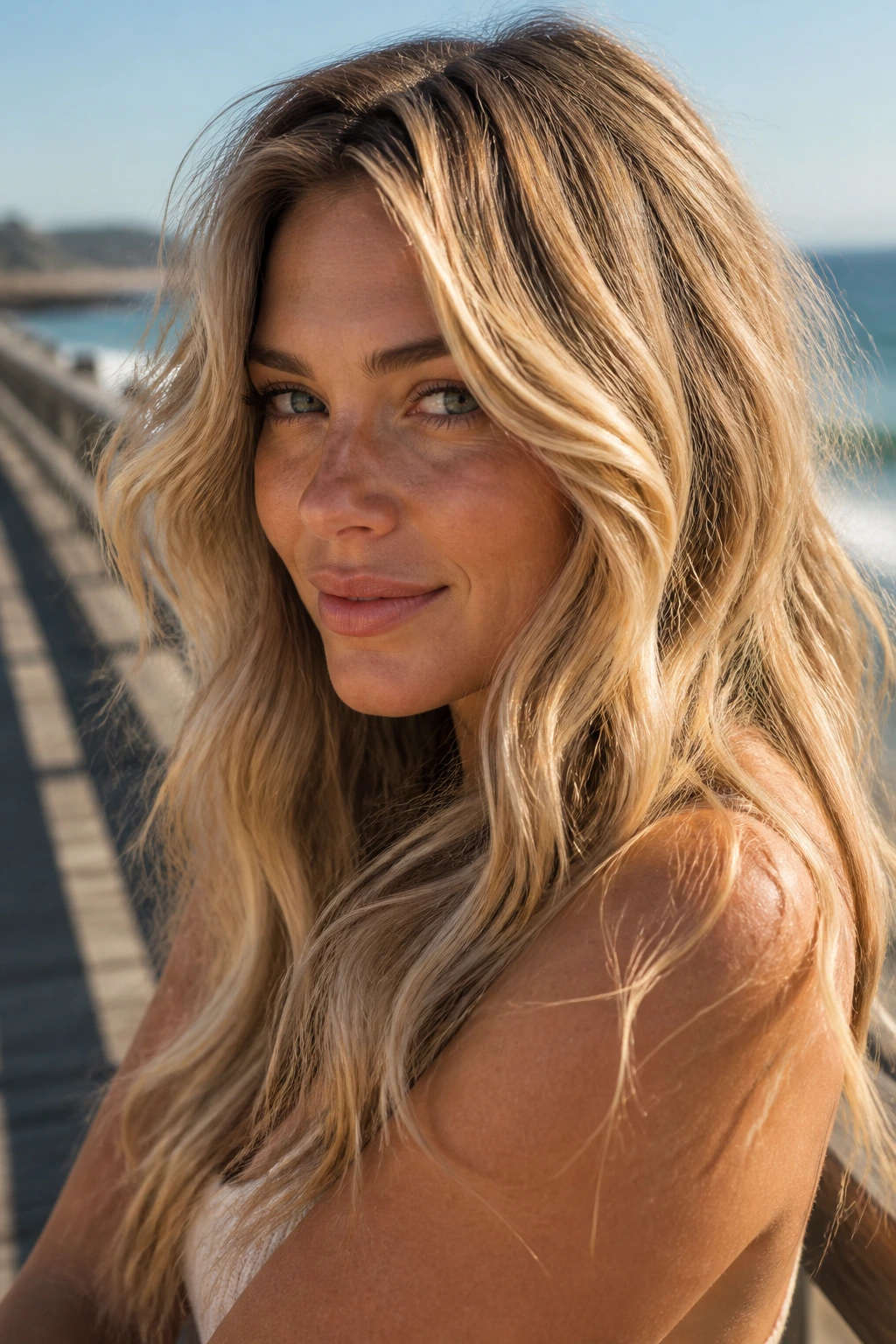
Sunlit surf blonde looks like hair that spent a lot of time near water and salt. It mixes warm and cool pieces in a way that makes waves look lived-in from the first day.
What to Ask For
- Scattered highlights rather than a solid block of lightness
- Soft brightness around the top layer and face
- A neutral gloss so the color stays airy, not yellow
This style is good for people who like a beachy feel but do not want their hair to look overstyled. It has movement baked into it, which is why it works so well on naturally wavy textures.
25. Butter Blonde with Curtain Bangs
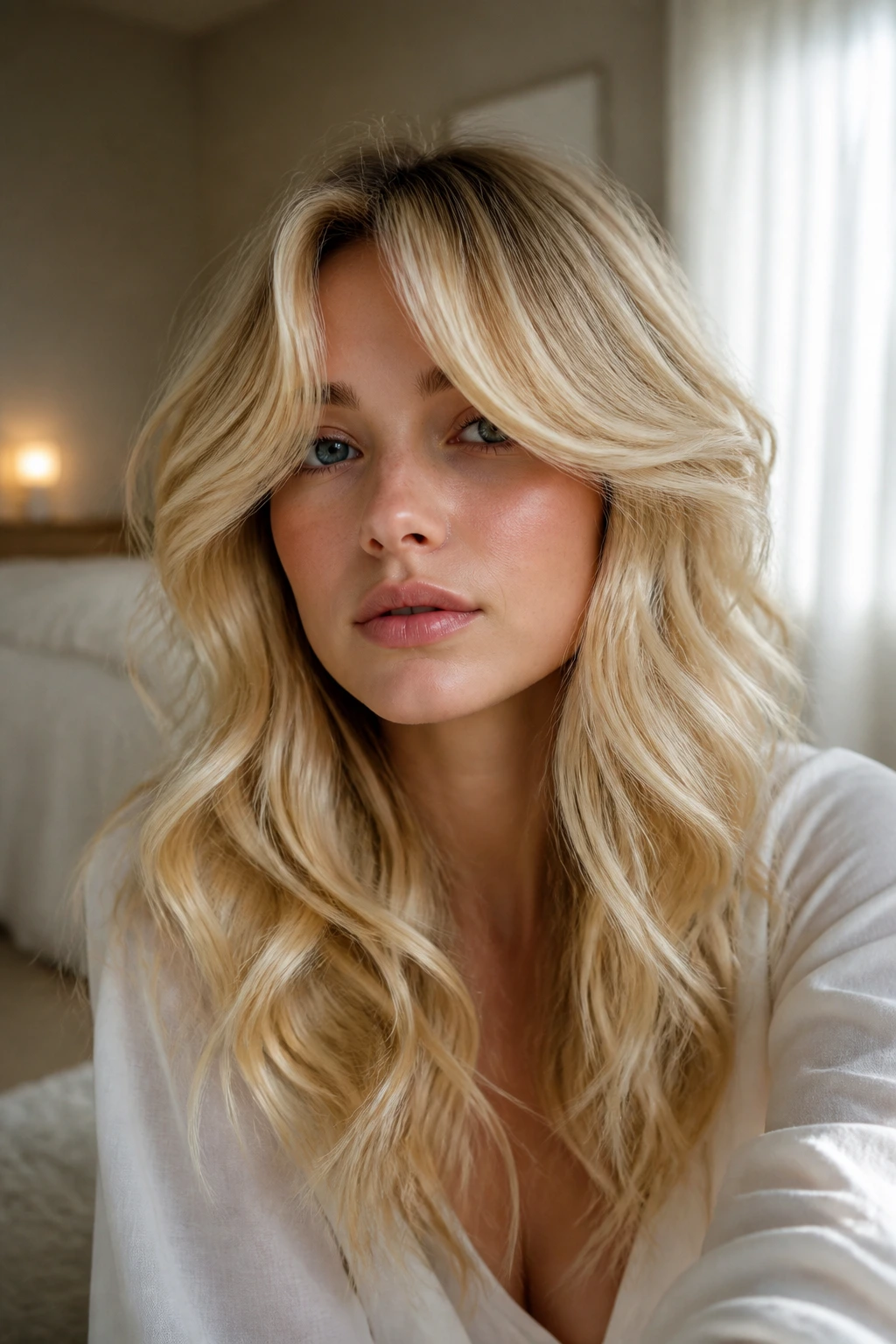
Butter blonde with curtain bangs has a soft frame and a bright center. The bangs bring the color close to the face, while the buttery tone keeps everything from looking too sharp.
The cut matters here just as much as the color. Curtain bangs bend with the rest of the waves, so the blonde gets a little lift right where people look first. If your hair has a gentle wave and a bit of softness around the cheeks, this one is hard to beat.
26. Toned-Down Platinum
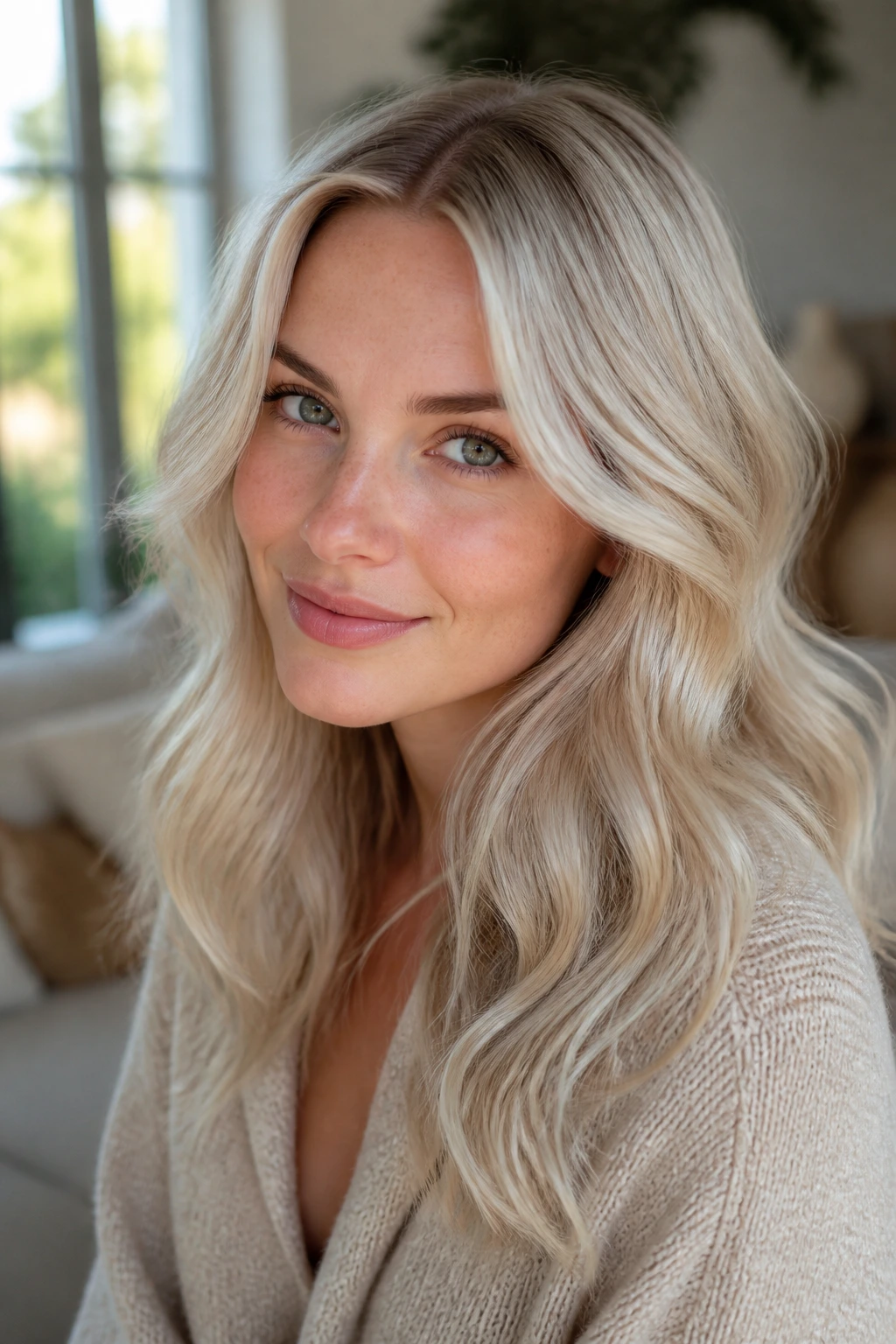
Toned-down platinum is what happens when you like platinum but not the shout of it. The brightness stays high, but a beige or pearl glaze keeps the finish from looking stark.
The Difference It Makes
Pure platinum can be unforgiving on wavy hair because every bend shows the contrast. Toned-down platinum smooths that out. It still reads light, still feels crisp, but it has a little more softness around the edges. That makes it easier to wear on layered cuts and a lot less severe near the roots.
27. Biscuit Blonde
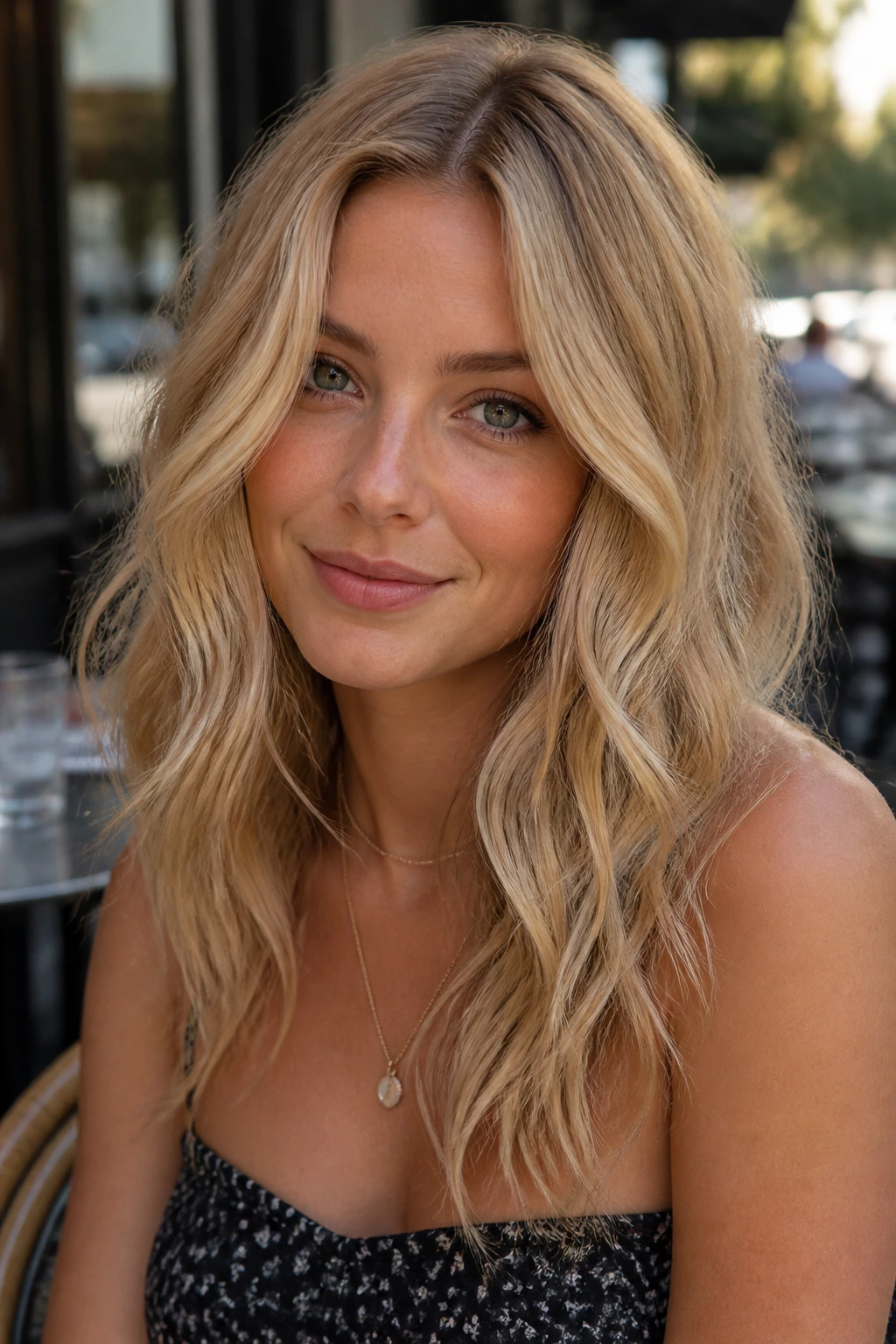
Biscuit blonde sits in that warm neutral space that fewer people ask for than they should. It is soft, a little toasty, and flattering on waves because it avoids the harsh yellow that can make blonde look cheap.
The shade is especially good on darker natural bases that lift into a beige-gold zone. It also pairs well with airy layers. The color does not fight the texture; it sits with it. Simple. That is why it works.
28. Champagne Money Piece
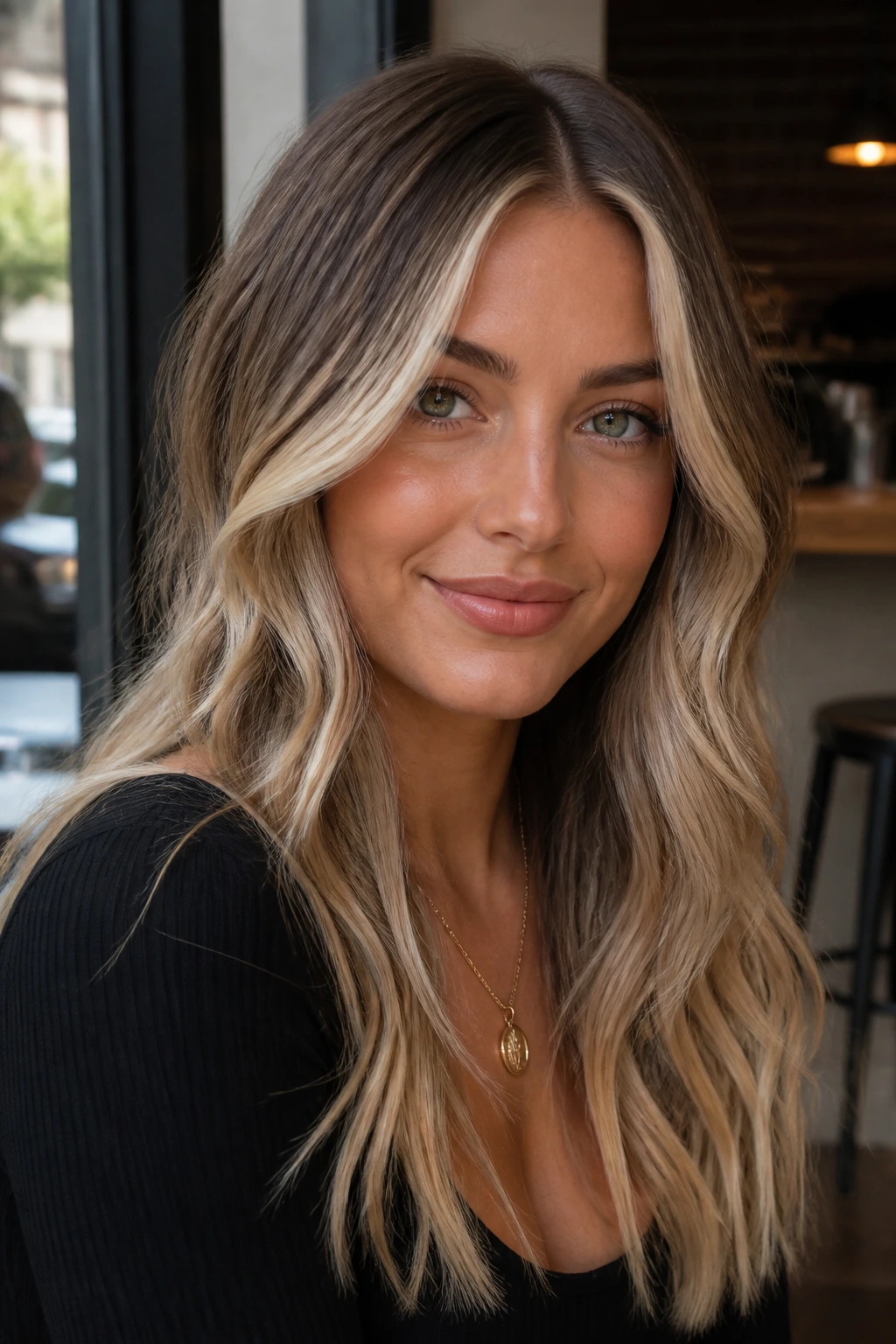
Champagne money piece changes the whole face without bleaching every strand. The front sections go lighter, while the rest of the hair keeps a softer base and a calmer tone.
Why It Flatters the Face
The bright pieces sit where the eye goes first, so the effect feels bigger than the amount of color used. On waves, those front pieces bend around the cheekbone and jaw, which gives a nice lift. Ask for a champagne tone rather than a harsh pale blonde if you want the look to stay soft as it grows.
29. Wheat Blonde Layers
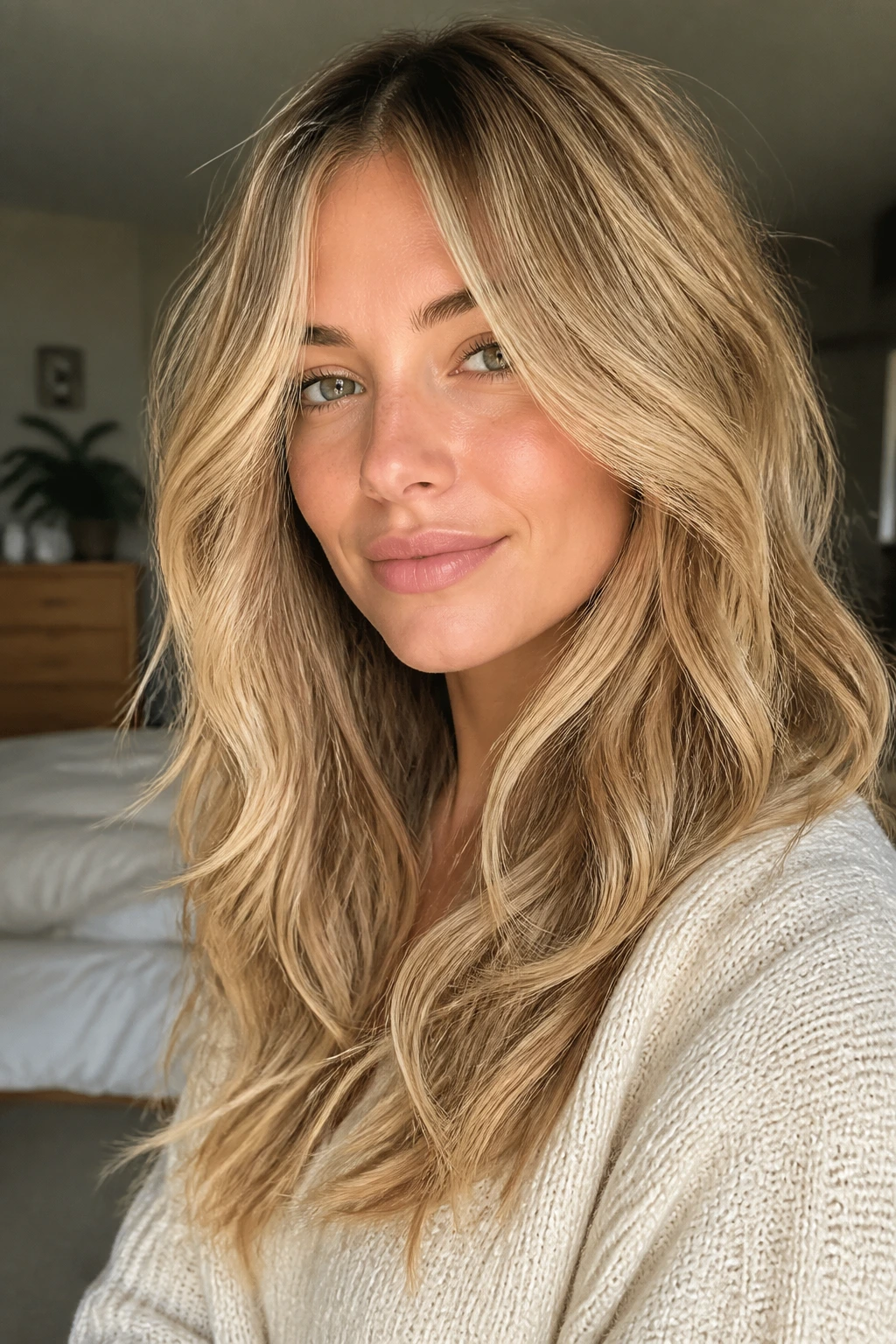
Wheat blonde layers carry more warmth than ash and more depth than gold. That middle-ground tone is useful on wavy hair with a layered cut because it keeps the movement clear without turning patchy.
The color suits hair that has body through the mids. Layers can swallow ultra-light pieces, but wheat blonde keeps enough tone in the mix to hold its shape. If you want something natural-looking that still reads as blonde, this is one of the better choices.
30. Vanilla Cream Balayage
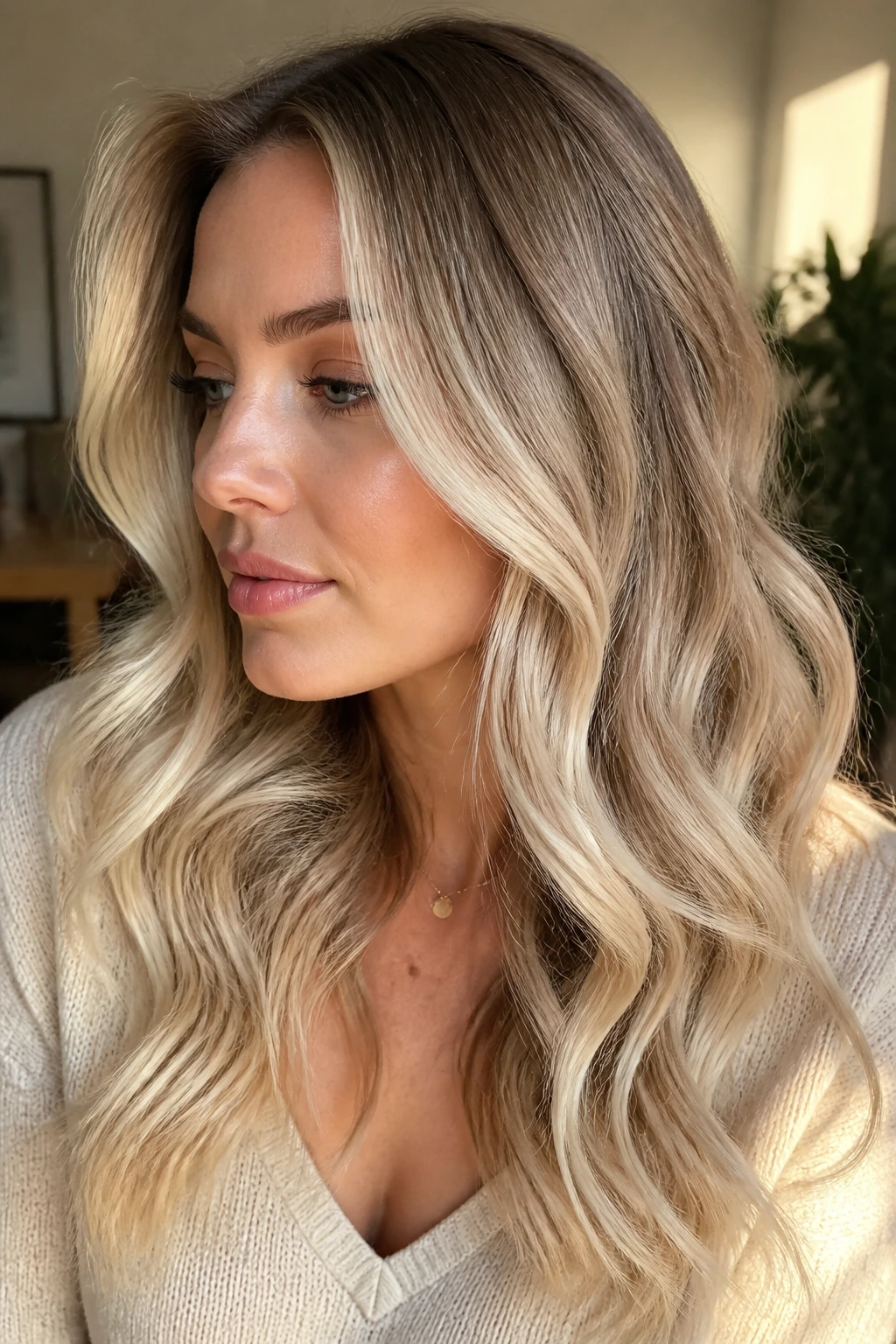
Vanilla cream balayage is all about soft painted brightness. Instead of one solid blonde tone, you get creamy pieces scattered through the waves so the color shifts as the hair moves.
The technique matters because balayage lets the lighter parts sit higher on the surface where waves can show them off. It is flattering on medium to long hair, and it grows out without a hard line. If you prefer soft shine over bold contrast, this shade sits right in that lane.
31. Dusty Blonde with Lowlights
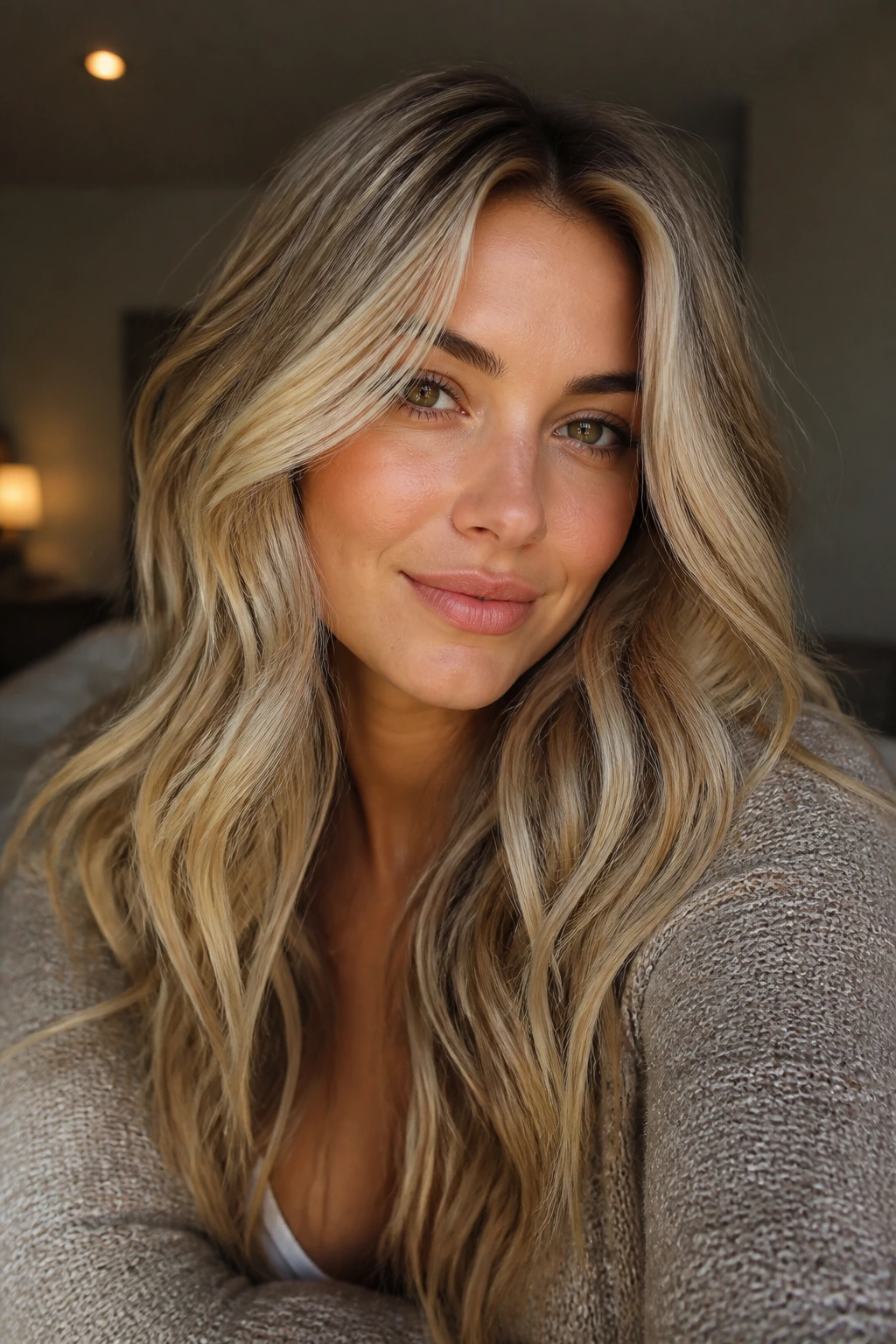
Dusty blonde with lowlights is the one I recommend when someone says their blonde looks too flat. The deeper strands add shadows, and those shadows make the lighter pieces look brighter by comparison.
What the Lowlights Do
- Break up a solid blonded-out surface
- Make fine waves look fuller
- Keep the color from turning washed out after a few weeks
This is a good fix for hair that has gone light but lost shape. The lowlights should be cool or neutral, not muddy. That way the blonde still feels fresh.
32. Honey-Butter Melt
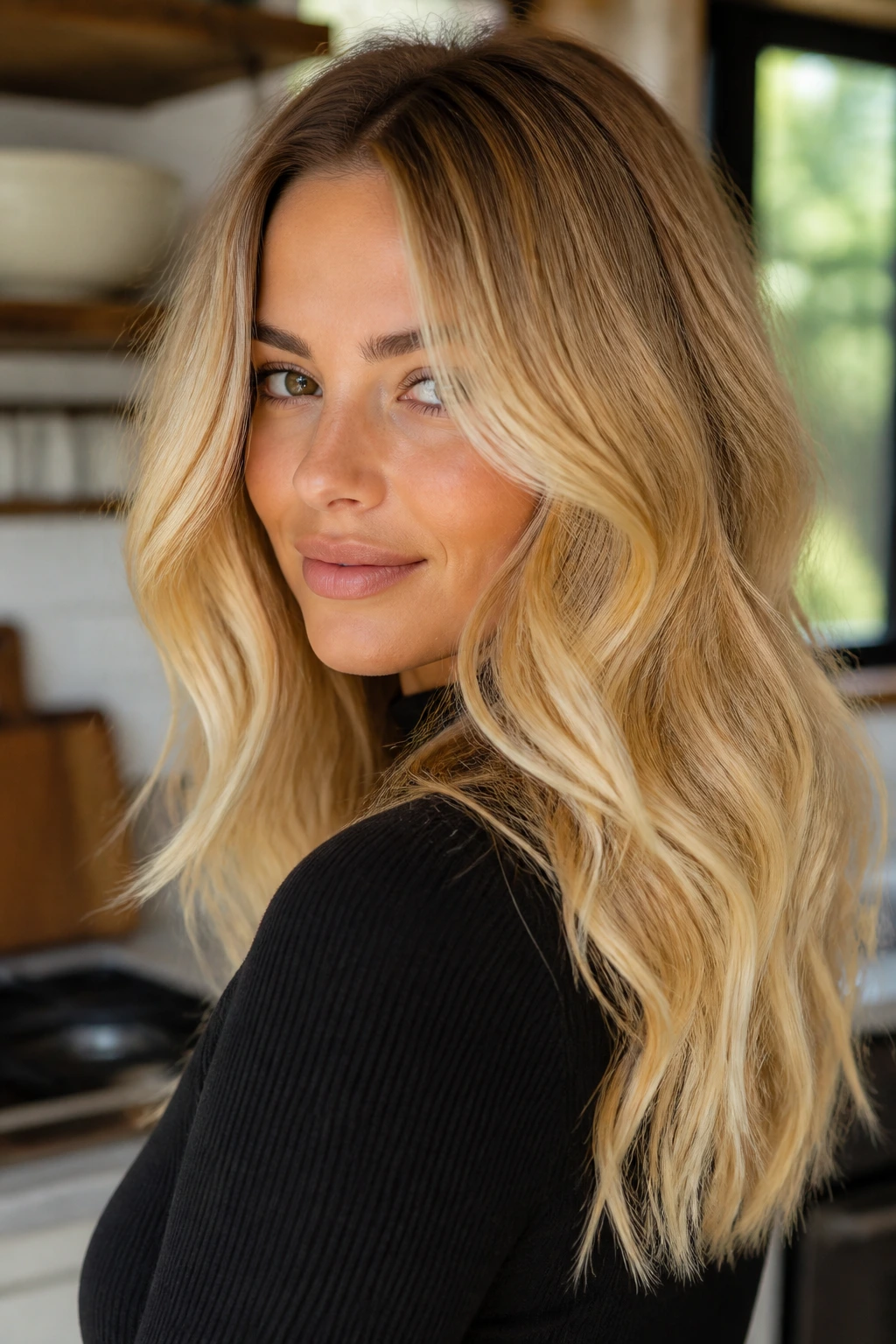
Honey-butter melt has a dessert name for a reason. The color blends warm honey at the root, buttery mids, and a soft pale blonde through the ends.
It works because the wave pattern gives each tone a little room to show up on its own. You get warmth without heaviness and lightness without that flat, overprocessed look. It is a forgiving choice if your natural hair has a lot of movement and you want the blonde to follow it instead of fighting it.
33. Frosted Blonde Waves
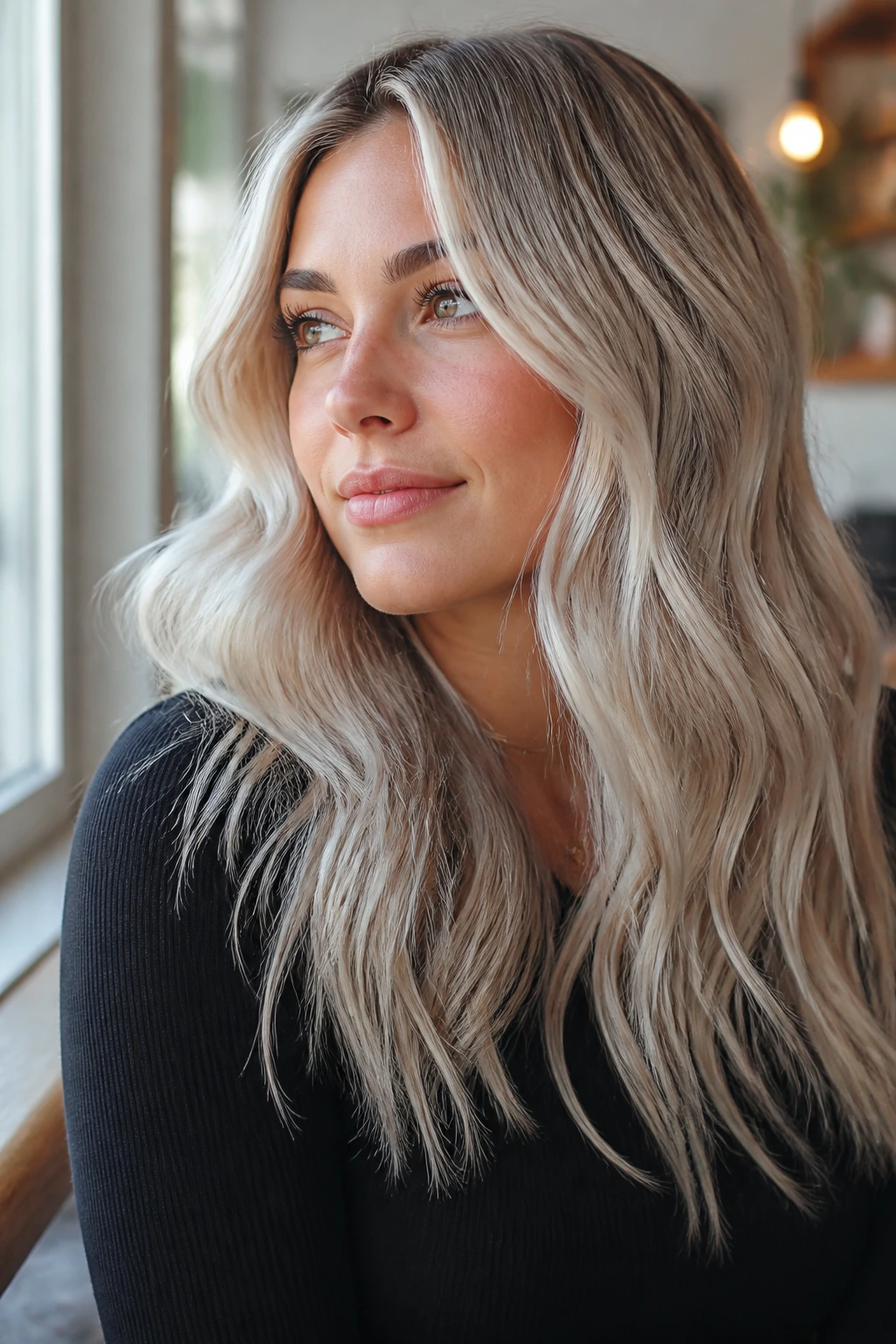
Frosted blonde waves can look sharp or soft depending on how much root you leave. The cooler the tone, the more important the placement becomes, because waves can make pale blondes go either crisp or harsh.
What to Watch For
If your hair has a lot of yellow left in it, a frosted blonde will pull warmer than you expect. If the lightening is even and the toner is clean, though, the result can look polished and cool. This is one of those shades that rewards a good cut. The wave pattern and the color should feel like they belong to each other.
34. Creamy Beige Micro Highlights
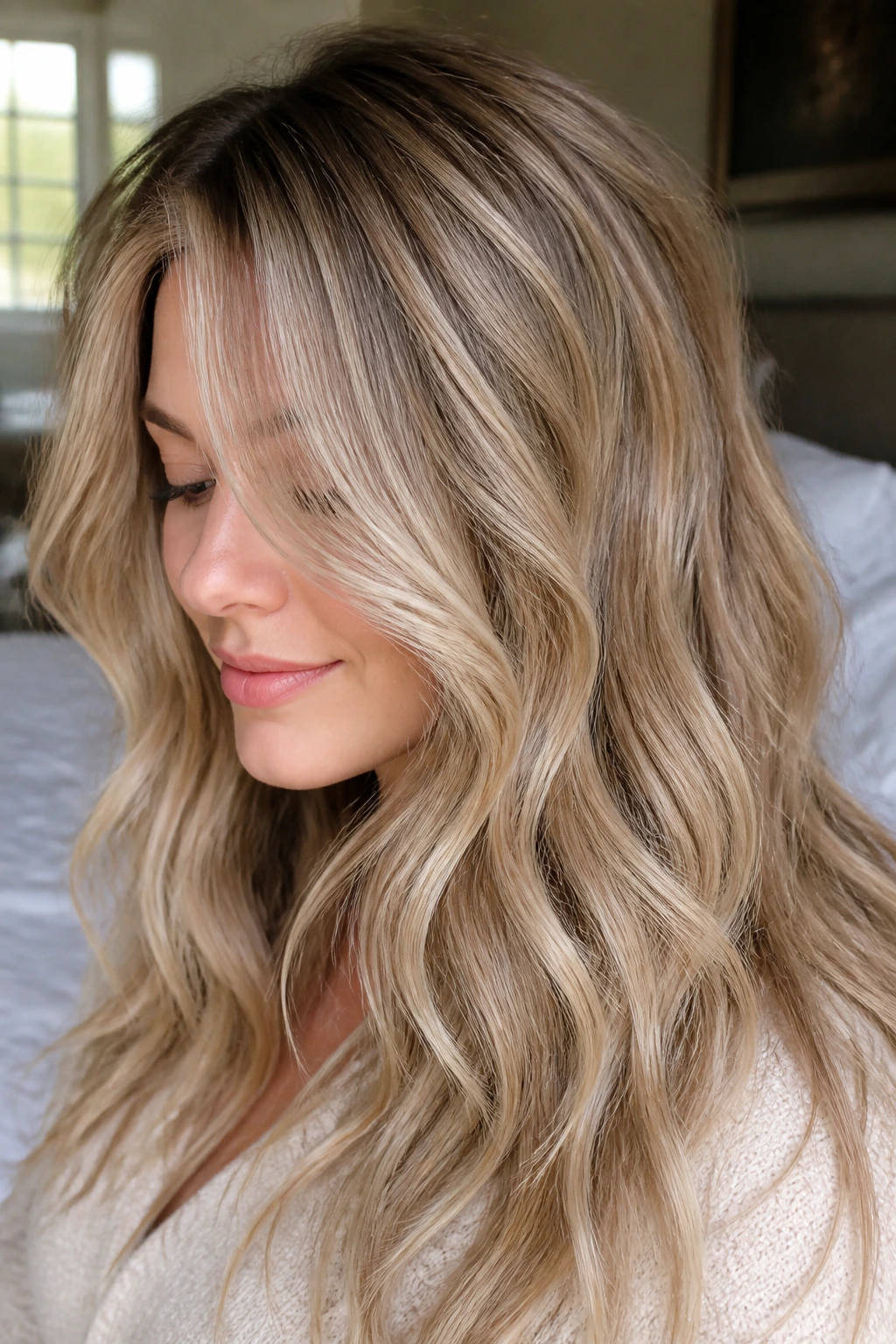
Creamy beige micro highlights are for people who want shimmer, not streaks. The pieces are tiny, so the hair looks like it has light running through it rather than obvious blonde lines sitting on top.
That makes them a strong pick for fine waves or anyone who likes understated color. The tone stays soft, the upkeep stays lighter, and the grow-out is gentle. If you tend to avoid obvious highlights but still want your waves to look brighter, this is a very good compromise.
35. Soft Sand Blonde
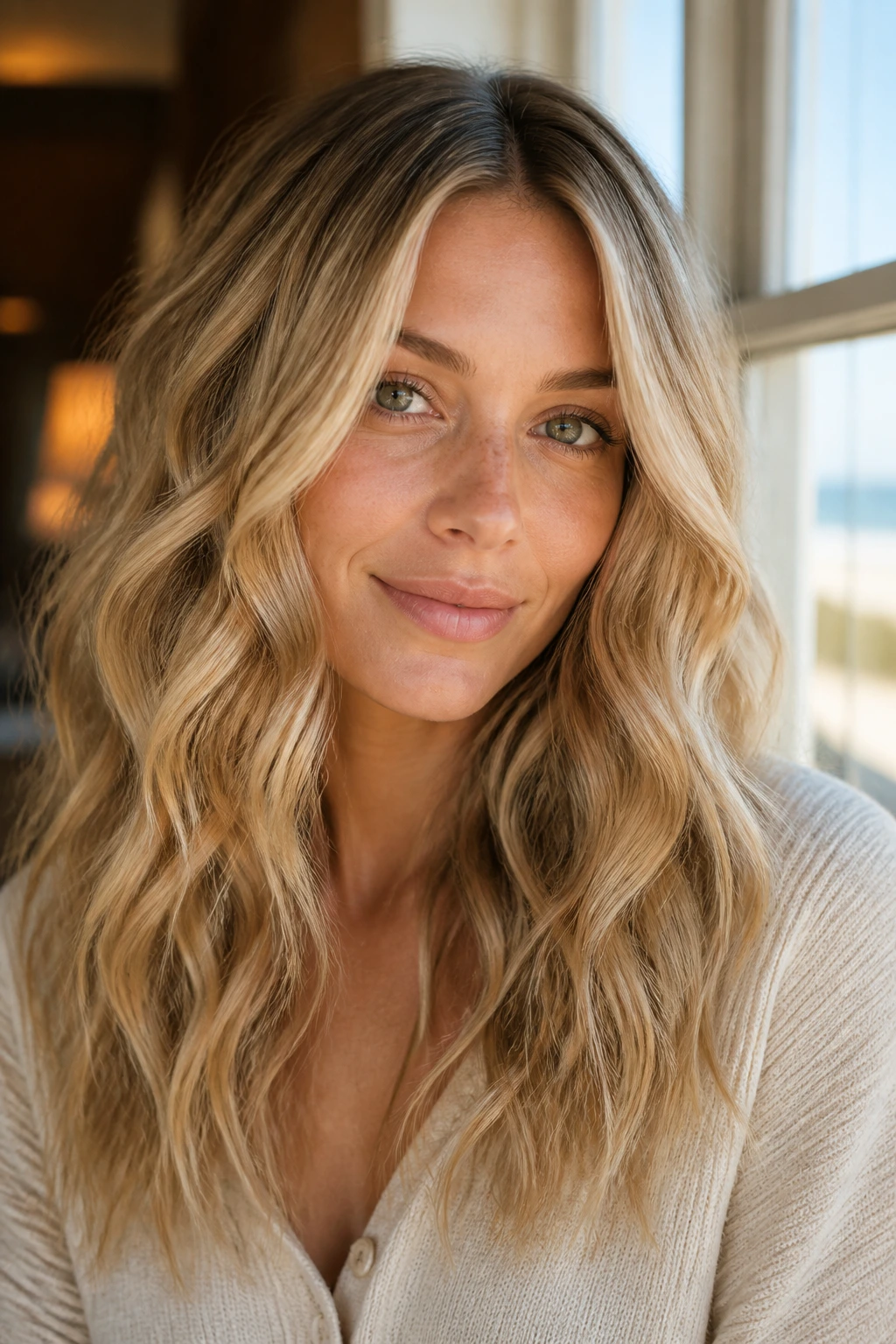
Soft sand blonde is the shade I’d hand to someone who wants to look lighter without feeling overdone. It has a warm-beige base, a little gold, and just enough depth to keep wavy hair from looking bleached out.
This is the blonde that quietly does the most work. It suits loose waves, medium layers, and natural textures that need a calm, beachy finish instead of a high-drama contrast. If you want one blonde that can live through different cuts, different lengths, and a low-stress grow-out, this is the one I’d start with.
