



Long hair is honest. It shows every shift in tone, every soft fade, every dry end that would disappear on a shorter cut. That is exactly why blonde hair color ideas for long hair need a little more thought than a quick salon photo saved on your phone; the same shade can look silky on one head and flat on another once it runs from root to waist.
The good news is that long hair gives you room to play. You can stretch out a root shadow, tuck brighter pieces around the face, or let a blonde melt from warm to cool over twenty inches of hair instead of two. That extra length is a gift, but it also means the ends matter more than people think. Old ends grab toner faster, porous strands go dull sooner, and a tone that looks fresh at the bowl can turn washed out after a few shampoos if the base is wrong.
The shades that hold up tend to do one of three things: keep a little depth at the root, use warmth on purpose instead of by accident, or build dimension so the color keeps moving when the hair swings. That is the real difference between a blonde that feels expensive and one that feels patched together.
Start with the shade that matches how much upkeep you can live with, because long hair is a lot of surface area. More hair means more tone, more shine, and more room for mistakes.
1. Honey Butter Blonde
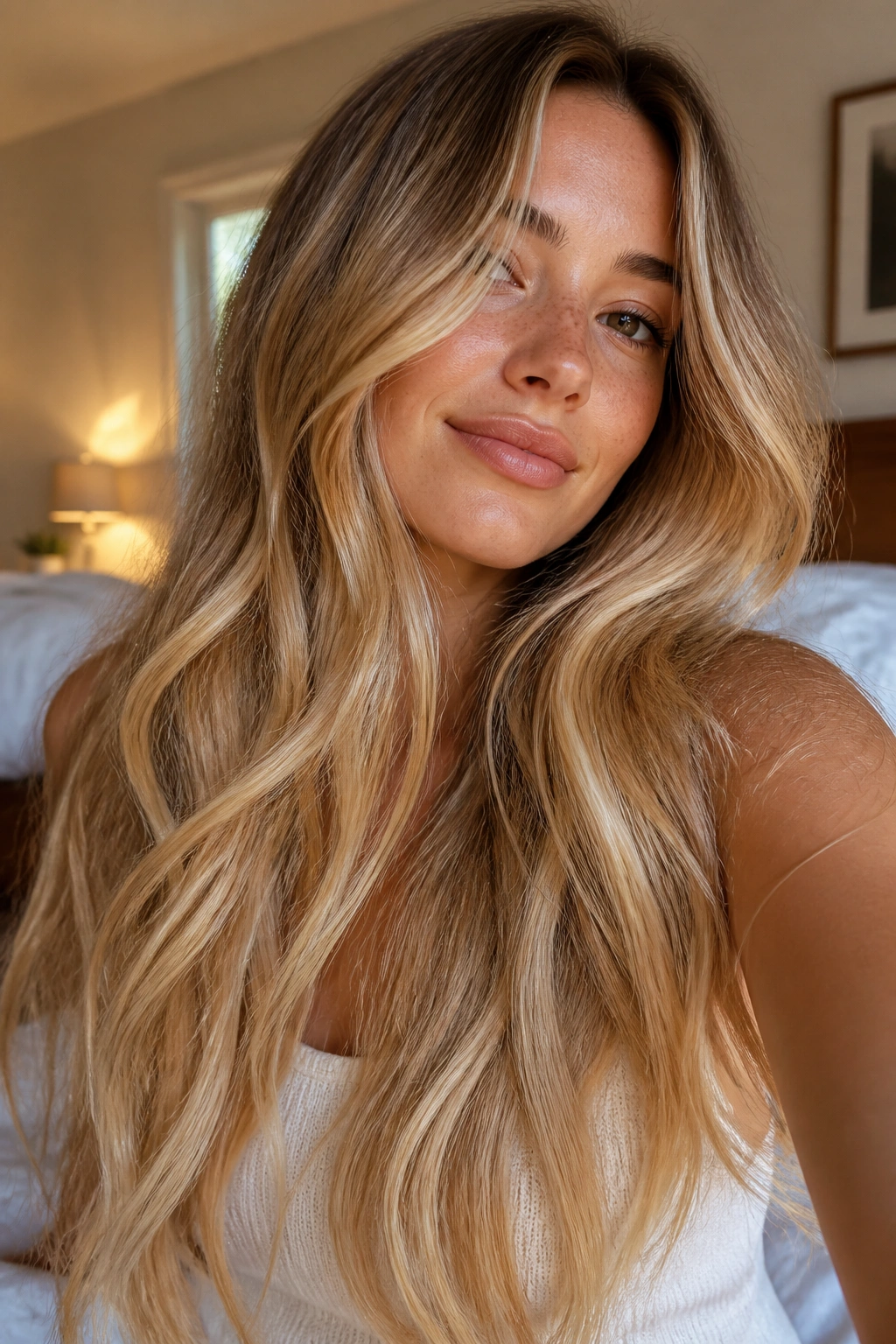
Honey butter blonde is the shade I reach for when someone wants warmth that still looks clean on long hair. It sits between gold and beige, so the color moves instead of sitting flat, especially when the length is styled in soft bends.
Where the Warmth Belongs
This tone works best when the brightest pieces live through the mid-lengths and ends, not right at the scalp. On long hair, that keeps the crown from looking too yellow and lets the lower half glow when light hits it.
Ask for a level 8 to 9 beige-gold blonde with a root that stays about 1 inch deeper than the ends. That tiny bit of depth keeps the whole thing grounded.
- Best on layered cuts that need shine.
- Soft waves show the gold better than pin-straight hair.
- A gloss every 6 to 8 weeks keeps the tone from getting brassy.
Best tip: if your ends are dry, put the brightest honey only on the healthiest sections and let the lower lengths stay a shade deeper.
2. Champagne Blonde
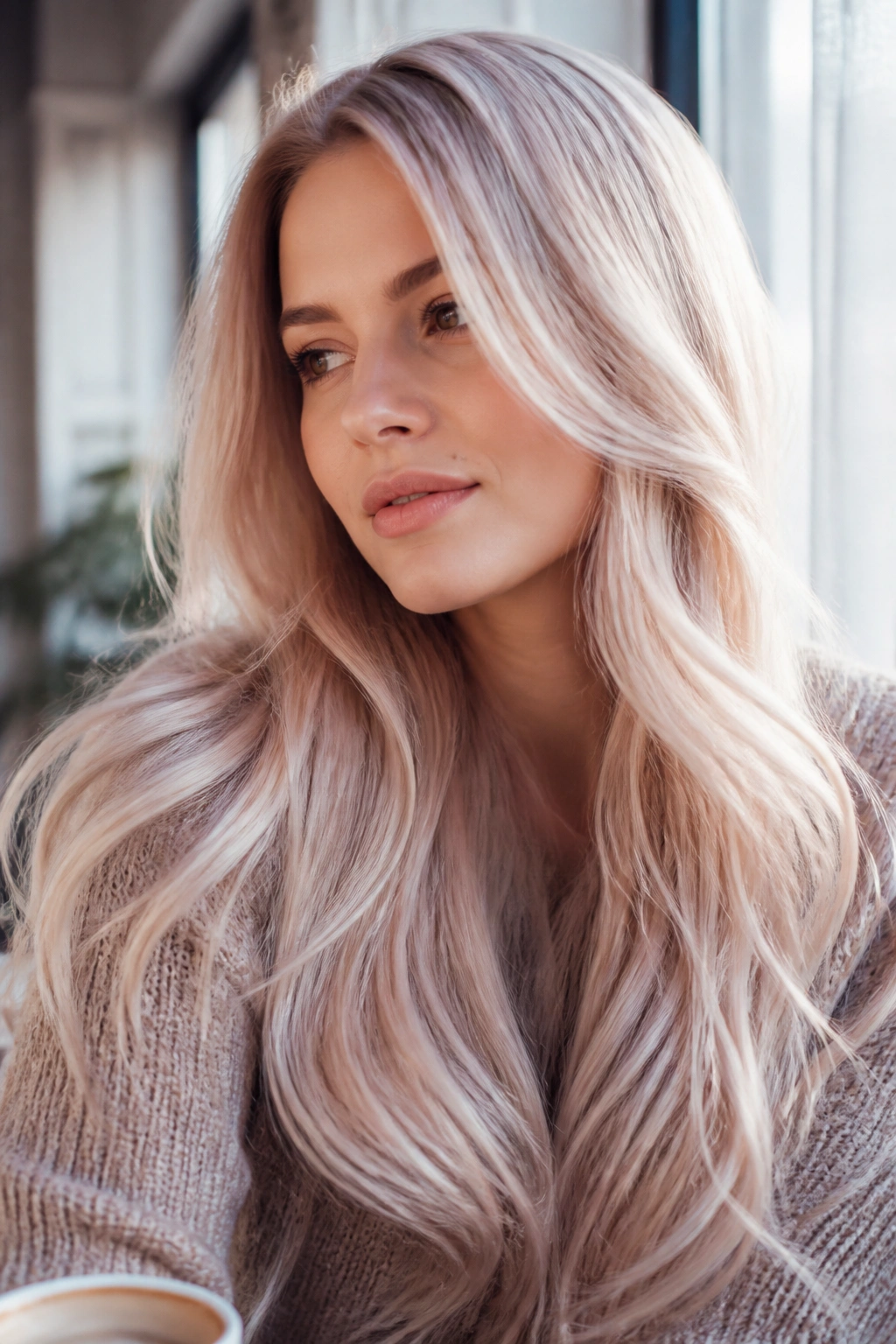
Champagne blonde is pale enough to look bright, but not so white that it starts shouting from across the room. On long hair, that balance matters a lot, because a full curtain of pale blonde can look harsh if the tone is too icy or too flat.
The shade sits in that nice middle lane between beige and soft pearl. It has enough reflect to look polished, and enough warmth to keep the face from looking drained. I like it on long layers because the movement breaks up the tone and keeps the finish from turning chalky.
Tell your colorist you want a soft beige-violet toner over a very pale level 9 base. If the hair is porous, a clear gloss through the ends helps the color stay translucent instead of muddy.
One sentence of restraint changes everything.
3. Beige Blonde
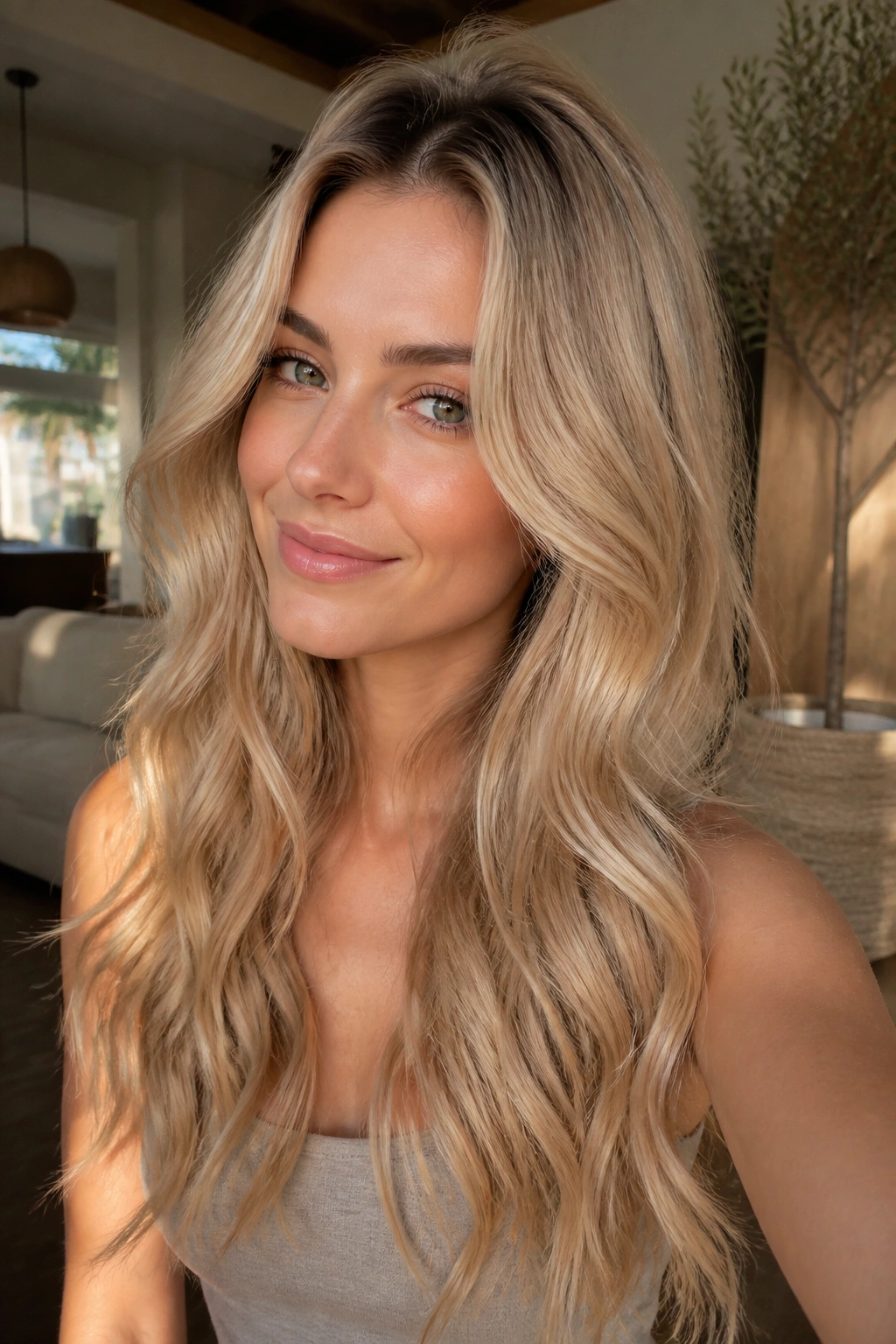
Why do some blondes look soft on long hair while others turn chalky? Beige blonde is usually the answer. It has a neutral base, so it does not fight your skin tone the way an over-ash blonde can, and it does not look as yellow as a warm gold.
How to Wear It
Beige blonde is one of those shades that grows with you. The long lengths can carry slightly brighter ribbons through the face and lighter ends, while the root stays a touch deeper and keeps the color from feeling washed out.
If you want this shade, ask for a neutral blonde with a beige finish, not a silver one. That wording matters. A lot of people say they want “cool blonde” and end up with hair that looks gray in bad light. Beige is softer.
- Works well with loose curls and brushed-out waves.
- Needs less purple shampoo than platinum or ash.
- Looks best when the mid-lengths keep a little dimension.
4. Scandinavian Platinum
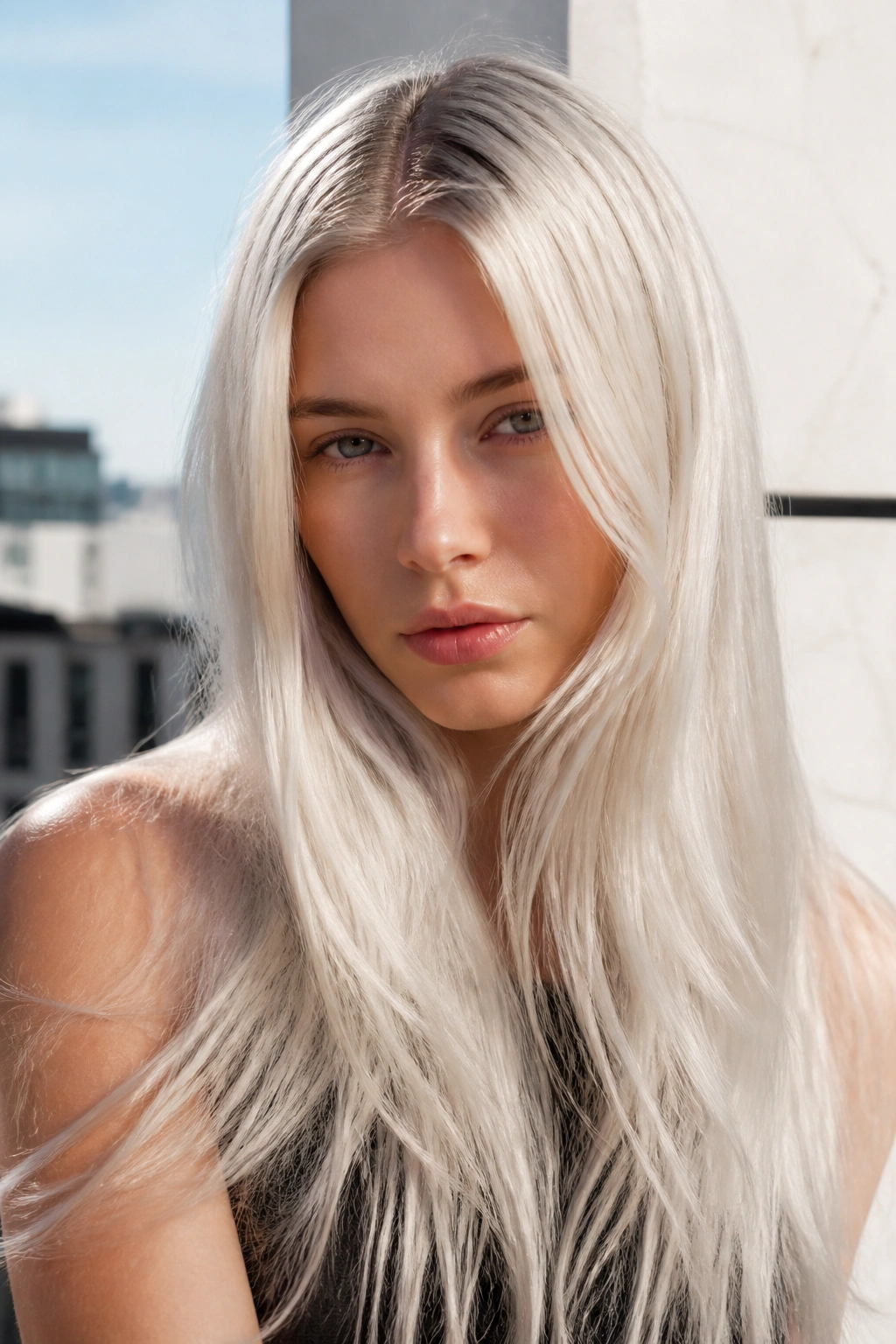
If you want long blonde hair that looks almost white, Scandinavian platinum is the sharpest version of the idea. It is bright, clean, and unapologetic, which is exactly why it needs disciplined maintenance and healthy ends.
The beauty of this shade on long hair is the line it creates. There is a cool, sleek effect when the color runs from root to tip with very little warmth left behind. But the downside is plain: damaged ends will expose themselves fast. Dryness shows. Banding shows. Bad toner shows.
Ask for a high-lift platinum with a soft root shadow under 1/2 inch so the scalp area does not look pasted on. Bond repair is not optional here if the hair has been lightened before.
- Best for hair that can handle repeated lightening.
- Tone every 4 to 6 weeks if brass starts creeping in.
- A smoothing cream helps the finish look glassy, not fuzzy.
5. Mushroom Blonde
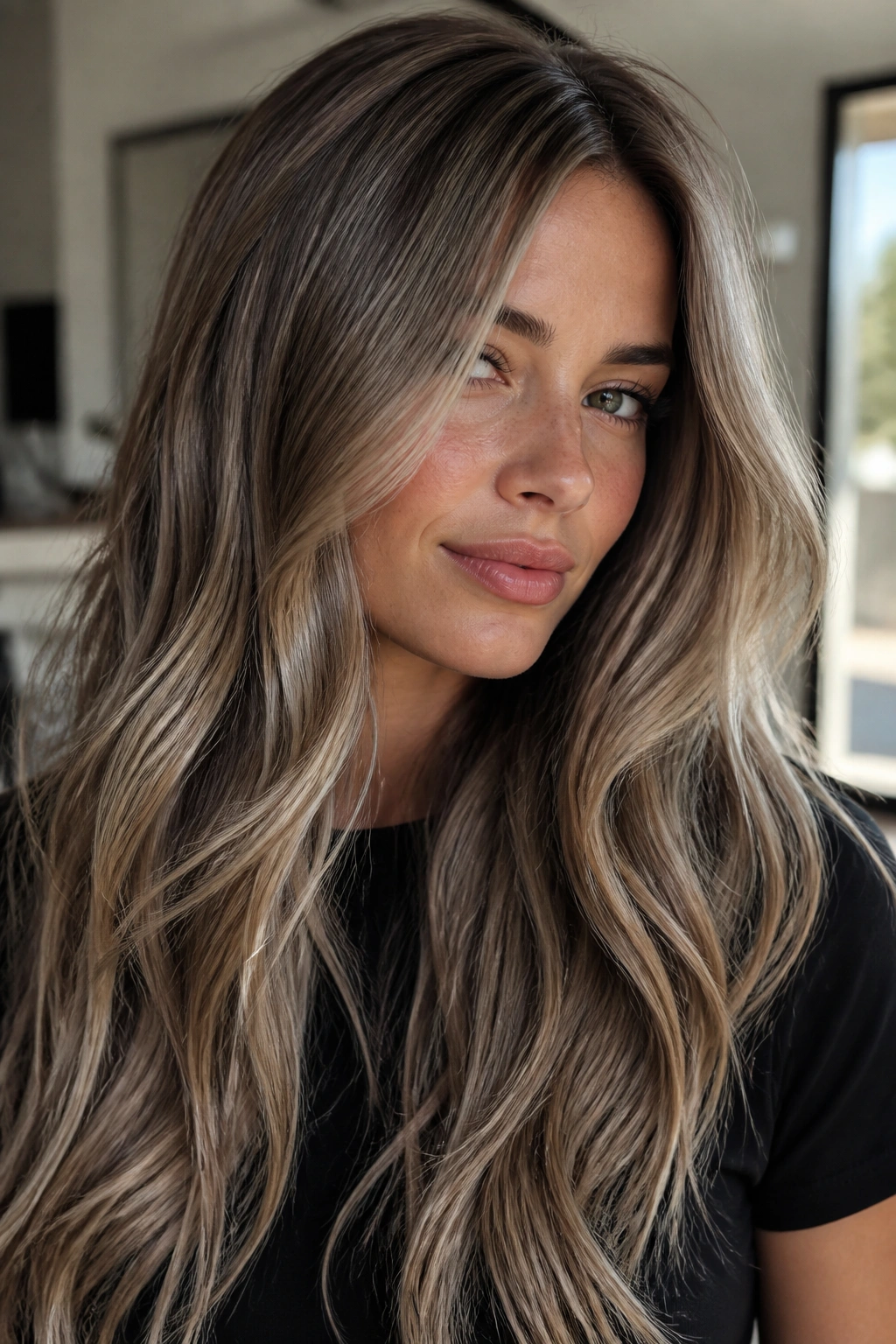
Mushroom blonde gets its appeal from smoke, not sunshine. It is a cool taupe-blonde that feels grounded, and on long hair it has enough depth to keep the whole look from sliding into “too pale, too fast.”
It is not a sugary shade. That is the point. The best mushroom blondes have darker lowlights underneath and a muted beige top layer that shifts in the light instead of flashing bright all over the place. Long hair gives you space to do that properly.
A good colorist will place the cooler pieces through the interior, not just on top. That trick keeps the lengths from looking like one flat sheet of color. If you wear your hair in waves, the texture will pull the cool and warm notes forward at the same time.
This is a smart choice when you want blonde, but you do not want to babysit it every week.
6. Vanilla Cream Blonde
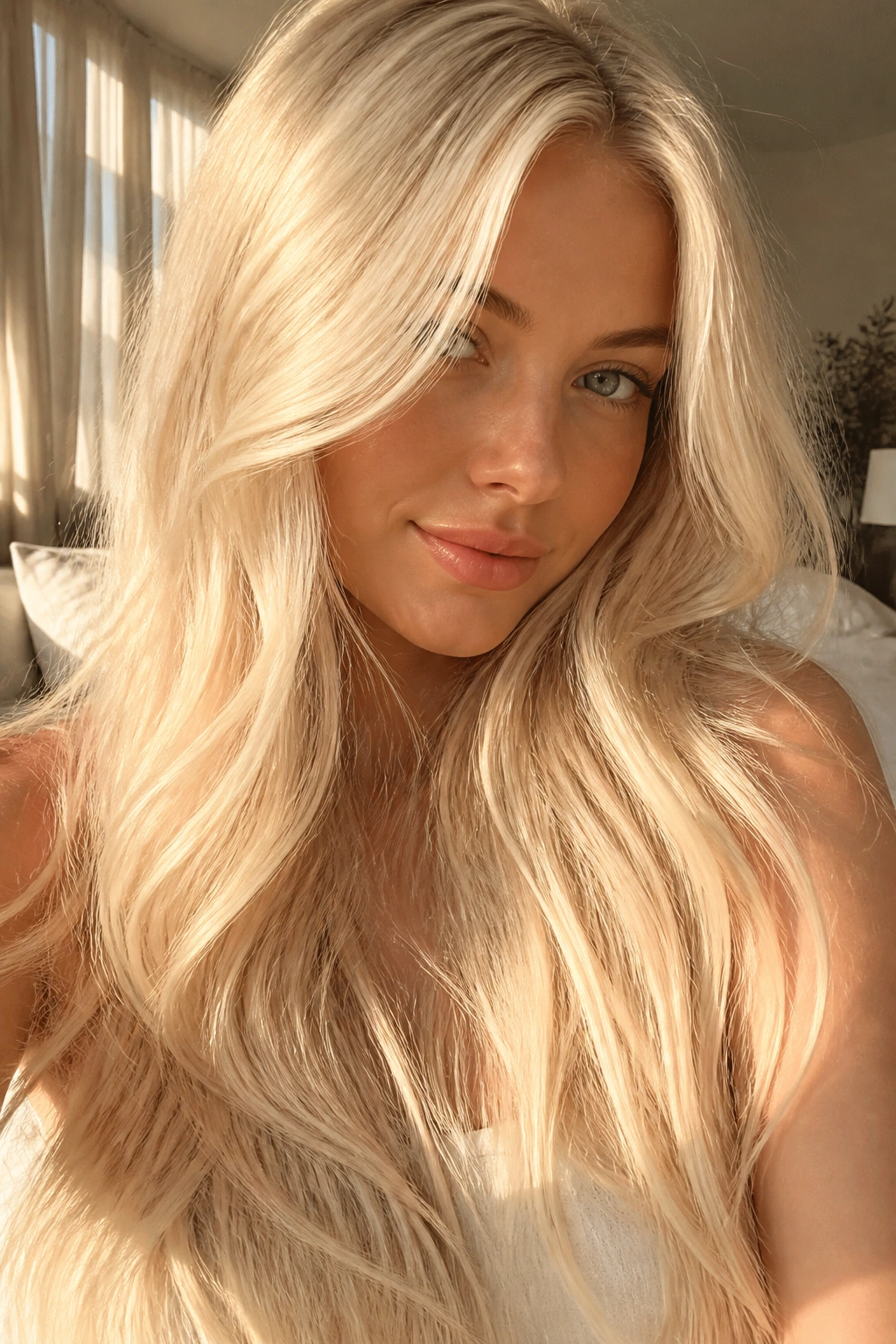
Unlike platinum, vanilla cream blonde keeps a little body in the color. It looks soft, milky, and airy, which is why it reads so well on long hair that has movement through the ends.
The tone leans pale, but it never feels icy. That is what makes it useful for people who want a bright blonde without the sharp edge of white or silver. If your hair has been lightened more than once, vanilla cream can also hide tiny tone shifts better than a very cool blonde would.
What Makes It Different
The finish should look creamy, not dull. Ask for a pale beige base with a whisper of gold, then keep the toner light enough that the hair still reflects light instead of going matte.
Long layers are the friend here. They stop the color from looking like one sheet of paint and let the ends move a little.
A soft, rounded blowout makes this shade look richer than pin-straight styling ever will.
7. Strawberry Blonde
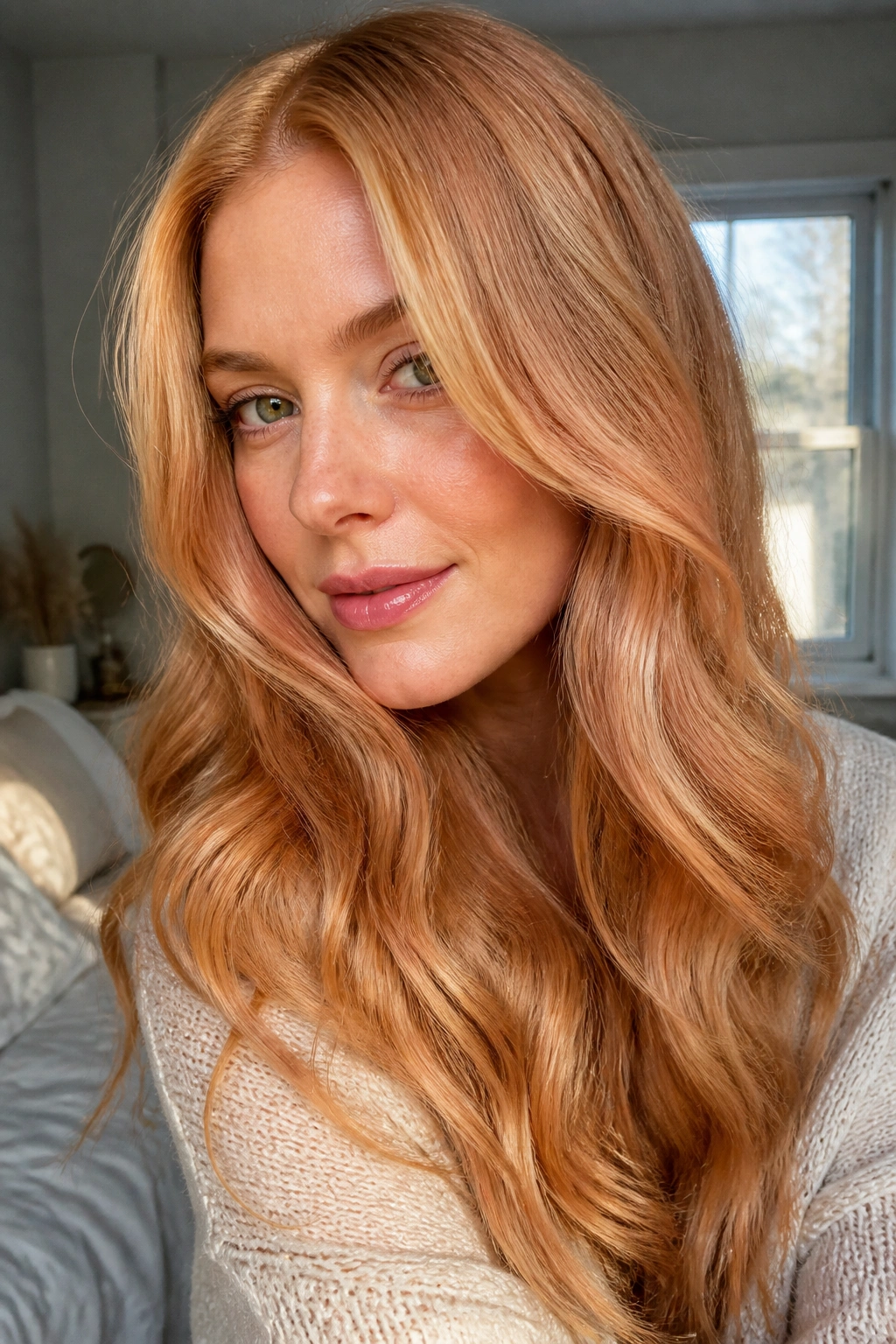
Strawberry blonde is the shade for anyone who wants blonde with a flicker of copper running through it. On long hair, that copper shows up in the mid-lengths and ends in a way that feels warmer and more alive than a plain gold blonde.
It is not red hair pretending to be blonde. It is the other way around. The base stays light, and the copper-gold glaze adds that blush of warmth that sits somewhere between peach and rose. The result is softer than most people expect.
Where the Copper Lives
The smartest version of strawberry blonde keeps the scalp area lighter and lets the warmth deepen a little below the cheekbones. That creates a natural-looking flow, and it keeps the hair from turning orange at the root.
- Ask for a gold-copper glaze over a pale blonde base.
- Keep the face-framing pieces brighter.
- Refresh the tone every 4 to 6 weeks if the copper fades fast.
It looks especially good with loose waves and undone braids.
8. Rooted Sandy Blonde
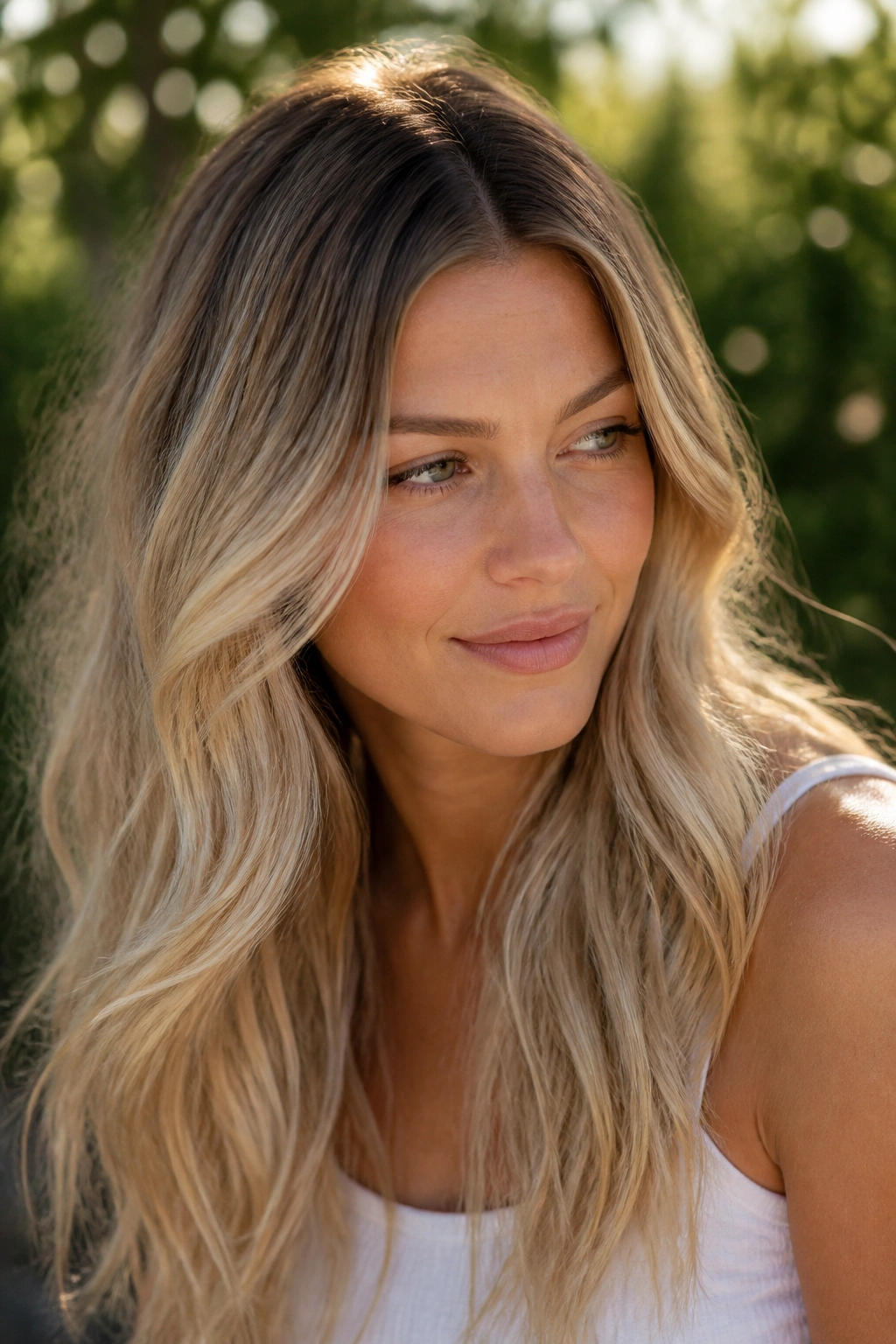
Rooted sandy blonde is what happens when you want beachy color without the overworked look. The root stays a shade or two deeper, and the rest of the hair drifts into soft beige and sun-washed blonde.
That darker root is doing real work. On long hair, it keeps regrowth from looking harsh, and it gives the lower lengths something to melt from instead of hanging there by themselves. The color feels easy, but it still looks planned.
The Root Trick
Keep the root area about 1 to 2 inches deeper than the mids. That range is wide enough to soften maintenance, but not so wide that the color looks like two separate heads of hair.
- Good for people who want fewer salon touch-ups.
- Works well with tousled waves and air-dried texture.
- Ask for sandy beige ribbons through the mids and ends.
This is the shade I recommend when someone says they want blonde, but not “blonde-blonde.”
9. Buttercream Balayage
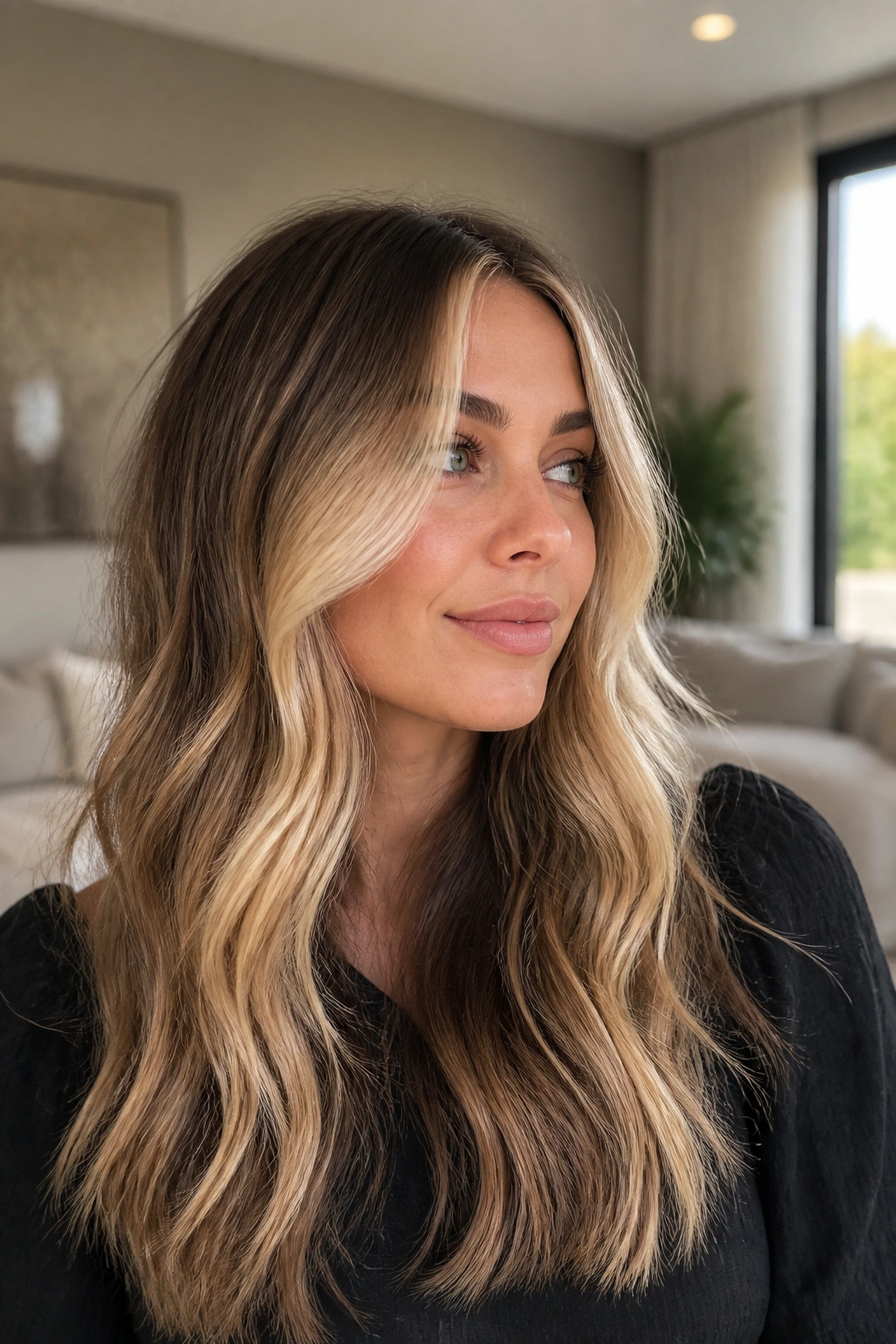
Buttercream balayage is the safest bet if you want softness, shine, and movement without the commitment of full-head bleach. The painted ribbons look lighter than they are because the contrast is controlled, and long hair gives those ribbons room to travel.
The key is placement. A good balayage does not smear brightness everywhere. It builds it through the surface and leaves breathing room underneath, which is why it looks expensive when it’s done well and muddy when it isn’t.
Ask for wide, hand-painted blonde ribbons through the front and upper lengths, then keep the underneath half a shade deeper. That little bit of darkness is what makes the blonde pop.
One clean curl will show the whole thing.
10. Pearl Blonde
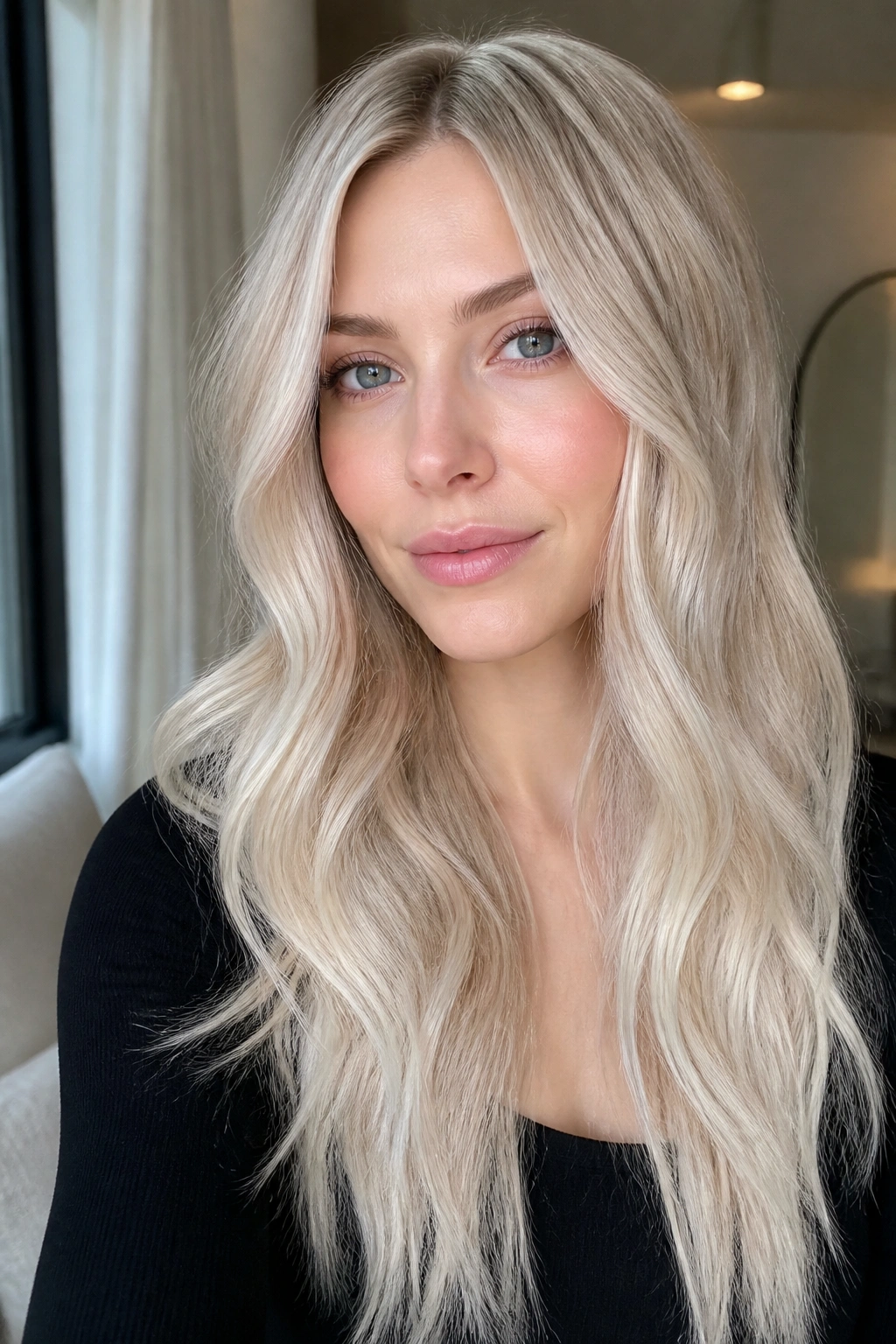
Pearl blonde is not silver in the usual sense. It is cooler than champagne, softer than white, and a little translucent around the edges, which gives long hair a light-catching finish without screaming for attention.
On longer lengths, pearl blonde can look almost liquid when the light moves across it. That is because the tone is thin and airy, not heavy. A color that is too opaque will look flat on long hair. Pearl usually avoids that problem if the toner is handled gently.
I like this shade best when the ends stay a hair lighter than the root area. The difference does not need to be dramatic. It just keeps the color from feeling pasted on.
Use a violet-based gloss sparingly. Too much toner and the whole thing starts to look dusty.
11. Golden Sunlit Blonde
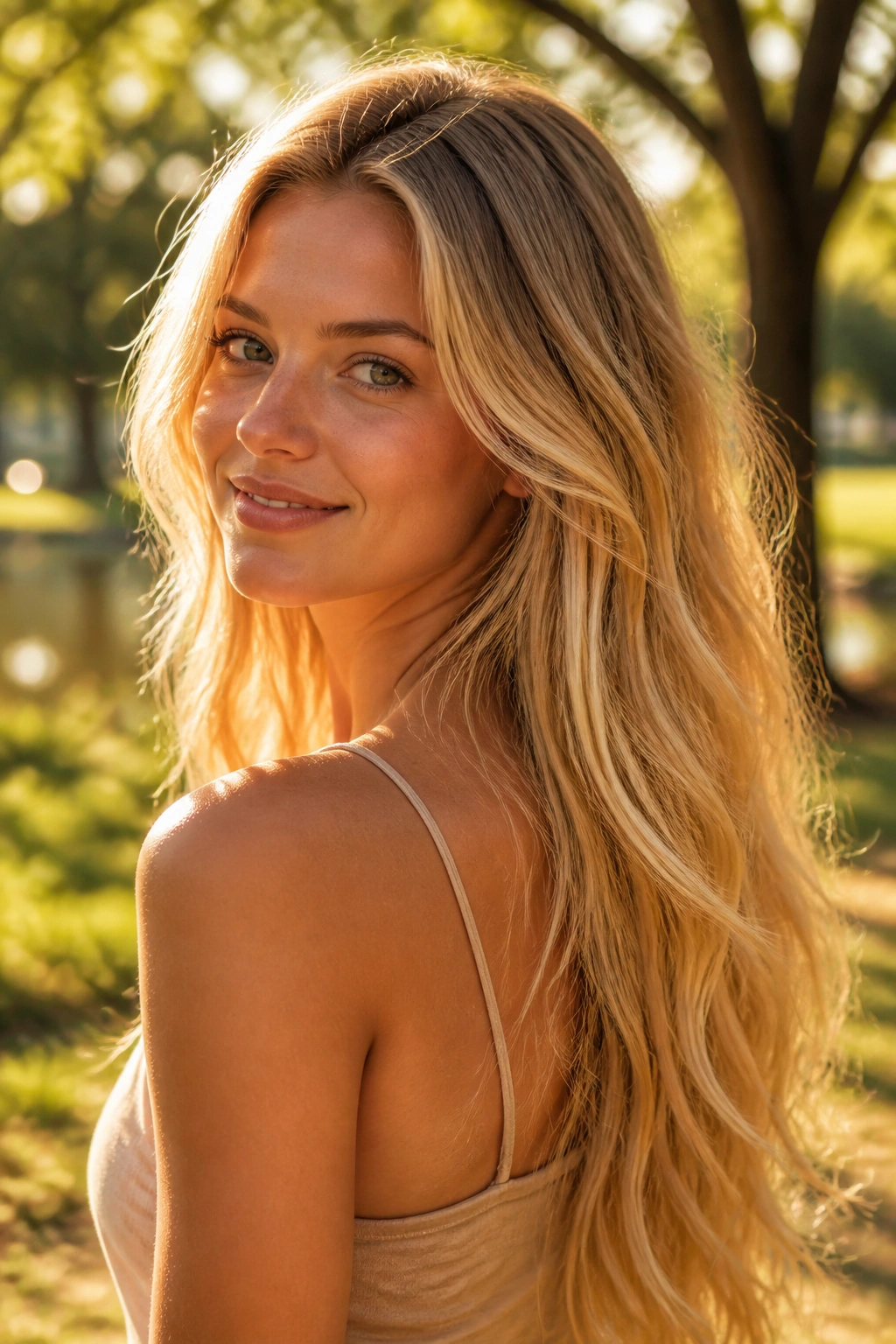
If honey butter feels rich, golden sunlit blonde feels open and bright. It is the warmer, lighter cousin that gives long hair a glow from root to tip without drifting into orange.
The reason it works so well on long cuts is simple: length gives the gold room to move. A bob can wear the shade, sure, but long layers let the brighter pieces show in waves, ponytails, and braids. That movement matters.
This is one of the easiest blondes to live with if your natural hair already has warmth in it. Ask for golden ribbons painted through the mid-lengths and ends, with the root softened just enough to avoid a hard grow-out line.
It is especially good if you wear your hair loose most days. The color does the talking for you.
12. Money Piece Blonde
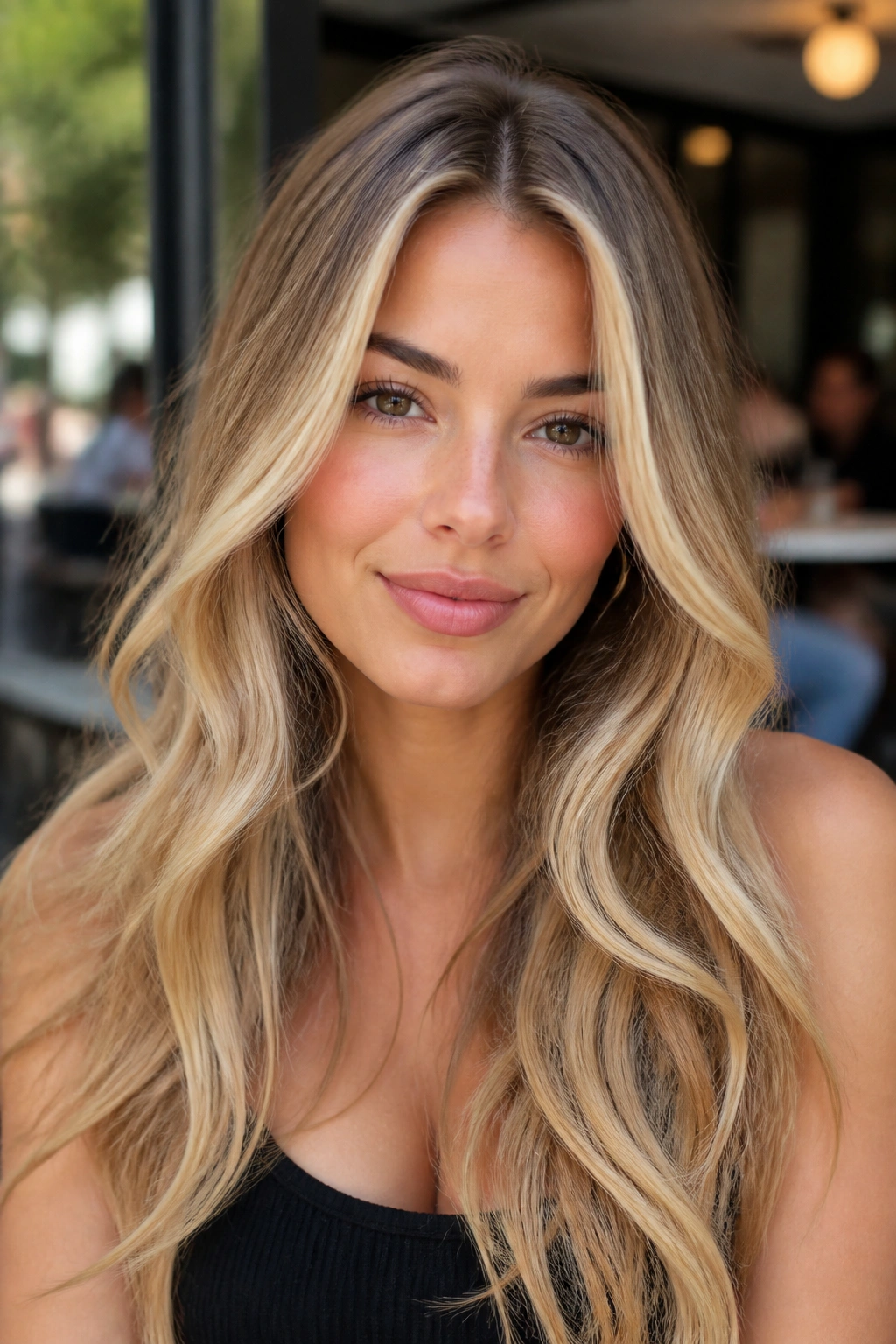
Money piece blonde is what happens when the front of the hair gets all the attitude. The rest can stay softer, but those face-framing pieces are bright, bold, and a little bit cheeky.
Long hair carries this look beautifully because the contrast starts near the face and continues down the length, which makes the whole style feel intentional rather than random. If the front pieces are too thin, the effect disappears. Too wide, and it starts looking striped.
The Face Frame Rule
Ask for 2 to 4 foils on each side that begin around the cheekbone or jawline. That placement lifts the face and keeps the brightness away from the scalp where it can look too severe.
- Best on long layers with curtain bangs.
- Keep the money piece 1 shade lighter than the rest of the blonde.
- Soft curls help blend the transition.
A strong face frame can make even simple hair look styled.
13. Dirty Blonde with Babylights
Dirty blonde with babylights is for people who want dimension more than drama. The base stays deeper, the light pieces are woven very fine, and the result looks like your hair has been naturally kissed by the sun in scattered spots.
What to Ask for at the Bowl
Babylights should be thin enough that you notice the shimmer before you notice the strand. That is the whole point. On long hair, those tiny lights stop the color from reading heavy at the bottom, which can happen when one shade runs too far down the length.
Ask for a soft brown-blonde base with micro-fine highlights throughout the crown and face frame. If the colorist paints too many large pieces, the “dirty blonde” part gets lost fast.
This shade is quietly flattering. It is not loud. It just makes long hair look fuller, softer, and a little less predictable.
14. White Blonde
White blonde is the boldest move in the bunch. It is almost no-color, which sounds simple until you try to maintain it on long hair and realize how quickly every dry end starts announcing itself.
The shade can look stunning when the hair is in good shape, especially if the cut has sharp layers or a sleek finish. Long hair gives it drama. It also gives it room to fail if the lift is uneven. That is the tradeoff, and it is a real one.
Tell your colorist you want a very pale level 10 blonde with careful toning, not an over-matted silver. If the ends are fragile, ask for a softer finish at the bottom so the whole head does not look brittle.
Skip heavy heat styling here. The color needs the hair to feel smooth, not fried.
15. Caramel Blonde
Caramel blonde is the easy way to bring warmth into long hair without making the whole head look orange. It uses golden-brown lowlights and soft blonde highlights to create a color that feels deep, glossy, and lived-in.
The contrast matters. Long hair can look one-note if every strand is pushed too light, so caramel tones give the eye a place to rest. That is why this shade often looks better in motion than in a flat photo.
Why the Contrast Works
Ask for lowlights that are 1 to 2 levels darker than your blonde base. That keeps the caramel notes visible without turning the whole look dark. Then leave the brighter pieces around the face and through the ends.
- Ideal for long waves and curls.
- Great when you want shine more than brightness.
- A clear gloss helps the caramel stay rich.
It is warm, but not sticky-warm. There’s a difference.
16. Ash Blonde
Ash blonde is one of those shades people either love or spend forever arguing with. It is cool, smoky, and a little bit dry-looking if it is pushed too far, which is why long hair needs a soft hand here.
The best ash blondes have a little beige hiding underneath the cool tone. Without that, the color can go flat and start reading gray or even green on porous hair. That is not the vibe anyone is aiming for.
Long lengths show ash beautifully when the finish is layered. The top can stay slightly deeper, the mids can go cooler, and the ends can keep a whisper of brightness. That small shift keeps the whole thing from turning into one pale block.
Use blue or violet shampoo sparingly. Once a week is usually enough.
17. Cream Soda Blonde
Cream soda blonde sits between beige and ash, and that narrow lane is exactly why it works on long hair. It has enough softness to feel wearable, but enough coolness to look polished.
The color reminds me of poured cream over pale coffee — not dark, just gently tinted. On longer lengths, that softness stops the hair from looking striped, which can happen when highlights are too loud and too separated.
What Makes It Different
Tell your colorist you want a beige-blonde base with a faint smoky finish. That wording keeps the shade from drifting too gold or too silver. The ends should stay a touch brighter than the root, but not dramatically so.
Cream soda blonde is especially good for braided styles, half-up knots, and loose blowouts. Those shapes let the color show from different angles.
It is quiet in the best way.
18. Champagne Rose Blonde
Champagne rose blonde is the softer cousin of rose gold. The pink note is there, but it is diluted enough that the color still reads blonde first and blush second.
On long hair, that matters. A tiny wash of rose can look expensive in the mid-lengths and ends, especially when the hair has a smooth bend or a loose curl. Too much pink, though, and the whole thing tips into costume territory. The trick is restraint.
How to Keep It Soft
Ask for a champagne base with a rose-beige glaze, not a full pink toner. That keeps the shade light and airy. If your hair tends to hold pigment, the colorist may need to dilute the rose with clear gloss so it does not come out too strong.
- Best when the face frame stays bright.
- Refresh with a gloss every 4 to 6 weeks.
- Avoid heavy purple shampoo, which can kill the pink note fast.
It is one of the prettiest blondes on long hair when done lightly.
19. Bronde Melt
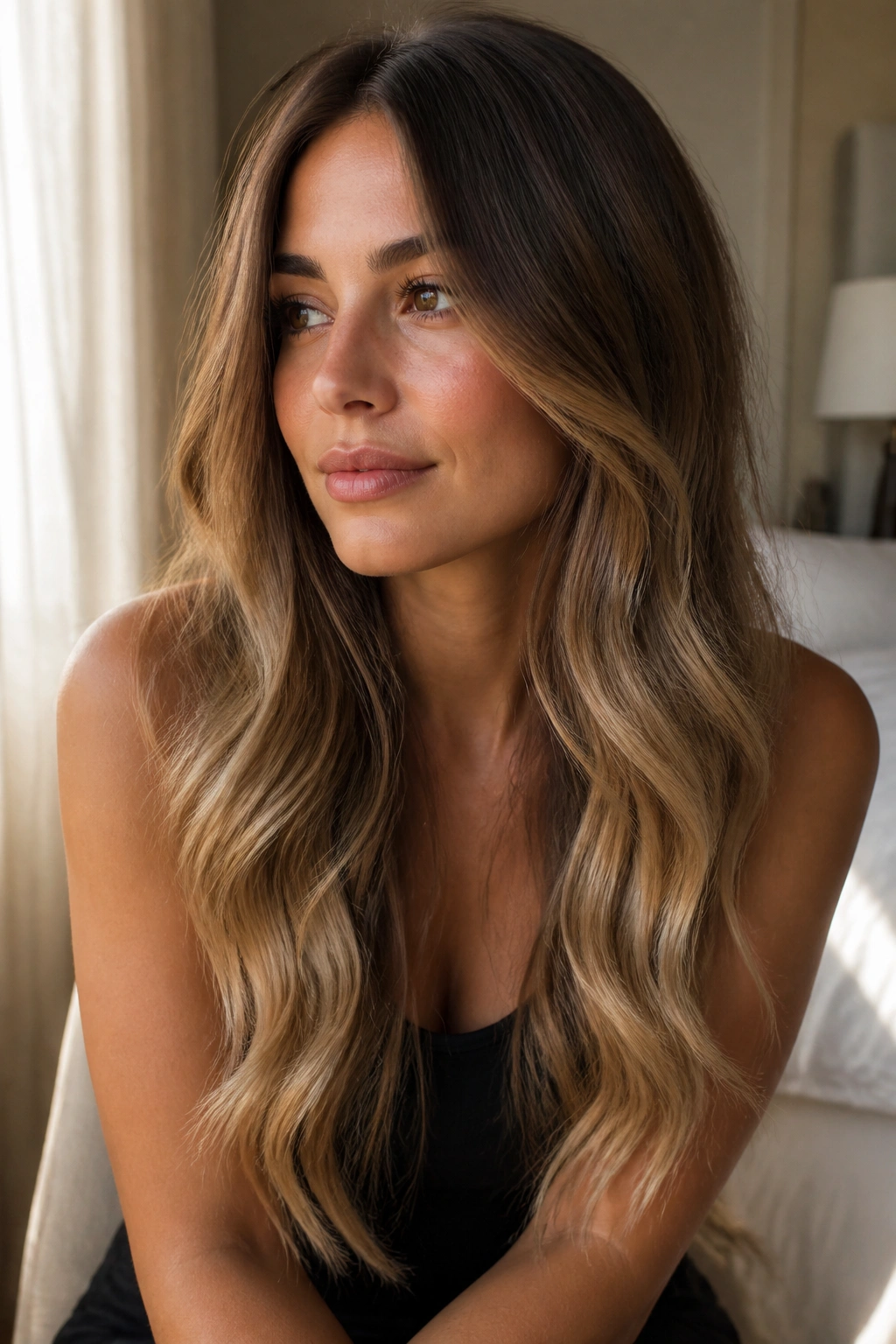
Bronde melt is the shade I pick when someone wants blonde, but not enough blonde to babysit every tiny regrowth. The color starts brunette or deep beige at the root and melts into lighter ends, so the whole look feels gradual instead of chopped up.
Long hair is made for this. There is enough length for the gradient to breathe, which is what makes the melt look natural rather than streaky. The transition zone is the whole trick.
Ask for the blonde to start lower than you think, often somewhere below the eye line or around the cheekbone area. That keeps the root area rich and the mids luminous.
It is also one of the few blonde ideas that still looks good when you throw your hair into a messy bun.
20. Icy Beige Blonde
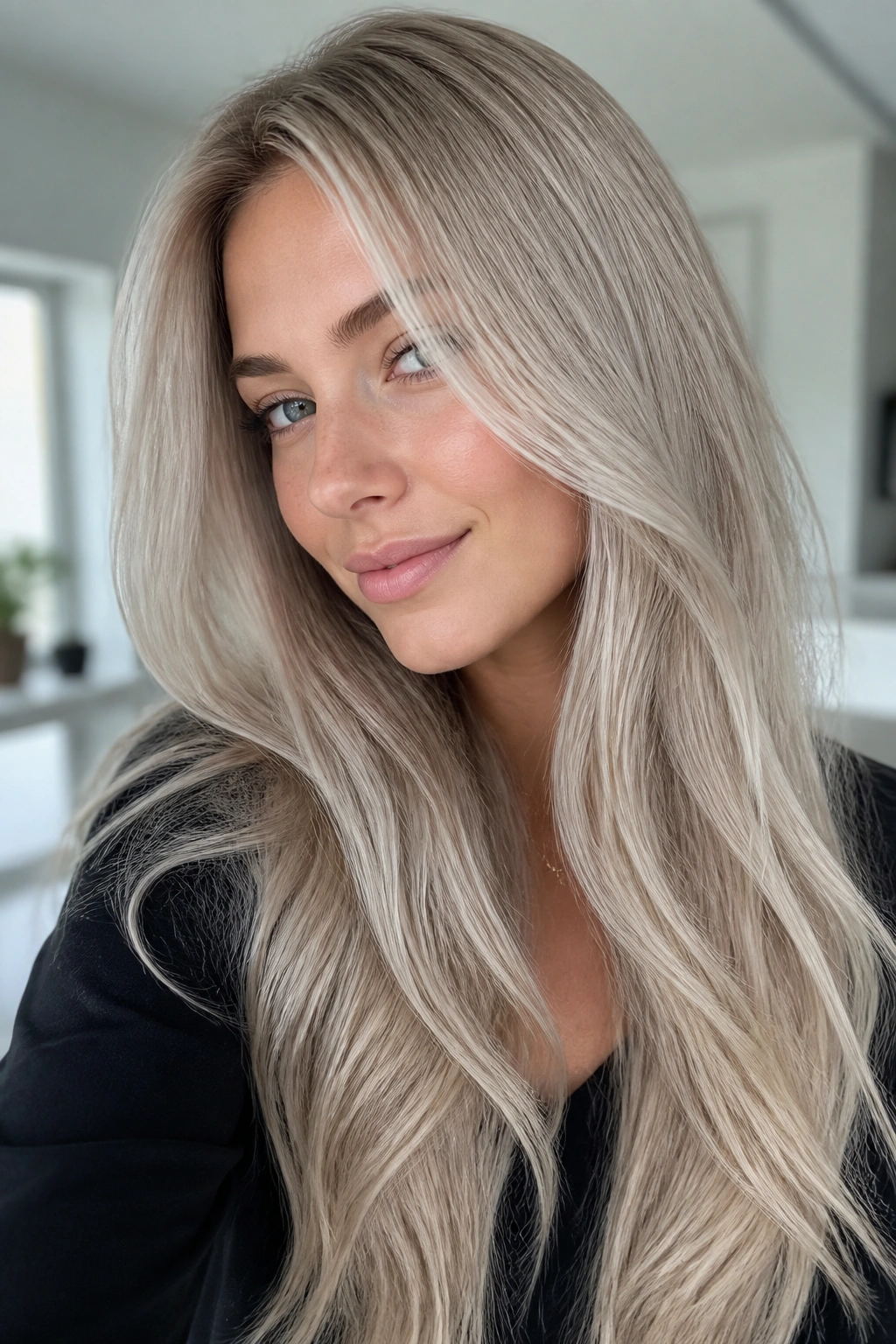
Icy beige blonde is what happens when beige gets a colder finish. It is not stark platinum, and it is not warm honey. It sits in the middle with a clean, frosted edge that looks sharp on long hair.
The shade works because it avoids both common mistakes: too much warmth and too much gray. On long lengths, that balance matters a lot. A color that is too cool can make the ends look tired. One that is too warm can lose the icy effect completely.
The Cool-Warm Balance
Keep the lift pale, then finish with a toner that reads cool beige, not blue-white. If the hair is porous, the ends may need a softer gloss than the top layers so they do not grab too much pigment.
- Best with sleek blowouts and smooth waves.
- Avoid overusing silver shampoo.
- A soft root shadow helps the look last longer.
It has edge, but it is still wearable.
21. Wheat Blonde
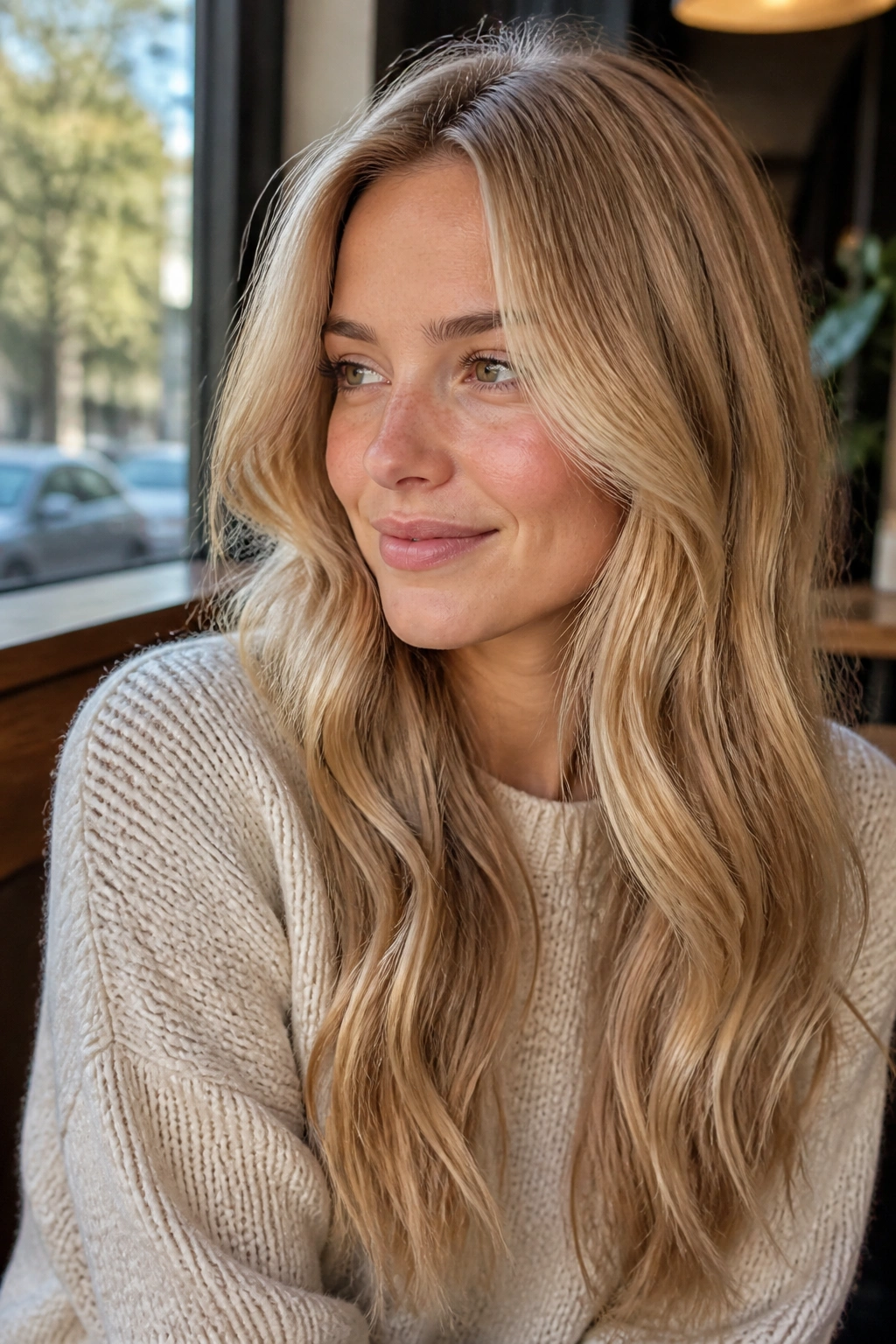
Wheat blonde is a quiet shade, and I mean that as praise. It has the softness of grain, the warmth of old straw, and just enough blonde lift to make long hair look natural rather than engineered.
What makes it work on long hair is the way the color sits across layers. Bright pieces are not fighting each other. They settle into a soft field of color that looks easy to the eye. That is harder to create than it sounds.
This shade is especially kind to people who do not want a big maintenance schedule. A pale beige-gold gloss can keep the tone fresh without turning it icy or orange. If you like air-dried texture, wheat blonde plays nicely with that too.
It is one of my favorite choices for long hair that needs movement more than drama.
22. Toasted Almond Blonde
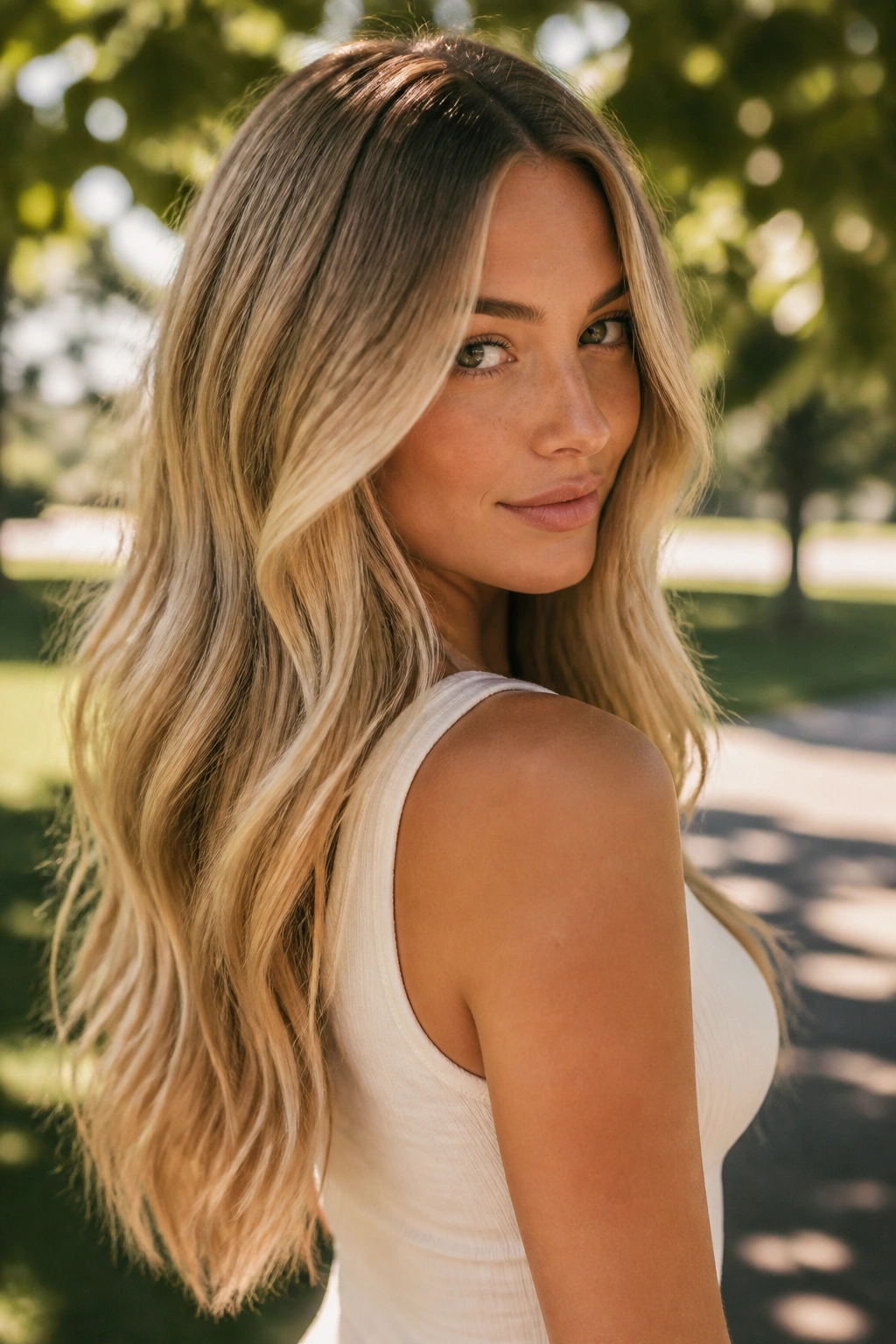
Unlike honey blonde, toasted almond blonde has more tan than gold. That gives it a grounded feel on long hair, especially when the ends are lighter and the root stays calm.
The shade is subtle, but not dull. It has enough warmth to look healthy and enough depth to keep the color from becoming a plain yellow blonde. On long layers, that balance gives the hair shape even before you style it.
What to Watch For
Ask for soft almond lowlights under the crown and around the nape, then let the top layer stay a little brighter. That keeps the color from flattening out when the hair is worn straight.
- Works well if your natural base is medium blonde or light brown.
- Looks richer with loose curls than with tight ringlets.
- A neutral gloss helps the tan note stay clean.
If you want a blonde that feels calm instead of sugary, this is a good lane.
23. Ribbon Highlight Blonde
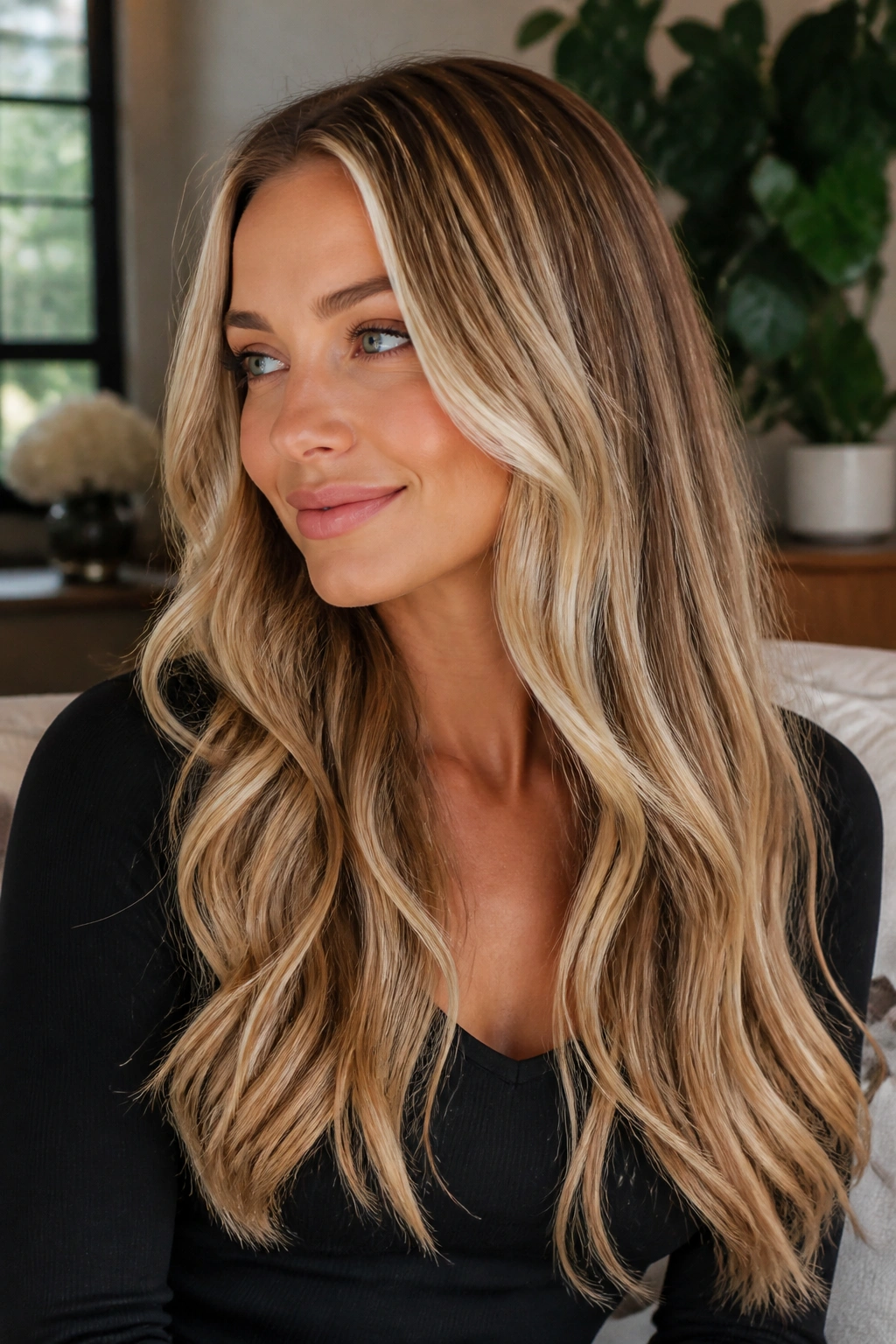
Ribbon highlight blonde is all about spacing. Instead of tiny scattered lights, you get wider blonde ribbons placed through long hair so the contrast is easier to see and the texture looks thicker.
That spacing makes a difference. Long hair can swallow fine highlights if they are too soft, especially on darker bases. Ribbon placement keeps the color visible from a distance and gives movement to the mids and ends.
Why the Spacing Matters
Ask for foils or painted sections that sit about 1/2 inch to 3/4 inch apart in the areas you want to brighten. Leave some darker hair between them. That gap is not a mistake. It is what makes the blonde feel dimensional.
- Great for thick long hair.
- Makes straight styles look more structured.
- Loose waves show the ribbons best.
This is the shade when you want people to notice the hair, not just the color.
24. Shadow Root Blonde
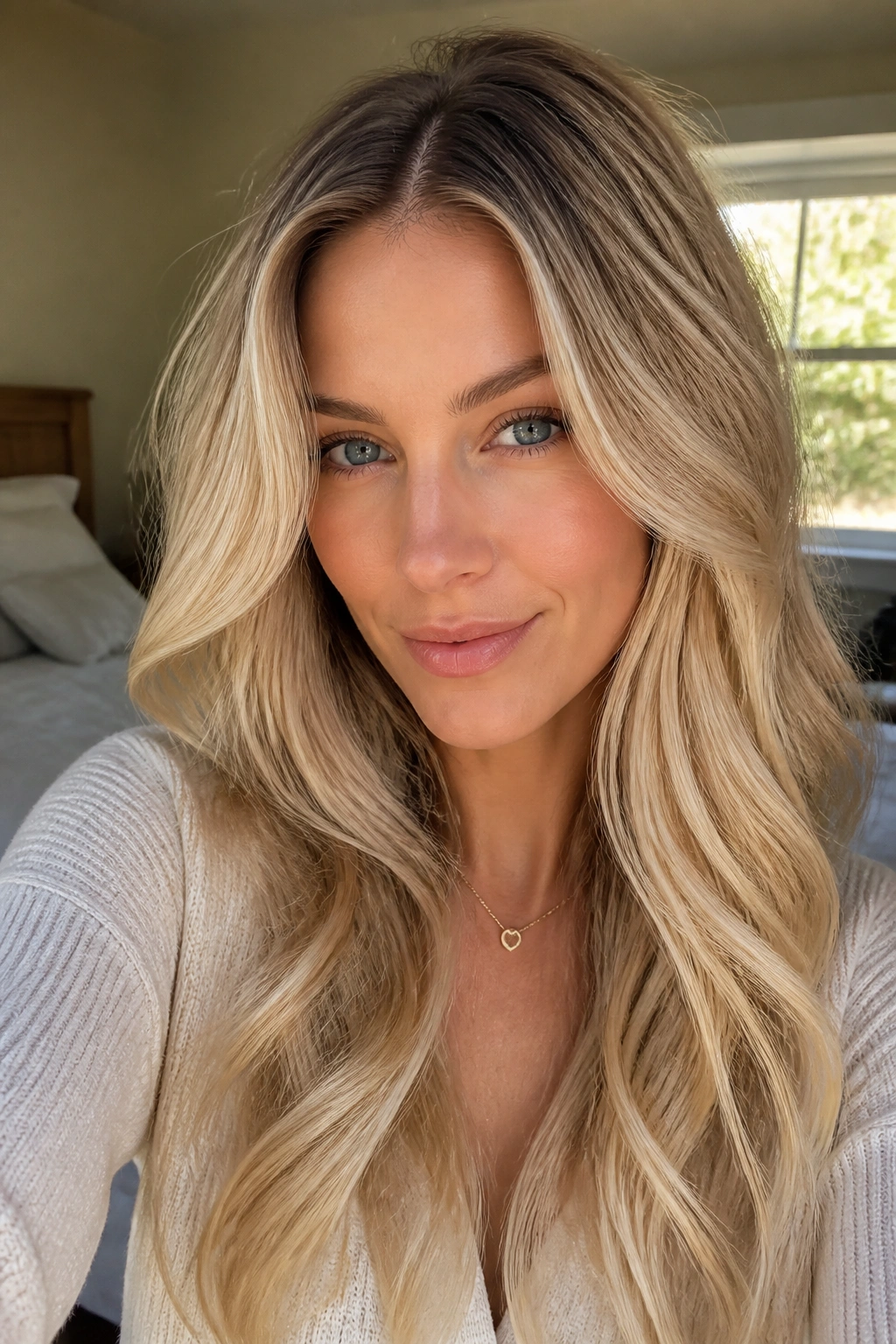
Shadow root blonde is what you want when you love blonde but hate obvious regrowth. The root stays deeper, the blonde starts below it, and the whole look fades out in a soft, deliberate way.
Long hair benefits from that depth more than short hair does. A shadow root gives the eye a starting point at the scalp and then lets the brightness build down the length, which keeps the ends from looking bare. It also buys you time between appointments, which is never a bad thing.
Where the Root Should Sit
A shadow of 1 to 2 inches is usually enough. Any deeper and the blonde can feel delayed; any lighter and the grow-out line starts showing too soon. The blend should be soft, not stripy.
- Best for balayage and foiled blondes.
- Good if you wear your hair up often.
- A demi-permanent root color usually gives the cleanest fade.
This is one of the smartest blonde choices if you want long hair that still behaves between salon visits.
25. Creamy Oat Blonde
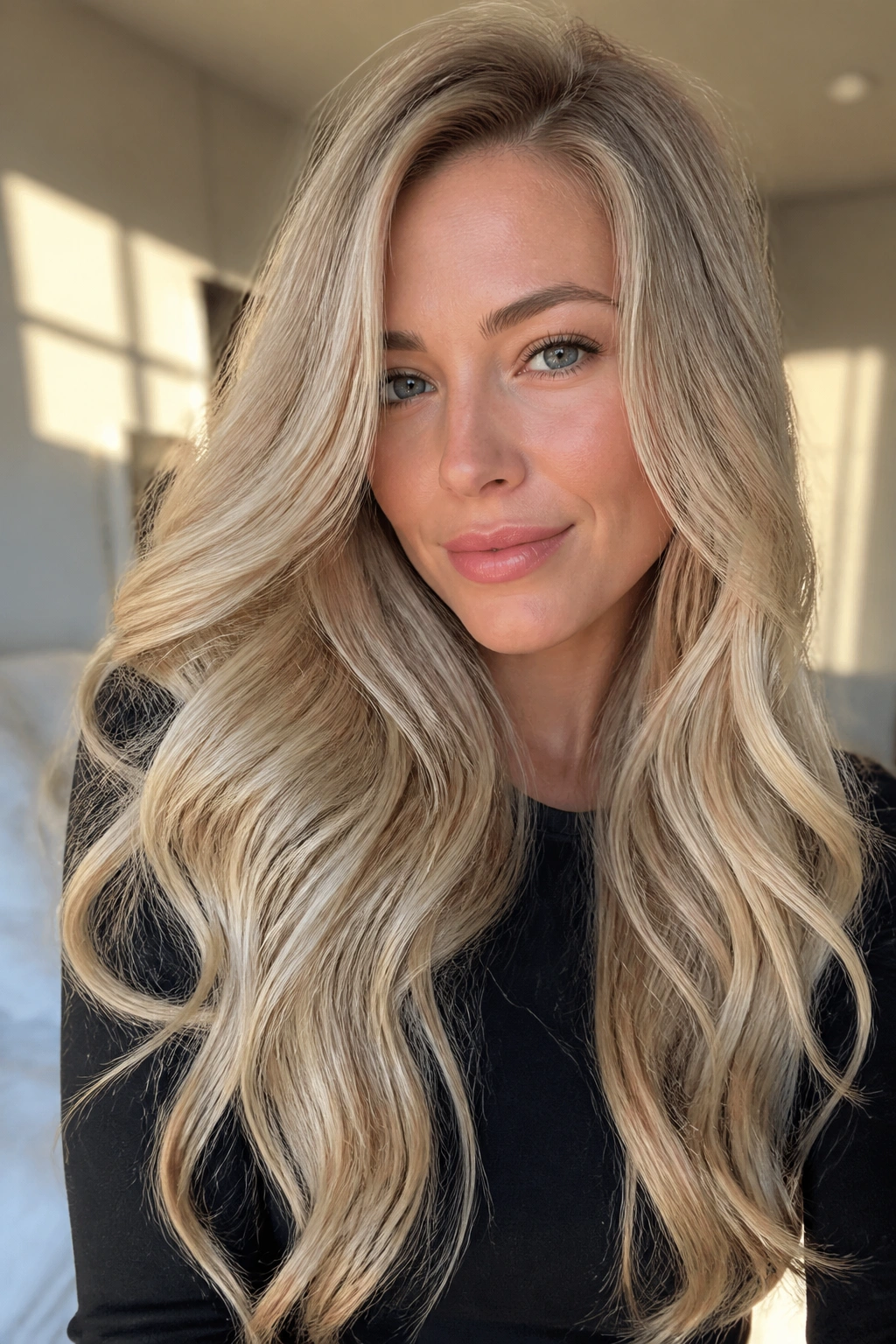
Creamy oat blonde is the shade I suggest when someone wants softness without losing shape. It sits in the beige family, but with a muted, almost velvety finish that makes long hair look calm and expensive in the plainest sense of the word.
What I like about it is how forgiving it is. The tone does not scream if the hair has a little warmth left in it, and it does not collapse into flatness the way some pale blondes do. On long waves, the color shifts gently from root to end, which is exactly the kind of movement that keeps a blonde looking alive.
Ask for a soft oat-beige base with brighter pieces placed through the front and lower lengths. If you want one blonde that can handle air-drying, blowouts, braids, and the occasional messy clip-up, this is a strong place to land.
