



Balayage is one of those color services that can look soft and expensive when it’s placed well—and stripy when it isn’t. The difference usually has less to do with the shade itself and more to do with where the bright pieces sit, how much depth stays at the root, and whether the colorist leaves enough shadow between the lighter ribbons.
The best balayage hair ideas do not scream for attention. They catch the light on bends, around the face, and through the ends, so the hair looks bright without losing the base color that makes it feel believable. That’s the whole trick, really. Brightness with restraint.
That balance matters because most people do not want full-on blonde upkeep. They want a color that looks grown-in, not grown-out. They want dimension on a ponytail, shine in daylight, and something that still looks good on the second week after a salon visit.
So the smart move is to pick a balayage style that works with your base, your texture, and how much maintenance you can live with. Some shades need a gloss every so often. Some can go months and still look tidy. The good ones are pretty from the front and forgiving from the back.
1. Honey Caramel Balayage on Dark Brown Hair
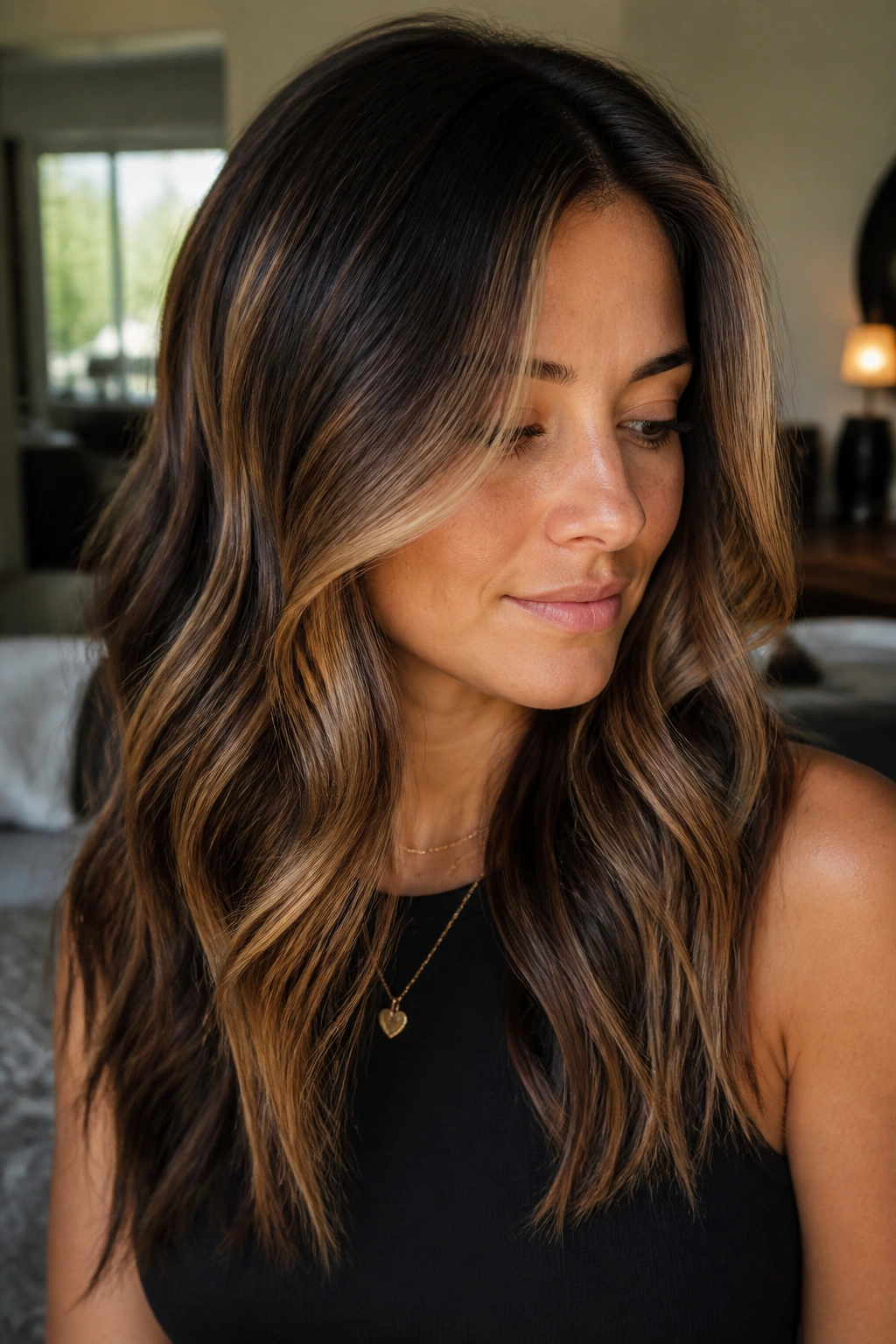
Honey caramel is the easiest place to start if you want balayage that looks bright but still feels believable. On dark brown hair, caramel ribbons lift the mids and ends without wiping out the depth at the root, which keeps the whole thing soft instead of chunky.
Why It Flatters Dark Brown Hair
The warmth in honey caramel reflects light in a way ash tones usually don’t. That matters on a deeper base, because the contrast stays gentle and the hair still looks thick.
- Ask for the lightest pieces around the face and through the top layers.
- Keep the ends a touch deeper than the front pieces.
- Loose bends show the ribboning better than tight curls.
Best tip: if your hair tends to pull orange, ask for a beige-caramel toner instead of a straight gold one.
2. Beige Blonde Balayage with a Soft Root Shadow
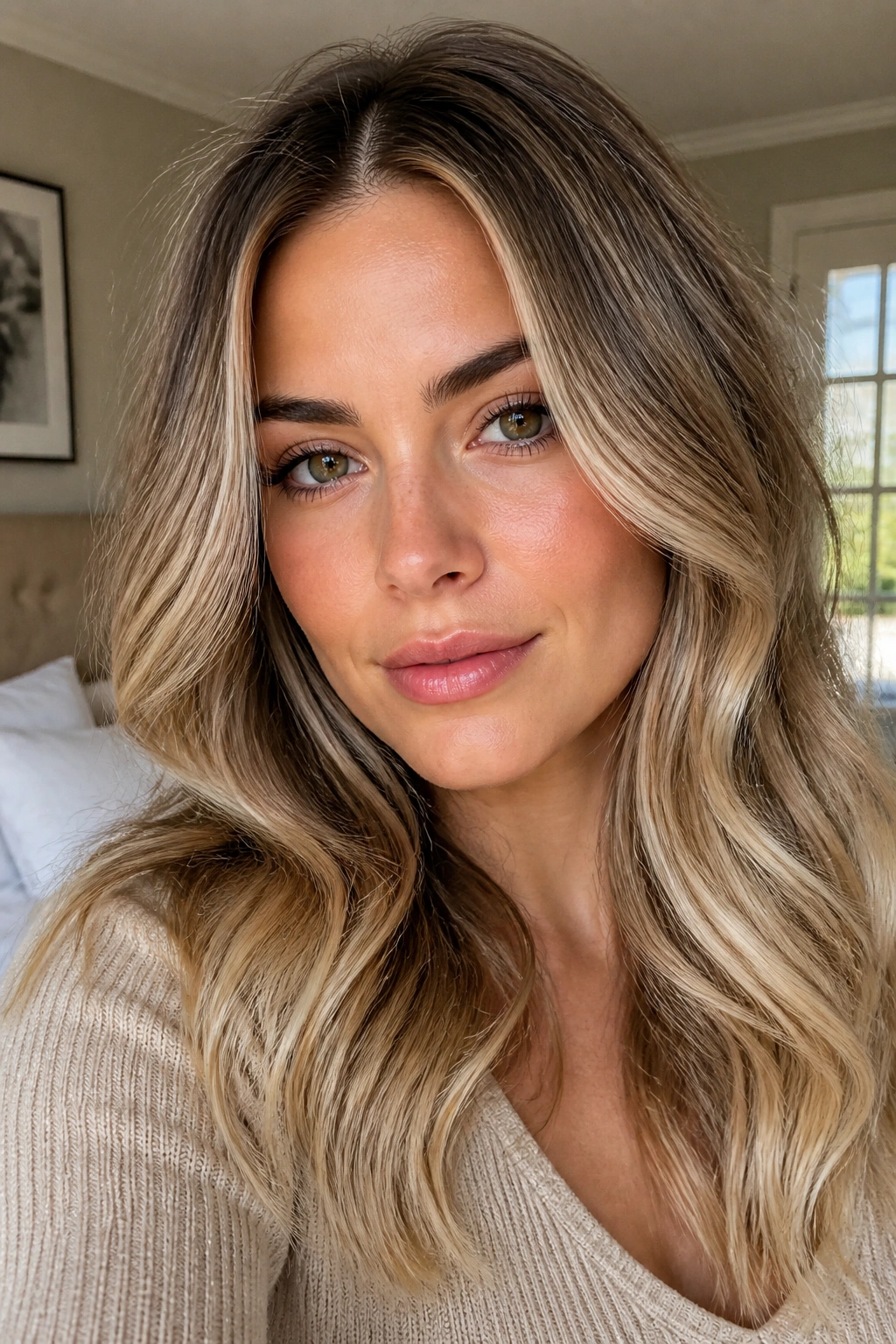
Beige blonde is the shade that saves people from harsh yellow. It has enough warmth to look soft, but not so much warmth that it turns brass after a few washes. With a root shadow, the grow-out stays calm.
That shadow at the root matters more than people think. A subtle root melt gives you a little buffer between your natural color and the lighter midlengths, so the line of regrowth never looks blunt. On medium brown hair, the result is clean and expensive-looking without being icy.
This works especially well if you wear your hair in waves or a polished blowout. The beige pieces pick up light on the bends, then settle back into the darker root area. No hard edges. No stripey surprise when you tie it up.
3. Mushroom Brown Balayage for Cool Undertones
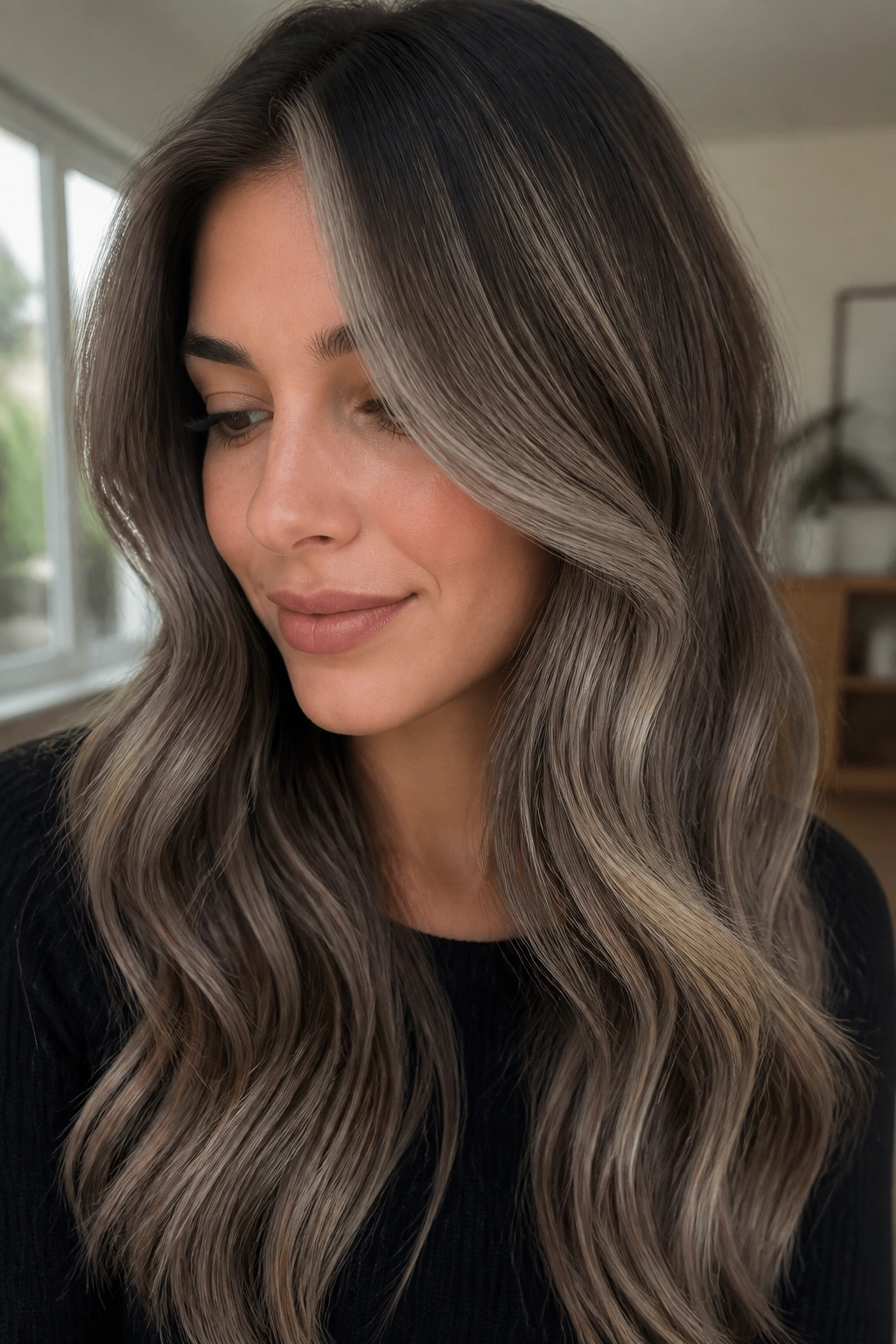
Why do some balayage colors look polished for weeks while others go orange fast? Mushroom brown has a lot to do with it. The tone sits in that cool-to-neutral space between taupe, brown, and a whisper of beige, so it stays calm even when the light hits it hard.
How to Ask for It
Tell your colorist you want cool brown ribbons, not golden streaks. That usually means soft taupe pieces through the mids and a slightly deeper root, with the lightest bits kept close to face-framing layers.
If your skin runs pink or neutral, this shade is easy to wear. It doesn’t fight your undertone. It also looks especially good on shoulder-length cuts because the movement keeps the color from feeling flat.
A little dry shampoo helps here, too. Cool brown shows off shine better than oil, and the extra lift at the root makes the color look cleaner.
4. Cinnamon Ribbon Balayage for Brunettes
Picture a brunette base with warm, thin ribbons that look like they were painted by sunlight through a café window. That is cinnamon balayage. It wakes up dark hair without making it blond, and that’s the part I like most.
This is a good choice when you want warmth but do not want orange. The cinnamon tone lands between copper and caramel, so it reads rich rather than loud. On wavy hair, the color almost flickers as you move.
- Keep the ribbons narrow near the part.
- Ask for more color through the midlengths than the ends.
- Style with a 1-inch iron or a deep bend, not a tight curl.
One thing to watch: if your base is very dark, cinnamon needs enough lift to show. Too little and it disappears.
5. Bronde Balayage with Face-Framing Bright Pieces
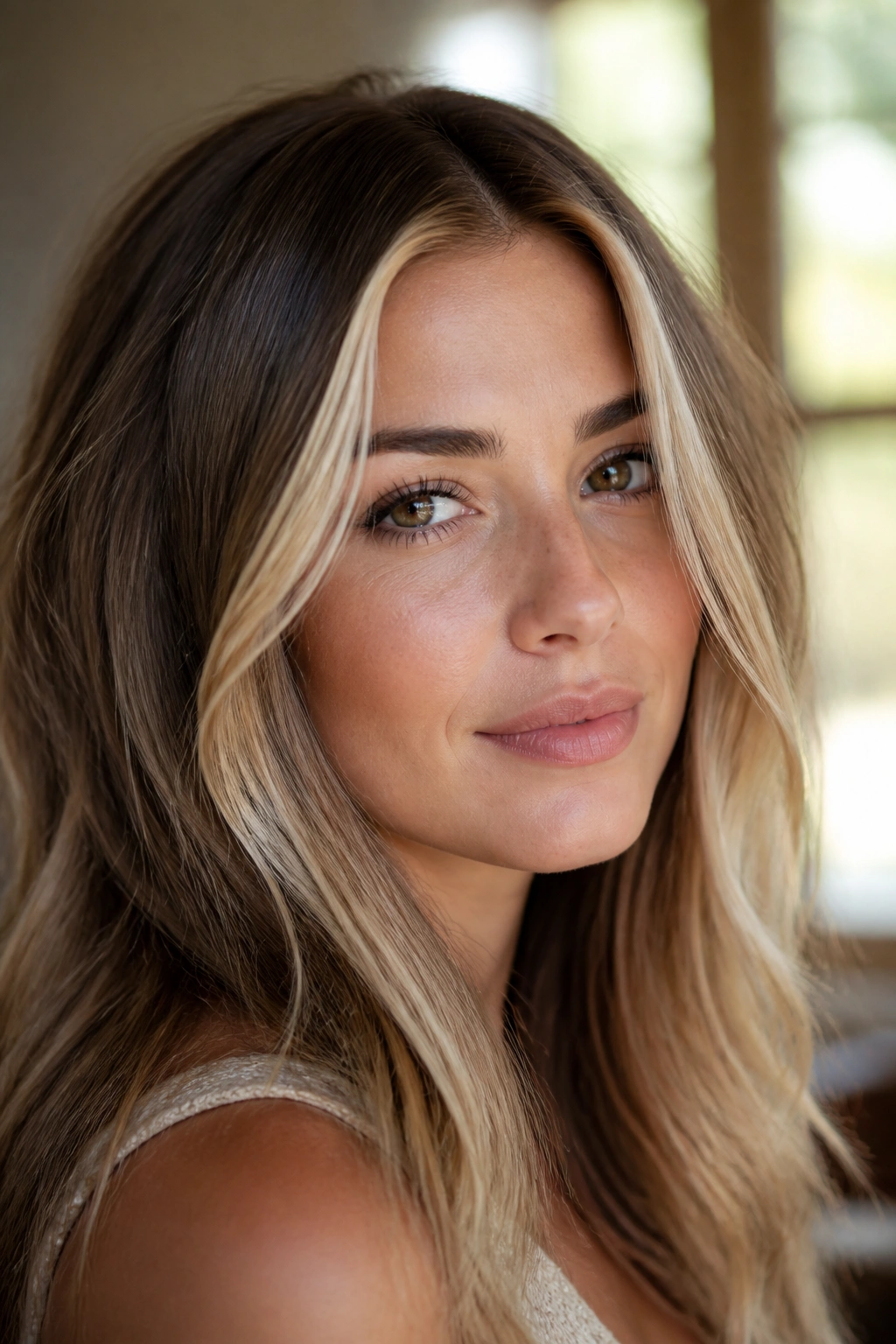
Bronde is the sweet spot for people who cannot decide between brunette and blonde. It keeps the base brown, but the lifted pieces are bright enough to make the whole head look lighter. Add face-framing pieces, and the color suddenly feels much more awake.
The face frame is the part that gives the illusion of a bigger change. A colorist can place the brightest ribbons near the cheekbones and leave the interior softer, which keeps the grow-out manageable. It’s a smart move if you want impact without turning every strand into a project.
This version works on straight hair, waves, and layered cuts. The brightness around the face gives you shape, while the darker pieces underneath keep the color grounded. It’s flattering because it mimics where the sun would naturally hit first.
6. Vanilla Cream Balayage on Medium Brown Hair
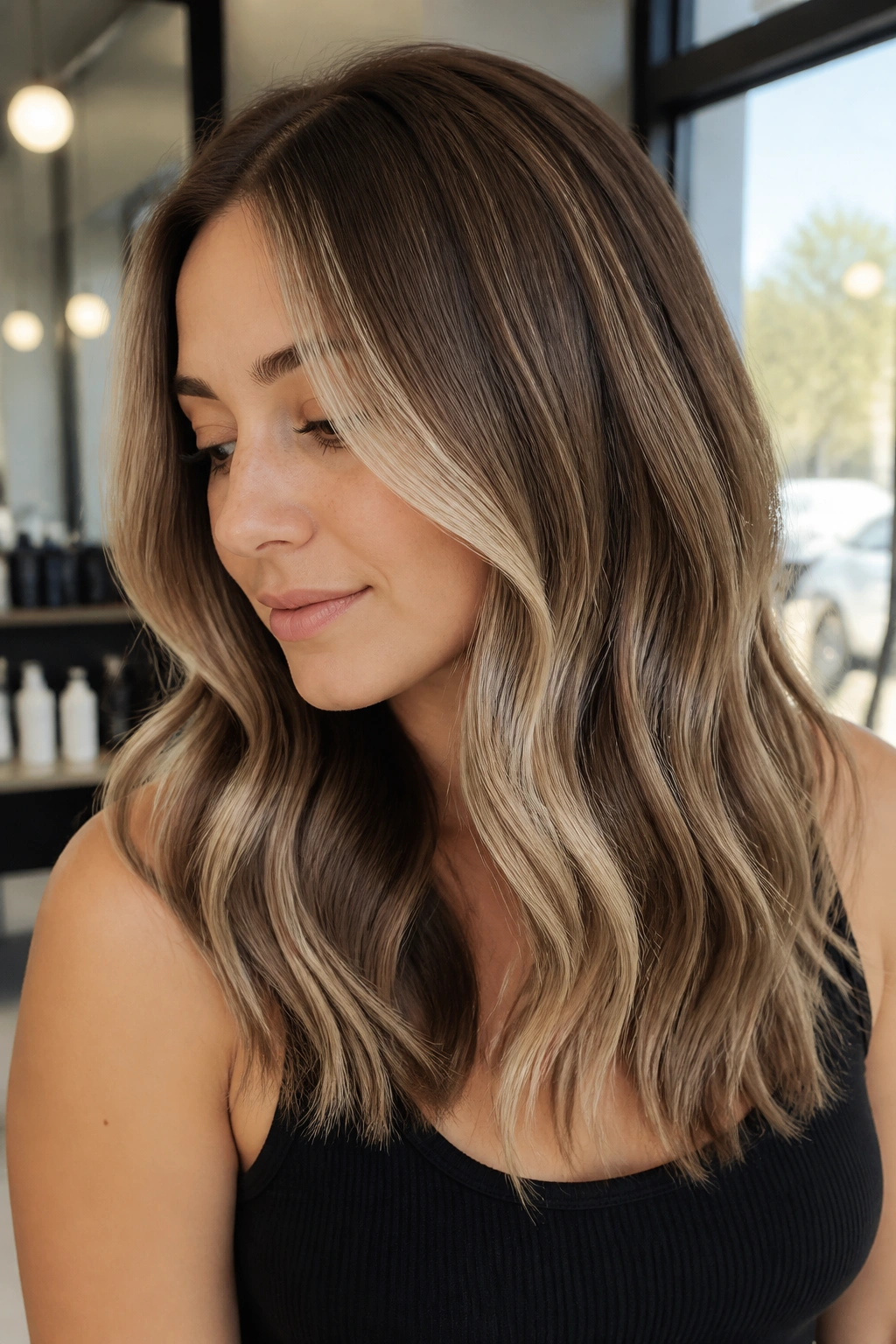
Vanilla cream is softer than platinum and cleaner than a warm gold blonde. That makes it a nice choice if your medium brown base can handle a lighter lift but you do not want the color to look brassy or flat. It has a creamy finish that feels bright without shouting.
Compared with a pale icy blonde, vanilla cream is easier on the eye. The color still needs careful toning, but the final result has more softness around the edges. On a blunt lob or a collarbone cut, it gives a clean line and a bright finish that looks deliberate.
This is one of those balayage hair ideas that loves gloss. A clear or beige gloss keeps the ends shiny and stops the light pieces from turning chalky. If the hair has some wave to it, even better. The movement helps the color read as creamy, not one-dimensional.
7. Copper Balayage That Still Looks Soft
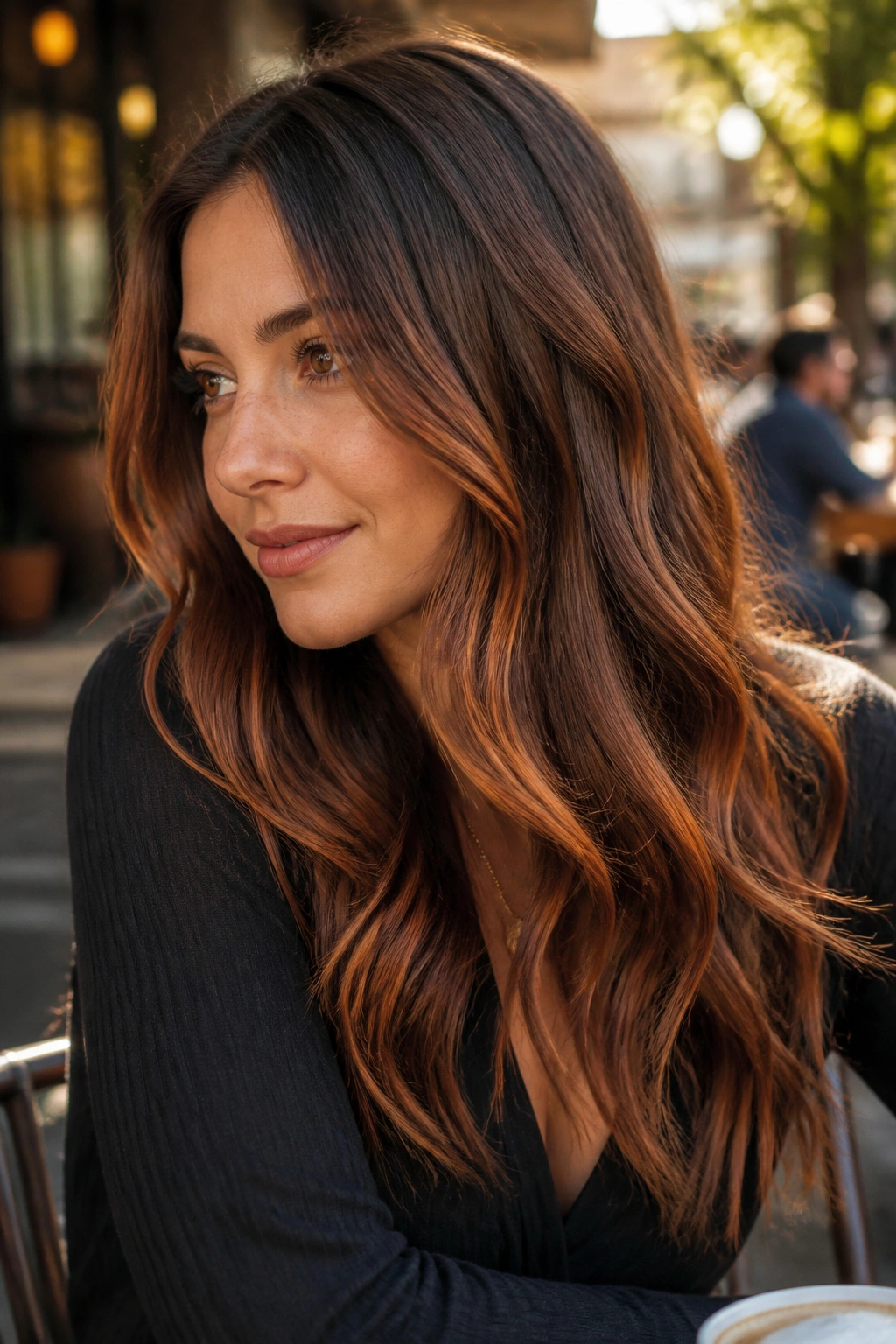
Copper can go loud fast, which is why a soft version is so useful. The trick is to keep the copper woven through a brunette base instead of laying it on like a full red makeover. You want warmth, not a costume.
Why It Works on Wavy Hair
Waves break up the color and keep copper from looking like one solid block. The light catches the bends, the darker base shows through underneath, and the whole thing feels layered.
- Ask for copper mostly through the mids and ends.
- Keep the root area deeper for a smoother grow-out.
- Add a gloss if the tone starts leaning too orange.
My take: this looks best when the copper is more cinnamon-amber than fire-engine red. That small shift makes the color easier to wear every day.
8. Toffee Balayage on Black Hair
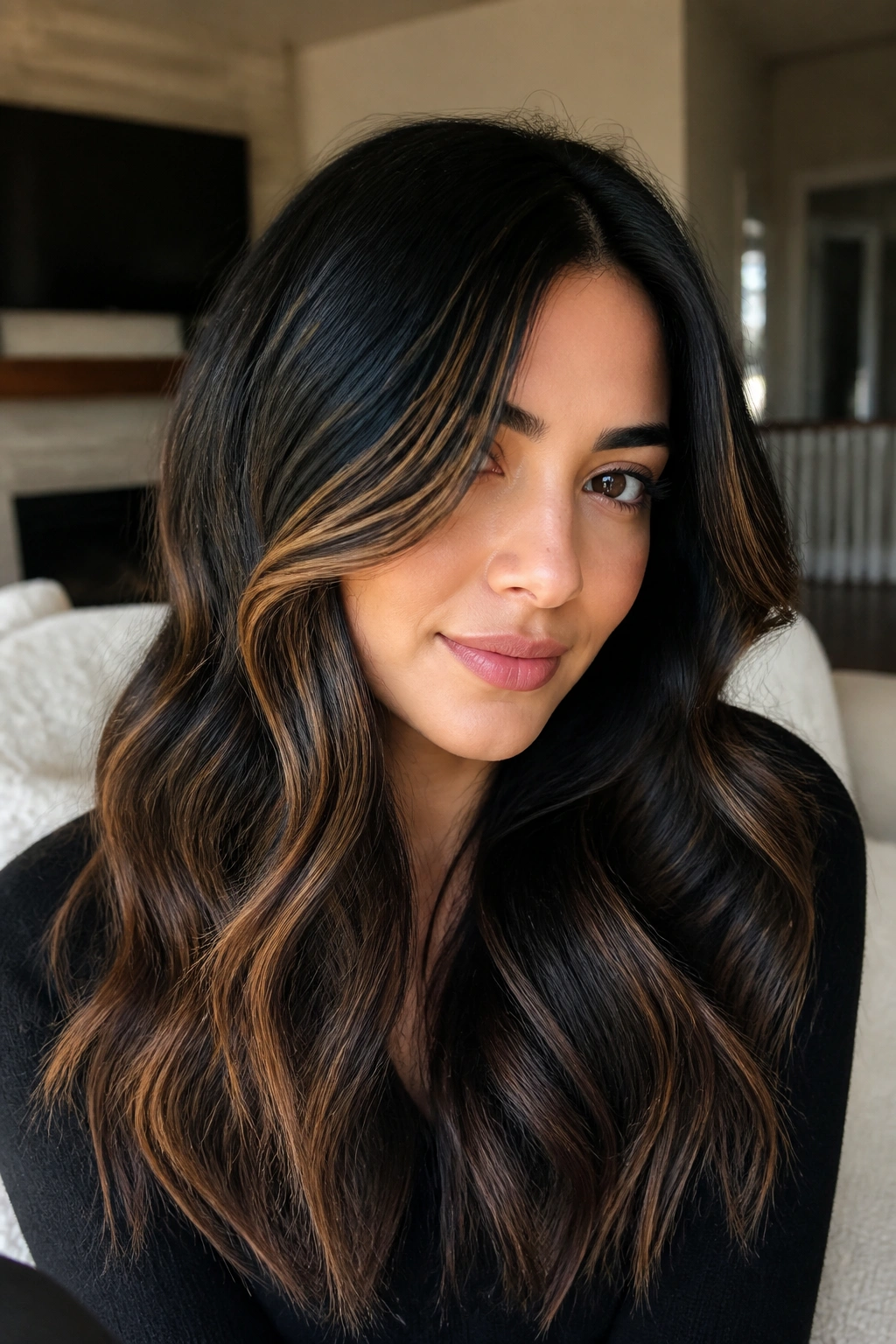
Black hair does not need a huge transformation to look rich. Sometimes it only needs a few toffee strokes placed where the light can find them. On a deep base, toffee balayage gives you dimension without losing the inky depth that makes black hair so striking.
The key is restraint. If the light pieces are too pale, the contrast turns hard. Keep them in the caramel-to-soft-brown range and let the base stay dominant. That creates the sheen people notice first, not the highlight pattern itself.
This is a strong option for long hair, especially when it falls in straight sheets or soft bends. The balayage shows up when the hair moves, which makes it feel more expensive than a full blonde makeover. It also grows out gracefully because the root and mids stay close in tone.
9. Sandy Beige Balayage for Dirty Blonde Bases
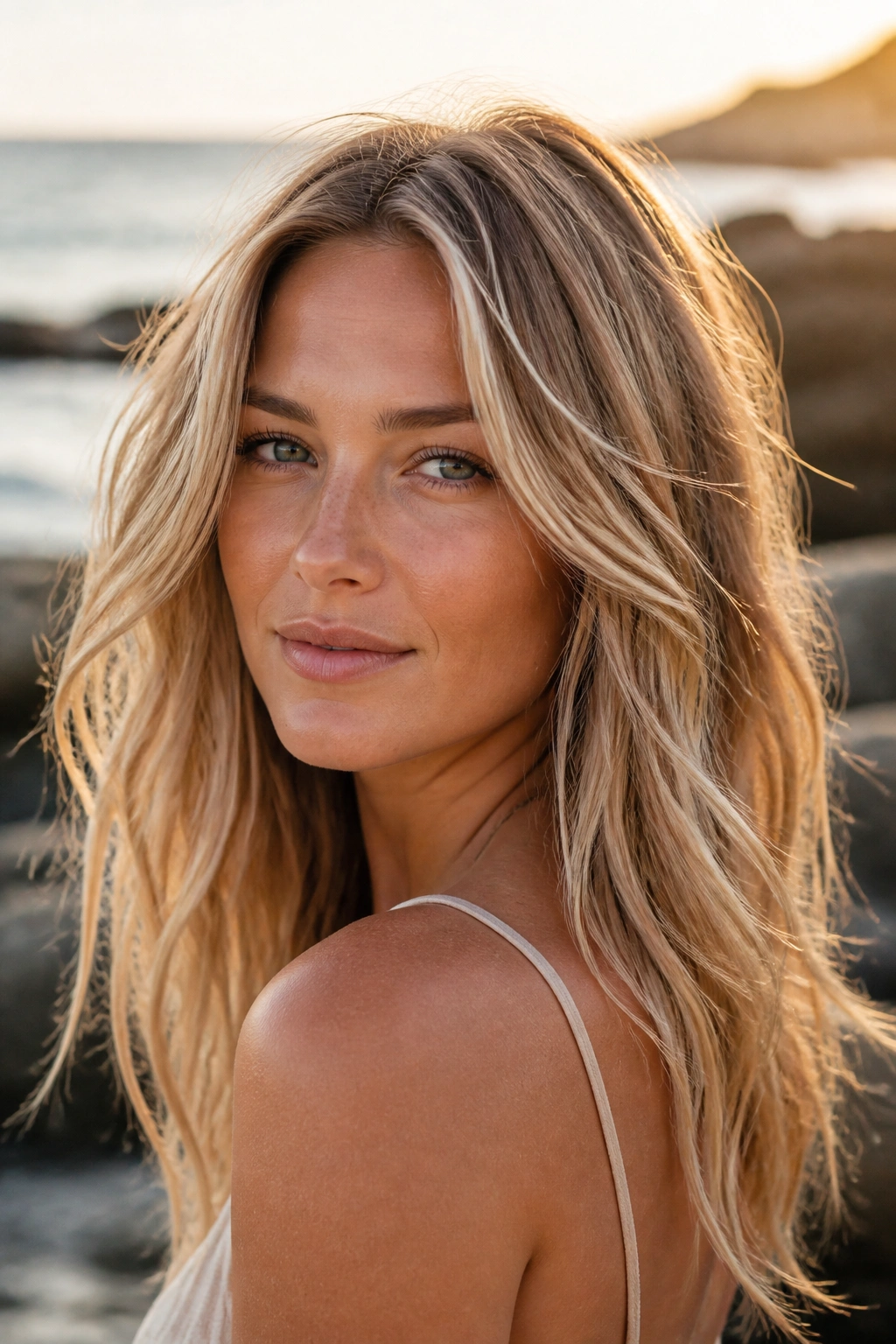
Why push dirty blonde into a much lighter lane when sandy beige can make it look fresh without the upkeep? Sandy beige balayage keeps the color in a soft, sun-washed zone, so it feels natural even when the hair is worn straight and tucked behind the ears.
What Makes It Different
The shade is lighter than natural blonde, but the beige keeps it from looking frosted. That makes it easier to wear on people who hate sharp contrast.
A sandy beige finish works best when the colorist paints thin pieces near the top layers and lets the lower sections stay a little deeper. On a ponytail, you still see movement. On loose hair, the whole head looks clean and bright.
If brass shows up, a mild blue-violet shampoo once in a while can keep the tone calm. Don’t overdo it. Sandy beige should stay soft, not gray.
10. Ash Blonde Balayage on Medium Ash Brown Hair
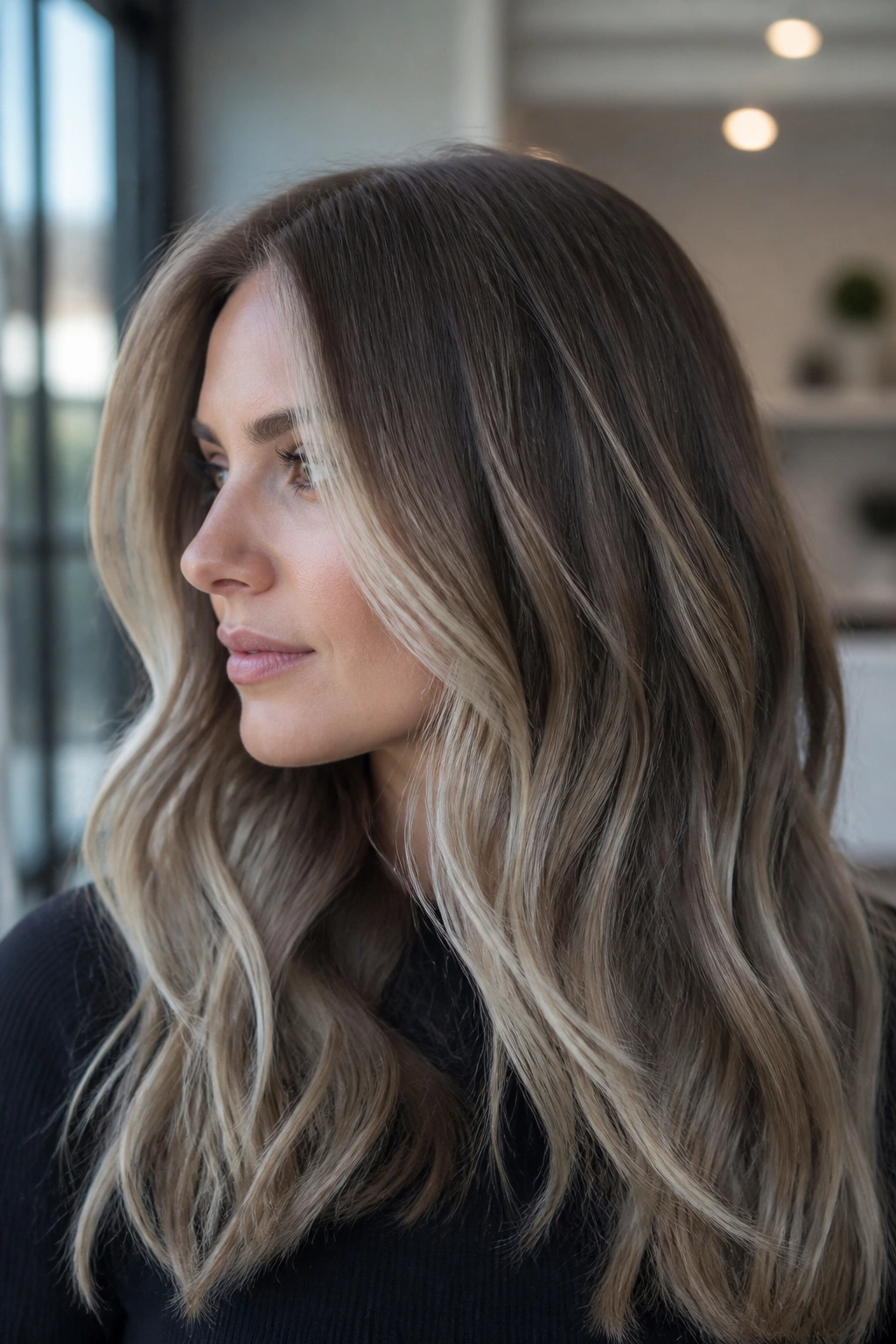
Ash blonde on an ash brown base sounds subtle on paper. In real life, it can look very crisp. The cool tones sit close together, so instead of a dramatic color jump, you get a smoked-out brightness that feels tidy and modern.
This is the right move when warm highlights keep turning orange on you. The ash tone quiets that problem down and gives the hair a cooler finish. It works especially well on straight lob cuts and textured bobs, where the clean edges make the color read clearly.
- Ask for pale ash pieces, not pale yellow blonde.
- Keep the brightest ribbons around the front.
- Use a smoothing cream before blow-drying to show the cool reflect.
Small warning: if your skin is very warm, too much ash can look flat. Keep a little beige in the mix.
11. Golden Mocha Balayage for Warm Brunettes
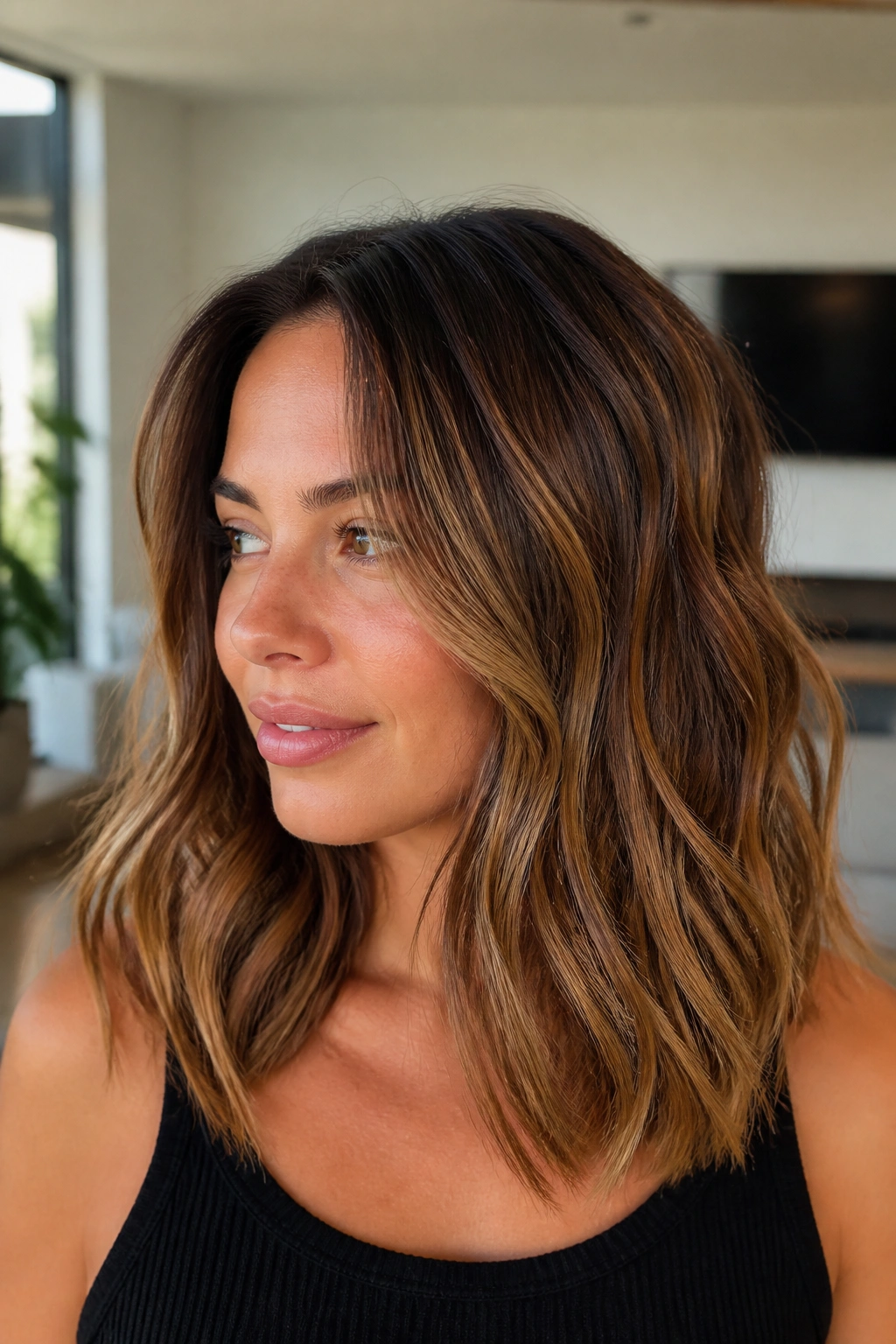
Golden mocha is one of those shades that seems simple until you see it in motion. Then it makes sense. The color adds reflective warmth to a brunette base, but it stops short of turning the hair gold-gold, which is where a lot of people lose the plot.
It’s especially good on hair with some wave or curl because the golden reflect catches at different points. The color doesn’t need huge lightening to work. A careful hand, a soft lift, and a mocha-toned gloss can do most of the heavy lifting.
This balayage also ages well between salon visits. The root stays rich, the mids stay dimensional, and the brightest pieces soften instead of screaming for attention. If you like warm makeup, brown mascara, and gold jewelry, this shade fits the whole picture without trying too hard.
12. Soft Rose Gold Balayage on Light Brown Hair
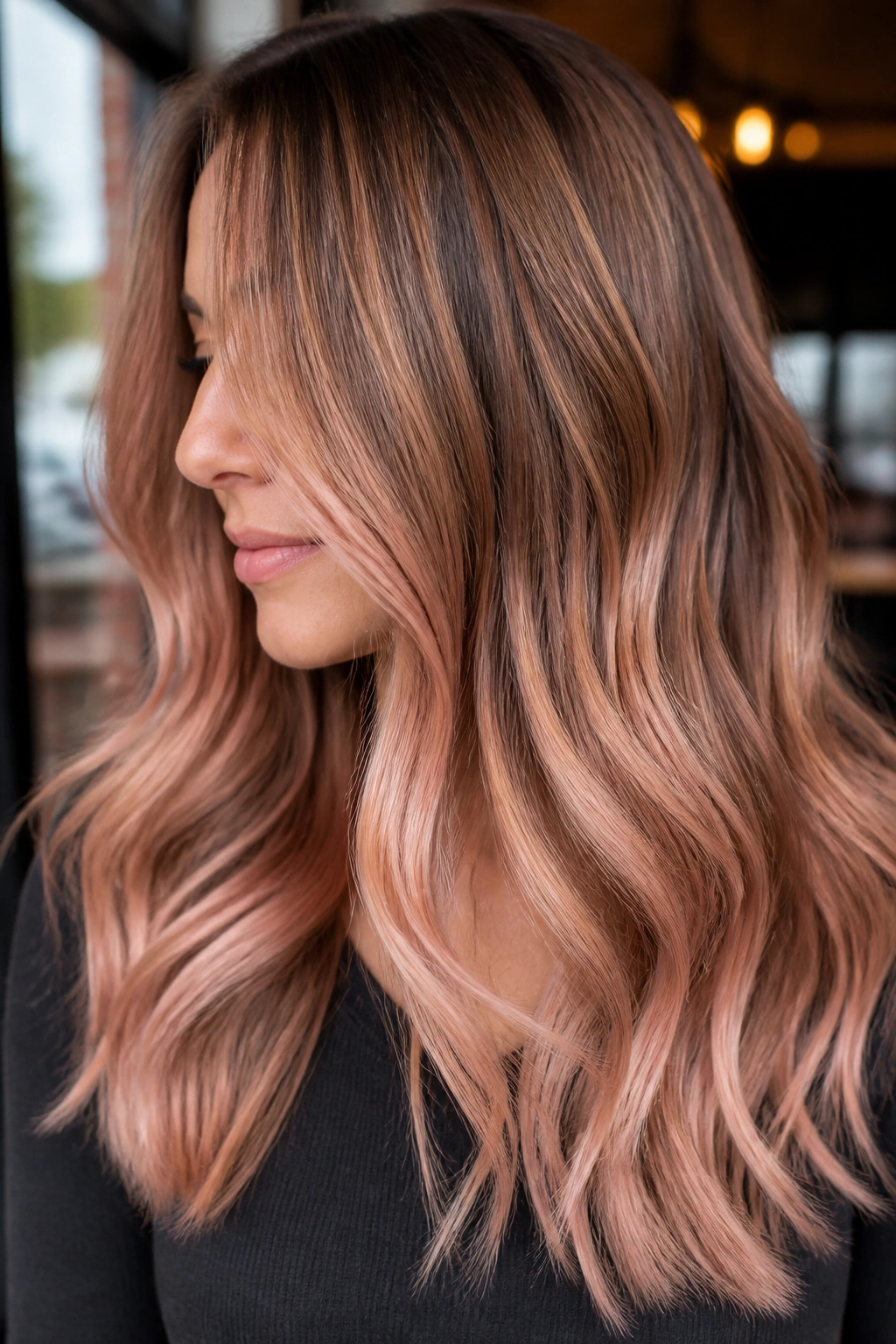
Rose gold can look too shiny if the base is wrong, which is why light brown hair is such a nice starting point. The brown underlayer keeps the pink from turning sugary, and the gold in the mix keeps it from looking flat.
Think of this as a blush tint for hair, not a cartoon pink. The best version stays sheer, with rosy warmth sitting on beige blonde ribbons. It’s pretty on shoulder-length cuts, especially when the ends are slightly textured instead of blunt.
Compared with copper, rose gold is gentler. Compared with beige blonde, it has more personality. That middle ground is exactly why people keep asking for it. A soft finish, a little shine, and a base that still looks like hair instead of foam candy.
13. Pearly Blonde Balayage with Minimal Contrast
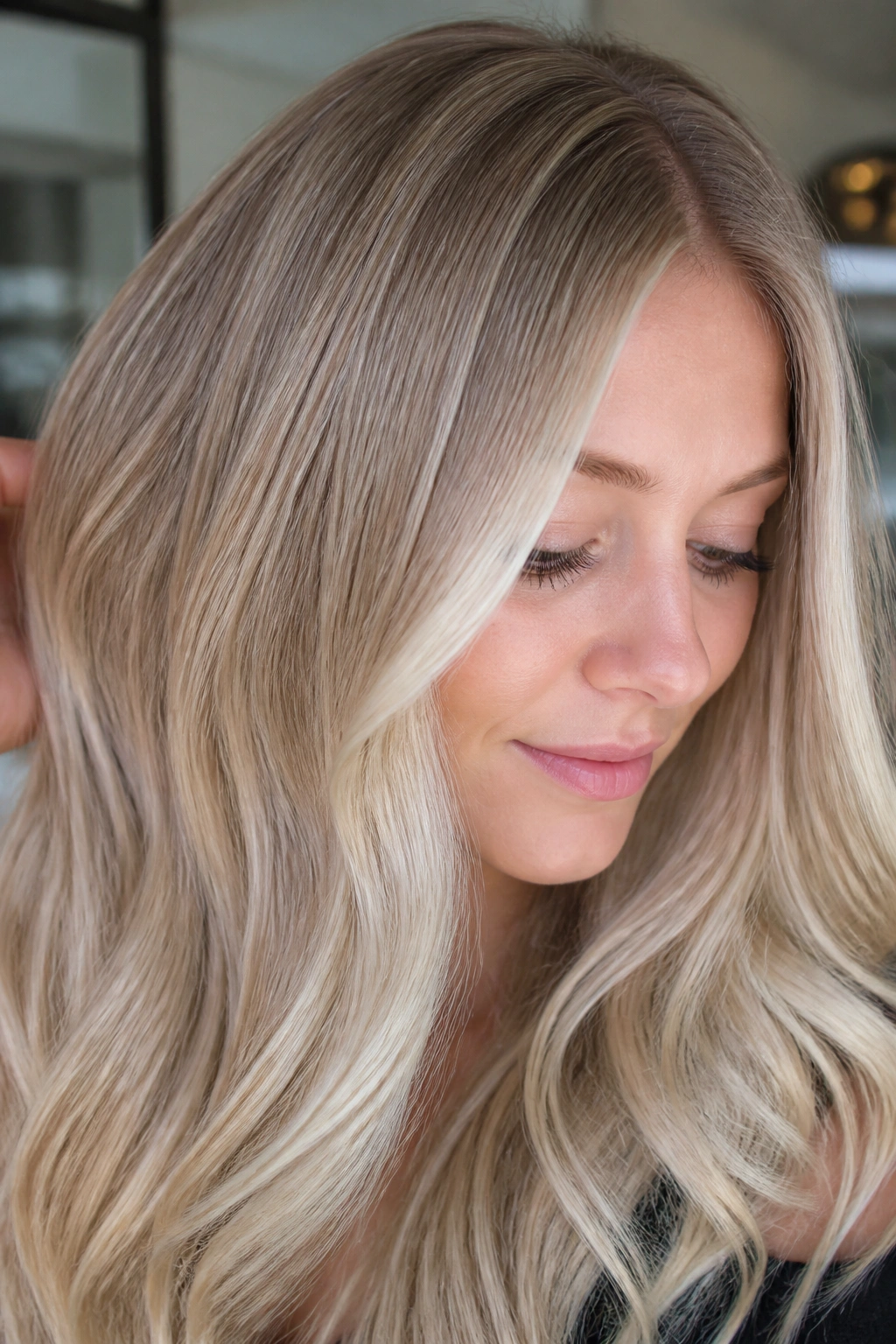
Pearly blonde is for people who want brightness but hate chunky highlights. The contrast stays low, the tone stays cool-beige, and the finish has a soft sheen that looks especially good on smooth blowouts. It’s bright, but not loud.
Why It Flatters Fine Hair
Fine hair can look thinner when highlights are too bold. Pearly blonde avoids that problem by keeping the pieces delicate and close together.
- Ask for thin ribbons instead of wide panels.
- Keep the lightest pieces on the top layers and around the face.
- Finish with a light gloss so the blonde looks silky, not chalky.
Best tip: if your hair has a naturally shiny surface, this shade can look almost liquid under daylight.
14. Maple Balayage for Brunette Hair
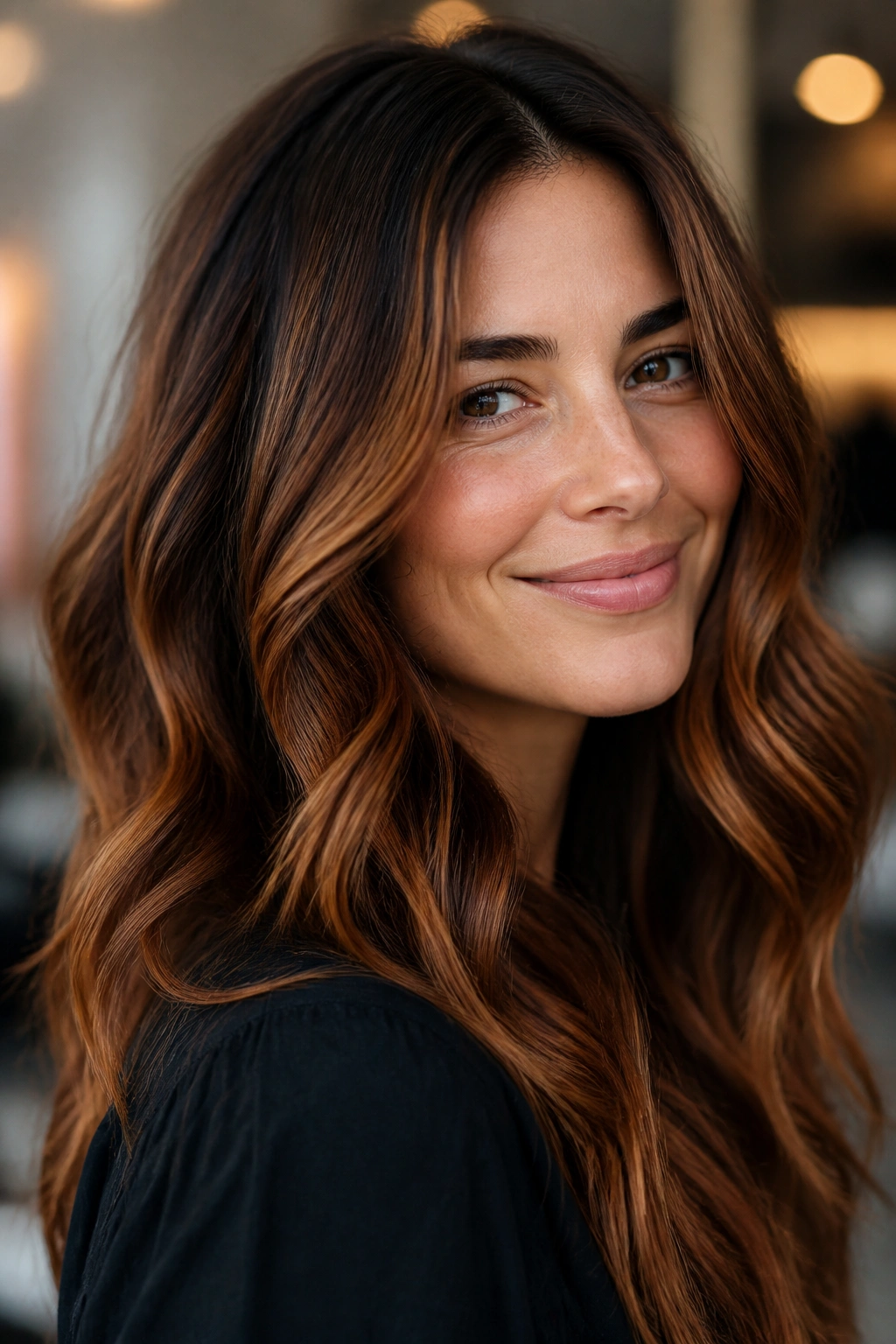
Maple is the shade people forget to request, which is a shame. It has that warm brown-red balance that makes brunette hair feel richer without slipping into obvious red. On darker bases, it looks like depth with a little glow under it.
This color works beautifully when the balayage is concentrated through the mids and ends, not shoved all over the head. That keeps the root shadow intact and makes the finish look intentional. On layered cuts, maple shows off the movement in the hair rather than hiding it.
If caramel feels too golden and cinnamon feels too spicy, maple sits right between them. It’s warm, but not syrupy. Bright, but not blonde. There’s a reason this shade looks so good in softer natural light.
15. Mocha and Espresso Balayage for Deep Bases
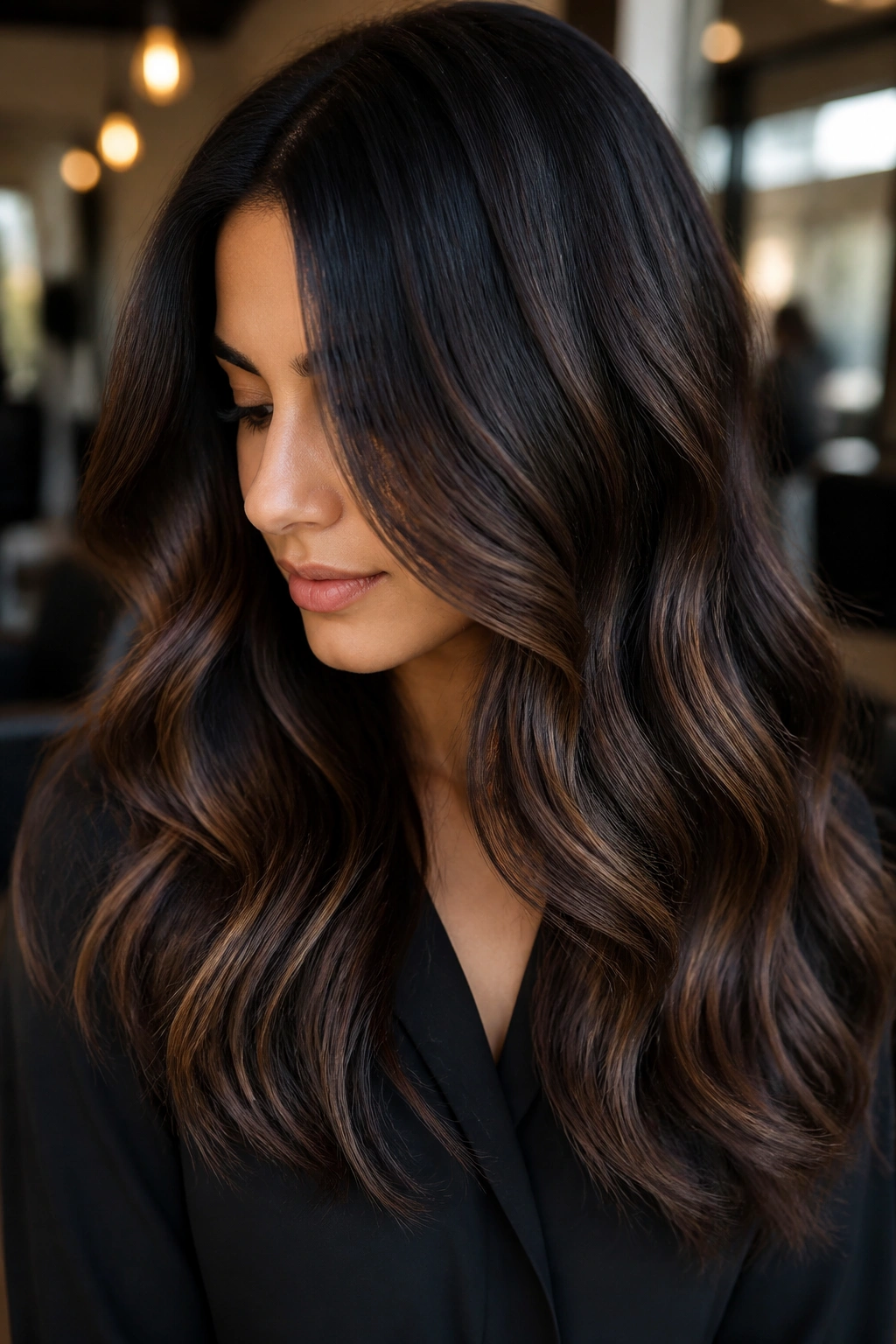
Why lighten at all when depth can do most of the work? On very dark hair, mocha and espresso balayage builds dimension by layering brown over brown, which sounds subtle until you see how much shape it adds.
How to Ask for It
Say you want two tones within the same dark family. That usually means a slightly lighter mocha through the mids and a deeper espresso lowlight in scattered areas.
This approach is a good fit if you like polished hair and low maintenance. The color does not depend on a huge contrast to look good, so it holds up well as it grows. It also makes thick or coarse hair look more controlled because the darker pieces break up visual heaviness.
A gloss every so often keeps the finish reflective. Without shine, deep balayage can look dull. With shine, it looks expensive in the quietest possible way.
16. Beige Copper Balayage for Warm Complexions
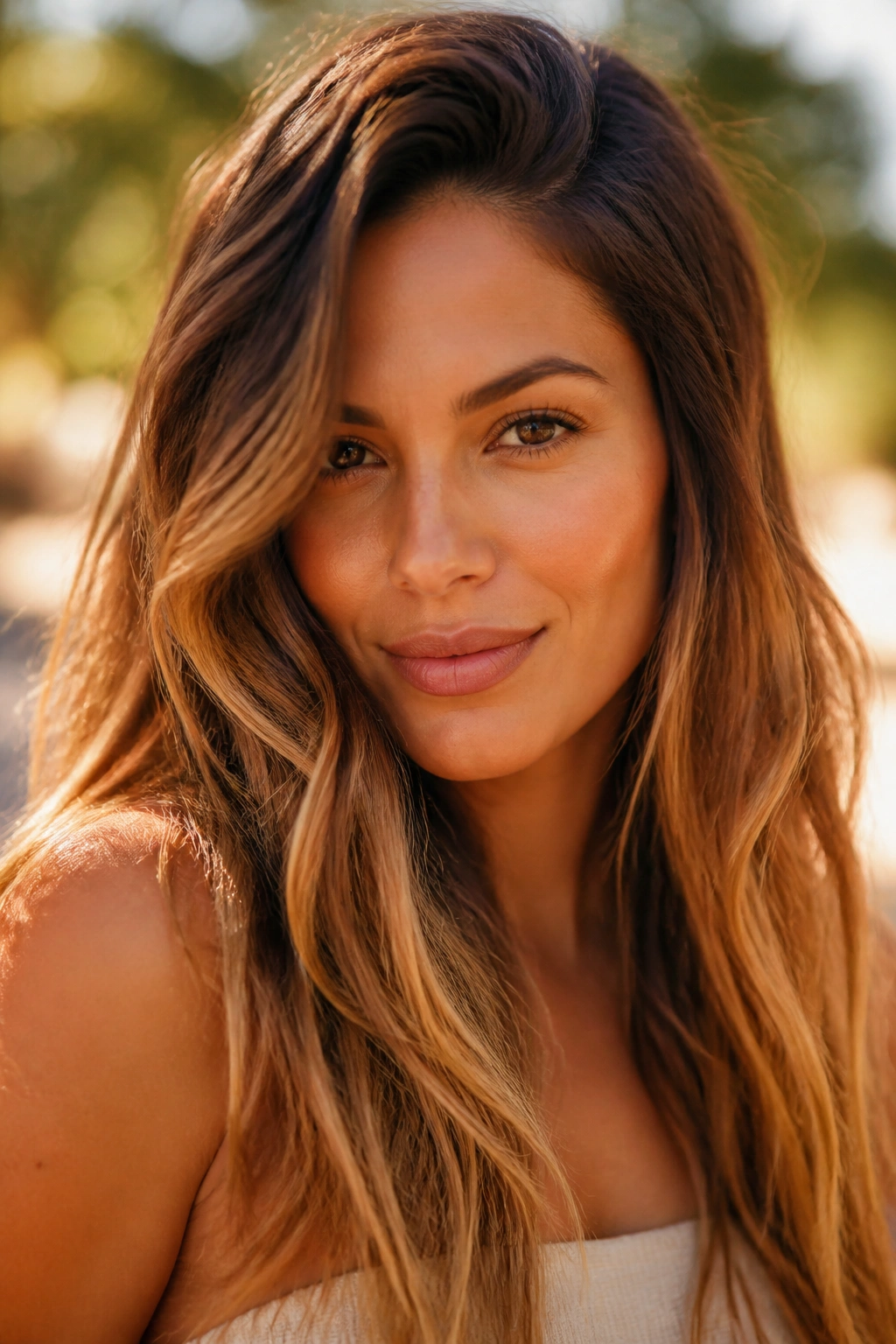
Beige copper is what happens when warmth gets a little discipline. Pure copper can be intense. Pure beige can fade into the background. Put them together, and the hair gets brightness with a softer edge.
This shade is especially flattering on warm complexions because it picks up the same golden-peach tones already in the skin. The result looks connected, not pasted on. On wavy hair, the beige keeps the copper from taking over every strand, which helps the finish stay wearable.
- Keep the copper strongest through the front and upper mids.
- Let beige soften the ends.
- Use a wide-tooth comb after styling so the color pieces separate a little.
Practical note: this is a very good salon choice if you like warmth but don’t want the maintenance of full red.
17. Champagne Balayage on Dark Blonde Hair
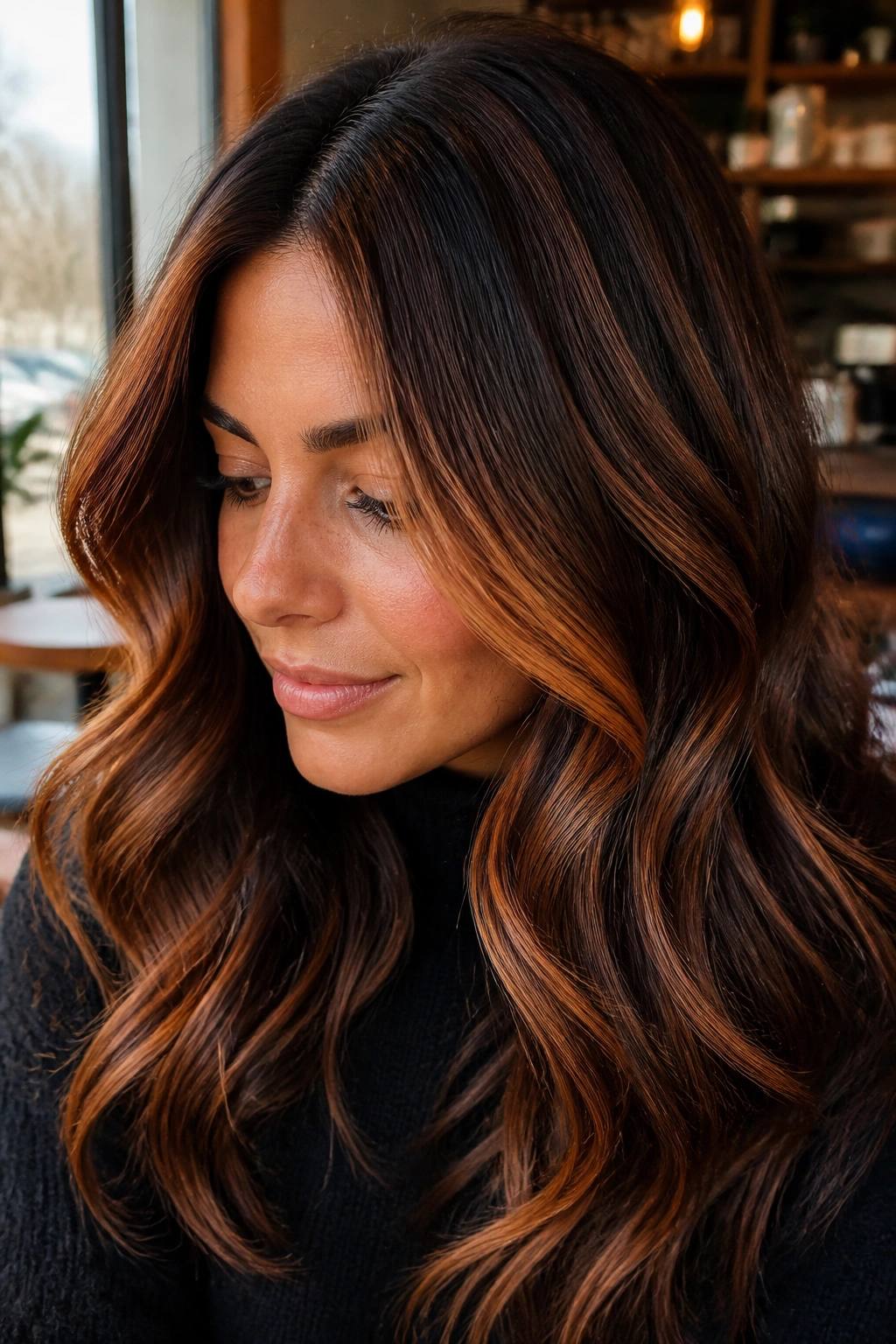
Champagne blonde sits between beige and pale gold, and that middle space is exactly why it works. On dark blonde hair, it adds brightness without erasing the natural base, so the whole look stays soft and grown-in.
The trick here is toning. Champagne should look airy, not yellow and not gray. A good colorist usually keeps the brightest bits near the surface and leaves some darker blonde underneath, which stops the head from going flat. On shoulder-length hair, the shade reflects a lot of light around the cheekbones and collarbone.
This is one of those balayage hair ideas that works best when the cut has a little movement. Waves help the champagne pieces show up. Straight hair can wear it too, but then the gloss matters more because every line is visible.
18. Smoky Taupe Balayage for Cooler Hair Colors
Smoky taupe is the cool cousin of mushroom brown. It has more lightness, but the tone stays muted, almost soft-focus. If gold and copper never look right on you, this shade deserves a closer look.
Compared with beige blonde, smoky taupe is less sunny and more restrained. It gives the hair a washed-velvet finish that feels calm on cooler undertones. That makes it a smart pick for straight hair, blunt cuts, and any style where the color needs to do the heavy lifting without extra texture.
Some people want bright hair that still looks serious. This is that lane. The balayage is light enough to lift the face, but the smoky tone stops it from becoming too sweet.
19. Sunlit Honey Balayage for Long Layers
Long layers and honey balayage are a good pair because the movement does half the work for you. The lighter pieces catch at the bends, then disappear into the darker underlayers, which makes the hair feel fuller and brighter at the same time.
Where the Brightness Should Sit
Keep the brightest strokes in the upper mids and around the face. The lower lengths can stay a little deeper, which makes the color look natural when the hair hangs straight.
- Paint the lightest pieces where the sun would hit first.
- Leave some depth underneath so the ends don’t look fried.
- Use a large-barrel iron or a soft wave to show the color.
Worth repeating: this is a low-drama shade, which is exactly why it ages so well.
20. Money Piece Balayage with a Soft Perimeter
A money piece can do a lot of work on its own. Two brighter panels at the front lift the face, make the haircut look fresh, and let the rest of the balayage stay softer. That combination is smart if you want brightness without a full-head commitment.
The best version is not stark. The front pieces should be lighter than the rest, yes, but still connected to the mids through a gentle blend. That keeps the color from looking disconnected when you wear a center part or tuck one side behind your ear.
This idea is especially useful if you like changing your hairstyle often. A strong face frame looks polished in ponytails, buns, and waves. The perimeter stays soft enough that the grow-out does not become the only thing people notice.
21. Curly Balayage That Follows the Curl Pattern
Why does balayage sometimes look perfect on straight hair and muddy on curls? Usually because the color was painted like straight hair. Curly balayage needs to follow the curl pattern, which means the light pieces land where each curl clump naturally shows itself.
That approach keeps the hair dimensional instead of blotchy. A colorist should map the curls first, then paint around the shape rather than across it. On looser curls, honey, caramel, and beige tones all work well. On tighter textures, smaller ribbons usually read cleaner.
What to Tell Your Colorist
Ask for dry curl mapping if possible. The best placement often changes once the hair shrinks up and forms its real shape.
If you wear your curls big, the balayage should be brighter on the outer layers and a little deeper underneath. That gives the curls depth, not just light spots.
22. Short Bob Balayage with Micro Ribbons
Short hair can look amazing with balayage, but it needs a lighter hand. Big highlight panels on a bob tend to shout. Micro ribbons, though, give the cut movement without breaking the shape apart.
This works because the eye reads the bob as a single line first, then notices the tiny shifts in tone. The color should sit near the surface and around the jawline, where it can frame the face. A few brighter pieces under the top layer can also keep the cut from looking helmet-like.
- Keep the lightest strands near the front corners.
- Use thin, fine strokes instead of wide chunks.
- Style with a bend at the ends, not too much volume at the crown.
Small truth: short balayage usually looks better when the contrast is modest. The cut itself is the star.
23. Lived-In Platinum Balayage for Dark Blondes
Lived-in platinum is not the same as full platinum, and that difference matters. A full platinum look can be gorgeous, but it asks for a lot. Lived-in platinum keeps a softer root and bright ends, so the color feels more wearable and less demanding.
On dark blonde hair, the result can be striking without looking harsh. The root shadow helps the brightness feel connected to the base, and the pale mids lift the whole style. It works especially well on longer cuts, where the length gives the color room to fade gracefully between appointments.
The trick is keeping the tone clean. Platinum that goes yellow loses the whole point. Platinum that goes flat also loses the point. The best version looks airy, bright, and a little cool around the edges.
24. Reverse Balayage for Brighter Ends and Deeper Roots
Reverse balayage is the fix when hair has gone too light and lost its shape. Instead of adding more brightness, you add depth back into the mids and root area so the ends stop carrying all the attention. It sounds backward, which is probably why people love how effective it is.
This is a good move if your blonde has started looking washed out. The darker ribbons create shadows again, and suddenly the lighter ends look brighter because they have something to sit against. On long hair, the effect can be dramatic without needing another round of lightening.
It’s also one of the most practical balayage hair ideas for people who want dimension but not a bleach-heavy appointment every time. Sometimes the smartest color move is to put some brown back in.
25. Bronde Balayage for Growing Out Gray
Bronde is one of the easiest colors to live with when gray starts showing up. The mix of brown and blonde creates enough variation that silver hairs don’t look as obvious, and the grow-out stays softer than a one-tone brunette.
Why It Blends So Well
Gray strands tend to catch light on their own, which means they can disappear into balayage better than people expect. Bronde gives them a place to blend instead of stand out.
- Ask for beige-blonde ribbons over a medium brown base.
- Keep the root area slightly deeper near the part.
- Use a demi-permanent gloss to soften the contrast around the face.
Good to know: this shade is kinder than a solid dark dye job if you’re trying to stretch time between appointments.
26. Cinnamon Honey Balayage for Red Hair
Red hair does not need much help. That’s the nice thing about it. A cinnamon honey balayage just deepens the natural color and gives it more glow, especially when the base is already coppery or auburn.
The best version stays within the red-brown family. If you go too light, the hair can lose its richness and start looking patchy. Cinnamon honey keeps the warmth alive while adding a little reflective brightness through the ends. On layered hair, the color comes alive when the pieces move.
This is a smart pick if you want your red to look more dimensional without turning it into orange. It’s also one of the few brightening choices that still feels grounded on natural red bases.
27. Icy Beige Balayage with a Gentle Glow
Icy beige sounds contradictory, and honestly, that’s what makes it interesting. The tone has cool restraint, but the beige in it keeps the color from looking stark. On the right base, the result is soft, luminous, and not nearly as cold as true ice blonde.
How to Keep It Wearable
The base needs enough depth to support the cool pieces. If the hair is already very pale, icy beige can look washed out.
That said, when it’s done well, this shade has a lovely glow on smooth hair and loose waves. It reflects light in a pale, creamy way that feels modern without being severe. If you wear silver jewelry or cool-toned makeup, the match is especially clean.
A gloss is non-negotiable here. Icy shades lose their shape quickly when they go dull, and beige keeps them from turning flat-gray.
28. Apricot Balayage for Warm Brunettes
Apricot is the shade that sits between peach and gold, and that little space gives it a cheerful but grown-up feel. On warm brunettes, it adds brightness without turning the hair into a bright copper story.
This version works best as a wash of color through the mids and ends. It should feel light and warm, not opaque. The base stays brunette, which keeps the overall look grounded, while the apricot pieces bring in a soft glow that shows up beautifully in daylight.
- Keep the apricot strongest around the face.
- Let the deeper brown show through underneath.
- Style with loose waves so the lighter pieces separate a little.
My opinion: apricot is underrated. It’s one of the easiest ways to make warm hair look fresh without chasing blonde.
29. Sun-Kissed Brunette Balayage with Barely-There Lightening
Some people want balayage that announces itself. Others want the kind that makes friends say, “Did you do something to your hair?” This is the second one. Barely-there lightening keeps the brunette base dominant and uses only a few brighter pieces to lift the overall look.
That quiet approach is especially good if your hair is thick or naturally shiny. The subtle lightening stops the color from looking heavy while keeping the strands looking dense. On long hair, the effect is soft and expensive in the plainest sense of the word.
This is also a good way to test whether you even like color. You can always go brighter later. Starting with a faint sun-kissed version gives you flexibility, and that matters more than people admit.
30. High-Contrast Balayage for Thick Hair
Thick hair can handle more contrast than fine hair, and sometimes it needs it. If the highlights are too soft, the color gets swallowed by the density. High-contrast balayage solves that by making the bright pieces visible enough to move through all that hair.
The goal is still balance. You do not want stripes. You want bigger spaces of brightness placed carefully through the layers, so the color reads clearly when the hair swings. On long, thick waves, this can look bold and natural at the same time, which is a rare combination.
Compared with a low-contrast look, this style shows the cut better. The layers pop. The bends pop. Even a simple ponytail looks more finished because the color gives the hair built-in shape.
31. Glossy Chestnut Balayage After a Color Refresh
Chestnut balayage has one job: make brown hair look glossy and expensive without a dramatic shift. The chestnut tone sits in that rich brown-red zone, and a fresh gloss after coloring keeps the finish reflective instead of dusty.
Why a Gloss Matters
Chestnut can look flat if the surface loses shine. A clear or tinted gloss brings the warmth back and smooths out any uneven tone.
- Ask for chestnut ribbons through the mids and ends.
- Keep the root close to your natural depth.
- Refresh with gloss instead of more lightening when the color starts to fade.
Useful habit: a satin pillowcase can help the shine last a little longer. Rough fabric steals gloss faster than people think.
32. Champagne Mocha Balayage for Medium-Length Hair
Champagne mocha is balanced in the best way. It has enough warmth to feel soft, enough beige to stay bright, and enough brown underneath to keep it grounded. On medium-length hair, that balance tends to show up really well because there’s enough length for the tones to move without getting lost.
This is the kind of balayage that works for people who want a polished everyday color. It doesn’t lean too cool or too gold. It doesn’t ask the haircut to do all the work. It just sits there looking expensive, which is more useful than flashy hair most days.
Shoulder-length cuts, lobs, and collarbone styles all suit it. The lighter pieces can frame the face while the mocha depth keeps the ends from looking thin or overdone. That combination is hard to beat.
33. Melted Sand Balayage for Fine Hair
Fine hair hates hard lines. That’s the problem, and melted sand balayage is one of the cleanest answers. The color shifts gradually from darker roots to soft sandy mids and ends, so the finish feels smooth instead of chopped up.
How to Get the Softest Finish
Ask for very fine painting and a low-contrast blend. The bright pieces should feel melted into the base, not stacked on top of it.
That helps the hair keep a fuller look, because too much contrast can make fine strands appear thinner. On a straight blow-dry, the color looks sleek. On soft waves, it gets a little more movement, but the blend still holds together.
This is one of those styles where less is usually more. A gentle lightening pattern can do more for fine hair than a big blonde transformation ever would.
34. Feathered Balayage on Long Waves
Feathered balayage follows the movement of long waves instead of fighting it. The light pieces are placed so they open and close with the bend of the hair, which makes the color look airy and soft from every angle.
That placement matters a lot on longer lengths. Heavy ribbons can drag the whole look down. Feathered pieces keep the ends from feeling weighted, and the waves get a little extra shape because the light lands in the right spots.
- Ask for lighter pieces through the outer layers.
- Keep the underlayers a bit darker for depth.
- Use a large barrel or a loose wave pattern to show the placement.
Small detail: this style looks better when the waves are brushed out a little. Too much curl hides the feathered effect.
35. Soft Beige Bronde Balayage That Grows Out Well
Soft beige bronde is the kind of color that quietly does its job. It keeps the brunette base intact, softens it with beige brightness, and grows out in a way that does not demand constant touch-ups. That is why people keep coming back to bronde in the first place.
The beige tone makes the highlights feel lighter than a standard brunette, but the brown underneath keeps the color grounded. If you part your hair in different places or wear it up a lot, this shade still looks balanced. There’s no harsh stripe at the root, and that alone makes life easier.
It also works for a lot of cuts: long layers, a blunt lob, even shoulder-length waves that need a little lift. The color is not trying to be the loudest thing in the room. It just makes the hair look healthier, brighter, and less fussy.
Final Thoughts
The prettiest balayage hair ideas are usually the ones that respect the base instead of fighting it. A strong balayage does not need the lightest blonde or the biggest contrast. It needs good placement, the right tone, and a colorist who knows when to leave some depth alone.
If you want hair that looks natural and bright, think in ribbons, not slabs. Think about where the light lands when your hair moves. Think about whether you want warmth, coolness, or something in the middle. That answer will point you to the shade that fits.
And if you’re stuck between two choices, pick the softer one first. Brightness can always be built in a little more later. Cutting out the blunt grow-out line, though? That part is what makes balayage worth it.
