



A good vintage hairstyle never looks trapped in a costume box.
The best vintage hairstyles with a retro twist have shape, shine, and a little attitude, but they stop short of looking stiff or over-lacquered. That balance is the whole trick. You borrow the silhouette from old Hollywood, the pin-up counter, the mod salon chair, or the dance hall, then soften the edges so the style feels wearable with a leather jacket, a satin dress, or a plain white tee.
The details matter more than people think. A side part that sits 1 inch farther over, a curl brushed out while it’s still warm, a bobby pin hidden under a fold of hair — those tiny choices are what turn “nice hair” into a real retro look. And yes, the wrong finish can make the whole thing feel like a school play wig. Nobody wants that.
Some of these styles love short hair. Some need length, a few pins, and patience. A few work best on natural texture; others need a round brush, a curling iron, or a set of rollers. The good part is that you do not need to dress head-to-toe in vintage clothes to wear them well. Start with the style that fits your cut and your hair type, then let the rest be a little modern.
1. Finger Waves with a Deep Side Part
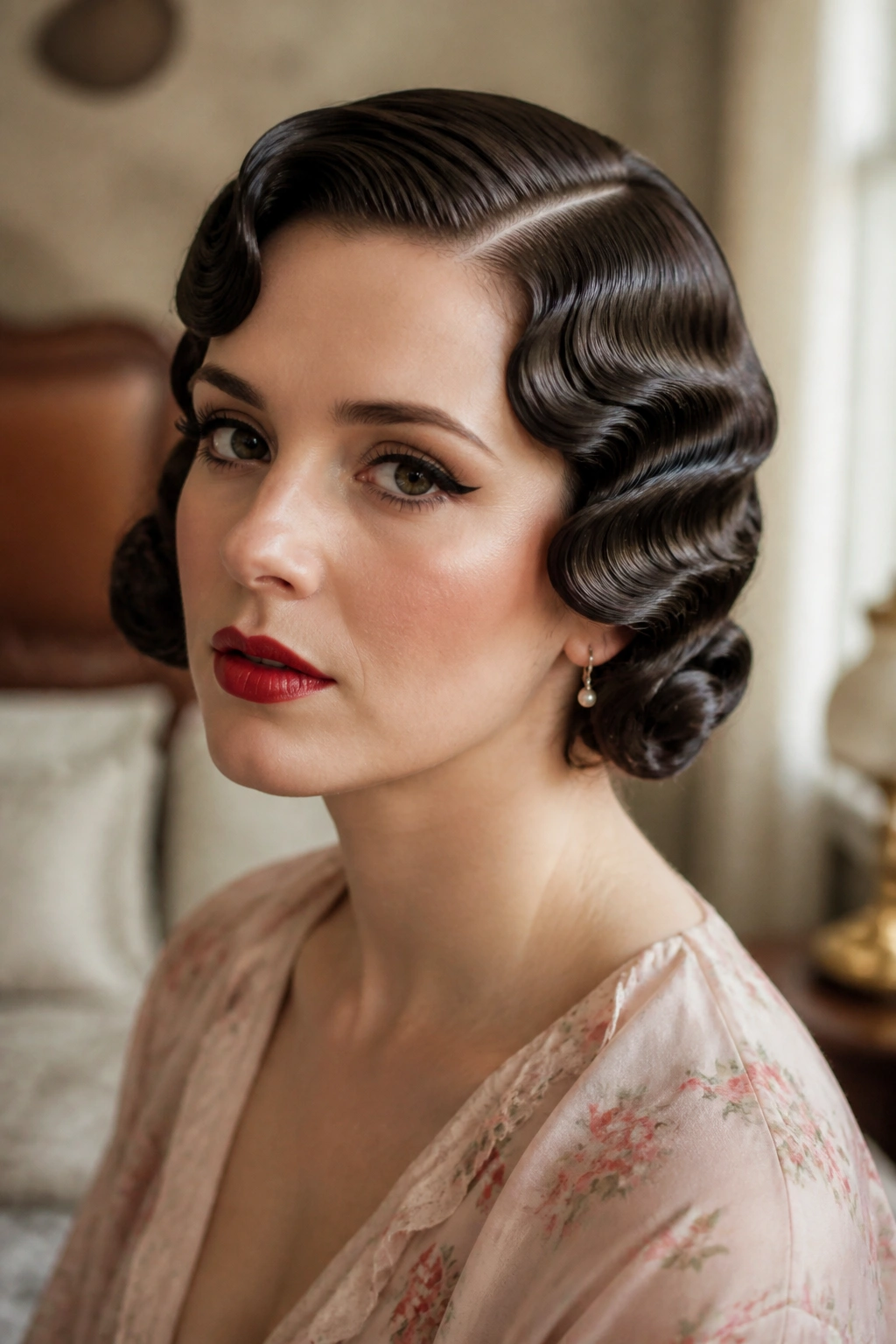
Finger waves are one of those styles that can look fragile in photos and strangely tough in real life. The deep side part gives them a sharp edge, and that’s exactly why they work so well with a retro twist. They feel polished, but not precious.
Why This Version Feels Fresh
The modern move is to keep the wave pattern close to the head while letting the rest of the hair stay smooth and simple. If you have a bob, you can stop at the jawline. If you have longer hair, tuck the lengths into a low bun or a glossy ponytail so the front stays the focus.
Small Details That Make It Hold
- Work on damp hair with setting lotion or mousse.
- Use a fine-tooth comb and clip the ridges while they set.
- Keep the wave pattern tight near the part, then loosen it slightly as it moves back.
- Finish with a light mist of spray, not a hard shell.
Best tip: finger waves look cleaner when the hairline is neat. A tiny bit of edge control or pomade around the temples helps the style read as intentional, not flat.
2. Victory Rolls with Sleek Ends
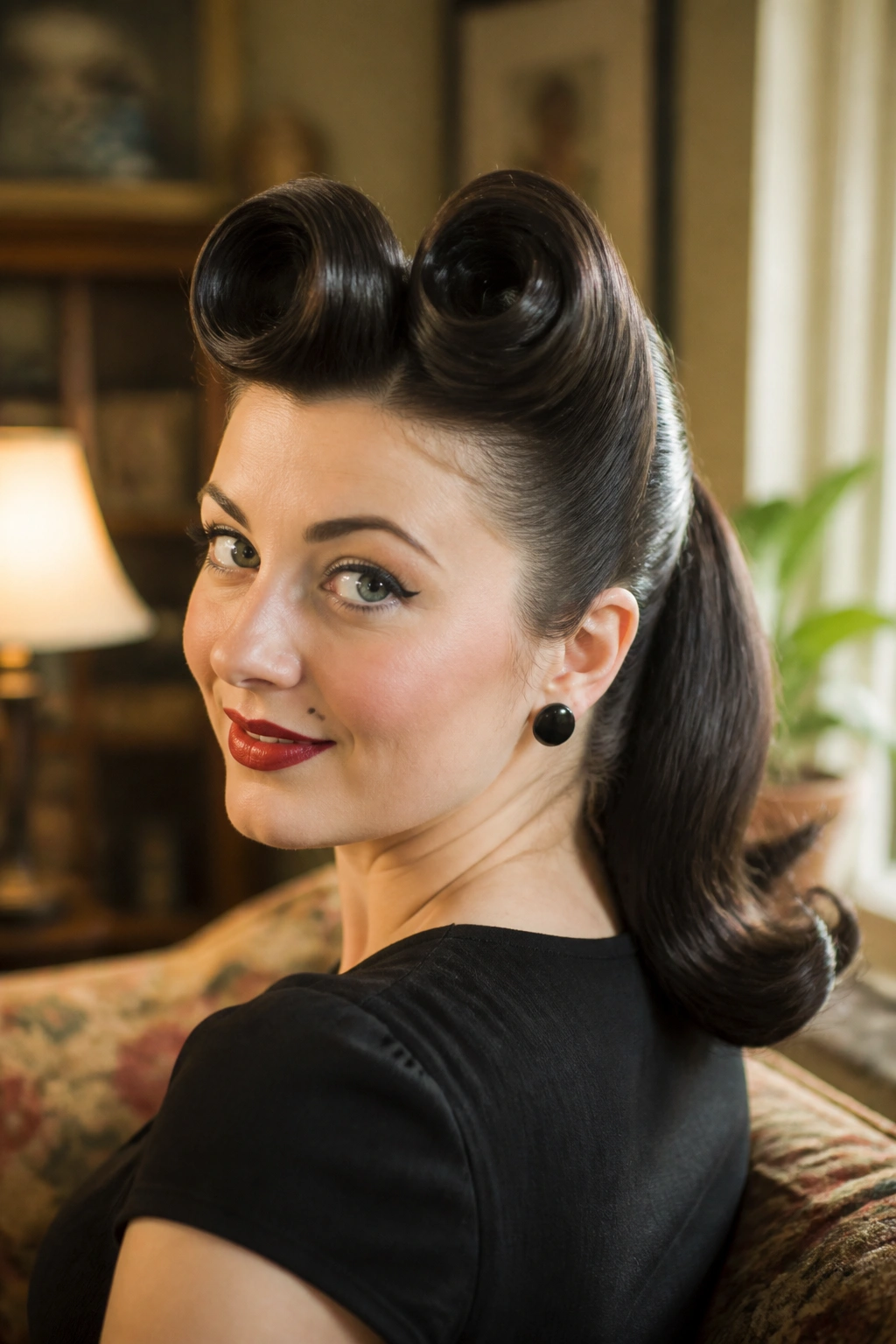
Victory rolls have a built-in sense of drama, which is why they still look good when everything else is kept simple. The rolls sit at the front like a headline. The sleek ends behind them are the quiet part, and they matter just as much.
The retro twist here is restraint. Instead of piling on curls everywhere, keep the back straight, tucked into a low ponytail, or smoothed into a bun. That contrast makes the rolls stand out without turning the whole look into a theme party.
I like this style on shoulder-length hair because the rolls have enough length to grip without needing a mountain of padding. Use a bit of texture spray before you start, then shape each roll around your fingers before pinning from underneath. If the roll feels too big, it probably is.
A couple of hidden pins are better than one giant clip. And don’t chase perfect symmetry too hard. A slightly different roll on each side can look more human, which is usually better anyway.
3. Pin Curls on a Modern Bob
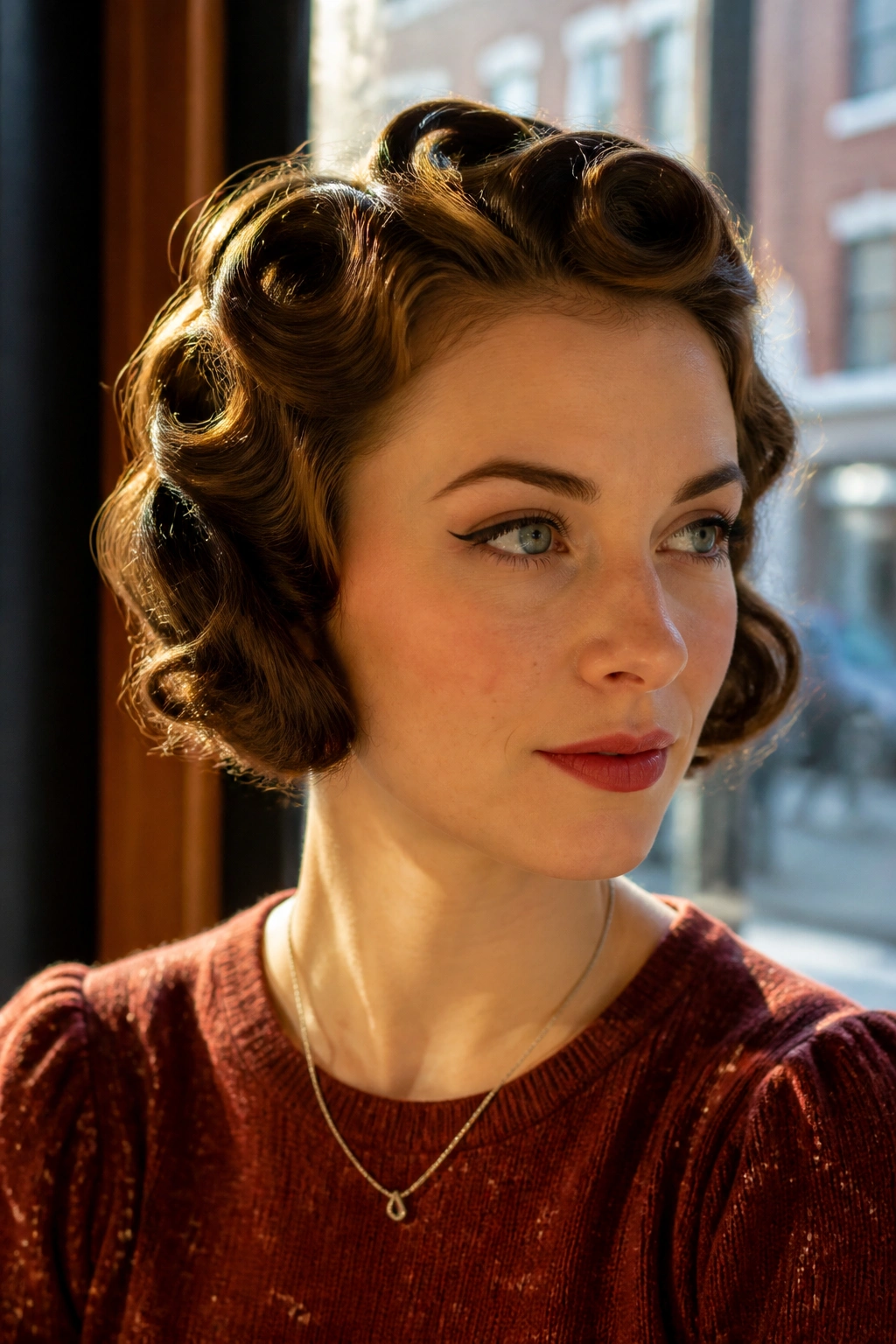
Why do pin curls still work so well? Because they give you that soft, carved shape that hot tools alone rarely match. On a modern bob, they feel neat and a little playful, especially if the ends are left just loose enough to move.
How to Set Them So They Don’t Fall Flat
Start with small sections, about 3/4 inch wide, and roll each one in the direction you want the curl to fall. Clip the curl flat against the head and let it cool completely before you touch it. That cooling step is boring. It also matters a lot.
Brush the set only after the curls have cooled and dried. Use your fingers first, then a soft brush if you want the waves to blend. If you brush too soon, the curls turn frizzy at the top and limp at the bottom.
What Makes the Look Feel Current
- Keep the part clean and off-center.
- Leave the ends slightly soft instead of over-rolling them.
- Pair the bob with a small barrette or a tucked ear on one side.
How to wear it: this is one of the best options for dinner hair because it looks dressed up without needing a full updo.
4. Hollywood Waves with a Side Sweep
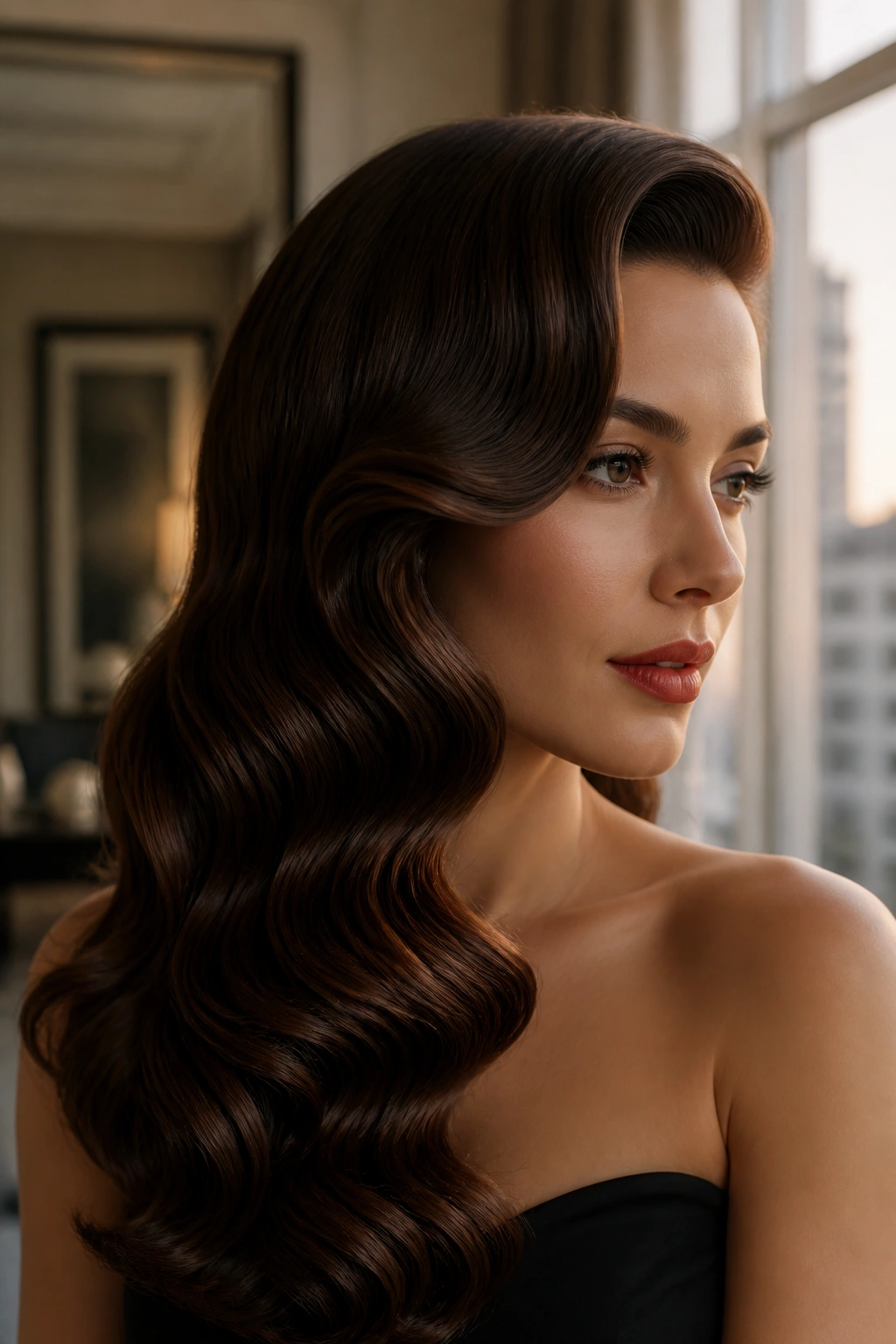
Picture a formal event where the hair has to do some of the work. That’s where Hollywood waves earn their keep. The side sweep gives the face a long line, and the wide wave pattern brings in that old-screen glamour without needing anything fussy.
The trick is in the direction. Curl every section the same way, then brush it out into one continuous wave. If you alternate directions, the style loses that smooth ribbon-like finish and starts to look accidental.
Use a 1-inch curling iron on medium sections, pin each curl while it cools, then brush with a paddle brush once the hair is fully set. I like a shine serum on the mid-lengths and ends, but not at the roots. Too much shine there can make the style collapse before the evening is over.
This one loves long hair, though shoulder-length cuts can fake it with a good clip-in set. Keep the sweep deep and the front line clean. That’s what gives the style its old-film feel.
5. Retro Bubble Ponytail
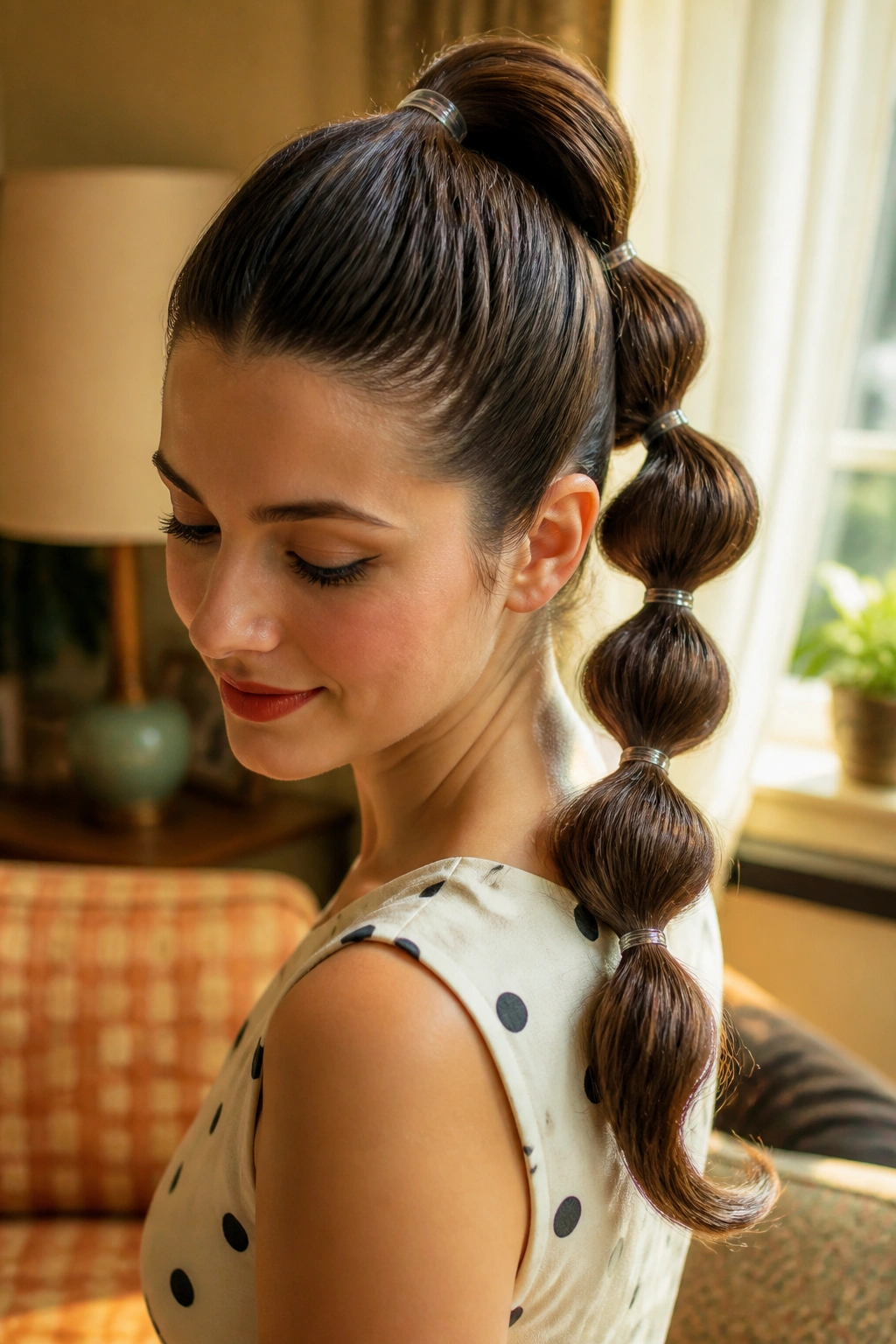
A bubble ponytail sounds playful because it is. But with the right finish, it stops looking sporty and starts looking like a sleek, glossy nod to the ’60s and ’80s at the same time. That’s the fun part.
Pull the hair into a high or mid ponytail, then add clear elastics every 2 to 3 inches down the length. Gently tug each section outward so it rounds into a bubble. Don’t yank. You want shape, not stretched-out mess.
The modern twist comes from keeping the crown smooth and the bubbles even. Wrap a small strand of hair around the base to hide the first elastic, and let the tail stay very polished. If your hair is fine, a little teasing under the crown helps the ponytail sit up instead of slipping down by lunch.
This style is easy to underestimate. It looks simple from the front, but the spacing between the elastics decides whether it reads as chic or childish. Keep the bubbles balanced and the finish glossy, and it lands in the right place.
6. Bardot Bouffant Half-Up
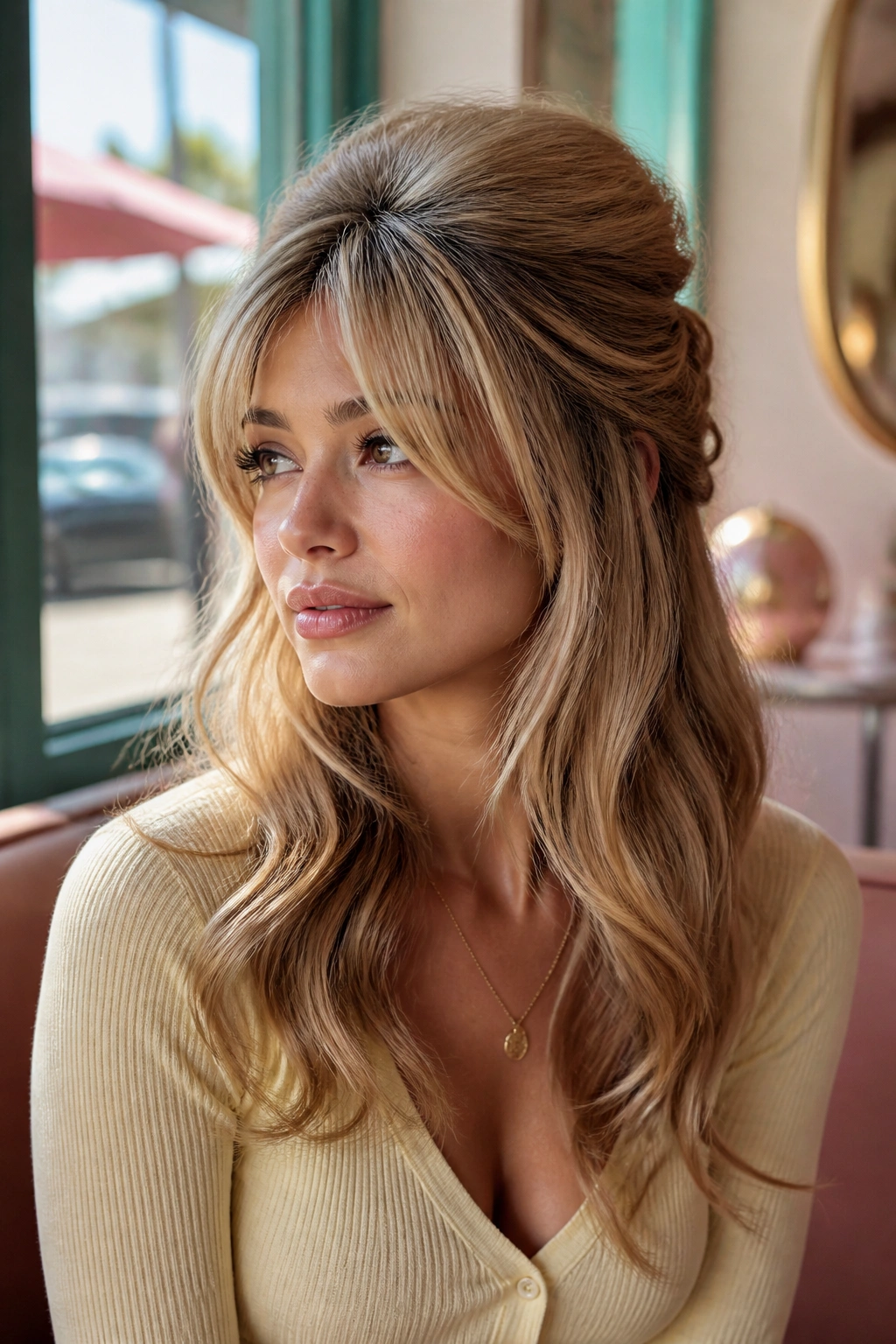
The Bardot bouffant lives somewhere between “soft romance” and “I know exactly what I’m doing.” That’s why it keeps showing up in retro-inspired hair looks. The lift at the crown gives you shape, while the half-up finish keeps the style from feeling too formal.
Unlike a full beehive, this version leaves most of the length down. That matters. The loose ends soften the crown and stop the hair from looking helmet-like. Curtain bangs or a wispy fringe fit in beautifully here, but blunt bangs can work too if they’re brushed smooth.
I’d call this a strong choice for medium-length hair that needs a little height without a lot of fuss. Tease only the top section, smooth the outer layer, then pin the back half loosely so the crown keeps its lift. If the hair around the ears is flat, the whole style starts to look tired.
Best of all, it pairs well with soft waves, which means you can keep the lower half relaxed and still get a clear vintage shape up top. That contrast is the whole point.
7. Rockabilly Pompadour Pony
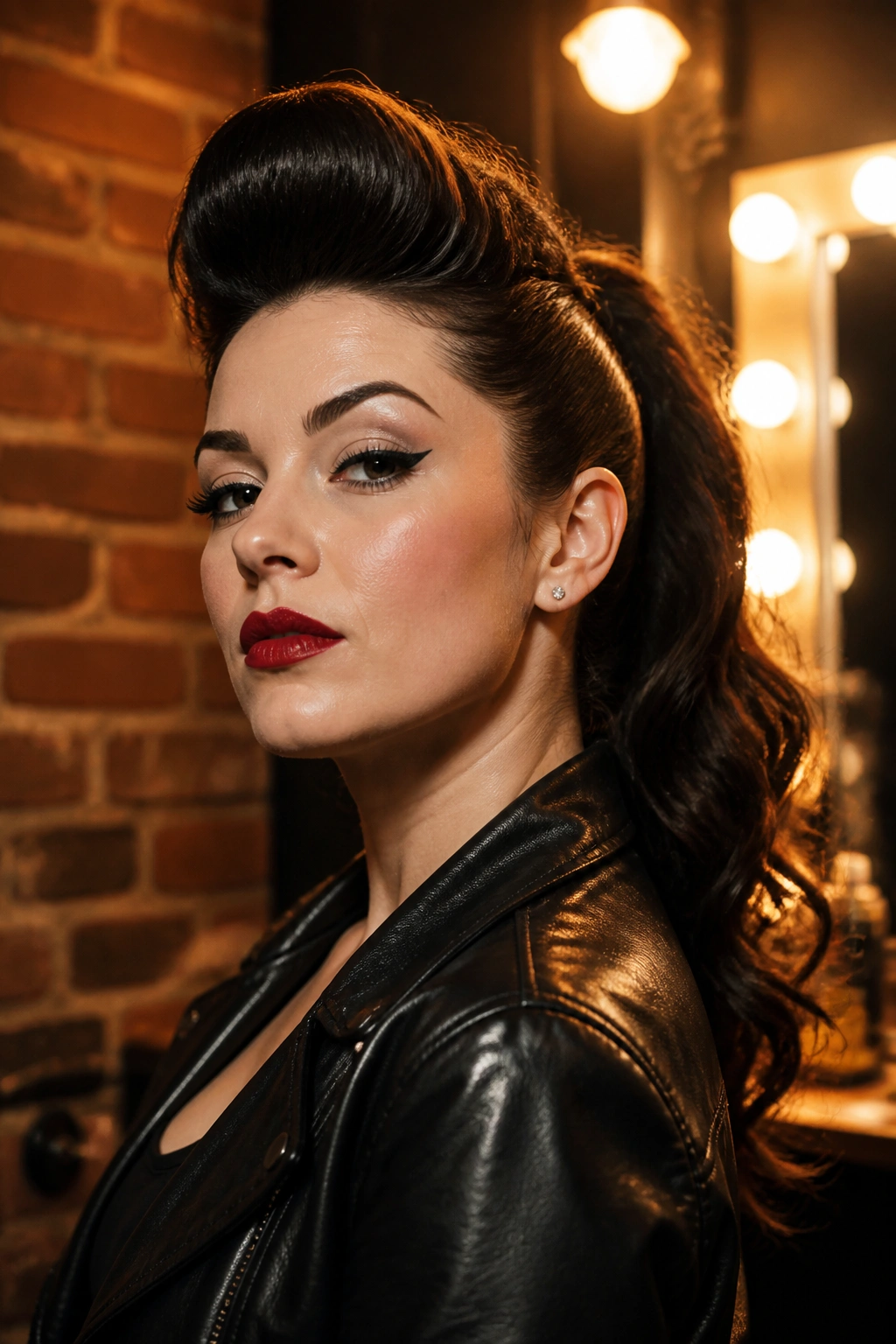
A rockabilly pompadour pony is not subtle. Good. It shouldn’t be. The front gets lifted and rolled back into a strong shape, then the rest of the hair falls into a ponytail or a long tail of curls. It has attitude before you even put earrings on.
How to Keep the Front Tall Without Looking Wobbly
Use mousse or a root-lifting spray before blow-drying the front section upward with a round brush. Once the section cools, backcomb lightly at the base, then smooth the top layer over the cushion. The shape should feel firm when you tap it, not mushy.
Where It Looks Best
- On medium to long hair with some natural thickness.
- With a bandana, if you want a harder rockabilly edge.
- With red lipstick and a clean neckline, if you want the style to read fast.
The ponytail itself can be straight, curled, or wrapped with a ribbon. If the front is strong, the rest can stay simple. That’s what keeps the whole look from getting noisy.
8. Gibson Tuck with Face-Framing Pieces
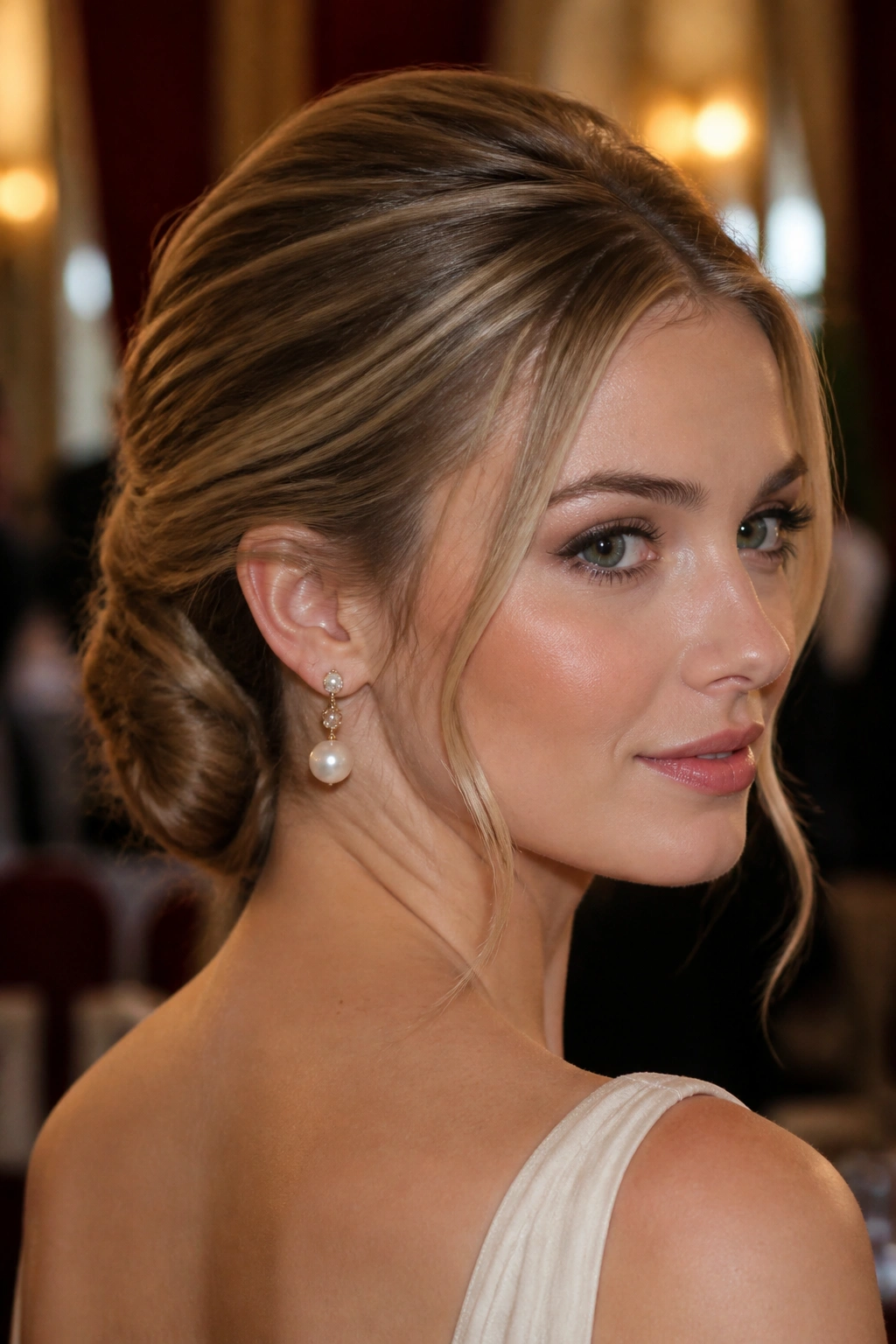
The Gibson tuck has a quiet kind of elegance, which is probably why it keeps getting borrowed for modern events. Hair is rolled or tucked upward at the nape, then pinned so the length disappears into a soft fold. It feels old-fashioned in a good way.
Leave out two thin face-framing pieces and the whole thing changes. Suddenly it doesn’t read as formal costume hair; it reads as intentional, a little softer, a little less severe. That tiny choice matters more than most people expect.
This style works best when the tuck sits low and neat, but not rigid. If the hair is too slicked down, the nape can look flat and the face-framing pieces lose their purpose. A little volume at the crown helps the head shape look balanced.
I like this for medium to long hair because there’s enough length to tuck cleanly without forcing the ends under. A decorative comb or a set of pearl pins is enough. No need to crowd it.
9. Pageboy with Soft Flipped Ends
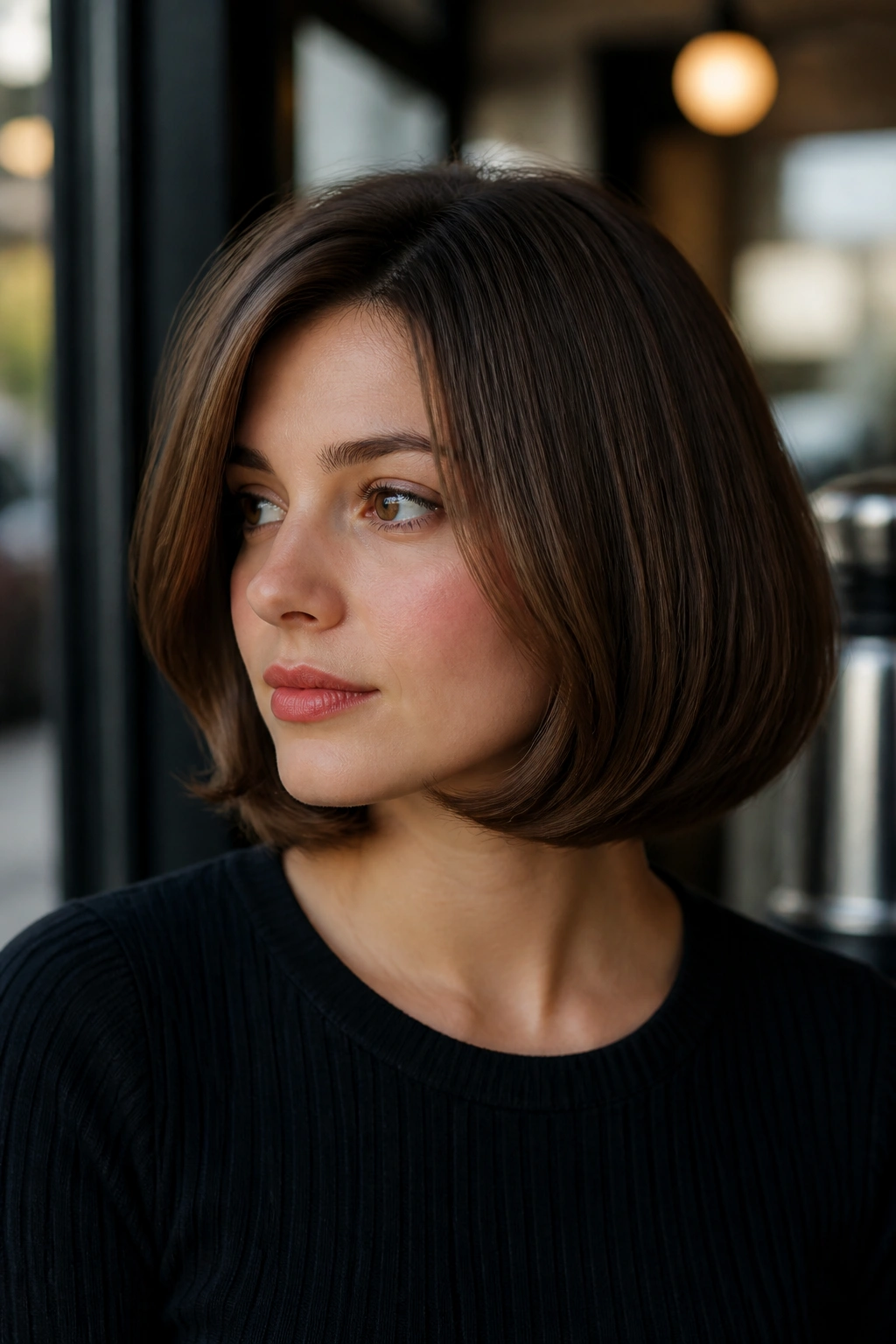
A pageboy cut gets a bad reputation when it’s too stiff. Add a soft flip at the ends and it turns into something much more wearable. The shape stays rounded, the edges move a little, and the whole cut feels less frozen in time.
What Makes This Version Work
The secret is keeping the interior smooth while letting the ends turn under just enough to show the line of the cut. If you have a chin-length bob, a round brush and a blow-dryer can do most of the work. On longer lob lengths, a flat iron bent slightly at the ends gives the same effect.
How to Wear It
- Push the part a touch off center.
- Add a side-swept fringe if you want more softness.
- Keep the finish satin-smooth, not crunchy.
The pageboy is one of those styles that can look old in the wrong hands and very cool in the right ones. The difference is usually in the weight line. Too much volume at the sides, and it turns boxy. Keep the curve clean and the ends lightly flipped, and it feels fresh again.
10. Beehive with Loose Tendrils
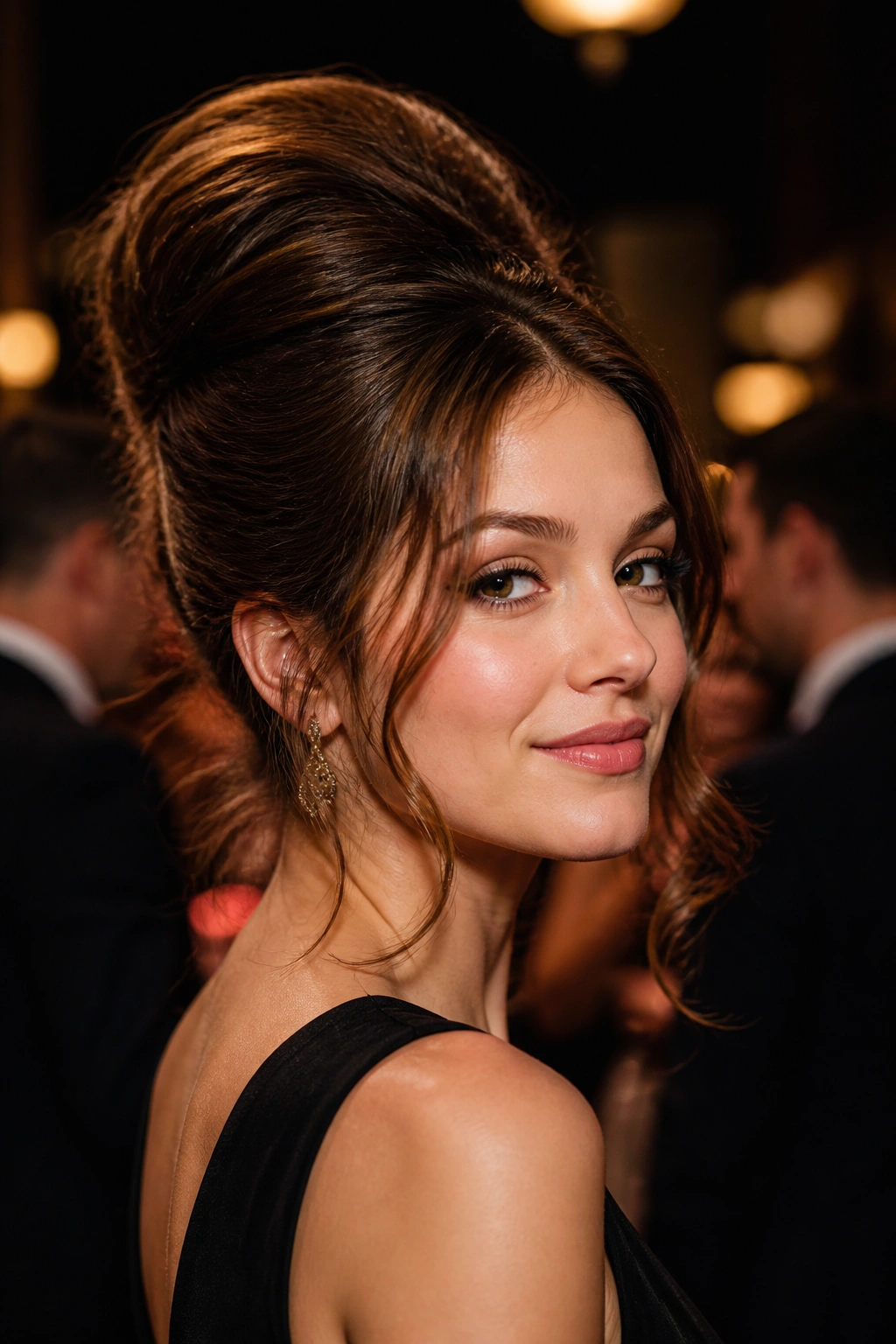
A beehive can go from chic to costume fast, so the modern answer is simple: keep the height, lose the stiffness. Let a couple of tendrils fall around the face, and the style suddenly breathes.
Start by teasing the crown in small sections and smoothing the outer layer over the top. The shape should rise at the back of the crown rather than straight up like a tower. That slight backward slope is what makes it flattering. Pin it well. A beehive that shifts halfway through the night is just annoying.
The loose tendrils do a lot of the heavy lifting here. They break up the hardness around the face and soften the whole profile. If your hair is straight, curl those pieces lightly. If it’s wavy, leave them alone and let the shape do its thing.
This is a strong choice for cocktail events, themed parties, or anywhere you want a vintage hairstyle with a little bite. It looks best when the rest of the hair is controlled and the height is deliberate.
11. Flapper Bob with Sculpted Ends
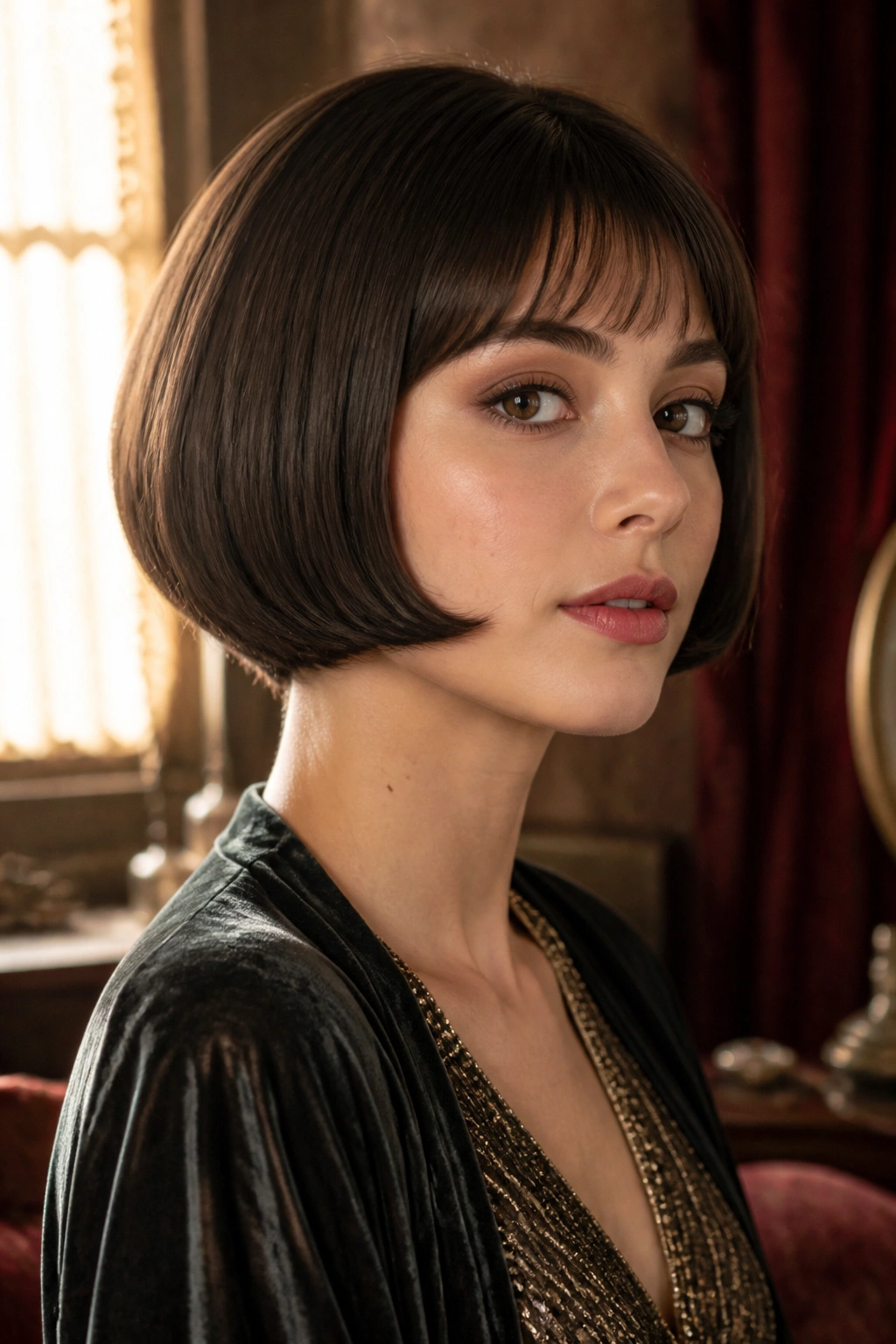
The flapper bob is short hair with sharp personality. It usually sits around the cheekbone or jawline, and the shape works because it’s clean, not busy. The retro twist comes from sculpted ends that bend inward or curve softly along the face.
A flat iron can make this easy, but a round brush gives a more natural result if the hair already has some movement. Keep the surface smooth and let the ends do the talking. If you want more period feel, add a deep side part and a soft wave at the front.
Blunt bangs can be gorgeous here, though I think the style looks strongest when the fringe is a little airy. Heavy bangs can weigh down the whole cut unless the rest of the bob is very precise.
This is one of the few vintage styles that doesn’t need much ornament. A single barrette, a tiny comb, or even no accessory at all can be enough. The cut itself carries the look.
12. Marcel Waves with a Glossy Finish
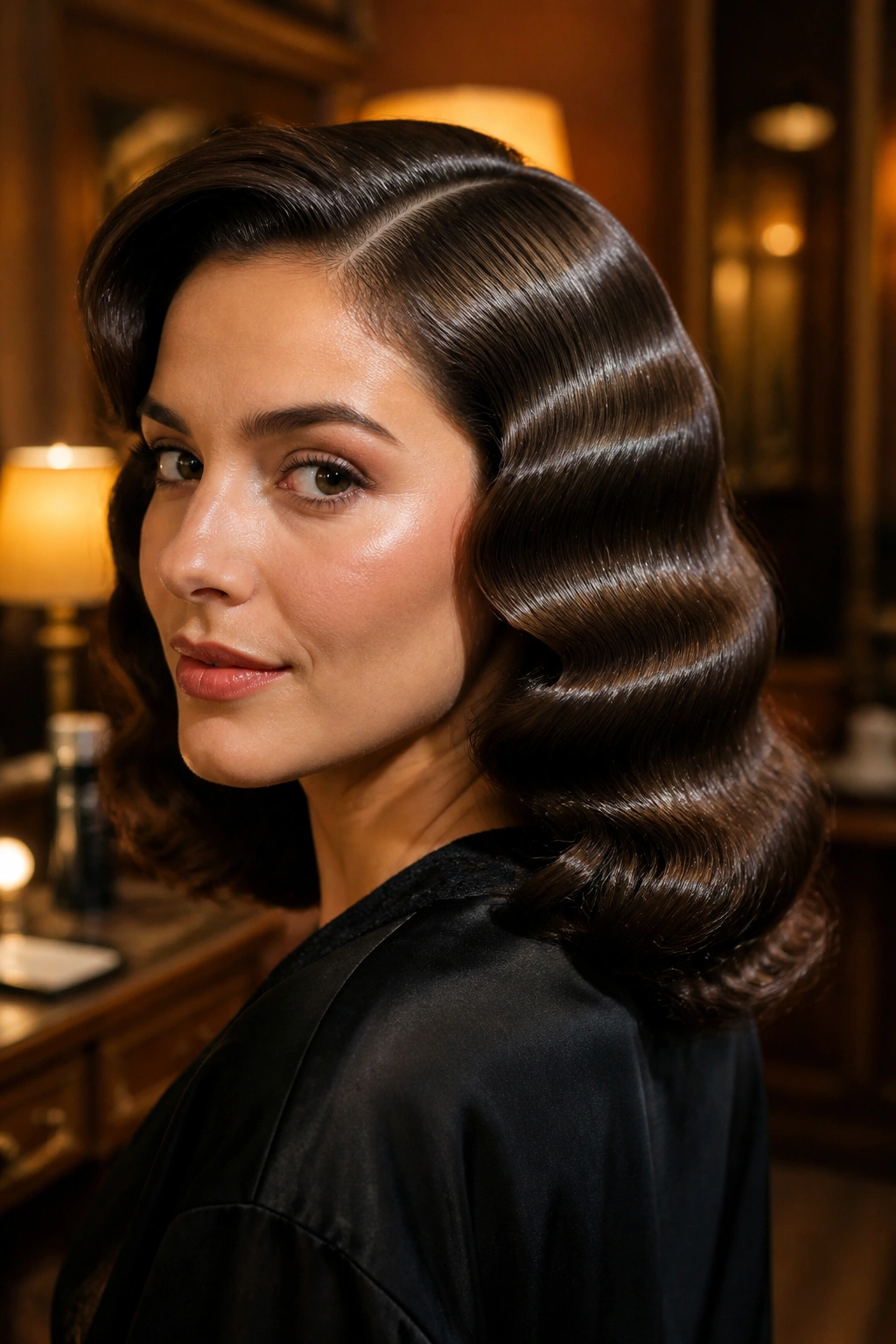
Marcel waves are not beach waves in a fancy hat. They’re carved, smooth, and very deliberate, which is exactly why they stand apart. The wave pattern has cleaner ridges and a sharper rhythm, so the style feels more architectural than casual.
Unlike looser waves, Marcel waves benefit from a strong side part and a glossy finish. The shine gives the bends depth, and the part makes the wave line feel anchored instead of floaty. If you have long hair, the waves can run all the way down. If your cut is shorter, they can stop at the shoulders and still look complete.
A Marcel iron makes the process easier, but a curling iron and clips can get close. Work in consistent sections, then let each wave cool before combing. Rushing that part ruins the shape.
Best for formal dinners, weddings, or any night when you want your hair to look precise without feeling harsh. It’s a style that rewards patience.
13. Rosette Bun with a Silk Scarf
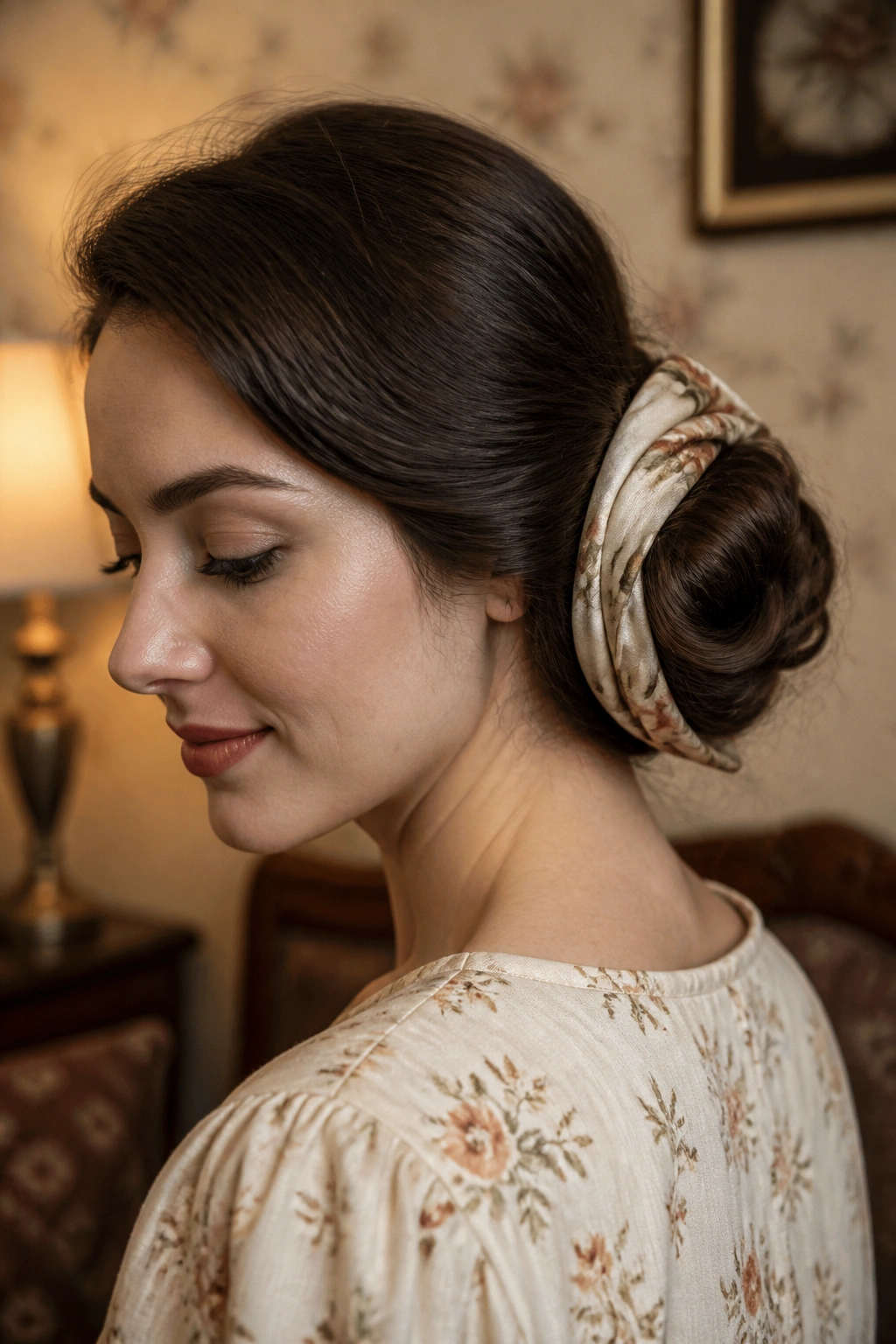
A rosette bun looks like a small coiled flower at the back of the head, which sounds delicate until you realize how sturdy it can be. Wrap a silk scarf around the base, and the whole style gains a little retro softness without losing polish.
The Shape Matters More Than the Decoration
Build the bun first. Twist the hair into a low coil, then wrap it around itself until it forms that rosette shape. Pin from the underside so the pins disappear into the folds. The scarf comes last, tied low or tucked into the bun base so it doesn’t overwhelm the structure.
A Few Details Worth Getting Right
- Use a scarf that’s about 2 to 3 inches wide if you want a subtle finish.
- Keep the bun low and centered for a classic look.
- Let one small face-framing piece escape if the face feels too tight.
This style is lovely on medium and long hair, and it works even better when the bun is a little imperfect. The slight irregularity makes it feel less ceremonial and more lived-in.
14. Bettie Page Bangs with Long Curls
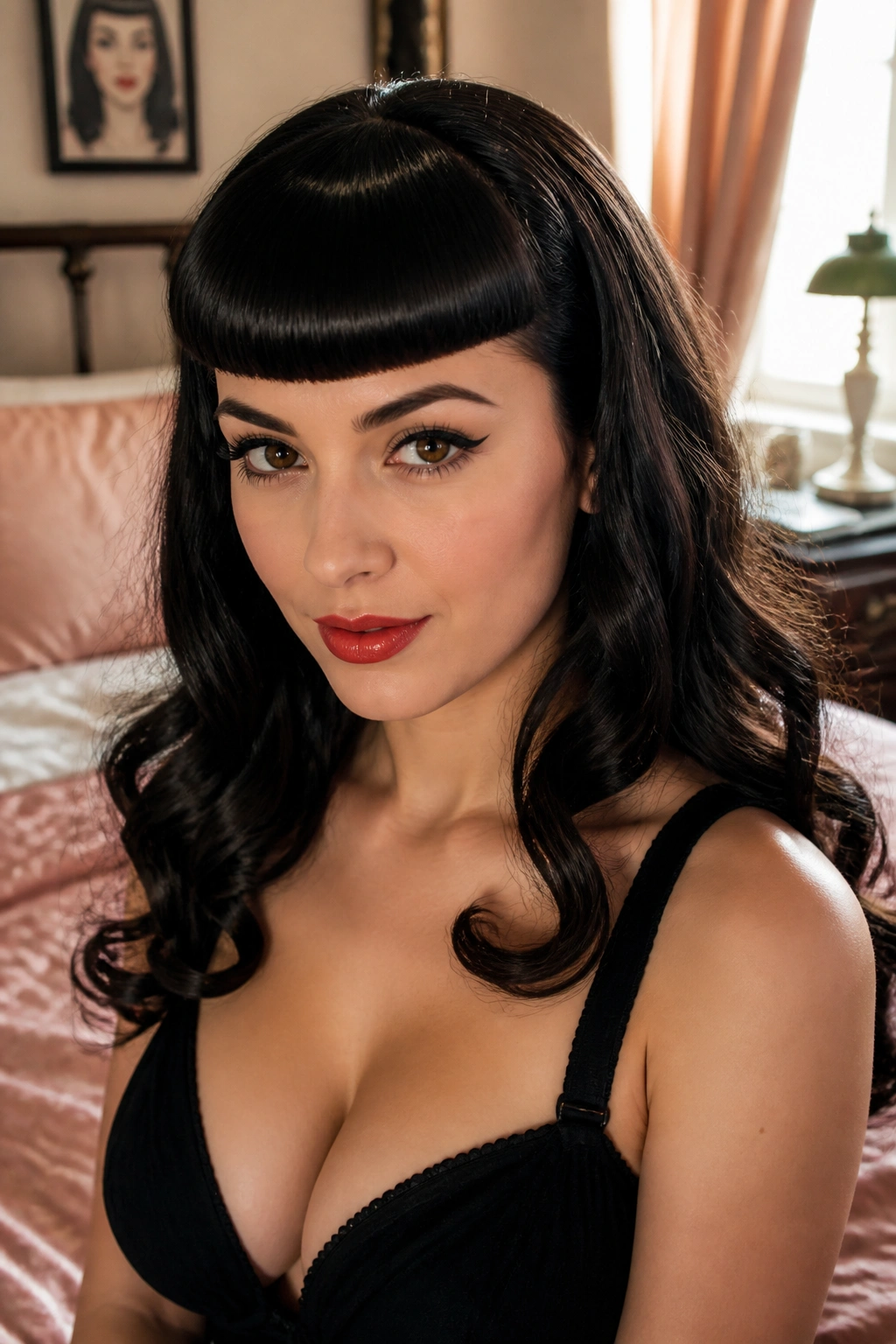
Bettie Page bangs are blunt, short, and a little daring. That’s why they still grab attention. Pair them with long, glossy curls and you get a contrast that feels both playful and sharp.
The bangs are the whole point, so they need to sit cleanly above the brows without puffing up at the center. A quick pass with a flat iron usually beats heavy blow-drying here, especially if your fringe likes to split. Keep them smooth and let the rest of the hair have movement.
Long curls behind those bangs stop the style from feeling too hard. They also give the cut a softer shape around the shoulders, which helps balance the short front. If the curls are too tight, the look can start to feel cartoonish. Softer barrel curls work better.
This is a style for someone who likes a clear point of view. It does not whisper. If you want vintage hair that has a bit of bite, this is a very good place to start.
15. 1960s Flip with an Off-Center Part
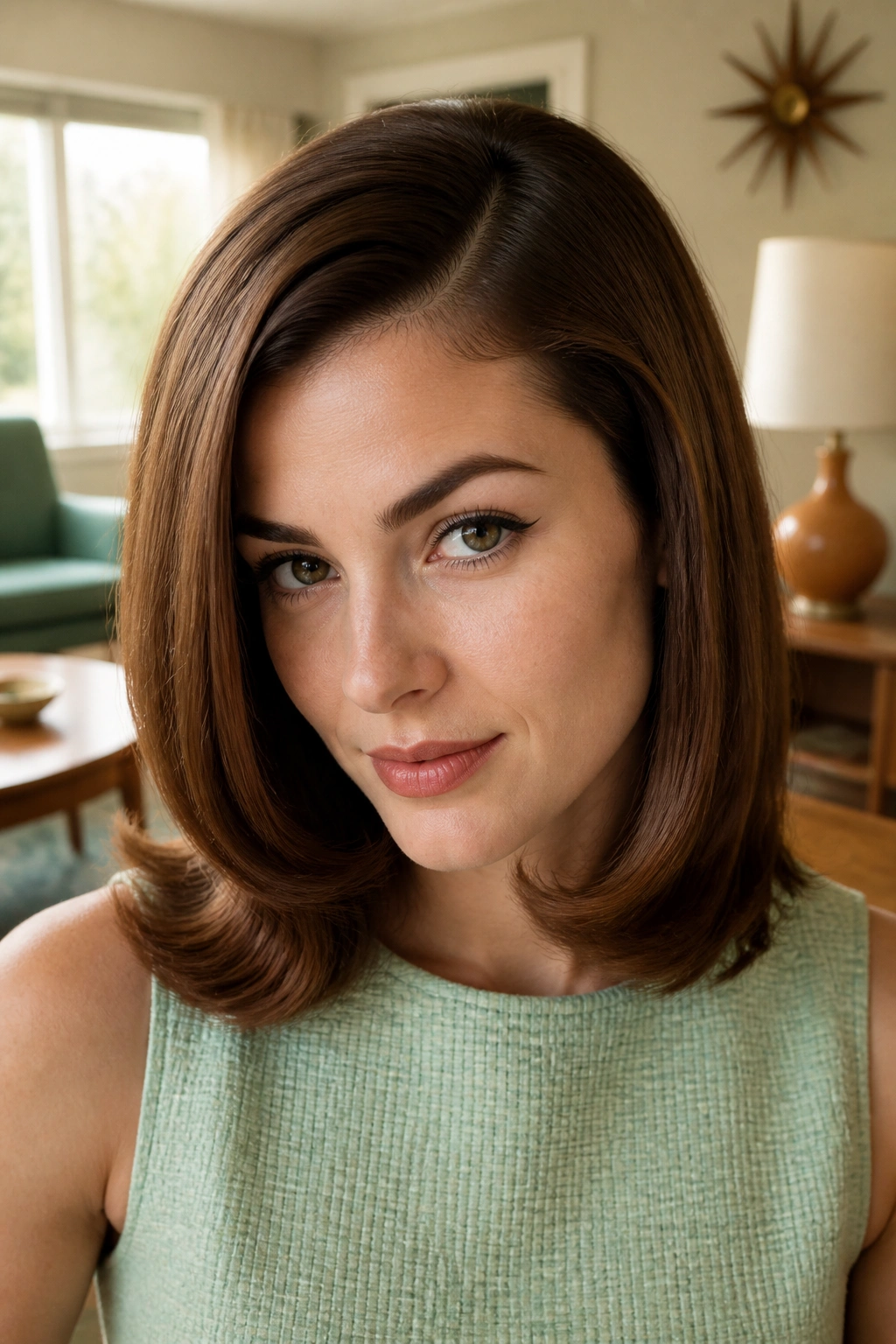
The 1960s flip is one of the easiest retro shapes to wear because it doesn’t ask for much. A little part shift, a clean flip at the ends, and you’re there. The off-center part keeps it from looking too sweet, which is the entire upgrade.
Why the Part Changes Everything
Moving the part just enough to one side creates a longer line through the face. That line makes the flip at the ends look lighter and more balanced. If the part is dead center, the whole style can feel too symmetrical and a little flat.
Use a round brush or a straightener to turn the ends outward in one clean motion. The flip should sit at the bottom of the hair, not halfway up the length. Keep the crown smooth and the finish soft. No stiff helmet shape, please.
Best For
- Shoulder-length hair.
- Straight or lightly wavy textures.
- Everyday wear when you want a hint of retro without a big styling session.
This one is quietly useful. It takes about 10 minutes when you know your hands, and it still looks deliberate.
16. Sleek Chignon with a Vintage Comb
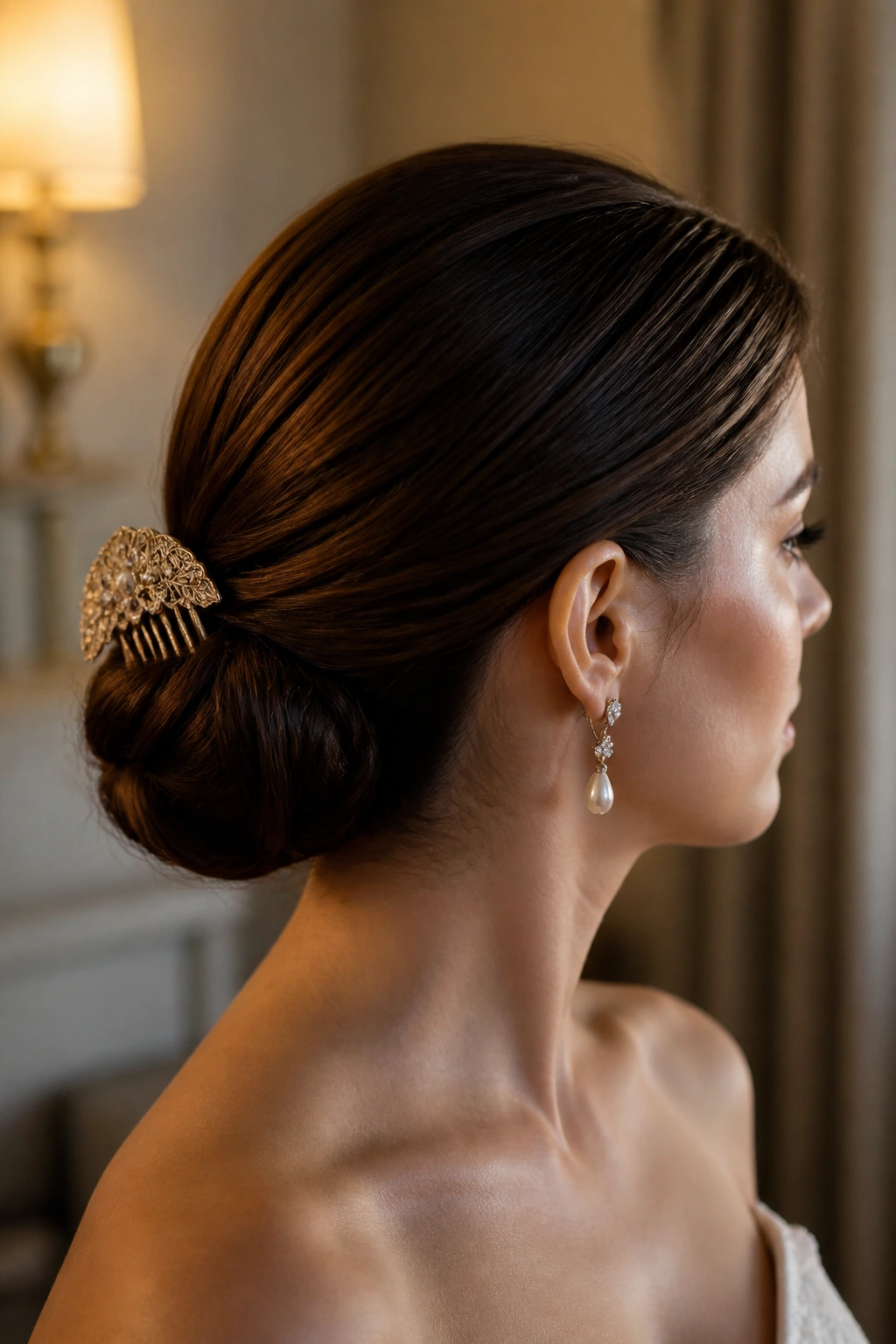
A sleek chignon can look almost severe if it’s done without warmth. Add a vintage comb — tortoiseshell, pearl, brass, whatever suits the hair color — and the style gets a little character right away.
The chignon itself should sit low, either centered or slightly off to one side. Smooth the top with a fine brush and keep the surface calm. Then shape the bun so it’s compact but not tiny. If it disappears against the head, the comb has nothing to work against.
I like this style for weddings and formal dinners because it stays put. That matters more than people admit. A pretty updo that loosens after an hour is a nuisance. The chignon solves that if the pins are anchored into the base, not just the surface.
The comb should do one job: finish the line of the style. Don’t bury it in too much hair. Let it show. That small flash is the retro twist.
17. Scarf-Wrapped Low Ponytail
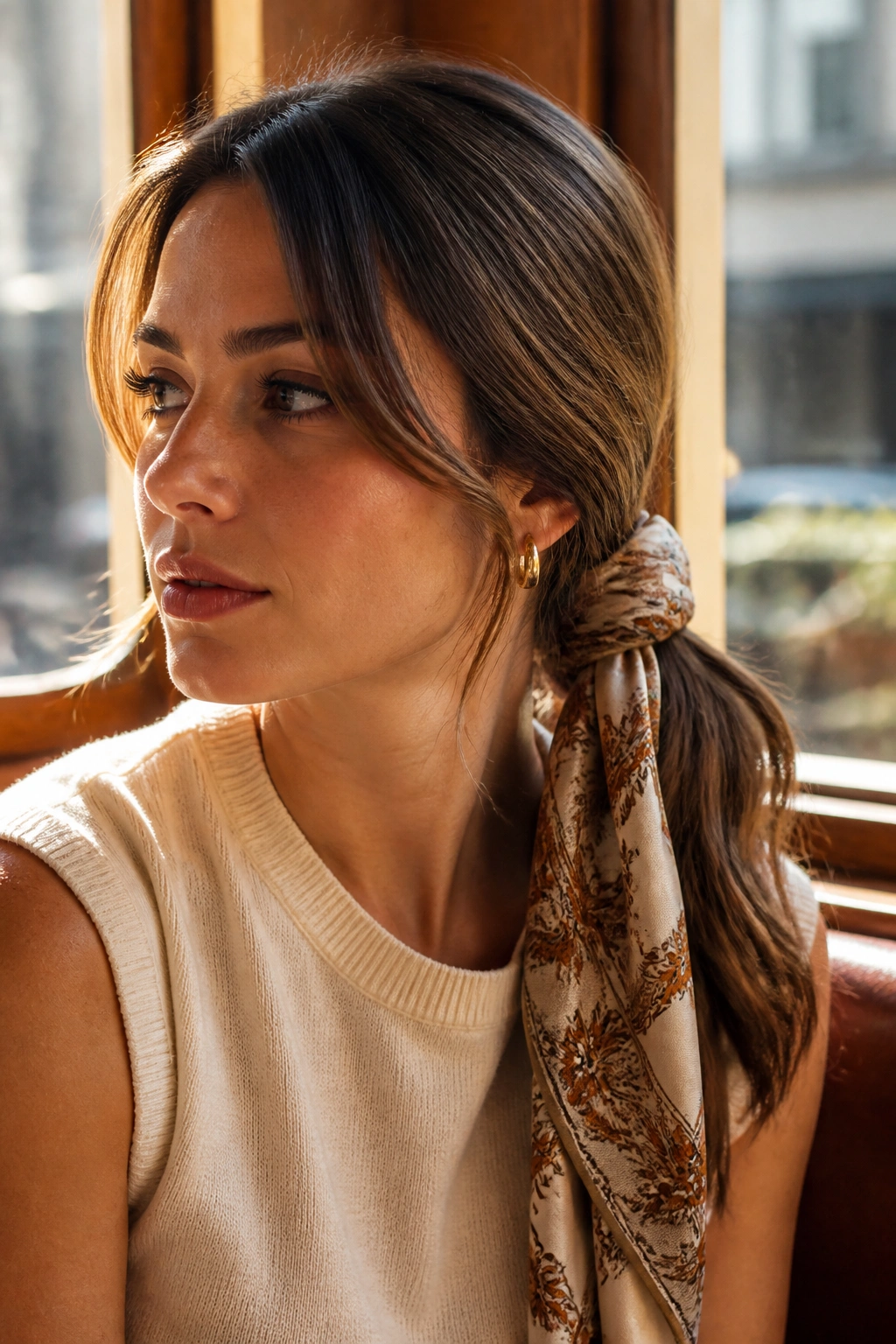
A scarf-wrapped low ponytail is one of the easiest ways to bring a vintage note into an everyday look. It borrows from old travel photos, summer dressing rooms, and mid-century street style, but it still feels easy enough for a normal afternoon.
Start with a smooth low ponytail, then tie a scarf around the base and let the ends hang. If your hair is straight, the scarf gives the style texture all by itself. If your hair is curly or coily, it works as a neat frame instead of a correction.
The ponytail should sit low enough that the scarf reads like part of the style, not an afterthought. I’d avoid making the base too tight. A slightly looser ponytail lets the scarf drape better and keeps the shape softer around the head.
This one is nice for days when you want polish without heat styling. It works with sunglasses, hoop earrings, and a plain shirt. Sometimes that’s all you need.
18. Crown Braid with Ribbon Detail
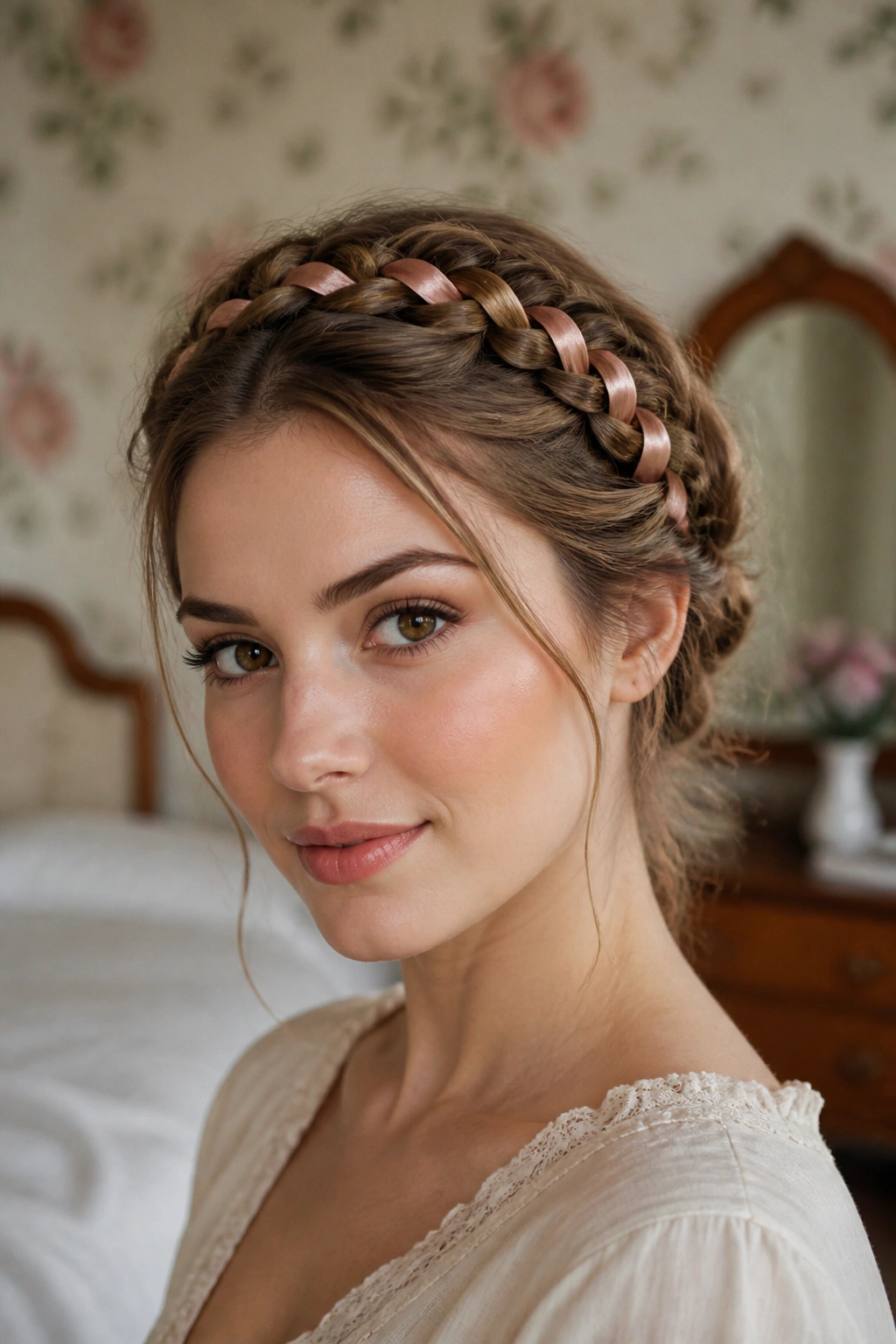
A crown braid can feel a little school-portrait if it’s too neat. Thread a ribbon through it, and the whole thing changes. The braid stays romantic, but the ribbon gives it a crisp line and a retro nod.
Unlike a standard braid, this version wants a bit of puff at the crown. Pull the braid edges gently after you secure them, but only enough to give the style some air. If you over-pancake it, the braid starts to look flimsy. A little structure is the point.
A satin ribbon works best because it slides cleanly through the braid and doesn’t fray as quickly. Keep the color either close to your hair tone for a subtle effect or sharply contrasted if you want the ribbon to show up.
This style is best on medium to long hair. You need enough length to wrap the braid around the head without making it feel cramped. And if the ends peek out near the nape, that’s fine. It looks more natural that way.
19. French Twist with a Lifted Crown
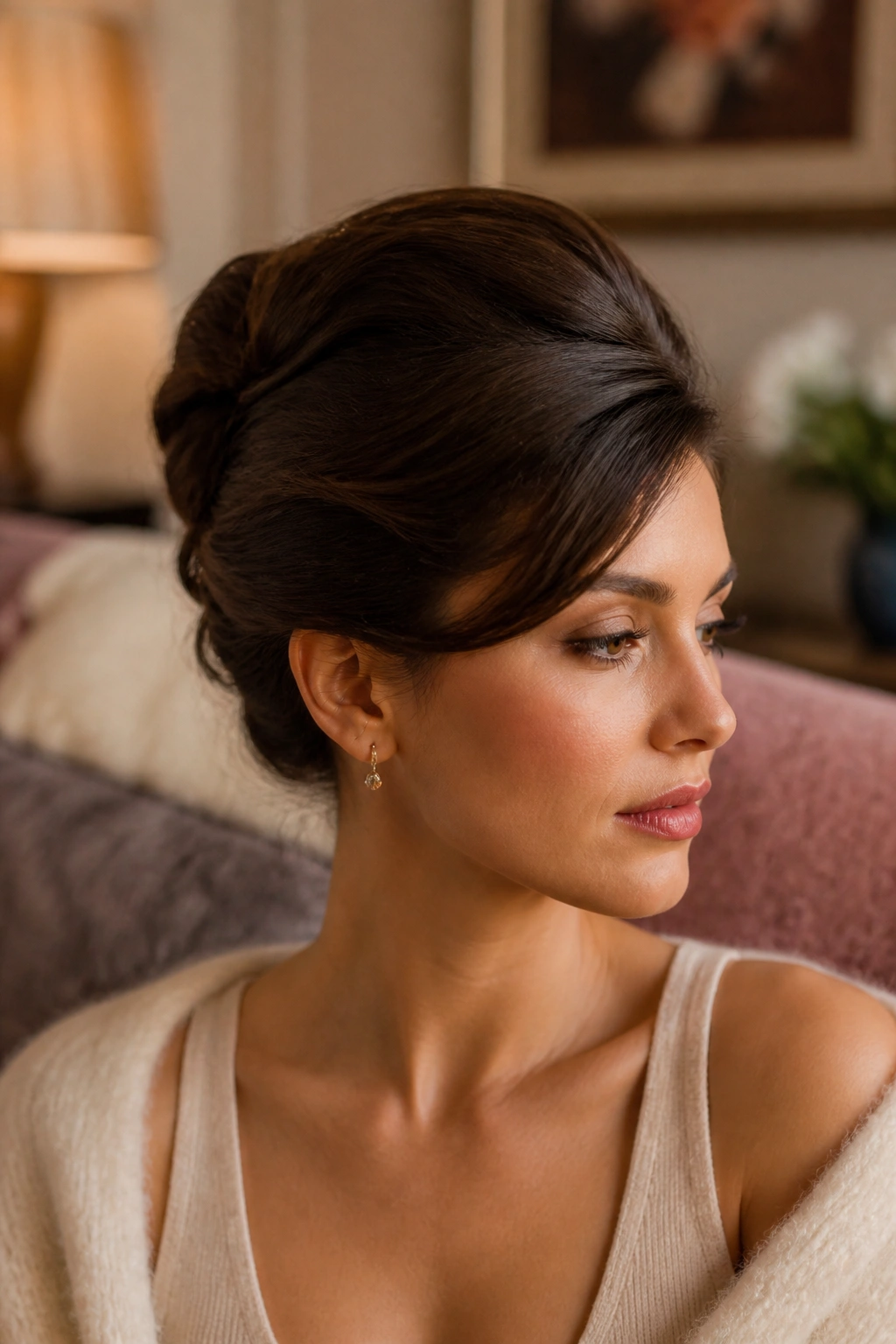
A French twist can be the driest hairstyle in the room if it’s too tight. Give the crown a little lift before you twist, and the shape starts to breathe. That small height at the top changes the whole mood.
How to Keep It from Looking Flat
Backcomb the crown lightly, smooth only the top layer, then gather the hair loosely before rolling it upward and tucking the ends into the seam. The twist should feel secure, but not squeezed. If the head shape gets pinched on the sides, the style looks older than it needs to.
A Few Good Pairings
- Drop earrings.
- A side part that curves into the lift.
- A matte lipstick if you want the hair to stay the star.
I especially like this on medium-length hair because the twist can sit neatly without too much bulk. It’s one of those styles that looks harder than it is, which is a nice bonus.
20. Faux Bob with Tucked Ends
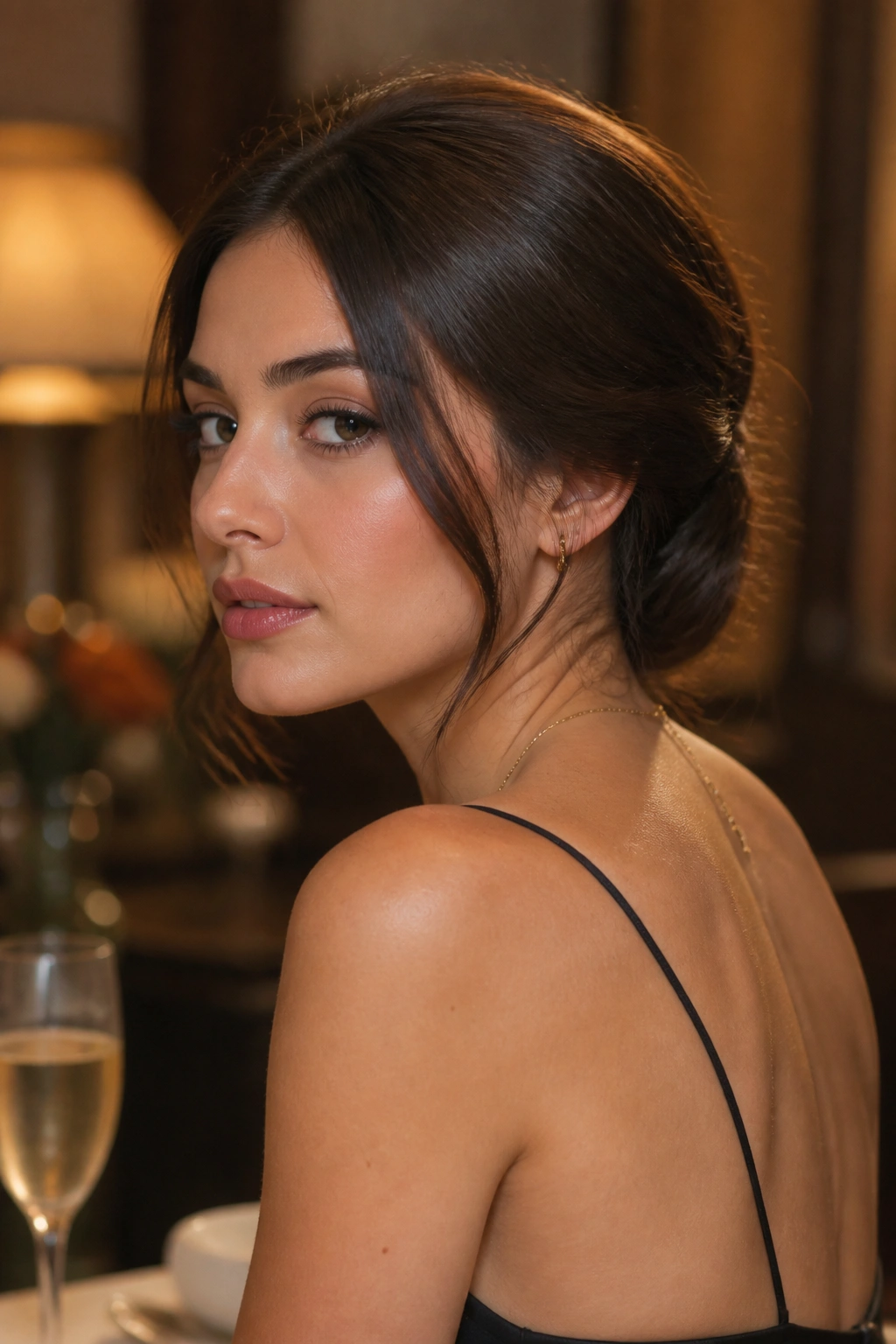
A faux bob is pure theater in the best way. Long hair gets tucked and pinned under so it looks short for the night, which means you get the vintage bob shape without committing to a haircut. That alone makes it worth knowing.
The trick is to curl or bend the ends first, then fold the length under itself and pin it at the nape. If you skip the bend, the hidden hair can poke out in a messy line. A little texture helps the tuck stay in place too, especially if your hair is very smooth.
This style works best when the front pieces are left a touch loose. If every strand is pinned back, the illusion gets too obvious. Let a few pieces skim the jaw and cheek. That softens the shift from long hair to short shape.
I wouldn’t wear it when you need to be moving around a lot, because the pins do matter. But for photos, dinner, or a themed event, it’s hard to beat.
21. Half-Up Victory Roll on Long Hair
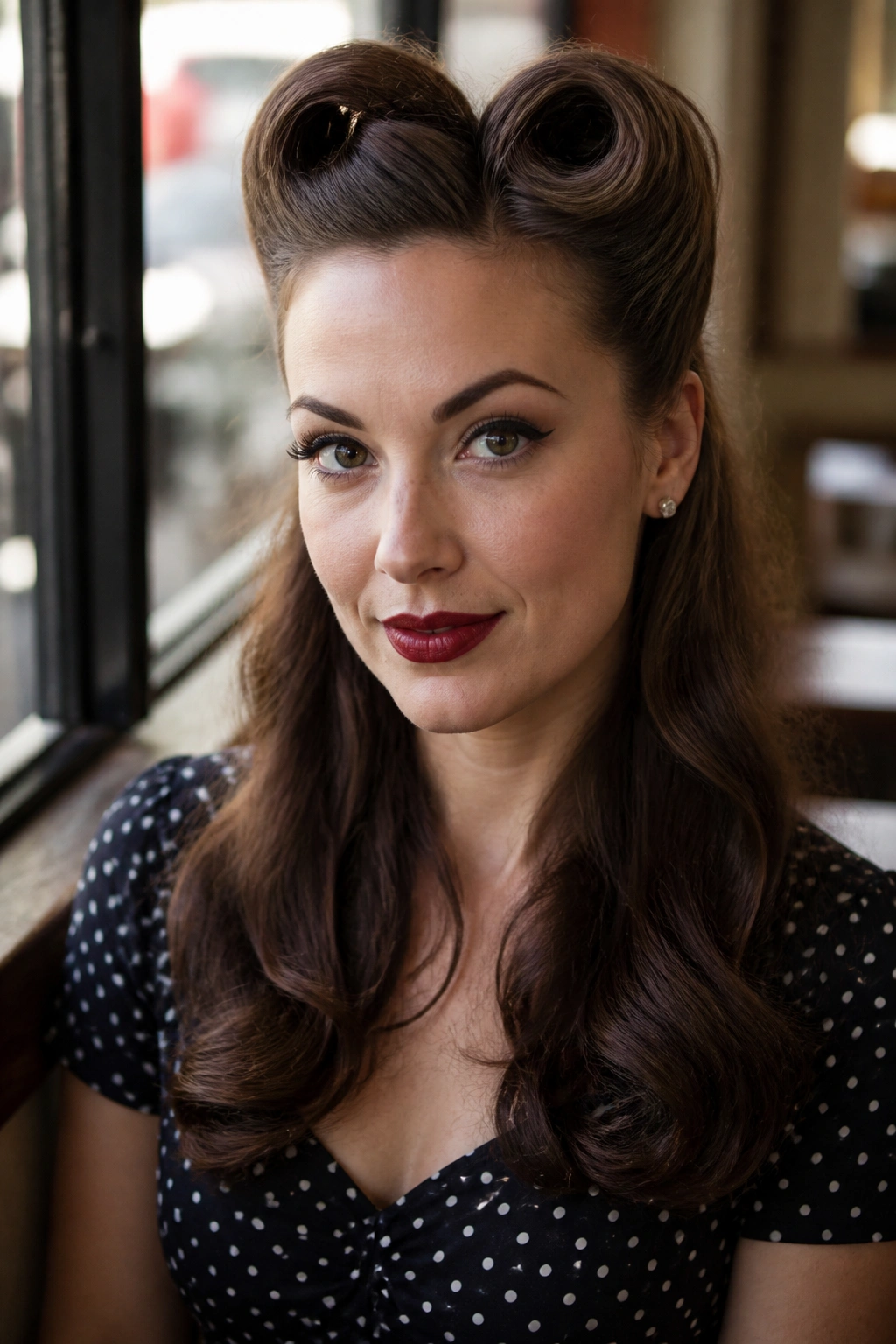
Why choose between long hair and a vintage shape when you can have both? The half-up victory roll takes the front section and gives it a sculpted roll, then leaves the rest of the length loose, curled, or brushed into waves.
That split makes the style feel useful. The top has structure, the length keeps movement, and the whole thing avoids the heavy feeling that full-up styles can bring. It’s a smart choice for people who want something retro but not too locked down.
The roll itself should sit high enough to be visible from the front, but not so high that it swallows the forehead. If you have bangs, the roll can sit behind them. If not, a small side sweep helps the transition look smoother.
This one is especially good for long hair that’s a little too plain on its own. The roll creates a focal point. The rest can stay loose and easy.
22. Curly Shag with a Retro Fringe
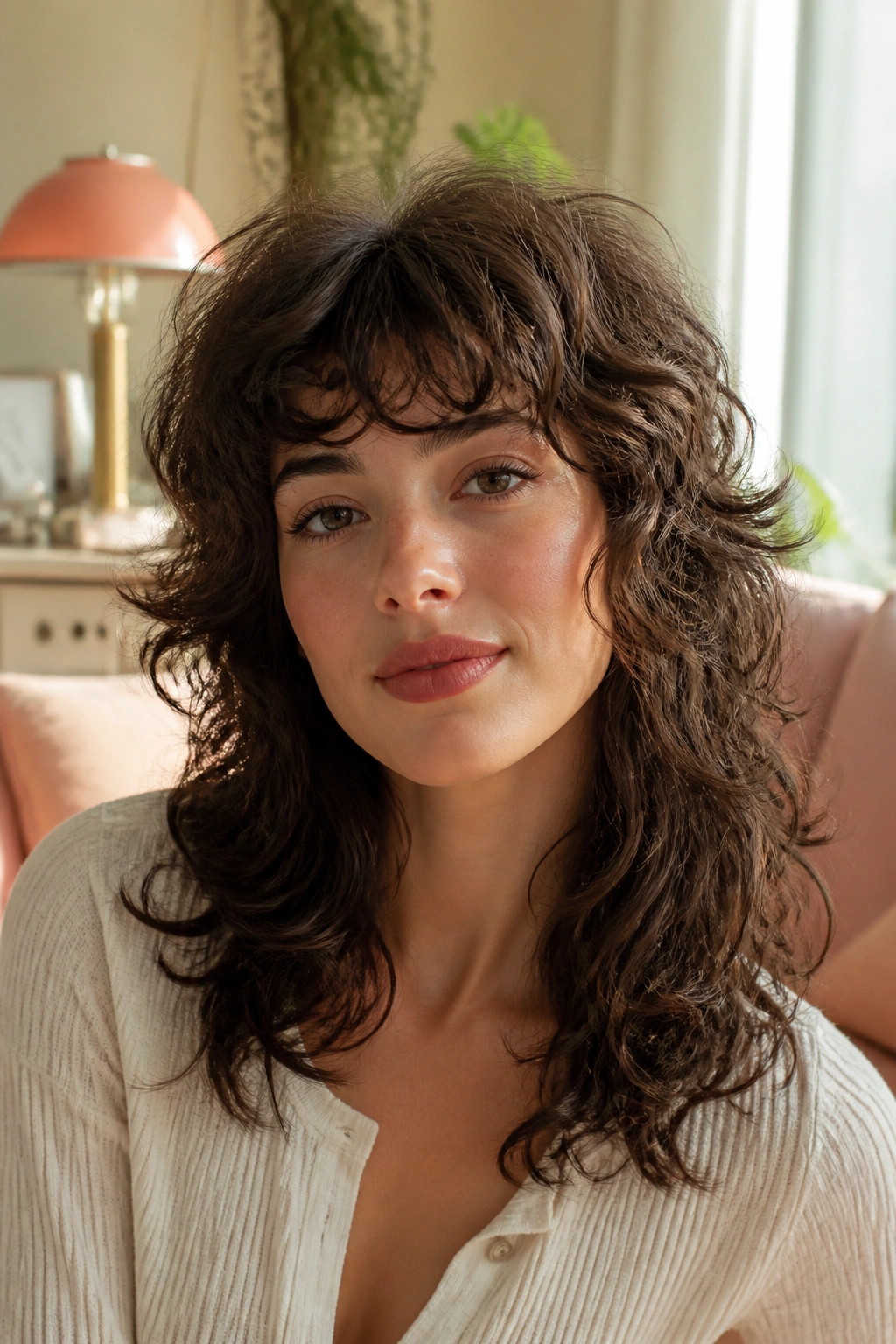
A curly shag already has attitude. Add a retro fringe and it gets a little more control, which is the nice part. The cut keeps its movement, but the fringe tells the eye where to look first.
The Shape Works Because It Isn’t Too Perfect
Natural curls love the shag because it leaves room for volume at different lengths. The fringe should sit a little softer than a blunt bang, especially if your curl pattern springs up when it dries. Cut or style it with that shrinkage in mind.
What Helps Most
- Curl cream or lightweight gel.
- Diffusing on low heat.
- Scrunching only after the hair has mostly dried.
The retro note comes from the silhouette. Think rounded crown, face-framing layers, and a fringe that lands just past the brows or right at them depending on texture. It’s a smart style for people who want something vintage-inspired without flattening their natural pattern.
This is one of my favorite options because it doesn’t fight the hair. It works with it.
23. Fishtail Milkmaid Braids with Soft Volume
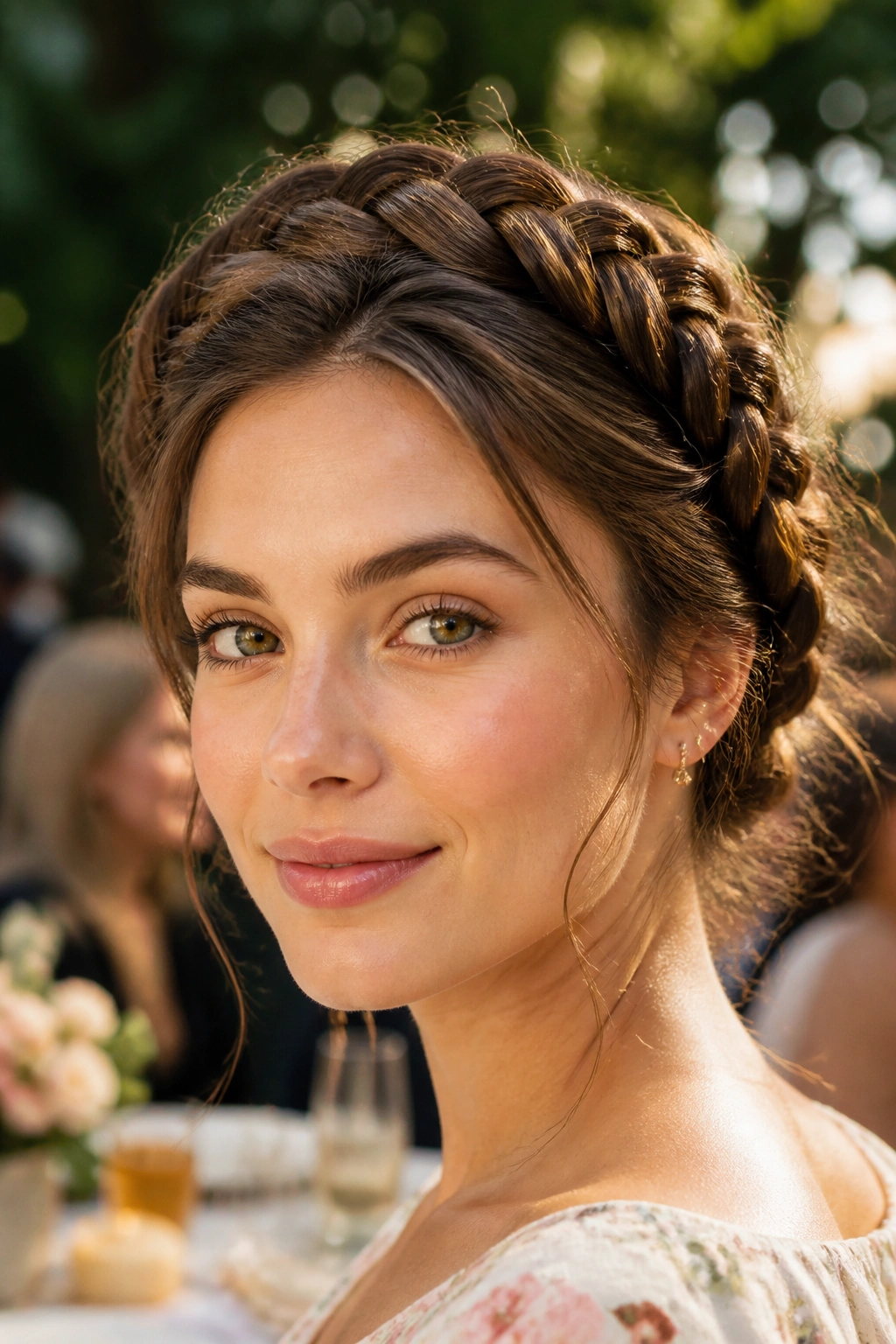
Milkmaid braids can look overly tidy if they’re pulled too tight, and that’s where the retro twist comes in: make the braids fishtail instead of standard three-strand, then leave a little softness around the crown and ears. The shape stays recognizable, but the texture feels richer.
Fishtail braids create a finer, more layered look, which works well when the braids wrap over the top of the head. After they’re pinned, gently widen the braid edges so they feel fuller. Don’t overdo it. You want the braid to look plush, not fuzzy.
This style is strongest on medium to thick hair because it gives the fishtail enough body to show off. If the hair is slippery, a little dry shampoo at the roots helps the braid hold its shape.
I like this for outdoor events, garden parties, or days when you want the hair off your neck but still want a little romance. It’s practical. It also happens to look good from the side, which is always a plus.
24. Mousse-Set Curls with a Side Sweep
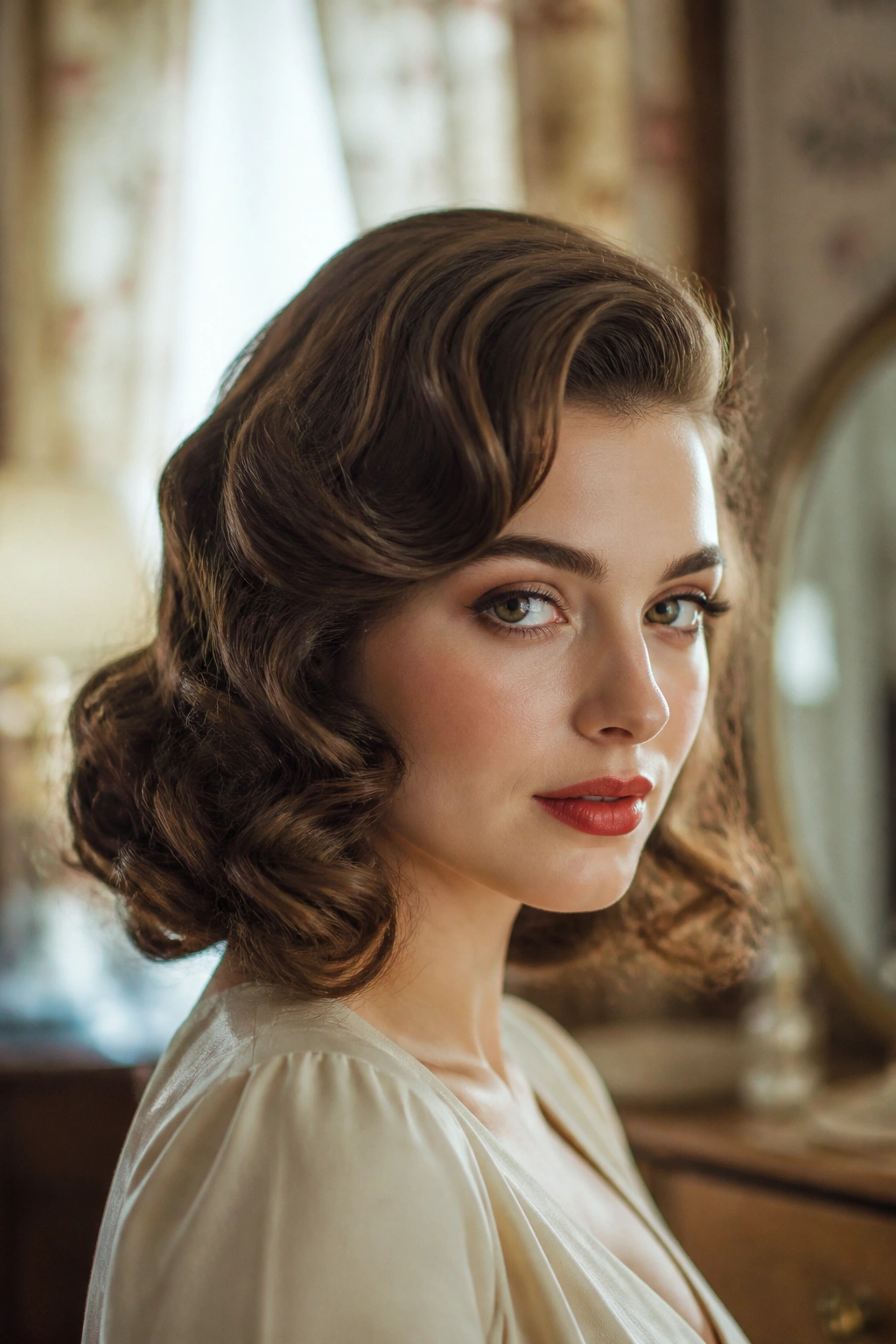
Mousse-set curls are the quiet achiever of vintage hair. They don’t shout. They sit in a soft, controlled shape that looks dressed up without a pile of pins, and the side sweep gives them the retro line.
Unlike tighter curl sets, this version leans into movement. The curls can be loose and touchable, with a brushed side section that folds across the forehead or cheek. That side sweep is doing a lot of work. It breaks up the roundness and gives the style a more old-Hollywood feel.
Set the hair with mousse from roots to ends, then use rollers or a curling iron depending on the texture you start with. Once the curls cool, separate them lightly with your fingers. A brush is optional. If you brush too much, the curl pattern can disappear fast.
This style is useful for medium-length hair that needs body more than shape. It’s easy to wear, and it doesn’t ask for a perfect finish.
25. Rolled Bangs with a Ponytail
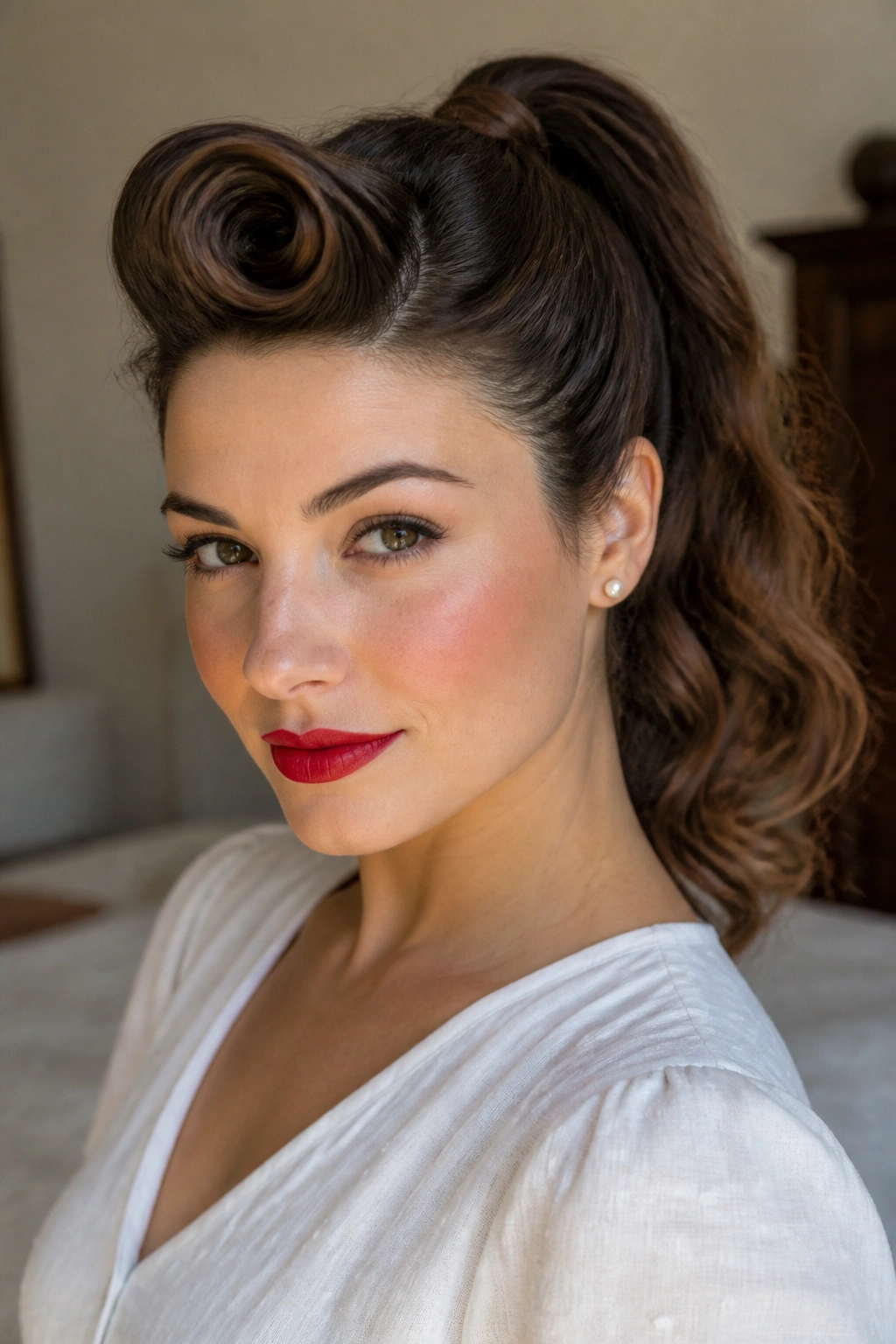
Rolled bangs are a small detail that can change an entire look. Pair them with a ponytail and the result feels playful, polished, and rooted in old-school styling without going full throwback.
Why the Roll Matters
The roll creates lift right at the face, which is where most hairstyles either live or die. If the bangs sit too flat, the ponytail can look plain. If they’re rolled too tightly, the front looks heavy. Aim for a smooth arc that still reads as hair, not armor.
How to Build the Shape
- Part the fringe from the rest of the hair.
- Roll it back toward the crown with your fingers or a small barrel iron.
- Pin it flat at the base of the roll.
- Pull the ponytail low for softness or high for more energy.
This works well on shorter fringe and medium-length hair, especially when you want a style that can move from daytime to evening without a full reset.
26. Brooch-Accent Side Sweep
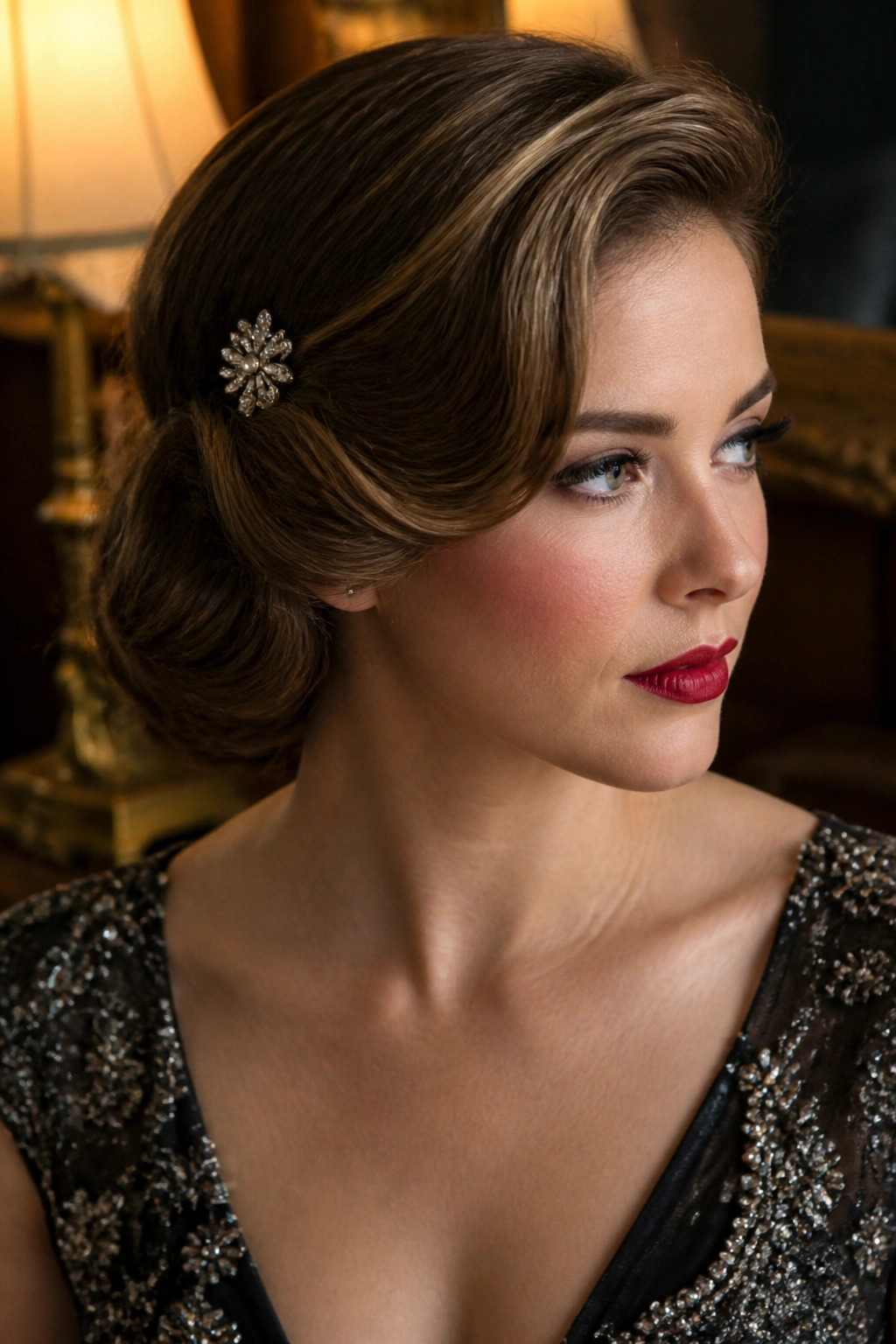
A brooch in the hair sounds old-fashioned, and that’s exactly why it works. Take a deep side sweep, smooth the hair across one side, and pin it with a small jeweled brooch or decorative clip near the temple or behind the ear. The result feels polished, but not overdone.
The hair itself can be straight, waved, or curled under. The accessory is the point of emphasis, so keep the rest of the style clean. If the hair around the brooch is too busy, the detail gets lost. A smooth surface lets the piece do its job.
I like this for evening looks because it adds a vintage note without changing the whole hairstyle. That can be a relief when you do not want to spend an hour styling. You get the mood with one small object.
The best brooches are not huge. A modest piece with a good clasp usually sits better and stays put longer. Heavy ornaments tend to slide. A lighter pin is easier to wear and easier on the scalp.
27. Ribboned Pigtail Braids
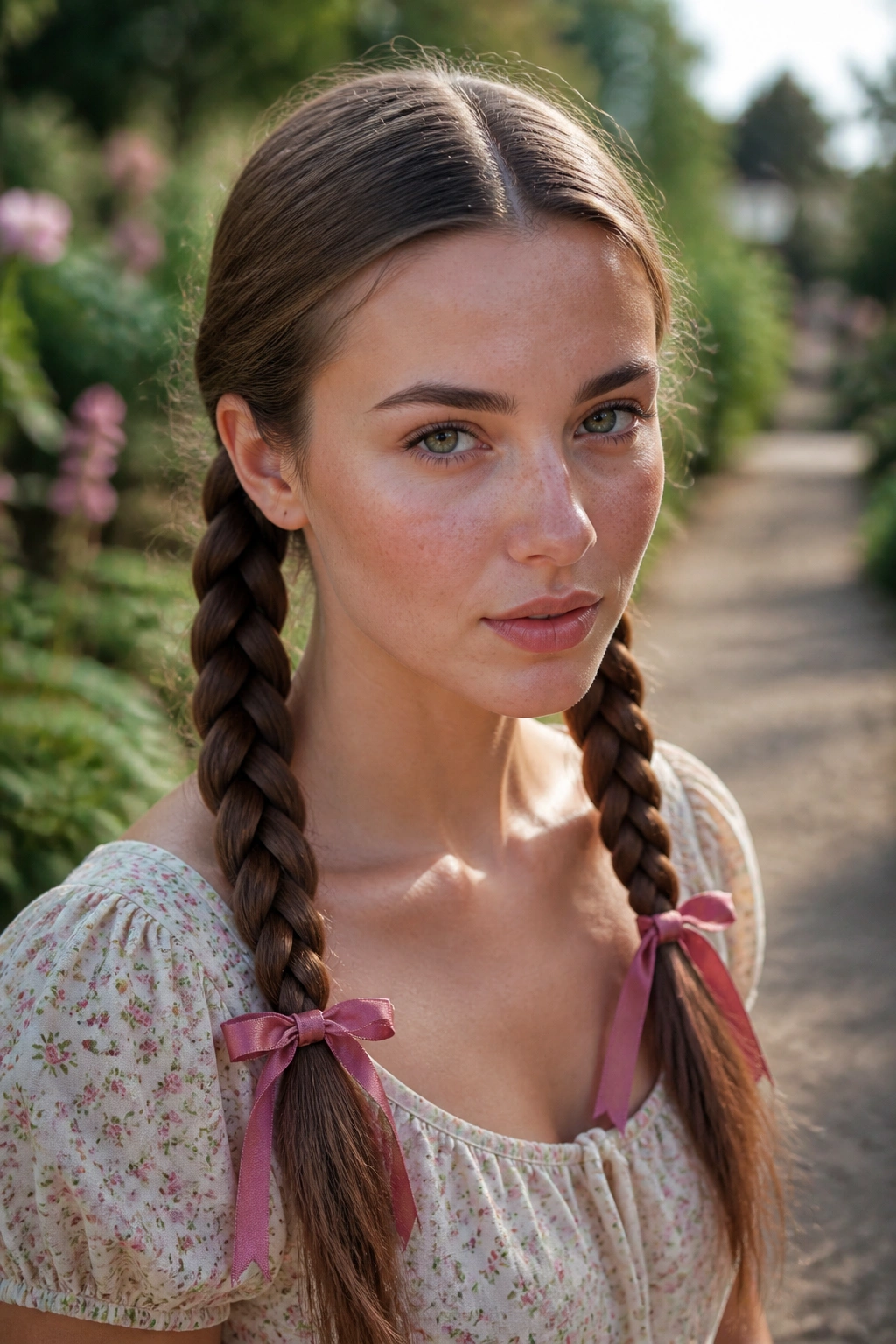
Pigtail braids are not automatically childish. The retro twist comes from the finishing: a sharp middle part, smooth roots, and ribbons tied near the ends instead of giant bows at the top. That changes the whole read.
The braids should sit low enough to feel refined and loose enough to move. If they’re pulled too tight, the style can look severe. If they’re too fluffy, it loses the clean line that makes it feel vintage. Aim for controlled softness.
A satin ribbon works better than a thick fabric bow because it keeps the shape neat. Tie it in a short tail so it doesn’t keep catching on jackets or bags. And if you want a more polished finish, wrap a small piece of hair around the braid base before adding the ribbon.
This style is especially good for straight or wavy hair that needs structure. It also works on a child-like silhouette that gets instantly updated by better placement and cleaner lines.
28. Classic Chignon with Finger-Waved Front
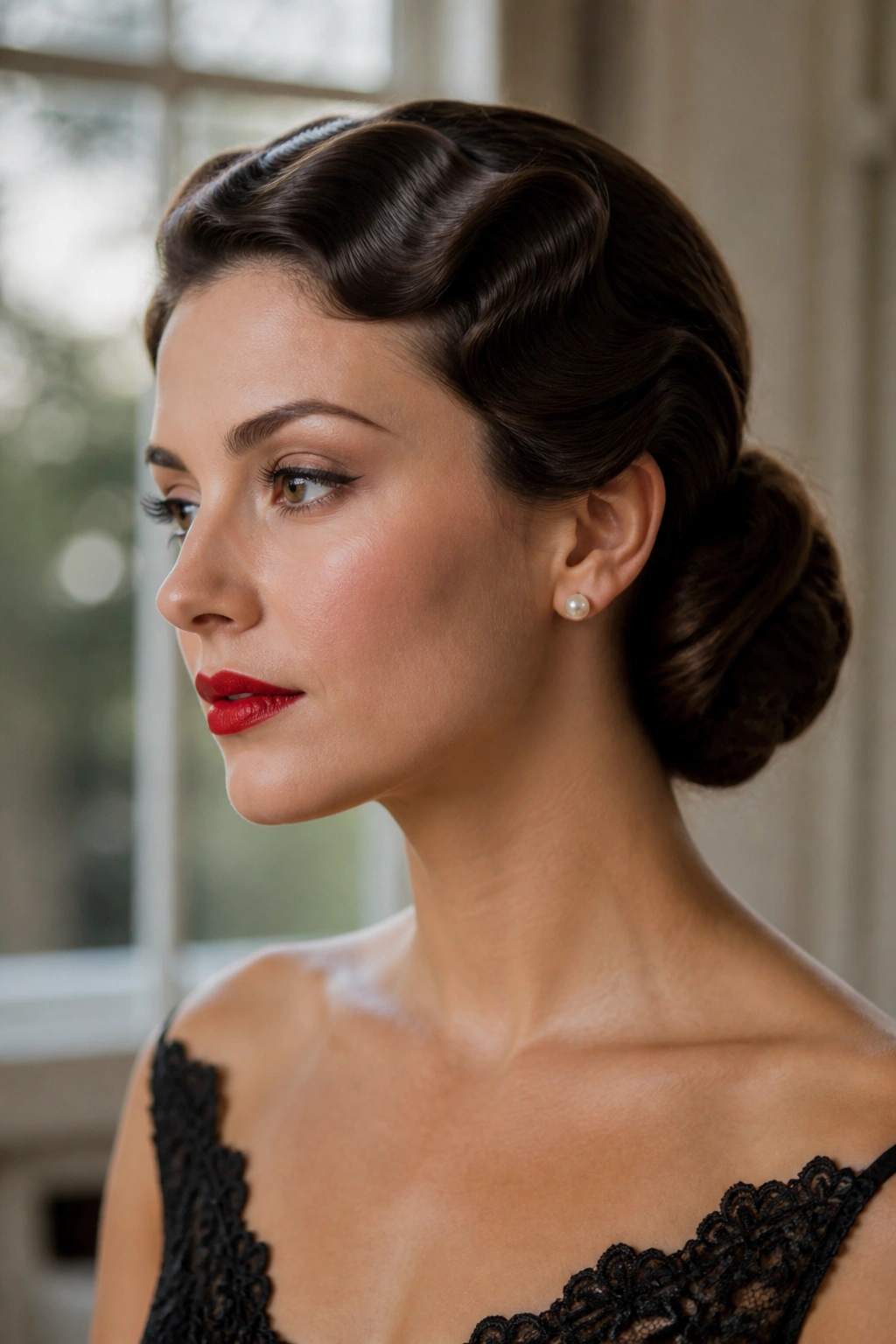
A classic chignon gets a real lift when the front hair is finger-waved or softly sculpted back toward the bun. Without that front detail, the style can feel plain. With it, the whole shape looks more deliberate.
The bun should sit low and smooth, while the front wave curves gently toward one side. That contrast is what gives the style its vintage backbone. You get elegance at the nape and old-film softness at the face. Nice combination.
What to Watch
- Keep the crown smooth, not puffed.
- Pin the chignon tightly enough that it won’t sag.
- Let the wave near the temple stay soft so the face doesn’t look boxed in.
This is one of the strongest options for formal events because it holds its shape and photographs well from every angle. But it also works for a dinner where you want your hair off your neck and still want some character at the front.
29. Soft Afro with a Brushed-Out Vintage Shape
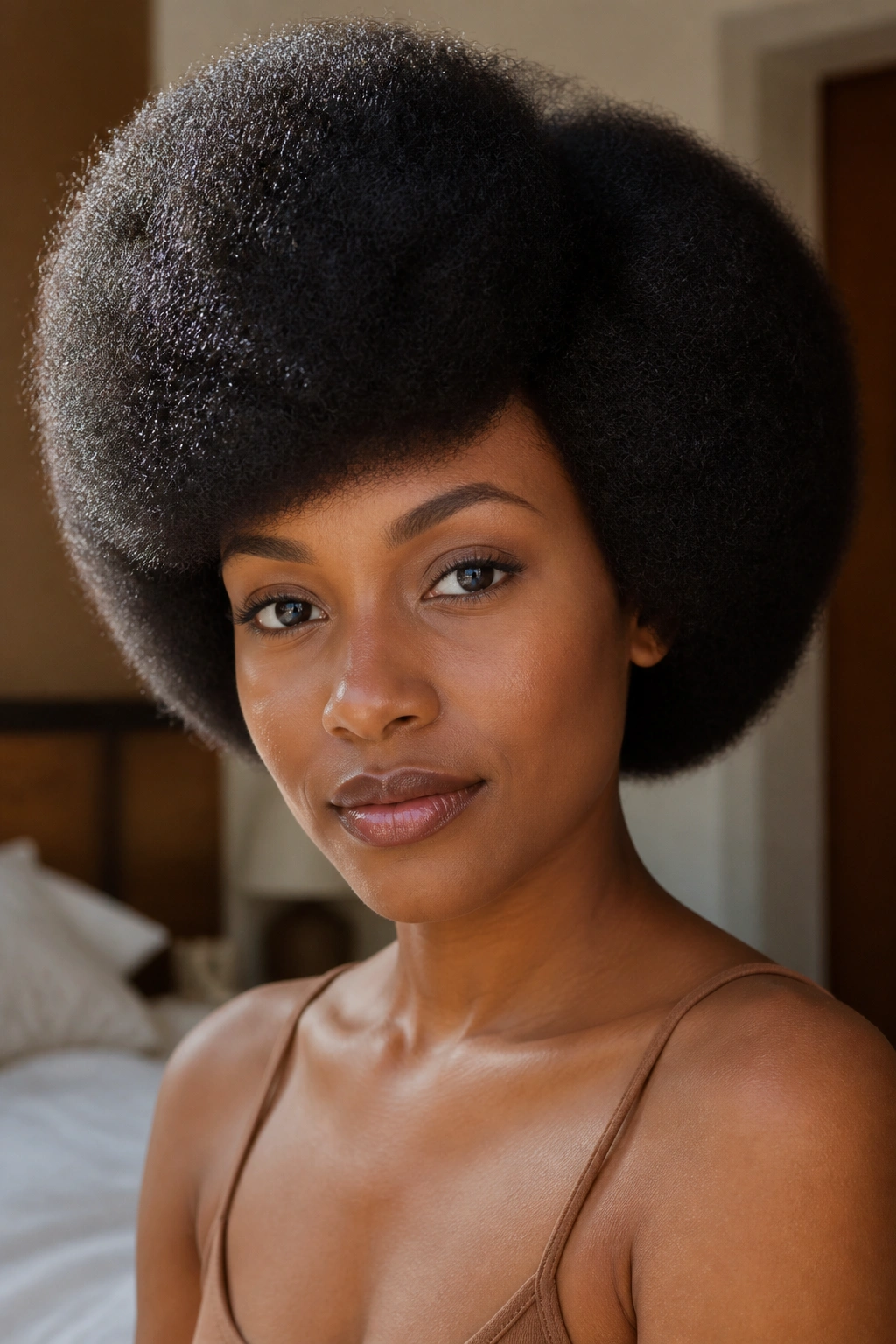
A soft afro can carry vintage energy all by itself, especially when the shape is rounded and the outline is intentional. Add a slightly side-swept front or a sculpted front section, and the look gets a retro note without losing its natural texture.
The key is shape, not force. Start with moisturized hair, then use a wide-tooth comb or a pick at the roots to build the silhouette. Don’t flatten the curls by chasing uniformity. Vintage-inspired hair does not have to mean straightening everything into submission. In fact, that usually makes it less interesting.
A satin scarf, a narrow headband, or a single side clip can give the style a clear finish. The accessory should sit where the eye naturally wants to land, not buried somewhere in the texture. And if the shape is a little fuller on top than on the sides, that can look lovely.
This is one of the most useful retro looks because it respects the hair you actually have. That matters.
30. Victory Roll Crown with Loose Hollywood Lengths
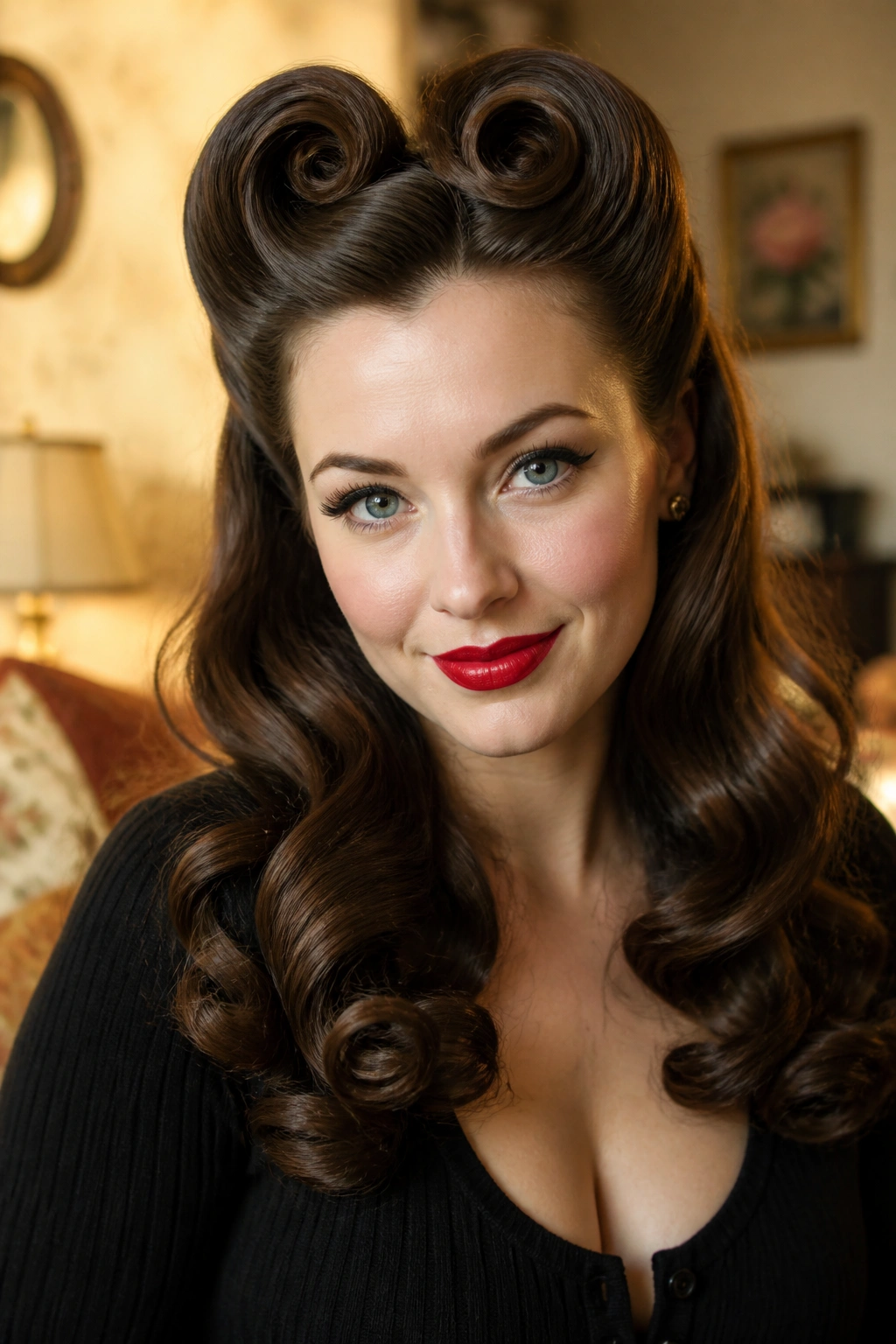
This style borrows the best part of two different eras: the sculpted front from victory rolls and the soft length of Hollywood waves. The crown gets the roll, while the rest of the hair stays loose and glossy. That mix keeps the look from feeling locked to one decade.
The roll should be the frame, not the whole story. Keep it centered or slightly off-center, then let the long lengths fall into smooth bends below. If the waves are too tight, the hair starts to fight the roll. Softer curves work better here.
It’s a smart choice for long hair because it gives you structure near the face and movement everywhere else. You also get a little more balance than a full set of rolls, which can be too much for everyday events. If the front feels too heavy, leave a thinner section out around the temples and tuck it back loosely.
This is the kind of style that works when you want people to notice the hair without staring at it like it’s a costume piece. That balance is rare, and worth chasing.
