



When light hits hair with a warm undertone, it doesn’t just sit on the surface; it glows. That is the fundamental difference between a flat, cool ash and a vibrant, cozy color. We often get caught up in chasing the trend of icy, platinum locks, but there is a timeless, lived-in quality to warm tones that simply feels more human. It mimics the natural sun-kissed look we get after spending long afternoons outdoors, and it requires significantly less chemical heavy lifting than stripping every molecule of pigment from your hair.
Choosing a warm highlight isn’t just about picking a shade that looks nice on a model; it is about how that color interacts with the light in your environment and, more importantly, your skin’s own undertones. If you have a natural tan or gold running through your skin, cool highlights can make you look sallow or drained. Warmth brings life back into the face. It creates a bridge between your darker roots and the lighter ends, making the transition feel like a gradual process rather than a harsh stripe of color.
You might think warm highlights automatically mean bright, brassy orange, but that is a misconception that has kept too many people from trying them. Warmth exists on a massive spectrum—from the softest, butter-like honey to the deep, resonant richness of mahogany and burnt sugar. The key is in the placement and the intensity. When you dial in the right tone, you are essentially bottling the effect of the golden hour in your hair color. It softens features, adds the illusion of volume, and honestly, it grows out a whole lot better than its ash-toned counterparts.
1. Caramel Ribbon Highlights
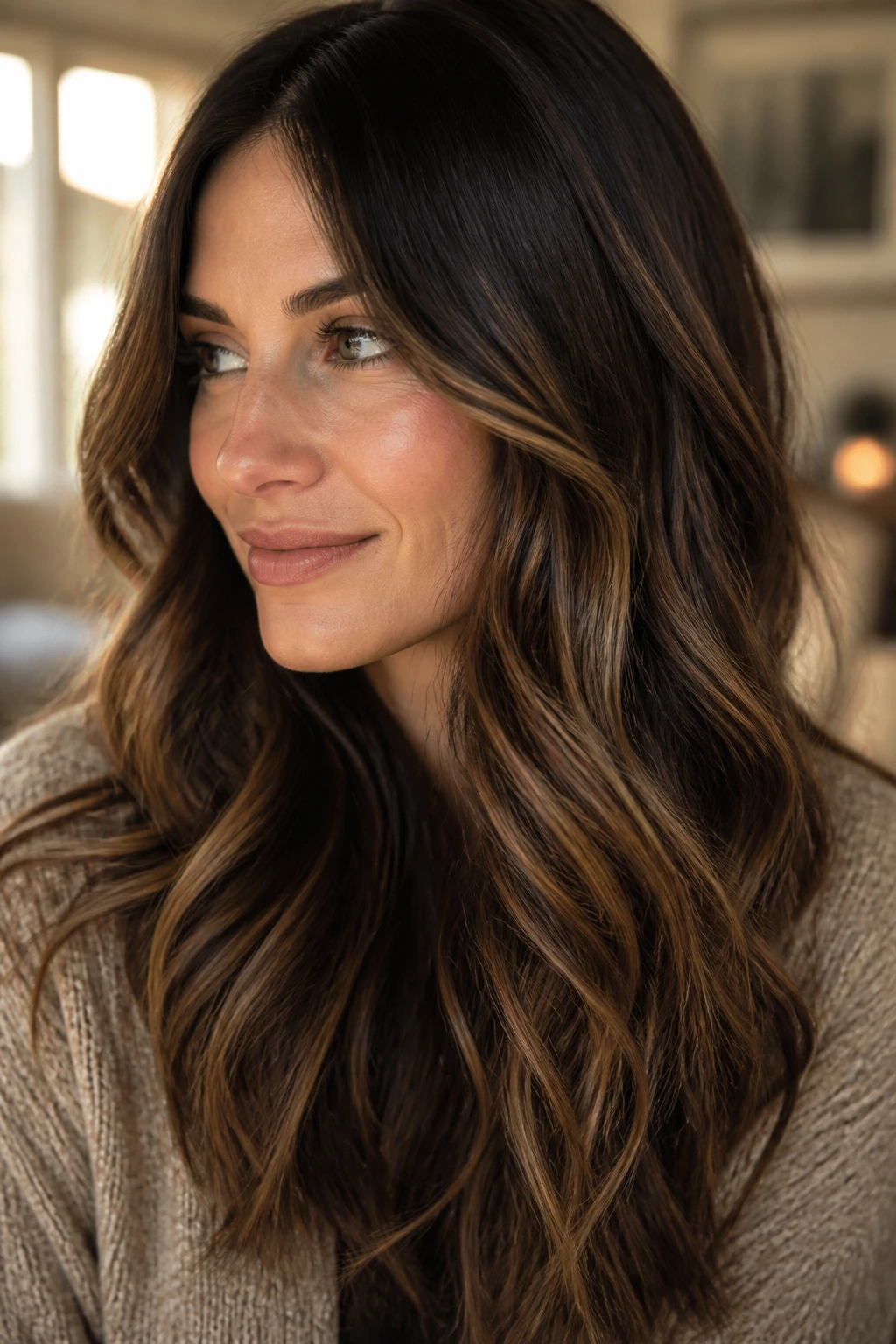
Think of caramel as the bridge between dark, cool brown and a lighter, golden blonde. These highlights are not about achieving maximum contrast; they are about adding movement. When you weave caramel ribbons through a dark brunette base, you break up the monotony. The hair stops looking like a single, solid sheet and starts having texture.
Why It Works for Darker Bases
If your hair is naturally dark brown or black, trying to go platinum usually results in significant breakage. Caramel is far more forgiving. You only need a subtle lift, which keeps the integrity of your hair fiber intact. The result is a seamless blend that catches the light whenever you move your head.
Achieving the Look
Ask your colorist for “hand-painted caramel ribbons” rather than traditional foils. You want the color to start slightly below the root, so as your hair grows out, there is no harsh line of demarcation. It looks like you have spent the summer at the beach, even if you have been inside all year.
Pro tip: Use a color-depositing conditioner once a week. Because caramel is a warm tone, it is prone to fading if you wash it with harsh, clarifying shampoos. Keep the pigment rich by refreshing it in the shower.
2. Toasted Honey Balayage
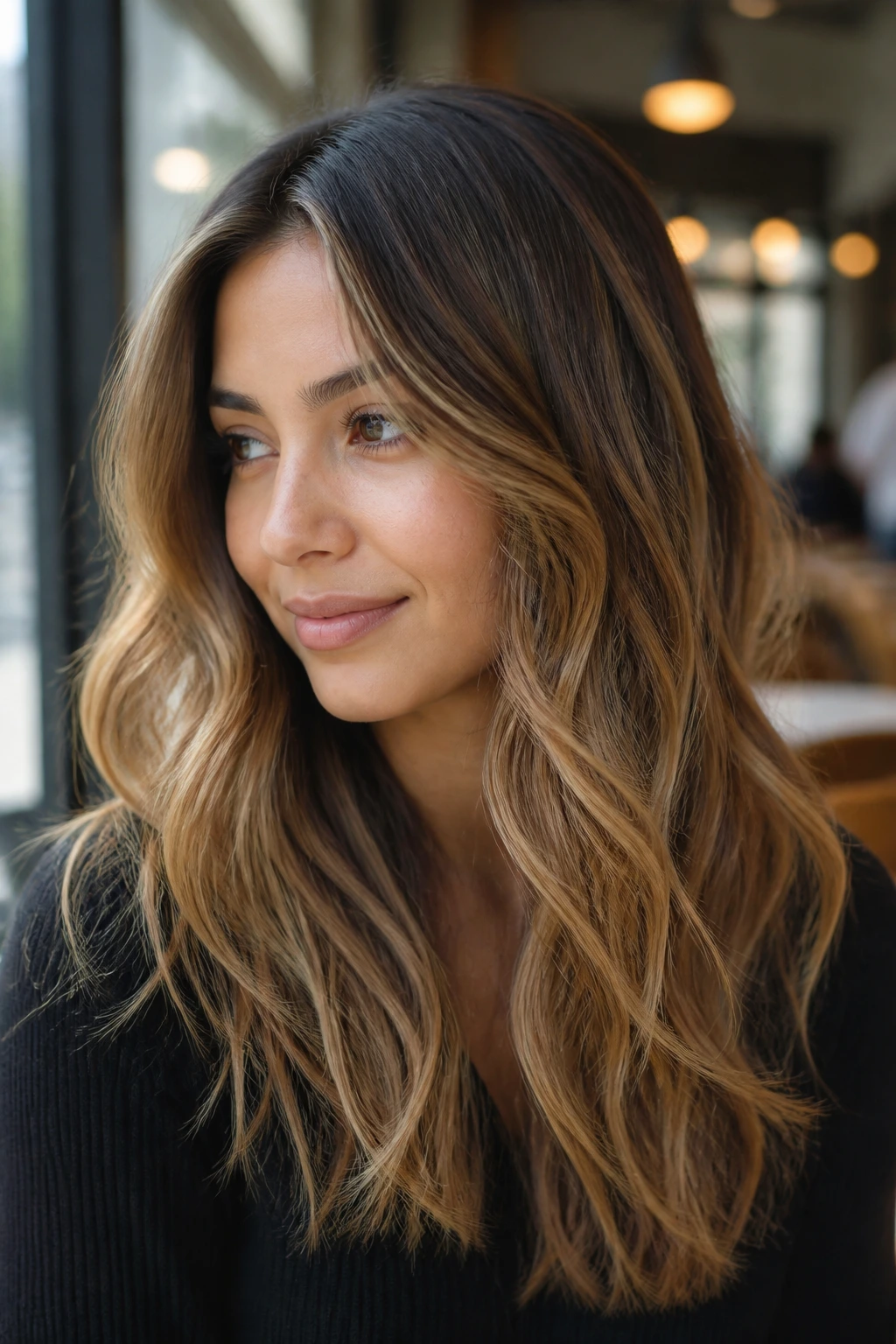
Toasted honey is distinct from basic gold. It has a slightly amber, syrupy quality that looks incredibly natural on anyone with a medium-to-olive complexion. It’s not quite blonde, and it’s not quite brown. It sits comfortably in that sweet spot of “bronde,” which is essentially the ultimate low-maintenance color profile.
The Science of the Tone
What makes this look “toasted” is the inclusion of slightly darker golden lowlights woven into the lighter honey pieces. This interplay creates depth. If you just dye hair one shade of honey, it can look flat. By mixing a toasted, deeper amber with a brighter honey, you create a 3D effect that makes thin hair appear significantly thicker.
Styling for Maximum Impact
This look really shines when you add a slight wave to the hair. Straight hair can sometimes hide the dimension of a balayage, but when you introduce curls or soft waves, the different tones blend and refract light.
- Start with a mousse that adds texture.
- Use a large-barrel curling iron to create loose, relaxed waves.
- Finish with a lightweight shine spray to make the gold tones pop.
3. Copper Penny Ribbons
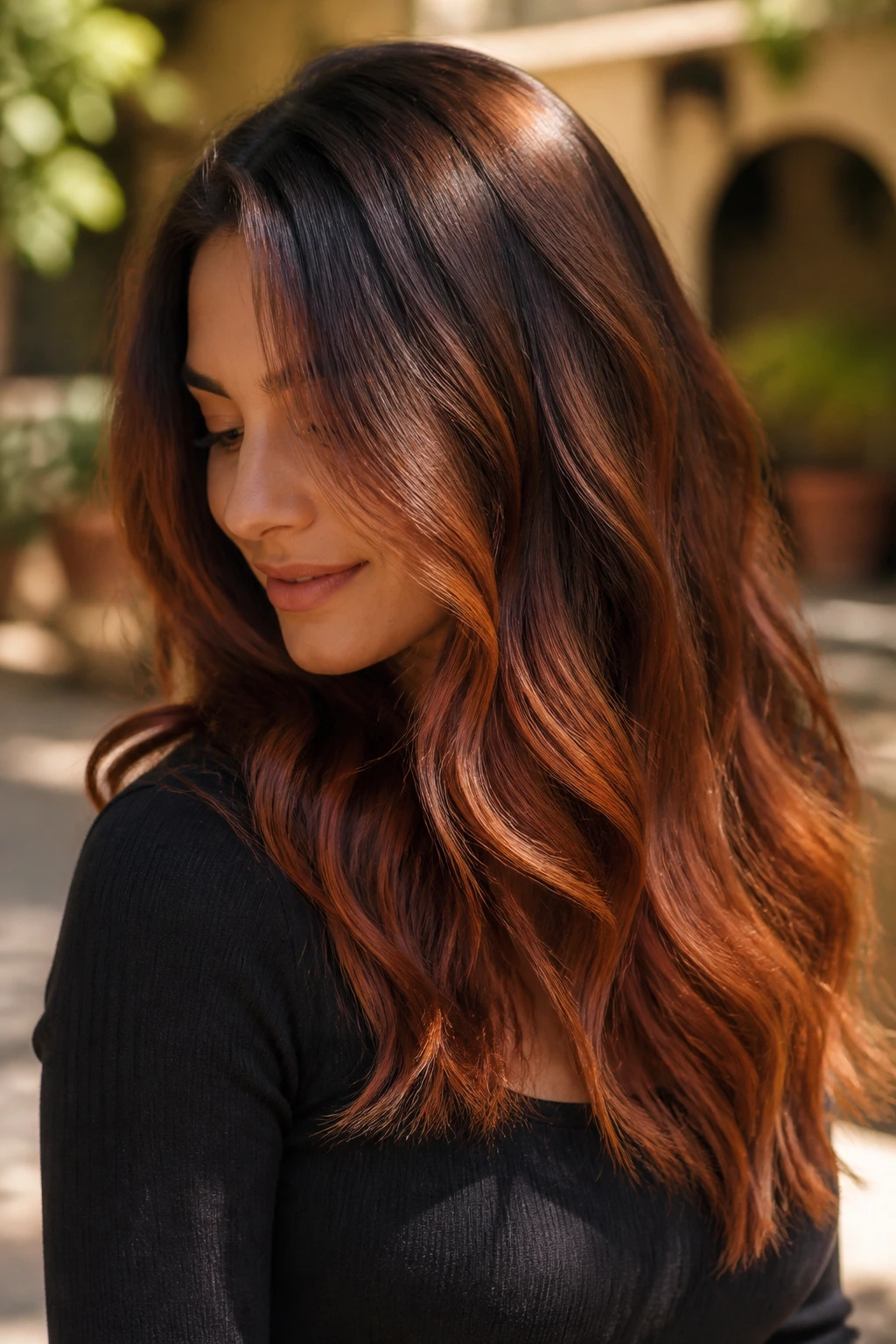
Copper is having a massive moment, and for good reason—it is bold, it is warm, and it is undeniably cozy. Copper penny highlights lean into the red-orange spectrum, but they stay grounded enough to look sophisticated rather than artificial. These are essentially thin, dense ribbons of color that run from mid-shaft to ends.
Who Should Avoid This
If your skin is incredibly pink or has very strong cool undertones, bright copper might accentuate redness in your face. However, for those with neutral, yellow, or olive undertones, this color is a game-changer. It makes the skin look clearer and adds a certain spark to the eyes, especially if you have green or hazel irises.
Managing the Fade
Red-based colors are notorious for fading faster than any other dye. The molecule size of red pigment is larger, which makes it harder for the hair shaft to hold onto it long-term. You cannot treat copper like you treat blonde. You must lower your wash frequency and use cold water. Every time you wash with hot water, you are essentially opening the cuticle and letting the vibrant copper rinse down the drain.
4. Cinnamon Spice Babylights
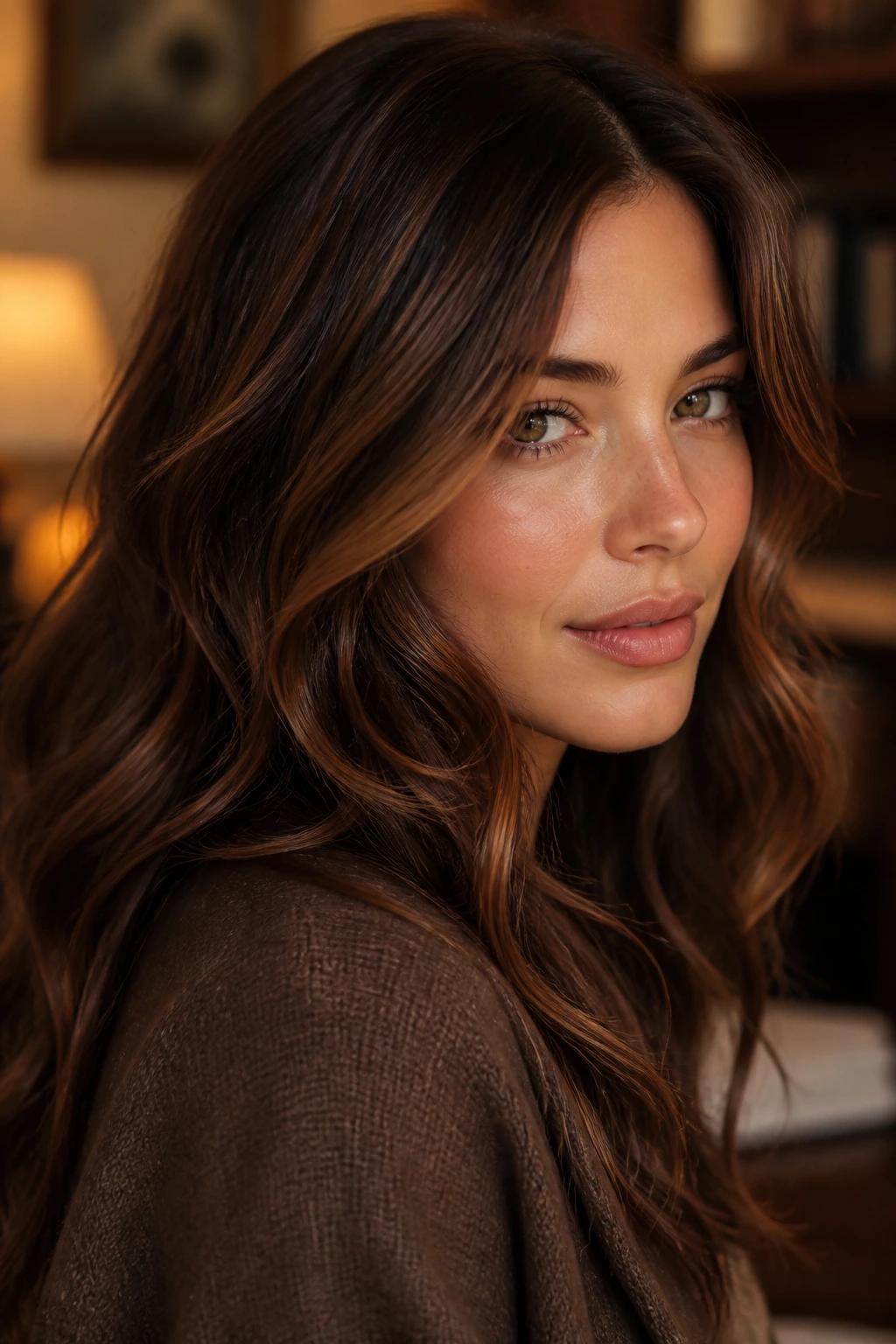
Babylights are the antithesis of the chunky highlights we saw in the late nineties. These are micro-fine, delicate strands of color woven throughout the head to mimic the way a child’s hair lightens naturally in the sun. When you make them “cinnamon spice,” you are essentially adding a warm, reddish-brown tint to those fine strands.
Subtle Sophistication
This is the look for someone who wants a change but is terrified of looking “processed.” It is a whispering color—it doesn’t scream for attention. Instead, it creates a subtle warmth that glows when you walk past a window. It is perfect for professionals who want to look polished but still want a bit of personality in their hair.
The Application Process
Because these are micro-fine, the process takes time. You are essentially painting or foiling tiny sections of hair. It is tedious work, but the payoff is that you don’t need to go back for touch-ups nearly as often. Since the roots remain your natural color, the grow-out is completely invisible. You could go six months without a touch-up if you really wanted to.
5. Golden Hour Face-Framing
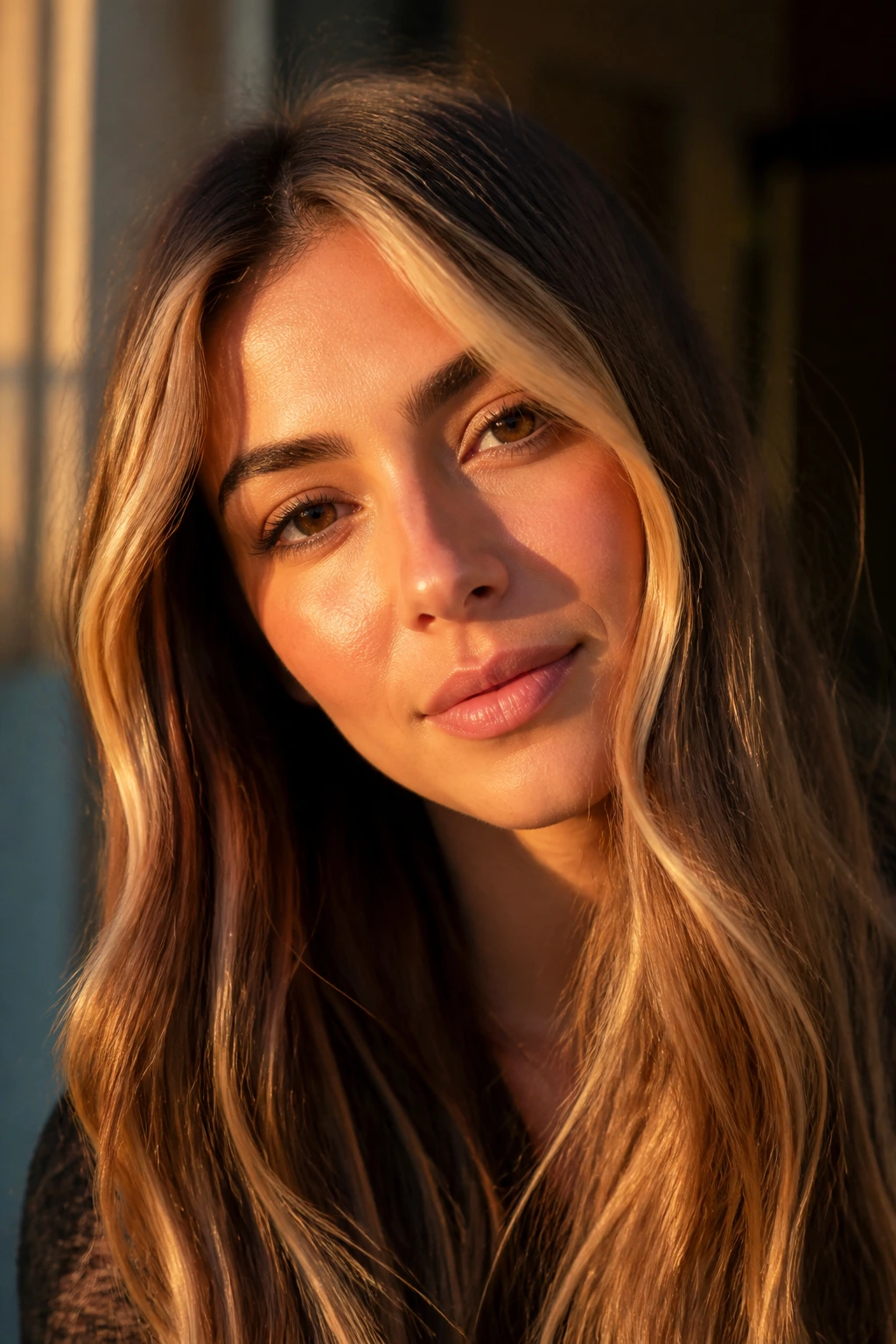
There is a specific technique called “money piece” or “face-framing” where the colorist concentrates the lightening agent only on the strands that fall around your face. When you combine this with a warm, golden hue, you get what I call the “golden hour” effect. It’s like having a permanent ring light on your face.
Why Placement Matters
Most people make the mistake of spreading highlights evenly across their head. But our eyes naturally gravitate toward the face first. By concentrating the brightest, warmest gold right next to your eyes and cheekbones, you brighten your entire complexion. It acts like a highlight in makeup—literally reflecting light onto your skin.
Selecting the Right Shade of Gold
Not all golds are created equal. You need to look at your veins. If they appear green, go for a deep, yellow-based gold. If they appear more blue, look for a “champagne gold” that has just a hint of neutrality to it. If you choose the wrong gold, you will look tired rather than illuminated.
6. Butterscotch Ombré
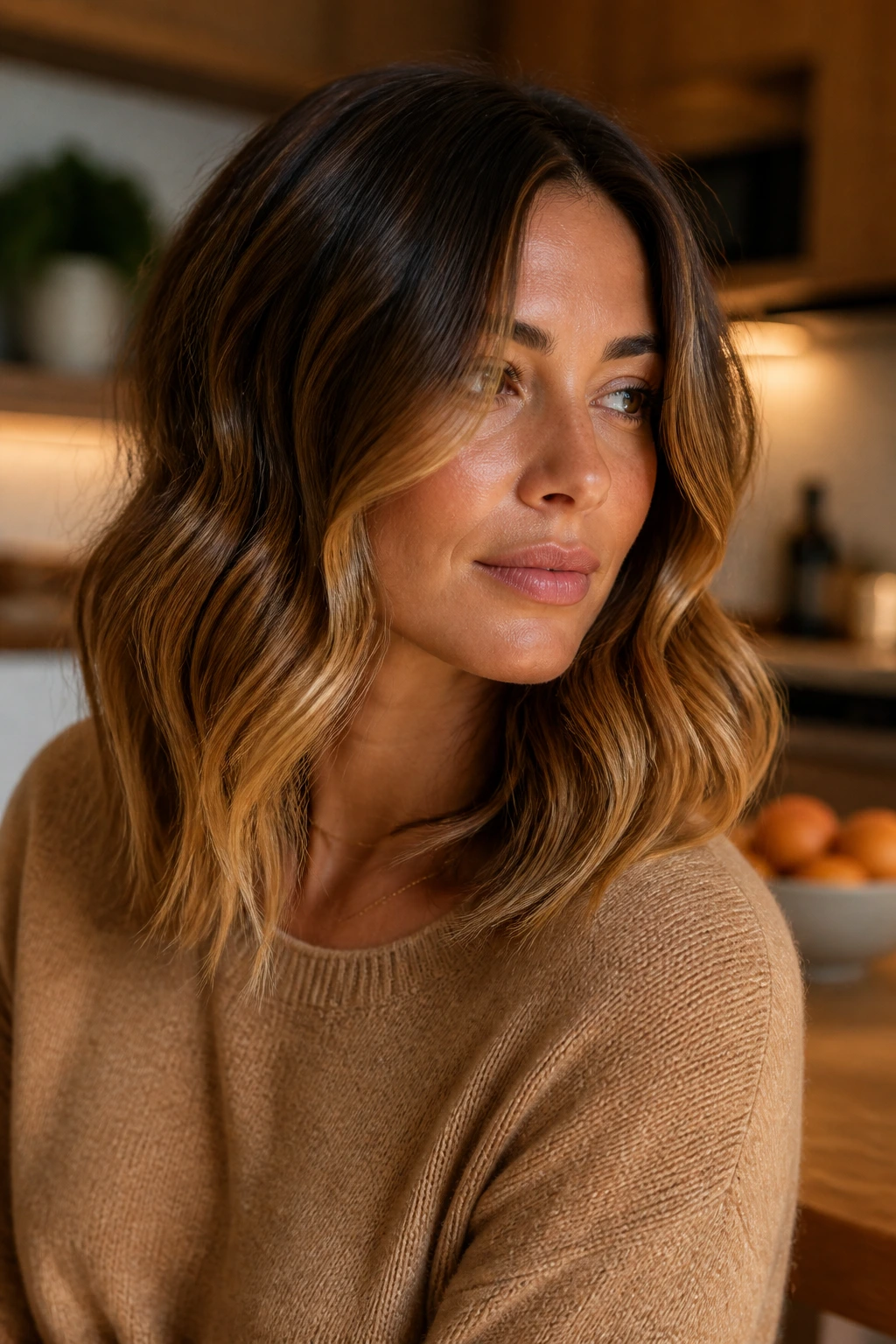
An ombré—where the hair fades from a darker root into a lighter end—can look dated if the transition is too abrupt. But a butterscotch ombré is different. It is a slow, gradual melt. Think of it like a latte where the espresso and the milk slowly combine.
The Transition Zone
The success of this look lies in the “smudge.” Your colorist should take the base color and pull it down through the mid-lengths, blurring the line where your natural hair ends and the butterscotch color begins. If you see a distinct horizontal line of color, the technique was rushed.
Maintenance Reality
Since this is an ombré, your roots are your natural color. This is the ultimate “lazy” hair color, and I say that with the utmost respect. You only need to visit the salon once or twice a year to refresh the ends. In between, you can use a gloss treatment to keep the butterscotch tone from turning muddy.
7. Auburn Flickers
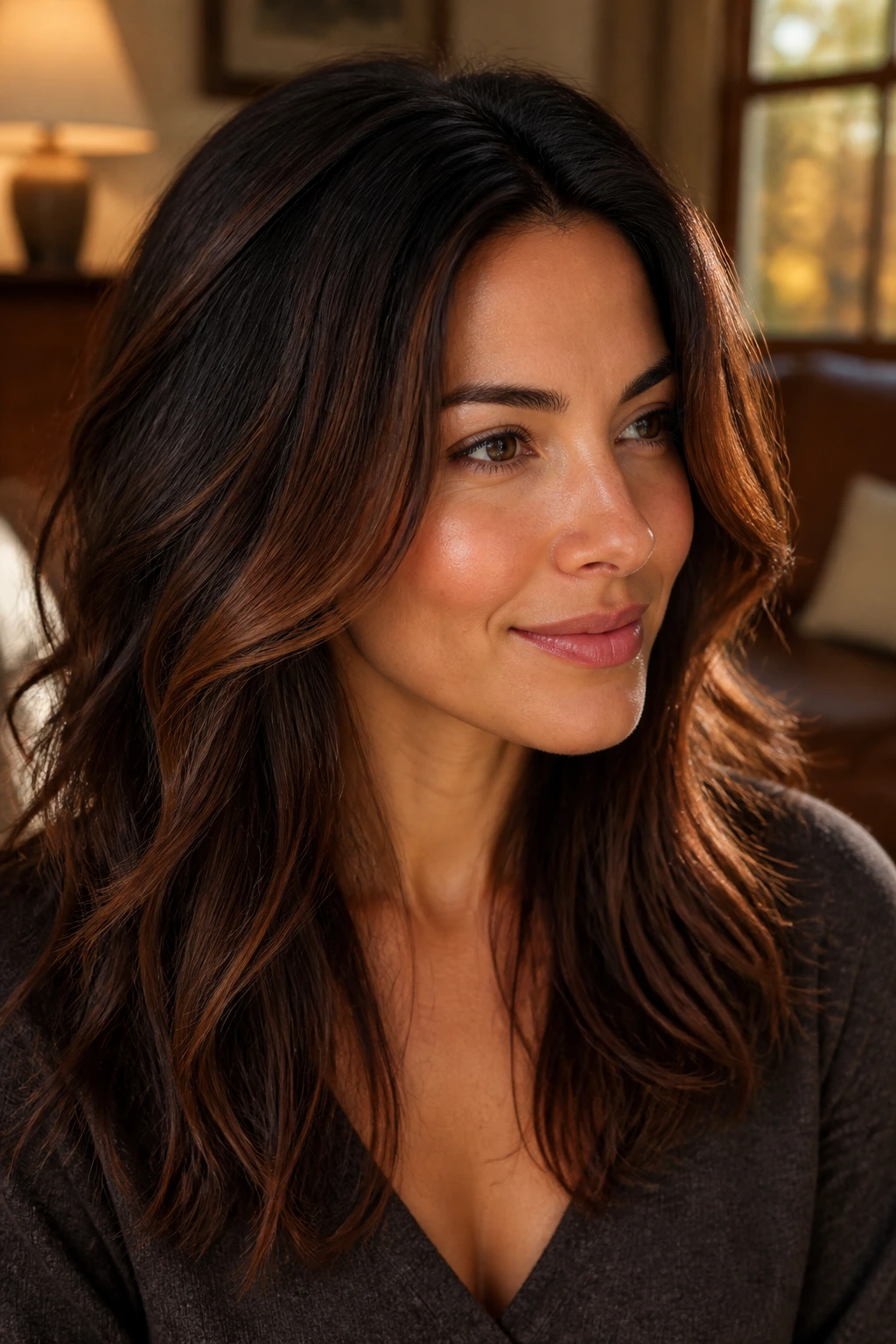
If you are a brunette who wants to flirt with red without fully committing, auburn flickers are your answer. These are not chunky highlights; they are subtle, sporadic strands of deep auburn or cherry-wood color placed throughout the dark hair.
The Visual Effect
When you are standing still, the hair looks dark and natural. But when you are in motion, or when the sun hits your hair, the auburn flickers ignite. It is like hidden treasure. It adds immense complexity to dark hair that would otherwise look heavy or one-dimensional.
Color Pairing
Auburn works beautifully with dark chocolate or espresso bases. Avoid putting auburn flickers on a base that is already too light or blonde, as it can look a bit like a coloring accident. You want that contrast between the dark base and the slightly lighter, warmer red tones.
8. Vanilla Bean Streaks
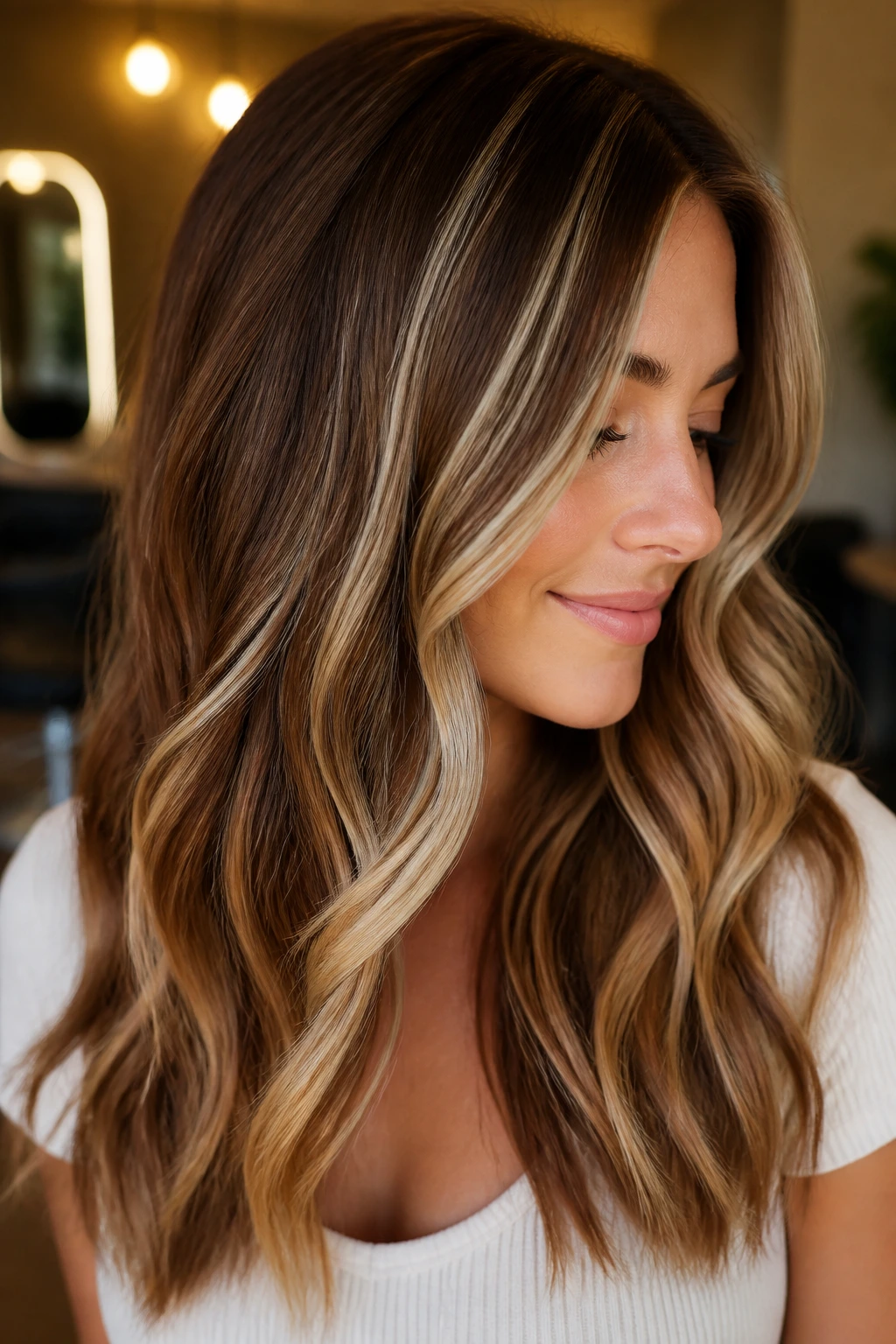
I know, I know—vanilla sounds like it should be a cool, ash-blonde tone. But in the context of “warm highlights,” we are talking about a rich, creamy vanilla—not a stark white. Think of the inside of a vanilla bean pod. It has those flecks of warmth. These are creamy, buttery streaks that provide a high-contrast look against a warm, chestnut base.
Achieving the Creamy Texture
To get this look, your hair needs to be lifted to a pale yellow level and then toned with a warm, beige-gold gloss. Do not let the colorist use a silver or violet toner, or you will lose the “vanilla” effect and end up with gray, lifeless hair. The goal is creamy, not icy.
Daily Care
High-contrast hair requires more attention. You will want to use a moisture mask weekly. Because you are lifting the hair to a level where it can accept vanilla tones, you are removing some of the natural hair structure. Put the moisture back in, or those creamy streaks will look like dry straw.
9. Warm Espresso Bronde
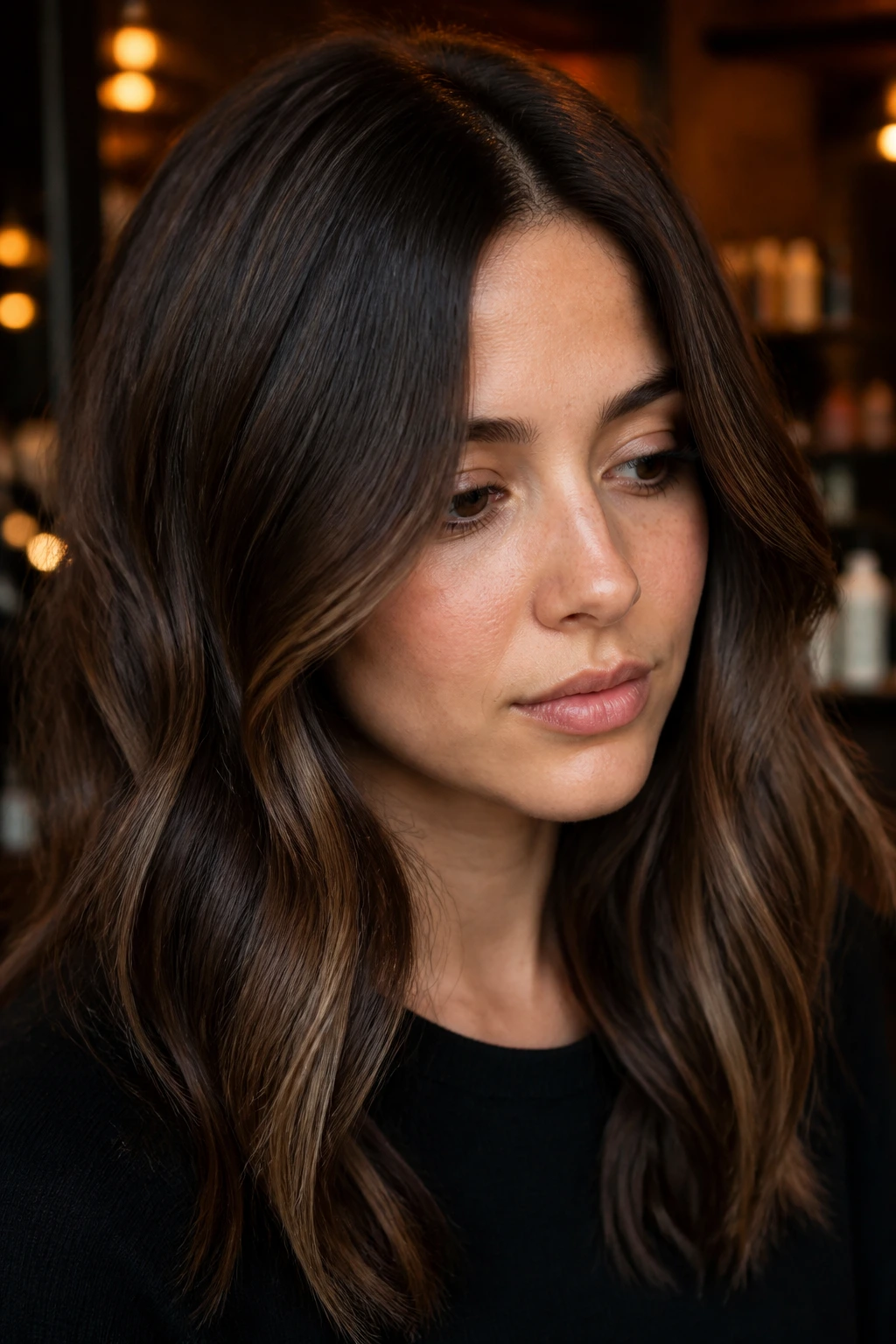
Bronde is the portmanteau of brown and blonde. A warm espresso bronde is basically a brunette base with subtle, barely-there highlights that are only one or two shades lighter than the root. It is dark, moody, and sophisticated. It doesn’t look like you had a massive hair transformation; it looks like your hair is just healthier and shinier.
The “Expensive” Look
This is widely considered the “old money” look of hair. It is understated. It doesn’t scream, “I just spent four hours in a chair.” It screams, “I have naturally lustrous, multidimensional hair.”
Who This Suits Best
This is the perfect choice for someone with fine hair. Because the highlights are only a shade or two lighter, you aren’t doing significant damage to the hair shaft. You keep the fullness of your natural hair while gaining that beautiful, light-reflecting dimension that makes fine hair look fuller.
10. Amber Glow Lowlights
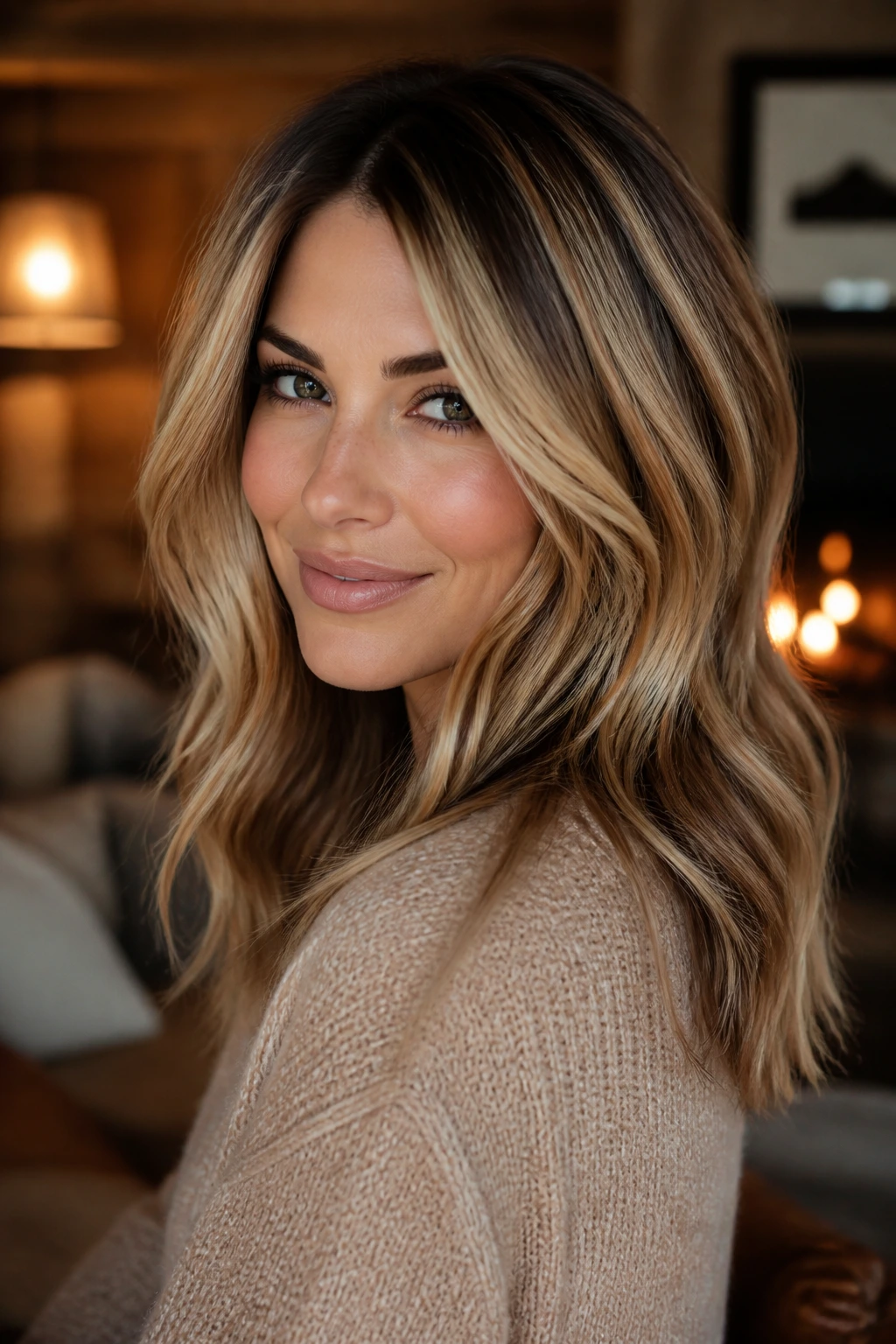
Sometimes the key to a warm look isn’t highlights—it’s lowlights. If you have been highlighting your hair for years and it’s become too bright or blonde, you need to add warmth back in. Amber lowlights are the perfect remedy.
The Power of Lowlights
We tend to think that adding color means lifting, but depositing color is just as impactful. By weaving amber-colored strands into an overly lightened head of hair, you add back the shadow and the richness. It makes the remaining blonde highlights pop even more because they now have a contrasting, darker background to sit against.
Finding the Right Amber
Amber is a warm, orange-brown. It is distinct from red. It shouldn’t look like a sunset; it should look like polished wood. If your hair is currently a washed-out, cool blonde, this is the quickest way to “cozify” your entire look without damaging your hair further.
11. Chai Latte Dimension
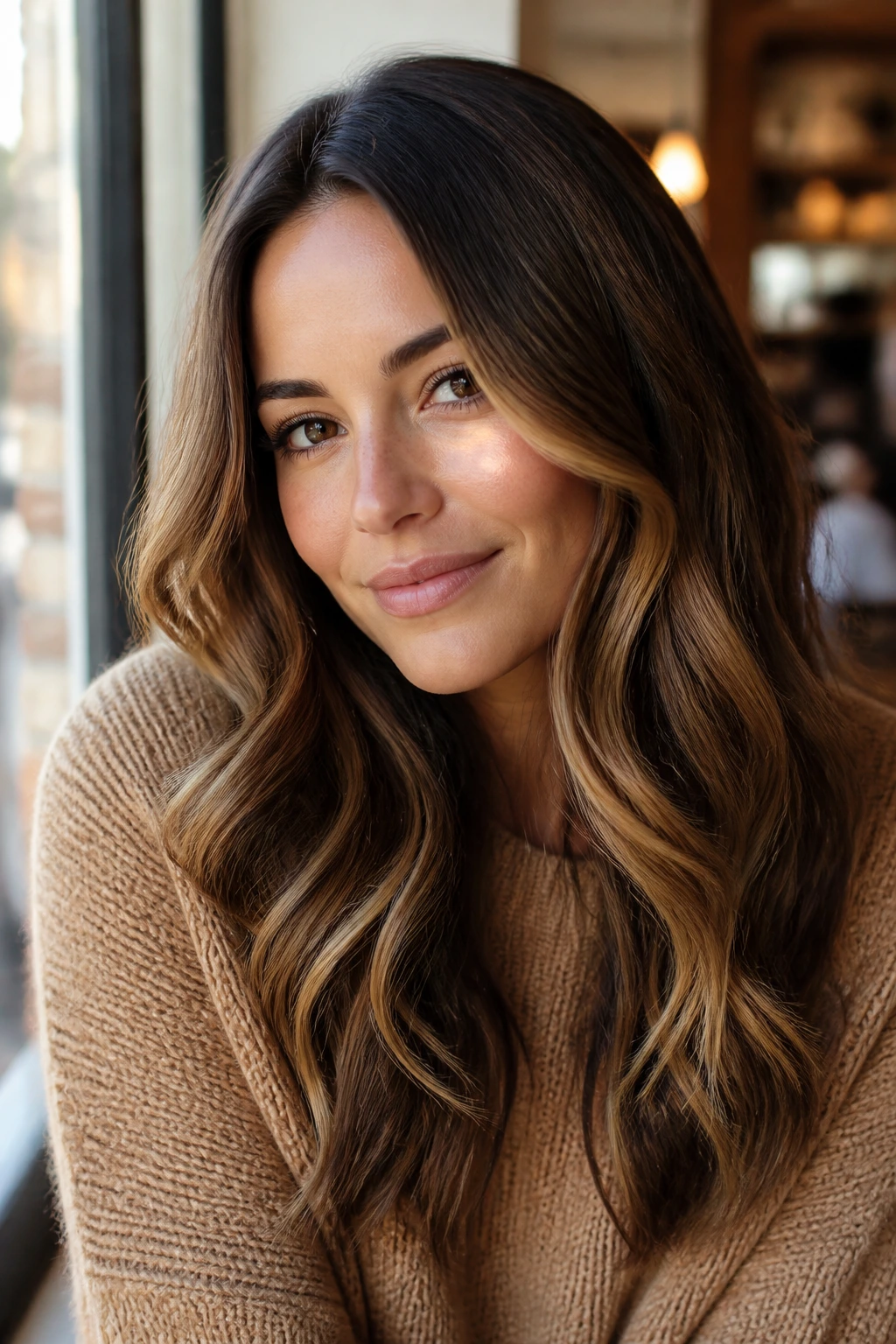
Chai latte hair is all about spices—ginger, cinnamon, cardamom. It is a mix of muted, warm tones that create a soft, earthy blonde result. It isn’t a bright blonde, and it isn’t a dark brown. It is a muted, sophisticated, neutral-warm blend that works on almost every skin tone.
The Mixture
The secret here is the blend. You want about 60% of your hair to be a neutral, light brown and 40% to be a warm, spice-toned blonde. It’s a very balanced look. Because it relies on mixing, it is one of the most forgiving styles to grow out.
Salon Instructions
When you go to the salon, bring a photo of a chai latte. It sounds funny, but it’s actually a perfect descriptor. You want the creamy, milky foam color mixed with the spicy, darker brown tea color. A good colorist will understand immediately that you are looking for a multi-tonal, muted-warm palette.
12. Spiced Pumpkin Pieces
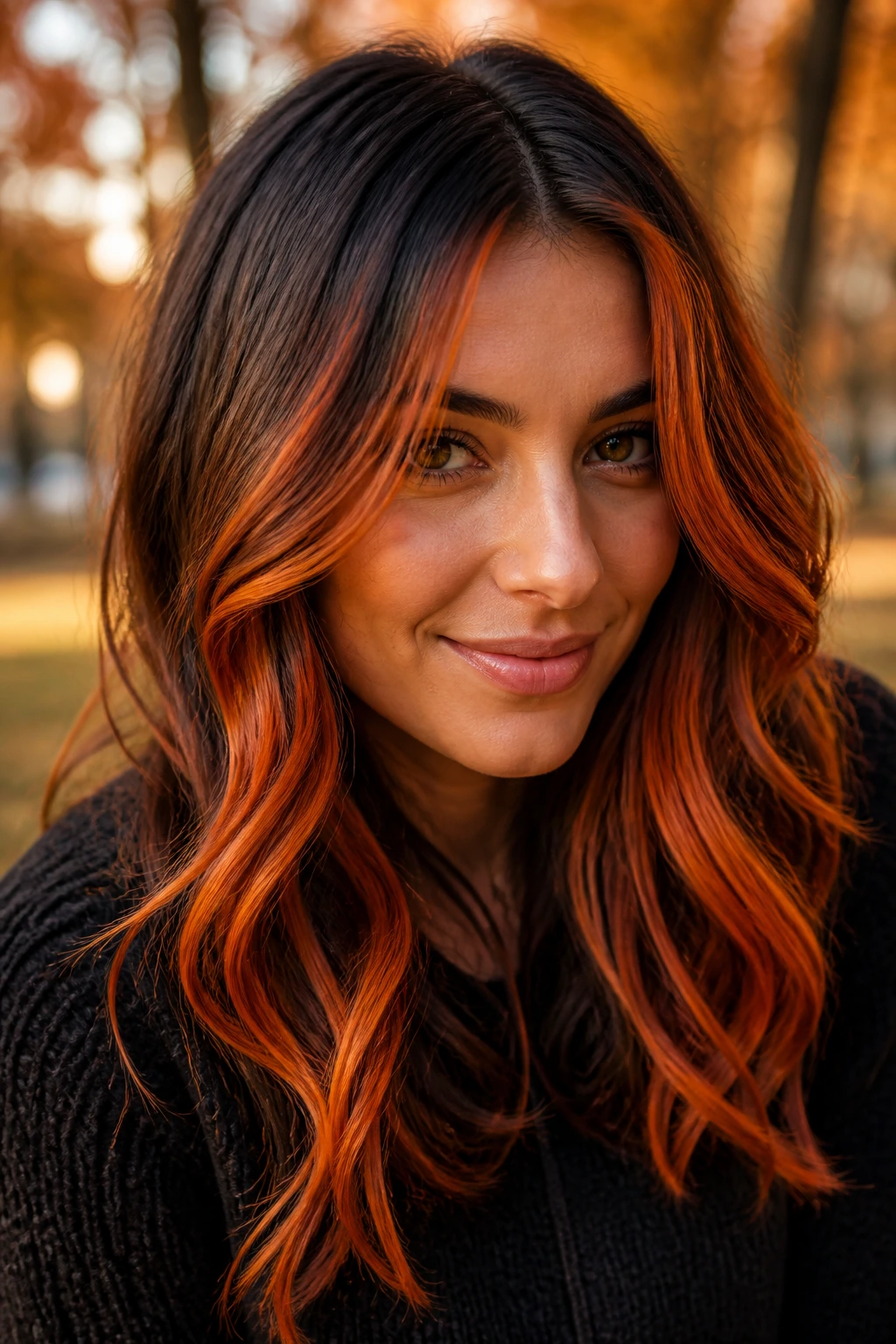
Don’t let the name deter you. Spiced pumpkin is a beautiful, vibrant ginger-orange that is perfect for those who want to be bold but don’t want to go full-on cherry red. This is a very warm, bright, and cheerful highlight.
The Bold Approach
These are not subtle babylights. Spiced pumpkin highlights are distinct, noticeable ribbons of color. They look incredible against a darker hair color, like a medium brown or a deep auburn. They make a statement. If you are the type of person who loves accessories or bold makeup, this is the hair color for you.
Maintenance Warning
Vibrant oranges and pumpkin tones fade notoriously fast. You will need to commit to a refresh glaze every six to eight weeks. If you let it go too long, you will end up with a pale, brassy yellow that loses all the “spiced” depth. Commit to the process, and the payoff is stunning.
13. Rich Toffee Roots
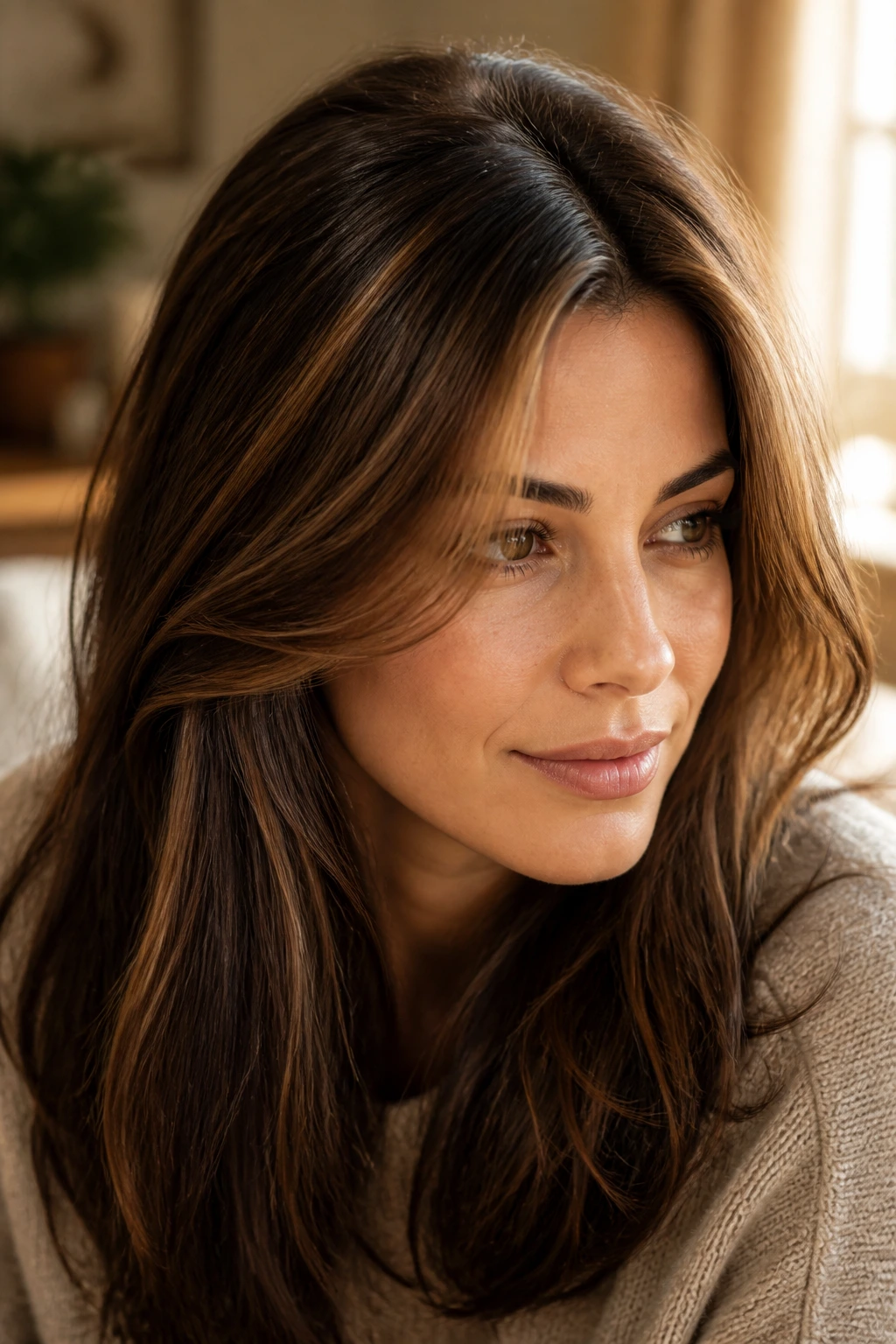
Often, we talk about highlights being at the ends. But what about the roots? Rich toffee roots involve taking the area around your part and crown and painting in warm, toffee-colored highlights while leaving the rest of your hair a darker, chocolatey brown.
Why It’s Unique
Most highlights stop a few inches from the root. By bringing these toffee highlights up to the crown, you are changing how light hits your face. It’s almost like a halo of warmth around your head. It makes the hair look like it is catching the sun from above.
Growth Strategy
The genius of this is that the roots are the highlight. When your hair grows out, it blends perfectly with the toffee-colored roots you already have. It is one of the most sustainable coloring techniques available. You can stretch your salon visits to months at a time.
14. Mahogany Sunset Tints
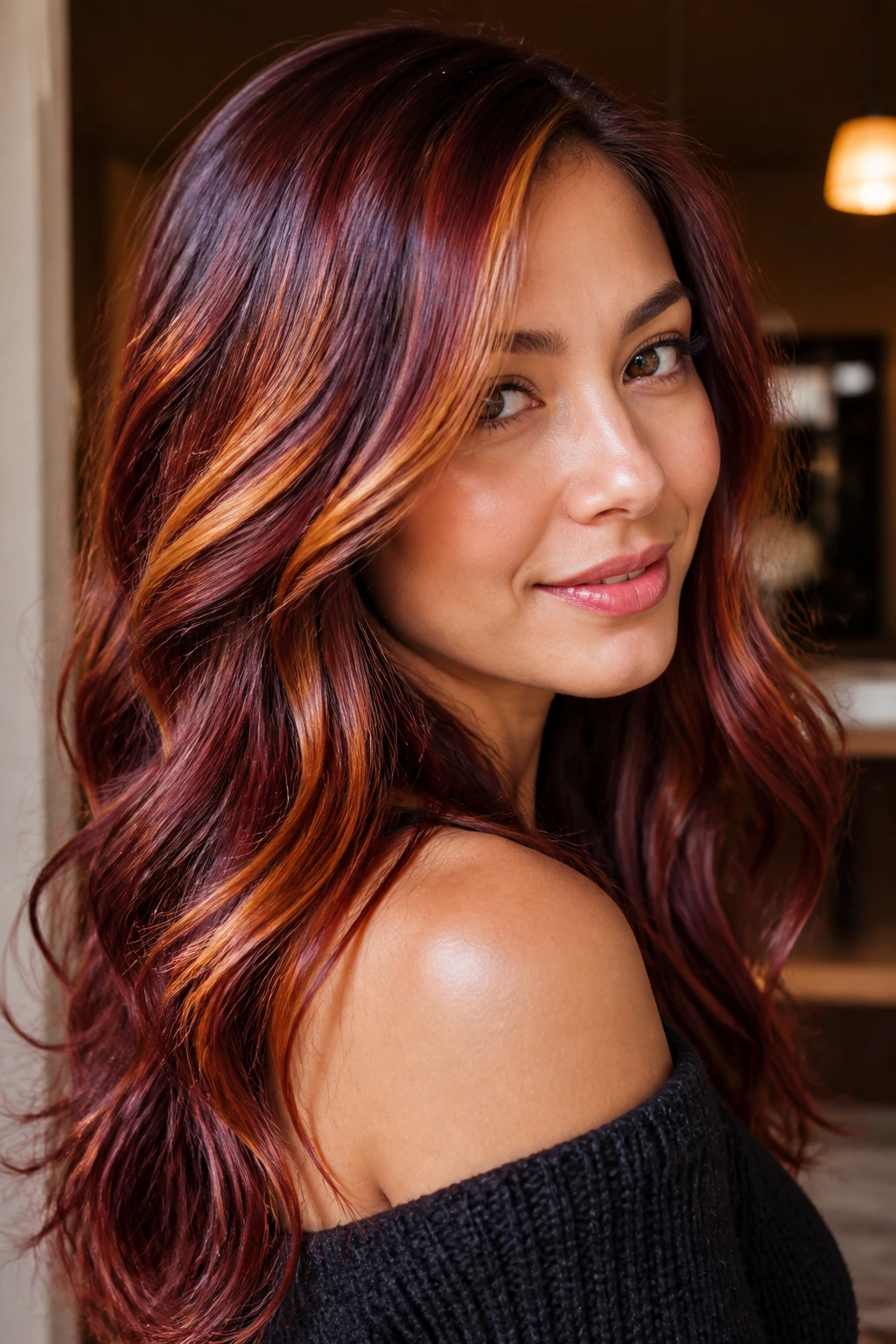
Mahogany is a rich, cool-leaning brown, but when you mix it with “sunset tints”—which are warm gold and copper—you get a complex, moody look that is utterly breathtaking. It is not for the faint of heart. It is deep, it is dark, and it is incredibly elegant.
The Color Theory
Mahogany provides the base. Sunset tints provide the highlights. By layering warm gold over a mahogany base, you get a purple-red-gold shift. It looks different depending on the lighting in the room. In dim light, it looks like deep, dark chocolate. In sunlight, it ignites with warmth.
Who Should Try It
This is excellent for people with naturally dark hair who want to add interest without doing a full-on bleach process. You don’t need to lift the hair to a platinum level to achieve mahogany-sunset. You only need a subtle lift, which keeps the hair strong and shiny.
15. Apricot Gold Strands
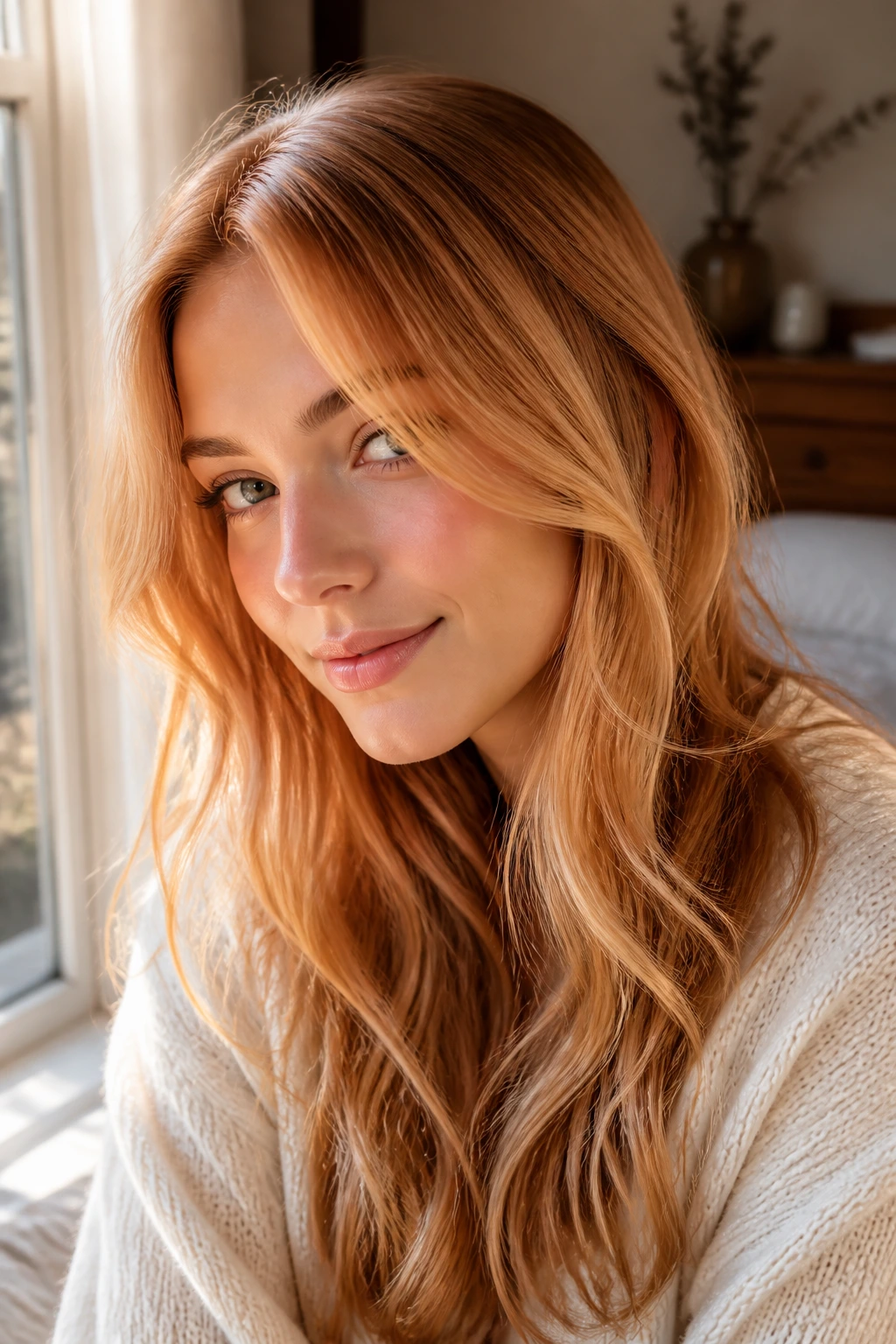
Apricot is a very soft, pale ginger-gold. It is almost blonde, but with a distinct, sun-drenched orange undertone. If you have fair skin and light eyes, this color will make you look ethereal. It is delicate and very “springtime” in its vibe, regardless of the time of year.
The Delicate Balance
The risk with apricot gold is that it can look like an accidental brassiness if it is not done intentionally. You must ensure your colorist applies a gloss over it. The gloss is what makes it “apricot” rather than “un-toned bleach.” It creates a finished, polished look that looks intentional and expensive.
Skin Tone Matching
If you have freckles, this hair color is your best friend. It draws out the warmth in the freckles and ties the whole look together. It makes the complexion look very youthful and fresh.
16. Maple Syrup Gloss Highlights
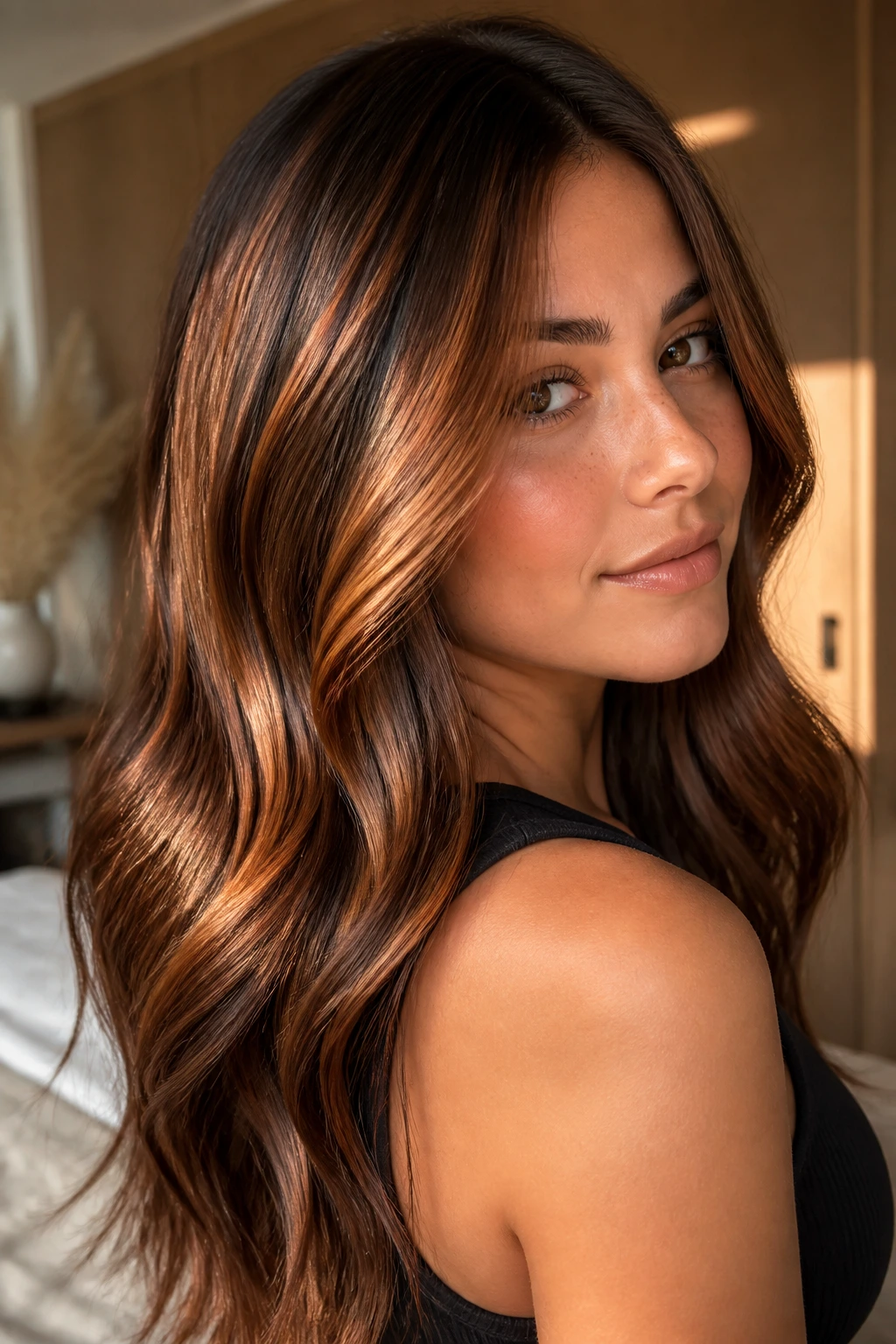
Maple syrup is a deep, warm amber-brown. These highlights are not actually highlights in the sense of being lighter; they are “lowlight” highlights. They are pieces of hair painted with a warm, rich amber gloss that is darker or richer than your base color.
The Result
The effect is glossy, liquid hair. It looks like you have poured maple syrup over your strands. It is incredibly shiny because the color is so saturated with pigment. This is the best choice for damaged or dry hair because glosses actually smooth the cuticle and add an enormous amount of shine.
Longevity
Because this is a gloss-based highlight, it will fade over time. The good news is that it fades beautifully. You aren’t left with roots or a harsh line. It just gently reverts to your original base color over the course of three months.
17. Burnt Orange Face-Framing
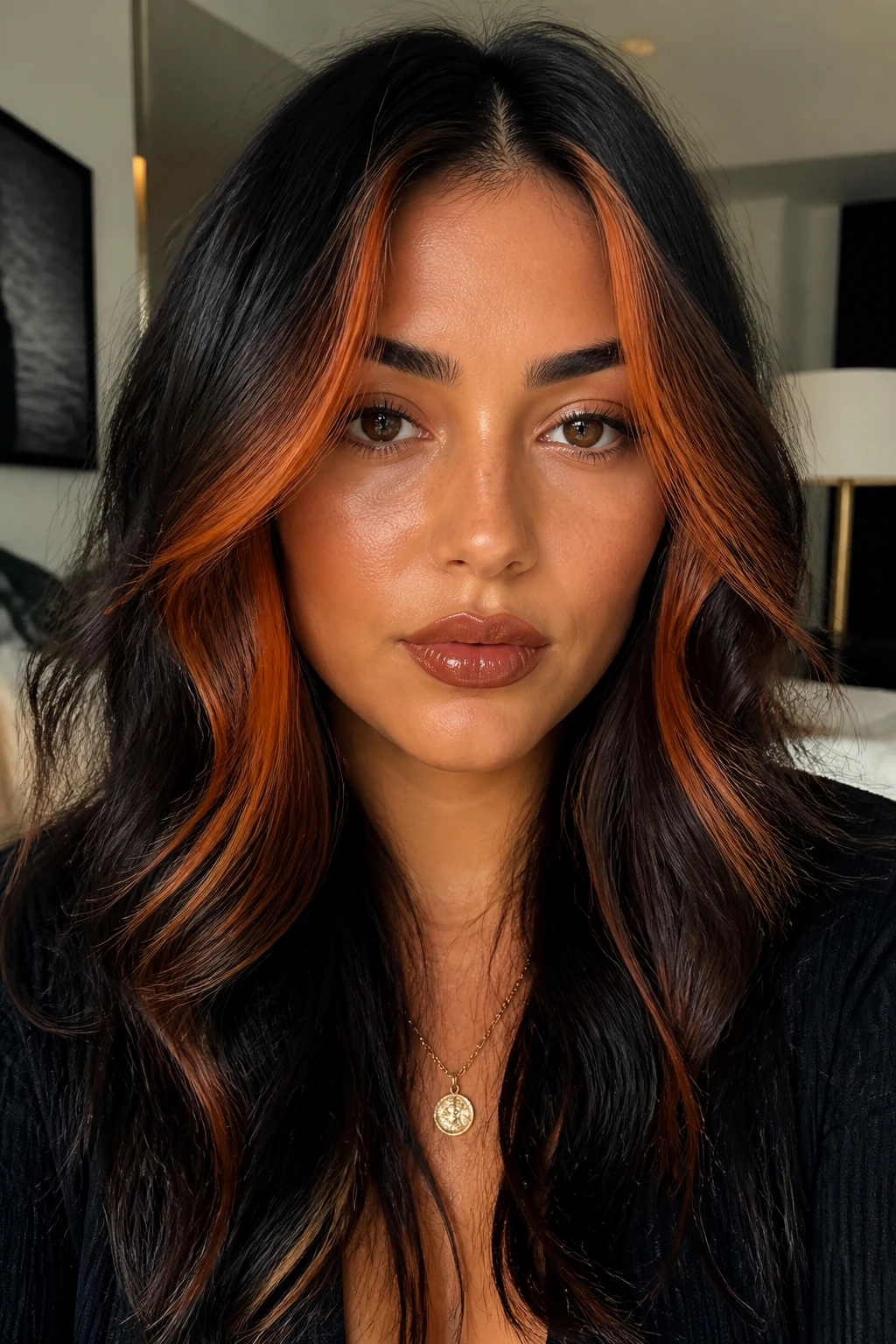
We touched on the “money piece” earlier, but let’s talk about a specific shade: burnt orange. This is a deeper, more saturated version of the copper-penny look. It’s edgy. It is very popular in fashion-forward circles, but it is surprisingly wearable for everyday life.
Styling for the Look
Burnt orange face-frames look best when the rest of the hair is a deep, solid color—like espresso or deep black. The contrast is sharp. It frames the face and acts as a focal point. Keep your makeup simple when you have this hair color; it is an accessory all on its own.
The Commitment
This is a bold choice. You will be asked about your hair every day. If you are shy, this might be a lot of attention. But if you want a look that feels confident, energetic, and warm, nothing beats a sharp, saturated burnt-orange frame.
18. Gingerbread Blend
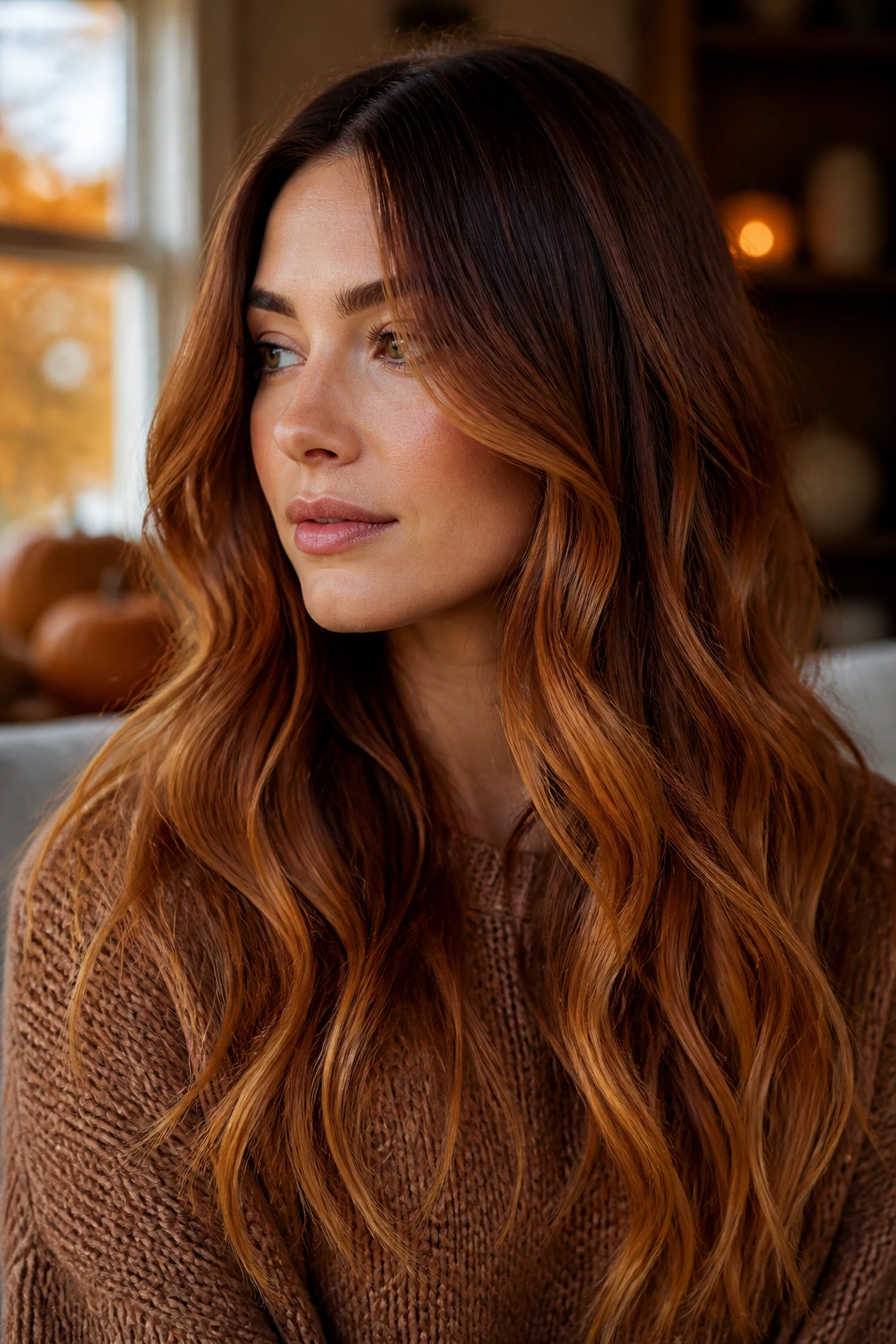
Gingerbread is a mix of dark, warm brown with sparks of ginger and gold. It is a true “blend.” You can’t tell where the brown starts and the ginger ends. It is the ultimate cozy-season hair. It looks warm, inviting, and soft.
The Technique
This requires a “root melt” and a balayage. Your colorist will blend a darker chocolate root into a gingerbread mid-length, and then hand-paint thinner, lighter ginger highlights through the ends. It is a multi-step process, but it is worth it for the seamless result.
Final Thoughts
Choosing the right warm tone really comes down to the level of maintenance you are willing to commit to and the natural base you are starting with. If you are naturally dark, opt for caramel or mahogany. If you are naturally lighter, look toward honey, apricot, or chai. Above all, don’t fear the “warmth” label. Warmth is not a mistake; it is a glow.
Ultimately, your hair color should feel like an extension of your personality. Whether you choose a subtle cinnamon babylight or a bold burnt-orange frame, the most important thing is that the tone complements your skin and makes you feel confident. Don’t be afraid to ask your stylist for a test strand if you are nervous about a specific red or orange tone. Sometimes, seeing how a specific shade of amber interacts with your skin tone in a tiny, inconspicuous section of hair is all the reassurance you need to take the plunge.
