



Thick hair can look expensive in one minute and unruly in the next. The difference usually isn’t the amount of hair. It’s the shape.
The best hairstyles for thick hair that tame volume don’t try to flatten everything into submission. They give the hair a place to go. A good style either keeps the outline clean, or it tucks the bulk into a shape that can hold its own through wind, humidity, and a long day that starts with coffee and ends with your hair doing whatever it wants.
A lot of bad advice starts with thinning the whole head. Nope. That can leave thick hair looking fuzzy, stringy, or puffed out in the wrong places. What usually works better is a blunt edge, smart layering, or a style that pins the hair at the nape or crown so the volume is controlled instead of broadcast in every direction.
1. Long Layers with Face-Framing Pieces

Long layers are the quiet workhorse of thick hair. They don’t remove so much weight that the ends go wispy, but they do stop the sides from ballooning into a triangle by lunchtime.
Why It Works
The trick is keeping the longest line intact while taking bulk out of the middle. That gives thick hair a shape that moves, but doesn’t explode. Face-framing pieces near the cheekbones or jaw also soften the width around the face, which helps the whole style look lighter.
What to Ask For
Ask for long, blended layers that start below the chin or closer to the collarbone. If your stylist reaches for the razor without explanation, ask what they’re removing and where. A little point-cutting is fine. Too much slicing near the top can turn thick hair frizzy fast.
- Best on hair that falls past the shoulders.
- Works well with a round-brush blowout or a loose air-dry.
- Keeps the ends looking full, not stringy.
- Skips the “helmet” shape that thick hair can fall into.
Bold tip: keep the shortest face-framing layer long enough to tuck behind your ear. That single detail makes the cut much easier to wear.
2. Blunt Lob with Hidden Internal Layers

A blunt lob is one of the fastest ways to make thick hair look controlled. The straight edge at the bottom does most of the work, and it does it well.
The reason this style wins is simple: thick hair looks calmer when the perimeter is strong. A clean line at the collarbone or just below the jaw keeps the ends from kicking out in different directions. Hidden internal layers underneath can take out some of the bulk without changing the visible shape. That’s the part most people miss.
A lob is also easier to style than it sounds. Blow-dry the roots first, then smooth the mid-lengths with a paddle brush or a 1.5-inch round brush if you want a slight bend. Keep the ends polished. If they puff, the whole cut loses its sharpness.
This one is especially good if you like hair that looks intentional without a lot of daily fuss. Clean, solid, and a little bit chic. Not fussy. Not flat either.
3. Sleek Low Ponytail with a Wrapped Base

Need something that keeps thick hair under control for an entire workday? A sleek low ponytail is hard to beat. It pulls the weight down, keeps the crown smooth, and stops the hair from spreading sideways every time you turn your head.
The secret is in the prep. Smooth a small amount of cream or gel through the top section first, then brush the hair back with a boar-bristle brush or a dense paddle brush. Secure it right at the nape, not halfway up the back of the head. That lower placement gives thick hair a more relaxed line and keeps it from building too much height at the crown.
How to Wear It
Wrap a small section of hair around the elastic and pin it underneath. That detail sounds tiny, but it makes the style look finished instead of gym-bag basic. If your hair is very dense, use two elastics stacked together so the ponytail doesn’t slide loose by midday.
A little shine spray helps here. So does restraint. The sleek ponytail gets better when you stop adding things to it.
4. Deep Side Part with Soft Waves
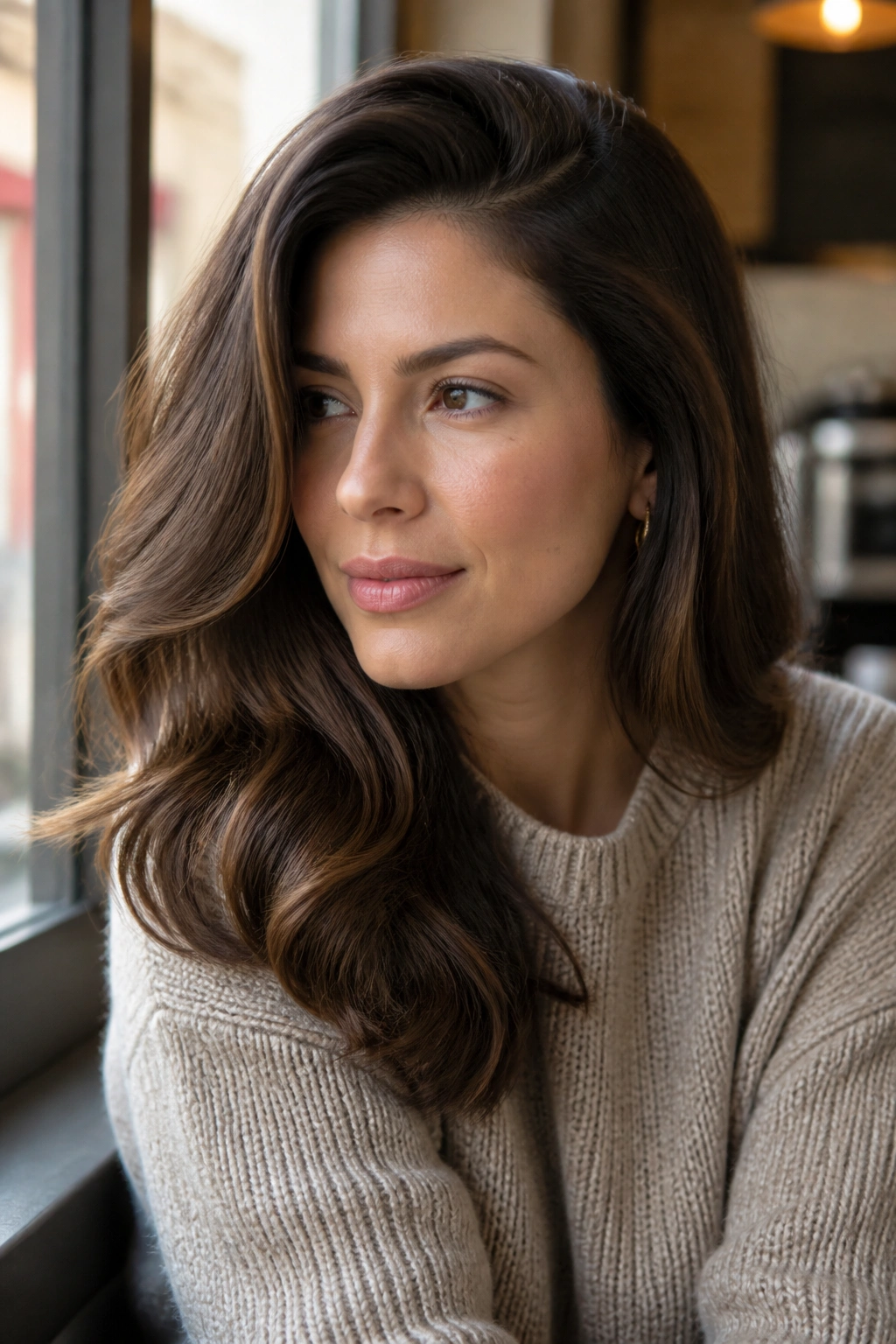
A center part can make thick hair spread wide. A deep side part changes the whole geometry of the style.
When the part shifts off-center, the weight falls differently across the head, which softens the bulk around the crown. Add loose waves through the mid-lengths and you get movement without the puffy top that thick hair sometimes develops. The waves should be soft, not springy. Think curve, not curl.
Small Details That Matter
- Set the part about 2 to 3 inches off center.
- Curl away from the face with a 1.25-inch iron.
- Leave the last inch of each section out for a calmer finish.
- Rake the waves apart with fingers, not a brush, if your hair frizzes easily.
This style works especially well on hair that tends to look too wide when worn straight. It also buys you an extra day between washes, because the parting and wave pattern hide root lift better than a flat style does.
Deep side parts are underrated. They change the mood fast.
5. Chin-Length Bob with Tapered Ends
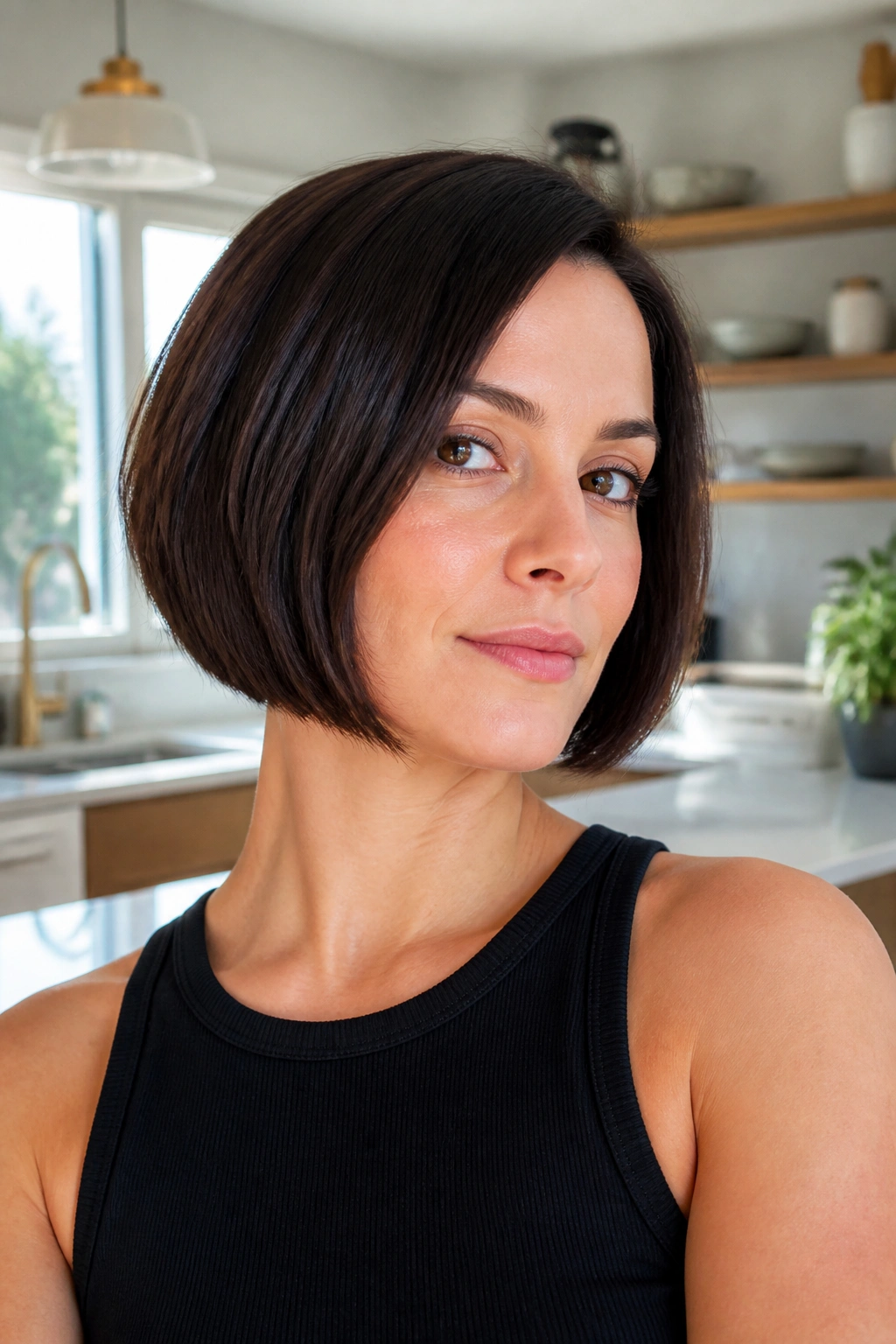
A chin-length bob sounds daring until you see it on thick hair and realize what it does: it cuts the bulk down to size. The shape sits close to the head, so the hair can’t flare out as much as it does in longer styles.
The key is the end line. Keep it clean, but not razor-light. If the ends are too shredded, thick hair can turn airy in the wrong way and start puffing at the edges. A gentle taper at the bottom helps the bob curve in instead of standing away from the neck.
This cut asks for a little honesty. If your hair has a lot of natural wave or a strong cowlick at the nape, a bob will need more styling than a ponytail or braid. But the payoff is real. You get a shape that feels crisp, and the heaviness that thick hair sometimes carries just disappears into the line of the cut.
Shorter doesn’t always mean more volume. Sometimes it means less chaos.
6. High Bun with a Smooth Crown

A high bun is the opposite of fussy. It gives thick hair one job: go up and stay there. Done well, it keeps the crown smooth and lets the length compact into a shape that doesn’t wobble around.
Unlike a loose messy bun, a polished high bun works because it gathers the density in one place. That keeps heavy hair from spreading into a lopsided puff at the back of the head. The bun can be sleek or slightly textured, but the crown should stay close to the scalp.
This is a strong choice for thick hair that’s long enough to feel heavy when worn down. Secure the ponytail first, twist the length, then coil it around the base. Use pins in an X shape so the bun doesn’t sag. If the bun feels too big, that usually means the wrap is too loose, not that your hair is “too thick.”
It’s a practical style. Clean neck, clear face, less volume everywhere you don’t want it.
7. Side Braid with a Tucked Finish
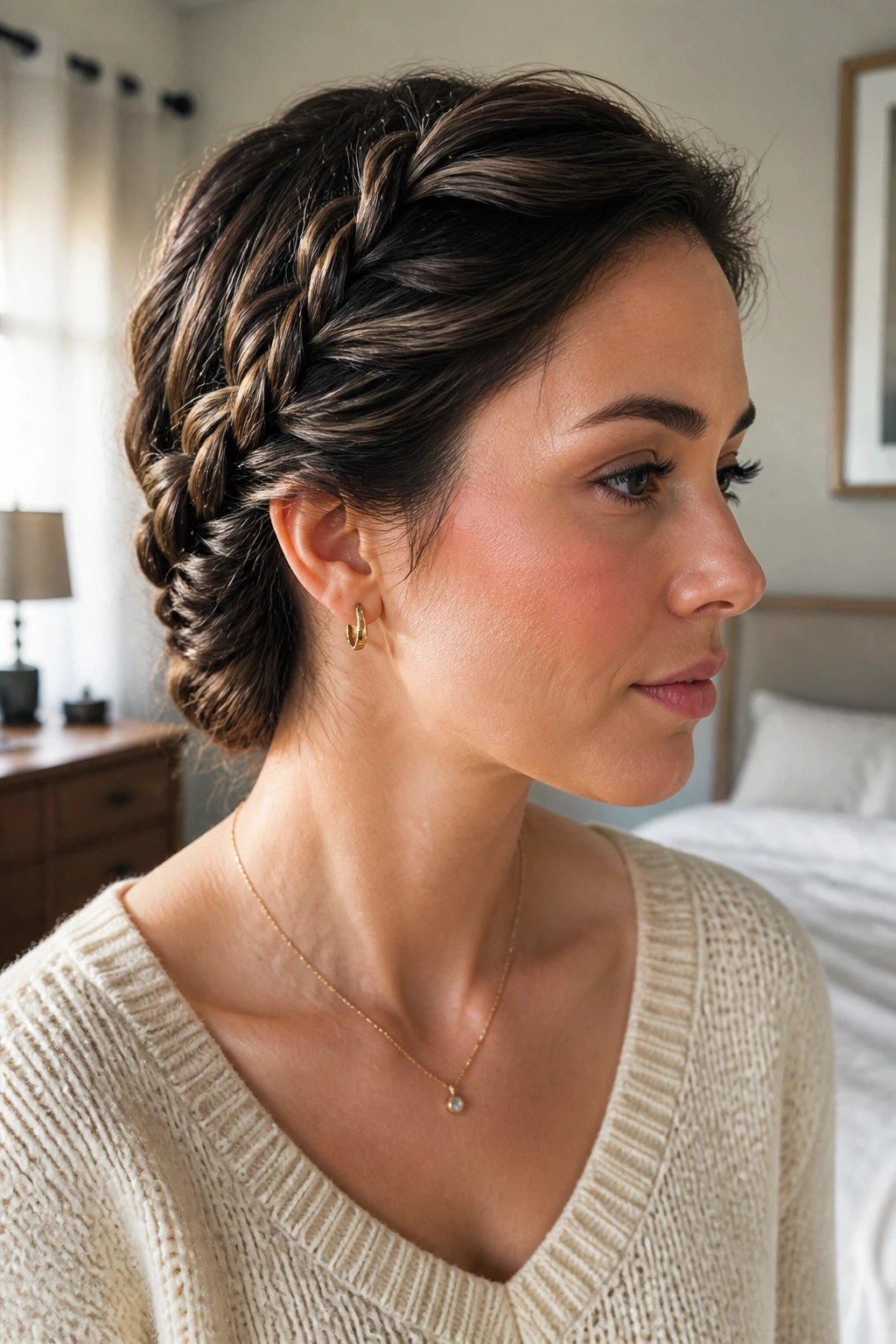
A side braid makes thick hair behave because the braid itself becomes the shape. Once the strands are woven together, the bulk stops floating around and starts working for you.
Why It Wins
Starting the braid just above one ear keeps the style from looking severe. Pull it across the shoulder, braid it loosely, then tuck the ends under or pin them at the nape. That tucked finish matters. It stops the braid from hanging too long and turning into a heavy rope.
A Dutch braid gives a little more lift. A French braid lies flatter. If your hair is very dense, either one can work, but keep the tension even or the braid will bulge in random spots. That’s the trap. Thick hair has a habit of showing every uneven pull.
Quick Notes
- Use a light smoothing cream before braiding.
- Keep the first three sections tight around the hairline.
- Pancake the braid gently if you want it wider.
- Pin the tail under the braid for a cleaner end.
Strong tip: braid after your hair has dried just enough to lose the slippery, fresh-wash feel. The grip is better.
8. Half-Up Style with Crown Control
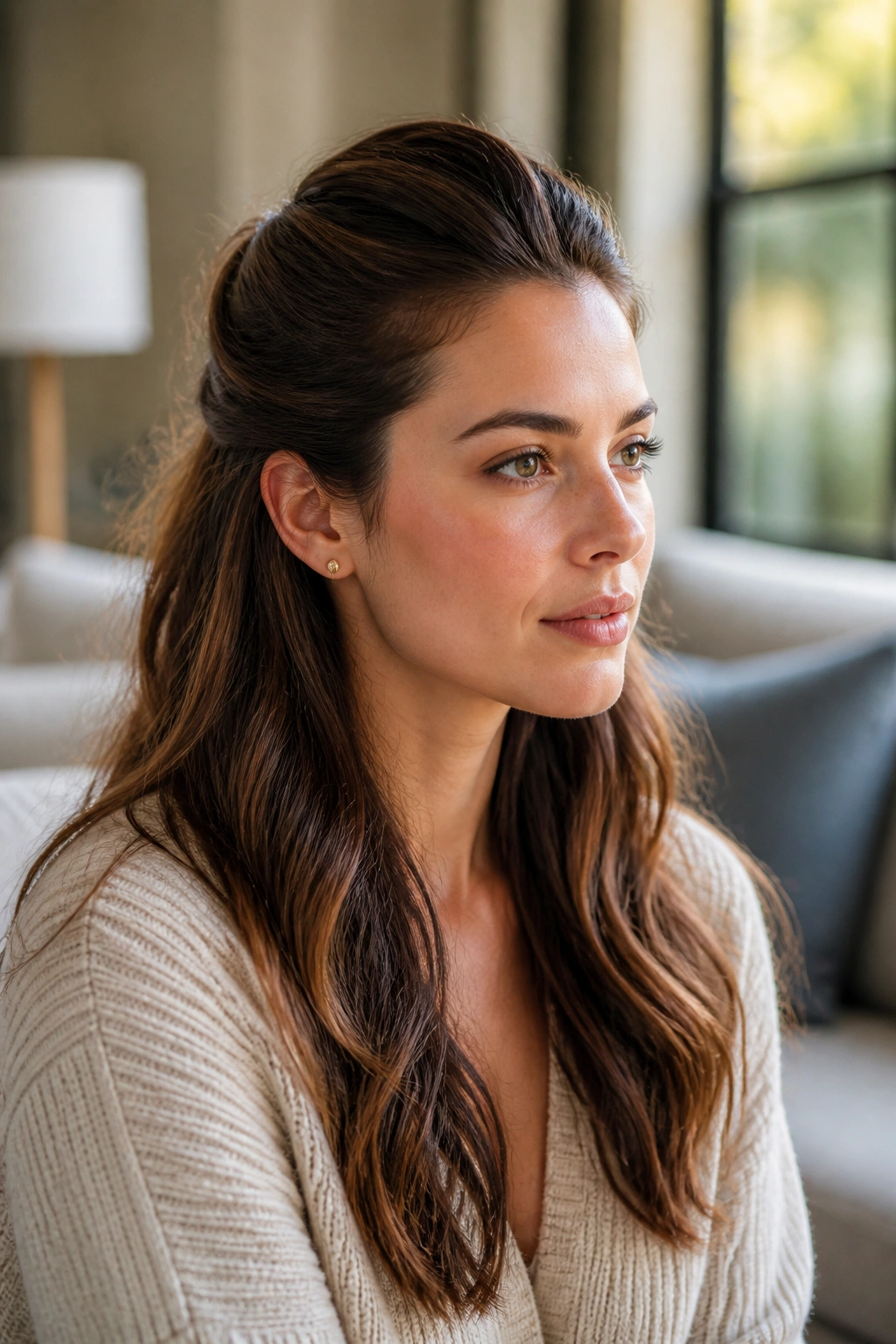
Half-up styles are not lazy. On thick hair, they’re smart. The top section gets pulled back before it has a chance to swell, while the rest stays down and keeps the style from looking pinned too severely.
The real win here is crown control. Thick hair often builds height right at the roots, especially around the temples and upper back of the head. A half-up clip or elastic reins that in without forcing you into a full updo. You keep the length, but the top line stays calmer.
This style is especially useful on days when the hair feels too full to wear loose but not heavy enough for a bun. A small claw clip can hold it. So can two crossed bobby pins if you prefer something less bulky. The lower section can be straight, waved, or left natural.
It’s one of those styles that looks casual but solves an actual problem. The best casual styles usually do.
9. Curtain Bangs with Long Lengths
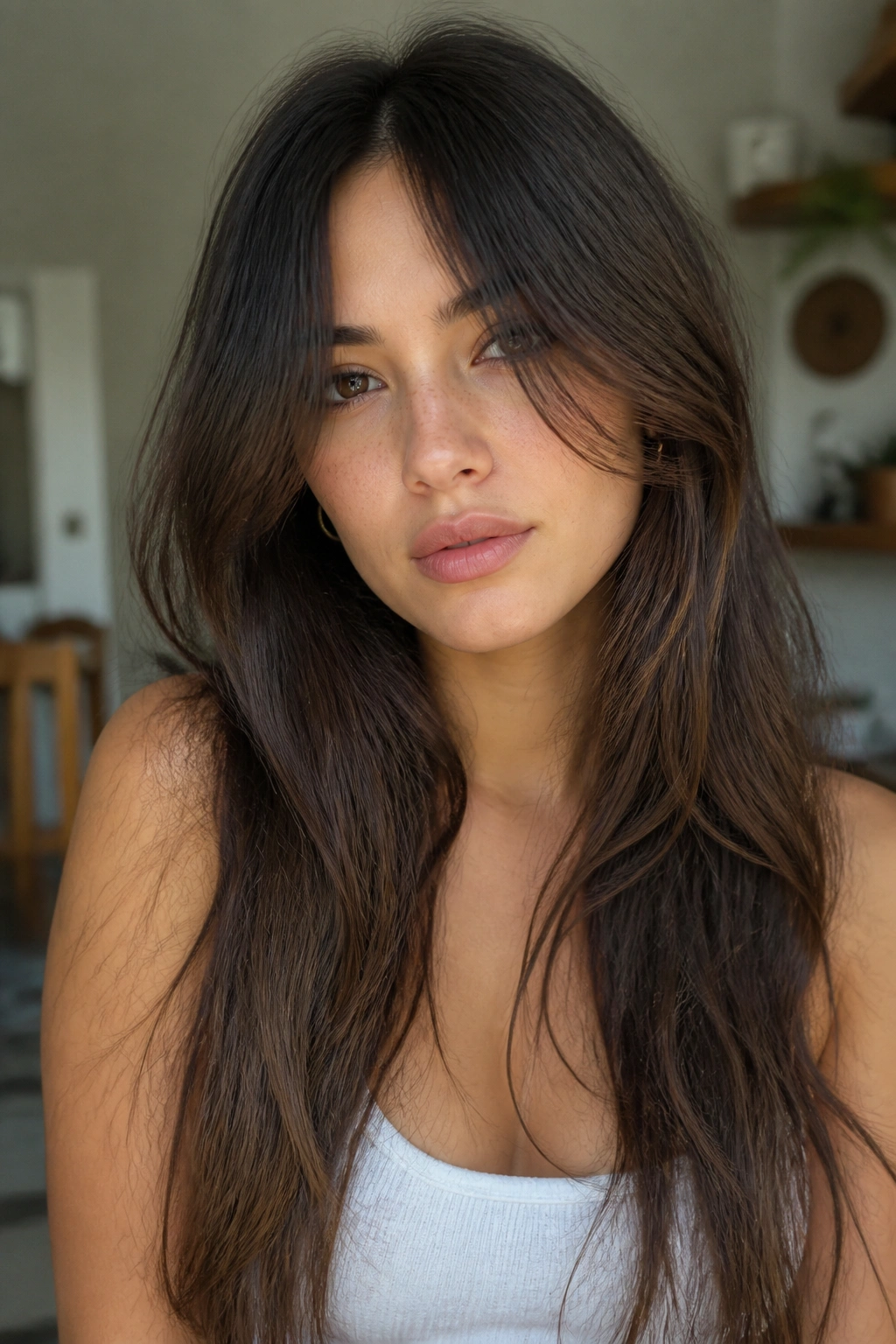
Could curtain bangs help thick hair without adding more puff? Yes, if they’re cut with enough length to blend instead of standing on their own.
The mistake people make is asking for bangs that stop too high. That can make thick hair look wider at the forehead and busier near the eyes. Longer curtain bangs, usually grazing the cheekbones or lip line, open the face without creating a shelf. They slide into long layers and keep the front from feeling heavy.
How to Style Them
Use a round brush or a medium barrel brush to bend the bangs away from the face. A quick pass with a flat iron on low heat can smooth the ends if your hair flips in odd directions. The goal is a soft sweep, not a stiff curl.
If your hair has a cowlick at the front, curtain bangs still can work, but they need patience. Blow-dry them in the opposite direction first, then bring them back into place. Annoying, yes. Worth it, too.
They’re a good choice when you want shape around the face without losing length everywhere else.
10. Claw-Clip French Twist
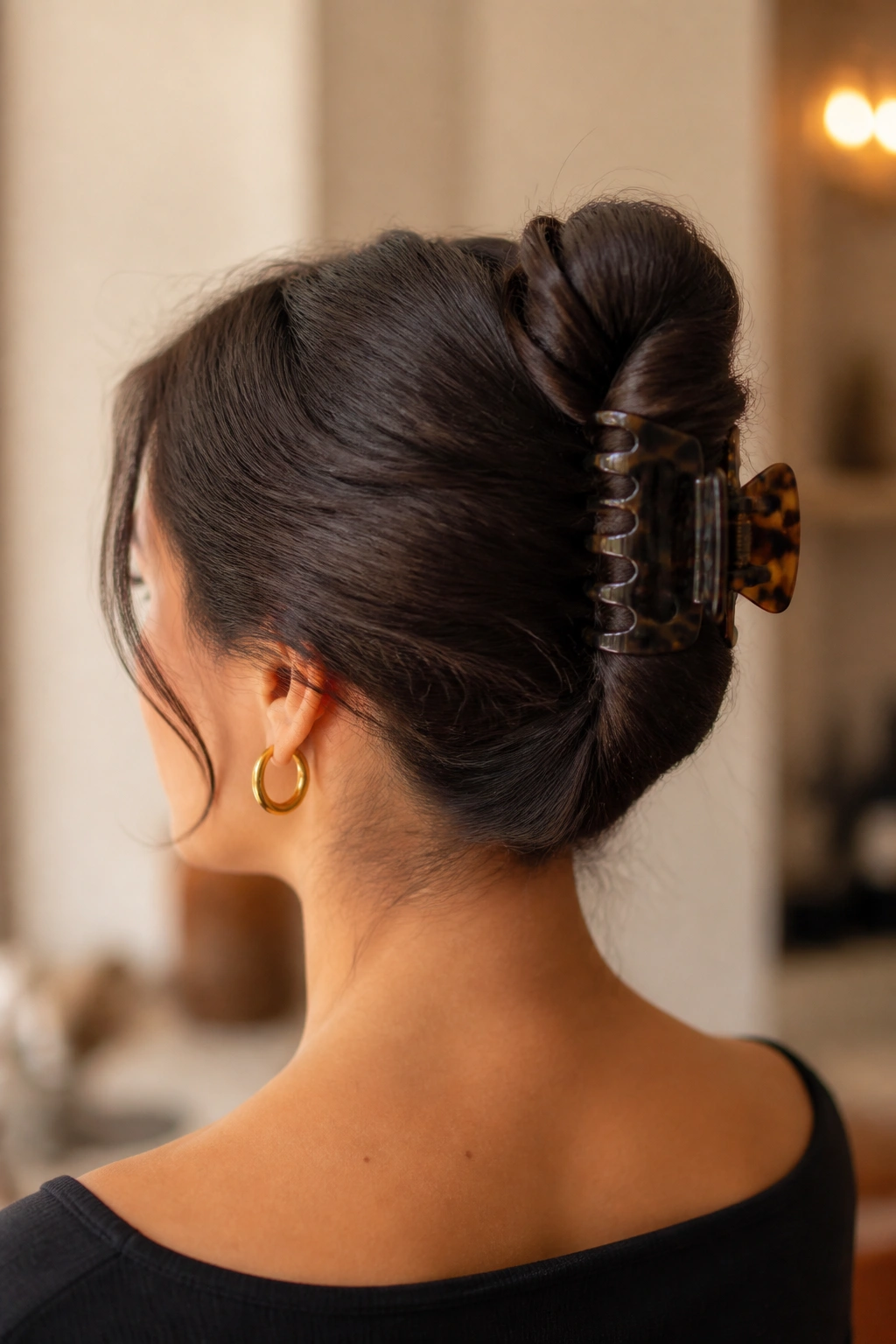
A claw-clip French twist is the kind of style thick hair was practically made for. The density gives the twist enough body to stay in place, and the clip does the rest.
Picture a busy morning. You’ve got hair that’s clean, full, and one inch away from turning into a halo of volume. Twist it up from the nape, fold the length inward, and clip the shell of it vertically. That creates a compact shape that still looks like hair, not a knot of panic.
The trick is choosing a clip with real teeth. Decorative clips without grip slip straight out of thick hair. You want something long enough to catch the whole twist and strong enough to hold the weight. If the twist feels loose, tuck a couple of bobby pins at the center before clipping.
This style likes a little texture. Day-two hair is easier than freshly washed hair, which can be too soft to grip. That tiny bit of grit helps the twist stay put.
11. Braided Crown with Loose Ends

A braided crown gives thick hair structure from the front hairline all the way around the head. That structure is the whole point. It keeps volume contained near the scalp while turning the length into a shape instead of a cloud.
The style can be soft or tight, depending on how you braid. A looser braid feels romantic, but on very thick hair it can start to loosen at the temples. A firmer braid holds better and lays flatter against the head. If you want the braid to look fuller, gently pull at the outer loops after it’s secured. Not too much. Just enough to widen it.
What I like about this style is that it handles different hair lengths well. If your hair is long, the loose ends can be tucked into a low bun. If it’s shoulder length, pin the ends under the braid and call it done. Either way, the hair is off the face and the bulk stays organized.
It’s a good one for long days when you need the hair to stay where you put it.
12. Middle-Part Straight Hair with Glossy Finish
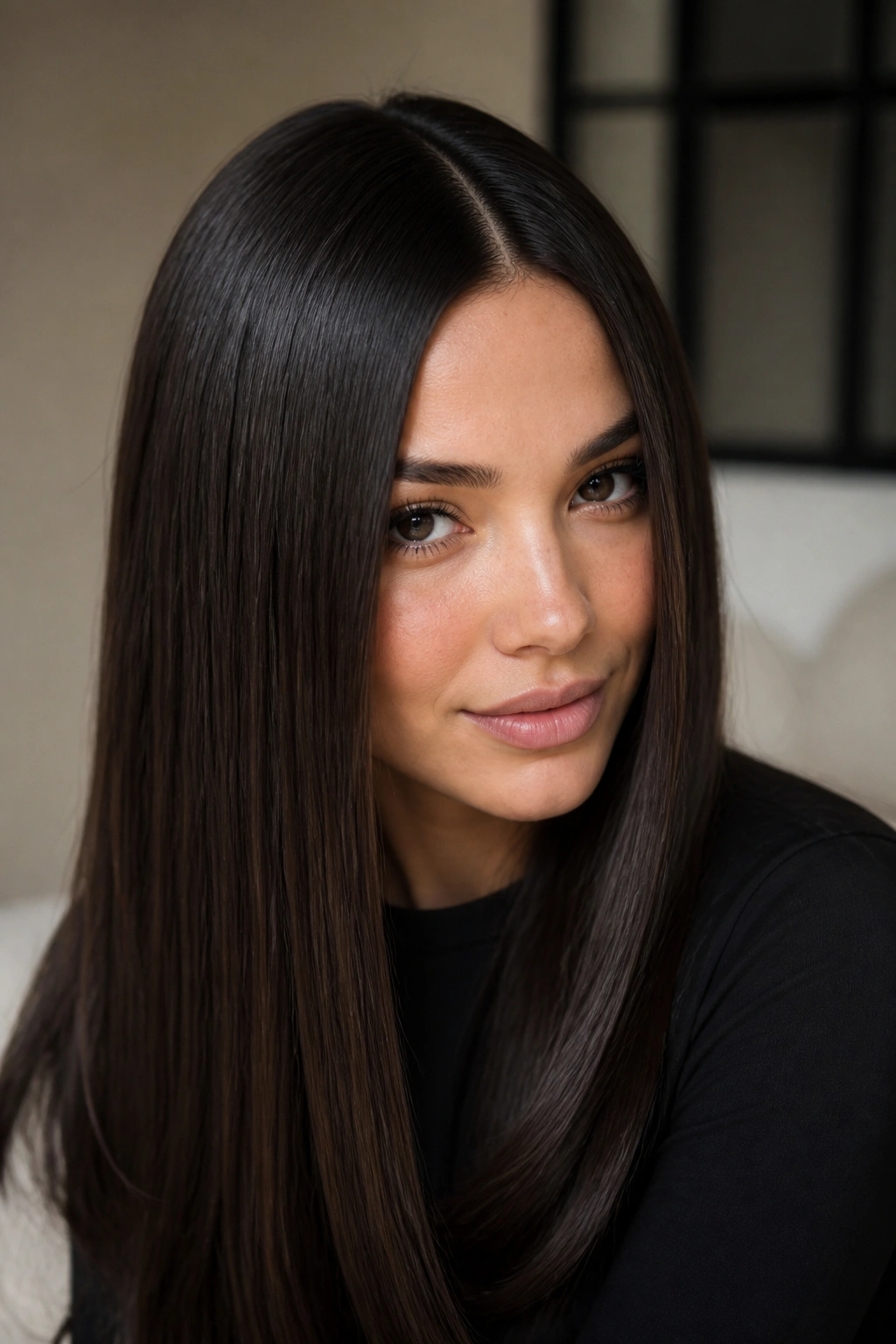
Straight hair can still be a volume style. On thick hair, a middle part with a glossy finish creates a clean line that keeps the hair looking deliberate instead of wide.
Unlike loose waves, which can spread the hair outward, this style relies on smoothness. Work in sections. Use heat protectant first, then pass a flat iron through 1-inch pieces, keeping the pressure even from root to tip. The smaller the section, the better the finish. Thick hair hides rough shortcuts, but it also exposes them.
This style is best when the hair has some natural straightness already. If it’s very wavy or coarse, you’ll need a bit more work at the roots and ends to keep the shape sleek. A light serum on the mid-lengths and tips helps stop the surface fuzz that can make thick hair look puffy in bright light.
It’s a simple look, but not a lazy one. Clean middle parts are brutal that way.
13. Bubble Ponytail with Tight Sections
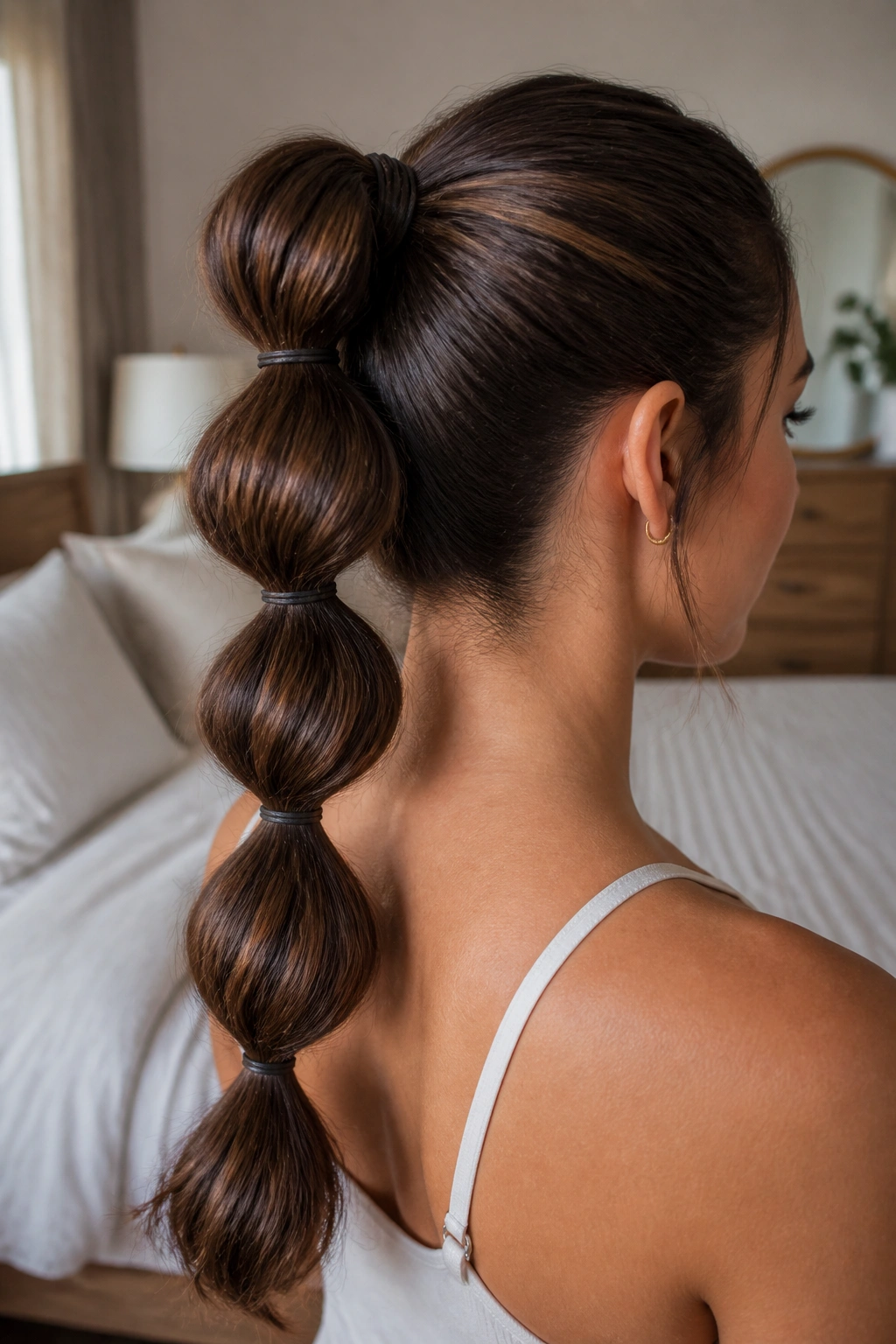
The bubble ponytail is one of the few styles that actually uses thickness as part of the design. Instead of fighting the volume, it breaks the length into clean, controlled sections.
What Makes It Different
A standard ponytail can sag or fan out on thick hair. A bubble ponytail fixes that by placing small elastics every 2 to 3 inches down the length. Then each section gets gently tugged outward so it rounds into a bubble. The shape reads as intentional, not accidental.
This works especially well on very long hair, where the weight becomes the problem. The bubbles distribute that weight so the ponytail doesn’t pull itself flat. Keep the first elastic snug at the crown or mid-back of the head, then space the rest evenly. Hide the elastics with small strips of hair if you want a cleaner finish.
How to Style It
- Smooth the top first with a brush.
- Use clear elastics or ones that match your hair color.
- Puff each bubble evenly on both sides.
- Finish with a light spray so the sections don’t collapse.
It’s a fun style, but also a practical one. That combination is rare.
14. Low Chignon with a Side Sweep
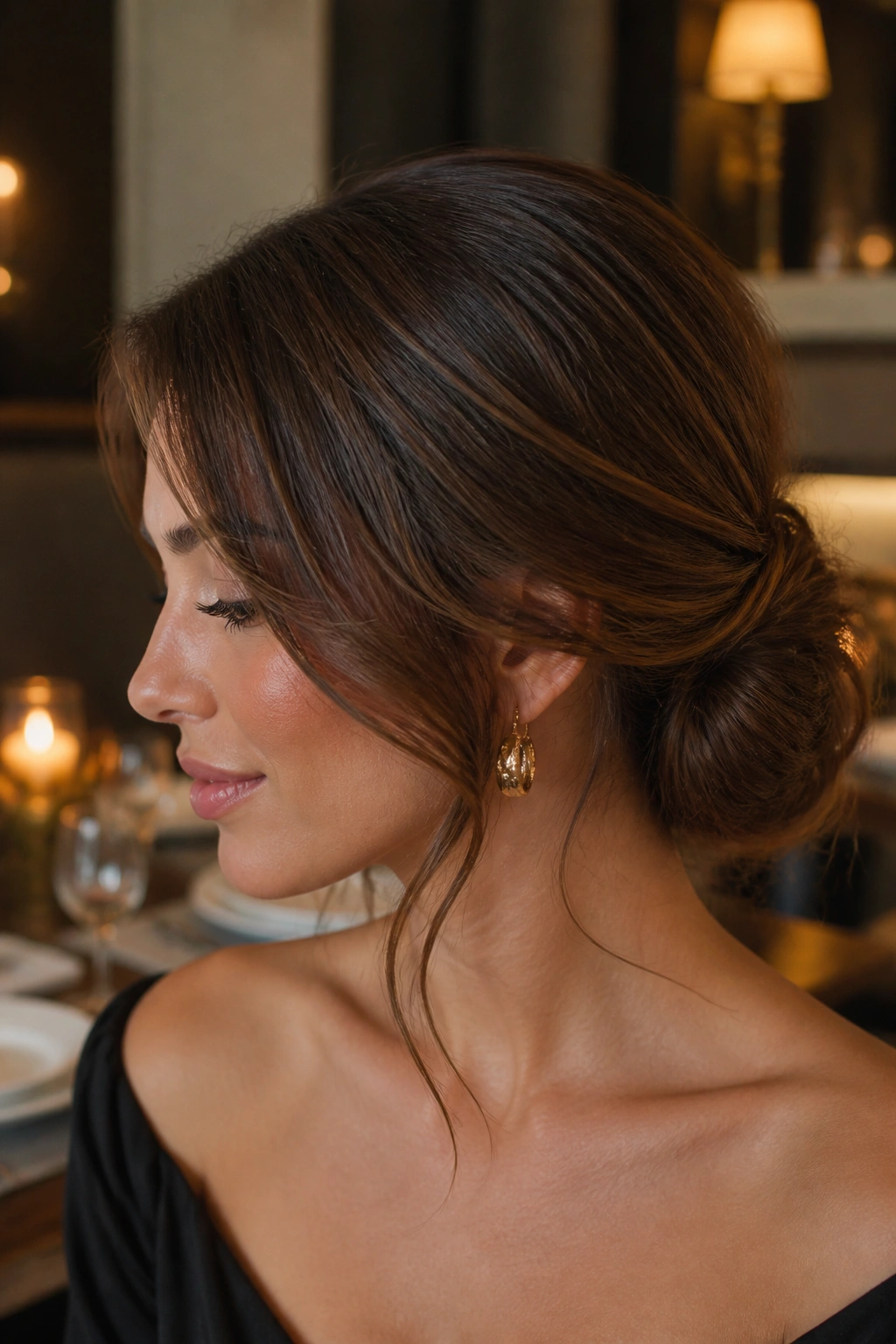
The low chignon is the quietest way to make thick hair behave for a dinner, a meeting, or any day you want the hair to stay off your neck without looking too done.
A side sweep at the front softens the whole shape. Pull most of the hair low and slightly to one side, then twist it into a compact bun at the nape. The side-swept front keeps the style from feeling severe, while the bun keeps the volume anchored where it belongs.
This is one of those styles that looks better once you stop trying to make every strand sit perfectly. A few smooth pieces around the face are enough. Secure the bun with pins rather than one huge clip; thick hair usually holds better when the support is spread out. If the bun feels too bulky, split it into two twisted sections and pin them together.
The end result is calm. Not boring. Just controlled.
15. Shoulder-Length Shag with Controlled Texture

A shag can go wrong on thick hair if it gets too choppy too high on the head. A shoulder-length shag with longer layers is a different story.
Why does that matter? Because thick hair needs movement in the right places, not random lightness everywhere. Long layers around the jaw and collarbone reduce the bulk without making the top frizzy. The shape still has texture, but the outline stays manageable. That balance is what saves the style.
How to Keep It from Puffing
Blow-dry the roots smooth first, then bend only the ends with a round brush or a medium curling wand. If you rough-dry the whole thing, the layers can lift too much and turn into a halo. A pea-sized amount of cream on the ends helps them sit down instead of flipping out.
This cut suits people who want movement but do not want to deal with a full daily blowout. It’s relaxed, but it still needs some discipline. The wrong shag can look like you fell into a wind tunnel. The right one looks lived-in in the best possible way.
16. Dutch Braids into a Low Bun
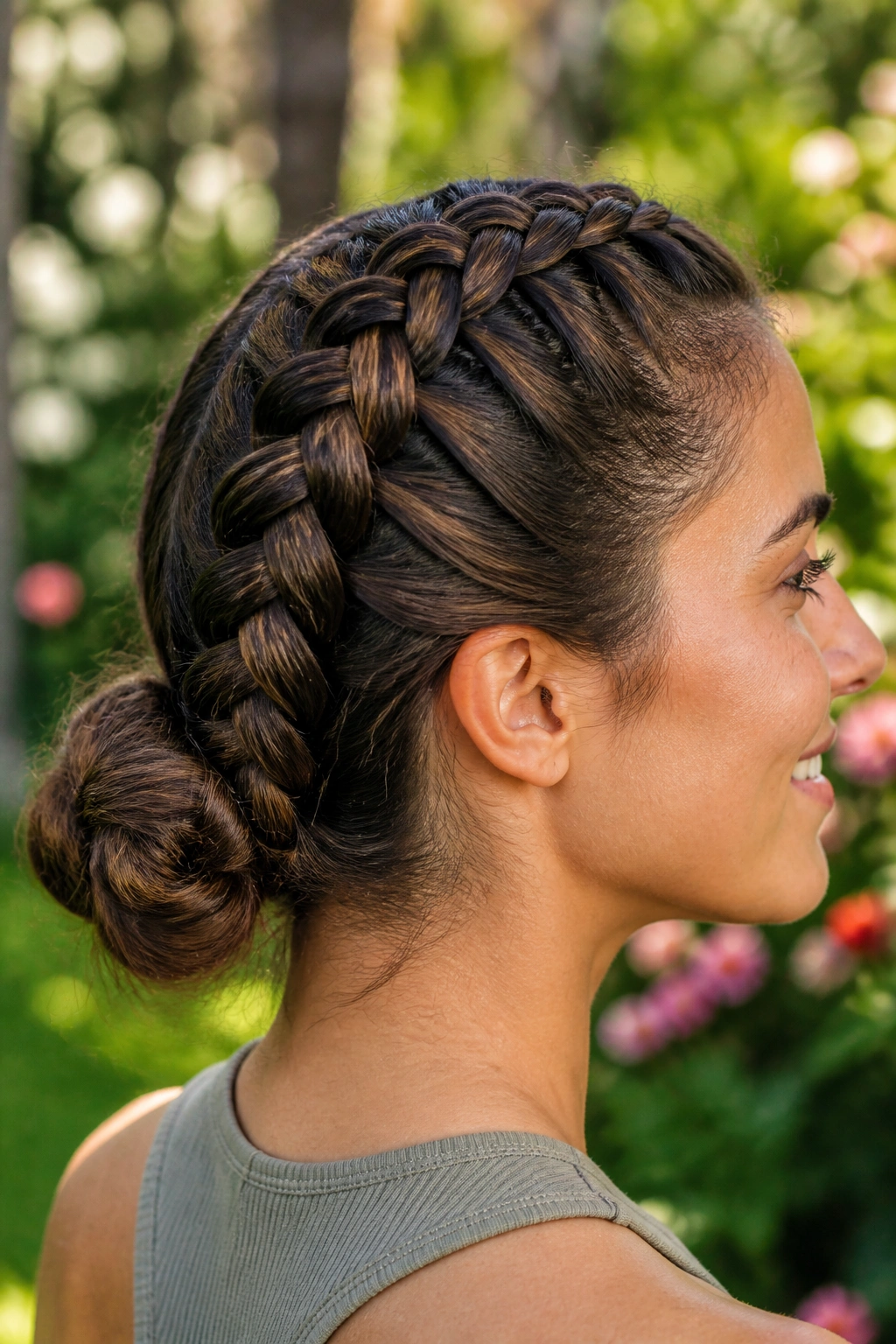
Dutch braids are a strong choice when thick hair needs to be locked down from root to tip. Feed two braids from the hairline straight back toward the nape, then gather the ends into a low bun. Clean, secure, and annoyingly useful.
The raised braid pattern creates a defined texture on top, which keeps the style from lying flat against the head. That helps thick hair look intentional rather than compressed. Once the braids reach the back, twist the remaining length into a bun and pin it underneath. You can keep the bun tight or leave a little softness at the edges.
Tiny Practical Details
- Use gel or edge control along the hairline if flyaways bother you.
- Keep both braids at the same tension so one side does not sit higher.
- Pin the bun with at least 4 to 6 bobby pins if the hair is very dense.
- Spray the finished style lightly, not heavily, or it can get stiff.
This is one of the most reliable styles for workouts, travel, and long days when thick hair needs to stay put.
17. Half-Up Top Knot with Full Ends
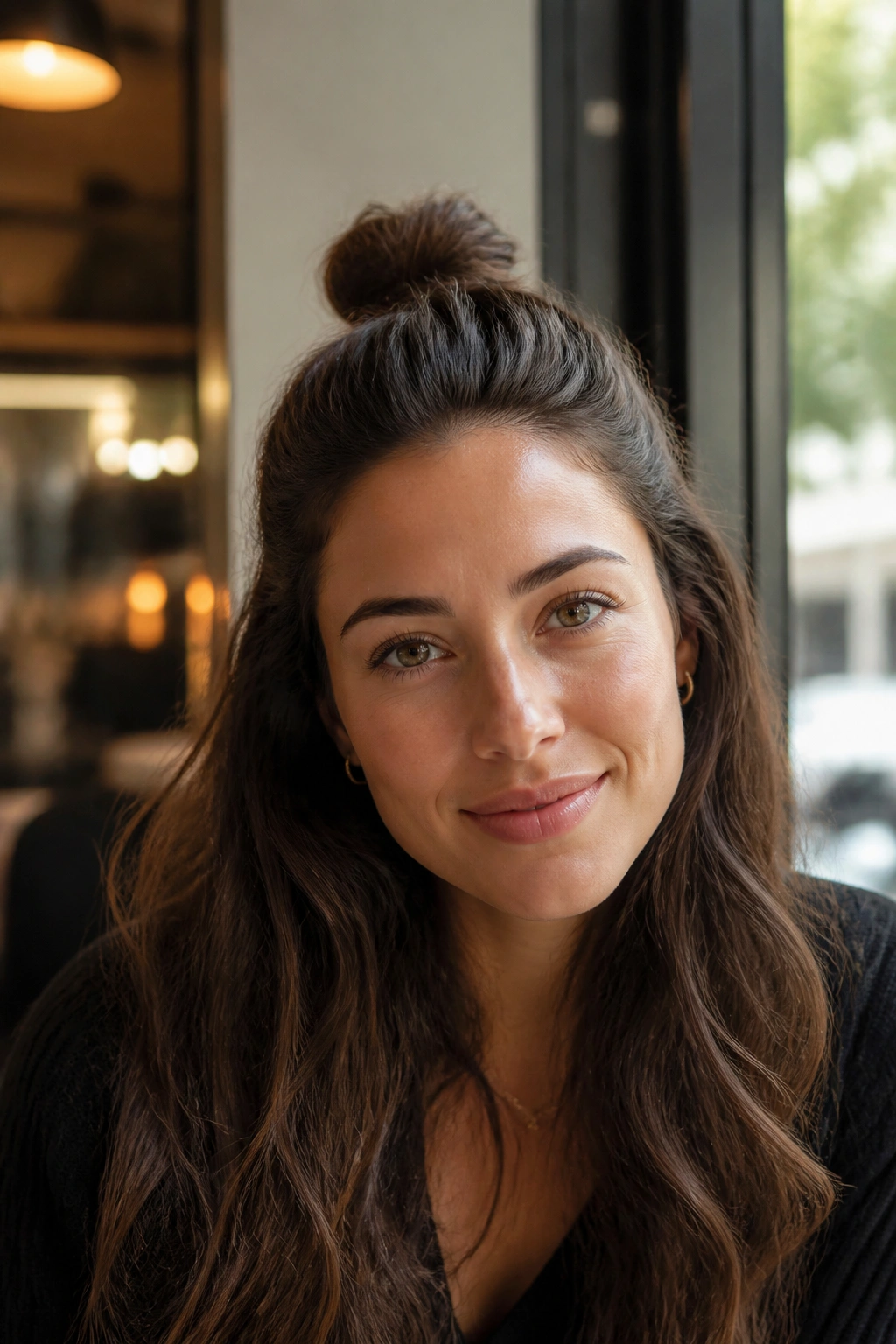
A half-up top knot gives thick hair a little height without asking the whole head to commit to volume. That’s the appeal.
The top section gets twisted or looped into a compact knot at the crown, while the rest of the hair stays down. That split makes the style feel light around the face and heavier through the lengths, which is often exactly what thick hair needs. You’re reducing bulk where it’s most annoying and keeping the fullness where it looks good.
This style works on straight, wavy, or curly hair, but the knot should stay small. If it gets too large, the top starts to look top-heavy and the whole thing loses balance. Use a small elastic or two pins to anchor the knot. If the lengths are curly, leave them alone. If they’re straight, a few bends with a curling iron keep the lower section from looking too flat.
It’s a good middle ground. Not fully up. Not fully down. Just enough control.
18. Soft Curled Ends with Heavy Lengths

Curling only the bottom third of thick hair is a smarter move than curling everything from root to tip. Full curls can turn dense hair into a lot of hair. Softly curled ends keep the shape moving without adding more width.
The idea is simple: keep the top smooth and let the bottom bend under or away from the face. Use a 1.5-inch or 2-inch curling iron, wrap the ends loosely, and leave the roots alone. That creates movement where the hair tends to look stiff, without making the whole head expand.
This style is especially useful if your hair is long enough to weigh itself down. The curl at the ends helps the length look finished, not heavy. Brush it out lightly for a softer look, or leave the curls more defined if you want a polished finish. A tiny bit of serum on the ends helps them stay shiny instead of dry-looking, which thick hair can do when it gets heat-styled too hard.
Simple. Controlled. A lot easier than full curls.
19. Tapered Pixie with Longer Top Layers
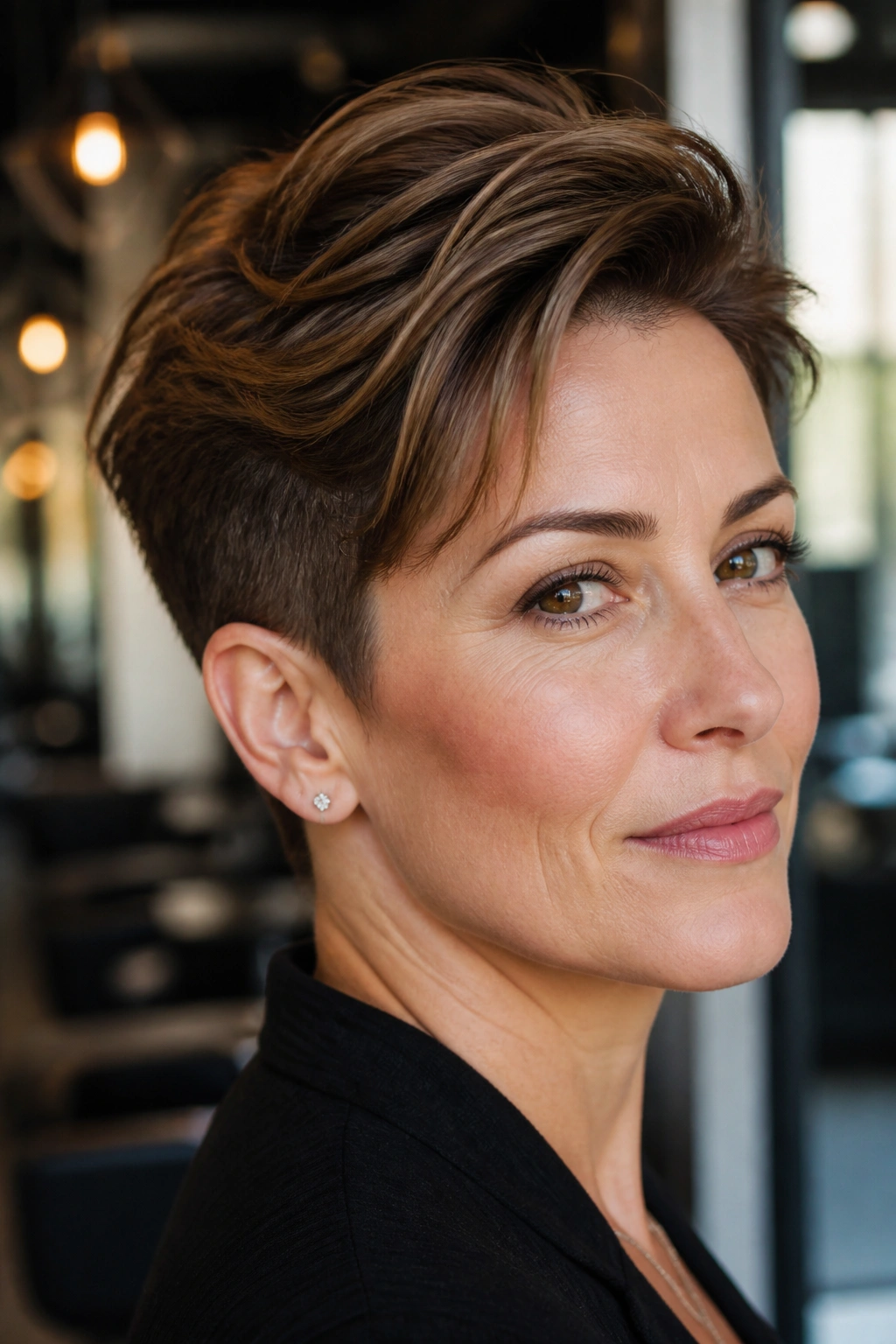
A tapered pixie can be a revelation on thick hair. The sides and nape get cut close, which takes the bulk down fast, while the top stays long enough to sweep, lift, or part in different ways.
Why It Helps Thick Hair
The short sides stop the shape from puffing out around the ears and neck. That matters more than people think. Thick hair often feels heavy in exactly those spots, and a taper removes that weight where it causes the most trouble. The longer top gives you room to style without losing all the hair’s character.
What to Ask For
Ask for a tapered nape, clean sideburns, and a top length that can be brushed forward or to the side. If you like softness, have the stylist point-cut the top rather than razor it to pieces. If you like edge, leave the fringe a touch longer.
This cut does need upkeep. Not endless upkeep, but enough that shape matters. A pixie looks sharp when the outline is fresh. If you let it grow too long, the bulk comes back fast and the whole point disappears.
20. Undercut Crop with a Swept Top
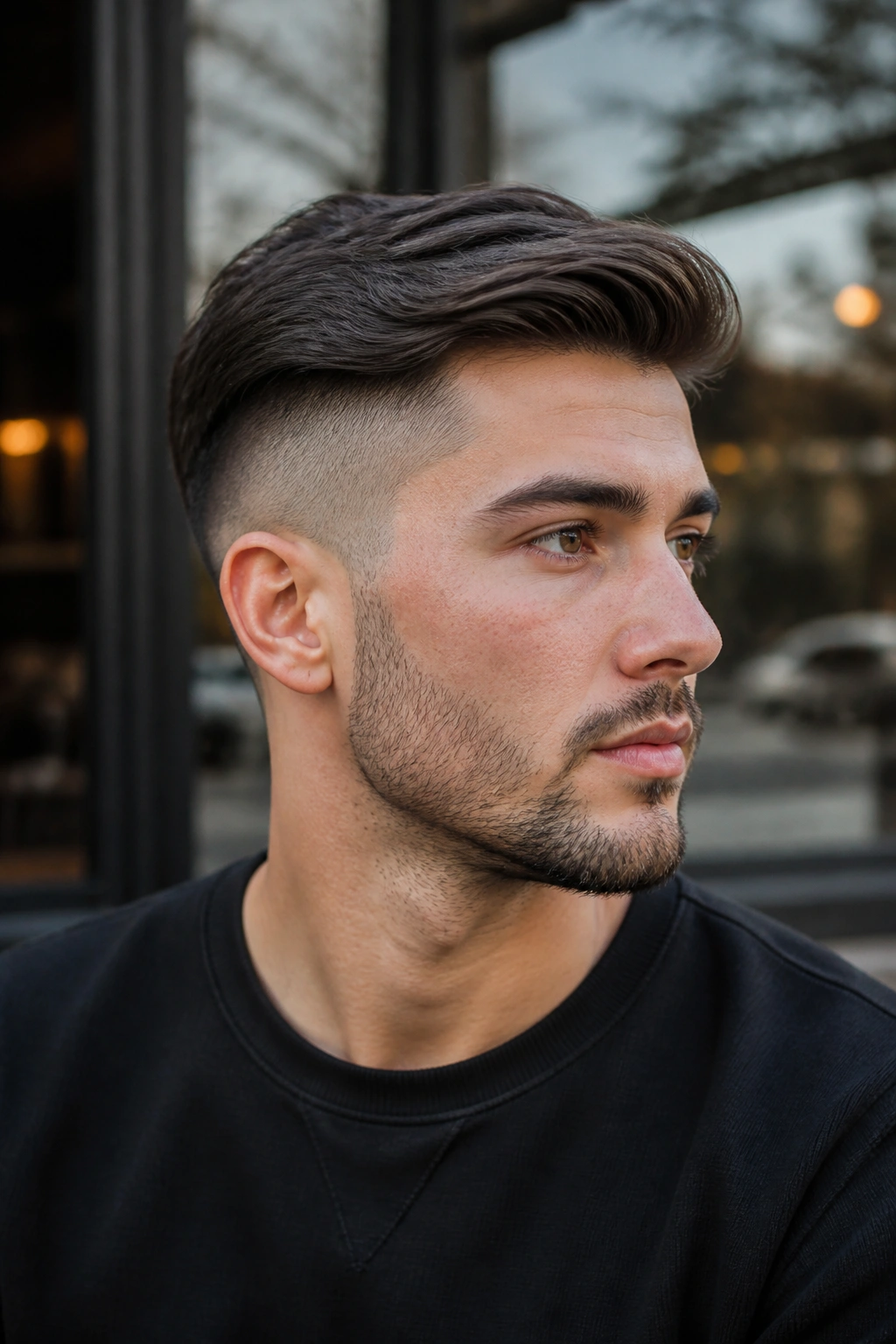
An undercut crop takes the thickest part of the hair — usually the nape, around the ears, and sometimes part of the sides — and removes it from the equation. That is why it works.
The top stays long enough to sweep over, slick back, or wear slightly piecey. The undercut is doing the heavy lifting underneath, where nobody sees it but everyone feels the difference. Less bulk means faster drying, easier styling, and fewer moments where the hair feels like it’s trying to sit on your shoulders.
This style is not subtle, and that’s fine. It’s for people who are done pretending that thick hair needs to be coaxed into behaving the same way as fine hair. It doesn’t. Give it structure and it settles down.
The catch is grow-out. You have to be comfortable with the shape changing as the cut grows, because the undercut line will show before the top does. If that doesn’t bother you, the daily payoff is huge.
Final Thoughts
Thick hair does not need to be “fixed.” It needs boundaries. Once you give it a line, a braid, a bun, or a cut that respects where the bulk lives, the whole head feels easier to wear.
The styles that work best are usually the ones with a clear job. Keep the crown smooth. Keep the ends heavy or tucked. Keep the outline from spreading. That is really the whole game.
Pick one style that fits your routine, not just your mood on a good hair day. That’s the one you’ll actually wear again.
