



Fine hair has a nasty habit of collapsing right when you want it to behave. Add a few years, some gray strands, and a bad haircut, and the whole thing can go limp in the time it takes to get from the salon to the car.
The good news? Short haircuts for fine hair over 50 are often far better than longer styles for building shape, lift, and shine. Fine hair is not the same as thin hair. You can have a full head of very fine strands and still struggle with flatness, and that distinction matters more than most people think. The right cut works with strand diameter, cowlicks, crown height, and the way gray hair sometimes turns a little wiry at the ends.
Short hair also does something quietly useful: it gives your stylist a cleaner canvas. A strong perimeter, a smart fringe, or a bit of graduation at the back can make hair look denser without piling on product. And honestly, heavy layering is where a lot of women get burned. Too much removal, too much razor work, too much “movement” in the wrong places — the result is usually a see-through crown and ends that flare out like static.
The cuts below are the ones that make sense in real life. They’re practical, flattering, and not fussy. Some are soft and neat. Some have a little edge. All of them can work beautifully on gray, silver, salt-and-pepper, or color-treated hair that wants a better shape and a bit more lift.
1. Classic Pixie for Fine Hair Over 50 With Side-Swept Fringe

The classic pixie is still one of the best answers for fine hair that needs body fast. It puts the emphasis where fine hair can usually give you the most help: the crown, the fringe, and the clean line around the ears and nape.
Why It Works
Keep the top around 1½ to 2½ inches and let the fringe sweep softly across the forehead. That little bit of length gives the eye something to read as fullness, which is half the battle with fine hair. A pixie that sits too close to the head everywhere can look harsh. This one doesn’t.
Ask for soft point cutting on the top, not heavy thinning. Point cutting makes the edges look lighter without chewing up density. On gray hair, the texture often shows more clearly, which helps the cut look lively instead of flat. If your hair sticks out at the crown, a light mousse at the roots and a quick blast of the dryer in the opposite direction usually calms it down.
What to Tell Your Stylist
- Keep the nape tight, around ½ inch or less.
- Leave the top longer than the sides by about 1 inch.
- Cut the fringe so it can fall diagonally, not straight down.
- Avoid razor-heavy texture if your hair is fragile.
Best for: women who want low-maintenance shape and a cut that looks deliberate even on a rushed morning.
2. Soft Layered Bob for Fine Hair Over 50 at the Jaw

A jaw-length bob is a very good place for fine hair to live. The line sits where the face naturally wants structure, and that gives the hair a little more authority.
Why does this work so well? Because the bob keeps the perimeter strong. Fine hair often looks thinner when the ends are too wispy, and a clean jaw-length edge stops that problem before it starts. If you’ve ever had a cut that looked fluffy for a week and then went stringy, you know exactly what I mean.
The trick is restraint. You want light internal layering, not a dozen short pieces floating around the head. If your hair bends a bit at the ends, a quick round-brush finish gives the bob a soft curve under the chin. If it’s straight, a center part or a deep side part can change the whole feel without touching the cut.
This is also one of the easiest cuts to wear with gray hair. Silver strands reflect light, and a bob line shows that off in a clean, polished way.
3. Tapered Crop With Crown Lift
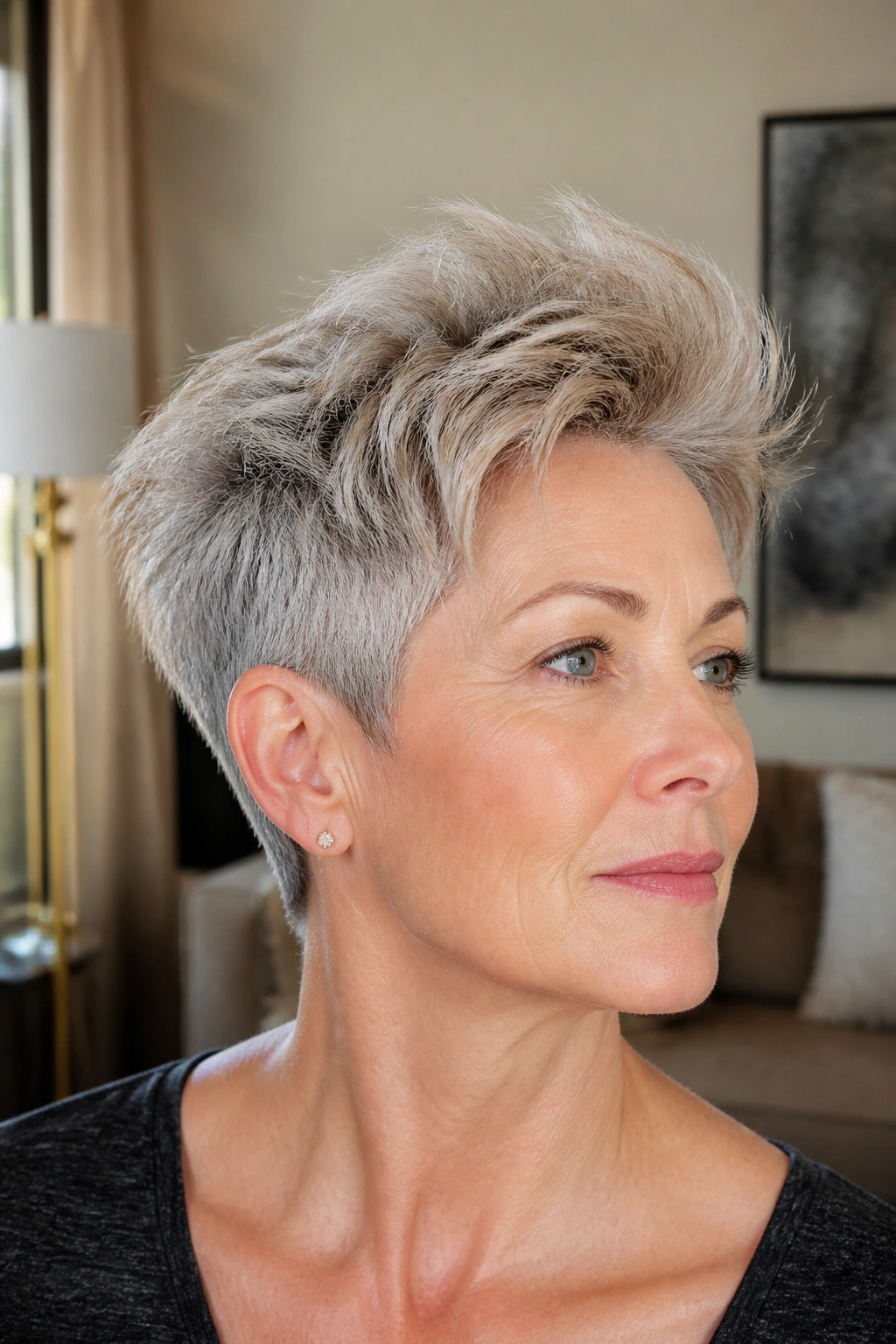
Flat at the crown? This is the cut that gives you room to breathe. A tapered crop keeps the sides and nape neat while leaving enough length on top to create height where fine hair usually gives up.
What Makes It Different
The crown area should stay around 2 to 3 inches, with the back tapering in closer to the neck. That contrast is what creates lift. If everything is the same length, the shape goes soft and lifeless. If the top is too long, the cut gets floppy. The sweet spot is surprisingly small.
I like this cut for women whose hair wants to lie forward. It gives you the option of pushing the top back with your fingers or lifting it at the root with a small round brush. A little root spray at the crown helps too, but don’t drown the hair in product. Fine strands go heavy fast.
How to Ask for It
- Keep the sides close to the head.
- Leave extra length at the crown.
- Taper the nape so it hugs the neck.
- Blend carefully at the temples to avoid a hard shelf.
Tip: dry the crown first, lifting the roots away from the scalp. If you let the top air-dry flat, it usually stays flat.
4. Chin-Length Blunt Bob
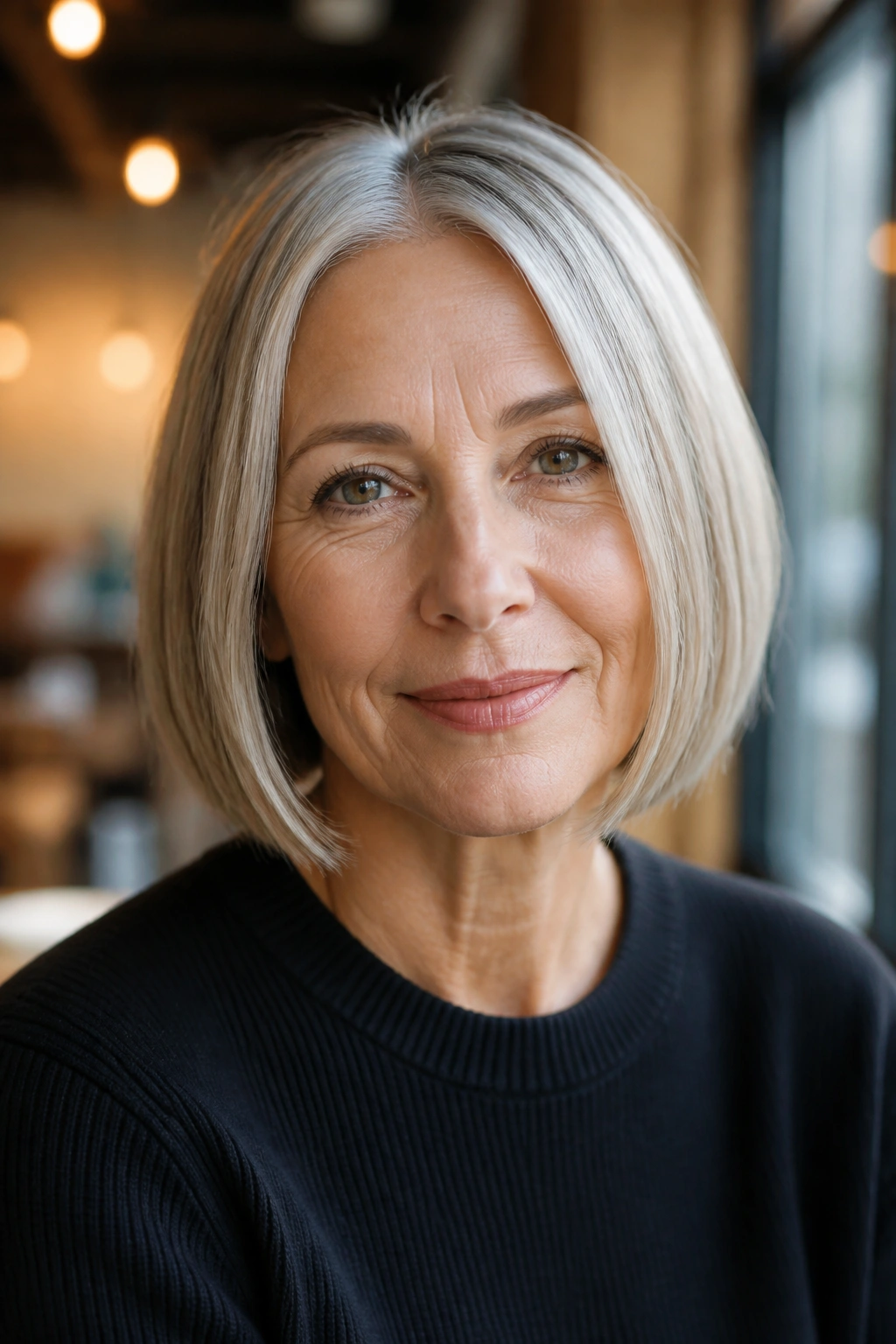
A blunt bob can make fine hair look thicker almost on sight. There’s no mystery here: a solid line gives the eye a stronger edge to follow, and that reads as density.
Key Details to Ask For
- Length should land right at the chin or a hair below.
- Ends should be cut blunt, not razor-softened.
- Layers should be minimal and hidden.
- The front can angle very slightly forward if you want a softer face frame.
This cut is especially good if your hair is straight or only bends a little. It also works well on gray hair because the clean line keeps the look crisp. Too much layering on gray strands can make them puff in strange places, and a blunt bob avoids that mess.
The only catch is maintenance. A blunt bob loses its shape when it grows out, so trims matter. If you wait too long, the line drops past the jaw and the whole cut starts to look less intentional. Still, if you want the kind of haircut that makes hair seem denser without trying too hard, this is a strong pick.
5. Feathered Crop With Airy Ends

A feathered crop can be lovely on fine hair, but only when the feathering is soft and controlled. Too many cuts still overdo it, and then you’re left with see-through ends that flutter around without adding shape.
What you want is a crop that keeps some weight at the perimeter while allowing a few lighter layers around the temples and above the ears. That gives the hair movement without stripping out the part that makes it look full. The cut should feel light when you run your fingers through it, not skeletal.
Gray hair often likes this shape because it can look crisp at the top and gentle around the face. If your silver strands are a little dry, use a lightweight cream or lotion instead of an oil that can separate the ends. A small brush-through with a blow dryer is enough. You do not need to chase big volume here. You just need a little lift and a clean outline.
If you’ve had the kind of layered haircut that turned your ends into fuzz, this is the safer version. It breathes, but it doesn’t disappear.
6. Textured Crop With Piecey Top

This one has a little more attitude. A textured crop keeps the sides short and the top separated into small pieces, which gives fine hair a more lively, modern finish.
The important part is the scale of the texture. You want piecey, not shredded. That usually means leaving enough length on top for the strands to separate naturally, then using a tiny amount of styling paste to break them up. If the top is cut too short, the texture can start looking random instead of deliberate. And if the hair is too thinned out, the scalp shows through.
This cut works best when your hair has some bend or when you don’t mind styling it each morning. Run a pea-sized amount of matte paste through the roots and mid-lengths, then pinch a few pieces at the crown. That’s enough. Really. More product usually makes fine hair collapse.
A textured crop also plays well with glasses, because the clean sides and lively top keep the face from looking crowded. It’s a good choice if you want something shorter than a bob but a little less severe than a classic pixie.
7. Stacked Bob With a Clean Nape

The stacked bob is one of those haircuts that can change the whole profile of the head. Shorter layers in the back create a little built-in lift, while the front stays longer and softer around the face.
What to Ask For
- Keep the nape neat and close.
- Build soft graduation through the back.
- Leave enough length in front to hit the jawline.
- Avoid over-stacking if your hair is very sparse.
The magic is in the back view. A clean nape gives the neck a longer line, and the stacked shape creates the illusion of fuller hair at the crown. That’s especially useful if your hair falls flat right after drying. It also works well for gray hair because the shape looks intentional even when the texture is a bit coarse.
One thing to watch: too much stacking can go old-fashioned fast. You want a soft rise, not a helmet. If the back gets too high and too round, the cut can start looking dated. A good version feels light, neat, and fresh without screaming for attention.
8. Ear-Length French Bob

The French bob is short, elegant, and a little cheeky in the best way. On fine hair, it gives you a neat shape without asking the strands to carry too much weight.
What makes it different from a standard bob is the length. It usually sits around the ears or just below the jaw, which keeps the line compact and lively. If you add a soft fringe or a loose side part, the whole cut feels softer around the forehead. That matters, because a hard line up top can make fine hair look thinner than it is.
Why It Feels Fresh
A French bob works especially well when hair is naturally straight or only slightly wavy. Blow-dry it with a paddle brush or a small round brush, then tuck one side behind the ear. That tiny bit of asymmetry keeps it from looking too stiff.
If your gray hair has a glossy finish, this cut shows it off without much effort. The surface catches the light, and the shape frames the face in a clean way. Short, neat, and not precious. That’s why it keeps coming back.
9. Asymmetrical Short Bob
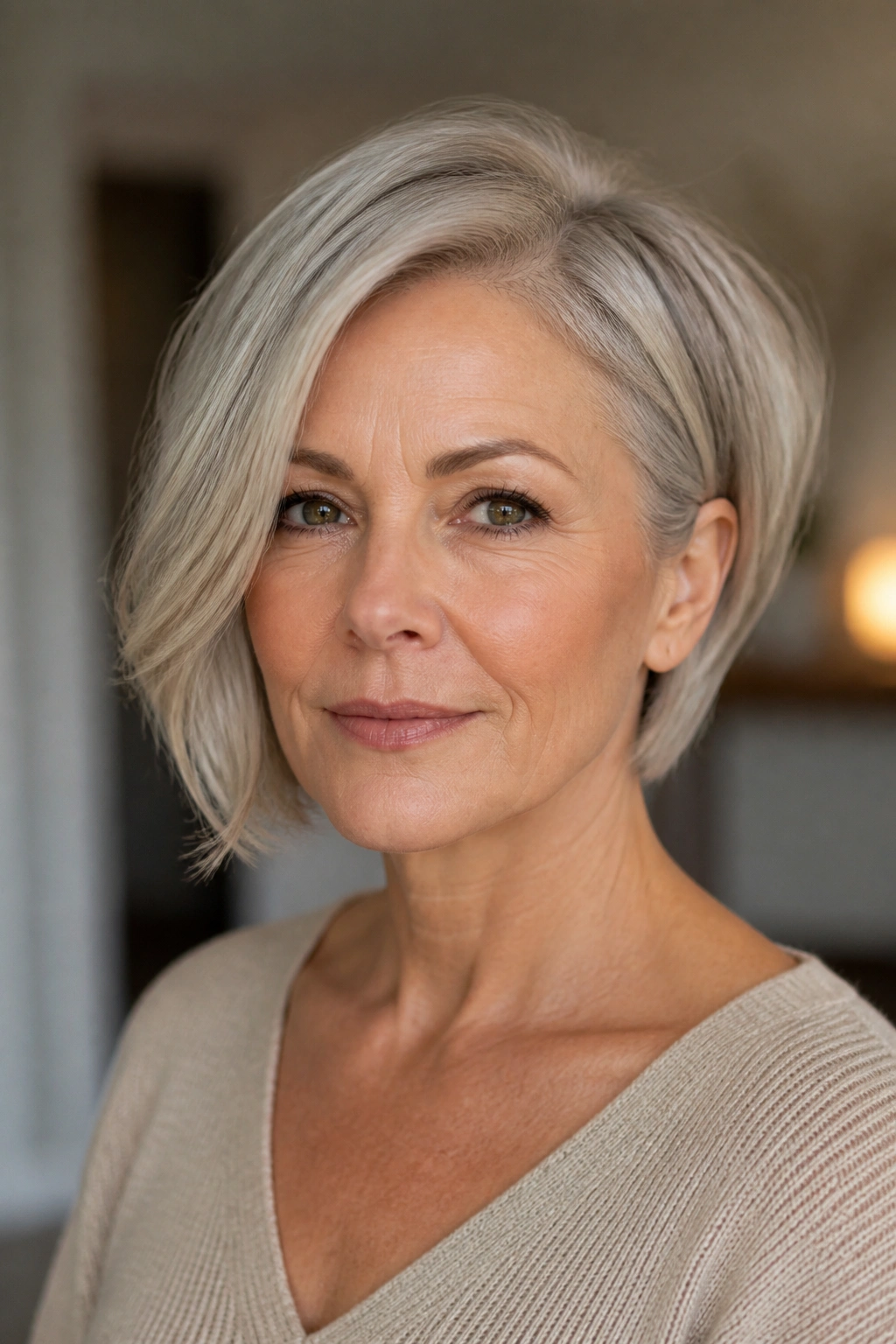
A small imbalance can do a lot of work. An asymmetrical bob, with one side a little longer than the other, creates a diagonal line that makes fine hair look more dynamic and often fuller.
I’m talking about a subtle difference, usually ½ inch to 1½ inches, not some dramatic runway shape that needs constant fussing. The longer side gives the eye something to follow, which pulls attention away from sparse areas at the temples or crown. If one side of your hair falls flatter than the other, this cut can be a quiet fix.
It also does a nice job on gray hair because the change in length shows off movement instead of just volume. A side part helps here. So does a little bend at the ends, which you can get with a round brush or a quick pass of a flat iron turned slightly under.
This is a good cut if you want short hair with a little edge but not a full-on sharp bob. It has shape. It has interest. And it doesn’t rely on heavy layering to get there.
10. Wedge Cut With a Rounded Shape
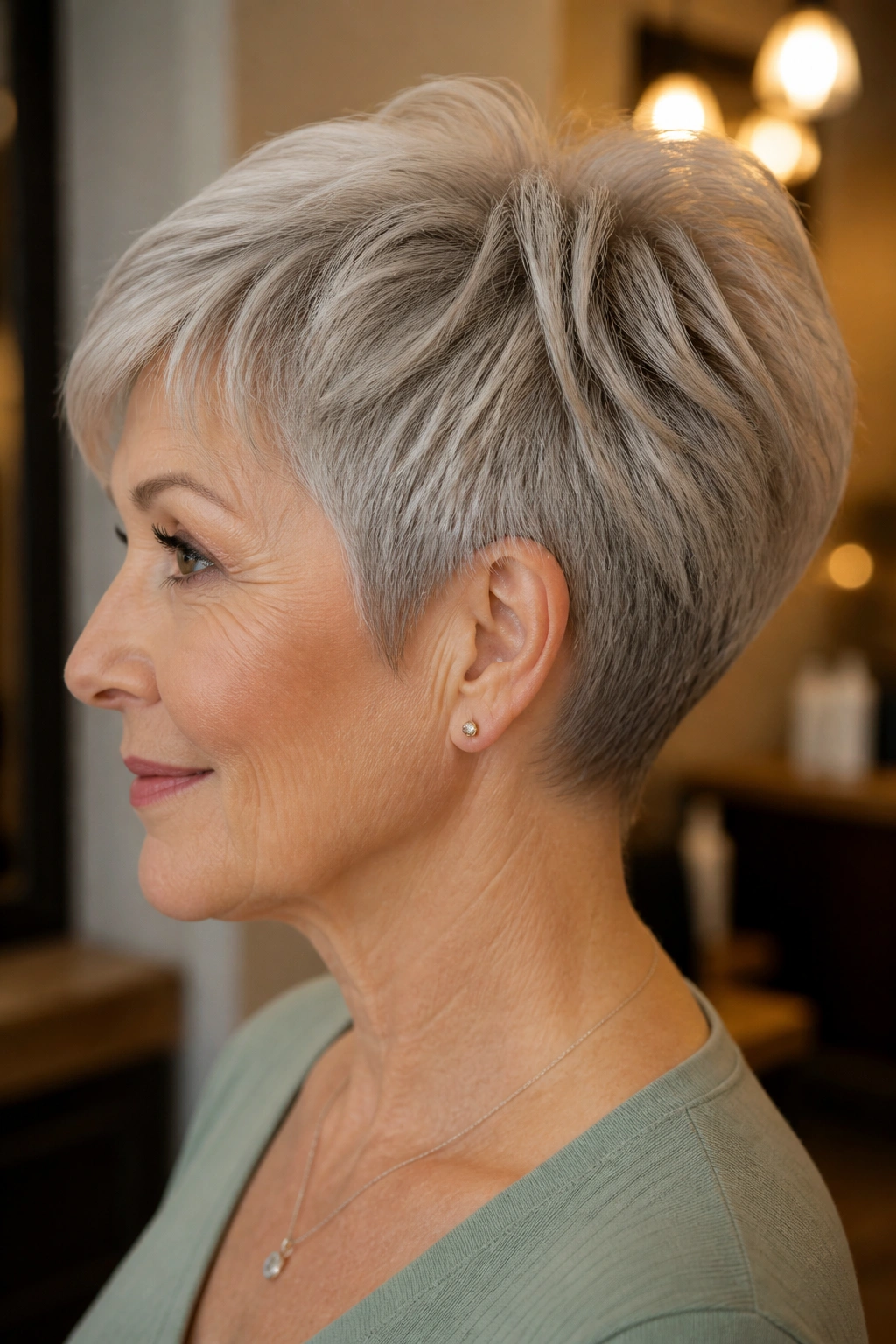
The wedge cut never really disappeared. It just needed a softer hand.
A modern wedge keeps the back compact and rounded, with the layers stacked in a way that gives the crown a gentle rise. The front can stay a bit longer, which helps the face look softer and keeps the cut from feeling rigid. On fine hair, that round silhouette can create the sense of fullness that flat layers miss completely.
The Shape Matters
A good wedge should fit the head, not float around it. The nape stays close. The crown gets a bit of lift. The sides should curve in lightly, not puff out. That curve is what makes the haircut look polished instead of boxy.
This style works especially well if your hair is straight and your head shape is fairly balanced. It can also be a smart option for gray hair that has gone a little coarse, because the clean structure calms the texture down. If you like hair that looks neat without needing much styling, this is a quiet winner.
Just don’t ask for too much bulk at the sides. That’s where old wedge cuts used to go wrong.
11. Layered Bob With Invisible Layers

Invisible layers are one of the best tricks for fine hair, and I wish more stylists used them with restraint. They keep the surface of the bob smooth while letting the inside of the haircut move a little more freely.
How to Ask for It
- Keep the perimeter at jaw or slightly below.
- Ask for layers placed underneath the top section.
- Leave the outer line clean.
- Keep the layers soft enough that they do not poke through the surface.
That’s the whole game. You get lift without obvious choppiness. If the layers are placed well, the hair moves when you turn your head, but it still looks full when you stand still. Fine hair often needs that kind of quiet support.
This cut is useful for women who want a bob but hate the feeling of a hard, blunt edge. It’s also easier to wear if your hair has a little wave and you want it to bend naturally. Gray hair benefits here too, because the smooth outer line keeps the texture from frizzing out.
Invisible layers are not flashy. That’s the point.
12. Swept-Back Pixie With Longer Top
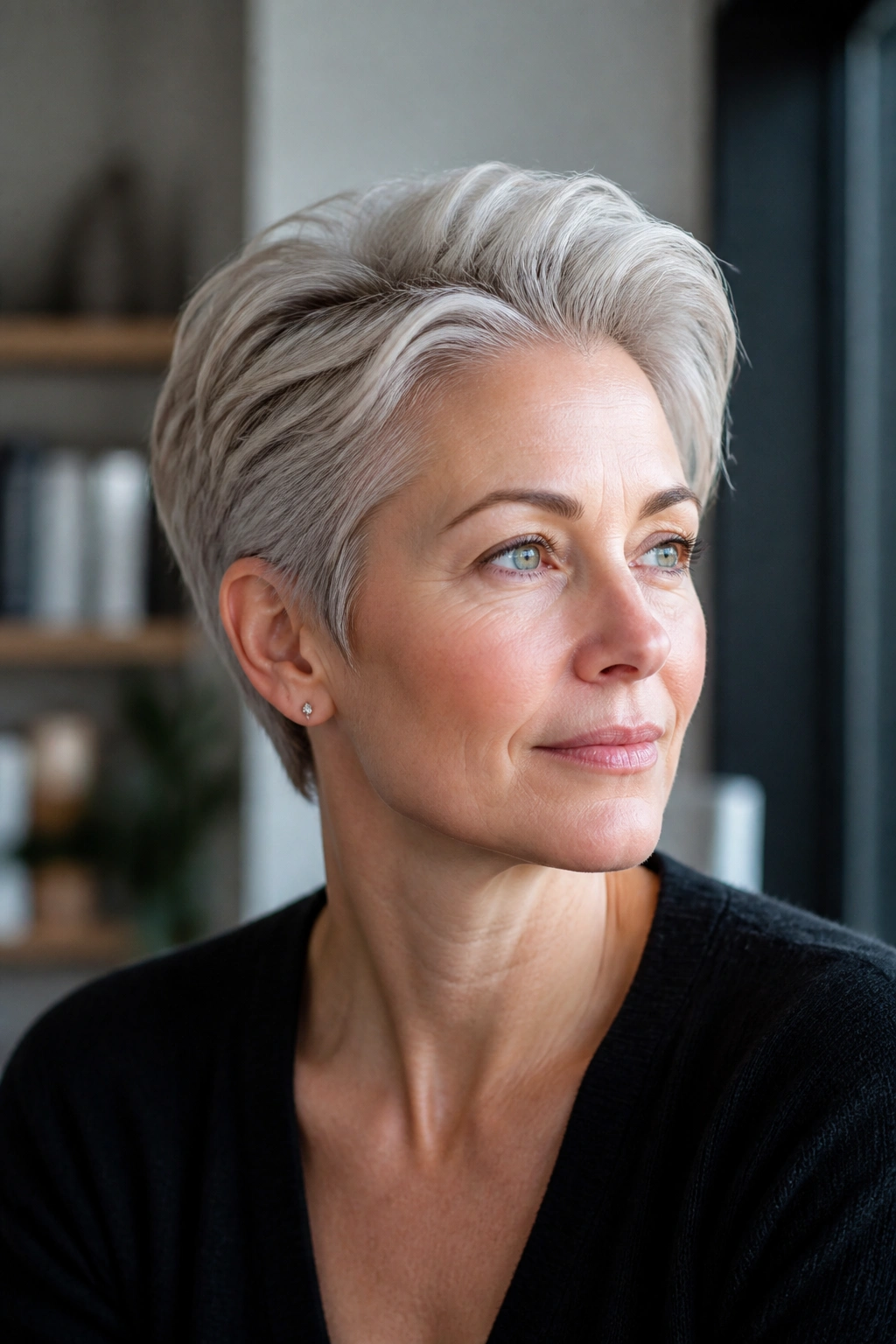
A swept-back pixie is a little more polished than a classic side-swept version. The top is left long enough to move away from the forehead, which opens up the face and gives the crown a lift.
The length on top usually sits around 3 to 4 inches, depending on how much styling you want to do. That extra inch makes a difference. It lets you push the hair back with your fingers, lift it with a round brush, or create a soft wave across the top. Fine hair often needs that extra room to shape itself.
This cut can be especially good if you wear glasses or if you like your face fully visible. It feels clean. It also keeps gray hair from looking too helmet-like, which can happen with shorter cuts that are cut too round. A little matte paste at the roots and a light spray at the finish is enough.
If you want short hair that still has a bit of polish, this one sits in a very useful middle ground.
13. Neck-Grazing Shag Bob
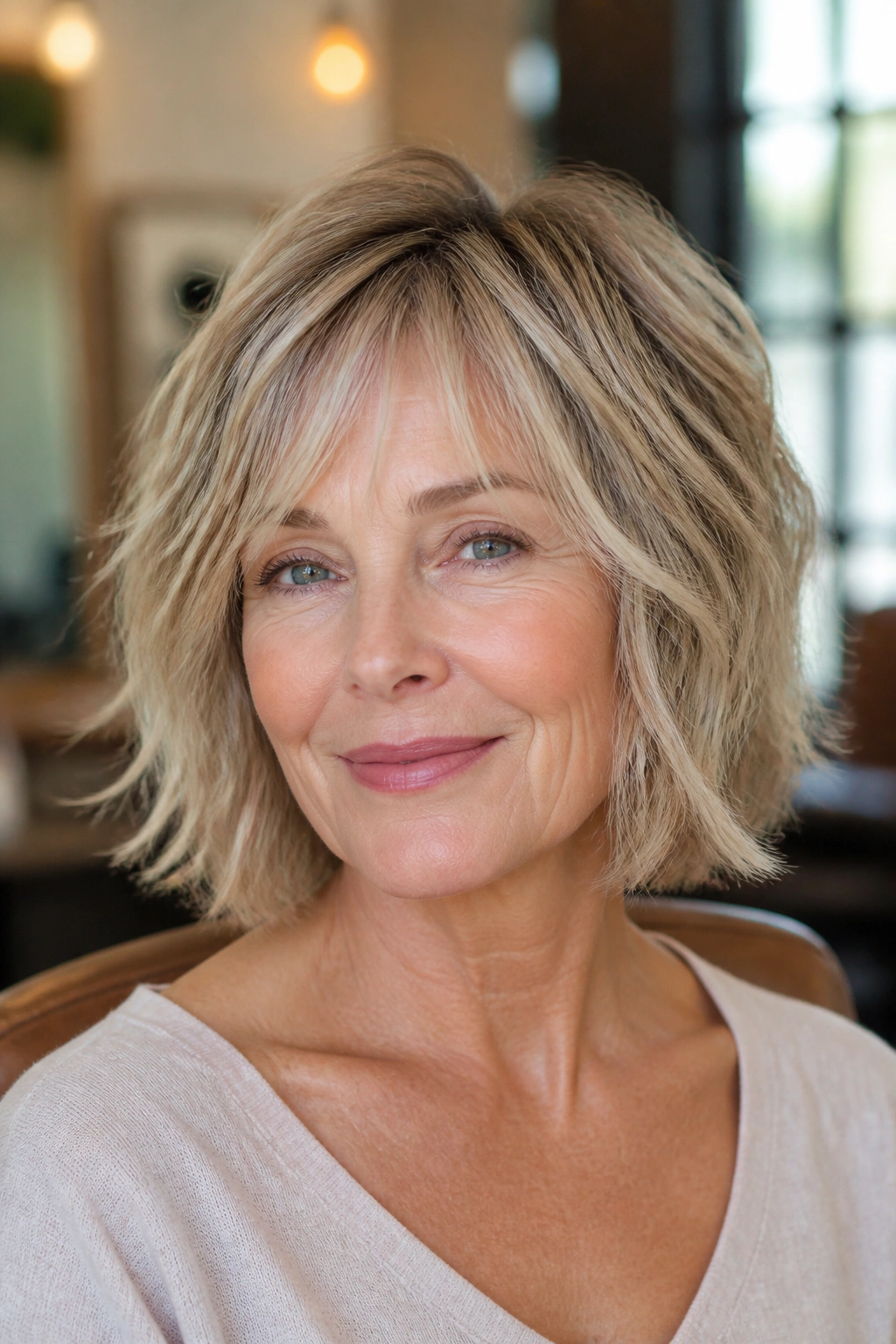
A shag bob can work on fine hair, but only if it stays controlled. The point is not to strip out all the weight. The point is to give the ends movement and keep the shape loose around the neck.
A neck-grazing length is a good sweet spot because it gives the hair enough room to bend without dragging the whole look down. Ask for softer layers around the crown and temple area, then keep the perimeter near the collarbone or just above it. That small bit of length keeps the style from puffing up too much.
This haircut is a nice match for women whose hair has a little natural wave. It can look airy and relaxed without turning into a mess. On gray hair, the texture often becomes more visible, which makes the shaggy movement read nicely. On very fine, pin-straight hair, though, you’ll want the layers kept gentle. Too much cutting and the shape can fall apart.
A light cream or wave spray can help if you want the ends to separate a bit. Not much. Just enough.
14. Soft Undercut Pixie
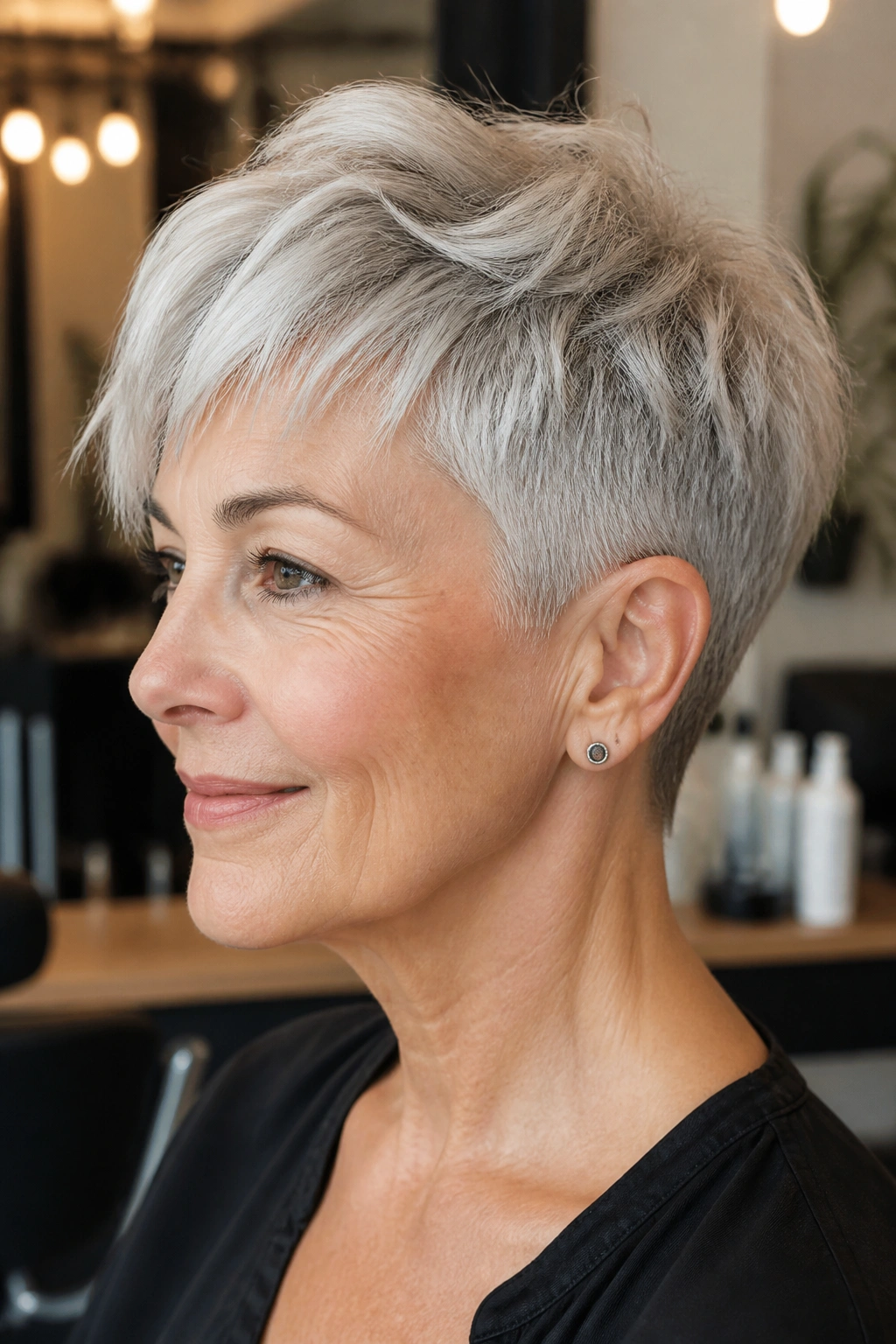
A soft undercut pixie is one of those haircuts that sounds harsher than it actually is. Done well, it removes bulk around the ears and nape while keeping the top soft and feminine.
Why It Helps Fine Hair
If your hair is fine but grows in thick around the sides, an undercut can make the top look fuller by comparison. The top usually stays around 2 to 3 inches, and the undercut is hidden just enough that it doesn’t scream “shaved.” It simply removes the puff that can make a short style look bulky in all the wrong places.
This is especially handy for gray hair that gets fuzzy at the neck. A cleaner nape makes the whole head shape look sharper. The catch is that this cut should never be too severe unless you really want that look. A soft undercut is about control, not drama.
If you hate hair touching your ears or neck, this can be a relief. It also makes daily styling easier because you’re working with less hair where it tends to misbehave most.
15. Long Pixie With Ear Tuck

A long pixie gives you the best part of short hair without locking you into one styling mood. It can be neat, loose, tucked behind the ear, or brushed forward on a tired morning when you cannot be bothered.
The front pieces usually sit near the cheekbone or jaw, while the top stays long enough to move. That extra length makes fine hair look less abrupt. It also means you can play with your part more easily, which helps if your hairline has changed a bit over the years.
This cut is a favorite of mine for gray hair because the longer top catches the light and gives silver strands a soft shine. It also works well if you want some coverage around the temples. A tiny bend at the ends is enough to keep it from looking flat.
Long pixies are good when you want flexibility but not fuss. They’re not high-maintenance, but they do need shaping every so often so the front doesn’t drop into the eyes.
16. Rounded Crop With Full Crown

A rounded crop sounds old-fashioned until you see a modern version done properly. Then it just looks smart.
The shape is compact, with a little extra room at the crown and a smooth curve around the head. That curve gives fine hair the appearance of density because the eye sees a full silhouette, not scattered pieces. A rounded crop can be a strong choice if your hair is straight and tends to lie close to the scalp.
Who It Suits Best
- Women who like clean outlines.
- Hair that is fine but not fragile.
- Gray or silver strands that need structure.
- Anyone who wants minimal styling in the morning.
A crop like this does not need much product. A light blow-dry at the roots and a touch of styling cream are often enough. If you add too much wax or spray, the finish can go stiff, and that’s the last thing a cut like this needs.
The danger is going too tight on the sides. Leave enough softness around the temples so the crop doesn’t harden into a shape that feels severe. Softness is what keeps it wearable.
17. Salt-and-Pepper Layered Bob

Salt-and-pepper hair can be gorgeous, but it has its own set of rules. Gray strands often behave differently from pigmented hair — they can be drier, coarser, or a little wiry at the surface. A layered bob helps, but it has to be the right kind of layered bob.
Color and Cut Need Each Other
A blunt perimeter works well when the hair is sleek. If your salt-and-pepper texture is puffier, a few strategic layers near the crown and face can stop the shape from ballooning. The trick is to keep the ends clean while letting the top move a little. That gives the color a chance to shine instead of getting lost in a fuzzy outline.
I like this cut at chin length or just below because it frames the face without hanging on the jaw. It’s especially nice if your gray is bright and reflective. The contrast between silver and dark strands looks sharper when the cut has a tidy line.
A smoothing cream and a medium brush are usually enough. You do not need to fight the texture into submission. That almost never ends well.
18. Curtain-Bang Bob

Curtain bangs can be very flattering on short hair, and they’re a smart choice if your forehead feels a little more prominent than it used to. The bangs split softly down the center and open around the face instead of covering it completely.
That matters for fine hair because a full, heavy fringe can look flat and stringy. Curtain bangs keep air in the cut. They also blend into the bob better, so the whole style feels softer and less severe. Ask for the bangs to start around the cheekbone or just above the lip, depending on how much face framing you want.
This bob works best when the lengths around the jaw stay clean. If the bangs are soft but the rest of the cut is overloaded with layers, the shape gets messy fast. Keep the perimeter disciplined and let the fringe do the softening.
It’s a nice option for glasses wearers too. The bangs create movement above the frames without crowding the eyes.
19. Short Shag With Wispy Fringe
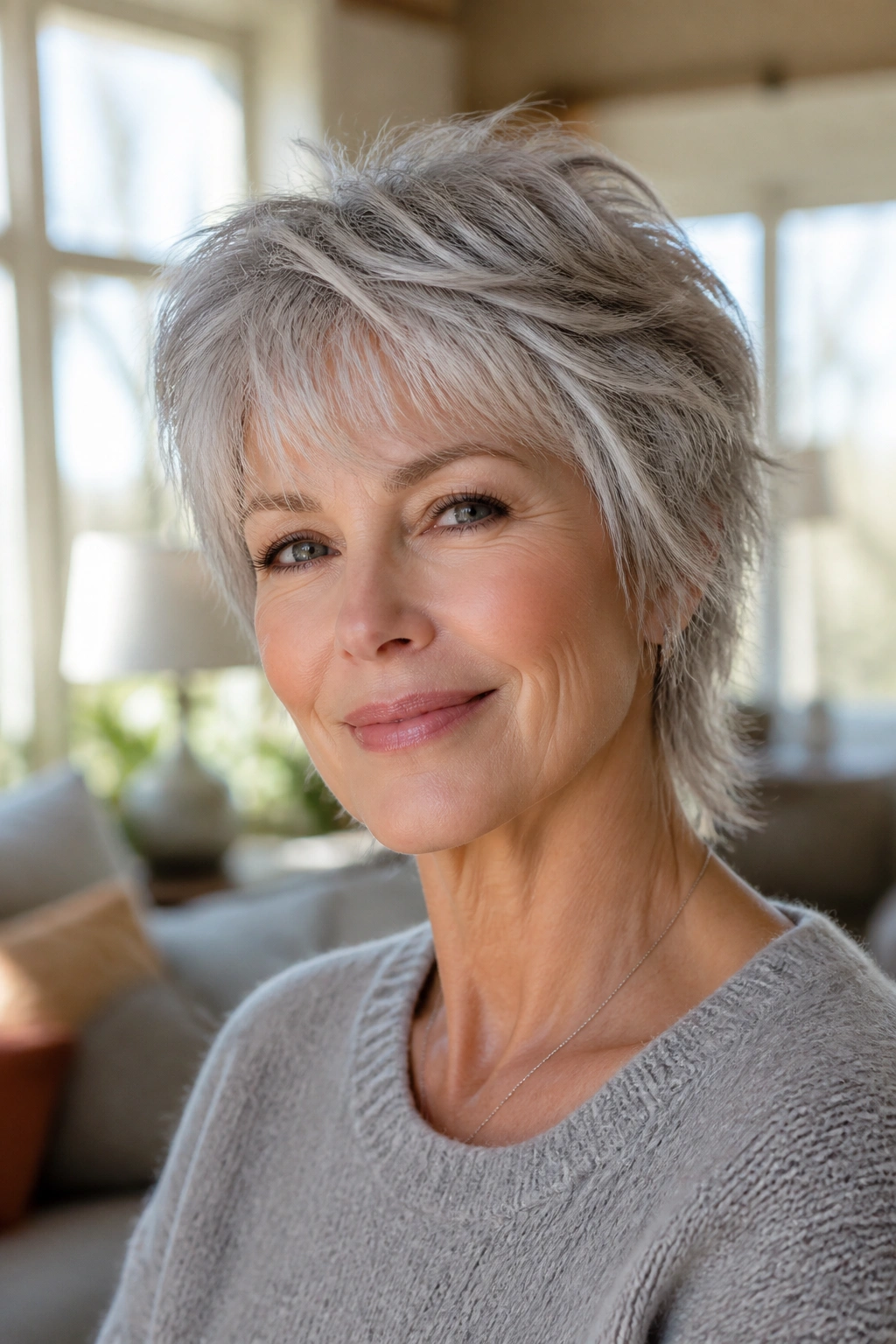
A short shag can be a lifesaver on fine hair if it’s cut with restraint. The best versions keep the layers airy on top and around the temples, then preserve enough weight through the ends so the haircut still has shape.
A Few Things to Watch
- Keep the fringe wispy, not sparse.
- Ask for layers concentrated around the top third of the head.
- Avoid heavy razor work near the ends.
- Trim every 6 to 8 weeks if you want the shape to stay clean.
That last part matters. Short shags can go from chic to frayed pretty quickly if they grow out too much. On gray hair, the texture can get fluffy at the wrong lengths, so regular shaping helps more than extra product.
This cut is best when your hair has some natural bend. If it is very straight and very fine, it may need more styling than you want. But if you like a little movement and do not mind a softer outline, it can feel lively without being messy.
20. The Soft Crop Bob for Fine Hair Over 50

The soft crop bob sits in a sweet spot between a pixie and a short bob, and that middle ground is why it works so well for fine hair. It gives you enough length to feel feminine and versatile, but not so much that the hair loses shape and collapses.
A good version usually lands between the jaw and the top of the neck, with a gently rounded perimeter and light internal support. No harsh undercut. No shaggy overload. Just enough structure to keep the hair from lying flat, which is what fine hair hates most. If you want a cut that works with gray hair, this one is especially forgiving because the clean outline makes silver strands look intentional rather than wispy.
Why Stylists Keep Coming Back to It
The soft crop bob is easy to style, easy to wear, and easy to adjust for face shape. You can tuck one side, add a side part, or smooth it down with a small brush. On days when your hair feels cooperative, it looks polished. On days when it does not, it still holds together.
That’s the real test, isn’t it?
If you want a cut that gives you lift without making you babysit it, this is the one I’d put near the top of the list. It has enough shape to flatter, enough softness to feel modern, and enough restraint to avoid the thin, scraggly look that fine hair can fall into so fast.
