



A good short haircut in your 40s should make your face look more awake, not more managed.
That matters more than people admit. Hair starts changing in ways that catch you off guard — the crown goes flatter, the ends feel drier, gray strands pop up in places that seem to have a mind of their own, and a style that used to take five minutes starts taking fifteen. The right short hairstyles for women in their 40s don’t fight those changes. They work with them.
The best cuts do something sneaky: they put shape back where hair has lost it. A chin-length bob can give fine hair a fuller edge. A pixie can make dense hair feel lighter without looking chopped up. A soft fringe can take the hard edge off a forehead line that suddenly feels more noticeable in the mirror. That is the real job of a good haircut. Not disguise. Not pretending. Just better structure.
And yes, short hair can be flattering at this age. Very flattering. The trick is choosing a shape that looks intentional the second you leave the chair — even if you only blow-dry the front and let the rest air-dry while you make coffee.
1. The Chin-Length French Bob
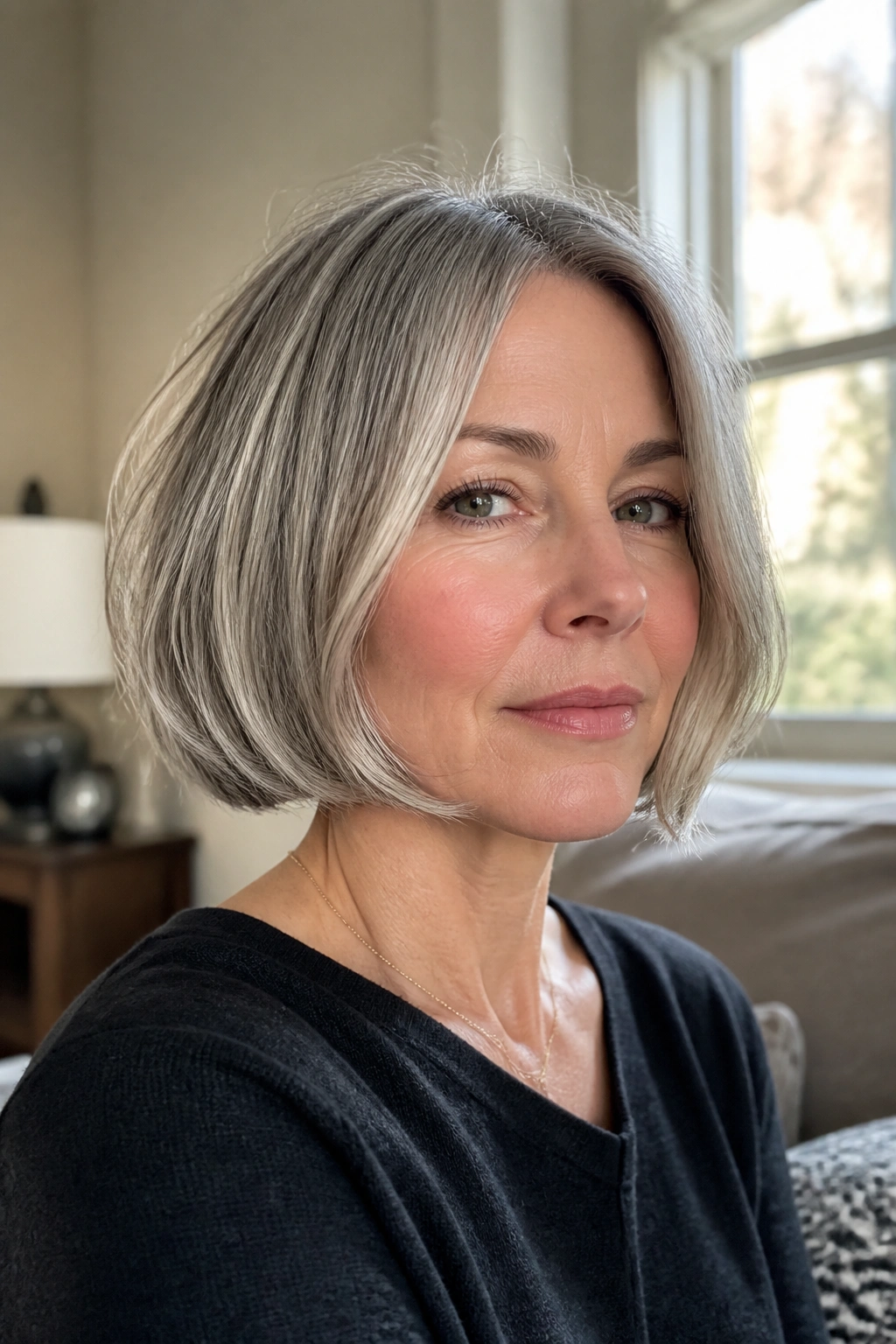
A chin-length French bob has a way of making everything look a little sharper. The jawline looks cleaner, the neck looks longer, and the whole cut has that easy, slightly undone shape that never feels stiff. It’s one of those short hairstyles for women in their 40s that looks polished even when you’ve only spent eight minutes on it.
Why It Flatters the Face
The magic is in the length. Hitting at the chin keeps the cut short enough to feel fresh, but long enough to soften the lower half of the face. That matters if your hair has started to lose density, because a blunt line at the chin gives the illusion of thickness at the ends.
It also plays nicely with gray hair. Silver strands look crisp in a clean shape like this — not fuzzy, not hidden. A little bend at the ends is enough. You do not need to curl every piece.
- Best for straight to slightly wavy hair
- Keeps the neckline open and light
- Works well with air-drying or a 1-inch round brush
- Needs trimming about every 6 to 8 weeks to keep the shape tidy
Tip: ask for a soft blunt line, not a helmet. The ends should move when you turn your head.
2. The Textured Pixie Cut
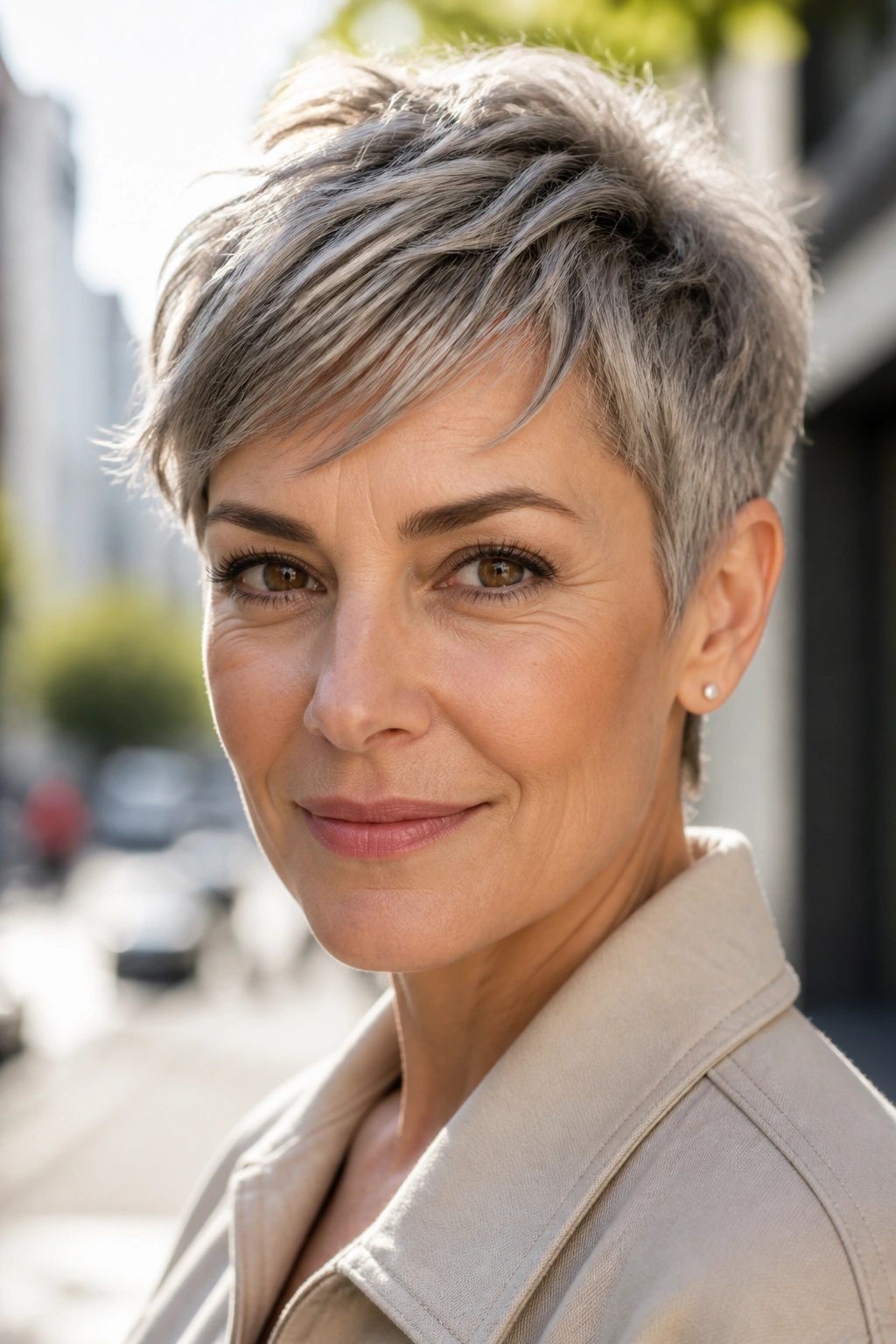
The textured pixie cut is the one I reach for when someone wants the least fuss and the most face. That sounds blunt because it is. If your mornings are already busy, this cut saves time without making you look as if you gave up on style.
Short layers on top — usually around 1.5 to 3 inches — keep the silhouette light. The sides can sit close to the head, while the top has enough length to push forward, sweep to the side, or sit a little messy. That tiny bit of uneven texture keeps it from looking severe.
If your hair has gotten finer in your 40s, this cut can be a relief. It gives the illusion of lift without asking for much product. A pea-sized bit of matte paste is usually enough. Warm it between your fingers, pinch the top pieces, and leave the rest alone.
It’s also kinder to gray hair than people expect. Short gray pieces catch the light in a pixie cut instead of lying flat and dull. That matters. A lot.
3. The Layered Jaw-Length Bob

Why does a jaw-length bob look so fresh on women in their 40s? Because it lands right where the face can carry a shape, not drag one around. The cut sits high enough to feel light, but low enough to give the hair some swing.
The layers matter. Without them, a jaw-length cut can turn boxy fast, especially if your hair is thick or slightly coarse. With soft layers cut inside the shape, the bob bends instead of puffing out. That difference is small in theory and huge in the mirror.
How to Style It
A round brush isn’t required, but it helps. Blow-dry the roots first, then roll the brush under just the last inch or so of the ends. You want a subtle curve, not a curled-under helmet.
A side part can make this cut feel a little softer and more grown-up. A center part gives it a cleaner line. Either one works. The real decision is how much polish you want on a given day.
If your hair is turning silver, this cut gives those streaks a nice frame. Gray looks deliberate here. Not accidental. Not messy. Deliberate.
4. The Curtain-Bang Bob

Picture someone who wants shorter hair but cannot stand a bare forehead. That’s where the curtain-bang bob earns its keep. It brings shape to the front without pinning the whole haircut to one mood.
The bangs should start around the cheekbones and taper away from the center. Shorter pieces near the middle open the face, while the longer outer pieces slide into the bob itself. When it works, it looks soft and a little romantic — not fussy, not heavy.
This cut is especially good if your face has more length than width or if you like the idea of movement around the eyes. It also helps when gray roots are coming in around the hairline. The bang area breaks up that visual line, which can make regrowth look less abrupt.
- Ask for bangs that part naturally in the middle or just off-center
- Keep the rest of the bob above the shoulders
- Use a small round brush only at the front
- Trim the fringe often, because long curtain bangs quickly lose their shape
One caveat: if you hate anything touching your forehead, skip it. That little detail matters more than the trend.
5. The Tapered Crop
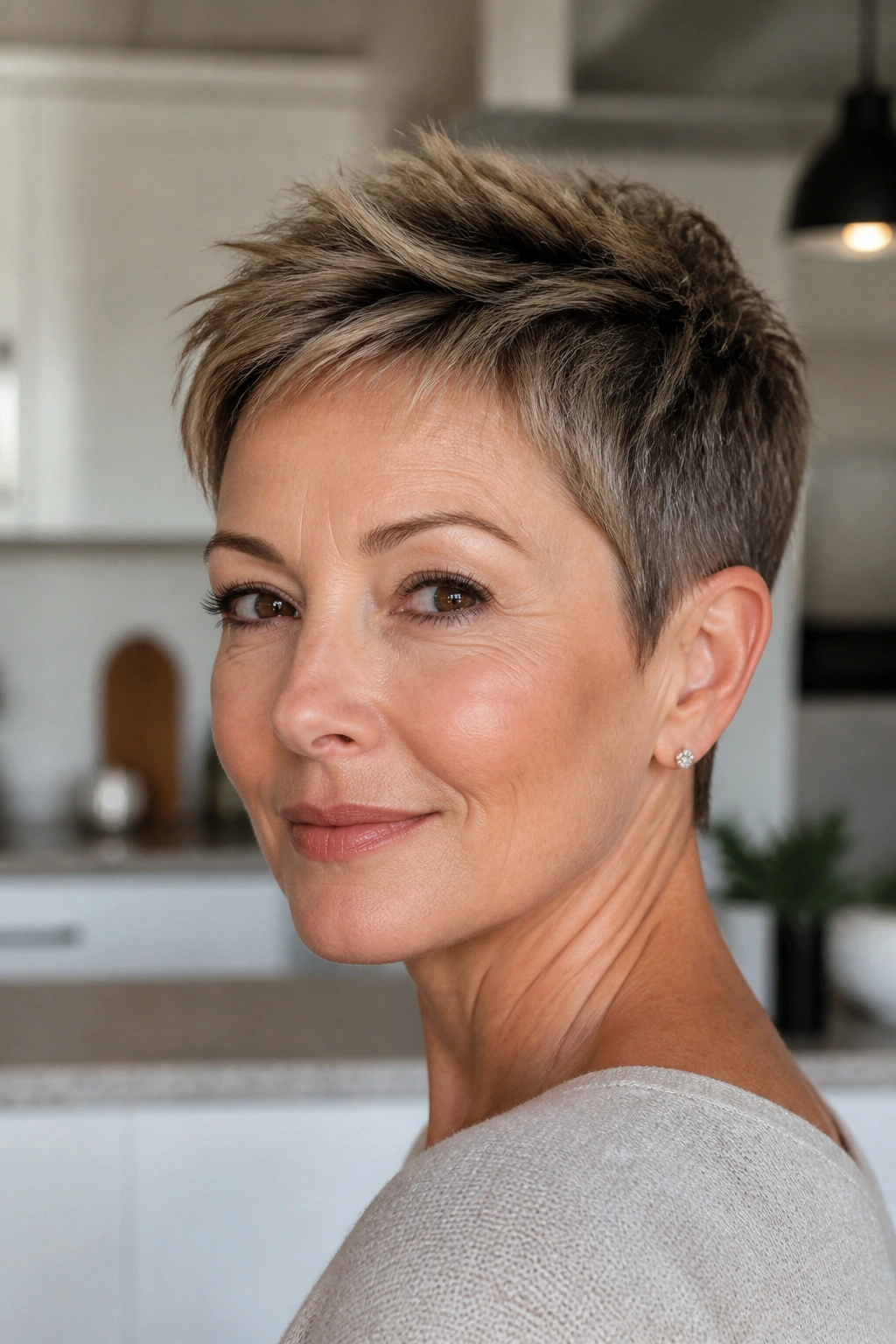
A tapered crop is neat in the best way. The nape is shorter, the sides hug the head, and the top keeps just enough length to lift off the scalp. It’s the cut you want when your hair has bulk and you’re tired of fighting it every morning.
This shape works especially well for women in their 40s with thick hair or strong growth around the crown. Instead of making the head look wide, the taper narrows the outline and gives the top a bit of air. It also looks good with glasses, which is one reason it shows up often on people who have actually worn short hair for a while.
The styling part is mercifully simple. A little lightweight cream or styling lotion through damp hair, a quick blow-dry, then finger-comb the top into place. If you like a side sweep, this cut will hold it. If you like a brushed-forward shape, it can do that too.
It’s not a dramatic haircut. That’s the point. It’s tidy, practical, and quietly strong.
6. The Curly Crop
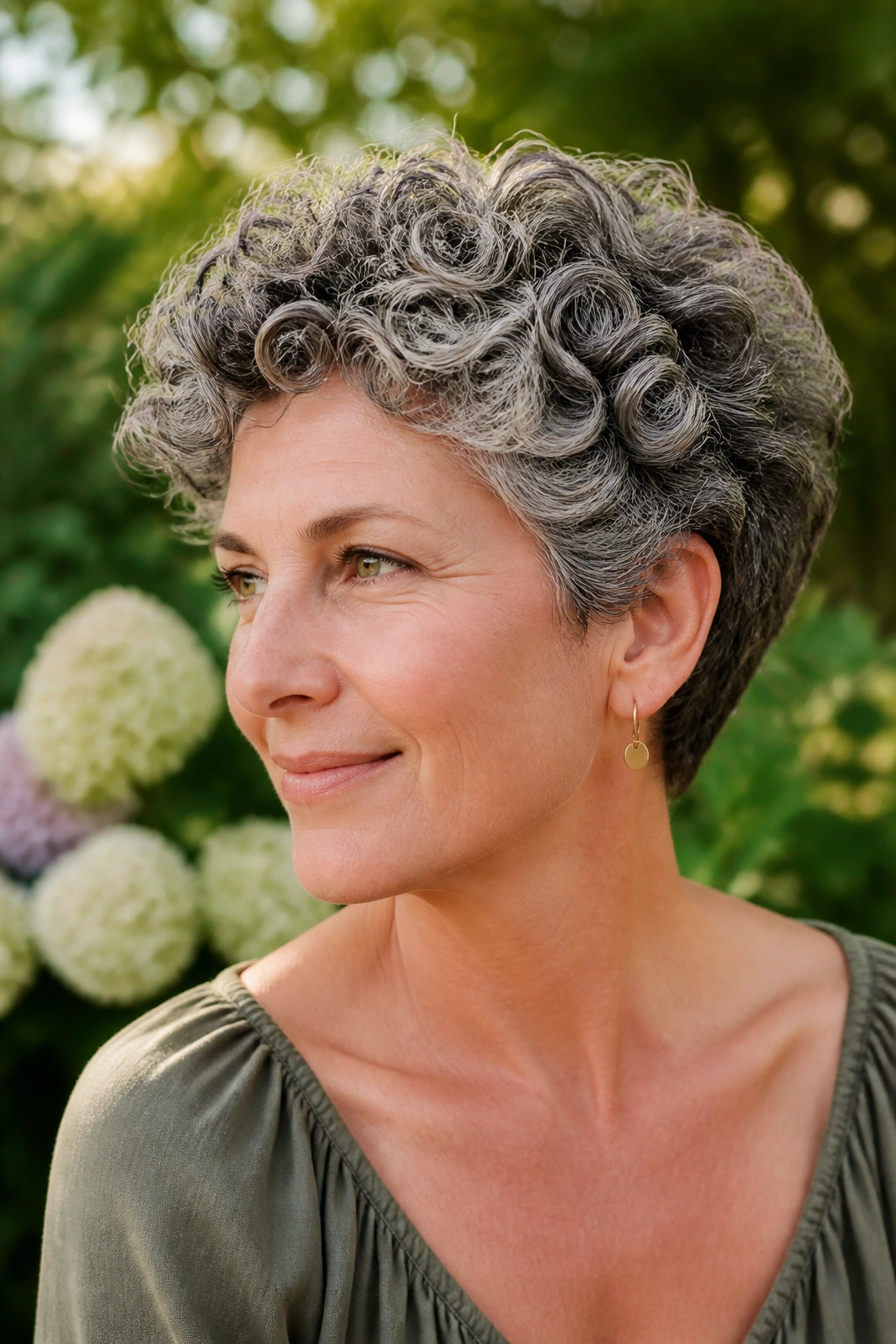
A curly crop is not a bob pretending to be curly. That distinction matters. The shape should respect the curl pattern first and the haircut second, or you end up with a puffball that needs too much effort.
Unlike a straight-edged bob, a curly crop leans into shrinkage. The layers are cut to let curls stack without ballooning. The sides can stay a little shorter, while the top keeps enough length for the curl to spring. That gives the cut a round, lively shape instead of a triangle.
It’s a smart choice if your hair has always had texture and that texture is becoming more pronounced with age. Some women in their 40s find that their curls get drier and less cooperative, not less curly. A crop keeps the ends from dragging the shape down.
What to Ask For
- Layers that follow your curl pattern, not fight it
- A dry cut or curl-by-curl shaping, if your stylist works that way
- A top layer long enough to keep some bounce
- A soft side edge near the ears so the cut doesn’t spread out
For styling, skip heavy creams. Use a light gel or mousse, scrunch, and let the cut do the rest.
7. The Sleek Side-Parted Bob
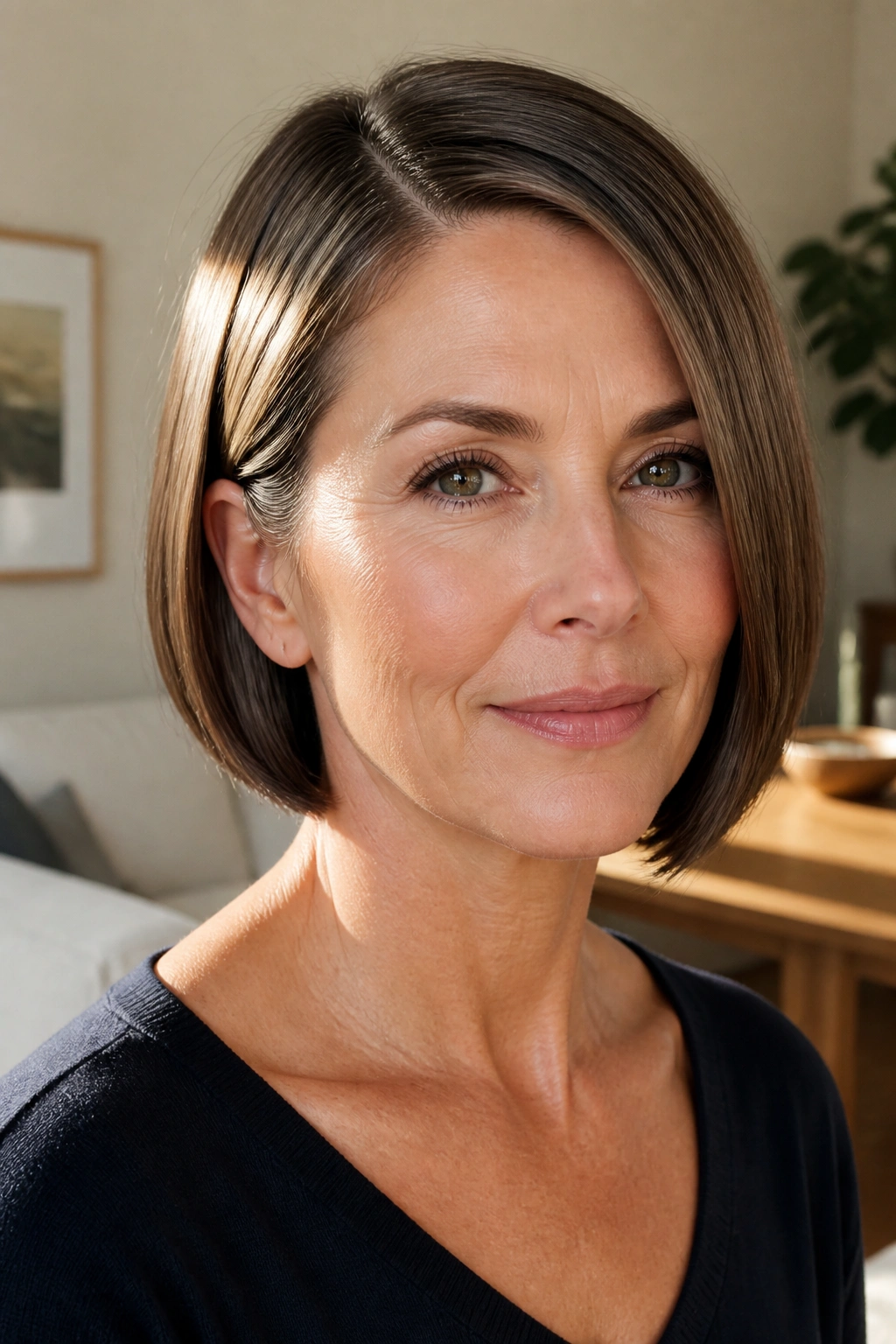
A side-parted bob has a clean, expensive-looking line — and by expensive-looking, I mean crisp and well drawn, not precious. The side part gives the face a little asymmetry, which can be useful if your features feel softer than they used to or if one side of your hair grows flatter than the other.
This is a strong choice for straight or mostly straight hair. A smooth bob that skims the cheekbone or jaw can make fine hair look denser because the ends sit in one solid band. That solid edge matters. It gives the eye something to hold onto.
If you’ve got gray strands mixed through darker hair, the side part can help create dimension without resorting to highlights. The hair already has contrast built in. All you need is shape.
A flat iron can help, but it should be used lightly — just a pass through the front and the outer layer, not every strand from root to end. Finish with a tiny bit of shine serum on the ends and tuck one side behind the ear. Done.
8. The Shaggy Chin-Length Cut
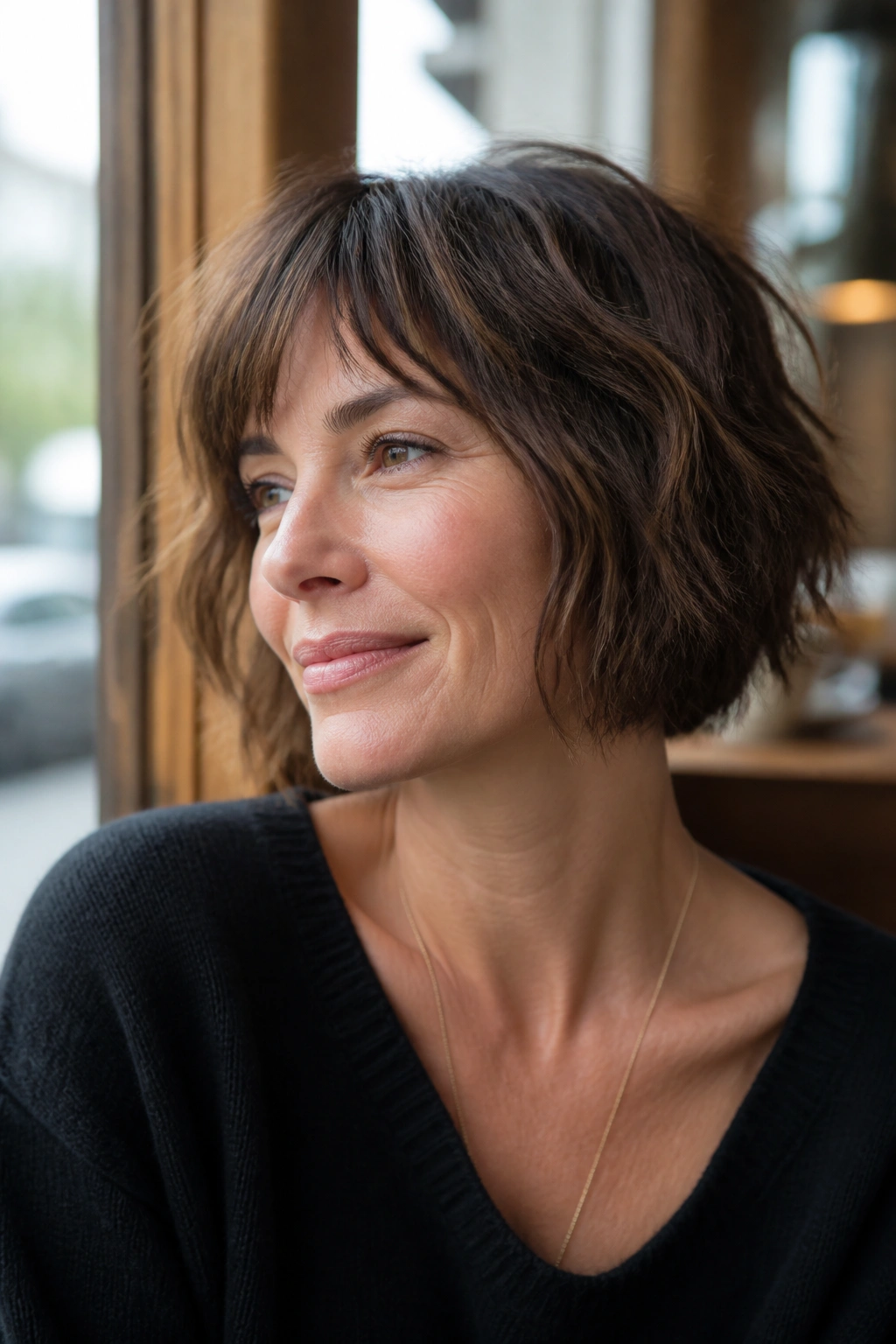
If your hair has gotten a little coarser or more wavy, a shaggy chin-length cut can feel kinder than a neat bob. It doesn’t ask the hair to behave in one perfect line. It gives the ends room to break up, move, and sit a little messily.
That looseness is the point. A shaggy cut keeps the overall length short, but the inside layers stop it from looking like a block. The ends can be point-cut or softly razored so they don’t sit heavy against the jaw. On thicker hair, that makes a big difference.
It’s a good option for women who want short hair but not a severe short cut. The shape feels casual in a way that still looks deliberate. You can scrunch it with mousse and walk out, or bend a few front pieces with a flat iron if you want more direction.
Hair that has picked up silver often looks even better in this style. The texture catches the light in different places, which keeps the cut from looking flat. A shag should look a little alive. If it looks too neat, something went wrong.
9. The Rounded Blunt Bob
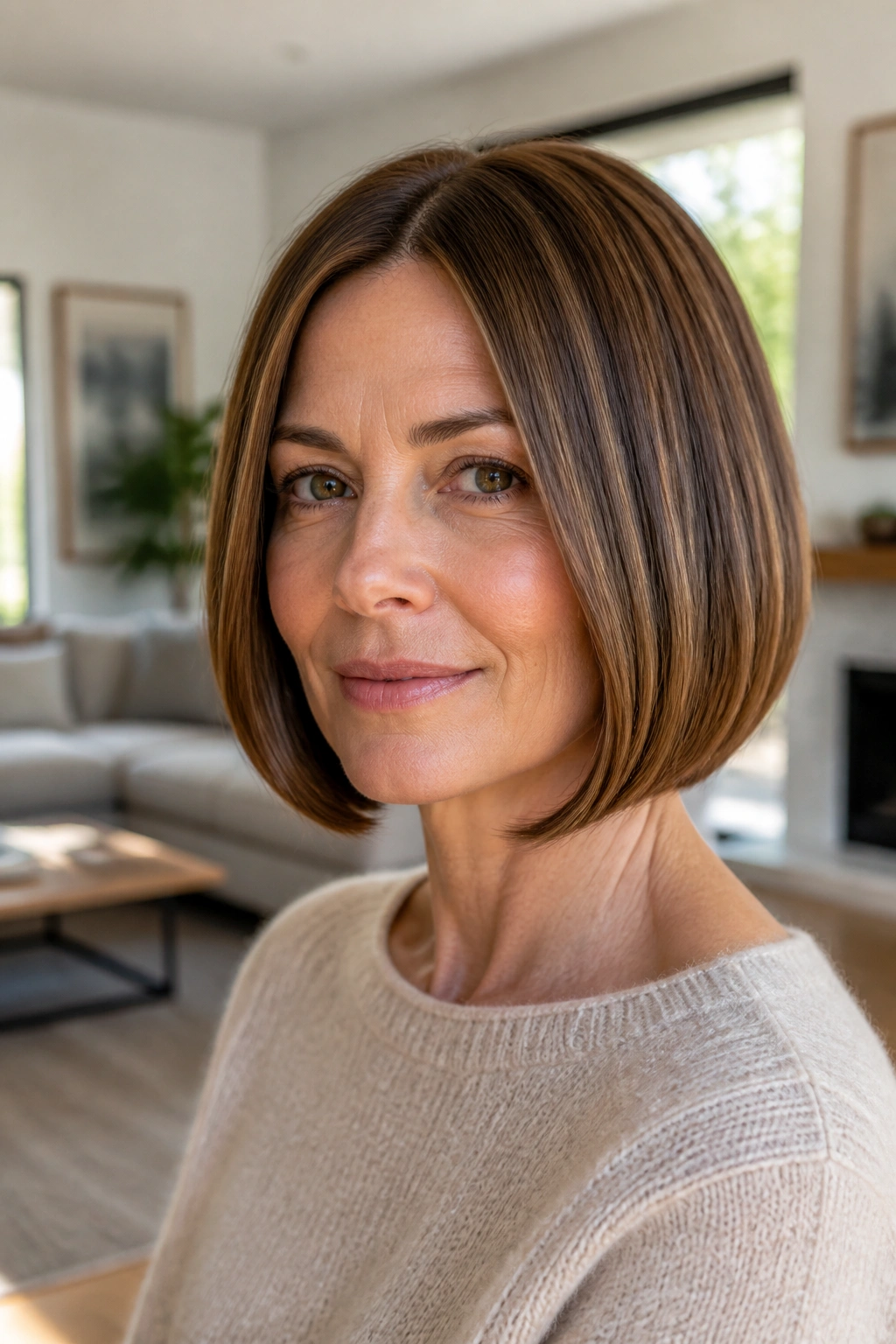
Can a blunt bob feel soft? Yes — if the shape is rounded instead of boxy. That’s the difference. A rounded blunt bob keeps the clean edge of a one-length cut, but the interior curve stops it from looking hard.
This is one of the better short hairstyles for women in their 40s with fine hair. The blunt ends make the perimeter look thicker, while the rounded crown gives a little lift. If the hair is cut too straight across at the bottom and too flat at the top, it can sit like a helmet. A good rounded bob avoids that with a bit of internal shape.
How to Wear It
A side part gives it softness. A center part makes it look more graphic. Both work, though the side part is usually more forgiving if one side of your hair lies flatter than the other.
The best styling trick is simple: blow-dry the roots up first, then bend the ends under just enough to curve them toward the jaw. Don’t overdo it. The appeal here is the line, not the curl.
- Best for straight to slightly wavy hair
- Needs a clean neckline
- Looks especially good on hair that has a little silver sparkle
- Works well with minimalist earrings and a sharp neckline
10. The Feathered Pixie-Bob
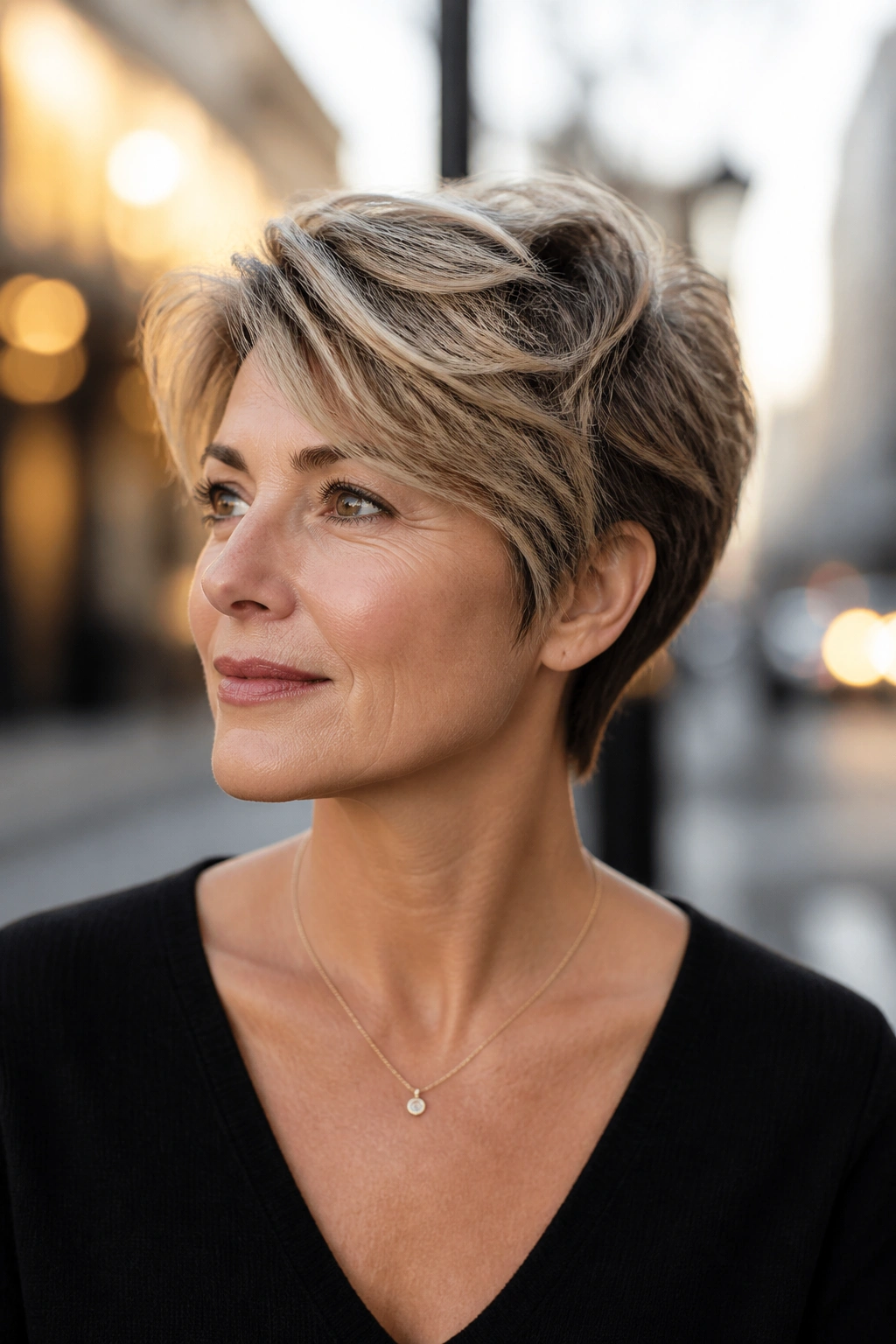
A feathered pixie-bob sits between two worlds. It has the short neckline and cropped sides of a pixie, but the top and crown keep more length, so the haircut doesn’t feel as bare. That makes it a good bridge cut for women who want shorter hair but are not ready for a full pixie.
The feathering is what softens everything. Instead of blunt chunks, the layers are cut to fall in light, airy pieces. That matters if your hair is thick, because it keeps the shape from looking too dense around the ears and temple.
This style also plays nicely with glasses. The short sides keep the frame area clean, while the longer top gives the face some movement. If your hair has started to resist being sleek, this cut works with a bit of texture instead.
Ask your stylist for more length at the front than in the back. That keeps it feminine without turning it into a grown-out pixie. A touch of styling cream is usually enough. If it feels too soft, a little dry texture spray wakes it up.
11. The Asymmetrical Bob
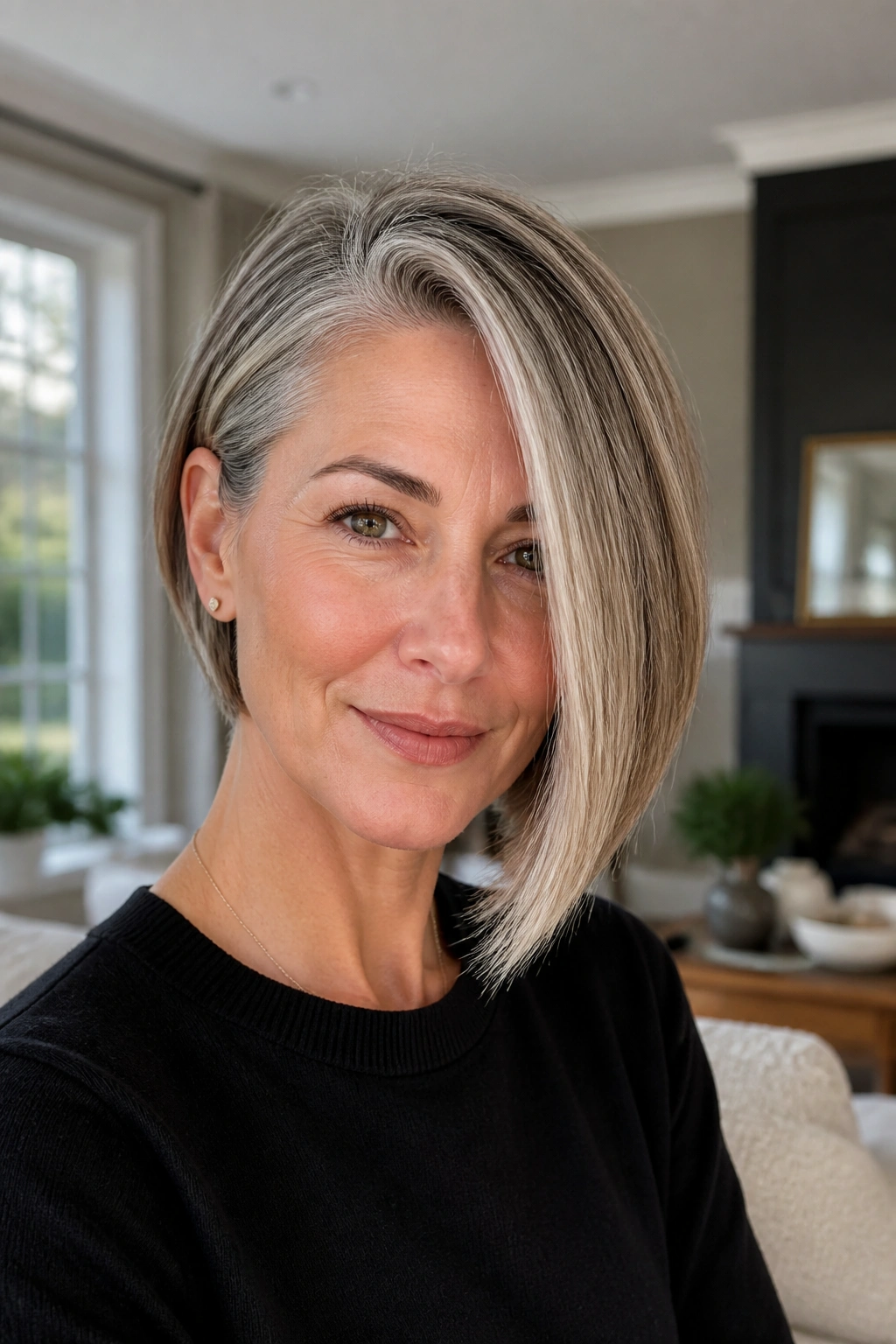
An asymmetrical bob has edge, but not the costume-y kind. One side is longer than the other, often by an inch or two, and that small imbalance changes the whole mood of the cut. It creates motion even when the hair is sitting still.
This shape is especially good if you want to draw the eye away from a wider jaw or if your hair naturally parts off-center anyway. The longer side creates a clean diagonal line, and that line is doing work whether you notice it or not. It makes the haircut look intentional.
The nice thing about an asymmetrical bob is that it can be sleek or textured. A smooth finish feels sharp. A tousled finish feels more relaxed. Gray strands look striking here because the angle of the cut gives them a place to show off instead of blending into the background.
Keep the styling simple. Tuck the shorter side behind the ear, let the longer side fall forward, and keep the ends crisp. A mist of heat protectant and one pass with a flat iron is often enough.
12. The Wavy Ear-Grazing Bob

Unlike a straight bob, an ear-grazing cut depends on bend. That sounds subtle, but it changes everything. The slight wave keeps the hair from hugging the head too tightly, which means the cut looks softer and less rigid.
This is a strong option for women with natural wave that refuses to sit flat. Rather than forcing the hair into a polished shape every day, the cut gives the wave a frame. The length usually sits between the ear and the jaw, which keeps it short but not severe.
It works best when the ends are lightly textured. If they’re cut too blunt, the wave can kick out in weird places. If they’re too shredded, the shape loses its line. The sweet spot is somewhere in the middle.
A 1.25-inch curling iron can help if your wave disappears in humidity or if you want a little more direction. Wrap only the front pieces and leave the rest alone. That half-done finish often looks better than fully styled hair.
Gray strands tend to look lively in a wavy bob. The movement keeps them from reading as flat streaks.
13. The Undercut Pixie with Longer Top
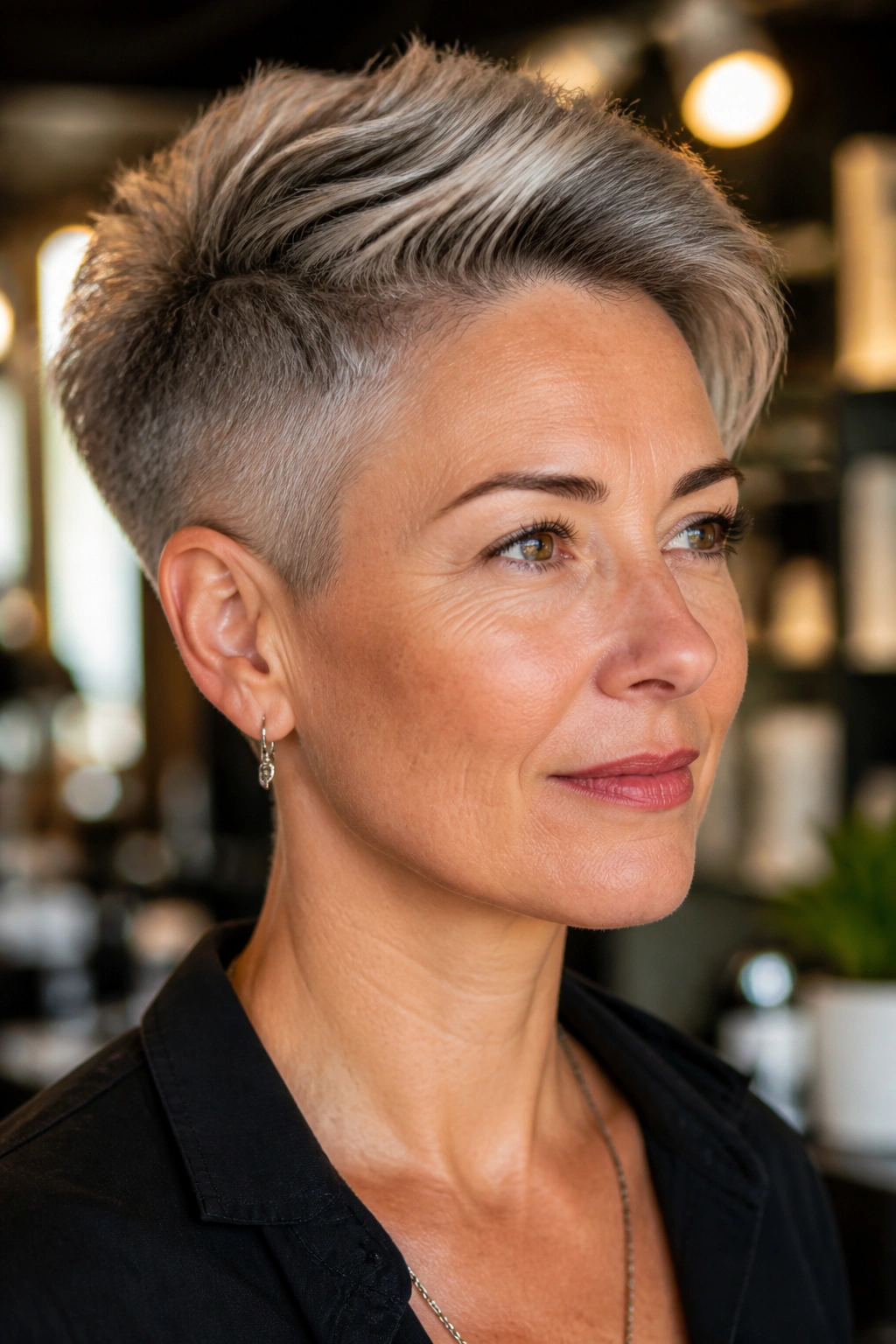
There’s a reason this cut keeps showing up on women who are done fighting their hair. The undercut removes bulk where it usually causes the most trouble — around the nape and behind the ears — while the longer top keeps the style feminine and flexible.
This is not about rebellion. It’s about weight control. Thick hair can feel heavy, hot, and oddly stubborn when it gets shorter. An undercut solves that by taking out the hidden bulk underneath, so the visible shape sits lighter on the head.
What to Ask For
- Short or clipped nape
- Tapered sides around the ears
- Top length of roughly 3 to 4 inches
- Softer pieces at the hairline, so the cut grows out cleanly
Styling is straightforward. Blow-dry the top in the direction you want it to sit, then use a small amount of paste or cream to lift the roots. If you like a side sweep, this cut holds one well. If you want a little height, it can do that too.
It’s also a good cut for gray hair because the contrast between short and long pieces gives silver strands real shape. That kind of structure is hard to fake.
14. The Inverted Bob

An inverted bob gives the back of the head lift fast. That’s the selling point, and it’s a good one. The back is shorter and stacked, while the front stays longer and angles down toward the jaw. You get movement without losing the clean line of a bob.
If your crown tends to lie flat, this cut can be a lifesaver. The stacked layers at the back create support where the hair often collapses first. The front pieces then frame the face instead of sitting like one heavy curtain.
This shape works best when the angle is visible but not extreme. If the front is too long and the back too short, it starts to feel dated. A modern inverted bob keeps the slope gentle and the ends neat.
A round brush at the back and a quick smoothing pass at the front is usually enough. You don’t need to curl every section. In fact, the cut looks stronger when the line is clear.
For women in their 40s, the inverted bob is often a smart middle ground: short enough to feel lighter, structured enough to look purposeful.
15. The Layered Crop with Micro Fringe

Can a tiny fringe look grown-up? Absolutely — if the rest of the haircut is disciplined. A micro fringe can feel edgy on paper, but paired with a layered crop, it reads more modern than theatrical.
The fringe should sit short, but not severe. Think soft, broken pieces that skim high on the forehead, not a hard line cut straight across. The crop underneath needs enough texture to keep the whole thing from feeling too graphic. Without that texture, the fringe can dominate the face.
How to Style It
Keep the fringe dry first. It shows shape better that way. Then work a small amount of light pomade through the top layers, using your fingertips to break up the pieces.
- Best for straight to slightly wavy hair
- Needs regular fringe trims
- Works well if you like bold earrings or a clean neckline
- Looks especially good with a side-swept finish when you want it softer
This cut is not for everyone. If you dislike maintenance, skip it. Fringe grows fast, and a micro fringe loses its point when it gets too long. But if you like clear lines and a little attitude, it’s a strong choice.
16. The Airy Short Bob with Soft Ends
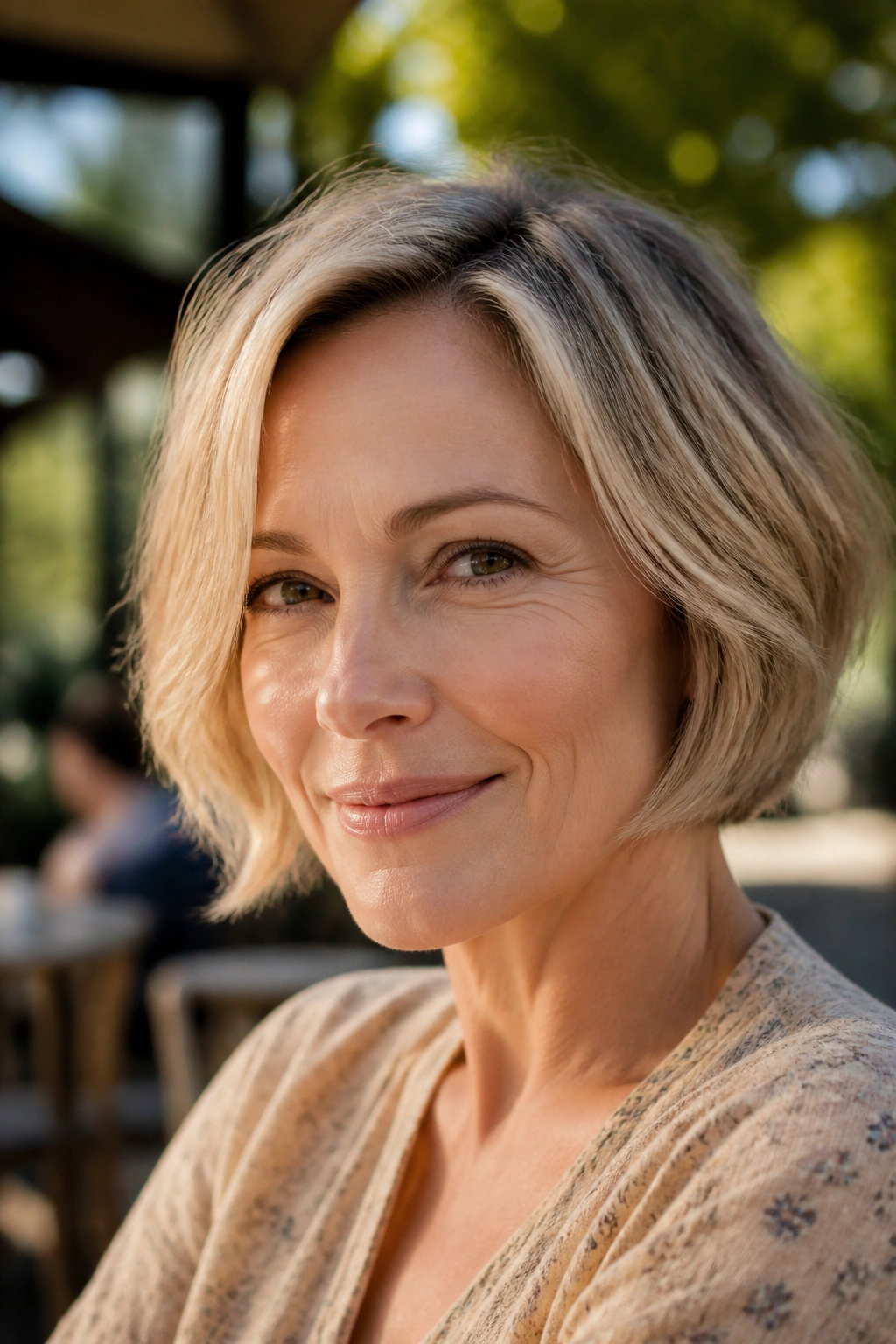
A short bob with soft ends is what happens when you want shape without stiffness. The cut usually sits between the cheekbone and the jaw, and the ends are point-cut or lightly razored so they don’t land in one heavy shelf.
That softness helps if your hair feels dry or fragile. Harsh blunt ends can make shorter hair look wiry when it isn’t styled carefully. Softer ends move a little more, which keeps the shape from turning rigid by noon.
This style works well for women in their 40s who want the ease of short hair but still like some swing near the face. It’s also friendly to hair that has started to lose its old spring. The cut does not require a perfect blowout. It just needs a bit of bend and a tidy perimeter.
Try drying the roots first, then twist the ends with your fingers while they’re still warm. That small gesture is enough most days. A tiny amount of light cream through the last inch can tame flyaways without flattening the cut.
17. The Curved Bob with Tucked Ends

A curved bob is one of those cuts that quietly makes you look more put together. The shape hugs the jaw, curves in at the ends, and sits close enough to the head to look neat without feeling stiff. It’s especially nice if you like to tuck one side behind your ear and let the other side fall forward.
The curve matters because it softens the outline of the face. A flat bob can sometimes make the lower face look wider than it is. A curved one bends that line inward just enough to keep the silhouette clean.
This is a strong style for straight hair, and it also works for silver hair that has a little body. The shape can make gray look polished instead of coarse. That’s a useful shift, especially if the hair texture has changed along with the color.
Keep the ends turned in slightly, not curled. The point is a controlled bend, not a salon blowout from a different decade. A paddle brush and a round brush together can help if you want a little more control at the jaw.
18. The Choppy Pixie with Piecey Texture
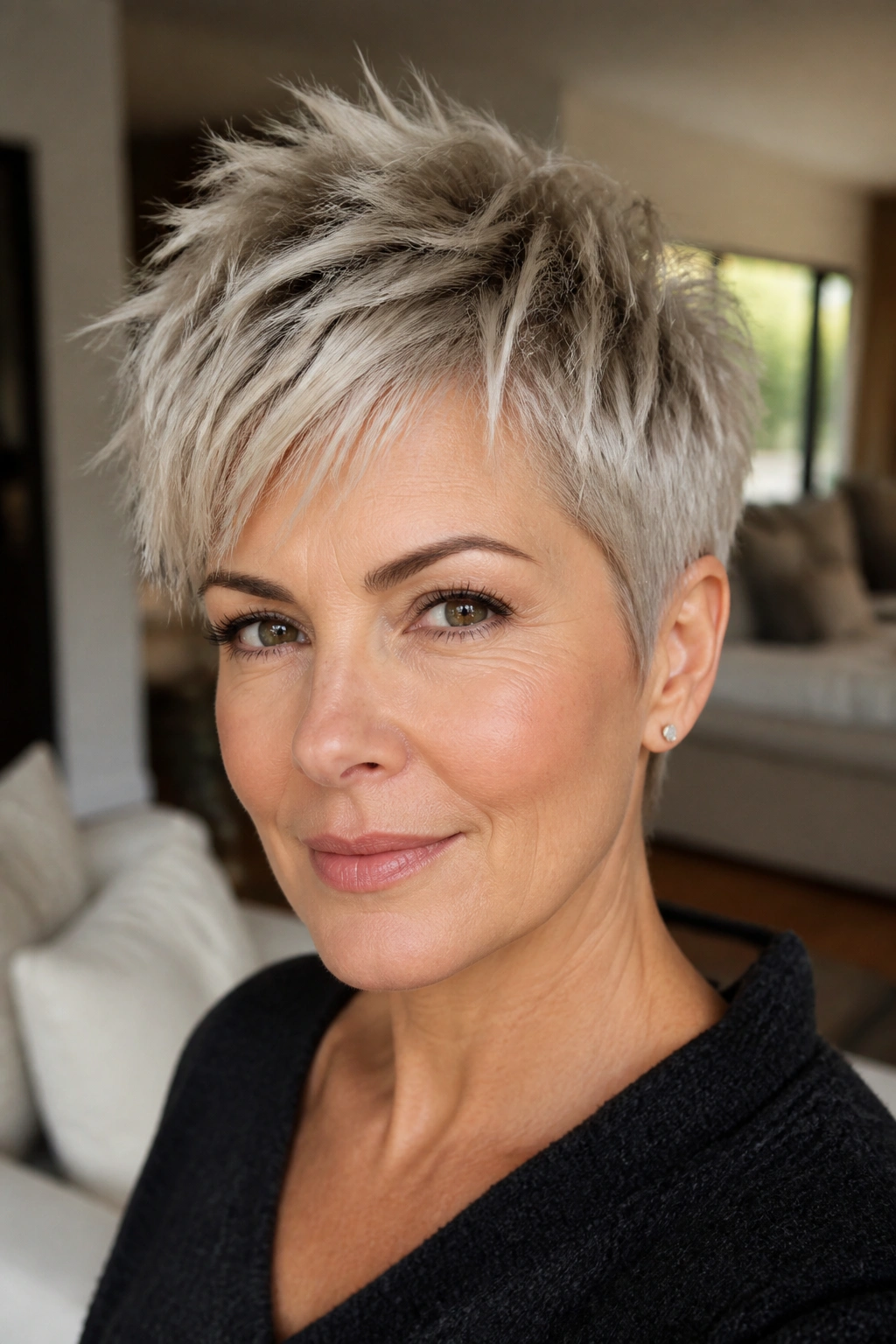
If the feathered pixie feels too soft for you, the choppy pixie moves the other direction. It’s more broken up, more defined, and a little more playful. The pieces sit apart from each other instead of blending into one smooth shape.
That separation is what gives the cut energy. You can see the layers. You can see the direction. On thick hair, it stops the top from getting bulky. On fine hair, it creates the illusion of more movement than there really is.
Unlike the feathered pixie, this one looks better when it’s not too polished. A dry texture spray, a touch of wax, and a quick finger rake are usually enough. If you brush it too much, you’ll lose the whole point.
Best For
- Hair that naturally wants texture
- Women who like a slightly edgy finish
- Glasses, because the cut keeps the face open
- Gray hair with streaks you want to show off
The only real downside is maintenance. Those piecey ends look best when the cut is fresh enough to keep the shape. If you like a clean line, this is not your cut. If you like movement, it’s a good one.
19. The Stacked Bob with Crown Volume
A stacked bob is the answer for anyone whose crown has gone a little too flat for comfort. Short layers are stacked in the back to build lift, while the front stays smoother and longer. The result is a bob with a little backbone.
This is one of the most useful short hairstyles for women in their 40s with finer hair or hair that has lost density at the top. The stacking gives the crown a fuller look without requiring tons of styling. That’s why it keeps showing up in good salons — it solves a real problem.
Why It Works
The shortest layers usually sit around the occipital bone, which is the bump at the back of the head where shape naturally starts to lift. That placement creates structure without making the back look chopped too high.
A round brush at the crown helps, but the haircut should do most of the work. If the shape collapses without heavy styling, the cut needs adjusting.
- Best with a side or slight off-center part
- Good for straight and lightly wavy hair
- Needs trimming to keep the stack neat
- Pairs well with subtle highlights or natural gray blending
Ask for volume at the back, not bulk. Those are not the same thing.
20. The Soft Mullet-Inspired Crop
The phrase “mullet-inspired” can scare people off, which is a shame, because the soft version is much more wearable than the name suggests. This is not a throwback joke. It’s a cropped cut with a little extra length at the back and around the ears, so the shape feels relaxed and modern.
What makes it work is the balance. The crown and top stay short, the sides feather out, and the nape has just enough length to keep the neckline from looking abrupt. That gives the haircut some swing without sliding into shag territory.
This can be a smart choice if you like short hair but hate hair that looks frozen in place. It also suits women whose texture has become more uneven over time. Instead of forcing every strand to line up, the cut lets the hair fall in small, distinct sections.
Styling should stay loose. Think cream, not lacquer. A tiny bit of bend at the front and some separation at the ends is enough. If the hair looks too perfect, you’ve gone too far.
21. The Classic Ear-Length Cut
An ear-length cut is sharp in a minimalist way. It sits short enough to expose the jaw and ears, which gives the whole face a cleaner frame. There’s no hiding here. That’s part of the appeal.
This cut works especially well for women who like clear lines and low maintenance. If your hair is naturally straight or only slightly wavy, the shape can fall into place with very little help. A side part, a light serum, and a tidy tuck behind the ear are often all it needs.
It’s also a quietly strong option for gray hair. Ear-length silver hair can look striking because there’s nowhere for the color to disappear. Every strand is visible, which makes the texture part of the style instead of something to control.
How to Wear It
Keep the edge clean around the ears and neckline. If the cut grows out too much, it loses its point fast.
A soft side part tends to feel more forgiving than a center part, especially if you want to soften the forehead area. Add small earrings or a neat collar, and the whole haircut starts to feel intentional rather than severe.
22. The Salt-and-Pepper Bixie
A bixie sits between a bob and a pixie, and that middle ground is why so many women like it. You get the shortness and easy movement of a pixie, but with enough length to tuck, sweep, and shape the front like a mini bob. On salt-and-pepper hair, it looks especially good because the mix of tones shows up in the layers.
This is a strong cut if your gray is coming in unevenly and you want it to look deliberate. The short crown and softer edges make those silver streaks part of the design. Instead of reading as roots to cover, they read as texture.
What to Ask For
- A close nape with a little softness around the hairline
- More length through the top and front than the back
- Light layering around the ears
- A fringe that can be swept or parted
The best thing about a bixie is that it does not demand one exact styling move. You can rough it up with fingers, smooth it down with a brush, or flip the front to one side. That flexibility matters when your hair changes from day to day.
It’s short, but not strict. And for a lot of women in their 40s, that’s the sweet spot.
