



Wash and go hairstyles for women over 50 work best when the cut does half the styling for you. If you’ve ever air-dried your hair and watched it go flat at the roots, frizz at the crown, and split into awkward little sections at the ends, you already know the problem usually isn’t effort. It’s shape.
Gray hair changes the rules, too. It often feels a little drier, sometimes coarser, and sometimes lighter in a way that makes every layer show up more clearly. That can be a gift. A good cut makes silver strands look crisp and lively instead of puffy or tired.
You do not need a bathroom full of products to make hair look finished. You need a cut that sits well on its own, plus a small amount of styling that works with your natural texture instead of arguing with it. That is the whole point of a real wash-and-go style.
Some of the styles below are short and sharp. Others keep a little length around the face or shoulders. All of them are built for easy upkeep, air-drying, and hair that still wants to move.
1. Soft Pixie With Feathered Crown
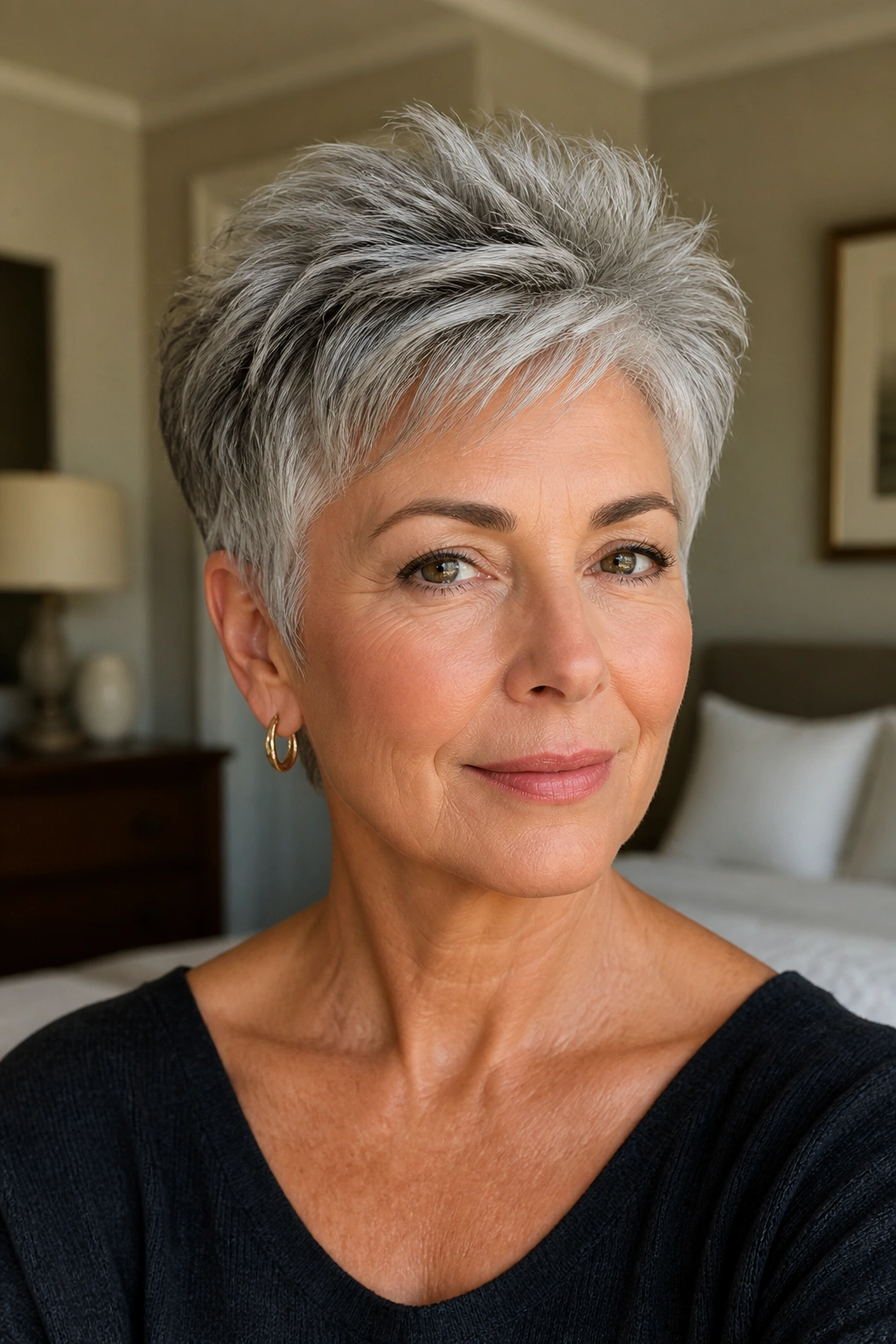
A soft pixie is one of those cuts that looks like it took more work than it did. The sides stay close to the head, the nape is neat, and the crown has enough length to lift instead of lying limp. That little bit of height matters a lot on gray hair, which can flatten out faster than people expect.
Why it works
Feathered pieces on top keep the cut from looking severe. They also help if your hair has a fine texture, because the crown gets some air and movement without needing heat tools or a round brush.
- Leave the crown about 1.5 to 3 inches long for softness.
- Ask for the sides and nape to be tapered, not shaved down to the skin.
- Use a pea-sized amount of light cream or styling paste.
- Scrunch the top with damp fingers and let it dry on its own.
My favorite thing about this cut: it looks tidy even when you do almost nothing. That is the whole point.
2. Curly Crop With a Tapered Nape
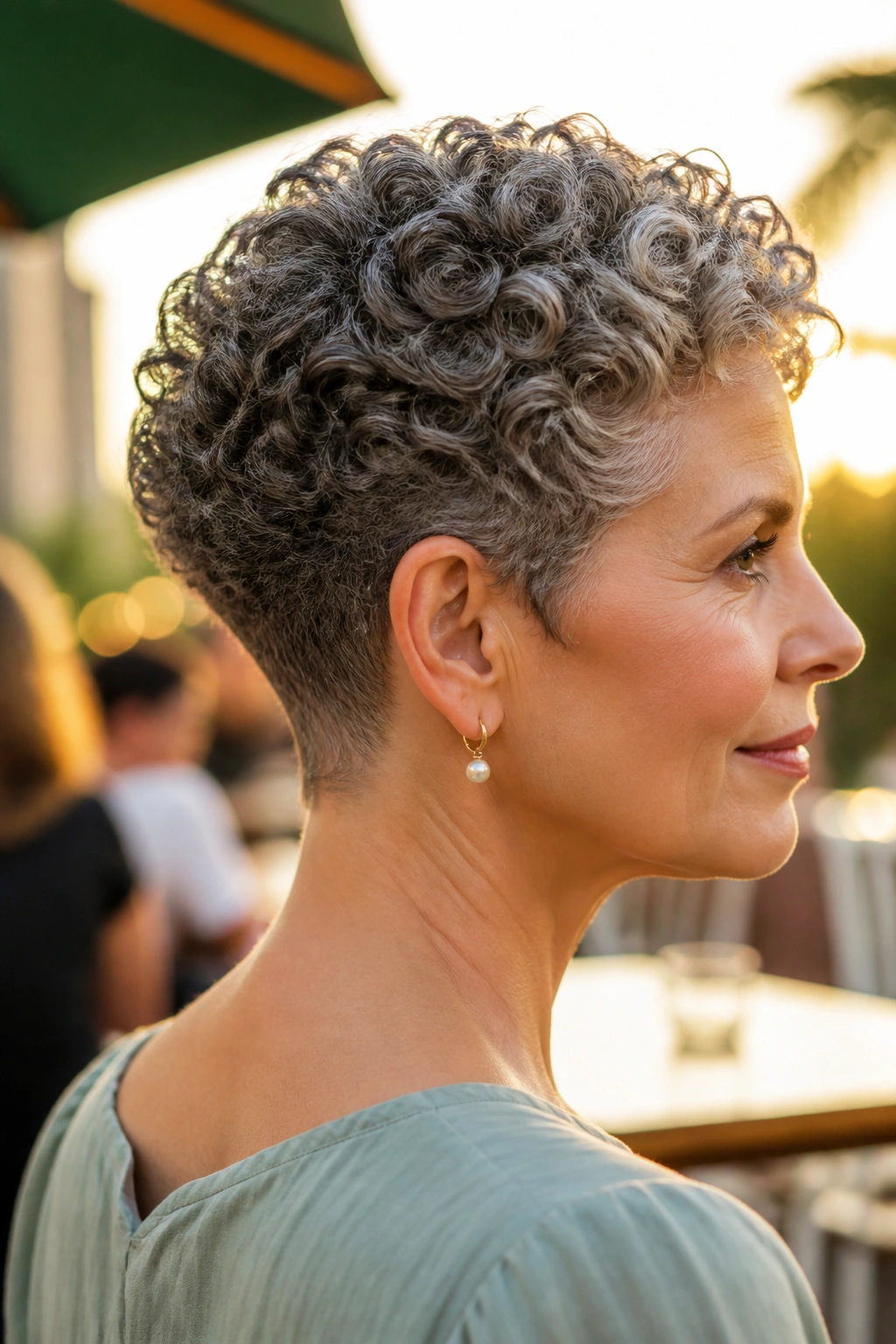
Can a short cut still look soft? Absolutely, if the curls are allowed to sit where they want to sit. A curly crop with a tapered nape keeps the neck area clean and light while leaving enough shape on top for the curls to do their thing.
This is a smart choice for women with natural curl or tight wave, especially if the back of the head tends to puff up. The taper keeps the silhouette controlled. The curl pattern gives you the rest.
A good version of this cut is not boxy. The crown should rise a little, then drop gently toward the temples. I like it most when the stylist cuts dry or nearly dry, because curls shrink in their own unpredictable way. Wet cutting can work, but only if the person cutting really knows how your pattern behaves.
For styling, use a leave-in conditioner first, then a gel with enough hold to keep frizz down. Done. That’s it.
3. Chin-Length Bob With a Side Part
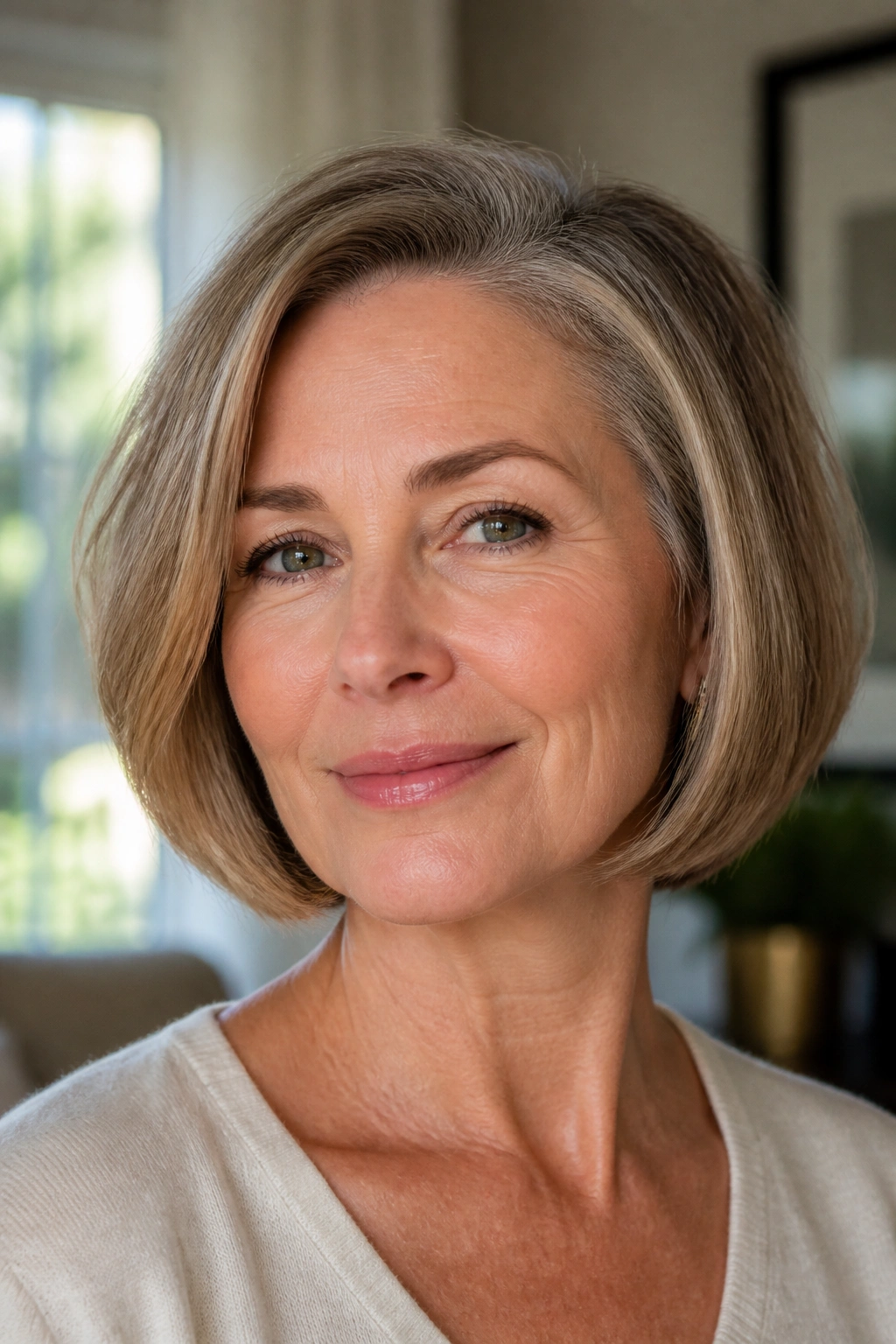
A chin-length bob is one of the most forgiving shapes for women over 50 because it sits in a sweet spot: short enough to feel fresh, long enough to tuck behind the ear or curve under the jaw. The side part gives it movement right away, which is useful if your hair dries flat at the center.
Gray hair often looks especially good in this shape because the clean line around the jaw makes the color shine without extra fuss. There’s no need for elaborate styling. If your hair has a little bend, the bob will do most of the work for you.
How to wear it
Wear the part slightly off-center, not deep enough to feel dramatic. That small shift adds lift on one side and keeps the cut from looking helmet-like.
If your ends are dry, trim them every 6 to 8 weeks. The line only looks expensive when the bottom edge stays blunt and neat. A little smoothing cream on damp hair is usually enough.
Skip heavy oil here. It weighs the bob down faster than you’d think.
4. Shoulder-Length Shag With Airy Layers
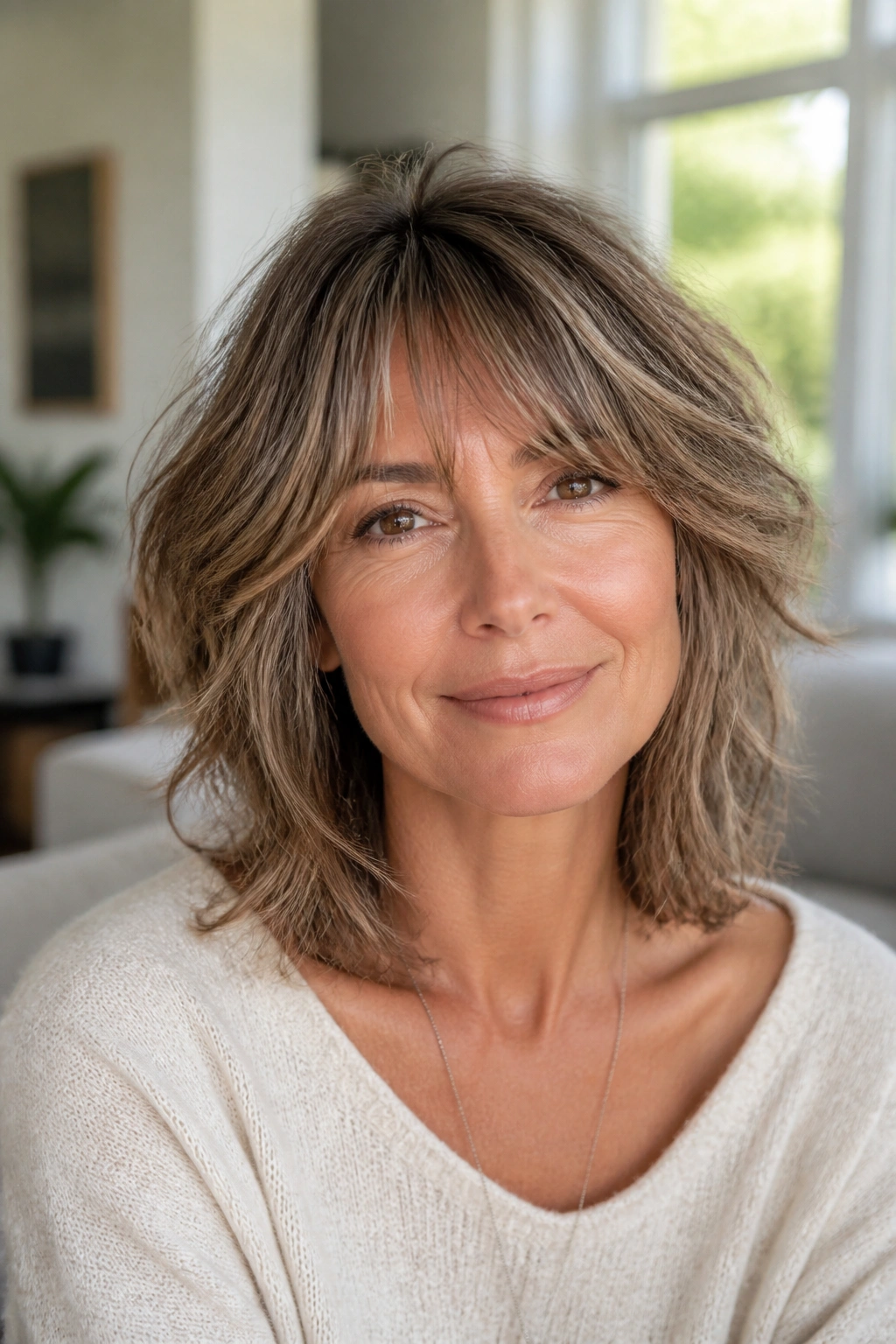
A shag can go badly if the layers are too choppy. But when it’s cut with a light hand, shoulder-length length gives you movement without the headache of constant styling. This is a good pick for wavy hair, thick hair, and anyone who wants softness around the face.
The magic is in the layers around the top and cheekbone area. They keep the hair from building into a triangle as it dries. That matters more on silver and salt-and-pepper hair, which can puff at the ends if the cut is too blunt.
I like this style because it does not insist on perfect behavior. A few bends, a little volume, even some uneven texture — it all looks intentional here.
Use a curl cream or mousse on damp hair, then scrunch and leave it alone. If the crown falls flat, lift a few sections with your fingers while it dries. No brush needed.
5. French Bob With Soft Ends
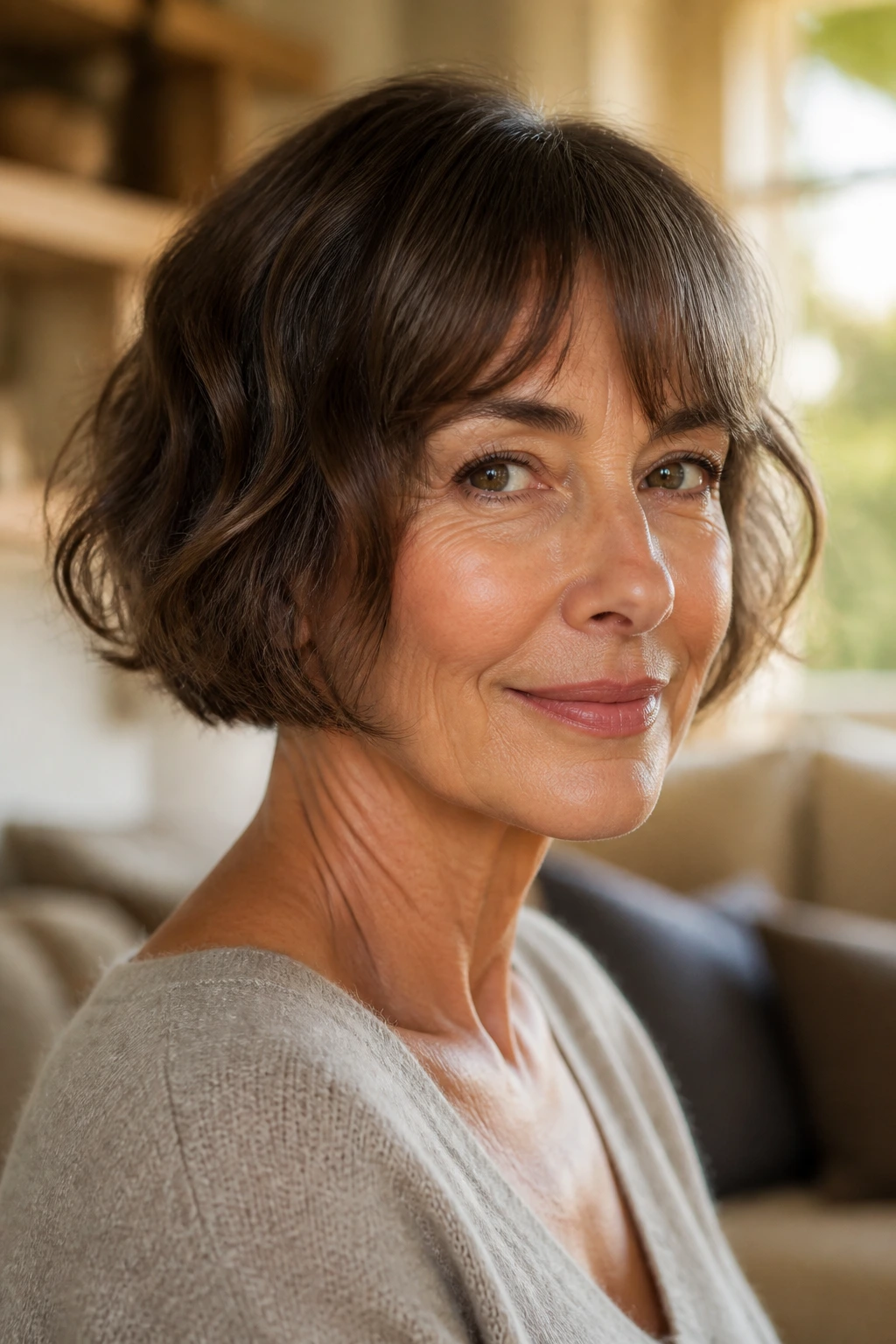
A French bob sits a little shorter, usually around the cheekbone or lip line, and it has that easy, slightly undone feel people keep chasing with products. The cut does the job. You don’t have to.
What makes it especially good for older women is the softness at the ends. A French bob should not look rigid. It should move a bit when you turn your head, and it should sit close enough to the face to highlight your features without swallowing them.
What makes it different
Unlike a blunt bob that can feel stiff, this version usually has a softer edge and a little bend. That bend can come from natural texture, not heat.
- Best for hair that air-dries with a wave.
- Works well with earrings and glasses.
- Needs a tidy trim every 6 weeks to keep the line clean.
- Looks best with a light mousse or smoothing cream, not a thick butter.
If your hair grows out quickly, this one will ask for a little attention. Worth it, though.
6. Long Pixie With Swept Bangs
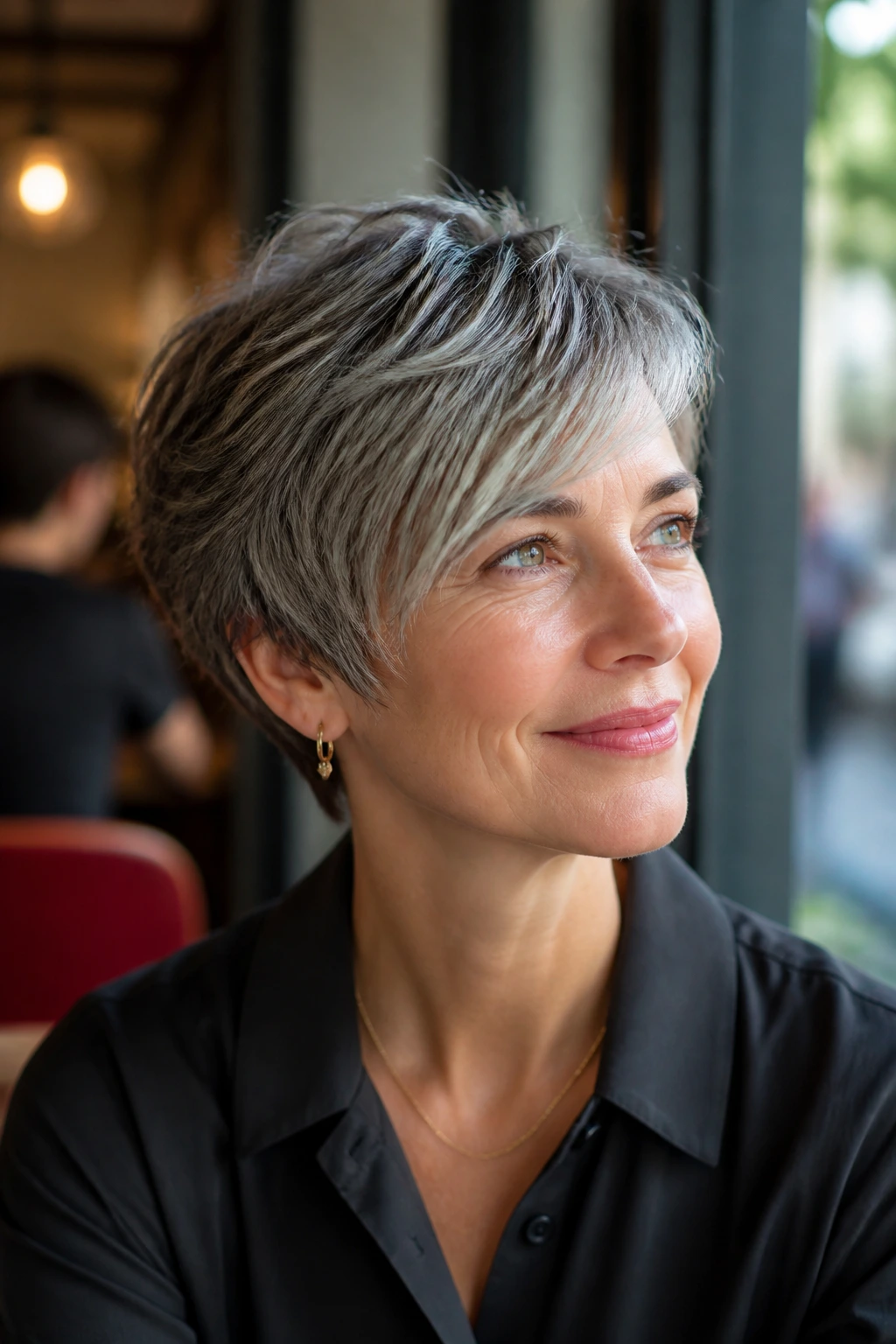
A long pixie is a safer place to land if you like short hair but do not want to feel clipped down to the scalp. The bangs stay longer, the top has movement, and the sides stay neat enough to keep the shape from spreading out.
Swept bangs are the part I’d save if you only want one softening detail. They draw the eye diagonally, which helps around the forehead and temples. That can be a nice thing when hair starts thinning a bit at the front — and yes, plenty of women notice that shift over time.
This cut is especially good if your hair has some natural bend. The bangs can fall into place with just a touch of water and a dab of styling cream. If the top starts to separate, rake your fingers through it while it’s damp and push it slightly up and back.
No heavy brushing. That makes it look too neat.
7. Rounded Curly Bob
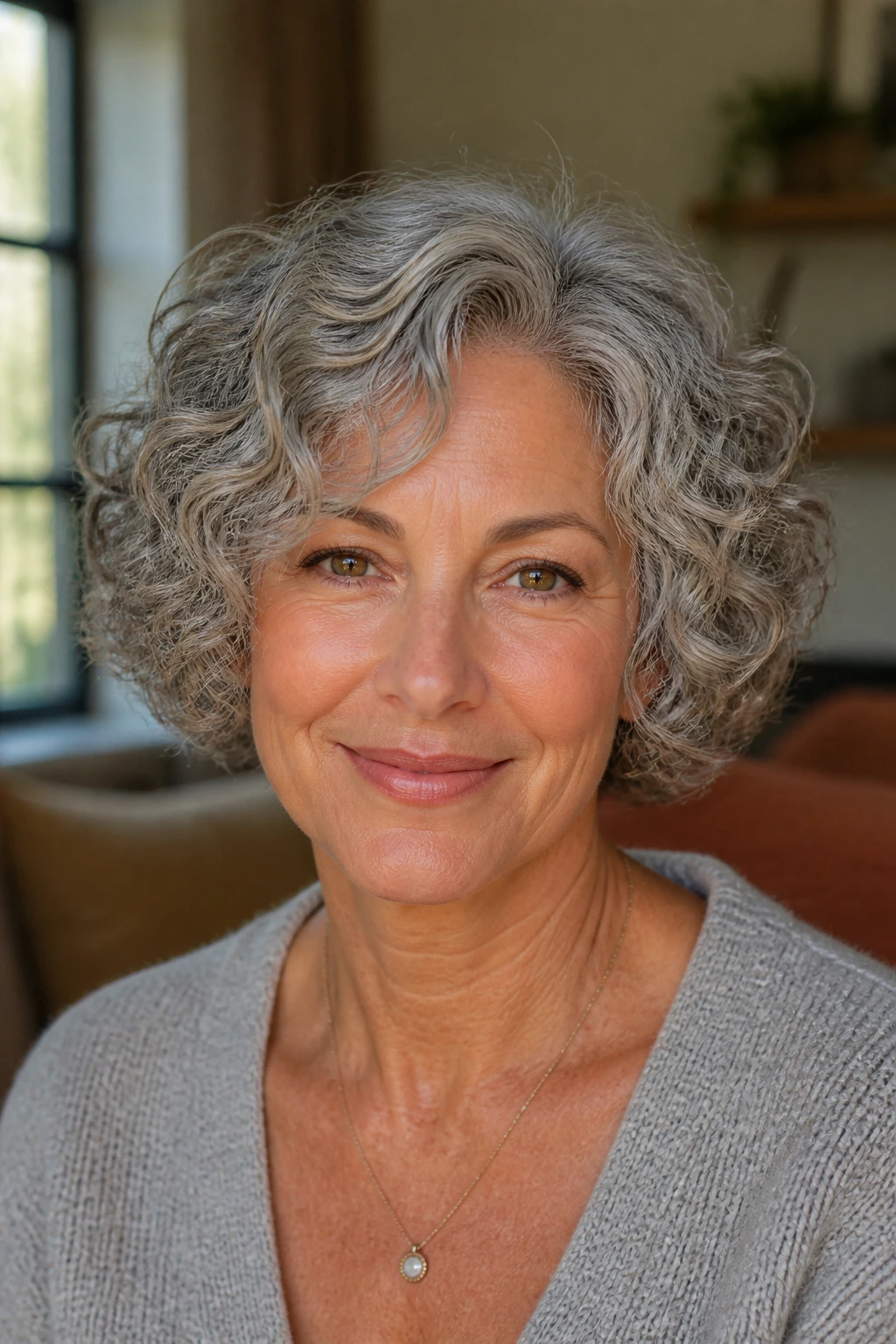
A rounded curly bob gives curls a place to sit without spreading out too wide. That shape matters. If curls are cut too long at the bottom, they can pull the silhouette downward and make the whole head look bottom-heavy. A rounded bob solves that by keeping the widest part around the cheekbone or jaw.
This cut works beautifully for gray curls because silver strands show shape well. You can see the curve. You can see the layers. It looks alive.
The main trick is to keep the length consistent enough to preserve the roundness while still removing bulk where it collects. A stylist who knows curly hair will usually cut this in sections, not all at once.
Use a leave-in plus a gel, then let the curls dry undisturbed. If you keep touching them, frizz arrives fast. That is the tradeoff. Leave them alone and they settle into a clean, soft halo.
8. Collarbone Lob With Invisible Layers
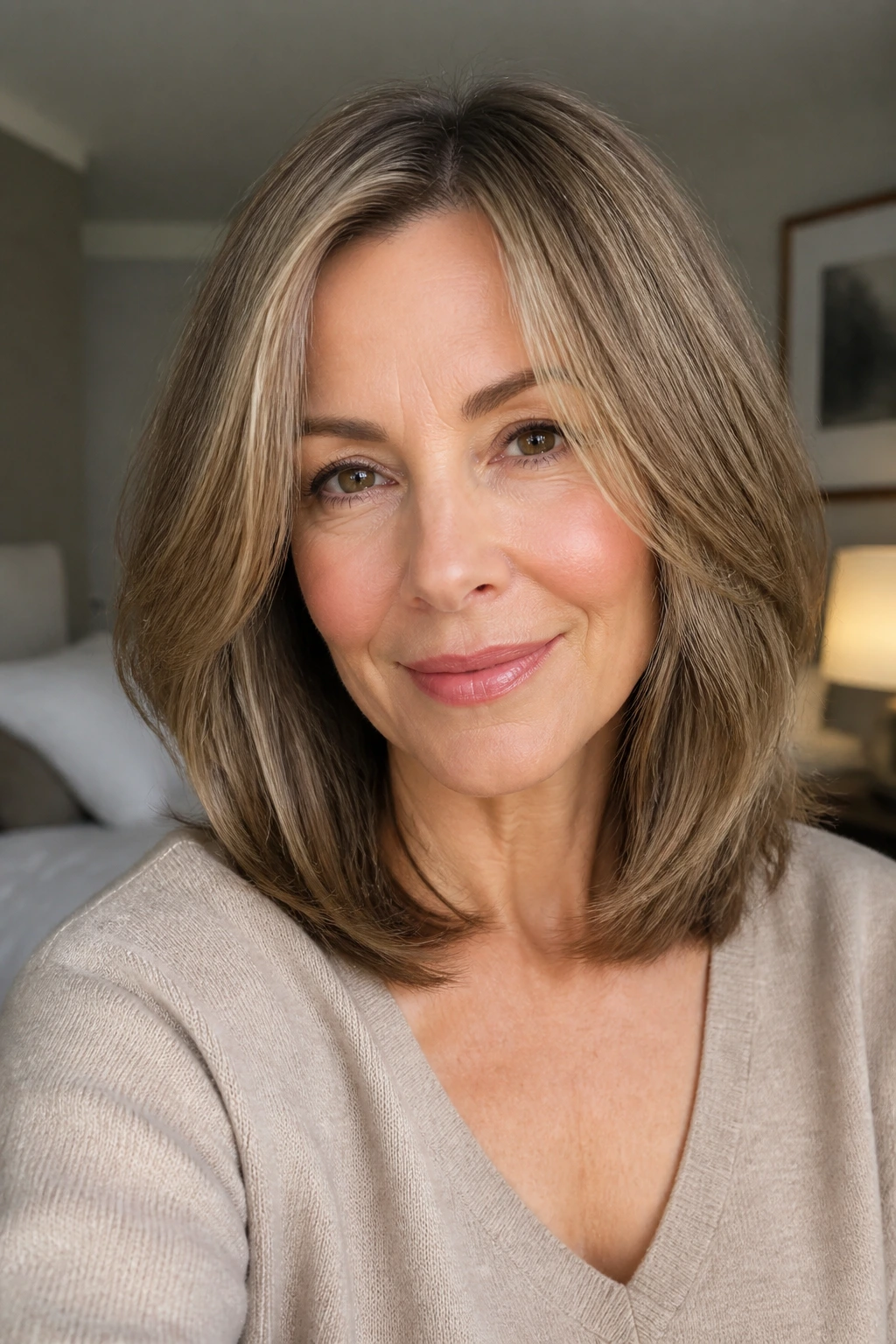
A collarbone lob is the haircut version of a good white shirt. It works with almost everything, and it rarely looks wrong. For women over 50, it’s a useful middle-ground cut because it still feels easy, but it gives more styling options than a short bob.
The best version has invisible layers, which means the shape has movement without looking chopped up. Hair falls past the shoulders just enough to soften the neck and jaw, and the ends can flip in or out depending on how your hair dries.
How to get the most from it
This cut is especially helpful for hair that’s fine but not fragile. The length adds a little weight, which can keep wispy gray hair from puffing up. At the same time, the internal layers stop the cut from feeling heavy.
Try a middle part if your face is long. Try an off-center part if you want a little more lift at the roots. Both work.
A small amount of leave-in spray is usually enough. If your ends need more control, use a lightweight cream only on the bottom two inches.
9. Silver Pixie With Piecey Texture
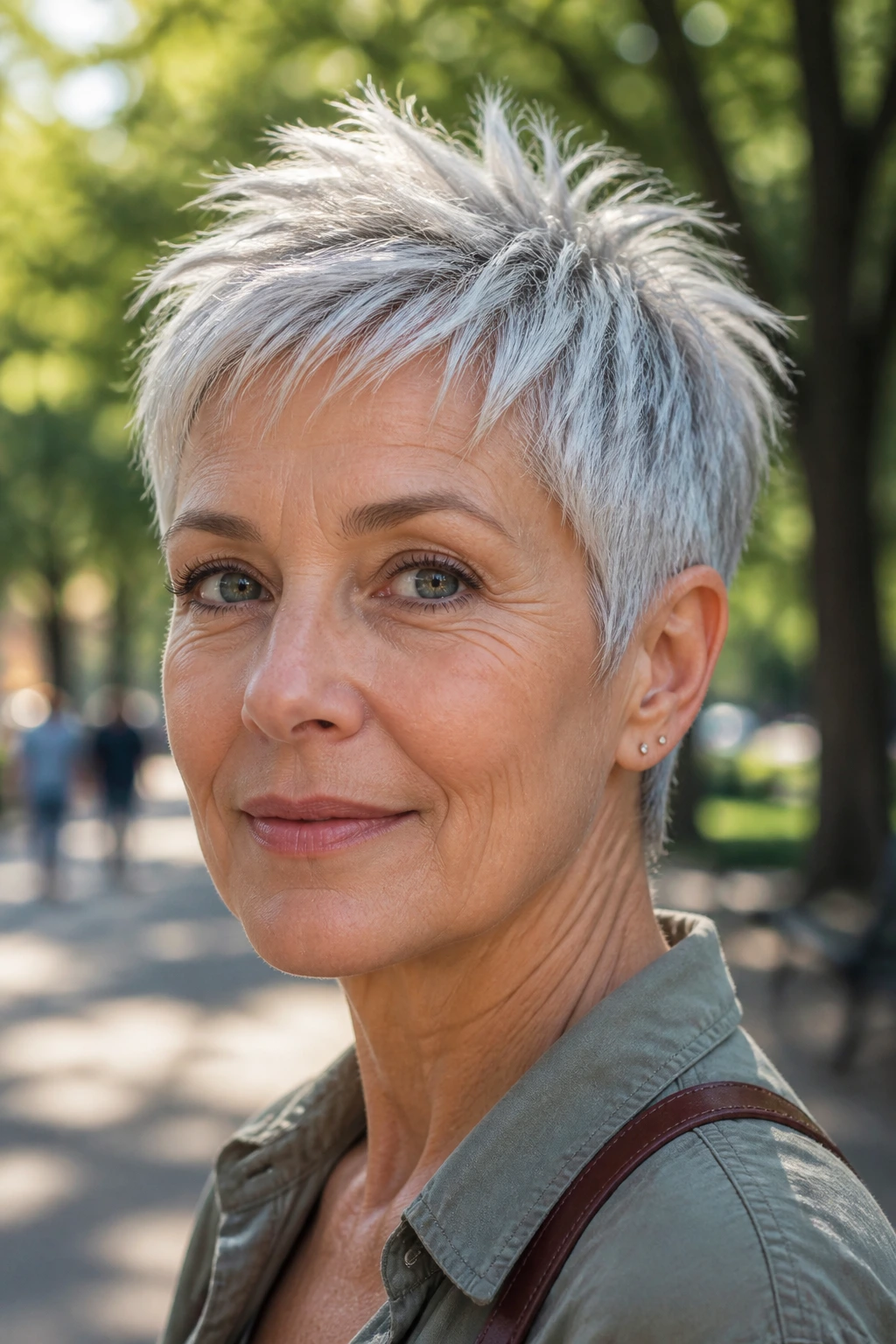
A silver pixie can look sharp, but it does not have to look severe. The piecey version keeps the top separated just enough to show off the texture in gray hair, which often has a little extra grit and body.
This is the kind of cut that looks best when the hair is not over-styled. You want little sections, not one smooth block. A tiny bit of paste through the top and a quick pinch at the ends can create that broken-up finish in about 30 seconds.
What I like here is the honesty of it. The cut does not pretend to be more polished than it is. It just looks deliberate, which is harder to fake than people think.
If your hair is very fine, keep the layers light. Too many short layers will make it stand up in odd places. If you have thicker hair, ask for extra softening around the ears and nape so the shape stays clean.
10. Wavy Mid-Length Cut With Curtain Bangs
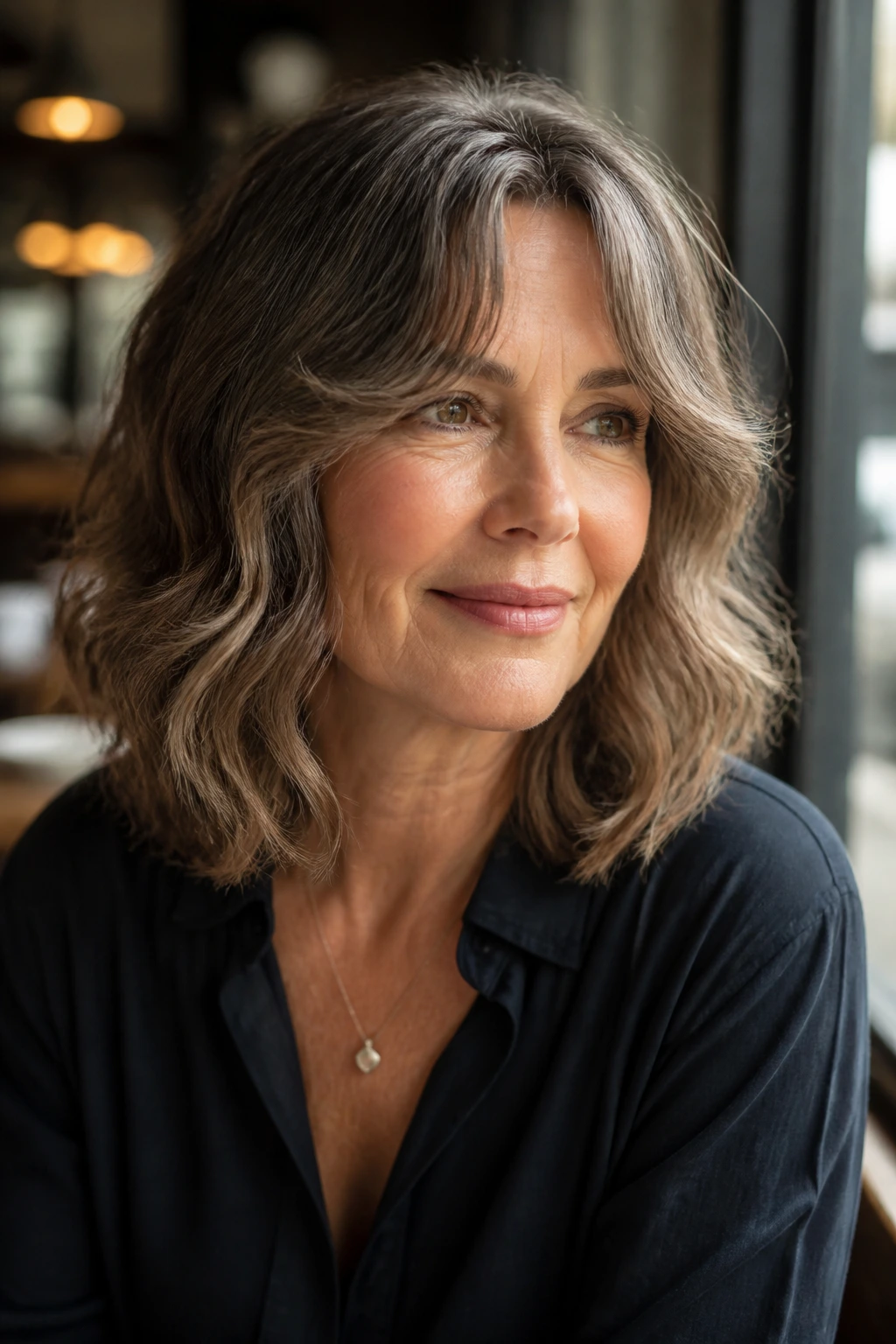
Curtain bangs can be a small miracle when you want face-framing softness without committing to a full fringe. On a wavy mid-length cut, they blend into the sides and make the whole style feel lighter around the eyes and cheekbones.
This cut is good for women who want to keep some length but still need movement. The waves do not have to be uniform. In fact, a little unevenness is part of the charm. Air-dried waves, especially on gray hair, often settle into a shape that looks expensive without looking fussy.
What to watch for
Curtain bangs need enough length to sweep away from the face. If they’re cut too short, they can pop up and behave like little brackets. Not cute.
Keep the front pieces a bit longer than you think you need, and let them blend into the rest of the cut. A light mousse on damp hair helps the bangs separate instead of clumping.
If your hair is prone to frizz, scrunch once and stop. Overhandling makes the fringe frumpy.
11. Tapered Natural Coil Cut
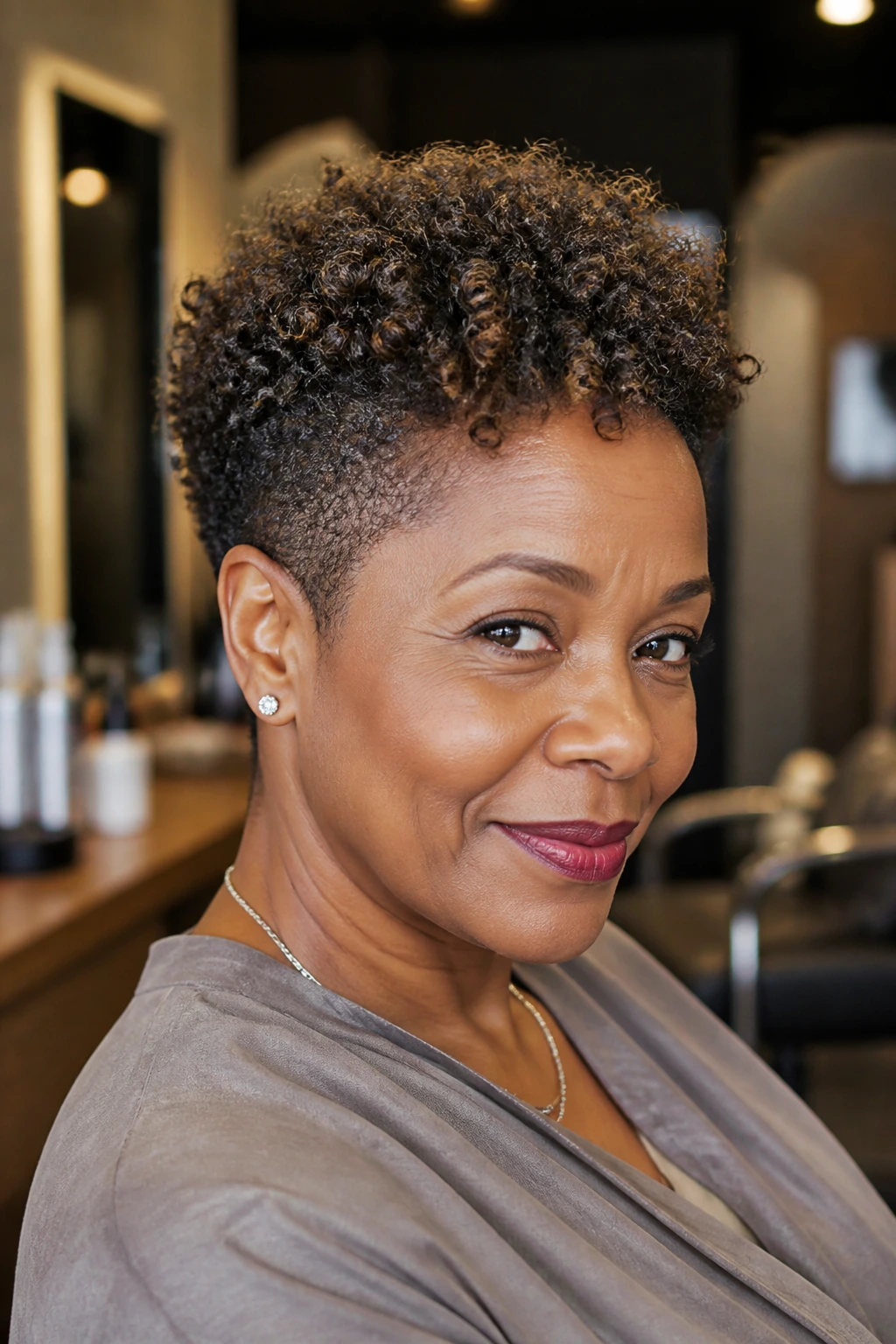
A tapered coil cut is one of the strongest wash-and-go options for natural texture. The sides and back are trimmed shorter, while the top keeps enough length to show off the coil pattern. The result is shape, not bulk.
This matters because coils shrink. A lot. A cut that looks tiny when wet can bloom into a totally different outline once it dries, and that’s where a tapered shape earns its keep. It gives the hair a clear structure from every angle.
The best part is how little it asks from you in the morning. A little water, leave-in conditioner, and a styling cream are often enough. If you want more definition, add gel in small sections and let the hair set on its own.
A tapered coil cut is not for someone who wants a smooth, straight finish. It is for someone who wants the texture to be the star.
12. Sleek One-Length Lob
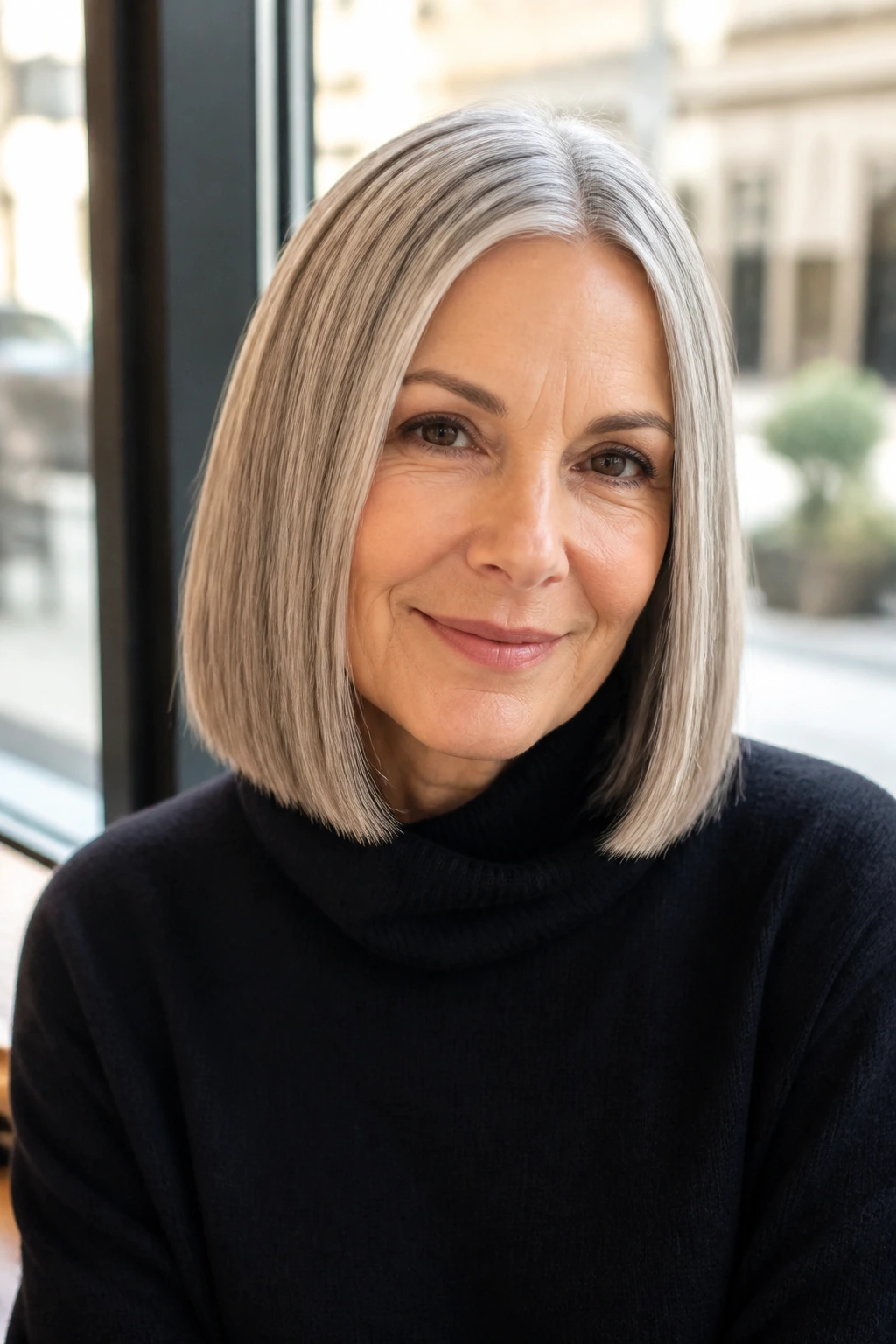
A one-length lob sounds simple because it is simple. That’s the appeal. When the cut is clean and the ends are even, gray hair can look crisp and strong without a lot of styling fuss.
This style works best on hair that already falls fairly smooth when air-dried. If your texture leans straight or only slightly wavy, you can get away with a tiny bit of leave-in conditioner and a center or off-center part. If you have more wave, the length keeps the shape from puffing up too much.
A one-length lob is also a good choice if you want your hair to look intentional in a ponytail, a clip, or a half-up twist. It has range, which people forget about with medium-length cuts.
The risk is flatness. Keep the roots lifted while drying, either by flipping the part or clipping the crown for the first 15 minutes. Small move. Big difference.
13. Tousled Crop With Micro-Layers
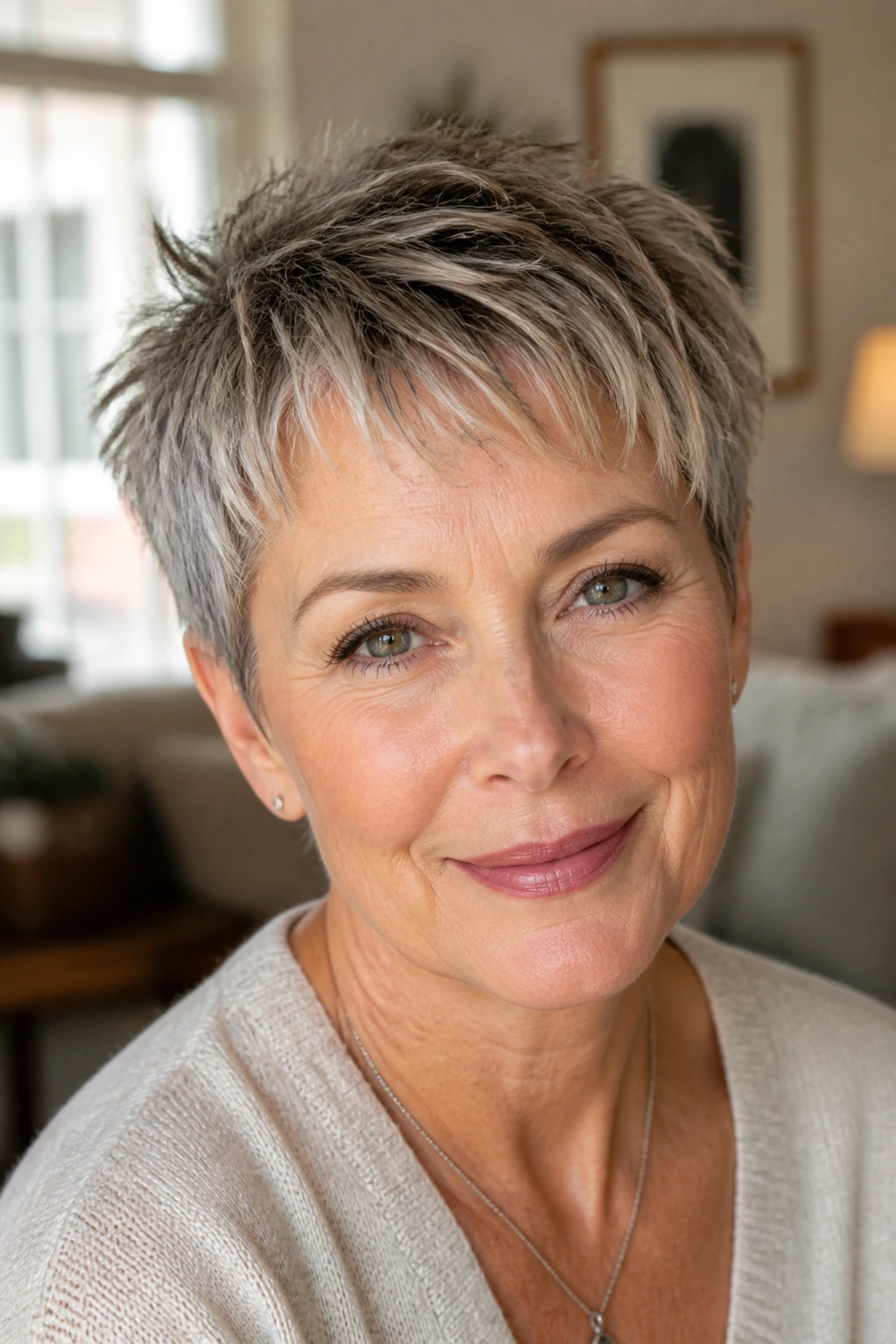
A tousled crop is for women who want short hair but refuse to wear it like a pageboy. The micro-layers give it a broken-up, airy feel that keeps the shape from looking heavy, especially around the crown.
This cut can be a lifesaver for fine hair. Tiny layers create movement without removing so much density that the hair goes see-through. That balance is delicate. Too much thinning, and the cut loses body fast.
Why I like it
It lets gray hair look lived-in instead of overperfect. That matters. Silver strands already have texture, so a little tousle looks natural rather than messy.
- Ask for soft texture around the top only.
- Keep the nape tidy and close.
- Use a small amount of mousse at the roots.
- Finish by scrunching the ends with damp hands.
One caveat: if your hair is very curly, micro-layers can sometimes create extra fuzz. In that case, a different shape will serve you better.
14. Blunt Bob With a Soft Underbend
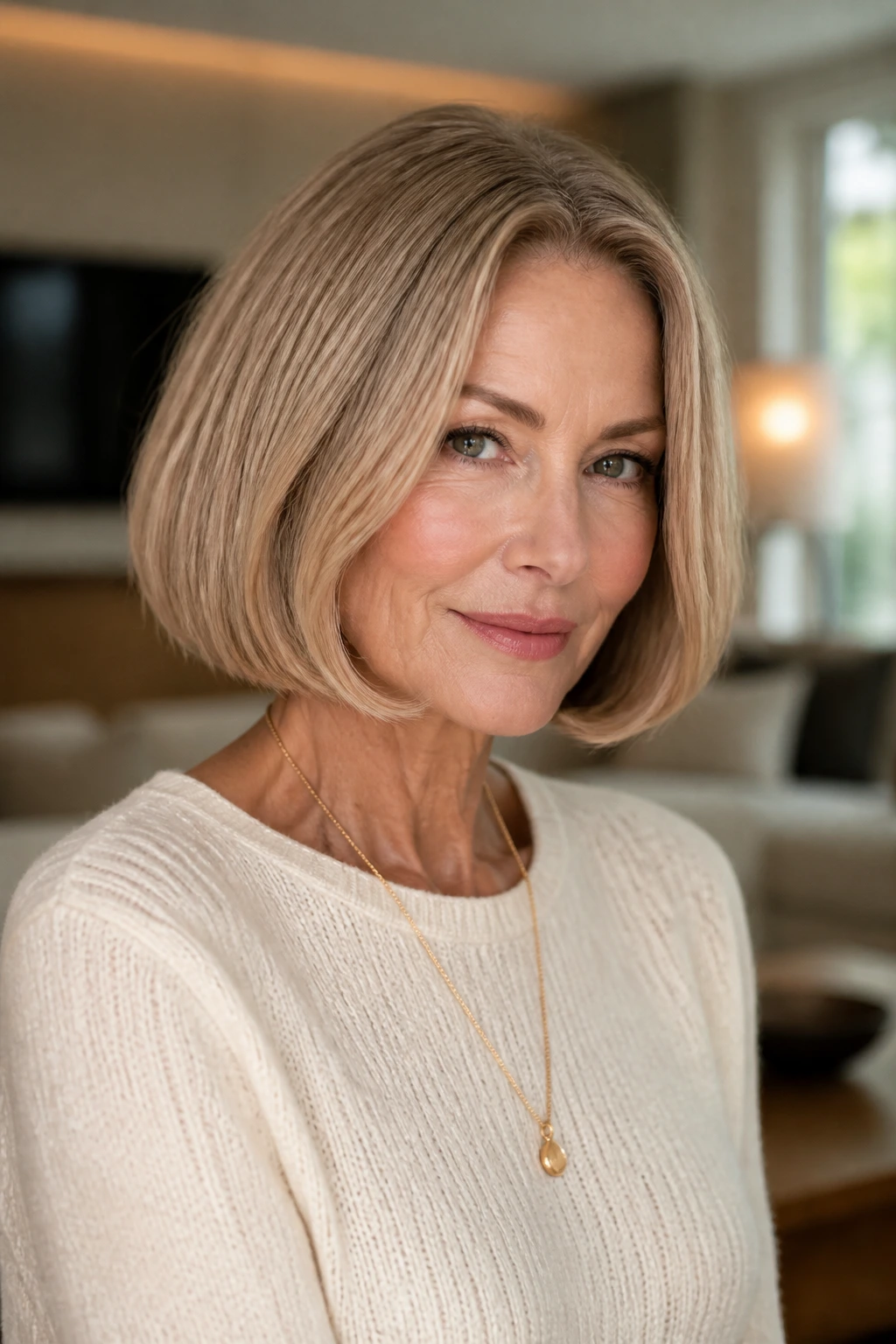
A blunt bob is a little more direct than the softer styles above, and that’s exactly why it works. The line at the bottom gives gray hair a clean edge, which can make the whole look feel sharper and denser.
The trick is to keep the inside of the cut soft enough that it does not sit like a helmet. A tiny underbend at the ends — from the cut itself, not a curling iron — keeps the shape moving. It can happen naturally if the hair has a bit of body and the stylist keeps the edge blunt but not stiff.
This is a strong choice for women whose hair looks a little scruffy when it gets too layered. Some hair behaves better with a firm shape. I’m a fan of listening to that.
Use a smoothing cream on wet hair and comb it through once. Then stop touching it. A blunt bob gets better when it is left alone.
15. Shoulder-Length Layers for Fine Hair
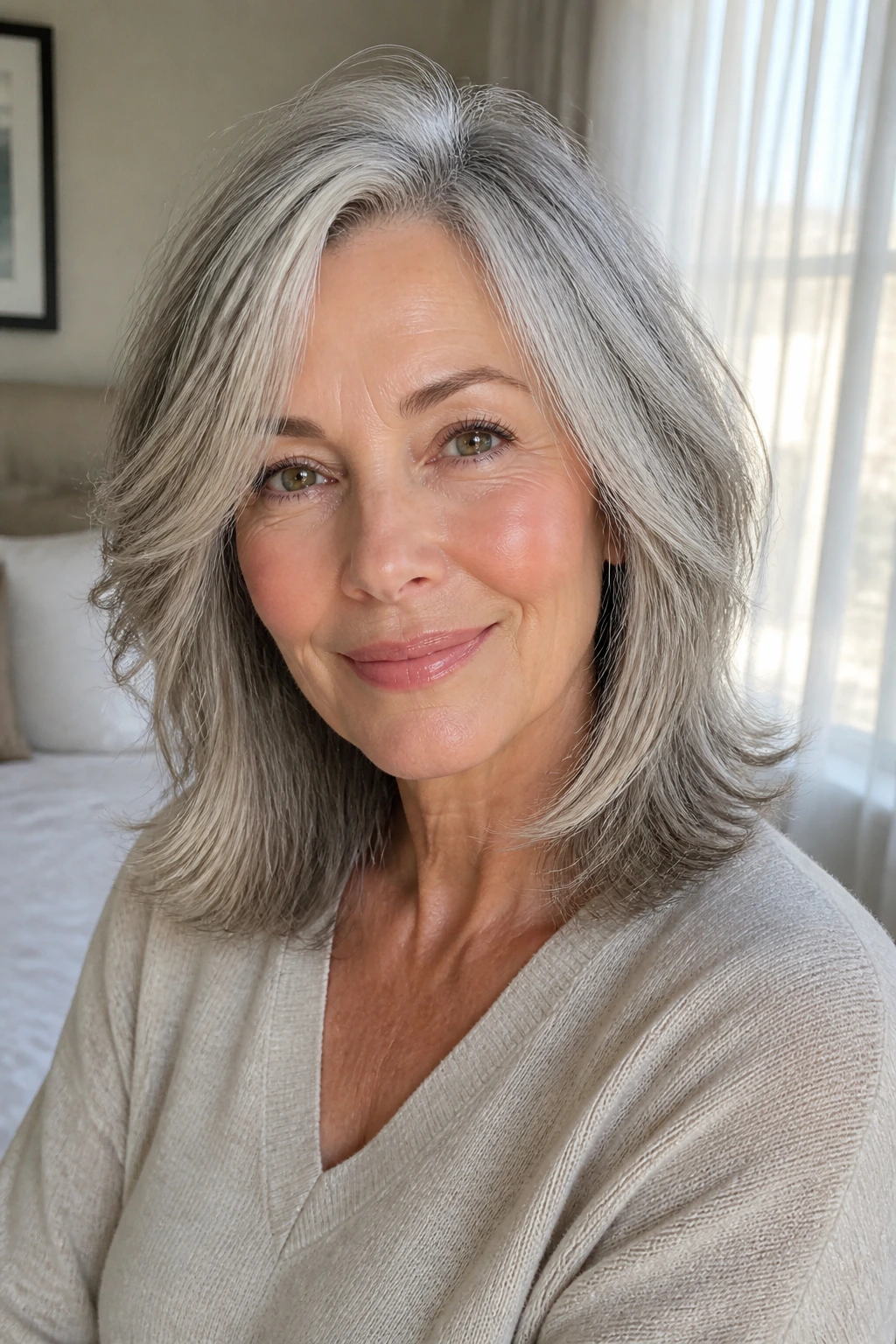
Fine hair doesn’t always need to be short. Sometimes it just needs a lighter cut. Shoulder-length layers can give enough movement to keep the hair from drooping, while the overall length still feels feminine and easy to clip back when needed.
The key here is restraint. Heavy layers can make fine hair look stringy. Soft, long layers are better because they remove weight without hollowing out the ends.
Gray fine hair often benefits from this shape because the lighter strands can lose their lift quickly. A few well-placed layers around the cheekbones and collarbone help keep the outline from going dull.
A lightweight volumizing mousse at the roots is enough for most people. Use your fingers to lift the crown while it dries. A round brush can help, but it is not required. That’s the point of a wash-and-go style anyway.
16. Asymmetrical Bob With a Side Fall
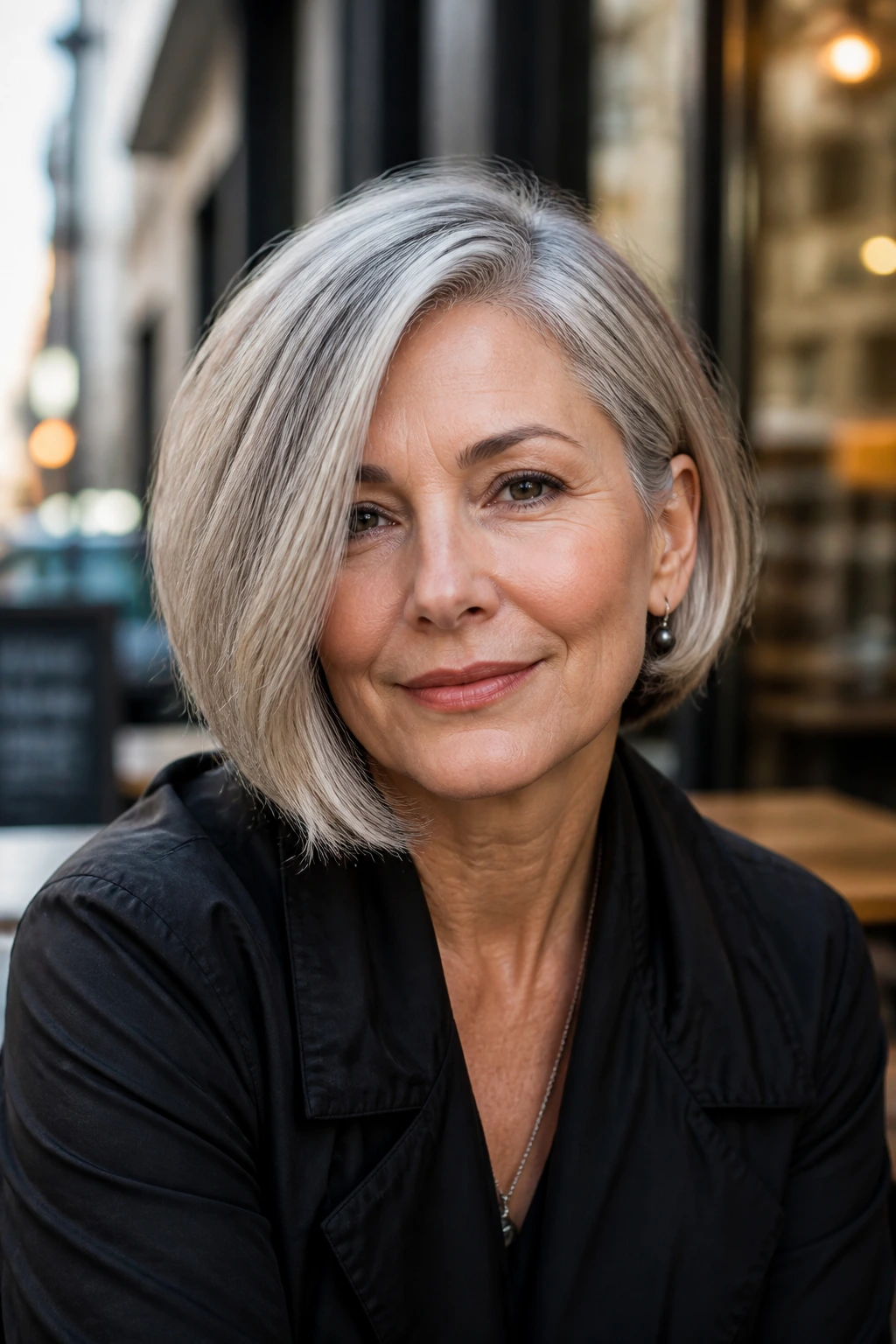
An asymmetrical bob has one side a little longer than the other, and that tiny imbalance gives the whole cut energy. It’s a good option if you want something that feels modern without needing a ton of styling.
The side fall can soften the jaw and break up a round face shape, but the real win is how little effort it takes to wear. If your hair naturally falls to one side, this cut follows that behavior instead of fighting it.
What makes it different
Unlike a standard bob, the asymmetrical version creates movement through shape alone. You do not need curls, waves, or a lot of product to make it interesting.
It works especially well for straight or slightly wavy gray hair, because the color highlights the difference in length. The cut reads clearly, even from across a room.
Ask for the longer side to hit somewhere between the jaw and collarbone, depending on how bold you want it. Too much difference can look fussy. A gentle shift is enough.
17. Grown-Out Crop With Volume on Top
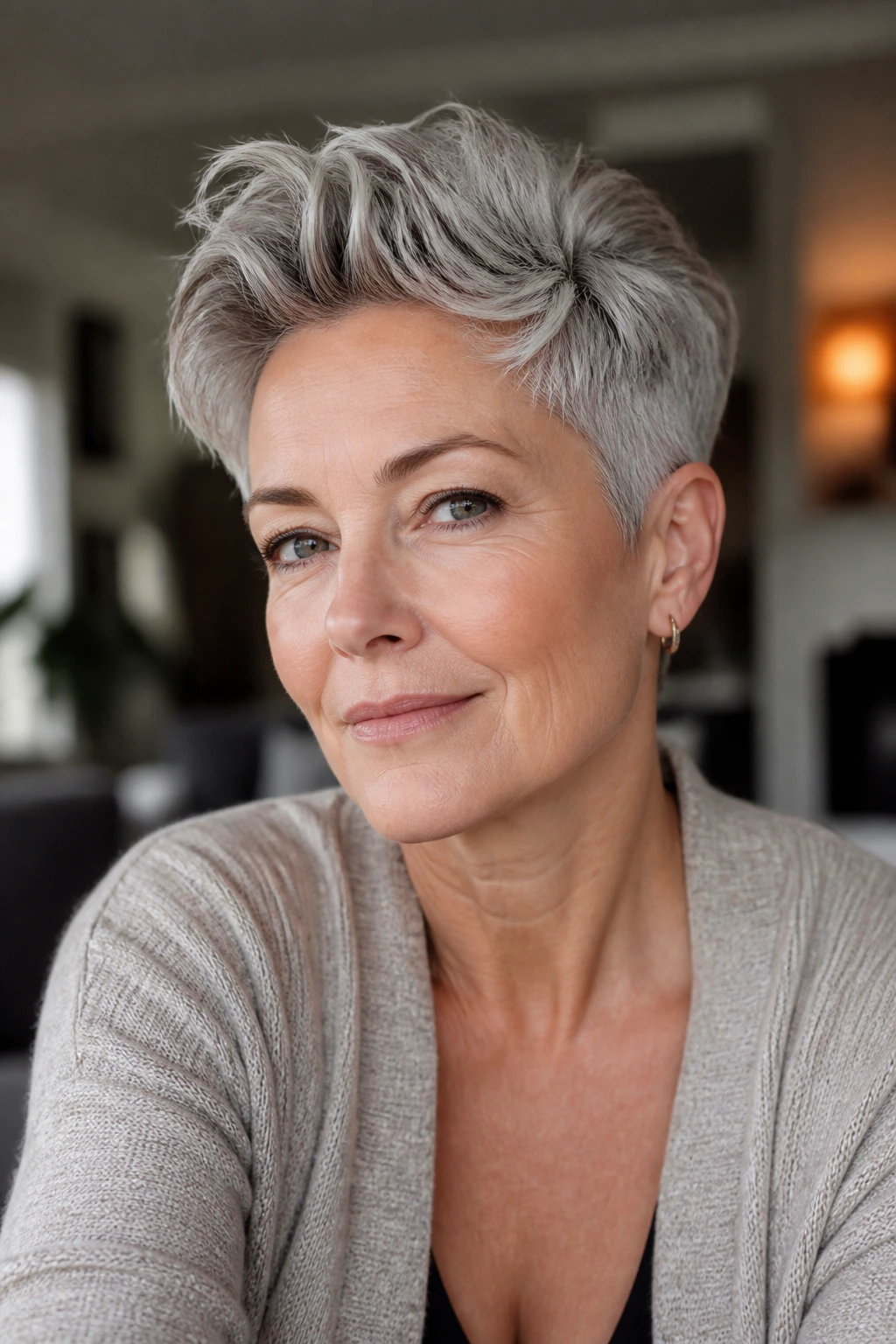
A grown-out crop is a smart cut for women who like short hair but want a softer line than a classic pixie. The sides stay close enough to keep the shape neat, while the top remains long enough to brush upward, sideways, or just let it fall naturally.
This is a nice transitional cut if you’re growing out a shorter style or simply don’t want to visit the salon every few weeks. The volume on top keeps it from looking flat, and the softer edges make gray hair look fuller.
You can wear this cut with almost no styling at all. A dab of cream through the top and a quick finger-rake are often enough. If your hair wants extra lift, flip your part for the first hour after washing and let it set that way.
It’s not a polished little cap of hair. That’s what makes it good. It has room to breathe.
18. Air-Dried Ringlet Cut
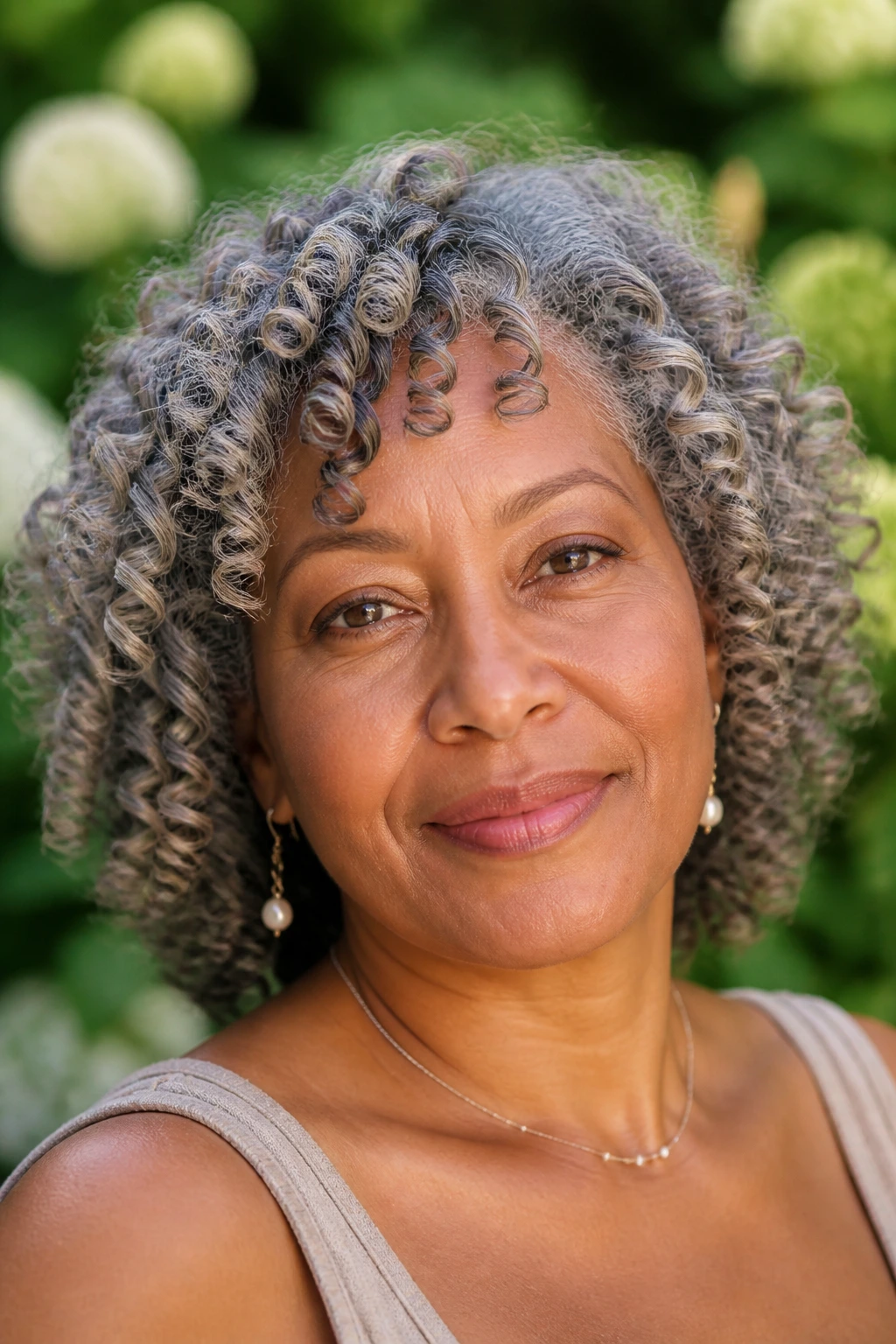
A ringlet cut is for curls that want to form into distinct loops without being smashed into a generic shape. The best versions use layers that respect shrinkage and give the curls a place to settle once the hair dries.
What makes this cut work is consistency at the curl level, not at the surface level. If the curls are cut to hang together in groups, they dry into a shape that looks tidy without losing bounce. Gray ringlets can look especially bright when the cut lets them separate cleanly.
Here’s the part that matters most: do not rough them up while they dry. Apply leave-in conditioner and gel, then let them go. If you need to scrunch, do it once, gently, and stop.
A diffuser can help if you are in a hurry, but the cut should still work on its own. If it doesn’t, the shape needs adjusting. Not the product.
19. Side-Swept Bob You Can Tuck Behind One Ear
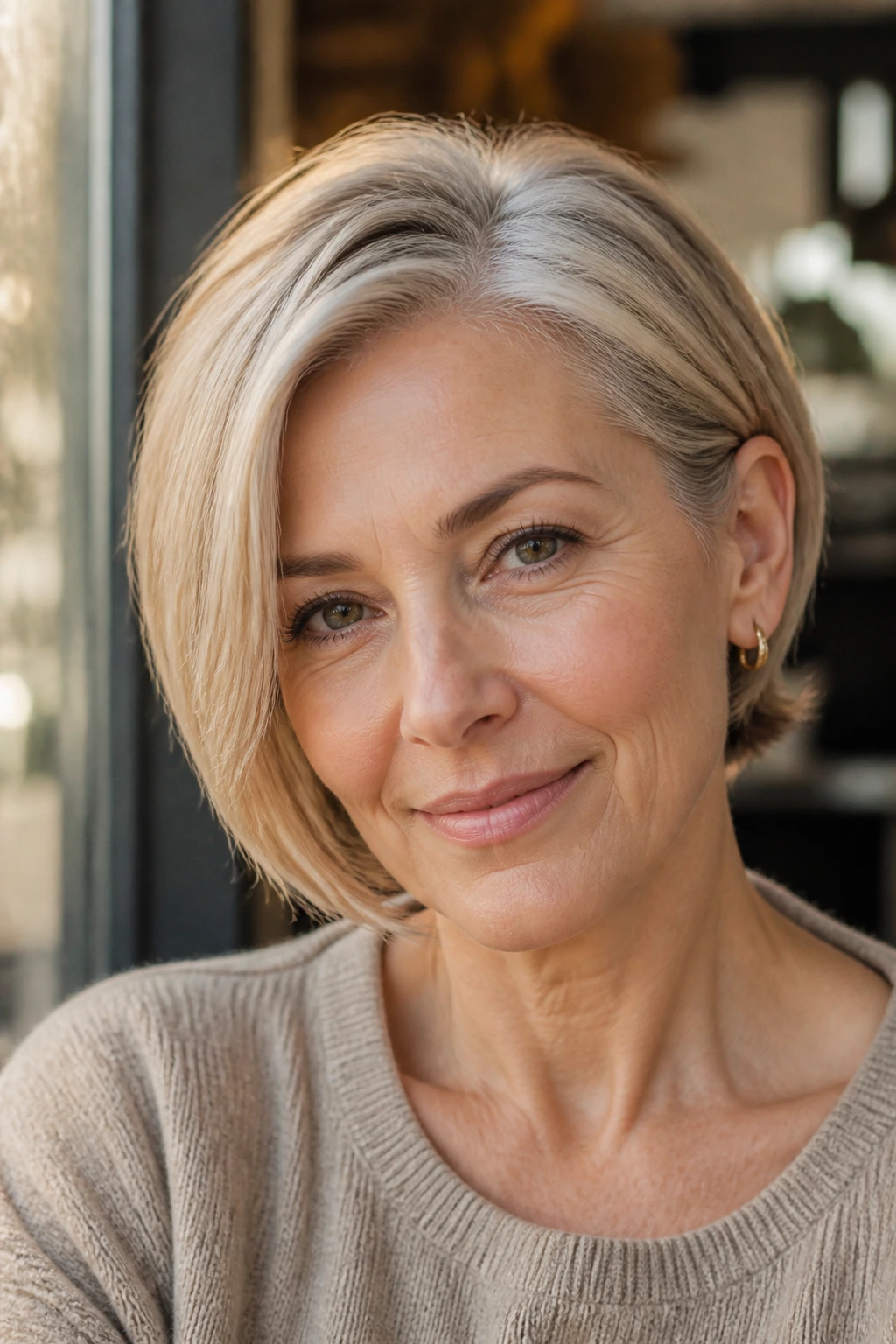
Some styles win because they are practical. A side-swept bob belongs in that category. The length is short enough to feel light, but long enough to tuck behind one ear, which gives you an easy way to change the look without changing the cut.
This is a favorite of mine for women who wear glasses or earrings. The side tuck opens the face, and the sweep across the forehead softens the front of the hairstyle without requiring bangs.
How to style it
Start with damp hair and push the part where you want the hair to fall. Let the front section dry slightly over one eye or cheek, then tuck one side back once the hair is about 80 percent dry.
- Best with straight, fine, or softly wavy hair.
- Keep the ends trimmed so the tuck sits neatly.
- Use a small clip if one side refuses to cooperate.
- Finish with a light spray, not a heavy hairspray helmet.
The style feels relaxed, but the shape stays clean. That combination is hard to beat.
20. Soft Midi Cut With Face-Framing Pieces
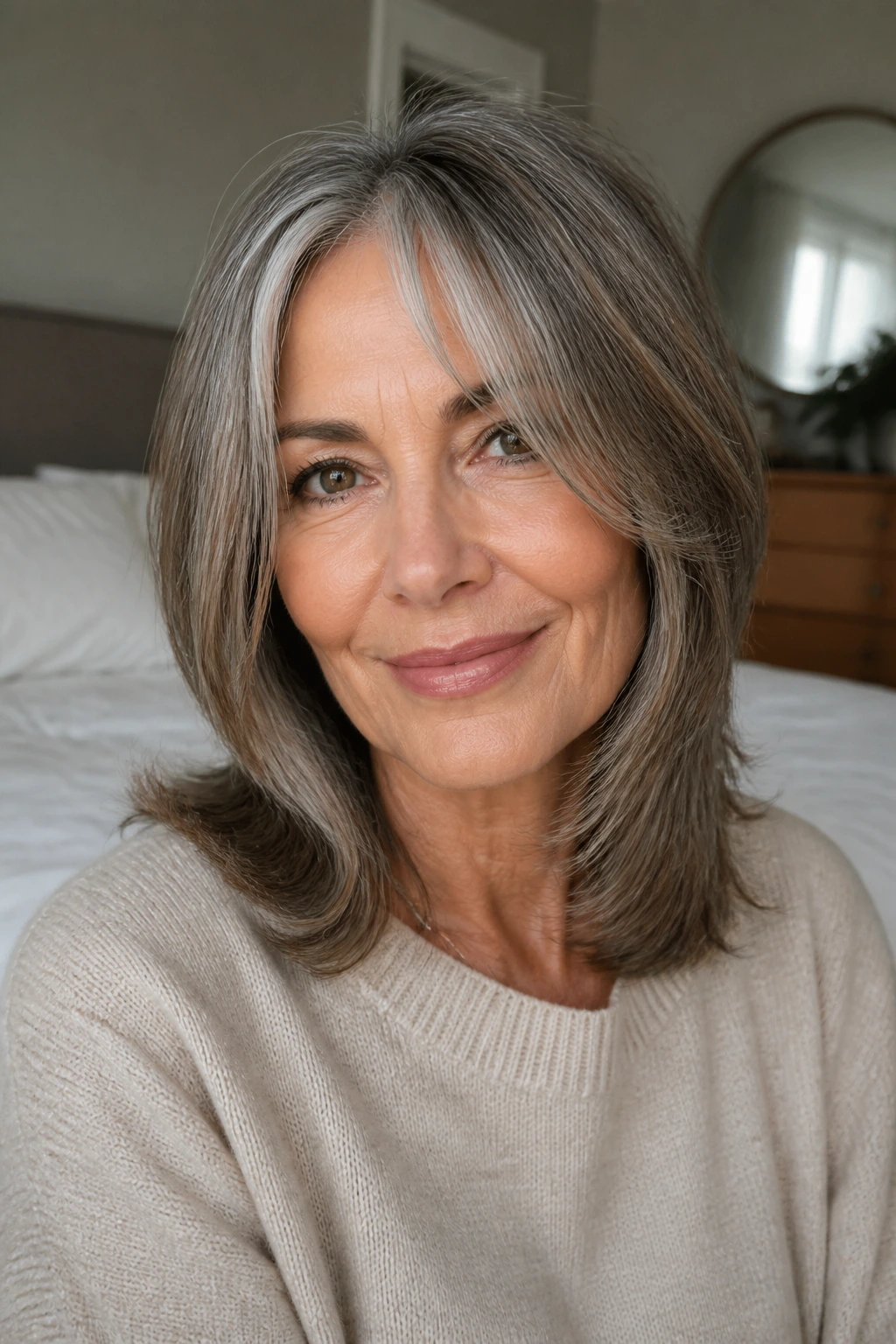
A soft midi cut is the longest style on this list, and for some women it is the easiest one to live with. The length falls somewhere between the collarbone and the upper chest, with a few face-framing pieces that keep it from feeling heavy.
This is the cut for women who still want hair they can put up, tuck back, or wear loose on a quiet day without losing shape. It works well on gray hair because the longer length gives the color a smooth, flowing line, especially when the ends are trimmed clean.
The face-framing pieces matter more than people think. They keep the hair from hanging like a curtain. If they start too short, the effect can get dated fast. If they start around the cheekbone and taper toward the chin, the whole cut feels softer.
I like this one best for low-fuss mornings. A little leave-in, a quick comb-through, and the hair can dry on its own. No drama. No special tricks. Just a shape that behaves.
