



Short gray hairstyles for older women can look sharper than long hair because the cut does the work and the silver shows every line. That’s the part people miss. Gray hair changes texture as it grows in, so a style that looked fine five years ago can suddenly feel too heavy, too flat, or too fuzzy around the edges.
I’ve always thought short gray cuts need a little more thought than people expect. Gray strands can be coarse, silky, wiry, fine, or all four on the same head, which is why a blunt cut that sounds simple on paper can look oddly stiff in real life. A good short style gives shape where the hair wants to collapse and softness where it wants to stick out.
The nice thing is that short gray hair is not limited to one look. You can wear it soft, sleek, choppy, fluffy, architectural, neat, or a little wild. The right cut depends less on age than on face shape, growth pattern, and how much time you want to spend with a brush in your hand.
1. Silver Pixie with a Side-Swept Fringe
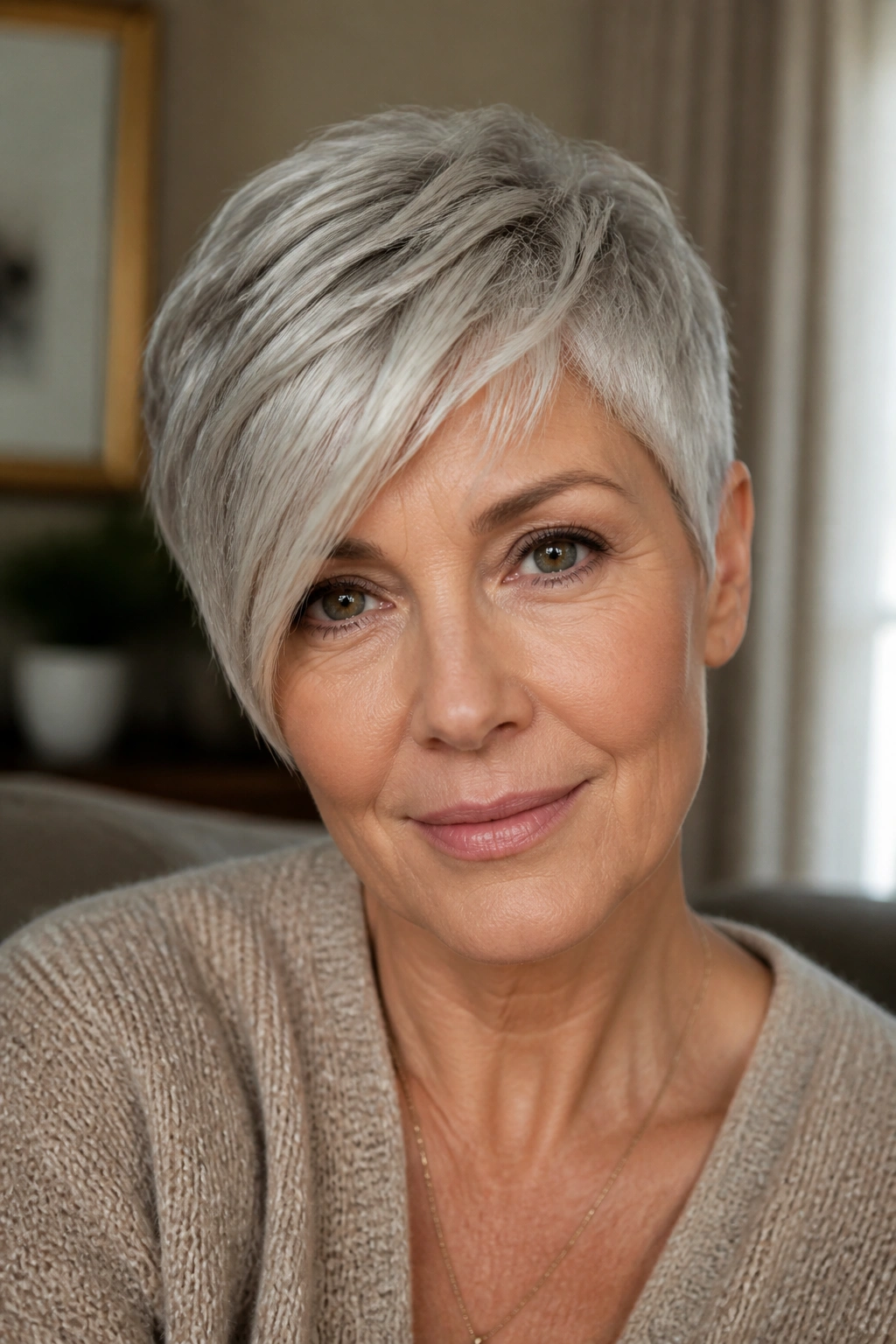
This is the cut I reach for when someone wants short hair that still feels gentle. A side-swept fringe takes the edge off a pixie and keeps the front from looking too severe, which matters a lot on silver hair because the color already brings a lot of contrast.
Why It Flatters Gray Hair
The fringe gives you movement right where people usually want it most: across the forehead and near the eyes. That little diagonal line softens the face without hiding it. It also grows out more gracefully than a blunt bang, which is a gift when you do not want a haircut that turns awkward in two weeks.
Gray hair often shows texture changes fast, and a pixie can handle that better than longer styles. Keep the sides snug and the top slightly piecey, not spiky. The best version stays close at the nape and a touch longer through the crown.
- Ask for the fringe to fall just past one eyebrow.
- Keep the top around 1.5 to 2.5 inches, depending on thickness.
- Use a pea-size amount of matte paste on dry hair.
- Blow-dry the fringe forward, then sweep it aside with your fingers.
My favorite part: it makes fine hair look like it has more actual body, not just product.
2. Tapered Crop with a Choppy Crown

Why do some short gray cuts look lively while others look like they were trimmed with no point of view? The answer is usually in the crown. A tapered crop with a choppy top gives the head a clean outline and keeps the crown from lying flat, which is a common complaint with shorter gray hair.
The taper at the sides and back keeps the shape tidy, but the choppy top stops it from feeling too neat. That contrast matters. Gray hair reflects light, so if every strand sits in the same direction, the whole style can read a little too hard. A bit of uneven texture breaks that up.
I like this cut on women whose hair has some density but not much height. It removes bulk where you do not want it and leaves lift where you do. Ask for point-cutting through the crown instead of a blunt finish, and keep the shortest pieces around the ears soft rather than clipped to the skin.
If you hate spending time styling, this one is a strong pick. It air-dries with enough shape to look intentional.
3. Chin-Length French Bob
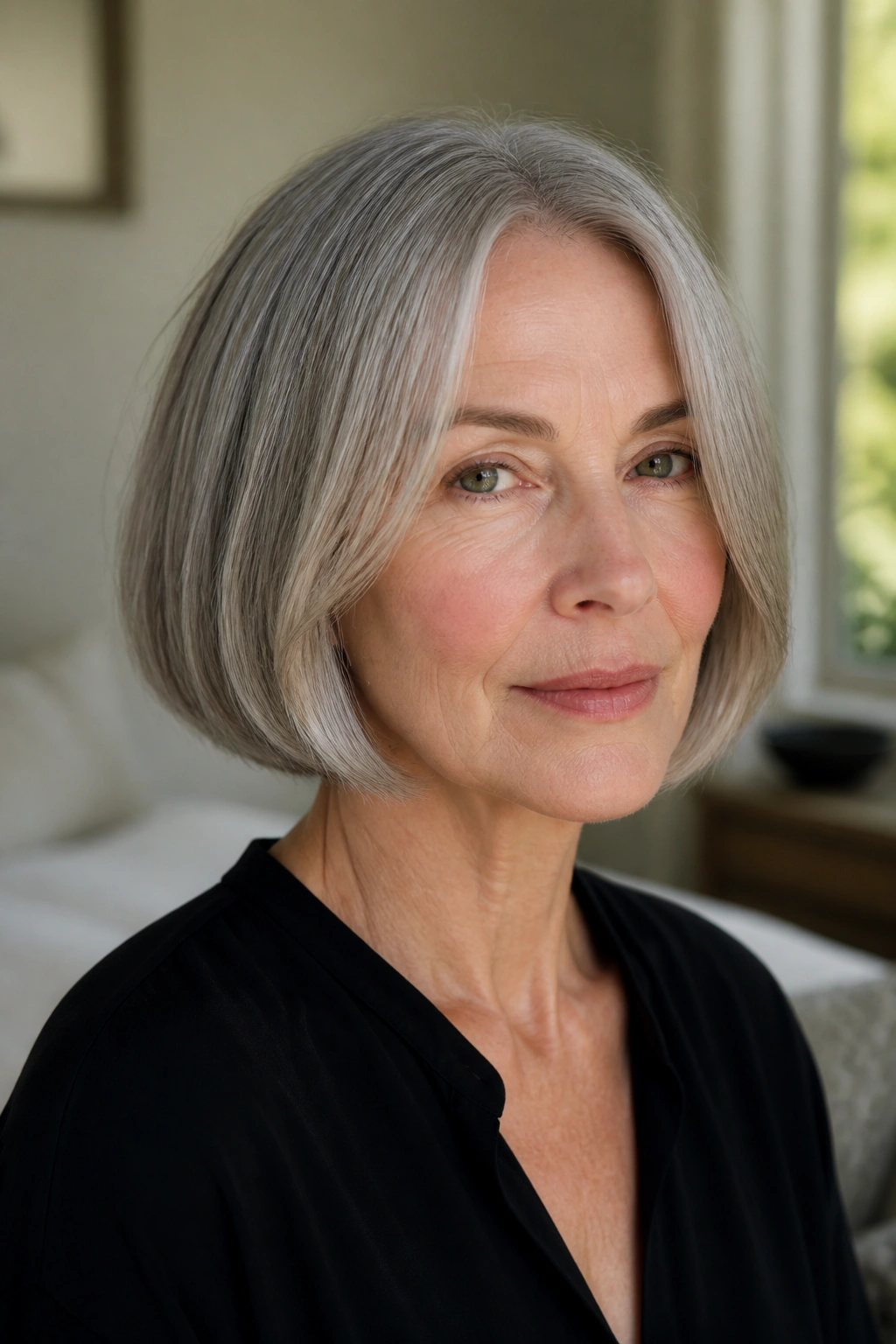
Picture a clean line at the jaw, a dark sweater, maybe a pair of small hoops. A chin-length French bob carries that kind of quiet confidence without trying too hard.
The beauty of this cut on gray hair is that the color does half the styling for you. Silver, white, and salt-and-pepper tones pop against a sharp perimeter, so even a simple bob looks crisp. The key is keeping the ends blunt but not heavy. A tiny bend under the jaw gives it life. Dead-straight ends can look boxy fast.
This works especially well if your hair is straight or only slightly wavy. If it is very curly, you’ll need more length to keep the line from shrinking too much. Ask your stylist to leave a little softness around the face, especially if you wear glasses or want the cut to feel less formal.
Best on: straight to wavy textures.
Best with: a side part or soft center part.
Skip: too many short interior layers; they can make the shape puff out.
It’s one of those cuts that looks expensive even when the styling is minimal.
4. Feathered Pixie Bob
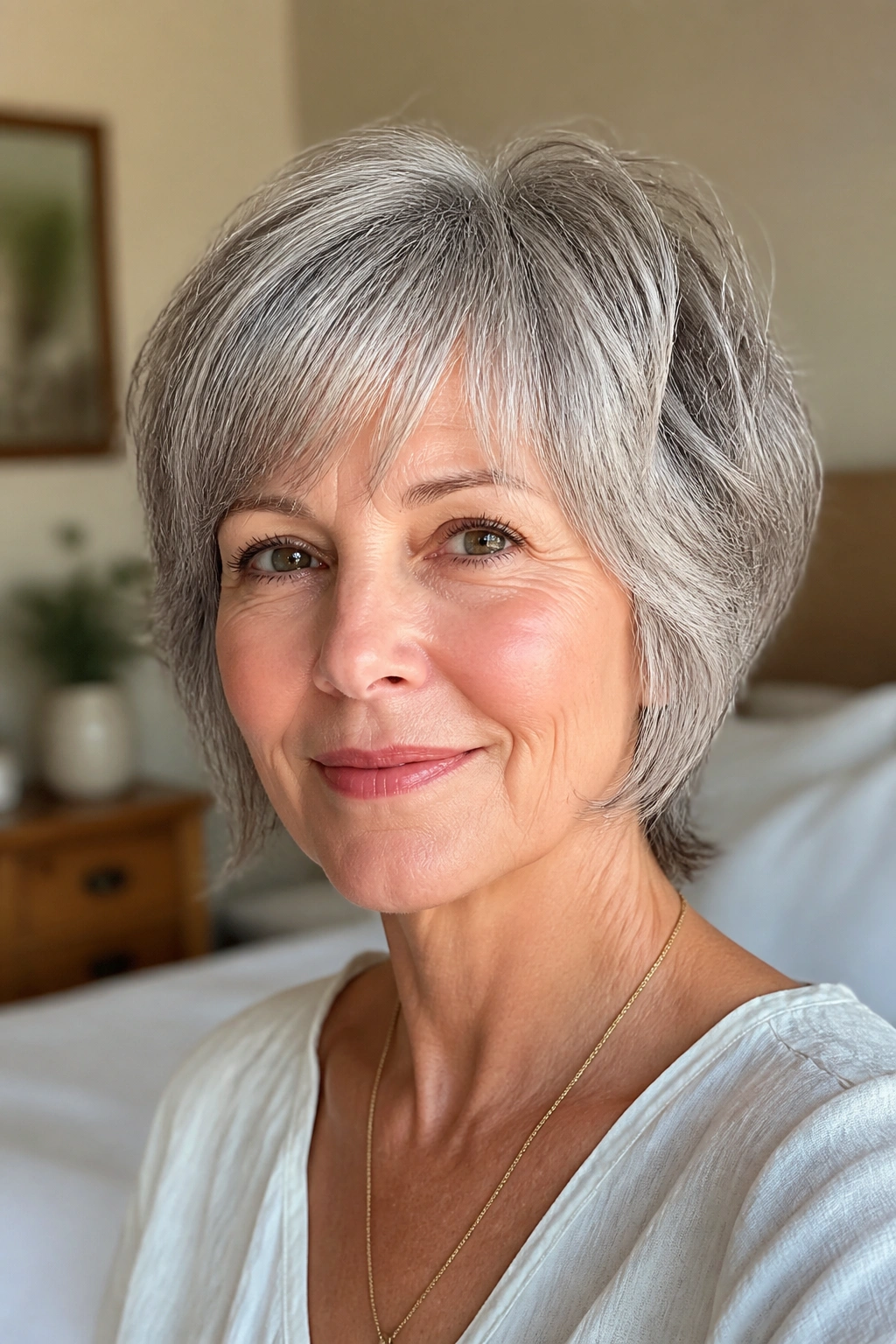
A feathered pixie bob sits between a classic pixie and a short bob, and that middle ground is why it works so well. You get more softness than a close crop, but you do not have to deal with the weight of a full bob.
The feathering matters most around the cheeks and neckline. Those wispy ends stop the cut from looking blocky, which is a common problem with gray hair that has some thickness to it. The shape should skim, not sit like a helmet. That is the whole game.
I like this style for women who want movement without a lot of fuss. It can be blow-dried with a round brush, or you can rough-dry it and pinch a few pieces with styling cream. Either way, it keeps a little bounce. The finish should feel airy, not overworked.
This is also a smart choice if you are growing out a shorter pixie and want a softer landing. The grow-out looks deliberate instead of messy.
5. Curly Gray Shag
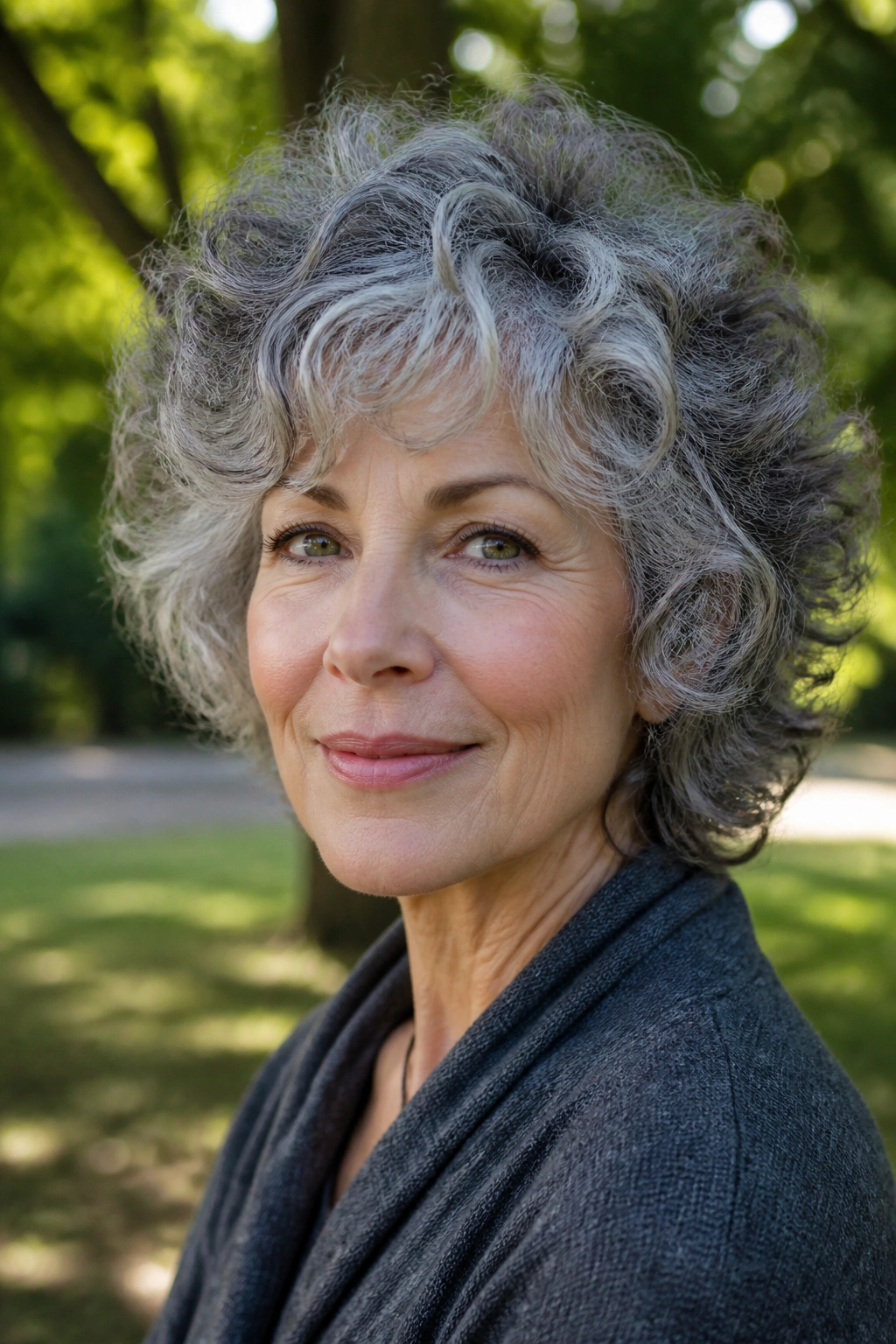
Gray curls do not need to be tamed. They need room.
A curly shag gives curl pattern space at the top and through the sides, which is why it often looks better on mature hair than a one-length short cut. Gray curls can be drier and a little springier than pigmented curls, so the layers have to support the curl rather than chop it into pieces that stick out in random directions.
How to Shape the Curl Line
Ask for longer layers around the crown and cheekbones, not a stack of tiny layers everywhere. The goal is shape, not puff. A good shag keeps the outline rounded and lets the curls land where they want to land.
- Use a leave-in conditioner on damp hair.
- Scrunch in a curl cream, then stop touching it.
- Diffuse on low heat until the roots feel dry and the curl clumps hold.
- Avoid razor-thinning if your hair is already frizzy.
A curly gray shag is one of the few short styles that gets better when it’s a little imperfect. The whole point is motion. Tight control usually ruins it.
6. Asymmetrical Gray Bob
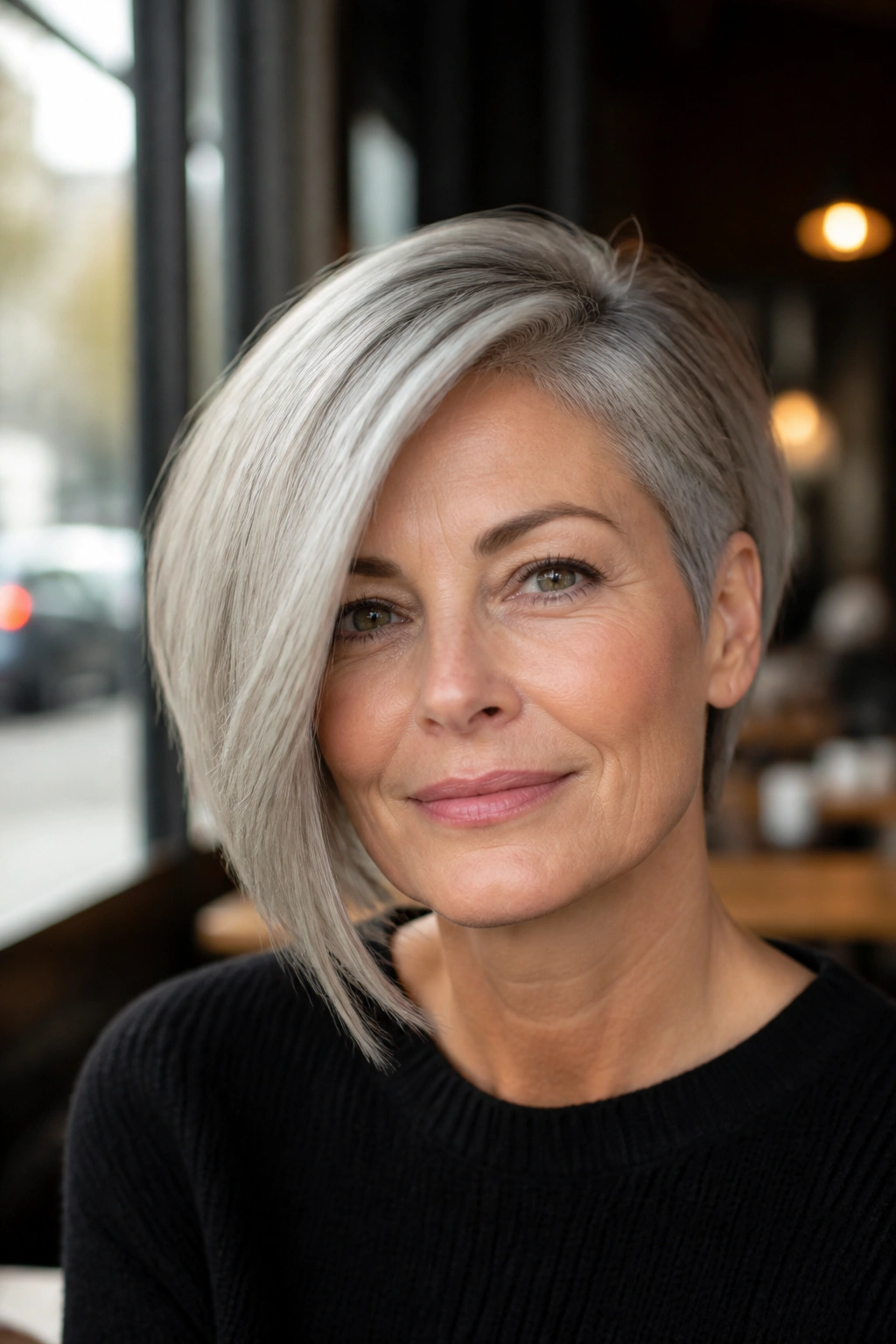
Symmetry is overrated.
An asymmetrical gray bob gives the face a cleaner line by letting one side drop a little lower than the other. That small shift changes the whole mood of the haircut. Instead of sitting in a neat, predictable shape, it creates direction, which can make the cheekbones and jaw look more defined.
I like the difference to stay subtle. You are not trying to create a sharp fashion statement unless that is your thing. One side can be an inch or two longer, with the shorter side tucked behind the ear. That is enough. Too much contrast can look forced, especially if the hair itself has a soft or airy texture.
This cut works best on straight or lightly wavy hair because the asymmetry shows more clearly. It also pairs well with a deep side part, which gives the top a little lift and keeps the front from falling flat against the face.
If you have always worn balanced, even cuts, this one can feel refreshing. A small break from perfect symmetry goes a long way.
7. Soft Layered Crop with Crown Lift
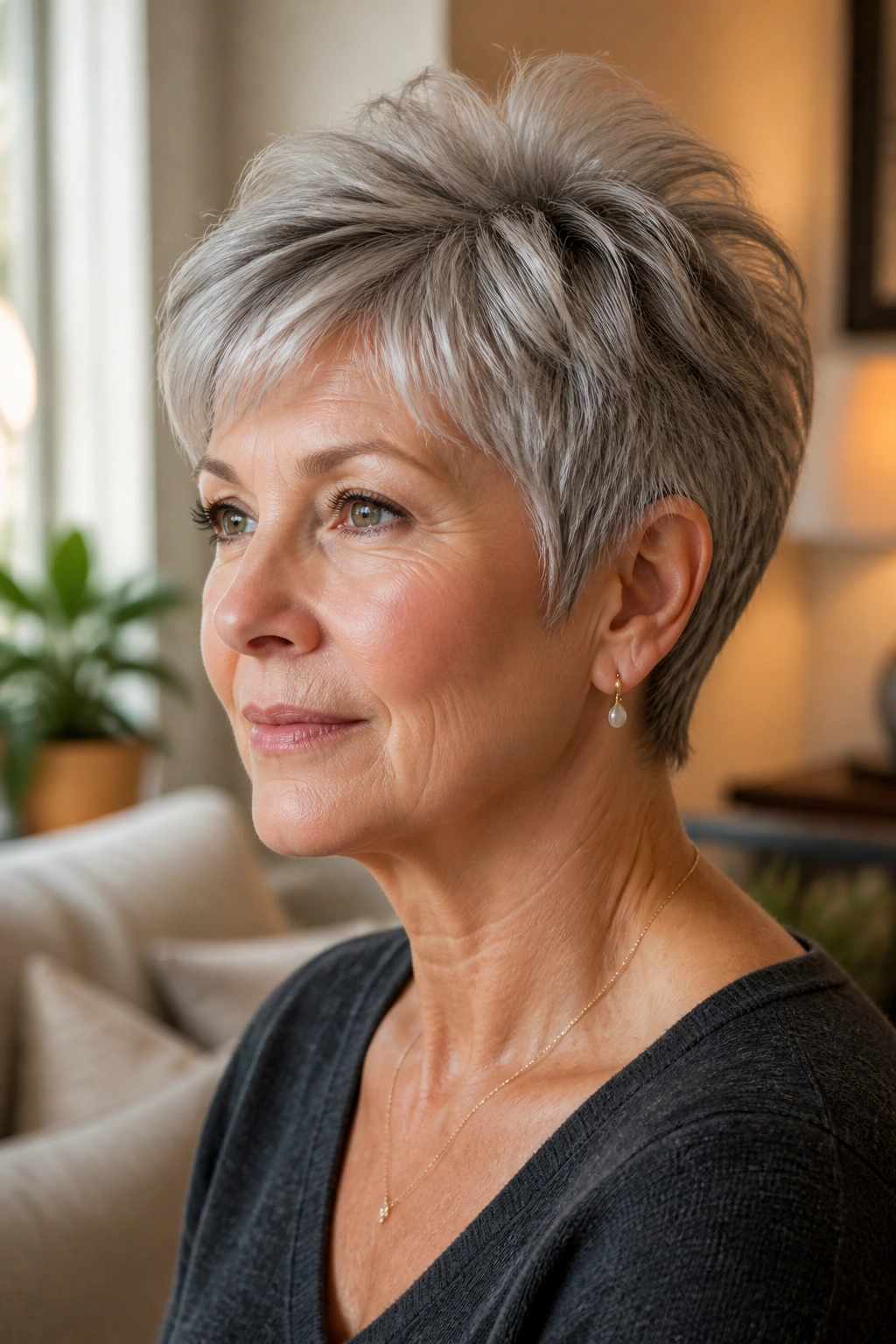
The best version of this cut feels airy at the roots and neat at the temples. That balance is what makes it so good on gray hair that has started to lose volume at the crown.
A soft layered crop with crown lift gives the top enough height to avoid that flat, pressed-down look that happens when shorter hair gets heavy. The layers should be blended, not choppy. You want them to move together when you comb through them, not separate into little spikes. The nape stays trimmed close so the shape looks clean from the side and back.
How to Style It in Five Minutes
A lightweight mousse on damp hair helps the crown stand up a little. Then use a small round brush or just your fingers to lift the roots while drying. Finish with a dab of cream at the ends if they look fuzzy.
- Blow-dry the crown first.
- Direct the front pieces away from the face.
- Keep product light; heavy creams flatten this cut.
- Refresh with a mist of water and a pinch of mousse the next morning.
It’s a practical style, but not a boring one. That matters.
8. Slicked-Back Silver Crop

Need a haircut that can go from coffee run to dinner without much thought? The slicked-back crop does that better than almost anything else on this list.
The trick is shape. The hair should be cut short enough to sit close to the head, but long enough on top to comb back smoothly. Gray hair shows shine well, and this style uses that to its advantage. A little gel or styling cream makes the silver look intentional instead of frizzy.
This cut is not for every day if you dislike product. It can turn helmet-like if you pile on too much. Keep the amount small and work it through damp hair with your fingers or a fine comb. The finish should look controlled, not glued down.
I like this one for strong brows, good earrings, and a straightforward wardrobe. It has edge without needing a lot of decoration.
Best moments for it: evenings out, sharp jackets, warm weather, or any day you want your face and neckline to do the talking.
9. Wispy Ear-Length Layers

Ear-length layers are underrated because they sound plain until you see what they do around the face. On gray hair, they soften the profile and keep the cut from feeling too closed in.
The length sits just enough below the ear to give movement, but not so low that the style starts behaving like a bob. The layers around the cheekbones and temples matter most. They should fall in light pieces, not thick chunks. That little bit of air around the face helps if your hair has gone more delicate with time.
This is a nice choice if you wear glasses. The soft layers work around frames instead of fighting them. It is also useful if you want to show earrings or keep the neckline open without going all the way to a pixie.
No dramatic styling is needed. A quick blow-dry with a paddle brush, or even air-drying with a little cream, usually does enough. If your hair has a cowlick near the temple, ask for the layers to follow that direction instead of fighting it. Hair always wins that argument.
10. Stacked Gray Bob
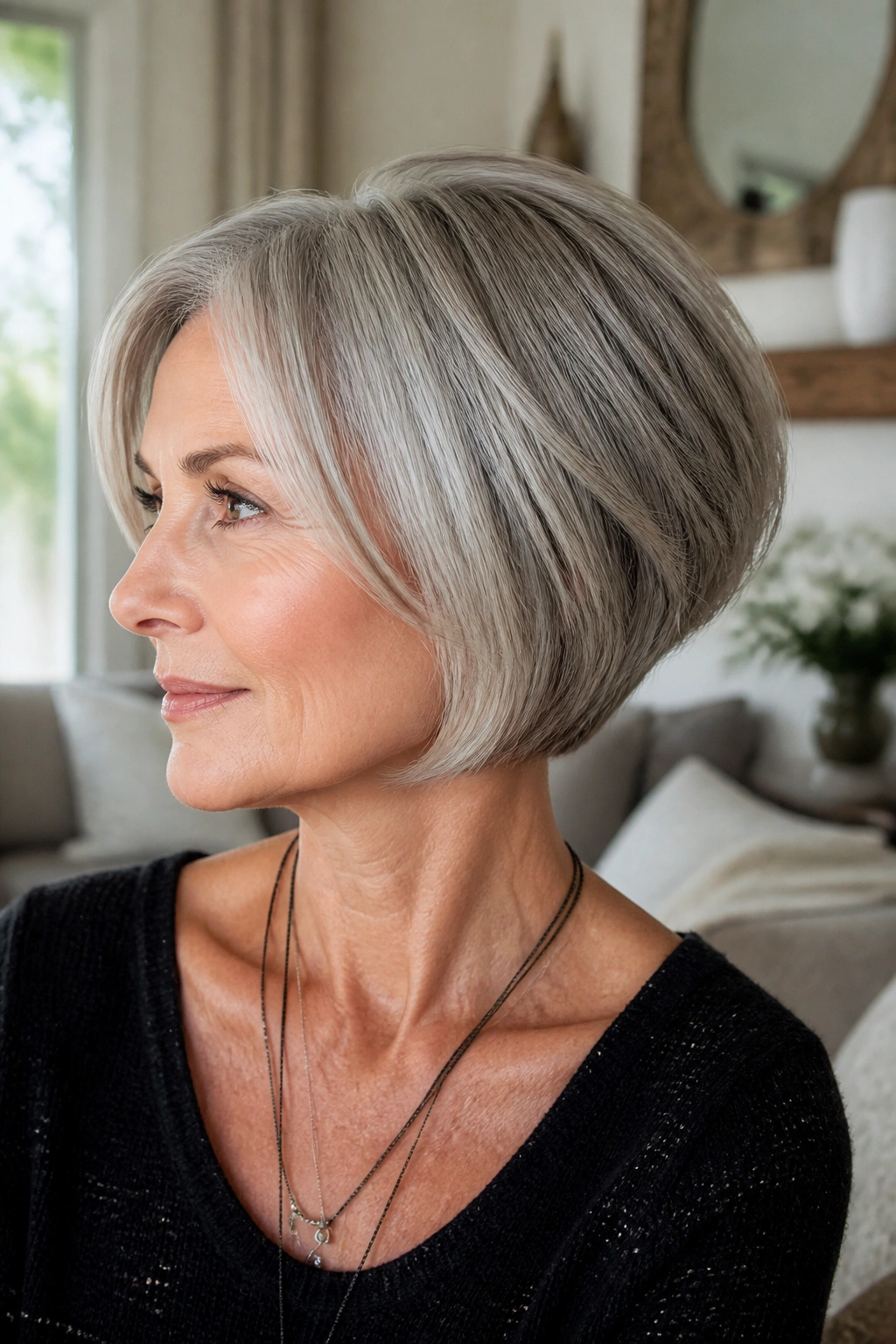
A stacked bob gives you volume where most short gray hair needs it: at the back of the head. The stacking builds a fuller shape through the nape and crown, which can make fine hair look a size bigger without adding much length.
What to Ask For
Ask for graduation through the back, with the shortest layers tucked under and the top layers leaving enough length to sweep over them. That creates the rounded silhouette people usually mean when they say a bob has “lift.” Keep the front longer if you want the style to feel softer and less old-fashioned.
- The back should sit close to the neck.
- The crown should have enough weight to avoid sticking up.
- The front can skim the jaw or sit slightly below it.
- A side part helps keep the top from looking too helmet-like.
This cut is strongest on fine to medium hair. If your hair is thick, the stack needs to be handled carefully or it can balloon out. I’d ask for a soft stack, not a dramatic one.
It’s a workhorse style, plain and simple. Clean, neat, useful. Those are not bad words.
11. Textured Bowl-Inspired Cut
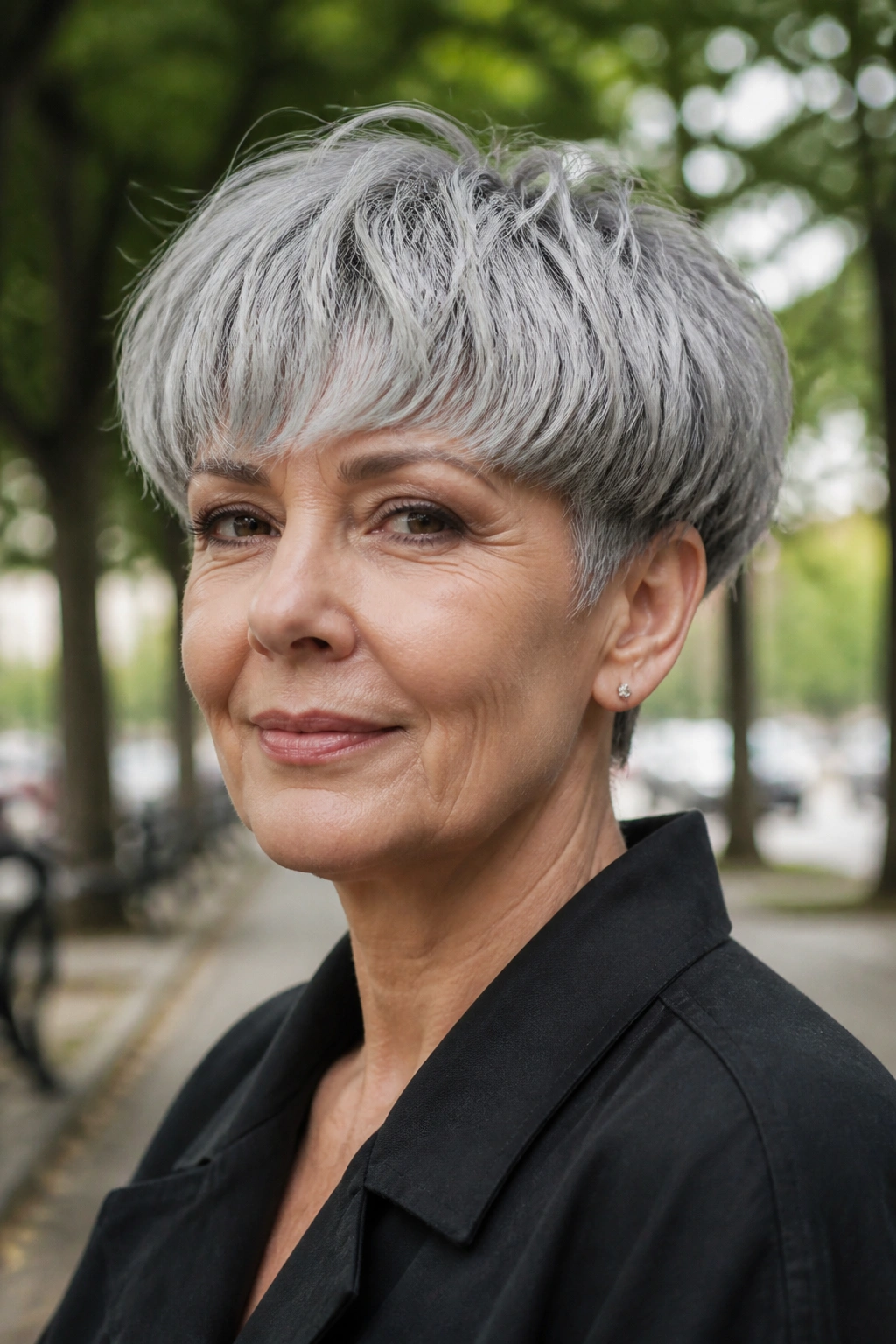
A textured bowl-inspired cut is not the same thing as the bowl cut people remember from childhood. That old version sat like a hard circle. This one is softer, choppier, and much easier to wear.
The perimeter still carries a rounded shape, but the edges are broken up with texture so the cut moves instead of sitting stiff. Gray hair can make this style look surprisingly modern because the silver tone highlights the curve and the texture at the same time. It’s a good option if you have straight hair and want something graphic without going full sharp-edge.
I would not recommend this on very fluffy hair unless you are ready to smooth it often. The shape works best when the strands lie fairly close together. A flat iron pass near the ends can help, but keep the heat moderate. Gray hair can be dry, and dry hair gets frayed fast when you keep reaching for hot tools.
The cut can feel bold, but not loud. That is why it works.
12. Boyish Crop with a Deep Side Part

A boyish crop sounds casual because it is. That’s the appeal. It keeps the sides short, leaves a little more length on top, and lets the deep side part do some of the work that longer hair used to do.
The side part gives lift right away. It also keeps the style from sitting flat across the forehead, which can make a face look tired when the cut is too even. Gray hair usually shows part lines sharply, so the angle matters. The deeper the part, the more movement you get without needing a lot of styling.
This cut is especially good for women who want low maintenance but not a severe look. The finish should be clean, not boyish in a harsh way. Think neat, soft, and a touch undone. A little texture cream or lightweight wax is enough.
If you’ve got a strong jawline, this crop can be excellent. If you have a narrow face, ask to leave a little extra height on top so it does not disappear.
13. Salt-and-Pepper Undercut Pixie

Does an undercut sound too edgy? It only does if the top is cut too hard. A salt-and-pepper undercut pixie can be one of the easiest short gray styles to live with when it is shaped well.
The undercut removes bulk at the nape and around the ears, which is useful if your hair grows thick or puffs out in humid air. The top stays longer so you can sweep it over, spike it slightly, or push it forward. That contrast between tight sides and longer top gives the style its energy.
How It Stays Wearable
The secret is restraint. Keep the undercut low enough that it grows out without a glaring line. A high undercut can look severe fast, especially once the gray grows in and the color contrast gets stronger.
- Ask for the undercut to stay below the occipital bone.
- Leave enough length on top for side-swept styling.
- Use a soft paste, not a stiff gel.
- Plan on trims every 4 to 6 weeks.
This is a good style if you like a little attitude in your haircut. Not everyone does. Fine. That’s why the top stays flexible.
14. Curly Tapered Fro
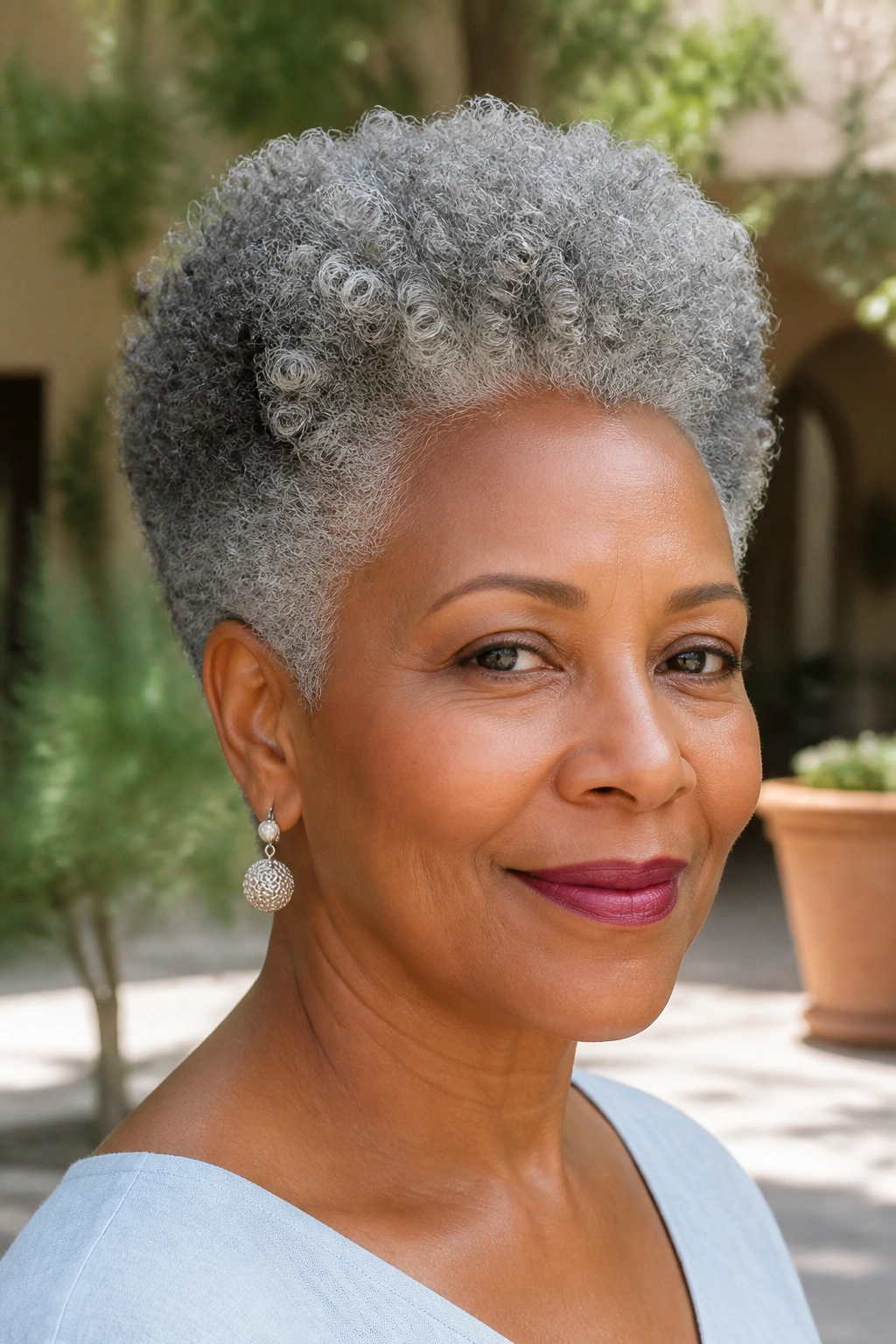
The first time a good curly tapered fro is cut right, it looks like the hair finally got permission to breathe.
That shape works beautifully on gray curls because the taper keeps the sides and back neat while the top stays rounded and full. The result is balanced, not bulky. Silver curls often have a dry halo at the edges, and this cut uses that halo as part of the style instead of fighting it.
Moisture matters here more than in almost any other short cut on the list. A leave-in conditioner, curl cream, and a little oil on the ends can make a big difference. Keep the ends trimmed often enough that the shape stays rounded, not mushroom-like. That rounded profile is what makes this cut feel polished.
If your curls are tight, ask your stylist to shape dry hair when possible. Wet curls lie. They always do. A dry cut gives a more honest result, especially around the crown and temples.
This is a strong, flattering option for women who want texture to be the point, not the problem.
15. Blunt Micro Bob

A blunt micro bob is for someone who likes a clean line and does not mind a little maintenance. The shape sits around the jaw or just above it, and the ends are cut straight across so the outline looks crisp.
On gray hair, that blunt line can be striking. The color gives the cut a cool, almost metallic look when the finish is smooth. But there’s a catch: every bit of frizz shows. If your hair is coarse, dry, or wavy, this style needs more care than it looks like from across the room.
That said, it can be worth it. A micro bob frames the face neatly and works well with strong makeup, tailored clothes, or simple earrings. I especially like it on straight hair that tends to hang limply when it gets longer. The shorter length gives the roots a little more lift, and the jaw-length finish keeps the face open.
Use a smoothing cream before blow-drying, then finish with a flat brush or a quick pass of a straightener on the ends. Keep the heat moderate. Gray hair breaks faster than younger hair, and blunt cuts show damage instantly.
16. Mullet-Inspired Shag
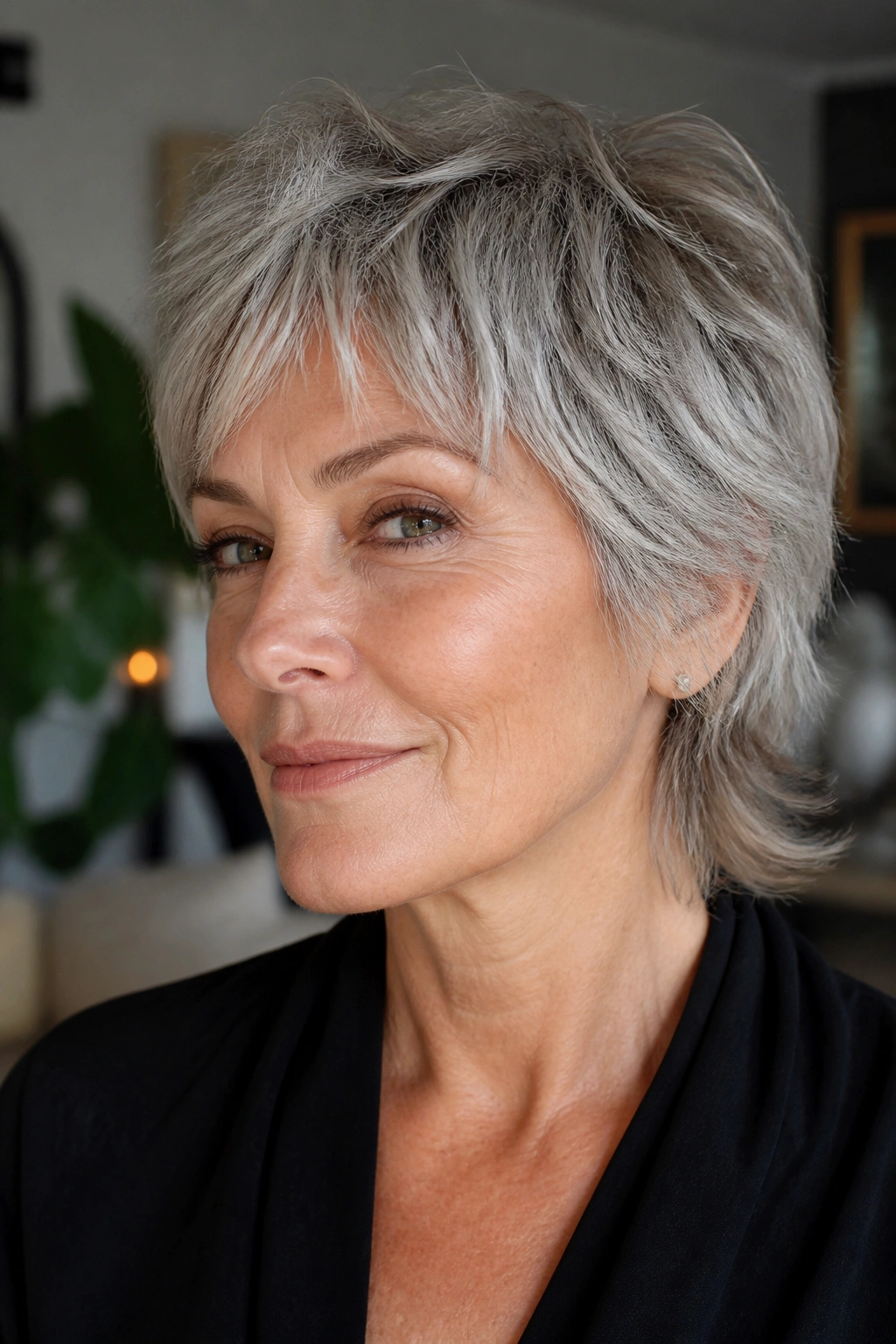
A little mullet energy can be a relief.
Not the cartoon version. The softer, modern version with short layers up top, movement at the sides, and a longer, wispy nape. On gray hair, that shape gives the cut character without making it look dated. It is especially good if your hair naturally flips out at the ends or grows fuller at the crown than at the jaw.
What to Ask Your Stylist
You want a shag with length left in back, but not a hard shelf. The top should stay light and piecey, while the sides keep enough softness to frame the cheeks. If the layers are too disconnected, the cut can look messy in a bad way. If they’re too connected, you lose the whole point.
- Keep the crown layered but not choppy.
- Leave enough length at the nape for movement.
- Soften the front with cheekbone-length pieces.
- Use texturizing spray sparingly; too much can dry out gray hair fast.
This style suits people who want shape and motion more than neatness. It has a bit of attitude, and I mean that in the best way.
17. Bixie with Piecey Bangs
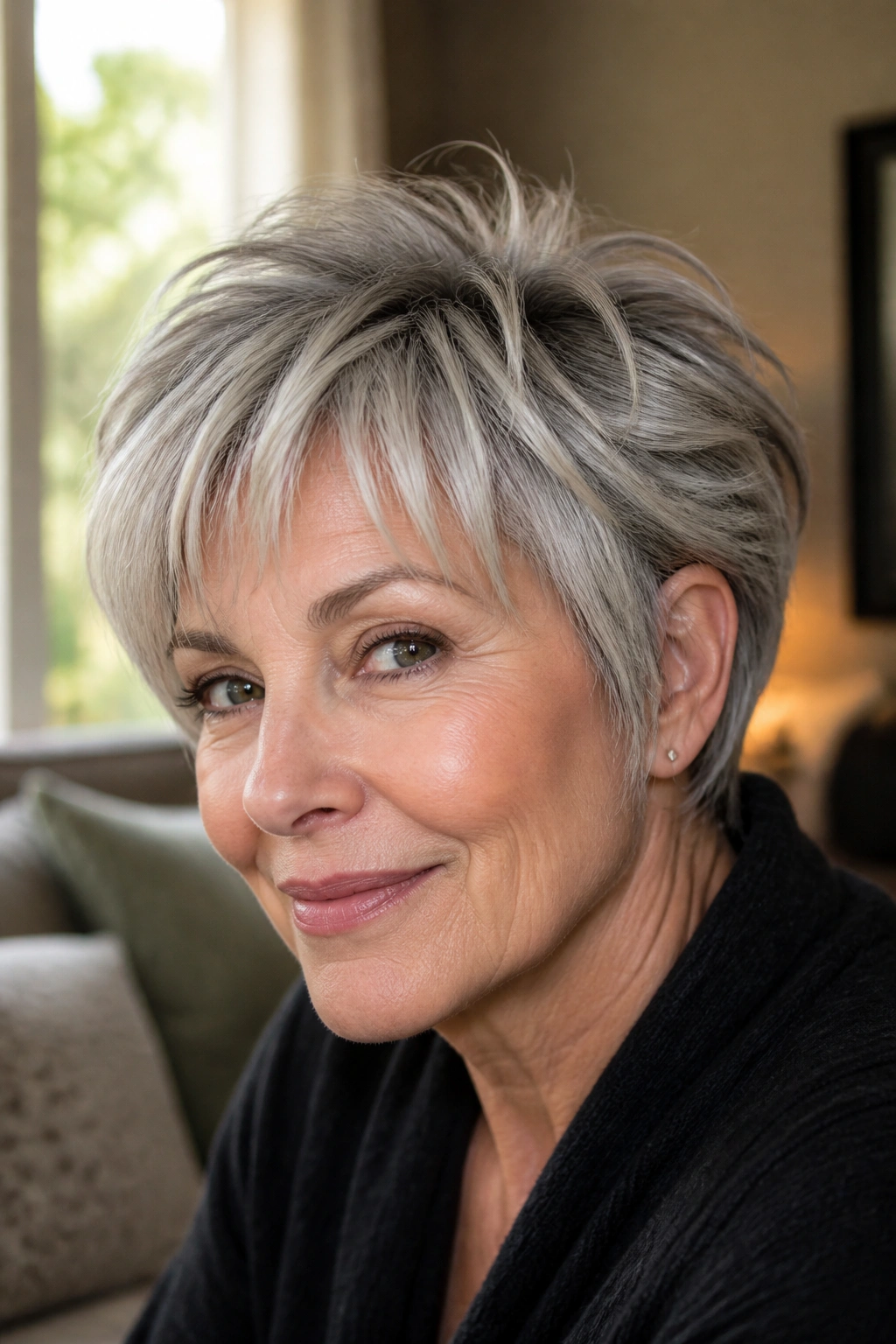
A bixie is what happens when a bob and a pixie stop arguing and meet in the middle. It keeps more length than a pixie but less weight than a bob, which is why it grows out so well.
Piecey bangs are the detail that makes this cut feel modern. They break up the forehead line without building a heavy fringe that demands daily trimming. On gray hair, those small separated pieces look lively because the silver tones catch the light differently along each strand.
This is a good choice if you like short hair but still want something soft around the face. It can be tucked behind the ear, pushed forward, or styled with a little bend at the ends. The best bixies keep movement through the sides and a touch of fullness at the crown. Too much layering can make the shape flutter away.
A little styling cream and a round brush can shape it in minutes. Or don’t. Air-dried bixies often look better than overdone ones. That is one of the few haircut styles where a slightly messy finish helps.
18. Swept-Back Pompadour Pixie

If your hair tends to lie flat, this is the cut that gives it a backbone. A swept-back pompadour pixie uses height at the front and crown to create a strong shape that works especially well on silver hair with fine strands.
The sides stay short so the top can rise without looking puffy all over. That balance keeps the style from turning into a helmet. The front gets lifted with mousse, blow-dried upward, and then pushed back with fingers or a small brush. A little shine is good here. Too much gloss can look greasy, while a matte finish can look dusty on gray hair. Middle ground wins.
This cut has a dressier feel than a plain pixie. It can look sharp with earrings, collars, or a bold lip, but it still works on an ordinary day if you keep the top loose. If you have a low forehead, ask for less height. If your face is long, don’t build the front too high or it will stretch the shape.
One good detail changes everything: keep the front soft, not stiff. That makes the whole cut easier to wear.
19. Neck-Length Layered Bob with Soft Ends

A neck-length layered bob is the cut for someone who wants short hair without going all the way to a crop. It still feels light, but you can tuck pieces behind the ear, clip the sides back, or let the front fall around the jaw.
The soft ends are what keep this style from reading heavy. Gray hair can get dry at the tips, so a blunt edge often looks harsher than expected. A little layering through the bottom keeps movement alive, especially if your hair has a mild wave. This is a forgiving length too. If a trim runs a little shorter than expected, it still looks intentional.
I like it as a bridge cut. It gives you the feel of short hair while leaving enough length for easy styling days. That matters if you are growing out a pixie or deciding whether you’re ready for one. You can also wear it with a center part or a deep side part, depending on what flatters your face more.
It’s a practical shape, but it never has to look plain.
20. Tousled Crop with Long Fringe
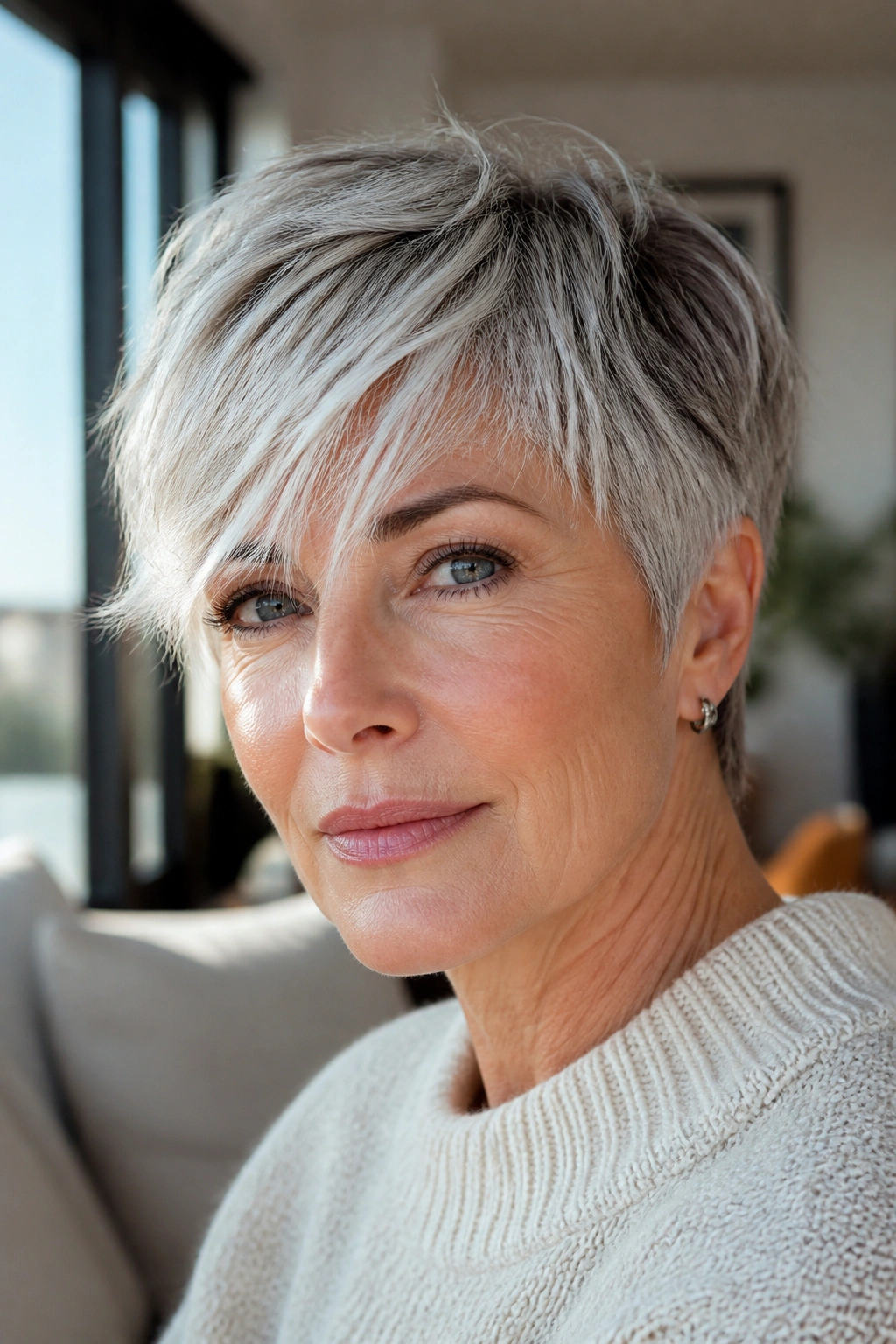
If you can’t decide between a pixie and a bob, start here. A tousled crop with a long fringe gives you the ease of short hair and enough front length to soften the face.
The long fringe is the anchor. It can sweep across the forehead, fall diagonally, or be pushed back when you want more openness. The rest of the crop stays short and textured, so the style feels light rather than heavy. Gray hair makes this cut especially good because the texture reads clearly in the silver strands. You can actually see the movement.
This style works well on straight, wavy, or slightly curly hair, which is why so many women end up liking it more than they expected. It’s also friendly to grow-out. A fringe like this doesn’t go awkward all at once. It just gets a little longer and a little looser.
- Best if you want softness around the face.
- Best if you like to finger-style instead of fuss with brushes.
- Best if your hair has some natural bend.
- Best if you want a cut that can look neat or relaxed depending on the day.
A tiny amount of texture cream and a quick shake of the fingers is usually enough. That’s the appeal. Simple, not boring.
Final Thoughts

Short gray hair works best when the cut matches the texture instead of pretending the texture will behave. That is the real difference between a haircut that feels flattering and one that needs constant fixing.
If you want softness, the pixie bob, bixie, or layered crop usually gives it. If you want structure, the blunt bob, micro bob, or stacked shape is the stronger bet. And if your hair has a mind of its own, the shag and the tapered curl cuts are often the most forgiving.
Bring photos, yes, but bring a little honesty too. Tell the stylist where your hair sticks out, where it falls flat, and which part of your routine you refuse to repeat every morning. A good short gray haircut should make your day easier, not busier.
