



Caramel highlights have a useful trick that a lot of brighter colors miss: they can warm up the hair without stealing the show. On brunette bases, they read like sunlight after a long day outside. On black hair, they soften the edge. On blondes who want depth back, they stop the color from going flat and chalky.
The placement matters more than the shade name on the bowl. A caramel ribbon sitting around the face does one thing. The same tone painted through the ends does something else entirely. And if the colorist mixes in a little beige, honey, or toasted brown, the whole head shifts from obvious streaks to movement you notice when the hair swings.
That’s why caramel highlights are so easy to love and so easy to get wrong. Too wide, and they look stripey. Too light, and they tip into blonde. Too red, and suddenly you’re in copper territory whether you meant to be or not. The sweet spot is warm, soft, and believable — the kind of color that makes hair look cared for without looking overly done.
1. Soft Face-Framing Caramel Ribbons
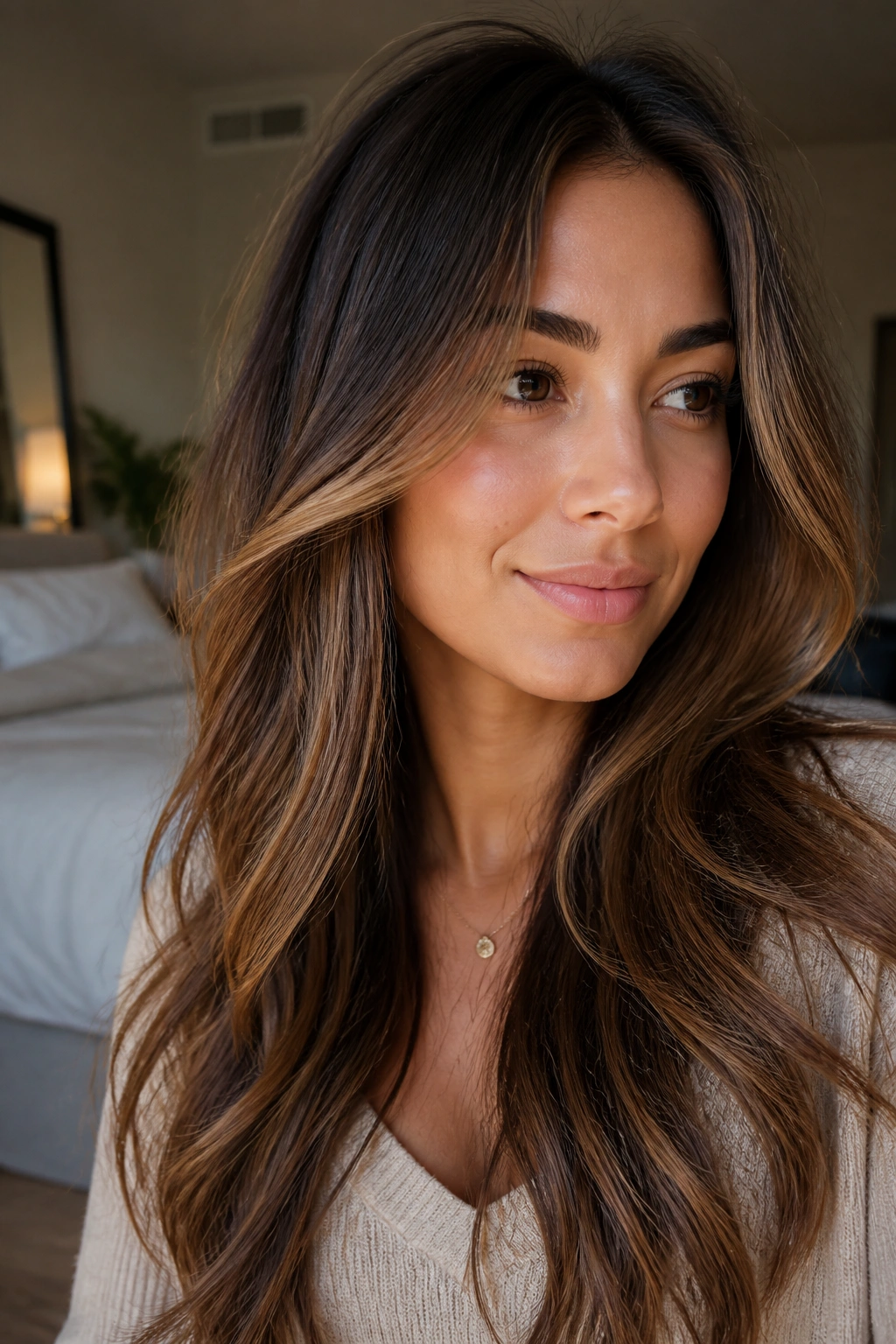
A few thin caramel ribbons around the face can change the whole mood of a haircut. I like this look on long layers and collarbone-length cuts because it brightens the cheekbones without forcing you into a full head of light pieces.
Why It Works
The key is restraint. Keep the brightest strands about 1/4 to 1/2 inch wide, and let them start near the cheekbone instead of right at the root. That keeps the color soft and stops it from reading like a stripe.
A gloss in a level 7 or 8 caramel tone makes the whole thing look smoother, especially if your base is dark brown. If your hair is already warm, ask for a slightly beige caramel so it doesn’t drift too orange.
- Best for layered cuts
- Works on middle parts and side parts
- Grows out cleanly
- Looks good with loose bends or a round-brush blowout
Pro tip: keep the front pieces a touch brighter than the rest of the head. That little contrast is what makes the face frame pop.
2. Soft Balayage Through Dark Brown Waves
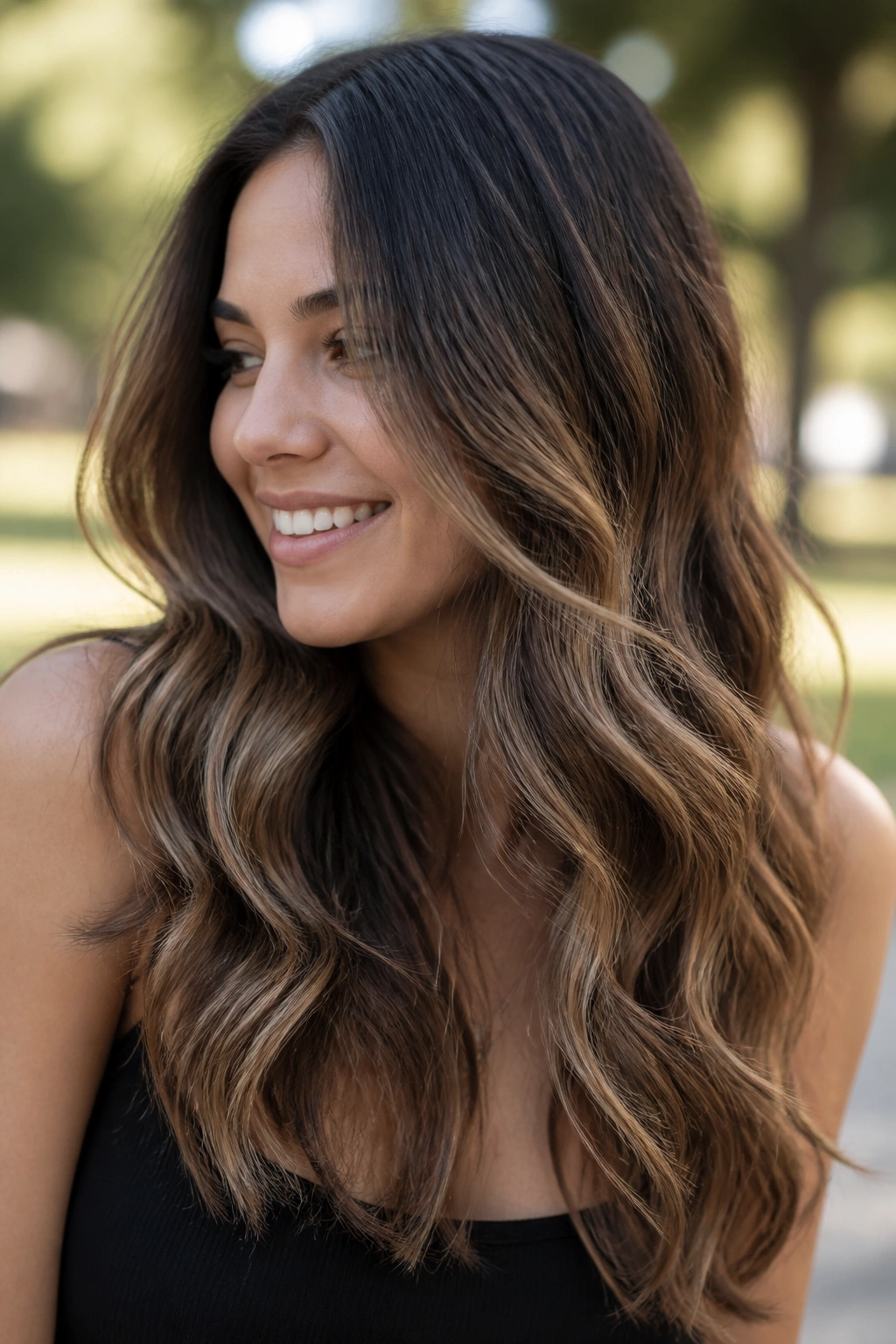
This is the caramel look I recommend to people who want movement, not stripes. The color is painted by hand through the mid-lengths and ends, so dark brown roots stay in place and the lighter pieces show up only when the waves shift.
The nice part is how forgiving it is. If your hair is cut in long layers, the balayage falls into the shape of the cut instead of sitting on top of it. That keeps the color from looking blocky, which is the part most home screenshots fail to show.
Ask for caramel balayage with a soft root shadow and keep the lightest pieces below the eyebrow line if you want the grow-out to stay low-stress. It’s a smart choice if you air-dry a lot, because the wave pattern does some of the work for you.
3. A Caramel Money Piece That Frames Curtain Bangs

Why does this placement work so fast? Because the eye goes straight to the front of the hair first, and a bright caramel money piece does not waste that space.
With curtain bangs, the front sections can be 1 to 2 shades lighter than the rest of the hair without looking harsh. The trick is to keep the highlight soft at the root and brighter through the bend of the bang, so it opens the face instead of sitting there like a streak.
How to Ask for It
Tell your colorist you want the front pieces to be the most visible part, but not the widest. A caramel tone with a little honey in it tends to flatter the face better than a very gold piece.
- Best on curtain bangs and cheekbone-length layers
- Needs a soft blend at the root
- Looks good with ponytails, too
- Photographing aside, it also looks good when the hair is pulled behind the ears
If you like a little drama but hate all-over upkeep, this is one of the smartest places to spend it.
4. Melted Caramel Ombré on Long Layers
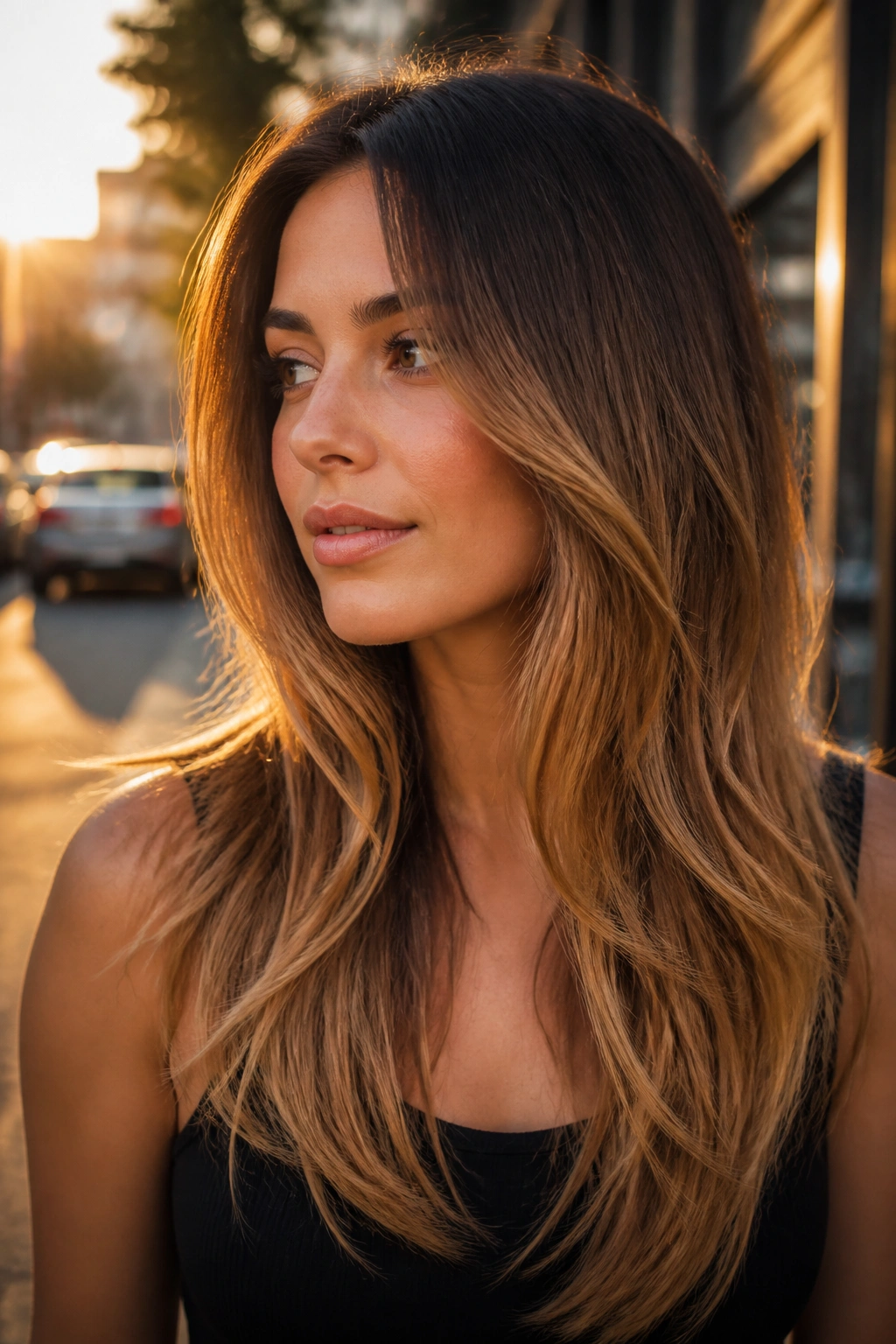
If your hair lives in a ponytail most days, ombré is the least fussy way to wear caramel. The roots stay deeper, the mid-lengths warm up, and the ends melt into a toasted finish that moves nicely on long layers.
What makes this version different is the blend. The transition should feel gradual, almost like the color is fading naturally from brown to soft caramel over several inches. If the shift happens too suddenly, it stops looking expensive and starts looking like two separate colors.
I’d keep the lighter ends around 2 to 3 levels brighter than the root, not 5 or 6. That keeps the look believable. It also helps if the very tips are only slightly lighter than the area above them; that tiny detail makes the color feel lived-in rather than dipped.
5. Ultra-Fine Babylights on Medium Brown Hair

Babylights are tiny, and that’s the whole point. They mimic the delicate lightening you see in hair that has spent time outdoors, so the result is soft instead of streaky.
On medium brown hair, caramel babylights are a nice way to add brightness without changing the whole identity of the cut. The highlights sit close together, usually around the part line and crown, so the hair gains depth when it moves and a little glow when it sits still.
I especially like this look on shoulder-length cuts and long bobs because the small pieces prevent the shape from looking heavy. It’s a quiet choice, but not a boring one.
Best detail to ask for: a micro-foil placement with a warm caramel glaze after lifting. That keeps the pieces fine and the tone creamy instead of brassy.
6. Chunky Caramel Panels with Retro Volume

Chunky highlights have a reputation problem, and I think that’s a little unfair. When they’re placed well, they give the hair a bold, glossy look that feels intentional rather than accidental.
This version works best with big blowouts, round brushes, and layered cuts that can handle contrast. The caramel pieces should be wider than babylights — think visible panels, not thin threads — but they still need softness around the root so they don’t look like zebra stripes.
What Makes It Different
The style leans into contrast. A deep brunette base with brighter caramel sections creates that old-school, face-brightening effect people used to chase with foil caps, only cleaner and more modern now.
- Best on medium to thick hair
- Needs a smooth blowout or large waves
- Looks strongest on shoulder-length or longer cuts
- Works well if you want your color to show from across the room
If you like polished hair with a little attitude, this is the one that brings it.
7. Caramel Highlights on Curly Hair
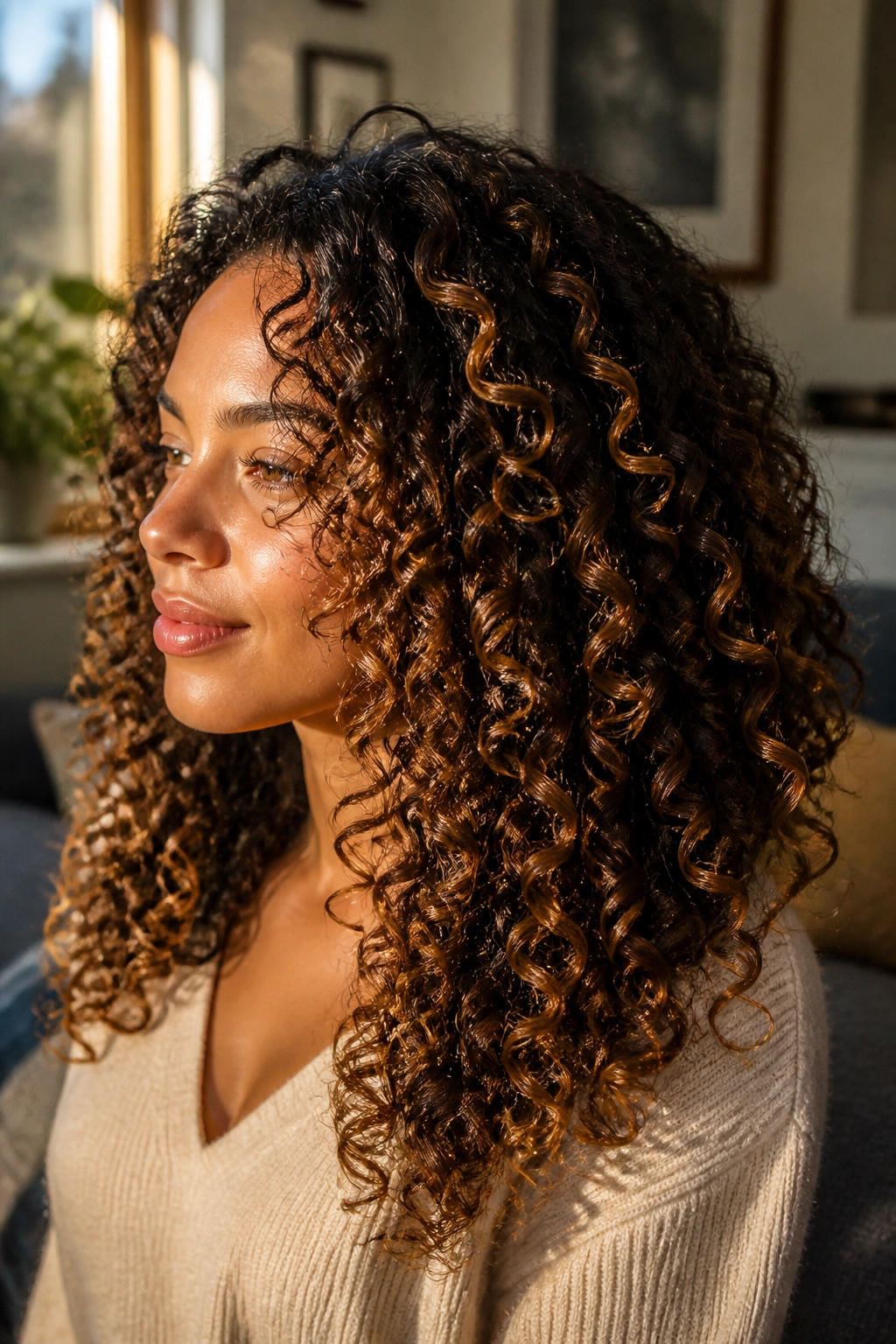
Curly hair does not need highlights sprayed everywhere. It needs placement that respects the curl pattern, or the color can get messy fast.
The best caramel highlights on curls sit on the outer curve of each ringlet and along the top layer where the light would naturally hit. That gives you definition without flattening the shape. When the curls spring up, the lighter pieces move with them instead of breaking the pattern.
A warm caramel tone keeps curls looking soft and shiny. I’d avoid anything too pale here, because curls already create visual texture and a harsh blonde piece can look chopped up. Keep the color slightly deeper at the root and let the lighter sections live through the mids and ends.
This one is especially good on coils and looser spirals that need help showing their shape.
8. Honey-Caramel Over Black Hair with Strategic Lift

Black hair can wear caramel beautifully, but it needs patience. You usually have to lift it a few levels first, and rushing that process is how you end up with orange pieces that look louder than planned.
The smartest version is a honey-caramel shade that sits warm but not neon. It should look rich, almost syrupy, with enough depth to stay flattering against the dark base. A few brighter strands around the face are enough; you do not need the whole head light to get the effect.
How to Keep It Soft
Ask for pieces that are concentrated around the top layers and front sections. That keeps the contrast where it matters and leaves the rest of the hair looking glossy and dark.
- Best with protective heat styling
- Needs color-safe shampoo
- Usually looks better with a glaze after lightening
- Works well if you want warmth without blonde
If the goal is glow rather than drama, this is a strong direction.
9. Toasted Caramel on a Shoulder-Length Lob
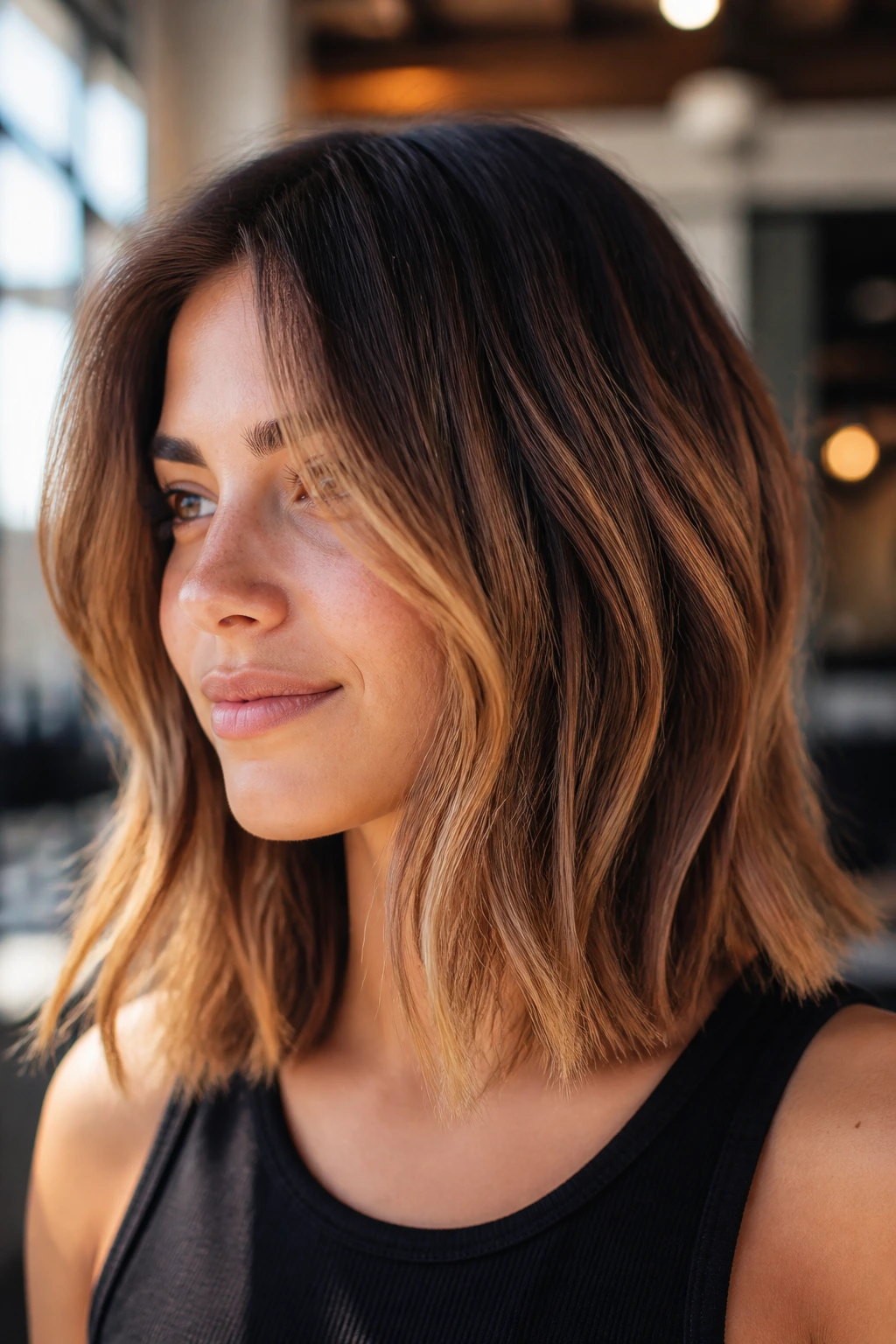
A lob is one of the easiest cuts to pair with caramel because it gives the color enough surface to move around. Toasted caramel, in particular, makes a shoulder-length cut look fuller at the ends without making it heavy.
The tone I like here sits between warm brown and soft gold. Not yellow. Not copper. More like sugar that has just started to brown. Painted through the mid-lengths and ends, it gives the hair a sunlit edge that works with both straight and wavy styling.
This style is especially good if your hair is fine and tends to collapse at the bottom. The lighter ends create the illusion of more texture, which helps a blunt lob look less severe.
If you wear it sleek, the pieces should be a little narrower. If you wear it wavy, the lighter ends can be a touch chunkier.
10. Cinnamon-Caramel on a Chestnut Base

Chestnut hair and caramel highlights have a nice conversation going on already, so the job here is not to overwhelm it. Cinnamon-caramel adds warmth that feels earthy and glossy, not blonde and bright.
The best version keeps the base rich and the lighter pieces woven in a way that follows the haircut. I like this look on layered brunettes because the cinnamon tone can sit in the bends of the hair and make the layers look more separated. It is subtle at first glance, then much more interesting once the light shifts.
What matters most is the undertone. Ask for a caramel that leans a little spicy, not orange. If your skin runs warm, this can be a flattering match. If your skin is cooler, keep the cinnamon muted and let the brown do more of the work.
11. Ribbon Highlights on Sleek Straight Hair

Straight hair exposes everything. That means the highlight pattern has to be cleaner, or every mistake shows.
Ribbon highlights solve that by creating longer, flowing pieces of caramel that travel through the hair in visible lines. The key is to vary the spacing. If every ribbon sits in the same place, the hair starts to look patterned. If the colorist places them at different depths, the whole style looks polished and expensive.
I like this on medium to long straight hair because the finish lets the color read clearly. A few ribbons around the face, some through the midsection, and a softer concentration toward the ends is enough.
Best setup: ask for ribbons no wider than 1/2 inch and keep the root area soft so the hair still looks natural when it’s pulled back.
12. Warm Caramel on a Layered Shag

A shag haircut likes movement, and caramel highlights make that movement easier to see. Warm pieces placed through the ends and around the fringe give the cut a little extra bite without making it look too styled.
This is one of my favorite places to use a slightly messy highlight pattern. The shag already has irregular layers, so the caramel can follow the shape instead of fighting it. Put a few brighter pieces near the face, soften the rest through the crown, and leave some darker zones in between. That contrast helps the layers separate.
The result is a lived-in look that feels casual but not lazy. If you air-dry a shag, the lighter strands will tend to land on the surface and make the texture easier to read. If you blow-dry it, the color looks sharper.
13. Caramel Peekaboo Pieces Under Top Layers

Peekaboo highlights are for people who like a little surprise. The caramel lives under the top layer, so the color appears when the hair swings, moves, or gets tucked behind the ears.
This is a clever choice if your workplace or lifestyle calls for something that can hide quickly. The visible top layer stays darker, while the underlayers hold the warmth. It gives the hair depth without committing to a full bright look all the time.
Why It Feels Different
The placement creates contrast from underneath instead of from the surface. That means the highlights can be a shade brighter than usual and still feel discreet.
- Good for medium and long hair
- Works well with updos and half-up styles
- Easy to grow out without a sharp line
- Can be adjusted from subtle to bold
If you want caramel but do not want everyone to notice it at first glance, this is a smart compromise.
14. Sunlit Caramel Around a Blunt Bob

A blunt bob can look heavy if the color is too flat. A few sunlit caramel pieces around the outer layer change that fast.
The trick is to keep the highlight placement light and clean. You do not need lots of foils here. Two or three well-placed zones around the front and top can create the illusion of more shape, especially if the ends are cut straight. The bob gets a little lift, and the color helps break up the line of the cut.
I like this look best when the caramel is slightly golden but not brassy. It should brighten the bob, not compete with the shape. If the hair is worn tucked behind the ears a lot, keep the front pieces a little lighter so the color still shows.
15. Rooted Caramel Melt for Low-Maintenance Grow-Out

If you hate salon upkeep, this is the caramel idea to keep on your radar. A rooted melt lets the darker base stay close to natural while the caramel grows out softly from the mids and ends.
That root shadow is the reason it lasts. There is no hard line to chase every few weeks, and the grow-out just blends back into the cut. The look works especially well if your natural color sits in the medium brown to dark brown range, because the contrast stays soft from the start.
How to Get the Most From It
Ask for a root area that stays about 1/2 to 1 inch deeper than the highlight zone. That gives the hair dimension and buys you time between appointments.
This is one of those styles that looks even better after the first wash, once the gloss settles in and the pieces stop feeling freshly done.
16. Beige-Caramel on Cool Brunettes

Not every caramel highlight has to run super warm. Beige-caramel gives cool brunettes a softer answer, especially if golden pieces tend to pull too orange on them.
The color still lives in the caramel family, but it leans neutral, almost sandy. That makes it easier to wear if your skin tone is cooler or if you like your brown hair to stay understated. The result is less syrup, more cream.
I’d keep the placement airy and concentrated around the crown and front layers. Too much beige can flatten the hair if it’s applied all over, so a few lighter ribbons are enough. If the colorist adds a soft gloss afterward, the brown base stays rich and the lighter pieces just whisper through it.
This is a good one for people who want lightness without warmth fighting the rest of their look.
17. Golden Caramel on Thick Hair

Thick hair can handle more color than fine hair, and golden caramel shows that off nicely. The richness of the base helps prevent the highlights from looking sparse, while the gold tone gives the ends a glossy finish.
The best version uses staggered placement. You want the highlight pieces to fall at different depths so the hair does not puff out visually. Thick hair already has volume; the color should shape that volume, not bulk it up further.
A few brighter streaks near the front and under the top layer work especially well. They keep the hair from looking one-note when it’s worn down. If you blow it out smooth, the gold reads polished. If you wear it wavy, the pieces separate and give the style some motion.
This is the kind of caramel that looks rich in daylight and even better in a warm room.
18. Caramel Glaze on Soft Waves
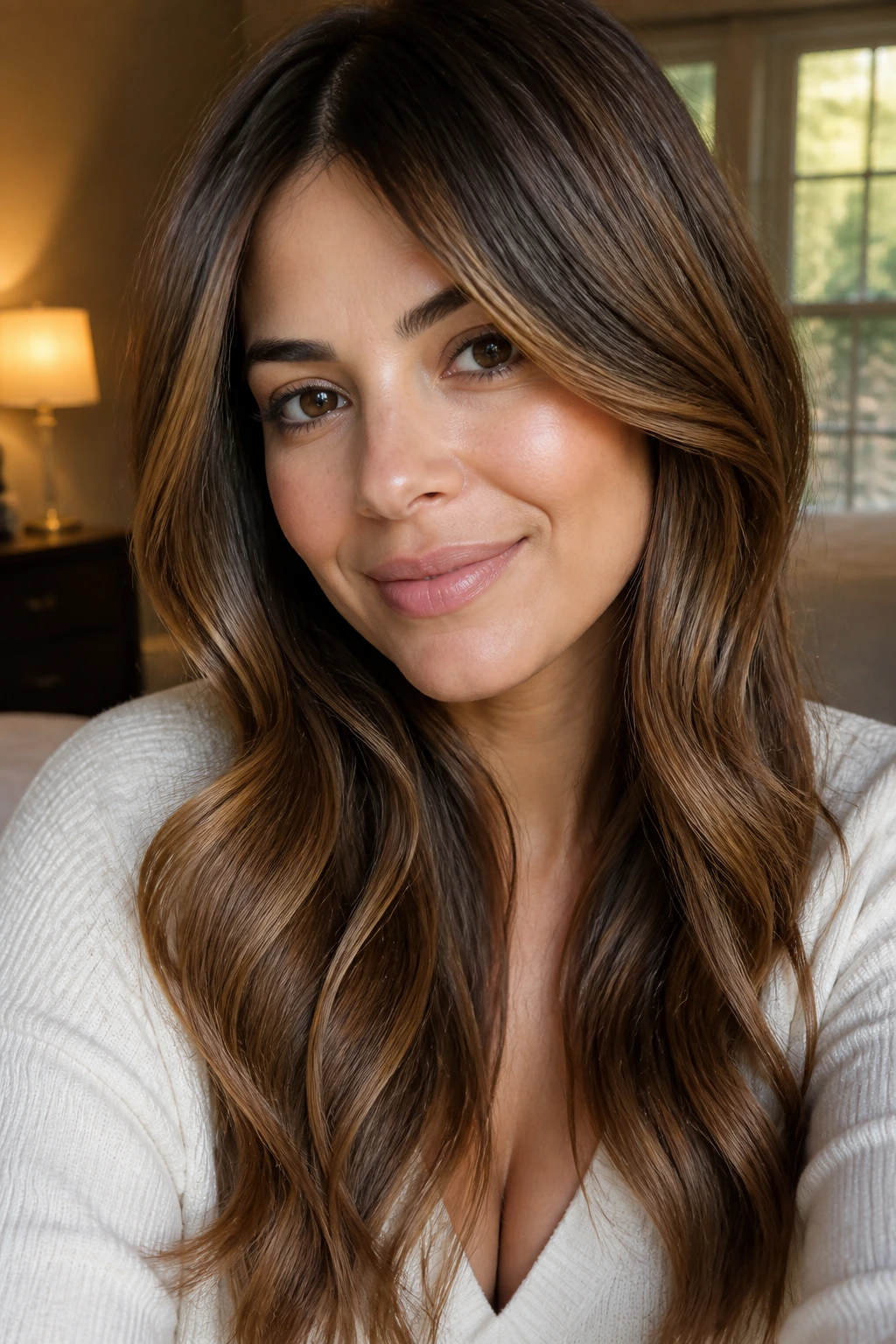
Sometimes the best caramel idea is not even a big highlight job. A caramel glaze can warm the whole head enough that the waves look fuller and more polished without obvious streaking.
This is a good move if your current color is close to where you want it already. The glaze sits on top of the hair and tweaks the tone toward toasted brown, honey, or soft amber. On soft waves, that tint catches in the bends and makes the texture read more clearly.
What Makes It Different
Because the color change is subtle, the haircut has to carry some of the interest. Waves, layers, or curtain bangs help the glaze show its work.
- Best for people who want shine first
- Good between larger highlight appointments
- Adds warmth without a dramatic lift
- Works on medium brown to light brown bases
If you want low drama and a healthy-looking finish, this is one of the easiest places to start.
19. Bronze-Caramel with a Hint of Copper

Bronze-caramel lives in that sweet spot between warm and deeper warm. Add a tiny copper note, and the hair gets a little glow without crossing fully into red.
This is a smart option if standard caramel feels too flat on your base. The bronze depth adds shadow, while the copper lift gives movement in the light. It works especially well on medium brown hair and dark blonde bases that need more richness than brightness.
I like this one on layered cuts and loose waves because the tone change shows up in the bends. It is not the quietest look on this list. It has presence.
If you want to keep it from turning too orange, ask for a bronze caramel with a muted copper glaze rather than a bright copper lift. That keeps the finish glossy and wearable.
20. Caramel Foilayage on Long Hair

Foilayage is a good middle ground when you want the softness of balayage but need more lift than freehand painting alone can give. The colorist paints the strands and then wraps some sections in foil, which helps the caramel come up brighter and more defined.
That makes it a strong choice for long hair, where the color has a lot of room to fade through the length. You can create bands of brightness through the mids and ends without losing the blended feel. Long hair also gives the lighter pieces space to move, which keeps the whole look from feeling heavy.
How to Ask for It
Tell your colorist you want soft, warm caramel with brighter ends and a blurred root. That combination keeps the result dimensional instead of harsh.
- Best for long layers
- Good if your hair needs extra lift
- Works with waves or a smooth blowout
- Easier to place precisely than freehand alone
If balayage sometimes feels too subtle for you, foilayage is the stronger, cleaner answer.
21. Caramel Tips on a Pixie Cut
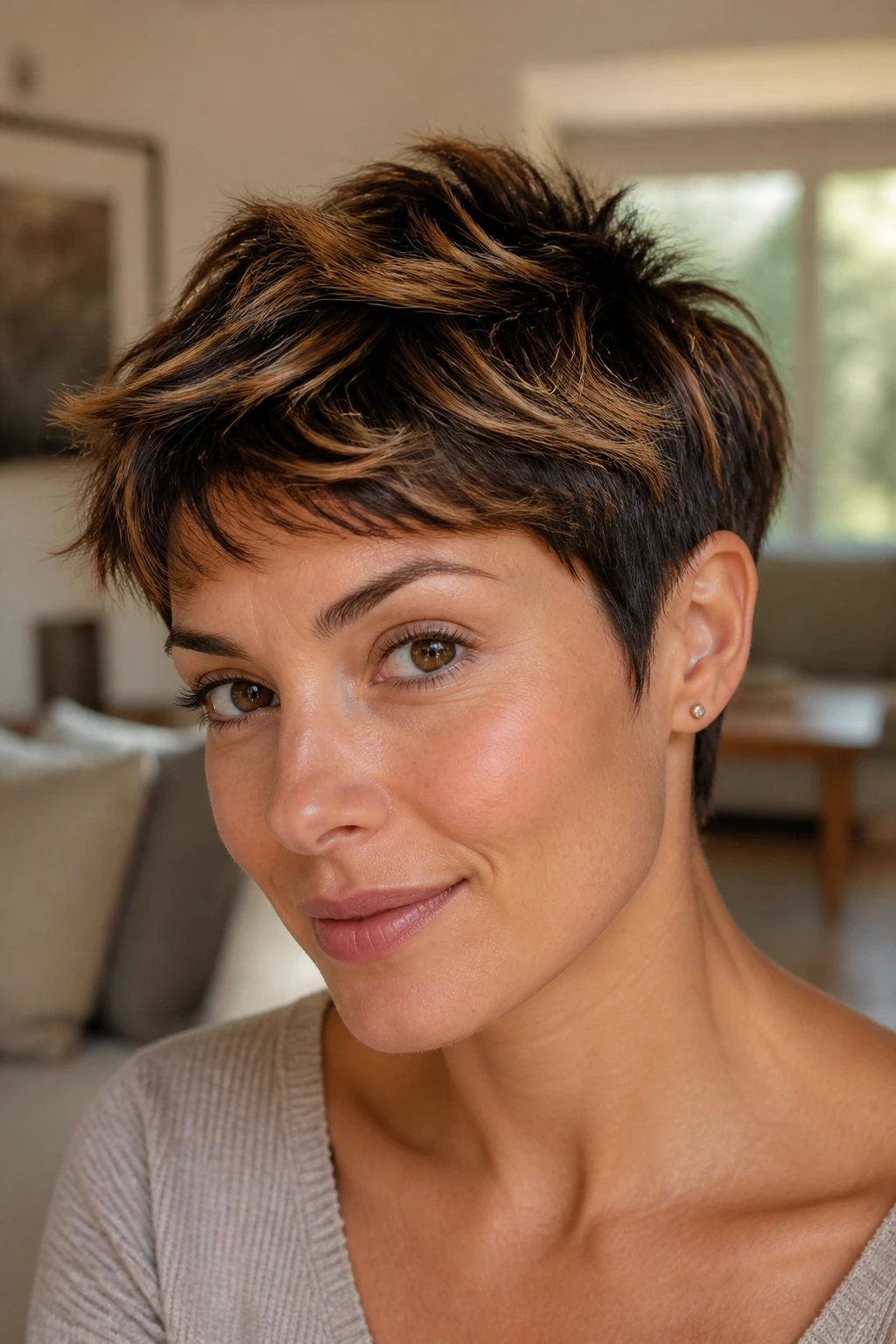
A pixie cut does not have enough length for broad highlight ribbons, and that’s exactly why caramel tips work. The color sits on the texture and makes the short layers look more piecey.
The best version is delicate at the root and brighter only on the ends and outer edges. That gives the crop dimension without turning it into a block of color. On a textured pixie, caramel tips can add movement to the top and help the shape look less uniform.
This style benefits from a slightly warmer tone, since short hair shows contrast quickly. You do not want the ends too pale. A soft caramel keeps the cut playful and grounded at the same time.
If you usually style your pixie with a little paste or cream, the color will separate even more clearly. Short hair loves a small detail.
22. Caramel Sweep on a Textured Lob

A textured lob is one of those cuts that gets better when the color follows the movement of the shape. A caramel sweep does that by laying the highlight in a diagonal direction across the hair instead of scattering it everywhere.
That diagonal feel helps the cut look longer and a little slimmer around the edges. It’s a useful trick if your hair is thick or if you want the lob to feel less boxy. The highlight should be brighter where the hair bends and softer where it sits flat.
I like this look with air-dried waves, because the texture opens up the color in a way straight styling doesn’t. A few pieces around the face are enough to keep the whole thing from reading flat.
It’s subtle, but not forgettable. That’s the charm.
23. Buttery Caramel with a Soft Shadow Root

Buttery caramel is softer than gold and creamier than honey. Add a shadow root, and the whole look gets easier to wear because the contrast at the scalp stays gentle.
This is the version I’d pick for someone who wants brightness but hates obvious grow-out. The darker root keeps the color grounded, while the buttery pieces through the mids and ends make the hair look shiny and full. It works well on medium brown hair, dark blonde, and even lighter brunettes that need more depth.
The best part is how smooth it looks in different lighting. In dim rooms, it stays rich. In daylight, the lighter pieces open up without shouting for attention.
If your hair tends to get brassy, ask for a caramel glaze that leans creamy rather than yellow. That tiny shift matters.
24. Caramel and Brunette Ribboning for Dimension
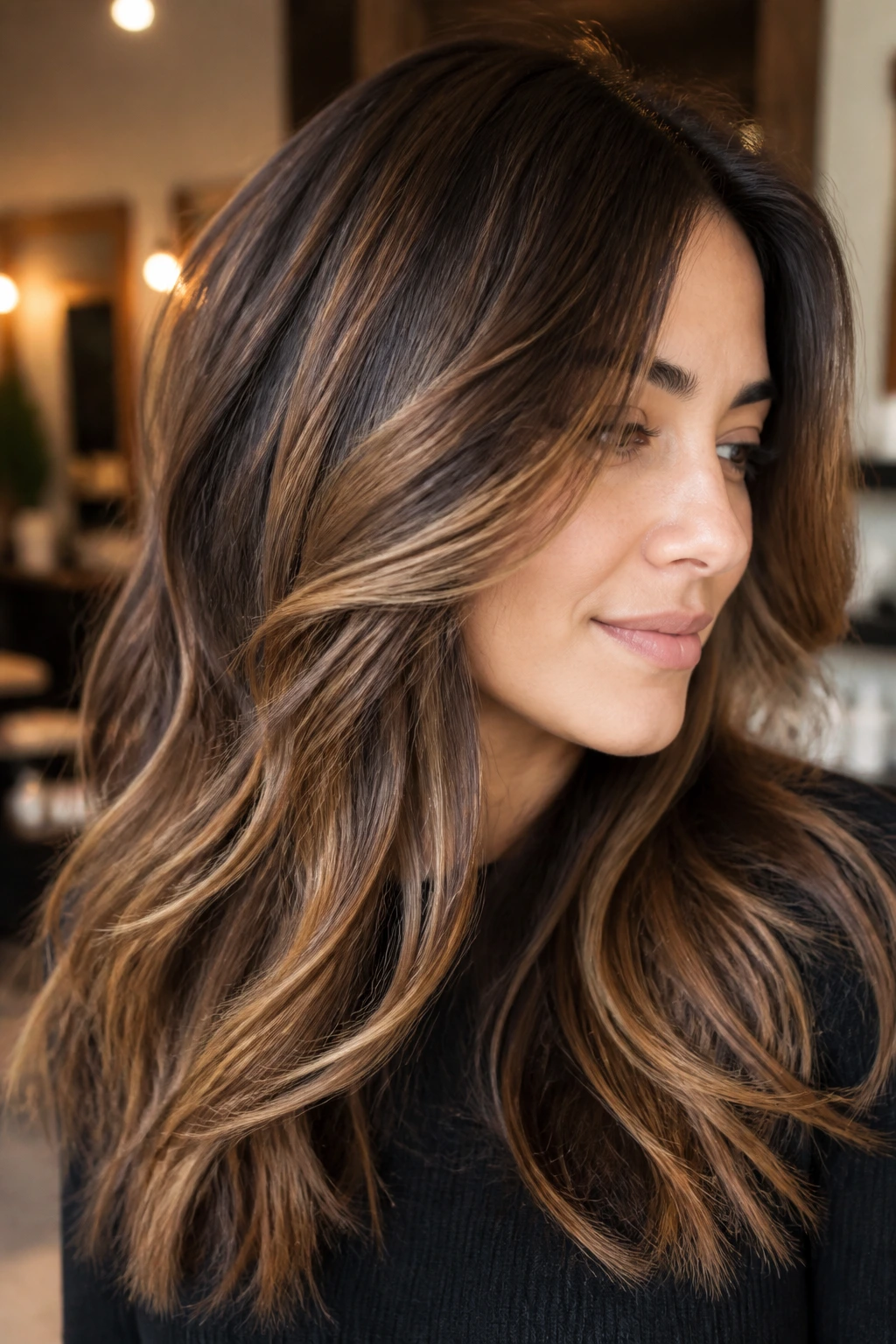
Sometimes the prettiest caramel look is the one that doesn’t try to be a highlight “set” at all. Ribboning mixes caramel strands with brunette sections so the color feels woven through the hair instead of painted on top.
That gives the hair depth from every angle. The brunette base keeps it anchored, and the caramel strands break up the heaviness. This works especially well on layered cuts where the ribbons can fall in different places and create that soft, expensive movement people tend to notice but can’t always name.
Where It Shines
This technique is a strong pick if you want dimension more than brightness. It looks especially good on medium-length cuts and on hair that gets worn both straight and wavy.
- Best when the pieces are irregular, not evenly spaced
- Good for hair that feels flat at the crown
- Makes layers easier to see
- Feels polished without looking overworked
If you want your hair to look richer rather than lighter, this is one of the nicest directions to take.
25. Face-Framing Caramel on Shoulder-Length Curls

Shoulder-length curls need highlights that work with spring, not against it. A face-framing caramel placement does that beautifully because it lights up the front while leaving the body of the curls deep and full.
The brighter pieces should follow the curl pattern down the front sections and stop before they get too wide. Too much light at the front and the shape gets noisy. Just enough, and the curls look awake.
I like a caramel tone with a slightly golden bend here, especially if the curls are dense. The warmth helps the pattern separate in a way that shows off each loop. If you wear your curls diffused and fluffy, the color shows even more.
This is one of those looks that feels soft in person and lively in photos. More important, it gives the haircut a face-brightening lift without stealing its shape.
26. Sunkissed Caramel on Long Straight Hair

Long straight hair can look flat if every section is the same tone. Thin caramel highlights fix that by adding movement across the length without forcing the cut into waves it doesn’t have.
The best placement runs from just below the root through the mid-lengths and ends, with a few brighter strands around the front. Keep the pieces narrow. Straight hair exposes everything, so wide highlights can turn harsh fast. Narrow ones blend into the flow of the hair and look more natural.
A warm caramel with a soft gloss works well here because straight hair reflects light more clearly than textured hair. If the shade is too light, it can start looking streaky. If it’s too dark, you lose the point of the highlights.
The sweet spot is warm, thin, and a little understated. That’s where the hair looks healthy instead of overworked.
27. Chocolate-to-Caramel Balayage on Dark Brown Hair

Chocolate brown roots fading into caramel ends is one of the safest ways to wear contrast if your hair starts out dark. The base stays rich and deep, and the lighter caramel comes in at the lower half where the eye can actually catch it.
The reason this works so well is the color story. Chocolate gives you depth. Caramel gives you shine. Together they create a clean shift that looks softer than blonde and more dimensional than a single-process brown.
Ask for the transition to begin around the mid-lengths, not too close to the scalp. That keeps the grow-out relaxed and helps the ends look airy rather than heavy. A few face-framing strands can tie the whole thing together if you want more brightness near the front.
This is a good one if you like warm hair but still want your dark brown base to do most of the talking.
28. Micro-Highlighted Caramel for Subtle Brightness
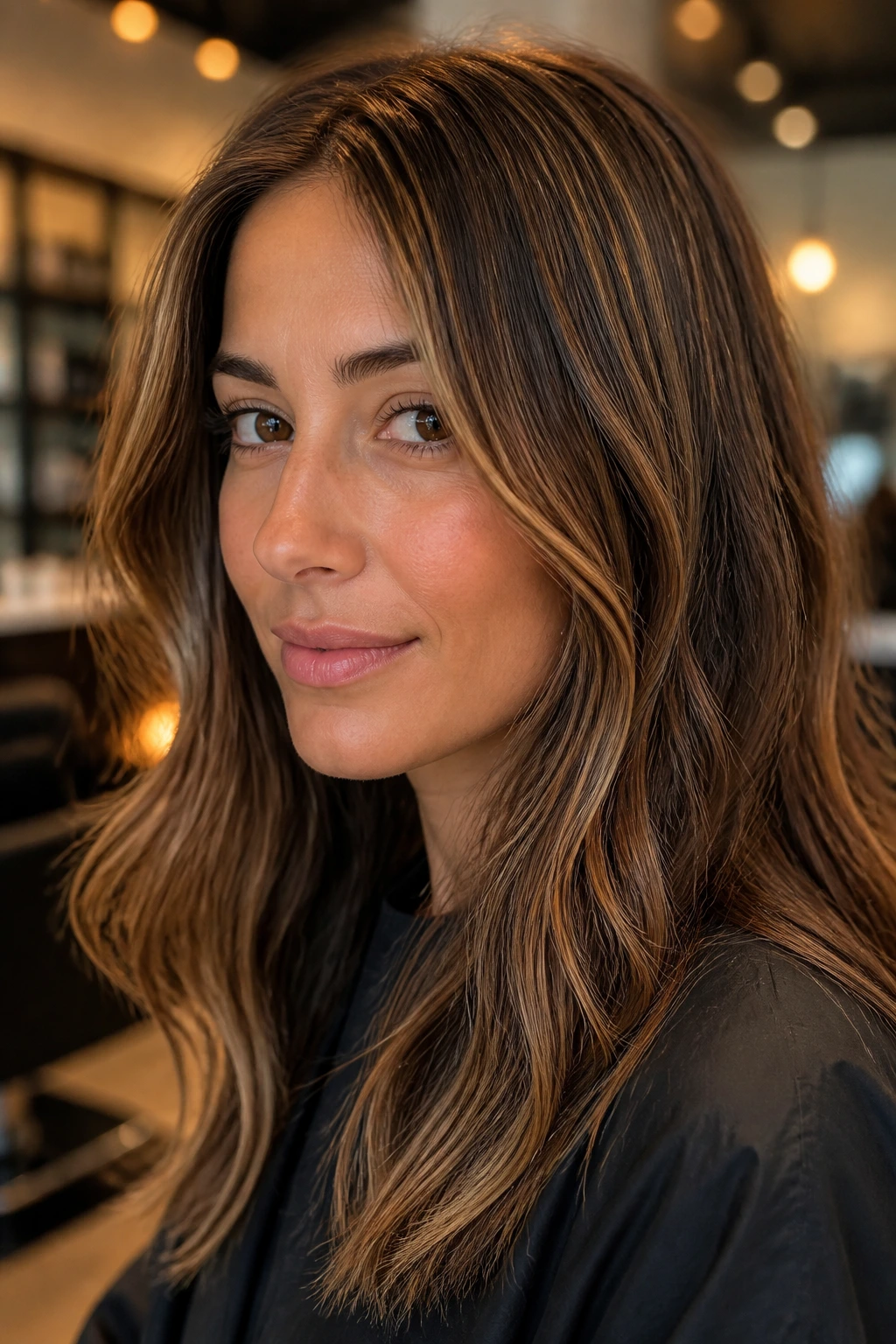
Micro-highlights are tiny, almost threadlike pieces placed close together so the color reads as glow rather than streaks. On caramel tones, that makes the hair look lit from within without changing the overall mood much.
I like this for people who are color shy. The effect is soft enough that coworkers may not notice the change right away, but the hair will look fresher, especially around the crown and hairline. If the strands are woven in a fine pattern, the light catches in little shifts instead of large blocks.
It also grows out well because the contrast is small to begin with. You can refresh it with a gloss and keep the darker base intact. That makes the maintenance easier than a full highlight service.
If your hair is fine, this can add the illusion of thickness. If it’s thick, it keeps the color from feeling heavy.
29. Caramel Accents on Bangs and Fringe Pieces

Bangs are a small area, but they carry a lot of visual weight. A few caramel accents through the fringe can brighten the face fast and give a haircut that polished, slightly undone look people tend to like.
The placement should follow the shape of the bang. On a blunt fringe, a soft caramel veil near the ends keeps the line from feeling severe. On curtain bangs, the lighter pieces can sit a little higher and sweep into the face frame. Either way, the color should look like it belongs to the haircut, not pasted on.
This is also a smart option if you want to test caramel before committing to the full head. Bangs are easy to refresh, and they show the tone right away. If you decide you want more later, the rest of the hair can be built around it.
Small area. Big effect.
30. Dimensional Caramel with a Polished Blowout
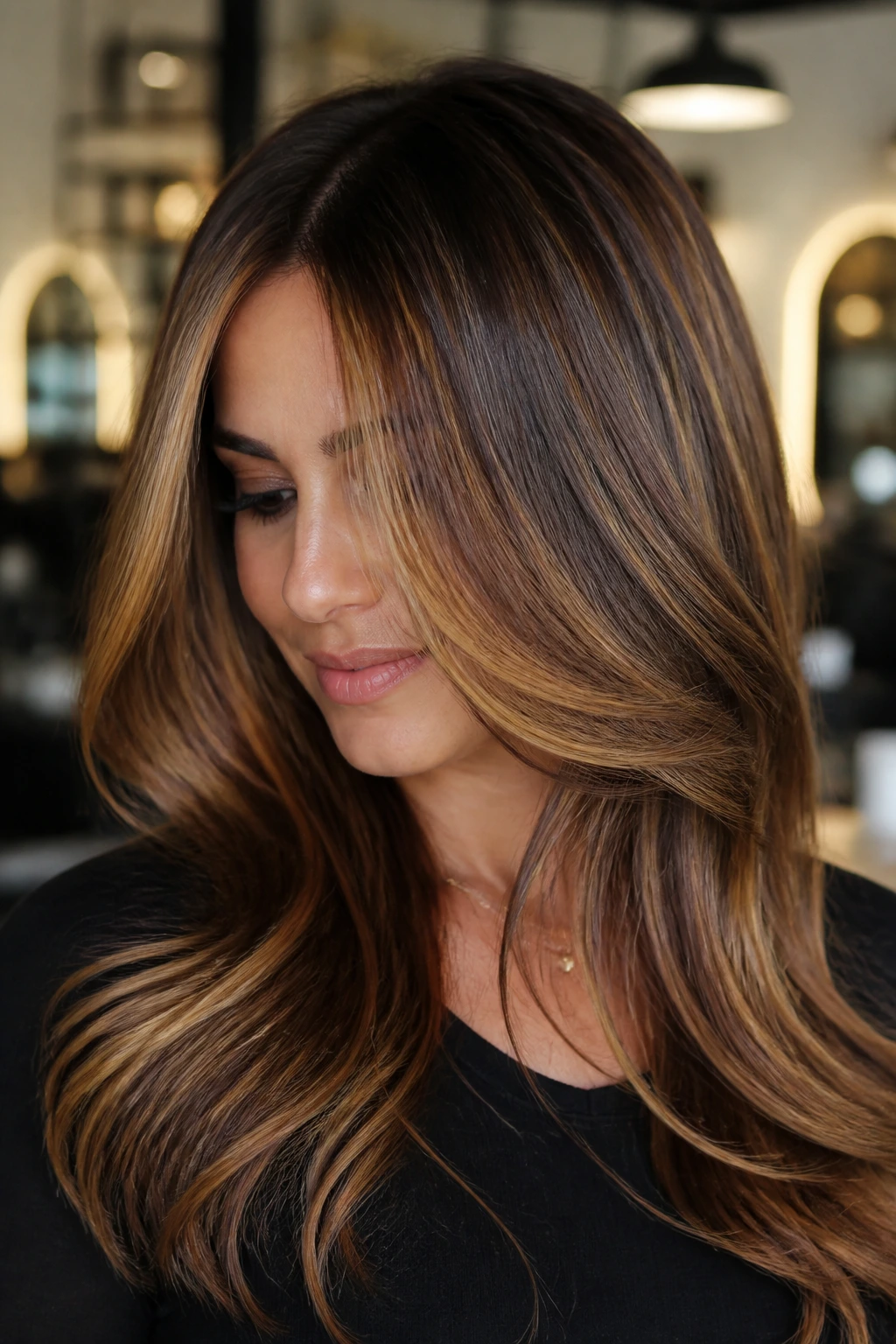
A polished blowout is where caramel highlights often look their richest. The smooth surface lets the darker lowlights and warmer pieces separate just enough to show dimension without needing a dramatic color job.
This style works across a lot of haircuts — long layers, lobs, even thick mid-length cuts — because the blowout lifts the roots and makes the caramel pieces move. The highlights should be placed with depth in mind, meaning some strands sit closer to the surface and some disappear underneath. That layered color effect is what keeps the hair from going flat after styling.
If you want the most versatile version on this list, this is it. It looks good at brunch, at work, and in the sort of low indoor light that usually ruins bright color. Ask for a warm caramel glaze, a soft root, and enough dimension that the hair still looks good even when it’s not freshly styled.
That’s the real test, honestly. If caramel still looks rich when it’s been tossed into a clip, left to air-dry a bit, or pushed behind one ear, you picked the right one.
