



Shoulder length haircuts for women over 40 work because they hit a sweet spot that long hair and short hair both miss. The length gives you enough movement to keep things soft, but not so much weight that the shape droops by lunchtime. And when gray hair starts coming in — whether it’s silver at the temples, a salt-and-pepper streak through the top, or a full transition — shoulder length often makes that change look intentional instead of awkward.
I keep coming back to this length for one simple reason: it behaves well. It can be blunt and polished, layered and airy, flipped under, flipped out, waved, straightened, or left to dry with a bit of natural texture. That flexibility matters when hair gets a little finer, a little drier, or a little more stubborn about holding shape. It also matters when you don’t want a haircut that needs a full production every morning.
The best shoulder-length cuts do more than “look nice.” They solve little problems. Flat crown? Add a side part or soft layers. Thick hair that balloons out? Remove bulk in the right places, not everywhere. Gray hair that looks coarse? Pair it with a clean line or a bend that gives the hair a plan. Those small choices make the difference between a haircut that ages with you and one that fights you.
So let’s get into the cuts that actually earn their keep.
1. The Blunt Collarbone Lob
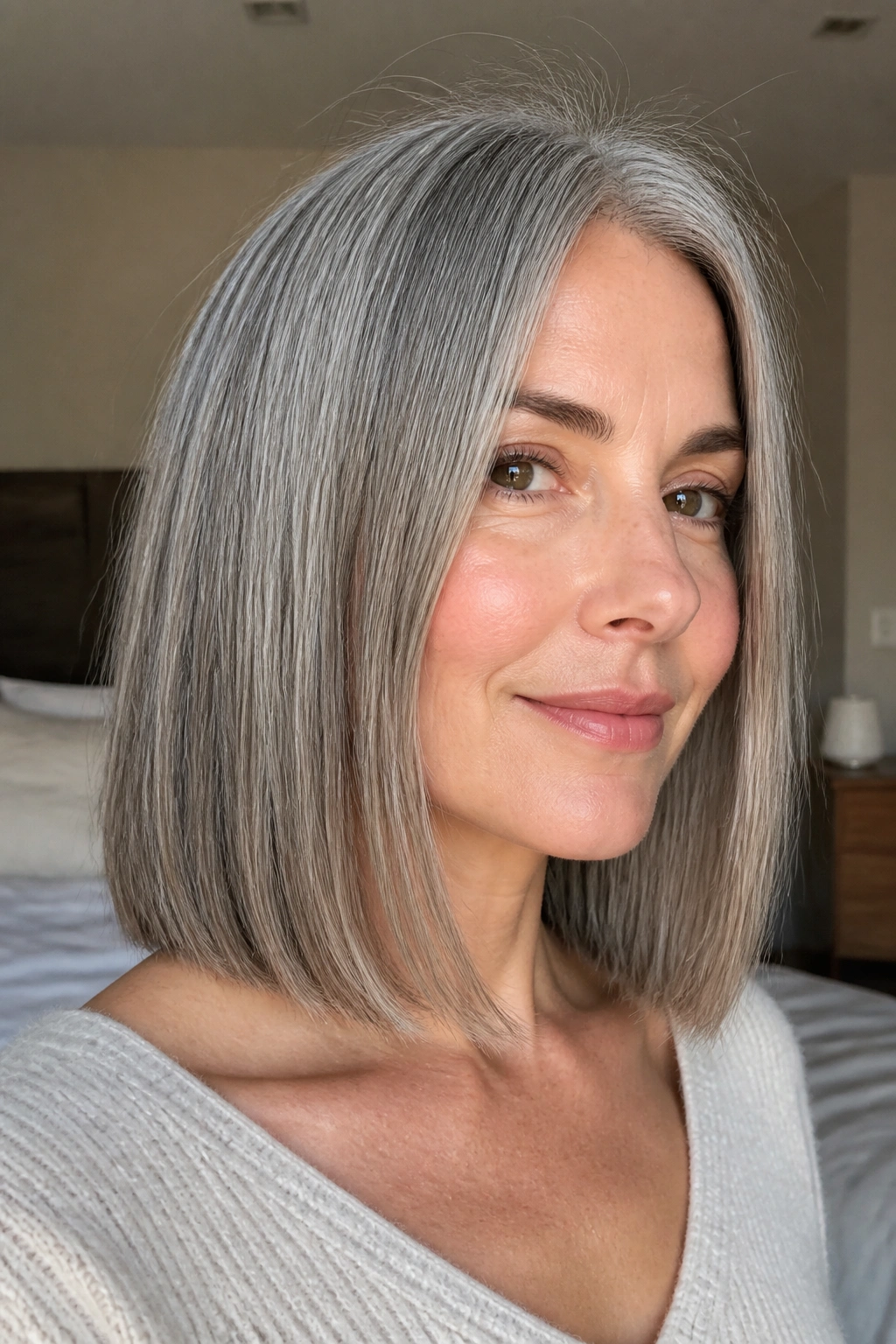
A blunt collarbone lob is one of those cuts that looks expensive without trying too hard. The line sits right around the collarbone, which gives the hair enough length to move but keeps the ends dense and full. If your hair has started to feel a little wispy, this is a smart place to start.
Why It Looks So Good
The blunt edge gives the illusion of thickness. That matters a lot if your hair has changed texture over time, because a clean perimeter makes the whole head of hair look healthier and heavier.
I especially like this shape on gray hair. Silver strands tend to reflect light differently, and a blunt line gives them a crisp frame. There’s no fuss here. No hidden layers. No ends that go sparse.
- Best for fine to medium hair
- Works with straight, slight wave, or a smooth blowout
- Needs a trim about every 8 to 10 weeks
- Looks sharp with a center part or a soft side part
Tip: ask for the line to be cut cleanly, not heavily textured at the bottom. That tiny detail keeps the shape from getting fuzzy too fast.
2. Soft Layers That Move Without Looking Choppy
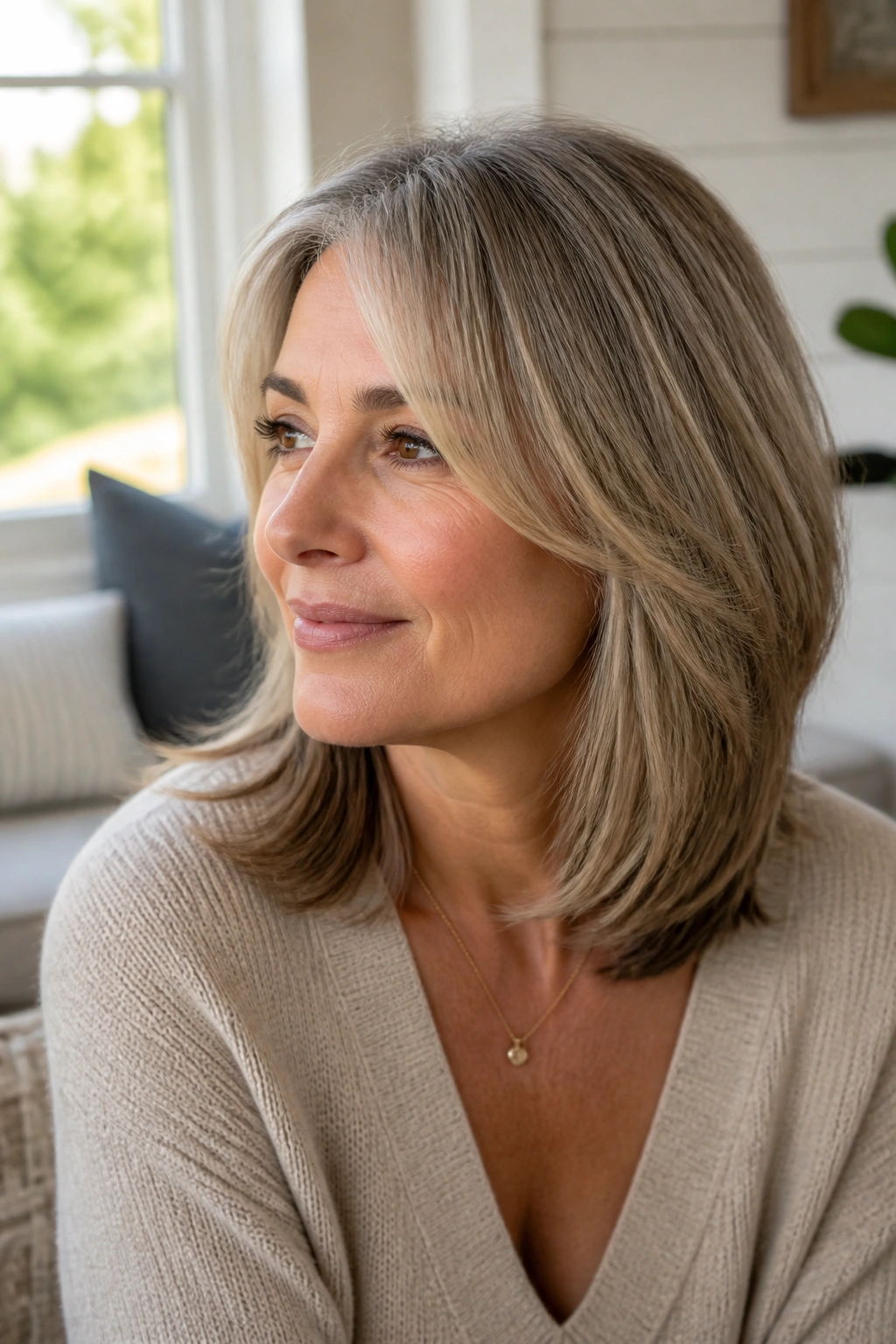
Soft layers are the answer when you want movement but you do not want that obvious “I got layers” look. The best versions start lower, often somewhere around the cheekbone or below the chin, so the top stays full and the ends still have weight.
This cut is especially kind to hair that feels a little limp at the shoulders. The layers break up the bulk just enough to keep the hair from sitting like a sheet. They also make waves easier to bring out without turning the whole style into a shag.
I’d pick this if your hair gets a little triangle-shaped at the bottom. That happens more often than people admit. Soft layers fix it quietly.
3. A Deep Side Part That Lifts the Whole Cut

Why does a deep side part make such a difference? Because it changes the shape before the scissors even do. One side gets height at the crown, the other side falls softly across the face, and suddenly the whole haircut looks more awake.
That little shift is especially useful if your hair has thinned at the part line. A deep side part hides that area, but more important, it gives the top a bit of lift without needing teasing or a mountain of mousse. It also works beautifully with gray streaks, since the sweep of color reads as deliberate.
How to Wear It
A side part is easiest when the cut has a little movement through the mid-lengths. Too blunt and it can feel boxy; too layered and it can lose structure. Pair it with a round brush blowout, or leave the ends a little bendy for a softer finish.
It’s a small change. Still counts. Still helps.
4. Shoulder Length Haircuts for Women Over 40 With Curtain Bangs

Curtain bangs can rescue a shoulder-length cut that feels too plain. They open in the middle, skim the cheekbones, and blend into the rest of the hair instead of sitting there like a hard wall. That makes them one of the easiest ways to soften the face without committing to a full fringe.
I like curtain bangs on women who want shape around the eyes but do not want constant maintenance. They grow out better than blunt bangs, and they play nicely with gray hair because the lighter strands near the front can look almost luminous when the cut has movement.
- Ask for the shortest point to land around eyebrow or cheekbone level
- Keep the sides longer so they blend into the front layers
- Style with a round brush or a large roller for a soft bend
- Avoid cutting them too short if your hair has a strong cowlick
Best move: let the bangs graze the cheekbones first, then decide if you want them shorter later. Once they’re too short, there’s nowhere to hide.
5. Feathered Ends and a Side-Swept Fringe
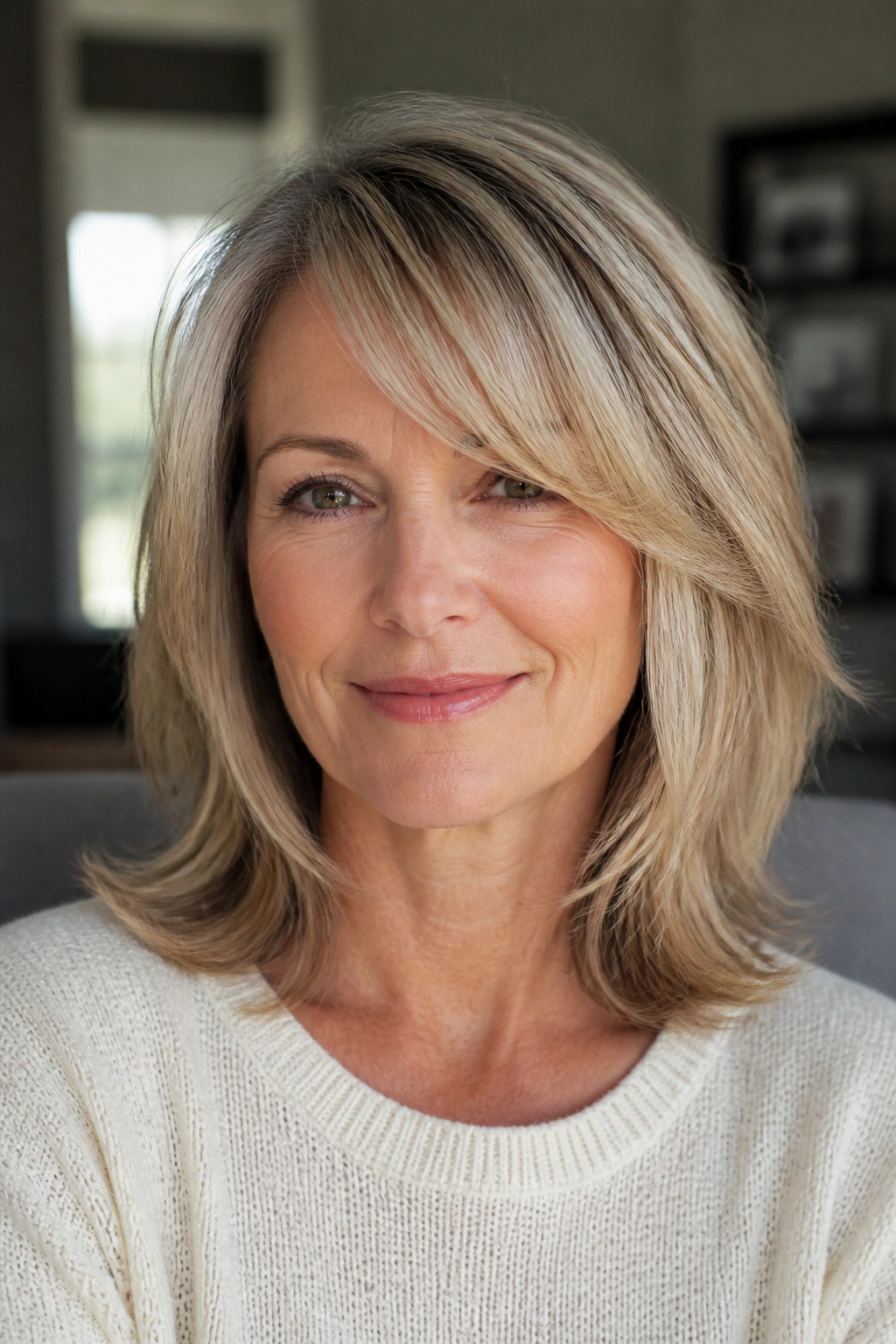
Feathered hair gets a bad reputation because people remember the overdone versions. The modern version is better. It’s softer, lighter, and more controlled, with ends that taper instead of stacking into bulky layers.
This cut is nice for medium to thick hair that feels heavy at shoulder length. Feathering removes some of that weight while keeping the shape airy. The side-swept fringe finishes the job by giving the forehead area a bit of softness without closing off the face.
There’s also a practical side. Feathered ends are easier to blow dry into place, and they tend to move nicely even when you do not have time for a perfect styling session. That matters more than most people think.
6. The Textured Shag for Natural Movement

A shoulder-length shag is for the woman who wants hair with some personality. Not chaos. Personality. The layers are more visible here, the ends are piecey, and the whole cut is built to look good with a little roughness around it.
I like this on wavy hair, especially if the wave pattern gets stronger as the hair shortens. A shag can take what looks unruly in a longer cut and turn it into shape. Gray hair can look especially good here because the texture gives the silver strands something to do.
But this is not the cut for someone who wants a smooth, tidy finish every day. It likes diffuser drying, light styling cream, or a quick scrunch with leave-in conditioner. If you want polished and sleek, skip this one.
7. Face-Framing Layers With a Center Part
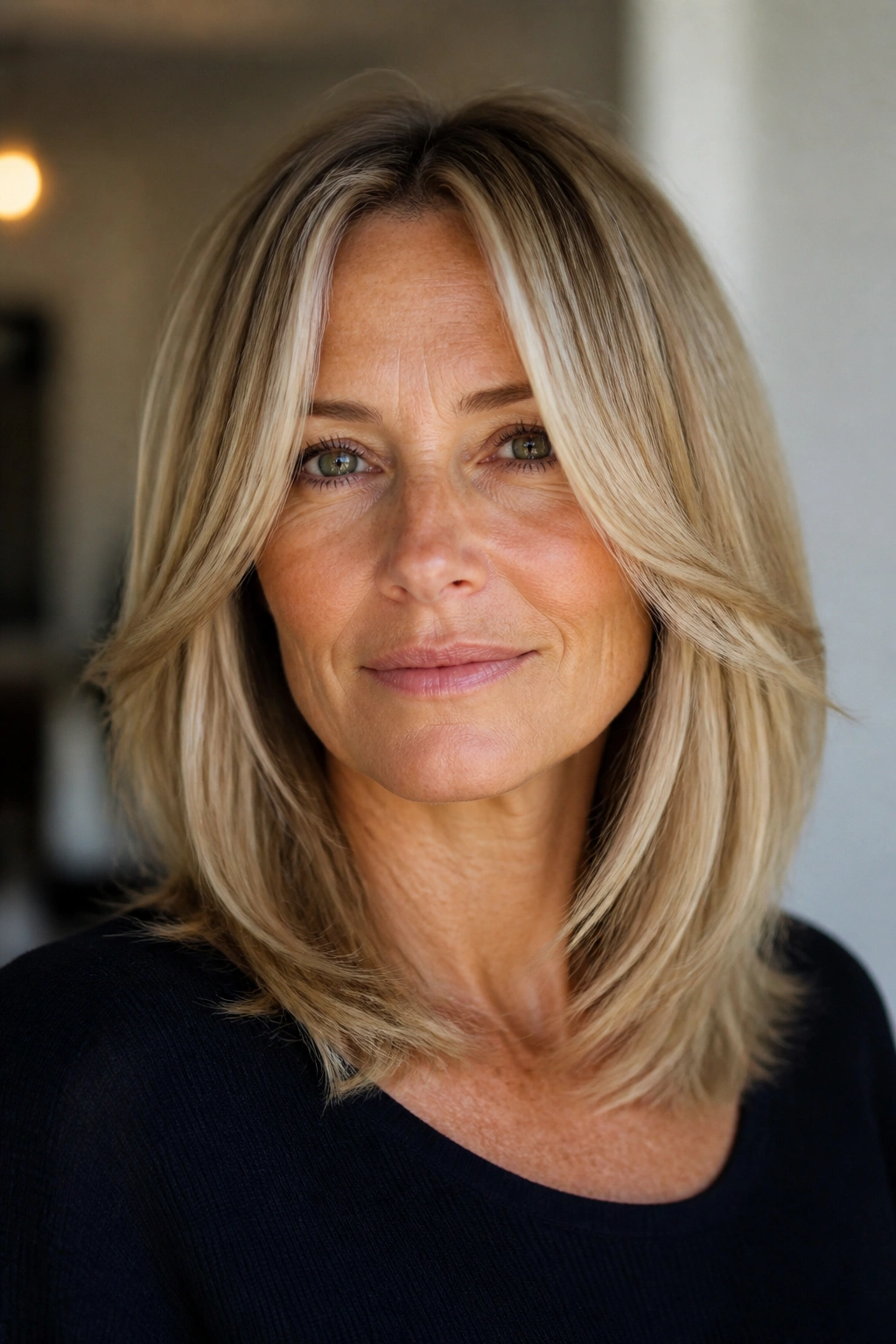
A center part can be unforgiving when the cut around it is wrong. With the right face-framing layers, though, it becomes one of the cleanest, easiest looks on this list. The trick is to start the shortest front pieces low enough that they graze the jaw or cheek, not the middle of the face.
What Makes It Work
The center part creates symmetry. The layers break up that symmetry just enough so the face doesn’t feel boxed in. It’s a nice balance.
This shape works well if you want to keep some length around the shoulders but still need softness near the face. It can make a square jaw feel less heavy, and it can take the edge off a very round face without hiding it. The cut also gives gray strands through the front a chance to stand out in a good way.
If your hair tends to fall flat, ask for a few internal layers through the front half only. That keeps the back from getting wispy.
8. Invisible Layers for a Clean Outer Line

Invisible layers are for people who want movement but hate looking layered. The outside shape stays smooth, often close to blunt, while the shorter pieces live inside the haircut and take some weight out of the middle.
That approach is sneaky in the best way. The hair still swings. It still bends. It just does it without obvious choppiness. If you like a sleek finish and you’re tired of ends that look stringy, invisible layers are worth asking about.
I especially like them on gray hair that grows in with a little coarseness. The outer line keeps the style tidy, and the hidden movement prevents the cut from looking stiff. It’s a quiet haircut. That’s the whole point.
9. The Wavy Beveled Lob

Why does a beveled lob feel softer than a straight blunt cut? Because the ends turn slightly under instead of hanging flat. That tiny inward curve keeps the hair from looking too severe, and on shoulder length hair it gives the shape a gentle finish.
This cut is lovely on naturally wavy hair, but it also works if you blow dry with a round brush or a paddle brush plus a slight bend at the ends. The goal is not a curl. Just a bevel. That little turn makes the hair look deliberate.
If your hair puffs out at the shoulders, a beveled lob can help keep the outline neat. It’s one of those small styling choices that makes a big visual difference, even when the haircut itself is pretty simple.
10. The Sleek One-Length Cut

A one-length shoulder cut is a little blunt, a little sharp, and a lot easier to style than people expect. When the ends are even all the way around, the hair usually looks fuller right away because there’s no tapering to thin things out.
This is the cut I’d choose for anyone who wants to spend less time wrestling with their hair in the morning. A smooth blow-dry, a flat iron pass if needed, and you’re done. It also lets gray hair shine in a clean, polished way instead of getting lost in too many layers.
- Best for straight to slightly wavy hair
- Good choice if the ends feel weak or see-through
- Looks best with a glassy finish or a soft bend
- Needs regular dusting to keep the line crisp
Some people think one-length cuts are boring. I think they’re disciplined. Big difference.
11. The U-Shaped Medium Cut
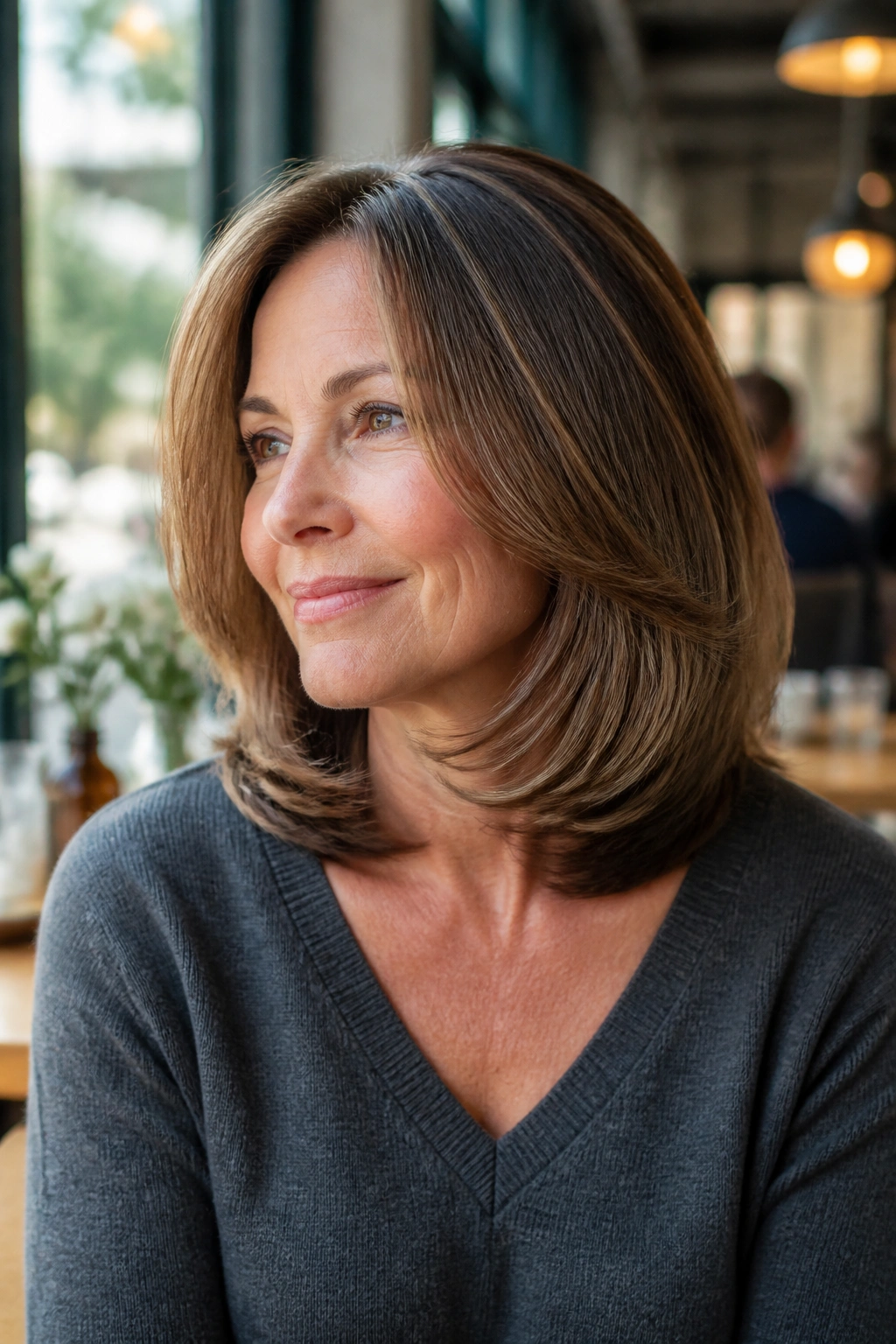
A U-shaped cut keeps a little more length through the center back while the sides curve up toward the front. That subtle shape gives the haircut softness without making it look flat or square.
This one is a quiet favorite of mine for women who want shoulder-length hair that still feels feminine and rounded. The U shape keeps the back from looking blunt in a heavy way, and it helps the front pieces frame the face naturally. It also keeps thicker hair from turning into a broad rectangle.
The cut does not need a ton of layers to work. In fact, too many layers can ruin the clean curve. Ask for a soft U, not a dramatic one. You want the shape to be there when the hair moves, not scream from across the room.
12. The Angled Lob
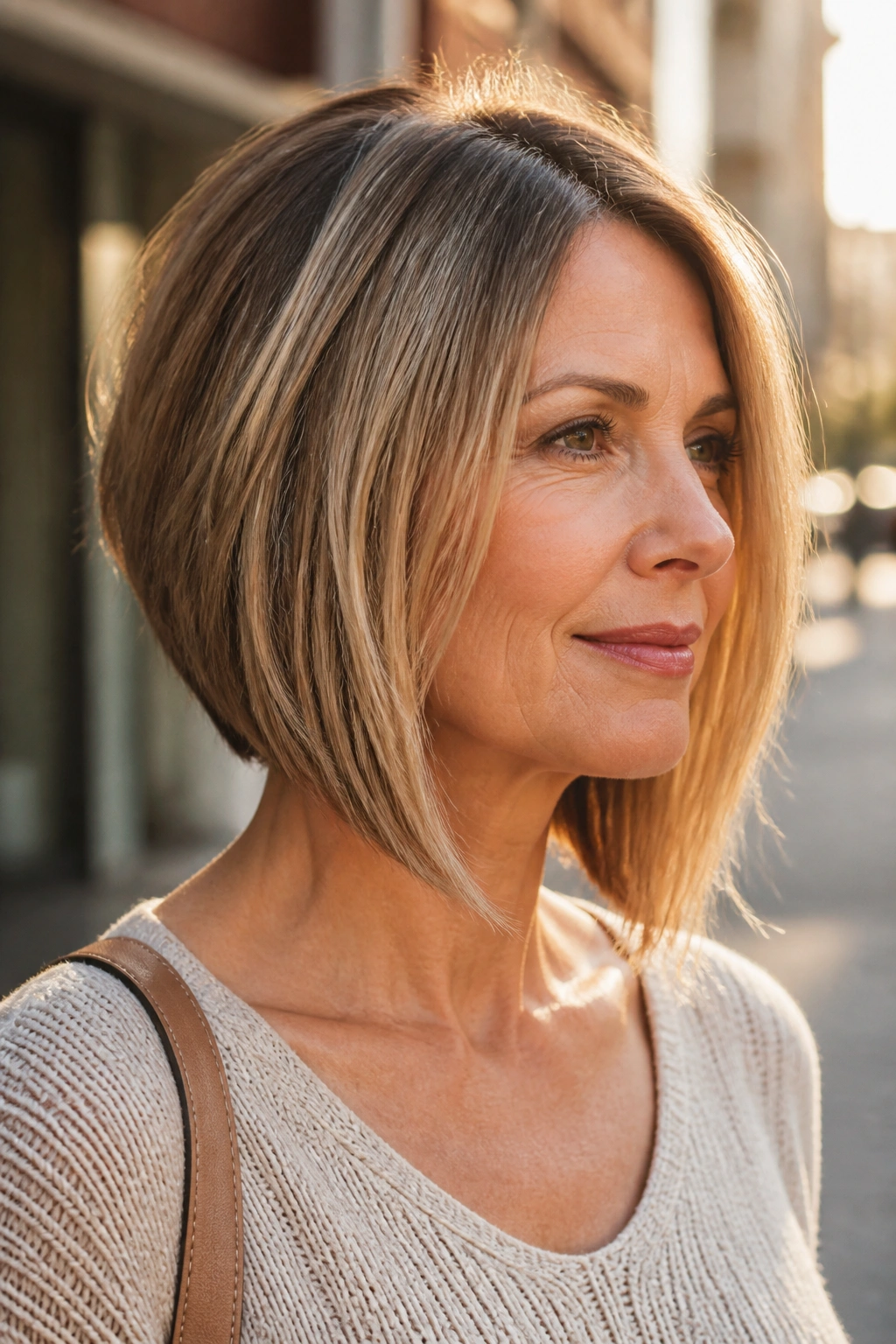
An angled lob is shorter in the back and longer in the front, which sounds dramatic until you see how wearable it is. The angle creates a little forward movement, and that can make the neck look longer and the jaw look softer.
It’s a nice option if your hair tends to feel heavy around the shoulders. The slight difference in length stops the cut from sitting like a block, and the front pieces give you something to tuck behind the ears if you like that look. The shape also gives gray hair a nice structure, especially when the front has a silver streak or two.
Unlike a blunt cut, an angled lob usually looks better with a bit of motion. Straight is fine. Slight bend is better. Too much curl and you lose the line.
13. Bottleneck Bangs With Shoulder-Length Hair
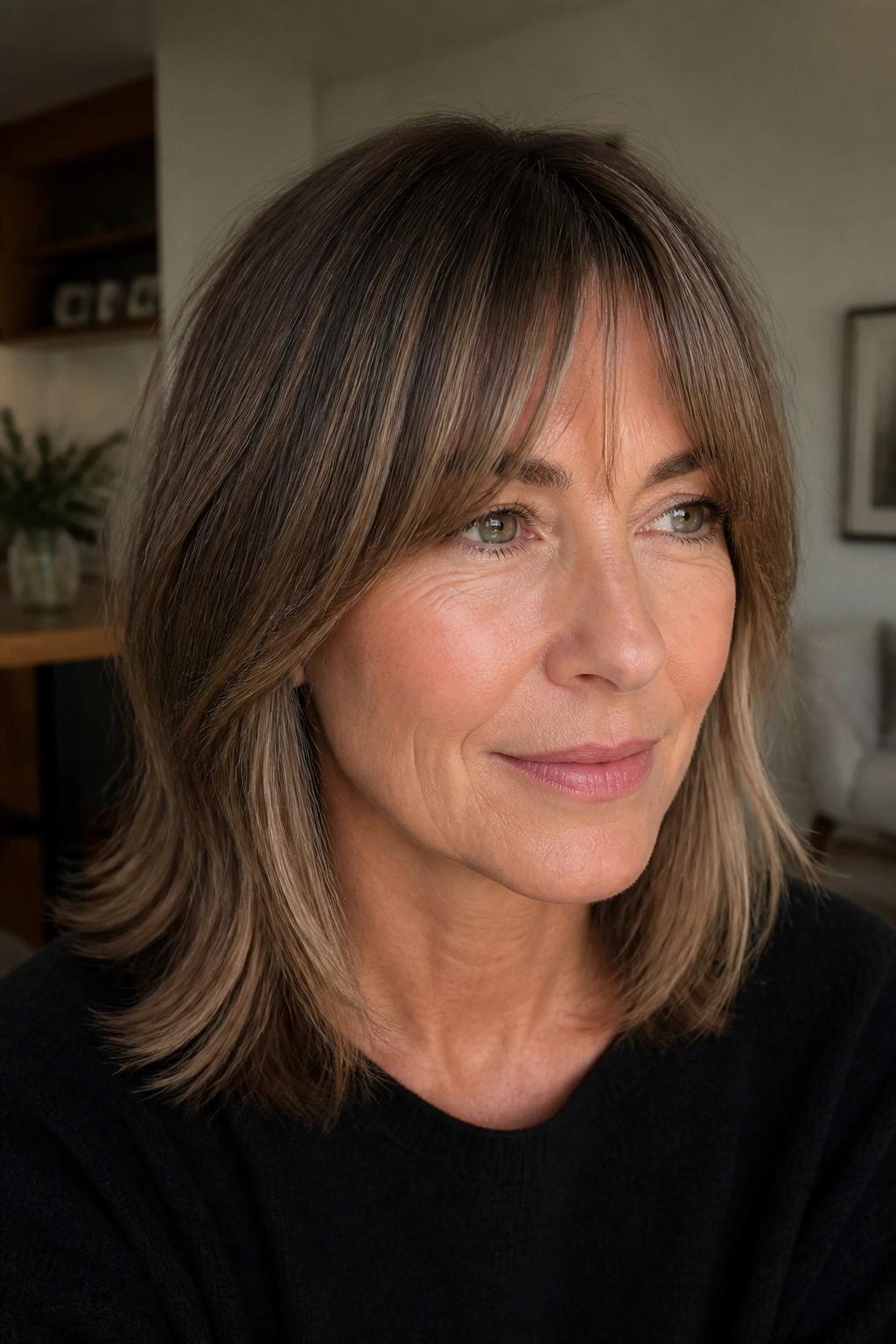
Bottleneck bangs sit in that sweet middle ground between curtain bangs and a fuller fringe. They’re narrower in the center, a touch wider as they move out toward the temples, and they blend into shoulder-length hair without feeling heavy.
I like them because they soften the forehead without swallowing the face. That matters if you want some coverage but do not want the commitment of thick bangs that need constant trimming. They’re also kind to glasses, which is not a small thing.
The Shape to Ask For
- Keep the middle a little shorter, around eyebrow level
- Let the sides open out toward the cheekbones
- Avoid making them too dense at the hairline
- Pair them with layers that start low on the face
Bottleneck bangs have a modern feel, but the real appeal is simple: they grow out in a sane way. That alone makes them worth considering.
14. Razored Ends for a Lighter Finish
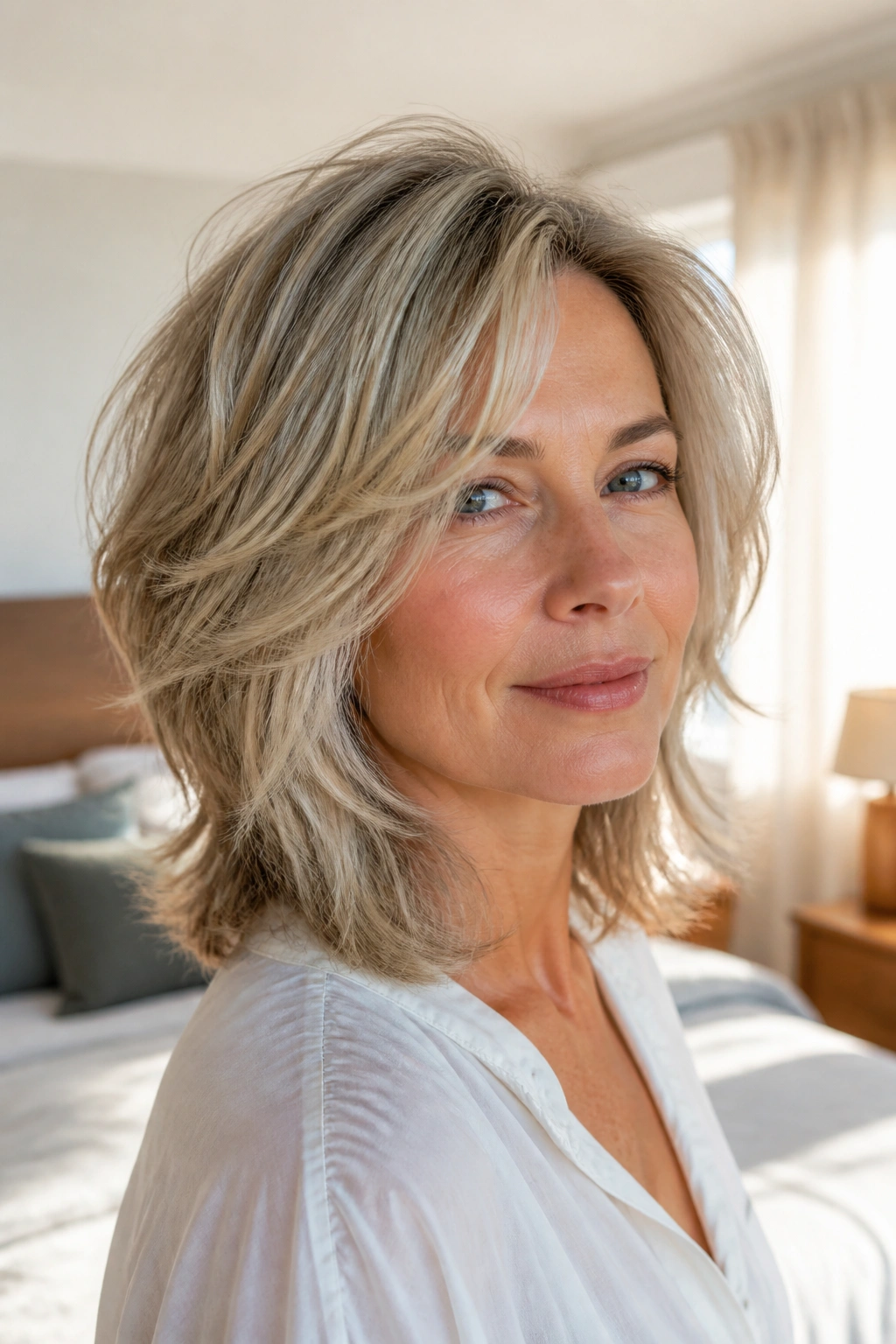
Razored ends are a good fix when hair feels too heavy but you do not want obvious layers. The razor takes off some bulk and leaves the ends a little softer, which can work well on thick, straight, or wavy hair that wants to sit like a helmet.
There is a catch. Razor-cut ends need healthy hair. If your ends are fragile, dry, or already split, a heavy razor hand can make them look worse, not better. So this is a case where the tool matters as much as the style.
Used carefully, though, a razored shoulder cut gives the hair a lived-in feel. It moves. It bends. It doesn’t sit there with that stiff, overblown salon finish that looks nice for twelve minutes and then collapses.
15. Shoulder Length Haircuts for Women Over 40 That Blend Gray Hair
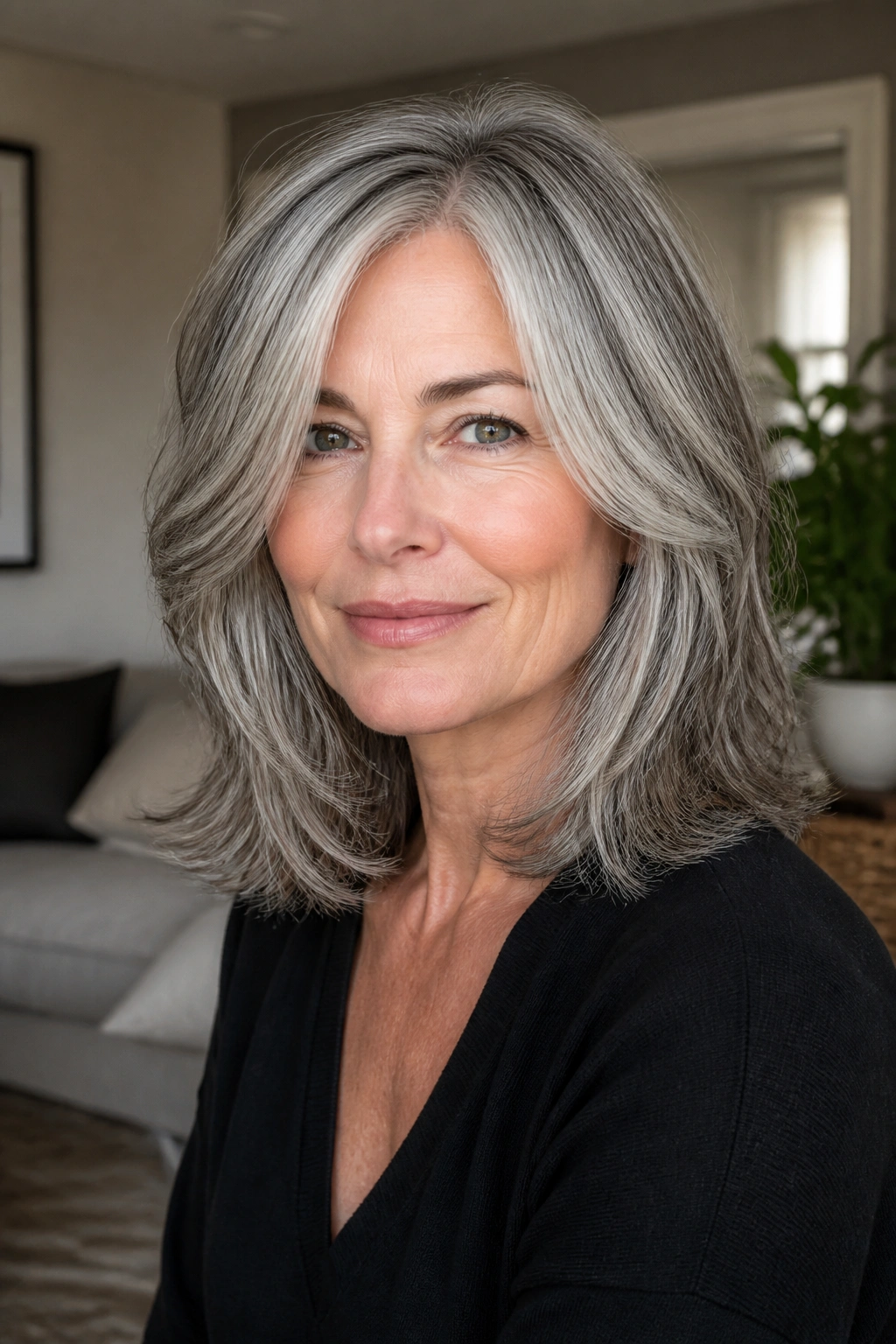
Gray hair can be gorgeous, but it usually looks best when the cut respects the way the silver strands behave. Some grays are wiry. Some are soft but stubborn. A shoulder-length cut with shape near the face and a clean perimeter through the ends helps the color look intentional rather than patchy.
The smartest gray-blending cuts do not try to hide every silver strand. They give the eye a pattern to follow. That can mean a blunt line, a few soft layers, or a side part that lets the lighter pieces fall where the light hits them best.
If you’re growing out color, shoulder length is kind to the process because it gives you enough length to work with while trimming off old dye lines over time. That awkward transition stage is easier when the cut already has shape. You do not need to apologize for the gray. The right haircut makes it look expensive.
16. Soft Flip-Out Ends

If your hair hits your shoulders and kicks out at the ends, you’re not alone. A soft flip-out style works with that movement instead of fighting it. The trick is to cut the ends so they naturally turn away from the neck and face, not fight into a straight line.
This shape can look playful without feeling young in a try-hard way. It also keeps shoulder-length hair from collapsing inward, which happens a lot when hair has some weight but not much texture. Gray hair can look especially nice with a soft flip because the bend shows off the color variation.
Styling Notes
- Use a medium round brush or a 1.25-inch curling iron
- Turn the ends away from the face for a light lift
- Keep the flip subtle; too much and it looks dated
- Finish with a light spray, not sticky hairspray
The best part is that it doesn’t need perfection. A small bend is enough.
17. The Layered Cut for Thick Hair

Thick hair at shoulder length can be gorgeous, but only if the cut removes bulk in the right spots. If the layers are too high or too many, the hair grows puffy. If the haircut is too blunt, it can feel heavy and triangular. There’s a narrow path here, and good layering matters.
I’d ask for longer layers that start below the chin and continue through the mid-lengths. That keeps the top strong and takes some weight out of the bottom half. The ends still need enough density to look full — thinning shears used the wrong way can wreck that fast.
This is one of the cuts where a stylist who understands your texture is worth their weight in gold. Thick hair needs control, not punishment. That’s the rule.
18. Shoulder Length Haircuts for Women Over 40 for Fine Hair
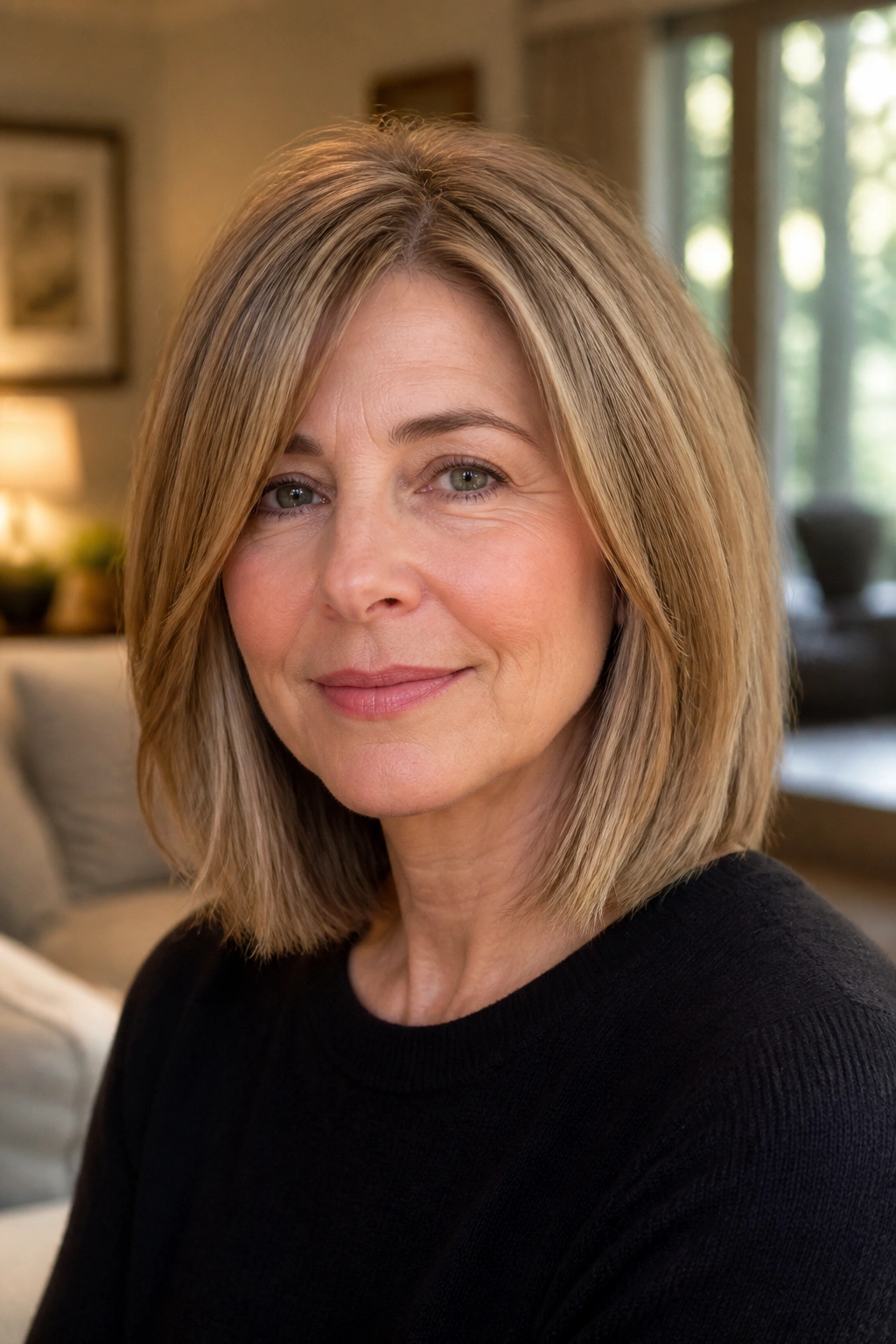
Fine hair needs a different strategy. Too many layers can make it look see-through, and too much thinning can leave the ends wispy. A shoulder-length cut for fine hair usually works best when the perimeter stays blunt and the crown gets a little lift.
That’s the part people miss. You want fullness where the eye lands first. If the bottom is too shredded, the whole cut starts to look tired. I’d keep the layers minimal and use styling products that give grip — a root spray, a lightweight mousse, or a blow-dry lotion that doesn’t collapse the hair.
A side part can help, but the cut matters more than the part. The whole point is to make the hair look denser than it really is. Fine hair can absolutely wear shoulder length. It just needs a firmer shape.
19. The Graduated Bob That Reaches the Shoulder

A graduated bob sits higher at the back and gradually gets longer toward the front, but when it’s cut at shoulder length it feels softer and more wearable than the classic shorter version. The back gets a little lift, and the front keeps enough length to tuck or curl.
Why It Feels Polished
The graduation gives the neckline a neat look without making the haircut severe. That’s useful if you want structure but not a hard edge.
It can also help hair that grows out flat at the crown. The subtle stacked shape gives the back some body, and the longer front pieces keep the style from looking too helmet-like. I like this cut on straight hair especially, though a smooth wave can make it feel less formal.
The key is moderation. Too much graduation and it turns into a much shorter bob. Too little and the shape disappears. Ask for soft stacking, not a sharp wedge.
20. A Curly Shoulder-Length Cut
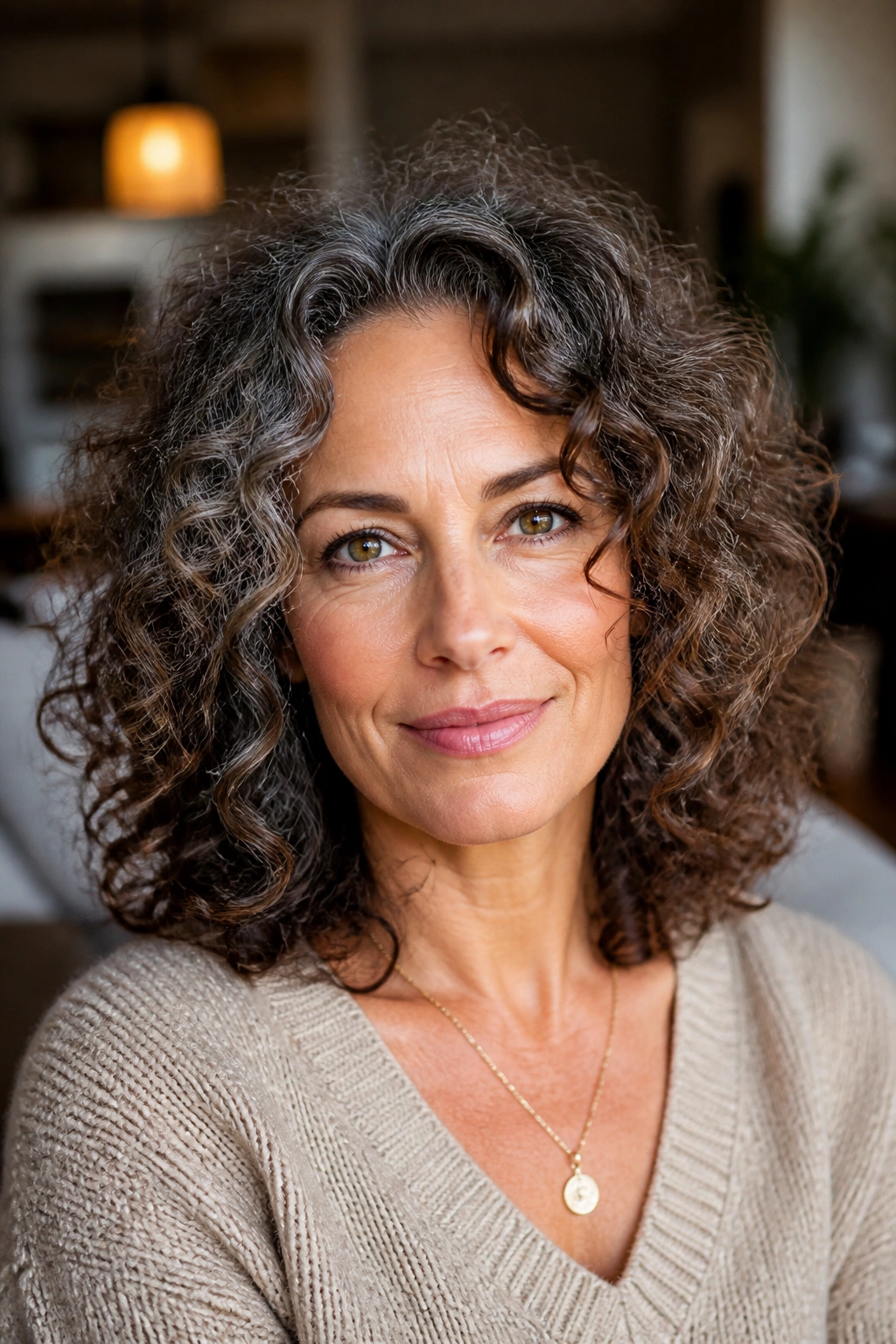
Curly hair should not be cut like straight hair. I’ll say that plainly because a lot of bad haircuts happen when that rule gets ignored. Curly shoulder-length cuts need shape built around the curl pattern, not just around a ruler.
The best version usually has layers placed to let the curls stack without exploding outward. The right length can keep curls from dragging down, while still leaving enough weight to stop frizz from taking over. Gray curls can be stunning here because the curl pattern gives the silver strands a ton of movement.
Dry cutting can help, especially if the curl pattern changes a lot from root to end. And yes, the hair may look shorter when it’s dry. That is normal. A good curl cut should take shrinkage into account instead of pretending it doesn’t exist.
21. The Air-Dried Wave Cut

What if you want a cut that looks good when you barely touch it? That’s where an air-dried wave cut earns its keep. The layers are usually long, the ends are soft, and the shape is built to work with whatever natural bend shows up once the hair dries on its own.
This is one of my favorites for women who don’t love hot tools. The cut should be shaped so the wave falls into place instead of flaring out at the shoulders. A little leave-in conditioner and a scrunch is often enough.
If your hair is a mix of straight and wavy, this cut can still work. You just want enough layering to keep the wave from getting weighed down. It’s a low-maintenance haircut, but not a lazy one. The good ones are planned carefully.
22. The Collarbone Shag With Long Bangs

A collarbone shag with long bangs gives you texture without making the whole haircut feel wild. The bangs sweep into the sides, and the layers around the face keep the shape light. It’s a nice pick if you want some edge but do not want to look like you borrowed your haircut from a completely different decade.
The long bangs are the part that saves it. They soften the forehead and make the transition from bangs to sides feel smooth. That’s especially helpful if your hair has a little wave or bend and you want to keep the whole style easy to wear.
You do need a little styling product here. A cream or light mousse helps define the pieces so the cut doesn’t turn fuzzy. Not heavy. Just enough to separate the layers and let the texture show.
23. The Tapered Neckline Lob

A tapered neckline lob keeps the back slightly snug around the neck while leaving the front around collarbone length. The result is neat, tidy, and easier to live with than a uniformly heavy cut that sits on the shoulders all day.
This is a smart choice if you hate hair brushing your neck in warm weather or getting caught in collars and jackets. The taper helps the haircut sit close without looking severe. It also keeps the front long enough to soften the face and show off gray streaks or highlights.
I’d call this a quietly practical cut. No drama. No extra fluff. It just behaves. That’s enough for a lot of people.
24. The Pageboy-Inspired Shoulder Cut

A modern pageboy at shoulder length sounds retro, and a little bit is. But the rounded shape can be surprisingly fresh when it’s done with softer ends and less stiff styling. The curve around the jaw gives the haircut a controlled look without making it feel stiff.
This one works best when the hair is smooth or straightened into a gentle bend. It’s good for women who like structure and do not want a lot of piecey layers floating around. Gray hair can look especially striking here because the rounded shape gives the color a clean outline.
It’s not a cut for someone who wants a messy finish. It’s a cut for someone who likes order. I respect that.
25. The Minimal-Layer Polished Medium Cut
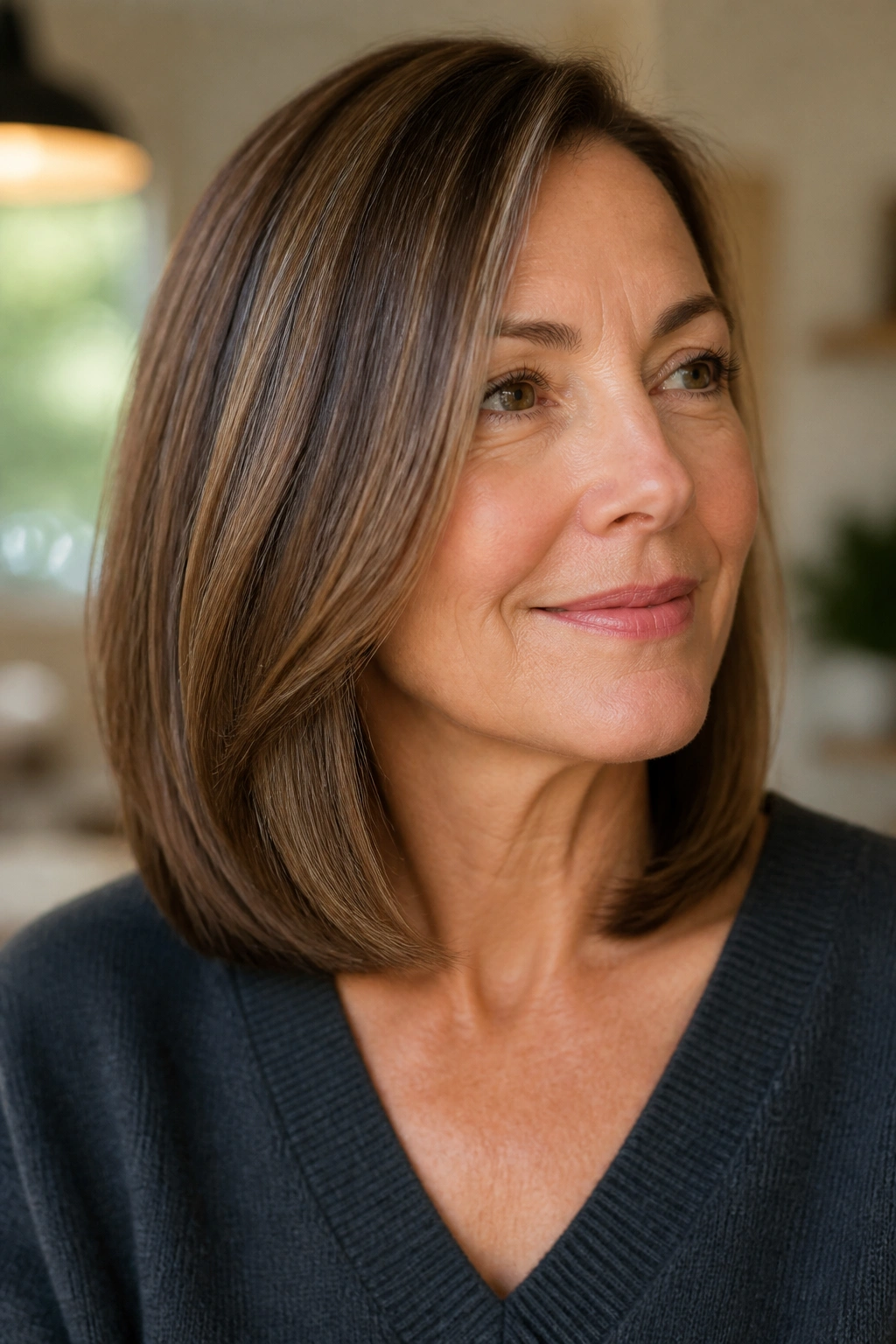
Sometimes the best haircut is the one that doesn’t try to do too much. A polished medium cut with minimal layers gives you shoulder-length hair that looks neat, healthy, and easy to manage. The shape stays clean, the ends stay full, and the style grows out with less chaos.
This is a good final option if you’re tired of chasing trends or fixing over-layered hair. It works on straight, wavy, and lightly textured hair, and it can be worn with a center part, side part, or tucked behind the ears. Gray hair often looks especially elegant in this kind of simple frame because the cut lets the color do the talking.
My advice: if you are unsure which shoulder-length cut to choose, start here. It is the safest base shape, and a good stylist can add curtain bangs, a soft bend, or a little face-framing later if you want more personality.
Final Thoughts
The best shoulder-length haircuts for women over 40 are the ones that fit your hair as it really is, not as it looked ten years ago, and not as you wish it behaved on humid mornings. That may mean a blunt lob, a soft shag, a gray-blending shape, or a cut with just enough layering to stop the ends from going heavy.
I’d choose shape first, styling second. Always. A good haircut should make your daily routine easier, not give you a second job before breakfast. If gray hair, texture changes, or thinning at the crown have changed what works for you, shoulder length gives you room to adapt without giving up polish.
