



Wash and go hairstyles for women over 50 work best when the cut does half the work. That’s the whole point, really. You want hair that falls into place after a quick wash, a towel blot, and a little product — not a style that demands a brush, a round dryer, and a prayer before breakfast.
Gray hair changes the game in a few ways. It can feel coarser, drier, or springier than the color you had before, and that means a cut that looked easy five years ago may suddenly start acting like it has its own agenda. Too much weight can make it hang flat. Too many layers can make it puff out and look thin at the ends. The sweet spot is shape. Good shape. The kind that still looks deliberate when you’ve done almost nothing.
And that’s where smart low-maintenance cuts come in. A blunt line can make fine silver hair look denser. A soft pixie can give lift at the crown without heat styling. A shag can make waves behave instead of ballooning. Small choices. Big difference.
1. Chin-Length Blunt Bob
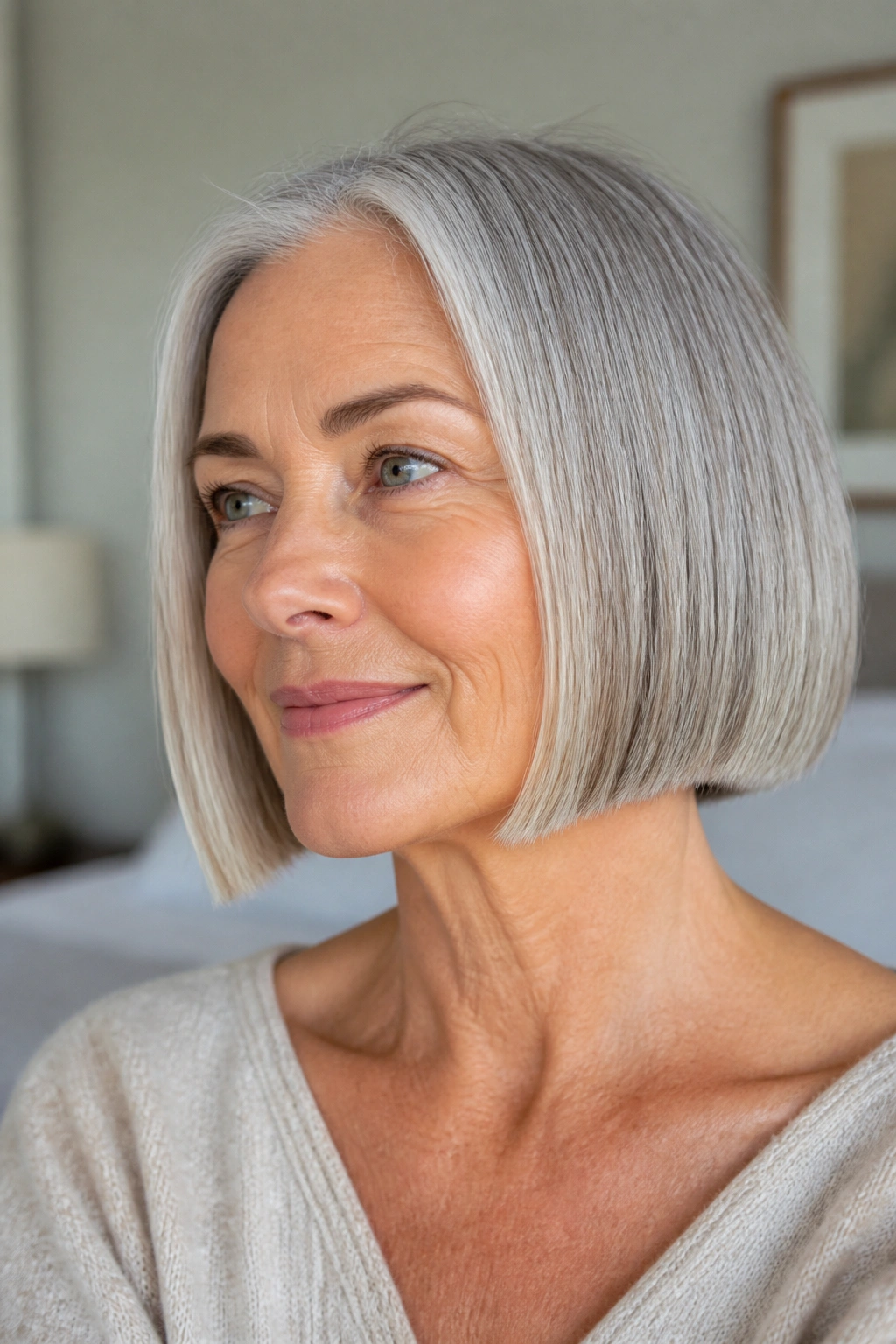
A chin-length blunt bob is one of those cuts that looks polished even when you barely touch it. The blunt edge gives the eye a solid line to follow, which helps gray hair look fuller and more deliberate, especially if your strands are fine or a little fragile at the ends.
Why this shape works so well
The secret is the perimeter. When the bottom line hits right around the jaw, the whole cut gets structure without needing much styling. If your hair has a slight bend, it can air-dry into a smooth curve with almost no help. If it’s straighter, the shape still holds because the ends are one clean line instead of a feathered mess.
This cut is especially kind to women over 50 with silver or salt-and-pepper hair because it shows off the color variation. The gray ribbons at the front read brighter when the shape is simple.
What to ask your stylist
- Keep the length at or just below the chin, not halfway down the neck.
- Ask for a blunt bottom edge with very light internal softening if your hair is thick.
- Skip heavy texturizing at the ends if your hair is fine.
- Keep the front pieces slightly longer if you want a gentler frame around the face.
Best for: straight, slightly wavy, or fine hair that needs more visual density.
One good styling move: work a pea-size leave-in cream through damp hair, part it cleanly, and let it dry alone. That’s often enough.
2. Soft Pixie with a Longer Crown
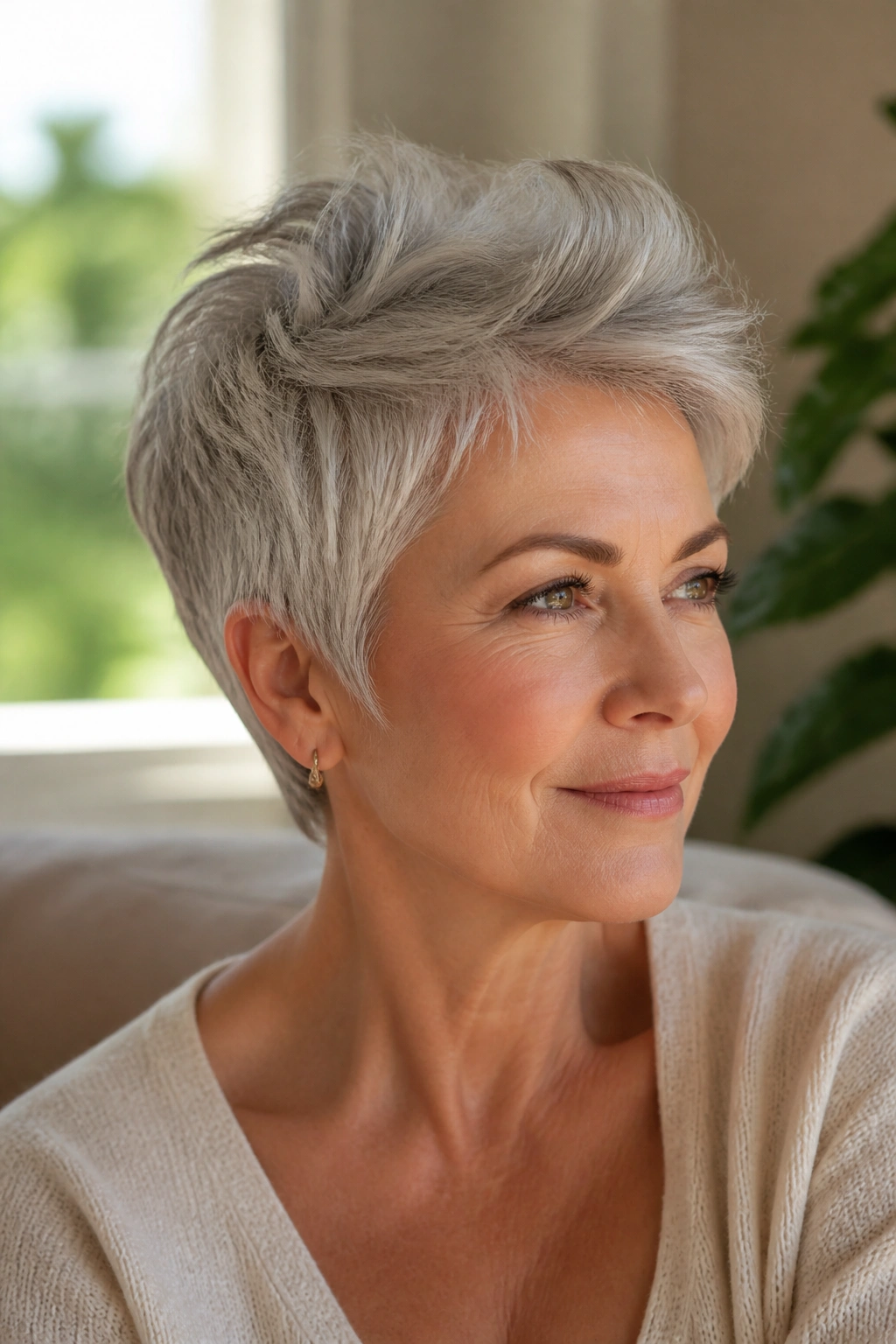
Why does this cut work so well for busy mornings? Because it gives you shape where people actually notice it: around the face and at the crown. A soft pixie with a little extra length on top can look airy, modern, and tidy without needing a blowout.
The longer crown is the part that saves the style from looking too cropped. It creates a bit of lift, which is useful if your hair has started lying flatter near the roots. Shorter sides keep the outline neat, while the top can be finger-styled in under a minute.
Short does not mean severe.
How to style it
Use a nickel-size amount of lightweight mousse or paste on damp hair. Work it mostly through the top, then push the hair up and slightly back with your fingers. If your hair wants to stick straight up, smooth the product between your palms first. That tiny step makes a difference.
For women with gray hair that feels wiry, this cut benefits from a soft finish rather than a crunchy one. You want touchable texture, not helmet hair. A little pieceiness around the front makes it easier to wear glasses and keeps the cut from feeling too sharp.
If you prefer a softer look, ask for the sides to be tapered rather than clipped close. It reads less harsh, and it grows out more gracefully.
3. Layered Shag for Natural Waves
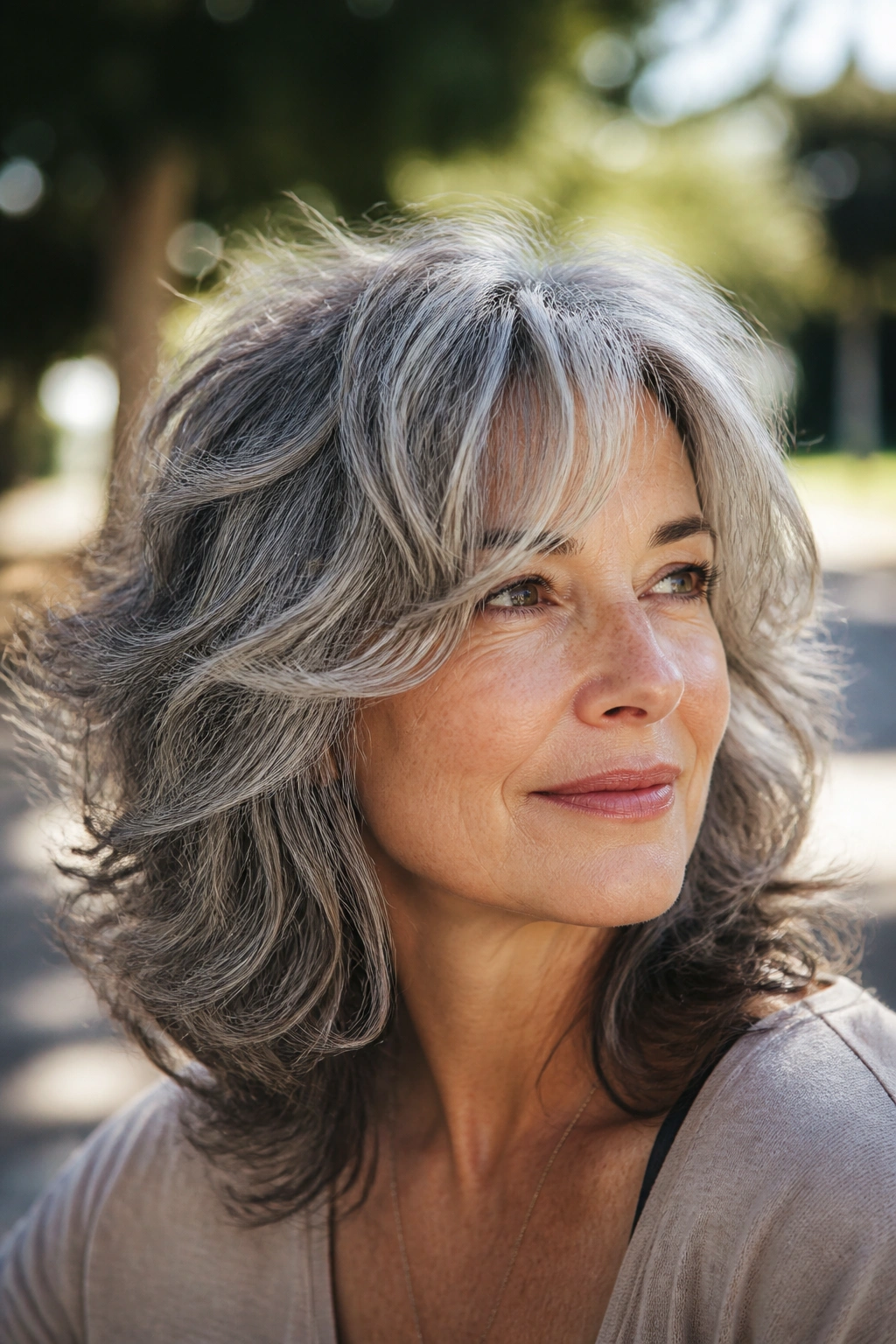
Picture hair that dries with bends at the ends and a little lift at the temples. A layered shag turns that into a feature instead of a problem. It gives waves room to move, and it keeps gray hair from sitting in one flat sheet.
That matters more than people think. Gray strands often refuse to lie exactly where you put them, especially around the crown and the front hairline. A shag works with that energy. The layers break up bulk, and the face-framing pieces stop the cut from feeling heavy.
What makes it easy to live with
The best shag for women over 50 is not the shag from old rock photos with choppy pieces everywhere. It’s softer. The layers should be blended enough that you can air-dry and go, but not so short that the hair frizzes into a cloud.
- Ask for longer layers, not razor-thin ends.
- Keep the face frame around cheekbone level if you want softness.
- Use a light curl cream or foam, not a heavy butter.
- Scrunch once, then stop fussing with it.
Tip: if your waves are loose, put product on soaking-wet hair. If they’re tighter, scrunch after blotting with a microfiber towel so you don’t stretch the curl pattern.
4. Rounded Crop for Curls
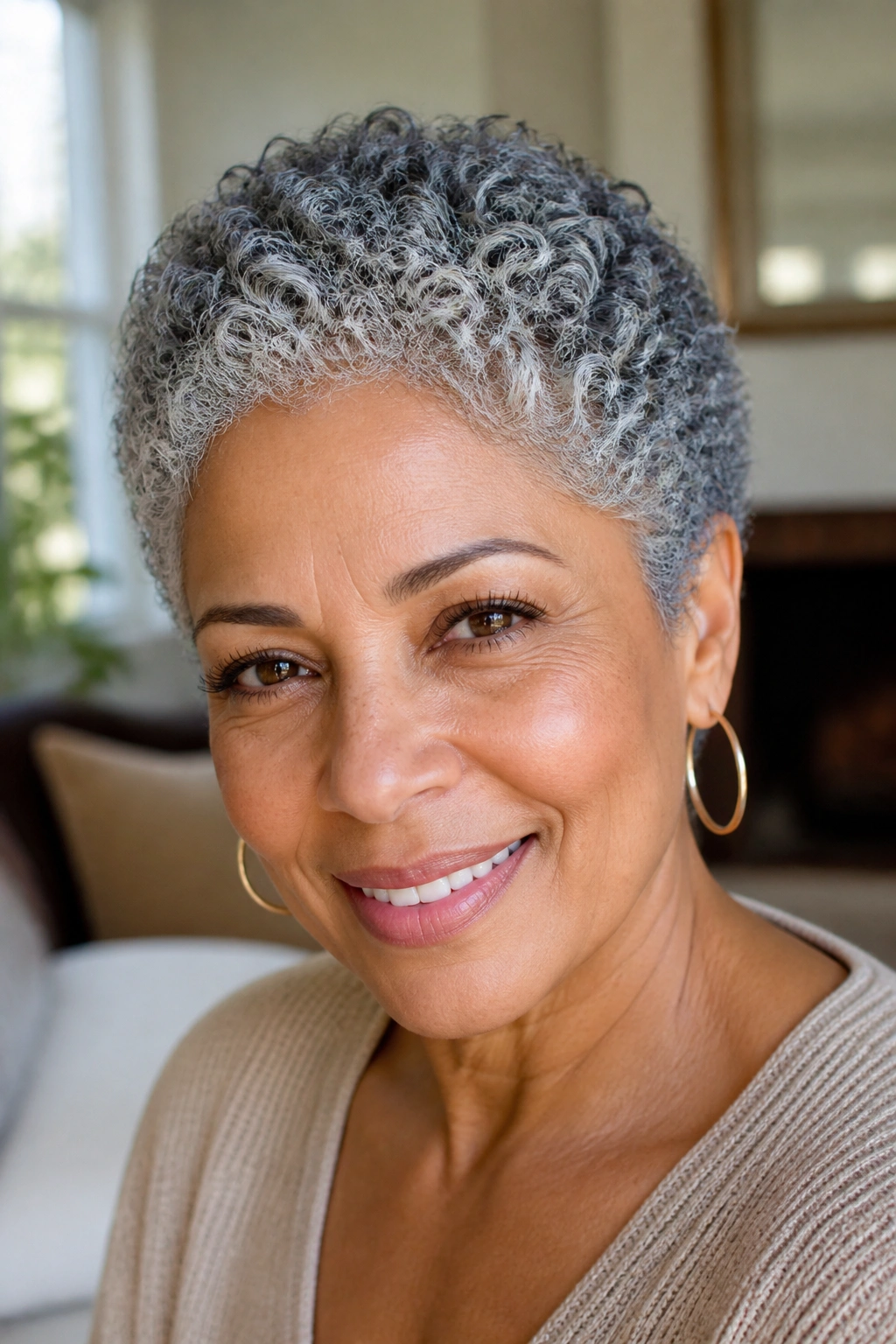
Curls need a shape. A rounded crop gives them one.
When curly hair is cut too square, it can puff out on the sides and go flat on top. A rounded crop changes that by following the curl pattern instead of fighting it. The hair sits closer to the head where it should, and the top keeps enough length to show off the curl and the silver.
That rounded silhouette is especially flattering if your curls have gotten a little drier with age. Gray curls can be stunning, but they often need a cut that respects shrinkage. Leave them too short and they spring up more than you expected. Leave them too long and they drag down the shape. The balance is in the middle.
A good rounded crop usually works best when the layers are cut to encourage the curl to stack softly, not stick out. You want lift, not a triangle. And yes, the curl pattern matters more than the calendar here. Tighter curls need more length on top than loose spirals do.
A little leave-in and a diffuser on low heat can help, but plenty of women can air-dry this style and still look finished. The cut does most of the labor. That’s the beauty of it.
5. Collarbone Lob with Hidden Layers

If you still like having hair on your shoulders, the collarbone lob is the civilized compromise. It gives you length to tuck behind the ears, clip back, or let swing, but it doesn’t ask for the kind of daily maintenance that waist-length hair does.
The trick is hidden layers. Not obvious, face-melting layers. Hidden ones. They sit inside the shape and stop the bottom from feeling heavy. That matters if your hair is thick, because a solid block of length can turn into a blanket. It matters if your hair is fine too, because too much layering at the ends can make it look scraggly.
A collarbone lob works best when the front pieces are kept a touch longer than the back. That softens the neckline and gives you movement without forcing you into a blow-dry routine. It also plays nicely with gray hair, since the longer length shows off tonal streaks and silver bands in a way shorter cuts sometimes can’t.
If your hair tends to flatten at the roots, a side part helps. If it puffs at the ends, ask for a light bevel at the bottom. Small detail. Big payoff.
6. Tapered Crop with Side-Swept Fringe
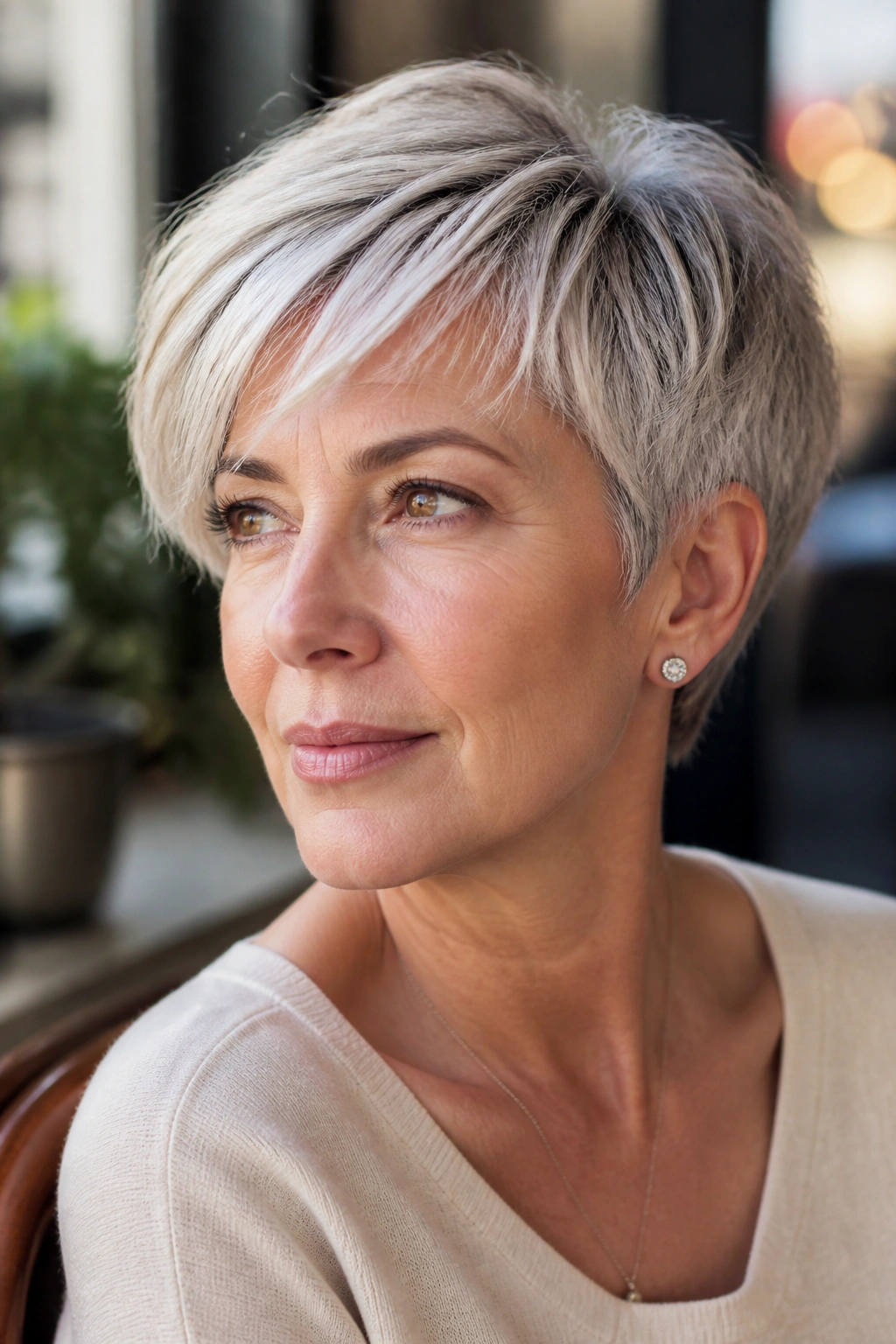
This is the cut that makes fine hair look awake.
A tapered crop with a side-swept fringe works because it gives you lift where you want it and calmness where you don’t. The back stays close to the neck, which keeps the cut neat. The fringe sweeps across the forehead instead of cutting it in a hard line, which keeps the face soft.
For women over 50, that balance matters. A full fringe can be lovely, but it can also feel high-maintenance if your hair cowlicks at the front or if your forehead area gets oily fast. A side-swept version is easier. It moves with you. It does not demand a lot of upkeep.
The best version keeps the sides slightly longer than the nape so the cut feels shaped rather than chopped. If your hair is fine, ask for a little extra length at the crown — about 2 to 3 inches on top is often enough to style with your fingers. If it’s coarse, the crown can be shorter because the texture will do some of the work on its own.
A root-lifting spray at the front and a quick rough dry can make this style look finished in under five minutes. Skip heavy oils. They flatten the shape fast.
7. Grown-Out Pixie-Bob
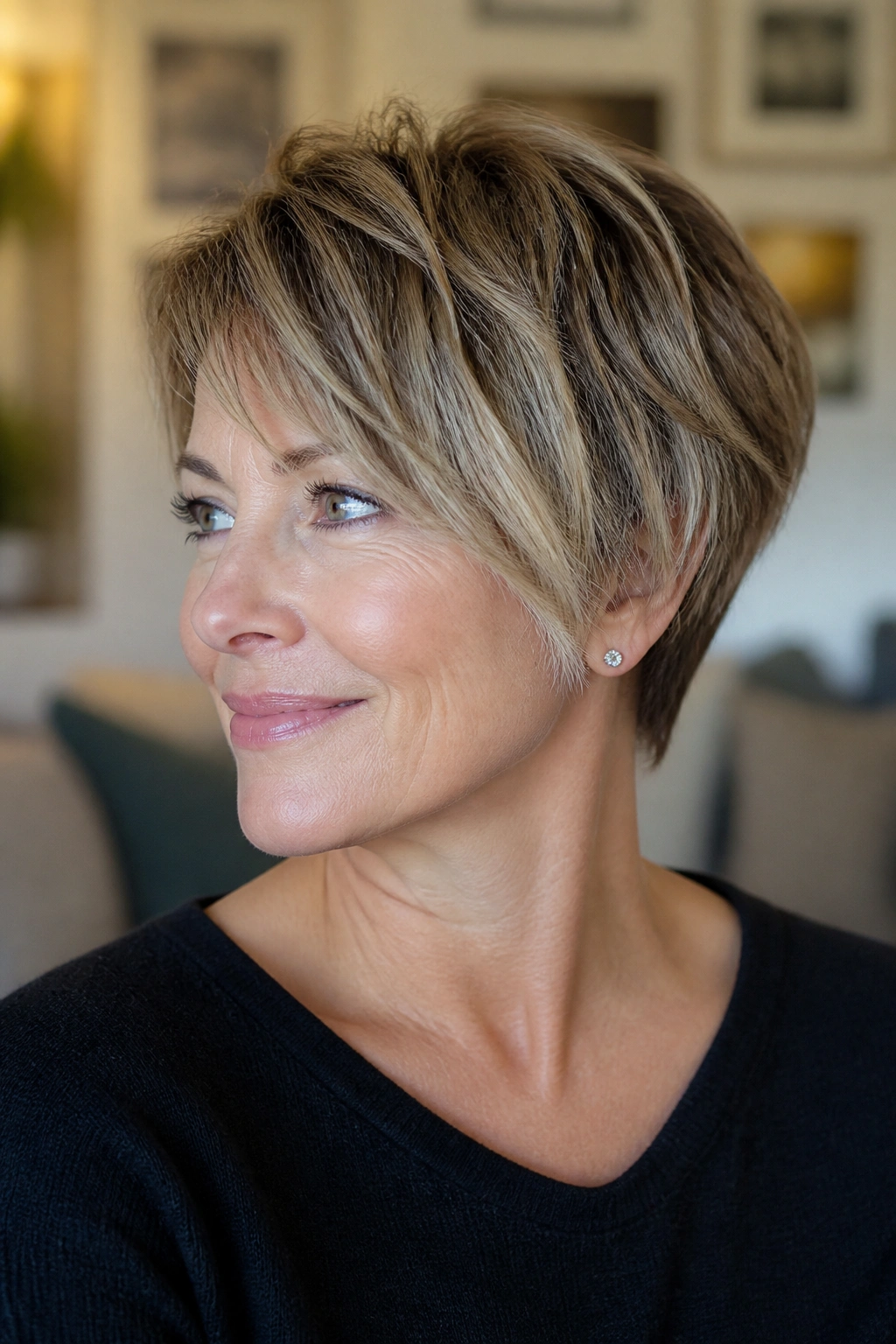
If you hate the feeling of being trapped between “too short” and “too long,” the pixie-bob is worth a serious look. It sits in that useful middle zone where the neckline stays clean, but the front still has enough length to tuck, sweep, or let fall around the cheekbones.
I like this cut for women who want fewer salon visits without giving up softness. It grows out well. That sounds boring, but it matters more than people admit. A cut that still looks decent eight weeks later saves you from the awkward “what am I doing with this” phase that some short styles create.
What to ask for
- Keep the nape short and tidy.
- Leave the top long enough to pinch between your fingers.
- Let the front fall a little longer than the ears.
- Blend the sideburn area so the cut doesn’t feel boxy.
The result is a style that can be dried by hand, tucked behind one ear, or pushed forward on days when you want more face framing. It suits straight hair, soft waves, and even coarse gray hair if you want something that feels friendly rather than severe.
8. One-Length Silver Bob
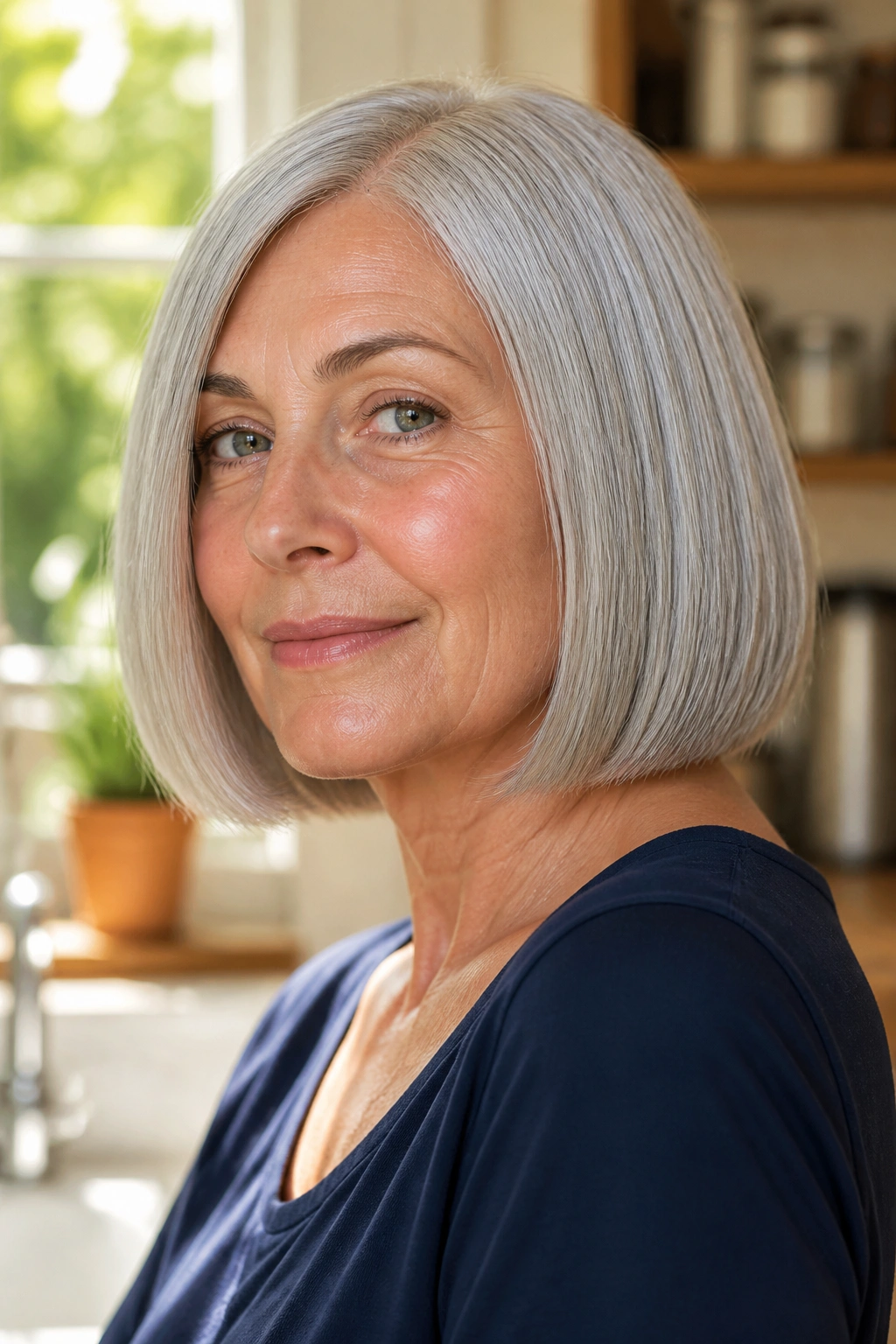
Fine gray hair often looks fuller when you stop layering it to death.
That’s the reason a one-length silver bob works so well. The blunt edge creates the illusion of density, and the clean outline makes the color look crisp. Silver hair picks up light differently than dyed hair, and a one-length cut lets that shine happen without interruption.
This cut is especially good if your hair has started feeling wispy at the ends. Layers can help movement, yes, but they can also make delicate hair look thinner than it is. A single line from jaw to collarbone keeps the ends reading solid. If your hair flips out at the bottom, have the stylist soften the last quarter inch just enough to remove the shelf effect.
Quick details that matter
- Best length: jaw to just above the collarbone.
- Best part: center for symmetry, side for lift.
- Best finish: air-dried with a lightweight serum on the ends.
- Best trim schedule: every 6 to 8 weeks to keep the line sharp.
One polished bob. That’s the whole trick.
9. Feathered Shoulder Cut
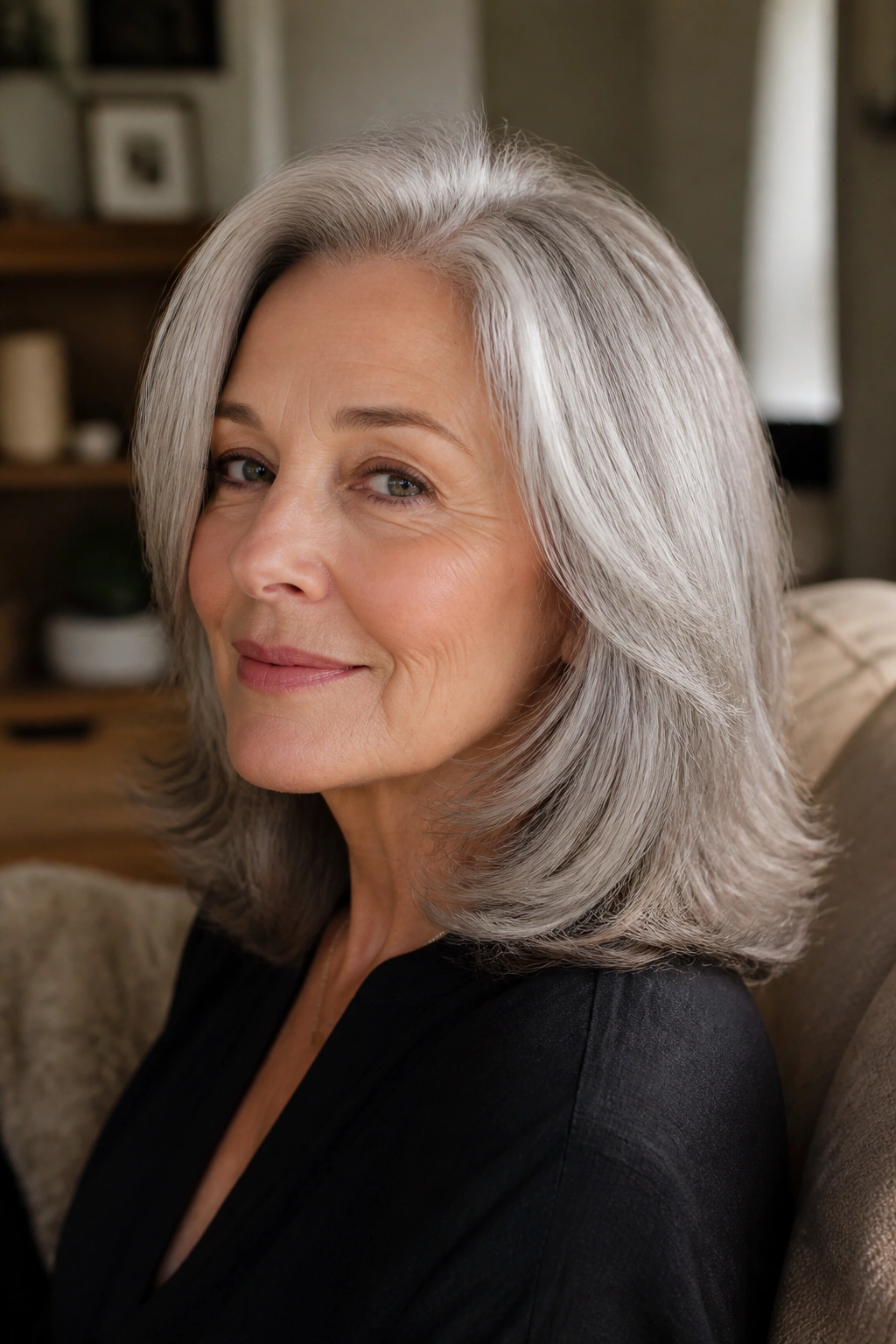
Thick gray hair can be a gift and a headache in the same afternoon. The feathered shoulder cut handles both. It keeps enough length to pull back, clip up, or wear down, but it removes the heavy blocky feel that thick hair can develop near the shoulders.
The feathering should happen inside the shape, not just on the surface. That’s the part a lot of people miss. If the top layers are chopped too high, the cut can puff out and feel dated. If the inside is softened carefully, the hair moves without turning flimsy. The ends still look like hair. They just don’t sit there like a shelf.
Bulk is the enemy here.
This cut works especially well for women whose gray hair has grown coarser over time. You get body without the helmet effect, and you can air-dry with a little smoothing cream if your texture is more wavy than straight. A wide-tooth comb is enough on most days. A brush can be too much, and honestly, it can make the cut feel bigger than you want.
If you like shoulder-length hair but hate wrestling with it, this is one of the better compromises. It looks soft around the face and controlled through the body of the hair, which is a useful combination.
10. Stacked Wedge Cut
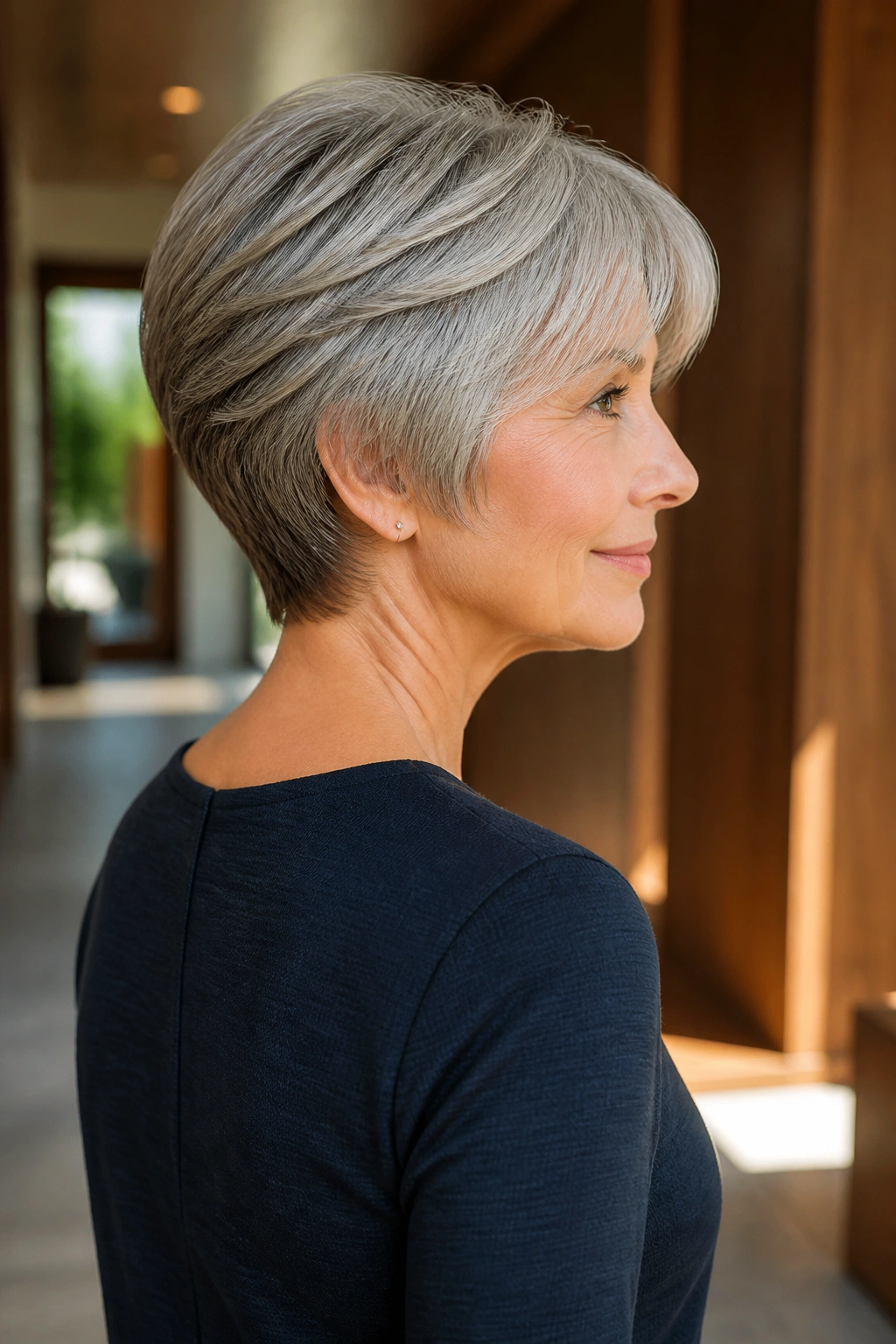
A stacked wedge cut gives the back some structure when a bob feels too flat. It’s the cut I think of for hair that wants to flare out at the neck or collapse at the crown. The shorter, stacked layers in the back create lift, while the sides stay smooth enough to keep the shape from getting puffy.
There’s a reason this cut still has loyal fans. It works. Especially on straight to slightly wavy hair that needs a little architecture. If your hair grows out with a weird bump at the back of the head, a wedge can help balance that. If your hair is very fine, the stacked shape can make the crown look fuller without teasing or spraying it into place.
It does have a look, though. This is not the cut for someone who wants invisible hair. It looks intentional. A little sculpted. Some women love that. Others want something softer. Fair enough.
For gray hair, the wedge can be especially nice because the layered back shows off light and shadow. The silver pieces at the nape and crown catch the eye in a clean, neat way. Ask for a softer stack if you do not want a sharp angle. That keeps it modern instead of stiff.
11. Side-Parted Micro-Bob
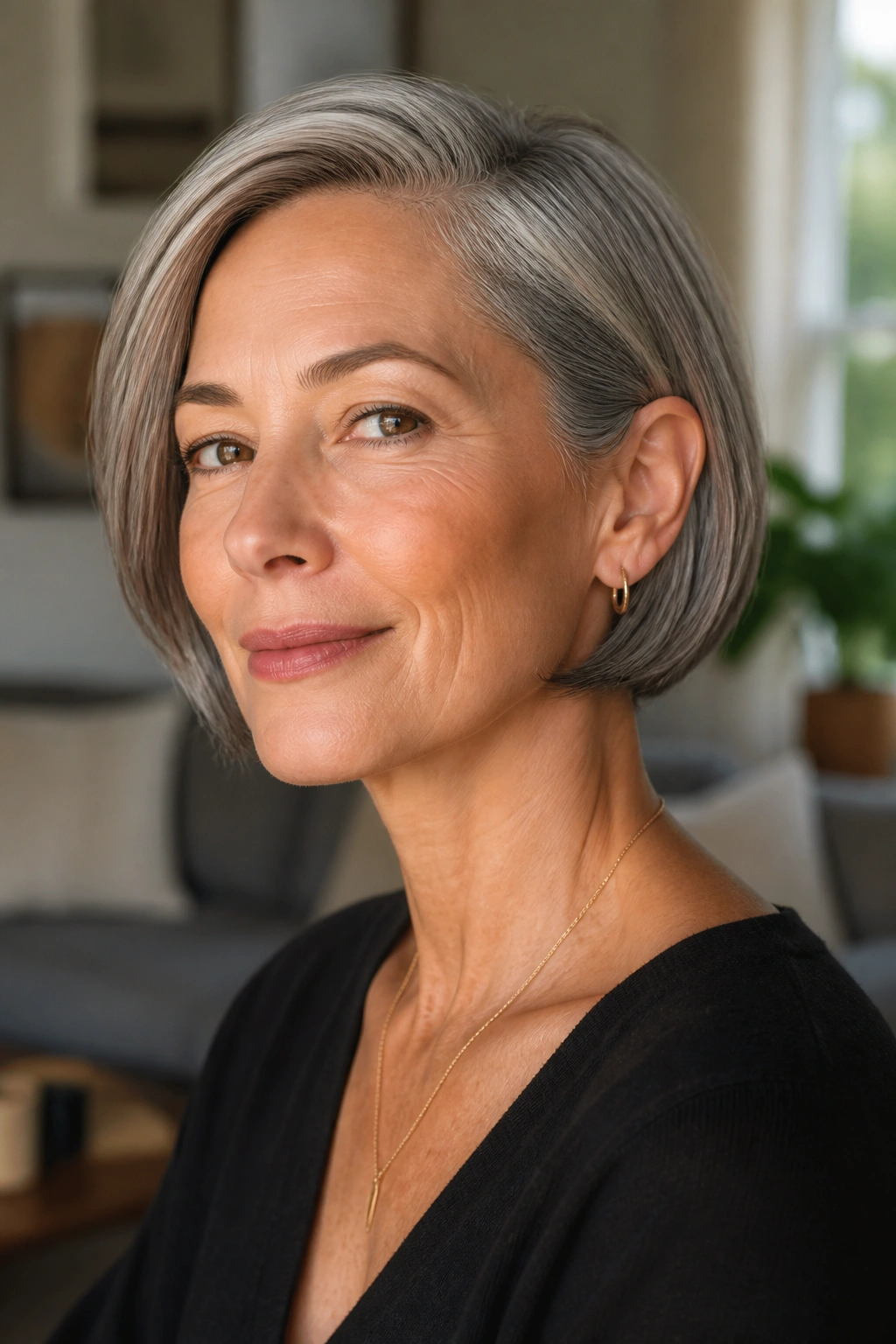
Why does a tiny side part change the whole cut? Because it gives the hair direction, and direction is half of polish.
A side-parted micro-bob sits around the jawline or just above it, so it’s shorter than a classic bob but not as cropped as a pixie. The side part lifts the front and gives the hair a little asymmetry, which is flattering if your face has strong lines or if you wear glasses. It softens the whole look without asking for much effort.
Tiny change. Big payoff.
How to wear it
Use a light mousse at the roots, then comb the part in while your hair is still damp. Let the front dry forward for a few minutes before tucking one side back. That small habit helps the style settle without looking stiff. If your hair is straight, a quick bend at the ends with your hands can keep it from feeling too severe. If it’s wavy, leave it alone and let the texture do the talking.
This cut is especially handy for women whose gray hair sits flat on top but puffs slightly at the sides. The side part interrupts that symmetry and makes the shape feel more alive.
12. Midlength Cut with Curtain Fringe
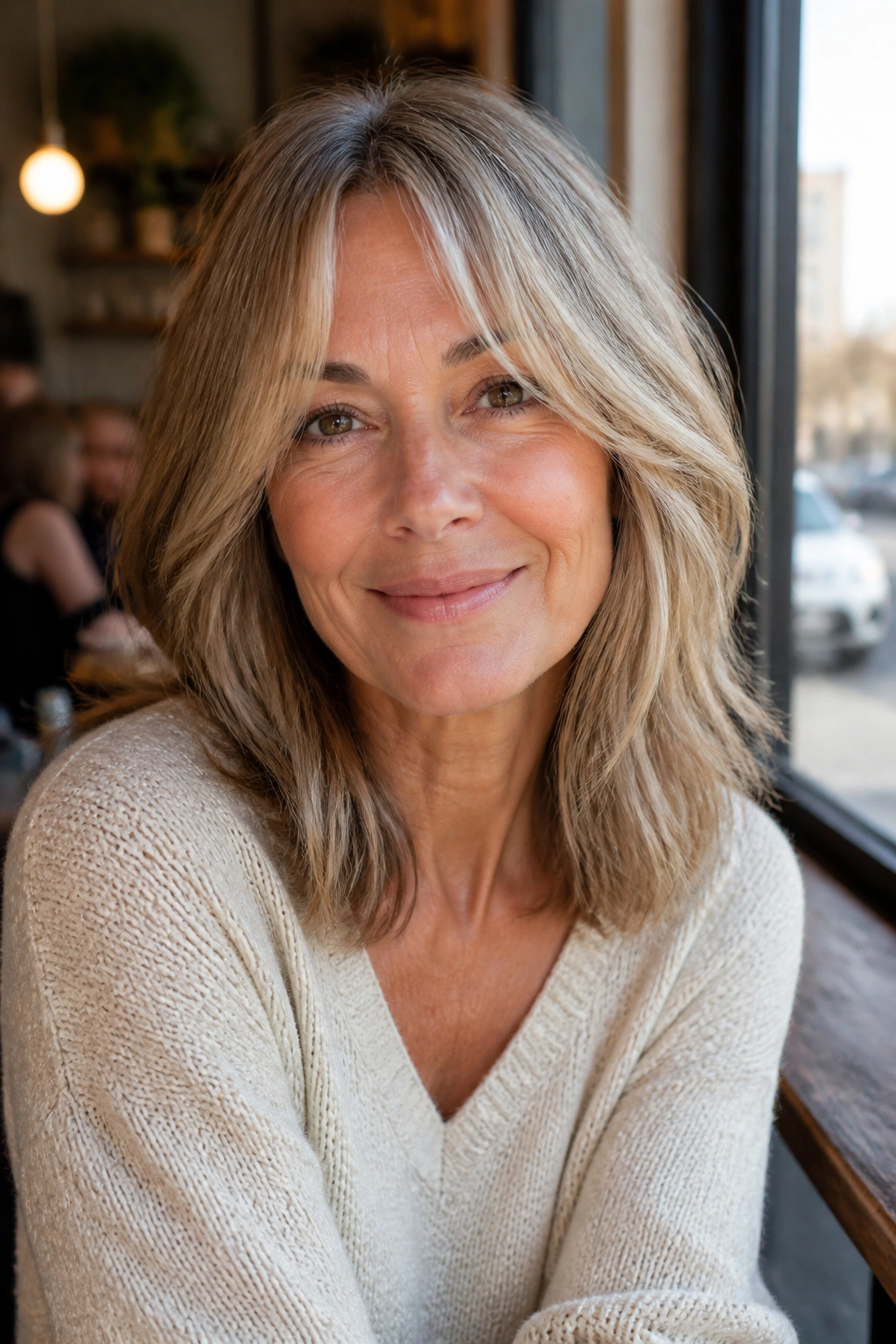
Some women do not want short hair. They want hair that stops asking for attention.
A midlength cut with curtain fringe is a good answer. The length usually falls somewhere between the shoulders and the collarbone, and the fringe splits softly at the center or just off-center so it frames the face without closing it in. It is one of the easiest ways to keep a little length while still getting a wash-and-go feel.
Curtain fringe works best when it’s cut to graze the cheekbones or the top of the cheek, not to sit in one heavy line across the forehead. That keeps it from looking bulky. It also means the fringe can air-dry without demanding a round brush. Gray hair often has enough bend to make the parting happen naturally, which helps.
What to ask for
- Keep the longest pieces near the collarbone.
- Ask for soft face-framing layers, not choppy ones.
- Make the fringe light enough to separate when dry.
- Avoid thick, blunt bangs if your hairline is cowlick-prone.
If you want a low-fuss style that still feels feminine, this is a strong option. It’s easy to pull back, easy to clip up, and easy to wear with natural texture.
13. Air-Dry Layered Lob
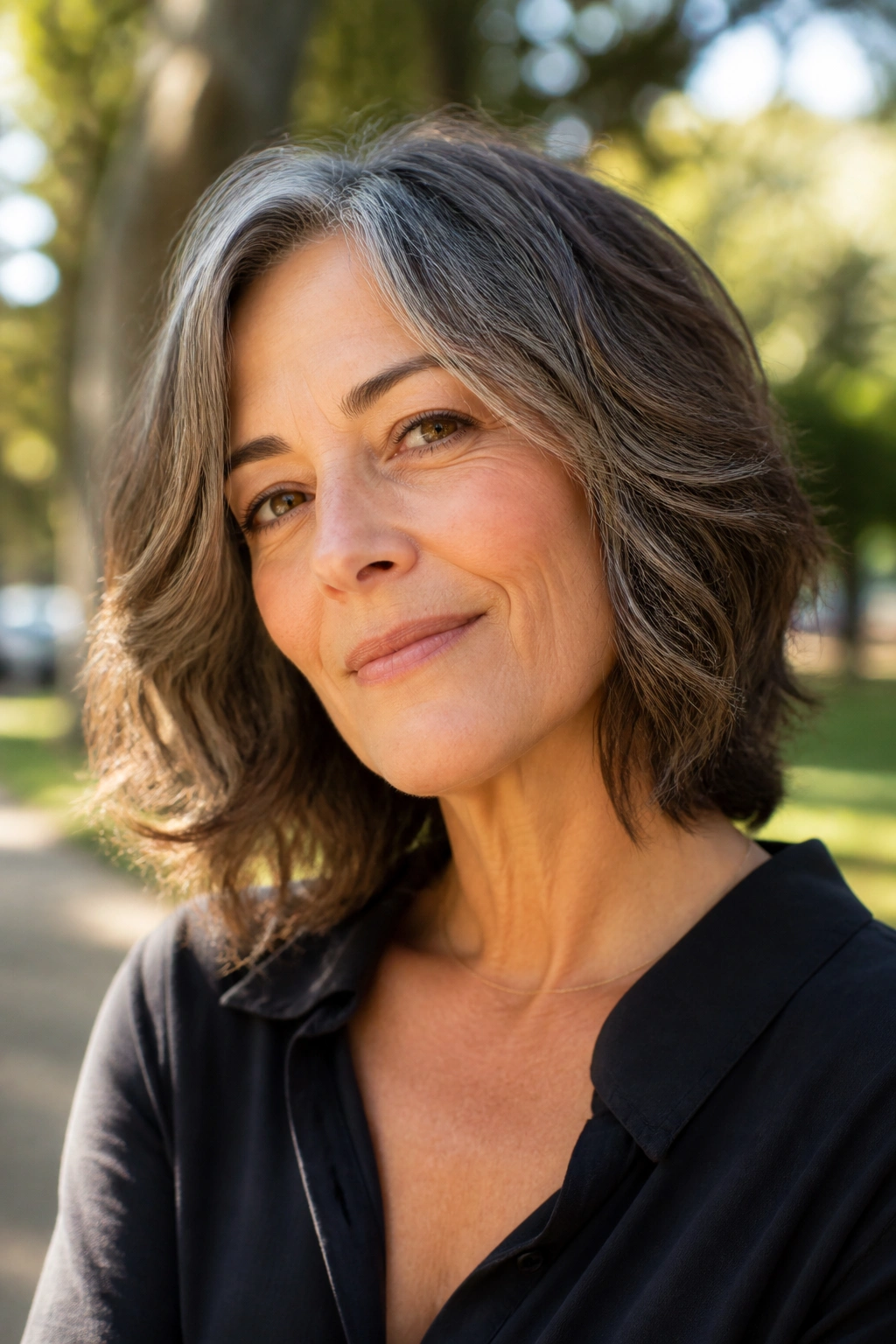
For wavy hair, this is the honest cut. It works with what you already have instead of trying to remake it with tools.
An air-dry layered lob lets the wave pattern show without turning the ends into a puffball. The layers should sit low enough that the hair keeps weight through the bottom, which helps the shape fall smoothly. Too many short layers in a lob are a mistake. They create frizz, and then people wonder why the style feels busy. It’s because the cut is doing too much.
A little product goes a long way here. A palmful of mousse through damp hair is usually enough for medium-density hair. Fine hair may need less. Thick hair may need a light leave-in first, then mousse on top. Scrunch once, maybe twice. Then leave it. Seriously. The more you keep touching it, the less defined it looks.
If you have natural gray streaks, this cut shows them in motion, which is the fun part. The silver pieces move through the waves instead of sitting in one block, and the effect can be lively without looking forced. For some women, this is the cut they keep coming back to because it gives the most freedom with the least drama.
14. Ear-Grazing Crop with Nape Taper
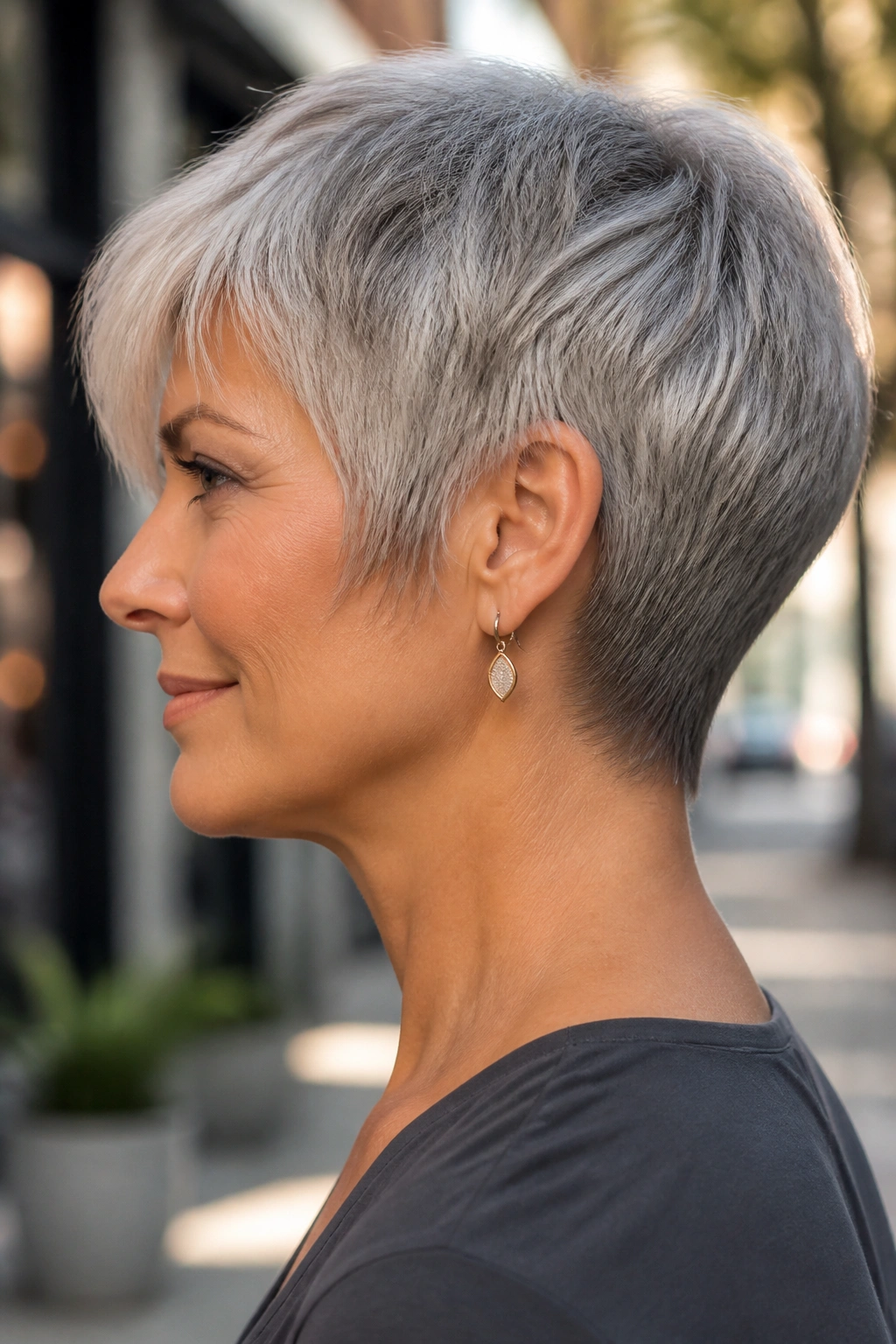
Shorter than a bob, softer than a clipper crop — that’s where this one lives.
An ear-grazing crop with a tapered nape is a smart choice if your hair gets bulky around the ears or neck. The length around the face stays soft, which keeps the style flattering, while the nape is cleaned up enough that it does not puff out under collars or scarves. For women with coarse gray hair, that detail can be a relief.
The shape is neat without feeling hard. That matters. You want the cut to skim the ear, not sit stiffly above it. A little softness around the sideburns and temple area keeps the style from looking too severe. If your hair has a strong wave, ask for the top to stay just long enough to bend with it instead of resisting it.
What to tell the stylist
- Keep the top around 2 to 3 inches long.
- Taper the nape close, but not skin-close.
- Soften the side area so the ear line doesn’t look chopped.
- Leave enough length in front to tuck or sweep.
This cut is good for women who want a tidy neckline and almost no styling time. A dab of paste on the fingertips, a quick push into place, and you are done.
15. Choppy Gray Crop with Lift at the Crown
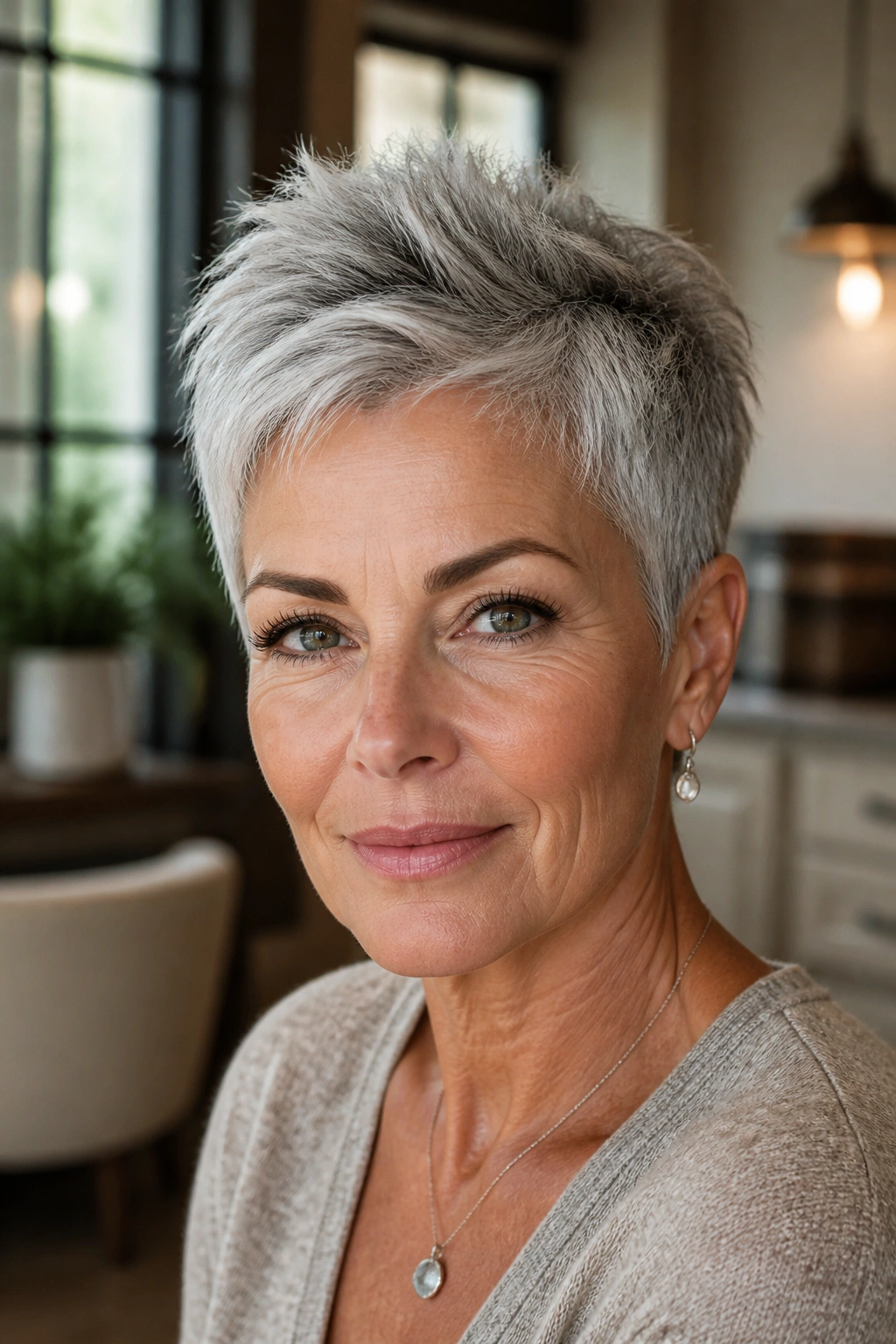
A choppy crop can be a gift for gray hair, but only if the shape stays soft enough around the temples and ears. The point is lift. Not spikiness. Not a helmet. Lift.
The best version uses small, deliberate layers near the crown to create height where the hair often goes flat, especially on fine or straight textures. The sides stay lighter and the ends stay piecey, which keeps the cut from feeling heavy. Gray hair often shows texture more clearly than pigmented hair, so even a little separation in the layers can look lively in the right light.
This is the cut for someone who likes a bit of edge but still wants an easy morning routine. A tiny amount of matte cream or soft paste can be rubbed through dry hair to separate the ends. If your hair is very coarse, warm the product in your hands first. Cold product clumps. Warm product spreads.
There’s a sweet spot here, and it’s narrower than people think. Too much choppiness and the cut gets busy. Too little and it falls flat. The best result feels casual, but not careless. And that’s the real trick with wash and go hair after 50: the style should look like it belongs to you, not like you borrowed it for the day.
