



Long wavy hairstyles for men look best when you stop trying to flatten the wave and start giving it a shape it can live in. That sounds obvious, but a lot of guys still treat wavy hair like a problem to tame instead of a feature to work with. The result is usually the same: the top gets puffy, the ends go limp, and the whole cut feels heavier than it should.
Waves have a strange little rule of their own. Leave them too blunt and they can balloon out. Thin them too aggressively and they lose the body that makes them interesting in the first place. The sweet spot is usually somewhere between a clean shape and a loose, moving finish — and that’s where long wavy hair starts to look expensive, even if the routine behind it is dead simple.
There’s a reason so many barbers keep coming back to layered cuts, soft tapers, center parts, and tie-backs for this hair type. Long wave patterns do a lot of the styling on their own. You just need to stop them from getting lazy. A little sea-salt spray, a touch of cream, the right weight at the ends, and suddenly the whole thing behaves.
The styles below all work for different faces, densities, and lifestyles, but they share one thing: they let the wave stay visible. That’s the whole point. Get the shape right, and the rest is mostly restraint.
1. Layered Flow Cut

This is the one I’d hand to a guy who wants movement without looking like he spent forty minutes in front of a mirror. The layered flow cut keeps the length, but it breaks up the bulk so the wave can fall in soft bends instead of collapsing into a heavy curtain.
Why It Works
Long waves need room to breathe. A blunt edge makes the hair hang like a sheet; subtle layers let it swing and separate, which is why this cut looks better when you walk than when you stand still. It’s especially good for thicker hair that wants to puff at the sides.
Ask for long layers through the mids and ends, not choppy texture all over the place. You want movement, not random gaps. A good barber will leave enough weight near the perimeter so the style still feels full.
- Best for medium to thick wavy hair
- Works well with natural air-drying
- Looks clean with a side or center part
- Needs only a pea-sized amount of cream or light mousse
Tip: If the ends start to look boxy, you probably need more shaping, not more product.
2. Middle Part Curtains
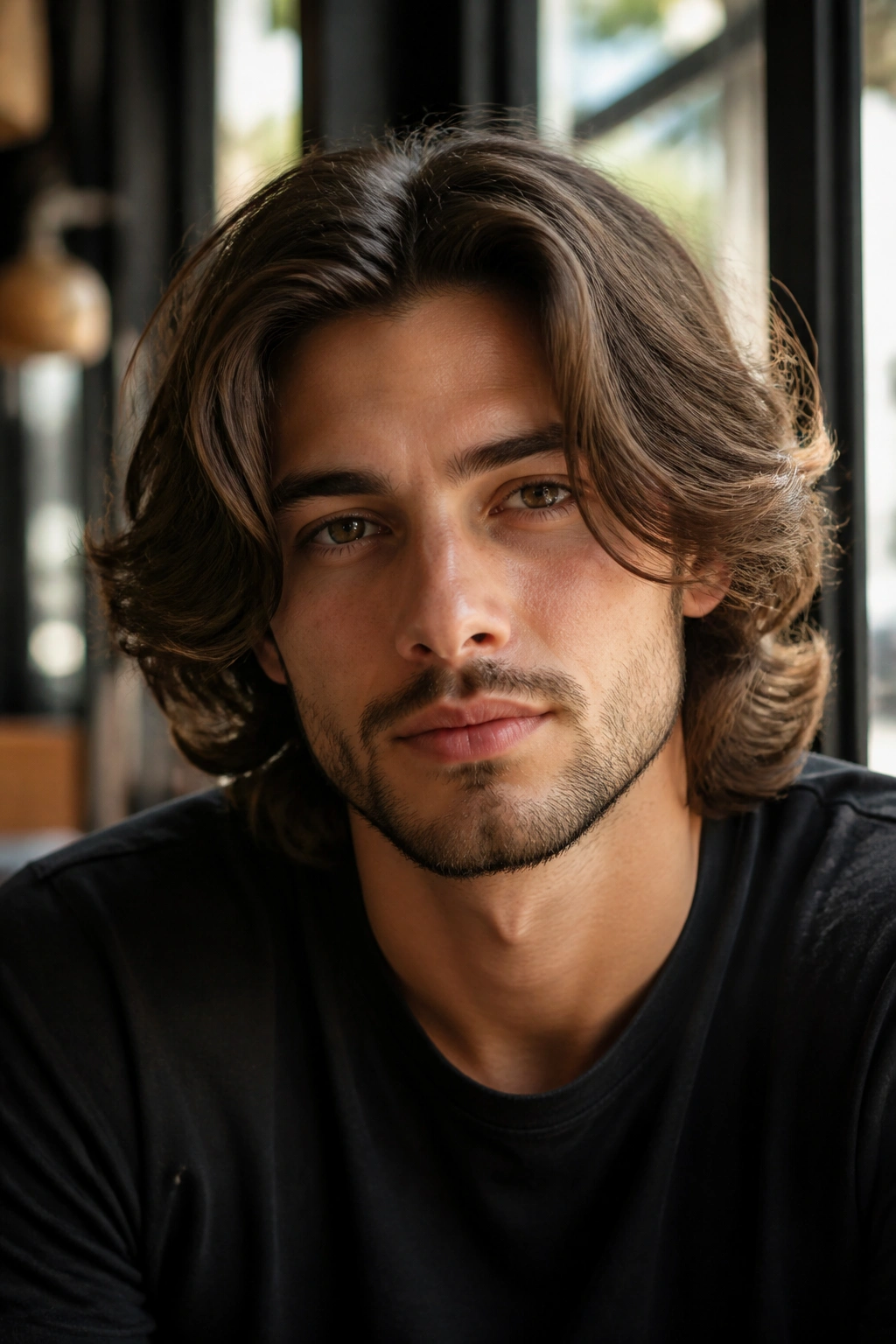
Middle-part curtains look sharp on wavy hair because the part lets the wave fall in two clean directions instead of fighting for the same space. The style has a little ’90s energy, sure, but on long hair it feels calm, not costume-like.
The best version is soft around the face and slightly heavier near the jaw. That keeps the middle part from turning into a flat line across the top of your head. If your hair has a strong bend already, this cut makes the bend look deliberate.
Use a light styling cream on damp hair, then part it with your fingers rather than a comb. A comb can make the part too strict. Let the front pieces sweep away from the nose and cheekbones, then leave them alone. Seriously. The less you keep touching it, the better it settles.
3. Bro Flow Past the Collar
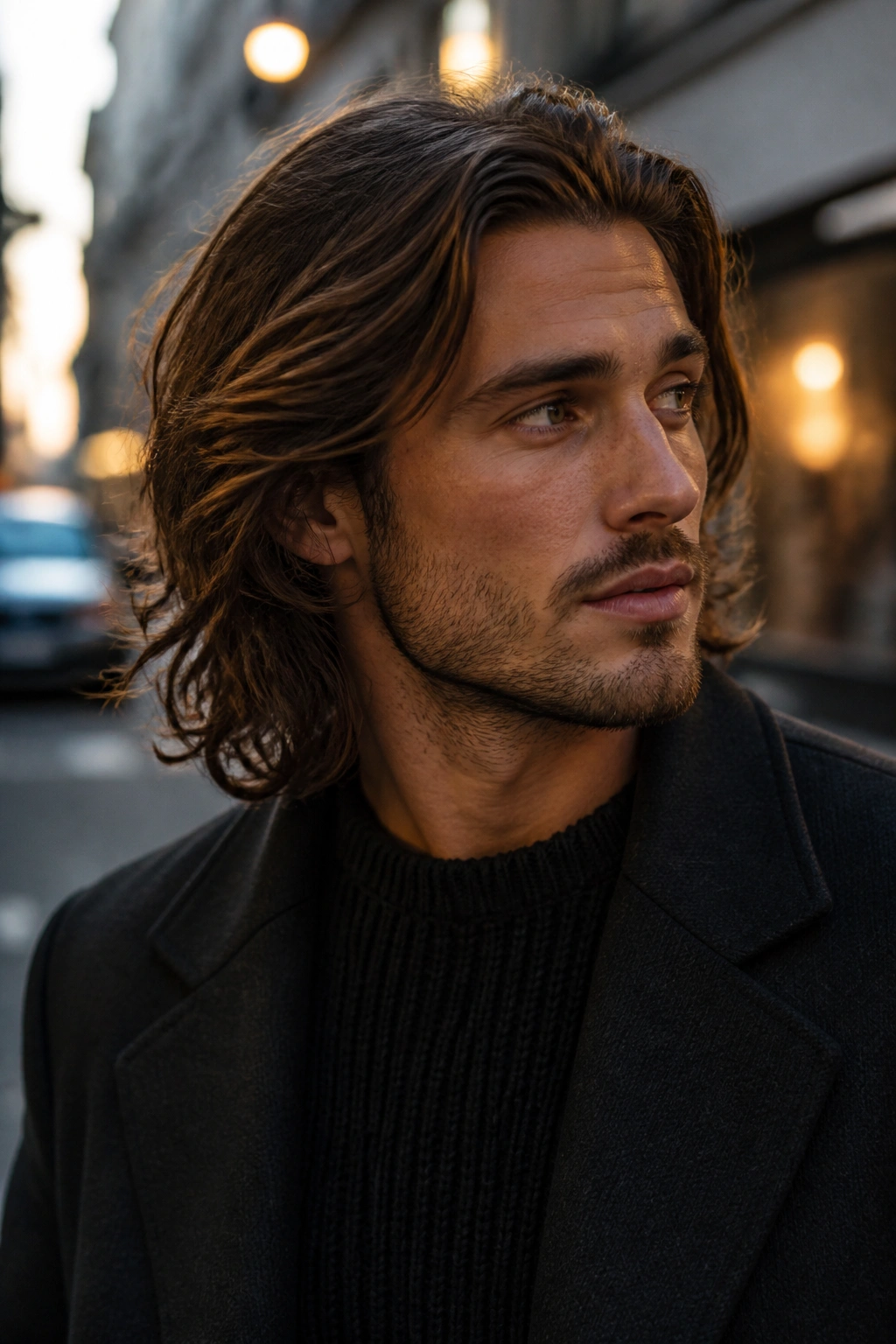
Why does the bro flow keep sticking around? Because it does the one thing a lot of longer men’s cuts fail at: it looks relaxed without looking unfinished. Hair that brushes the collar and moves back from the face gives you that easy, windblown shape people keep trying to fake with too much product.
How To Wear It
The trick is not letting the back get heavy. You want enough length to skim the nape, but not so much that the hair sits flat and sticky. A touch of layering through the crown keeps the top from slumping.
This style works best when the wave pattern is loose and open. If your hair is coarse, ask for a soft debulking around the ends. If it’s finer, keep the layers gentle so the style doesn’t lose too much body.
A bro flow looks best with a quick scrunch of salt spray and a rough dry with your hands. No need to polish it into place. The charm is in the looseness, and yes, that means a few pieces will wander.
4. Half-Up Knot With Loose Ends
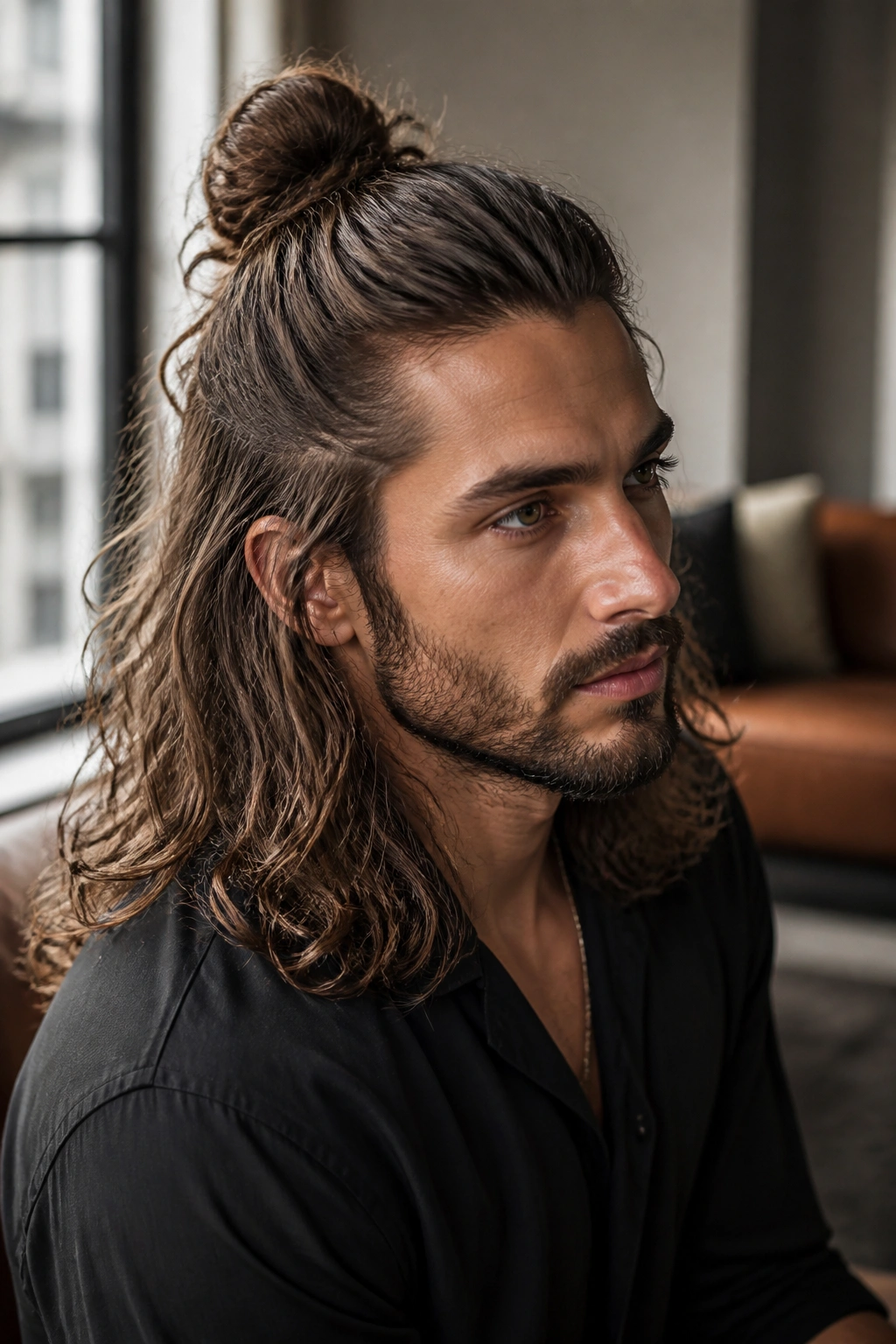
When your hair keeps falling into your eyes during work, training, or just a normal Tuesday, the half-up knot is the cleanest fix. It gives you control up top while leaving the length loose, which means you still get to show off the wave pattern in the back.
This is one of those long wavy hairstyles for men that looks more considered than it is. Pull the top third of the hair back, twist it once, and secure it with a small elastic or knot it into a compact bun. Leave the lower layers alone.
- Keep the knot at the crown, not the very top
- Leave the sides a little loose so it doesn’t look severe
- Use a snag-free elastic to avoid breakage
- Smooth the front with a drop of cream if the flyaways are wild
One detail matters more than people think: don’t pull the knot too tight. Tight half-up styles make wavy hair flare out at the sides and can pull the front pieces out of shape by the end of the day.
5. Shaggy Wolf Cut

The shaggy wolf cut is what happens when long waves decide they don’t want to behave like a polite gentleman. It’s part shag, part mullet, part “I cut this for movement and left the rest alone.” If that sounds messy, good. The style depends on controlled mess.
What makes it work is the difference between the crown and the ends. The top gets shorter, the lower lengths stay long, and the layers around the face keep the whole thing from turning into a triangle. On wavy hair, that contrast gives the cut its kick.
It’s especially good if your hair has a lot of natural bend but not much curl. The wave can stack in soft, irregular pieces without needing heat tools. A little matte cream or sea-salt spray is enough. Too much shine product kills the whole point.
One sentence here says it all: it thrives on imperfect hair.
6. Slicked-Back Waves
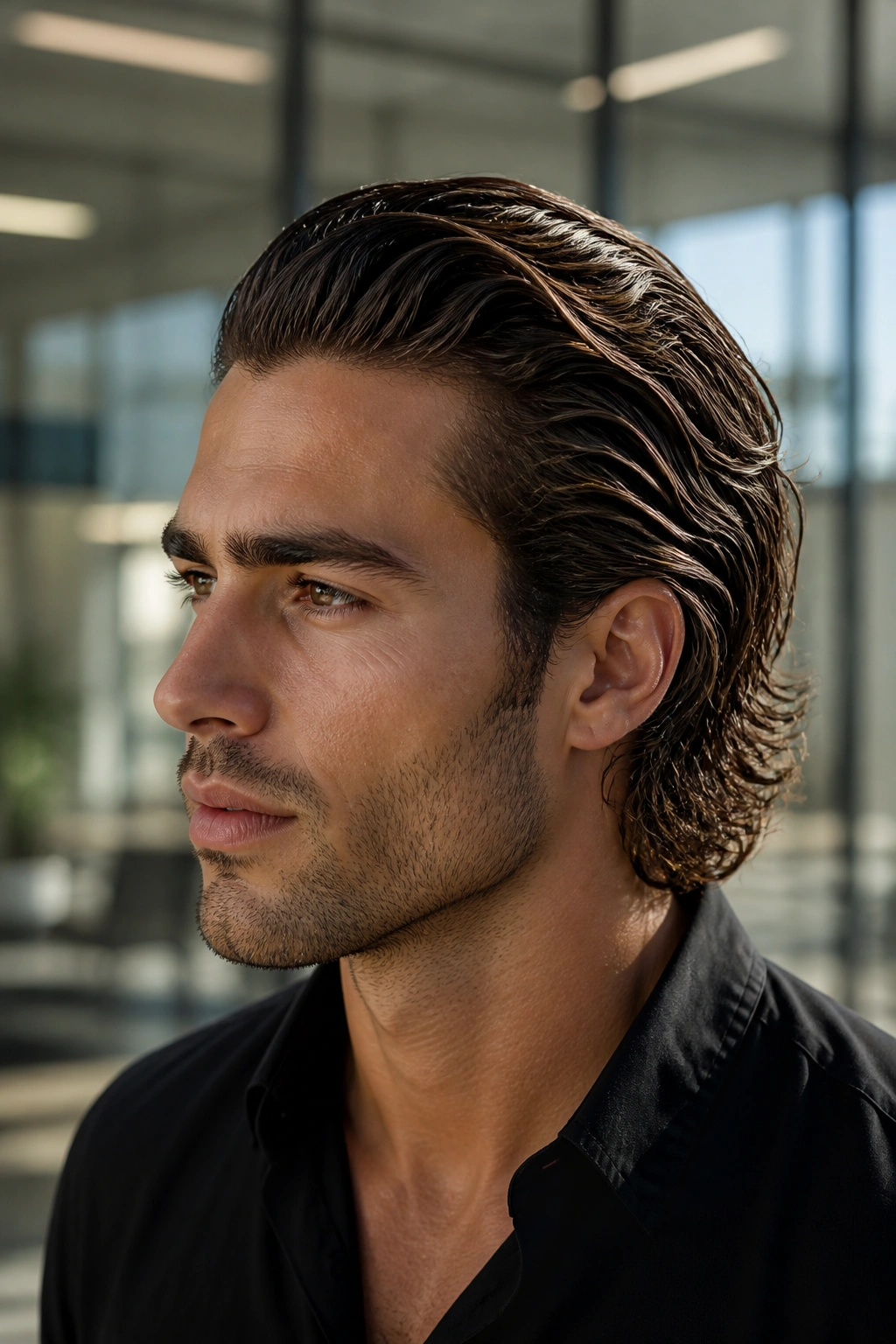
Unlike a straight slick-back, this version keeps the wave visible on purpose. You’re not flattening the hair into a helmet. You’re guiding it back so the texture still shows through, and that’s the difference between sharp and greasy.
A slicked-back wave style works best when the hair has enough length to push away from the forehead without springing right back into place. You also need some clean weight on the sides, usually with a low taper or neat scissor work around the ears.
What To Watch For
If the product is too heavy, the hair clumps. If it’s too dry, the front frizzes out and sticks up in little hooks. A medium-hold cream or a small amount of light pomade is usually enough.
This style suits guys who want something neater for dinners, office settings, or events without giving up the texture they actually have. It looks especially good when the top is combed back with fingers first, then cleaned up with a wide-tooth comb only at the front.
Skip the wet look unless your hair is dense. On finer waves, it can go limp fast.
7. Deep Side-Part Sweep

A deep side-part sweep is the grown-up version of long wavy hair that still wants some drama. The part creates asymmetry, and asymmetry is a gift when your hair has a lot of natural movement. It keeps the style from looking wide across the head.
This cut works well if one side of your waves tends to be stronger than the other. Instead of fighting that unevenness, you use it. Let the heavier side fall across the temple and cheekbone, while the lighter side gets tucked back or guided behind the ear.
How To Ask For It
Tell your barber you want length kept on top with a soft side part and light taper around the ears. That wording matters. If you ask for a hard part, the style can get too formal. If you ask for too much texture, it may start to fray.
A deep side part is useful for rounder faces because the diagonal line adds length. It also works if you want a bit more lift at the front without turning the whole haircut into a pompadour. That balance is hard to beat.
8. Surfer-Length Waves
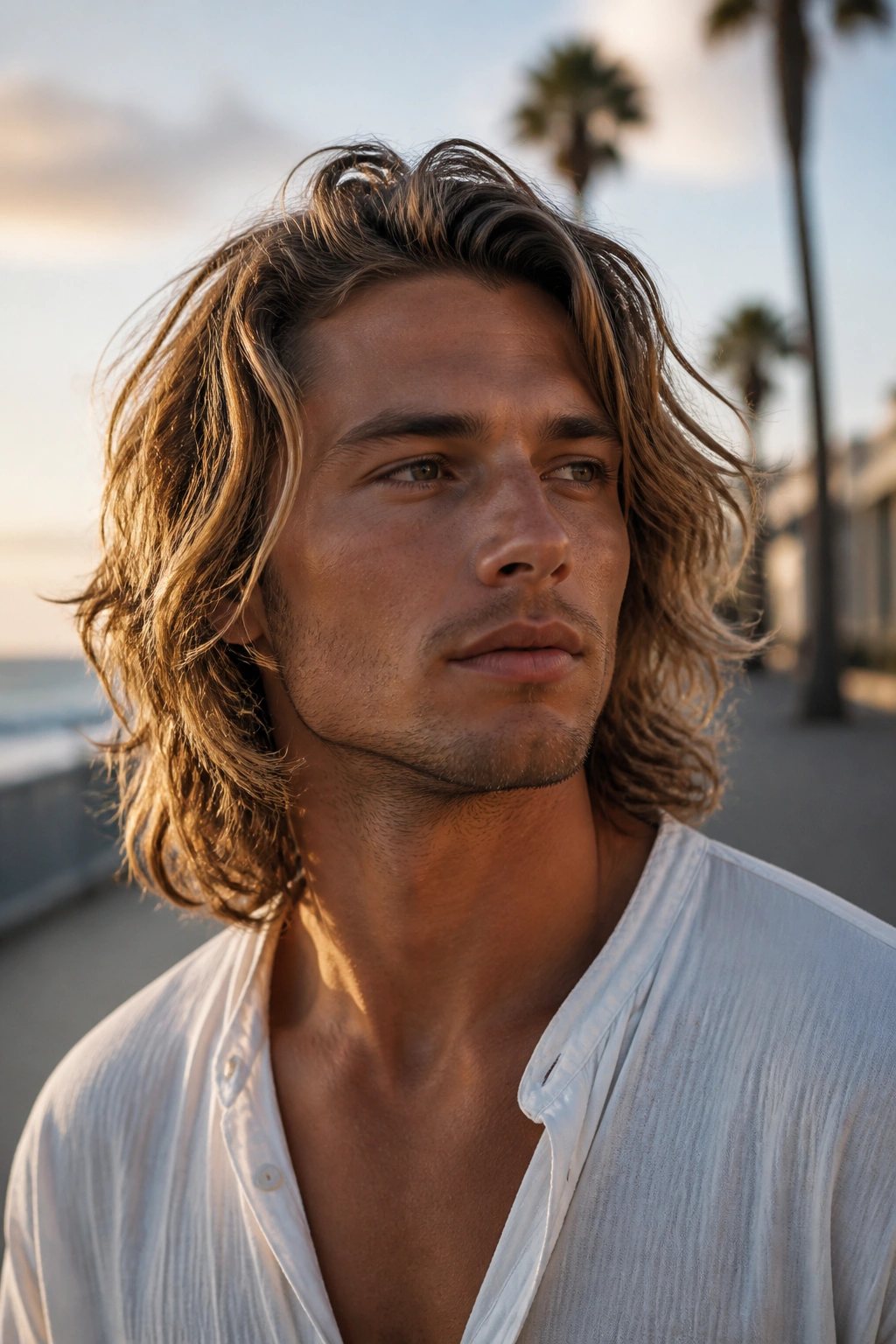
Surfer-length waves are the easiest long style to picture and one of the hardest to get right. Too blunt, and the hair sits like a heavy blanket. Too layered, and it loses the loose, lived-in shape that makes this cut appealing in the first place.
The sweet spot sits somewhere around the shoulders or just above them, depending on density. You want enough length for the wave to stretch out, bend, and fall naturally. The ends should feel soft, not chopped to bits.
Air-drying is your friend here. Towel the hair gently, then work in a small amount of salt spray or leave-in cream. After that, leave it alone for a while. If you keep raking your fingers through it every thirty seconds, the wave will swell and go fuzzy.
This is the cut for men who want movement and don’t mind a little shape change as the day goes on. It looks better after some wind, some motion, even a little mess. That’s the whole mood.
9. Modern Wavy Mullet
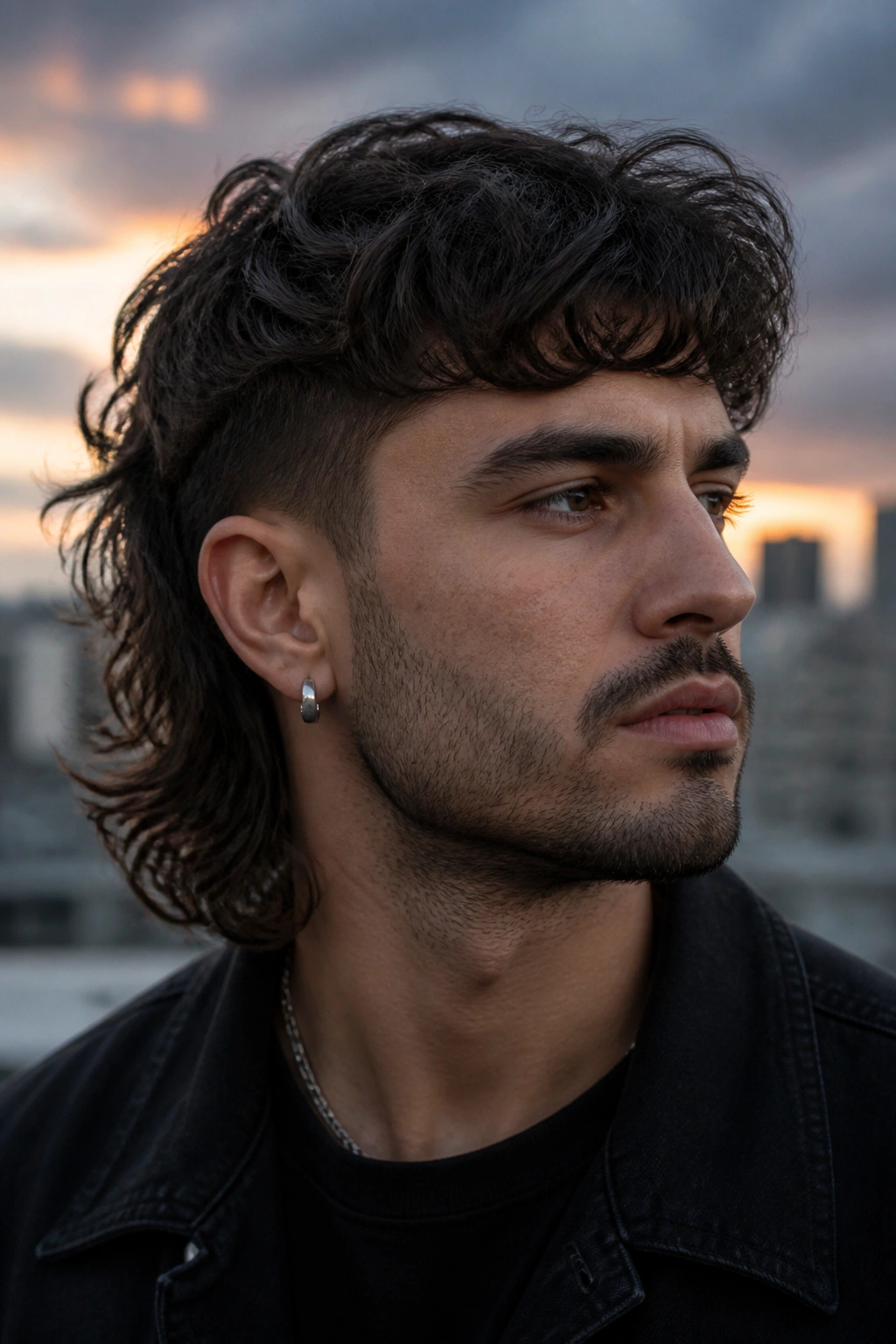
A modern wavy mullet is a lot sharper than the word “mullet” makes it sound. The front and top stay long enough to show off the wave, the sides get cleaned up, and the back keeps length without turning into a shaggy tail. When it’s done well, it has edge. When it’s done badly, it looks like the haircut got interrupted halfway through.
The key is balance. The top needs enough shape to sit properly, and the sides need to stay neat enough that the back actually feels intentional. A tapered temple or a tighter side finish helps a lot.
People either love this cut or they don’t, and that’s fine. It’s not trying to be invisible. It works best on guys who want something with personality and don’t mind a haircut that starts conversations.
A little matte paste through the ends can help the back separate. Keep the front loose. If the fringe gets too tidy, the whole thing loses its bite.
10. Tapered Sides With Long Top
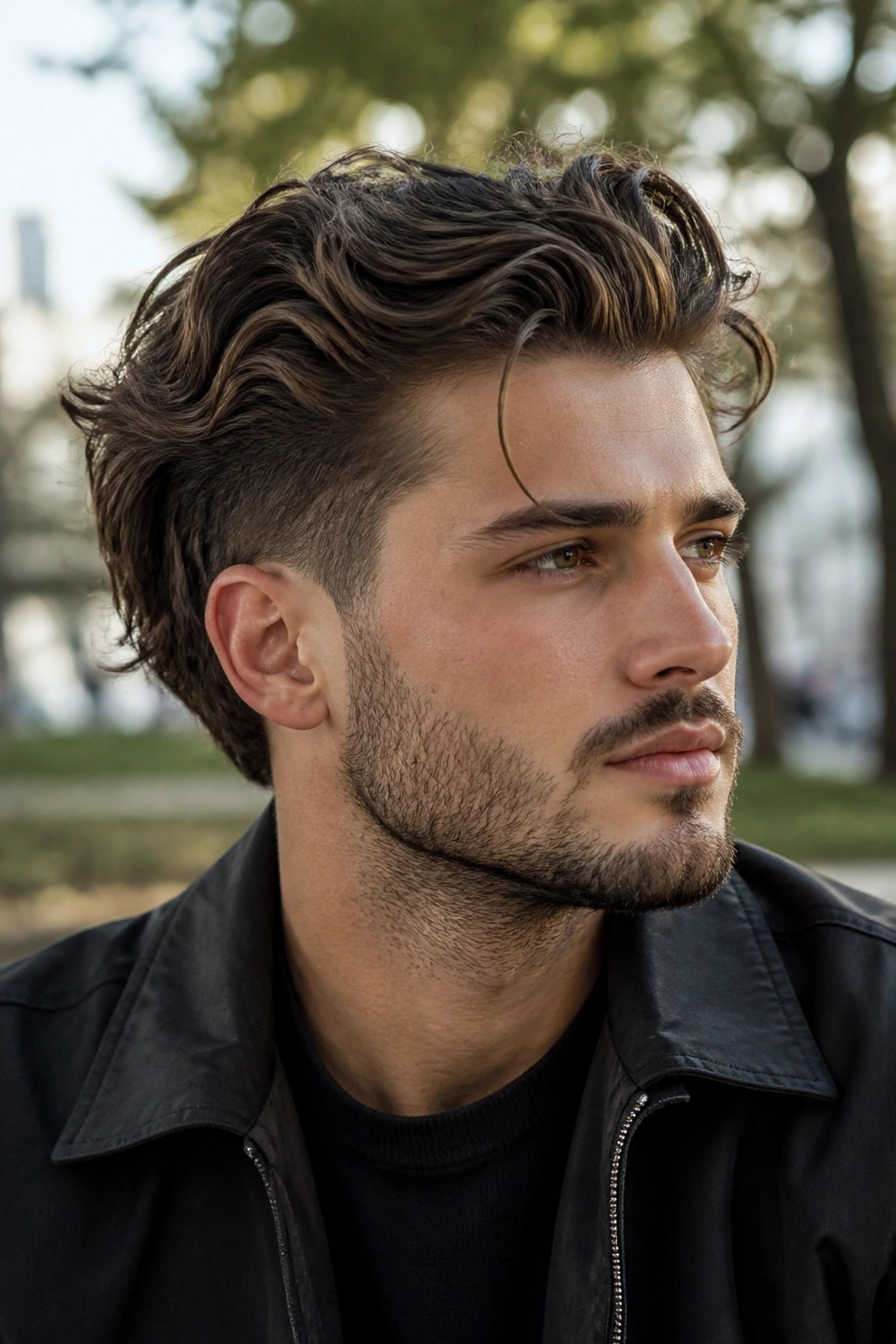
This is one of the smartest long wavy hairstyles for men if you want length without the sides taking over your face. Tapering the sides makes the top look longer and fuller by comparison, which is a neat trick if your wave pattern is strong but your hair grows wide.
The haircut is straightforward: long top, controlled sides, clean transition around the ears and neckline. The taper can be soft or more visible, depending on how much contrast you want. Either way, the goal is to keep the silhouette from puffing out at the temples.
Best For
- Men with round or square faces
- Thick wavy hair that gets bulky near the ears
- Anyone who wants length but still needs a tidy outline
- Guys who wear jackets, collars, or tailored clothes a lot
The style works well with either a center part or a loose push-back. It is also easier to maintain than a fully shagged-out look because the sides stay manageable between cuts. That part matters. A long wavy style should not feel like a weekly emergency.
11. Face-Framing Layers

Why do face-framing layers make such a difference? Because they pull the wave pattern forward instead of letting it hang like a single block. The hair moves around the cheekbones, jaw, and neck in a way that feels softer and more deliberate.
This cut is especially good if your face is long or angular. A few shorter layers around the front can bring the eye inward, while the back stays long enough to keep the style grounded. It’s a small change, but on wavy hair it shows up fast.
What To Ask For
Tell the barber you want layers that start near the cheekbone or jaw, not just at the ends. That’s the part most men miss. If the only shaping happens below the collar, the front still looks heavy.
A cream with light hold works better than a stiff product here. You want the front pieces to swing when you move, not freeze in place. And if one side falls better than the other, leave it. Perfect symmetry often makes wavy hair look fake.
12. Brushed-Back Shoulder Length

Brushed-back shoulder-length hair has a softer feel than a slick-back because the wave isn’t erased. You can still see the bends in the hair, but the overall direction is back and away from the face. That makes it a strong choice for men who want a cleaner line without giving up length.
A round brush and a blow-dryer can help here, but you do not need a salon-level routine. Dry the hair in the direction you want it to sit, then use a small amount of medium-hold cream to keep the top from slipping forward. The brush just gives the wave a polite nudge.
The cut works best when the ends are slightly textured and the crown is not over-thinned. If the top gets too light, it will puff up after an hour. If it’s too heavy, the whole style drops and looks tired.
This is the one I’d call quietly useful. It looks intentional at work, at dinner, and when you have no time to do much else.
13. Low Ponytail
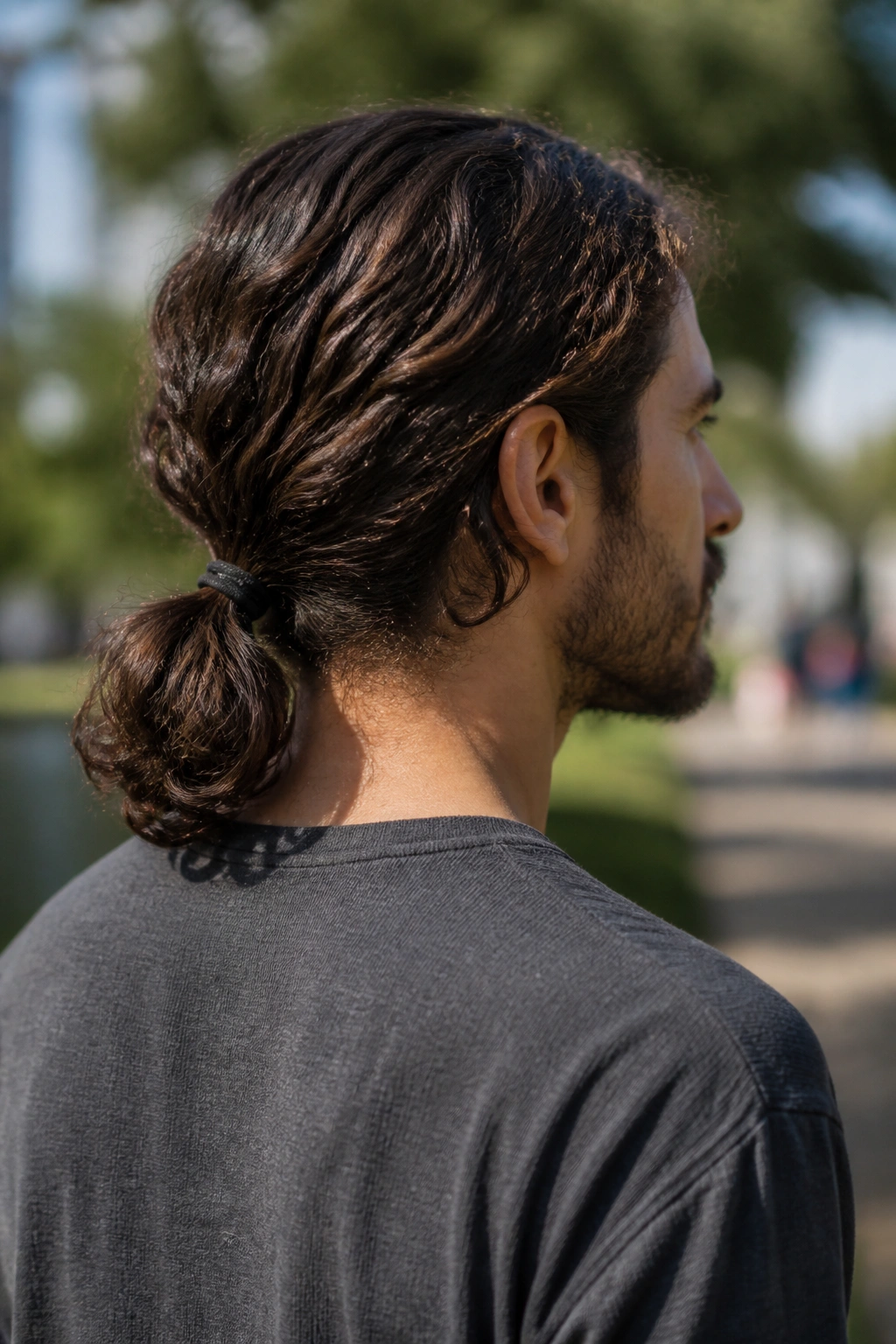
Sometimes the best style is the one that gets hair off your neck and out of your face without starting a fight with your wave pattern. A low ponytail does exactly that. It keeps the hair long, clean, and controlled, while the loose texture on top still reads as hair, not a helmet.
The placement matters more than people think. Keep the tie at the nape of the neck, not halfway up the back of the head. A low placement lets the waves drape naturally instead of sticking out in a lump.
- Use a soft, snag-free elastic
- Leave 1 to 2 inches of slack near the hairline if you want a softer look
- Smooth the crown with clean hands, not a heavy gel
- Pull a few face pieces free if the style feels too severe
A low ponytail is great on days when you need function first. It also pairs well with a beard because the long line from hair to jaw looks balanced instead of fussy. Small detail, big difference.
14. Loose Man Bun
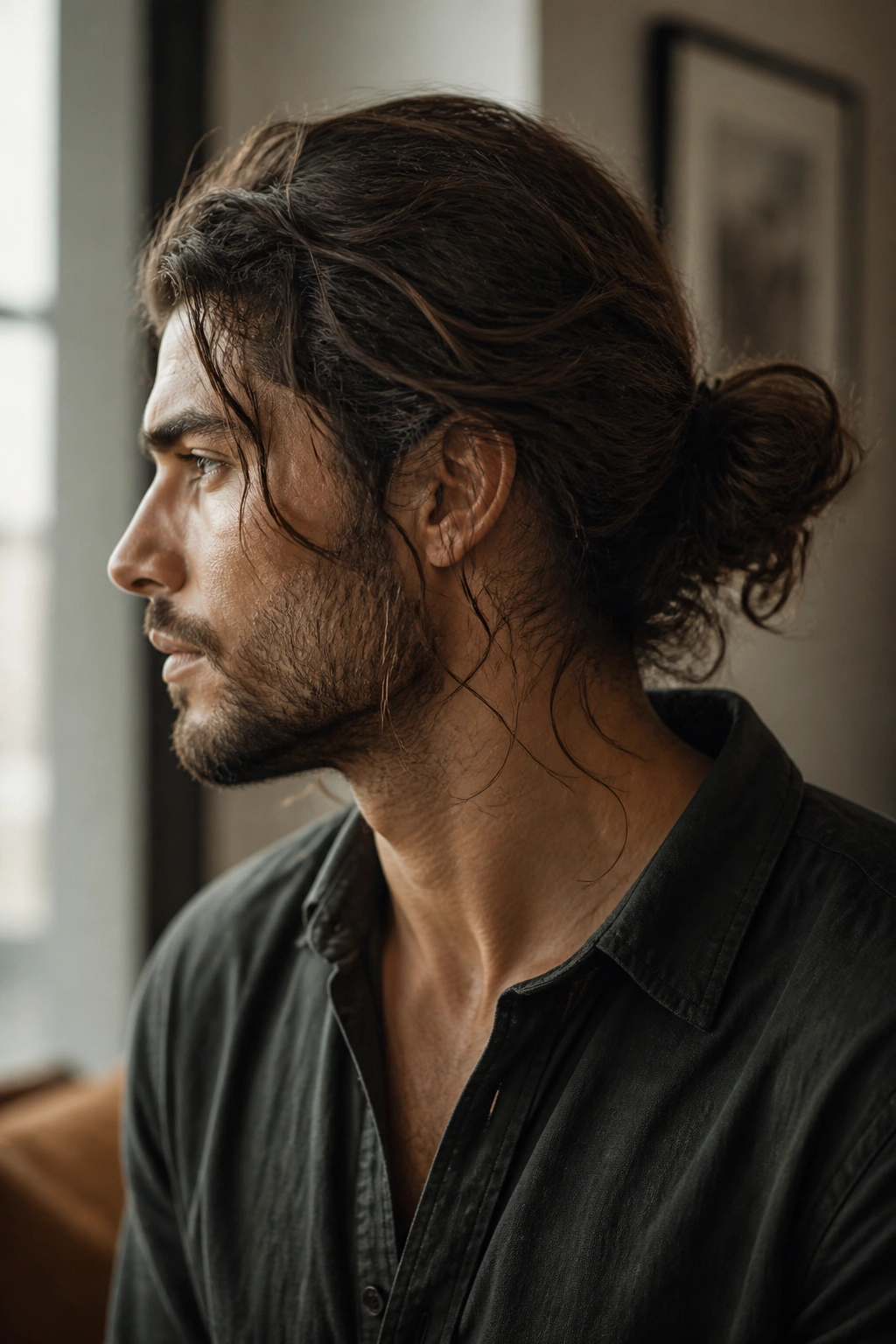
A loose man bun gives long wavy hair a little structure without locking it down. The word “loose” matters. If the bun gets pulled tight and sits high on the head, the style starts to fight the waves instead of working with them.
This version sits low or mid-low and lets a few strands escape around the temples, ears, and neckline. Those loose pieces keep it from feeling severe. On wavy hair, they also add a bit of texture so the style doesn’t look too neat.
What usually goes wrong? People twist the hair too hard, use too much tension, and end up with a bun that feels more like a tug than a style. You want the hair gathered, not squeezed. A little air around the knot keeps the wave visible.
It’s a good option for gym days, long commutes, and jobs where hair needs to stay contained. It also grows out nicely, which is more than I can say for some trendier cuts that fall apart the minute the barber chair cools down.
15. Long Wavy Fringe
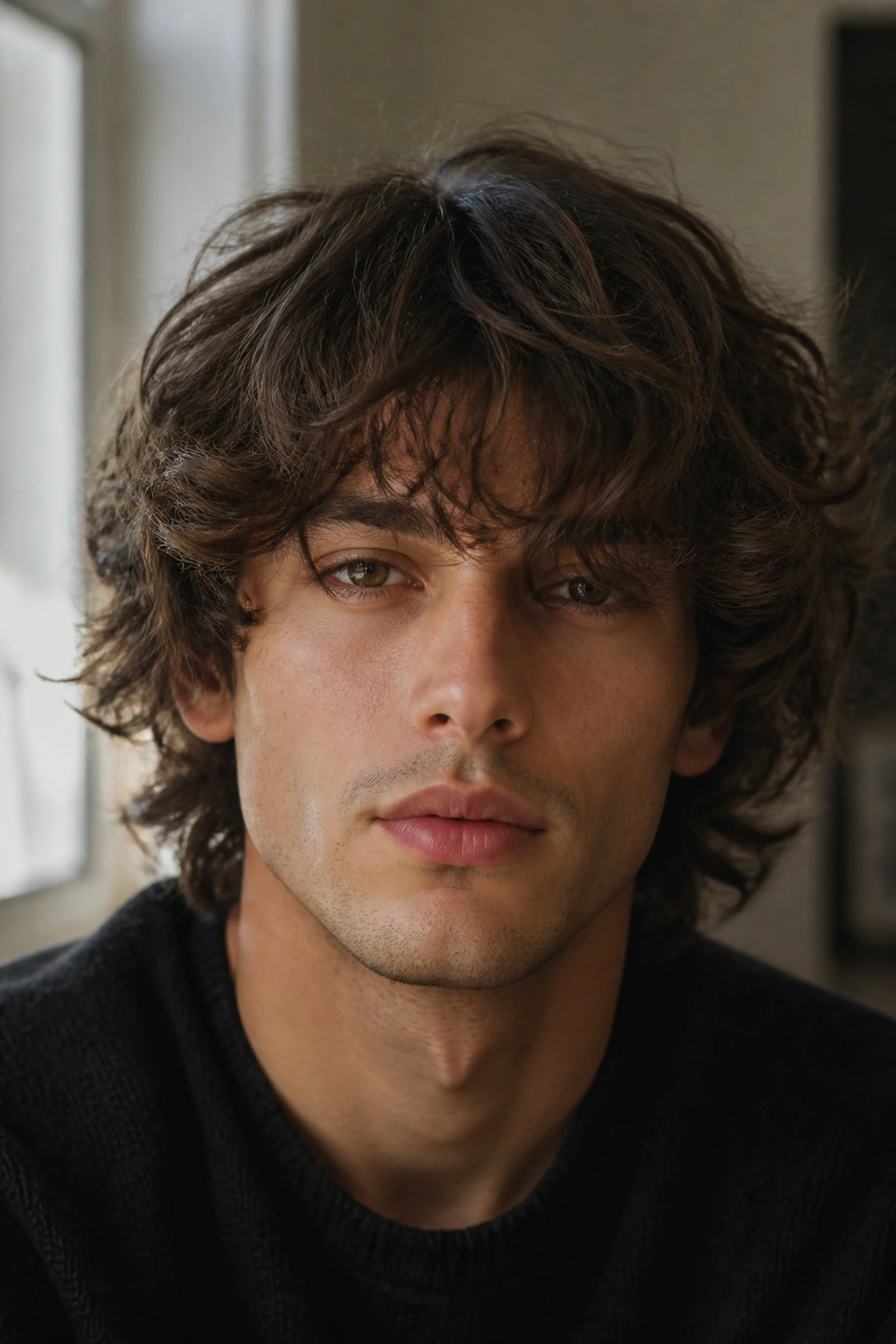
A long wavy fringe is for the guy who wants the front to do the talking. Instead of pushing all the hair back, you let the fringe fall forward in a controlled way, usually sweeping it across part of the forehead or splitting it softly near the middle.
This style is a good fit if your forehead is on the longer side or if you like the eyes-and-brow area to carry more of the look. The fringe creates a frame, and on wavy hair that frame has movement built in. It never sits as flat as straight hair would.
How To Keep It From Collapsing
The front needs light support, not a heavy paste. Work a small amount of cream through damp hair, then blow-dry the fringe side to side with your fingers. That encourages bend without making it stiff.
If the fringe falls into the eyes too fast, the cut may need a touch more layering near the front. If it springs up like a wave machine, it’s probably too short. The best length usually sits just above the brows when dry.
16. Viking Tie-Back
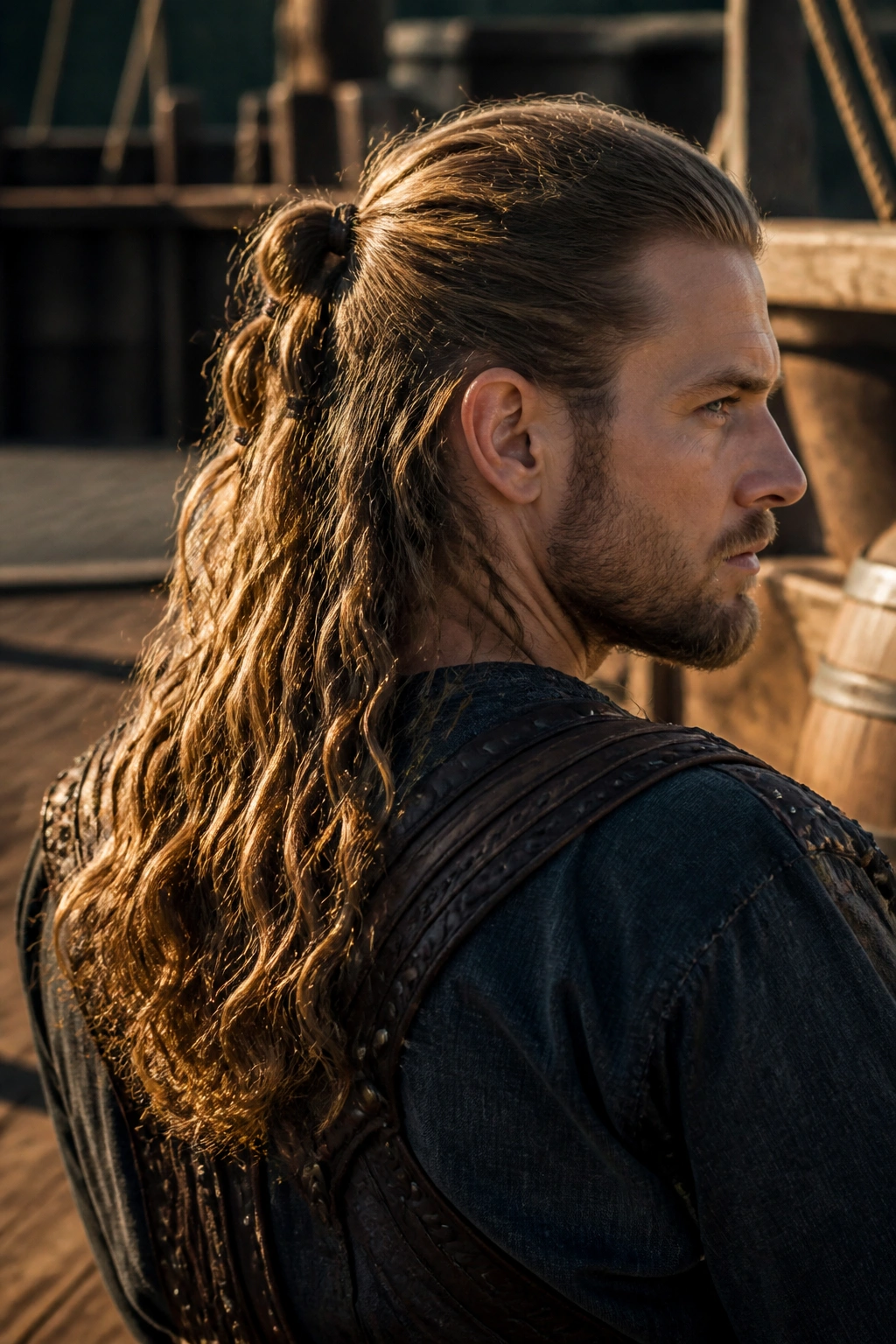
A Viking tie-back is not costume hair when it’s cut and worn properly. It’s basically long wavy hair pulled back in sections so the face stays open while the length still shows from the sides and back. Done well, it looks strong and clean, not theatrical.
The style works best on dense waves that have enough weight to stay in place after being tied. Some men pull back the top and sides, others leave the lower layers free. Both versions can work, but the cleaner the sides are, the less likely the style is to look bulky.
You do not need braids to make this feel right, though braids can help if the hair is very long. A small tie at the back, plus a few loose waves around the temples, usually does the job. The point is control without stiffness.
If you’re going for this look, keep the neckline tidy. A messy nape plus a tied-back top can go from rugged to sloppy in about five seconds. That’s the line to watch.
17. Tucked-Behind-Ears Natural Flow

This is the quietest style in the whole list, and honestly, one of the most useful. Long wavy hair tucked behind the ears keeps the face open, shows the wave length, and avoids the overstyled feel that some longer cuts pick up fast.
It works because it respects the natural fall of the hair. You’re not forcing the waves into a part, a knot, or a hard shape. You’re just guiding them away from the face and letting the rest do what it wants. That makes it especially good for men who wear glasses, have strong cheekbones, or prefer a cleaner profile.
A light cream, a quick finger rake, and the tuck behind the ears are often enough. If the hair slips out, the layers may be too short around the sides, or the wave may need a touch more control at the roots. Easy fix. No drama.
For a lot of guys, this is the style that ends the search. It’s low-maintenance, flattering, and honest about what the hair already does well. And that, more than anything, is what long wavy hair wants.
