



There is a persistent myth that once you cross a certain age threshold, you are expected to shear your hair into a blunt, chin-length bob. It is nonsense. Long hair over 40 is not just possible; it can be incredibly chic, youthful, and vibrant. The secret isn’t merely about maintaining the length, though—it is entirely about movement.
As we get older, hair texture often changes. It might become finer, or perhaps it becomes a bit more wiry and coarse if you are embracing your gray. The uniform, one-length style that worked in your twenties can easily drag your features down in your forties and beyond. It creates a heavy, static curtain that lacks the necessary lift to brighten your face.
Layers are the solution. They are not just aesthetic choices; they are functional. By removing internal weight, you add bounce. By placing framing pieces near your cheekbones or jawline, you draw the eye exactly where you want it. The right haircut can soften features, hide thinning areas, and provide a polished finish that requires remarkably little effort to style on a daily basis.
1. Long Shag with Curtain Bangs

This is the ultimate confidence cut for anyone wanting to embrace a bit of rock-and-roll edge. It moves away from the perfection of a straight line and leans into messy, lived-in texture. The layers are choppy and start high, creating volume right at the crown where many of us start to see a bit of flatness.
Why It Works for Mature Hair
The curtain bangs are the star here. They are long enough to be tucked behind the ears but short enough to graze your cheekbones. This framing effect softens the face and draws attention to your eyes, distracting from any fine lines around the forehead. It is a look that screams cool, not “trying too hard.”
Styling Tips
- Avoid perfectly straight styling; use a salt spray to encourage natural wave.
- Use a round brush only on the bangs to give them that iconic swoop.
- Let the ends air dry for a more effortless, piecey finish.
Pro tip: If your hair is naturally straight, use a large-barrel curling iron to create loose, irregular bends rather than uniform curls.
2. Subtle Face-Framing Layers

If you are hesitant about drastic changes, this is the perfect entry point. The length stays consistent, and the bulk of the hair remains untouched. The magic happens only around the front of the face, where hair is cut in a soft, descending angle starting around the chin.
Who Should Choose This
This cut is fantastic for those who want to keep their hair in a ponytail or bun. Because the layers are concentrated on the perimeter of your face, you do not lose the fullness of your hair when you tie it back. It keeps your updos from looking severe or pulled too tight.
Keeping It Balanced
- Keep the layers soft, not blunt.
- Avoid cutting too much hair; you want it to look like it grew that way.
- Ensure the shortest layer starts low enough that it does not pop out awkwardly when you tuck your hair behind your ears.
3. Blended V-Cut
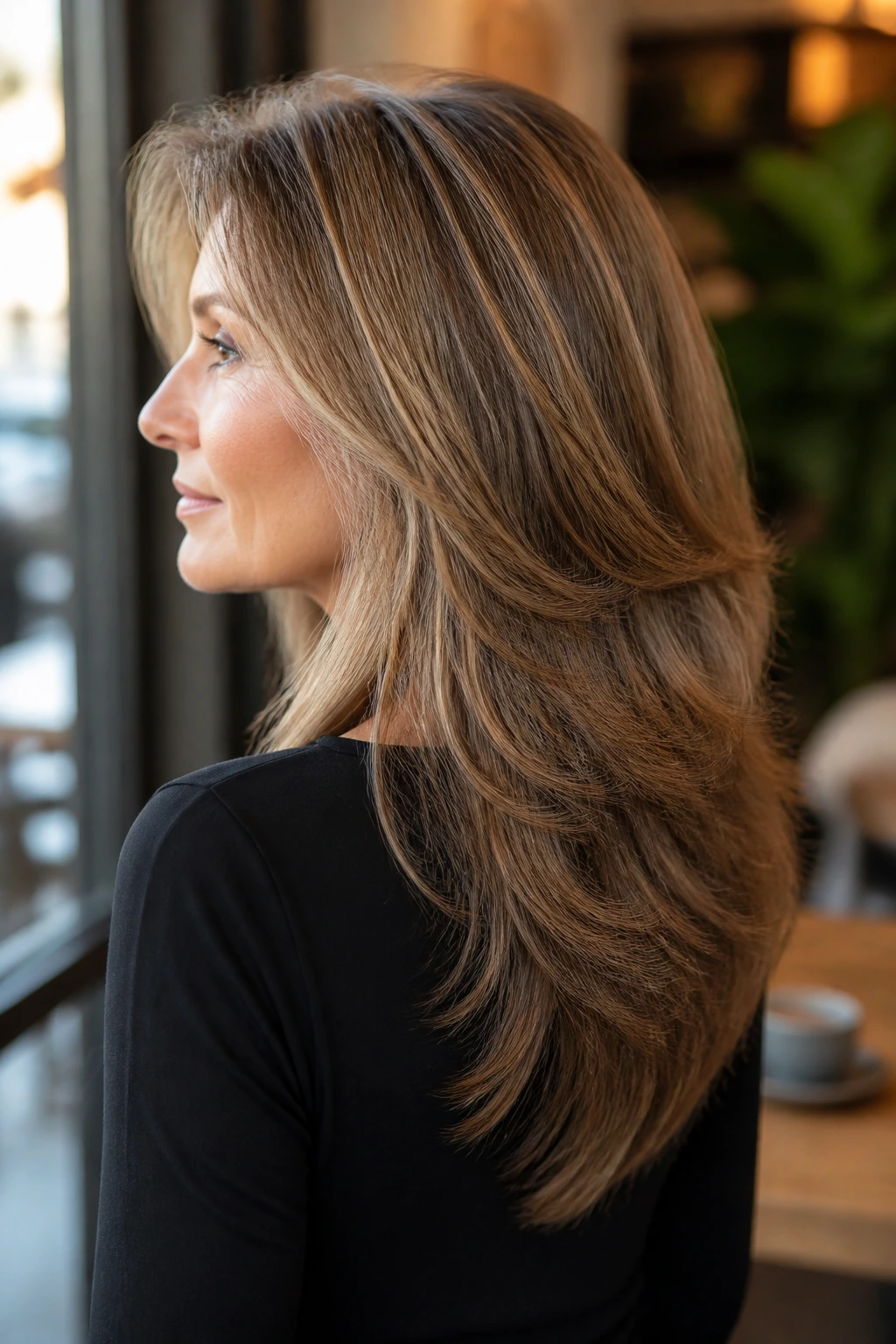
When you have thick hair that tends to feel heavy and triangular, a V-cut is your best friend. It shapes the perimeter of the hair into a point at the back, which naturally removes weight from the sides. It prevents that boxy, “helmet” look that often happens when long hair is left blunt.
Creating the Shape
The layering in a V-cut is usually concentrated at the ends. It encourages the hair to swoop inward toward the center, creating a beautiful, elegant flow. It looks particularly stunning on people with natural waves or straight, glossy hair.
The Impact on Density
This cut makes long hair feel lighter. You will notice that it takes less time to dry, and it feels less like a cape on your shoulders. It is a subtle way to change your silhouette without sacrificing the length you love.
4. Soft Wispy Ends

Some cuts can make hair look straggly if the ends are too thin. This style, however, leans into that wispiness as a design feature. It is a technique where the stylist uses thinning shears or point-cutting to soften the very tips of the hair, making them look airy and delicate rather than damaged.
Avoiding the “Thin” Trap
The key to pulling this off is ensuring the hair looks healthy. You want the ends to look soft, not split. Use a high-quality smoothing oil or serum on the bottom three inches of your hair daily. This keeps the wispy effect looking intentional and polished.
Why This Style Lasts
Because the ends are already softened, they don’t grow out with that blunt, heavy line that makes you feel like you need a trim every six weeks. You can go longer between appointments, which is a massive bonus for anyone tired of the salon cycle.
5. Deep Side-Parted Cascading Layers

If you feel like your hair is lacking volume at the roots, a deep side part combined with cascading layers can change everything. By pushing a significant amount of hair to one side, you create an instant lift. The layers are then cut to follow that sweeping motion.
The Power of the Part
Your part is a tool, not just a preference. Moving it to the side breaks up the symmetry of the face, which can be very flattering as we age. It creates an asymmetrical line that adds a touch of modern sophistication to long hair.
Managing the Volume
- Use a volumizing mousse at the root before blow-drying.
- Flip your head upside down for the last thirty seconds of drying for an extra boost.
- If the hair falls flat, a quick dry shampoo spray at the root can provide the grip you need.
6. Shoulder-Length Long Layers

This is the transition cut. If your hair has become significantly damaged or you are dealing with extreme thinning, this length—just skimming the shoulders—is the sweet spot. It is long enough to feel like “long hair,” but short enough to regain a sense of thickness and health.
Why It Changes the Game
Long, heavy hair pulls the face down. Bringing the length up to the collarbone creates a “lifted” effect for your jawline. The layers here should be long enough that you can still pull the hair into a small clip or a half-up style.
The Cut’s Versatility
You can wear this straight for a sharp, modern look or add soft bends with a curling iron for a romantic vibe. It is incredibly low maintenance, making it a favorite for those who want to spend five minutes or less styling in the morning.
7. Rounded Layers for Volume
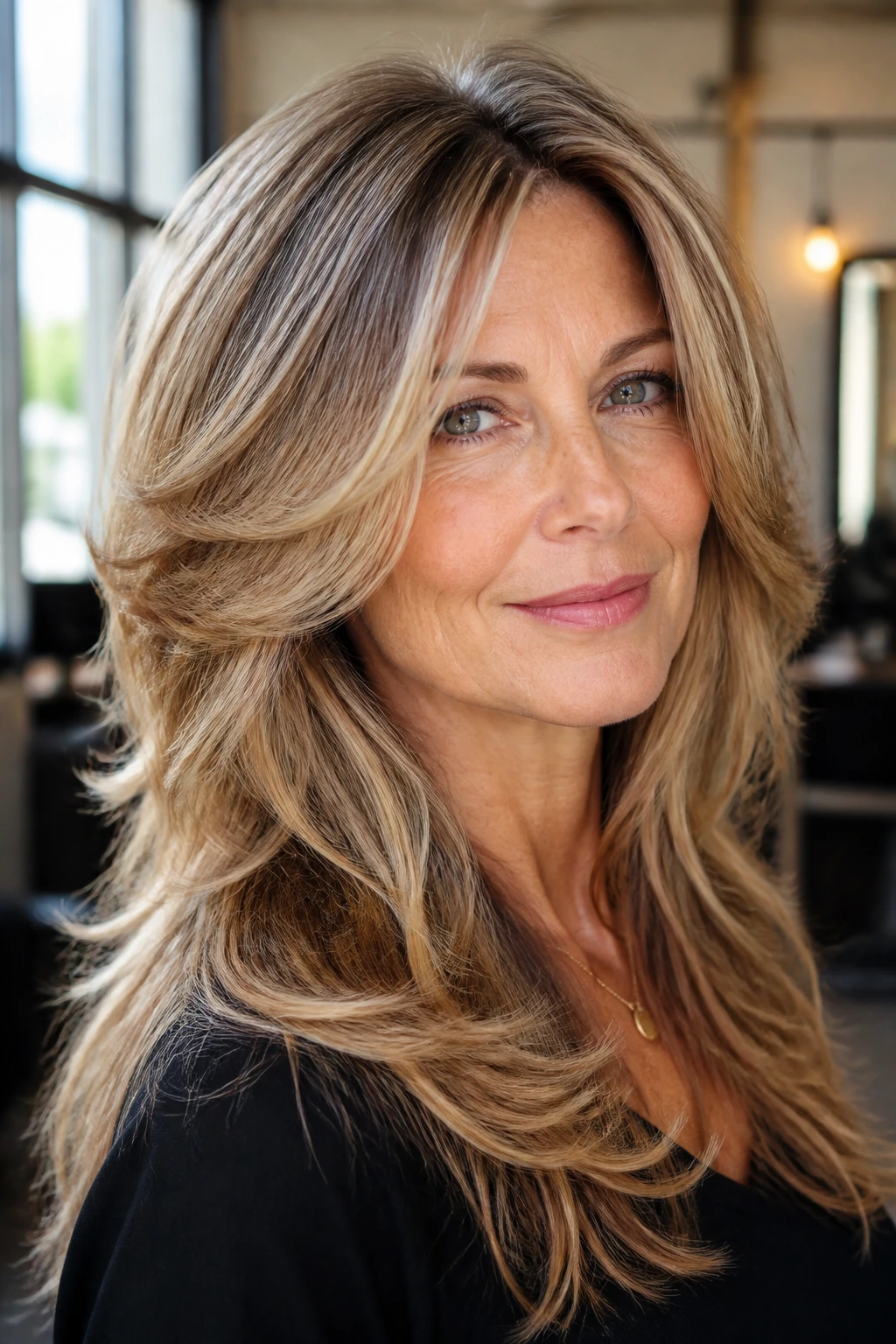
Flat hair is the enemy of a youthful look. Rounded layers are cut to follow the curve of your head, which helps create a halo of volume. Unlike jagged layers, these are blended seamlessly into the length, giving the appearance of a fuller, more substantial mane.
The Mechanics of the Cut
Think of this as a “bouncy” cut. The layers are shorter around the crown and get progressively longer toward the ends, but the transition is smooth. This prevents the hair from looking disconnected or “stepped.”
Styling Strategy
To get the most out of this cut, you need to blow-dry with a round brush. It is the only way to really set the volume. Focus on lifting the hair up and away from the scalp. If you are not a fan of blow-drying, a hot air brush is a life-saver for this specific style.
8. Choppy Textured Ends
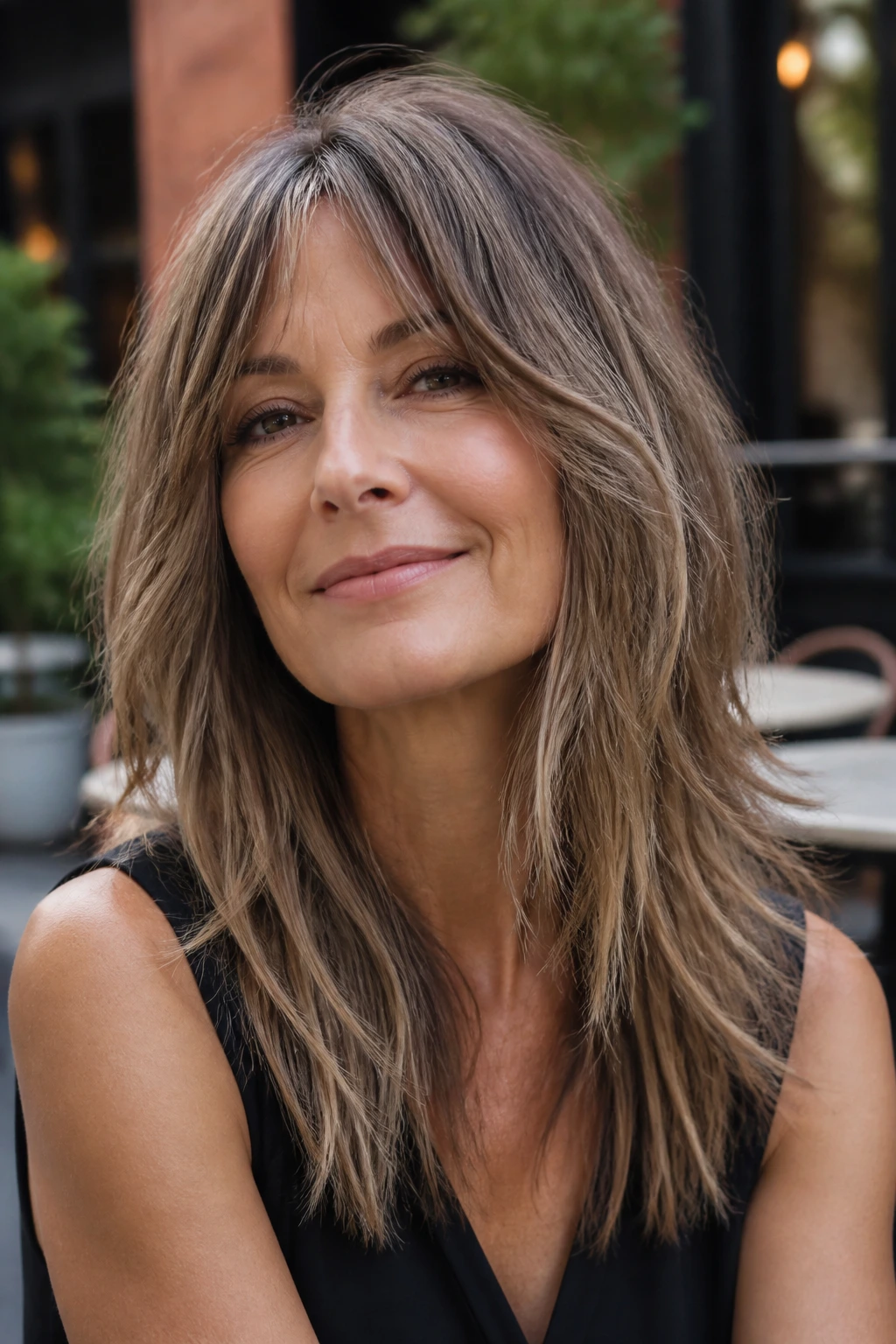
This is a bolder choice. Instead of the soft, blended ends of other cuts, this style embraces a jagged, deliberate texture. It looks modern, edgy, and a bit rebellious. It is perfect if your hair is naturally wavy or coarse, as it embraces that texture rather than fighting it.
How to Wear It
The chop should happen in the last two to three inches of your hair. It makes the ends look piecey and defined. This cut pairs incredibly well with natural highlights or balayage, as the movement of the hair shows off the color variations perfectly.
The Cautionary Note
If your hair is extremely fine or prone to breakage, be careful with “choppy” cuts. Too much thinning can leave the ends looking see-through. Talk to your stylist about using a razor or point-cutting to achieve the effect without sacrificing too much structural integrity.
9. Swooping Side Bangs with Long Layers
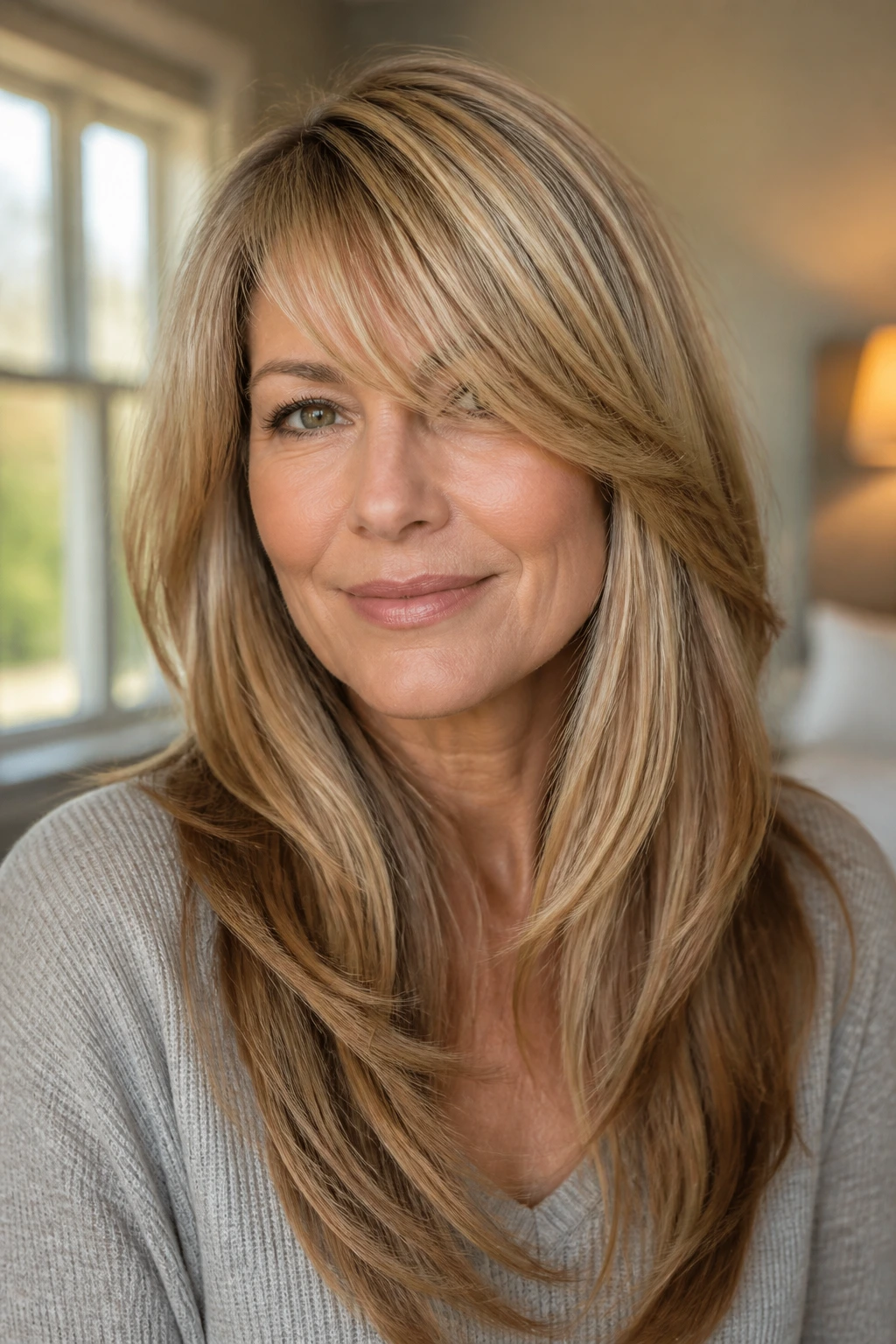
If you have a wider forehead or want to soften a strong jawline, side bangs are incredibly effective. When paired with long layers, they create a beautiful transition that draws the eye diagonally across the face. This is the definition of “polished.”
Framing the Face
The side bang should start near the eyebrow and sweep across to the cheekbone. It is a very flattering, classic look that never goes out of style. It feels elegant and put-together, even if you just let the rest of your hair air dry.
Maintenance Reality
Side bangs require a bit more upkeep than other cuts. Because they sit right on your face, they tend to get oily faster than the rest of your hair. Keep a dry shampoo handy or just wash the bangs in the sink if you are short on time.
10. Feathered Layers

This style is a nod to the classic “Farrah” vibe, but updated for modern times. It’s all about layers that flick outward, away from the face. It creates incredible movement and lightness, making it a top contender for hair that feels heavy and dull.
Creating the Flick
The secret is in the blowout. You want to use a round brush to curl the ends away from your face. It opens up your features and makes you look brighter and more alert. It is a very feminine, soft style that feels very approachable.
Who Should Avoid This
If you have very tight, coily curls, this style might not translate well, as it relies on specific, directional styling. However, for straight, wavy, or loose-curl hair types, it is a fantastic way to introduce volume.
11. Invisible Interior Layers
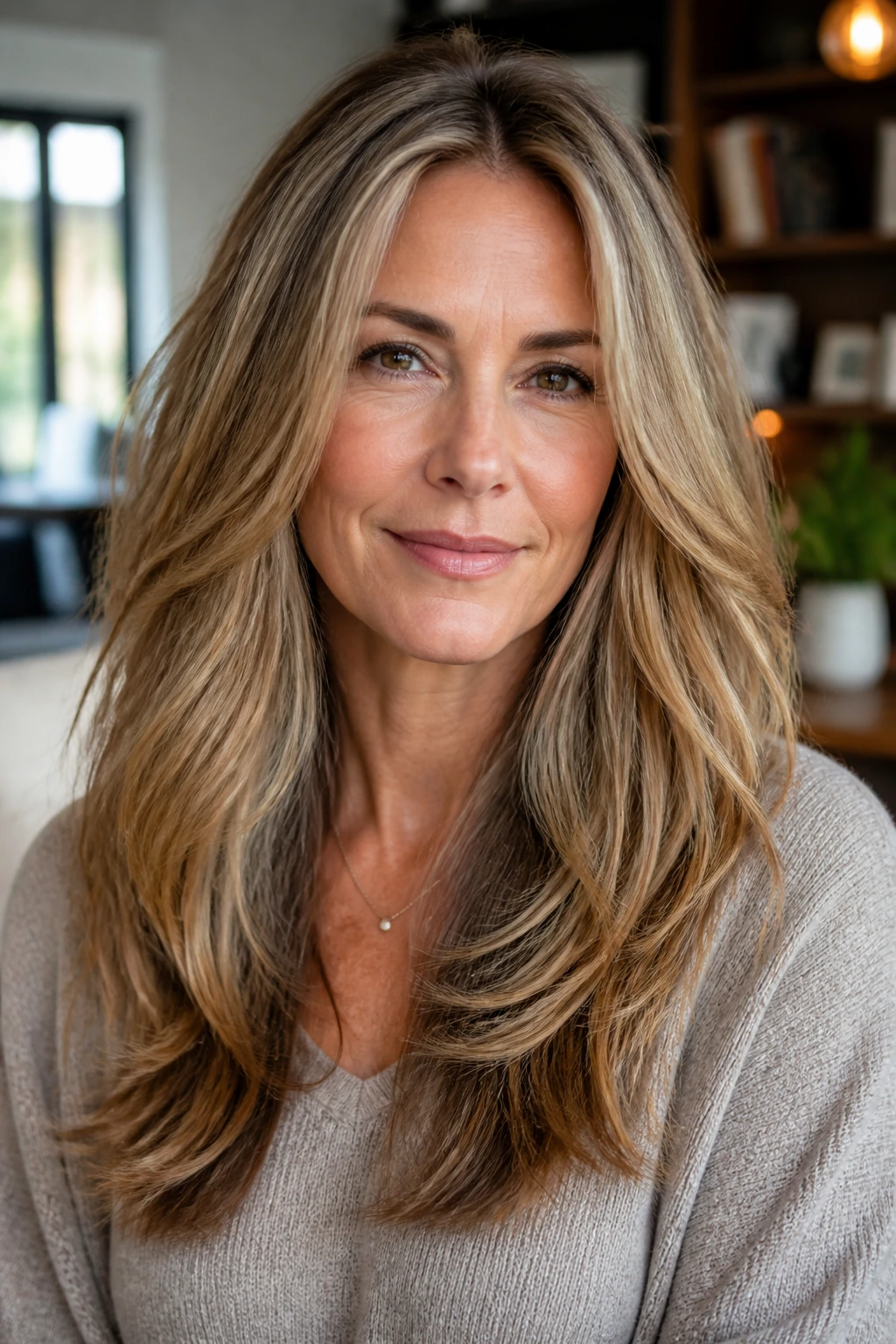
Sometimes you do not want to see the layers; you just want to feel the results. Interior layers are hidden underneath the top layer of your hair. They act as “structural support,” propping up the hair above them to create body without changing the external shape.
The Advantage for Fine Hair
This is the holy grail for fine-haired individuals. You get the fullness you crave, but the surface of your hair looks smooth, blunt, and healthy. You avoid the “frizzy” look that can sometimes happen when top layers are cut too short.
How to Ask for It
Ask your stylist for “weight removal” or “hidden layers.” They will lift up sections of your hair and cut shorter pieces underneath. It is a technical skill, so make sure you are going to someone who understands the geometry of hair density.
12. Blunt Perimeter with Hidden Layers

This is a variation of the invisible layer concept but with a bolder finish. The outside line of the hair is kept completely blunt—a solid, healthy edge. All the movement and layering happen in the interior. It is the best of both worlds: the sleekness of a bob-like bluntness with the movement of a shag.
The Aesthetics
It looks expensive. There is something about a crisp, blunt edge that signals “I take care of my hair.” By keeping that edge, you get rid of wispy, damaged ends, making the hair appear thicker instantly.
Styling It
This cut is incredibly versatile. You can wear it straight for a sharp, modern silhouette, or you can add beachy waves for a softer, more romantic look. It works for almost every hair texture.
13. Boho Waves with Texturized Layers

If you have natural waves, stop fighting them. This cut is designed to work with your natural texture, not against it. It uses long, vertical layers that allow your waves to spring up and find their own pattern without getting weighed down.
Embracing the Texture
The goal here is a “cool girl” vibe. The layers are long, meaning they don’t get puffy, but they have enough shape to look intentional. It is the perfect low-maintenance style for a busy life.
The Secret Weapon: Product
Boho waves rely on the right product. A light cream or sea salt spray is essential. Avoid heavy gels that will make your hair crunchy. You want touchable, soft waves that look like you spent the day at the beach, even if you spent it at your desk.
14. Asymmetrical Long Cut
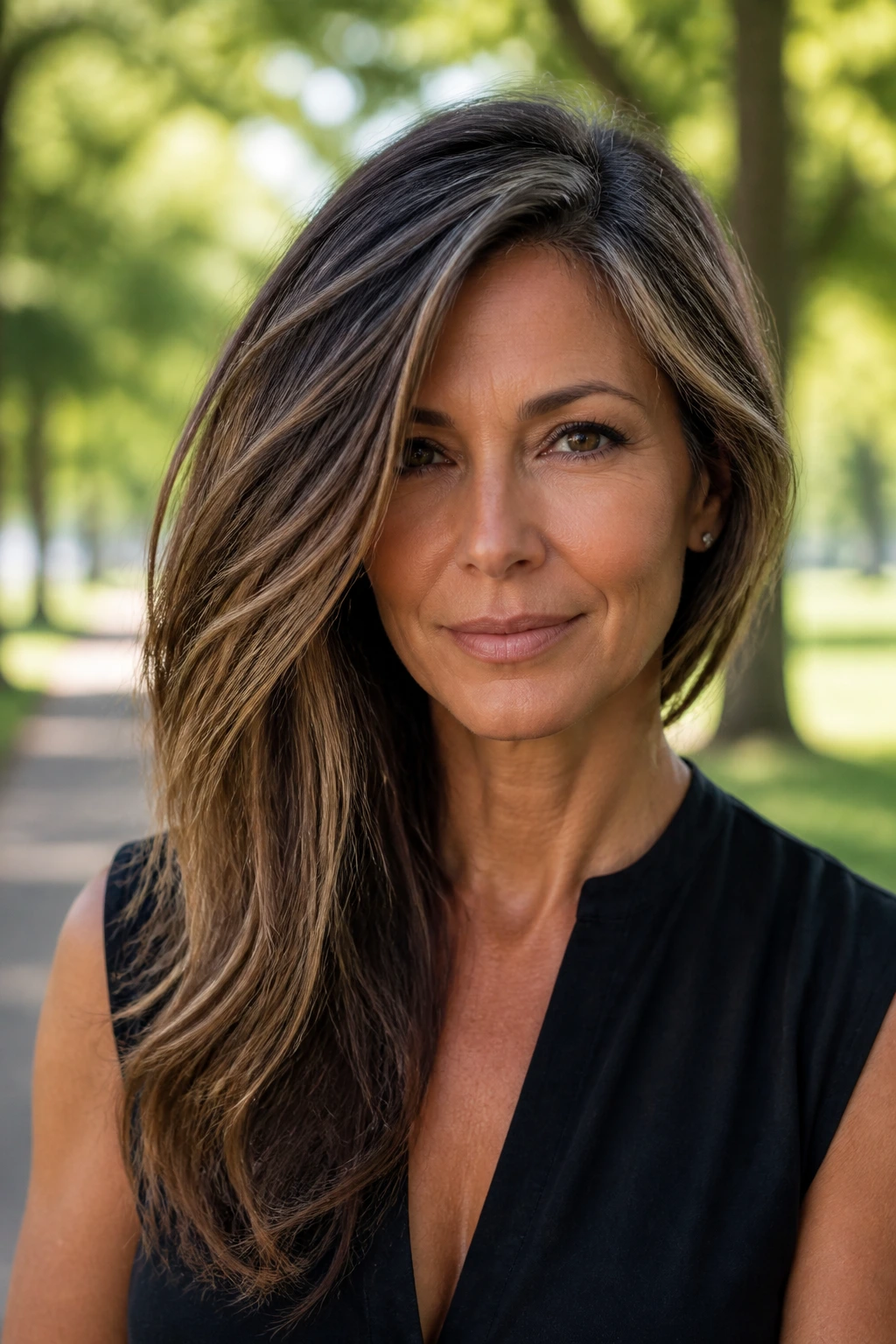
If you want a change that feels a bit more daring, an asymmetrical cut is a great way to go. You keep the length, but one side of the hair is cut slightly shorter or angled toward the front, creating an off-center line.
Why It Works for Older Women
Asymmetry is naturally youthful because it is dynamic and unexpected. It breaks up the monotony of a classic haircut. It works best when the transition is subtle—you don’t need a massive difference between the two sides to get the effect.
Confidence Is Key
This is a cut that requires you to own it. It feels stylish and intentional. If you are the type of person who likes to experiment with fashion or accessories, this cut is the perfect accessory in itself.
15. High-Contrast Piecey Layers

This style is all about definition. The layers are cut in a way that separates the hair into “pieces” or clusters, rather than a soft, blurred-together cloud of hair. It is a more structured look that works beautifully on hair that is straight or slightly wavy.
How It Looks
When your hair is styled, you can clearly see the different lengths. It adds a graphical, intentional element to your style. It is fantastic for people with gray hair, as the depth created by the layers and the separation makes the silver tones shimmer and pop.
Styling for Contrast
You will need a bit of product to make this work. A texturizing paste or a light wax is your best friend. Rub a pea-sized amount between your palms and “scrunch” it into the ends of your layers to separate them and give them that distinct, piecey look.
16. Soft Blunt Cut with Face-Framing
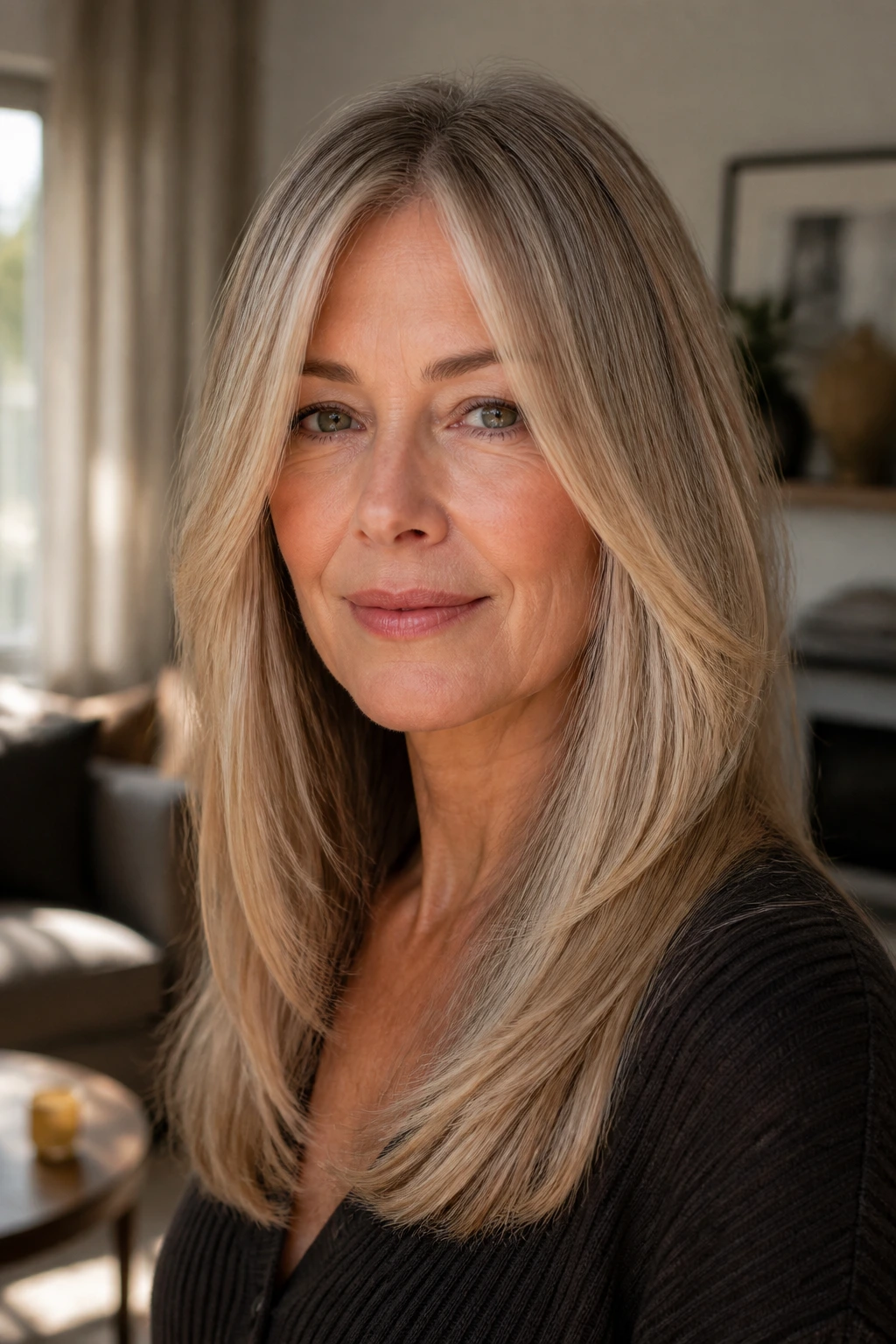
There is a fine line between a blunt cut and a heavy, dragging cut. The fix? A blunt perimeter paired with very soft, face-framing layers. It gives you the “heaviness” and health of a blunt cut but provides enough softness around the face to keep it from looking severe.
The Balancing Act
The face-framing pieces should be long—starting at the jawline or collarbone—so they don’t look like bangs. They should just provide a soft curtain that opens up your face. It is a timeless style that works on almost everyone.
Why It Stays Fresh
Because the bulk of the hair is blunt, it always looks “done.” You don’t need to do elaborate styling for this to look like a professional haircut. It is the ultimate wash-and-wear style for those who value simplicity.
17. U-Shaped Layered Cut

Similar to a V-cut, a U-shape softens the corners. It is a gentler curve that connects the front layers to the back length in a smooth, continuous line. It is arguably the most “natural” looking layered cut, as it mimics the way hair grows—just tidier.
The Visual Effect
The U-shape creates a nice, full bottom. It doesn’t leave the ends as pointy as a V-cut, which can feel a bit dated depending on your style. It feels modern, soft, and very classic.
Who Should Get This
If you are someone who likes to keep their hair down 90% of the time, the U-shape is perfect. It frames the shoulders beautifully and makes long, flowing hair look intentional rather than just “long.”
18. Disconnected Layers for Fine Hair
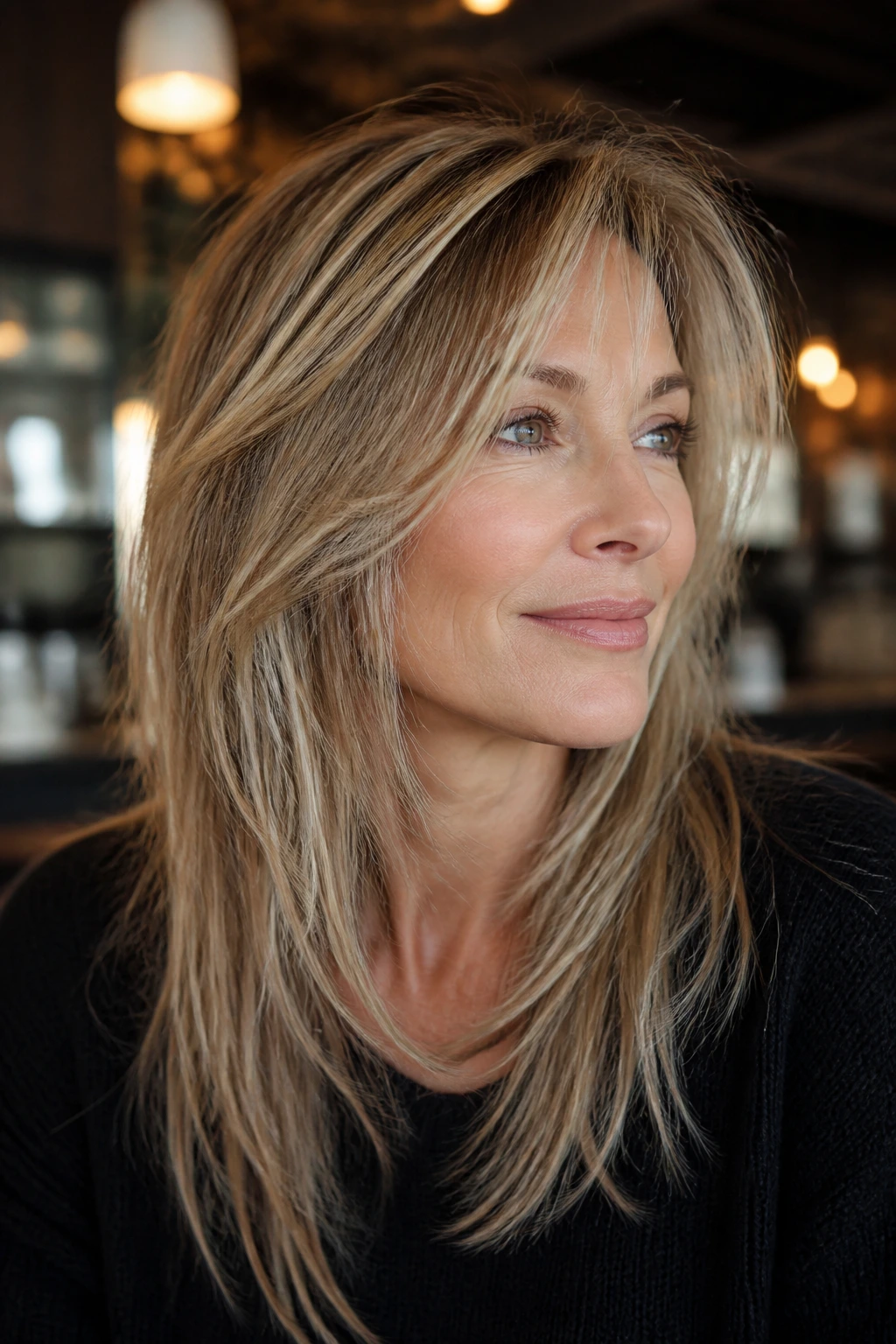
“Disconnected” sounds scary, but it is just a technique. It means the layers are not perfectly blended into the length. Instead, you have distinct sections of hair. For fine hair, this is a miracle worker because it builds volume without sacrificing the perimeter.
Understanding Disconnection
It essentially creates a “shorter” haircut on top of a “longer” haircut. Because the top layers are not cut directly into the long length, they don’t pull the hair down. You get the volume of a shorter cut with the length you want to keep.
The Learning Curve
It might take a day or two to get used to how it lays. It is not a “blended” look. It has more movement and texture, which can feel a bit wilder than what you are used to. Embrace the messiness.
19. Graduated Face-Framing Layers

This is an evolution of the face-framing concept. Instead of just a few pieces at the front, the layers “graduate” or step down, starting from the bangs/front and flowing all the way back to the longest length of the hair.
The Effect
It creates a beautiful, cascading waterfall of hair. It is very flattering because it creates a frame that is consistent all the way around your head. It removes weight evenly, so your hair doesn’t feel heavy in the back and thin in the front.
Maintenance
Because these layers are more extensive, they can grow out a bit more noticeably. Expect to head to the salon every 10-12 weeks to keep the graduation sharp and fresh.
20. Heavily Textured Ends
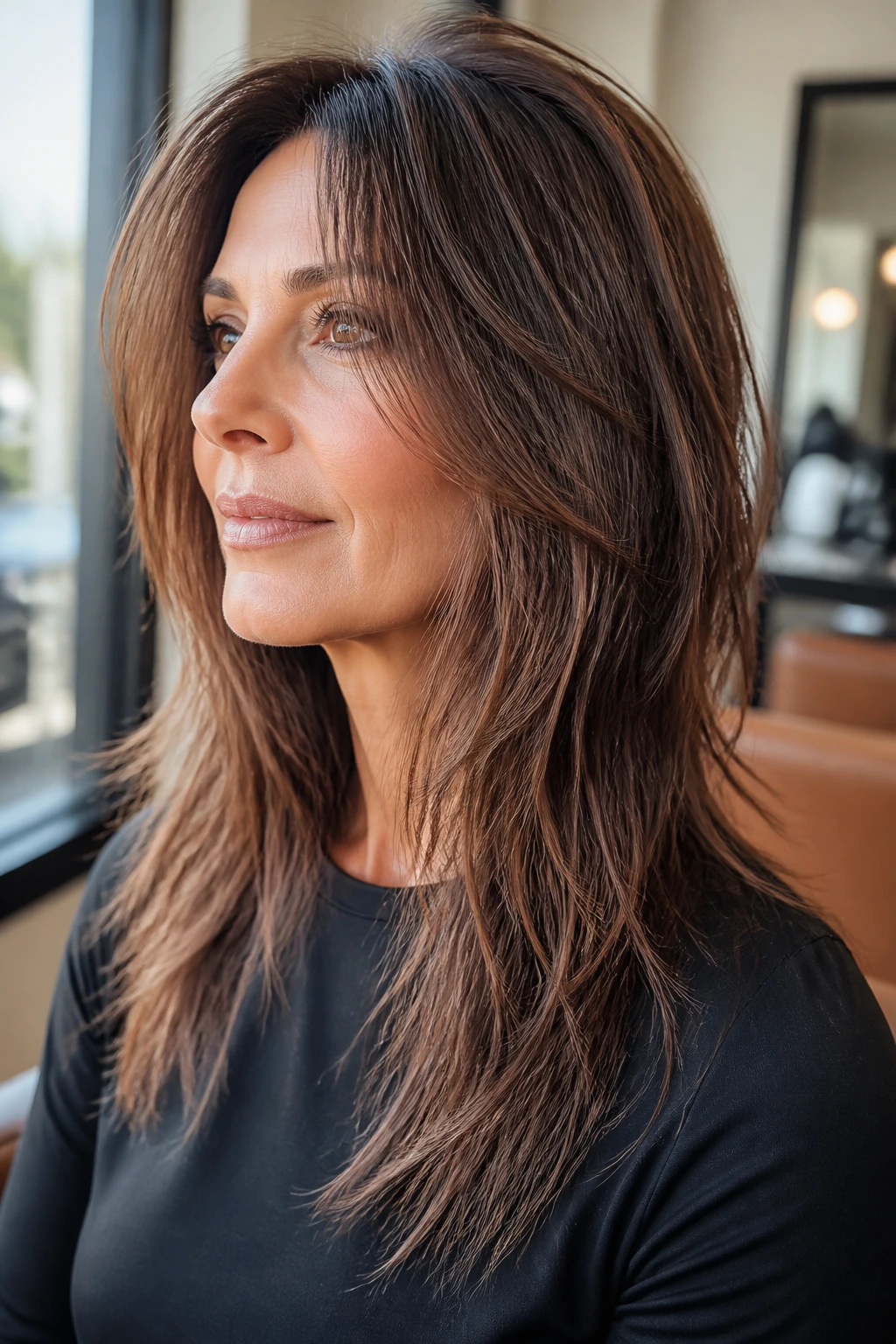
This is a specific technique where the stylist cuts into the ends at various angles to create a “shattered” look. It takes a heavy, solid end and turns it into something light and airy. It is ideal for hair that is prone to bulkiness or feeling “puffy.”
The Texture Difference
It feels soft. It removes that blunt “shelf” that hair can create when it grows out. If you have ever felt like your hair looks too triangular, this is the solution. It breaks up the bottom line of the hair so it sits closer to your body.
Daily Care
Textured ends love a bit of moisture. Because the ends have been cut into, they can occasionally be prone to frizz if they get dry. Use a leave-in conditioner after every wash to keep them looking soft and healthy.
21. Natural Curl-Enhancing Layers

If you have tight curls or coils, you should never have a “layered cut” in the traditional sense. You need “shape-cutting.” The layers should be cut vertically, following the curl pattern, to prevent the hair from becoming a pyramid.
Shaping the Curls
The goal is to have the hair look like a beautiful, rounded halo. Layers should be cut while the hair is dry (or in its natural state) so the stylist can see where the curls actually sit. Wet cutting curls is a recipe for disaster, as they shrink significantly when dry.
The Volume Factor
This cut will give you massive volume. If you aren’t used to it, it can feel like a shock. But for curly hair over 40, volume is healthy. It looks vibrant and full of life, which is exactly what you want.
22. Long Layers with Heavy Fringe

If you want to hide forehead lines or just love the drama of bangs, a heavy fringe is a statement. When paired with long layers, it creates a very distinct, “Parisian chic” look. It frames the face intensely.
The Fringe Reality
Heavy bangs require maintenance. You need to trim them every 3-4 weeks. If you don’t keep them at the right length, they start to irritate your eyes. If you are ready for that commitment, it is one of the most stylish looks out there.
The Contrast
The beauty of this style is the contrast between the sharp, heavy line of the bangs and the soft, layered movement of the rest of the hair. It is balanced, interesting, and looks great with glasses or without.
23. Wispy Butterfly Cut

The butterfly cut is a blend of face-framing layers that are extremely short (almost like a bob) and the rest of the hair which is kept long. It creates the illusion of two different hairstyles in one.
Why It Is Popular
It creates incredible volume and movement. The short layers give you that “bouncy” feeling around the face, while the long layers keep you feeling like you have long hair. It is the ultimate style for anyone who wants volume and fun.
Styling the Wings
You have to use a round brush or a hot air brush for this. You want to style the shorter layers backwards and away from your face. It is a slightly more involved style, but the visual payoff is high.
24. Minimalist Long Layers
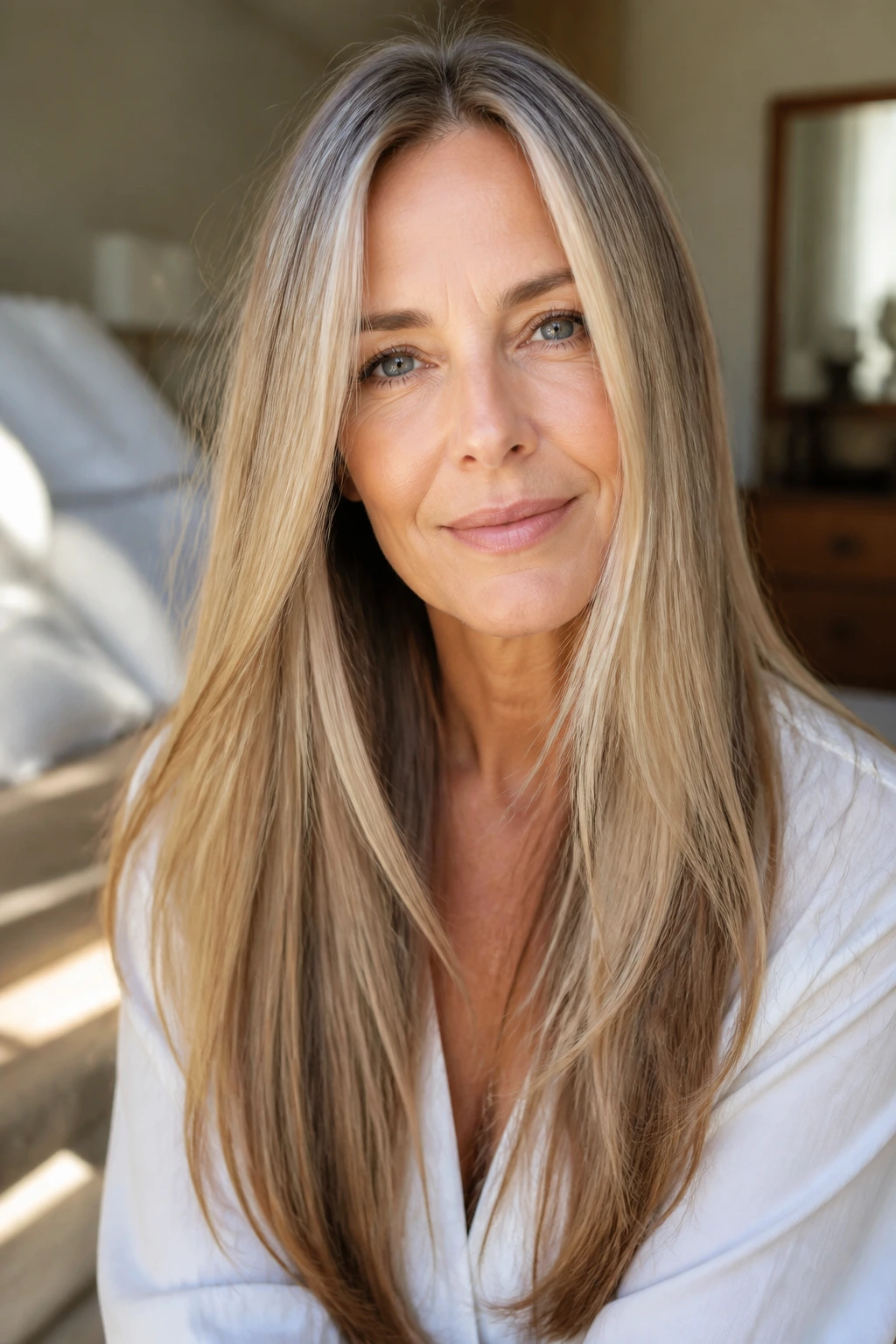
Sometimes, less is more. Minimalist layers are exactly what they sound like: just a few subtle, long layers cut into the very ends of the hair. There are no face-framing pieces, no bangs, and no short interior layers.
The “Clean” Look
This is for the person who wants the easiest possible morning routine. It just removes the dead weight at the very bottom of the hair to keep it from looking flat. It is subtle, clean, and elegant.
Who It Suits
If you have straight hair and want to keep it looking glossy and healthy, this is a great choice. It doesn’t disrupt the surface of the hair, keeping the cuticle looking smooth and the shine levels high.
25. Soft Shaggy Layers with Center Part
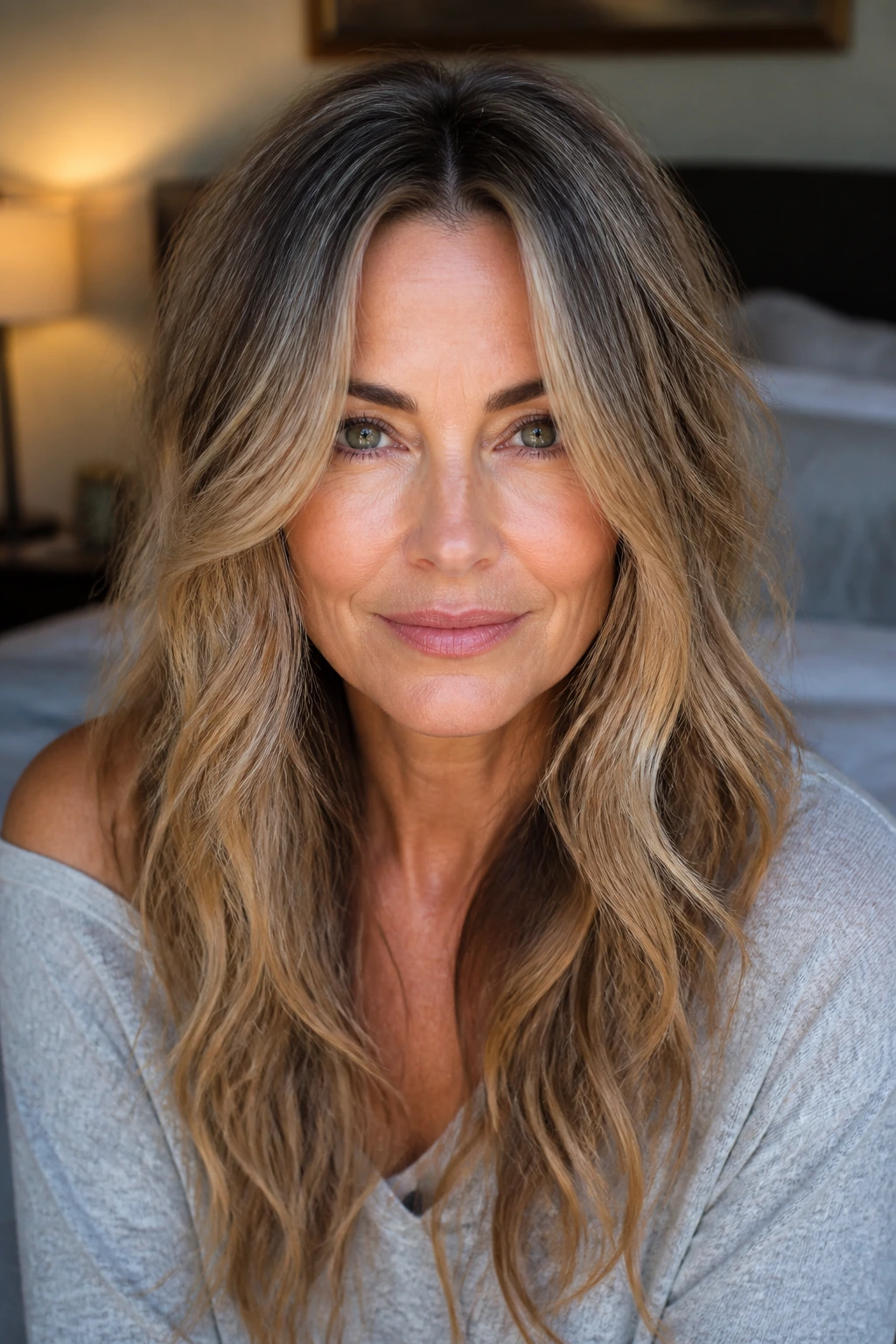
The center part is back, and it looks beautiful on long, layered hair. This shag is softer than the traditional rock-and-roll shag. It features longer, blended layers that frame the face but don’t feel like a mullet.
Why the Center Part Matters
A center part creates symmetry. It is a very balanced, “serious” look that feels sophisticated. When paired with long, shaggy layers, it creates a nice balance between “put-together” and “relaxed.”
The Finishing Touch
This style looks incredible with a bit of texture spray. You don’t want it to look too perfect. A bit of grit, a bit of messiness, and you are good to go. It is a style that gets better as the day goes on and the hair settles into its natural shape.
Final Thoughts
The best haircut for you is the one that makes you feel like the most confident version of yourself. Do not feel bound by your age or what you think you “should” be doing with your hair. If you love the length, keep the length—just give it the shape it needs to look its best.
Remember that a great haircut is only half the battle; the rest is your routine. Don’t be afraid to experiment with the right products—mousse, texturizing spray, or a simple serum—to help those layers do their job. Ultimately, your hair is an accessory. Treat it with care, have fun with the styling, and know that long, healthy, layered hair is a timeless look for a reason.
