



Fine hair after 60 has a nasty habit of showing every bad haircut within a week. A heavy shape collapses at the crown, the ends go wispy, and suddenly your hair looks like it gave up halfway through the day.
The fix is rarely more length. It is shape, weight control, and a little bit of smart trickery. Fine hair is about strand diameter, not how many hairs you have, so a cut that keeps a strong perimeter and lifts the right spots can make the whole head look fuller without turning styling into a chore. Gray hair brings its own quirks too — often a drier feel, sometimes a wirier one — which means the same old cut that worked years ago can start behaving badly.
What tends to work best is pretty simple: clean edges, light layering where it matters, and enough movement to keep the hair from sitting flat. Some cuts need a quick blow-dry. Some air-dry well. A few look better with a dab of mousse at the roots and nothing else. The point is not to fight fine hair. The point is to give it a shape that does the heavy lifting for you.
1. Chin-Length Blunt Bob for Fine Hair
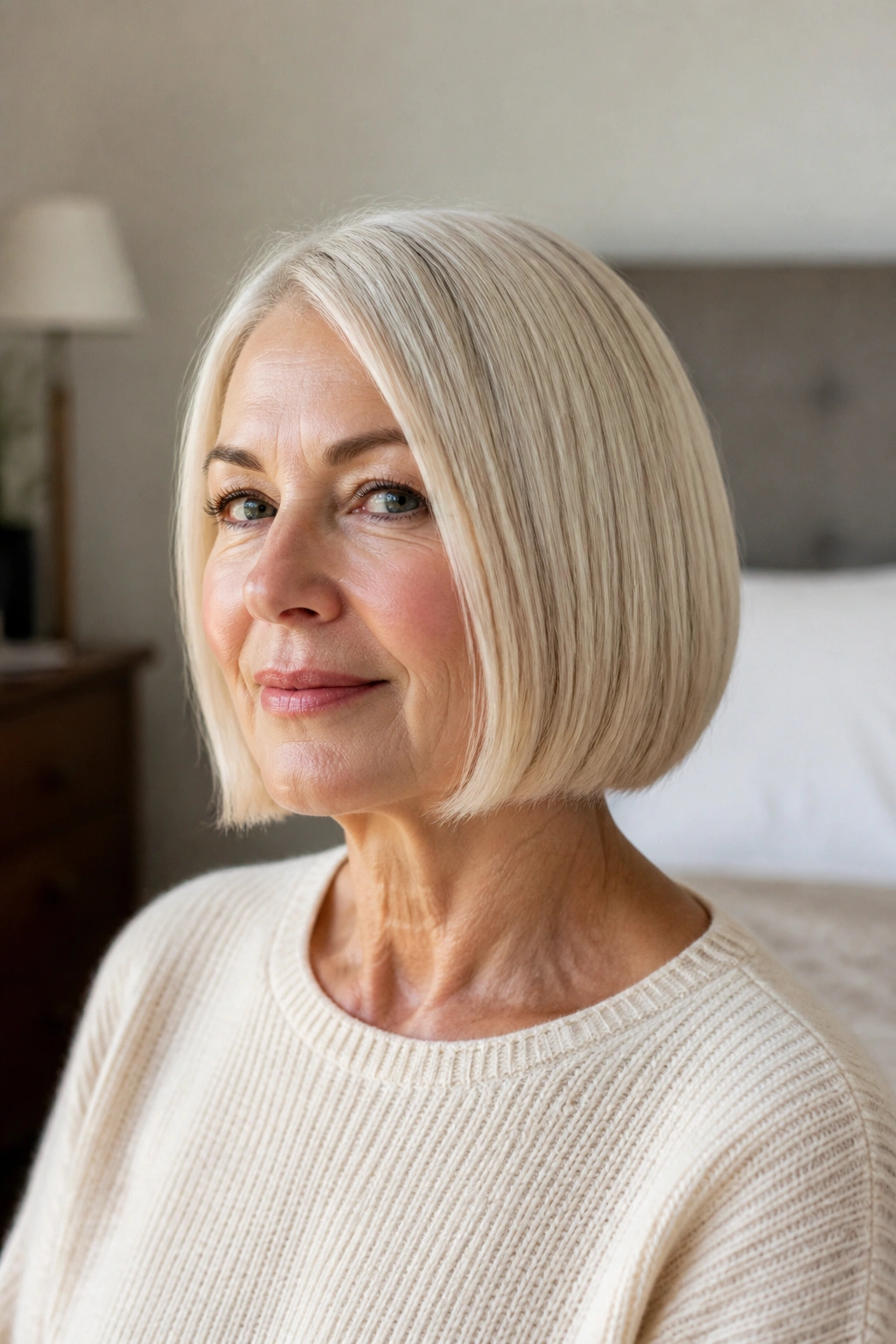
A chin-length blunt bob is one of the easiest ways to make fine hair look denser at the perimeter. The sharp edge gives the eye a clear line to follow, which is exactly what softer, thinner ends do not do. When the cut lands right at the chin, it also puts a little lift around the face.
What to ask for at the salon
- A one-length bob that hits at the chin or just below it.
- Minimal layering through the ends.
- A soft bevel, not a heavy curl under.
- Light point cutting only if the stylist wants to soften the very edge.
Keep the styling simple. A round brush and a small amount of root lift spray are enough. If your hair bends on its own, even better. The blunt bob does not need a lot of help. It just needs to stay clean.
My one warning: do not let anyone shred the bottom with too much texturizing. That is how a promising bob turns see-through.
2. Layered Pixie With Crown Lift
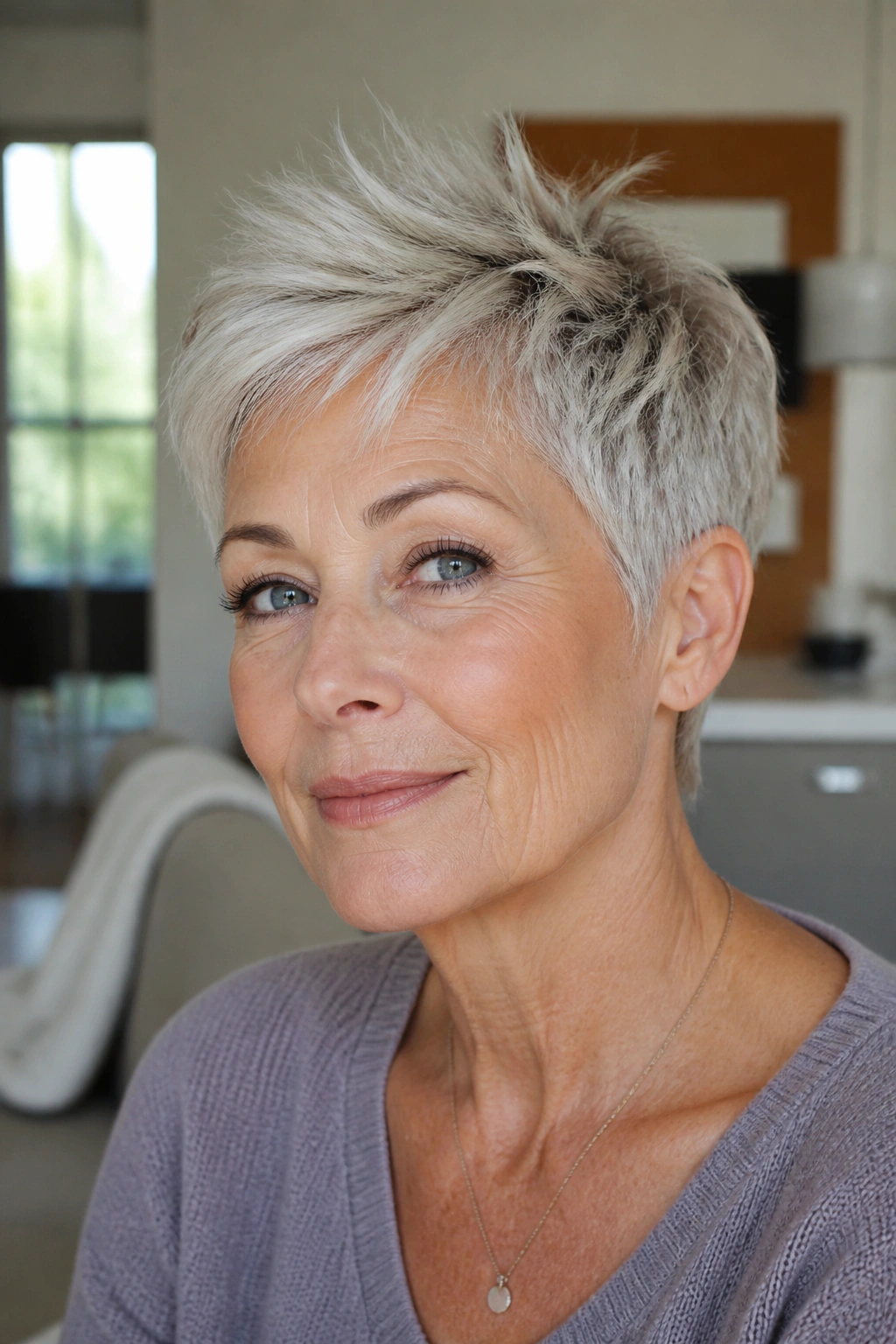
A layered pixie is not a boyish cut. Done well, it gives the crown room to rise and leaves enough softness around the temples to keep the whole shape from feeling harsh. On fine hair, that little lift matters a lot.
The trick is to keep the back neat and the top piecey, not fluffy. Short layers at the crown create height where flatness usually lives, while the sides stay close to the head so the cut does not balloon out. It sounds small. It is not.
This is the kind of style that looks good with a pea-sized amount of styling cream worked through damp hair. Then you rough-dry the top with your fingers and push it up and back. That’s it. If your hair tends to lie very flat, a bit of mousse at the roots before drying can help the shape hold through the day.
3. Side-Swept Pixie With Soft Fringe
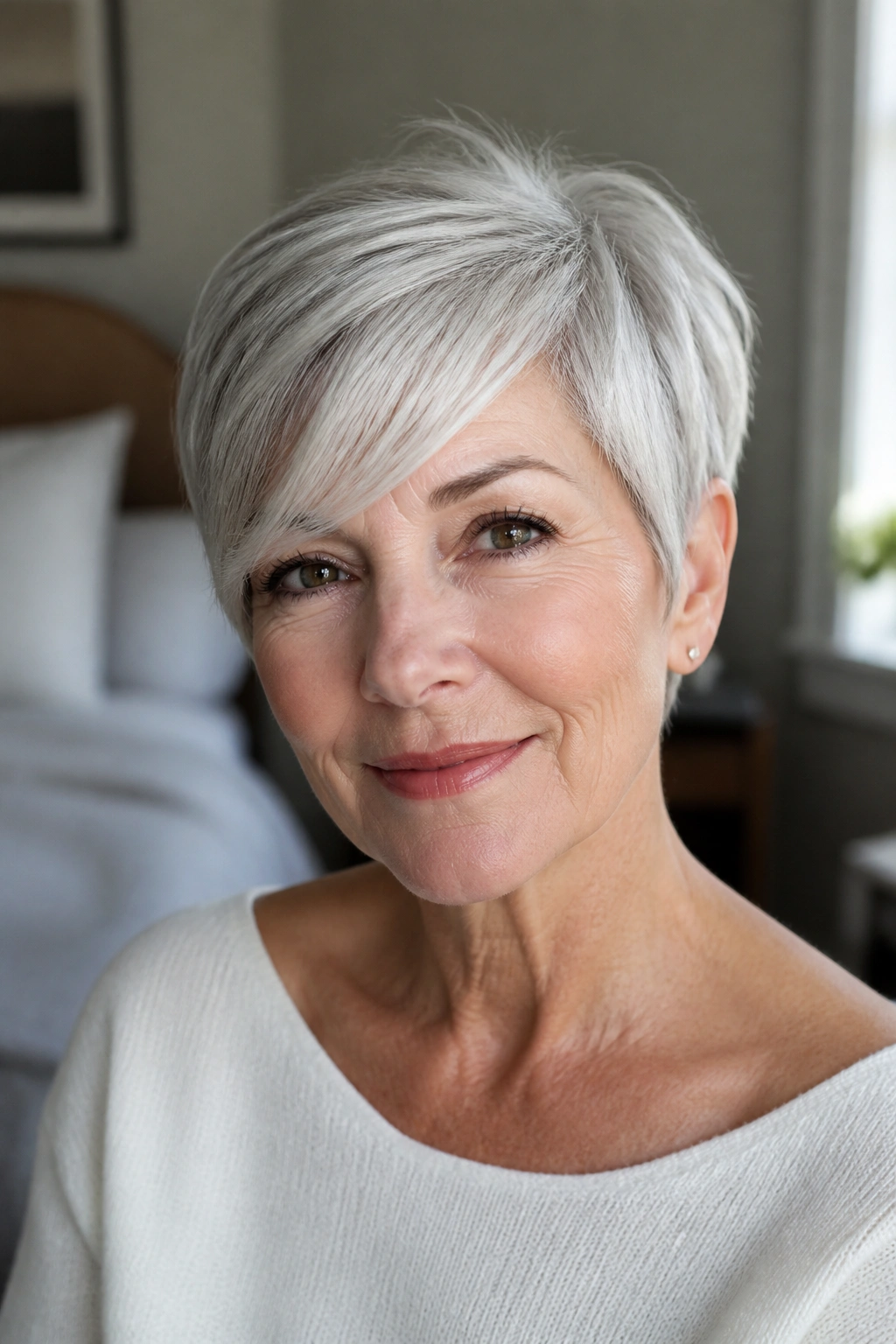
Why does a side-swept pixie work so well on fine hair? Because it hides weakness at the hairline and turns it into movement. A long fringe that sweeps across the forehead gives the front of the style more presence, which is handy when your hair has lost some density around the temples.
The best version is not bulky. It is soft, with enough length at the front to move from one side to the other without sticking. The sides should stay tidy, and the top should have just enough length to bend over instead of standing up like a brush.
How to wear it
- Blow-dry the fringe first, pushing it in the direction you want it to fall.
- Use a small round brush or even your fingers if your hair cooperates.
- Keep the product light so the front does not separate into greasy strands.
- Trim the fringe often enough that it keeps grazing the brow instead of swallowing the face.
This one is especially nice if you wear glasses. The sweep keeps the frame area soft.
4. French Bob With a Slight Bend
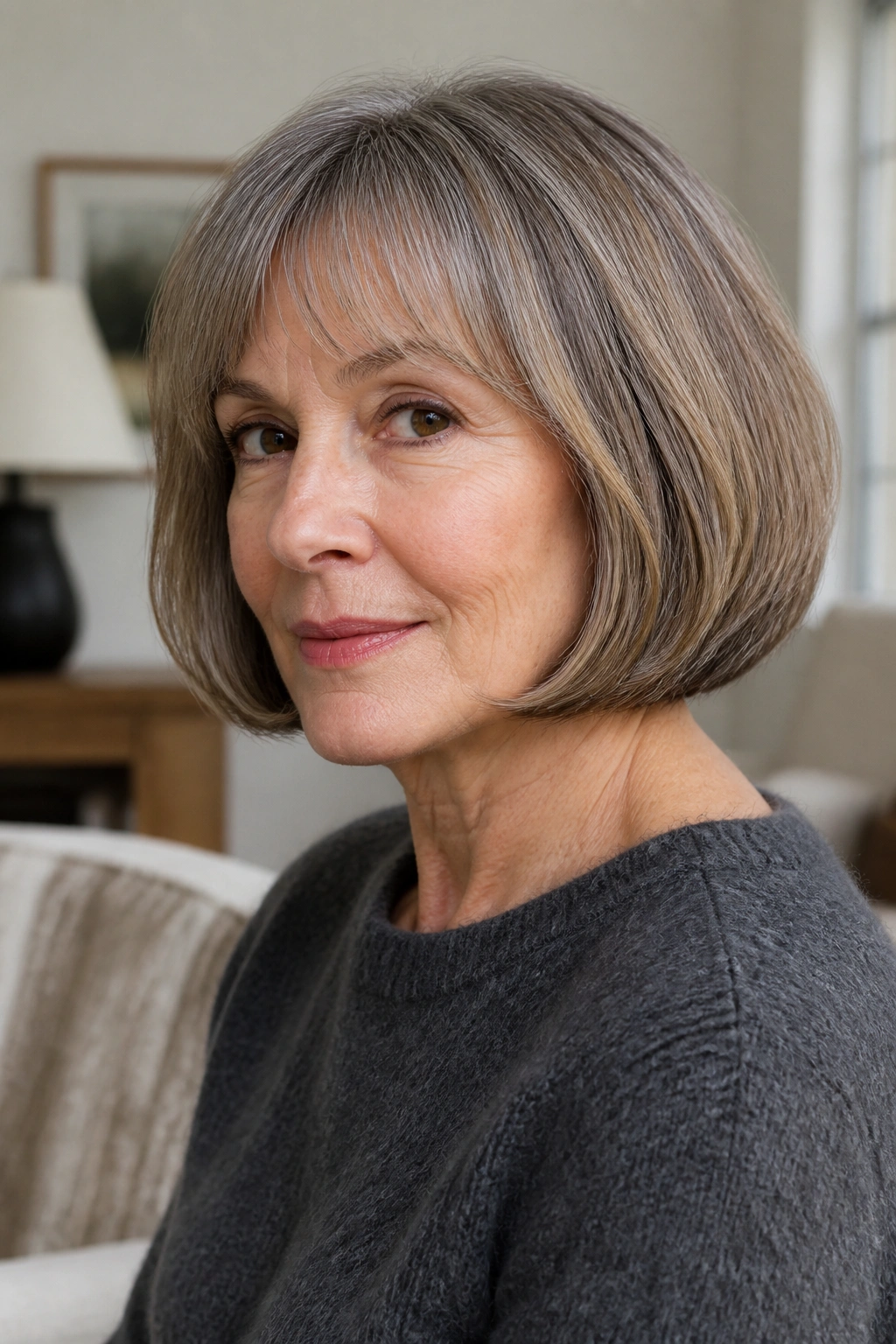
Picture a bob that stops just under the jaw, with a little bend at the ends and no fussy layers trying to steal attention. That is the French bob, and on fine hair it often looks sharper than longer, heavier cuts. There is something about that short, easy shape that feels deliberate without being stiff.
I like this style because it works with natural texture instead of fighting it. If your hair has a slight wave, let it keep the movement. If it is straight, a quick turn under with a brush or flat iron gives it enough polish to look finished. Not polished in the salon sense. Polished in the “I didn’t wrestle with it for 40 minutes” sense.
The key is restraint. Too much layering and the whole thing loses its clean outline. Too much curl and it stops looking like a French bob and starts looking overdone. Keep it small, neat, and just a little imperfect.
5. Textured Lob That Grazes the Collarbone
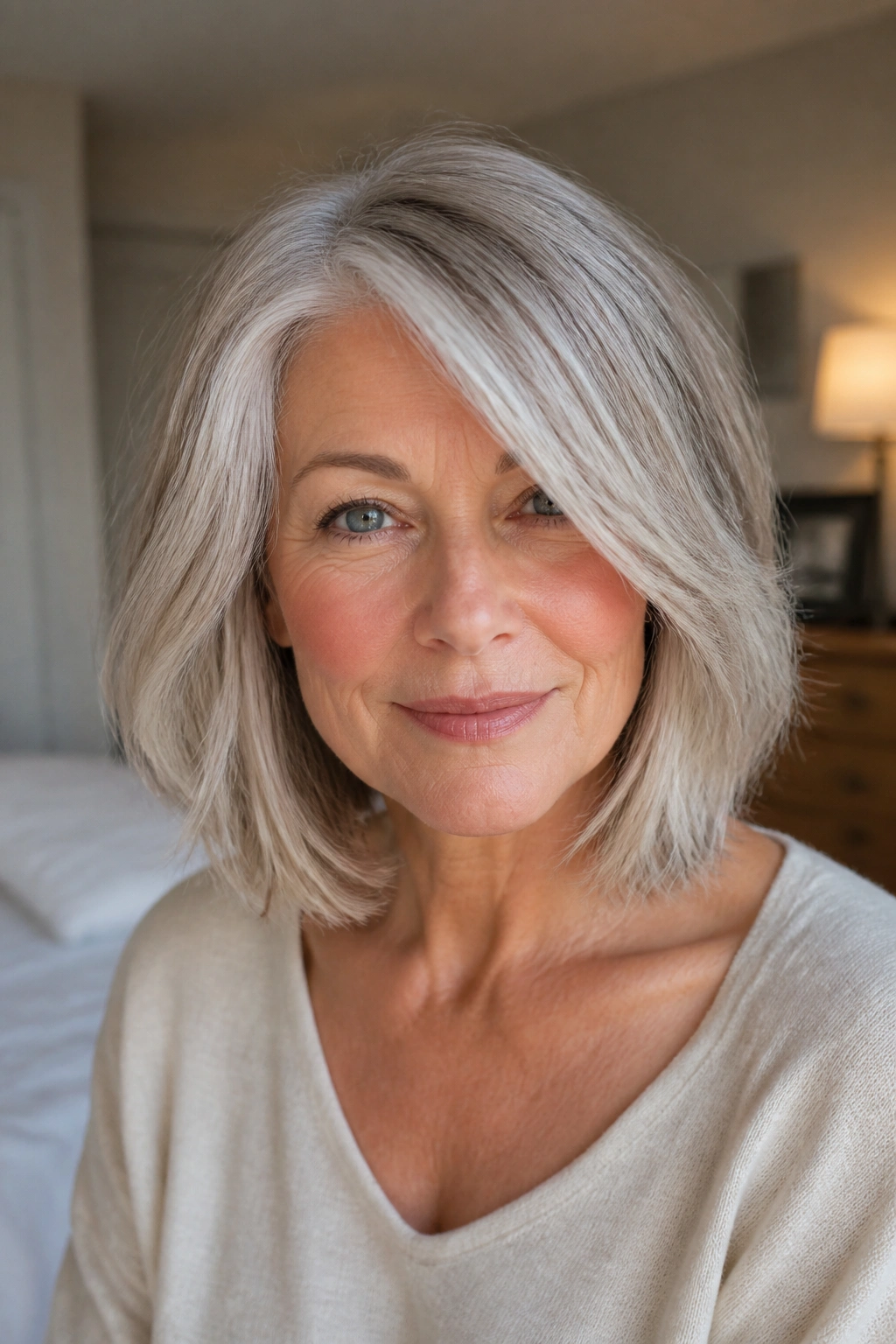
Unlike a short bob, a collarbone lob gives you a little more room to play, which is useful if you still like to tuck your hair back or wear it in a low clip. Unlike a long one-length cut, though, it does not drag fine hair downward into a flat curtain. That balance is the whole appeal.
The best lob for fine hair has light internal layers and a perimeter that still feels solid. You want movement, not hollowness. If the layers are too high, the ends look thin. If they are too low, the cut just hangs there and does nothing. The sweet spot is around the collarbone, where the hair can swing a little without looking sparse.
This cut works especially well with a deep side part or a few loose bends from a medium barrel iron. Keep the ends soft. Hard, straight ends on fine hair can look brittle fast.
6. Soft Shag With Wispy Bangs
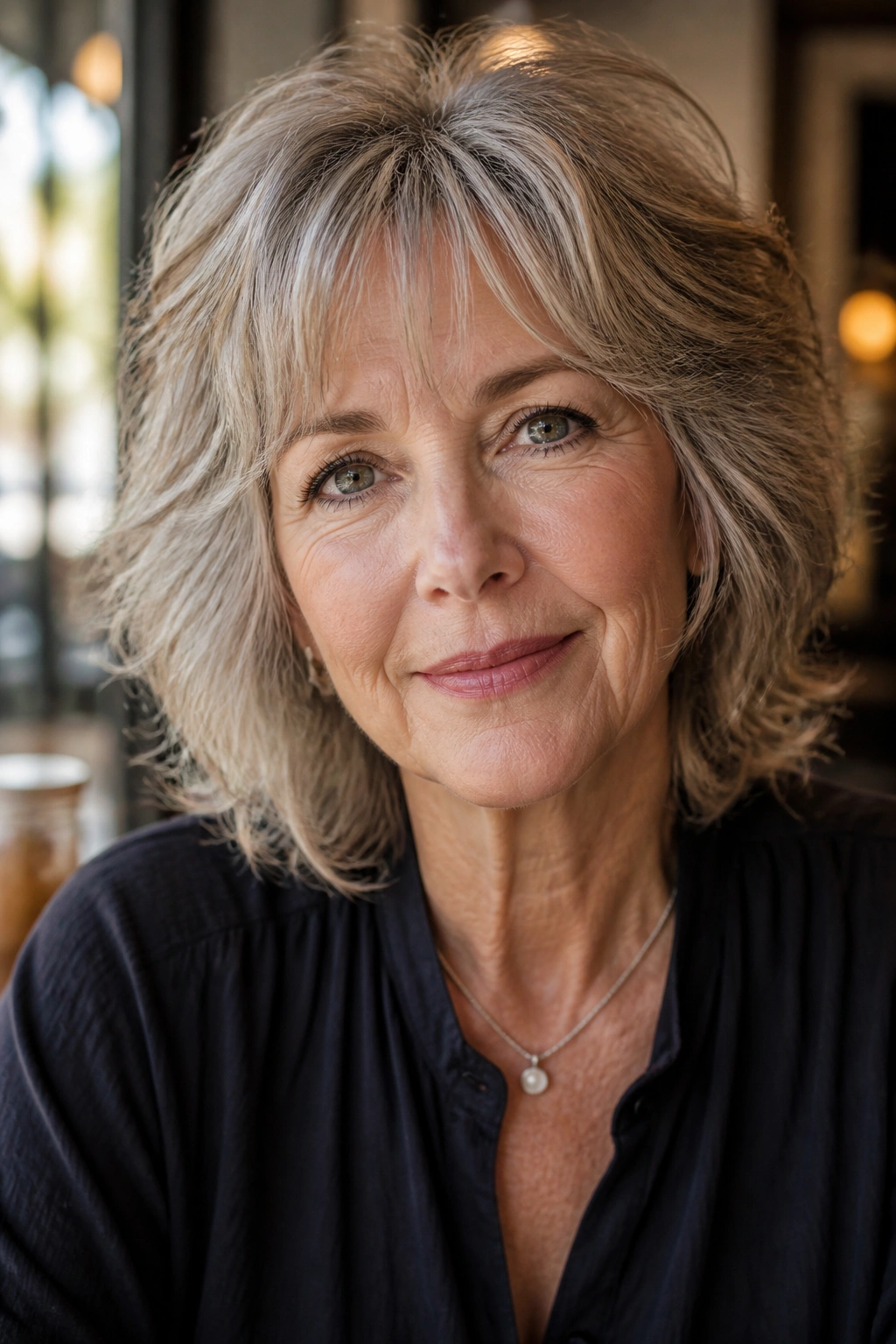
A soft shag is not a messy pile of layers. That version is lazy cutting, and it shows. The good version gives fine hair movement through the middle without stripping away the shape at the bottom, which is where a lot of older cuts go wrong.
Why it works
The layers are airy and feathered, so the hair can lift instead of hanging in one flat sheet. Wispy bangs break up the forehead area and make the style feel lighter at the front. A soft shag also gives gray hair a nice edge, because silver strands catch the texture without needing much product.
How to make it behave
- Ask for layers that start below the cheekbones, not right at the crown.
- Keep the bangs light and piecey.
- Use mousse or a light foam on damp hair.
- Rough-dry with your fingers first, then smooth the front with a brush if needed.
It’s a good choice if your hair has a little natural wave. Straight hair can wear it too, but it needs a bit more shaping.
7. Stacked Bob With a Raised Back
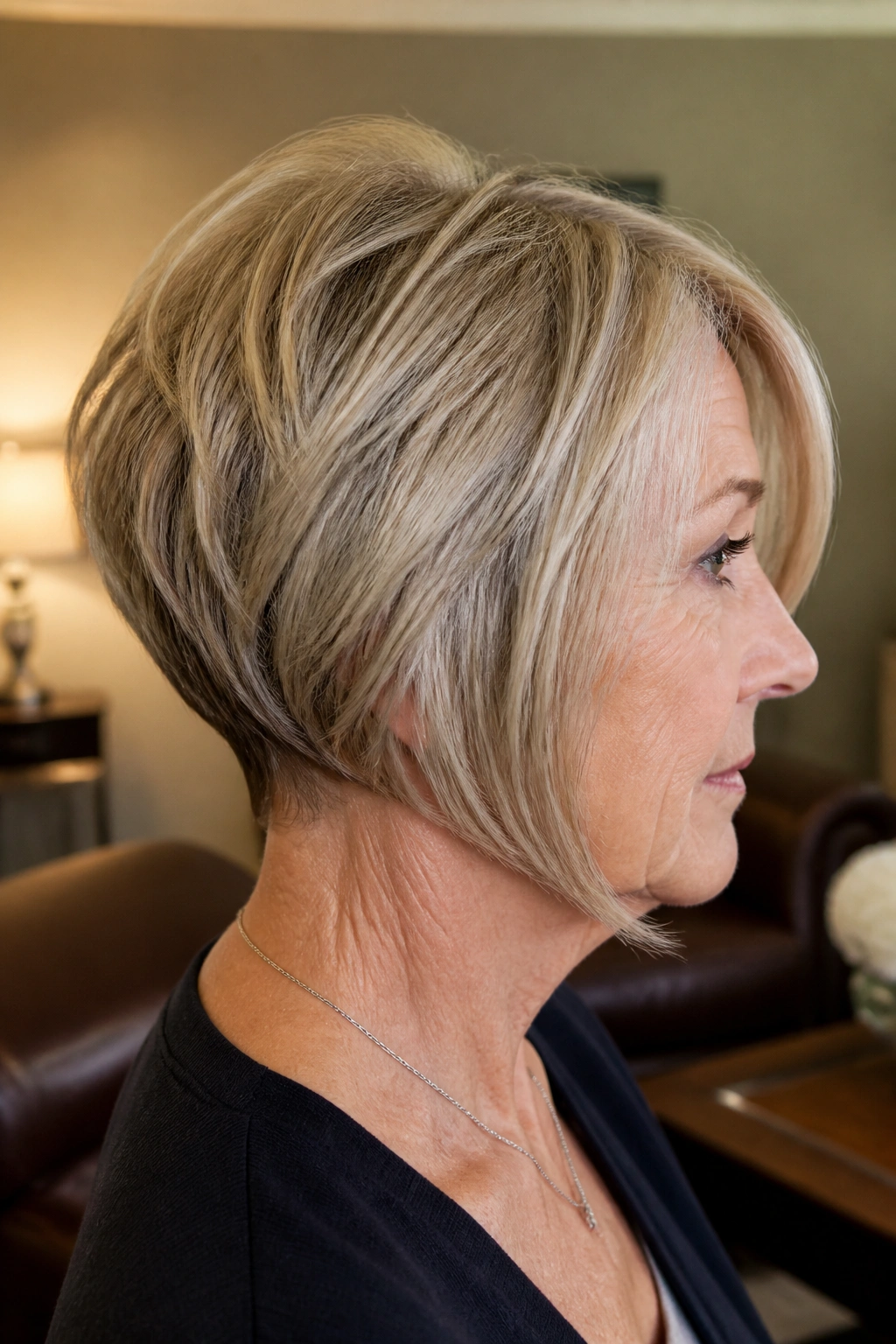
A stacked bob is the fastest way to fake a fuller head of hair at the back. That raised shape at the nape gives the illusion of body where fine hair often goes limp first. It’s efficient. Almost suspiciously so.
The cut is built with shorter layers in the back and a longer front that falls toward the jawline. That angle matters. It stops the style from looking like a helmet and gives the profile a nice clean line. If the back is stacked too high, though, the whole thing can turn too round. That is the mistake to avoid.
This style is a strong pick if your crown is flat and your neck is fairly open, because the lifted back shows off the shape instead of hiding it. A little smoothing cream at the ends and a round brush at the roots usually keeps it in place. You do not need to overwork it. The cut is doing most of the talking.
8. Wedge Cut With a Tapered Nape
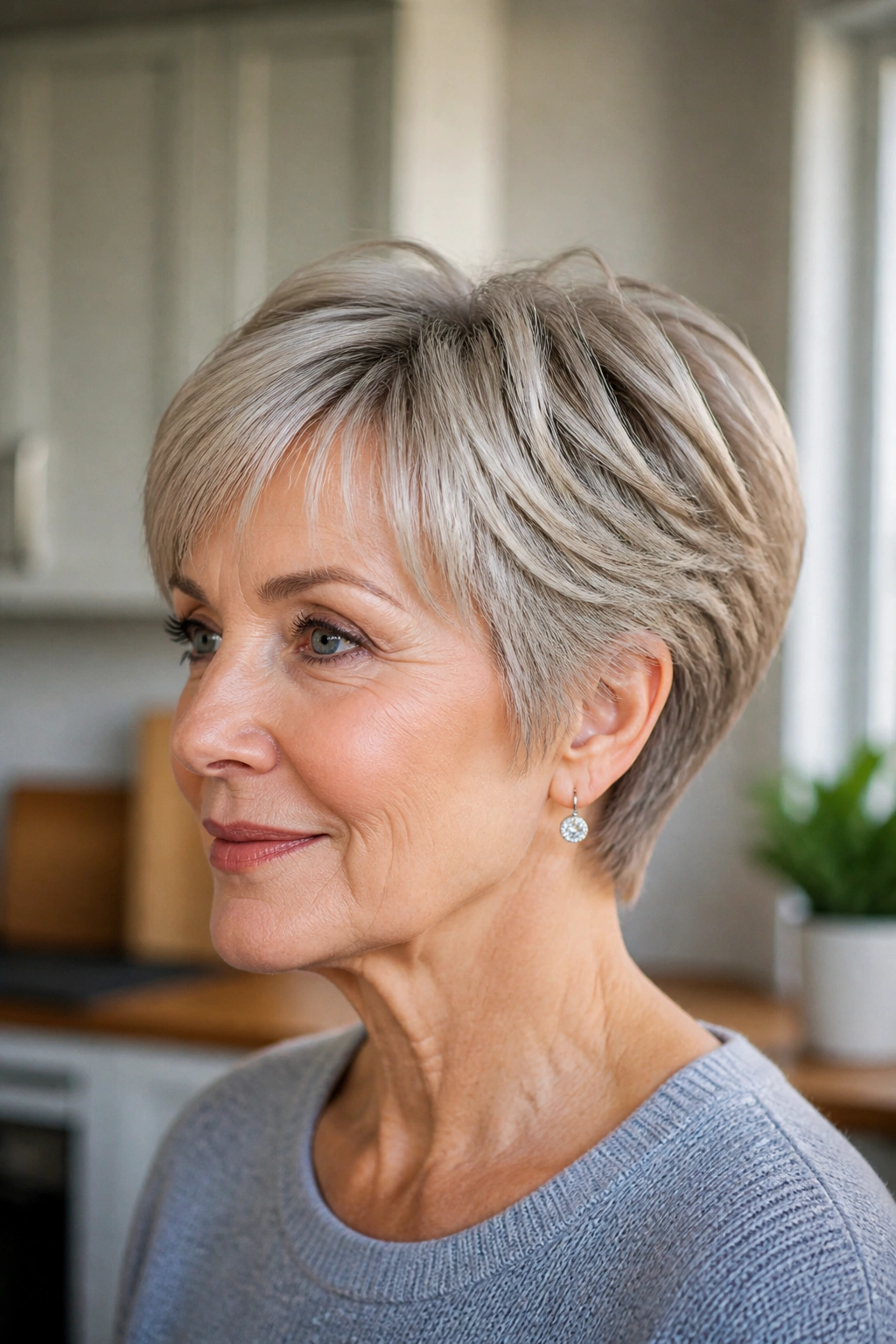
Want lift without a lot of styling? The wedge cut has been doing that job for decades. It is built with a neat taper at the nape and a shape that rises toward the crown, which makes fine hair look structured even when it is clean and simple.
The clean geometry is the point. A wedge gives the back of the head a stronger silhouette, and the front can stay soft enough to frame the face. On straight hair, it often looks crisp in a good way. On hair with a stubborn cowlick at the nape, it can need more coaxing.
If you like a cut that feels tidy every morning, this one earns its keep. The shape does not rely on big volume or a lot of product. It relies on the haircut itself. And that is usually where older women with fine hair get the best results — from a shape that already knows what it wants to do.
9. Bixie Cut: Bob Meets Pixie
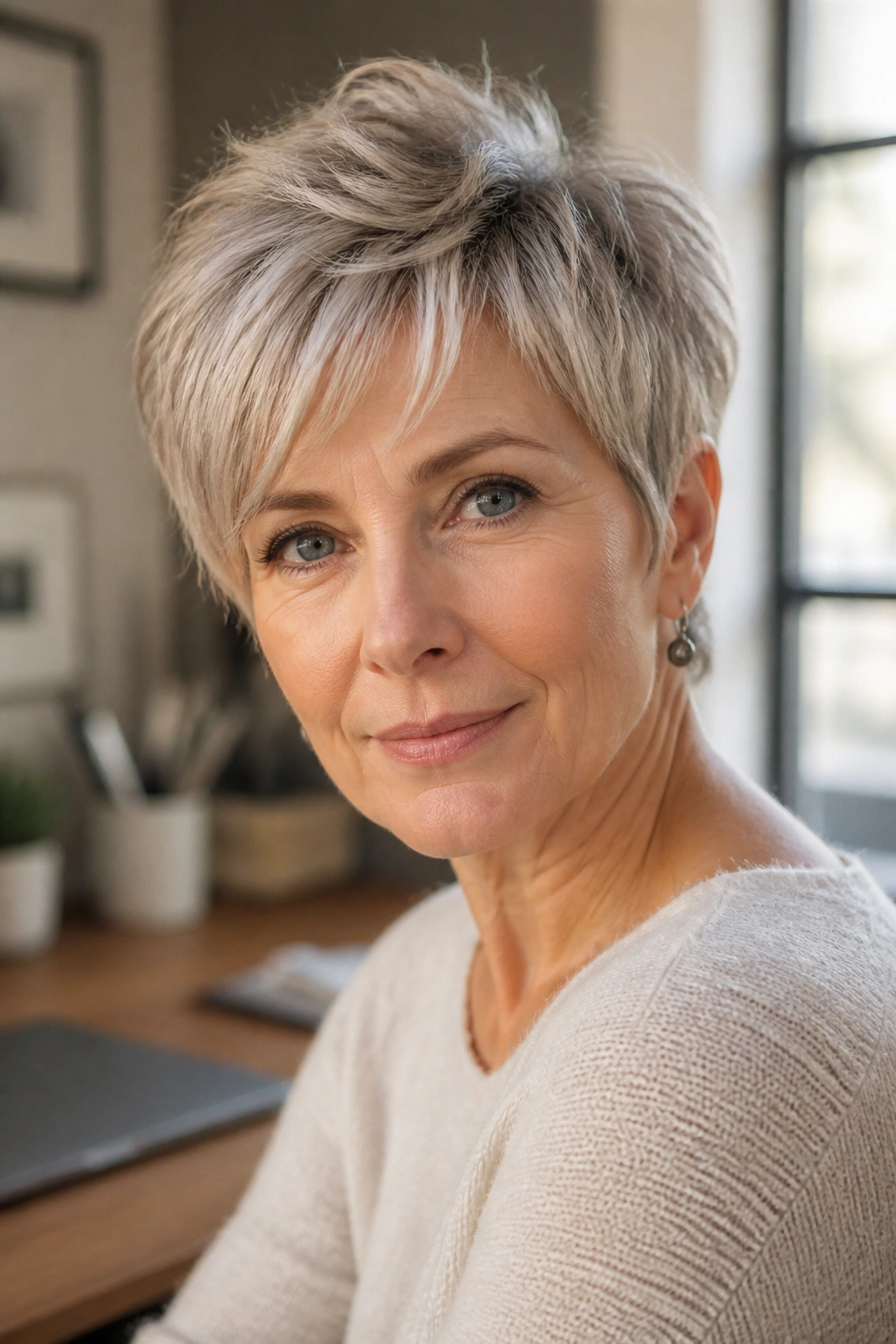
If a pixie feels too short and a bob feels too heavy, the bixie lands in the useful middle. It has the softness of a bob around the face and the ease of a pixie at the back and sides. On fine hair, that mix can be a sweet spot.
I think this cut works because it gives you shape without asking for much density. The top stays long enough to create movement, while the nape stays cropped so the hair does not drag itself down. A little piecey texture at the crown keeps it modern. Not stiff. Not helmet-like. Just easy.
This is also a forgiving cut if you are easing into shorter hair after years of wearing it longer. It gives you a sense of length around the face, which helps the transition feel less abrupt. Ask for soft blending, not choppy disconnection. That difference matters more than most people realize.
10. Asymmetrical Bob With a Deep Side Part
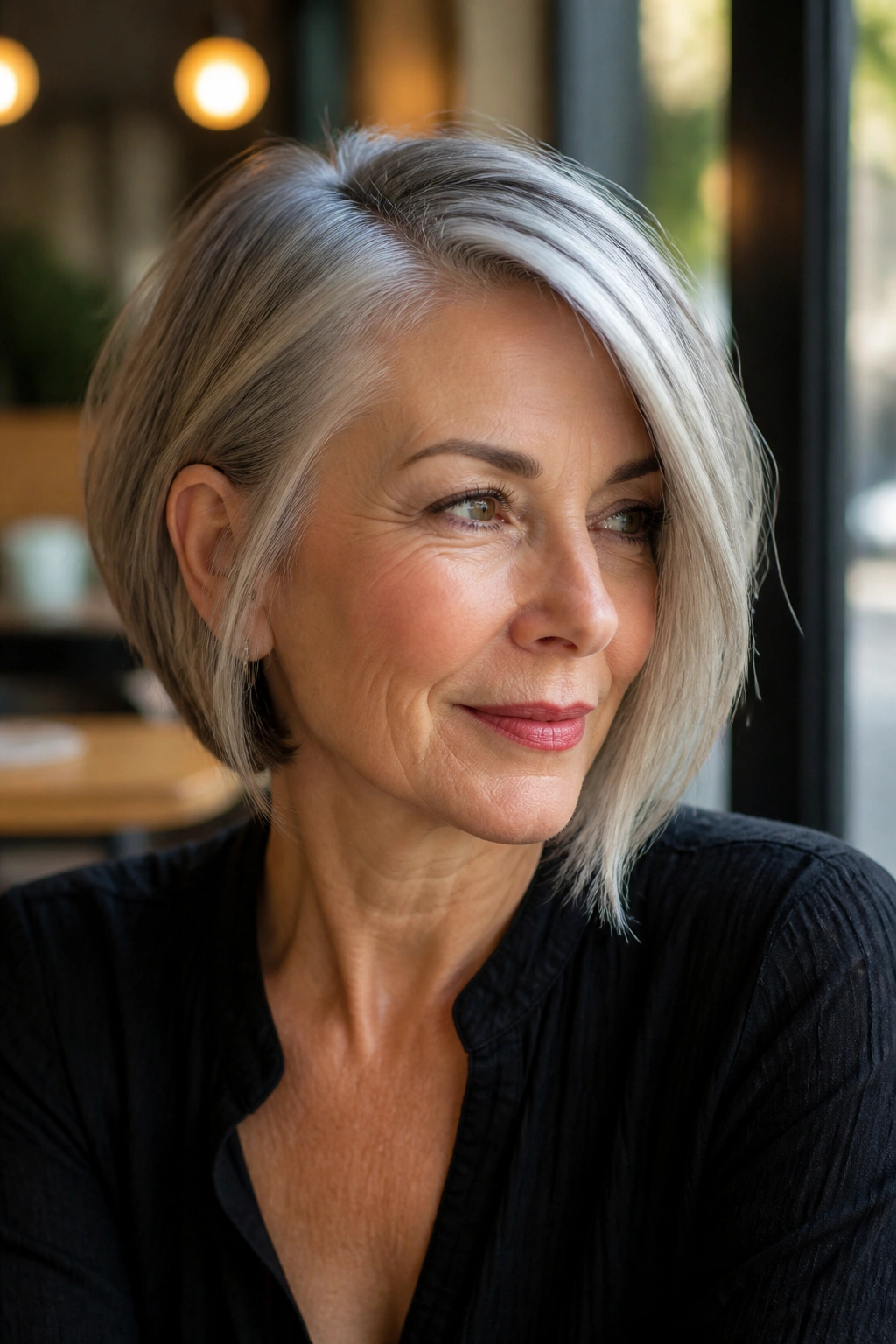
An asymmetrical bob gives fine hair a built-in sense of movement. One side sits a little longer, the part sits deeper, and the whole style looks fuller because the eye keeps moving across it instead of reading one flat line.
That deep side part is doing a lot of work. It lifts the roots on the heavier side and creates a little height where the hair usually lies down. The longer front pieces also make the face look more sculpted, which is useful if your hairline has thinned a touch at the temples.
This style is good when you want something that feels neat but not dull. It looks sharp with straight hair, and it can still handle a slight wave. Just keep the longer side clean. If the ends get too stringy, the whole point of the shape disappears.
11. Feathered Crop With Light Crown Layers
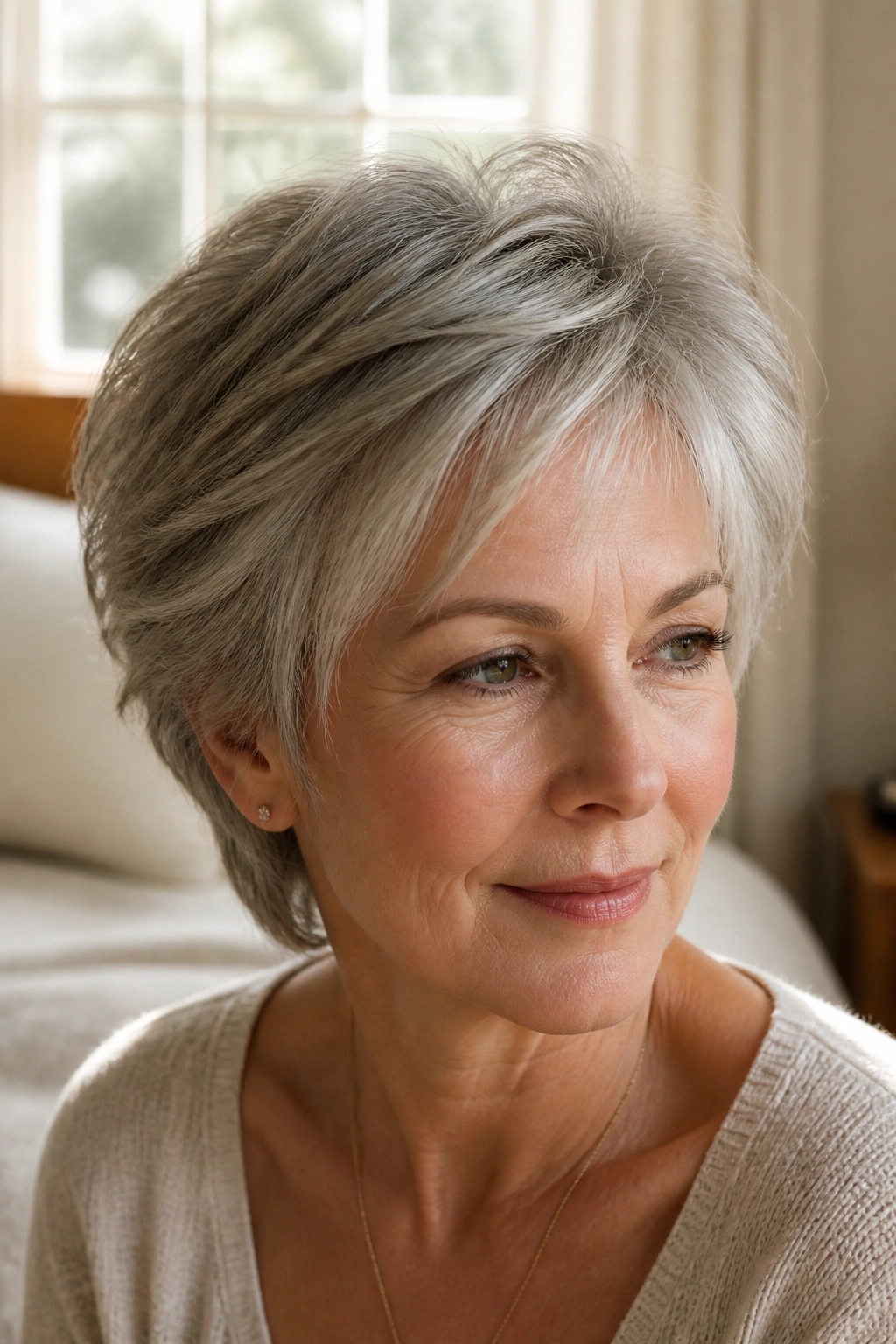
Unlike blunt cuts, a feathered crop softens the whole outline. That matters when fine hair starts to feel too severe in short lengths, because a little feathering around the crown and sides keeps the style from looking boxy.
The feathering should be gentle, not wispy to the point of nothing. You still want a shape. You just want the shape to move. Around the face, these layers can be especially kind if you wear glasses or prefer softer lines near the cheeks. They keep the cut from sitting too hard against the head.
This style usually works best with a round brush and a small amount of lightweight cream. If you use heavy wax or paste, the feathered pieces clump together and the airy effect disappears. A tiny amount goes a long way here. That’s the whole game.
12. Shoulder-Length Cut With Long Internal Layers
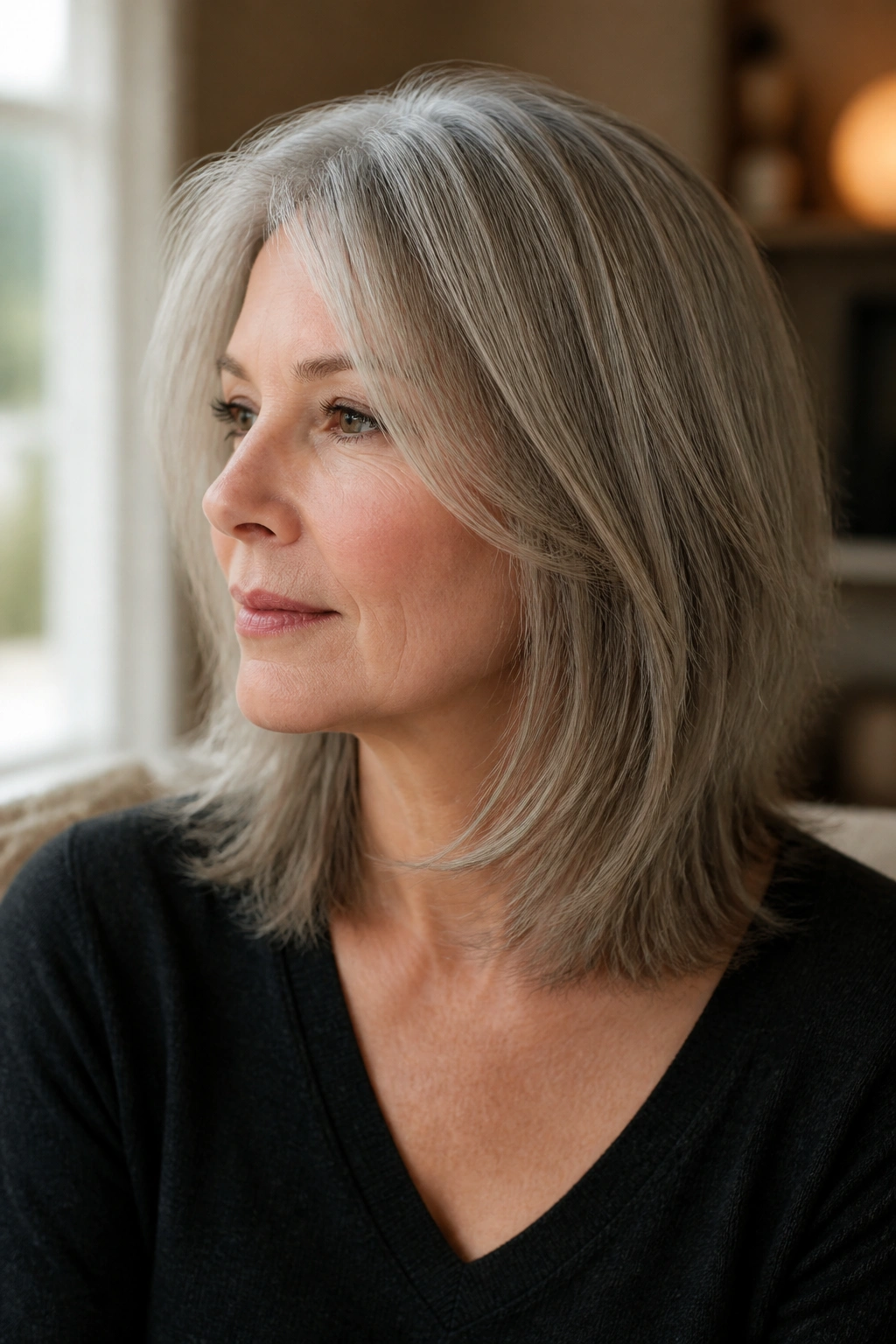
A shoulder-length cut can work on fine hair if the layers live inside the shape instead of tearing the ends apart. That is the part most people miss. Long internal layers keep the surface line looking full while giving the hair enough movement to avoid that one-sheet-of-paint effect.
What keeps it from collapsing
- Layers should start below the chin, not up near the eyes.
- The perimeter should stay blunt enough to hold weight.
- Blow-drying the roots matters more than curling the ends.
- A light mousse or volumizing spray helps the top stay lifted.
This length is useful if you still want some tie-back options. You can wear it down, clip half of it back, or pull it into a low twist without losing too much shape. It is not the most dramatic haircut on the list. It is one of the most practical.
13. Neck-Length Bob With Flipped Ends
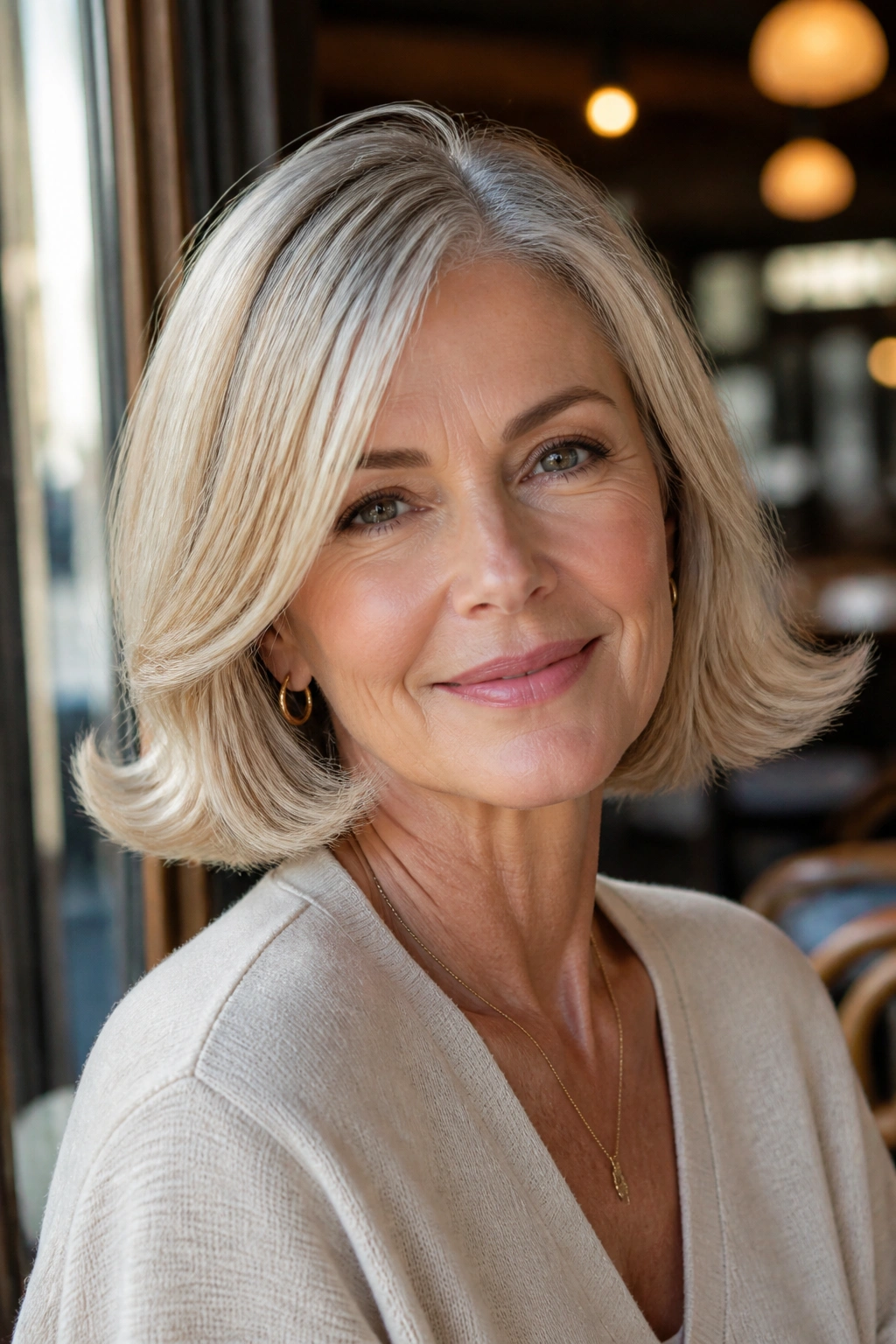
A neck-length bob with softly flipped ends adds movement where fine hair often sits too still. The slight outward turn at the bottom keeps the cut from hugging the neck too tightly, which can make the hair look thinner than it is.
The shape works because it spreads the eye sideways. That little flip makes the style look fuller across the bottom edge, and the neck-length placement keeps it light. A flat iron, a round brush, or even a roller brush can create the turn. You do not need big curls. A quarter-inch bend is enough.
This is a nice option if you want something a little more playful than a strict bob. It has some charm to it. It also photographs well in real life, not just in a salon mirror, because the ends move when you turn your head. That matters more than people admit.
14. Tapered Crop With Soft Ear Exposure
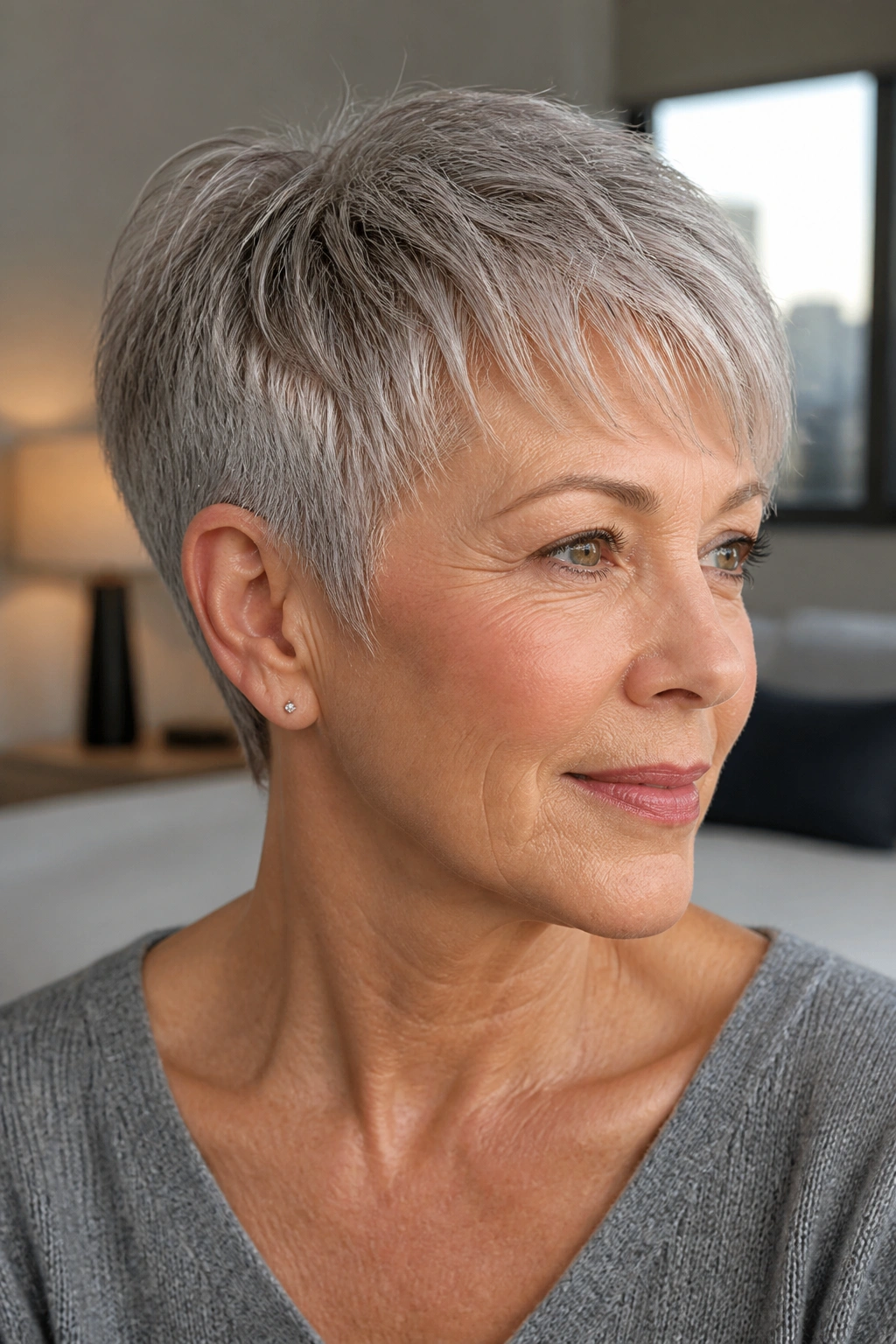
Why does this style flatter fine hair so often? Because it clears away bulk from the sides and lets the top carry the shape. The result is a clean, tapered crop that shows a little ear and keeps the neck open, which can make the whole face look brighter.
The cut should stay close at the sides without going severe. You want softness around the ear, not a hard clipper line unless you love that look. The top stays longer so it can be brushed forward, back, or a little to the side. That flexibility is useful when your hair has a mind of its own.
This is also a good haircut if you enjoy earrings. Small studs, hoops, or a single bold earring get room to breathe. The hair no longer competes with them. Small thing. Big difference.
15. Curly Bob With Controlled Volume
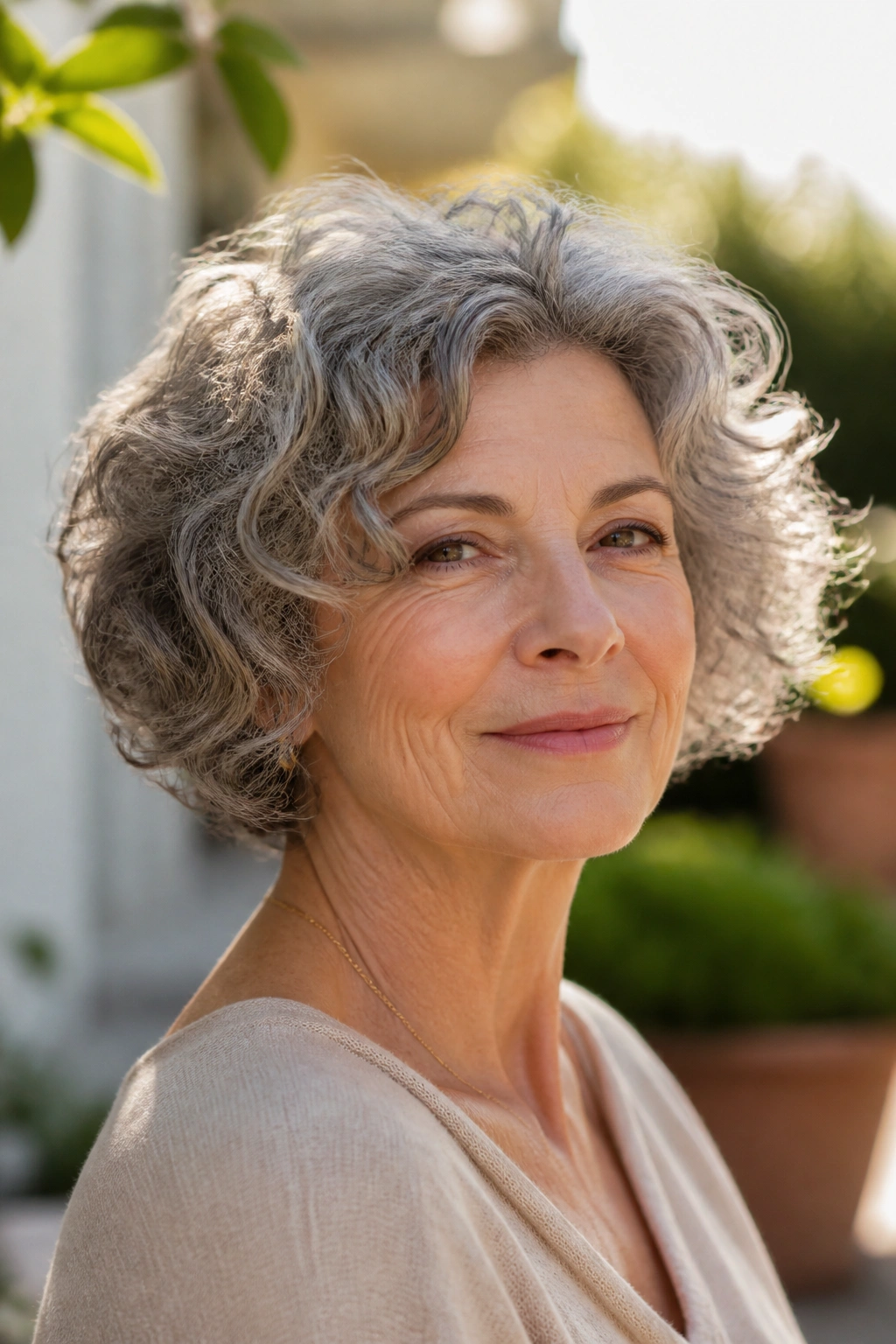
A curly bob on fine hair can be lovely, but only if it is shaped with restraint. Too much thinning and the curls lose their spring. Too much length and they hang limp. Somewhere between jaw and collarbone usually works best, depending on the curl pattern.
I like this cut because it respects the hair’s natural movement. When the bob is cut to the curl, not against it, the ends look fuller and the shape holds better through the day. A diffuser on low heat helps, but the real work starts in the cut. That part can’t be faked.
What makes it work
- Keep the layers long enough to support the curl.
- Avoid over-thinning the ends.
- Dry with a diffuser or let it air-dry halfway before touching it.
- Use a lightweight curl cream, not a heavy butter.
Controlled volume is the goal. Not poof. Not flatness. Just a rounded shape with some life in it.
16. Face-Framing Layers and Curtain Bangs
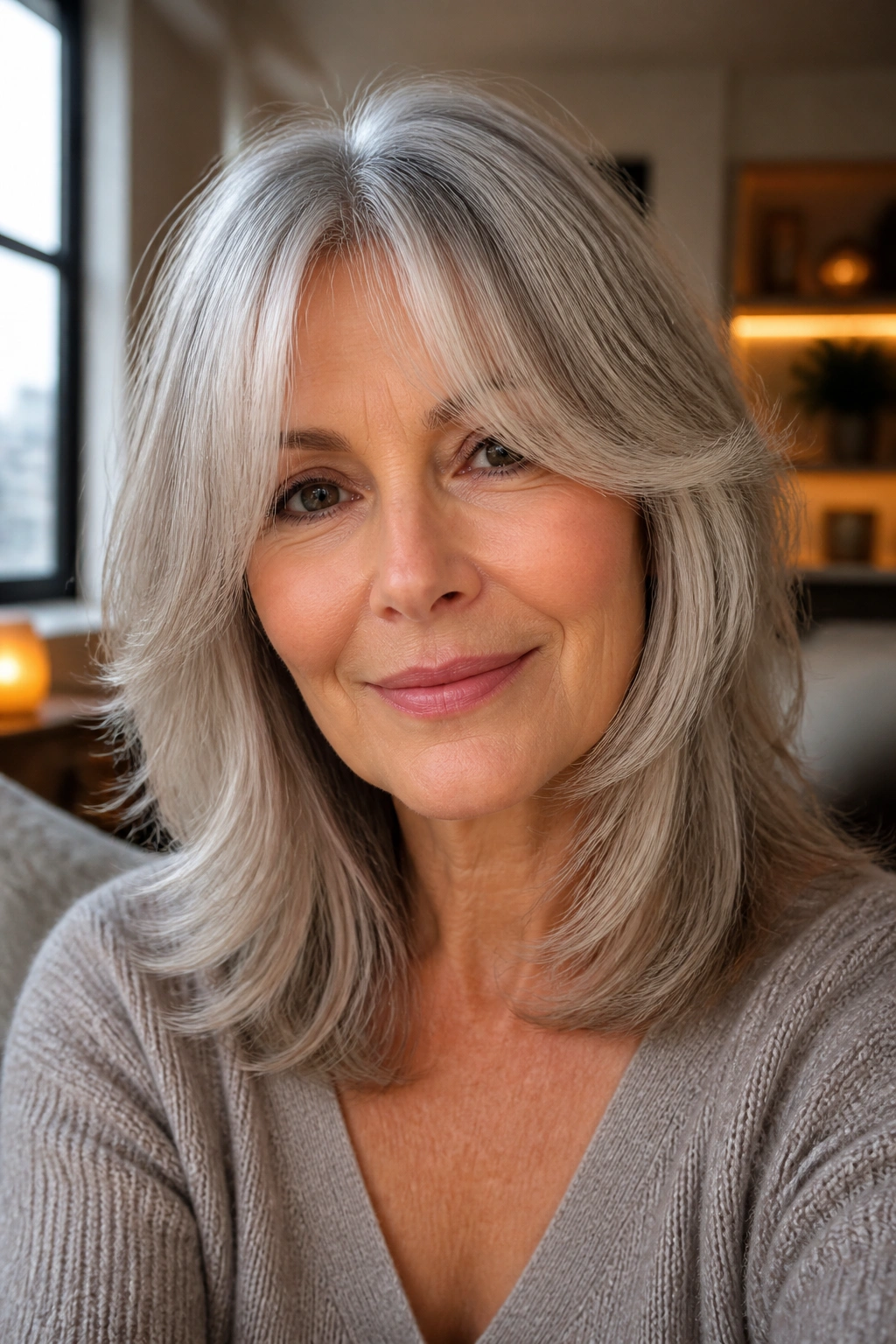
Curtain bangs can be a blessing on fine hair when they are cut with a light hand. The key is to keep them airy and longer at the cheekbones, not thick and blocky across the forehead. Too much bang can eat up density fast.
Face-framing layers help the same way. They open the face, soften the jaw, and give the cut some shape around the front without stealing too much from the sides. If your hair is naturally straight, these layers can create the illusion of movement even when the rest of the style is plain and simple.
The best version usually pairs with shoulder-length or collarbone hair. That gives the bangs room to blend instead of standing apart like a separate haircut. I prefer this when someone wants softness more than volume. It does not shout. It just makes the face look a little easier to read.
17. Sleek Short Crop With a Tucked-Behind-Ear Finish

Unlike a fluffy crop, this one leans clean. The sides are neat, the top has a little length, and the hair sits close enough to the head that it stays polished without a lot of work. Fine hair often behaves better when it is allowed to stay simple.
The tucked-behind-ear finish is the detail that changes everything. It opens the face, shows off the cheekbones, and keeps the hair from falling forward into the eyes. On a woman who wears glasses or likes a sharp neckline, this style feels almost tailored.
Use a lightweight smoothing cream or a drop of serum, then brush the top in the direction you want it to lie. That is enough. If the hair is too short to tuck cleanly, the effect falls apart. If it is too long, it loses the crispness. The sweet spot sits just long enough to skim the ear.
18. Soft Rounded Bob With a Side Part

A rounded bob can look fuller than a straight bob because the silhouette has a little curve through the sides. That curve gives fine hair the sense of body without making the style bulky. The side part helps too. It lifts the roots where the hair wants to lie flat.
This cut is useful if you want something feminine and controlled, but not rigid. The ends should curve in slightly, not curl hard. The top should keep some height at the part, and the back should not be chopped so short that the shape turns too tight. Balance matters here.
A medium round brush and a cool shot at the end are often enough to keep it in place. One small tip: shift the part a quarter inch from time to time. That tiny change prevents the roots from training themselves into one flat direction.
19. Shattered Pixie With Piecey Texture
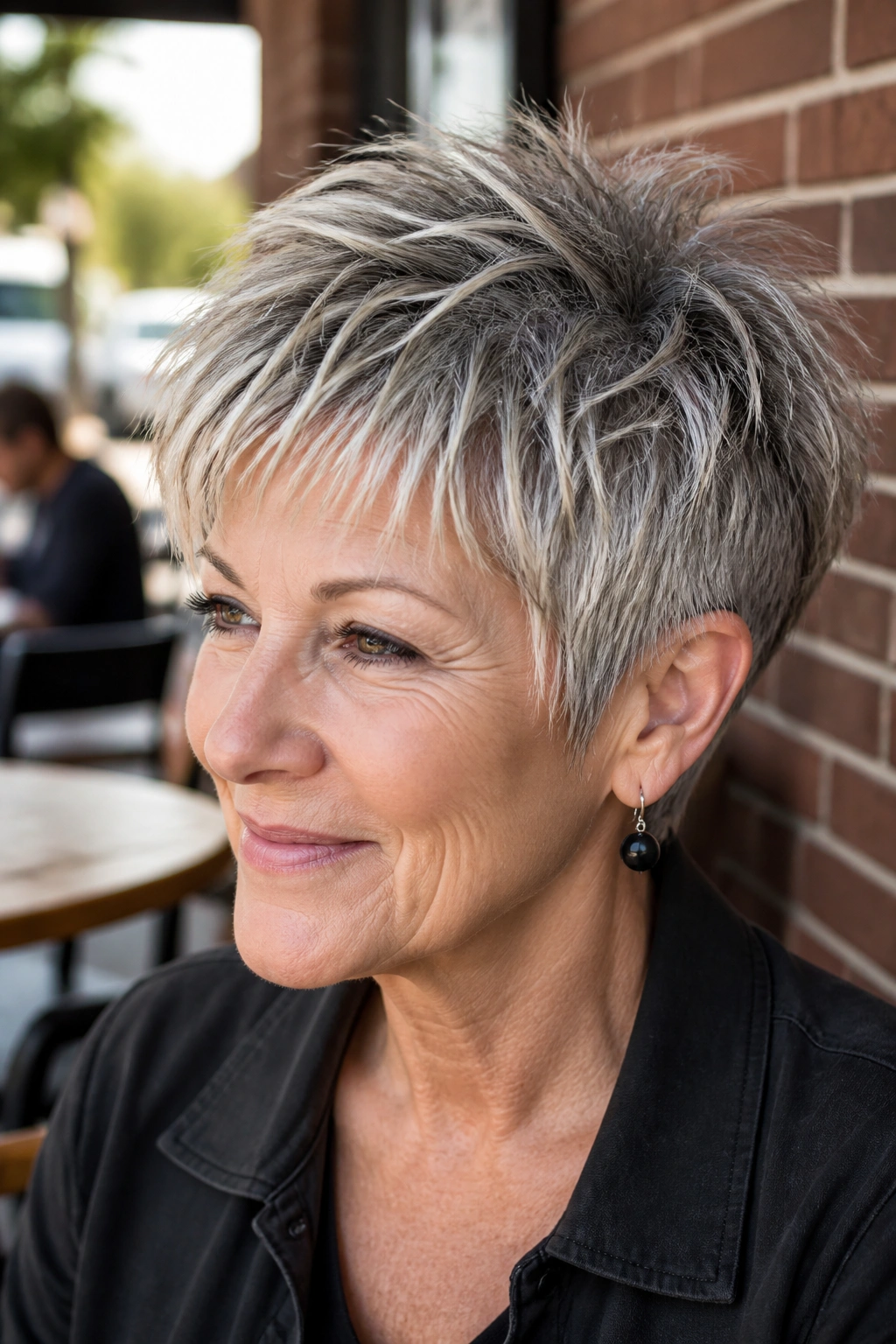
This cut is for women who want edge, not sweetness. A shattered pixie has broken-up ends, a lifted top, and a piecey surface that gives fine hair a sharper, more modern feel. It can look especially good on silver hair because the texture reads clearly.
The pieces should look deliberate, not chopped to bits. That is a real difference. You want movement around the crown and a little separation through the top so the style catches shape, not frizz. It is less about polish and more about attitude.
A little paste worked through dry hair is enough to define the pieces. If you use too much, the cut clumps and turns heavy. If you use too little, the texture disappears. There is a narrow middle ground here, and once you find it, the haircut comes alive.
20. Long Pixie With a Swept-Over Top
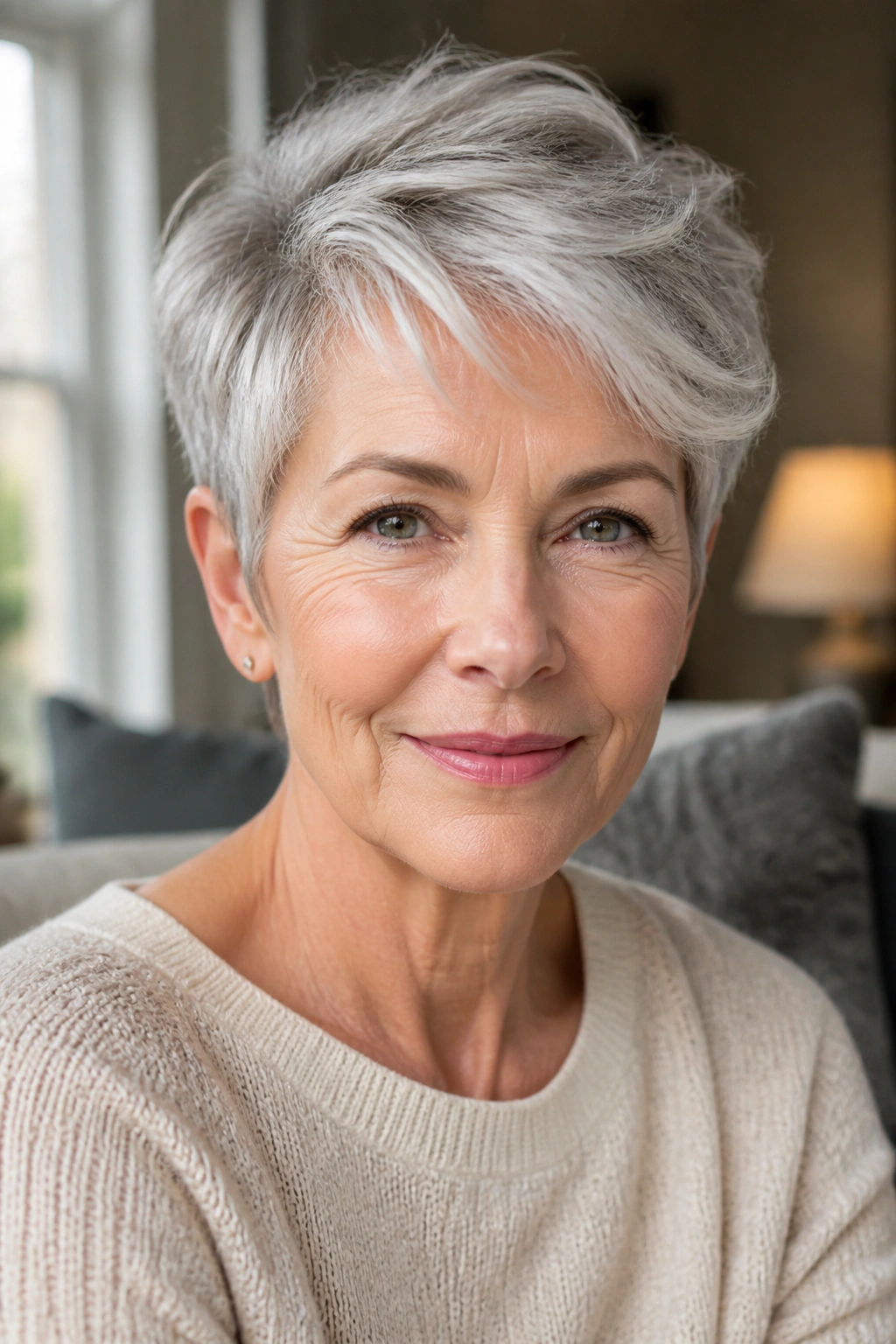
How do you keep some softness without going back to bob length? A long pixie does that job. It keeps the sides short and neat, but leaves enough length on top to sweep forward, across, or back depending on your mood.
This is a smart cut for fine hair because the extra length on top creates visual weight where you want it. The sides stay slim, which keeps the head from looking bulky, and the front can be styled with a side sweep that gives the face a little lift. It is a practical cut, but not a dull one.
I like this for women who want easy mornings and a bit of styling freedom. It can look polished with a blow-dryer and brush, or relaxed with fingers and a touch of cream. The shape is forgiving. That matters.
21. Low Layered Ponytail With Crown Lift
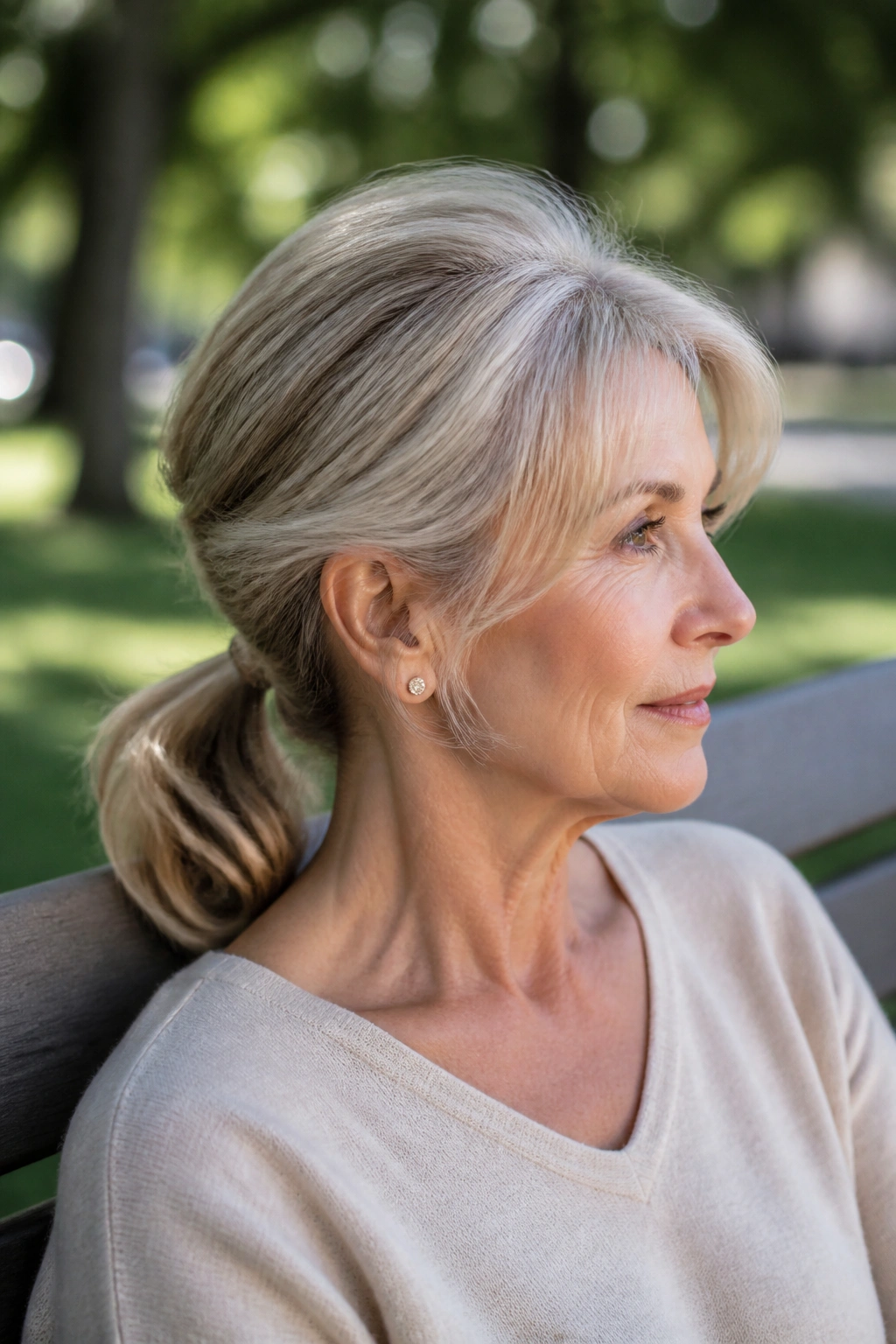
A ponytail sounds plain until you give it crown lift and a few soft layers around the face. Then it stops looking like a gym backup plan and starts looking intentional. On fine hair, that lift at the crown keeps the style from sitting too low and thin.
The best version sits at the nape or just above it. Before you tie it back, tease or brush a little root volume into the crown, then smooth the top layer over it. Leave a few front pieces loose if your face likes softness. If not, keep them tucked and clean.
Small details that matter
- Use a small elastic so the ponytail does not spread too wide.
- Wrap a strand of hair around the elastic for a cleaner finish.
- Keep the top slightly loose instead of pulling it flat.
- A light mist of hairspray at the crown helps the lift last.
This style is handy on busy days and still looks neat enough for dinner.
22. Soft Half-Up Twist With Face-Framing Pieces
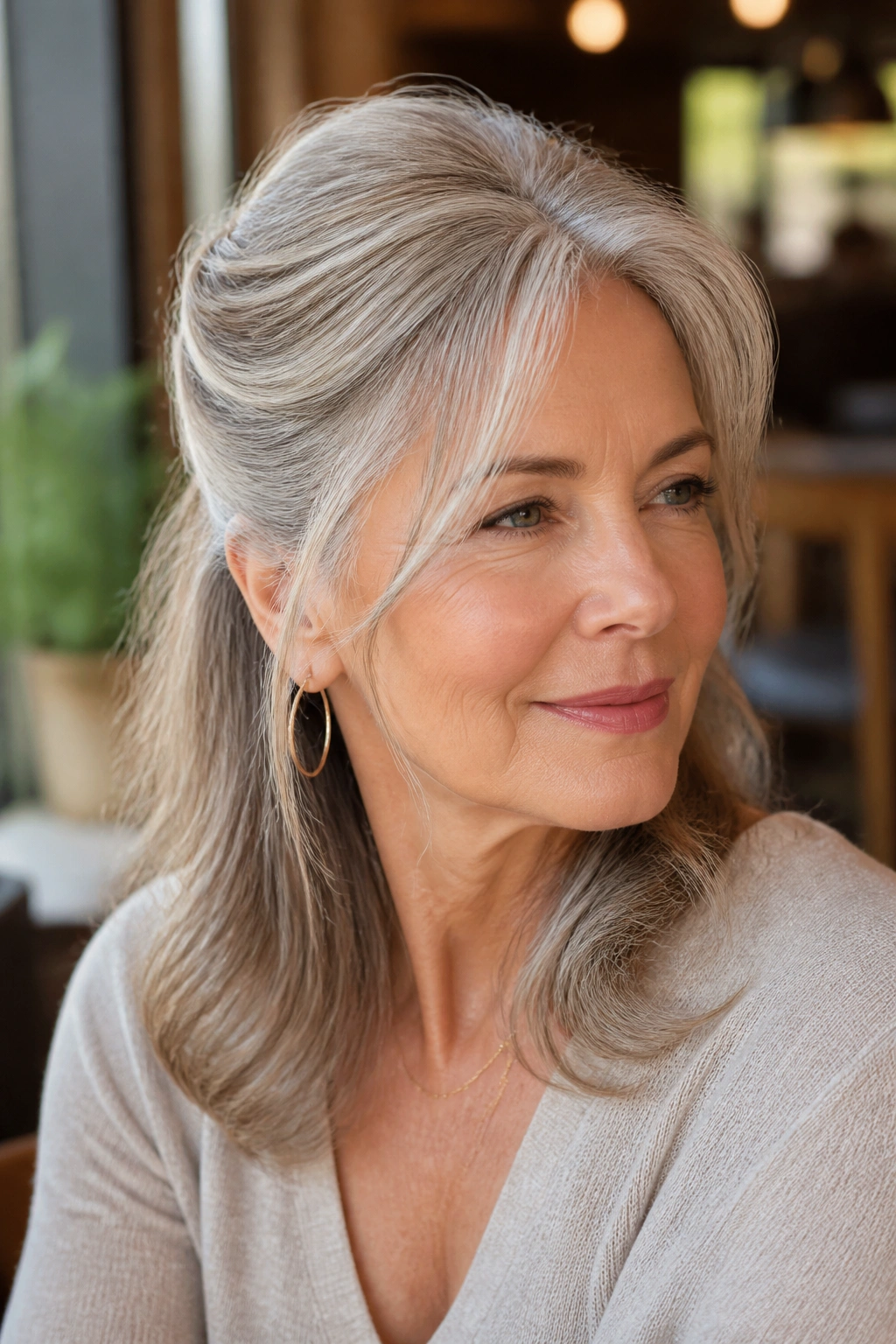
A half-up twist is one of those styles that can save fine hair on days when it feels too flat to wear down and too short to pin up completely. The top half gets a little lift, the bottom half keeps some movement, and the front pieces soften the face.
The trick is to keep the twist loose. Pulling it too tight flattens the crown and exposes thin sections around the temples. A gentle twist from each side, pinned low at the back, usually looks better than a tight wrap. Leave a few face-framing strands loose around the cheeks. Not a lot. Just enough to keep the style from feeling severe.
This works well for lunch, a casual event, or any day when you want your hair out of the way but not punished into submission. A touch of dry shampoo at the roots before you start can give the hair a little grip. That small bit of friction helps more than people think.
23. Voluminous Blowout on a Medium Cut
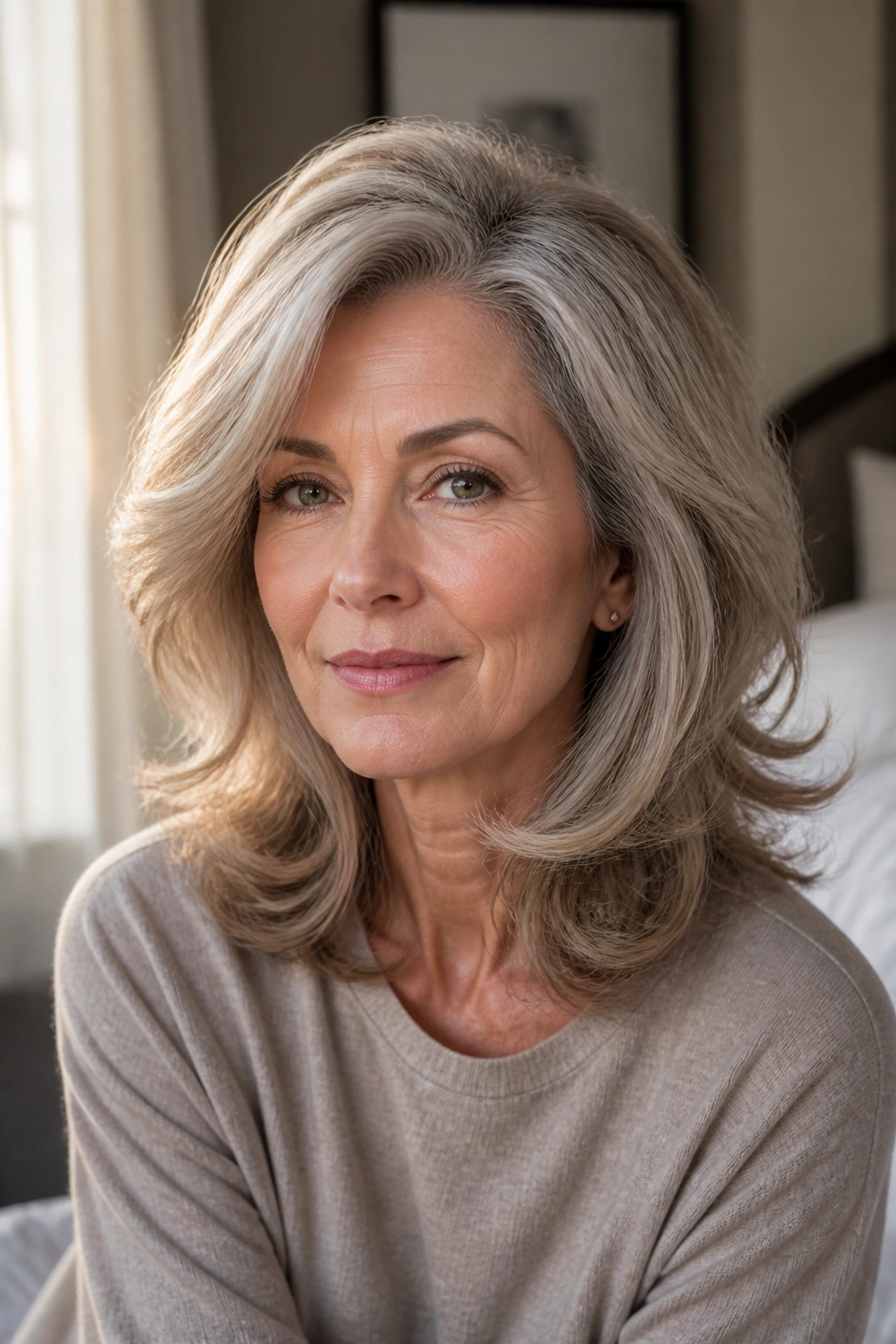
A blowout changes fine hair faster than almost anything else, which is why a medium cut with some internal layering can be such a good base for it. The cut itself does not need to be dramatic. The shape comes from lift at the roots, movement through the mid-lengths, and soft ends that don’t look stiff.
Unlike air-dried hair, a blowout gives the crown a chance to stand up a little before gravity wins. That is useful if your hair lies flat by noon. A round brush, heat protectant, and a cool shot at the end are usually enough. Velcro rollers at the top can help if you want more staying power.
This is the style I’d reach for when someone wants a more dressed-up look without committing to a curl set. It feels polished in a real-world way, not a pageant way. There’s a difference, and you can feel it the second you touch the hair.
24. Short Curled-Out Crop With Pillow-Soft Ends

A short crop with gently curled-out ends has a softness that fine hair often needs. The outward turn keeps the shape from hugging the head too tightly, which can make the hair feel smaller than it is. The result is light, airy, and a little playful.
Why it flatters fine hair
The ends create width at the edge of the cut, and that extra width gives the illusion of more body. A small round brush or a flat iron turned just slightly outward is enough. You do not want a full flip. You want a soft lift, almost like the ends remember where they came from and then decide to behave.
How to keep it from falling flat
- Prep with a lightweight mousse at the roots.
- Use a 1-inch brush for control.
- Finish with a flexible spray, not a hard shell.
- Lift the crown with your fingers after styling.
It’s a charming option for silver hair, because the turned-out ends show movement instead of exposing every thin strand.
25. Elegant Chin-Length Cut With Tapered Sides
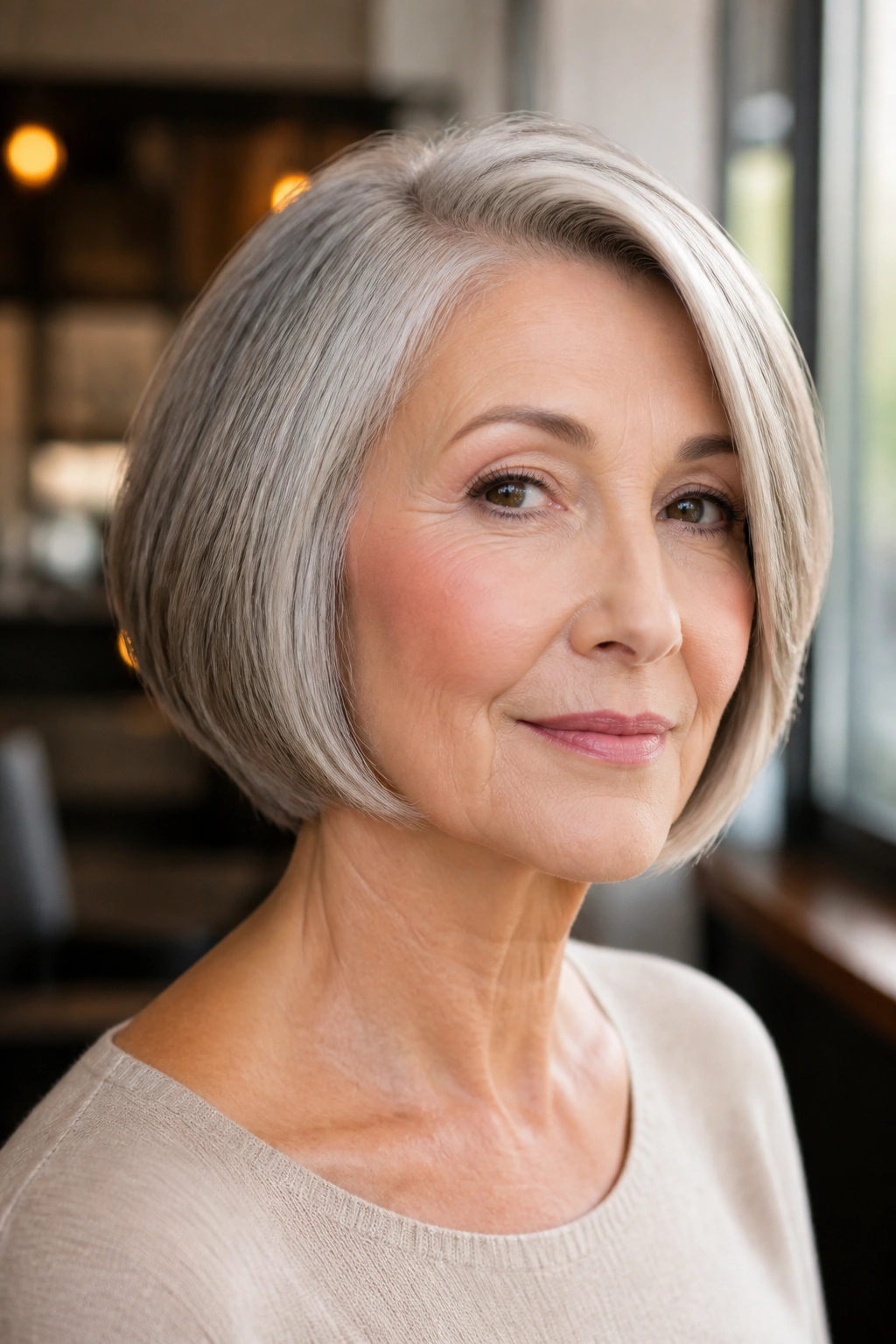
If I had to pick one cut that behaves well on a lot of faces, this would be it. A chin-length shape with tapered sides gives fine hair a firm outline, a little softness around the jaw, and enough movement to keep it from feeling severe.
The taper matters. It removes bulk where hair tends to puff out and keeps the line neat near the neck, so the style sits close without looking tight. A side part helps lift the front, and the chin length gives the face a clean frame. It is not flashy. That is the point.
This cut works especially well if you want something that still looks decent after a long day, a light breeze, or a rushed morning. A quick blow-dry or even a polished air-dry can keep it in shape. It is one of those rare styles that looks calm without looking plain, which is a harder trick than people think.
