



Thick long hair has a split personality. One minute it looks lush and expensive; the next, it has swallowed your clip, your elastics, and half your patience. Gravity wins.
That is why hairstyles for thick long hair need to do two things at once: control weight and still look like they meant to look that way. A style can be pretty and fail in real life. It can also be plain and work so well that you keep coming back to it every week.
The good news is that dense length gives you options most people never get. Braids have enough bulk to look full instead of skimpy. Ponytails have enough mass to look clean, not stringy. Buns can hold shape instead of collapsing into a sad little knot. You just need the right version of each one, and the right amount of tension.
1. Sleek Low Ponytail for Thick Long Hair

A sleek low ponytail can do more for thick long hair than almost any fancy updo. It clears the neck, keeps the length on display, and makes all that density look deliberate instead of unruly.
Why It Works
The trick is balance. If you pull the crown too tight, the style starts looking harsh. If you leave it too loose, the top gets puffy and the ponytail loses that clean line.
Start with a smoothing cream through the mids and ends, then brush the hair back in sections instead of all at once. Thick hair behaves better when you divide it mentally into three zones: crown, sides, and nape. Tie it at the lowest point of the head, about 1 to 2 inches above the neckline, so the weight falls naturally.
- Use a snag-free elastic that can handle dense hair.
- Wrap a 1-inch strand around the base to hide the band.
- Mist a toothbrush with hairspray to tame short flyaways near the hairline.
- If the pony feels loose after tying, add a second elastic just below the first.
Pro tip: smooth the underside last. That tiny order change keeps the surface from puffing back up while you work.
2. Bubble Braid Ponytail
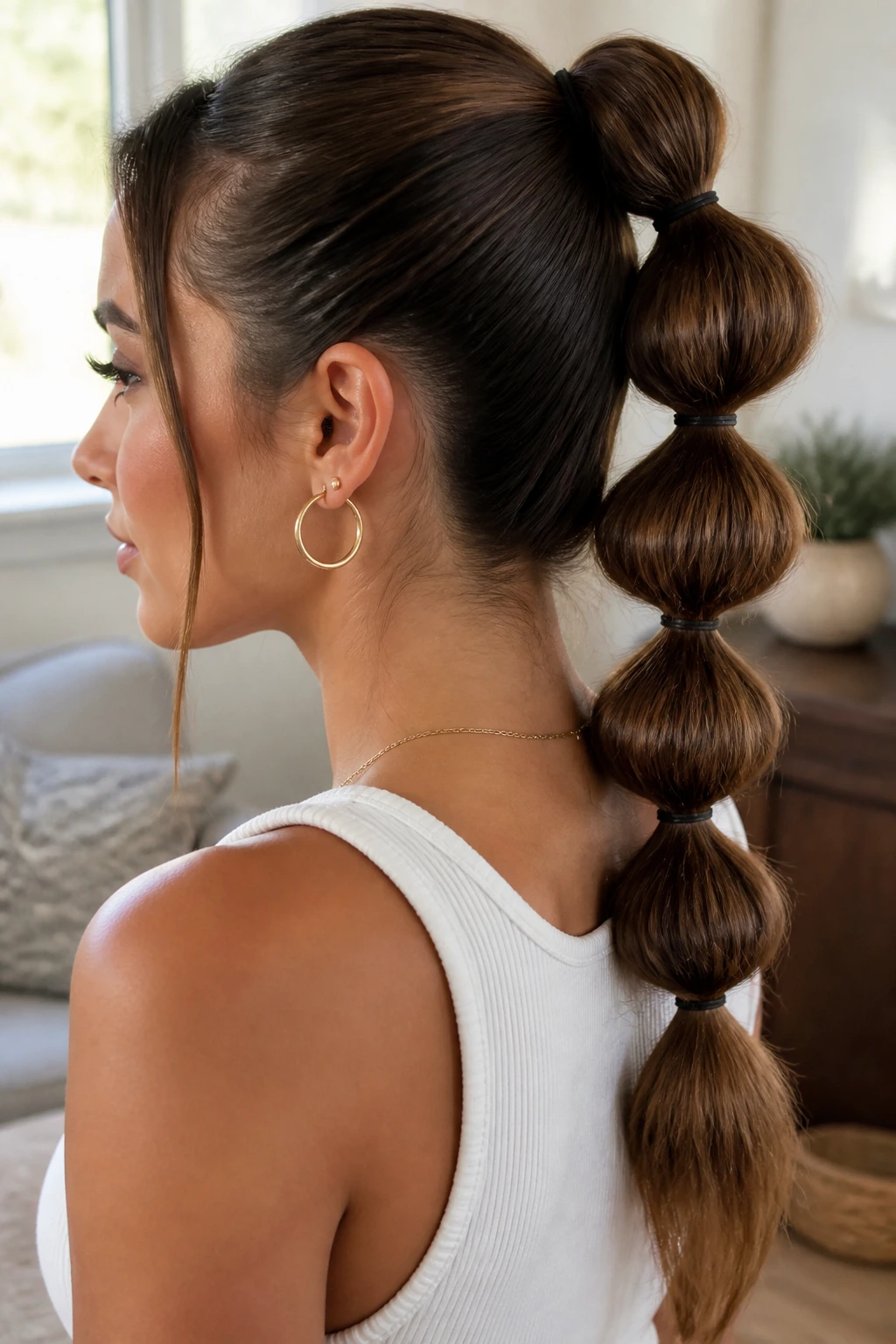
Bubble braids look playful on fine hair; on thick hair, they look almost architectural. That’s the whole appeal. The extra density gives each bubble shape and body, so the style reads polished instead of childish.
The easiest way to make it work is to tie the ponytail first, then add clear elastics every 2 to 3 inches down the length. Gently tug each section outward with your fingers until it rounds into a soft bubble. On very long hair, the lower bubbles can get more dramatic because there’s more length to play with, and that’s half the fun.
This style is also kind to busy mornings. You do not need perfect smoothness at the root, and you do not need salon-level sectioning. A little texture spray at the ponytail base helps the bubbles keep their shape, especially if your hair is very silky. If the ends feel heavy, leave the last section a little smaller so the whole braid doesn’t drag down.
3. Loose Hollywood Waves for Thick Long Hair

Why do waves hold so well on thick long hair? Because there’s enough weight in the strand to keep the bend from disappearing the second you blink. Fine hair often needs more help. Dense hair usually needs less.
Use a 1.25-inch curling iron or a large-barrel wand and work in 1.5-inch sections. Curl away from the face on the front pieces, then alternate directions through the back so the style looks soft instead of too set. Clip each curl to cool if you want the wave to last longer. That one move matters more than most people think.
How to Style It
- Prep with a heat protectant and a light mousse at the roots.
- Curl only from cheekbone to ends if you want movement without too much volume near the crown.
- Let the curls cool fully before brushing.
- Finish with a flexible hairspray, not a stiff shell.
A wide-tooth comb or a clean paddle brush will give you those soft, brush-out waves that sit nicely over long layers. If your hair is very heavy, leave the first inch near the scalp straighter. It keeps the whole style from ballooning.
4. Half-Up Claw Clip Twist

Picture this: you want your hair off your face, but a full updo feels like a chore and a ponytail feels too bare. The half-up claw clip twist is the fix.
It works because the clip takes weight off the front without hiding the length. That makes it perfect for thick hair that still wants to move. The key is not overloading the clip. Gather the hair from the temples and crown, twist it once or twice, then fold it upward so the clip catches the twist and the hair underneath stays loose.
A medium-to-large claw clip is usually better than a tiny one. Small clips slide when the hair is dense, and then you spend all day fussing with it. Leave the ends soft and a little messy. That contrast is what keeps the style from feeling stiff.
What to Watch For
- Use a clip with wide teeth and a strong spring.
- Keep the twist centered, not too far back.
- Pull a few face-framing pieces out if you want a softer line.
- If the clip slips, crisscross two bobby pins under the twist.
This one is easiest on layered hair, but it works on one-length length too if you anchor it firmly.
5. Crown Braid

A crown braid is one of those styles that looks more complicated than it is. On thick long hair, it has the rare gift of looking full from every angle. No thin spots. No gaps.
What matters most is section size. If you try to braid too much hair at once, your hands will fight you. If you take tiny sections, the braid may look neat but feel slow and fussy. The sweet spot is usually around a half-inch to 1-inch section as you travel along the hairline.
The braid can be French or Dutch, and I actually prefer Dutch when I want the braid to sit on top of the hair instead of disappearing into it. Work from one temple, follow the curve around the head, then pin the end under the opposite side with two or three bobby pins. Keep the pins hidden under the braid, not poking into the visible edge.
A little shine spray across the finished braid makes the woven pattern stand out.
6. High Wrapped Ponytail

A high wrapped ponytail is the low ponytail’s louder sibling. It lifts the weight off the shoulders, shows off thickness at the crown, and gives long hair a cleaner silhouette from the front.
What makes it different is the height. Thick hair can look heavy when it sits low, but up high it turns into a statement. The trick is to brush the hair straight up first, then secure it with a strong elastic before wrapping a thin strand around the base. If the ponytail feels too bulky, split it into two quick ties stacked close together. That helps the weight sit evenly instead of sagging.
This style works especially well when the roots have some lift. A little dry shampoo at the crown or a quick backcomb under the top layer gives the ponytail more support. Use a bungee tie if your hair is slippery or very dense. It grips better than a regular elastic and saves your wrists a bit of work.
For a cleaner look, smooth the sides with a boar-bristle brush. For a more relaxed finish, leave the pony a touch looser and let the ends swing.
7. Messy Low Bun with Face-Framing Pieces
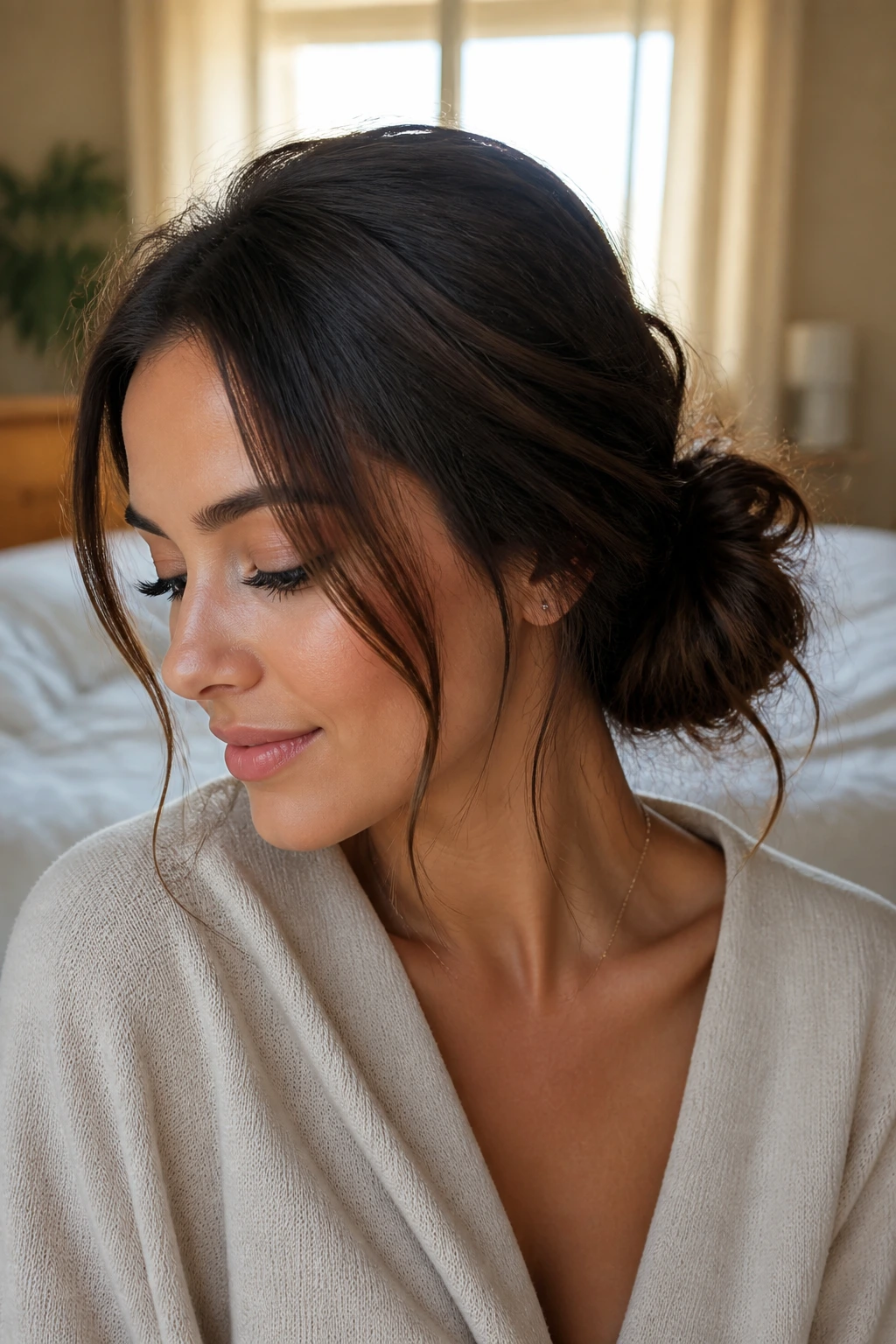
Some styles look better the second time you try them. The messy low bun is one of them. Thick long hair gives it the fullness it needs, so you don’t end up with a tiny knot stuck to the back of your head.
What to Watch For
Start by making a low ponytail, then twist the length loosely and coil it into a bun at the nape. Do not press every strand flat. A little air between the sections makes the bun look fuller and keeps it from feeling stiff. Leave out two face-framing pieces, each about 1 inch wide, and let them sit naturally.
- Pin the bun with 4 to 6 bobby pins in an X pattern.
- Tug the crown gently for a softer shape.
- Pull the bun apart a little if it looks too tight.
- Finish with texture spray, especially on clean hair.
The best version of this bun has movement. It should feel secure, not welded to your scalp. If the ends poke out, tuck them under instead of hiding them completely. That tiny bit of imperfection is what keeps it from looking fussy.
8. Side Braid over One Shoulder
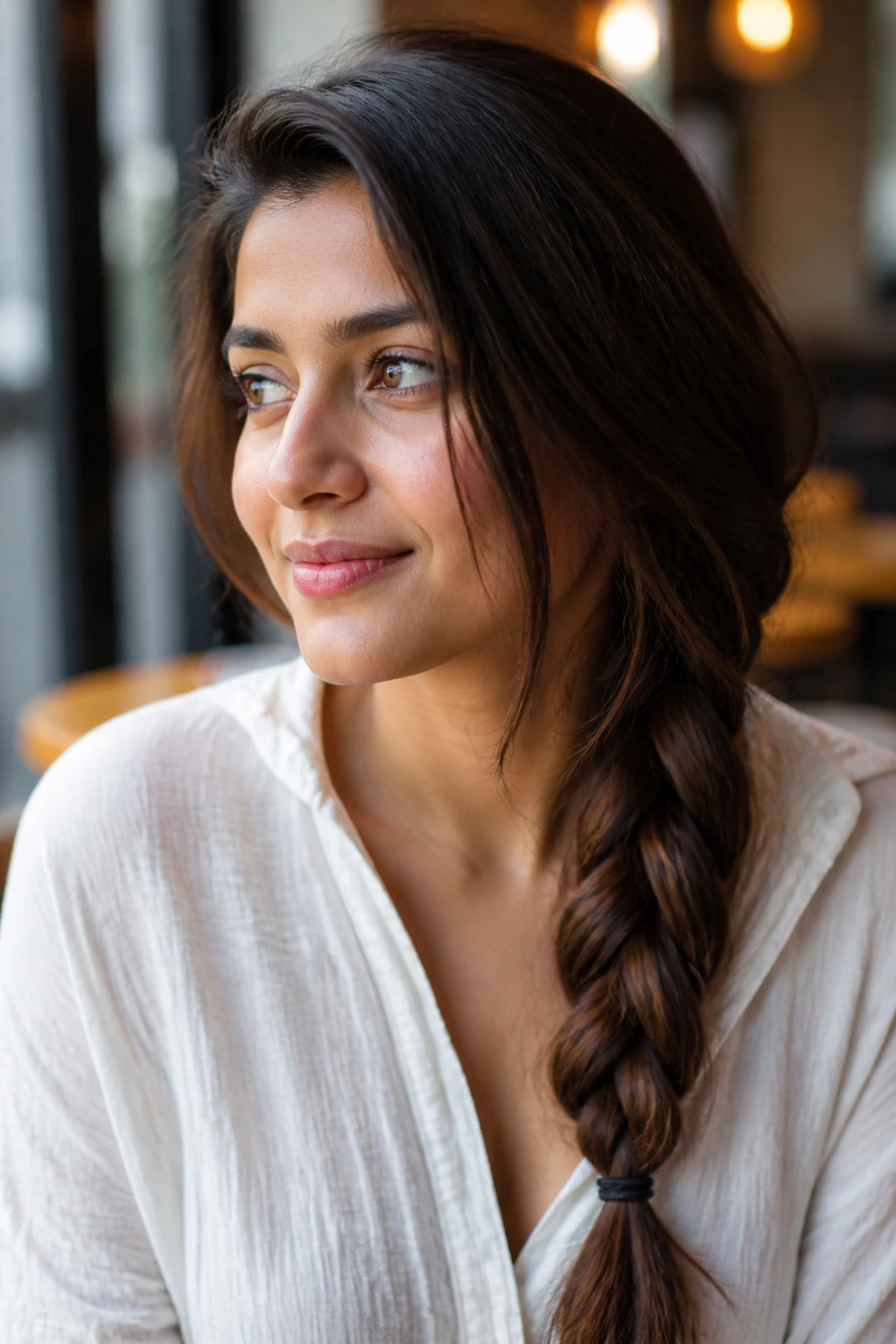
A side braid is one of the easiest ways to make thick long hair behave, and I mean that in the nicest possible way. Once the braid shifts over one shoulder, all that weight feels more manageable.
The braid can be loose and romantic or tight and neat, but the shoulder placement is what changes the whole mood. For dense hair, I like starting with a little smoothing cream on the mids and ends so the braid doesn’t fray halfway down. If your hair is layered, a light mist of holding spray before braiding helps the shorter pieces stay inside the weave instead of slipping out.
Unlike a center-back braid, this one lets you see the whole pattern as you wear it. That makes it a nice choice when you want the braid to look intentional instead of like a quick fix. Tie it off low, then pancake the braid slightly by pulling on the outer edges of each section. A small ribbon or matte elastic at the end keeps the finish cleaner than a regular clear band.
9. Claw-Clip French Twist

Can thick long hair fit into a French twist without bulging? Yes, if you fold instead of forcing. That is the whole trick.
A French twist works best when the hair is gathered low, twisted upward, and tucked in a vertical line along the back of the head. Thick hair needs room, so don’t try to shove every strand into the twist at once. Smooth the outer layer first, then guide the length inward in sections. A long, strong claw clip or a pair of curved French pins will usually hold better than a tiny decorative clip.
How to Wear It
- Twist the hair upward from the nape, not from the crown.
- Keep the roll snug, but not crushed flat.
- Use U-pins near the base if the twist feels heavy.
- Leave a few softer pieces around the face if you want less severity.
This style is sharp, but not cold, when the twist has a little fullness. Thick hair gives you that naturally. You don’t need to fake it. You just need to keep the fold neat.
10. Curtain Bang Blowout with Loose Ends

A good curtain bang blowout can make thick long hair look lighter without cutting the length. It frames the face, breaks up the bulk near the front, and gives the style some bounce around the eyes.
The part matters here. Split the bangs or front sections down the middle, then blow-dry each side away from the face with a round brush, usually a 2-inch brush for longer hair. Roll the brush under at the ends if you want a softer bend, or flick it away from the face for a sharper sweep. The rest of the length can stay loose and smooth, which keeps the style from feeling overworked.
Quick Details That Help
- Use a heat protectant with light hold.
- Clip the front sections in place while they cool.
- Finish with a pea-sized amount of serum on the ends, not the roots.
- If the bangs split oddly, mist a little water and re-dry only that area.
It’s a small change, but it changes the whole haircut’s feel. Thick hair still stays thick. It just stops reading so heavy around the face.
11. Braided Half-Crown

A braided half-crown gives you the control of a braid without giving up the drama of long hair. That’s why it’s such a good fit for thick length. You get shape at the top and movement below.
I like this one when I want the hair away from the face but not fully pinned up. Start by taking a section from each temple, braid both sides back toward the center, and secure them together under the top layer of hair. You can make the braids tight and neat, or leave them a little wider for a softer look. Thick hair tends to make the weave look fuller either way.
The part that matters is the join. Hide the elastic under the top layer and pin the ends flat so the back doesn’t get lumpy. If you want the crown to look fuller, tug the outer edges of the braid gently after it’s secured. That gives the style a wider shape without making it messy.
It’s a useful style when you want polish but not too much polish. There’s room for a few imperfect pieces.
12. Rope Braid

A rope braid behaves differently from a classic three-strand braid, and thick long hair shows that difference clearly. Instead of weaving three pieces, you twist two sections around each other. The result is sleek, neat, and a little glossy when the hair is healthy.
The structure is what makes it work. Split the hair into two even sections, twist each section in the same direction, then wrap them around each other in the opposite direction. If you twist both pieces randomly, the braid falls apart. If you keep the directions consistent, it holds. That’s the bit people skip, and then they blame the braid.
This style is especially good for slippery, long hair because it doesn’t rely on tiny overlapping sections. It also gives a nice spiral shape down the length, which looks better the thicker the ponytail is.
Where It Shines
- Great for a low ponytail or a side braid.
- Better with a little texture spray first.
- Clean enough for work, soft enough for weekends.
- Fast to do once your hands remember the motion.
A rope braid looks simple, but it has presence. That’s the appeal.
13. Fishtail Braid for Thick Long Hair

A fishtail braid on thick long hair has a different personality than it does on thinner hair. Here, it looks plush and detailed instead of skinny and delicate. That extra density gives the braid a proper pattern.
Why It Works
The braid is built from tiny outer pieces, so the larger the total mass, the more dimension you see in the final result. Start with two main sections, then keep crossing small bits from the outside of one section into the other. If your hands are new to it, take slightly larger pieces at first. It’s easier to learn that way, and the braid still looks good.
A thin coat of styling cream or paste on the palms helps control frizz without making the braid greasy. If the lengths are layered, don’t panic when a few ends stick out. That happens. Secure the braid with a clear elastic, then gently loosen the edges to make it wider and softer.
Pro tip: fishtails look especially good when they start a little higher than you expect. A braid that begins just below the crown gives thick hair room to fall into the pattern.
14. Double Dutch Braids into a Bun

This is the style for days when you want zero loose ends. Double Dutch braids feed all the hair upward and back, and the bun at the nape keeps the whole thing compact.
The braid pattern sits on top of the hair, which makes the style easy to read even when the hair is dense. Part the hair straight down the middle, braid each side tightly from the hairline to the back, then twist the remaining lengths into a bun. Thick hair helps here because the bun looks full instead of tiny. Use a few extra pins than you think you need; dense hair tends to shift under a single pin.
It’s a practical style, but it doesn’t feel plain. The braids give you texture at the scalp, and the bun gives you a clean finish at the base. If you want a softer edge, pull a few small pieces around the temples after the braids are secured. If you want it sharper, smooth everything back with gel.
The style stays put because it has several anchor points. That matters.
15. Face-Framing Half-Up Top Knot

Why does a tiny top knot change the feel of thick long hair so much? Because it lifts weight off the scalp without hiding the length. That’s a small move with a big payoff.
Pull the top third of the hair back from temple to temple, twist it into a compact knot, and secure it with a small elastic or two pins crossed underneath. Leave the lower half loose so the hair still moves. The face-framing pieces are the part I like most. They stop the style from looking too severe and help balance the volume of the knot against the length below.
How to Wear It
- Keep the knot centered or slightly high.
- Make the knot tight enough to hold, but not so tight it gives you a headache.
- Curl the front pieces once if you want a softer edge.
- Add dry shampoo at the roots if the top is slippery.
This is one of those hairstyles that makes second-day hair behave. It is quick, but not careless. And thick hair gives it the fullness it needs.
16. Pull-Through Braid
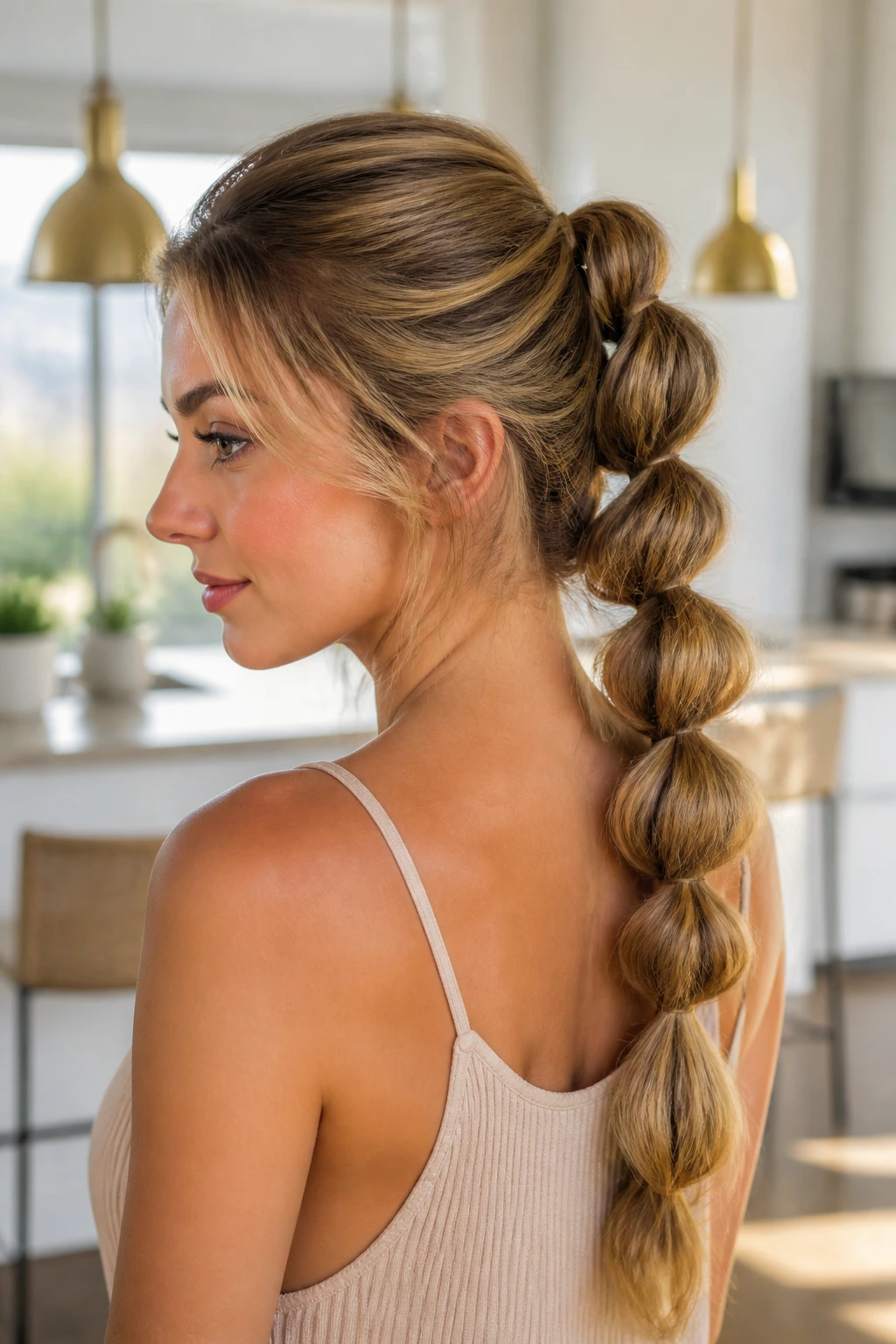
A pull-through braid gives you the look of an elaborate braid without the hand-cramping part. Thick long hair is perfect for it because every tied section has enough bulk to show.
The style is built in layers. You create a series of small ponytails, then split and pull each one over the next section to build a stacked braid effect. Clear elastics are the quiet hero here. Use them every 3 to 4 inches, then tug each segment outward until the braid looks full and rounded. If you skip the tugging, it can look a little flat and blocky.
I like this braid for very long hair because the length becomes part of the design. The ends can be braided all the way down or left in a low ponytail. If your hair is extra thick, keep the sections neat and even from the start; uneven sections show up fast in this braid.
It’s not the fastest style on the list, but it delivers a lot of shape. And it holds.
17. Low Chignon

A low chignon is what happens when a bun stops trying too hard. On thick long hair, it looks graceful because the density gives the knot real body, not a pencil-thin twist.
The smartest way to do it is to split the hair into two sections first, then twist each section before wrapping them together at the nape. That keeps the chignon compact and helps it lie flat. If you try to twist the whole mass as one rope, thick hair can spring back and puff out in odd places. Pin the base firmly, then add a few hidden pins around the curve of the bun until it feels stable.
This style benefits from a smooth surface and a slightly tucked shape. Not sleek to the point of looking severe. Just controlled. A small side part or a soft center part both work, but I prefer a slight side part when I want the front to feel less rigid.
The chignon is the kind of style that looks better from the side than people expect. That matters if you’ll be turning your head all night.
18. Waterfall Braid
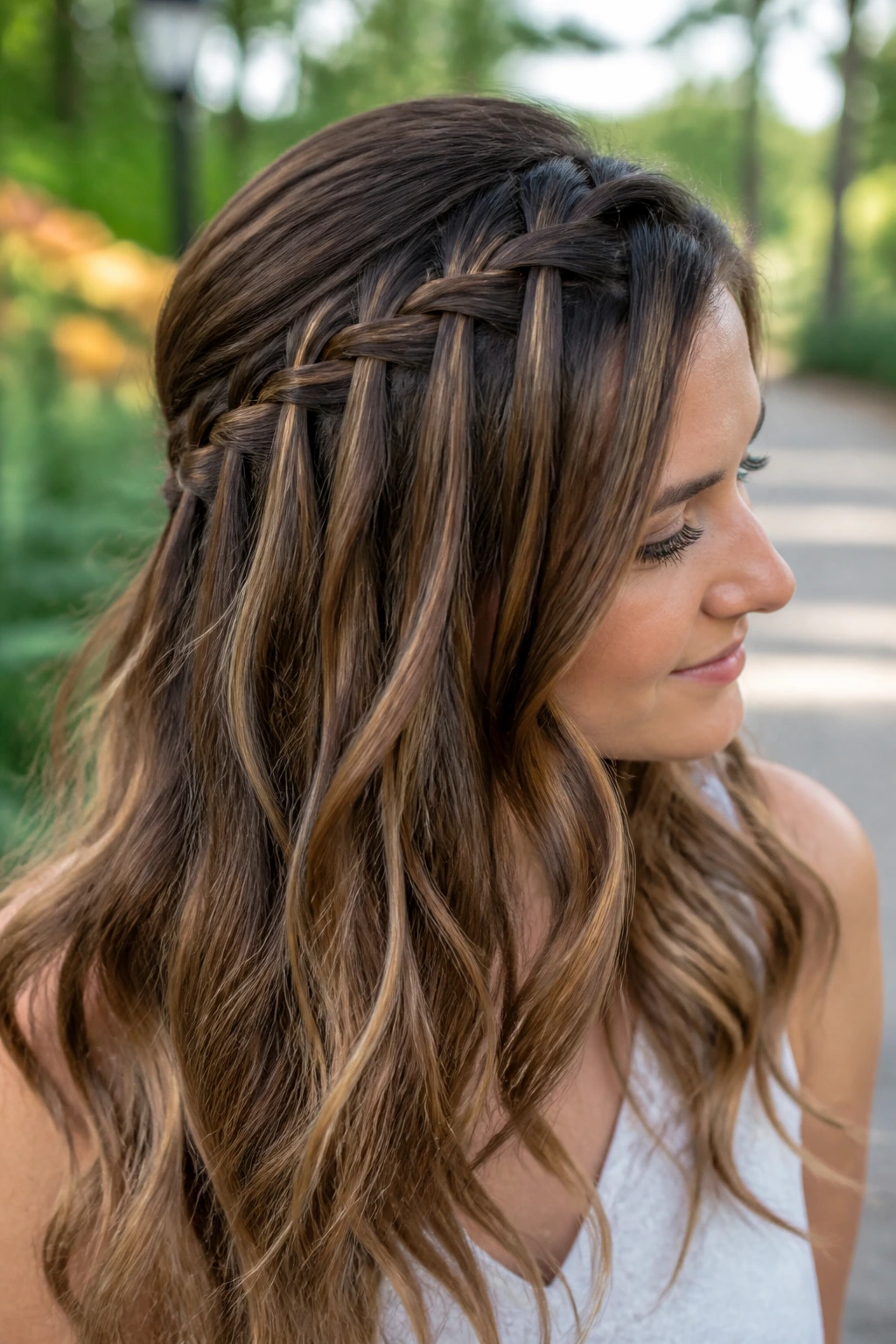
A waterfall braid is different from a full braid because it lets some hair drop through as you work. That falling strand is the whole point. It keeps long hair visible while still adding shape around the crown.
On thick hair, the braid can look wonderfully full, but only if the sections stay even. Take a small top section, braid across the head, and drop the bottom piece each time you add a new strand. The loose lengths create soft vertical lines, which look especially pretty over waves or loose curls. If the hair is stick-straight, add a little bend first so the braid doesn’t look too rigid.
What Makes It Different
- The style leaves most of the length loose.
- It frames the face without closing off the hairline.
- It works better on slightly textured hair than on ultra-smooth hair.
- A few bobby pins behind the braid keep it from sliding.
This braid is one of the few styles that feels decorative without taking over the whole head. I like that restraint.
19. Slicked-Back Wet Look Ponytail for Thick Long Hair

A slicked-back ponytail can look severe in a good way, especially on thick long hair. The density makes the style feel intentional instead of flat, and the wet finish keeps every flyaway in place.
Start with damp or freshly misted hair, then work a gel or styling cream from roots to mid-lengths. A wide-tooth comb helps distribute the product evenly before you smooth everything back with a fine-tooth comb. Do not pile on too much product at once. Thick hair needs control, not a paste mask. Once the hair is sleek, tie it low or mid-height and wrap the base if you want a cleaner finish.
A Few Useful Details
- Use about a nickel to quarter-sized amount of gel depending on hair density.
- Brush from the hairline back in straight lines.
- Tuck the ears in if you want a sharper silhouette.
- Add a second light layer only after the first one is smooth.
This style is a little bold, and that is why I like it. It makes a lot of hair look crisp.
20. Oversized Top Knot

An oversized top knot is what happens when you stop apologizing for volume. Thick long hair has enough mass to build a knot that looks full from every angle, and honestly, that’s the whole point here.
The best version starts with a high ponytail placed at the crown or slightly above it. Twist the length loosely, then wrap it into a big knot and secure the base with a strong elastic before adding pins around the perimeter. If the knot feels too tight, pull it apart a little so the shape stays round and soft. Too many people squeeze thick hair into a tiny bun and then wonder why it looks tense.
This style is at its prettiest when some ends stay tucked but not hidden. A little uneven texture makes the knot feel less formal. You can also use a thin hair tie to anchor the base first, then secure the outer shape with bobby pins. That gives you more control than trying to do everything with one elastic.
It is a practical style, yes, but it also has a bit of drama. I mean that in a good way.
21. Milkmaid Braids

Can milkmaid braids work on very long hair? Absolutely. In fact, thick length makes them look fuller and more stable than they do on thinner hair. The braids sit like a band across the head, which gives the style a soft, old-world feel without making it fussy.
Braid the hair into two long side braids, bring one across the crown, and pin it just behind the opposite ear. Do the same with the second braid, crossing it the other way so the two braids meet and cover each other’s ends. The tricky part is hiding the pins under the braid instead of outside it. Once you get that part right, the style stops looking homemade and starts looking finished.
How to Wear It
- Keep the braids a little loose for a fuller shape.
- Use 6 to 8 bobby pins if your hair is heavy.
- Tuck the tail ends underneath the crossed section.
- Pull a few small pieces around the temples if you want a softer line.
It’s a sweet style, but not childish. Thick hair gives it enough substance to feel grown-up.
22. Soft S-Waves with a Middle Part

Soft S-waves are what you get when you want movement without a full curl pattern. Thick long hair takes to them well because the weight helps the bends settle into place instead of springing into a puff.
The cleanest version starts with a middle part and a 1-inch or 1.25-inch curling iron. Clamp a section, bend it slightly one way, then the other, leaving the ends a little straighter if you want a more relaxed finish. Let the hair cool before touching it. That cooling time matters. If you rush it, the bend loosens too soon and the whole look falls flat.
What Makes Them Hold
- Smaller sections create more visible waves.
- A light mousse at the roots gives body without stiffness.
- A drop of serum on the ends keeps the wave from looking dry.
- Finger-combing works better than a brush here.
This style is quietly flattering. It does not shout, but it gives long thick hair a softer outline, which is often what the hair needs most.
23. Scarf-Wrapped Ponytail

A scarf-wrapped ponytail is one of the easiest ways to make a plain ponytail feel styled. Thick long hair benefits because the scarf hides the elastic and adds a bit of color or pattern without much effort.
Start with a low or mid ponytail, then tie a silk or cotton scarf around the base with a simple knot. A scarf that is about 2 inches wide works better than one that is too bulky, especially if your ponytail already has plenty of volume. Let the tails hang down with the length of the hair, or wrap them once around the base if you want a cleaner finish.
The best part is how forgiving it is. If the ponytail isn’t perfectly smooth, the scarf steals the attention. If the ends are a little uneven, the whole thing still looks intentional. You can also use the scarf to echo an outfit color without turning the hair into a costume.
It is a small styling move, but thick hair makes small moves visible.
24. Twisted Halo

A twisted halo gives you the softness of a braided crown with less visual heaviness. That difference matters on thick long hair, where a full braid can sometimes feel like too much pattern sitting around the head.
Instead of braiding, you twist two sections from either side of the head and pin them around the crown. The result is smoother, faster, and a little less formal. I like it on hair that is slightly textured already, because the twist holds better and the shape looks fuller. If your hair is super clean and slippery, a dusting of texture spray before twisting helps the sections stay where they should.
Why It’s Different
- Twists are quicker than braids.
- The halo sits flatter against the head.
- It works well for second-day hair.
- The finished look feels lighter around the crown.
This style is a good choice when you want the face open and the length still visible. It’s calm. It doesn’t ask much.
25. Braided Ponytail with Wrapped Ends

A braided ponytail with wrapped ends is one of my favorite ways to finish thick long hair because it keeps the length contained but still lets the braid do the talking. The base is tidy, the body stays visible, and the ends look deliberately finished instead of loose for no reason.
Why It Works
Tie the hair into a ponytail first, then braid the length down as far as you want. Once you reach the end, take a thin strand from underneath and wrap it around the elastic to hide it. That little wrap is the detail that makes the style feel polished. Use a clear elastic or a small black one that matches your hair color if you want the cleanest look.
- Keep the ponytail base tight so the braid starts smooth.
- Use a light styling cream on the lengths if the hair frizzes easily.
- Pancake the braid a little if you want more width.
- Secure the wrapped strand with one hidden pin under the braid.
This is the style I’d choose when I want the practicality of a ponytail with the texture of a braid. Thick hair does both jobs well, and this one lets it show off.
