



Long hair can go limp in one bad cut. Medusa hair cut ideas for long hair work because they give the length a shape to move through, instead of letting it hang like one heavy sheet.
I’m not talking about costume hair or cartoon snakes. I mean long cuts with broken-up layers, face-framing pieces, and that slightly wild feeling that makes the hair look like it has its own mood. The good ones feel a little untamed, but still wearable on a normal Tuesday.
If your hair reaches past the shoulders, weight matters more than people think. A few inches of layers in the wrong place can flatten the crown, make the ends puff out, or turn a braid into a thin rope at the bottom. That is why the most useful Medusa-inspired cuts are not all dramatic. Some are soft. Some are sharp. Some barely look layered until the hair moves.
The sweet spot depends on texture, density, and how much styling you actually want to do. A wavy head of hair can handle more chop. Fine straight hair often needs a quieter approach. Thick curls want shape, not chaos. The good news: there is a version of this look for almost every long-hair situation, and the right one usually becomes obvious once you see how each cut changes the silhouette.
1. Medusa Shag With Wispy Ends
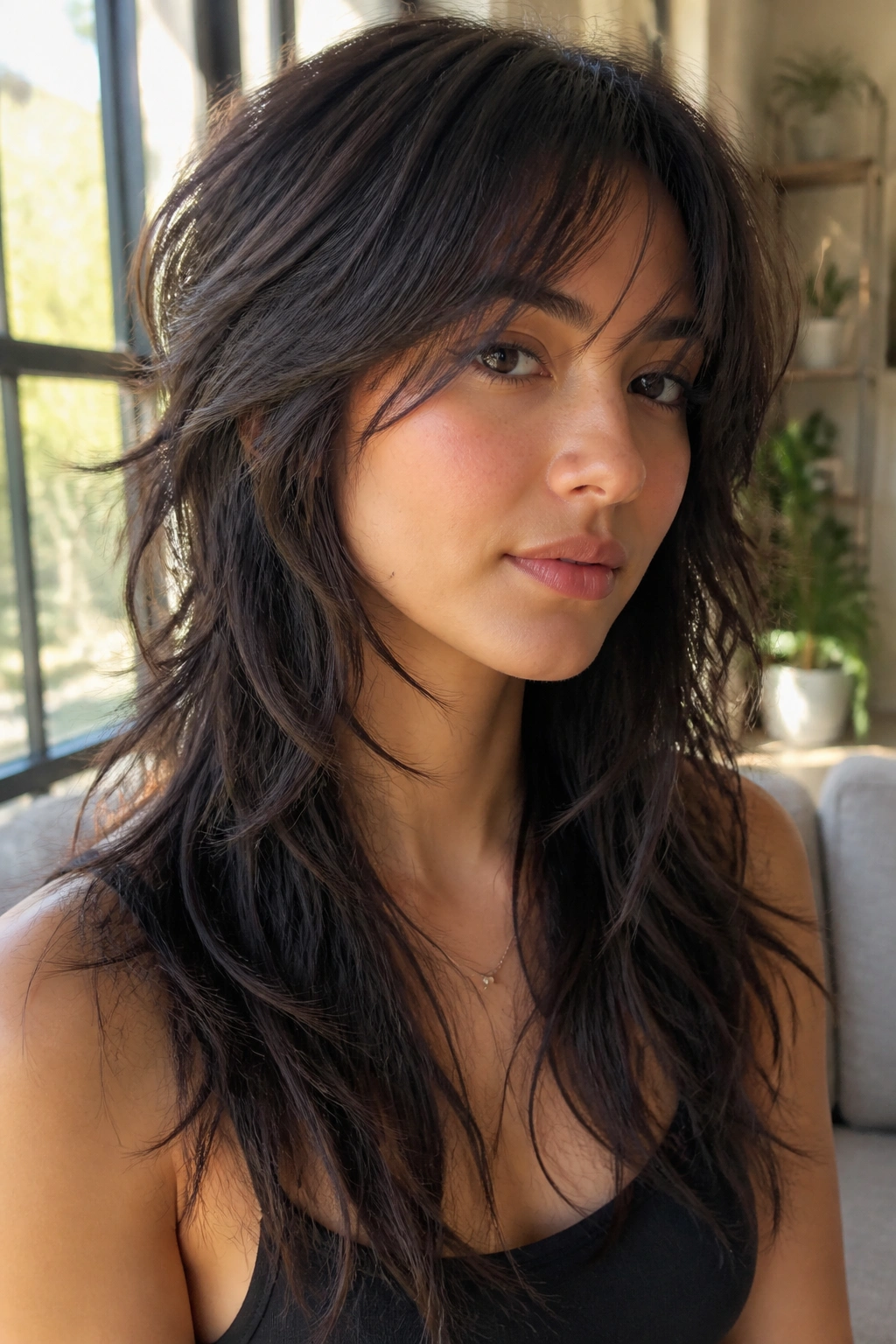
The shag is the closest thing to a haircut that seems to move on its own. On long hair, it works because the crown gets shorter, the mid-lengths get broken up, and the ends stay soft enough to swing instead of sitting in one heavy line.
What makes it Medusa-like is the outline. Nothing feels too neat. Nothing is too straight. The hair gets that slightly electric, serpent-in-motion look the second you shake it out.
Why it works so well on long hair
- The shorter crown layers create lift without cutting off the overall length.
- The wispy ends stop the hair from looking like a single solid curtain.
- Wavy and thick textures usually take to this shape fastest.
- It grows out with a little attitude, which is useful if you hate frequent salon visits.
Ask for the shortest layers to land around the cheekbone or just below it, then let the rest fall long from there. If the stylist pushes the shortest pieces too high, the cut can get fluffy in a bad way. That’s not the goal.
Pro tip: if your hair is fine, keep the shag softer and longer. A shag that’s too aggressive can make the ends look thin fast.
2. Curtain Bangs That Melt Into Waist-Length Layers
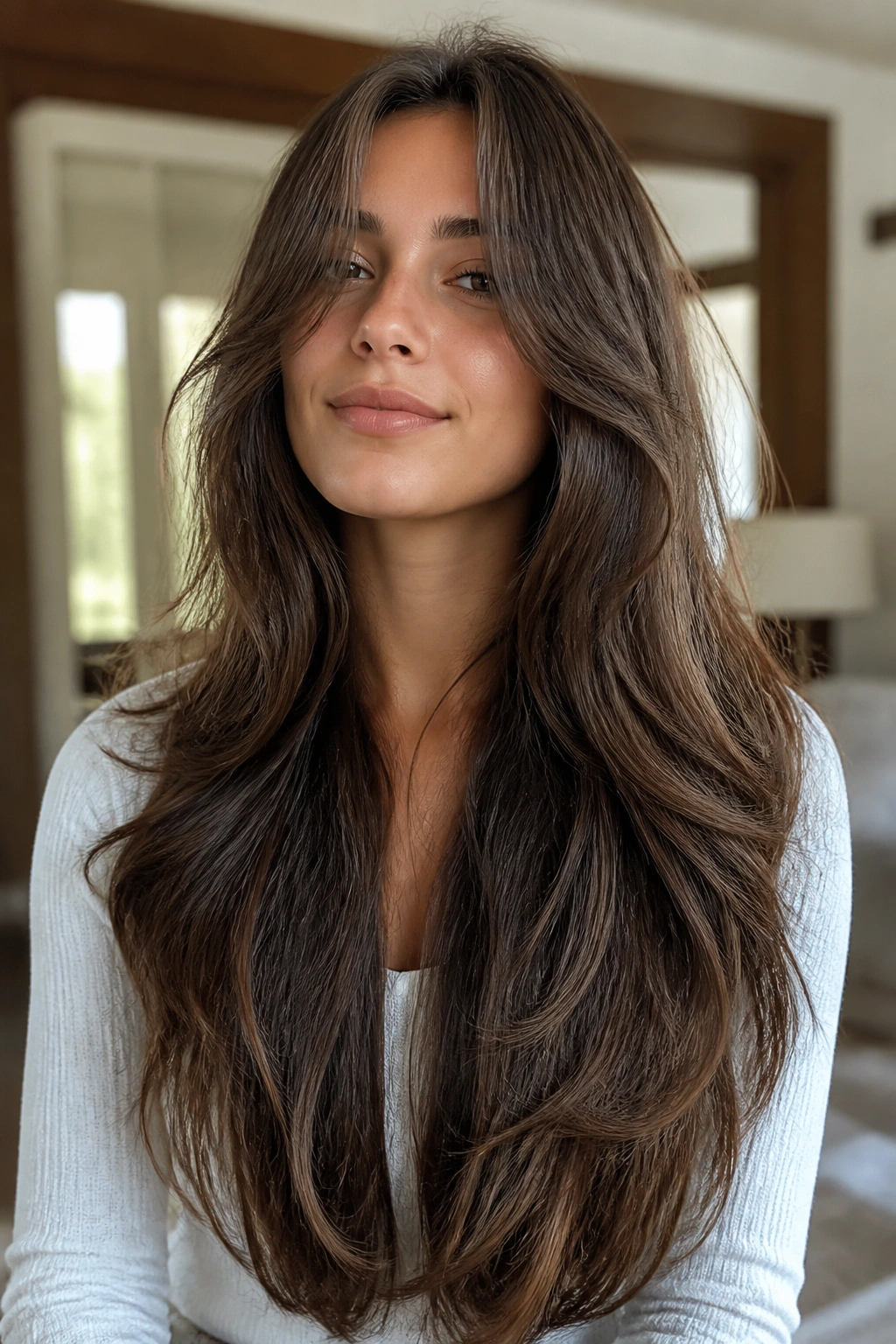
Can you keep your length and still get a face frame that does real work? Yes. Curtain bangs are the easiest starting point for that, and they suit Medusa hair cut ideas for long hair because they bring the eye upward without chopping the whole shape down.
The trick is the blend. A good curtain bang does not stop at the eyebrow like a hard line. It opens at the center, sweeps past the cheekbones, and disappears into long layers. That gives the hair a soft, shifting front edge that feels alive when you turn your head.
They are also forgiving. You can blow them out with a round brush, tuck them behind the ears, or let them dry with a bend and still look finished. If you want the look to read a little more dramatic, ask for the shortest point to land between the cheekbone and jaw, not high on the forehead. That gives you room to style them without constant trimming.
One clean part helps. So does a little root lift.
3. Butterfly Cut With Big Crown Volume
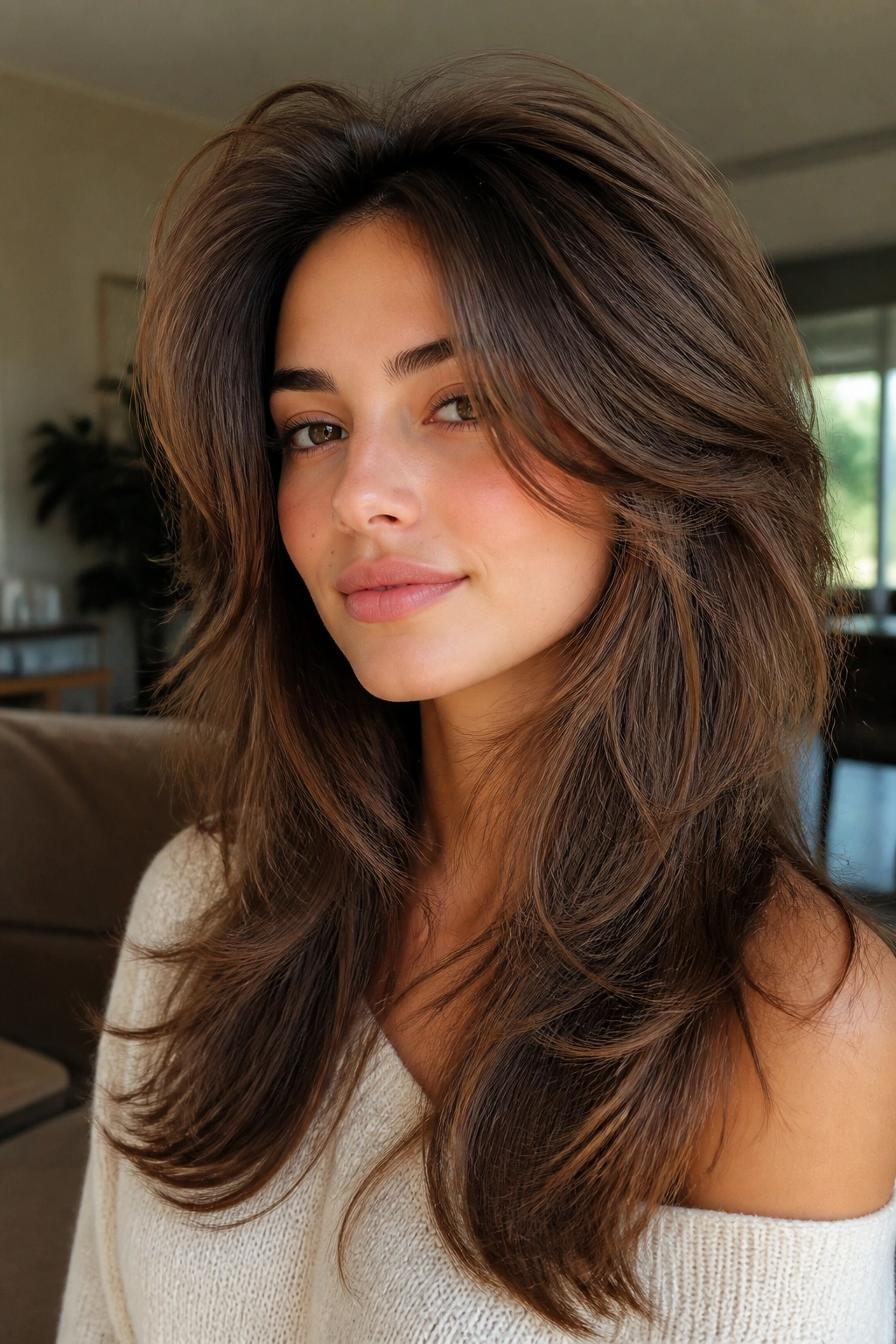
Picture the top half lifted away from the face while the rest falls long and soft. That is the basic idea behind a butterfly cut, and it earns its place here because it gives long hair that floating, layered shape people keep trying to fake with hot tools.
The shorter top layers create the illusion of a shorter cut when the hair is blown out, but the length stays intact underneath. On really long hair, that contrast is what makes the shape interesting. It adds a sort of controlled drama — not loud, not messy, just big enough to feel alive.
How to style it
- Use a light mousse or root spray at the crown on damp hair.
- Blow-dry the top layers up and away from the face with a round brush.
- Leave the longest layers soft; don’t over-curl the ends.
- Finish with a touch of serum on the bottom 3 to 4 inches if the ends feel dry.
This cut works best if you like volume near the roots and movement through the middle. If your hair is fine, ask for a lighter version with less crown removal. If your hair is thick, this is one of the few long styles that can take weight out without looking choppy.
4. V-Cut That Narrows the Back
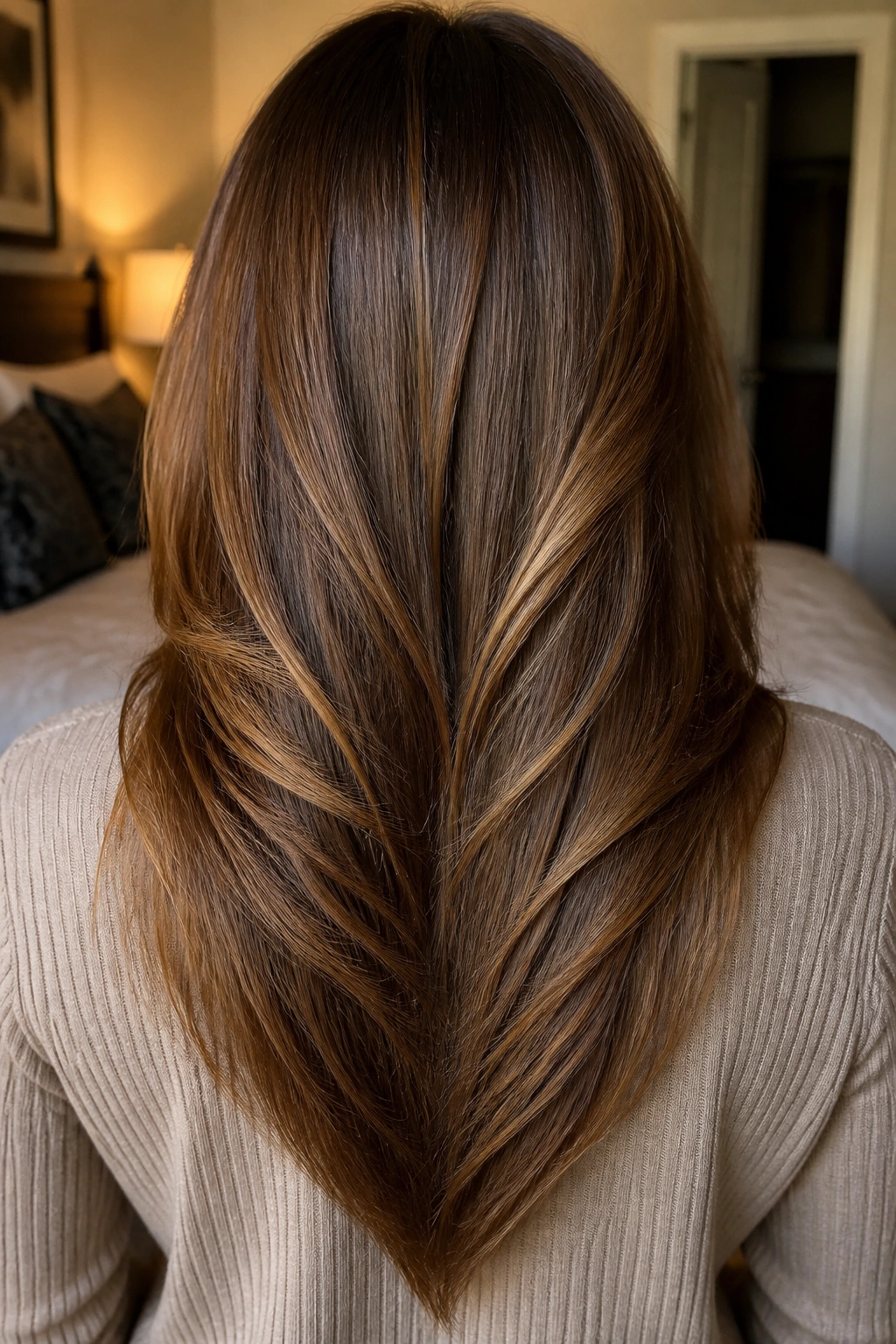
A blunt hem is not the only way to keep long hair looking rich. The V-cut pulls the back into a pointed shape, and that taper gives the whole style a more dramatic finish. It feels a little mythical, a little severe, and on the right head of hair it looks fantastic.
This cut is especially good if your hair is thick and you want the ends to stop dragging. The V shape removes visual bulk from the back, so braids, half-ups, and loose waves all look lighter. It also gives long hair a tail-like movement that fits the Medusa mood better than a plain straight line does.
For the cleanest version, ask for a soft V rather than a sharp point. Sharp points can look thin if the ends are already fragile. A softer taper keeps the shape readable while still letting the length fan out.
What to ask for
- Keep the sides long enough to brush the collarbone.
- Let the back taper gradually.
- Avoid over-thinning the bottom if your ends are fine.
- Check the shape from the back, not just the front.
If you wear your hair up often, this cut gives the loose version a much better shape when it comes back down.
5. U-Cut With Soft Interior Movement
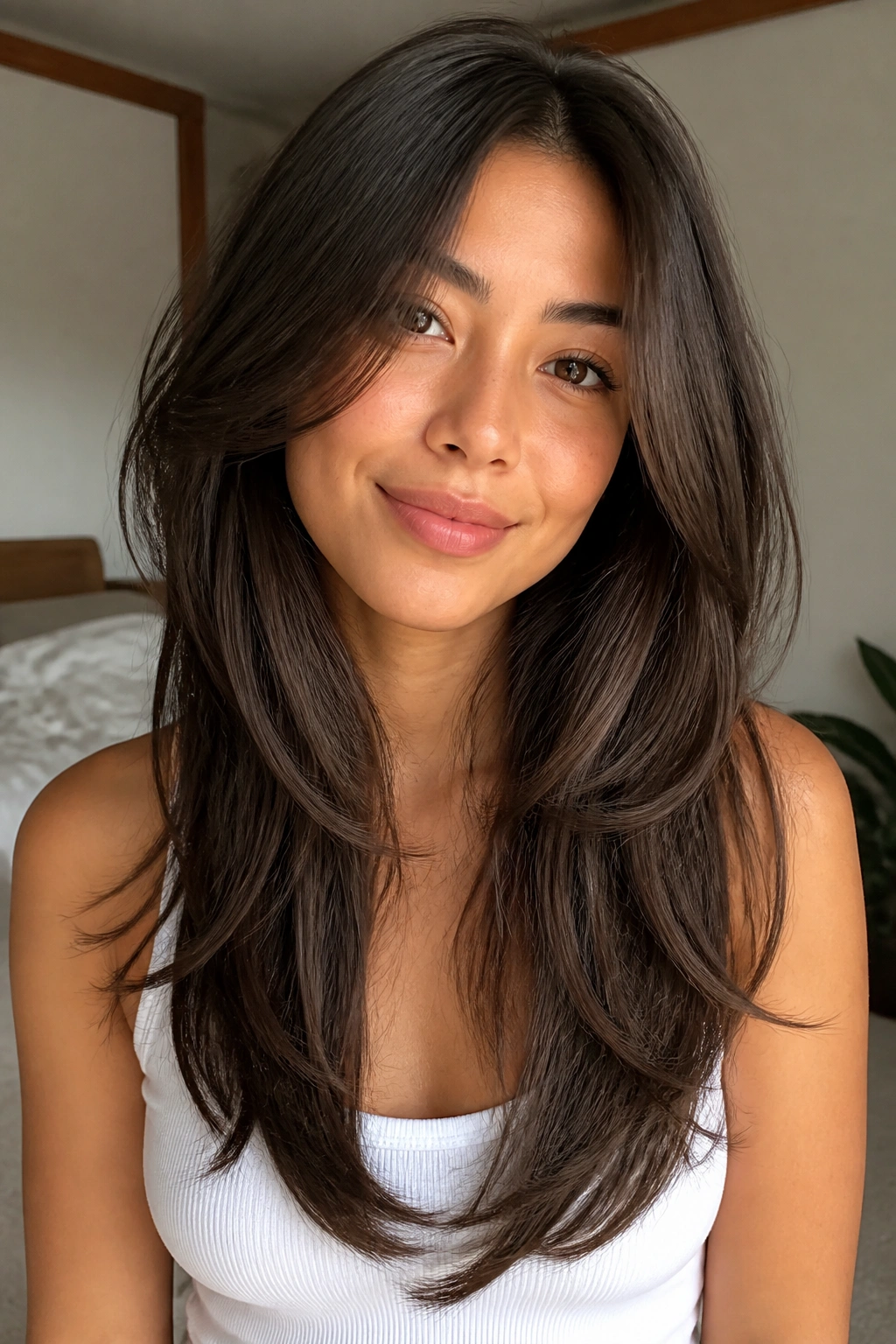
Run your fingers through a good U-cut and the ends fall in one smooth arc. It is subtler than a V-cut, which is exactly why so many people end up preferring it once they see it on long hair.
The U shape keeps the perimeter rounded instead of pointed. That roundness is useful. It makes the hair look full from behind, and it softens the outline around the shoulders and ribcage. If you want movement without a very obvious layer pattern, this is one of the easiest places to land.
A U-cut also grows out quietly. That matters more than people admit. Not every long haircut needs to look edgy on day one; some should stay useful after three months of living real life, sleeping on it, and throwing it into a claw clip.
For straight hair, the arc keeps the ends from looking blocky. For waves, the shape helps the hair fall into a smoother line. It is the least flashy cut in this list, maybe, but it earns its keep every time you air-dry and walk out the door.
6. Feathered Layers That Flick Out at the Ends
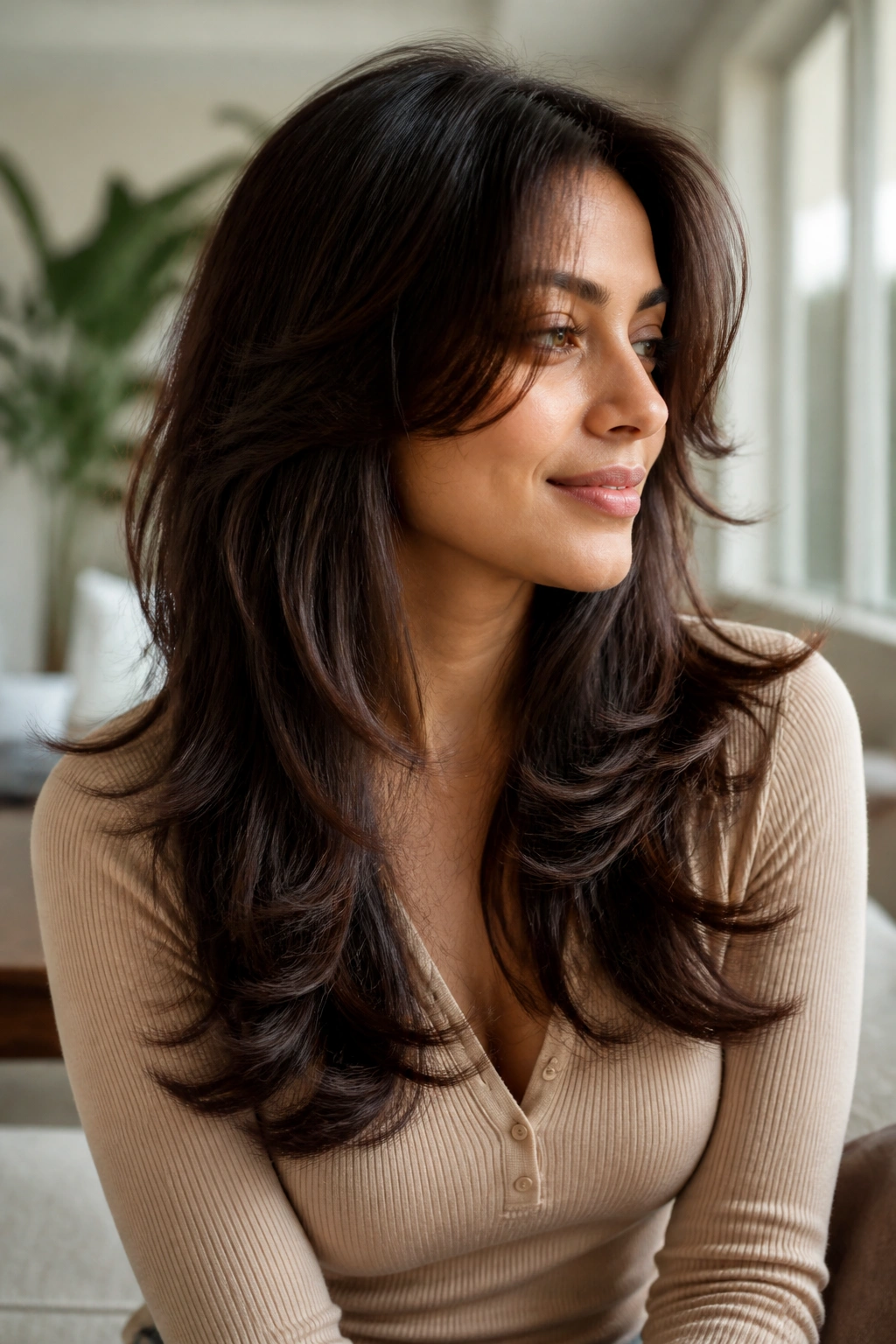
Unlike a shag, feathered layers keep the silhouette cleaner. The movement is still there, but it reads softer and more polished, which is handy if you like the Medusa idea without the rougher edges that can come with a true shag or wolf cut.
Feathering works especially well on long hair that tends to sit flat at the sides. The stylist removes some weight and shapes the layers so the ends turn outward instead of dropping straight down. When it’s done well, the hair looks like it has air in it. Not a lot. Just enough.
Why the cut feels different
- It keeps the top smooth while loosening the lower half.
- The ends flip and separate instead of clumping.
- It suits thick straight hair and loose waves.
- It’s easier to dress up than a choppier cut.
A round brush helps, but so does a good blow-dry with the nozzle pointed downward and slightly away from the face. If your hair frizzes easily, ask for a softer point-cut finish rather than a razor-heavy one. That keeps the ends from looking ragged.
Best for: anyone who wants long hair with motion and a cleaner outline.
7. Razor-Cut Lengths For Broken Texture
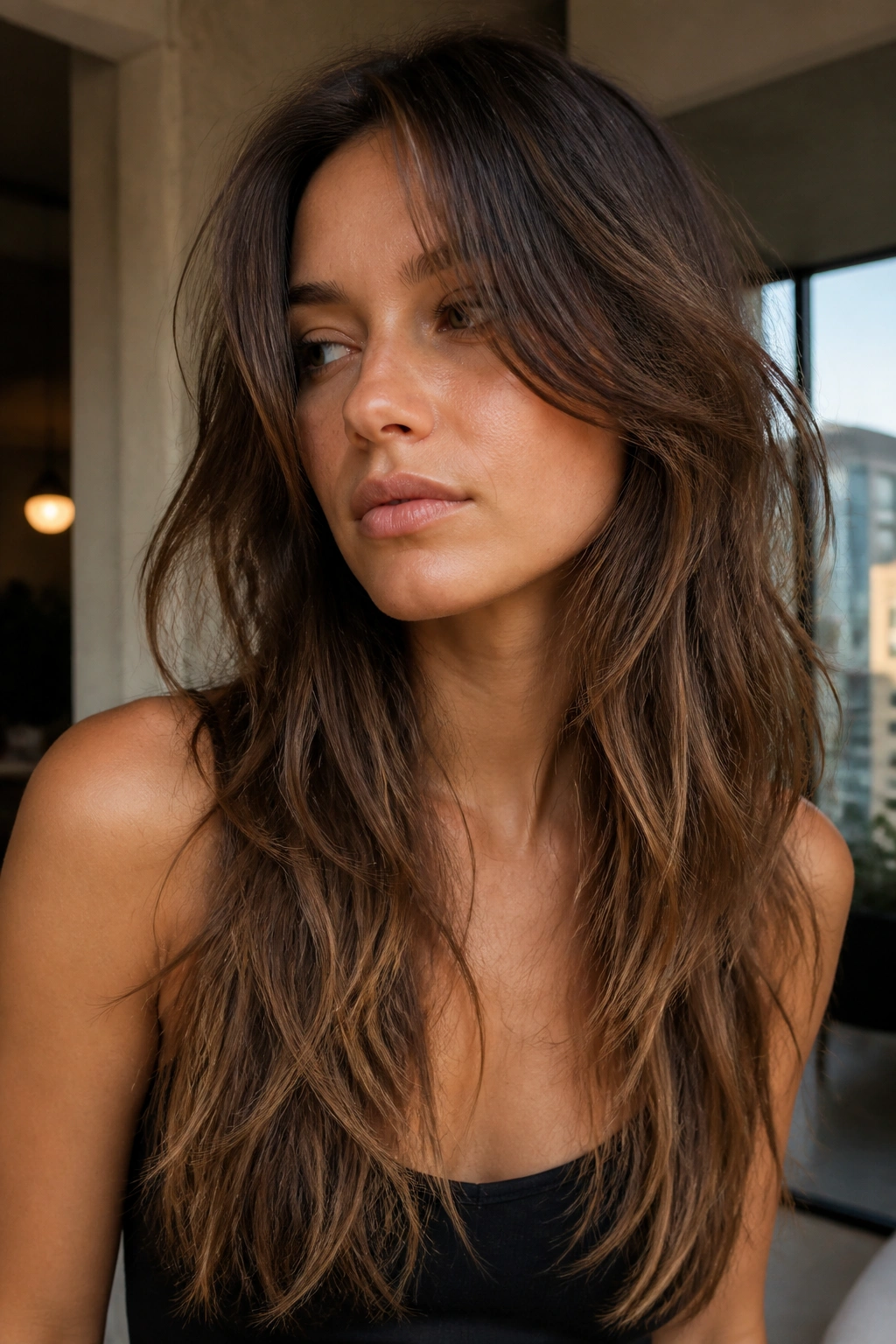
Why does razor cutting change long hair so much? Because it takes weight out fast and leaves the ends with a piecey finish that scissors sometimes cannot imitate. On dense hair, that broken texture can be exactly what gives the style its Medusa energy.
The catch is pretty simple: razor cutting is not gentle on weak ends. If your hair is dry, split, or over-processed, a razor can make the bottom half look thinner faster than you want. But on healthy, thick, or naturally heavy hair, the result can be airy and sharp in a good way.
This cut is for people who like movement more than polish. It also suits wavy hair that tends to puff out at the bottom, because the razor removes bulk from the places that make the shape feel heavy. If you air-dry a lot, the effect is even stronger.
What to watch for
- Do not ask for a razor if your ends are already fraying.
- Keep the layers longer if your density is medium or fine.
- Trim a little more often to stop the texture from turning fuzzy.
- Use a lightweight cream, not a heavy butter, on the ends.
There’s a reason some stylists love this technique and others treat it carefully. Used well, it gives long hair that sharp, almost electric finish. Used badly, it just looks thirsty.
8. Hush Cut For Fine Long Hair
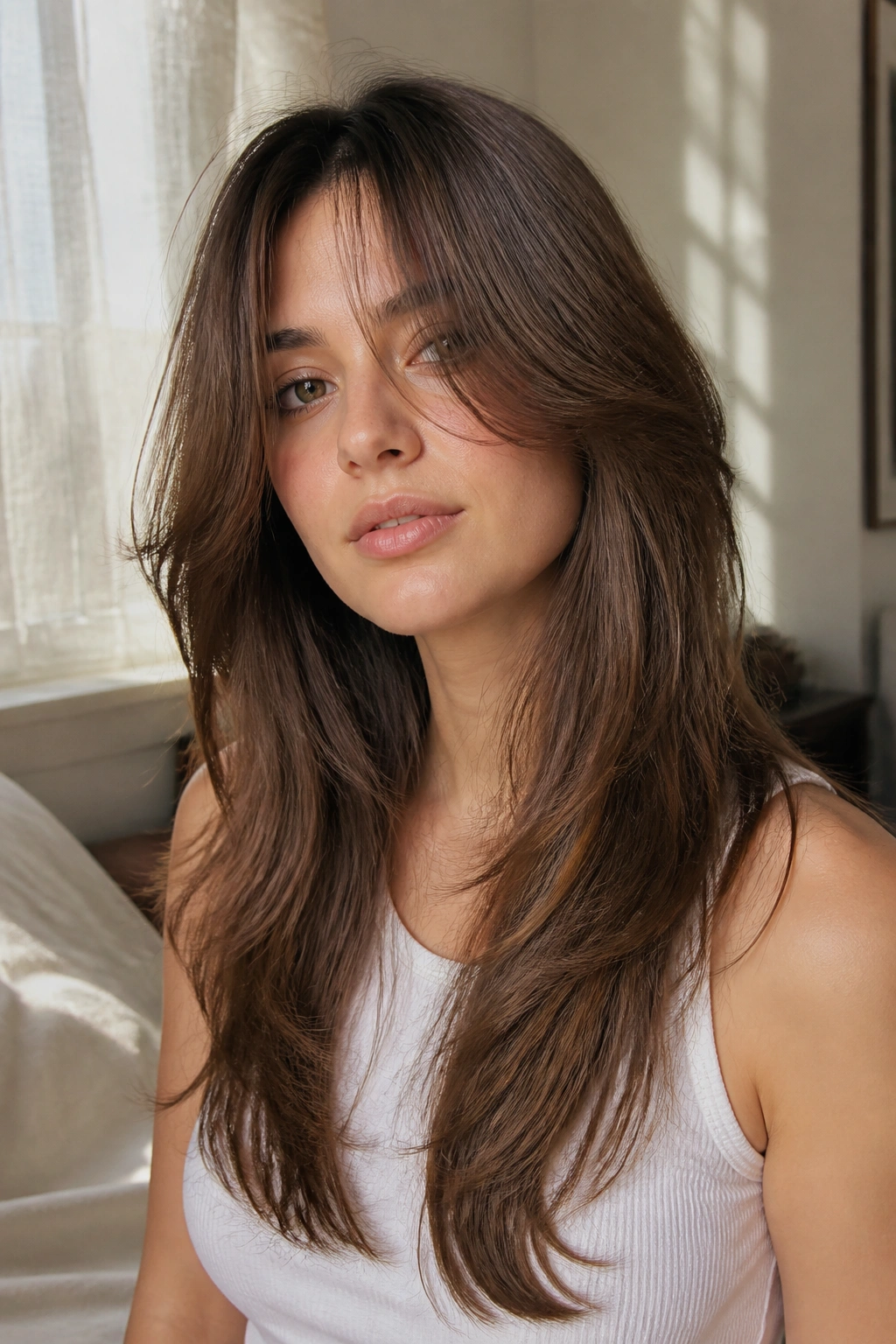
If your hair collapses by lunch, the hush cut earns its keep. It is a quiet haircut, and I mean that in the best way. No bulky steps. No obvious shelf layers. Just soft movement that keeps long hair from turning into a flat block.
The hush cut is a smart Medusa-inspired option for fine hair because it avoids taking too much away from the perimeter. You still get face-framing pieces and a little lift through the top, but the ends stay dense enough to look healthy. That balance matters. Thin hair can look stringy fast if the layers get too eager.
It also behaves well on air-dried hair, which is one reason people keep coming back to it. The shape is less about big blowout volume and more about a light bend around the face and shoulders. If you like a natural finish, this cut makes sense.
One detail that helps a lot: ask for the shortest layer to stay below the cheekbone if you want a softer grow-out. Too short, and the whole thing can get awkward in about three weeks.
9. Wolf-Lite Cut With Soft Edge
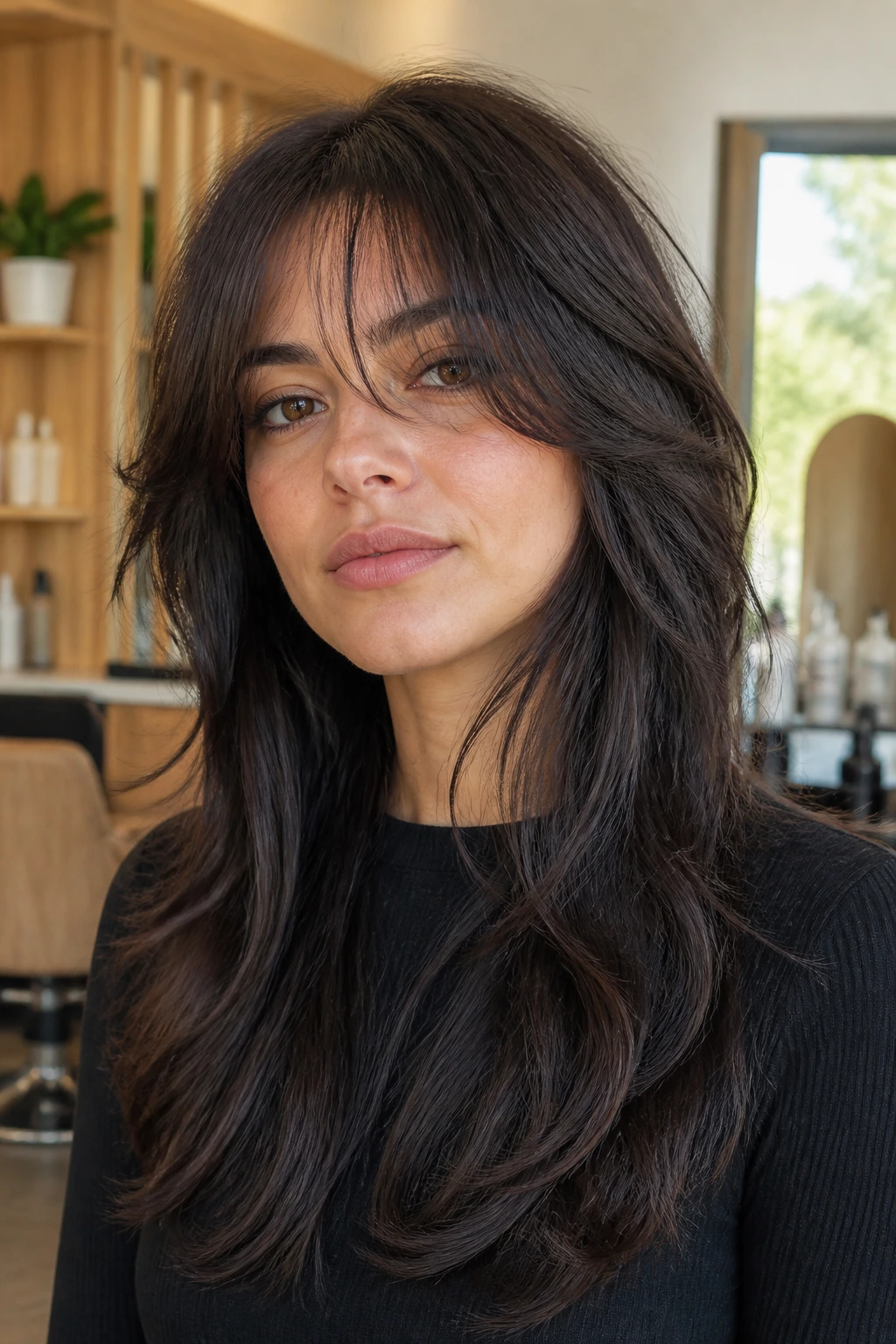
The wolf cut gets the attention, but the softer version wears better on long hair. A wolf-lite cut keeps the crown piecey and the sides a little freer, yet it avoids the full mullet effect that can make long hair feel overly styled.
This version is useful if you want a little rebellion without giving up length or symmetry. The top has movement. The lower half still drops long. The whole thing feels loose, which is part of the appeal. It looks good when you’re doing nothing to it, and that matters more than salon photos do.
Who should skip it
- People who want a very even outline.
- Hair that is already fragile at the ends.
- Anyone who hates visible layering.
- Straight hair that never holds a bend.
A soft wolf cut loves wave, bend, and some natural texture. On curly hair, it can be even better, as long as the layers are handled with care. On pin-straight hair, it may need a little styling to keep from reading flat at the top and too separated at the bottom.
This is the messy sister, but with manners.
10. Bottleneck Bangs and a Long Face Frame
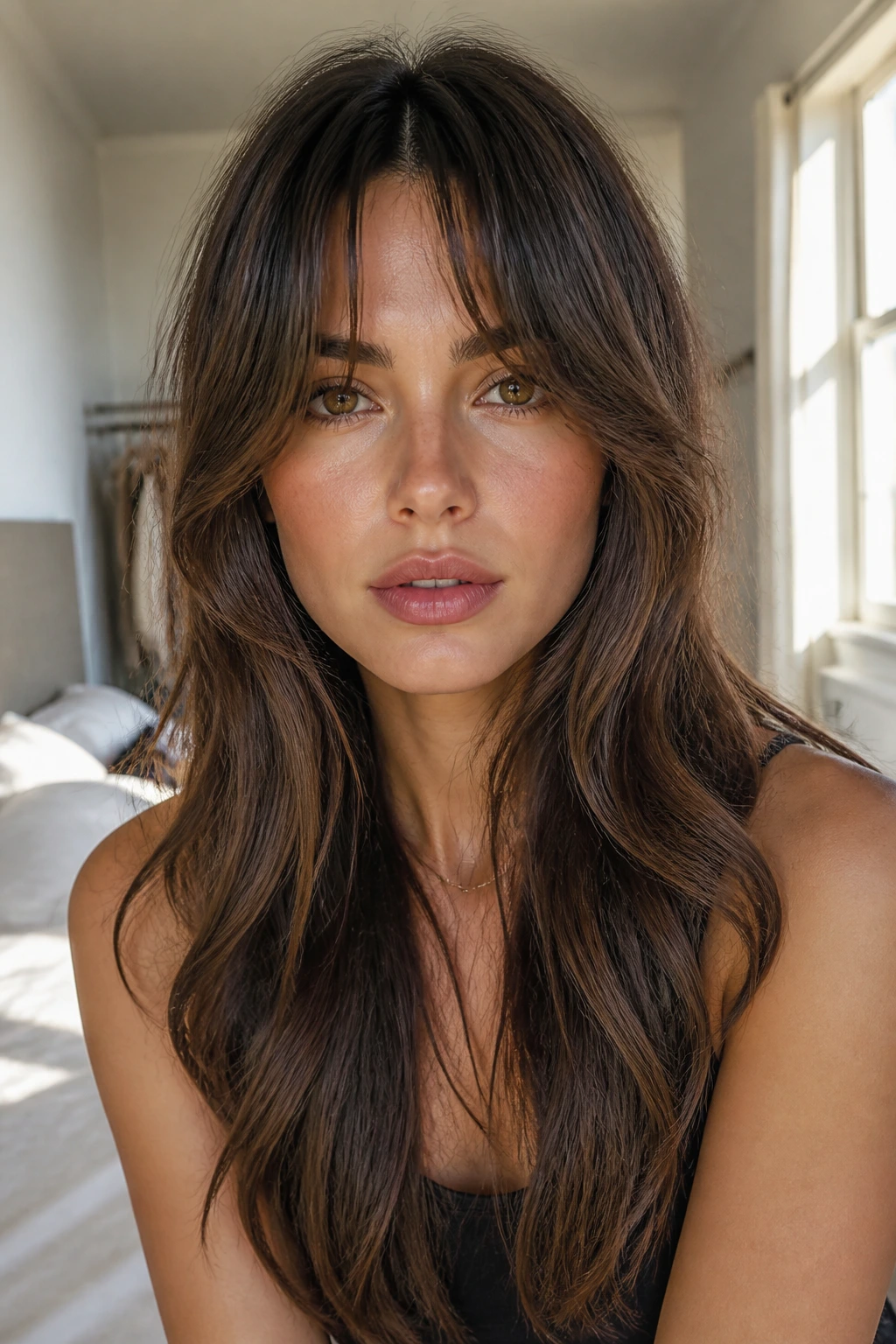
Bottleneck bangs start narrow in the center and open out near the eyes. That shape gives long hair a more sculpted front without forcing you into a full fringe, which is exactly why they work so well with Medusa hair cut ideas for long hair.
The bangs draw attention to the eyes, then melt into longer face-framing pieces that follow the cheekbones and jaw. It’s a small cut with a big effect. You get movement near the face, softness around the temples, and enough length left alone that the rest of the hair still feels dramatic.
They also style well with a bend rather than a pin-straight finish. A small round brush, a medium barrel curling iron, or even a flat iron with a slight wrist turn can shape them fast. The goal is not perfection. It’s a little curve and some separation.
If your forehead is shorter, keep the center narrow and the sides longer. If your hairline is fuller, avoid making the center too thick, or the shape can sit heavy. Tiny choices matter here more than people think.
11. Curly Medusa Cut With Rounded Layers
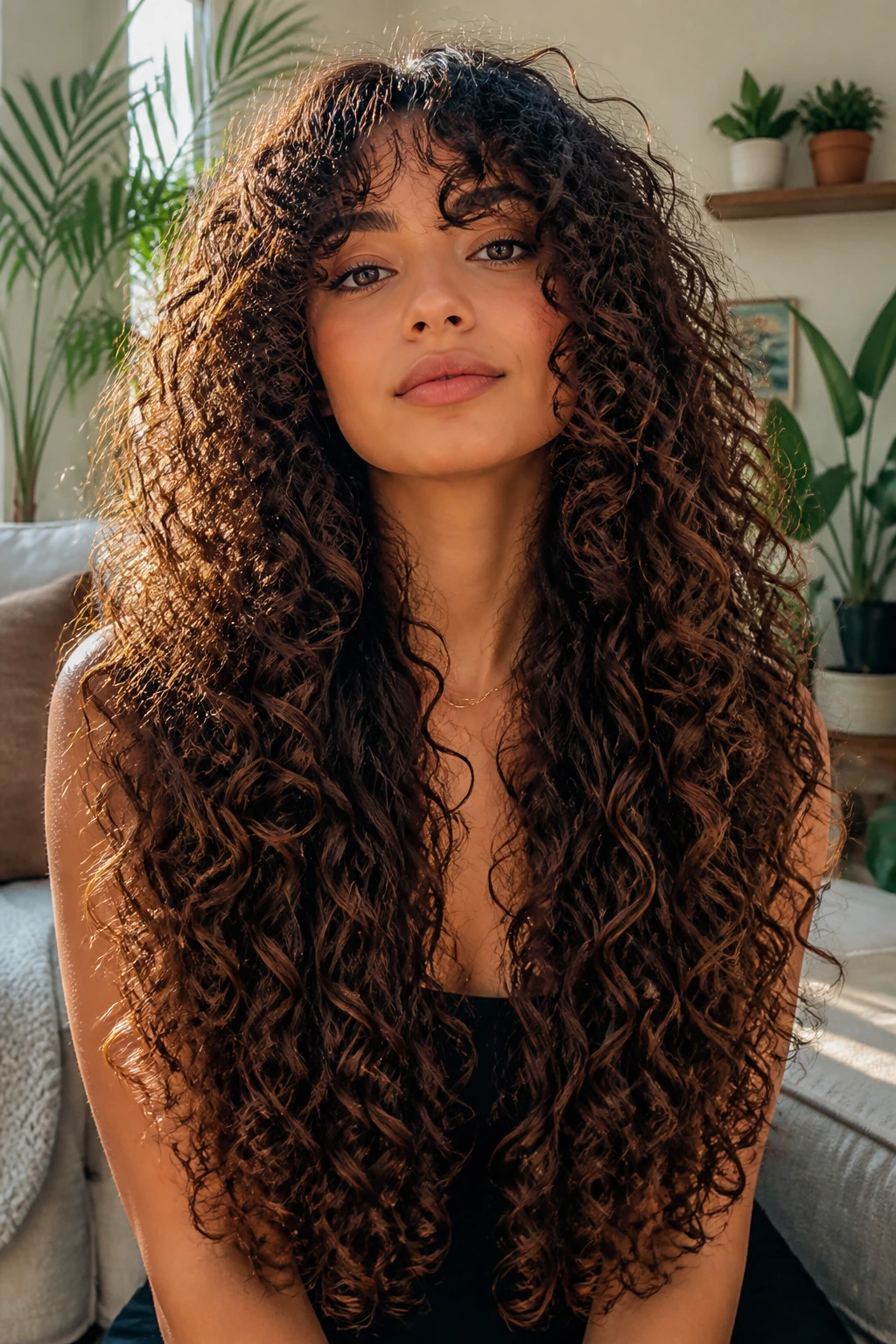
Curly hair does not need to be thinned into submission. That is the first thing I’d say to anyone bringing a Medusa mood into curls, because the best curly cuts keep the spring and the shape instead of stripping the volume away.
Rounded layers work beautifully here. They let each curl stack in a way that creates a halo, not a triangle. The result feels wild in the right way — textured, full, and alive from every angle. On long curls, the shape matters more than the length alone. You can have waist-length hair that still looks flat if the layers are wrong.
What to tell the stylist
- Cut the hair in its natural curl pattern if possible.
- Keep the outline rounded rather than boxy.
- Avoid aggressive thinning shears near the ends.
- Check the shape when the curls are dry, not only when they’re wet.
A dry cut often makes more sense for curls because shrinkage changes everything. Wet, curly hair can lie. Dry curls tell the truth. That honesty helps the stylist place the layers where they actually belong.
If your curls are looser, you can go a bit sharper with the layers. Tight coils usually need a gentler hand and more attention to balance.
12. Blunt Length With Hidden Debulking
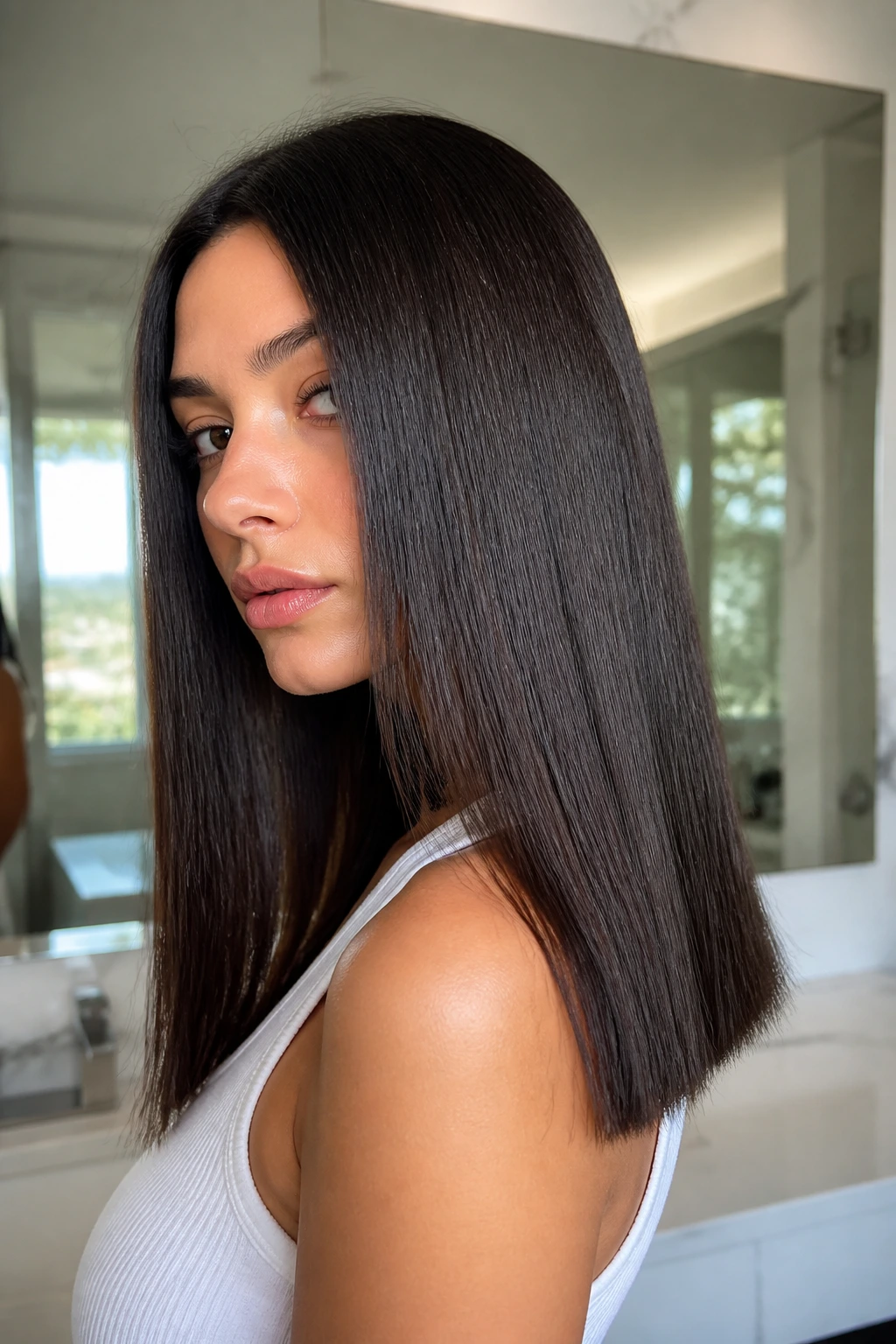
A sharp hem can still feel soft if the inside loses weight. That is the whole point of hidden debulking, and it’s one of the best choices for people with very thick long hair who want the drama of a blunt line without the helmet effect.
The outside stays clean. The inside gets some weight removed in carefully chosen spots, usually through internal layering or strategic point-cutting. From the front, the cut reads sleek. From the side, it moves better than a solid block ever could. That mix is what makes it useful.
This is not the same thing as carving layers all through the surface. If the top layers get too short, the shape falls apart. The beauty of this version is restraint. You keep the strong edge, but the hair stops fighting gravity quite so hard.
It works especially well if you wear your hair straight often, because the edge looks expensive without needing a lot of styling. A center part and a glossy finish make it look even sharper. If your hair is coarse or extra dense, this cut can save you a lot of drying time.
13. Invisible Layers For Straight, Sleek Hair
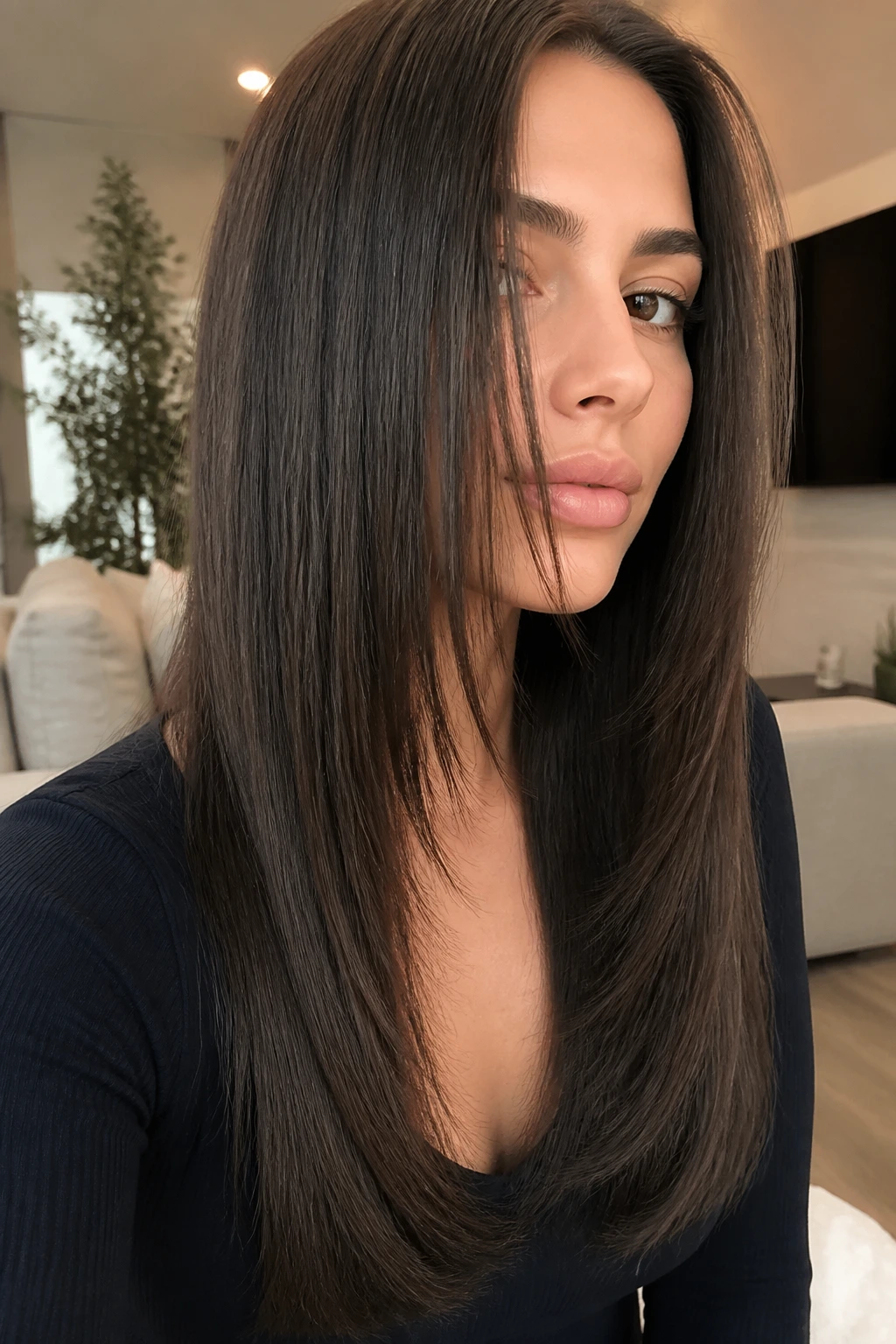
Unlike a visible shag, invisible layers hide until your hair swings. That makes them a smart option for straight hair that you want to keep smooth but less blocky at the ends.
The cut is usually done with very careful internal layering or soft slide-cutting, so the outside line still looks clean. When the hair hangs still, it reads like one long piece. When it moves, the length breaks up just enough to avoid that heavy, flat sheet effect. I like this one for people who want the Medusa mood without the obvious step cuts.
It’s also good if you wear your hair in braids, buns, or clips a lot. The invisible layers keep the loose version from looking too severe, but they do not fall apart the second you tie the hair back. That balance makes the cut practical, which is rarer than it sounds.
Best for: straight or slightly wavy hair that gets bulky at the bottom but still needs a clean outline.
If you want a lower-key version of movement, this is the one to ask about.
14. Side-Part Cascade With Chin-Skimming Pieces
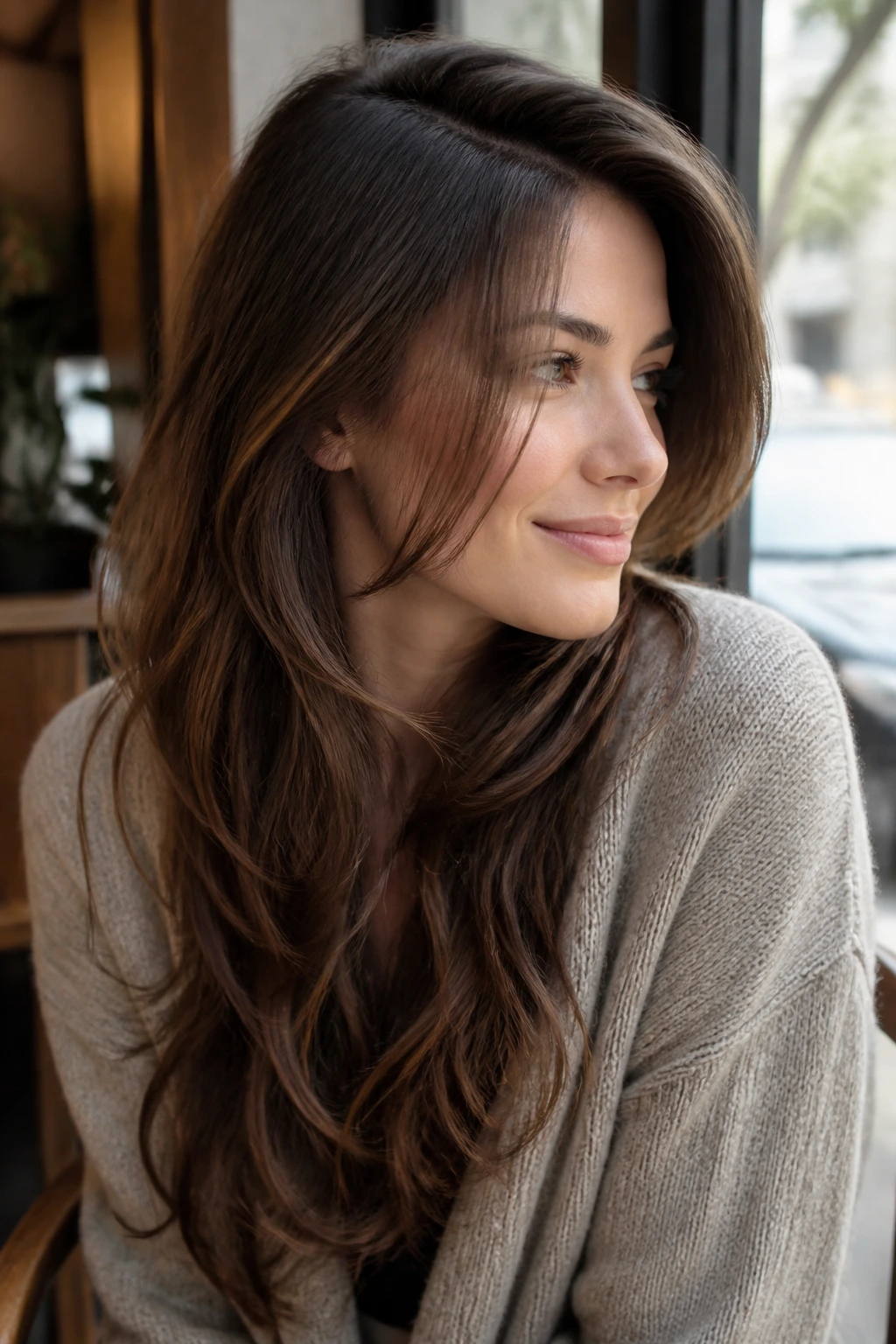
Pull a deep side part into long hair and the whole face changes. The cascade gets more movement, the volume shifts, and the silhouette stops feeling so symmetrical. That asymmetry is a big part of why this look lands so well for Medusa-inspired long hair.
The chin-skimming pieces matter here. They break up the heaviness around the front and give the cut something to do besides hang there. On wavy hair, they swing. On straight hair, they bend softly if you use a brush or a quick pass with a curling iron. On very long hair, they stop the front from feeling like one long slab.
This shape flatters round and heart-shaped faces especially well because the side part creates length while the front pieces pull the eye down and across. It can feel dressier than center-part layers without needing more length at all.
A few good pairings
- Loose waves through the mid-lengths.
- A soft blowout with one bend at the ends.
- A tucked-behind-one-ear finish.
- A side braid that leaves the front pieces loose.
If you get bored fast, this is a nice way to change the whole mood without changing the cut every time.
15. Braided-Ready Long Cut With Heavy Front Pieces
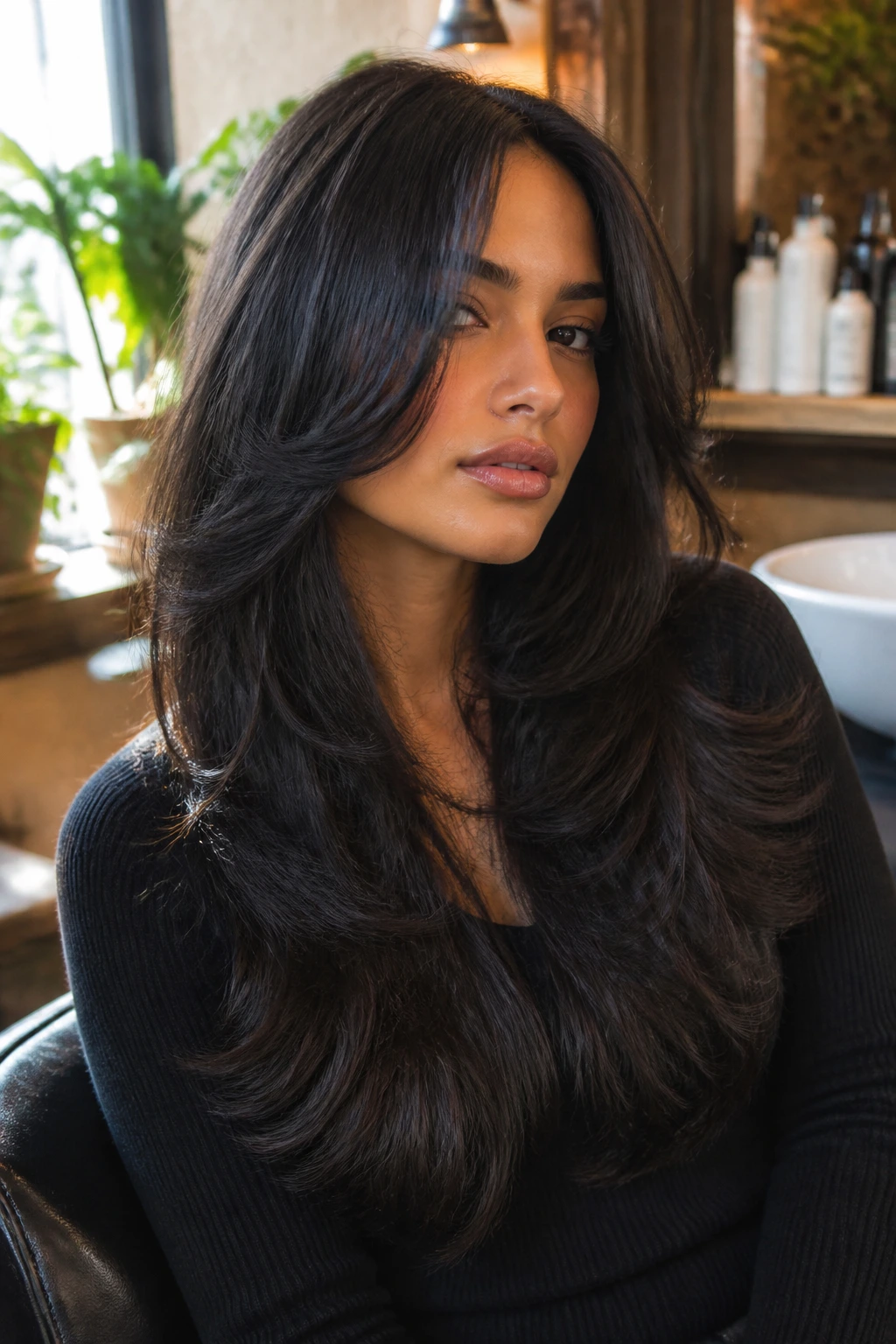
What if you wear braids, buns, and half-ups more than you wear your hair down? Then the cut has to work in both directions. That is where a braided-ready long cut earns its place, because it keeps enough density for styles but still gives the loose hair some shape.
The trick is keeping the front pieces heavy enough to frame the face when the hair is down, while the rest of the length stays balanced for braiding. Too many wispy layers and your braid gets skinny at the bottom. Too little shaping and the loose version looks flat. The right middle ground matters.
How to ask at the salon
- Keep the face frame below the cheekbone for versatility.
- Preserve density through the lower third of the hair.
- Avoid too many short layers around the nape if you braid often.
- Ask for movement at the front, not all over the perimeter.
This is the practical Medusa cut. It still has the serpentine feel when loose, but it does not fall apart the minute you twist it up. If you want a style that can handle gym days, office days, and dinner without looking like it lives in a salon chair, this is a solid place to end up.
Final Thoughts
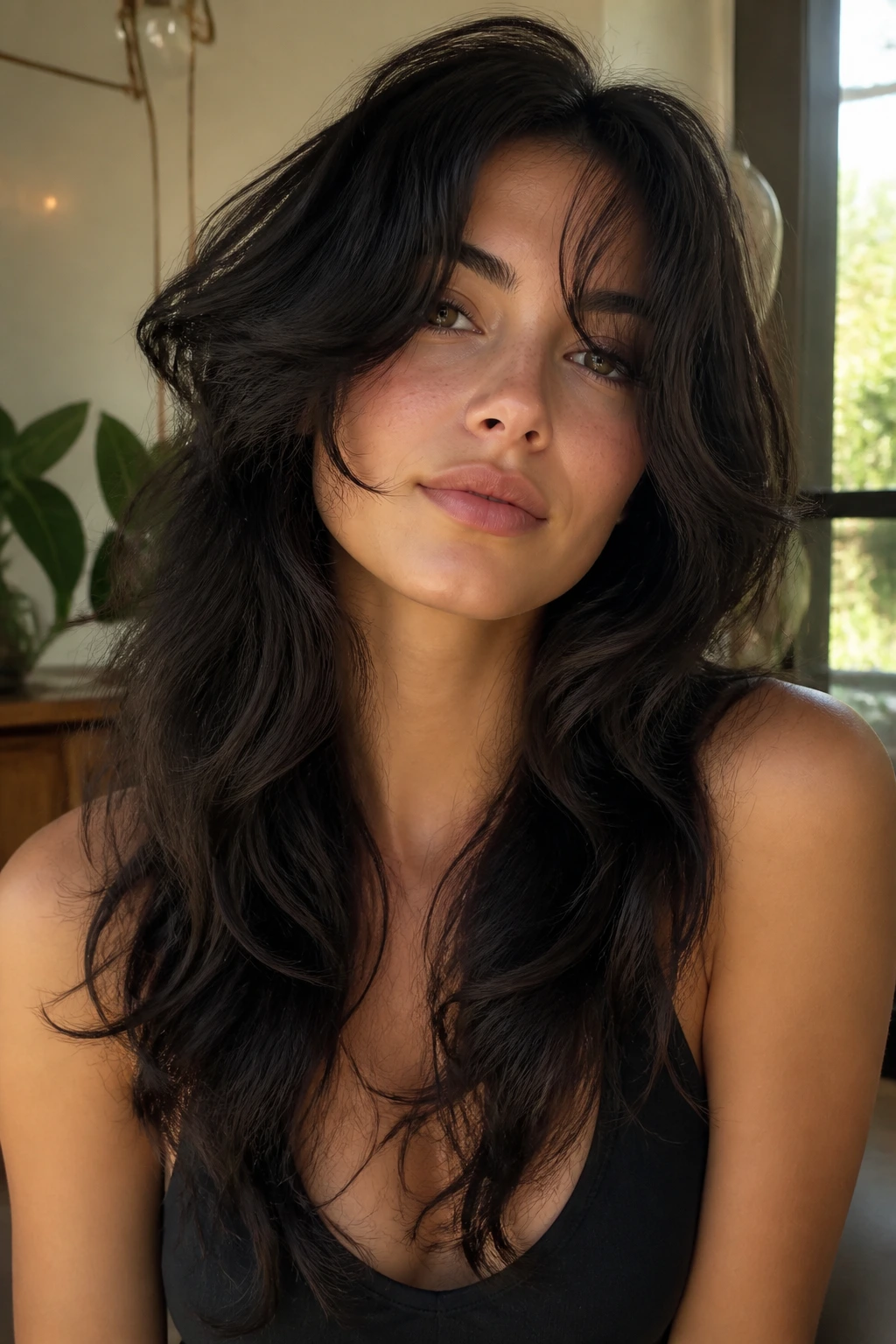
The best Medusa-inspired long cuts do two things at once: they keep the length, and they break the outline. That break can be soft or sharp. It can live in the bangs, the crown, the ends, or all three.
If you want the most drama, start with a shag, butterfly cut, or soft wolf cut. If you want something easier to live with, a U-cut, hush cut, or invisible layers may be the smarter move. Long hair gets heavy fast, and the right cut gives it some air without stealing the part people came for in the first place.
Bring a photo, sure. Bring two if you want. But also tell the stylist how you wear your hair on an ordinary day, because that boring detail usually decides whether the cut feels like yours or like a good idea that never quite worked.
